Nearly one in two used car dealers have already added Chinese vehicles to their forecourts, as the UK’s embrace of ‘new entrant’ vehicles extends to the secondhand market.
What’s more, 45 percent of used car dealers report Chinese vehicles selling quickly – and fast turnaround is a key metric when they choose which secondhand stock to buy.
“In the last couple of years, Chinese new entrants have made a sizeable impact in the new car market,” said Paul Burgess, CEO of Startline Motor Finance, which publishes a monthly Used Car Tracker.
“Stock is now beginning to filter through into the used sector and it’s clear that a large proportion of dealers are enthusiastic about their arrival.
“Their proposition in the used sector is similar to new – these are models that represent good value and have high retail appeal.
“Every dealer we surveyed who had sold a Chinese car reported that they sell quickly.”
Some dealers play the waiting game
Not all used vehicle dealers are on board, though. Some 37 percent say they are waiting to see how reliable Chinese cars prove to be, while one in five still believes consumer awareness is low.
Additionally, 14 percent are worried about good parts availability and manufacturer support.
“Objections indicate a degree of wariness that might be applied to any unfamiliar car brand,” added Burgess.
“However, to us, it seems likely worries over reliability and manufacturer support are set to disappear relatively soon.”
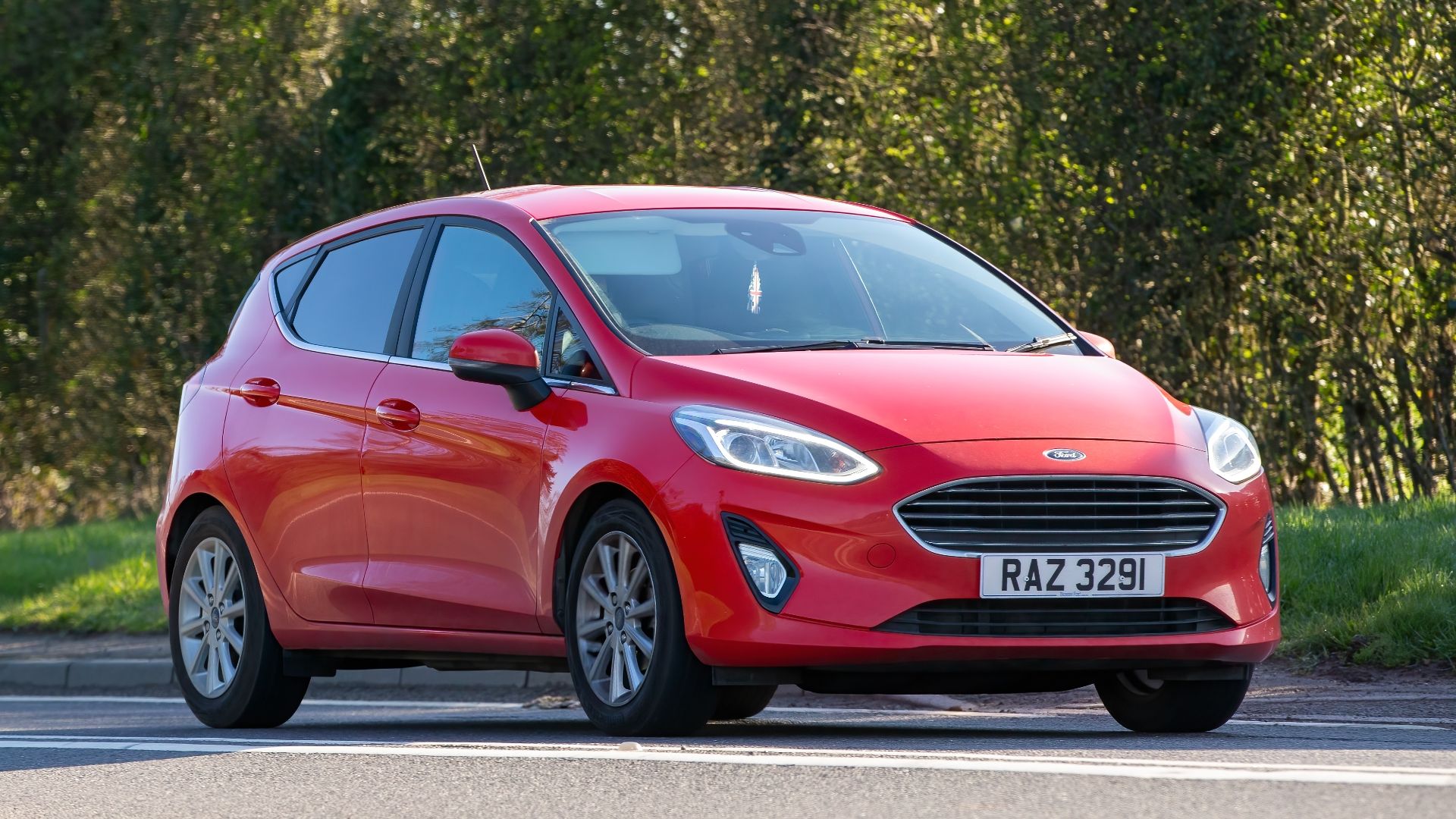
Discontinued Fords are among the most in-demand used cars in February, a new report from Autotrader reveals.
Used Ford vehicles dominate the list of fastest-selling secondhand cars, making up four of the top 10.
The blue oval bonanza is led by the Ford Ecosport. The Focus and Fiesta are other ‘zombie Fords’ still in great demand among used car buyers.
A fourth Ford, the Kuga SUV, is the only in-demand used car still in production. Ford controversially announced the end of the Fiesta, Britain’s best-selling new car for many years, in 2023.
The company followed this up by ceasing production of the Ford Focus last year.
Autotrader’s data shows that a five- to 10-year-old Ford Ecosport takes an average of 17 days to sell. This makes it the second fastest-selling used car so far in February – behind only the Tesla Model Y, which takes an average of 16 days to sell.
A five- to 10-year-old Ford Focus takes 18 days to sell, as does a three- to five-year-old Ford Kuga. A Ford Fiesta of similar age takes 19 days to sell.
With the Ecosport, Focus and Fiesta all now discontinued, Autotrader says ‘the data highlights the intense competition for the remaining stock of these household names’.
All three discontinued Fords are selling significantly quicker than February’s 27-day used car average.
Middle-aged march
Notably, adds Autotrader, the fast-selling Ecosport, Focus and Fiesta all sit in the five- to 10-year-old age bracket, “a segment that accounts for 60 percent of the entire top 10 list”.
The marketplace is warning of a ‘structural shift in supply’, with consumers buying cars in this age bracket ‘faster than they can be replaced’.
It’s all due to the 2.5 million new cars ‘lost’ due to Covid-related pandemic pauses in production.
The supply of five- to six-year-old used cars is set to drop by 25-30 percent by the end of 2026 – increasing to a 35 percent drop for five- to seven-year-old used cars by 2027.
“As middle-aged stock becomes scarcer, the challenge for retailers is not just selling cars, but sourcing the right ones,” said Autotrader head of strategy and insights, Marc Palmer.
Palmer urged used car dealers to diversify their stock in response to the current decline in middle-aged vehicles.
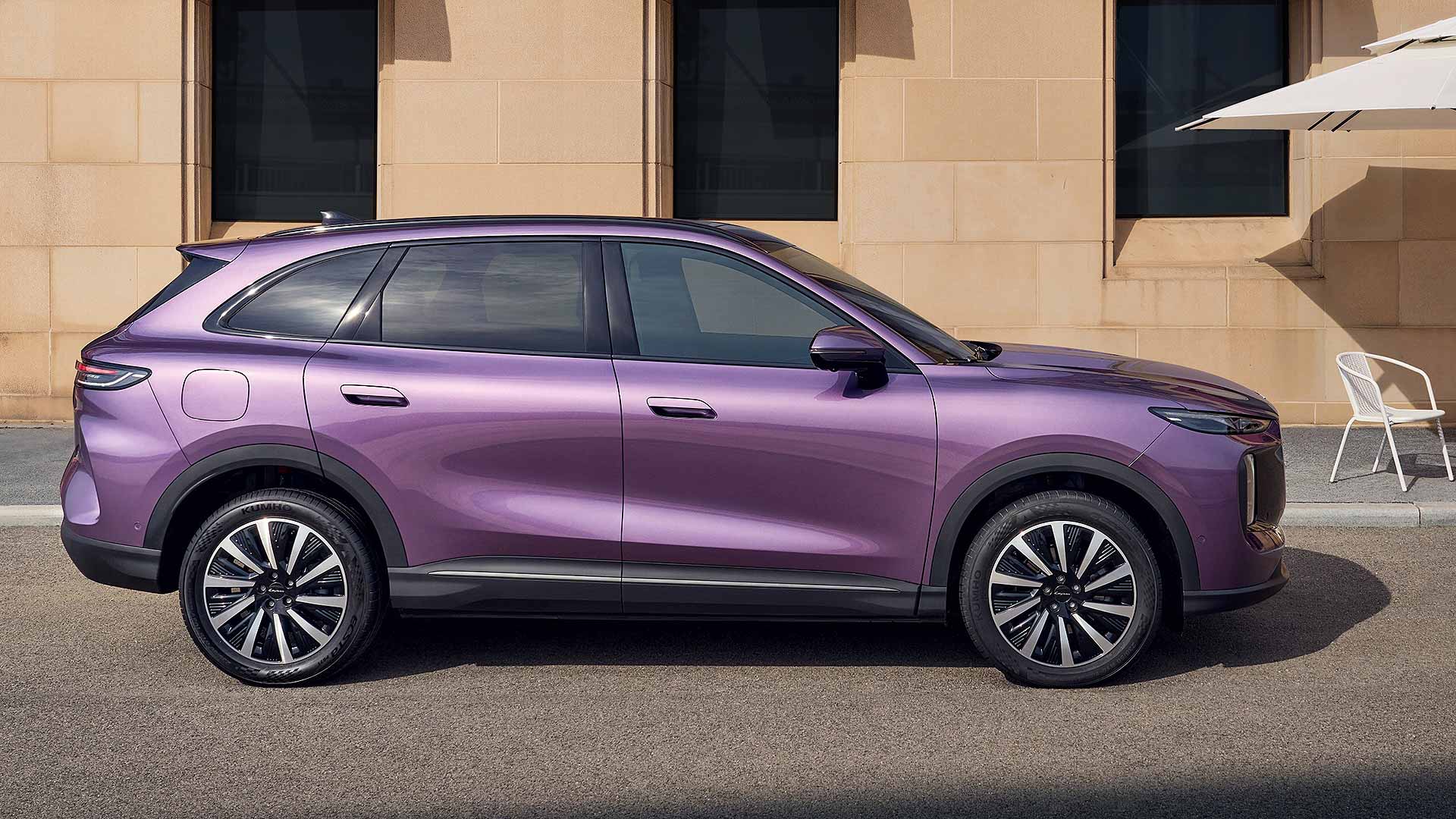
Lepas is the fourth brand from Chinese giant Chery Group to be introduced to the UK – and it has now confirmed the first car to be launched here.
The Lepas L8 family SUV will arrive in autumn 2026, offering plug-in hybrid technology in one of the UK’s most popular new vehicle segments.
Described as the brand’s flagship, the new Lepas L8 will compete against its Chery Tiggo 8, Omoda 9 and Jaecoo 7 relatives, plus more established SUVs such as the Volkswagen Tiguan, Kia Sportage and Hyundai Tucson – not to mention other Chinese ‘new entrants’ like the BYD Seal U and Leapmotor C10.
The looks of a leopard
The Lepas name is said to combine the words ‘Leopard’, ‘Leap’ and ‘Passion’. The brand’s positioning, we are told, is focused on elegance, sophisticated design and advanced technology.
The Lepas L8’s exterior ‘takes inspiration from the agile, muscular contours of a running leopard’, while its headlights reflect the ‘focused intensity of a leopard’s eye’.
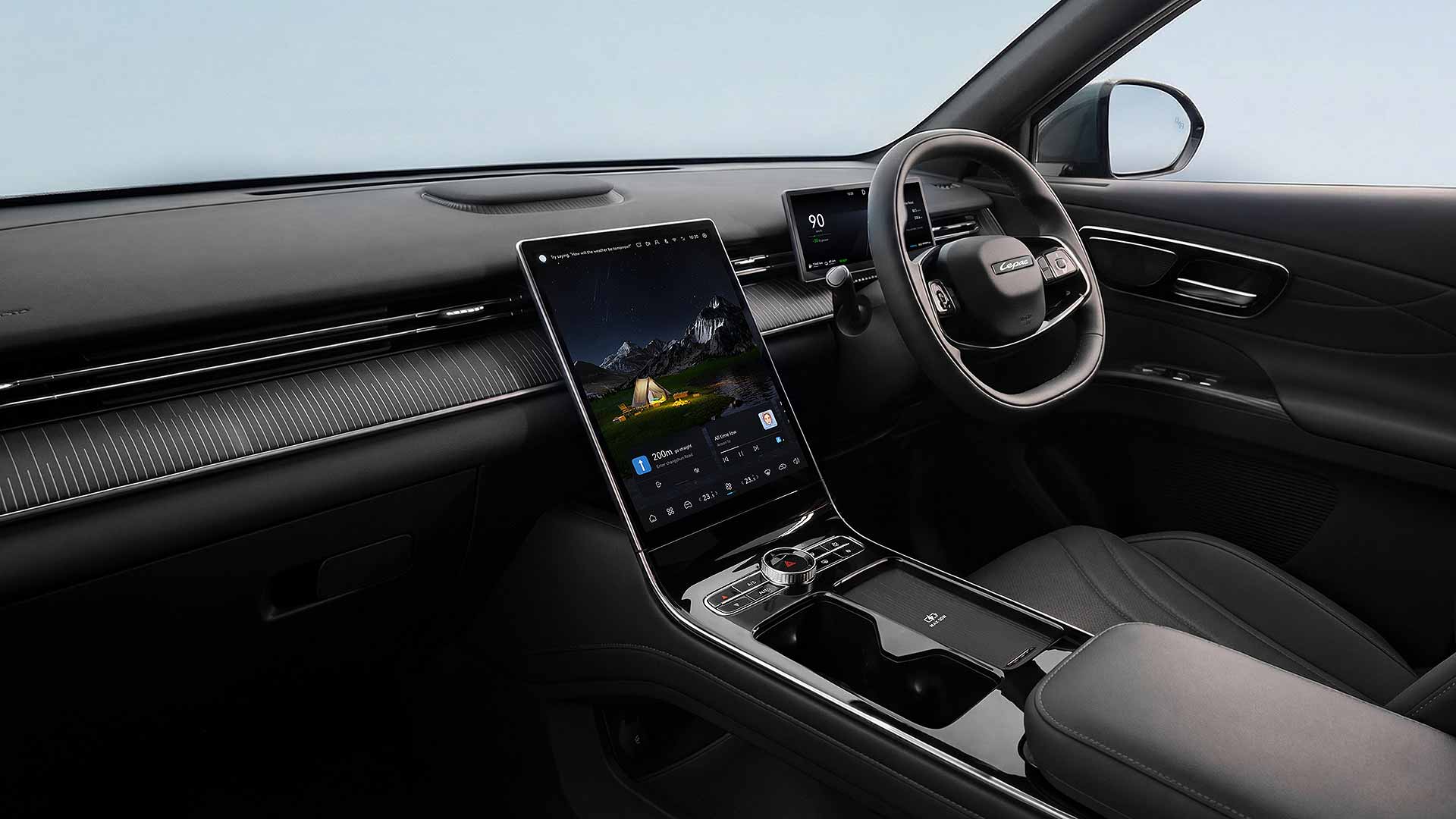
Inside, the L8 appears to have a quite sophisticated cabin, with a waterfall-style central touchscreen and user-friendly attention to detail.
Unlike many modern cars, there is also a useful scattering of physical buttons to support the touchscreen technology.
Potential EV range of 67 miles
Lepas says the L8 has been engineered ‘to global five-star safety standards’. Hopefully, this should mean it continues the impressive performance of many Chinese cars in Euro NCAP crash tests.
Its plug-in hybrid drivetrain is likely to deliver a decent pure electric range, with the petrol engine taking over on longer journeys.
In other markets, the Lepas L8 SHS has a certified EV range of up to 67 miles. Its combined petrol and electric driving range is more than 800 miles.
More details about Lepas in the UK, including its leadership team, retail plans and service support, will follow in the coming weeks, as part of a ‘long-term commitment’ to the British market.
We’ll also learn which other Lepas models will be sold here ‘as Lepas builds momentum toward a new era of elegant mobility’.
A new survey of UK motorists reveals that nearly one in 10 (nine percent) is worried about driving at night. And almost a fifth (19 percent) drive less often during the hours of darkness than a year ago.
In the study of 2,000 drivers commissioned by Vauxhall, around a third (34 percent) said this was due to worsening visibility caused by the headlights of other vehicles. A quarter (25 percent) reported feeling a general lack of confidence.
The issue of glare from headlights of other vehicles was acknowledged as an issue in a Transport Research Laboratory research paper published in October 2025.
When drivers do venture out after dark, 25 percent of those surveyed said they would drive below the speed limit. In addition, 32 percent admitted to feeling tense, and would grip the steering wheel harder than usual.
Almost two thirds (61 percent) said they would take a longer route at night to avoid poorly lit roads, with 31 percent willing to travel more than 10 minutes out of their way for a detour.
Drivers’ fear of the dark
An aversion to driving at night was found by Vauxhall to be more than just a minor inconvenience for those affected.
Some 22 percent said they missed out on social events by not driving in the dark, with 18 percent choosing to leave functions earlier. Some 14 percent felt unable to visit family, too.
To examine possible solutions, Vauxhall conducted a scientific experiment under the supervision of Dr Neale Kinnear. Five members of the public with mild anxiety about driving at night were asked to take part in a trial, completing two circuits of a pre-planned test route.
For the first run, drivers used a new Vauxhall Grandland SUV fitted with the marque’s latest Intelli-Lux HD adaptive headlights. They then undertook a second run using a vehicle equipped with standard LED headlights.
Shining a spotlight on new tech
The results from the trial showed that, when using the vehicle fitted with Intelli-Lux HD adaptive technology, driving was found to be more comfortable and confidence-inspiring by 28 percent of the participants.
More than a third (35 percent) found that adaptive headlights brought enhanced visibility, with 39 percent reporting a lower perceived mental effort.
Overall, participants in the experiment said they would be 43 percent more likely to drive at night with the Intelli-Lux HD lights.
Dr Neale Kinnear said: “The findings suggest that lighting technology can meaningfully change how night-time driving feels, and for drivers who find driving after dark uncomfortable or stressful, that has real potential to support confidence and everyday mobility.”
Eurig Druce, MD of Vauxhall and Stellantis UK, added: “The nervousness drivers face when on the roads at night is something we at Vauxhall don’t take lightly, and for more than a decade, Vauxhall has led the way in making advanced lighting technologies more accessible.”
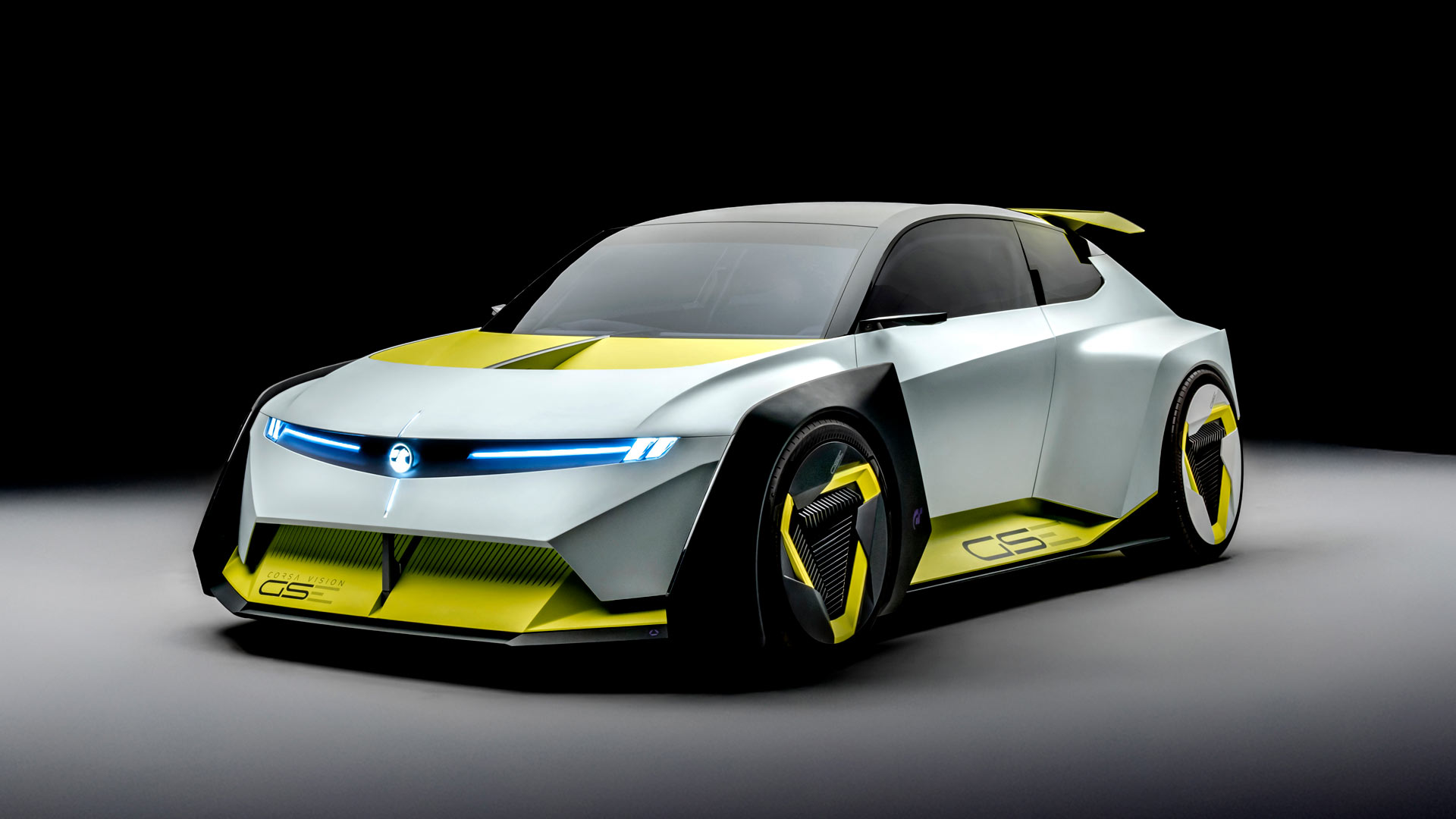
Vauxhall has confirmed that it will launch an all-new performance version of its top-selling Corsa supermini later this year.
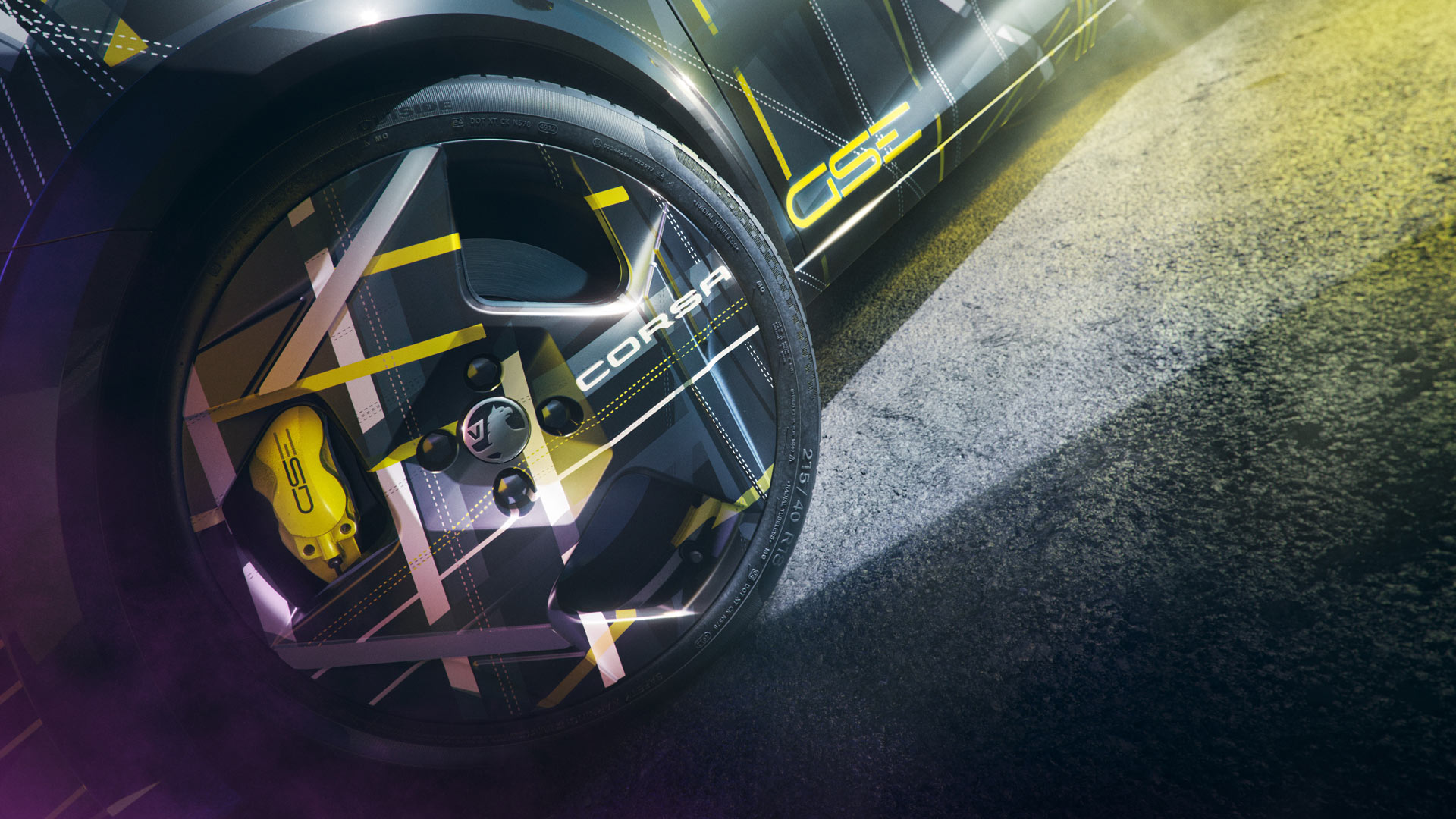
Although it will draw on several decades of hot hatchback history, the Corsa GSE will be thoroughly modern – boasting a high-output electric powertrain.
It marks the continued expansion of Vauxhall’s GSE electrified performance sub-brand, with a rally-bred Mokka GSE compact SUV already available.
Details of the new Corsa GSE are currently limited, but more information on the exact powertrain and performance levels will be known before the summer.
Even with the teaser images released, Vauxhall is seemingly keen to honour the Corsa’s retro relations. An alloy wheel with an elaborate three-spoke design is a clear homage to previous models.
Honouring a hot hatch heritage
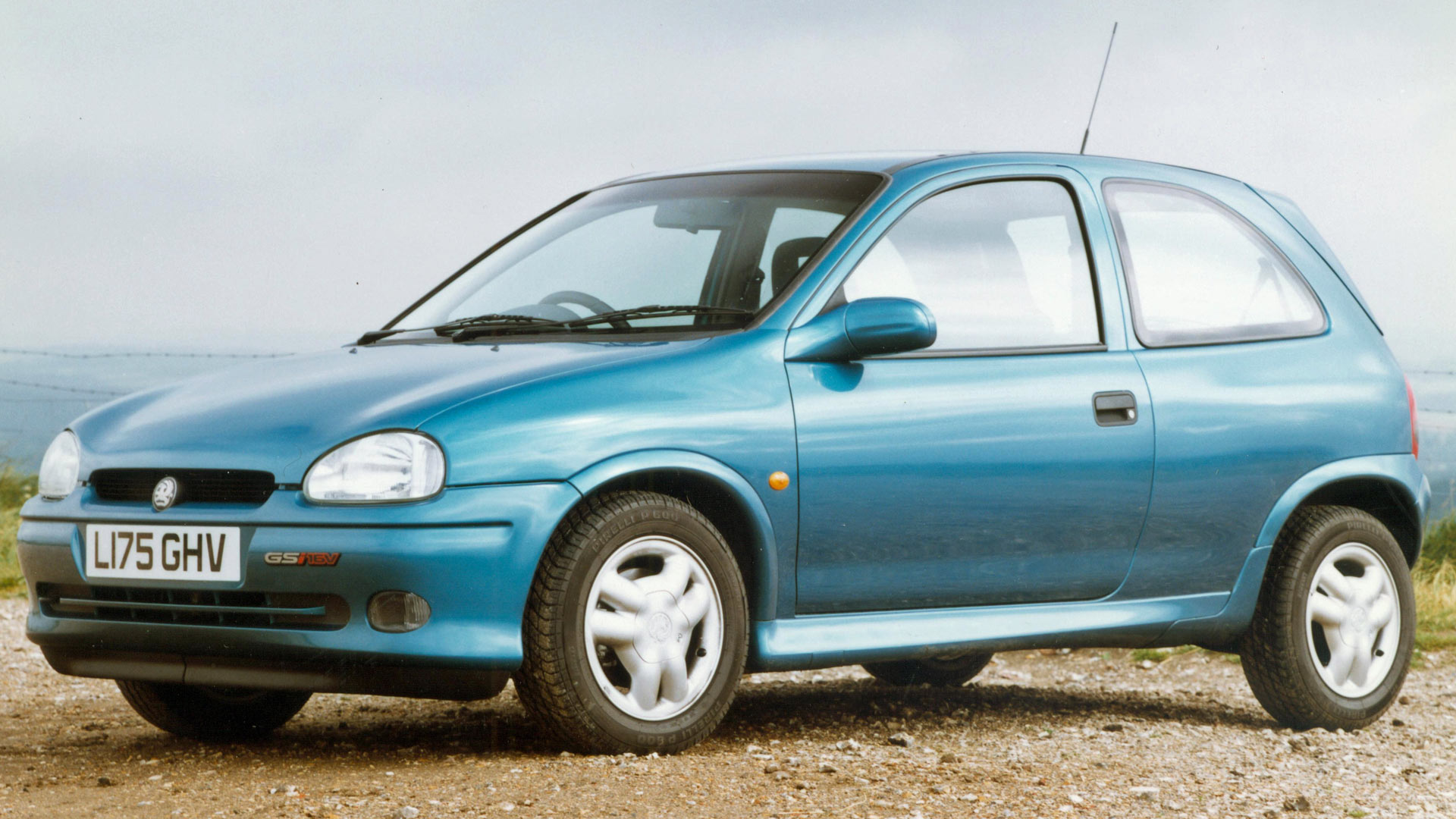
The timeline to the latest Vauxhall Corsa GSE can be traced back to the original Vauxhall Nova (known as the Corsa in Europe), first launched in the UK during 1983.
A performance GTE model was added to the range in 1987, with a 100hp 1.6-litre engine giving the lightweight Nova the ability to accelerate from 0-60mph in under 9 seconds.
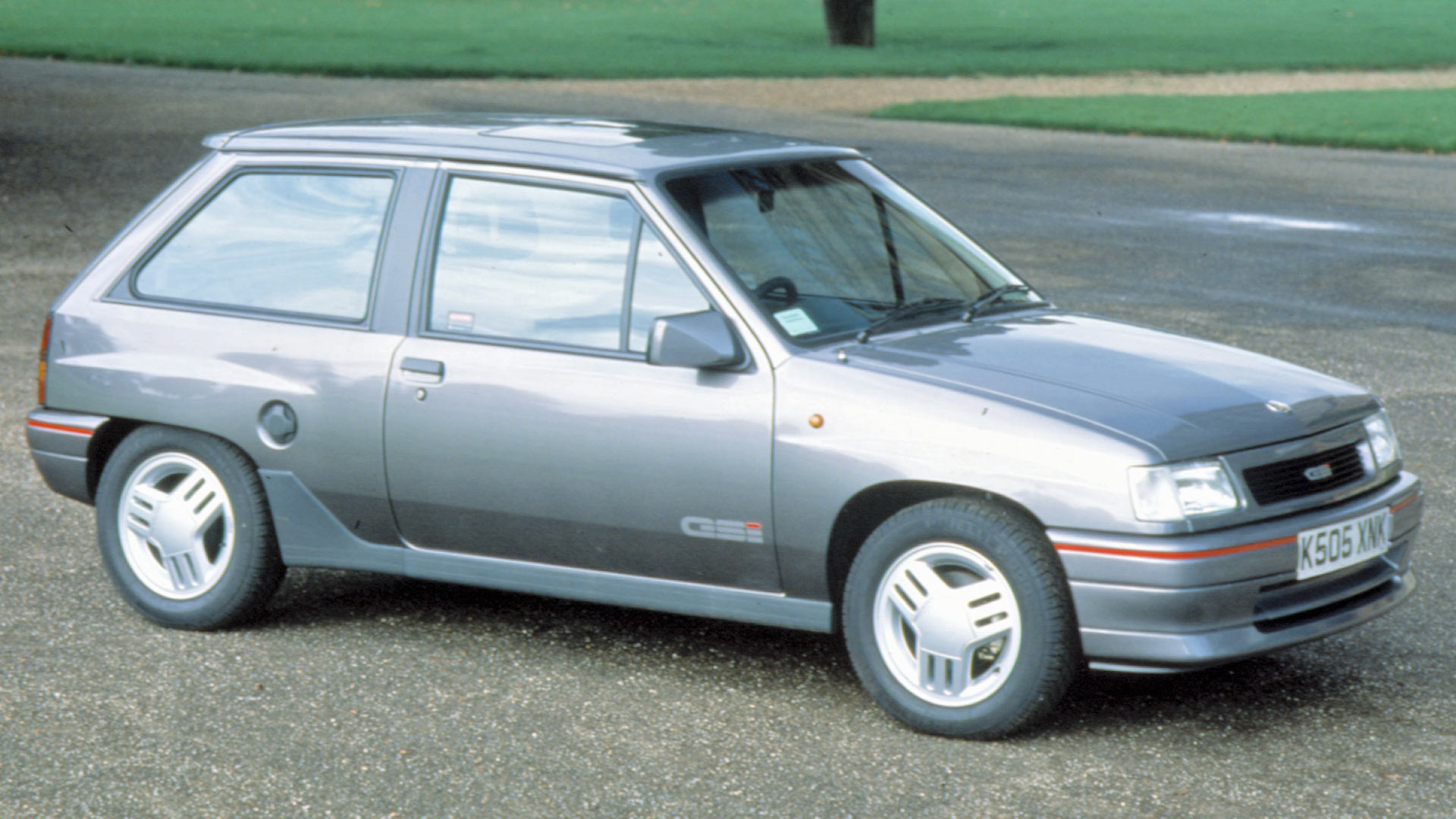
With a facelift for 1990, the GTE morphed into the Nova GSi for the UK market, but retained the same rorty 1.6-litre engine. Three-spoke alloy wheels were a signature feature of both GTE and GSi models.
The Nova GTE and GSi etched themselves into UK motoring culture, becoming beloved by joy riders and Max Power modifiers alike during the 1990s. It means well-preserved examples are now particularly hard to find…
A legend of the 1990s
When Vauxhall chose to adopt the Corsa name for the second-generation supermini in 1993, it also kept the GSi badge for a performance model.
Powered by a Lotus-honed 16-valve 1.6-litre petrol engine producing 105hp, the Corsa GSi could sprint to 60mph in 9.2 seconds, and had a 121mph top speed. Three-spoke alloy wheels were present too, of course.
The second-generation Corsa GSi had a relatively short shelf life, with Vauxhall eschewing performance superminis until a VXR hot hatch model appeared for the fourth-generation Corsa in 2007.
Even if the 150hp 1.4-litre turbocharged engine was down on power compared to key rivals, it still proved to be an engaging warm hatchback, albeit lacking in those trademark three-spoke wheels.
Small, agile, and dynamic
More recent years have seen Vauxhall creating a new GSE sub-brand for electric performance models, beginning with the Mokka crossover.
An extreme Vauxhall Corsa GSE concept, shown at last year’s Munich Motor Show, also gives some hints at the direction the production version might take.
Designed for the Gran Turismo 7 video game, expect the 800hp output and dramatic aerodynamics to be toned down for the completed Corsa GSE.
Eurig Druce, Vauxhall managing director and Stellantis UK Group MD, said: “The GSE badge has already proven a great success with the Mokka GSE – now Vauxhall is bringing that electrifying high-performance to Corsa.
“The Corsa GSE will combine small and agile practicality with thrilling, pure electric, motorsport-inspired power and dynamics.
“Vauxhall has a proud heritage of hot hatches, and we’re excited to now offer customers those same thrills but combined with the electrifying performance and zero emissions in use of these new GSE models.”
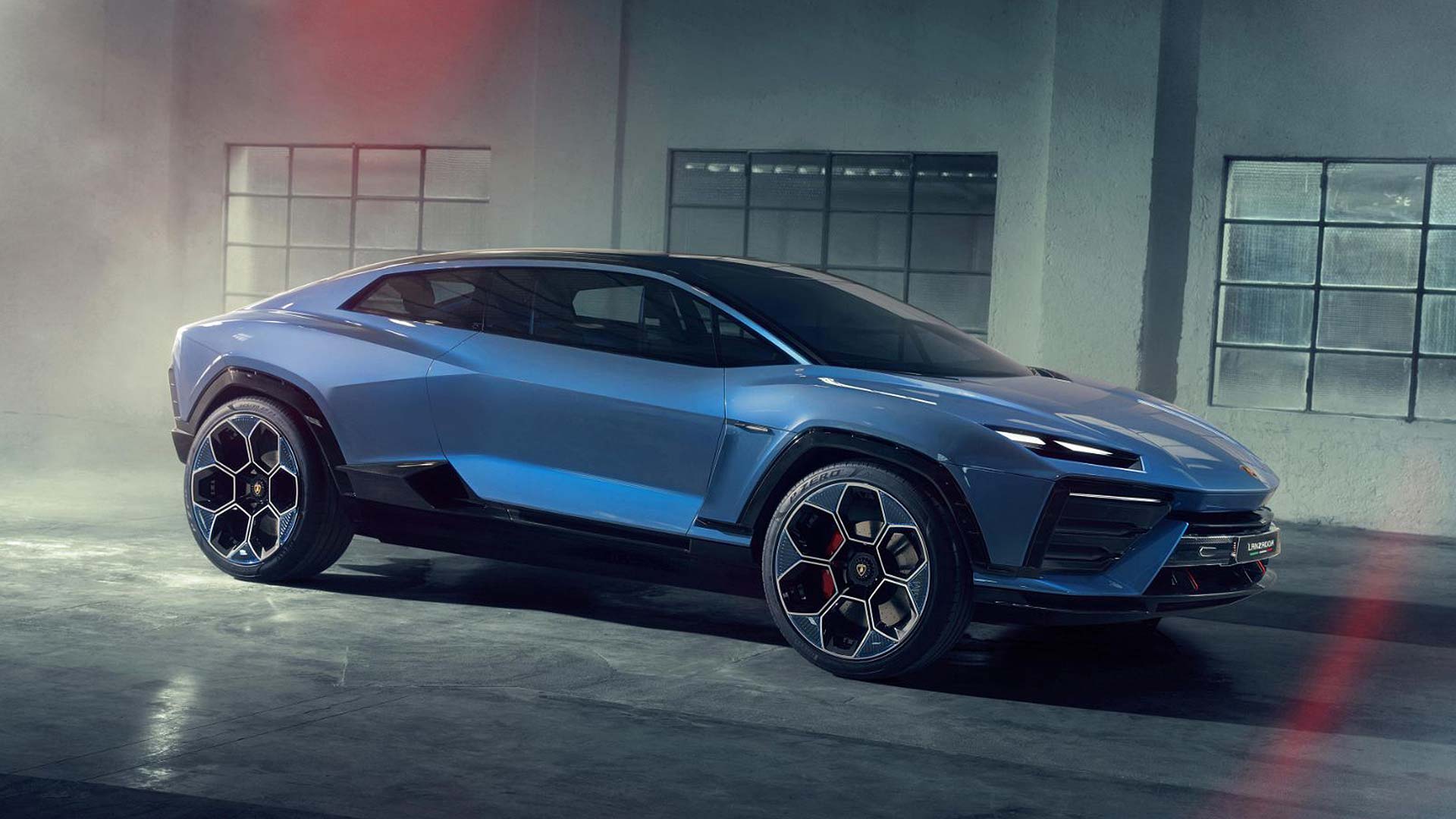
The Lamborghini Lanzador electric SUV has been scrapped, as the Italian supercar maker commits to a plug-in hybrid future.
First revealed as a concept in 2023, the Lanzador was to be Lamborghini’s fourth model line and its first EV.
In 2024, the Lanzador was released as a playable vehicle on the Roblox gaming platform. Sales of the three-door SUV were due to start in 2028.
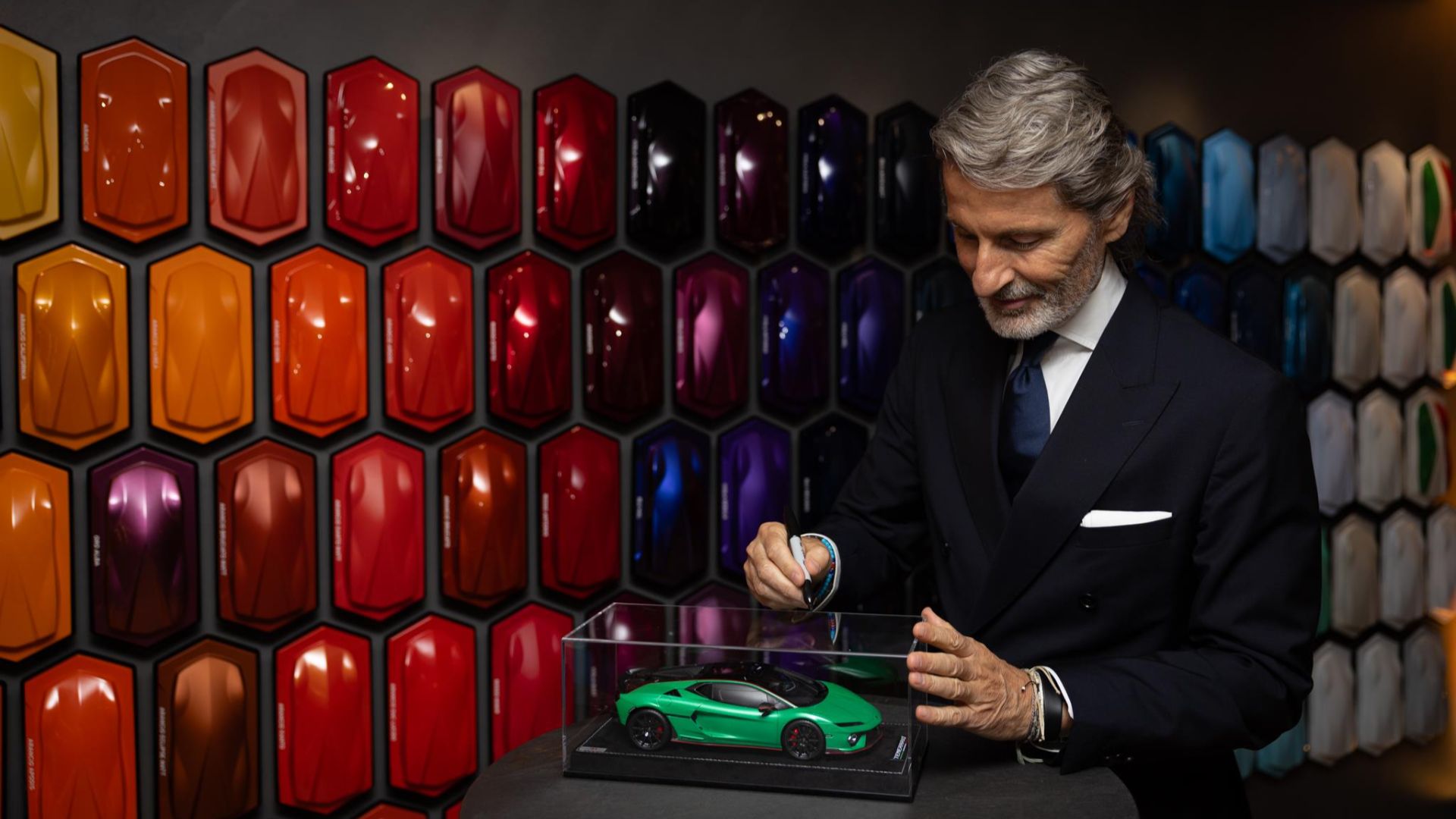
However, Lamborghini CEO Stephan Winkelmann has now confirmed the project has been scrapped, reports The Sunday Times. The newspaper cited ‘collapsing demand among [Lamborghini’s] well-heeled customers’.
Electric vehicle development, said Winkelmann, risked becoming “an expensive hobby” for Lamborghini.
Instead, the marque’s fourth model line will be a plug-in hybrid, in line with Lamborghini’s existing all-PHEV range.
The firm already sells the Urus SE SUV and its flagship Revuelto supercar, both of which are plug-in hybrids. And it recently caused a stir with the arrival of the new V8-hybrid Temerario.
EV acceptance is ‘close to zero’
Speaking to The Sunday Times, Winkelmann said, rather than ramping up, the “acceptance curve” for electric cars in the firm’s target market was flattening and “close to zero”.
Customers want an emotional experience and “EVs, in their current firm, struggle to deliver this specific emotional connection,” added Winkelmann. The key issue is a lack of noise.
The Lamborghini Lanzador was killed off in secret in late 2025, “after over a year of continuous internal discussion, engaging with customers, dealers, market analysis and global data”.
Winkelmann said that investing in an EV when the market and customer base are not ready would be “financially irresponsible towards shareholders, customers [and] to our employees and their families”.
In contrast, PHEVs offer the best of both worlds, he explained. Lamborghini will still consider making an EV, “but only when the time is right”.
A new AI tool to help motorists save money on car insurance has been launched, with the potential to slash more than £200 from the annual cost of cover.
Price comparison website MoneySuperMarket has developed its AI-powered ‘price optimiser’ to identify areas that could save its customers money.
By analysing individual quotes, the tool is intended to make the car insurance buying process more transparent.
During initial tests using the MoneySuperMarket website, some 83 percent of users saw a reduction in their insurance quote using the price optimiser tool.
By eliminating unnecessary aspects of cover, the drivers saved an average of £233 on each car insurance policy.
AI-powered car insurance savings
Once an initial insurance quote has been generated, the AI tool works through it in more detail, identifying which elements could be contributing to a higher price.
The price optimiser evaluates a wide range of car insurance factors such as mileage and payment type, along with the driver’s employment details and address.
When analysing mileage, the price optimiser can compare a car’s registration number against MOT data held by the DVLA. This can check a driver has not overstated their average mileage based on the actual distance driven in previous years.
Where drivers select third party or third party fire and theft coverage, the price optimiser can highlight where a fully comprehensive policy may actually result in a lower price.
Factors such as adding driving licence information to gain a more accurate quote, or considering if optional extras such as breakdown cover add value for money, are also included.
Small changes make a big difference
After running through the price optimiser process, the MoneySuperMarket website will instantly generate a new quote based on the choices made.
MoneySuperMarket also offers an AI chat function, which is designed to answer more detailed questions about specific policies, and whether the level of cover is sufficient.
Lis Barton, chief customer officer at MONY Group, which includes MoneySuperMarket, said: “Price optimiser makes it easier for people to see what really affects the cost of their car insurance. Small changes can make a big difference, and this tool shows that clearly so drivers can choose what works best for them.”
Demand for used cars priced at less than £5,000 is rocketing, as a record number of new drivers seek to buy their first car.
A total of 953,010 practical driving tests were passed in 2025, the highest number since records began back in 2008.
And these eager new drivers are creating a sharp rise in demand for affordable used cars.
Data from used car marketplace Gumtree shows that cars priced under £5,000 reflect the typical first-time buyer budget. And they have attracted nearly 10 million views in the first weeks of 2026 alone.
Used car dealers are reacting accordingly, with enquiries and replies also increasing 25 percent in January 2026.
“Demand for sub-£5,000 vehicles is incredibly strong,” said Gumtree’s Louis Maxwell. “We’re seeing a new generation of drivers turning to Gumtree as their first stop for affordable, reliable cars.”
Nearly half of 2025’s successful driving test passes were estimated to be people aged under 21.
Most in-demand first cars
Gumtree’s data from the first 40 days of 2026 reveals clear preferences, said Maxwell: “Practical hatchbacks from trusted brands with low running and insurance costs.”
Ford and Vauxhall duly top the brand rankings, thanks to a reputation for reliability, low ownership costs and wide parts availability.
“These brands have consistently been top choices for first-time drivers, and the data shows that trend is only strengthening.”
The Vauxhall Corsa takes the top car spot, says Maxwell, thanks to its affordable running costs and easy availability.
However, the Ford Fiesta follows it closely – “continuing its legacy as one of the UK’s most popular first cars”.
“If you have a second car you no longer need, or you’re considering upgrading, now is a great time to list it and make some extra money,” said Maxwell.
“Sellers are benefiting from more views on budget-friendly listings, faster enquiries as newly-qualified drivers begin their search, and higher competition among buyers which is helping sellers secure better prices.
“It’s proving to be a strong start-of-year market thanks to many drivers actively looking for their first car.”
Motability is partnering with a new project to see how electric cars could help deliver power to disabled and medically dependent households during power cuts.
The Power Wheels project is backed by energy regulator Ofgem, and is now operating in the North East.
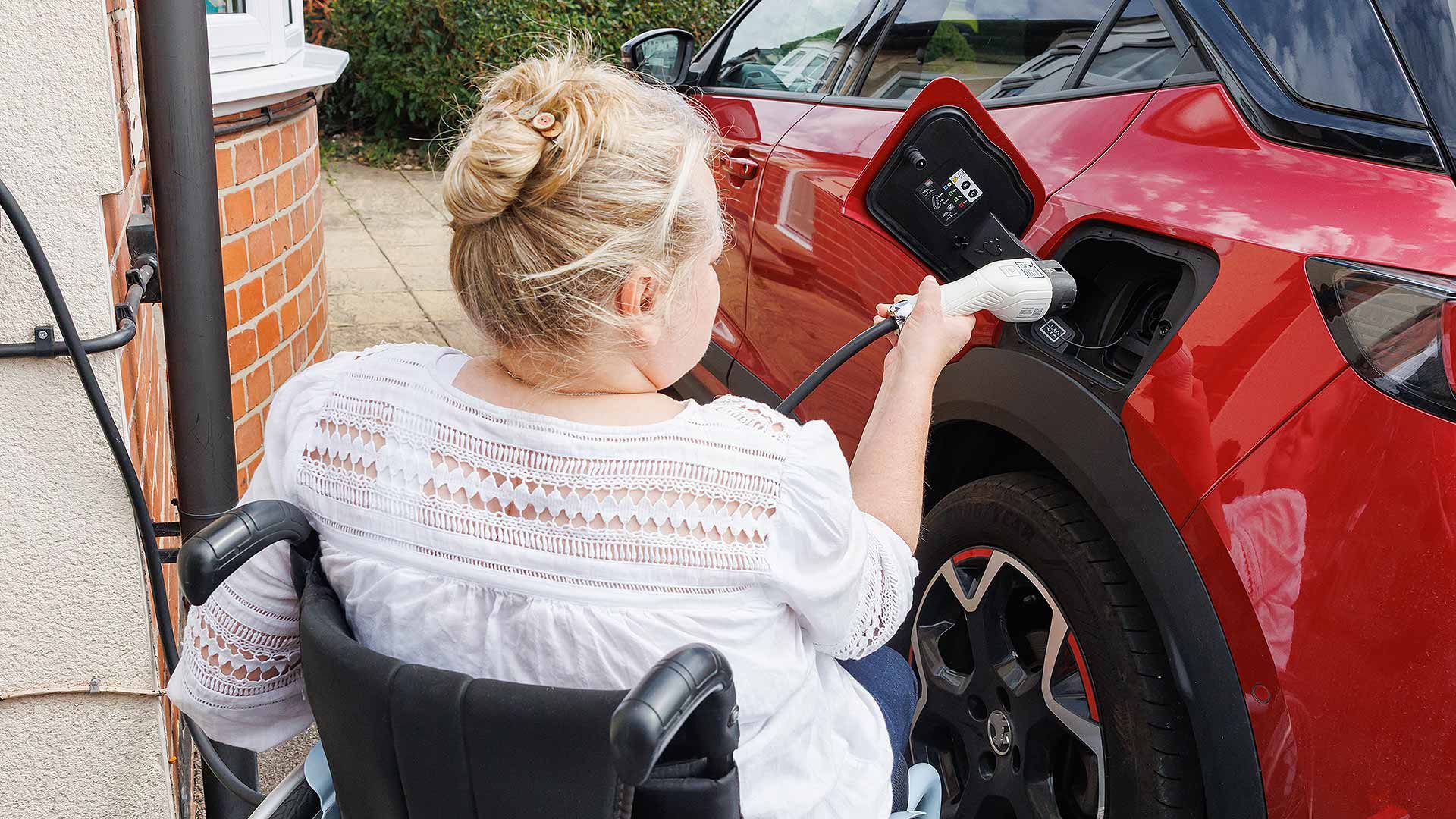
The aim is to explore how an EV could temporarily act as a backup power source during a power outage. Crucially, this could help keep essential medical equipment running without mains electricity.
Motability Operations – the company that runs the Motability Scheme – has already been working with disabled customers to find out how electric car energy services could be used safely and reliably.
The new project is an interesting further development in the potential for electric cars to act as mobile power stations.
Many new models already offer ‘vehicle-to-load’ charging, or V2L. Via an adapter, devices with a three-pin plug can be powered by an EV – allowing them to act as an emergency backup during power outages.
The new initiative will investigate how this could be extended to make electric cars even more useful for medically dependent households.
Supporting disabled people’s freedom
Initial findings have already been used to provide straightforward information on the safe use of power from an EV. Guidance has also been created to help disabled drivers better understand when an electric car needs charging.
“As the UK moves to electric vehicles, it’s vital that this transition supports disabled people’s freedom and independence, and that new technologies are designed around real lives and needs,” said Motability Operations chief executive, Andrew Miller.
The new initiative “gives us the opportunity to work closely with customers and partners to explore how EVs could offer more than mobility [and] support their medical resilience, helping people feel safer and more confident when disruption happens.”
Motability says the next stage will see it collaborate with 30 Scheme customers to explore how the technology could work for people with varying disabilities and conditions.
This feedback will then be used to design systems for future testing.
An Aston Martin Vantage used as the official Formula 1 safety car at the 2021 Abu Dhabi Grand Prix is being offered for sale.
Having played a part in one of the most controversial finishes in modern F1 history, the Podium Green Vantage will likely remain a talking point for decades to come.
Aston Martin’s recent announcement that it will no longer supply safety cars to Formula 1 arguably makes the Vantage even more collectible.
Currently advertised for sale at JCT600 in Leeds, this is clearly not a regular secondhand Vantage – a fact reflected in its substantial asking price.
Guaranteed to lead the pack
Aston Martin had announced it would return to Formula 1 for the 2021 season, bringing the classic British marque back to the grid after more than 60 years away.
Along with its AMR21 racing cars on track, Aston Martin also became a supplier of official safety cars to the series. Mercedes-Benz had held a monopoly on this role since 1996, but would now share the duties with the British brand.
Making its safety car debut at the 2021 Bahrain Grand Prix, the Aston Martin Vantage came equipped with a 4.0-litre twin-turbocharged V8 engine sourced from Mercedes-AMG.
Podium Green paintwork was used for the safety car’s exterior, with a dramatic bodykit and high-visibility light bar. The interior was also prepared for the timing and communications equipment required by Bernd Maylander and his co-driver.
A road-going Vantage F1 Edition was also offered, allowing Aston Martin customers to emulate the real safety car.
The controversial F1 title decider
Three Vantages were prepared for official Formula 1 safety car duties, with ‘SC02’ VIN N00045 being the second of two offered privately for sale.
First registered in 2018, it served as the safety car at 20 Grand Prix weekends between 2021 and 2023, accumulating some 4,280 kilometres (2,659 miles) on-track.
However, no time leading the pack was more controversial than the 2021 Abu Dhabi Grand Prix, when SC02 was deployed following a crash by the Williams driver, Nicolas Latifi.
Race director Michael Masi then allowed the cars of title contenders Sir Lewis Hamilton and Max Verstappen to ‘unlap’ themselves, creating a final lap fight for the race win – and the 2021 drivers’ championship.
With Verstappen having fresher soft tyres on his Red Bull car, he easily dispatched Hamilton and claimed his first Formula 1 title.
Own a piece of Formula 1 history
The fallout from the safety car intervention at the 2021 Abu Dhabi Grand Prix was immense, seeing a complete FIA inquiry and the removal of Michael Masi as race director.
It remains a major talking point for modern Formula 1 fans, with SC02 right at the centre of the controversy.
JCT600 Aston Martin Leeds is asking £599,990 for the Vantage, which comes signed by current Formula 1 drivers Fernando Alonso and Lance Stroll.
Short of buying a Red Bull Racing RB16B, or perhaps a Mercedes-AMG F1 W12, there are few more significant ways to own part of 2021 F1 world championship history.