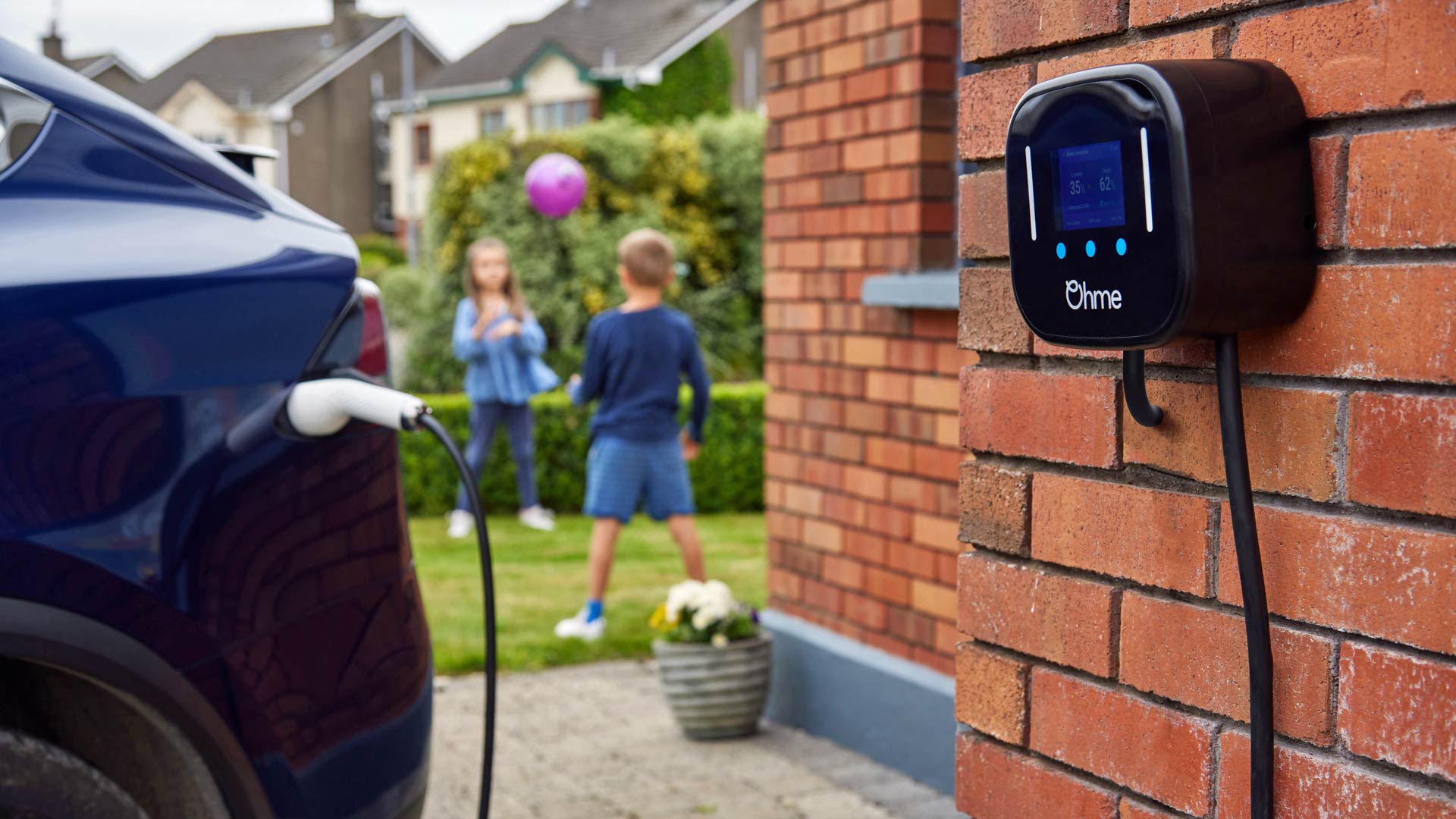
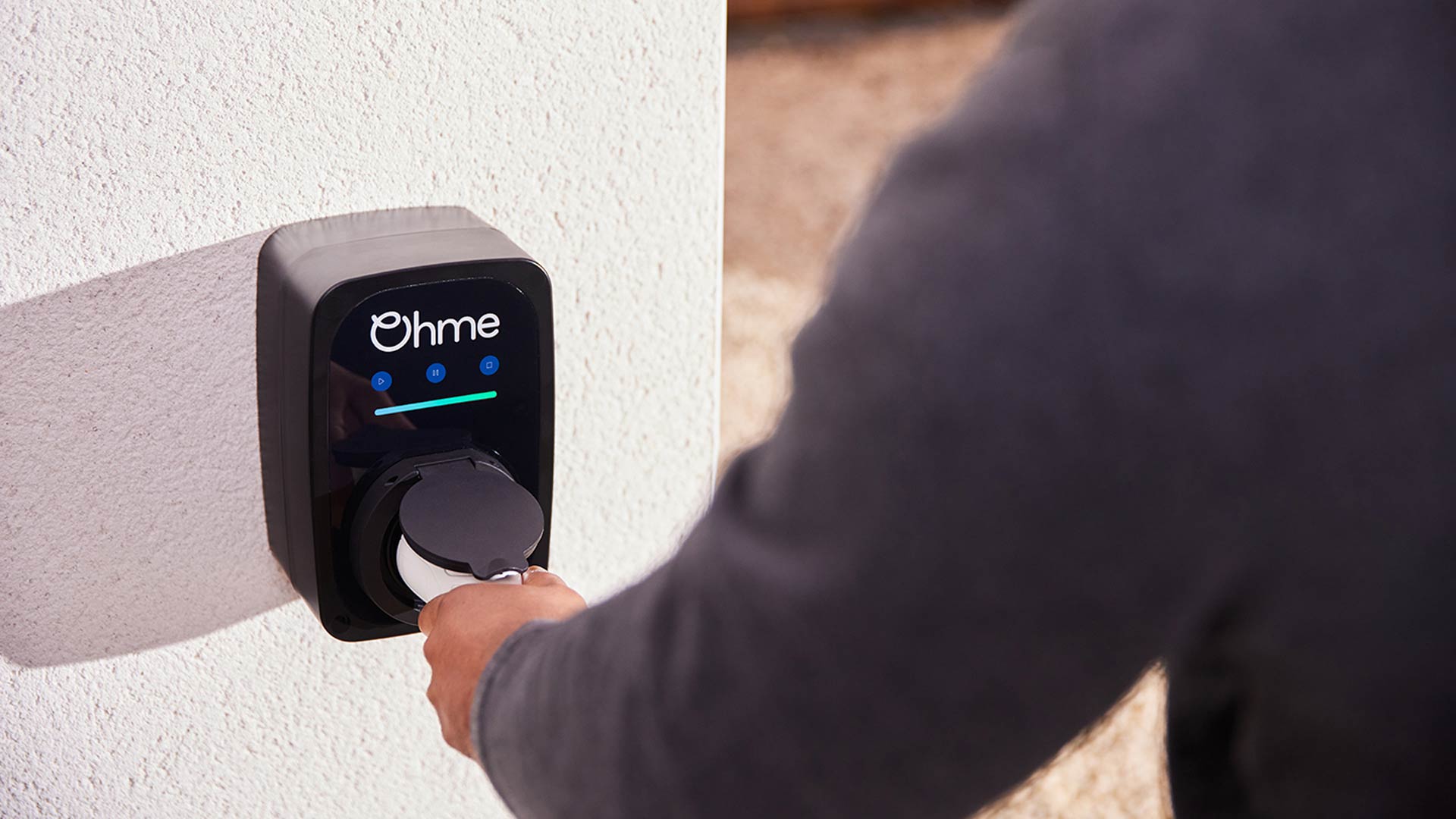
A partnership between Currys and Ohme will see home EV chargers available to buy in stores.
Offering EV chargers directly to consumers represents a first for the electrical retailer, which has 298 stores spread across the UK.
Ohme charging devices will initially be made available online by Currys. Sales will subsequently be rolled out across 50 of the company’s flagship stores.
Smart tech for cheaper charging
Ohme currently offers two smart EV charging devices, both of which are designed to be compatible with tariffs from all energy providers.
New electric vehicle chargers sold since June 2022 must come with smart functions included. This allows the charger to connect with the electricity grid intelligently, meaning the user can take advantage of off-peak hours.
Making use of a 7p per kWh smart tariff would see a driver covering 6,800 miles a year pay just £119 a year for EV charging. By comparison, a 24.5p/kWh standard variable tariff would cost £416 for the same mileage.
Ohme also notes that driving the same distance in an equivalent petrol car would cost £1,100 in fuel.
‘A natural step’ for customers
“With EV sales in the UK up more than 10 percent this year, this new partnership between Currys and Ohme chargers was a natural step to offer to our customers,” said Zoe Lucid, senior buyer at Currys.
“Ohme’s award-winning chargers and reputation for excellent customer service meant it was the obvious choice for Currys’ customers, helping them to make more sustainable choices combined with cutting-edge technology.”
Ohme has become the official charging provider for the Volkswagen Group, Volvo Cars, Mercedes-Benz and Hyundai in the UK. Buyers of new electric Vauxhalls can receive a free Ohme charger, too.
Restoration specialist Kingsley Re-Engineered has announced a ‘fresh take’ on the original Range Rover.
The new Range Rover Classic KSR sees particular attention paid to the luxury SUV’s interior, along with selected performance upgrades.
More than two decades of experience in upgrading the Range Rover Classic have been channelled into the KSR, described as the ‘most superior’ Kingsley creation to date.
Upwards of 500 Range Rovers and Land Rovers have been enhanced by Kingsley since 2001, with the Oxfordshire-based company now under new group ownership and management.
Enhanced and upgraded
Kingsley will offer the Range Rover Classic KSR in both three- and five-door formats, making use of donor vehicles manufactured before 1993.
Buyers can customise the KSR to their exact specification, with bespoke paint colours applied to the restored chassis and bodywork.
A 4.6-litre ‘High Torque’ V8 engine is standard, serving up 270hp and 310lb ft of torque. Combined with a four-speed automatic transmission, it accelerates the Range Rover from 0-60mph in 9.8 seconds. Top speed is more than 120mph.
Various Chevrolet small-block V8 engines and a manual gearbox are on the options list. A big brake kit and Kingsley’s new TracTive adaptive suspension, offering driver-selectable levels of damping, are both fitted as standard.
A re-engineered interior
On the inside is where the KSR makes its biggest statement, featuring a new dashboard designed in-house by Kingsley. This includes a new instrument panel – and even a longer windscreen demister vent.
There is a digital display, but Kingsley has retained classic elements such as wood veneer, ensuring the KSR still feels like an original Range Rover. As with the exterior, extensive personalisation is possible.
Apple CarPlay connectivity is standard, along with integrated USB-A and USB-C charging ports. There are also cup holders for an extra touch of modernity.
Kingsley has updated the Range Rover Classic’s air conditioning system, too. Known as a weak point on the original car, the KSR should keep its occupants comfortable in all climates, while still retaining a traditional look.
‘Modernised without compromise’
John Sawbridge, managing director of Kingsley Re-Engineered, commented: “The KSR represents a monumental leap forward, harnessing the unparalleled expertise of our extraordinarily talented 21-strong team and collaborating with the industry’s top-tier supply partners, all while answering our customers’ wishes and requests.
“The KSR is the ultimate embodiment of our groundbreaking vision for the future. We’ve completely modernised the Range Rover Classic without compromising an ounce of the timeless charm or beauty of this iconic car.”
Orders can now be placed for the KSR, with worldwide delivery available. Prices start from £264,000 including VAT – but before any personalisation, of course.
The 2024 Rolls-Royce Ghost has been unveiled, destined to be one of the last models from the British marque to use a V12 engine.
Rolls-Royce has committed to a battery-powered future, with a plan to build electric cars only from 2030 onwards.
In the meantime, the company promises the Ghost Series II will be ‘the most technologically advanced and driver-focused V12 Rolls-Royce’ ever created.
Along with revised styling and enhanced technology inside, a performance-orientated Black Badge version of the Ghost Series II will be offered from launch.
An illuminating experience
The Ghost Series II gains updated headlights and daytime running lights, along with an illuminated Pantheon grille. New tail lights incorporate discreet ‘R’ monograms, and buyers can choose from two finishes for the 22-inch alloy wheels.
Rolls-Royce offers a palette of more than 44,000 paint colours for the Ghost Series II, or you can reserve one for your personal use only through the company’s Bespoke service.
On the inside, a revised full-width glass panel includes a central media screen that runs the marque’s Spirit operating system. This allows the colour of the digital instrument panel to be matched to the exterior of the car.
A new Spirit of Ecstasy cabinet on the dashboard houses an analogue clock and a mirror-polished figurine. Grey Stained Ash (see above) is a new interior trim option, alongside an endless array of leather colours and stitching styles.
Back in Black
When the second-generation Ghost was launched, Rolls-Royce made customers wait for the performance Black Badge model. However, the Series II car will be available from the off.
As before, it uses a tuned version of the twin-turbocharged 6.75-litre V12. Power and torque are increased by 29hp and 37lb ft versus the 570hp and 605lb ft of the regular Ghost.
A Sport mode would be too uncouth for a Rolls-Royce, so a ‘Low’ setting increases gear shift speeds by 50 percent, and produces a ‘subtly more voluble note’ from the exhaust system. All-wheel drive and all-wheel steering help to maximise the Black Badge’s agility.
Plenty of darkened chrome trim, and a unique lower front bumper, also mark out the Black Badge model. And inside, a new ‘Technical Carbon’ trim enhances the car’s performance image.
‘A self-assured expression’
Chris Brownridge, chief executive of Rolls-Royce Motor Cars, commented: “Ghost is renowned as a uniquely expressive, agile, and self-assured expression of the Rolls-Royce brand.
“At our clients’ request, this new Series II iteration remains faithful to these principles, incorporating a potent and uncompromising engine and the essential potential for Bespoke. Meaningful exterior and material updates make an even more expressive and impactful statement.”
As with recent modern Rolls-Royce models, personalisation will play an important part in shaping each Ghost Series II. The marque is expanding its network of Private Offices around the world, ensuring buyers can tailor a car to their exact specification.
In addition, the company is also looking to expand its Goodwood headquarters, allowing its Bespoke department more space in which to work.
Kia has unveiled an electrified version of the first car it sold in the UK – part of the celebrations for the South Korean marque’s 80th anniversary.
Donated from Kia’s own heritage fleet, the 1996 Pride 1.3 LX has undergone a restomod makeover, including a fully electric powertrain.
A collaboration between Kia UK and EV conversion specialists Electrogenic, the Pride EV retains front-wheel drive and even the five-speed manual gearbox of the original car.
Back to the future
The conversion removes the Kia’s 1.3-litre petrol engine, which originally endowed the Pride with just 60hp and 87lb ft of torque.
The new electric motor serves up 107hp, along with a considerable 173lb ft of torque. This makes for a 77 percent increase in horsepower, and 99 percent more twist action.
A 10kWh battery beneath the bonnet, plus a second unit under the boot floor, give the Pride EV a potential range of 120 miles.
Impressively, the electric conversion has only added 20kg to the diminutive Pride. It now tips the scales at 870kg, making it a true featherweight compared to modern EVs.
Engage Sport mode (yes, really)
Electrogenic’s work includes preserving the Pride’s original five-speed manual gearbox, converting this to work with the electric motor.
Even more impressive is the new three-stage driving mode selector, giving the choice of Eco, Auto and Sport settings.
Eco mode limits the electric motor to a similar level of performance as the petrol-powered Pride, while Auto allows it to operate like a conventional EV with 80hp. Regenerative braking boosts the battery charge, too.
Select Sport mode, however, and the Pride EV generates the maximum amount of power, helping it accelerate from 0-62mph in around eight seconds. An original Pride needed nearly 12 seconds for the same sprint.
A Type 2 charging connector replaces the Pride EV’s fuel filler, and is connected to a 3.3kW onboard charger. Fully recharging the Kia should take around six hours.
Bursting with Pride
The exterior of the Pride EV has been resprayed in Kia’s modern White Pearl hue, with the front and rear lights upgraded for better visibility.
On the inside, the seats are retrimmed in period-correct cloth, but with new lime green piping that references Kia’s flagship EV6 GT. This colour also appears on the floor mats and brake calipers.
As with all Electrogenic conversions, none of the Pride’s bodywork or underpinnings has been modified. It means the electric powertrain could be removed, making the EV conversion totally reversible.
Expect to see the Pride EV making more public appearances, as Kia works towards 15 electric models by 2027. Sadly, the Pride EV will not be among them…
A new electric car is joining the Hyundai range: meet the compact and affordably priced Inster.
Aimed at urban drivers, the Hyundai Inster promises to be easy to drive and park in the city, and it won’t break the bank either.
Known in South Korea as the Hyundai Casper, the Inster measures 3,595mm in length. It uses the same platform as the Kia Picanto and Hyundai i10.
In the UK, buyers can choose from a pair of trim levels, along with two different batteries depending on the model picked.
Small in size, big on space
The smallest modern Hyundai has been developed as a four-seater, in contrast to five-seat EV rivals such as the Dacia Spring.
Despite this, Hyundai claims the Inster will be a practical car, helped by walk-through access to the front seats. In addition, all seats can be folded down flat, like a futuristic reinterpretation of the original Fiat Panda.
Strong levels of standard equipment are promised, with 15-inch alloy wheels, rear parking sensors and a rear-view camera on the entry-level ’01’ trim. A 10.25-inch central touchscreen and digital instrument panel are included as well.
Moving up to the ’02’ version adds 17-inch alloy wheels, front parking sensors, privacy glass and LED projection headlights. Ambient interior lighting and a wireless smartphone charging pad are also fitted.
Urban mobility machine
The front-wheel-drive Inster has the option of two electric powertrains, although both are naturally aimed at city drivers.
A 42kWh battery pack is standard on the Inster 01, offering the potential for an official, WLTP-tested range of up to 203 miles. Combined with a 97hp electric motor, the 0-62mph dash should take 11.7 seconds.
Optional on 01 trim, and standard on the Inster 02, is a larger 49kWh battery. This increases power output from the electric motor to 115hp, cutting the 0-62mph time to 10.6 seconds. It also results in a range of 223 miles.
An 11kW onboard charger is standard, as is a heat pump to maximise efficiency. Using public charging devices of up to 150kW, it should require 30 minutes to replenish the Inster from 10 to 80 percent charge.
Ready for a tour of Britain
Prices for the Hyundai Inster will start at £23,495 for the 01 when fitted with the 42kWh battery pack. Opting for the 49kWh battery with the same trim level lifts the asking price to £25,045.
Topping the range is the Inster 02 49kWh, set to cost £26,745 before options such as metallic paint or a two-tone roof finish are added.
Paying by finance, an Inster 01 42kWh could cost £248.57 a month with a £4,000 deposit. This is based upon a 48-month contract, allowing up to 8,000 miles each year.
UK deliveries of the Inster are anticipated to begin in the spring of 2025. However, the diminutive EV will first be embarking upon a tour of 86 Hyundai UK dealerships, covering the country between October and December 2024.
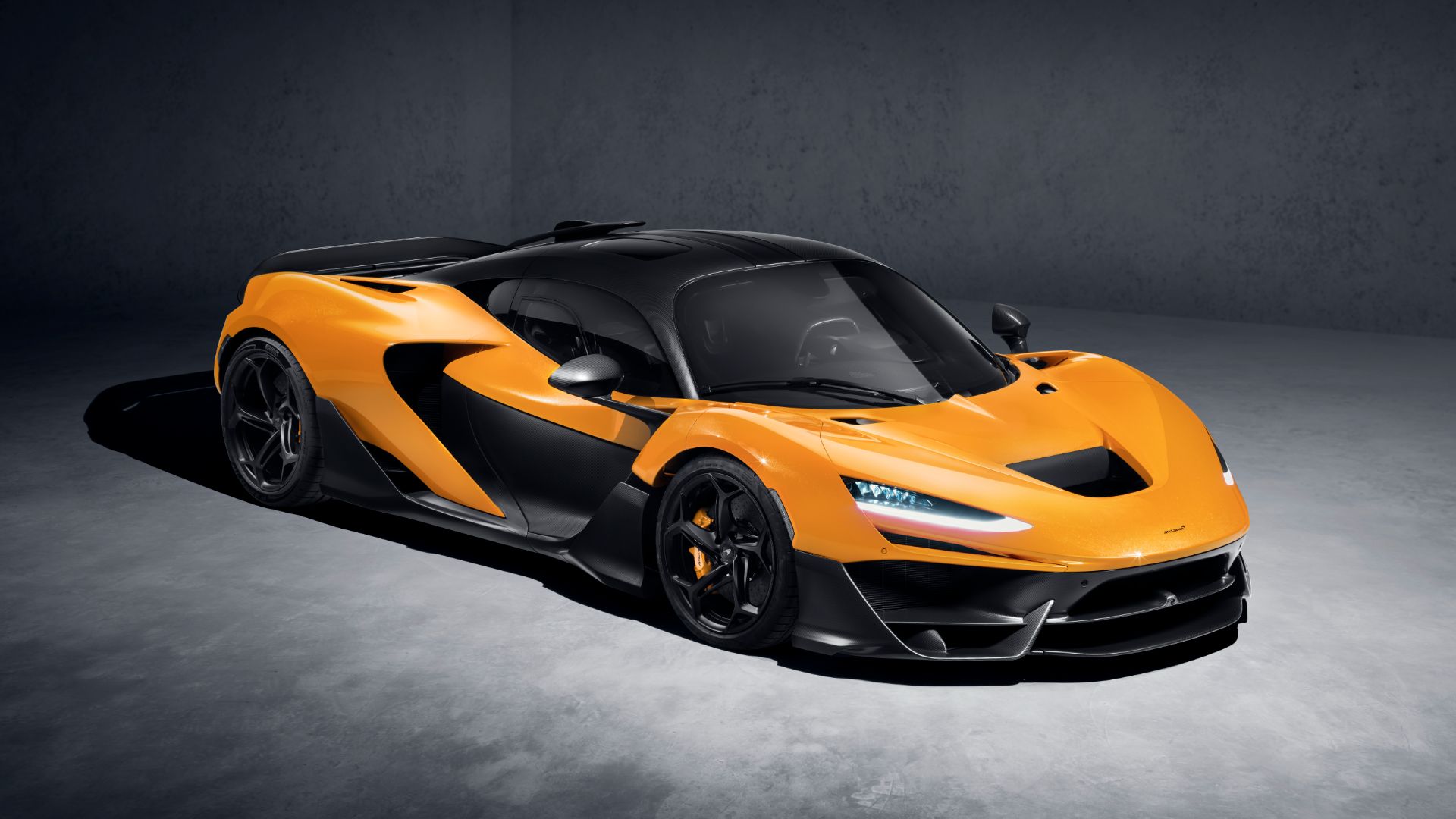
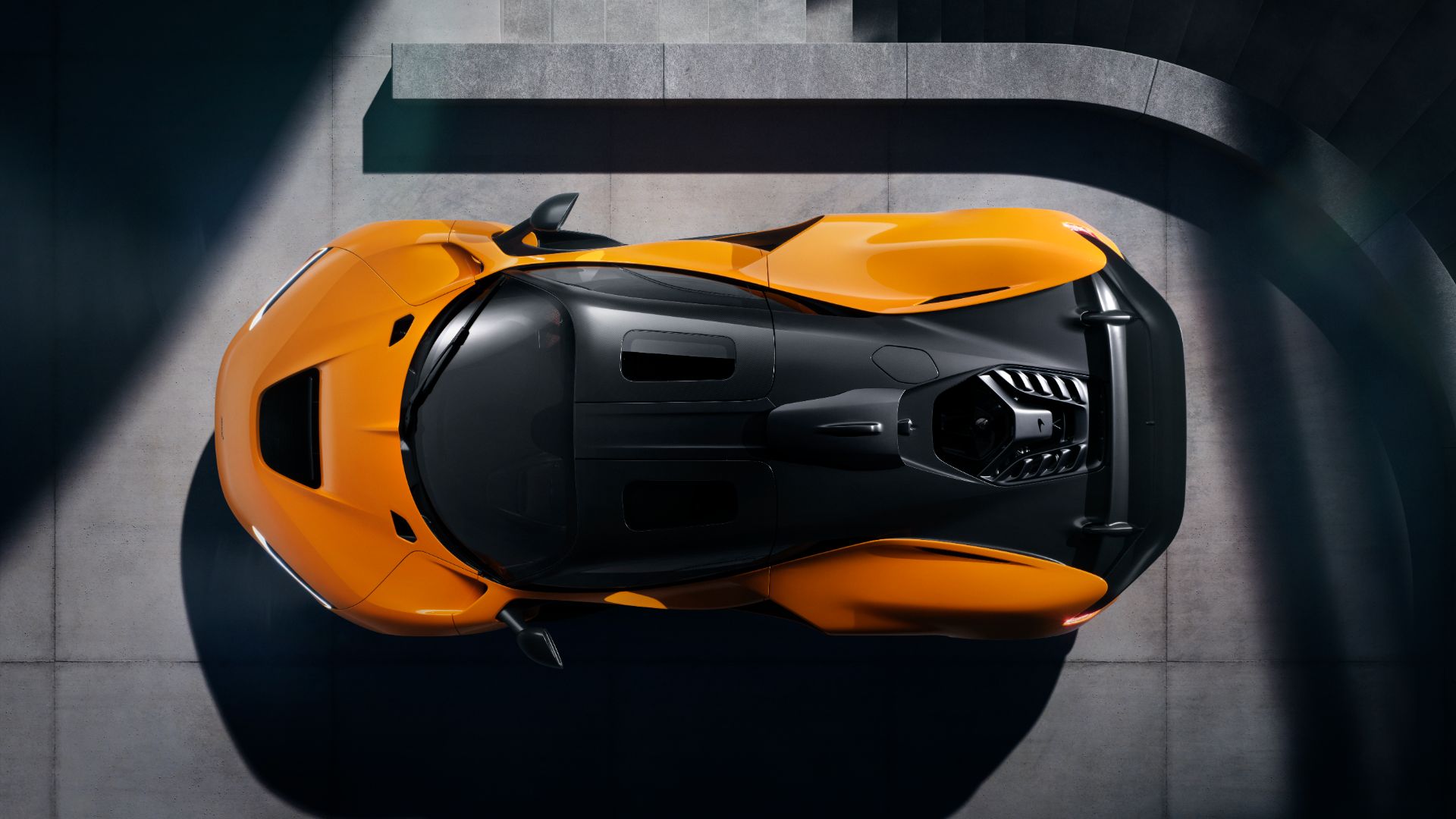
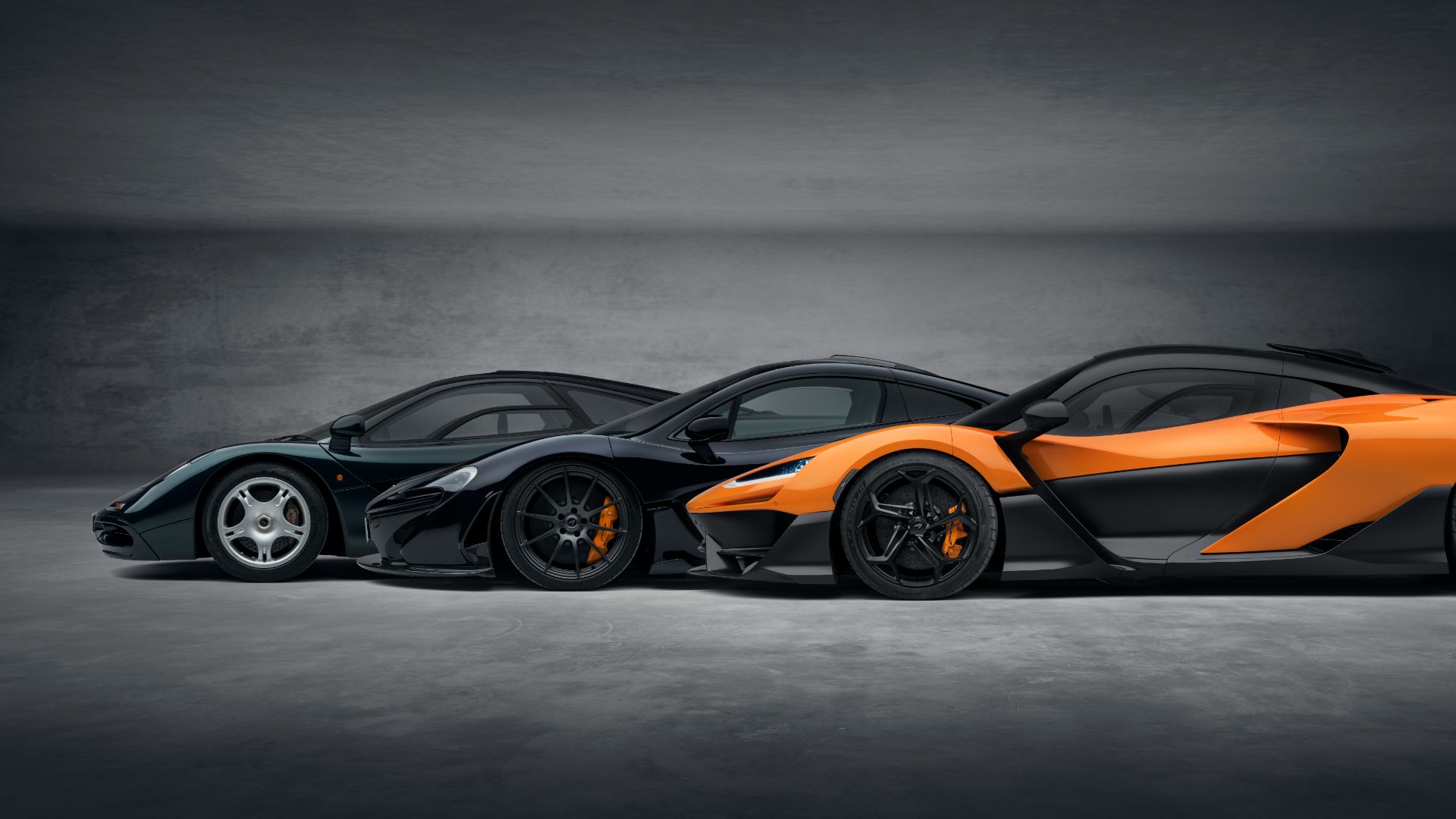
When the opening gambit is ‘a successor to the McLaren F1 and P1’ – two of the greatest supercars in history – you know what follows will be something special. Or it certainly needs to be.
Welcome to the inner sanctum of a futuristic, semi-subterranean factory in Woking: home to McLaren’s road and racing car operations. The wraps are about to come off a new ‘1’ car, a once-in-a-generation flagship that stands above even Ultimate Series models such as the Senna, Elva and Speedtail.
Its name is W1, with a ‘W’ that stands for ‘world championship’. The car will make its public debut on the 50th anniversary of Emerson Fittipaldi winning McLaren’s first drivers’ and constructors’ F1 world championships, but I’m here several weeks beforehand for a secret preview. Time to reveal Britain’s new hypercar hero.
Swifter than a Senna
Like the ground-breaking P1 of 2013, the W1 is a plug-in hybrid, combining a 4.0-litre twin-turbocharged V8 engine with a 1.4kWh battery and motorsport-grade electric motor. Total outputs are 1,275hp and 988lb ft of torque, all of which goes to the rear tyres via an eight-speed dual-clutch gearbox and electronic differential.
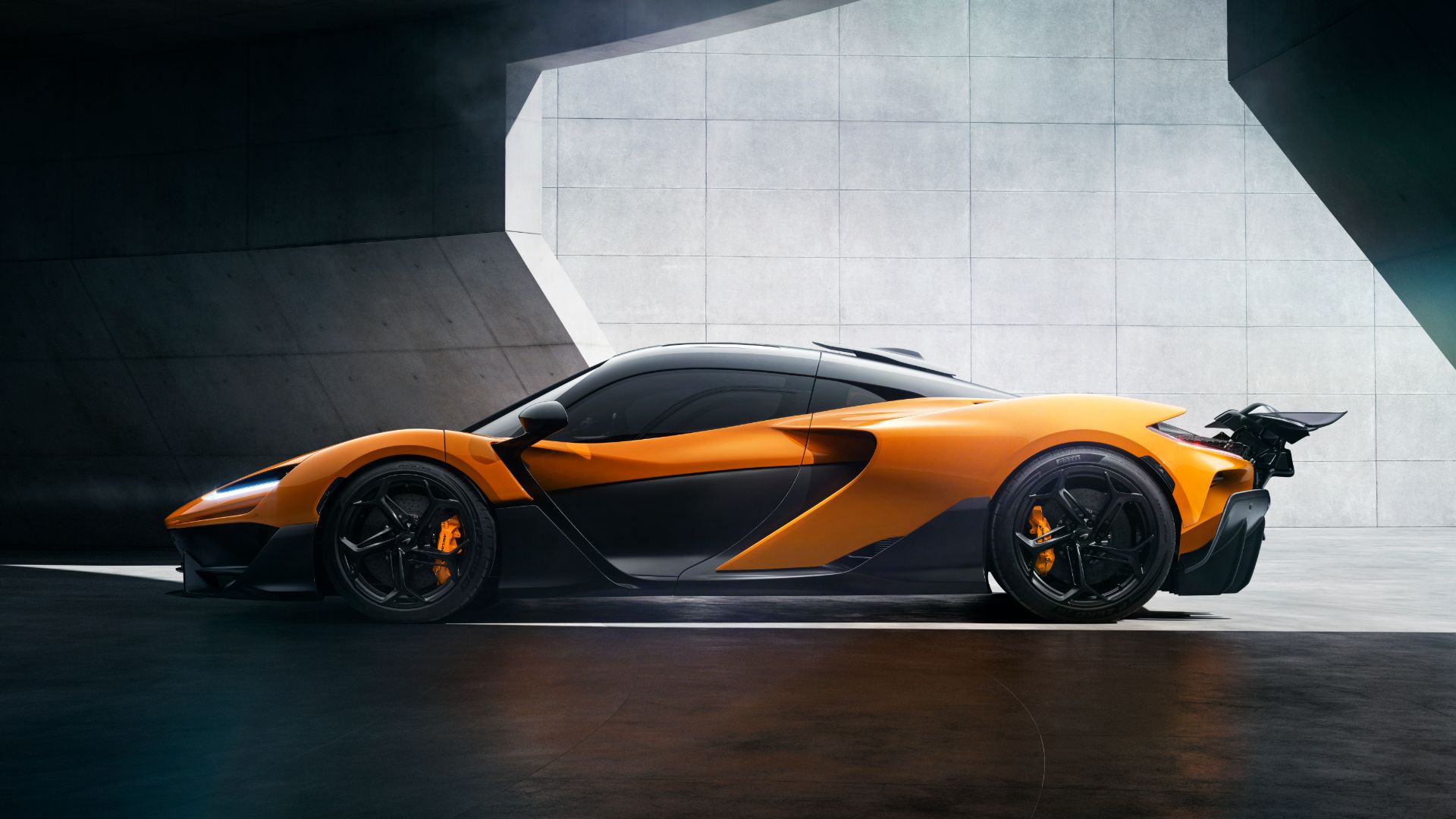
In a carbon-bodied car that weighs 1,399kg without fluids (reckon on a kerb weight of around 1,500kg), that means 0-62mph in 2.7 seconds and 0-186mph in 12.7 seconds, plus a limited top speed of 217mph. Helped by shape-shifting aerodynamics, including a patent-pending new Active Long Tail, the W1 can also lap Nardo’s handling circuit – used by numerous carmakers for testing – fully three seconds quicker than a McLaren Senna.
Only 399 examples of the W1 will be made, and all have been sold in advance, despite a base price of £2 million before any personalised touches from McLaren Special Operations (MSO) are added. Value for money? It’s a loose concept in this rarefied market, but when you consider the going rate for a McLaren F1 is about £20 million…
The W1’s ‘secret weapon’
If a McLaren with a mid-mounted 4.0 V8 sounds familiar, think again. The W1’s engine is a clean-sheet design and “not a development of the existing M840T V8 or a scaled-up version of the V6 in the Artura,” insists W1 line director, Alex Gibson. With a 90-degree angle, flat-plane crankshaft and soaring 9,200rpm redline, it brings 928hp to the party on its own.
The W1’s battery offers a tiny EV range of just 1.6 miles, but does mean you can slip away silently without waking the neighbours. Combined with a radial flux e-motor (similar to those used in IndyCar racing), it also counters the effect of any turbo lag, serving up instant electric torque from zero rpm.
Aluminium rocker switches on the instrument binnacle offer access to three modes for the powertrain and chassis: Comfort, Sport and Race. The latter, says chief aerodynamicist Robin Algoo, is the W1’s “secret weapon”. So how does it work?
Race mode for track use
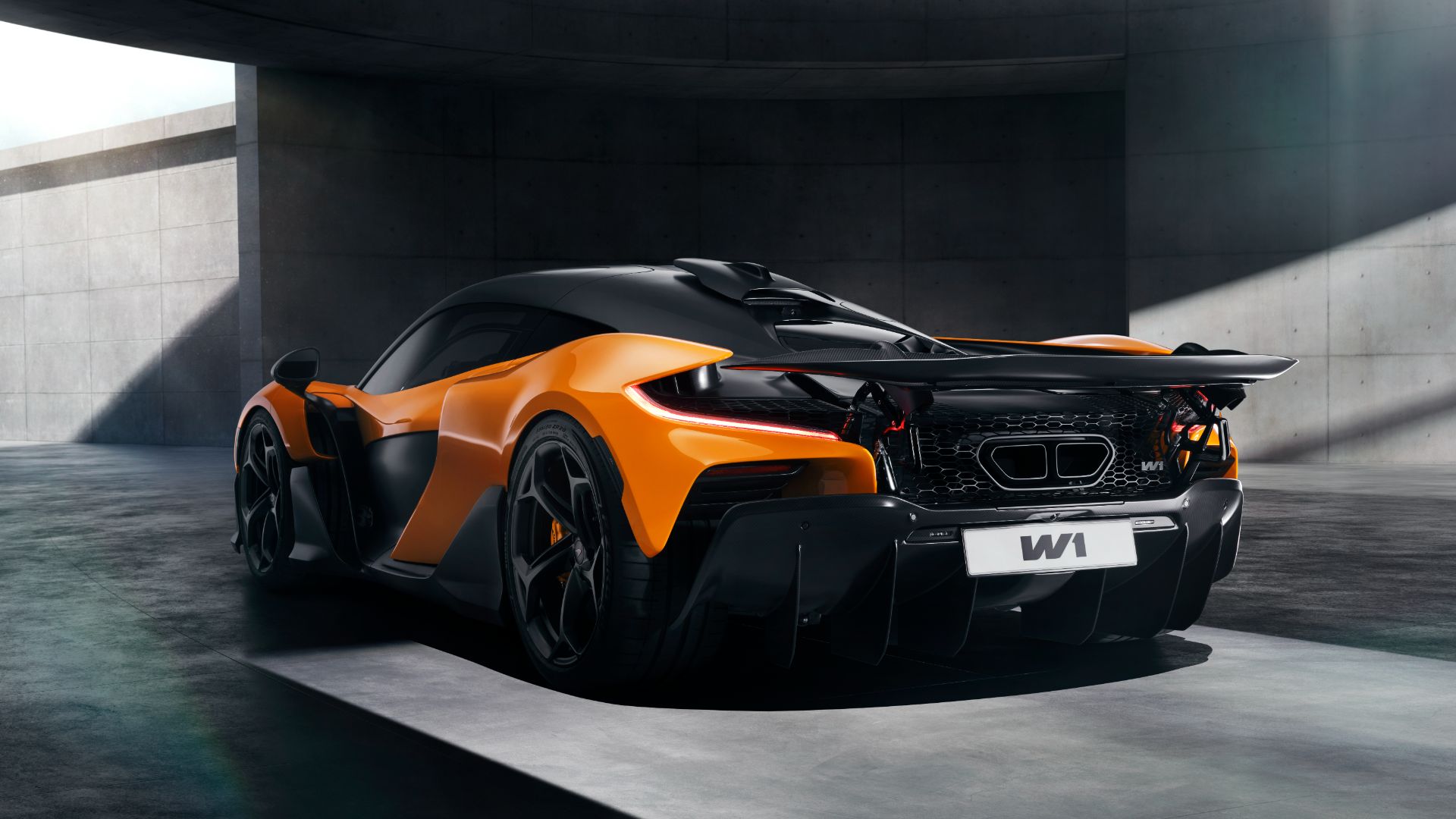
Switch into Race mode and the W1 drops down by 37mm at the front and 17mm at the rear. Actuated by four electric motors, its Active Long Tail also pivots and extends rearwards by 300mm, effectively lengthening the working area of the diffuser.
In this configuration, downforce increases to a substantial 1,000kg at 174mph – up to five times more than the standard road setup, and all without the need for a high-rise rear wing.
However, it’s worth noting that, due to the Active Long Tail protruding well beyond the rear bumper, Race mode isn’t road-legal. It can only be activated when the GPS system detects the car is on a racetrack (or a temporary street circuit such as Monaco). You can leave the wing fully stretched when parked, though, for maximum street theatre and Instagram likes.
W1 gives you wings
Other aero addenda on the W1 include a sculpted underbody, a flow diverter on the roof and an active front spoiler that offers ‘a level of performance comparable to the rear wing on most supercars’. Every external surface has been honed in a wind tunnel, from the front wishbones to the wing-shaped supports for the door mirrors.
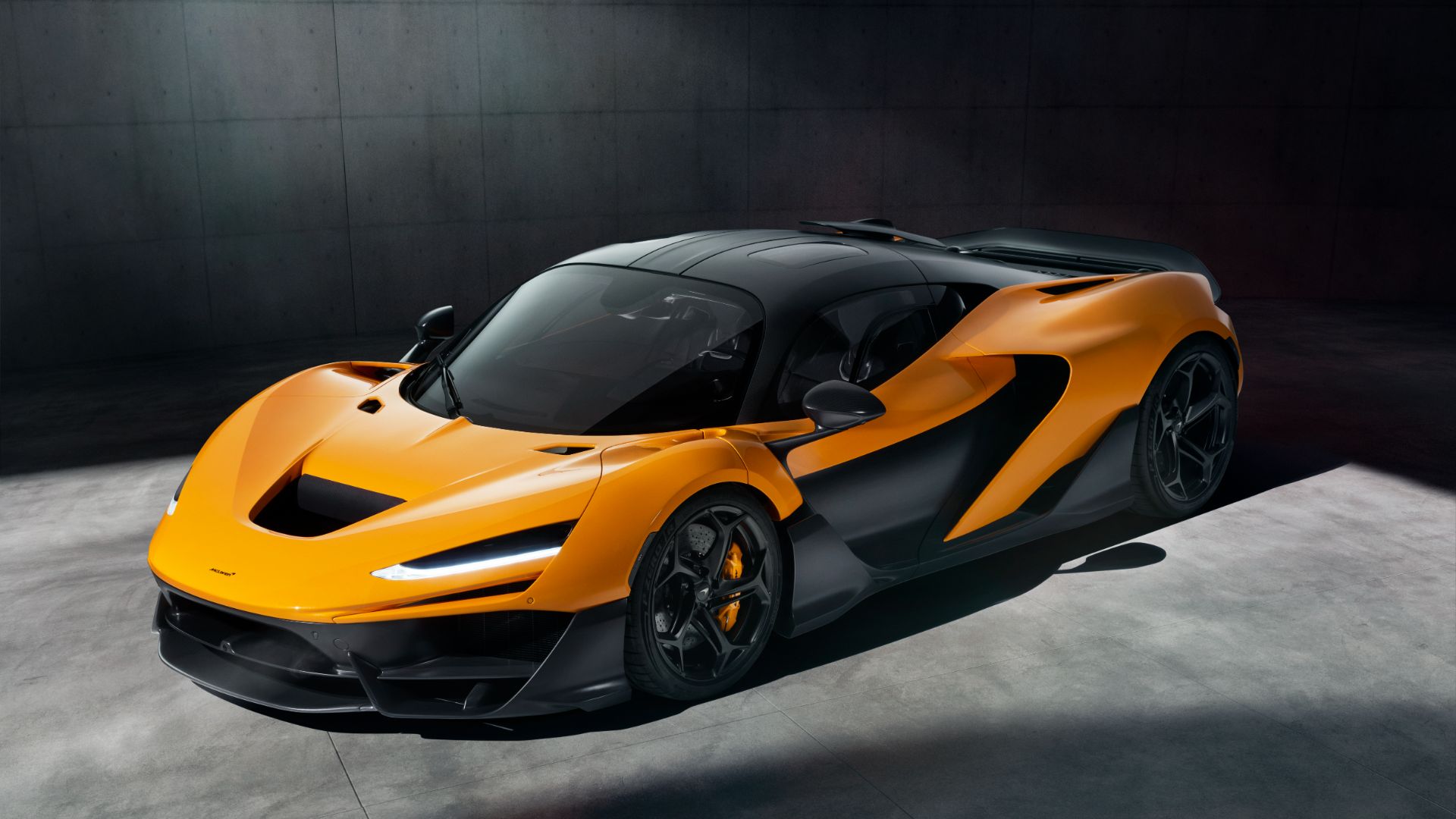
The overall look of the W1 is aggressive without being brutal, and clearly indebted to the P1 (arguably still the most beautiful hypercar of all). McLaren’s current MCL38 F1 racer provided inspiration for the curvaceous side pods, too.
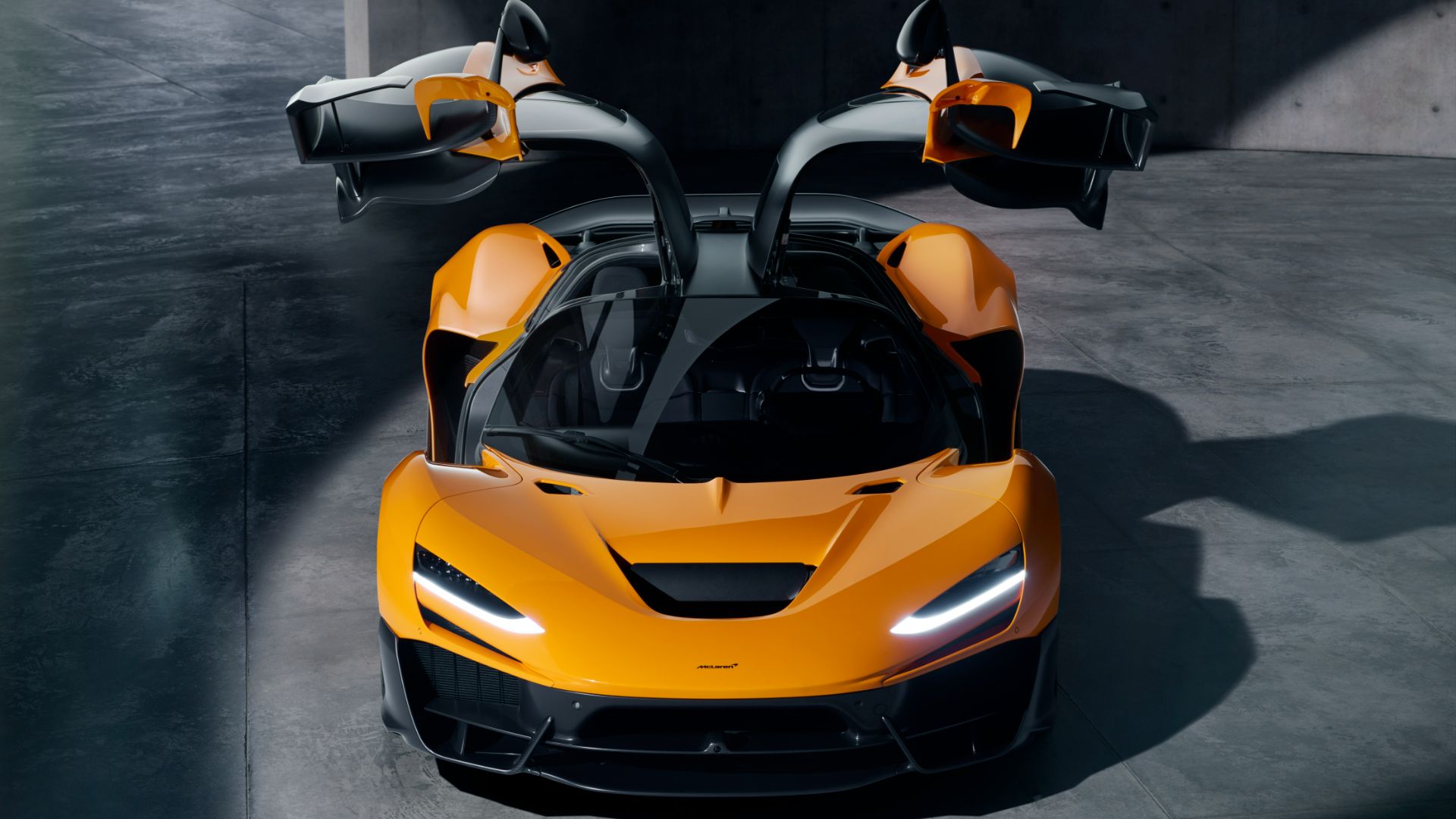
Obviously, as shown by the image above, the biggest design departure here is the doors. Now ‘anhedral rather than dihedral’ (let’s just call them gullwing doors), these provide easier access and allow smoother airflow towards the high-temperature radiators. They also look spectacular when opened, showing off the W1’s pre-impregnated carbon fibre chassis and unique interior. More on the latter shortly.
‘A car only McLaren could create’
McLaren purists can breathe a sigh of relief: yes, the W1 still has hydraulic power steering – a rarity in a world where virtually all car manufacturers have gone electric. Based on Woking’s previous efforts, the result should be lucid and linear feedback that boosts your confidence in the car.
Suspension is by double wishbones with pushrods and inboard dampers, plus active heave control tech that comes directly from F1. Brakes are carbon-ceramic discs with monobloc calipers and the W1 rides on 19-inch front and 20-inch rear forged alloy wheels (centre-lock magnesium rims are optional) with bespoke Pirelli P Zero Trofeo RS rubber.
McLaren CEO Michael Leiters promises “the purest driver connection by remaining true to the principles that underpin the ultimate supercar driving experience“. The W1, he says, “is a car that only McLaren could create”.
Inside the McLaren W1
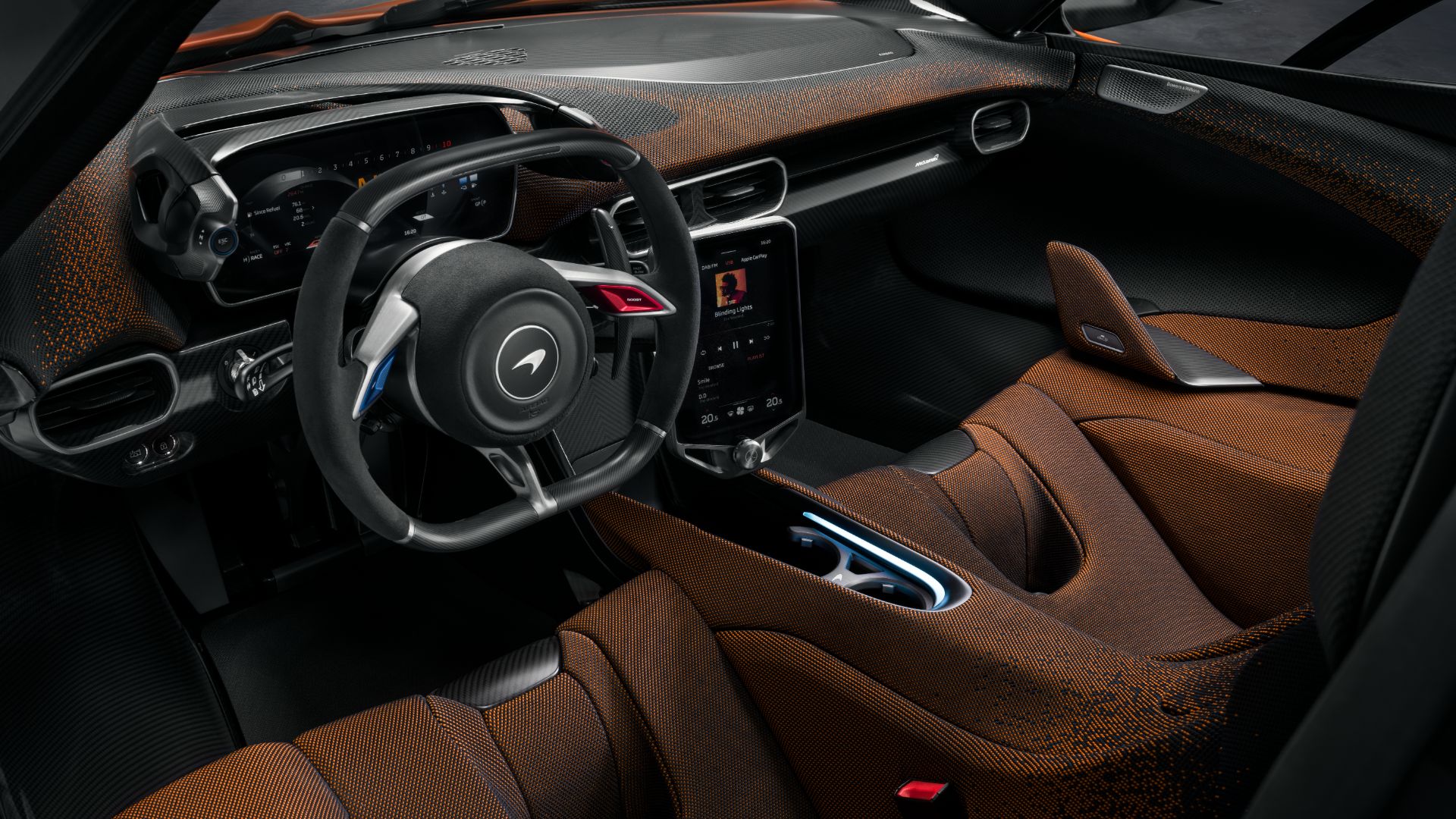
Inside, the W1 is pared-back and driver-focused, but not entirely impractical. There’s navigation, infotainment with Apple CarPlay, a luggage shelf behind the seats (big enough for two crash helmets, says McLaren) and even a sliding cupholder.
The seats themselves form part of the ‘Aerocell’ tub and are thus fixed in position – the wheel, pedals and primary controls move to meet the driver instead. You sit with legs outstretched and feet up high, like being aboard a single-seat racer. Many surfaces inside the car are exposed carbon fibre, while others are swathed in a lightweight, knitted material called McLaren Innoknit. We’d like to report that it’s hand-stitched together by elderly ladies in the Woking area, but sadly that idea was debunked.
The W1’s steering wheel is machined from a solid piece of aluminium and, in a break with McLaren tradition, has a couple of buttons inside the rim. ‘Boost’ provides maximum e-power for short periods, while ‘Aero’ activates an F1-style drag reduction system.
A hypercar halo
A worthy heir to the F1 and P1, then? Time will tell, but the W1 certainly raises the game for McLaren in terms of performance, both on the road and racetrack. It could even challenge the Mercedes-AMG One for a new Nurburgring lap record.
It’s an awe-inspiring halo for the British brand, too: one that stays true to McLaren Automotive’s core values even as it mulls over collaborating with another car company – and the almost inevitable SUV.
Ferrari has its own hybrid hypercar on the way – fittingly, a successor to the LaFerrari that challenged the P1 – but it will need to be something special to top this. Your move, Maranello.
Vauxhall has announced lower prices for the electric Corsa and Astra, slashing up to £4,765 from the cost of certain models.
In a world where seemingly everything has become more expensive, new car price cuts are a real rarity.
The Vauxhall Corsa Electric 50kWh Design model now starts from £29,045, representing a saving of £3,400 compared to the previous price.
Vauxhall has also reduced prices across the rest of the Corsa lineup, with the top-spec Ultimate model now £4,150 cheaper, and the sporty GS version down by £2,850.
Price cuts across the range
The Vauxhall Astra hatchback range has also seen comprehensive price cuts, starting with the Astra Electric Design, which now costs from £34,395 – a £2,850 reduction.
Similarly, the Astra Sports Tourer Electric estate has a new lower starting price of £36,145. The biggest price cut is reserved for the Astra Sports Tourer Ultimate, which has £4,765 shaved from its the list price: now from £40,695.
James Taylor, managing director at Vauxhall, said: “The new pricing structure on Corsa Electric and Astra Electric is the latest in a number of measures we have taken to democratise access to electric vehicles – including becoming the first brand in the UK to offer an electric and petrol hybrid car for the same list price with the new Frontera.”
Vauxhall recently announced new five-year PCP finance deals for electric cars, intended to make monthly payments equivalent to petrol-powered models.
Save money on charging, too
Buyers of new electric Vauxhalls can also benefit from the brand’s range of charging offers.
When buying online, customers can receive a free Octopus Energy Ohme Pro wallbox with installation included, or the option of £675 credit towards public charging.
Opting to buy through a Vauxhall dealership means you can also gain 50,000 Tesco Clubcard points. These can be exchanged for £500 in Clubcard vouchers, or a £1,000 credit with Clubcard Reward Partners.
Finally, new Vauxhall customers get an Octopus Electroverse card. This gives access to more than 750,000 public charging points across the UK and Europe, all paid for via a single account.
Created when moonlight passes through ice crystals in high-altitude cirrus clouds, the lunar halo is an ‘ethereal technicolour ring’ that appears around the moon.
The Spectre’s fortunate new owner challenged Rolls-Royce to channel this lunar effect into a custom exterior paint colour.
Fly me to the moon
Motivation for the Spectre Lunaflair came after the owner saw a previous Rolls-Royce Bespoke build: the 2023 Phantom Syntopia. This featured an iridescent Liquid Noir finish, with a mirror-like paint pigment.
More than a year of experimentation was required to perfect the Lunaflair’s new colour, with numerous trials of the optimal paint effects and application required.
The completed paint requires seven layers of lacquer, including a new pearlescent coat infused with fine flakes of magnesium fluoride and aluminium. This leads to a rainbow effect when the Spectre is exposed to bright sunshine.
Martina Starke, head of Bespoke at Rolls-Royce, said: “We are constantly astounded by the diversity of ideas that inform our clients’ Bespoke concepts, which frequently draw inspiration from materials, finishes and themes they see in other commissions.
“Spectre Lunaflair is the perfect example of this, exploring the ethereal beauty of a lunar halo, and sparked by the client after witnessing a paint finish on another Bespoke motor car.”
Dancing in the moonlight
The personalisation extends inside the Spectre Lunaflair, with Navy Blue, White and Peony Pink tones channelling the rainbow effect of the exterior paintwork.
This colour scheme extends across the seats and door panels, while the two-tone steering wheel has a Navy Blue outer and an Arctic White inner side.
Appropriately, for a car inspired by astronomical elements, the Lunaflair comes with Rolls-Royce’s dramatic Starlight Headliner roof lining, which is dotted with fibre optic ‘stars’.
To ensure the Spectre Lunaflair remains unique and exclusive, Rolls-Royce has confirmed that the special paint finish will not be used on another car.
The second fully electric Skoda has been revealed. The new Elroq is a compact SUV that majors on affordability.
Making its public debut later this month at the Paris Motor Show, Skoda wants the Elroq to build on the success of its larger Enyaq iV.
As the latest model to use the Volkswagen Group MEB platform, the Elroq is a relative of vehicles ranging from the Cupra Born to the new Ford Capri.
The Elroq also premiers Skoda’s new ‘Modern Solid’ design language, featuring a black ‘Tech Deck Face’ instead of a traditional front grille.
Up to 361 miles of range
Measuring 4.49 metres in length, the Elroq is a similar size to the conventional Skoda Karoq SUV. A kerb weight of 1,949kg means the Elroq is no lightweight, but smooth styling means a low drag coefficient of just 0.26.
The Elroq’s maximum range is 361 miles when equipped with the ’85’ model’s larger 79kWh battery option. The smallest 52kWh battery, found in the Elroq 50, delivers up to 233 miles.
Charging speeds of up to 145kW are supported for the smaller battery, with the 79kWh item compatible with 175kW devices. This means charging from 10 to 80 percent can take less than 30 minutes.
All launch versions of the Elroq are rear-wheel drive, with power outputs ranging from 168hp to 282hp. The latter, combined with the 79kWh battery pack, can accelerate from 0-62mph in 6.6 seconds.
Packing in plenty of tech
Skoda promises the Elroq will boast class-leading levels of standard equipment. The base SE version comes with LED headlights, LED tail lights and 19-inch alloy wheels as standard. A 13-inch central touchscreen is combined with a digital instrument panel, along with a reversing camera and rear parking sensors.
The Elroq SEL gains a heated two-spoke leather steering wheel, heated front seats, paddles to adjust brake regeneration levels and satellite navigation. Front parking sensors are included, too.
Privacy glass, dark chrome roof rails, keyless entry and adaptive cruise control are fitted to the Elroq Edition.
Finally, topping the range is the Elroq SportLine, with 20-inch black alloy wheels, lowered sports suspension, sports seats and carbon-look interior trim.
Time to Czech the Elroq out
UK prices for the new Skoda EV start at £31,500 for the entry-level Elroq SE 50, which uses the 52kWh battery pack.
At the opposite end of the range, the flagship Elroq SportLine 85 will cost from £41,600.
The Skoda configurator is now live, allowing owners to tailor the compact EV to their own taste. UK orders can be placed from 18 October 2024, with the first deliveries expected in spring 2025.
Hyundai has reached a huge production milestone, having built more than 100 million vehicles across the globe.
Leaving the line in Ulsan, South Korea, an Ioniq 5 electric SUV claimed the title of being the 100,000,001st Hyundai to be made.
The new owner of the Ioniq 5 collected the car directly from the factory, and took part in a commemorative handover ceremony.
Record-breaking production speed
Hyundai was founded as an automotive brand in December 1967, meaning it has taken the Korean company less than 57 years to pass the 100 million vehicle mark.
By comparison, it took Volkswagen 60 years after the end of World War II to achieve the same milestone, doing so with a Touran MPV in 2005.
And it took Ford from 1903 until November 1977 to build its 100 millionth vehicle: a Ford Fairmont that left the Mahwah assembly plant in New Jersey.
To further emphasise the speed at which Hyundai has achieved this target, consider that it only surpassed 50 million vehicles in 2013…
Just the beginning
Hyundai began production with only the Ulsan plant, but it now owns 12 manufacturing facilities in 10 different countries worldwide.
Ulsan was responsible for building the Pony, Hyundai’s first mass-market car, and is now a centre for electrification.
Dong Seock Lee, president and head of domestic production at Hyundai Motor Company, said: “Each and every employee at Hyundai Motor has contributed to the accumulation of 100 million units through their hard work and dedication.
“This auspicious occasion is just the first step toward the future era of electrification that Hyundai Motor will lead.”