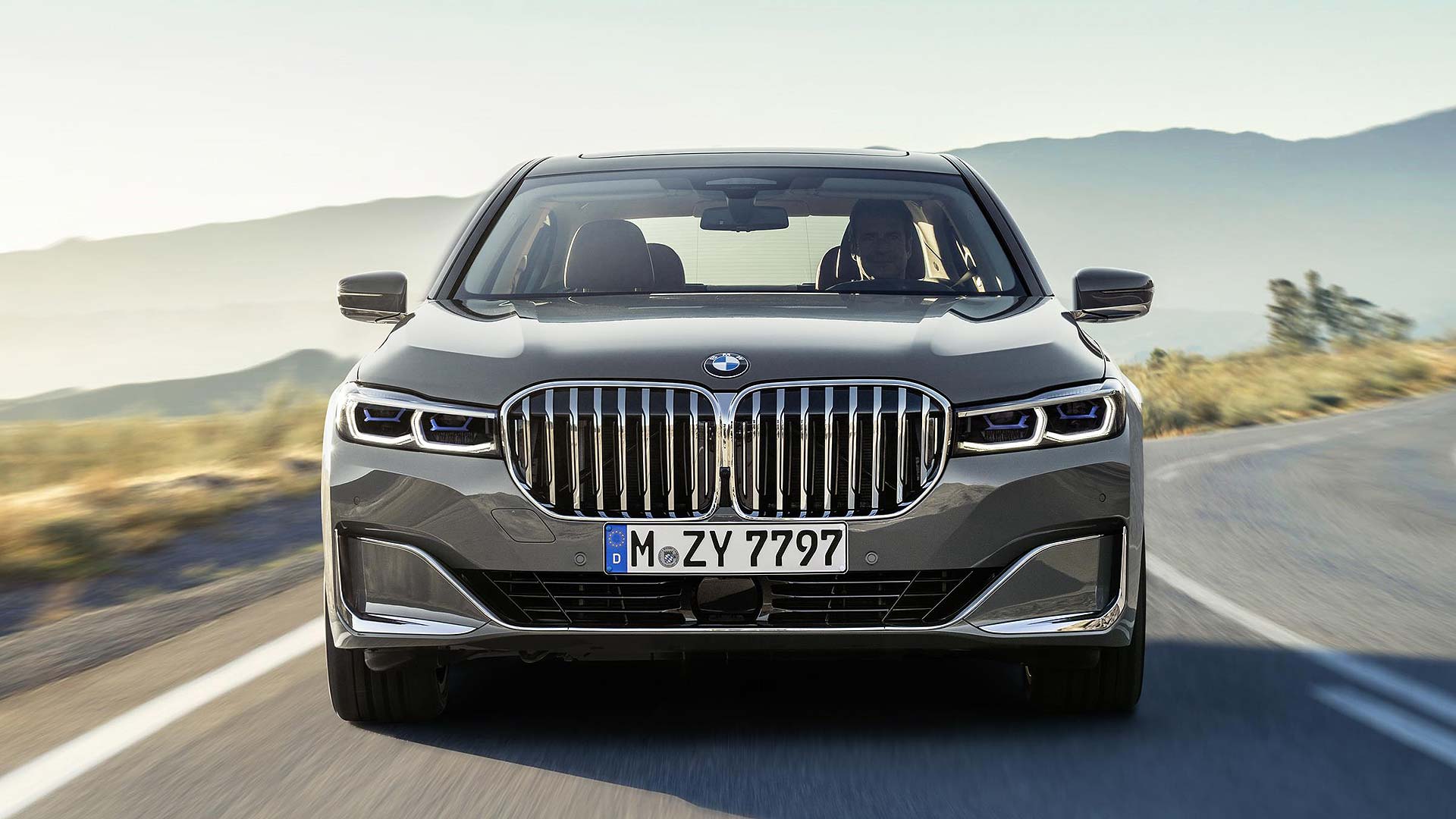
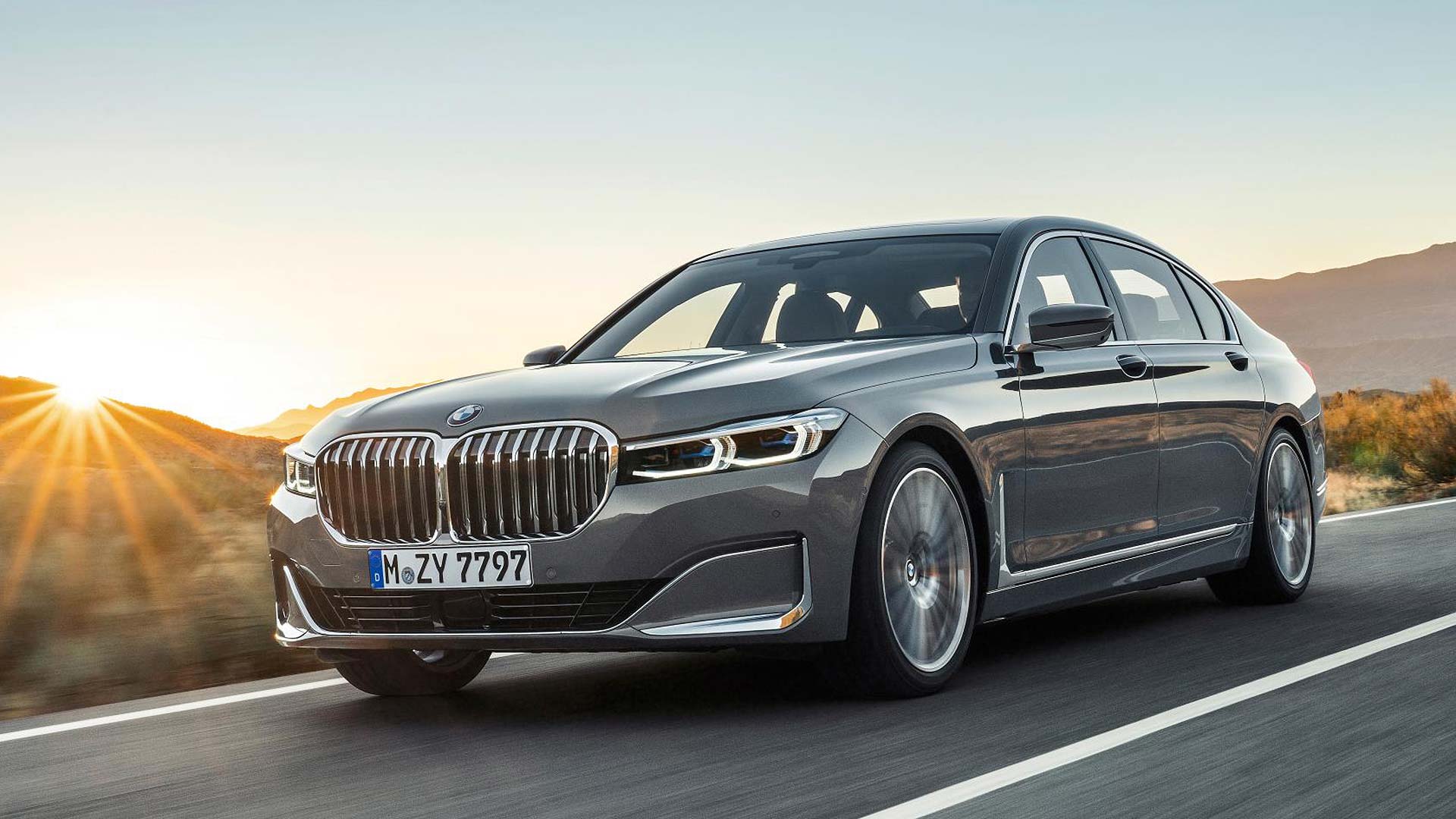
BMW has revealed the facelifted 2019 7 Series and you’re going to have no trouble picking it out from the outgoing model thanks to its massive new kidney grille.
Continuing the theme of the BMW X7 and new X5, this is a facelift in the most literal sense (the height of the front end is up 50mm to accommodate the grille), although the surgeon carrying out the work appears not to have the subtlest of techniques.
BMW says it gives the new 7 Series a “confident presence” and makes a “clear statement of intent”. Quite; it’s also calculated the kidney grille has a 40 per cent greater surface area, making it a “dominant force” that contrasts with headlights that are actually slimmer. The BMW roundel is bigger too, and the new bonnet has sharper contours.
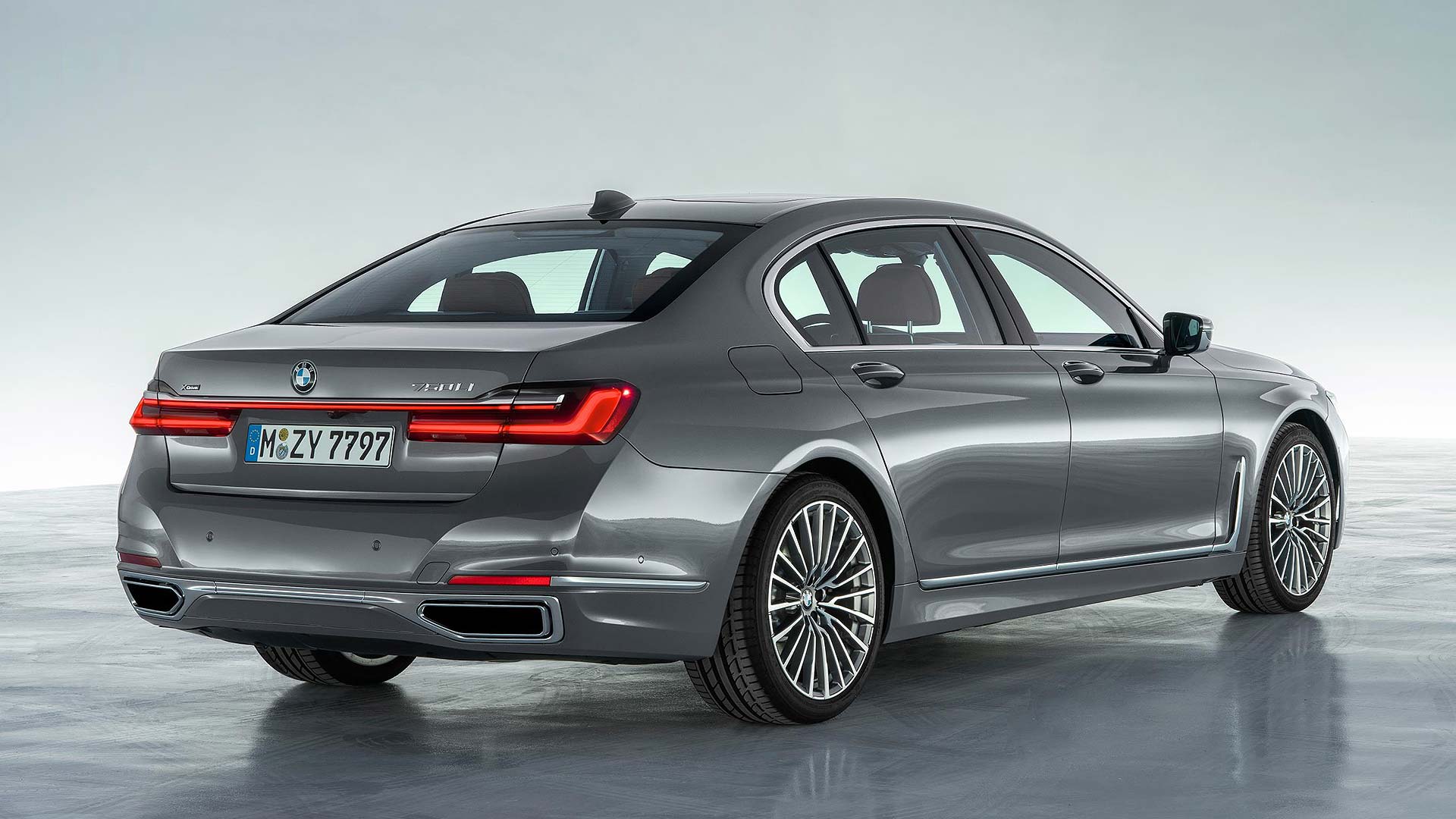
New bumpers front and rear give a sleeker look, and the rear lamps are 35mm slimmer than the old car. BMW’s particularly proud of the slim light bar that runs beneath the chrome strip on the boot; it’s just 6mm wide.
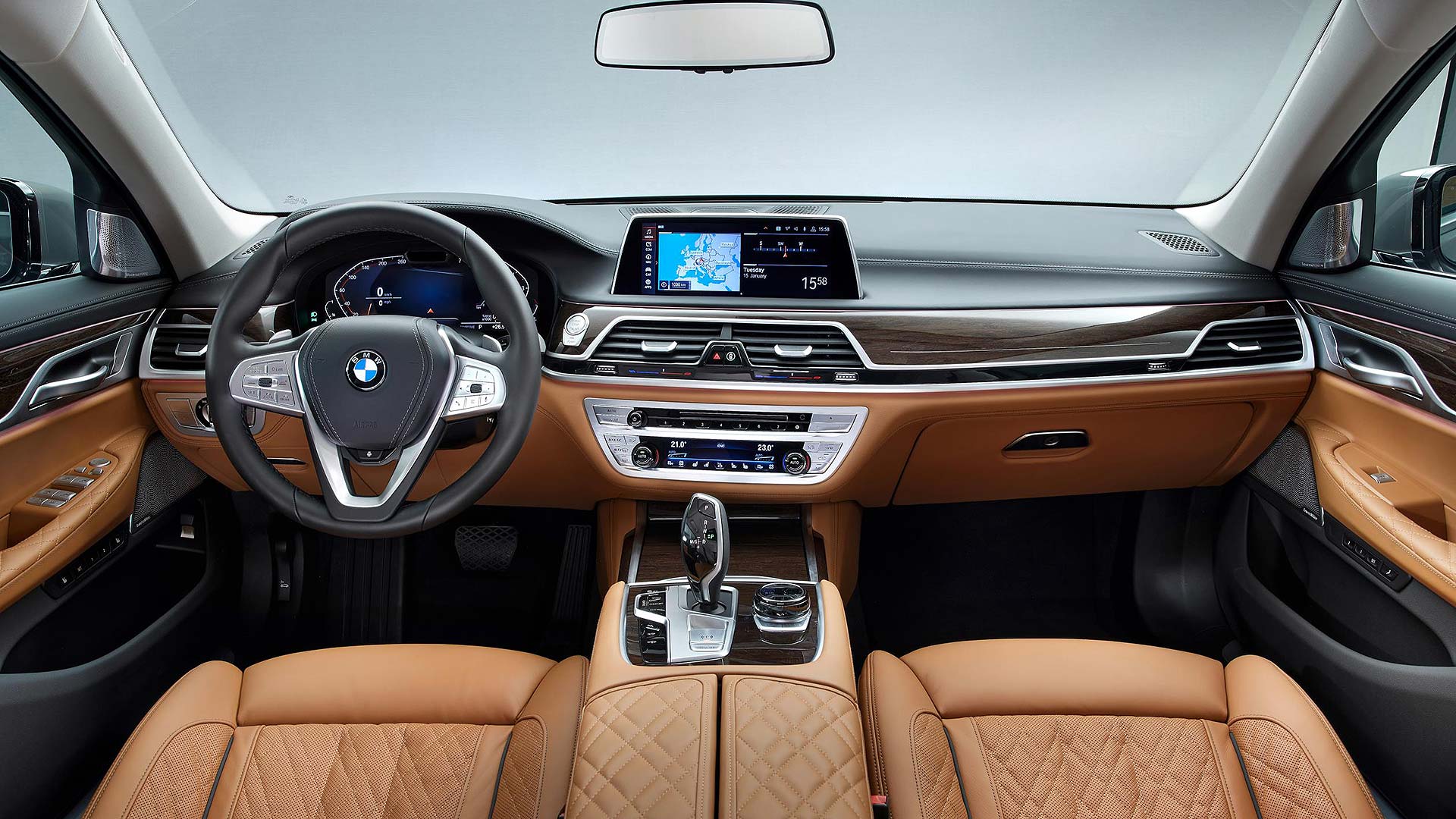
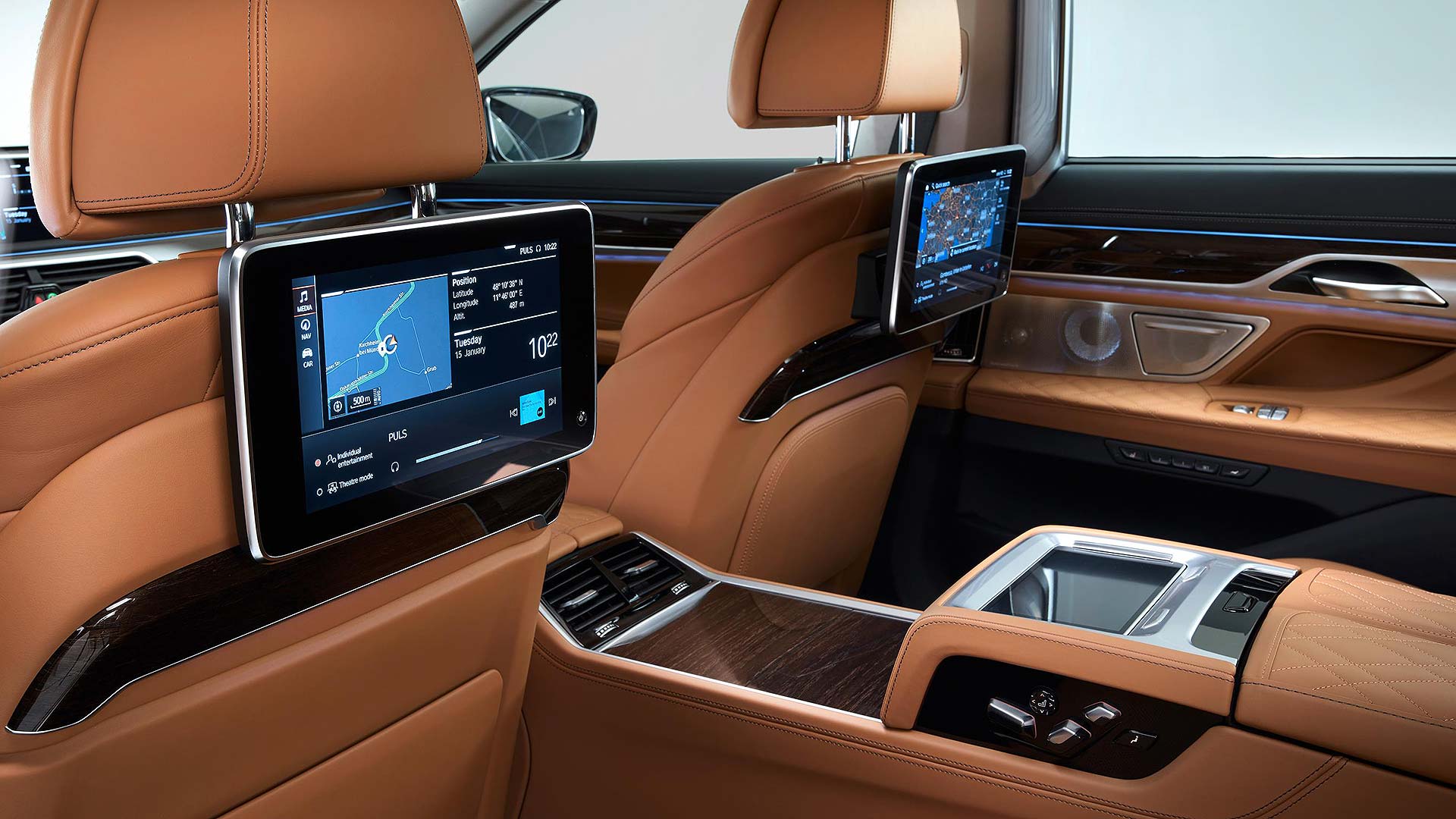
Inside, it’s become more luxurious and sumptuous. Quilted Nappa leather is now available, and new trim insert strips include American Oak Dark and Poplar Grain Metallic. A new steering wheel has modified, more straightforward multifunction buttons.
The new 7 is quieter as well; the side glass and rear window are thicker, and BMW has revised the rear wheelarches, B-pillars and seatbelt outlet covers to cut noise levels. Perfect for letting those in the rear enjoy the optional new touchscreen HD displays.
Engines are all-new (and all WLTP Euro 6d-TEMP-compliant). The irrelevant range-topper remains the 6.6-litre V12 M760Li xDrive, which offers 585hp to the handful of people who will buy it. BMW has also boosted the 4.4-litre V8 in the 750Li xDrive by a substantial 80hp up to 530hp.
But the best-sellers will have fewer cylinders. Expected to be popular is the revised plug-in hybrid 7 Series, the 745e, 745Le and 745Le xDrive. A six-cylinder engine is now fitted, paired with a more powerful high-voltage battery, giving 394hp and CO2 emissions as low as 49g/km. The realistic all-electric driving range is between 31 and 36 miles, says BMW.
The key car will likely remain the 730d diesel though; it produces 265hp, emits as little as 138g/km and will do up to 53.3mpg.
Other upgrades include the new BMW Operating System 7.0 for onboard infotainment, an upgraded digital instrument cluster and Control Display, and a clever new Reversing Assistant that takes the pain out of parking a car that, in long-wheelbase guise, stretches 5,260mm.
We look forward to finding out more about how BMW has improved a former World Luxury Car of the Year winner, and how much it will charge. For now, though, it’s all eyes on the enlarged grille… let us know what you make of it in the comments below.
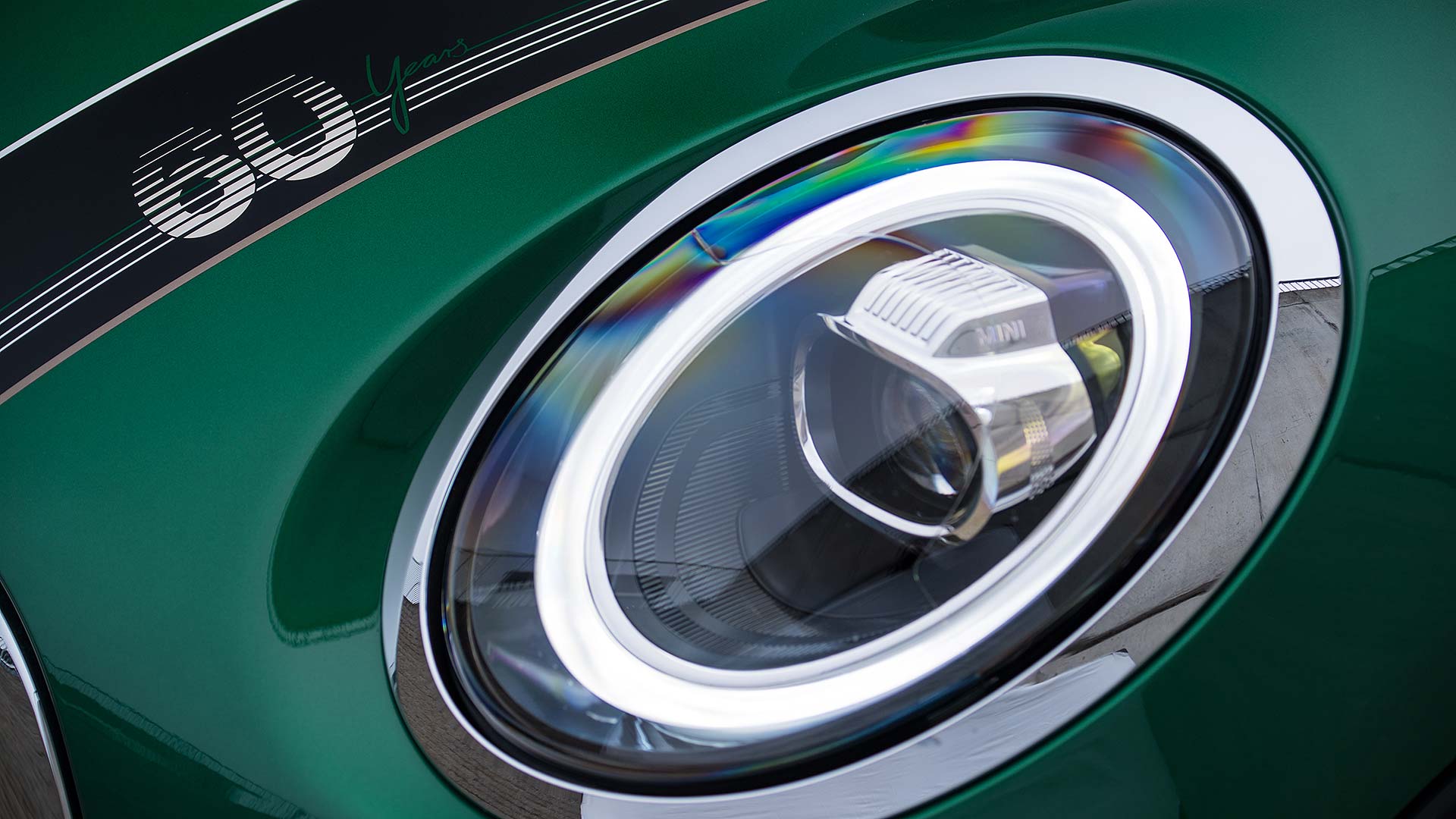
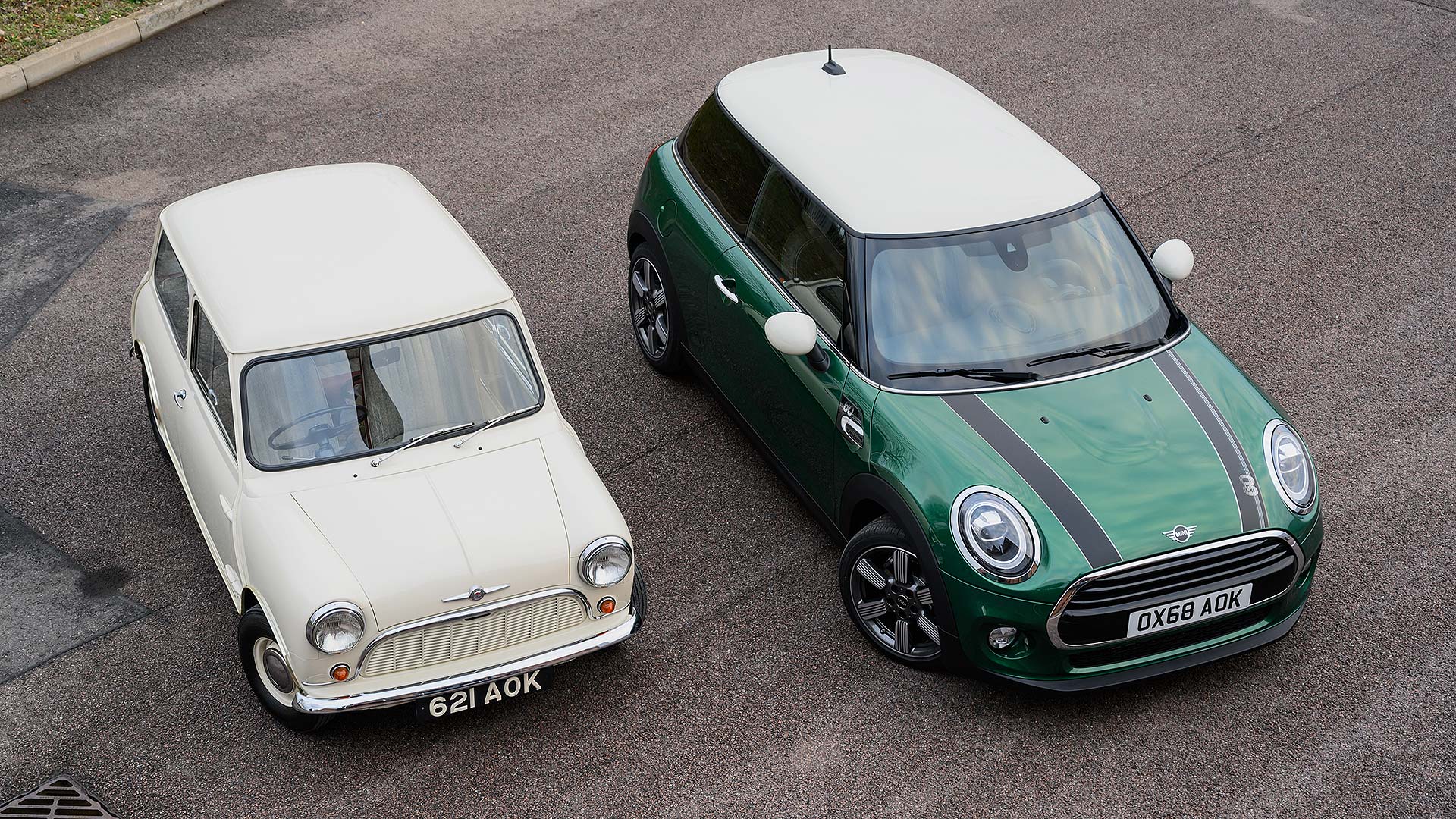
The Mini 60 Years Edition is the British brand’s added-value special to mark the sexagenarian small car’s landmark birthday. It follows a line of anniversary specials that begun in 1984 with the Mini 25, and goes on sale in March 2019.
UK buyers are getting a Mini Cooper S 60 Years Edition, offered only as a three-door, with an automatic transmission. It costs £29,990.
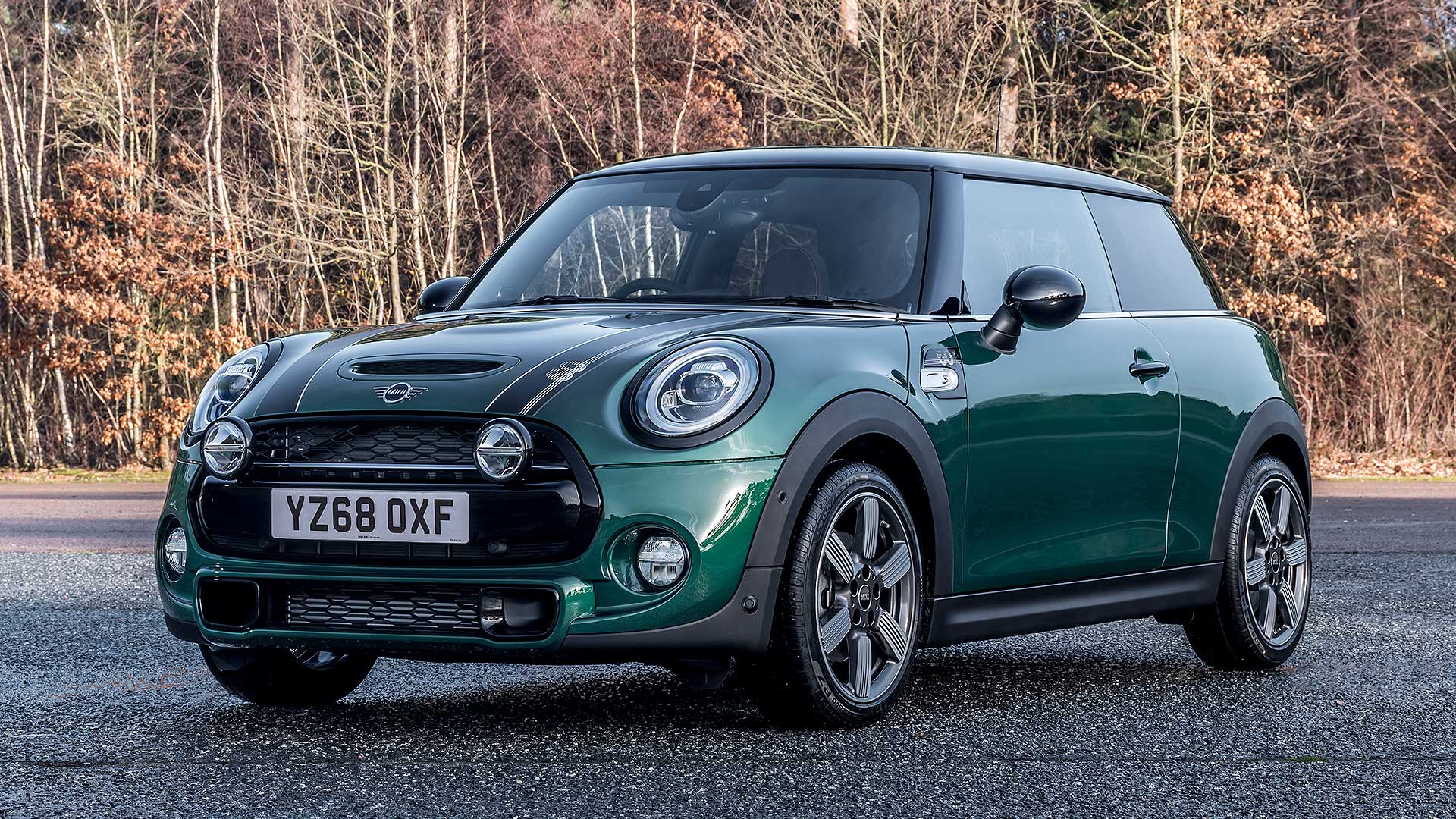
In other markets, it is offered as a three-door or five-door hatch, with four different engines, including diesels. ‘Our’ Mini Cooper S 60 Years Edition is finished in British Racing Green IV, but other markets get other colours too: black, grey, silver or blue.
On all versions, the roof is contrasted either with white or black, with matching door mirror caps, and there are bespoke bonnet stripes, with the left one wearing Mini’s 60 Years logo.
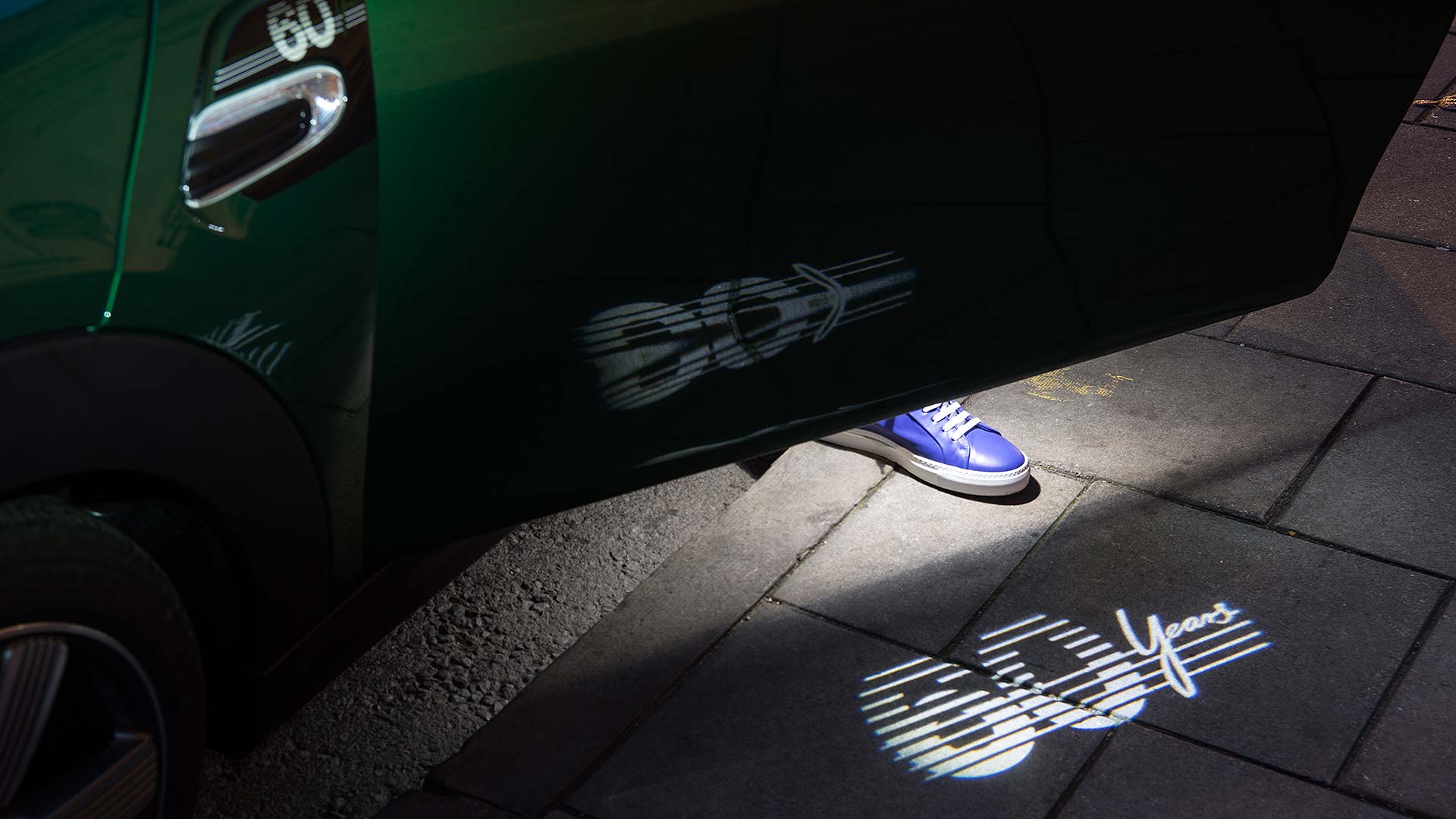
This same logo appears on the side scuttles next to the indicator repeaters, and the door sill kick plates. When you unlock the Mini 60 Years Edition, it also shines onto the ground via the LED projection light hidden in the driver’s door mirror.
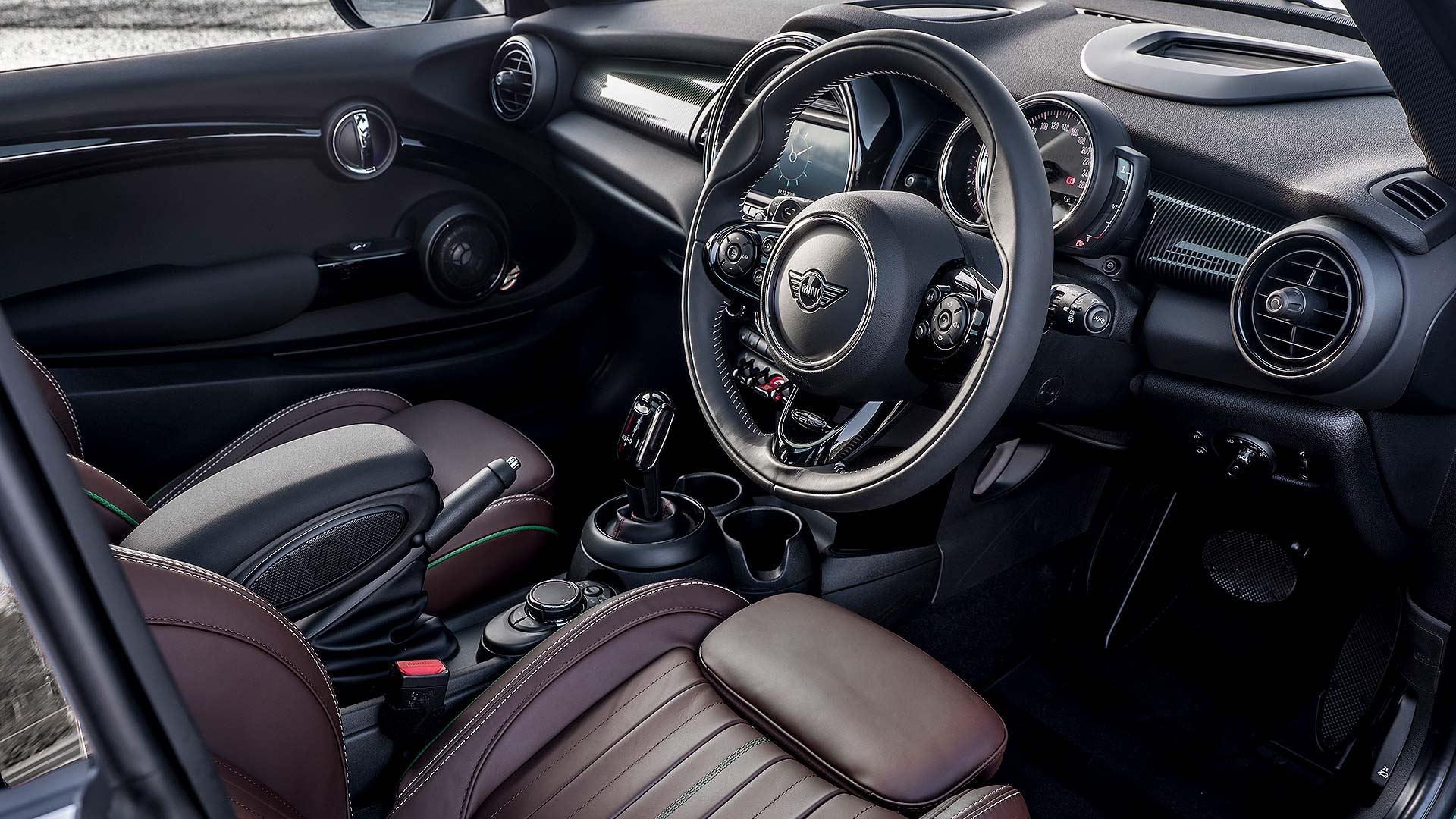
Inside, more Mini 60 Years logos feature inside, most notably on the seats: they are sports chairs with an exclusive ‘Mini Yours Leather Lounge 60 Years trim’, which come in a similarly-exclusive Dark Cacao colour (with unique green piping). The interior trim on the dash is also bespoke for the Mini 60.
It wouldn’t be a special edition of note if it didn’t also come with extra features, though. Mini has put together an equipment package called 60 Years Chili, which adds LED headlights and fog lamps, white turn indicators, LED rear ‘Union Jack’ lamps and, inside, the dubiously-named ‘Mini Excitement Package’ with ambient lighting.
Climate control, rain-sensing wipers, onboard computer and a storage package are also standard, and the wheels are special 17-inch 60 Years Spoke 2-tone rims.
The UK’s Mini Cooper S 60 Years Edition produces 192hp, which is good for 0-62mph in a pretty impressive 6.7 seconds. You can spot the British special editions, of which only 500 will be built, from their Piano Black exterior trim and unique Mini spot lamps.
Live outside the UK? Choose from two petrols or (whisper it) two diesels. These tally neatly with trim lines, with model-walk clarity aided by Mini’s simplification of its line-up in 2018.
Buyers can thus take it in Mini Cooper or Mini Cooper S turbo petrol guise, alongside Mini Cooper D or Mini Cooper SD diesel form. Again, all engine variants are available with a choice of three or five doors.
Detroit first hosted a motor show in 1907, but for the first 80 years, it was a strictly regional affair. Then, in 1987, international manufacturers were invited to share the floor space with America’s ‘Big Three’, with the likes of Volvo, Mercedes-Benz, Jaguar and Porsche making an appearance.
Today, along with CES in Las Vegas, the North American Auto Show (NAIAS) sets the tone for the automotive year ahead, with more than its fair share of debuts and reveals.
Here are some of the hottest new vehicles on display at the 2019 Detroit Auto Show.
The wait is finally over. The covers have been pulled off the new Toyota GR Supra, bringing to a close what must have been one of the longest teaser campaigns in history. The sister car to the new BMW Z4 uses a front-mounted 3.0-litre straight-six turbocharged engine driving the rear wheels. In this respect, it feels every bit a part of the Supra family tree.
With 335hp on tap, the Gazoo Racing (GR) Supra will hit 62mph in 4.3 seconds before reaching a top speed limited to 155mph. We could tell you about the CO2 emissions and fuel economy, but we suspect you’d much rather know that it will be available in eight different colours and will be priced from £52,695 when the first customers take delivery in the summer. The star of Detroit 2019? We think so.
Ford Shelby GT500
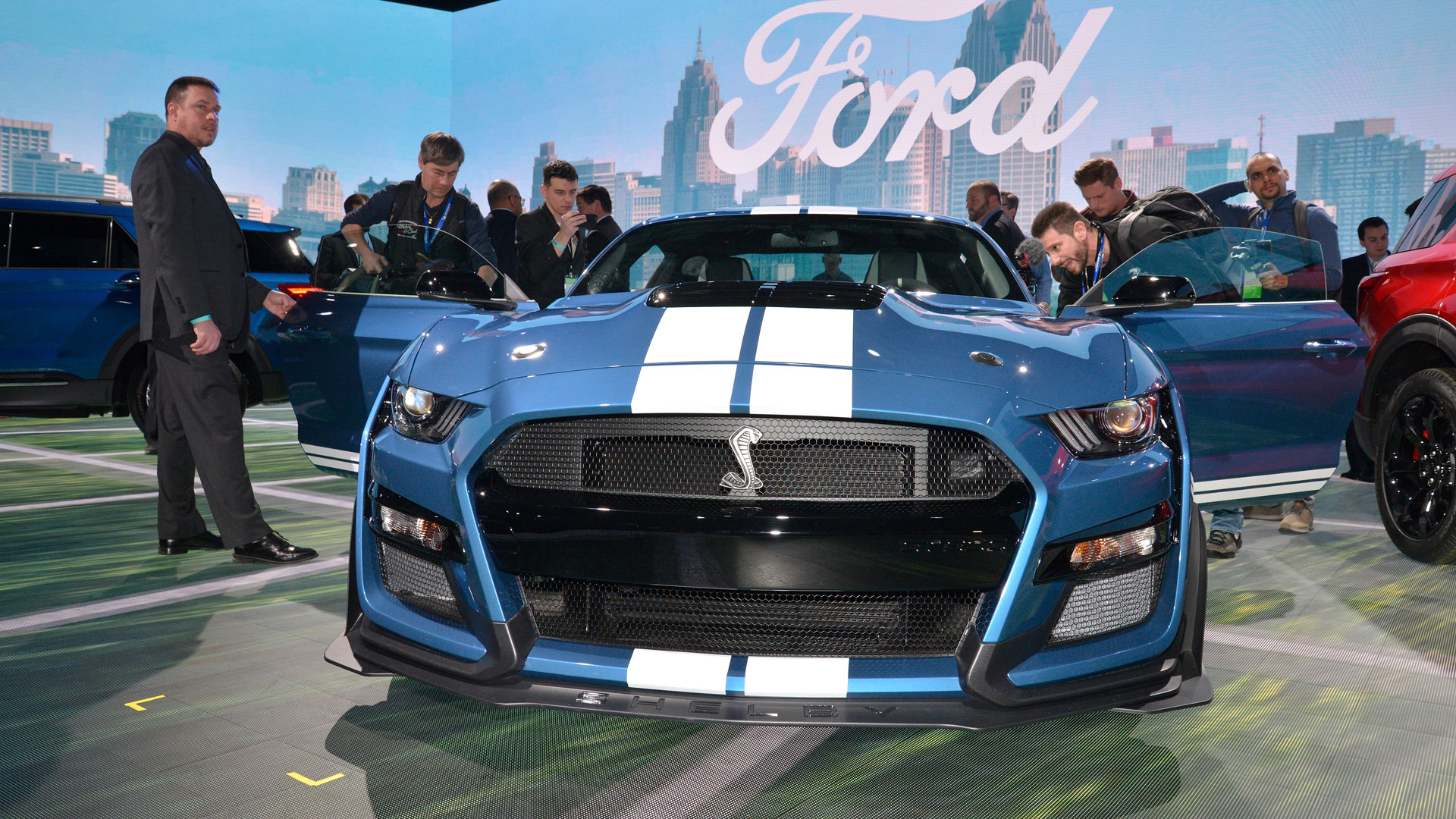
‘The most powerful street-legal Ford ever.’ Great, now that we’ve got your attention, let us tell you a little more about the 2020 Ford Mustang Shelby GT500. It’s powered by a 5.2-litre V8 producing more than 700hp, which is enough for it to hit 60mph in around 3.5 seconds and the quarter-mile mark in sub-11 seconds. It has been built with the dragstrip in mind, but the GT500 is 100 percent street-legal.
“With its supercar-level powertrain, the all-new Shelby GT500 takes the sixth-generation Mustang to a performance level once reserved only for exotics,” said Hermann Salenbauch, Ford Performance vehicles programmes global director. The 5.2-litre aluminium supercharged engine is built by hand and mated to a seven-speed dual-clutch transmission capable of shifts in under 100 milliseconds. Other enhancements include track-bred Michelin tyres, Brembo brakes and MagneRide suspension. Well, Ford couldn’t let Toyota grab all of the headlines in its own backyard.
Kia Telluride
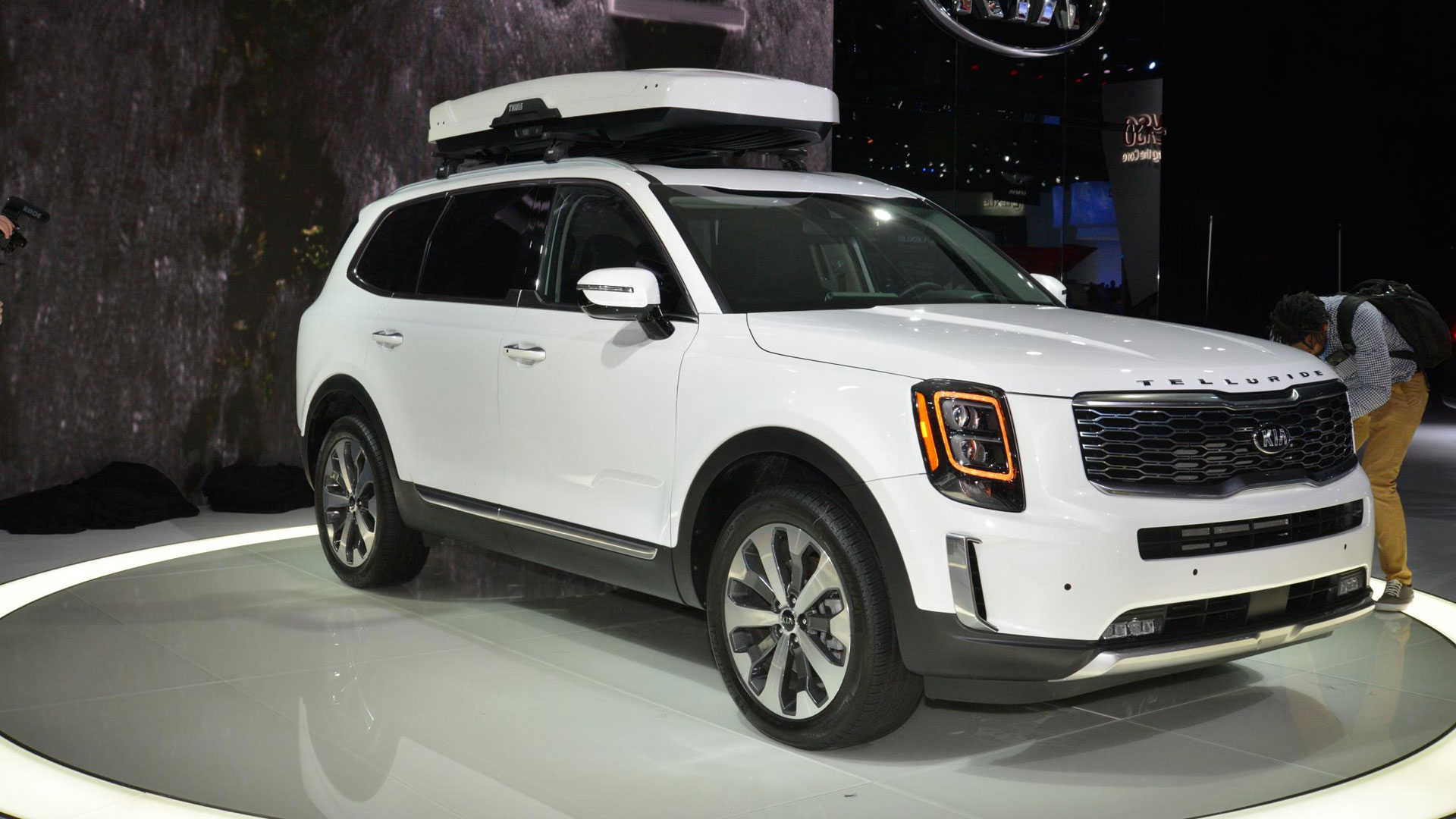
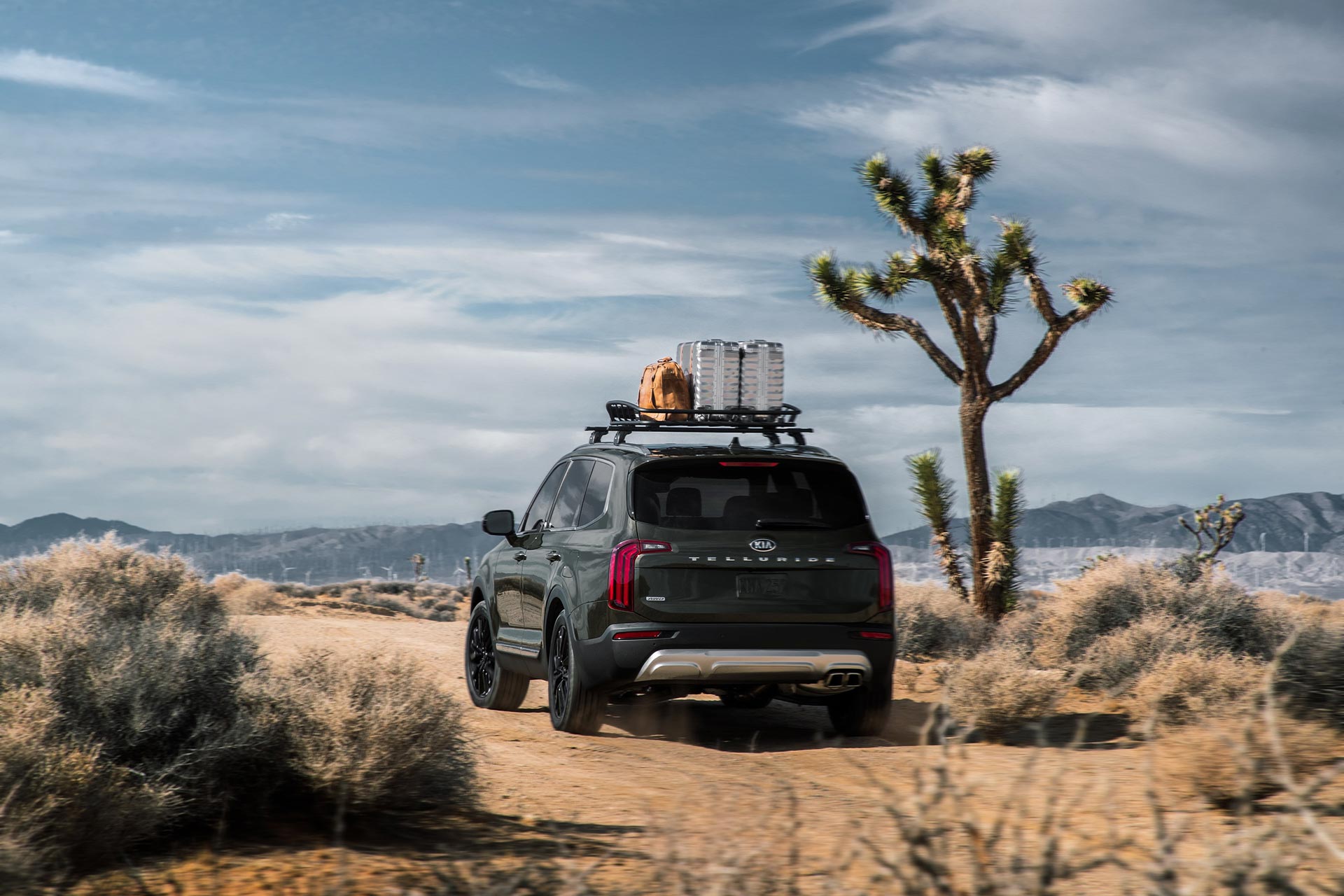
In America, big is best, so the Kia Telluride should feel right at home. It’s the largest Kia ever built, with space for eight people and power supplied by a 3.8-litre V6 petrol engine developing 291hp. An eight-speed automatic transmission is standard, as is a front-wheel-drive layout, but an on-demand all-wheel-drive system is available as an option.
The Telluride is the first Kia to be designed specifically for the U.S., with the California-based design studio opting for a look that, from some angles, isn’t too dissimilar to the Volvo XC90. As a flagship model, the Telluride is loaded with the latest tech and safety equipment, but buyers can select from a range of enhancements, including double-stitched, quilted and extra-padded Nappa leather, reclining third-row seats, heated and ventilated first- and second-row seats and a cabin pre-conditioner.
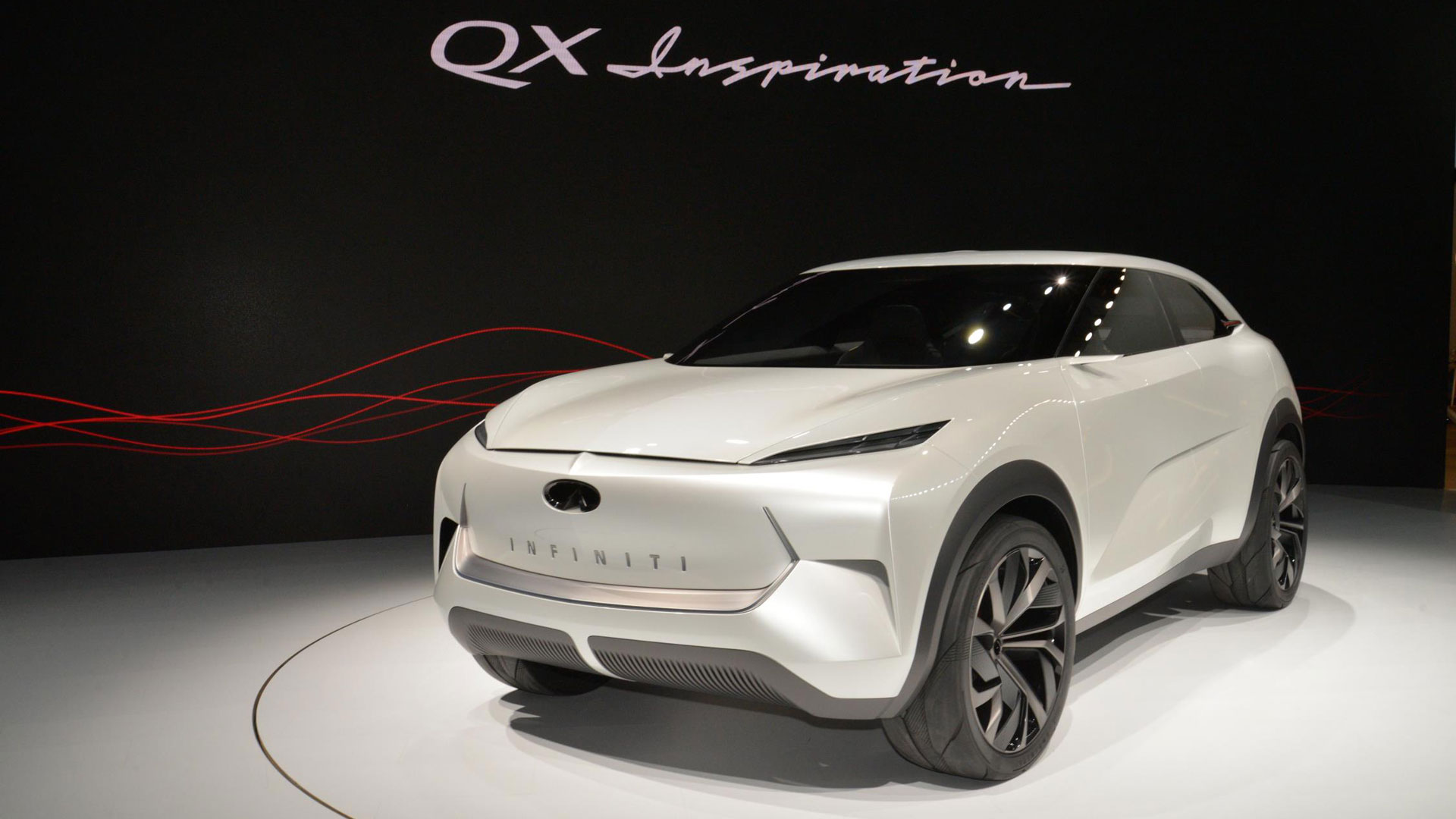
Infiniti QX Inspiration
The QX Inspiration concept broke down on its way to the Infiniti stand, which could present us with an opportunity to make a wisecrack about the car’s future. But we won’t do that. Instead, let us tell you that the concept previews a future electric Infiniti, combining an electrified all-wheel-drive powertrain with an SUV body. The company says that all future Infiniti models will look something like this.
It’s a good looking thing, with the ‘suicide’ rear doors opening to reveal a pillarless entry and a serene and calming interior space. The battery pack is mounted beneath the car, with electric motors on each axle, creating a flat floor for the four occupants. Infiniti hasn’t released any specifications, but if it can make its next SUV look half as good as this, we’re in for a treat.
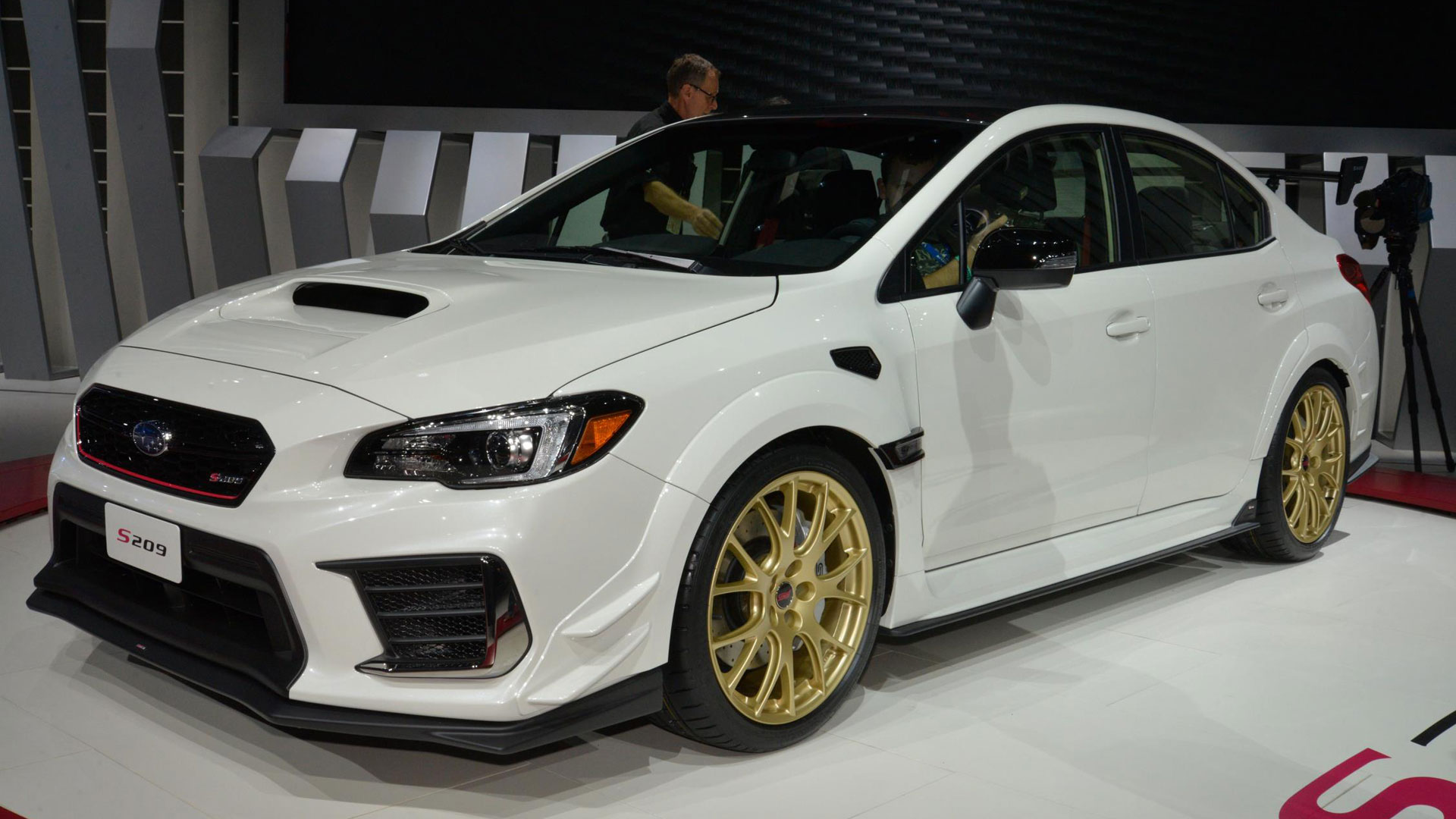
Subaru STI S209
Sorry, Subaru fans, but the STI S209 isn’t coming to the UK. In fact, just 200 are being produced exclusively for the U.S. market, each one powered by 341hp 2.5-litre engine. This is the first time an STI-crafted S-line performance vehicle has been sold in the United States and it follows a number of JDM models stretching back to the S201 of 2000.
The S209 is inspired by the WRX STI Nurburgring Challenge racecar, which won the SP3T class at the 2018 24 Hours of Nurburgring. The body is 1.7 inches wider than the standard WRX STI, the Dunlop tyres were developed exclusively for the S209, the suspension has been beefed up, while the spoilers and carbon-fibre roof panel and rear wing are all inspired by the Nurburgring car. Naturally, there’s a six-speed manual gearbox, along with an obligatory numbered badge on the centre console.
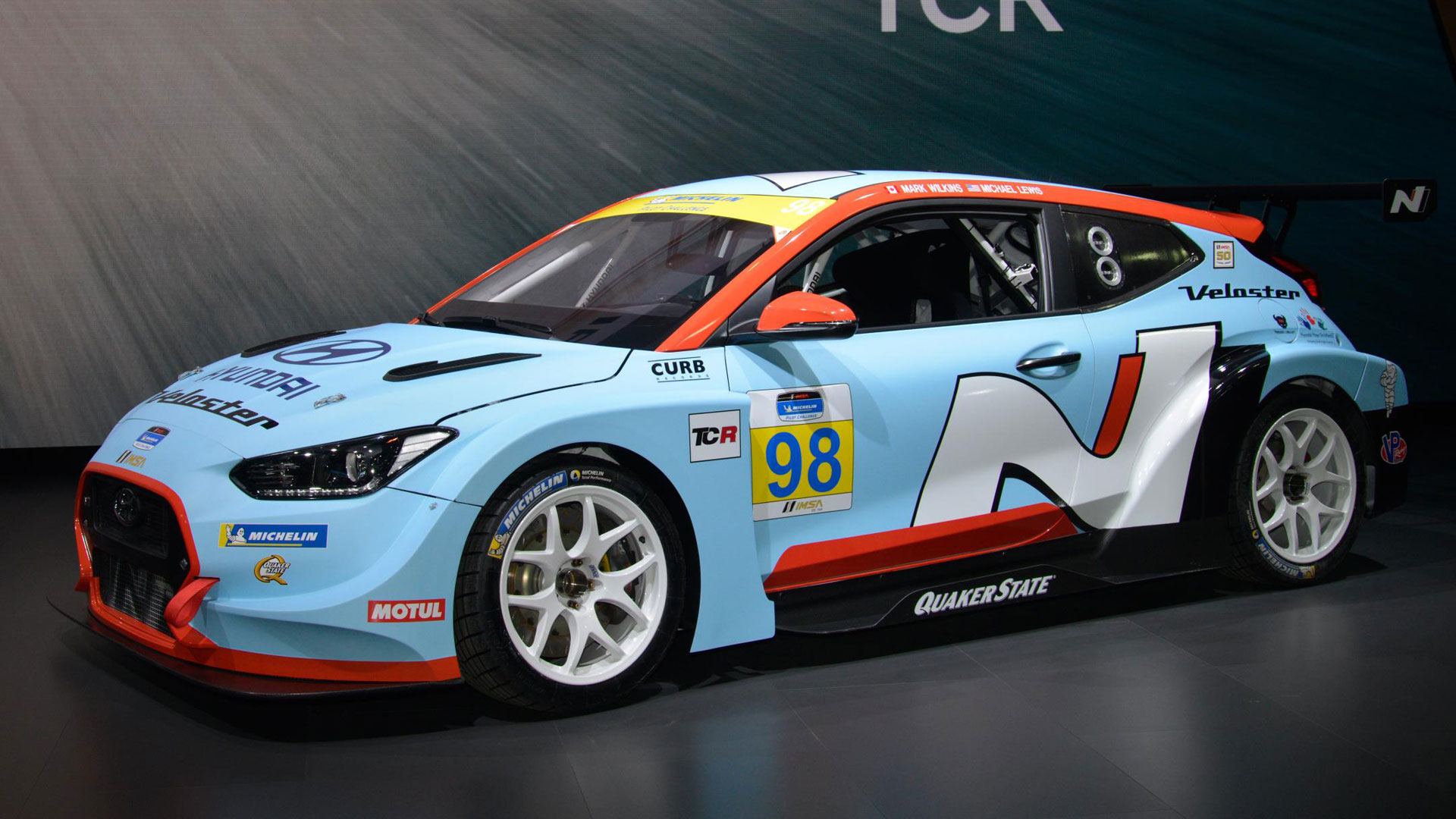
Hyundai Veloster N TCR
The new Hyundai Veloster N TCR was designed in Germany and will compete in the 2019 International Motor Sports Association (IMSA) Michelin Pilot Challenge. It shares around 85 percent of its components with the i30 N TCR, including the 350hp 2.0-litre turbocharged engine.
The launch of the Veloster N TCR racecar is good news for American Hyundai dealers, as the ‘race on a Sunday, sell on a Monday’ effect is sure to have an influence on the sales of the regular Veloster N. It can be ordered for upwards of €135,000 (£105,000) plus shipping, with customer deliveries set to begin in March 2019.
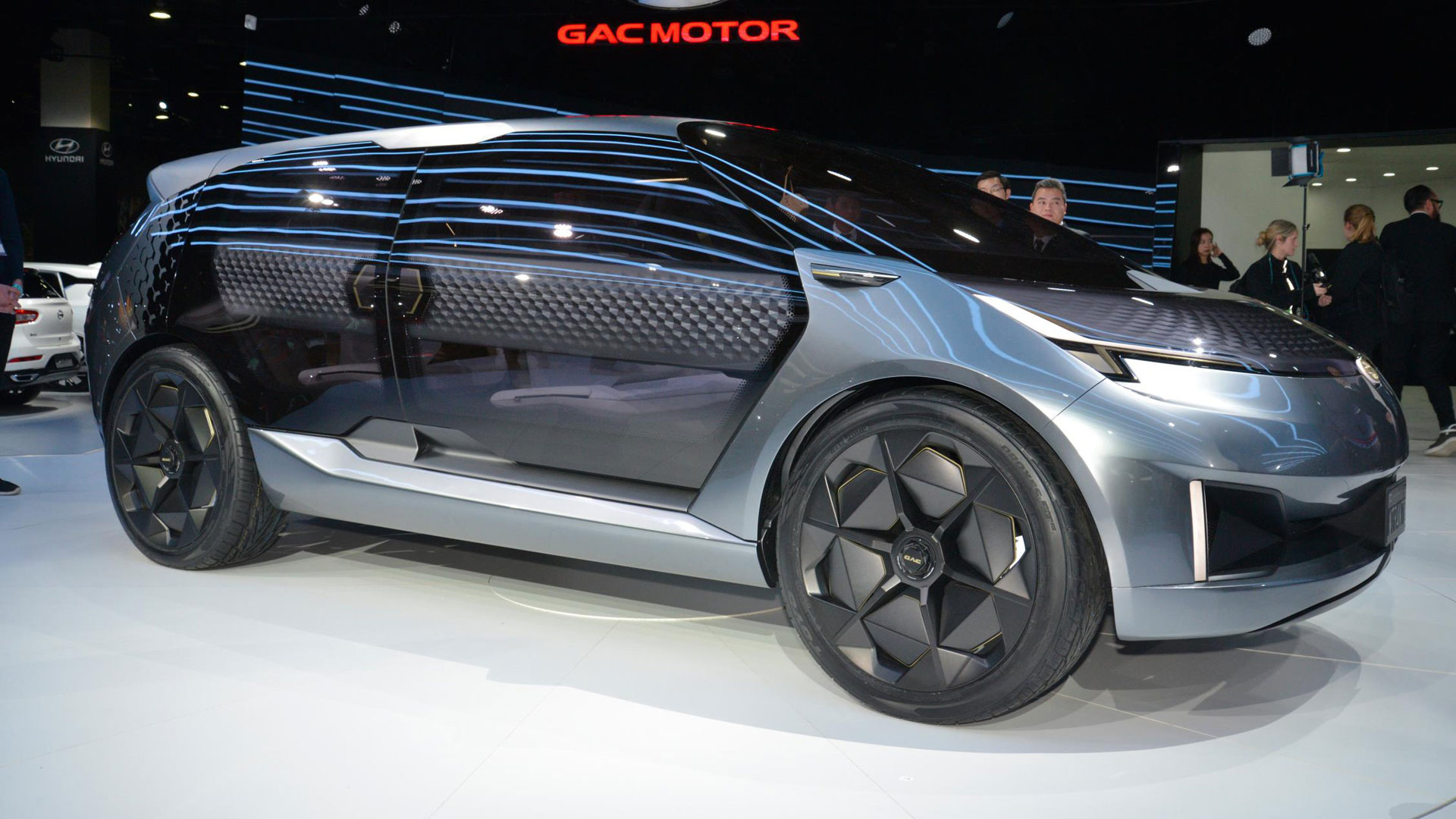
GAC Motor Entranze
Another North American motor show, another GAC Motor concept. There are signs that U.S. customers might soon be able to purchase a GAC vehicle, with the news that the company has registered its North American Sales Company near Los Angeles and a new R&D centre has started operating in Detroit. So, maybe it’s time to take the Chinese company’s North American ambitions seriously.
The Entranze concept is a seven-seat SUV with a 3+2+2 seating arrangement and an aircraft-inspired aisle. Not much is known about the concept, but earlier reports suggest that it will feature an electric drivetrain and it could launch in China as early as the summer. “Ultimately, automotive products are a means for people to connect during life’s great journey. The Entranze concept embodies our vision to provide mobility solutions that enrich lives,” said Yu Jun, president of GAC Motor.
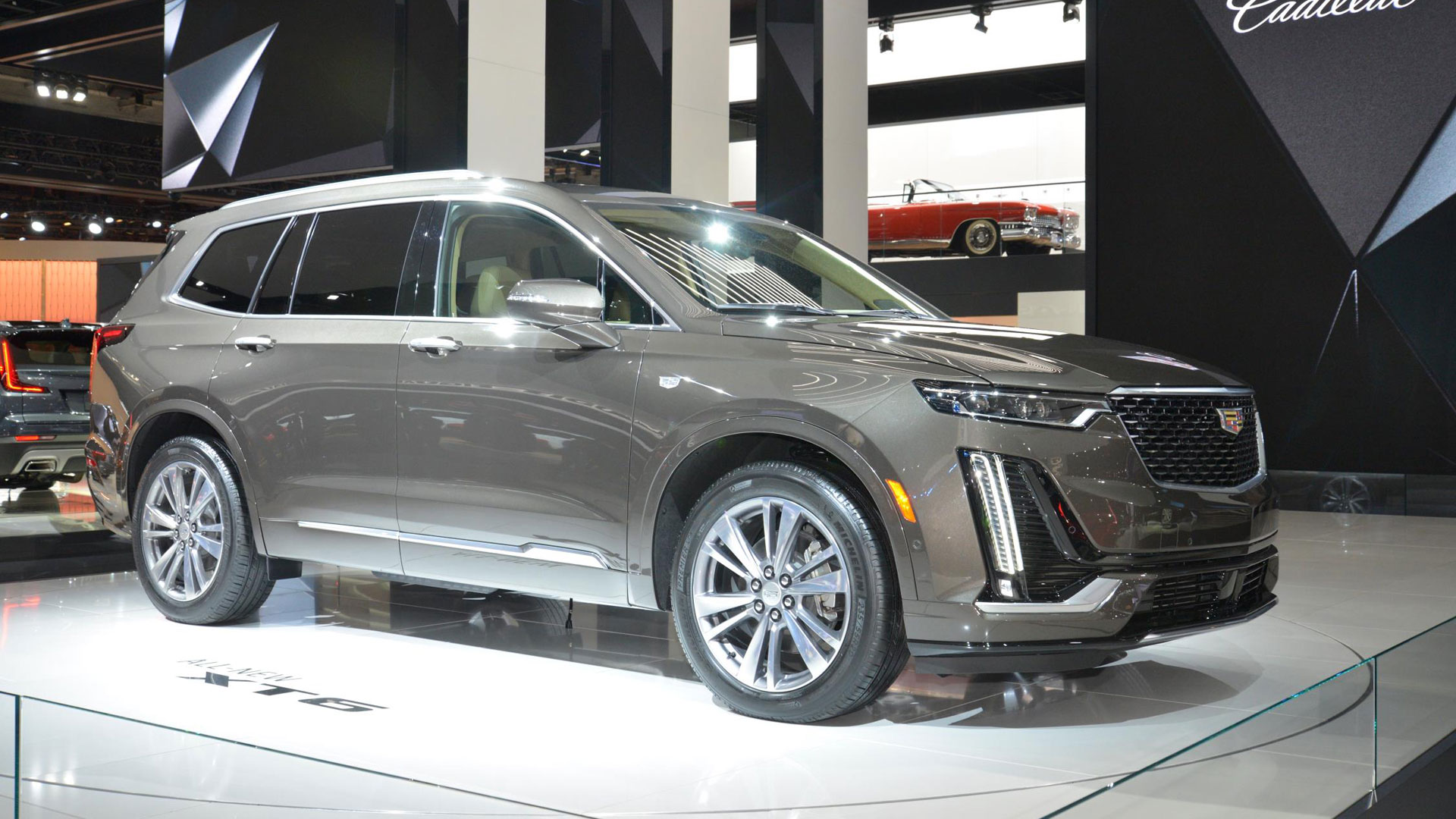
Cadillac XT6
Cadillac’s assault on the SUV segment continues to gather pace, with the launch of the XT6. The three-row crossover joins the XT4, XT5 and Escalade in the SUV range, with Cadillac taking a ‘bells and whistles’ approach to the specification. In common with the Kia Telluride, the XT6 looks a little like the Volvo XC90, especially in profile and from the rear three-quarters. Not that this is a bad thing.
Power is sourced from a 310hp 3.6-litre V6 engine mated to a nine-speed automatic transmission, with all-wheel-drive available on the Premium Luxury trim and standard on XT6 Sport. “Every seat is the best seat in the house,” said Steve Carlisle, Cadillac president.
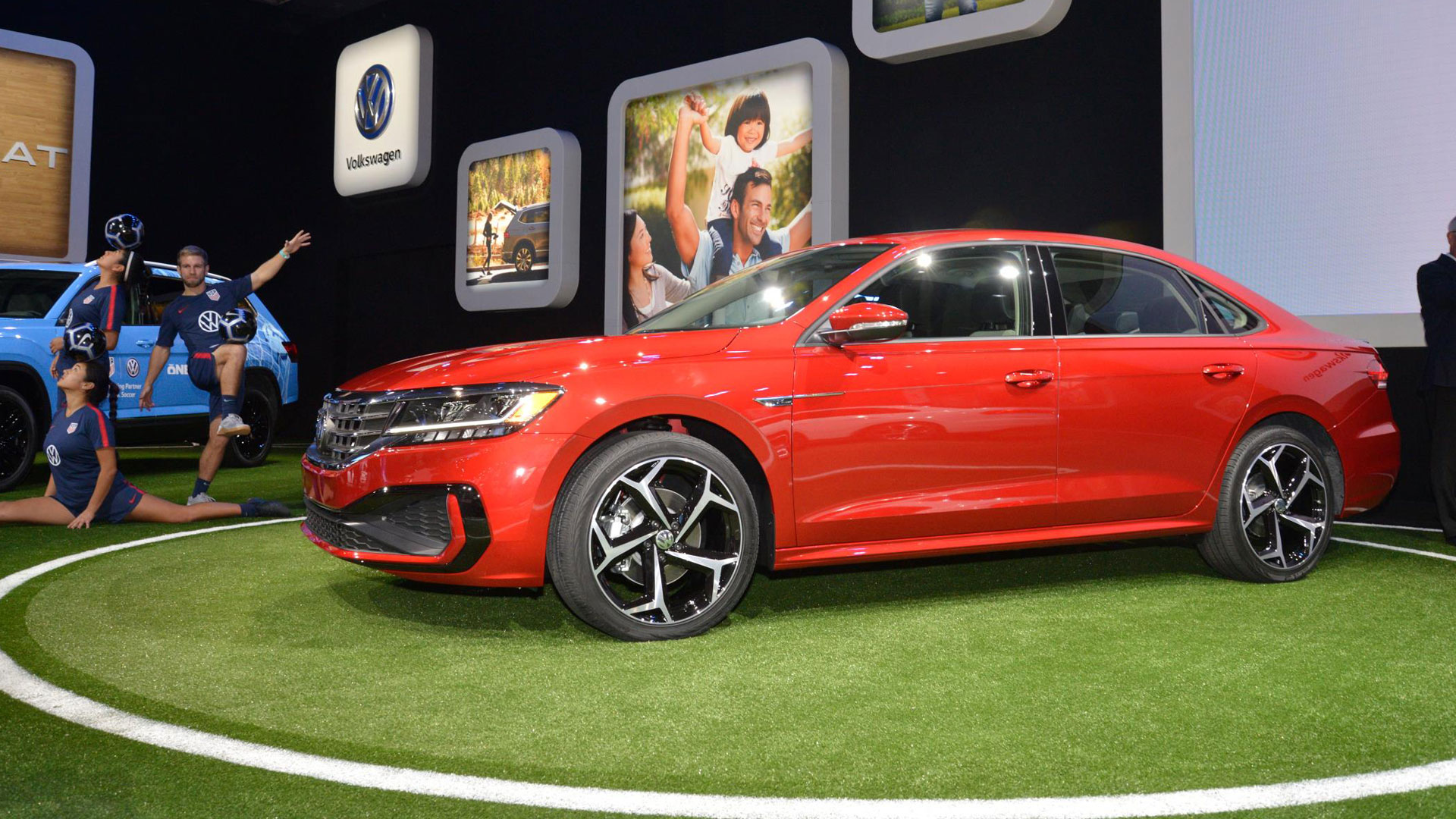
Volkswagen Passat
Volkswagen has updated the Passat for the North American market, giving it a fresh new look, standard-fit LED headlights, updated technology and improved driver-assistance features. The interior has also had a makeover and features new air vents, a revised instrument panel and a glass-covered touchscreen.
“Passat is the only midsize sedan to offer German driving dynamics at an affordable price,” said Scott Keogh, Volkswagen’s CEO of the North American region. Four regular trim levels and a launch-only Limited model will be available in the summer – just in time for your U.S. fly-drive vacation.
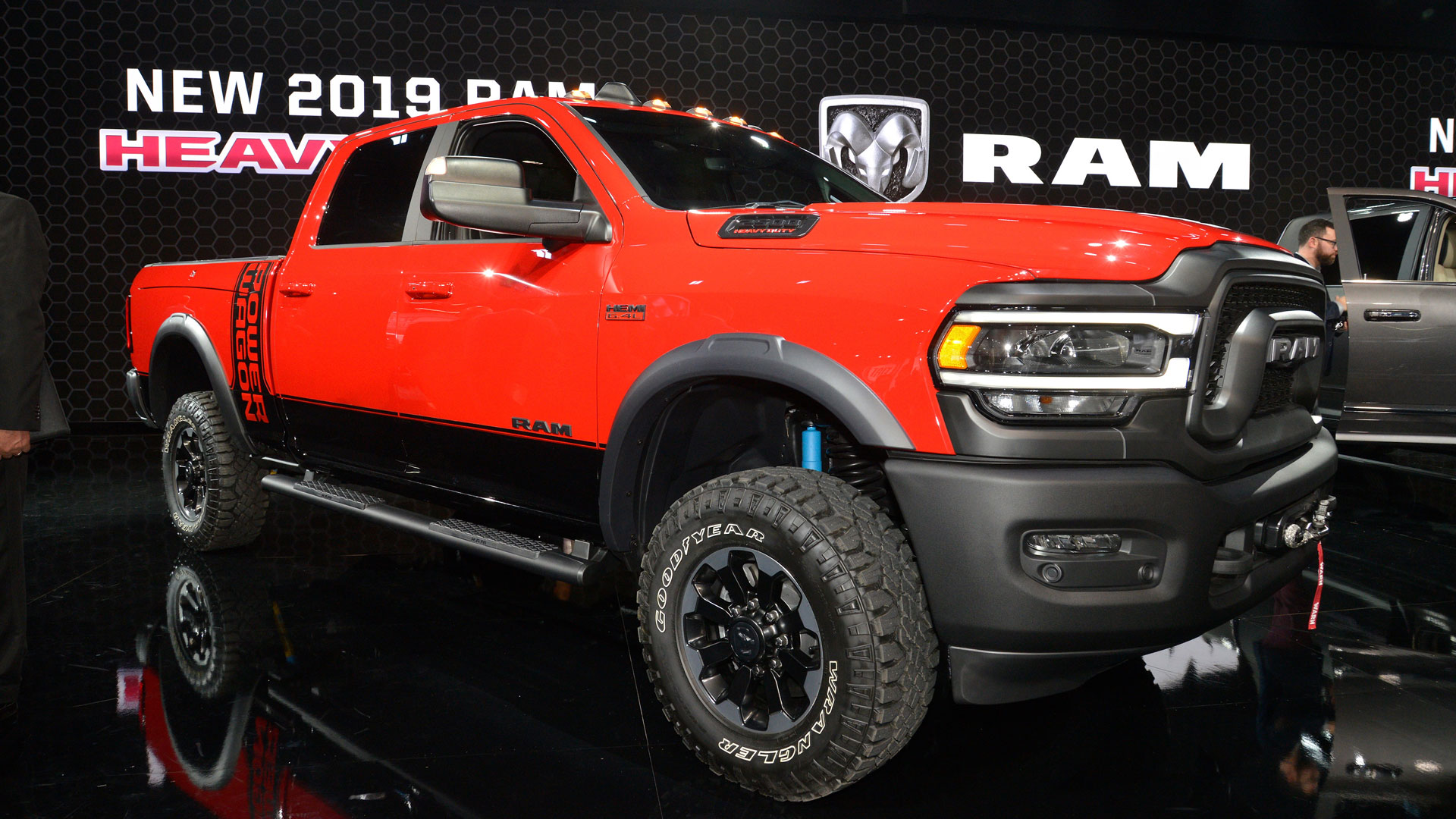
Ram Heavy Duty
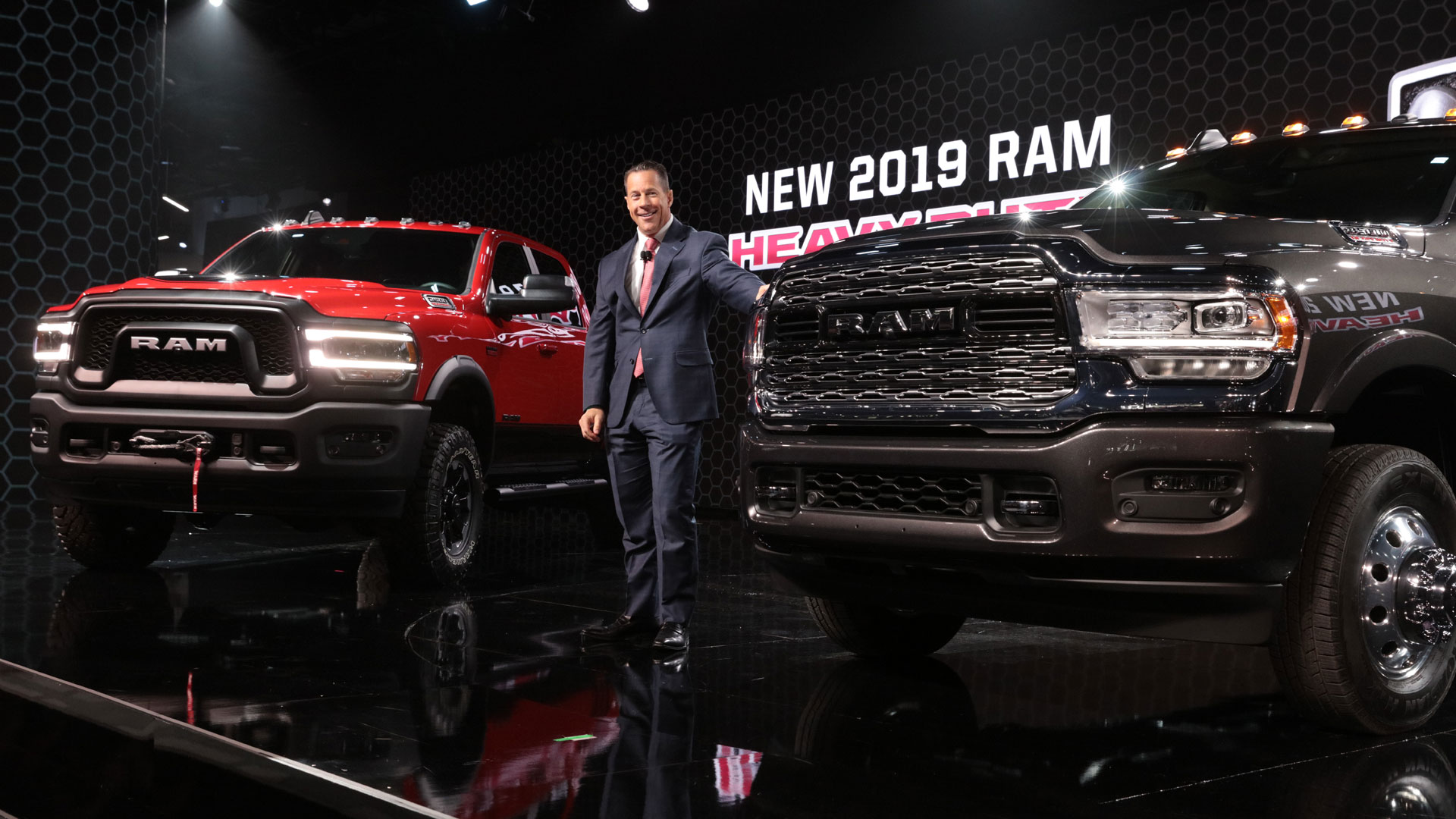
‘The 2019 Ram Heavy Duty is the most powerful, most capable pickup in the segment with a towing capacity of 35,100 lbs. and a payload capacity of 7,680 lbs. Driving it all, a never-before-seen torque rating of 1,000lb-ft from the Cummins I-6 Turbo Diesel engine.’ For the best effect, read this sentence from the Ram press release with a patriotic American voice and a Bruce Springsteen tune in the background.
In fairness to Ram, you have to shout when you launch a vehicle in the same segment as the all-conquering Ford F-Series. At its heart is a 6.7-litre turbodiesel engine, but a 6.4-litre Hemi V8 is also available. “Ram Heavy Duty owners constantly demand the highest levels of capability to tackle the biggest jobs… we now hold the most important tiles within the segment,” said a tubthumping Reid Bigland, head of Ram brand.
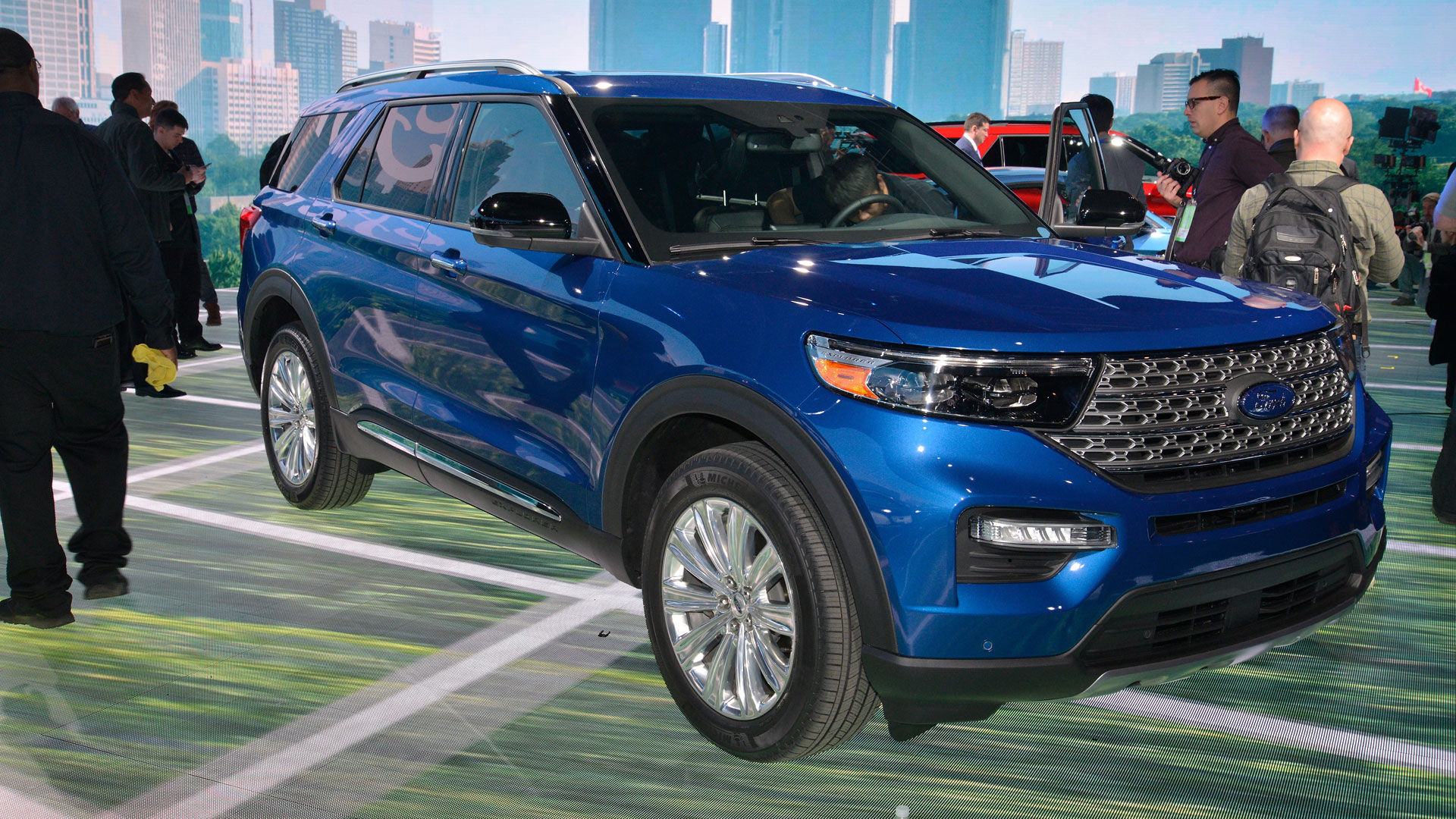
Ford Explorer
Faced with new rivals – including the Kia Telluride – Ford is pulling out all the stops to ensure the Explorer stays ahead of the game. Central to this is the launch of two new models: a sporty Explorer ST and a new Explorer Hybrid. They combine to create the broadest-ever line-up of Explorer SUVs.
The Explorer ST is powered by a 3.0-litre EcoBoost engine developing 400hp and 415lb-ft of torque, enough for it to hit a top speed of 143mph. Upgrades include an ST Street Pack and an ST Track Pack, with both models riding on 21-inch rims. Meanwhile, the 3.3-litre hybrid version is expected to deliver up to 500 miles of range per tank. Ford has announced that a new SUV is destined for Europe. The smart money is on this being the Explorer.
Lexus RC F
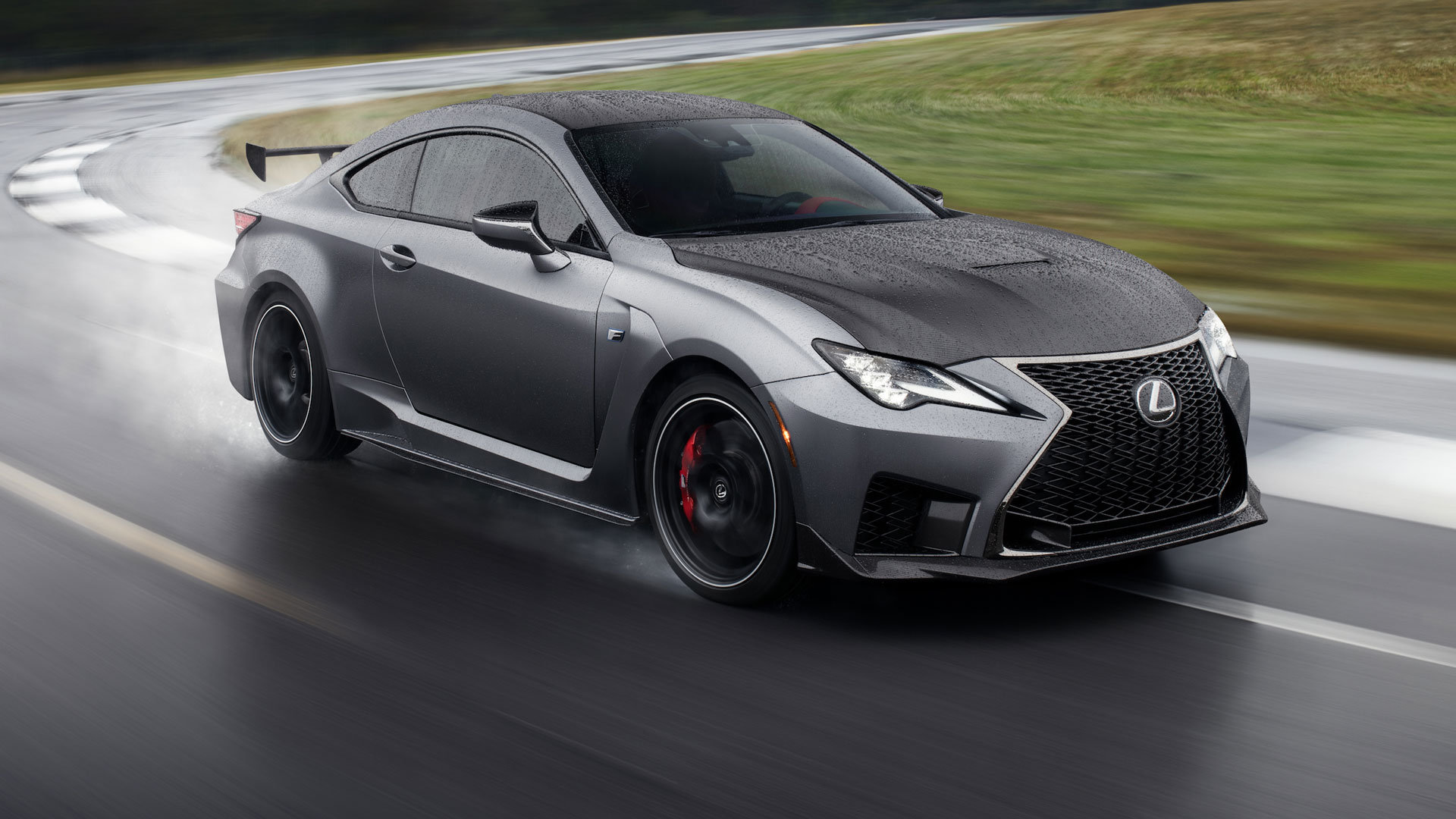
Lexus has updated the BMW M4-baiting RC F for 2020, with revised styling, a tweaked chassis, a slight increase in power and the fitment of launch control as standard. Meanwhile, the Track Edition features a massive carbon rear wing, heat-treated exhaust tips, a carbon bonnet, black alloys and a satin paint job. Weight is down by between 70kg and 80kg.
Officially, the Lexus LC Convertible is a concept, but there are two reasons why you should take this with a pinch of salt. Firstly, it looks production-ready to us. Secondly, Lexus has confirmed that it will go into production. It’s a glorious thing, looking as alluring as the LS Coupe, only with less roof. Let’s hope the 22-inch wheels make production.
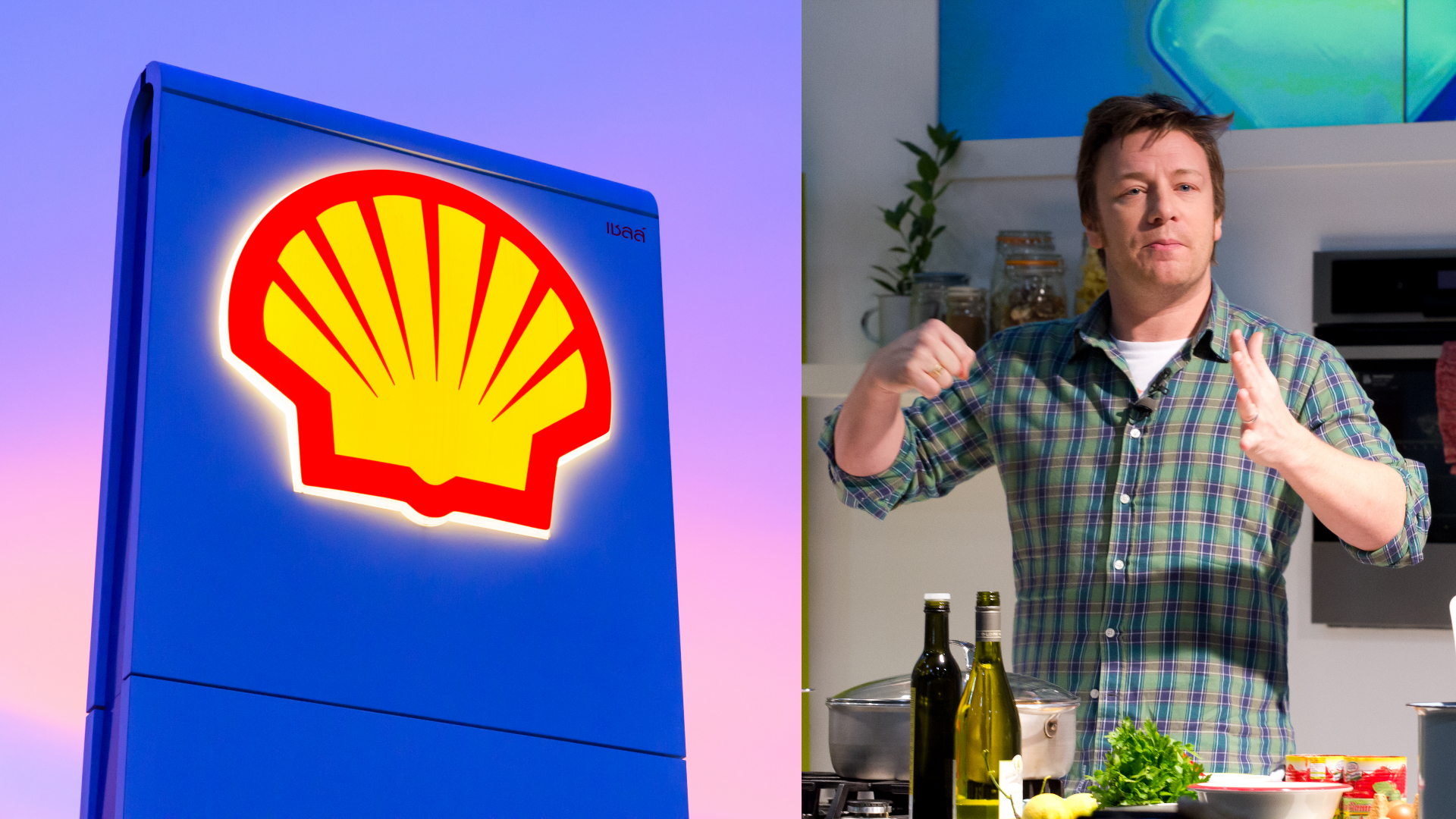
Shell has partnered with famous TV chef Jamie Oliver to help improve the food offering at its petrol stations. How? By introducing the ‘Jamie Oliver Deli by Shell’ range.
The goal is to offer Britain’s motorists a variety of healthier and more enjoyable food choices. It’s a worthy scheme, given petrol station cuisine tends to consist of bars of chocolate, bags of crisps and over-priced sandwiches of questionable nutritional benefit.
From the end of January, over 80 new products from the partnership will be distributed to around 500 of Shell’s petrol stations throughout the country.
The range includes a variety of sandwiches, wraps, salads and kids’ meal boxes. It’s Jamie Oliver, so there’s plenty of fruit, veg and overall healthier versions of what you might otherwise get. That’s not to say it isn’t nice, or that there aren’t more indulgent options in the range. The goal isn’t to rob you of your road trip treats, rather offer more rounded and nutritious meal options for diners on the go.
According to data acquired during an IPSOS Mori survey, over half of UK drivers want healthier options for eating on the go from petrol stations. The new range is said to offer ‘exciting, testy, healthier food to choose from on the road’ – inclusive of 69 percent more fruit and veg just across the sandwich range.
“I’m incredibly excited about this partnership,” said Jamie Oliver.
“Working together we will give millions of Shell customers each week the opportunity to enjoy tastier, healthier and more varied food choices.
“Food on the go is going to become a far bigger, more normal part of everyone’s busy, modern lives – so it’s essential we make it more enjoyable through better-quality ingredients and exciting flavours.”
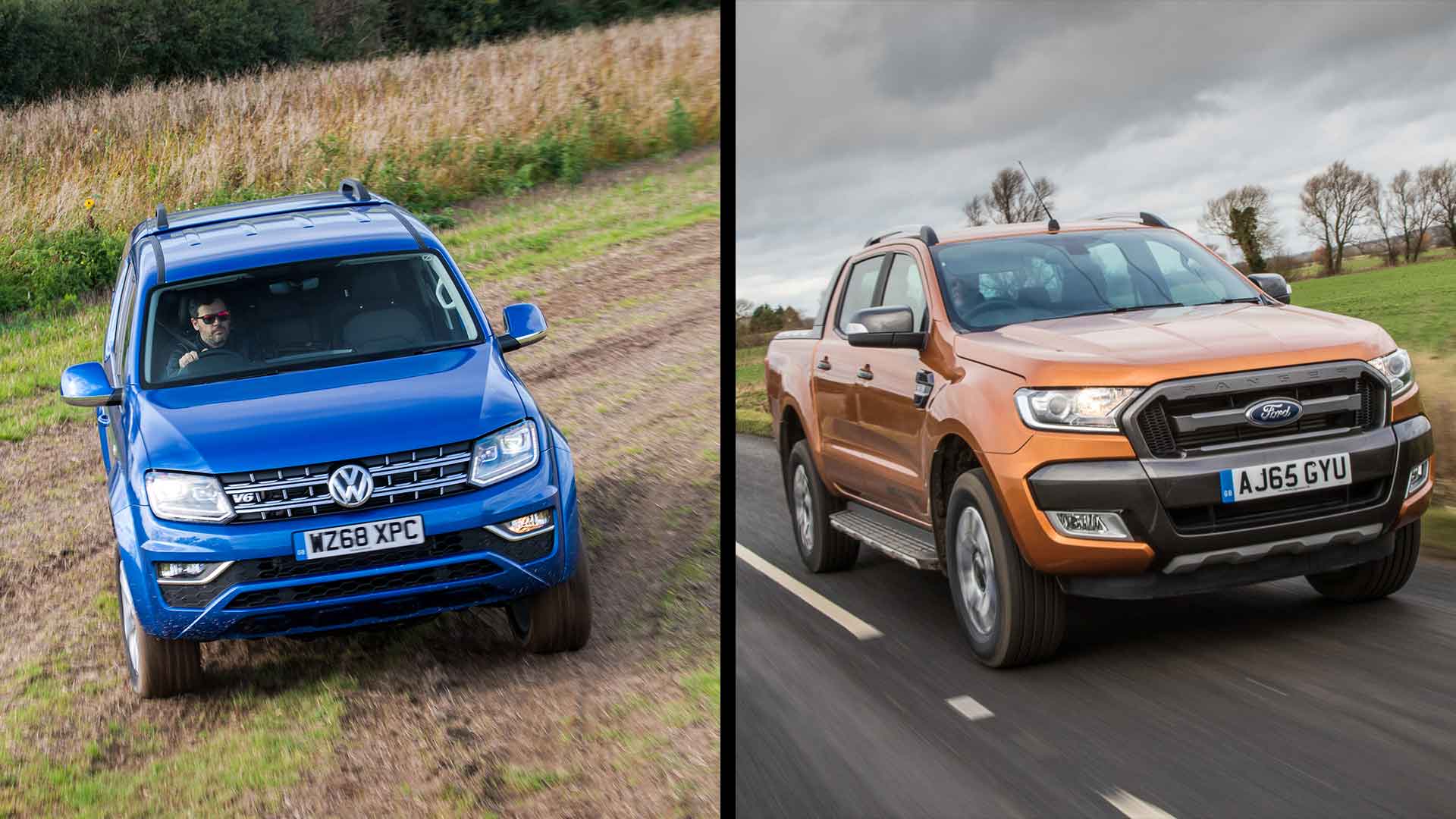
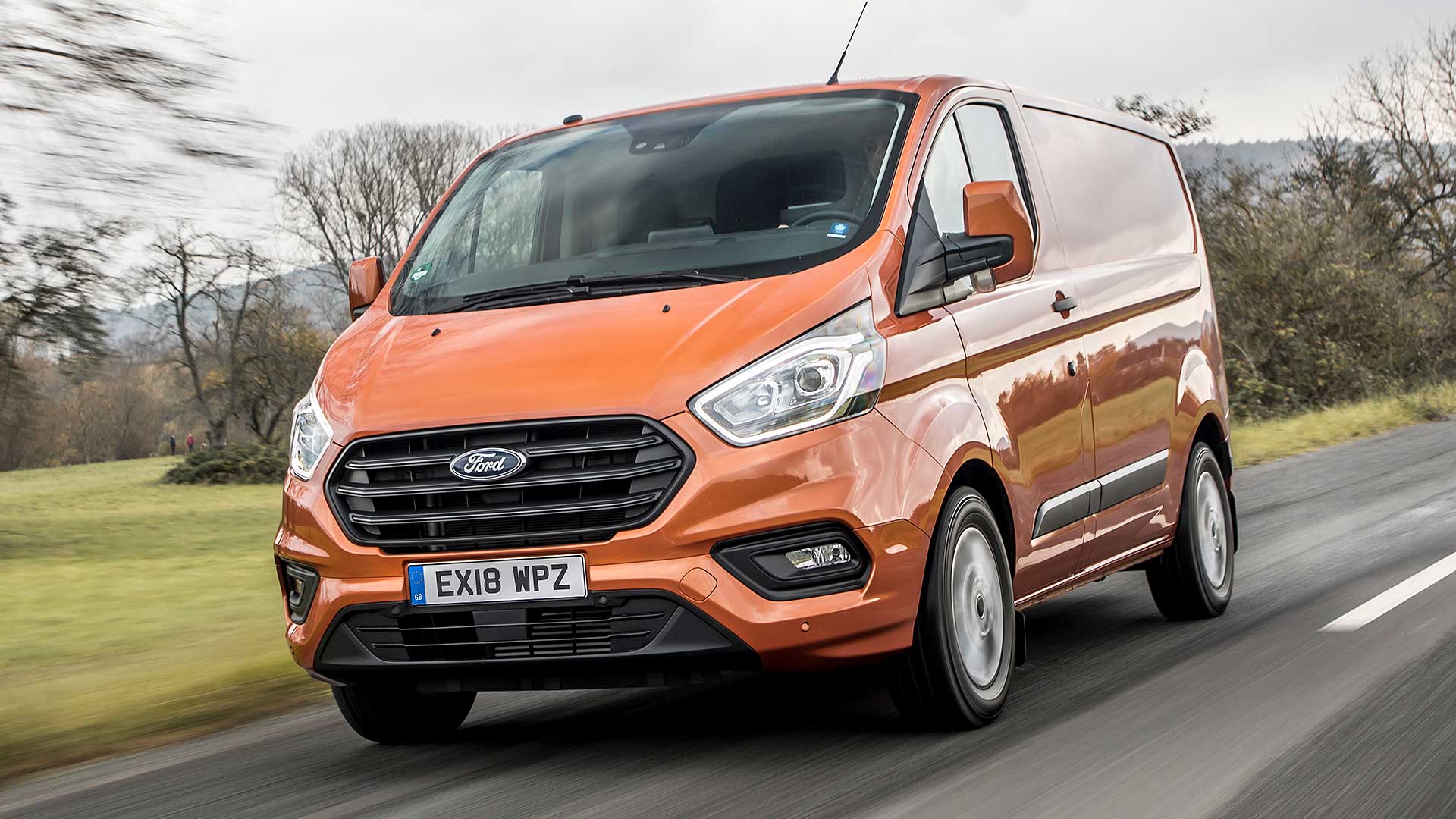
Volkswagen and Ford have announced a global alliance that will lead to the introduction of a new dual-brand pick-up truck in 2022, quickly followed by a commercial van partnership.
The two automotive giants have also committed to explore potential collaborations on electric cars, along with autonomous vehicles and mobility services. Future vehicle collaborations may thus be announced in the future – potentially in a matter of months.
Both companies stressed it is purely an alliance; there is no cross-ownership between the two firms. Savings from the alliance are expected from 2023.
“Over time, this alliance will help both companies create value and meet the needs of our customers and society,” Ford CEO Jim Hackett said.
“It will not only drive significant efficiencies and help both companies improve their fitness, but also gives us the opportunity to collaborate on shaping the next era of mobility.”
Volkswagen CEO Dr. Herbert Diess said: “Volkswagen and Ford will harness our collective resources, innovation capabilities and complementary market positions to even better serve millions of customers around the world.
“At the same time, the alliance will be a cornerstone for our drive to improve competitiveness.”
British boon?
Both the Ford Ranger and Volkswagen Amarok pick-ups will be due for replacement around 2022, which is why the first stage of the alliance is timely.
The next step, to develop replacements for the Ford Transit and Volkswagen Transporter, could be a boon for British automotive. In the announcement, it was confirmed Ford will take the lead to build new large commercial vans for European customers.
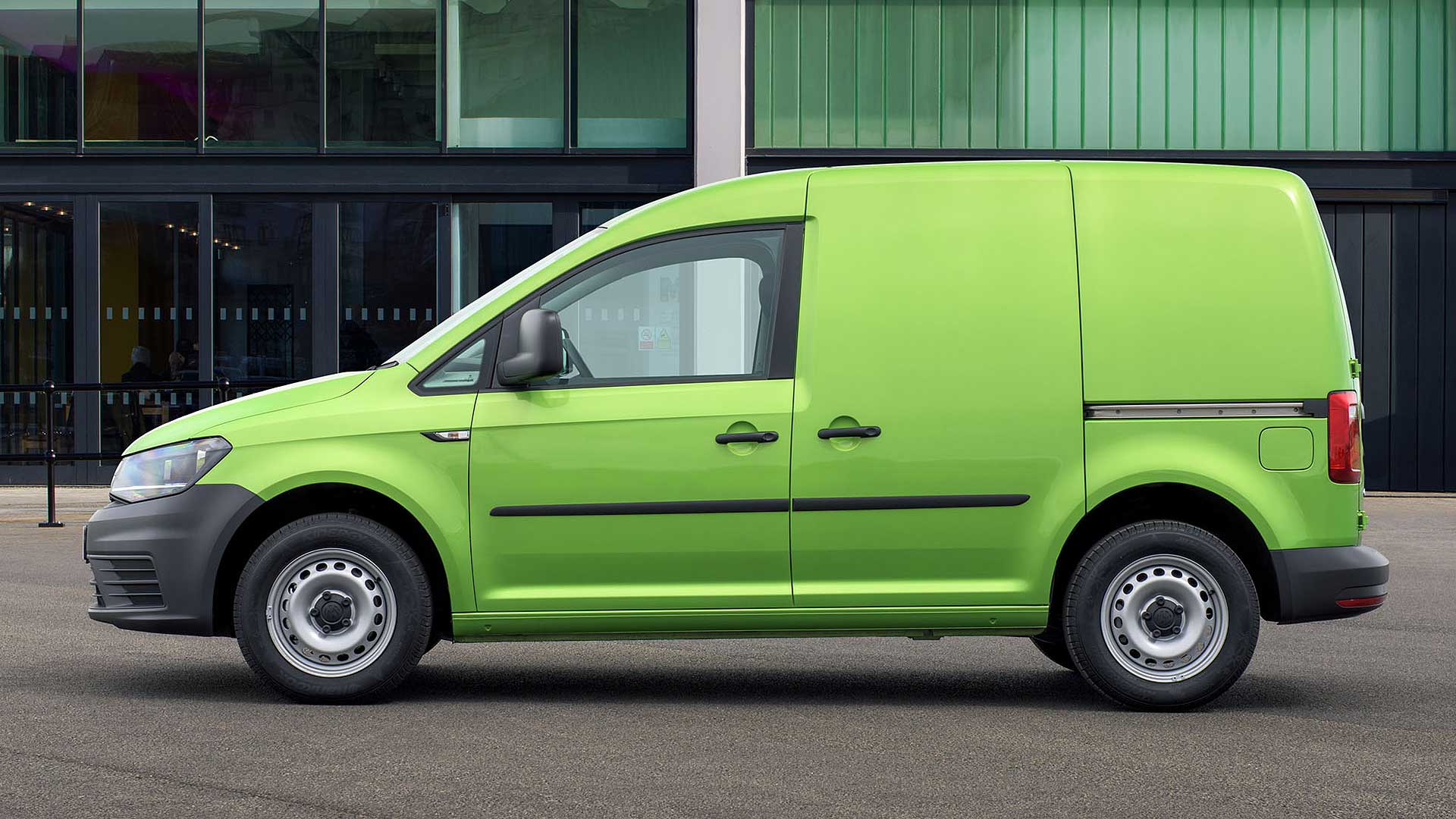
Volkswagen, in turn, will develop a city van for the two firms, replacing the current Volkswagen Caddy (above) and Ford Transit Connect.
The alliance will enable the companies to share development costs, leverage their respective manufacturing capacity, boost the capability and competitiveness of their vehicles and deliver cost efficiencies, while maintaining distinct brand characteristics.
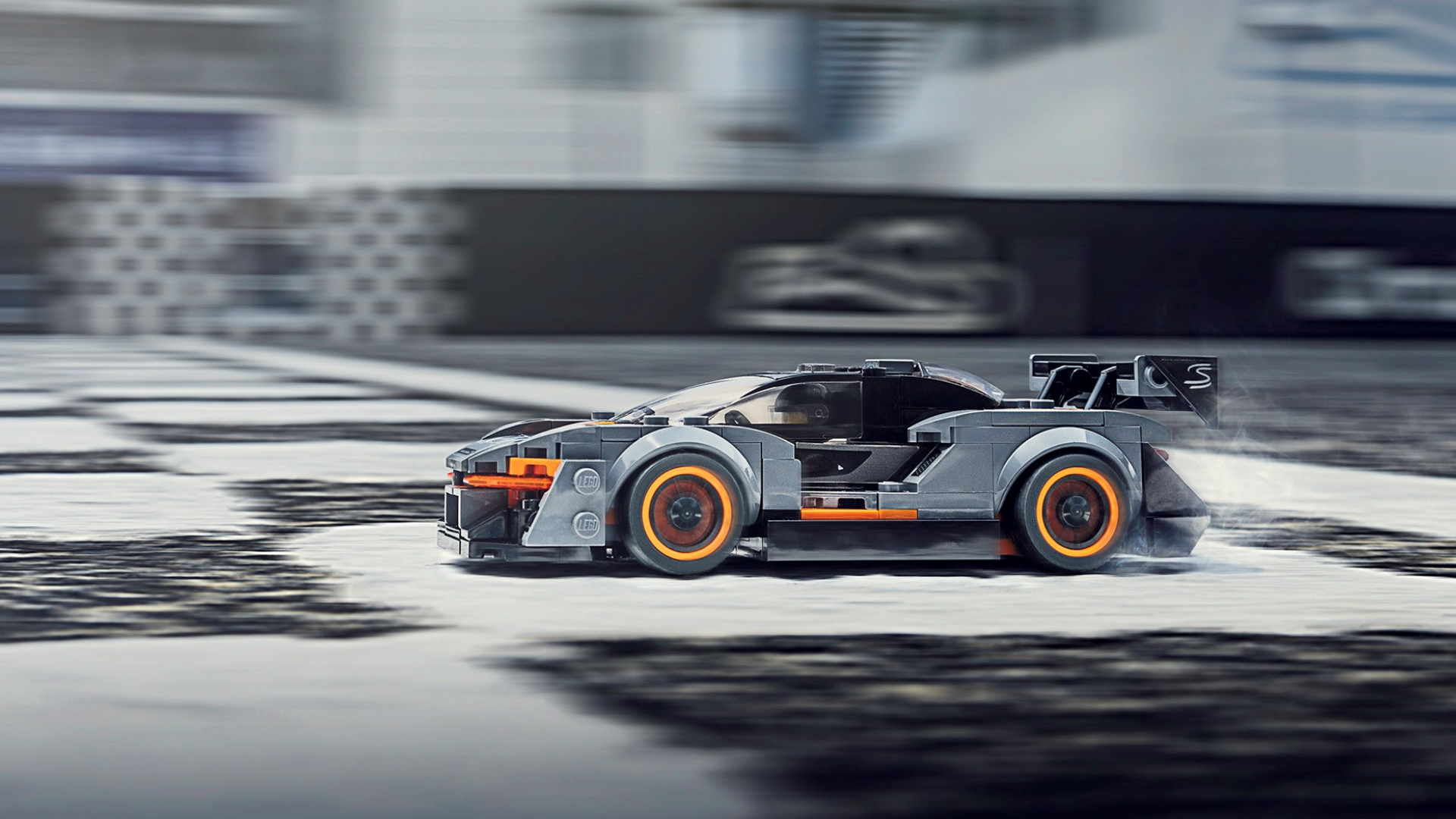
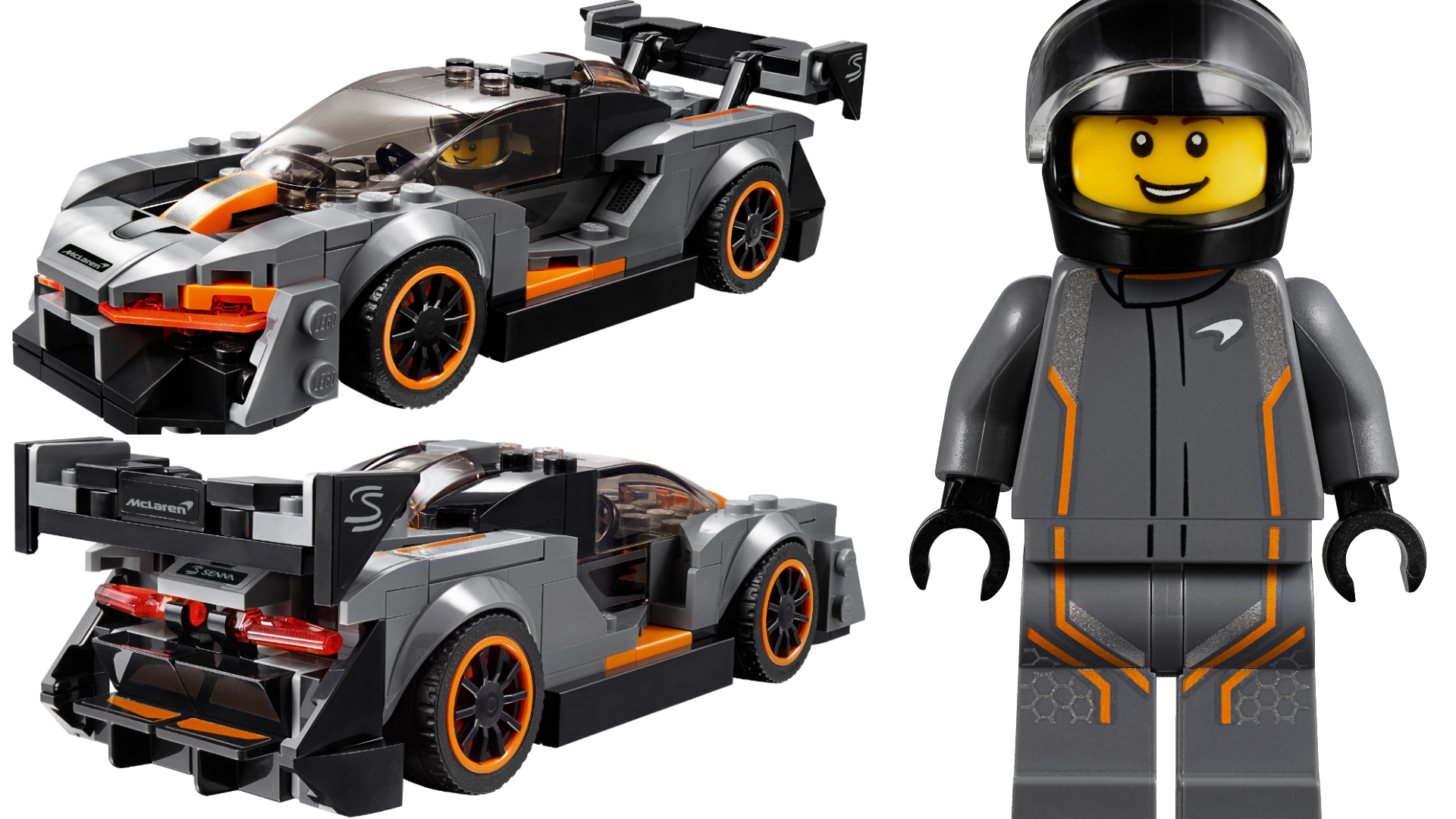
The latest car to be immortalised in the Lego Speed Champions series is the McLaren Senna.
One of the most extreme track-focused supercars ever manufactured can now be enjoyed from the comfort of your kitchen table.
The Senna follows a succession of McLaren models sold as Lego kits, with the P1 and 720S setting the Speed Champions standard. And while the full-sized hypercar would set you back £750,000, the 15cm Speed Champions edition Senna costs just £12.99 – 50,000 times less.
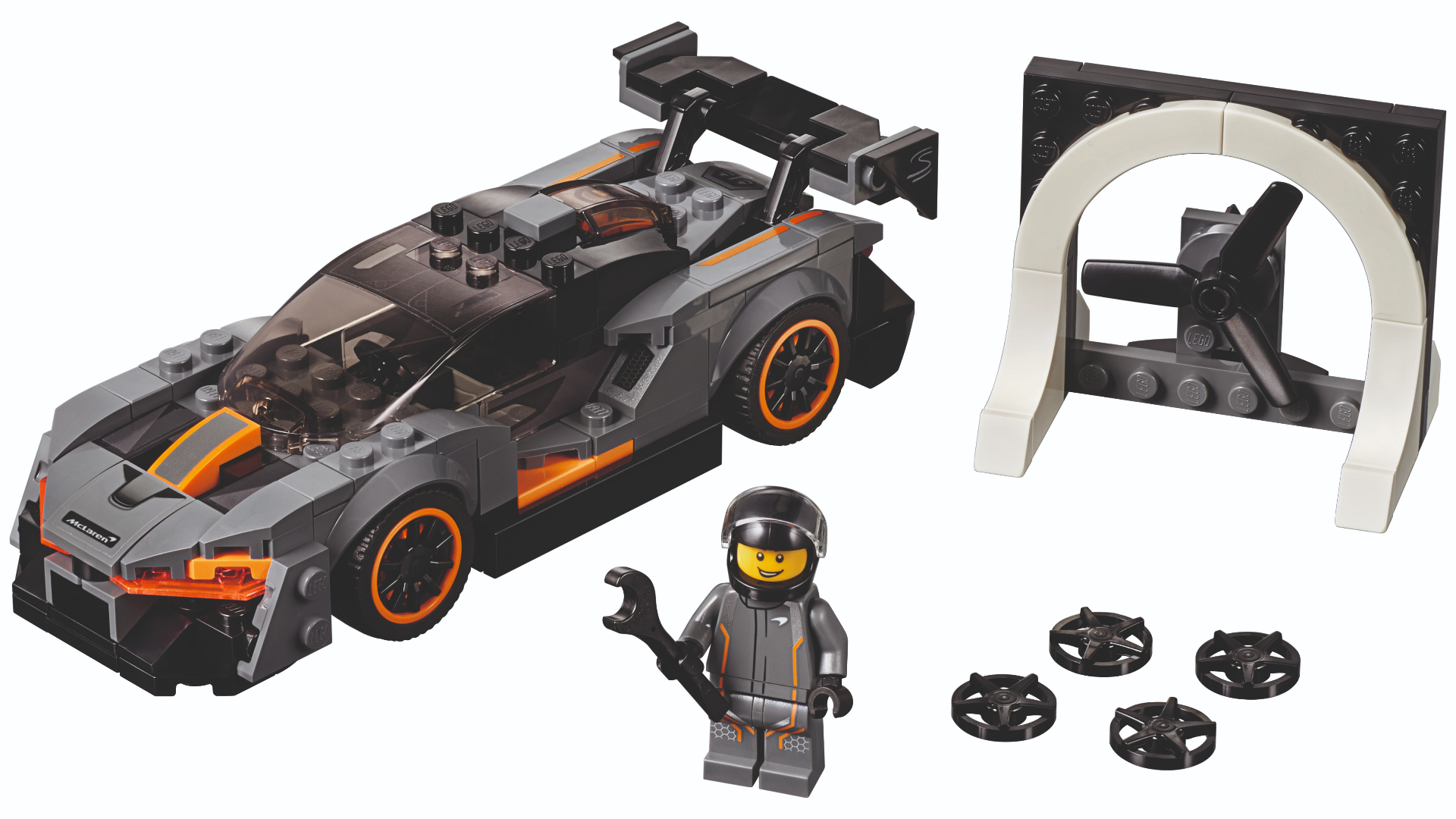
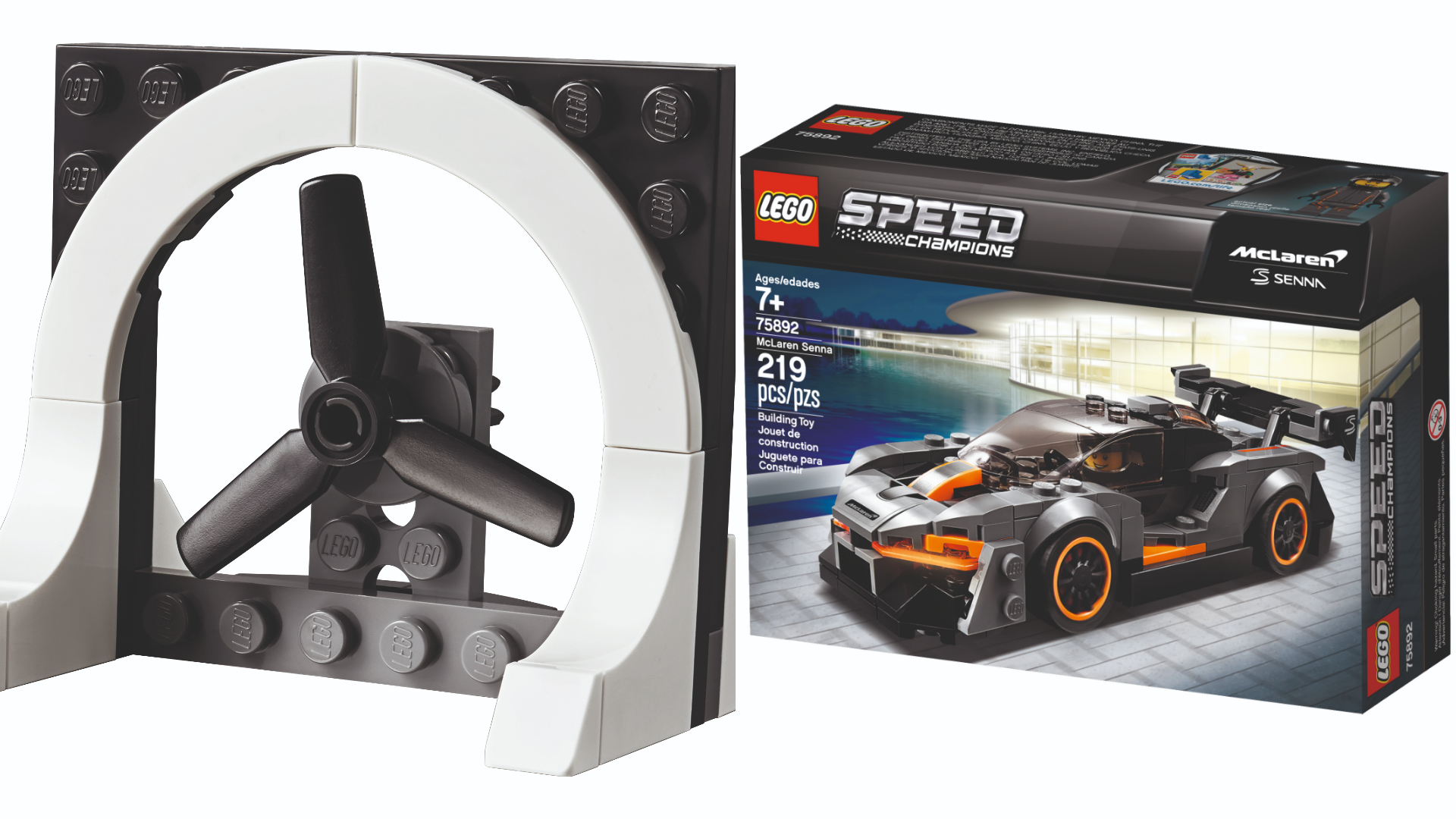
The kit is comprised of 219 pieces and should be much quicker to assemble than the real thing, which takes around 300 hours per car at McLaren’s Woking factory.
The model, once completed, will wear a Victory Grey colour with contrasting orange highlights. You also get a set of exchangeable wheels and a mini figure.
Unlike the actual Senna, you also get a wind tunnel so you can test out its aerodynamic prowess. Whether it’s capable of generating 800kg of downforce at 155mph like the real thing remains to be seen.
What we can’t decide is which is better-looking – the Lego version or the real thing. The Senna was a controversial car at launch, with form so overtly playing second fiddle to function.
You won’t need to apply and sit on a waiting list for this Senna, either. With any luck, you’ll be able to pick one up at your local Lego shop by the weekend.
That being said, the Speed Champions series is known for its popularity, so first-come, first-served.
Read more:
Four out of five motorists are overpaying for servicing and MOT
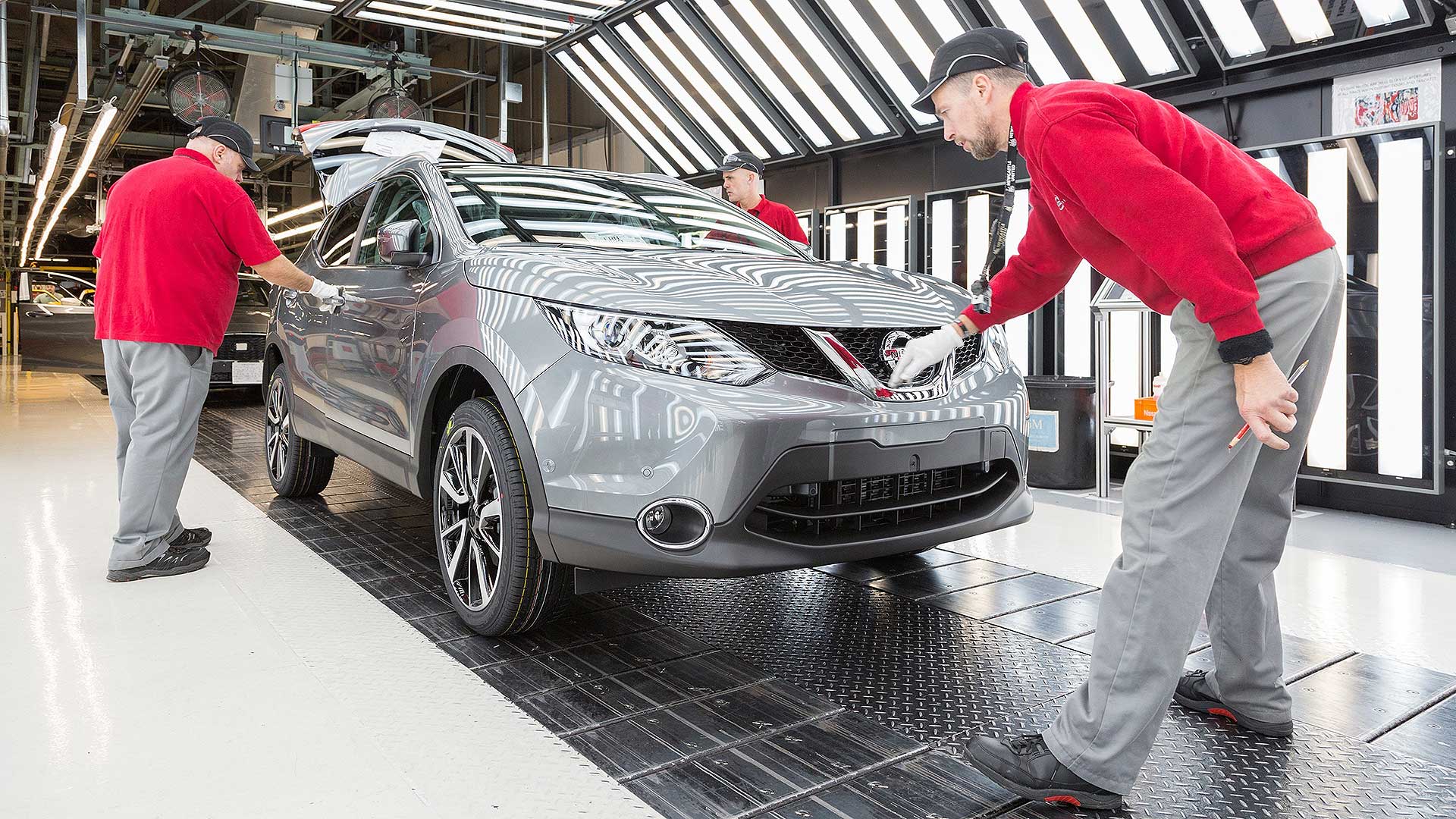
The Society of Motor Manufacturers and Traders (SMMT) is reminding MPs ‘they hold the future of the British automotive industry in their hands’ – and a no-deal Brexit would be ‘catastrophic’ for car firms in the UK.
As ministers prepare to vote tonight on the government’s Brexit deal, SMMT chief executive Mike Hawes (pictured below) underlined the “hundreds of thousands of jobs” UK automotive supports – more than 850,000 across the wider industry, says the trade association.
UK automotive also adds £20 billion to the UK economy and while “Brexit is already causing us damage – in output, costs and jobs – this does not compare with the catastrophic consequences of being cut adrift from our biggest trading partner overnight.
“The Just-in-Time nature of automotive means the impact of ‘no deal’ will be felt, not on months or weeks, but hours.”
Hawes dismissed the idea of a managed no deal as a “fantasy” as the industry would face immediate delivery shortages, disruption, additional costs and uncertainty.
“Both government and parliament have a responsibility to take ‘no deal’ off the table or risk destroying this vital UK industry.”
Hawes earlier described no-deal Brexit as a “hammer blow for the industry, which is facing the toughest of conditions”. New car sales were down almost 7 per cent in 2018 and major markets such as China are also experiencing declines.
Major manufacturers are already responding with job cuts; Jaguar Land Rover was the latest to take action with 4,500 jobs to go, while Vauxhall trimmed its workforce at Ellesemere Port in 2018. Ford is also believed to be considering job cuts at its engine plant in Bridgend, Wales.
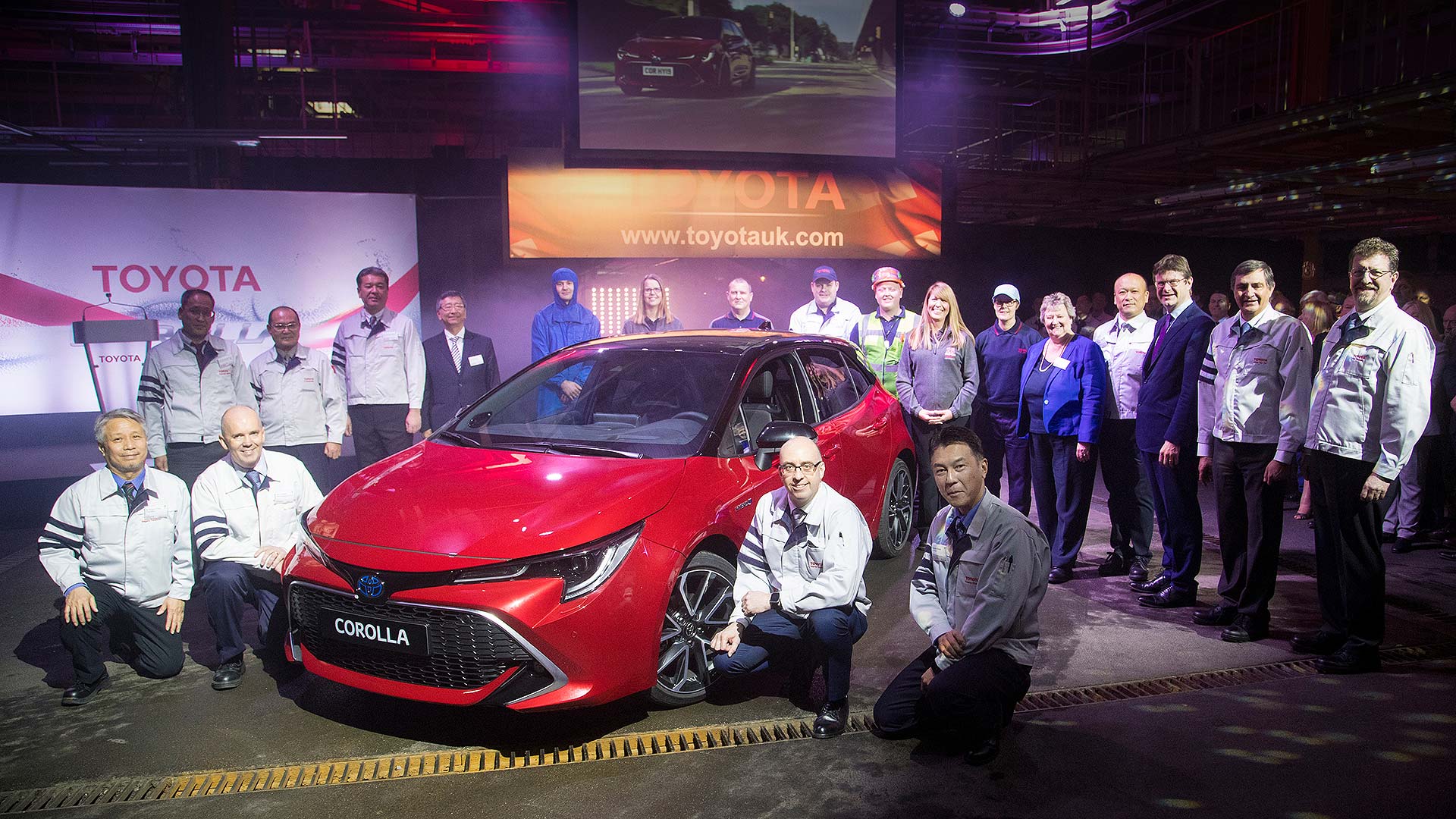
Business secretary Greg Clark MP joined Japanese Ambassador to the UK Koji Tsuruoka at a ceremony, alongside Toyota Motor Europe president and CEO Dr Johan van Zyl.
Toyota Motor Corporation chief engineer and executive vice president Hiroki Nakajima also flew over from Japan for the start of production event.
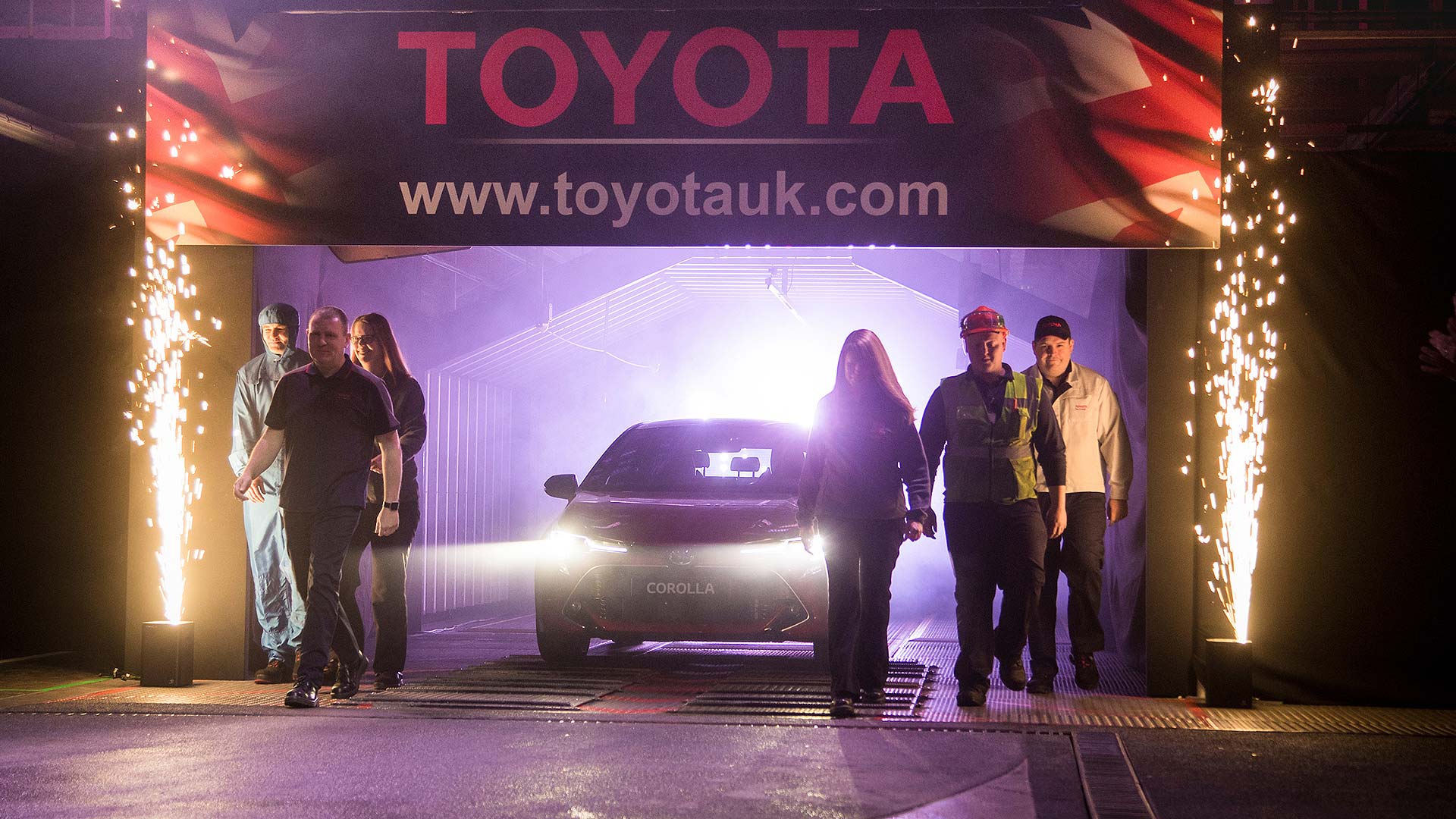
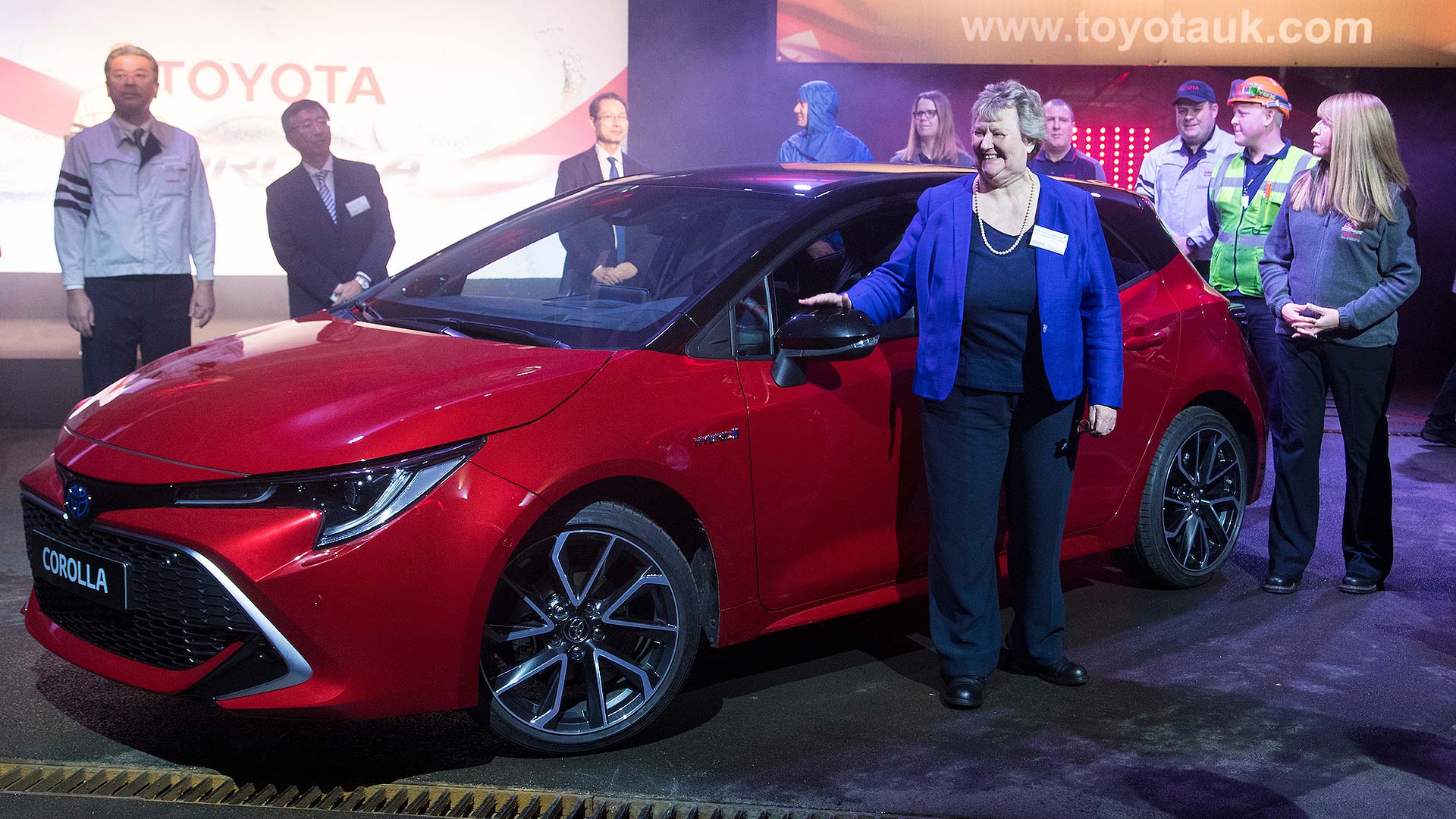
The Derbyshire factory will be the only plant in Europe building the eagerly anticipated new Corolla range, which will take on rivals such as the Volkswagen Golf and Ford Focus (not to mention the similarly British-built Honda Civic and Vauxhall Astra).
“This is a proud day for everyone at TMUK,” said UK managing director Marvin Cooke. “Making the new TNGA Corolla is a major milestone in our production history.
“This is a real sign of confidence in the capabilities of our workforce and in TMUK as a centre for world-class manufacturing.”
Dr van Zyl said the decision to invest in the UK was taken in 2017 – after the UK voted to leave the European Union. “The highly qualified workforce at TMUK has a fine record of delivering superior quality products.
“Our continued investments, combined with the dedication of our members, will ensure that we can deliver ever better cars to our customers.”
The new Corolla, adds Toyota, will be its first car in Europe to offer not just one, but two hybrid powertrains – a 1.8-litre and a more powerful 2.0-litre. The 1.8-litre will be the volume seller, which is doubly good news for Britain, as it’s also built here, at Toyota Deeside in North Wales.
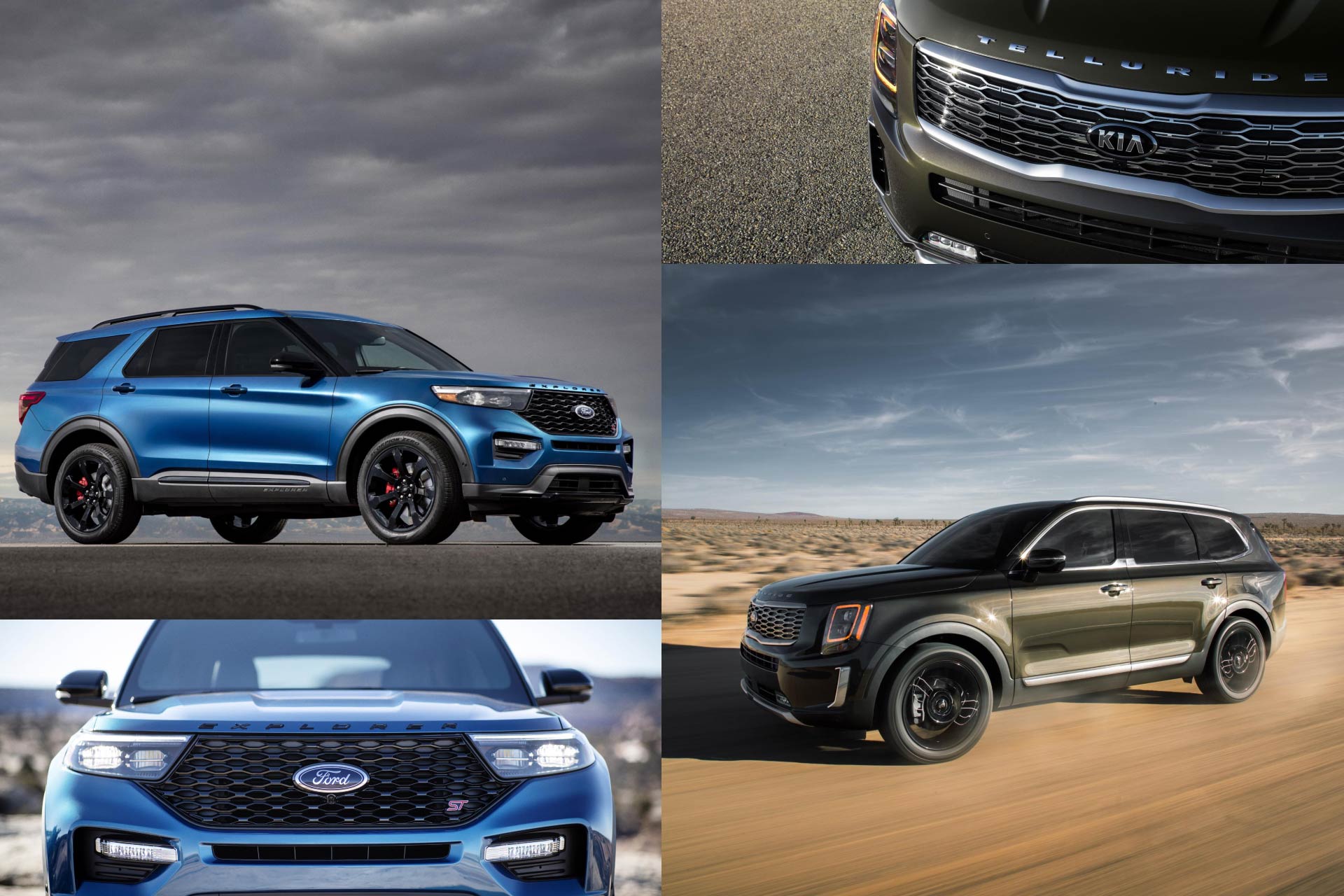
The pressure is on for Ford with the new 2020 Explorer, having made a commitment to make the top-selling SUV in America even better. Not content with a simple facelift, the Blue Oval has also added a new performance model and a hybrid version.
Ford does not have the mid-size market to itself though, with Kia now making a dramatic entry in Detroit with the flagship Telluride. It promises to be the biggest and most luxurious offering from the brand, and could pose a real threat to the Explorer.
Designed in Irvine, California and set to be built in West Point, Georgia, Kia claims the Telluride is made in America, for Americans. We take a look at how the hot new Korean squares up against the established King of the middle ground.
Sizing up the competition
Proudly promoted by Kia as the biggest model offered by the company to date, the new Telluride comes close to matching the size of the 2020 Explorer.
Whilst Kia may be pitching the Telluride as a large SUV, the dimensions put it firmly in the mid-size sector. An overall length of 196.9-inches (5,001 mm) for the Telluride is just marginally shorter than the 198.8-inch (5,049 mm) Explorer.
The new Korean also comes up shorter on wheelbase at 114.2-inches (2,901 mm) and a width of 78.3-inches (1,989 mm). For comparison, the Ford records 119.1-inches (3,025 mm) and 78.9-inches (2,004 mm) against the same respective measurements.
Where the Telluride can notch up a win is with seating capacity. Although both feature three rows, the Kia claims victory with the availability of eight seats in certain trim levels against the Explorer’s seven.
What’s under the hood?
At launch the Kia is offering just one engine option. The 3.8-liter Lambda-II V6 features gasoline direct injection, but no turbocharging. This means 291 horsepower, with an accompanying 262 lb-ft of torque.
An eight-speed automatic transmission is standard, sending power to the front wheels. An optional on-demand all-wheel drive system can be specified on all Telluride trim levels for those who want extra traction.
The 2020 model year Explorer offers up a range of four different engines, starting with the 300 horsepower 2.3-liter EcoBoost four-cylinder unit. A larger 3.0-liter V6 EcoBoost engine is offered for the Platinum model, featuring 365 horsepower and 380 lb-ft of torque.
Making news at the Detroit Auto Show was the announcement of the first performance Explorer ST model. Using a modified version of the 3.0-liter EcoBoost engine, the fastest-ever Explorer comes with 400 horsepower for a potential 143 mph top speed.
At the other end of the scale, the new Hybrid Explorer is estimated to be capable of covering 500 miles between fill-ups in rear-wheel-drive configuration. As with all 2020 Explorers, the Hybrid features a ten-speed automatic gearbox as standard.
Rear-wheel drive is the default configuration for Base, XLT, Limited, and Hybrid Explorers, with four-wheel drive optional. Four-wheel-drive is standard on Platinum models and the new ST trim.
Off-road and towing ability
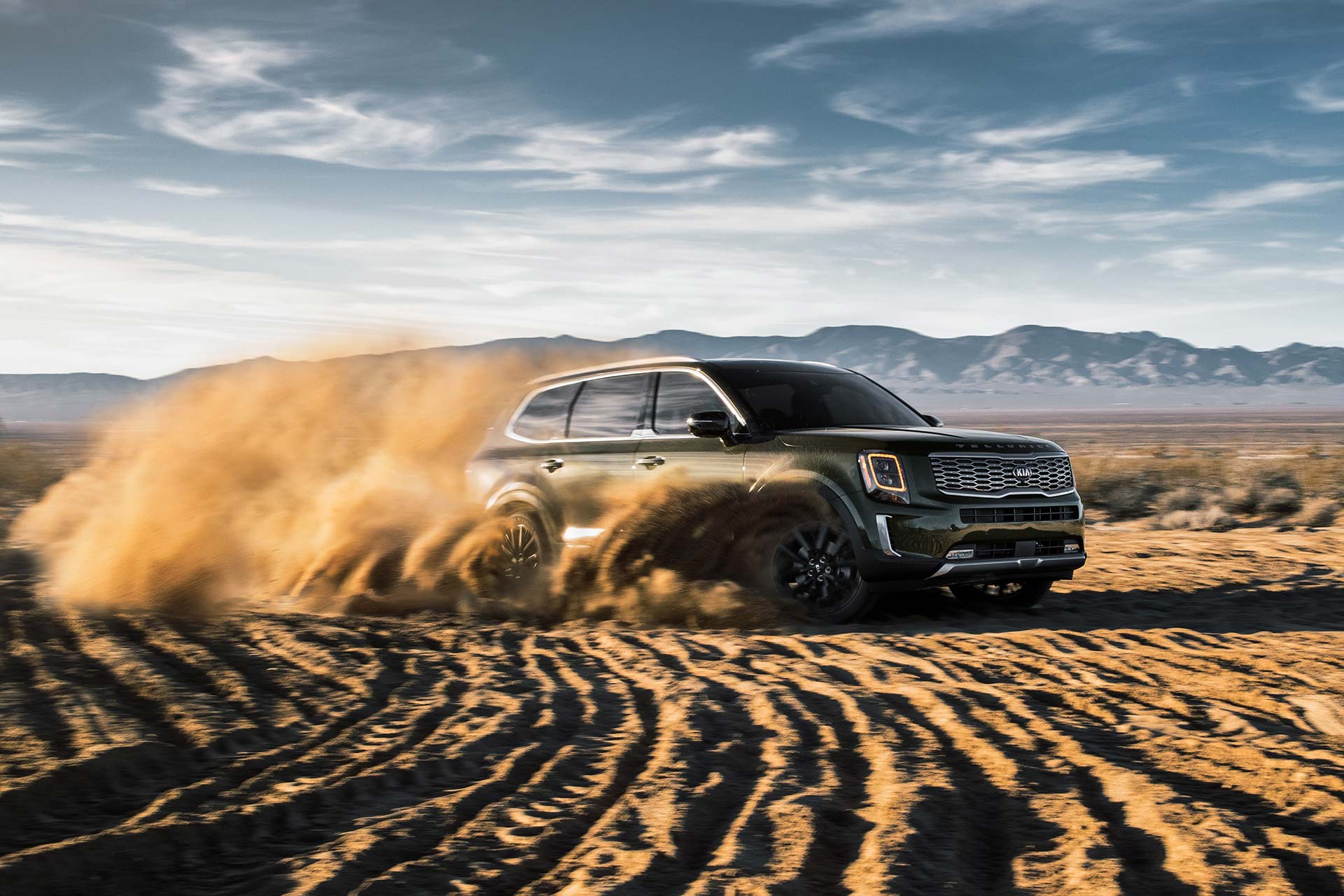
No mid-size SUV could claim to be built for America without the ability to go off-road or tow heavy trailers. However, Kia seems to have both bases covered with the Telluride.
When specified with the optional on-demand all-wheel drive system, the Telluride is capable of juggling power between the most appropriate axle, dependent on drive mode. Selecting ‘Eco’ or ‘Smart’ will send 100 percent of power to the front wheels, whilst selecting ‘Sport’ mode will send 35 percent to the rear axle.
Choosing the ‘AWD Lock’ setting will distribute power evenly to all four wheels for more serious off-road action. Downhill Brake Control is also standard, whilst towing capacity is rated as 5,000 lbs.
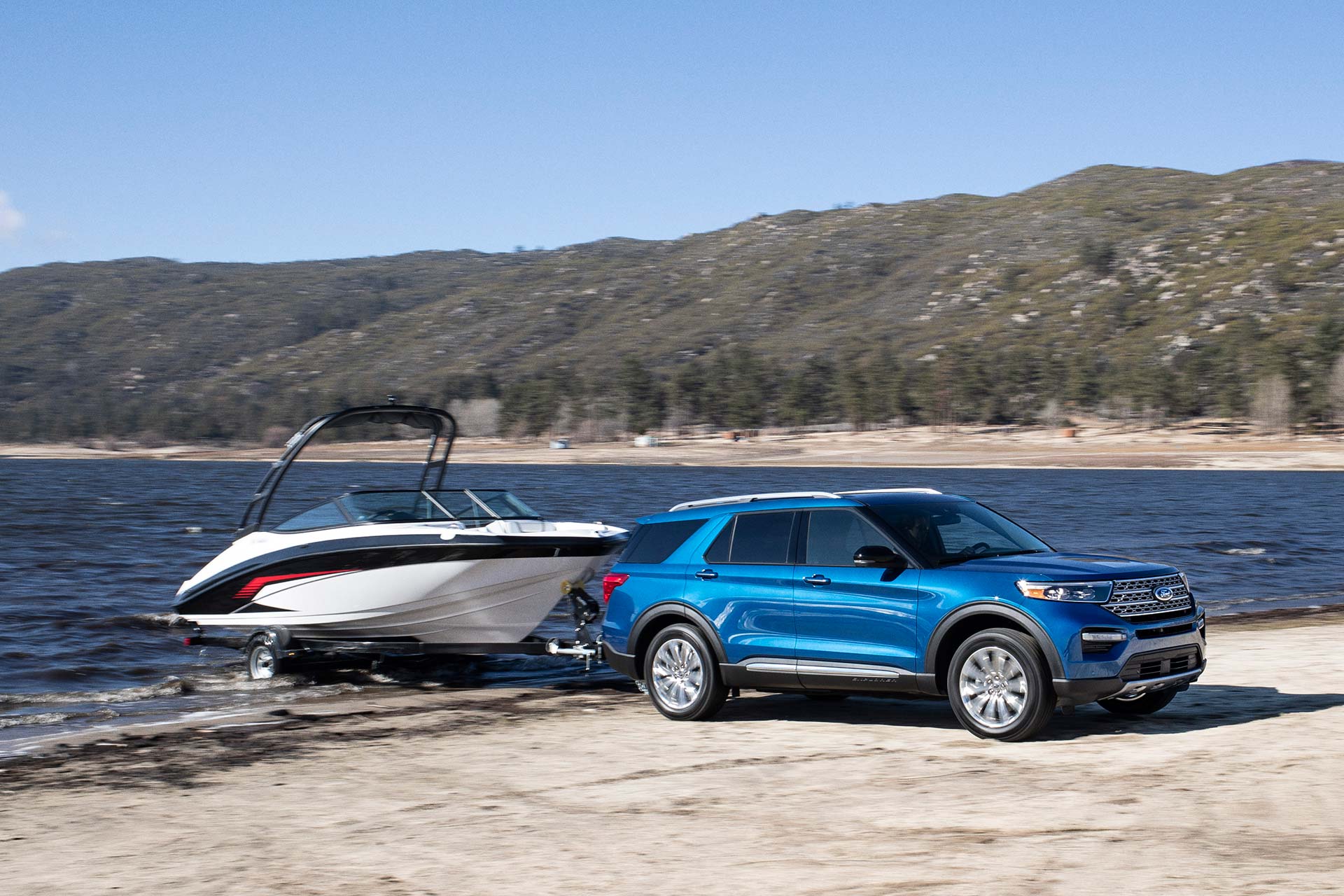
Whilst that may sound impressive, unfortunately Ford has upped the towing abilities of the revised Explorer. Models equipped with the 2.3-liter EcoBoost engine can now pull 5,300 lbs, whilst those with the 3.0-liter version can tow a considerable 5,600 lbs.
Four-wheel drive Explorers are available with a new Terrain Management System, which offers up to seven different driving modes. A single center console dial includes options for deep snow, sand, slippery terrain, trail, and a dedicated towing mode.
Interior and technology
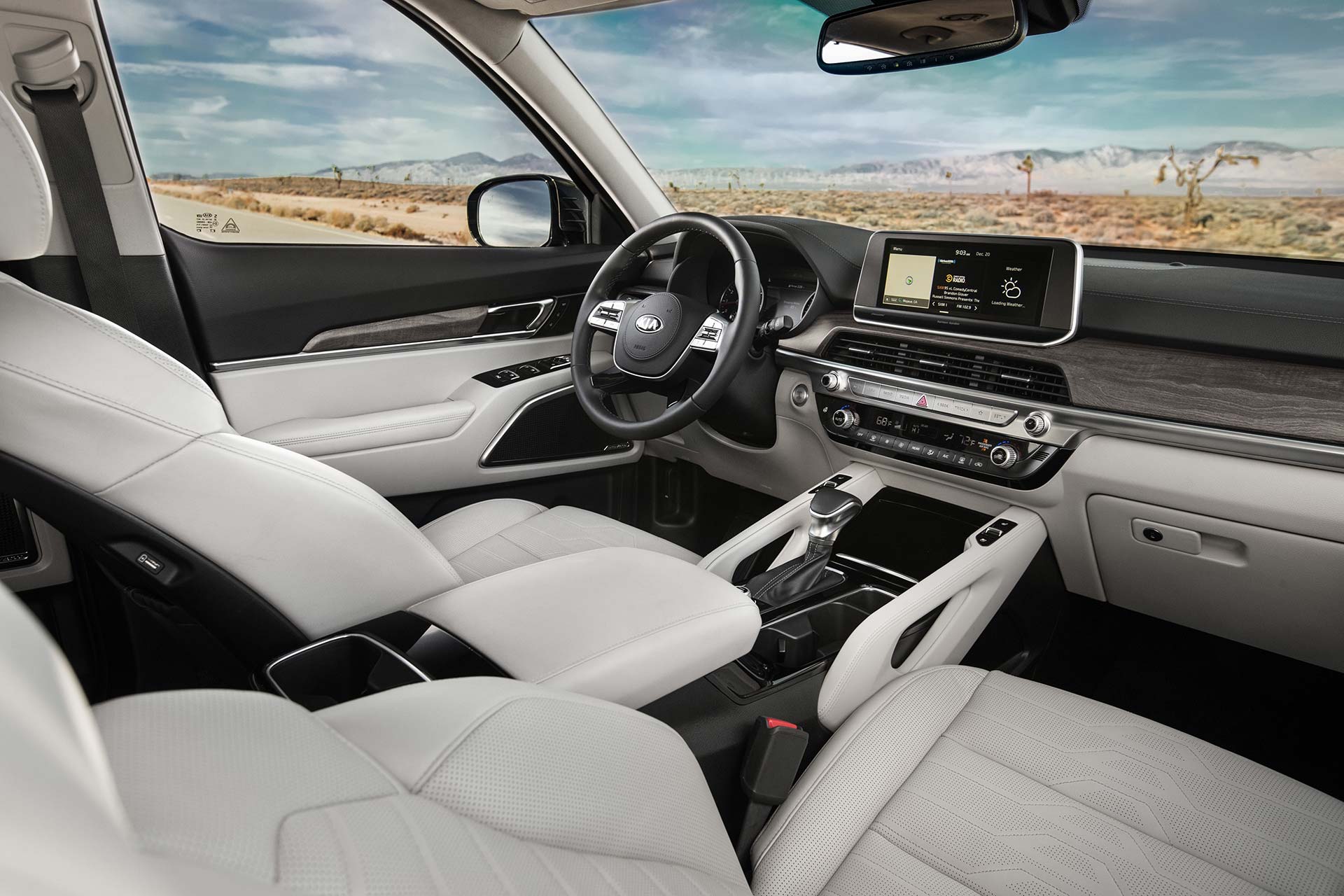
A promise of ‘rugged luxury’ is the tagline for the Telluride, with Kia incorporating premium materials and impressive options.
Leatherette seats are standard on LX and S models, whilst EX and SX trim levels feature genuine leather seat trim. The range-topping SX version can also be specified with impressive Nappa leather seats, including double-stitching and extra padding.
Technology is also high on the agenda, with numerous standard features and a gigantic options list. Highlights include Front Collision Warning, Blind Spot Collision Avoidance, Smart Cruise Control, and Lane Keeping Assist.
An 8-inch multimedia touchscreen is standard, incorporating Apple CarPlay and Android Auto, Bluetooth connectivity, Sirius Satellite radio, and voice recognition. A larger 10.25-inch screen can also be had, along with the option to connect two phones via Bluetooth at the same time.
The Telluride features five USB charging sockets as standard, with six available on higher-spec models. It means another win over the Explorer, which can only boast four of them.
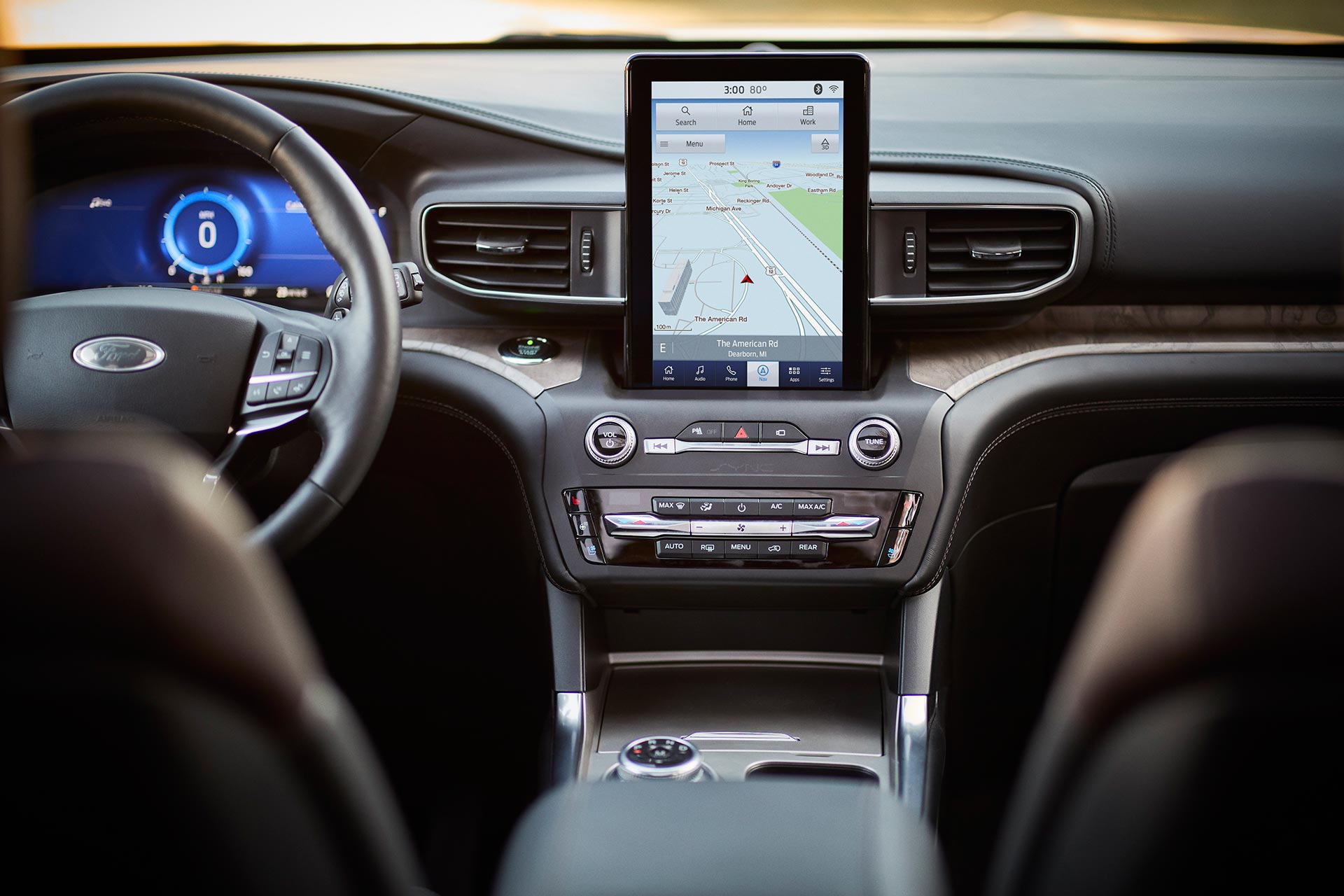
All 2020 Explorers receive Ford’s new Co-Pilot 360 system. This includes automatic headlights with automatic main beam, Lane-Keeping Assist, Blind Spot Monitoring, and Pre-Collision Assist for all trim levels.
Certain Explorers also now come with the option of a huge Tesla-esque 10.1-inch multimedia touchscreen, mounted in portrait format.
When can I buy one?
Kia has yet to announce an exact date when the Telluride will go on sale in the United States, but has confirmed it will be during 2019. Pricing will also be confirmed closer to the on-sale date.
Similarly, Ford has not released updated pricing information for the 2020 Explorer. However, models will start rolling off the line at the Chicago Assembly Plant in time for delivery this summer.
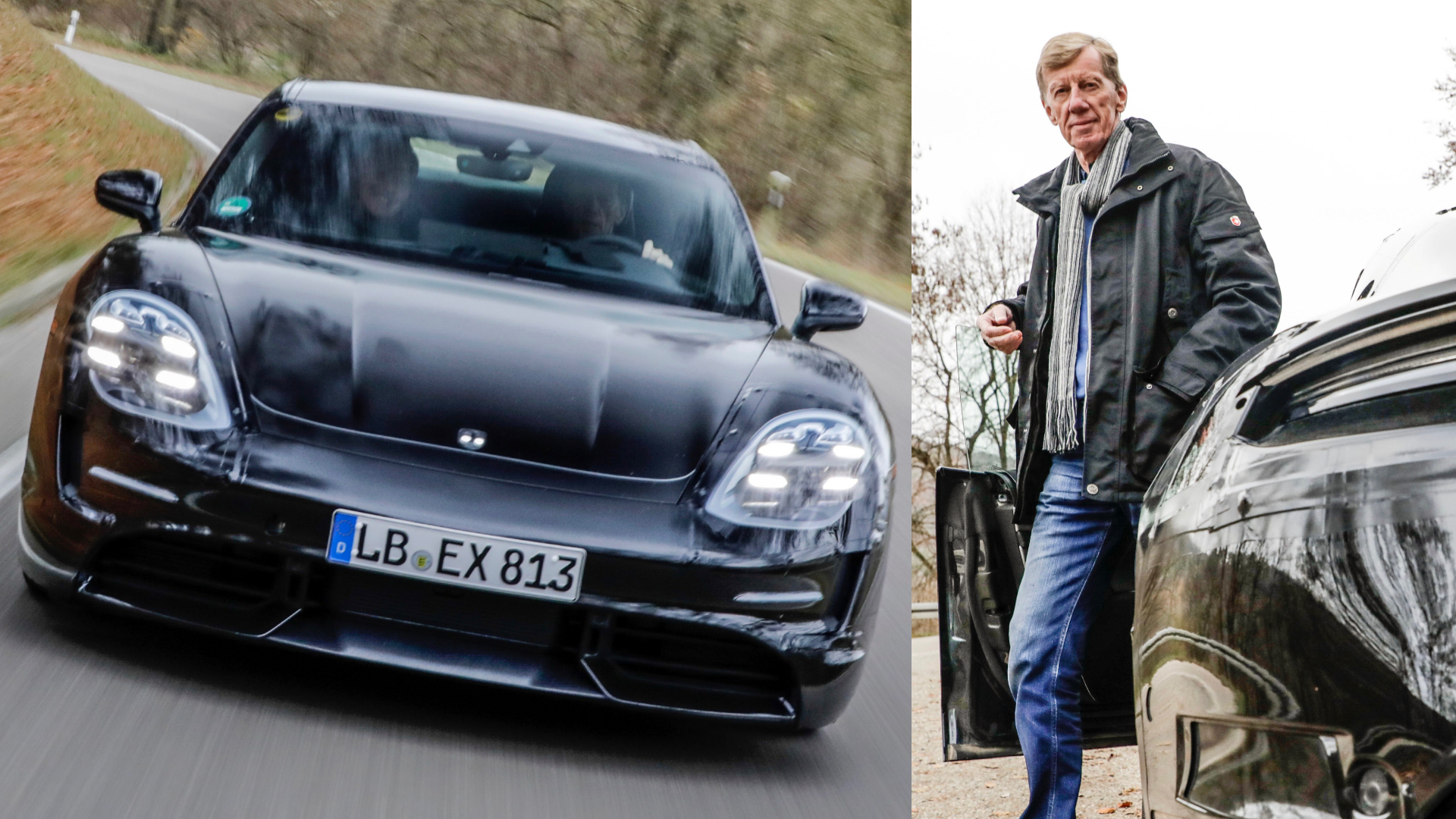
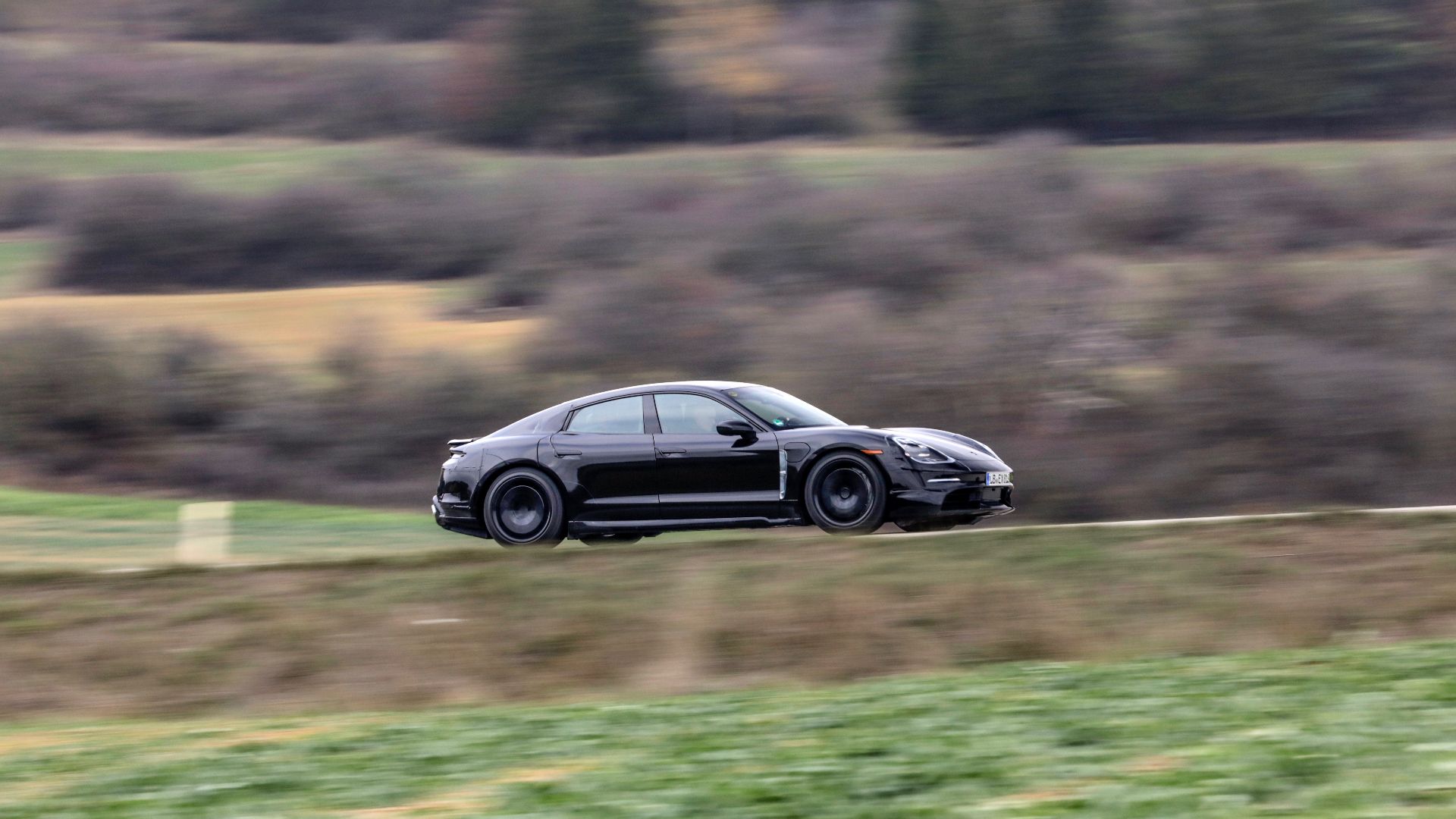
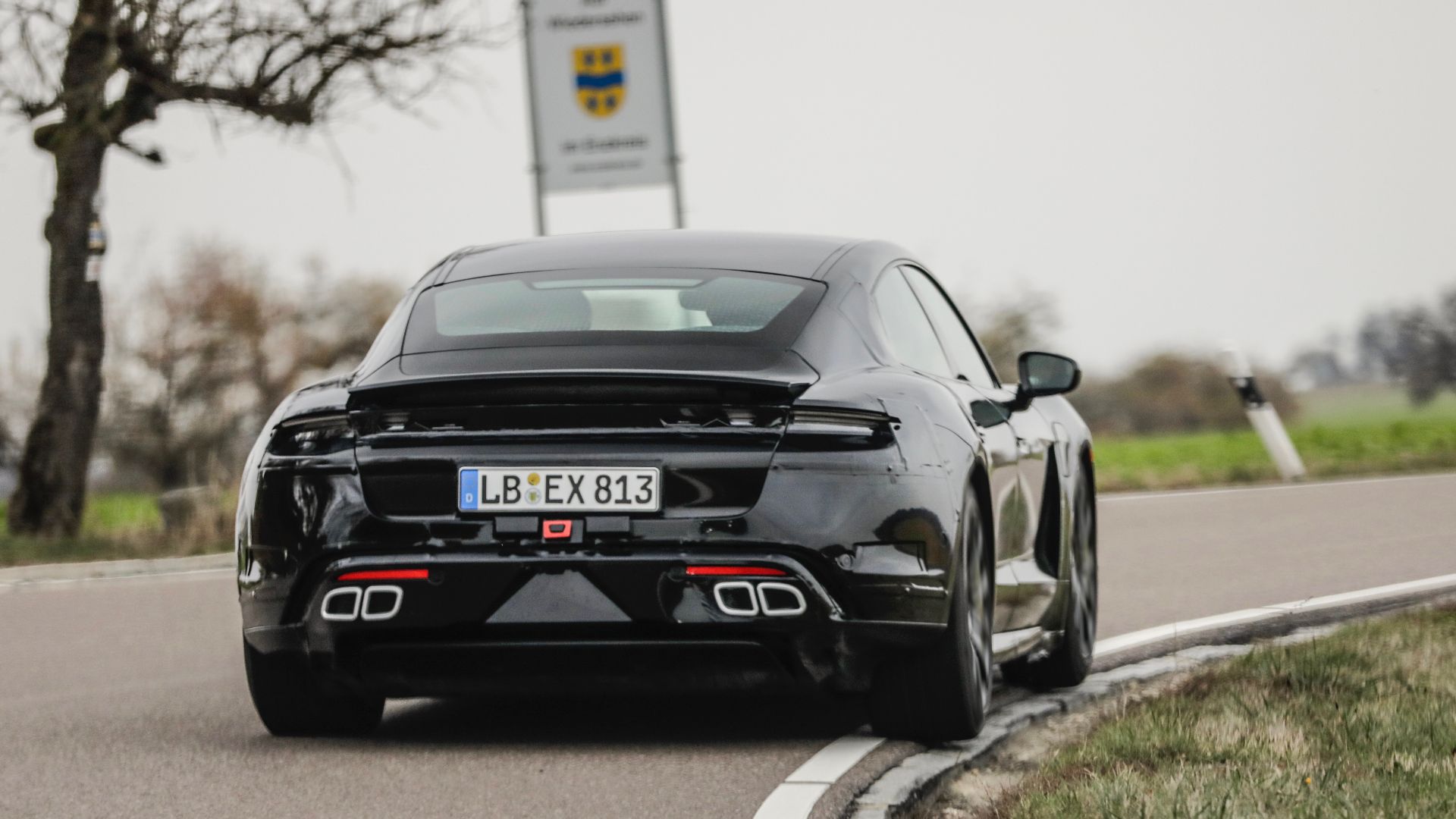
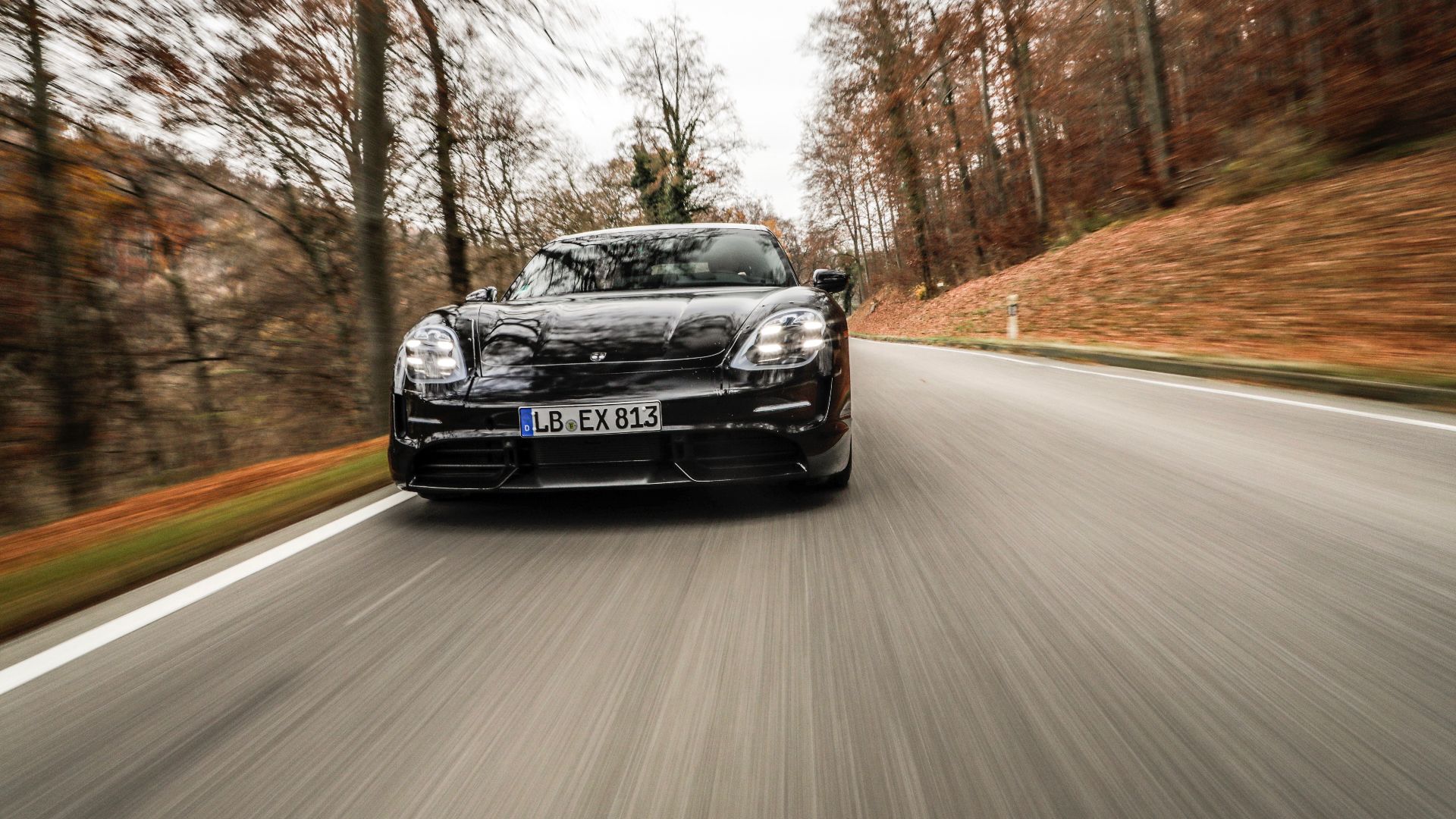
Porsche has canvassed a hero of the old school for his thoughts the new Taycan – its first all-electric car. So, what does rally legend Walter Röhrl think of it? And can any EV possibly be a proper Porsche?
This was Röhrl’s second outing in the hotly-anticipated Taycan. His expectations were high in terms of improvements needed in the calibration of the steering and brakes, along with the management of weight.
After his second outing, though, he seems quite ‘taken’ with it…
The feel of the Taycan
“I’m surprised because you barely notice the weight any more. The engineers have done a great job on the tuning and have made excellent use of the low centre of gravity. The steering and even the brakes handle superbly,” enthused Röhrl.
“The weight and the feel of the steering – and yes even the brakes, which are far more difficult to get right because of the combination of recuperation and conventional brakes – they’re all right on the money. And that’s what a Porsche should be all about.”
The performance of the Taycan
“It’s crazy. In all my years of rallying, I’ve never experienced such performance. The Taycan goes so well at such speed, really tremendous.
“Even in my fastest rally cars, I have never experienced performance like it – and the immediate response, this instant reaction that makes me smile every time.”
Driving an electric Porsche
“I would never have expected that the lack of any sound from the drive system could mean no loss of performance. In fact I really like the quietness of the Taycan; it’s something of an experience in itself.
“If I had to drive it blindfolded, I would still know immediately that I was sitting in a Porsche.”
Living with the Taycan
“I think they are already on the way to delivering a fantastic product. However, my opinion is that they need to get infrastructure in place quickly, because I think I would go mad if someone was in front of me at the pump and I had to wait.”
Encouraging words, even if they are from a man on Stuttgart’s payroll. Nevertheless, it would take a brave man to bet against Porsche.
On the more practical side of things, it’ll pull enough charge for 100 kilometres (62 miles) of driving in as little as four minutes, thanks to its 800-volt architecture. Let’s hope Röhrl’s wishes for a stronger infrastructure to support it come true.
 BMW has revealed the facelifted 2019 7 Series and you’re going to have no trouble picking it out from the outgoing model thanks to its massive new kidney grille.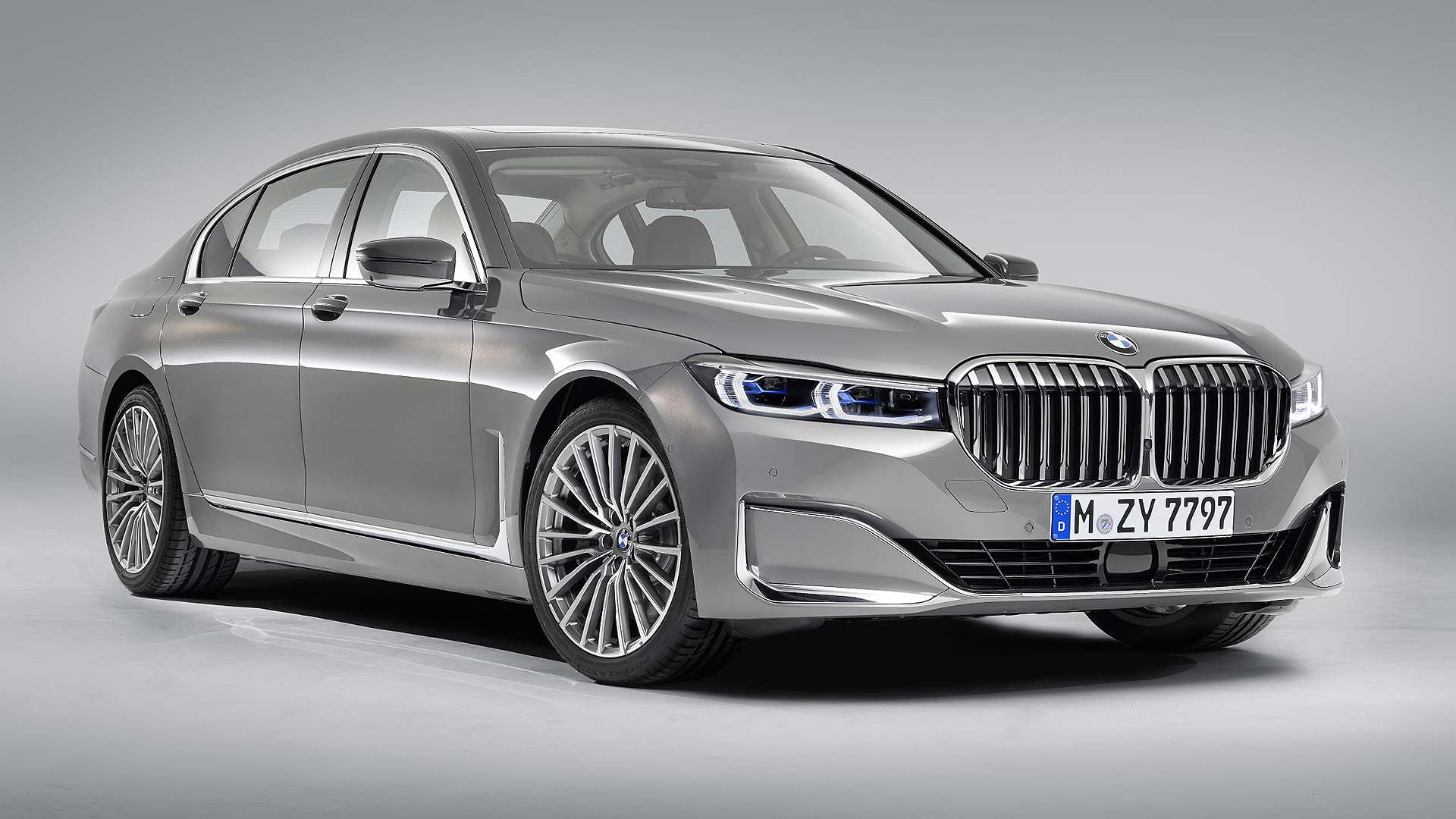
 The Mini 60 Years Edition is the British brand’s added-value special to mark the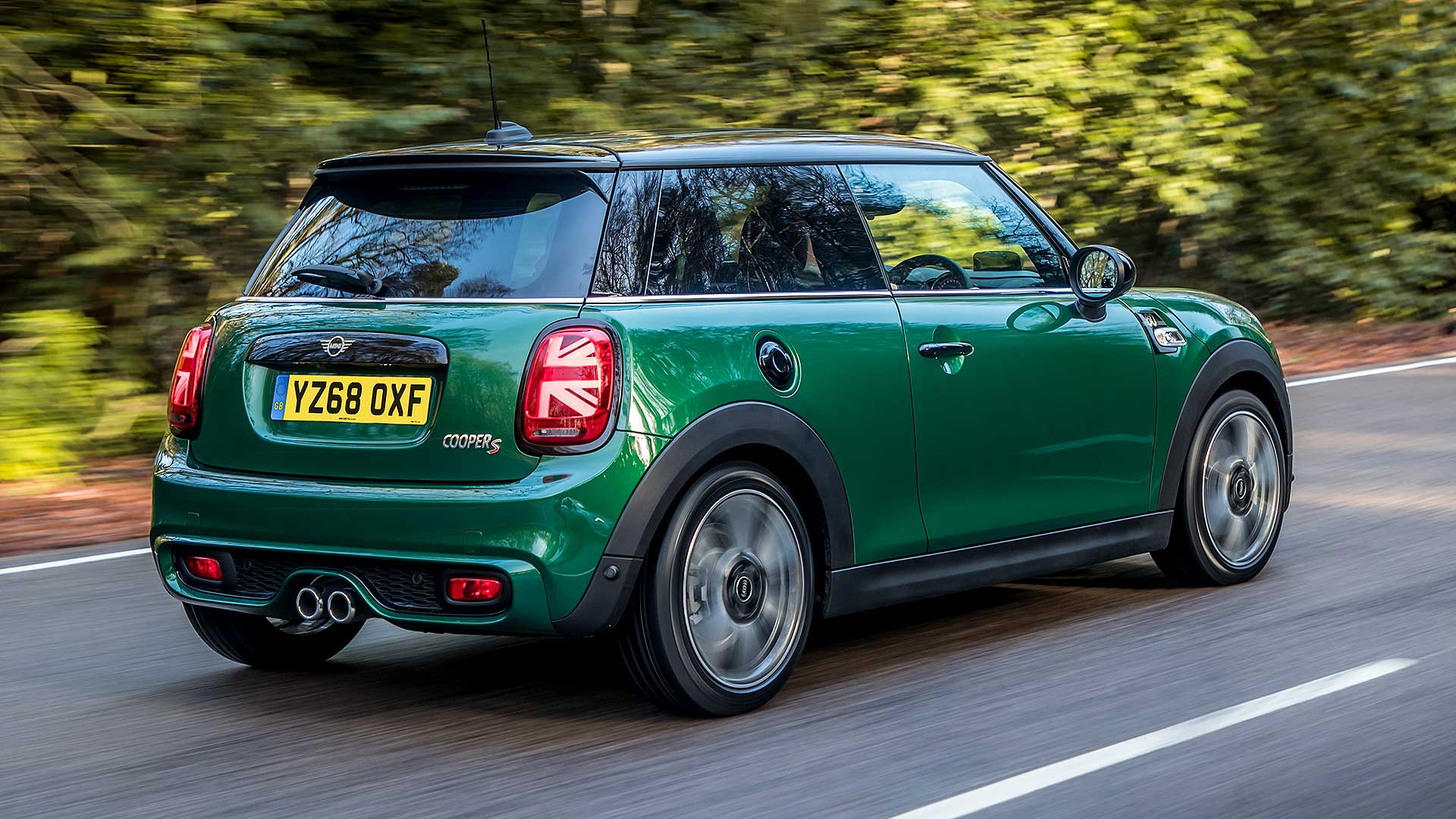
 Detroit first hosted a motor show in 1907, but for the first 80 years, it was a strictly regional affair. Then, in 1987, international manufacturers were invited to share the floor space with America’s ‘Big Three’, with the likes of Volvo, Mercedes-Benz, Jaguar and Porsche making an appearance.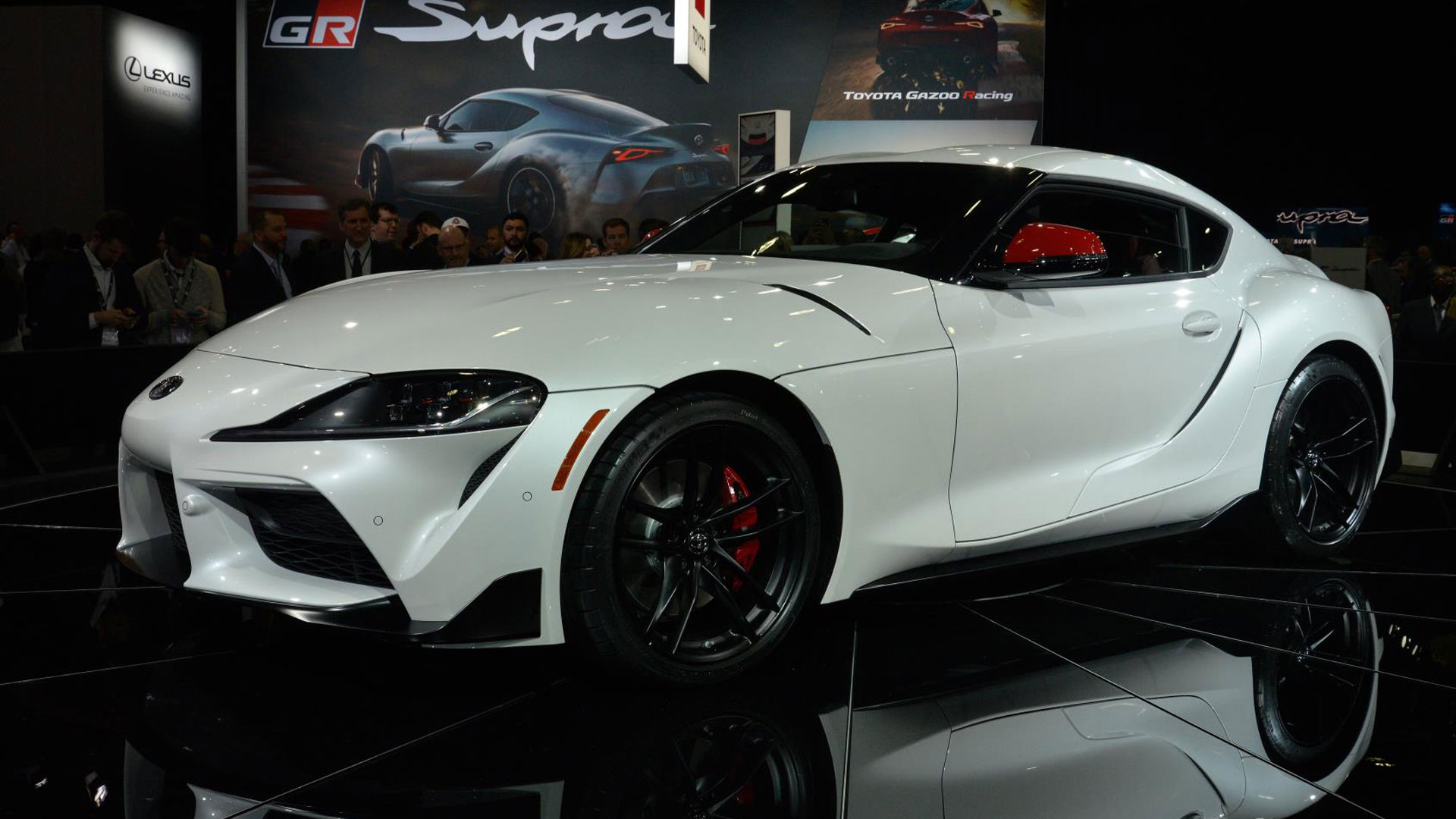


 Volkswagen and Ford have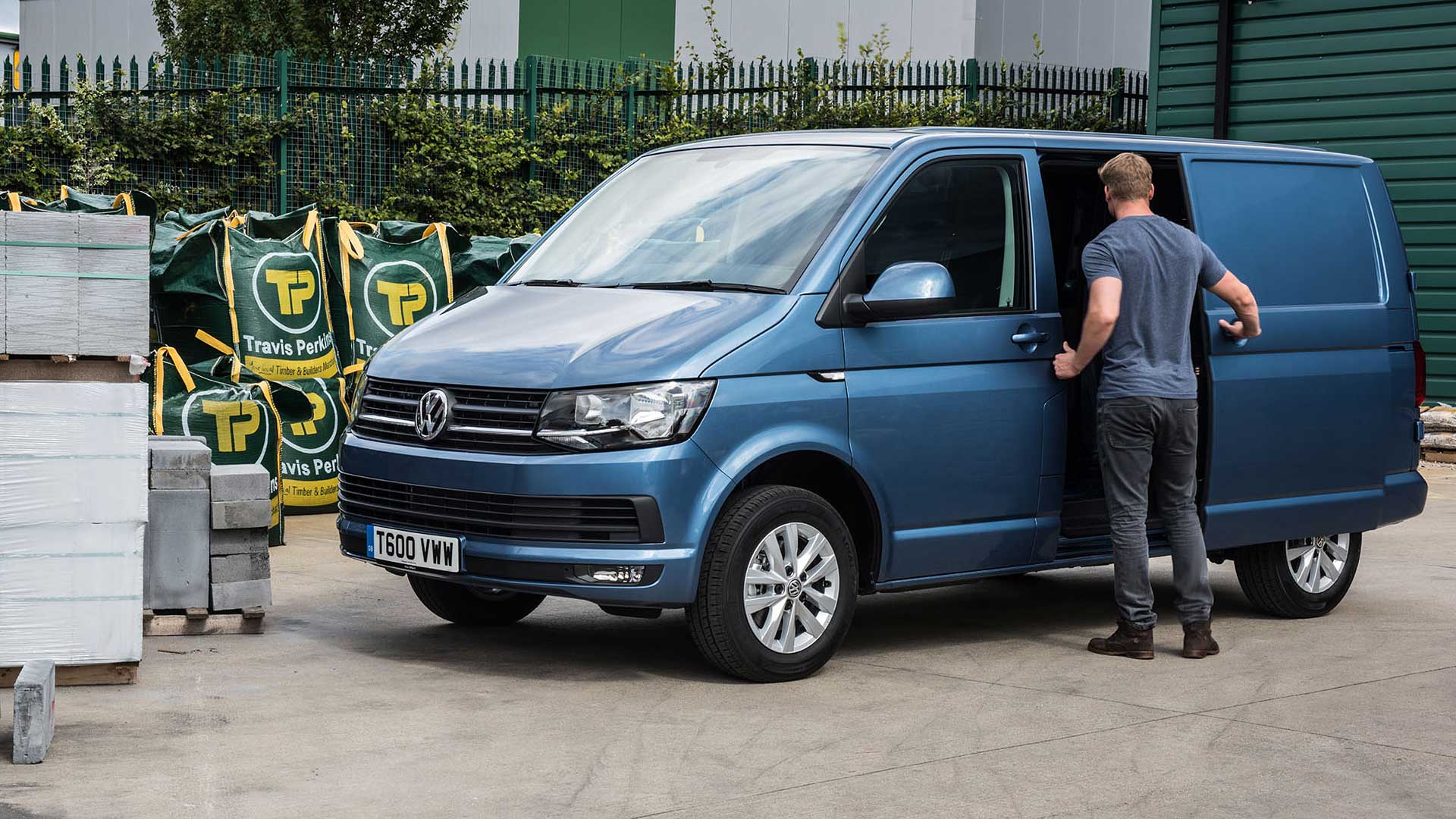
 The Society of Motor Manufacturers and Traders (SMMT) is reminding MPs ‘they hold the future of the
 Toyota has started production of the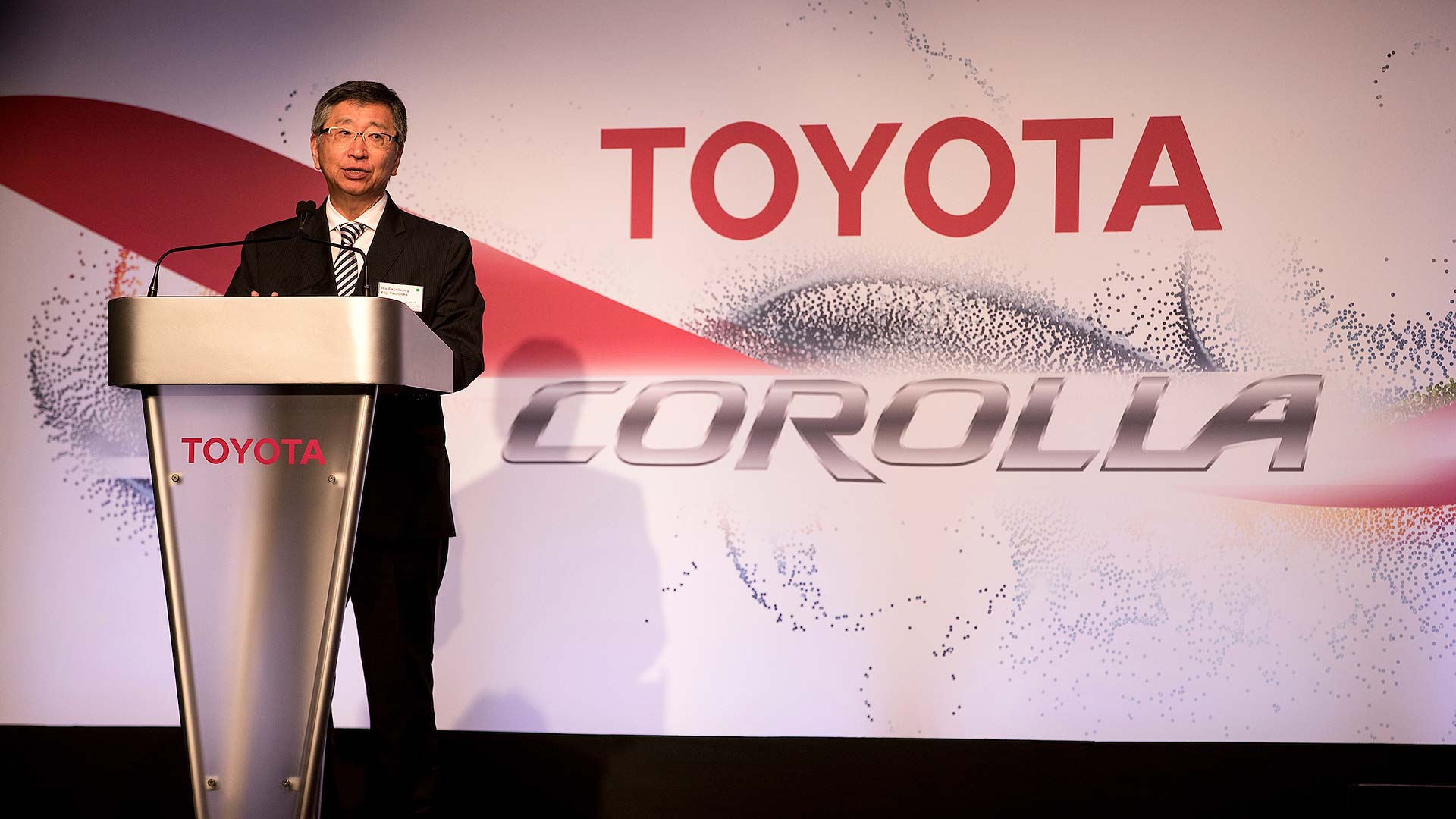
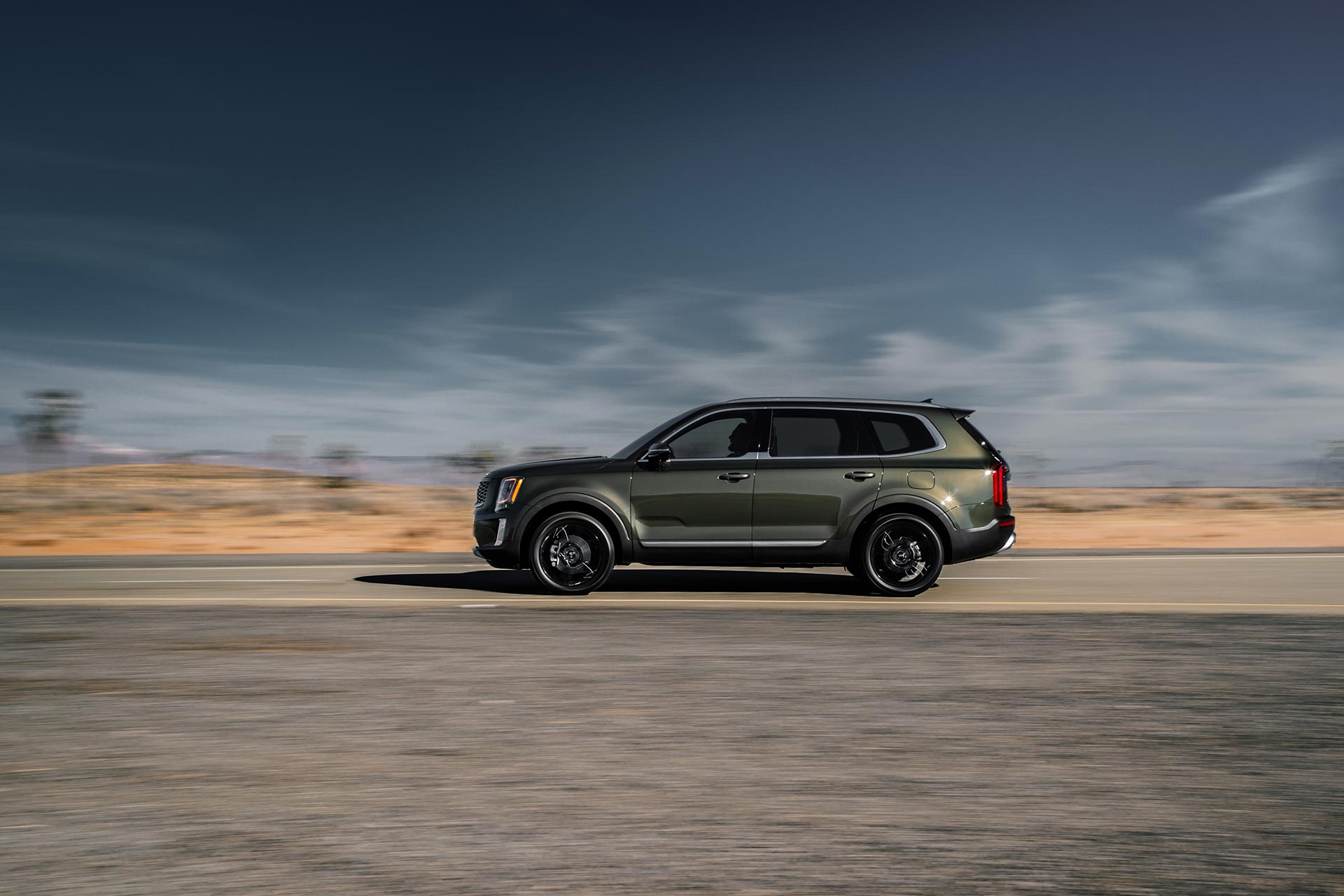 Proudly promoted by Kia as the biggest model offered by the company to date, the new Telluride comes close to matching the size of the 2020 Explorer.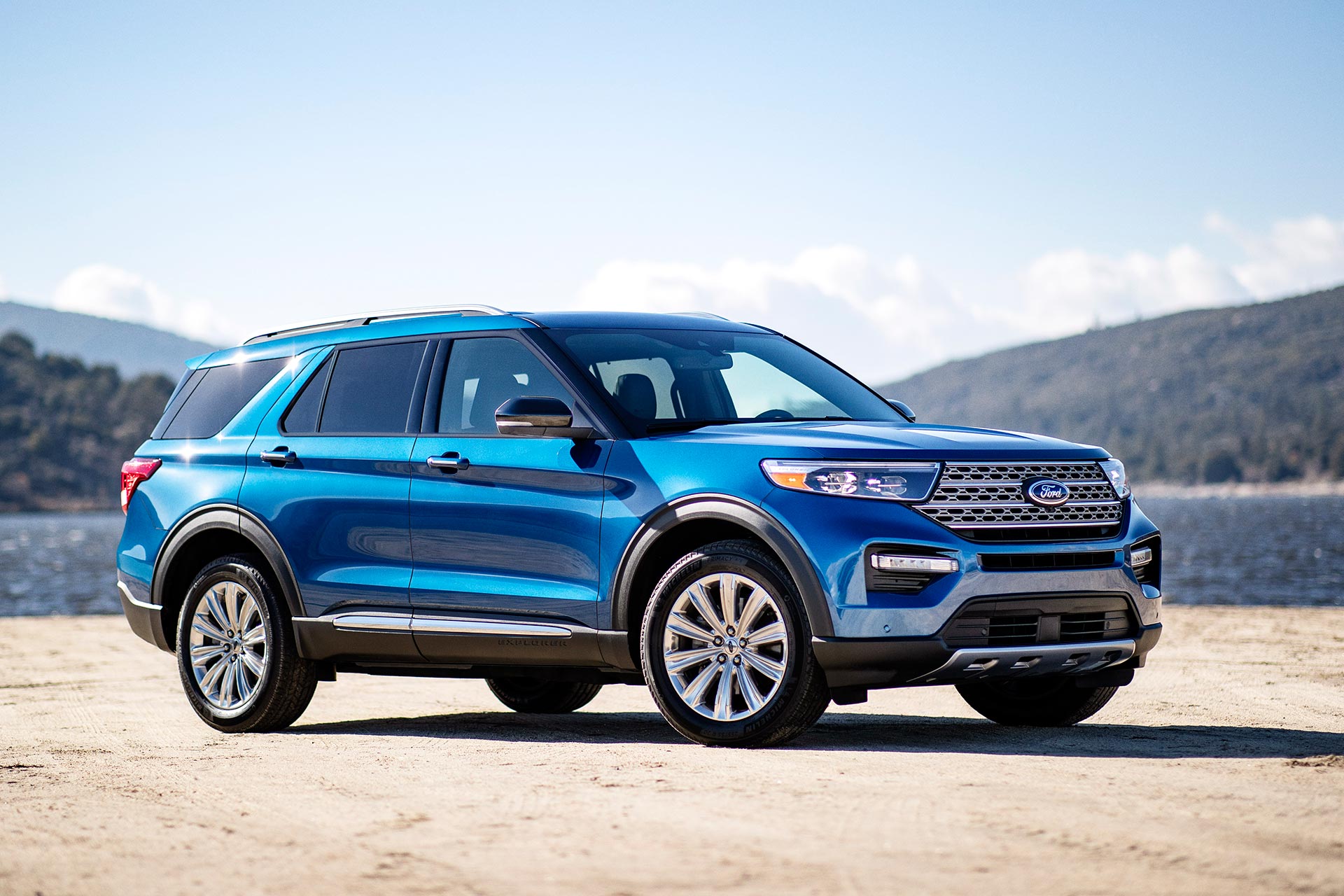
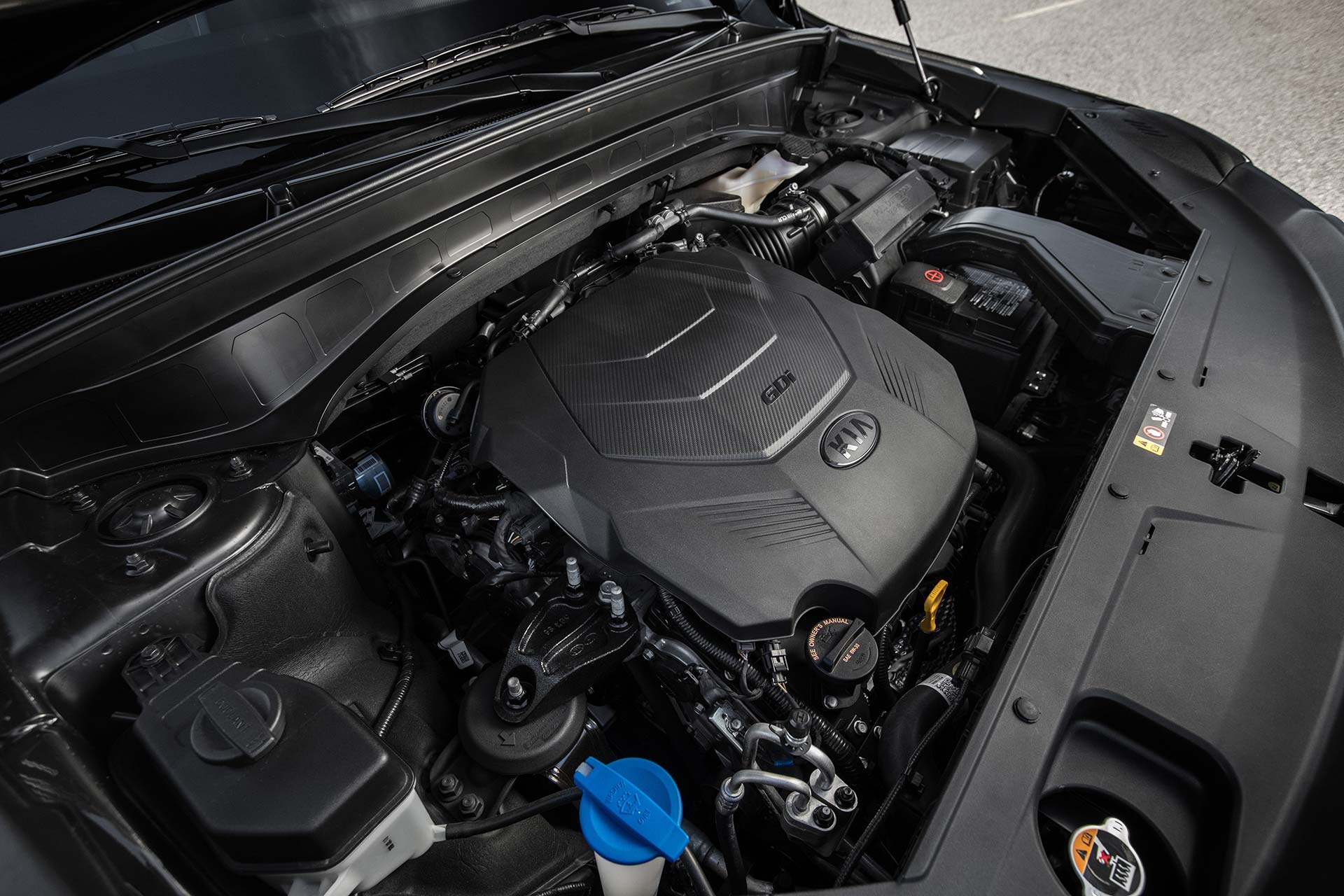 At launch the Kia is offering just one engine option. The 3.8-liter Lambda-II V6 features gasoline direct injection, but no turbocharging. This means 291 horsepower, with an accompanying 262 lb-ft of torque.
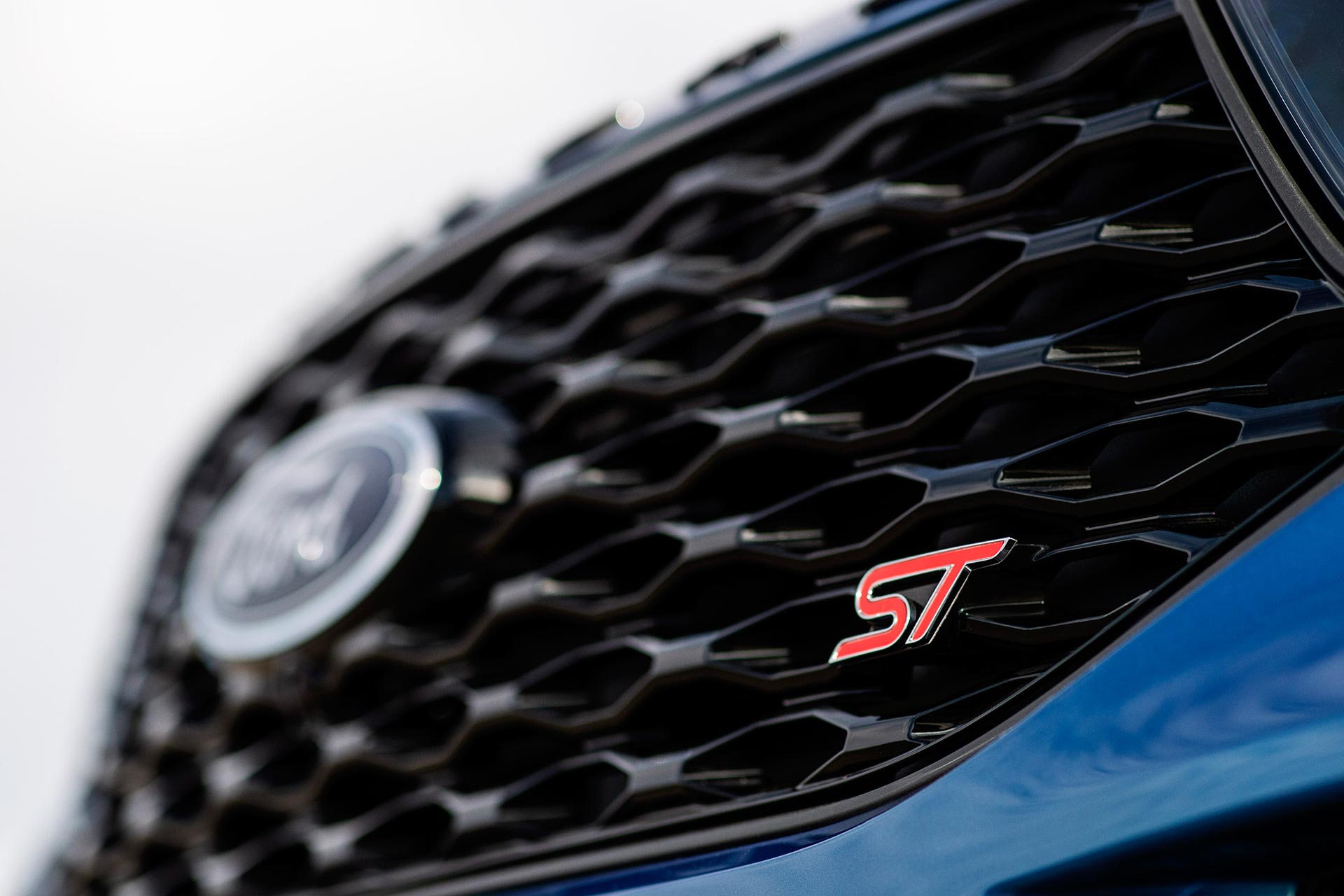 At the other end of the scale,
  No mid-size SUV could claim to be built for America without the ability to go off-road or tow heavy trailers. However, Kia seems to have both bases covered with the Telluride.
 Whilst that may sound impressive, unfortunately Ford has upped the towing abilities of the revised Explorer. Models equipped with the 2.3-liter EcoBoost engine can now pull 5,300 lbs, whilst those with the 3.0-liter version can tow a considerable 5,600 lbs.
 A promise of ‘rugged luxury’ is the tagline for the Telluride, with Kia incorporating premium materials and impressive options.
 All 2020 Explorers receive Ford’s new Co-Pilot 360 system. This includes automatic headlights with automatic main beam, Lane-Keeping Assist, Blind Spot Monitoring, and Pre-Collision Assist for all trim levels.
 Kia has yet to announce an exact date when the Telluride will go on sale in the United States, but has confirmed it will be during 2019. Pricing will also be confirmed closer to the on-sale date.