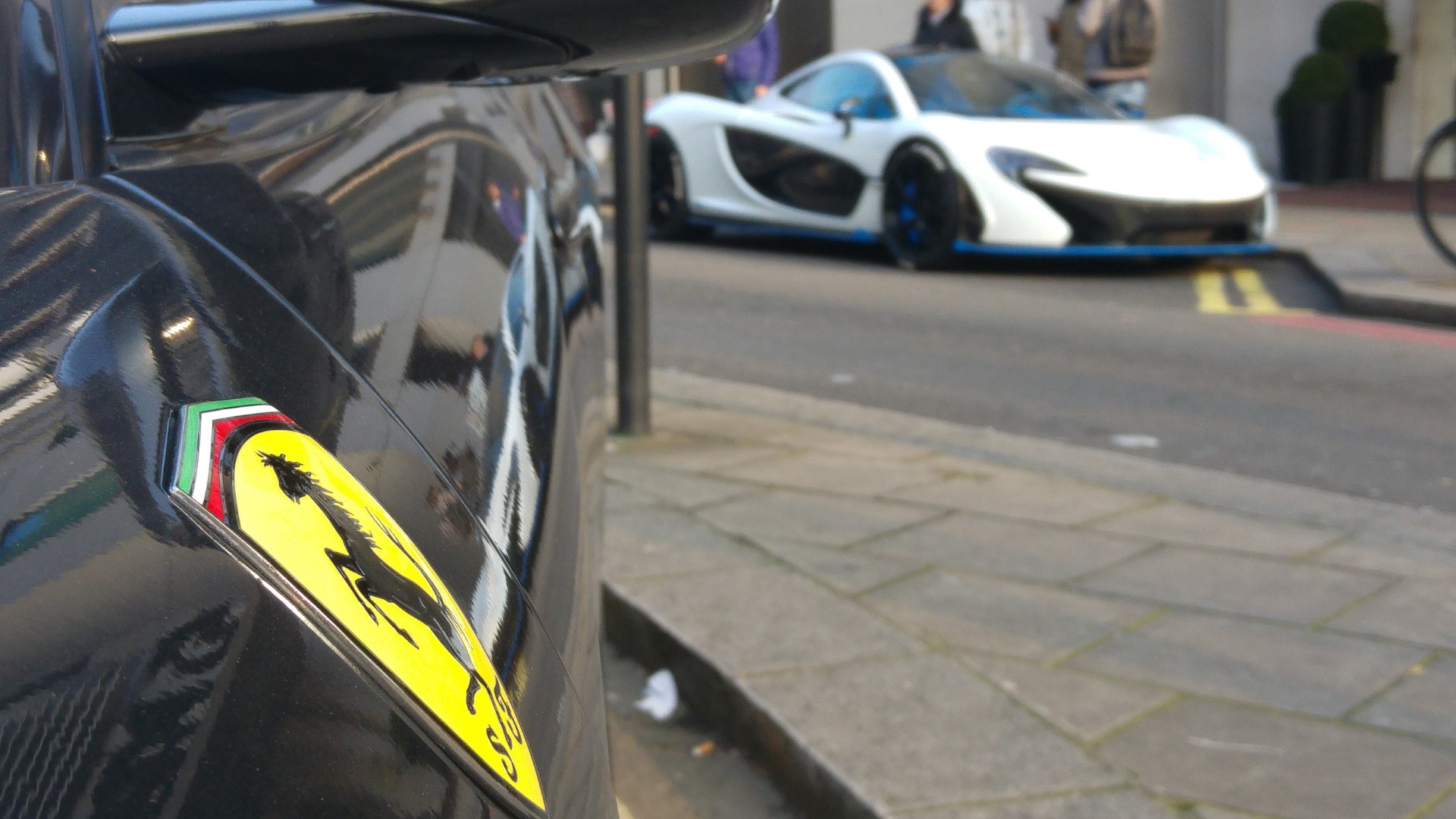
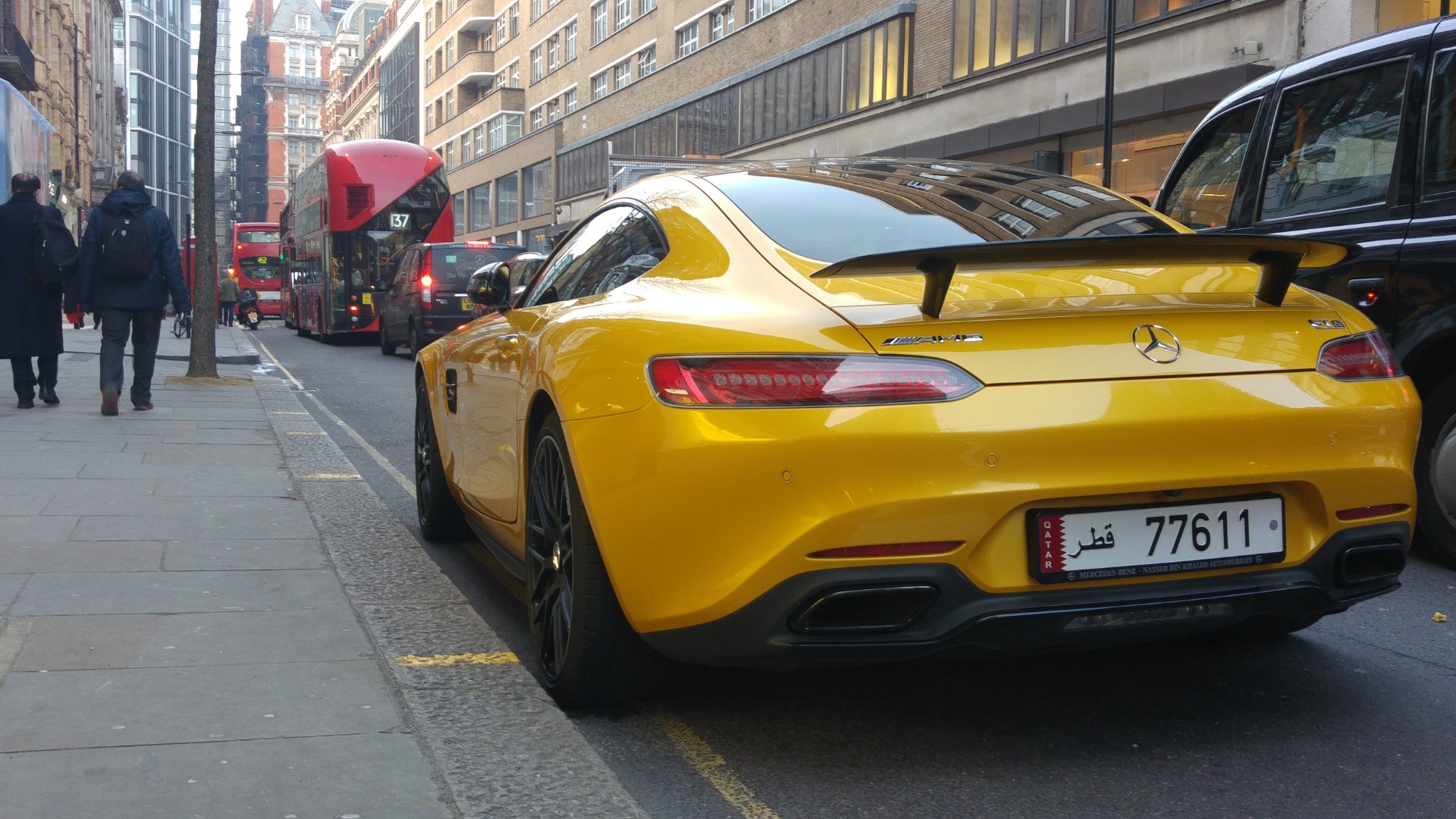
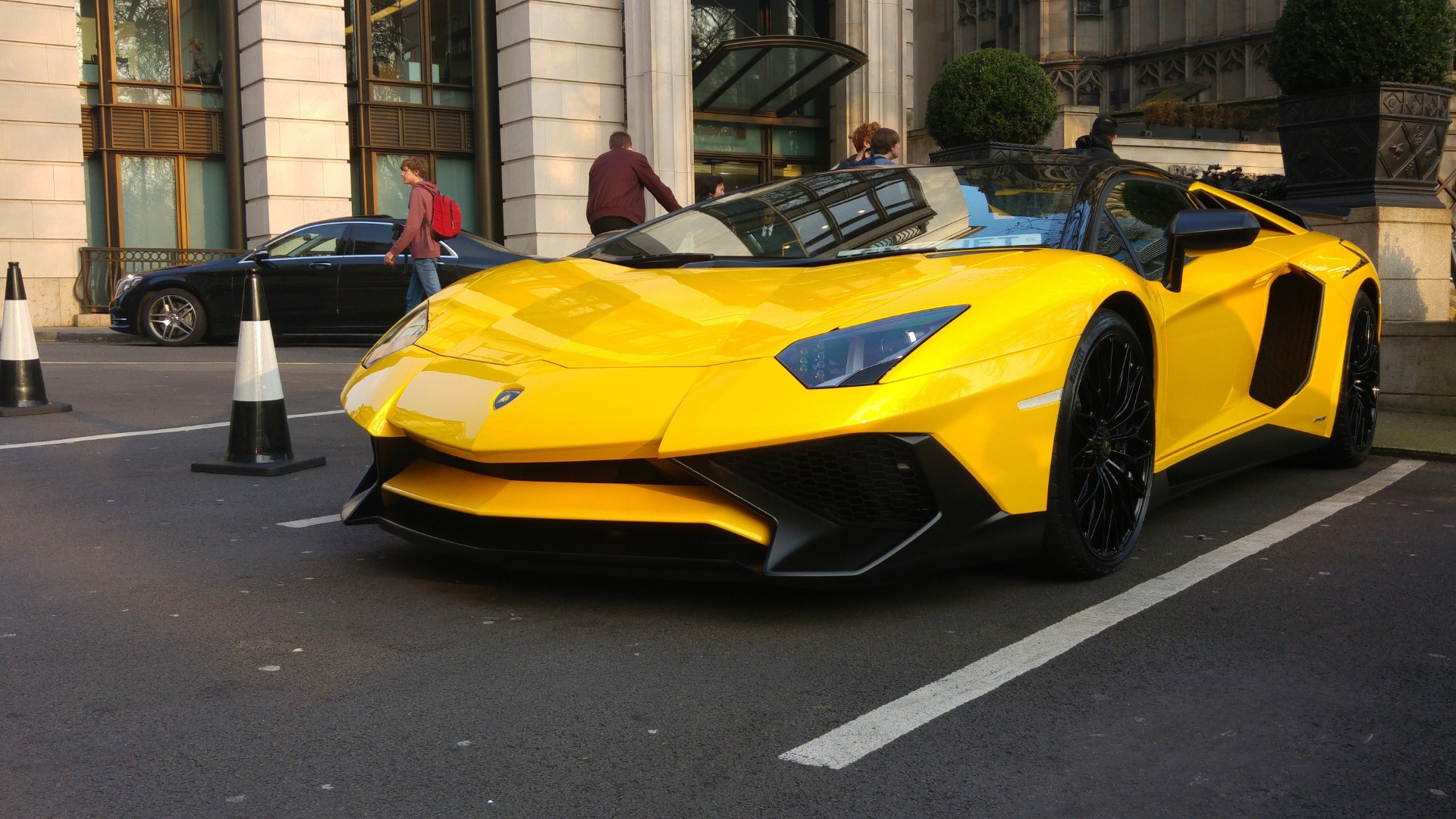
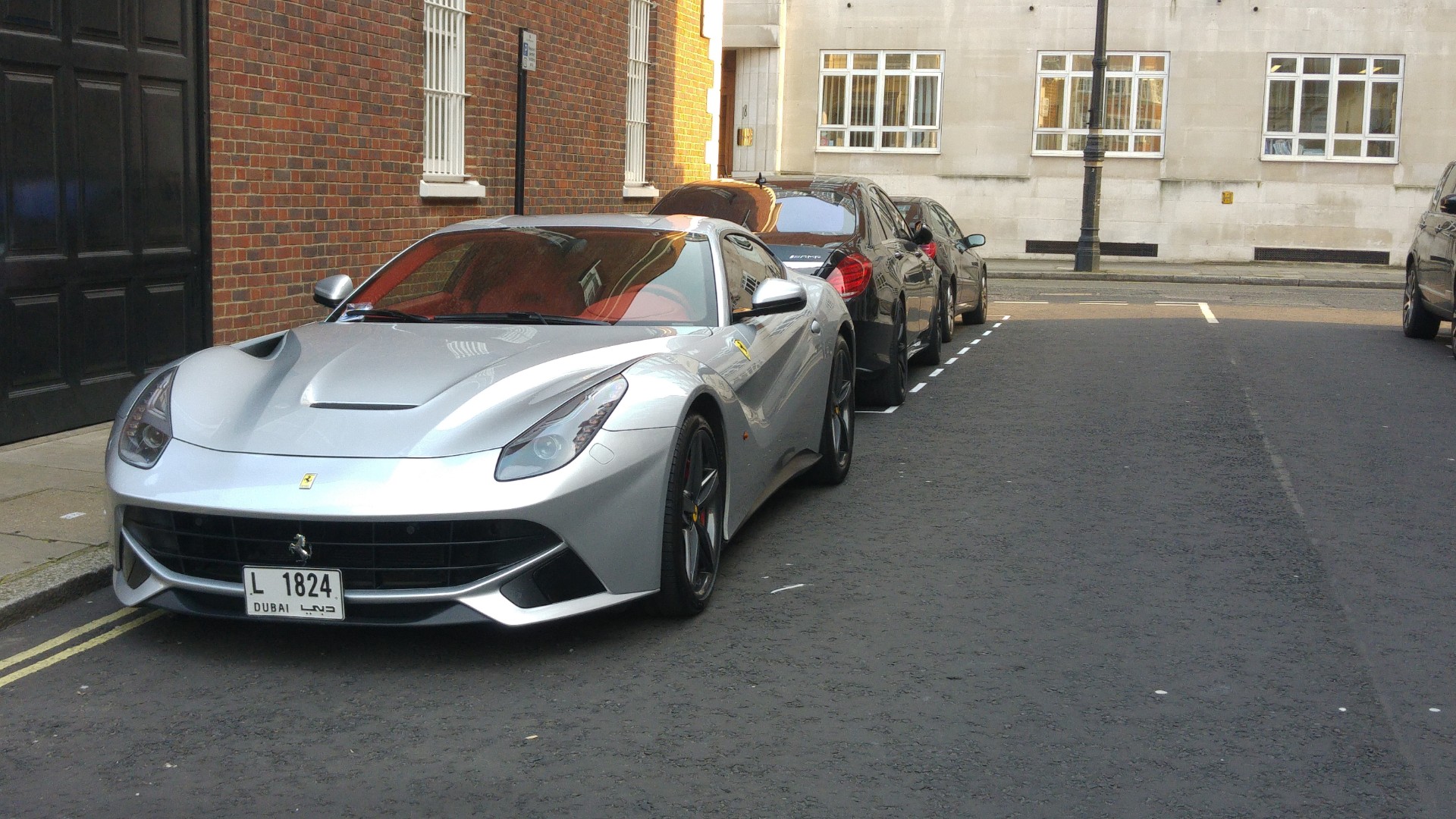
Kensington and Chelsea council wants ‘acoustic cameras’ to be trialled in the borough. The aim is to deter supercar drivers using the local areas as ‘race tracks’.
The area of London has become a popular meeting point for supercar owners, who come to show off, rev their engines and – occasionally – race in the streets.
The situation has escalated over the last 10 years and is approaching a “crisis point” according to local authorities. Kensington and Chelsea councillor Johnny Thalassites has appealed to the government to include his borough in a coming trial for acoustic cameras.
“Powerful cars need careful handling and, unfortunately, our borough has seen and heard how certain drivers mistake our streets for a car show” said Thalassites.
“This has been going on for years and it’s reaching crisis point. Acoustic cameras would give us a powerful new tool to catch drivers flouting the rules of the road.”
Instead of being triggered by speed (although they will likely sensitive to speed, too), the cameras will be triggered by excessive noise.
As supercars drive by revving, the cameras will detect the excessive decibels, beyond the legal limit of 74db for a car.
The Department for Transport announced recently that a seven-month trial for the cameras was planned. The London supercar hotspot was not on the list of regions the trials were planned for.
Even without cameras, there are measures in place to punish noisy drivers. Fines of £1,000 were introduced in 2015 for drivers making excessive noise in the area.
Nearly 150 have been given out since they were introduced, although they don’t appear to have solved the issue.
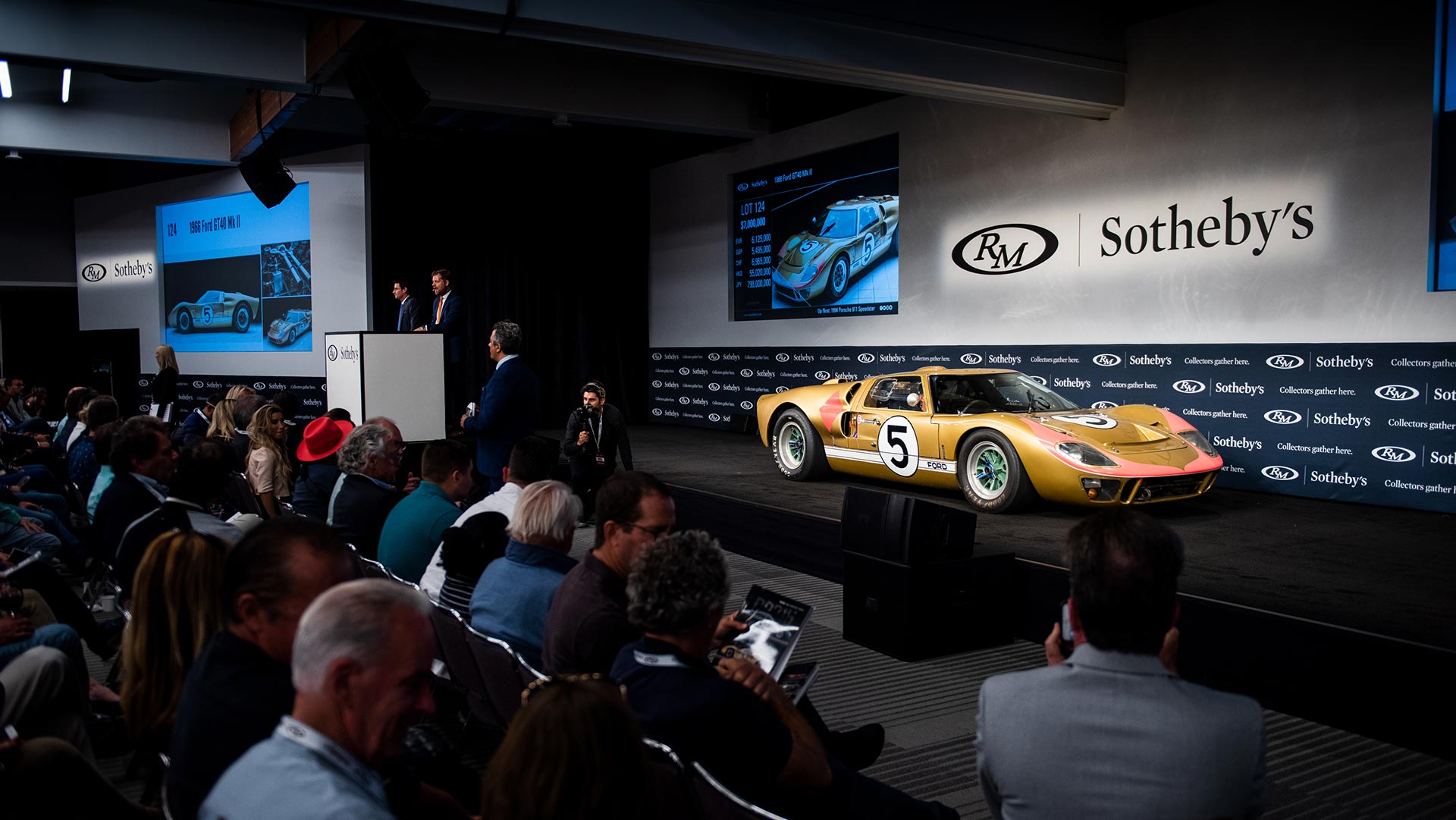
Monterey Car Week brings together auto enthusiasts from across America and beyond in a celebration of all things motoring.
Along with marquee events like Pebble Beach Concours d’Elegance and the Monterey Motorsport Reunion, collector car auctions are also a major part of proceedings.
We have information on the seven biggest sales taking place, along with highlights of the cars which will be taking center stage on the auction block.
Mecum Auctions Monterey Sale
When: Thursday August 15 through Saturday August 17 Where: Hyatt Regency Monterey Hotel and Spa, Monterey, CA Entry: $20 per day in advance, $30 per day on the door
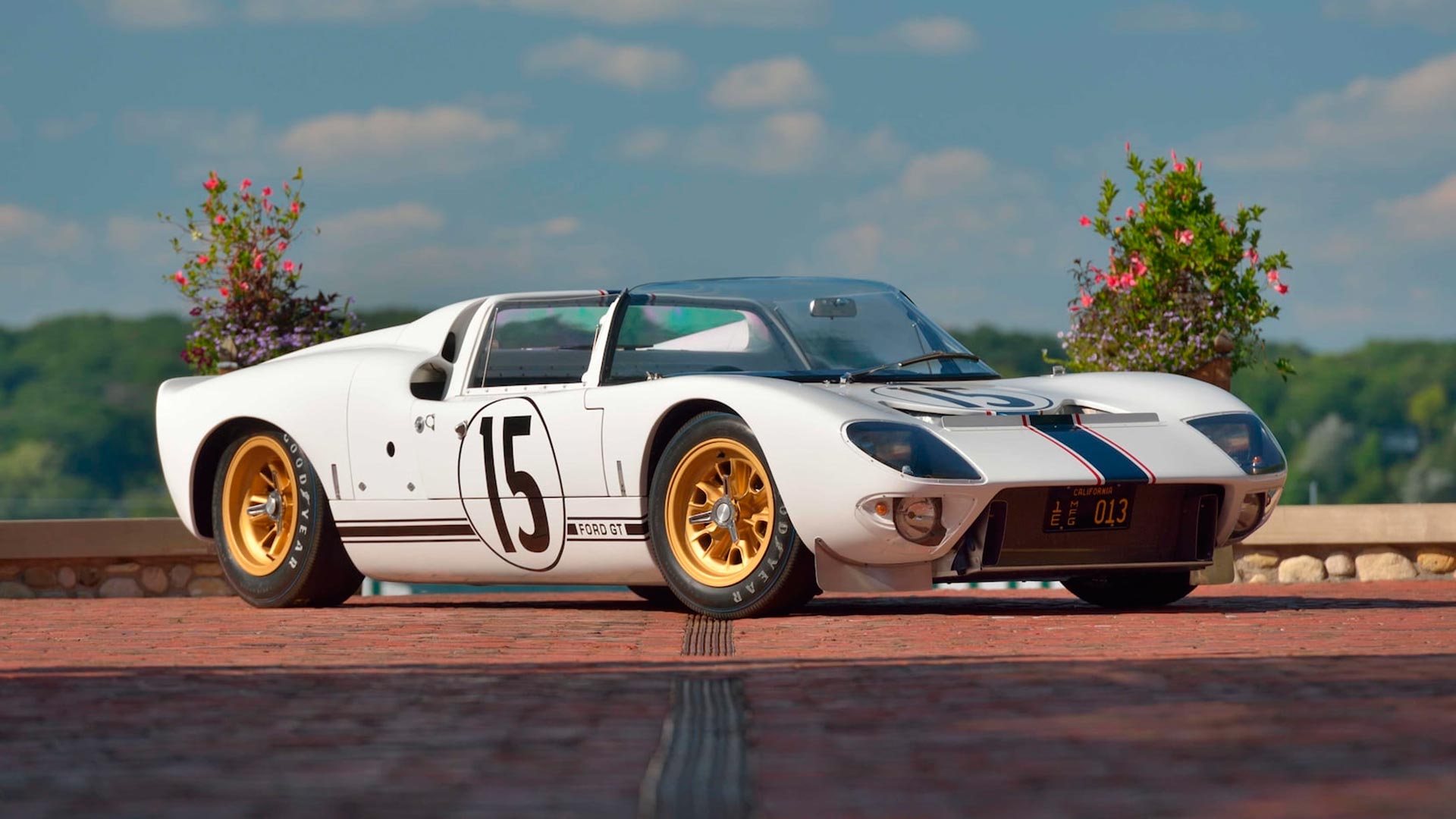
With 600 collector cars up for grabs, the Mecum Monterey sale is one of the largest by volume at Car Week. From incredible hot rods, to classic Porsches and modern hypercars, there is almost certainly something for everyone.
Highlights include one of the two surviving Ford GT40 Roadster prototypes, the 1956 Thunderbird driven in the film American Graffiti, and even genuine IndyCar racers.
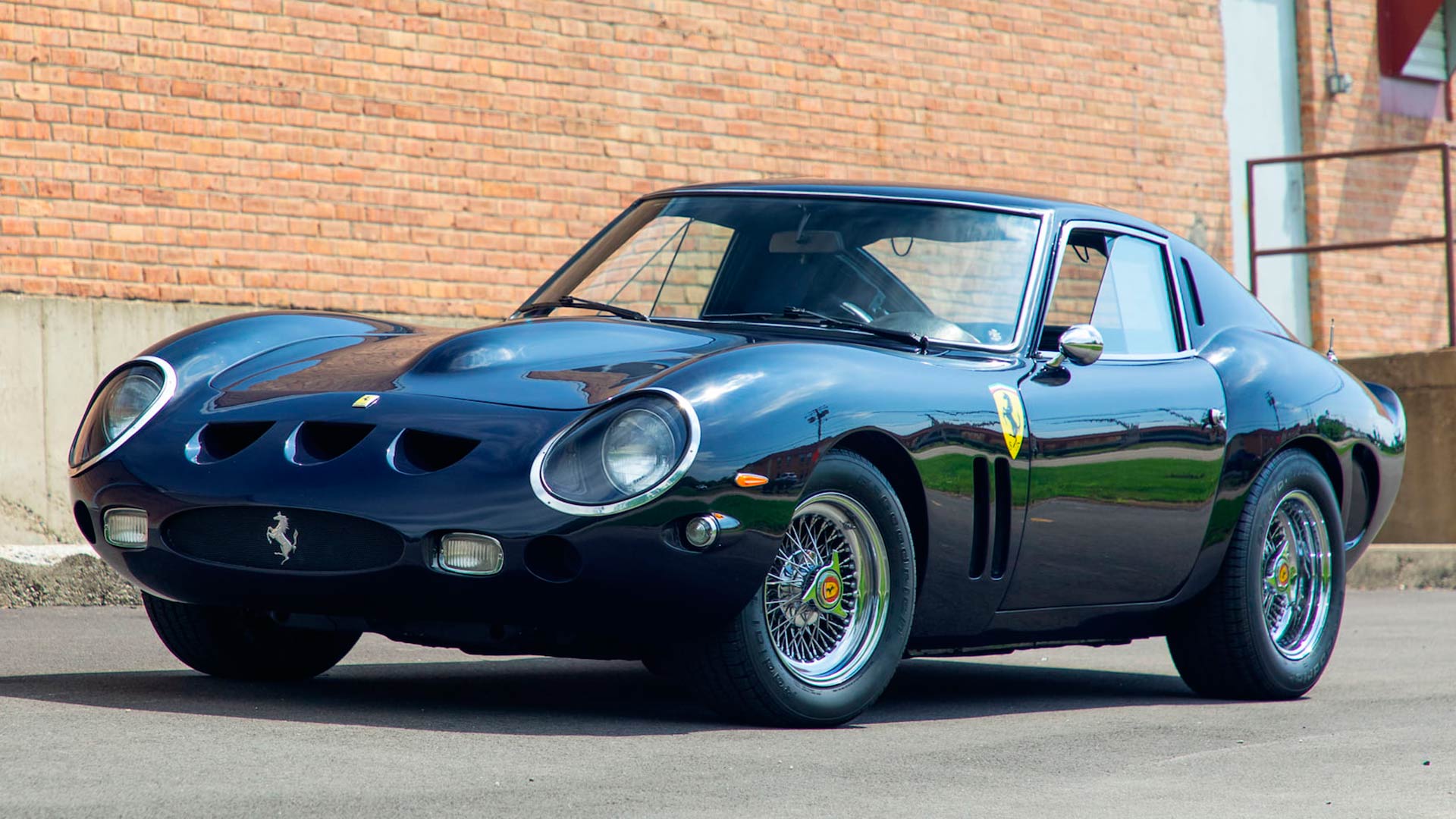
The Alpha One GTO Coupe Ferrari 250 replica is also available, and was most famously used in the 2001 movie Vanilla Sky, featuring Tom Cruise.
RM Sotheby’s Monterey 2019
When: Thursday August 15 through Saturday August 17 Where: Monterey Conference Center, Monterey, CA Entry: Sale for registered bidders only, $40 for public preview times
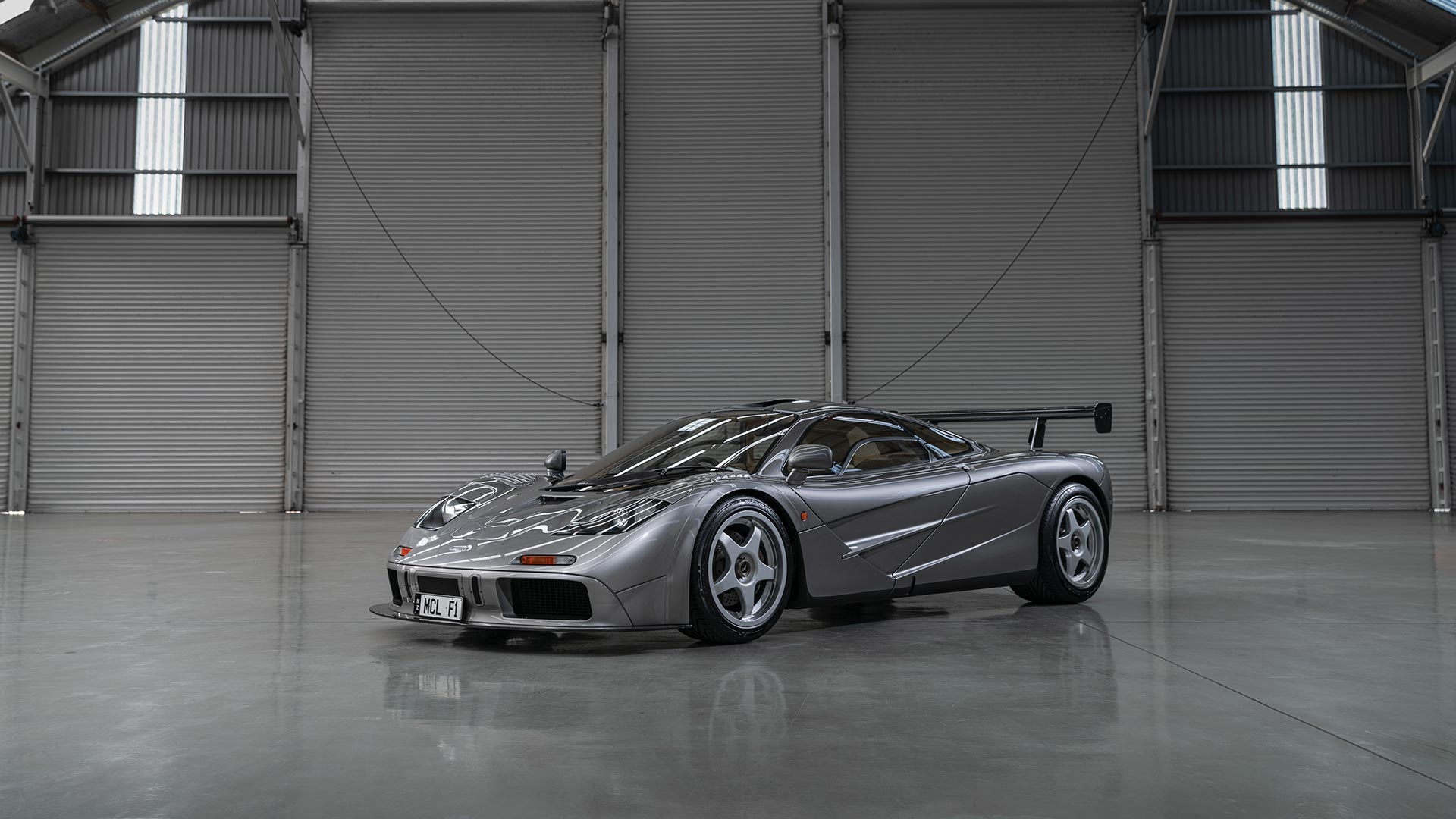
Although the RM Sotheby’s sale may have fewer cars on offer than Mecum, it certainly makes up for this in terms of estimated sale prices. The 1994 McLaren F1 is expected to achieve over $21 million, whilst a 1963 Ferrari 250 California SWB Spider holds an estimate of $10.5 million.
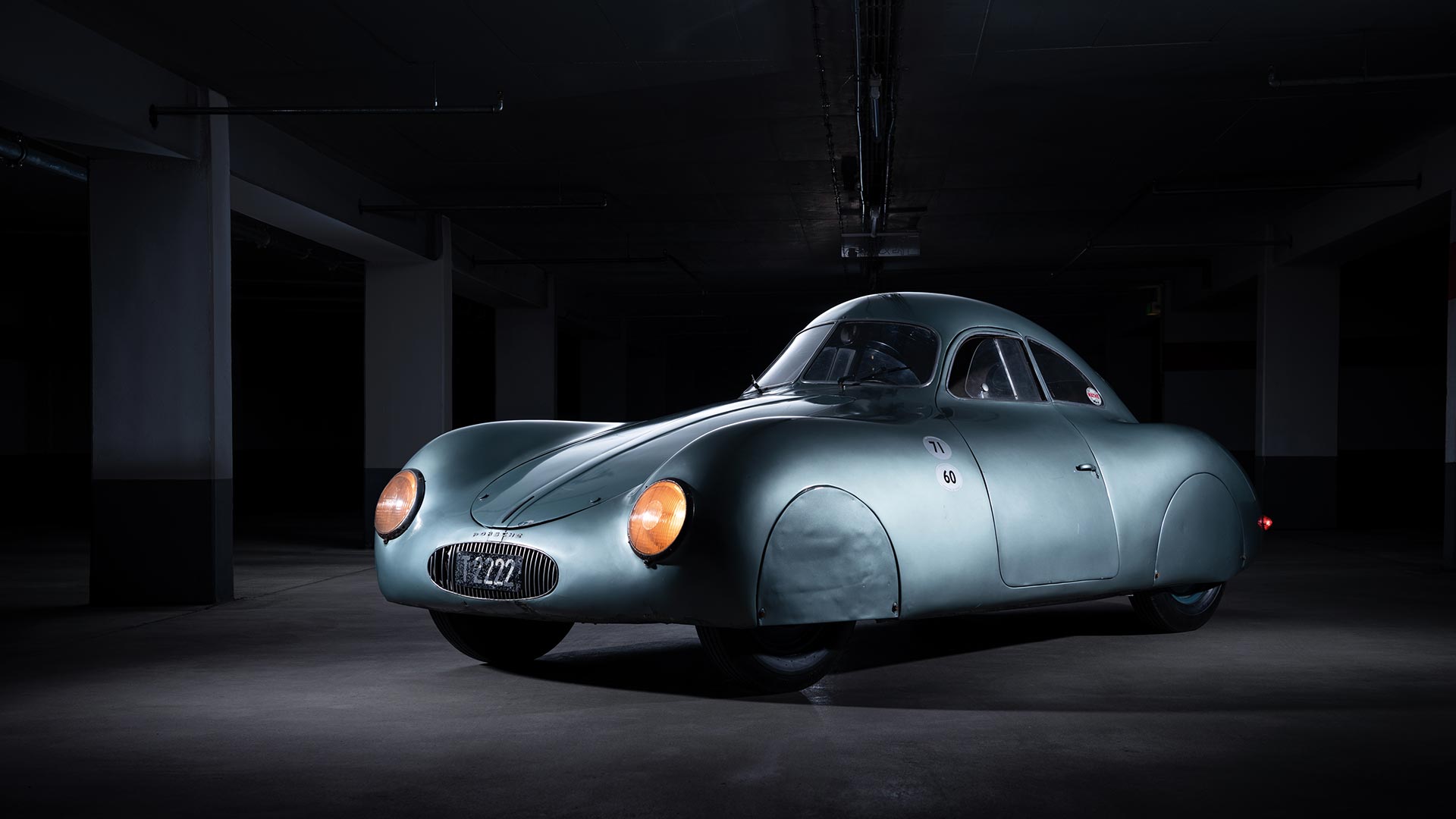
The 1939 Porsche Type 64 is regarded as the oldest, and most historically significant, car to ever wear the Porsche badge. Bidding is expected to be fierce for the chance to own this automotive origin story.
RM Sotheby’s also has a Ford GT40 Roadster Prototype on offer, in case a buyer misses out on the car being sold by Mecum.
Bonhams Quail Lodge Auction
When: Thursday August 15 through Friday August 16 Where: Quail Lodge and Golf Club’s West Field, Carmel, CA Entry: $40 general admission, $120 Quail Lodge Catalog set
Held as part of the prestigious Quail motorsport gathering, the 22nd annual Bonhams auction is designed to appeal to the most discerning of automotive collectors.
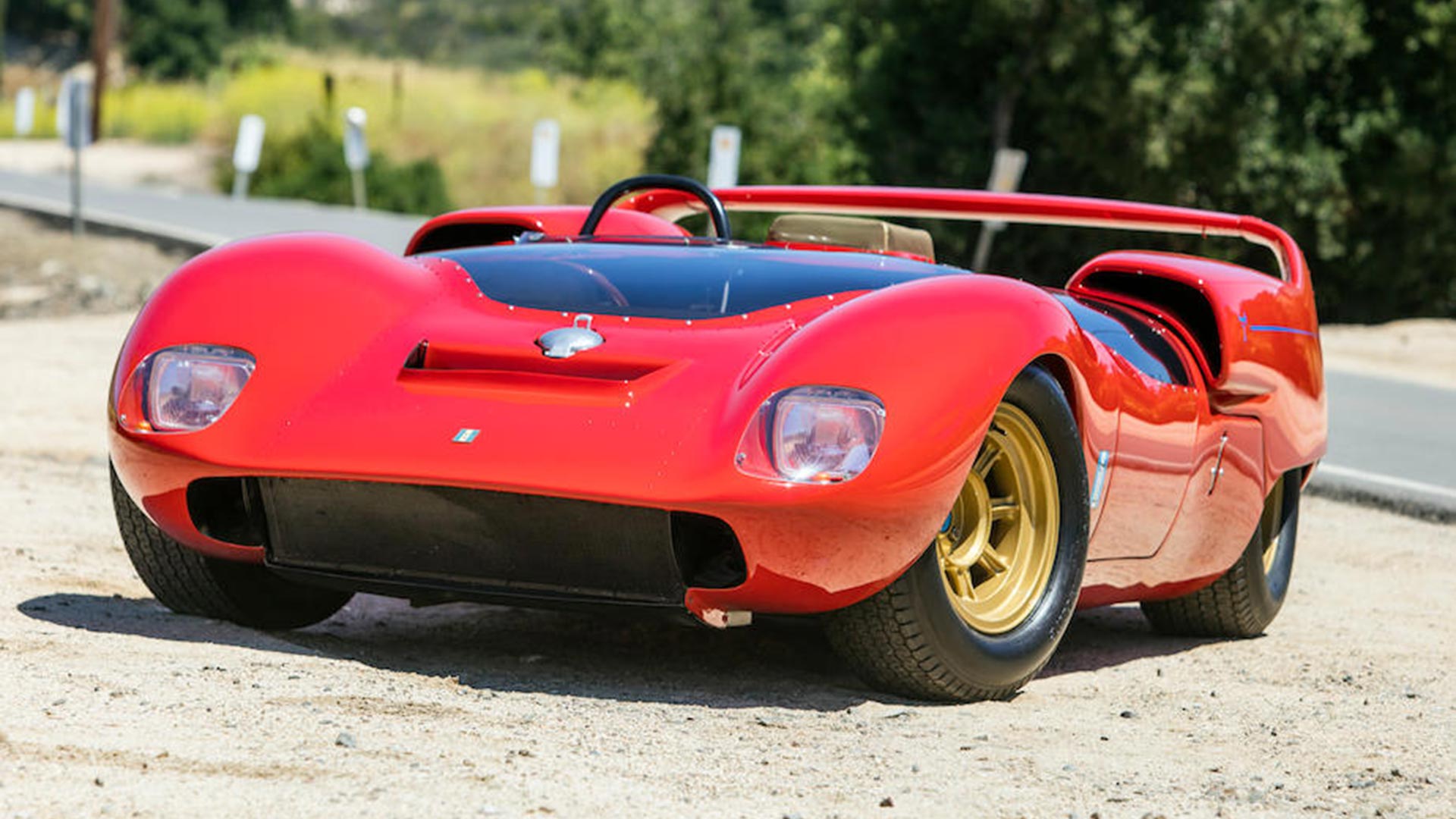
In keeping with other Monterey auctions for 2019, a Porsche is one of the stars, with a 1959 718 RSK Spyder likely to draw big money. A 1965 Shelby/De Tomaso Can-Am racer, with bodywork designed by Peter Brock, does offer an intriguing alternative.
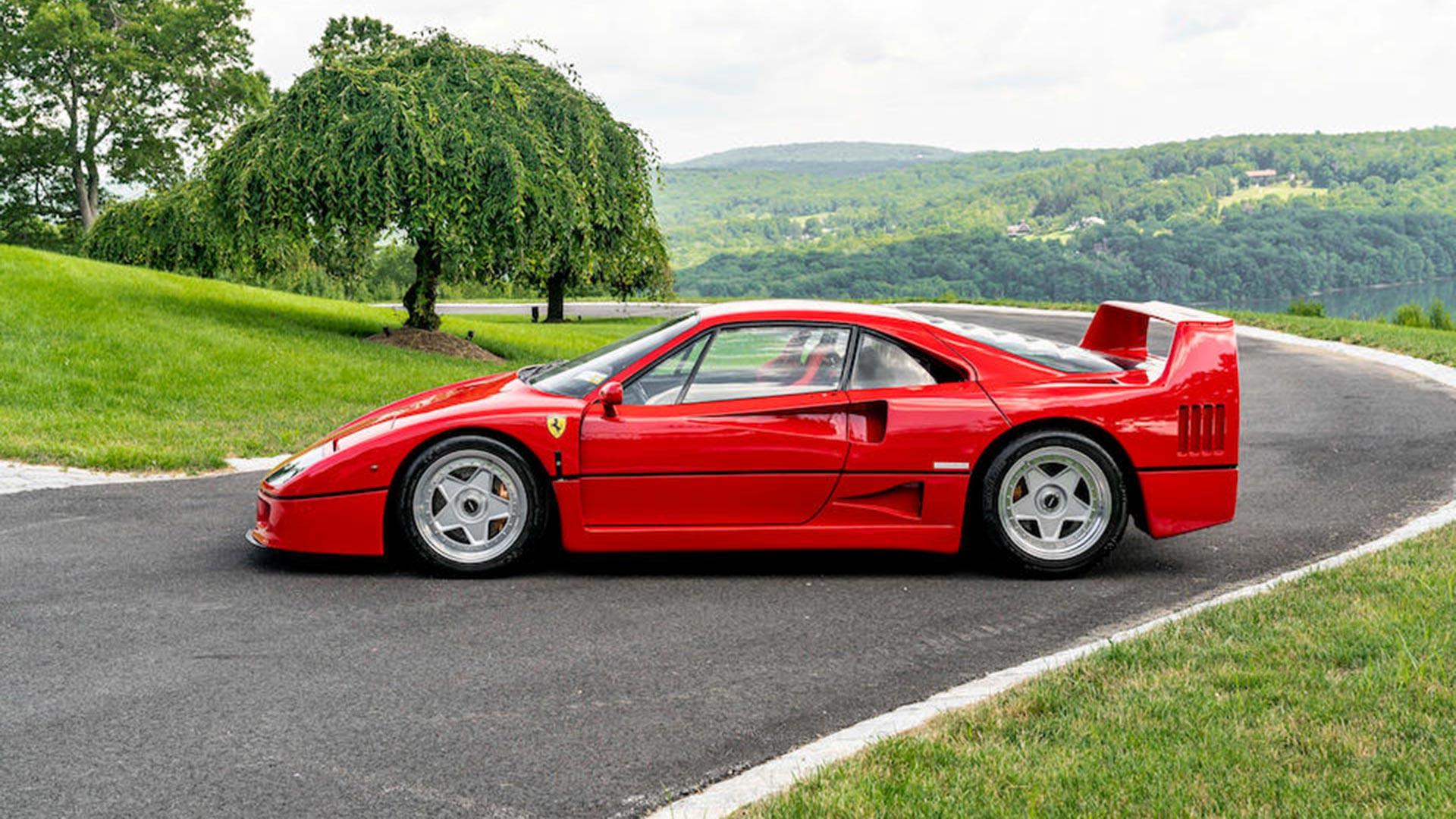
More modern supercars like the Ferrari F40 and Lamborghini Aventador are mixed with vintage offerings, whilst a $20,000 1979 Lincoln Mark V is possibly one of the cheapest cars on offer anywhere for Monterey Car Week.
Russo and Steele Monterey 19
When: Thursday August 15 through Saturday August 17 Where: 290 Figueroa Street, Monterey, CA Entry: $30 general admission
Located right in the heart of downtown Monterey, the Russo and Steele 2019 auction includes an eclectic variety of modern and classic cars.
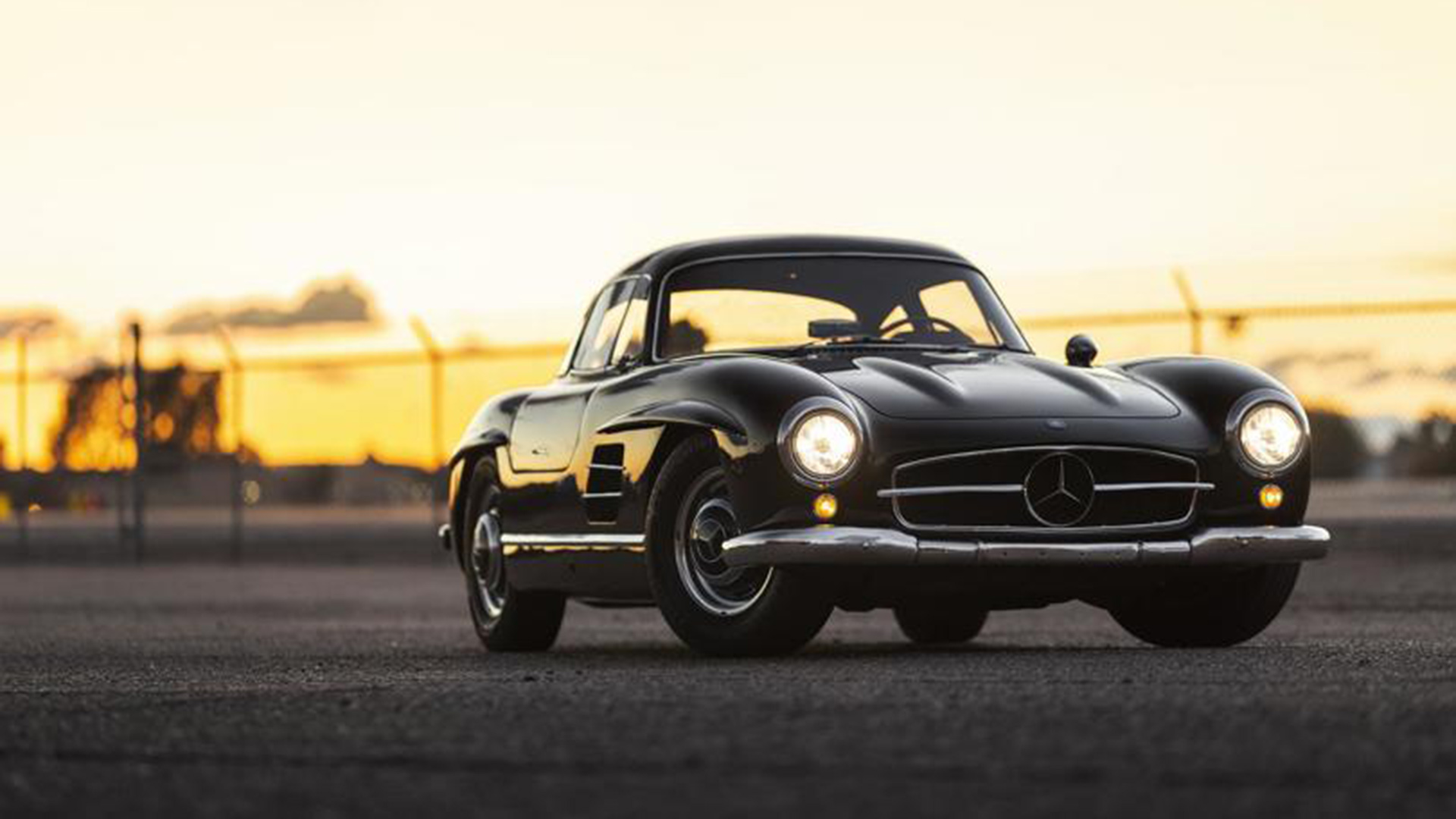
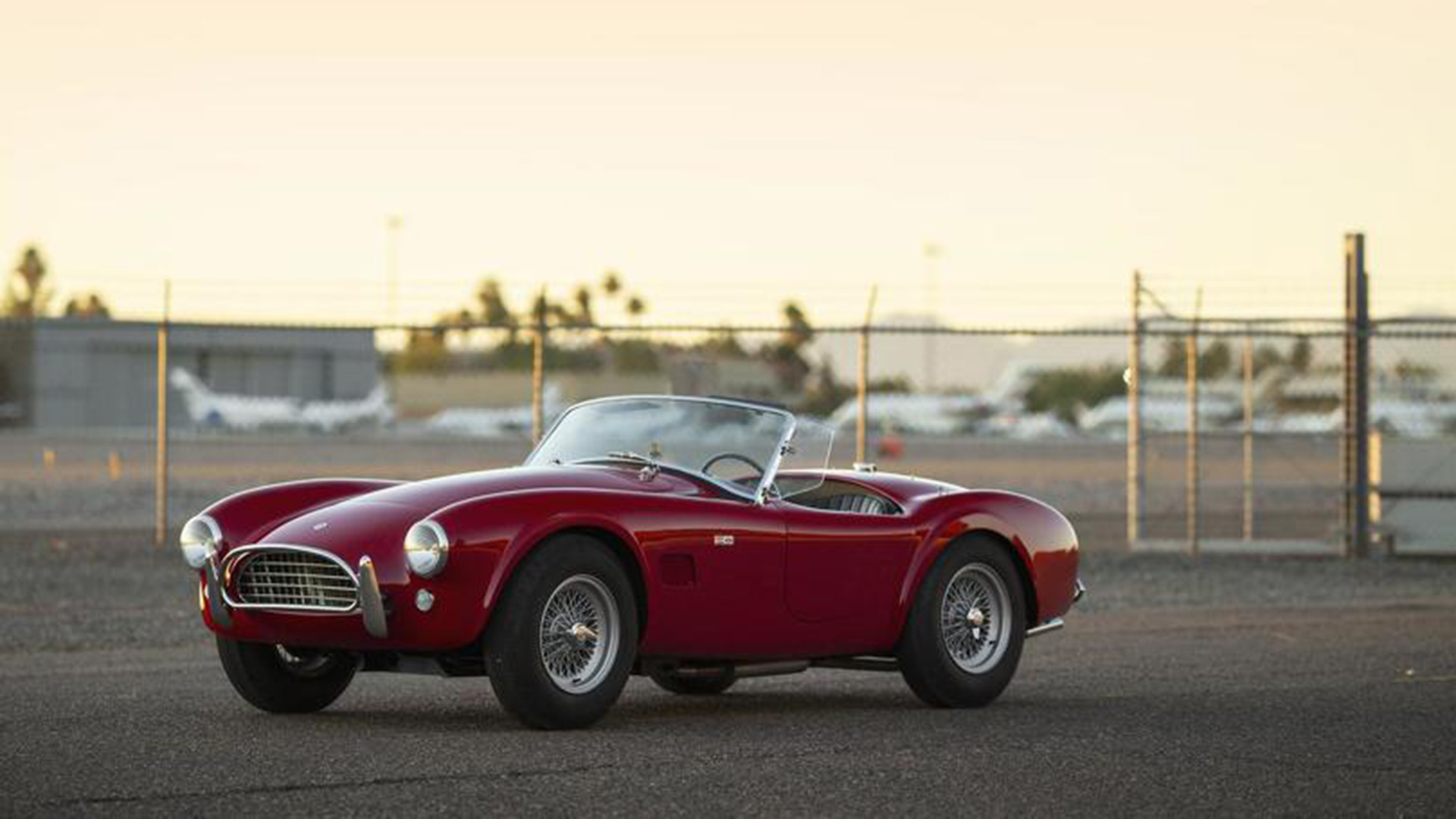
A 1955 Mercedes-Benz 300SL Gullwing which has been owned by the same family for four decades is the major highlight. The achingly pretty 1965 Shelby Cobra 289 is also expected to generate a sale price in excess of $1.1 million.
One intriguing inclusion is the only factory 2019 Chevrolet E-COPO dragster, built by GM demonstrate that battery power can still be fun. This is the very car that was originally shown at the 2018 SEMA Show.
Worldwide Auctioneers Pacific Grove Auction
When: Thursday August 15, public preview available from Monday August 12 Where: Pacific Grove Golf Links, Pacific Grove, CA Entry: $40 on preview days, $120 VIP access for two on auction day
The catalogue for the Pacific Grove Auction may be fewer than 45 cars, but each one is likely to hold appeal to discerning collectors.
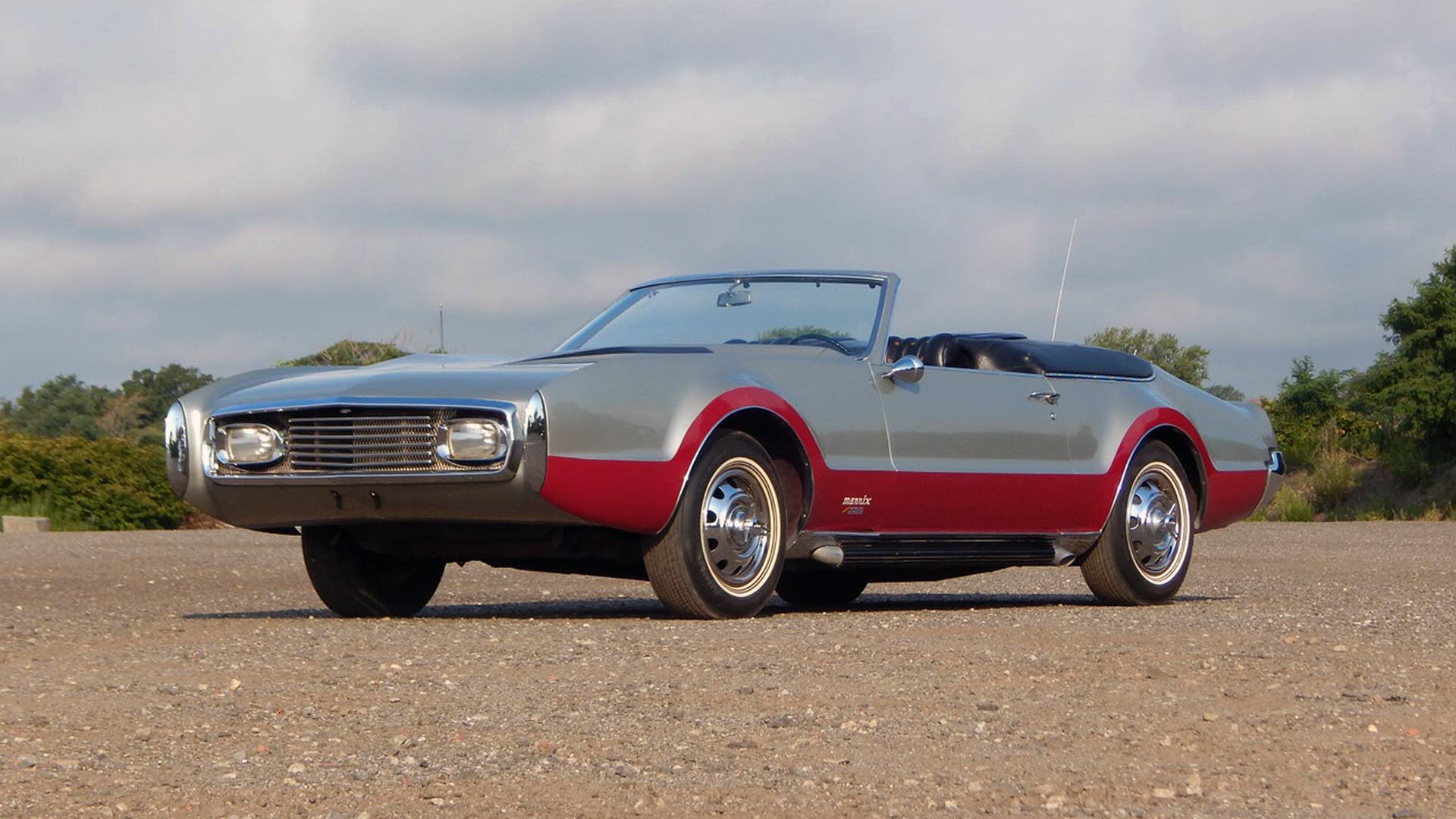
An Oldsmobile Toronado is an unlikely attendee at a Monterey auction, but the one shown here featured in the first season of the ‘Mannix’ TV show. It was custom built by the legendary George Barris for use on screen.
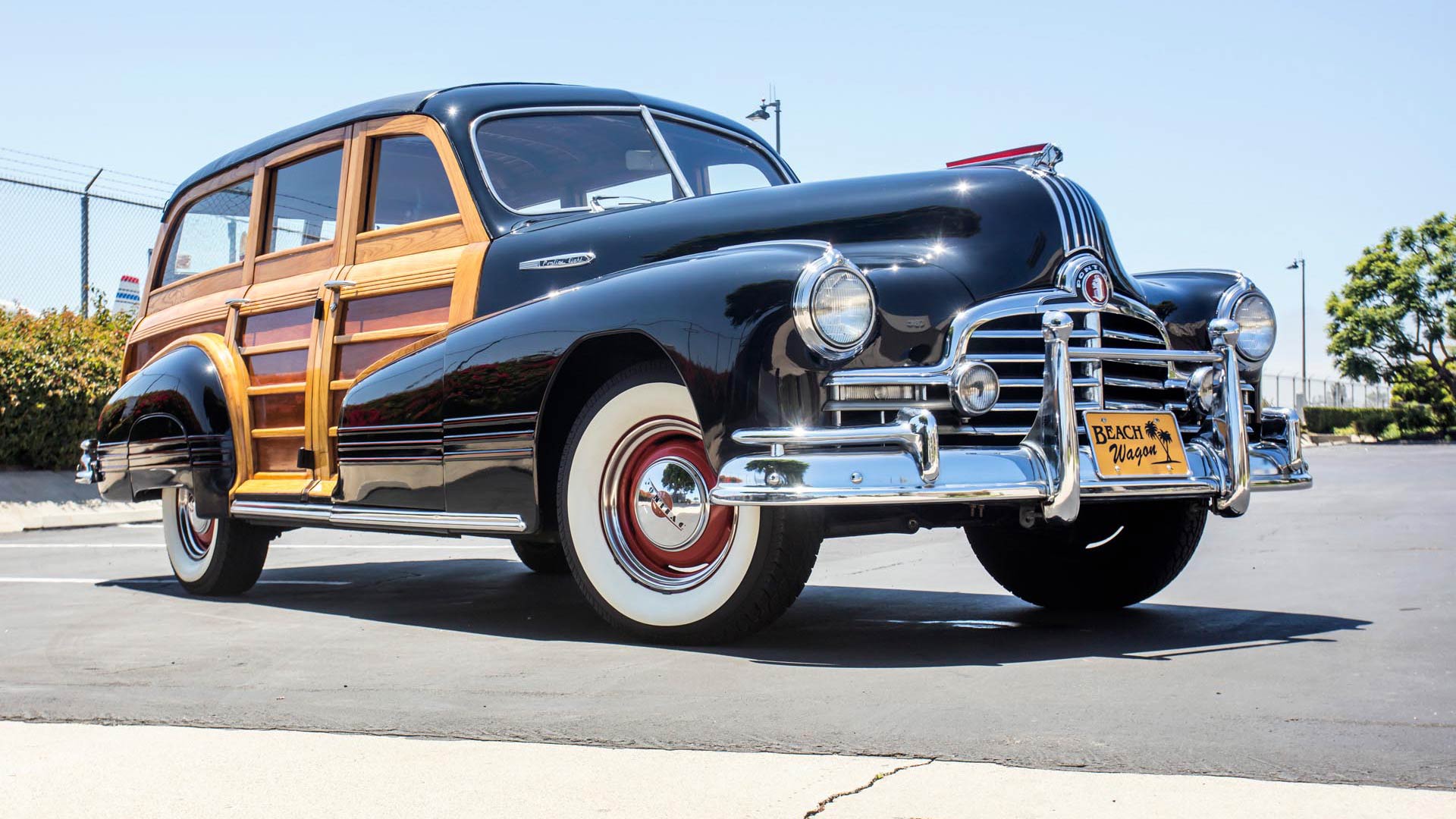
Original wood trim can be found on the 1946 Pontiac Streamliner wagon, whilst a 1973 Volvo ES1800 offers estate fans a Scandinavian option.
Gooding and Company Pebble Beach Auctions
When: Friday August 16 through Saturday August 17 Where: Pebble Beach Equestrian Center, Del Monte Forest, CA Entry: $40 general admission, $100 entry for two with catalogue
This is not just any Monterey auction, but the official sale of the Pebble Beach Concours d’Elegance event. As a result the cars on the auction list are suitably beautiful, and ready to complete the perfect car collection.
A 1958 Ferrari 250 GT Tour de France ticks both of those boxes, having previously appeared at the Concours d’Elegance event. A rare chance to own a Porsche 911 Reimagined by Singer will also attract attention.
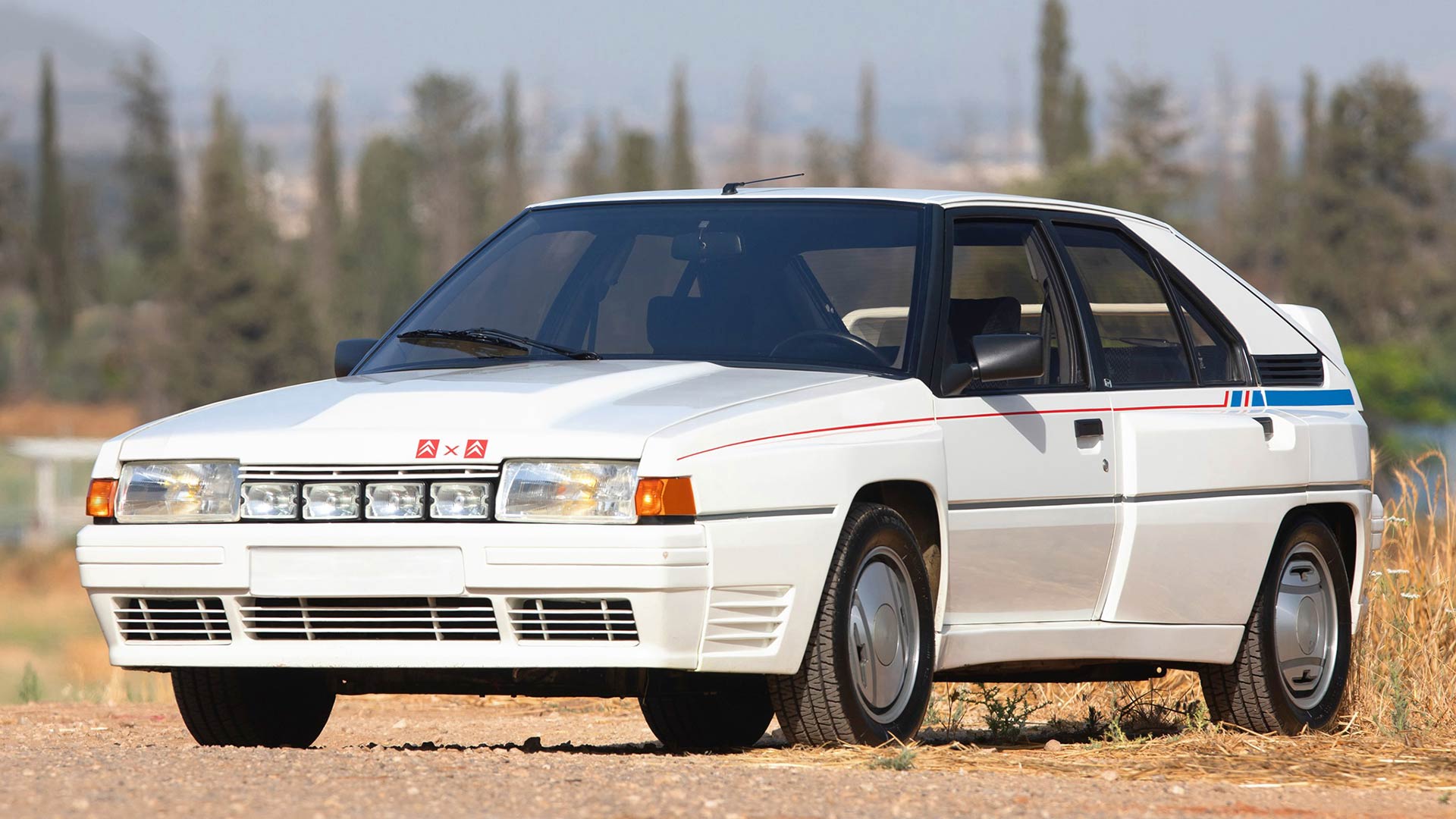
However, a collection of four road-going Group B homologation specials could be perfect for ardent fans of rallying. The Citroen BX 4TC is one of just 40 remaining in the world, and could make for a serious talking point at your local cars and coffee meet.
Bring a Trailer Monterey Reunion
Online auction website Bring a Trailer may not have a physical sale event as part of the Monterey Car Week, but it is still getting in on the action.
As part of the Rolex Monterey Motorsports Reunion at Laguna Seca, Bring a Trailer will be hosting a special Alumni Gathering event. This will bring together 80 cars owned by members of the BaT online community, with vehicles purchased through the website featuring heavily.
As part of the Premium listings on Bring a Trailer, a car featured previously at the Rolex Monterey Motorsports Reunion is currently up for auction.
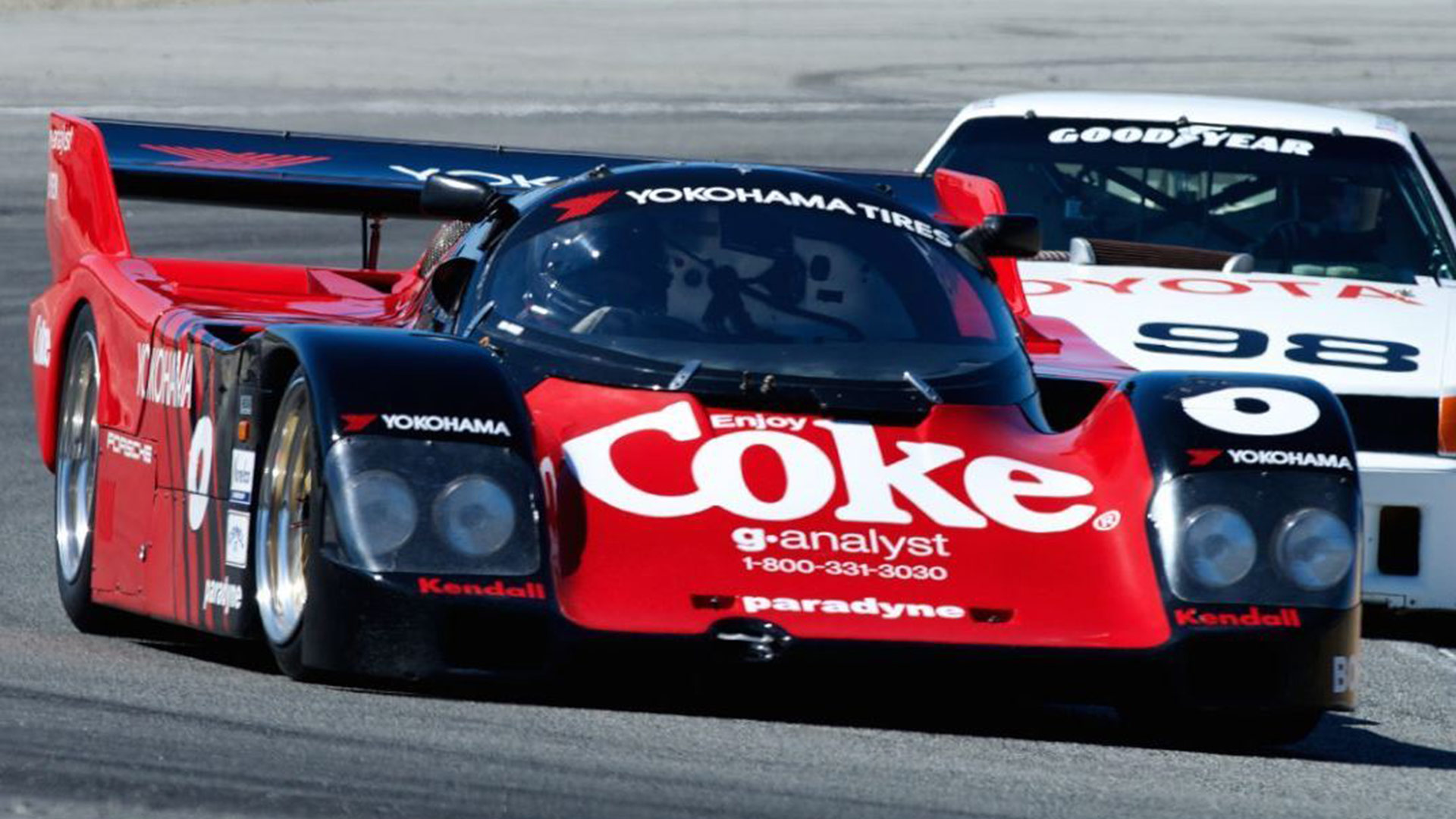
When new, this 1987 Porsche 962 competed in the IMSA GTP series and now lives a life of vintage motorsport outings. Finishing on Tuesday August 13 could let a new buyer show it off in Monterey.
Over the course of the last year, 82 percent of the UK’s busiest 22 airports have increased charges for short-term drop-off parking. That’s according to new figures from the RAC.
Stansted is the worst offender, with a 10-minute drop-off costing £4 – a 50p increase since last year. Luton follows closely behind, with 13 minutes of parking costing £4. That’s an increase of £1 in the past year.
Manchester is third, with five minutes of parking for drop-off costing £3. Although that hasn’t changed since last year, the airport remains the most expensive per minute for parking. East Midlands and London Southend are joint-fourth, costing £3 for 10 minutes of parking. The former is up by £1 over the course of a year, while Southend has removed its free-for-five-minutes policy.
Further down the list, Doncaster-Sheffield, Birmingham, Edinburgh Glasgow and Newcastle have all increased charges. Aberdeen airport costs the same, but you get five minutes waiting time.
Planes at Italian airport now get to follow a Lamborghini
Pick-up charges also increased
When it comes to pick-up charges, Stansted once again tops the list, with a £2.50 rise to £8 for 30 minutes of parking. It joins Luton as the joint most-expensive for ‘short stay’, although Luton’s prices have remained the same.
Manchester, East Midlands, Birmingham, London City and Heathrow have also increased charges, with the latter asking £4.20 for 30 minutes. The cheapest airport in the country for pick-up parking, Jersey, has put its fees up by 10p, with 30 minutes now costing 80p.
“Many airports charge drivers to drop off and pick up to keep the terminal entrances clear of traffic and to discourage long stays in car parks,” said RAC spokesman Simon Williams. “Some might also see this as a way to encourage other forms of transport to the airport, but nevertheless, these fees are still unwelcome, especially when you consider how little time most people actually spend at the airport.
“In reality, many travellers simply either do not have easy public transport access to get to the airport and even if they do, they can’t always depend on it getting them to the airport in good time.
“Many drivers dropping off their friends or family will naturally only spend a minute or two doing so which makes the experience all the more painful, especially if this is at London Stansted which charges the highest drop-off fee in the country at £4 for 10 minutes.”
Doing airport drop-offs on the fly can cost time, money and be stressful. Know where you’re going to park, including potential free parking that’s nearby if you’ve got to wait around. Have your payment to-hand so you can get the process out of the way quickly.
Plan your goodbye
Speaking of getting things out of the way quickly, spending 20 minutes hugging at the gate could be costly. If you can, get your goodbyes done before you park.
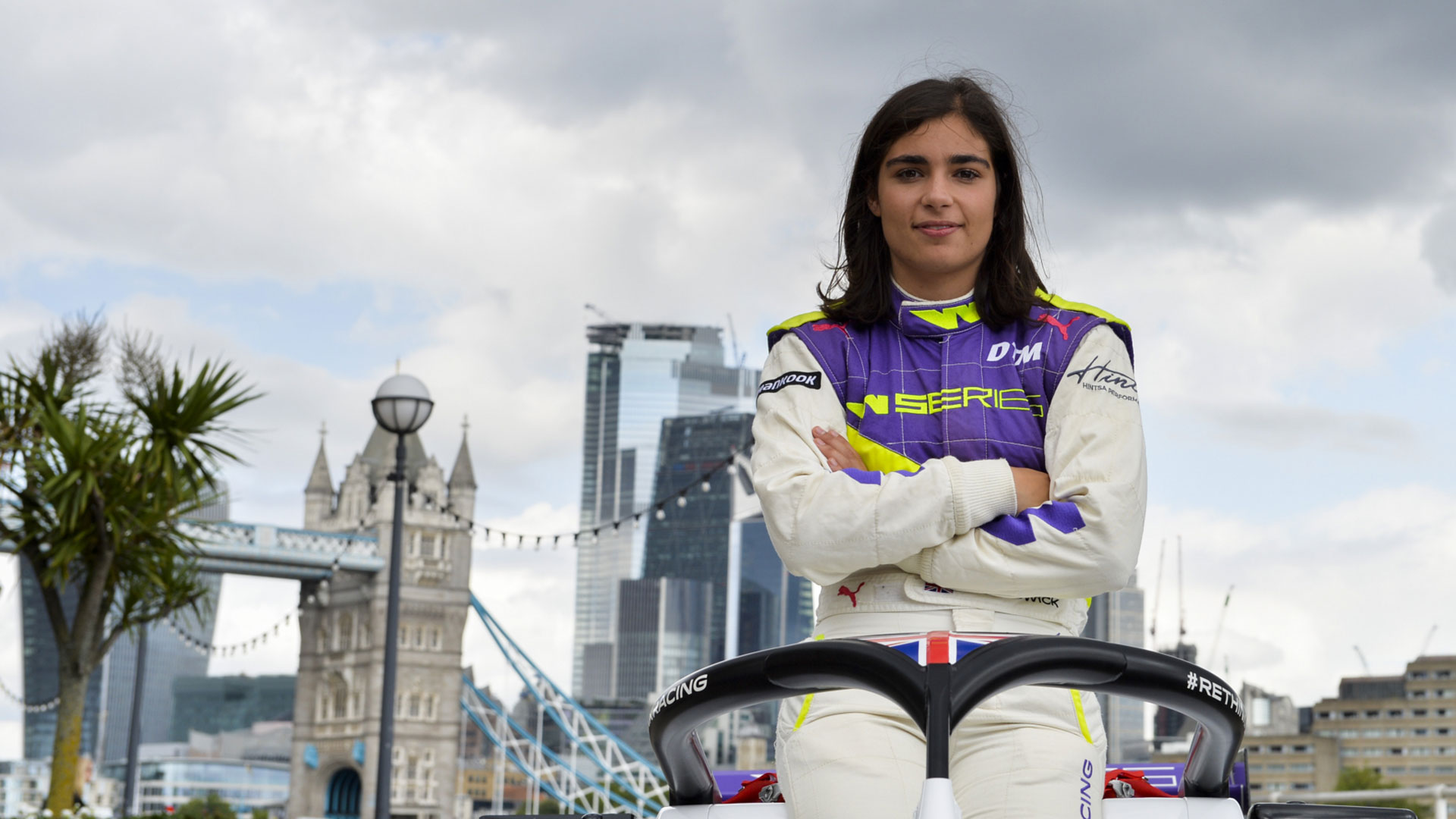
Jamie Chadwick has become the first winner of the all-female W Series single-seater racing championship, after a thrilling race at Brands Hatch.
The 21-year-old driver, originally from Bath, described the nailbilting race as the “worst 30 minutes of her life” as she clung on to score enough points for title glory.
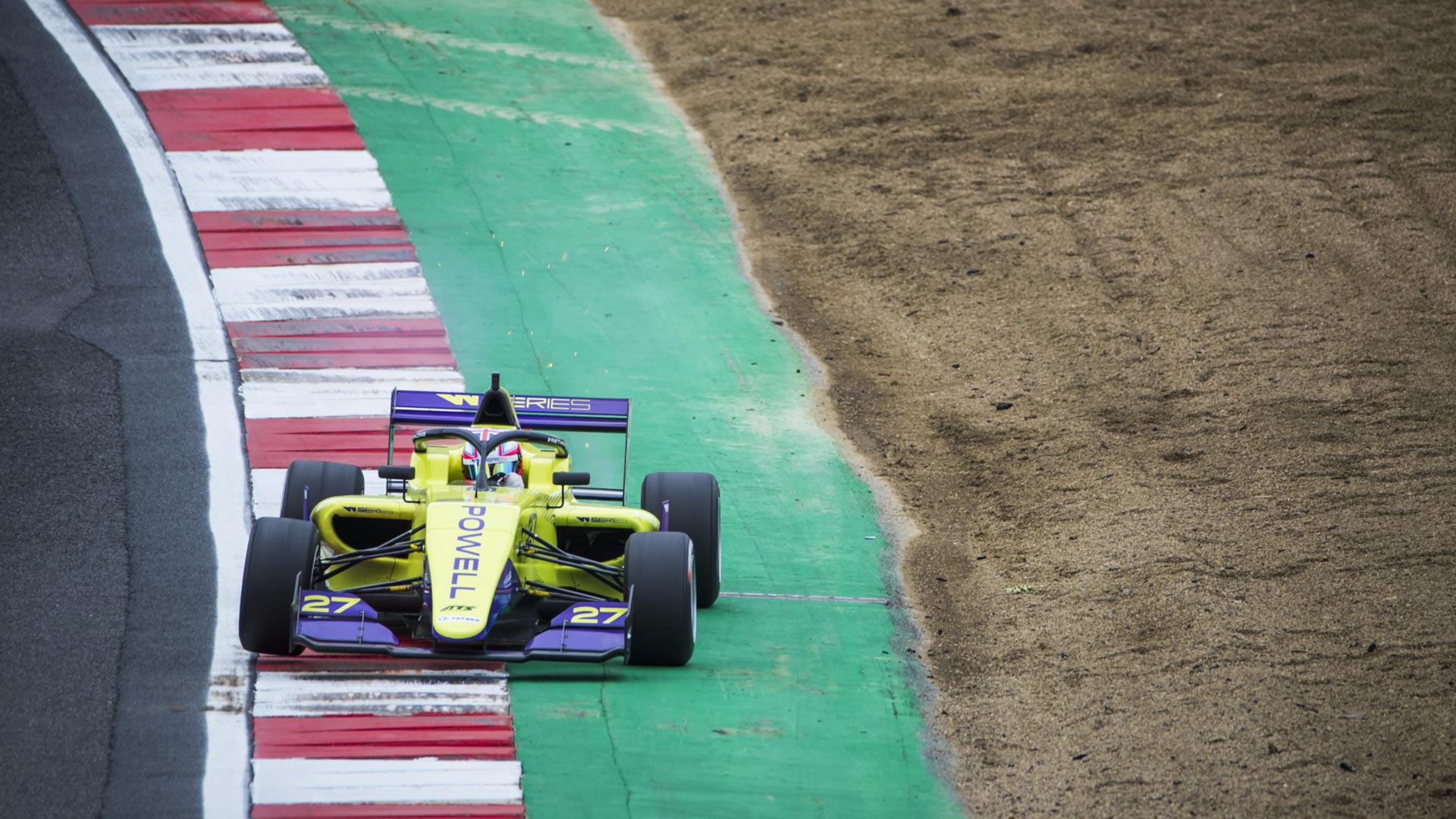
Oxfordshire-born Alice Powell took her first win in the W Series, having pressured her way past Chadwick from second on the grid.
A qualifying session with challenging and changeable weather conditions saw Chadwick secure pole position for the final race.
Chadwick’s only title rival, Beitske Visser, qualified fifth and ideally needed to scoop victory to have a real chance of denying the British driver title glory.
Finishing on the podium would have been enough to see Chadwick crowned champion, but even that ended up being a tougher fight than anticipated.
Although Chadwick made a good start, she would see herself slipping down the order as both Alice Powell and Emma Kimiläinen made their way past her. A close fight with title rival Visser saw brief contact made between the two single-seater racing cars, with Chadwick then dropped to fourth.
The tension was ratcheted up even further, as a late safety car saw the pack close up following a spin by Miki Koyama.
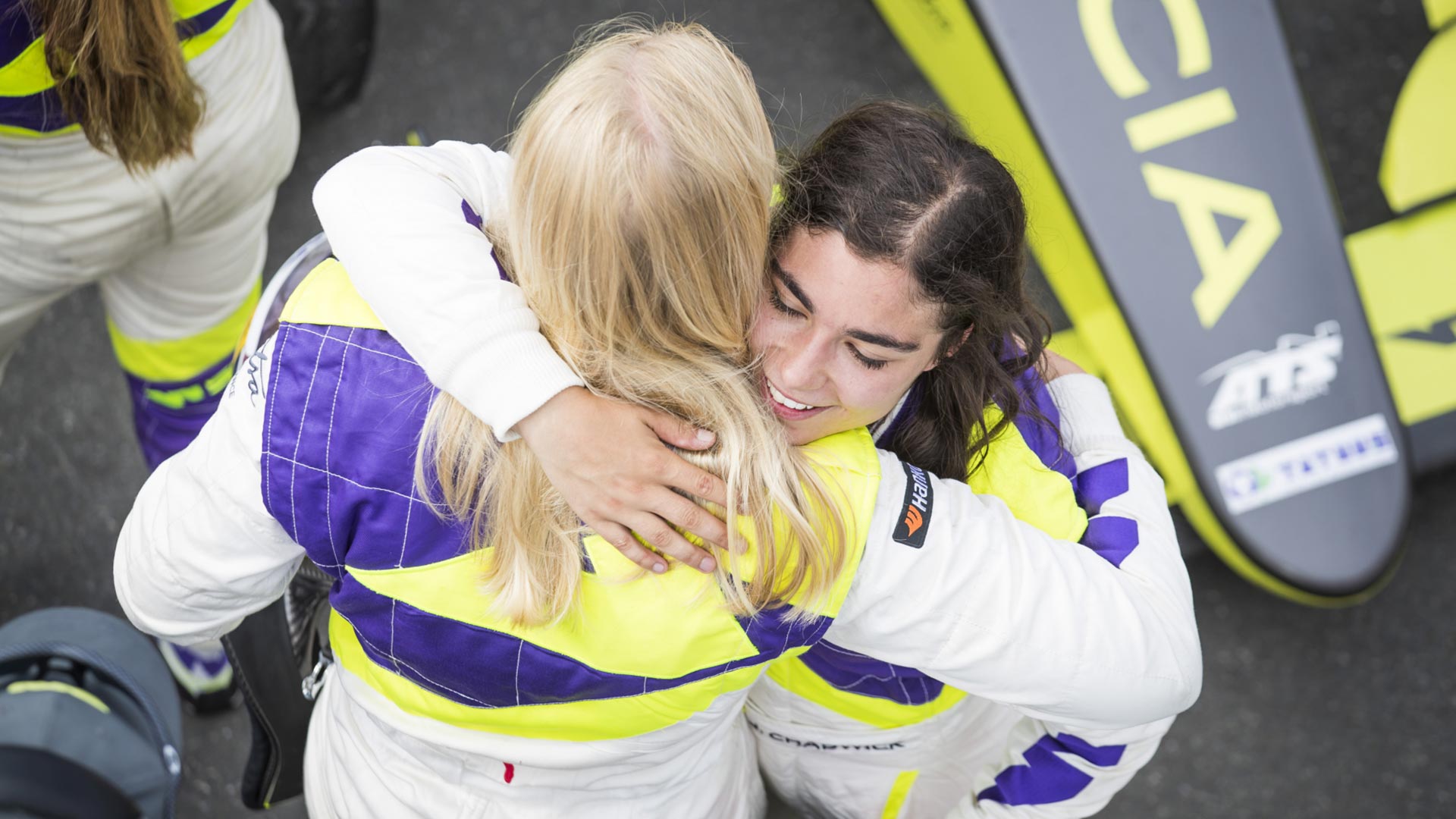
Despite the drama, Chadwick was able to hold onto fourth place, with Visser finishing third. The end result saw Jamie take the championship by 10 points over her Dutch rival, to a mixture of both joy and relief.
Ladies and gentlemen, your inaugural #WSeries champion!
Winning the W Series secures Chadwick a $500,000 prize payout, designed to aid her progression in the next level of motorsport. Having already been signed as a development driver for the Williams Racing Formula One team, the young Brit clearly has a strong future ahead of her.
Alice Powell’s victory saw her claim third in the W Series championship, with fellow British racers Sarah Moore and Jessica Hawkins taking 8th and 12th overall respectively.
Esmee Hawkey finished 15th in the championship standings. A stall on the grid, followed by a drive-through penalty, meant her strong efforts of third place in qualifying turned into a 16th place finish at Brands Hatch.
Finishing in the top 12 for the overall championship is significant, as those drivers receive an automatic invitation to return for the 2020 W Series competition.
W Series Chief Executive Catherine Bond Muir has promised extra European rounds for 2020, with the series looking to expand further across the globe in the following years. Next year will also see drivers eligible to score FIA Super Licence points, which are vital in order to become a Formula One driver.
The overall success of the W Series this year suggests that a female F1 racer is a closer prospect than it has been for many years.
If you’re the sort of person who grinds their teeth at the thought of ‘influencers’ making easy money with Instagram promotions, look away now.
Or perhaps not, given these people also have much more exciting jobs. They’re Formula One drivers.
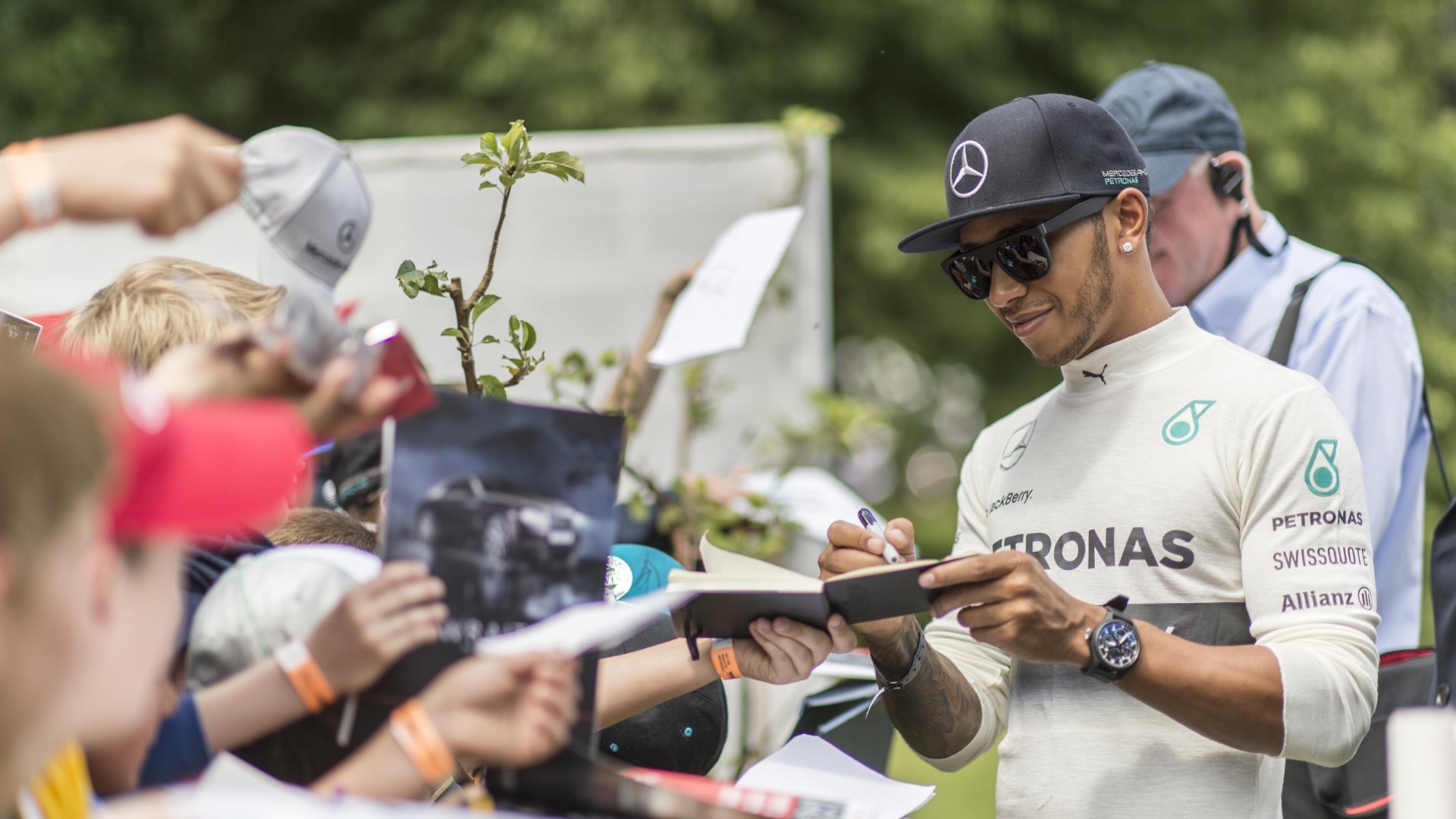
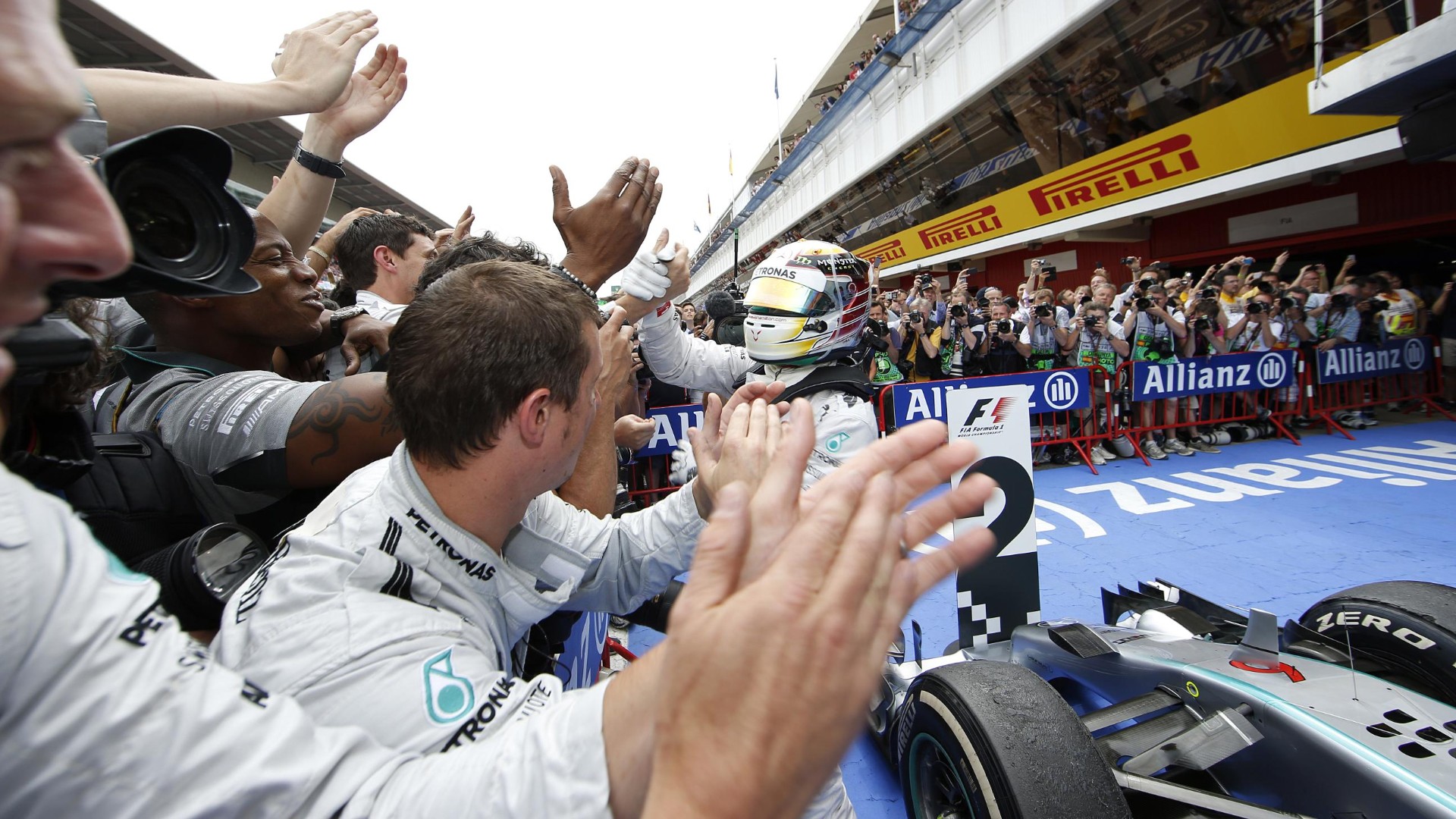
As you might expect, racing legend Lewis Hamilton is king of the F1 Instagram elite. His 12.4 million Instagram followers can earn him an estimated £40,590 per sponsored post.
Estimates by Celebrity Spend Comparison suggest those with 500,000 followers earn £1,667 per post on average. The estimated per-post earnings, including Hamilton’s, are based on multiples of this figure.
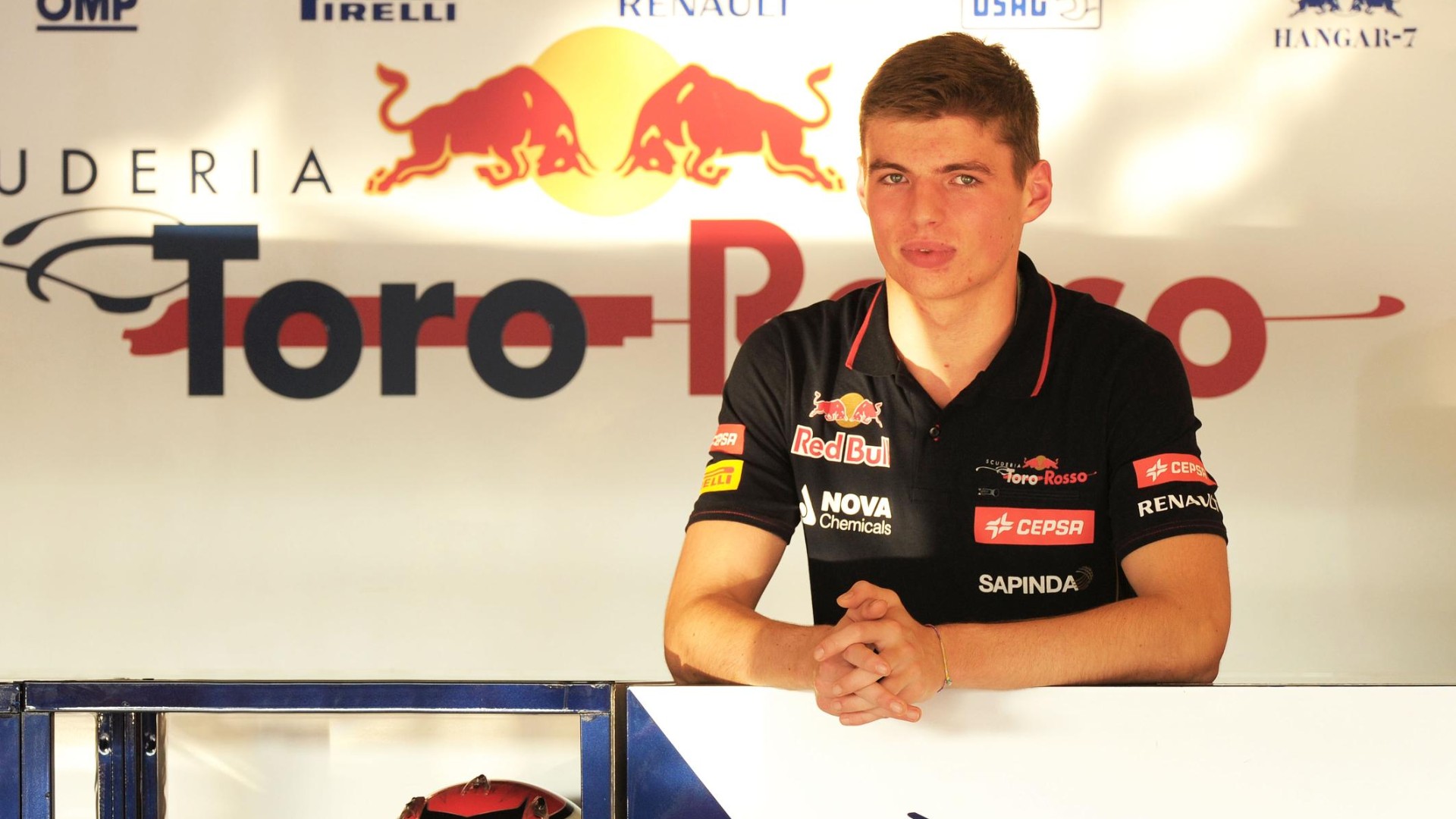
Hamilton leads his grid-mates by some way, both in the championship and in terms of social media earnings. Max Verstappen’s 2.4 million Instagram followers can earn him nearly £8,000 per sponsored post.
Mercedes team-mate and points runner-up Valtteri Bottas can rake in £3,630 per sponsored post, based on his 1.1 million followers.
In terms of annual salary, Lewis earns the average UK yearly wage (£29,588) in just nine hours, 46 minutes and 48 seconds.
If he emerges from the 2019 F1 season victorious, he will have six world titles to his name, just one behind seven-time world champion Michael Schumacher – the most successful Grand Prix driver of all time.
Yet another championship would be just the sort of thing that’s appropriate to celebrate in a £32 million New York penthouse. With that kind of talent and the performance he’s put in throughout his career, it’s well-earned.
Mini is celebrating 60 years with a major production milestone.
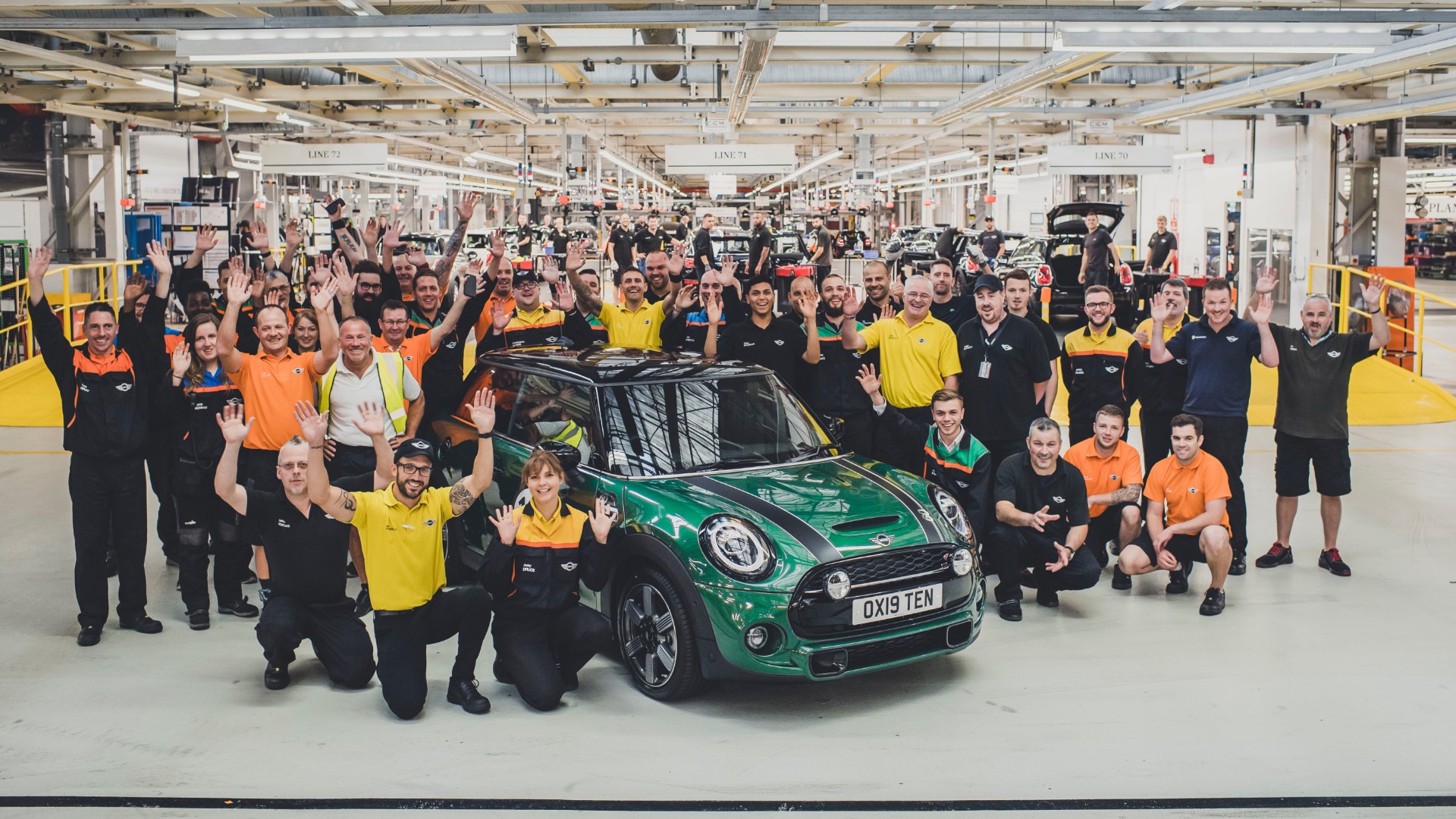
The 10 millionth Mini rolled off the production line at Plant Oxford last month. Fittingly, the car is a 60 Years Anniversary Edition.
Watch the new electric Mini TOW a jumbo jet
Mini history: 60 years, 60 cars
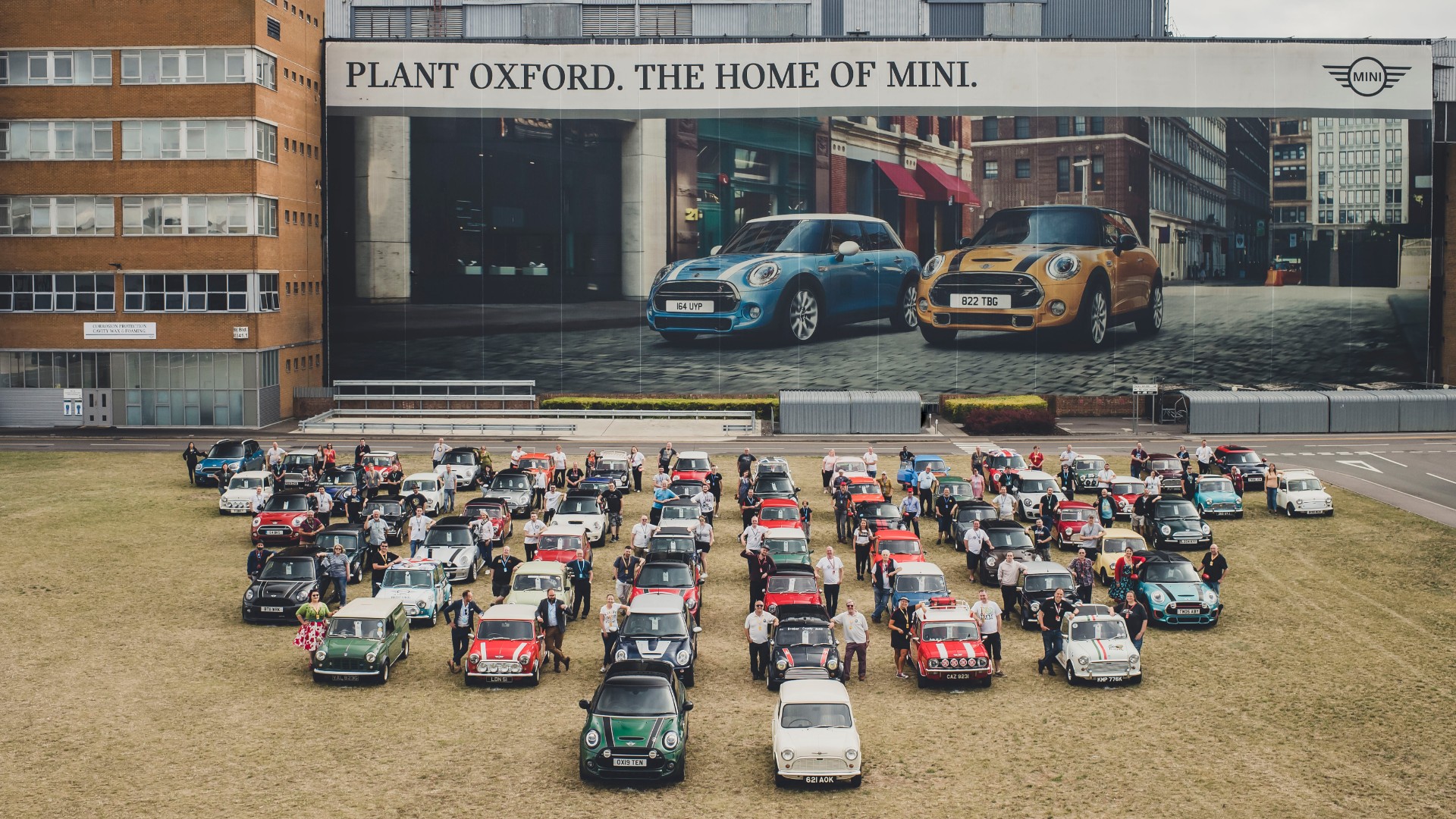
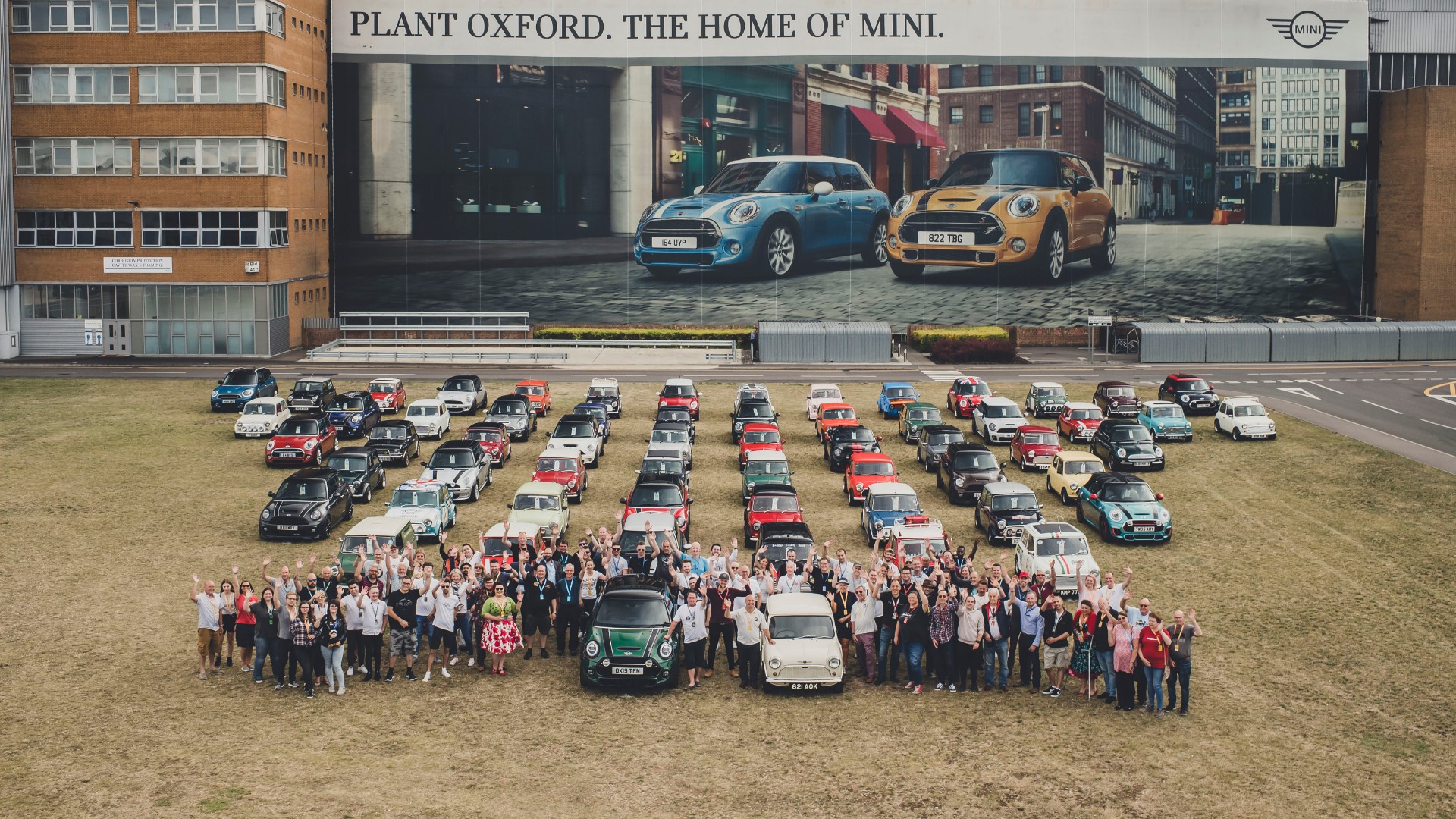
Ten million cars deserves a bit of fanfare, so a Mini from each year of production – 60 cars in total – gathered at the Oxford factory for a photocall. The line-up included the first and 10-millionth cars.
The Minis then hit the road to meet in Bristol. The historical convoy went from oldest to newest, with the very first – ‘621 AOK’ – leading the way.
Of course, there are Minis and there are MINIs. The classic version went out of production in 2000 to make way for the ‘new’ Mini under BMW’s ownership. In 2001, production was around 300 cars per day. Today, it’s around 1,000 each day.
Plant Oxford employs 4,500 people to produce a car every 45 seconds. This is also the year that the Mini goes all-electric.
“As we celebrate 60 years of our iconic brand and look towards an electric future, I would like to thank everyone who has made Mini such a global success, from my team here to the loyal customers and fans around the world,” said Peter Weber, managing director, Mini Plant Oxford and Swindon.
“To see the 10 millionth Mini roll of the production line here at Oxford was a moment of great pride for the whole team, a number of whom have relatives who were here building the very first Minis in 1959. This is a wonderful chapter in the Mini story and proof of the passion that our customers have for this very special British car.”
Football is back, although given the FIFA Women’s World Cup and the fact that it’s only early August, it never really went away. On the eve of the new Premier League football season, Norwich City has announced a multi-year partnership with local car company Lotus. It’s a chance for us to channel our inner Delia Smith by saying: “Football, let’s be havin’ you”. Here are some other examples of when cars play football.
Accrington Stanley’s Volvo 940
Do not adjust your set: this really is a 1993 Volvo 940 covered in an artificial football pitch. And yes, those hubcaps – which look like a tribute to the Fiat Panda Italia ’90 – are indeed styled to look like footballs. And it was all for ‘charidee’…
The Volvo 940 was purchased for the ‘Monte Carlo or Bust’ rally, with teams tasked with buying a car for £250 or less and then getting to Monaco in three days to raise money for their chosen charity.
Fiat Panda Italia ’90
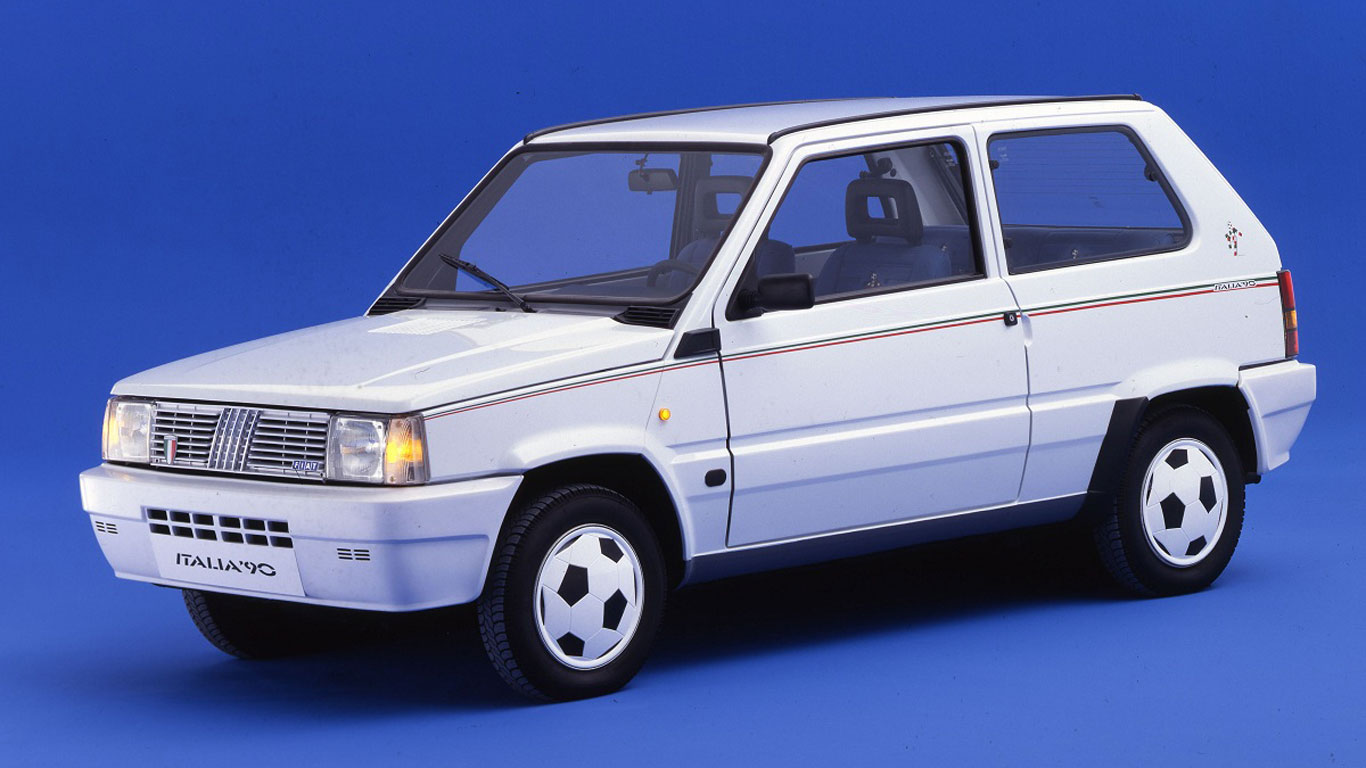
Can it really be 29 years since England were cruelly knocked out of the World Cup by West Germany? Ah, the memories: the missed penalties, Pavarotti, Gazza’s tears and the Fiat Panda Italia ’90.
In the summer of 1990 it was possible to wander down to your local Fiat dealer and drive away in a Panda Italia ’90, complete with Ciao mascot livery, baby blue seats and those football hubcaps. Oh, those football-styled hubcaps…
Ford Cortina and the England 1970 World Cup squad
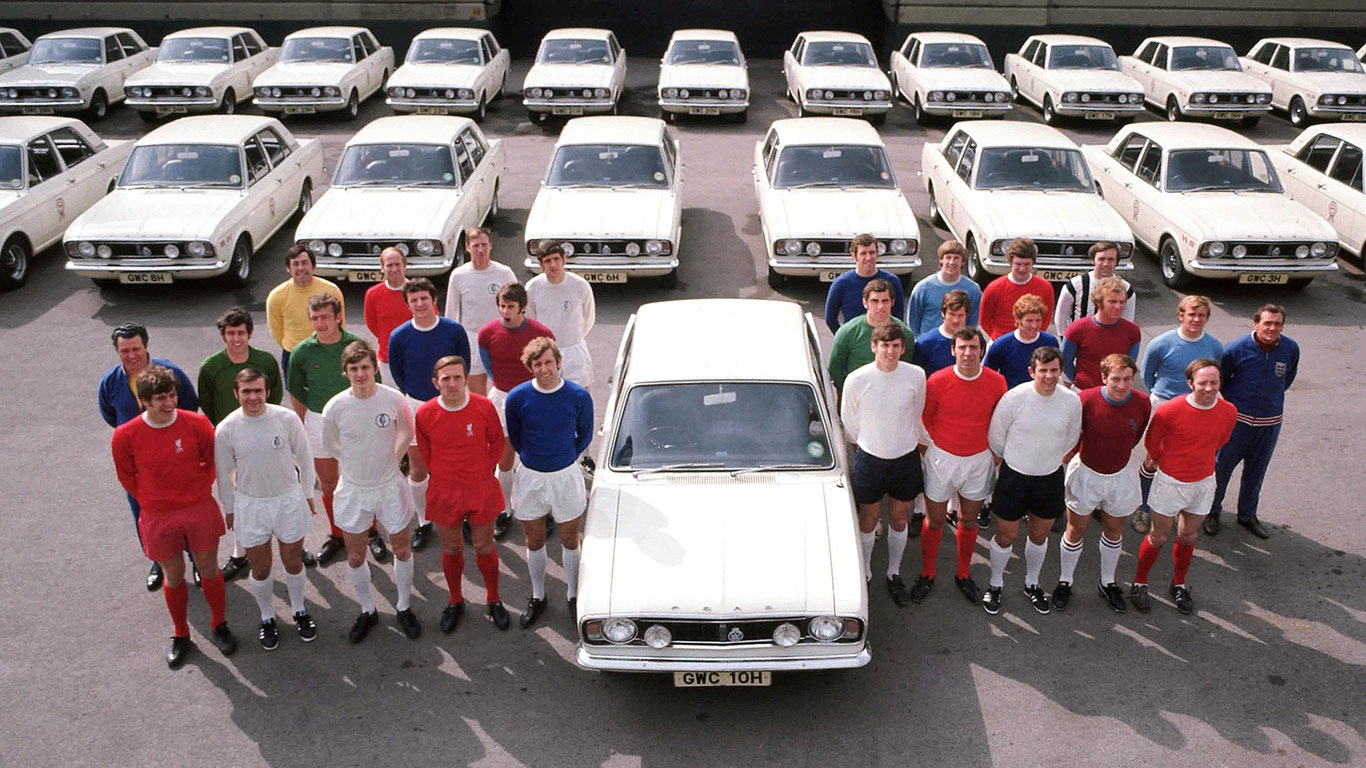
The relationship between football and cars isn’t a new thing. Back in 1970, Ford’s marketing strategy involved giving a Mk2 Cortina to every single member of the England World Cup squad.
In revenge for England’s victory four years earlier, West Germany stormed back from being two down to win 3-2 after extra time. Still, at least they had ‘dad’s favourite’ Cortina to look forward to when they got back home.
Top Gear and the Toyota Aygo
The very first episode of series six of Top Gear saw Hammond and May engaged in a game of football of a different kind.
Using a giant inflatable ball, Top Gear created Aygo Football. Two series later and the teams were back, but this time the Aygo was pitched against the Volkswagen Fox.
Hyundai i10
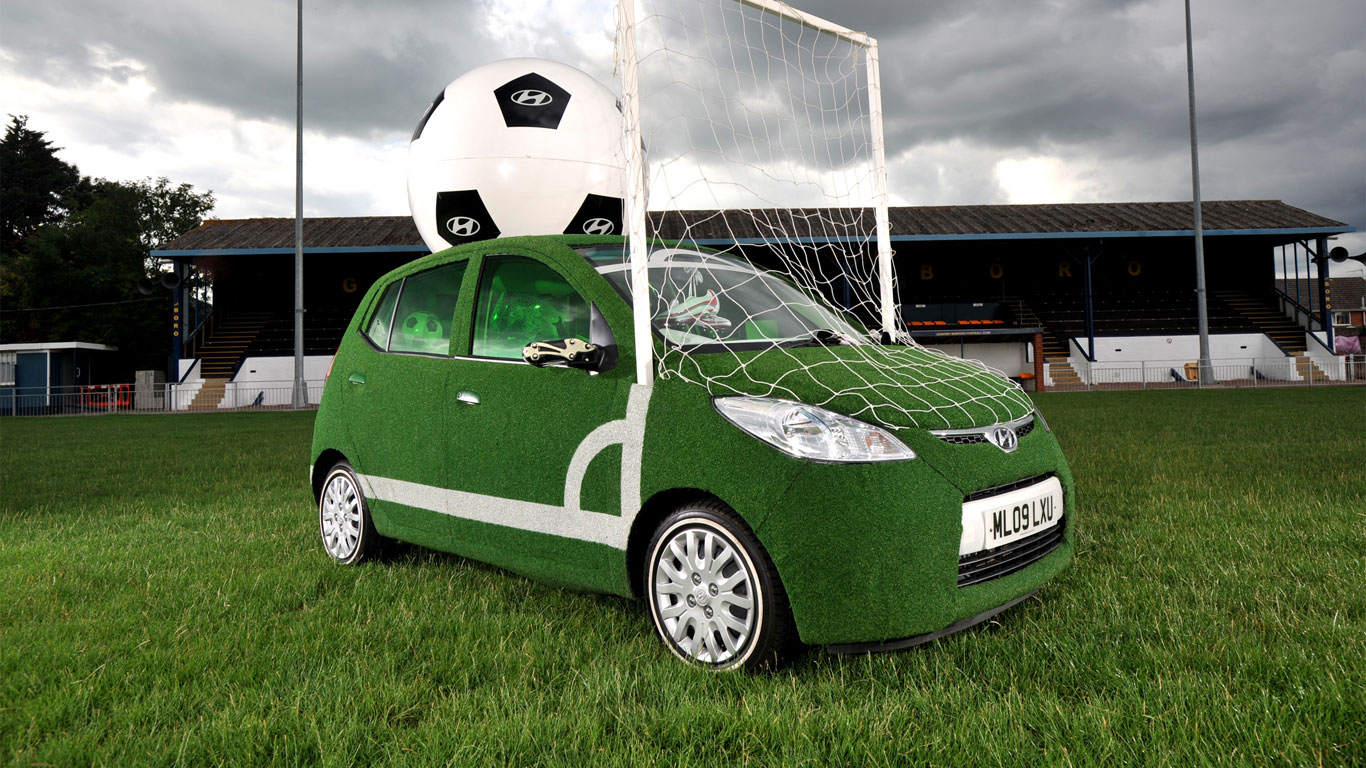
To celebrate Hyundai’s sponsorship of the 2010 World Cup, Hyundai created a pair of football cars, each one featuring ‘grass’ bodywork and interior, a giant football on the roof and goal posts fixed to the A-pillars.
One was subsequently sold off to raise money for BEN, the automotive industry charity. It sold for £5,005: about £500 less than a normal Hyundai i10.
Kia and Euro 2008
The European Championships of 2008 will perhaps be best known over here for the fact that none of the home nations actually managed to qualify for the tournament in Austria and Switzerland.
But that didn’t deter Kia from jumping on the football bandwagon with its ‘Drive for Glory’ and ‘Be Kia, Be Together’ campaigns.
Kia and the FA Cup
Two years later, Kia was propelled into our living rooms once again as they sponsored ITV’s coverage of the FA Cup.
Oh how we laughed with Keith, Ian and Andy as they accompanied Chelsea’s imperious march to victory at Wembley Stadium. No, not laugh, the other thing…
Smart and the 2010 World Cup
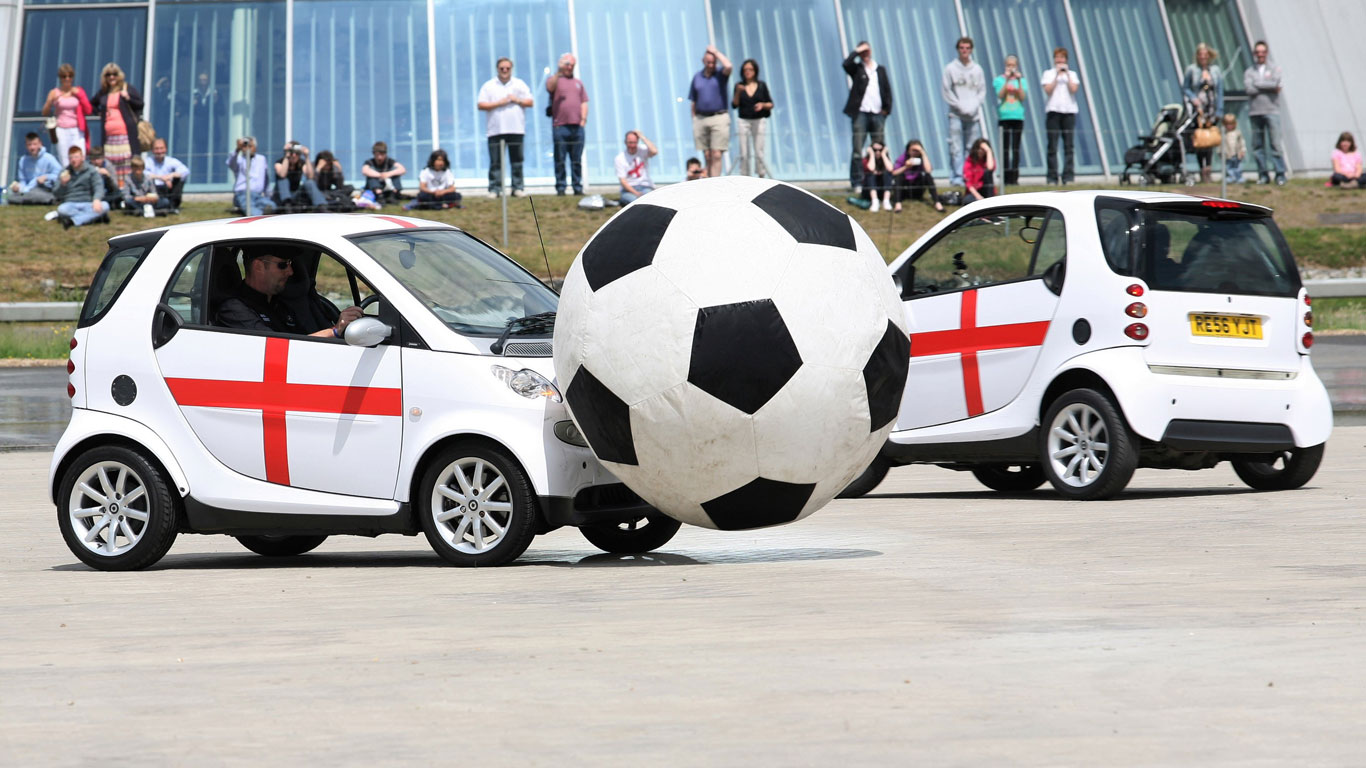
Providing the proof that you don’t need to spend millions on a glossy sponsorship deal, Smart rode the wave of football hysteria by hosting a series of games at Mercedes-Benz World, Weybridge.
It wasn’t anything like Top Gear’s Aygo Football. Not at all.
Honda
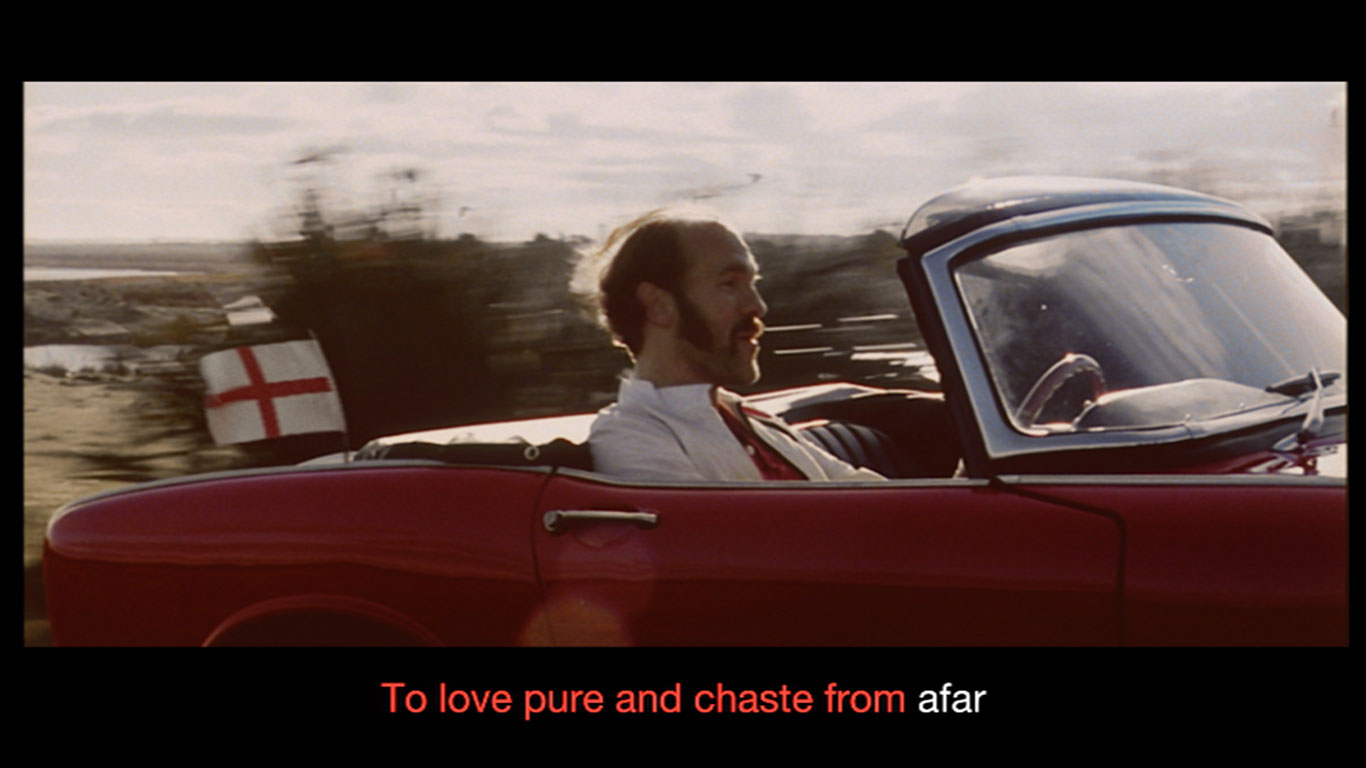
Honda’s ‘Impossible Dream’ advert is quite simply one of the greatest car ads of all time.
But in 2006, Honda and its ad agency ‘remixed’ the ad to wish England good luck at the World Cup. It was brilliantly executed. Sadly the same couldn’t be said for England’s penalties, as the team crashed out against Portugal.
Chrysler and school’s football
Here’s one from the archives. Look at the fresh-faced Michael Owen, then aged 22 and with the world at his feet. Still living in the glory of his wonder-goal against Argentina and adored by fans of Liverpool, where he was regularly banging in the goals.
And seemingly loving the PT Cruiser donated by Chrysler as part of its backing of the Umbro Schools Football initiative. Nobody has ever looked this happy with a PT Cruiser.
Vauxhall and the home nations
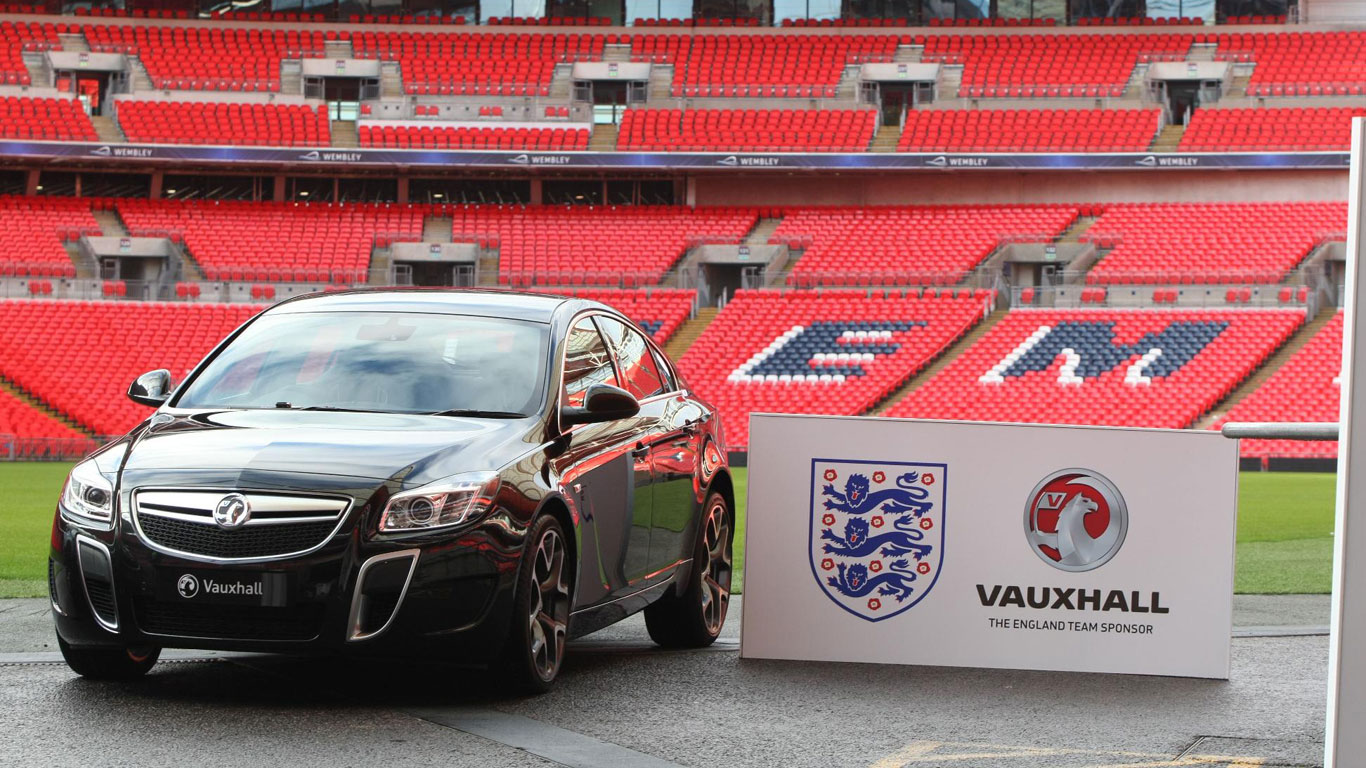
Clearly acknowledging that it would be difficult to ‘support’ one national football squad, Vauxhall decided to sponsor all four of the home nations’ teams.
It didn’t bring the nations any luck, but Wales did a mighty fine job at Euro 2016.
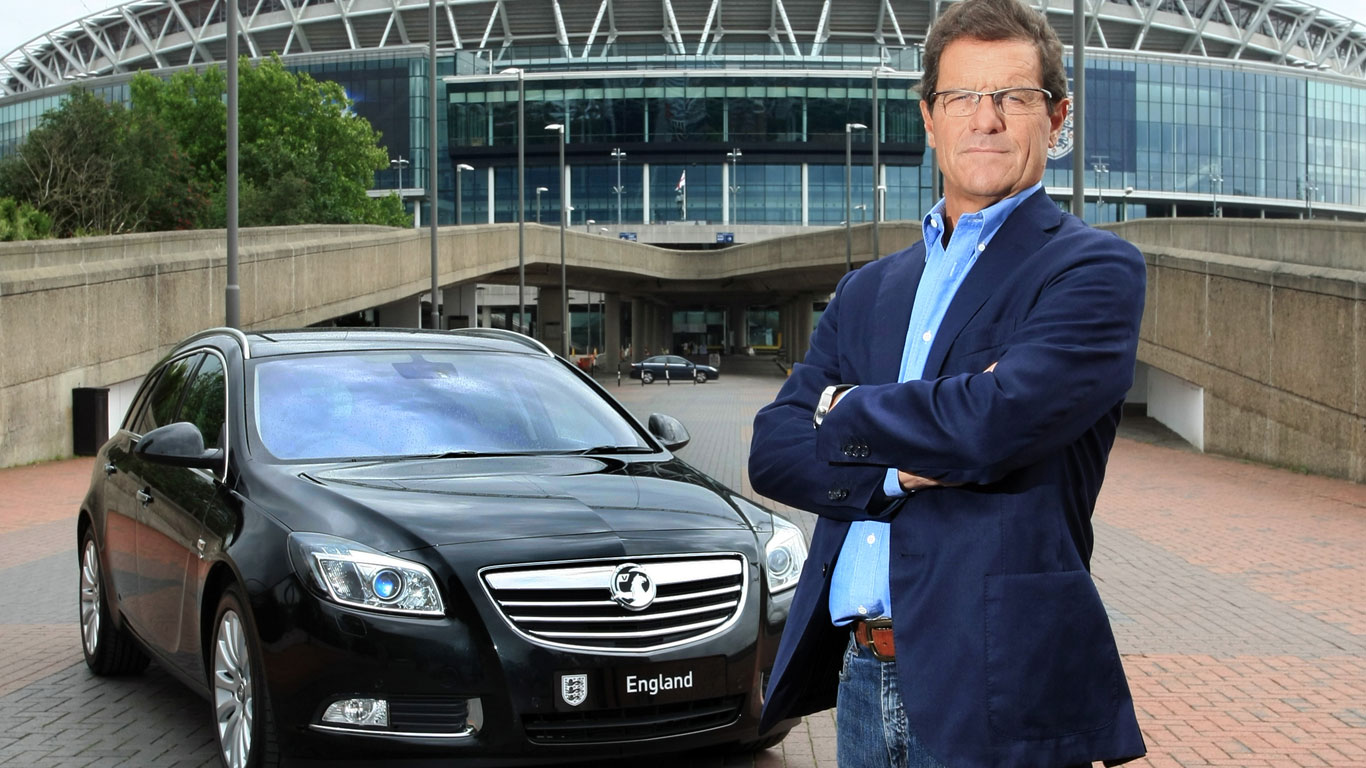
Vauxhall and Fabio Capello
As part of Vauxhall’s sponsorship of the English FA, the then manager, Fabio Capello was given a Vauxhall Insignia Sports Tourer in 2011.
Less than a year later, he had resigned. At which point Vauxhall probably asked for its Insignia back. Still, Fabio’s loss is another man’s gain…
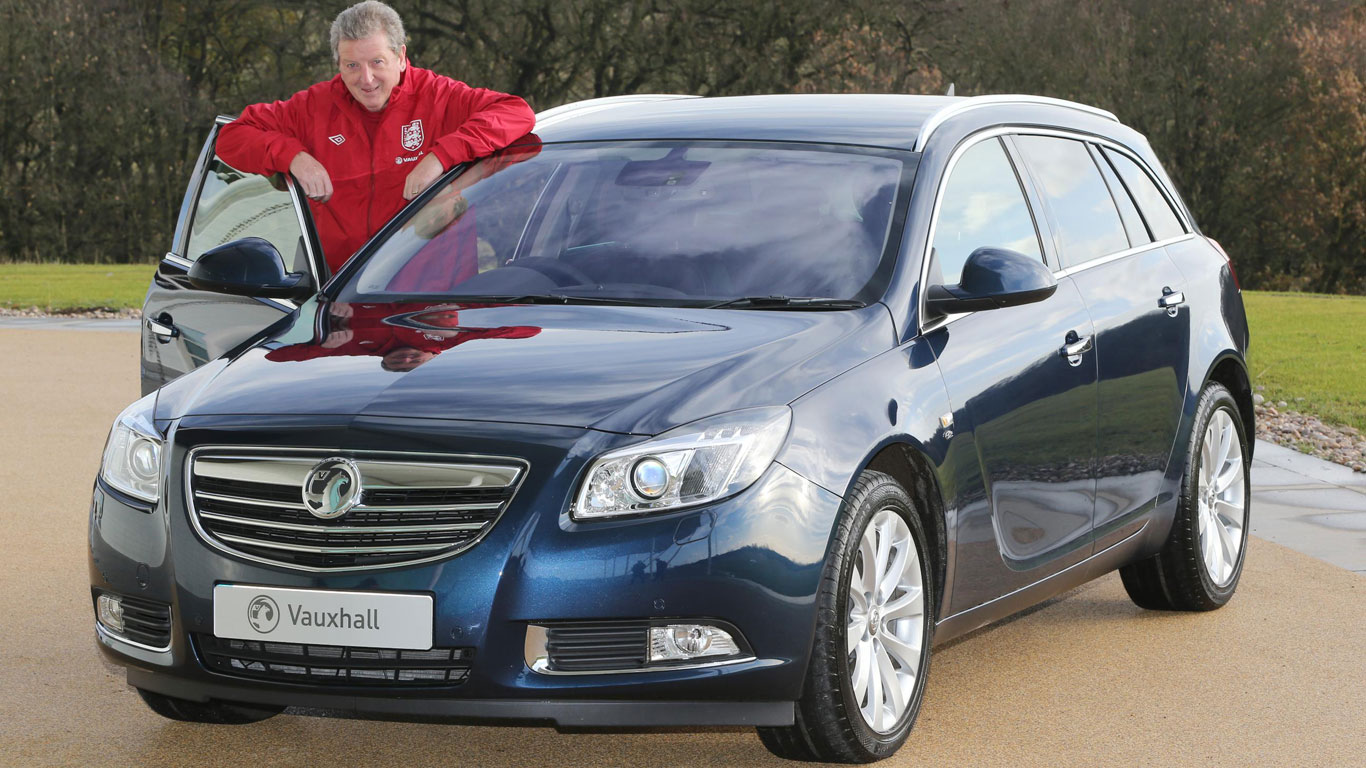
Vauxhall and Roy Hodgson
With Fabio gone, it was left to Roy Hodgson to collect the keys to England’s future and a new Vauxhall Insignia Sports Tourer.
The wagon is ideal for collecting groceries at the supermarket, but ultimately Roy was undone by Iceland.
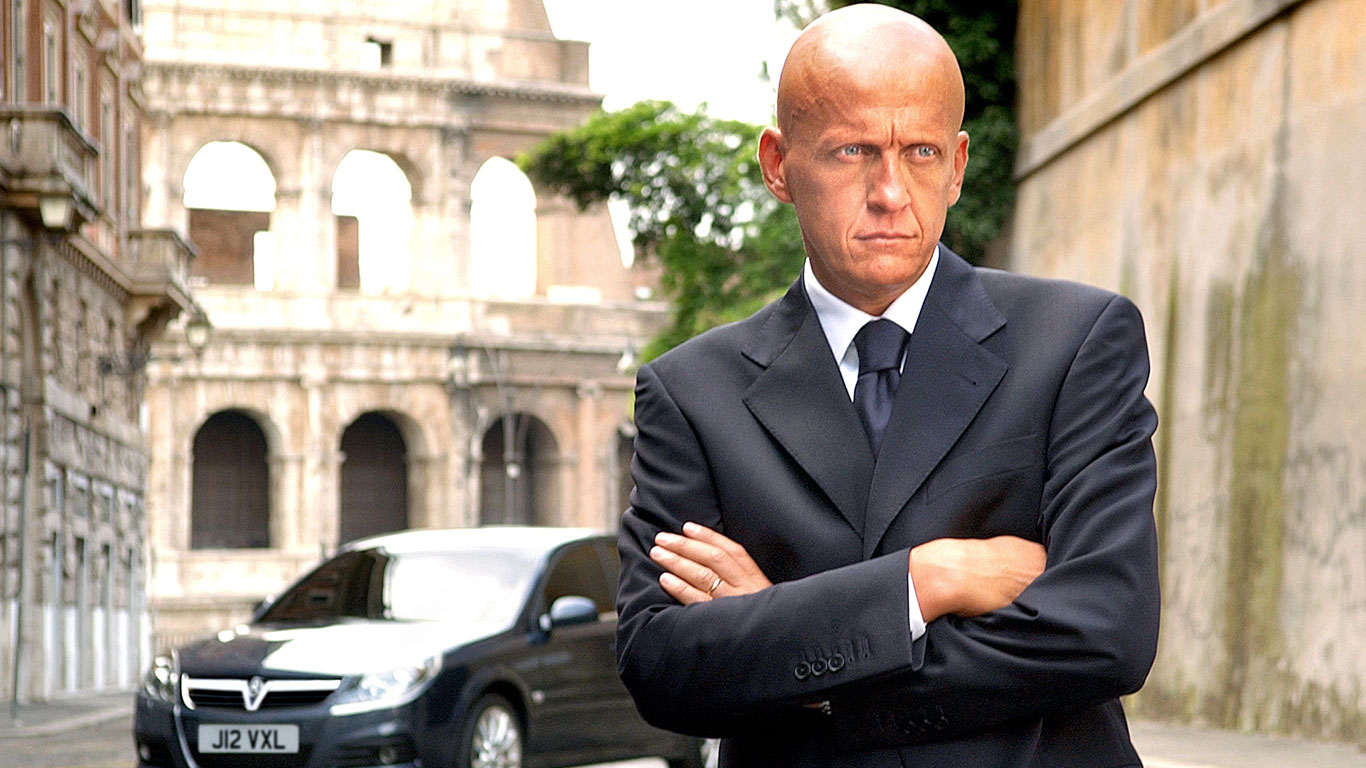
Vauxhall and Pierluigi Collina
Back in 2005, Vauxhall-Opel called upon the world’s most famous referee, Pierluigi Collina to star in its ‘Take Control’ ad campaign.
The campaign – which featured a Signum and Vectra – led to Collina’s resignation, after it prompted conflict-of-interest allegations due to Opel’s sponsorship of AC Milan.
Proton and Norwich City
Here’s a Norwich City partnership from earlier. Proton’s ownership of Lotus led to the brands’ sponsorship of Norwich City, a club based just a few miles from the Lotus factory in Norfolk.
Delia’s restaurant was joined by the unexpected arrival of a Proton dealership situated within the Carrow Road stadium. Turn up to watch football and drive home in a car. Simple.
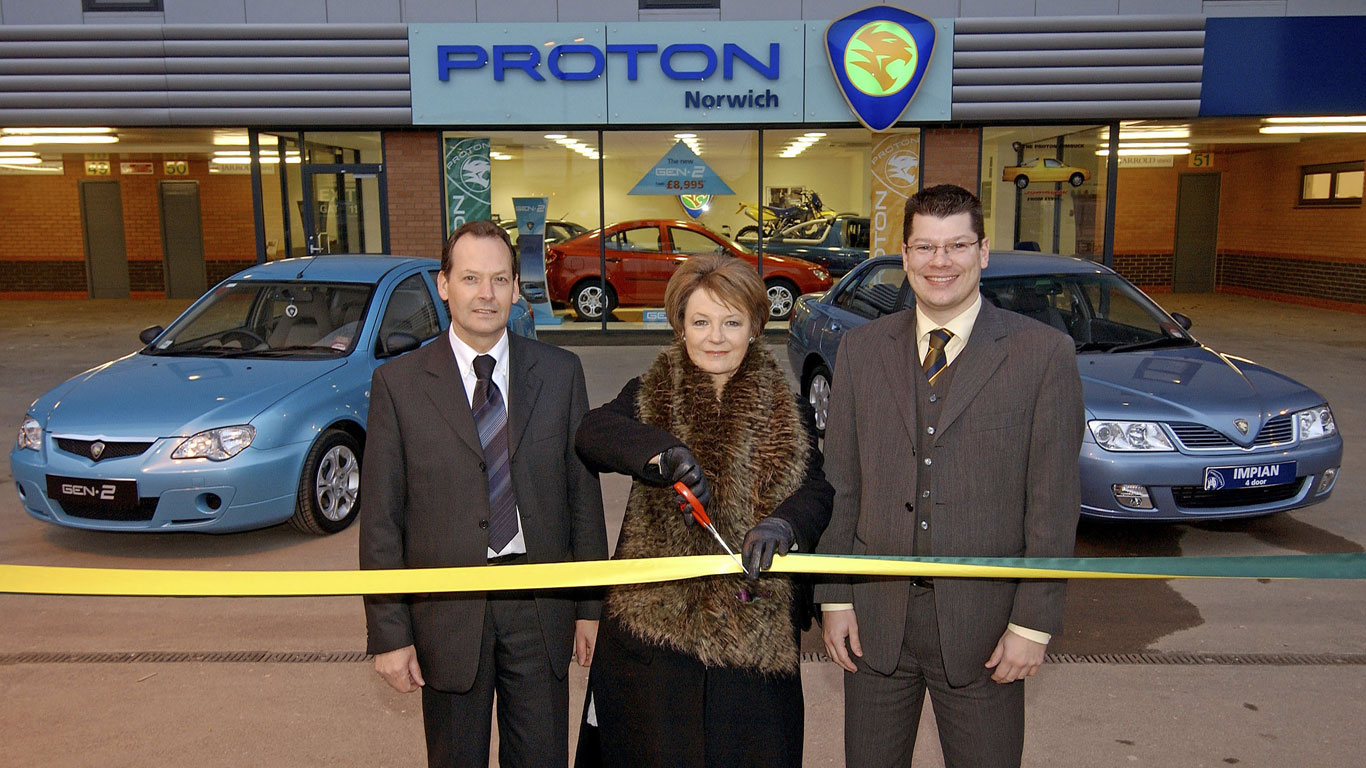
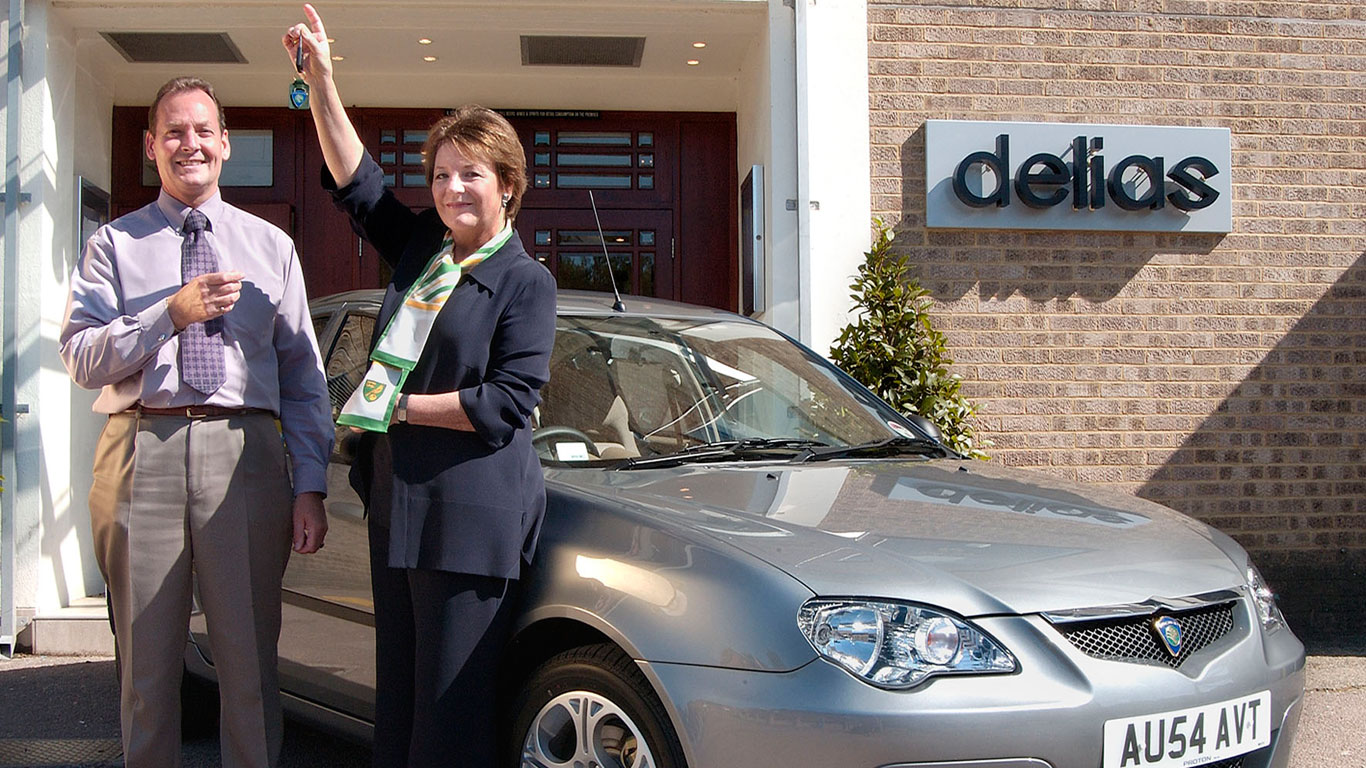
Proton and Delia Smith
Delia’s looks thrilled to be holding the keys to the Proton GEN-2. Meanwhile, Proton UK’s MD is simply delighted to have ‘sold’ another car.
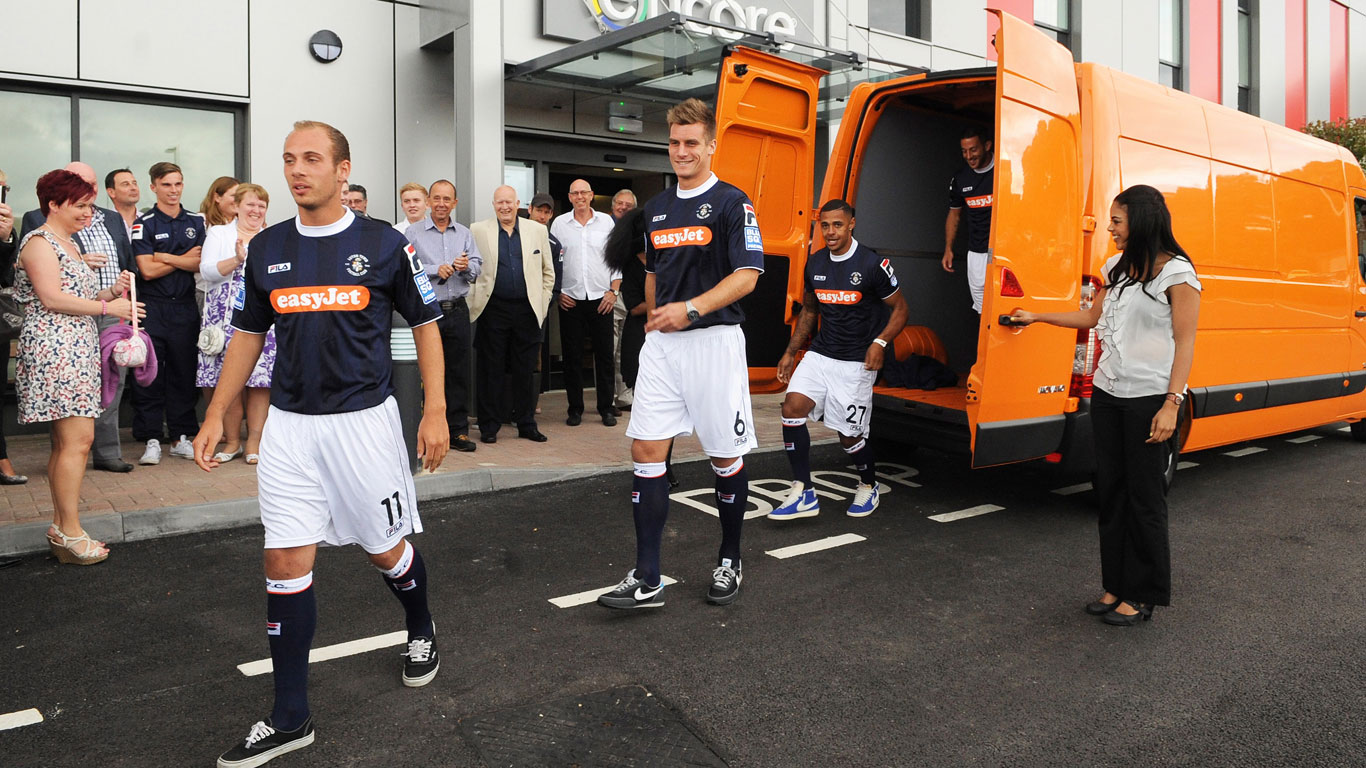
Vauxhall Movano and Luton Town FC
Never a firm to miss an opportunity to do something football related, Vauxhall provided a Movano van to local club, Luton Town.
It acted as a temporary changing room as The Hatters’ players strode out of the back of the van resplendent in their new away strip. You stay classy, Luton.
Nissan Leaf and Forest Green Rovers
Non-league Forest Green Rovers is owned by Dale Vince, owner and founder of a green energy company.
So it was no surprise when the club took delivery of 11 all-electric Nissan Leafs. In 2015, the club added a Mitsubishi Outlander PHEV to the fleet.
Skoda and the Football League
How old does this photo look? But then it would do, as it was taken back in September 2003 when Skoda became the official car company of the Football League.
Today, much like Crystal Palace featured in the photo, Skoda is positioned well within the premier league of its respective field.
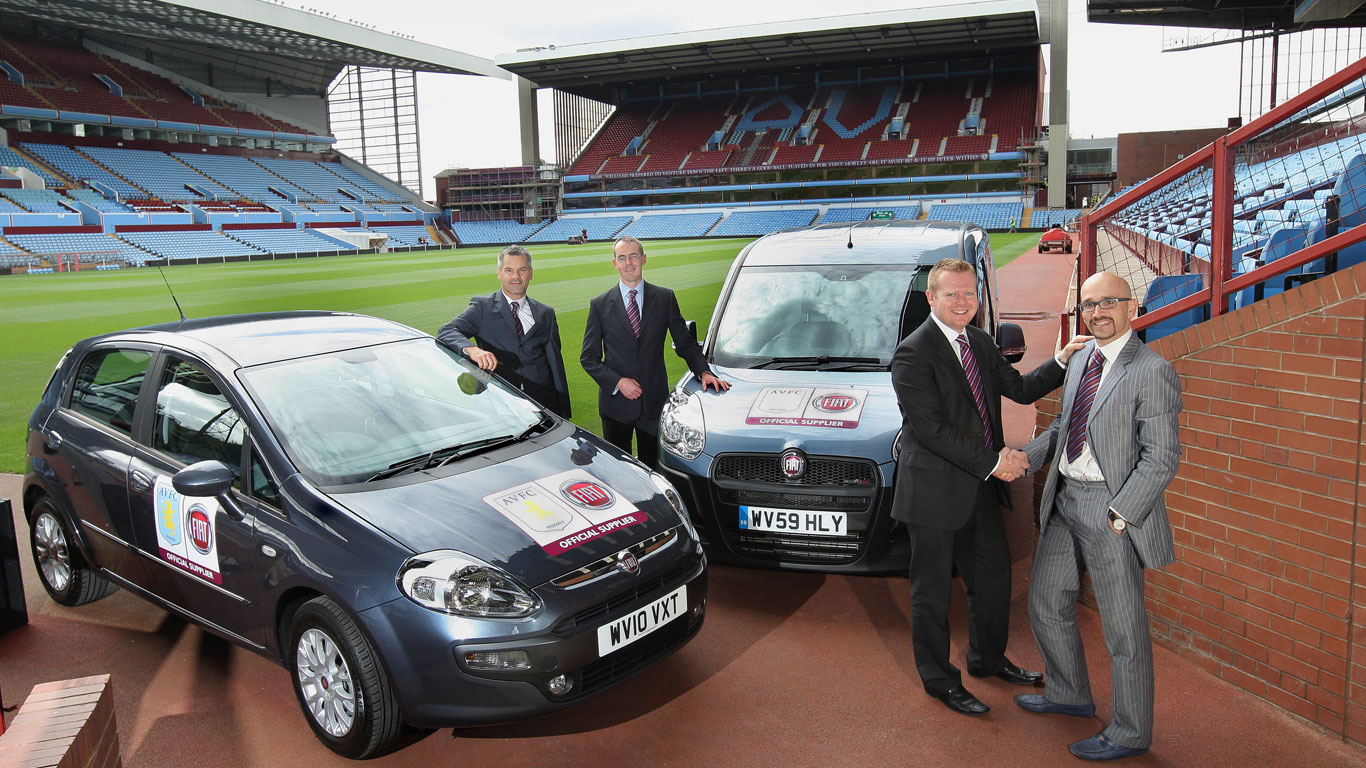
Fiat and Aston Villa
Back in 2010, Fiat signed a fleet deal with Aston Villa, promising that it was to be an ‘Aston Thriller’. Yes, they really went there.
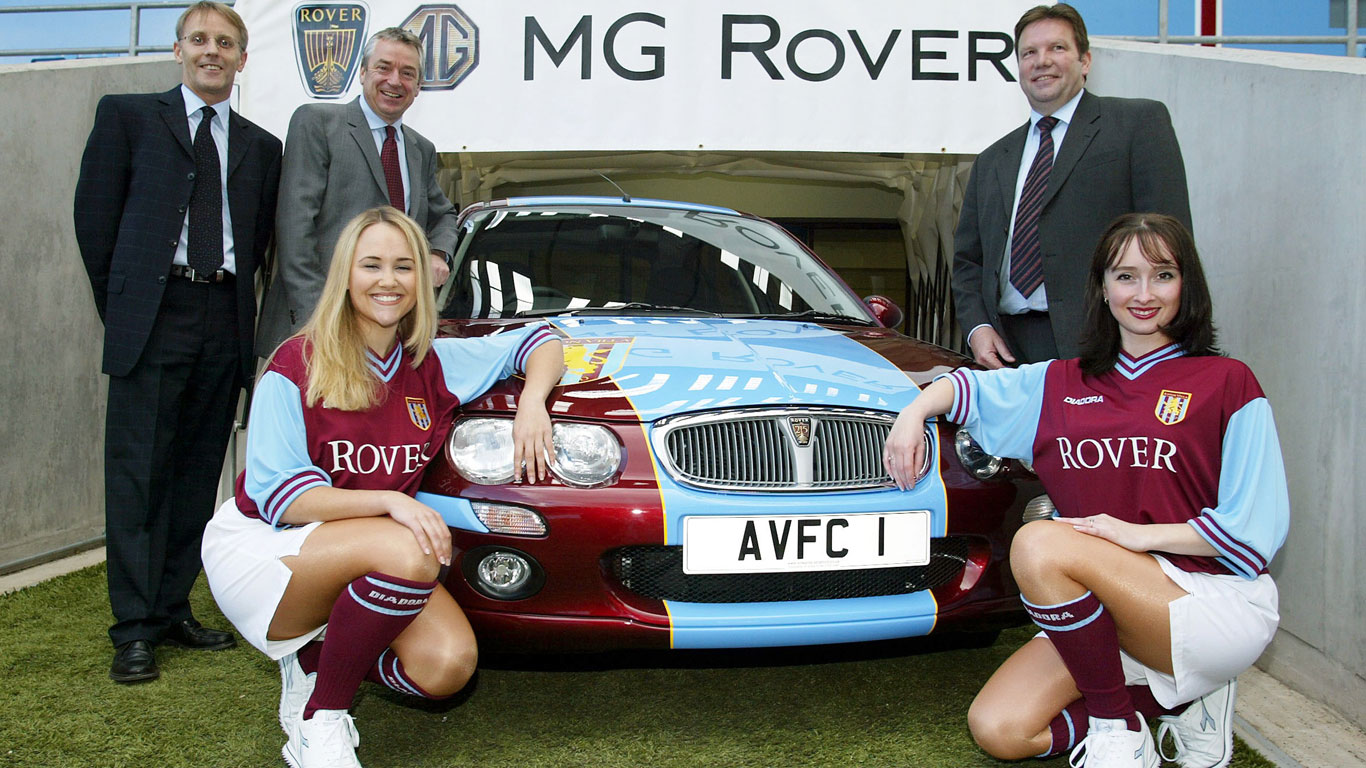
MG Rover and Aston Villa
Eight years earlier, Aston Villa and MG Rover marked the signing of a two-year sponsorship deal with a special one-off ‘Aston Villa Rover 25’.
We have no idea what happened to the car, but there’s no truth in the rumour that some lads in blue football shirts were seen pushing it into a nearby canal.
Chevrolet and Manchester United
Chevrolet’s sponsorship of Manchester United is well publicised. In 2012, the firm signed a seven-year deal worth £25 million per season.
At the 2012 Paris Motor Show, Chevrolet proudly displayed this Manchester United liveried Trax. Not the ideal car, we suspect, to drive to Liverpool on a Saturday night.
Citroen and Arsenal
Citroen has been associated with Arsenal since 2008, with the company seemingly hell-bent on punishing the players with a series of embarrassing stunts and activities. Here we find Per Mertesacker, Laurent Koscielny and Aaron Ramsey perfecting their clothing catalogue poses.
Skoda and Leicester City
In 2016, research carried out by Skoda revealed that a national trend for adopting the colours of a local football team were being felt most in Leicester. As the Foxes marched to the Premier League title, the sales of blue cars soared by 340% year-on-year.
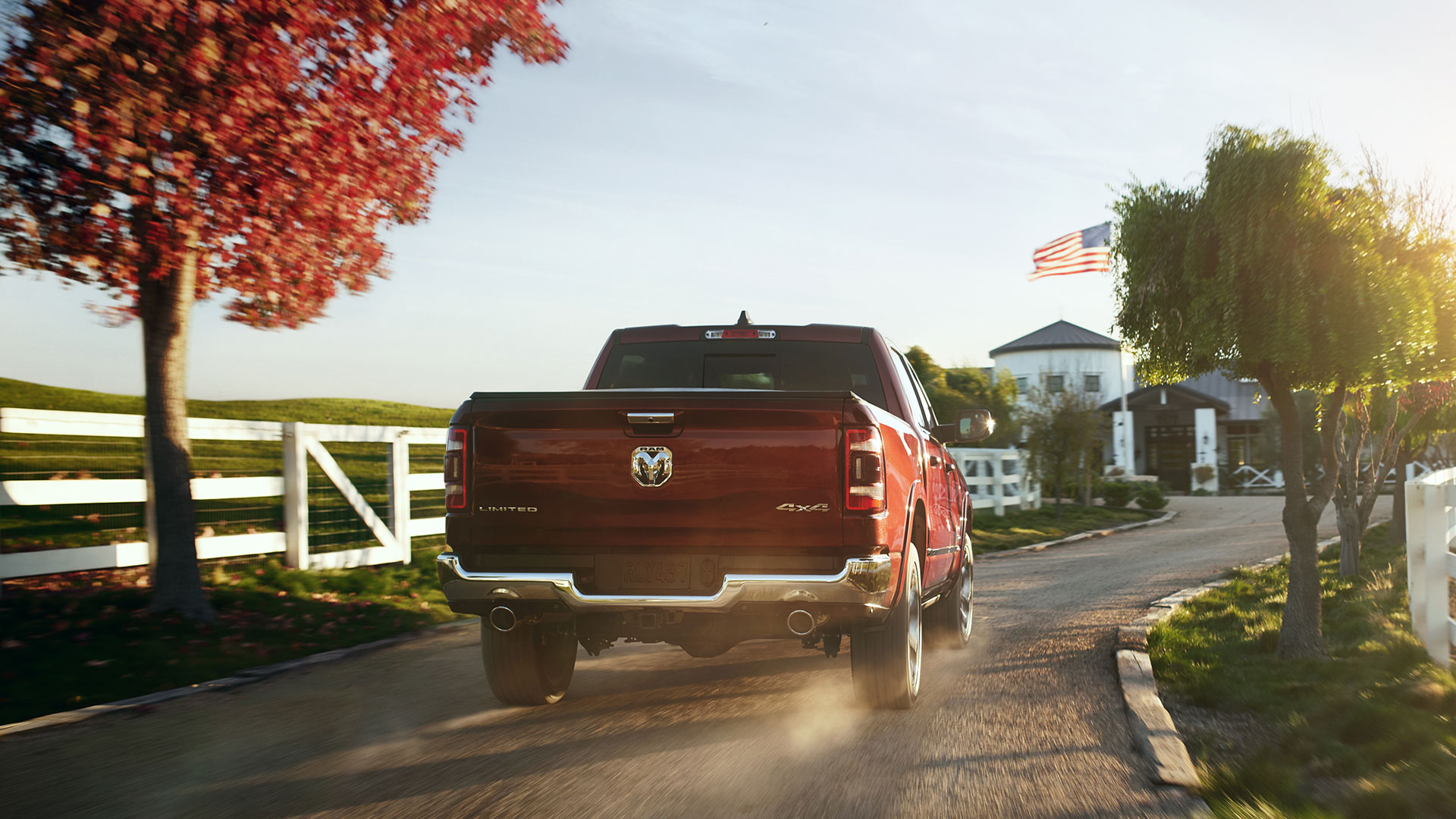
Dodge and Ram could be a set for a shock return to the UK, according to Automotive Management (AM).
The American brands have been absent from these shores since 2010, after the cars failed to strike a chord with UK buyers. The Journey, Avenger, Caliber and Nitro aren’t names remembered with a great deal of fondness.
But AGT Europe, the official FCA Group importer for Dodge and Ram in Europe, is hoping to convince UK dealers to consider re-establishing the brands in the UK.
Currently, all UK sales are handled by David Boatwright in Essex, but AGT Europe is keen to expand its operations.
‘Enthusiastic about American cars’
Giovanni De Luca, the network development manager at AGT Europe, told AM: “We are looking for dealerships that are enthusiastic about American cars and have working sales and aftersales structures, as well as being well known in their local area. It can be multi-brand dealers.
“Jeep dealers have some advantages on working with the Dodge and Ram models as the tools and hardware are the same or very similar.”
Jeep sold 170,000 vehicles in Europe last year – an increase of 50 percent on the year before. This makes it bigger than Land Rover in the region.
The company offers five models in the UK, ranging from the £20,000 Jeep Renegade to the £90,000 Jeep Grand Cherokee Trackhawk.
On the face of it, the Dodge and Ram brands would appear to be a good fit for Jeep dealers and its customers, but there’s no word on which models would make it to the UK.
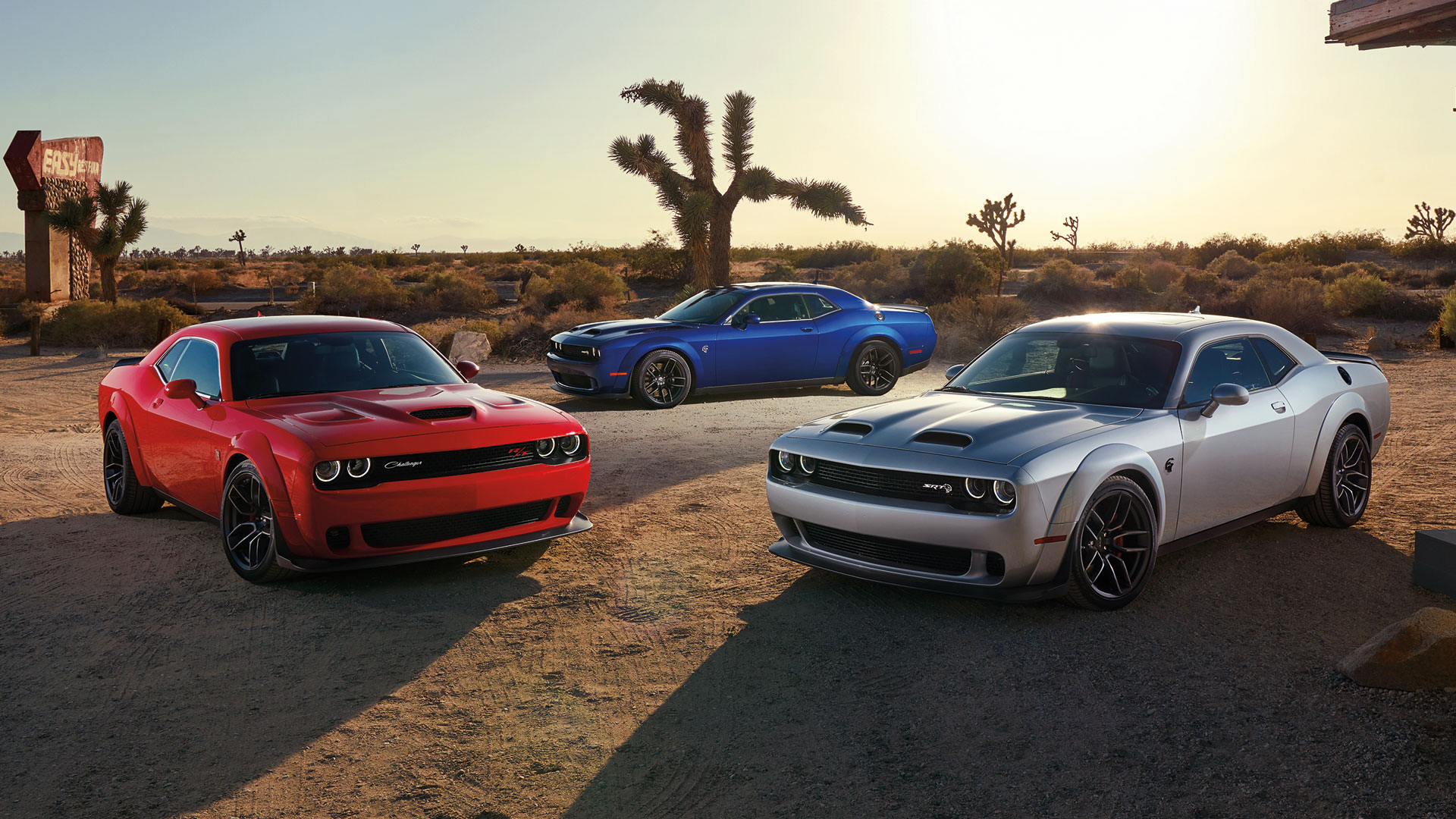
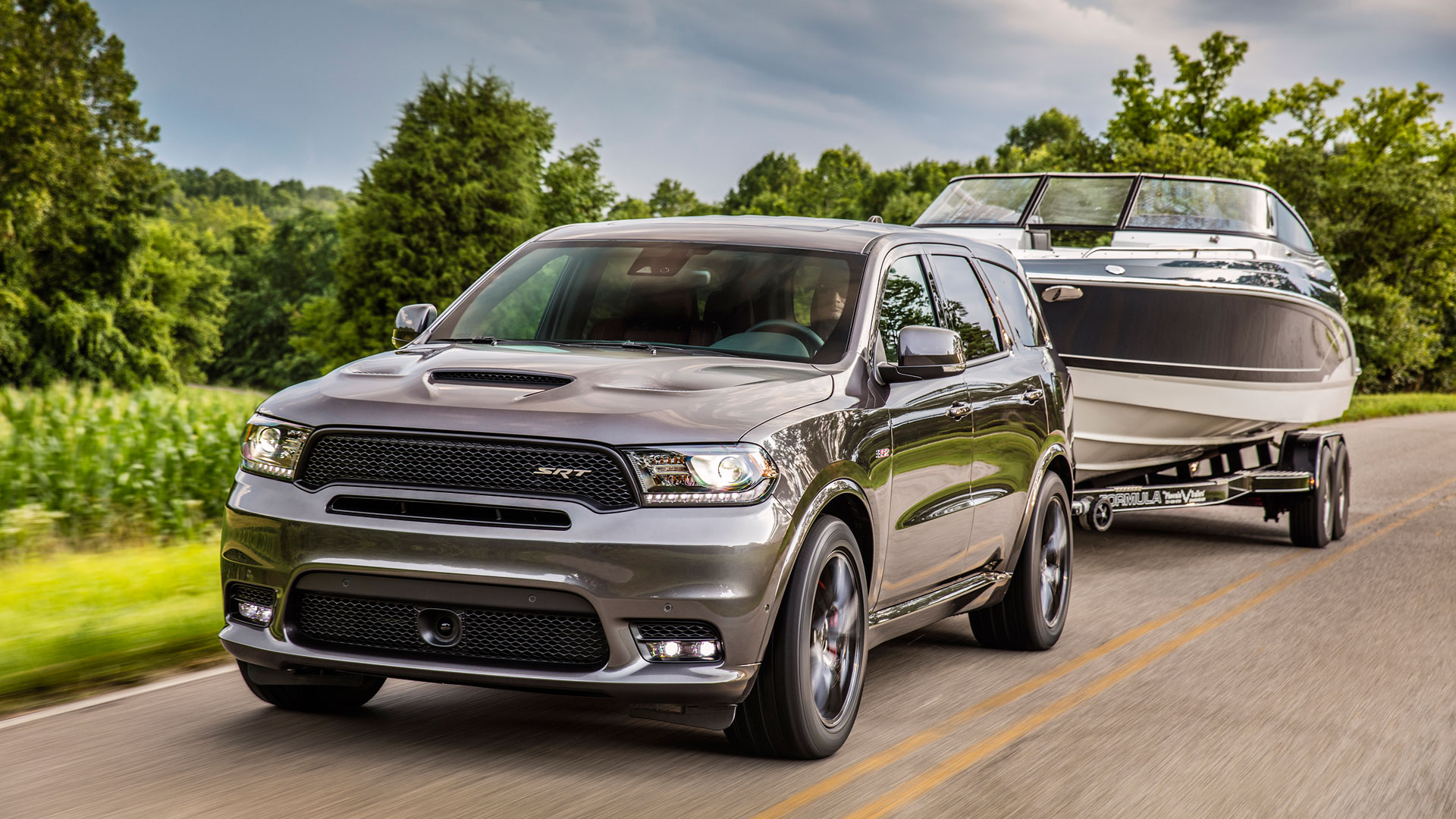
AGT Europe, which is headquartered in Switzerland, has sold around 20,000 vehicles since 2001. Dodge models include the Challenger, Charger and Durango, while the Ram range comprises a selection of 5.7-litre V8 pick-ups.
For a hint of what might be to come, check out the David Boatright website. At the time of writing, UK customers can buy anything from a £24,000 Dodge Challenger RT ‘with upgrades’ to an £85,000 Dodge Hellcat Widebody.
You can also buy a 2017 Dodge Durango all-wheel-drive Citadel six-seater for £34,000. Still want that front-wheel-drive crossover?
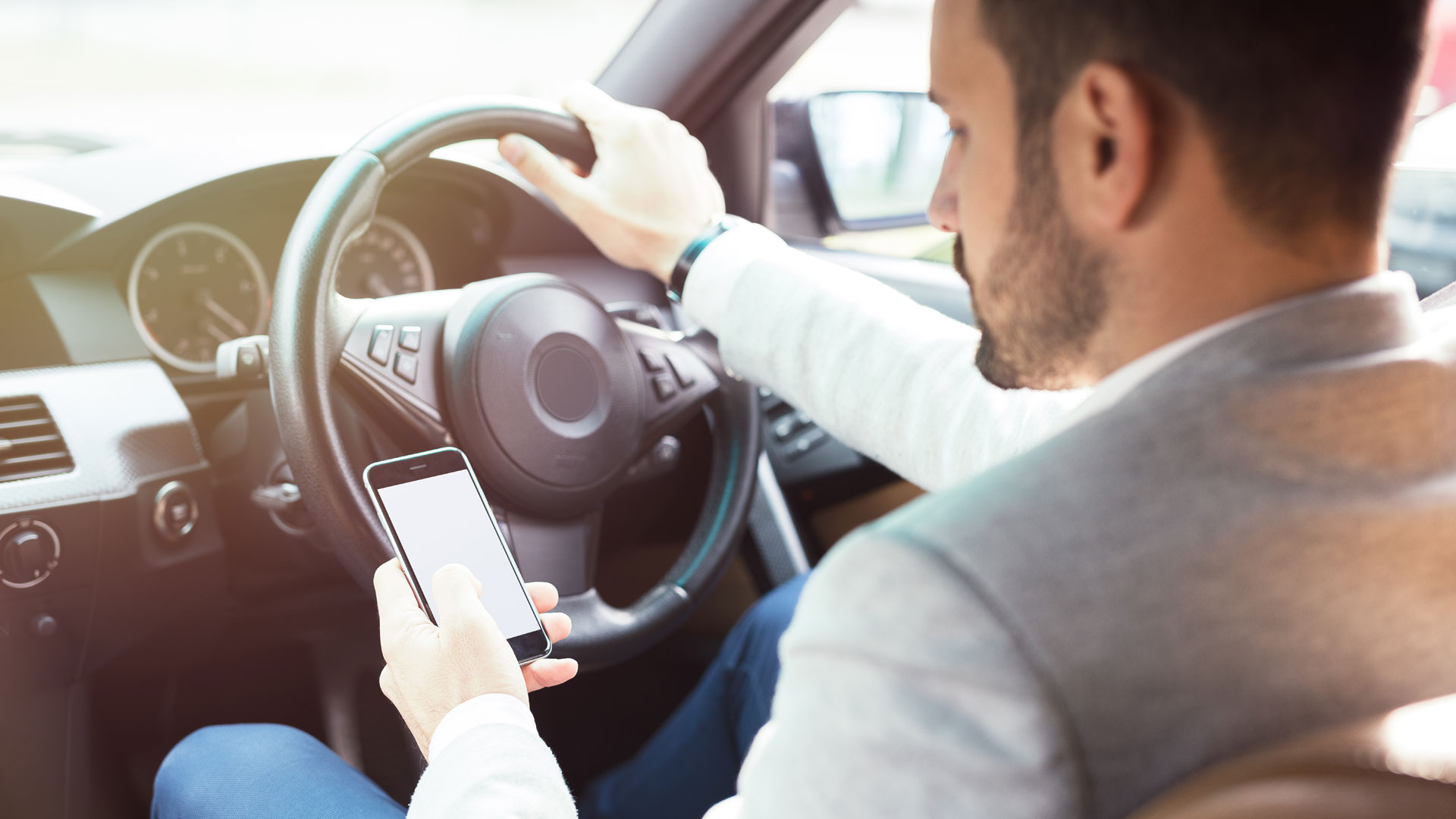
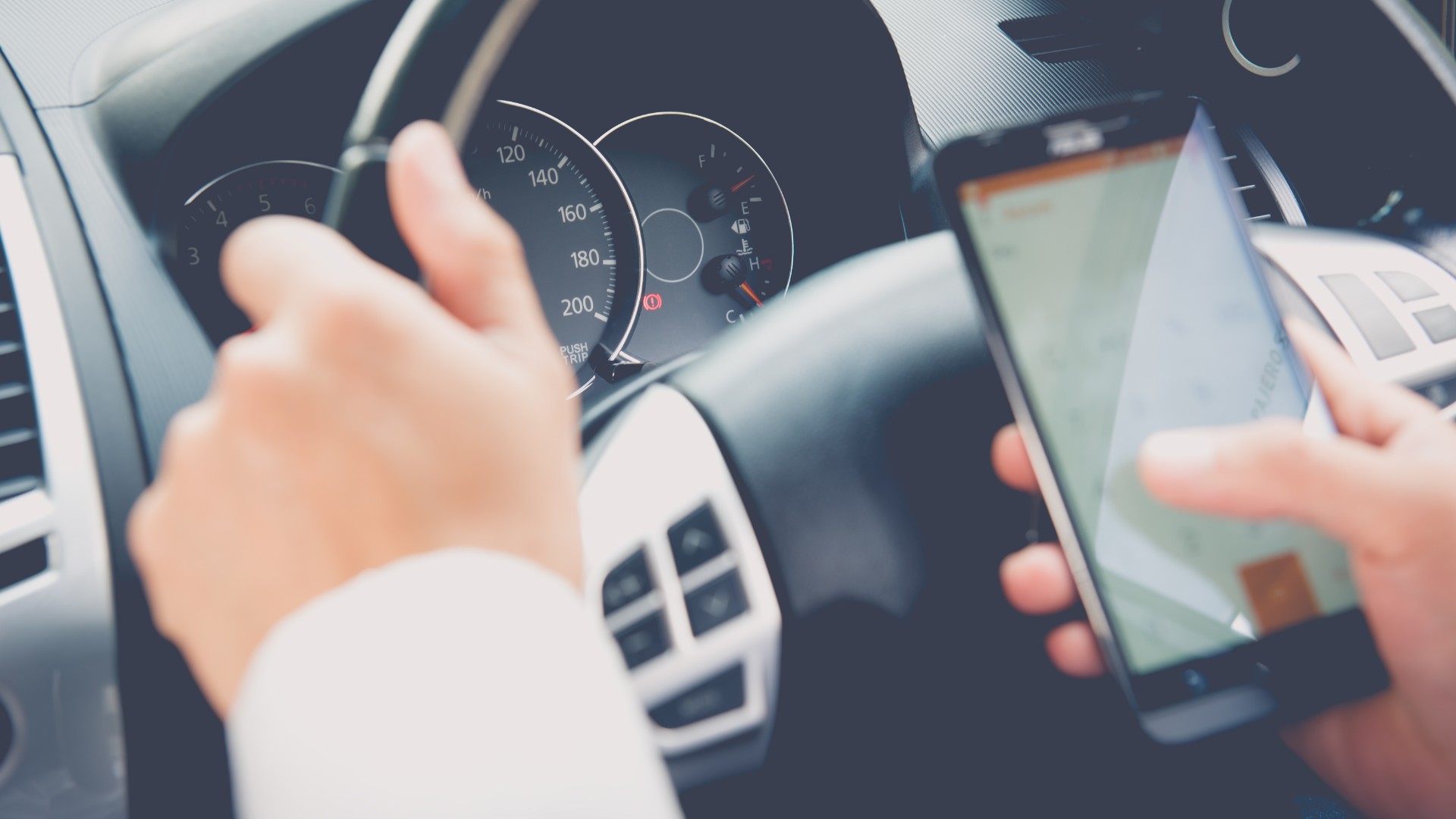
A leading road safety and breakdown organisation is calling on the government to update the wording of the law regarding the use of a mobile phone while driving.
The current law states that a mobile phone or device is ‘to be treated as hand-held if it is, or must be, held at some point during the course of making or receiving a call or performing any other interactive communication function’.
But GEM Motoring Assist argues that mobile phone use has evolved beyond the legislation introduced in 2003.
The organisation is urging the government to make the change after a driver successfully appealed a charge for the offence, claiming he “wasn’t using it to communicate”.
The High Court overturned the conviction of Ramsey Baretto, who had been caught filming the scene of a collision as he drove by.
Lady Justice Thirlwall stated: “The legislation does not prohibit all use of a mobile phone held while driving. It prohibits driving while using a mobile phone or other device for calls and other interactive communication (and holding it at some stage during the process)… It follows that the activity of the respondent did not come within Regulation 110 and the Crown Court was right to quash the conviction.”
‘An absurd situation’
Neil Worth, road safety officer at GEM, is angered by the successful appeal and is pressing the government for immediate action. “The government’s failure to bring legislation up to date is putting lives at risk.
“We now have an absurd situation where the wording of the law is insufficient and cumbersome, only stating ‘interactive communication’ as an illegal use of a mobile phone when driving, when we know it is clearly unsafe to use your mobile phone for any purpose when driving.
“Although penalties have increased, the specific wording of the law governing mobile phones and driving has not changed for 16 years. We are writing to the government urging them to update the legislation at the earliest opportunity. This will ensure it is fit for purpose, and will avoid further compromise to road safety.”
Using a mobile phone when driving: the law
It is illegal to hold a phone or sat-nav while driving or riding a motorcycle. Drivers must have hands-free access, such as a Bluetooth handset, voice control, a dashboard holder, a windscreen mount or a built-in sat-nav.
You can receive six penalty points and a £200 fine if you’re caught using a hand-held mobile phone when driving. You’ll also lose your licence if you passed your test in the last two years.
You can also be taken to court, where you might be banned from driving or receive a maximum fine of £1,000.
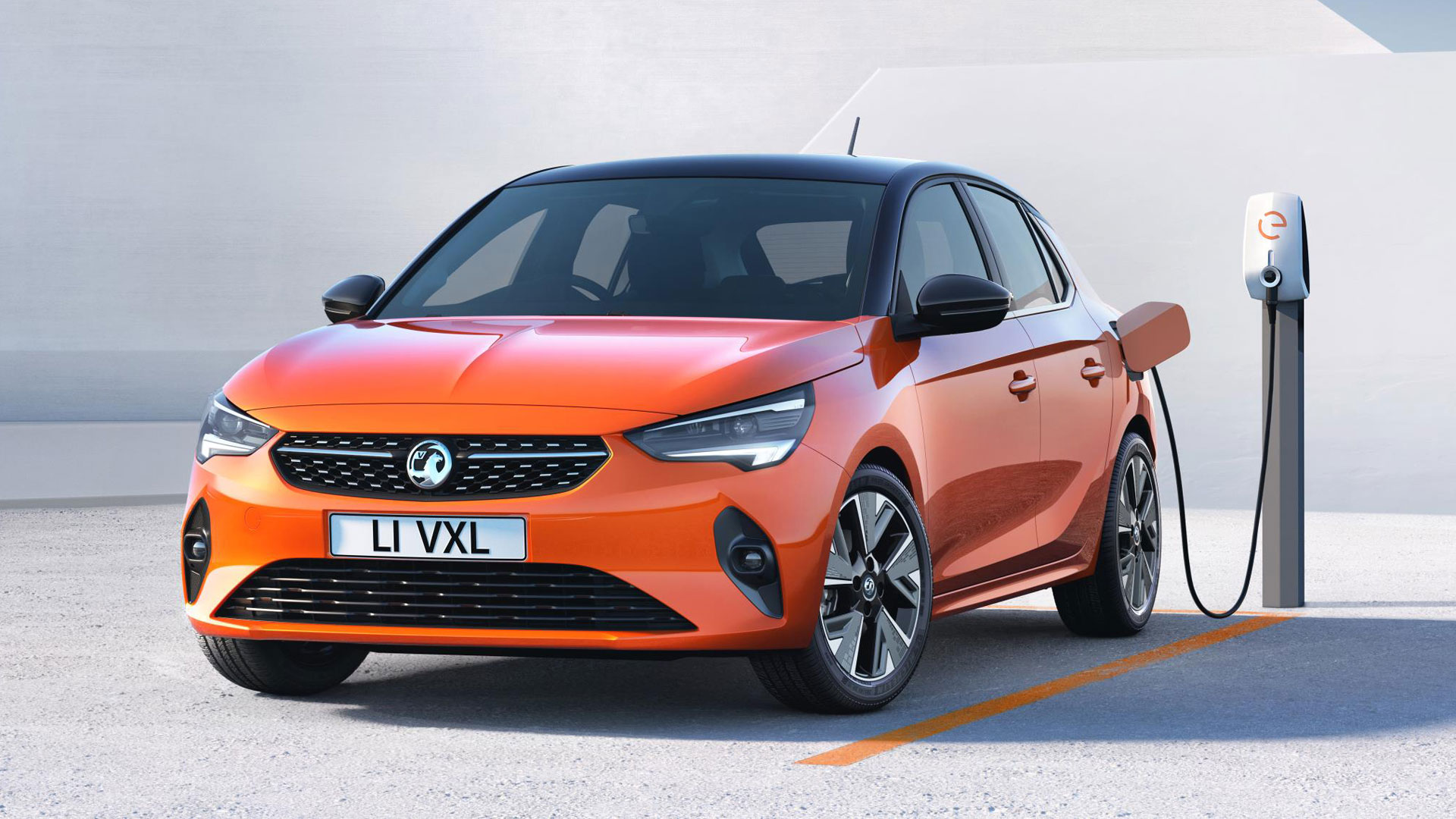
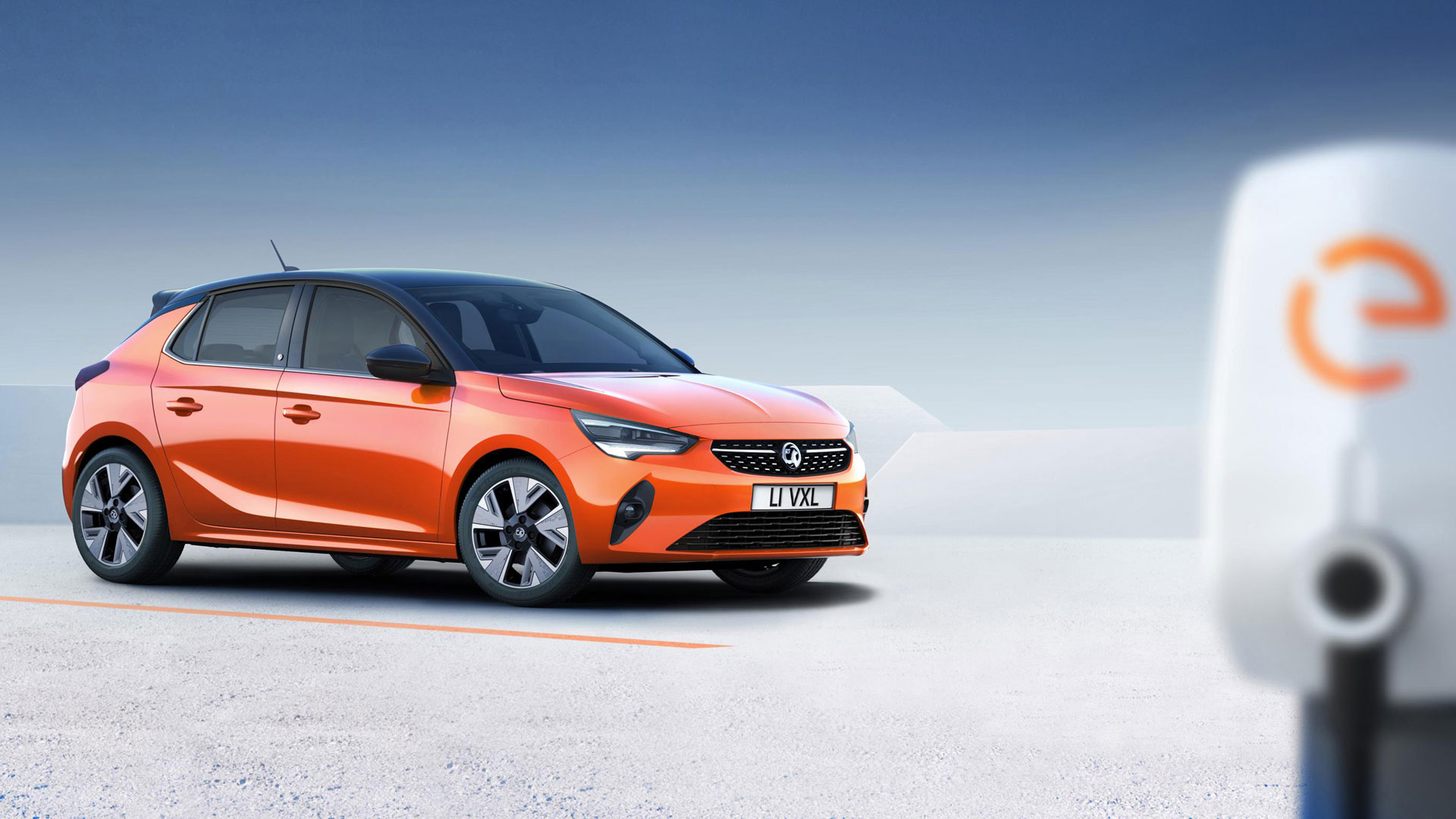
The all-electric Vauxhall Corsa-e is available for a competitive £270 a month when you sign-up for a four-year PCP deal.
Furthermore, if you’re one of the first 500 customers to place an order, you’ll receive a free electric home charging kit worth more than £800.
The cost-effective PCP deal is based on a relatively hefty deposit of £5,549.40, but you’ll enjoy four years of zero-emissions motoring and a 205-mile electric range. The one catch: you’re unlikely to take delivery before April 2020.
All that’s required is a £500 reservation fee, although this is fully refundable on purchase.
The electric Corsa-e comes with an 11kW on-board charger, with 62 miles available from a 2.5-hour charge via a standard household socket. Use a 7kW wallbox and a full charge is available in 7.5 hours.
Use a public fast charger, and 80 percent capacity is available in just 30 minutes.
There are two electric Corsa-e models available: the entry-level SE Nav for £26,490 and the Elite Nav for £29,810. These prices are AFTER the £3,500 government plug-in car grant.
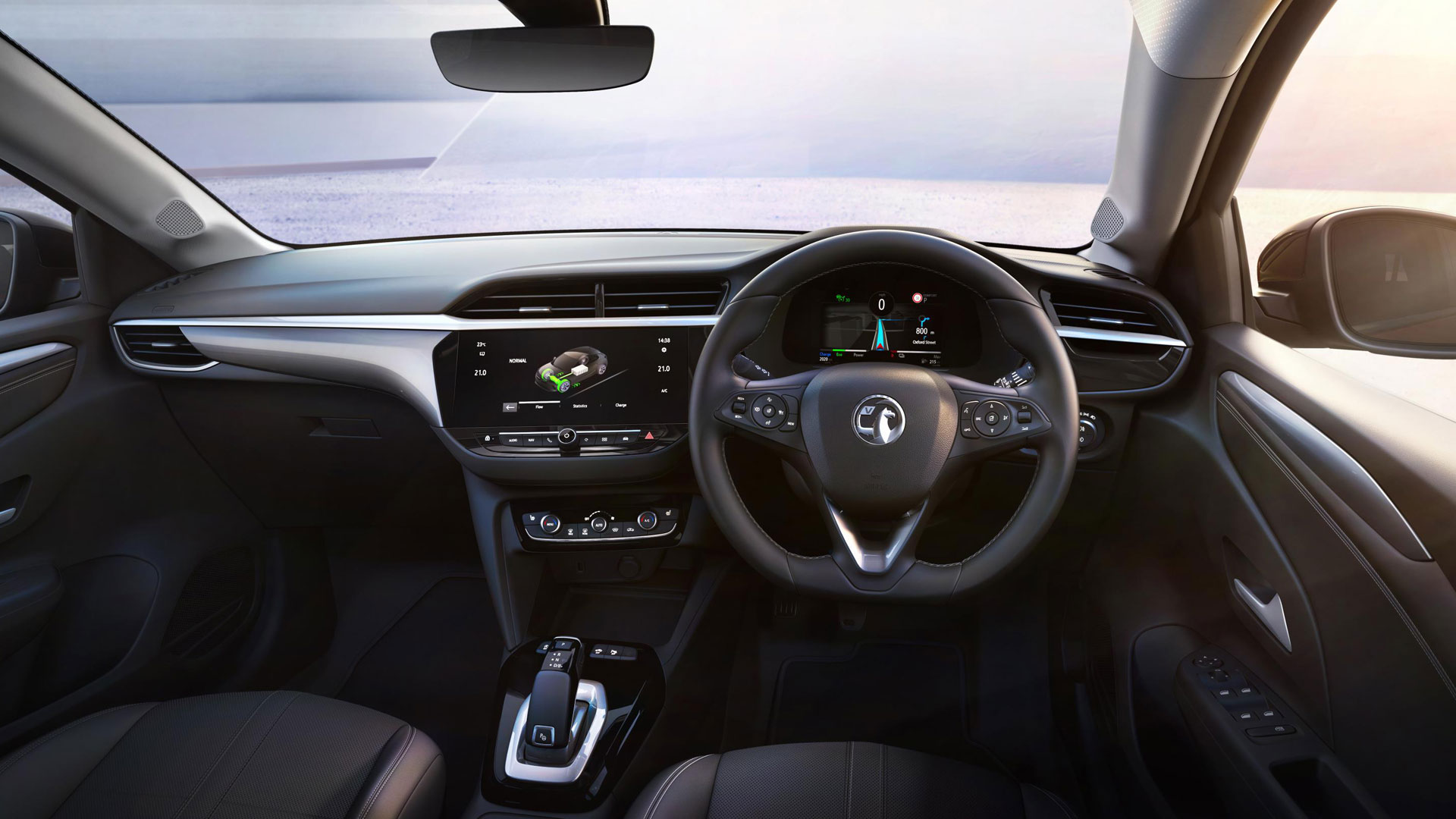
SE Nav offers a generous level of equipment, but Elite Nav adds a rear-view camera, 10-inch colour touchscreen, eight-inch colour instrument cluster, lane departure warning, winter pack, keyless entry and start, and 17-inch alloy wheels.
The optional Orange Fizz paintwork (pictured) costs £650.
Corsa-e or e-208?
The all-electric Vauxhall Corsa-e will receive its world premiere at the Frankfurt Motor Show in September, ahead of series production starting in January next year.
Alternatively, you could opt for the platform-sharing Peugeot e-208. The French supermini undercuts the Vauxhall by around £1,500, with prices starting from £25,050 after the plug-in car grant.
First deliveries will take place in early 2020, but you’ll have to wait until 22 August to place your order. The Vauxhall Corsa-e is available to order now, but you’ll need to be quick if you want a free home charging kit.
 Monterey Car Week brings together auto
  When: Thursday August 15 through Saturday August 17
 With 600 collector cars up for grabs, the Mecum Monterey sale is one of the largest by volume at Car Week. From incredible hot rods, to
  When: Thursday August 15 through Saturday August 17
 Although the
  When: Thursday August 15 through Friday August 16
 Held as part of the prestigious Quail motorsport gathering, the 22nd annual
  When: Thursday August 15 through Saturday August 17
 Located right in the heart of downtown Monterey, the Russo and Steele 2019 auction includes an eclectic variety of modern and classic cars.
  When: Thursday August 15, public preview available from Monday August 12
 The catalogue for the Pacific Grove Auction may be fewer than 45 cars, but each one is likely to hold appeal to discerning collectors.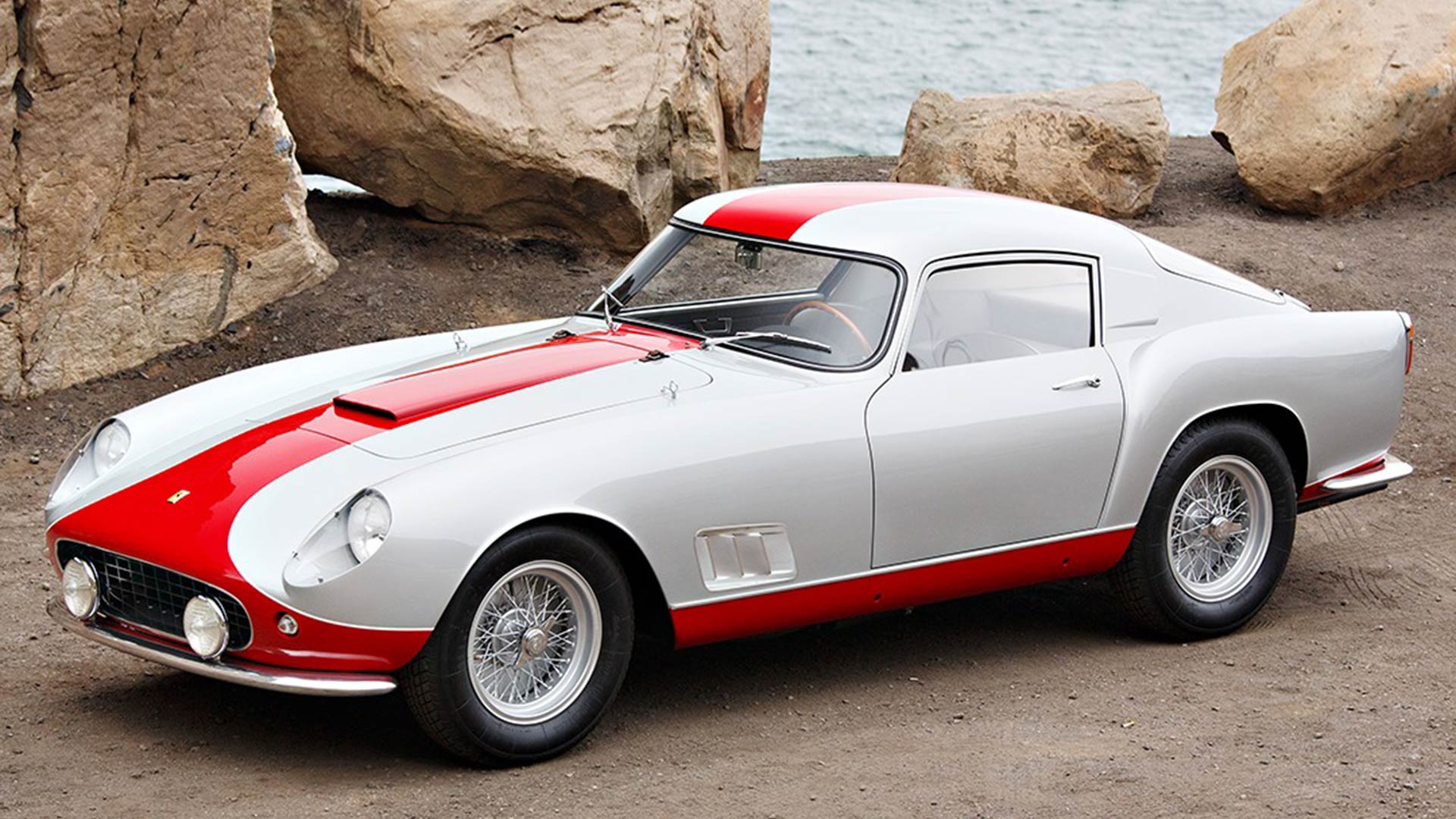
 This is not just any Monterey auction, but the official sale of the Pebble Beach Concours d’Elegance event. As a result the cars on the auction list are suitably beautiful, and ready to complete the perfect car collection.
 As part of the Premium listings on Bring a Trailer, a car featured previously at the Rolex Monterey Motorsports Reunion is currently up for auction.

 A qualifying session with challenging and changeable weather conditions saw Chadwick secure pole position for the final race.
  Finishing in the top 12 for the overall championship is significant, as those drivers receive an automatic invitation to return for the 2020 W Series competition.