The average price of a used car increased four percent in 2020, significantly up on modest growth of 0.5 percent in 2019.
The figures from Auto Trader show how growing consumer demand caused by the coronavirus crisis has strengthened the used car sector.
Indeed, prices increased for nine months in a row following the first lockdown, and went up by more than eight percent in December 2020 alone.
Auto Trader says it is driven by motorists looking to avoid public transport and remain Covid-secure.
The strong December performance comes despite tighter restrictions, and Auto Trader says there’s early evidence January demand will remain robust, despite the imposition of a third lockdown.
“We have every reason for optimism that prices will remain strong in Q1,” said Auto Trader data director Richard Walker.
Demand for EVs ‘exceptionally strong’
The marketplace says demand for used petrol and diesel cars is consistent, but there are currently “exceptionally strong levels of demand” for electric vehicles.
Demand for premium EVs has risen more than 80 percent – but supply has more than outpaced this, with upmarket electric car availability increasing a staggering 224 percent.
This means average prices actually decreased slightly, but they still remain heady, at over £46,000.
Demand for volume electric vehicles grew 58.7 percent, but there was a much smaller improvement in supply – which means prices actually grew 16.2 percent to over £19,000.
This means electric cars, even used ones, remain unaffordable for many motorists, further delaying their mainstream rollout.
ALSO READ:
David Beckham’s Range Rover Sport could be yours for £10k
Seventy-five years ago, the Volkswagen factory in Wolfsburg started series production of the Limousine (Type 1). That car would become the Beetle, and its influence would seep into millions of lives around the world – including mine.
Many of my fondest memories are tied up in Volkswagens. A never-ending journey to the south of France in the back of my parents’ Passat. An impromptu picnic in an auntie’s Polo ‘Breadvan’. And my first hot hatch: a Mk1 Golf GTI. I polished its Mars Red paintwork until it turned pink.
There are other, less pleasant, recollections too. Like the time I spun the Golf on a wet corner, ending up backwards in a field of bemused sheep. Or being rear-ended at the traffic lights in a different GTI, which wrote the car off and ruined my Christmas Eve.
Like for millions of others, then, the ‘people’s car’ feels personal. So when I was offered the chance to drive some of Volkswagen’s heritage fleet, I jumped at the chance. Time to make some new memories.
The four cars gathered here could scarcely be more different. Yet all are important steps in the story of the core VW brand.
At the two extremes are the Beetle and XL1. The former shifted 21 million units over 65 years, making it the best-selling car of all time until the late 1990s (when it was overtaken by the Toyota Corolla). The latter was a test-bed for future technology – limited to just 250 cars, with 30 allocated for the UK.
The pair in the middle have far more in common. The original Golf GTI, contrary to popular perception, wasn’t the first hot hatchback, but did define the breed. And the Scirocco was one of Volkswagen’s rare attempts at a sports car, paving the way for the Corrado and other coupes to come.
Volkswagen XL1
Back in 2011, Volkswagen predicted a future powered (in part, at least) by diesel. How times have changed. The XL1 is an early plug-in hybrid, its mid-mounted 48hp diesel engine supported by a 27hp electric motor.
Its target was a ‘one-litre car’ – i.e. one litre of fuel per 100km, or 282mpg. The XL1 smashed that, returning 0.9l/100km (313mpg) in official tests. One secret of its success was advanced aerodynamics, including cameras instead of door mirrors and covered rear wheels, resulting in a drag coefficient of Cd 0.189.
First drive of the day is the remarkable Volkswagen XL1: 795kg, Cd 0.189 and 313mpg.
It looks like a supercar, but it’s actually the exact opposite: totally focused on reducing weight and hitting a ‘one litre per 100km’ fuel economy target. pic.twitter.com/fGHpJHiLDr
The other was lightness: a carbon fibre reinforced plastic (CFRP) structure, ceramic brake discs, aluminium suspension arms and manual window winders all keep weight to a minimum – just 795kg unladen.
Unfortunately, any savings in running costs were wiped out by the purchase price. The XL1 cost around £100,000 when new, although its rarity means used examples have barely depreciated today.
The XL1 looks otherworldly in the metal (sorry, plastic), like a prop from a sci-fi film. Lined up alongside our three classics, it seems perfectly proportioned, but it’s tiny compared with any modern car.
Open a butterfly-wing door, slide over the wide sill and the cabin feels surprisingly conventional (spot the Mk6 Golf switchgear). It’s decently spacious, too, with staggered seats – the passenger chair is fixed – that allow for a narrower body and slipperier shape.
In many ways, the XL1 drives like any other hybrid car. There are no gears to worry about and it switches automatically between electric and/or internal combustion power as needed. But the tiny, two-cylinder 800cc diesel sounds like nothing else, hammering away like a sewing machine as you hyper-mile to 62mph in 12.7sec and 99mph flat-out.
Despite the mini-McLaren looks, it’s no sports car either. Super-skinny 115/80 R15 (front) and 145/55 R16 (rear) tyres see to that. Still, it turns as many heads as anything from Weissach or Maranello.
Volkswagen Golf GTI
The Golf GTI first appeared at the Frankfurt Motor Show in 1975 and a run of 5,000 cars was planned – enough to satisfy Group 1 racing homologation rules. When sales started in 1976, however, production rocketed from 50 to 500 cars a day. Such was the demand for this nascent icon.
Early cars used the fuel-injected 110hp 1.6-litre engine from the Audi 80 GTE: good for 0-62mph in 9.2sec and 113mph. A new 112hp 1.8 engine arrived in 1982, bringing more torque and improved fuel economy. The original GTI remained on sale until 1983, although the cabriolet version lasted a decade longer.
Many of the Mk1’s trademark features – such as the red go-faster stripe, ‘Jacara’ tartan seat trim and golf ball gearknob – endure on Volkswagen GTIs to this day. More than simply a car, this was the genesis of an entire subculture.
I’ve owned and adored three Mk1 GTIs, so if you’re hoping for a rational, level-headed review, you’ve come to the wrong place. There’s just something about these cars that gets under my skin.
This particular Mk1 is a highly-sought-after Campaign model. The run-out special edition, it came with 14-inch Pirelli alloy wheels, a four-headlamp grille, green-tinted glass, a sliding sunroof and Volkswagen’s new-fangled MFA trip computer.
I’m perhaps in the minority for preferring the zingier 1.6 engine, but the more flexible 1.8 is still a peach. Tappety at low revs, then gruff and buzzy at the top end, it’s lively and bursting with character. The unassisted steering and long-throw gearshift are wonderfully tactile, too.
Ultimately, the Mk1 doesn’t possess the balletic balance of, say, a Peugeot 205 GTI. Push hard and it defaults to tyre-scrubbing understeer, accompanied by generous helpings of body-roll. However, while most French hatches have rusted in pieces, this Golf still feels as solid as the day it left Wolfsburg. I’m in love all over again.
Volkswagen Scirocco Storm
Until the 1974 Scirocco, Volkswagen had shied away from sporty cars. The Beetle-based Karmann Ghia coupe of 1962 was more about style than speed, while the VW-Porsche 914 of 1969 was a joint venture that usually wore Porsche badges.
Not that every Scirocco was sporty; the entry-level model had a 1.3-litre engine producing just 60hp. Fortunately, further up the range, things got more interesting – culminating in the GLI (later GTI) with the same engines as the hottest Golf.
Next up: Mk1 Volkswagen Scirocco Storm.
One of Giugiaro’s very finest designs – from the days when a flagship coupé wore 13-inch alloys… pic.twitter.com/6Jg2XxZVpy
Part of the Scirocco’s appeal was its wedgy, crisp-edged styling – the work of Giorgetto Giugiaro, who also designed the Mk1 Golf. The build process was farmed out to Karmann in Osnabruck.
As with the Campaign above, Volkswagen has sourced a high-spec special edition for its heritage fleet. The Scirocco Storm had a front spoiler with integrated airdams and plush leather trim. This 1981 example has the 1.6 ‘GTI’ engine, meaning 0-62mph in 8.8sec and a 115mph Vmax.
There are obvious similarities between Scirocco and Golf, and notable differences. Its driving position is lower and more laid-back, while the three-spoke steering wheel still has the Wolfsburg wolf at its centre – a symbol that disappeared sometime in the early 1980s. The dashboard, with its deep-set dials and Blaupunkt tape player, feels more old-fashioned, too.
On the road, the Storm feels eager and surprisingly quick, aided by very short gear ratios. At 70mph in fifth gear, the rev counter has already passed 4,000rpm. Not ideal for motorway miles.
The VW feels most at home on B-roads, where its sharp steering and sure-footed chassis come to the fore. For sentimental reasons, I’d still pick the Golf, but the ‘Rocco is a more accomplished driver’s car.
Volkswagen Beetle
And so finally to the Beetle. Talk about a car of contrasts. Launched in 1938 as the Kraft-durch-Freude wagen (Strength-through-Joy car), its remit was to mobilise the masses in Nazi Germany. We all know how that ended, but the Beetle transcended its unpalatable origins – eventually becoming The Love Bug in Disney’s 1968 film and a totem for the flower power generation.
A oddball saloon with an air-cooled engine out back, the Beetle was the antithesis of America’s post-war ‘land yachts’ and muscle cars. It also looked decidedly old-school by the time the front-engined, front-wheel-drive Mini debuted in 1959. The car’s key strength was reliability, something Volkswagen played on in famous poster ads labelling it a ‘Lemon’.
The Beetle was effectively replaced in 1974 by the Golf – a far more more practical car with a hatchback and water-cooled engine. However, it remained in production in Europe until 1978, and lived on in Mexico until 2003.
It’s amazing to think this 1977 Beetle 1200L – one of the final cars built in Emden, Germany – was sold in showrooms alongside the Golf GTI. The two are on different planets in terms of performance and dynamic prowess.
Indeed, with 34hp and a 0-62mph time of 35 seconds, this may be the slowest car I’ve ever driven. Acceleration above 50mph is glacial. Not that there’s much incentive to go quickly: vague steering, below-par brakes and rudimentary damping see to that. The Beetle had cross-ply tyres when new, but even the radials fitted here don’t help much.
As you’ve no doubt guessed, I won’t be growing my hair, moving to San Fran and buying a Beetle. Nonetheless, driving one feels like a rite of passage for a motoring journalist and I’m grateful for the experience. This remains one of the most important cars ever made.
My personal Volkswagen story continues with a Mk5 Golf GTI. It’s been my daily-driver for the past four years and is very much part of the family. Hopefully my two children will remember it in years to come.
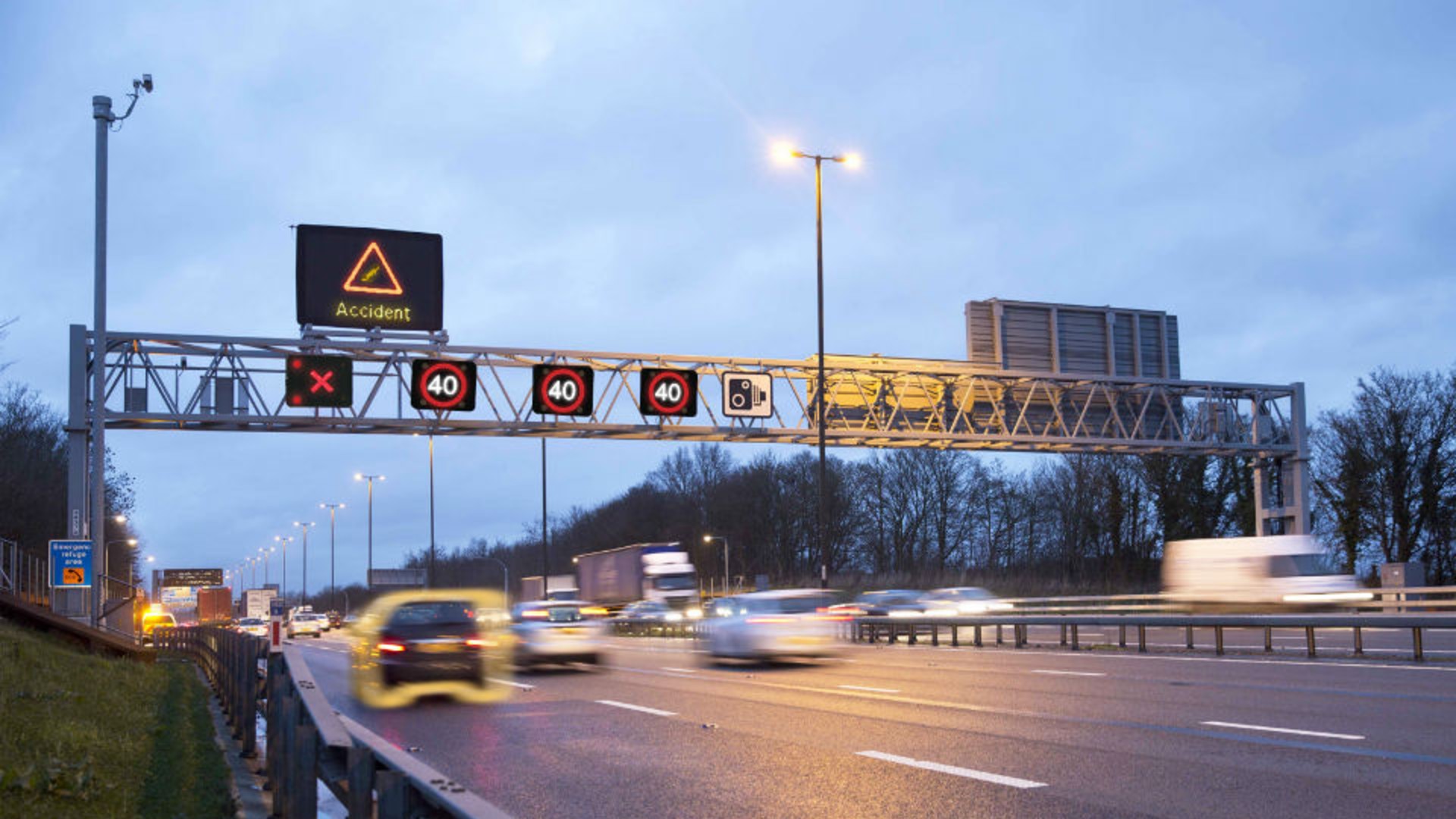
The overhead gantries on smart motorways display a red ‘X’ if the lane beneath is closed. Ignoring this sign could cost you £100, with police using camera evidence to issue fines.
In the past, fines were only levied to drivers using closed lanes if they were pulled over by a police officer at the time of the offence.
Highways England issued more than 180,000 warning letters to drivers who actively ignored lane closures before the fines were introduced.
The RAC welcomed the move, saying “It is right that offenders are punished with a substantial fine. The sooner the message gets through to motorists, the safer it will become for every motorway user”.
“Driving on a smart motorway lane that has been closed by a red ‘X’ sign is extremely dangerous. It is incredibly frustrating for law-abiding drivers to see others flouting red ‘X’ signs, and those ignoring them are a danger to themselves and others.”
One in 20 remain in closed lanes
Many motorways across the UK have been made ‘smart’ with the installation of gantries and the opening of the hard shoulder as a working lane. The gantries can be used to slow traffic down or close lanes, in order to keep stopped vehicles safe.
AA research indicates that one in 20 drivers remain in red ‘X’ lanes even after seeing that they are closed. The organisation has commended the use of cameras to improve safety.
“A red ‘X’ isput up to warn of an obstruction, so drivers must get out of the lane when they see them,” said Edmund King, president of the AA.
“We have had several incidents recently where AA members’ cars have been hit in a live lane on smart motorways.”
Now that the UK has left the European Union, ex-pat drivers may find themselves in need of extra paperwork.
Although many UK motorists will be able to rely on their normal photocard for short trips to Europe, those planning on staying longer will not automatically be covered.
As reported in The Times, those who have an old-style paper driving licence – without a photocard – will require an International Driving Permit… and they may even have to travel back to the UK in order to obtain one.
New rules for longer stays abroad
The exact requirements for an International Driving Permit varies between individual countries in Europe. Germany and Spain allows those with a photocard licence to drive for up to six months without one. Hungary gives photocard-holding motorists up to a year.
Those who plan to stay longer than the stated periods will need to apply for an International Driving Permit, regardless of licence type.
Most countries are, however, clear on the rules for the estimated 3 million UK motorists with a paper-only driving licence. These drivers will need to obtain an International Driving Permit for both long, or short, stays in Europe.
Those with licenses issued by Gibraltar, Guernsey, Jersey or the Isle of Man will also need additional documentation.
UK ex-pats should act now
Government guidance advises making contact with the relevant embassy of the country you will be travelling to. There are three types of International Driving Permit, meaning drivers may need more than one to pass through several countries.
The Post Office can issue an International Driving Permit for just £5.50. However, for those with a paper driving licence, an original valid passport will need to be presented. The permit can be collected by someone on behalf of the applicant, but all documents will need to be present.
For ex-pat citizens, this could mean a trip back to the UK purely to obtain an International Driving Permit.
Those planning on living in the EU may need to apply for a driving licence in their new country. Some countries allow for the simple exchange of a UK licence, but others require a driving test to be taken.
People in lockdown must not leave or be outside their home or garden except if they have a ‘reasonable excuse’.
Those breaking the rules can be given a Fixed Penalty Notice of £200 for the first offence. It doubles for further offences up to a maximum of £6,400.
People are still allowed to leave home for work purposes, where they cannot work from home, and can visit local shops that are permitted to stay open during lockdown.
Motorway services and lockdown
Motorway service stations are not affected by lockdown restrictions. They remain open across the country, 24 hours a day, 365 days of the year.
This is because, says motorway services provider Welcome Break, they “provide an essential service for critical drivers who need to be on the road and require a safe place to stop, rest and get fuel”.
By law, motorway services are required to offer toilets, fuel and the ability to buy snacks and a hot drink.
Motorists are, however, advised to ‘limit the time’ they spend in service stations.
How to be Covid-secure at motorway services
Motorists using motorway services are required to use a mask or face covering at all times except when seated.
If they are using seating areas, they should register with the NHS track and trace app – this is mandatory for those staying longer than 15 minutes.
All motorway service stations clearly display the QR code to scan throughout their buildings.
Most have also set up one-way systems and installed hand sanitisers.
Roadchef advises there may be limits of the number of customers allowed in its buildings at any one time.
Welcome Break says drive-thru outlets will remain open during lockdown, but seating areas will be closed. Seating areas will remain open in the main amenity buildings.
Moto is encouraging contactless payments wherever possible and adds face masks are compulsory for both customers and colleagues.
Extra Services asks those showing symptoms of Covid-19 not to enter its premises.
These allow hauliers to receive in-person advice on the new rules and documents needed to move goods between the UK and EU which came into force on 1 January 2021.
The offer is part of a big ‘Go Hybrid’ campaign to boost interest across the Kia range of electrified cars.
The Kia Scrappage scheme also continues, offering up to £2,500 to buyers of older and less efficient vehicles.
The savings are available on the Picanto, Rio, Niro Hybrid, Stonic and Sportage ranges.
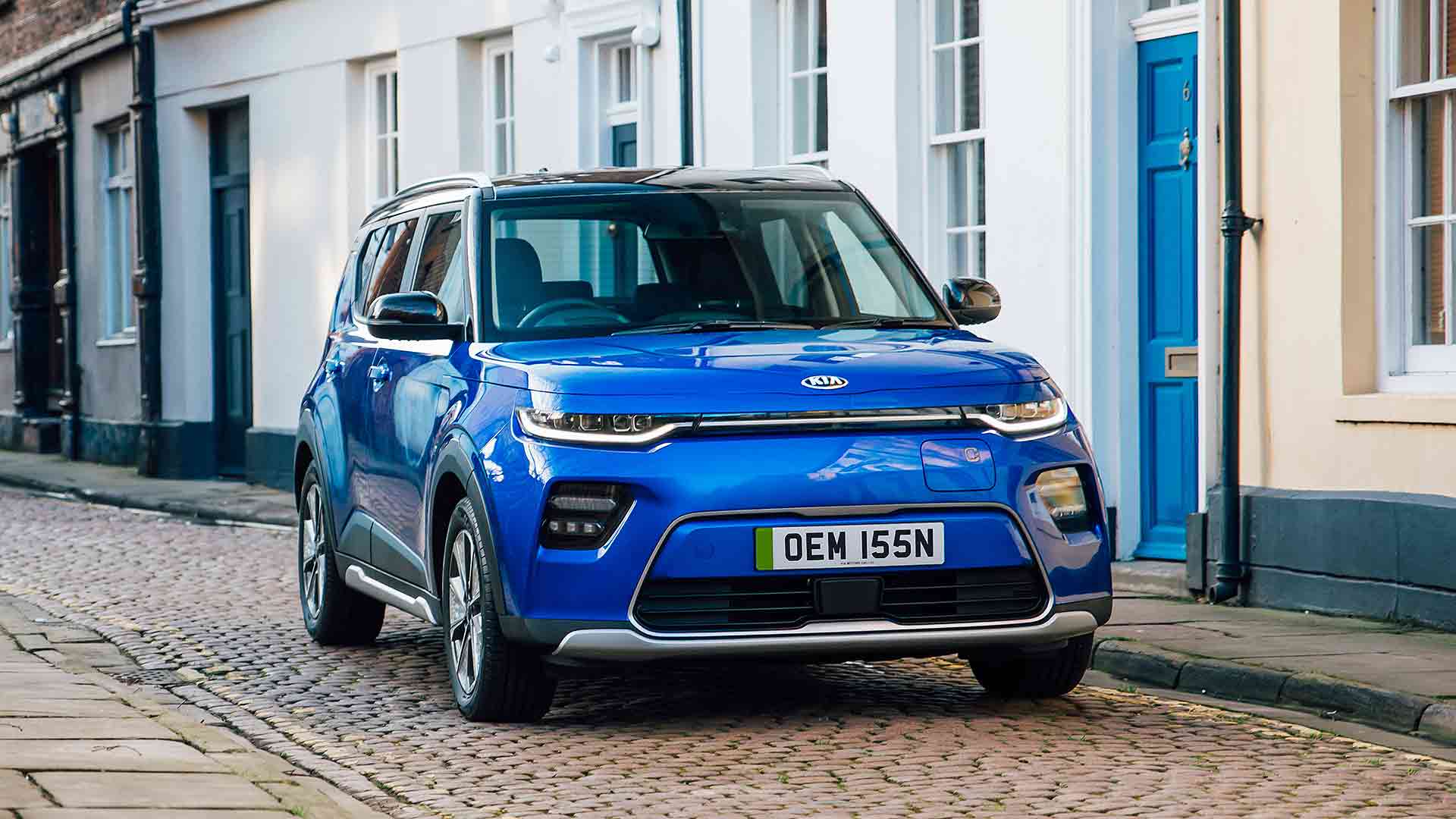
Those who prefer full electric will get three free services if they buy an e-Niro or Soul EV on Kia Finance e-Plus.
Kia has also cut the APR on the Soul EV from 4.9 percent to 2.9 percent.
Meanwhile, buyers of a Stonic, Niro, Sportage or XCeed enjoy zero percent APR, plus two three services and two years’ free roadside assistance.
Kia is continuing a range of NHS staff offers to reward those who have worked hard during the pandemic – and make cars more affordable so they can be less reliant on public transport during lockdown restrictions.
The 60-strong jury will now conduct a second round of voting to determine the winner.
The 2021 European Car of the Year is due to be announced on 1 March 2021.
The victor will succeed the 2020 Car of the Year, the Peugeot 208 (pictured above). Peugeot is not in the running for a repeat triumph in 2021, despite the 2008 SUV appearing on the longlist.
2021 Car of the Year contenders
A total of 29 cars were originally in the running for the 2021 gong. All models are required to be on sale either now or before the year’s end in at least five European countries.
Apple and Hyundai are reportedly in early-stage talks over an electric car partnership – sparking a 25 percent rise in Hyundai’s share price.
The Korean car manufacturer has since backtracked over the official statement, merely saying it was in talks with a number of partners.
Apple wasn’t named in the revised statement.
The tie-up would reportedly include both electric cars and batteries, according to a domestic broadcaster.
In December 2020, Reuters reported Apple had decided to move forward with its self-driving car project and was targeting 2024 to release a passenger electric vehicle with ‘breakthrough’ battery technology.
‘Apple and Hyundai are in discussions but they are at an early stage and nothing has been decided,’ said Hyundai in an official statement.
Apple declined to comment, said Reuters.
The iPhone maker has been considering an electric car, known as Project Titan, since back in 2014.
The BBC says the sticking point has long been who would manufacture the car, as it would be difficult for Apple to do so on its own.
“Apple outsourcing car production to Hyundai makes sense, because it is known for quality,” Jeong Yun-Woo, a professor at a South Korea university (and former Hyundai designer) told Reuters.
“But I’m not sure whether it is a good strategy for automakers [who] face risks of losing control to tech firms.”
Experts have told the BBC an electric Apple car is at least five years away.
Tesla doesn’t officially release new car registrations figures, so it is listed as ‘other’ in the official Society of Motor Manufacturers and Traders rankings.
But ‘other’ saw sales grow 78 percent in 2020, to over 26,000 cars – and we do know that 22,344 of them were the Tesla Model 3 alone.
It therefore seems likely Tesla has leapt up the order to take a UK market share approaching 1.5 percent – beating the likes of Porsche, Lexus and Mitsubishi.
MG, meanwhile, is fast rolling out its own range of pure electric cars, to bolster its existing good-value line-up of hatchbacks and SUVs.
This has helped it post growth of nearly 41 percent in 2020, with sales growing to 18,415 cars – giving it a 1.1 percent share of the UK new car market.
Both companies have more to come in 2021: Tesla with the Model Y electric crossover SUV, MG with new all-electric models including a well-priced EV estate car.
Every other car company declined in 2020. Some kept a cap on things: Porsche was down 6.4 percent, Lexus and Toyota were down 12.7 percent and even luxury brand Bentley was ‘only’ down 16.1 percent.
Losses for others were much greater. Vauxhall fell 40.2 percent, Hyundai was down nearly 43 percent, Citroen was down nearly 45 percent.
The worst performers were Smart, down 65.7 percent, and Subaru, which fell more than 68 percent.
Last year, Subaru sold just 951 cars, compared to almost 3,000 motors the year before.
It’s a far cry from the heady days of Colin McRae and Impreza Turbos: unlike Tesla and MG, the future seems bleak for this still fondly-regarded Japanese brand…
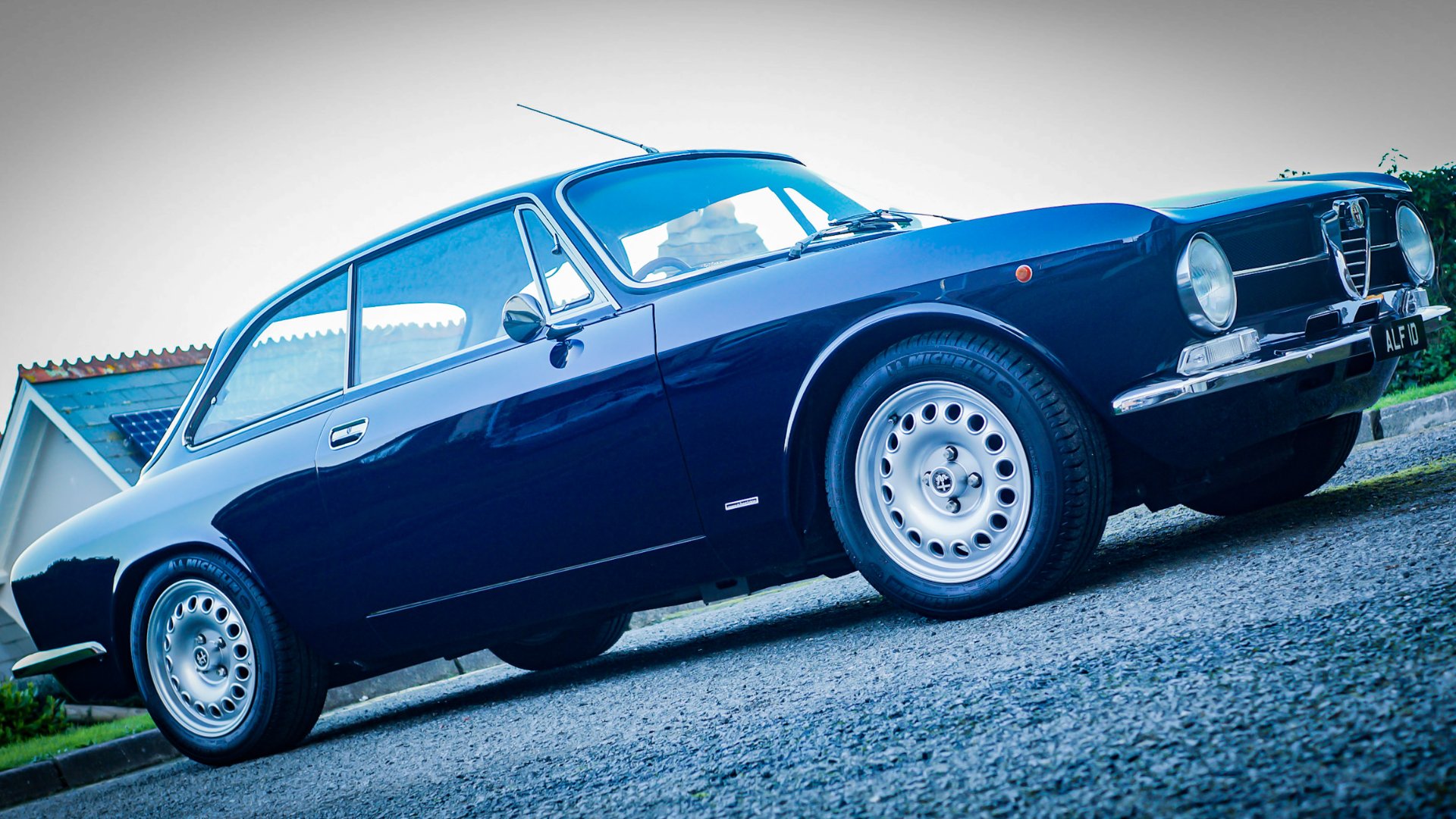
An Alfa Romeo GT Junior has sold for £50,000, smashing the auction world record for this model.
The stylish classic coupe, originally exported to Australia in 1971, attracted 261 bids during a seven-day online sale.
The record price is further evidence of a robust collector car market, which has so far resisted the creeping Covid malaise. Online auctions in particular are booming, as our interview with Car & Classic CEO Tom Wood revealed last month.
Cheaper thrills
Ironically, the GT Junior was conceived as a cheaper route into Alfa Romeo ownership. Launched in 1965, it traded the 109hp 1.6-litre engine of the Giulia Sprint Veloce for a 90hp 1.3 with twin carbs and twin cams.
It was particularly popular in Italy, where the tax regime penalised larger engines (hence other ‘downsized’ classics, such as the Ferrari 208 GTB).
Performance was steady (0-60mph in 12.6 seconds), but the GT Junior’s gutsy willingness to rev – coupled with a sweet gearshift and balanced, rear-driven chassis – made it wonderfully engaging to drive. You’ll be outgunned by a family-spec Ford Focus, but who cares?
Taste of Italy
Then there’s how the GT Junior looks: pert, pretty and brimful of Italian brio. Frankly, it could drive like a Routemaster bus and we’d still want one.
The most distinctive feature of early 105-series coupes was the scalino ‘step front’, where the leading edge of the bonnet sits 10mm proud of the bodywork. Later cars, such as this one, have a flush front end.
Flared wheelarches, a flowing roofline and a chopped Kamm tail also hint at subtle sportiness, while the period-look 15-inch Alfaholics alloys fitted here are just gorgeous.
Better than new
Other modifications for this particular GT Junior include fitment of the 1,750cc engine (used in the standard GT Veloce from 1967) with new Weber carbs, Pipercross filters and electronic ignition.
The uprated suspension uses Koni dampers and 40mm lowering springs, and the brakes have been bolstered with a dual-circuit balance box.
The car is otherwise standard, but restored to near-concours condition. Following a bare-shell respray with Glasurit paints, every chrome part has been re-plated or replaced, with every rubber seal also new. Safe to say, this Alfa Romeo is smarter than when it left the factory (and certainly less likely to rust).
Alfa bravo
The GT Junior has caused a stir among Alfisti (Alfa Romeo’s fanatical fans) and far exceeded Hagerty’s market value for a similar model in perfect condition, which stands at £30,900.
It also impressed Chris Pollitt, head of editorial at Car & Classic. “I’ve never seen a restoration that had been carried out with such care and incredible attention to detail,” he said.
“Going up and down the country to photograph cars for our auction platform means I get to see some exceptional vehicles. However, this Alfa Romeo remains firmly at the top of the list.”