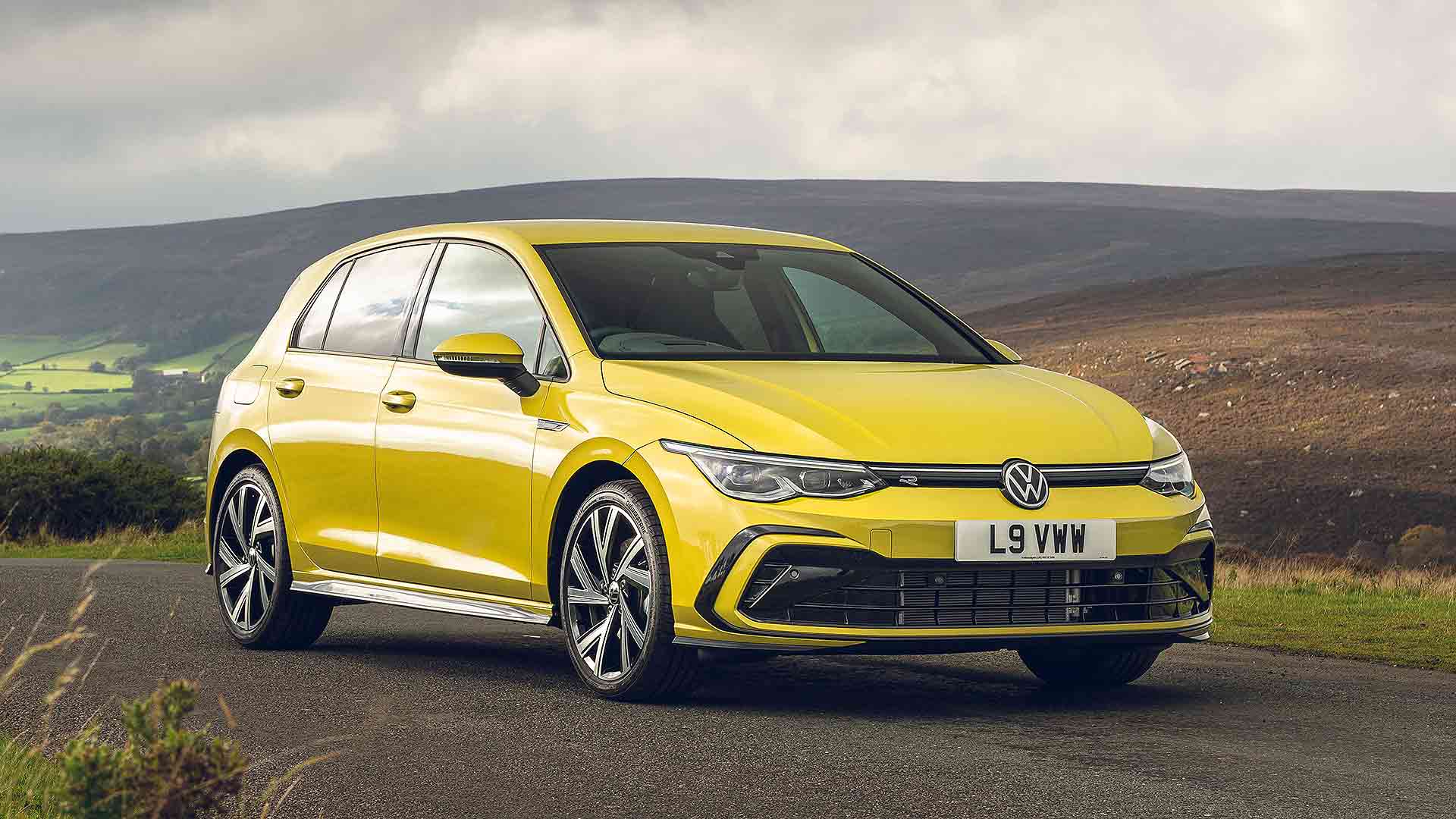
Adverts for the Volkswagen Golf were viewed more than 300,000 times in January 2021, new figures from online marketplace Auto Trader reveal.
This level of engagement gave it a huge margin over the next most-viewed car, the BMW 1 Series, which saw 130,000 advert views.
In the hatchback sector alone, the Golf took almost 16 percent of overall advert views.
The most-viewed pure electric car was the Audi E-Tron S, which commanded 39,000 advert views.
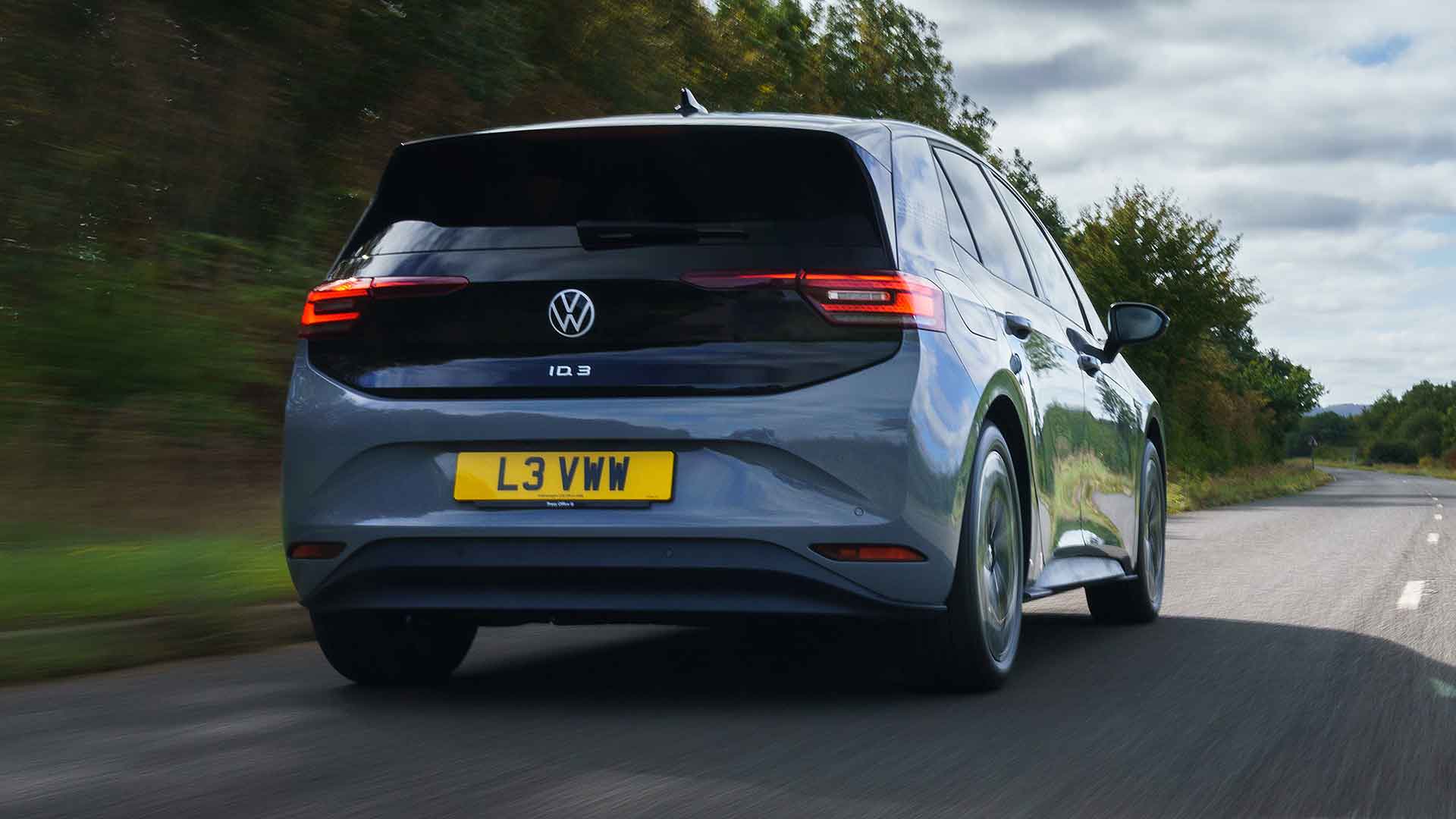
The Golf’s all-electric sister car, the Volkswagen ID.3, saw just 28,000 advert views.
Notably, the entire list of most popular new cars was made up of premium brands – but the electric car list was more eclectic, with appearances from MG, Ford, Kia, Mazda and Nissan.
Auto Trader says it recorded 7.4 million new car advert views in January, a 69 percent increase in a year.
It adds there are now almost 10,000 new car advert views on the site every hour.
‘Cause for optimism’
As motorists typically have a two- to three-month research lead time, the firm says this suggests an encouraging amount of new car demand ahead of the 21-plate registration change in March.
“There is cause for optimism,” said commercial director Ian Plummer.
“There’s a growing level of new car demand, and consumer confidence – which is typically the key driver of the new car market – remains relatively strong.
In fact, our latest research shows that consumers are currently more confident in being able to afford their next car than they were pre-pandemic.”
Ford has set an ambitious five-year goal for every new car it sells in Europe to be capable of driving in zero-emissions mode – and every new car it sells will be pure electric by 2030.
By mid-2026, every Ford passenger car on sale will be zero-emissions capable, plug-in hybrid or pure EV battery electric.
Ford of Europe president Stuart Rowley added that “most of our volume by mid-2026 will be battery electric”.
Following the sporty new Ford Mustang Mach-E, the first mass-production pure electric Ford will start production in Cologne in the second half 2023, the firm has confirmed. A total of $1 billion is being invested in a dedicated EV manufacturing plant to build it.
Ford has struck a deal with Volkswagen to build the new EV on the German company’s ‘MEB’ architecture, also used by the Volkswagen ID.3.
Plans to produce additional vehicles off the MEB platform will be announced in coming months.
The commercial vehicle range of Ford vans will also be fully zero-emissions capable by 2024 – and two in three vans sold by 2030 will either be plug-in hybrid or pure electric.
The announcement comes as the company returned to profitability in Q4 2020. Now the company is targeting a six percent margin on sales, with EVs central to its plans.
“We are charging into an all-electric future in Europe, with expressive new vehicles and a world-class connected customer experience,” said Mr Rowley.
“We will offer an exceptional range of electrified vehicles, supported by customer-centric digital services and experiences, allowing our customers to come with us on the journey to a fully electric future, starting right now with the launch of the all-electric Mustang Mach-E.
Hollow eye sockets from the 720S. Flying buttresses from the 570S. Laser-cut rear mesh from the 765LT. Yep, this is a McLaren alright. But while many details look familiar, the Artura is entirely new under the skin.
McLaren’s first plug-in hybrid, the Artura effectively replaces the ‘entry-level’ Sports Series range of cars: 540C, 570S, 570GT, 600LT and 620R. It pairs a 3.0-litre V6 petrol engine with an electric motor for a combined 680hp. Zero to 62mph takes 3.0 seconds and top speed is limited – yes, limited – to 205mph.
More remarkable, perhaps, are the electric-only range of 18.6 miles and CO2 emissions of 129g/km – making this easily the greenest McLaren ever. It’s available to order now, priced from £185,500.
We had a secret, hands-on preview of the Artura before it was revealed to the world. Read on for full details and our first impressions.
Let’s talk about six
We’ll start with that new engine. McLaren Automotive’s faithful 3.8-litre M838 and 4.0 M840 V8s have served it for many years, from first-born MP4-12C to the Speedtail, but this is a clean-sheet design.
The 3.0 turbocharged dry-sumped aluminium M630 V6 is redlined at 8,500rpm and produces 585hp – nearly 200hp per litre – without electric assistance. Factor in the e-motor and the total is 680hp, plus 431lb ft of torque from 2,250rpm.
Twin turbos are positioned inside the ‘hot vee’ of the cylinders to lower the engine’s centre of gravity. The V6 is also 150mm shorter and 50kg lighter than the venerable V8 – important when there’s also a battery pack to lug around.
Batteries included
Onto the electric drivetrain. Back in 2013, the McLaren P1 was the first car to weaponise hybrid technology for performance, rather than purely efficiency. The plug-in system in the Artura does both.
Its innovative axial flux electric motor weighs just 15.4kg and produces 95hp. In addition to that 18.6-mile EV range, it propels the car at speeds up to 81mph. Drive goes to the rear wheels via an eight-speed twin-clutch transmission, but, interestingly, the McLaren doesn’t have a reverse gear – the e-motor simply spins the opposite way.
The battery pack contains five lithium-ion modules and can be charged from zero to 80 percent in 2.5 hours using a household three-pin plug. The Artura also boasts a world-first ethernet electrical system, which offers quicker response times and reduces wiring length by 25 percent.
Light is right
The Artura is based around a carbon fibre chassis produced at the McLaren Composites Technology Centre (MCTC) in Sheffield. The whole monocoque weighs just 82kg and is claimed to be the ‘lightest, stiffest and strongest’ in class. Aluminium subframes at both ends serve as deformable crash structures.
Specify all the lightweight options and the Artura tips the scales at 1,498kg; impressive given its 130kg of hybrid ballast. Dry weight without fluids – the figure often quoted by Ferrari, for example – is 1,395kg.
Pleasingly, McLaren has resisted the trend for ever larger and less usable supercars. The Artura’s footprint is almost identical to the 570S, with 19-inch front wheels and 20-inch rears. Tyres are bespoke Pirelli P Zero Corsas with an in-built electronic chip to relay data on temperature and pressure.
Sculpted by science
Design director Rob Melville describes the Artura as “technical sculpture with functional jewellery” and a car with “a rare combination of beauty and aggression”.
Melville said the continuation of existing McLaren design themes was deliberate, both to build brand identity and avoid alienating existing customers. Flamboyant new colours such as Flux Green and Ember Orange (pictured) add some pizazz.
In the metal and carbon fibre, the Artura looks compact and very cab-forward. Its hungry side intakes look big enough to swallow a small dog, while the mesh rear panel and brutal diffuser offer a glimpse of the car’s hybrid heart. I particularly liked the optional contrast black roof (also shown here).
Glowing ‘halo’ lights on the door panels offer a dramatic effect at night with the dihedral doors lifted. Coming soon to an Instagram account near you…
No frills, just thrills
Inside, the Artura has a pared-back, minimalist feel. In complete contrast to cars from Maranello, its steering wheel is devoid of extra controls. ‘Its sole function is to steer the car and provide feedback to the driver,’ says McLaren. Quite.
The driver display moves up and down with the steering column, with rocker switches for the handling and powertrain settings (E-mode, Comfort, Sport and Track) on either side of the binnacle – within easy fingertip reach. And unlike in McLarens to date, there’s no requirement to press an ‘Active’ button to change modes.
An eight-inch touchscreen, angled towards the driver, looks after the infotainment. Its Android-based interface works like a smartphone and is much slicker than the in-house system McLaren used previously. Apple CarPlay and Android Auto connectivity are standard.
Finally, the new hard-shell Clubsport seats deserve a mention. They pivot from the base, offering more support without the need for a moveable backrest. A Comfort seat is also available.
Straight torque
So, how will the Artura drive? We’ll have to wait a few months to find out, but early indications are good. Director of product strategy Jamie Corstorphine explains the electric motor has a “torque infill” effect like the legendary P1, providing throttle response “twice as sharp” as any other McLaren.
This is also the first car from Woking with an electronic differential (“smaller and lighter than a mechanical diff”), which should make it more controllable near the limit. The danger is that it may also dilute the purity of the experience – careful calibration will be key.
Stability under braking was another area of focus for the engineers. The Artura borrows its aluminium calipers and mighty carbon-ceramic discs (390mm front, 380mm rear) from the 600LT.
You’ll have to pay your own track-day tyre bills, but some reassurance is provided by a five-year warranty, with six years of cover for the battery and 10 years for the body.
‘The McLaren promise’
Geoff Grose, chief engineer for the Artura, said: “We wanted to make a thrilling, engaging supercar that asks very few compromises of the driver or the passenger. The Artura truly delivers on the McLaren promise of class-leading driving dynamics and cutting-edge technology. “
McLaren CEO Mike Flewitt, who we interviewed last year, added: “Every drop of McLaren’s experience and expertise has been poured into the Artura. Our all-new, High-Performance Hybrid delivers all of the performance, driver engagement and dynamic excellence for which McLaren is renowned, with the additional benefit of EV driving capability.”
In time, the Artura is likely to spawn a range of vehicles, including a drop-top Spider and track-focused LT. Its hybrid architecture will also form the basis for other supercars, from the 720S replacement upwards. For McLaren, the future starts here.
REE Automotive, an Israeli electric vehicle technology start-up, will open an engineering centre in the UK to support its plans for mass production.
The facility will be based at the MIRA Technology Park in Nuneaton, Warwickshire, and will create 200 high-skill new jobs over the next few years.
REE is working on both entire electric vehicle platforms, plus a new technology called REEcorner that packages all steering, braking, suspension, powertrain and control tech into the car’s wheelarch.
The firm claims the technology will offer more room for passengers, cargo and batteries, in a manner ‘unprecedented in the industry’.
The UK base will ‘spearhead engineering design, validation, verification and testing, as well as product homologation’.
REE will also use MIRA’s test facilities and proving ground to validate REEcorner and the EV platform.
The aim is to offer the technology both to car manufacturers and other companies who want to develop their own EVs.
The UK base will be one of 15 integration centres globally, with the first one set to open in the US later in 2021.
Co-founder and CEO Daniel Barel (pictured above) said: “I am excited to announce another major milestone for REE towards bringing our technology and products to the market as we expand our global footprint.”
The UK government considers the investment plans a major success.
Lord Grimstone from the Department for International Trade said: “The government’s multi-million ‘Driving the Electric Revolution’ program, which drives forward new solutions in automotive power electronics, motors and drives, has played a major role in bringing this exciting investment to the UK.”
Mike Charlton, REE COO, concurred: “A key driver in our decision to establish our presence in the UK is the government’s forward-thinking vision and zero-emissions policy that perfectly aligns with REE’s goal of heralding a more sustainable, greener future.”
Now, ever-greater numbers of those luxury vehicles are going to be electric, as the company commits to a sustainable journey that will ultimately see it become fully carbon-neutral by 2039.
We’ll see the first pure electric Land Rover in 2024. Jaguar will become an entirely electric brand – just like Tesla – in 2025. The last diesel-engined JLR car will be produced by 2026.
The strategy, called Reimagine and presented by new CEO Thierry Bollore, is a landmark in the evolution of the luxury car firm. And one perfectly in line with the UK government’s ambitions.
Given its volumes, JLR’s announcement today is the biggest strategic development in support of that goal to date.
UK EV – and hydrogen
Even though ‘only’ six in 10 Land Rovers will be pure electric by 2030, that still leaves another half-decade to develop the solution for the rest. Mr Bollore predicts the firm will be almost zero-ICE by 2036.
And here too, JLR is saying things the country’s leaders will like: the development of fuel cell technology, with prototypes beginning testing on UK roads within the next year.
So, even if battery technology isn’t quite suitable for big, heavy Range Rovers by then, fuel cell tech might be. And in post-Brexit Britain, it’s potentially another homegrown tech good news story.
Mike Hawes, SMMT chief executive, welcomed the news as an injection of confidence into the wider sector.
“Its roadmap to a future that is built around sustainability, with electrified and hydrogen models as well as investment in connected and digital technologies, aligns with government ambition and increasing consumer expectations.
He did, however, caution that the UK needs to improve its competitiveness.
“The UK automotive industry is essentially strong, innovative and agile, but the global competition is fierce.
Government must ensure advanced manufacturing has its full support, with a policy framework and plan for growth that reduces costs, accelerates domestic battery production and electrified supply chains, and incentivises R&D and skills development.
“Every effort must be made to create the conditions that will enable the entire sector to flourish.”
In other words, Jaguar Land Rover is doing its bit to drive your strategy, ministers. Time to repay this vote of confidence with all the support JLR, and UK automotive, needs to succeed.
Around a half (51.9 percent) of learner drivers fail the driving test at the first attempt. At £75 for an evening, weekend or bank holiday test, this means they’re out of pocket to the tune of £150, before taking into account any extra lessons.
New research suggests that failed driving tests are just as harmful to the planet as they are to a learner’s wallet. An energy company has used Driver and Vehicle Standards Agency (DVSA) data to uncover how much carbon dioxide (CO2) is emitted from failed tests.
From April 2019 to July 2020, the CO2 emitted from failed driving tests in the UK reached 2,222,257kg. That’s the equivalent of 449 return flights from London to Melbourne, according to SaveOnEnergy.com.
The number of male test failures in the past two years (428,261) is the equivalent of 126,193,249 smartphone charges.
A significant number of driving tests were cancelled in 2020 due to the coronavirus pandemic. From April to June 2019, a total of 210,856 tests were failed in the UK. Comparing this to the same period in 2020, there were only 2,816 unsuccessful tests.
This led to an 86.4 percent reduction in the total CO2 emissions from failed driving tests.
Predictably, London has a high concentration of failed driving tests and CO2 emissions. The Goodmayes test centre produced 44,722kg CO2 emissions between April 2019 and July 2020. Other figures came from Pinner (23,306kg CO2), Morden (22,041kg CO2) and Isleworth (21,770kg CO2)
Looking at individual test centres outside of London, Norris Green in Liverpool was responsible for the highest CO2 emissions. Around 8,800 drivers failed their test between April 2019 and July 2020, producing CO2 emissions of 20,328kg. That’s the equivalent of catching the train from London to Edinburgh 1,013 times.
Just behind is Garretts Green in Birmingham (19,451kg CO2), Kingstanding in Birmingham (19,339kg CO2), West Didsbury in Manchester (19,295kg CO2) and Wigston in Leicester (17,606kg CO2).
Driving tests are suspended due to the current lockdown restrictions in place across the country. Around 57,500 people have signed a petition calling for driving instructors to be able to pass learners unable to book a test.
In response, the Government said: “There is no provision within legislation that allows an approved driving instructor (ADI) to conduct a driving test for a learner driver. The Government has no plans to lay legislation to amend this.”
CEO Thierry Bollore told Motoring Research his personal car is currently a Jaguar I-Pace. “It is a great car… we have plenty of ideas to make it even better.”
Mr Bollore would not yet be drawn on what these plans are.
The new range of Jaguars will have a “best of the best” electric platform. Mr Bollore said it is too early to talk about what form this will take – because he wants the design team to have as much flexibility as possible in creating the new cars.
“Proportions are important: we will pair the shapes with the plaform once they have been designed.
“The designs are not far from being ready,” he added. More is “coming soon”.
‘Unique place’
The Jaguar EV plan builds on the firm’s unique place in the global automotive industry, explained Mr Bollore (pictured above).
There will be an entire range of “emotionally engaging designs and pioneering next-generation technologies.
“Jaguar will exist to make live extraordinary by creating dramatically beautiful automotive experience that leave its customers feeling unique and rewarded.”
The new Jaguars will be built at Solihull, on a new advanced electric battery electric vehicle (BEV) architecture exclusive to Jaguar.
In a significant change from an earlier planned strategy, however, a planned all-electric Jaguar XJ will not form part of the line-up. Cancelling the project “was a tough decision, for sure,” said Mr Bollore.
The nameplate “may be retained,” says the firm.
Many activities at the traditional Jaguar engineering base in Whitley, Coventry will move to Gaydon, as all non-manufacturing infrastructure is focused at ‘the heart of the brand’.
Jaguar has already opened an all-new design centre at the giant Midlands facility.
Current Jaguars will continue to be assembled at Castle Bromwich for the remainder of their life – and the facility will remain open even after production ceases.
The facility will be repurposed into a site that amalgamates numerous Jaguar Land Rover facilities scattered across the Midlands.
The sum is part of wider funding from the DfT for road maintenance which totals £1.1bn in the current financial year.
Government figures suggest the average pothole costs £50 to repair, which is how it arrived at the 10 million total.
“Potholes are more than just a nuisance,” said transport minister Baroness Vere.
“They can be dangerous to drivers and cyclists alike, and cause damage to thousands of vehicles every year.
“The funding allocated today will help councils ensure roads in their areas are kept up to standard, and that the potholes that blight road users can be dealt with promptly.”
AA head of roads policy Jack Cousens welcomed the announcement but said that despite lockdown-related falls in traffic levels, repairs were still desperately needed.
“Last month, just 15 percent of our members told us that residential roads were in a good condition, with drivers in the North West, South East and East Midlands giving their streets the lowest ratings.
“Patching up roads may seem like a quick fix, but in reality, it is just a sticking plaster. In order for roads to remain safe and smooth, they need completely resurfacing.”
Mr Cousens added that residential roads in England get resurfaced on average every 119 years, according to studies.
“If you’re street is lucky enough to be chosen, we’d recommend a socially distanced celebration, as it will probably be a once in a lifetime event!”
Your occupation is one of the things an insurance company will consider when calculating the cost of your car insurance. Research in 2020 found the difference between the cheapest and most expensive policy could be as much as £200.
Professional drivers, chefs, hairdressers, bar staff and fitness instructors were found to pay the most for car insurance. Meanwhile, mechanics, administrators, designers, design engineers and account executives pay the least.
Does an unemployed person pay more for car insurance? Daniel Hutson of Comparethemarket, said: “Unfair as it might seem, the answer is often ‘yes’. Without a job, you may be considered a higher risk by insurance providers. This can hike up costs, come renewal time.”
MoneySuperMarket advises policyholders to avoid telling insurance companies they are unemployed. According to a report in the Guardian, students and retired people who mistakenly describe themselves as ‘unemployed’ could lose up to £700 a year.
Similarly, stay-at-home parents stand to lose out if they tick the ‘unemployed’ box rather than choosing ‘housewife’ or ‘home keeper’.
‘Choose the most accurate answer’
Kevin Pratt, consumer affairs expert at MoneySuperMarket, said: “To get the best cover, at the best price, you have to choose the most accurate answer at every stage. That can mean trying alternatives to find the one that best matches your situation, instead of plumping for whatever seems most obvious. It’s worth taking your time.”
The Association of British Insurers (ABI) says unemployed people may travel more because they’re doing more things during the day. There’s also the chance that they’ll spend less money on servicing and maintenance, which could increase the chance of an incident.
This doesn’t mean that you should avoid telling your insurance provider if you lose your job. On the contrary, if you fail to notify your insurer of a change in employment, your policy could be invalidated. An insurance company is within its rights to refuse a claim or offer a reduced settlement figure.
Speaking to Express.co.uk, Greg Wilson, founder of Quote Zone, said: “A driver’s occupation is one of the variables many insurance providers use in their premium calculations. Insurance claims data indicates that people in certain professions have a higher risk of making a claim than others.
“If you’re made redundant you might not be keen to shout about it, but with car insurance for unemployed people costing 30 percent more, on average, if you fail to disclose your redundancy to your insurer there’s a risk that could be viewed as an attempt to mislead.”
Don’t lie, as this could be considered fraud, but consider the options when notifying your insurance company about a change in personal circumstances.
When combined with a 58kWh battery, this takes the starting price for an entry-level ID.3 Life Pro down to £28,670, once the Plug-in Car Grant is deducted.
The speedier ID.3 Life Pro Performance costs from £29,990 – meaning those happy with less power will save £1,320.
Both versions have a pure electric driving range of 263 miles.
The 145hp Pro version uses the same single-speed gearbox as the 204hp Pro Performance. Zero to 62mph takes 9.6 seconds instead of 7.3 seconds.
It’s still able to use 100 kW CCS rapid chargers, supplying 80 percent charge in 35 minutes.
Volkswagen adds affordability of the ID.3 EV, a finalist for 2021’s European Car of the Year, will be further enhanced later in 2021, with the introduction of an even smaller 45 kWh battery in the upcoming Pure versions.
“The ID.3 range aims to offer plenty of choice for the customer – and that includes powertrain options,” said product manager Joe Laurence.
“Making ‘the electric people’s car’ accessible to an even wider back of the EV-buying public is a direct and welcome result of this.”