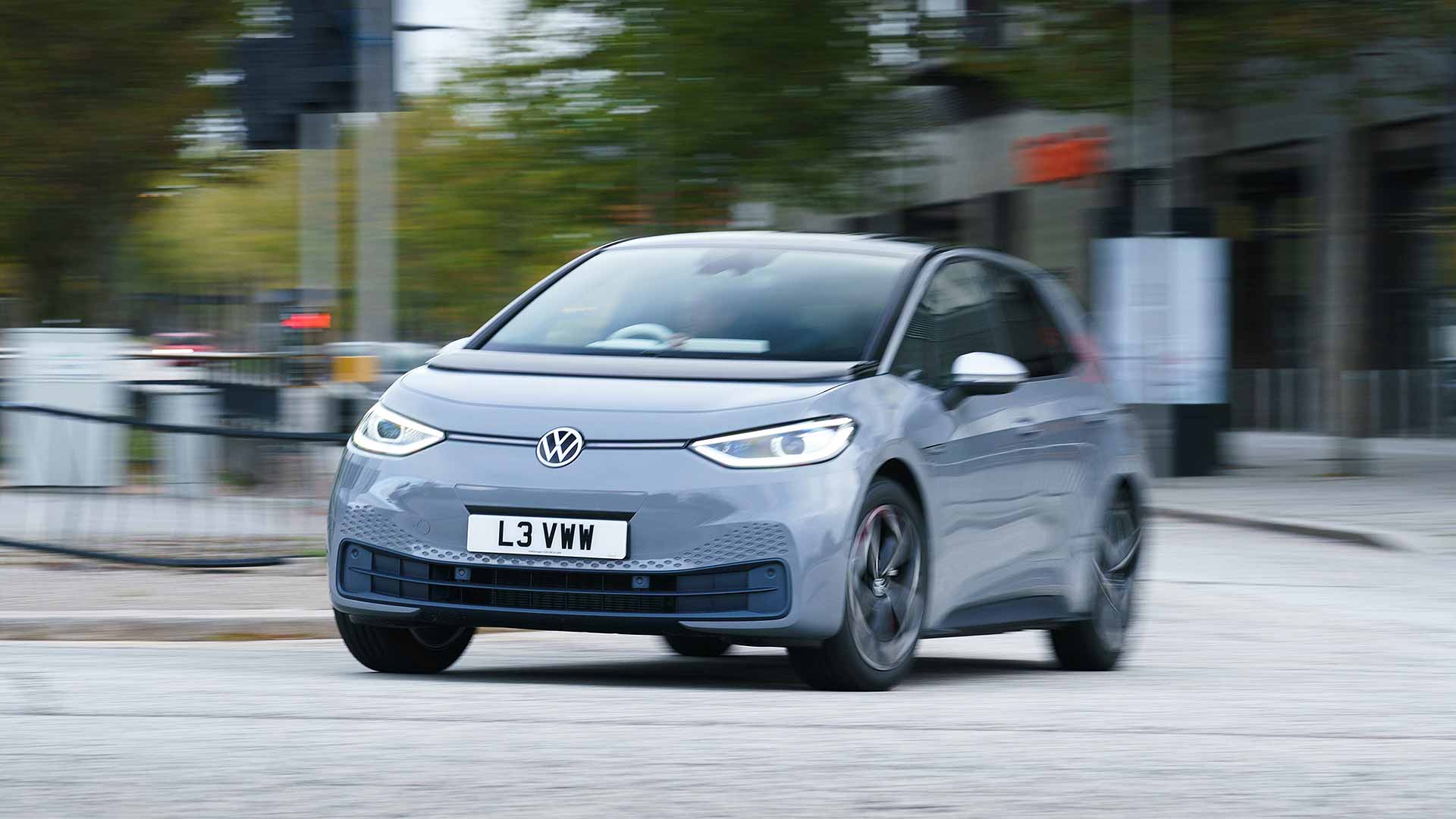
The Volkswagen Group cut CO2 emissions from its passenger car range by a whopping 20 percent in 2020 – but this still wasn’t enough to avoid a fine for not meeting its EU-mandated CO2 target.
Average emissions across the VW Group fell to just under 100g/km compared with 2019.
The firm’s target figure was, however, narrowly missed by 0.5 g/km – which means the EU is going to impose fines.
The Financial Times estimates this will cost it around €150 million.
Volkswagen Group includes Volkswagen, Audi, Seat, Skoda and Cupra: Bentley and Lamborghini are also part of the Group, but they are measured individually.
Such a large decrease in CO2 emissions was delivered by a significant step-up in electric vehicle production.
In 2019, Volkswagen Group delivered just under 73,000 EVs. Last year, this increased more than fourfold, to 315,400 cars.
Almost one in 10 cars it delivered last year were either plug-in hybrid or pure electric.
“We are making good progress on the road to becoming a CO2-neutral company,” said CEO Herbert Diess.
“We significantly reduced the CO2 emissions of our new vehicle fleet in the EU – the Volkswagen and Audi brands in particular have made a major contribution to achieving this.”
‘Thwarted by the pandemic’
Mr Diess added that Volkswagen Group was “thwarted by the Covid-19 pandemic” in not achieving its CO2 emissions target of 99.3 g/km.
Speaking of missing the target, Volkswagen Sustainability Council member Rebecca Harms said that although it hadn’t been met this year, “Volkswagen is clearly well on its way.
“The key to success will be to give a greater role to smaller, efficient and affordable models in the electrification rollout.”
Volkswagen is expected to achieve its CO2 target in 2021, said Mr Diess, thanks to ever-more electric cars going on sale, including pure electric models from Skoda, Seat and Cupra.
ALSO READ:
Cupra Formentor VZ2 (2021) review