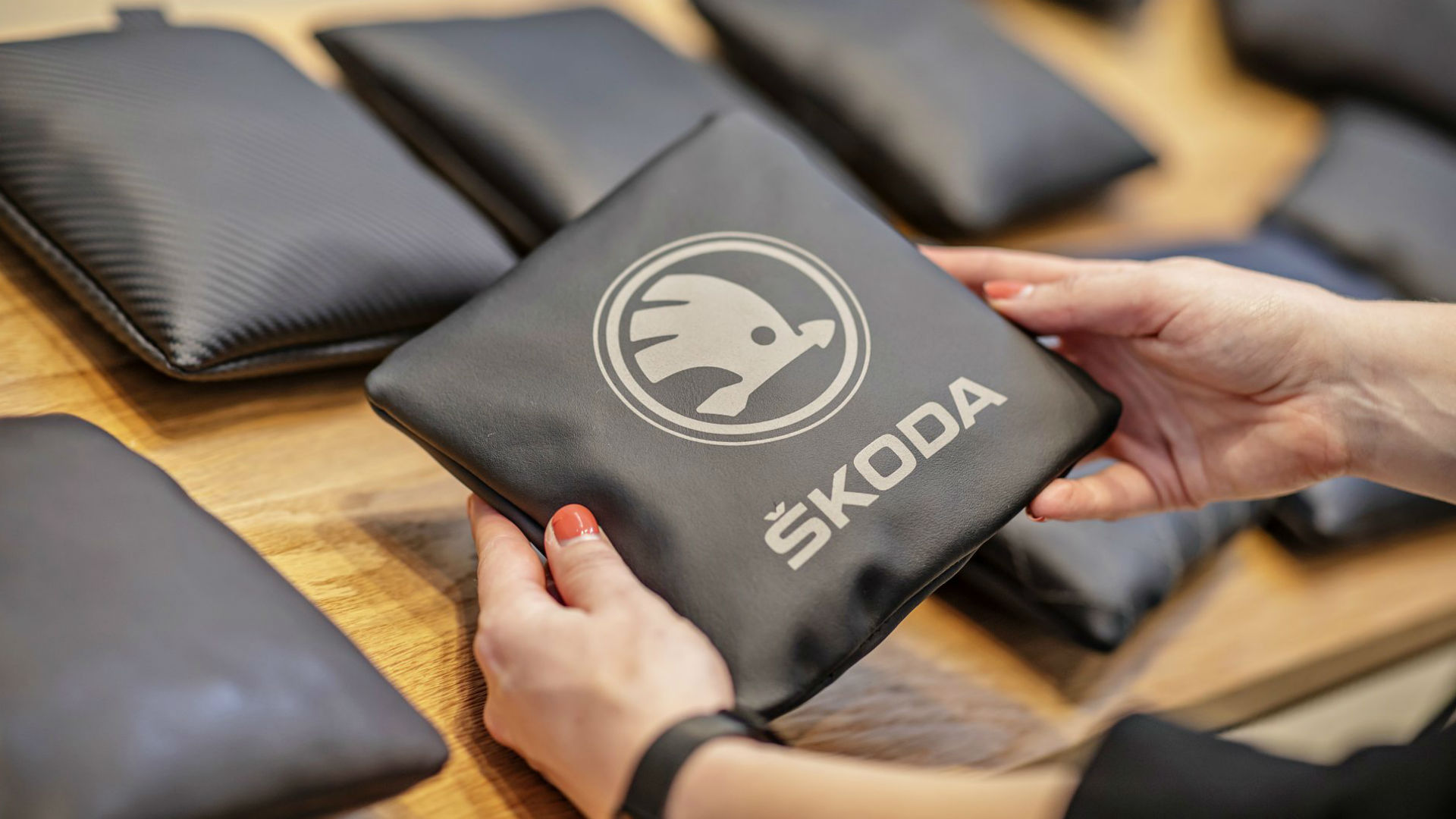
Car interiors of the future will incorporate more natural materials than today. That’s according to two members of the colour and trim team at Skoda.
Wool and linen fabrics will appear in seats, and the use of wood will gain ground.
This comes amid a shift towards vegan-friendly interiors and recycled materials. Leather upholstery and swathes of plastic could be a thing of the past. Indeed, faux leather is almost indistinguishable from genuine leather.
Skoda cars will soon feature seat covers that use materials produced from recycled plastic bottles. Meanwhile, recycled fleece – commonly associated with warm clothing – is a suitable replacement for the foam used inside seats.
The industry is already using Pinatex, a textile made from pineapple leaf fibres, along with interior colours based on fabrics from soya or maize.
“In the future, the car will be more like a living room,” said Stefan Webelhorst, colour and trim team specialist at Skoda Design. As a result, designers are taking inspiration from real living rooms and from housing fairs and exhibitions.
“We need to spot trends and communicate them to our colleagues in other departments,” added Katerina Vranova, Skoda colour and trim coordinator.
Lighting will also play an important role in interiors of the future. Many manufacturers offer ambient lighting packs as standard on higher trim levels, but Webelhorst believes natural light will become increasingly important.
Designers will focus on the actual surface of materials and how light enters the cabin.
Personalisation and customisation
Webelhorst says car buyers will be offered more opportunities for customisation. Instead of being limited to pre-determined trim levels and packs, customers will be offered greater flexibility for personalisation.
“When a new car is being designed, once the exterior and interior shapes have been established it is our department’s turn to contribute. We decide which materials, structures and colours will best complement the overall nature of the new car.
”We communicate with interior designers to ensure consistency between the shapes and materials,” concluded Katerina Vranova.
2020 could be the year the UK car market gets back on track, according to new research. An unlocked parliament and an end to Brexit uncertainty is said to be inspiring more confidence in car buyers. Sales have been stalling over the past three years since the referendum. Indeed, car sales fell for the third year in a row in 2019.
The research by BuyaCar has polled more than 3,000 people on their car-buying intentions, past present and future. One in six (15 percent) said that an end to the gridlocked parliament of the last few months and years means they’ll be more likely to take the plunge in 2020 and beyond.
For those deeper into the process of finding a car, who are looking at specific models, it’s up to 24 percent (almost one in four). In general, the closer car buyers are to taking the plunge, the more confident the landslide election result has made them about going ahead.
Compare that to March last year. Car shoppers told BuyaCar that Brexit uncertainty was at the top of the list of reasons why they have delayed buying a car for two years or more. On the face of it, the car market forecast is brighter for 2020, though Brexit still looms incomplete.
BuyaCar editor Christopher Lloyd says that the research is backed up by search traffic on its platform. An increase in traffic in between Christmas and New Year this year plays a drop-off in 2018.
Volkswagen will build one million EVs a year by 2023
“As we have been reminded almost daily in the news over the past couple of years, Brexit uncertainty has been deeply damaging to consumer and business confidence,” Lloyd said.
“So this research suggests that a lot of pent-up demand is about to be unleashed now that the question has been decisively settled. The car industry has had a torrid time since the 2016 referendum and although our own sales of used cars have continued to grow, the new car market in particular has been consistently falling. From this research it seems clear that, wherever you stand on Brexit, an end to uncertainty may be just the thing to unleash buyers back into the market.“
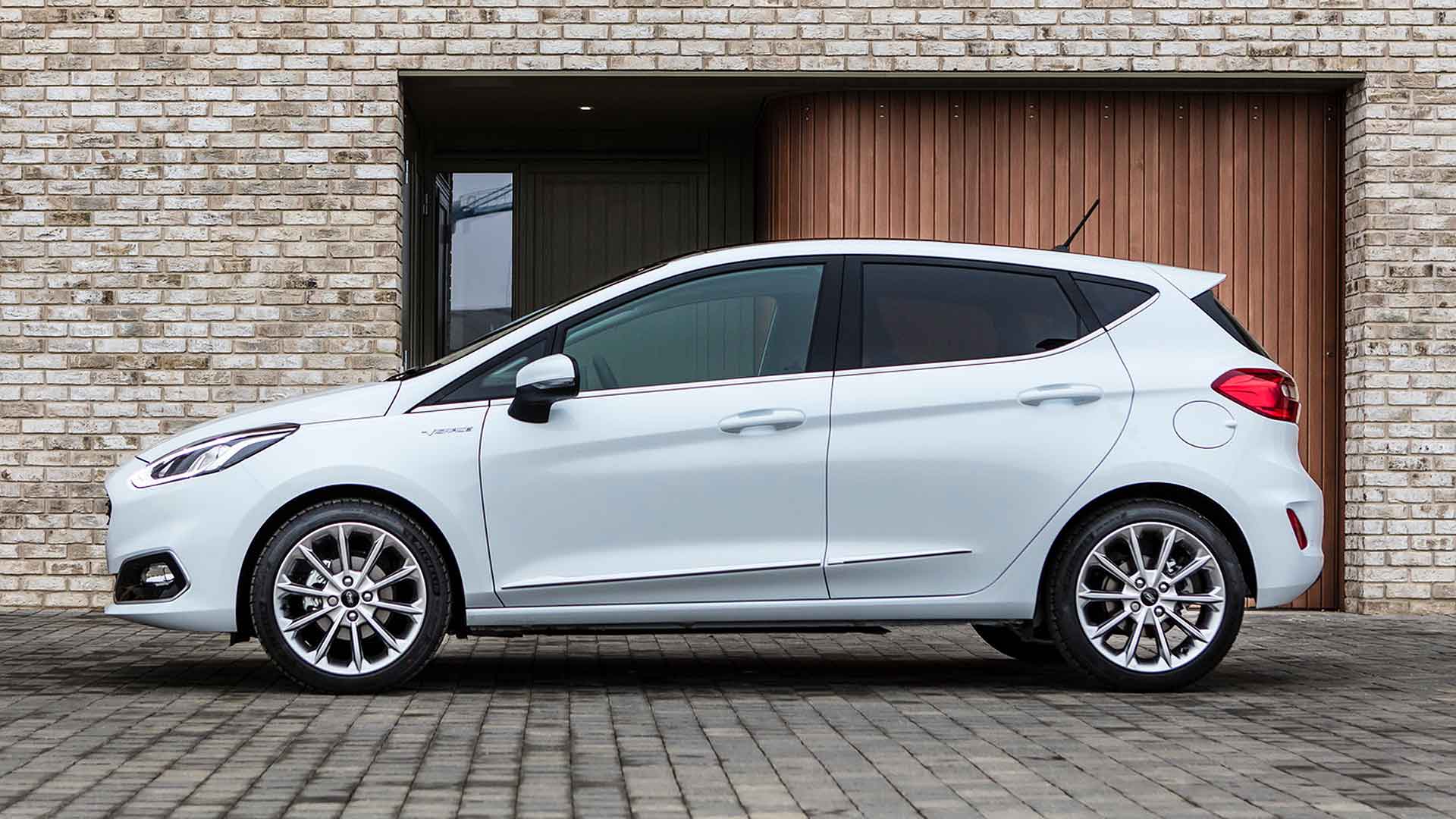
Almost 78,000 new Ford Fiestas were registered last year, easily clearing the 58,994 total of the car in second place, the Volkswagen Golf.
But it was a surprisingly tight battle for the runners-up spot, with the Ford Focus coming close in third with 56,619 registrations.
The Vauxhall Corsa finished the year on 54k units, the Mercedes-Benz A-Class was on 53k, and the Nissan Qashqai ended on 52k new cars sold.
Ford’s long-running Kuga still performed well in seventh place, just a few hundred units ahead of the Mini, with the Volkswagen Polo and Kia Sportage rounding out the top 10.
The arrival of several significant all-new models in 2020 – the Volkswagen Golf, Vauxhall Corsa and Ford Kuga – is expected to shake things up this year.
Although the UK new car market declined overall in 2020, Britain remains Europe’s second-largest, behind Germany. It is also, says the Society of Motoring Manufactures and Traders (SMMT), one of the most diverse, with 350 different models on offer.
Almost 90 new models are set to arrive in 2020, including 23 zero-emission cars and 11 plug-in hybrids, says the SMMT.
Whether any of them can budge the Ford Fiesta from the number one spot – success that’s made it Britain’s best-selling car of all time – remains to be seen…
New car registrations fell for the third year running in 2019, with the market declining 2.4 percent to a seven-year low.
Official figures show 2.3 million cars were sold last year, compared to 2016’s all-time high of 2.69 million.
However, adds the Society of Motor Manufacturers and Traders (SMMT), the 2019 total is still ahead of the UK’s 10-year average.
Every new car sector apart from two experienced sales declines. The exceptions were the dual purpose (SUV) sector, up 12 percent, and the specialist sports sector, up an eye-catching 19.2 percent.
The latter is due to the long-awaited arrival of the Tesla Model 3, which the SMMT classifies as a specialist sports vehicle.
The best-selling car types in the UK were superminis and family cars, which took 57 percent of new car sales – but both were down, by 6 percent and 4 percent respectively.
Electric up, diesel down
Alternative fuel vehicles – that’s electric cars and hybrids – grew 20.6 percent, to take an overall market share of 7.4 percent. Hybrids made up 4.6 percent of that total, with electric cars on 1.6 percent.
Battery electric vehicles, adds the SMMT, overtook plug-in hybrids (PHEVs) for the first time. It blames this on the government’s controversial decision to pull PHEVs from the Plug-in Car Grant.
The launch of at least 23 new electric cars in 2020 is likely to continue the growth of EVs.
And diesel? Sales fell a whopping 21.8 percent, giving it a 25 percent market share. This is the lowest diesel share since 2003, and means diesel car sales have basically halved since the peak three years ago.
Diesel new car sales have now fallen for 33 months running.
The decline of diesel is partly behind the worrying rise in new car CO2. It too has risen for the third consecutive year, to an average of 127.9 g/km.
SMMT chief executive said the introduction of the new WLTP test was the main reason for this (cars had to be retested to the tougher standards), although buyers shifting from hatchbacks to SUVs was also pushing up new car CO2.
By the end of 2020, EU legislation requires every car brand’s average new car CO2 to be no greater than 95 g/km, which is why the increase in new car emissions is so alarming to industry-watchers.
As for 2020, the SMMT expects new car registrations to fall again, due to an ongoing lack of consumer confidence.
The trade organisation expects 2.2 million cars to be sold this year, a fall of 1.6 percent on 2019’s figures. However, Hawes did admit this figure was modified upwards from an earlier prediction of 2.2 million, following December’s General Election.
If consumer confidence shows further positive improvement in 2020, the prediction could be modified once again. Whether or not Britain posts its fourth straight year of falling new car sales depends on it…
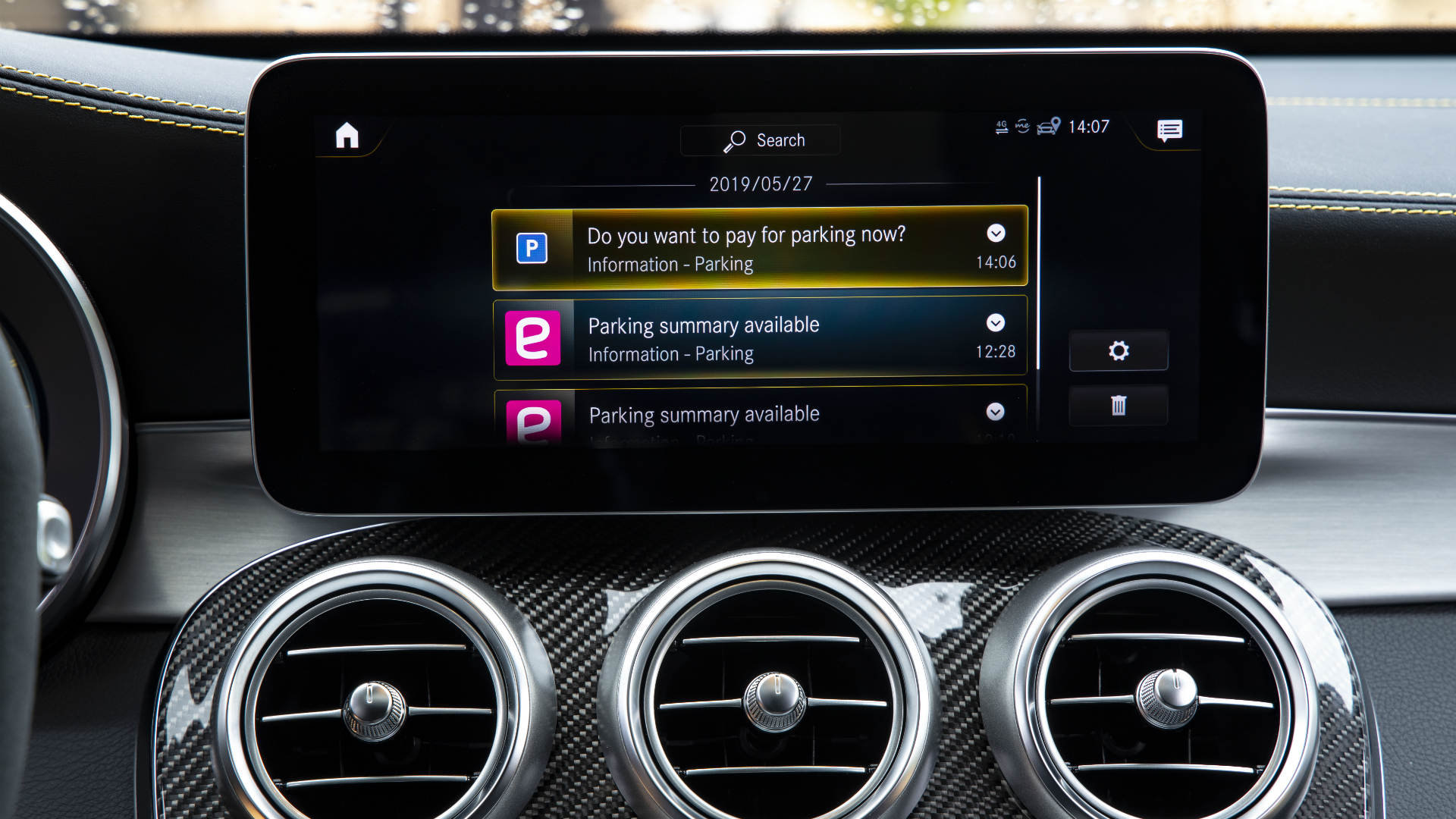
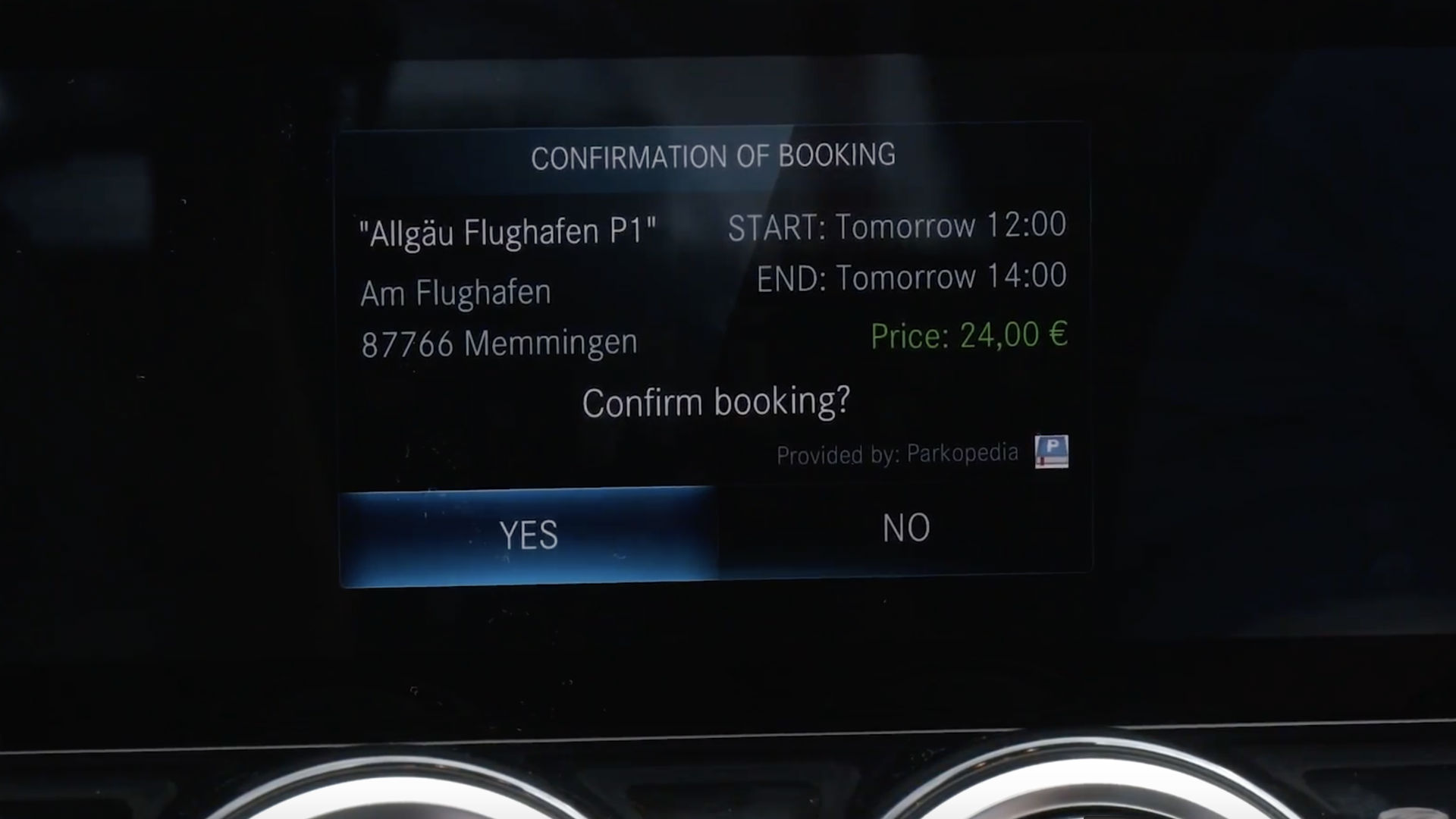
Parkopedia and EasyPark have joined forces to allow Mercedes-Benz drivers to pay for parking via their car dashboard.
For now, the service is available in around 200 German cities, but the in-car payment facility will be rolled out across Europe. EasyPark covers 1,400 cities across 18 countries, while Parkopedia provides information on 70 million parking spaces in around 15,000 cities.
The Mercedes-Benz owner requires a MercedesPay account, with payments handled by their Single Sign-On account.
Upon arrival at paid on-street parking zone, the Mercedes-Benz vehicle triggers the automated parking payment. The driver confirms the start of the transaction and exits the car. When the driver returns to the vehicle and starts the ignition, he or she is prompted to the stop the transaction. The MercedesPay account is charged – with the driver paying for the actual time spent at the parking location.
EasyPark Group CEO Johan Birgersson, said: “The Mercedes-Benz brand is synonymous with world-class design and the highest quality driving experience. Bringing the latest technology into cars to address the main parking pain points, the time drivers have to spend on finding and paying for parking, this innovative feature allows for a smooth and easy user experience that saves time and effort for users.”
Parking of tomorrow
Commenting on the announcement, Parkopedia’s COO Hans Puvogel added, “The launch of Single Sign-On payments for EasyPark-enabled locations is another example of how Parkopedia is working to help innovate the parking industry and provide better experiences for drivers.
”We are honoured that Mercedes-Benz has extended its trust in Parkopedia and EasyPark to offer on-demand parking as part of Mercedes-Benz’s comprehensive in-car parking services, and look forward to continuing to work together to further enhance the in-car experience for drivers.”
Every year, drivers in Europe and North America spend an average of 55 hours searching for parking spaces. Services such as Parkopedia will speed up the process of finding a space, while innovations such as this latest announcement will make searching for loose change a thing of the past. Indeed, the transaction will start and finish at a touch of a button.
In a previous statement, car park operator APCOA claimed looking for a suitable parking space accounts for practically one third of inner-city traffic. Mercedes-Benz said this would correspond to CO2 emissions of 1.3kg per search.
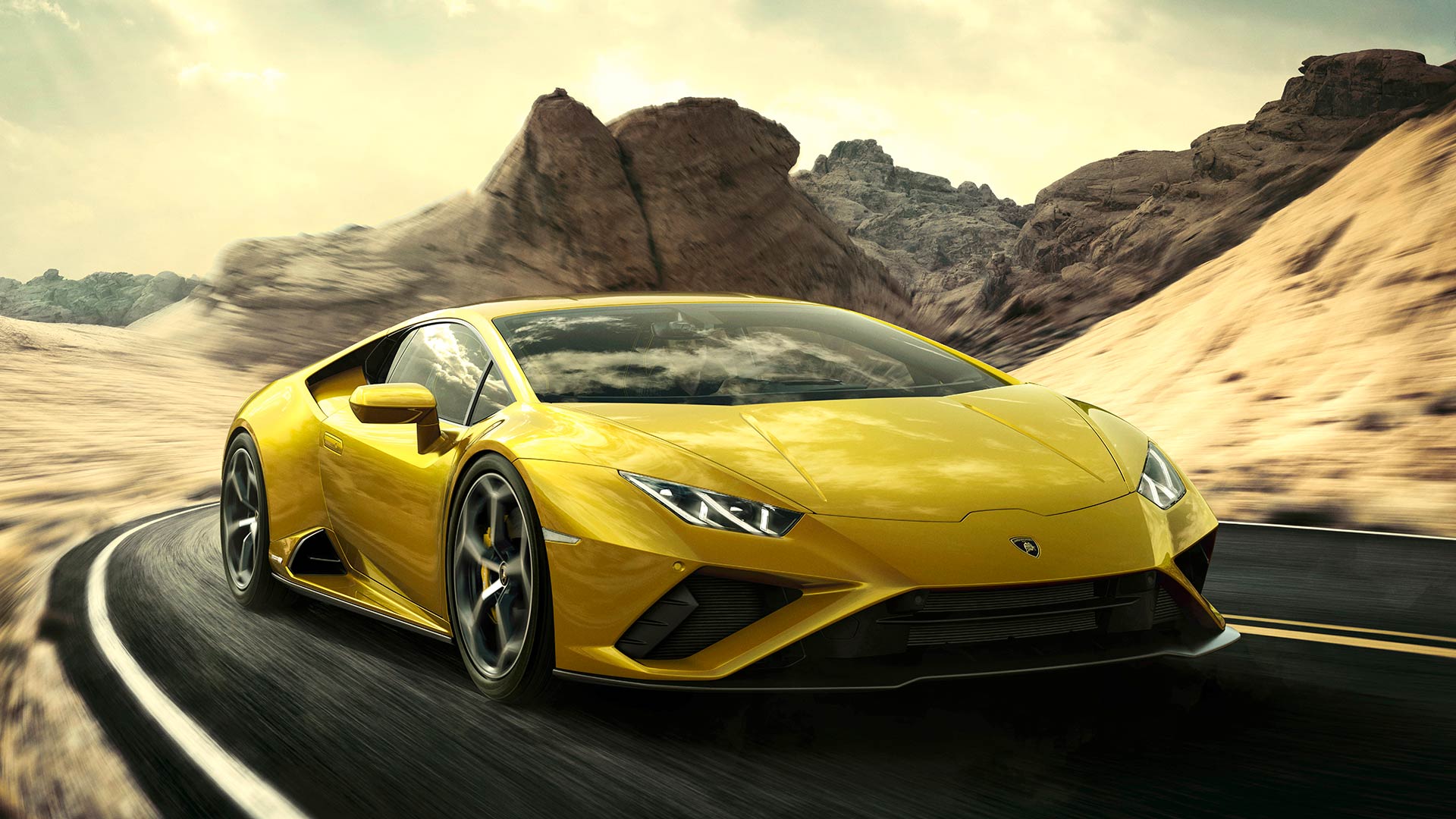
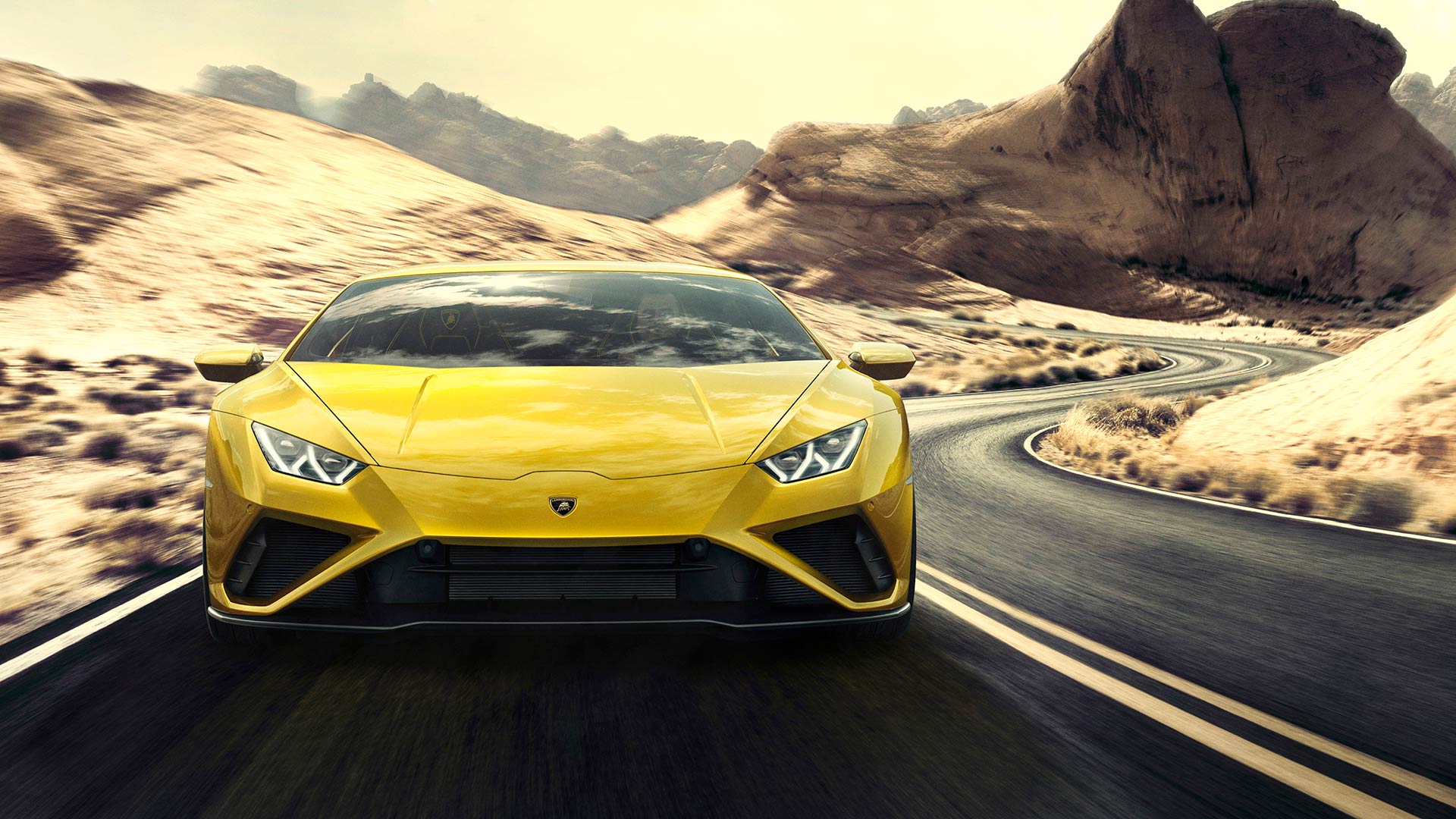
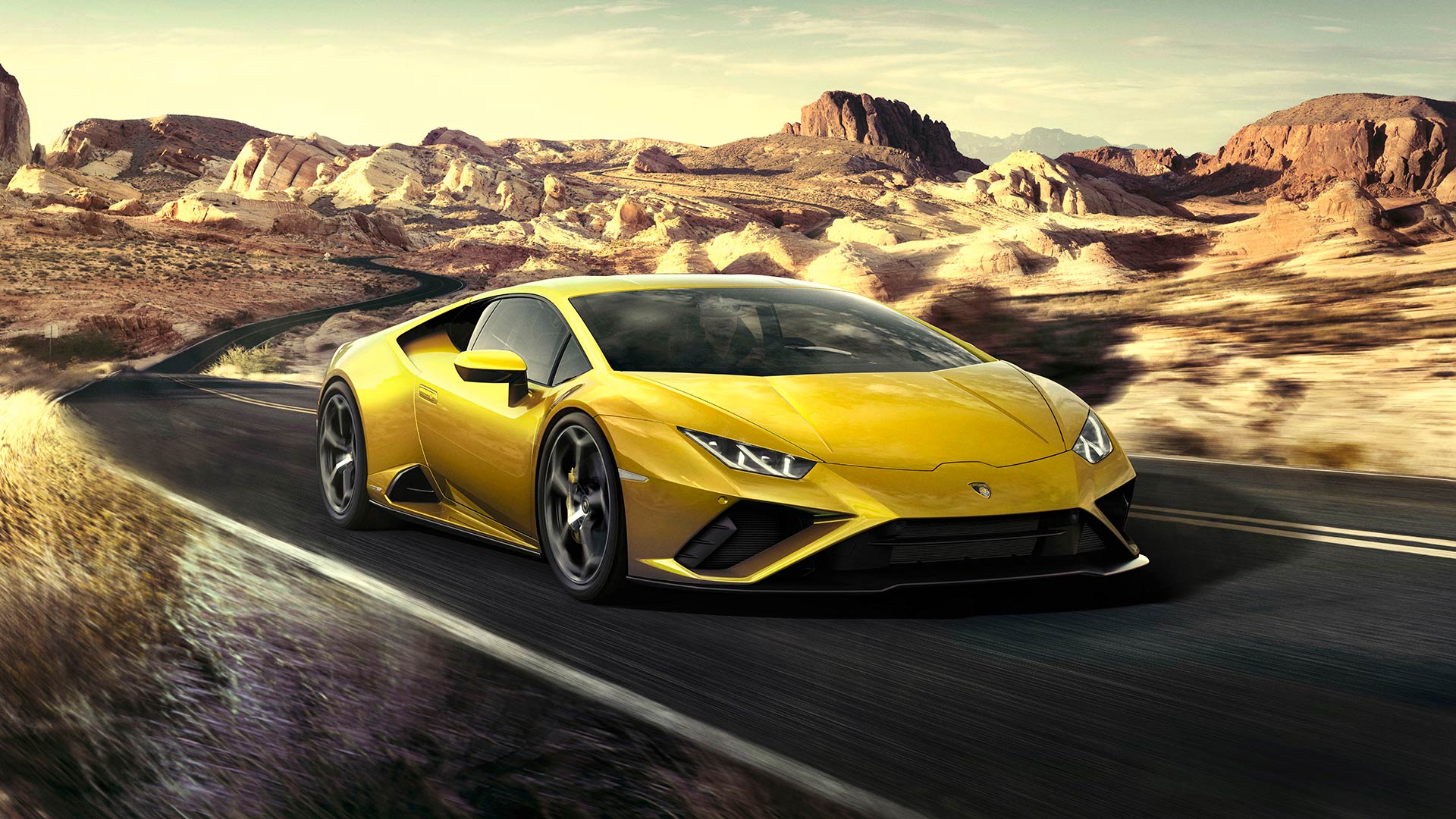
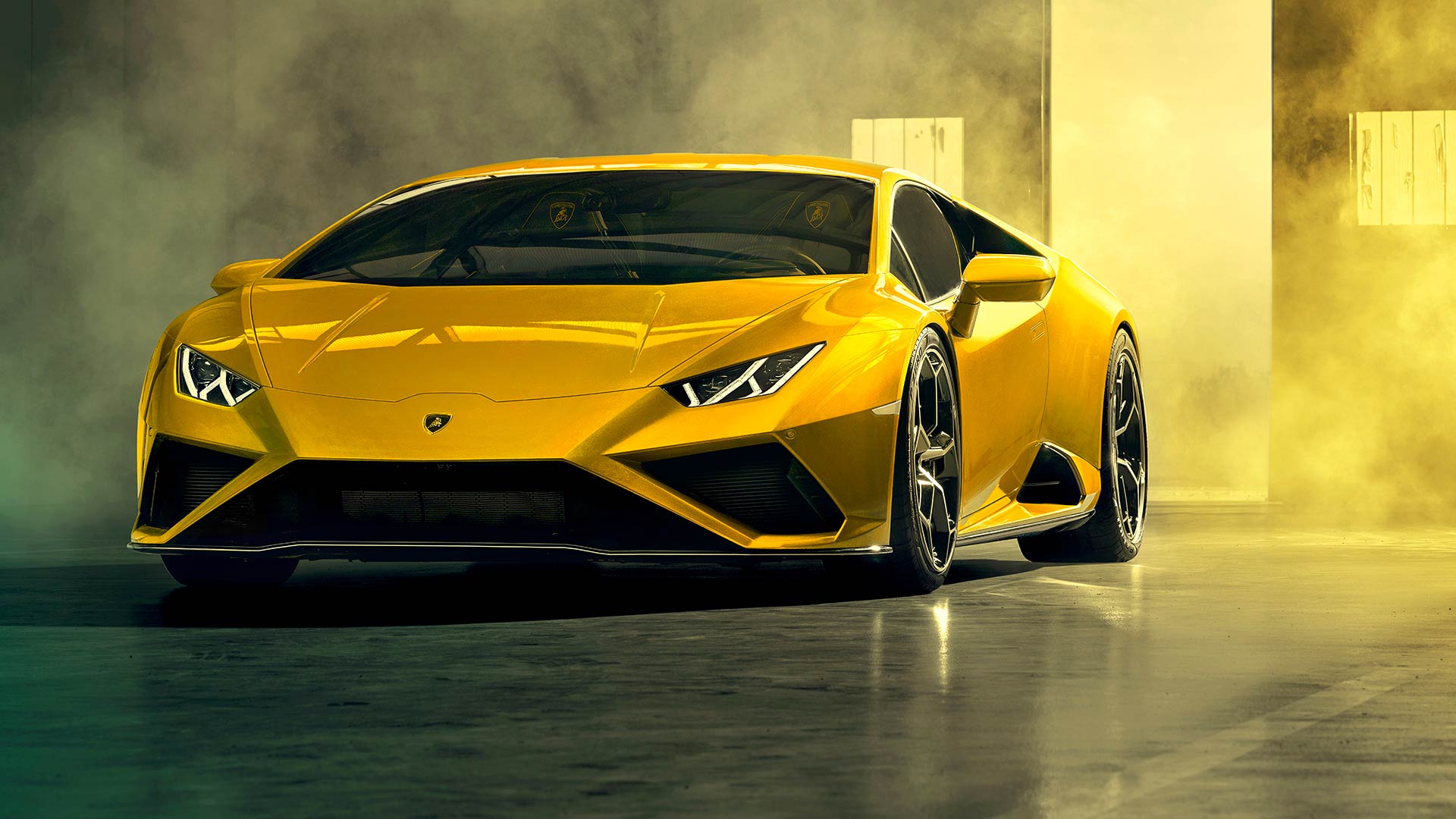
Lamborghini has promised more driving enjoyment with a new rear-wheel drive version of the Huracan Evo supercar.
Although the Huracan Evo RWD may have less power than its all-wheel drive brethren, Lamborghini is keen to point out that it also weighs less.
Unique design elements, and a revised traction control system, are all included to make the RWD model even more fun.
Ten cylinders of driving enjoyment
Sitting in the middle of the Huracan Evo RWD is the same V10 engine as found in the AWD version, but tuned differently. For the rear-drive car, power has been reduced by 30 hp to ‘just’ 610 hp.
Torque has also fallen slightly, with peak twist now recorded as 413 lb-ft compared to 442 lb-ft in the all-wheel drive Huracan Evo.
Lamborghini’s seven-speed paddle-shift dual clutch transmission is in charge of managing all the power, with no manual version on offer. Launch control is included to allow maximum acceleration from a standing start.
Less weight, (slightly) less performance
Whilst the Huracan Evo RWD may have less power than the AWD model, sending power to only the rear axle does come with a weight saving. On the scales the new rear-wheel drive version records a dry weight of 1,389 kg (3,062 lb), meaning a 33 kg (73 lb) reduction.
Outright performance is slightly lower in the Huracan Evo RWD, with 0-62 mph now taking 3.3 seconds. Accelerating to 124 mph takes 9.3 seconds, with the rear-wheel drive car still posting a more than adequate top speed of 202 mph.
Lamborghini is keen to point out that the Huracan Evo RWD is about having fun in corners, rather than in straight lines. The revised Performance Traction Control System (P-TCS) has been tailored to allow for better control during drifting.
Oversteer enhanced by 30 percent
Unlike most traction control setups, P-TCS delivers torque to the rear wheels even as the car is still sliding sideways. Doing so allows the driver to maintain better control of lairy drifts, and achieve better traction when exiting a corner.
A number of different settings for P-TCS are also included. Strada focuses on maintaining traction on the street, whilst engaging Sport mode on the Anima controller allows for a degree of rear-wheel sliding.
Finally, going all-out in Corsa mode allows for maximum rear-wheel slip and rapid cornering performance. Lamborghini also states that the revised P-TCS is 30 percent smoother than in the previous rear-wheel drive Huracan, and offers 30 percent more oversteer.
New design, new paint
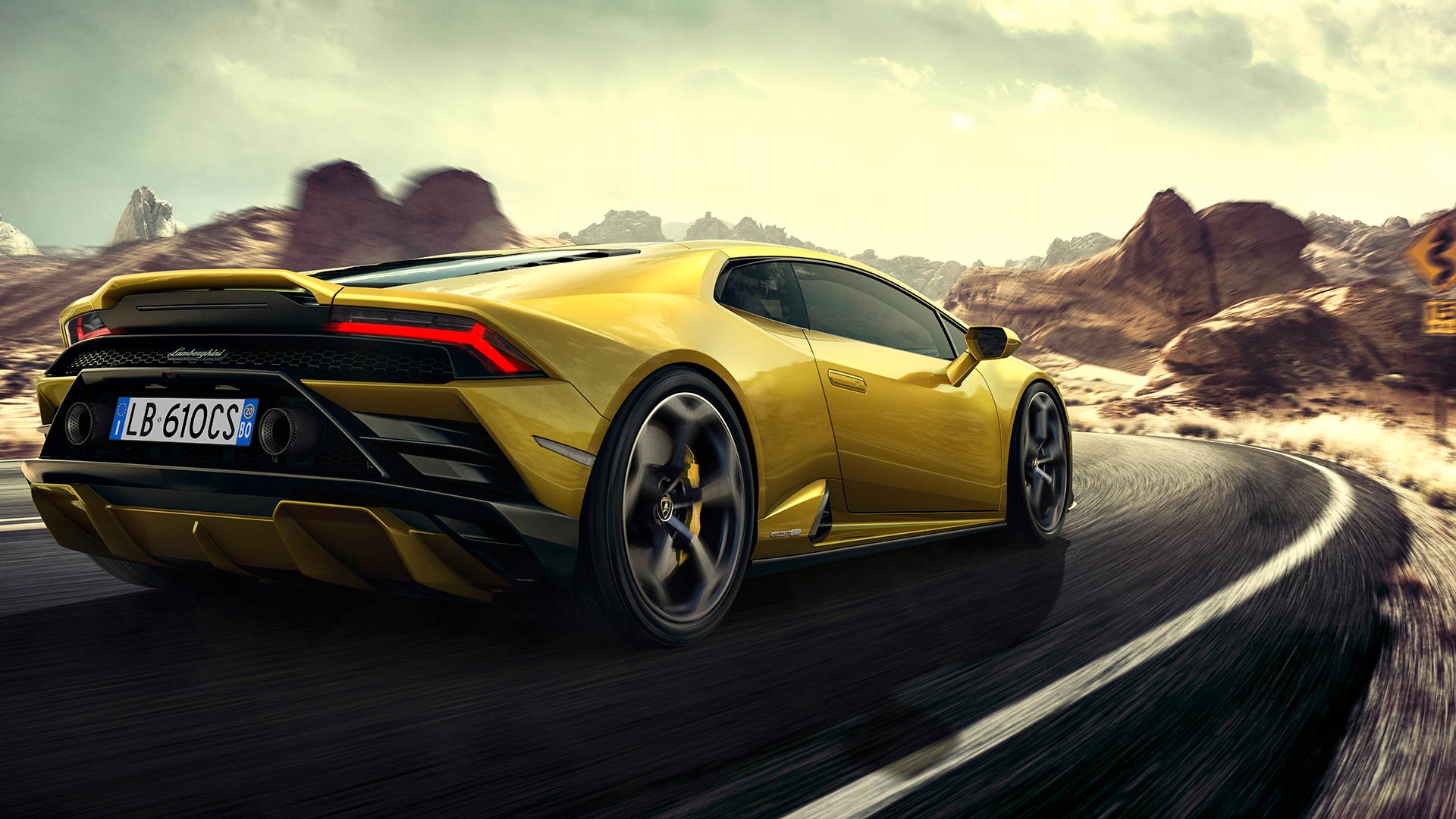
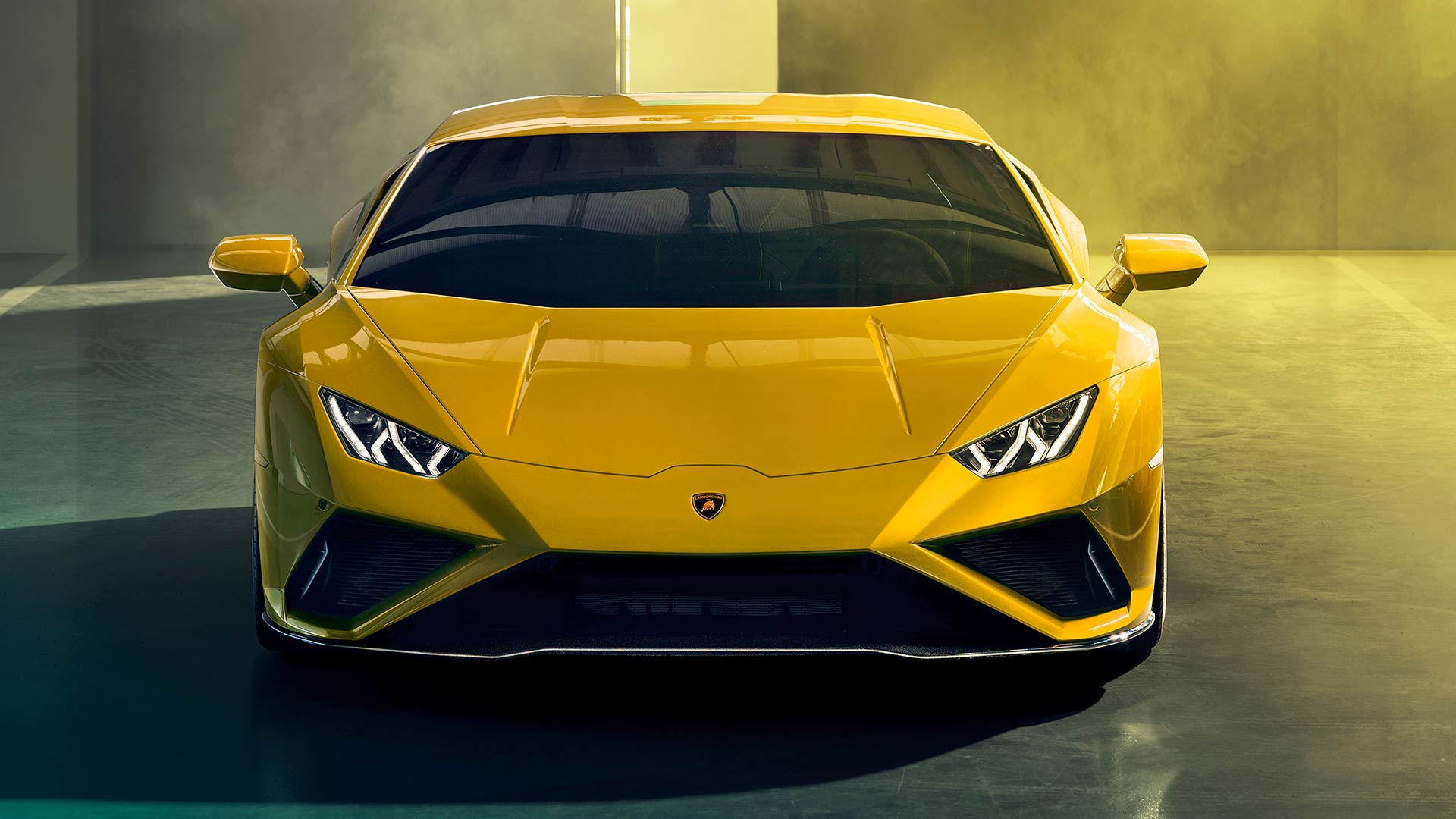
For the new Huracan Evo RWD, Lamborghini has also included bespoke design features. The front bumper gains a new splitter and framed air intakes, whilst the rear bumper is finished in gloss black with a large diffuser.
New 19-inch alloy wheels are fitted, combined with specially-developed Pirelli P Zero rubber. Ventilated and cross-drilled steel brakes are standard, with carbon-ceramic units available as an option. Buyers can opt for larger 20-inch wheels should they so desire.
Lamborghini has also developed a new paint shade to show off the design of the RWD car. The Giallo Belenus (yellow) hue is also matched to the upholstery used for the leather and Alcantara trim inside the Huracan.
A relatively more affordable Lamborghini
Despite the new technology, new paint, and bespoke exterior design elements, the Huracan Evo RWD costs less than the all-wheel drive version.
Prices begin at £137,000 ($208,571) before taxes for the Evo RWD, compared to the £165,256 ($261,274) charged for the AWD car.
Lamborghini is accepting orders for the Huracan Evo RWD now, with the first deliveries expected to be made to customers in Spring 2020.
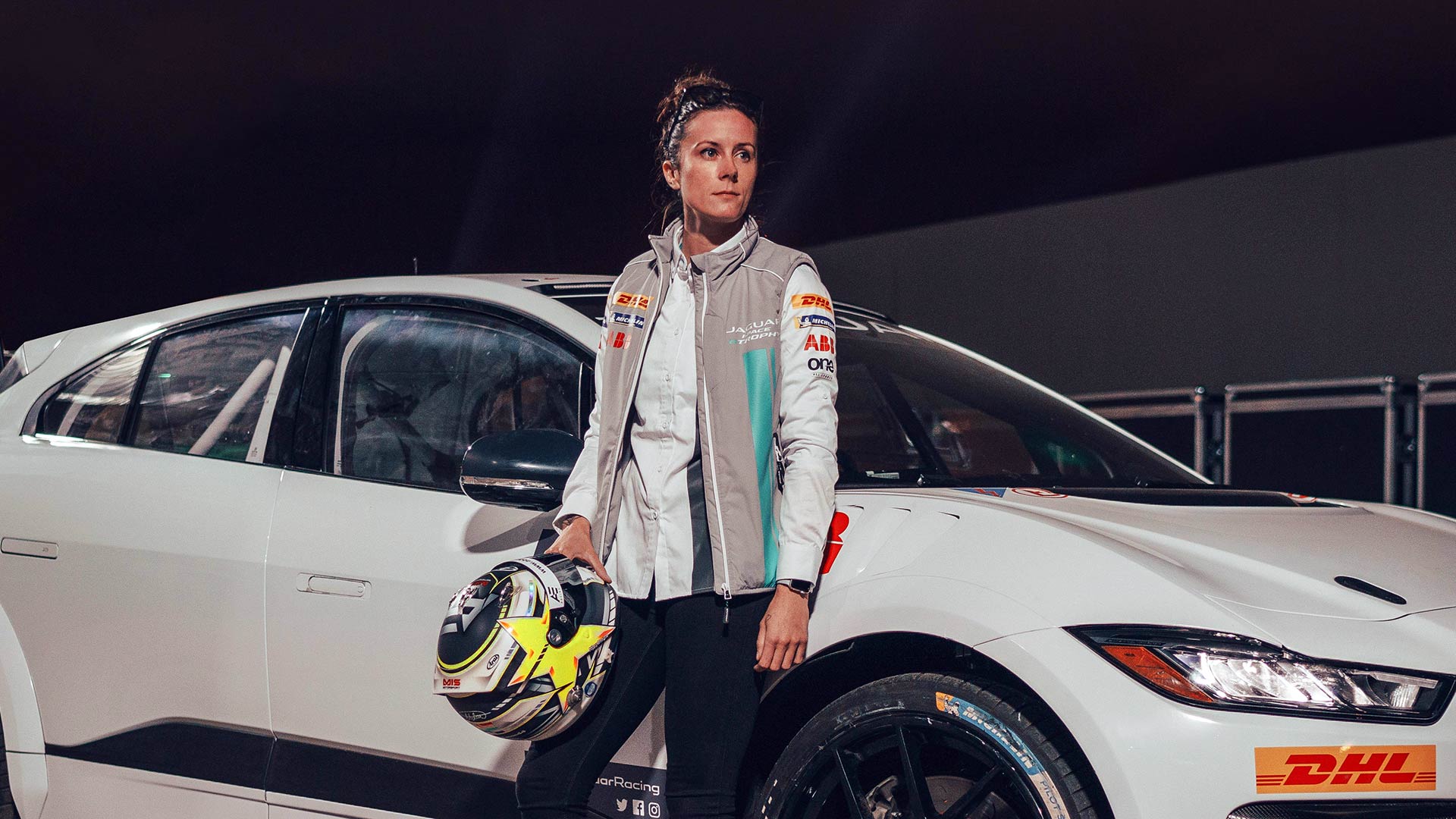
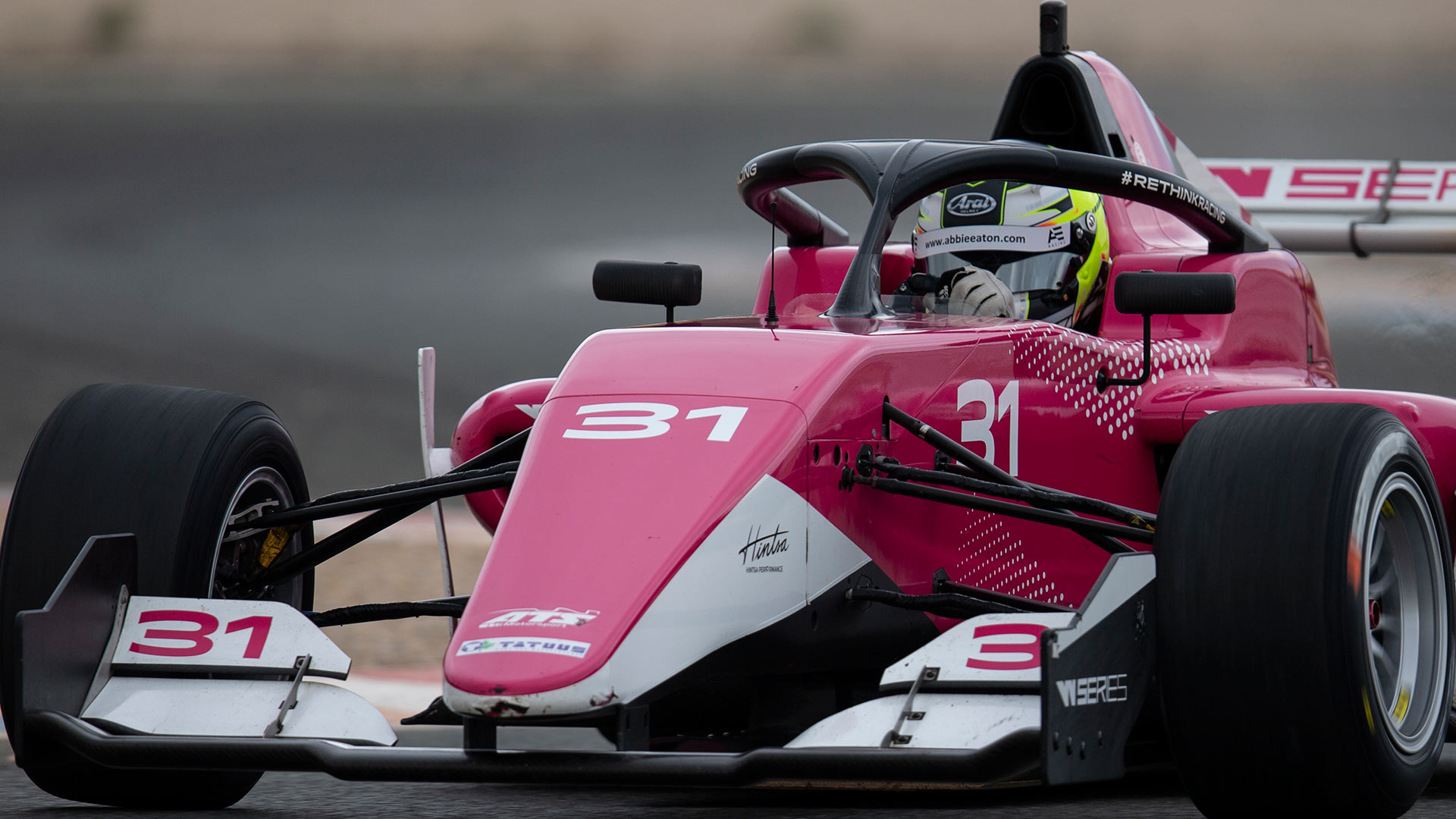
British racing driver Abbie Eaton has helped raise more than £1,500 to help those affected by the terrifying bushfires in Australia.
Eaton, who has qualified for the all-female W Series single-seater championship in 2020, used her birthday to make a plea for charitable donations.
Tweeting a link for crowdfunding website JustGiving to her 71,000 Twitter followers, Eaton managed to rack up more than 80 donations in less than 24 hours.
Thank you to everyone for your birthday messages! 😊
For a birthday gift, please donate to my Just Giving page to help raise money to help in NSW bush fires splitting the donations with the Rural Fire Services and the WWF to help the animals ❤️https://t.co/JF0Z1LtYVa
This has smashed the original target of raising £1,000, which Eaton plans to split between the New South Wales Rural Fire Service and the World Wildlife Fund.
The 27-year-old racer, originally from Hull, has previously competed in Australia. Last year she entered the Super2 Series, which acts a development championship for the premier Australia Supercars Championship.
Sponsorship issues unfortunately stopped her involvement after the opening rounds at the Adelaide 500, where Eaton achieved a best finish of 14th in the first race.
2020 should hopefully bring Eaton greater success, having qualified for the W Series. Intended to promote female racing drivers, Eaton was one of the six who impressed assessors at an intensive three-day track test to earn a place on the grid.
Eaton, who began karting aged 10, has competed in numerous championships during her motorsport career. This has included taking the drivers’ title in the 2009 Production Touring Car Championship, and winning the 2014 Mazda MX-5 SuperCup.
She has also worked as a driver coach and motorsport instructor, and appeared on the second and third series of Amazon’s The Grand Tour. Eaton replaced Mike Skinner as the test driver responsible for setting lap times around the Eboladrome circuit.
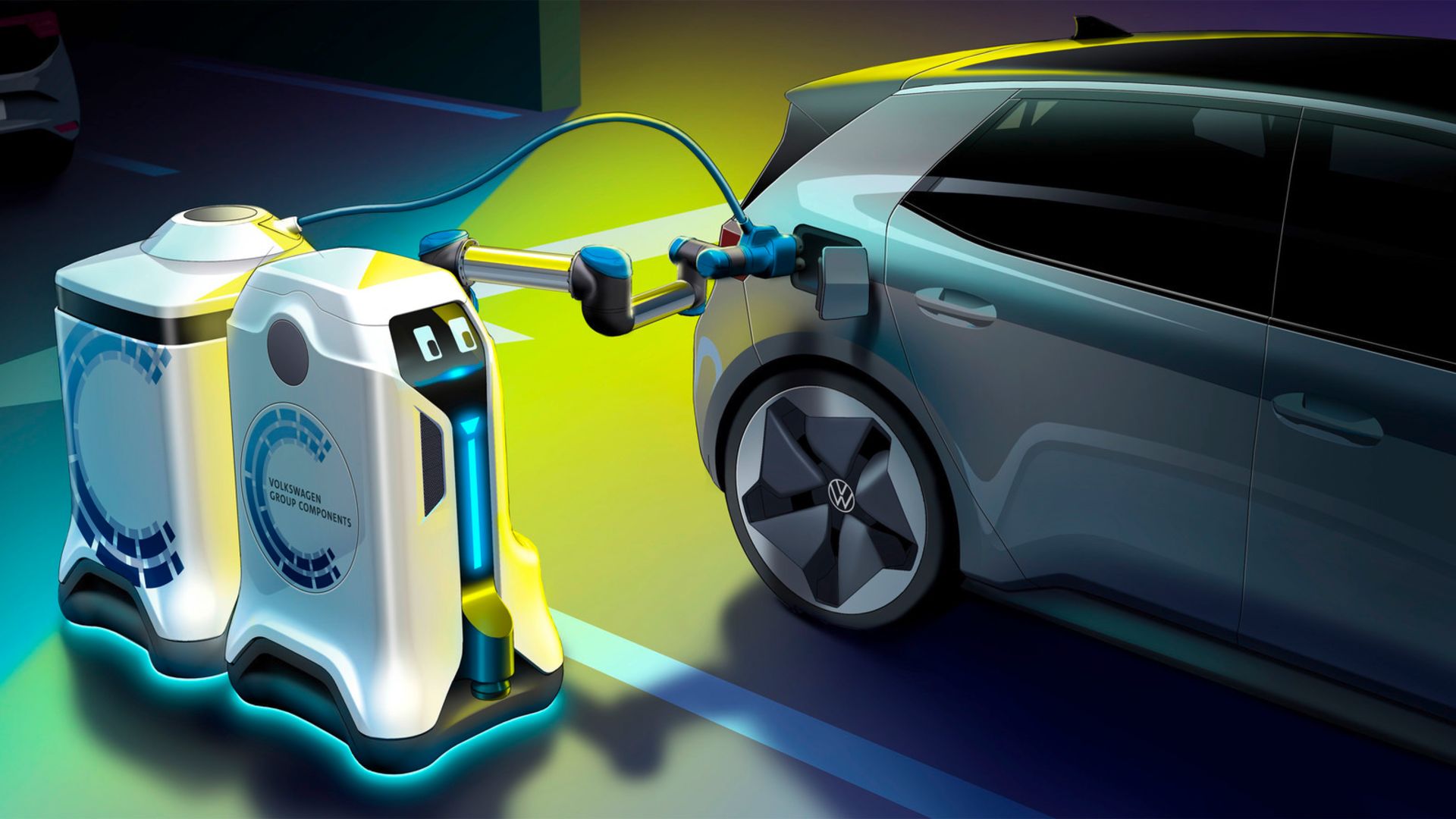
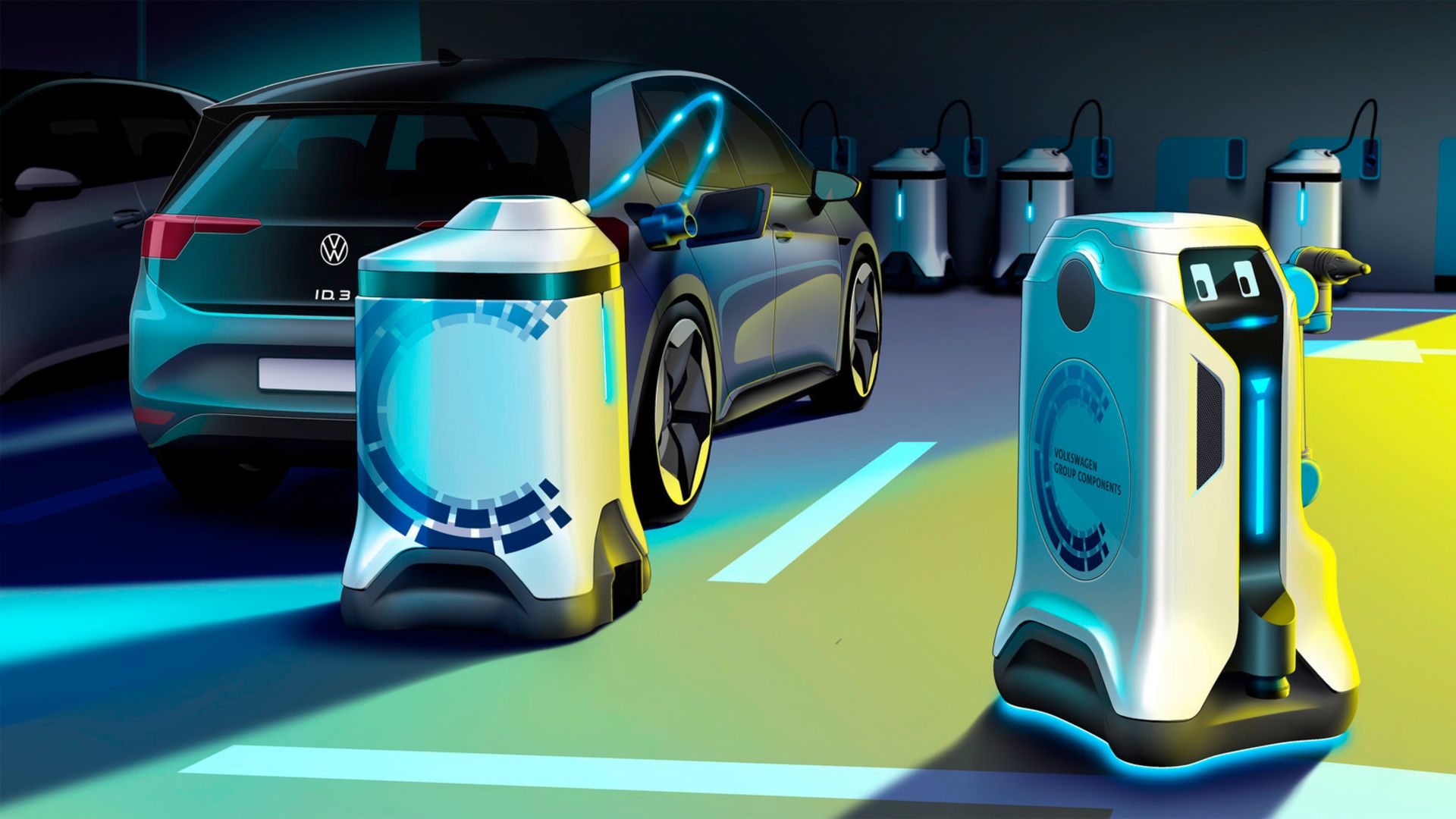
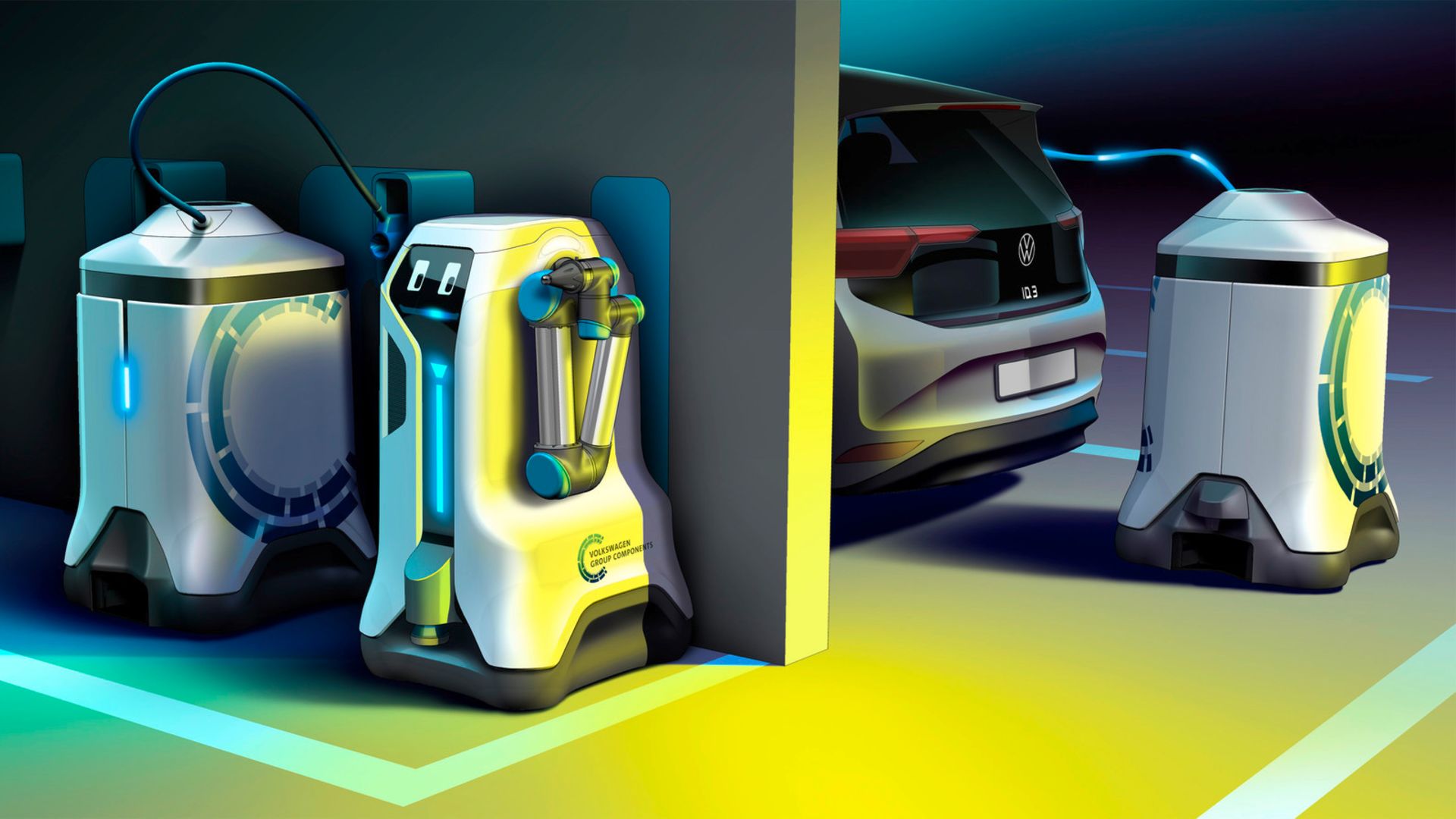
Volkswagen plans to deploy autonomous robots to charge up electric cars in car parks. The mobile robots are one solution to the problem of finding a charging point. Why not have the charging station search for you?
Activated via app or ‘vehicle-to-X’ communication, the robot drives itself to your car autonomously. The car’s charge flap opens, it plugs in, tops up the electricity, unplugs and then departs – all on its own. It has this capability thanks to a suite of cameras, laser scanners and ultrasonic sensors. Volkswagen is confident the robots will be suitably compact to thread between cars that are parked.
Each robot brings with it a trailer that has a power bank on board. Once plugged in via its flexible arm, it leaves to go and ‘serve’ other cars. The banks can charge at speeds of 50kW with DC quick charging, and will carry around 25kWh each. For the highest-capacity 77kWh Volkswagen ID.3, that’s just over three banks to fill it from empty.
“The mobile charging robot will spark a revolution when it comes to charging in different parking facilities, such as multi-storey car parks, parking spaces and underground car parks, because we bring the charging infrastructure to the car and not the other way around,” says Mark Möller, head of development at Volkswagen Group Components.
“With this, we are making almost every car park electric, without any complex individual infrastructural measures. It’s a visionary prototype, which can be made into reality quite quickly, if the general conditions are right.
“Even the well-known problem of a charging station being blocked by another vehicle will no longer exist with our concept. You simply choose any parking space as usual. You can leave the rest to our electronic helper.”
The charging robot is just one of a selection of innovative solutions that Volkswagen is actively working on.
Are robots really the answer?
Much as the idea of charging robots with eyes – yes, we think those are eyes – sounds fun, is it actually a practical solution to the charging infrastructure problem? Actually, it could be. Consider how long it would take to build a fleet of robots, compared with how long it would take to retrofit or construct static charging points.
Mobile charge points that come to you could be a much easier-to-implement solution, which can adapt to the facilities we have today.
Auction website Bring a Trailer (BaT) has established itself as a popular place for spotting trends in the enthusiast market. The team at BaT pick the cars to appear on the site, but sometimes even they are surprised by the prices achieved.
This collection of ten cars and trucks proved to be even more successful than expected during 2019.
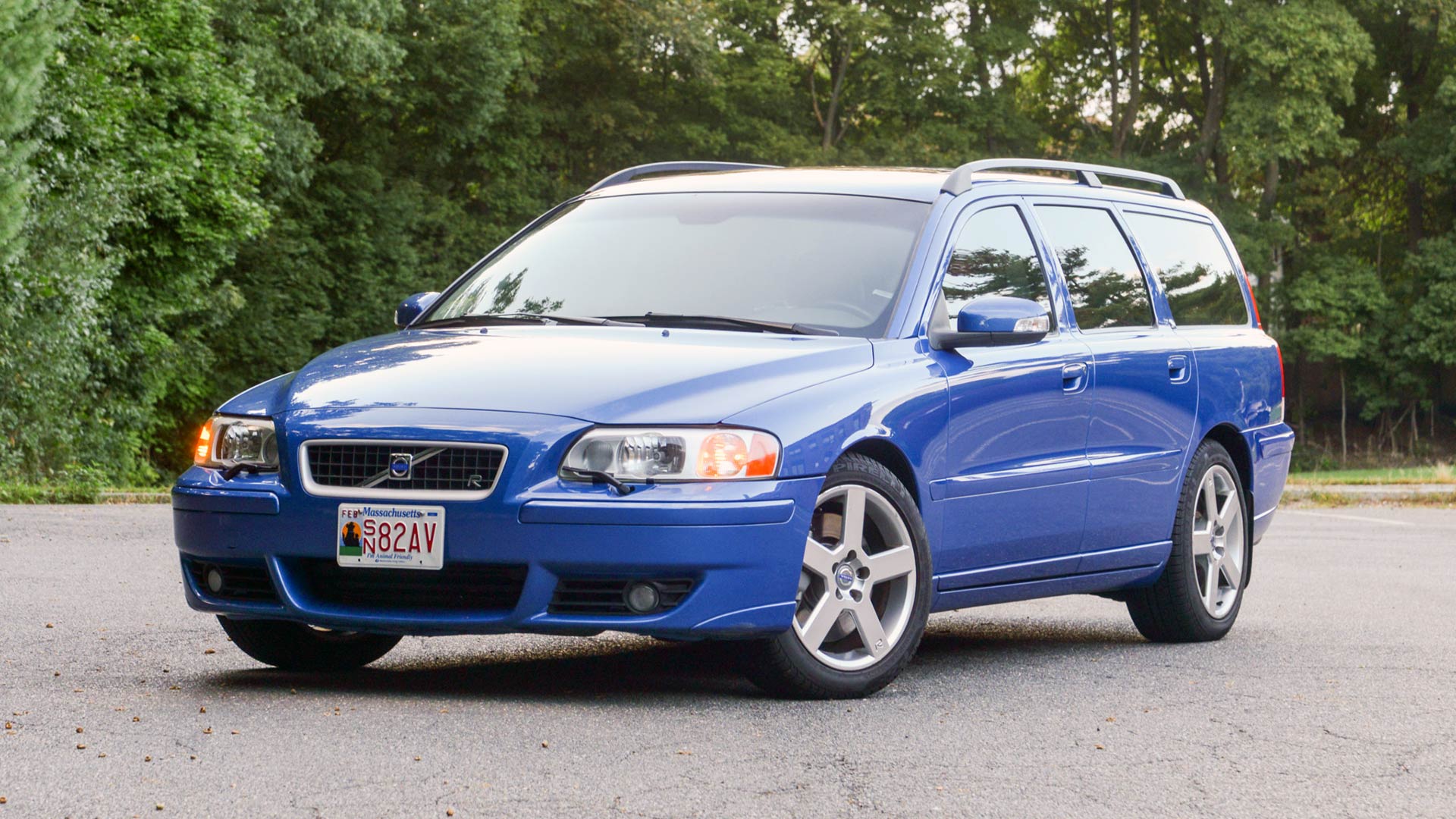
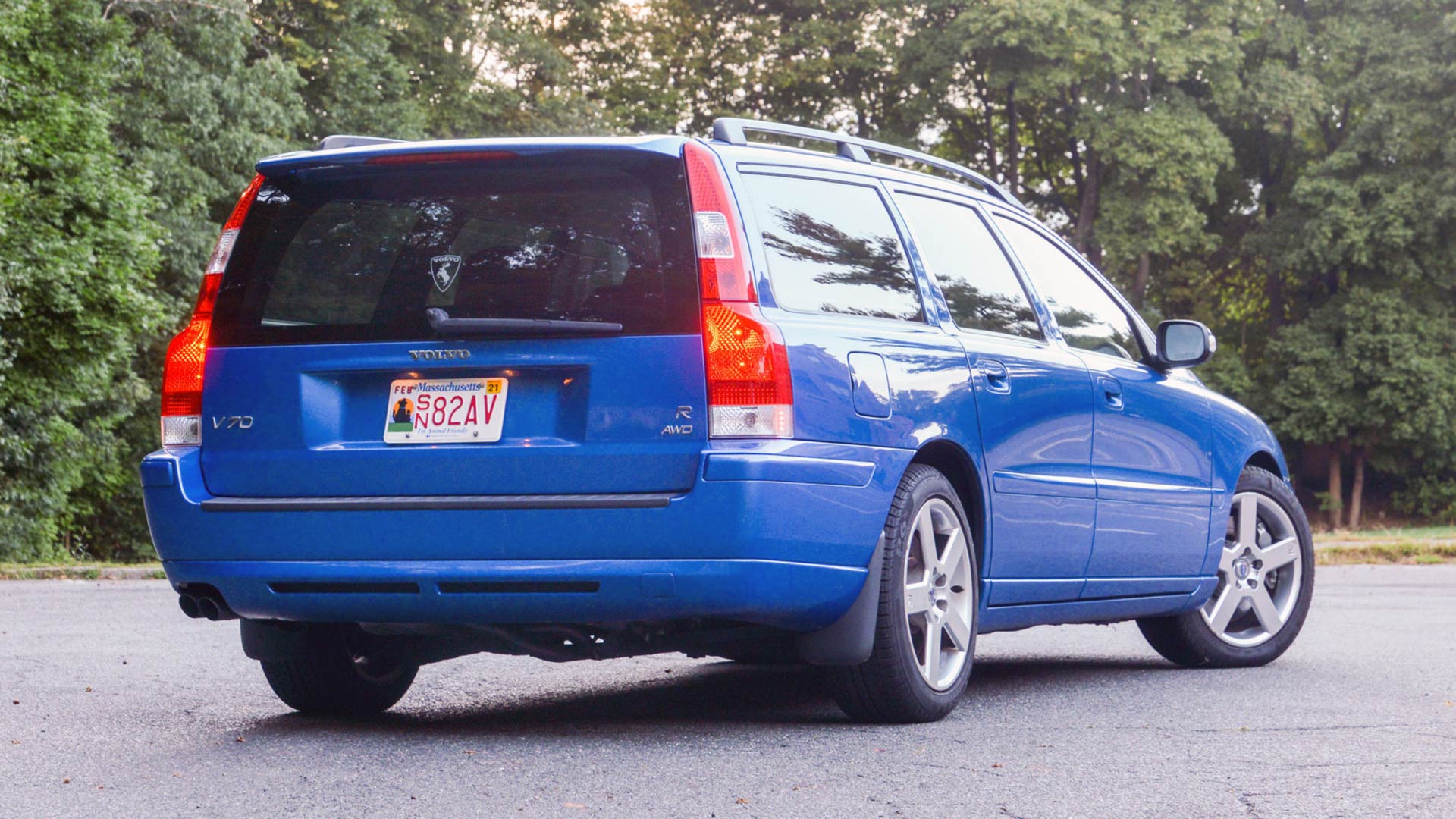
Kicking things off is a quick, and very blue, Swedish wagon. The second-generation Volvo V70 comes from a time when products from Gothenburg were still led by practicality. Originally shown at the 2002 Paris Motor Show the V70 R promised turbocharged performance, combined with all-wheel drive, for useful performance.
At the heart of the V70 R is a 2.5-liter five-cylinder turbocharged engine, producing 296 horsepower and 295 lb-ft of torque. The particular car sold on BaT was fitted with a six-speed automatic transmission, whilst all V70 R models came with adjustable Ohlins suspension. Brembo brakes and R-branded 17-inch wheels completed the package.
Volvo only imported 3,400 examples of the V70 R to North America, making them relatively rare. Having covered 53,000 miles, and with just two owners, it meant this Sonic Blue example was desirable to BaT bidders. Perhaps the distinctive orange/brown leather interior was what helped seal the deal.
When sold previously on Bring a Trailer, V70 R models have typically reached a maximum of around $16,000. It makes this particular car something of a shock, although the low mileage and intriguing color combination may well have played a part in raising the bid ceiling.
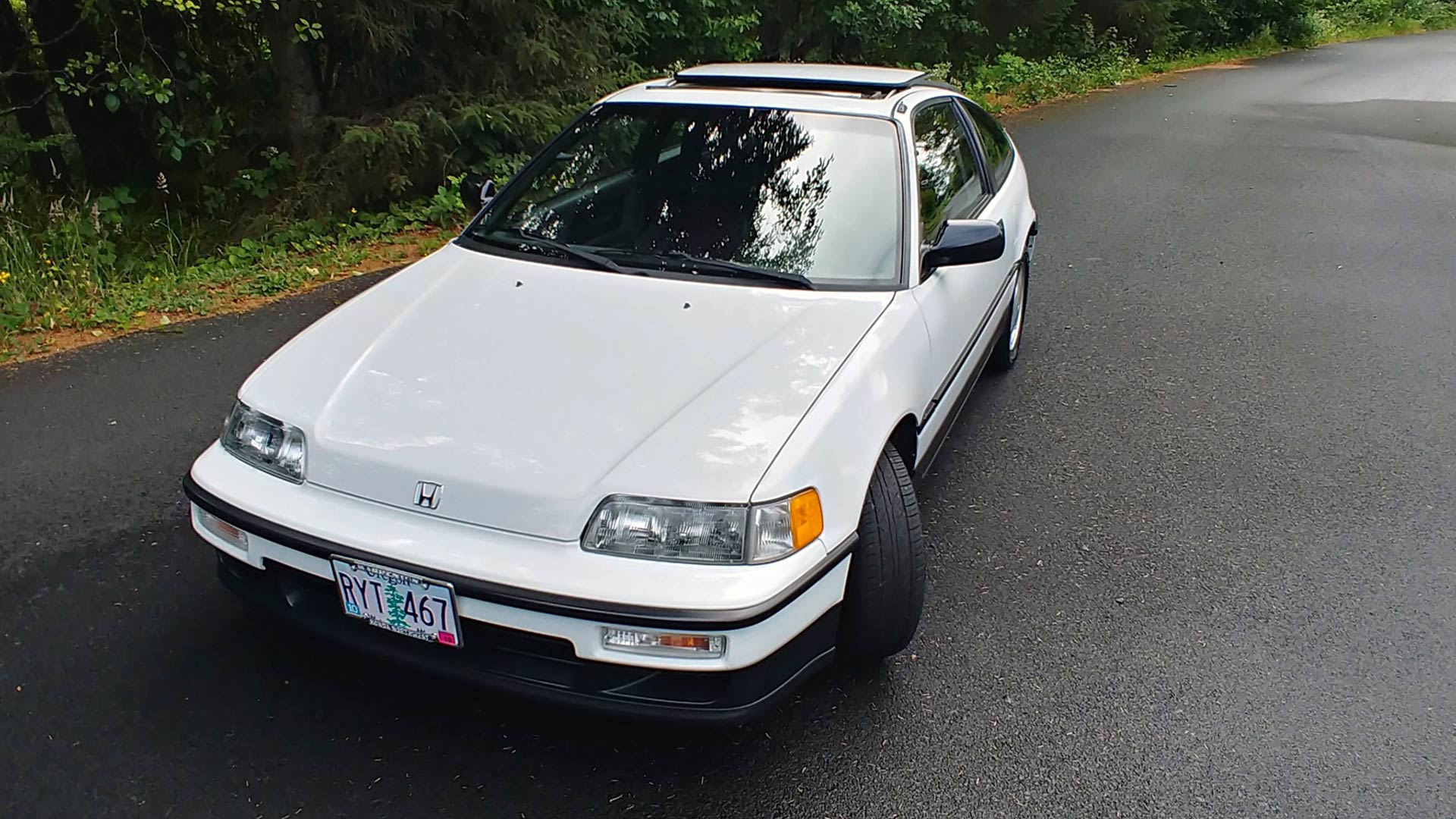
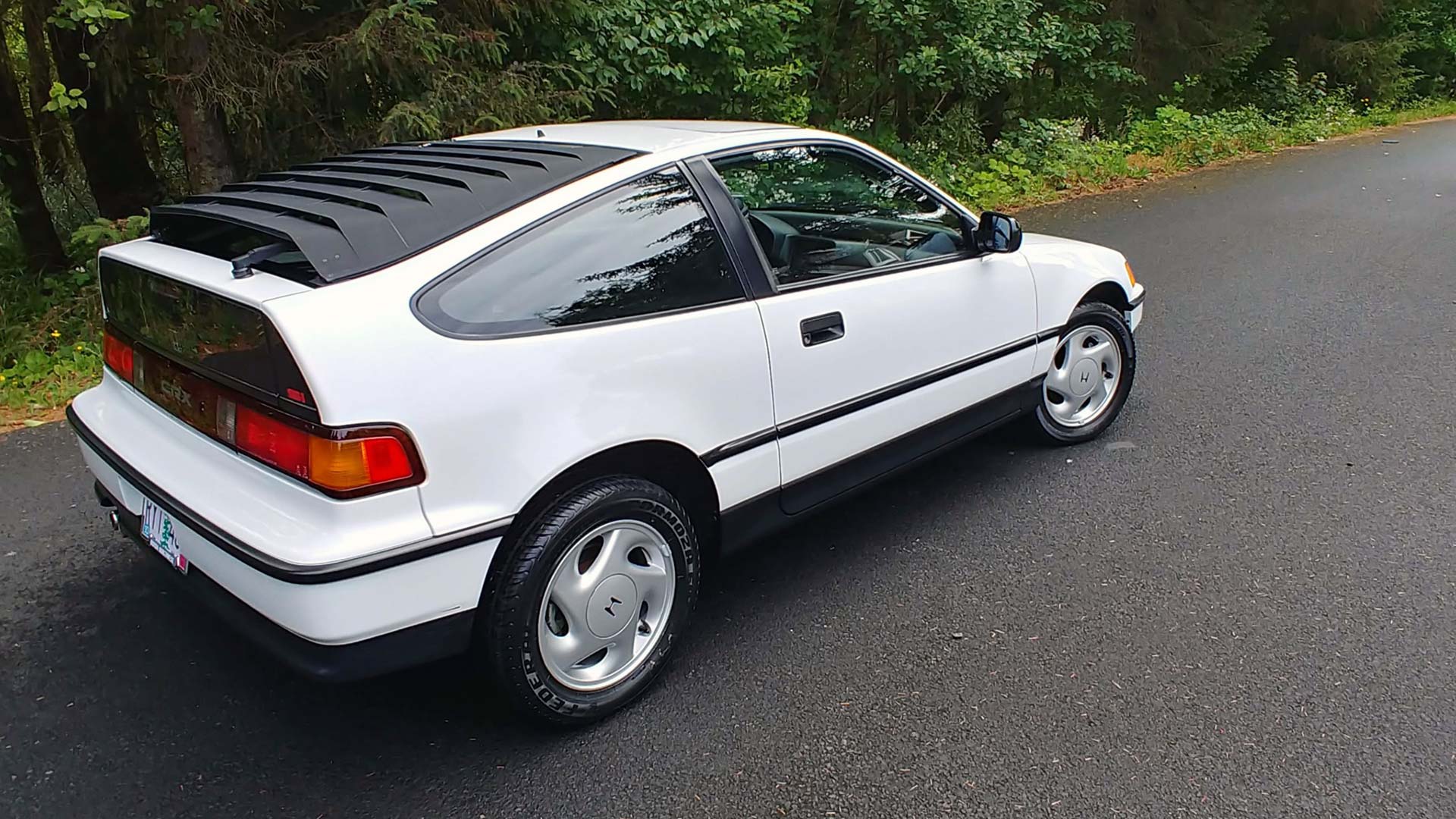
1991 Honda CR-X Si
Sale price: $33,600
Nostalgia for the 1980s and early-1990s is in full effect at the moment, and the world of enthusiast cars is no different. It means examples of retro tuner vehicles like the Honda CR-X have become collectible, as buyers flock to the combination of low weight and high revs.
Launched in 1989, the second-generation CR-X brought updated looks and upgraded suspension to the party. It proved to be a popular purchase, with the Si version in particular attracting interest with its 1.6-liter four-cylinder engine. An output of 108 horsepower may sound low, but it only needed to shift a car weighing 2,170 lb.
Despite their popularity, CR-X Si models have typically failed to edge much beyond the $10,000 marker on Bring a Trailer. Yet, in August this year, bidding pushed this particular Honda above the $30,000 barrier.
Mileage for this car was low, with only 33,000 miles showing on the odometer. Being unmodified will have helped increase the value, along with having the desirable five-speed manual transmission. Sure, you could buy a new 2020 Honda Civic Si for less money than this CR-X, but it wouldn’t have the same retro charm.
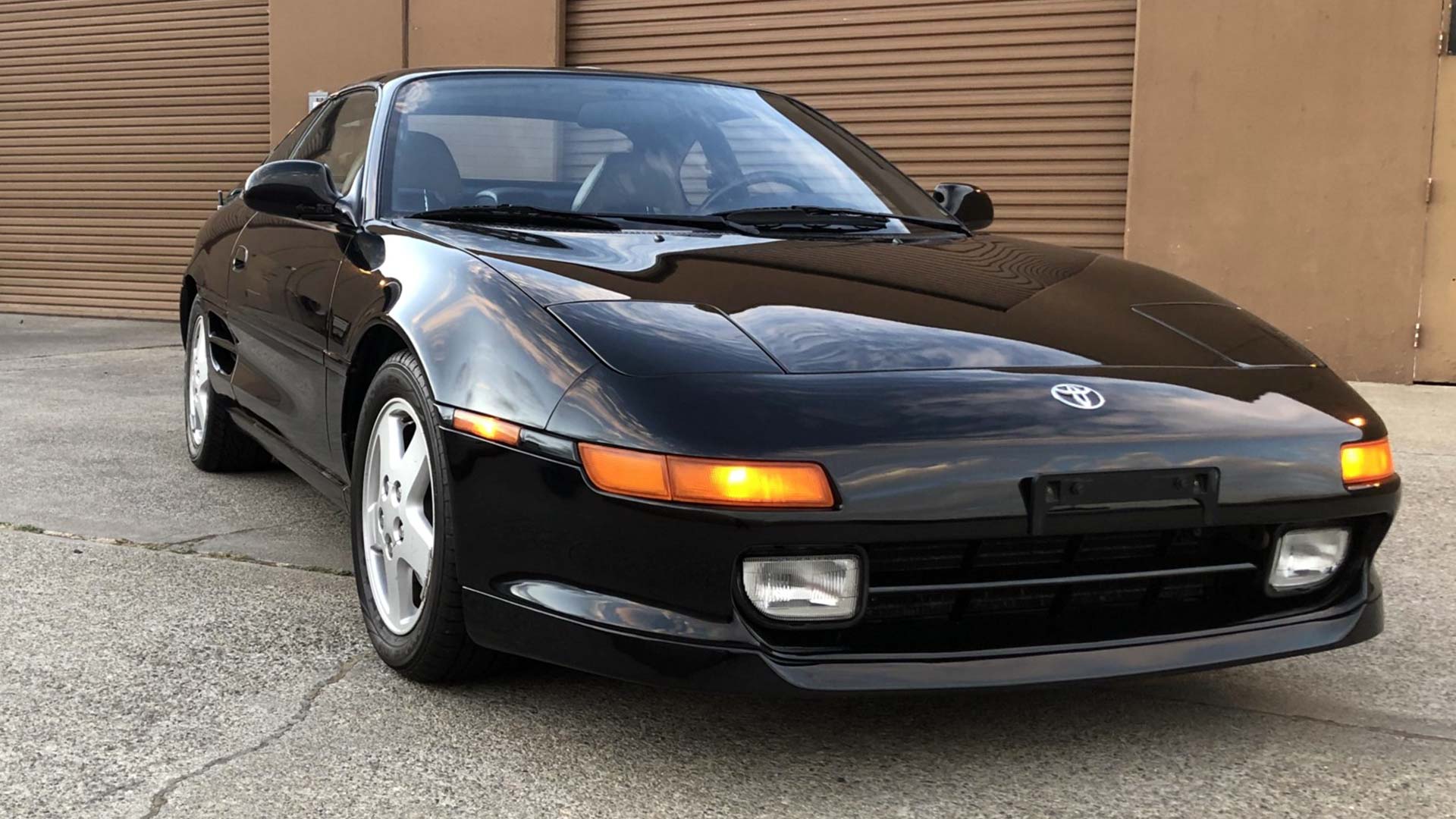
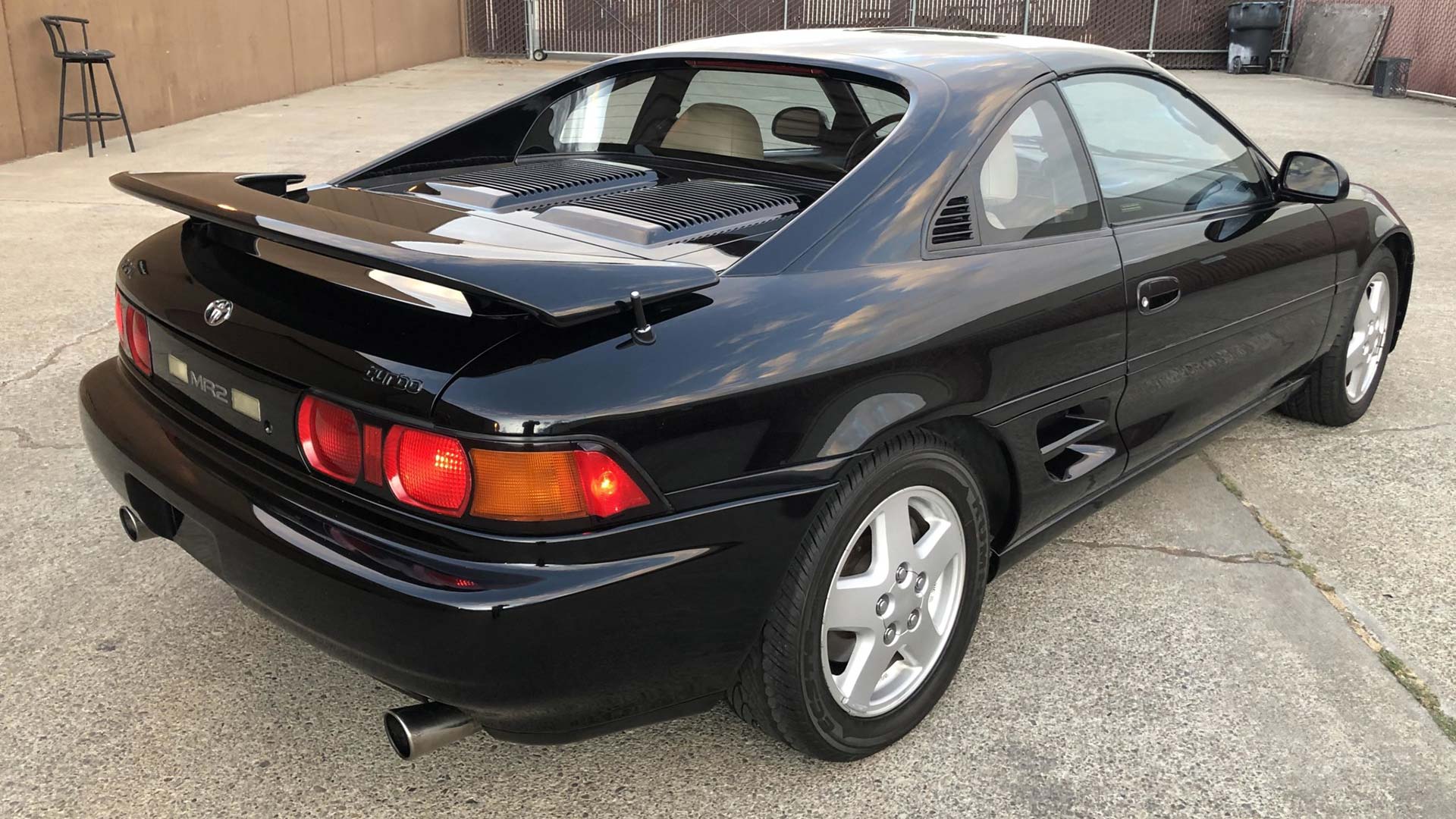
1994 Toyota MR2 Turbo
Sale price: $38,250
Continuing the theme of import tuner classics is the second-generation Toyota MR2. Styled like a supercar in miniature, and with performance to back up the looks, it proved to be an attractive package throughout the 1990s.
The MR2 developed a reputation for challenging handling, due to the mid-engined layout and power being sent to the rear wheels. In particular the Turbo model, with 200 horsepower from its 2.0-liter engine, often gets unfairly labelled as suffering ‘dangerous’ snap-oversteer.
In reality drivers pushing too hard, and being unfamiliar with the dynamics of a mid-engined car, are likely to be the cause of the moral panic…
Such scare stories clearly did not stop the bidders when this MR2 Turbo appeared for auction in December 2019. Being a 1994 model, this car received updated suspension settings from the factory, as Toyota made the handling less likely to oversteer.
An attractive color combination of black paintwork and a tan leather furthers the junior supercar appearance on this car. As with many listed here, clocking up just 46,000 miles adds to the desirability. Still, a sale price of $38,250 added $15,000 to the previous high-seller MR2 on Bring a Trailer.
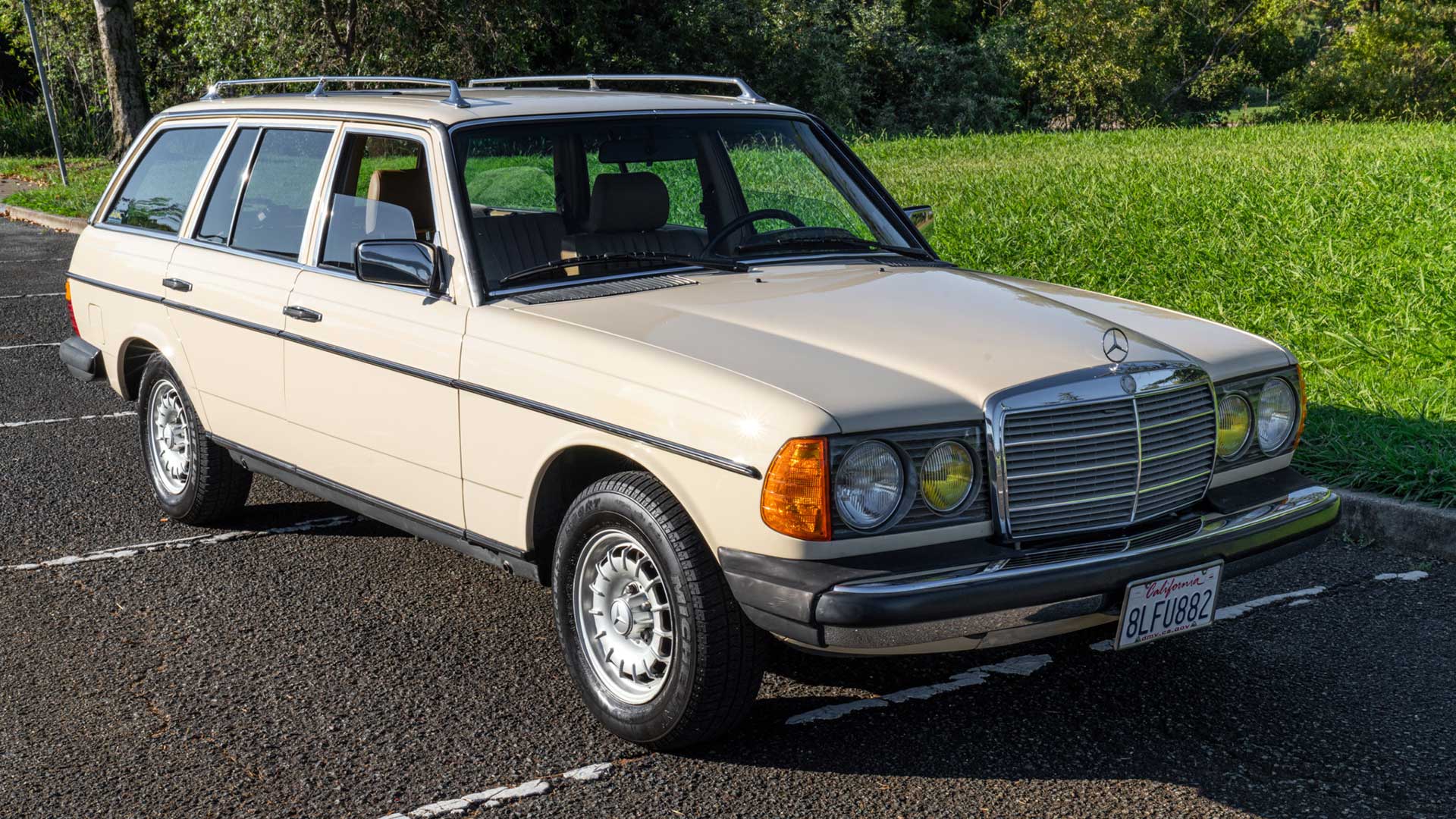
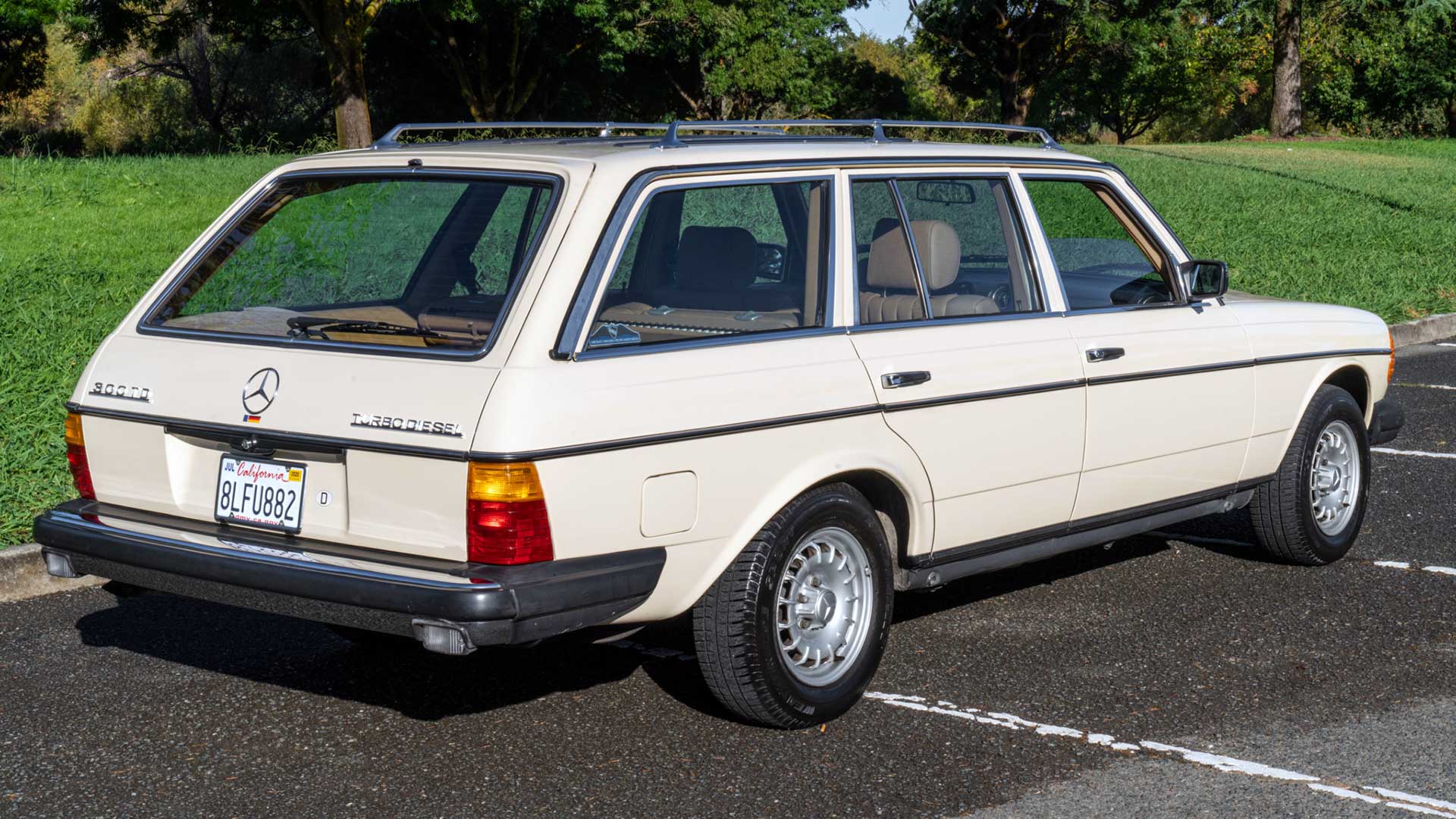
1985 Mercedes-Benz 300TD Turbodiesel
Sale price: $44,525
Cars like the W123 wagon are what helped carve out the image of Mercedes-Benz models having bulletproof reliability. Solid construction, a cabin made from quality materials, and large trunk have made them the family station wagon which keeps on giving.
Diesel may be a dirty word now, but the five-cylinder turbodiesel unit fitted to the 300TD wagon offered a useful 123 horsepower and 184 lb-ft of torque. 0-60 mph in 14 seconds made for laid-back performance, but fuel economy of 24 mpg was the benefit.
Values of W123 Mercedes-Benz models have shown an overall upwards trend on Bring a Trailer, but no car had previously passed beyond the $35,000 limit. What may have sealed the new highest-seller tag for this car is proven low mileage, and a detailed service history.
Given these cars are capable of comfortably clocking up more than 250,000 miles, this example is barely run in. The winning bidder now has an almost unbreakable family wagon, and an arguably much cooler alternative to buying a new SUV.
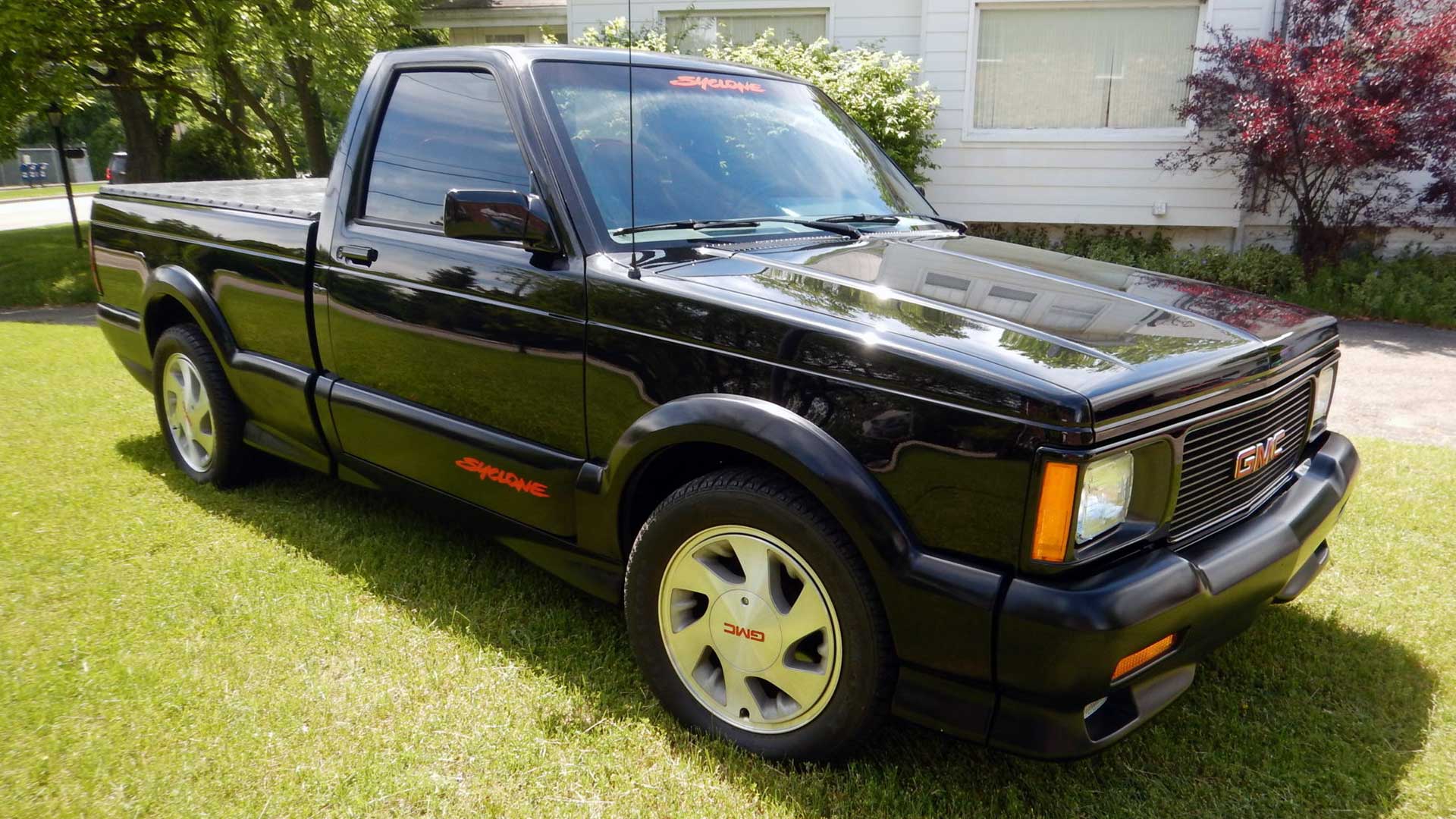
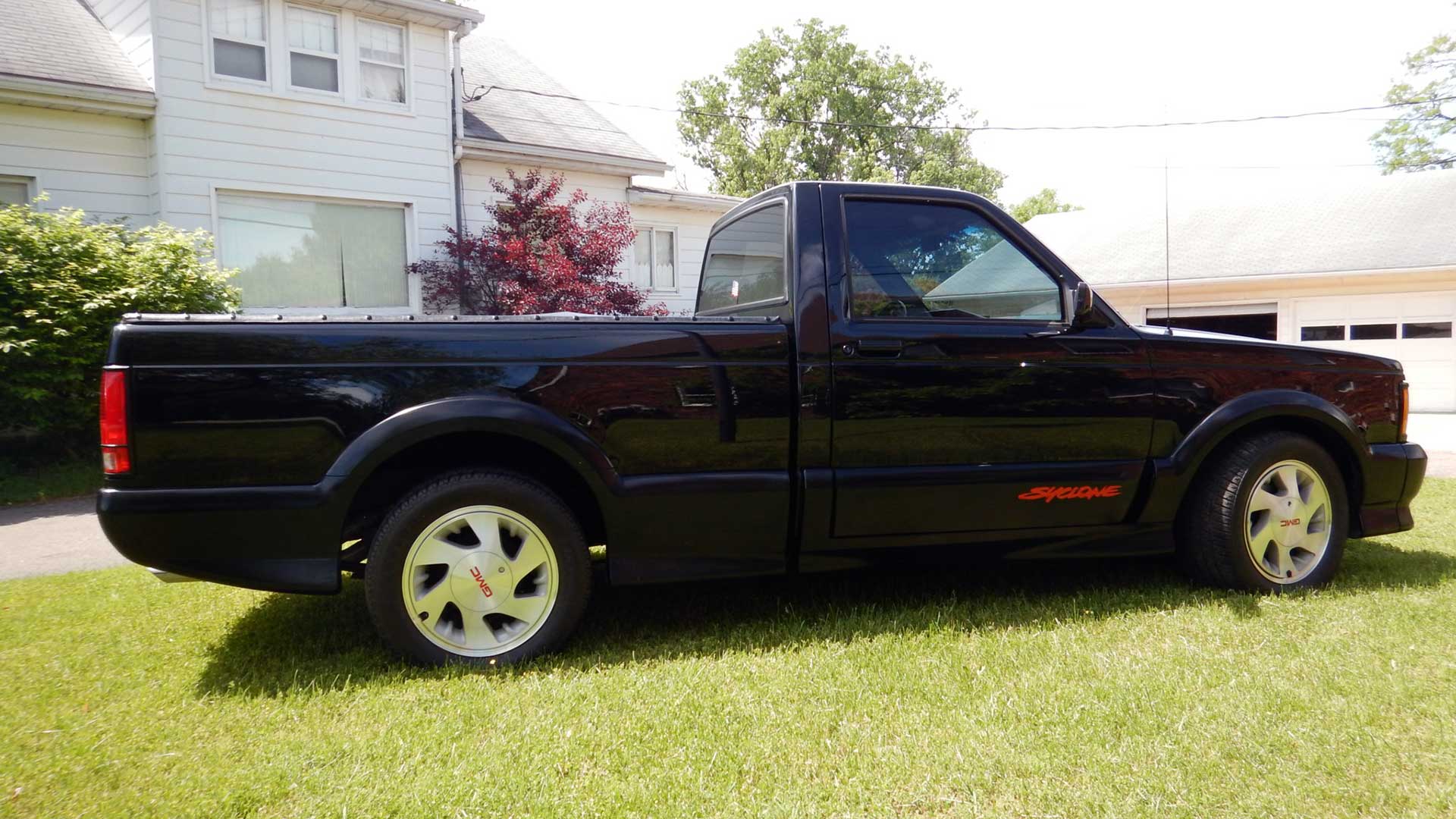
1991 GMC Syclone
Sale price: $50,000
The GMC Syclone has a clear cult following from enthusiasts, with appearances in various video games bringing it to a new audience in recent years. It proves that performance pickup trucks like the Ford F-150 Raptor are nothing new, and that American buyers will always be interested in them.
Like the recent Raptor, the GMC Syclone used a turbocharged V6 engine, making 280 horsepower and 350 lb-ft of torque. This output, combined with a standard all-wheel drive system, allowed it to accelerate from 0-60 mph in under 4.5 seconds. Contemporary road tests created tales of a pickup truck capable of beating supercars in a drag race.
Legendary stories of the GMC Syclone’s performance are matched by the limited production run. Originally planned to be built for several years, in fact just 2,995 examples were made for the 1991 model year. Such low numbers mean buyers have to be prepared to pay when Syclones appear for sale.
However, they are unlikely to find a Syclone that has covered less than the 4,000 miles shown on this example. Being owned by the same family from new also adds to the provenance, as does a VIN suggesting it could be the first Syclone sold to the public.
Such factors justify the $50,000 price tag, and explain why this truck achieved more than previous BaT record of $36,000 for a Syclone.
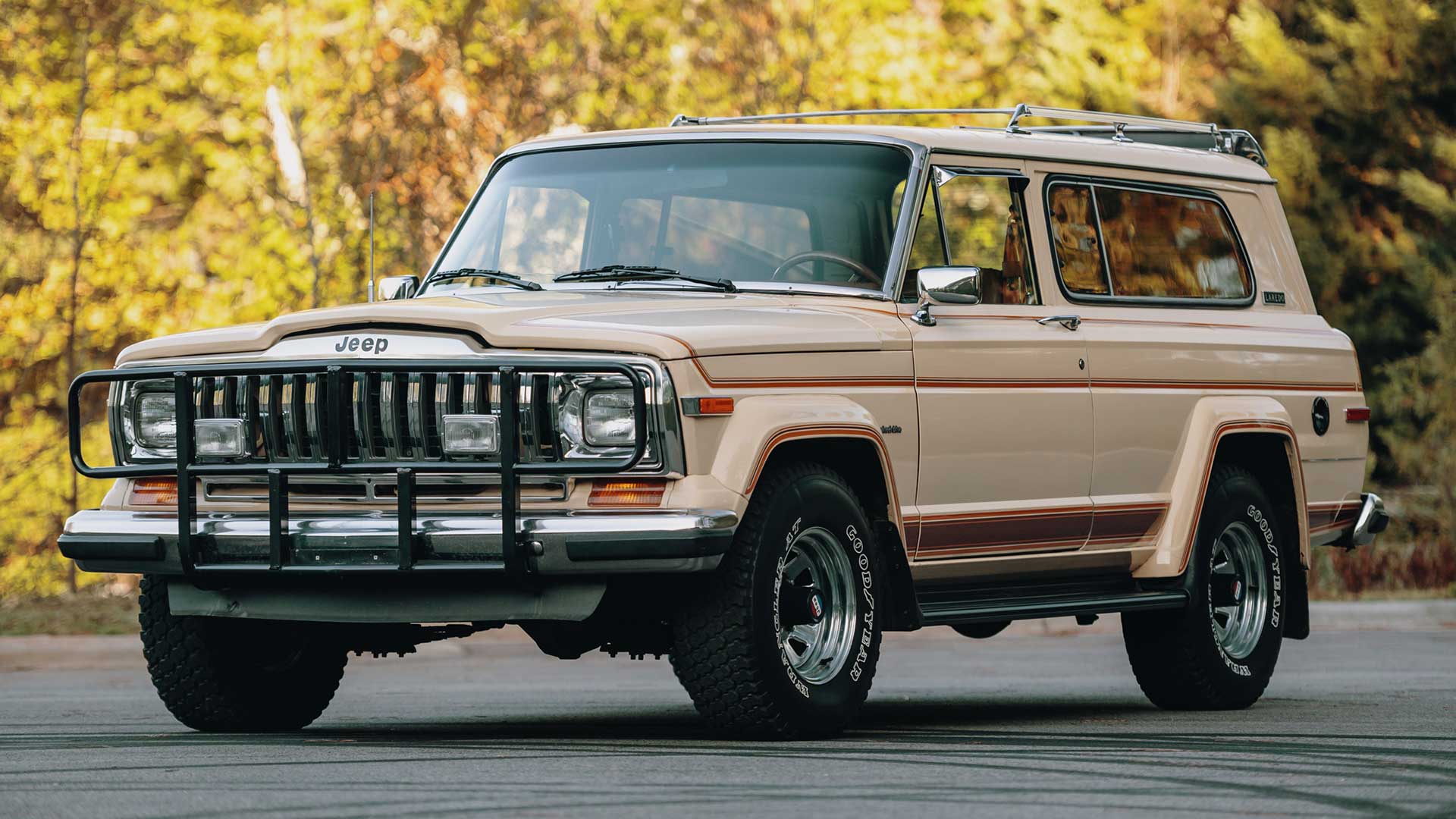
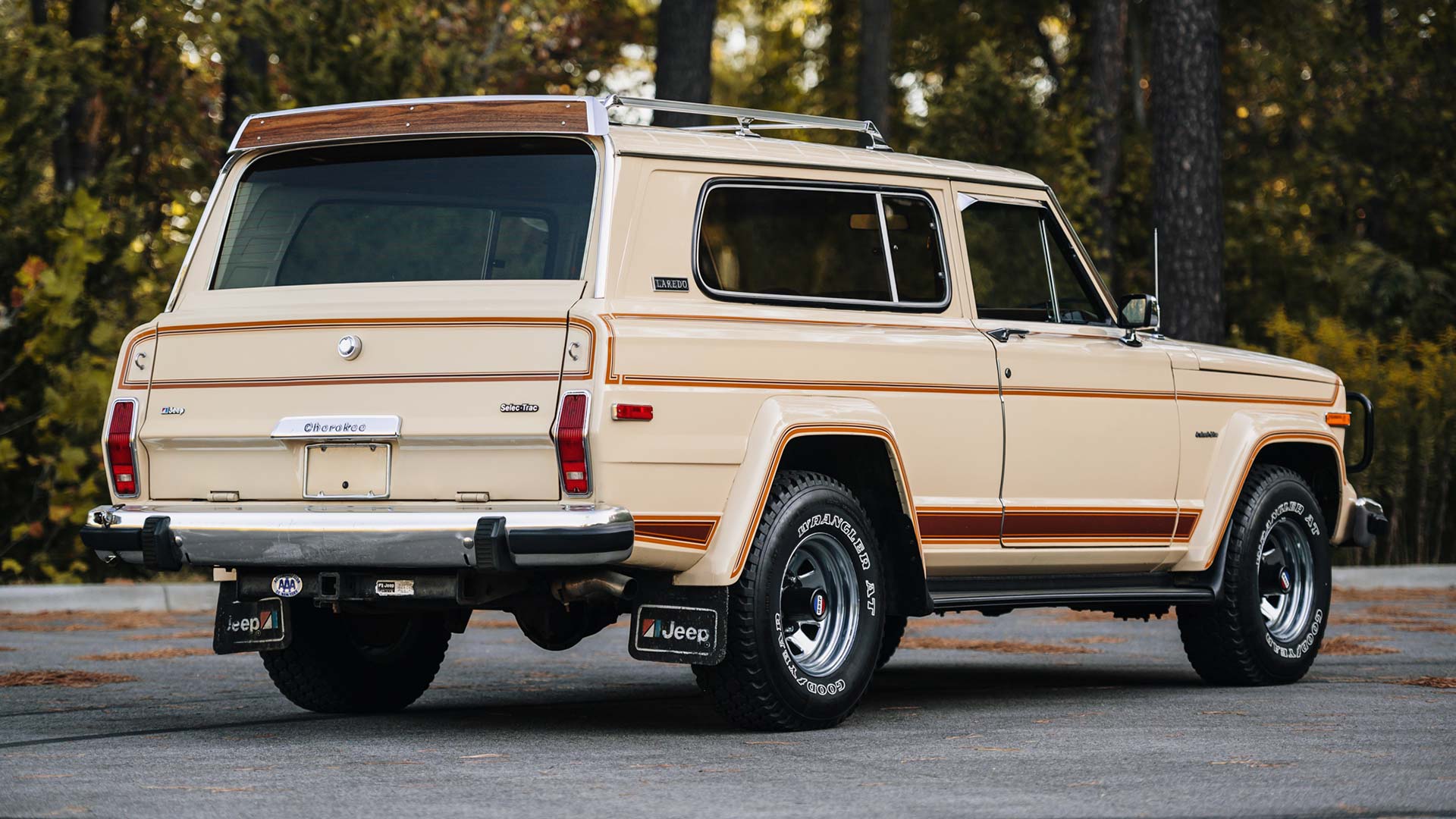
1983 Jeep Cherokee Laredo
Sale price: $51,360
With a lineage that stretches back to the original Jeep Wagoneer of 1963, the SJ series Cherokee was first introduced in 1974. Being a 1983 model makes this example the end of the line for SJ Cherokees, before the all-new XJ version debuted in 1984.
Essentially a two-door alternative to the full-size four-door Wagoneer, Jeep marketed the SJ Cherokee as the sporty alternative. Engine options included a range of V-8s, whilst option packages allowed buyers to create a luxurious SUV.
Despite the growing interest in retro SUVs, the sale price of this SJ Cherokee still proved to be a shock to Bring a Trailer regulars. Similar examples had sold for around $22,000, making the $51,360 paid for this SJ truly remarkable.
Being owned by the same family from new will have helped, as will the excellent condition the Cherokee was presented in. The winning bidder commented that the SJ will be off to spend a new life in New England, enjoying pampering and some occasional light usage.
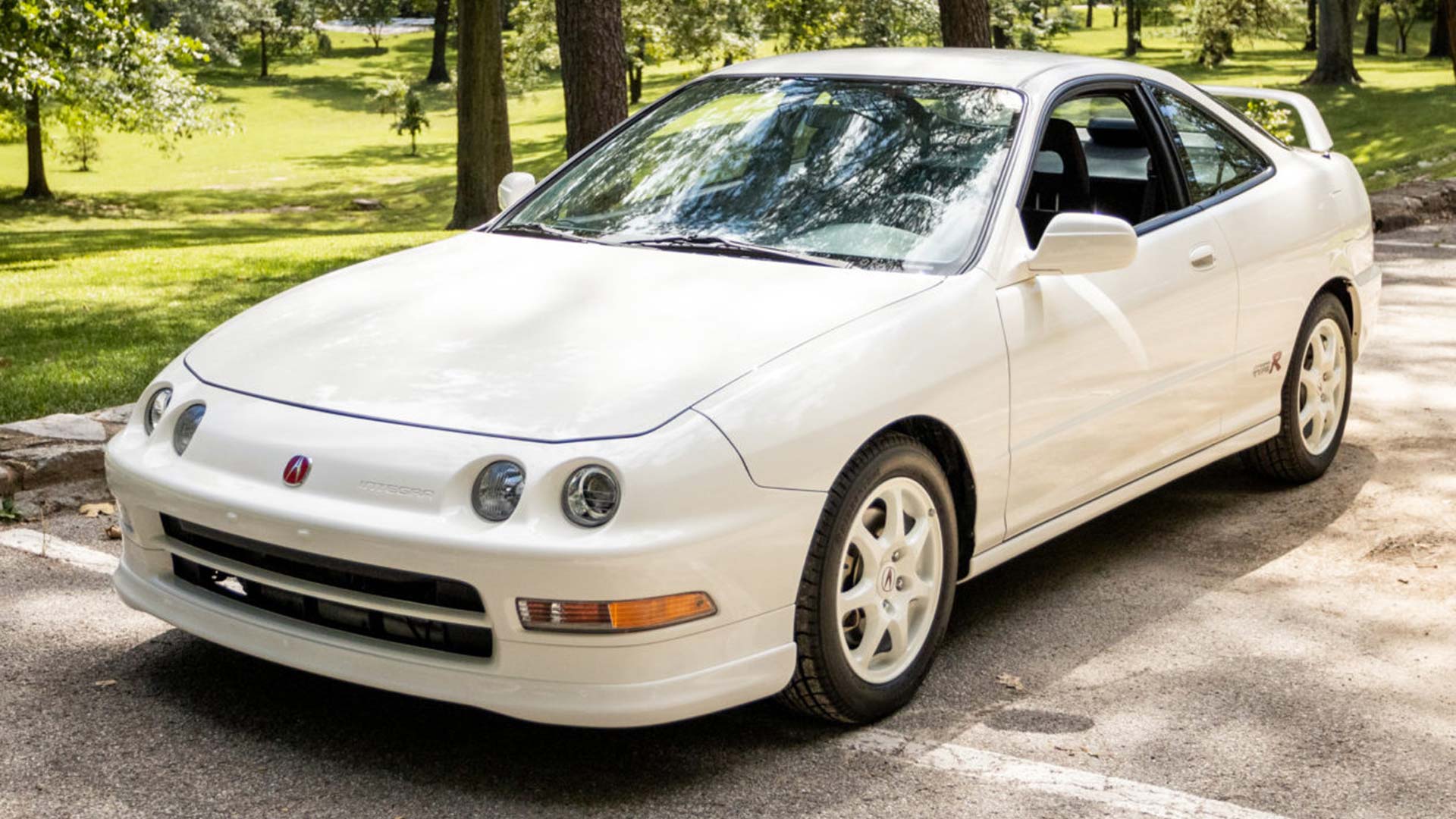
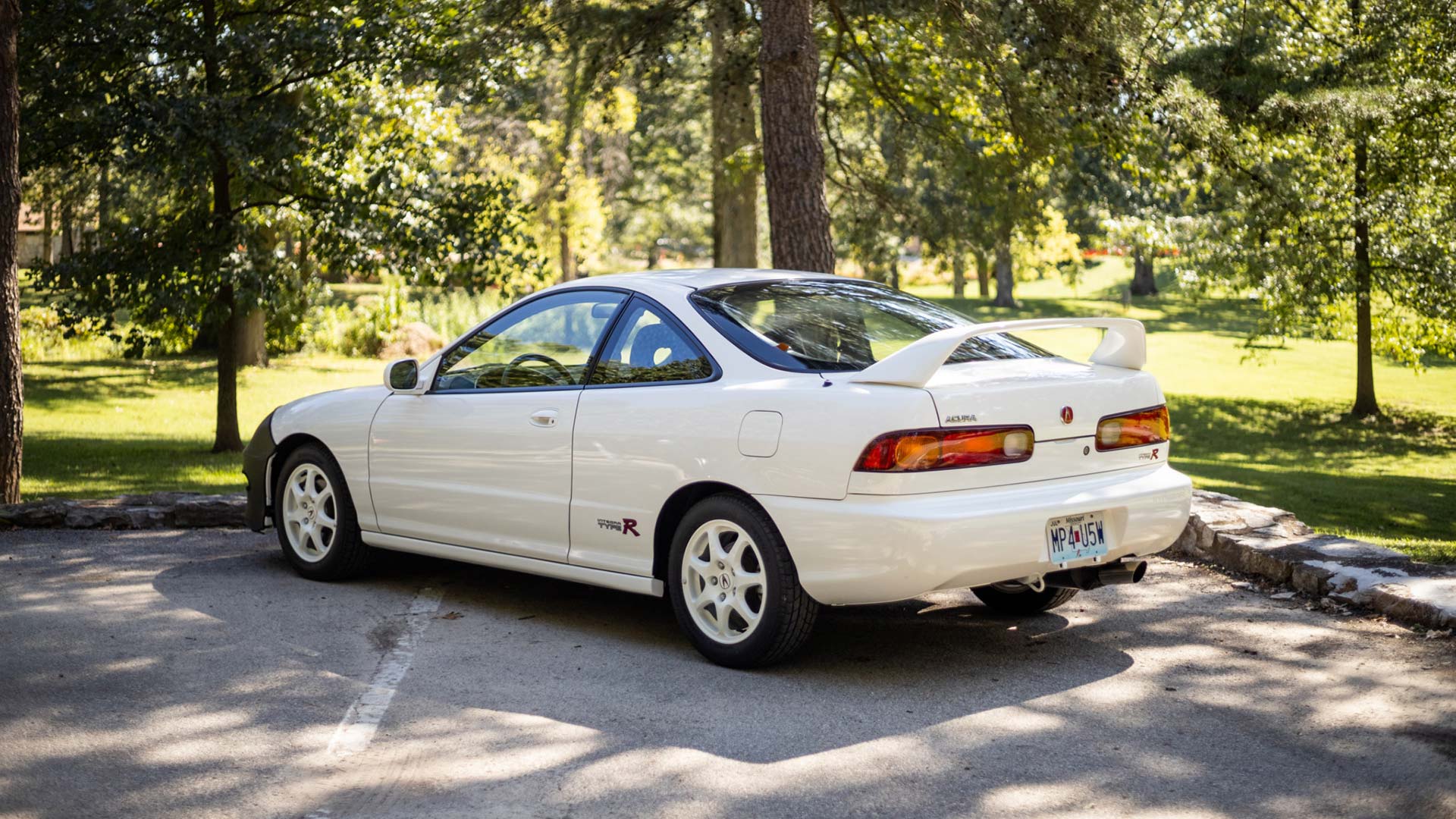
1997 Acura Integra Type R
Sale price: $82,000
With a similar format to the earlier Honda CR-X, but with the bonus of extra power and performance, the popularity of the Acura Integra Type R is unsurprising. The Integra Type R routinely receives branding as one of the greatest front-wheel drive cars ever made, plus it has the aural delights of the VTEC engine.
The 195 horsepower from the 1.8-liter four-cylinder engine was delivered at a frenzied 8,400 rpm, and controlled through a close-ratio five-speed manual transmission. A standard limited-slip differential was included, along with lightweight 15-inch alloy wheels.
Despite the technical abilities of the Integra Type R, what would lead someone to pay $82,000 for one? Representing one of the 320 units made for the US market in 1997 will play a part, but the headline-grabbing figure is likely to be the ultra-low mileage of just 6,000 miles.
Oh, and this Type R had been owned by the same person from new, who somehow managed to resist the urge to drive it. Routine maintenance had been carried out as required, arguably making this the most perfect example of an Integra Type R to go up for auction.
2020 will see Japanese-specification 1995 Honda Integra Type Rs become eligible for import to the United States. Time will tell as to the impact this has on the values of US-market Integras.
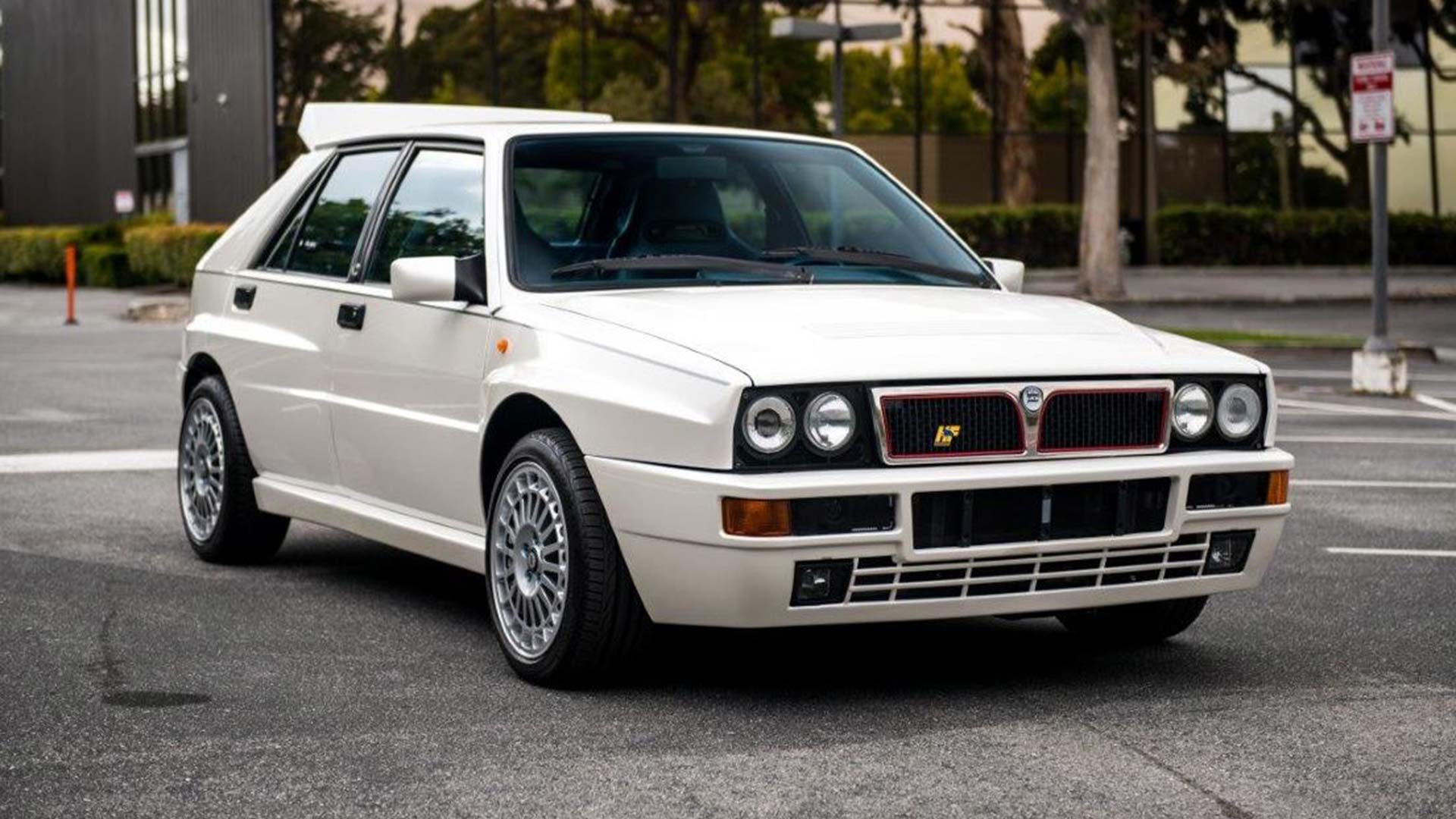
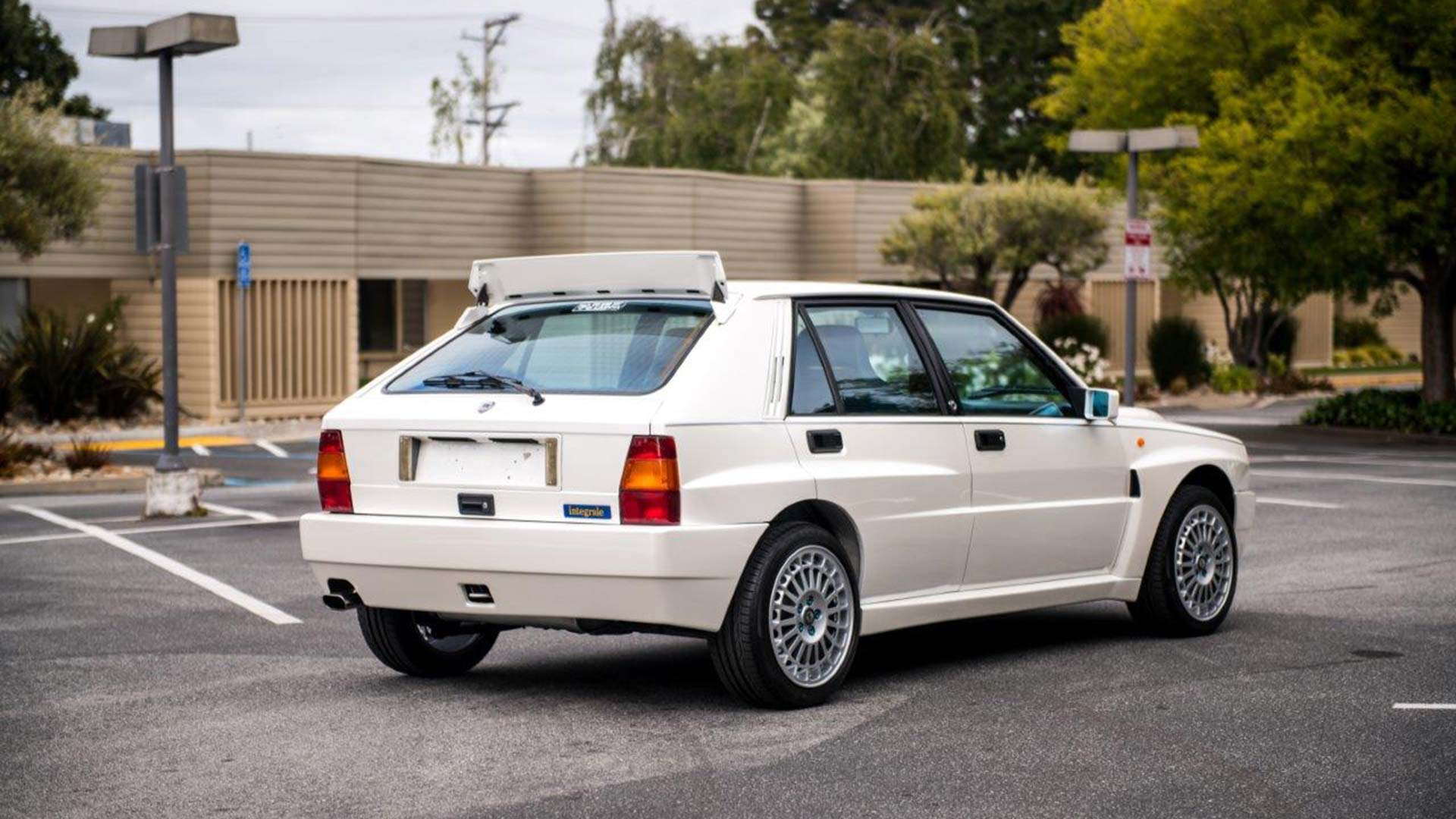
1994 Lancia Delta Integrale Evo 2
Sale price: $101,101
A demonstration of vehicles becoming eligible for import can be found with this Lancia Delta Integrale. Acknowledged as one of the most impressive rally cars of the early 1990s, road-going versions existed to homologate their competition brethren. Constant updates by Lancia created a wealth of versions, but the Evolution 2 model is regarded as the ultimate example.
Launched in 1993, the Evo 2 saw power from the 2.0-liter turbocharged four-cylinder engine increased to 215 horsepower. A standard all-wheel drive system made the Integrale devastatingly effective in all weather conditions, whilst the boxy fenders and adjustable rear-spoiler were for the benefit of competition versions.
Originally sold to a Japanese buyer, this Integrale Evo 2 is one of the 365 ‘Bianco Perlato’ special editions made in 1993. Painted in pearl white, these cars received high-backed Recaro sports seats finished in distinctive blue leather.
Values of all Integrales Evos have shown an upward trend, and being a limited edition version will certainly have helped this car on Bring a Trailer. Rarity in the United States, and the strong condition of this car, mean the $101,101 sale price is understandable, if still amazing.
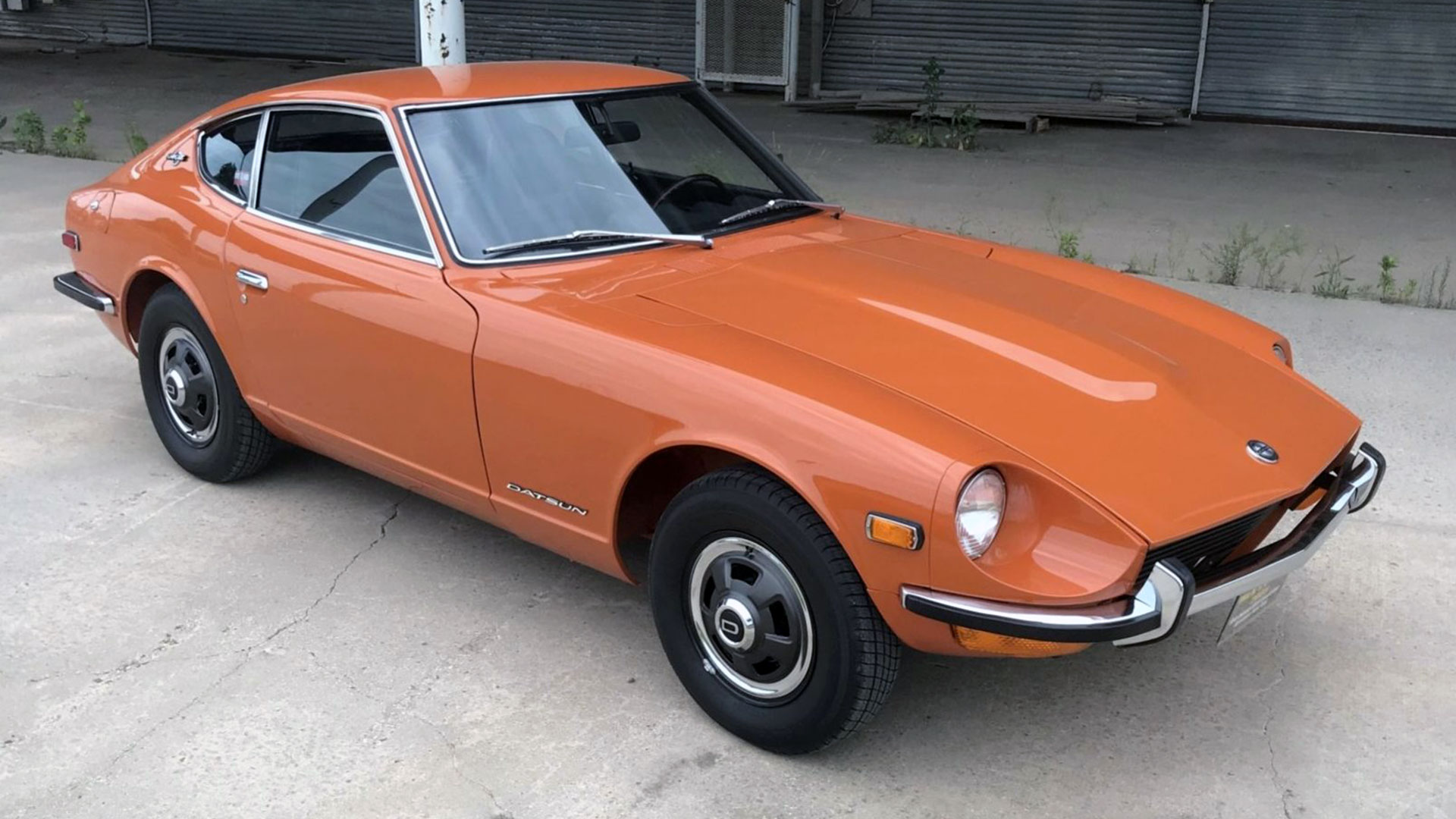
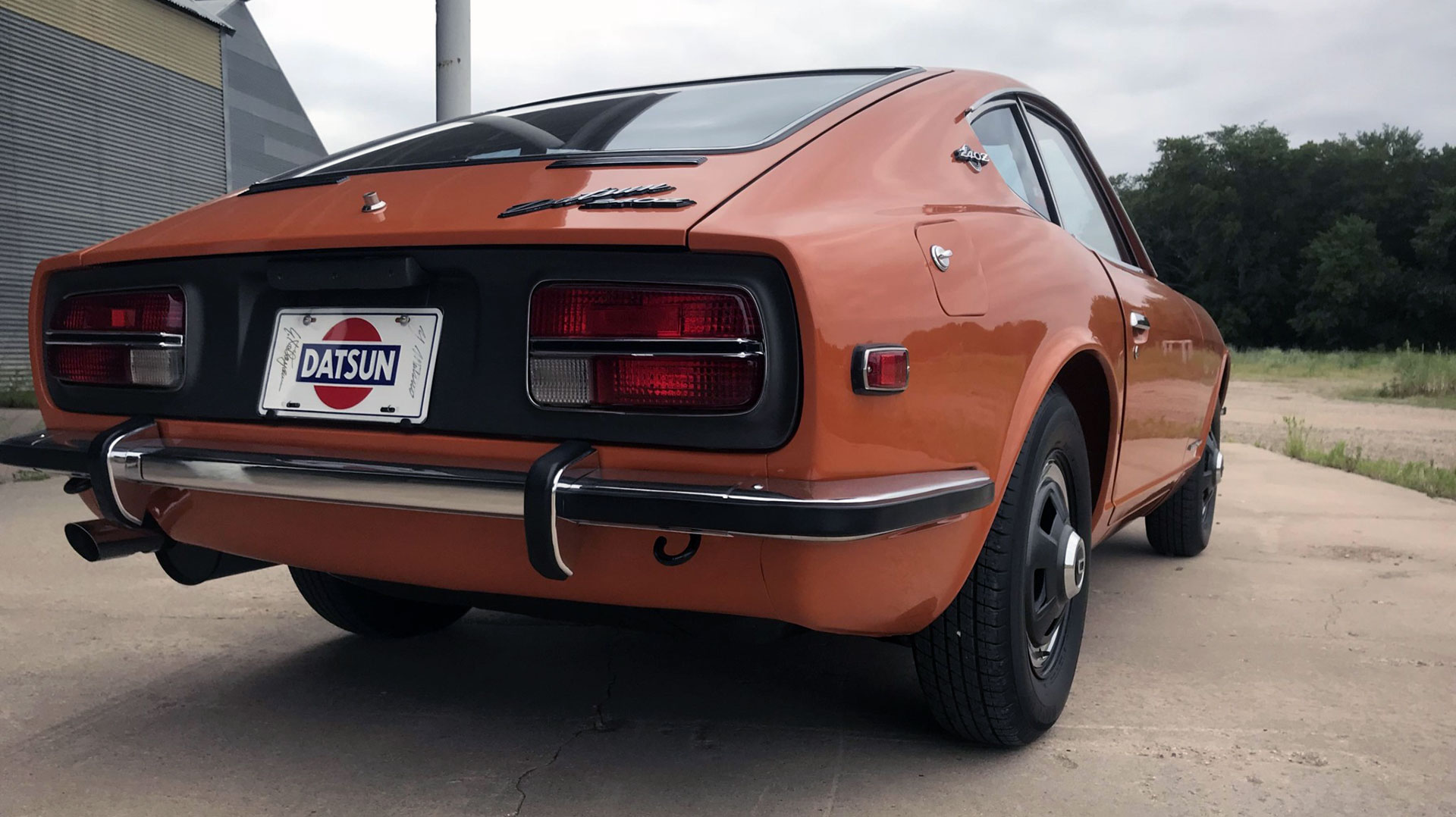
1970 Datsun 240Z
Sale price: $124,260
Datsun 240Zs are a staple of Bring a Trailer auctions, with more than 225 having been listed on the website since the beginning of 2015. Impressive performance, classic sports car styling, and the expectations of dependability make them a popular collector machine.
Introduced for the 1970 model year, the 240Z was launched with a 2.4-liter six-cylinder engine sending 151 horsepower to the rear wheels. A four-speed manual transmission was standard, with the 240Z capable of a 125 mph top speed.
What makes this 240Z special is the history behind it. As one of the earliest versions sold in the United States, it received a full rotisserie restoration in the early 1990s. Following that work, the car was used by Franklin Mint as the basis for a die-cast miniature model.
The car also appeared at the Whitney Museum of Modern Art in New York, and received a Gold Medallion award at the National Z-Car Convention. However, the crowning glory came in 1998, when the car appeared at the ceremony for former Nissan Motor Corporation USA president Yutaka Katayama’s induction into the Automotive Hall of Fame.
These factors help explain a sale price of more than double the average price of a 240Z on Bring a Trailer.
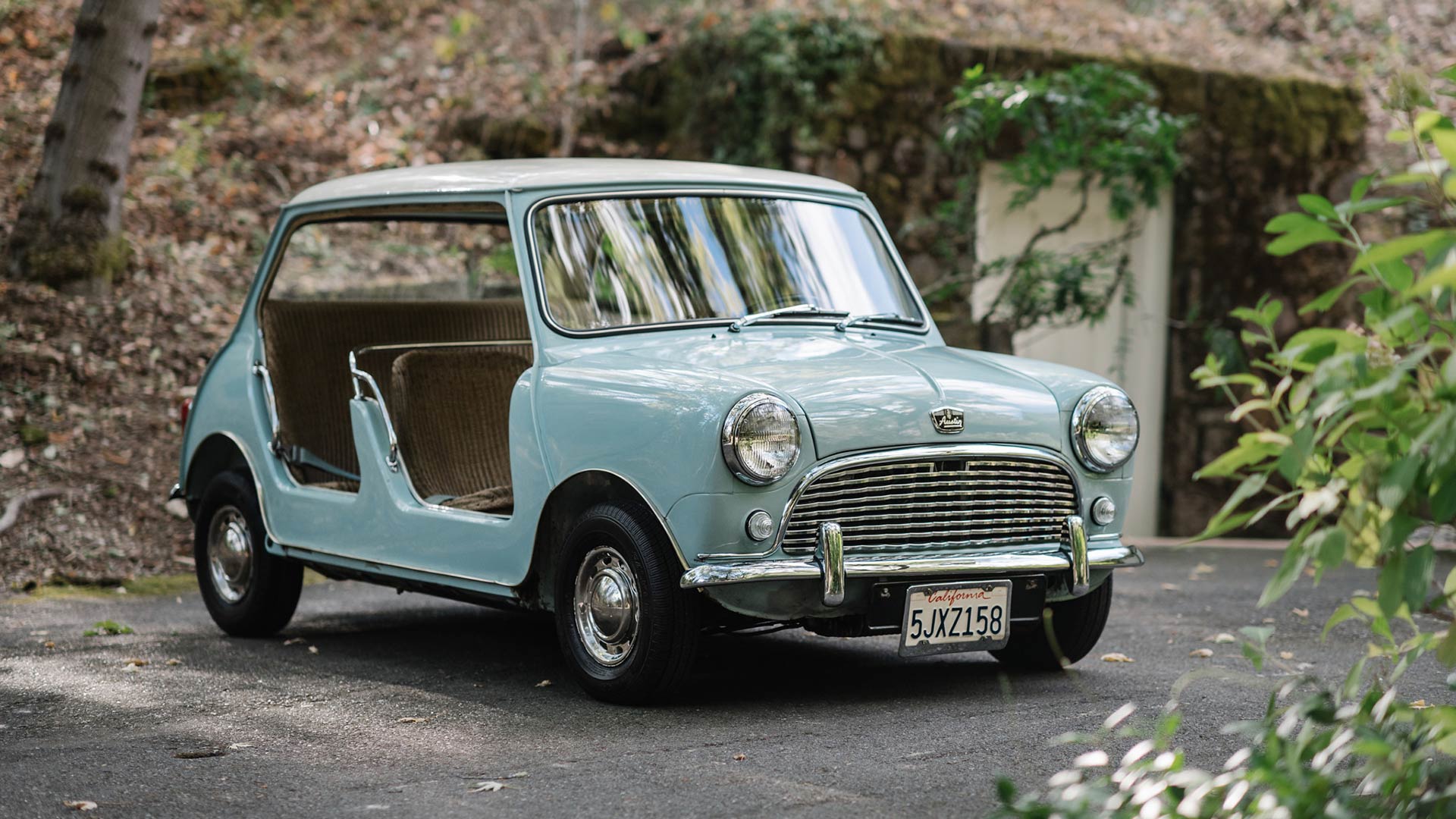
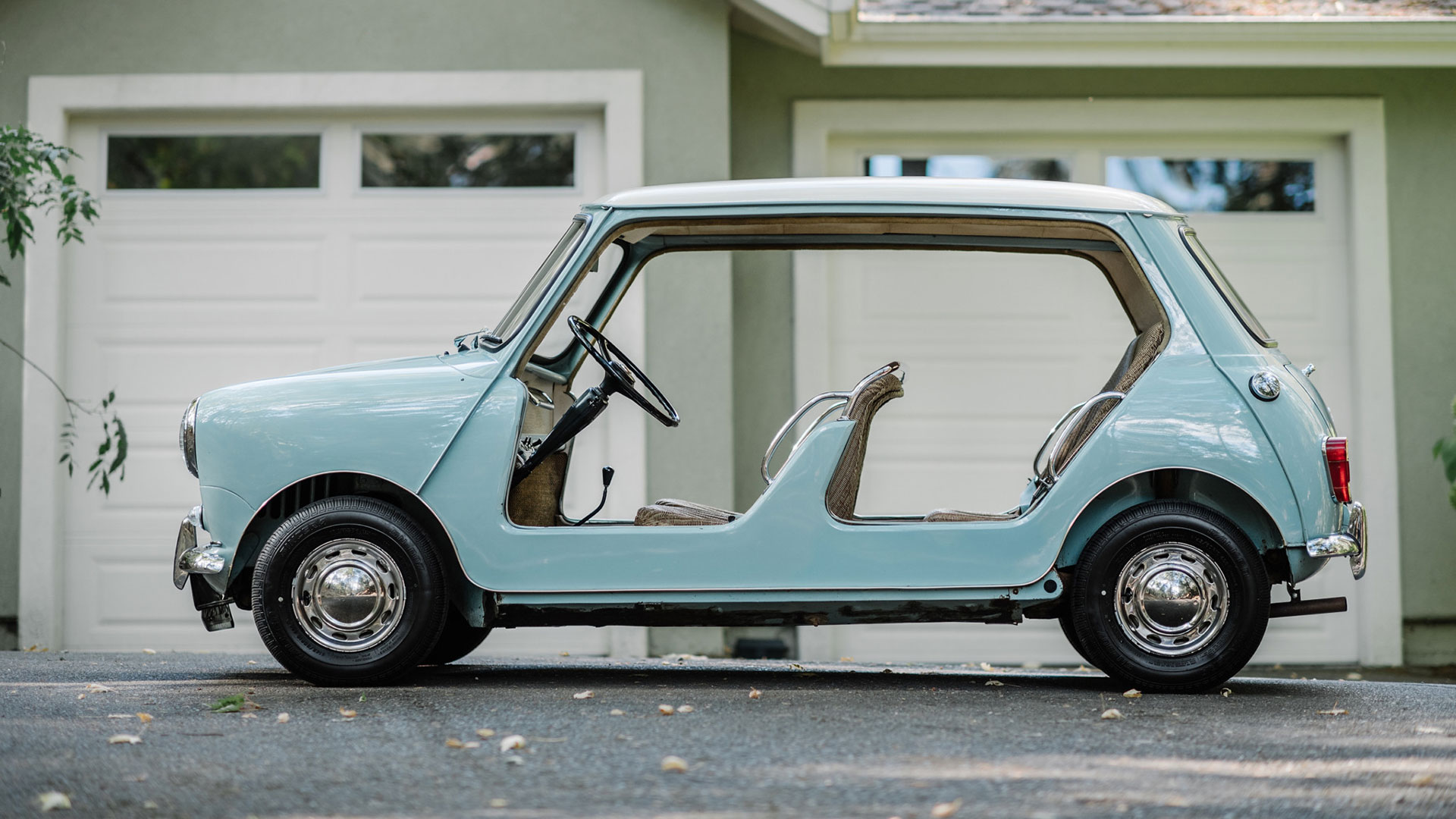
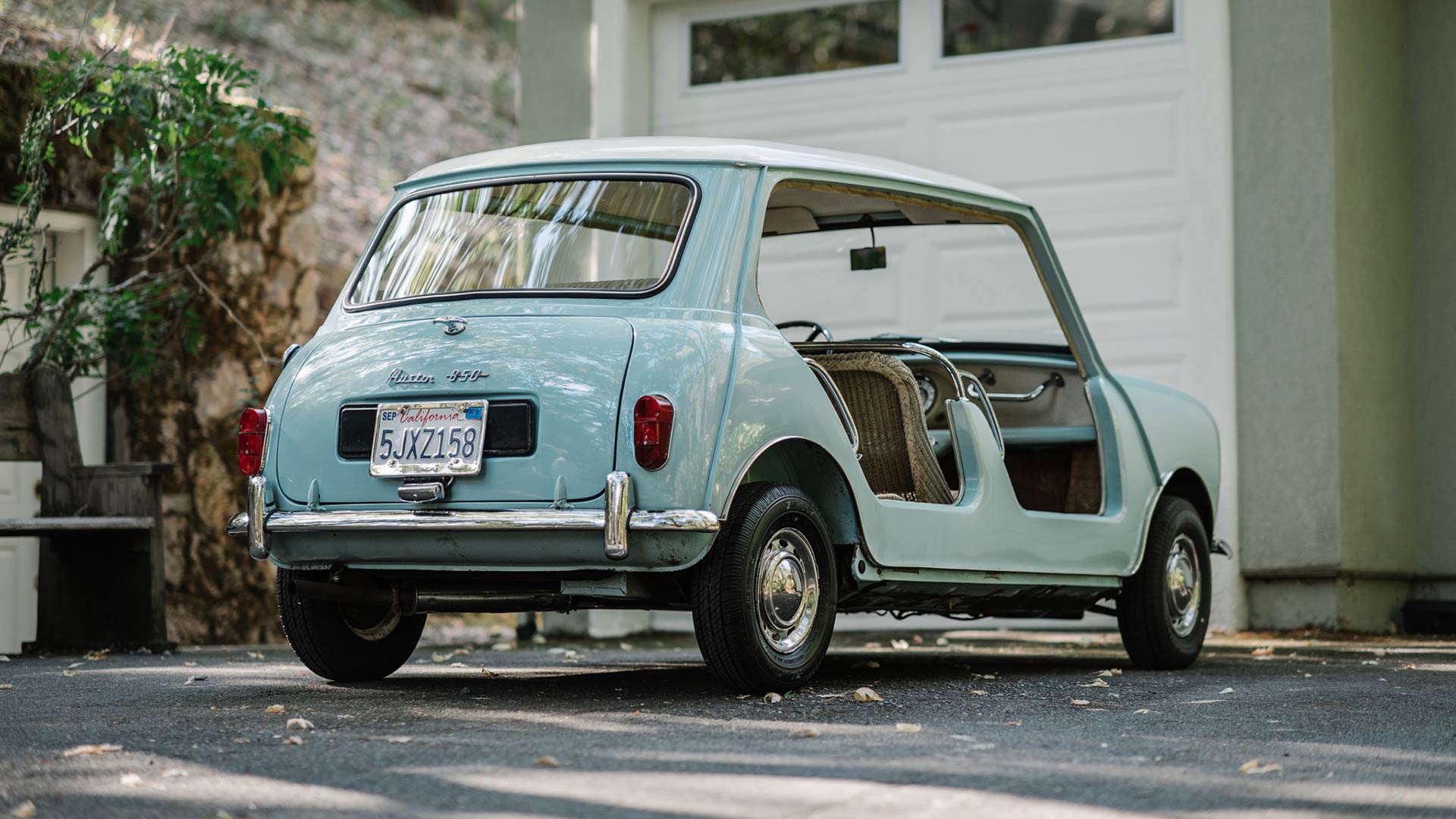
1962 Austin Mini Beach Car
Sale price: $230,000
There seems something almost ironic about the fact the car with the smallest engine on this list achieved the highest sale price on an American auction website. Beneath the tiny hood of this special Austin Mini is an 850cc four-cylinder engine, producing just 34 horsepower.
Yet the main appeal is the fact this Mini has no side doors or windows, and features seats made from wicker! A total of 13 Beach Cars were built in left-hand drive, intended to serve as promotional models for the launch of the Austin Mini in the United States. The custom bodywork was created in-house, before the cars were shipped to appear in American dealerships.
Originally delivered to a dealership in Michigan, this Mini Beach Car was later acquired by the dealer principal. The car then remained in the ownership of that same family all the way from 1962, until the car appeared on Bring a Trailer.
Light restoration work was undertaken in the early 2000s, getting this Mini ready to hit the beach again. Supplied with the car was a number of images showing the car appearing at events, including the Meadow Brook Concours d’Elegance in Rochester, Michigan.
Whilst the sale price may seem extravagant for such a tiny car, the winning bidder knows they are unlikely to ever find themselves parked next to another one. It demonstrates that rarity, provenance, and good condition are likely to lead to big bids on Bring a Trailer.
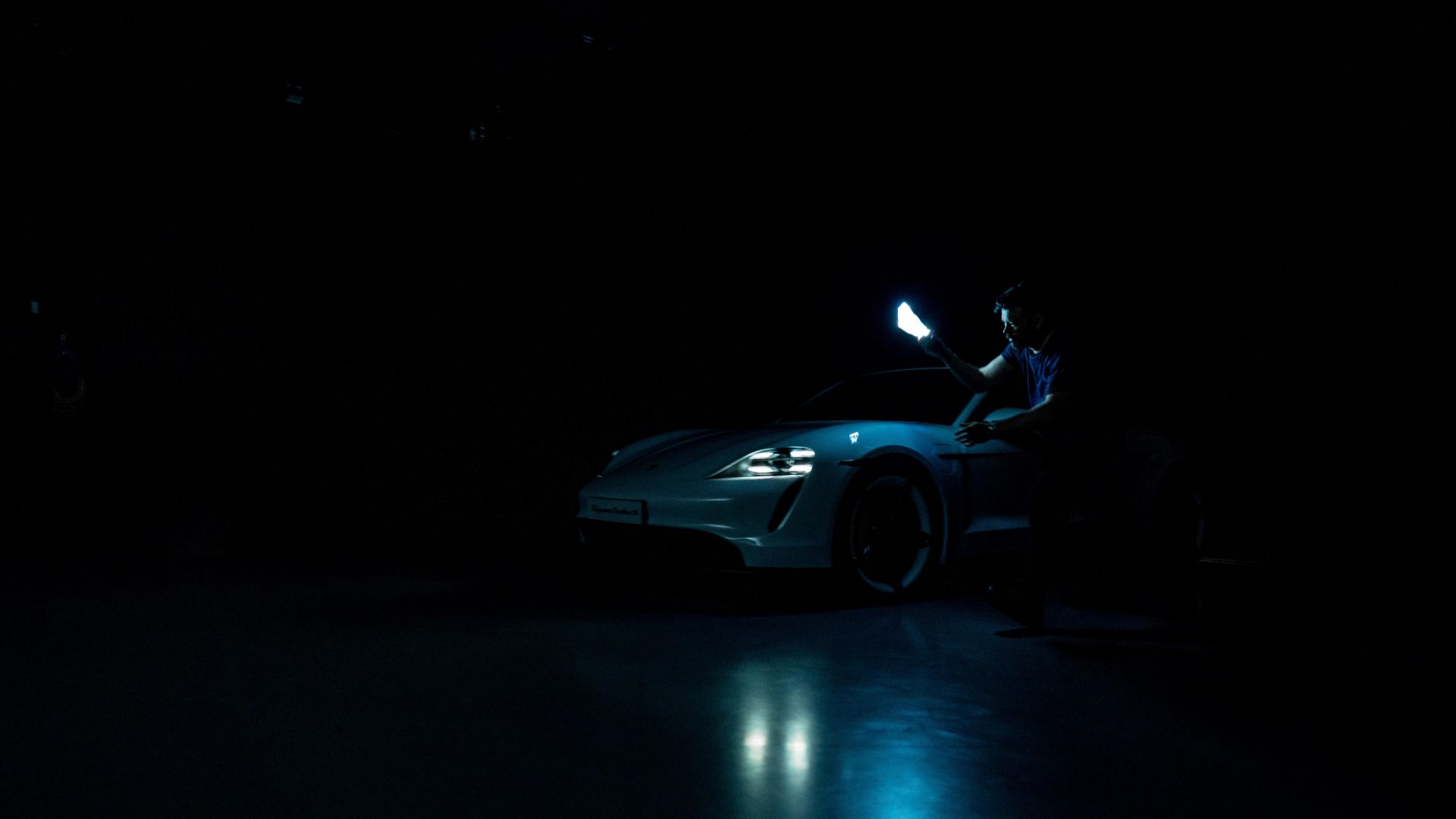
Radar, lidar and cameras make for an adequate sensory arsenal most of the time. However, the capability is far from perfect in the dark and in poor weather. Infrared systems will be able to help with a car’s awareness of its surroundings when visibility is low.
Porsche wants to use a development of TriEye’s CMOS-based short wave infrared camera to fortify ADAS systems for when the going gets gloomy, dark or rainy.
“Our collaboration with Porsche has been exceptional from day one and we look forward to growing this potential,” said Avi Bakal, CEO and co-founder of TriEye.
“The fact that Porsche, a leading car manufacturer, has decided to invest in TriEye and evaluate TriEye’s CMOS-based SWIR camera to help further improve Advanced Driver Assistance Systems (ADAS) is a significant vote of confidence in our technology.”
As for what cars we’ll be seeing these new systems in – it’s hard to say, though it’s fairly easy to determine that Porsche is going after Tesla’s Autopilot capability.
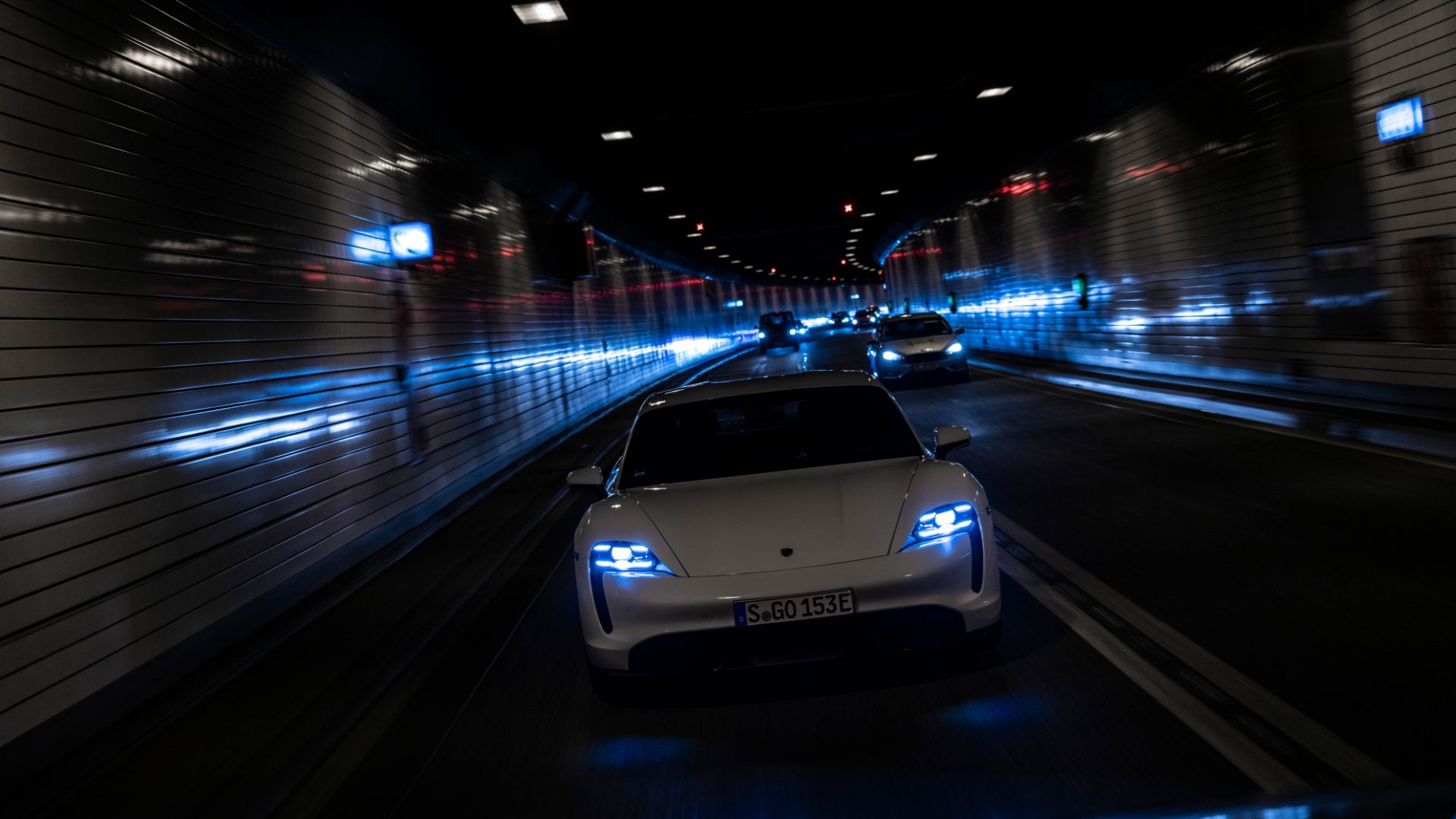
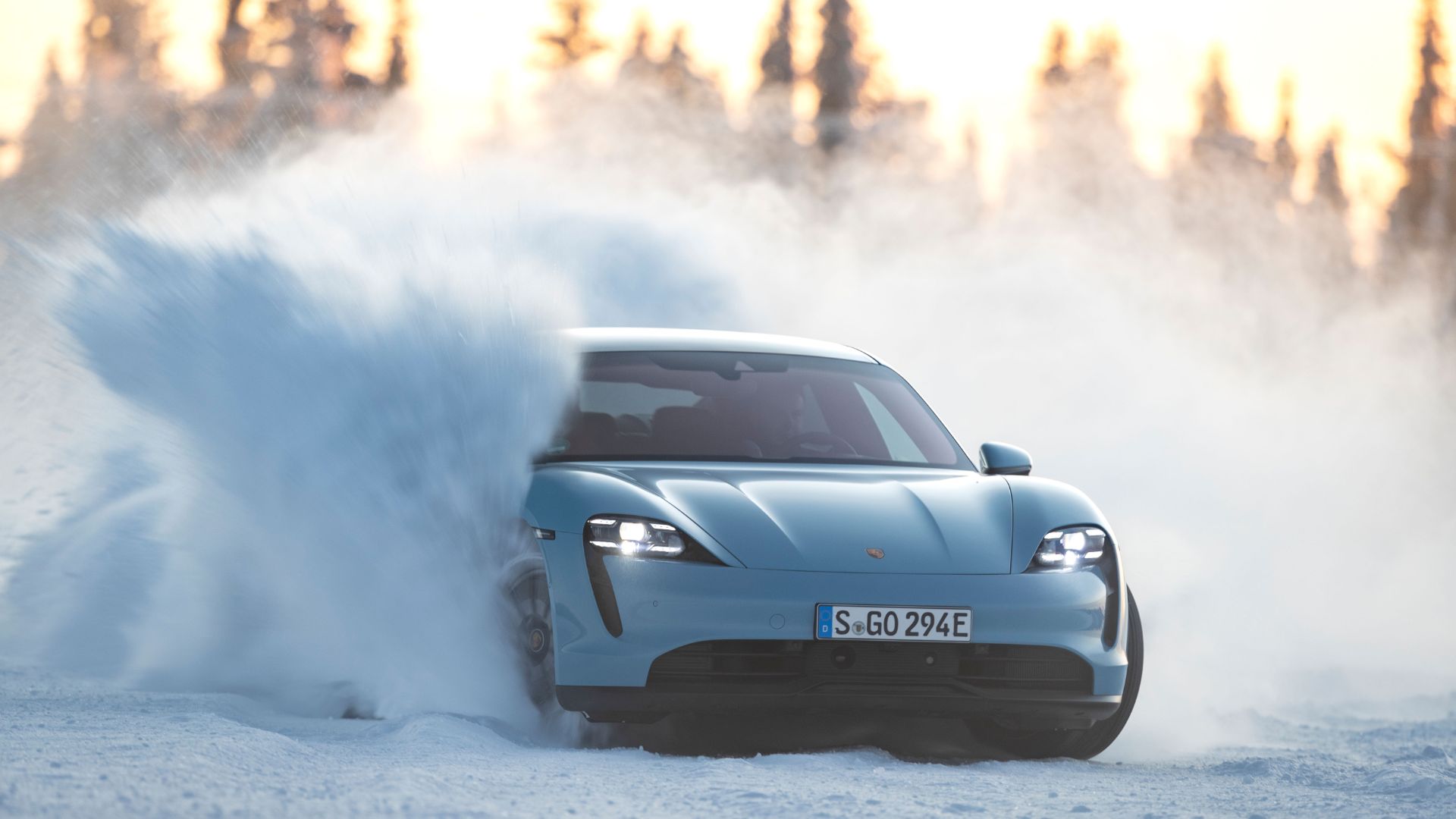
Porsche’s counter attack on Tesla began with the release of the Taycan electric super-saloon, and will continue with its electric-powered Model Y-rivalling Macan replacement.
In terms of seeing this tech appear in the short term, it could appear in ADAS systems on current models, improving emergency braking, assisted cruise control and lane-keep systems.