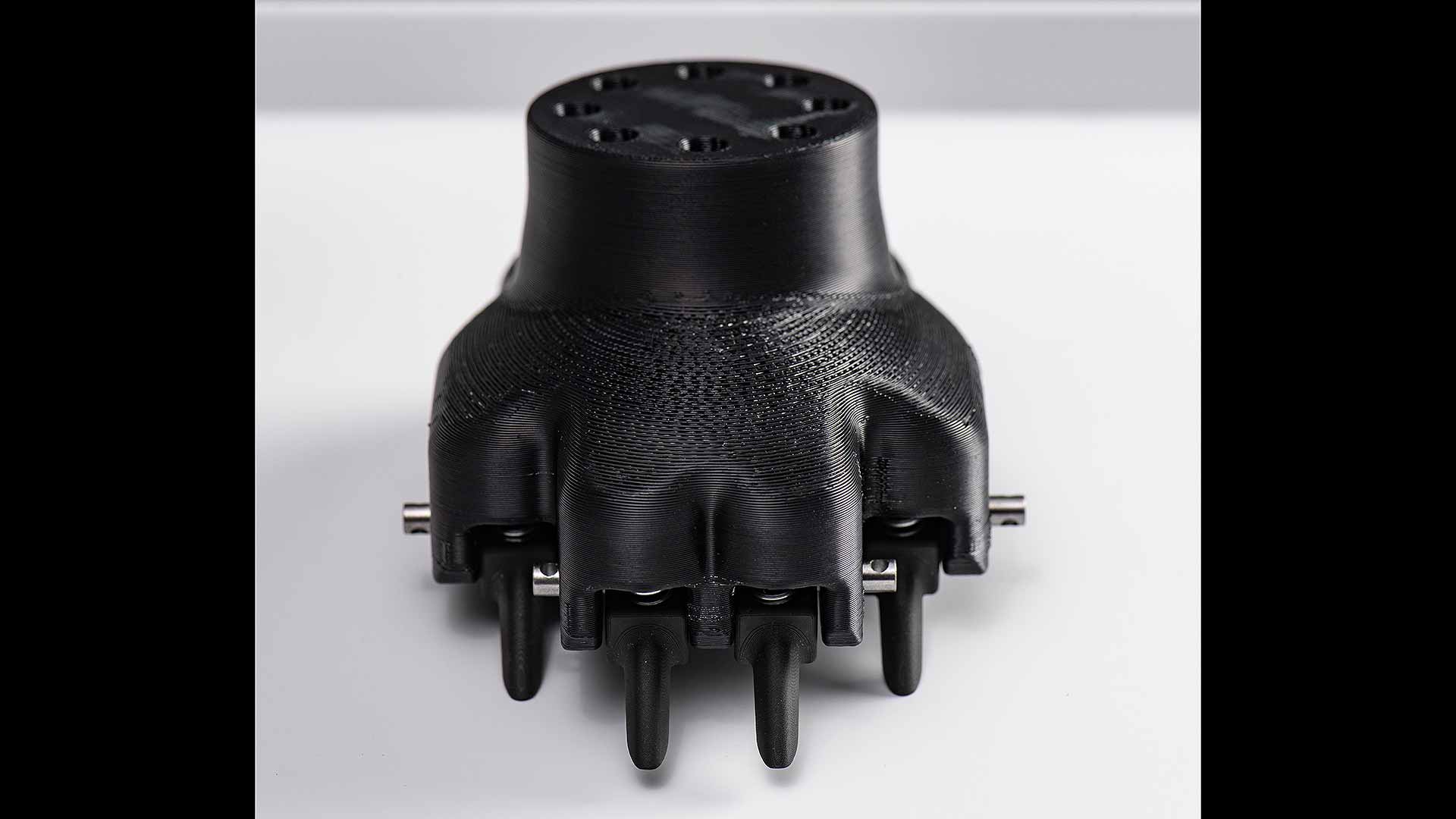
Dog owners, rejoice: Jaguar Land Rover has developed a new piece of technology so its engineers can make its cars more durable and dog-proof.
A 3D-printed dog paw has been created, to replicate in the test lab a dog’s claws scratching the bumper and paint before and after walks.
Thanks to the robotic dog paw test, Land Rover is able to confirm the new Defender is able to resist more than a decade of use by dogs.
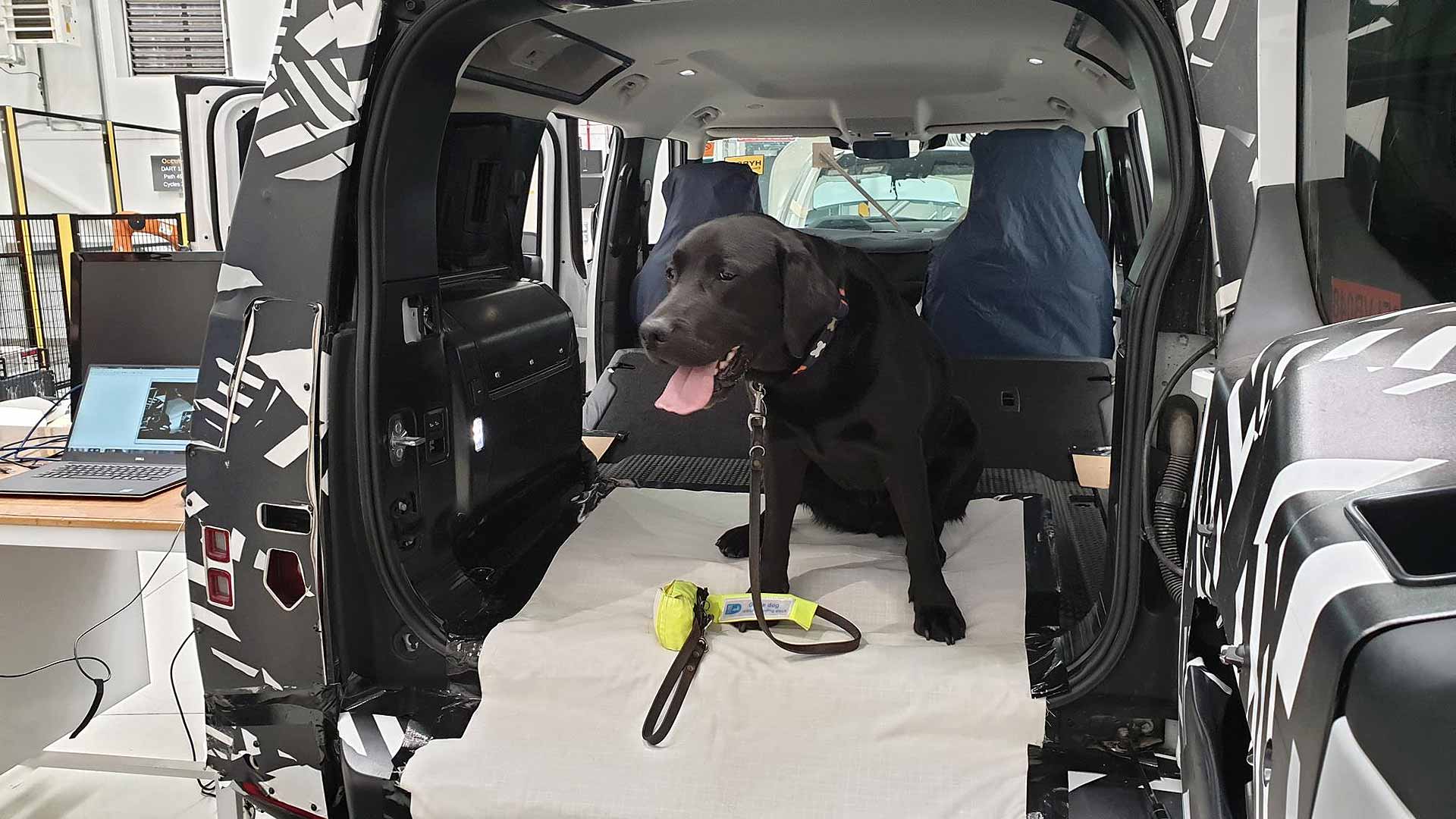
Yogi the Labrador, from the National Guide Dog Breeding Centre, was test dog for the project. Their paw was modelled and a 3D-printed, spring-loaded replica was created.
The engineers called this RoboYogi.
Cleverly, the use of springs meant the robo-claws can follow car design contours and evenly apply pressure across the bumper. Just like a real dog.
Yogi was then tasked with jumping in and out of the new Defender’s boot; engineers recorded their steps with pressure-mapping technology.
This data was used to correlate Yogi’s 3D-printed paw to their real one.
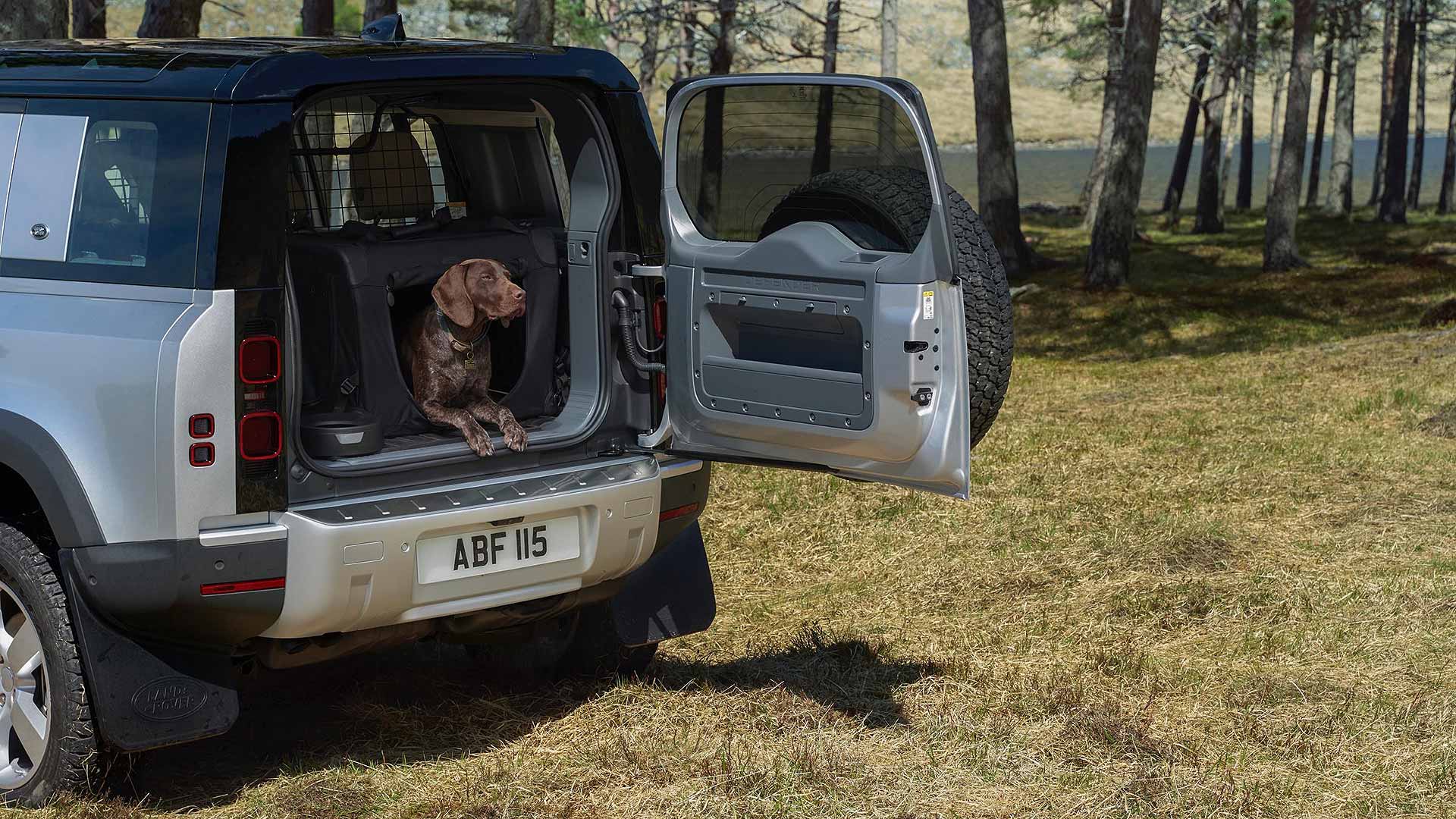
JLR’s new standard test involves 5,000 cycles of RoboYogi randomly scratching the panel 10 times, followed by a linear sideway scratch. Senior engineer Julie Nicholls admitted it’s a bespoke test that’s a little different to the norm.
“Creating globally renowned vehicles means applying a quality mindset at every stage of a product’s lifecycle to ensure we meet the needs of our customers’ lifestyles. In this case we were able to achieve it by getting a dog, printing a paw and using a robot.”
The paw was produced by the JLR Additive Manufacturing Centre, which now produces more than 80,000 parts a year, largely for prototyping and design mock-ups.
The division does actually also produce 3D-printed parts for production cars, with the extreme Jaguar XE SV Project 8 among the first to use parts from the centre.