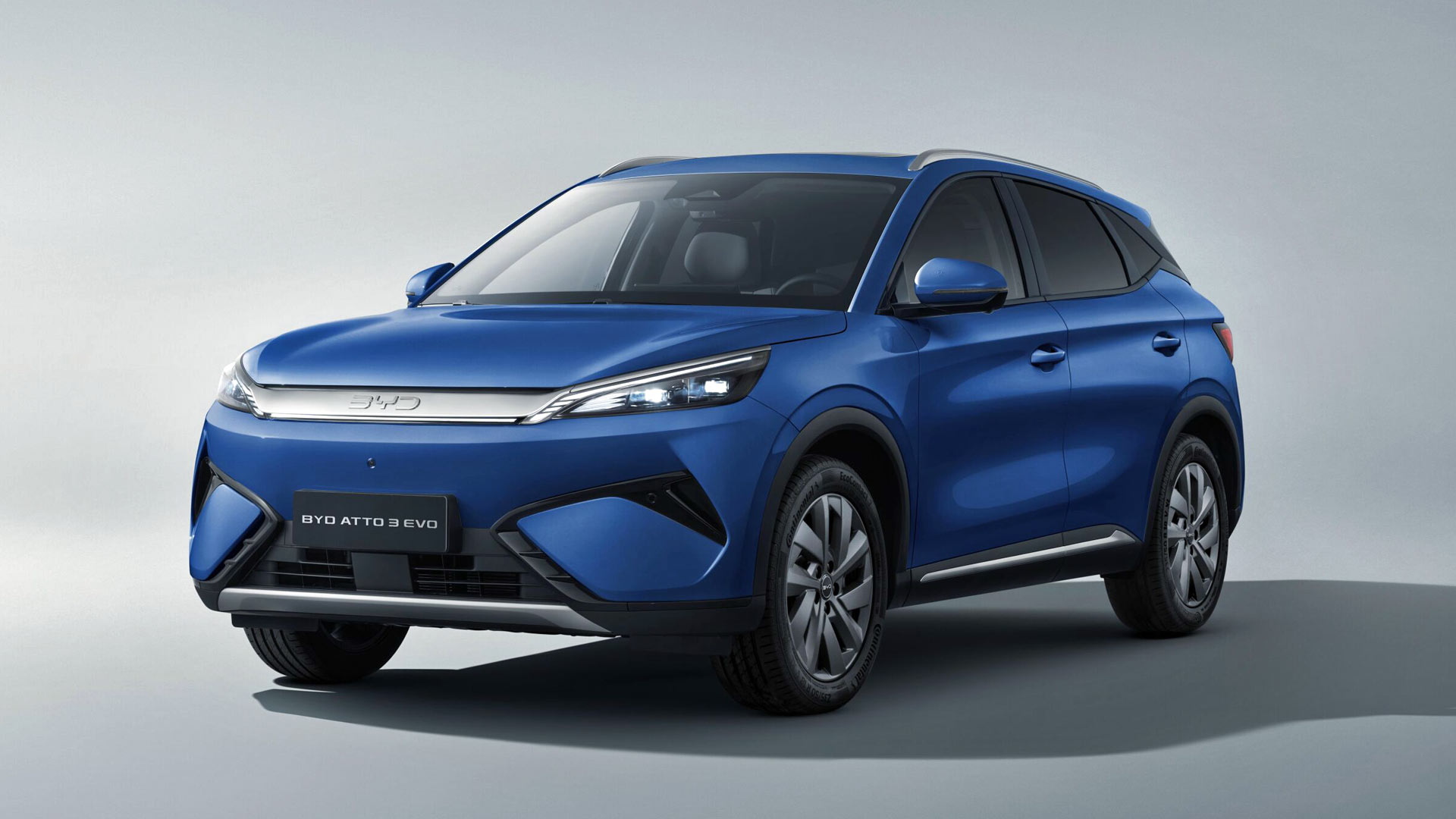
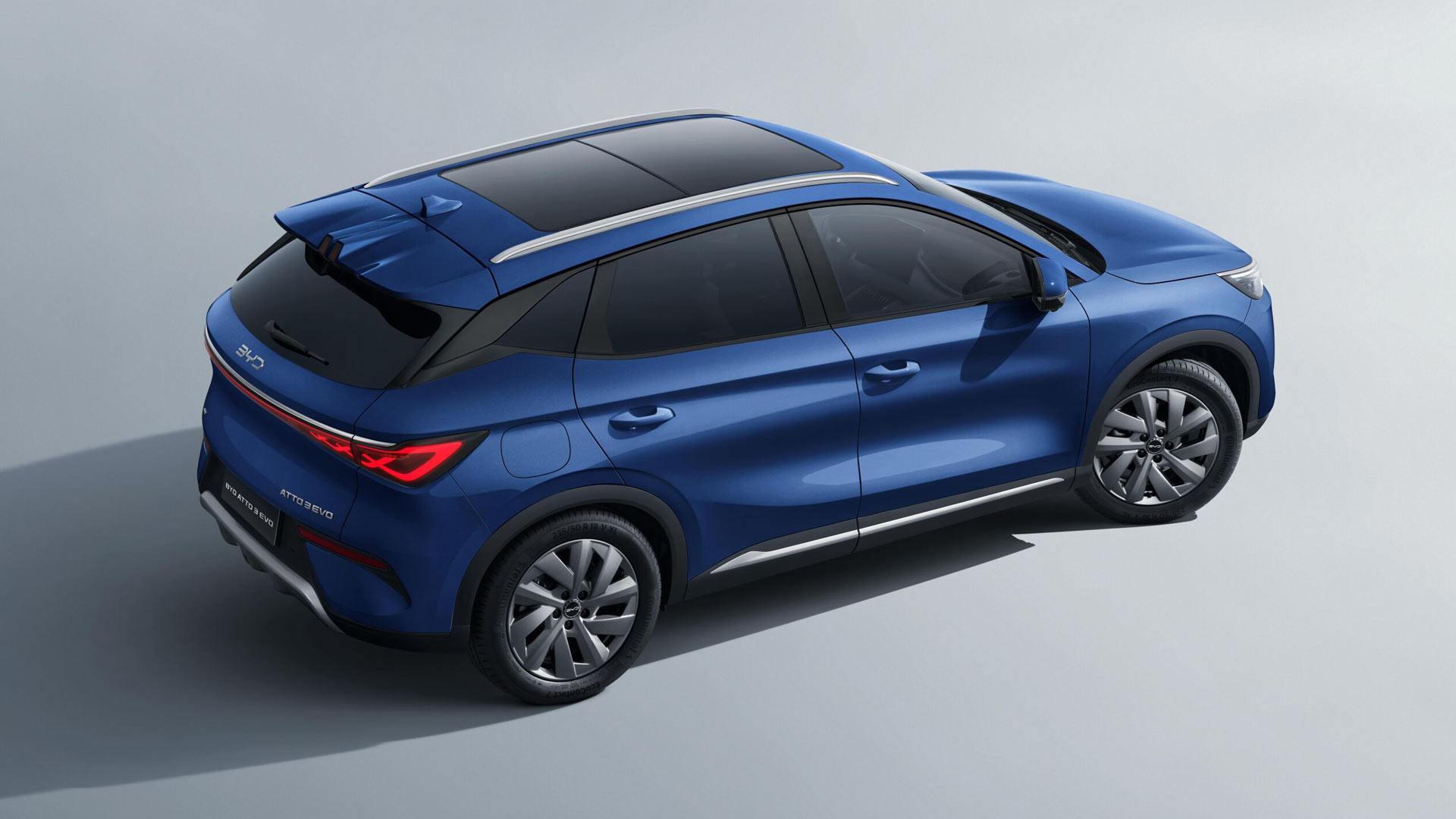
Fast-growing Chinese car brand BYD has announced a comprehensive overhaul of its Atto 3 electric family SUV.
First launched in the UK three years ago, BYD has thoroughly reworked the Atto 3 to boost performance, battery range and even luggage space.
Named the Atto 3 Evo, the revised SUV can potentially offer acceleration that matches its namesake of sorts: the classic Mitsubishi Lancer Evo saloon.
Executive vice president of BYD, Stella Li, said: “The Atto 3 Evo proves how big a step we can make as a brand in less than three years.
“We’ve distilled our EV innovations and our latest technologies into a package that has already proven popular with buyers across Europe. And the result is another standout offering in the class: powerful, efficient and packed with useful features. It’s not a car, it’s a BYD.”
Quicker than many hot hatchbacks
The most dramatic change for the Atto 3 is abandoning the current model’s front-wheel-drive layout. The new Evo is available with rear- or all-wheel drive only.
All versions of the Atto 3 Evo come with a 78.4kWh battery and 800-volt electrical architecture, offering DC charging speeds of up to 200kW.
The rear-driven Design model has a single electric motor, generating 313hp and 280lb ft of torque. It can reach 62mph in 5.5 seconds and, when fully charged, can cover an official, WLTP-tested range of up to 317 miles.
The all-wheel-drive Excellence version of the Atto 3 Evo offers more performance. With 449hp and 413lb ft of torque, it has a hot hatch-rivalling 0-62mph time of 3.9 seconds, plus a top speed of 124mph. A WLTP driving range of up to 292 miles is possible.
Lots of equipment and luggage space
A switch to BYD’s new Blade Battery has increased cabin space, despite the Atto 3 Evo having the same exterior dimensions as its predecessor. Boot capacity has also grown by 50 litres to 490 litres, with an additional 101 litres available in the new ‘frunk’.
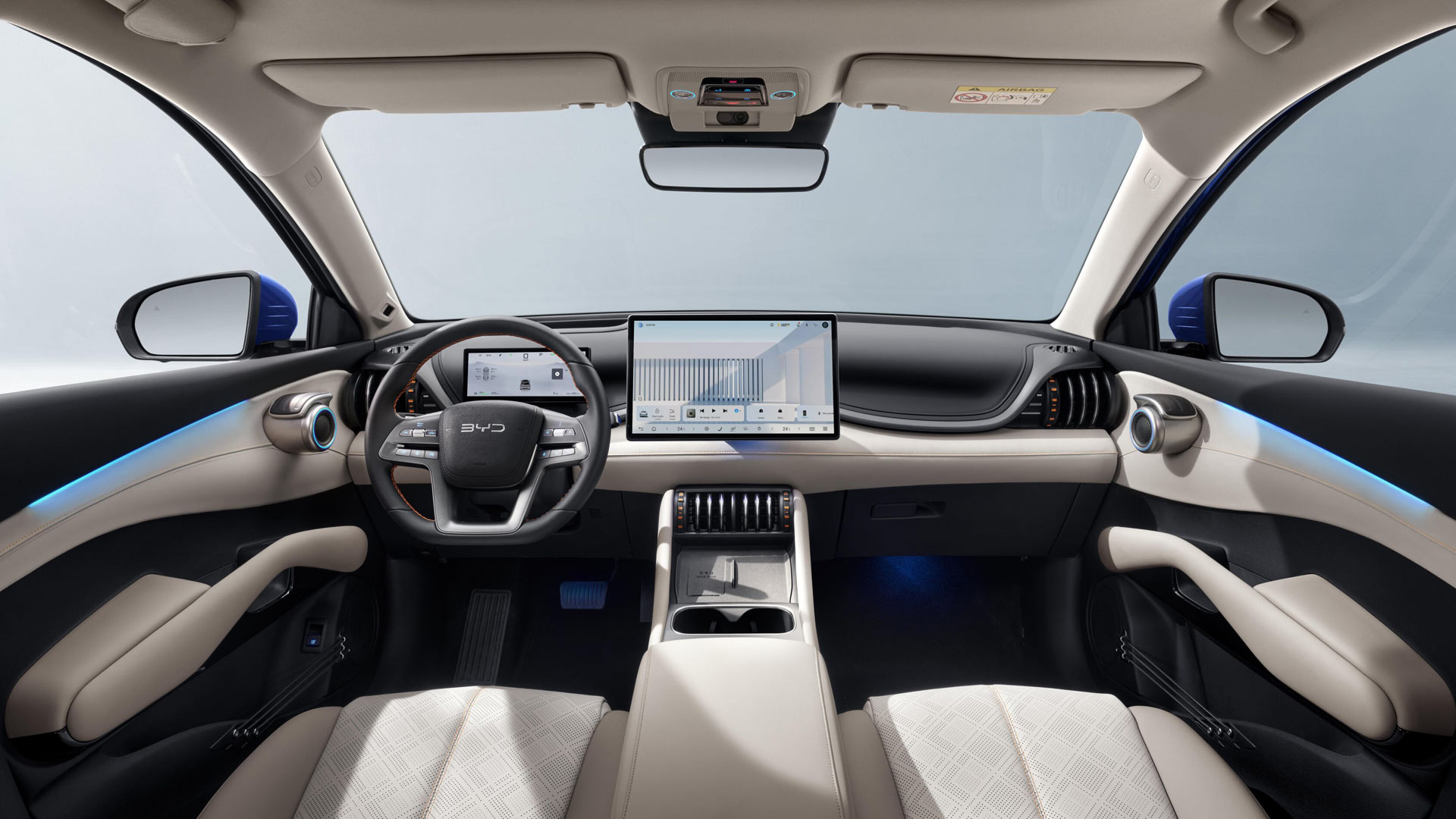
Standard equipment for the rear-wheel-drive Design model includes a 15.6-inch central touchscreen, 8.8-inch digital instrument panel, wireless smartphone charging, 360-degree parking camera and heated front seats.
Opting for the all-wheel-drive Excellence adds heated rear seats, a head-up display and a panoramic sunroof with an electric sunshade.
UK prices have yet to be confirmed for the BYD Atto 3 Evo, but all cars will come with a six-year/93,000-mile warranty, plus separate eight-year/155,000-mile cover for the Blade Battery.
The short answer to this question is ‘yes’. Under section 42 of the Road Traffic Act 1988, a driver can be fined £20 for a leaving their car idling while parked. This increases to £40 if the penalty isn’t paid within the given timeframe. However, few councils enforce this.
Discussing the issue, former transport secretary Chris Grayling said: “We are determined to crack down on drivers who pollute our communities by leaving their engines running, particularly outside school gates where our children are breathing in this toxic air.
“Putting a stop to idling is an easy way to drive down dangerously high levels of pollution, reducing its impact on the environment and our health.”
The microscopic pollutants in exhaust gases have been shown to be particularly damaging to children. A car idling for one minute produces enough gas to fill 150 balloons, with the chemicals released including nitrogen oxide (NOx) and cyanide.
Cost more important than air quality
Some 72 percent of drivers questioned in an RAC survey wanted local councils to tackle the problem, while 44 percent believed officials should have the power to issue fines if they refuse.
Around a quarter of drivers questioned by the RAC thought motorists should be told to switch off their engine without issuing a fine. Only two percent think offenders should be fined without any warning.
It would appear that drivers are becoming more sensitive to the issue of vehicle emissions and the impact on air quality in towns and cities. Indeed, more than half of the drivers surveyed said they are more concerned than they were three years previously.
However, when asked WHY they would not leave their engines idling when parked, a financial benefit was put ahead of the environment. A total of 37 percent said they switch off to save fuel, while 35 percent said they do so to improve air quality.
Just under a third of drivers claim it never occurs to them to turn the engine off.
‘Like the carrier bag charge’
Nicholas Lyes, head of roads policy at the RAC, said: “Councils already have the powers to deal with this problem, but few are currently doing so. Many of the drivers we questioned would like to see some firm action taken against offenders. This is no doubt needed to bring about a change in behaviour.
“You could liken the current situation with engine idling to that of taking your own carrier bags to the supermarket: everyone knew it was the right thing to do, but few of us did it until a compulsory charge was introduced. While the law is already in place for idling, enforcement is limited, if not non-existent.
“The presence of enforcement officers and ‘no engine idling’ signs, complete with penalties, must be the next step in making our urban environments better for everyone who lives, drives and works in them.”
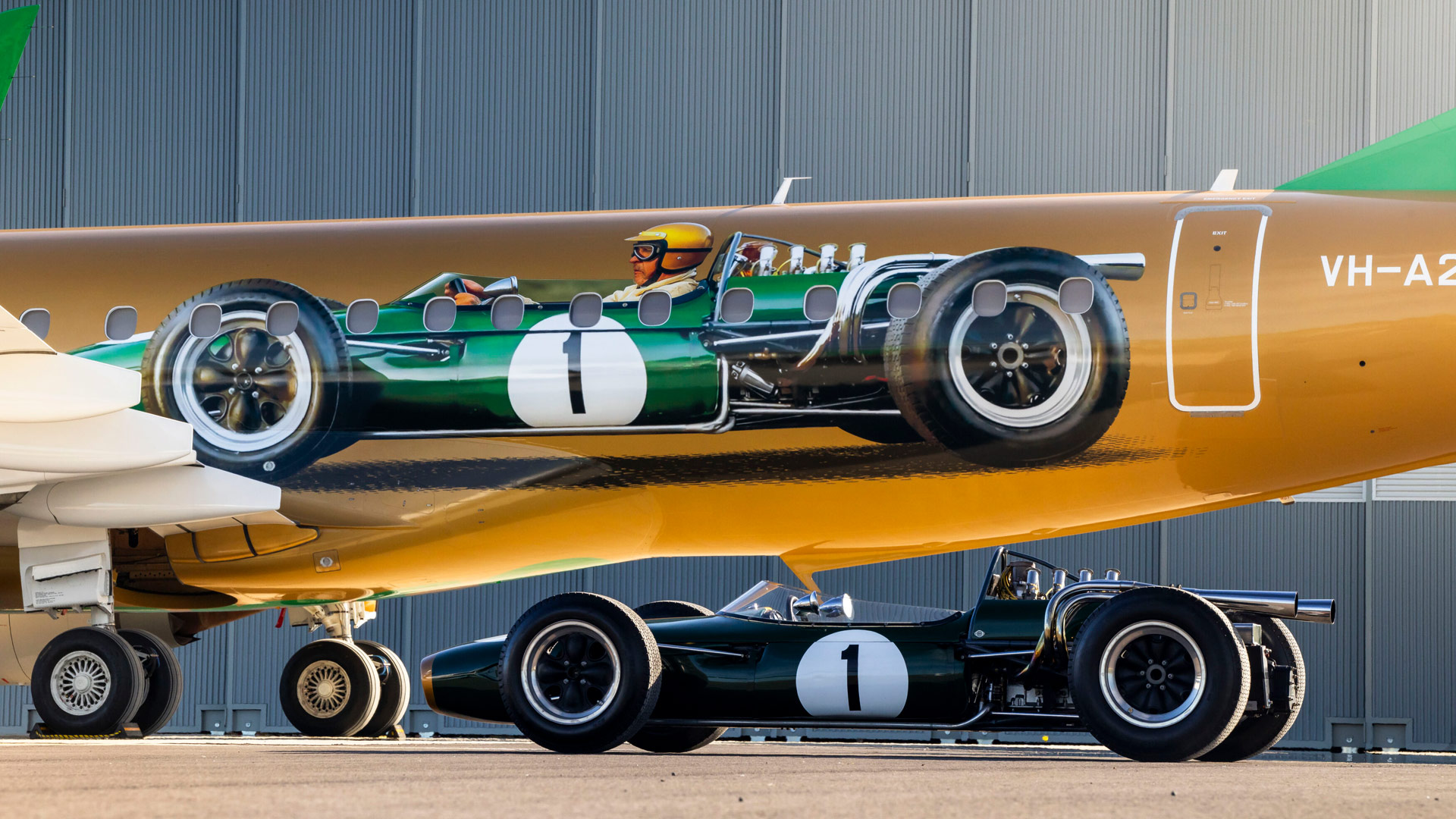
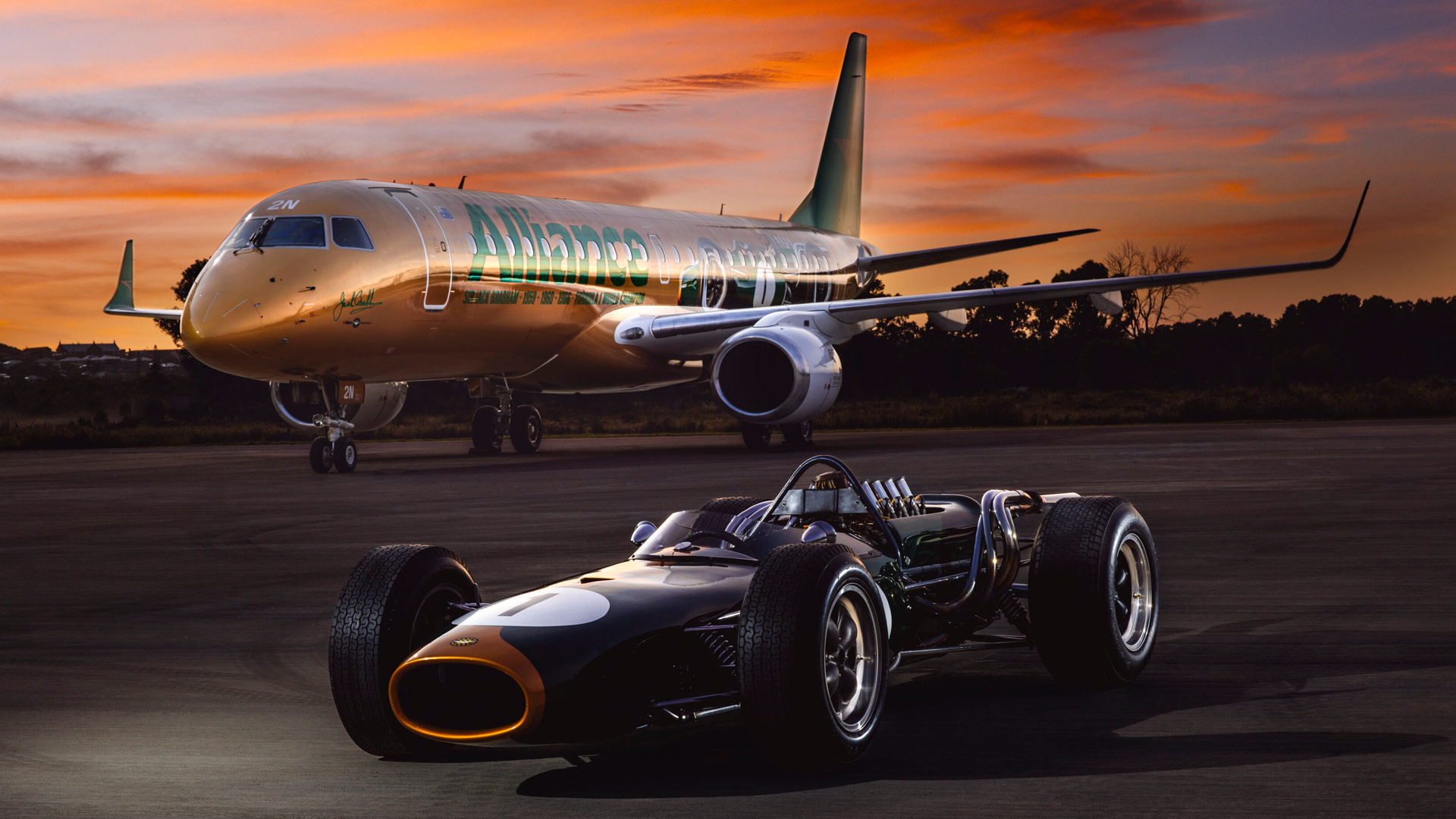
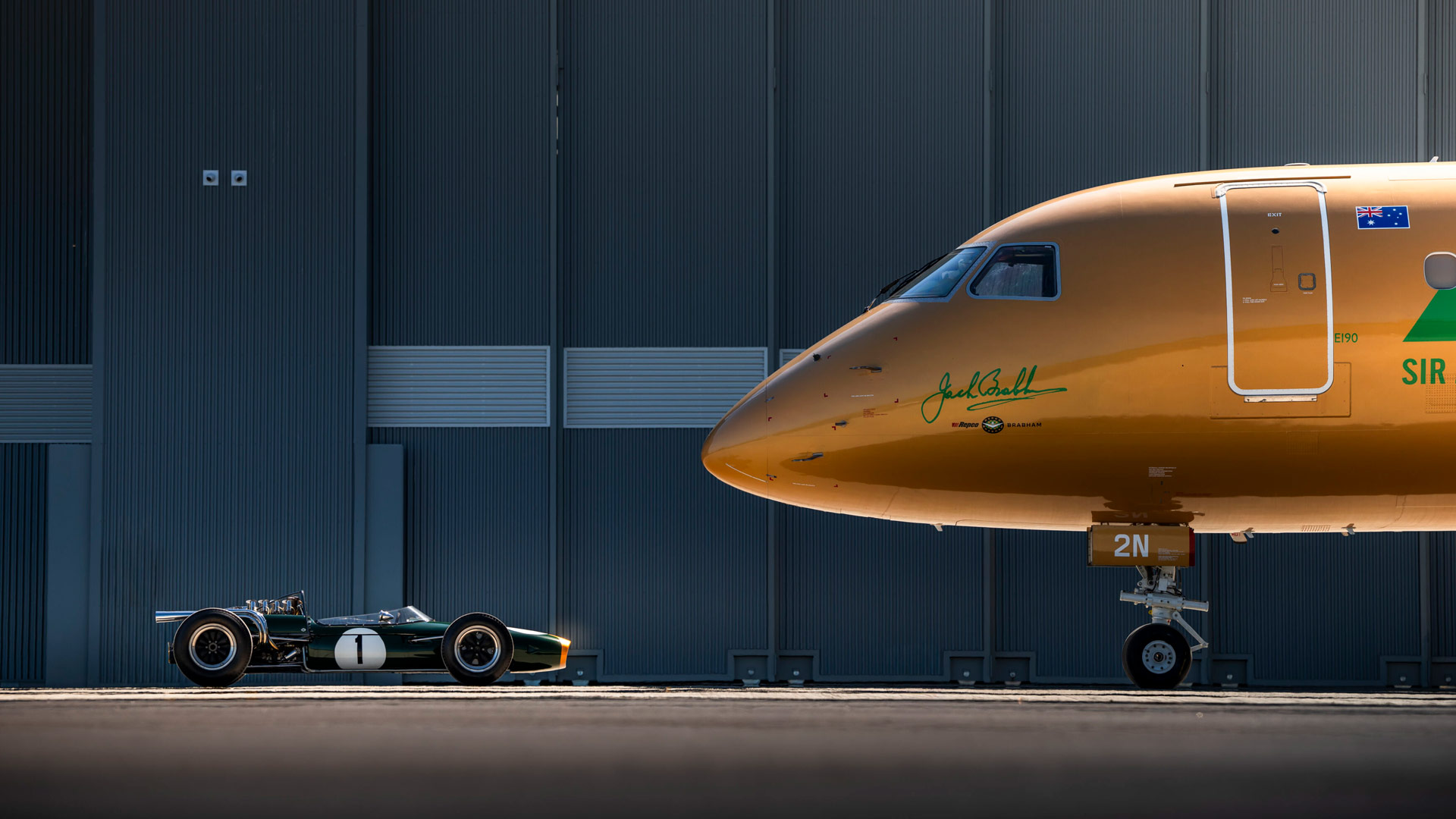
An Australian airline has paid tribute to one of its nation’s most famous racing cars with a special commemorative livery.
Alliance Airlines, based in Brisbane, Queensland, has chosen to honour the 60th anniversary of the Brabham BT19 Formula 1 car.
Driven by the legendary Sir Jack Brabham, the BT19 took the Australian to his third and final Formula 1 World Drivers’ Championship in 1966.
It remains the only time a driver has secured the F1 Drivers’ Championship in a car of his own make, and run by his own team.
Alliance Airlines marked the occasion by giving one of its newest Embraer E190-100 aircraft an eye-catching livery of green, gold and white.
An icon of Australian motorsport
The design for the Brabham BT19 was by Ron Tauranac, initially with a view to using a Coventry Climax flat-16 engine.
However, Formula 1 rule changes saw the flat-16 abandoned before the BT19 even turned a wheel. Australian firm Repco then persuaded by Jack Brabham to build a new 3.0-litre V8 specifically for the car.
Making use of old General Motors components, the Repco V8 was lightweight and offered a plentiful amount of torque. It also proved affordable to maintain.
With Sir Jack behind the wheel, the BT19 took four Grand Prix wins during the 1966 Formula 1 season. This was enough to secure both the drivers’ and manufacturers’ titles for the Australian team.
Such was the strength of the BT19, it claimed another Manufacturers’ World Championship the following year, with Jack Brabham finishing second in the Drivers’ standings.
Commemorating a special achievement
Recognising the significance of the BT19 to Australian motorsport, Repco purchased the sole example of the Brabham racer in 2004. It has since been displayed at the Australian National Sports Museum in Melbourne, and will make various public appearances throughout 2026.
In designing the special livery, Alliance Airlines made use of a bespoke colour palette featuring custom-developed ‘F1 Gold’ and the official Australian green hue.
Commenting on the livery, Stewart Tully, managing director at Alliance Airlines, said: “This aircraft signifies the magnitude of the achievements of Sir Jack Brabham, Ron Tauranac and the Repco-Brabham BT19 in 1966.
“Alliance Airlines has a proud history of paying tribute to innovation and excellence through its special liveries. This latest design is in keeping with that legacy and pays tribute to an Australian icon whose passion forever changed his field”.
A tribute to Sir JackBrabham
David Brabham, MD of the Brabham Group and son of Sir Jack Brabham, commented: “This is a wonderful and very meaningful tribute to one of the great moments in Australian sport.
“The Repco-Brabham BT19 that propelled Jack to that historic title is clearly featured on the aircraft, making this tribute even more special. It brings to life this remarkable story in a very visible and powerful way. The Brabham family thanks Alliance for honouring this legacy.”
Alliance Airlines’ special aircraft, registration number VH-A2N, will enter service later this year and fly between various cities throughout Australia.
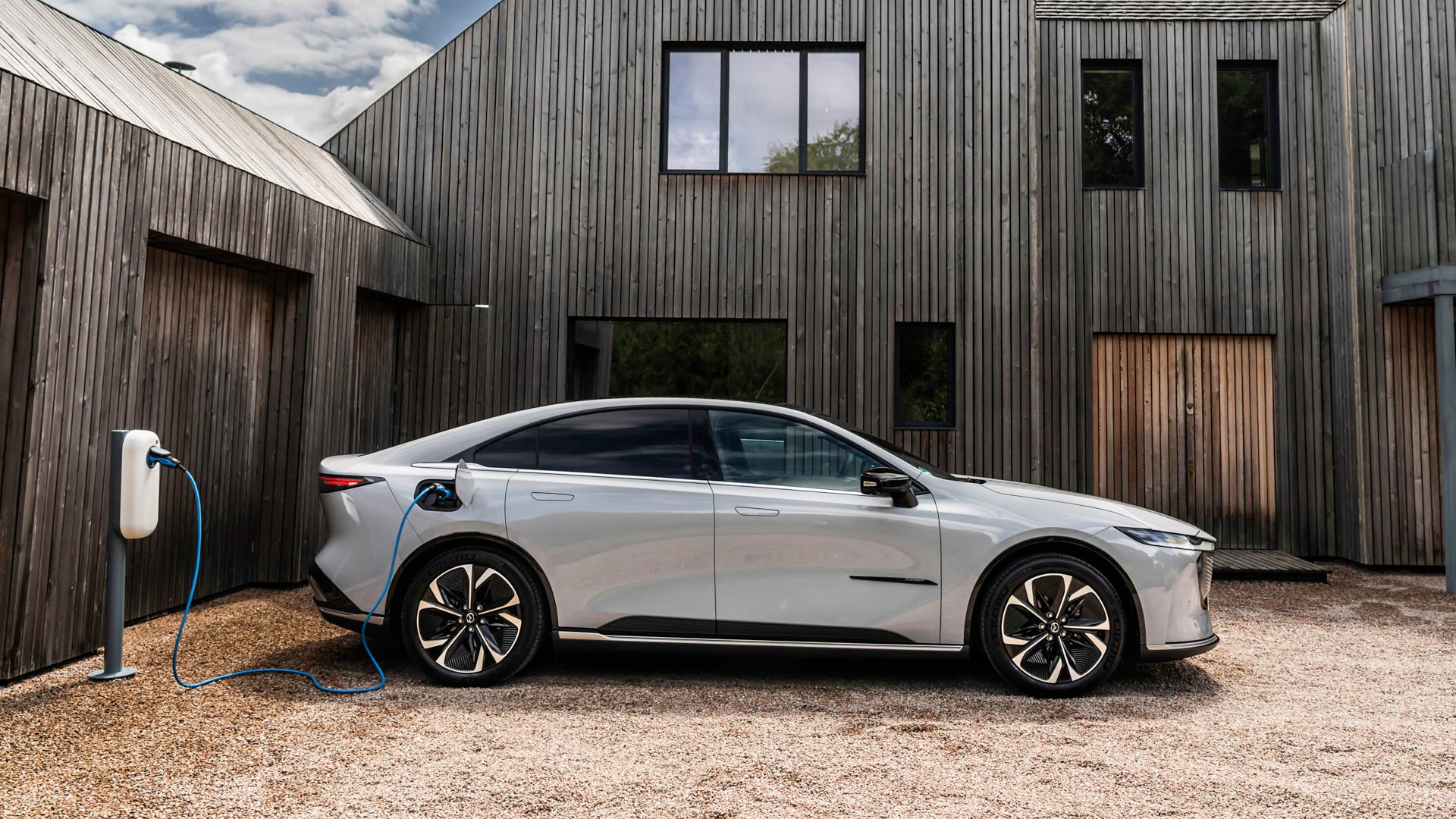
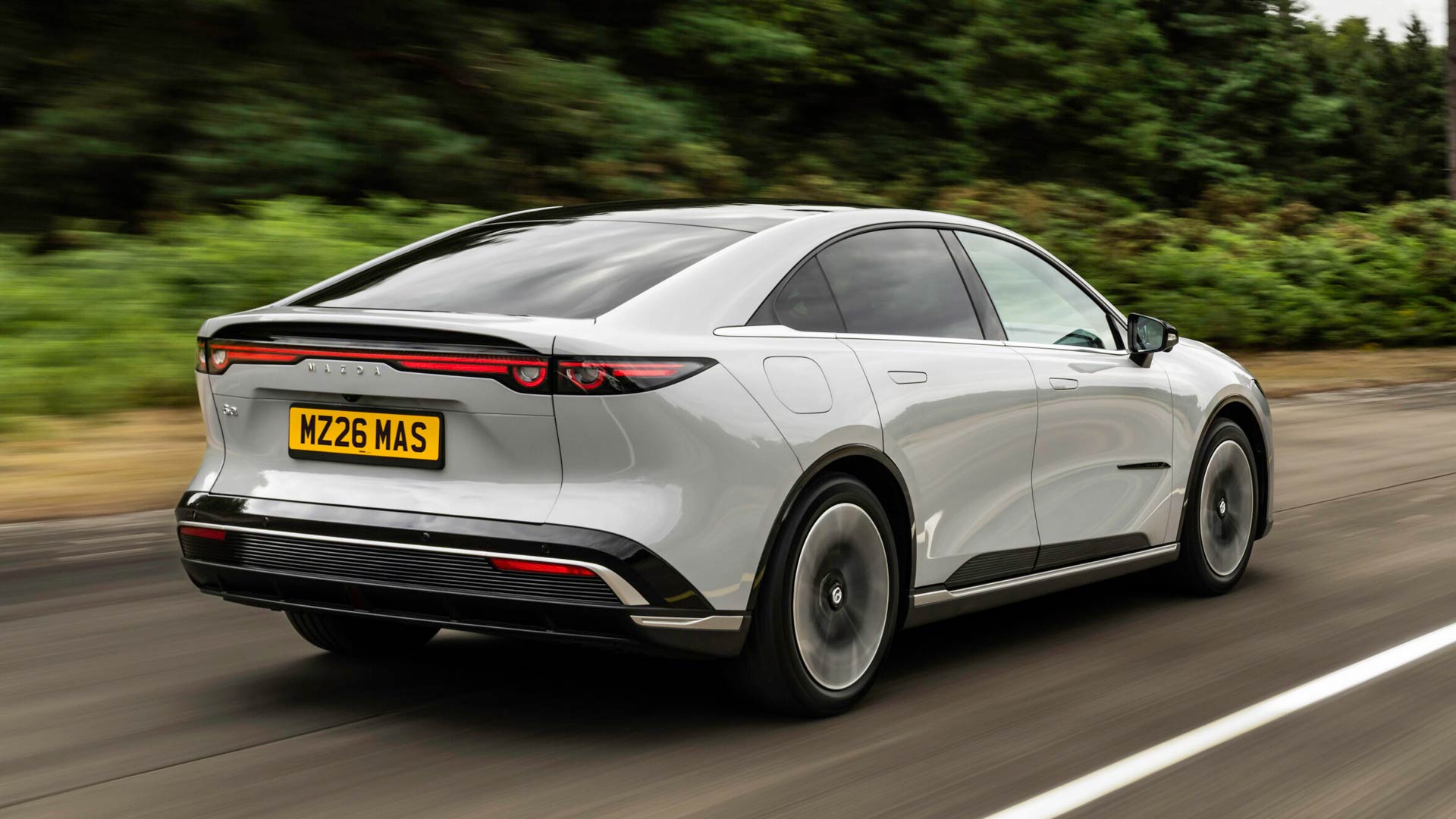
Mazda has announced UK prices and specifications for the new 6e, a large electric hatchback designed to challenge Tesla.
First revealed at the 2025 Brussels Motor Show, the Mazda 6e is available to order now. The first deliveries to UK dealerships are expected this summer.
Acting as an electric replacement for the discontinued Mazda 6, the new fastback-styled EV will cost from £38,995.
This starting price makes it competitive against executive EV rivals such as the BMW i4, Mercedes-Benz CLA and the ubiquitous Tesla Model 3.
The Mazda 6e plays a key role in the Japanese brand’s pivot towards electric vehicles. A CX-6e electric crossover will join the range later this year.
Just one battery option available
Although European versions of the Mazda 6e are offered with a choice of two battery packs, options are more limited for UK customers.
A 78kWh lithium iron phosphate (LFP) battery comes as standard on all models – said to combine ‘the best of both’ in terms of range and performance. When fully charged, the LFP battery offers an official, WLTP-tested range of up to 348 miles.
Compatible with DC charging speeds of up to 195kW, replenishing the Mazda 6e from 10 to 80 percent can take 24 minutes.
The Mazda’s 258hp electric motor sends all its power to the rear wheels, helping the 6e to accelerate from 0-62mph in 7.9 seconds.
A streamlined interpretation of Mazda’s Kodo design language should boost efficiency, helped by an active rear spoiler and aerodynamically styled 19-inch alloy wheels.
A high level of standard spec
The £38,995 Takumi trim kicks off the Mazda 6e range. Highlights include a panoramic glass sunroof, power-operated tailgate, 360-degree surround-view camera and a front grille with illuminated signature lighting.
On the inside, the Mazda 6e Takumi comes with artificial leather upholstery, dual-zone climate control, a heated steering wheel and even an air purifier.
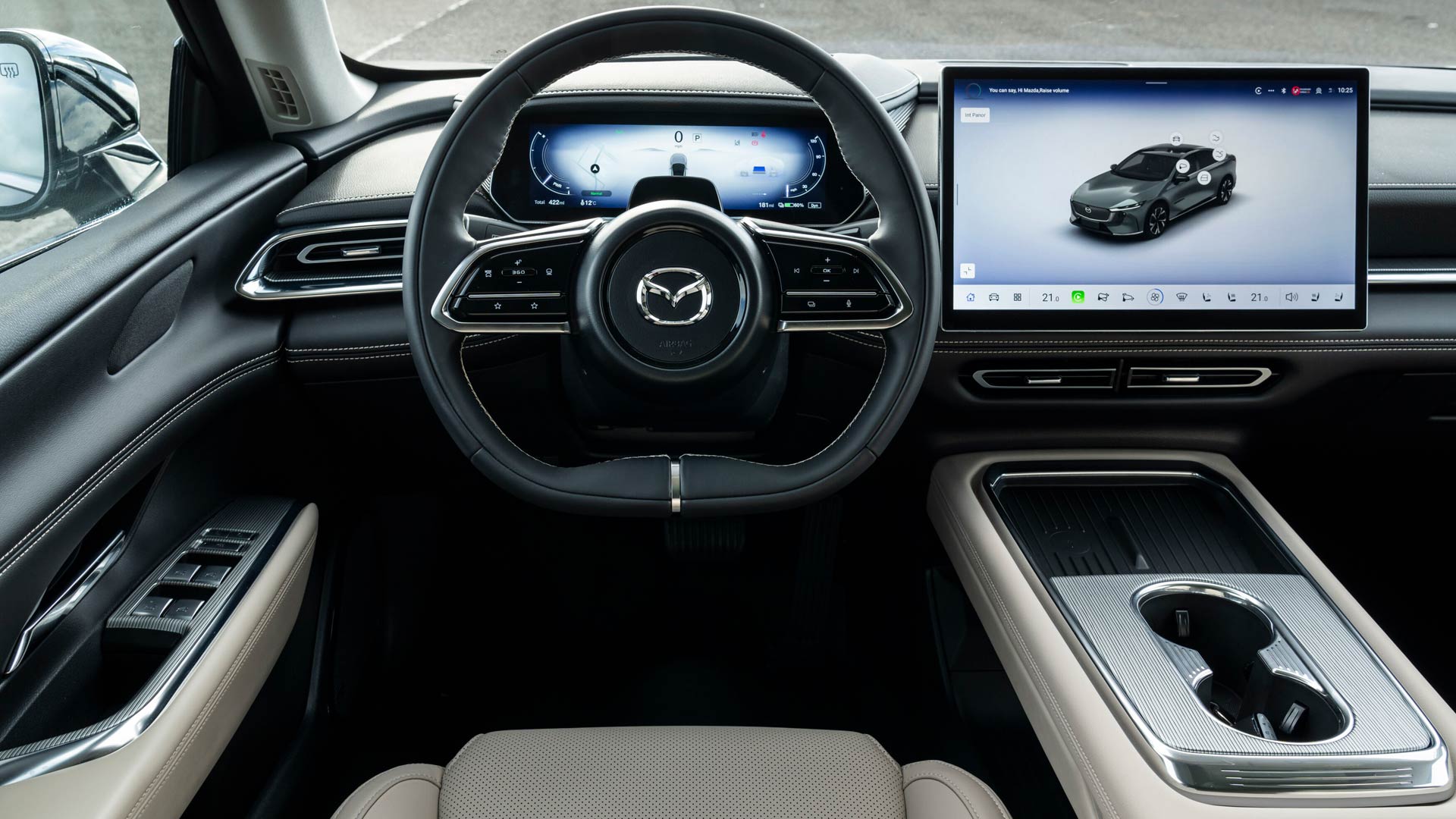
Infotainment is taken care of by a 14.6-inch central touchscreen, combined with a 10.2-inch digital instrument panel. Wireless smartphone charging is included, along with wireless Apple CarPlay and Android Auto connectivity.
Opting for Takumi Plus trim sees a small increase in price to £39,995, adding seats clad in premium tan Nappa leather with artificial suede fabric inserts.
Both versions offer a 336-litre boot capacity, with a further 72 litres of storage space beneath the bonnet in the ‘frunk’.
‘A real statement of intent’
Jeremy Thomson, managing director for Mazda Motors UK, said: “The Mazda 6e is the car our dealers have been waiting for. With a nod to the popularity of the Mazda 6, it’s a real statement of intent for the future and illustrates how Mazda can bring great design, technology and style to battery electric vehicles.
“And with the suspension, power steering and braking carefully calibrated by the team at Mazda Research Europe in Frankfurt to match UK preferences, I’m sure the Mazda 6e will be an electric car that delivers the engaging driver experience you’d expect from Mazda.”
The Mazda 6e is available to configure on the marque’s website now. Orders can also be placed through Mazda dealerships.
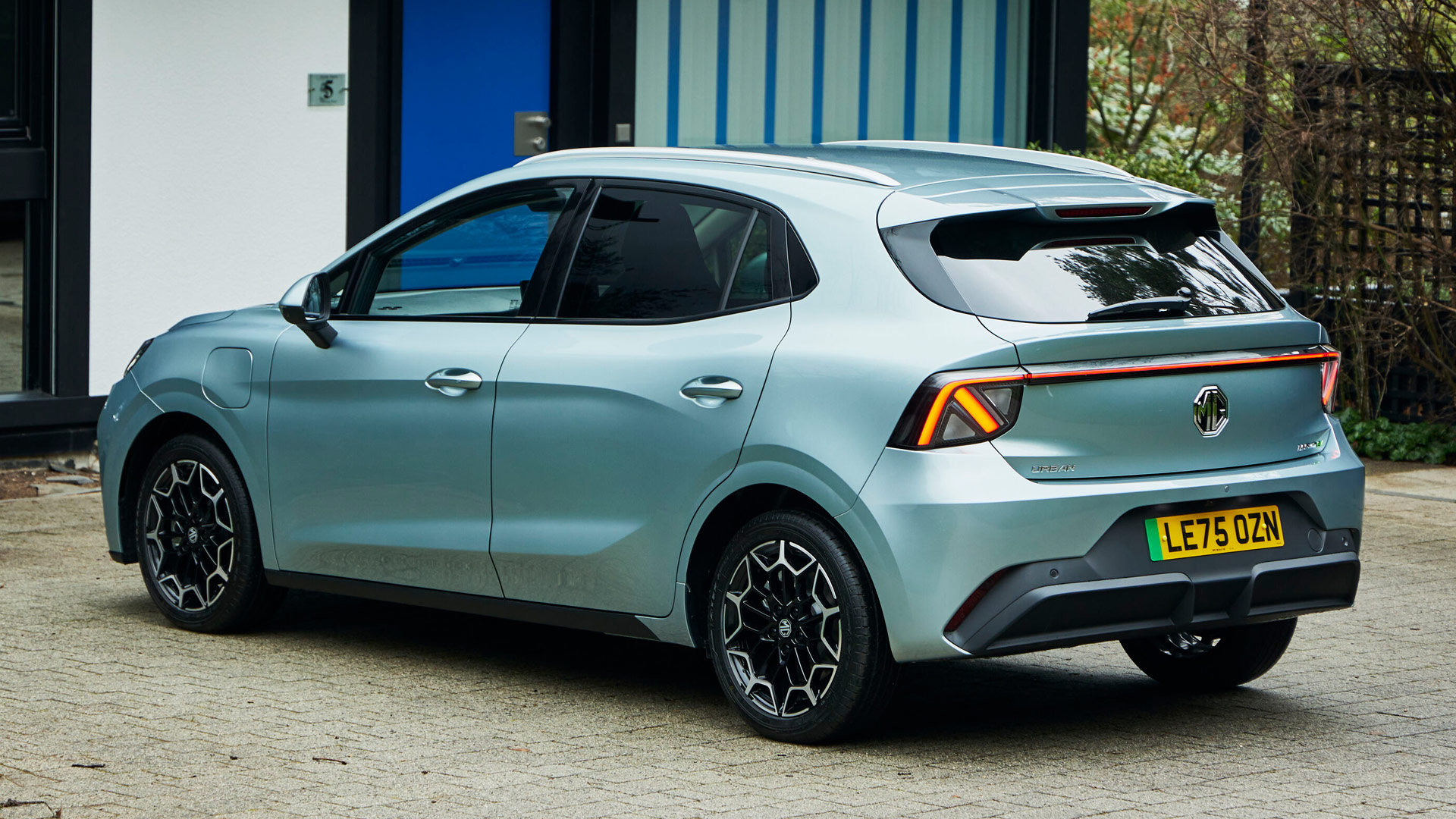
MG has revealed more details about the new MG4 EV Urban hatchback: the cheapest electric car in its UK model range.
Launched in China last year, the MG4 EV Urban represents the second generation of the popular MG4 EV. However, the existing MG4 EV will continue to be sold alongside the Urban, giving customers a wider choice.
Despite being a new model, the MG4 EV Urban will undercut the current MG4 EV on price. MG says it will cost from £23,495 in entry-level Comfort trim with a 43kWh battery.
This represents a saving of £6,500 compared to the cheapest existing MG4 EV, which has recently been reduced in price.
Almost 50,000 examples of the MG4 EV have been sold since the model debuted in 2022.
Small on price, big on space
Based on the new ‘SAIC 3’ platform, the Urban differs from its predecessor by making use of a more conventional front-wheel-drive layout. The existing MG4 EV comes with rear- or all-wheel drive, depending on the electric powertrain chosen
The MG4 EV Urban is also longer and taller, with a lengthier wheelbase than the current model. This translates into more interior space, making the Urban more accommodating for passengers.
Rear legroom is particularly generous, with the MG4 EV Urban also boasting 479 litres of boot space with the rear seats upright. A further 98 litres of storage is found beneath the boot floor.
Battery options for the MG4 EV Urban start with a 43kWh Standard setup, available solely with the Comfort trim level. A 54kWh Long Range battery is offered for both Comfort and Premium versions.
Fully charged, the 54kWh battery offers an officially tested range of up to 258 miles. Replenishing the 43kWh battery can take 28 minutes to go from 10 to 80 percent capacity, with the larger option requiring just two minutes more.
‘Making EV ownership more accessible’
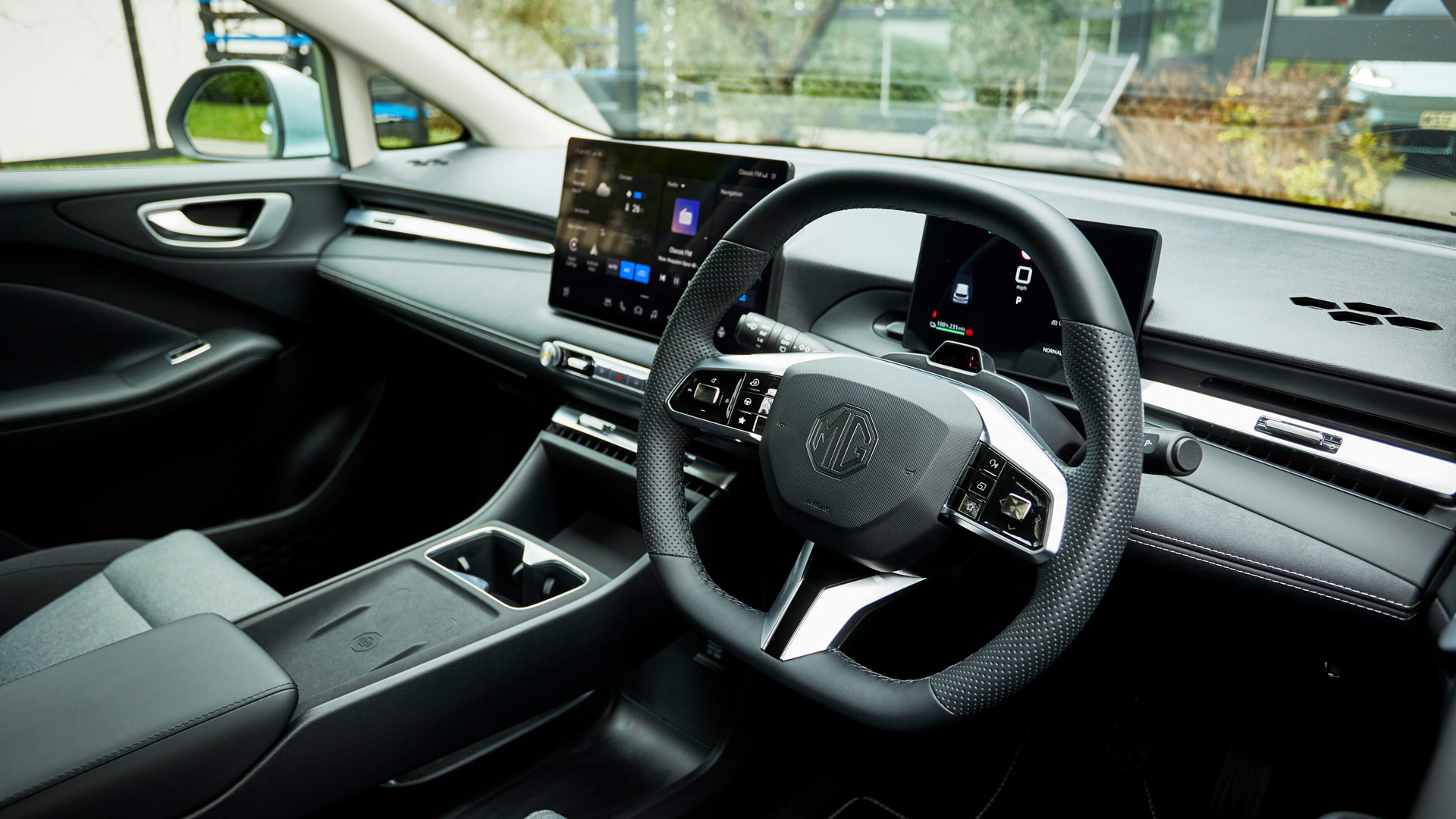
The MG4 EV Urban’s interior features a pleasing array of physical buttons and dials for the air conditioning and infotainment, which MG says comes in response to ‘customer feedback’.
Standard equipment includes a 12.8-inch central infotainment display, a 7.0-inch digital instrument panel and wireless smartphone connectivity.
A seven-year or 80,000-mile warranty is standard across the MG4 EV model lineup.
“Since its launch in 2022, the MG4 EV has been one of the UK’s most popular and admired electric cars with nearly 50,000 sales and 50 major awards and recommendations,” said David Allison, director of product and planning at MG UK.
“The new MG4 EV Urban reconfirms our brand’s ability to make EV ownership ever-more accessible, offering a family-sized electric vehicle available from just £23,495.”
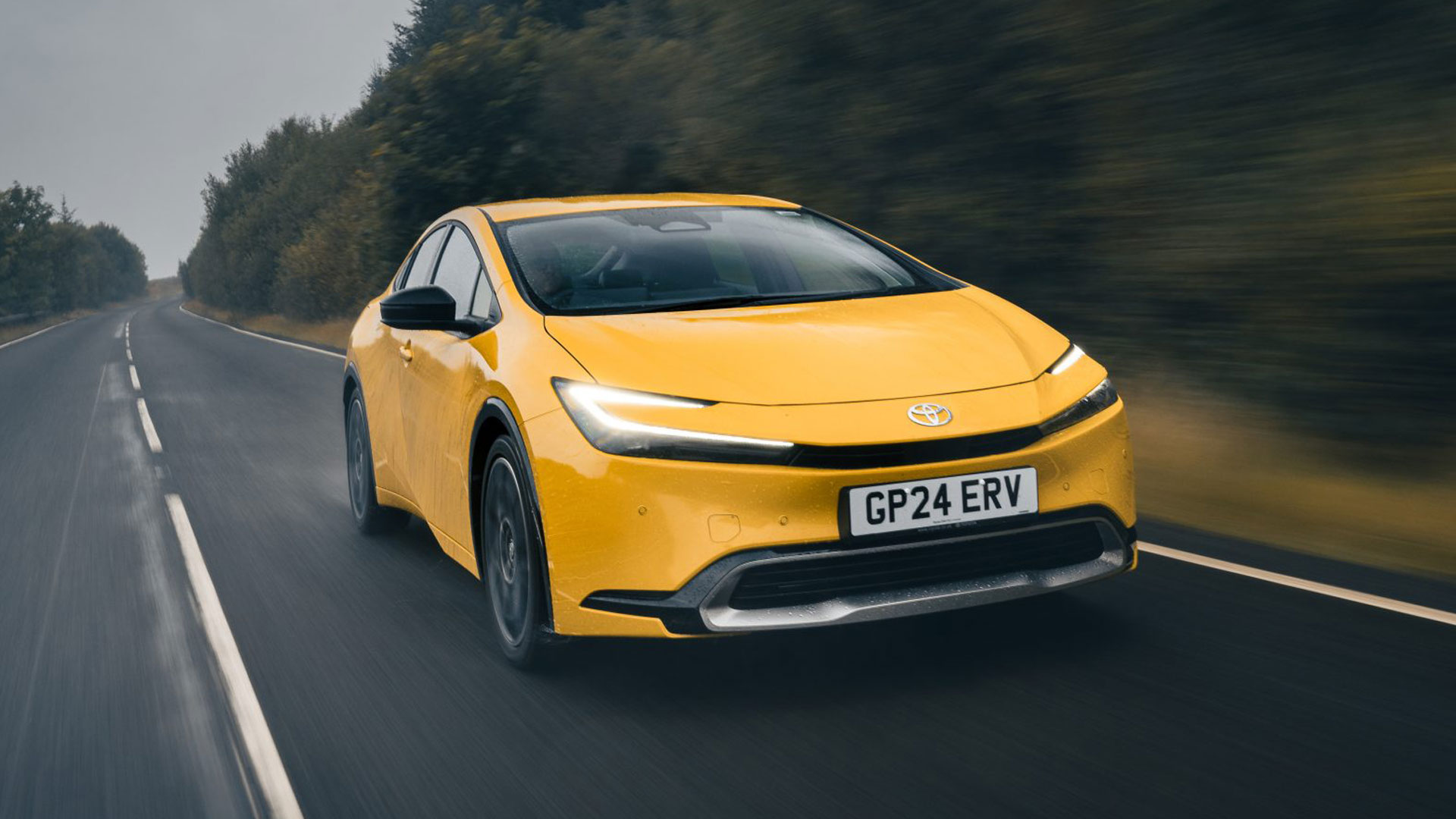
Toyota has announced an extension for its three-year fixed price insurance offer, enabling more drivers to take advantage of the scheme.
Available to those who purchase a brand-new Toyota, customers can fix their insurance premiums for three years. Costs start at £450 for an Aygo X Hybrid.
Toyota says there will be no unexpected price rises throughout the three-year period, giving drivers additional peace of mind.
Originally announced in November 2025, Toyota’s fixed-price insurance offer was initially planned to conclude on 31 January 2026.
However, the success of the offer has led Toyota to extend its availability, with new cars ordered and delivered by 31 March 2026 now eligible for the deal.
Making life easier for drivers
Cover for the three-year insurance offer is provided through Toyota Insurance Services. The policies are said to have been designed with the Japanese marque’s vehicles in mind.
Toyota promises the comprehensive insurance cover will be fully transparent, with ‘easy-to-understand terms and no hidden fees’.
Along with paying through a one-off annual payment, customers will also have the option to pay monthly. This will be more expensive, however, due to a transaction fee being charged.
Drivers will not be locked into the insurance offer for the full three-year period; they can choose to leave at the point of renewal each year.
Should any repairs be needed during the cover period, these will be undertaken by trained Toyota technicians using genuine Toyota parts.
Wide range of Toyota models included
To qualify for the offer, customers must be aged between 27 and 76, hold a full UK driving licence and have held UK residency for a minimum of one year.
They should also have no convictions or pending prosecutions over the past five years, and not have made any fault insurance claims during the last three years.
Providing customers meet the eligibility criteria, annual comprehensive insurance premiums through the scheme will be:
Using voice commands allows you to take control of many of your car’s functions without removing your hands from the steering wheel. It’s quick and convenient, and it could also help you drive more safely.
We have all got accustomed to using voice commands in everyday life. Whether it’s asking Siri for a shepherd’s pie recipe, getting Google to help with maths homework or requesting Alexa to play some Dire Straits (OK, maybe that’s just us). However you use it, voice control has become second-nature.
It’s not perfect, but using voice commands in a car today is far more effective than it was a decade ago. Many new cars will feature a voice command button on the steering wheel. Press it and you can change the radio station, turn up the volume, set a destination or adjust the air conditioning.
On some cars, the voice command button can also be used to find a place to park, check the weather, compose a text message or read your latest WhatsApp conversation.
Most modern cars rely on a touchscreen to control ‘intotainment’ functions, often via multiple sub-menus, so the effectiveness of voice control is more important than ever.
Apple CarPlay and Android Auto
Many people prefer to use Apple CarPlay or Android Auto while driving. These systems recreate the familiar home screen of your smartphone, along with many of its apps and functions, on the car’s touchscreen. They too can be controlled using the in-car voice command button.
Read on for a brief explanation of how to use each one.
Use Siri with Apple CarPlay
There are two ways you can use Siri to control Apple CarPlay. The method will depend on your particular car.
Press and hold the voice command button on the steering wheel. Then ask Siri a question or to do something.
Touch and hold the Apple CarPlay dashboard or CarPlay home button on your in-car touchscreen. As above, then ask Siri a question or to do something.
Use Google with Android Auto
To use Google search and command functions with Android Auto, follow these steps:
Say “OK Google”, then press and hold the voice command button on the steering wheel or select the microphone.
Wait until you hear a beep.
Say what you’d like to do or know.
What is Apple CarPlay Ultra?
Apple CarPlay Ultra – which made its world debut on the Aston Martin DBX707 and new DBX S – is a deeper integration of CarPlay into the vehicle’s software and systems. It reduces the need to toggle between the CarPlay interface and the car’s own touchscreen menus.
You still get the usual on-screen icons for making calls, listening to podcasts, Google Maps and more, but you can also access many car-specific functions via CarPlay, such as the heating and ventilation, drive modes, parking cameras and driver assistance systems. In Aston Martin models, CarPlay Ultra also has its own customisable driver display.
Our verdict on Apple CarPlay Ultra? ‘The system works well and makes interacting with the car a little easier, backed up by “proper” physical controls on the centre console. Don’t have an iPhone? You can use Android Auto, although it won’t offer any enhanced functionality.’
Hyundai is set to launch a flurry of new models over the next 18 months, including all-new cars and replacements for some of its UK best-sellers.
A total of five new Hyundais are set to arrive during the next year and a half, spearheaded by the exciting new Ioniq 3 – due to be revealed at the Milan Design Week in April.
The production version of the stylish Concept Three concept car shown at the Munich Motor Show last autumn (see image below), the electric Ioniq 3 will compete with cars such as the Nissan Leaf and Volkswagen ID.3.
New i20, Bayon, Kona and Tucson
The new Hyundai Ioniq 3 will also take on its sister car, the Kia EV4 – and the shared technology indicates it could have a driving range of around 390 miles. It will be built in Turkey and prices could start from less than £35,000.
Hyundai will launch an all-new version of the Hyundai i20 supermini, too, along with a replacement for the Hyundai Bayon crossover SUV. While the current car is still fresh, there will eventually be a replacement for the Hyundai Kona as well, underlining the firm’s commitment to the small car sector.
Hyundai is also readying replacement for the top-selling Hyundai Tucson. We might get a first look later this year, ahead of it going on sale in 2027. Given how well the current model is still selling, it will be a very important new car for the firm.
The new Hyundai Tucson is expected to continue with hybrid and plug-in hybrid drivetrains, but not a fully electric version: Ioniq models currently serve that role.
Even so, Hyundai’s entire range will be electrified by 2027, allowing buyers to make a choice between hybrid, plug-in hybrid or pure electric.
“We are moving at speed and purpose to give European customers the choices they deserve,” said Hyundai’s European CEO Xavier Martinet.
Hyundai 2025 results
Martinet, who has now been boss of Hyundai Europe for a year, revealed that Hyundai sold just over 603,000 new cars in Europe last year, up around one percent versus 2024.
Importantly, sales of its electrified vehicles – that’s hybrid, plug-in hybrid and electric – grew by 24 percent, with EVs on their own accelerating by almost half.
Nearly one in five new Hyundais sold across Europe was electric. The EV mix was even higher in the UK, at 27 percent.
The UK was also Hyundai’s largest overall market in Europe, with 93,124 new cars registered here last year. This saw the firm move up from ninth to sixth place in the car brand rankings, overtaking Toyota, Nissan and Mercedes-Benz.
The Hyundai Tucson was the firm’s best-selling model in Britain, taking a 30 percent share. Nearly six in 10 Hyundais were either hybrid, plug-in hybrid or electric, 10 percent above the market average.
International motor shows, once the epicentre of new car launches, have struggled to recover from the financial blows dealt by Covid. However, the annual Retromobile show in Paris has defied this trend by looking to the past, with a focus on classic cars and restomods.
For legendary Italian design studio Bertone, Retromobile provided a natural stage to reveal its reinvention of the Autobianchi A112 Runabout – a concept sports car created by Marcello Gandini while he was working at Bertone in 1969.
Just 25 examples of the new Bertone Runabout will be built, offered in either Barchetta (fully open) or Targa (removable roof) guises. A wedge-shaped carbon fibre body sits atop an aluminium chassis, with a 475hp 3.5-litre supercharged V6 delivering a 0-62mph time of 4.1 seconds.
After espressos were brewed and pleasantries had been exchanged, I sat down with head of design for the Runabout, Andrea Mocellin, to discuss his influences, Italian coachbuilding and some decidedly unconventional headlights.
Your career has largely focused on future mobility and technical innovation so far. What drew you to the Runabout project?
“While I’ve always been interested in the future of mobility, I began my education and career in Turin, surrounded by coachbuilders and the legacy of masters such as Marcello Gandini and Giorgetto Giugiaro. Bertone has always thought radically about vehicle design – and that, for me, is new mobility. Design must communicate not only with the driver, but with today’s audience and market, which demands a certain type of car.
“The Runabout is radically influenced by Marcello Gandini’s masterpiece [pictured above], but it must also satisfy collectors who expect exceptional performance by today’s standards. Bertone wants to create pieces of art with real performance and a driving experience defined by joy.”
During his review of the Alfa Romeo 8C, Jeremy Clarkson relayed the Tate Gallery’s view that a car cannot be art, because art has no purpose beyond itself. The Runabout is not the most practical of cars – so can it be considered as art?
“We hope the Runabout is beautiful, and perhaps one day it will sit in art museums as well as car museums. But we also want it to be driven.
“Historically, Bertone has always believed in art with a function. Until now, we have offered our talent to others. Today we can manufacture our own cars and deliver art, design and function together.”
Given Bertone’s vast archive, why choose the Runabout as your first resurrected concept car?
“This marks the renaissance of the Bertone brand. Alongside the GB110 hypercar [pictured on the left above], we wanted our second car to offer a completely different ownership and driving experience.
“Whereas the GB110 draws inspiration from the breadth of Bertone’s history, the Runabout is a deep dive into a single, iconic design.”
What were the design challenges of translating a 1969 concept into a modern, road-legal car?
“You have to approach the project knowing it must reach production. Those boundaries shape the design from day one. Working closely with engineers is what turns a sketch into something that belongs on the road. Overcoming those challenges is what gives a design its credibility.
“If you ask any designer, they would rather work on two production cars than one hundred concept cars. That way you get to see it on the street and leave your mark on automotive industry history.”
Did you want to keep the original car’s headlight position behind the driver?
“Unfortunately, that just wasn’t possible. We love the original Gandini car, but it was only used as a reference.
“The new pop-up headlights still deliver a sense of theatre, but this is a car designed to be used in today’s world.”
Were there any non-negotiable design cues for the new Runabout?
“The red stripe divides the car into two distinct design languages. The lower section references the scafo – the boat hull – reinforcing the nautical inspiration. The upper half follows the iconic Bertone wedge.
“The coda tronca (cut-off tail) and L-shaped B-pillar complete the sculpture and make the Runabout instantly recognisable.
“The interior, too, was crucial given the open-top format. Horizontality dominates, creating a wraparound feel. A nautical compass nods to the original, while the digital intrusion is limited to the instrument cluster. We wanted craftsmanship and premium materials, while retaining an analogue feel. The interior is minimal – not simple, but minimal.”
Having lived in Turin, London and Munich, what have these cities taught you about car design?
“Turin is the spiritual home of automotive design. Munich is more industrial and feeds my interest in innovation. London – and indeed Asia and America – showed me the global appetite for unique cars that differ from mass-produced offerings.
“I also learned just how globally revered the Bertone brand remains, and the affection enthusiasts still have for its classic designs.”
What is your dream road-trip with the Bertone Runabout?
“From the south of France to Turin. The coastal roads would be perfect. The American west coast, too – the Runabout would come alive in those sunsets. And, not to be a cliché, but even British rain would beautifully highlight the car’s forms.”
I can’t disagree. The Runabout feels perfectly suited to la dolce vita along the riviera. Bertone’s revival shows that scarcity, craftsmanship and clear design intent still have the power to stop people in their tracks.
As the automotive industry approaches the physical limits of performance, emotion is increasingly being injected through nostalgia. The reborn Lamborghini Countach, with Aventador hardware beneath retro-inspired bodywork, is a clear case in point. Bertone wants to position itself at the forefront of a return to true coachbuilding, where modern, usable underpinnings meet historic design language.
For those lucky 25 owners, the Runabout will be a collector’s piece. For everyone else, it’s a reminder of what Italian coachbuilding can achieve when given space for creative expression.
Electric vehicle manufacturer Polestar has further expanded its range of seamless public charging options for owners.
The Swedish marque now offers access to more than 28,000 public charging devices compatible with Plug & Charge capabilities, when making use of the Polestar Charge application.
This means Polestar owners are able to use an array of charging devices simply by plugging into them. Communications between the car and charger are handled automatically, meaning there is no need for additional payment actions.
In addition, the company has fully integrated making use of the Tesla Supercharger network into Polestar Charge, again removing the need to use additional smartphone apps.
Plug in, charge up
Plug & Charge operates through identifying the vehicle when it is connected to a public charging device. As the car stores payment information itself, billing is handled automatically for the registered owner.
As a result, this means there is no need to use separate smartphone apps to manage charging, or present a contactless credit or debit card to begin charging.
Currently, only the Ionity and Allego networks offer Plug & Charge capabilities for Polestar in the UK, meaning drivers will have access to around 1,000 devices.
In order to access Plug & Charge features, owners will also have to subscribe to the Polestar Charge service, at a cost of £11.99 per month.
Polestar Charge offers access to more than one million charging points across Europe, with the ability to navigate to them directly through Polestar’s integrated Google Maps in-car navigation.
Subscribers also receive a 30 percent discount on public charging, including networks such as Ionity, InstaVolt, and Fastned.
Creating a seamless charging experience
Polestar’s inclusion of the Tesla Supercharger network directly into its charging app will also make life easier for owners.
Drivers can now easily access over 20,000 Tesla Superchargers, at more than 1,500 locations across Europe, without the need to switch apps. Real-time device availability, along with in-car route planning, is now included.
Olivier Loedel, Head of Product Software Management at Polestar, says: “With Polestar Charge we give our customers access to one of the biggest charging networks in Europe.
“By expanding Plug & Charge and fully integrating Tesla Superchargers, we’re improving our premium seamless charging experience even further. Our strong charging offer, integrated with the in-car navigation in Google Maps, sets us apart from many competitors.”
Plug & charge is currently available for Polestar 2 MY26 and Polestar 3 models, and will be made available for Polestar 4 owners through an upcoming Over-the-Air update.