Home Blog Page 117

How to buy the right tyres for your car

0
How to buy the right tyres for your car

It’s difficult to overstate the importance of tyres when it comes to safety. They’re the only part of a car that touches the tarmac, so every input you make – acceleration, steering or braking – must go through them. 

Their contact patch with the road is much smaller than you’d think, too: about the size of your computer keyboard across all four tyres.

There’s a reason all racing drivers are obsessed with tyres, then. And they’re just as vital for road driving. Read our five-minute guide to make sure you choose the right tyres and stay safe.

Are premium tyre brands better?

How to buy the right tyres for your car

Never has the mantra ‘you get what you pay for’ been truer than with tyres. They’re one of the few products where you really are better off plumping for a premium brand.

In a back-to-back test by journalist Jonny Smith, the dramatic differences between the name-brand and budget tyres was apparent. Comparing two identical examples of the Mercedes-AMG C63, the car with ‘premium’ Continental rubber performed much better in handling, braking and agility tests.

“Many people want to know why premium tyres are preferable to budget brands,” said Smith. “With tyres the only part of your car in direct contact with the road, it makes sense to ensure they’re the best quality possible.”

It’s not all about the high-performance stuff, though. Some tyres won’t be the right fit for your car. The track-focused Pirelli P Zero Trofeo R is not the right choice for a Toyota Prius, for instance. Likewise, eco-oriented tyres from a well-regarded brand won’t suit a McLaren Senna.

In direct comparisons using the tyre energy label, however, it’s still name brands that do best. A good mid-range tyre that performs well across fuel economy, wet weather and noise should suit most needs.

Tyre energy labels: explained

How to buy the right tyres for your car

So, what is the tyre energy label? Briefly, it’s a good way of comparing tyre performance – and indeed performance per pound. 

Every tyre sold since 2012 has come with an energy label, much like you find on fridges and other white goods. It allows you to compare products at a glance, with simple graphics showing how they stack up for fuel economy, wet-road grip and noise.

Fuel economy

This is based on a tyre’s rolling resistance – i.e. how much friction it generates with the road. Measurements are taken on a calibrated test rig. The lower the rolling resistance, the better the fuel economy. The most efficient rubber earns an ‘A’, while the least efficient tyres are rated ‘G’.

Wet-road grip

Good grip is most important when the roads are wet, so this rating is based on wet-braking performance in a straight line. Experts say an A-rated tyre can stop in a 30 percent shorter distance than a G-rated one. That’s potentially the difference between a near-miss and a dangerous crash.

Noise

Anyone who regularly drives the concrete section of the M25 will know just how noisy tyres can be. This final infographic puts the tyre into one of three categories, based on the noise it emits in decibels – measured from outside the car – when cruising at a steady speed. One black bar means a quiet tyre, while three bars is noisier, albeit still within legal limits.

Do I need different tyres for winter weather?

How to buy the right tyres for your car

Having the right tyres for the conditions can be transformative. On snow and ice, a two-wheel-drive car with winter tyres will fare better than four-wheel-drive SUV with standard rubber. It doesn’t matter which wheels are driven if traction isn’t put to the ground effectively. 

Winter tyres offer much-improved grip in cold conditions, including on dry roads if the temperature is below 7 deg C. They are actually mandatory during the colder months in some European countries. Just as slick rubber will dramatically increase performance on a dry track, so winter tyres boost grip in colder, frostier conditions.

There are also tyres suited to all types of conditions. ‘All-season’ doesn’t necessarily mean they’ll only work in a blizzard.

Are your car tyres safe?

MOT advisories

The law says you must replace a tyre once the tread-depth drops below 1.6mm across three quarters of its surface. An easy test is to place a 20p piece in the groove of the tyre. If the outer band of the coin is hidden, your tyre is legal. 

However, bear in mind that a new tyre has a tread-depth of around 8mm, so grip will be reduced – particularly in the wet – well before it reaches the legal limit. Consumer group Which? recommends replacing your tyres when tread depth reaches 2-3mm.

You should also check tyre pressures regularly. Over-inflated rubber could increase your risk of skidding or having a blowout, while too little pressure will increase fuel consumption and have a detrimental effect on handling. In both instances, your tyres will also wear at an excessive rate. The correct pressures for your car will be listed in the handbook. Alternatively, use the tyre pressure checker tool on the TyreSafe website.

Regularly check for flat spots, bulges, cracking and rubber degradation. A sun-dried tyre can be just as dangerous as having insufficient tread. Also, check they are still in-date. Look at the markings on the tyre’s sidewall and find a four-digit code. The third and fourth numbers here indicate the year of manufacture. If this is more than 10 years ago, replace your tyres.

Part-worn tyres: should you take the risk?

How to buy the right tyres for your car

On the subject of safety, part-worn tyres are often a false economy. If you’re paying two-thirds of the cost of a new set for tyres with 4mm of tread left, you’re paying more than half the price for half the product. 

Recent research has also indicated that as many as 90 percent of part-worn tyres in the UK aren’t safe for sale.

It isn’t illegal to sell part-worn tyres, but talk of a ban is in the air. If you really must, check for tread depth, pressure when inflated, flat spots, bulges, degraded rubber and other damage. Also check the date on the tyre.

Tyre sizes: explained

How to buy the right rubber for your car

Tyres come in a wide range of different sizes. Check your car handbook, or read the markings on the outer sidewall to see what size your replacement tyre should be.

For example, a typical tyre size is 195/50 R15H. Breaking this down gives you:

  • 195 – tyre width in mm
  • 50 – tyre sidewall profile, as a percentage of tyre width
  • R – stands for ‘Radial’. All modern tyres are radial-ply
  • 15 – diameter of the wheel rim in inches
  • H – speed rating (see below)

Regardless of the national speed limit being 70mph, you must fit tyres rated for the maximum speed of your car. Speed ratings are marked with letters and range from N (88mph) to ZR (over 149mph). You’ll find a full list of speed ratings on the TyreSafe website.

How to save money on tyres

How to buy the right tyres for your car

We really can’t say it enough – don’t scrimp on rubber. They are the most safety-critical part of your car, so buy the best you can. And there are ways you can avoid paying over the odds for good quality tyres.

If you need a tyre at short notice, the cheapest option will probably be an independent tyre fitter, rather than a franchised car dealer. Make a few phone calls to compare prices and ensure the fee you are quoted includes new valves, fitting and balancing. Remember, you can haggle.

If you have more time, buying online will almost certainly prove cheaper – and you may be able to have the them fitted at your home or office. Again, it pays to shop around as there are plenty of retailers competing for your business. Popular websites include Asda Tyres, Black Circles, MyTyres and Tyre Shopper.

ALSO READ:

What are the pros and cons of smart motorways?

How to avoid buying a cloned car

The best new cars to buy in 2023

Advertisement

Yellow box junctions: what are the rules and how can I avoid a fine?

2
Yellow box junction

A study by the RAC has uncovered problems with 90 percent of proposed new yellow box junctions.

Previously, this type of monitored junction was only located in London and Cardiff, but a ruling in 2022 has granted councils across the UK new powers to enforce moving traffic offences.

Yellow box junctions are designed to prevent a road becoming blocked and keep traffic flowing. However, they can also catch drivers unawares, resulting in a fine of up to £130.

Many are monitored by enforcement cameras, which can automatically process penalty charge notices (PCNs) – hence their ‘money box junctions’ nickname.

Our guide will help you obey the rules and avoid a penalty.

Yellow box junctions are usually found in urban areas, where tailbacks can block opposing traffic flow. Previous research by the RAC found eight in 10 drivers said they struggle to drive cleanly through yellow box junctions. And the motoring organisation’s latest report found more than half (55 percent) of the new yellow box junctions applied for by councils since 2022 directly contravene the current government guidance.

An investigation by Click4Reg found London councils earned up to £520,000 from moving traffic violations every day.

The City of London borough typically issues up to 200,000 penalties in a year, making around £25 million as a result.

Read on for the facts about yellow box junctions.

Breaking the rules of yellow box junctions

Yellow box junctions: what you need to know

What is the point of a yellow box junction?

A box junction keeps traffic flowing by marking out an area of road space that should be kept clear at all times.

When can I drive into a yellow box junction?

You are only meant to enter a box junction if your exit is clear – in other words, if you can drive all the way through it without stopping.

Am I ever allowed to stop in a yellow box junction?

If you are turning right, you can stop in a box junction if oncoming traffic prevents you from doing so – but only if your exit is clear.

What is the penalty for stopping in a yellow box junction?

The fine for stopping in a yellow box ranges from £70 to £130 (the latter in London). However, it is halved if paid within 14 days.

Will I get points on my licence for breaking yellow box rules?

No, you will not receive penalty points on your driving licence for a yellow box offence.

Why do people get annoyed about yellow box junctions?

Motorists get frustrated with box junction transgressors because everyone else gets blocked, along with the offending driver. It is considered one of the more ‘selfish’ motoring offences.

I still remember something about them from my driving test…

Well remembered! Yellow box junctions are covered by rule 174 of the Highway Code.

Video: how to use a yellow box junction

RAC spokesperson Simon Williams said: “Our research shows yellow box junctions are very divisive issue for drivers.

“There is a strong feeling that many junctions are not set up fairly, which leads to drivers having no choice but stop in them, whether that’s due to poor traffic light sequencing, poor design or being used in the wrong place.

The RAC adds that authorities should carefully analyse every yellow box junction before installing a camera, to confirm it’s possible to drive through without stopping.

ALSO READ:

How to drive safely on smart motorways

The hidden secrets of everyday motoring

The best new cars to buy in 2023
Advertisement

Firefly Sport EV: the electric sports car helping kids be safer drivers

0
Firefly Sport EV

Here’s a sobering statistic: 20 percent of newly qualified drivers will crash within six months of passing their test. However, with tuition via the Young Driver scheme, that number tumbles to less than 10 percent.

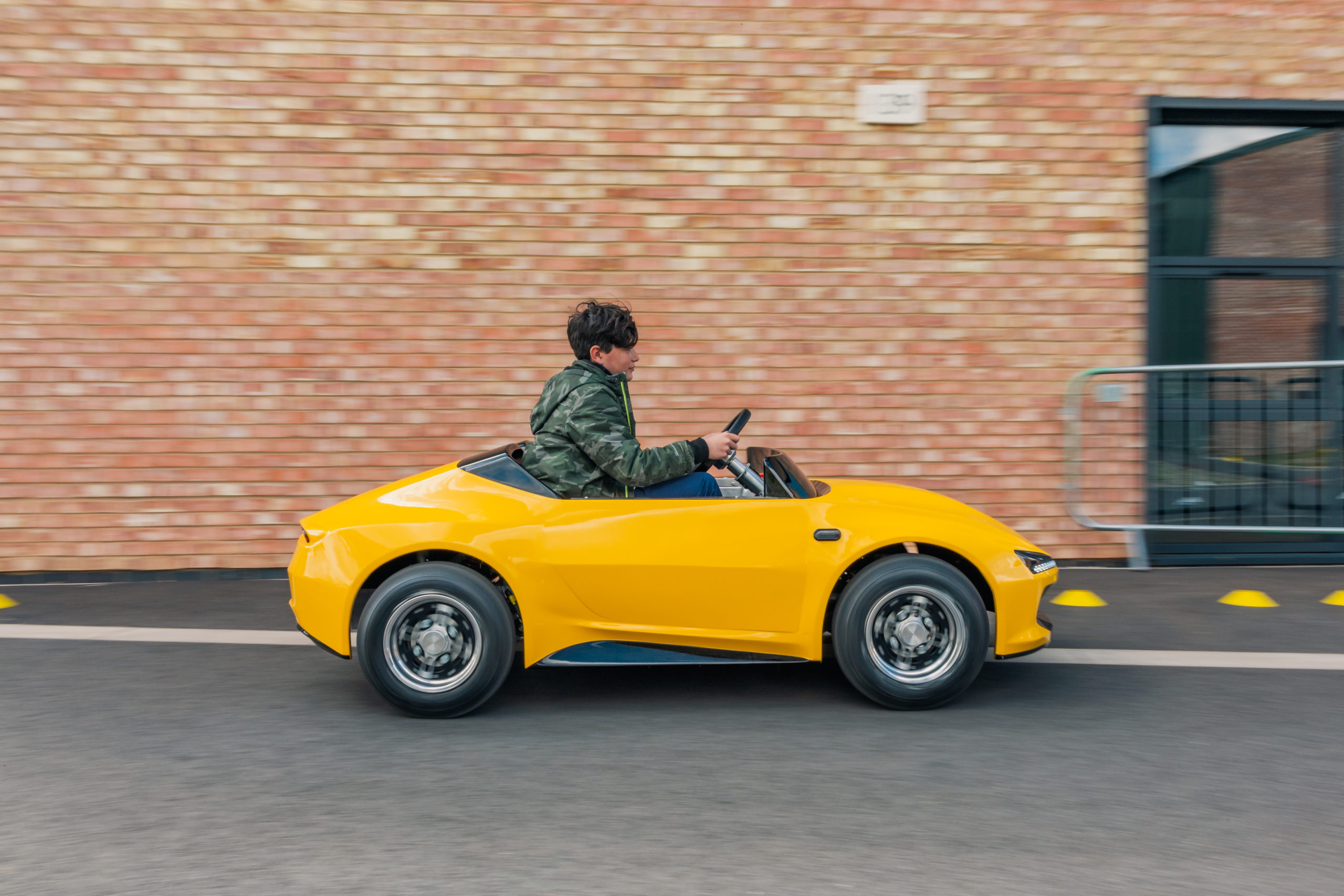
Young Driver is the UK’s largest driving school for children, with 70 venues across the country. Kids aged 10-17 can get behind the wheel of a Vauxhall Corsa, but the coolest car – the new Firefly Sport EV – is reserved for those aged 4-10.

Powered by 12-volt batteries and two 24-volt motors, the Firefly Sport looks like a shrunken supercar and boasts a top speed of up to 25mph. We enlisted the help of a youthful volunteer to bring you our first drive verdict…

‘An authentic experience’

Firefly Sport EV

In truth, my son Thomas – at 12 years old – is already beyond the Firefly Sport’s target age range. But he gamely accepted the assignment, jumping aboard the electric roadster at Bicester Heritage in Oxfordshire.

With an aluminium chassis, independent suspension, alloy wheels and rack-and-pinion steering, the Firefly is designed to offer ‘an authentic motoring experience’. It can be recharged via solar panels and, for nervous parents, a remote cut-off switch can stop the car from 200 metres away. There’s also an optional roof if the weather turns a bit ‘British’.

Speaking of which, the Firefly Sport is also a fully homegrown effort. The chassis is constructed in Coventry, the body in Huddersfield, the electric motors are made in Bournemouth and the batteries come from Bromsgrove. 

Need for speed

Firefly Sport EV

Thomas liked the Firefly Sport’s “mini McLaren” styling and found its two-seat cabin quite roomy, despite being designed for younger children. The biggest draw, though, was the tablet-style dashboard, with digital dials, a reversing camera, music streaming and ‘more than 1,000 sound effects’. Take that, Tesla.

Around a road-style course marked out by cones, Thomas quickly got to grips with the Firefly’s simple controls. His initial aim was to go as fast as possible, but soon he was using the indicators, stopping at junctions, reverse-parking and driving (almost) like a grown-up.

“That was a really fun experience,” said Thomas after handing back the £11,500 Firefly (“worth more than your car, dad”) in one piece. “It was easy to drive, actually, but harder to remember all the rules of the road.”

Investing in the future

Firefly Sport EV

Sessions in the Firefly Sport cost £20 for 15 minutes and can be booked via the Young Driver website. If you have a child aged 10+, lessons with a fully qualified instructor in a Corsa cost from £40.

Speaking about the Young Driver initiative, Fifth Gear presenter Vicki Butler-Henderson said: I strongly believe in getting behind the wheel as soon as possible. You don’t have to aim for a career as a driver – learning early will be a huge benefit for anyone”.

As for Thomas, he’s keen for another go. If it prevents him following his dad’s example – of rear-ending a BMW the day after my driving test – it could be a wise investment.

ALSO READ:

How to drive safely on smart motorways

Best electric cars to buy in 2023

Your EV questions answered on Motoring Electric

Advertisement

Skoda reveals new Royal Green paint to celebrate King’s coronation

0
Skoda Superb Royal Green Coronation

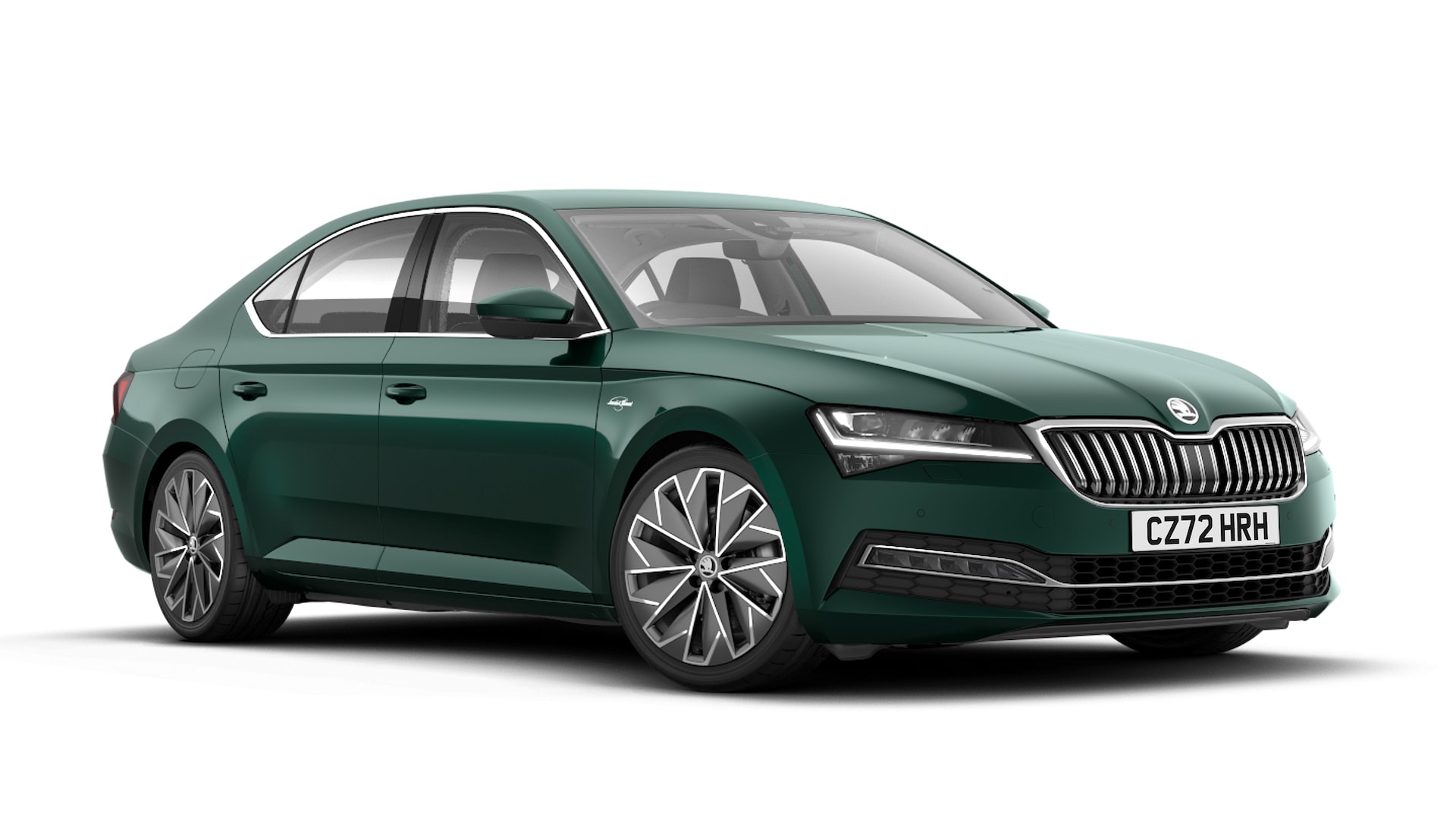
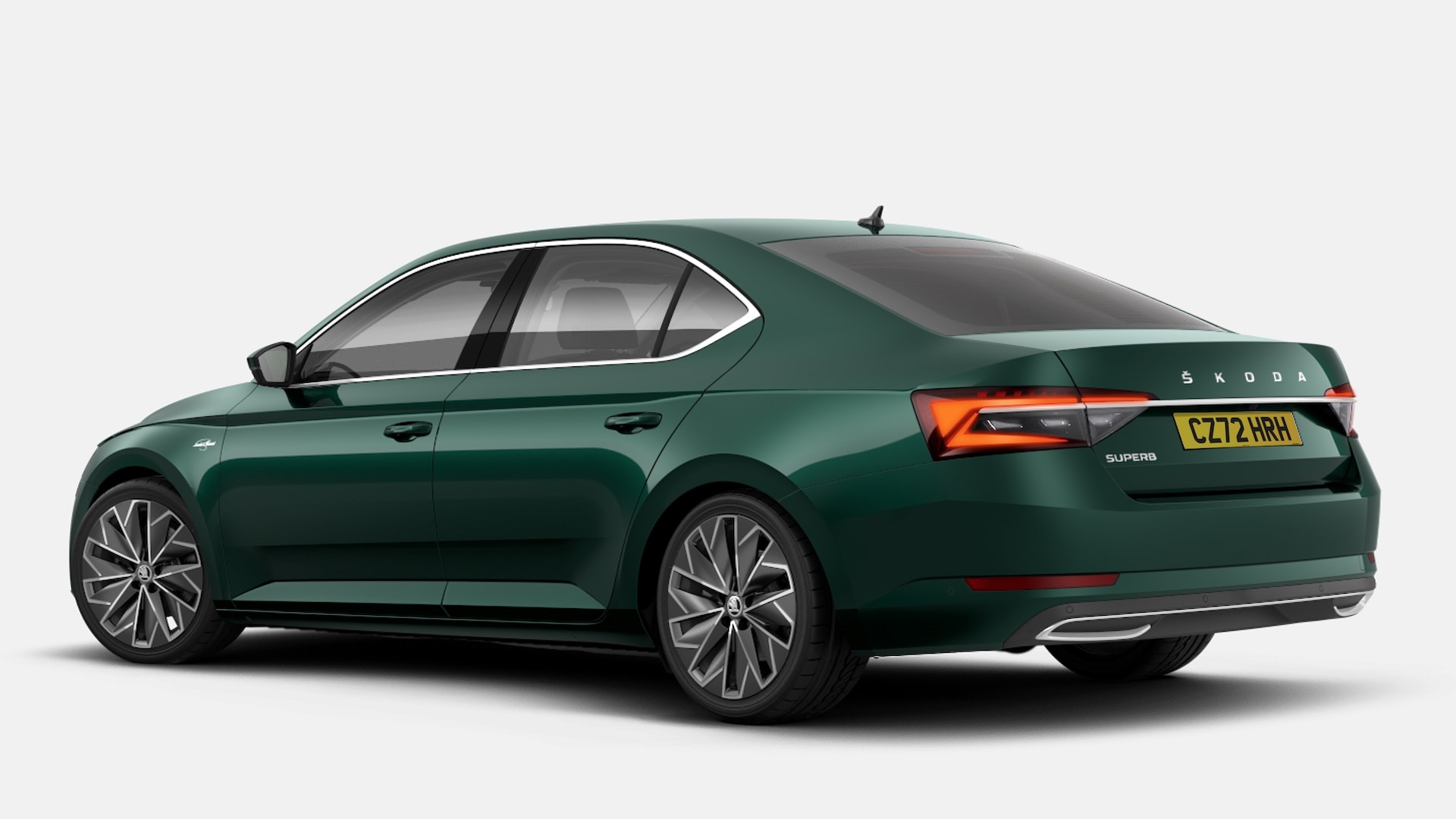
Skoda buyers excited about the forthcoming coronation of King Charles III can mark the occasion by choosing a new shade of Royal Green paint. 

The colour is being added to the company’s paint palette ‘to celebrate the formal investiture of King Charles III and Queen Camilla, the Queen Consort’.

It makes for a rather larger coronation keepsake than the limited-edition Matchbox Gold State Coach model we featured last week.

Green with envy

Skoda Superb Royal Green Coronation

The new paint hue is available to order from Tuesday 9 May 2023, and only offered for certain model and trim combinations. 

For the flagship Skoda Superb hatchback and estate, Royal Green can be combined with the SE L and range-topping Laurin & Klement specifications. 

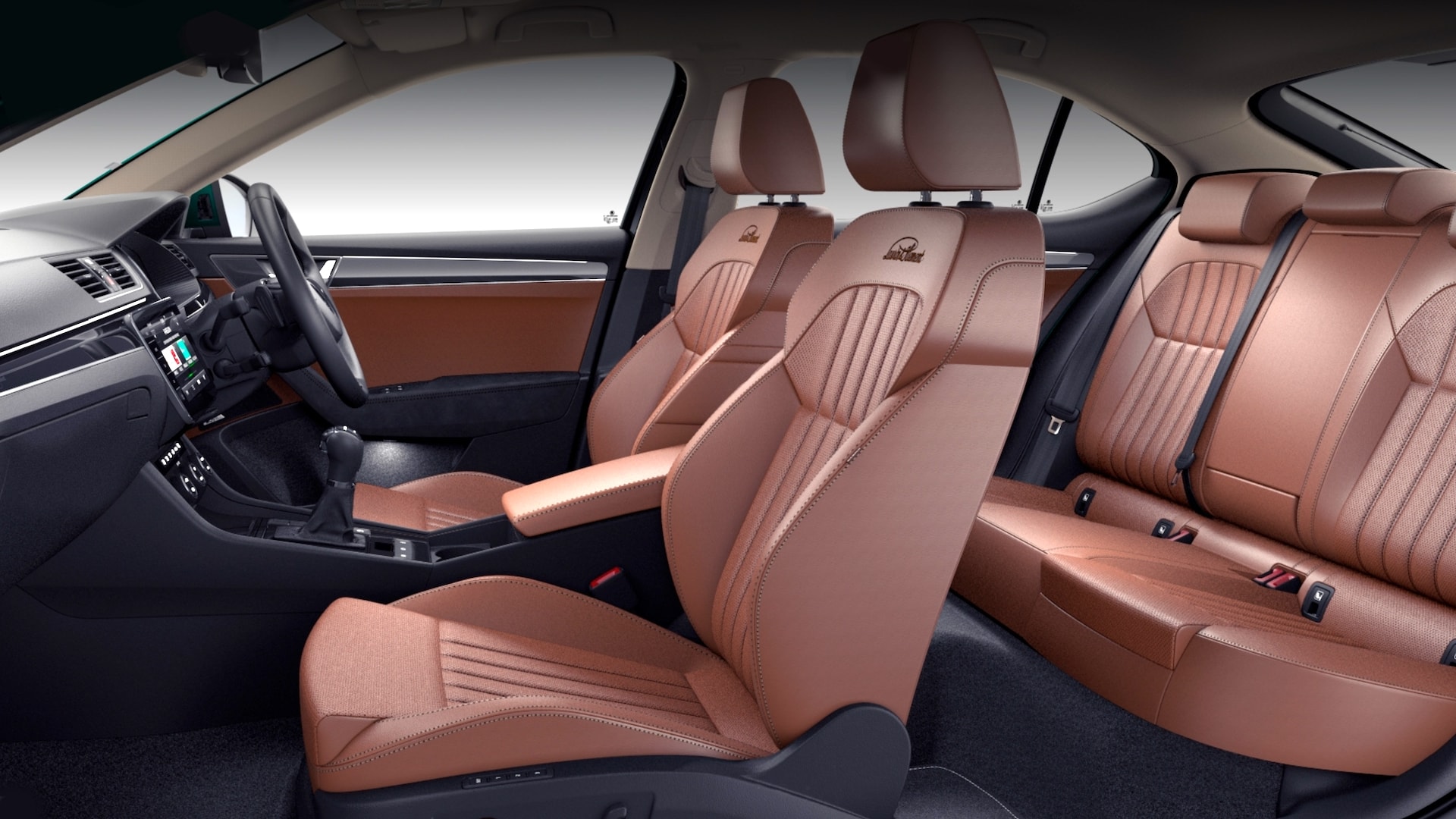
To make the most of the Superb’s ‘palatial levels of interior space’, customers can choose from black or beige interior trim on SE L models. The fancier L&K comes with leather upholstery, including the suitably plush cognac finish. 

The sporty Skoda Octavia vRS and practical Kodiaq SE L SUV are also available with the Royal Green paint option.

A royal Czech mate

Skoda’s enthusiasm for all things royal is inspired by the former Prince Charles’s various visits to the Czech Republic.

The new King helped establish a heritage fund with then-president Václav Havel, helping restore and preserve the country’s historic buildings. The money raised has helped to restore the former monastery of St. Bartholomew in Prague’s Old Town, along with the terrace gardens below Prague Castle. 

Three visits to Brno, the Czech Republic’s second largest city, were made by the Prince of Wales – in 1991, 2000 and 2010. 

Skoda has not confirmed a price for its new regal hue. However, specifying – the rather similar-looking – Amazonian Green for a Superb costs £1,045.

ALSO READ:

Lamborghini celebrates 60 years with record gathering at Silverstone

How to drive safely on smart motorways

The best new cars to buy in 2023
Advertisement

Lamborghini celebrates 60 years with record gathering at Silverstone

0
Lamborghini 60th anniversary at Silverstone

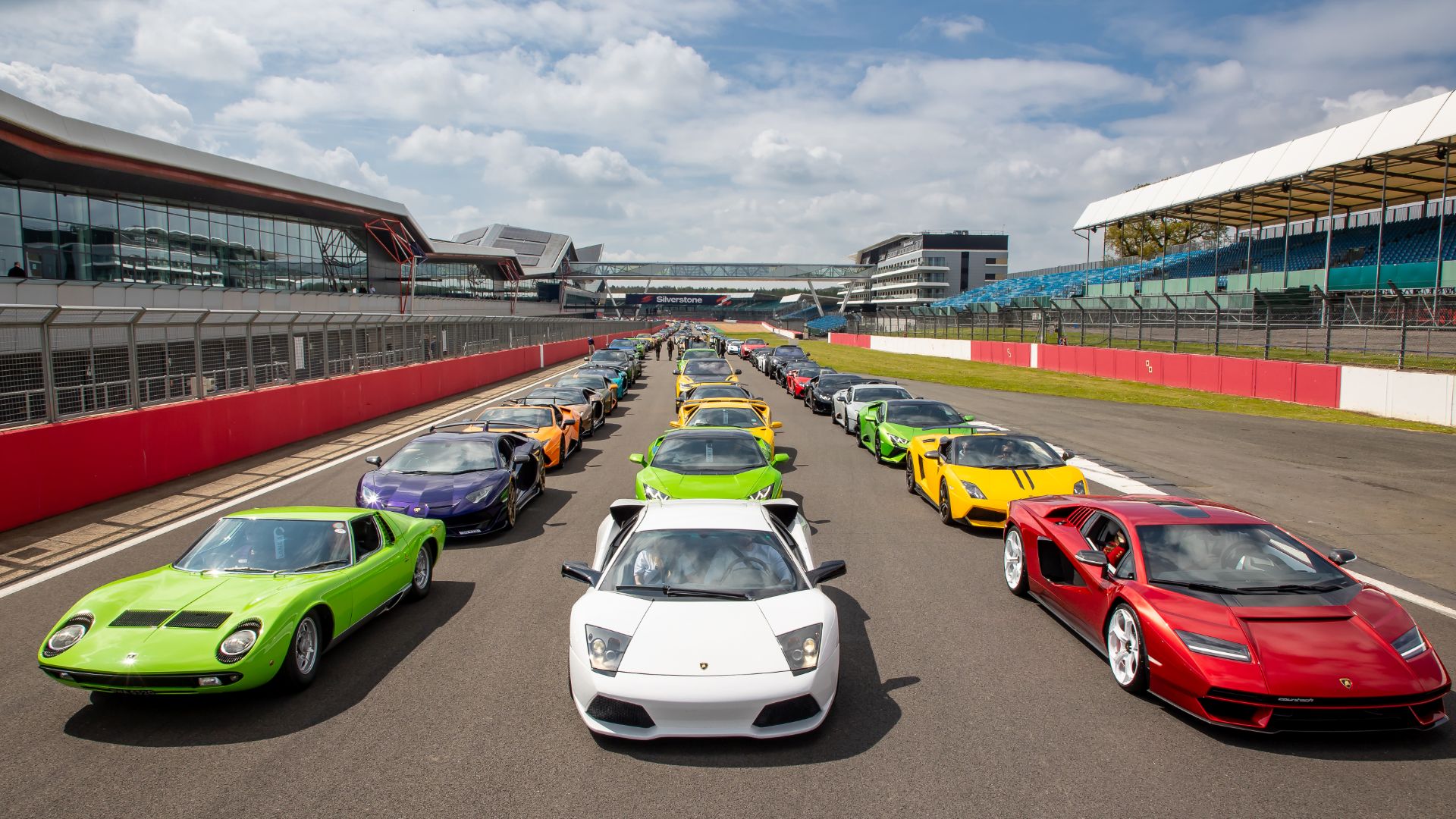
Lamborghini has marked its 60th anniversary in typically flamboyant style, with a record-breaking parade of 382 cars at Silverstone.

The home of British F1 reverberated to the roar of hundreds of V8, V10 and V12 engines as the colourful convoy lapped the 3.7-mile circuit. It represented the largest gathering of Lamborghinis ever, smashing the previous record of 251 cars at Suzuka in Japan.

The cars lined up in three columns, fronted by a Miura, Murcielago and new Countach LPI 800-4. Behind them, the raucous cavalcade was dominated by Huracan and Aventador supercars, along with a strong showing from Lamborghini’s best-seller: the Urus SUV.

Some guys have all the luck

Lamborghini 60th anniversary at Silverstone

There were plenty of classic Lamborghinis on show, too. These included a 400 GT 2+2 – an evolution of the 350 GT that launched Automobili Lamborghini to the world in 1963 – a Countach 5000 S and a stunning Miura SV previously owned by Rod Stewart.

Another rarity was a 1998 Diablo GT, a road-legal race car and one of only 80 made. But trumping that was a one-of-16 Reventon roadster, with radical ‘aerospace’ styling and the V12 heart of a Murcielago LP 640.

Lamborghini also had some actual racing cars inside the pit garages, such as the highly successful Huracan GT3 Evo. However, our heart was won by an S3 Espada, an effortlessly exotic four-seat GT from 1972 – and the only example we spotted at Silverstone.

‘Thunder and lightning’

Lamborghini Revuelto

After the parade lap, owners and enthusiasts were invited inside for the UK debut of the new Lamborghini Revuelto. The 1,015hp plug-in hybrid replaces the Aventador and first deliveries are due later this year – at a likely price tag north of £500,000.

Introducing the Revuelto to the Lamborghini faithful, CEO Stephan Winkelmann compared its combination of a naturally aspirated V12 and three electric motors to “thunder and lightning”, adding that production is already sold out until the end of 2024.

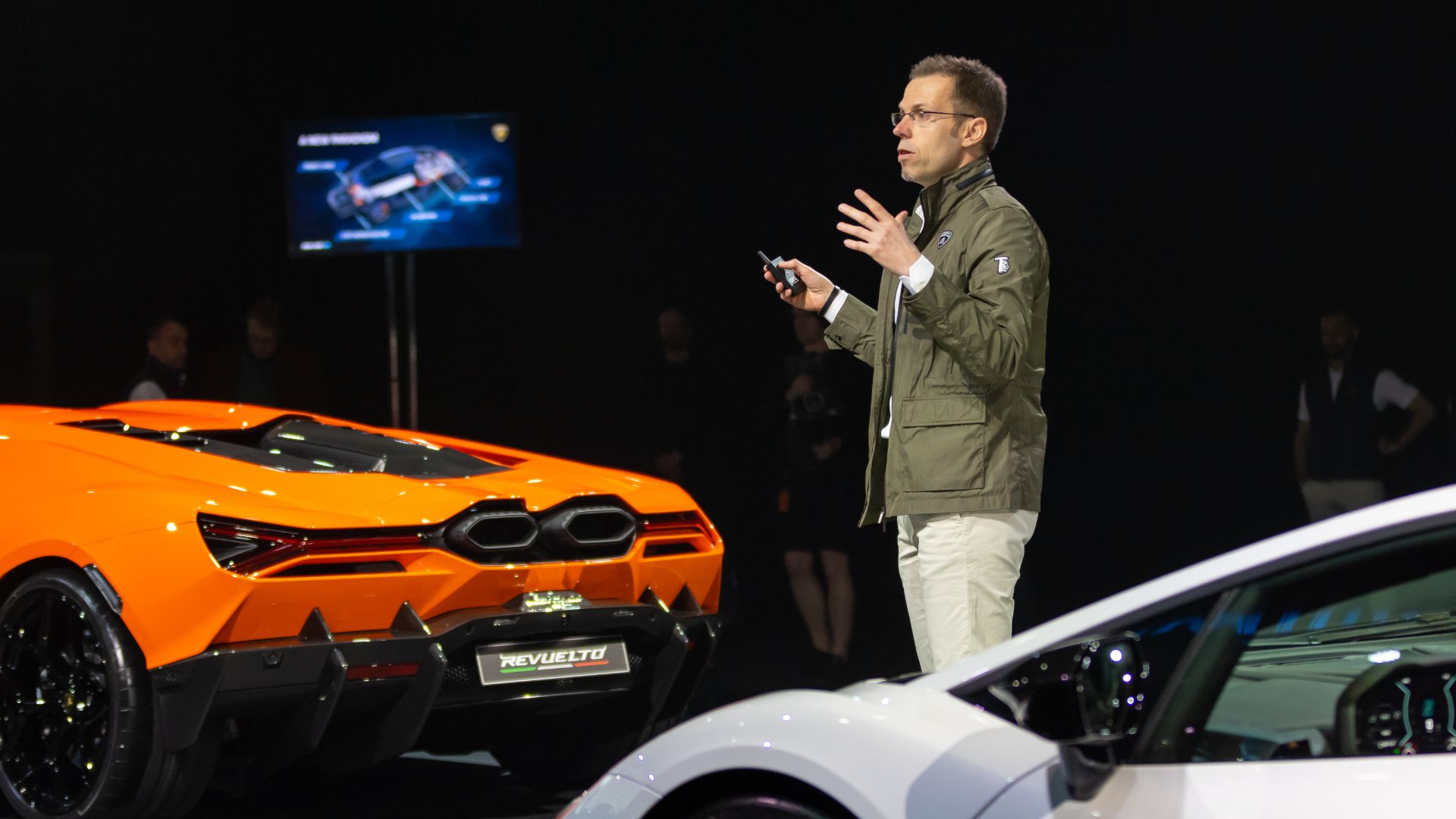
Designer Mitja Borkert comapared the car’s styling to a spaceship, while chief engineer Rouven Mohr (pictured above) described it as “more practical and more emotional… three or four steps beyond anything that has come before”.

And the verdict of one Aventador SVJ owner we chatted to? “Awesome. It totally moves the game on – I want one.”

ALSO READ:

Lamborghini Revuelto: hybrid supercar debuts with 1,015hp and EV mode

Lamborghini Urus Performante review

Highland fling: an incredible Lamborghini road-trip

Advertisement

Rolls-Royce Dawn bows out, as electric Spectre waits in the wings

0
Rolls-Royce Dawn End of Production

The best-selling open car in the history of Rolls-Royce will cease production soon. 

Launched in 2015, the Dawn convertible became one of the British marque’s most successful models, drawing in younger buyers to the Rolls-Royce brand. 

However, as Rolls-Royce heads towards an all-electric future, the sun has set on the Dawn. The forthcoming electric Spectre will replace it, along with the previously discontinued Wraith coupe.

A classier convertible

Rolls-Royce Dawn End of Production

Rolls-Royce revealed the Dawn at the 2015 Frankfurt Motor Show. Following in the tyre tracks of the Phantom Coupe and Phantom Drophead Coupe, its mission was to attract an ‘increasingly youthful, universally self-confident and sociable client base’ to the brand

Rolls-Royce CEO Torsten Müller-Ötvös challenged his team to create a convertible that would ‘evoke the romance and glamour’ of the company’s history. The Dawn was also a proper four-seater, rather than a ‘2+2’ with rear seats that are only suited to children. 

Although the Dawn shared a platform with the Rolls-Royce Wraith, 80 percent of its body panels were bespoke. These included the bonnet, with its unique ‘wake channel’. 

For the car’s name, Rolls-Royce turned for inspiration to the Silver Dawn drophead coupe, which was produced in limited numbers between 1950 and 1954.

This time it’s personal

Rolls-Royce Dawn End of Production

Powered by twin-turbocharged 6.6-litre V12, the Dawn served up 563hp as standard. However, the Black Badge model, introduced in 2017, stretched this figure to a mighty 593hp.

The Dawn was also the basis for a number of special editions, including the Landspeed model of 2021. This paid tribute to Captain George E.T. Eyston, who set three land-speed records in the 1930s using Rolls-Royce power. 

Endless personalisation options, made possible via the Rolls-Royce Bespoke Collective, were also demonstrated by the Dawn. These included a bright yellow model created for Google’s vice president of engineering, Benjamin Treynor Sloss.

Living ‘la dolce vita’

Rolls-Royce Dawn End of Production

With the Spectre on the horizon, Rolls-Royce has now called time on the Dawn. The company’s first electric car will reach showrooms at the end of 2023 – but we’ll be driving it soon.

Torsten Müller-Ötvös said: “In reviving the Dawn nameplate, Rolls-Royce reinvigorated something much more than a motor car. Like the glamorous convertible it drew inspiration from, the contemporary Dawn has come to characterise a modern expression of ‘la dolce vita’ – a way of living that embraces the beauty and richness of life.

“As production of Dawn draws to a close, we can reflect on an extraordinary chapter in the marque’s history. This beautiful motor car perfectly embodies contemporary luxury, while celebrating the marque’s founding principles and heritage.”

ALSO READ:

New Rolls-Royce Spectre is the world’s most opulent electric car

Rolls-Royce Cullinan Black Badge review

Best luxury cars to buy in 2023

Advertisement

How to get a V5C car log book online

0
V5C Logbook

Around half a million British motorists apply for a duplicate V5C registration document (car log book) every year – usually because their existing copy has been lost, damaged or stolen.

The Driver and Vehicle Licensing Agency (DVLA) allows motorists to get a new log book online. This facility was introduced in late 2020 – drivers previously had to send a paper form to Swansea – and it cut the typical time to receive a new log book from six weeks to five days.

“We know how important a log book is to motorists,” said DVLA chief executive, Julie Lennard. “If you have lost or damaged yours, the quickest way to get your duplicate document is to go to Gov.uk.” So, how exactly do you order a new V5C?

Ordering a new V5C online

UK motorway

You will need the following details to apply for a new car log book:

  • Vehicle registration number
  • Vehicle VIN/chassis number (usually stamped at the base of the windscreen)
  • Name and postcode printed on your log book

You can also apply by phone, although this will take significantly longer. Also, you may not use the phone service if any details on the V5C have changed. The number to call is 0300 790 6802.

Ordering a duplicate log book costs £25 and you can pay by credit or debit card. Note that you cannot get a refund if you later find your lost V5C form.

Click here to visit the Gov.uk website and start your application for a new V5C. The online service is available between the hours of 7am and 8pm.

ALSO READ:

What are the pros and cons of smart motorways?

How to give your car a spring clean

The best new cars to buy in 2023
Advertisement

Suzuki Jimny to get the Twisted treatment

0
Twisted Automotive Suzuki Jimny

Twisted Automotive, famed for its bespoke Land Rover Defender creations, has announced plans to add a new model to its roster. 

Along with the classic Defender, the Thirsk-based outfit will offer conversions of the latest Suzuki Jimny.

It will be the first time in the company’s 21-year history that it has undertaken full conversions on vehicles other than the original Defender

But, as Charles Fawcett, founder and MD of Twisted, explains: “The much-loved Suzuki Jimny is a pure, proper little offroader. It’s evocative, engaging, and endearing. It’s almost a miniature Defender with similar architecture, driveline and analogue feel.”

Creating the ‘Little Twisted’

Twisted Automotive Suzuki Jimny

Exact details of what the Twisted conversion will include are yet to be confirmed. However, Charles Fawcett notes that each Jimny “will have more engaging handling and power delivery, utilising our Twisted wheel and tyre package along with honed progressive suspension.

“It will benefit from extensive soundproofing, upgraded media interface, audio system and our signature custom interior.”

Twisted has indicated that pricing for the complete Jimny conversion will be less than £50,000 (plus VAT). 

Initial models will be based upon the two-seater Jimny Light Commercial Vehicle version, but other variants have not been ruled out. 

Along with selling complete conversions, Twisted will also tweak and tailor customers’ vehicles.

Miniature tuning marvels

Twisted Automotive Suzuki Jimny

The fourth-generation Suzuki Jimny has already attracted plenty of attention from aftermarket tuners since being launched in 2018.

Not long after the Jimny made its debut, the Chelsea Truck Company announced a luxury version of the diminutive 4×4.

A host of modified Jimnys also took centre stage at the 2019 Tokyo Auto Salon, including a neat pick-up truck version

However, the Little D kit from Japanese tuning outfit DAMD may be the most relevant, given Twisted’s heritage. This bodykit allows a Jimny to be made into a miniature replica of the original Land Rover Defender. 

Twisted will announce final technical details, and pricing, for its Jimny creation later in 2023. Customers are invited to register their interest now in one of the limited build slots.

ALSO READ

Matchbox revives Gold State Coach toy for King’s coronation

Gordon Murray’s T.33 Spider is a £1.8 million hypercar head-rush

Hyundai Ioniq 6 is World Car of the Year 2023

Advertisement

Matchbox revives Gold State Coach toy for King’s coronation

0
Matchbox Coronation Gold State Coach

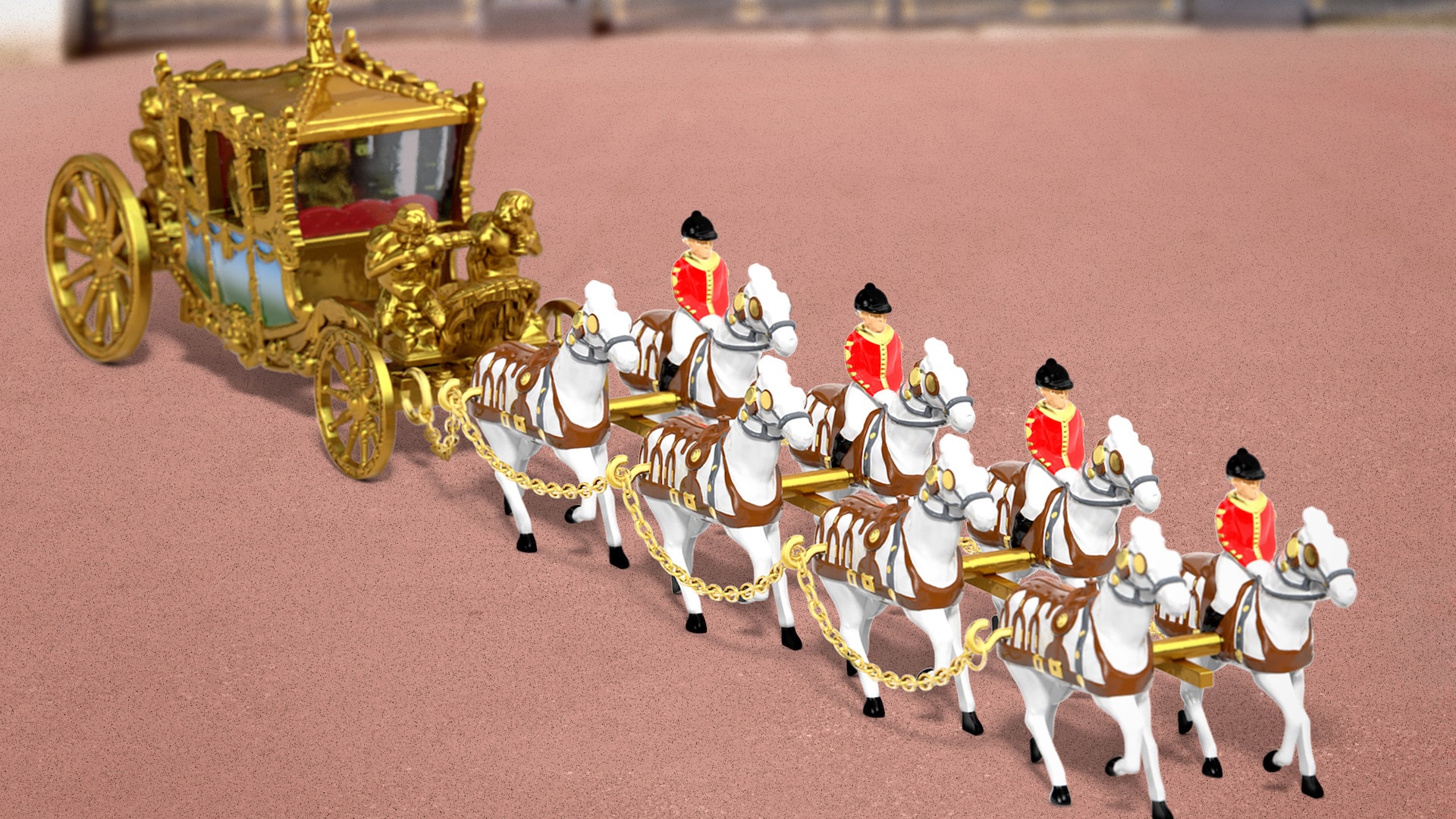
Matchbox has revealed a new limited-edition die-cast model of the British royal family’s Gold State Coach. 

Launched to coincide with the coronation of King Charles III, the 1:64-scale model pays tribute to the new monarch – and the original Gold State Coach model by Lesney. 

This year sees Matchbox celebrate its 70th anniversary. Seventy years ago, the success of the original Lesney Gold State Coach paved the way for the Matchbox toy brand.

A golden age reborn

Matchbox Coronation Gold State Coach

Lesney sold more than one million examples of its 11.8cm-long Coronation Coach, produced to mark Queen Elizabeth II’s accession to the throne. This financial windfall allowed the company to invest in a new Matchbox brand. Three billion toy cars later, the rest is history.

Although other scale versions of the Gold State Coach model have been created, Matchbox aimed to make the best, most detailed example yet for 2023. 

Hundreds of photos of the royal coach were taken, and hours of film footage studied. A four-month design process included making 3D scans of the sculpted horses and riders from the original Lesney model. Modern 3D printing was used to produce prototype parts. 

The tritons on the front of the coach are now blowing horns, there are three cherubs –representing England, Scotland and Ireland – on the roof, and windows have been added. Metal figures of King Charles III and the Queen can be spotted inside the red interior.

An exclusive Matchbox model

Matchbox Coronation Gold State Coach

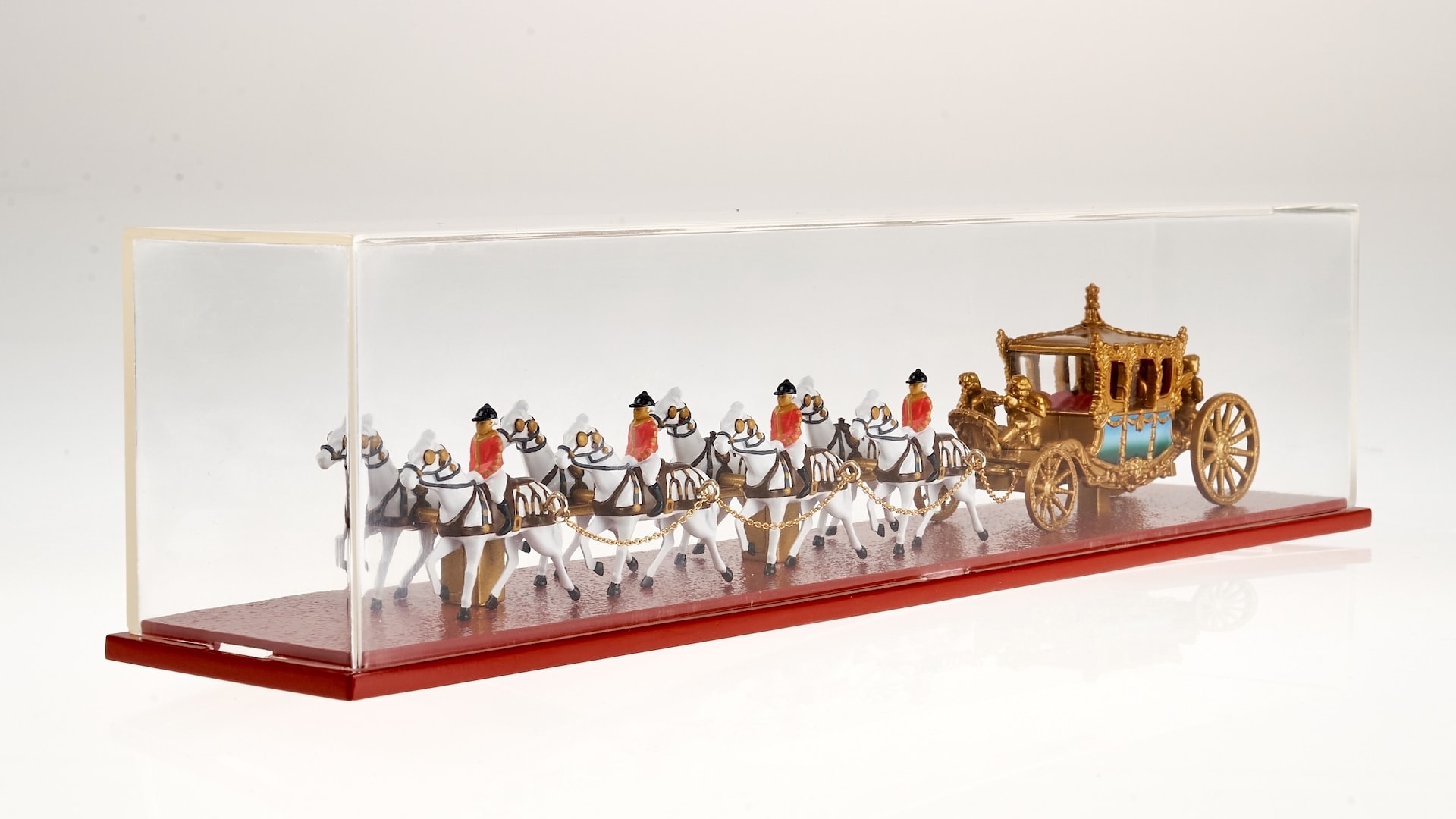
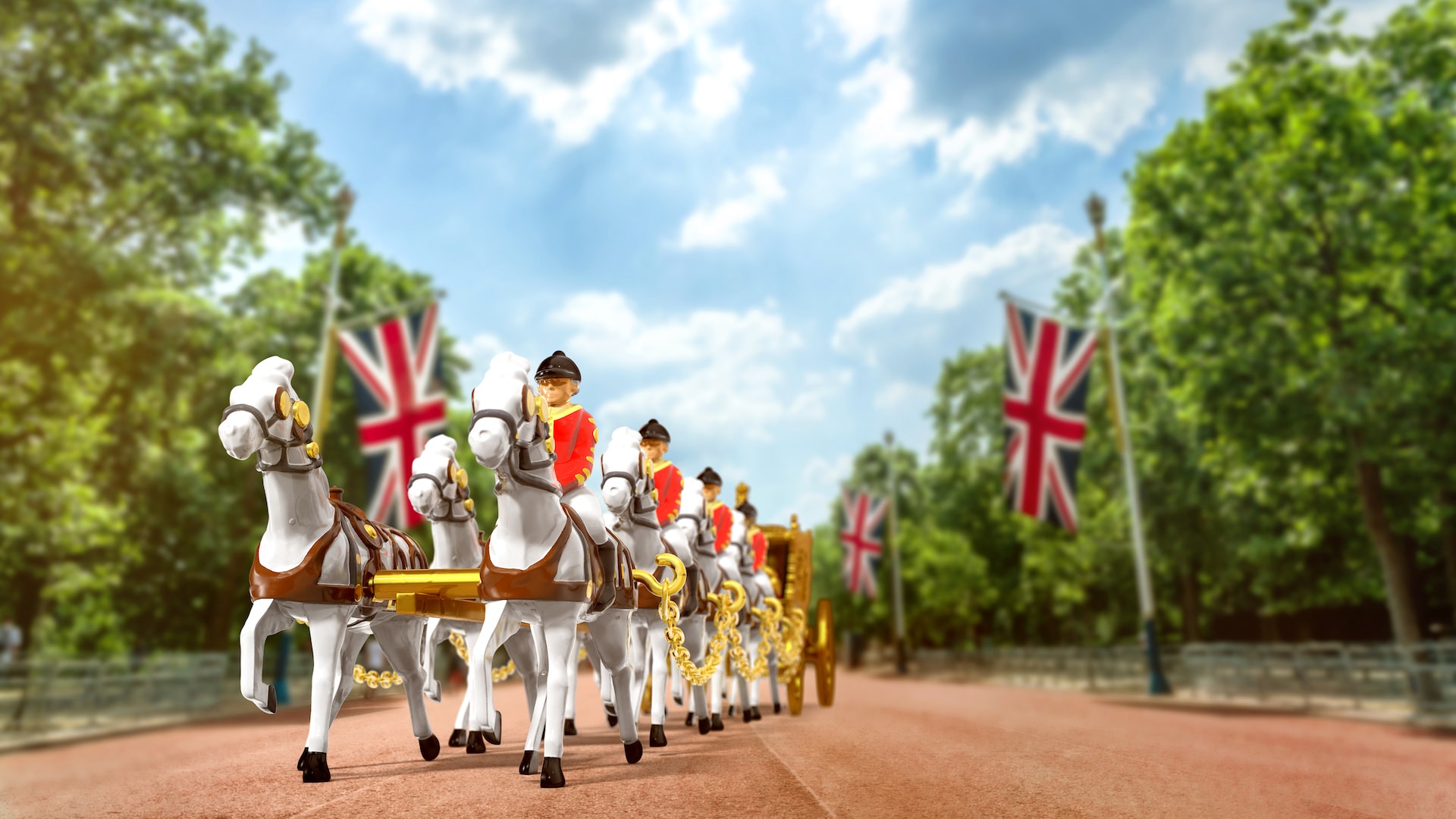
The new model measures 23cm in length, and comes complete with a display box and textured plinth – the latter designed to look like The Mall, which leads up to Buckingham Palace. 

“Not only is 2023 a pivotal moment in UK history, but it also marks an important one for Matchbox. Celebrating 70 years of rich design heritage, Matchbox is launching an exclusive coronation coach that evolves the brand’s signature craftsmanship while drawing on innovation and cutting-edge technology to write a new and exciting chapter in our history,” said Roberto Stanichi, head of vehicles at Mattel.

“Being built to order, we expect this coach to be one of the most exclusive models Matchbox has ever created.”

Priced at £60, the Matchbox Gold State Coach is available exclusively via the Mattel Creations website. You will need to place your order between 26 April and 18 May 2023.

ALSO READ:

Matchbox to celebrate 70th anniversary with limited edition models

New McLaren 750S is lighter, faster and ‘even more exciting’ to drive

Your EV questions answered on Motoring Electric

Advertisement

New McLaren 750S is lighter, faster and ‘even more exciting’ to drive

0
McLaren 750S

Michael Leiters has been shaking things up at McLaren. The new CEO left his role as chief technology officer at Ferrari last summer, upping sticks from Maranello to Woking. One of his first decisions was to halt production of the just-launched Artura until its quality problems had been fixed.

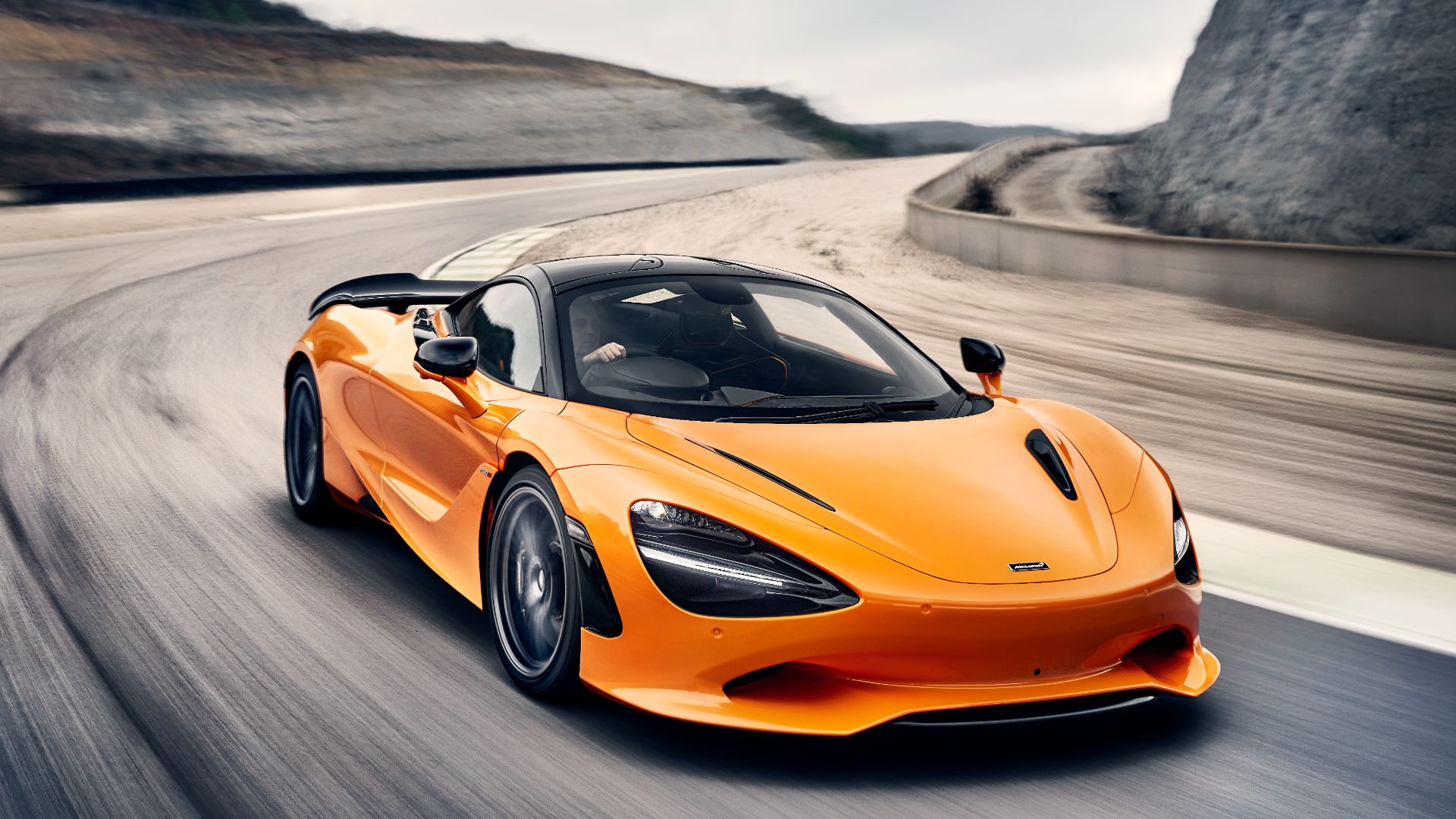
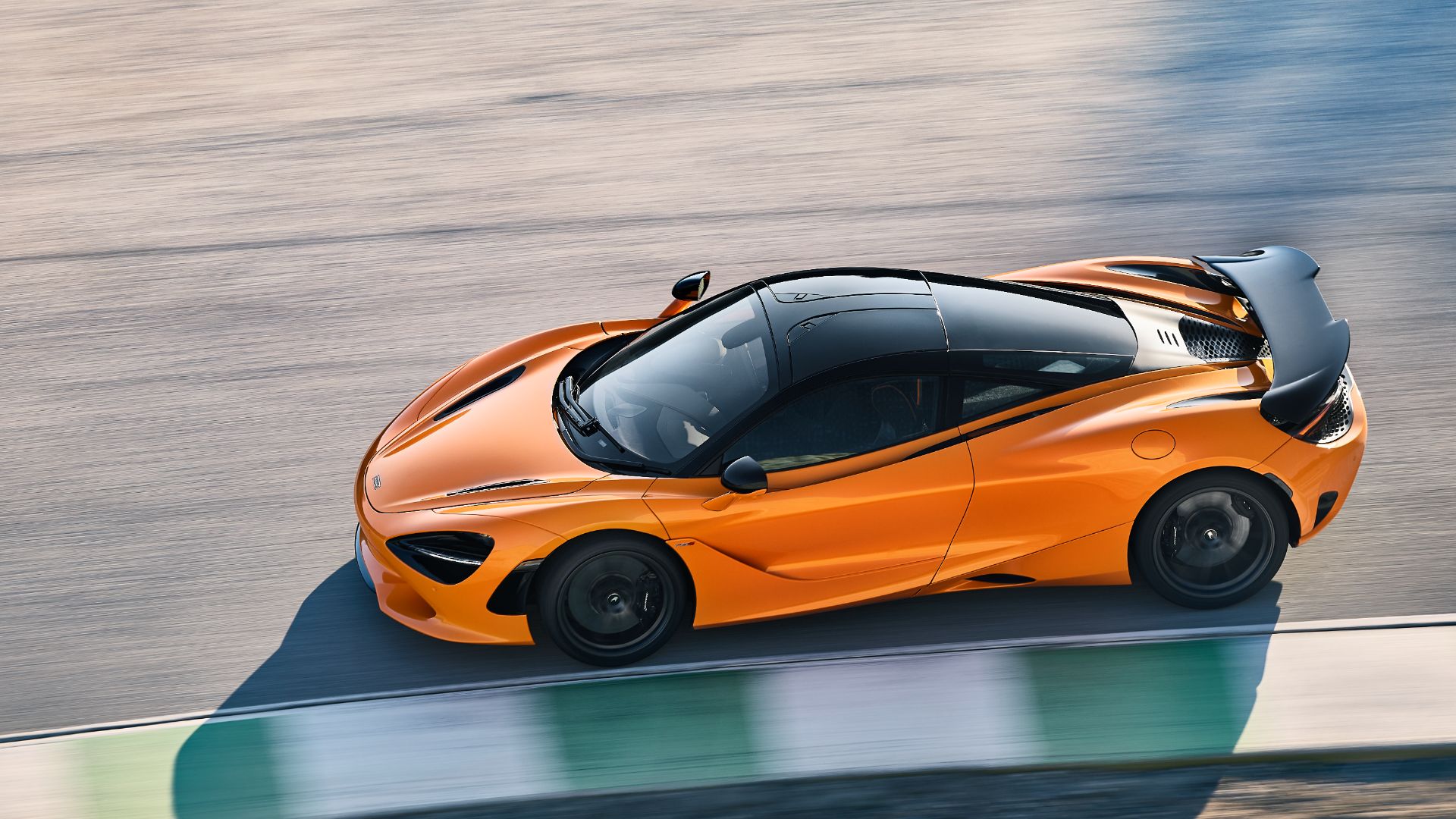
Leiters is a details man, then, and the 750S – the first new McLaren developed under his watch – is all about the details. It might look similar to the 720S it evolved from, but 30 percent of the car is all-new, including upgrades for the engine, chassis, interior and infotainment.

The lightest and most powerful series-production McLaren ever, the 750S also promises a greater emphasis on ‘engagement and fun’. We’ll be driving it in September, and first deliveries start soon afterwards. In the meantime, we visited McLaren’s futuristic HQ to get the full lowdown. Read on for those all-important details…

Light speed

McLaren 750S

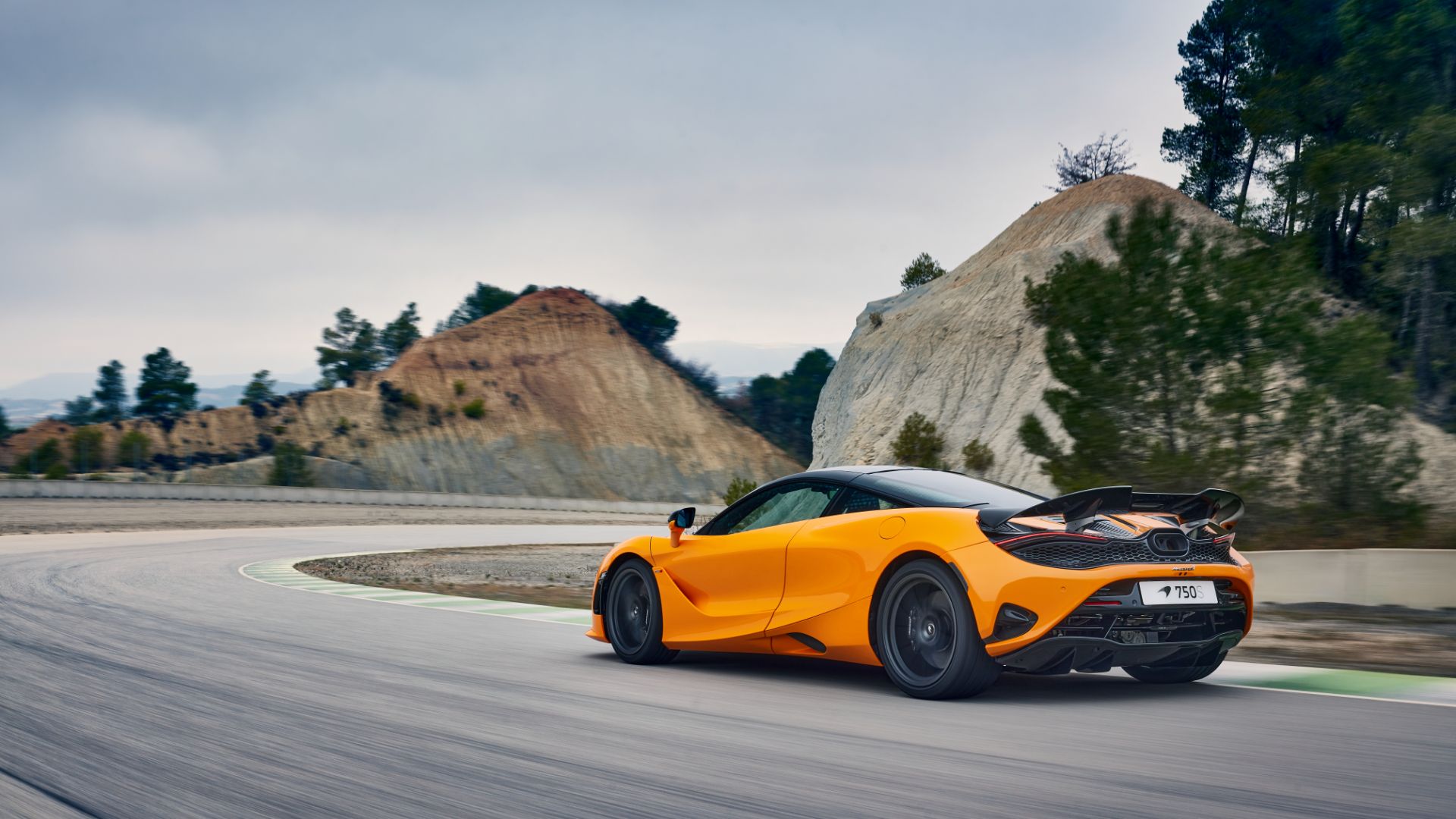
The headline stats are 750hp and a DIN kerb weight of 1,389kg – plus 30hp and minus 30kg versus the 720S, respectively. That gives the McLaren a better power-to-weight ratio than the car it was benchmarked against: the Ferrari 296 GTB.

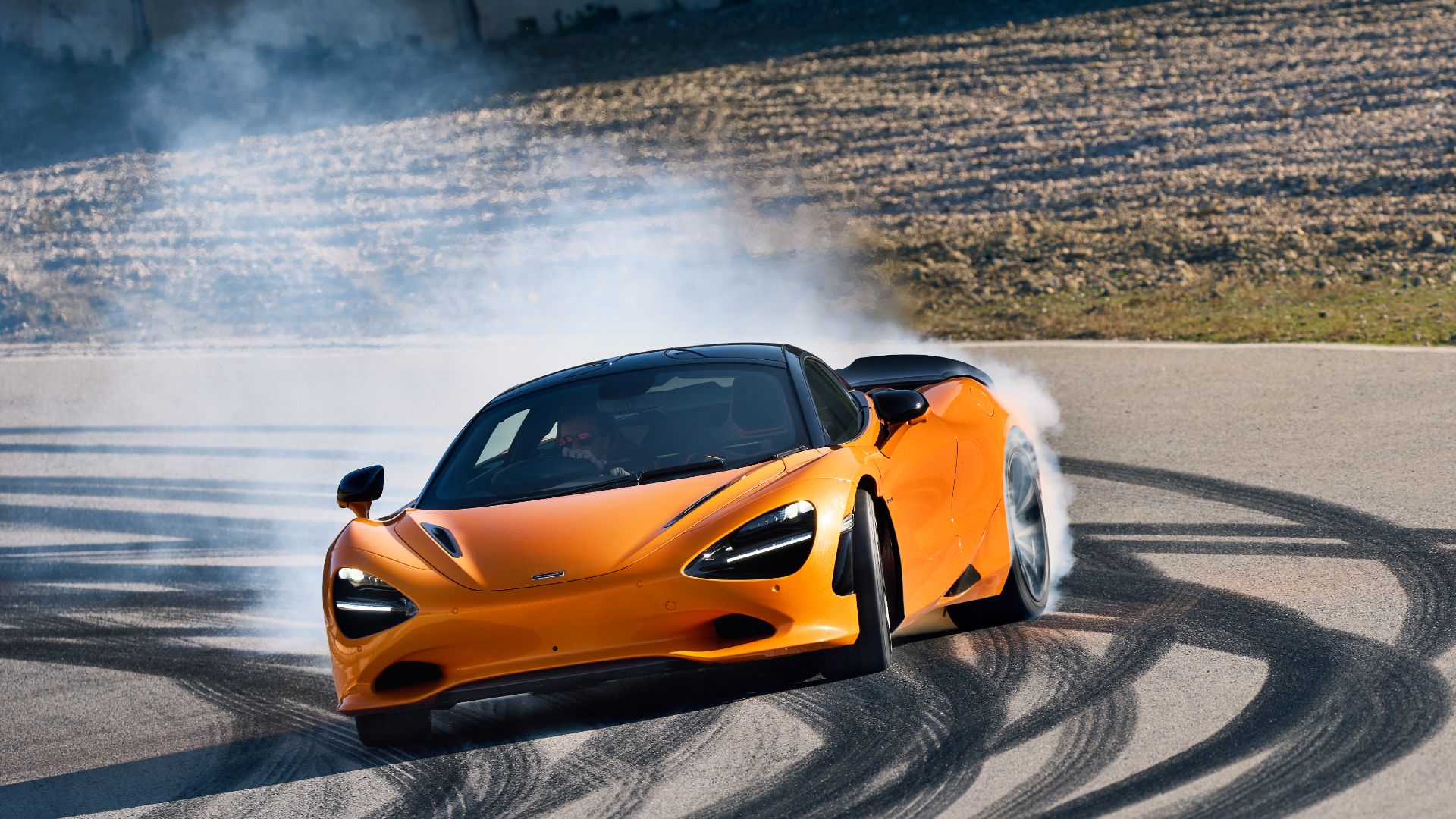
As you’d expect, performance is ferocious. The 0-62mph sprint takes 2.8 seconds, 124mph passes in 7.2 seconds and – for any American readers – a standing quarter-mile is dispatched in 10.1 seconds. Top speed is 206mph.

There’s also a Spider version, with a retractable hard-top that opens in 11 seconds at speeds up to 31mph. Prices will rise around 10 percent, which means a starting figure of £240,000 – or £40,000 more than the Artura.

‘For the purist’

A key difference between the Artura and 750S is the latter car doesn’t have any plug-in hybrid tech. While the Artura combines a 3.0-litre V6 engine with an axial flux electric motor, the 750S relies solely on McLaren’s venerable ‘M840T’ V8. “This car is unashamedly for the internal combustion engine purist,” says head of PR, Piers Scott.

The twin-turbocharged 4.0-litre V8 gains increased boost pressure and a higher-flow fuel pump, along with lightweight pistons from the 765LT. Alongside that 750hp output, torque is up 22lb ft to 590lb ft (800Nm) at 5,500rpm. There’s also a shorter final drive ratio for the seven-speed paddle-shift transmission

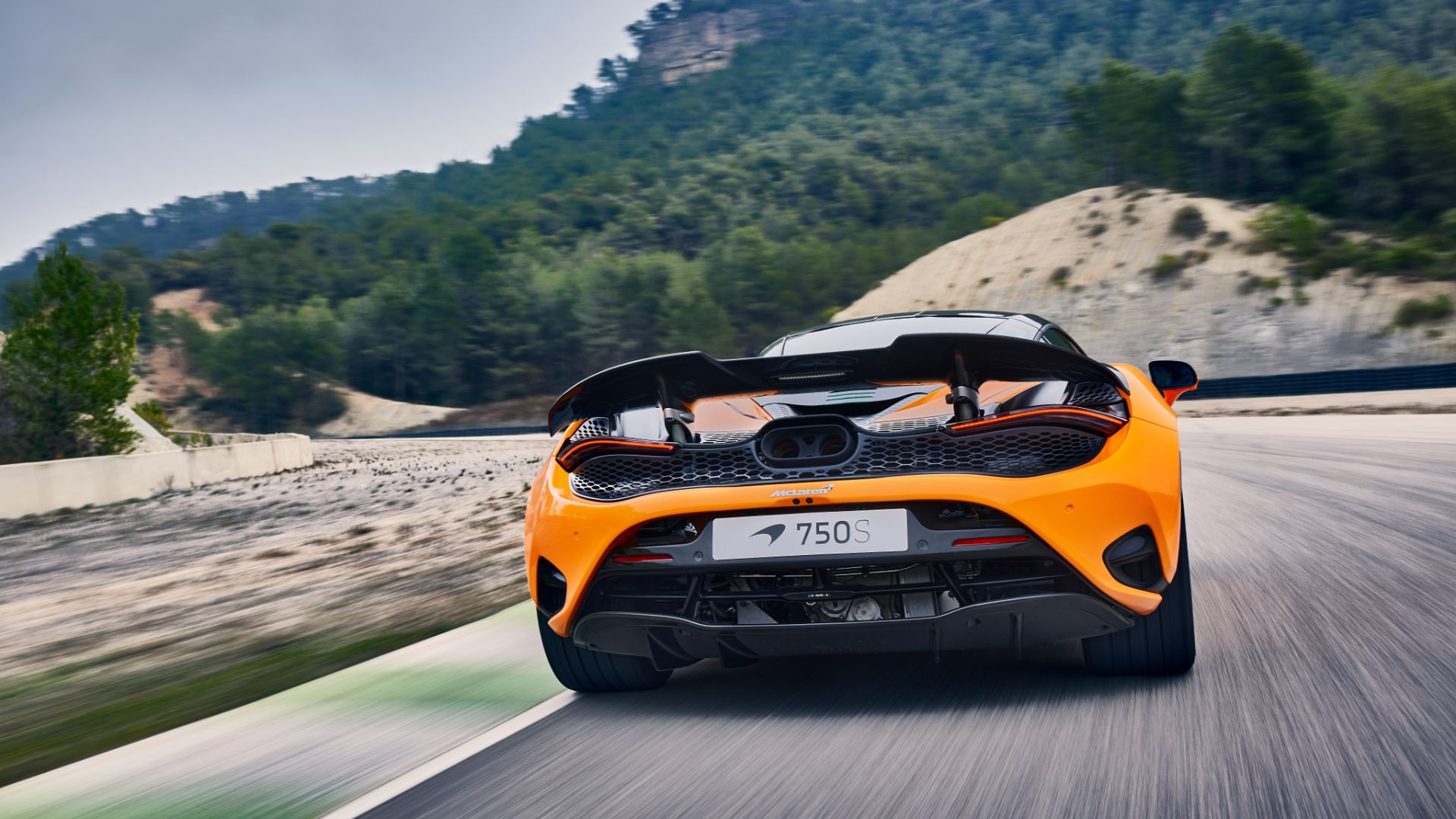
A new centre-exit sports exhaust inspired by the McLaren P1 is lighter and louder, delivering ‘a greater crescendo at high engine speeds’.

Like a Longtail

McLaren 750S

The 750S isn’t just faster – it should be more engaging to drive, too. Drawing comparisons with McLaren’s track-focused Longtail (LT) models, Jamie Corstorphine, director of product strategy, says it offers “a significant degree of ‘Longtail’ agility, feel and feedback, while ensuring that comfort and usability are not compromised”.

The car retains the carbon fibre Monocage II-S chassis and hydraulically linked suspension of the 720S, but spring rates are three percent softer at the front and four percent stiffer at the rear. Front track is 6mm wider, too.

A standard 750S can stop from 62mph in just 30 metres, helped by carbon-ceramic discs and a new brake booster. For trackday fans, there’s a new brake upgrade derived from the McLaren Senna, with meatier discs and monobloc callipers.

Crucially, the 750S still has hydraulic steering – a defining McLaren characteristic – now with a quicker ratio and an upgraded pump to better resist bump-steer. “We will resist electric power steering as long as we possibly can,” promises Ben Gulliver, head of vehicle development.

Socket to them

McLaren 750S

The 720S looked genuinely radical when launched in 2017, so perhaps it isn’t surprising that changes to its aluminium, carbon fibre and composite body are quite subtle. Also, as Piers Scott points out, the familiar styling of the 750S helps protect resale values for the outgoing car.

At the front, you’ll spot a longer splitter and narrower headlight ‘eye sockets’ – now optionally painted in body colour. Both bumpers have also been redesigned and there’s a larger pop-up rear spoiler. Further options include 765LT-style front wing vents and lots of external carbon fibre.

Chief engineer Sandy Holford says the car offers more downforce (“although this wasn’t our focus”) and better aerodynamic balance. And firmly back in the real world, a new nose-lift system takes four seconds, rather than the 10 seconds needed previously, saving time when you encounter speed humps.

Ready to launch

McLaren 750S

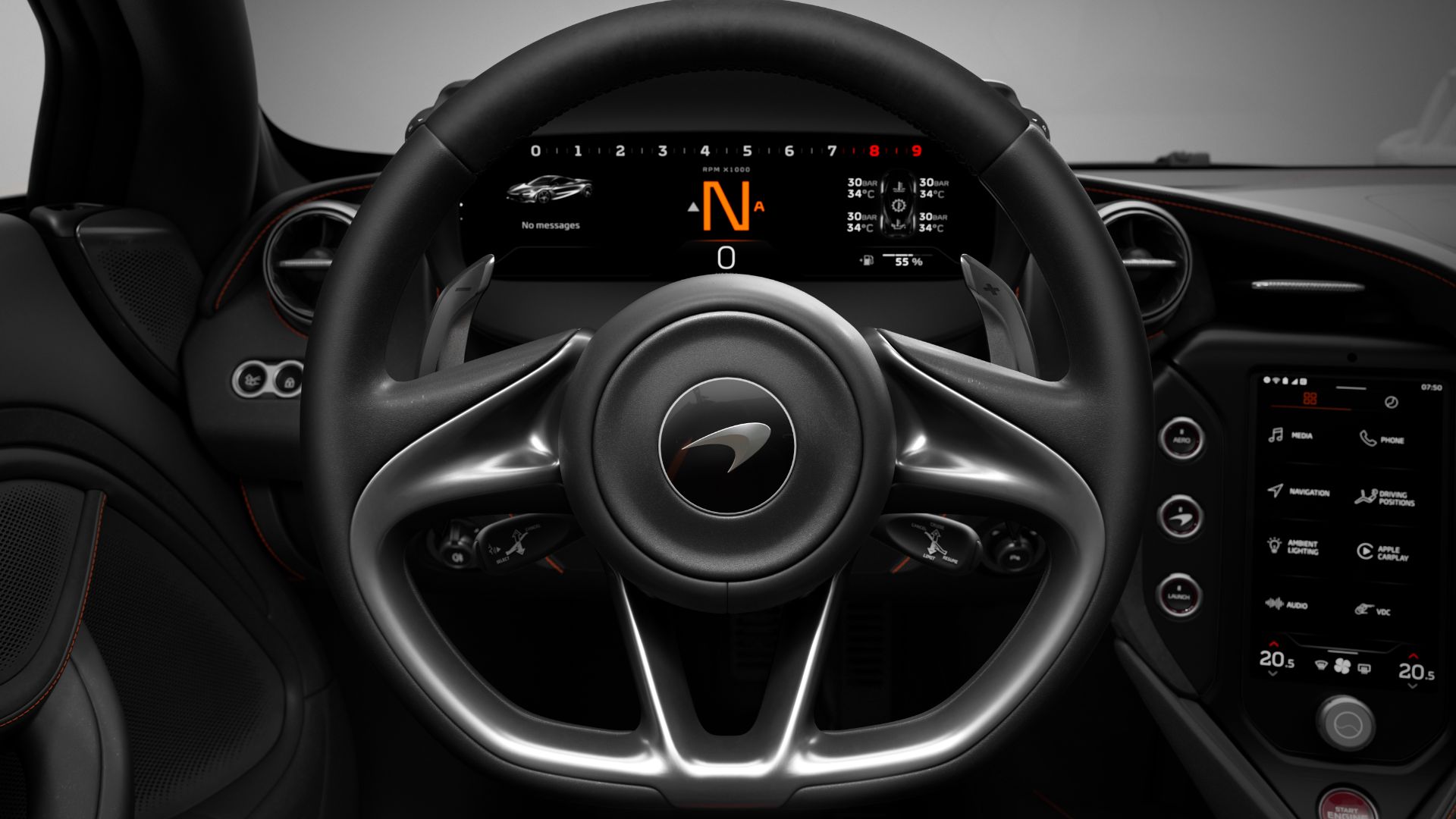
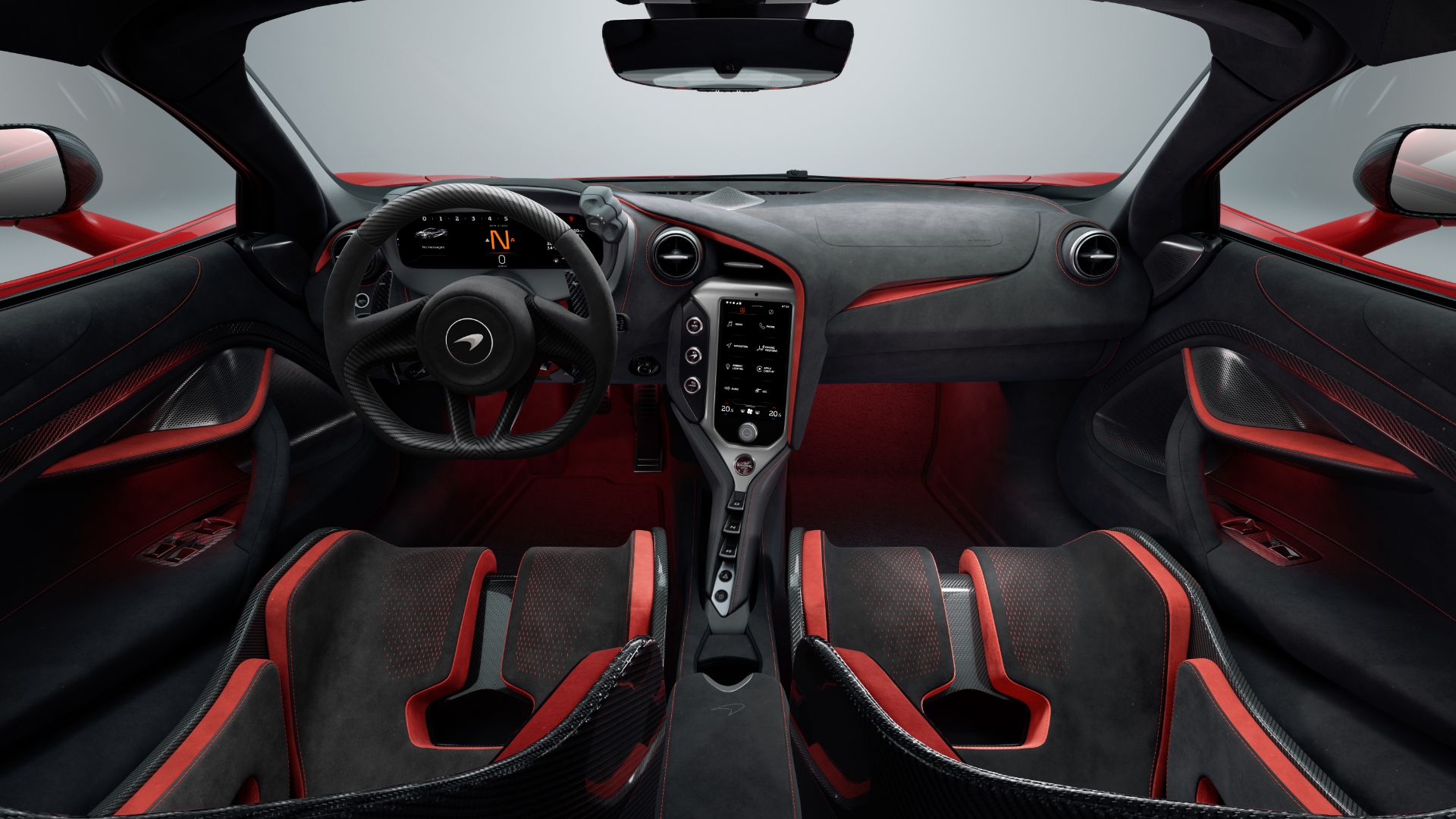
Lift the McLaren’s dihedral doors – which cut into the roof on the coupe – and the interior looks functional and driver-focused. The car we saw had the newly optional hard-shell ‘Senna seats’, but more padded, P1-style chairs are also available.

The ‘Active’ panel on the centre console has been replaced by rocker switches either side of the digital instrument binnacle. Positioned within fingertip-reach of the steering wheel, these allow the driver to toggle between Comfort, Sport and Track modes for the powertrain and chassis. Alternatively, the new McLaren Control Launcher (MCL) button provides quick, one-touch access to your preferred settings.

The portrait-style touchscreen has upgraded software and – praise be! – Apple CarPlay smartphone connectivity for the first time. Android Auto is coming soon, we are told.

Raising the bar

McLaren 750S

With the sold-out 765LT now out of production, the 750S becomes the flagship of a three-tier range, sitting above the GT and Artura. In some regards, it’s still a McLaren of the old school, yet the 720S – a five-star supercar in our reviews – always offered huge bandwidth, even without the ability to drive on electric power.

“When you have a car recognised by so many drivers as a benchmark, to do something even better you have to examine every detail and really push hard for improvements that raise the bar again,” explains Michael Leiters.

Has the bar been raised high enough to beat the car from Leiters’ ex-employer? We can’t wait to find out.

ALSO READ:

McLaren Artura: tech secrets of new hybrid supercar

McLaren 765LT Spider review

Best supercars to buy in 2023

Advertisement