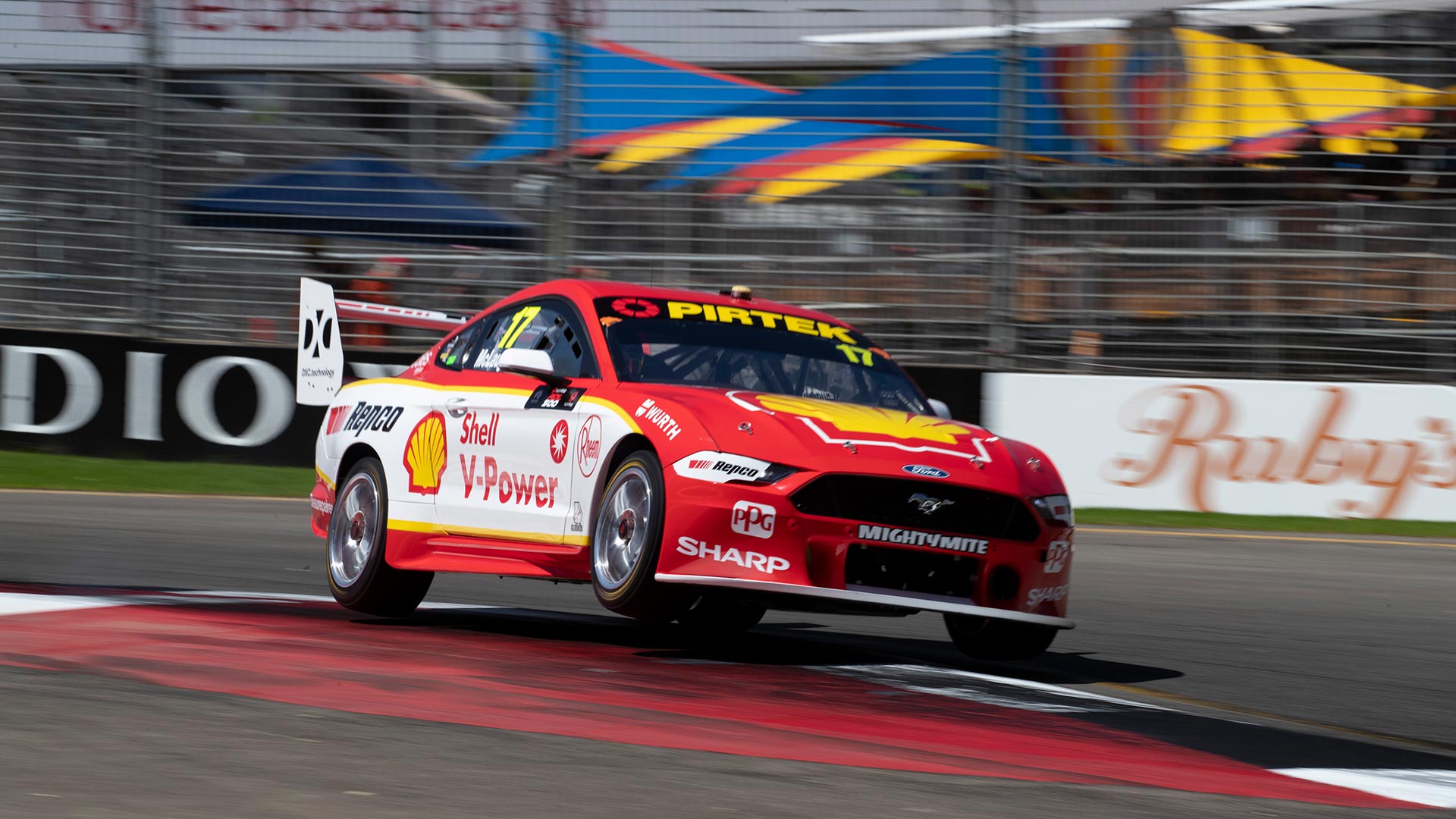
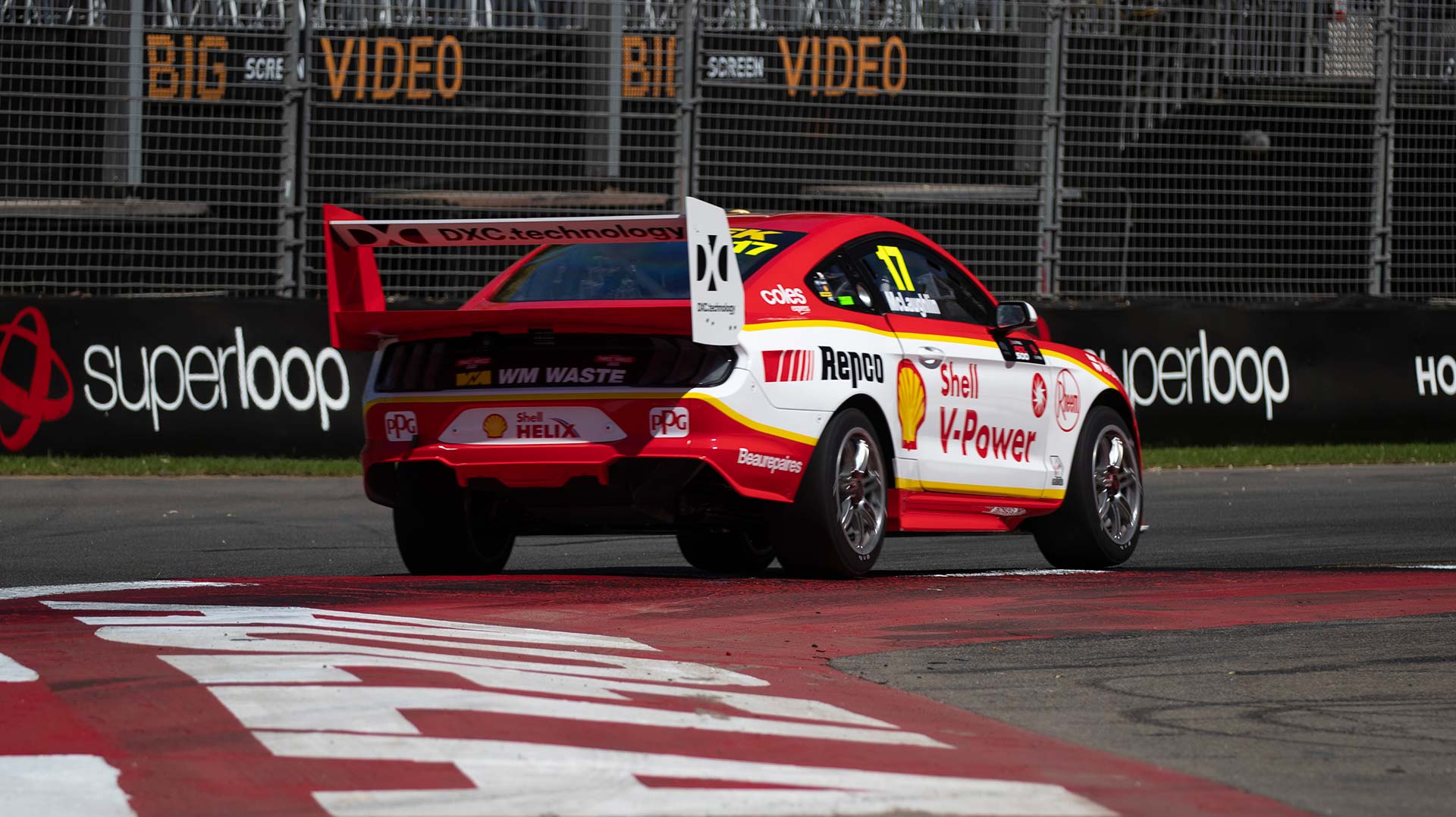
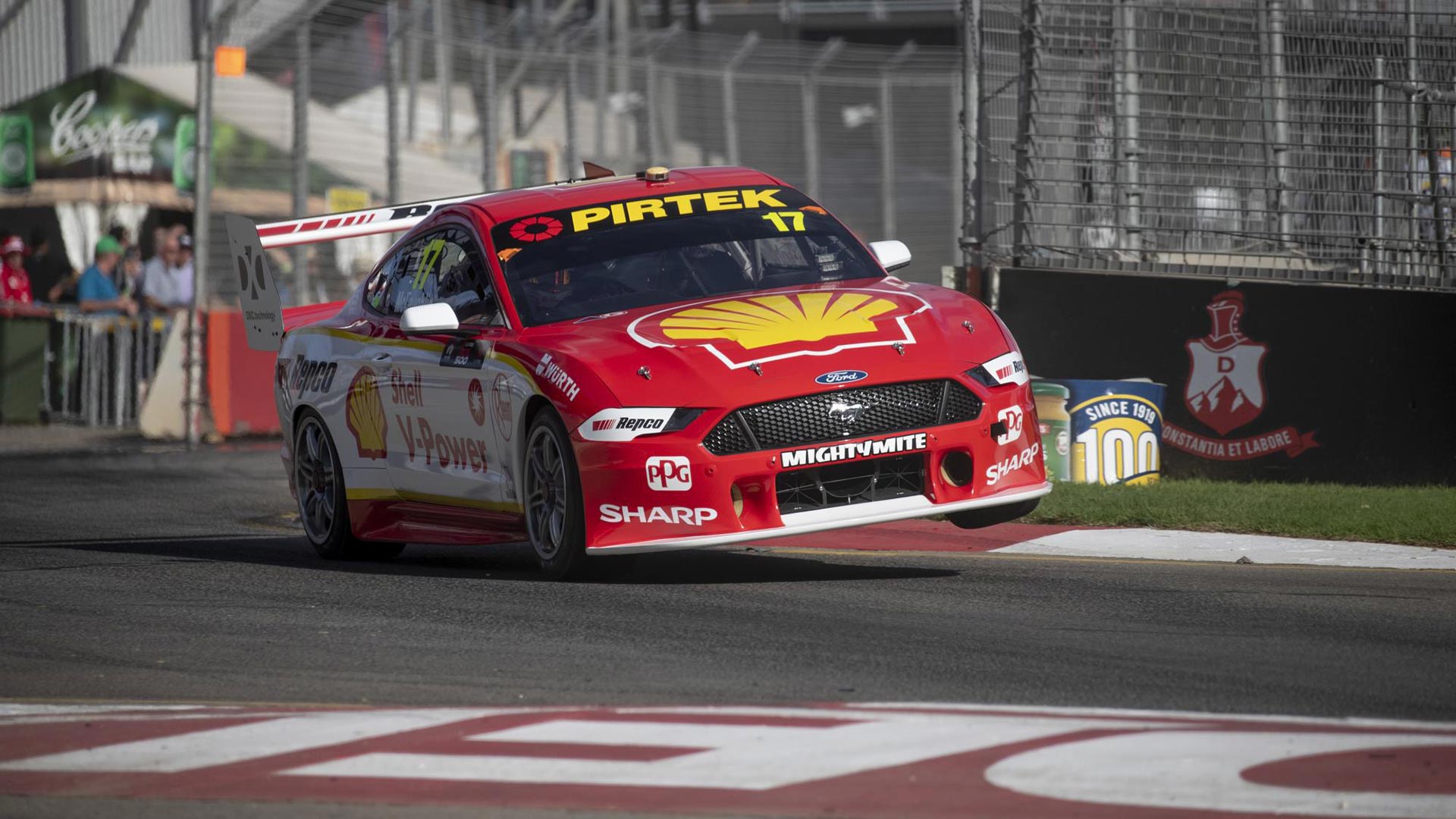
The box-fresh Ford Mustang racer scored an incredible double victory at the weekend, making its debut in the Virgin Australia Supercars Championship a major success.
After more than 18 months of work and development, the efforts paid off for the latest Ford Performance creation.
Any worries about whether the move to the Mustang would cause a problem evaporated early in the weekend, when Shell V-Power Racing driver Fabian Coulthard took pole position with his Mustang in the qualifying session.
It set the scene for an impressive opening weekend for the new race car, which marked the first time a Mustang has celebrated Australian Touring Car Championship victory since 1972.
Although some manufacturers might usually expect to start out slowly with a new car, last year’s champion driver Scott McLaughlin seemed happy to ignore the rulebook.
Starting from third on the grid for the opening race, 25-year-old McLaughlin took the lead from the start and held onto it throughout the 78 laps.
Even the searing Adelaide heat were not enough to punish the new Mustang, with McLaughin remarking that “but the cooling and all that stuff was really good for us” as he celebrated the first win for the new ‘Stang.
Proving that the success on Saturday was not just a case of beginner’s luck for the Mustang, McLaughlin delivered the same result again in Sunday’s race two.
Snatching the lead by the third lap of the race, McLaughlin would go on to take another victory with dominant ease.
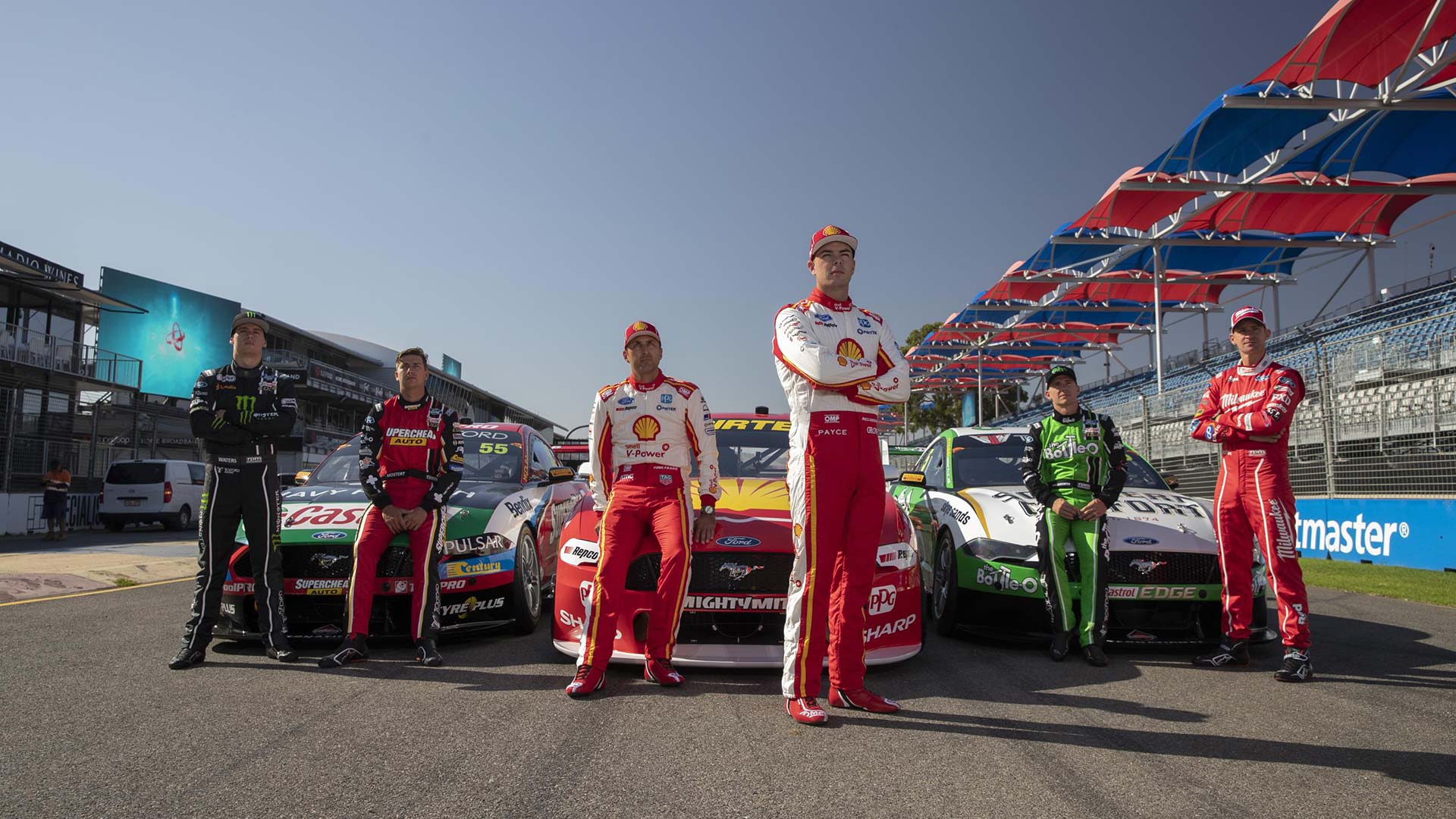
Underlining the fact Ford’s pace was not just down to McLaughlin’s driving skills, Tickford Racing’s Chaz Mostert took fastest lap in race two.
Kay Hart, Ford Australia and New Zealand President and CEO, summed up the weekend as “a fairy tale start for our Ford Performance Mustang,” whilst Ford Performance Global Director, Motorsports, Mark Rushbrook, said “the Mustang Supercars’ results are beyond expectation”.
The next outing for the Ford Performance Mustangs will be on the Melbourne street circuit, taking part in the 2019 Rolex Australian Formula One Grand Prix weekend on March 13 to 17.
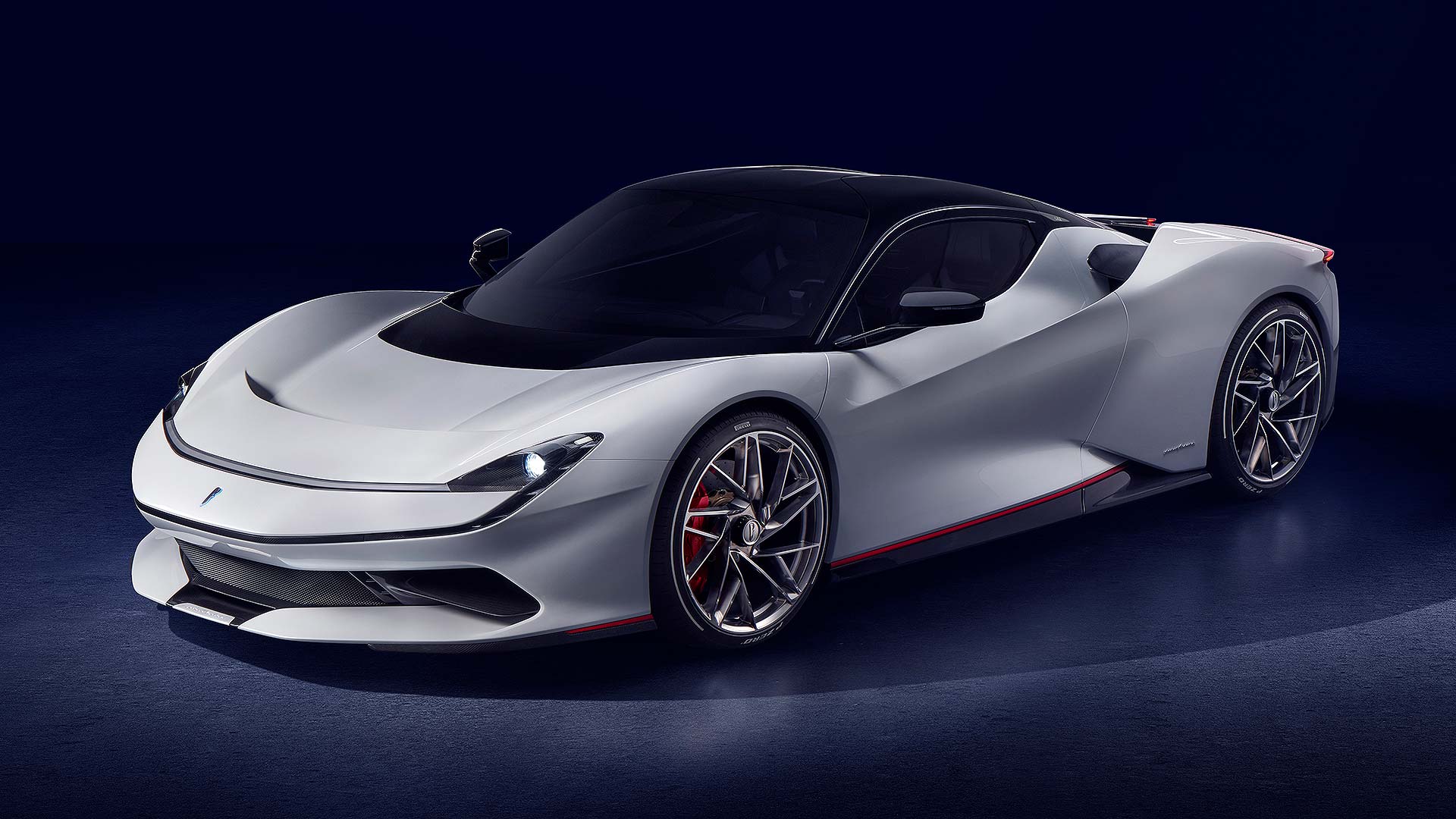
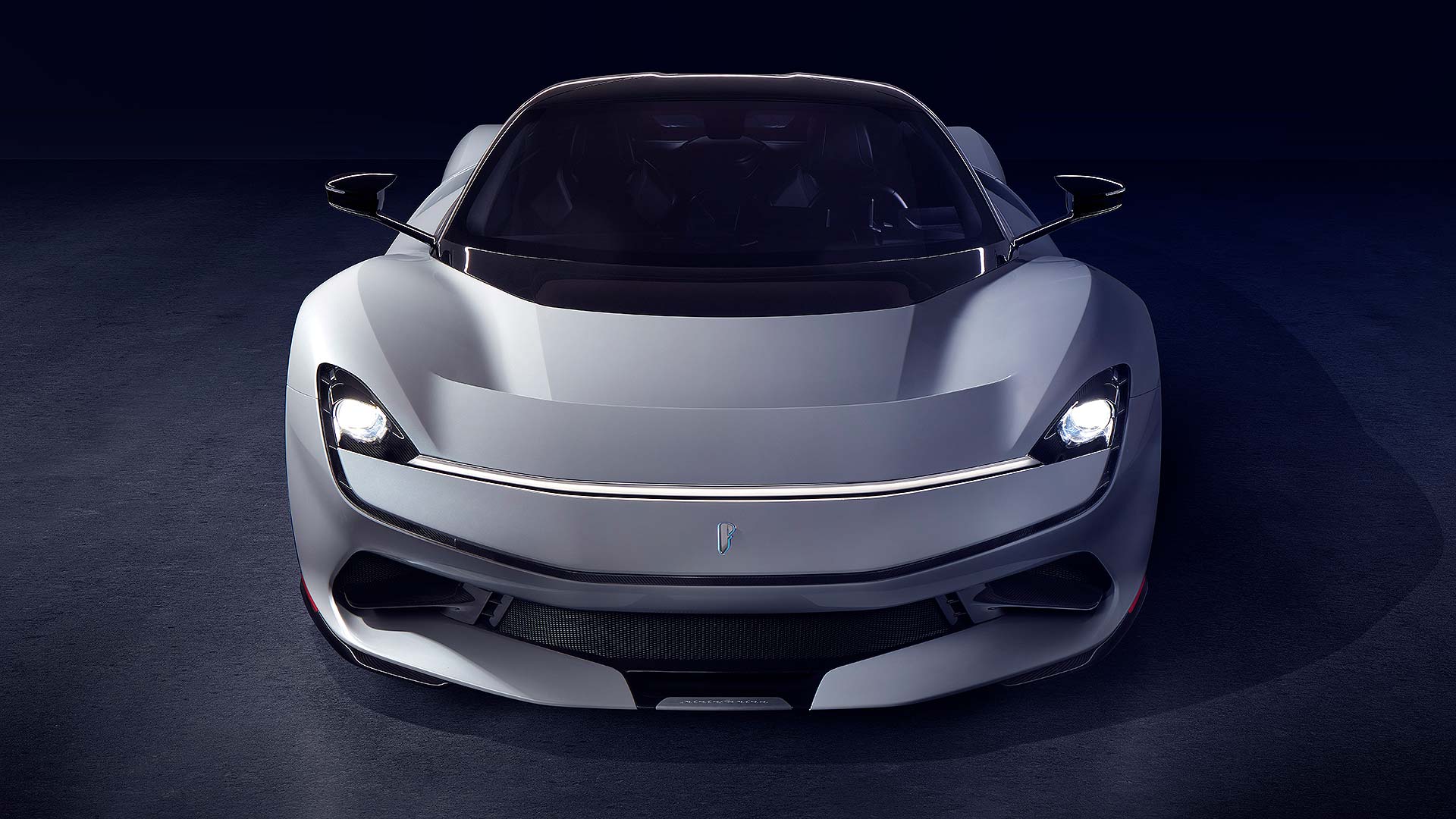
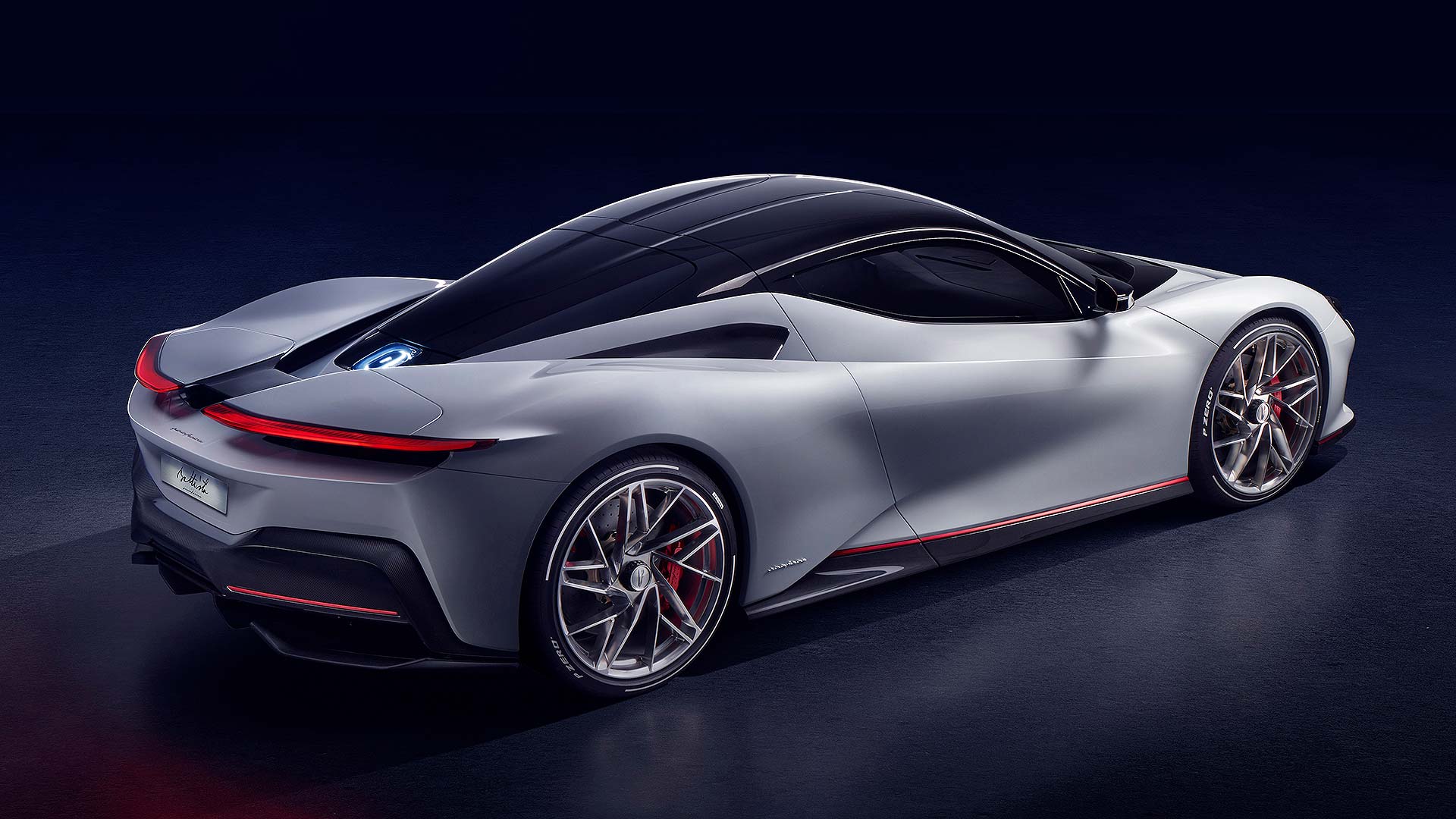
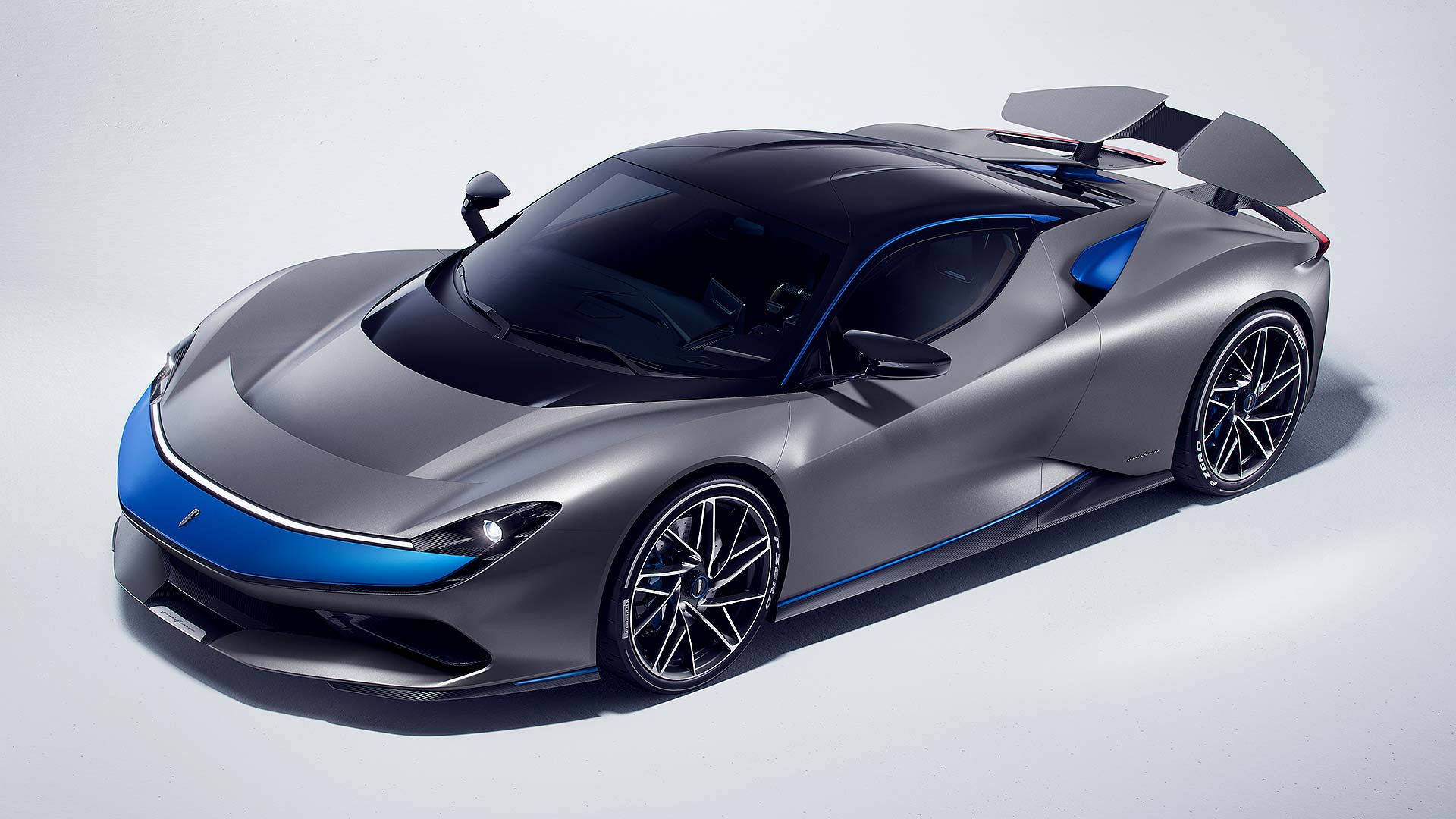
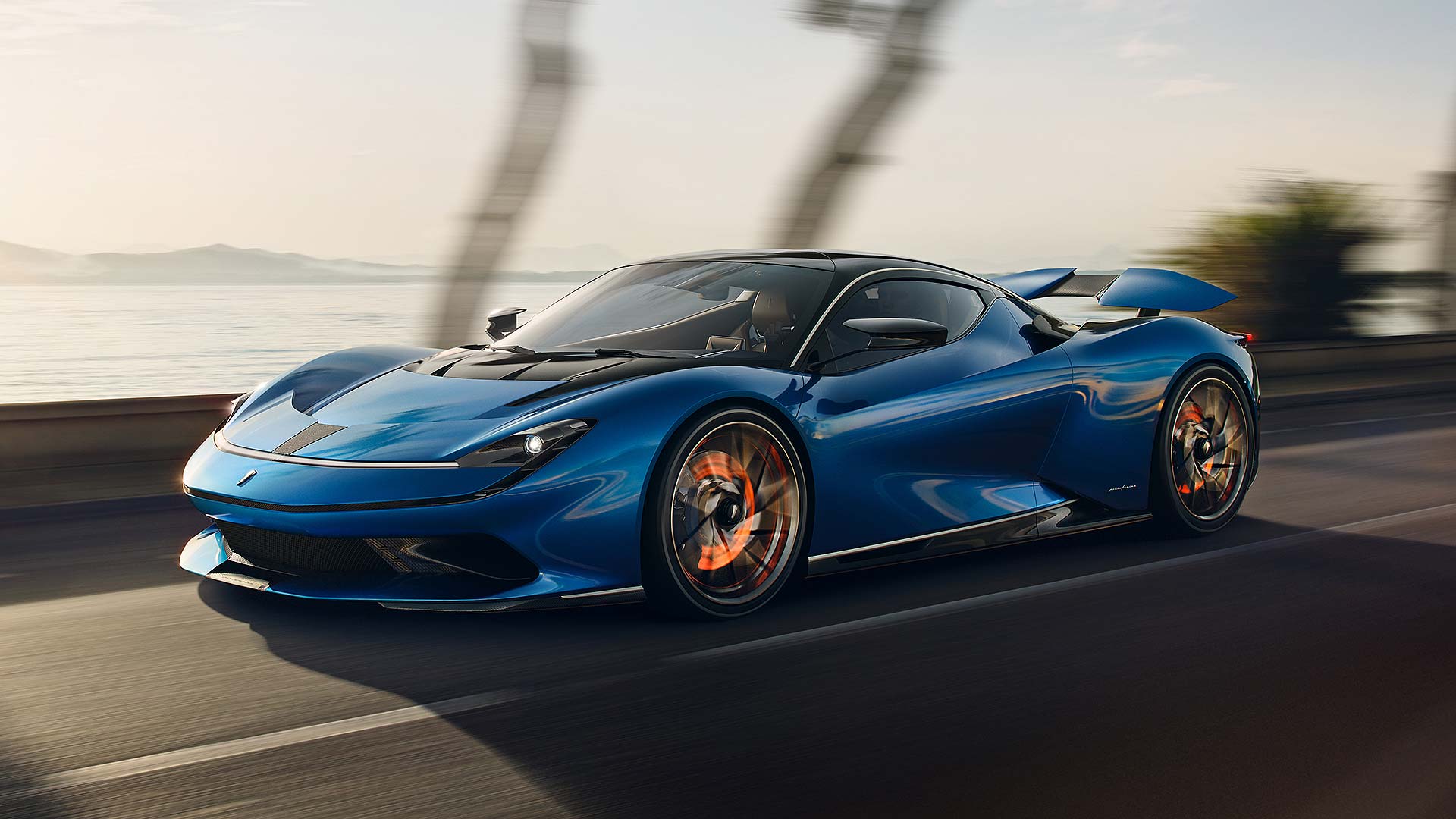
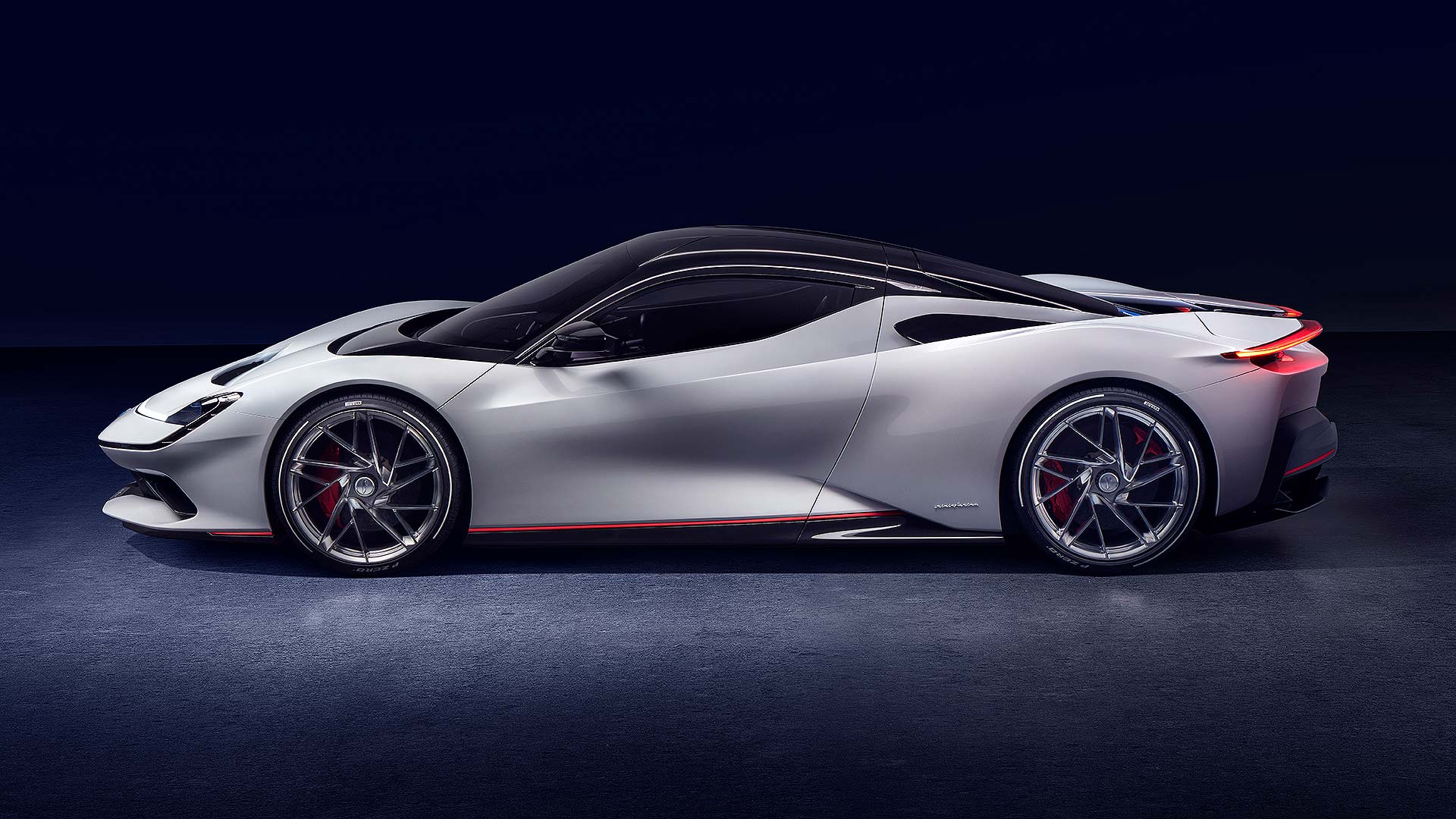
The Pininfarina Battista is a glamorous new entrant into the global hypercar market, one targeting Ferrari, Aston Martin and the ultra-exotic Pagani and Koenigsegg brands with a mix of incredible power and all-electric allure. Producing 1,900 horsepower and faster than a Formula 1 car from 0-60mph, it will also travel almost 280 miles on a single charge.
Only 150 will be built, all in Italy, carrying a rumoured £2 million price tag. Deliveries begin in 2020.
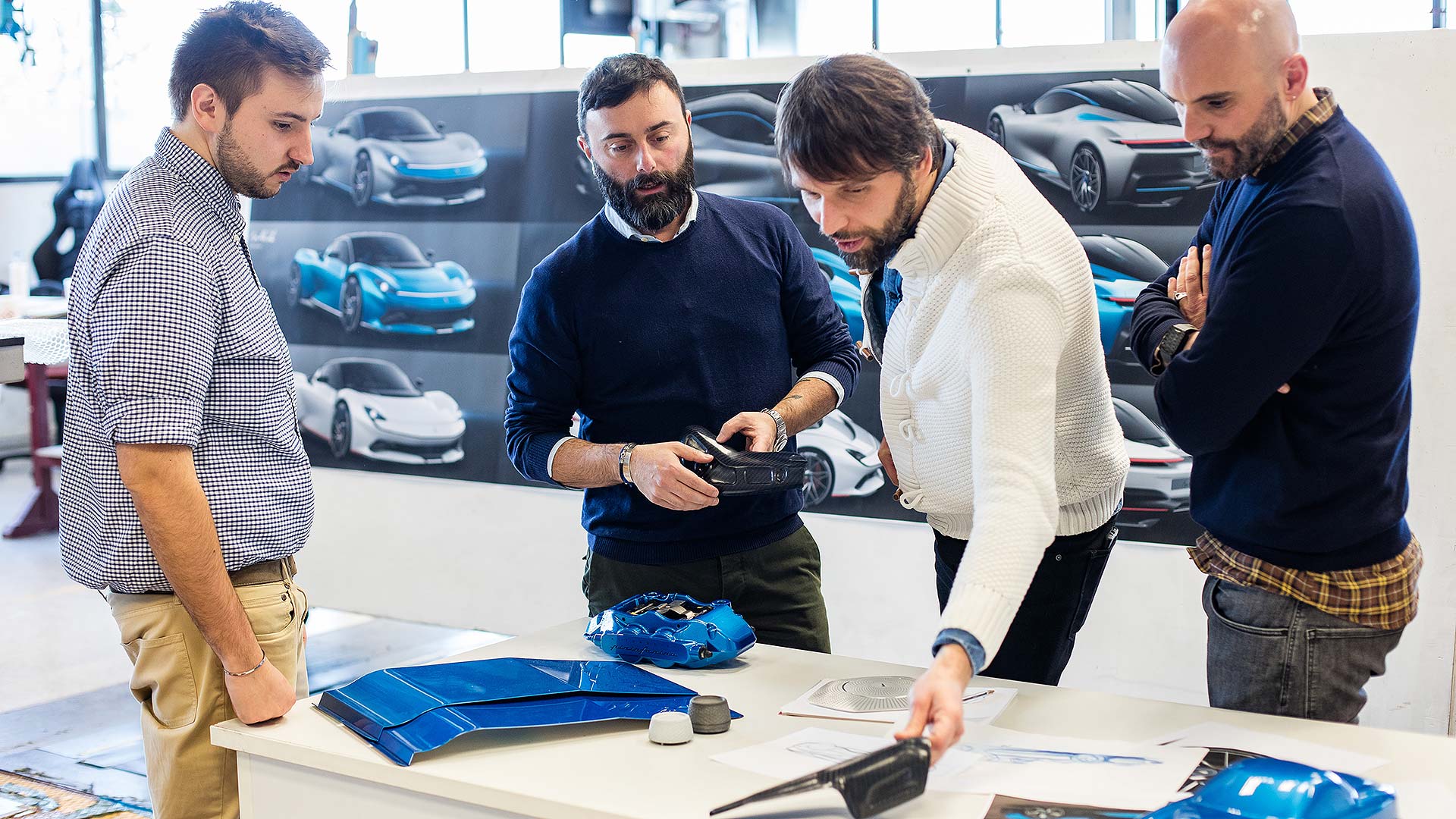
Revealed in an event on the eve of the 2019 Geneva Motor Show, an all-star team was on hand to launch the Battista. Pininfarina says key members have previously worked on launching the Bugatti Veyron and Chiron, Ferrari Sergio, Lamborghini Urus, McLaren P1, Mercedes-AMG Project One, Pagani Zonda and Porsche Mission E. The Battista is a car that’s more than a measure for them, says the bullish team behind the project…
Why, hello there, Automobili Pininfarina!
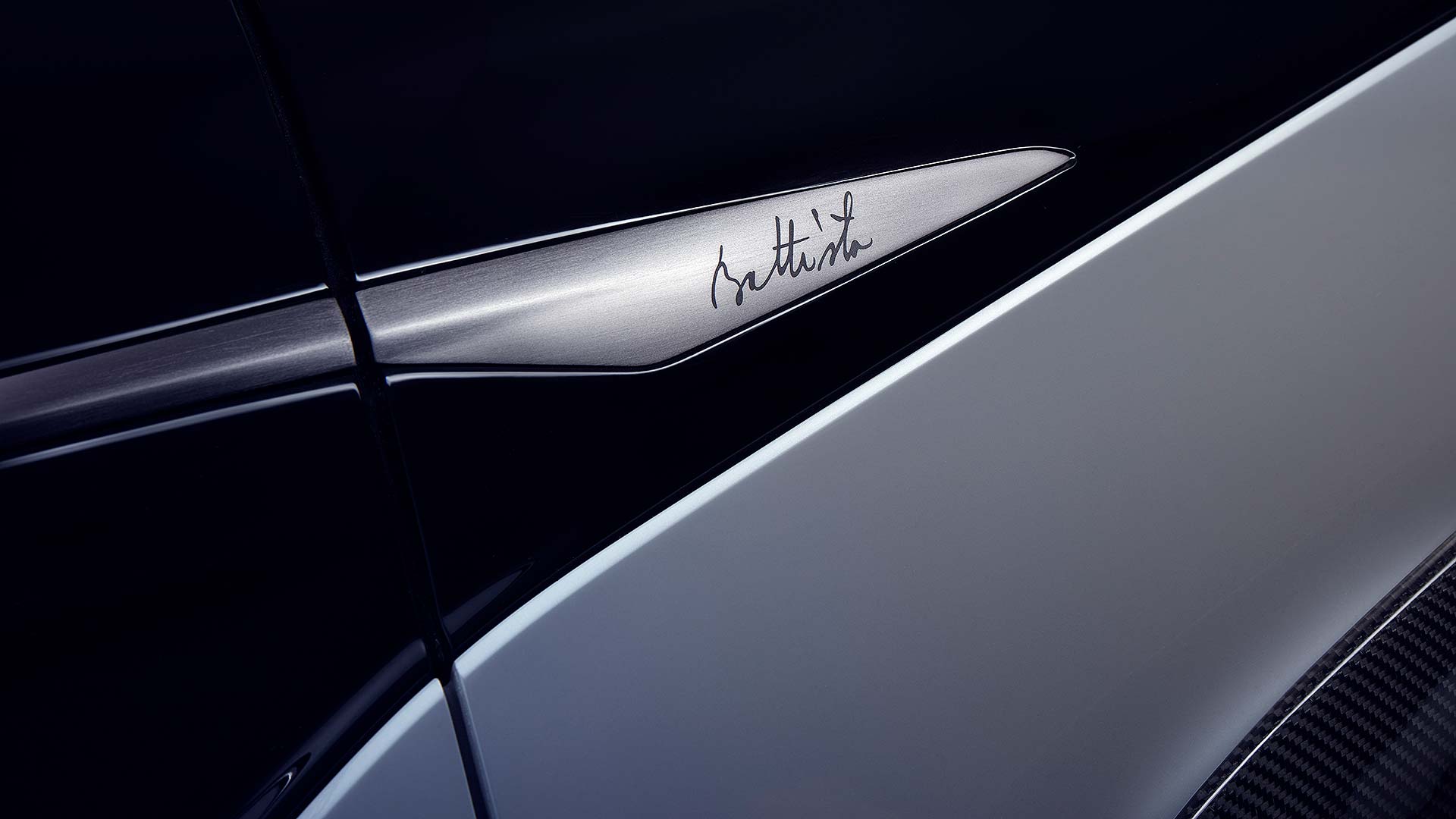
The Battista is the storied Pininfarina firm’s very first road car: up to now, the Italian styling house has designed cars for other brands (it is credited with creating more than 60 Ferraris, for starters). That’s why it’s called Battista, after the Pininfarina founder, who started the company 90 years ago. Paolo Pininfarina, his grandson, says its launch is “a dream come true… my grandfather always had the vision that one day there would be a standalone range of Pininfarina-branded cars.”
It’s the first of many Automobili Pininfarina cars, vows the firm – all of them “purely electric, zero-emissions, luxury cars solely branded Pininfarina”.
For those who like brands with stories, Automobili Pininfarina CEO Michael Perschke says “this is the most authentic and exciting automotive story imaginable. We aim for Battista to be a future classic and automotive icon, writing its own page in automotive history books.”
Why go electric with the first Pininfarina?
Electric was a no-brainer for the Pininfarina team, they say. “Electrification unlocks the door to a new level of performance and a zero-emissions future,” said Perschke. It’s the first electric ‘poster car’ and described as “a pivotal moment in time for the new automotive environment”.
How fast is the Pininfarina Battista?
The Battista launches with exceptional Top Trumps credentials. Its 1,900 horsepower is combined with almost 1,700lb ft of torque to give a 0-62mph time of less than two seconds. It will accelerate from 0 to 186mph in less than 12 seconds. Top speed? Up to 218mph – yet if you don’t drive quite so fast, it will deliver a range of up to 279 miles.
That’s a monstrous 0-62mph time. Surely Pininfarina’s going to sing it from the rooftops?
Interestingly, Pininfarina reckons the 0-62mph time isn’t actually all that. Electric cars are always quick against the clock. “ICE (internal combustion engine) cars are easily comparable with each other, but we have no benchmark to compare and we have to define the electric hypercar experience,” said chief technical officer Christian Jung. “Agility and manoeuvrability will be more defining than 0-100km/h [0-62mph], I suspect.”
I guess the electric motor is pretty beefy?
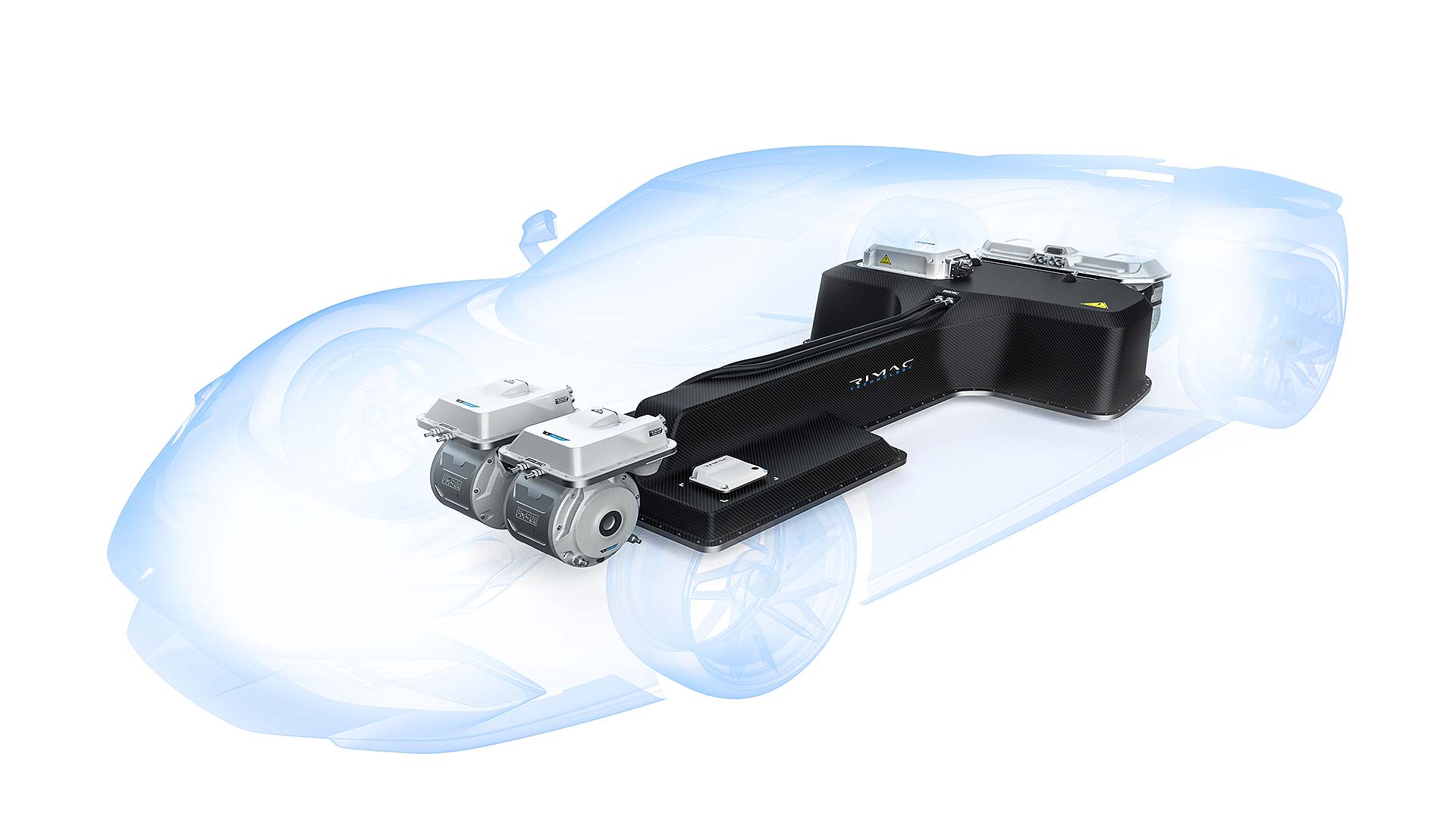
There’s not just one electric motor here – there are four of them, which independently deliver drive to each wheel. Because there’s so much torque, or pulling power, Pininfarina says torque vectoring – distributing the amount of output each motor puts out according to driving conditions – will play a pivotal role in how it drives. After all, it does have more than twice the torque owners of conventional hypercars are used to…
So Pininfarina’s turning the dial up to 11?
Pininfarina admits it might actually have to ease back on how much surge the Battista delivers, so bountiful is its pulling power. “We are trying to go to the extreme that neither Tesla nor the other major OEMs are targeting,” said chief technical officer Christian Jung. “Electrification allows us to support hypercar development with instant torque… we might even have to dial it down, as its reaction time is up to 20 times faster than an ICE (internal combustion engine)!”
How big is the battery in the Pininfarina Battista?
The battery packs a 120kWh output. That’s bigger than any Tesla battery to date, and it’s a T-shaped battery that’s located to optimise weight distribution. The battery, along with the motors plus both software and hardware, are all provided by start-up electric supercar firm Rimac. Richard Hammond famously crashed one of its cars; with Pininfarina, it’s seeking fame for the right reasons…
Won’t Pininfarina Battista owners want to travel a little further on a single charge?
The batteries could have been bigger, but they would have affected the car’s dynamics. Nearly 280 miles “will cover virtually all possible drives, especially as 90 percent of owners are estimated to charge where the car is garaged”. And the 10 percent who want to go further? DC fast charging capability is built in and “by 2021, using app-based charging networks will be normal for many owners”.
What is the Pininfarina Battista made from?
No hypercar worth its salt is made from anything other than carbon fibre. The Battista has a carbon chassis and a carbon body. The rear subframe is made from carbon fibre, the roof is made from carbon fibre, even the crash structures are made from carbon fibre. The only thing we don’t yet know is the weight, and by how much the mass of the batteries have been offset by all this carbon.
What about the noise?
Electric cars are near-silent. But part of the appeal of hypercars is the noise they make, surely? Quite: that’s why Pininfarina will allow drivers to choose a bespoke sound, from literal near silence, to some bespoke sounds that it promises will not be artificially amplified. It’s not yet defined, but it will draw from key factors including the electric motors, air flow, heater system and even the resonance of the carbon fibre monocoque. Keep an ear out…
It’s quick, then. What’s slowing it down?
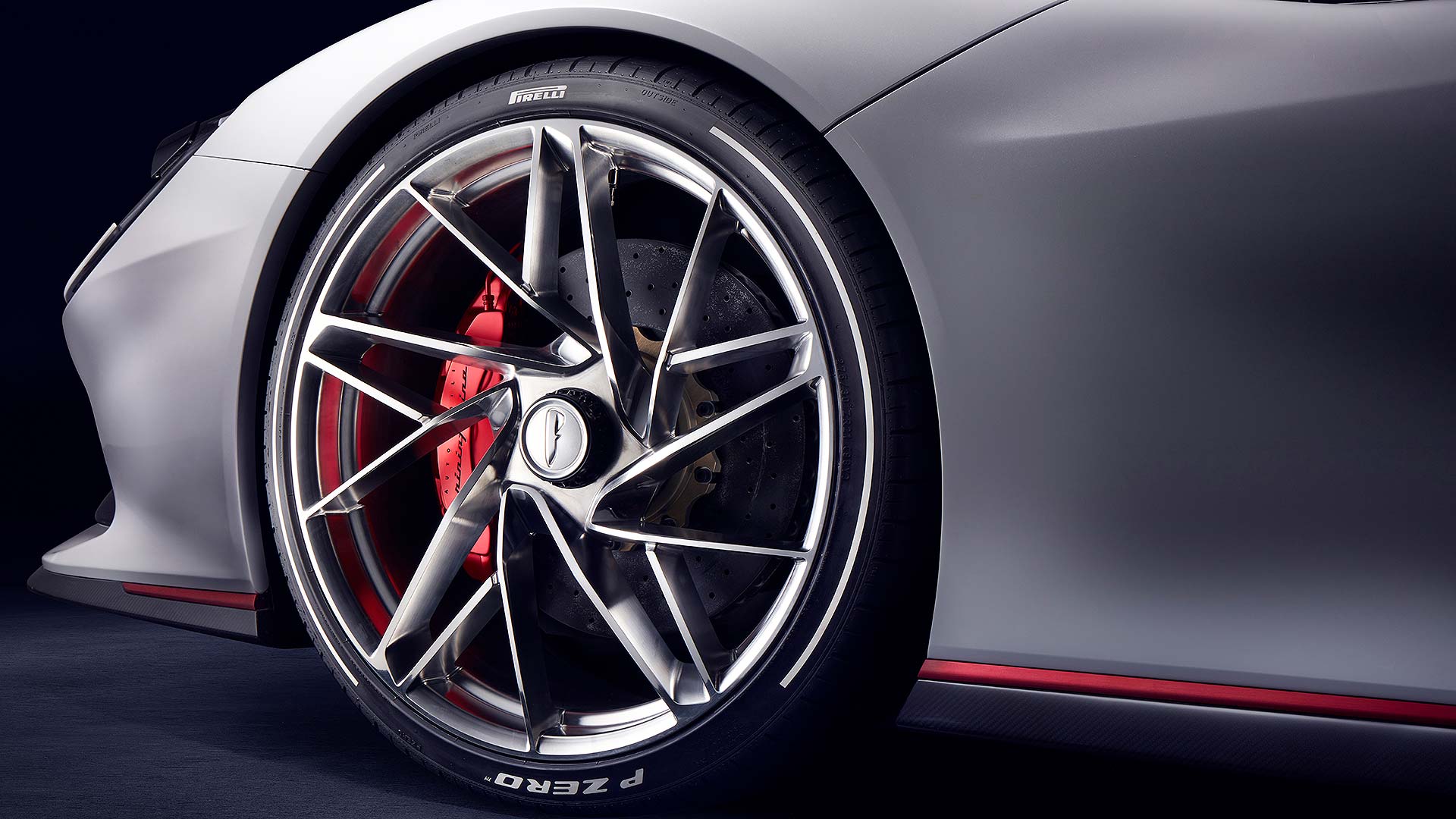
Monstrous 390mm (15.3-inch) carbon ceramic 6-piston front brakes are backed up by almost-as-large 380mm (15-inch) rear brakes. These massive anchors provide “hugely effective brake regeneration to the battery”. There’s also an active rear wing with air brake functionality.
And the Battista’s suspension?
Unlike conventional hypercars, Pininfarina isn’t going big on the Battista’s suspension at this stage. It simply says it will be thrilling, engaging yet comfortable, and be fully adjustable with a range of modes for various driving types.
Who’s setting up how the Battista drives?
Because no Battista owner will ever have driven a 1900 horsepower electric car, Pininfarina’s recruited someone who’s used to driving the elite of racing cars – F1 and Formula E racer Nick Heidfeld. He will work with former Porsche, Pagani and Bugatti engineer Dr Peter Tutzer to make sure the Battista serves up a memorable driving experience.
Do they hint at how Pininfarina’s hypercar may drive?
The Battista will be focused on the track but also comfortable on the road, we’re promised. The torque vectoring systems will “put far more control in the hands of the driver than in a traditional internal combustion engine performance car”. Heidfeld backed this up, comparing Formula E racers to the Battista in the fact “there is no delay at all on the throttle… even in a Formula 1 car we feel a delay”.
Not only is it faster than an F1 car, then, it’s also more responsive. How truly incredible does this car sound?
Pininfarina has been a styling house for 90 years. What does the first car it’s designed for itself say?
The Battista serves up “classic Pininfarina design cues,” says the firm, paying homage to some of its most famous cars: Cisitalia 202, Ferrari Dino Berlinetta Speciale, Ferrari Modula and the Sinesti concept car.
It doesn’t much look like an electric car, does it?
The Battista is a “beautiful, pure performance car”. Pininfarina has avoided designing in any overt features that mark it out as an EV. The most overt hint is the Pininfarina Blue colour of one of the three cars at Geneva – it’s “more electric in tone than Pininfarina’s traditional blue, reflecting the technological innovation within”. The firm’s created it by spraying on multiple layers of paint to give it shimmering depth.
What are the design highlights?
Pininfarina is proud that most of its designs can be described in two lines. The same is true for the Battista, which is the work of Luca Borgogno. It has a teardrop cabin shape sitting on sculpted and “sensuous” body sides, a floating wing look at the front and an “iconic” design of rear wing. It’s simple, elegant and, insists Borgogno, “beautiful”. He also adds it has the same sort of functional harmony seen in another iconic Pininfarina hypercar – the Ferrari F40.
What’s the story inside?
Because the Battista serves up such phenomenal performance, Pininfarina has paired back the interior, so it’s distraction-free – and all the vital interfaces directly face the driver alone. Traditional dials have been binned for HD screens, and to this framework, there’s almost endless personalisation.
Verdict: Pininfarina Battista
Hypercar world, meet your newest entrant. ‘Pininfarina’ is going to become a name as revered as Pagani and Ferrari, and will become so whilst also being truly sustainable. That one of the world’s mightiest ever cars is also a zero-emissions all-electric one is quite the statement of intent. It’s an ecologically on-message poster car that rightly is one of the stars of the 2019 Geneva show. Believe the hype.
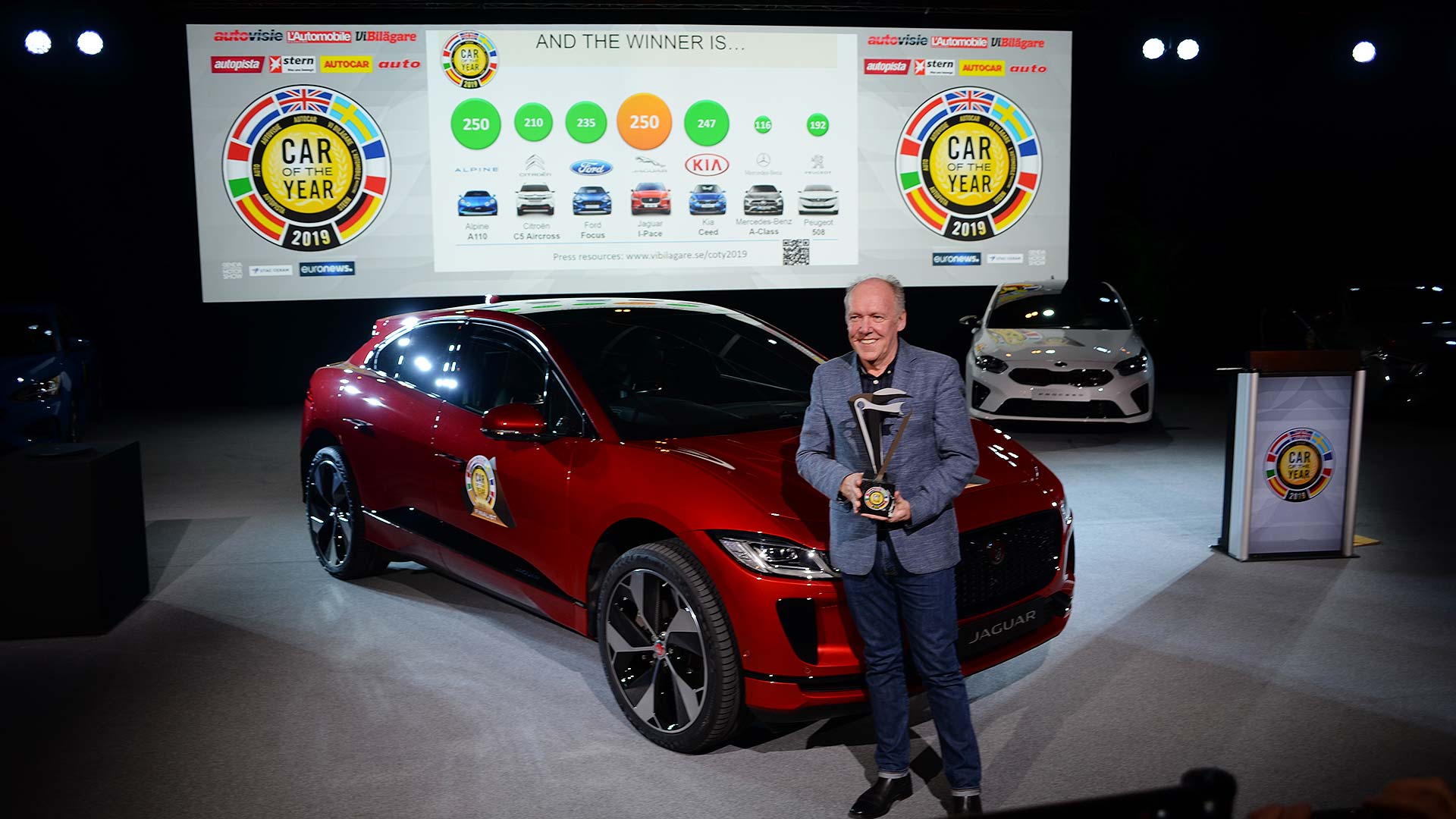
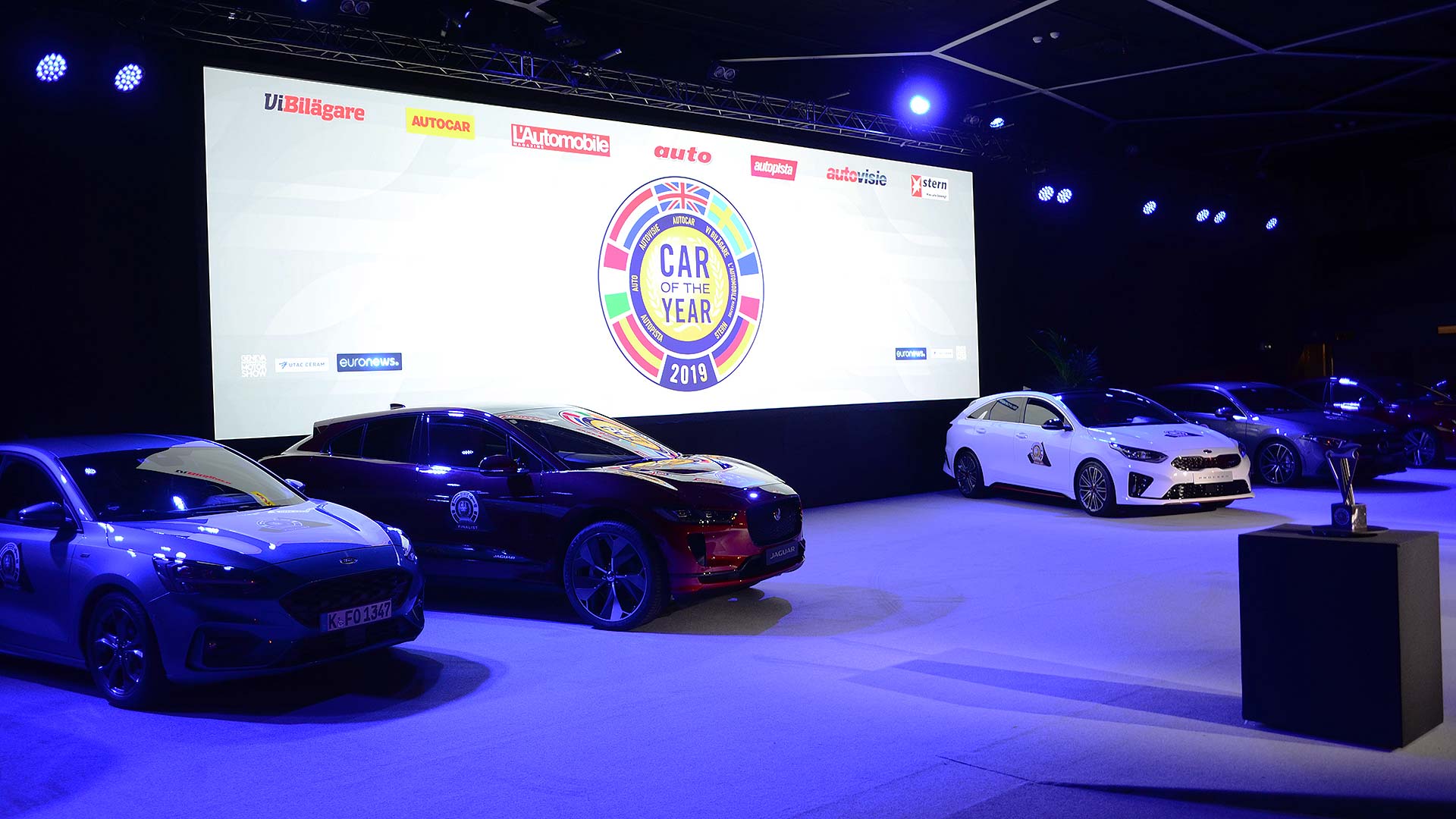
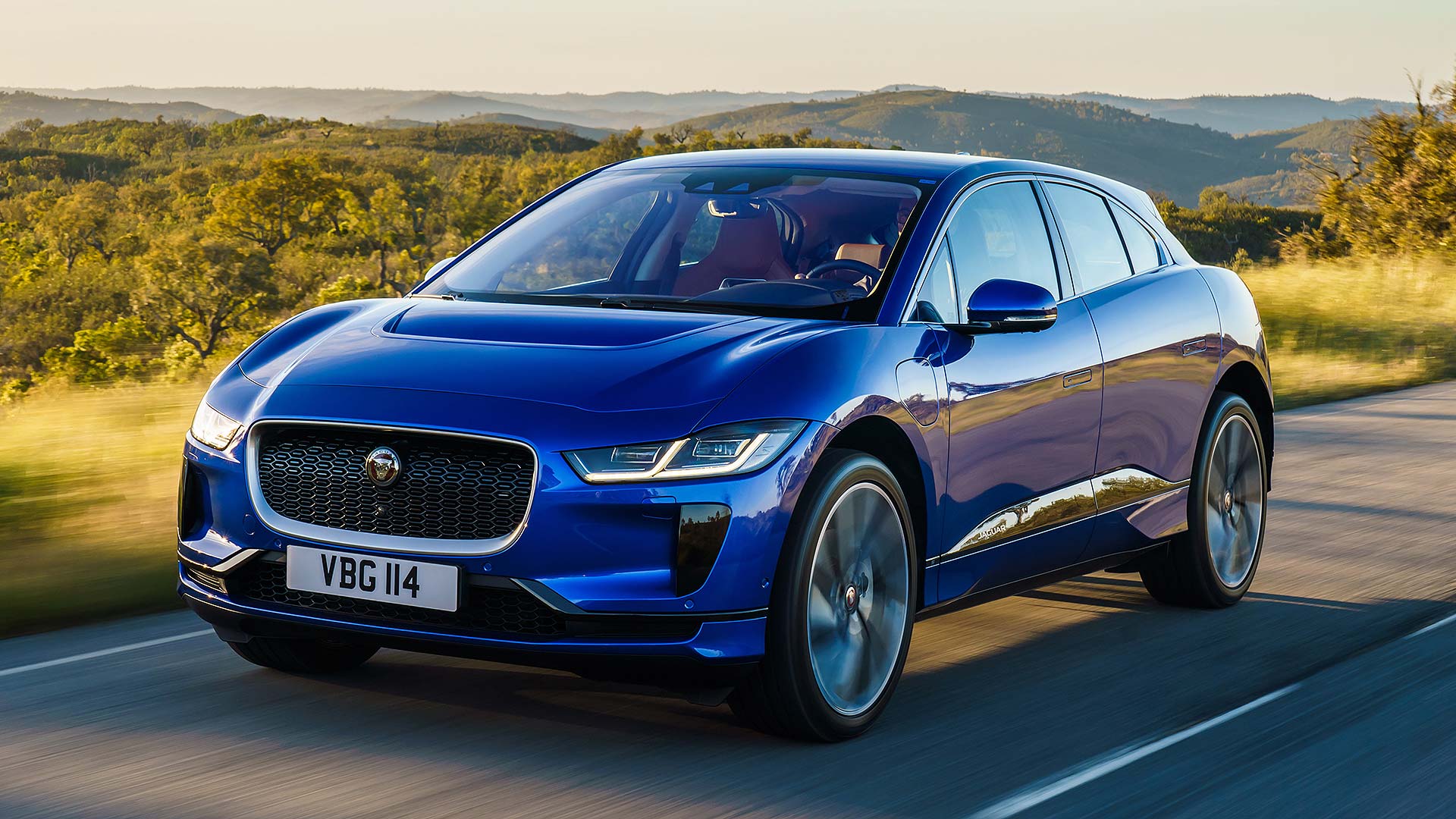
The Jaguar I-Pace has been revealed as 2019 European Car of the Year in a ceremony on the eve of the Geneva Motor Show.
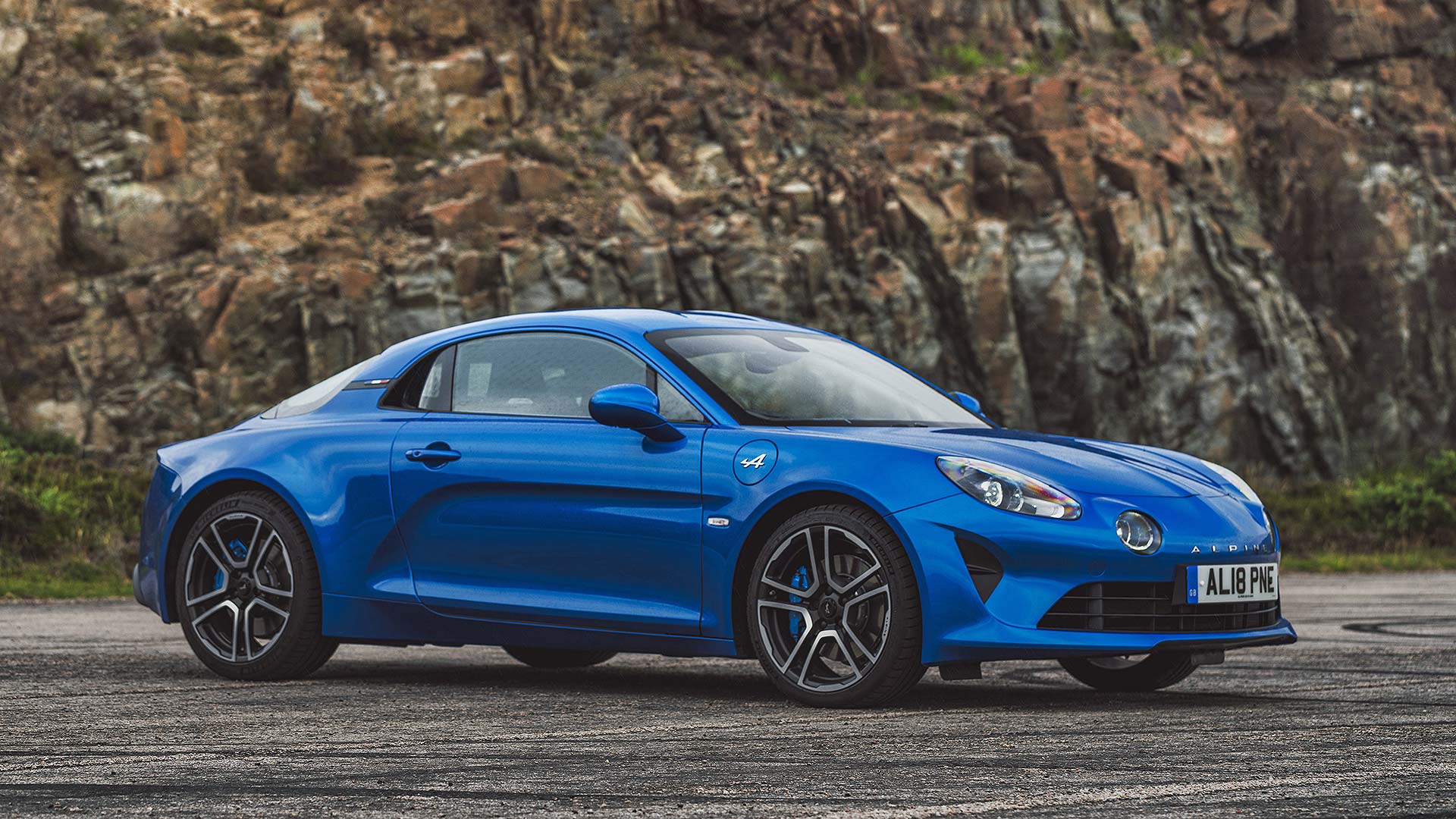
Remarkably, it was an unprecedented tie vote, with both the Alpine A110 and Jaguar I-Pace scoring 250 points. This dramatically caused confusion during the ceremony as there can only be one winner.
The rules state a count-back should ensue, taking the top votes from each country for the two cars. In this thrilling ‘shoot-out duel’, the Jaguar emerged as the winner, with 18 points to 16.
It is the first time this has happened in the history of Car of the Year.
This year’s Car of the Year winner was, admitted the judging panel in a statement, “impossible to predict… the cars are very different in terms of market segments and positioning”. You can say that again.
Watch: how Car of the Year 2019 unfolded
Jaguar design director Ian Callum accepted the award. “Wow!,” he said. “Was that exciting or what?” It is the first time Jaguar has ever won Car of the Year, he added. “Everyone back at home will be exceedingly proud of this result.
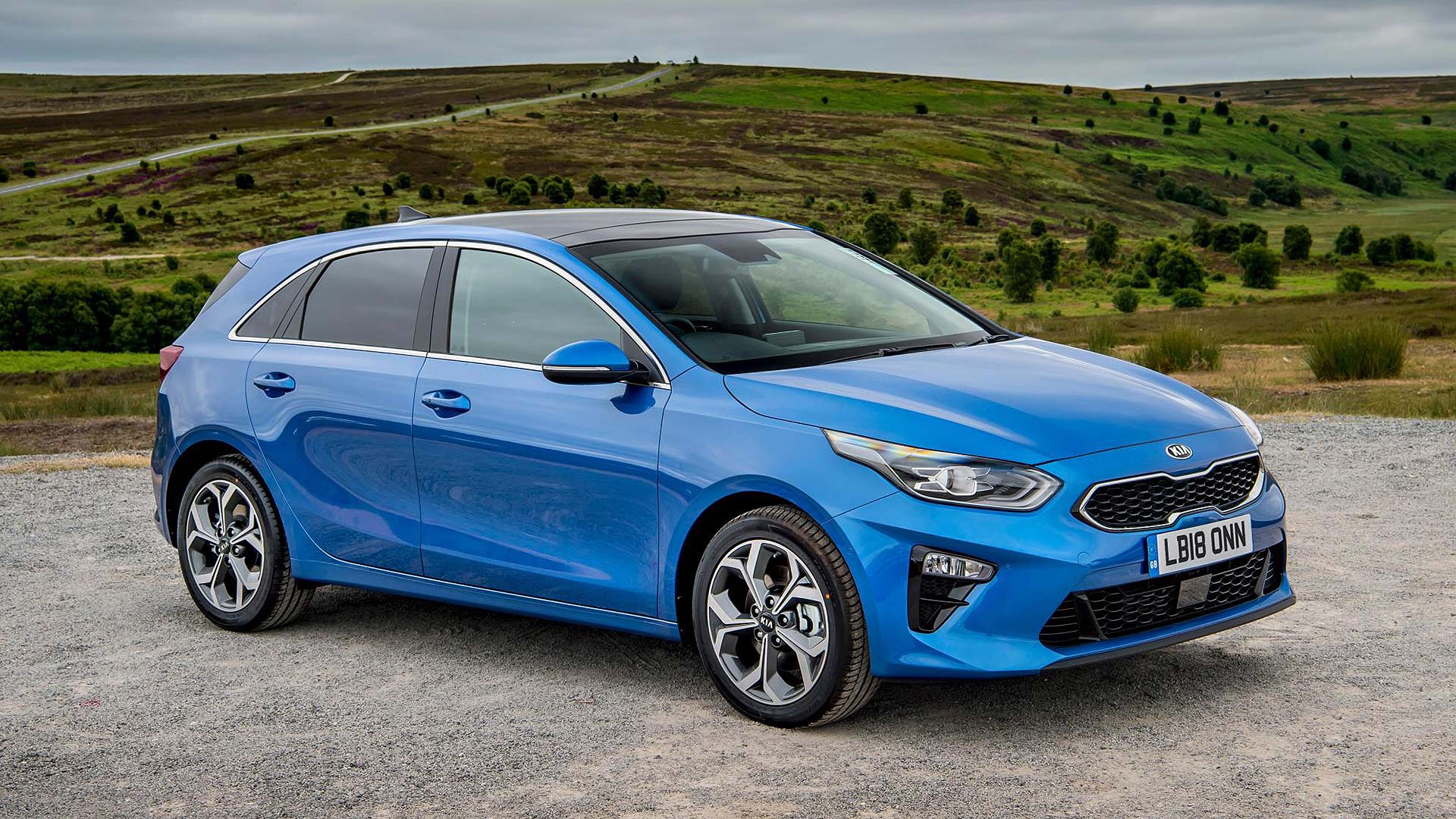
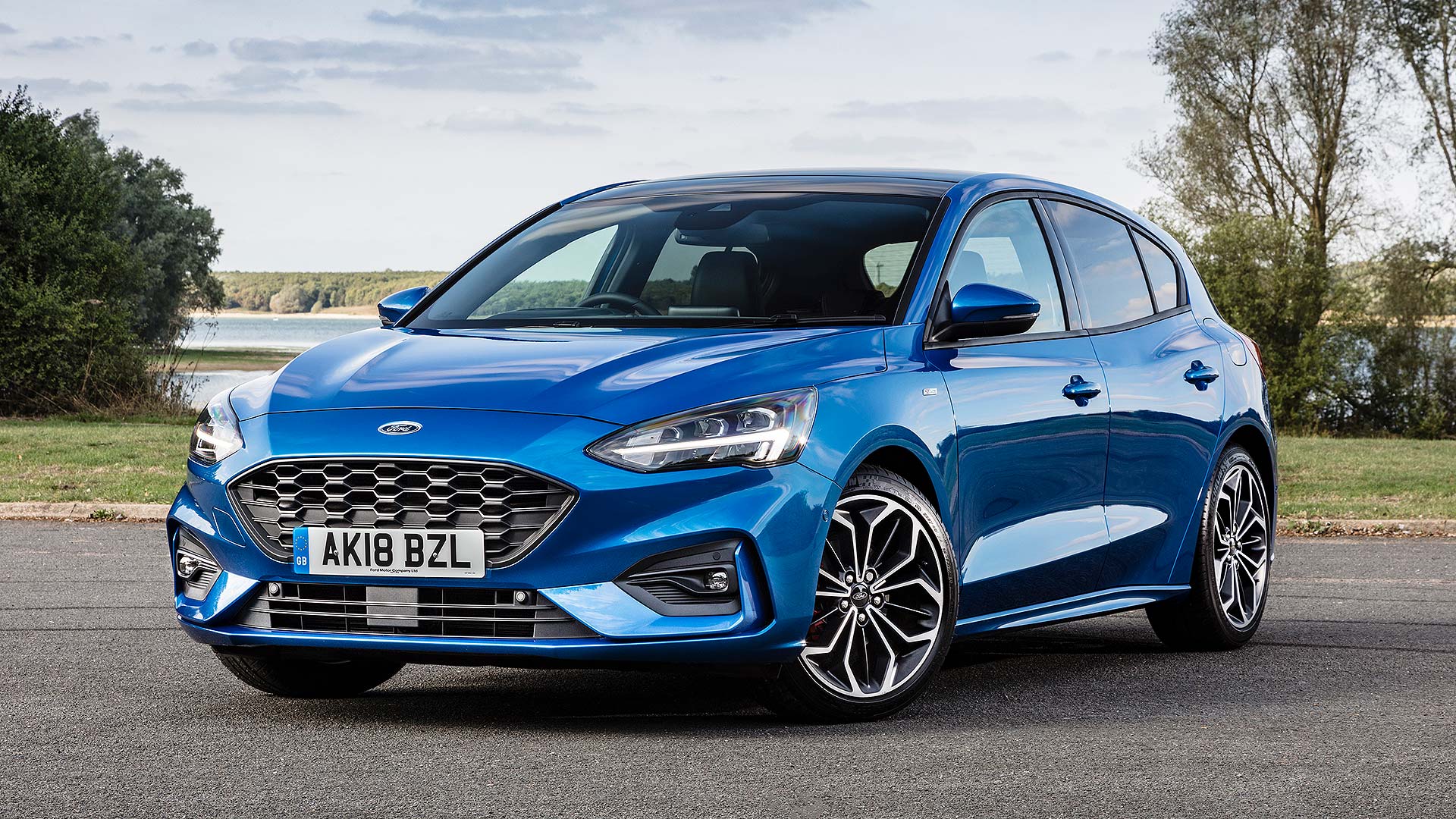
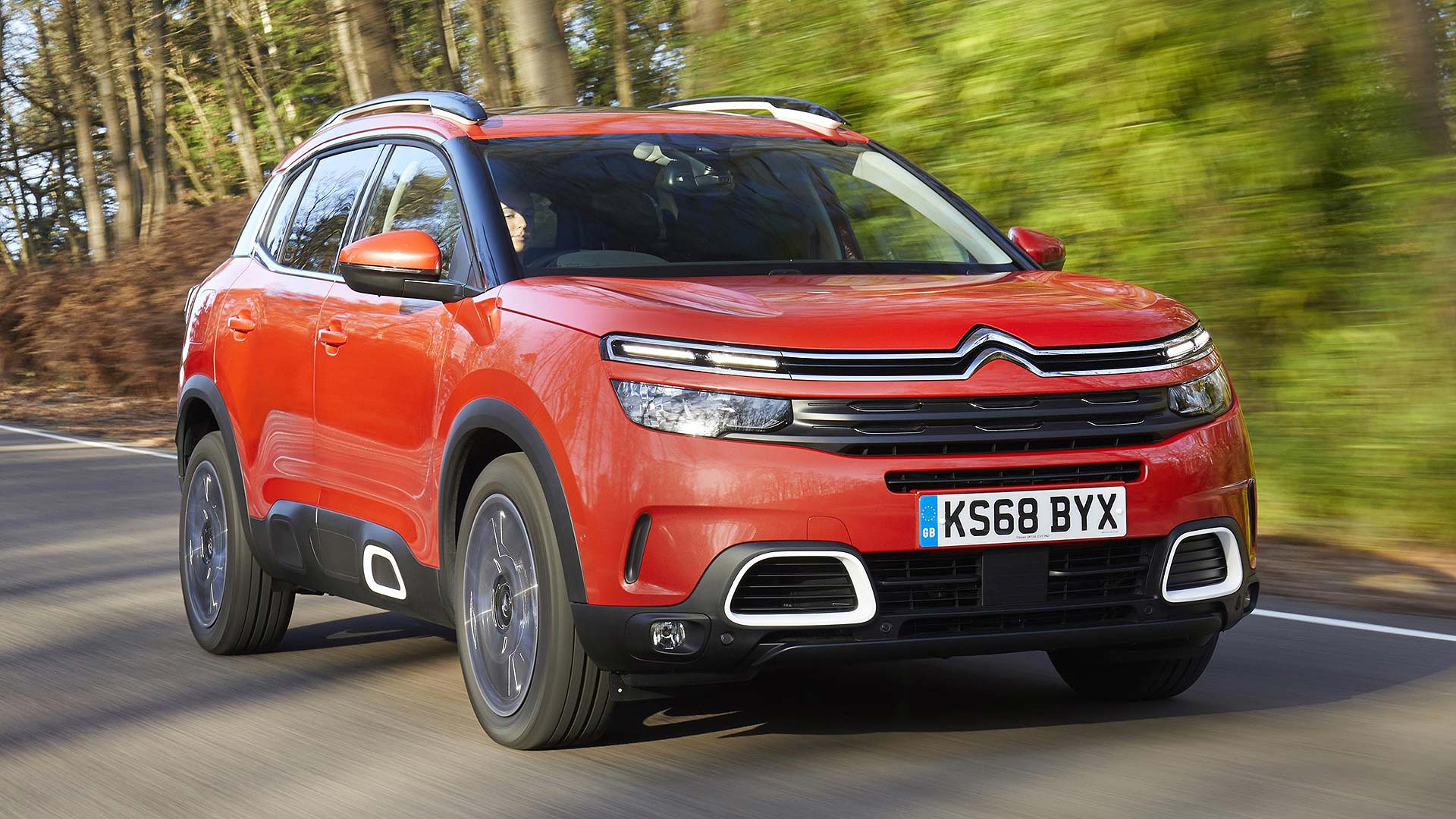
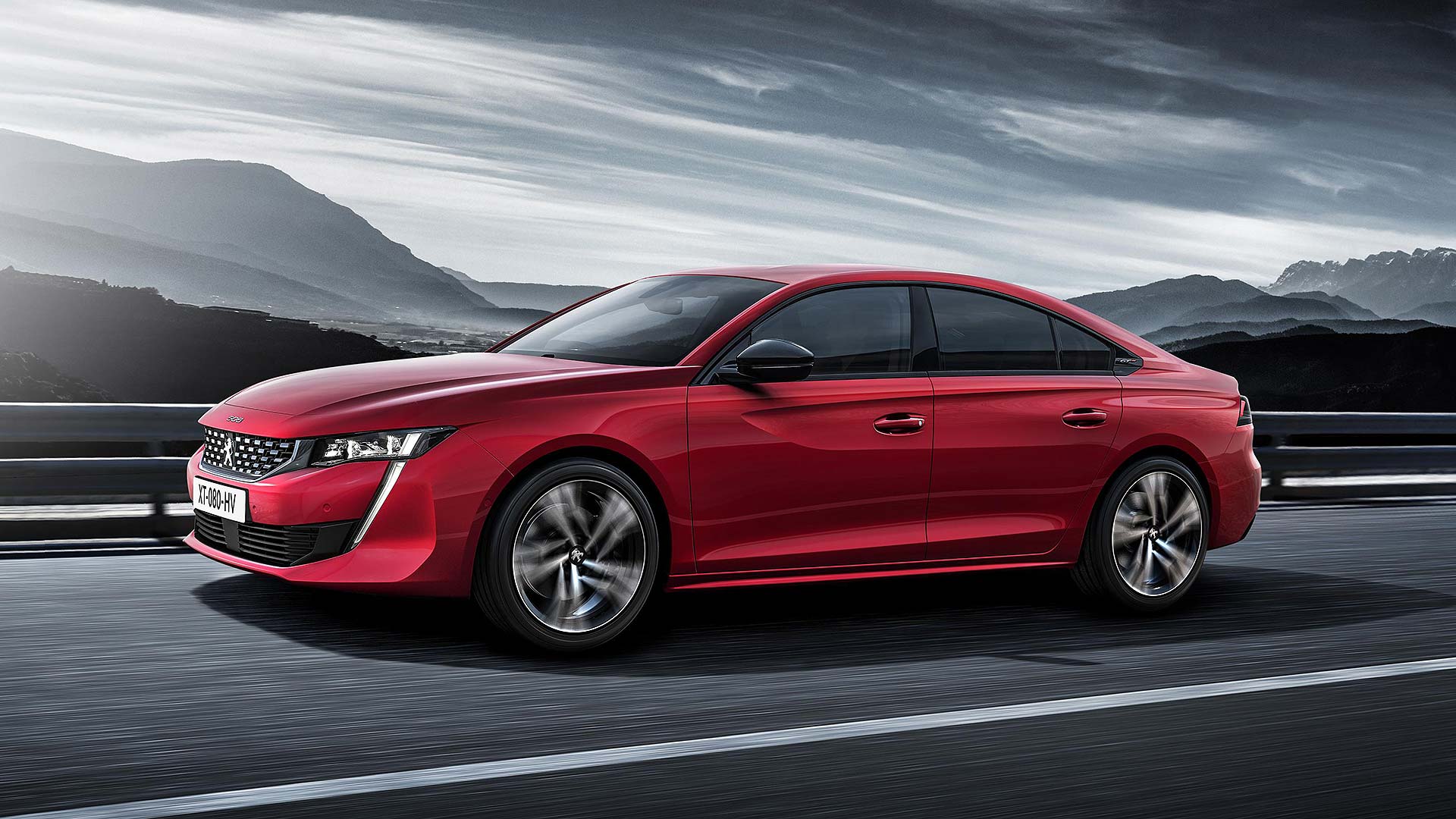
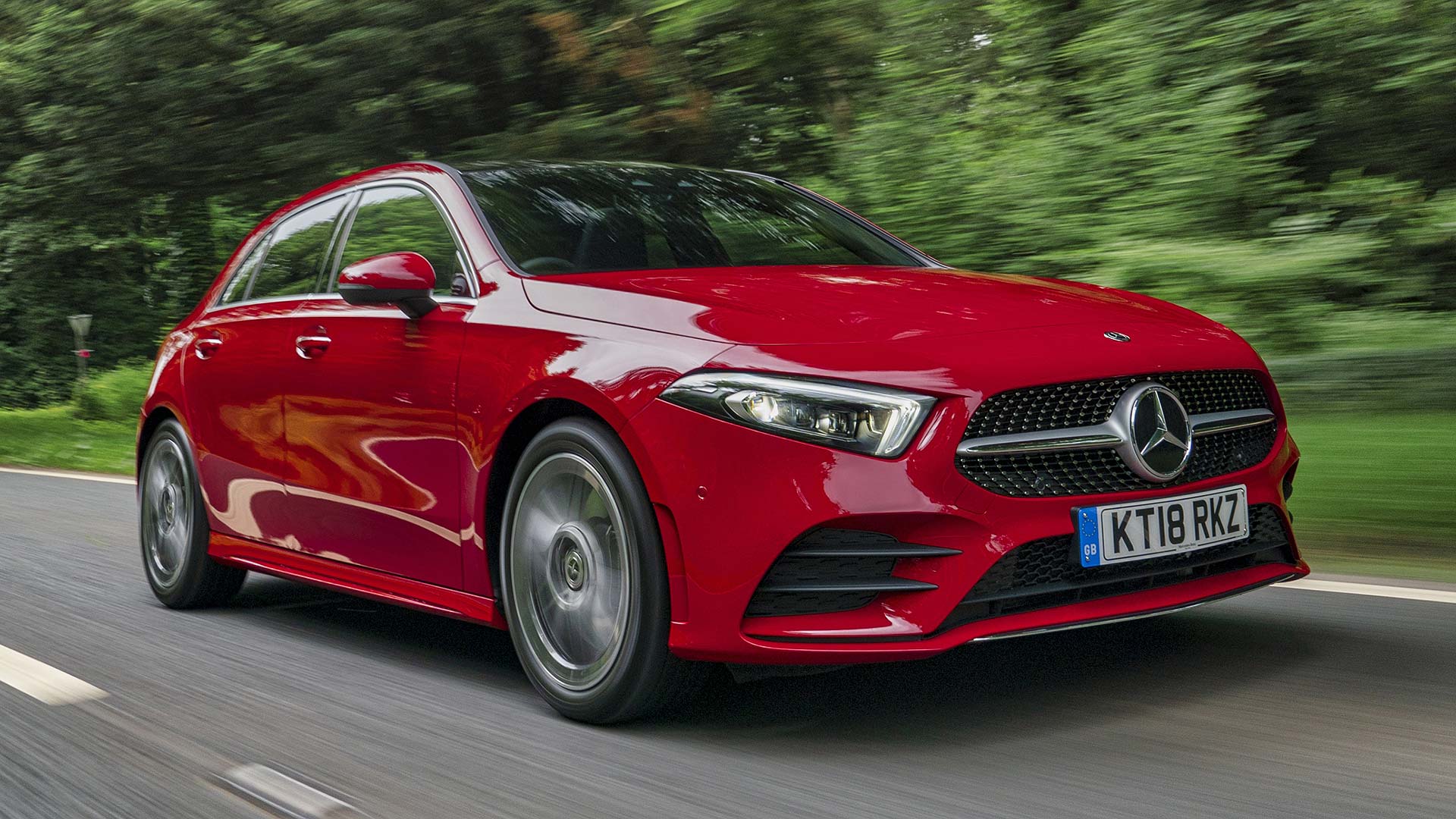
Surprisingly, there was only one other traditional SUV, the Citroen C5 Aircross, alongside the winning Jaguar I-Pace electric SUV. Three family hatchbacks made the final running – the Kia Ceed, Ford Focus and Mercedes-Benz A-Class – along with the Peugeot 508 executive saloon and Alpine A110 sports car.
Car of the Year: how it works
The Car of the Year prize first ran in 1964 and, this year, 60 models were part of the initial selection. Months of testing whittled this down 38, and then, to the final seven, which were tested by jurors at a research centre in Paris last month. There, final votes were made.
Each of the 60 jurors has 25 points to award, and they must give points to at least five cars. The jury comprises experts from 23 countries across Europe – and all votes are transparent; see them soon on the organisation’s website.
The Car of the Year organisers are also making efforts to increase female representation on the jury panel. Today, there are four; a fifth is about to be recruited and by Car of the Year 2020, six female jurors are expected to serve.
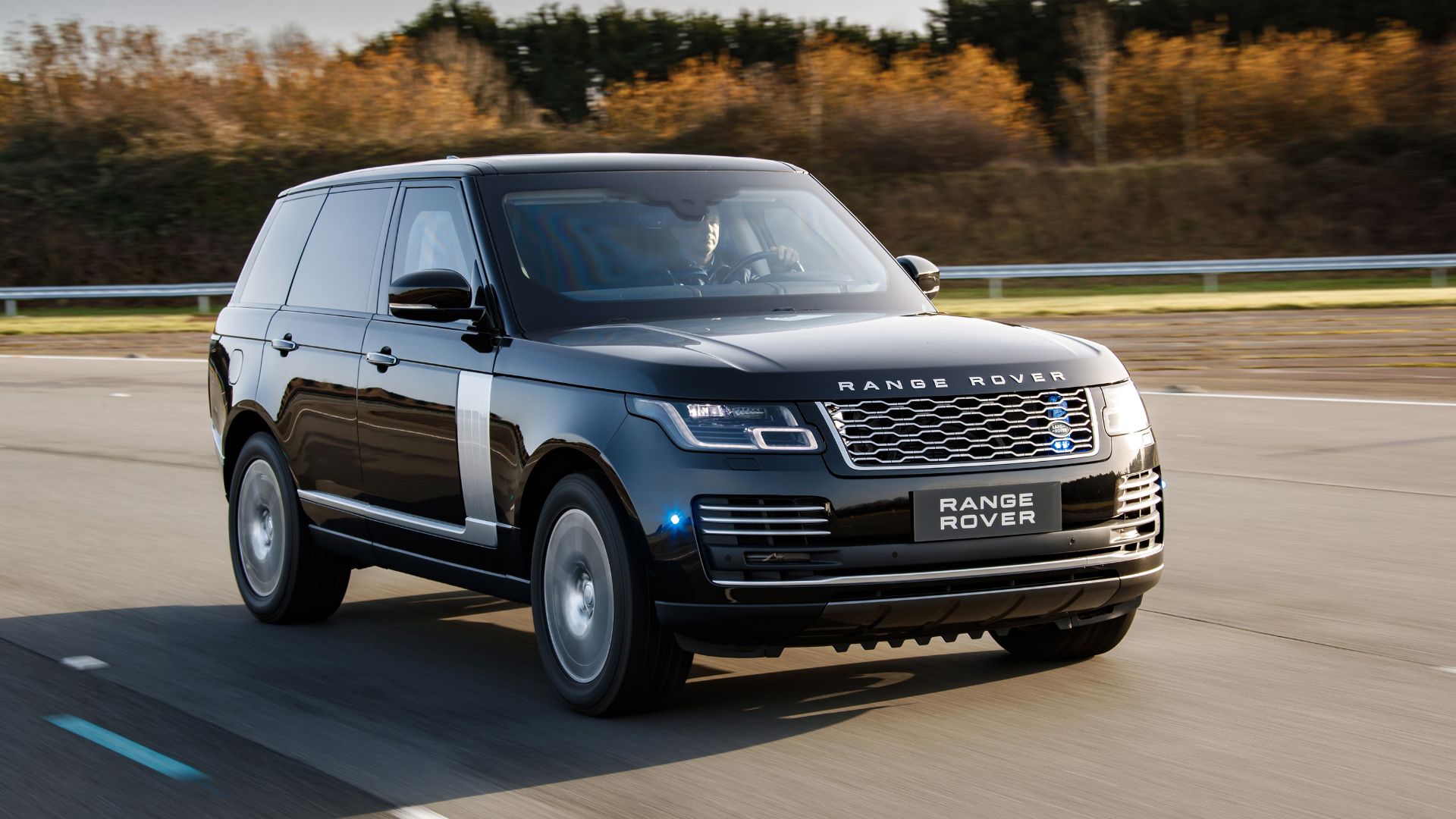
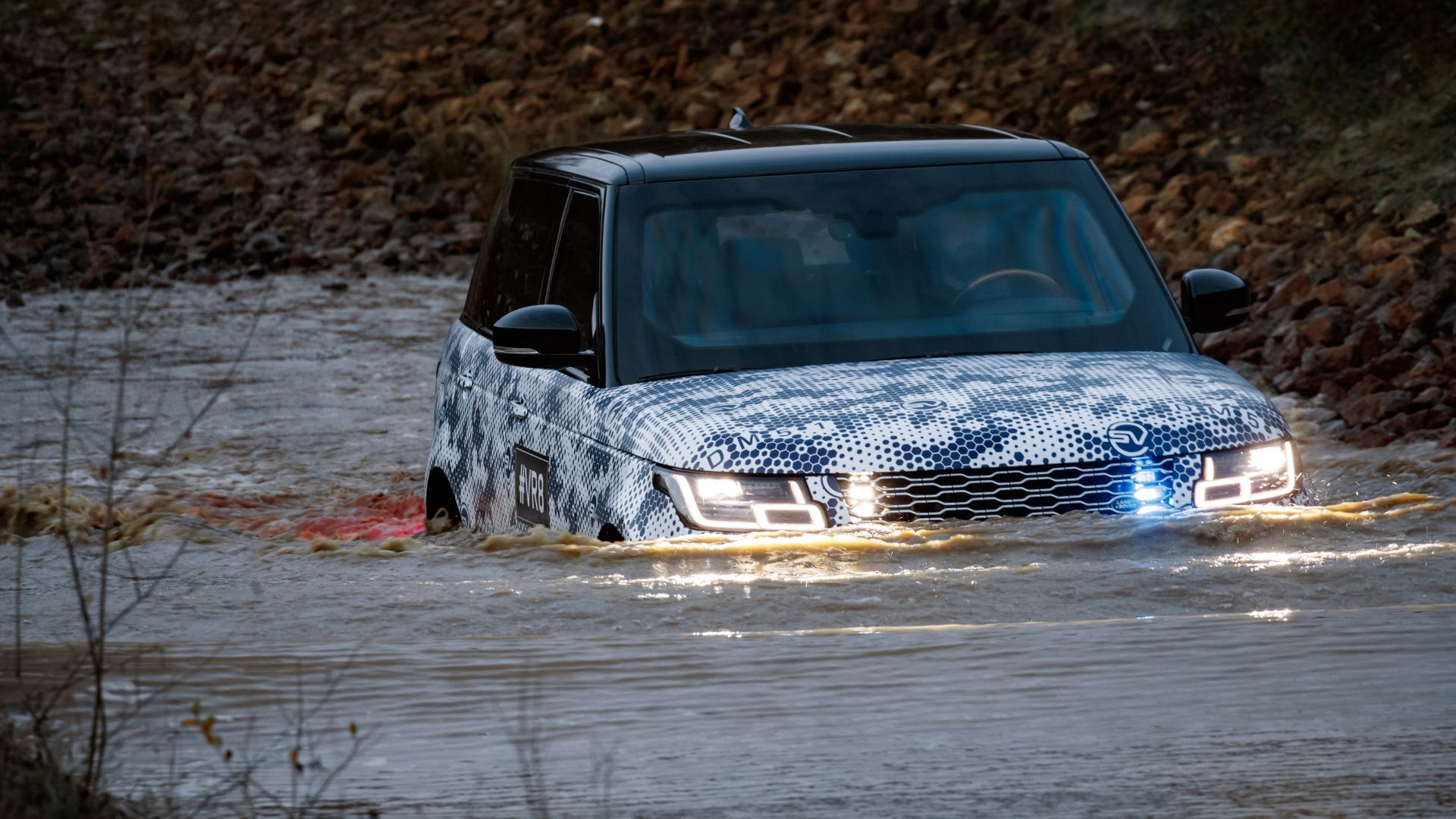
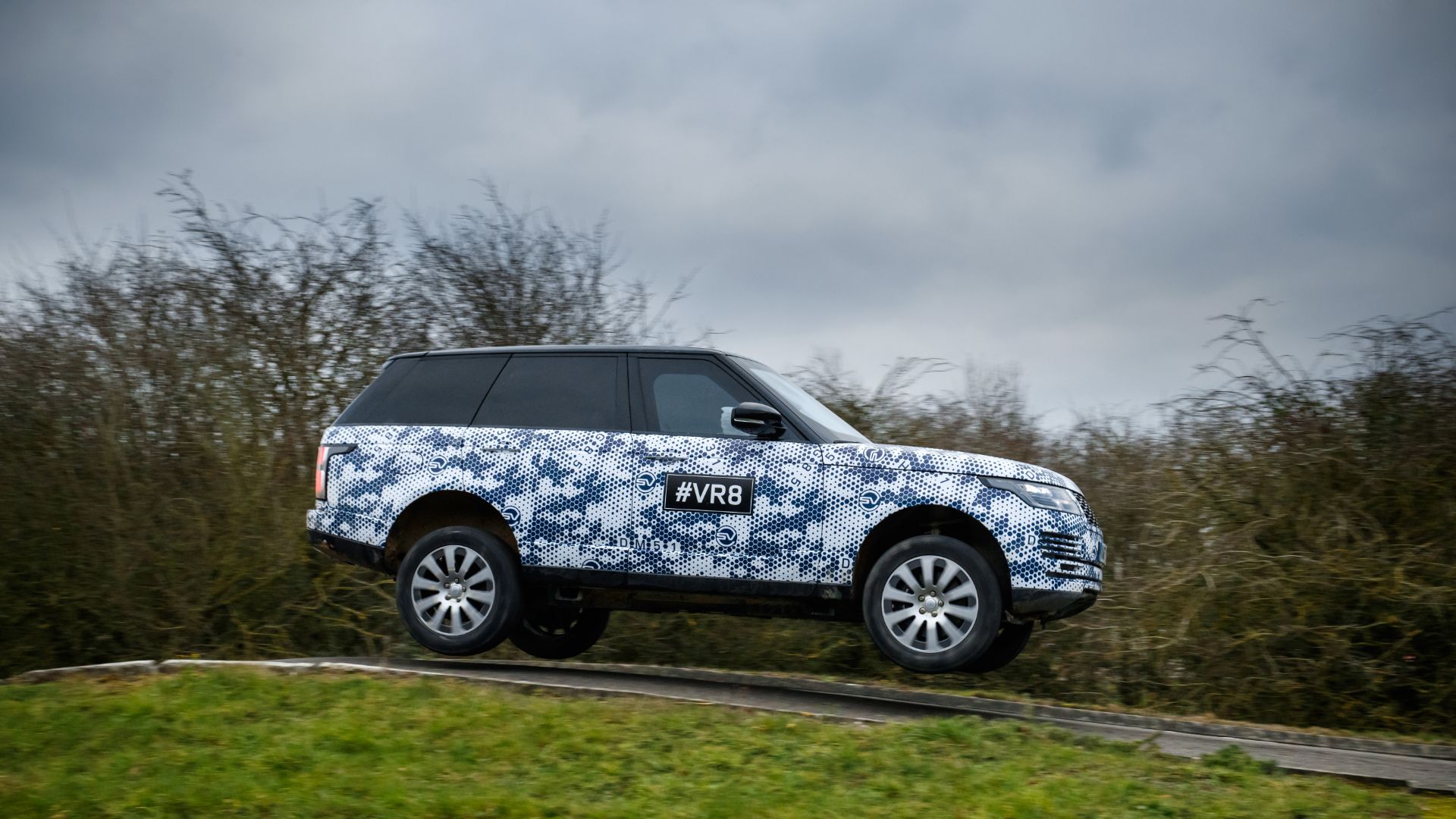
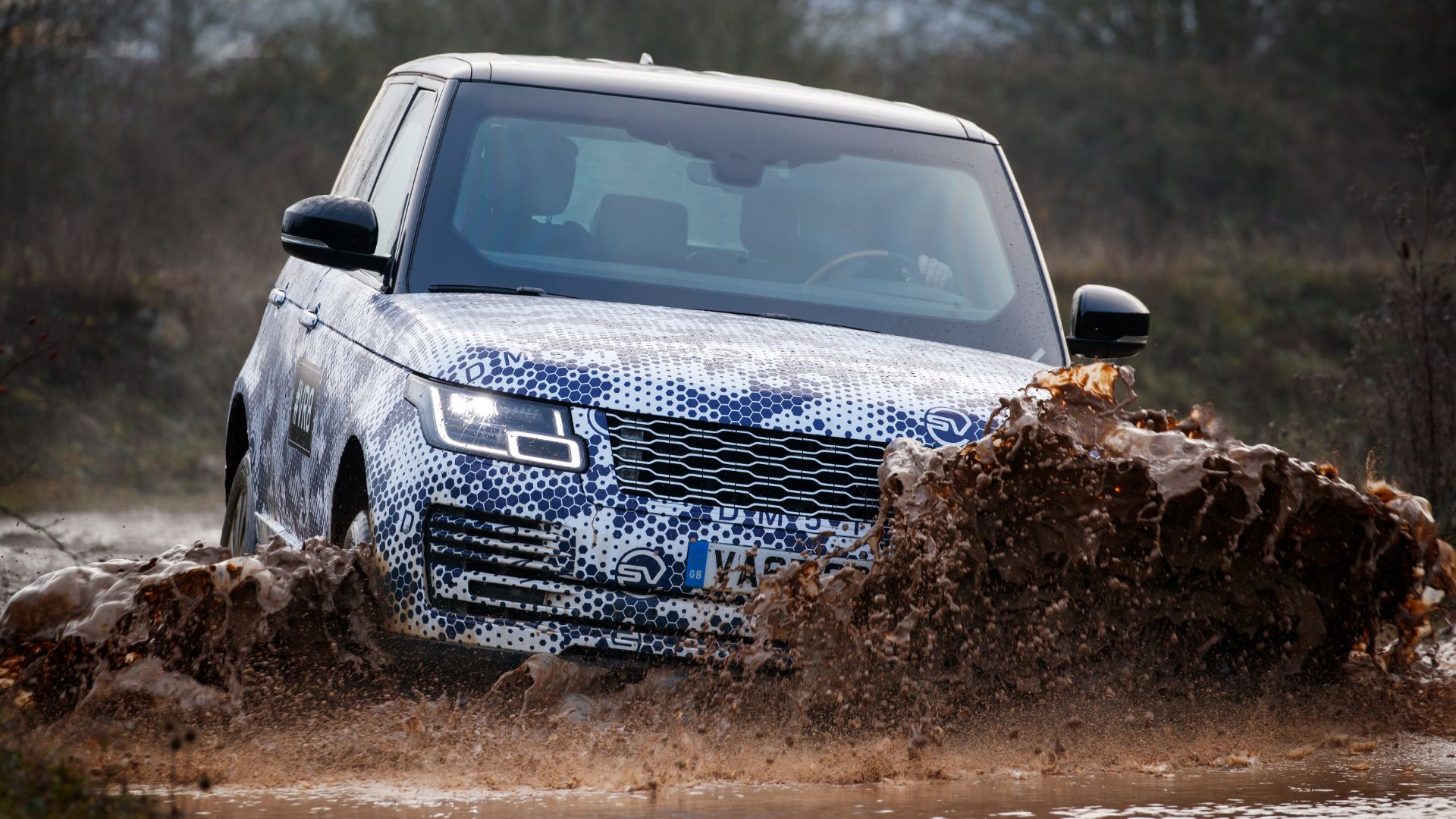
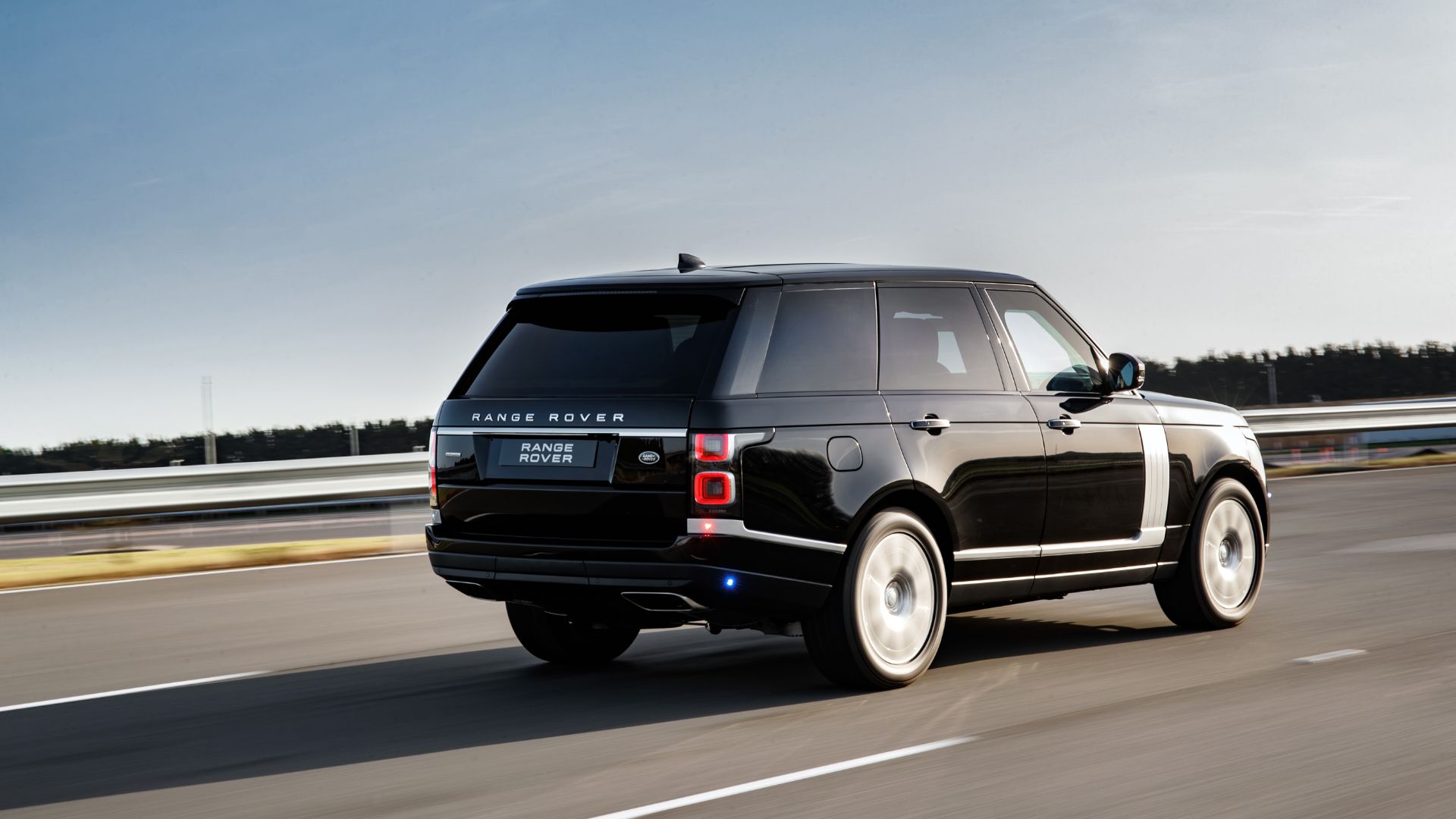
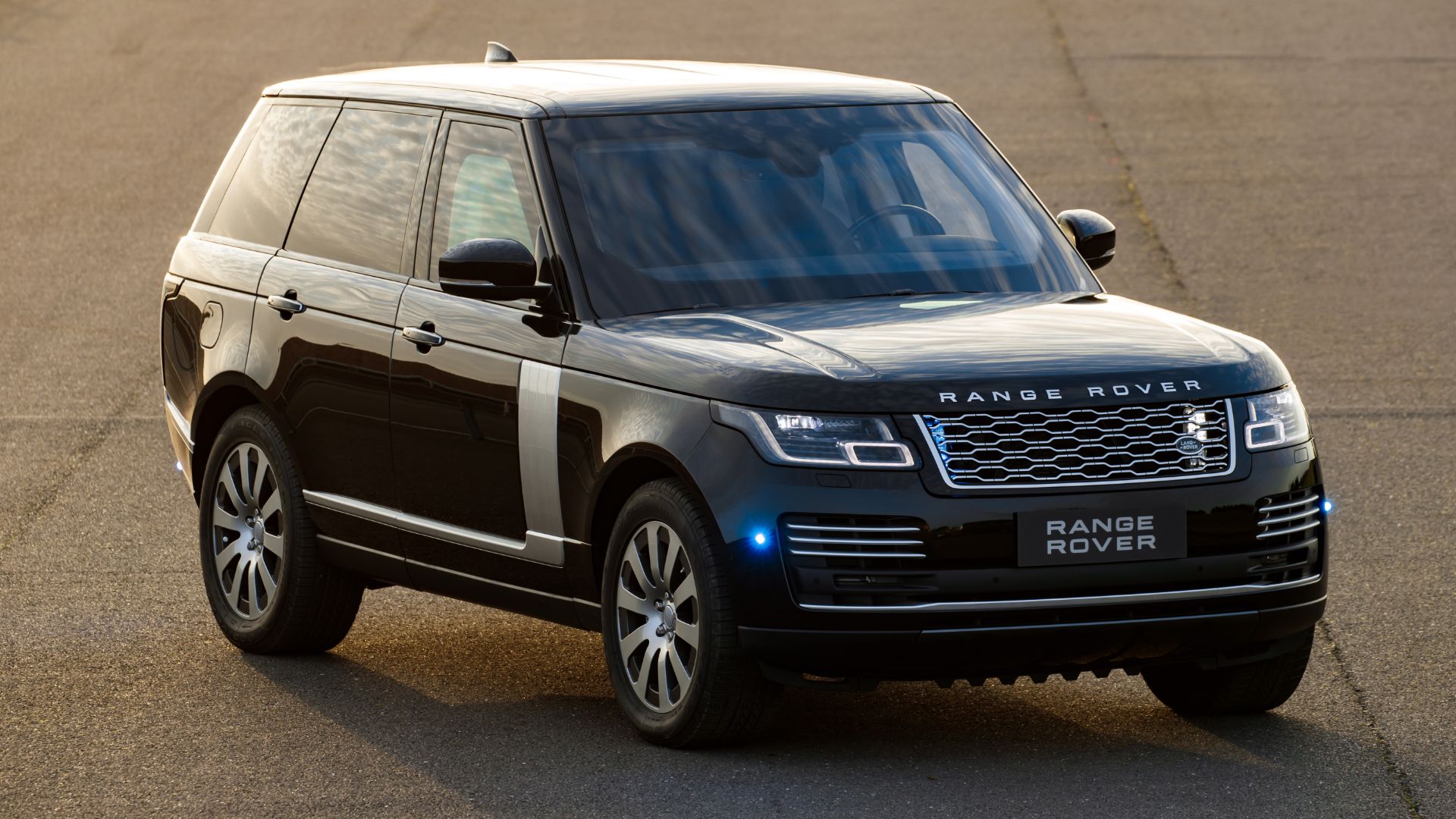
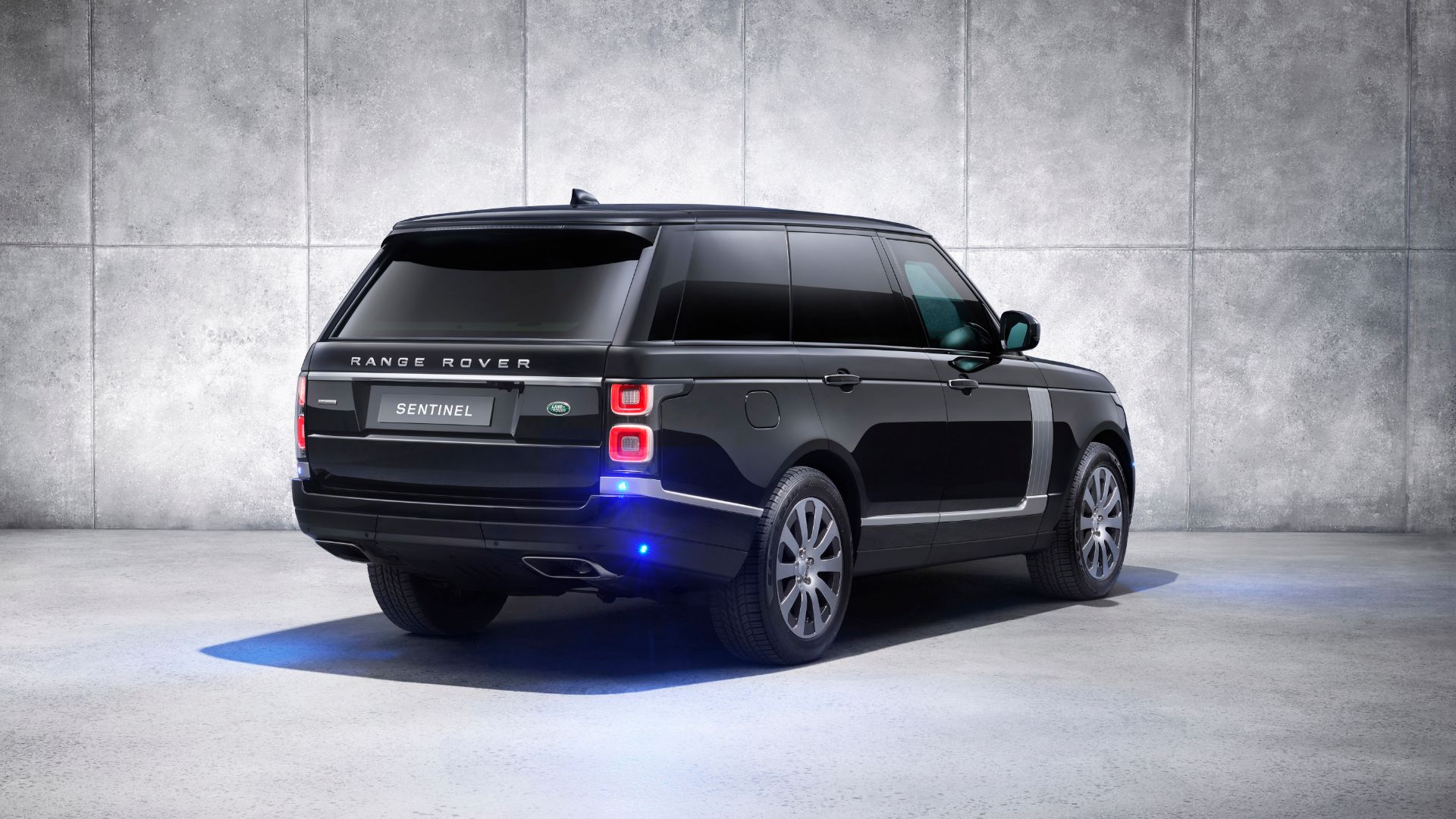
Persons of importance with a penchant for stately British transport, listen up: this could be your new ultra-safe vehicle of choice. Coming courtesy of Land Rover Special Vehicle Operations, is the Range Rover Sentinel.
Because is your armoured car really armoured if it isn’t named after the mutant-slaying robots from the X-Men comics?
Readying a Range Rover for battle
So what does it take to turn a Surrey Mum’s school run express into one of the safest moving vehicles on the planet? Let’s run through the Range Rover Sentinel’s extensive list of upgrades.
Most obviously, a tonne of armour, literally… The reinforced glass, bodywork, roof blast-protection and everything else adds more or less a tonne to the Rangie’s already hefty curb weight. Needless to say, suspension components, chassis and braking systems have been necessarily upgraded to carry it.
The protection cell is certified ballistic and blast resistant, with the exterior armour designed to keep occupants safe from ‘unconventional forms of attack’ like improvised explosive devices. Run-flat tyres can go for up to 30 miles at 50mph if damaged.
There is the option to add a droppable window, to 150mm, for ‘document delivery’, as well as a ‘public address system’, for if you wanted to chat with potential assailants and attackers. Optional too are sirens and emergency lighting.
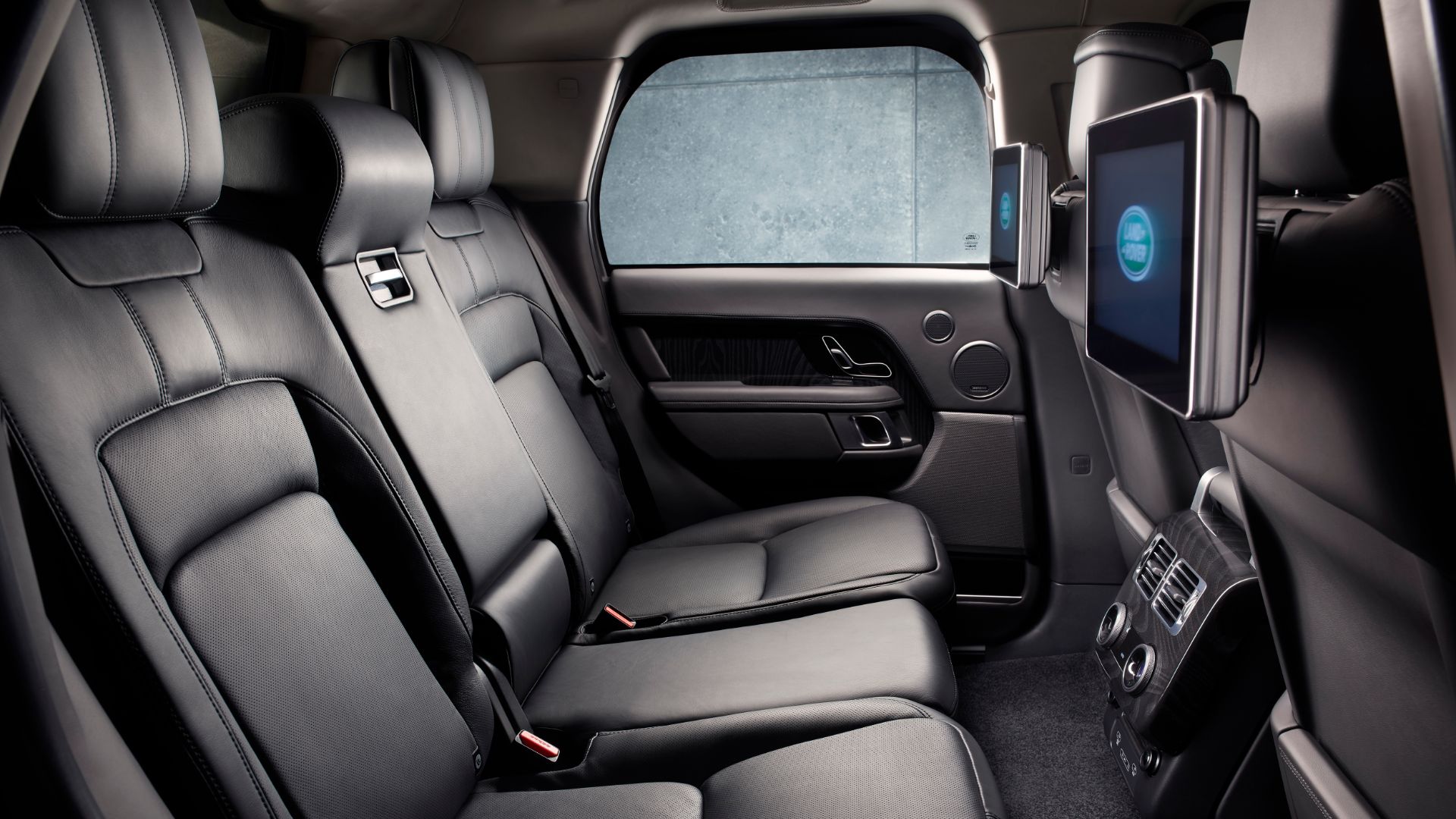
It wouldn’t be a Range Rover if it wasn’t one of the nicest places in which to find yourself. As such, in spite of its battlefield readiness, the cabin remains as luxurious as ever. Legroom, headroom and seating are improved and the latest 10-inch Touch Pro Duo equipped infotainment systems come as standard.
The car will debut at the Home Office Security and Policing show this week (5-7 March 2019). If you want one, you’d best get in line behind the Queen, the Prime Minister and various other high-value targets.
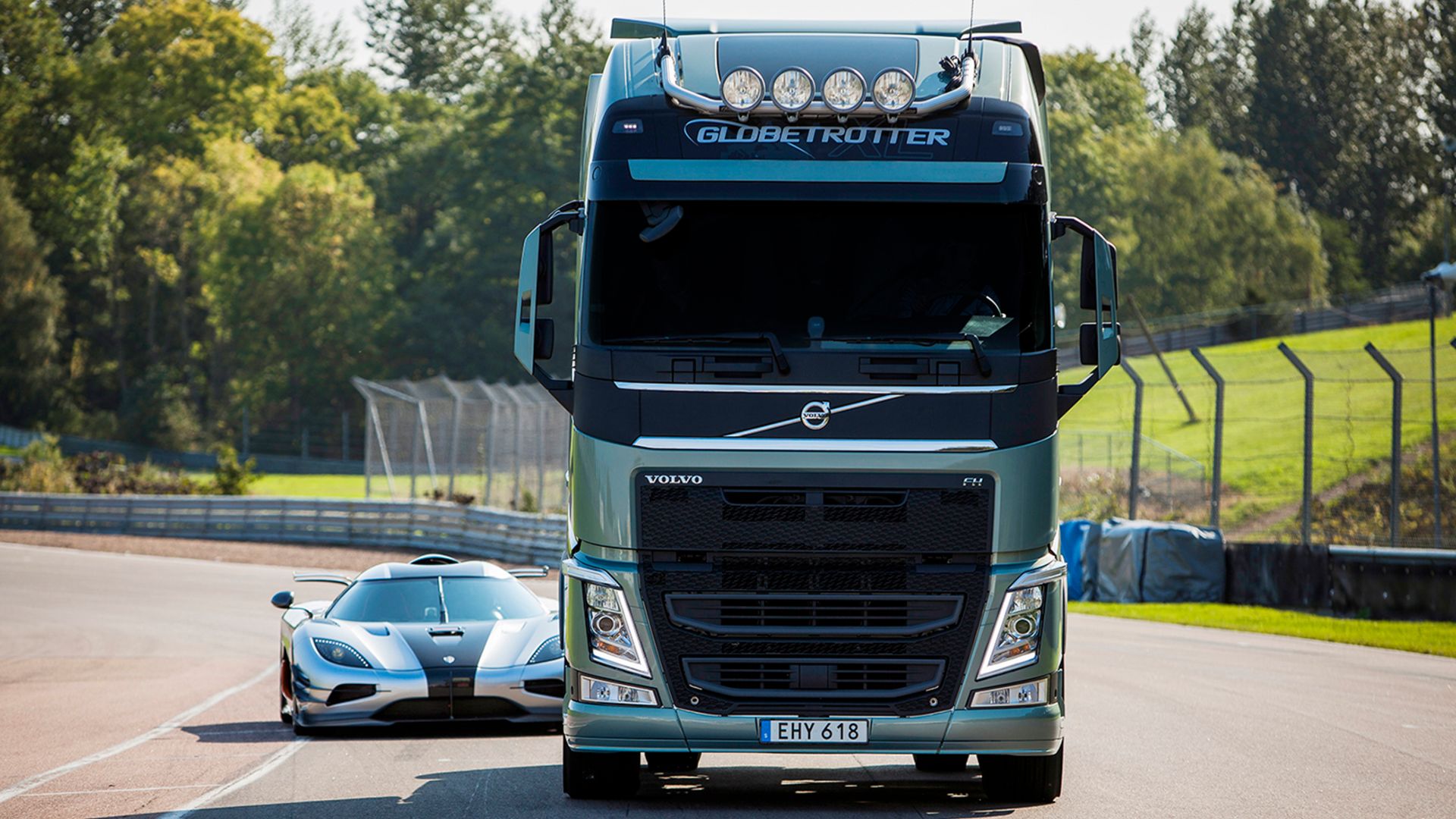
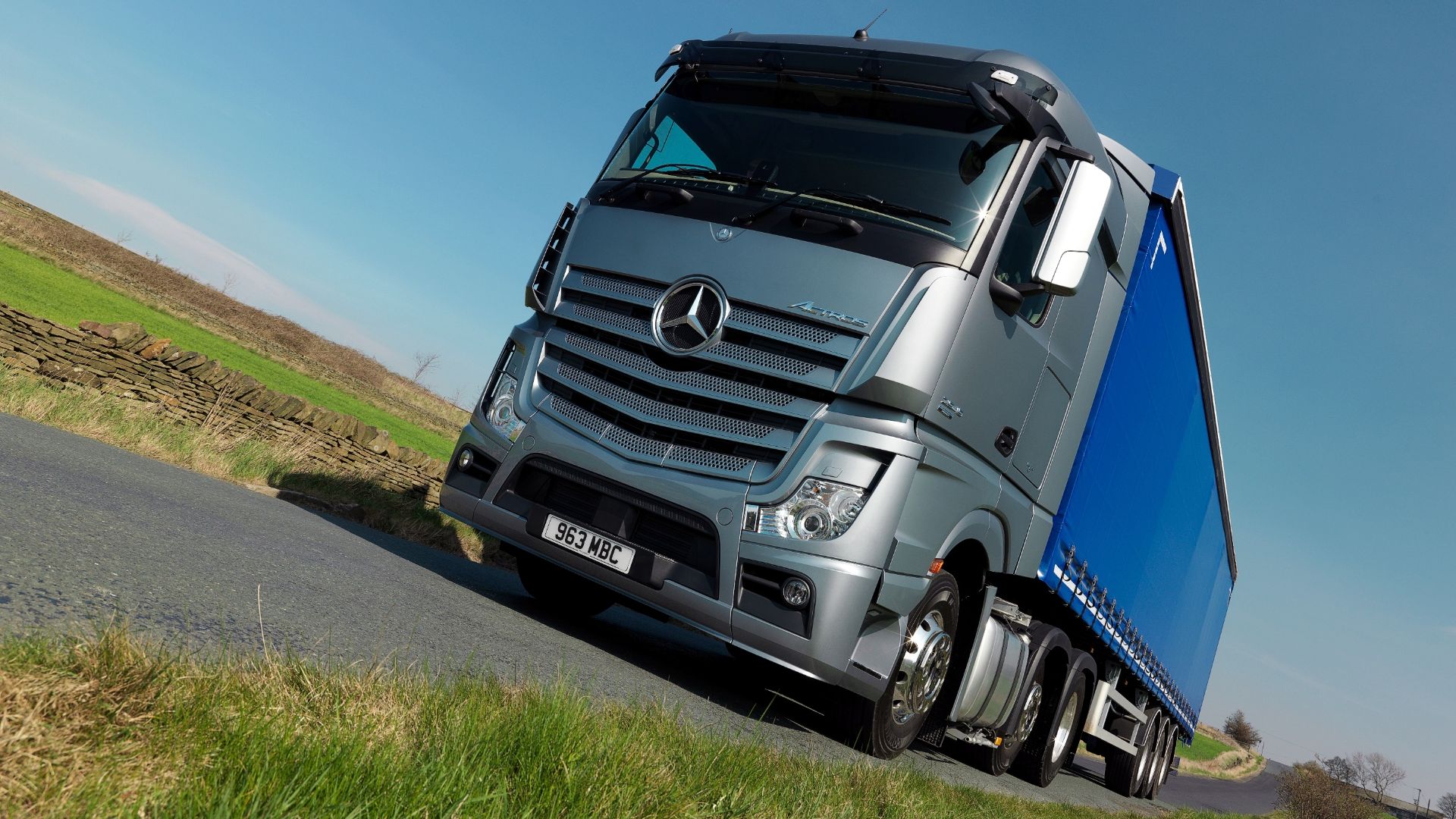
London’s Direct Vision Standard (DVS) for HGVs will be rolling out this autumn, with the goal of improving road safety for everyone. How? Getting blind spot-riddled HGVs up to a base standard for operation on urban streets, or banning them altogether.
If successful, the scheme will be rolled out country-wide, and even across the world.
How dangerous are HGVs on urban streets?
What’s the big deal, though? Well, alarming statistics have inspired this move. Despite making up just four percent of miles driven in London, HGVs are responsive for 63 percent of fatal collisions with cyclists, and as many as 25 percent of pedestrian deaths.
Based on those numbers, poor visibility for truck drivers in the capital is little short of a crisis.
How does DVS work?
The vehicles will be judged with a rating of between zero and five, for how much the operator can see directly out of the vehicle without relying on mirrors and cameras. Permits will need to be awarded to vehicles with an insufficient rating in order for them to be allowed in London.
What can be done to fix them?
And you can only get one of those permits by improving your vehicles safety rating. By Transport for London’s reckoning, as many as 35,000 of the 188,000 HGVs operating in the London will be banned by October 2020. That’s when zero-rated trucks’ time is up.
By 2024, only three-star vehicles or above will be allowed to drive in the city, at which point it’s expected up to 94,000 vehicles will be banned.
Getting a safety permit
The above safety permit can be earned via a variety of measures to improve driver visibility and therefore, pedestrian safety. More comprehensive mirrors, a battery of cameras with screens and warning chimes for pedestrians are on a list of utilities that can be retrofitted in order to improve a HGV’s safety rating.
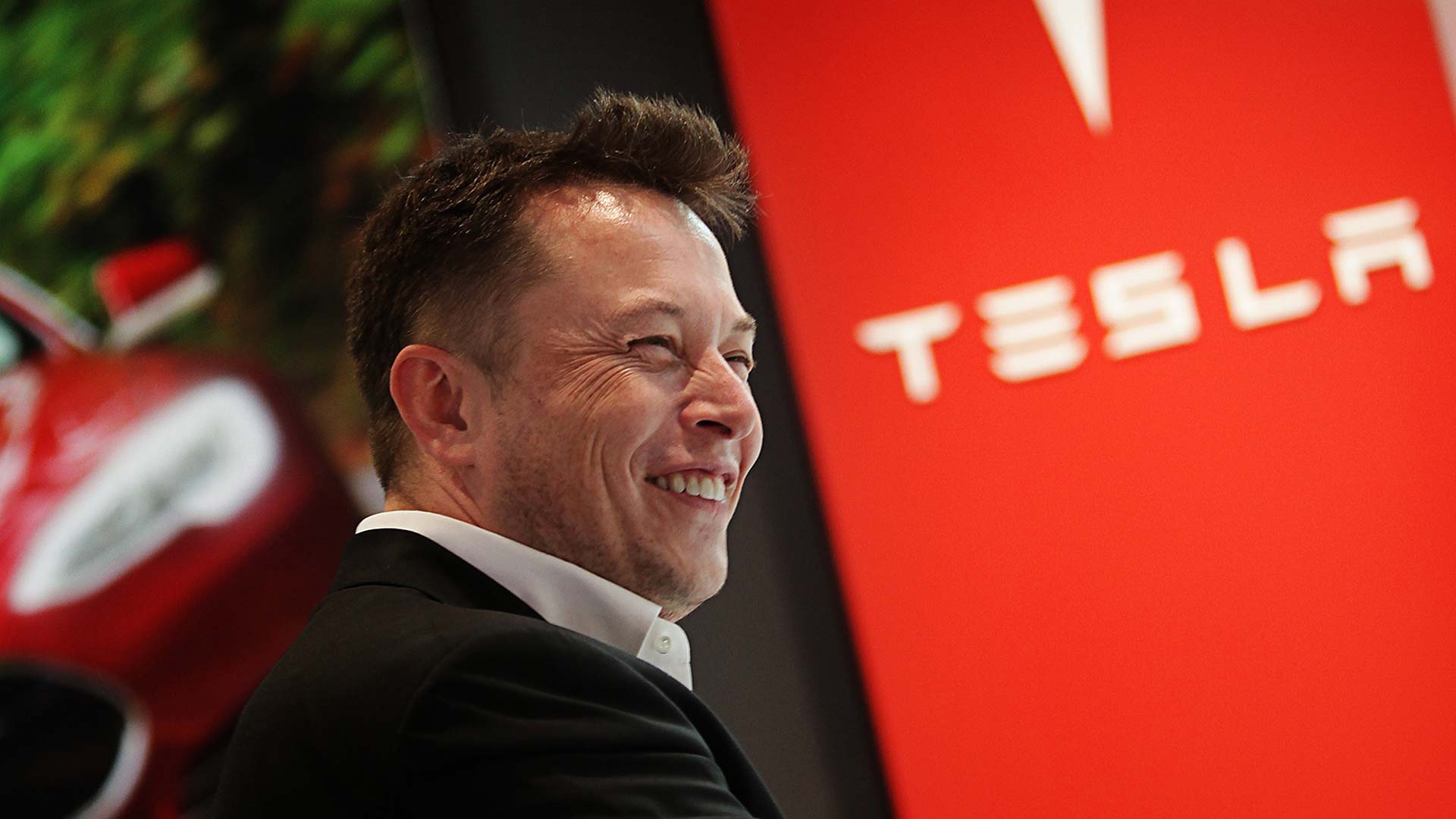
Tesla has finally announced the long-awaited arrival of the $35,000 ‘entry-level’ Model 3 electric car. This is the model that the firm hopes further accelerate sales of its in-demand Nissan Leaf rival.
However, while some are crunching the numbers and predicting a £26,400 price by the time the car reaches the UK, Elon Musk has warned things won’t be quite so straightforward.
Base Model 3 available in Europe in ~6 months, Asia 6 to 8 months. Latter contingent on Shanghai Gigafactory. Country-specific taxes & import duties mean price may be 25% or more above US number.
This equals a predicted entry price of £33,000, rather than £26,400.
Tesla has ace up its sleeve, though: the remarkable performance of the Model 3. Even the entry-level car will do 0-60mph in 5.6 seconds – that’s faster than many sporty hot hatchbacks (which can also cost upwards of £30,000…). It’s also considerably quicker than all direct rivals.
The 220-mile range isn’t quite as good as the £32,995 Kia e-Niro: that car has a 282-mile range. But the Model 3 is currently tested to the tougher U.S. EPA standard; by the time it’s put through Europe’s WLTP test, the gap to the e-Niro may be narrowed.
Tesla also offers a Model 3 Standard Range Plus variant: 6 percent more money (around £1,500) buys 9 percent more range, plus a power boost and better interior spec.
The sub-£30,000 Model 3?
There coudl be yet another card up Tesla’s sleeve, too: the Government Plug-in Car Grant. This is worth £3,500. Subtract it from Elon’s indicated price and, lo, you have a sub-£30,000 Tesla Model 3.
If the firm really can deliver that headline-grabbing price, Tesla and Elon Musk really will have done something remarkable.
Suddenly, those early deposit-holders will be feeling very chuffed with themselves indeed…
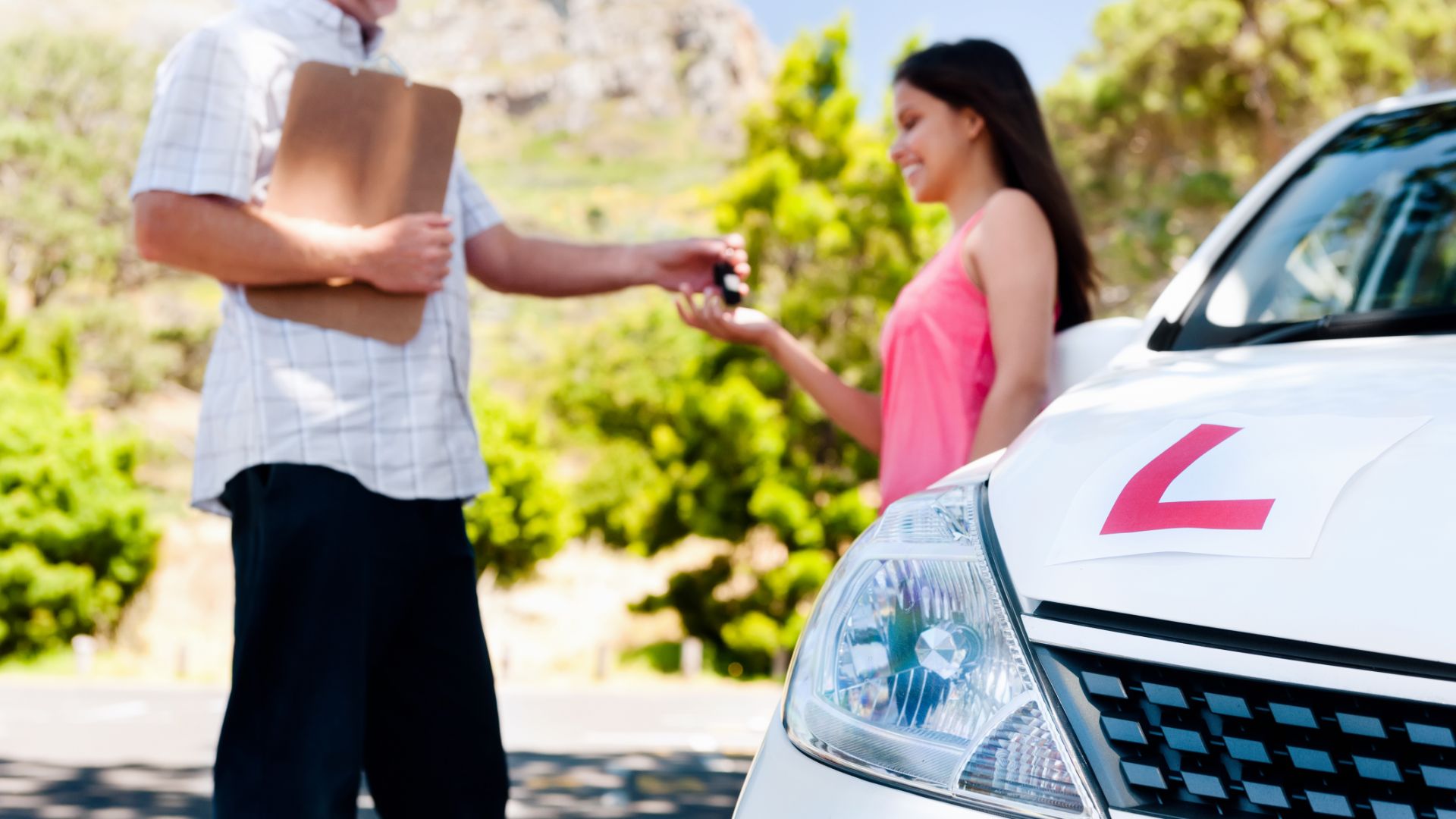
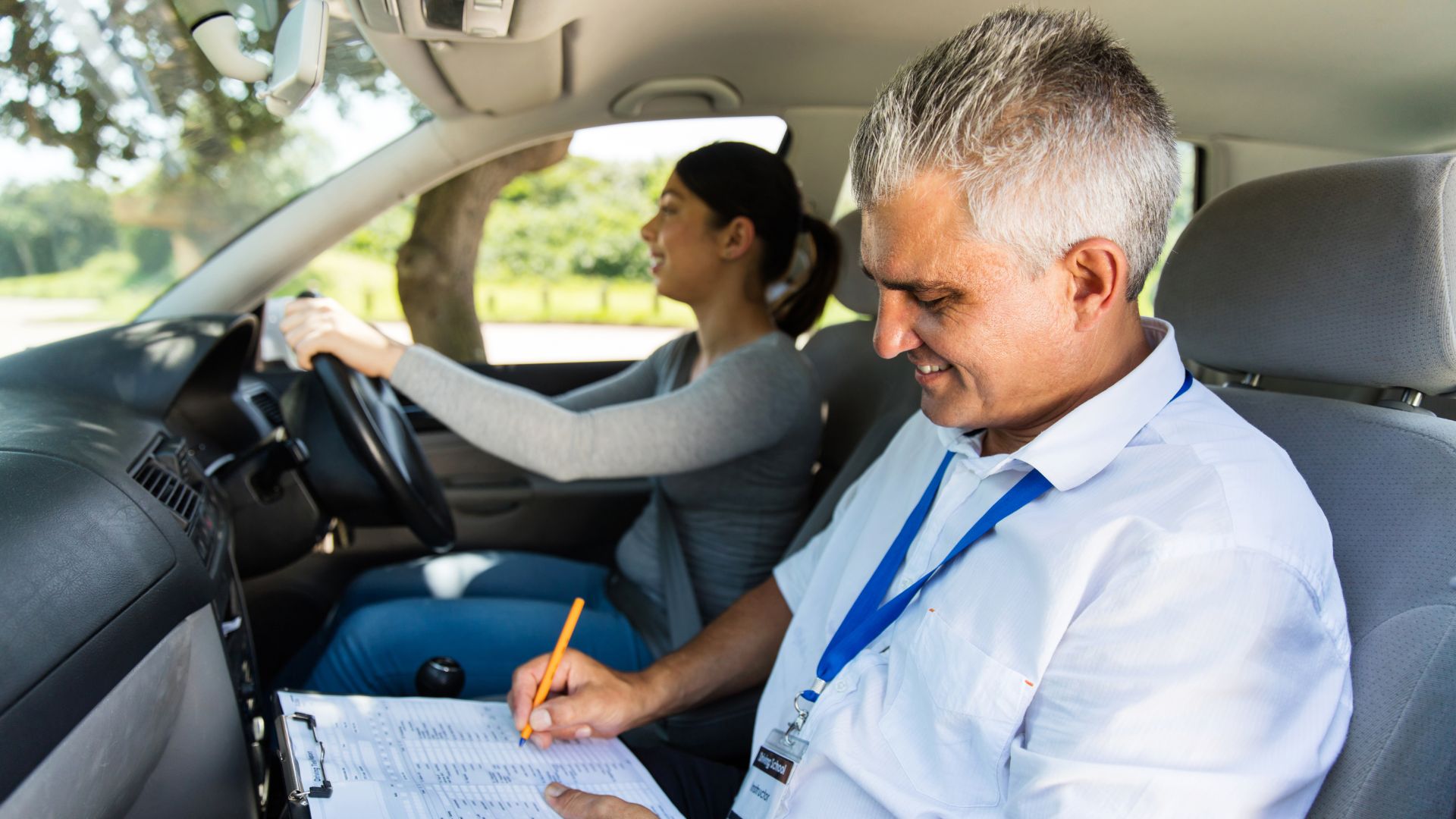
The expense of getting on the road as a young driver is well known, but how much does it actually cost to pass your test, buy a car and then drive it for a year? According to Admiral, it’s as much as £9,136.
Getting your licence
Learning is a big one. You’re typically looking at £24 per hour to get behind the wheel with an instructor. Intriguingly, the UK is the fifth-cheapest country on Earth in which to learn to drive.
A provisional licence costing £34 plus 47 lessons with an instructor means you’re paying £1,247 just to get to your first test. If you pass, that’s £62 on top. If you fail, you’re in for more lessons again.
That’s not taking into account the £23 cost of a theory test. Just under half of all drivers under 25 passed first time, with it taking two attempts on average.
Insurance costs
This will have inspired a good few gasps over the years for young drivers. At present, the average insurance premium for a 17 year-old is a lofty £1,889.
In spite of efforts in recent years to bridge the car insurance gender gap, the gulf is still more than £600 on average. Men between 17 and 20 are paying out around £2,294, versus £1,660 for women.
Buying your first car
According to Admiral, over half of young drivers (under 25) borrow money to buy their cars, with a monthly budget of between £200 and £300. Nearly a quarter of those who borrowed money to buy cars said they’d be happy to pay more than £500 per month.
In total, with your £1,200 on learning (assuming you pass first time) added on to the £1,900 average insurance cost, you’ve got £3,100’s worth of bills before buying the car.
Couple that with a year’s worth of car payments at £300 per month, with around £2,000 as a deposit, and you’re up to £8,000 already, without any maintenance and other unexpected bills.
Getting on the road for less
There are plenty of ways you can get on the road for less as a young driver. An intensive one-week course can be had for comfortably less than £1,000. That’s the cost of your lessons, provisional and your test covered.
You could also fit a black box to make your insurance cheaper. And you could buy a ‘proper first car’ – i.e. a banger for a few hundred quid. Where there’s a will, there’s a way to save.
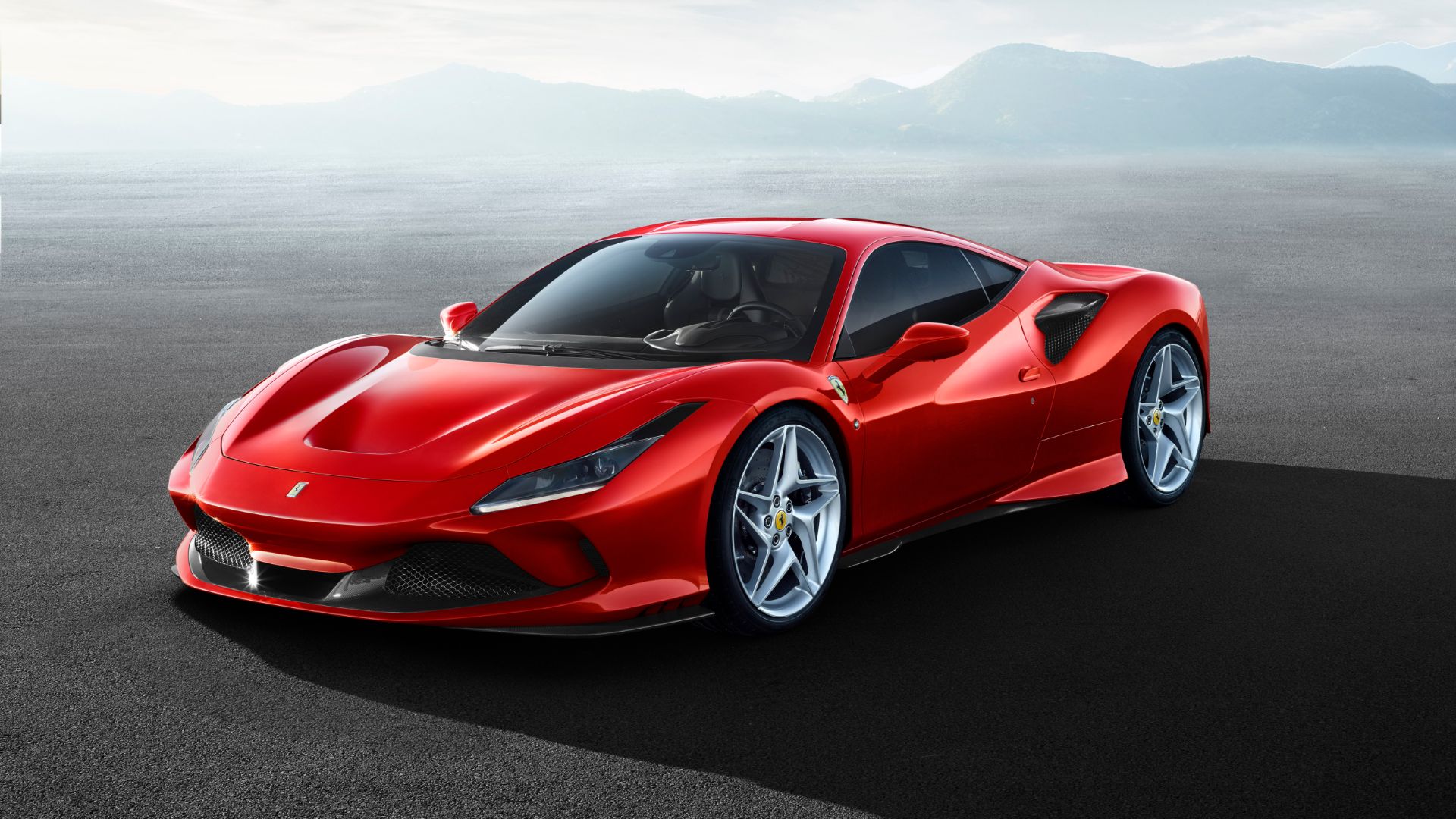
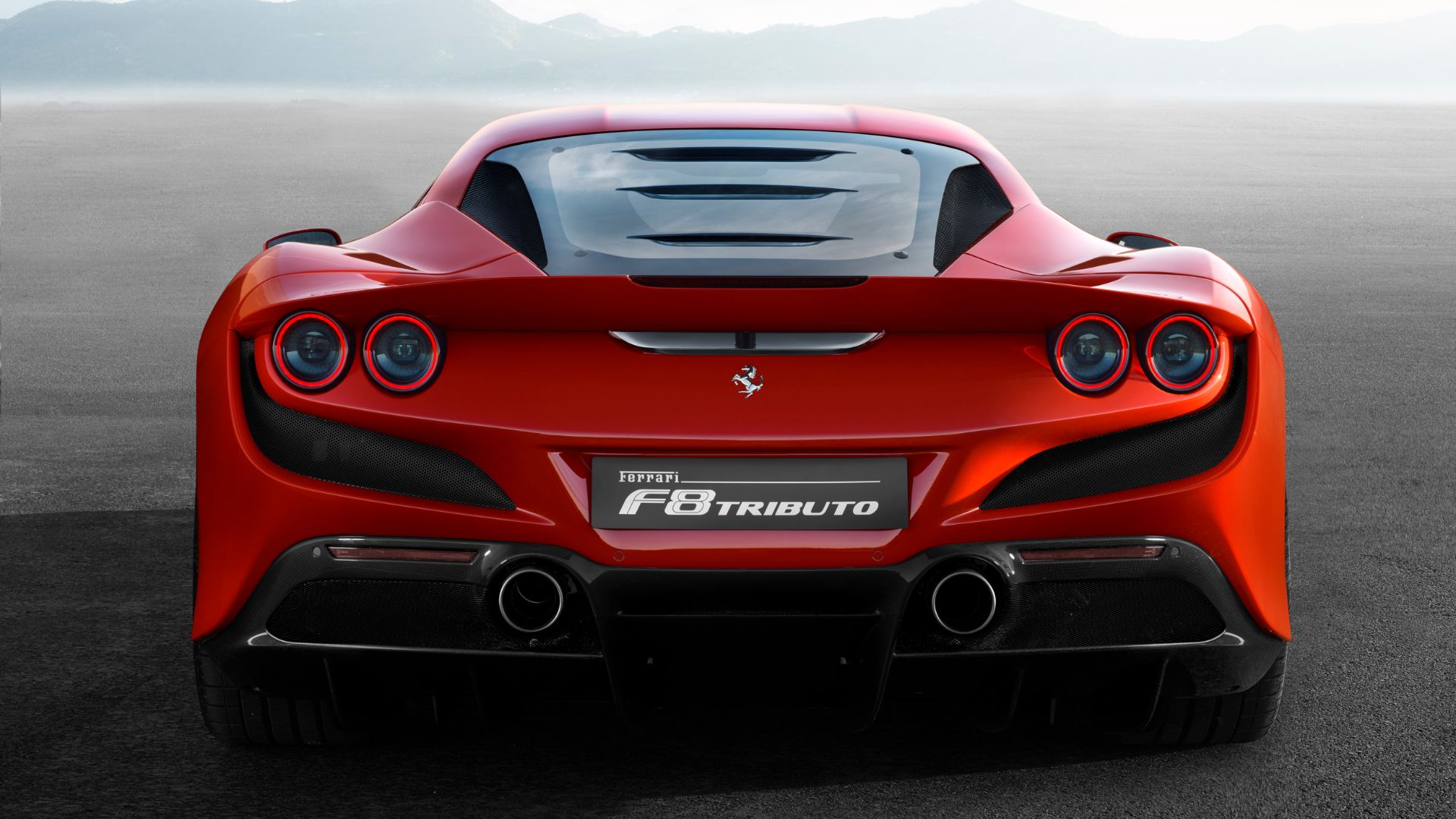
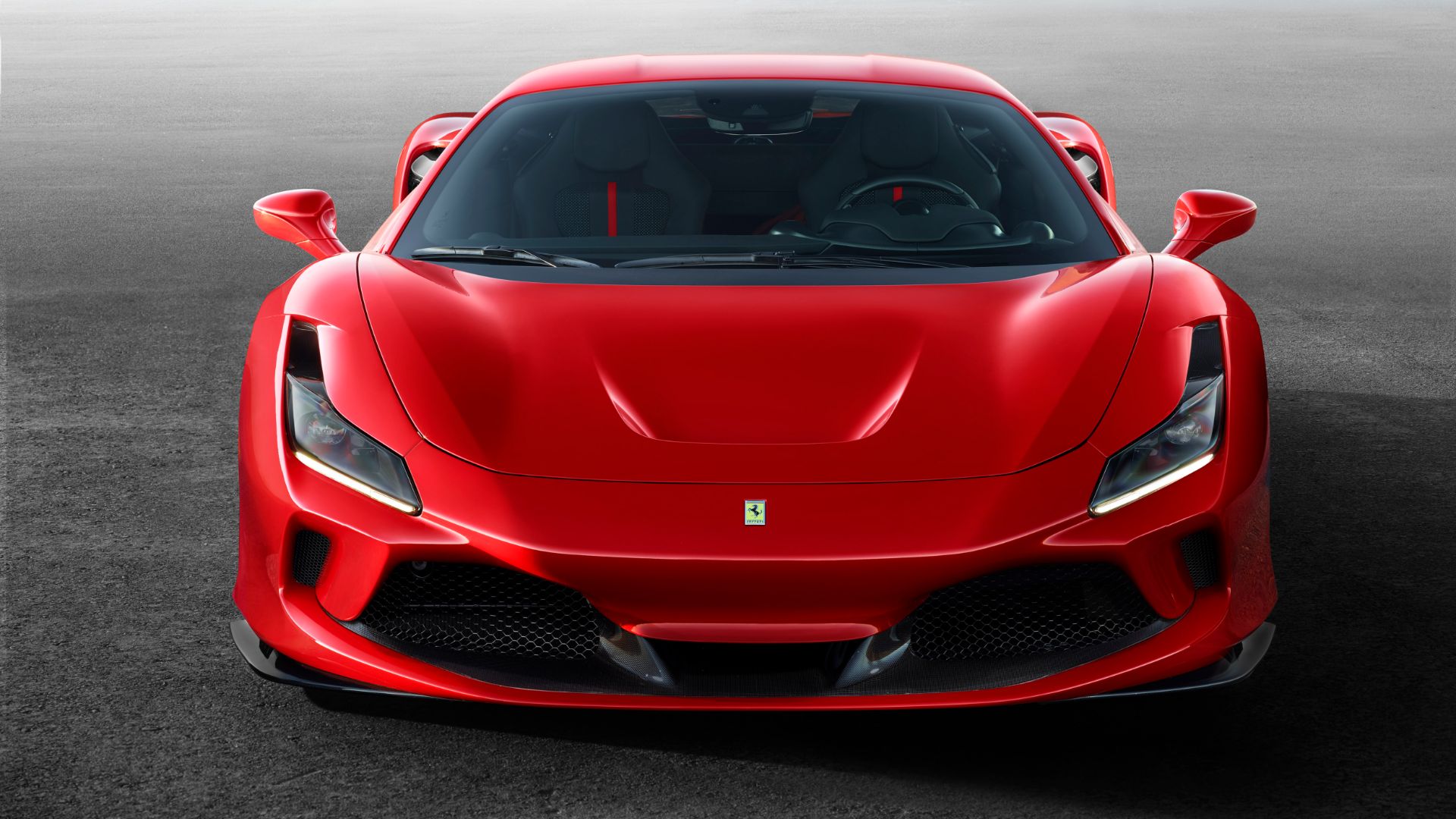
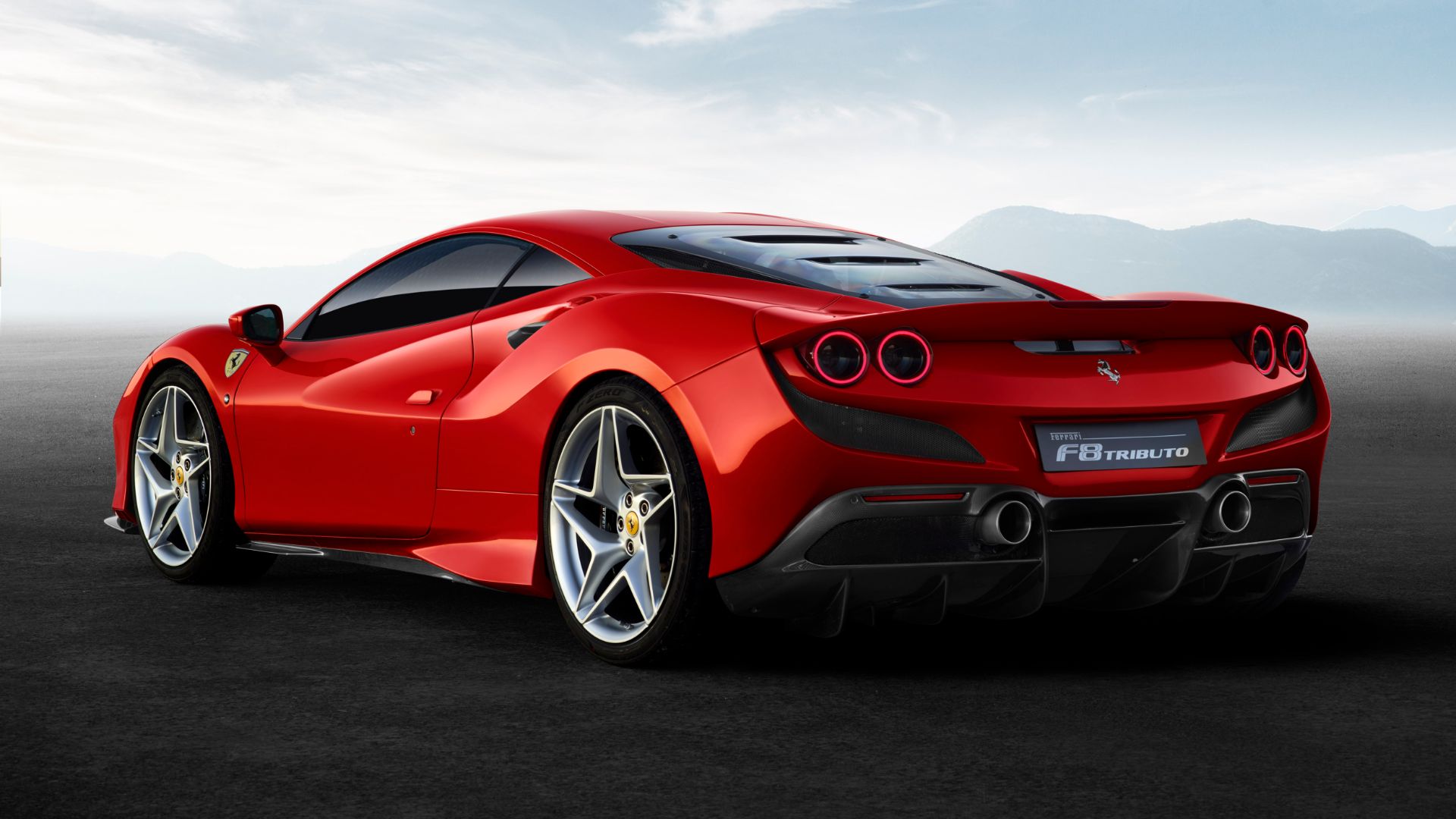
The Ferrari 488 GTB’s successor has been revealed. Meet the new 710hp F8 Tributo, due to debut at the 2019 Geneva Motor Show
Let’s get something clear straight away. No, it’s not a hybrid. Yes, it appears to be based on an architecture that goes back to the 458 of 2009. And no, it isn’t any more powerful than the 488 Pista.
Also, while the ‘Tributo’ name sounds like it should be attached to something limited-run or one-off, this is a series production car.
A ‘Tributo’ to the Ferrari V8
Now let’s look at the numbers. Packing a 3.9-litre twin-turbo V8, the F8 matches the 488 Pista with its 710hp output – and is nearly 50hp up on the 488 GTB.
Ferrari makes a great deal of fuss about this award-winning engine, with the car’s name referencing the three-time ‘Best Engine’ award winner. It’ll crack 62mph in 2.9 seconds and match the Pista’s 211mph top end.
Weight down, aero up
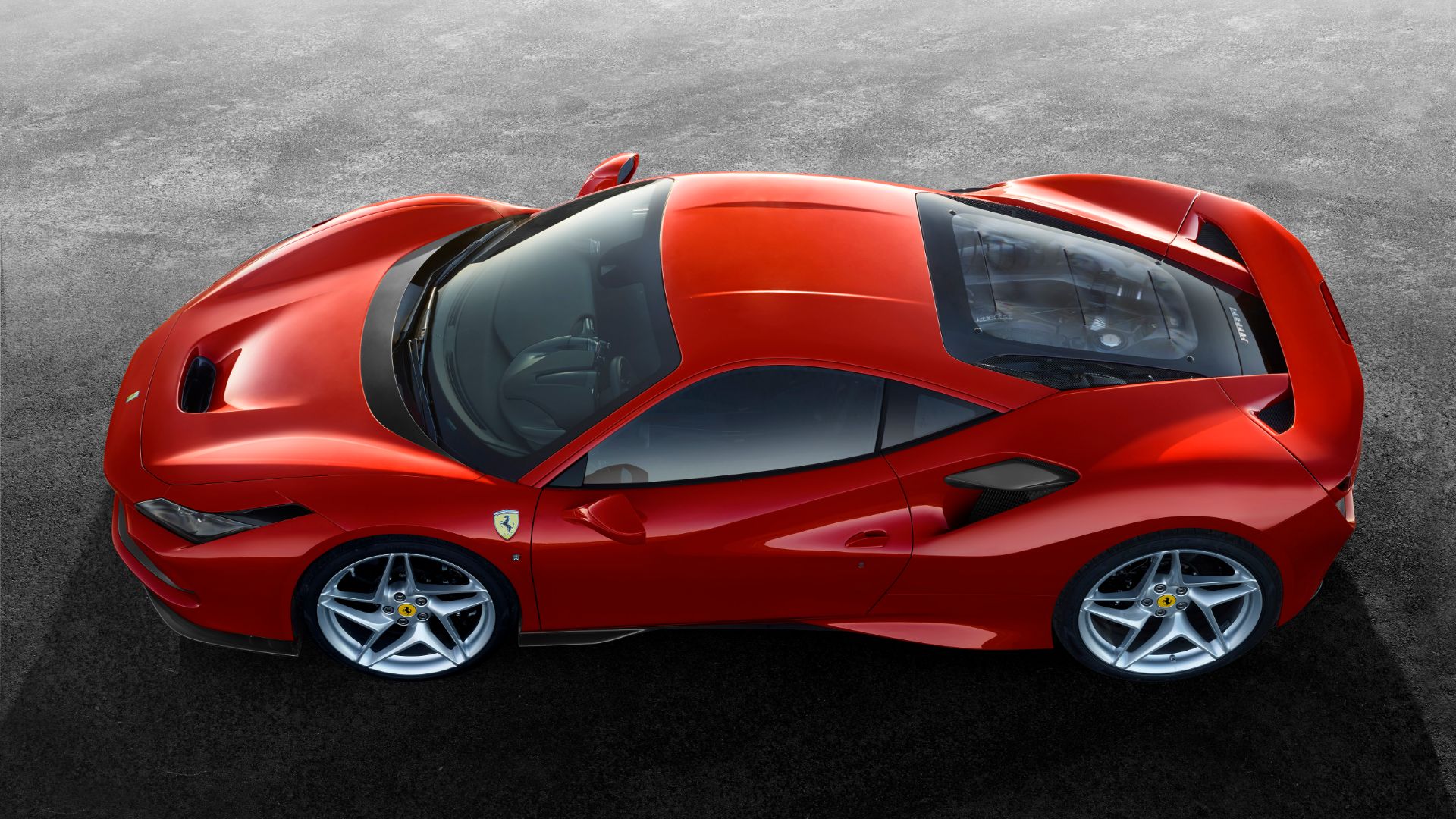
The F8 Tributo has lost 40kg versus the 488 it replaces, while the new bodywork improves aero efficiency by 10 percent. Notice the louvred engine window at the rear: a reference to possibly the greatest ever V8 Ferrari – the F40.
The slats also help extract hot air from the engine bay without interrupting the efficiency of the ‘blown spoiler’. This aerodynamic aid has been ‘further evolved to increase downforce generated at the rear’.
The front features a new S-Duct (the vent in the bonnet), which increases front-end downforce by 15 percent.
A ‘Ferrari Styling Centre’ overhaul
There are plenty of giveaways that this is not an all-new car, but a close relation to the 488 GTB and 458. However, the F8 moves the styling and aero game on a long way.
Praise be, the four-rear-light Ferrari look is back on mid-engined Berlinettas, for the first time since the F430 of 2004. Everything is evolved from the Pista and, indeed, from the racetrack, albeit toned down here.
There’s no getting away from that classically sleek silhouette, though. We also note a few styling hints from the 458 MM Speciale one-off. And the horizontal LED lights mimic those seen on the Ferrari FXX-K hypercar, with vents above to carry over lines from the 488.
Inside the new mid-engined Ferrari
Inside is where the biggest update was needed over the 488. Happily, the F8 moves the game on just enough.
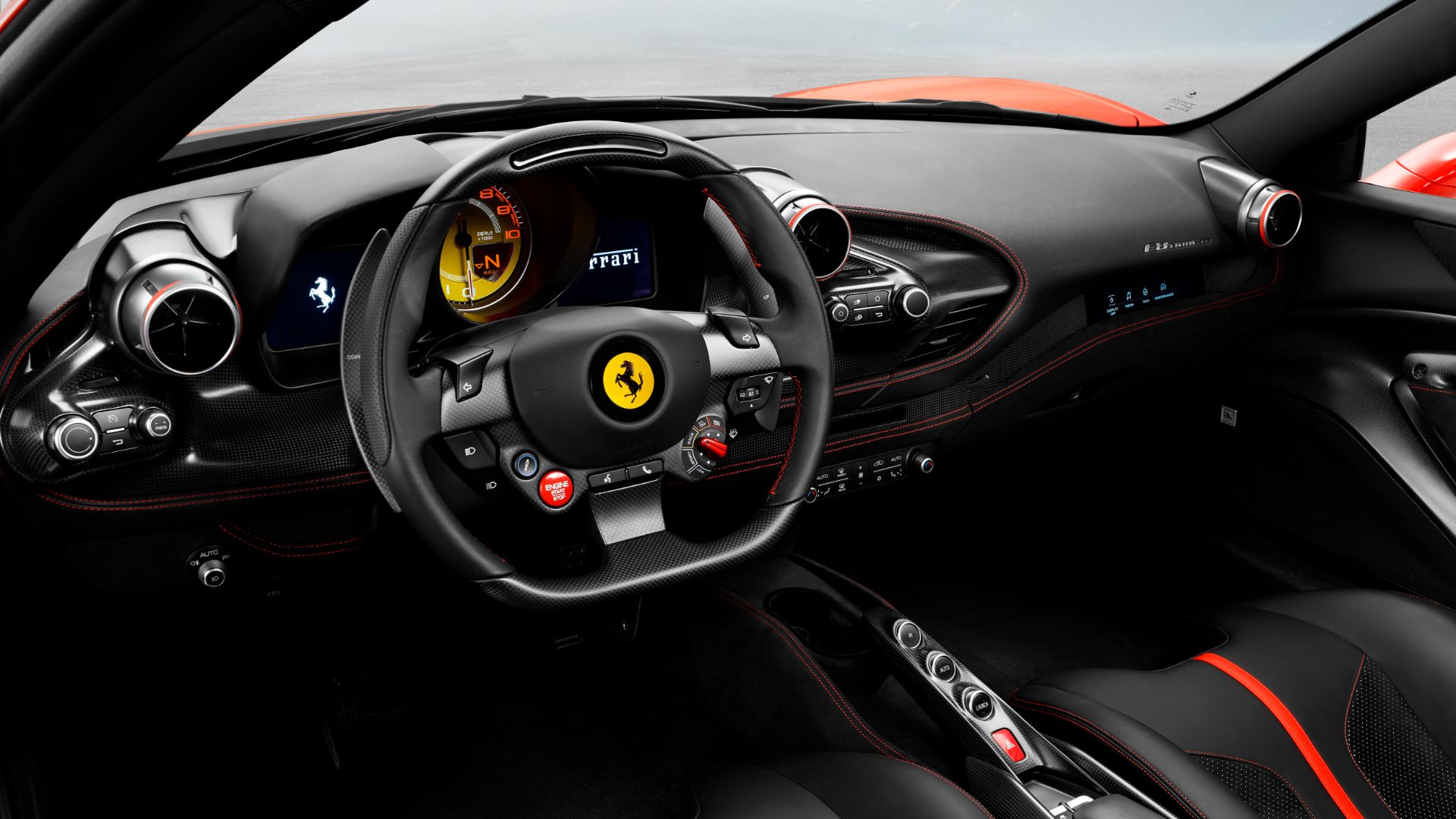
The new-style Ferrari wheel with a more compact airbag appears alongside a redesigned dashboard. The weird trapezoidal vents are gone, for a start, in favour of more traditional circular items.
All in all, the F8 Tributo is a nice styling step-on for the 488 GTB, with Pista power, updated aero and a much-needed lift for the interior.
It’s not the leap into the future that we were expecting, but it does give a fitting nod to Ferrari greats of the past. We’re in no doubt it’ll take the fight to the new Lamborghini Huracan Evo and McLaren 720S.
We can’t wait to see it in the metal at the 2019 Geneva Motor Show
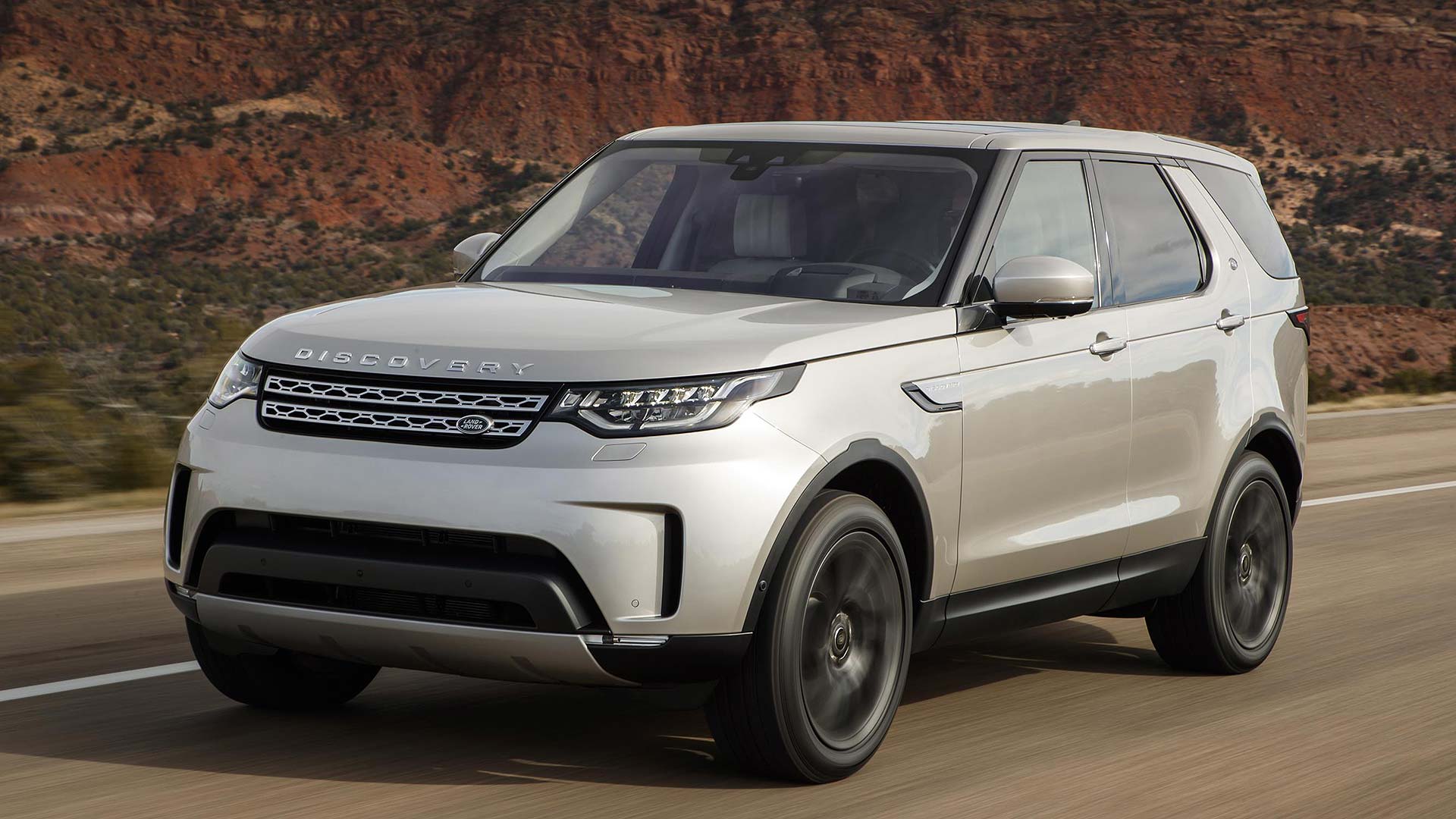
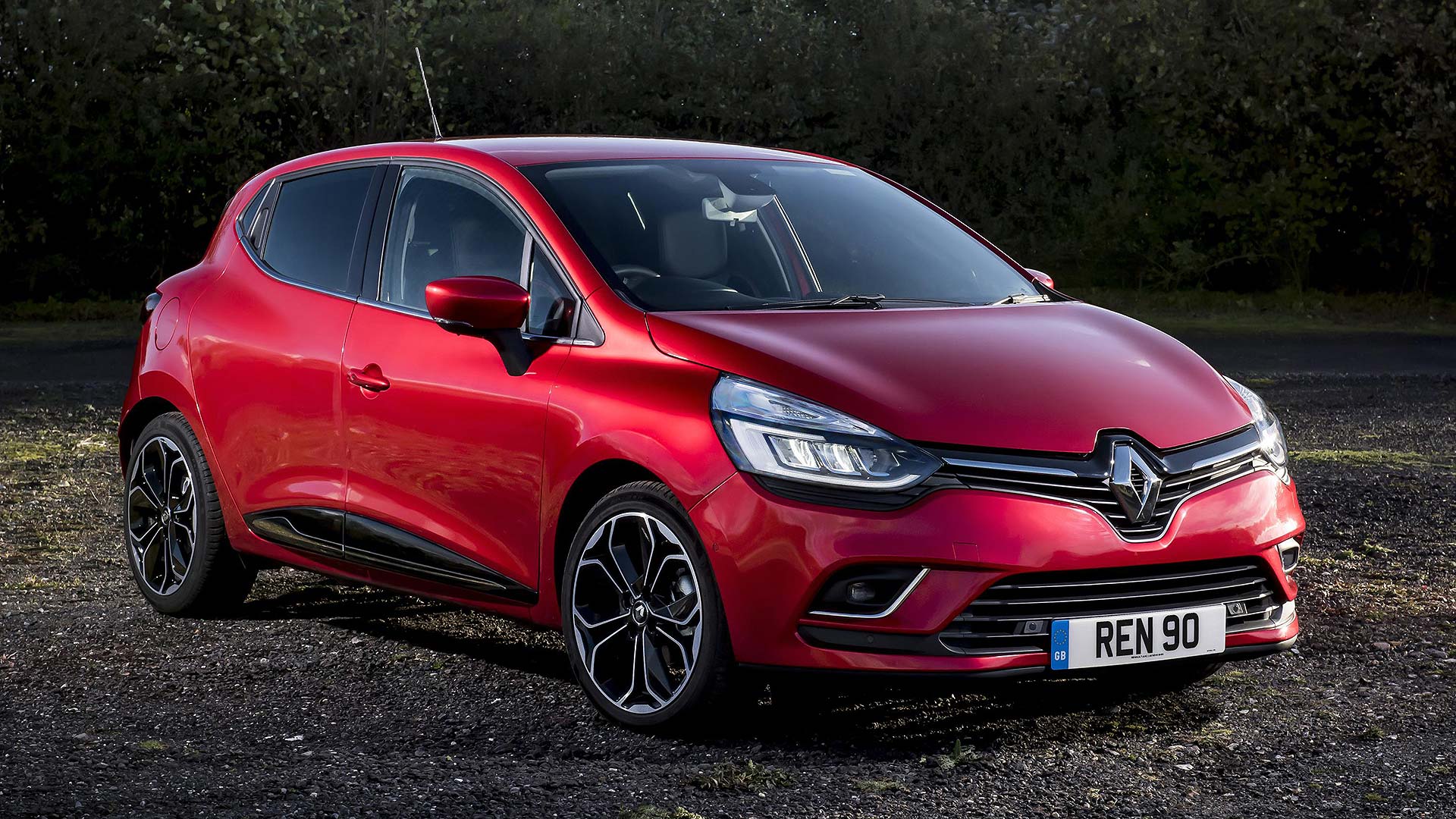
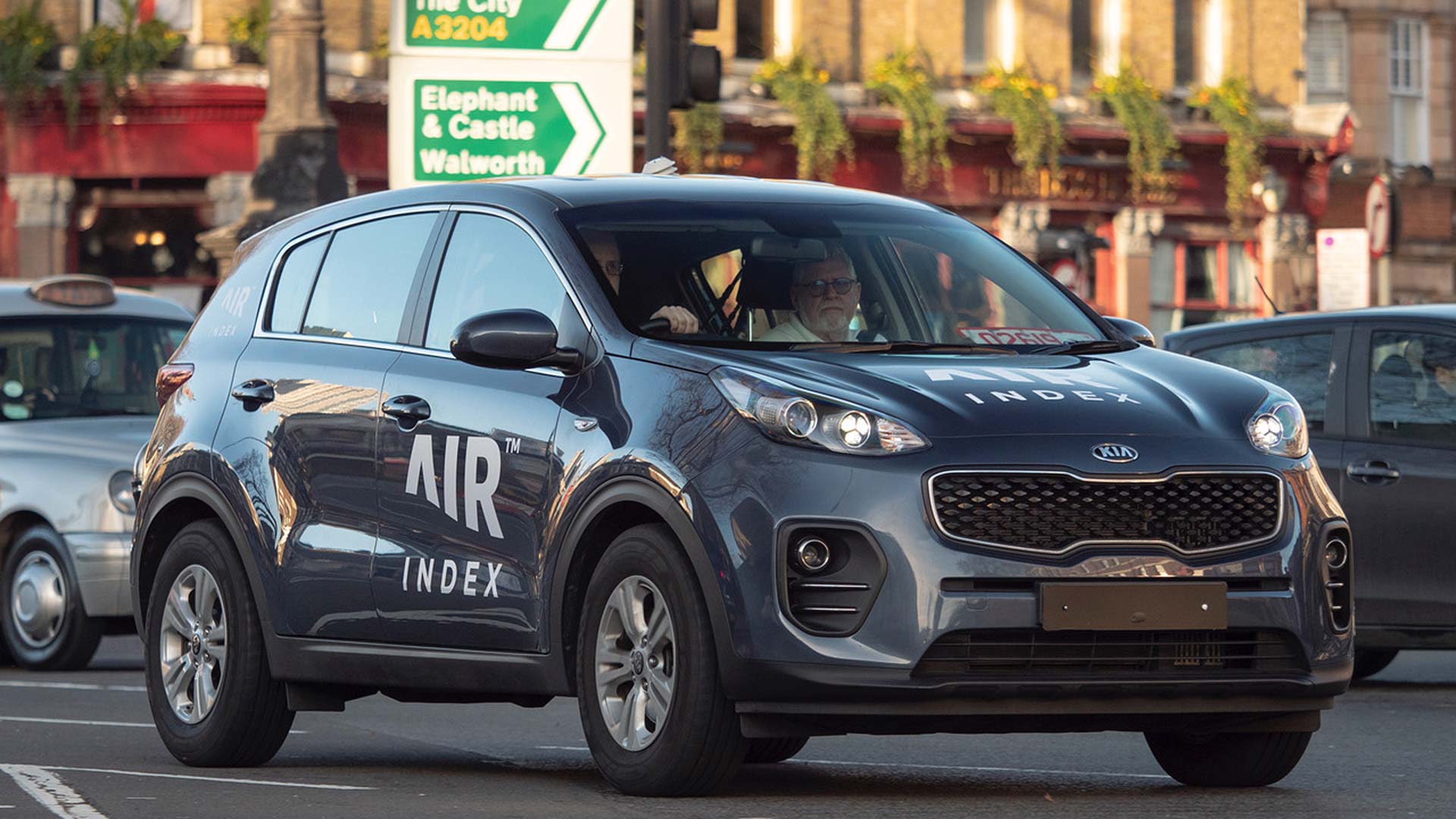
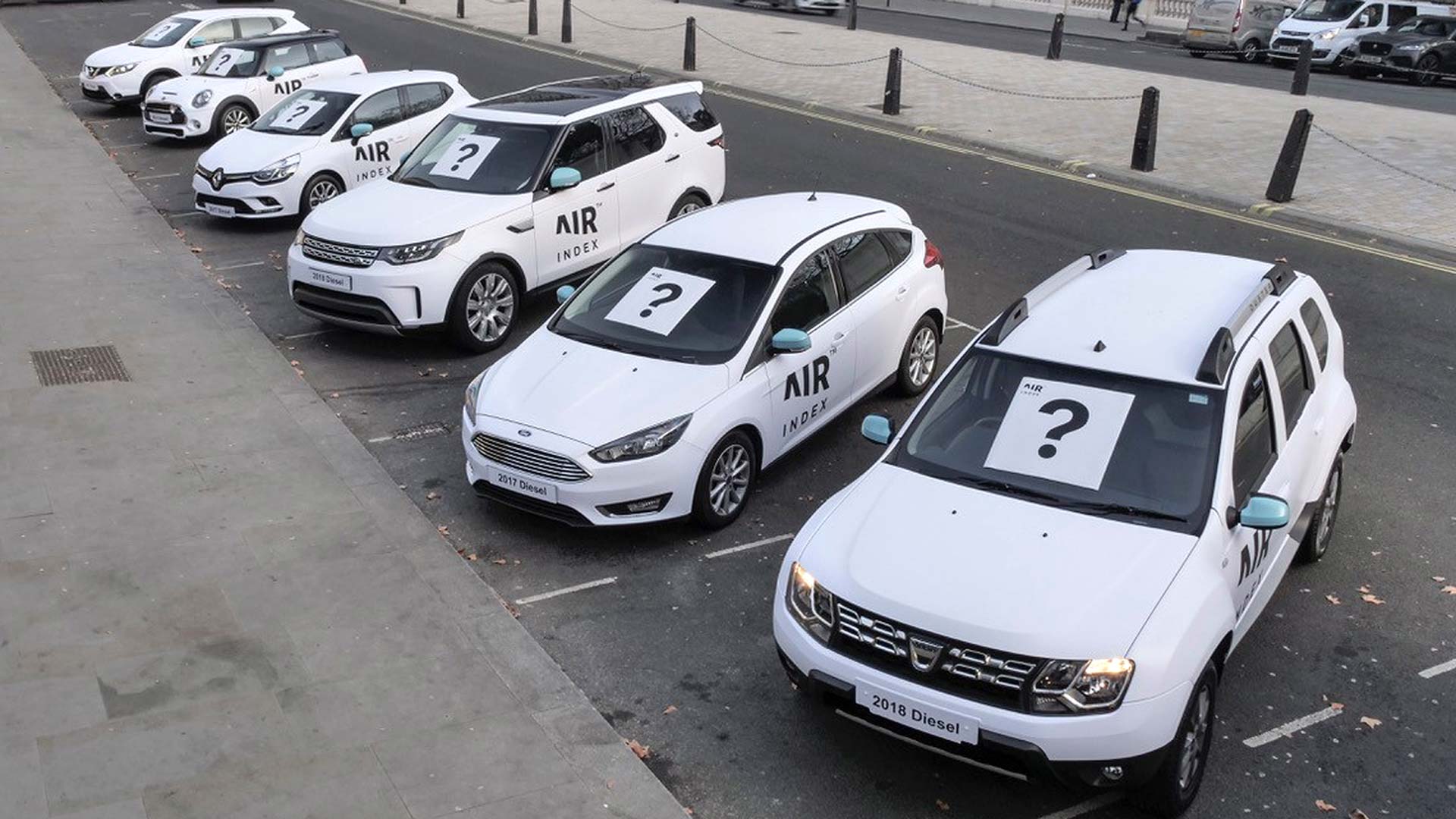
A diesel Renault Clio emits 20 times more NOx pollution in real-world town and city driving than a diesel Land Rover Discovery, a new independent test called the AIR Index has revealed.
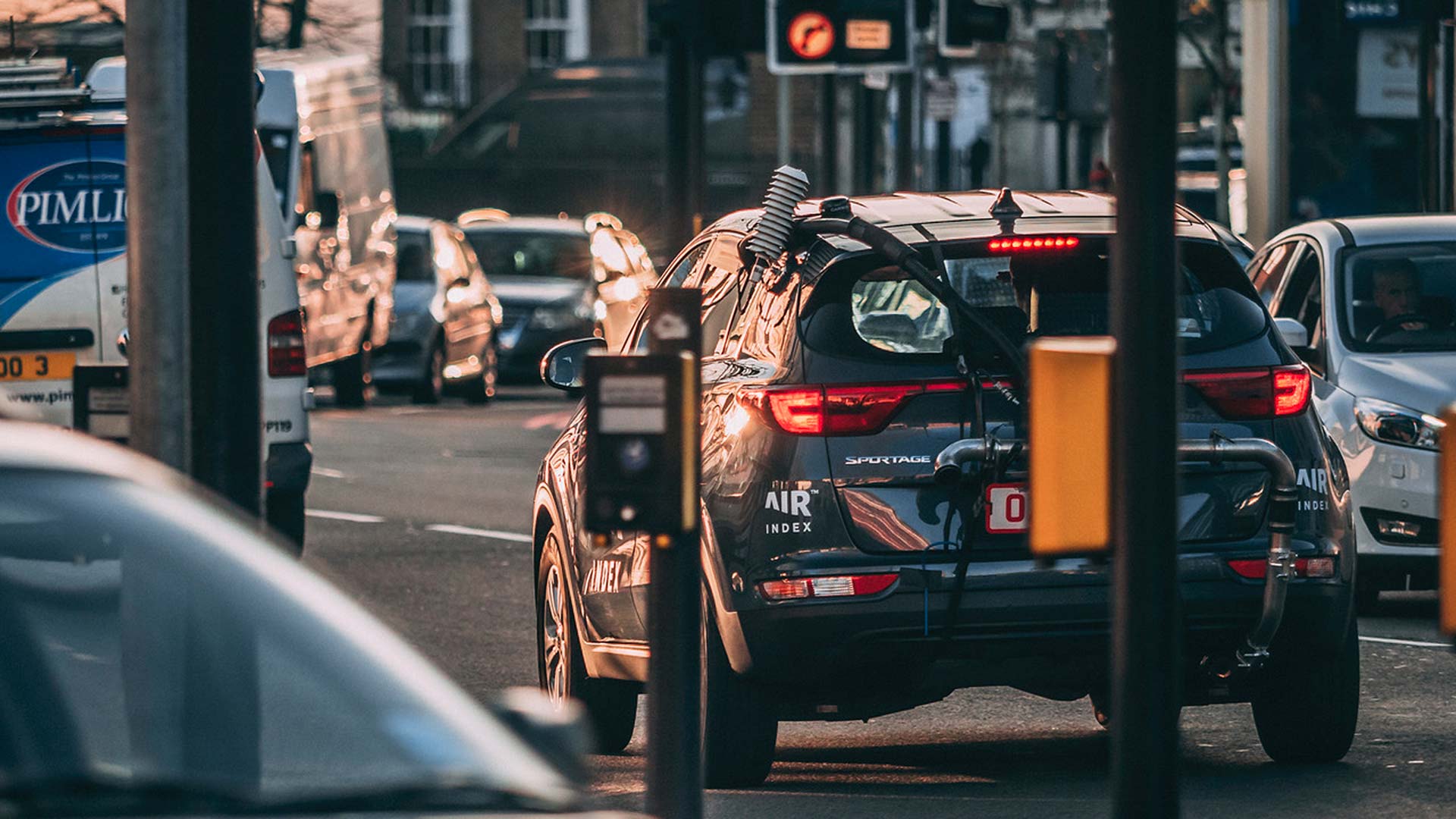
The new standardised rating system for air quality has been developed to clean up confusion around vehicle nitrogen oxide (NOx) emissions, and highlight the worst polluters.
The big surprise from the launch tests is that the large 3.0-litre TD6 Discovery is so much cleaner than the diesel Clio, a far smaller model with an engine half the size, weighing almost half as much.
Inspired by the independent Euro NCAP testing regime, the founders of the AIR Index hope the new ratings will have a similar effect on real-world car emissions.
They also hope it will help policy makers when formulating clean air policies for towns and cities.
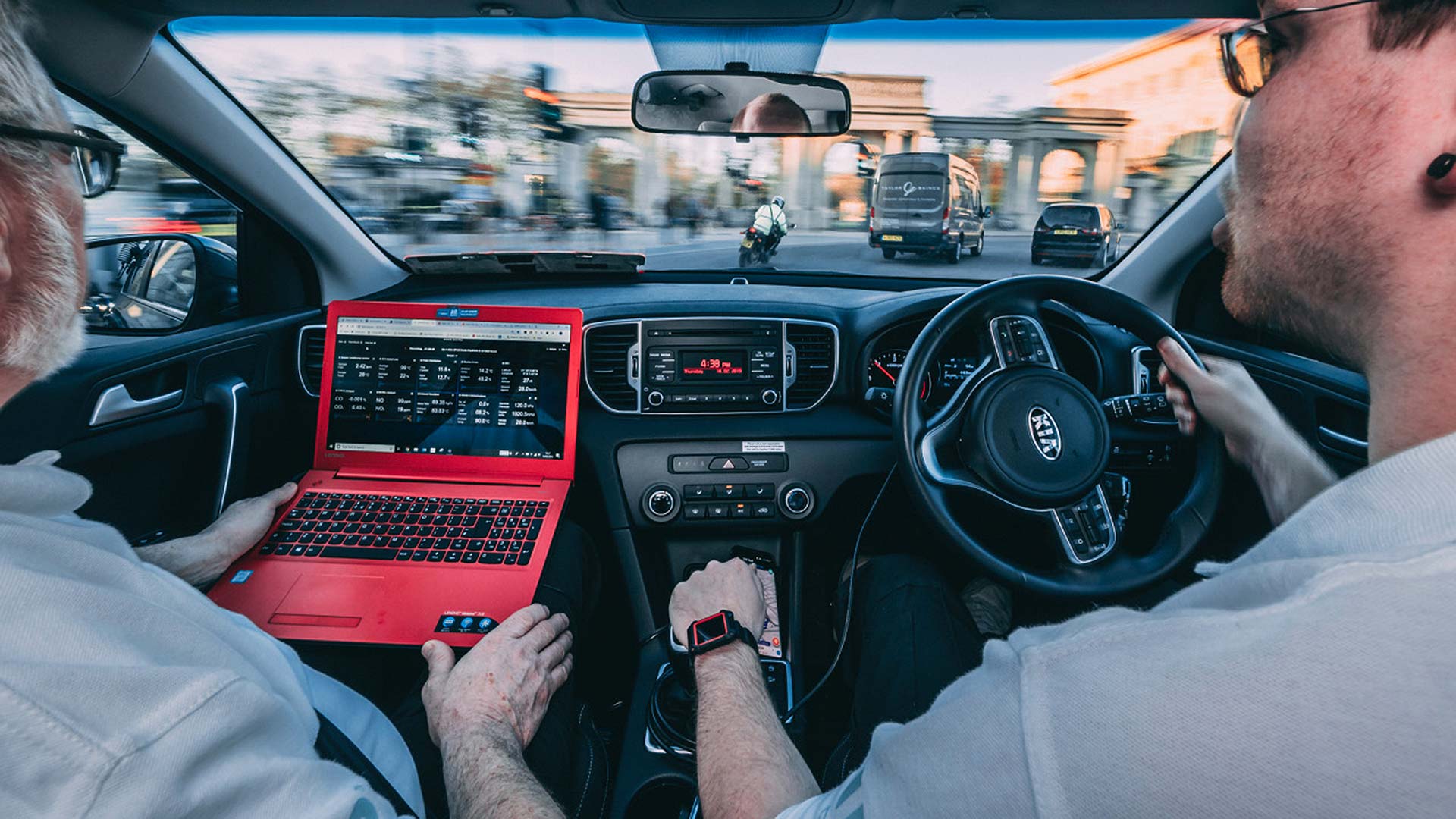
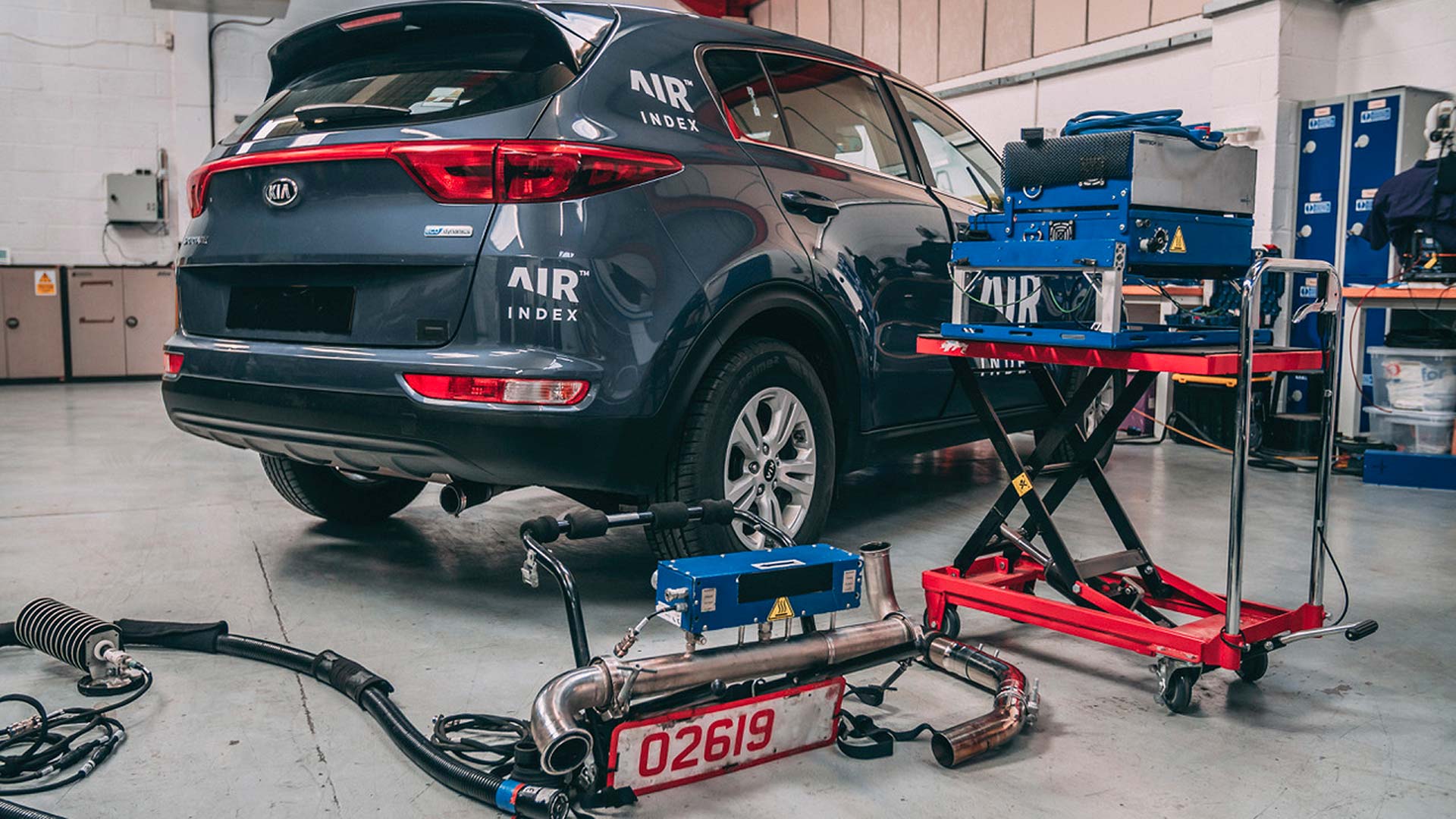
Instead of testing in labs, the AIR Index is conducted by on-road driving. The testing is described as “scientifically robust” according to new internationally-agreed methodology. It is a development of an earlier ranking called the EQUA Index.
AIR Index: how it works
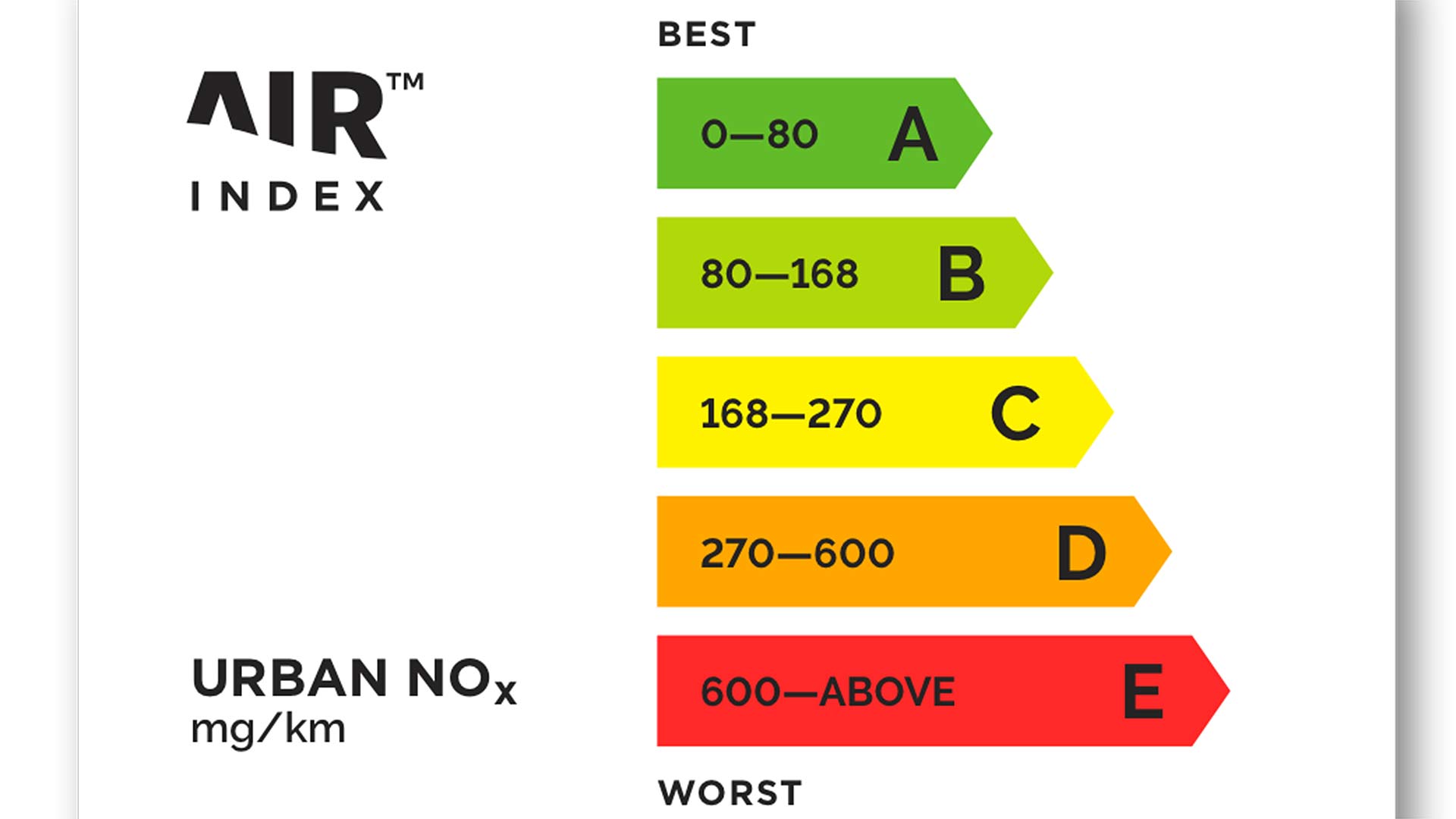
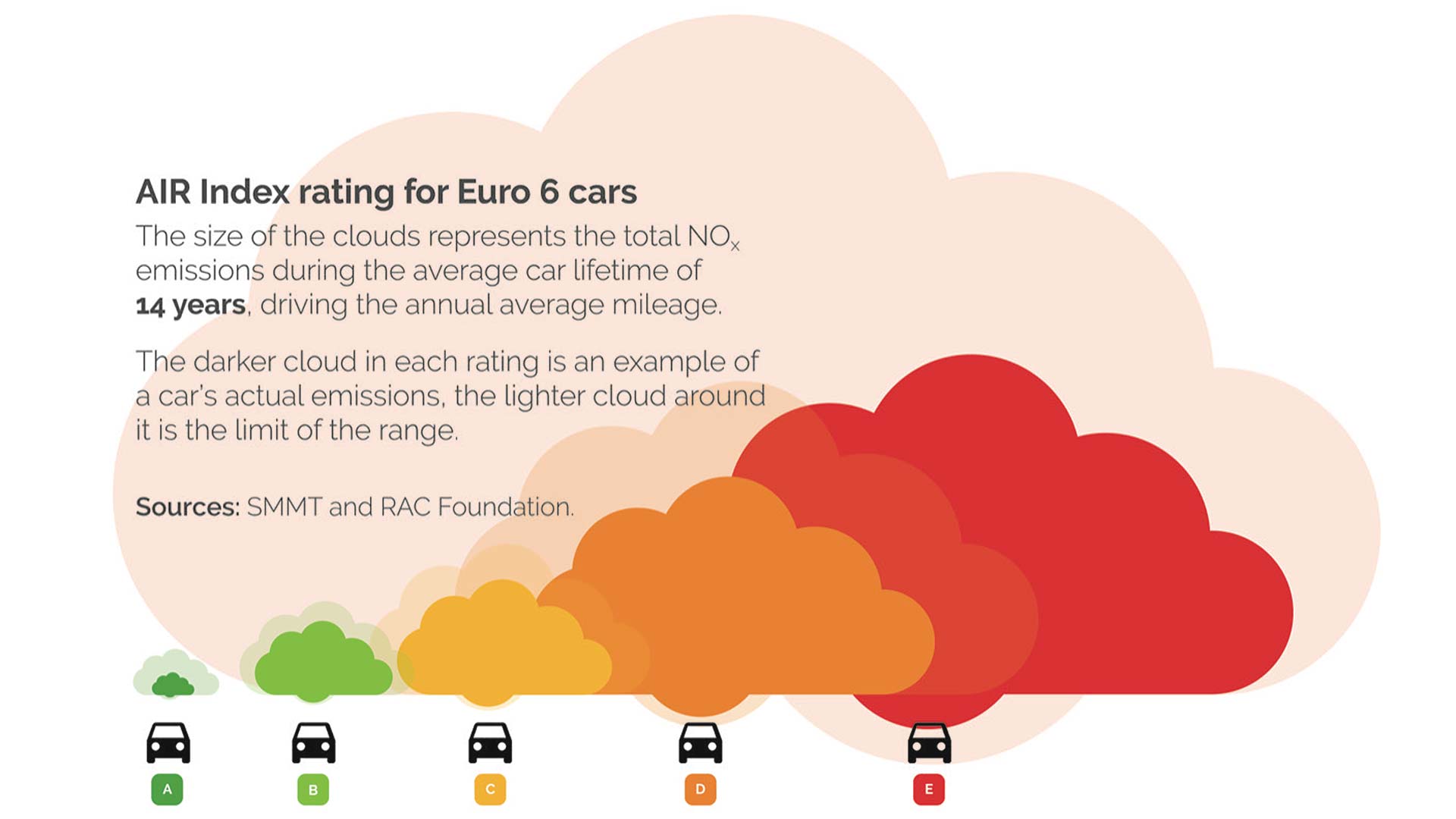
The AIR Index is a colour-coded scale from A to E, based on those used for consumer white goods, and already used to show new car CO2 emissions.
An ‘A’ rating in the AIR Index equals NOx emissions of between 0 and 80mg/km. The official legal limit for new car NOx emissions is 80mk/km for diesel, 60mg/km for petrol cars.
In other words, any car that doesn’t get an ‘A’ rating exceeds official lab-tested NOx limits in real-world driving.
The worst, an ‘E’ rating, represents NOx emissions of 600mg/km or more. This shows just how much NOx pollution the 2017 Renault Clio actually emitted in real-world driving – and how unexpectedly green the Discovery was.
“It proves that not all ‘Chelsea tractors’ are dirty polluting machines,” said a spokesman. “It finally offers clarity.”
The AIR Index operates independently and is intended to support the latest WLTP and RDE ‘real-world emissions’ scale, which is scheduled to go live in September 2019. This only gives a ‘pass’ or ‘fail’ score: AIR is much more granular – and, added the spokesman, doesn’t simply look at brand new cars.
Ratings for a total of six cars have been revealed as part of the AIR Index launch. They represent a cross-section of cars, both small and large, diesel and petrol. All meet the latest Euro 6 emissions standard.
AIR Index rating: launch tests
2018 Land Rover Discovery 3.0 TD6 (diesel): A
2017 Nissan Qashqai 1.2 DiG-T (petrol): B
2015 Mini Cooper SD (diesel): C
2018 Dacia Duster 1.5 dCi (diesel): D
2017 Ford Focus 1.5 TDCi (diesel): D
2017 Renault Clio 1.5 dCi (diesel): E
‘Game changer’
“The AIR Index is a game changer,” said co-founder Massimo Fedeli. “It gives easy to understand, at-a-glance information on actual vehicle emissions in towns and cities.
“It provides car buyer with the answer they need to make the right purchasing choices, it makes the industry accountable to produce cleaner cars and gives cities and policy makers the accurate data to create fair policies.”
Dan Carder led the West Virginia University team that uncovered the Volkswagen emissions cheating scandal, and has endorsed the new rating. “If the AIR Index had been implemented 15 years ago, dieselgate would likely not have happened.”
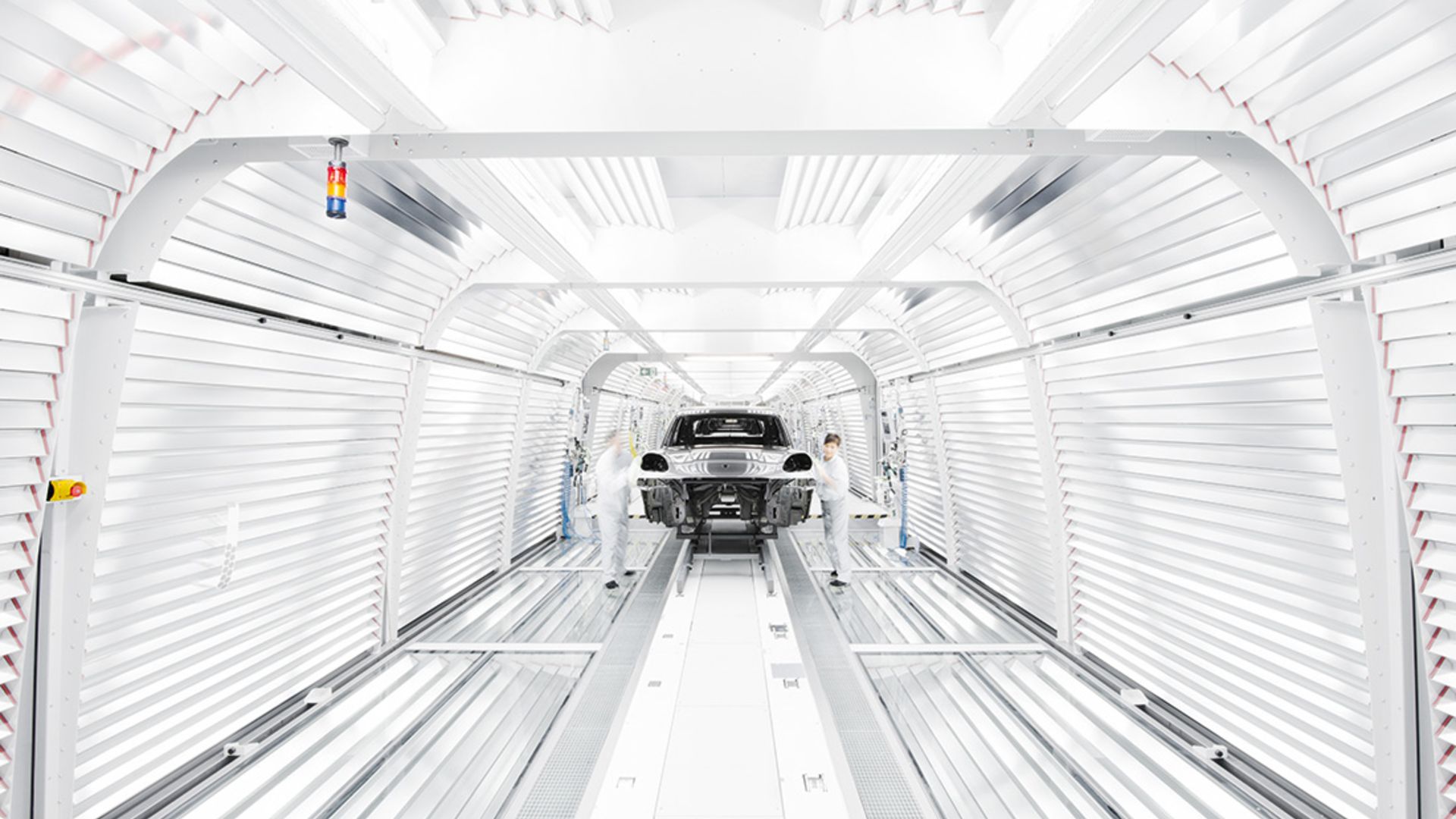
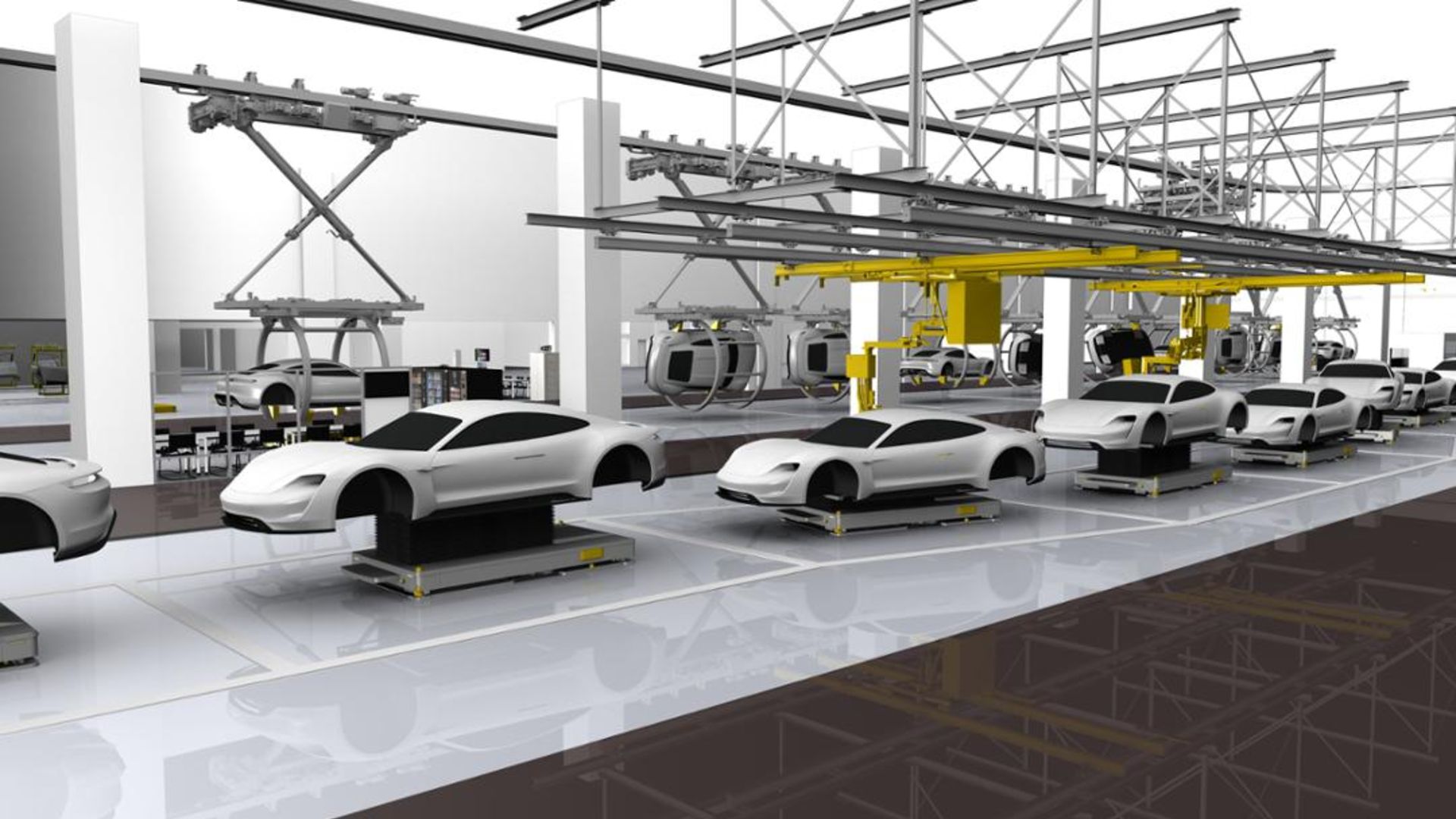
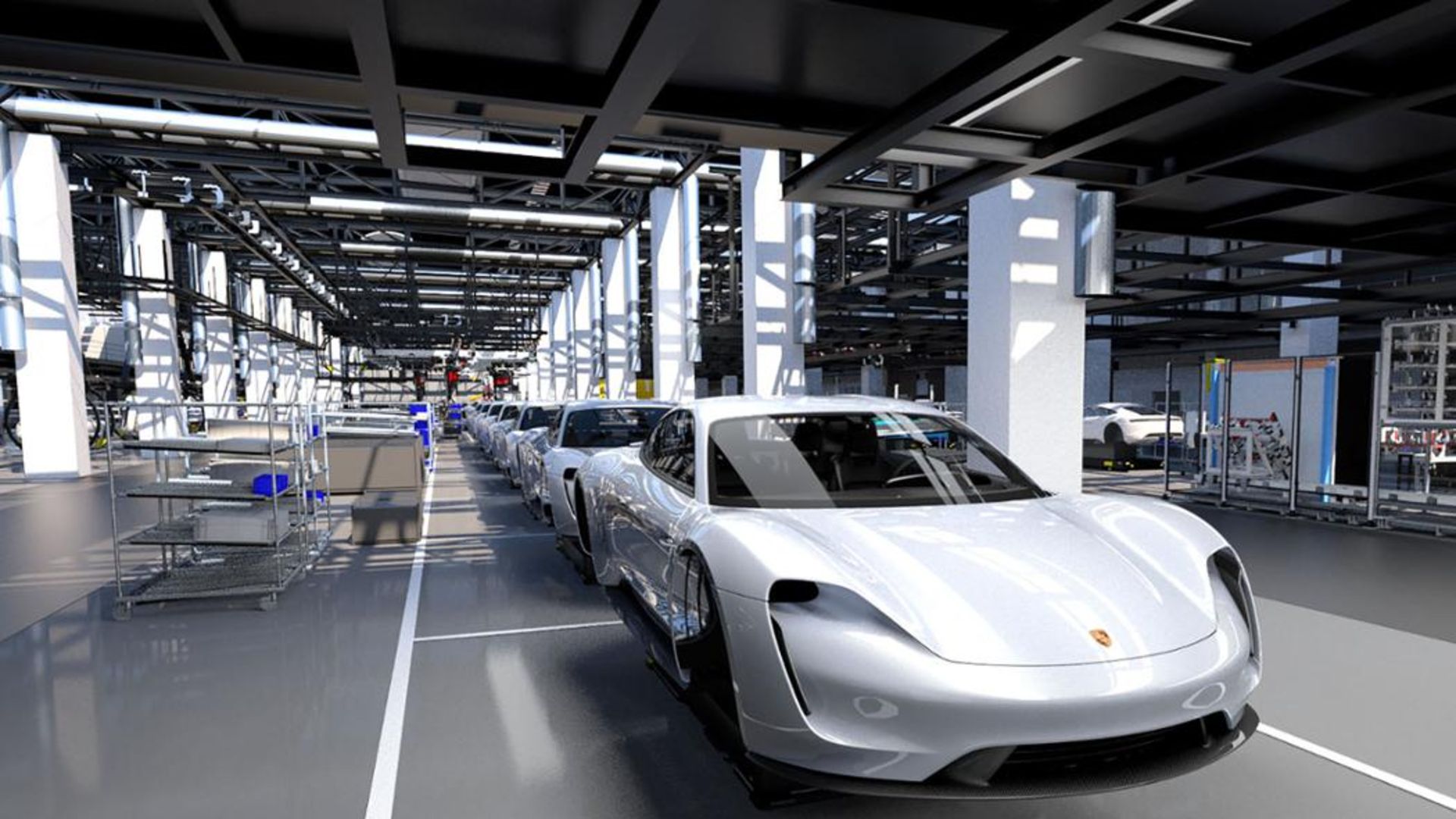
Porsche has just announced that the next-generation Macan SUV, coming in 2021, will be electric-only.
That means no petrol, no diesel, no hybrid. Electric only. And we think that’s a great idea.
Better performance, better looking
An electric Macan makes sense. Firstly, the shape of small SUVs is conducive to electric powertrains. There’s plenty of room for batteries, and lowering the centre of gravity would be no bad thing.
More freedom to style and shape the body wouldn’t hurt either. There’s no way current crossovers will get worse in terms of looks or handling if they go electric-only.
But better than Tesla?
Imagine, if you will, a smaller Tesla Model X, with more range and quicker charging. It has also exchanged silly doors for Porsche badges, Porsche styling and indeed Porsche build quality. And it costs £30,000 less.
That sounds like a pretty appealing package to us.
Better than the current four-cylinder
The four-cylinder engine at the bottom of the current Macan range simply isn’t enough. It sounds asthmatic and has nowhere near the get-up-and-go you expect of a Porsche.
There’s no joy lost in exchanging it for electric motors and an 80kwh bank of batteries. You can bet the electric Macan won’t hang about.
More range than petrol?
There probably won’t be any economy or range lost either. We estimated we’d get a maximum of 450 miles out of a tank in the four-cylinder Macan when tested.
That was based on it achieving a deeply unimpressive 30mpg. Even that proved ambitious at times.
We’d wager that the next-generation electric Macan will get very close and possibly surpass that range, with performance to frighten a Macan Turbo. Indeed, it’s due to get a version of the 800-volt technology we’ll see in the Taycan later this year.
We hope we’re not being optimistic with our number plucking. An electric Macan that can do all of the above sounds like Porsche-badged perfection in an Elon Musk electric utopia.
It’s time for electric cars without caveats. And if anyone can do that, it’s Porsche.
 The box-fresh Ford Mustang racer scored an incredible double victory at the weekend, making its debut in the Virgin Australia Supercars Championship a major success.
 Although some manufacturers might usually expect to start out slowly with a new car, last year’s champion driver Scott McLaughlin seemed happy to ignore the rulebook.
 Proving that the success on Saturday was not just a case of beginner’s luck for the Mustang, McLaughlin delivered the same result again in Sunday’s race two.
 Kay Hart, Ford Australia and New Zealand President and CEO, summed up the weekend as “a fairy tale start for our Ford Performance Mustang,” whilst Ford Performance Global Director, Motorsports, Mark Rushbrook, said “the Mustang Supercars’ results are beyond expectation”.
 The Pininfarina Battista is a glamorous new entrant into the global hypercar market, one targeting Ferrari, Aston Martin and the ultra-exotic Pagani and Koenigsegg brands with a mix of incredible power and all-electric allure. Producing 1,900 horsepower and faster than a Formula 1 car from 0-60mph, it will also travel almost 280 miles on a single charge.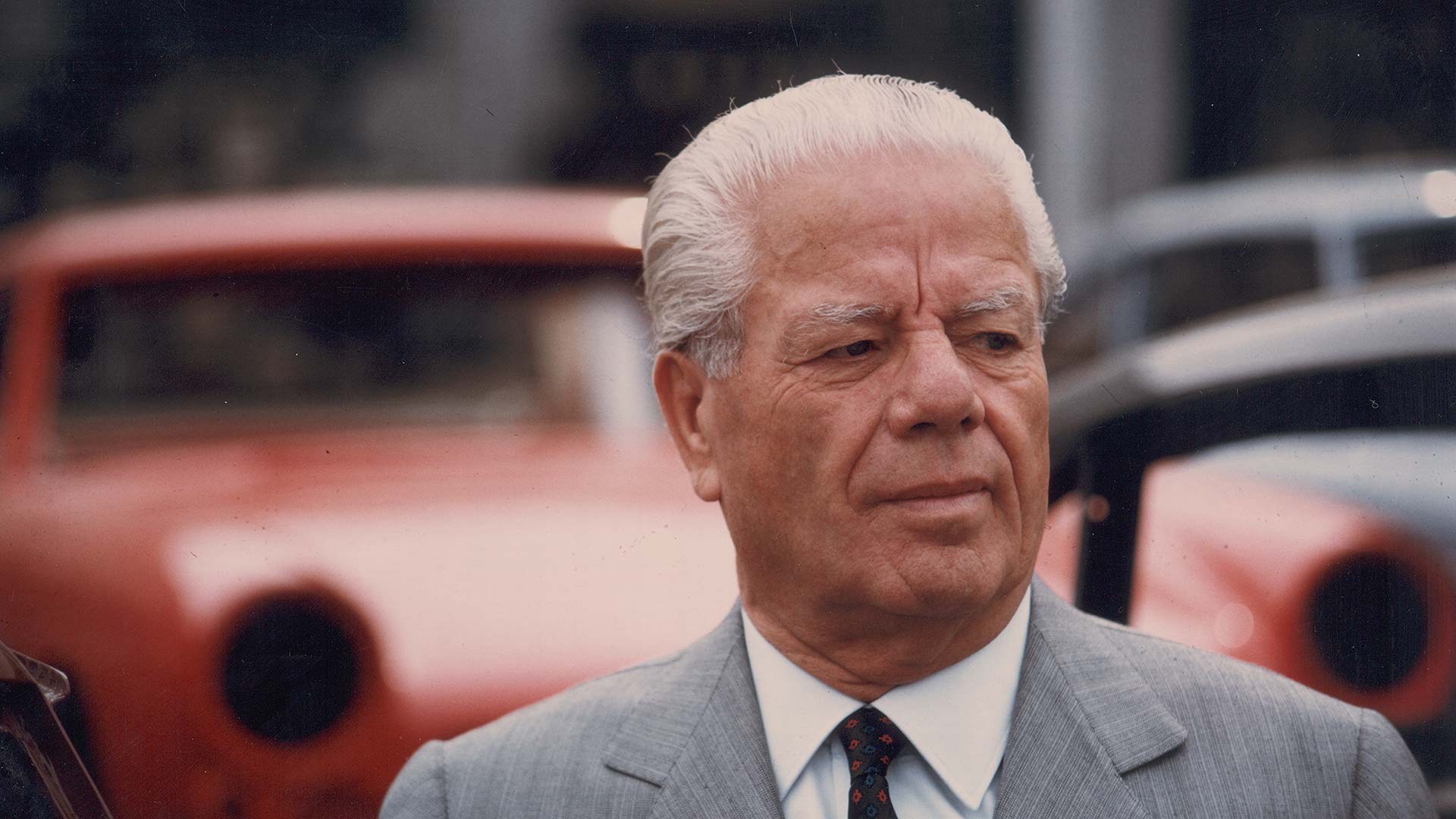
 The
The 
 Tesla has finally announced the long-awaited arrival of the $35,000 ‘entry-level’ Model 3 electric car. This is the model that the firm hopes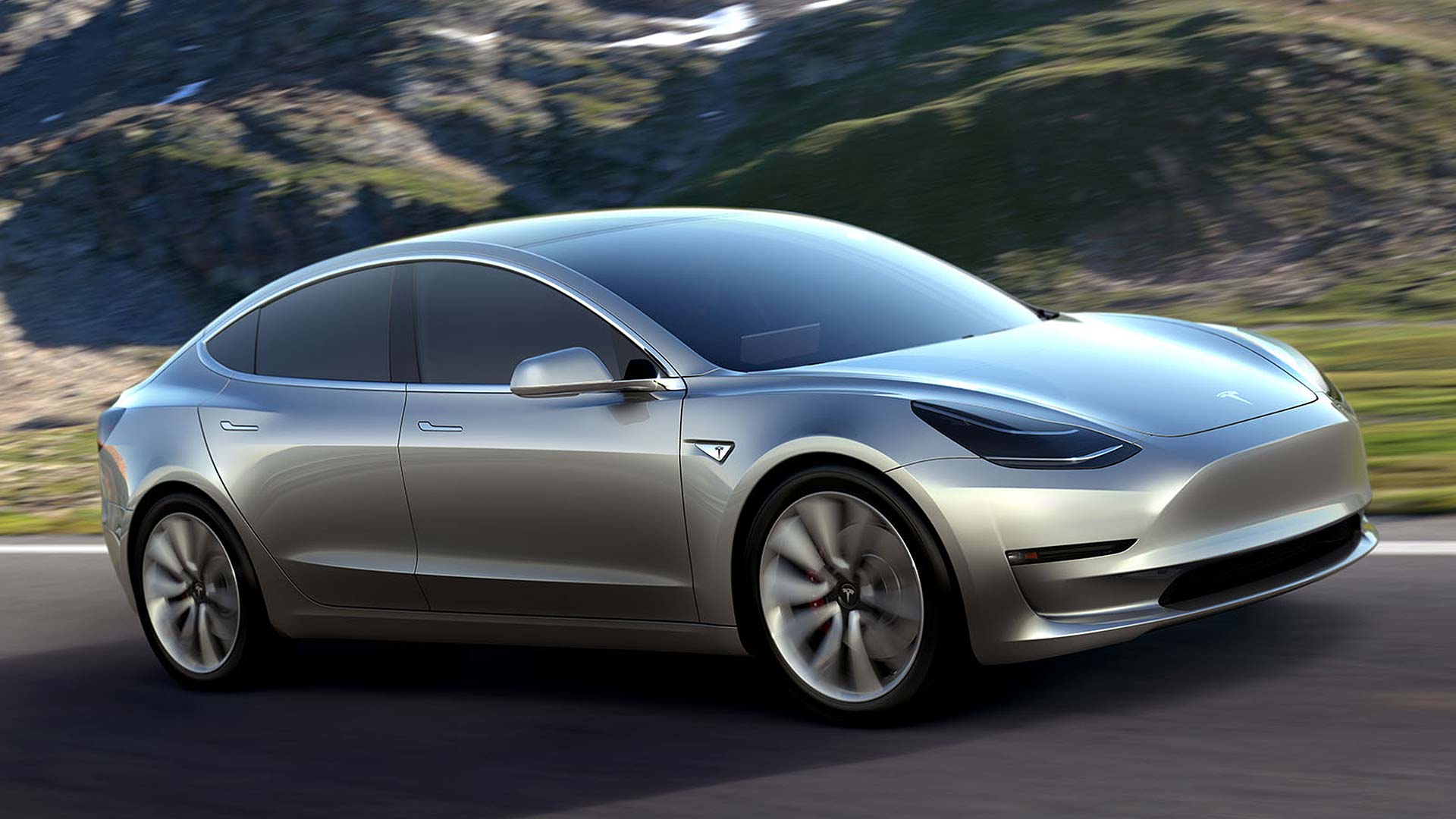

 A diesel Renault Clio emits 20 times more