Home Blog Page 366

Volvo launches new premium test drive service

0

Volvo Test Drive+ service

Volvo has launched a new premium test drive service in the UK, called Test Drive+, in response to ever-growing expectations from premium car buyers. 

Available initially on the XC40 compact SUV, Test Drive+ is “designed to put total control in customer’s hands”, says Volvo.

Test drives are available at Volvo dealers, or cars can be delivered to the customer’s home or place of work. An hour is available, although extended test drives can be arranged for up to four days.

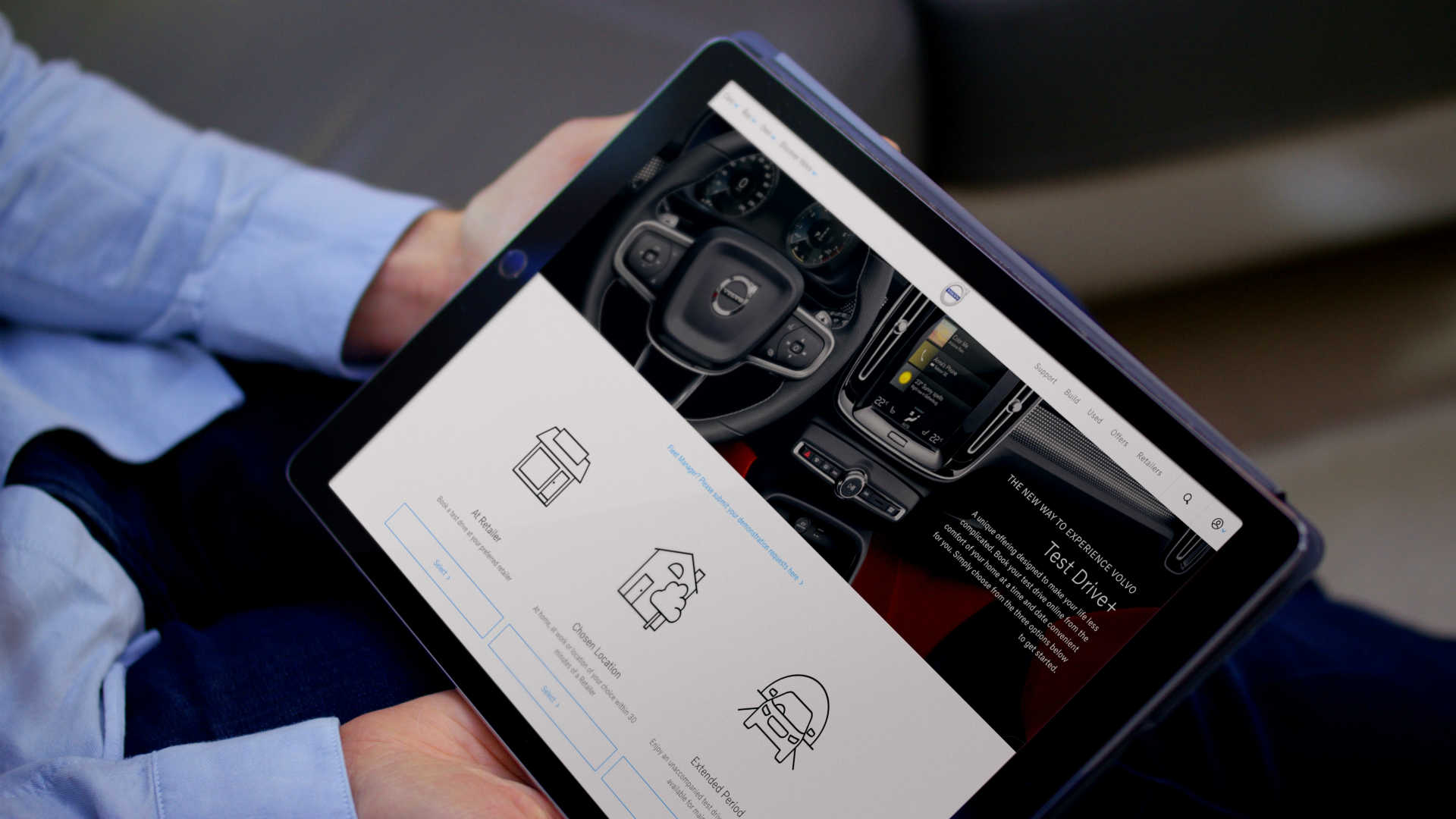
Bookings are done online or by calling a team of Test Drive+ agents, with customers able to view a real-time calendar to see what dates are available.

A confirmation email is sent once the booking has been made, and the customer will be directed to a reserved parking space upon arrival at the dealer.

VIP to the max!

‘At ease and valued’
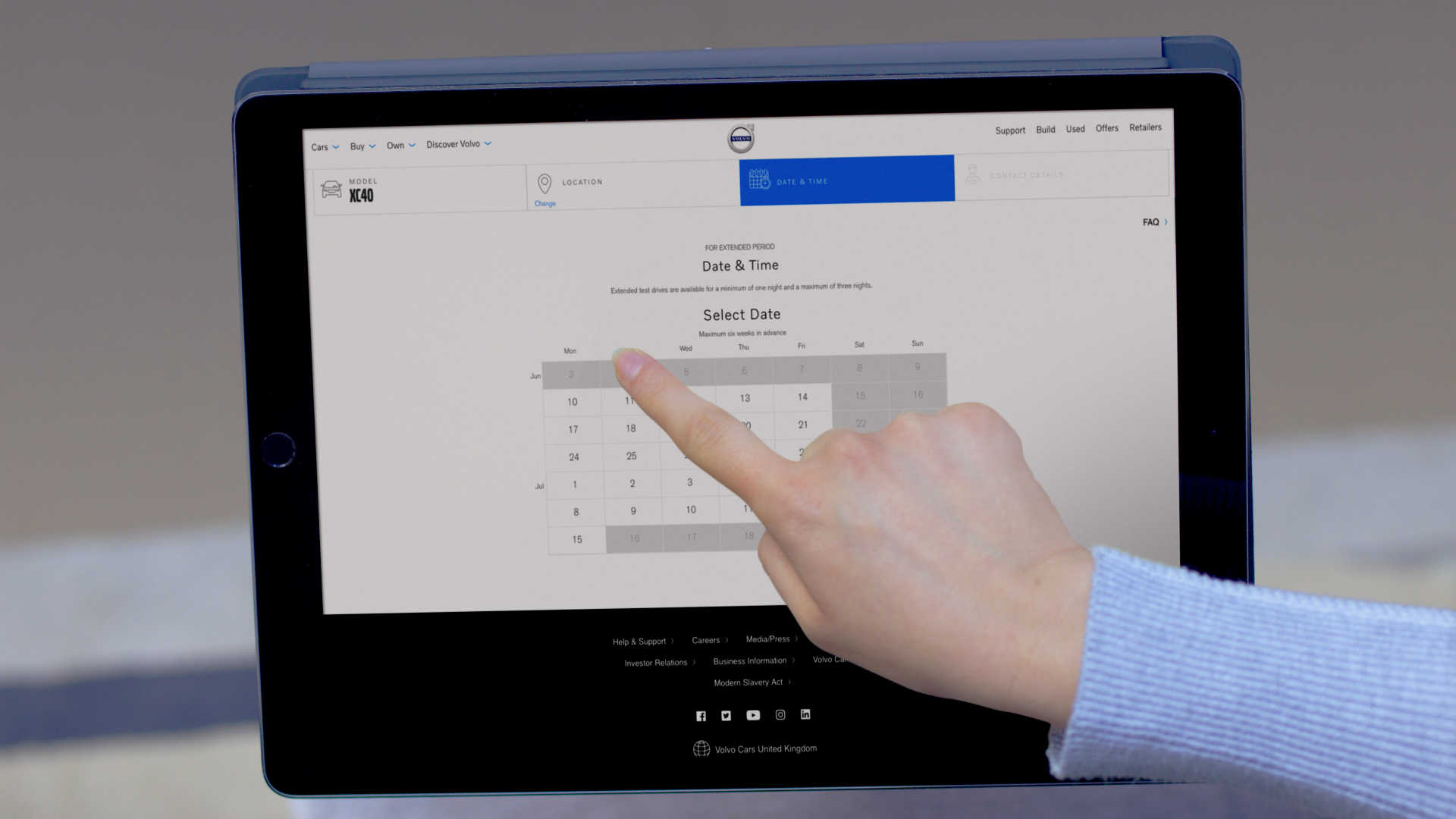
Volvo premium test drive service

Kristian Elvefors, Volvo Car UK managing director, said: “The test drive is a critical element when people are making the important decision about whether or not to buy a new car, so we want to make sure it’s an experience that makes them feel at ease and valued as a customer, and which also reflects the premium quality of our brand.

“With Test Drive+ we have looked at every aspect from the customer’s point of view to make it as flexible and informative as possible. We want people to enjoy an ideal introduction to our cars, one which is completely designed around them.”

Test Drive+ is available across the UK, initially for the XC40 and then the S60 saloon

According to the terms and conditions, customers must be 25 years or over to use the Test Drive+ service, while drivers over the age of 75 might require proof of their fitness to drive.

Extended test drives are subject to a £500 pre-authorisation charge, but funds will only be taken to cover any payments or charges outlined in the Ts and Cs.

Click here to read more about Volvo’s Test Drive+ service.
Advertisement

Mazda is getting rid of touchscreens on its cars

0

Mazda is getting rid of touch screens

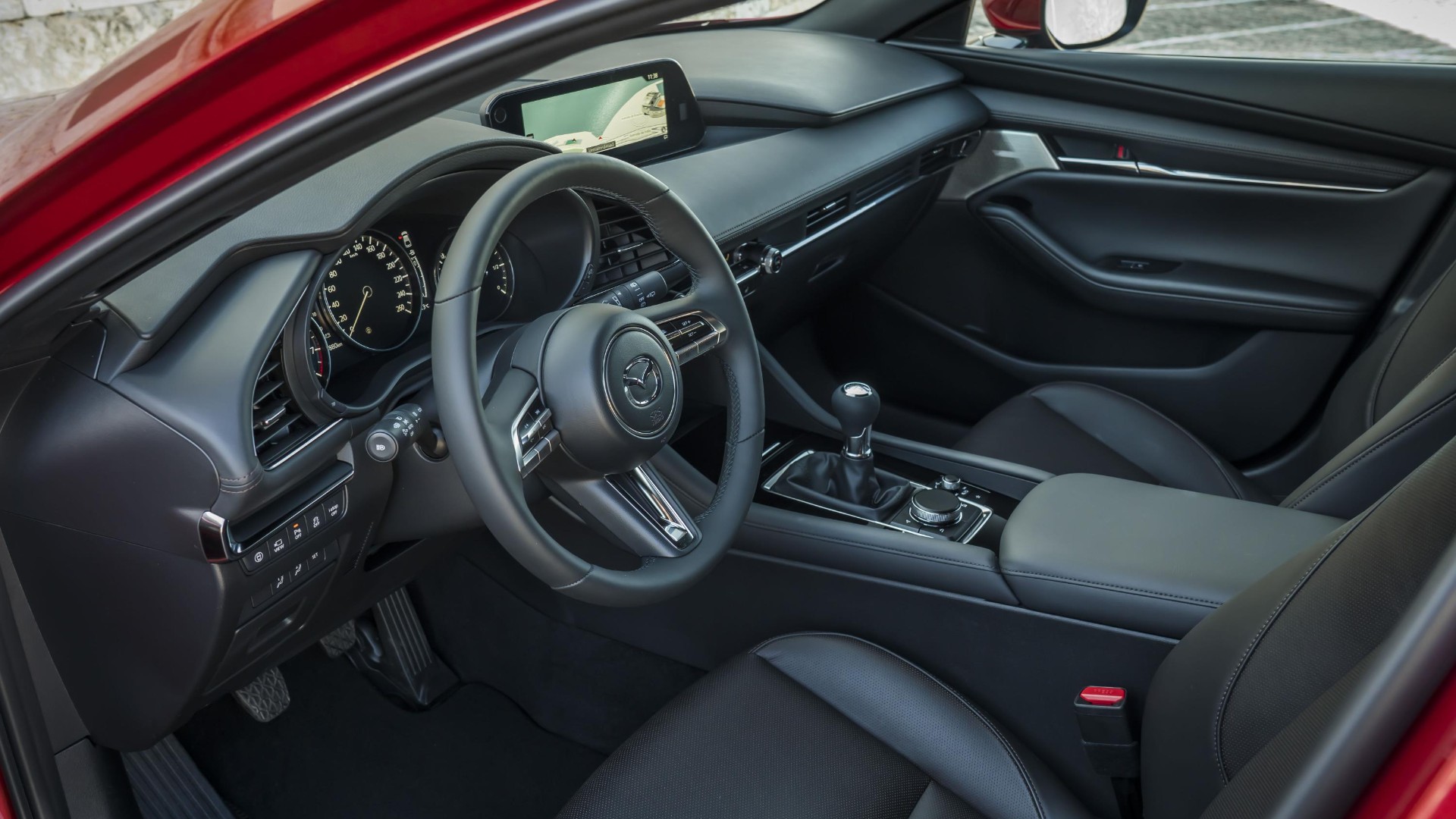
Mazda has begun the eradication of touchscreens in its cars, starting with the new 3 hatchback. It’s often a marque to buck prevailing trends, but never without reason, and this latest dismissal of dashboard touchscreens is no exception.

Why get rid of touchscreens?

Touchscreens have been hot tech since they became mainstream over decade ago. They’re now getting up to a standard of clarity and responsiveness in our cars that we’ve been enjoying with our smart hand-held devices for the last 10 years. So why is Mazda ditching them? 

There is method and logic in Mazda’s madness. Research has suggested that touchscreens can present too much of a distraction for drivers, finding usage both takes our attention away from the road, and affects our physical control of the car.

Mazda is getting rid of touch screens

“Doing our research, when a driver would reach towards a touchscreen interface in any vehicle, they would unintentionally apply torque to the steering wheel, and the vehicle would drift out of its lane position,” said Matthew Valbuena, Mazda North America’s lead engineer for HMI and infotainment.

A troubling revelation indeed. Highways England has expressed a disliking for in-car touchscreens, too. Chief executive Jim O’Sullivan is quoted as saying “we don’t like them from a safety perspective” and that on-screen controls are “small” and “fiddly”.

Touchscreens require what Mazda calls ‘gross’ motor skills. These are large movements on our part to achieve specific goals. By our recollection, lifting your hand up to a screen and accurately pressing a ‘button’ has been a bit of a chore in some cars, and has felt like a distraction too far.

Head-up displays and Command Controllers

Mazda is getting rid of touch screens

Mazda wants to revert to safer ways of delivering information and controlling in-car systems. As for the former, head-up displays gain favour given they require less of a transition in focus with your eyes.

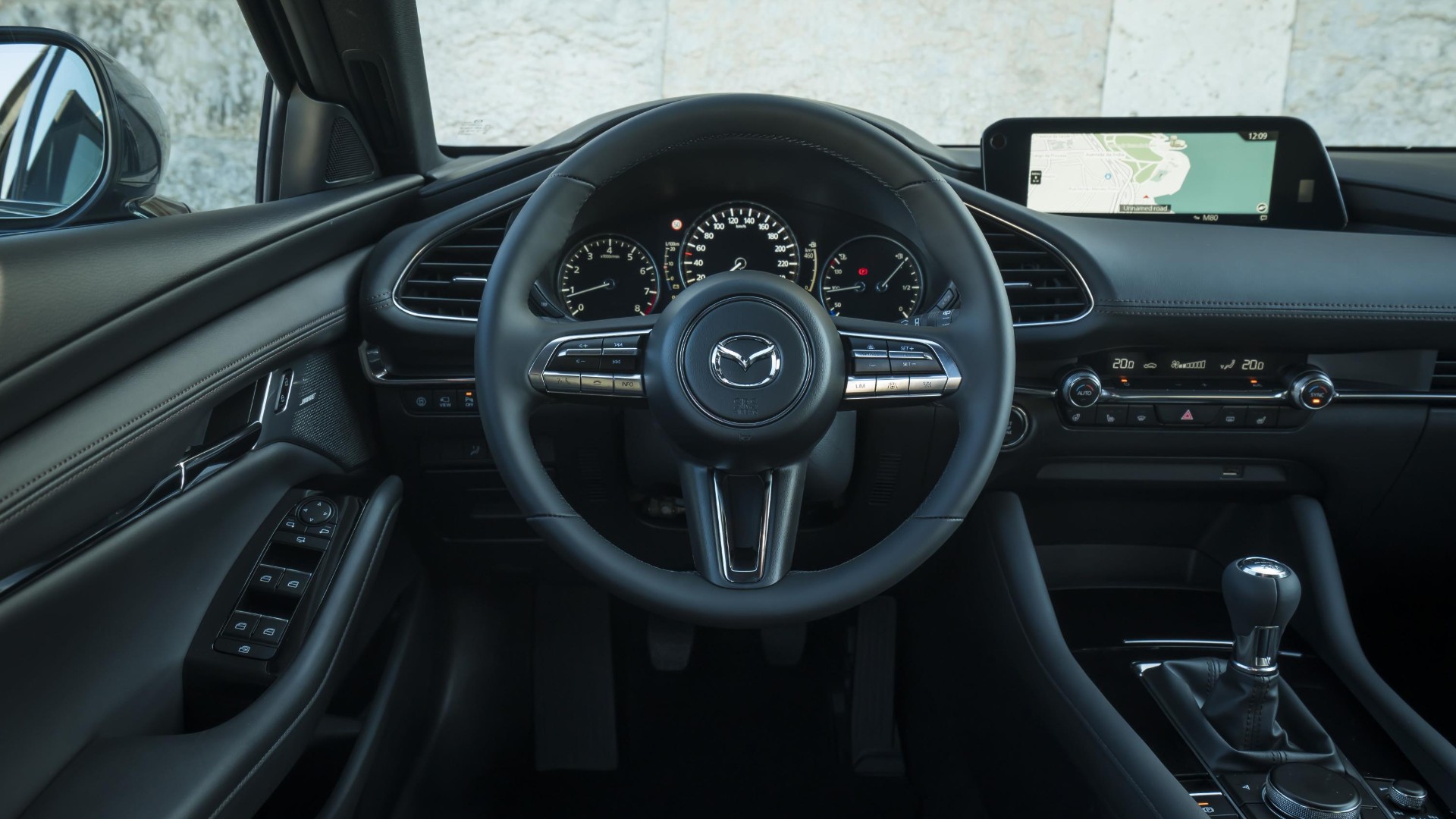
In short, a head-up display is basically a part of the scenery as far as your eyes are concerned. Contrast that with a touchscreen that’s much closer and requires more of a re-focus. You’ll note in the cabin of the new Mazda 3 that the screen is further away, out of reach. Indeed, it doesn’t need to be in reach.

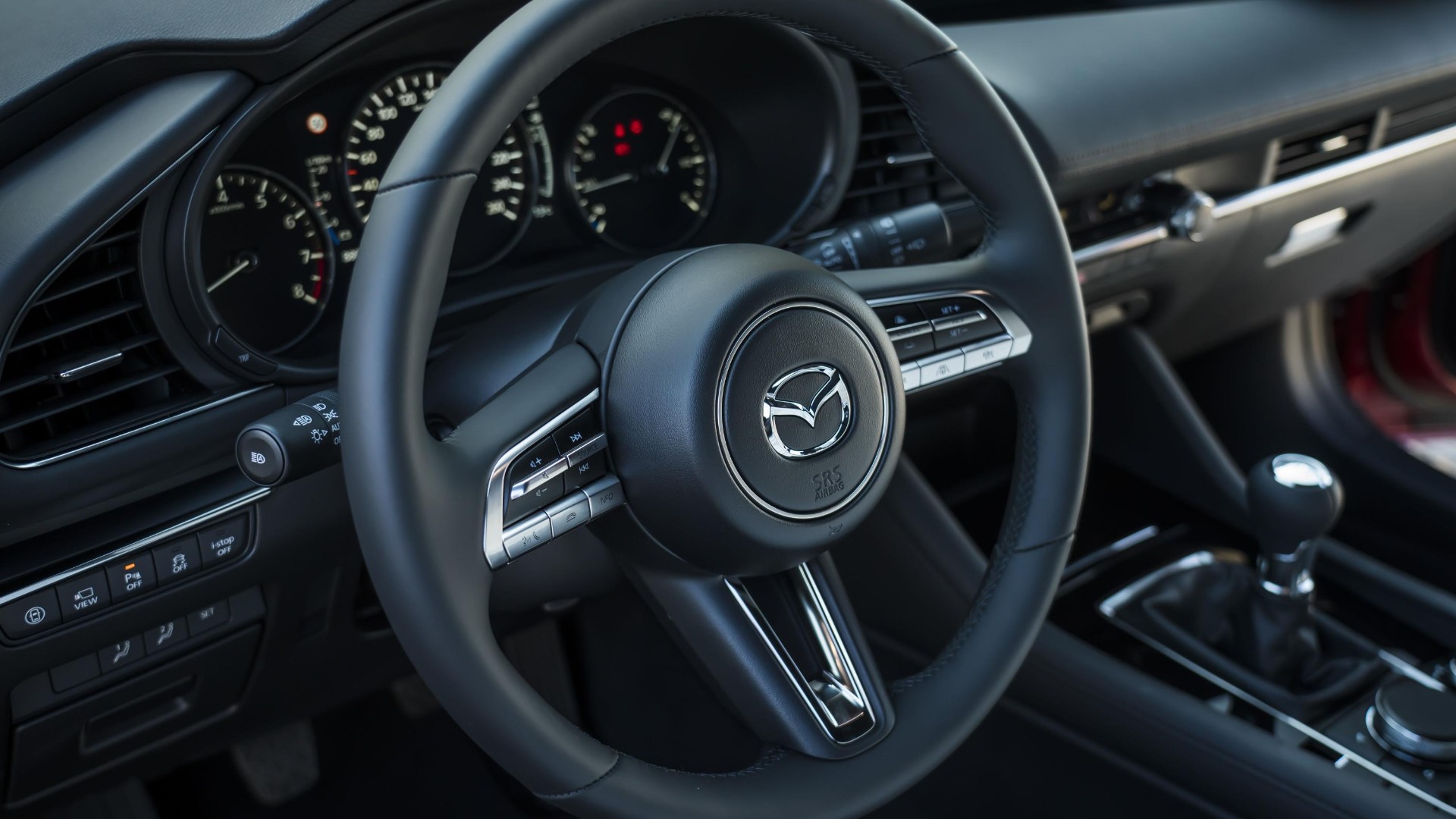
As for controlling systems? Mazda wants to go analogue, with physical toggles. In the 3 it’s the Command Controller, positioned naturally within reach. It requires what Mazda calls ‘fine’ motor skills, rather than ‘gross’, as above. These are small precise movements that require less concentration to achieve, and are staggered by the controls themselves – i.e. when toggles, spin-wheels and buttons ‘click’.

Why touchscreens are pursued

Mazda is getting rid of touch screens

We would suggest that all who use touch screens in cars will feel pangs of uncertainty at some point about whether they’re safe.

Assuming that safety is in question, why are manufacturers sticking with them?

Well, reverting would literally feel like a backward step. Can you imagine an Audi A8 that replaces two giant touch panels with buttons once more?

On the button issue, too, touchscreens are simpler to tool for carmakers. Smatterings of buttons can be fiddly to both manufacture and use. Touchscreens can also pack a lot more functionality into a finite space.

Mazda going back to physical controls

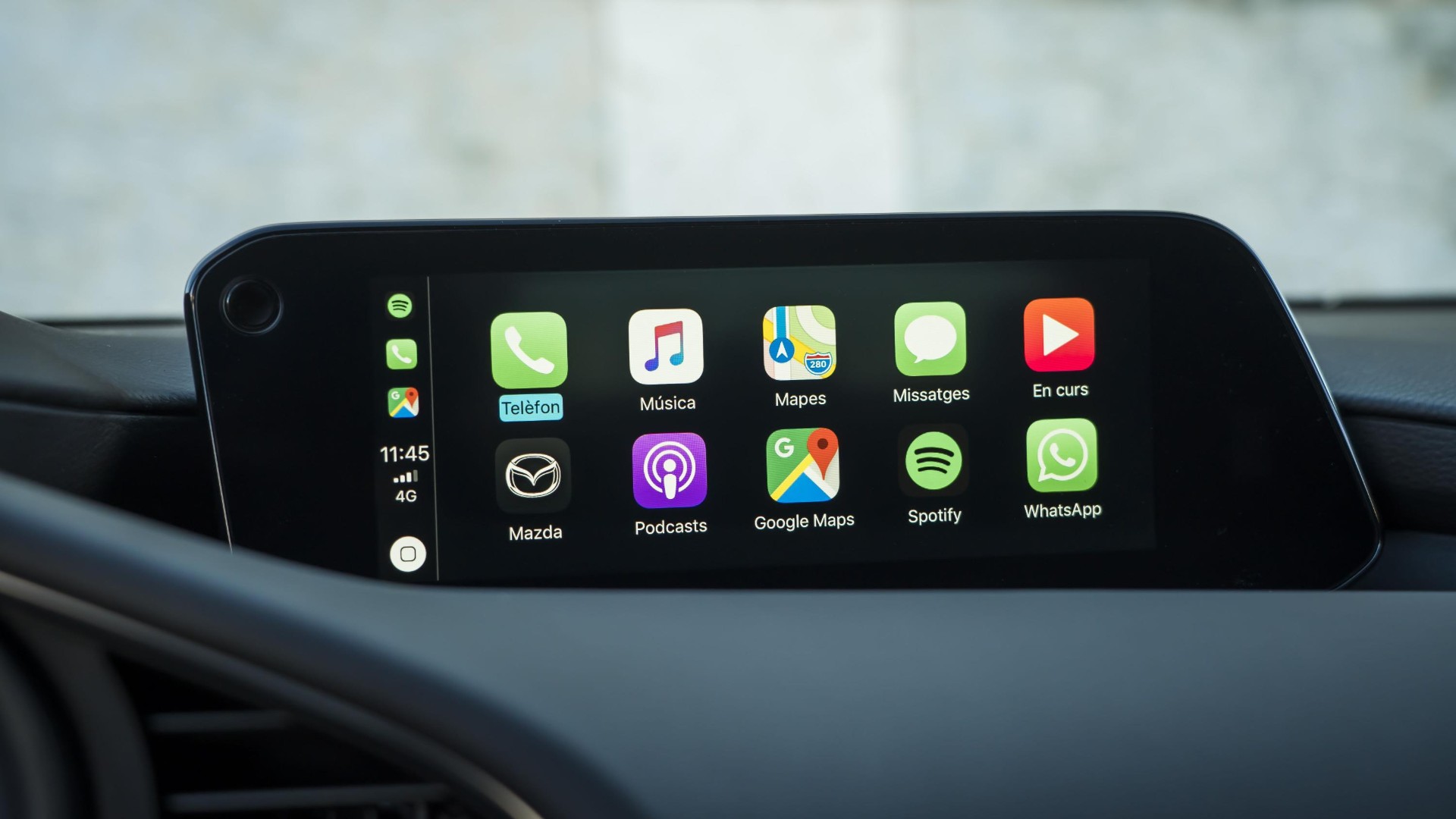
Then there are systems that are now being integrated. How does one control a touch interface like Apple Carplay with physical controls? That’s part of the reason Audi is discontinuing its rotary controller, allegedly.

Regardless, Mazda is the first to commit to persevere without touchscreens, for all the right reasons we’d say.

Advertisement

Pikes Peak date for Dodge Charger SRT Hellcat Widebody Concept

0

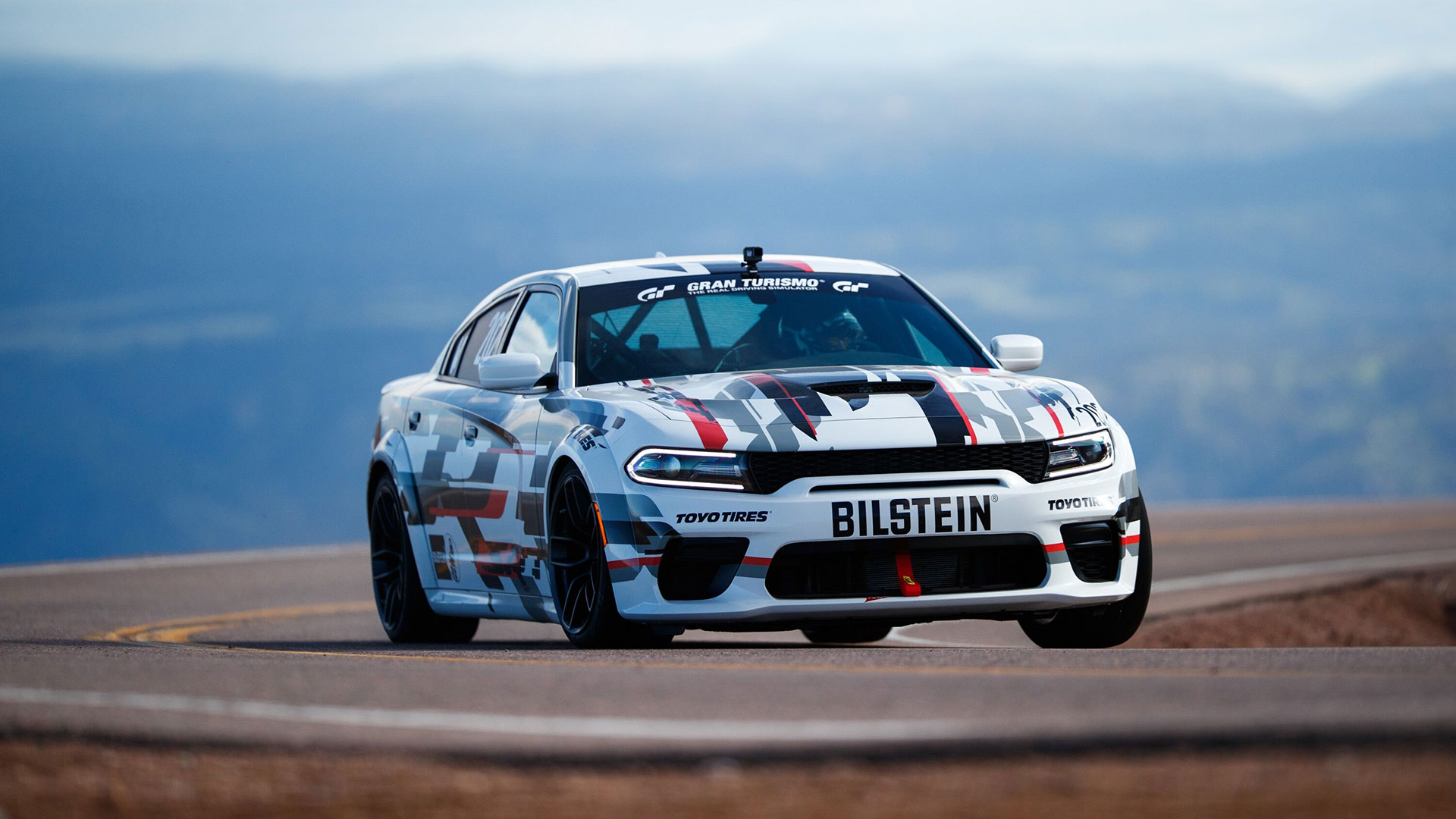
2020 Dodge Charger Hellcat Widebody Pikes PeakThe updated 2020 Dodge Charger SRT Hellcat Widebody may have just been announced, but it is ready to go racing at the Pikes Peak International Hill Climb.
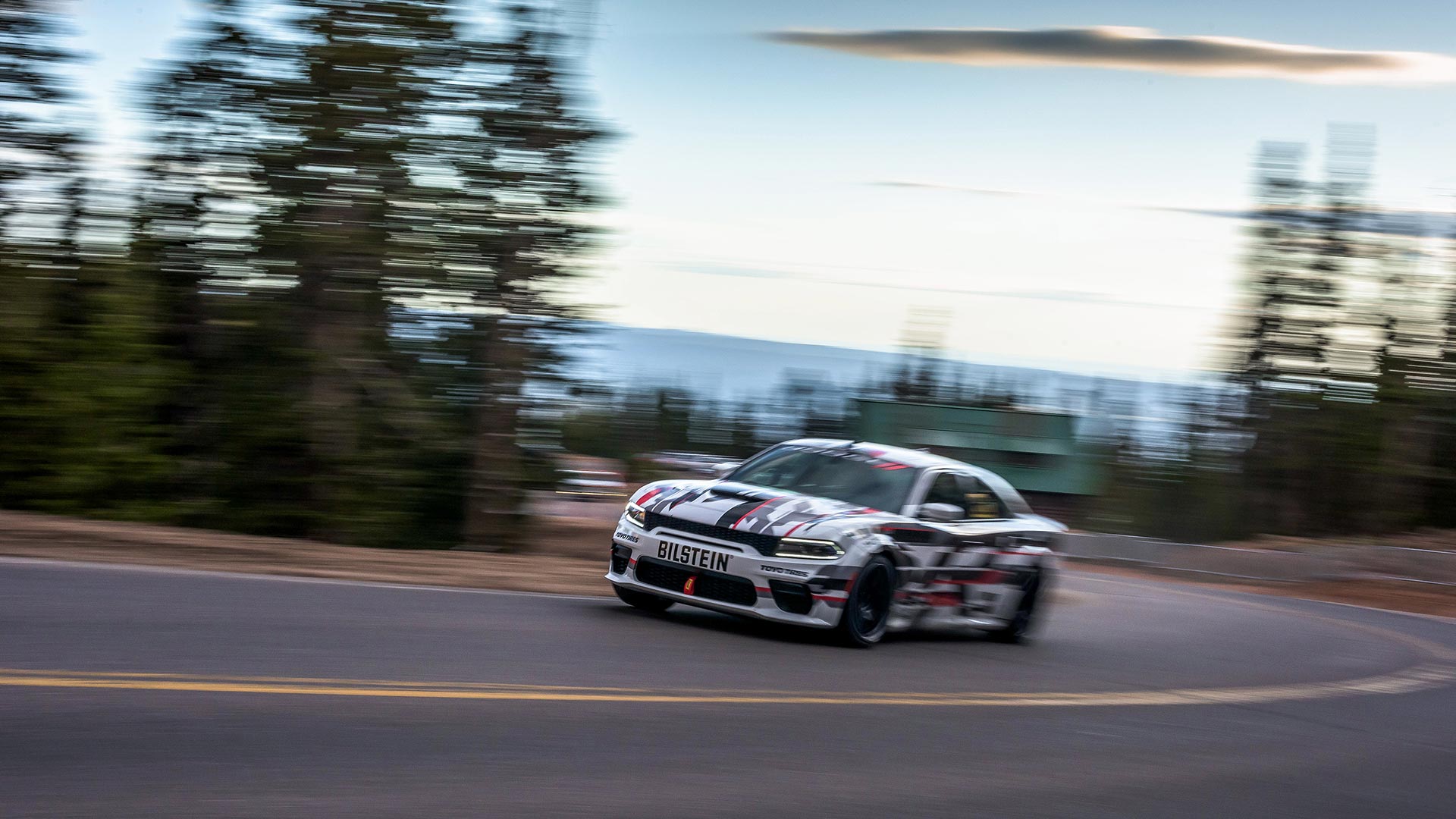
A race-prepped concept version of the latest Mopar muscle car will compete in the Exhibition class at the 97th running of the famed motorsport event. 

Despite the gruelling demands of the 14,115-foot climb to the top of the mountain, this SRT Charger is still largely based on the new road car.

Wider bodywork means wider rubber

2020 Dodge Charger Hellcat Widebody Pikes PeakKey to the introduction of the Widebody version of the Hellcat Charger is the extra girth applied to the fenders and bumpers. 
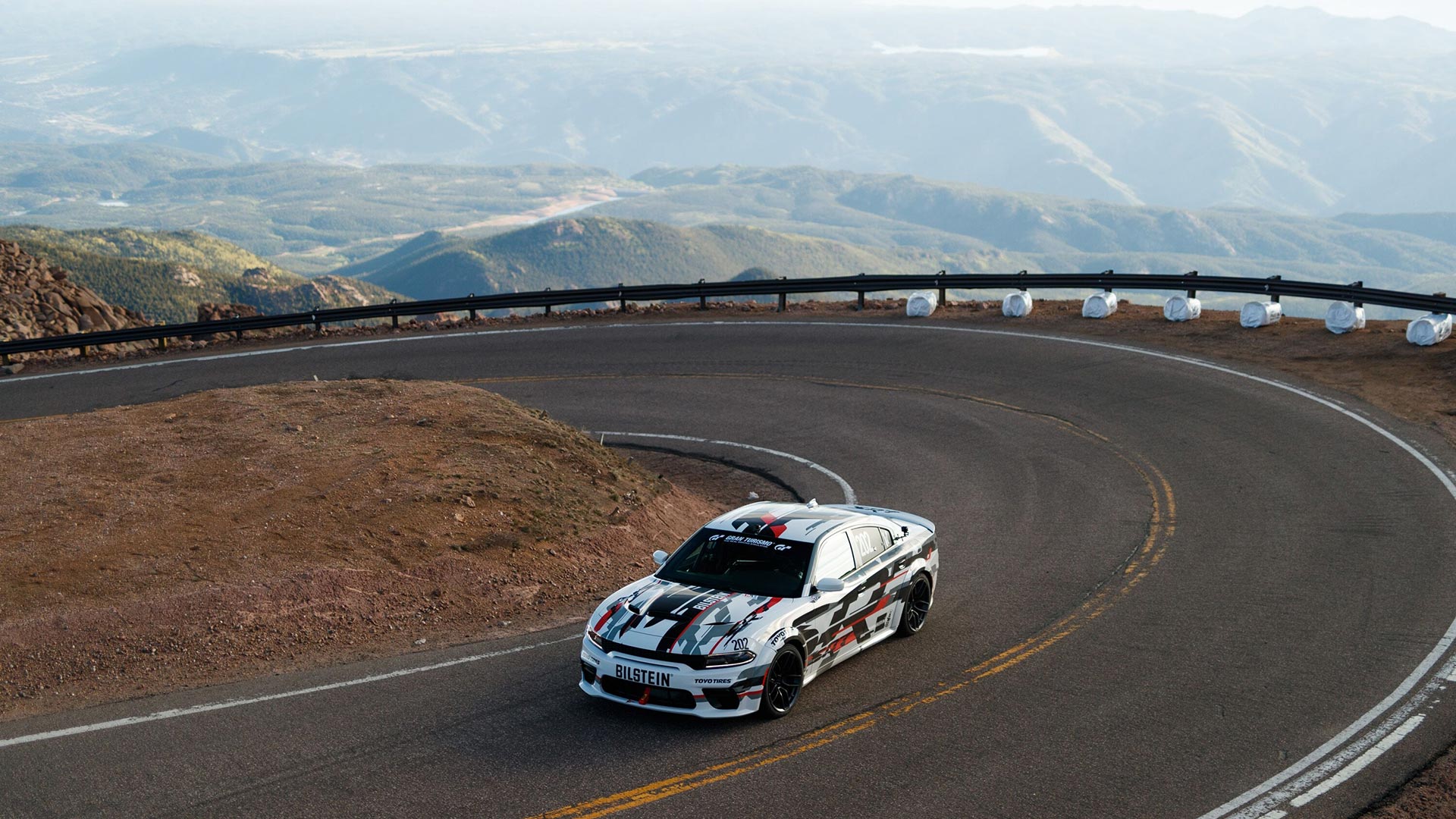
Stretching the Charger body out further by 3.5 inches compared to regular version means room to safely add a set of 11-inch wide wheels. Fitted to these rims are a set of fatter and stickier 305/35ZR20 Pirellis, although the race car uses Toyo slicks. 

It means the new Charger SRT Hellcat Widebody accelerates from 0-60mph in 3.6 seconds, and can run to a top speed of 196mph. 

2020 Dodge Charger Hellcat Widebody Pikes PeakThe Pikes Peak race car also gains an enhanced version of the supercharged 6.2-liter Hemi V-8 engine. Dodge has not specified outputs, but starting with 707 horsepower and 650lb-ft of torque means the numbers will always be impressive.
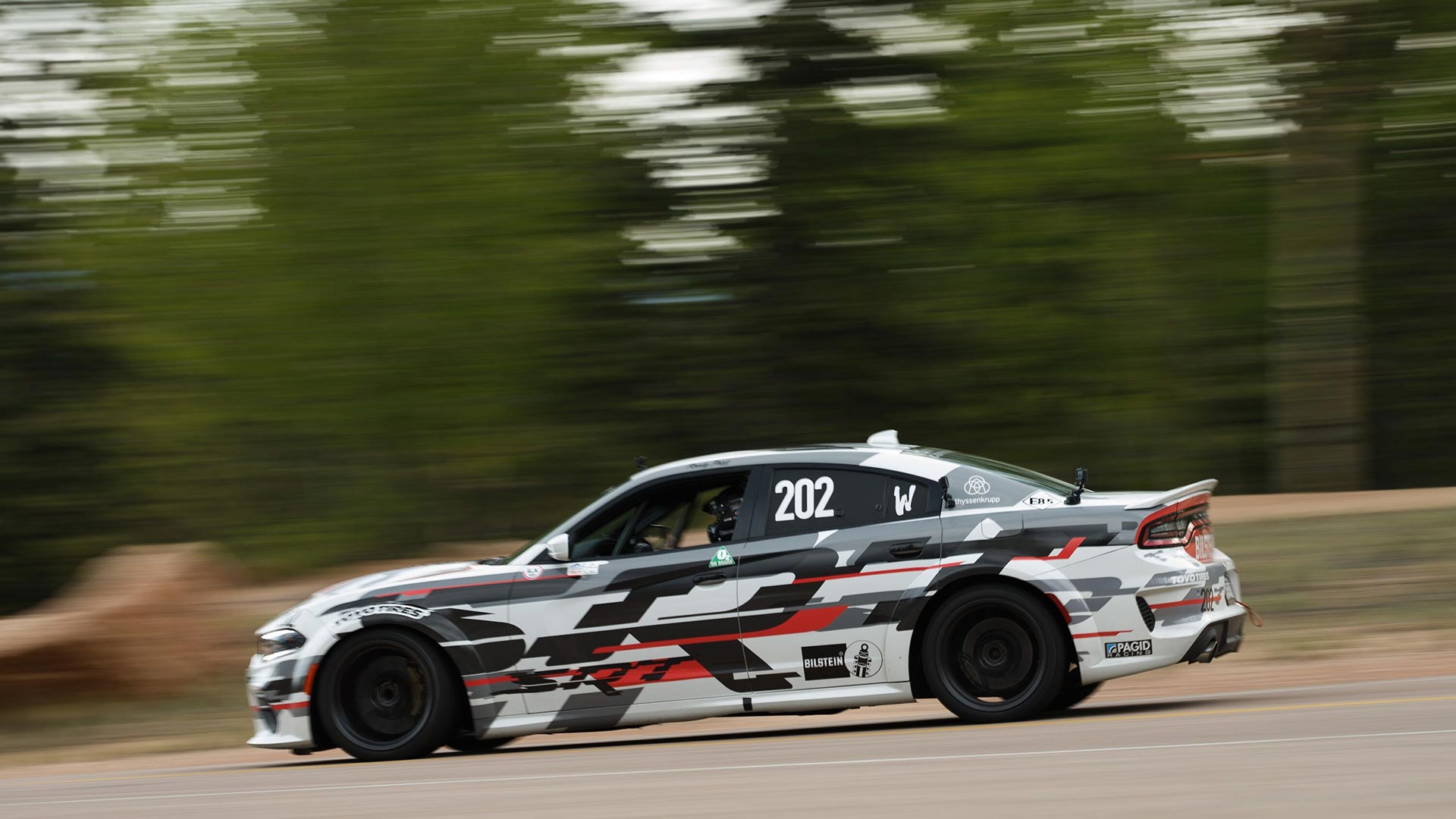
Just like the road car, the Pikes Peak concept machine uses an eight-speed TorqueFlite automatic gearbox for quick shifting. 

Upgraded Brembo brakes make an appearance on the new Widebody Charger Hellcat, and will no doubt be put to good use on the twists and turns of the Pikes Peak course. Bilstein suspension also gets a specific tune for the wider Charger.

The sky really is the limit

2020 Dodge Charger Hellcat Widebody Pikes PeakCovering the widened bodywork of the Charger is a bespoke racing livery custom-designed by the FCA US Product Design Office. It certainly makes the Widebody Hellcat standout, even amongst a field of racing machinery.
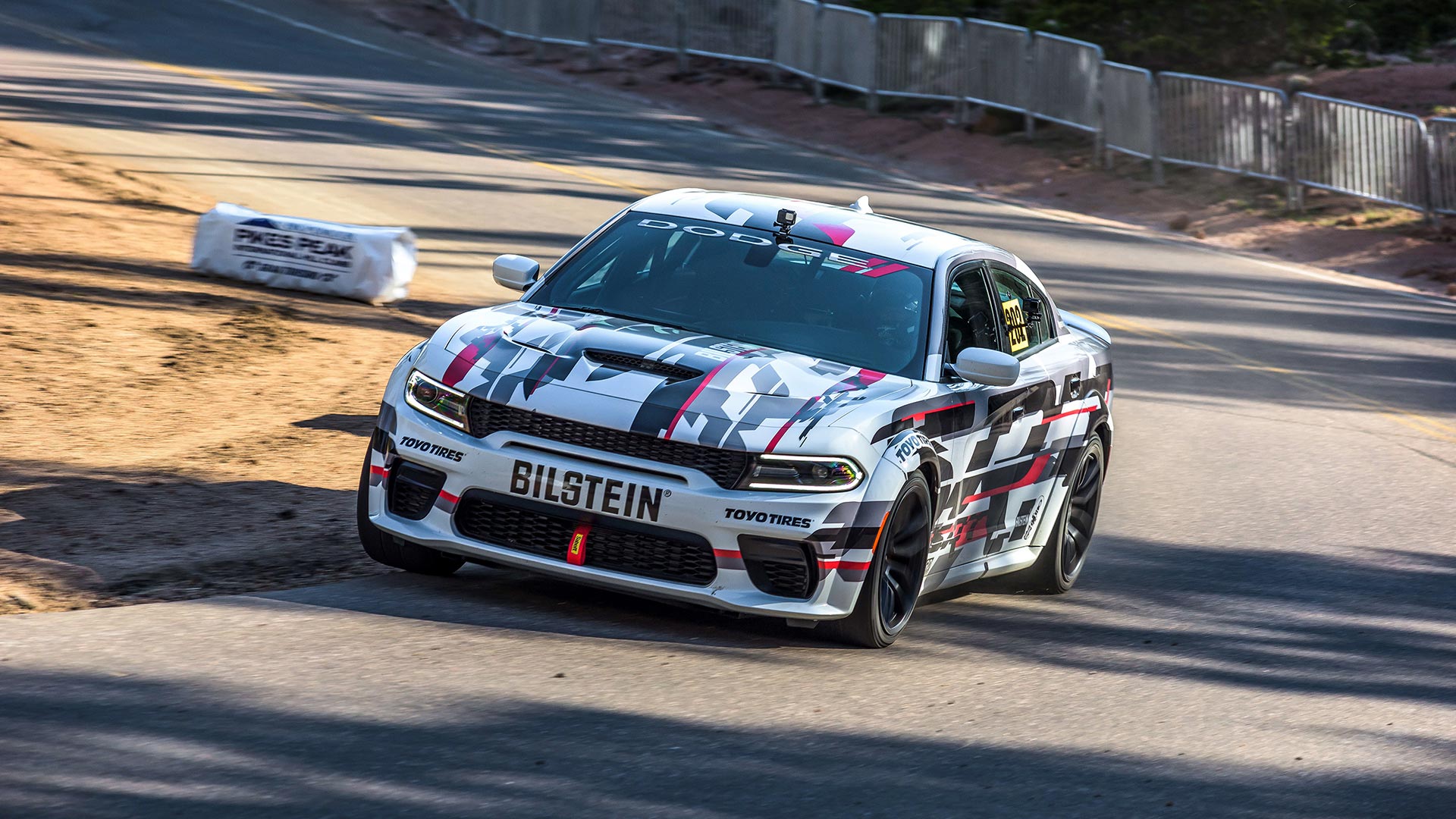
Inside is a full FIA-spec roll cage to keep legendary driver Randy Pobst safe, along with a racing fuel cell and upgraded bucket seat. 

Talking about his latest ride for the ‘Race to the Clouds’, Pobst said: “This specially prepared Dodge Charger SRT Hellcat Widebody concept has the three ‘must haves’ for this hill climb: lots of horsepower and torque to hit 120 mph plus on the sweepers; great handling with the wider wheels and tires, because there is absolutely no room for mistakes on a mountain road; and the superb brakes to haul that puppy down for 20-mph hairpin turns.”  

2020 Dodge Charger Hellcat Widebody Pikes PeakTurning the new Charger SRT Hellcat Widebody into a Pikes Peak contender has clearly been a passion project for those at Dodge. 
Tim Kuniskis, Head of Passenger Cars FCA – North America, said the team took a Charger and “threw big horsepower, big rubber and big brakes at it. It’s just that easy to make a Dodge race ready. And the best part, most of what we did is available off the showroom floor in the new 2020 Charger SRT Hellcat Widebody.”

A race-prepped version of the Dodge Challenger SRT Hellcat will also be competing in the Time Attack 1 class at Pikes Peak. Mopar fans will only have to wait until Sunday to see just how good the new Charger really is against the clock.

Advertisement

All new government-funded home chargers must be ‘smart’

0

New electric car home chargers must be smart

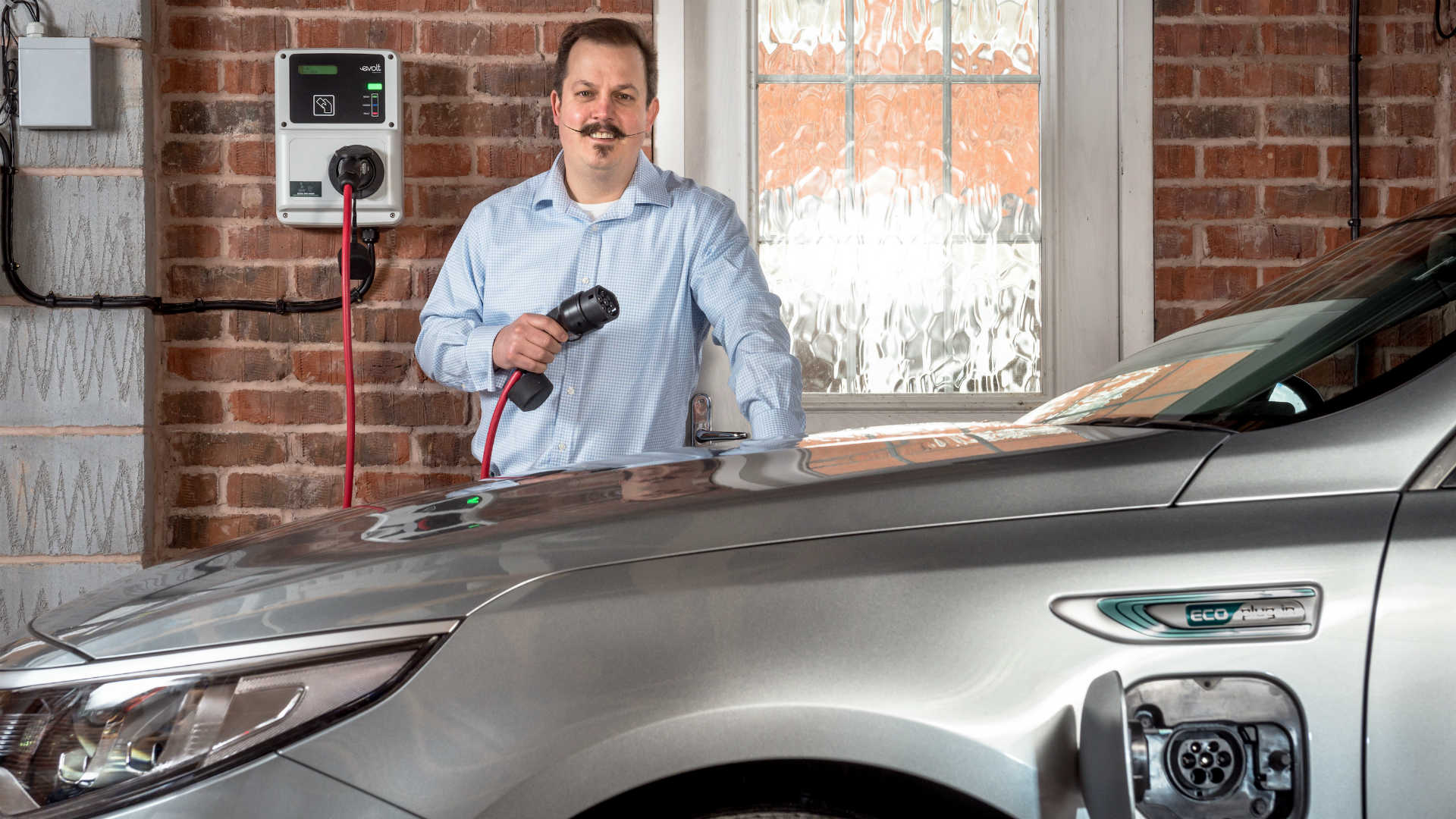
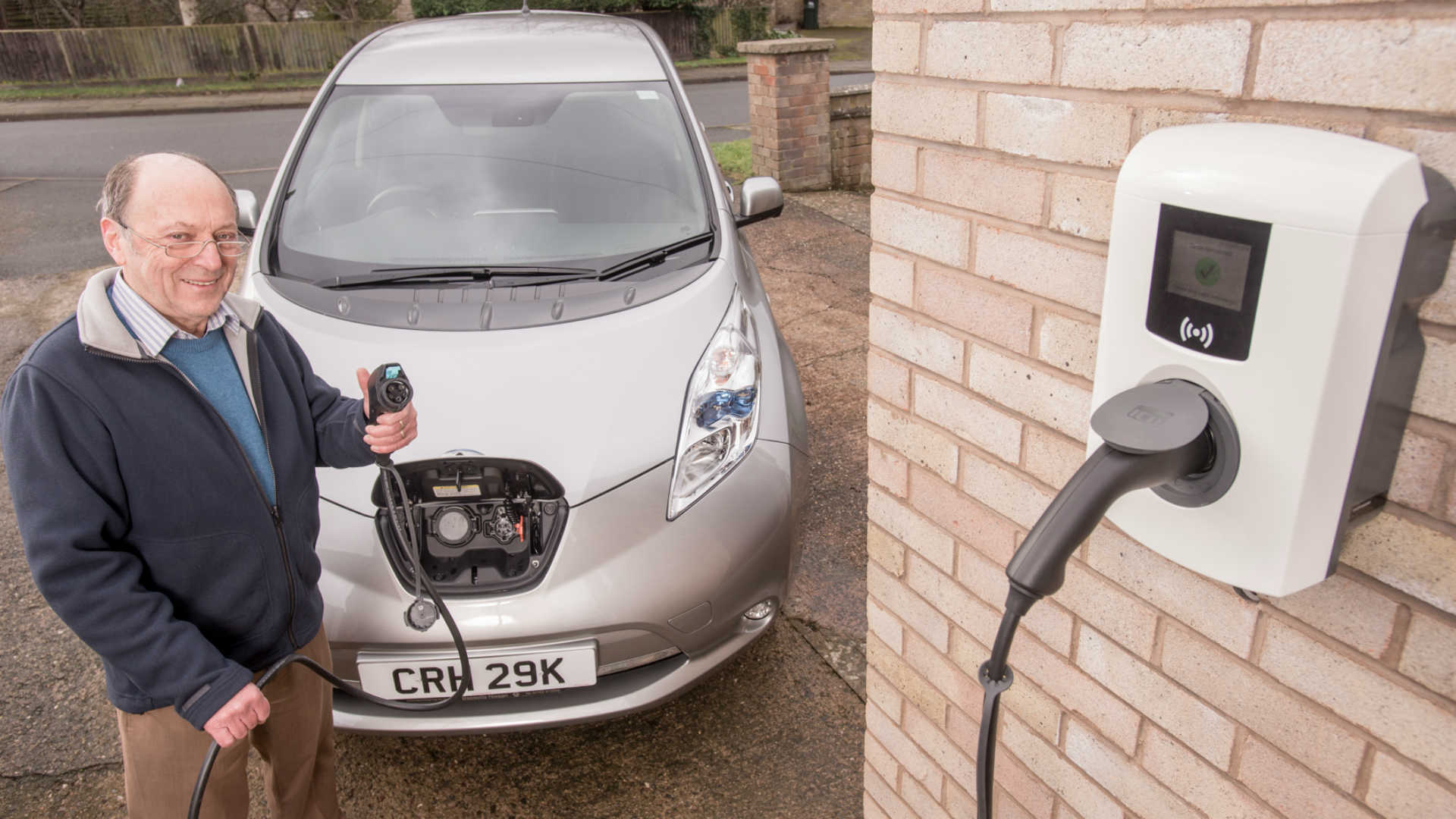
From 1 July 2019, all electric car home chargers backed by the government’s Electric Vehicle Homecharge scheme must use ‘smart’ technology.

The government made the announcement in December 2018, but the roads minister Michael Ellis has reiterated the requirements ahead of the new legislation coming into force.

It means that home chargers must have the ability to be remotely accessed and capable of receiving, interpreting and reacting to a signal. Smart charging reduces high peak electricity demand and minimises the impact of EV on the grid, says the government.

‘In the driving seat’

Michael Ellis said: “The government wants the UK to be the best place in the world to build and own an electric vehicle, with leadership and innovation helping us pave the way to a zero emission future.

“We’re in the driving seat of the zero emission revolution. Our new requirements for charge points could help keep costs down, ensuring the benefits of green transport are felt by everyone.”

Approximately 200 home chargers from 25 manufacturers have been confirmed as being eligible after 1 July, with each one marked on the government website.

Home chargers must be smart

Daniel Brown, policy manager at the Renewable Energy Association, welcomed the news but urged the government to extend the legislation to the workplace.

He said: “As more of our power comes from renewable technologies such as wind and solar, it’s key that we increase the ‘flexibility’ of our energy system.

“Smart charging will be an important part of this in the future, allowing homes to benefit from new tariffs and from bill-reducing technologies such as rooftop solar and battery storage.

“We welcome this move and hope the government go a step further in the future, by mandating the smartness of all new charge points including those installed in workplaces and in public locations.”

‘Allow the grid to cope’

Edmund King, AA president, added: “Three-fifths (59 percent) of drivers agree that domestic charging points should automatically default and delay charging a vehicle until energy prices are at their lowest. As well as keeping bills down, it will also allow the grid to cope with the new demand.

“However, there are occasions when drivers will need to override the system and charge their cars immediately. Three-quarters (75 percent) want this option as part of the new system and we are pleased it is in place ahead of the new installations.”

Advertisement

These are the UK’s most commonly asked motoring questions

0

Most common motoring questions on Google

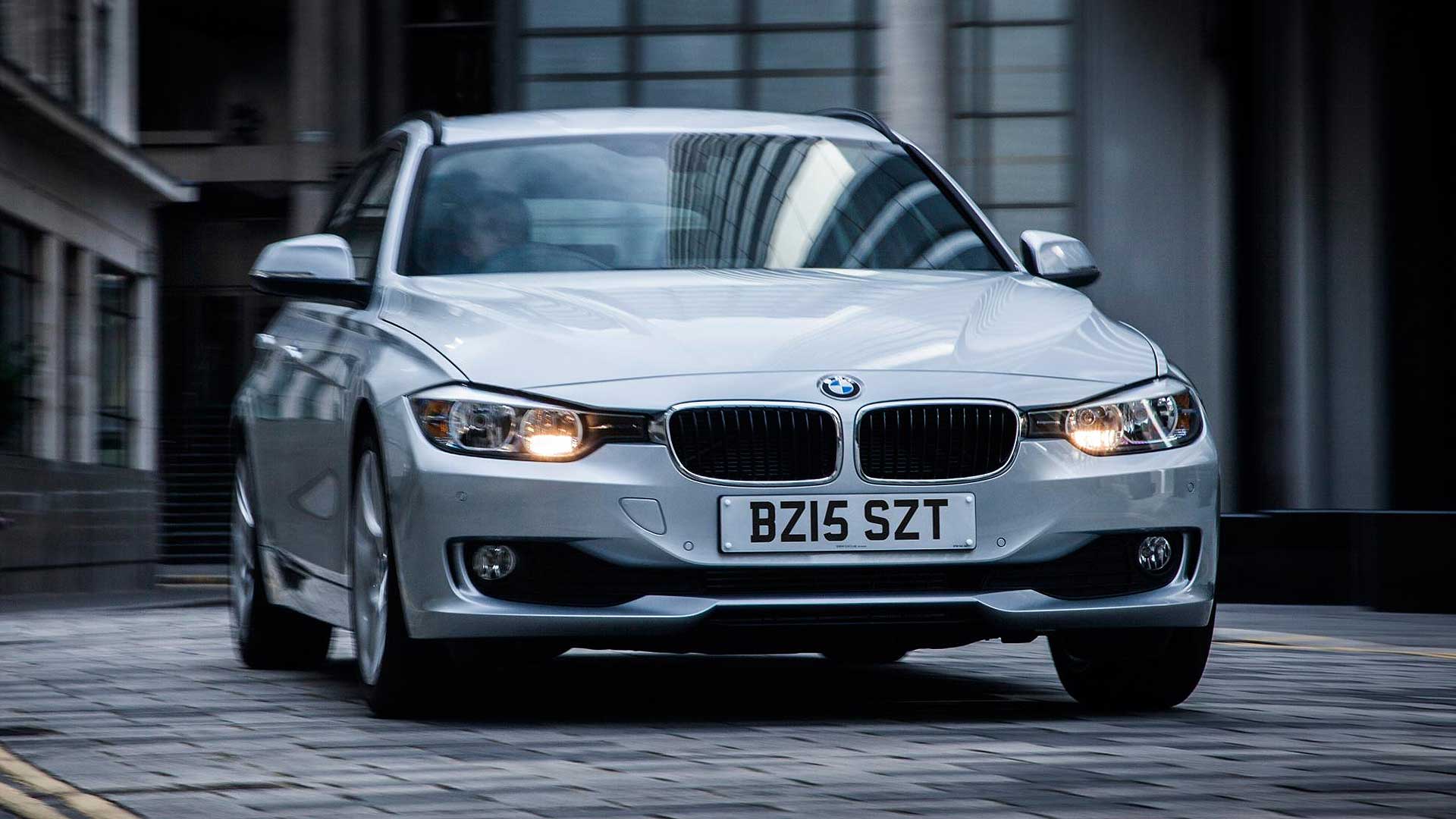
“Why is my BMW 3 Series the best?” This, believe it or not, is one of the most common motoring questions, according to a study.

Researchers analysed the most popular Google search queries relating to the UK’s 20 best-selling cars of the past decade to discover the most common motoring questions.

“Is my Vauxhall Mokka a 4×4?” was another popular query, along with “Is my Mercedes C-Class rear-wheel drive?”

Disappointingly, “Are modern Audis fitted with indicators?” didn’t feature in the results.

Most questions started with “Why is my…” or “Why won’t my…”, which suggests many people turn to Google for help diagnosing a problem. 

Losing power was a major concern for Vauxhall Corsa, Audi A3, BMW 1 Series and Vauxhall Insignia drivers.

‘Inexplicable beeps’ was the second most common question for Kia Sportage, Fiat 500 and Peugeot 208 drivers.

Indeed, the majority of queries were related to maintenance or problems, with drivers asking Google for help with juddering, starting issues, overheating, burning smells and a loss of coolant.

‘Better to be safe than sorry’

BMW 3 Series

William Fletcher, managing director of Scrap Car Network which carried out the study, said: “It’s a good sign that drivers are curious to discover what’s going on with their car. It enables them to make informed decisions about maintenance.

“And while search engines may provide tips on fixing basic issues, it’s always better to be safe than sorry. Drivers should consult a professional if they’re worried.

“It’s an equally good thing that buyers are doing proper research before deciding what car best suits their needs

“It’s often the case that inexperienced buyers take a test drive and fall in love with a car without understanding important issues like maintenance costs, availability of parts, reliability and common faults. Ignoring these things can result in a months, if not years, of unhappy motoring.”

Most popular search queries for top 20 cars of the past decade

  1. Why is my Vauxhall Corsa losing power?
  2. Why is my Audi A3 losing power?
  3. Why is my BMW 1 Series losing power?
  4. Why is my Vauxhall Insignia losing power?
  5. Why is my Kia Sportage beeping?
  6. Why is my Fiat 500 beeping?
  7. Why is my Peugeot 208 beeping?
  8. Why is my Ford Fiesta juddering?
  9. Why won’t my Mercedes A-Class start?
  10. Why is my Vauxhall Astra juddering? 
  11. Why is my Nissan Juke not starting?
  12. Why is my Volkswagen Golf losing coolant?
  13. Why is my Nissan Qashqai not locking?
  14. Why is my Volkswagen Polo losing water?
  15. Why is my Mini overheating?
  16. Why is my Toyota Yaris using oil?
  17. Why is my Ford Kuga burning?
  18. Is my Mercedes C-Class rear-wheel drive?
  19. Is my Vauxhall Mokka a 4×4?
  20. Why is my BMW 3 Series the best?


Advertisement

Highways England’s new super-truck promises to cut congestion

0

Highways England ECRU super-truck

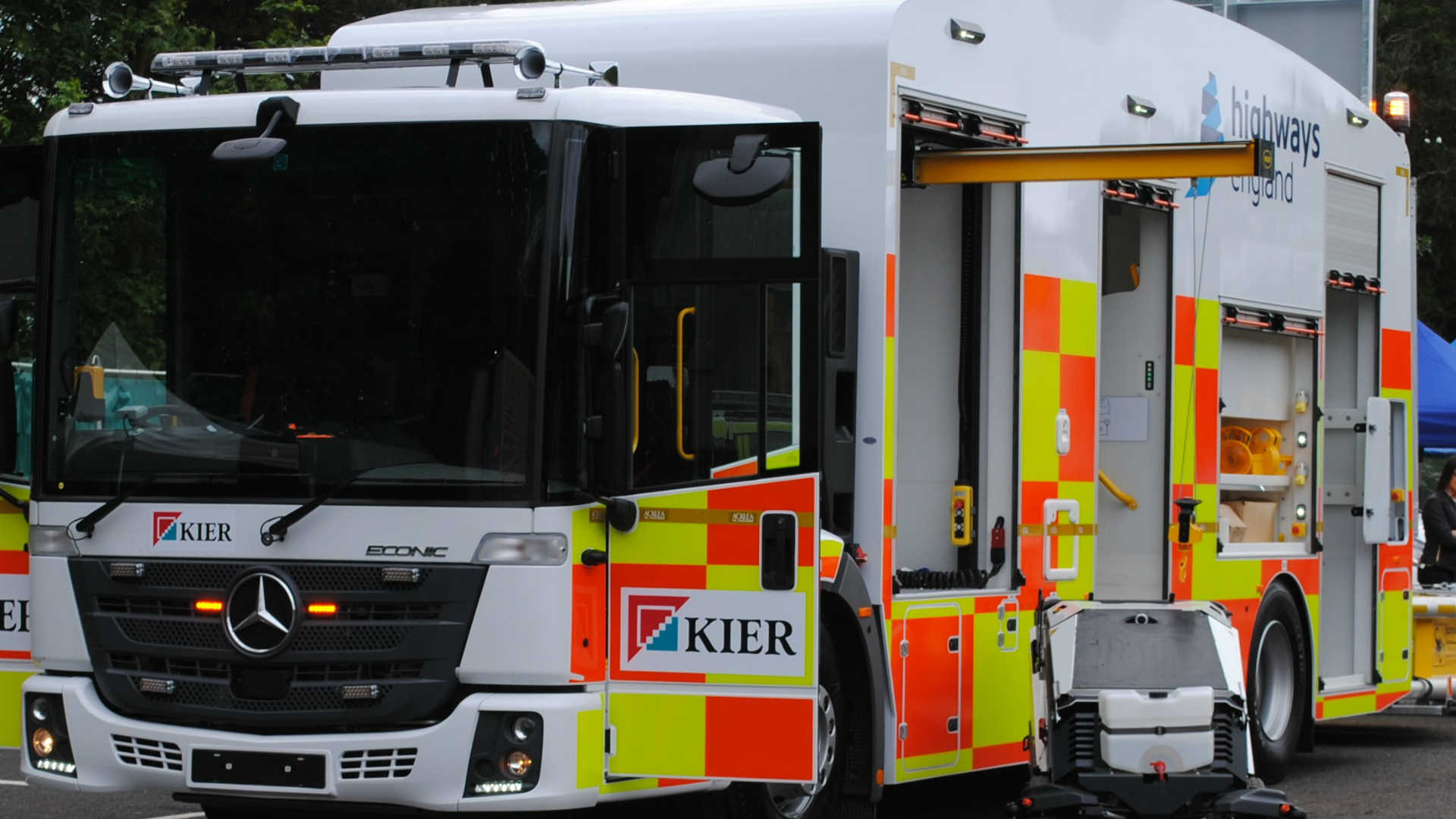
Its official name is Enhanced Customer Response Unit (ECRU), but if it delivers on its promise to ‘dramatically reduce delays for drivers’, it’ll develop a reputation as a ‘super-truck’.

The ECRU – which is the first of its kind in the UK – is being trialled in the West Midlands from July, with the vehicle manned by both Highways England traffic officers and incident support staff from contractor Kier.

It combines the expertise, knowledge and equipment of both teams who deal with post-incident clean-ups and repairs.

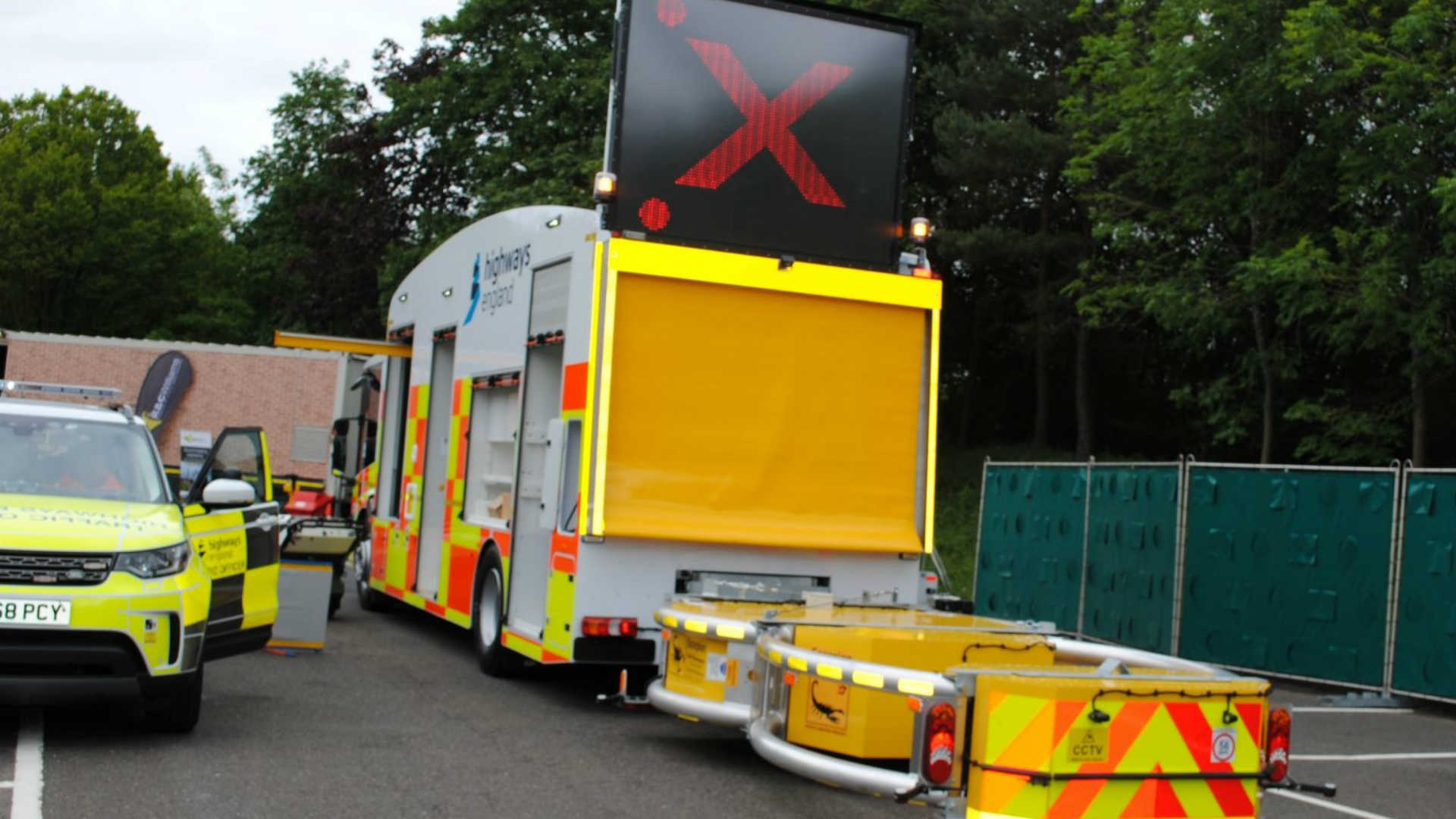
Motorists in the West Midlands are unlikely to miss the ECRU super-truck – it looks like a full-size Lego Technic creation. The warning beacons and electronic message signs are the most visible features.

But the ECRU can also carry bigger signs and more cones. Super-truck is super-size.

Other features of note include impact-absorbing cushions on the back to protect road workers, an on-board sweeper and a pressure washer. 

‘Huge strides’

Highways England ECRU in the West Midlands

Highways England corporate group leader Martin Bolt said: “Highways England continually strives to develop new ways and innovations that will help keep our road network clear and traffic moving.

“By combining services in one vehicle we can deal with incidents and issues more quickly.

“Working with our partners Kier we have been able to take huge strides in ensuring smoother, safer journeys for all road users.”

Scott Cooper, managing director strategic highways at Kier, added: “Having one innovation performing a range of tasks will allow us to respond to incidents quicker, inevitably saving time for our customers.

“Jointly occupying the vehicle demonstrates our continued commitment to working collaboratively to improve efficiencies and achieve the best results for both road users and workers.”

If the West Midlands trial is successful, you can expect to see the ECRU multi-tasking super-truck appearing on a main road near you in the future. 

Advertisement

Electric Fiat 500 ‘Jolly’ is the ultimate holiday hire car

0

Hertz electric classic Fiat 500

Meet the Fiat 500 Jolly Spiaggina Icon-e, an all-electric version of the Italian icon. And it could be your next holiday hire car.

Hertz has commissioned the conversions from custom auto coachbuilder Garage Italia, with an electric motor sending power to the rear wheels. There’s no word on how many miles you’ll get from a battery charge, though. We suspect not many…

The Spiaggina features hand-woven seats in natural rope, heritage bodywork and matching wheels. It’s a classic Fiat 500, then, but with an electrifying twist.

This isn’t the first electric Fiat 500, though: a previous effort was inspired by Tesla.

Hertz electric classic Fiat 500

Enrico Vitali, CEO of Garage Italia calls the Icon-e “a perfect blend of tradition and modernity”.

In the Icon-e, “aesthetic research and production craftsmanship meet technological innovation and electric redevelopment, in the name of sustainability and style”.

Hertz electric classic Fiat 500

The Icon-e 500 Jolly will be available to rent from early July and will be the jewel in the company’s ‘Selezione Italia’ all-Italian offering.

“We are very proud of this new initiative with Garage Italia, offering our customers a fun-to-drive, tailor-made electric Fiat 500 that sports true Italian flair,” said Massimiliano Archiapatti of Hertz Italy.

Hertz electric classic Fiat 500

Selezione Italia is much more than a rental offer, it’s a philosophy; it’s the way we honour the relationship with our guests. In Italy we are proud of our traditions, of our distinctive culture that embodies authentic design, fashion, food, art, but most of all, hospitality – all embedded in Selezione Italia.”

Advertisement

Britain will build next Vauxhall Astra IF no-deal Brexit is avoided

0

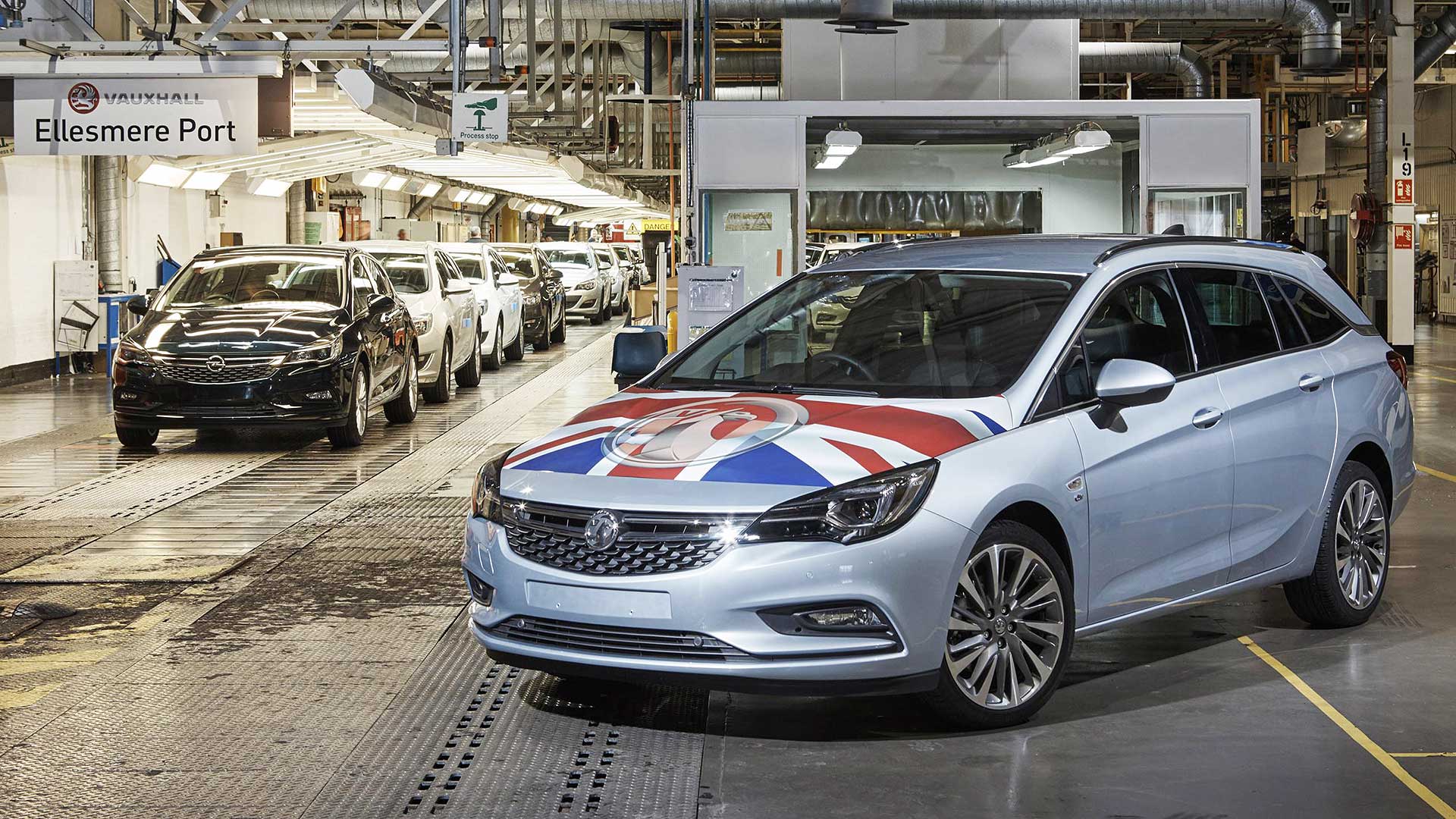
Ellesmere Port Vauxhall AstraThe next-generation Vauxhall Astra will continue to be built at the firm’s Ellesmere Port, Cheshire plant – if the UK can agree a favourable post-Brexit deal.
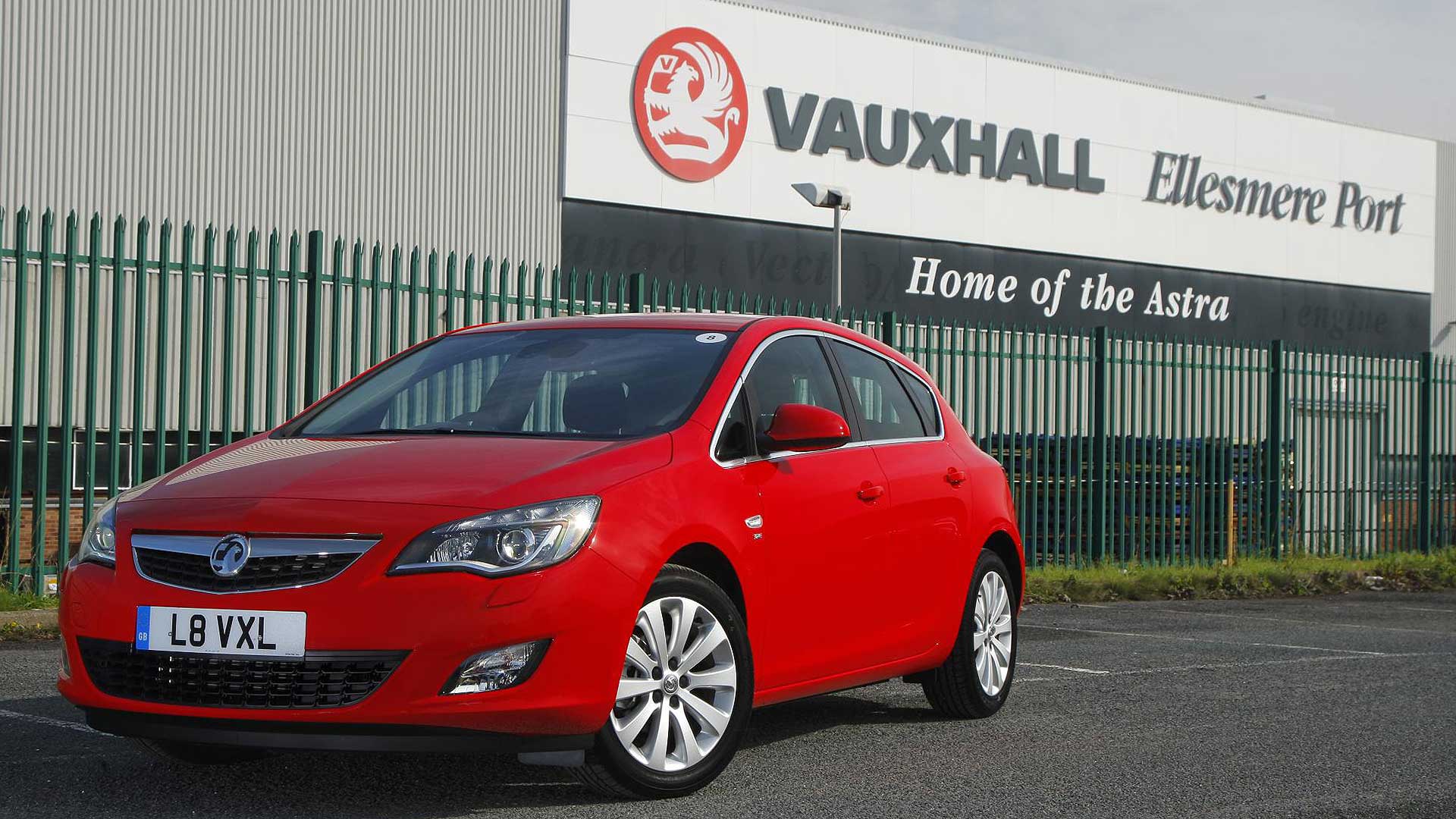
Vauxhall owner Groupe PSA has announced the next Astra will be made, as today, at two plants. One of them will be Russelsheim in Germany.

However, Gliwice in Poland, which builds today’s car, is set to lose the Astra production deal – as the thriving Groupe PSA has chosen to keep Ellesmere Port instead.

Ellesmere Port - Home of the Vauxhall Astra

This will be seen as a major vote of confidence for the UK automotive industry, if Britain is able to meet the French-owned company’s conditions.

The firm wants to see the final terms of the UK’s exit from the EU first. This is seen as a coded warning that a no-deal Brexit will lead to no new Astra deal for Ellesmere Port.

Groupe PSA also wants the Unite trade union to accept the New Vehicle Agreement, which the two have been negotiating.

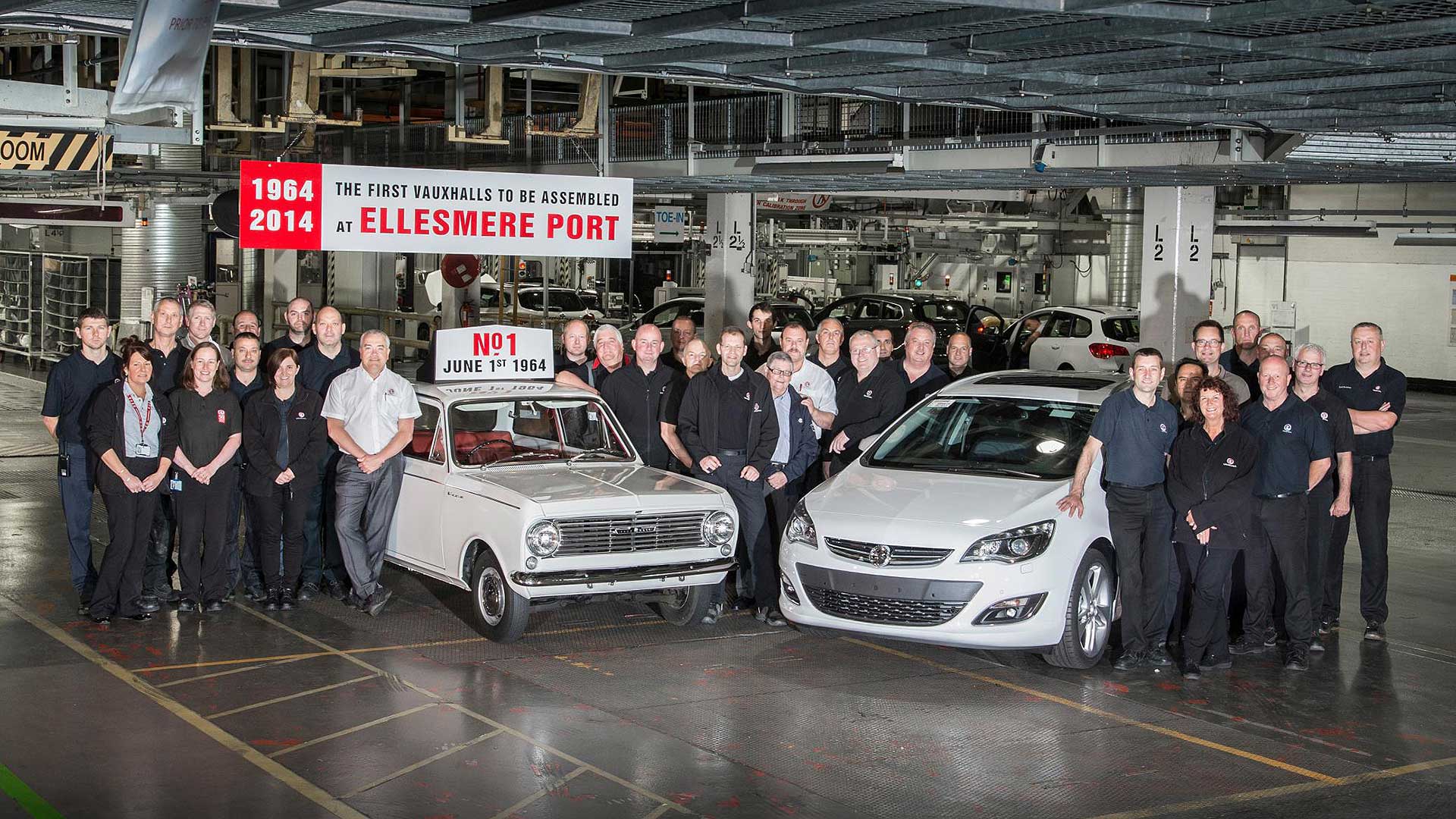
Ellesmere Port 50th anniversary

British unions have been commended by car industry bosses in recent years, and Groupe PSA chairman Carlos Tavares has previously praised Unite for its positive work in saving van production at Luton. Unite has already been working with company bosses to improve the business case of Ellesmere Port, which opened in 1964.

This second condition is thus seen as less troublesome than the first. Unite has already expressed its desire to see no-deal Brexit taken off the table. 

‘This news demonstrates the continuous effort and commitment of Groupe PSA to Vauxhall Motors,’ said the firm in a statement.

Mike Hawes, chief executive of trade body the Society of Motor Manufacturers and Traders (SMMT) welcomed the news, albeit with caution. “This latest news is potentially hugely positive but reinforces what we have been saying all along.

“The threat alone of a ‘no deal’ Brexit is preventing companies from committing to investment in the UK.

“Thousands of jobs depend on us getting a deal so we can retain our competitiveness and regain our global reputation.”

The current Vauxhall Astra is mid-way through its lifecycle; a facelift is expected later this year. It is expected to be replaced in 2021.

Advertisement

Are you paying too much for your driving licence?

0

Are you paying too much for your driving licence

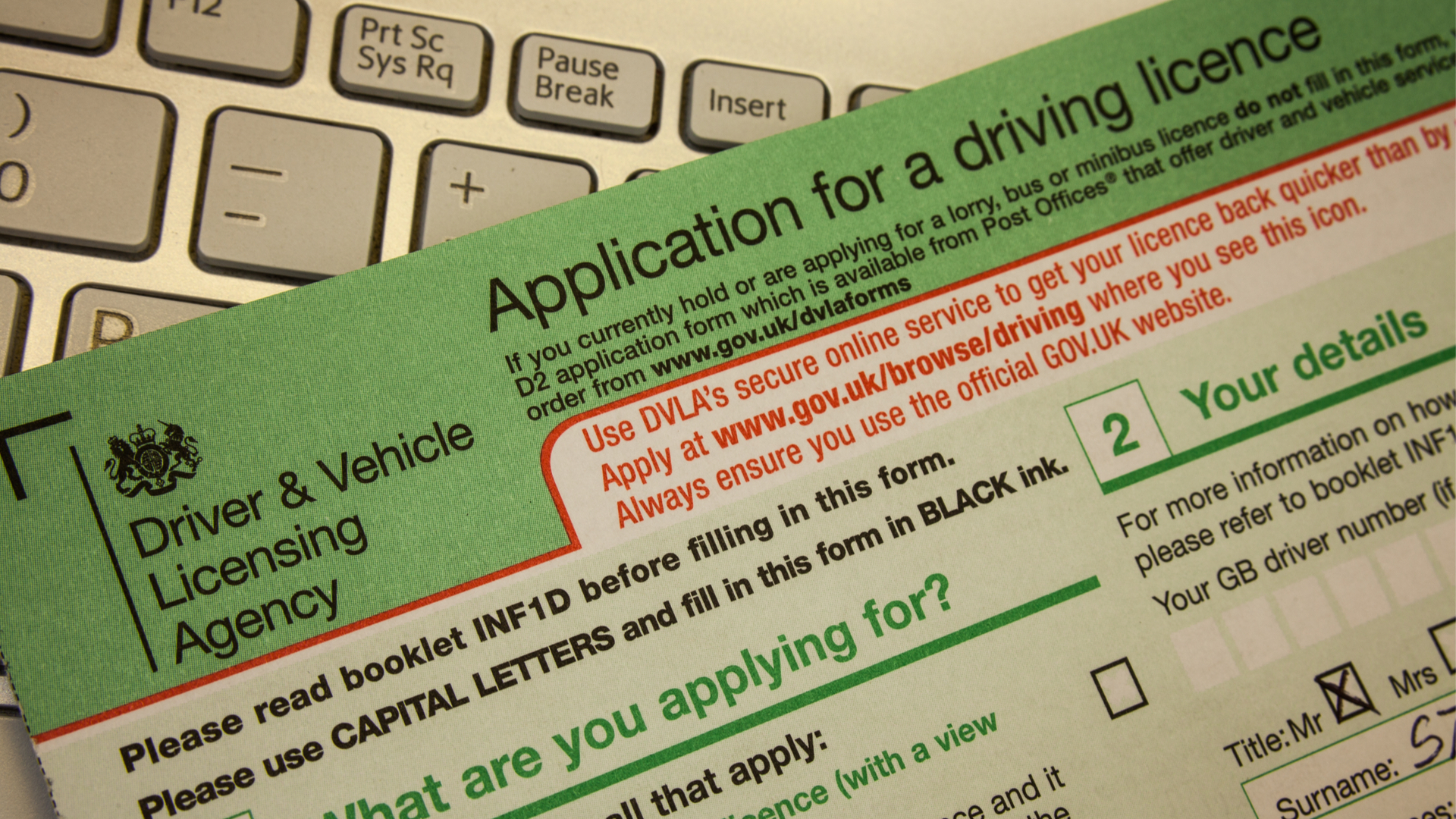
Around 1.2 million drivers paid too much for their driving licence in 2018, according to figures released by the DVLA.

It’s cheaper to apply online for a provisional licence or to renew an existing driving licence, but many motorists choose to post their applications to the DVLA instead.

It means that British motorists missed out on savings of nearly £5 million by not using the online services, although only a fifth of provisional licence applications were sent using the traditional method.

Meanwhile, around 50 percent of renewals were submitted online.

A provisional licence costs £43 by post – £9 more than online. Renewals cost £17 by post and £14 online.

‘Cheaper and quicker’

DVLA chief executive Julie Lennard said: “Each year, more and more people are choosing to use our online services and it is always cheaper and quicker to renew your driving licence on GOV.UK.

It’s also the quickest way for those who have lost or misplaced their licence to apply for a replacement.”

How to apply for a provisional driving licence

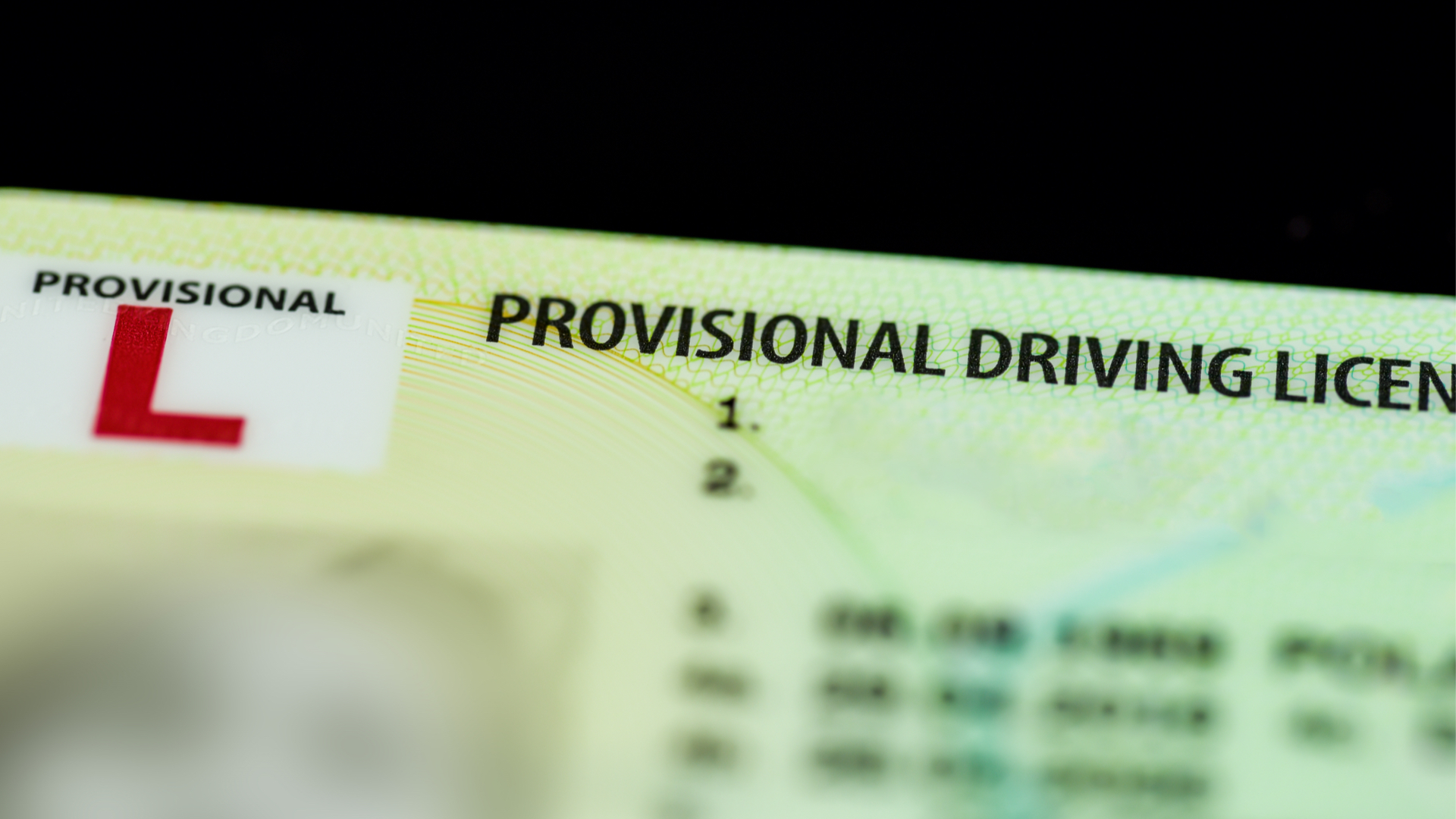
Provisional driving licence

Drivers who apply online should only use GOV.UK so they can be sure of dealing with DVLA directly and paying the lowest price for services that carry a fee.

To apply for a provisional driving licence, you must be at least 15 years and 9 months old and be able to read a number plate from 20 metres away.

Click here to start your application.

How to renew a driving licence

Apply for a driving licence online

You can renew your driving licence online if you have a valid UK passport. Click here to start your application.

If you are aged 70 or over, you can renew for free by using the following link.

Remember to only use GOV.UK to apply for, or to renew, your driving licence. There are many third party websites masquerading as the official government website.

These often charge an additional fee for services that are either free or cost significantly less via the official channels…

Advertisement

Nissan Qashqai moves a step closer to being a self-driving car

0

Nissan Qashqai with ProPilot

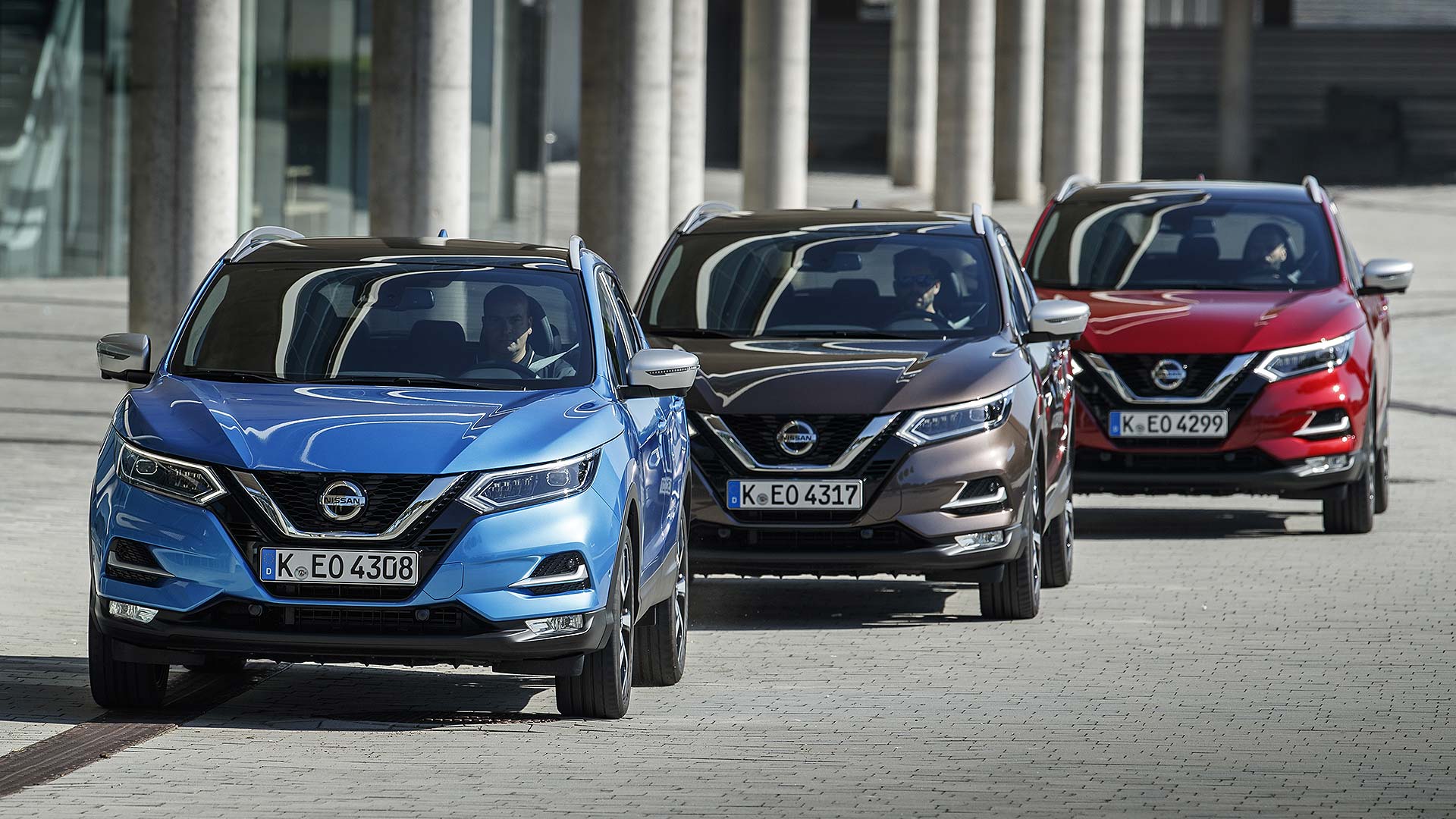
Nissan’s advanced ProPilot drive-assistance technology is now available on all automatic variants of the Qashqai crossover.

Used during single-lane driving, the system maintains the car’s lane position and distance from the vehicle in front, edging the UK’s best-selling crossover a step closer to self-driving autonomy.

According to Nissan, ProPilot is the “first step on the journey towards autonomous driving” and is designed to be a ‘hands on, eyes on’ technology.

In other words: the driver remains in control and responsible for the vehicle at all times.

2019 Nissan Qashqai

ProPilot is designed for low-speed congestion and high-speed cruising, with Nissan claiming it “liberates drivers from some of the more mundane elements of motoring”.

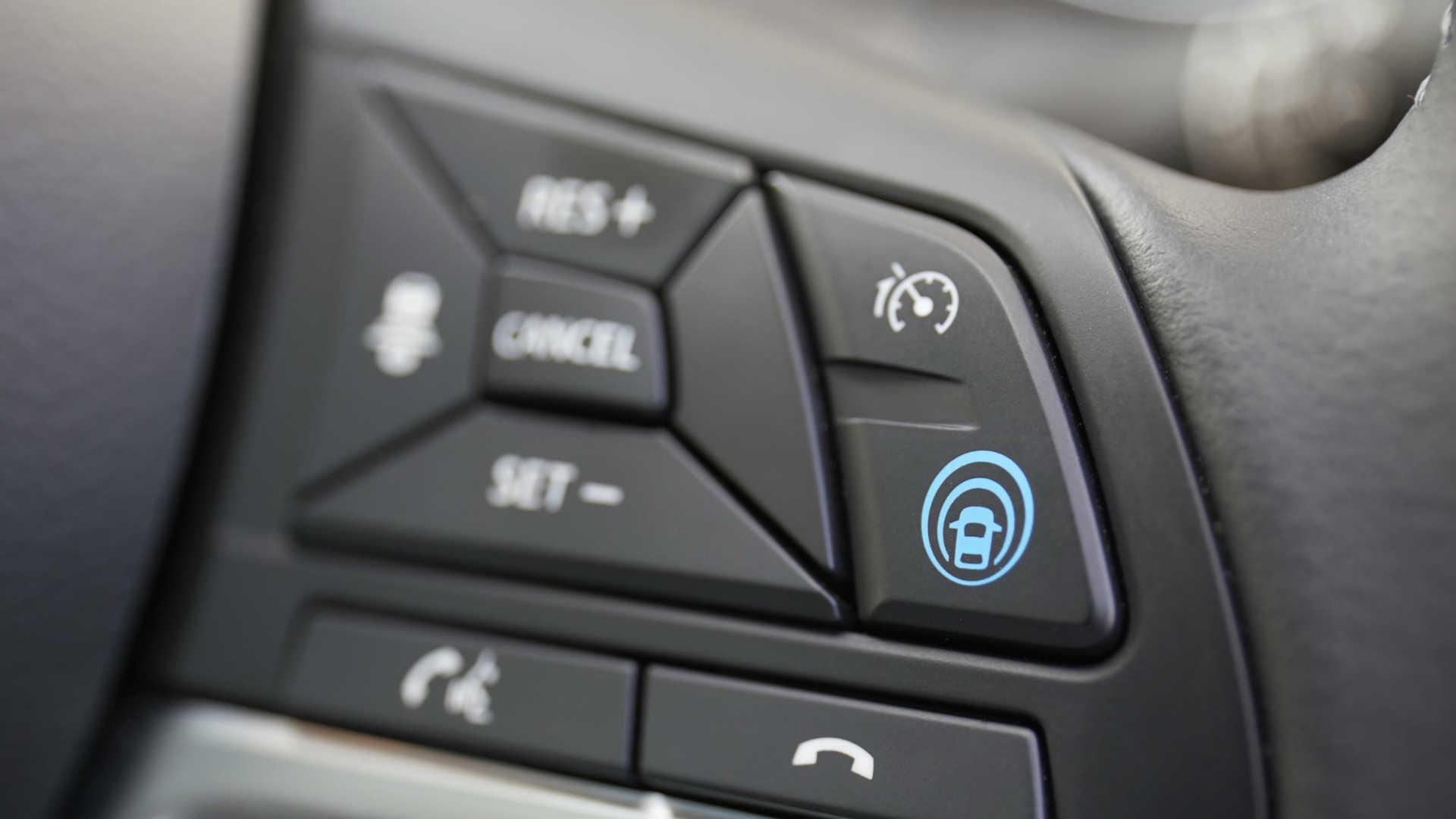
It’s activated via a ProPilot button on the right of the Qashqai’s steering wheel, with the ‘SET’ button used to maintain the current speed and a safe distance from the vehicle in front.

The Qashqai will slow to a complete stop if the traffic conditions require, before pulling away if the car is stationary for three seconds or less. If the wait is longer, the driver can continue by using the ‘RESUME’ button or tapping the accelerator.

‘Confidence, control and enjoyment’

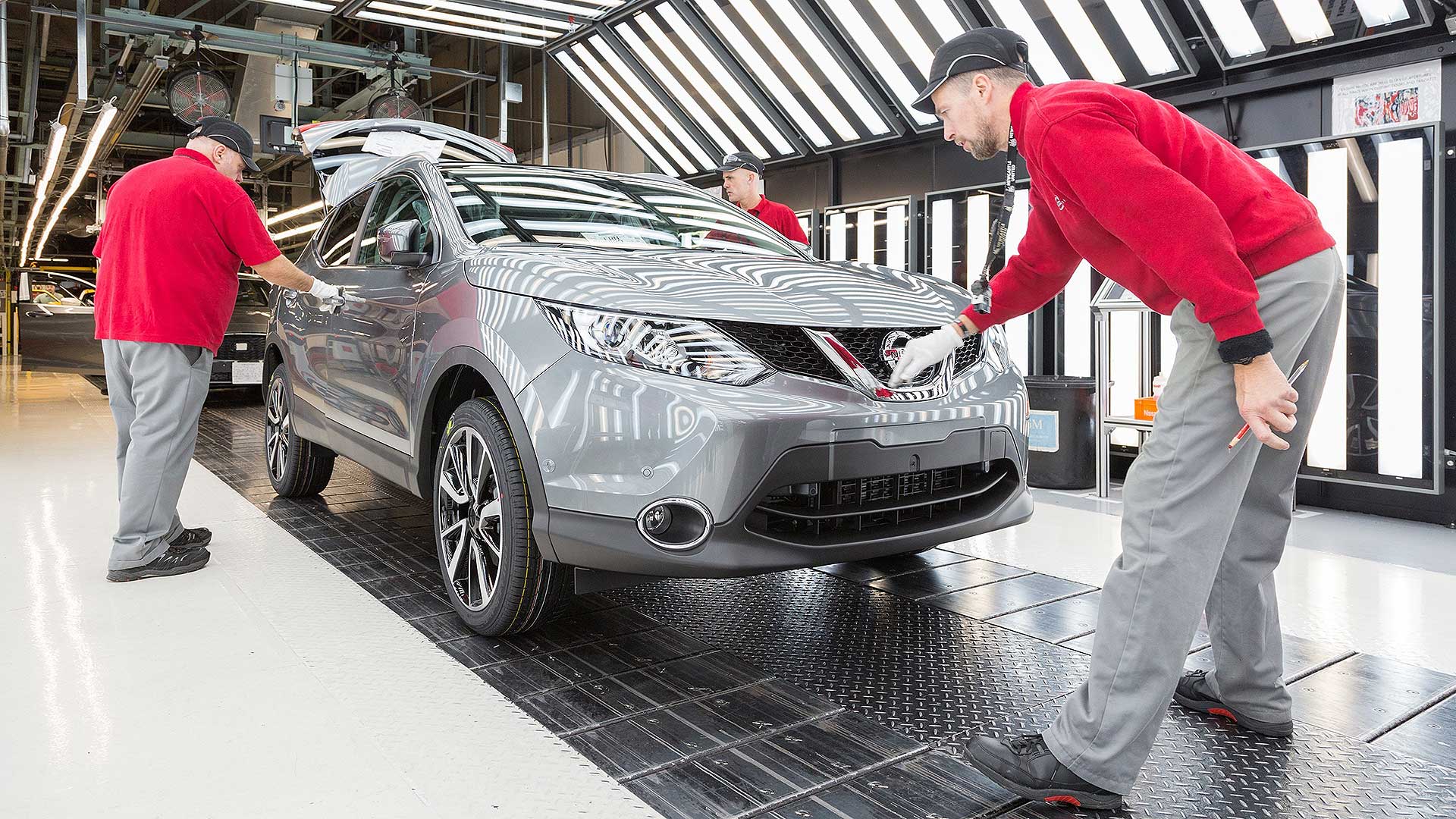
Nissan Qashqai built in Sunderland

Kalyana Sivagnanam, managing director Nissan GB, said; “The Nissan Qashqai has always been a leader in terms of innovative design and technologies that enhance the ownership experience.

“Our advanced ProPilot drive assistance adds a greater level of confidence, control and enjoyment to the UK’s best-selling crossover.”

ProPilot is currently available on the Leaf and Qashqai in the UK, with the X-Trail set to receive the technology later in 2019.

On N-Connecta grades, ProPilot is a £595 option, but the technology is standard on Tekna and Tekna+ grades. For Qashqais with a manual gearbox a Drive Assist Pack is available as standard on Tekna and Tekna+, and as a £595 option on N-Connecta models.

Drive Assist Pack is essentially ProPilot ‘lite’, with the system not featuring the stop/resume function.

ProPilot debuted on the Nissan Serena in Japan in 2016, and since then more than 350,000 vehicles have left the factory equipped with the technology. It is available on the all-electric Nissan Leaf as well. 

Advertisement