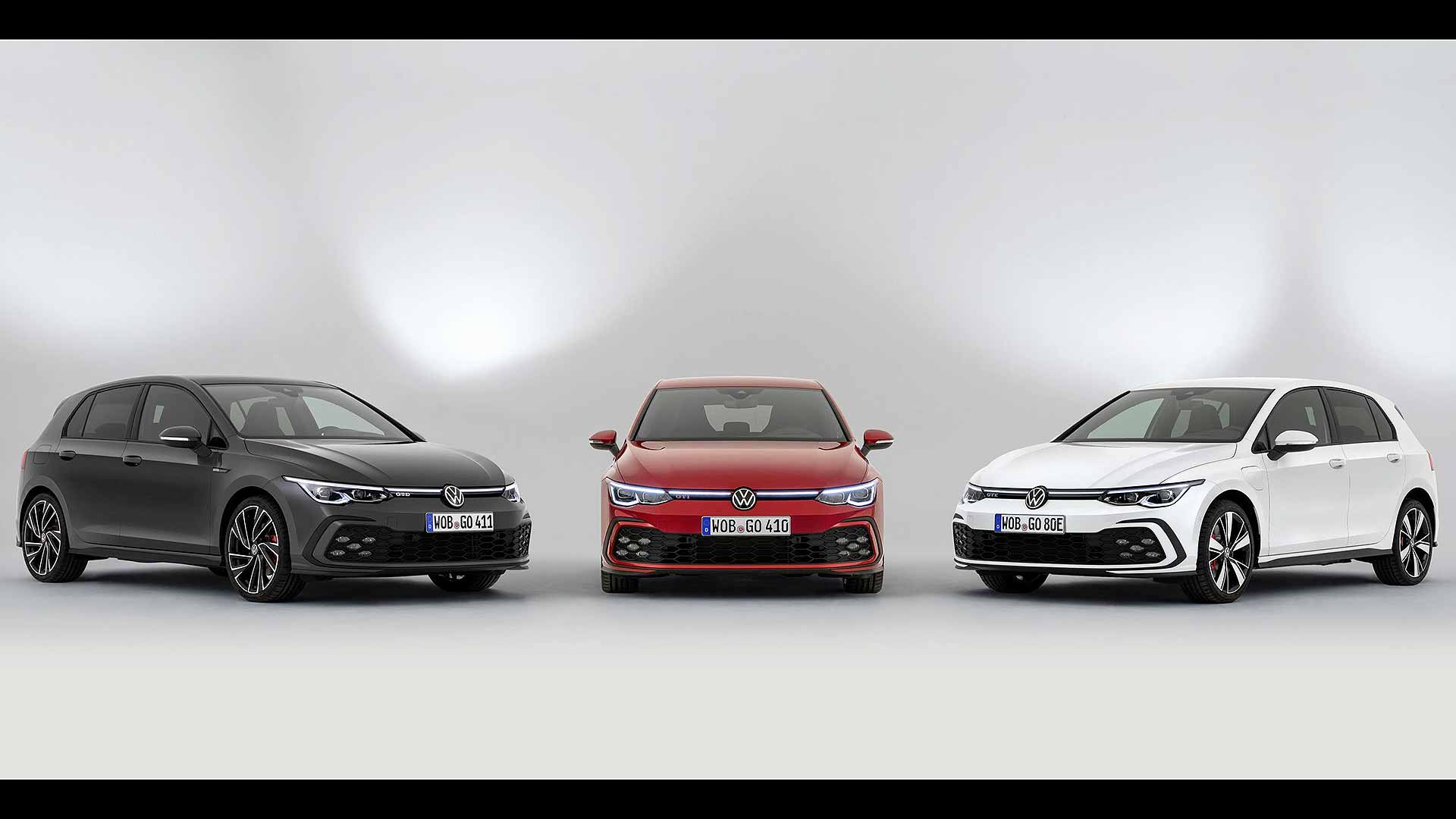
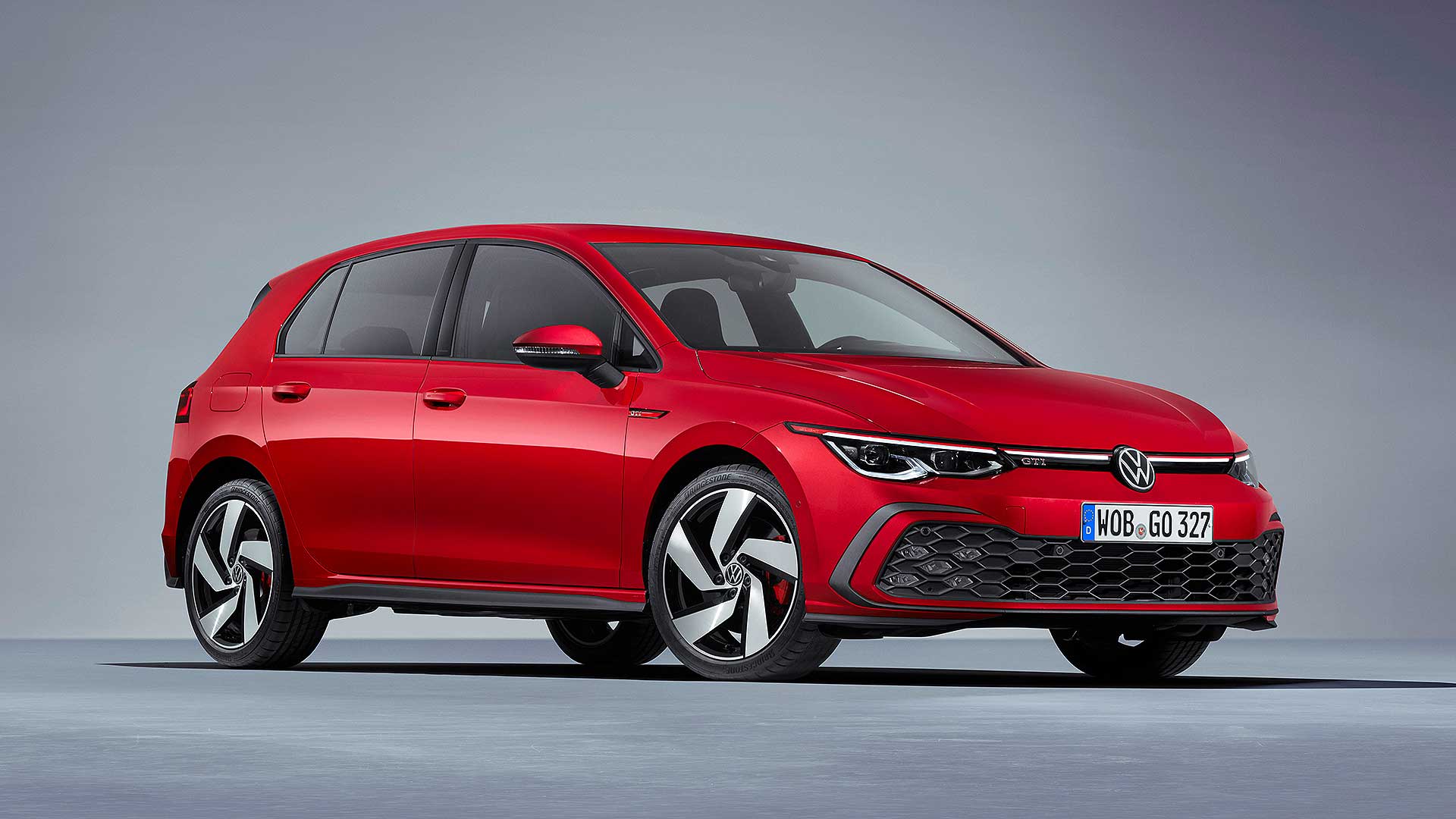
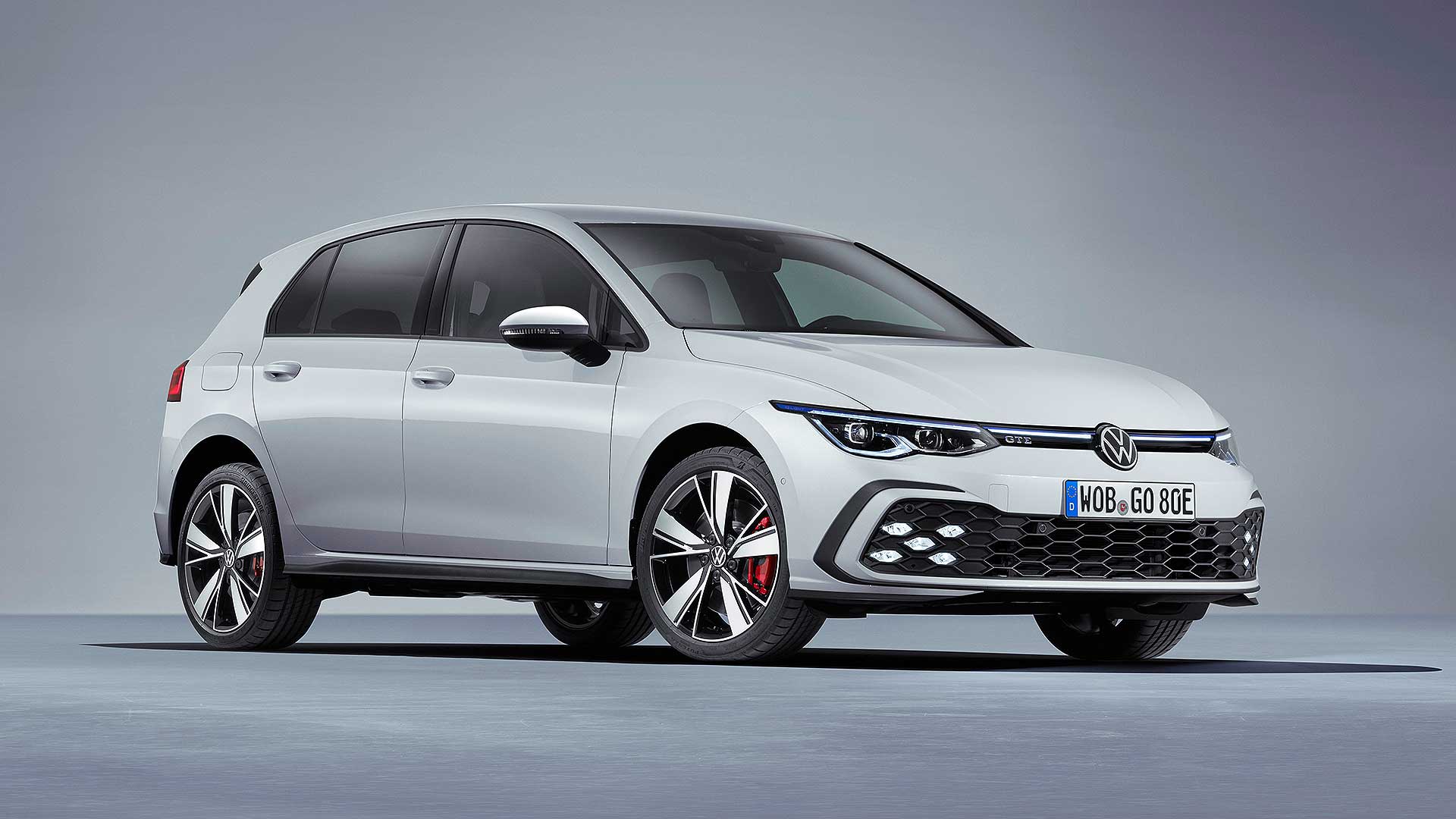
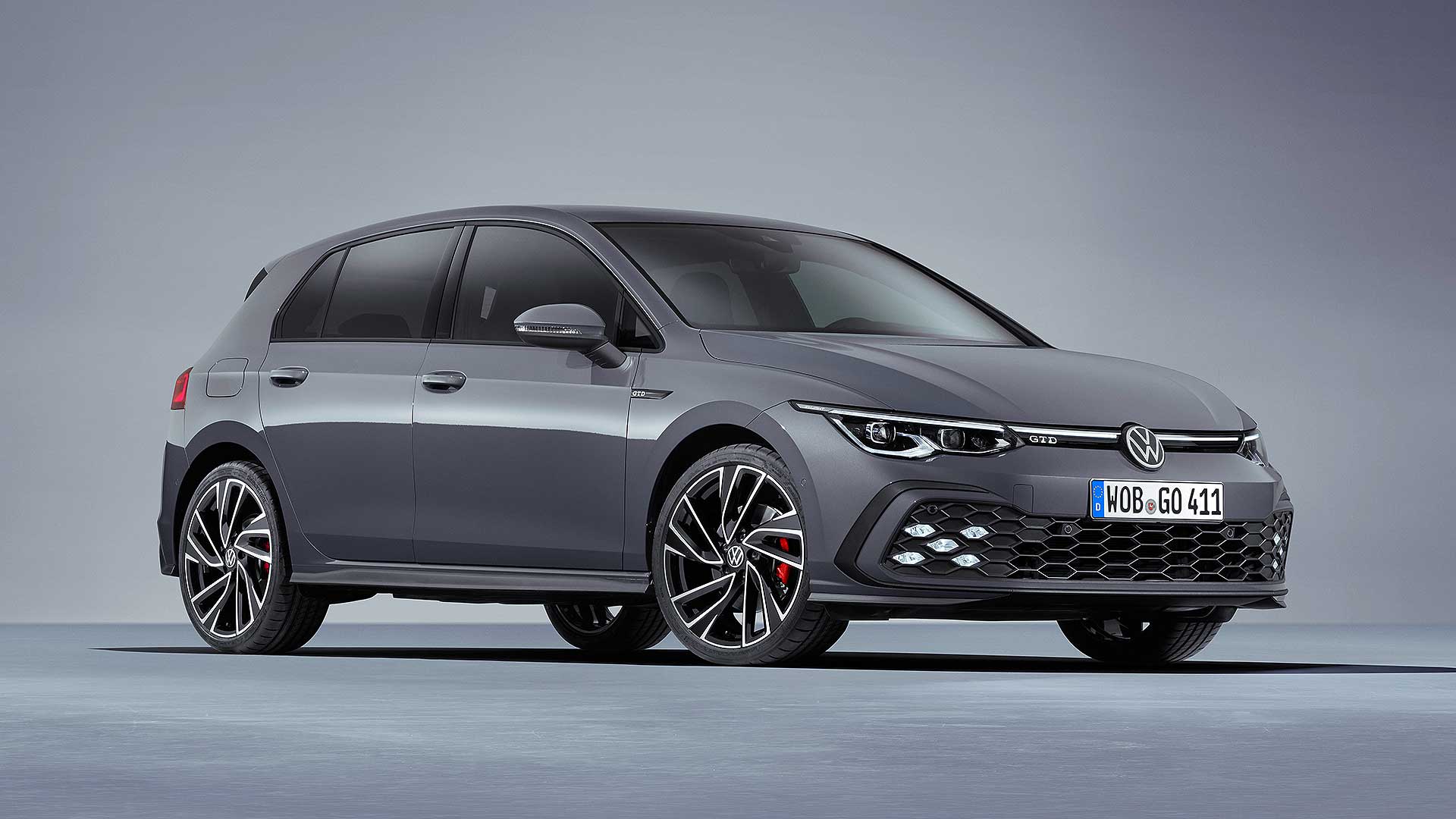
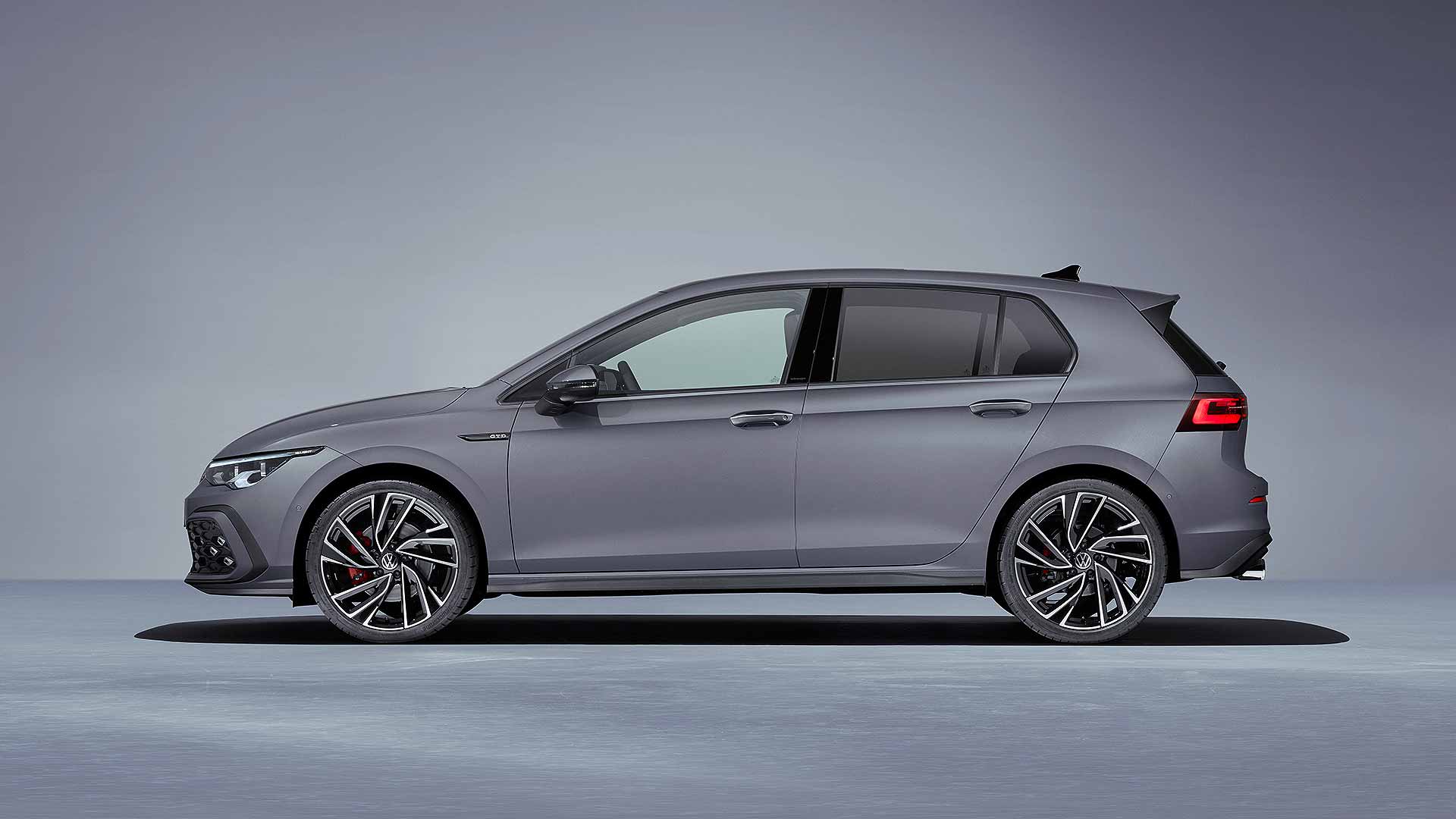
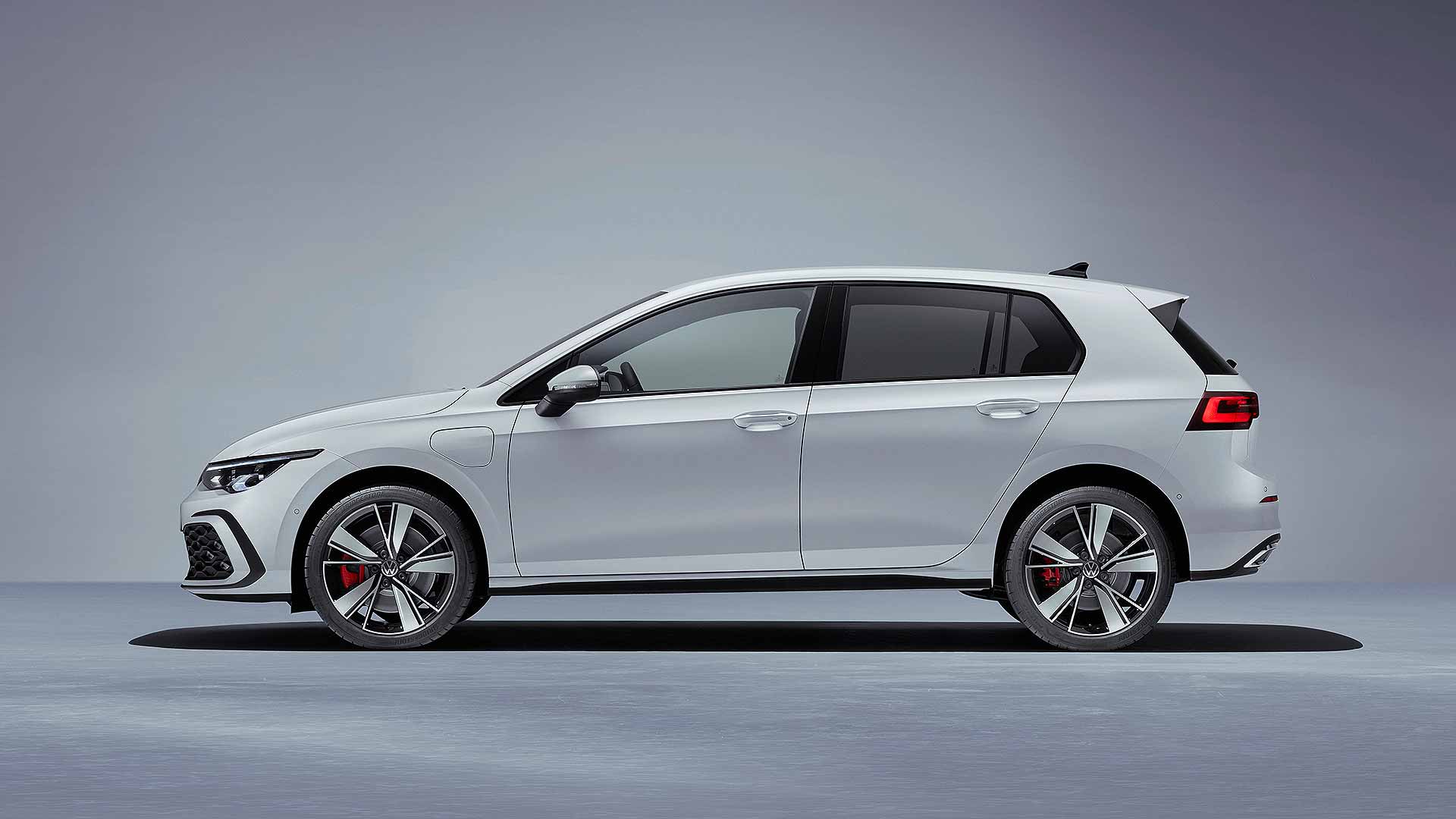
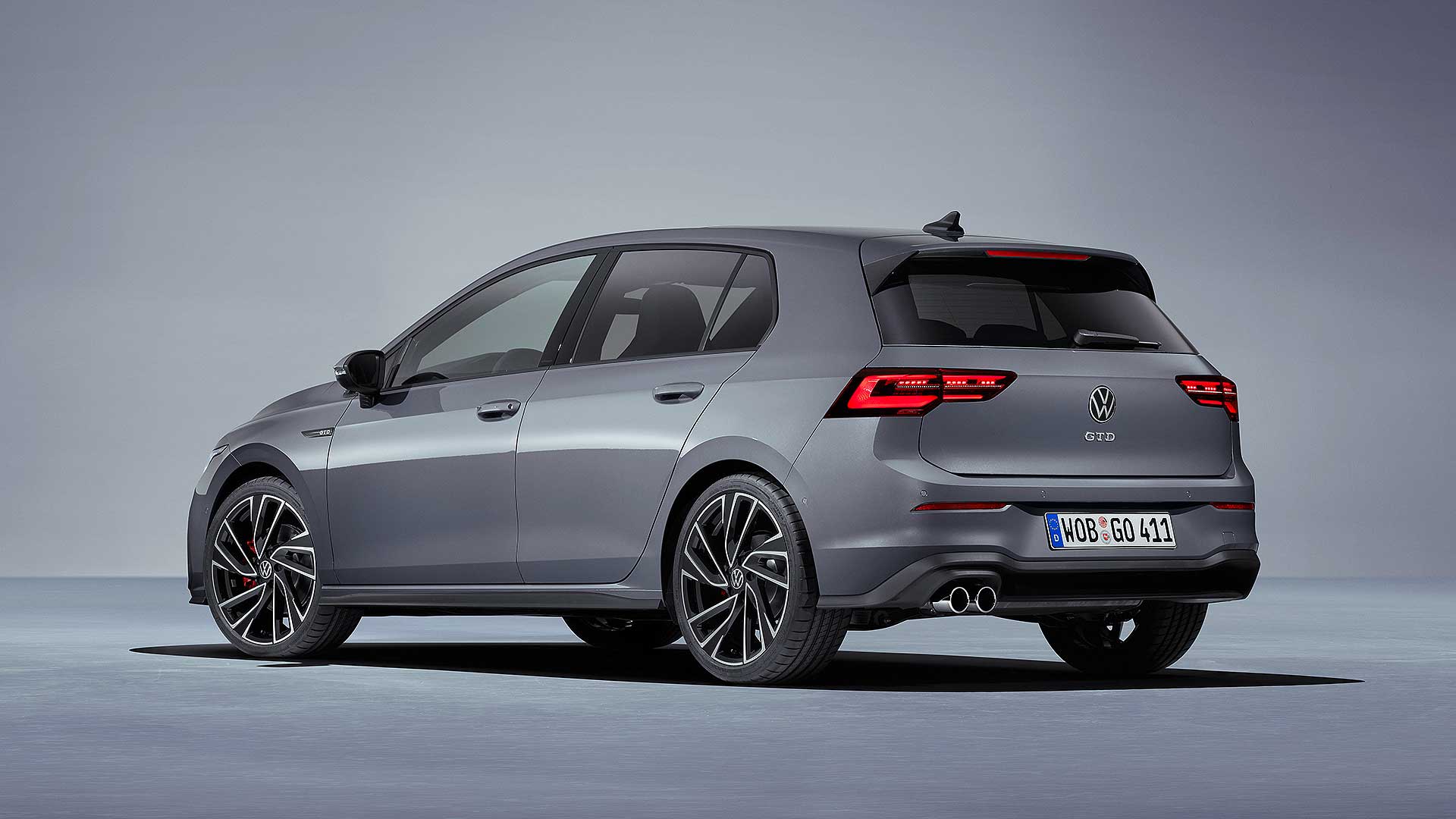
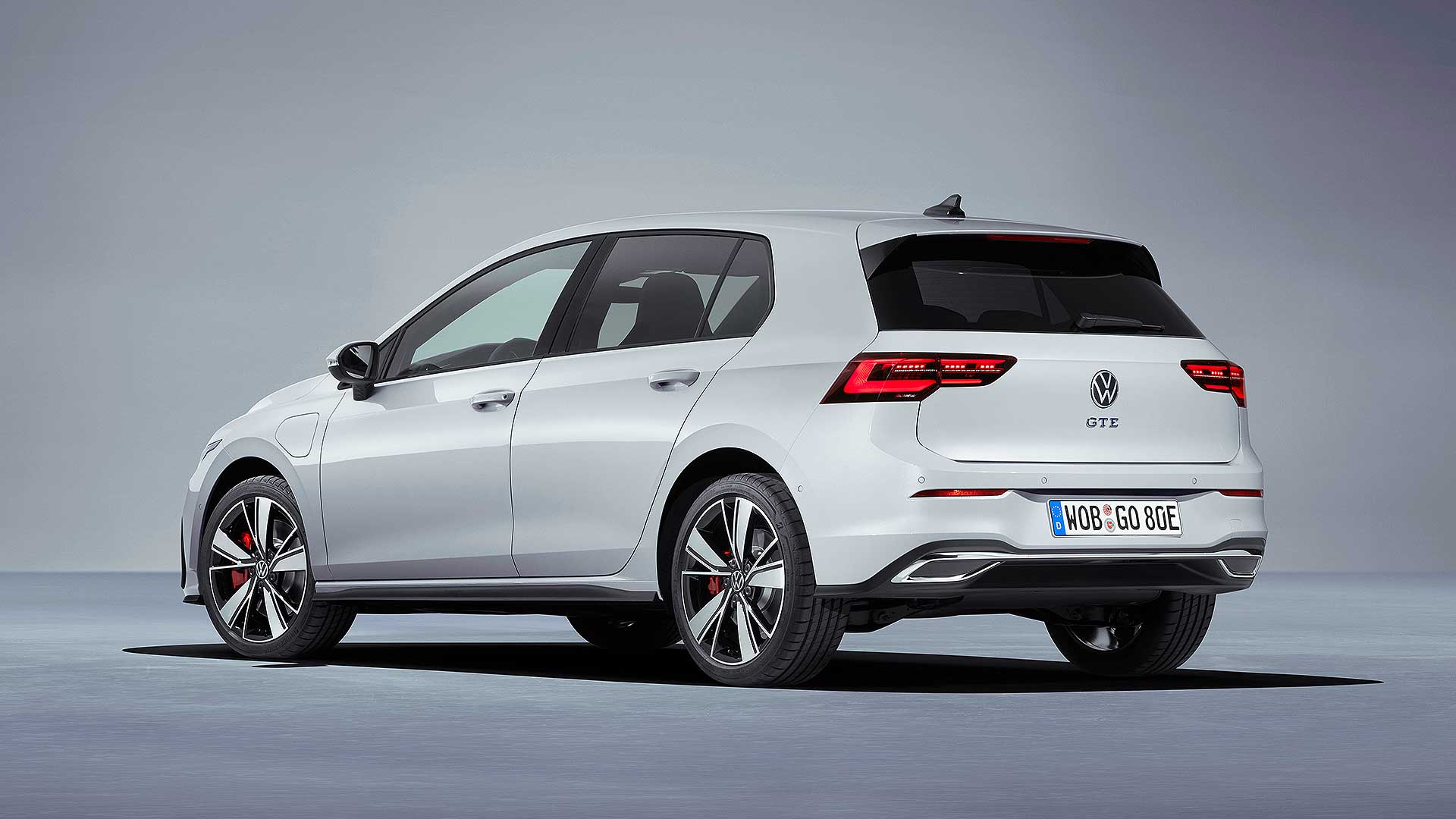
The Volkswagen Golf GTI has been revealed in eighth generation form – along with two siblings, the hybrid Golf GTE and diesel Golf GTD.
In revealing all three at once, Volkswagen aims to future-proof the hot Golf line from launch. Customers can choose which flavour of fuel best suits their performance Golf. So what is the choice on offer?
ALSO SEE: Volkswagen Golf GTI history in pictures
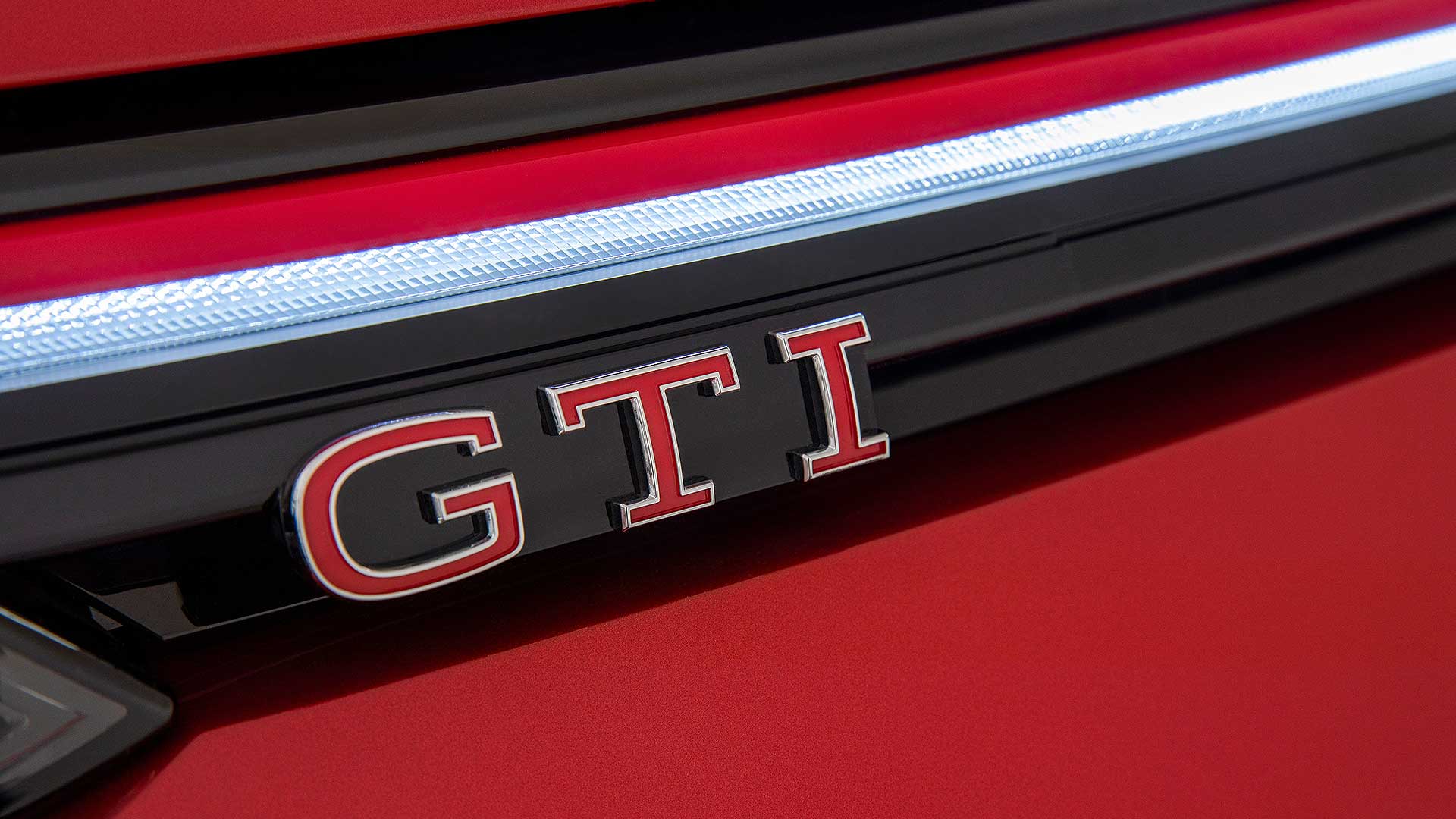
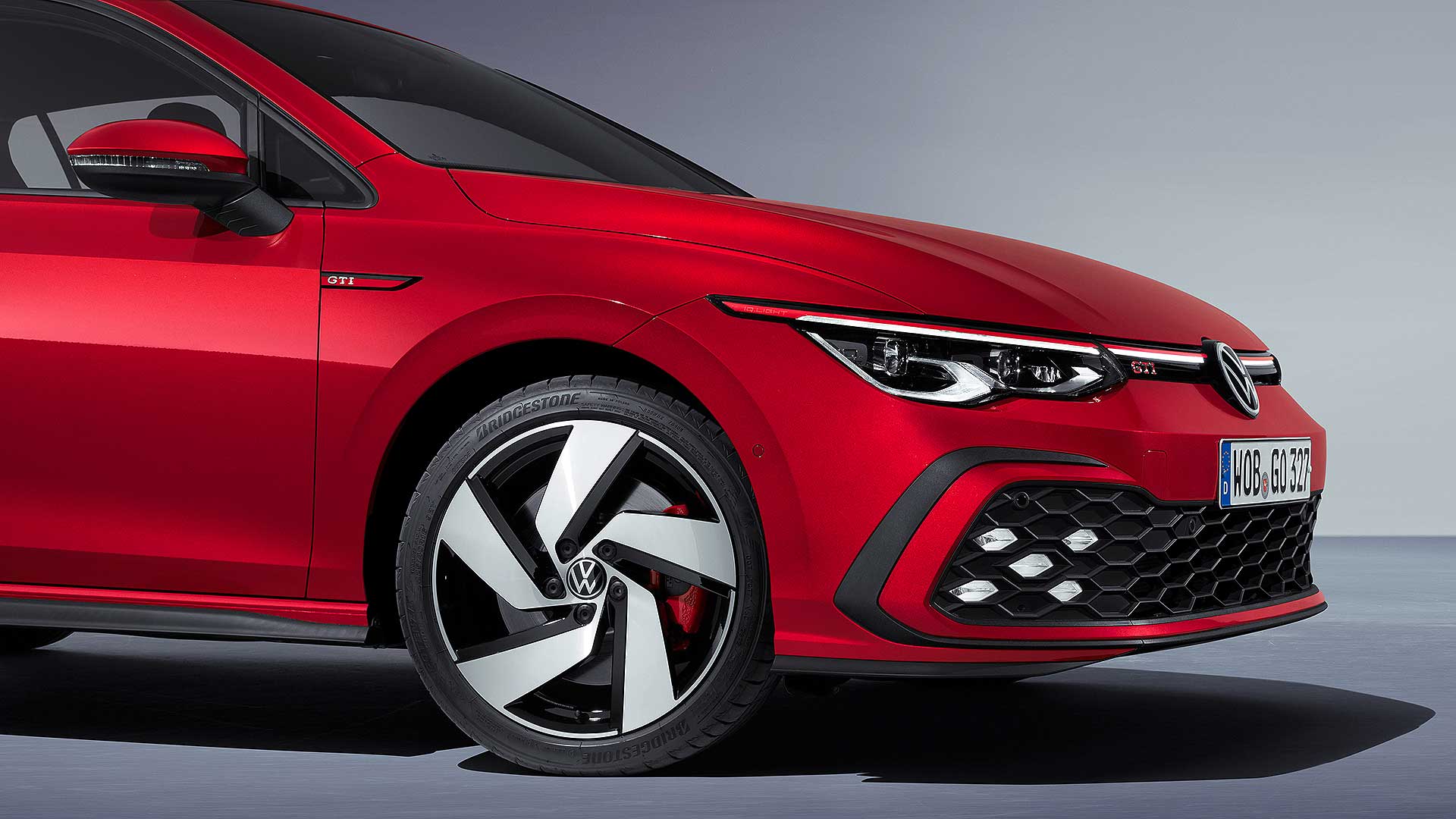
Visually, the three hot Golfs are closer than ever. The GTI, GTE and GTD badges all share the same typeface, and are all in the same place. It’s the colour ID that differs: red for GTI…
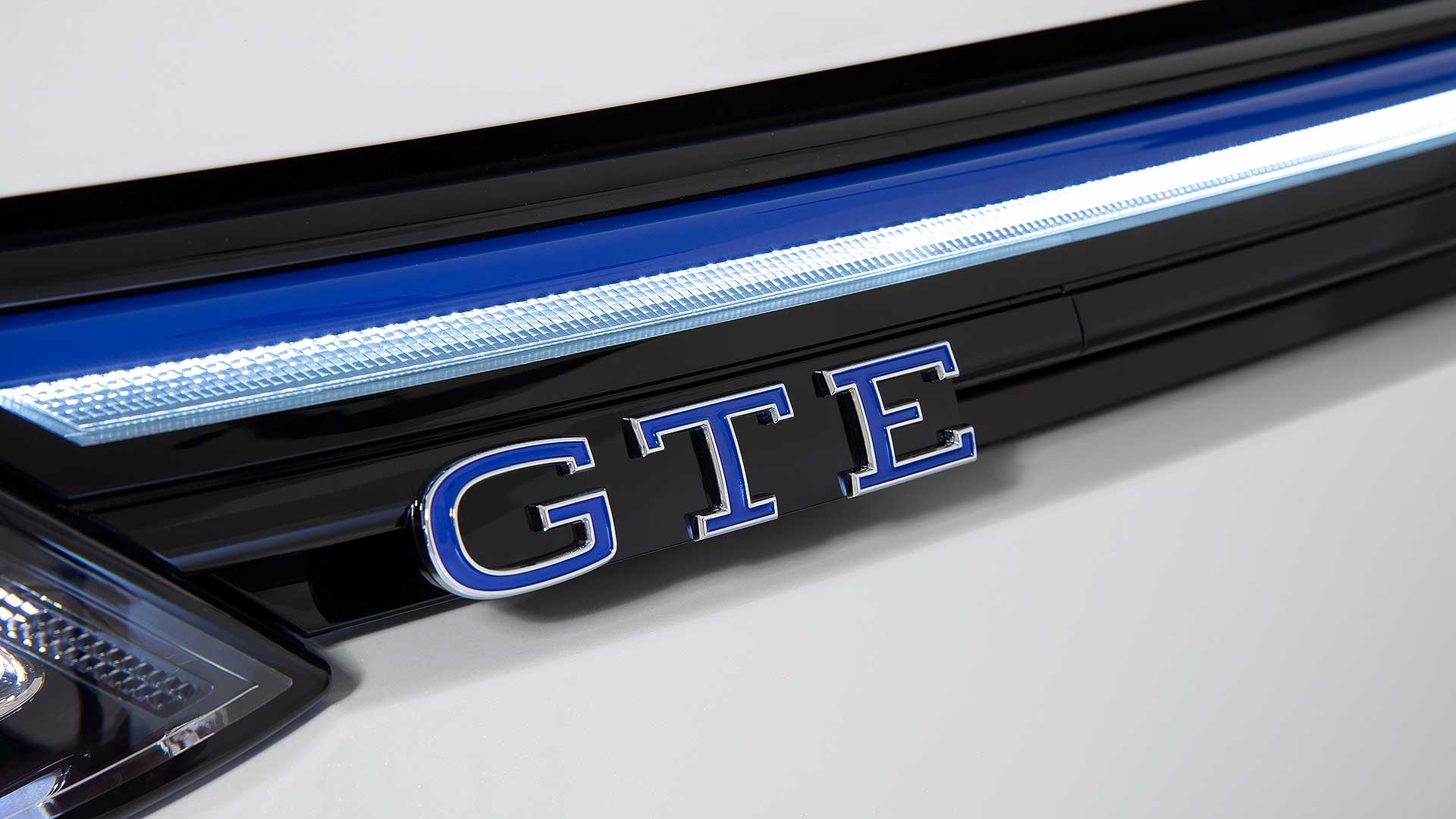
… blue for GTE…
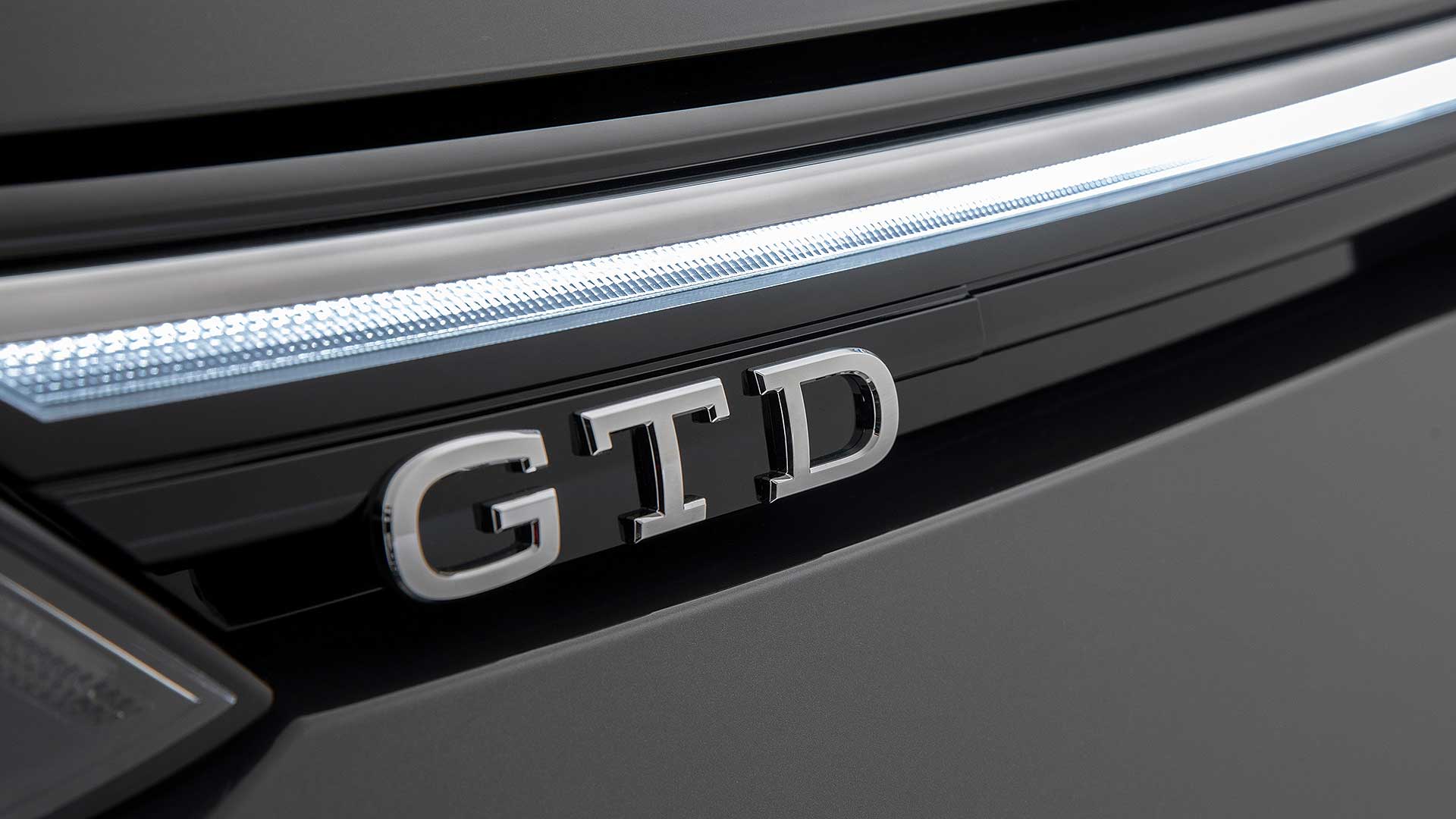
… and silver-grey for GTD.
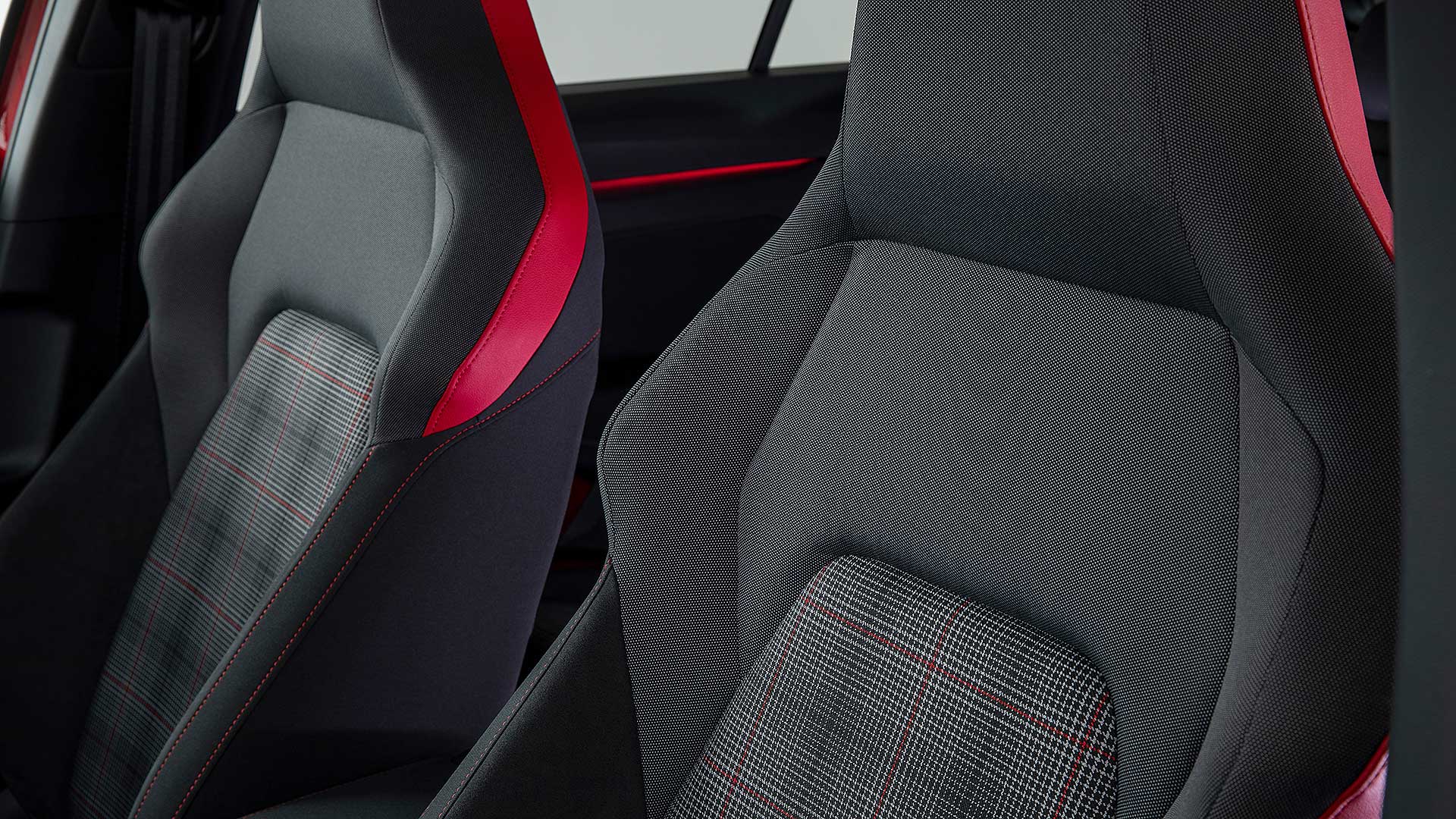
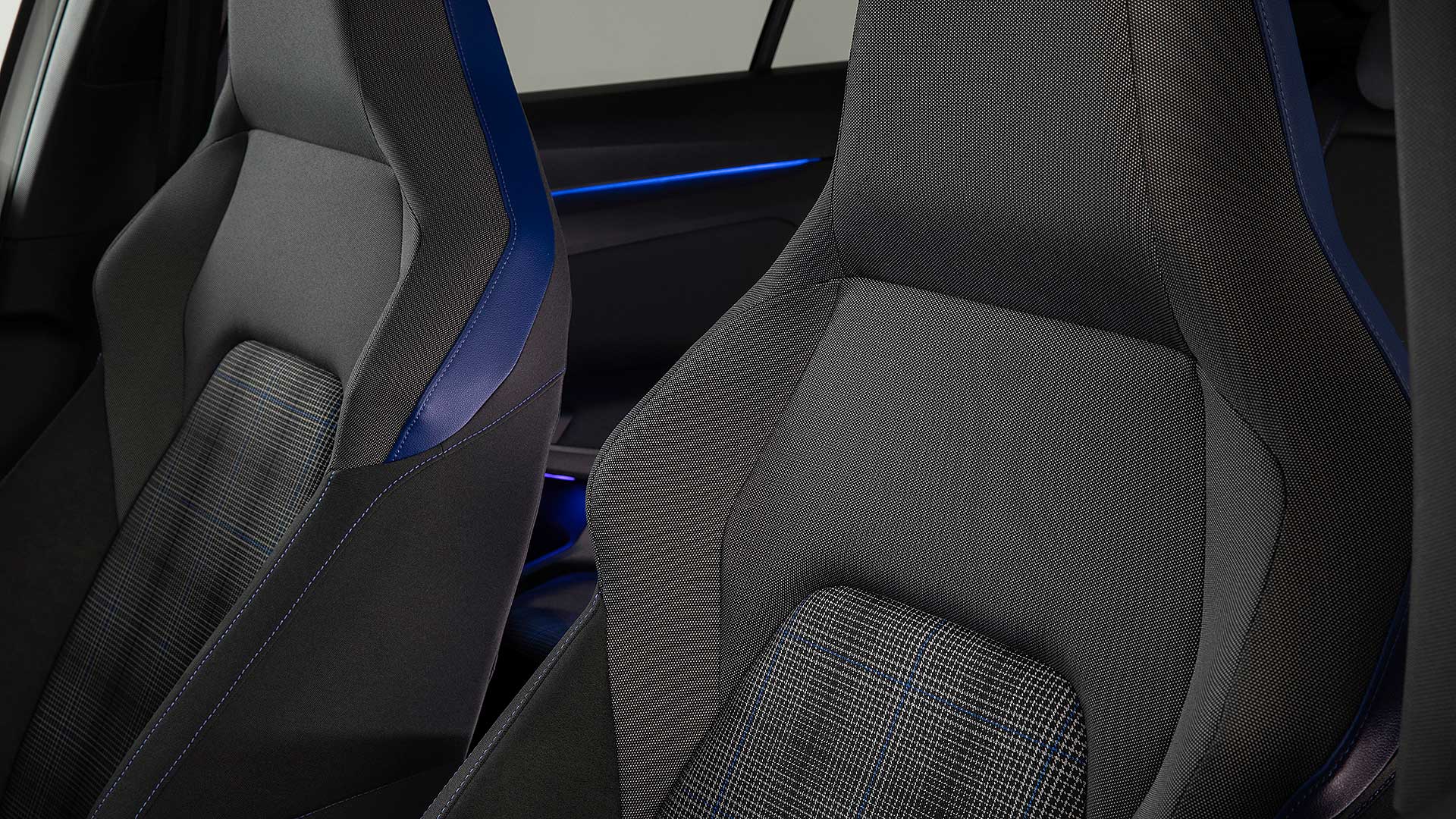
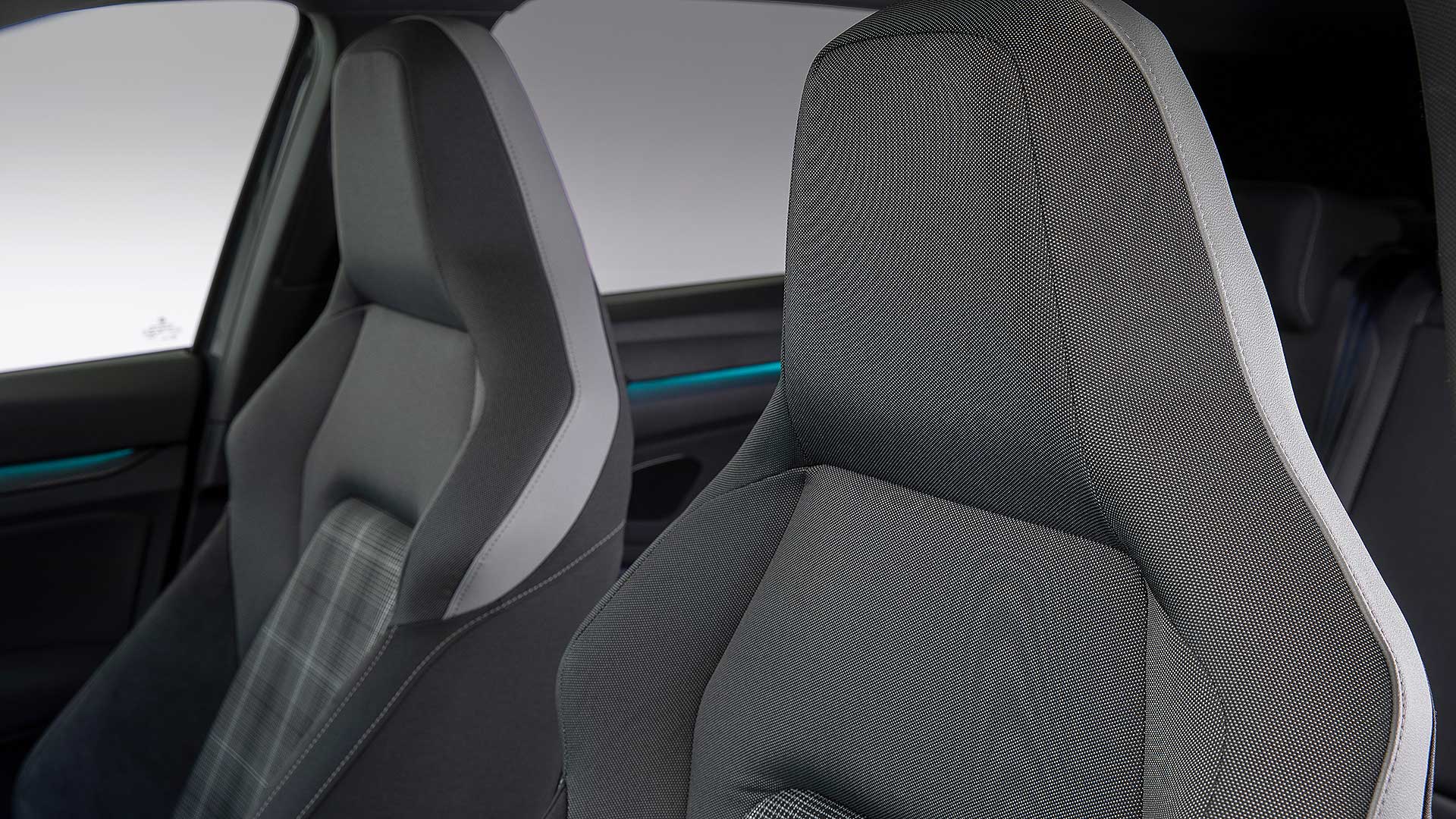
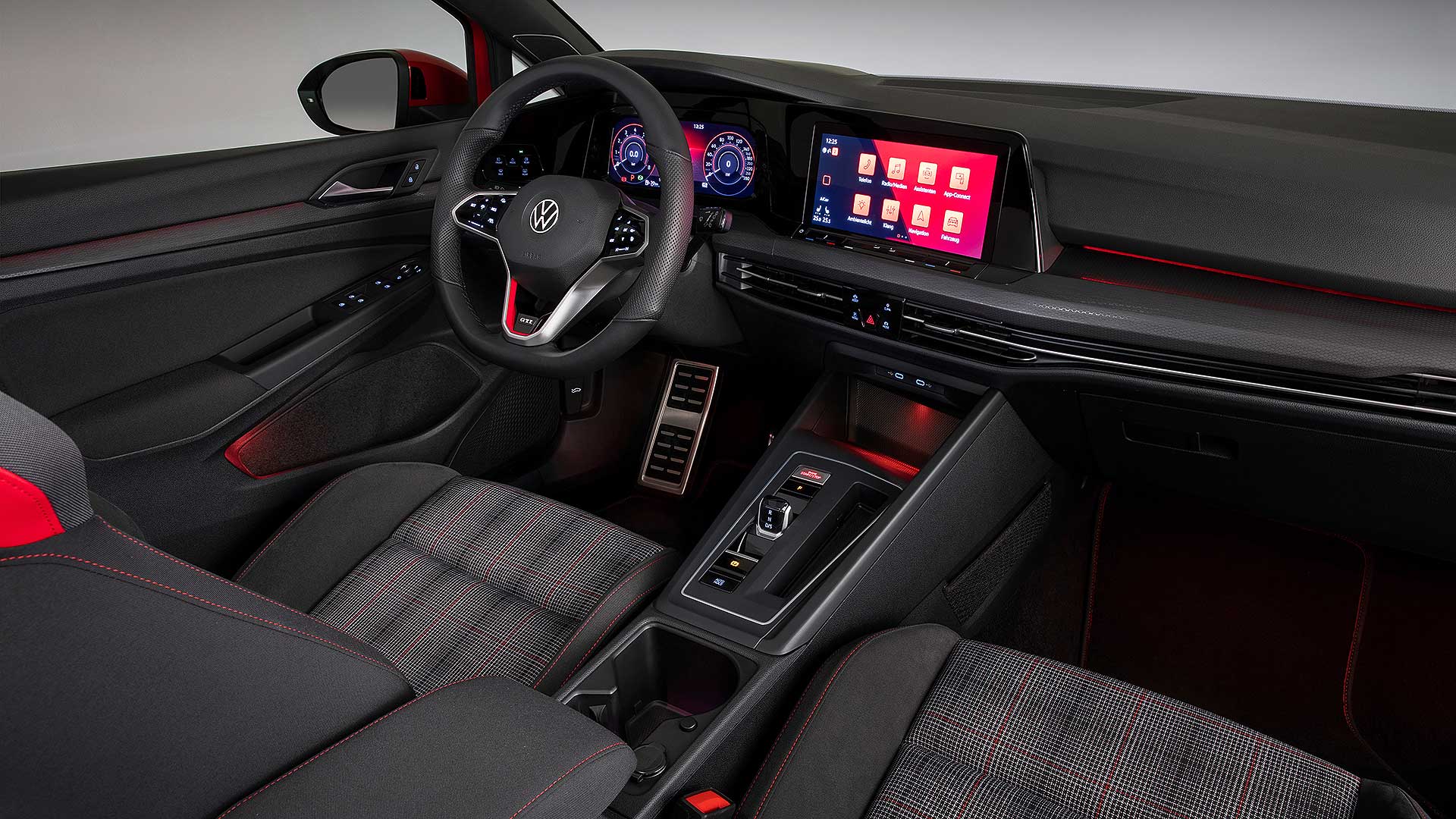
This carries across to the tartan seat trim (officially called Scalepaper) inside. Here’s the GTI…
… the GTE…
… and the GTD.
Golf GTI, GTE and GTD: engines and performance
The new Golf GTI has a 245hp 2.0-litre turbo petrol engine. It has a six-speed manual as standard, or a seven-speed DSG auto as an option.
The new Golf GTE shares the same 245hp output as the GTI, but it’s produced in a different way – from a 1.4-litre turbo petrol engine serving up 150hp, combined with an 85 kW electric motor.
With the help of a new lithium-ion battery, maximum pulling power (or torque) actually exceeds the Golf GTI, and it can be driven at speeds of up to 82mph in pure electric mode.
A seven-speed DSG gearbox is standard.
The electric range is around 37 miles before it needs to be plugged in and recharged. And if the batteries have enough charge, the Golf GTE will always start out as a zero-emissions pure electric vehicle.
The Golf GTD has a 2.0-litre turbodiesel that produces 200hp, and the same amount of pulling power as the Golf GTE.
Like the hybrid GTE, it too only comes with a seven-speed DSG – so the only hot Golf available with a manual gearbox is the regular GTI.
And diesel-haters, worry not: the new Golf GTD has ‘twin dosing’ selective catalytic reduction, with dual AdBlue injection. This ‘greatly reduces’ NOx emissions even compared with its predecessor.
Golf GTI, GTE and GTD: equipment
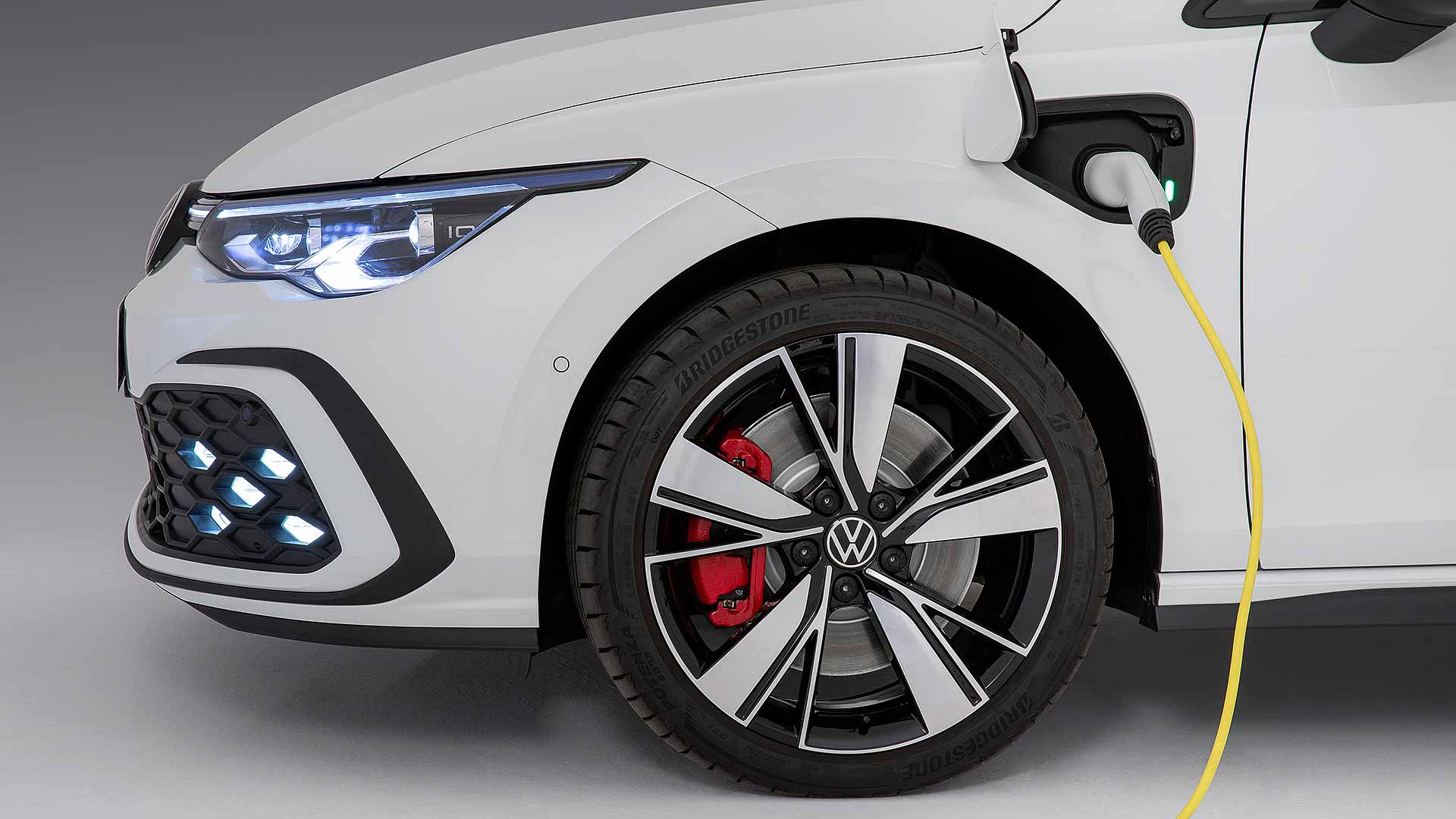
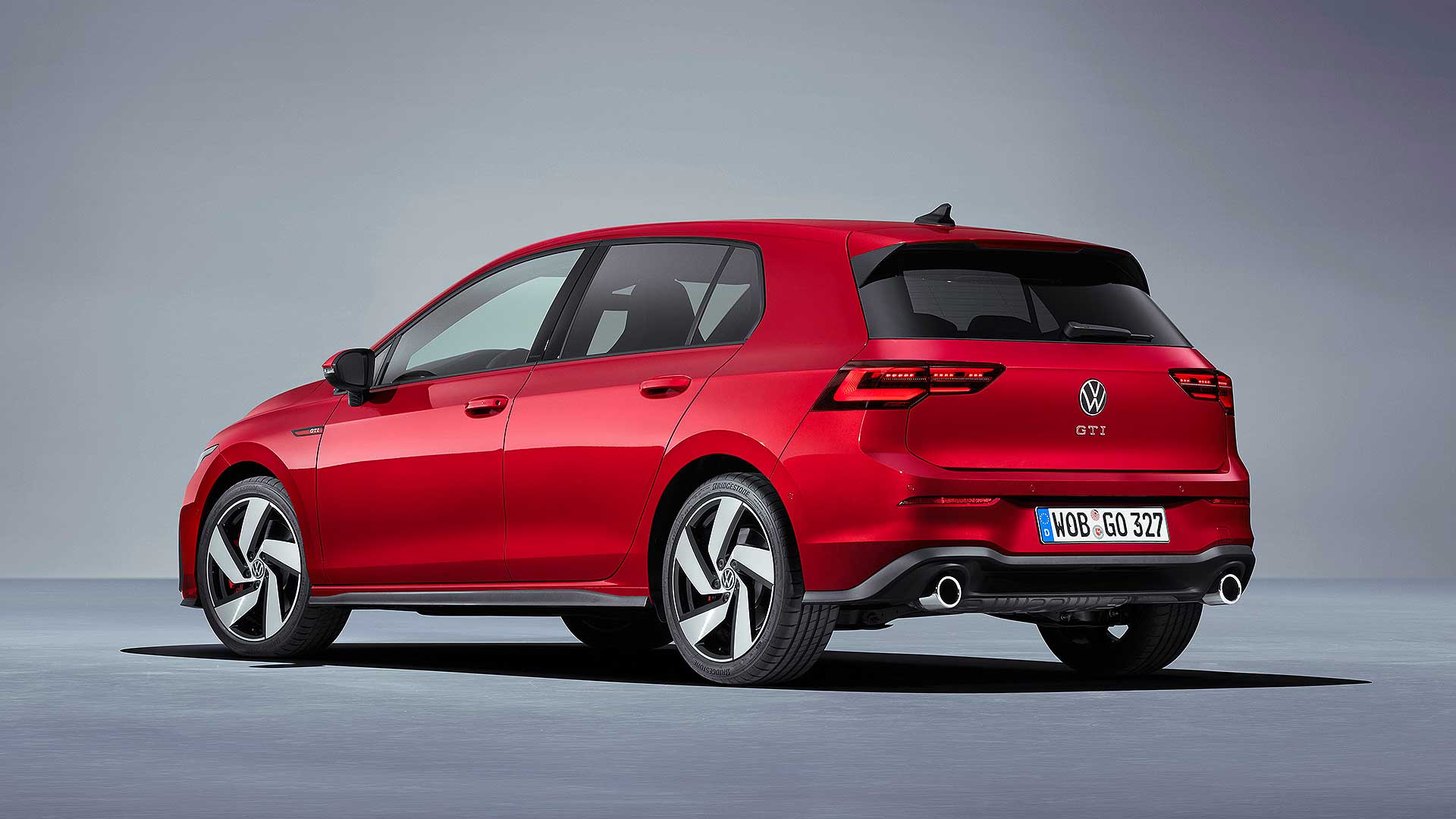
As standard for each hot new Golf are 17-inch alloy wheels (18-inch and 19-inch versions are optional), a custom front end, rear diffuser and spoiler, bespoke exhaust tailpipes and red brake calipers.
The GTI and GTD have sportier, 15mm lower suspension. So they visually sit a bit closer to the ground…
… than the Golf GTE.
All three have a front axle differential lock, plus a sound actuator for a more purposeful engine soundtrack inside.
They all have the fully digital cockpit of all new Volkswagen Golf 8 models, colour-keyed respectively – red, blue or silver.
Detail differences
They’re not fully identical. The Golf GTI and GTD have logos on the front wings.
They’re missing on the GTE – instead, it has a filler flap on the passenger side, to charge the battery.
Exhaust tailpipes also mark the differences at a glance. The GTI has dual exhausts – one left, one right.
The GTD has a double tailpipe on the right…
… and the GTE has no visible tailpipes at all.
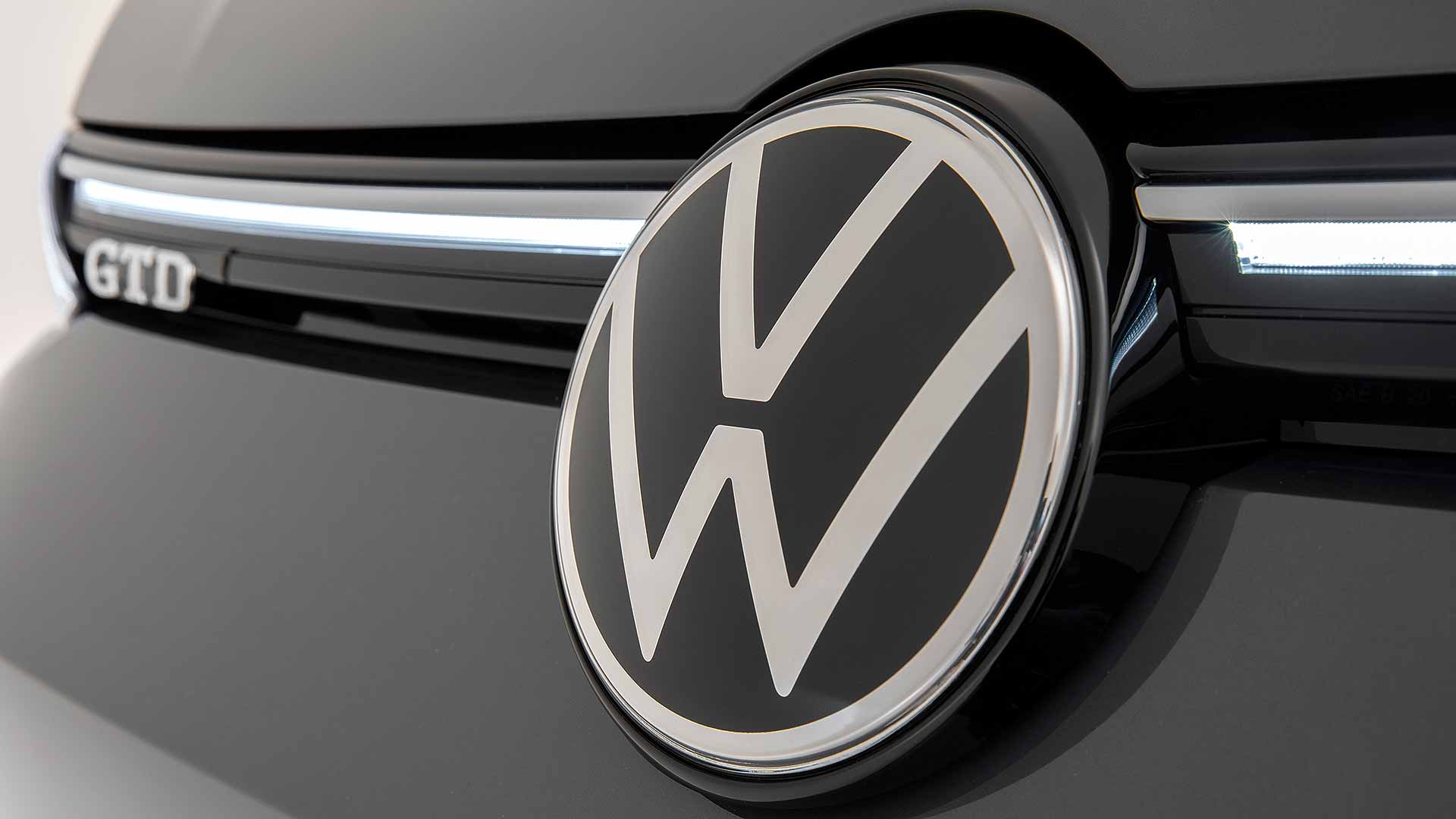
It’s the colour bar in the front grille may become the biggest at-a-glance differentiator: red for the GTI, blue for GTE, silver for GTD.
This colour key is highlighted by the LED daytime running light strip in the headlights when the car is running.
Oh, and the radiator grille itself can optionally be illuminated too: surely a must-have option for new Golf GTI, GTE and GTD owners?
It’s claimed that ride-hailing, using companies like Uber, can be less eco-friendly than other means of getting to your destination, including driving yourself. That’s according to a report by the Union of Concerned Scientists (UCS).
As ride-hailing apps have proliferated over the last decade, some have called them the eco-conscious alternative to owning and running your own vehicle. In many circumstances, says the UCS, the contrary is the case.
When is ride-hailing worse for the planet?
Has Uber contributed to London’s pollution problem?
Ride-hailing has an initial problem compared with to personal motoring. It’s called ‘deadheading’. This is the mileage your driver covers when not driving you to your destination. As an example, an Uber might cover two miles to get to you, then shuttle you a further two miles, then take another two-mile journey to its next fare. That’s at least four miles of driving for that two-mile journey.
Based on data from seven US metropolitan areas, ride-hailing can produce between 130 and 175 percent of the emissions emitted when driving oneself.
That also makes it much more polluting than getting the bus or train, at least in urban areas. Yet that’s where ride-hailing is most popular.
‘A typical ride-hailing trip is about 69 percent more polluting than the trips it replaces, and can increase congestion during peak periods,’ the report reads.
There are two main ways of making sure that ride-hailing emissions are reduced, according to the report. Firstly, if your cab is electric, emissions are cut by more than half compared with driving a private vehicle. Less than one percent of Californian ride-hailing trips, based on mileage, were electric in 2018.
Secondly, there’s the act of pooling.This is when you share your ride with someone else, so their journey is also your journey. The California Air Resources Board reports that riders asked for pooled trips about 20 percent of the time, although that can extend journey distances.
Combine a pooled ride with an electric vehicle and the overall emissions cost is less than 30 percent of driving privately. ‘An electric, pooled ride-hailing trip can cut emissions by 68 percent compared with a private vehicle trip in the average car, or about 79 percent compared with a non-pooled ride-hailing trip,’ the report by the UCS reads.
By comparison, an EV ride, or a pooled EV ride, is more efficient than an urban bus ride. It’s also worth considering that you can reduce emissions if you combine your ride-hailing trip with a mass transit method like a bus or train.
What this does not address is congestion. Fifteen passengers on a single bus is less congesting for instance, than 15 passengers spread over seven EVs. Note, that scenario is the best we’ve stated so far: pooled EVs.
‘Electrifying ride-hailing and increasing the number of rides that are pooled are essential actions for managing the industry’s climate pollution,’ the report says.
‘For ride-hailing to contribute to better climate and congestion outcomes, trips must be pooled and electric, displace single-occupancy car trips more often, and encourage low-emissions modes such as mass transit, biking, and walking.’
New research reveals that around 11 million UK motorists have let their car’s MOT lapse beyond its expiry date.
The research from Kwik Fit also revealed that one in 10 of those who’d let their MOT lapse had done so repeatedly. And ‘repeatedly’ here means more than six times…
Drivers aged 18-34 are five times more likely to be a repeat offender than those 55 or older, too.
A third of drivers use their car without an MOT for three days or less, which, while illegal, doesn’t sound so bad. More worryingly, the average time cars without a valid MOT are driven in the UK is around two months (66.2 days).
Londoners beat the national average of 29 percent twice over, with 63 percent of drivers in the capital admitting to having let their MOT lapse.
Forgetfulness is the most common reason for the problem, with 42 percent saying they’d let their MOT slip their mind. Also, 21 percent said that it was because they didn’t make a note of the expiry date, while 16 percent said it was because their garage didn’t remind them.
Financial woes are a major reason as well. Around 1.4 million drivers say they can’t afford the work the car would need. Ironically, however, this decision could end up costing you more. Driving without a valid MOT can carry a fine of £1,000, while driving a car considered to be in dangerous condition can land you with a fine of up to £2,500, with three penalty points to boot.
If you’re a repeat offender, like the three percent of drivers that admit to being so, you could find yourself banned from driving.
Up to 6.5 million UK cars have faulty windscreen wipers
“It is concerning to see that people are knowingly or unwittingly driving a vehicle which could pose a danger to them or other road users,” said Roger Griggs, communications director at Kwik Fit.
“We understand that people have busy lives and MOT dates can slip off the calendar or a ‘to do’ list. We would encourage drivers who don’t have a note of their expiry date to check it and get it marked in the calendar with plenty of time, to avoid any issues. March is a peak month for MOTs and so drivers should book as far in advance as possible to ensure they don’t end up driving illegally.”
“Many cars fail their MOTs on components which drivers should be very aware of, such as illegal tyre tread or lights not working,” Griggs continued.
“Some simple checks will enable motorists to prepare their car in advance and avoid that dreaded verdict of a fail. Now that a car’s MOT history is available online for anyone to see, including a prospective buyer, having a consistent series of passes will help show that a vehicle has been well maintained.”
A Freedom of Information request has revealed the most stolen cars in the UK. Data supplied by the Driver and Vehicle Licensing Agency (DVLA) shows that 56,288 cars were stolen in 2019.
This means that one car was stolen every nine minutes – or 154 a day.
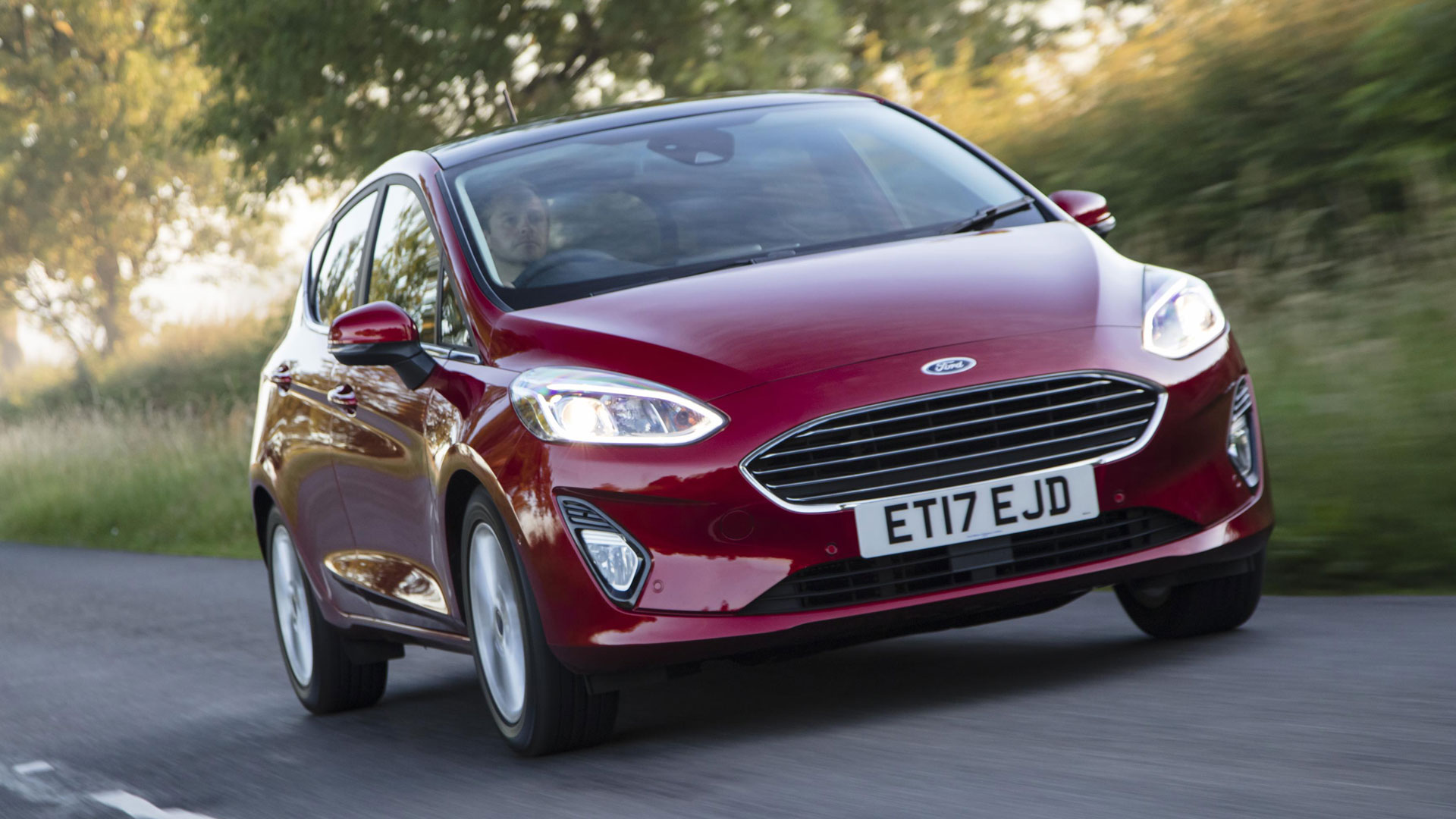
The Ford Fiesta is the car most at risk, with 2,384 stolen last year. But is it as simple as that? The Fiesta is the UK’s most popular car by a considerable margin, so there are simply more cars to steal. It’s a similar story with the Volkswagen Golf and Ford Focus, which were ranked third and fourth respectively.
It’s not all about sales figures. For example, with 1,917 stolen in 2019, the Range Rover ranks second. The Land Rover Discovery is seventh, while the Mercedes-Benz E-Class finishes eighth in the table.
Using figures from the Office for National Statistics (ONS), Rivervale Leasing found that just 40 percent of stolen cars are returned to their owner. You have to question whether the other 60 percent wanted their vehicles back, because 75 percent are returned with damage. Around one in five (22 percent) were written off completely.
The ONS data also revealed some insight into the likelihood of your car being targeted by thieves. For example:
63 percent of vehicles are stolen between Monday and Friday.
42 percent of vehicles are stolen on a semi-private area close to home.
40 percent of all vehicle offences are recorded in West Yorkshire, Greater Manchester or the West Midlands.
The number of keyless car thefts nearly doubled from 26 percent in 2008 to 49 percent in 2018.
11 percent of thieves steal brand-new vehicles.
Of course, not all vehicles are targeted to be stolen. Many offenders are looking to steal parts or valuables from inside the vehicle.
Research shows that thieves steal an average of £4,622 worth of goods, with exterior fittings the most common target (34.7 percent). Next up is valuables (20.3 percent), followed by electrical equipment (16.5 percent) and other vehicle parts (9.5 percent).
A new project will be trialled in Coventry to reduce the number of older, more polluting cars. A sum of £1 million has been allocated, and motorists can claim up to £3,000 each – albeit in the form of mobility credits.
The trial is expected to begin in the city next year, and the credits will be worth between £1,500 and £3,000. They will be added to a smartphone app or Swift travel card that pays for public transport, taxis, bike share or car club schemes.
“Instead of asking people to trade in their old car for a new one, we are offering them credits to try something new – such as join a car share scheme or take the bus or train,” said mayor of the West Midlands, Andy Street.
“Not only will people be saving money on the cost of running and maintaining their cars, but they will also help the region ease traffic congestion and improve air quality in the fight against climate change. This will make a considerable difference to Coventry as the city welcomes thousands of visitors next year for City of Culture.”
Car users are taking part in a workshop today (Wednesday 26 February) to go over proposals and help finalise the details. The scheme is the first of its kind in the UK. The goal is to reduce traffic and congestion, as well as improve air quality.
The trial is funded from the £22 million Future Mobility Zone grant given to the area by the Department for Transport, to develop new tech and mobility schemes. The pilot project is expected to last two years, with Transport for West Midlands inviting potential participants to the scheme later in the year.
“We can’t go on as we are with gridlocked roads costing our economy and poor air quality impacting on our health and quality of life,” said councillor Ian Ward, leader of Birmingham City Council and WMCA portfolio holder for transport.
“So TfWM is investing billions in our tram, rail, cycling and bus networks to provide sustainable alternatives to the private motor car. But we are also looking at innovative schemes like mobility credits to play a part by offering people real incentives to give up their cars, helping us reduce congestion and keep the region moving.”
The latest advisory fuel rates (AFR) have been published by HM Revenue and Customs.
The changes for petrol, diesel and LPG cars will come into force on 1 March 2020 and apply to employees using a company car.
There’s no change for diesel cars with an engine size of 1,600cc or less, with the reimbursement rate remaining at 9p per mile. Similarly, the rate for 1,601cc to 2,000cc diesel engines stays at 11p per mile.
However, the AFR for diesel engines over 2,000cc is dropping from 14p to 13p. Similarly, the rate for petrol engines over 2,000cc is decreasing from 21p to 20p.
Petrol engines of 1,400cc or less stay at 12p, while the rate for 1,401cc to 2,000c petrol cars remains at 14p.
Hybrid cars are treated as either petrol or diesel cars for this purpose. Meanwhile, the rate for fully electric cars is 4p per mile – electricity is not a fuel for car benefit purposes.
The AFR for LPG cars with a 1,401cc to 2,000cc engine is increasing by a penny to 10p per mile. A summary of the new rates can be found in the table below.
HMRC calculates the AFR using current fuel prices. The details can be found here, but in summary, the current price of petrol is 123.8p per litre. Diesel is 128.2p, while LPG is listed at 68.5 per litre.
Fuel economy on LPG cars is assumed to be 20 percent lower than petrol due to lower volumetric energy density.
Advisory fuel rates from 1 March 2020
Engine size
Petrol (per mile)
LPG (per mile)
Diesel (per mile)
1,400cc or less
12p
8p
–
1,401cc to 2,000cc
14p
10p
–
1,600cc or less
–
–
9p
1,601cc to 2,000cc
–
–
11p
Over 2,000cc
20p
14p
13p
What are advisory fuel rates?
Companies use the advisory fuel rates when reimbursing employees for business travel in their company cars or when they require employees to repay the cost of fuel used for private travel.
If a company pays for the expenses at a rate no higher than the AFR for the car in question, they are not required to pay Class 1A National Insurance. It is accepted that there is no taxable profit gained.
However, a company can use its own rate where a lower rate is required. An example could be if a company car is proven to be more fuel efficient than the AFR suggests.
The government reviews the advisory fuel rates on a quarterly basis, so the next update will be on 1 June 2020.
Latest figures show a 20 percent increase in the number of scams reported to the Driver and Vehicle Licensing Agency (DVLA).
To protect motorists, the DVLA has released images of the new scams that are used to trick motorists. These include links to fake services, and driver and vehicle documents for sale on the internet.
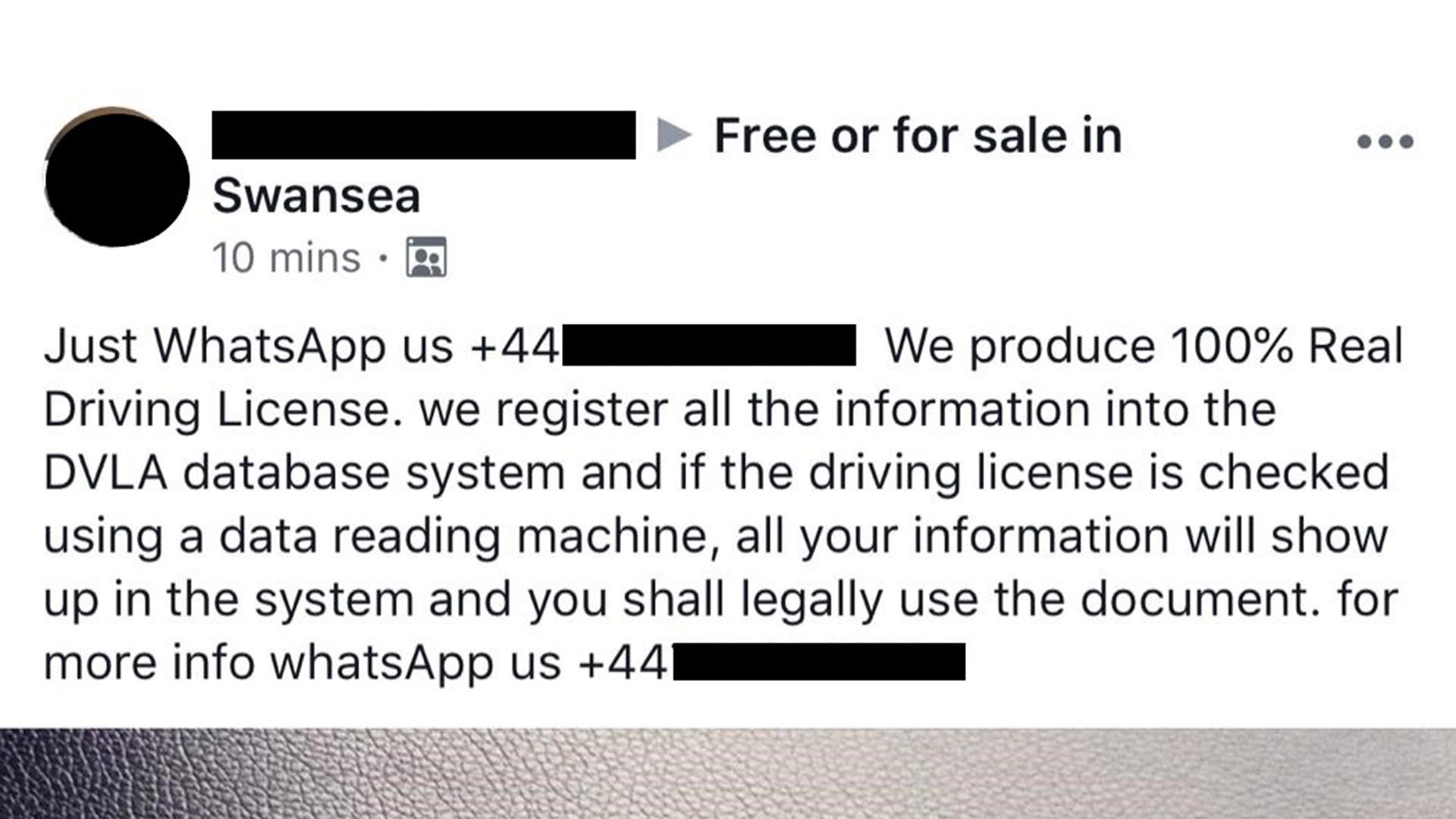
Drivers reported seeing Facebook adverts advising motorists to contact WhatsApp numbers to buy a “100 percent real” driving licence. In a separate social media post, motorists were offered non-existent ‘DVLA services’ including ‘wipe ban’, ’wipe points’ and ‘endorsements removed’.
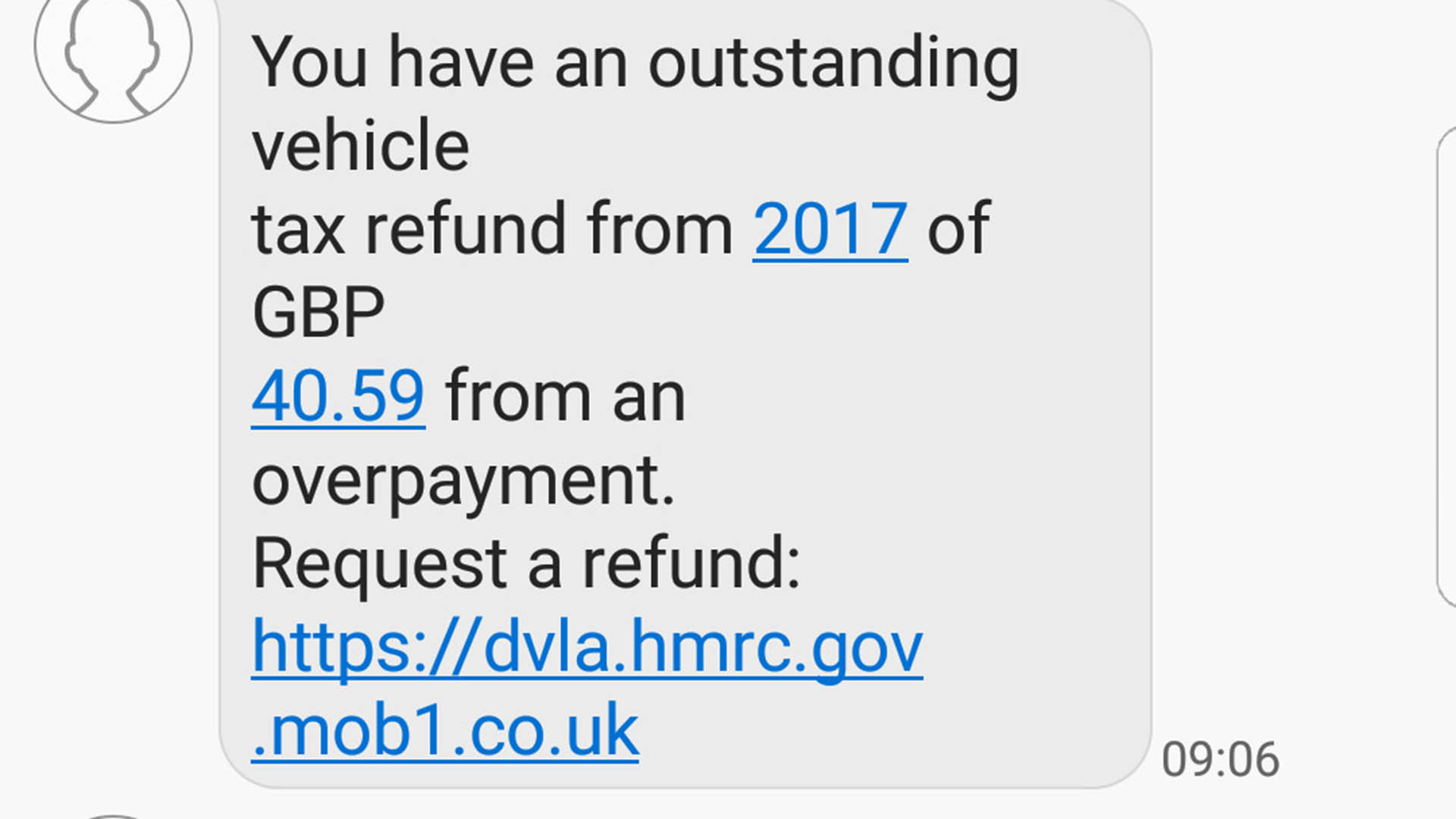
A common trick is for fraudsters to send text messages offering Vehicle Excise Duty (VED) refunds in the region of £40. The message is clear: if it sounds too good to be true, it probably is.
‘Real life scams’
DVLA chief information security officer David Pope said: “We’ve released examples of real life scams to help motorists understand when a scam is at work. These websites and messages are designed to trick people into believing they can access services that simply don’t exist such as removing penalty points from driving licences.
“All our tax refunds are generated automatically after a motorist has told us they have sold, scrapped or transferred their vehicle to someone else so we don’t ask for anyone to get in touch with us to claim their refund.
“We want to protect the public and if something seems too good to be true, then it almost certainly is. The only trusted source of DVLA information is GOV.UK
“It is also important to remember never to share images on social media that contain personal information, such as your driving licence and vehicle documents.”
‘Stressful time of year’
A spokesperson for Action Fraud added: “This can be a stressful time of year, sorting out finances for the year ahead. Fraudsters are aware of this and are using different ways to trick people.
“Taking a couple of minutes to familiarise yourself with a few simple online safety tips can be significant in protecting yourself from becoming a victim of online fraud. You should always be cautious when sharing personal information online and avoid being scammed by only using GOV.UK for government services online, such as the DVLA.
“If you believe you have been a victim of fraud, please report it to us.”
Fraud or cyber crime can be reported to Action Fraud by calling 0300 123 2040, or by using the online reporting tool.
Running a car is an expensive business. Once you’ve come to terms with the purchase price, you need to factor in the cost of depreciation, tax, insurance, maintenance and fuel.
Here, we reveal the cheapest new and used cars to drive on a cost per mile basis according to Choose My Car. The figures are based on the average fuel economy, the tank capacity and how much it costs to fill the tank. The results are presented in reverse order.
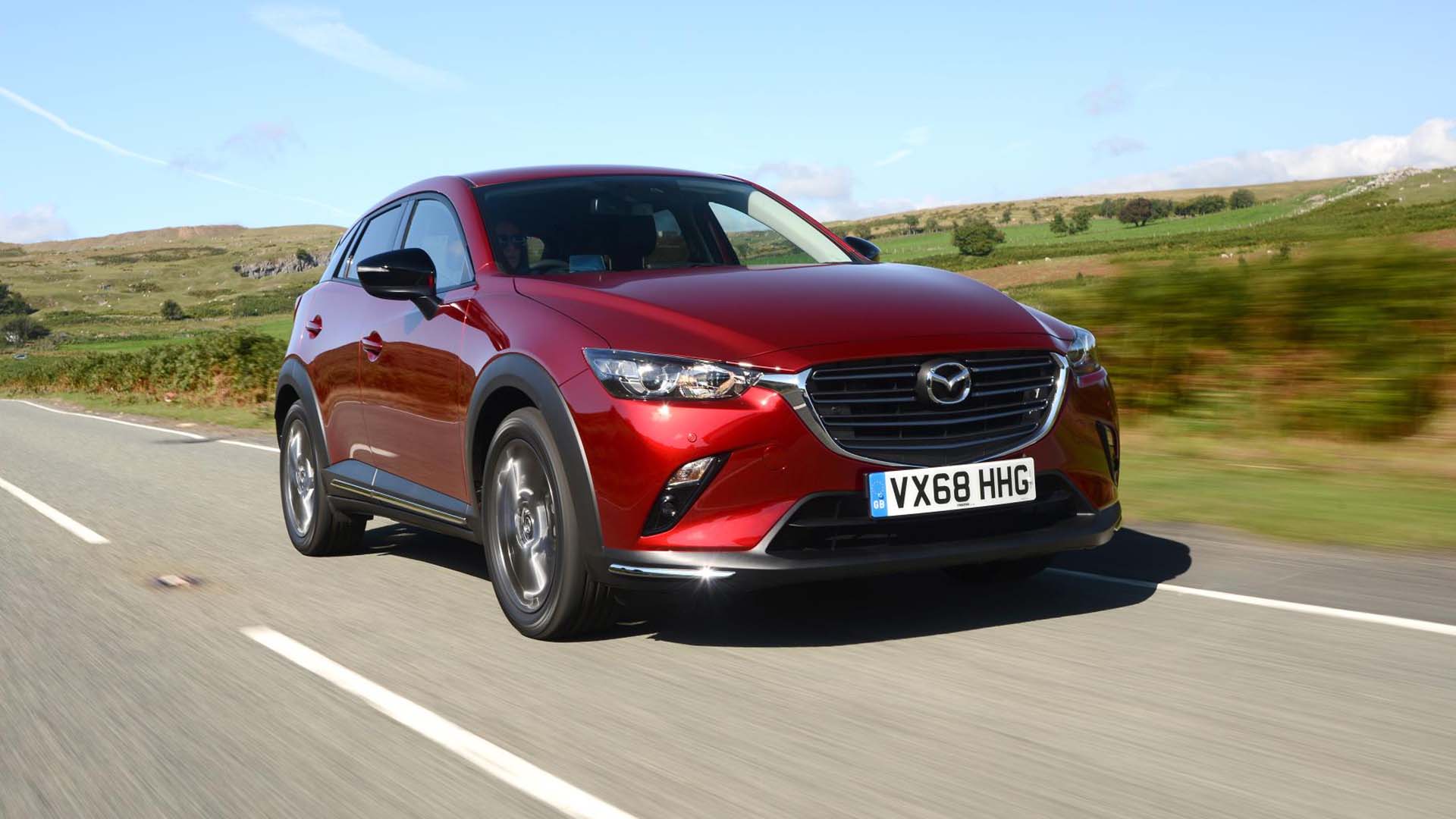
In all cases, the figures should be used as a guide. The costs will fluctuate depending on the driver and the cost of fuel. The majority of the cars in the top 20 are powered by a small petrol engine, but the Mazda CX-3 bucks the trend by boasting a 2.0-litre unit. Thanks to Mazda’s Skyactiv technology, the fuel should cost 13.04p per mile.
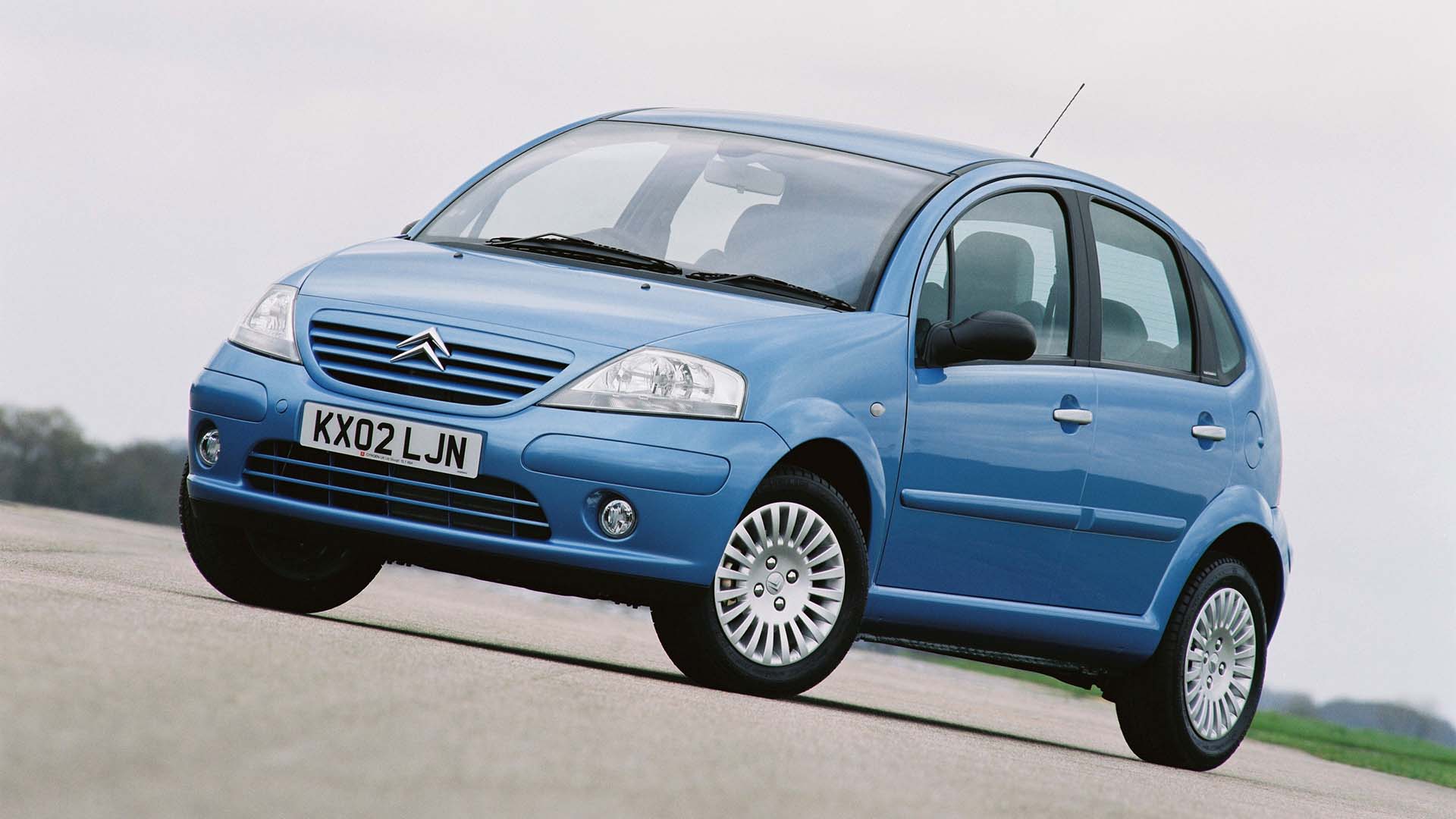
Citroen C3 – 12.89p per mile
It’s important to note that it’s not just brand new cars in the top 20. Take the Citroen C3. We’re not talking about the current model with the Airbumps, rather the original C3 sold between 2002 and 2010. More specifically, the Citroen C3 powered by the 1.1-litre petrol engine. Used prices start from around £1,000.
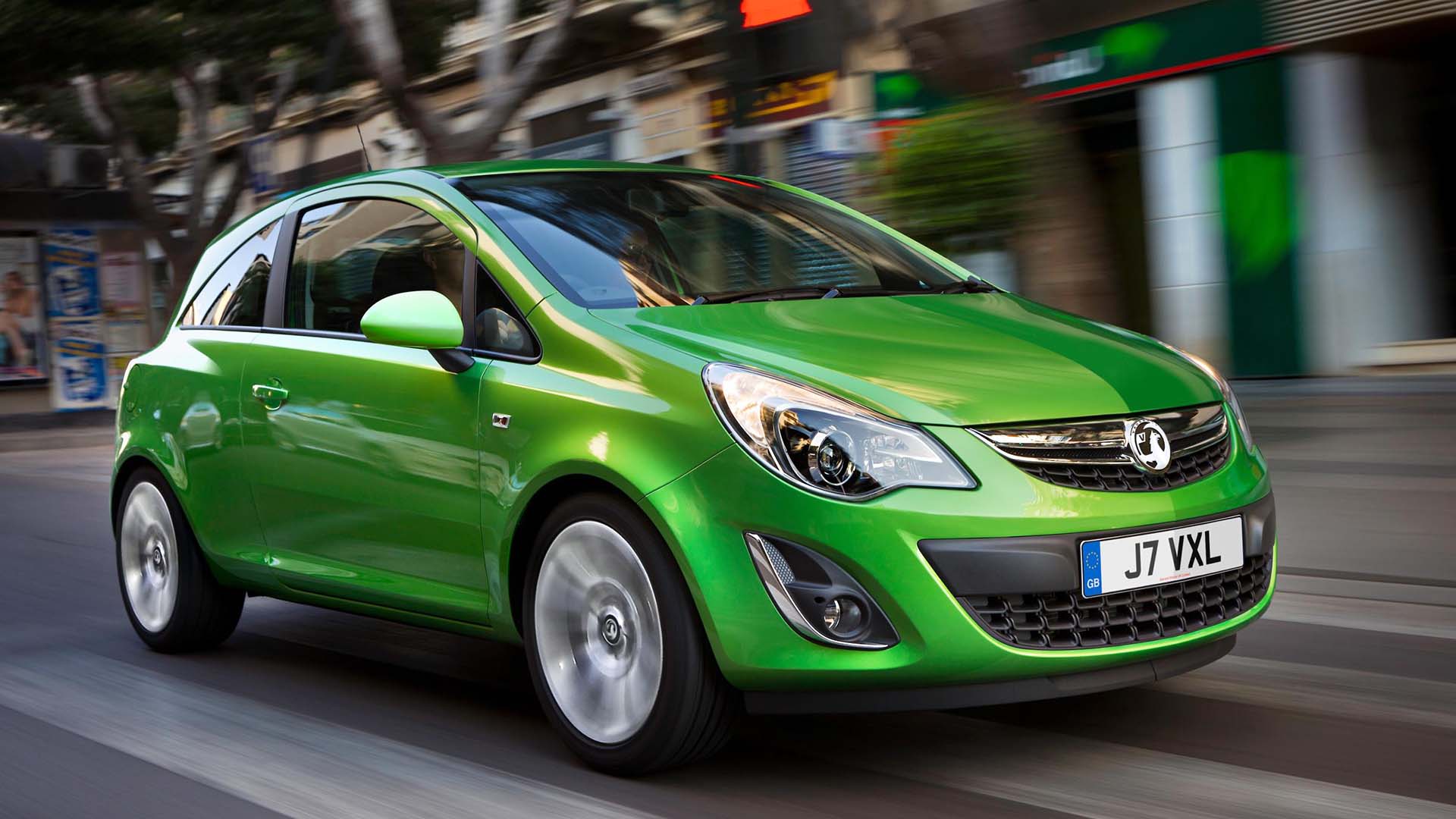
Vauxhall Corsa – 12.83p per mile
Next up is the Vauxhall Corsa 1.2 Easytronic, which is about as exciting as it sounds. ‘Easytronic’ is Vauxhall-speak for ‘power-sapping automated manual transmission’, which is hardly a match made in heaven for a 1.2-litre engine. Auto Express used words like ‘jerky’, ‘blunts’, ’frustrating’ and ‘modest’ in its review. You have been warned. Still, think of the pennies you’ll be saving.
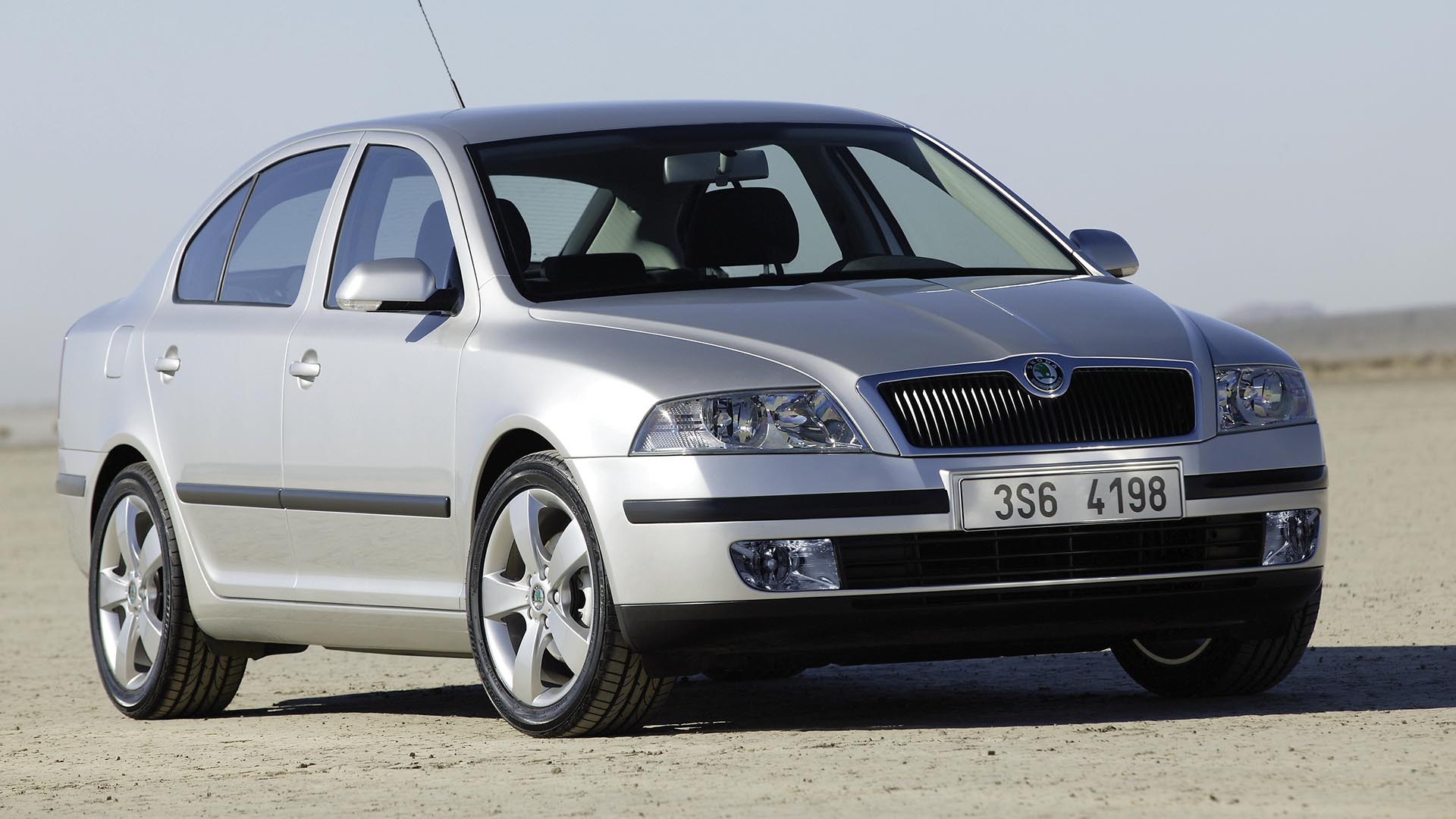
Skoda Octavia – 12.69p per mile
The second-generation Skoda Octavia arrived in 2004, by which time it was cementing a reputation for offering practical motoring on a budget. In truth, the entry-level 1.4-litre 16v petrol engine is the weakest of the units offered, but it’s the one you need if you’re hoping to save money. Prices on Auto Trader range from £500 to £2,500.
Mini Cooper – 12.69p per mile
With one or two exceptions, the majority of cars in this top 10 are about as exciting as a night in with a cash flow statement. But do the sums and you’ll see that the Mini Cooper adds up to being a great buy. It’s fun to drive, good to look at, and boasts a brand as strong as any other at the small end of the market. All this for 12.69p per mile.
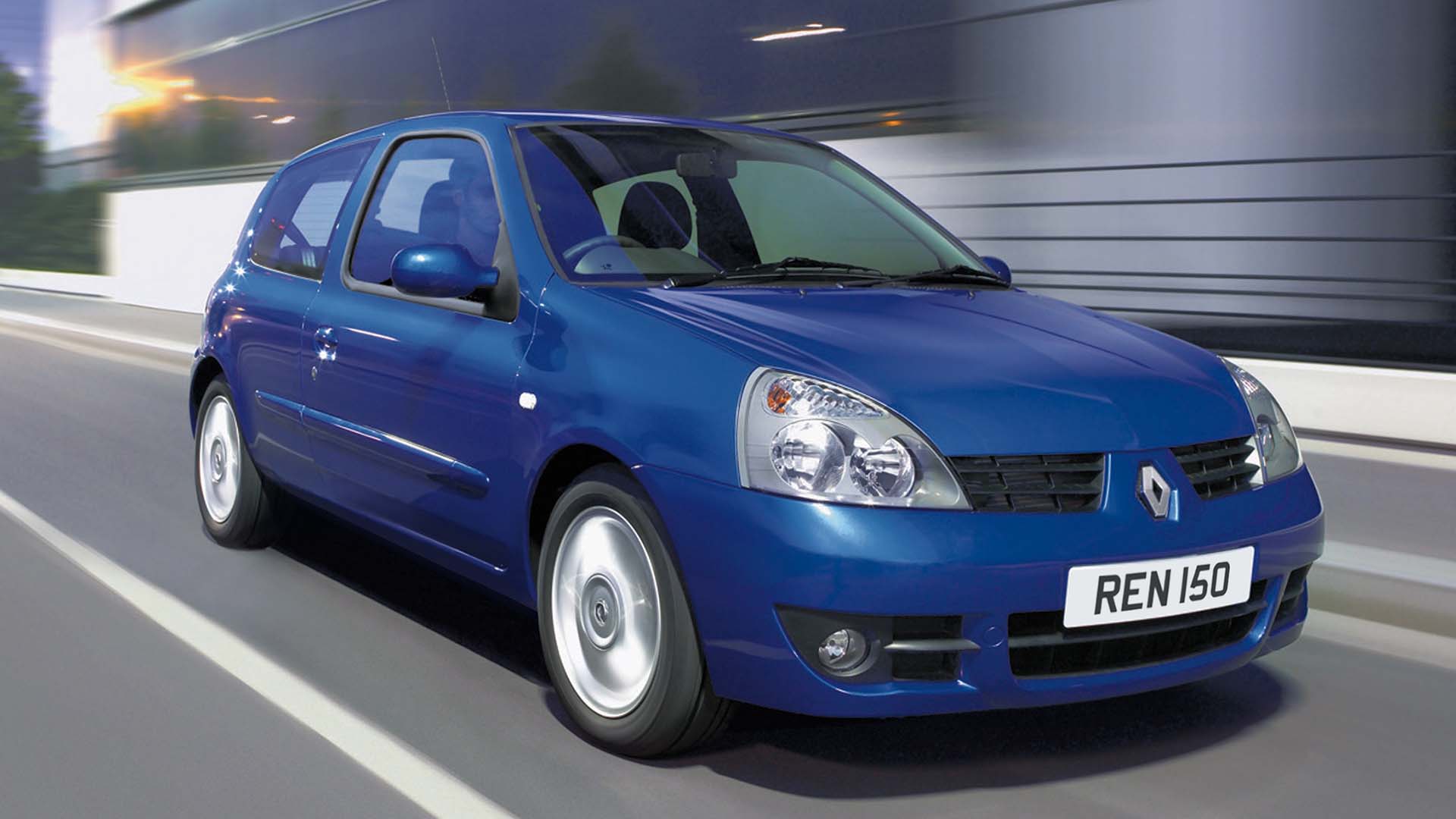
Renault Clio – 12.56p per mile
When Renault launched the third-generation Clio, the outgoing version remained on sale badged as the Campus. Even with a budget price, it was hard to recommend the Clio Campus, because the supermini had moved on. Today, that’s less of an issue, which makes the Clio Campus 1.2 16v a cost-effective used buy.
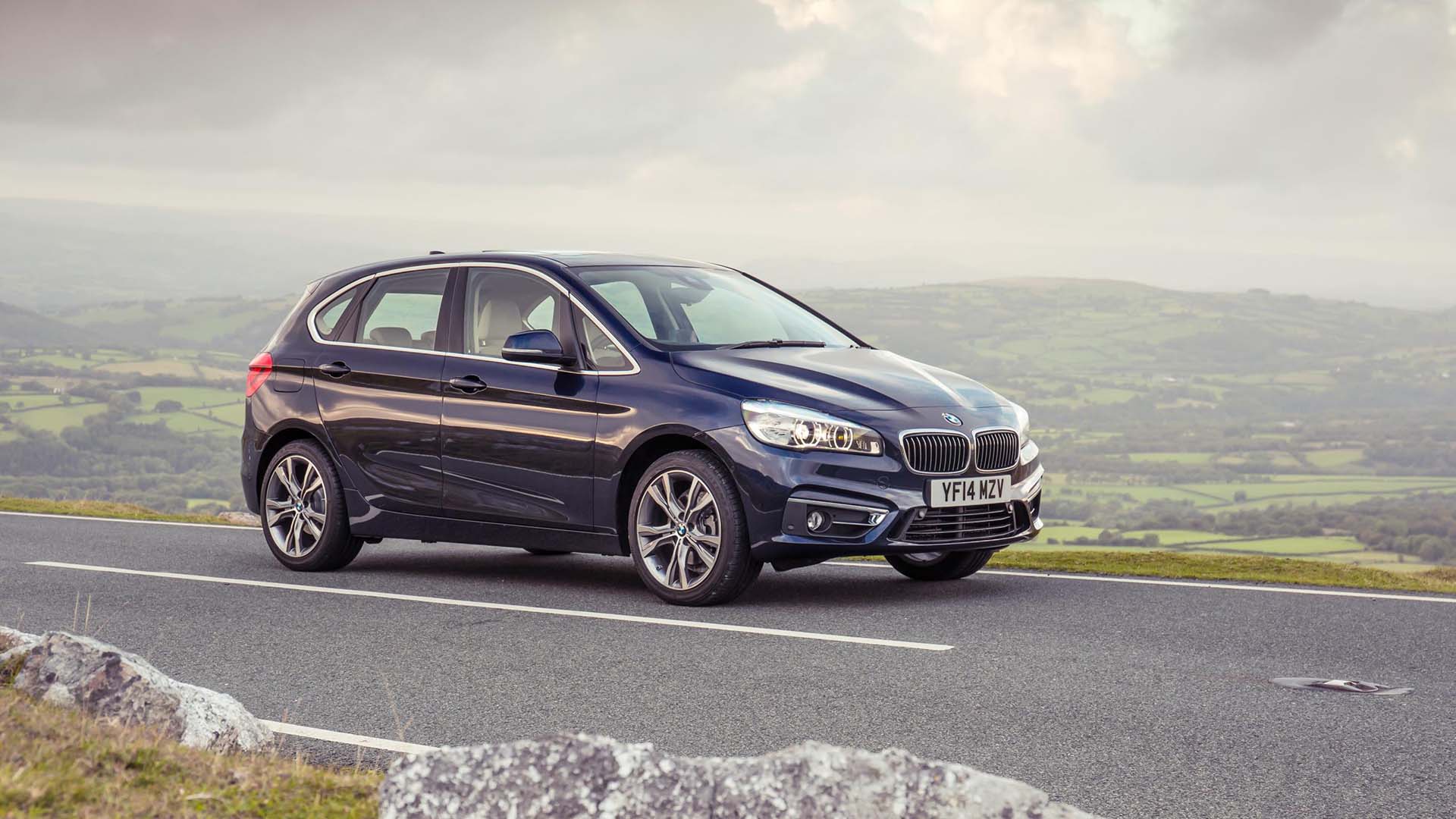
BMW 2 Series Active Tourer – 12.42p per mile
The BMW 2 Series Active Tourer is one of only two premium models to make the top 20 – not to mention the only MPV. Its inclusion is a little odd, because the 225i xDrive automatic was the least efficient engine available on the 2 Series Active Tourer. The 225i is no longer available to buy new and there are just four for sale on Auto Trader.
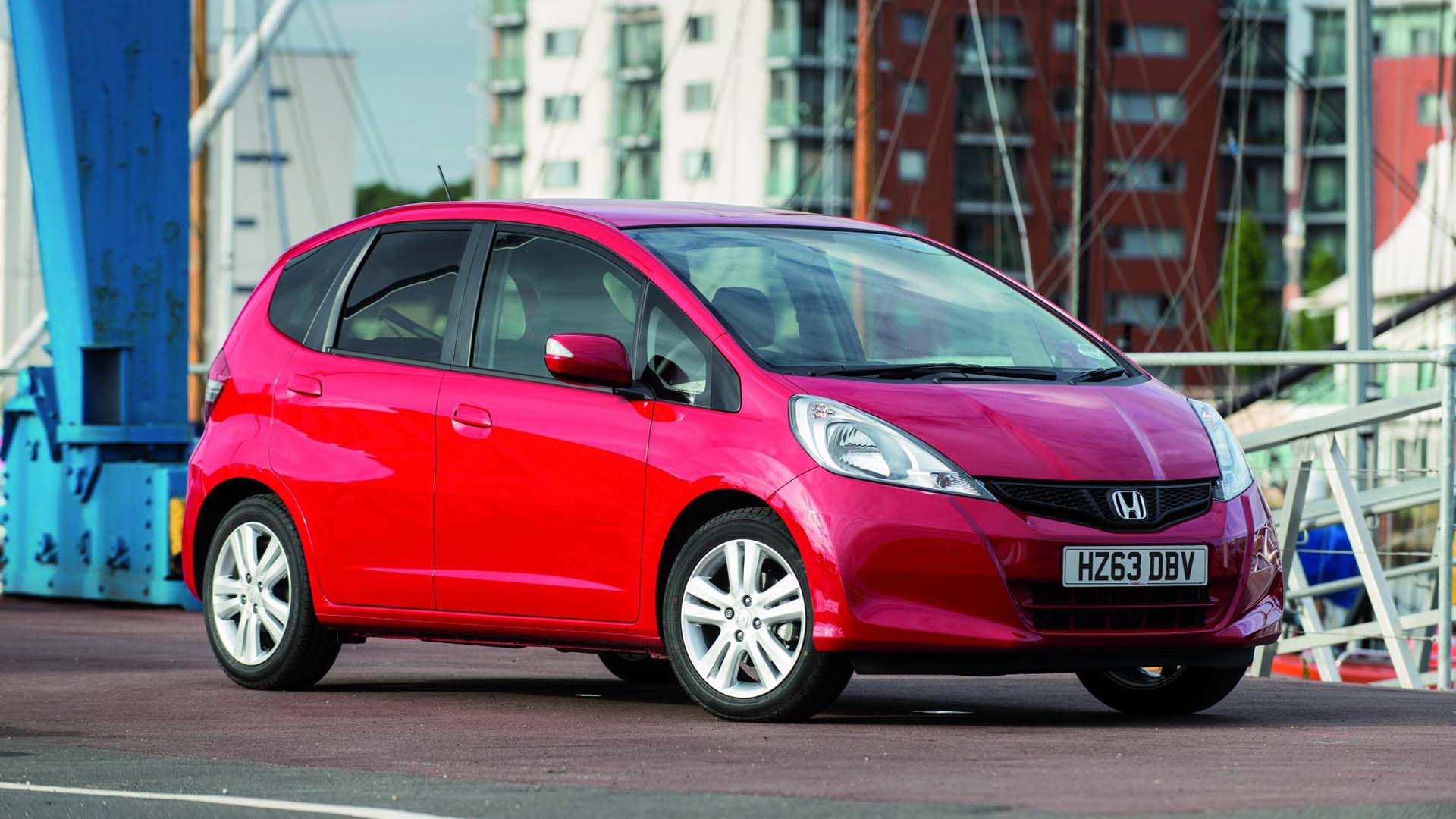
Honda Jazz – 12.39p per mile
“If you wanna be happy for the rest of your life, never make a pretty woman your wife.” Jimmy Soul’s advice might seem a little misguided in 2020 – especially if you read the rest of the lyrics. In reality, the secret to leading a happy life is to buy a Honda Jazz. Satisfaction, dependability and reliability are (almost) guaranteed.
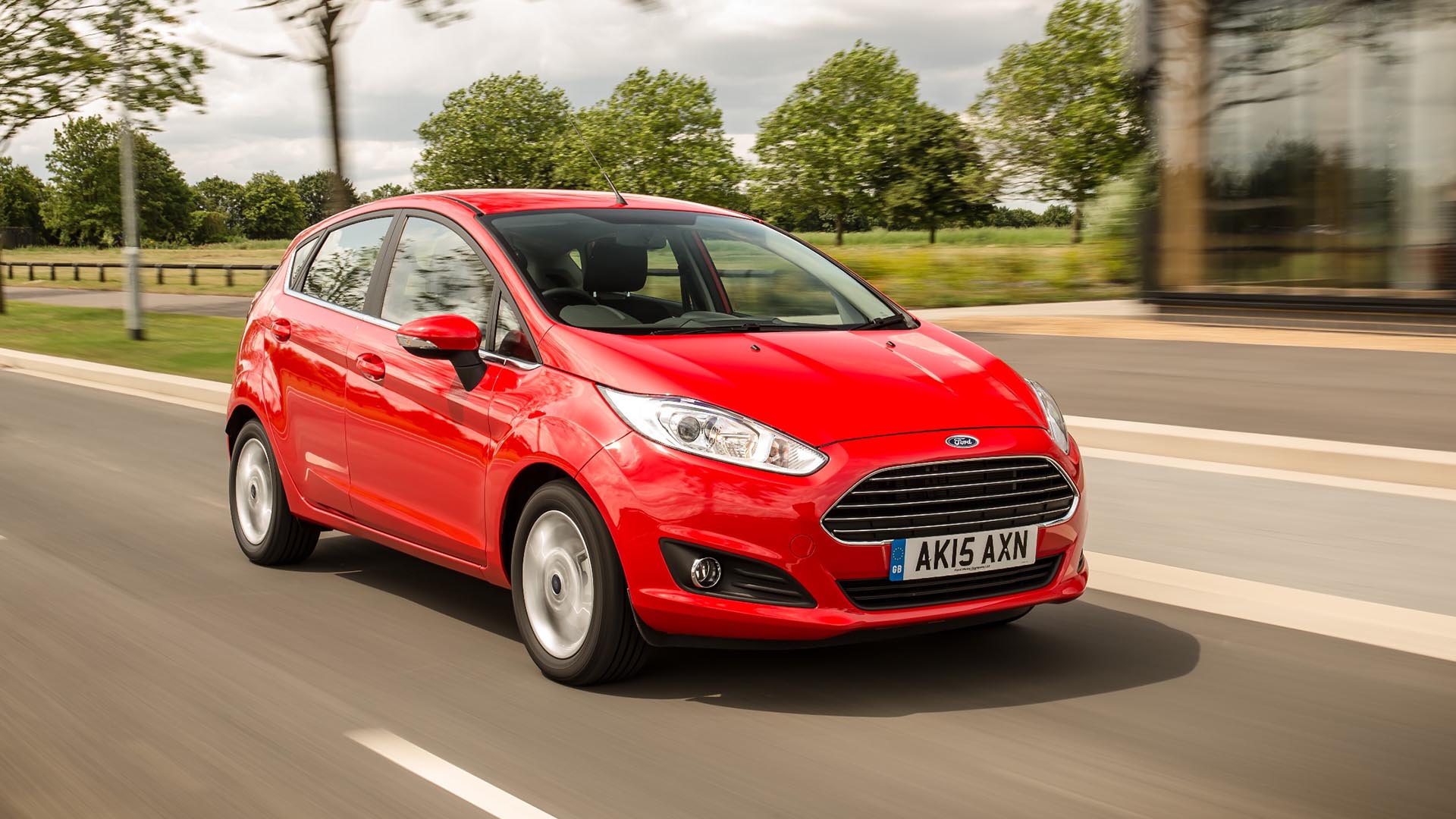
Ford Fiesta – 12.34p per mile
When talking about the Ford Fiesta, most used car guides reference the fact that there’s plenty to choose from so you can afford to be picky. But how many used examples are on sale today? Right now, Auto Trader has 13,300 listings, with prices ranging from £250 to £26,500. According to Choose My Car, a Fiesta 1.0 built between 2013 and 2017 will be the most frugal.
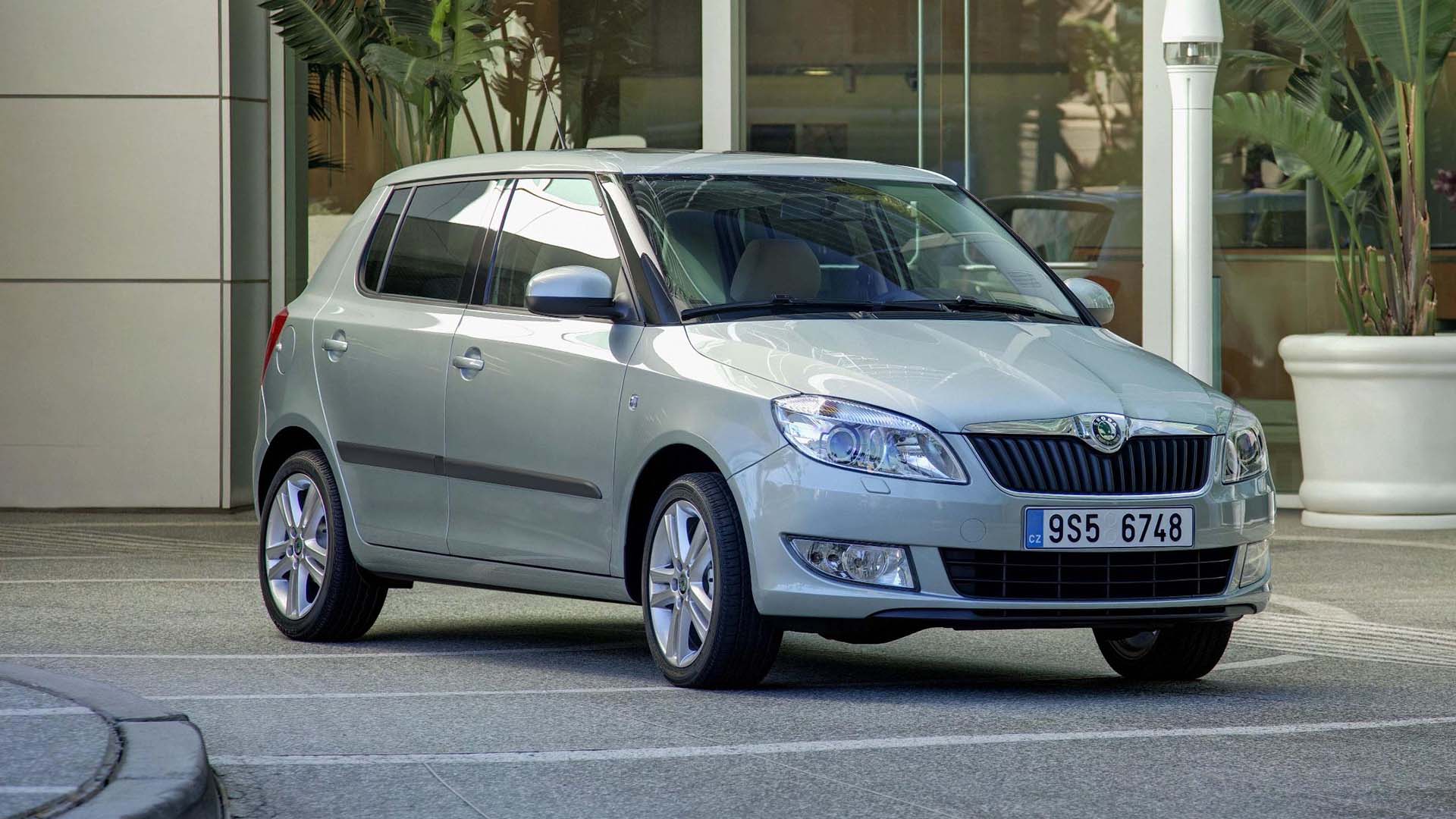
Skoda Fabia – 12.26p per mile
Wouldn’t it be neat if we could sneak a Ford Mustang onto the list? You could use it to convince your better half that running a V8 is a cost-effective and sensible thing to do. Instead, you’re faced with the prospect of running a Skoda Fabia 1.2 with a measly 75 horses on tap. Still want that Mustang, etc?
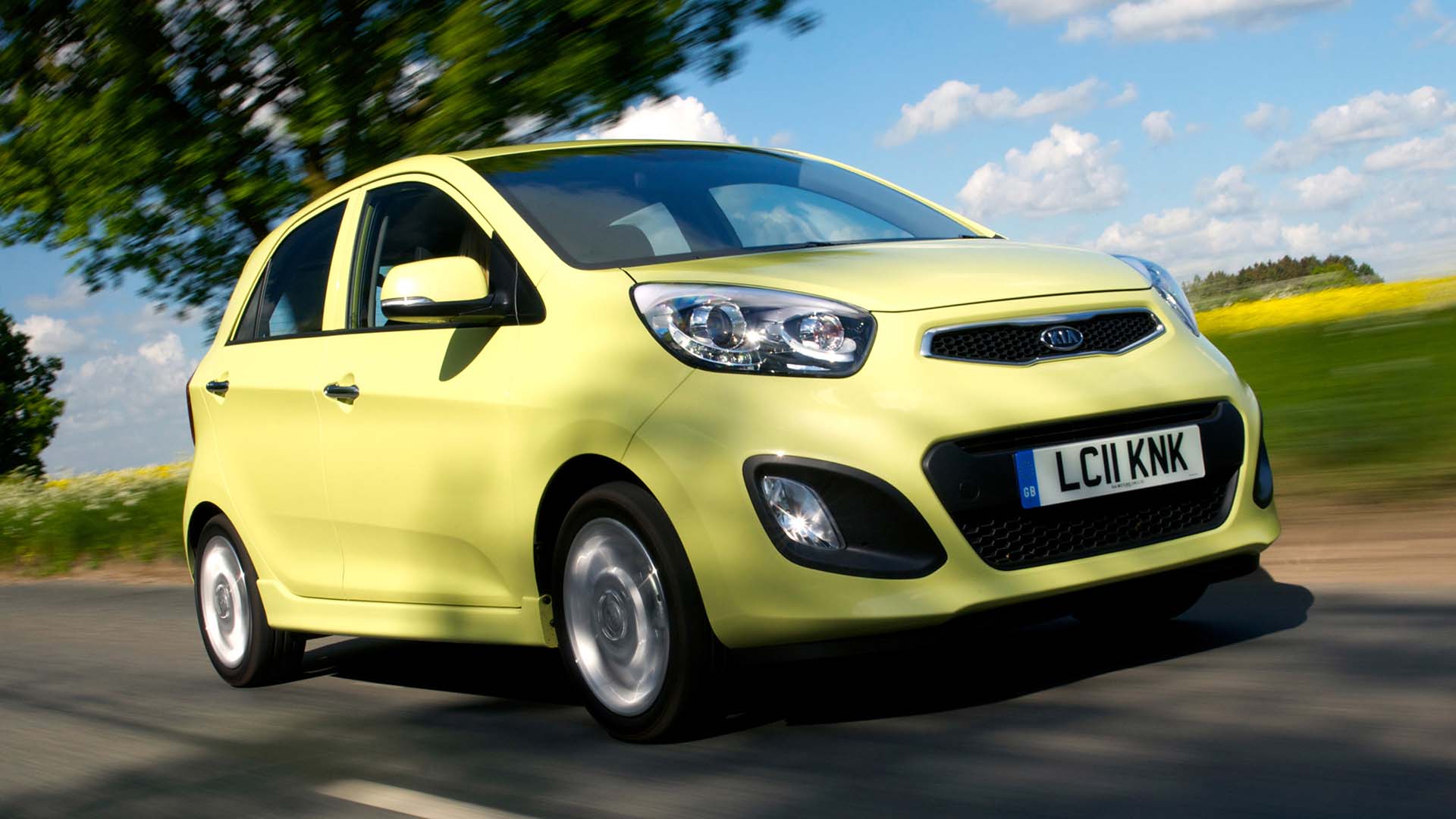
Kia Picanto – 12.19p per mile
A top 10 finalist in the list of cheapest cars to run – and if you buy a used Kia Picanto aged younger than seven years, you’ll still get some of the manufacturer’s amazing seven-year new car warranty, for ultimate budget motoring peace of mind.
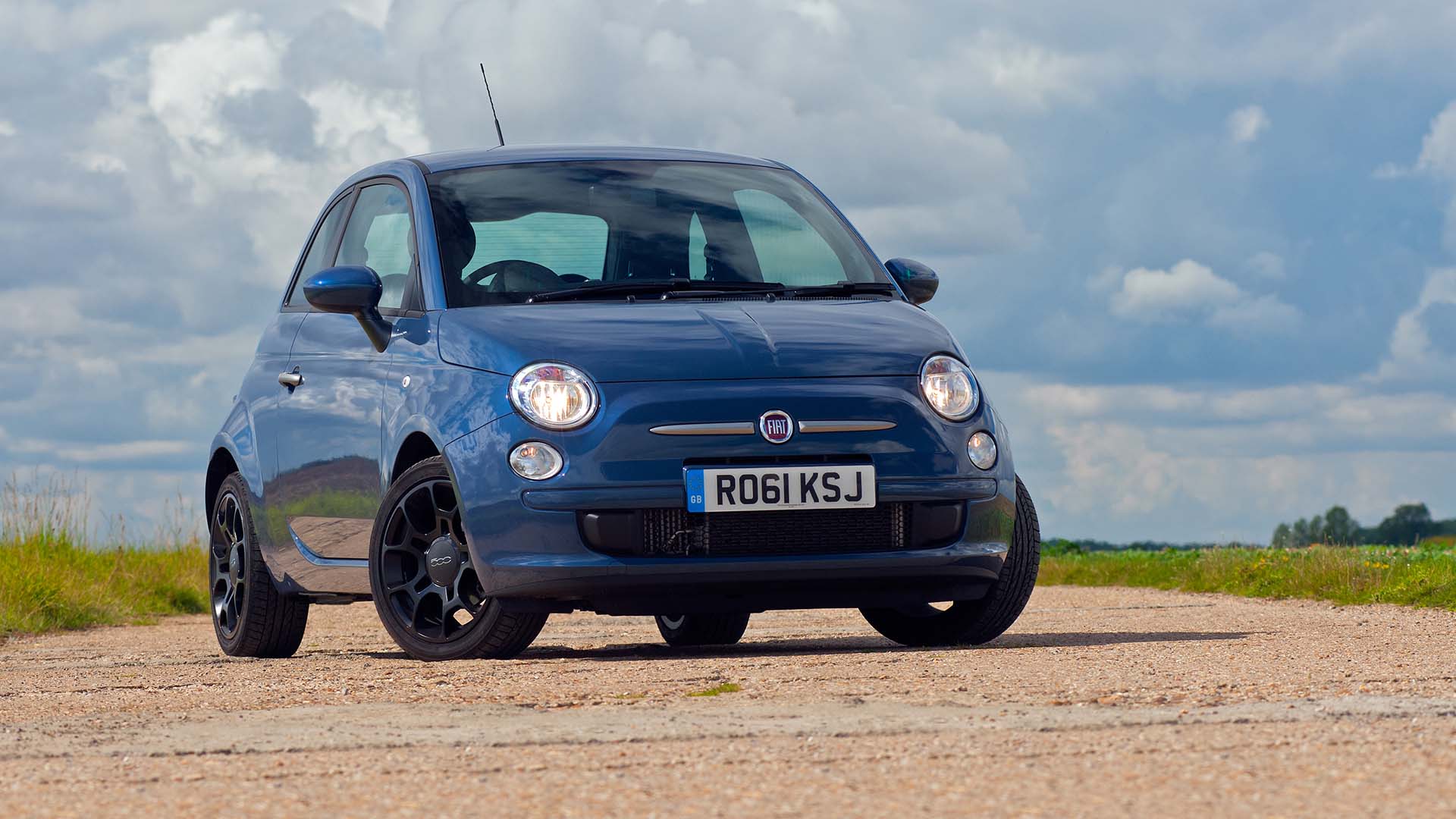
Fiat 500 – 12.03p per mile
The Fiat 500 is the automotive equivalent of having your cake and eating it – it’s fun to drive and cheap to run. That said, the cake phrase has always seemed a little odd. What’s the point of having a cake and not eating it? You buy or bake a cake with the intention of eating it. Unless you’re a baker, in which case you plan to make money from it. Perhaps that’s the point. Moving on…
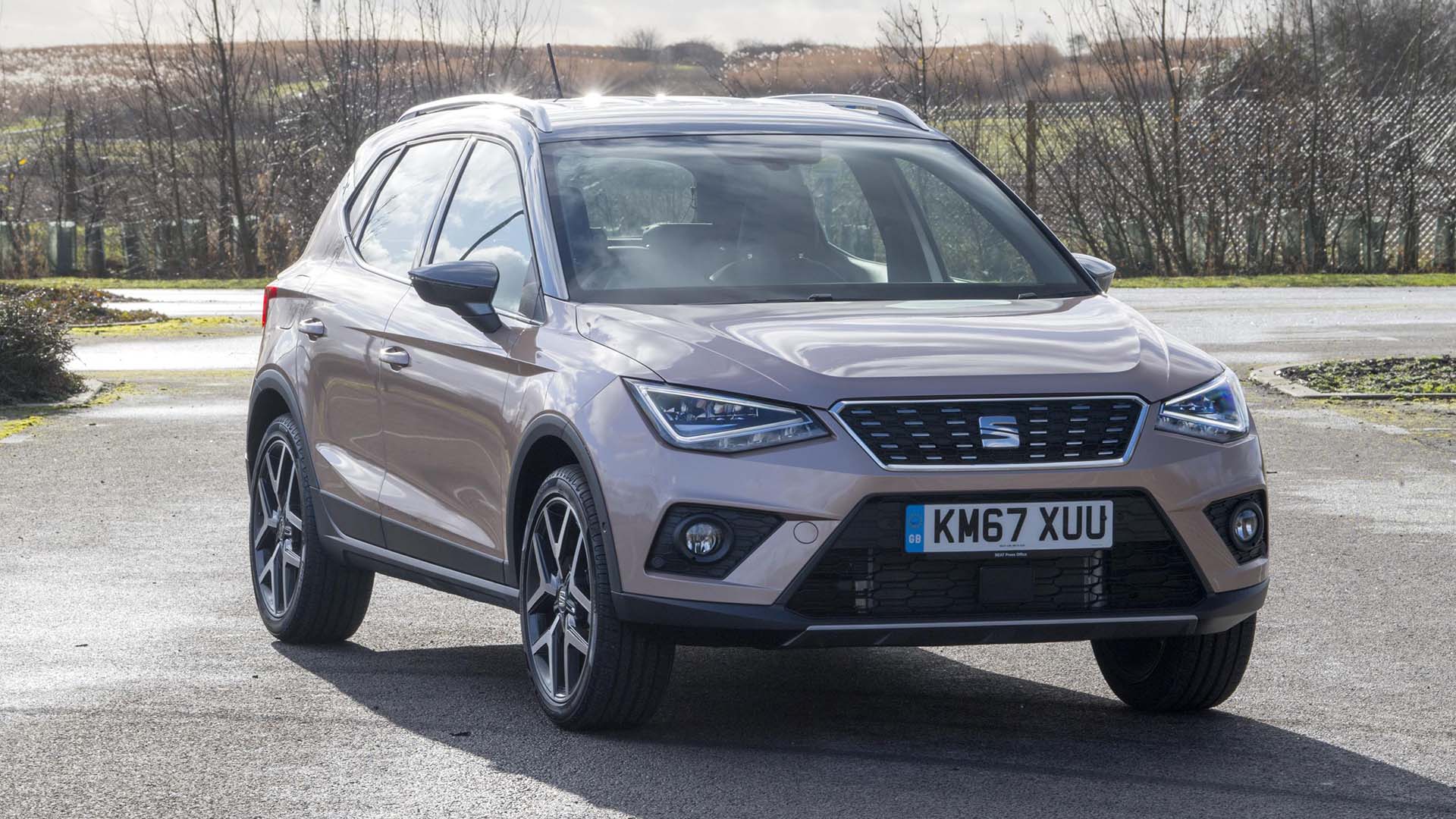
Seat Arona – 12.03p per mile
Although it’s fashionable for motoring writers to pour scorn on compact crossovers, the Seat Arona is actually rather good. It boasts a spacious cabin, it’s pretty decent to drive, and some of the trim levels offer premium levels of equipment. Opt for the 1.5-litre TSI engine to save money on fuel.
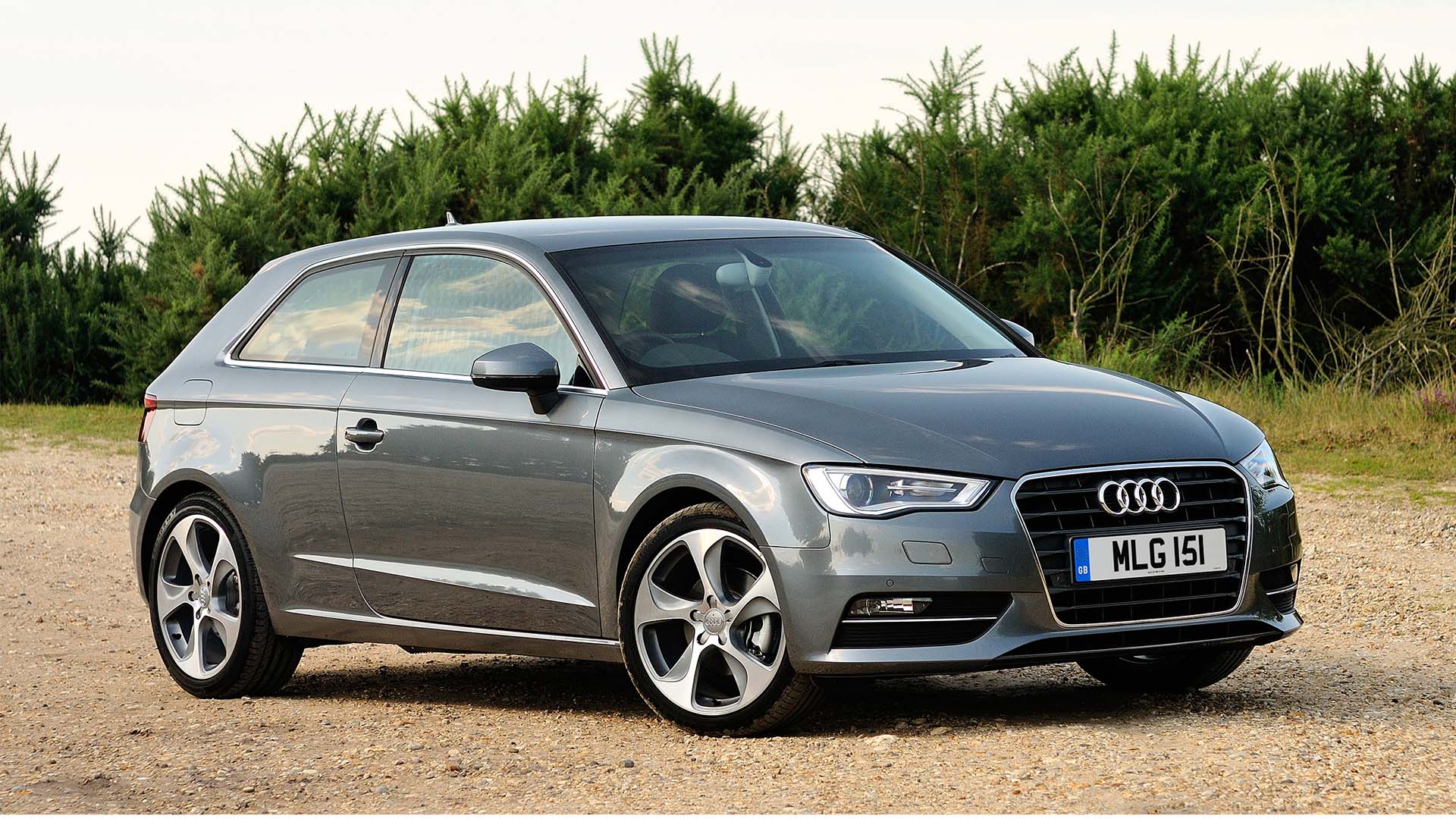
Audi A3 – 11.98p per mile
The Audi A3 is the first car on the list to drop below the 12p mark. People like the A3 because it feels like an upmarket Volkswagen Golf. It also wears an Audi badge, which means it looks good parked in the office, gym or Starbucks car park. Choose My Car says the 1.2-litre TFSI engine is the one to go for.
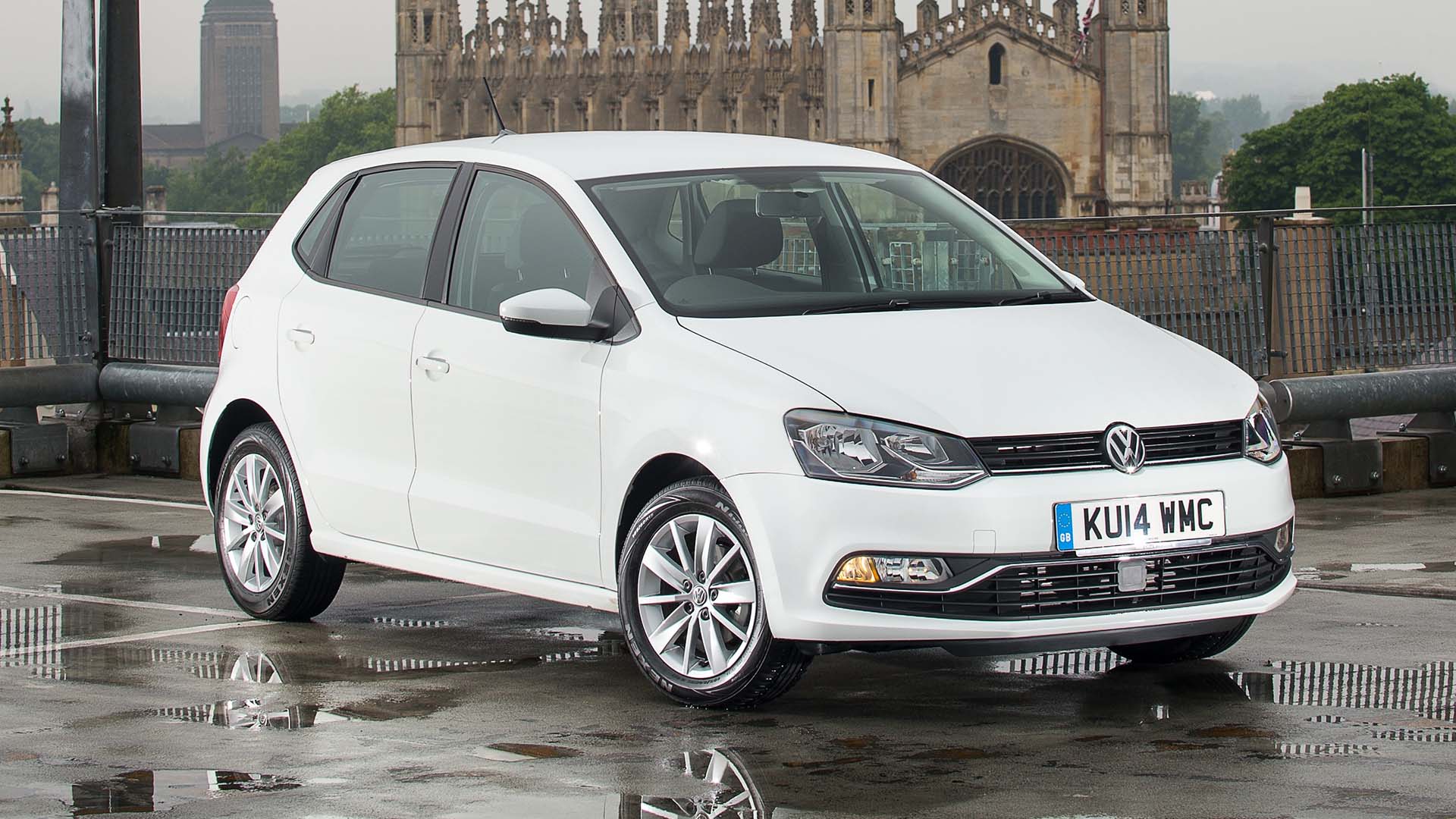
Volkswagen Polo – 11.56p per mile
How long do you reckon it takes the 60hp Volkswagen Polo 1.0 to hit 62mph? The answer is 16.5 seconds, which is roughly the time it will take you to realise that you should have bought something a little quicker. Like a push bike.
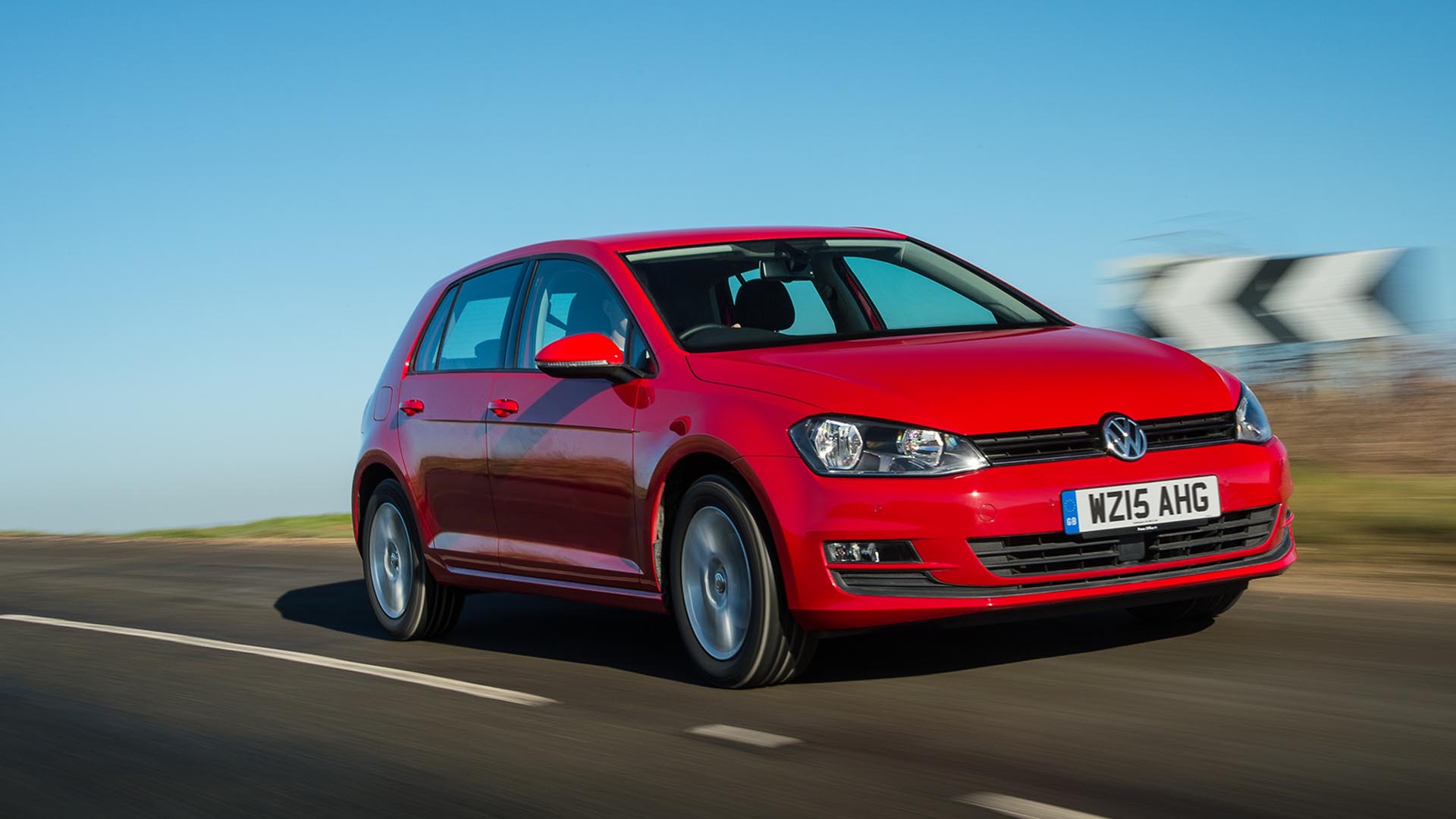
Volkswagen Golf – 11.46p per mile
The Volkswagen Golf with a 110hp 1.0-litre TSI makes more sense than the Polo. Not only is it bigger, but good fuel economy will be easier to achieve as you won’t be pushing the engine to the limit in order to make swift progress. It’s also a Golf, which will impress your neighbours. Probably.
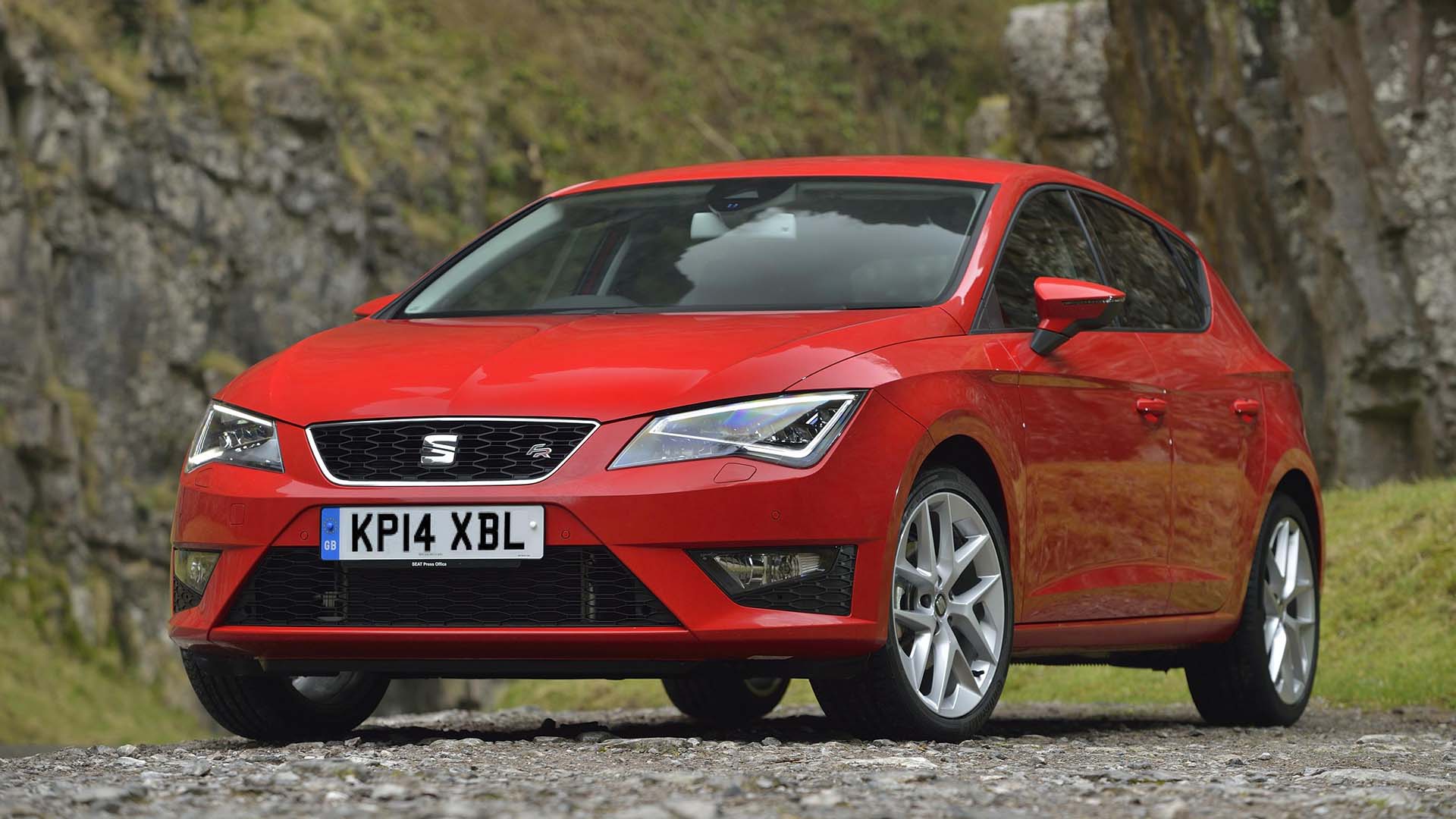
Seat Leon – 11.31p per mile
Alternatively, you could buy a ‘Spanish Golf’. The Seat Leon shares its platform with the Volkswagen Golf, but offers better value for money and an improved look. According to Choose My Car, the 130hp 1.5-litre TSI is the best engine on a cost-per-mile basis. It’s worth noting that the Leon will depreciate faster than the Golf.
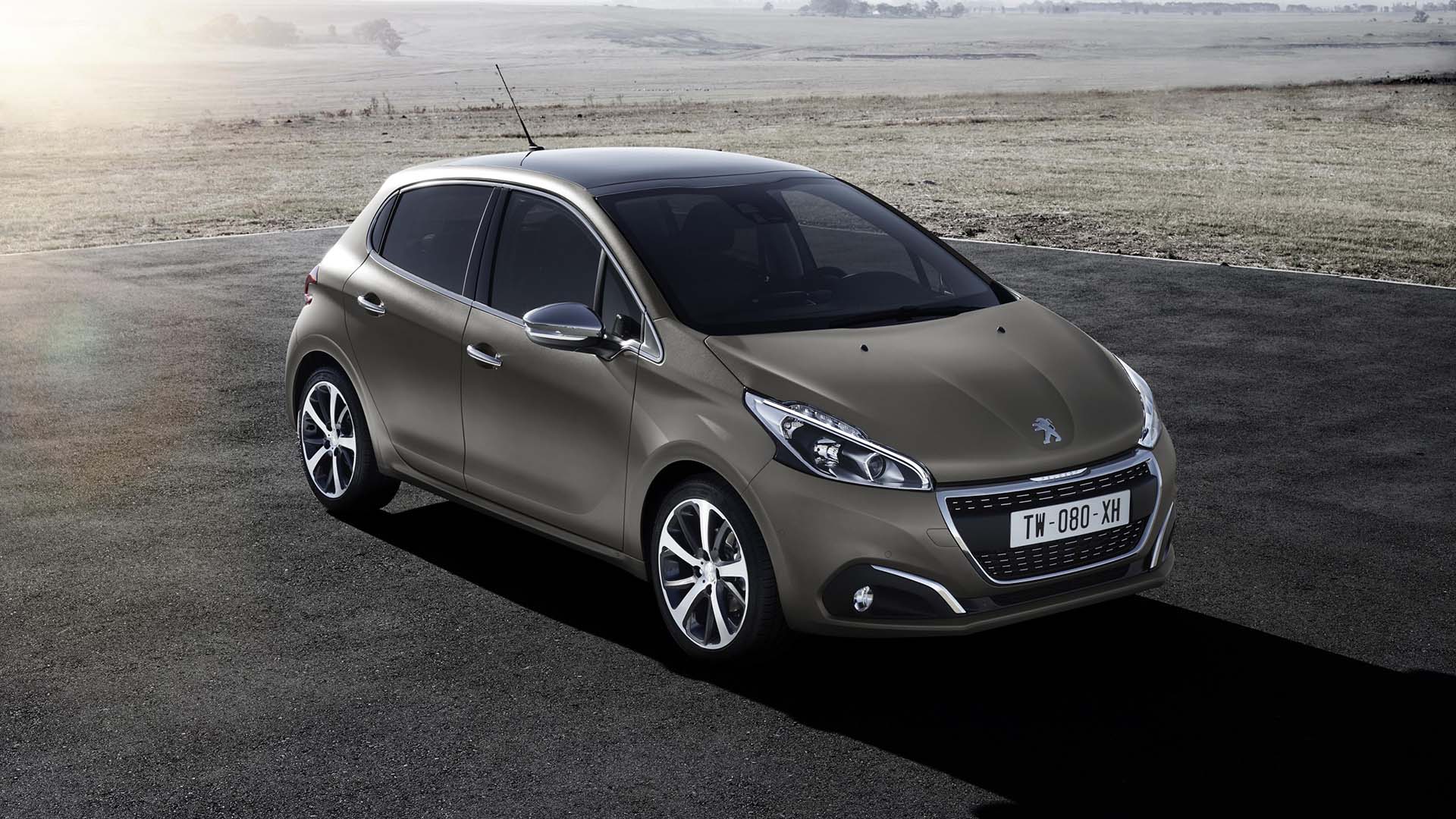
Peugeot 208 – 10.90p per mile
Into the top three we go. We start with the outgoing Peugeot 208. When powered by the 1.0-litre Puretech 68 engine, the little Pug will cost 10.90p per mile to run. Not bad, eh?
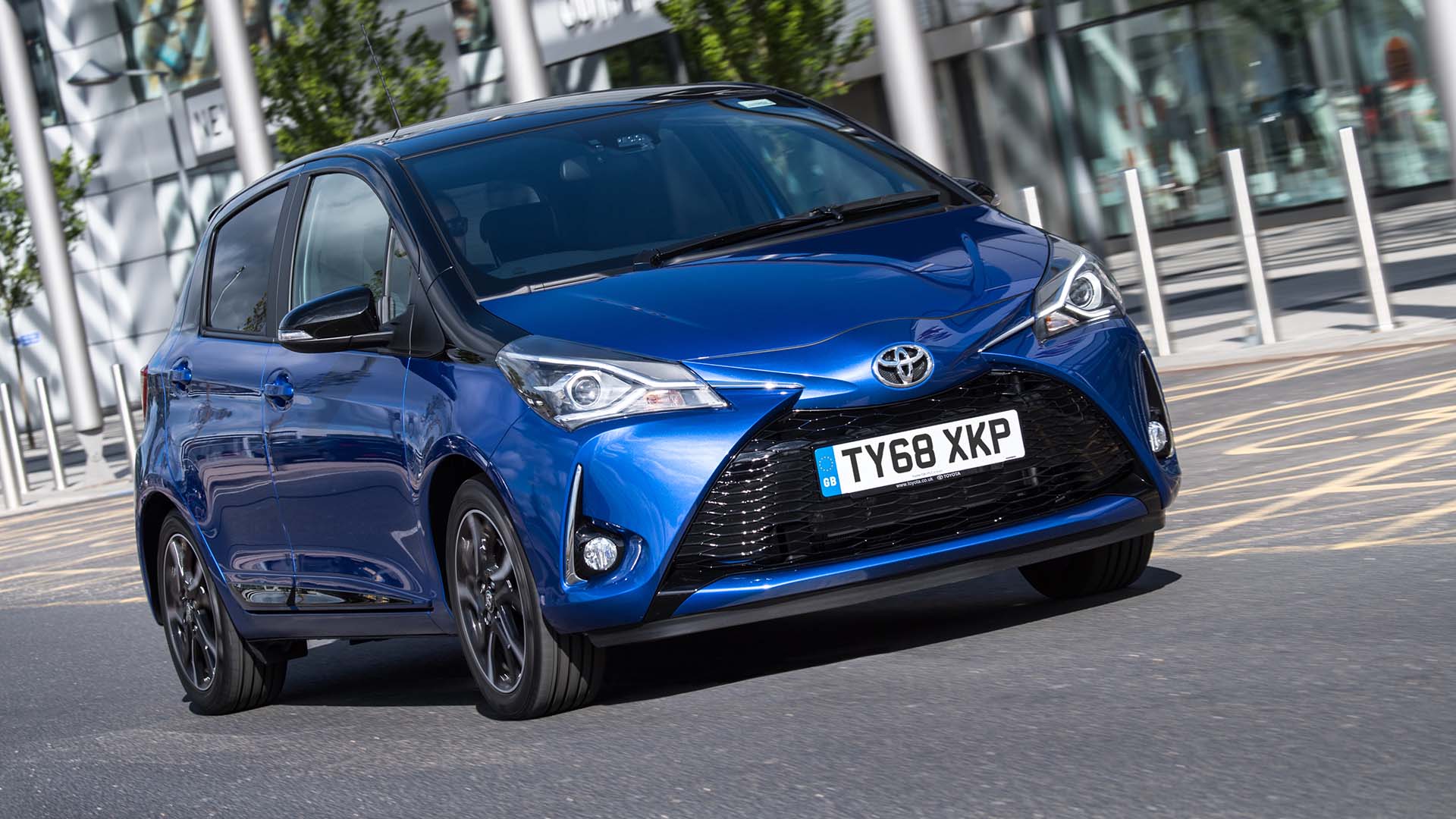
Toyota Yaris – 10.60p per mile
Toyota dominates the top two positions, with the Yaris 1.0 grabbing second spot. The current Yaris has been on sale for nearly a decade, but a new model will arrive in 2020. It’s coming to a bingo car park near you.
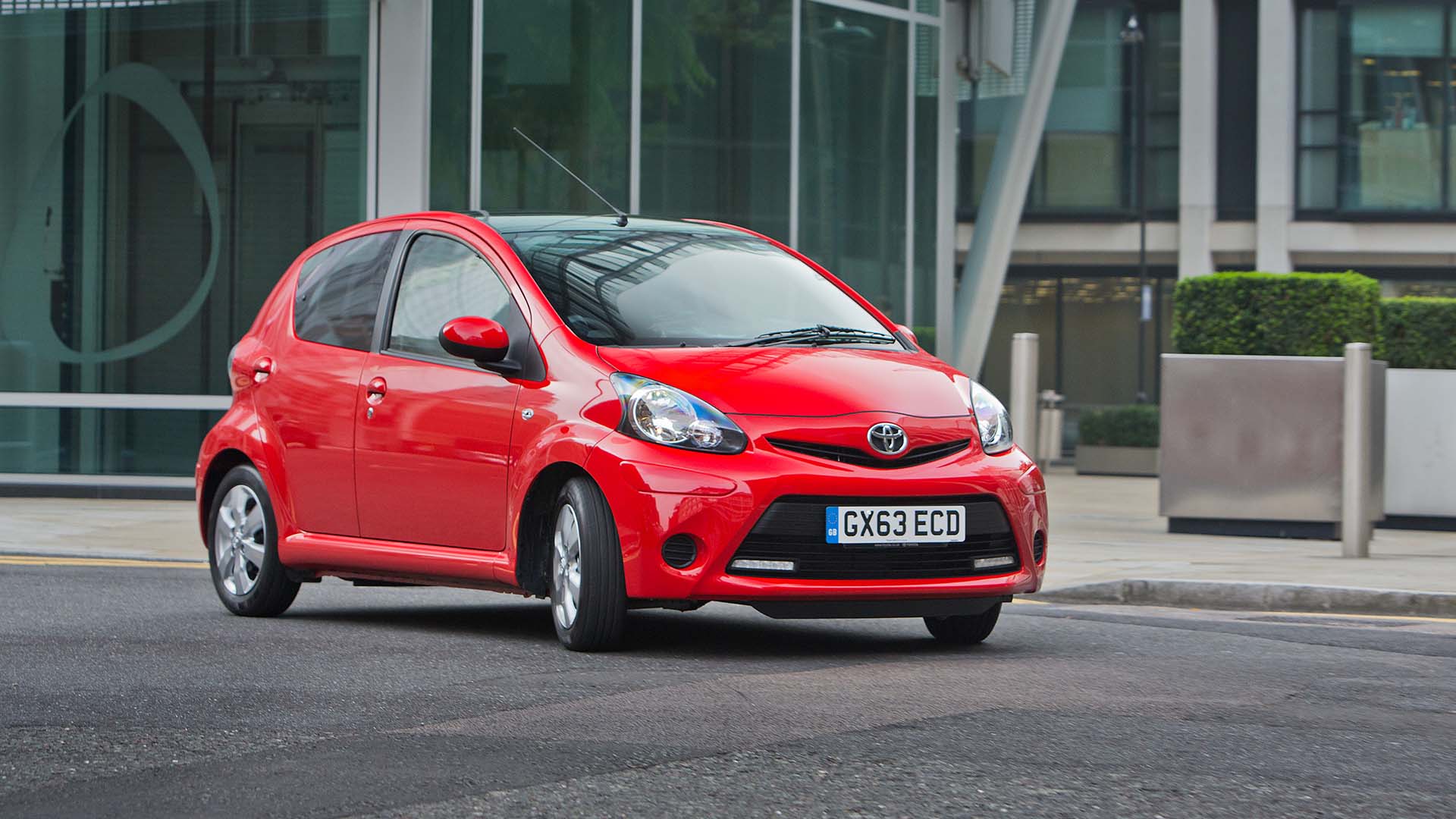
Toyota Aygo – 10.55p per mile
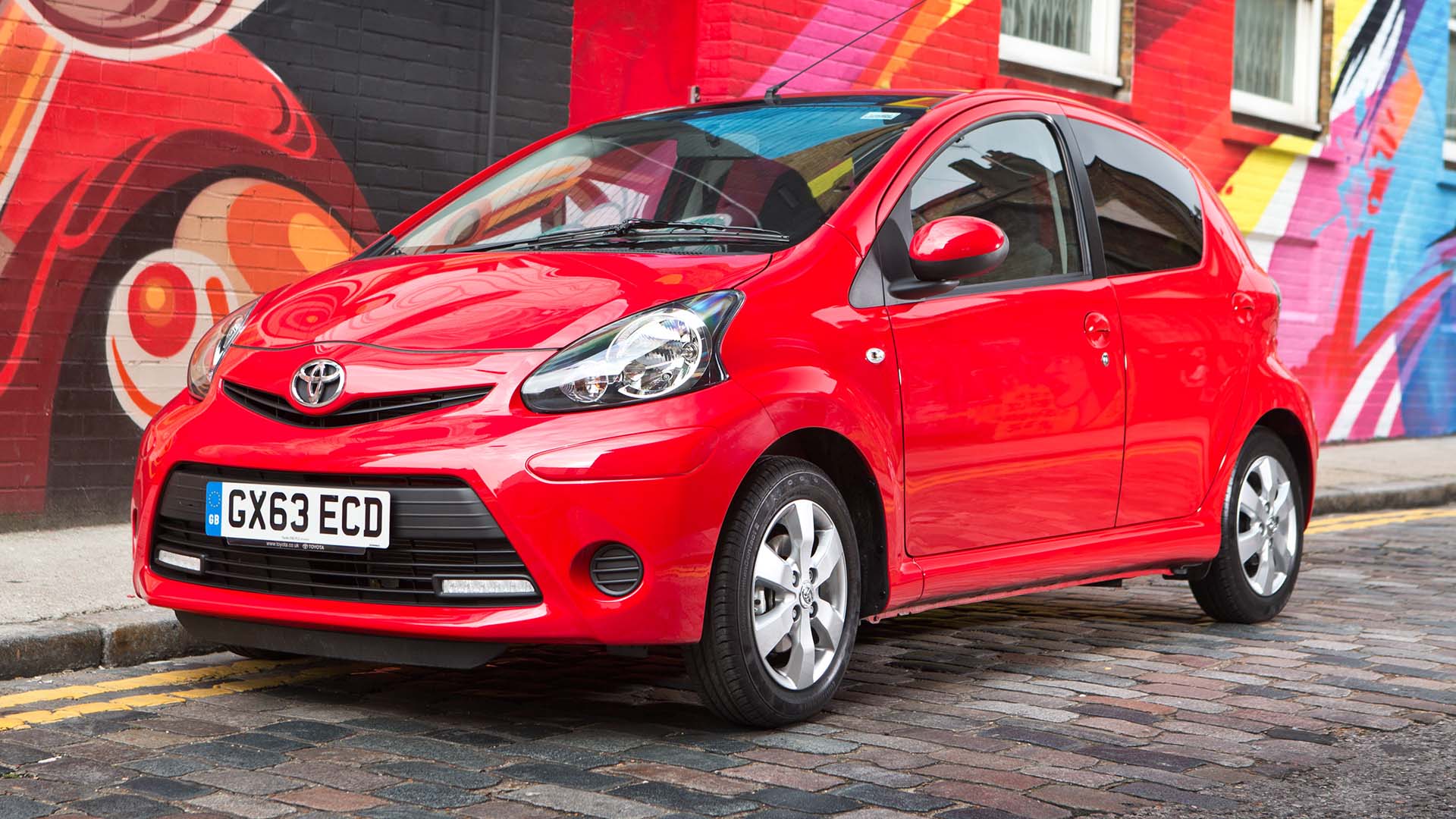
The little Toyota Aygo shares its platform with a Citroen and a Peugeot, but while the French pair are absent from this list, the Aygo 1.0 grabs top spot. Choose My Car says it will cost 10.55p per mile. Out of curiosity, do you want to know the figure for the Range Rover 5.0 V8? Of course you do. It’s 36.25p per mile. Ouch.
The three-door Land Rover Defender 90 is now on sale, with prices from £40,290. This follows the launch of the five-door Defender 110, which is experiencing ‘unprecedented demand’ at dealers.
For those wanting to put their Defender to work, there will also be a commercial derivative. It will cost from around £35,000 when it joins the range later in 2020.
The Defender 110 has apparently been customised on Land Rover’s online configurator 1.21 million times.
Contrary to the rugged image of the Defender, the most popular accessory pack in those configurations was Urban. It joins Explorer, Adventure and Country as one of four flavours of Defender that buyers can choose.
More than 35 percent of configurations were the Urban spec. Perhaps the Mercedes-Benz G-Class should be worried.
“We have experienced unprecedented demand for new Defender 110 and the official introduction of Defender 90 is sure to boost interest,” said Finbar McFall, Land Rover global product marketing director.
“If our experience with the Defender 110 is anything to go by, we can expect over half of customers to opt for one of the four accessory packs, making new Defender the most accessorised and personalised Land Rover we have ever produced.”
If you like the idea of the cheaper, smaller 90, but worry about practicality, fear not. Although it only has two traditional doors, it also has a front-row centre seat, offering seating for six.
If you’re more eco-minded, there will be a Defender for you soon. This year will see the marque launch a plug-in hybrid variant.
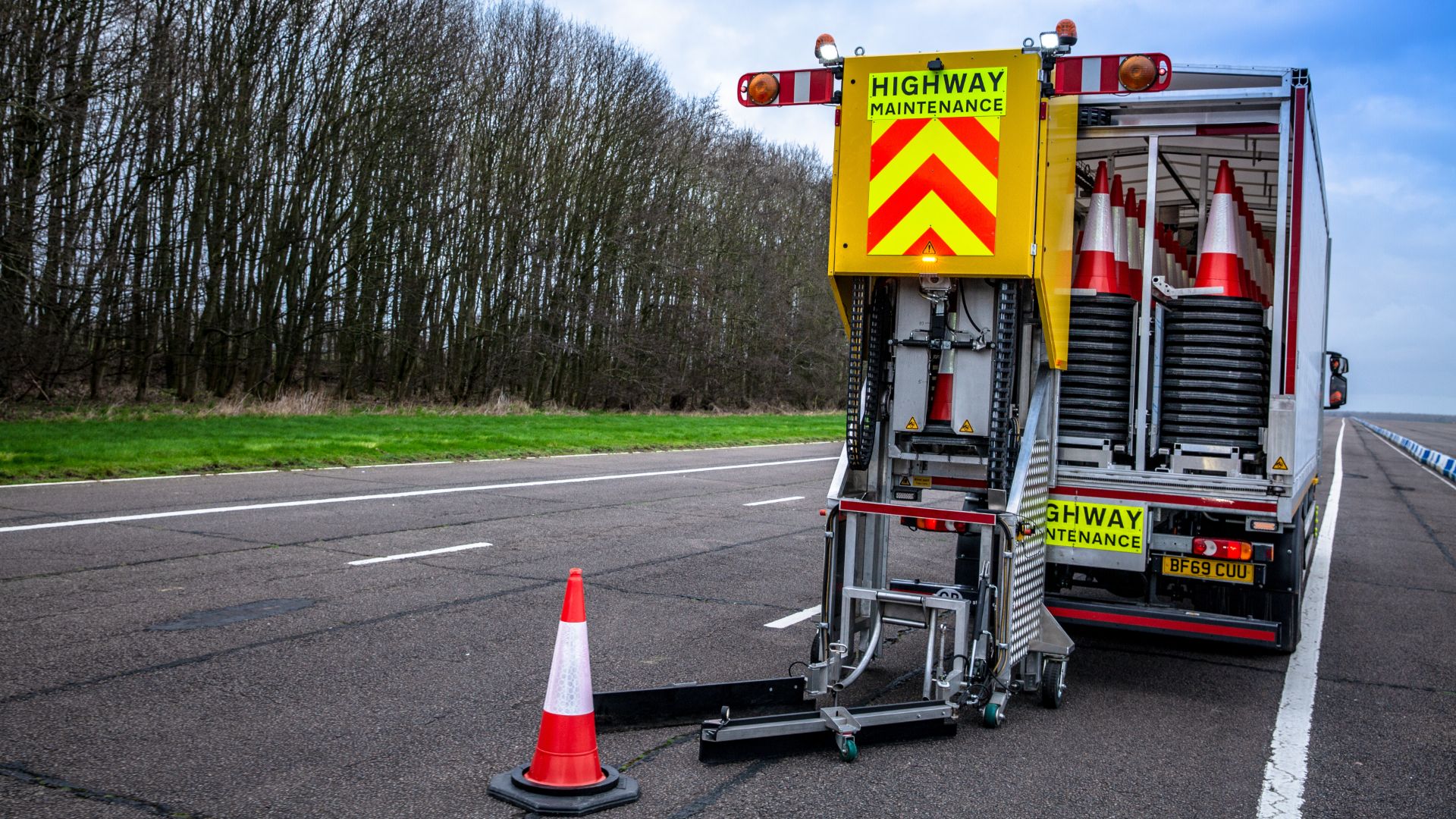
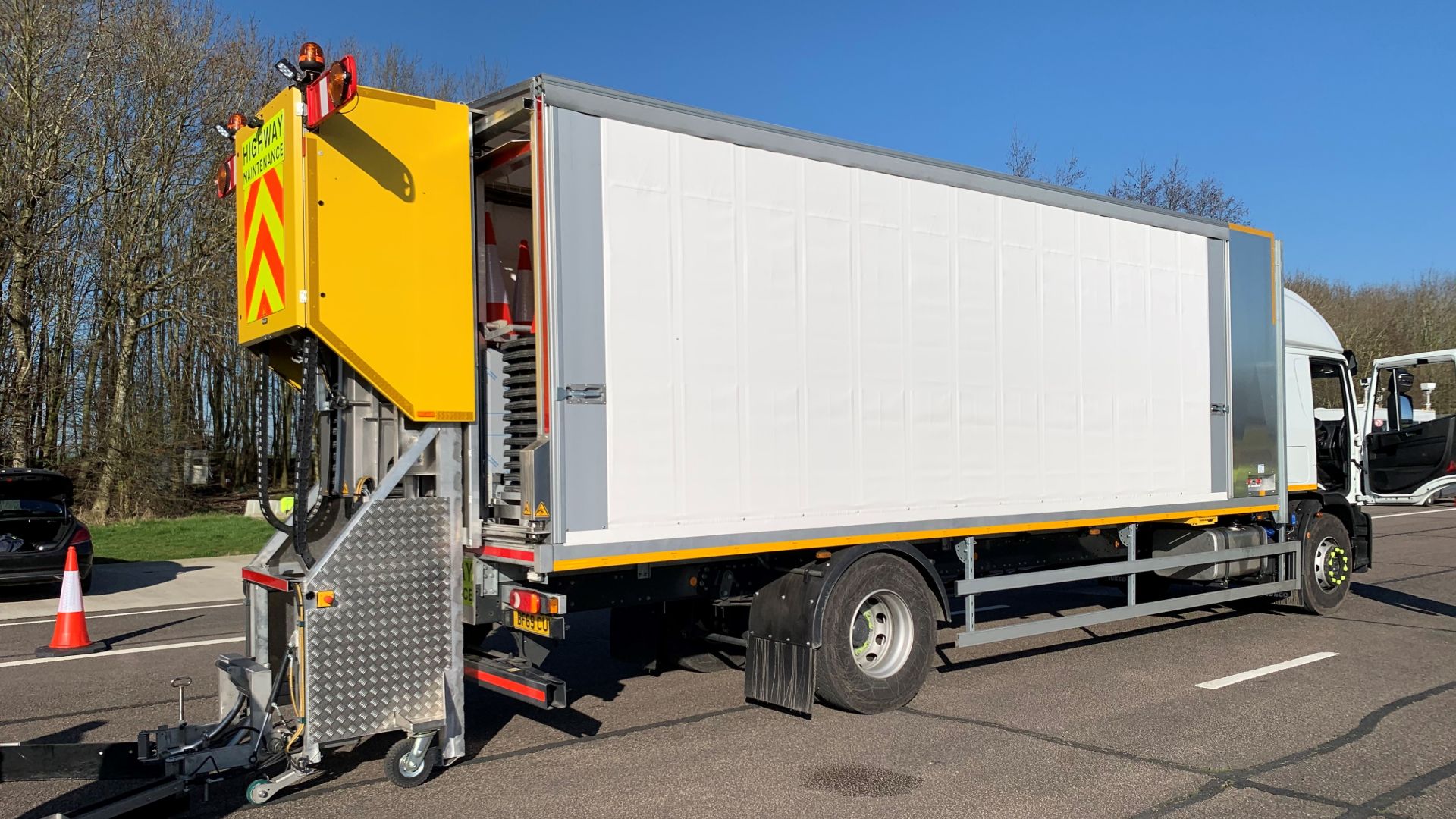
Highways England has released details of new vehicles designed to place cones at roadworks. The machines will reduce risk for road workers.
The automated cone-laying machines will take the place of two workers hanging from a truck, placing cones as it drives along.
Around 260-300 cones are required for a 2.5-mile road closure. That means workers shift between five and six tonnes of cones, each weighing 10kg, over the course of a shift.
Include other objects such as frames, signs, lamps and sand bags, and that’s an eight- to 10-tonne payload. A single kilometre of cone-laying takes 15 minutes. That means that live traffic exposure for these workers at present totals around two hours.
The process of establishing roadworks should also speed up. Pending further successful testing and refinement of the design, the cone-laying machines could be in service by the end of the year.
Two vehicles have been developed. One by Highway Care and one by King Highway Products. The former has been testing at Bruntingthorpe airfield, while the latter is due to be trialled next month. Highways England has invested £1.27 million into the scheme, via the Innovation Designated Funds programme.
Highways England set criteria for the machines, which must be safe in terms of all road users and pose no risk to traffic. In terms of performance, they need to lay or collect cones at a rate of one every 10 seconds. Both machines are expected to be used if they both pass the tests.
“We are constantly looking for ways to improve safety for everyone who works and travels on our road network and have been delighted with the initial tests of this innovative vehicle,” said Highways England’s Martin Bolt.
“The first tests have been very positive. We have already received a lot of interest and support from the industry, applauding an initiative that will take the human element out of putting cones and therefore take away an element of potential risk.
“As well as taking away this physical and laborious task, these automated machines will also help us to redeploy the workforce to some of the many other traffic management duties.”