The Caravan and Motorhome Club Towcar of the Year awards identify the best cars for towing in different categories. This year, 40 towing cars were chosen for evaluation.
Each car was assessed by a panel of judges, while the Caravan and Motorhome Club’s one million members were invited to share their experiences about the vehicles in the running for the awards.
While towing capacity is important, the judges also looked at boot space, roof load limits, nose load limits and even the presence of a full-size spare wheel.
The 40 cars were then put into caravan weight categories, ranging from under 1,100kg to over 1,700kg. There were additional classes for family, pick-up and alternatively fuelled towing cars, too.
The Skoda Superb Estate SE L Executive 2.0 TDI 150PS DSG is the overall winner. Of the estate car, the judges said: “A regular in the towcar top three, and this year’s Superb appears to be no exception. You can’t go wrong with one of these. If you want a large estate, the Superb has to be on your shortlist.”
Skoda Octavia also a winner
As well as securing the title of Caravan and Motorhome Club Towcar of the Year 2021, the Skoda Superb also finished top in the 1,300kg to 1,400kg category. There was a win for the smaller Skoda Octavia Estate in the 1,200kg to 1,300kg category.
Nick Lomas, director general of the Caravan and Motorhome Club said, “Caravan holidays have never been more popular and it’s important to the Club to make sure we provide relevant information to our members – and all those interested in touring and towing – on the vehicles that are available to them.
“The Club, with its 110+ years of experience, has worked with respected industry colleagues and journalists, all of whom are themselves caravanners, to bring together this invaluable set of data and information. The Club also offers a free technical advice helpline and training courses for those interested in starting out with the pastime.”
Best cars for towing 2021
Caravan weight under 1,100kg: Renault Captur
Caravan weight 1,100-1,200kg: Seat Leon Estate FR 1.5 TSI 150 manual
Caravan weight 1,200-1,300kg: Skoda Octavia Estate SE L First Edition 2.0 TDI 150PS DSG
Caravan weight 1,300-1,400kg and overall winner: Skoda Superb Estate SE L Executive 2.0 TDI 150PS DSG
Caravan weight 1,400-1,500kg: Vauxhall Insignia SRI VX-Line Nav
A Lego Technic Ferrari 488 GTE has hit an incredible top speed of almost 130mph.
The scale replica of the real-world AF Corse no.51 Ferrari racer achieved the high speed on the Autodromo di Modena circuit in Italy.
However, the Lego 488 GTE did need some assistance on its quest for performance.
Small scale, big speed
The Lego Technic Ferrari 488 GTE does boast a miniature V8 engine with moving pistons. However, to reach 129mph (208kph), the real AF Corse Ferrari was brought along to help.
Attaching the Lego model to its big brother involved the use of a special mechanical arm. A total of eight cameras, and even two drones, were used to record the event.
An ex-Formula 1 driver was the perfect person to place behind the wheel of the real Ferrari. Giancarlo Fisichella is now a Ferrari Competizioni GT driver, responsible for piloting the 488 GTE in the World Endurance Championship.
A video was then created, making it appear like the Lego Ferrari was lapping the circuit under its own power.
Bringing Lego to life
Made from almost 1,700 pieces, the Lego Technic Ferrari 488 GTE measures 48 cm (19 inches) long. Although smaller than the real thing, the £169.99 ($169.99) model is much more affordable.
Camillo Mazzola, Marketing Director at the Lego Group Italy, commented: “The Lego Technic Ferrari 488 GTE is packed with authentic features and beautiful design elements from the original racing car model. It is so similar to the real one, and all that it needed to really come alive was to be able to speed through a real racing car circuit and today it has happened!”
He added: “As a true Lego fan and motor racing lover, I couldn’t miss this special event and it was really exciting to take part in this great project with our partner Ferrari.“
The Isle of Islay, just off the west coast of Scotland, is home to around 3,000 inhabitants. Accessible from the mainland only by ferry or air, it’s an isolated place. Mobile phone signal is barely existent – and if you can get it, your (post-Brexit) operator will assume you’re abroad and charge you exorbitant rates.
It’s no surprise then, that Rover managing director Spencer Wilks and his chief engineer brother Maurice liked to escape the West Midlands for their family retreat on the island. Not that getting a mobile phone signal was a concern over 65 years ago.
Although the Isle of Anglesey in North Wales is often considered the birthplace of the Land Rover (it’s where Maurice drew an initial sketch of the car in the sand), Islay is where it really developed as an idea.
So, with Defender production due to end this year, we headed out to Islay to discover the island that inspired an iconic vehicle – and drive a line-up of the Defender’s predecessors.
Series I
The Series I, or simply the Land Rover as it was known back then, was introduced in 1948.
The example we drove is owned by the Dunsfold Collection. Apparently it’s manager Phil Bashall’s pride and joy, and that’s evident from its simply immaculate condition.
The car is a 1954 Series I 107-inch pick-up – the equivalent of today’s Defender 110 truck cab. There’s little evidence that it’s 67 years old, but there are plenty of quirks that set it apart from today’s Defender.
The wipers, for example, are manually operated. An interesting concept on a wet Scottish island. And the speedo is set in the middle and bobs around telling you vaguely how fast you’re daring to go. VMax from its 53hp 2.0-litre petrol engine is somewhere around 50mph.
‘Charming’ is the word.
Series II
Technically, this isn’t a Series II, but a Series IIA. Cosmetically there’s little difference to the II, but at this point a 2.25-litre diesel engine was introduced to the Land Rover for the first time.
The Series IIA on Islay is a 2.25-litre petrol, however. The first vehicle we drive after landing on the island, it’s a quick lesson in driving older cars. With no synchromesh on lower gears, it requires double de-clutching. Combine that with brakes lacking in servo assistance, and we soon discover how difficult it is to slow down an old Land Rover while heading downhill into a cute Islay village.
The steering doesn’t help the experience, either. Driving in a straight line was tricky – something we put down to an ‘old Land Rover’ thing, but actually turned out to be a dodgy steering box.
Still, despite these issues, it’s hard to deny the Series IIA is a lovely vehicle in which to potter around a Scottish island. Made in 1965, it looks like something out of Heartbeat, while its 2.25-litre petrol engine provides adequate power for Islay’s minor roads.
Series III
This isn’t our first encounter with MJP 936W – a 1980 109-inch Series III. We first got to drive it around Land Rover’s off-road course in Solihull during a visit to the Defender production line.
It’s as terrifying as I remember, with (quite literally) the turning circle of a bus and ancient drum brakes. But it’s also brilliant fun. By now I’m starting to get used to dropping down through the gears rather than relying on the brakes – a technique few of us use in our everyday driving.
It’s got the same 2.25-litre petrol engine as the Series IIA, but with a load of extra mass. It’s certainly more suitable for pootling around than getting anywhere in a hurry.
90 40th Anniversary
The launch of the 90 and 110 in 1983 represented a turning point for Land Rover that some hardcore enthusiasts still struggle to accept. It’s when Land Rover made the switch to coil-sprung suspension, instead of leaf springs.
Driving this Land Rover 90, it’s hard to argue that leaf springs are better in any way. Not only do the coil springs provide a more comfortable ride, they also give more axle articulation when off-road.
But that’s enough about suspension – what makes this 90 so special? Well, it was produced to celebrate 40 years of Land Rover production in 1988. The plan was to launch a limited run of 40 special editions, all bearing the number ‘40’ on the number plate. However, with the 1980s being a turbulent time for car production in the UK, strike action led to the project being cancelled.
Just two were built. This one was finished in traditional Land Rover Bronze Green paint, with even the wheelarches colour-coded. It was equipped with a khaki soft-top, providing a nod to soft-top models of earlier Land Rovers.
Driving it around Islay, there’s just something about it that feels so right. Possibly the perfect compromise between old and new, it’s easy to drive, but still feels like you’re driving a classic vehicle.
110 V8 County Station Wagon
The 110 County Station Wagon represents a shift away from farmers’ workhorses to recreational family vehicles. With more comfortable seats than the regular 110, as well as a number of upgrades over the years (from exterior stickers to a radio-cassette player), the CSW made the 110 genuinely desirable for the first time.
Powered by a 3.5-litre Rover V8, you’d expect the 110 CSW we drove on Islay to be pretty rapid. But with just 134hp and a kerb weight nudging two tonnes, it’d struggle to keep up with a newer Transit-engined Defender. Still, if you do boot it (and try not to think about the fuel bills if you do), it does at least sound good.
The extra length of the 110 compared to the 90 can also make things tricky off-road – while negotiating a narrow, rocky descent onto a beach, for example, the shorter vehicles were much happier to lift a wheel and get on with it.
Defender 90 Heritage Edition
Launched as a final send-off for the Defender, our first impressions of the Heritage edition were that it looks stunning in its Grasmere Green paintwork.
After driving its predecessors, it even feels modern – albeit still very different to a new Defender.
The 2.2-litre TDCI diesel engine is quite vocal, but it does have a degree of performance to go with it. By that, we mean it’ll keep up with normal traffic…
It’s still definitely a Defender, though. The whole experience is a bit Marmite. However, if you’re of the Defender mindset, you will love it.
Spoiler alert! This story is mostly about aerodynamics, from downforce to drag, venturis to ventilation, and splitters to, well, spoilers.
If you don’t recognise Richard Hill, you’ll know his work: the Lotus Evija hypercar, for instance, or the bicycle Chris Boardman rode to Olympic glory. These are just two highlights of a lifetime at Lotus, studying the science of speed.
Having joined Lotus in 1986, Richard has risen to the role of chief aerodynamicist. Or Chief Engineer of Aerodynamics and Thermal Management, to be exact.
Here, he talks us through a remarkable career, ending with thoughts on where car design goes next. And it all began with ‘Wet Nellie’…
His dad borrowed Roger Moore’s Esprit
“I can remember the exact moment of deciding I wanted to work for Lotus,” reminisces Richard.
It was 1977, the year of the Queen’s Silver Jubilee. But while Johnny Rotten sneered “there is no future in England’s dreaming,” Richard thought otherwise. He dreamed of being Bond, James Bond.
“My father was general manager for a paint company that supplied Lotus,” he explains. “Somehow, he managed to borrow the Esprit S1 from The Spy Who Loved Me, released that same year, for display at a show. I’ve no idea how he pulled it off.”
Known as ‘Wet Nellie’ and driven by Roger Moore, the aquatic Lotus captured the young Richard’s imagination. “It inspired me to pursue a career in cars.”
His first job for Lotus was a Corvette
Richard’s big break came nine years later – but his first job at Hethel wasn’t a Lotus.
After studying aeronautical engineering and composites at university (including work on the Ralt RT30 Formula 3 car) his wife-to-be spotted a recruitment ad for Lotus. “They were looking for engineers, so my first job wasn’t in aerodynamics.”
Instead, Richard was tasked with designing a torque tube for a Chevrolet Corvette concept – likely the 1986 Indy (pictured) or subsequent 1990 CERV III. Lotus, you will recall, was owned by General Motors at the time.
Both the Indy and CERV III were futuristic, mid-engined design studies. Ironically, it would be early 2020 before a mid-engined Corvette finally reached production.
‘Aerodynamics was very important to Colin Chapman’
No car company is so inextricably linked with aerodynamics as Lotus. Along with ‘lightweighting’ (used as a verb at Hethel), it defines the marque’s approach to performance.
“Aerodynamics was very important to Colin Chapman,” says Richard. “In the Formula One world, Lotus pioneered the use of wings and ground-effect – with amazing success.”
A few more from the Classic Team Lotus workshop.
Clockwise from top: Type 49, Type 94T, Type 86 (love that Team Essex livery!) and the banned ‘twin chassis’ Type 88. pic.twitter.com/NKIUwHFcQR
The trophy cabinet at Classic Team Lotus (located opposite the new Evija production facility) includes silverware from seven F1 constructor’s championships, won between 1963 and 1978.
Notable high-points include the 1963 Lotus 25 (the first racing car with a fully stressed monocoque chassis), 1968 Lotus 49 (the first to use an aerofoil wing) and 1977 Lotus 78 (the first with ground-effect downforce). All these innovations later appeared on Lotus road cars.
He helped design Team GB’s Olympic bike
“My claim to fame is being the second person Chris Boardman hugged when he won Olympic gold in Barcelona,” says Richard. “His wife was rightly first!”
The famous Lotus Type 108 bicycle used carbon composites and advanced aerodynamics, helping Boardman to gold in the 4,000m pursuit – and a new world record. “It was a good platform to demonstrate our engineering skill.”
Those skills were called upon again for Team GB’s latest track bike, a joint-project with Hope Technology. Pictured above with Ed Clancy, it’s a more conventional design than the revolutionary 108.
“Racing bike design took a big step backwards after the 108 and 110,” Richard explains. “We went from monocoque frames to a more traditional tubular, triangular design. That was dictated by regulations, and demands a different approach. With the 108, we aimed to separate the airflow around the bike from the rider. Now, we treat man and machine as one.”
The Esprit is very close to his heart
Asking Richard to name his favourite Lotus elicits a long pause. So we settle for a selection of cars that have meant the most.
“The Type 18 in 1960 was the first true mid-engined Lotus Formula One car, which led to our first mid-engined road car: the Europa of 1967. My favourite of those was the JPS twin-cam special of the early 1970s. They were the genesis of all mid-engined Lotus sports cars.”
Despite his admiration for the Europa, though, I sense the Esprit tugs hardest at Richard’s heart strings. “I saw that car through much of its production life and had some amazing road trips. Believe it or not, we worked through 17 different rear wing designs between 1987 and 1993. Each one had a nickname”.
Honourable mentions also go to the Elise (“The first Lotus engineered with zero lift. We spent so many hours in the wind tunnel”) and Evora (“It developed our dynamic handling strategy”).
‘Lotus looks at aerodynamics differently’
“Most companies focus their efforts on drag reduction: achieving a low Cd figure. That’s what car buyers tend to look at”.
A low coefficient of drag helps reduce fuel consumption and increase top speed. However, as Richard explains, Lotus looks at the bigger picture.
“Inspired by motorsport, the balance of downforce and lift is our main priority. It’s about high-speed stability, both in a straight line and when cornering. We minimise drag where we can, but that’s our secondary focus.”
This philosophy is taken to extremes in the new Evija, a car that “literally breathes the air”.
The Evija is ‘a fighter jet in a world of kites’
Unless you have seen self-isolating for the past year, you’ll know the 2,000hp Lotus Evija is the most powerful production car ever. The £2 million electric hypercar will hit 62mph in ‘less than three seconds’ and exceed 200mph.
Such performance requires a radical approach to aerodynamics. “The front acts like a mouth. It ingests the air, sucks every kilogram of value from it – in this case, the downforce – then exhales it through that dramatic rear end.”
So, here’s the new 2000hp, £2 million Lotus Evija – the most powerful production car ever.
Rear ‘three-quarter venturis’ are its most distinctive feature – ringed by red LEDs like afterburners. pic.twitter.com/fiLJMjCD8Z
The word “porosity” crops up frequently, particularly with reference to the dramatic rear venturis. “Without them, the Evija would be like a parachute, with them it’s a butterfly net. And they make the car unique in the hypercar world.”
Lotus hasn’t revealed drag or downforce figures for the Evija yet, but it goes way beyond conventional sports cars. “It’s like comparing a fighter jet to a child’s kite,’’ says Richard.
Electric tech will change the shape of cars
Few cars will harness airflow like the Evora – “It wouldn’t be possible in a car you drive to the supermarket with a family of five” – but elements of its design will appear on future models. Indeed, the new Lotus Emira already shows a clear influence.
“We’ve learned a lot from this project,” Richard adds, “and some of its aerodynamic concepts will be carried forward.”
Indeed, Richard is excited about the future of car design in a world increasingly populated by EVs. “Packaging an electric car is very different. You don’t have a bulky engine and cooling system to accommodate. There’s more freedom.”
With huge investment from parent company Geely, the future looks bright for Hethel. And thanks to Richard and his team, any new cars should stay faithful to Lotus’ aero-led legacy.
Who knows, maybe even 007 will drive a Lotus again. The Evija would look awesome as submarine…
The Royal College of Art (RCA) and PA Consulting have been selected for the task by the Department for Transport (DfT).
The aim is to see electric vehicle charging points become new ‘renowned emblems’. It is hoped they will become as identifiable as the red postbox or black cab.
A modern British emblem
The RCA and PA Consulting will only have a small window to create their new emblematic electric vehicle charger.
The aim is that a uniform design will make it easier for drivers to recognise charging points. Ensuring they are accessible for all is also a key part of the design brief.
A strict deadline has been set, with the finished article to be unveiled at the 2021 United Nations Climate Change Conference. Better known as ‘COP26’, the major event takes place in Glasgow this November.
The DfT states that the new chargepoint design could be on UK streets by 2022. However, with many EV charging points operated by private companies, there is no detail on how this might be implemented.
‘Usable, beautiful and inclusive design‘
Creating a new EV chargepoint design is part of the government’s decarbonisation plan for UK transport. It follows funding announcements for zero-emissions road freight, as part of a pathway to see the UK achieve net zero emissions by 2050.
Transport Secretary Grant Shapps commented: “Excellent design plays a key role in supporting our transition to zero emission vehicles, which is why I want to see EV charge points that are as iconic and recognisable as the British phone box, London bus or black cab.”
Clive Grinyer, Head of Service Design at the RCA, added: “This is an opportunity to support the design of a future icon that will be part of our national culture as we move towards a sustainable future.
“The RCA has been at the forefront of shaping our products, mobility and services for the last 180 years. We are delighted to be playing a role in the design of the total service experience to ensure a usable, beautiful and inclusive design that is an excellent experience for all.”
Attention, Porsche fans. Here’s your opportunity to buy one of the most hardcore versions of the 911 sports car made.
Made in limited numbers, the 993-generation 911 GT2 allowed Porsche to go racing.
Now, a 1996 example of the GT2 is up for sale on the Collecting Cars auction platform.
Flare-y and scary
During the mid-1990s, the FIA GT Championship was the arena of choice for car manufacturers to prove themselves. With Porsche’s prestigious sports car racing heritage, an entry into the GT2 category was inevitable.
To homologate the air-cooled 993 for racing, Porsche was required to produce a number of road-going examples.
The result was the brutal 911 GT2. Badged as the 911 GT, the limited-production car has become a true Porsche icon.
Ultimate street fighter
Porsche began the GT transformation using the then-new 911 Turbo as a base. Starting with the already widened bodywork, Porsche bolted on a set of huge composite wheel arches.
Along with adding extra visual bite, these housed the two-piece Speedline alloy wheels.
Completing the street racer image was a deeper front splitter, with a gigantic spoiler added to the engine lid. This featured intakes to direct air straight into the rear-mounted turbocharged flat-six.
Extreme dieting allowed
Naturally, Porsche ensured the 3.6-l engine also received attention. Power was upped to 430 hp, accompanied by 432 lb-ft of torque. Later post-1997 models would gain a boost to 450 hp.
All versions came with a six-speed manual transmission. However, the 911 Turbo’s all-wheel-drive system was ditched, leaving the GT2 as a fearsome rear-driven machine.
This was all done in the pursuit of saving weight. Thinner glass, no rear seats and a lack of interior comforts helped shed more mass. The result was a car that tipped the scales at just 1,295 kg (2,855 lb).
Such low weight helped the 911 GT2 accelerate from 0-60 mph 3.9 seconds, and charge all the way to 187 mph.
International traveller
The interior of the 911 GT2 reflected the race car origins underneath. Red seatbelts, manual windows, and a lack of sound deadening rammed home the motorsport motives.
Originally purchased by a Japanese enthusiast, this 911 GT2 comes in Arctic Silver Metallic. Hard-shelled Sport seats were fitted, although these have been replaced with Recaro Pole Position chairs by a later owner.
From Japan, the GT2 travelled to the United States, before finally arriving in the UK. It is accompanied by a detailed service history, with maintenance last performed in November 2020.
Holy grail Porsche
Having covered just over 26,000 miles from new, this GT2 has clearly been used as Porsche intended. It means a new owner can enjoy it without guilt, rather than locking it away in a collection.
Values for the ultimate air-cooled 911 typically now stretch deep into six figures. A similar car sold for £1.8 million ($2.5 million).
The auction on Collecting Cars is set to run until 22 August. Based on the strength of current bids, this Porsche unicorn is likely to achieve another big sale.
Ex-Formula 1 world champion Jenson Button’s coachbuilding company, Radford, has unveiled its first car – a retro-styled coupe that pays homage to the Lotus Type 62 racer.
The 62-2 is the US-based company’s debut vehicle after the Radford name was revived earlier this year. The project is being backed by Lotus.
Power comes from the same 3.5-litre Toyota-derived V6 that appears in the new Lotus Emira.
Two versions of the 62-2 are being offered from launch: Classic and Gold Leaf. The standard 62-2 produces 435hp and weighs around 1,000kg. The Gold Leaf gains upgraded pistons, conrods, camshafts and electronic mapping to boost power to 506hp.
The design takes inspiration from the 1960s Lotus Type 62. It stands just 1,133mm (45 inches) tall, with wide wheelarches and side air intakes. A rear ducktail spoiler can be fitted to Gold Leaf models. Radford says the driver’s eye view is akin to that of a 1970s endurance racing car.
Radford was founded in 1948 as Harold Radford Coachbuilders Ltd. Its original projects included the Bentley Countryman and fibreglass bodywork for the prototype Ford GT40.
The company later became famous for custom Bentleys and Minis. Beatles’ manager Brian Epstein commissioned Radford to create one-off Minis for the Fab Four.
Button announced he would bring back the name earlier this year, alongside car builder Ant Anstead, designer Mark Stubbs and business adviser Roger Behle.
“Creating a car that is simultaneously luxurious and comfortable, and great to drive, is a tough challenge, but the first Radford of the modern era delivers. The Type 62-2 is a driver’s car at its heart – when you see the design, it looks just like a 70s Le Mans car,” Button said.
“And when you sit behind the steering wheel and look through the curved windscreen, you can see the front wheelarches – something you just don’t experience on road cars today.
“With such a low centre of gravity, the car’s body doesn’t roll. The chassis exhibits all the hallmarks of a beautifully set up race car for the road – giving the driver supreme confidence to extract maximum enjoyment every journey.”
The coronavirus pandemic has delayed learner drivers gaining their licence by an average of nine months, according to new research.
The survey by Gocompare found it took teens nine months longer than normal to pass their test. The delays were mostly caused by lockdown restrictions, which resulted in cancelled tests and driving lessons.
The comparison website quizzed 1,010 parents of learner drivers. More than quarter (29 percent) believed the pandemic delayed their children from passing their driving test by a whole year or more.
For some, however, the enforced break from learning to drive resulted in them giving up altogether. More than a quarter of learner drivers (27 percent) have not returned to the driver’s seat, and 11 percent are less inclined to get back in a car and learn to drive, the survey revealed.
However, the appetite for learning to drive remains healthy, with more than half (52 percent) of parents saying their children were keener than ever to get in a car, learn to drive and pass their test.
‘Parents are having to fork out’
“Even though Department of Transport figures show that nearly half of learners passed their test between April 2020 and March 2021, the number taking practical tests is vastly reduced,” said Ryan Fulthorpe from Gocompare.
“Our research has shown that the pandemic has clearly had a huge effect on the numbers of learner drivers being tested, the length of time it’s taking them to pass, and the amount of extra money parents are having to fork out to make up for extra lessons due to the restrictions.
“While these figures prove that learner drivers have been pretty hard hit by the pandemic, it’s encouraging to see that most are keen to get back behind a steering wheel and work hard to pass their test, often with the help of the bank of mum and dad.”
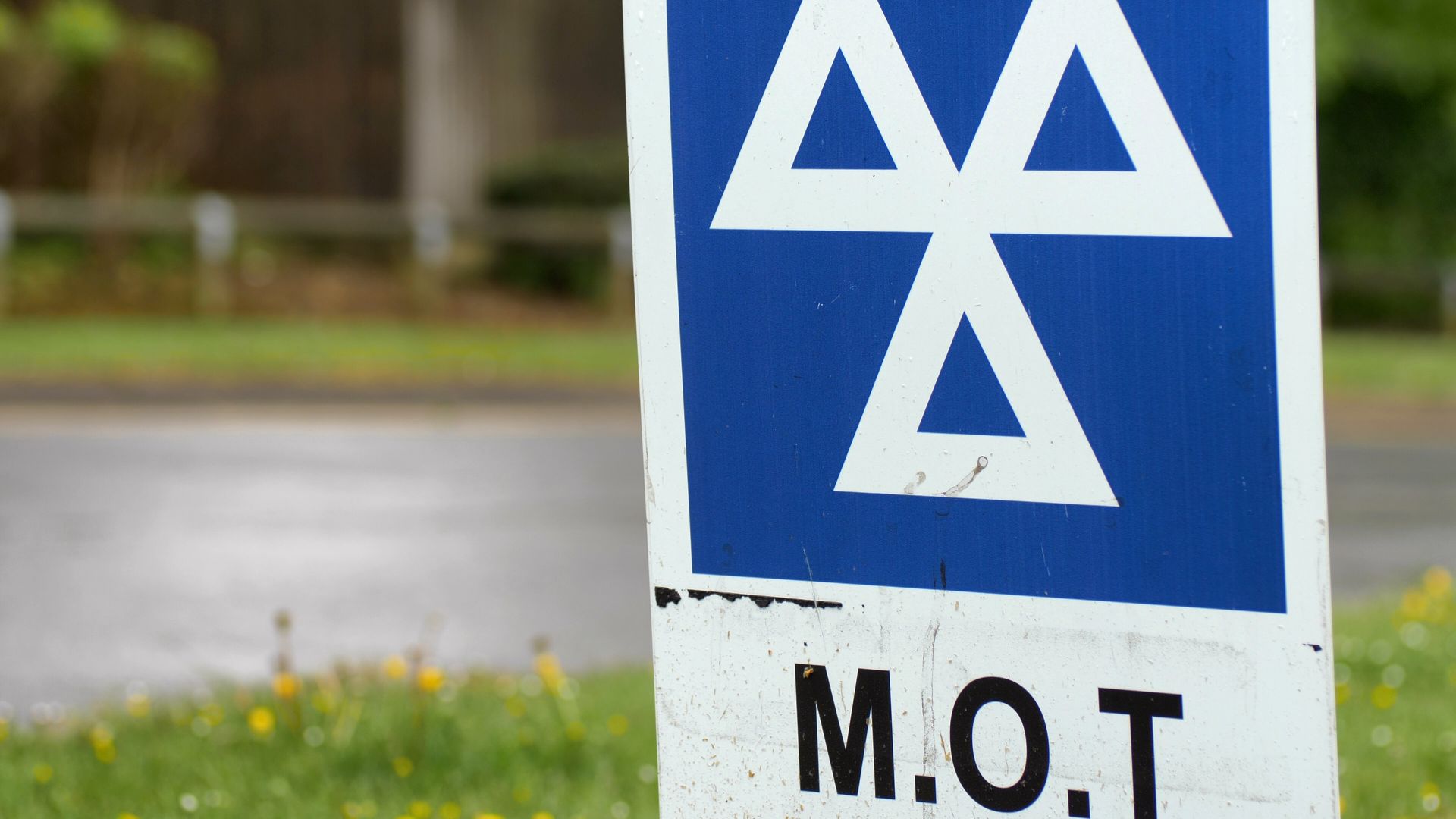
New research by the AA has unearthed the huge volume of drivers that made use of the lockdown MOT extension.
Introduced at the height of the coronavirus pandemic in March 2020, cars, motorcycles and light vans were granted a six-month MOT exemption.
A survey of more than 14,000 UK drivers found that a fifth (20 percent) of those asked had used the exemption.
Based on the AA’s calculations, this could mean more than 5.5 million cars had their MOT inspection legally delayed last year.
Beware ‘Super September’
In England, drivers in the North East were most likely to have made use of the exemption. Some 23 percent of those questioned in the region had used the MOT deferral.
Across the United Kingdom, Northern Ireland saw a staggering 71 percent of drivers taking the exemption route.
Adding to this may have been the chaos arising earlier in 2020. Unsafe ramp lifts closed 48 out of 55 Northern Irish MOT centres.
The exemption ended on 1 August 2020, meaning September 2021 could be a bumper month for MOT testing. A ‘Super September’ could cause booking issues, as delayed MOT tests are mixed with regular ones.
Full service history included?
The AA’s research also highlighted the differing standards for how frequently UK drivers service their cars.
A substantial 75 percent claimed to have their car fully serviced each year, with 19 percent doing so less than once a year.
However, six percent claim to not have their car serviced at all. Younger drivers and low-income households were least likely to undertake regular car servicing.
Jack Cousens, head of roads policy for the AA, commented; “With more than 5.5 million cars deferring an MOT, it is crucial they are tested to ensure they are safe to use.
“Usually people leave booking their MOT to the last possible moment, drivers won’t have that luxury this time,” added Cousens.
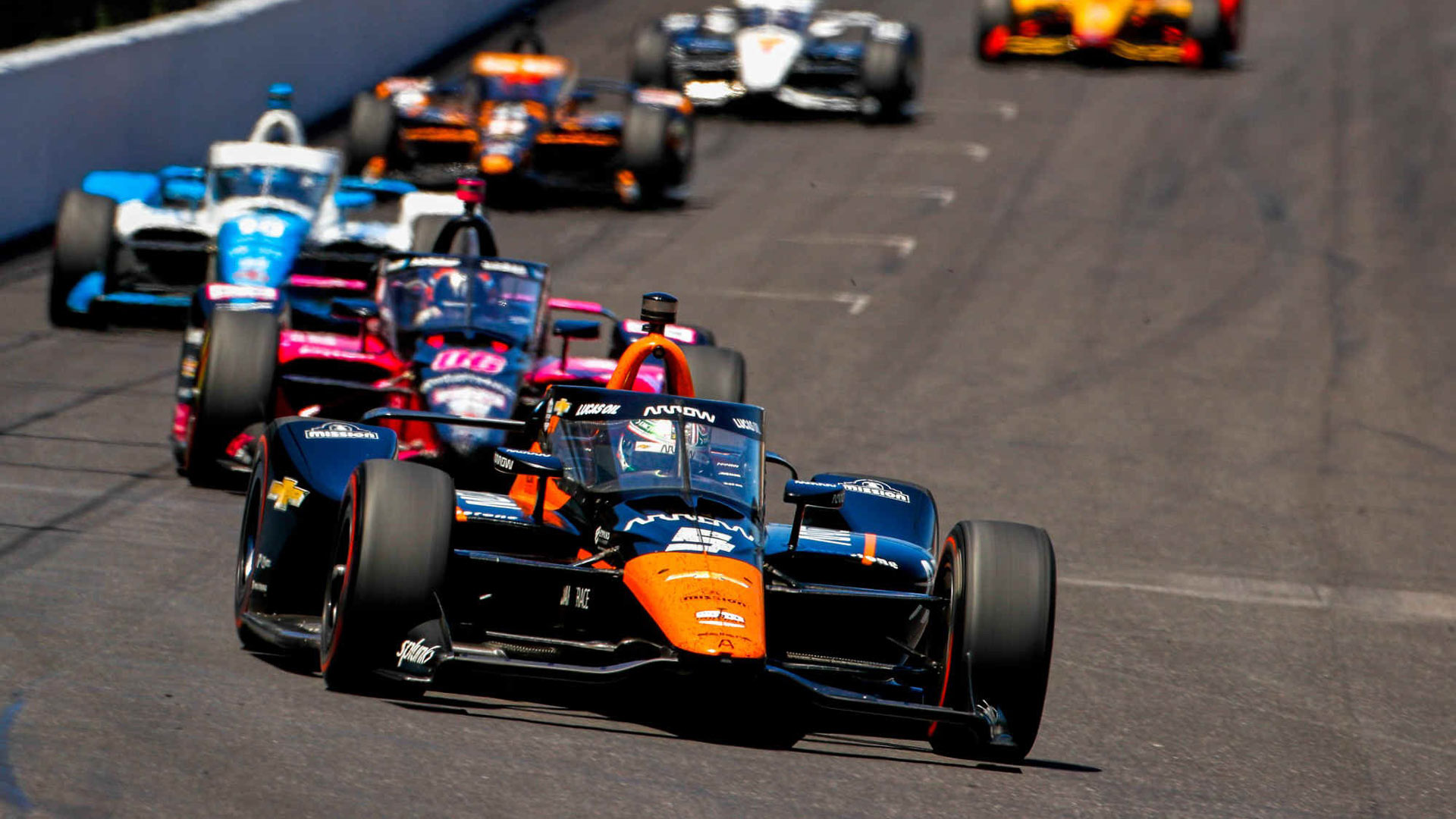
McLaren Racing, the iconic British Formula 1 team, has announced plans to purchase a major stake in an IndyCar team.
The successful F1 outfit will purchase 75 percent of the Arrow McLaren SP team, becoming the majority shareholder.
It follows two seasons of McLaren Racing acting as a partner to the Indianapolis-based team, but without ownership involvement.
A history of success
Formed by Sam Schmidt in 2001, the team competed in IndyCar for several seasons as Sam Schmidt Motorsport. Electronics firm Arrow became the team’s title sponsor in 2019, followed by the joint-entry partnership with McLaren the following year.
During the 2021 season, Arrow McLaren SP has enjoyed its best year to date. Mexican driver Pato O’Ward currently lies second in the drivers’ championship, having taken two race victories.
McLaren competed under its own name in IndyCar during the 1970s, winning the Indy 500 with Johnny Rutherford in 1979.
More recently, Fernando Alonso contested the Indy 500 under the McLaren banner.
Pursuing the American dream
With Zak Brown as McLaren Racing’s CEO, the company has looked to increase its presence in the United States.
Speaking about the new ownership deal, Brown commented: “McLaren Racing believes IndyCar will continue to build our brand in North America, serve our expanding US fan and partner base across our racing portfolio and drive long-term value.
“The racing is second-to-none, with world-class competitors in both drivers and teams and a passionate, highly engaged fanbase.”
A new five-person board will be created to govern the new team. This will feature three representatives from McLaren Racing, along with Sam Schmidt and Ric Peterson. There are no plans to move the team from its prime Indianapolis location.
Financial details of the agreement have not been disclosed, with the transaction due to be completed by the end of the year.