Ford has announced plans to sell its legendary F-150 pickup truck in Australia – and it will be right-hand drive.
As the best-selling vehicle in the United States for more than 40 years, the F-150 now gets the chance to prove how it handles the Australian Outback.
The Ford F-150 will be converted to right-hand drive in Australia through an agreement with RMA Automotive.
‘Dreams do come true’
Ford has experienced considerable success in the Australian pickup market. The Ranger is currently ranked as the country’s best-selling 4×4 vehicle, with Ford Australia responsible for development work.
Andrew Birkic, President and CEO of Ford Australia and New Zealand, said: “Whenever I speak to our dealers, they tell me that customers consistently ask about F-150, ask when it is coming, so I am very proud to now be able to say it’s heading our way.
“There are just so many passionate F-150 fans out there and we’re all thrilled to be able to bring this iconic truck to our roads with locally remanufactured right-hand-drive models.”
American truck showdown
Australian-market F-150s will be built exclusively with Ford’s 3.5-litre EcoBoost V6 engine. Combined with a 10-speed automatic transmission, owners will have 400hp and 500lb ft of torque at their disposal.
The 3.5-litre EcoBoost has become the most popular engine in the 14th-generation F-150, and delivers more torque than the classic 5.0-litre V8. It offers the potential for the F-150 to tow up to 4,500kg.
Such towing capacity will make it competitive with the other two American pickups sold in Australia.
The F-150 will square up to the Chevrolet Silverado and the Ram 1500, just as it does in the USA. All three vehicles are now offered in right-hand drive for Australia.
‘Part of a new wave’
RMA Automotive will undertake the conversion of F-150s to right-hand drive at a facility in Melbourne. This includes working closely with Ford’s own engineers to ensure the iconic truck retains the same qualities American buyers have come to rely on.
Prices and final specification for the Australian F-150 will be confirmed closer to the official launch in the middle of 2023.
Andrew Birkic notes that more Ford imports could be on the cards. He said: “The F-150 is part of a new wave of Ford vehicles for our Australian customers”.
“We’re listening to customers and breaking down barriers to give them what they want – the best of our global line-up. There’s more where F-150 came from.”
In contrast to seemingly everything else in 2022, the GR86 looks set to be quite a bargain. Prices start from £29,995, with launch finance deals offering the chance to drive one for only £299 per month.
Compared to the previous GT86, the new GR86 has a larger 2.4-litre naturally aspirated four-cylinder ‘boxer’ engine. Retaining a 50:50 front:rear weight distribution, the rear-wheel-drive coupe now has more power to play with.
With 231hp and 184lb ft of torque, the 2022 GR86 accelerates from 0-62mph in 6.3 seconds with the standard six-speed manual gearbox. Opting for an automatic transmission sees this increase to 6.9 seconds.
A limited-slip differential is standard for all models, along with 18-inch alloy wheels and LED headlights. Climate control, heated front seats, cruise control and keyless entry are also included.
A sports car bargain
Offered in just one trim level, prices for the manual GR86 kick off at £29,995. The automatic version costs £32,085.
As part of the GR86’s UK launch, customers can take advantage of competitive PCP finance rates. Following a £4,777 deposit, customers will have monthly payments of £299 for a 42-month contract.
Toyota expects to begin the first deliveries in July 2022. Subaru has also created a BRZ version, although there are no plans to offer it to European buyers.
Boasting a 300hp turbocharged engine and all-wheel drive, the GR Corolla is the Japanese company’s latest hardcore hot hatchback.
Despite the UK’s enthusiasm for the award-winning Toyota GR Yaris, however, drivers on this side of the Atlantic are sadly denied the chance to buy a GR Corolla.
Three cylinders, three tailpipes
Powering the GR Corolla is an enhanced version of the 1.6-litre turbocharged three-cylinder engine found in the GR Yaris. For the larger car, power is boosted to 300hp, with maximum torque of 273lb ft.
Aiding the increase in output is a sports exhaust system with an unusual trio of tailpipes.
Toyota’s rally-developed GR-Four all-wheel-drive system is standard, with a six-speed manual the only transmission choice. Multiple settings allow the torque-split to be varied between the front and rear axles. Circuit Edition launch cars gain front and rear Torsen limited-slip differentials.
Upgraded brakes, tuned suspension and 18-inch alloy wheels are all part of the GR Corolla offering, too.
Dramatic U-turns allowed
Lightweight materials have been used extensively, including aluminium for the doors and bonnet. Circuit Edition cars have a roof made from forged carbon fibre, helping lower the car’s centre of gravity.
A gaping front bumper is reminiscent of the GR Yaris, with flared wheel arches adding extra visual aggression. Aerodynamic efforts include a flat underbody, along with a downforce-generating rear spoiler.
The interior features a revised digital dashboard, including information on turbo boost and AWD settings. A traditional handbrake lever seems designed to offer potential for handbrake-turns…
‘Built by experts’
Toyota will produce the GR Corolla alongside the GR Yaris at its dedicated GR Factory in Motomachi, Japan. The plant was previously responsible for the Lexus LFA, and is focused on building special cars by hand.
Although intended primarily for the North American market, which does not receive the GR Yaris, Toyota will also sell the hot Corolla in Japan and Australia – both, notably, are right-hand drive markets.
Prices for the GR Corolla are due to be announced by Toyota later in the year. American customers will also receive a one-year membership to the National Auto Sport Association.
New data has highlighted a worrying increase in the trend for stealing car airbags.
Thieves have taken to removing complete steering wheels from cars, then selling on the airbag to repair centres. This avoids the expense and delay of using official parts supply chains.
Admiral Insurance has received more than 500 claims for steering wheel theft during the past four years. The latest figures show a 68 percent increase between 2020 and 2021.
‘A major safety risk to drivers‘
BMW models have been the most-targeted cars, based upon Admiral’s claims data. However, Ford, Mercedes-Benz and Land Rover owners have also been victim of steering wheel thefts.
Lorna Connelly, head of claims at Admiral, said: “Once the steering wheel has been stolen, the airbag is removed and sold onto unscrupulous garages, who fit them to cars for less than dealerships would charge. The garage might buy the stolen airbag for between £200 and £500 before charging a customer a few hundred pounds more.
“This would still be cheaper than the driver going to an authorised dealership, where it costs up to £1,000 to replace an activated or faulty airbag.”
Mike Hawes, chief executive of the Society of Motor Manufacturers and Traders (SMMT), adds: “Second-hand airbags would normally void warranties but, more importantly, pose a major safety risk to drivers. As non-approved parts, there is no guarantee they will deploy correctly in an accident.”
How can I prevent airbag theft?
To reduce the risk of becoming a victim of airbag theft, Admiral suggests the following security tips:
If you have a garage, use it. Lock your vehicle inside and out of sight.
Invest in a steering lock if you do not have a garage. They add a visual deterrent, along with an extra layer of security.
Park in a safe, well-lit area whenever you leave your car.
Double-check that your vehicle is locked every time you leave it.
Ensure any CCTV or doorbell cameras cover your car when parked at home.
Call the police if you see anyone acting suspiciously near a vehicle.
Should you need a new airbag fitting, Admiral recommends only using reputable repairers, along with approved parts from specialist suppliers.
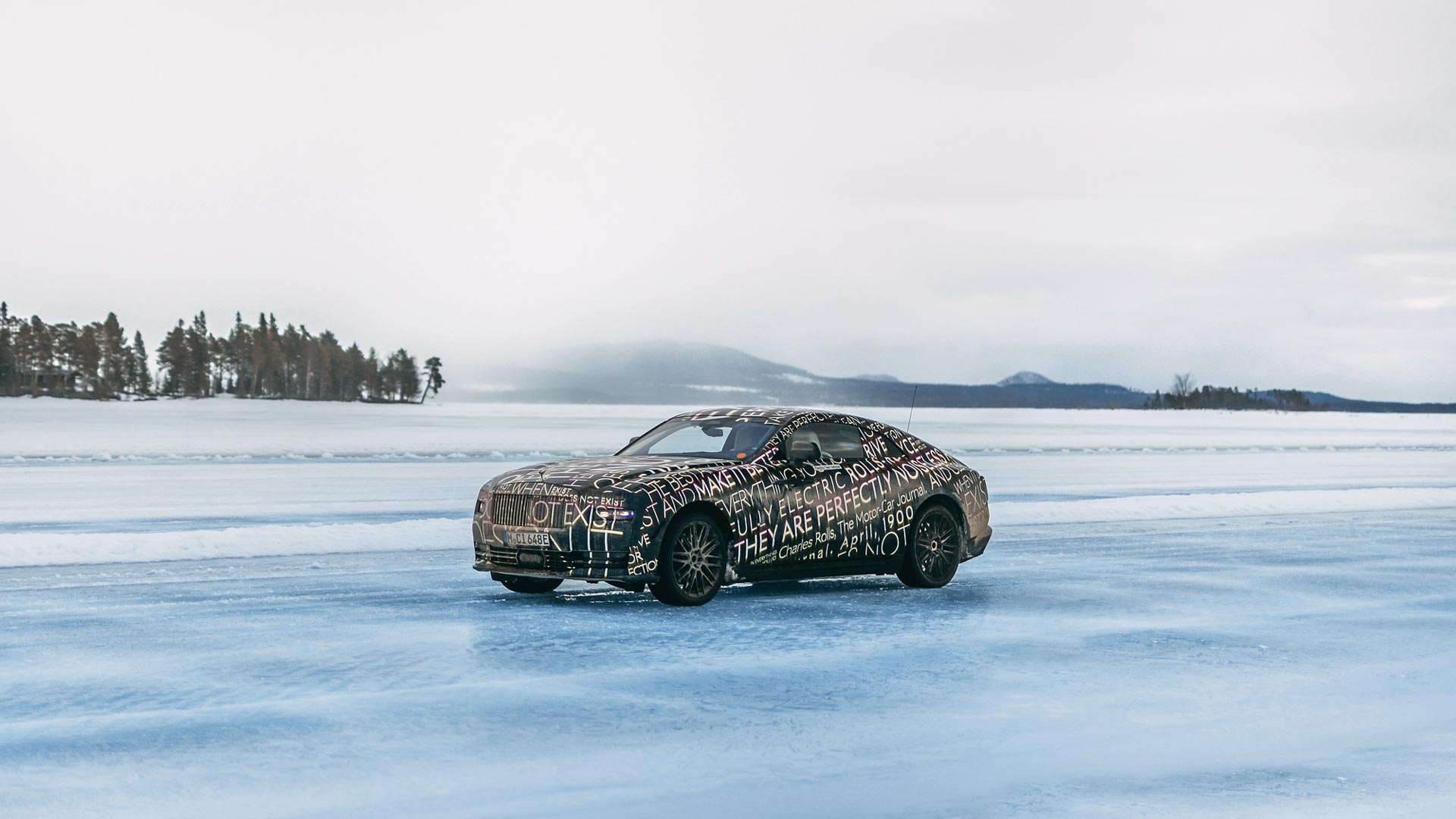
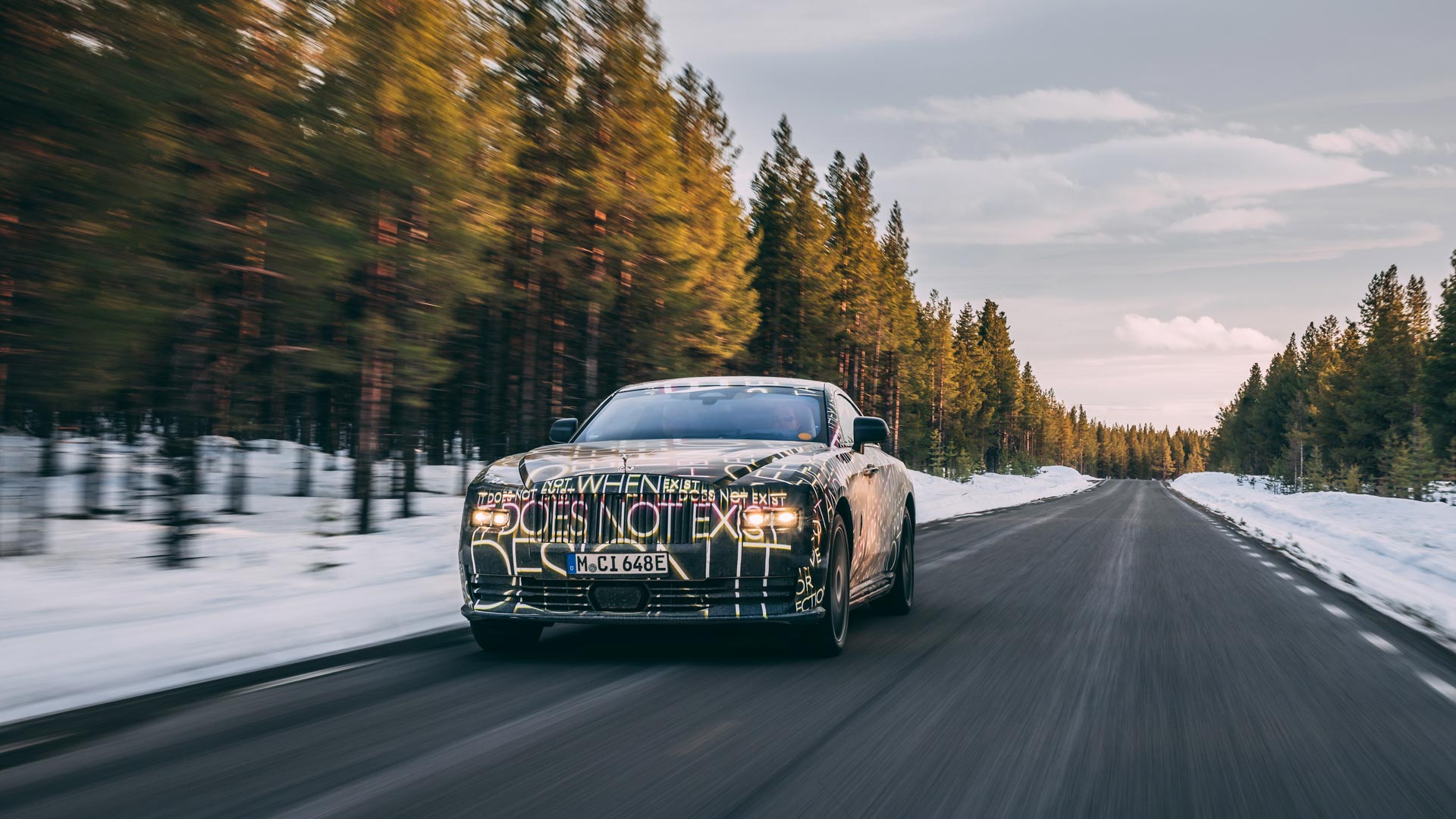
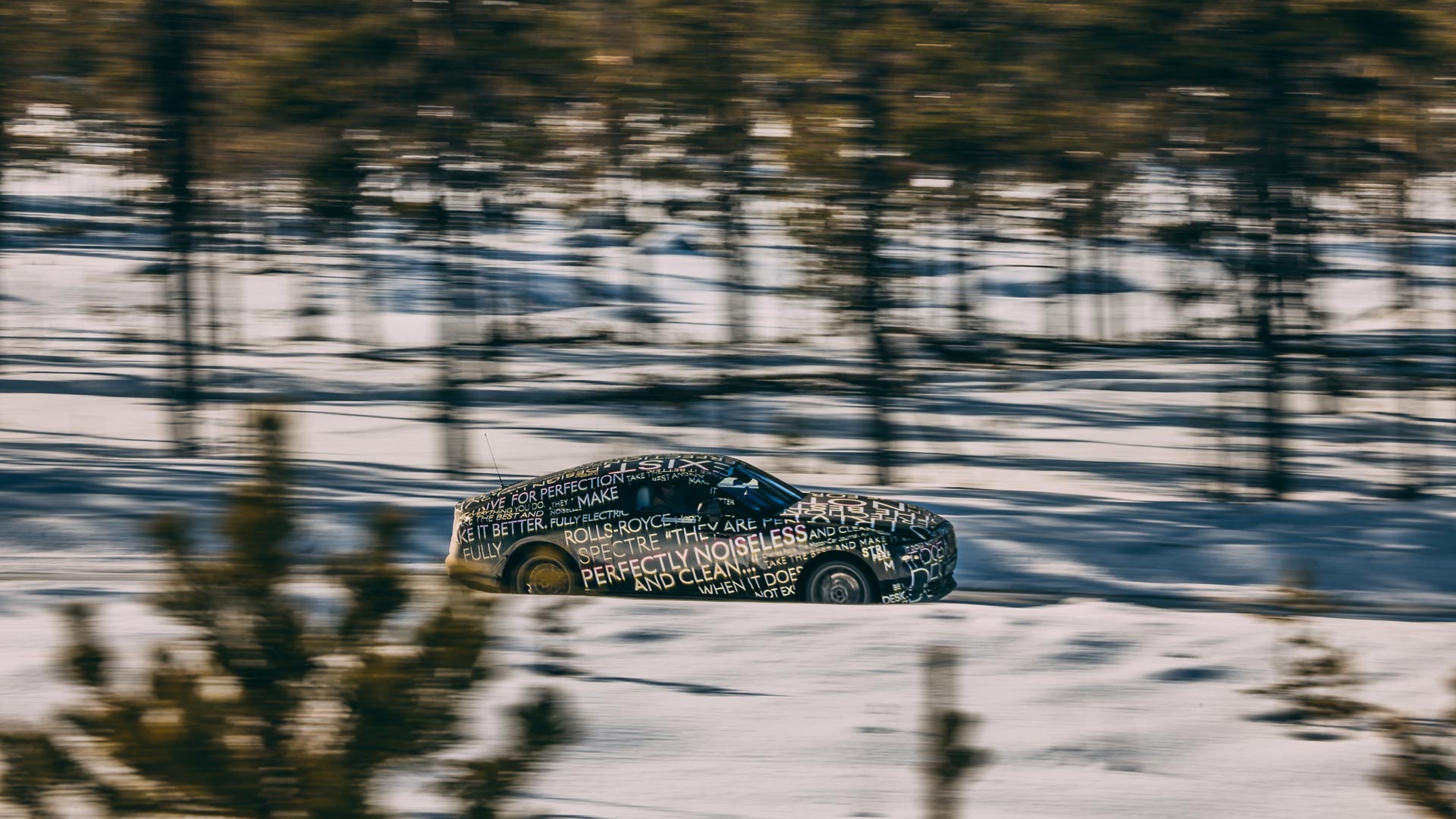
Rolls-Royce has concluded a gruelling schedule of winter testing for its very first electric car.
The Spectre, due to enter production in 2023, has been subjected to temperatures as low as minus 40 degrees centigrade.
The evaluation means that Rolls-Royce has now completed 25 percent of its 1.6-million-mile test programme for the Spectre. When finished, the regime will have subjected the car to the equivalent of 400 years of use.
A chilling Spectre
Arjeplog in Sweden has become the location of choice for car manufacturers undertaking winter testing. Located less than 35 miles from the Arctic Circle, it offers the chance for vehicles to be exposed to extreme cold weather conditions.
The freezing terrain has allowed Rolls-Royce to test everything from the choice of materials for door seals, through to how the electric drivetrain copes in a cold climate. Ensuring the heating system works properly was also high on the list of priorities.
Snow and ice allowed engineers to tune the Spectre’s handling in low-grip conditions. This apparently included making sure the new EV maintains the ‘waftability that defines the Rolls-Royce experience’.
The Electric Super Coupe
As part of the winter testing update, Rolls-Royce has also provided more details about the Spectre’s construction. Designated as an ‘Electric Super Coupe’, its styling has been influenced by the Phantom Coupe, along with classic Rolls-Royce models.
Constructed using an all-aluminium architecture, the Spectre is said to be on a scale much larger than previous Rolls-Royces. It becomes the marque’s first car since 1926 to be fitted with 23-inch alloy wheels.
Clever packaging from the aluminium spaceframe has enabled Rolls-Royce to give the battery packs a secondary function. Channels beneath the floor of the Spectre will allow the lithium-ion cells to act as 700kg of extra sound deadening.
Such complexity means the Spectre is home to seven kilometres of cabling, with the car described as ‘the most connected Rolls-Royce ever’.
‘A seismic shift’
Completing the winter testing schedule in Arjeplog is a major milestone for Rolls-Royce. However, there is still 75 percent of the huge evaluation schedule left to go before 2023.
Torsten Müller-Ötvös, CEO of Rolls-Royce, said: “The announcement of every new Rolls-Royce motor car carries a great weight of expectation, but Spectre is unquestionably the most anticipated product in the marque’s modern history. This is because it is much more than a product. It is a symbol for our bright, bold electric future, and it represents a seismic shift in our powertrain technology.
“It is for this reason that we have created a testing programme that is as significant and historical as Spectre itself. The extraordinary undertaking of educating Spectre to think and behave like a Rolls-Royce will cover 2.5 million kilometres, which is a simulation of more than 400 years of use for a Rolls-Royce. Today, I can confirm that 25 percent of this journey is now complete, and the results have met our most ambitious expectations.”
The new Lotus Eletre electric SUV has been revealed in London. Its mission: to transform the British sports car brand into a genuine global great. Company MD Matt Windle describes it as “a momentous point in our history,” which will introduce the Lotus brand to an entirely new audience – and a huge one at that.
Set to make Lotus sales skyrocket, the Eletre will be built in Wuhan, China for a global SUV audience, who up until now only had a limited selection of models – notably the bulbous Tesla Model X – to choose from. Lotus has delivered a thrilling new alternative.
The Lotus Eletre, described as the “world’s first electric hyper-SUV”, will have several power outputs, starting at no less than 600hp. That means 0-62mph in under 3.0 seconds and a top speed of 161mph.
A large car – over 5.1 metres long and 2.1 metres wide, similar to (but appreciably lower than) a Range Rover – Lotus will fit batteries of at least 100kWh capacity, for a target driving range beyond 370 miles. Find a 350kW Ionity charger and 248 miles of range can be added in just 20 minutes.
Set to go into production later in 2022, Windle says the Eletre is “a clear signal of our ongoing desire to transform our business. It is a true Lotus, and we’re confident it will delight performance car customers and offer a distinct alternative to the segment’s established players.”
Designing the Lotus SUV
Windle is keen to insist the Eletre (pronounced El-etra) is a genuine Lotus, with high standards of ride and handling, steering and aerodynamics. It’s a true global effort: engineers in Hethel defined the key attributes, before development teams in China, Sweden and Germany got to work. Lotus describes it as ‘born British, raised globally’.
The exterior has also been developed by an international team, based at the new Lotus Tech Creative Centre in Warwickshire. It was led by chief designer Ben Payne, who created a cab-forward look with short overhangs, aided by the lack of a petrol engine up-front (and faithful to Lotus mid-engined sports cars). The aim was to create a high-riding sports car, rather than a bulky SUV.
Advanced aerodynamics give a look of ‘porosity’, where air is allowed to flow through the car, as well as over and under it. There are numerous defined airflow channels, similar to those seen in the Evija electric hypercar, which the Eletre’s design references – particularly at the front.
Instead of door mirrors, the Eletre has rear-view cameras. Door handles are flush, the windscreen has an aggressive rake and there’s an ‘air blade’ at the rear, all to help reduce drag. This aerodynamic flow has been central to the ‘kinetic’ feel of the Eletre’s design.
The premium Lotus
Lotus boldly says the gorgeous interior takes the brand ‘to an unprecedented new level’. The ‘ultra-premium materials’ promise an ‘exceptional’ experience.
It’s also sustainable, with ample use of trims from eco producer Kvadrat, along with wool-blend fabric seats. The material is 50 percent lighter than leather, meaning Lotus is sustainably adding lightness. Even the many carbon fibre elements are made from recycled fibres, creating a marble-like weave rather than the traditional blocky carbon pattern.
The Eletre comes as either a five-seater or a more luxurious four-seater. For the first time, Lotus is able to stress its practicality, including a wireless smartphone charger in the centre console, two cupholders that sit flush to the surface until needed, and door pockets that hold a litre bottle.
Choose the two-seat rear and occupants get a central 9.0-inch infotainment screen with their own wireless charging tray beneath. And speaking of infotainment…
The world-class Lotus
Lotus insists the Eletre’s infotainment ‘sets new standards in the automotive world’. Teams in Warwickshire and China have collaborated on the system, which boasts ‘pioneering intelligent technologies’.
It’s all located in a ‘ribbon of technology’ that runs the full length of the dashboard. Both driver and passenger have their own display screens, which are slim strips 30mm high; the driver gets key journey and vehicle information, while passengers see music or navigation info.
The centrepiece is a 15.1-inch OLED touchscreen, which folds flat when not required. While comprehensive, it’s also said to be accessible. With three touches of the screen, users can access 95 percent of the Eletre’s functionality.
Further information pops up on the driver’s head-up display, which even features augmented reality tech – standard on every Eletre.
Lotus hasn’t forgotten the importance of buttons, though. Key controls still have physical hard keys, in ‘another nod to the simplicity for which Lotus is famed’. Voice control is available, too.
The self-driving Lotus
The Eletre is equipped with a raft of ADAS driver assistance systems, which are ready to be boosted via 5G over-the-air (OTA) updates.
There’s also a world-first deployable LIDAR system, which pops out of the top of the windscreen, the rear glass and front wheelarches, but only when required.
The LIDAR readies the Eletre for autonomous driving. Right now, this will involve auto-parking via a smartphone at either end of a journey, but ‘further capability can be added via OTA software updates as and when allowed by local market regulation’.
As soon as a country green-lights self-driving, the Eletre will be ready to capitalise on it. Lotus: for the self-drivers.
The true Lotus
For now, the driver is centre-stage, and Lotus’ renowned dynamics guru Gavan Kershaw says the Eletre “delivers everything you would expect from a Lotus – outstanding ride and handling, highly communicative steering and exceptional driver engagement.
“We know the world is watching, so there has been an obsession with getting everything just right. It’s a world-class product and a true Lotus. Everyone is delighted with it.”
The Eletre is based upon a new platform for Lotus, called Electric Premium Architecture, or EPA. It uses a mix of aluminium and high-tensile steel, with the batteries mounted low to the ground for a planted centre of gravity.
Five-link rear suspension is exotic, as are standard air springs and adaptive dampers. Optional active ride height, active rear steering, active anti-roll bars and torque vectoring are all available. There are four drive modes, too – one of which includes an off-road setting. Expect to hear more on that soon.
Not only is it the first Lotus SUV, the Eletre is also the first Lotus with five doors, and its first lifestyle EV. If you like it, there will be plenty more where this came from, with Lotus saying it’s the first of three new ‘lifestyle’ EVs due in the next four years.
We’ll learn more about Eletre in coming months, as the build-up to its production commences. However, the company is bullish: “It is a true Lotus, and we’re confident it will delight performance car customers,” says Matt Windle.
CEO Feng Qingfeng adds: “It is a compelling alternative for those who desire a true driver’s car, but whose lifestyle demands something more practical than a traditional sports car.”
Alongside the Emira sports car, the firm says the Eletre delivers the perfect two-car garage from Lotus. It’s a huge milestone in the firm’s seven-decade history. With Eletre, Lotus is going global, and entering the big time at long last.
The historic Lotus Hethel production facility in Norfolk will reopen for public tours next month.
Factory visits were suspended by Lotus in November 2017, but start again from Monday 4 April.
It follows a £100 million investment at the Hethel site, including a state-of-art factory to build the new Lotus Emira sports car.
A glimpse of Lotus history
Simon Lane, director of Lotus Advanced Performance, said: “Tours of the Hethel site were part of the Lotus story for many years and hugely popular. We get emails and calls every week with people asking about them but, with all the development work on site, it was not appropriate to have the public here. With the Emira now in production, I’m delighted to announce that the time is right to relaunch the factory tours.”
The Emira will be the final petrol-powered sports car to be made by Lotus, before the company embarks on a fully electric future.
Before seeing where the latest model is being made, visitors will be guided through the older sections of the Hethel factory.
A chance to see the famous Hethel test track, used in the development of countless Lotus vehicles, is also included.
Visits toClassic Team Lotus
Tours will be offered from Monday to Thursday each week, with each visit lasting around two hours. Groups will be limited to eight guests, and Lotus notes that no photography is allowed within the factory.
On selected days, enthusiasts can upgrade to an optional Heritage Tour. This includes a visit to Classic Team Lotus, which looks after numerous historic Lotus racing cars.
Tickets for the Lotus Factory Tour are £95 per person, with the combined Factory Tour and Heritage Tour at £140 per person. Each guest will receive a specially designed lanyard and pin badge as a memento.
The AMG GT Track Series pays a 778hp tribute to AMG founders Hans Werner Aufrecht and Erhard Melcher.
Marking the 55th anniversary of AMG, only 55 examples of the track-only machine will be produced.
Anniversary extravaganza
Similar to the road-going AMG GT Black Series, the new Track Series model includes technology taken from GT3 and GT4 race cars.
It means extensive use of carbon fibre bodywork, along with a dramatic adjustable rear wing and bespoke high-downforce front splitter.
A carbon fibre bonnet includes vents to extract hot air from the engine bay, and generate downforce. At the rear, a double diffuser continues the motorsport connection.
More power for the people
Powering the Track Series is a handbuilt 4.0-litre twin-turbo V8. With a race car-derived remap and special fuel injectors, output peaks at 778hp and 627lb ft. Transmitting power to the rear wheels is a Hewland six-speed sequential gearbox.
Adjustable four-way Bilstein suspension dampers allow drivers to tune their perfect track setup.
Motorsport-orientated traction control and ABS brake systems are standard, and offer multiple levels of adjustment.
Exploring track limits
Inside, a carbon fibre driver safety cell fits inside a steel roll cage. There’s even an escape hatch in the roof, just like the AMG GT race car.
The steering wheel has been designed by sim racing experts at Cube Controls, and sits in front of a programmable dashboard.
Owners will get access to exclusive track days, including bespoke training and individual engineer support.
Customers can expect to receive their cars in the second quarter of 2022. Prices for the AMG GT Track Series start at €390,000 (£325,000) before VAT.
Mercedes-AMG and British skateboard manufacturer Palace have collaborated on four eye-catching art cars.
The special cars are inspired by major cities around the globe, with bold paint schemes and equally in-your-face interiors.
It marks the second project completed by the two companies, following a motorsport-themed display in 2021.
Metropolis-inspired motoring
The four cars chosen for this latest art car project bring serious horsepower to the party.
Los Angeles is represented by the Mercedes‑AMG SL 63 roadster, with paintwork that fades from yellow to deep red. This is said to capture the idea of a perpetual Californian summer.
A Mercedes‑AMG A 45 S hot hatchback has been inspired by the streets of London, with a large tiger head logo on the bonnet. The vibrant colour scheme inside and out pays homage to the UK’s custom car scene from the 1960s to the 1980s.
Neon yellow and black feature on the Mercedes‑AMG GT 63. The contrasting colours are intended to invoke images of the two sides of the Hudson River in New York City.
Finally, the Mercedes‑AMG G 63 pays tribute to Tokyo. The image of a horse galloping through space comes from Japan’s love of fantasy culture.
Fast fashion collective
The four cars are being used to promote a new fashion collection from Palace Skateboards.
Trousers, hoodies, jackets, T‑shirts, gilets and hats will all form part of the new range. Fans will be able to purchase the new collection from Palace’s four flagship stores, or online.
Combining bold colours and large AMG logos, Palace’s fashion offering will be on sale from Friday 25 March.
Named after a north-easterly Mediterranean wind, Maserati says its Porsche Macan rival is the ‘everyday exceptional’ SUV, offering a combination of luxury, performance and interior space.
Along with petrol and hybrid drivetrains, the Grecale will also become Maserati’s first electric car.
An electrified future
The Grecale EV will wear a ‘Folgore’ badge (‘Lightning’ in English). Due for launch in early 2023, it will be powered by a large 105kWh battery and offer up to 590lb ft of instant electric torque.
Until then, Maserati will offer a selection of four-cylinder hybrid drivetrains, plus a twin-turbocharged V6. The latter is reserved for the flagship Trofeo, which musters 530hp, for 0-62mph in 3.8 seconds.
Hybrid models come in 300hp GT or 330hp Modena specifications. All versions of the Grecale have four-wheel drive.
Analogue to digital
Maserati took inspiration from its MC20 supercar when designing the Grecale, notably the concave front grille and curvaceous front wings. Boomerang-shaped taillights are a nod to the Giugiaro-designed 3200 GT coupe.
Inside, the Grecale comes with four digital screens. Along with the instrument panel and dual multimedia touchscreens, even the classic Maserati clock has gone digital.
Upmarket interior options include carbon fibre trim and perforated leather. A premium Sonus Faber 3D audio system delivers up to 1,000W of output.
Made in Italy
UK prices have not been confirmed, but a starting point of around £50,000 looks likely. The Grecale will sit below the larger Levante SUV in Maserati’s range.
Production begins in the second half of 2022 at the Stellantis Cassino Plant, located in Piedimonte San Germano, Italy.
The factory already builds the Alfa Romeo Giulia and Stelvio models, both of which share a common platform with the Grecale.