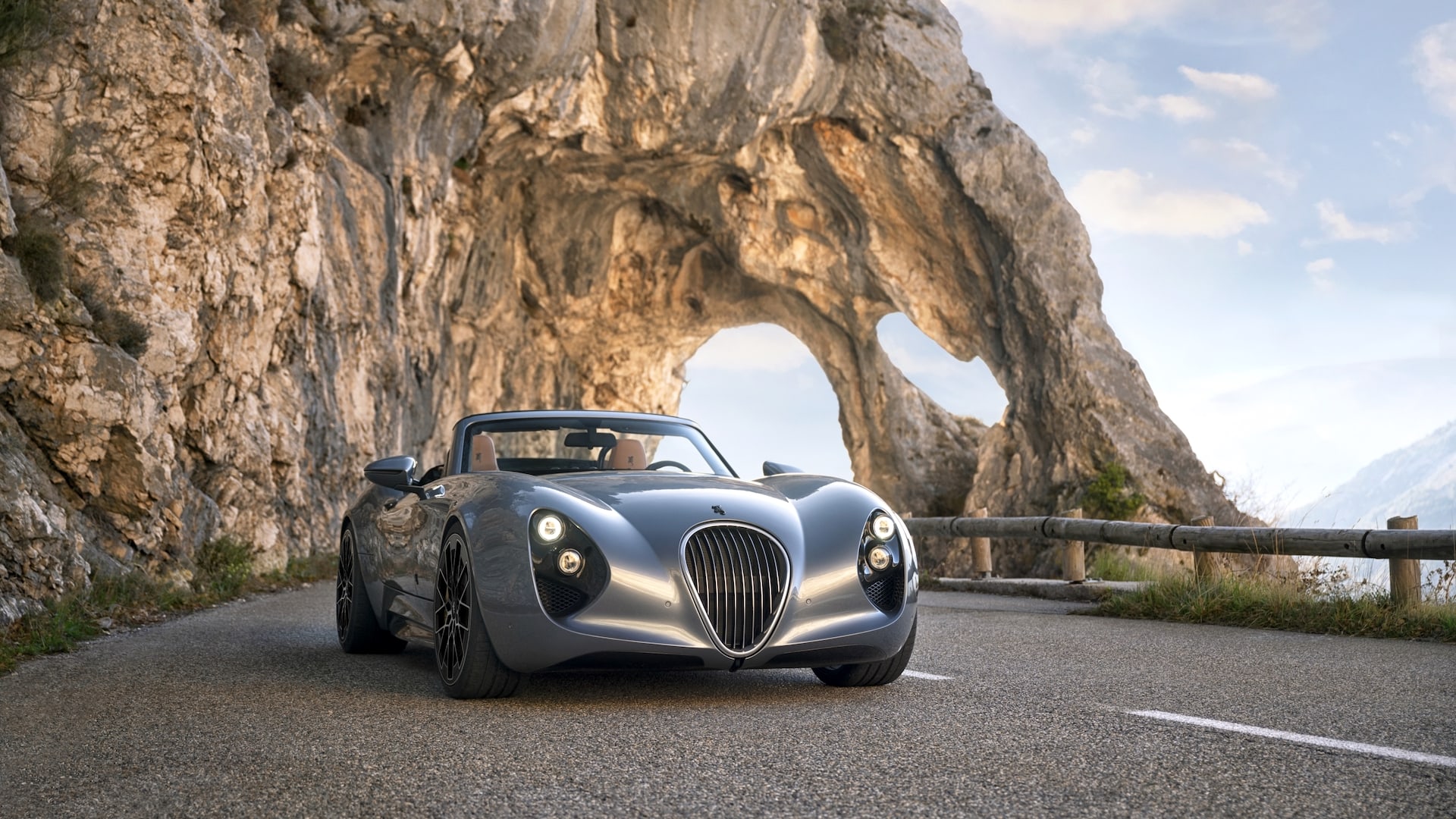
Strong interest in the German company’s first electric vehicle means the first full year of production has already been reserved.
Wiesmann plans to start delivering cars to customers in 2024, so the waiting list for Project Thunderball now stretches well into 2025.
Modern-day muscle
Wiesmann began accepting orders for its two-seat, rear-wheel drive, luxury roadster in September 2022. This followed the car’s official unveiling earlier that year.
Project Thunderball is the first new car from the marque since it temporarily closed its doors in 2014. Wiesmann’s previous history included a range of brawny muscle cars with BMW engines, including the fearsome 555hp GT MF5.
Although electrification is a new concept for Wiesmann, the company has not forgotten its sports car roots. Two electric motors deliver 680hp to Project Thunderball’s rear wheels, plus an accompanying 809lb ft of torque.
With lightweight carbon fibre bodywork, the EV roadster is targeted to hit 62mph in just 2.9 seconds. Accelerating from 0-124mph should take 8.9 seconds.
Made in Germany
Launch versions of Project Thunderball are equipped with a 92kWh battery pack, offering a potential range of more than 310 miles. Using 800-volt technology means the Wiesmann can charge at speeds of up to 300kW, too.
Prices for Project Thunderball start at €300,000 (£265,000), and customers can specify numerous options for personalisation. Each car will be hand-built at Wiesmann’s state-of-the-art ‘Gecko factory’, in Dülmen, Germany.
The Defender 110’s bodywork has been modified to offer a soft-top roof, with a multi-point roll cage found underneath. Daytime running lights are added to the front bumper, while the front grille wears the same Subaru XV orange paint.
The black roof is complemented by 16-inch Sawtooth alloy wheels in gloss black. ECD has also ditched the rear swing-away spare wheel carrier.
Inside, the Land Rover is retrimmed in tan leather, including on the upgraded front seats. The dashboard is also swathed in luxurious hide, with a Momo Prototipo steering wheel added for good measure.
A touchscreen multimedia system on the dashboard incorporates JBL components, along with Bluetooth and Apple CarPlay connectivity.
However, the most noise is likely to emanate from the new General Motors LS3 V-8 engine, which is connected to a six-speed automatic transmission and Borla stainless steel exhaust. ECD has installed its own air ride suspension setup, too.
Founded in 2013 by its English owners, ECD has grown to become one of the world’s largest Land Rover restoration companies.
Today, it offers a host of custom classics, including bespoke electric versions of the Defender and Range Rover Classic. Prices typically range between $150,000 and $180,000 (£125,000 to £150,000).
When reading car reviews or advertisements, you may see reference to the vehicle having a Thatcham alarm.
Whether your car has a ‘Thatcham category’ device is also something your insurance company might ask when you renew your policy.
Picking the right option could have affect your car security – and how much you pay for insurance.
What is Thatcham Research?
Established in 1969 as the Motor Insurance Repair Research Centre, Thatcham Research takes on a wide range of automotive testing and certification work.
This includes everything from crash testing to developing car repair methods, plus training new automotive apprentices. However, the organisation came to prominence in the early 1990s following a wave of car crime.
Thatcham Standards for security devices were introduced in 1993. Work continues to evaluate and certify car security products, along with cars themselves.
What is Thatcham Security Certification?
Changes introduced in January 2019 altered the way Thatcham Research tests and approves automotive security devices. This covers six different categories of security equipment.
Passing Thatcham’s testing regime means a security device should keep your vehicle safer from damage or theft.
Thatcham Category 1: alarm and immobiliser
Devices in this category include both an electronic immobiliser and an integrated alarm.
An immobiliser works by preventing the car engine from being started without the key or fob being present. This prevents ‘hot wiring’ of the ignition – a favoured tactic of joyriders in the 1990s.
To meet Thatcham Category 1 certification, an alarm needs a variety of sensors to detect movement or glass being broken. It will also need a backup power supply, and a siren to sound should someone attempt to steal your car.
Thatcham Category 2: electronic immobiliser
Category 2 certification applies to security devices with an immobiliser only. It must limit at least two separate circuits of the car, and must not require the driver to take action to set it.
Since 1998, all new cars have to be sold with an immobiliser as standard.
Thatcham Category 2-1: alarm upgrade
This category applies where an aftermarket alarm system has been added to a car with a Category 2 immobiliser.
A Thatcham-assessed 2-1 electronic alarm can be combined on a vehicle installed with an existing Category 2 immobilisation system to obtain full Category 1 status.
Thatcham Category 4: wheel locking devices
Picture a car sitting on bricks, without its wheels. This is exactly the scenario approved items in Category 4 are designed to prevent.
Locking wheel nuts provide a visual deterrent to thieves, and also make the process of attempting to steal expensive alloy wheels harder.
Thatcham Category S5: driver recognition and tracking
There are two categories of ‘tracker’ devices assessed by Thatcham. These can allow the police to help locate your car should it be stolen, using either GPS or VHF radio technology.
S5 devices require the driver to carry a small tag that automatically identifies them as being allowed to use the vehicle. Starting the car without the tag being present will automatically alert the owner.
Thatcham Category S7: location tracking
This category also covers vehicle trackers, but ones without automatic driver recognition as standard.
These devices tend to be slightly cheaper to buy, and still provide vehicle tracking and location services. However, they will not automatically detect an unauthorised driver taking the vehicle with the keys.
A partnership between Citroen and toymaker Playmobil has created a scale replica of the iconic 2CV.
Now rendered in miniature form, the Playmobil Citroen 2CV makes its debut some 75 years after the full-size original.
Following its official launch at the Retromobile classic car show in Paris, the Playmobil 2CV will be available to order later this month.
Joie de vivre
Playmobil has added a number of distinct features to the scale 2CV, including a removable roof and opening boot. The latter can hold a pair of milk churns, although not the famed ‘basket of eggs’ the 2CV was designed to carry across a field.
The set includes a choice of clear headlights or, for additional Gallic charm, yellow light lenses.
A sheet of stickers allows a number of different European number plates to be chosen, along with country identification stickers.
In production from 1948 until 1990, the Citroen 2CV became one of the world’s best-selling cars. More than 5.1 million examples were made, including 1.2 million van versions.
Priced from £44.99, the new Playmobil 2CV model offers the opportunity for Citroen fans young and old to experience a French icon.
The 2CV joins a large range of officially licensed vehicles from Playmobil. Other recent additions include the Ferrari SF90 Stradale, Porsche 911 Carrera 2.7 RS and Mercedes-Benz 300SL.
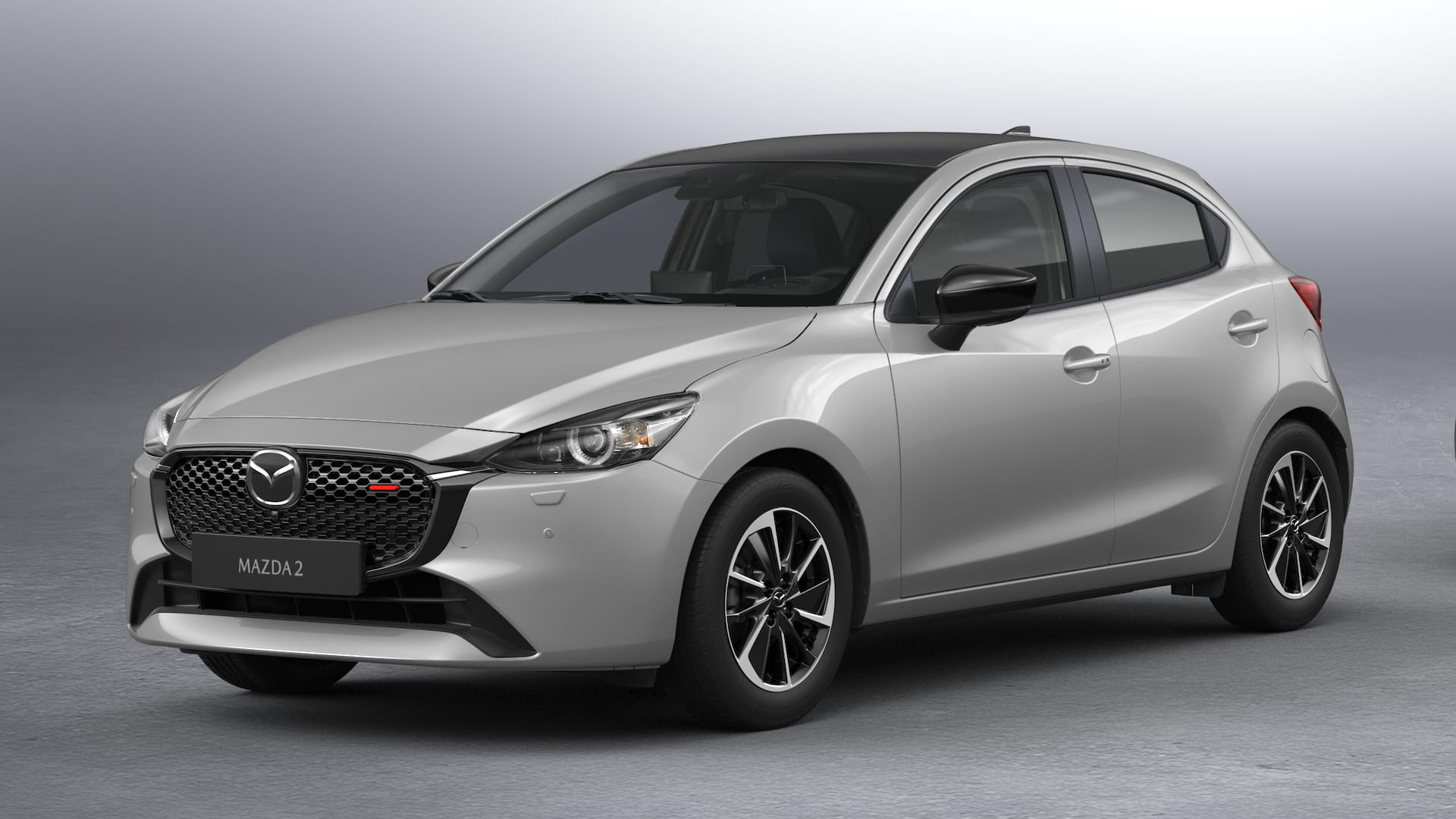
The Mazda 2 supermini has been treated to a styling makeover as part of a mid-life overhaul.
Along with going under the knife for a sportier new look, the updated 2023 Mazda 2 gains revised trim levels, too.
New exterior colours, along with a refreshed interior, complete the changes for a compact car that was first launched at the Geneva Motor Show in 2014.
Getting a grilling
The key change for the 2023 Mazda 2 is a revised front grille, mirroring the design found on newer models such as the CX-60 SUV. Mazda’s ‘signature wing’ shape now stretches beneath the number plate, resulting in a more dynamic look for the front bumper.
Four new trim levels make up the revised Mazda 2 range: Centre-Line, Homura, Exclusive-Line and Homura Aka. Both the Centre-Line and Exclusive-Line models have bespoke front bumpers, combined with a yellow accent tab in the front grille.
The range-topping Homura Aka model wears a black honeycomb front grille with a red accent, along with black side mirror caps. A gloss black roof is also standard, along with a set of 16-inch black and silver machined alloy wheels.
Mazda has added Aero Grey and Air Stream Blue to the supermini’s paint colour options. The marque’s trademark Soul Red Crystal remains available, too.
Little luxuries
A strong standard specification remains part of the Mazda 2 offering. Satellite navigation, cruise control, wireless Apple CarPlay connectivity and climate control air-con are fitted to all versions.
Mazda has left the 1.5-litre naturally aspirated engine untouched for the 2023 update. This means the same selection of 75hp, 90hp and 115hp power outputs, with a six-speed manual gearbox as standard. An automatic transmission remains optional for 90hp and 115hp versions.
Prices for the updated Mazda 2 start from £17,750, with customers able to place orders from late spring. The Toyota Yaris-derived Mazda 2 Hybrid will continue to be sold as a separate model.
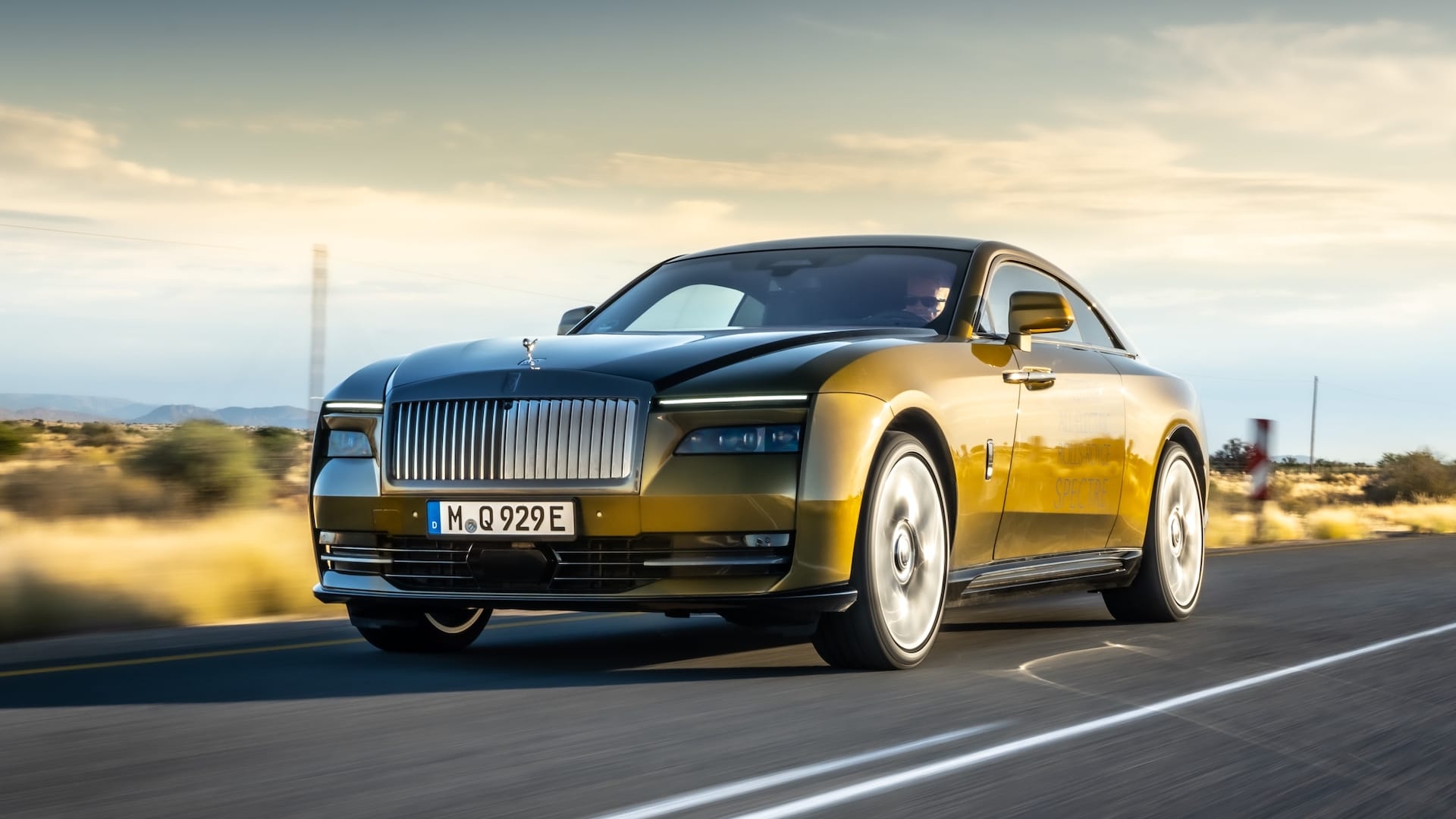
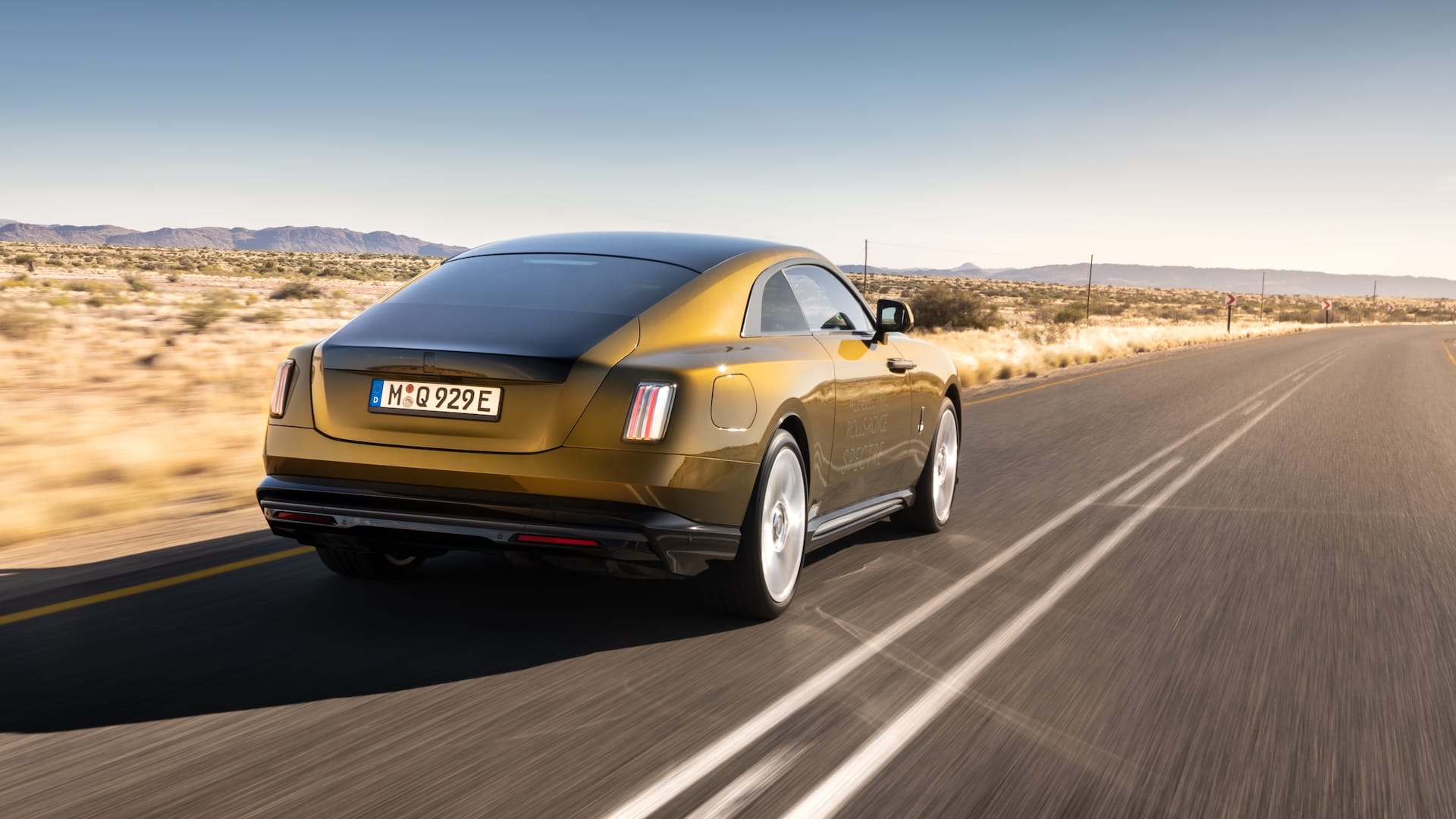
Prototype versions of the Spectre have now covered more than two million kilometres – equivalent to 1.24 million miles, and the most arduous evaluation for any Rolls-Royce in history.
By the end of the testing programme, Rolls-Royce aims to reach a total of 2.5 million kilometres (1.6 million miles).
The development process will see 25,000 separate functions evaluated and refined through the ‘Rolls-Royce Finishing School’.
Rough with the smooth
The latest round of punishment for the prototype Spectre involves extreme hot weather testing at two locations in South Africa.
Augrabies in the Northern Cape and Franschhoek in the Western Cape winelands both offer what Rolls-Royce describes as the ‘finest summer-weather driving in the world’.
Temperatures in the Northern Cape can reach a peak of 50 degrees centigrade, representing a stern test for any car. This contrasts with the -40 degrees centigrade experienced by the Spectre when cold-weather testing in Sweden.
Other areas in South Africa deliver sinuous country roads, with surface gravel and dust adding an extra challenge. Uneven roads are particularly important to Rolls-Royce engineers, who want to ensure the Spectre offers a cosseting ‘Magic Carpet’ ride quality.
‘Super luxury situations’
As a Rolls-Royce, the level of quality demanded of the Spectre is high. Engineers have ensured the bespoke Starlight Headliner remains visible in strong sunlight, and that display panels have the correct colour quality.
The speed at which the long, self-closing doors will shut has been considered, while the 17-speaker audio system is tuned for optimal sound quality – helped by a specially created playlist.
Lifestyle analysis will form the final part of the Spectre’s testing, focusing on how an electric Rolls-Royce will function in ‘super luxury situations’.
All this will be completed ahead of the first completed Spectre being delivered in winter 2023. Rolls-Royce set a new sales record in 2022, and the Spectre, which already has a substantial waiting list, is forecast to continue this successful trend.
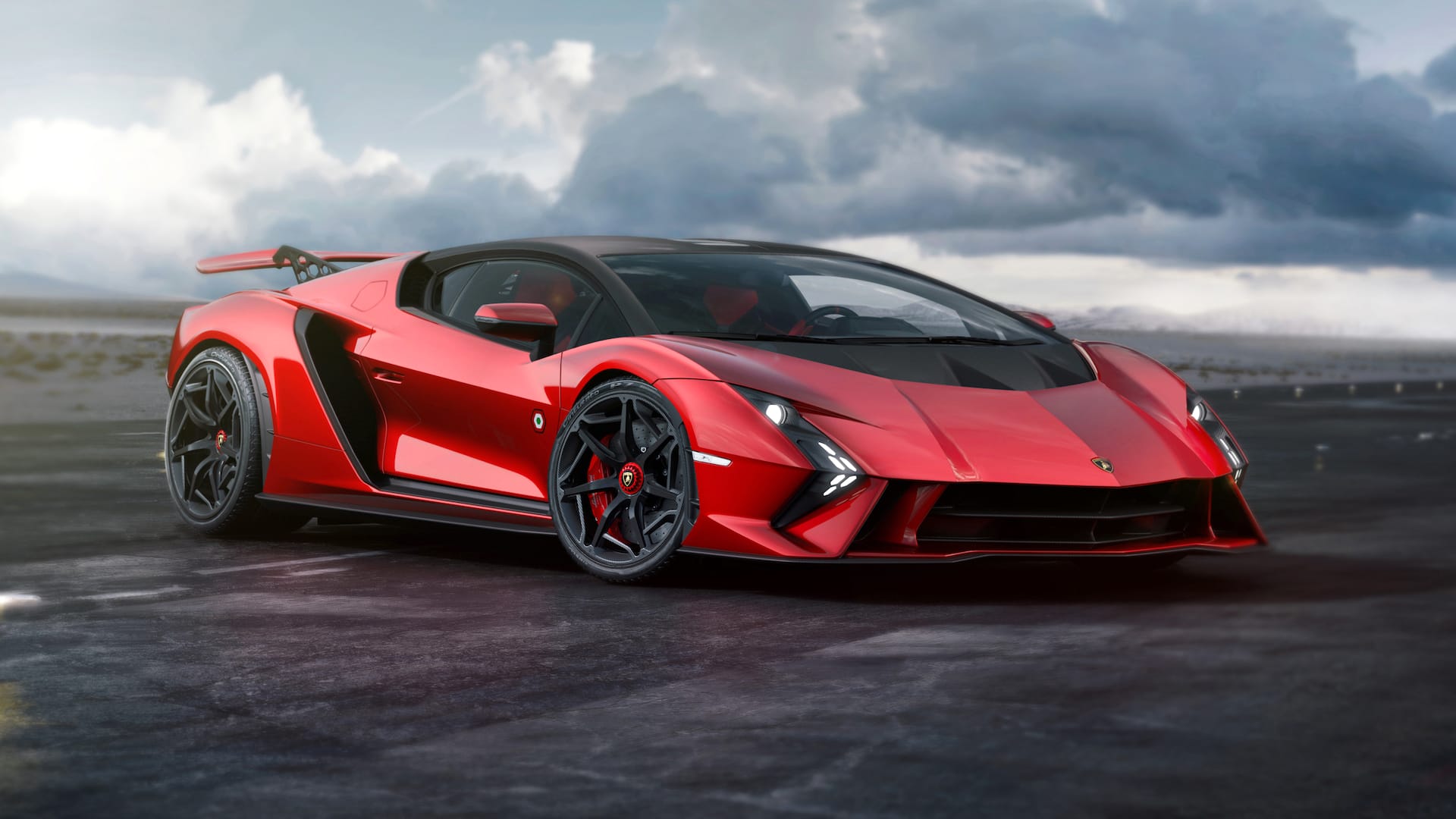
The Italian manufacturer is due to release its very first full production hybrid offering in the near future. It spells the end of Lamborghinis powered by pure combustion engines – and the Aventador range.
However, the bespoke Invencible and Autentica models ensure the V12 engine will be going out in raucous fashion.
A remixed Lamborghini tribute
Both cars are based upon the Aventador platform, but have received exclusive styling by Lamborghini Centro Stile.
Essentially a greatest hits collection of Lamborghini greats, inspiration has been taken from the lightweight Sesto Elemento, along with the Reventon and Veneno limited-production models.
The Invencible coupe, and Autentica roadster, both use carbon fibre bodywork to save weight. Hexagonal design elements can be found across the pair such as in the front and rear lights, plus the centre-exit exhaust.
Most importantly, the duo are powered by Lamborghini’s 6.5-litre naturally aspirated V12 engine. Producing 780hp, four-wheel drive is standard to help ensure maximum traction, aided by a seven-speed automated manual transmission.
Hexagonal history on show
The interior design for the two supercars is themed around minimalism, and the continuation of the hexagonal theme. There are no gauges on the dashboard itself, just a pair of 3D-printed air vents.
A digital instrument panel provides all the information the driver needs, with bespoke graphics for each car.
Colour-coded elements can be found inside both models, with additional carbon fibre detailing throughout.
“We have created two one-off cars with their own unique character, inspired by track days and the high-octane circuit environment,” said Mitja Borkert, Automobili Lamborghini head of design.
‘The Lamborghini way of celebrating’
Stephan Winkelmann, Automobili Lamborghini chairman and CEO, said: “The V12 engine is one of the pillars of our history and our marque’s success”.
He added: “As we head towards embracing a new era of hybridization at the heart of our Cor Tauri strategy, this is the Lamborghini way of celebrating the naturally aspirated V12 with two one-off vehicles that perfectly represent our concept of excellence in personalization.”
Lamborghini’s hybrid-powered replacement for the Aventador will be announced in ‘just a few weeks’. The company has previously used hybrid power for the limited-production Sian FKP 37 and reborn Countach models.
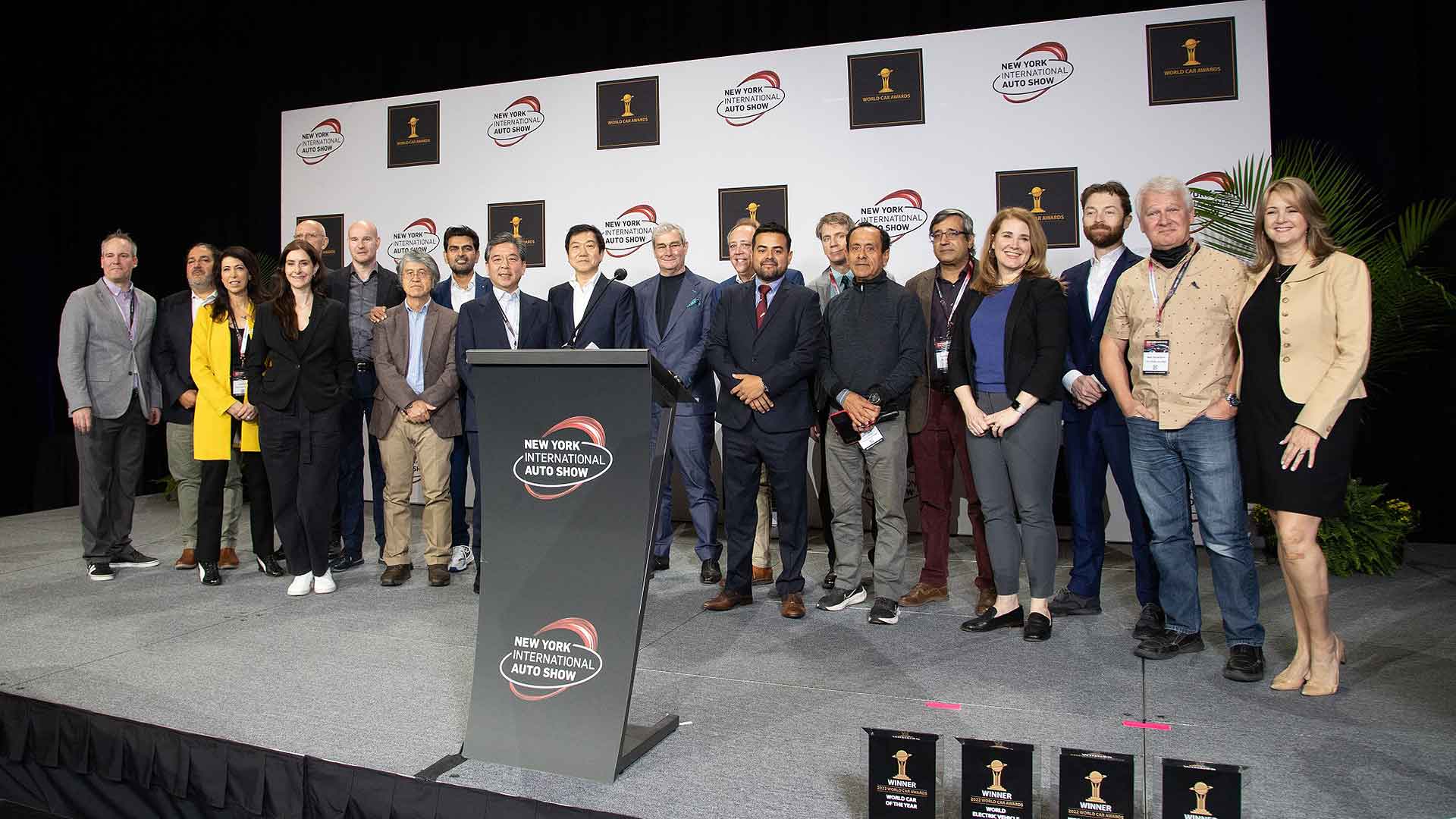
The finalists for World Car Awards 2023 have been announced, after jurors from around the globe completed their first round of voting.
From an initial list of 30 cars, the 10 finalists for the prestigious World Car of the Year 2023 award are now official – with two brands, BMW and Nissan, boasting two cars each on the shortlist.
World Car Awards is the biggest automotive awards initiative on the planet. One hundred international jurors test vehicles around the world in a process that begins in September and ends at the New York International Auto Show in April, where the winners are revealed.
“For nearly two decades, the partnership between World Car and the New York Auto Show has recognised the very best the auto industry has to offer,” said NYIAS president Mark Schienberg.
“We’re looking forward to once again co-hosting the awards ceremony during the opening of the 2023 Show in April.”
Five other category contenders have also been announced, ahead of the second round of voting that closes on 22 February.
It’s a diverse mix of cars for the 2023 World Electric Vehicle award: the BMW i7 and Lucid Air represent the luxury market, while the Genesis GV60, Hyundai Ioniq 6 and Kia Niro EV are more attainable contenders.
2023 World Electric Vehicle finalists
BMW i7
Genesis GV60
Hyundai Ioniq 6
Kia Niro EV
Lucid Air
It’s yet another entry from BMW in the 2023 World Luxury Car awards, with the BMW 7 Series lining up alongside its pure electric BMW i7 sister car.
The Genesis G90 and Lucid Air are two more saloon-style finalists, while the Range Rover and Range Rover Sport show how SUVs do luxury.
2023 World Luxury Car finalists
BMW 7 Series / i7
Genesis G90
Range Rover
Range Rover Sport
Lucid Air
In the exciting 2023 World Performance Car category, it’s BMW once again, with the mighty M4 CSL, which lines up with its equally specialised German compatriot: the Porsche 911 GT3 RS.
We Brits are denied Nissan Z and Toyota Corolla GR, sadly, but we do get the only pure electric contender on the list: the Kia EV6 GT.
2023 World Performance Car finalists
BMW M4 CSL
Kia EV6 GT
Nissan Z
Porsche 911 GT3 RS
Toyota GR Corolla
In the 2023 World Urban Car category, only three cars make the shortlist, because there’s been a dearth of newly introduced city-sized cars this year.
So, who will win the overall prize – the Indian Citroen C3 SUV, the Ora Funky Cat EV or the Volkswagen Taigo small coupe-style SUV?
2023 World Urban Car finalists
Citroen C3
Ora Funky Cat / Hanmao
Volkswagen Taigo / Nivus
As for 2023 World Car Design, an expert panel including famous former Jaguar designer Ian Callum has chosen five models for the jury to vote on.
2023 World Car Design finalists
Cadillac Lyriq
Hyundai Ioniq 6
Range Rover
Lucid Air
Nissan Z
The next stage in the process comes on March 7, when the top three in the world are announced – that’s the three finalists in every category.
Winners in all six categories will be announced live on Wednesday 5 April from the New York Auto Show.
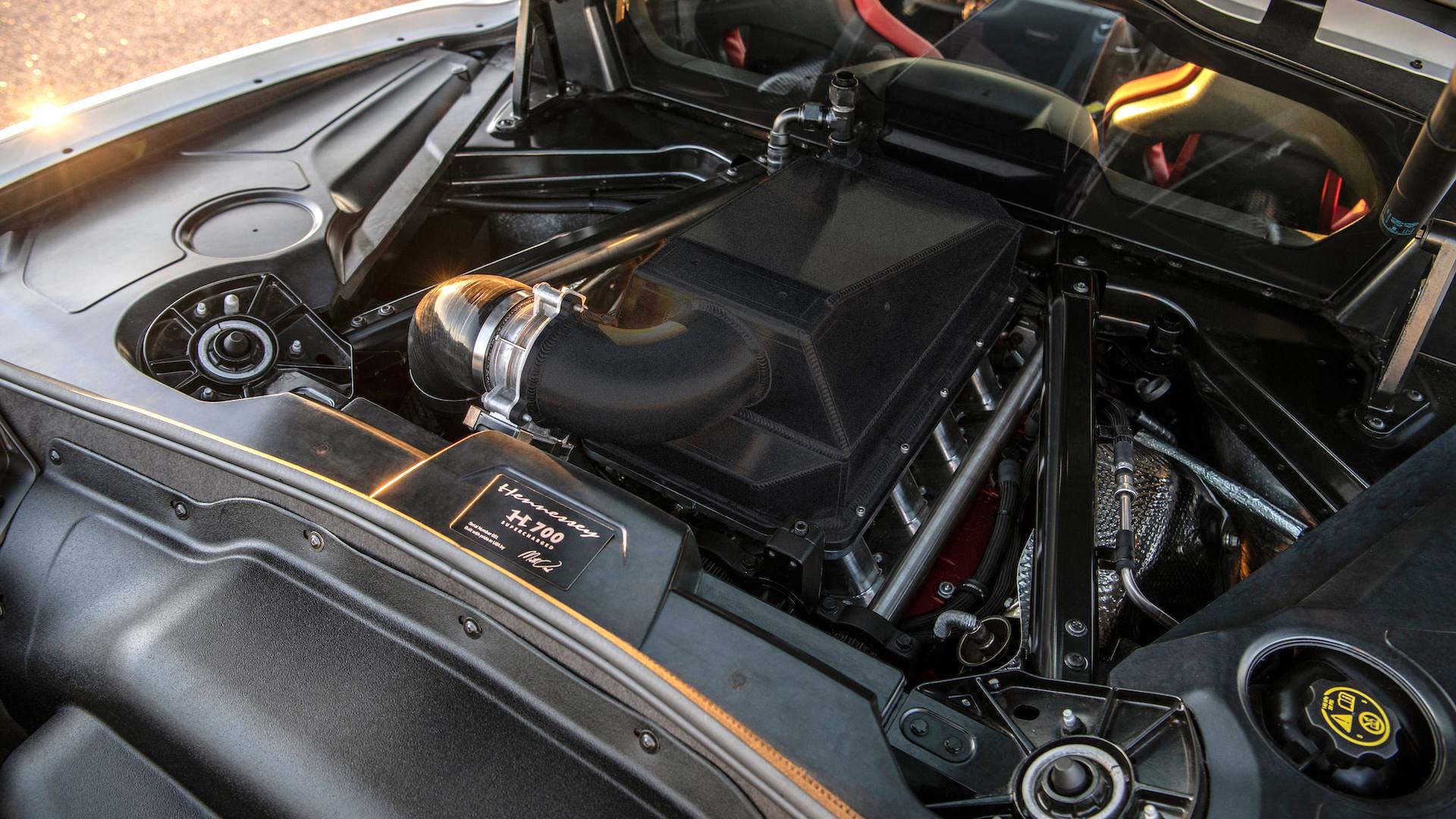
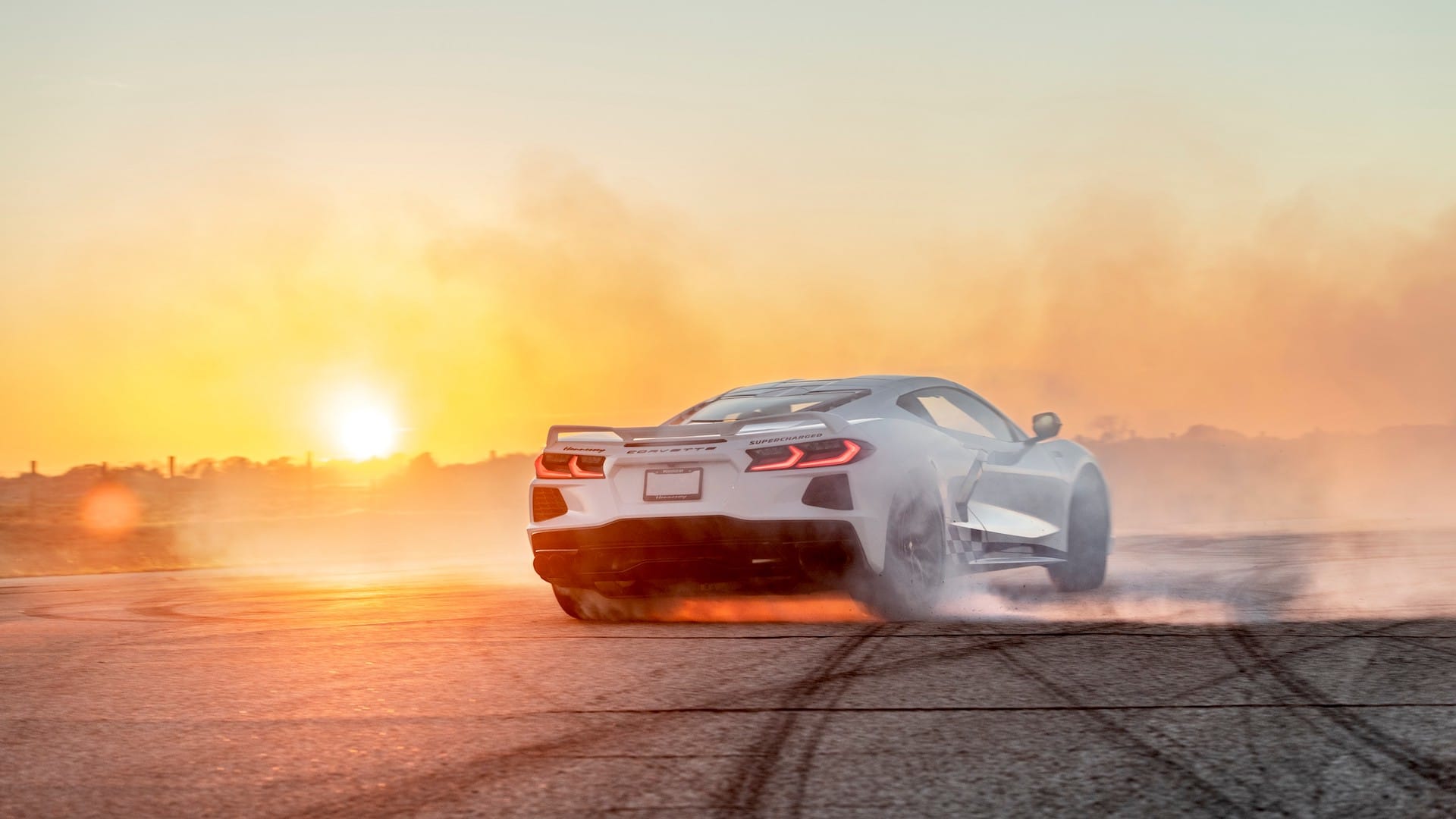
Hennessey Performance has announced a potent new supercharger option for the eighth-generation Chevrolet Corvette.
The Hennessey H700 package delivers a 44 percent boost in horsepower, plus a 37 increase in torque, compared to the standard C8 ‘Vette.
Hennessey has tuned the mid-engined sports car to produce 708 horsepower, with an accompanying 638 lb ft of torque.
This makes the H700 even more powerful than Chevrolet’s own high-performance Z06 model. The Z06’s naturally-aspirated 5.5-l flat-plane-crank V-8 engine ‘only’ musters 670 horsepower and 460 lb ft.
Supercharged performance
The regular C8 Corvette’s 6.2-l V-8 delivers a respectable 490 horsepower and 465 lb-ft of torque. However, such an output is hardly sufficient for an extreme tuner such as Hennessey.
Unlocking the big power gains is a centrifugal supercharger. This is accompanied by a high-flow air intake system, with the engine exhaling through a new sports exhaust.
Other changes include the fitment of an air-to-water intercooler to keep charge temperatures low, along with Hennessey’s own bespoke ECU calibration.
Each completed car benefits from chassis dynamometer testing, plus a 500-mile road test, before being handed over to a customer.
‘The best value supercar in the world’
Hennessey’s H700 package includes a set of 19-inch (front) and 20-inch (rear) alloy wheels, with buyers also able to specify a Heritage Livery finish.
Opting for the full H700 experience will cost $49,950 (approx. £41,500), with the engine-only option requiring $34,950 (£29,000). A three-year, 36,000-mile warranty is standard, and Hennessey will sell the car around the world.
John Hennessey, company founder and CEO, said: “The stock C8 Corvette Stingray is an extraordinary sports car, yet Chevrolet left some V8 performance on the table. Our exciting H700 supercharger package integrates seamlessly with the eight-speed dual-clutch gearbox, and our exhaust upgrade sounds much more aggressive than stock.
“Considering that our power and torque surpass the factory Z06, the Hennessey H700 is arguably the best value high-performance supercar in the world.”
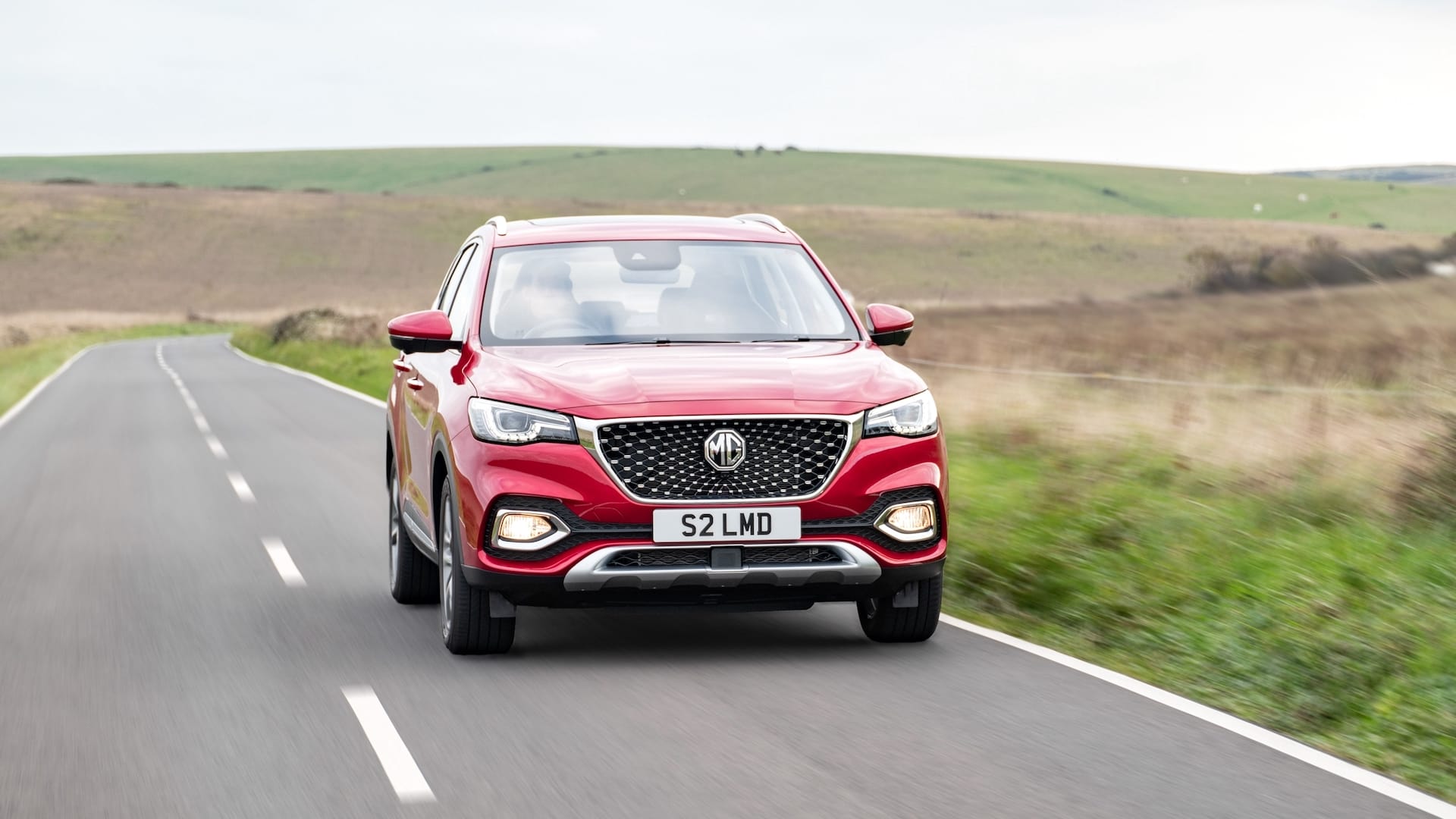
The UK’s best-selling car in January 2023 was the MG HS, according to the latest figures from the Society of Motor Manufacturers and Traders (SMMT).
With 3,481 examples of the MG SUV delivered last month, it beat the Volkswagen T-Roc and Nissan Qashqai to top the sales charts.
The MG HS is sold with the option of a plug-in hybrid powertrain, alongside conventional petrol engine options.
With total new car registrations of 131,994 for January, it was the sixth consecutive month of sales growth. It also made for the best start to the year since January 2020’s (pre-Covid) figure of 149,279 registrations.
New cars buck the economic trend
Despite the wider economic challenges of the cost-of-living crisis, last month saw a 14.7 percent increase in the number of new vehicles registered versus January 2022.
Pure battery-electric models accounted for 19.8 percent of all sales in January 2023, with plug-in hybrid cars taking 6.9 percent of sales.
This means one-in-five new cars registered last month came with a plug, with the figure predicted to increase to one-in-four by the end of the year.
In 2024, the SMMT expects to see battery and plug-in hybrid cars take close to one-third (31 percent) of all sales.
Infrastructure worries could see EVs slide
However, the SMMT is concerned that public charging infrastructure is failing to keep pace with the increase in demand for battery and plug-in hybrid models.
During the fourth quarter of 2022, the ratio of new chargepoint installations to new plug-in car registrations decreased to one charger for every 62 vehicles. During the whole of 2022, one standard public charger was installed for every 53 new plug-in cars registered. This made for the weakest ratio seen since 2020.
The SMMT is looking to the Government to introduce mandatory rollout targets for charging infrastructure, along with service standards for public chargers.
Reducing VAT on public charging from 20 percent to five percent, in line with home charging, is also seen as important to make electric vehicle ownership more affordable.