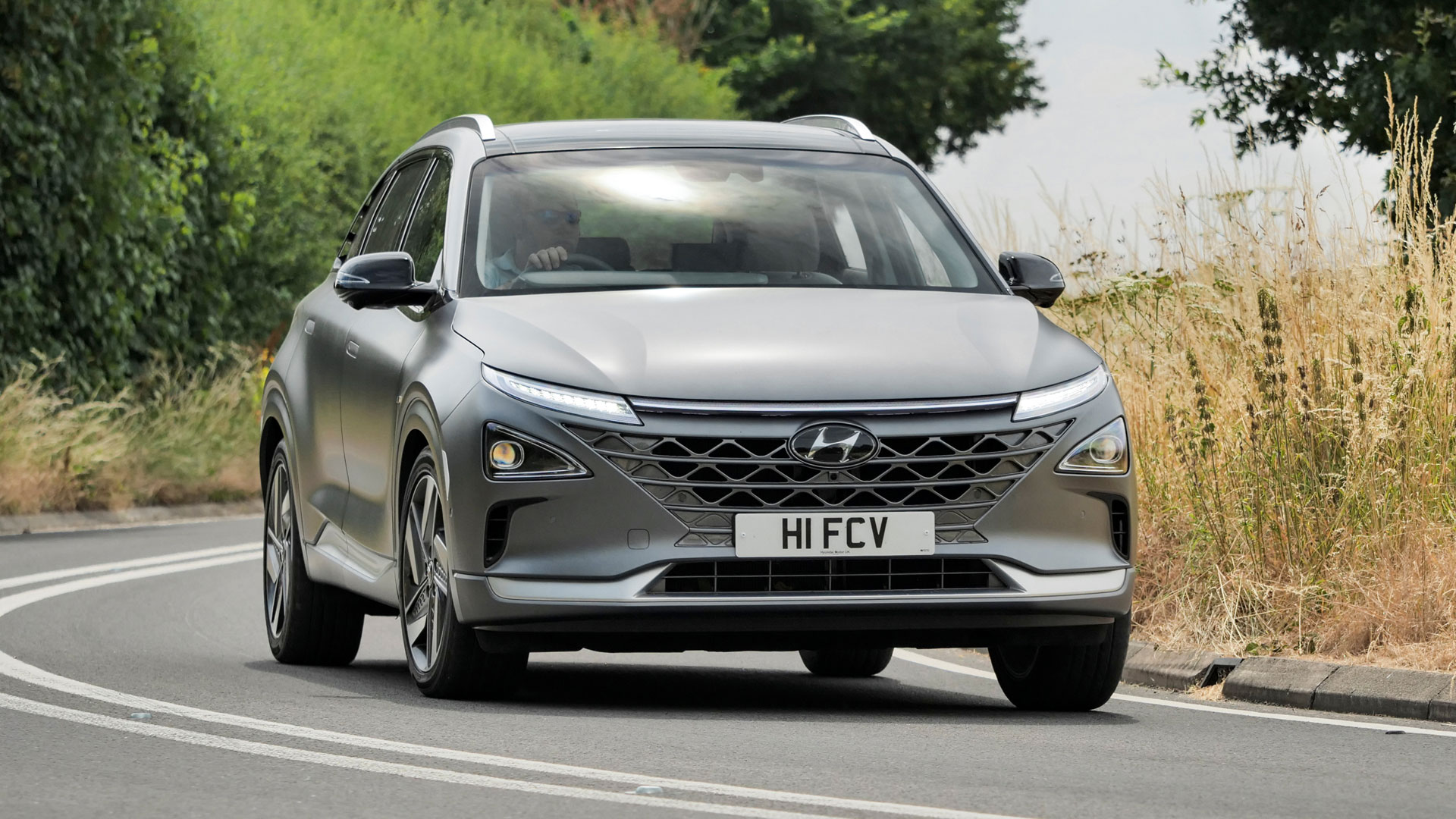
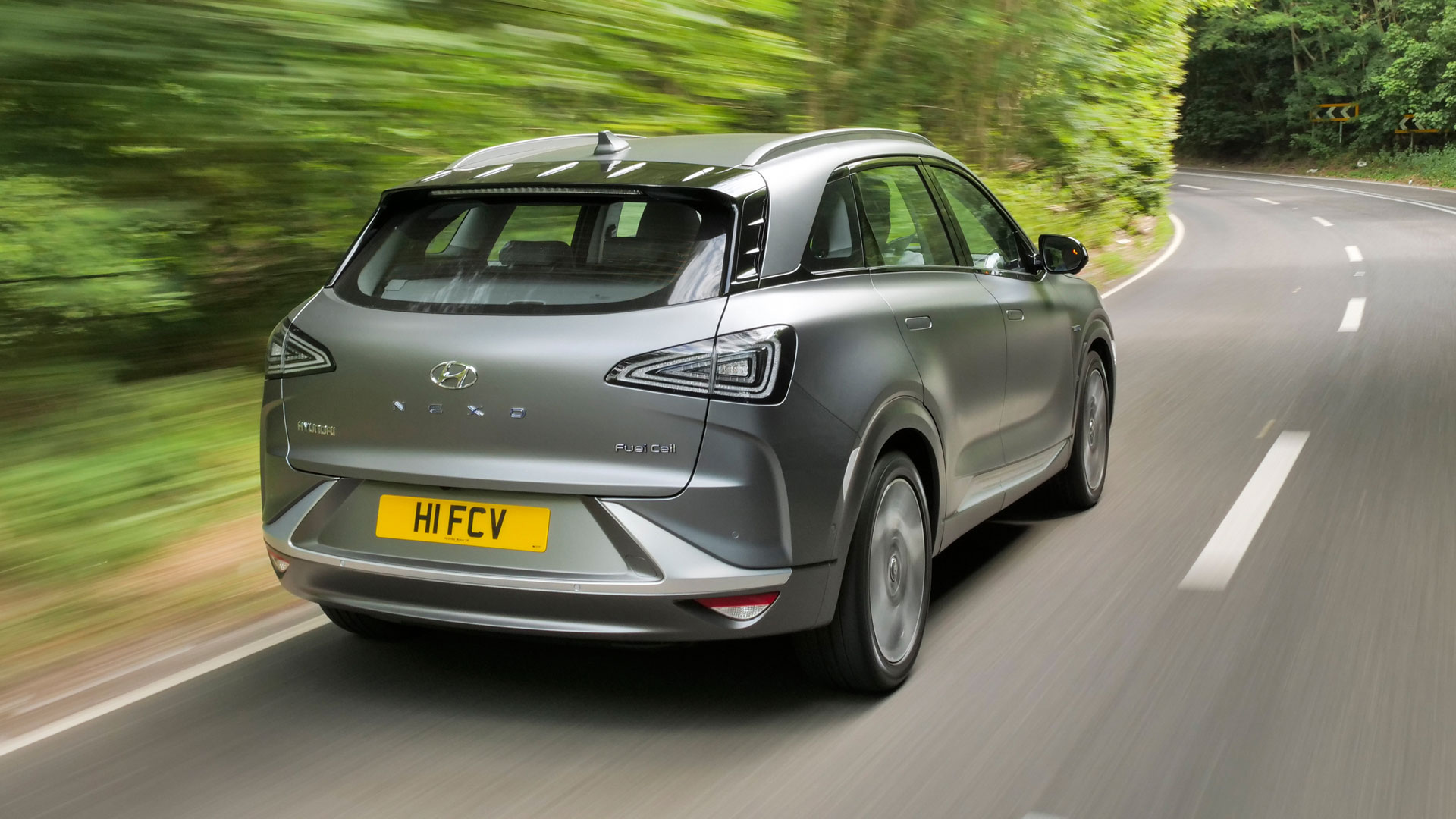
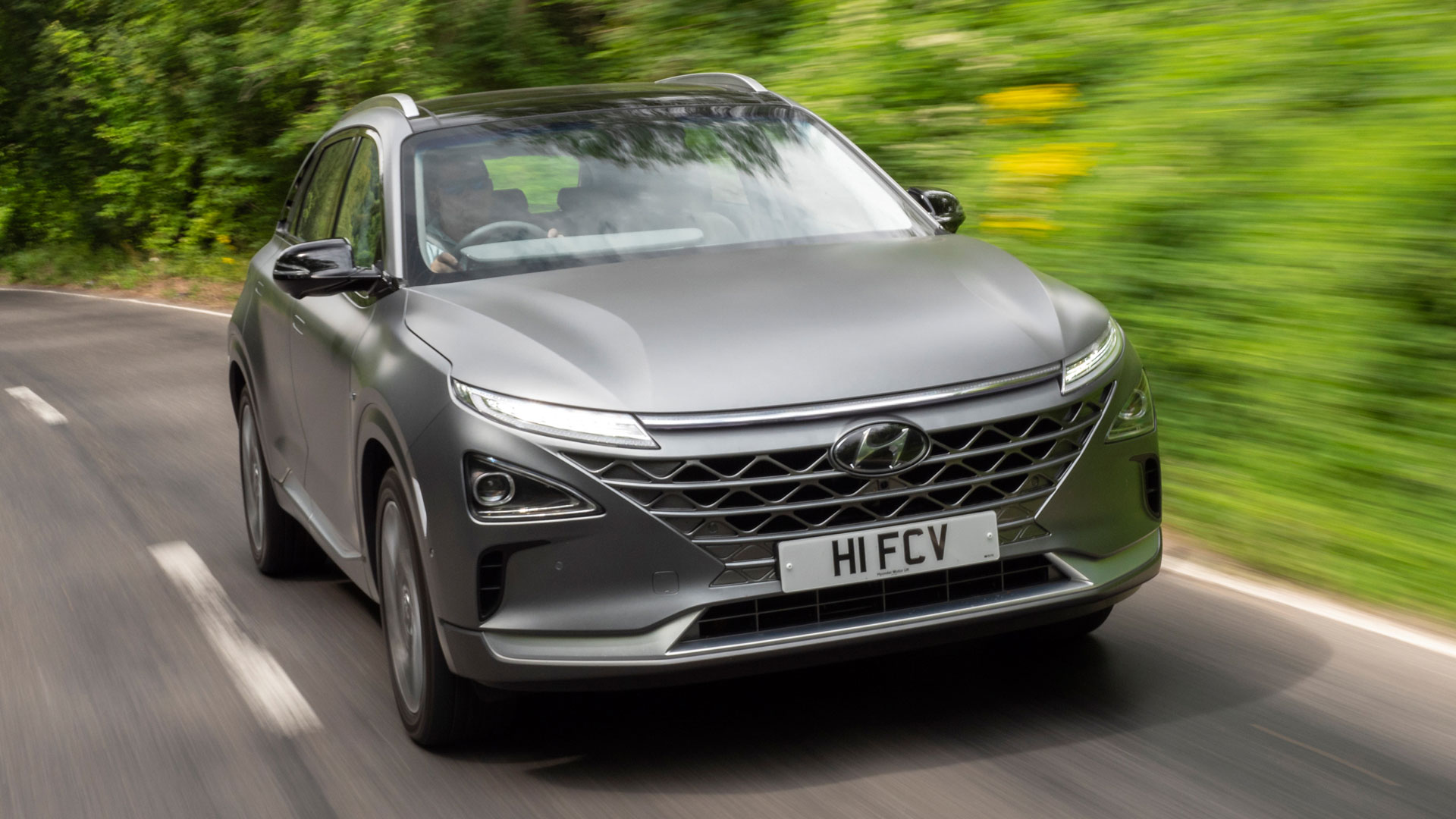
The Hyundai Nexo hydrogen fuel cell vehicle is now available to order directly from Hyundai Motor UK, priced at £65,995 after the government Plug-in Car Grant (PICG).
This is Hyundai’s second-generation hydrogen fuel cell vehicle, with the Nexo offering a WLTP range of up to 414 miles on a combined cycle. The Nexo combines oxygen from the surrounding air and hydrogen from high-pressure storage tanks to create a flow of electrons that powers the drive motor and charges the onboard battery.
The Nexo’s only emissions are harmless water vapour and it takes just five minutes to refuel the three hydrogen tanks. Unfortunately, the UK’s hydrogen fuel-station network is rather small, although it’s possible to locate your nearest station using Zap-Map.
The exterior of the Nexo has been designed to minimise drag, with curtain intakes on the front bumper ducting air over the aerodynamically designed front wheels, flush door handles that retract into the doors, air tunnels around the D-pillar, and a ‘hidden’ rear wiper blade that retracts underneath the rear spoiler when not in use.
A fully enclosed underside and front and rear wheel air deflectors complete the aerodynamic package, helping the Nexo to achieve a drag coefficient of just 0.329.
Premium SE is the only trim level available, with Nexo owners treated to 19-inch alloy wheels, LED headlights, heated and ventilated front seats, heating for the outermost rear seats, dual-zone climate control, sunroof, heated steering wheel, wireless charging points and an electric tailgate.
Entertainment and connectivity are provided via a 12.3-inch touchscreen infotainment system, Apple CarPlay, Android Auto and tablet-style pinch and zoom functionality.
Driver assistance features include adaptive cruise control, remote parking assist, lane-keeping assist, autonomous emergency braking, blind spot detection and rear cross traffic alert. The Nexo was awarded a five-star Euro NCAP safety rating in 2018.
To further enhance its green credentials, the Hyundai Nexo was also awarded the UL Bio Environmental Seal for the use of bio fibres from sugar cane waste and vegetable plasticisers in the headliner and carpet, bio plastics from sugar cane and corn waste in the door, seat, pillar and console trims, and bio paint extracted from rapeseed and soybean oils for the dashboard and centre console.
Ashley Andrew, managing director, Hyundai Motor UK said: “Hyundai will always be proud to have been the first manufacturer to bring a commercially available fuel cell electric vehicle to market with the ix35 Fuel Cell.
“Nexo re-positions our status as market leaders by combining its cutting edge powertrain with a bespoke, stylish body and comfortable and technically advanced interior.
“The ix35 Fuel Cell was previously only available in left-hand-drive configuration but with NEXO’s global development ensuring right-hand-drive availability, we are already in talks with a number of existing and new customers and are looking forward to the first customer deliveries soon.”
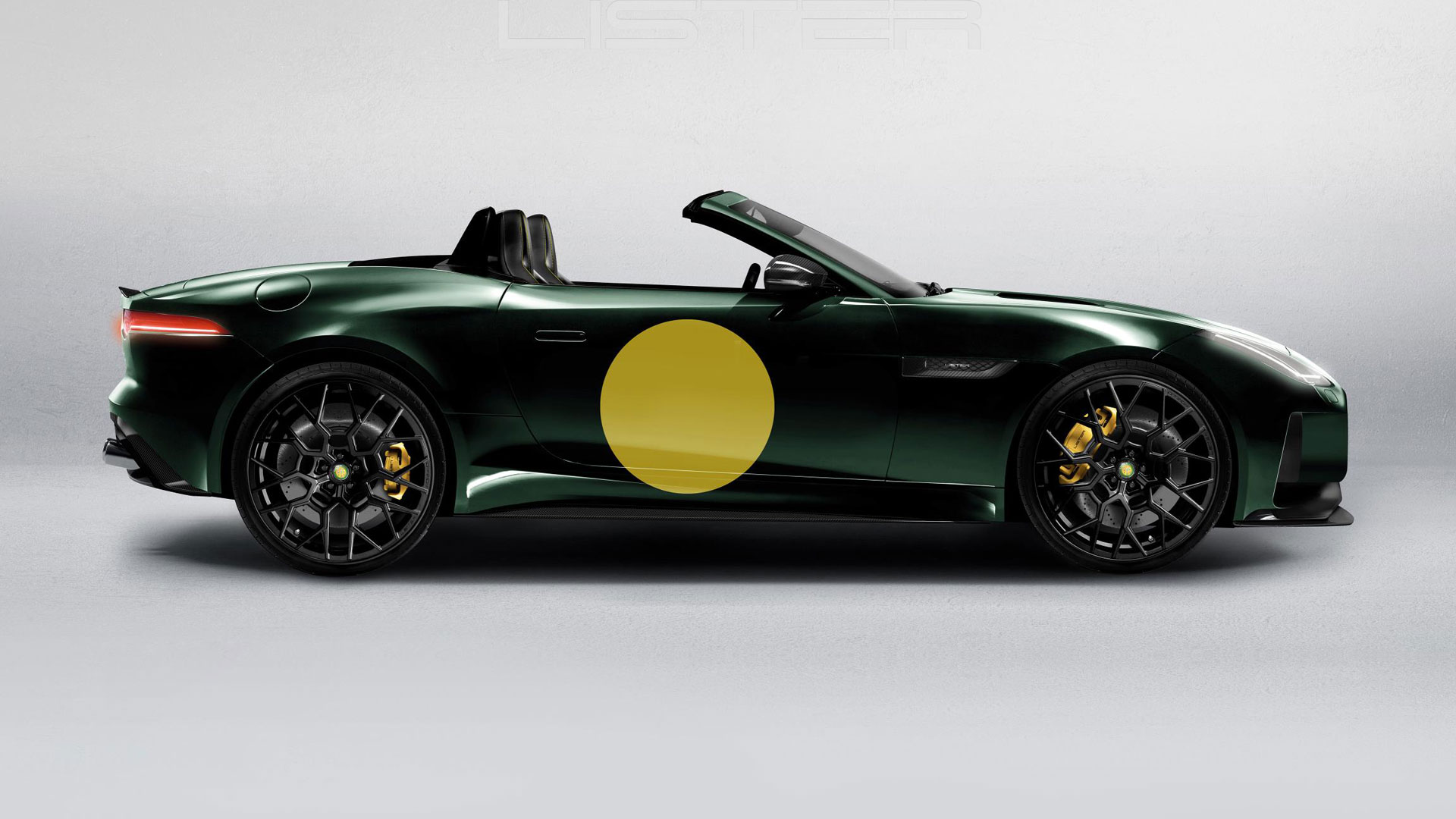
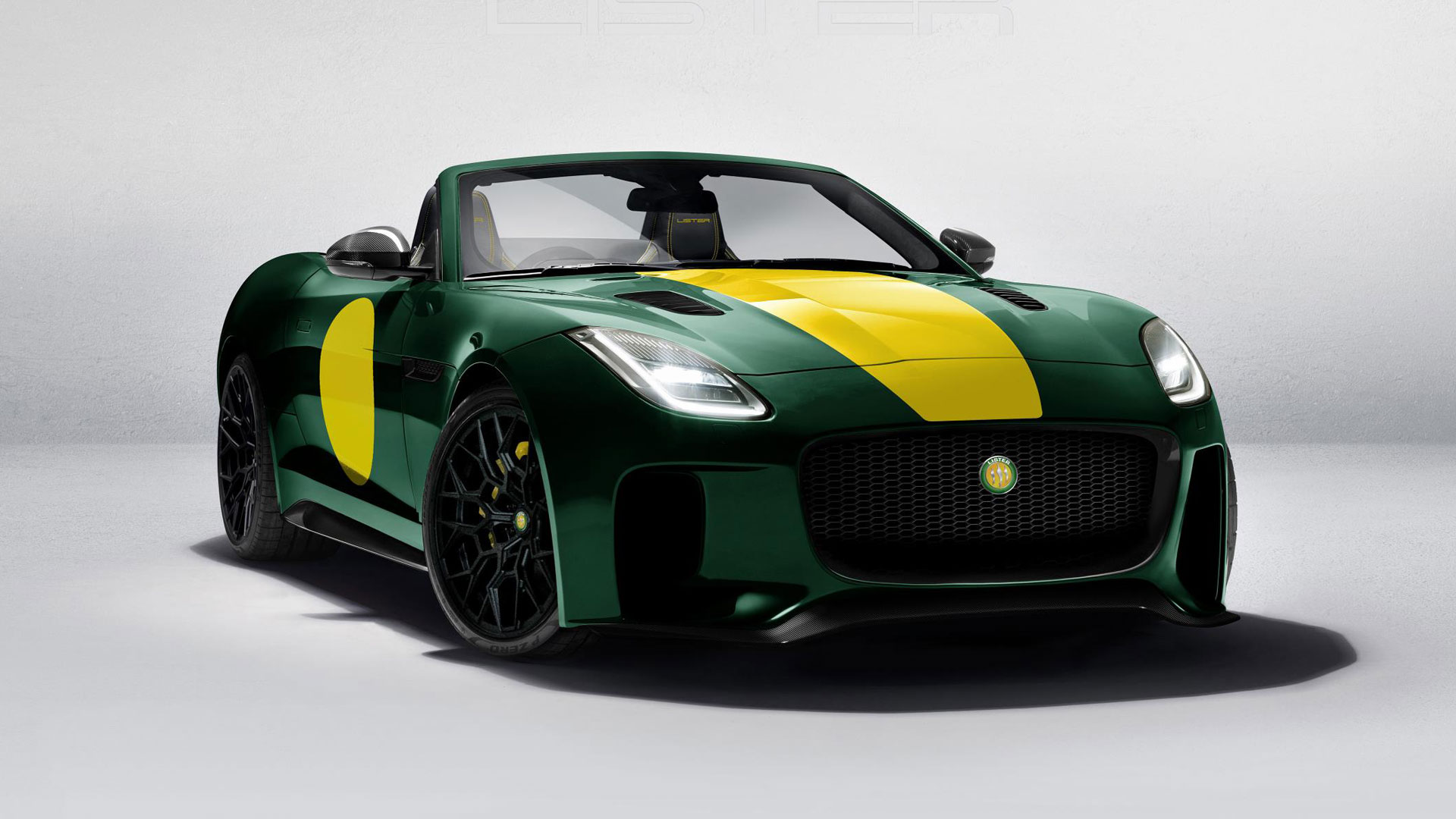
Following what it is calling “high demand for an open-top LFT-666”, Lister has unveiled its most powerful open-top supercar – the LFT-C.
But while Lister is building 99 tin-top variants, just ten drop-top LFT-Cs will be available, each one with a price tag of £139,000. Not that many cars will leave the factory in standard form, with Lister offering “an almost unlimited” number of options for the LFT-C.
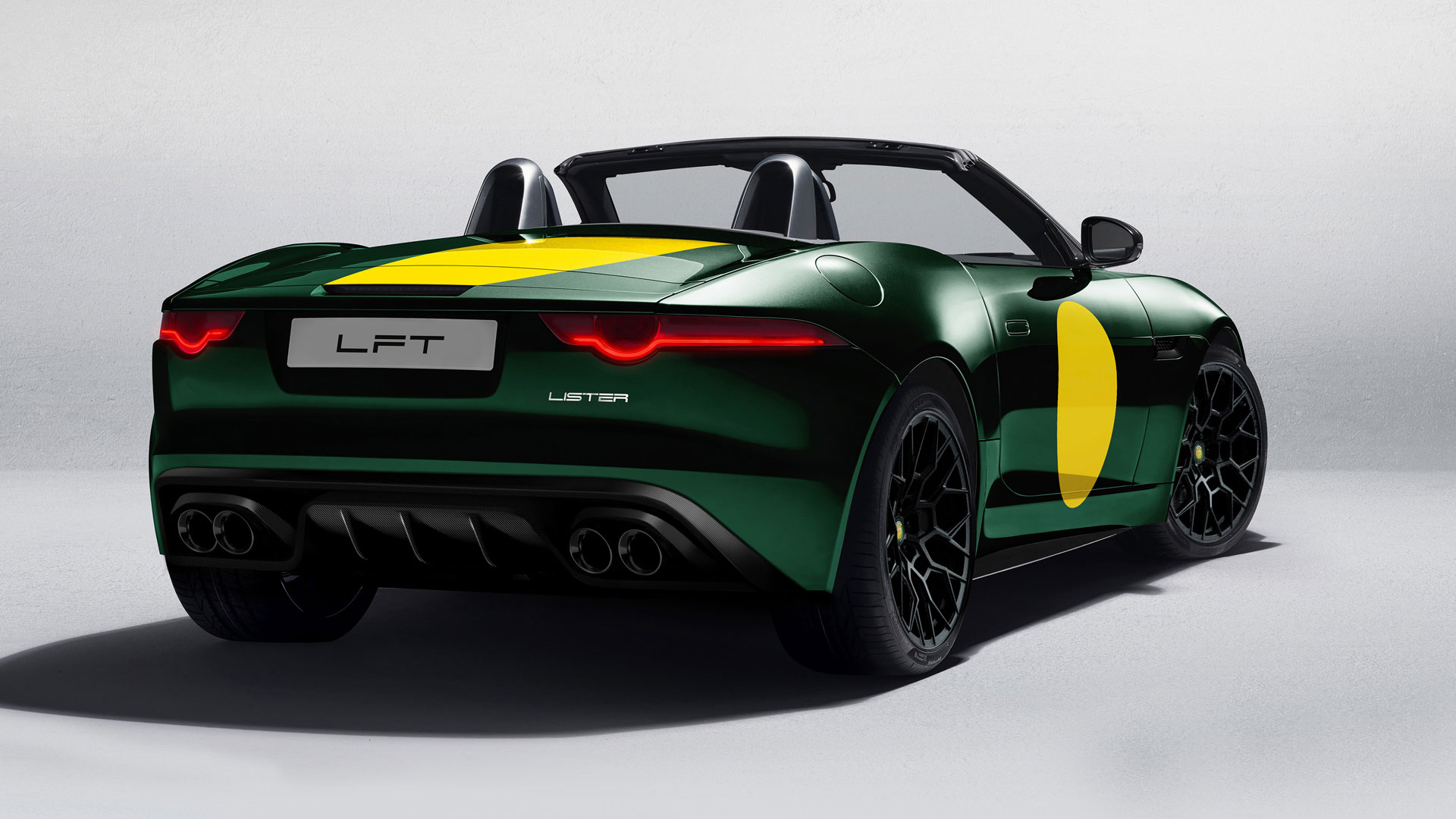
Thanks to its supercharged 675 horsepower V8 engine, the Lister LFT-C will hit 62 mph (100 kph) in “just over three seconds”, before reaching a top speed in excess of 205 mph. Each LFT-C will feature a solid silver (solidsilver!) number plaque on the engine cover, so you can go full on UB40 with the ‘One in Ten’ bragging rights.
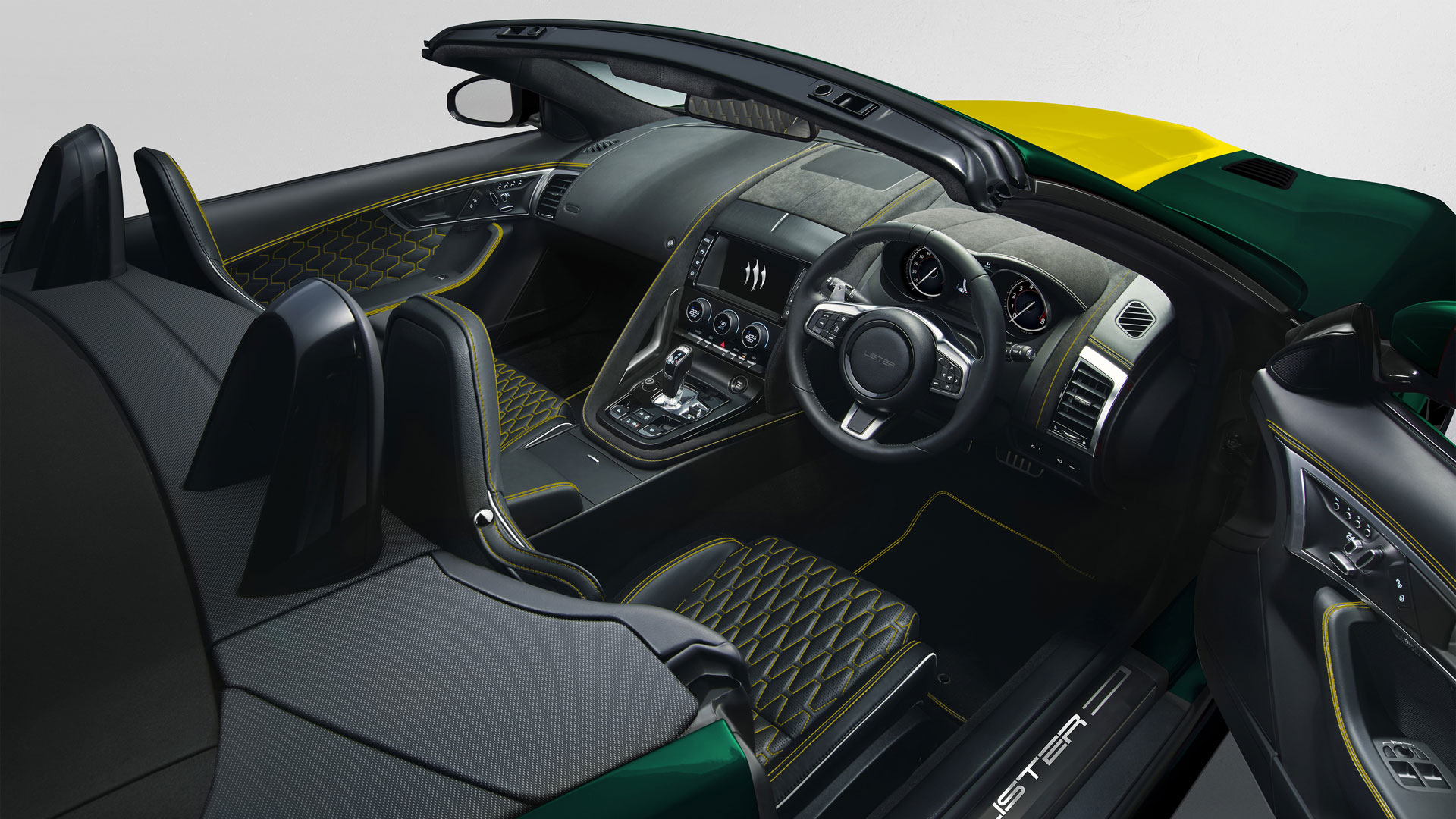
In common with the LFT-666, the LFT-C features carbon fibre body panels, along with extended rear arches, a new grille design, lightweight alloy wheels and Michelin tyres. Lister has also uprated the suspension and braking system, while a bespoke exhaust has been designed to enhance the sound of the V8 engine to work with an open cockpit vehicle.
Each LFT-C will be built to order, with the interior retrimmed by hand using Nappa hides from Bridge of Weir leather.
Lawrence Whittaker, Lister CEO, said: “Launching the new LFT-C is a personal triumph, as I have always loved convertible cars, even since my second car, an MG Midget.
“While we are famous for cars like the Knobbly and the Storm, the LFT series heralds a new era for Lister and continues our historical enhancement of Jaguar drive trains, which dates back to 1957.
“In 2019, we will see the launch of at least two new cars and have also just opened our new £5m headquarters in Lancashire that will be known as the home of the new Lister.
There is lots more to come, and we look forward to sharing more news in the near future.”
Lister hasn’t provided a delivery date for LFT-C, but said its launch is timed for it to be “ready for summer 2019”. Meanwhile, although the entire 2019 allocation of LFT-666 has been snapped up, buyers can place an order for the remaining cars for delivery in early 2020.
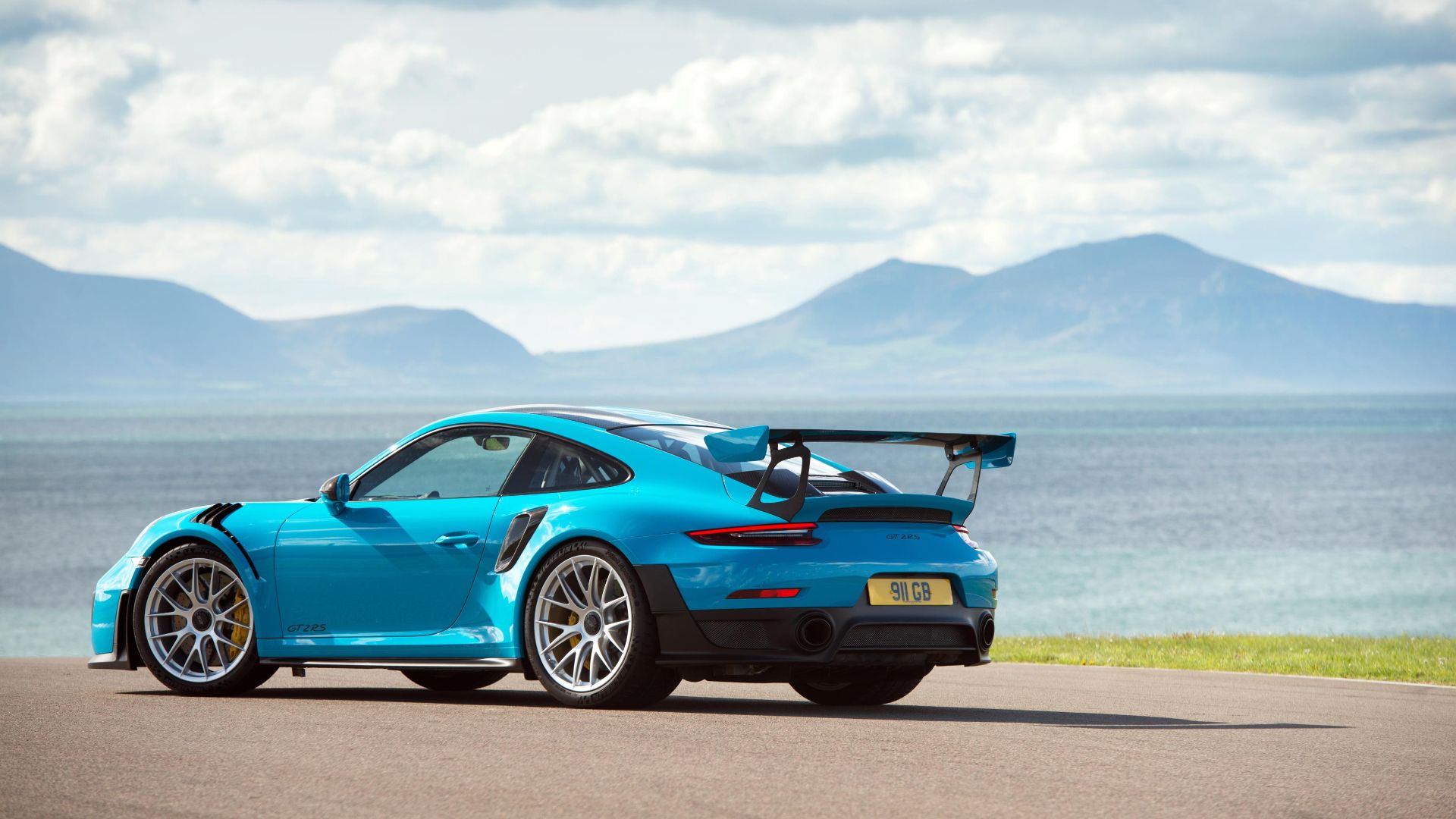
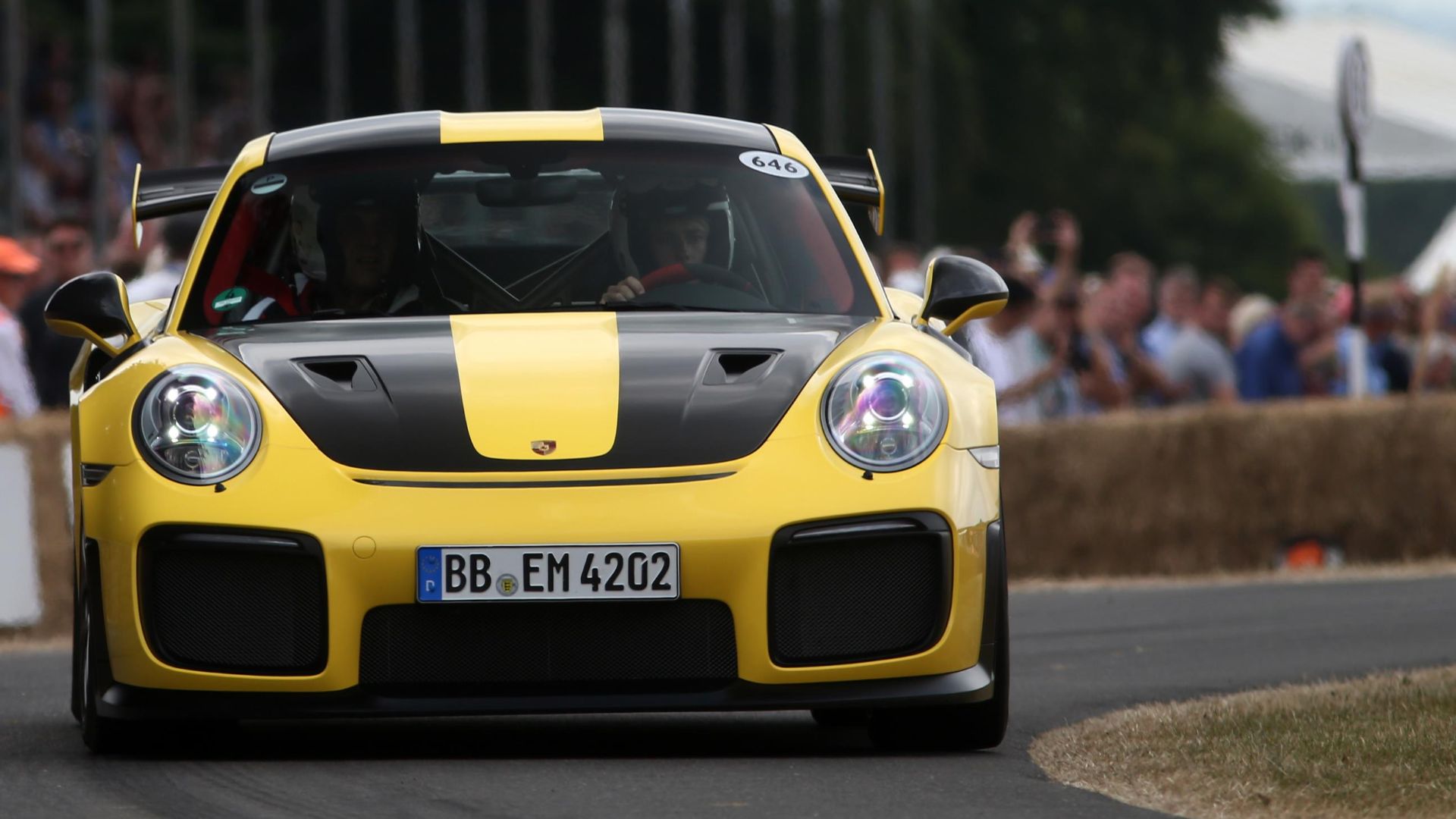
As reported on Carscoops, Porsche is due to restart production of the now-defunct 991 GT2 RS. The reason? A boat loaded with cars due for Mexican customers has sunk. As such, Porsche has some cars it needs to replace…
Production of the GT2 RS actually finished in February. Nevertheless, Porsche obligated to deliver cars to customers that have lost theirs to the Mexican depths. Luckily, none were due to find their way to the new Porsche ‘cathedral’ in Palm Springs.
The ship, named Grand America, sank off the coast of France earlier in March 2019 after a fire on one of the containers. It wasn’t just precious 911s that were lost, either. Reportedly, the boat was loaded with as many as 2,000 cars, including Audi A3, A5, Q7, RS4 and RS5 models.
Porsche never actually confirmed that its cars were lost on this same ship, but Carscoops was tipped with a letter of apology from the marque to a prospective customer. A rough translation opens as follows: “We are sorry to inform you that, due to a fire, a Grimaldi group ship that was transporting your vehicle sank on March 12, 2019. For that reason, your GT2 RS cannot be delivered”.
The letter goes on to profess that ordinarily, resuming production wouldn’t be on Porsche’s to-do list. However, due to the special nature of the car and the loyalty required by Porsche from a customer in order for them to get their hands on one, they’re firing up production again.
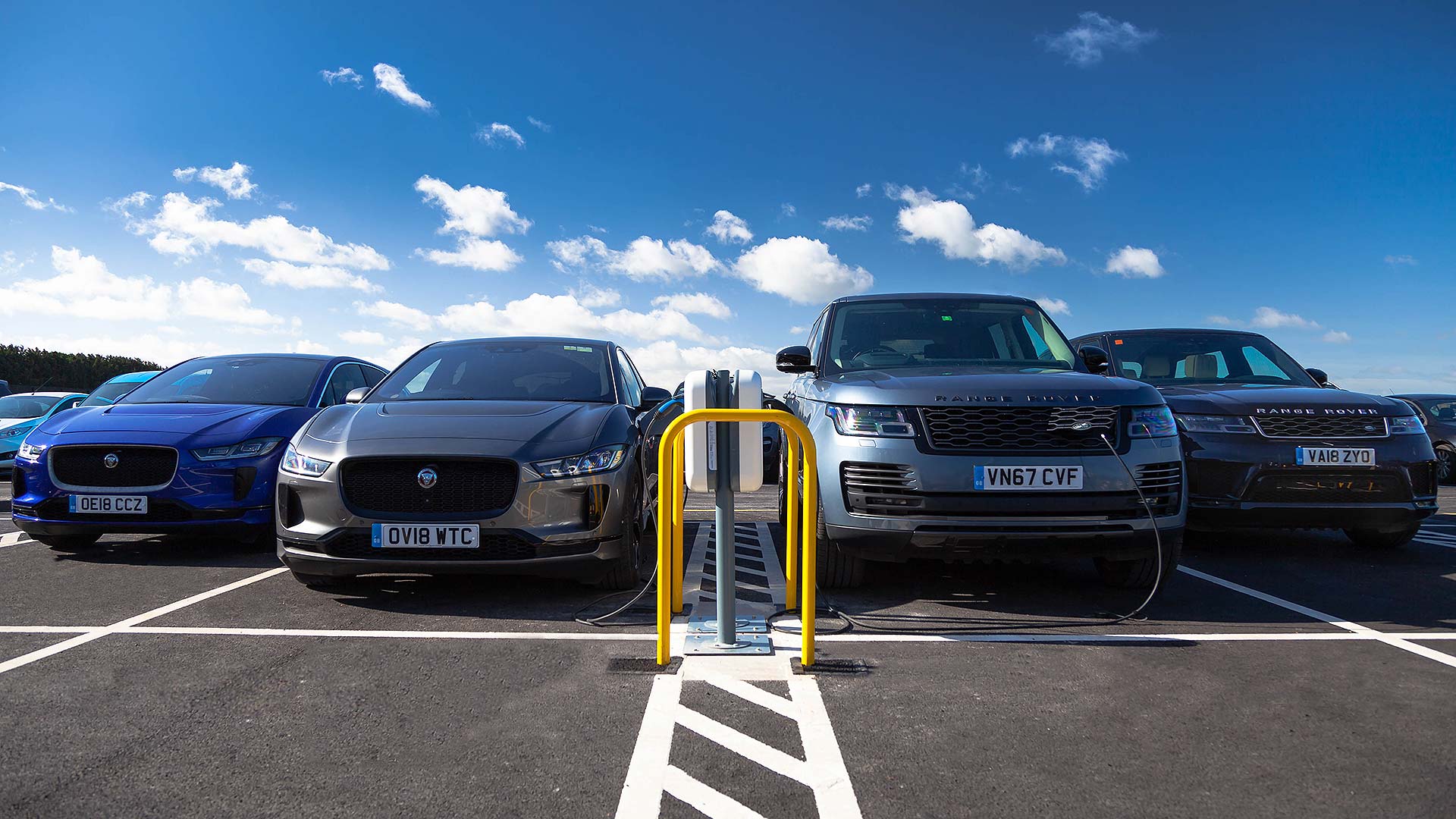
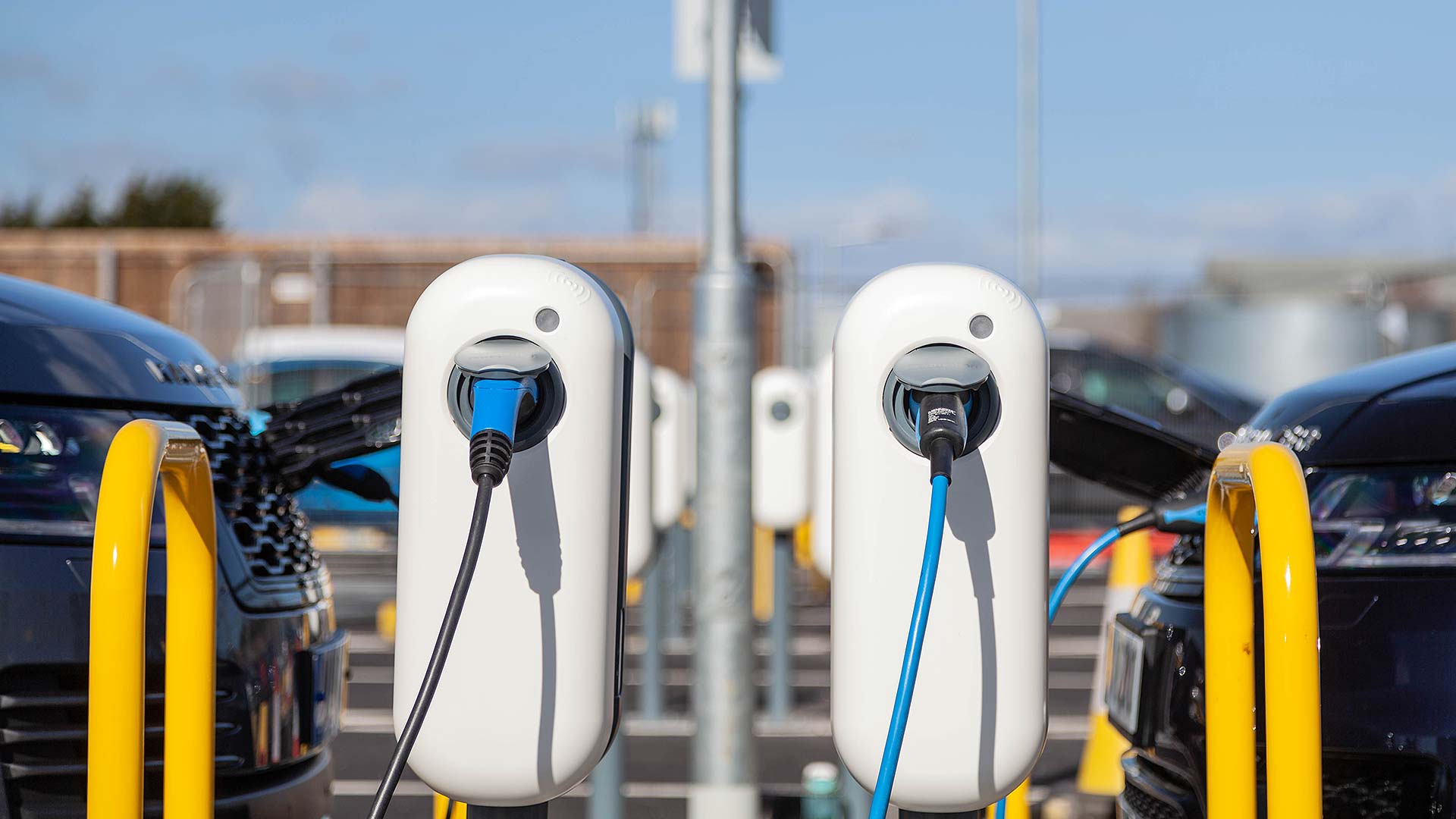
Jaguar Land Rover is claiming a UK electric car record for its Gaydon engineering facility. It says the biggest electric car smart charging site in Britain has now gone live.
It contains no fewer than 166 smart charging outlets, for use by engineers, employees and visitors.
The collection of 7kW AC smart chargers can, say JLR bosses, add 22 miles of range to an I-Pace every hour: that means eight hours of range in a single working day.
The electricity is cost-neutral for employees, and it’s sourced from 100 percent renewable energy (as, interestingly, is all the energy used by JLR UK facilities).
JLR is getting Gaydon set up because, said its head of e-Mobility Mick Cameron, “every new Jaguar and Land Rover model line will be electrified from 2020.
“We hope that by providing a network of electric charging points to staff and visitors, we can help encourage the uptake of alternative fuels amongst our employees.”
Research suggests that 40 percent of electric car charging across Europe currently takes place at work. However, 75 percent of EV users in Britain are currently unable to charge their cars at work.
JLR intends for its landmark move to be the first phase in rolling out chargers across all its UK sites. This will, says the firm, enable even those who don’t have home-charging facilities to drive an electric or electrified Jaguar or Land Rover as a company car.
The JLR announcement comes as Britain’s largest rapid-charging site of 50kW EV units opens near junction 14 of the M1.
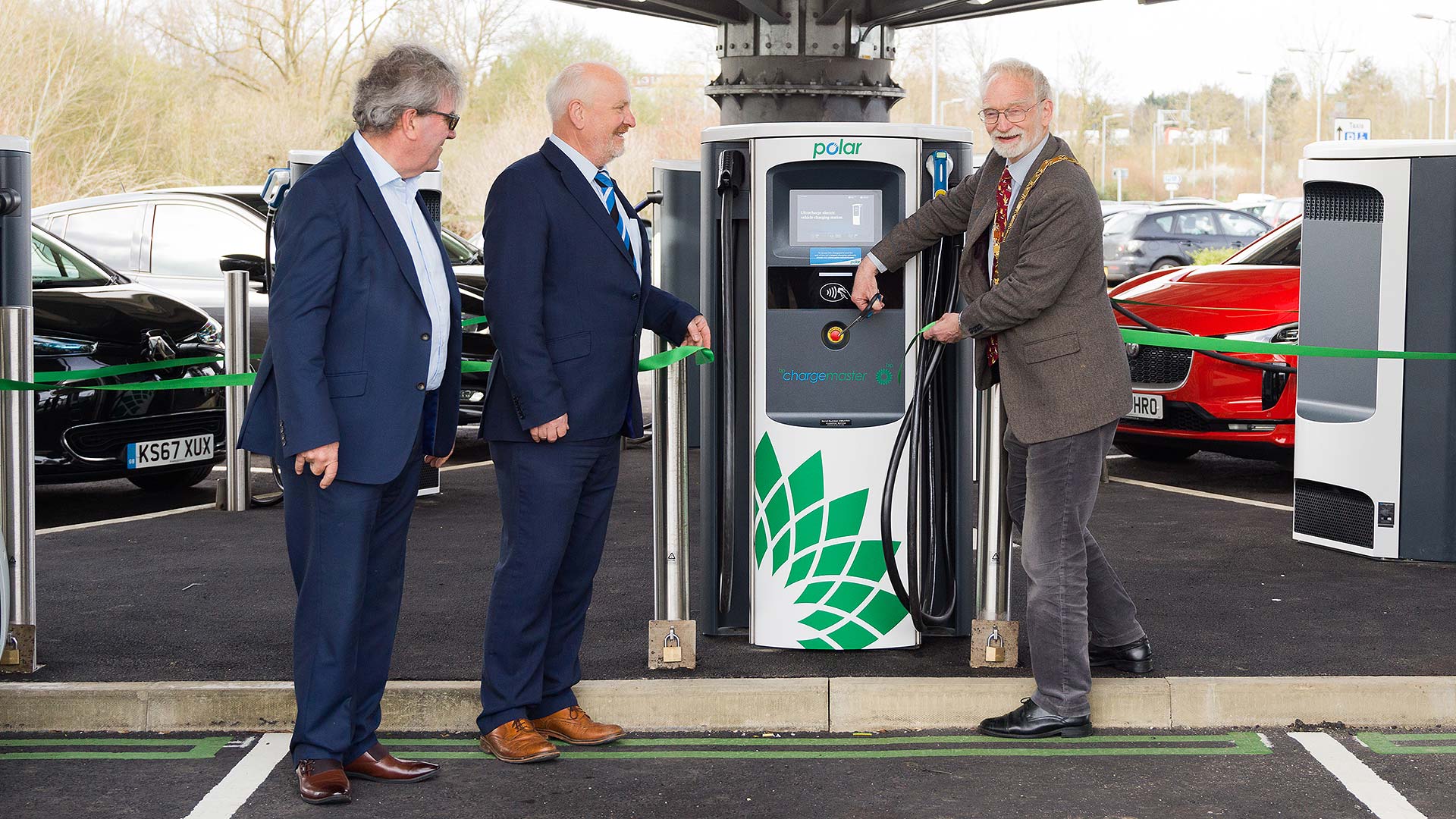
The largest electric car rapid charging hub in Britain has been officially opened in Milton Keynes by local councillors.
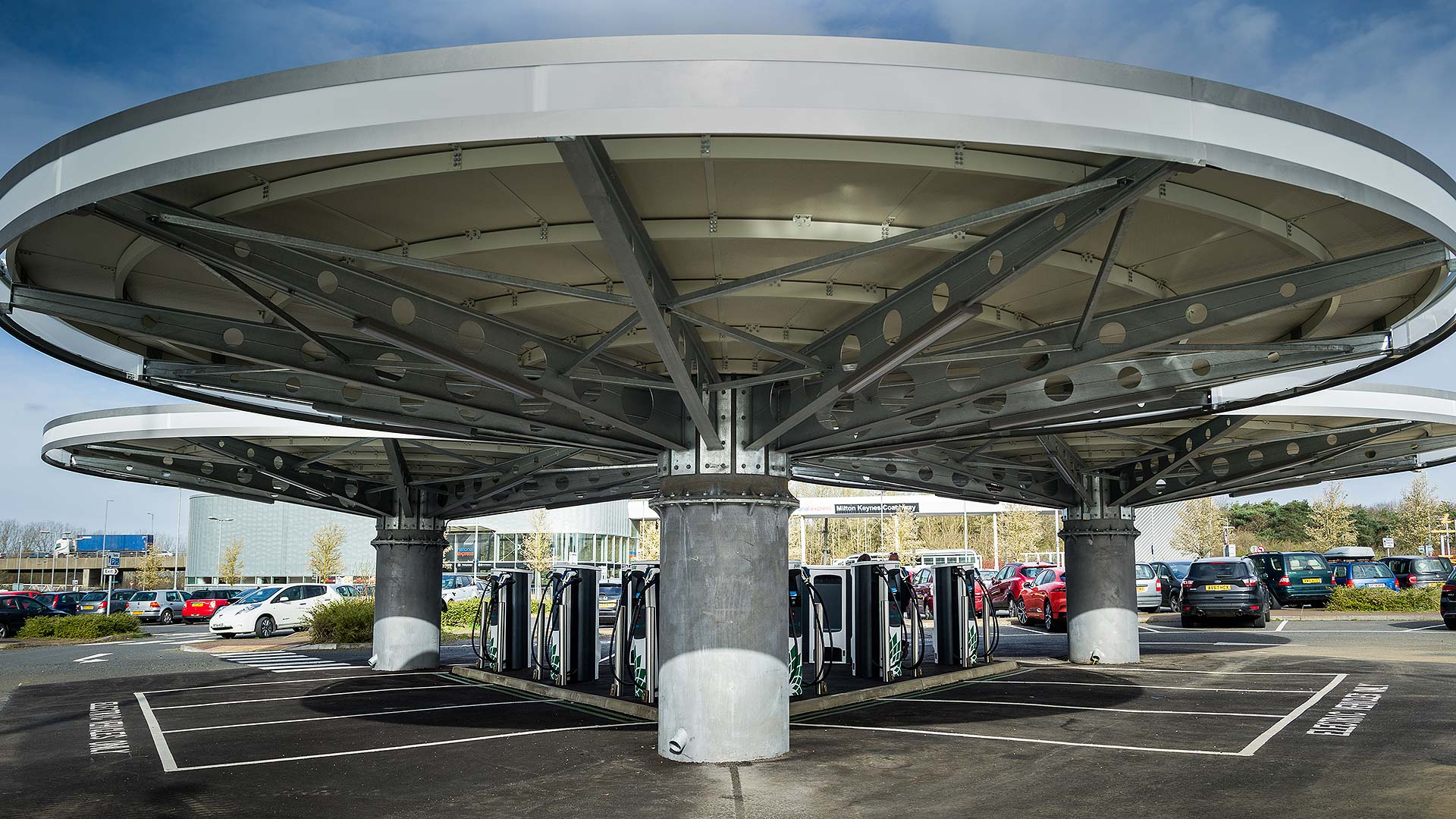
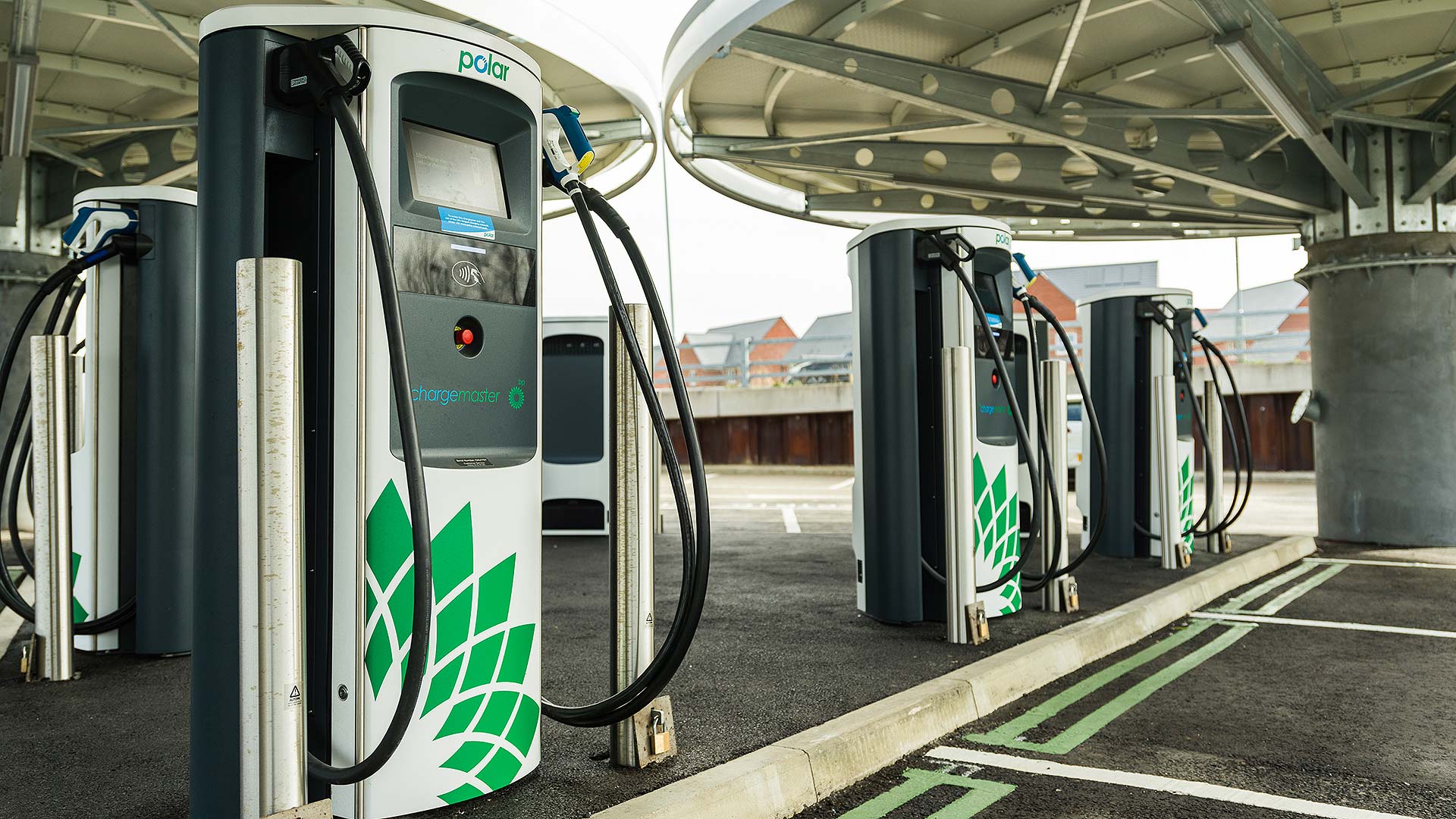
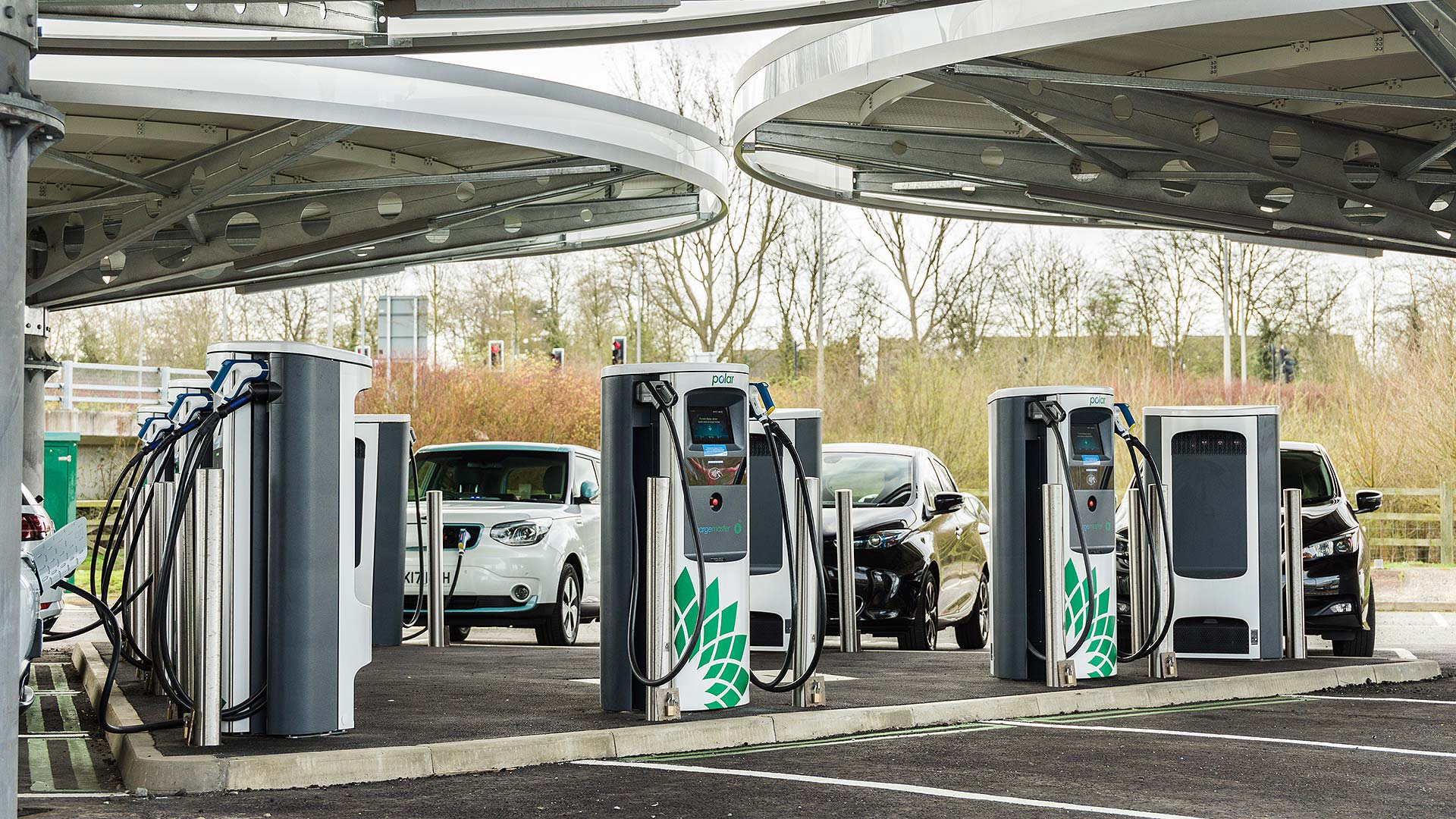
The site, located ‘less than one minute’ from junction 14 of the M1 at Milton Keynes Coachway, houses eight 50kW rapid chargers. They are universal devices that support all standards of electric car rapid charging.
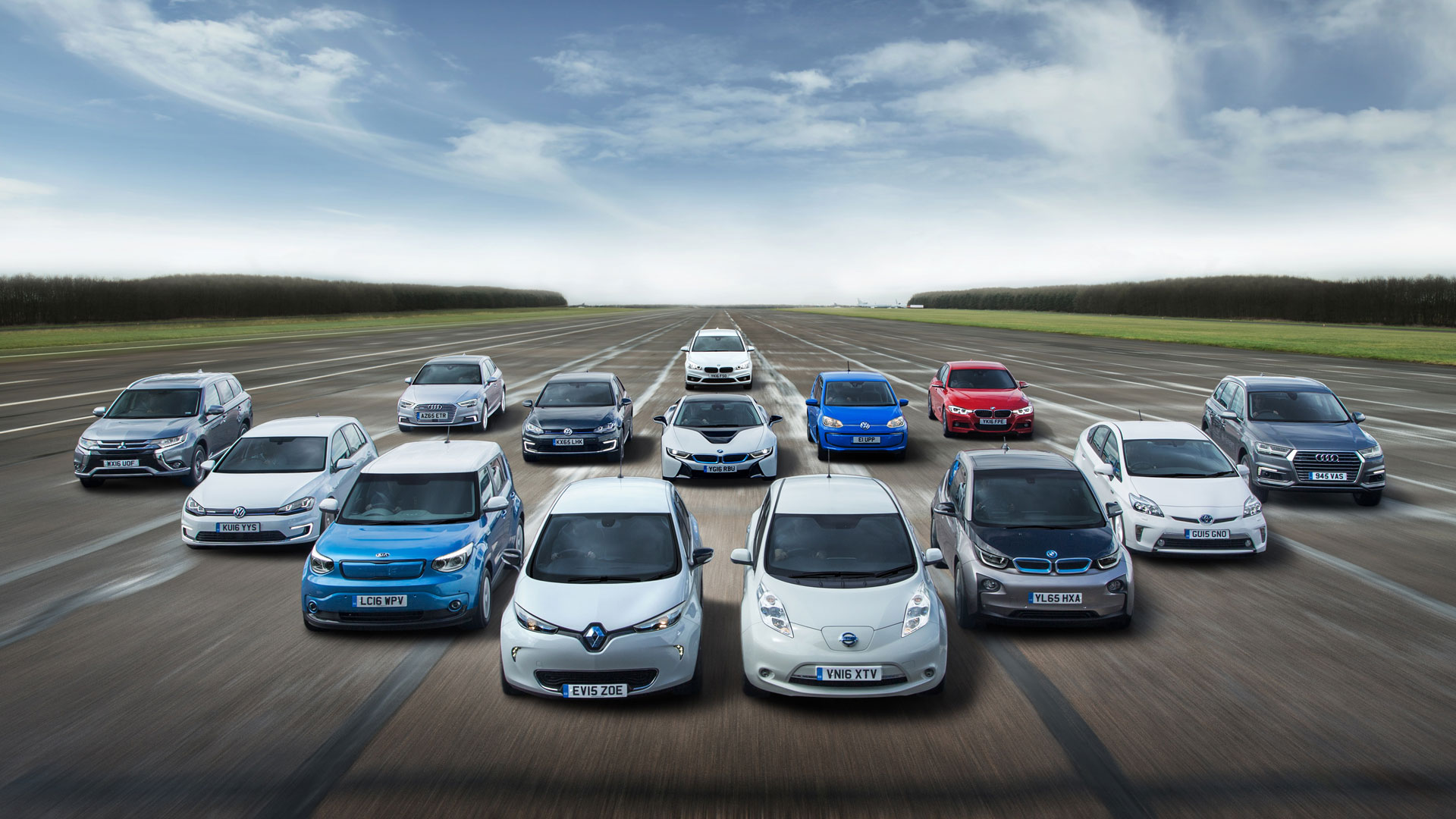
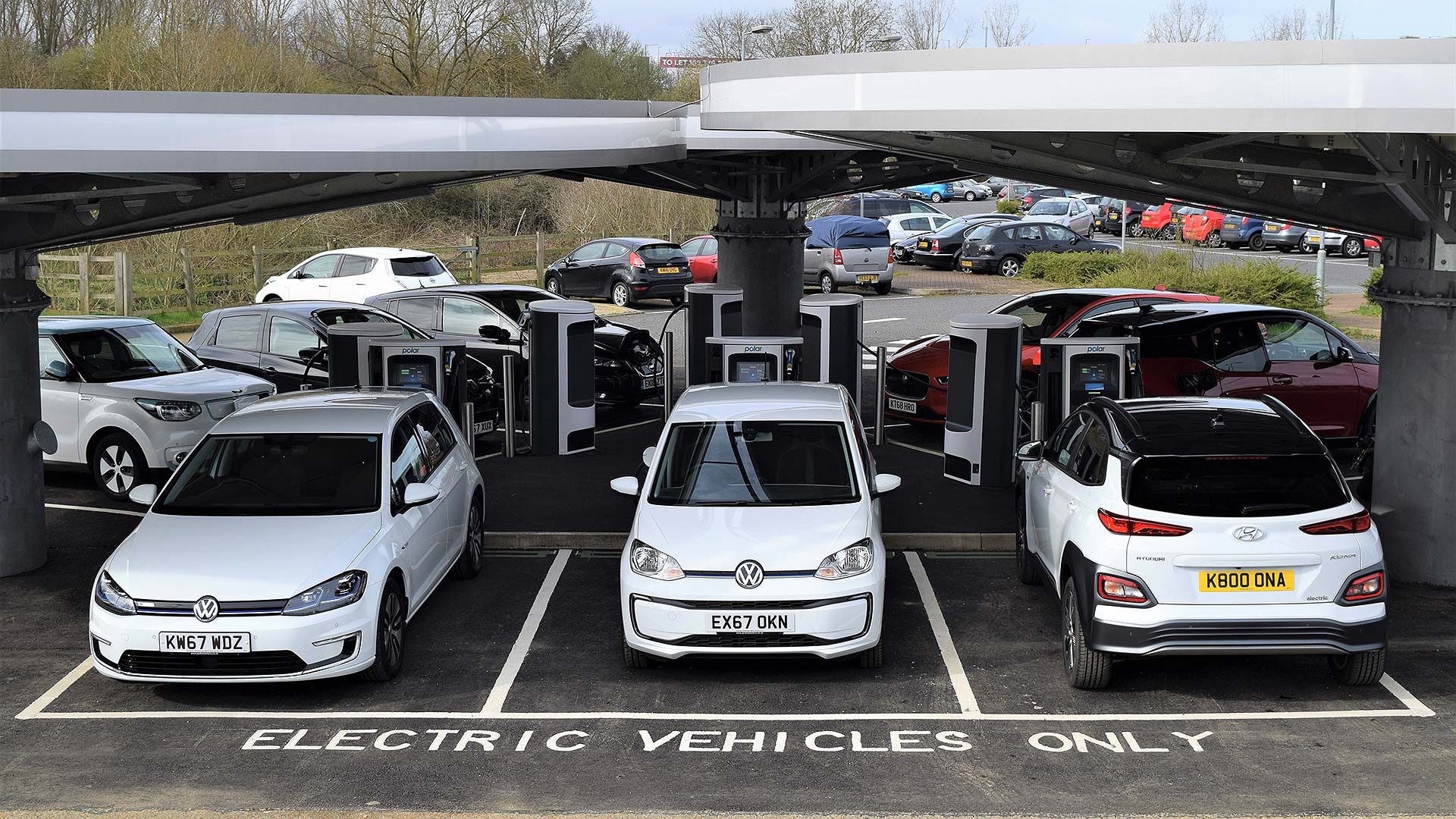
Eight cars were on display during the opening event to highlight the different types of EV that can rapid-charge there:
BMW i3S
Hyundai Kona Electric
Jaguar I-Pace
Kia Soul EV
Nissan Leaf
Renault Zoe
Volkswagen e-Up
Volkswagen e-Golf
The site is being run by BP Chargemaster and operates on the Polar network, Britain’s largest public electric car charging operation. Chief executive David Martell called it “a fantastic, convenient place to charge for drivers travelling within and around Milton Keynes”.
There’s a café at the main coachway building and the rapid chargers are housed beneath three large canopies (which are ‘highly visible’ to help first-time visitors locate the EV charge points.
The rapid chargers are in addition to the 300 fast-charge and 65 rapid chargers already operating in the area, ‘which has established itself as a centre of excellence for electric vehicle charging infrastructure’.
Milton Keynes Council’s head of transport innovation, Brian Matthews, said the site would also support electric car drivers using the M1 for longer journeys too.
It’s part of a series of initiatives the council has rolled out to support EVs, including Green Permits that give free parking in most car parks, and a commitment to provide local charging points for those who do not have off-street parking.
The Milton Keynes EV rapid charge hub was built with the help of a £9 million investment package from the Office for Low Emission Vehicles (OLEV).
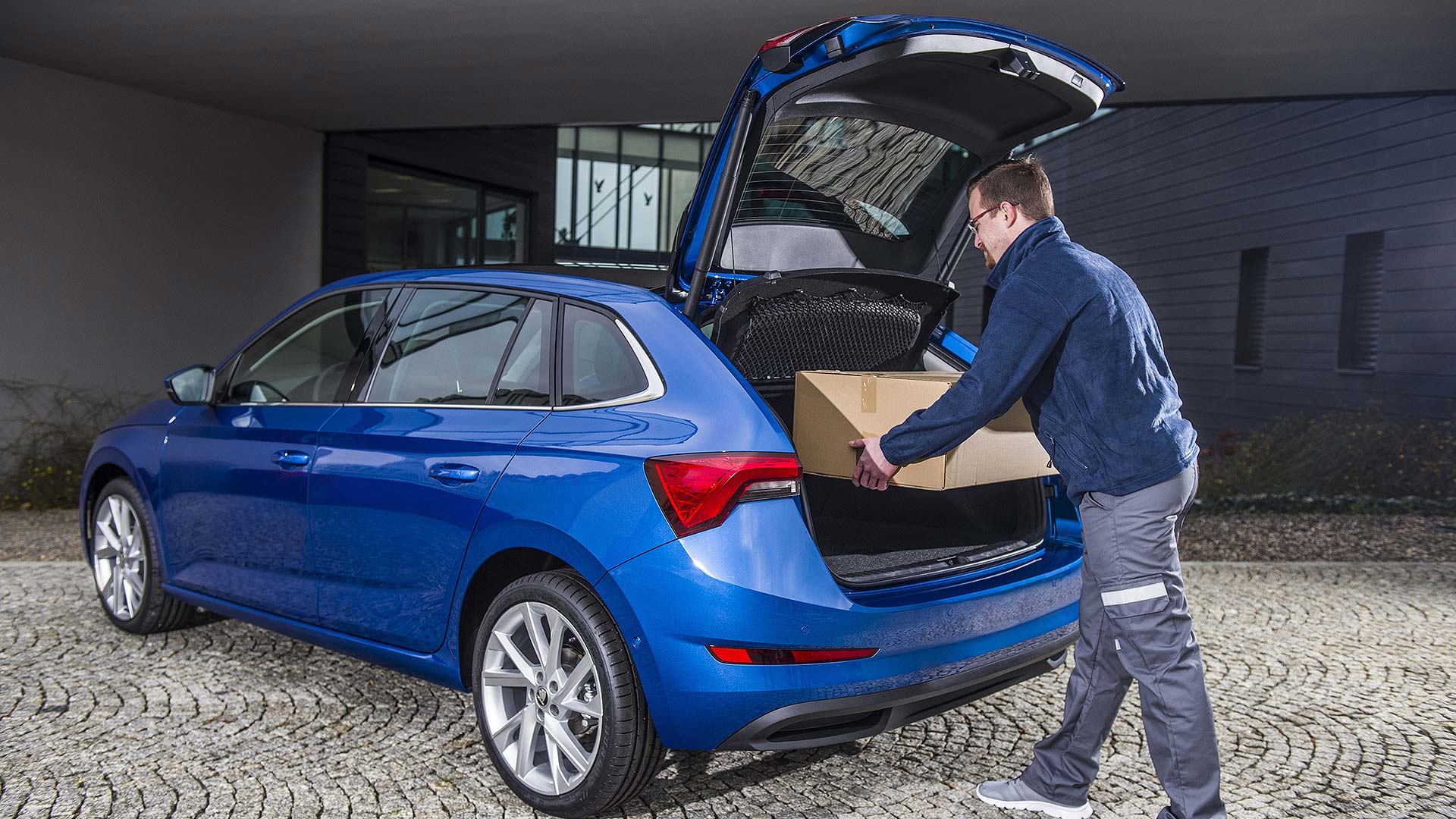
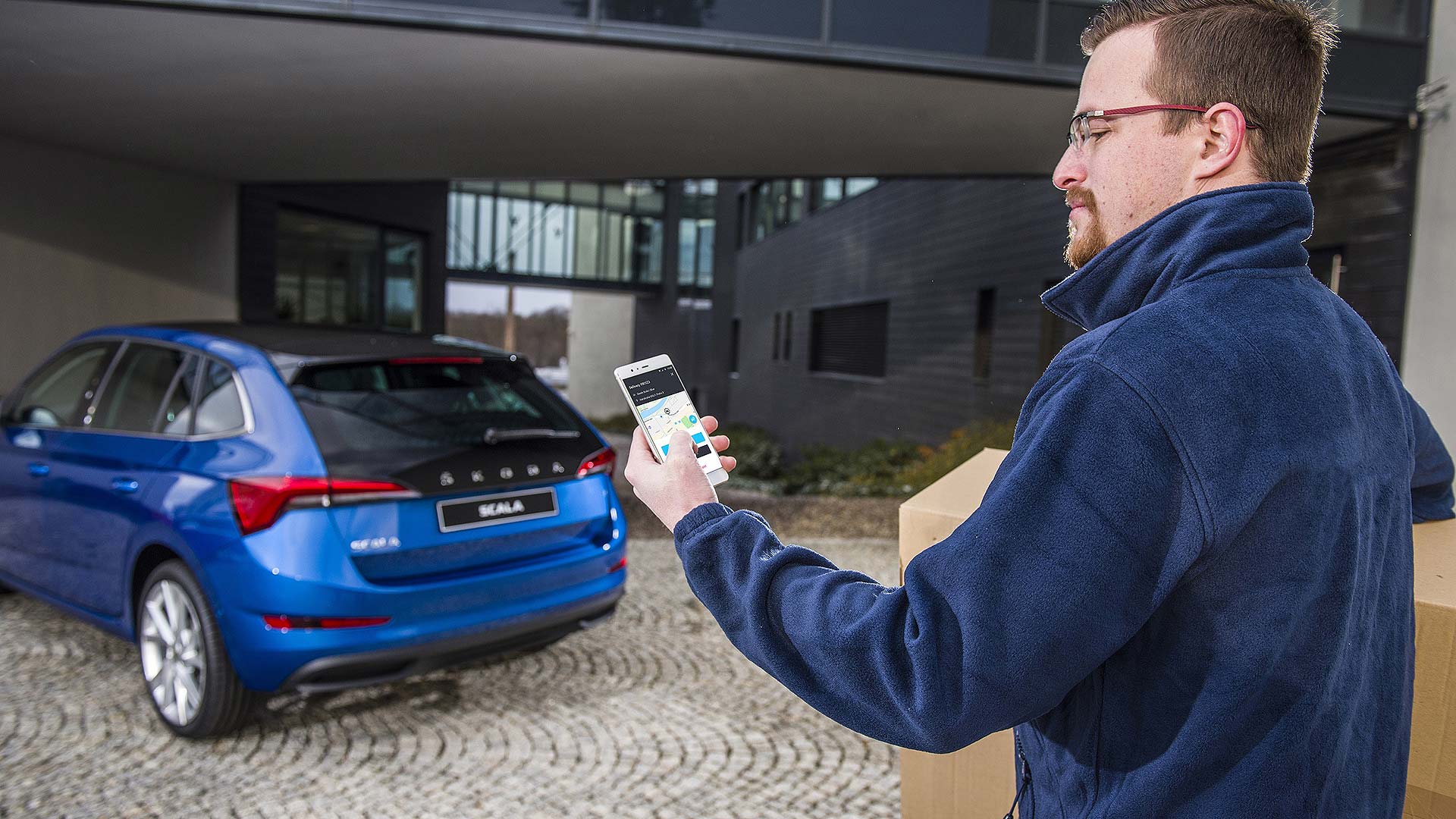
Skoda is piloting a new scheme that allows online purchases to be delivered to the boot of a car. All the courier needs is the car’s location and number plate.
The trial is being run by the Skoda DigiLab innovation division, which is assessing the remote access technology required to give couriers access to owners’ car boots.
Skoda stresses it is building in ‘stringent’ data encryption and access management, to ‘guarantee security’ for car owners. Its trials are being conducted with two of the biggest online retailers in the Czech Republic, alaz.cz and roklik.ch.
Jarmila Plachá, head of Skoda Auto DigiLab, said: “This pilot project provides a concrete look ahead at how everyday life can be made even simpler and more convenient in future by using state-of-the-art technology.
“I’m looking forward to further developing this project together with our partners.”
The firm has already expressed its desire to bring the technology to the UK in the future, if the trials are successful.
Skoda car boot deliveries: how does it work?
Modern Skodas are now fully connected to the internet: this has enabled the new technology to be developed.
Owners grant online retailers permission to deliver packages to their car boot through a smartphone app.
Couriers receive the location of the car via GPS. Upon delivery, they are granted one-time-only secure access to open the car boot within a small time window.
They place the parcel in the boot, use the app to re-lock the vehicle, and this automatically notifies the customer that the parcel has been delivered.
Skoda says the data is fully encrypted and the courier is only able to access the vehicle within a short time frame set by the customer via the app.
The trials, which are underway now, are focused on honing both the technology and the potential service it would support. A select group of Czech Skoda owners will also get to try the tech.
Figures released by Highways England show that an increasing number of people are driving to Wales, with the M4 Severn crossing seeing a rise in use of more than 10 percent since tolls were abolished in December 2018.
A total of 32,420 motorists crossed the River Severn every day in January, followed by 35,457 in February, compared with 28,897 and 31,866 for the same periods in 2018.
Previously, it had cost £5.60 for cars to drive into Wales, although there was no charge for the crossing into England.
Commenting on the data, RAC spokesperson Rod Dennis said: “It looks as though the removal of the tolls has ushered in a new era of Bristol Channel hopping – we’d imagine primarily for leisure and social reasons, with people exploring what South Wales, Bristol and the South West have to offer now that the financial barriers have gone.
“While it appears fee-free travel has led to an increase in traffic, it will be interesting to see if this continues and what effect it has on traffic congestion on roads close to the tolls as a result of the new free-flowing Severn crossings.
“We anticipated an initial increase in leisure traffic, but the affordability of commuting in either direction has now clearly improved and could well lead to more people crossing between Wales and England by car.”
Making a mark in Wales
The first Severn Bridge was opened in September 1966, with a toll in place for use of the bridge to pay for the cost of construction. Work on the second Severn crossing started in April 1992 and the second bridge was opened in June 1996.
In January 2018, Alun Cairns, Secretary of State for Wales, said: “My number one priority as Secretary of State was to remove the tolls, which will not only make journeys cheaper for commuters and tourists, but will also create exciting opportunities for businesses and investors looking to make their mark in Wales.”
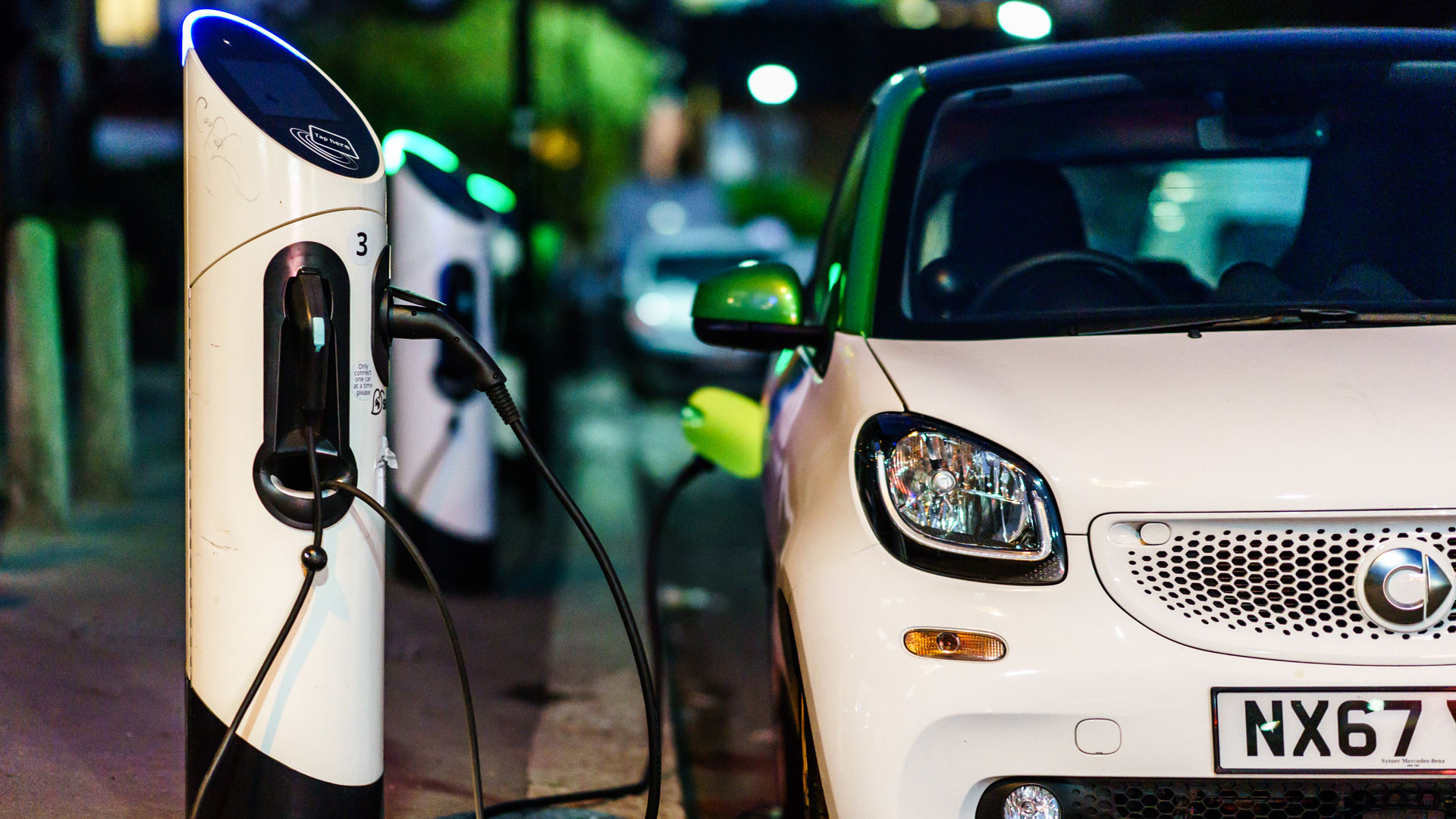
Opting for a car that runs purely on battery power can feel like a risky move for many motorists. On the plus side, an electric vehicle (or EV) with zero tailpipe emissions will ensure you do your bit for air pollution, while also feeling suitably smug that you’ll never have to visit a petrol station again. Think of all the money you’ll save.
But you may also be asking yourself reasonable questions, such as how far can I drive before the battery is drained? Will I end up stranded on the roadside with no way to recharge it? And how long will it take me to recoup the extra cost of my advanced car’s elevated price tag? We’ve got the answers to all those niggly questions right here.
Do all manufacturers offer an all-electric option?
Not yet, but there’s an increasing number of electric cars on sale. From the Tesla Model X SUV to the humble Volkswagen e-Up city car, buyers have a huge range to choose from if they want to opt for an EV. That’s why 15,474 new electric cars were registered in 2018 – an increase of 13.8 percent from the previous year.
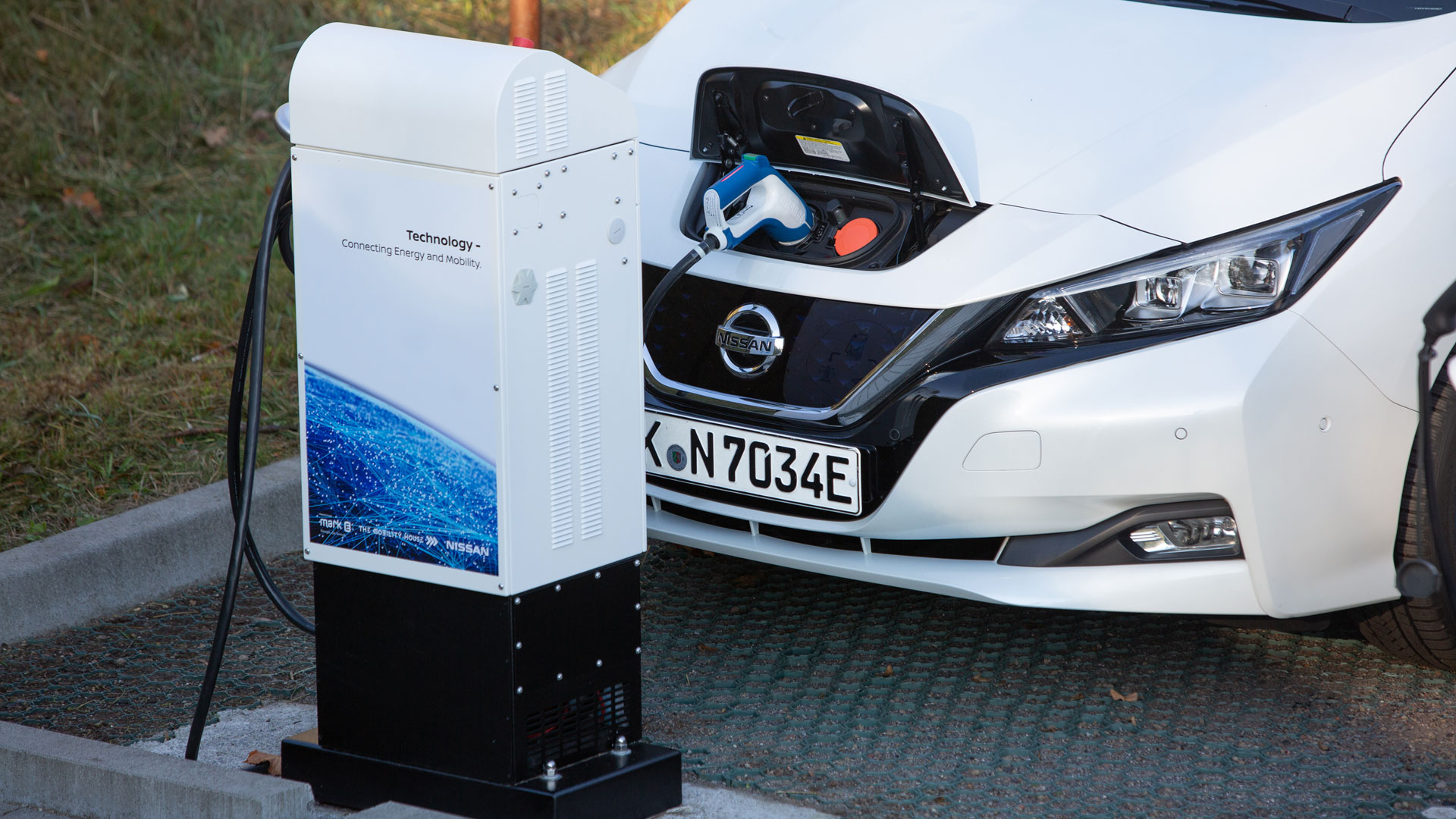
Nissan was the first to offer a truly convincing EV option when it launched the Leaf back in 2010. It was the first bespoke, mass-produced electric car in the UK, and it gained popularity thanks to its respectable range of up to 155 miles if you opted for the 30kWh version, and the fact that it drove like a normal car.
But an ever-increasing number of manufacturers have invested in the technology since, so you’ll now find electric cars on a number of forecourts across the UK. These include Renault’s Zoe supermini, Volkswagen’s e-Golf, plus BMW’s cutting edge lightweight i3.
In 2019, we’ll see a new raft of electric cars hitting the market, including the Jaguar I-Pace, Audi e-tron, Kia e-Niro, Tesla Model 3 and the Honda Urban EV.
What’s the typical range of an electric car?
Many electric cars go further than you perhaps think. It’s natural to have a little range anxiety when you’ve been used to filling up at ease on regular fuel, but modern EVs promise to run for between 150 and 200 miles in real-world use when fully charged. That figure does vary, depending on which model you opt for, but future models are likely to offer upwards of 300 miles.
Of course, using the air con, heaters and other battery draining in-car features will reduce that range further still, as will cold weather. But if you’re using the car for a commute, and there’s charging point at work, then you should never have to worry.
For long-distance journeys that are likely to stretch beyond that range, you’ll need to use a high-voltage power supply for at least half an hour for a reasonable recharge. Better still, plug it in overnight for a fully charged battery in the morning.
How much does it cost to recharge overnight?
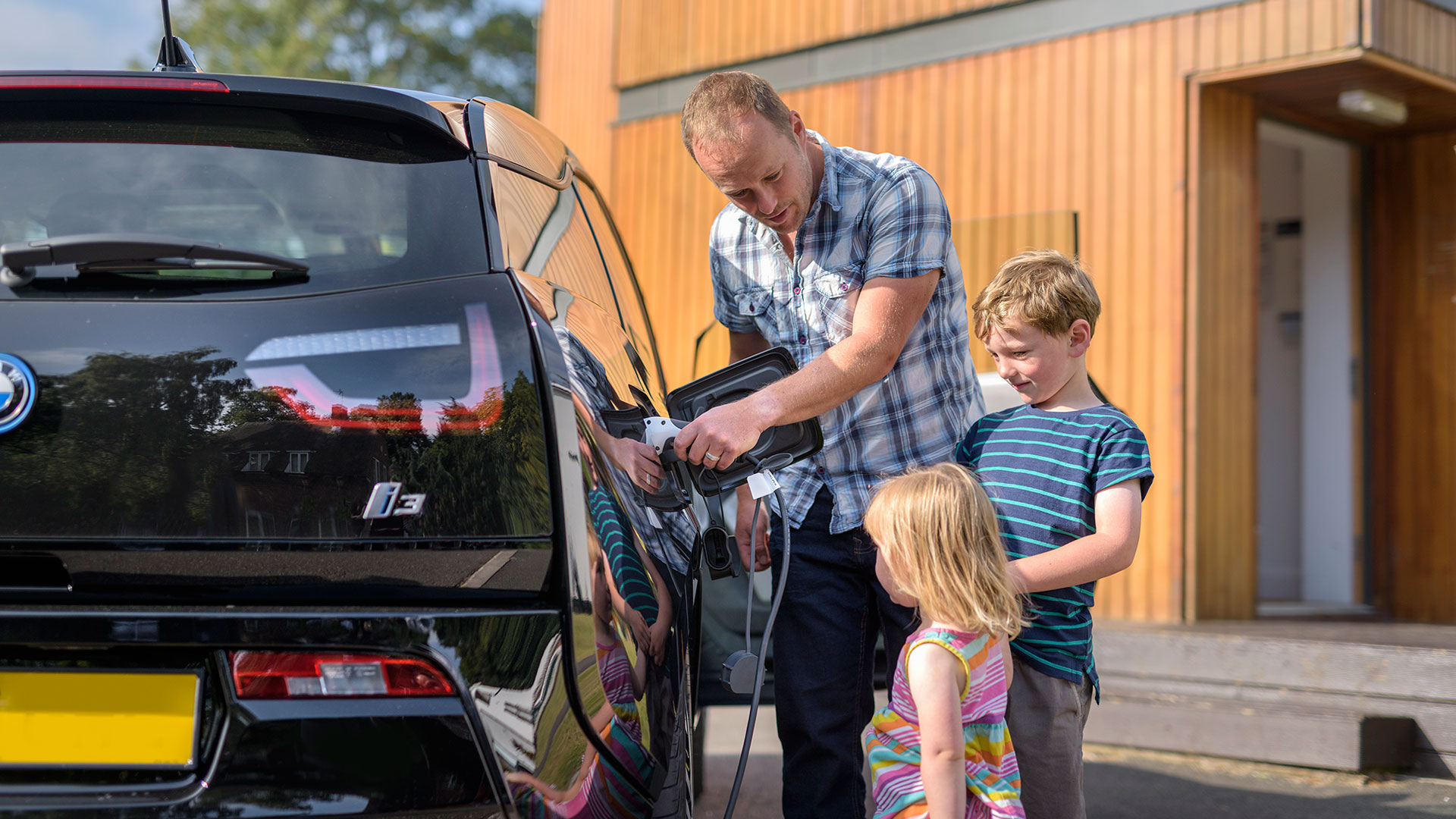
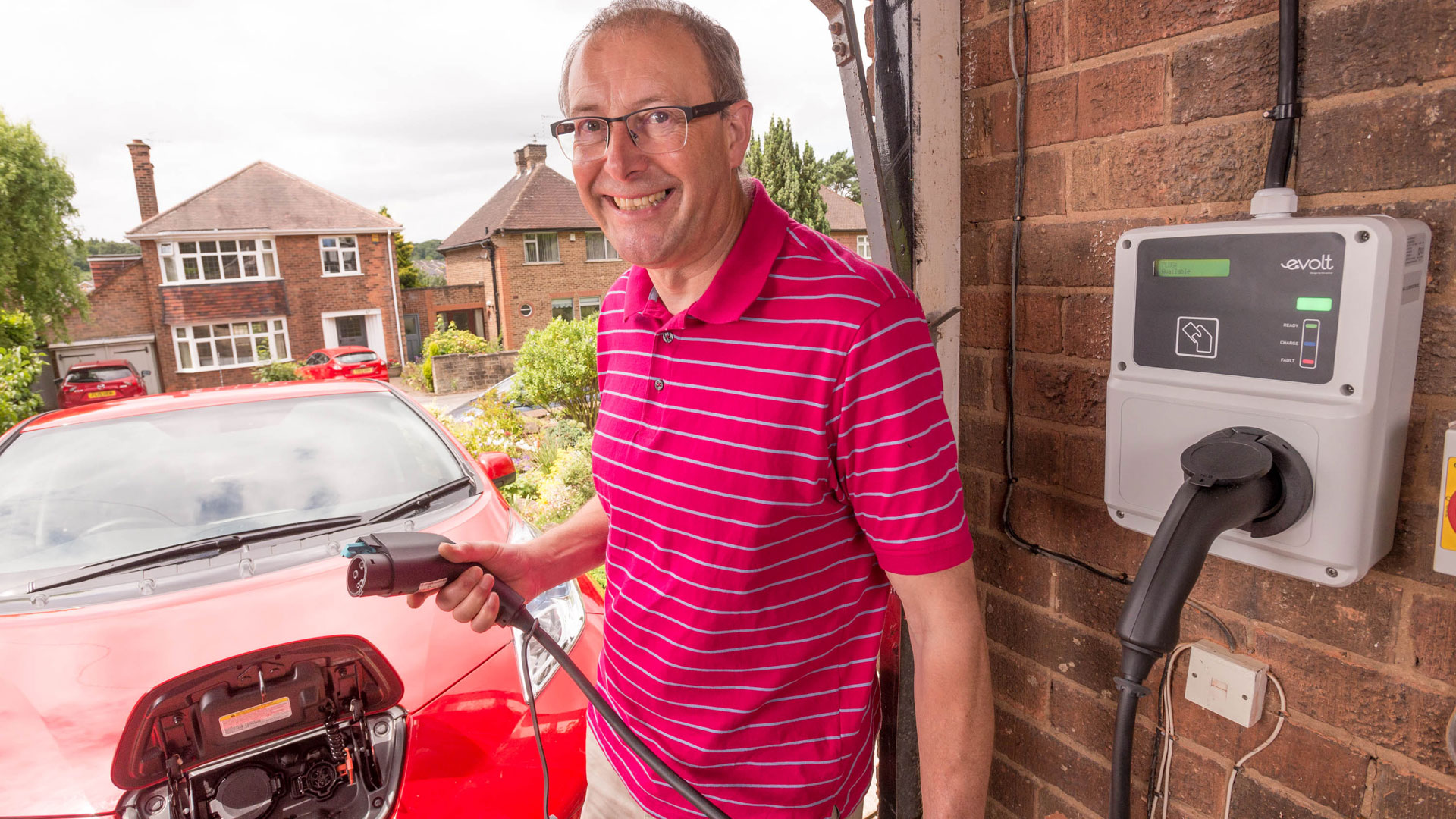
You recharge your EV using the supplied adapter cable, which plugs straight into a special high voltage socket, which you can have fitted to the outside of your house or garage. The cost of the electricity used to recharge is then typically around £3 for a full charge, costing you roughly 2-3p per mile, depending on your EV’s range. Compare that to the cost of a tank of fuel, and you can start to see why this technology is such an appealing option to many motorists.
Where else can I charge an electric car?
If you’re struggling to find a suitable spot to park and charge, websites such as Zap-Map have them conveniently mapped out for you. Log on, and it will show you exactly where the chargers are located. These could be in town centres, supermarket car parks, motorway services stations and offices. It will also reveal how many charging points there are, the type of connector offered, and even user ratings.
As the availability of these charging points is often the deal breaker for motorists contemplating an EV, huge efforts have been made in the UK to keep their numbers rapidly rising year on year. At the last count, there were reportedly 7,000 charge point locations across the UK, providing nearly 12,000 devices and a massive 20,000 different connectors. On that note, if you’re unsure which connector you need, there’s also a search facility to find the right one for your model.
Of course, if you buy a Tesla then you’ll also have access to its ever-growing Supercharger network. Currently, there are around 1,400 sites that contain about 13,000 plug-in points between them. A half an hour charge here can add 170 miles to your Tesla’s range.
Where’s the best place to live in the UK if you own an EV?
Surprisingly, Scotland is in with a shout here! Although Greater London has 23.8 percent of all the UK’s connectors, Scotland is second with 14.1 percent. Next up is the South East with 13.8 percent.
In reality, the ease of locating a charging point in London is easier than anywhere else in the country, meaning there’s a little less risk of range anxiety if you own an EV in the South East.
Are there any roadside recovery services for electric cars?
Yes, most of the manufacturers offer their own bespoke breakdown and recovery package for the EVs that they sell. The major breakdown recovery companies, such as the AA and the RAC, offer EV-specific services as well.
What’s the typical lifespan of the battery?
The last thing you want is to end up with a car that, like a modern mobile phone, begins losing charge and becomes impossible to take out on anything but short stints. However, while EVs are not exactly new technology – let’s not forget that Sir Clive Sinclair was the trailblazer for electric car back in the 80s, when he unveiled the Sinclair C5 – they haven’t been on the road long enough to really know how those batteries will perform over, say, ten or twenty years.
Some manufacturers – such as Renault and Nissan – offer a battery leasing scheme to alleviate those concerns. So if the cell fails, owners can automatically swap it for a new one. That also makes these cars much more attractive to second-hand buyers. While other brands will provide you with a separate warranty for the battery (typically five to eight years).
Are there any grants or subsidies for electric cars?
Yes! The Government’s Plug-In Car Grant offers up to £3,500 (or 35 percent) off the list price of an EV, while current Vehicle Excise Duty rules mean that EVs costing less than £40,000 are now the only cars that are road tax exempt.
Those with a higher price tag fall foul of a new Premium Model rate introduced in April 2017, however; albeit it at a discounted annual Vehicle Excise Duty of £310. That compares to a slightly higher rate of £450 a year for all other Premium Models. EVs are exempt from congestion charging in the Capital, and other cities which operate similar schemes, however.
Will an EV cost more to buy than its conventional fuel equivalent?
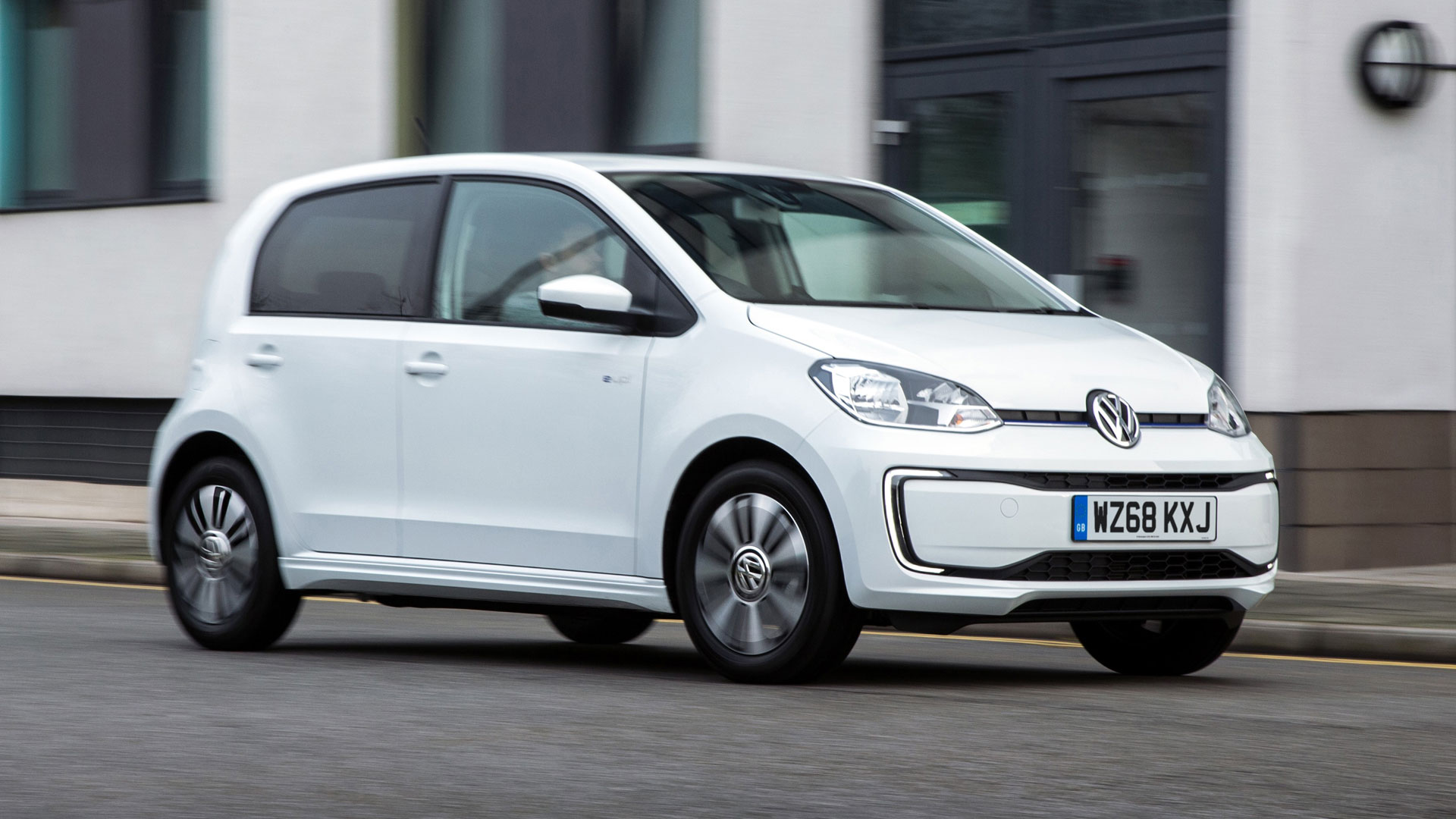
Almost certainly. The increasing popularity of EVs means costs are coming down, gradually. But you should still expect to spend at least £20,000. As you can see below, the on the road price for the VW e-Up is around £7,000 more than its petrol-powered equivalent, even after deducting the government’s £3,500 Plug-In Car Grant. Although the price difference isn’t always this high between EVs and their conventionally-fueled equivalents, if you’re looking to reduce spend, opting for VW’s plug-in version of the Up might not make sense.
To be sure, you need to work out how long it would take to recoup your losses, opting for an electric version of this city car. To do that, you need to work out your annual fuel bill for both. Fortunately, we’ve done the maths for you (see below), and show that make an annual saving of £550 with the e-Up. Offset that against the £7,000 initial outlay, and you can see it would take around 13 years to recoup the extra initial outlay for the EV version of this car.
VW High Up 1.0-litre 90PS (5-door)
VW e-up 82PS electric motor
Price (OTR)
£13,360
£20,150^
Average fuel/charge cost
120.6 per litre*
£3
Combined mpg
64.2mpg
3p per mile
Annual fuel/charge cost^^
£854
£300
Of course, for most of Britain’s EV owners, the main decision to opt for an electric car is not a financial one. The big draw is these cars’ ability to ease motorists’ eco-conscience, thanks to their zero tailpipe emissions, and the impact that this ultimately has on reducing air pollution in the UK.
*Based on average fuel prices (March 2019); ^Price includes £3,500 plug-in car grant; ^^Based on annual 10,000 mileage
The Metropolitan Police recorded 113,014 vehicle crimes in 2018, amounting to around 25 percent of all incidents reported in England and Wales.
That’s according to figures released by Click4Reg.co.uk using data derived from data.police.uk. It means that the area covered by the Met Police had the highest number of vehicle crimes in 2018 – up nine percent from the previous year.
But Bedfordshire Police witnessed the largest year-on-year increase, with incidents of vehicle crime up 35 percent to 7,798. Other forces to record a large increase include the City of London (up 30 percent to 252 vehicle crimes), Surrey (up 18 percent to 6,592) and Thames Valley (up 14 percent to 17,285).
At the opposite end of the spectrum, the City of London had the fewest vehicle crimes (252), followed by Dyfed-Powys (1,037), Cumbria (1,171) and North Wales (2,138).
Meanwhile, there’s good news for motorists in Wiltshire, where vehicle crime has fallen 28 percent to 2,850 reported incidents. Other sharp declines include Avon and Somerset (down 18 percent to 10,811) and Humberside (down 16 percent to 5,461).
Overall, a total of 450,509 vehicle crimes were reported to 42 police forces/constabularies in England and Wales in 2018 – a two percent surge from the previous year.
‘One of the more preventable crimes’
Elie Fakhoury, managing director of Click4Reg.co.uk, said:“The findings from this research are certainly intriguing. With the overall number of vehicle offences increasing from the prior year, it’s a crime which is really impacting drivers.
“It’s unfortunate, as many car owners spend a ton of time and money on maintaining all aspects of their vehicle to ensure it runs effortlessly and is road-worthy. Whilst vehicle crime may seem difficult to combat, it is, in fact, one of the more preventable crimes.
“Individuals can take a range of cost-effective measures to protect their vehicle from the threat of lurking criminals. For instance, drivers should aim to make actions such as locking doors and removing all valuable items when not in their vehicle a habit.
“Overall, better caution and attention from the public can go a very long way in drastically reducing the [number] of vehicle crimes across England and Wales”.
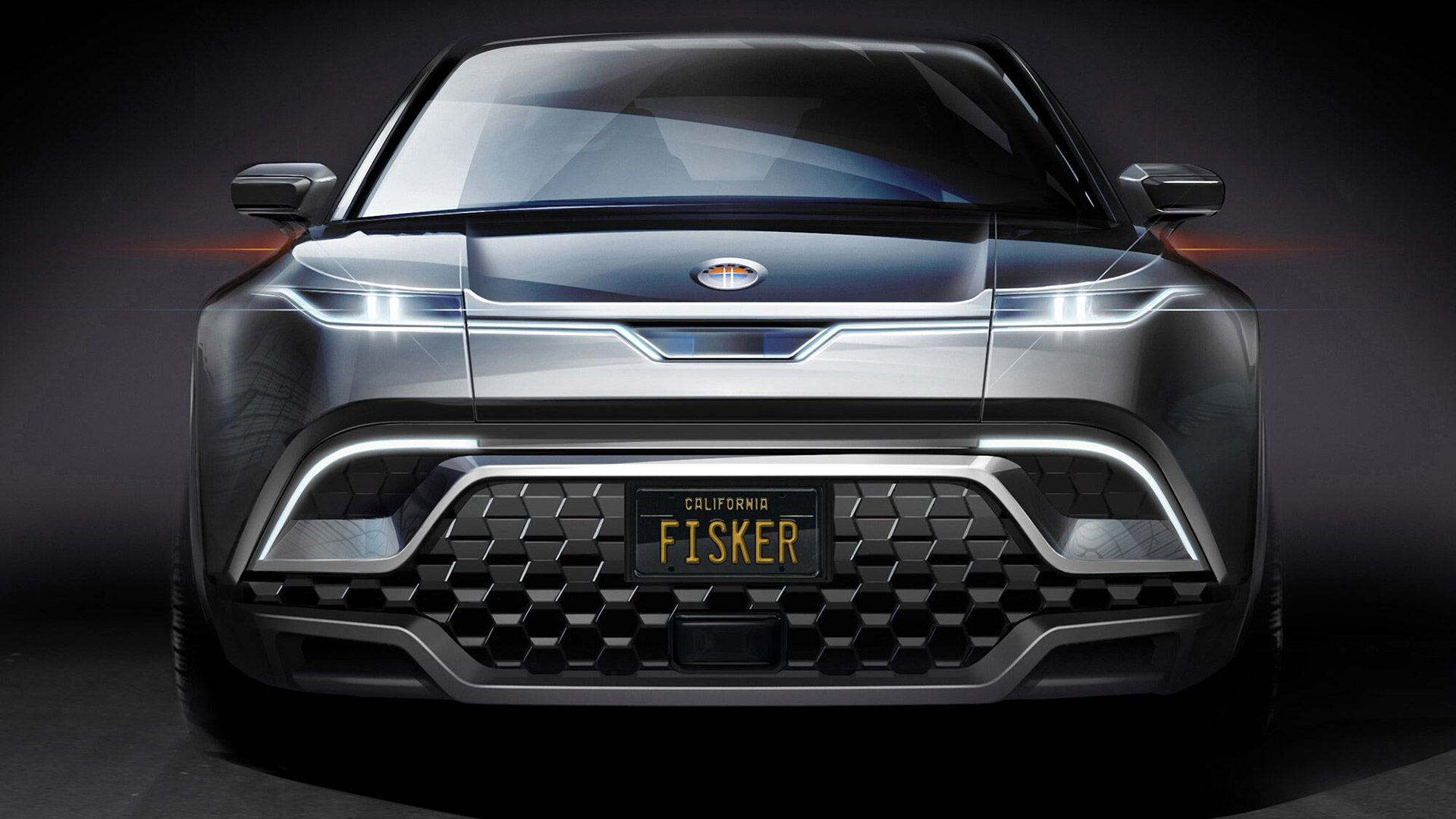
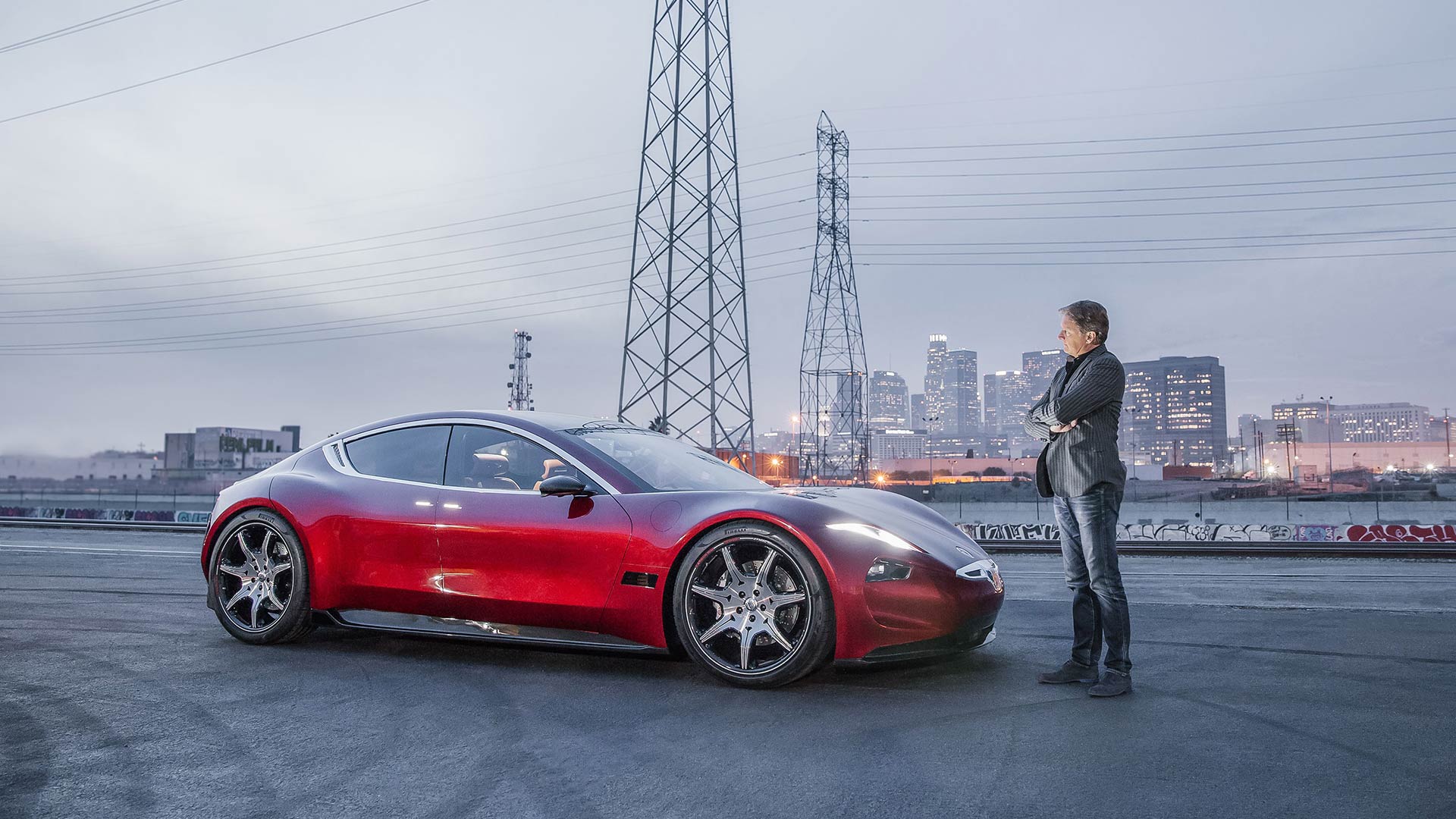
Los Angeles-based Fisker has revealed the first details of its forthcoming electric SUV, aimed at making luxury EVs affordable.
The SUV has an ambitious target price of $40,000 (£30,800) in the U.S., which pitches it squarely against new products from Tesla, including the new Model Y.
Although initial information is limited, Fisker does promise the as-yet-unnamed SUV will offer a ‘a futuristic, elegant muscular EV with clean surfaces and a dramatic shape’, along with an interior that features ‘some of the latest emerging in-vehicle technologies’.
Along with the bold price, the other big claim is a 300-mile range when fully charged, thanks to an extended 80kWh battery pack. Four-wheel drive is on the cards, with individual electric motors powering each separate axle.
Fisker plans to have the SUV on sale by late 2021, with a pre-production version hitting the streets later this year.
What other cars does Fisker have planned?
This new affordable luxury SUV is intended to be the first in a three-model mass-market range from Fisker.
The company had previously shown the high-end EMotion four-door electric car, featuring a carbon fibre body and dramatic 24-inch wheels. However, Fisker has decided to push back the launch of this flagship model until the cheaper SUV hits the market.
Fisker also intends to sell cars directly to consumers, in a manner similar to Tesla. A concierge system to handle servicing and maintenance will also be set up.
Where have I heard the name Fisker before?
Company founder and CEO Henrik Fisker is no stranger to the automotive industry.
Born in Allerod, Denmark, he previously worked as a designer for major car manufacturers. At BMW, he helped create the retro-inspired Z8 roadster, while at Aston Martin he was responsible for the beautiful DB9.
The Dane founded Fisker Automotive in 2007, launching the luxury plug-in hybrid four-door Karma in 2011. Some 2,000 examples of the Karma were delivered to customers, but Fisker himself left in 2013 over disagreements about the direction of the company.
Fisker Automotive would later be declared bankrupt due to financial difficulties, stemming from problems with the company responsible for supplying batteries.
Since leaving that company, Henrik Fisker has been involved in designing everything from yachts to the VLF Force 1 V10-powered supercar. He founded the new Fisker Inc. in October 2016.
Fisker has described the process behind his latest project as “a mission to create an affordable EV that’s more exciting and emotion-stirring than what the market has been offering. We’re now excited to be introducing a vehicle that truly reinvents the SUV.”
 Jaguar Land Rover is claiming a UK electric car record for its Gaydon engineering facility. It says the biggest electric car smart charging site in Britain has now gone live.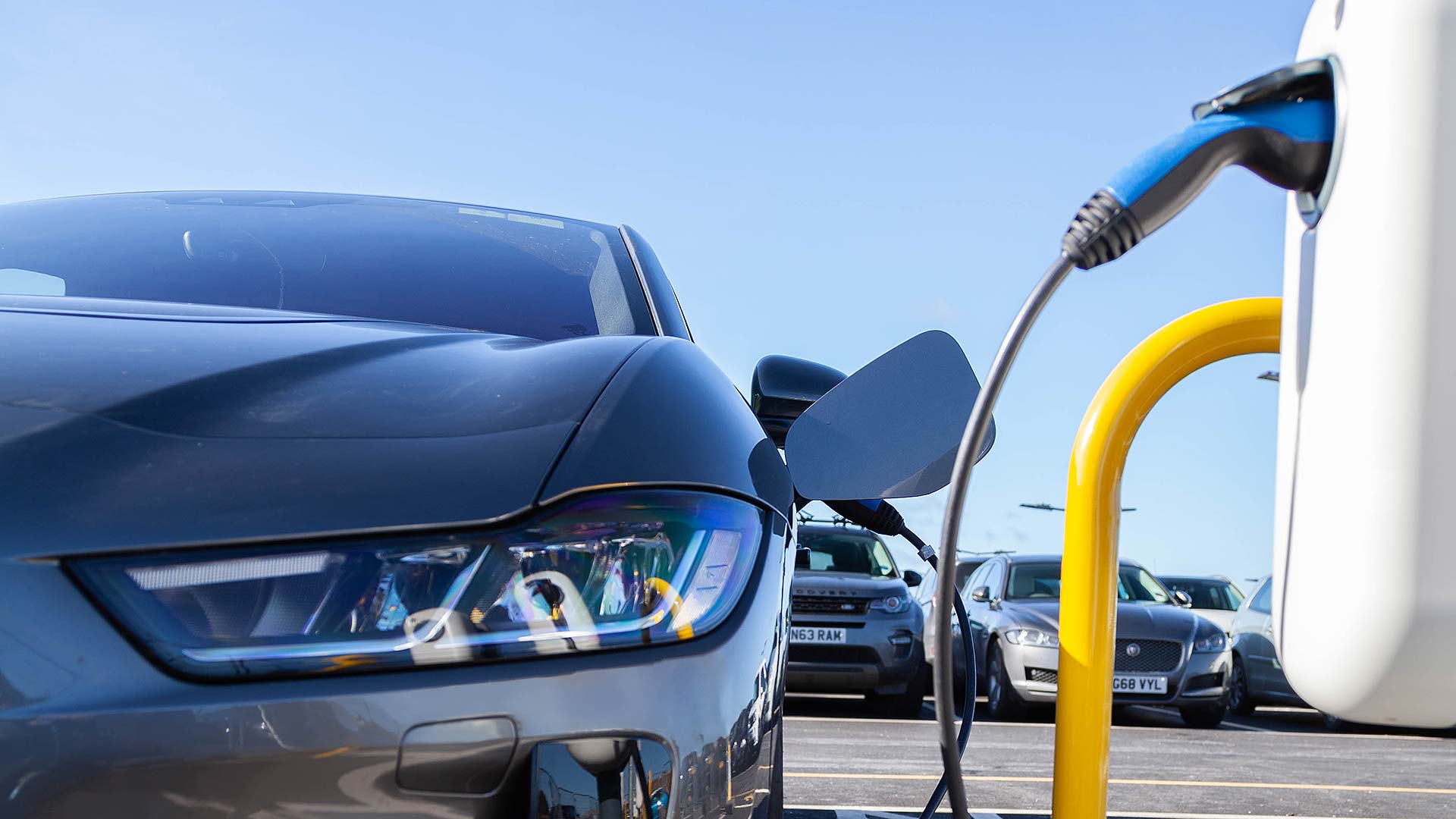
 Skoda is piloting a new scheme that allows online purchases to be delivered to the boot of a car. All the courier needs is the car’s location and number plate.