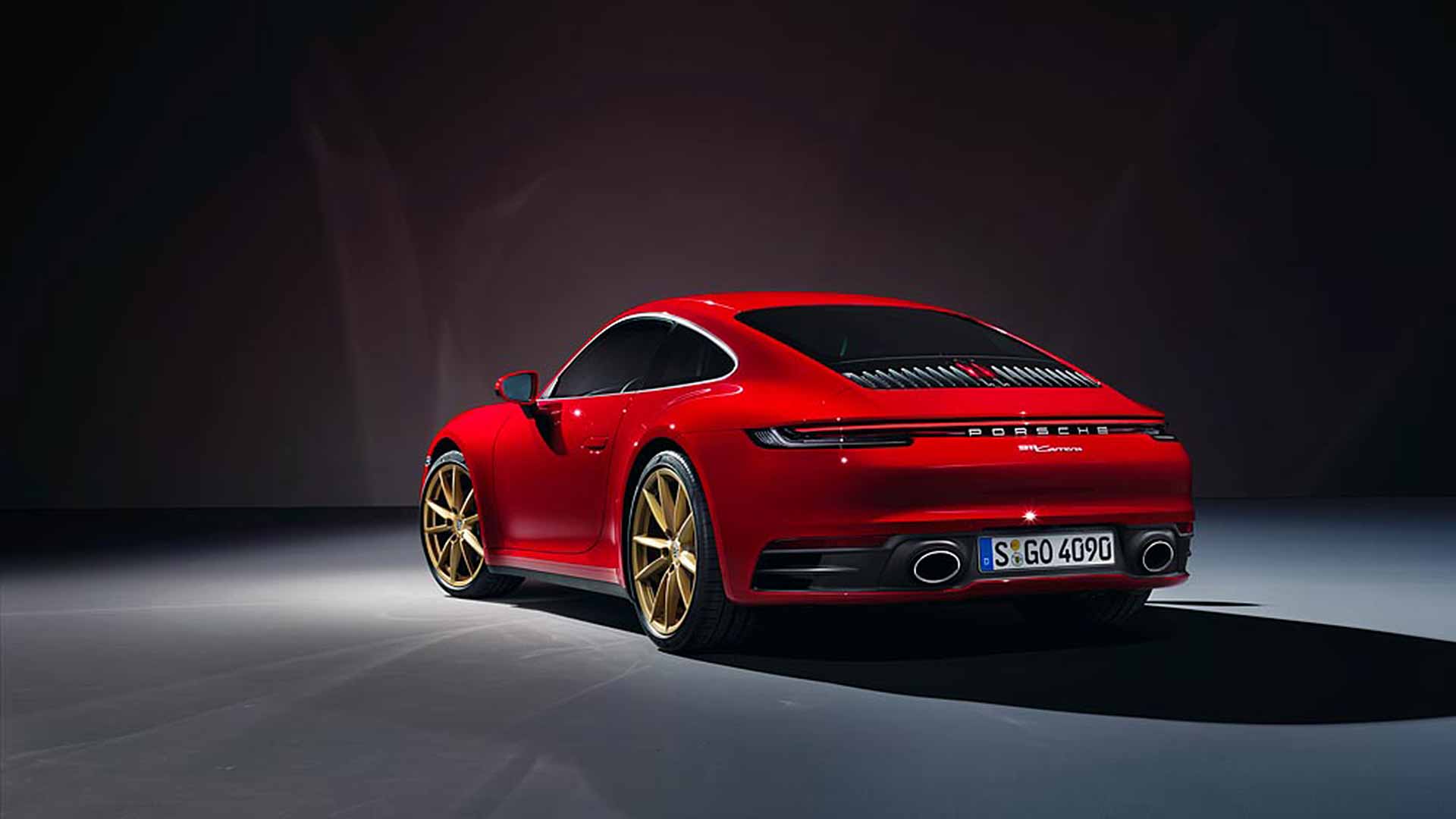
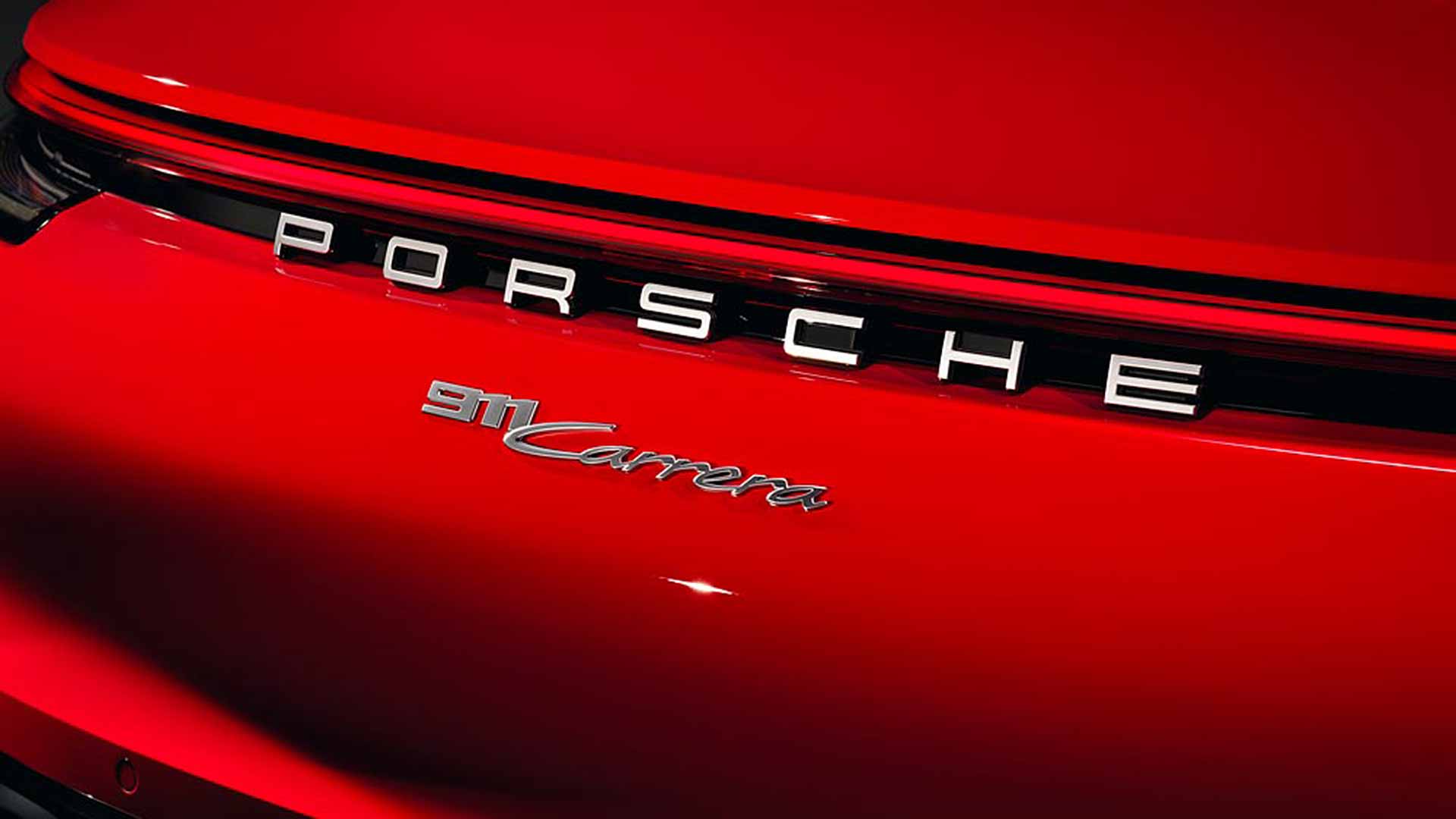
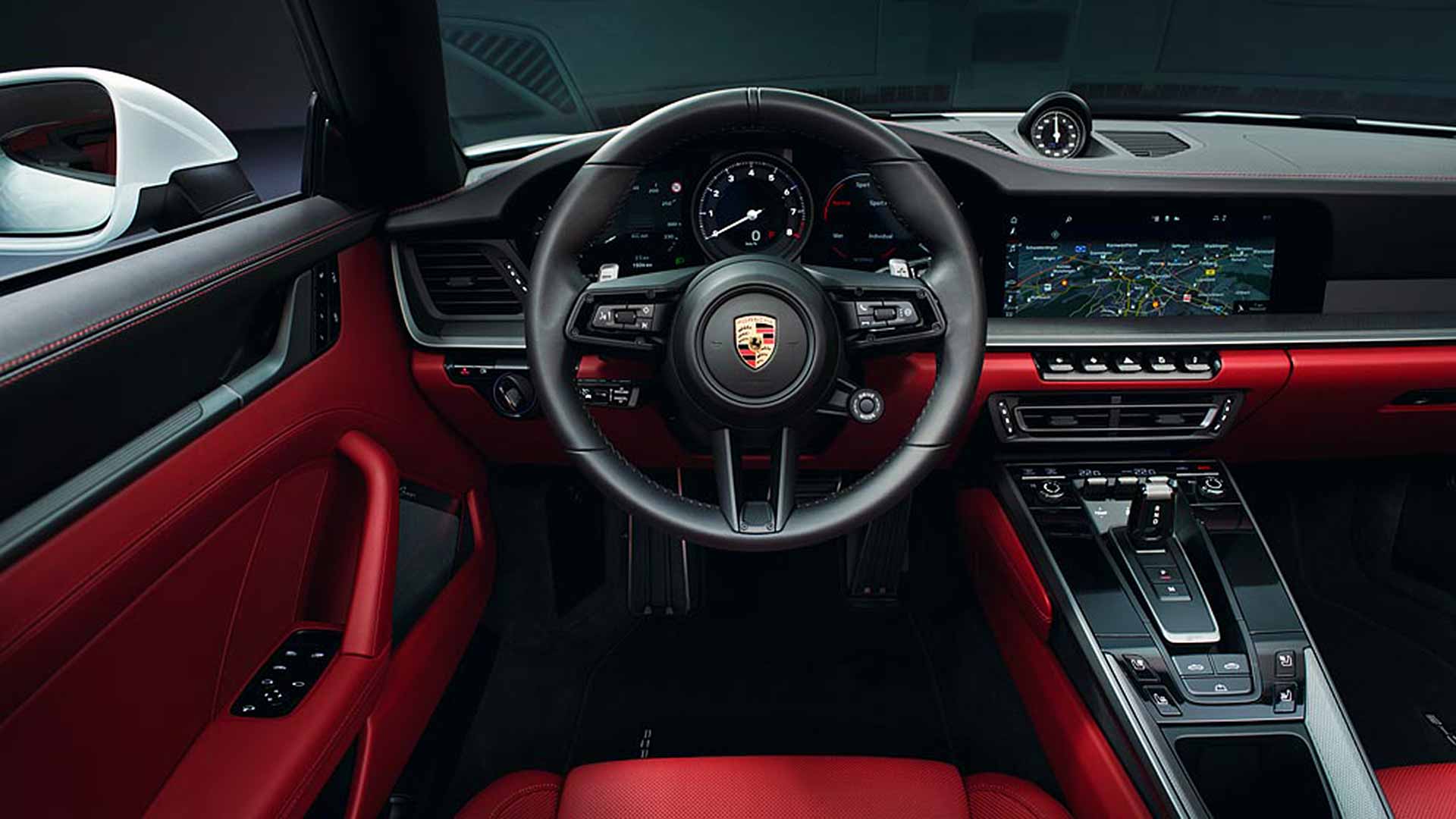
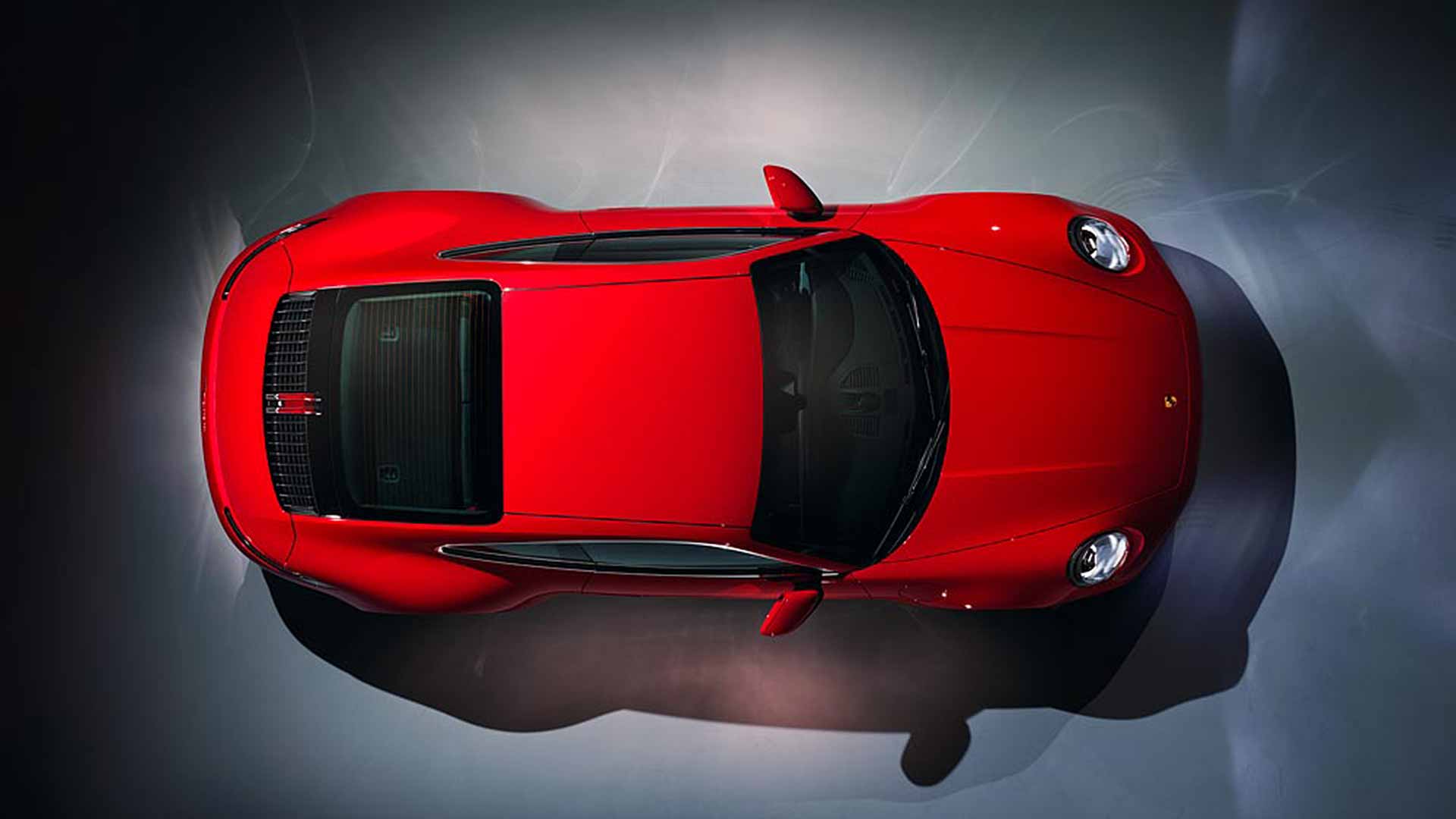
Following the introduction of the new Porsche 911 Carrera S in November 2018, Porsche is broadening the range with the more affordable Carrera Coupe and Cabriolet variants.
Priced from £82,793 (£92,438 for the Cabriolet), the new Carrera line is open for ordering now with deliveries beginning later in the year.
The new entry-level Porsche 911 Carrera now produces 385 horsepower from its 3.0-litre twin-turbo flat-six engine. That’s 15 horsepower more than its predecessor, although the Carrera S still has a clear advantage, with 450 horsepower.
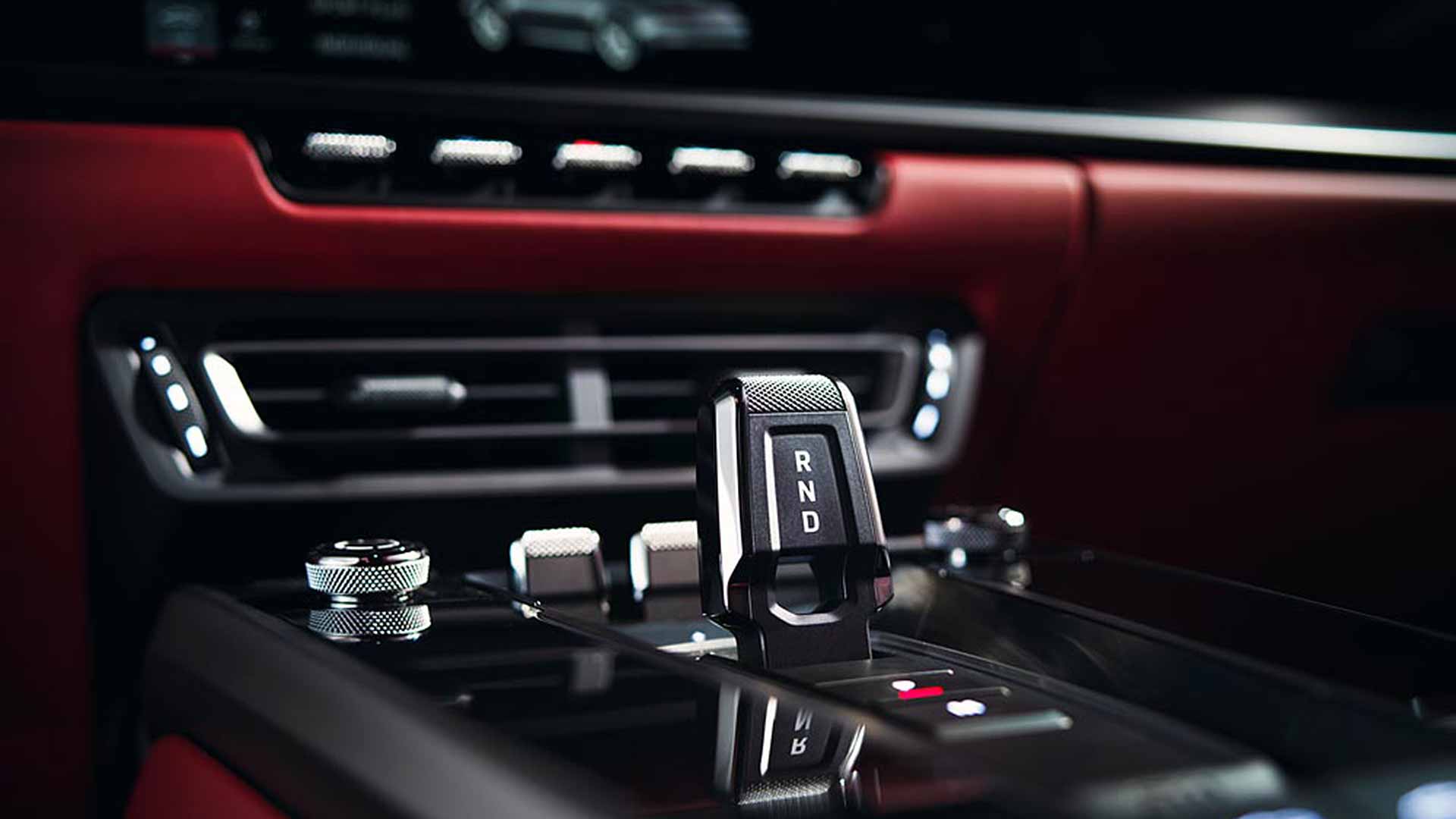
All models use an eight-speed PDK dual-clutch automatic gearbox: a manual is unavailable.
In basic 911 Carrera Coupe guise, the new model accelerates from 0-62mph in 4.2 seconds. That’s the new benchmark opening gambit for latest-generation 911 performance.
Option the Sport Chrono Package and this dips a further 0.2 seconds, to four seconds dead. Top speed? 182mph.
Porsche says the Carrera and Carrera S are otherwise surprisingly similar. The cheaper Carrera differs with its smaller 19-inch alloy wheels and brakes. It also has alternative, individual exhausts tailpipe covers.
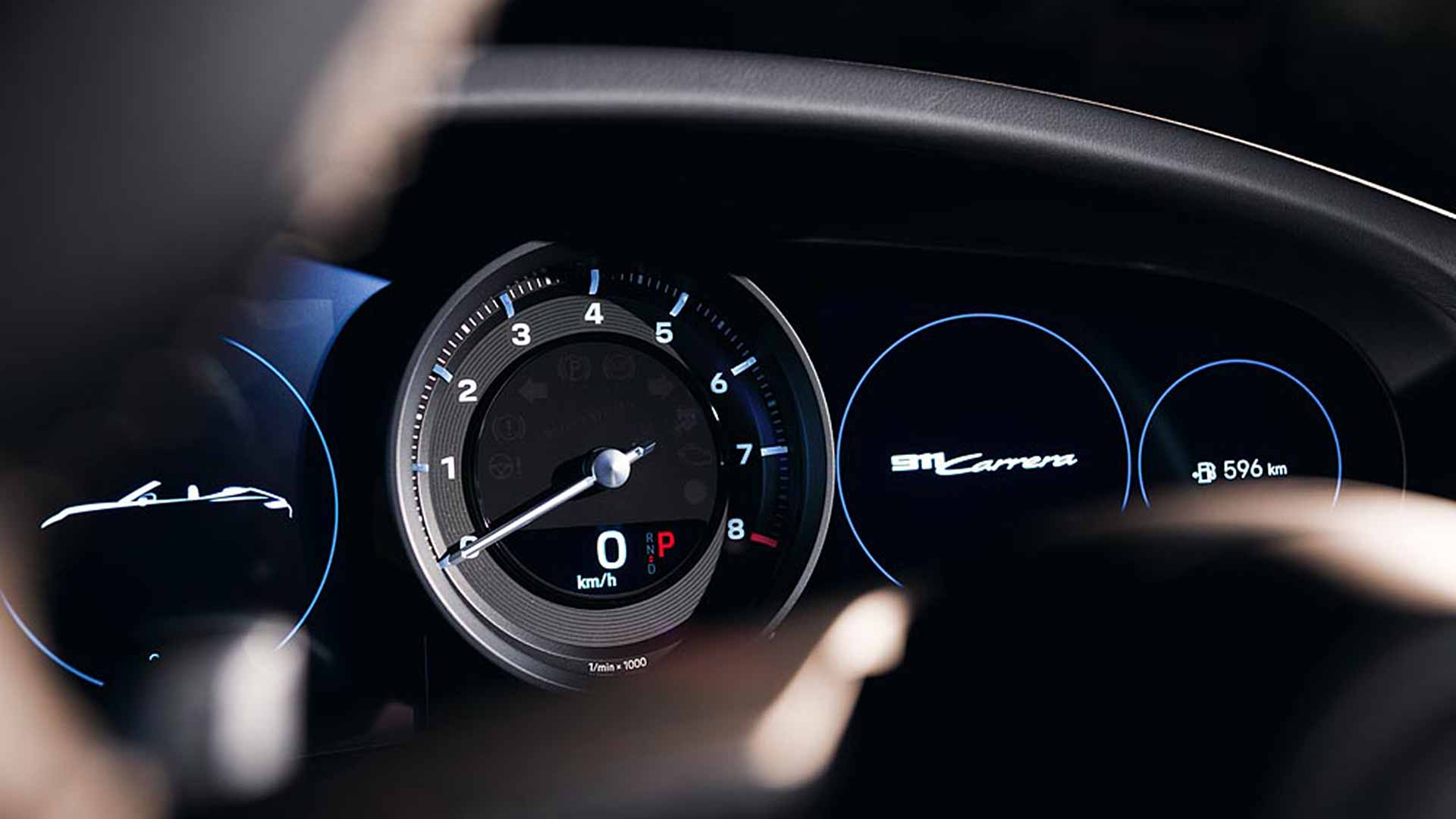
It uses the same 10.9-inch touchscreen display as the Carrera S, though: this is a feature that’s really helped move Porsche on in terms of infotainment. It uses the same semi-digital instrument binnacle too.
Porsche adds it will roll out an all-wheel drive Carrera 4 in coming weeks, for those who want better wet-weather traction without quite the firepower of the Carrera S range.
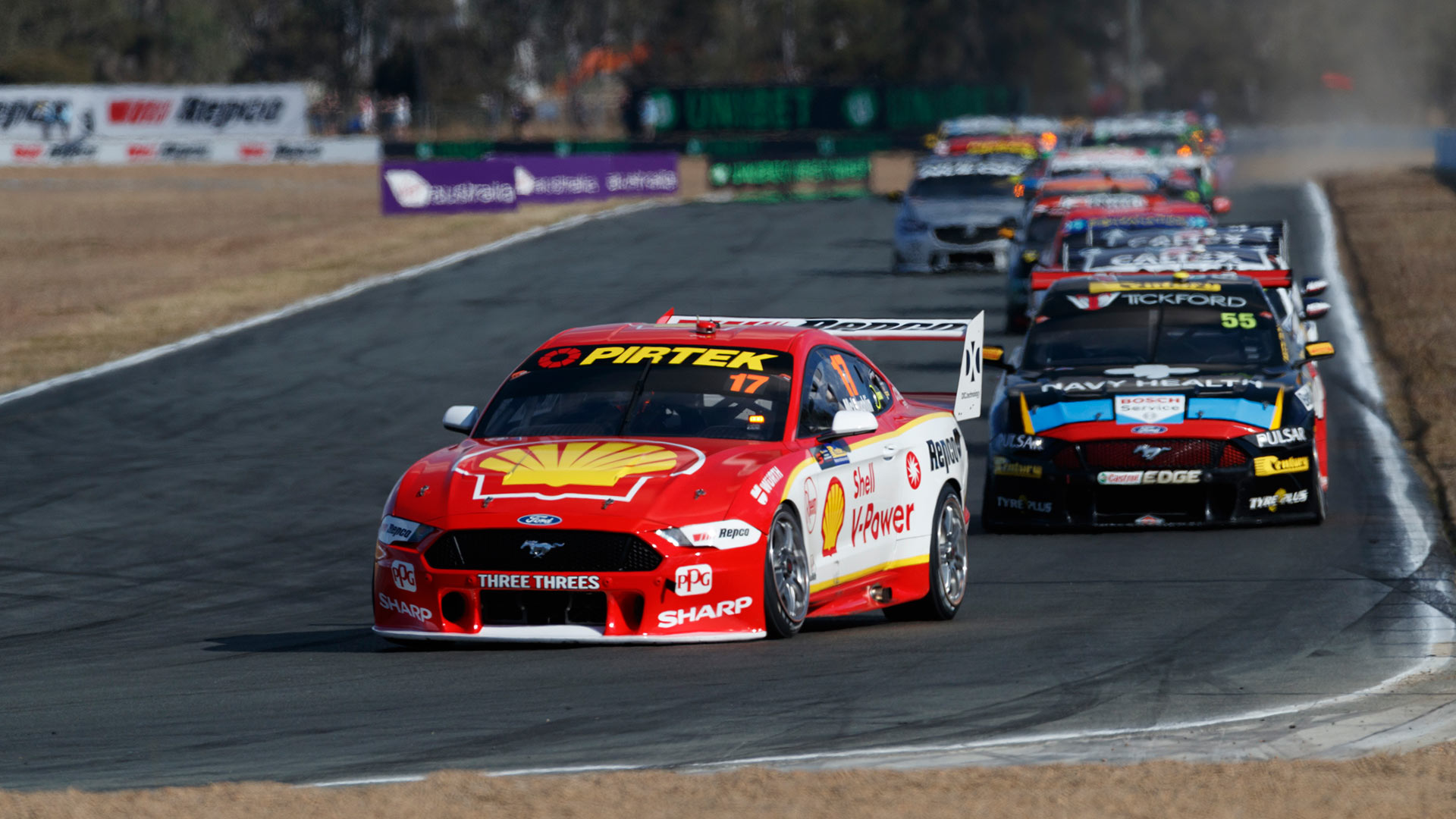
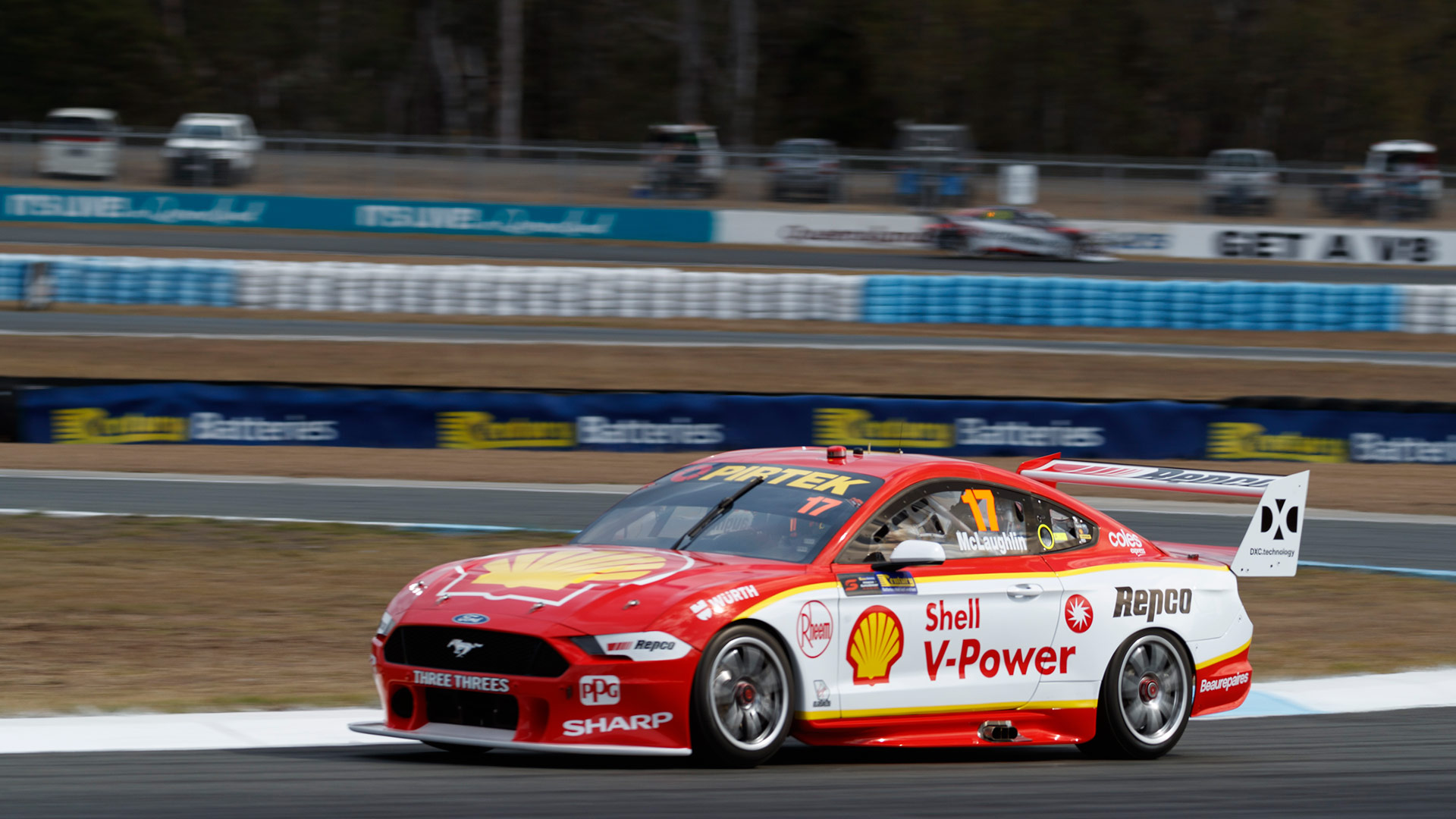
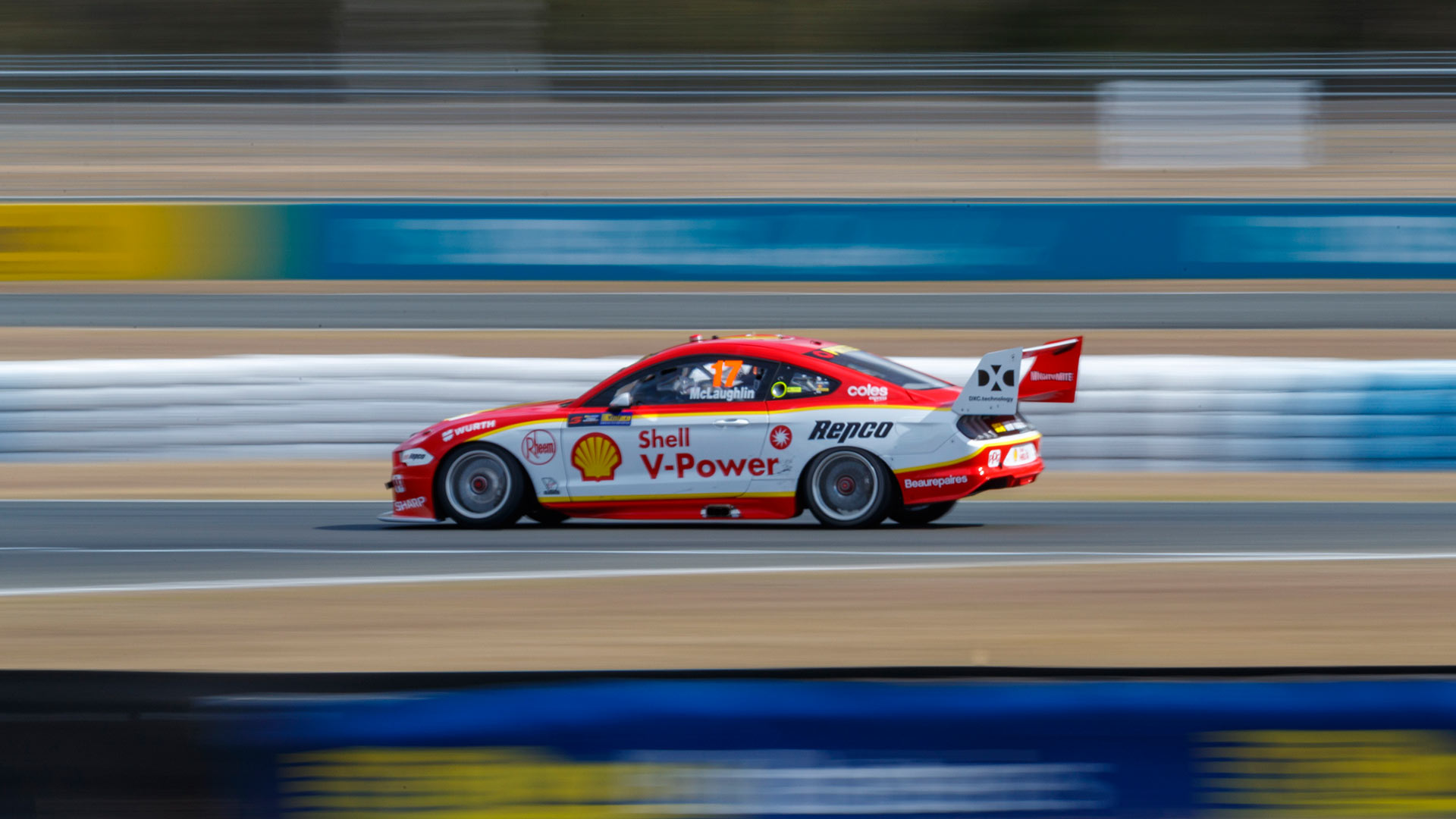
It might be the first year for the Ford Performance Mustang in the Virgin Australia Supercars Championship, but the Blue Oval is already a major trophy winner.
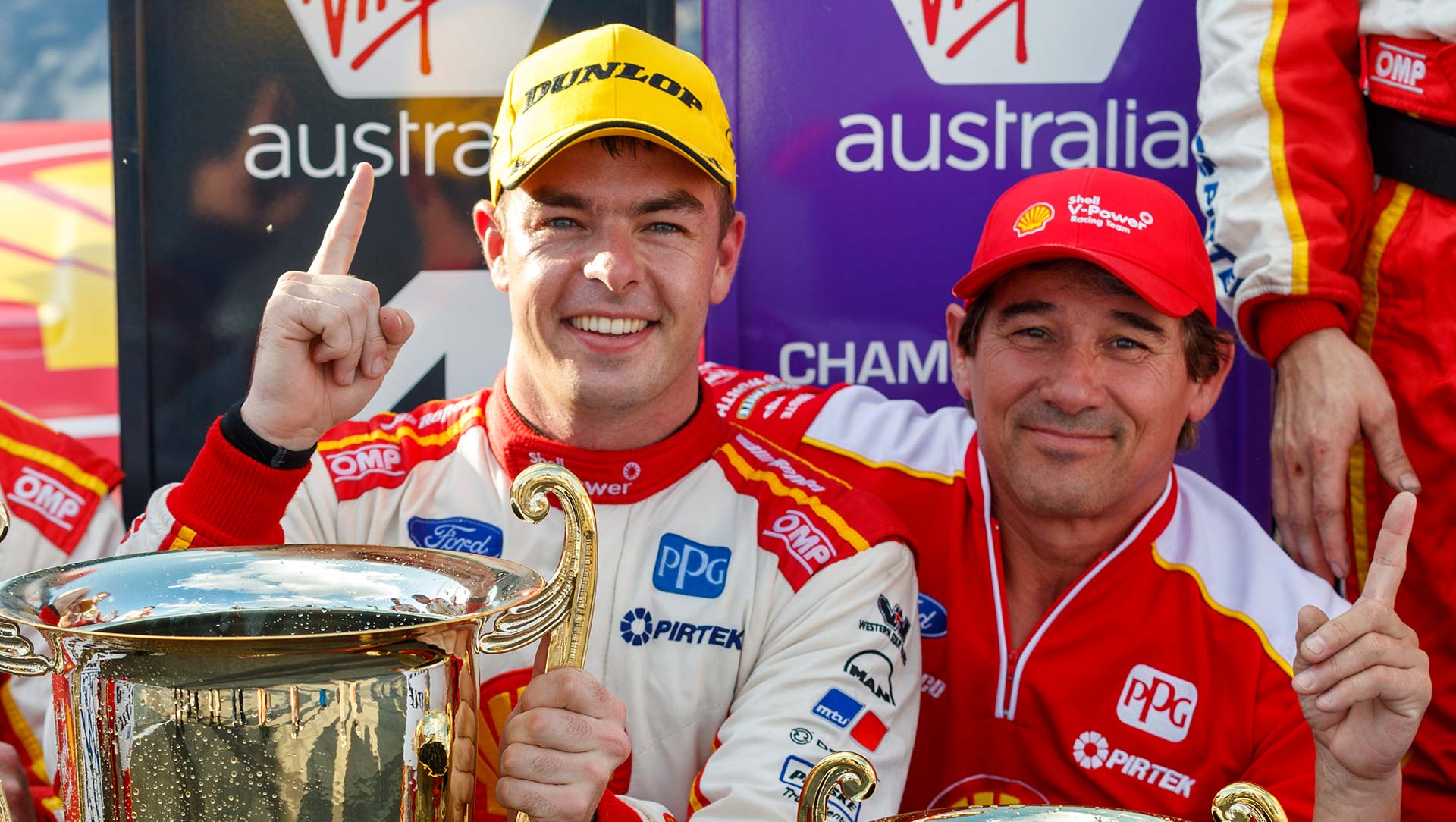
DJR Team Penske driver Scott McLaughlin’s 14th win of the season saw Ford wrap up the Manufacturer’s title for 2019 over the weekend.
The victory comes despite the fact the season still has 12 races left to compete, with the championship finale not taking place until late November.
So much winning
Helping Ford is that the Manufacturers’ Championship is awarded on outright race victories, not on points scored. Given the level of dominance seen by the Mustang, collecting this trophy was only a matter of time.
So far in 2019 the Ford Performance machine has won 17 of the 20 races held, leaving rivals Holden and Nissan with no chance of fighting back.
Success comes despite other teams and race officials trying to rein in the rampant ‘Stang.
No corral can hold this Mustang
Even ahead of the weekend’s races in Ipswich, Queensland, the technical department of the Australian Supercars Championship was demanding Ford teams to make more changes to the Mustang.
Somewhat predictably, the new measures failed to dent the performance of the V8-powered Mustang, in a race series designed to offer close competition.
A double podium for Ford Performance racers in both rounds at the Ipswich circuit suggests the Mustang is still likely to continue being victorious throughout 2019.
All fine Down Under
Initially derided for the ungainly proportions made from stretching a Mustang body over the common Supercars chassis, Ford are now the ones having the last laugh.
DJR Penske Shell V-Power Racing driver Scott McLaughlin was seemingly happy to incur a $3,000 fine for saluting his win with a smokey burnout. Ford were also fined an additional $10,000 for taking a non-permitted poster onto the podium to celebrate.
Ford will also be looking to take victory at the flagship Bathurst 1000 endurance event in October to prove just how capable the Australian ‘Stang really is.
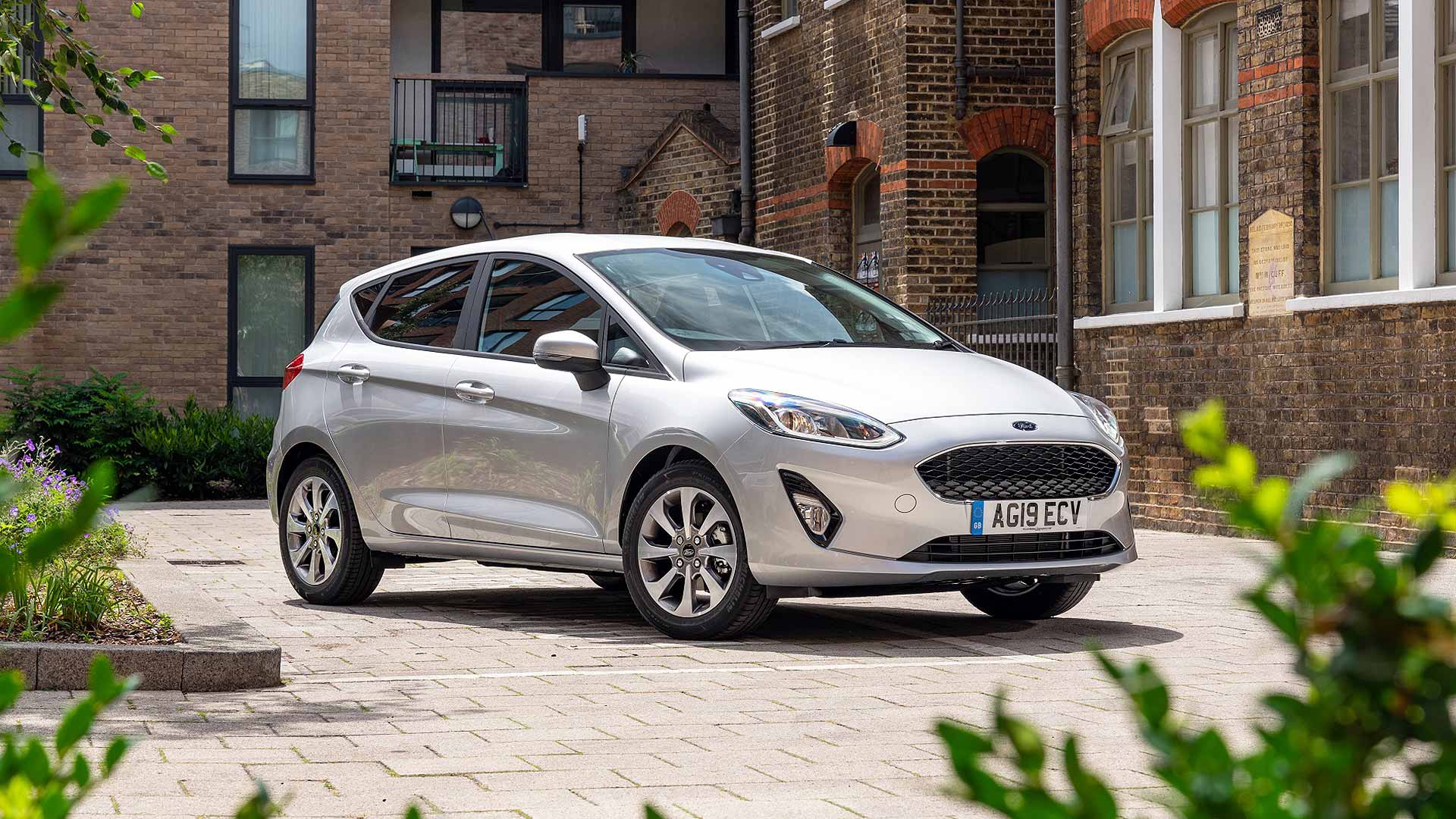
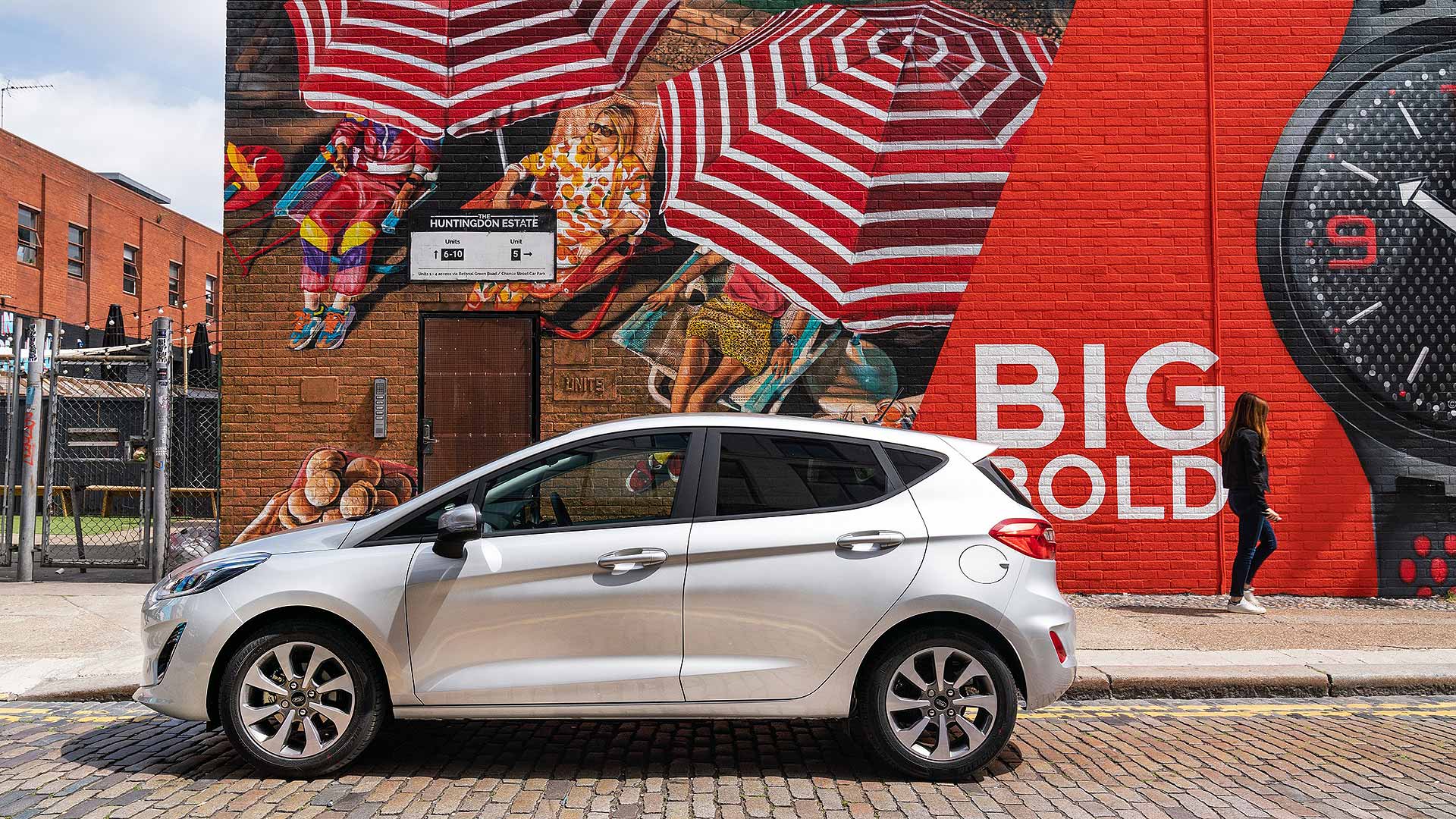
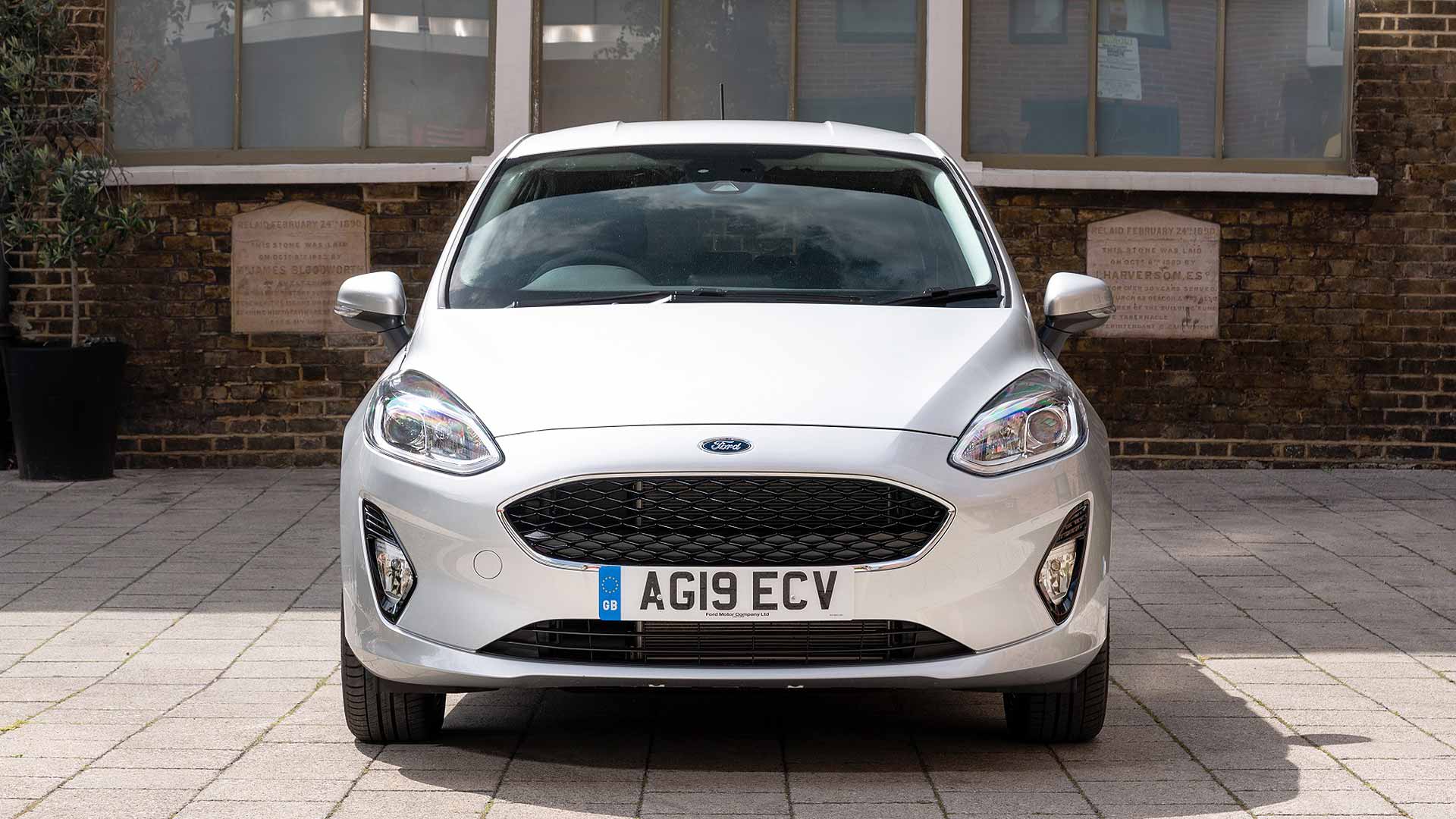
The long-running Ford Fiesta Zetec is no more. It has been replaced by a new model variant, the Fiesta Trend, with prices starting from £15,995.
The new entry-level Fiesta comes with a single engine option, a 1.1-litre petrol motor producing 85 horsepower (those who want Ford’s excellent 1.0-litre Ecoboost turbo need to move up the range).
Both three-door and five-door variants are available.
Key standard features include 16-inch alloys with a glitzy silver and black machined finish. A choice of six metallic colours is, surprisingly, included in the price and privacy glass is also standard.
The front grille has a new mesh design, and the Fiesta Trend retains the distinctive LED running lights of more expensive models (the next model up in the range is Fiesta Titanium, priced from £18,320).
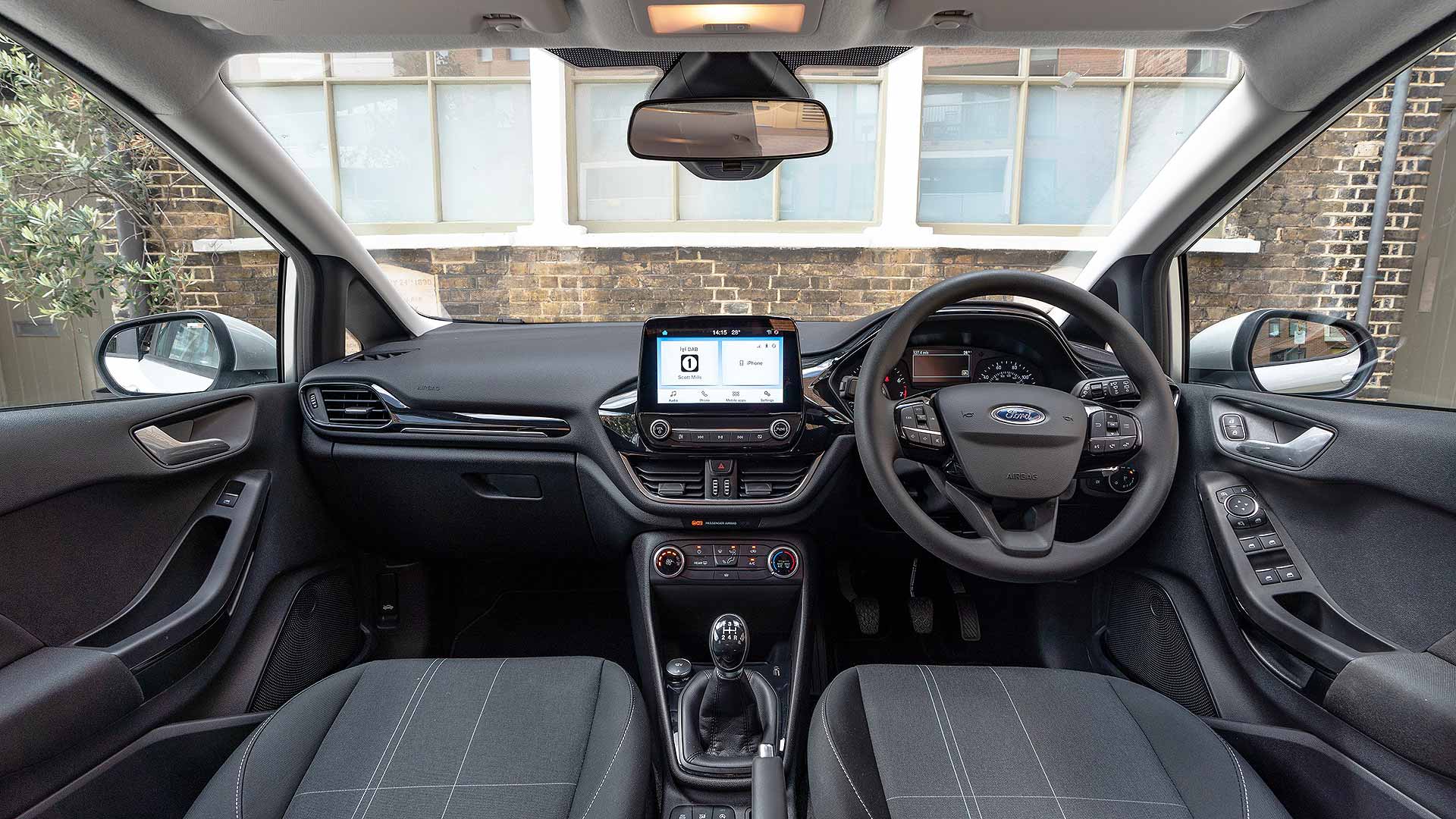
The Fiesta Trend is well specified in terms of infotainment, with a standard 8.0-inch colour touchscreen including DAB radio, plus Apple CarPlay and Android Auto.
Automatic headlamps, an electronic speed limiter, lane-keep assist and Ford MyKey (which allows parents to programme a second car key with safety nets such as speed limiters for their children) are all included.
Even air conditioning is standard.
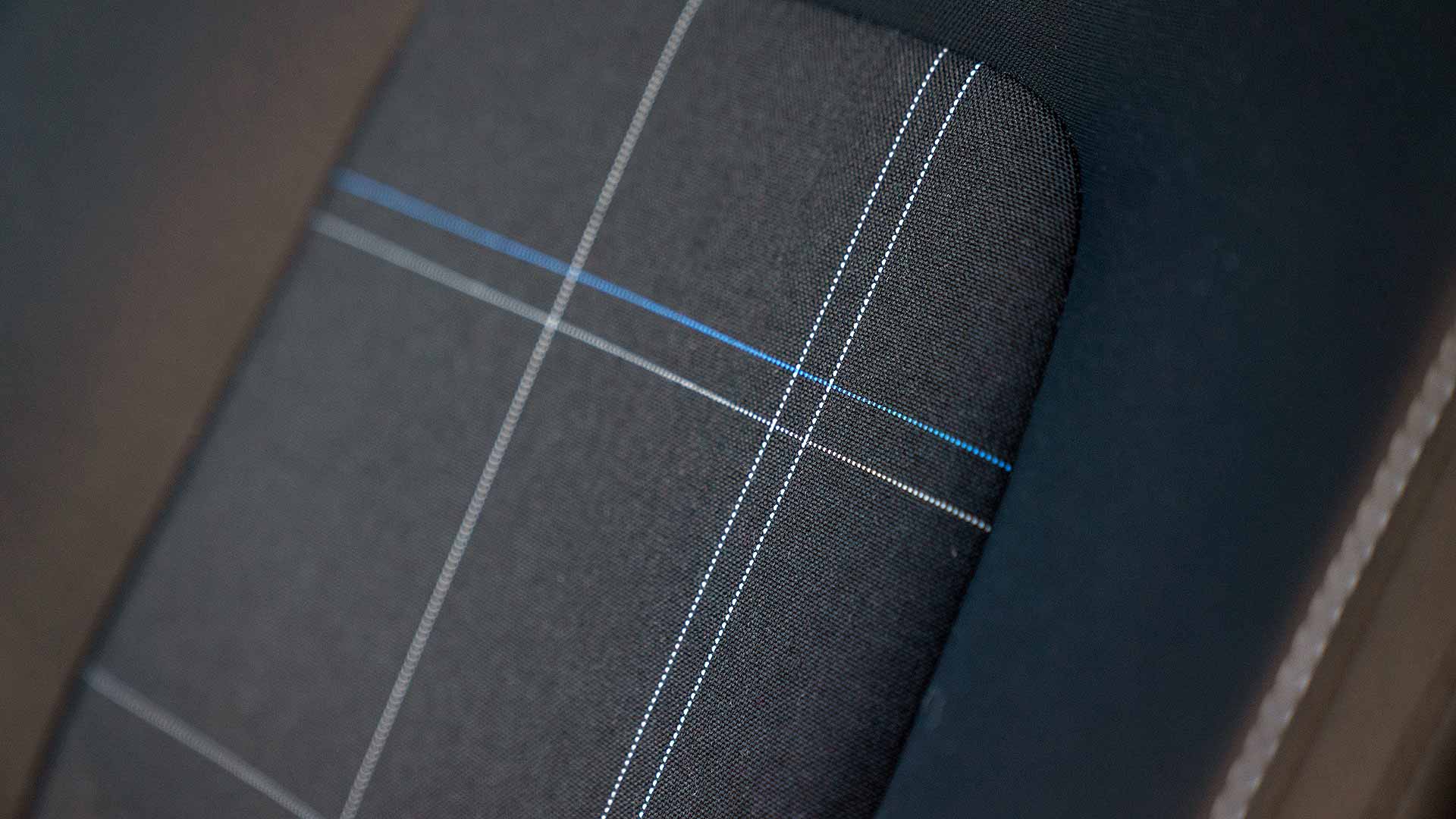
The Fiesta Trend gets neat new seat upholstery with a blue featureline stripe as well.
The new car, said Ford of Britain MD Barratt, “has been designed with our value Fiesta shopper in mind and represents the package of styling and ease of use they require”.
Ford predicts 1 in 4 Fiestas sold in the UK will be the new Trend model when deliveries begin in August.
Boosting its value appeal even further is an attractive PCP package: with a £5,000 deposit, customers can get a four-year Ford Options deal for £120 a month. Even the annual mileage cap is quite generous, at 9,000 a year.
Chief executive Mike Hawes describes a no-deal Brexit “an existential threat to our industry” which would result in “huge tariff costs and disruption that would threaten protection”.
International investor confidence in the industry would be further undermined if frictionless and tariff free trade was impaired.
Hawes has urged the new Prime Minister to meet with industry “as soon as possible” to discuss how both can work together to secure the future of the industry.
“No-deal Brexit is simply not an option.”
Unprecedented change
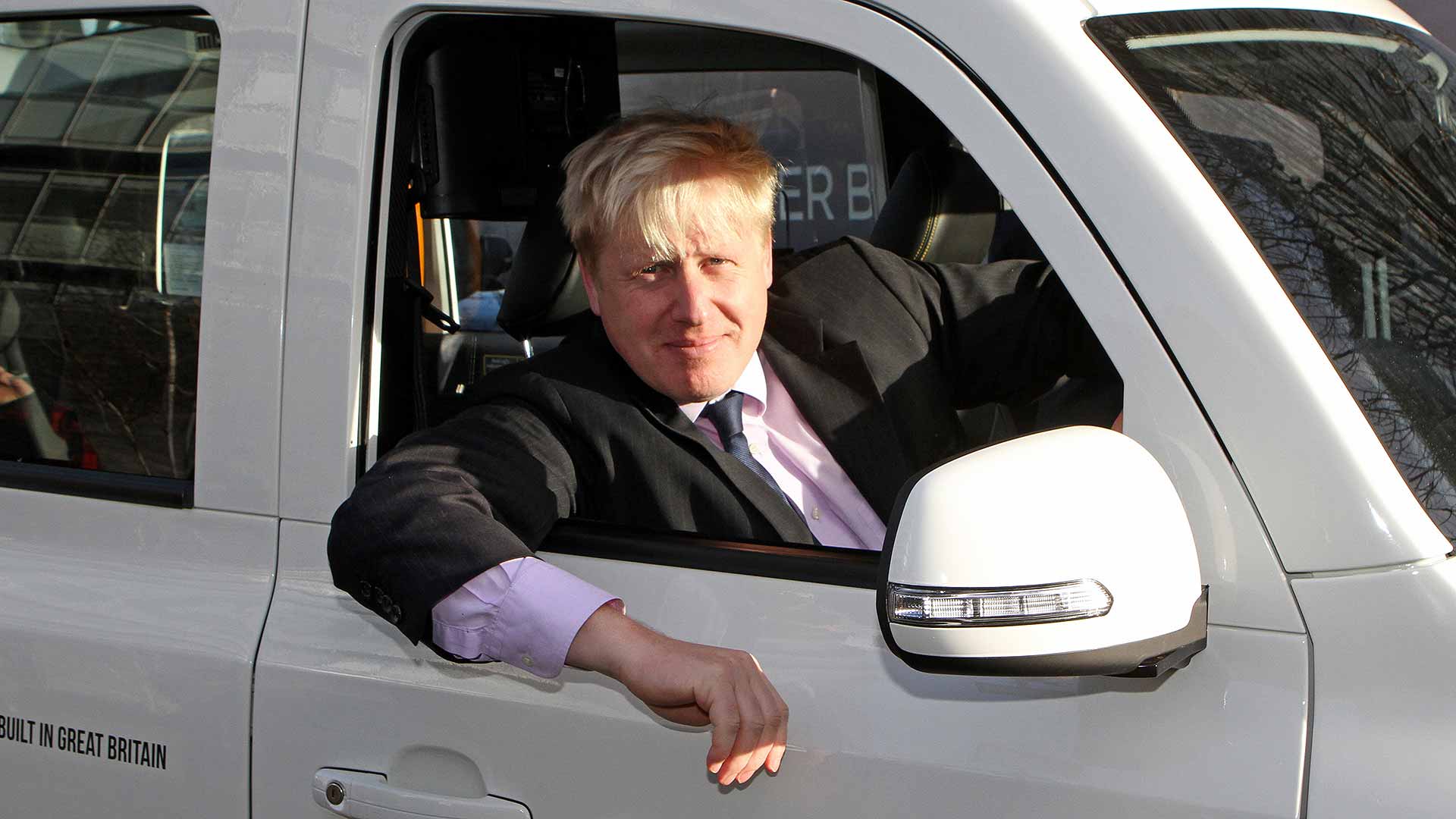
Britain is potentially well poised to capitalise on the fundamental change coming to the automotive industry in the next decade, said Hawes (pictured above).
“Automotive is, however, a highly competitive sector internationally, with fine margins. We cannot afford to be complacent.”
Boris Johnson has the opportunity to “assure our sector’s future success,” says Hawes… “an ambitious objective, and one I hope you share”.
He also reminds the new PM that UK automotive contributes £18.6 billion to the UK economy, employs hundreds of thousands and “makes the most significant contribution to UK trade of any manufacturing sector.
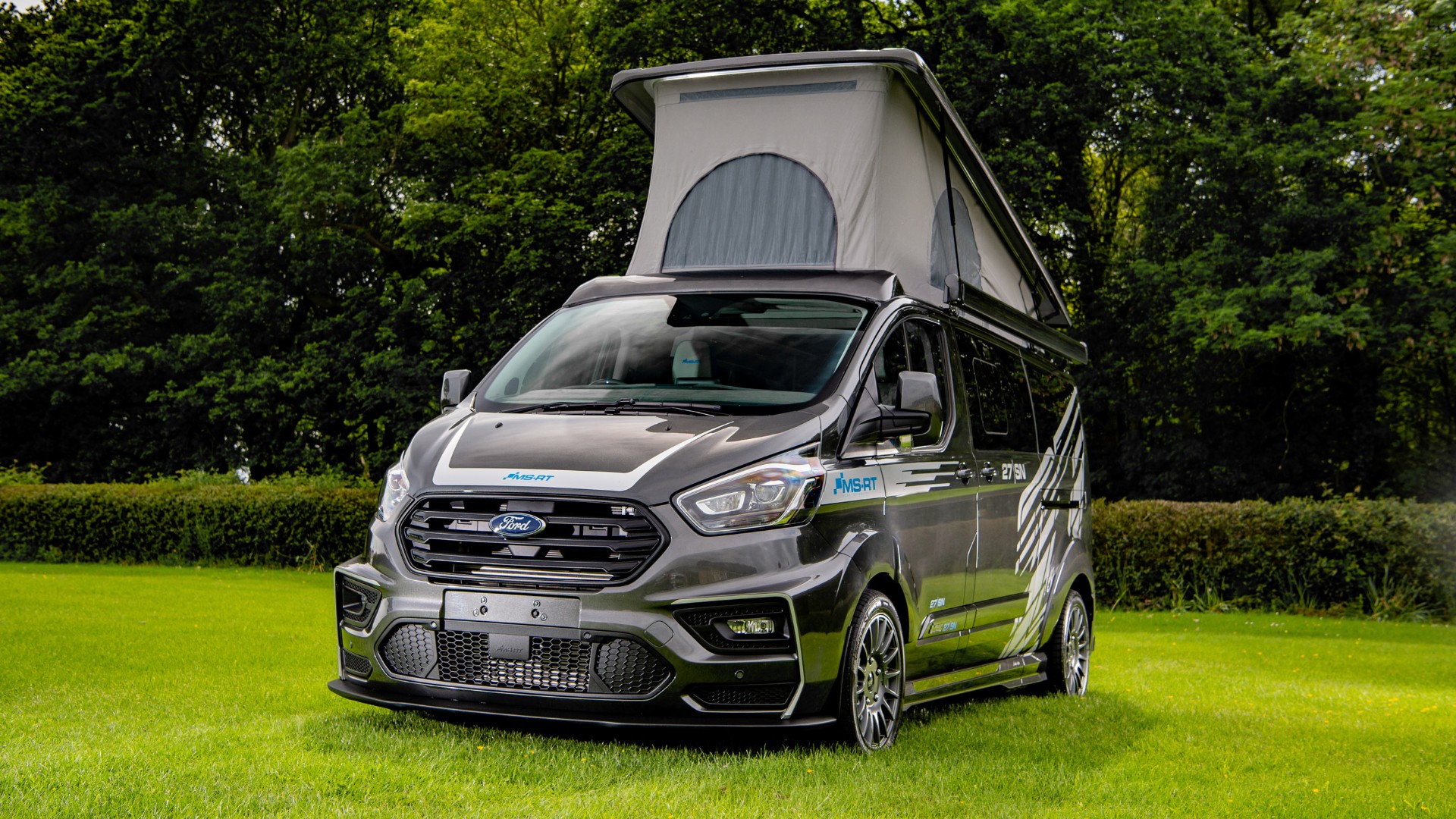
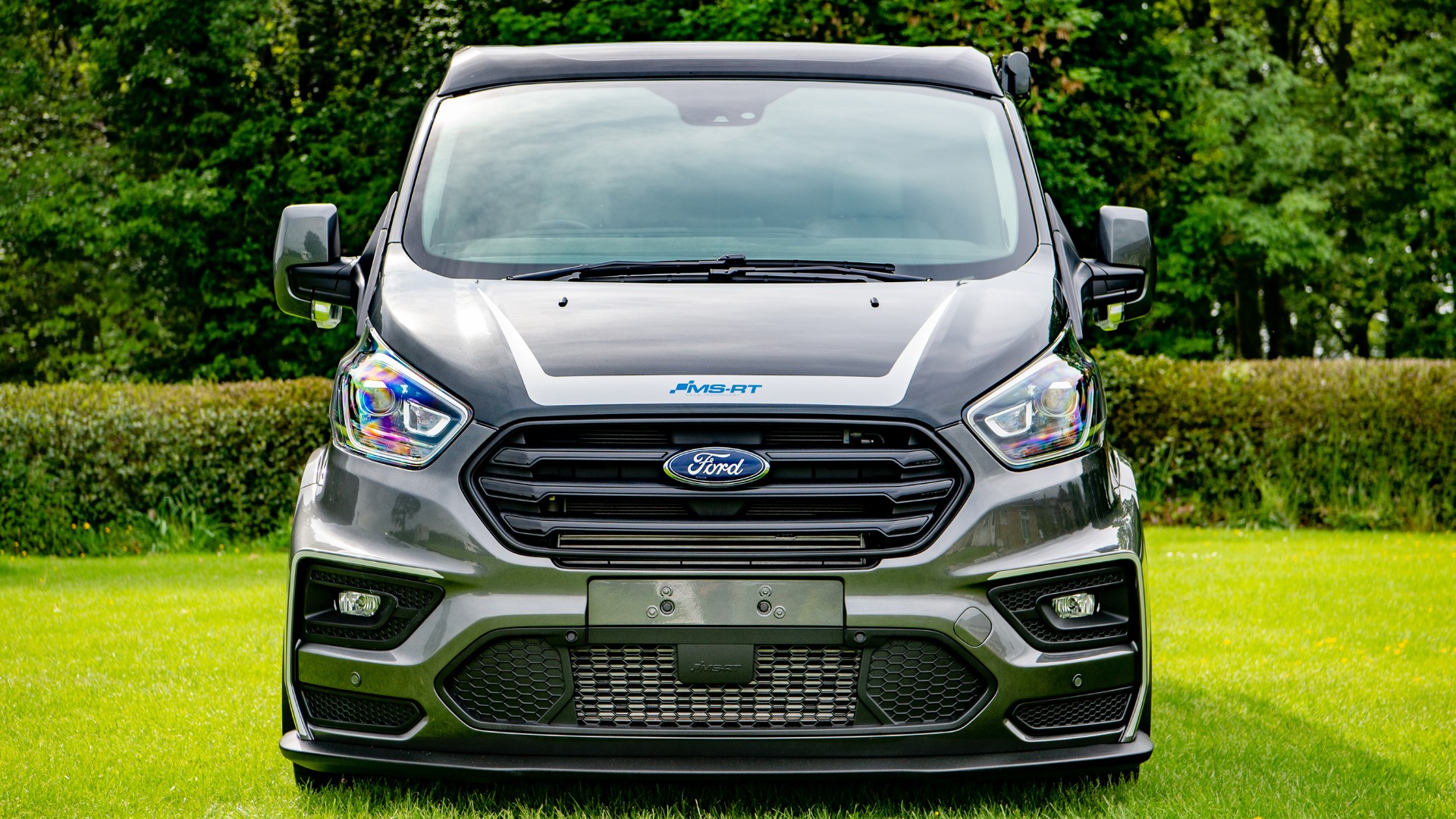
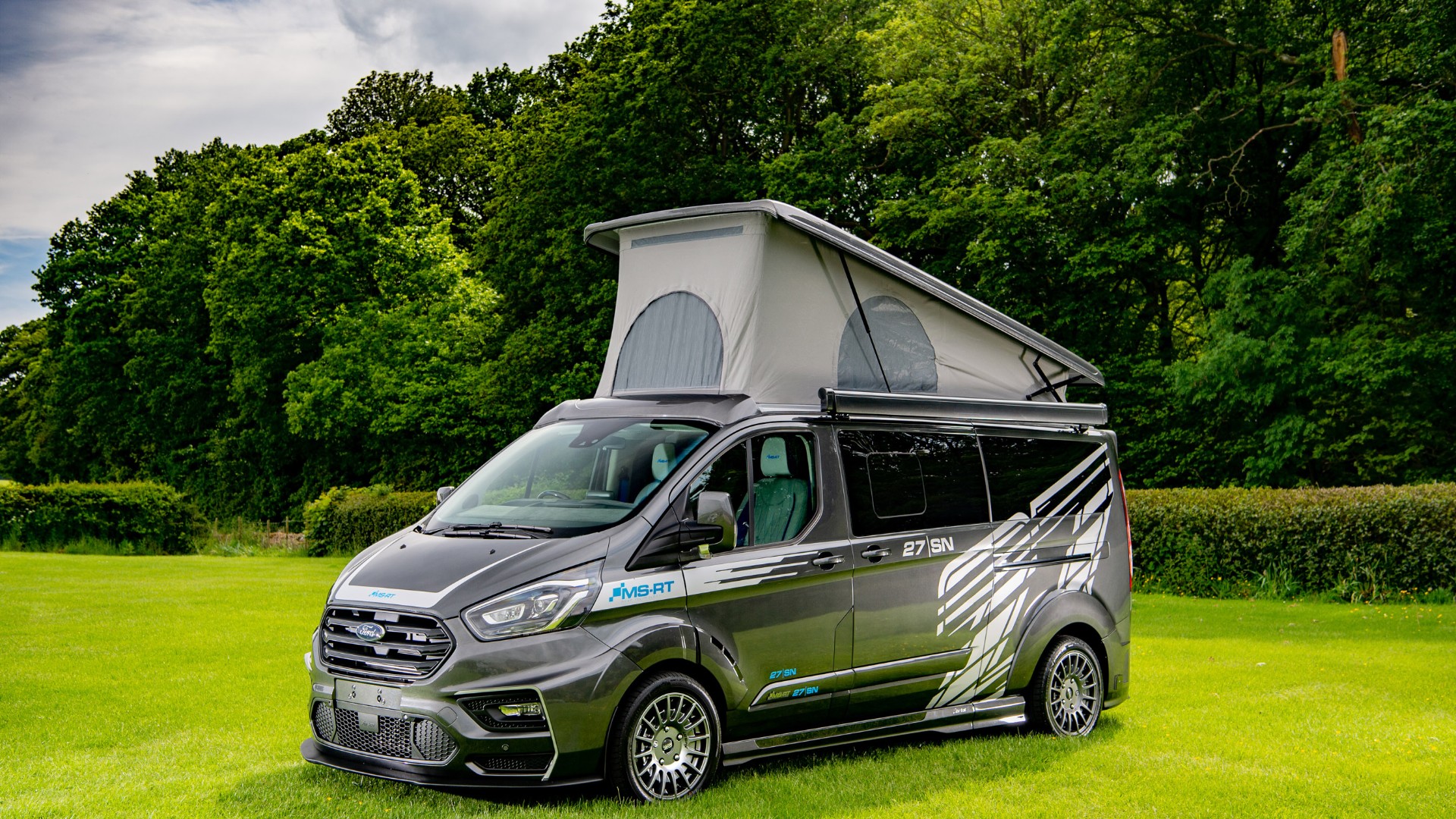
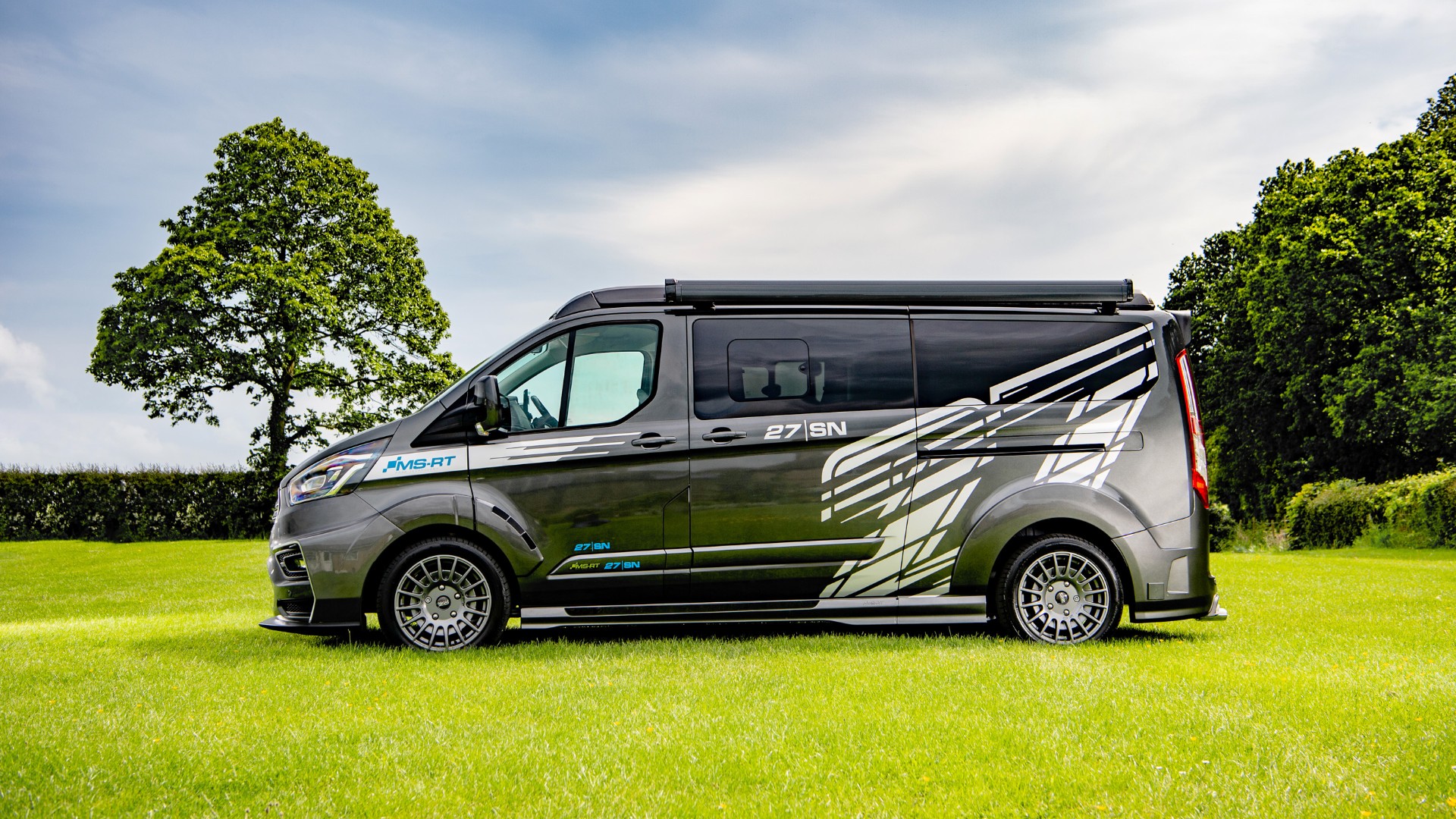
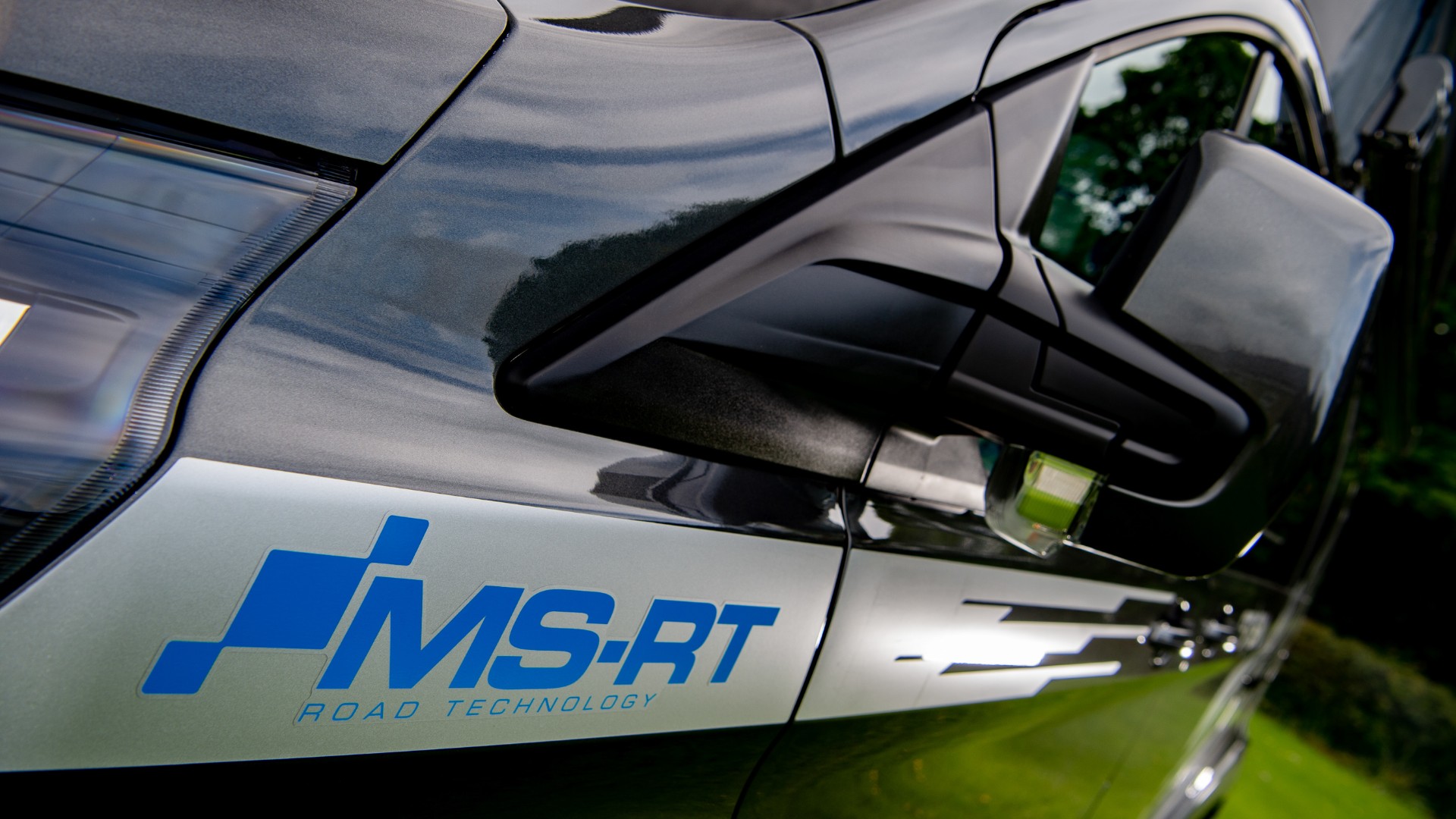
Ford fanatic Steve North is now the lucky owner of this very special Transit Custom.
The supervan super fan has taken the Custom part of the Transit’s name to a whole new level. His one-off creation reportedly cost in the region of £77,000 (almost $95,000) to build.
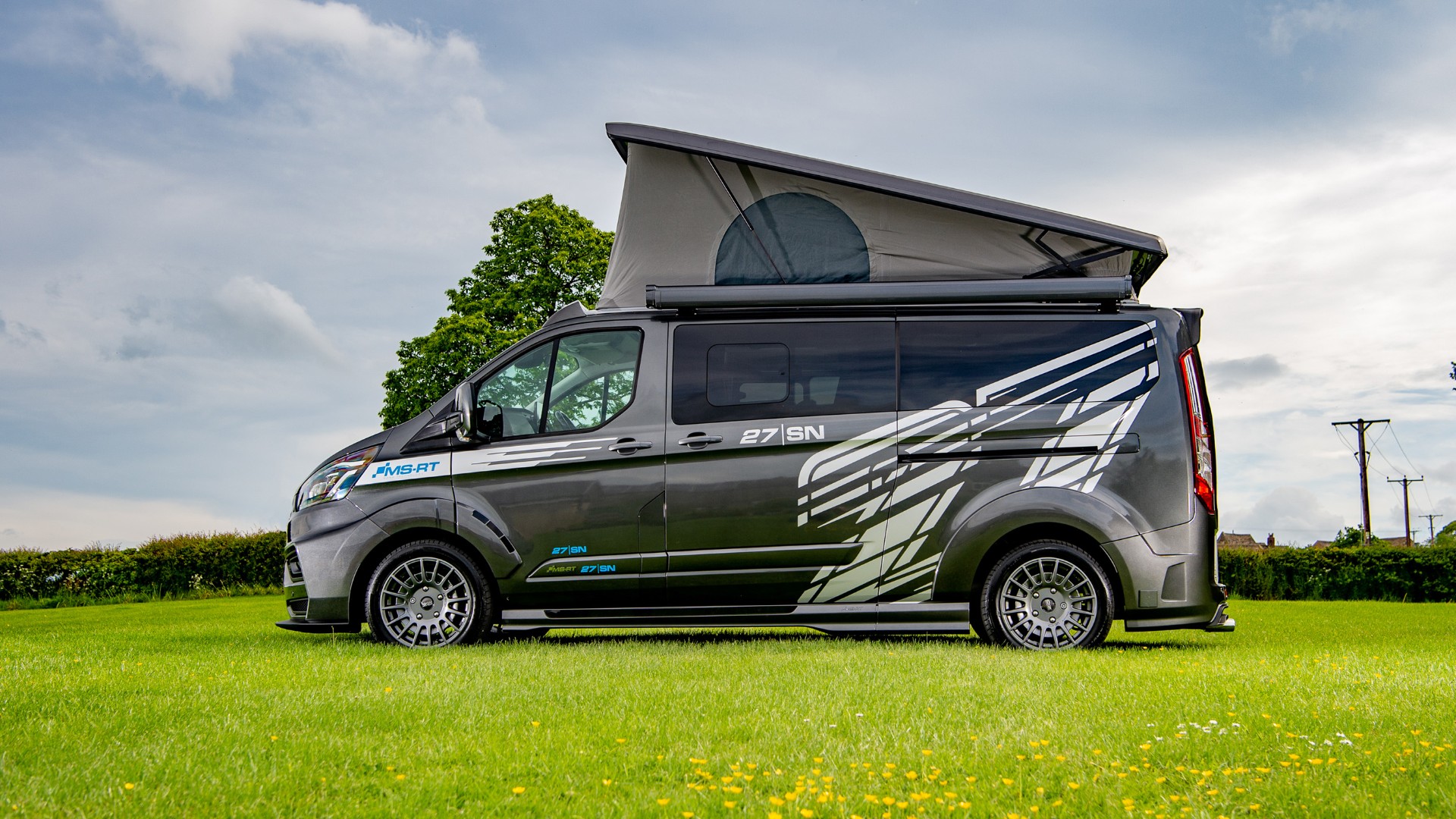
Looking as sporty as it does, you might be surprised to learn that nothing here invalidates the Ford warranty. That’s because the aesthetic mods were carried out by one of Ford of Britain’s ‘Qualified Vehicle Modifiers’ or QVMs.
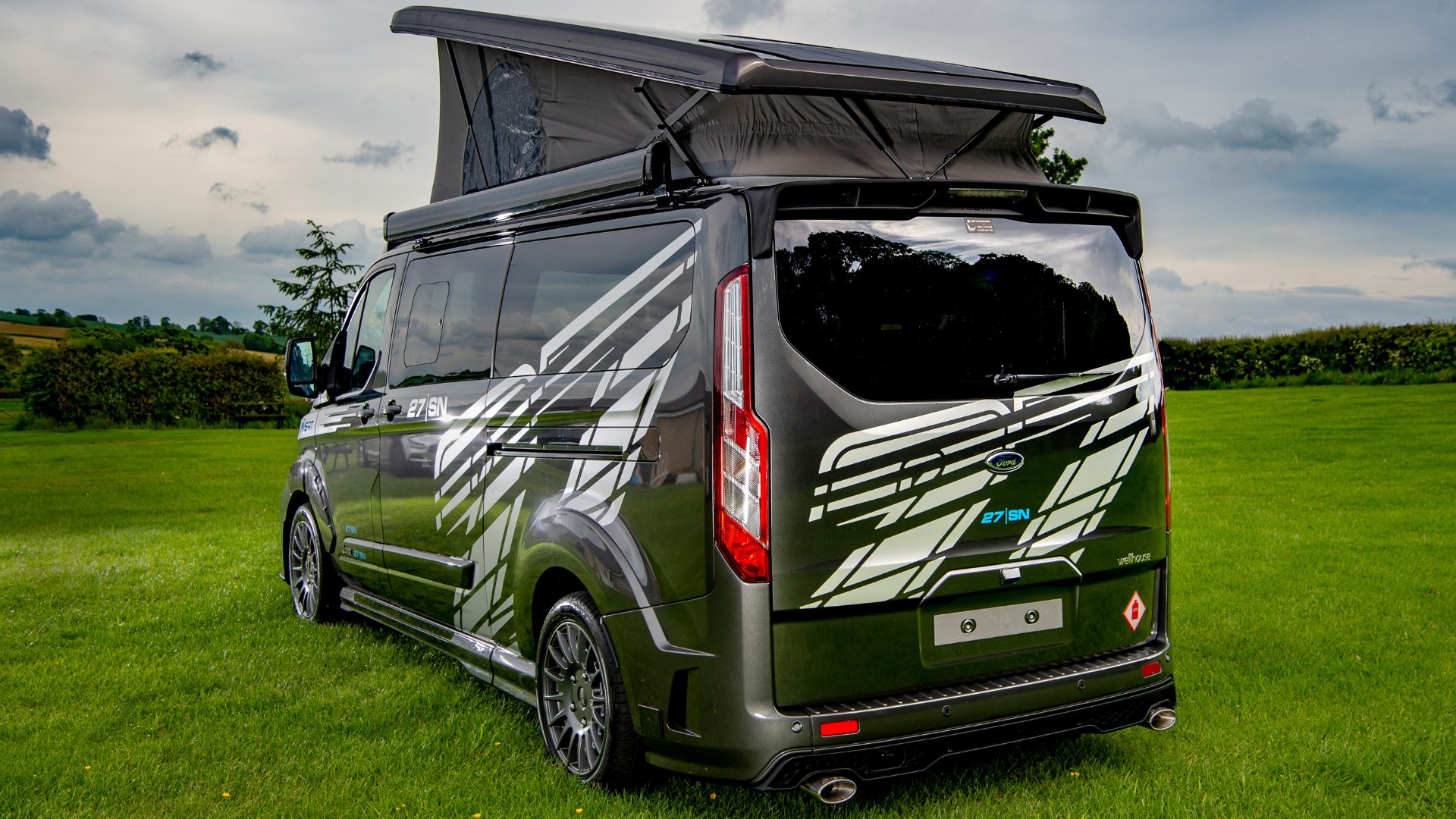
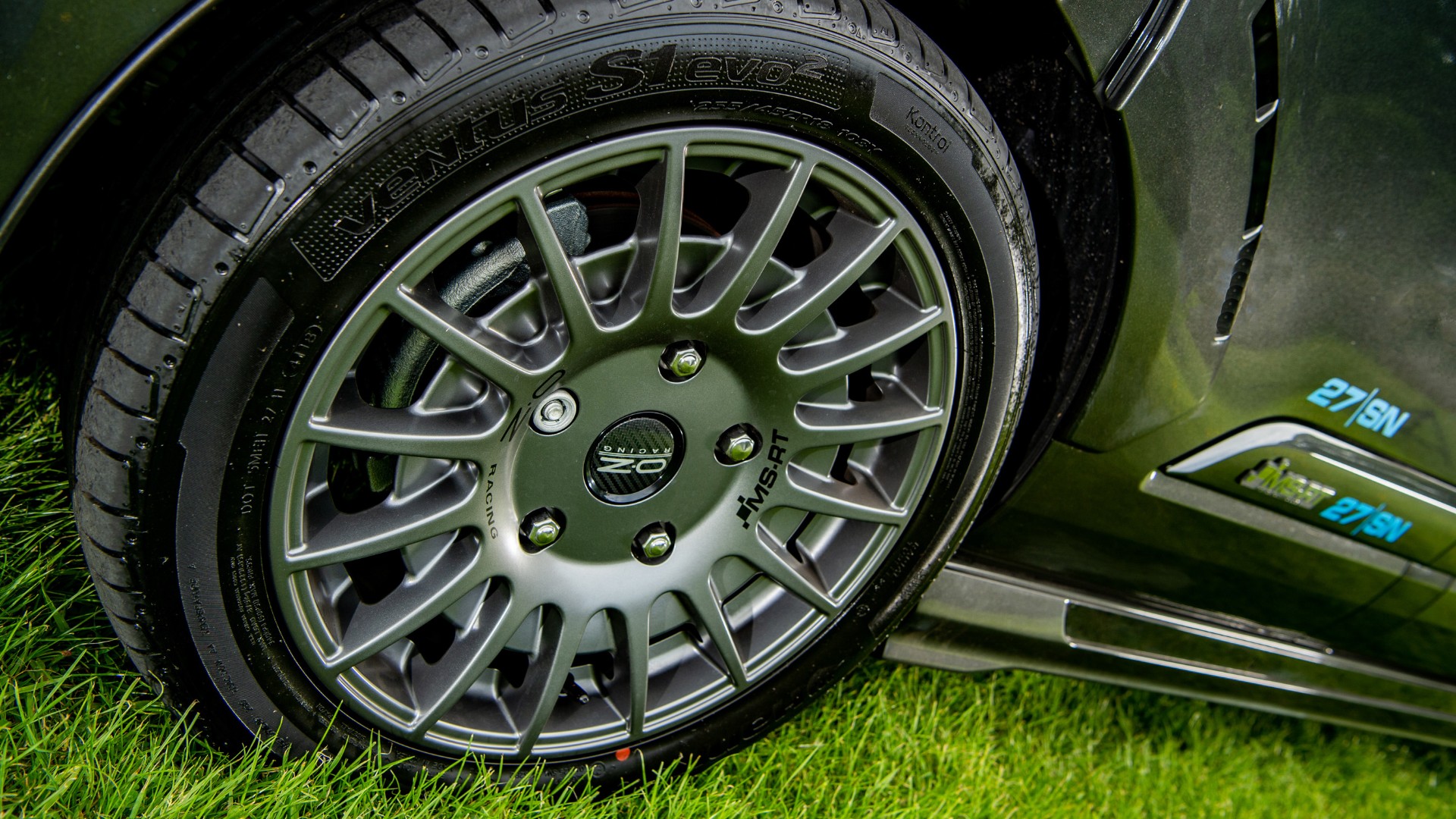
MS-RT, a company started by one of the team behind M-Sport racing, gave this Transit the RS look. It wears 18-inch wheels, twin-exit exhausts and an aggressive livery.
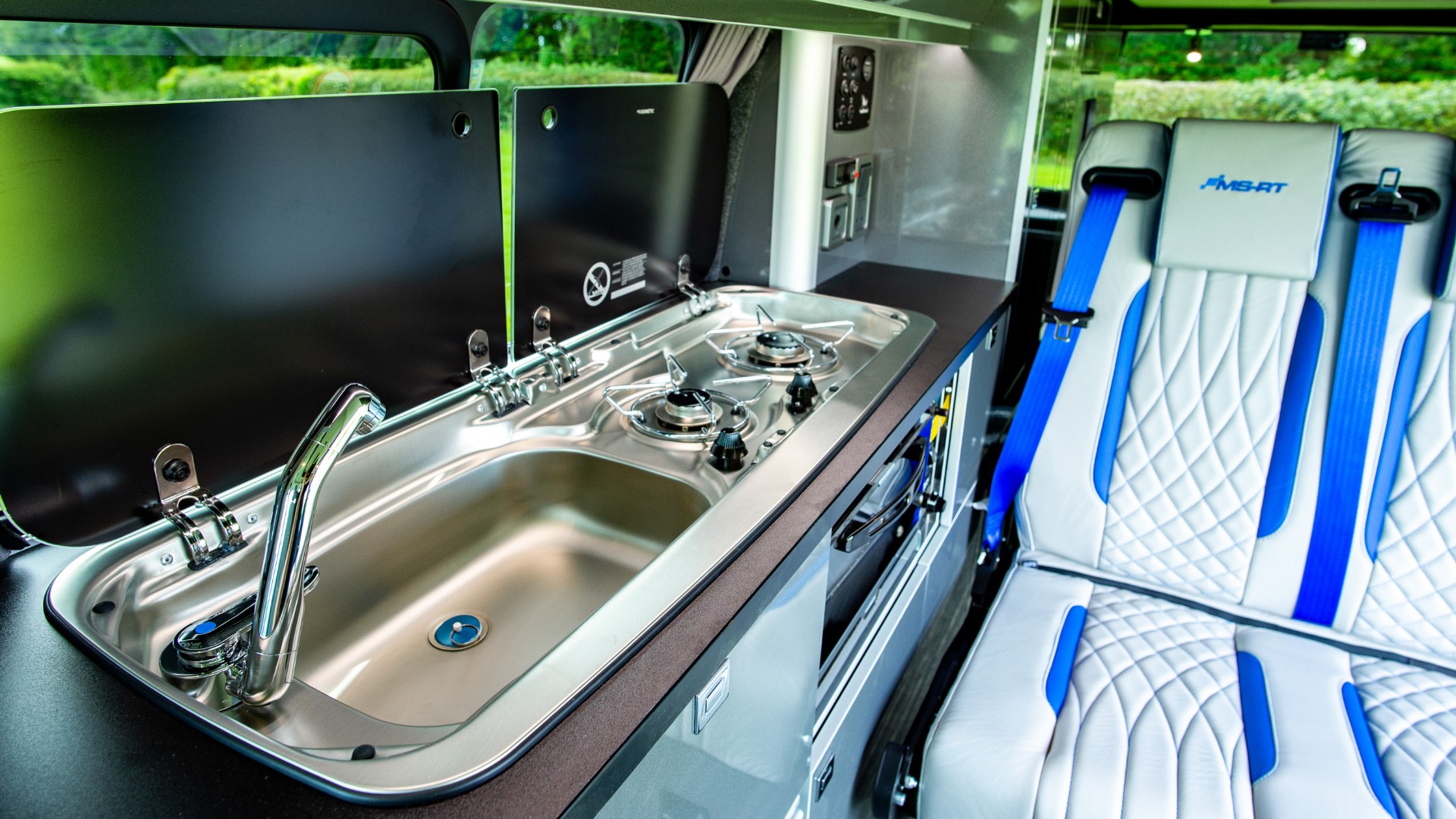
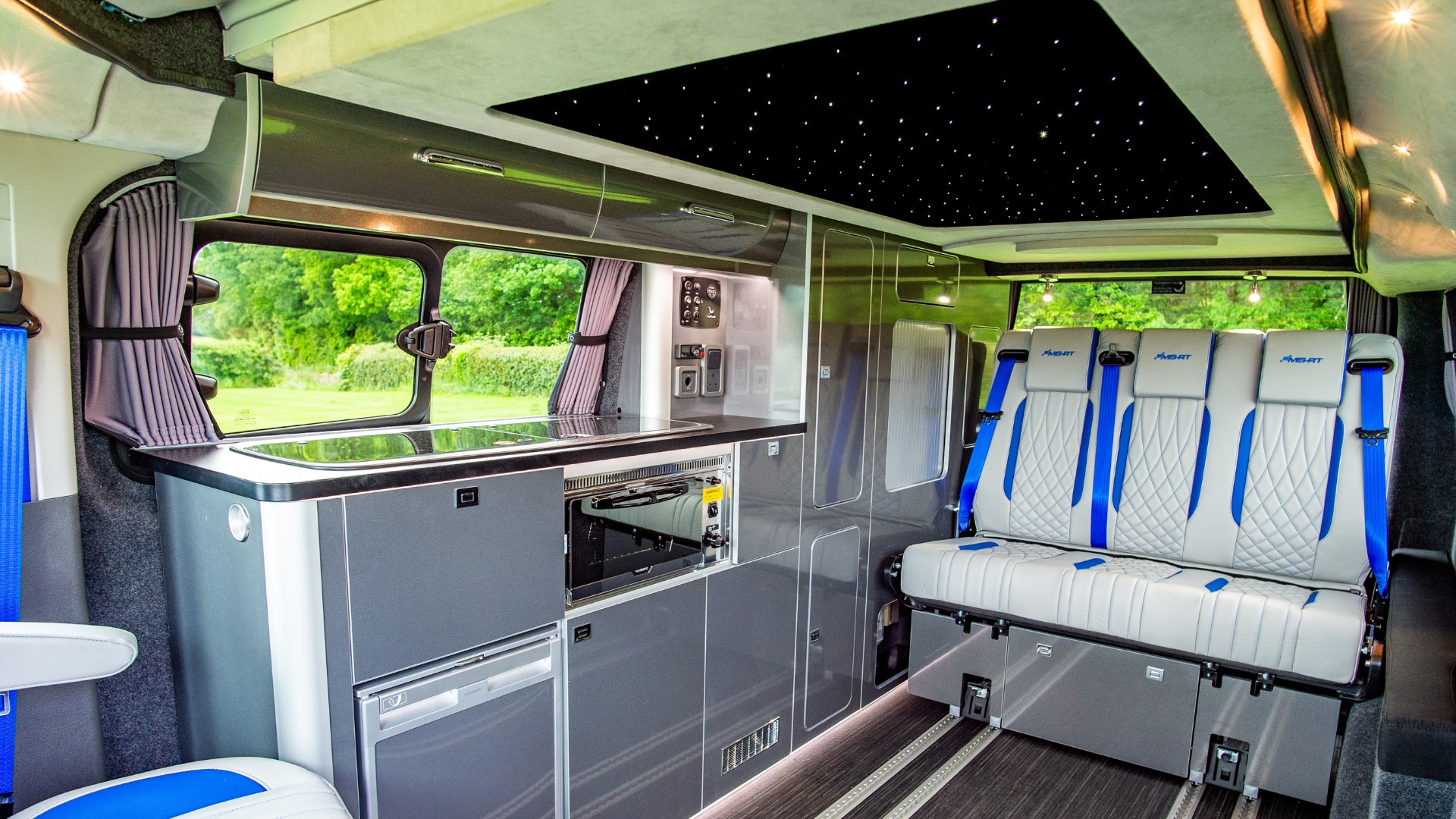
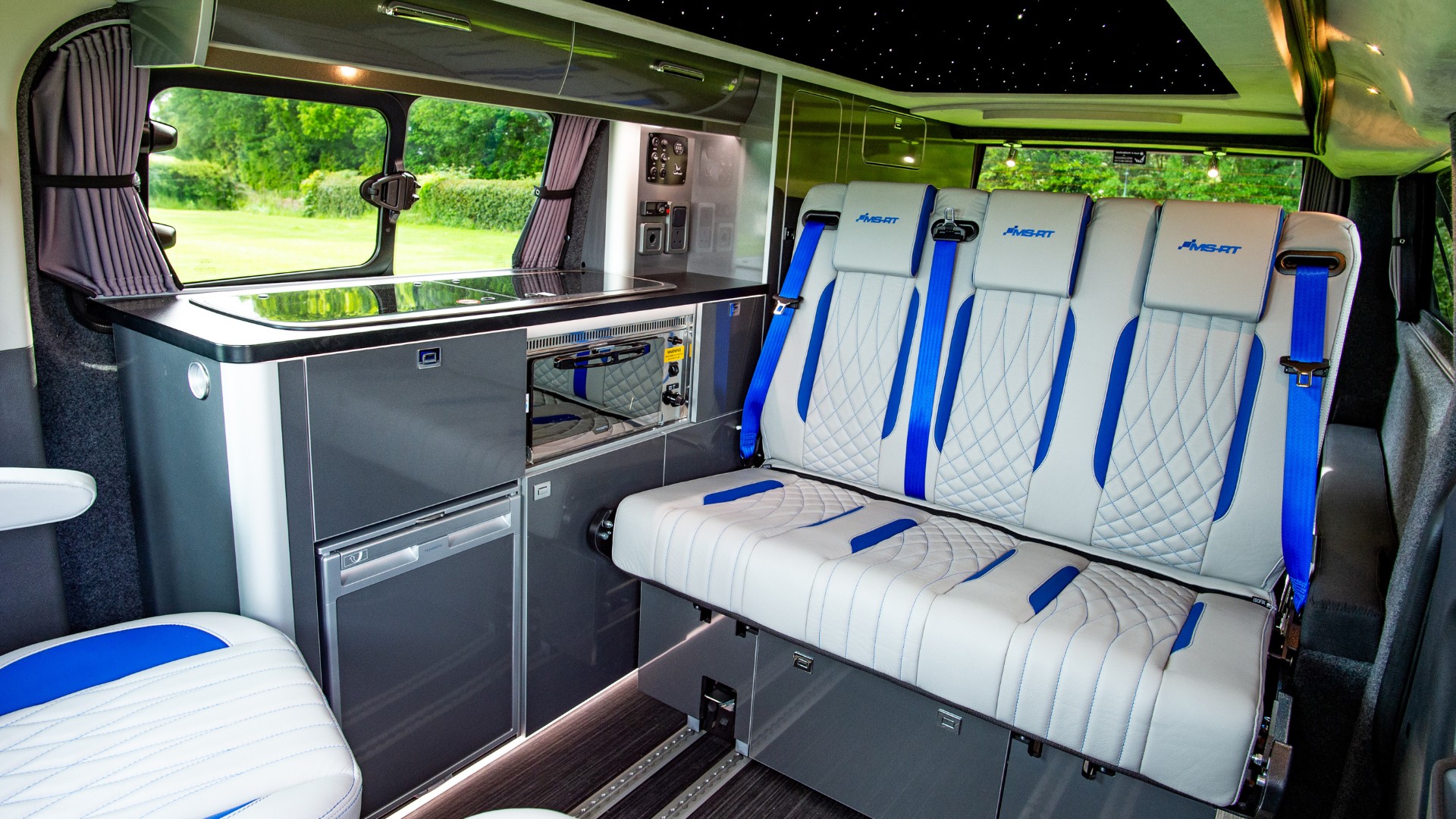
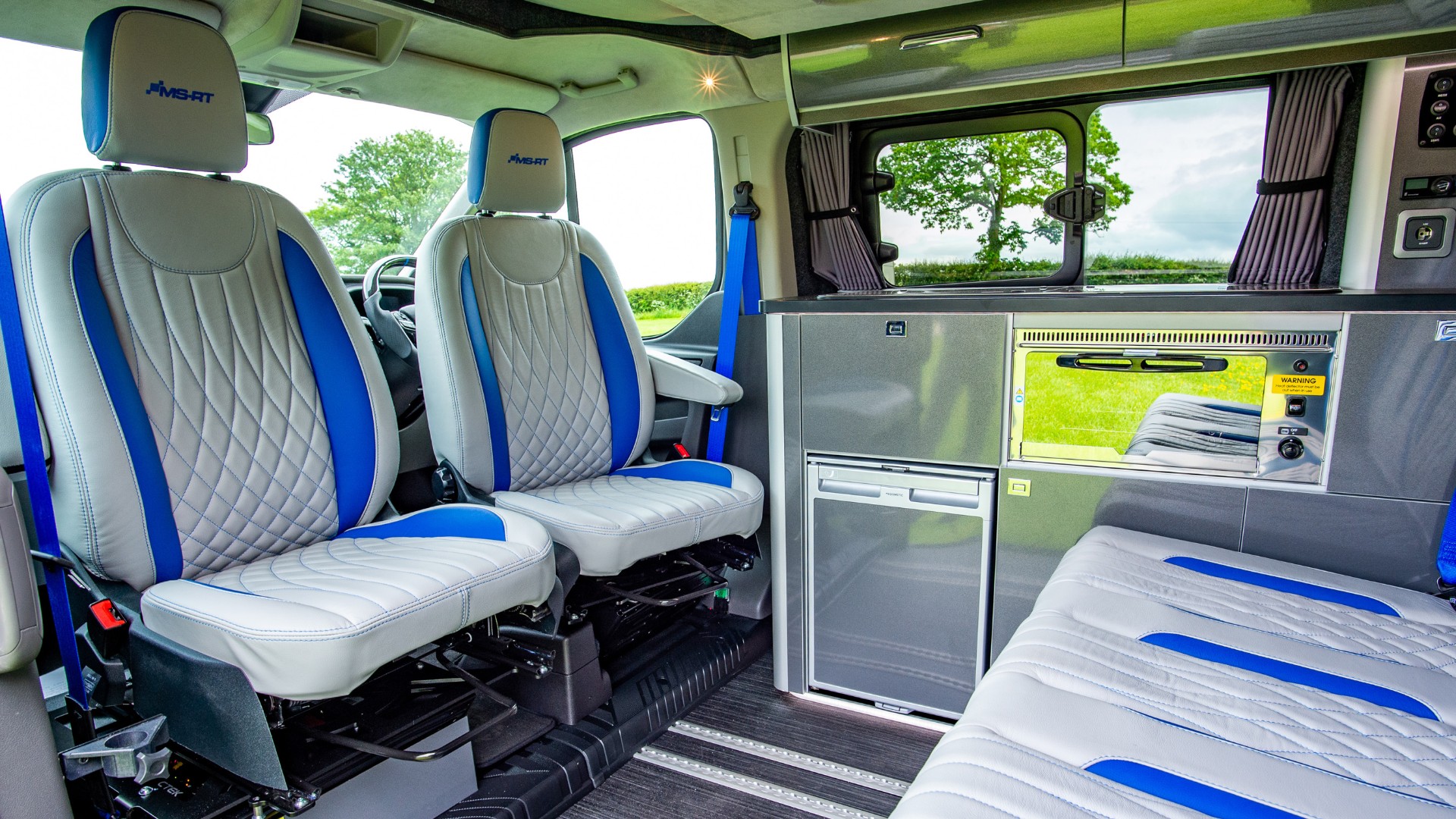
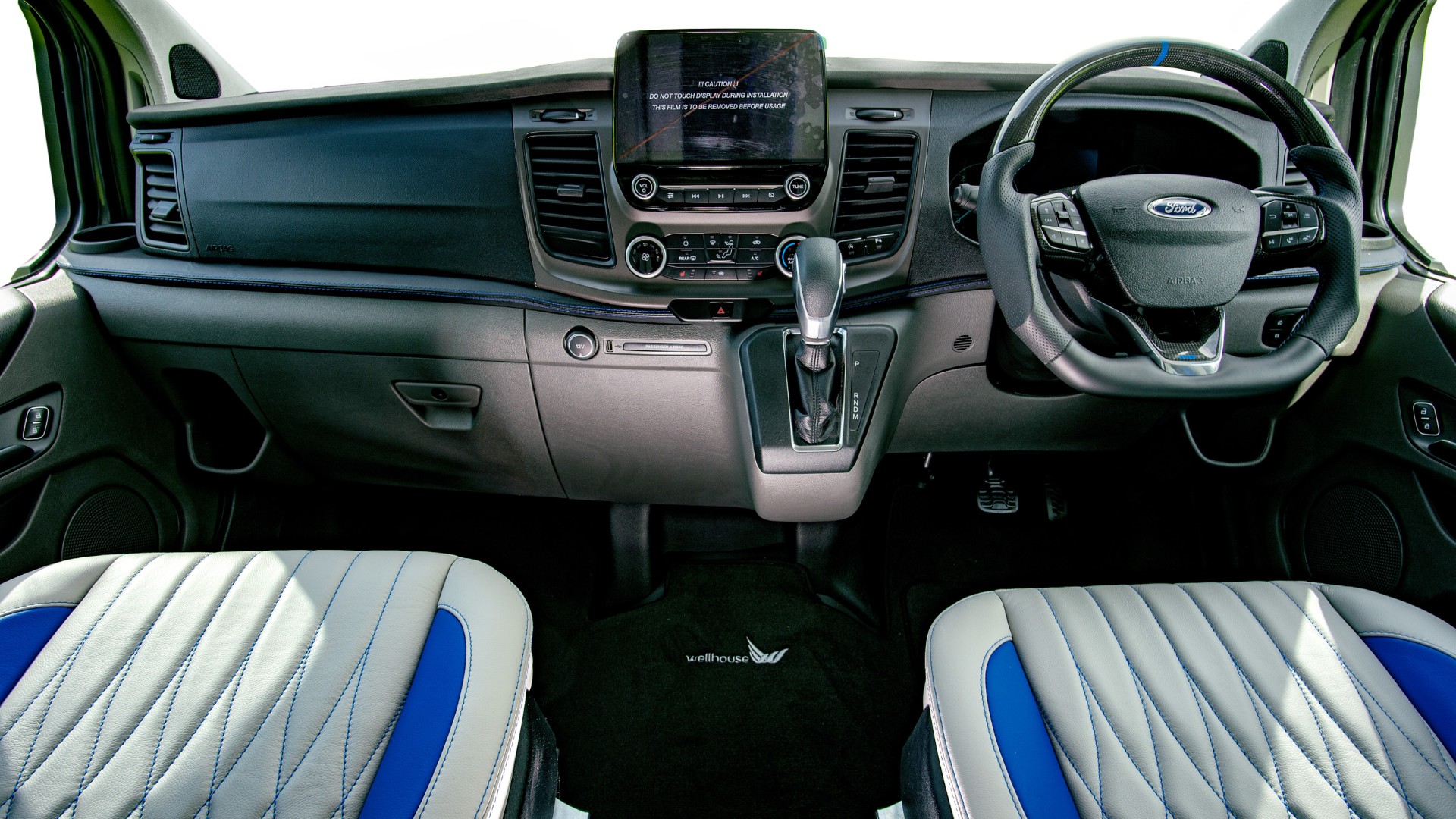
The interior is modified by a company called Wellhouse, which has added a level of luxury comparable with a limousine.
The Transit is kitted out with a full kitchen, plush seating and an extendable roof. Added luxuries include xenon headlights, sat-nav, adaptive cruise control, a star-lit Alcantara roof and an Alcantara-trimmed dashboard. All this van is missing is a flying lady mascot and a V12 under the bonnet.
Speaking of under the bonnet, that’s not so extreme. The Transit has a 170 horsepower 2.0 Ecoblue diesel engine, putting power to ground via a six-speed automatic gearbox.
The man behind the van
Owner Steve really is a devout Ford fan, too. He began helping to tune them around the age of 11.
Steve has owned all sorts of Fords, including Escorts of all ages, a Cortina and a Sierra. He even prepared a Mk2 Escort rally car.
Now, he’s sold up in search of the quiet life, albeit in this jazzed-up Transit. Power to him, we say.
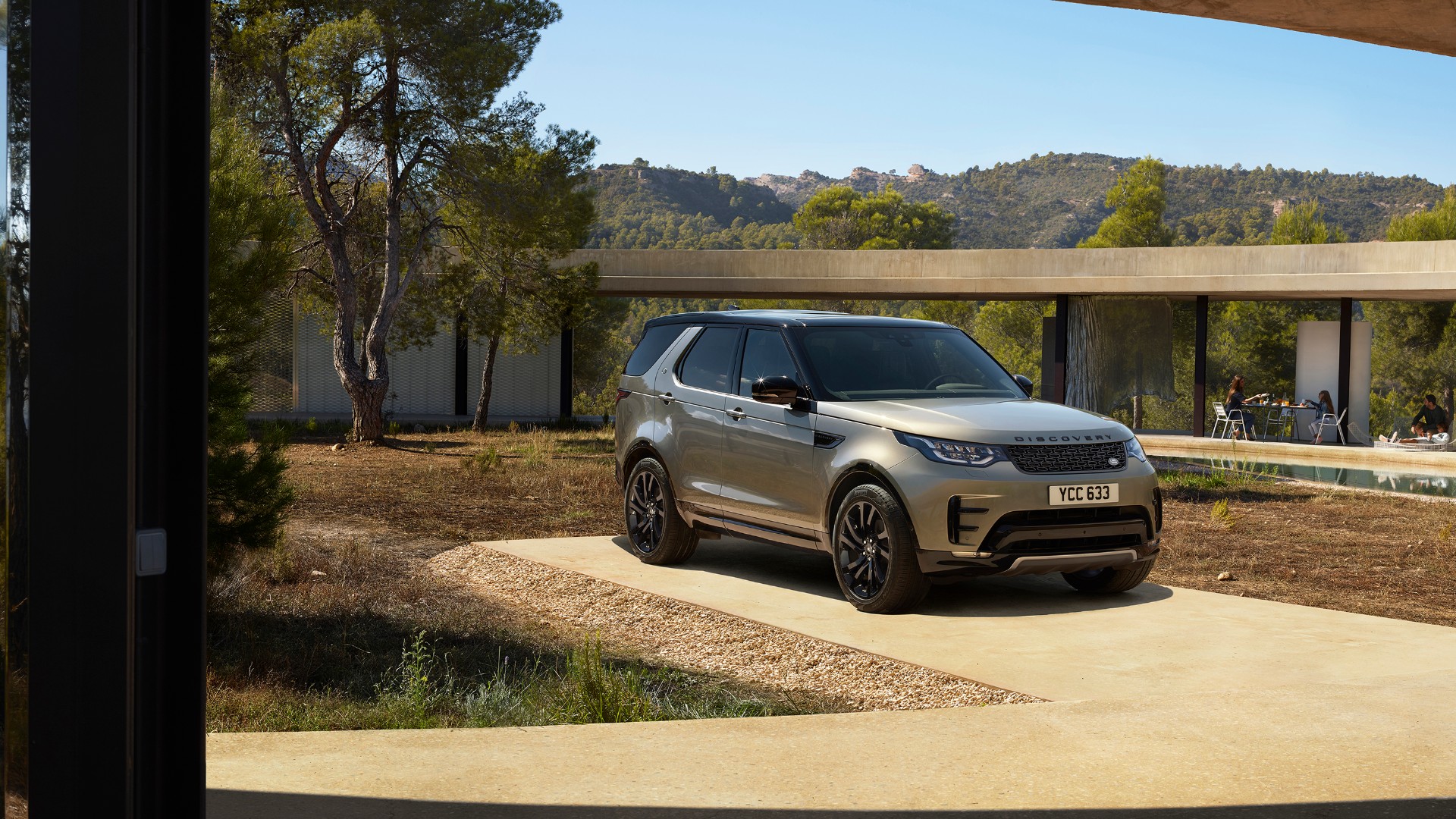
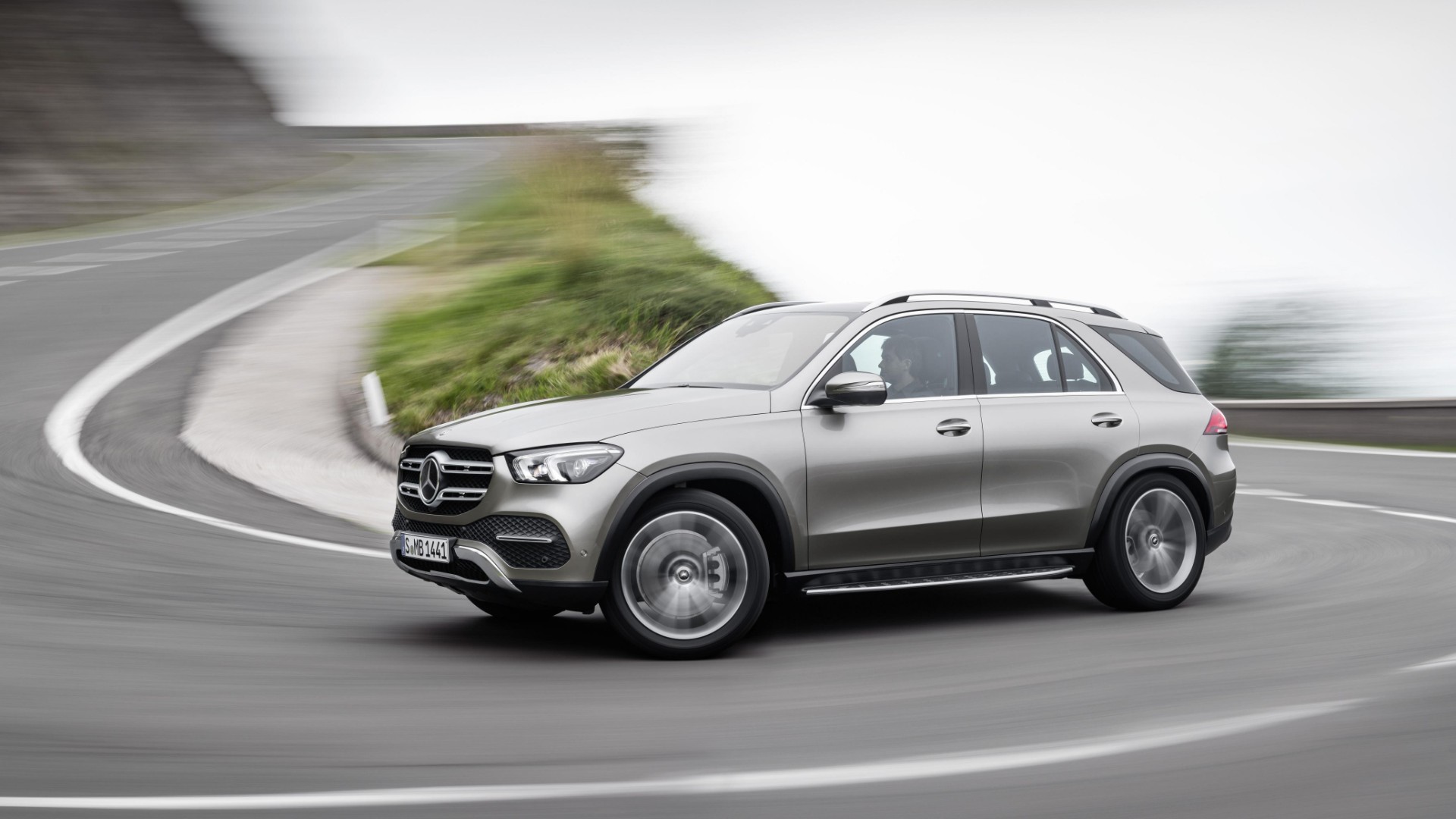
New figures from JATO Dynamics suggest a surprising trend. After years of rapid growth, demand for SUVs is slowing down.
SUV sales grew by 0.7 percent in June, with 556,400 shifted in Europe. While that’s still an increase – and indeed the third-highest month ever in terms of units sold – the rate of growth for the segment has slowed.
The bulk of the slowdown can be attributed to a five percent drop in the popularity of large premium SUVs. Mercedes-Benz, Volvo and Land Rover saw double-digit drops in popularity of premium SUV models.
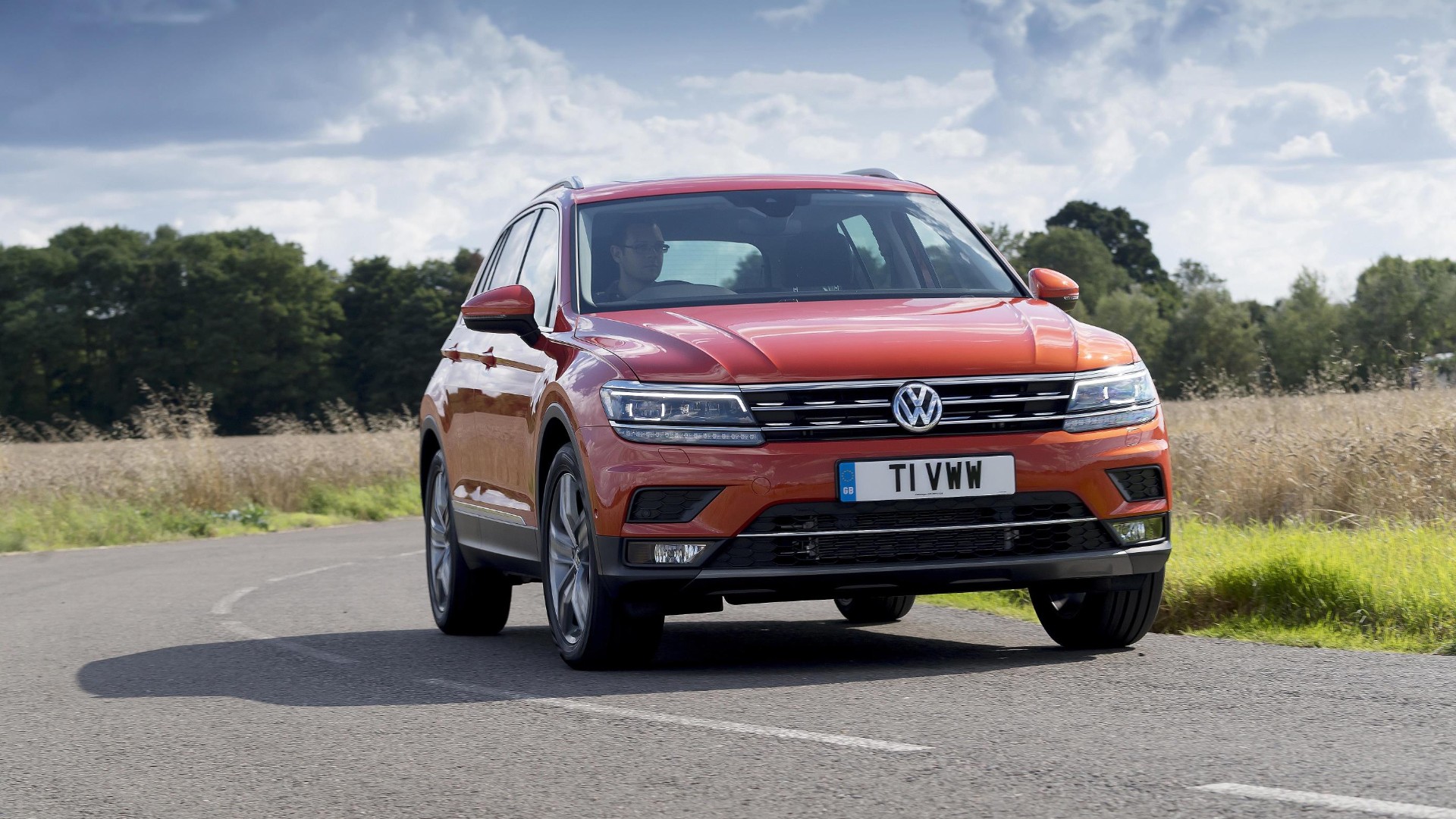
Perhaps more curious is the drop in popularity of crossover SUVs such as the Nissan Qashqai, Volkswagen Tiguan and Peugeot 3008. Sales of the Nissan were down 15 percent, while the Volkswagen and Peugeot dropped 18 percent.
Slowdown catching up with SUVs
Felipe Munoz, JATO’s global analyst, believes there are a couple of reasons for the slowdown of SUVs.
“Although it was still the third-highest month ever for sales in the segment (behind March 2018 and March 2019), there are two factors that explain the limited growth,” says Munoz.
“The first is that the poor conditions of the wider market are finally impacting SUVs, which are usually more expensive than regular car types. The second, which is more concerning, is that SUV demand may be peaking after many years of growth.”
Logically speaking, what climbs must eventually plateau. Demand increase cannot be exponential. With the contraction of the market as a whole, it’s only logical to expect that even the strongest performers will eventually feel the burn.
As for the rest of the car market? It’s business as usual. Diesel takes a tumble yet again, with a 21 percent drop in registrations in June for a 31 percent market share. Electric car popularity is growing, with a 20 percent increase in demand.
EVs remain a minority, however, making up just 7.5 percent of all cars sold.
The original Mini was a revolution. From the Monte Carlo Rally to Mayfair, it was a hero of the racetrack and hero of the people. To celebrate the car’s 60th anniversary, we join its birthday celeb9ations at the 2019 Silverstone Classic, then look at the life and times of this British icon, charting its rise, fall and rise again in the 20th century and its reincarnation for the new millennium.
An enormous parade of original Minis took to the track for the Silverstone Classic historic race meeting. Minis of all ages, shapes and sizes (of which there are many) made for an extraordinary display. Everything from the original 1959 car to the very last of the classic Minis sold in 2001 was welcome.
Paddy Hopkirk led the parade in his 1964 Monte Carlo Rally-winning Mini Cooper S, complete with rally-ready spotlights and its race number on the side. ‘33 EJB’ is a legend in the history of this iconic car.
A parade is all well and good, but this is Silverstone, and the Silverstone Classic is a race meeting. So it’d be rude to not have races dedicated to the Mini. Thankfully, the organisers thought so, too.
The right car at the right time
Onto the story of the Mini itself… Petrol was in short supply in the mid-1950s, with the government introducing fuel rationing in the wake of the Suez Crisis. It had a devastating effect on the car industry, with Ford and Vauxhall cutting production, the cost of petrol soaring, and garages closing. It focused the minds of the British public, with sales of 1,000cc cars rocketing in the wake of the crisis. German bubble cars started to arrive in Britain, with motorists won over by the promise of 40mpg and lower running costs.
‘A proper small car’
Leonard Lord, the top man at the British Motor Corporation (BMC) wasn’t a fan of the bubble car. “God damn these bloody awful bubble cars. We must drive them off the streets by designing a proper small car,” he declared. His response was to invite Alec Issigonis, the genius behind the Morris Minor, back to the company to work on project XC9003, later renamed ADO15.
‘Wizardry on wheels!’
‘Wizardry on wheels!’ blazoned the original press ads, but the headline was more just ad-man hyperbole. Issigonis and his team somehow managed to squeeze space for four adults and their luggage into a car extending to just 10 feet bumper-to-bumper, thanks in no small part to the decision to mount the engine transversely. This, coupled with the in-sump gearbox, meant that the cabin was left with a huge amount of space – as much as 80 percent of the floorpan could be used for seats and luggage.
Martini: shaken, not stirred
The team led by Issigonis left no stone unturned in the pursuit of space maximisation. Seats were laid out on the factory floor, with people of all shapes and sizes invited to sit on them. The designers also measured how much space was required to open a map and the size of pocket needed to house the map when it wasn’t in use. John Sheppard was the man credited with many of the Mini’s ingenious features, which famously included door bins large enough to carry the gin and vermouth bottles required for Issigonis’ dry martinis!
A-grade family car
It might be a small car by today’s standards, but the Mini was more than up to the task of carrying four people and their luggage. Power was sourced from an 848cc A-Series four-cylinder unit, which was enough to deliver a speed of 70mph and up to 50mpg. As a genuine four-seater with excellent fuel economy and sector-leading dynamics, BMC had well and truly burst the German microcar bubble.
Cheap and cheerful
Following two-and-a-half years of development work, the Mini launched in 1959, with two versions available: the Austin Se7en and Morris Mini-Minor. It was cheap, probably too cheap, with the basic version costing just shy of £497 and the De Luxe model priced at £537. BMC was constantly plagued by reports and accusations that it was selling the Mini at a loss, with Ford stripping a Mini down to its bare shell to calculate how much of a hit BMC was taking. It claimed it would cost more than the price of the De Luxe model, which was about the same as the cost of building the more expensive Anglia. This image shows the dashboard of a Mini Mk2.
An instant success
Not that BMC was too concerned. Even if the Mini was a loss-making exercise, it was capturing the imagination of the press and the motoring public. In 1959, it was BMC’s best-selling model, although some blue-collar motorists felt that it was too small to be a true family car. This was an era when bigger meant better in the eyes of the typical car buyer. There were also one or two teething problems.
Soggy feet and musty smells
Thanks to the use of rose-tinted glasses, it’s easy to fall into the trap of believing the Mini was perfect straight out of the box. But that was far from the case, with the early cars suffering from water ingress, leading to squelching carpets, a wet floor-mounted starter switch and musty smells. A reinforced box sill solved the problem, but not before 8,000 cars had to be recalled. Other complaints included the ride quality, uncomfortable seats over long distances and internal oil leaks. It’s fair to say that BMC adopted a policy of continuous improvements. This image shows a pre-production model.
A classless car
By the end of the year, just shy of 200,000 cars had rolled out of the factory in Cowley, with the Mini on course to becoming a national treasure. Soon, everyone from nuns to models and nurses to celebrities were getting behind the wheel of the British sensation. Steve McQueen, Twiggy, Enzo Ferrari, King Hussein of Jordan and every member of the Beatles are just some of the famous names to have owned a Mini.
Van-tastic Mini
In early 1960, the first Minivan arrived, swiftly followed by an estate version. The estate – badged as the Austin Seven Countryman and Morris Mini Traveller – was essentially a van with rear windows, timber cladding, a slightly raised body and twin doors at the back. It was cheaper than the Austin A40 Countryman and Morris Minor 1000 Traveller. A year later, the first Mini Pickup hit the streets.
Mini saloons
Also in 1961, BMC launched a more upmarket version of the Mini, again produced in two badge-engineered versions – the Wolseley Hornet and Riley Elf. Originally priced at £672 and £694 respectively, these three-box variants lived on until 1969.
The Cooper
While the Mini was good to drive, it was no performance car. Not that this stopped John Cooper dreaming of a Mini with a little more bite. His friend, Alec Issigonis, was always against the idea, but undeterred, Cooper approached BMC’s MD George Harriman with a prototype and was given the green light to build 1,000 cars. Neither could have had any idea what a success story they had on their hands.
Monte Carlo or best
In its original guise, the Mini Cooper was powered by a 997cc engine fitted with twin SU carburettors, which was enough to deliver a top speed of 85mph. In 1963, the 1071cc Cooper S arrived, which was followed by 970S and 1275S versions produced for circuit racing. The Cooper S proved to be a formidable little racer, famously winning the Monte Carlo rally on three occasions.
Swinging Sixties
The Mini evolved throughout the 1960s. A Super version was introduced before being combined with the De Luxe to become the Mini Super De Luxe (pictured). Meanwhile, an estate version without the wood was added to the range, primarily for cost purposes. Other notable events include the dropping of the Seven name from the Austin version and the introduction of Hydrolastic suspension, which improved the ride quality but compromised the handling.
Mini Moke
In 1964, BMC launched the Mini Moke. Designed by Alec Issigonis, the crude, uncomfortable, unsafe and tediously slow Moke was shunned by the armed forces and destined to spiral into obscurity. That was until it captured the hearts of the hip and trendy types of Carnaby Street. It became an unlikely global sensation, with thousands of Mokes exported to sunnier climes.
The Italian Job
The first Mini automatic appeared in 1965, the same year in which the first licence-built Innocenti Mini Minor 850 rolled out of the factory in Italy. Production of the Spanish-built Authi 1275C began in 1968, seven years after Mini production had started in Australia. Britain had an international bright young thing on its hands, with the decade culminating in a starring role in The Italian Job film.
Mini milestones
The Mini spent the 1960s chalking off major milestones. In 1962, BMC announced the production of Mini number 500,000, while the millionth Mini left the factory in 1965. Four years later, the second millionth Mini rolled off the line, making it the first British car to hit this milestone. Earlier, in 1967, the Mk2 versions had appeared, while the Clubman, which was very much a Mini for the 1970s, appeared in 1969.
Into the 1970s
The Clubman, with a nose designed by Roy Haynes, was a little controversial, as was the decision to replace the 998cc Cooper with the 1275GT. The British Leyland Motor Corporation (BLMC), as it was now called, introduced a number of cost-saving measures, designed to improve profitability and reduce production time. It paid dividends, with a record 318,475 Minis produced in 1971.
Trouble and strife
Like many British cars in the 1970s, the Mini was affected by strikes, industrial unrest and internal squabbles. But that didn’t stop the Mini from sailing past the three million mark in 1972, before hitting four million in 1976. It was even Britain’s best-selling car in February 1975. The 20th anniversary Mini 1100 Special was launched in 1979, while the Mini 850 was rechristened the Mini City. Here is Alec Issigonis pictured in the wake of the success at the 1965 Monte Carlo Rally.
Into the 1980s
By rights, that should have signalled the end for the Mini. The Clubman and 1275GT were phased out in 1980 and the launch of the miniMetro could so easily have signed the death warrant for the little car. But although the Estate, Minivan and Pickup were all gone by 1983, the Mini wasn’t going down without a fight. The upmarket Mayfair (pictured in 1993) arrived in 1982, swiftly followed by the Mini 25, launched to celebrate the car’s 25th anniversary.
Minis have feelings too
Against all the odds, just as the Mini was facing the axe, the company embarked on a memorable Christmas advertising campaign. The ‘Minis have feelings too’ advert of Christmas 1986 led to a sharp rise in sales, with city-dwelling women aged 20 to 39 finding the car hard to resist. A Mary Quant ‘Designer’ model was launched, along with Italian Job versions and a John Cooper performance kit. Far from bowing out as a budget motor, the Mini was majoring on nostalgia and style. Special editions would become the norm for the Mini – here is the Paul Smith edition from 1998.
The twilight years.
The Mini 30 arrived in 1989, while a Cooper limited edition, with powered sourced from the MG Metro’s 1275cc engine, debuted in 1990. A mainstream model soon followed, along with Cooper S and Seven (pictured) versions, plus a new Sprite base model. But the writing was on the wall when BMW bought the Rover Group in 1994. The German company promised to build a new Mini for the new millennium, but it would differ greatly from the outgoing model. The Mk7 of 1996 was the original Mini’s last hurrah.
You make me wanna shout
The final Mini was driven out of Longbridge on 1 October 2000, with Lulu and Twiggy in attendance to add a touch of nostalgic glamour. Twiggy’s first car was a Mini, with BMC building a car with dark purple paint and tinted windows especially for the model. Just a month earlier, a new era was unfolding, as the first new MINI (note the use of uppercase letters) was unveiled at the Paris Motor Show. The picture shows a late Mini with the Millennium Dome in the background.
The BMW MINI
In 2000, BMW had cut its losses and sold the Rover Group to Phoenix Venture Holdings. Cleverly, the German company retained Rover’s prime asset, knowing that a born-again Mini could be the answer to its small car prayers. A Rover Spiritual concept car had been unveiled in 1997, followed by the Mini Monte Carlo (ACV30) in the same year.
No gas, gas, gas
Rover had planned to build a Mini with Hydragas suspension and a K-Series engine, but BMW had other ideas. Although 40 percent of the car came from UK suppliers, the 1,598cc engine was built in Brazil, with the styling handled by Frank Stephenson, a Moroccan-born American. “The MINI Cooper is not a retro design car, but an evolution of the original,” said Stephenson. “It has the genes and many of the key characteristics of its predecessor, but it is larger, more powerful, more muscular, and more exciting than its predecessor ever was.”
Not a real Mini?
To say it wasn’t met with universal acclaim would be a huge understatement. Mini purists failed to embrace the car, while Alex Moulton, the genius behind Hydragas didn’t hold back. “It’s enormous – the original Mini was the best-packaged car of all time – this is an example of how not to do it… it’s huge on the outside and weighs the same as an Austin Maxi. It is an irrelevance in so far as it has no part in the Mini story,” scathed the engineer and inventor.
A MINI adventure
The new MINI went on sale in the UK in July 2001, with buyers queuing up for a slice of retro-evolutionary motoring. Much like the original, it wasn’t perfect, with the new MINI criticised for its small boot, cramped rear seats and a lack of power, but most road testers were won over by its cabin, safety credentials, driving position, gearbox, ride quality and style.
The Cooper S
In response to claims that the MINI could handle more power, the Cooper S arrived in 2002. Courtesy of a Roots supercharger, power was up from 130hp in the Cooper to 163hp, helping to deliver a 0-60mph time of 7.6 seconds and a top speed of 133mph. Further upgrades followed, including the 200hp Cooper S Works and the arrival of the MINI Convertible.
John Cooper Works GP
By now, BMW was finding its groove, as evidenced by the MINI John Cooper Works GP. This was the most powerful production MINI to date, with its supercharged four-cylinder engine developing 218hp. At £22,000, it wasn’t cheap, but there were no shortage of buyers for this modern classic.
Out with the old
BMW called time on the first-generation MINI in 2006, replacing it with the even larger R56. The front-end was redesigned to meet pedestrian safety regulations, while the cabin felt more upmarket than before. The old Brazilian-built engine was gone, replaced by a new 1.6-litre motor developed in partnership with Peugeot-Citroen.
In with the new
The R56 also provided the platform for the Clubman, which borrowed heavily from the Traveller concept of 2005. If the name wasn’t controversial enough, the ‘Clubdoor’ was on the wrong side for passengers in the UK. The first diesel-powered Cooper D arrived in 2007, while the Cooper S John Cooper Works made its debut in 2008. BMW’s marketing team went into hyperdrive, launching the Countryman, Coupe and Paceman variants, to varying degrees of success. There was also a really-rather-good but short-lived Clubvan and an entry-level MINI First.
The F55
Special editions came and went, and some models were quietly dropped before the current F55 MINI arrived in 2004. Predictably, it’s bigger than ever and comes with the option of five doors. Thankfully, the range has been trimmed, with only the Hatchback, Convertible, Clubman and Countryman models remaining.
MINI Electric
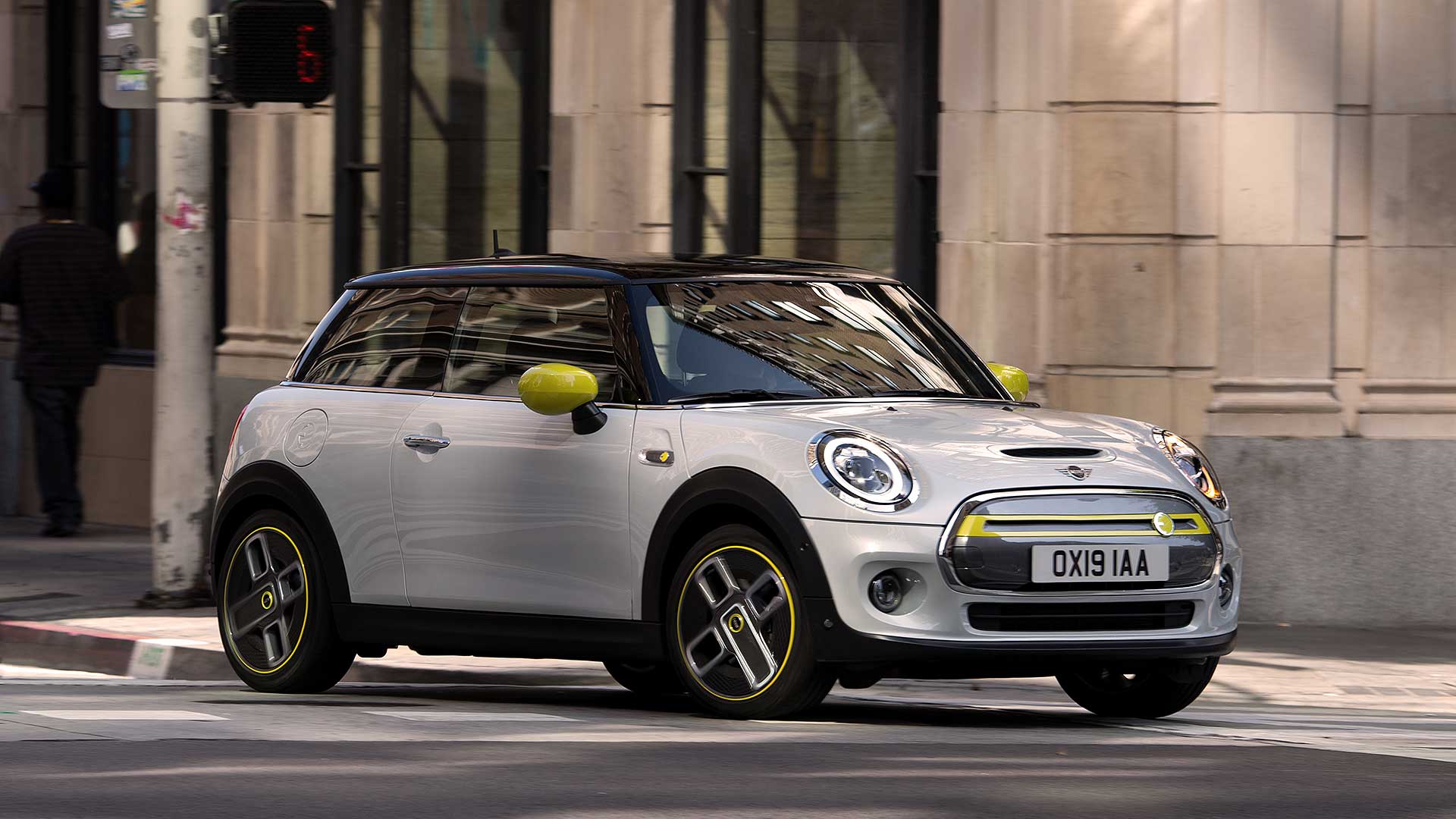
Bringing the story right up-to-date, a new fully-electric MINI joins the range in 2019, with production handled at Plant Oxford. The MINI Electric is expected to launch as part of the company’s 60th anniversary celebrations, sporting 120 miles of range and quirky EV looks. Joining it at the other end of the spectrum soon will be the hardcore 300hp+ GP variant…
Happy 60th, Mini
Whatever your thoughts on the modern MINI, the classic Mini played a huge part in the history of the British car industry. It was one of Britain’s finest exports and loved by everyone, regardless of age, wealth or status. There will never be anything quite like. Happy anniversary, little car.
With thanks to AROnline for the highly detailed Mini development story. Visit the website for a terrific long read – be sure to make a cuppa.
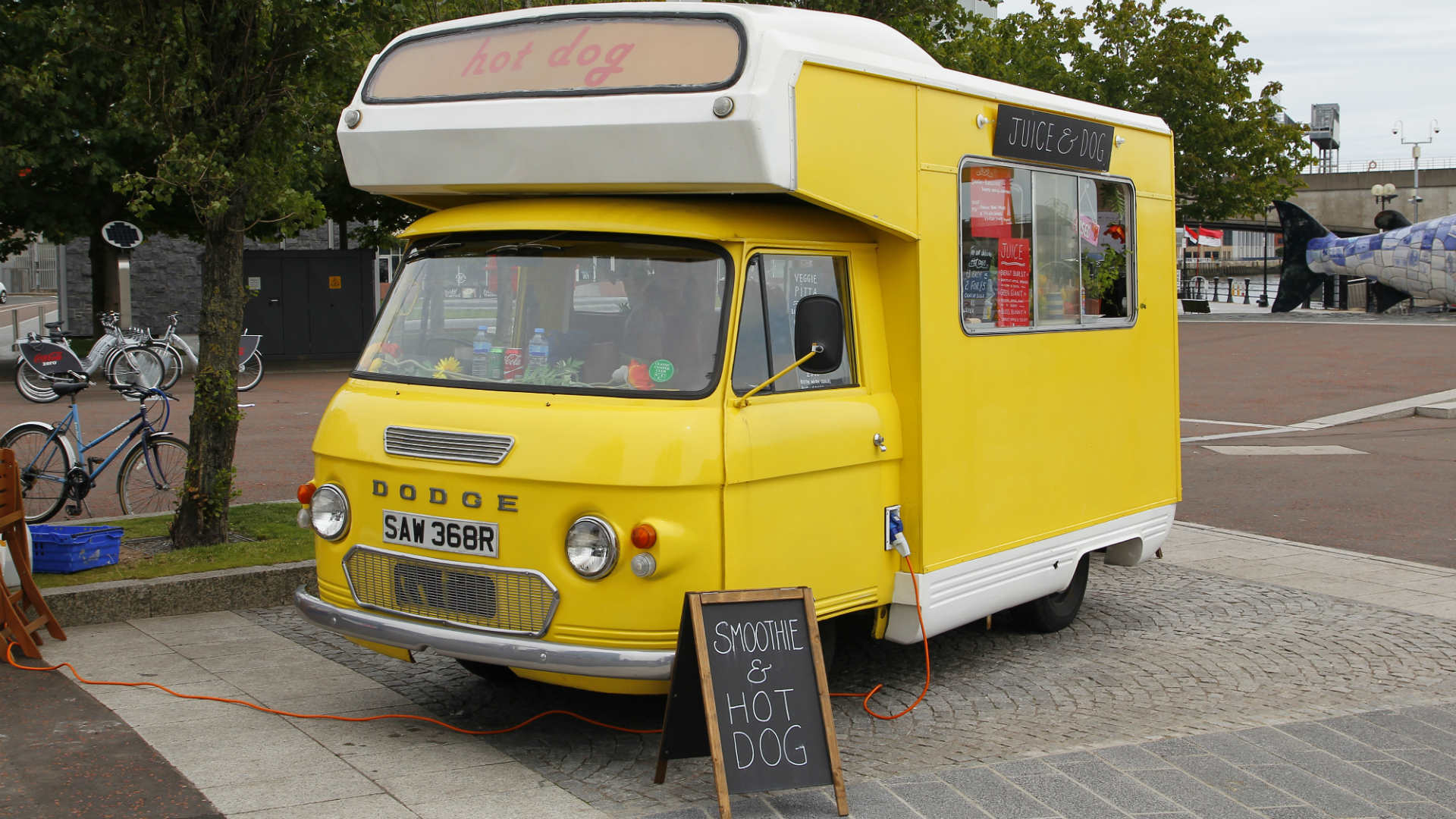
Van drivers in Belfast are the least likely to be involved in a road accident. That’s according to research conducted by Admiral Van Insurance.
Predictably, London and the surrounding areas are the worst places to own a van, with more than 17 percent of van drivers in Greater London making an insurance claim.
Conversely, just seven percent of van drivers in Northern Ireland made an accident claim.
Mark Gabriel, head of van insurance at Admiral, said: “For many van drivers up and down the country, the van is more than just a mode of transport to get from A to B.
“Often the van is a vital piece of equipment that helps them do their job, so anything that jeopardises that can have a much wider impact beyond not being able to getting about.
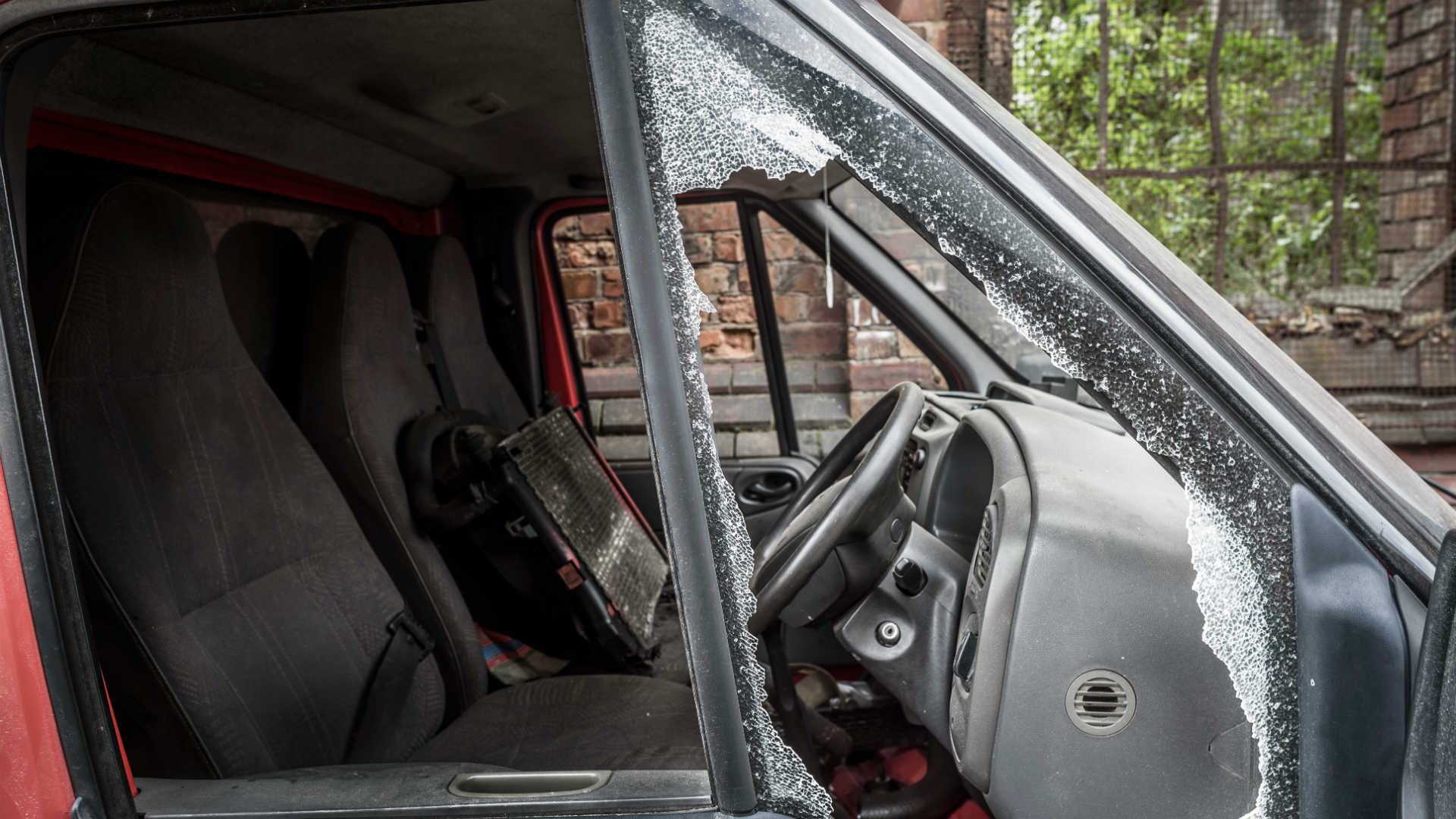
“Whether that’s an accident requiring repairs or the theft of a van or its contents, it can make it impossible for professionals to carry out their jobs, having a serious consequence on their livelihoods.”
Least likely areas for van accidents
1.
Belfast
2.
Inverness
3.
Dumfries & Galloway
4.
Aberdeen
5.
Shrewsbury
Most likely areas for van accidents
1.
London – North West
2.
London – South West
3.
Ilford, Essex
4.
Harrow, Greater London
5.
Bromley, Kent
London is the capital for van thefts
Builders are the most likely to be the victim of van theft, followed by carpenters, company directors, electricians and plumbers.
And there’s more bad news for London’s van drivers, with Greater London named the van theft capital of the UK. London topped the van theft table, followed by Yorkshire, West Midlands and East Midlands.
At the opposite end of the table, van drivers in Northern Ireland, Scotland and East Anglia are the least likely to be the victim of theft.
Gabriel added: “When it comes to theft, we recommend van policyholders – whatever their profession – consider additional safety features for their vehicle to deter criminals.
“They should also not leave anything on show in their van and always park in a well-lit, public area. Making sure you have the right insurance cover is vital to making sure they can get back up and running as soon as possible in the event anything untoward should happen.”
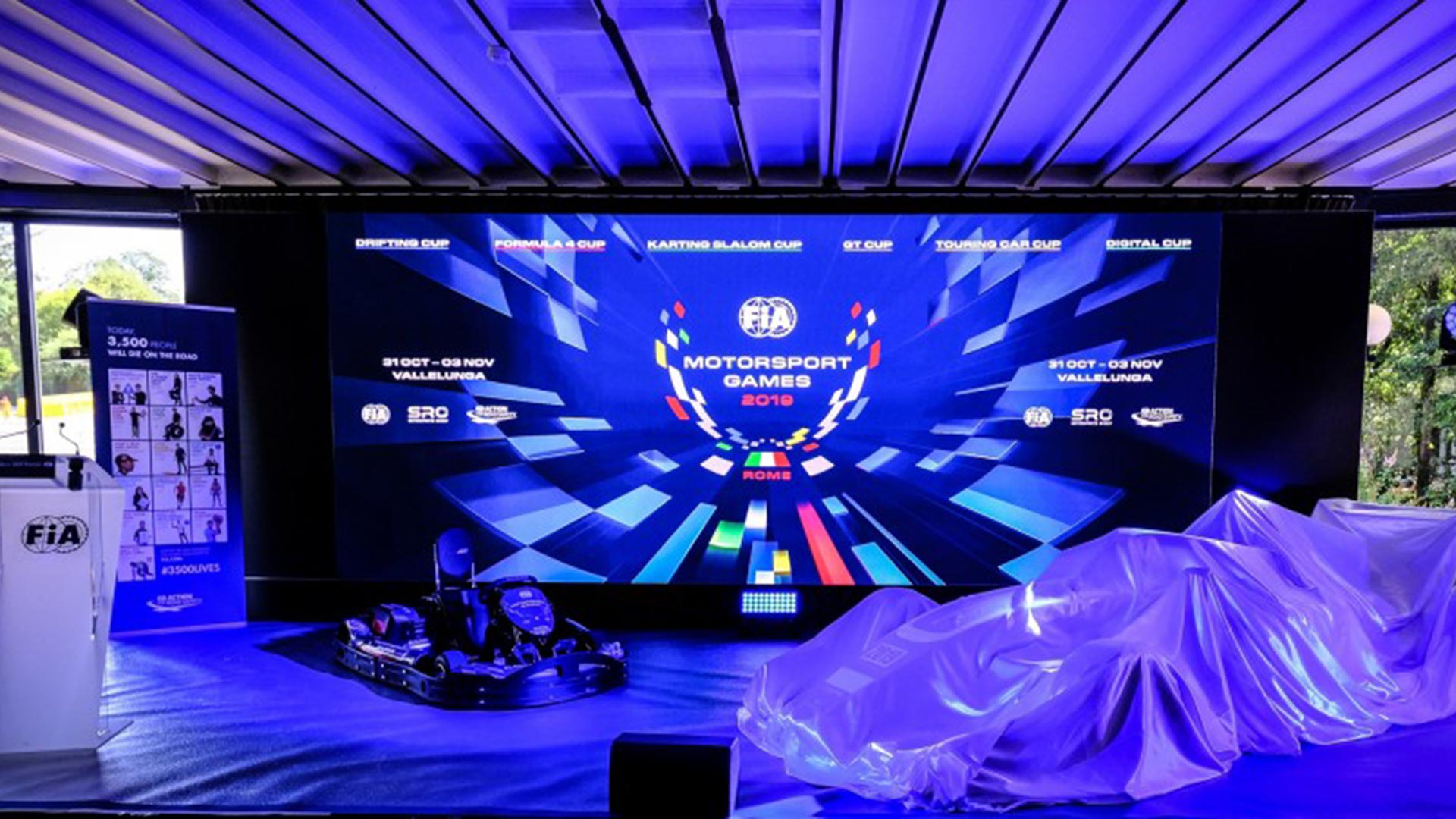
The FIA, responsible sanctioning championships like Formula 1, has announced more details on the first-ever Motorsport Games.
Scheduled to take place at the end of October 2019, the event is similar in style to the Olympic Games, but for racing cars.
Teams representing their home nations will compete in six different disciplines, with gold, silver, and bronze medals awarded for those who take the three podium places.
First petrolhead olympiad
What makes the Motorsport Games more intriguing is the choice of racing disciplines the FIA has chosen to include.
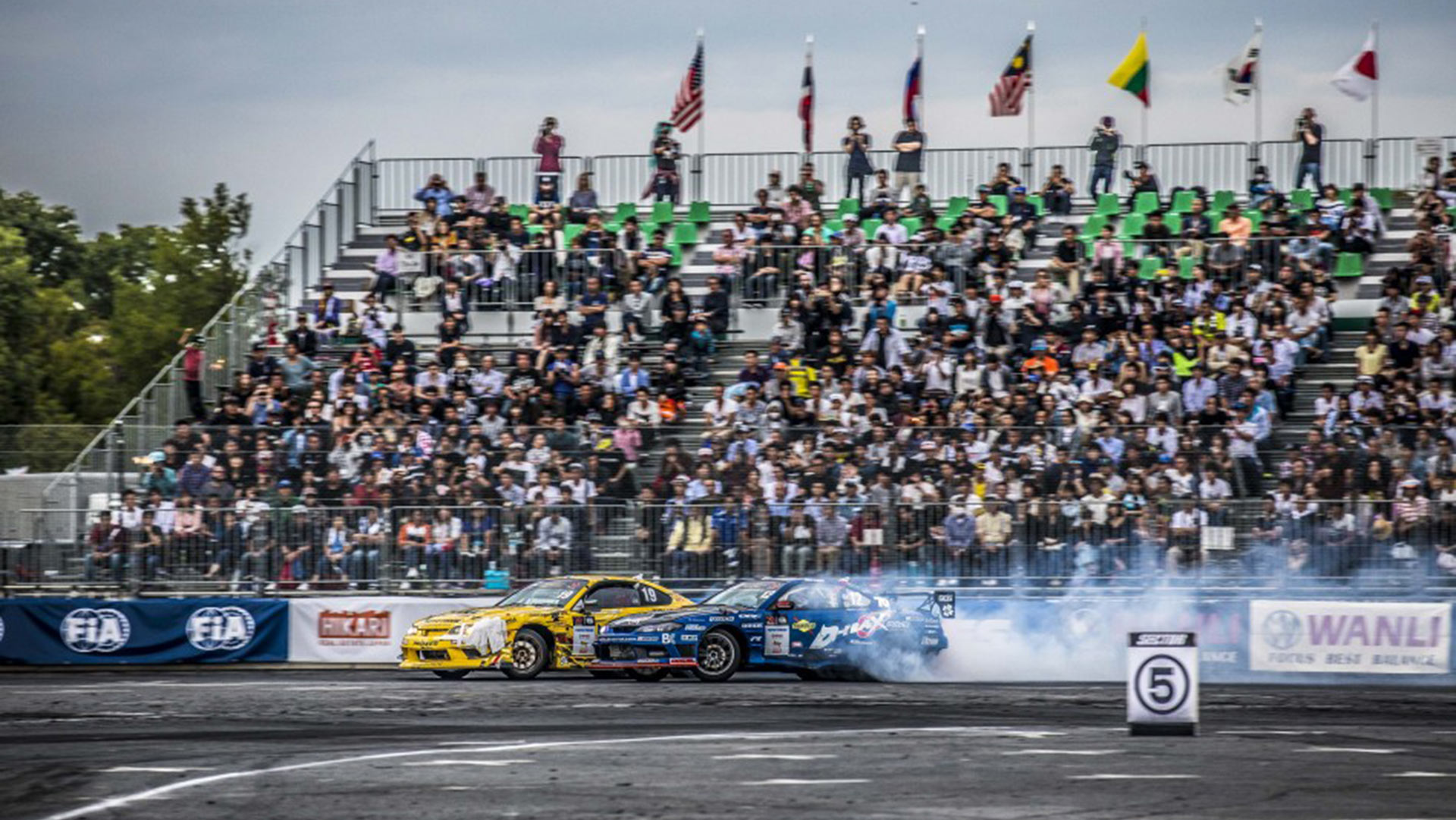
The GT Cup, using GT3-specification sports cars, Touring Car Cup, and F4 single-seater Cup all represent traditional strands of motorsport action. Drifting, due to the ever-increasing popularity of the formula, has also been included along with kart slalom racing.
However, the Digital Cup is the biggest shock inclusion, acknowledging the dramatic growth of esports, and recognising video games as a true form of motorsport.
No limits on screen time here
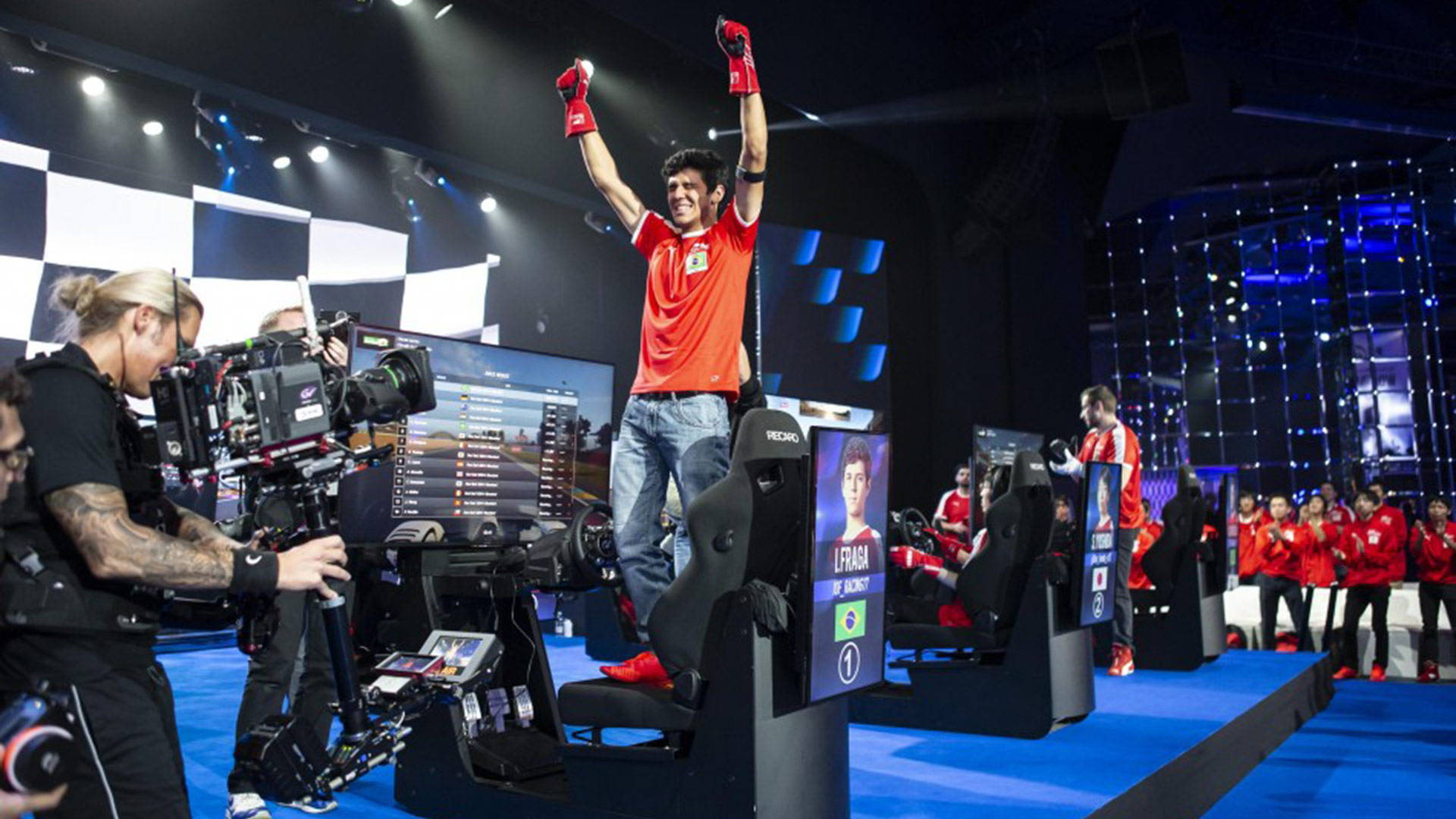
Competitors in the Digital Cup will use the same Gran Turismo Sport game, and PlayStation 4 consoles, as millions of regular video gamers around the world do.
The FIA has already collaborated with Sony and develop Polyphony Digital to certify special Gran Turismo Championships. But the inclusion as part of the Motorsport Games is a demonstration as to just how much the FIA values digital racing.
A stage featuring 12 gaming rigs will be used, with a giant LED screen letting spectators view the on-screen action. Qualifying and knockout stages will sort the top 12 drivers, who will then compete in a grand final.
Virtual racing, real winners
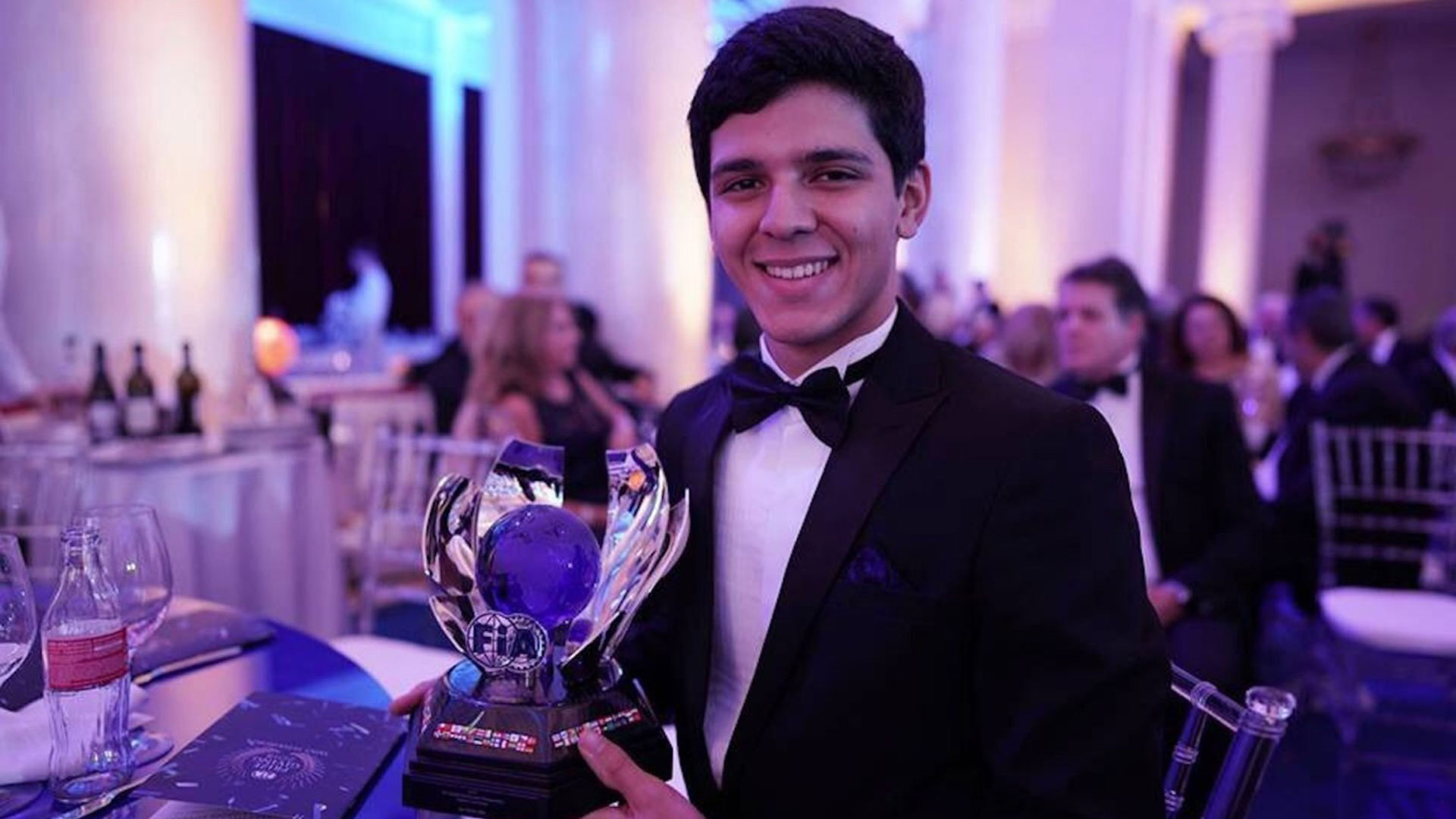
Compared to other forms of motorsport, virtual racing offers comparatively low costs of entry. Yet it could still see competitors picking up medals and trophies from the FIA, such as Ivor Fraga who won the Gran Turismo Nations Cup in 2018.
Nissan has previously used the Gran Turismo-based GT Academy to scout and recruit real-world racing drivers. Legendary F1 team Williams Racing also manages a roster of esports racers.
The opening ceremony of the first Motorsport Games will take place in Rome on 31st October 2019, with the Vallelunga race circuit hosting the on-track action for the following three days.
Auction website Bring a Trailer currently has for sale not only one of the rarest Ferraris ever made, but one with a truly amazing backstory.
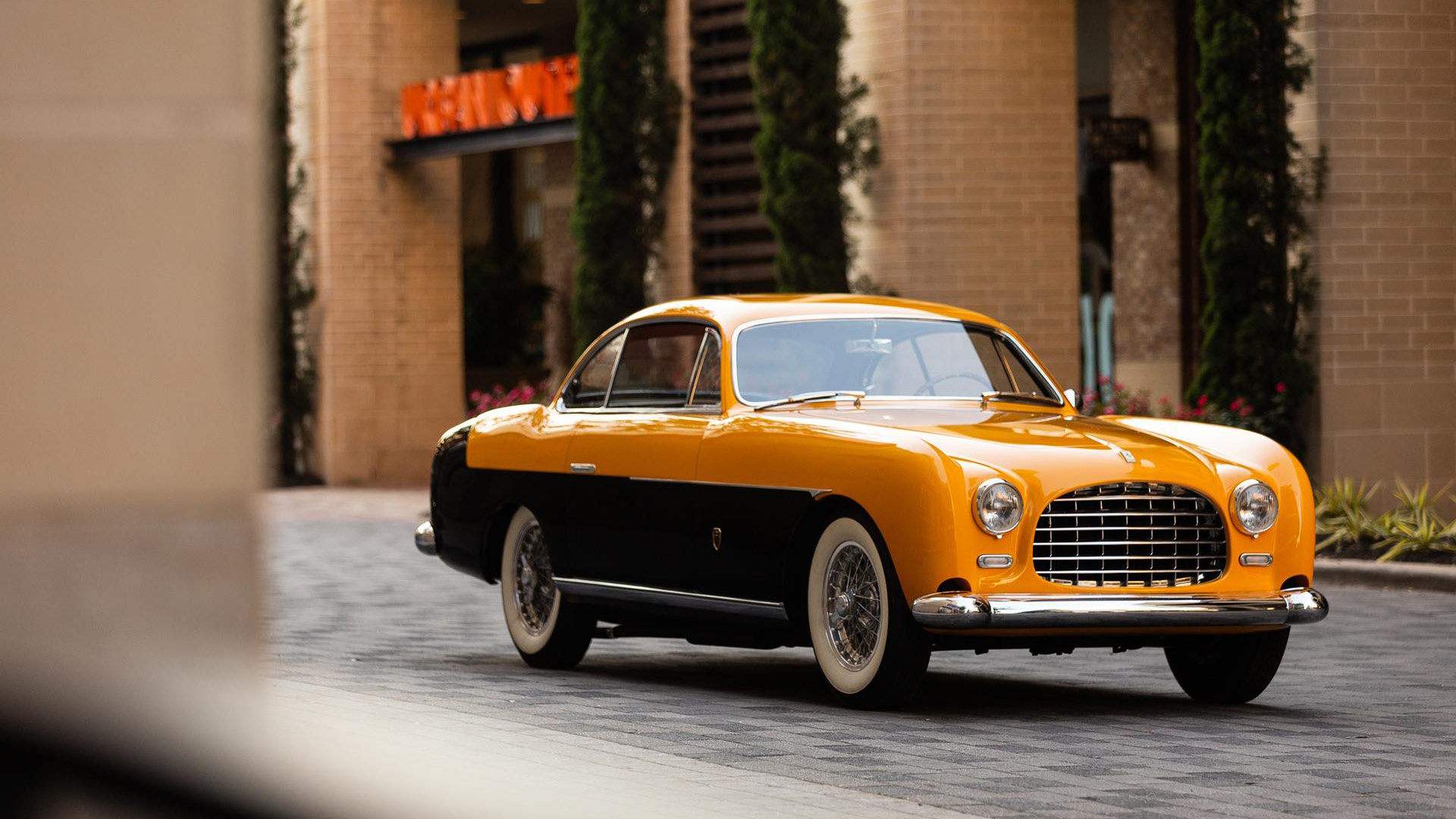
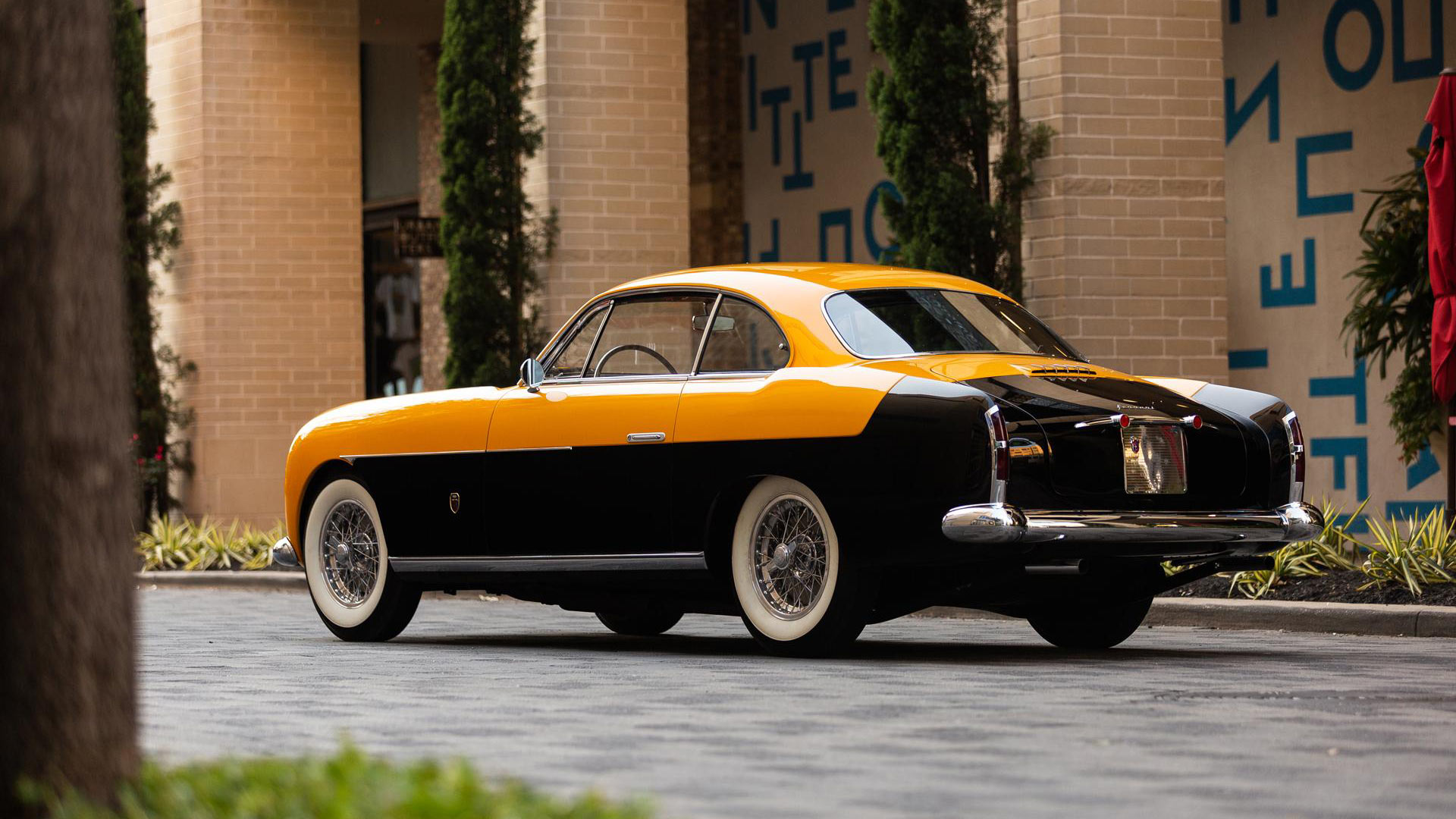
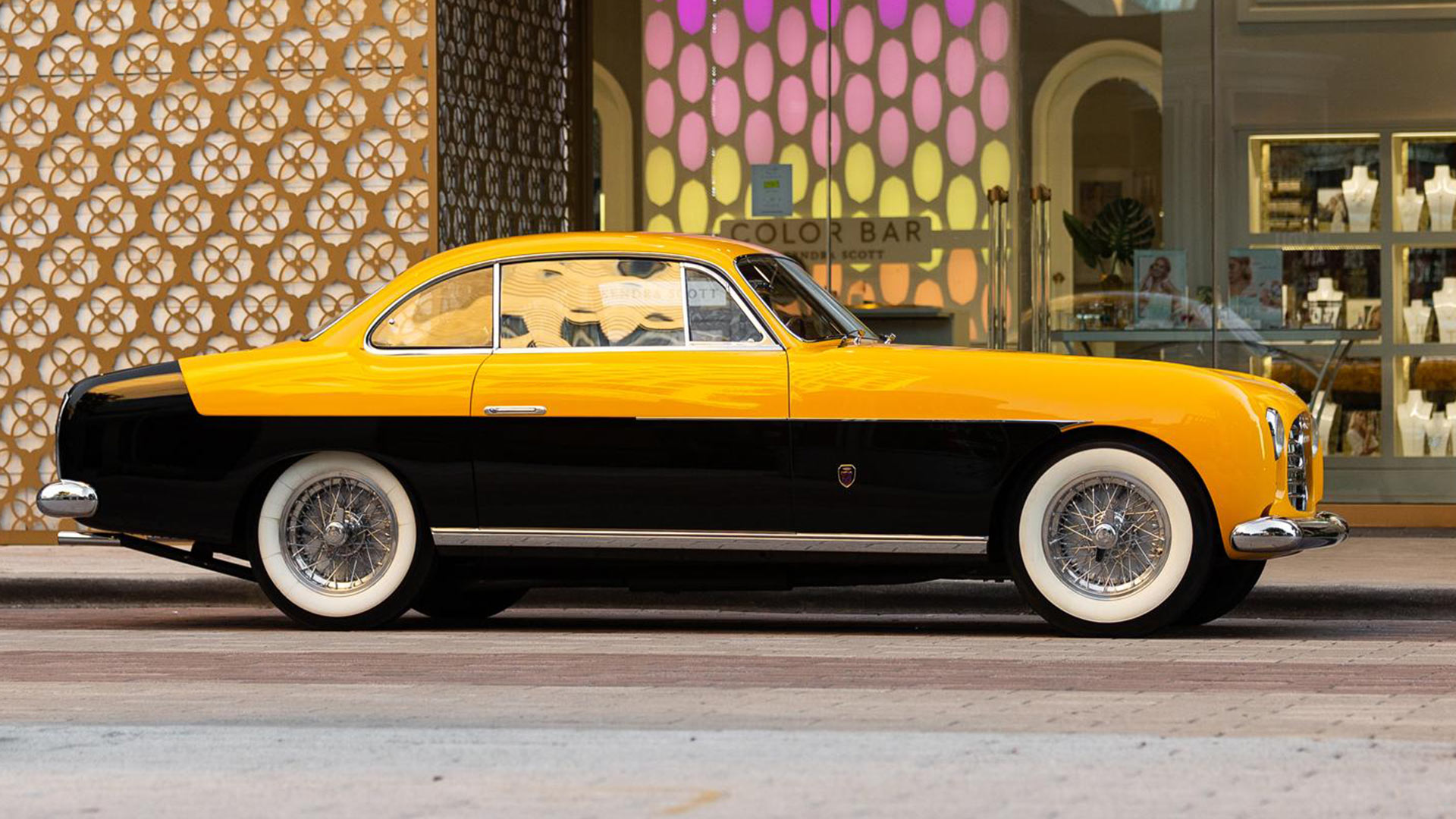
Only around 80 examples of the 212 Inter were built in Maranello, but this one is even more special for wearing unique coachwork created by Ghia.
Being first displayed at the 1952 Paris Auto Salon, and then bought by Argentinitan leader Juan Perón, makes it a true legend of Ferrari folklore.
Built in October 1952, this 212 Inter was intended to be used on the motor show circuit. Ghia in Turin, Italy were tasked with creating bespoke bodywork to truly display what Ferrari could offer.
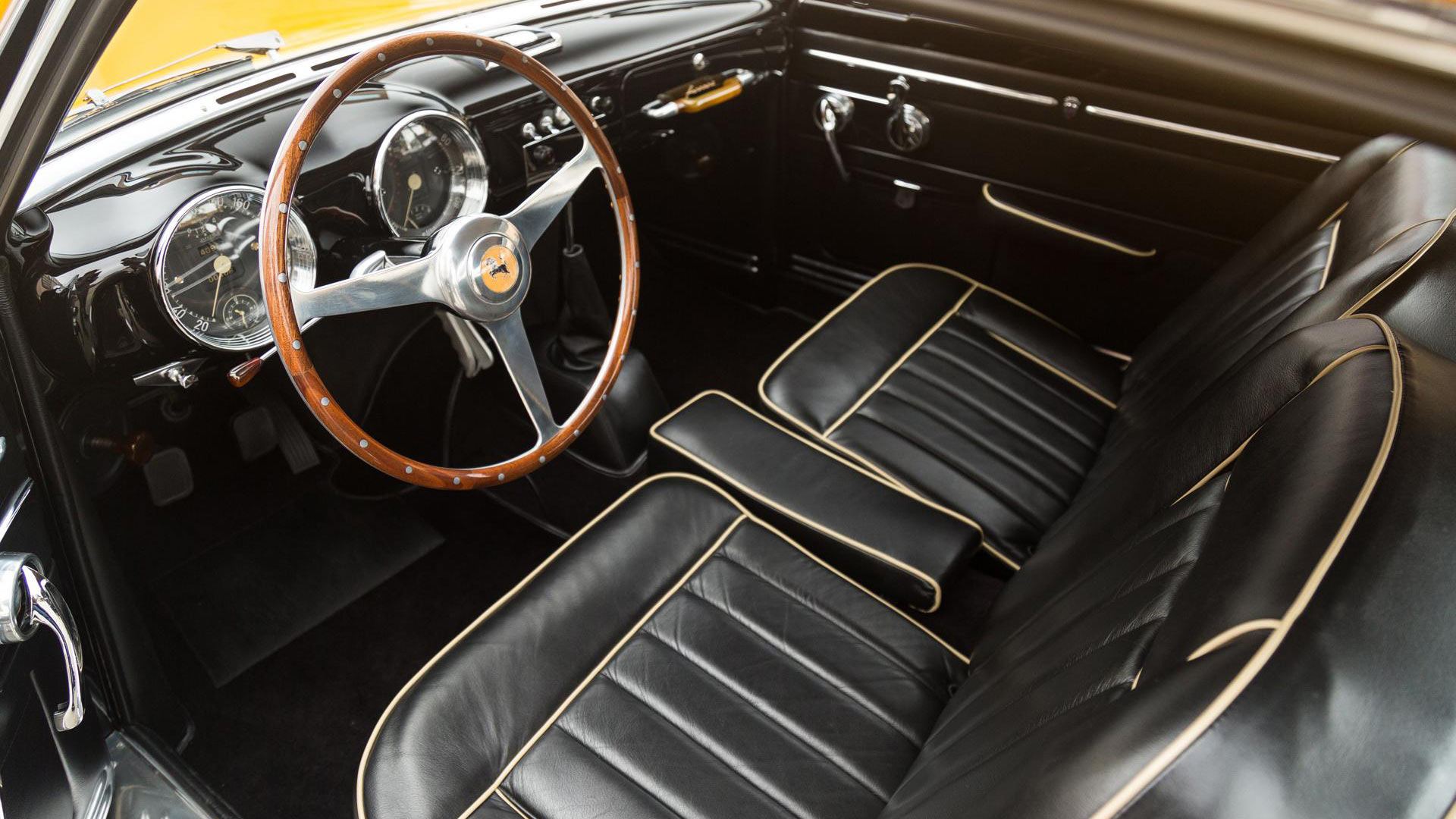
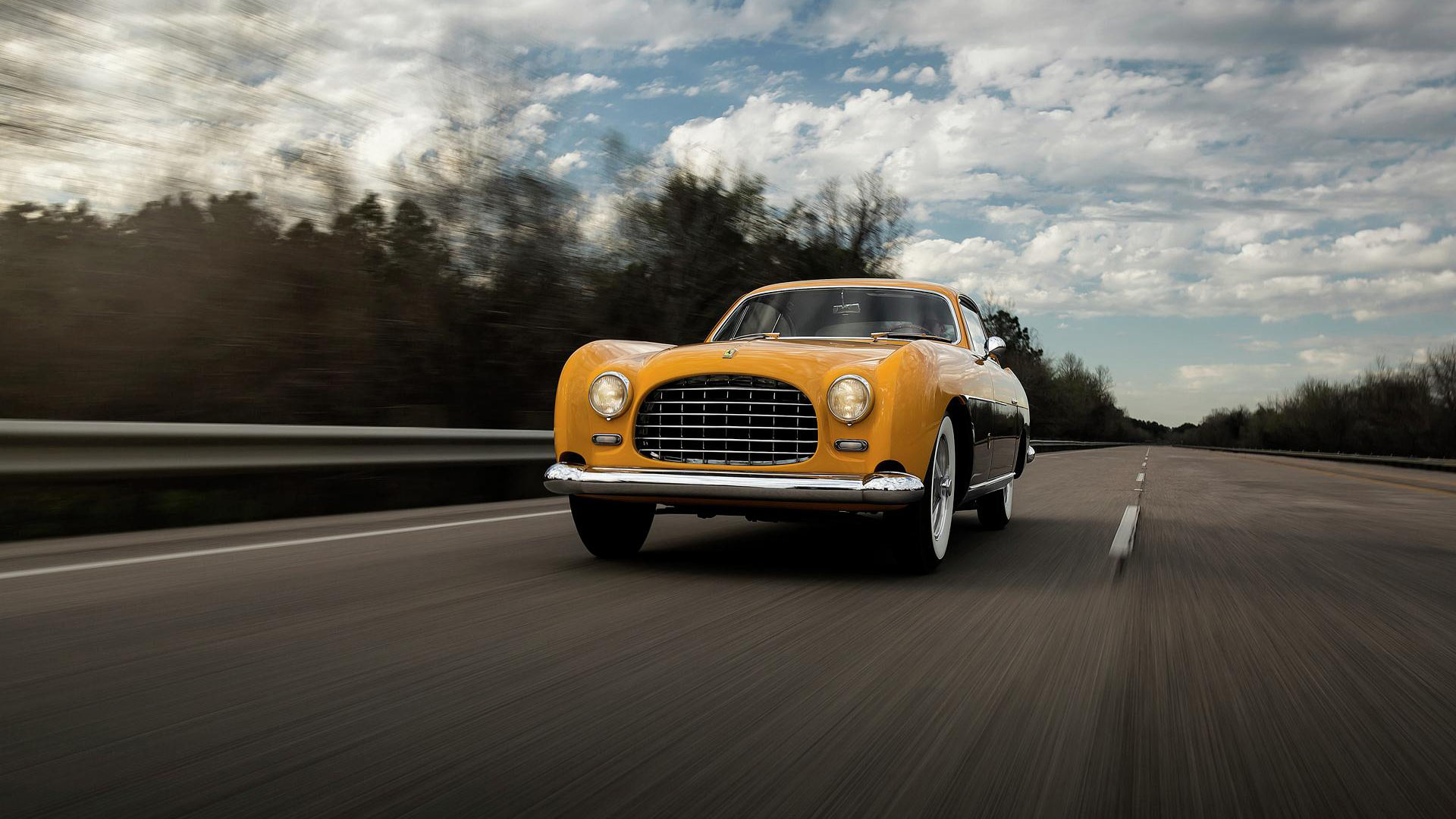
Famed Chrysler designer and Ghia associate, Virgil Exner, is noted to have provided many of the styling details. The distinctive yellow over black paint scheme is matched by the luxurious interior, featuring black leather upholstery with yellow piping.
The custom efforts seemingly worked, as they attracted the attention of Juan Perón – the then President of Argentina
As Argentina’s populist leader, Juan Perón had been responsible for financing the motorsport successes of Juan Manuel Fangio and Froilan Gonzalez. He also amassed a considerable personal collection of cars.
Before heading to Argentina, this 212 Inter returned to Maranello to be given a different chassis number by Ferrari. This was done to create the impression of the car being used, and avoid Argentinian import taxes on new cars.
The seller has provided a report by Ferrari specialist Marcel Massini, which gives some insight into Perón’s ownership of the 212 Inter.
After being ousted from power in a military coup, Perón fled Argentina in 1955 and the car passed into local ownership. The 212 Inter spent time in storage, until being sent to Switzerland in 1987 for restoration.
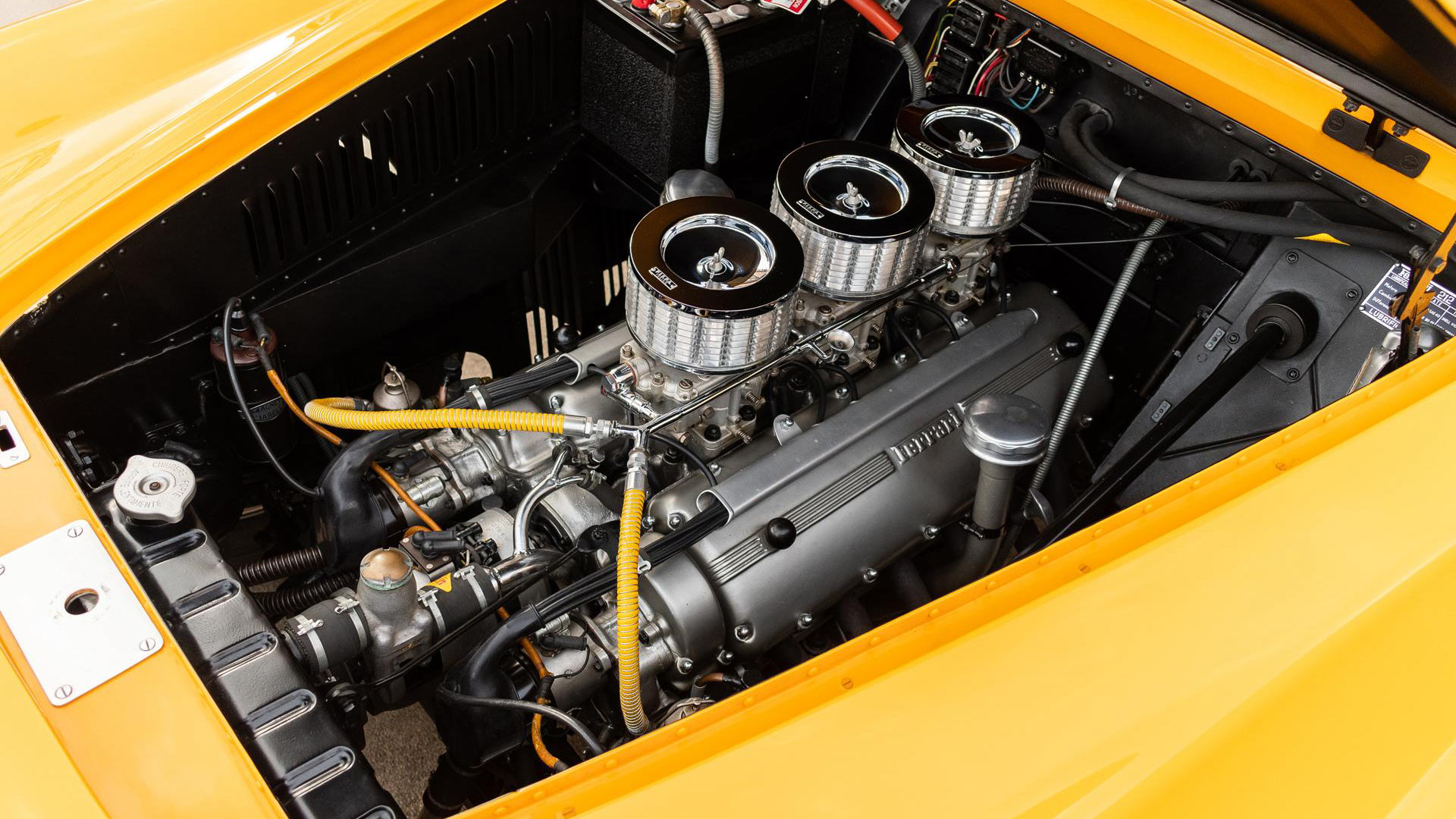
The original 2.6-liter Colombo V-12 engine is still present, and was subject to a thorough rebuild during the 1990s. Producing 163 horsepower, the twelve-cylinder engine has the potential to give the 212 Inter a top speed of 124 mph.
A period-correct four-speed manual transmission drives the rear wheels. The transmisison was replaced at some point whilst the car was in Argentina, although the differential is still original.
Recent maintenance has included a suspension rebuild, replacement fuel lines, and a new battery. The factory tool kit and original owner’s manual are all noted to be present.
The car was Classiche-certified by Ferrari in 2017, with the special ‘Red Book’ cataloging its provenance against the original specification.
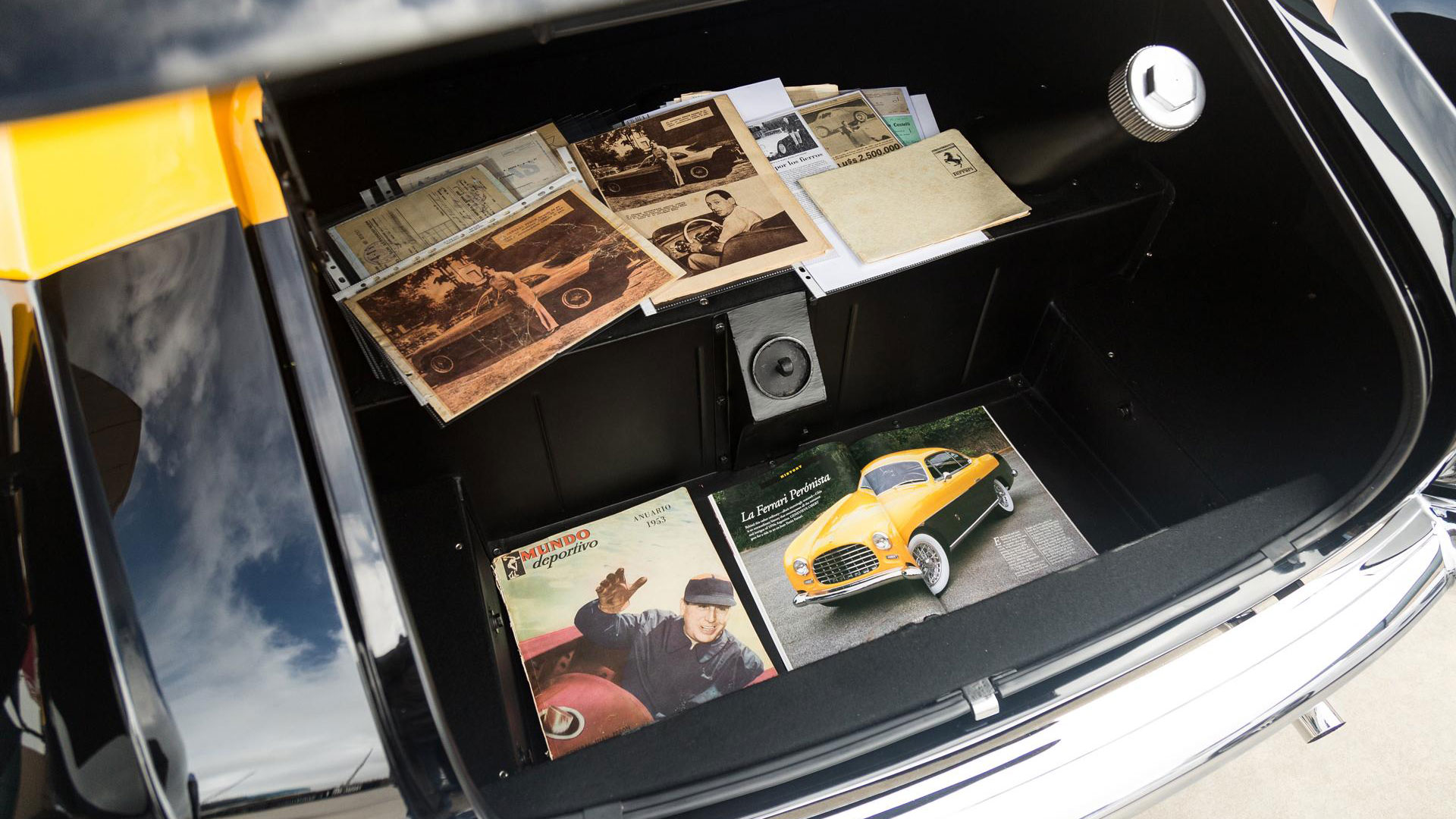
Having been featured in several magazines and books, the seller has provided numerous photographs and press clippings featuring the car. This includes images of Juan Perón with the car.
Finishing second at the 2002 Pebble Beach Concours d’Elegance is a reminder that buying this will give the new owner access to the biggest motoring events across the globe.
Last year this car sold for $1.188 million at the RM Sotheby’s sale in Scottsdale, Arizona. That should give some indication as to the expected final selling price.
The Bring a Trailer auction ends on July 31st, and has already generated a substantial amount of interest and early bids.
Whichever lucky buyer scoops the 212 Inter, they should certainly be pleased with owning this piece of Ferrari history.
For those with more limited budgets, Bring a Trailer does also have four other Ferraris currently listed. This includes a 1984 308 GTS Quattrovalvole, which is at the more affordable end of the Maranello ownership spectrum.
Everyone else can at least enjoy the epic video put together by the current owner of the 212 Inter.
 Following the introduction of the new Porsche 911 Carrera S in November 2018, Porsche is broadening the range with the more affordable Carrera Coupe and Cabriolet variants.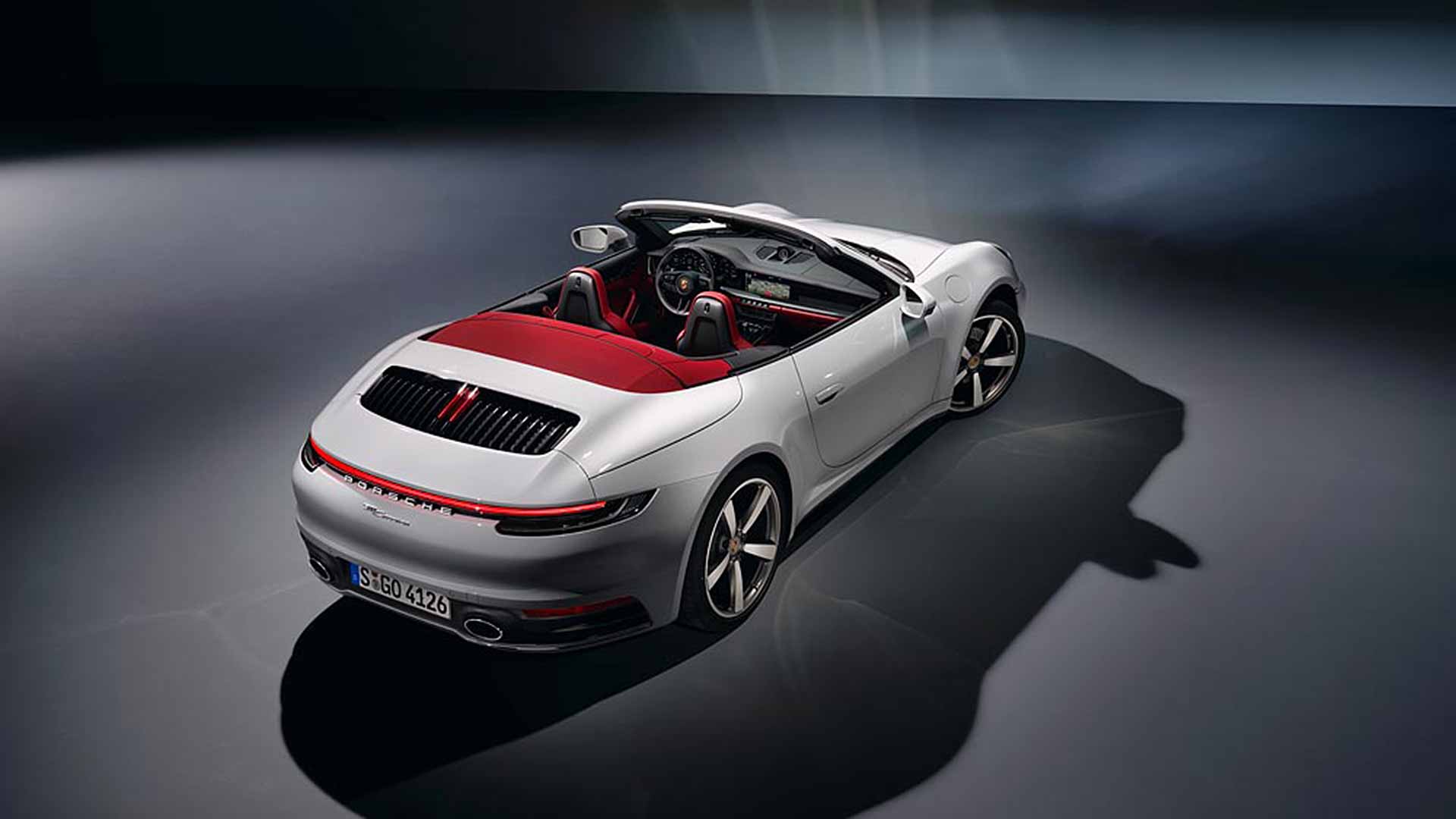
 It might be the first year for the Ford Performance Mustang in the Virgin Australia Supercars Championship, but the Blue Oval is already a
  Helping Ford is that the Manufacturers’ Championship is awarded on outright race victories, not on points scored. Given the level of dominance seen by the Mustang, collecting this trophy was only a matter of time.
  Even ahead of the weekend’s races in Ipswich, Queensland, the technical department of the Australian Supercars Championship was demanding Ford teams to make more changes to the Mustang.
 Initially derided for the ungainly proportions made from stretching a
  The long-running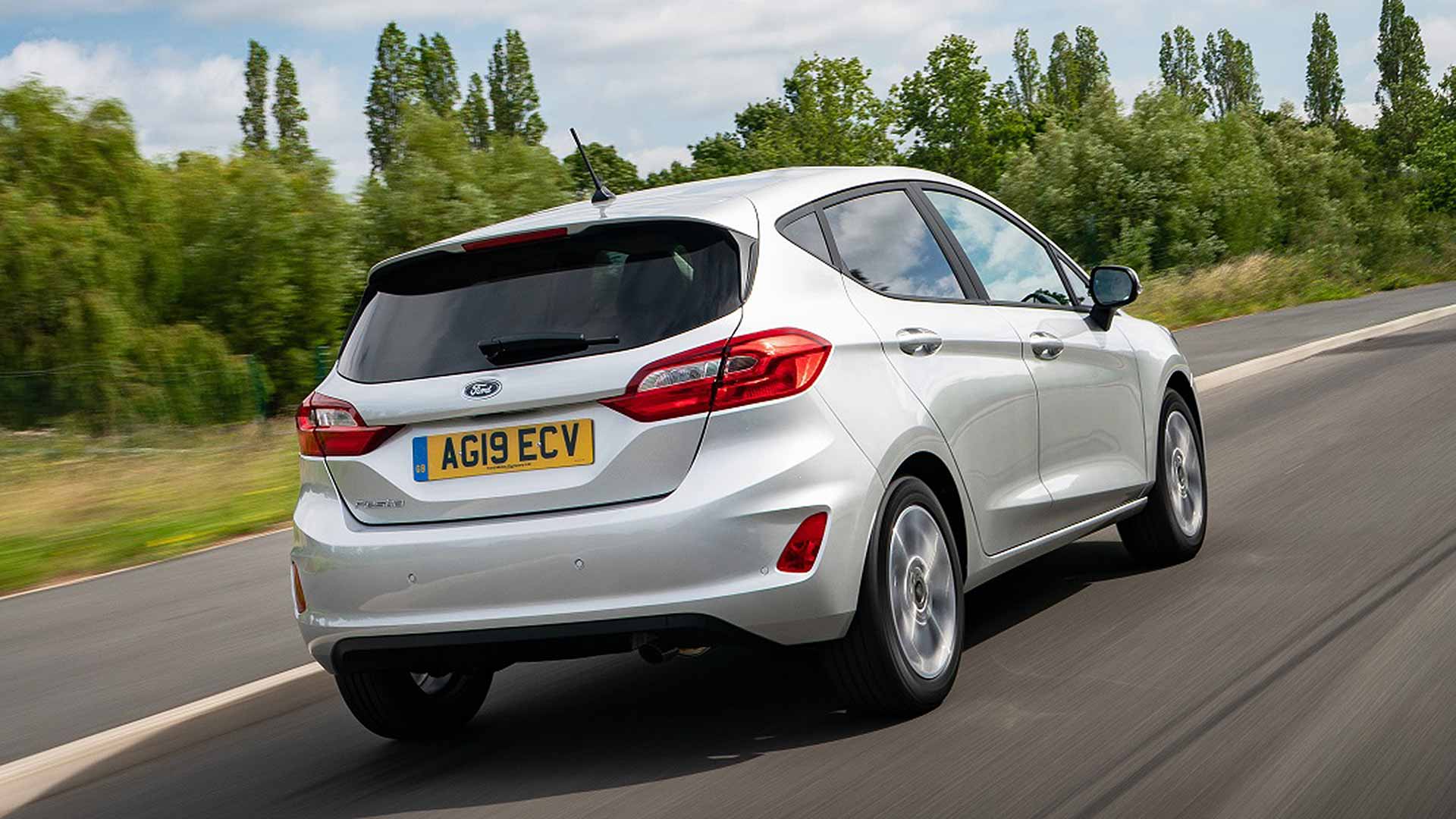
 The Society of Motor Manufacturers (SMMT), the British automotive industry trade body, has written to



 The FIA, responsible sanctioning championships like Formula 1, has announced more details on the first-ever
  What makes the Motorsport Games more intriguing is the choice of racing disciplines the FIA has chosen to include.
 Competitors in the Digital Cup will use the same Gran Turismo Sport game, and
  Compared to other forms of motorsport, virtual racing offers comparatively low costs of entry. Yet it could still see competitors picking up medals and trophies
  Auction website
  Built in October 1952, this 212 Inter was intended to be used on the motor show circuit. Ghia in Turin, Italy were tasked with creating bespoke bodywork to truly display what Ferrari could offer.
  As Argentina’s populist leader, Juan Perón had been responsible for financing the motorsport successes of Juan Manuel Fangio and Froilan Gonzalez. He also amassed a considerable personal collection of cars.
 After being ousted from power in a military coup, Perón fled Argentina in 1955 and the car passed into local ownership. The 212 Inter spent time in storage, until being sent to Switzerland in 1987 for restoration.
 Recent maintenance has included a suspension rebuild, replacement fuel lines, and a new battery. The factory tool kit and original owner’s manual are all noted to be present.
 Finishing second at the 2002 Pebble Beach Concours d’Elegance is a reminder that buying this will give the new owner access to the biggest
  Whichever lucky buyer scoops the 212 Inter, they should certainly be pleased with owning this piece of Ferrari history.