After a 13-year absence, the British Motor Show will return in 2021. The event is due to take place in August, at the Farnborough International Exhibition and Conference Centre in Hampshire.
It’s not going to be quite the same as it was, though. The last British Motor Show took place at London’s Excel in 2008 and was organised by the Society of Motor Manufacturers and Traders.
Taking the reins for the 2021 British Motor Show, to be held on August 19-22, is Andy Entwistle, CEO of events company Automotion. “This is going to be something unlike any other motor show you’ve seen,” he said.
The show was originally scheduled for 2020, but had to be cancelled due to the coronavirus pandemic.
Now, with the PM’s confirmed plans to ease lockdown completely by June 21st, Mr Entwistle is pressing ahead apace with the 2021 rebirth.
“People will have been desperate for a great day out for over a year and we’re absolutely committed to giving them one, with a motor show that reinvents the car show concept and will also give automotive companies an unmissable chance to reengage with the public after the toughest of times.
“We have had such fantastic support from everyone we’ve spoken to and I have a panel of key people from within the industry to help ensure that we shape a show that not only delivers an amazing experience for visitors, but also helps support the automotive industry in the UK.”
British Motor Show 2021: what’s on
The Farnborough exhibition space offers 40,000 square feet, across five halls. Outside, there will be a live area with a two-mile track for test-drivers. Even children under 17 will be able to take supervised driving lessons.
Highlights will include a special Select Electric Motor Show for EVs, a live arena, a live stage, a Retro-Electric Live showcase, a supercar paddock, robot-making competition and a dedicated marketplace for petrolhead gifts.
There will also be test drives, a Paul Swift Stunt Driving Experience and a Caterham Experience that includes a drift taxi experience.
Mr Entwistle is even planning an automotive careers expo, to run throughout the event, to support the automotive industry in its post-pandemic recovery.
Exhibitors and more event features will be announced in the build-up to the August event.
Tickets cost £18.50 per head, or £37 for a family of four. For those who want to visit the show every day it’s open, a four-day ticket can be purchased for £23.
There are also £100 VIP tickets, giving special parking, early access and celebrity meet and greets, a VIP lounge, free tea, coffee, breakfast and lunch – and a VIP goodie bag and car sticker at the end of the day.
Every electric car sold in the UK is costing the Treasury around £1,000 in lost fuel and vehicle tax in its first year. That’s according to new research published in the Sunday Times.
All-electric and plug-in hybrid cars accounted for more than one in 10 registrations in 2020 – up from around one in 30 in 2019. Demand for pure electric cars grew by 185.9 percent to 108,205 units, in what the Society for Motor Manufacturers and Traders (SMMT) called a “bumper year for battery and plug-in hybrid electric cars”.
Figures from the RAC Foundation reveal that swapping from a petrol car to an all-electric vehicle saves drivers an average £592 year in excise and VAT, and £305 in first-year VED (Vehicle Excise Duty). The difference increases to £800 and £338 respectively when ditching diesel for electric.
£200 million in lost revenue
If sales of electric cars reach 175,000 in 2021, the Treasury will lose nearly £200 million in lost fuel taxes and VED. Road-pricing schemes and tolls are seen as a way for the government to replace the lost revenue.
Gerry Keaney, chief executive of the British Vehicle Rental and Leasing Association (BVRLA), said: “Many road-users can now see the benefits of a well-designed, carefully implemented national system that can help pay for the huge cost of upgrading the UK’s road network and zero-emission vehicle infrastructure. Such a scheme should be used to replace the current motoring tax regime, which is too complex and inefficient.”
Electric cars are exempt from VED and the £325 surcharge for new cars costing more than £40,000. People buying electric cars are also eligible for a £3,000 grant towards the cost of purchase. The government sees incentives as way of encouraging sales of new electric cars, but tolls could make EVs less attractive to prospective purchasers.
‘Alarm bells will be ringing’
Edmund King, president of the AA, said: “Alarm bells will be ringing in the Treasury because electric cars will outnumber diesel cars on the roads within nine years. When fuel duty runs dry, the government will look at pay as you go. Traditional road-pricing could backfire as a poll tax on wheels, so [we] are advocating a system of road miles, whereby every driver gets at least 3,000 free miles before charges are introduced.”
Steve Gooding, director of the RAC Foundation, added: “In the face of a big decline in revenue, the chancellor could decide to turn off the money taps and start to tax EV drivers rather than subsidise them. For those buying battery-powered cars on the premise of cheap motoring, that will be a huge shock.”
The pandemic has led to a “dramatic” change in car buying behaviour, with growing numbers of motorists now choosing to buy online.
Lockdown restrictions and work-from-home requirements have also led to a shift in when people are making new car transactions.
Data from automotive ecommerce firm GForces shows that between 10am and midday is now the most popular time to buy a car online.
Its systems also helped sell a car every nine minutes during January 2021.
GForces chief commercial officer Tim Smith said the acceleration in online car buying has been huge. “There has never been a more pressing need for the auto industry to invest in online buying platforms.
This doesn’t mean the traditional showroom no longer has a place, he added. “Blending ‘bricks and clicks’ as part of an enjoyable, seamless consumer experience is the key to the future.”
Buy with Android and Apple Pay
An increase in buying a car online is also leading to a change in how motorists pay reservation fees.
GForces data showed that Android and Apple Pay accounted for £23m of sales from motorists paying reservation fees, deposits – and even outright purchases.
Home delivery of new cars has risen 35 percent in a year, understandably peaking during lockdown months.
British buyers are also using the flexibility to search for cars further afield.
The average distance recorded with online transactions is 80 miles from home – significantly greater than the average of 35 miles for face-to-face purchases.
Hyundai has revealed the new Ioniq 5 midsize crossover electric vehicle, a premium model it hopes will take on Audi, BMW and Mercedes-Benz rivals.
It will launch in the UK in mid-2021, with prices to be confirmed, but likely upwards of £45,000.
Built on an extended three-metre wheelbase, the firm is promising a particularly spacious interior, one that benefits from a flat floor throughout.
There’s even a movable centre console with built-in charging sockets, plus aircraft-style reclining electric front seats.
The retro-themed design is inspired by the original Hyundai Pony, which was the company’s first car to be imported into the UK back in 1977.
It was previewed by the 45 EV concept shown at the 2019 Frankfurt Motor Show.
The styling of the 4.6-metre long Ioniq 5 (it’s similar in length to a Volvo XC60, but not as tall) is sharp, angular and geometric. Innovative Parametric Pixel lights feature front and rear, and 20-inch wheels are the biggest ever fitted to a Hyundai EV.
Inside, the modern dashboard features two widescreen 12.0-inch displays and a simple, minimalist appearance. Many of the materials, including the seats and door trim, are made from recycled materials.
A head-up display uses augmented reality.
Ioniq 5 range
The Hyundai Ioniq 5 is offered with two batteries, either a 58 kWh or 72.6 kWh pack. There are two motor options too – single-motor rear-wheel drive, or dual-motor all-wheel drive.
The most powerful 305hp option can do 0-62mph in 5.2 seconds.
Maximum range with the single motor option pared with the largest battery will be just under 300 miles, estimates Hyundai.
The Ioniq 5 can also use ultra-fast 400v and 800v charging infrastructures. Via a 350 kW charger, it will charge from 10 percent to 80 percent in 18 minutes.
Adding enough charge for 60 miles of range will take five minutes.
It’s also a ‘charger on wheels’ and ‘V2L’ functionality delivers 3.6 kW of power to charge devices such as electric bicycles or camping equipment.
There’s an additional V2L port on the outside: Hyundai will sell a converter so customers can use the car’s batteries to charge high-power electric devices.
The boot is a vast 531 litres with the seats up – and there’s an additional 57-litre front boot too.
Impressively, it is rated as a tow car, and is capable of hauling a maximum 1,600kg load.
It also marks the end of the firm’s petrol performance car era as every Cupra halo car after this will be electrified.
By 2030, the majority of the Cupra model range will be pure EVs.
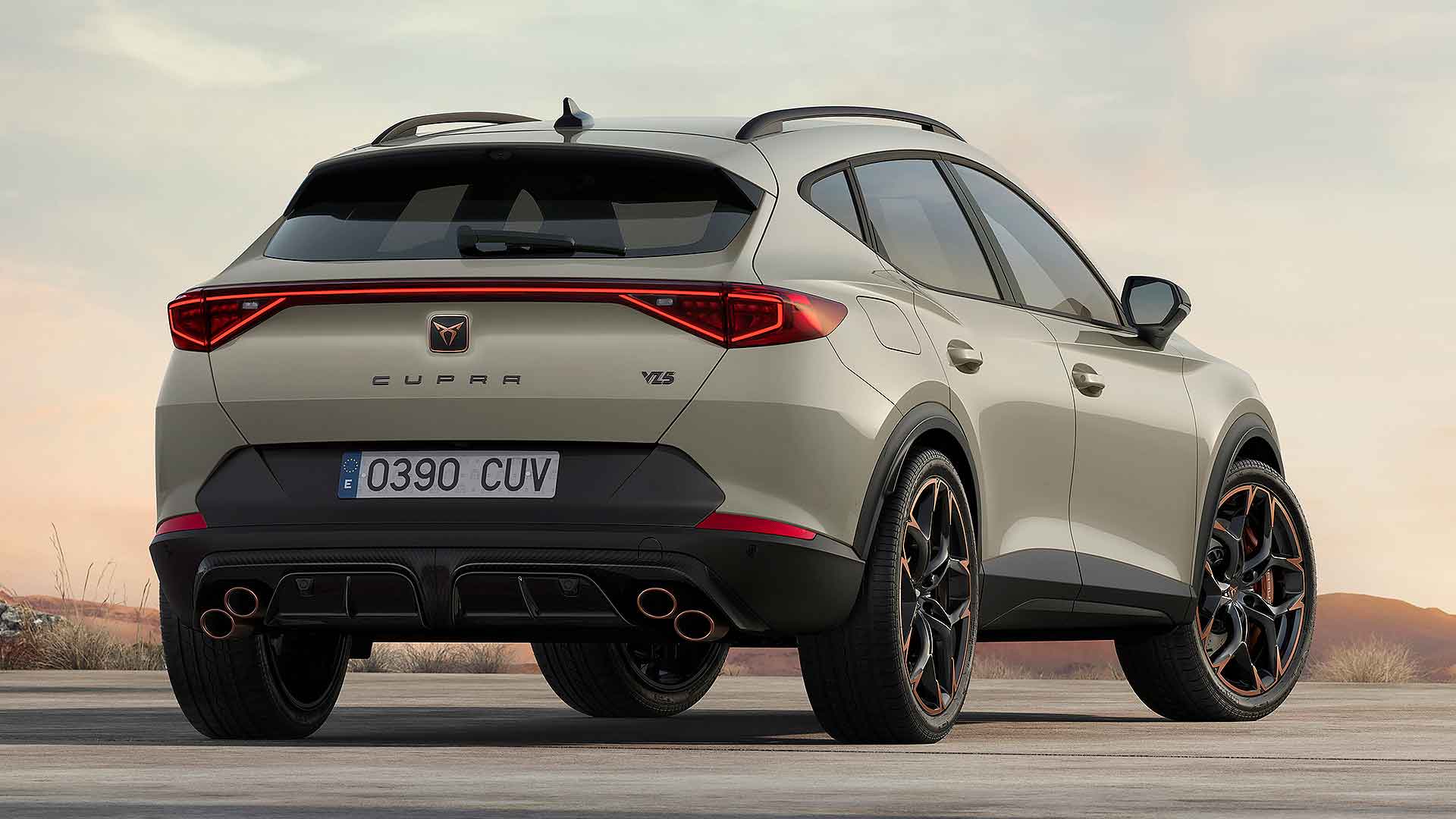
Capable of 0-62mph in 4.2 seconds, the five-cylinder Formentor is the “maximum expression of combustion performance for car enthusiasts,” said Cupra president Wayne Griffiths.
Although the Formentor VZ5 will only be offered in left-hand drive, bosses have confirmed the model will be coming to the UK. It is expected to arrive before the end of the year.
Production will be strictly limited to 7,000 cars.
Five-cylinder Formentor
The performance division of Seat, Cupra is using the Audi five-cylinder engine to demonstrate how it plans to create distinctive halo cars in the future.
It is “a genuine one-off” said the firm’s president of engineering Dr Werner Tietz.
“The VZ5 is the most powerful and sophisticated variant ever created to date and I am confident that with its exclusive performance elements, it will become a dream for car enthusiasts.”
It’s paired as standard with a seven-speed DSG gearbox and Cupra says the unique noise from the quad copper exhaust pipes has not needed any artificial enhancement.
All-wheel drive, 20-inch wheels and adaptive suspension are standard, and the Formentor VZ5 sits 10mm lower than the existing 310hp model that so impressed Motoring Research recently.
Cupra also fits unique 18-inch six-piston Akebono brakes.
Other visual cues include a unique bonnet with flared lines, meatier wheelarches to house the 20-inch wheels, and (real) carbon fibre front splitter and rear diffuser.
Inside, unique ‘CUPBucket’ seats are more hip-hugging than the regular chairs and are mounted lower for a sportier driving position.
Cupra bosses say the Formentor is “the perfect vehicle to celebrate Cupra’s third anniversary as a standalone brand and continues the work and dedication to create vehicles that personify the Cupra DNA.”
Tuning outfit Roush Performance has revealed details of its enhanced 2021 Ford Ranger pickup truck.
Although the Michigan-based company is known for its modified Mustangs and F-150 trucks, the midsize Ranger does not miss out.
Roush promises a package of improvements that boost the off-road ability of the Ranger, whilst also adding extra refinement.
New exhaust for added aural aggression
Unlike the epic supercharged trucks that Roush is famous for, there is no giant V-8 beneath the hood of the 2021 Ranger. Instead, the standard 2.3-liter EcoBoost four-cylinder remains untouched, delivering 270 horsepower and 310 lb-ft of torque.
However, Roush does fit a new cat-back stainless steel performance exhaust. This is said to improve power output, and sound quality, whilst remaining 50-state legal.
The company has previously offered performance packages for the EcoBoost Ranger, so an extra shot of power may not be far away.
More lift, more grab
Roush has paid particular attention to the suspension of the 2021 Ranger. A brand-new coilover kit has been developed with Fox, promising improved off-road ability.
The front coilovers are designed to give the Ranger a two-inch lift, said to level the stance of the truck. Shock absorbers made from 6061-T6 aluminum are used, and feature tuning designed specifically for the Ranger.
Installed beneath the lifted Ranger a set of custom 18-inch wheels, finished in satin black. These are equipped with 32-inch General Tire Grabber A/TX all-terrain tires, adding to the off-road prowess.
An extra dose of refinement
A trademark Roush-branded front grille, complete with integrated LED lights is one of the main exterior changes. Magnetic Gray paint for the fender flares, along with custom graphics, are the other noticeable alterations.
Inside, Roush upholsters the seats with diamond-stitched leather, along with adding embroidered headrests. A Roush Performance gauge cluster, and a special plaque for the dashboard, are included.
Roush can apply the full package to any 2021 Ford Ranger EcoBoost pickup, giving buyers extra flexibility.
Buying the upgraded truck adds $12,750 to the Ranger’s regular retail price, but include a three-year/36,000-mile warranty.
The government will scrap an “over-the-top law” that would have seen an estimated £50 annual increase in insurance premiums. This follows the UK’s exit from the European Union.
Under the controversial EU ‘Vnuk’ law, a wider range of vehicles would need to be insured. The list includes golf buggies, mobility scooters, quad bikes and vehicles used on private land. Even people with a ride-on lawnmower would require insurance.
Motorsport collisions would be treated as regular road traffic incidents requiring insurance. The government said Vnuk would have a disastrous impact on UK motorsport, costing the industry around £458 million a year.
In August 2007, farm worker Mr Vnuk was knocked off a ladder while working on a farm in Slovenia. He brought a claim for damages against the insurance company which had provided the compulsory motor insurance policy. The claim was rejected by the Slovenian courts, but in 2014 the case was referred to the European Court of Justice, which ruled in favour of Mr Vnuk.
In the UK, the Road Traffic Act (1998) requires motor vehicles used “on a road or other public place” to have unlimited insurance cover for third party bodily injury losses and a minimum of £1.2m cover for third party property damage losses. It does not require vehicles to be insured for incidents that occur on private land.
The situation would have changed had Britain remained in the EU.
The news has been welcomed by David Richards, chairman of Motorsport UK. He said: “Today’s announcement is a hugely significant victory for the UK and our sport, after a considerable effort by Motorsport UK and the Department of Transport over several years to defeat the threat of the Vnuk insurance issue.
“This decision provides stability as we seek to progress our sustainability agenda and protects the UK’s preeminent position at the forefront of motorsport technology worldwide. I would like to thank all those who played a part in securing this important outcome, including the MIA [Motorsport Industry Association] and the insurance industry.”
‘Unnecessary hike’
Had Vnuk been implemented in the UK, the insurance industry would have faced a bill of £2 billion in extra costs. These costs would have been passed onto to their customers in the form of increased annual premiums.
Transport secretary Grant Shapps said: “We have always disagreed with this over-the-top law that would only do one thing – hit the pockets of hard-working people up and down the country with an unnecessary hike in their car insurance. I am delighted to announce that we no longer need to implement it.
“Scrapping this rule would save the country billions of pounds and is part of a new and prosperous future for the UK outside the EU – a future in which we set our own rules and regulations.”
Hundreds of drivers are being fined for leaving a vehicle in a dangerous position. This is according to a recent Freedom of Information (FOI) request sent to the Driver and Vehicle Licensing Agency (DVLA).
The offence is covered by section 22 of the Road Traffic Act 1988. It states: ‘If a person in charge of a vehicle causes or permits the vehicle or a trailer drawn by it to remain at rest on a road in such a position or in such condition or in such circumstances as to involve a danger of injury to other persons using the road, he is guilty of an offence.’
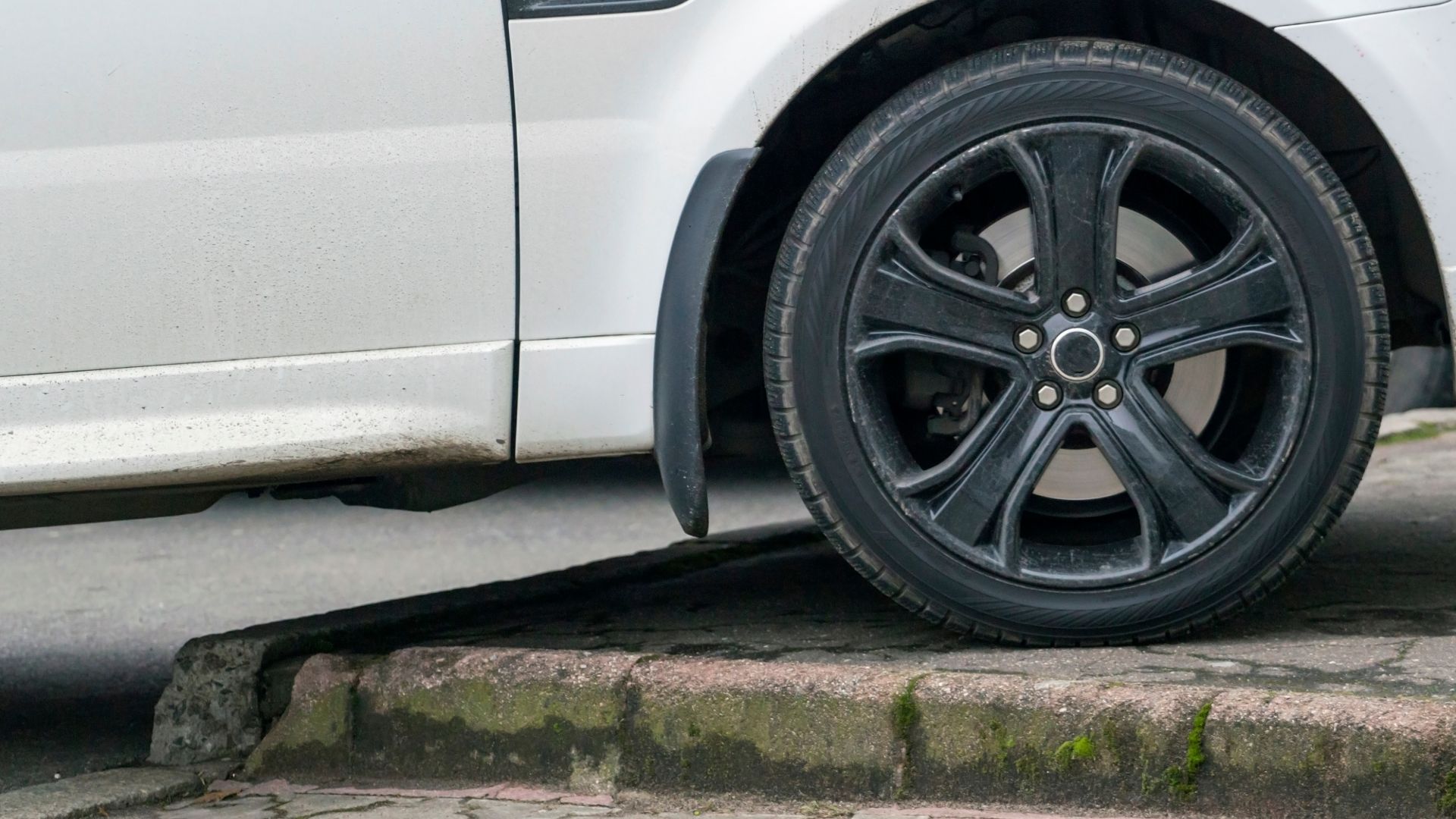
This could include parking a car on a blind bend or next to a humpback bridge. It could also cover the act of parking a car on a pavement, causing a pedestrian to enter a busy road to get by. Parking a vehicle on a hill without using the handbrake is also covered by the minor traffic offence.
According to Motor Defence Solicitors, to be prosecuted, the authorities have to show that you:
Left the vehicle on a road; and…
That the position it was left in caused the danger of injury to other persons who were using the road.
The FOI by Select Car Leasing found that 802 motorists were charged with leaving a vehicle in a dangerous position in 2018. This was up from 209 in 2017 and just 57 in 2016. In 2019, the number dropped to 411.
Anyone caught committing the offence could be given a Fixed Penalty Notice (FPN) of £100 and given three points on their licence.
Crucially, you must be warned at the time of the offence of the possibility that you will be prosecuted for it. Alternatively, you or the vehicle’s registered keeper must be served with a notice of intended prosecution, or with a summons within 14 days of the offence.
‘No laughing matter’
Mark Tongue, director of Select Car Leasing, said: “There’s a big difference between being bad at parking and being recklessly careless with where you leave your vehicle. That’s what we’re dealing with here.
“We’ve all probably seen someone hogging two spaces in a supermarket car park… but these convictions are no laughing matter. We’re talking about mothers with babies in prams having to run the gauntlet of a busy dual carriageway because there’s a van blocking the pavement.
“It might be that cars are having to swerve onto the opposite side of the road because someone has parked dangerously on a blind bend. Or it could also be incidents where people are misusing the motorway hard shoulder.
“It’s uncertain whether convictions are rising in line with local police clampdowns, or because drivers’ habits are becoming poorer over time, but we’d strongly urge all road users to wise up to the dangers.”
The 2022 Porsche 911 GT3 has just set a new Nurburgring lap time, but HRE is already envisaging how it could look with retro-inspired wheels.
Renders of the track-orientated 992-generation Porsche have been created to promote the company’s new Forged Monoblok Rim (FMR) technology.
The images are perfect for those hoping to customise their 503 hp GT3 with fresh alloy wheels, but who want to envisage it first.
Inspired by iconic retro style
California-based HRE promises that the new FMR construction method allows the strength of a one-piece alloy wheel, but with the classic style of a two-piece design.
Previously offered for HRE’s modern-looking S1SC range of wheels, FMR technology is now used on its Vintage and Classic ranges.
The Vintage Series of wheels are said to evoke retro supercars of the 1970s and 1980s. However, unlike the old-school versions, the FMR designs offer greater stiffness and reduced unsprung weight.
HRE President and CEO, Alan Peltier, said the launch of new FMR technology raises the performance of “these heritage designs to the modern-day levels HRE is known for”.
Modern custom creations
All of HRE’s wheels are produced in-house, at the firm’s factory in San Diego, CA. Aerospace-grade 6061-T6 forged aluminum is used to create the wheels, with each set custom-built to the buyer’s requirements.
More than 70 different color finishes are listed on the HRE website, meaning there is no shortage of personalization options.
Due to the custom nature of the new FMR wheels, HRE has not released prices. All wheels do at least come with a lifetime structural warranty, and a two-year warranty for the finish.
With deliveries of the new Porsche 911 GT3 set to begin later this year, there is time to start planning your new rims now.
Every one of the 800-or-so Morgans built annually is covetable and collectable: a classic in waiting. The Plus 8 you see here, however, is particularly special – and is now a permanent exhibit at the factory museum. But first, I was granted one exclusive last blast.
When the Plus 8 was launched in 1968, Stanley Kubrick was busy wowing cinema-goers with 2001: A Space Odyssey. Few could have guessed that Morgan’s retro roadster, its design already harking back to the 1955 4/4, would live beyond the movie’s sci-fi future.
This car is the last Plus 8 roadster: the final page in a story that spans 51 years (excluding an eight-year hiatus when Morgan switched from Rover to BMW engines). And while it isn’t quite the last V8 – Morgan will build nine special edition Plus 8 GTR coupes later this year – it clearly deserves a suitable send-off.
Wood you believe it?
Before that, I’m treated to the famous Morgan Motor Company factory tour. PR man James Gilbert’s abundant enthusiasm is infectious, and he’s evidently on first-name terms with everyone who works here. We start in the chassis section, moving literally downhill to bodywork, then paint, then trim and final assembly.
The wood shop – where frames are painstakingly hand-cut, shaped and assembled – is where most Morgans really take shape. “We only use English ash,” explains James, “we tried French and Belgian wood, but fragments of First World War shrapnel kept damaging our tools.”
At one end of the room, the huge rear wheelarch press resembles something from the industrial revolution, its iron clamps bending planks of wood into a perfect curve. At the other, what first appears to be a coffee machine is actually a 3D printer, used for making prototype parts. The juxtaposition of old and new is fascinating.
Adjacent to the final assembly area, I spot Morgan’s one-off SP1 – a ‘Special Projects’ hot rod created for a wealthy African customer. It’s a reminder that every car here is built-to-order and bespoke, with almost unlimited options available (if your pockets are deep enough).
Tangled up in blue
The final Plus 8 isn’t for sale, but rest assured it wouldn’t be cheap either. Reckon on roughly £126,000 after VAT, says James.
I find the car parked beside the factory entrance, where another tour group has already stopped to admire its low-slung lines. That eye-popping paint colour is BMW Azul Blue, a shade usually seen on the M3 and M4. Together with matte-black alloys, which look like they belong on a salt-flats racer, it’s about as far from the traditional ‘BRG and wires’ look as possible.
There is a nod to heritage in the ‘MMC II’ number plate, though. The Malvern equivalent of Porsche’s ‘911 HUL’, it’s been worn by many significant Morgans over the years, including the car Peter Morgan himself drives in a photo that hangs in reception.
Ready to rumble
Twisting open the Land Rover Defender door lock, I fold my frame carefully through the shallow door aperture. Once inside, the Morgan feels snug rather than spacious, and there’s virtually no room for luggage. However, it doesn’t lack creature comforts, including heated seats – a real boon on a frosty January afternoon.
You sit low, with legs outstretched and the airbagged wheel pulled unusually close. It’s the opposite of the stereotypical ‘long arms, short legs’ driving position beloved of classic Italian cars, and takes some getting used to.
Quality is impressive, with none of the rough edges you might expect from a low-volume marque. Only the parts-bin plastic column stalks jar a little.
Looking out through the letterbox-shaped windscreen with its three tiny wipers, I drink in the view along that long, louvred bonnet. And things only get better when I press the start button and the 4.8-litre BMW V8 coughs into life. Its rambunctious rumble stops the tour party in their tracks.
Heading for the hills
Moseying through town, the Plus 8 wins an appreciative nod from an elderly gent at the bus stop, then a van driver gives a thumbs-up. I already feel like something of a local hero.
This car has a six-speed manual transmission, rather than the popular six-speed auto, but the engine’s brawny 370lb ft of torque means you can cruise almost everywhere in fourth gear. Stick it in sixth at 20mph and it’ll pull cleanly – all the way to its 155mph maximum.
Climbing into the snow-capped hills, the road finally clears and I flatten my right foot. With 367hp and a kerb weight of just 1,220kg, the Plus 8 feels indecently quick. Nigh-on supercar-quick. The challenge, as I’ll discover, is keeping it in a straight line.
Thunderstruck
Morgan quotes a 0-62mph time of just 4.5 seconds. And on a dry summer day, I’ve no doubt the Plus 8 could achieve that.
However, ‘my’ car is fitted with track-focused Yokohama AD08R tyres, which look like cut slicks and severely dislike damp, freezing roads. Act the yob and it’ll spin its rear wheels in first, second and third gears. A degree of delicacy is therefore required, particularly in a car with zero electronic safety aids.
Thankfully, there’s nothing delicate about the noise. It swells from a low, resonating thud to a full-blooded howl. The V8 sucks in fuel like a giant gargling with gravel, its four exhausts popping on the over-run like artillery fire. No BMW ever sounded like this.
Picture perfect
No BMW looks like this either, at least not since the days of the classic 328. WIth its voluptuous curves and delicate chrome details, the Plus 8 looks perfectly at home in the English countryside.
Nonetheless, snapper Bradley isn’t convinced and demands I brave the elements by lowering the roof. This requires unfastening several catches on each side, and needs to be done from outside the car.
For the full wind-in-the-face effect, I also use an allen key to detach the flimsy side screens, storing them in the boot of Bradley’s Corsa.
Clambering in and out for photo duties feels an effort, but I’m thankful the Morgan has power steering – unlike the workout-weighted AR Plus 4 I drove a few years ago.
Baby’s got the bends
With the winter sun beginning its slow descent, there’s time for a brief blat around the Malvern Hills before I point the Plus 8’s prow towards home.
The lack of grip on near-freezing roads is front-and-centre in my mind, but swift, communicative steering and a balanced, relatively benign chassis mean there are no sudden surprises. Grab the Morgan by the lapels and it rewards with a drive that’s both physical and pulse-spikingly visceral.
The downside, though, is ‘retro’ ride quality. The Plus 8’s suspension bucks and bounces over ridges and is easily unsettled by mid-corner bumps. It’s nowhere near as sophisticated as modern sports cars – nor indeed its Plus Six successor.
Highway to home
Pulling over to raise the roof, my head is spinning with an odd mix of brain-freeze and giddy euphoria. An altogether different drive is ahead, however: back to Surrey via the M4 and M25. How will the Morgan cope in the ‘real world’?
Not brilliantly, as it happens. The sliding plastic windows are draughty, the wide tyres roar, the blare of the V8 becomes tiresome over time and the 90s-spec Alpine CD player is almost inaudible over the din. To top it all, it’s started to snow steadily.
Fortunately, other drivers keep my spirits up by waving and honking their horns. Following a tunnel of tail lights through the darkness, I’m reminded of something James said earlier: “The least suitable cars are the most fun for road trips”. He has a point. A long haul in a Nissan Micra feels inconsequential. This is an adventure.
Slip-sliding away
The final part of my drive is on rural roads dusted by snow. I’m driving on tip-toes: a bit scared, sensing every shimmy and squirm, determined to keep this unique piece of British motoring heritage intact. By the time I arrive home, I’m utterly exhausted.
The Plus 8 closes a long chapter in Morgan history. The Plus Six (and less powerful Plus Four) that replace it look virtually identical, but are vastly more modern underneath.
Our last moments were dark, frosty and a little fraught, but I’ll always picture the Plus 8 roaring into a sepia-tinged sunset. It has gone, but it won’t be forgotten – certainly not by me.