The Volkswagen Golf GTI Clubsport 45 anniversary edition marks the original hot hatch’s 45th birthday – and will cost from less than £40,000 when it arrives in the UK this April.
Based on the 300hp Golf GTI Clubsport, the Clubsport 45 edition celebrates a car that itself was only intended to be a limited-run special edition.
The original plan to build 5,000 has swelled over the decades to more than 2.3 million Golf GTI today.
Volkswagen calls the Clubsport 45 a “ready-made collector’s item” with plenty of individual customisation features.
It comes as standard with a Race package, which includes 19-inch high-gloss black Scottsdale alloy wheels, complete with narrow pinstripe in Tornado Red.
A matching black roof, black roof spoiler and black-frame rear window are all a tribute to the first Golf GTI, says VW.
There’s a sports exhaust system, IQ.Light LED matrix headlights and ‘45’ lettering on the side sills and boot lid.
There is another ‘45’ logo on the steering wheel centre spoke, and GTI lettering on the front seats.
Impressively, Volkswagen has removed the speed limiter of the Clubsport 45, although it has yet to disclose how much faster than 155mph the new special edition can go.
More details of the new car will follow closer to its UK on-sale date. Party hats at the ready.
There is still a “long way to go” to achieve the aim for almost all cars on the road to emit zero carbon by 2050, it adds.
The growth of SUVs over the past decade has actually been detrimental to the UK’s carbon emissions target. While CO2 emissions have fallen 1 percent since 2011, this is less than the Department for Transport expected – and rising SUV sales are partly to blame.
New car CO2 emissions actually increased 6 percent between 2016 and 2019.
This offset a rise in ultra-low emission car sales, which reached 8 percent of the new car market by September 2020.
They still only account for 1.1 percent of cars on the road though, with battery electric cars comprising 0.5 percent.
“The number of ultra-low emission cars on UK roads has increased, but meeting the government’s ambitious targets to phase out new petrol and diesel cars in less than a decade still requires a major transition for consumers, car makers and those responsible for charging infrastructure,” said head of the NAO Gareth Davies.
“Government now has the opportunity to reflect on what has gone well and better target its interventions and spending to secure this fundamental change and deliver the carbon reduction required.”
Plug-in Car Grant questioned
Spending on the Plug-in Car Grant, which gives a £3,000 subsidy to buyers of pure electric cars, reached £1 billion by March 2020.
However, said the NAO, The Office for Zero Emission Vehicles “cannot clearly demonstrate the cumulative impact the grant has had on the growth of ultra-low emission cars above and beyond what might have happened anyway”.
This is despite efforts by OZEV to show how the Plug-in Car Grant has driven market changes.
This is an interesting observation by the NAO, particularly ahead of next week’s Budget.
The NAO adds that OZEV has spent a further £97m supporting the installation of over 133k home chargers for those with off-street parking.
But because, in 2011, “OZEV did not quantify what it intended to achieve with this funding, [it is] difficult to determine whether it has met its initial expectations”.
OZEV, says the NAO, has not sufficiently focused on chargepoint availability for those who do not have a driveway.
The organisation has now recommended that OZEV, along with the Department for Transport and the government, develop detailed plans to achieve the 2050 target, “reporting progress against clear milestones at regular intervals”.
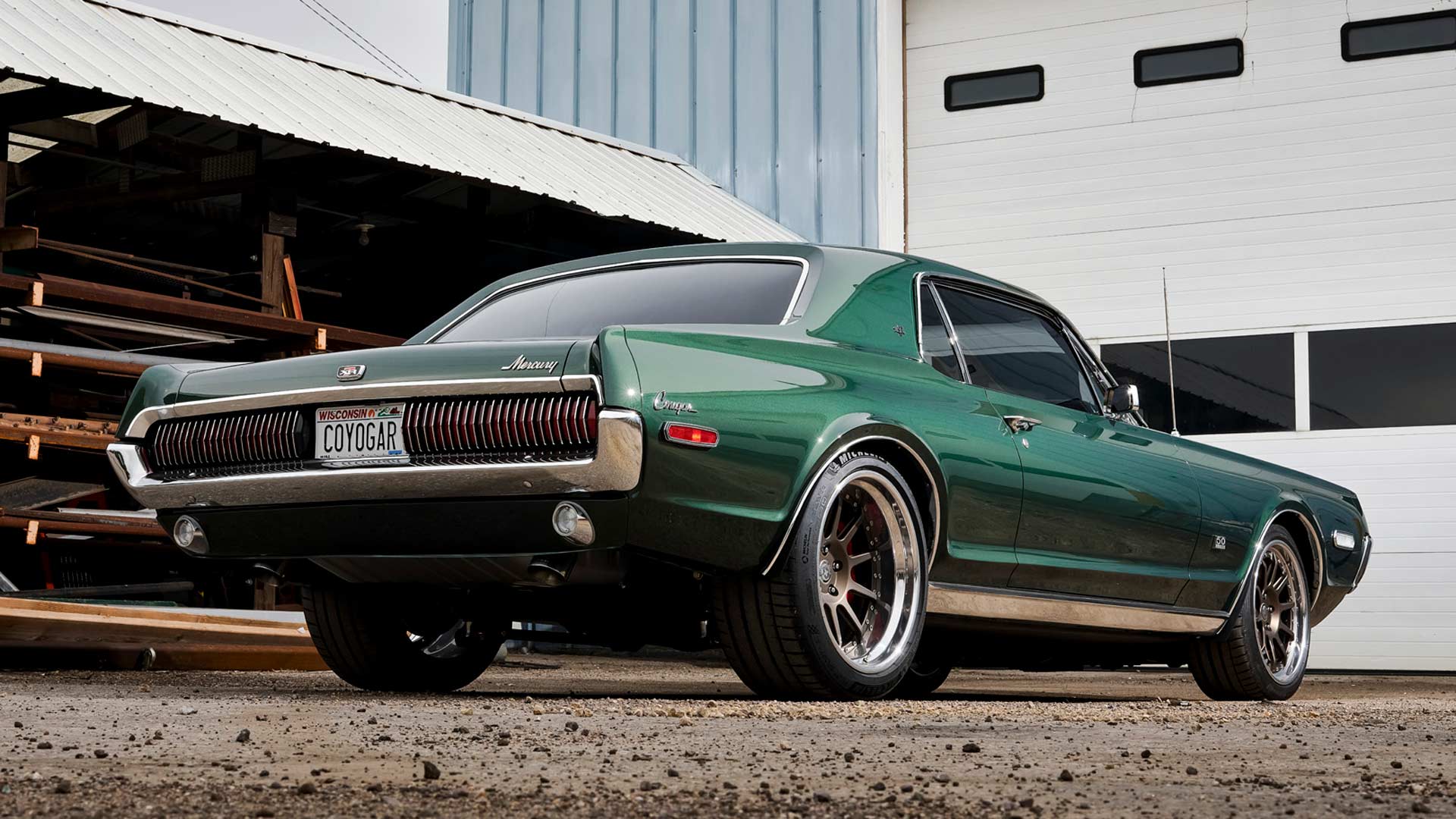
The famed Ringbrothers car customization outfit has unveiled an impressive restomod version of a 1968 Mercury Cougar.
Originally intended to debut at the pandemic-cancelled 2020 SEMA Show, the modified Cougar has been allowed out to prowl.
It marks the first time the Wisconsin-based company has built a Cougar, and the luxury pony car packs plenty of performance.
This Coyote is anything but ugly
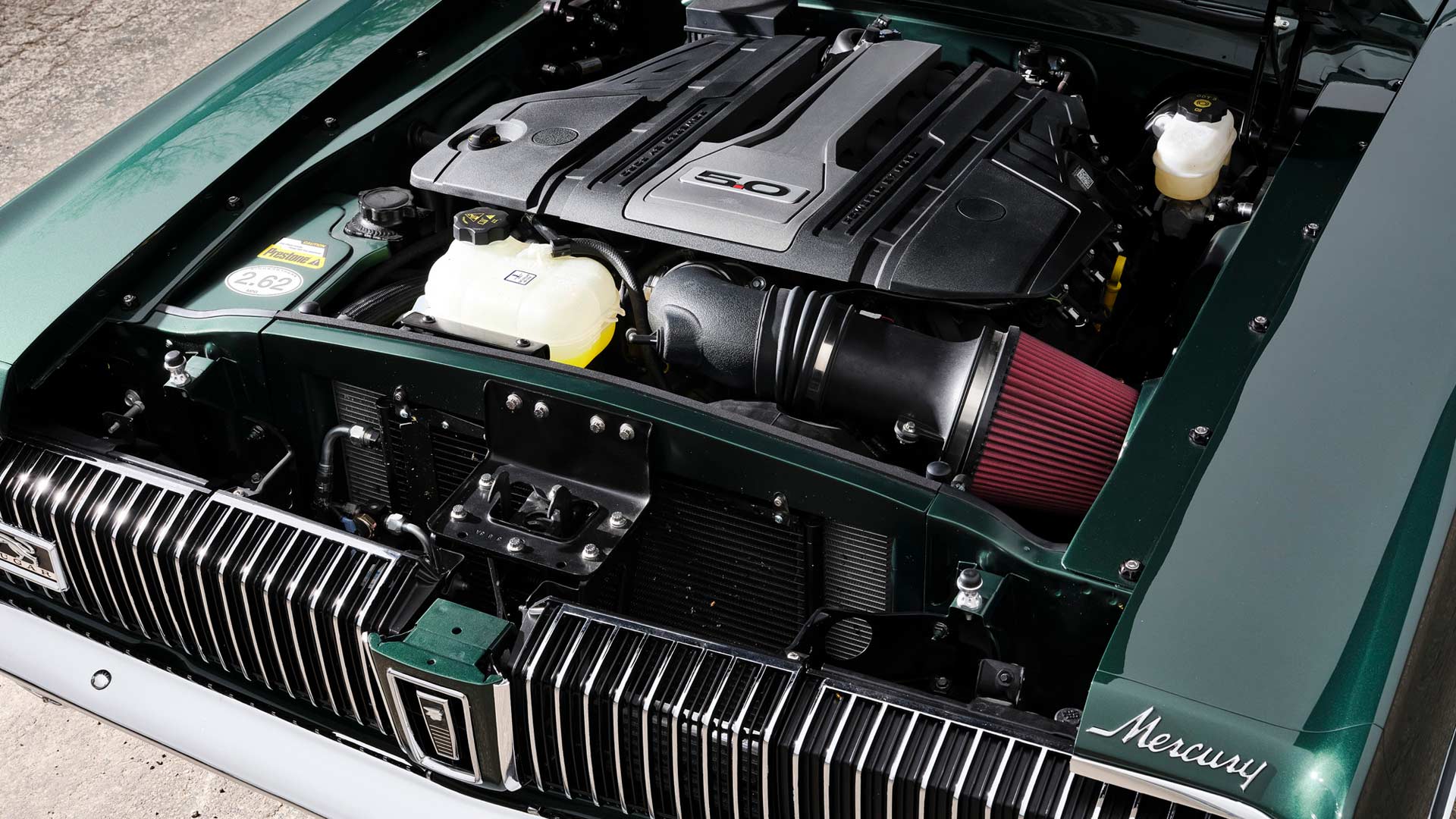
Nestling behind the hidden headlamps is a 5.0-liter Ford Coyote V-8. As the engine used in the modern Mustang, it provides a neat link to the classic Mercury.
The new Coyote crate motor offers a hefty 460 horsepower, combined with 420 lb-ft of torque. That’s substantially more power than any Mercury Cougar would have left the factory with, beating even the ultra-rare GT-E model.
Ringbrothers has also installed a 21st century transmission in the Cougar. Ford’s latest ten-speed automatic gearbox, taken from an F-150 Raptor pickup, allows for shifting via paddles.
Turning green with envy?
Other new components include a bespoke Flowmaster stainless steel exhaust system. Intended to give the Coyote engine a truly ‘aggressive growl’, it includes custom headers fabricated by Ringbrothers.
HRE Series C1 C103 wheels, measuring 18-inches at the front and 19-inches at the rear, offer a serious stance. This is enhanced by box-fresh DSE Quadra-Link suspension, while upgraded Baer brakes increase stopping power.
Extensive restoration work was undertaken on the Cougar’s shell, including the fitment of replacement floor pans. A new transmission tunnel was added, and the exterior badging and grille were updated.
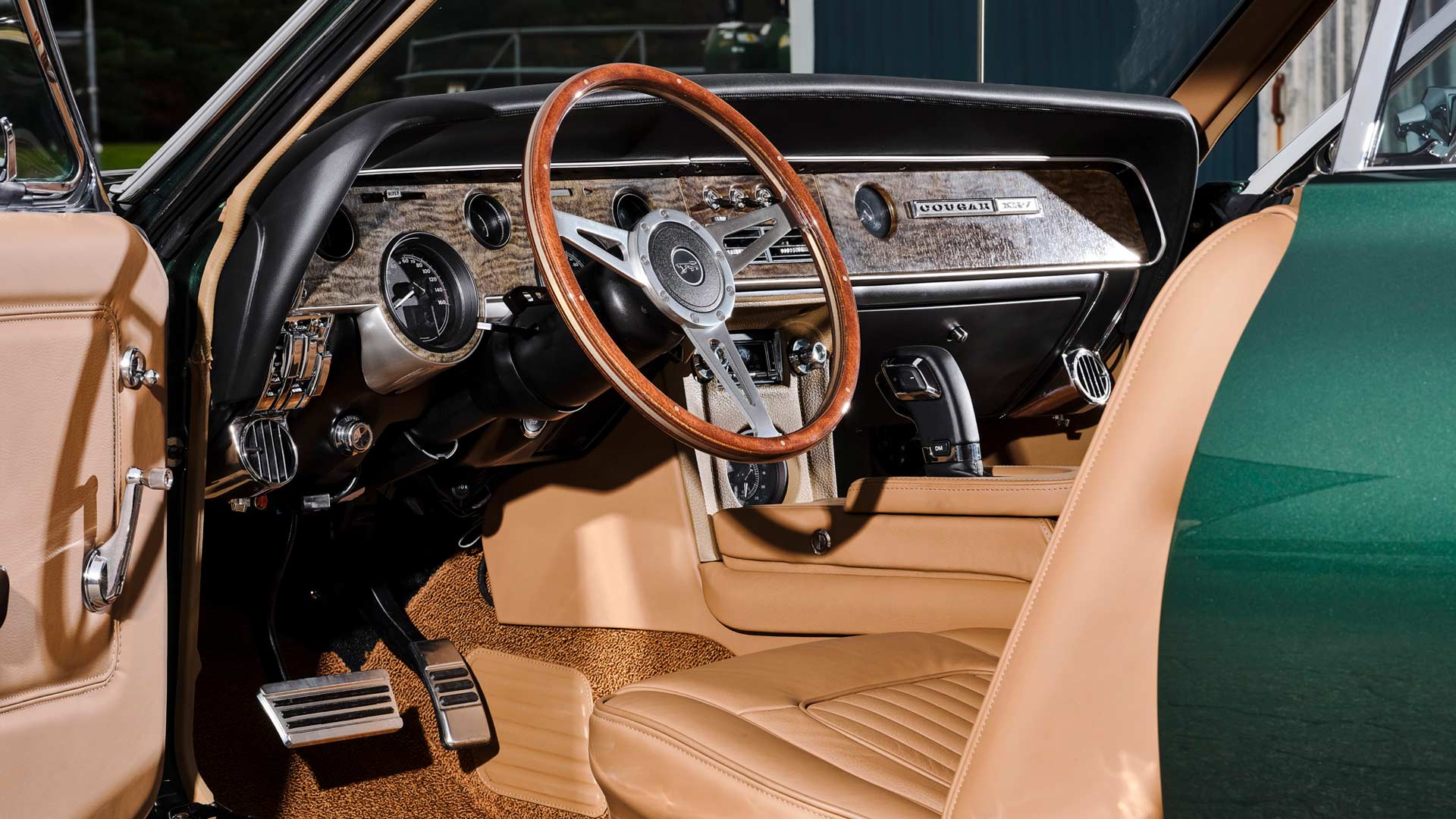
The refreshed bodywork was painted with BASF Ford Augusta Green Metallic, a deep hue that contrasts with the luxurious interior.
Take a trip to Cougar Town
Ringbrothers has developed a strong following from restmod enthusiasts, due to its attention to detail. Revealing a new car at the annual SEMA Show has helped win the company new followers, and numerous awards.
Mike Ring, co-owner of Ringbrothers, commented that whilst they “couldn’t bring the car to the SEMA Show, we hope it can be shown to the public soon”. As the first Cougar built by the firm, Mike added that the process was “fun” and that he enjoyed working “with new shapes and coming up with new ideas”.
“We put our heart into each car we build, and this Cougar is no exception,” said Ringbrothers co-owner, Jim Ring. “The finished product is mild and classy, yet any enthusiast instantly knows it’s not stock. I imagine this is what Mercury designers would have come up with if they were building the Cougar today.”
The average car insurance premium for a 17-24 year old is now £1,154. That’s according to figures released by Comparethemarket.
One in 10 new drivers is involved in a collision within the first six months of passing their test, while 10 percent are caught committing a driving offence within the first two years. A greater risk to insurance providers results in higher premiums for young drivers.
All cars are given an insurance group rating, ranging from 1 to 50. The higher the group, the more you’ll pay for cover. Other factors come into play, such as where you live, your occupation and your annual mileage, but the choice of car can have the biggest impact on the amount you pay.
Cars in the lowest groups tend to be city cars and superminis powered by a lowly 1.0-litre engines. Some versions of Volkswagen Polo, Nissan Micra and Ford Fiesta should be relatively cheap to insure, even for the youngest drivers.
Car insurance is the ‘biggest expense’
New Comparethemarket data reveals the most popular first cars for young drivers. Predictably, the list is dominated by small cars available with small engines. That said, with the exception of two models, the average car insurance premium paid by a young driver runs into four figures.
After two years at the top, the Vauxhall Corsa has been dethroned by the Ford Fiesta as the most popular car for first-time drivers. It’s encouraging to note that the price of cover in 2020 was £94.56 lower than it was in 2019.
Dan Hutson, head of motor insurance at Comparethemarket, said: “Buying your first car is an exciting experience for new drivers and deciding on the make and model is a big decision. It’s worth looking into the overall running costs for your desired car before you make the purchase, as these can fluctuate depending on which car you choose.
“The biggest expense apart from the car itself is the annual car insurance premium. Car insurance for those aged between 17-24 can be high as this age group is generally deemed to be a higher risk than more experienced drivers.
“There are, however, ways first-time drivers can look to keep their car insurance costs down – one of the most popular is to install a telematics box which tracks your driving habits, passing the information back to your insurer, which could help lower your insurance premium.”
Most popular first cars for young drivers (and average premium)
Highways England, which oversees the UK’s strategic road network, has also been referred to the Crown Prosecution Service to consider if corporate manslaughter charges are appropriate.
Transport Committee chair Huw Merriman MP said there are “genuine worries about this element of the motorway network and we want to investigate how we go to this point”.
These include abolishing confusing ‘dynamic hard shoulder’ smart motorways, where the hard shoulder is present only part-time, by 2025. More emergency refuge areas are also planned.
There will also be a publicity campaign to improve motorists’ understanding and awareness of smart motorways.
Mr Shapps has since acknowledged that smart motorways should be safer.
‘Very timely’
AA president Edmund King welcomed the inquiry. ‘Coroners, and indeed police and crime commissioners, have voiced serious safety concerns with ‘smart’ motorways, which makes this inquiry very timely.
“For more than a decade, the AA has campaigned to improve the safety of smart motorways. Tragically, too many people have died on these roads in the interim.
“Hopefully, this inquiry will concentrate minds to stress the urgency of safety improvements.”
RAC head of roads policy Nicholas Lyes pointed to the “increasing level of concern around the safety of smart motorways, from the driving public through to Westminster”.
There are currently a number of initiatives underway to improve smart motorway safety, which will take several years to complete.
“But even when all these issues are addressed, we wonder whether they will go far enough to overcome people’s fears.”
Ordering has opened for the high-performance Volkswagen Tiguan R mid-size SUV, with prices from £45,915.
The first R version of the Tiguan – Volkswagen’s best-selling SUV globally – it is powered by the familiar 320hp 2.0-litre turbocharged engine from the Golf R, delivering drive to all four wheels.
In combination with a seven-speed DSG gearbox, 0-62mph takes 4.9 seconds. Top speed has been electronically limited to 155mph.
The Tiguan R is 10mm lower than other versions and has adaptive suspension (DCC) as standard. It also has a clever R-Performance Torque Vectoring system, which splits drive both front and rear, and side-to-side.
Up to 100 percent of drive can be directed to the outside rear wheel in corners, which ‘eliminates understeer’, promises Volkswagen.
Large 21-inch wheels hide 18-inch brakes with blue R-branded calipers. Other R trademarks include:
Quad tailpipes
Matt chrome door mirror caps
R bodykit
Bespoke front and rear bumpers
Black rear diffuser
An optional Akrapovic titanium exhaust system is available. This is lighter than the standard system and makes a sportier sound.
Inside, there are Sardegna cloth sports seats, and an R steering wheel with new ‘R’ button that gives quick access to the various drive modes.
“The Tiguan has long been regarded as Volkswagen’s ultimate all-rounder,” said Volkswagen UK MD Andrew Savvas.
“Now, it has another feather in its cap – a genuine performance SUV model, honed for spirited drivers by Volkswagen’s respected R division.
“This makes it an even more thrilling and sporty driving experience.”
Mr Savvas added the Volkswagen R line will expand further later in the year, with the new Arteon R and Touareg R.
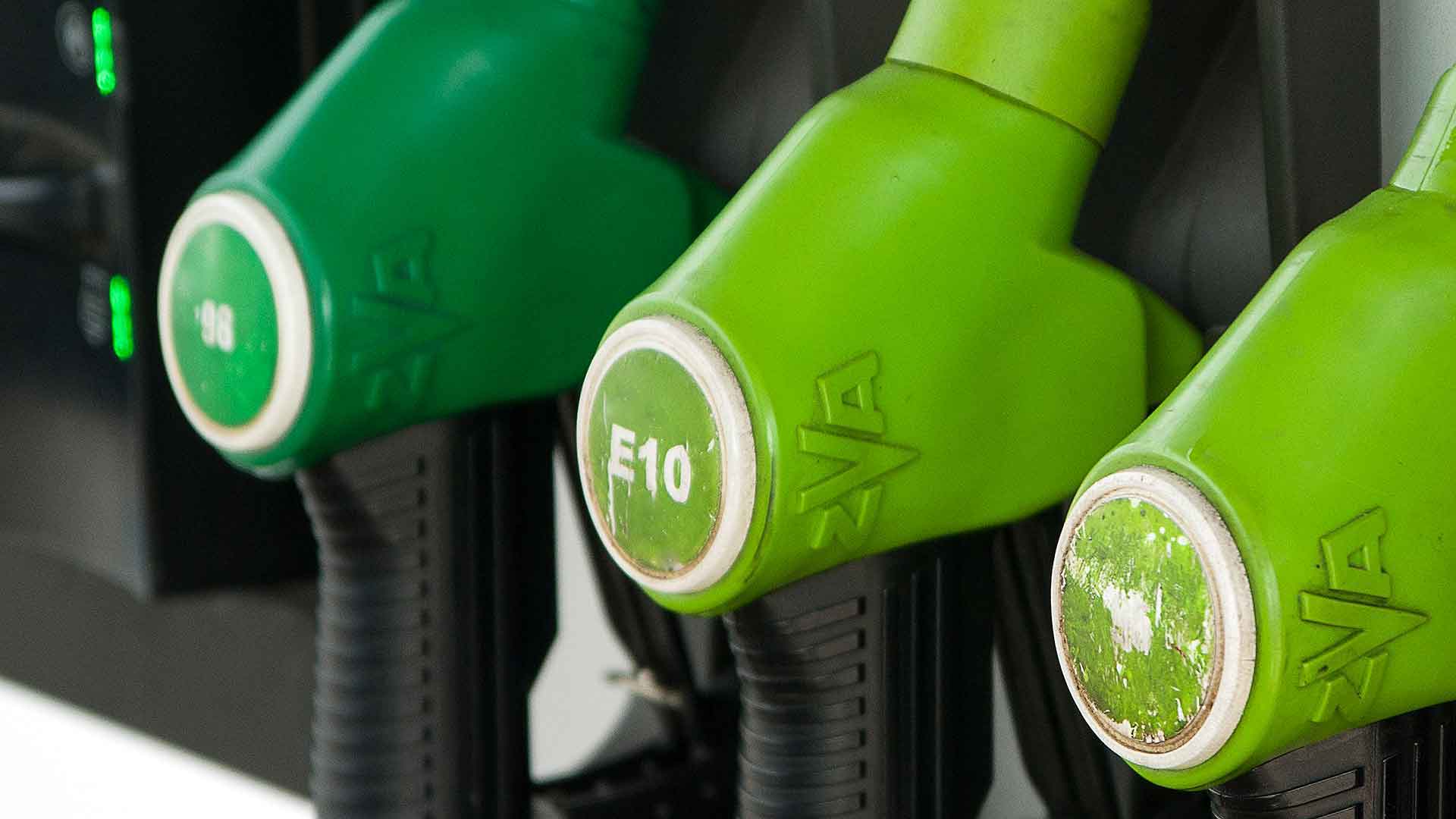
The government has confirmed E10 petrol will be introduced to UK filling stations in September 2021.
E10 fuel is made from a mixture of petrol and 10 percent bioethanol – produced from materials including waste wood plus low-grade grains and sugars.
Using bioethanol in place of traditional petrol can reduce CO2 emissions.
E10 is already widely used across Europe and has been the fuel standard for car manufacturer performance and emissions testing for several years.
The move is forecast to cut UK CO2 emissions by 750,000 tonnes a year. The government says this is equal to taking 350,000 cars (or all the cars in North Yorkshire) off the road.
It will also help make the existing UK parc of petrol cars greener.
“Although more and more motorists are driving electric vehicles,” said transport secretary Grant Shapps, “there are steps we can take to reduce emissions from the millions of vehicles already on our roads.
“The small switch to E10 petrol will help drivers across the country reduce the environmental impact of every journey.”
UK forecourts already sell E5 petrol, with no more than a 5 percent ethanol mix. Pumps were renamed in 2020 – with greener diesel relabelled B7 biodiesel.
The rollout of biofuel into fuel supplies is part of the targets set under the Renewable Transport Fuel Obligation (RTFO).
The AA supports the switch to E10, particularly because of this improved pump labelling – and a commitment to support older car owners whose vehicles are not compatible with E10.
What about older cars?
Some older cars cannot use the new E10 fuel. This includes classic cars and some models from the early 2000s.
They will continue to need E5 fuel – and the government has committed to maintaining this in the ‘super’ grade of unleaded.
The move to E10 will support around 100 jobs in the north east with the reopening of AB Sugar’s Vivergo Fuels plant. Production will increase at existing UK biofuel plants, too.
The firm’s chief executive Dr Mark Carr said he had long been calling for the move “as E10 is one of the quickest, easiest and most cost-effective ways for the UK to reduce its carbon emissions, while providing an economic boost to sustain the British biofuels industry.
“We will be recruiting around 85 highly skilled green jobs… and reopening a new market for wheat farmers in the UK.”
Almost 27,000 people were caught speeding on the A282 in Kent in 2020. That’s according to a Freedom of Information (FOI) request submitted to the UK’s 45 police forces.
This makes the A282 the road on which you’re most likely to be caught speeding – all the more remarkable when you consider the A282 is a 5.2-mile stretch of road connecting the two ends of the M25. It’s an important link between Kent and Essex, crossing the River Thames.
Predictably, a section of the M25 is another speeding hotspot, with 23,558 drivers caught by Surrey Police in 2020. This is despite the country being under lockdown restrictions for long periods of the year. In the second quarter of 2020, 53 percent of cars exceeded the speed limit on motorways, compared with 52 percent in the equivalent period of 2019.
Not every police force responded to Wessex Fleet’s FOI request, but 699,517 speeding offences were recorded as part of the research. When looking at the top 10 speeding hotspots, there were 167,448 cases of speeding in 2020 – 30 percent of which were recorded on the M25 and A282 .
More than 3,200 speeding tickets were issued in the first full month of lockdown – a 71 percent increase compared with the same period in 2019.
Britain’s speeding hotspots (2020)
A282 (Kent Police): 26,920 offences
M25 (Surrey Police): 22,558
M4 Clayponds Avenue (Metropolitan Police): 16,188
M5 (Avon and Somerset Police): 14,833
A1081 (Bedfordshire Police): 14,753
M4 Grand Union Canal (Metropolitan Police): 14,529
A406 (Metropolitan Police): 14,509
Aigburth Road (Merseyside Police): 14,476
A12 (Suffolk Police): 14,351
M3 (Surrey Police): 13,331
The research found that you’re less likely to be caught speeding on roads in Wales. Just 16 tickets were issued by Dyfed-Powys Police to speeding drivers on Station Road, followed by 17 on Heol-Y-Bont, 18 on the A489 and 18 on Penglais Hill in Aberystwyth.
Only Victoria Embankment (19 offences) and Bishopsgate (20 offences) in the City of London prevented Dyfed-Powys Police from a clean sweep of the roads on which you’re least likely to be caught speeding.
The Chevrolet Corvette has become a dominant force in GT racing, and this is your chance to own a motorsport icon.
Forget replicas and tributes, as the car currently listed for sale on Bring a Trailer is a genuine C7.R race car.
Built by Pratt & Miller Engineering, this car tasted endurance racing success as part of the factory Corvette Racing programme.
From the street to race track
Pratt & Miller began their official association with General Motors in 1999, and subsequently turned the Chevrolet Corvette into a world-beating GT racer.
Developed from the street-legal seventh-generation Corvette, the C7.R was unveiled at the 2014 Detroit Auto Show. Experience from the previous Le Mans-winning C6.R model helped prime it for the IMSA SportsCar Championship.
The car listed for auction is one of the earliest examples of the Corvette C7.R. Chassis number C7RGT-003 hit the track in January 2014, taking part in that year’s Daytona 24 Hours.
Roaring to success
Chassis 003 would not have to wait long for success. It took a class win at the 2014 Tequila Patrón Sports Car Showcase at Long Beach. Three more class wins followed in 2014, along with a fourth place in class at the Le Mans 24 Hours. Yet the biggest prize came the next year.
Driven by Jan Magnussen, Antonio Garcia, and Ryan Briscoe, the C7.R would take an impressive GTLM class victory at the 2015 Daytona 24 Hours. So reliable was the Corvette, that it actually finished fourth overall at the endurance event.
The car missed the 2015 Le Mans 24 Hour, due a pre-race accident. However, a win at the 12 Hours of Sebring added to the trophy haul, before the car retired at the end of 2015.
Rather than living out a quiet life, chassis 003 has raced in the HSR Classic 24 Hour at Daytona.
All wing, no prayers
Today the car wears the famed black and yellow livery as used during the 2014-15 Corvette Racing programme. Pratt & Miller built seven C7.R models, each with a lower roofline, widened track, and bodywork made from carbon fiber.
Aerodynamic enhancements include the giant adjustable rear wing, a functional front splitter, and a flat underbody. A set of 18-inch BBS wheels, adjustable coilover suspension, and AP Racing brakes were also part of the track-ready makeover.
Powering the C7.R is a 5.5-liter V-8 engine, derived from the regular Corvette LS7 unit. A fresh rebuild by Pratt & Miller, along with a dynamometer session, confirms the engine is producing 575 horsepower and 509 lb-ft of torque.
A six-speed XTrac sequential gearbox feeds power to the rear wheels. The seller confirms it has undergone a recent refresh, too.
A safe investment
Whilst the C7.R may look vaguely related to a regular Corvette on the outside, clambering into the cockpit is a reminder that this is a true race car.
The production dashboard does remain in place, but is equipped with multiple Bosch digital displays. An F1-style carbon fiber steering wheel includes numerous buttons for adjusting engine management settings, with more buttons on the center console.
Safety is taken care of by a substantial integrated roll cage, along with a solitary carbon fiber Recaro racing seat. Extra reassurance is provided by full racing harnesses, and window nets.
Racing the clock, again
A comprehensive set of spare parts, including bodywork items, will be supplied with the car. These could come in handy, given the eligibility of the C7.R to compete in various historic racing formats.
Buying a former factory racing car is never going to be a cheap proposition, with the bids on Bring a Trailer already deep into six figures. With plenty of time left on the auction, bidding is sure to push the price even higher.
The auction closes on Monday, 1 March, meaning someone will start the new month with a very yellow Corvette race car.
More than two in three motorists believe all learner drivers should undergo at least a year of driving lessons before being able to take their driving test.
The support is for 12 months’ minimum learning for all new drivers, regardless of age.
The survey by IAM Roadsmart follows a 2019 government commitment to investigate a form of Graduated Driver Licencing, or GDL.
This could include a minimum 12-month learning period, although no final decisions have been made.
IAM Roadsmart now wants “urgent action” on the issue.
“The government must listen to the concerns of the vast majority of motorists who clearly understand the long-term safety benefits that a 12-month minimum learning period for all new drivers would bring,” said the road safety charity’s policy director, Neil Greig.
“Even the government’s own statistics show that one in five new drivers crash within their first year on the road, so a longer learning period can only help make our roads safer for all road users.”
The charity says evidence presented during a recent House of Commons Transport Committee Inquiry into young and novice drivers further demonstrates the benefits of Graduated Driver Licencing.
A move to GDL would be “a crucial step forward in improving road safety”.
What do you think? Should all new drivers have to undergo a minimum 12-month period of lessons and practice before taking a practical test? Let us know in the comments below