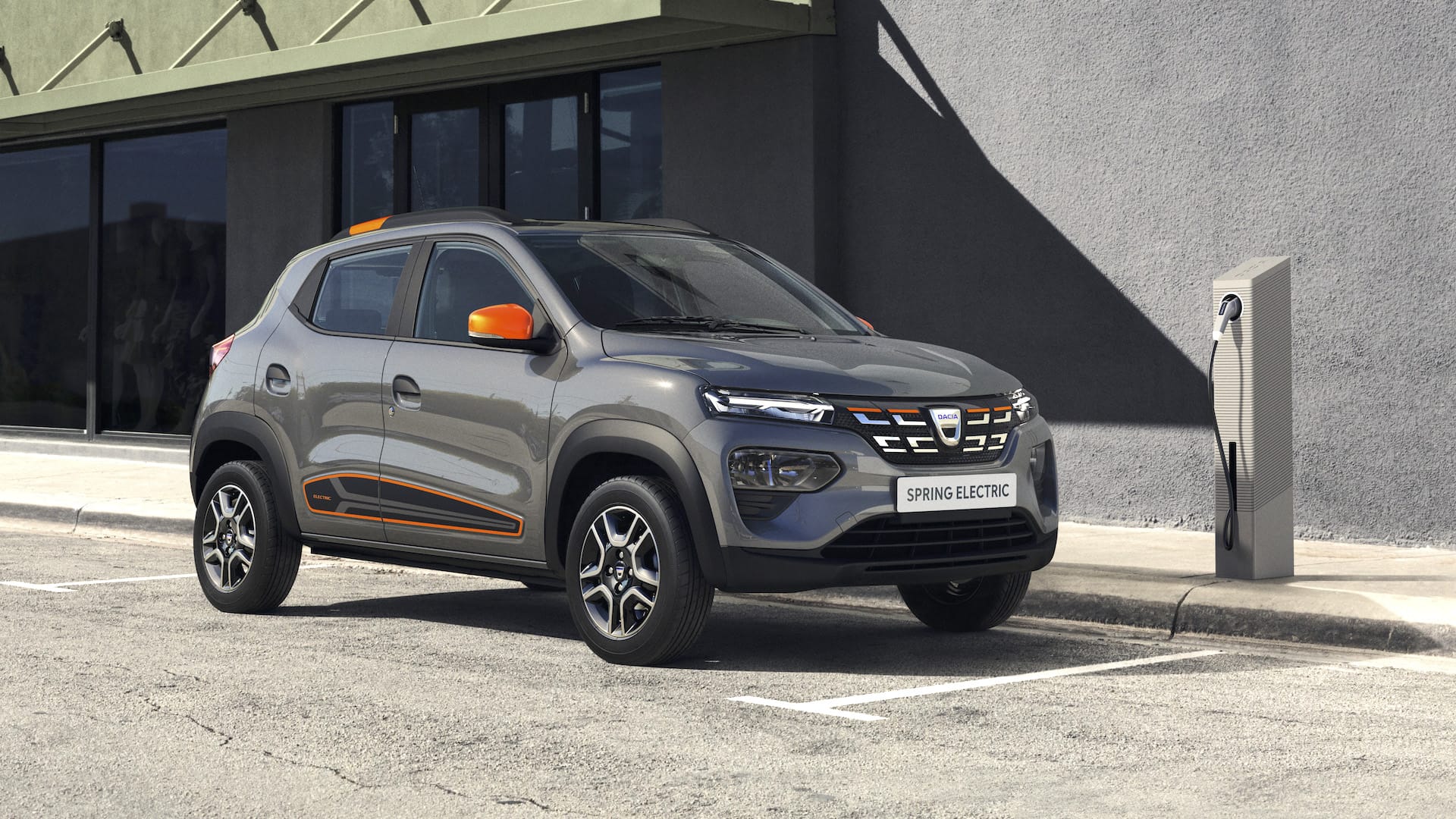
The Dacia Spring electric SUV has been rated the best car of 2022 for environmental impact.
An assessment by independent testing panel Green NCAP – an offshoot of the Euro NCAP safety watchdog – awarded the Dacia EV an impressive five-star rating.
Such a strong performance puts the budget-priced Dacia Spring ahead of much pricier models such as the Hyundai Ioniq 5 and Audi Q4 E-tron Sportback.
Going green on a budget
Similar to the Euro NCAP safety testing initiative, Green NCAP assesses cars on a range of criteria. The electric Dacia Spring scored a maximum 10 out of 10 on the Clean Air Index, thanks to its obvious lack of tailpipe emissions.
However, the Spring also impressed when it came to energy use, recording a never-before-seen 9.8 out of 10 in the Energy Efficiency Index.
The testers found the Dacia used 89 percent of the electricity it is charged with, aided by its low weight and a top speed limited to 125kph (78mph). Green NCAP said the Spring “sets an example to others”.
Latest Green NCAP scores
However, there is a catch for UK motorists. At present, the Spring is not on sale in Britain, although rumours suggest Dacia may offer it here from 2024.
Green NCAP has also announced the results of its latest 2023 testing round, with the Kia Picanto city car awarded three stars.
Tested in GT Line trim, with a 1.0-litre petrol engine, the assessors recommended a gasoline particulate filter to further improve the diminutive Picanto’s performance.
The Vauxhall Mokka 1.5-litre diesel also received a three-star rating, while the BMW 2 Series Active Tourer was given just two stars for the petrol 220i version.
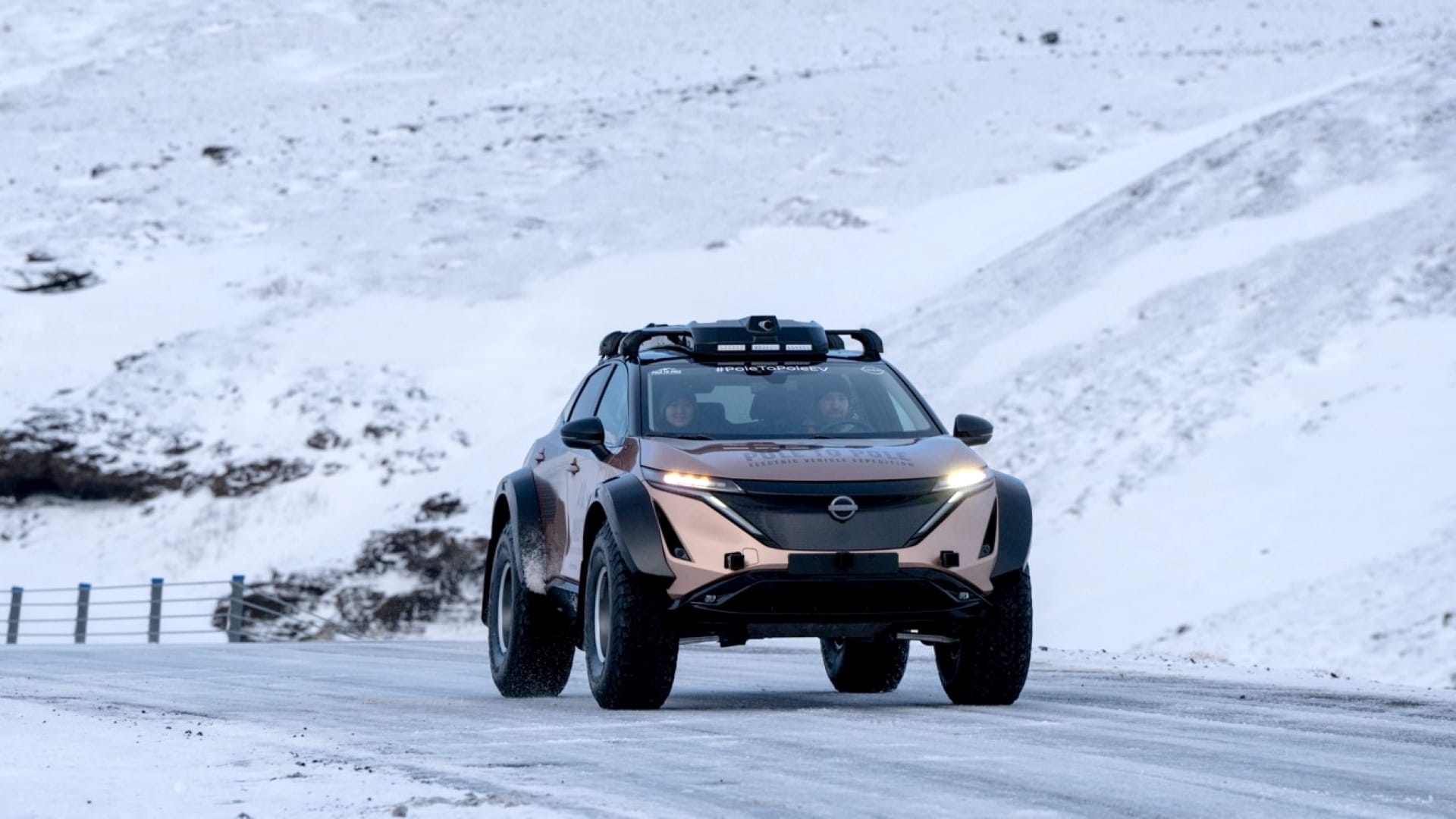
Nissan has unveiled a special version of its Ariya electric SUV, created for an amazing driving adventure between the North and South Poles.
British explorers Chris and Julie Ramsey will help demonstrate the potential of Nissan’s new, battery-powered family car.
The 10-month trip, beginning in March 2023, will see the duo cover almost 17,000 miles. On the way, the Ariya will encounter ice fields, snow storms and desert dunes.
Ready to off-road
Arctic Trucks, famed for its expedition vehicles, has modified the Ariya for its Pole-to-Pole journey. This includes a suspension lift that allows a set of huge 39-inch BF Goodrich tyres to be fitted.
Giant flared wheelarches are needed to accommodate the larger tyres, with plenty of underbody protection also added.
The Ariya is the first battery-powered vehicle adapted by Arctic Trucks. However, the electric drivetrain and battery have been left unchanged, with e-4orce all-wheel drive a standard feature.
For charging in polar areas, an innovative renewable energy unit will be towed behind the Ariya. This combines a wind turbine with solar panels, allowing the Nissan’s battery pack to be recharged completely off the grid.
Journey South
A drone can be launched from the bespoke roof rack, while an integrated espresso machine is a luxurious addition to the Nissan’s cabin.
Chris and Julie’s chosen route will see them start at the magnetic North Pole, before heading south through Canada and the Americas. Arriving at Punte Areas in Chile, the couple will then travel on to Antarctica, before finally reaching the South Pole.
The duo are no stranger to electric adventures, having previously completed the 10,500-mile Mongol Rally in their Nissan Leaf.
Julie Ramsey, co-driver in the Ariya, said: “The planning and preparation for Pole-to-Pole has been such a big part of our lives over the past four years, so I am really looking forward to getting the expedition underway in March.
“We’re going to discover so many interesting initiatives from communities and individuals who are taking positive action against climate change and I’m looking forward to sharing these experiences and stories with everyone. We are doing something that has never been attempted before, a world-first, and ultimately that is what makes it so exciting.”
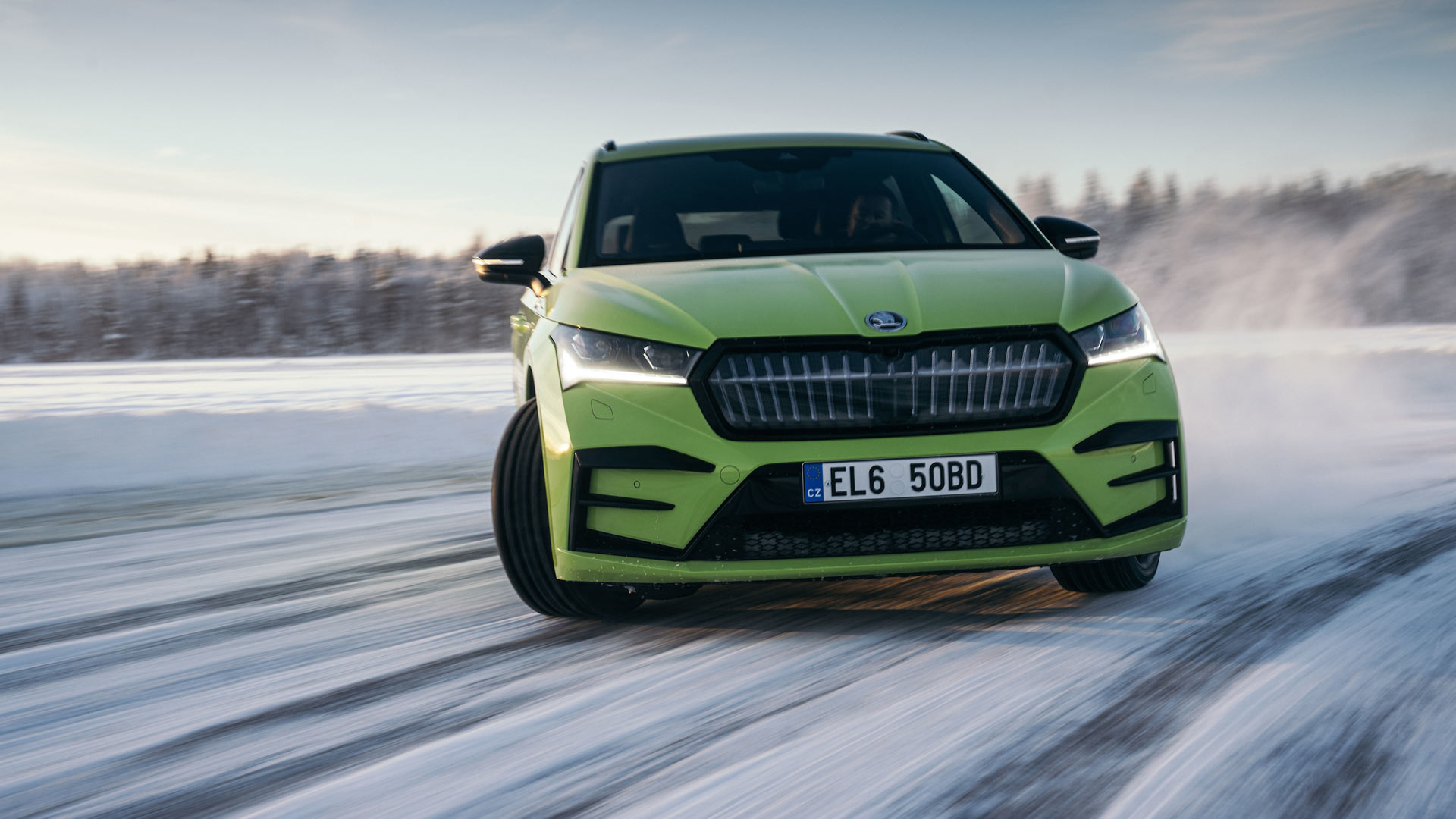
Skoda has claimed two new Guinness World Records in the electric Enyaq iV vRS SUV.
Using specially created track on a frozen lake in Krokom, Sweden, Skoda entered the record books for the ‘Longest Continuous Vehicle Drift on Ice’.
Achieving this with the battery powered Enyaq iV gave Skoda a second official record, too: the ‘Longest Continuous Vehicle Drift on Ice (electric car)’.
Slip-sliding away
Motoring journalist Richard Meaden was tasked with setting the new record, with a previous effort of 6.231km (3.872 miles) to beat.
In the presence of a Guinness World Records adjudicator, and with international drifting judge David Kalas as a witness, Meaden managed a continuous slide for 7.351 km (4.568 miles).
The entire drift lasted for almost 16 minutes, with Meaden completing 39 laps of the circular ice track. It took some 18 hours of drifting, across five days of practice, to achieve the perfect slide.
A top speed of 48.69kph (30.25mph) was set during the record run, with the Skoda never dipping below 31.64kph (19.66mph).
Another record for Skoda
The Skoda Enyaq iV vRS uses two electric motors, offering a total of 299hp to all four wheels.
Although the Enyaq used for the record run was a standard production model, special studded tyres were used. Smaller studs were fitted to the rear tyres, allowing for a controlled drift on the 40cm-deep ice.
Richard Meaden and Skoda have previously set another Guinness World Record together. In 2011, the British driver set a new Land Speed Record for a 2.0-litre forced induction production car. The modified Skoda Octavia vRS reached 227.080mph on the Bonneville Salt Flats.
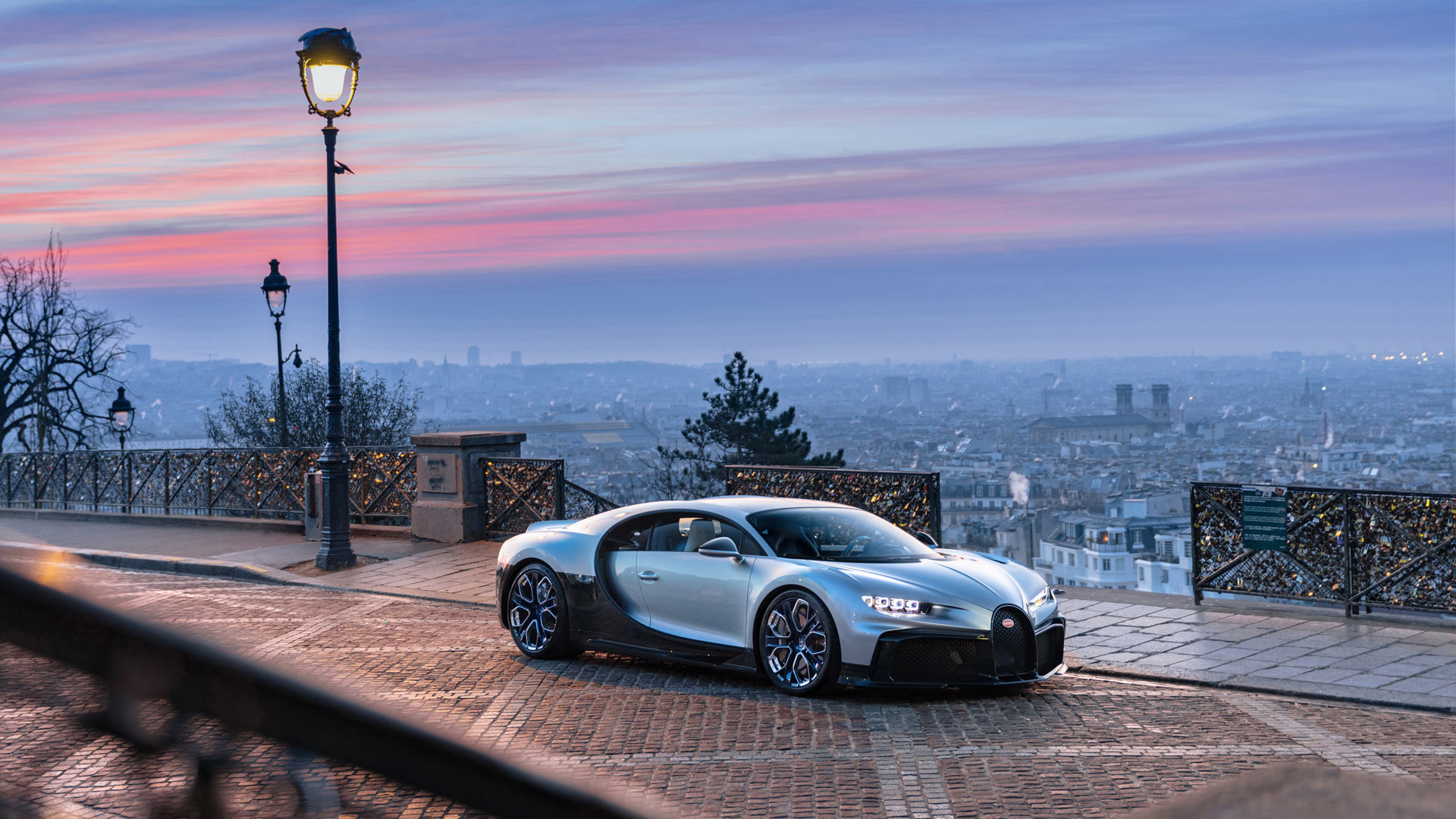
A one-off version of the Bugatti Chiron hypercar has sold for a record price at RM Sotheby’s Paris auction.
A winning bid of €9,792,500 – equivalent to £8,695,000 – secured the unique Profilée model.
This more than doubles the previous record price paid for a Chiron, and makes it the most expensive new car ever sold at auction.
One for the record books
Revealed in December 2022, the Profilée was originally conceived as a subtler version of the handling-focused Chiron Pur Sport. Bugatti customers apparently wanted the extra performance of the Pur Sport, but without the dramatic fixed rear wing.
Bugatti began work on a design with a sweeping tail, plus the enhanced power output. While the engineering process was underway, however, it became apparent that all 500 build slots for the Chiron had already been accounted for. This meant the Profilée would never enter production.
Despite this, Bugatti opted to create a single ‘pre-series’ Chiron Profilée, offering it for sale directly through the RM Sotheby’s auction. As such, the Profilée is the final new Chiron to be sold.
Limited to 236mph
The Profilée has a smoother rear spoiler, with a large cut-out section that allows hot air to escape. This produces enough downforce to keep the 1,500hp Bugatti on the ground at high speeds, and works with a revised splitter and front grille.
In line with the Chiron Pur Sport, the Profilée gains a 200rpm increase for the W16 engine’s rev limit. This allows for a top speed limited to 236mph, plus a 0-180mph time of just 12.4 seconds.
Bugatti opted for a two-tone exterior colour scheme, with exclusive ‘Argent Atlantique’ paint matched with blue-tinted exposed carbon fibre. The car’s alloy wheels are also unique, mimicking the Chiron’s horseshoe-shaped front grille.
More than 2,600 metres of woven leather strips can be found inside the Profilée, each one applied by hand.
All of this ensures the Profilée’s very lucky – and indeed very wealthy – new owner owns a truly one-off piece of Bugatti history.
To mark seven decades since the original Matchbox toy, an extensive range of limited-edition models will be offered for sale.
All the vehicles chosen pay tribute to Matchbox’s heritage. The chosen die-cast vehicles include classic cars from the 1950s, right through to the latest electric SUVs.
Seven decades of history
The new Matchbox models feature platinum details to signify this platinum anniversary. Seven different assortments will honour each decade of the company’s existence, with plenty of fan-favourite models included.
Certain vehicles come from the premium Matchbox Collectors Series, such as the Jaguar D-Type and Porsche 911. These gain extensive exterior details, along with real rubber tyres.
Other highlights include a special-edition Routemaster bus, plus a Porsche 930 Turbo and electric Mazda MX-30 – both with opening doors.
The range of individual 70th anniversary models will be released throughout the year, and will build towards even bigger celebrations in July 2023.
Start small, dream big
The Matchbox story began in 1952, with British engineer Jack Odell. A mechanic during World War Two, Odell crafted a miniature version of a Lesney die-cast steamroller. This allowed his daughter to take a toy to school, which only permitted playthings small enough to fit inside a matchbox.
Such was the response to Odell’s die-cast creation, the Lesney company created more miniature die-cast vehicles. Their small scale, combined with affordable prices, ensured Matchbox became a hit brand in the UK.
Matchbox was eventually purchased by Mattel, owner of the rival Hot Wheels brand, in 1997.
More recently, Matchbox has started a project to ensure all its toys and packaging are made from 100 percent recycled, recyclable or bio-based plastic materials by 2030.
Bizzarrini has revealed the first details of its ‘purist’ mid-engined hypercar. Named after company founder Giotto Bizzarrini, the Giotto is the first all-new car from the reborn Bizzarrini brand.
Technical details are still thin on the ground, but we’re told Giotto’s Bizzarrini’s work on the long-serving Lamborghini V12 – first used in the 350 GT of 1964 and in continuous production until the Murcielago SV of 2010 – has inspired the naturally aspirated V12 engine.
Like the original Bizzarrini 5300 GT (pictured on the right in Revival guise), the Giotto is also styled by Giorgetto Giugiaro, whose design back-catalogue includes the Mk1 Volkswagen Golf, BMW M1, DeLorean DMC-12 and many more.
Six decades of history
“Giugiaro still recalls standing with Steve McQueen at Le Mans in 1965,” explains Bizzarrini marketing chief, Simon Busby. “He said they were both listening for the Bizzarrini to come into the pit lane – its unsilenced V8 was so loud.”
As seen in the sketch above, the carbon-bodied Giotto draws upon Giugiaro’s classic 5300 GT, with two slim bonnet vents hiding LED headlights, and framing a prominent Bizzarrini badge.
The wraparound windscreen of the 1964 original is reinterpreted in a visor style, like a Le Mans racer. At the rear, the Giotto’s tapering tail shows off its mid-mounted engine, and is framed by powerful haunches.
‘Like any racing car, it prefers to go hard and fast – not least because its Dunlop cross-ply tyres proffer very little grip until they get warm.’
Giorgetto Giugiaro said: “To have the opportunity to design an entirely new car from Bizzarrini is a privilege. Our two names are united in nearly six decades of history and a series of now-iconic designs. With the Giotto, we honour the past but we focus wholly on the future.
“Designed for purpose, and incorporating active aerodynamic technologies, we have created something that is both recognisably Bizzarrini and totally relevant for an entirely new era of this cherished Italian brand.”
‘Vocal and emotive’
The requirement to “make a great noise” ruled out electric power for the new Bizzarrini, Busby explained. Instead, the car will use a free-breathing V12 sourced from an external supplier.
Power output hasn’t been confirmed, but will be “in the region of 1,000hp”. Expect 0-62mph in less than 3.0 seconds, plus a top speed well beyond 200mph. Bizzarrini CTO Chris Porritt said: “We have a very clear vision for the Giotto, defined ultimately by how it makes a driver feel… This is vocal and emotive, it’s mechanical and it’s tactile.”
Further ahead, Simon Busby says the company will consider a plug-in hybrid system to meet tightening emissions rules – and perhaps a conventional engine fuelled by hydrogen.
Bizzarrini is back
The modern incarnation of Bizzarrini made its comeback with the 5300 GT Corsa Revival, a limited-run recreation of the racer that won its class at Le Mans in 1965. The new Giotto is evidence of grander plans: potentially around 50 cars a year, split between coupe and open-top spyder versions.
Bizzarrini CEO Ian Fenton said: “The 5300 GT Corsa Revival was an introduction to the world of the genius of Bizzarrini, but the Giotto is the centrepiece of our future as an exclusive supercar manufacturer. It forms the heart of a 10-year strategy that will see additional variants and more Revival models from Bizzarrini, while also firmly placing this historic and revered name among the very best performance brands in the world.”
More details of the Giotto will be divulged later in 2023. As ever, we’ll bring you all the latest updates on Motoring Research.
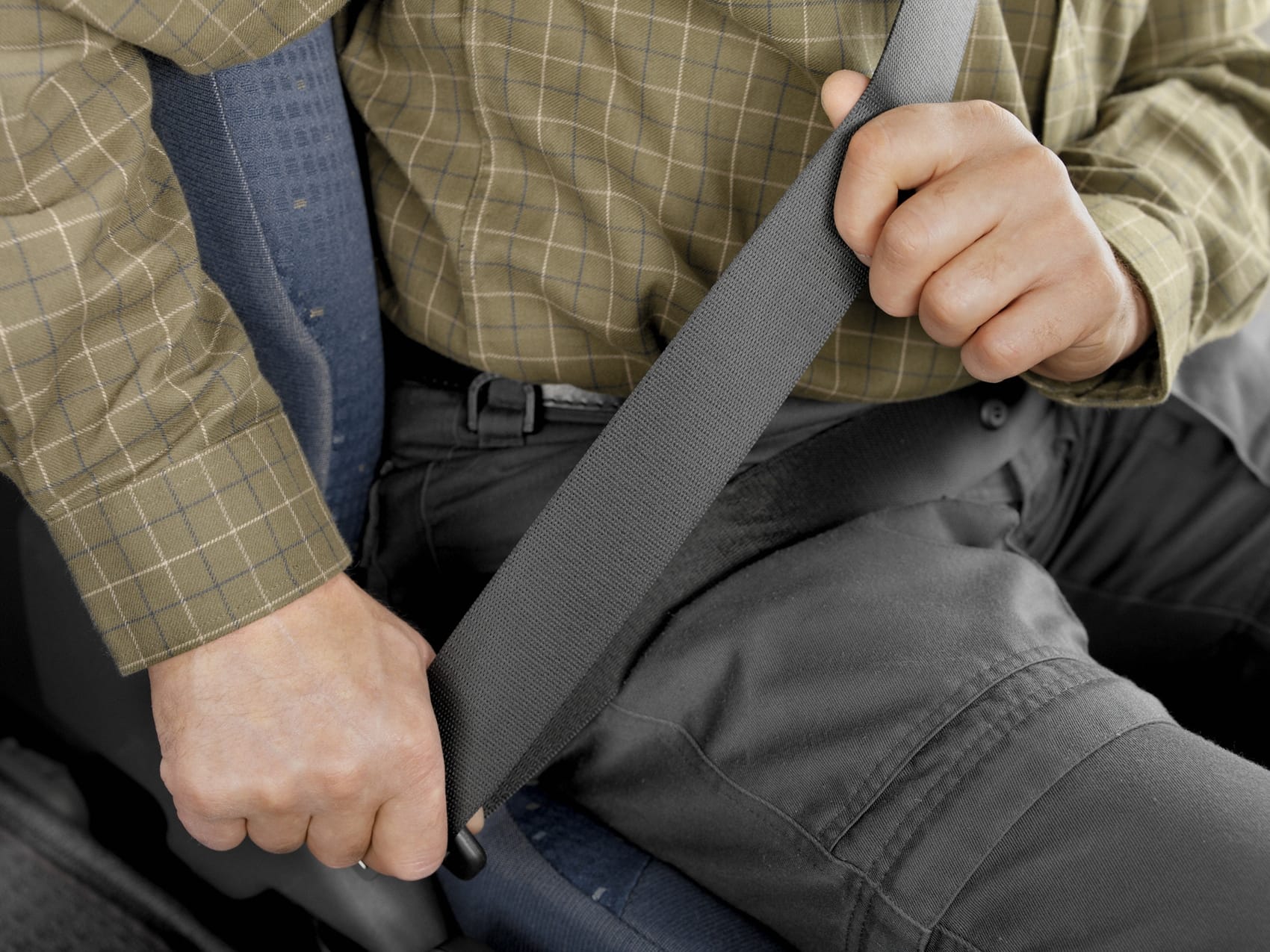
Today marks the 40th anniversary of all drivers having to wear a seatbelt. The law came into force in Britain on 31 January 1983.
Although car manufacturers had been required to fit seatbelts as standard since 1965, it took another 18 years for their use to become mandatory.
To coincide with the anniversary, the RAC has conducted research to discover the views of modern motorists on seatbelt use.
From the survey, more than two-thirds (68 percent) believe it should be the responsibility of the driver to ensure everyone is wearing a seatbelt in their car.
Tougher penalties endorsed
At present, drivers are only responsible for making sure children are securely fastened in. Adult passengers are free to make their own decision about seatbelts, with no penalty for the driver.
However, one-third (33 percent) of those surveyed believe drivers should also bear responsibility for adult passengers. This would see them penalised should anyone be caught not wearing a seatbelt in their car.
Close to a quarter (24 percent) think the penalty for not wearing a seatbelt is too lenient. Current legislation sees a fine of up to £500 issued, but the RAC found support for the idea of endorsing three points on the driver’s licence.
The idea of ‘seatbelt awareness courses’ was favoured by 48 percent of respondents, aimed at those who are caught not belting up properly.
Time to buckle up
Around four percent of UK drivers, equivalent to 1.7 million driving licence holders, admit to having not worn a seatbelt in the past year. A further 22 percent of these drivers claim not to wear one at least half of the time.
RAC road safety spokesman Simon Williams said: “Forty years on from the introduction of what is undeniably one of the most important road safety laws, it’s still the case that far too many people don’t wear seatbelts – something that’s a factor in around 30 percent of all road deaths each year. It’s also sadly the case that people are twice as likely to die in a crash if they’re not wearing one”.
He added: “For most people, getting into a car and putting on a seatbelt is second nature, but it’s obvious more needs to be done to get those who haven’t developed this habit to change their ways. Our research shows drivers are clearly supportive of greater penalties, which we know the government is considering.
“But arguably, toughening the law isn’t enough: drivers need to think there’s a good chance of being caught in the first place. If they don’t, there’s every chance they’ll carry on as normal – just as we see day-in, day-out, with plenty of drivers still prepared to illegally use a handheld phone while behind the wheel.”
The date for an MOT test is one of the most popular car-related questions on Google. That’s according to a study of monthly searches via the dominant search engine.
MOT queries account for around 70,000 monthly searches, with ‘when is my MOT due’ the most popular search term.
Google might not always know the answer, but the chances are it can direct you to a website that does. Here, we reveal the top 10 car questions in internet searches – and attempt to provide the answers.
When is my MOT due?
This one is easy, because you can check the MOT status of any vehicle online. Simply head to the government website, type in the car’s registration number, and it will tell you when the MOT test is due.
It will also provide details of the car’s MOT history dating back to 2006, including any advisories and the reasons for a failed test. Useful if you’re checking out a used car for sale.
How much is my car worth?
There are numerous online car valuation tools. Many websites require some personal details before they reveal the valuation. Others, such as the Parkers valuation tool, provide a basic price without requiring your email address.
Don’t be afraid of doing a little legwork yourself. Use the classified adverts on Auto Trader to see how much similar cars are selling for. Remember, prices at dealers will be higher than from private sellers. Don’t forget to adjust the price depending on the car’s mileage, condition and age.
Another trick is to use the advanced search tools on eBay Motors. It’s possible to view the prices the cars actually sold for, which is especially useful if you own a rare or classic vehicle.
How much is my car tax?
Car tax – or Vehicle Excise Duty (VED) – is rather complicated. Indeed, you’d be forgiven for taking one look at the government’s tax calculator and giving up.
As a guide, for cars registered before 1 March 2001, the rate of vehicle tax depends on engine size. For cars registered on or after 1 March 2001, the rate depends on CO2 emissions and fuel type.
How to jump start a car
How many of these internet searches were conducted on a smartphone, next to a car with the bonnet up? In truth, it’s better to arm yourself with the facts before the worst happens, as there are many things to consider. Can you jump start an automatic car, for instance? And can you jump start an electric car?
There are many online engine oil finders. One of our favourites is the tool on the Opie Oils website.
Alternatively, you should consult your vehicle handbook. If in doubt, ask the supplying dealer or contact the vehicle manufacturer.
Topping up between services is perfectly normal on older vehicles, but if your car is suffering from excessive oil consumption, it’s probably worth getting it checked out.
Who can fix my car?
A mechanic. There, that wasn’t difficult, was it?
Turn to Google for an answer and the top result will be a mechanic comparison website with a very similar name. Check out the reviews before using the site. Alternatively, contact your local independent garage for advice. Quality garages need our support. You’ll miss them when they’re gone.
When is my car tax due?
As with MOTs, you can check to see if a vehicle is taxed by using the government website. You just need the registration number. Again, this can be very useful if buying used.
This was another top 10 question in Google searches, but it’s also very similar to ‘How much is my car worth?’. So we’ll refer you to the previous information here.
What does SUV stand for?
‘SUV’ stands for Sport Utility Vehicle. There, easy. We won’t go down the avenue of when an SUV becomes a crossover, but we will refer you to our guide to the different car types.
How much to tax my car?
Again, see above. As this research by CompareTheMarket research shows, some of the more obscure car questions are the most revealing. ‘What does BMW stand for?’ If you’re a Brentford FC fan, the answer is ‘Benrahma, Mbeumo and Watkins’.
‘What is the fastest car in the world?’ A Vauxhall Astramax van, obviously. ‘What car should I buy?’ Having dished out far too much advice to family and friends, we’d recommend the car you like best. Just buy the car you want.
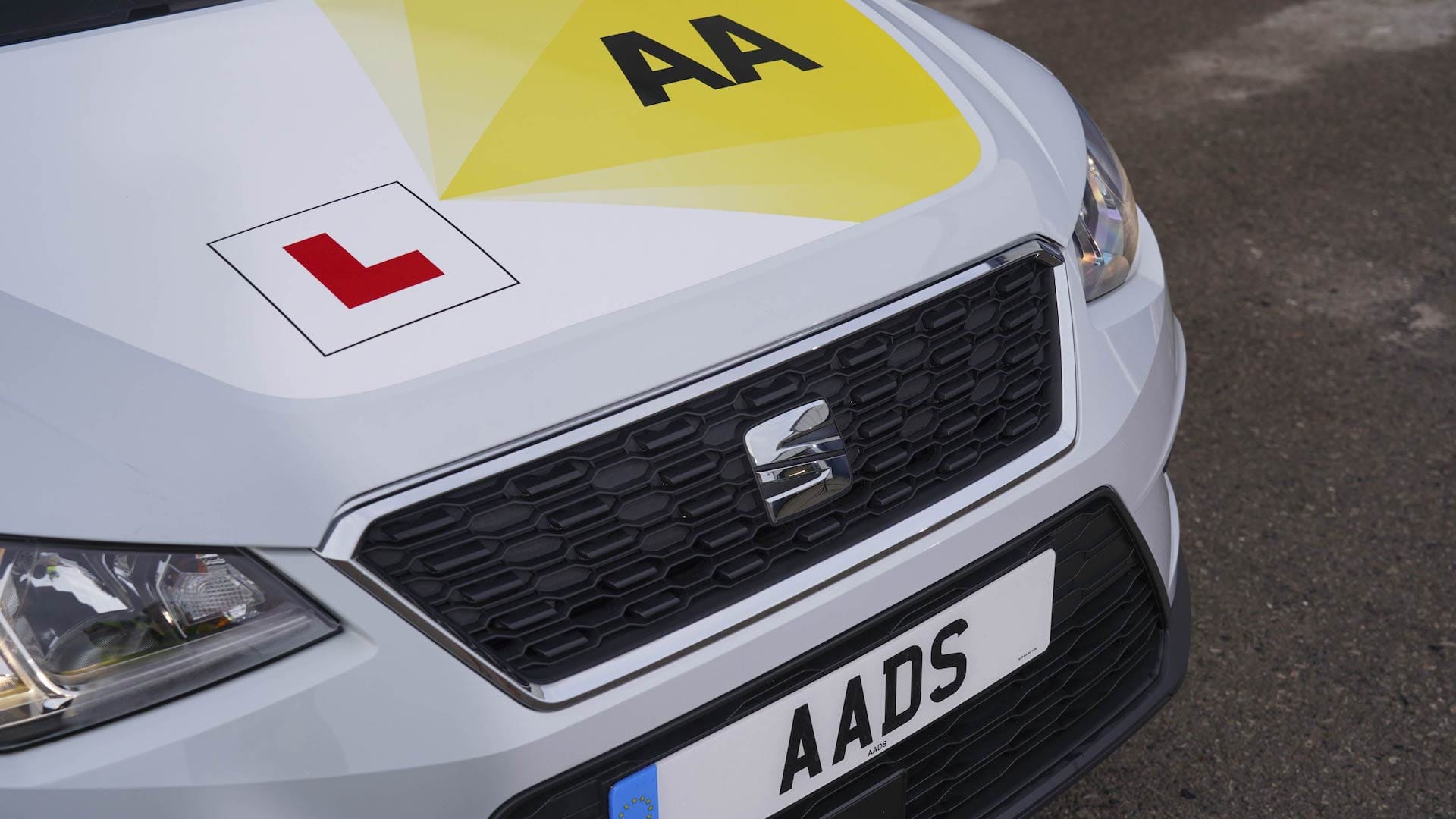
The AA has revealed the huge delays faced by learner drivers when it comes to booking practical driving tests.
Across the UK, some 66 towns and cities see drivers face a wait of more than five months to book a test. More than 88 percent of test centres have waiting times in excess of seven weeks.
The exclusive data from AA Driving School was obtained through a Freedom of Information (FOI) request, highlighting the poor availability of driving tests.
Practically impossible delays
Many of the delays can be attributed to the coronavirus pandemic, which resulted in driving tests being suspended across the UK. This created a backlog of practical tests, leaving centres struggling to meet demand.
The AA’s investigation also exposes regional differences, made worse by the DVSA’s system for booking a test.
A driver booking a practical test in Swansea would need to wait 20 weeks, but one in Llanelli is available within 10 weeks. Those in Kent could book a test in Canterbury for a fortnight’s time, but nearby Herne Bay requires a nine-week wait.
Camilla Benitz, MD of the AA Driving School, said: “There is no easy way for candidates to check availability at multiple test centres without checking each one manually. A better system could save many weeks of waiting, as our data showed wait times varied between some local test centres by as much as three months.
“We’d like to see test centre wait-time data published regularly by the DVSA to help ensure there is full accountability in getting back to pre-pandemic waiting times.”
Slow progress being made
Prior to coronavirus lockdowns, the average time from booking a driving test online to undertaking the practical element was six weeks.
Transport minister Richard Holden MP said in a parliamentary debate earlier this month: “The average waiting time to take a car test is at 15.1 weeks, with over 80,000 slots currently available”.
However, the AA highlights this shows little improvement from data it obtained in November 2022. At that point, the average wait for a practical driving test was 15.5 weeks.
Camilla Benitz added: “It’s good there has been an update in Commons on some of the waiting times, but we now need to see some clear action to bring these waiting times right down.”
Prepare yourself, because I’m about to have a rant about the misuse of daytime running lights.
It’s January, which means we’re being bombarded with motoring advice designed to keep us safe on cold winter roads. However, here’s an additional tip for the unilluminated drivers of Britain: turn your blimmin’ lights on.
It used to be simple: when it got dark, you twisted a stalk on the steering column or a turned a dial on the dashboard to switch on your car’s headlights.
Back then, aside from those embarrassing occasions when the orange glow of the sodium street lights meant you forgot to light up after exiting Sainsbury’s car park, you rarely got things wrong. Thankfully, there was always a helpful Rover 200 driver on hand to give you a friendly flash before you ended up with a double bend sign inserted into your front grille.
Today, things are different. Daytime running lights (or DRLs) have been mandatory on all new cars since February 2011, so modern drivers are never in the dark. What used to be the preserve of Scandi-cool geography teachers and architects (in Volvos and Saabs respectively) is now commonplace.
The problem is, a small number of drivers seem to think DRLs are a substitute for common sense. Because the dashboard is illuminated, the headlights must be on, they think, before turning their attention to WhatsApp messages or a Spotify playlist on their in-car touchscreen.
A few years ago, an RAC survey of around 2,000 motorists found more than six in 10 (62 percent) of motorists claimed to see other cars and vans driving in dull conditions without any rear lights on, but noted that the DRLs were burning bright.
Dazed and confused
And they sure do burn bright. As the government points out, they are too bright for use at night and will cause ‘dazzle and discomfort’ for other road users.
Some cars, particularly those with fancy light clusters, have rear lights that are always on, so the chances of crashing into the back of them are slim. Others are plunged into darkness, which is less than ideal when the sun goes down or the road is draped in thick fog. Oh, and don’t get me started on fog lights…
Back to the DRL issue, I recently followed a Peugeot 3008 along the A30 and into that notoriously dark section before Honiton. For a while, I was wondering why the driver was frantically flashing at the road ahead, as if he’d spotted a speed trap.
I soon realised the DRLs he had been relying on for the past 15 or so miles were no longer up to the task, so he was flashing his lights in a vain attempt to engage main beam. Fat chance when you’re running with a pair of DRLs.
He worked it out, eventually, but only after some erratic driving and, I suspect, a few choice words.
If you’re reading this, the chances are you’re one of the many illuminated drivers who have seen the light. In which case, please pass the message on to your not-so-bright neighbour or that colleague in the office who drives a Qashqai. If they can’t be trusted with DRLs or their car’s ‘auto’ lights, please tell them to take the bus instead.
That way we’ll all get to where we need to this winter, even if that is only the office. Safe travels.