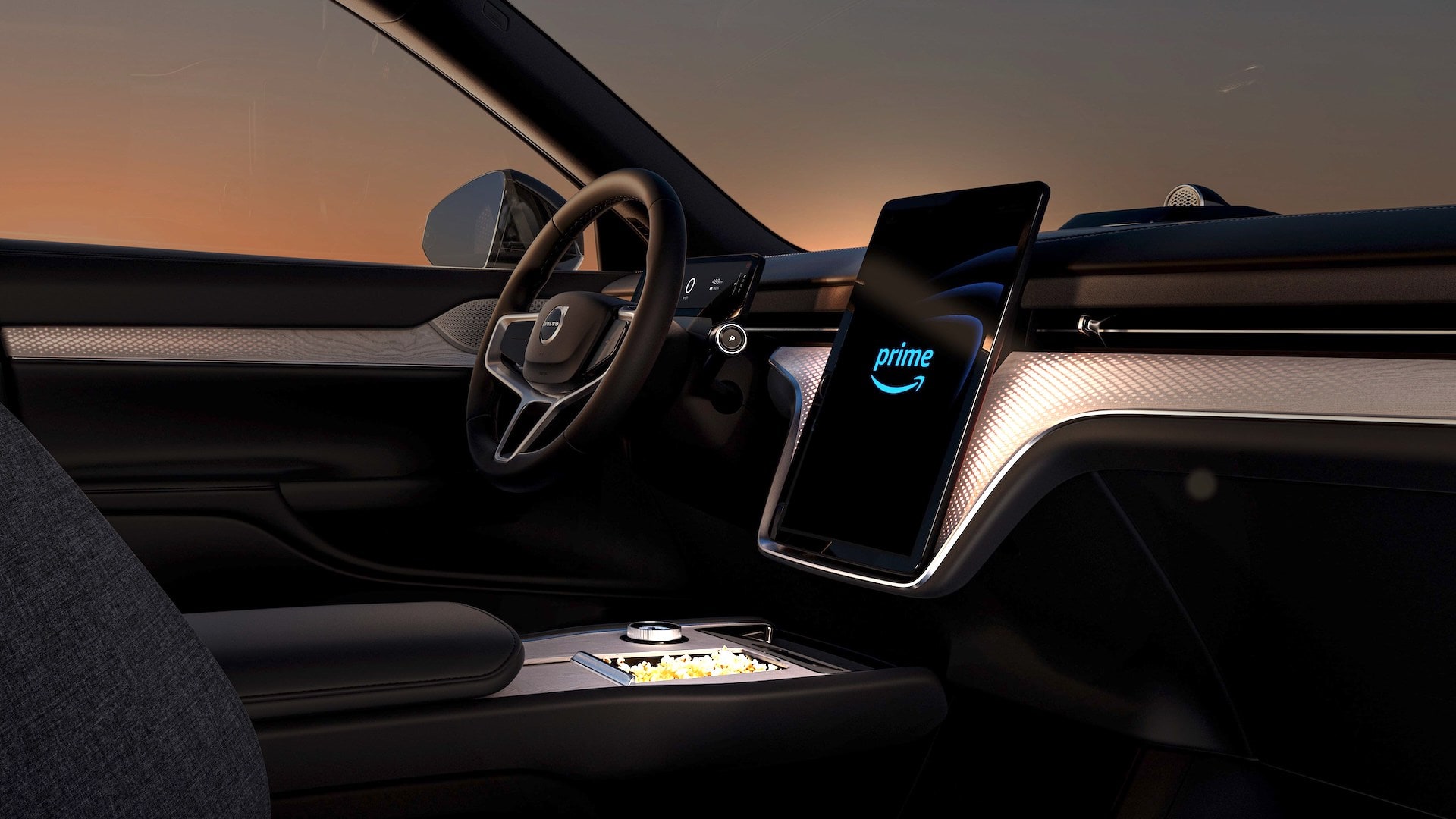
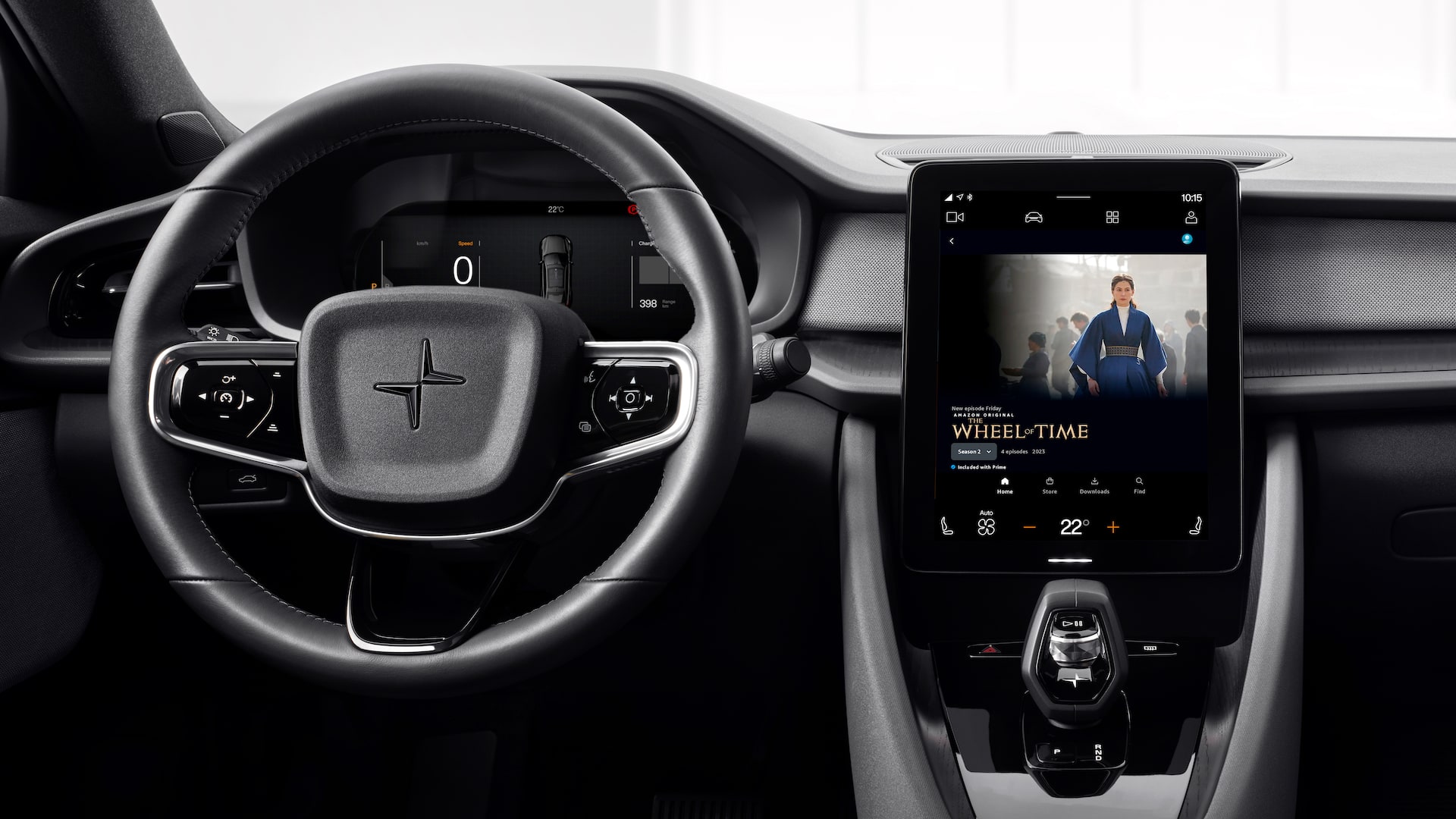
Owners of certain Volvo and Polestar models will soon be able to watch Amazon Prime Video content inside their cars.
An update to the Android Automotive operating system in Volvo and Polestar vehicles will see the Prime Video streaming service available to download via the built-in Google Play app store.
Drivers can then watch Amazon Prime Video content – such as the new Mammals series with James Corden – using the infotainment screen of their Volvo or Polestar.
Moving upstream
“Adding access to services such as Prime Video and YouTube in our cars bolsters the continuously growing list of software and applications to make lives for our drivers better,” said Erik Severinson, global head of new car programmes at Volvo. “We are delivering on our promise of building cars that grow with our customers over time.”
Access to YouTube video streaming will become available for Volvo models in the near-future, too.
YouTube access was added to the Polestar 2 earlier this year, as part of the electric car’s 15th over-the-air software update so far.
Safety comes first
In the name of safety, access to both Amazon Prime Video and YouTube streaming content is limited to when the car is fully stationary. This might include time spent waiting for an electric car to charge, for example.
Prime Video will be offered through the Google Play app store, while YouTube access will be added to Volvo models via an over-the-air software update. The rollout of Amazon Prime Video starts on 18 September 2023, with a market-by-market approach.
All Volvo cars with built-in Google operating systems will be able to receive the new updates, other than those located in China, South Korea and Vietnam.
A new trend for car cannibalisation is being reported across the UK. The problem has been highlighted by Tracker, which supplies GPS tracking systems to help locate stolen cars.
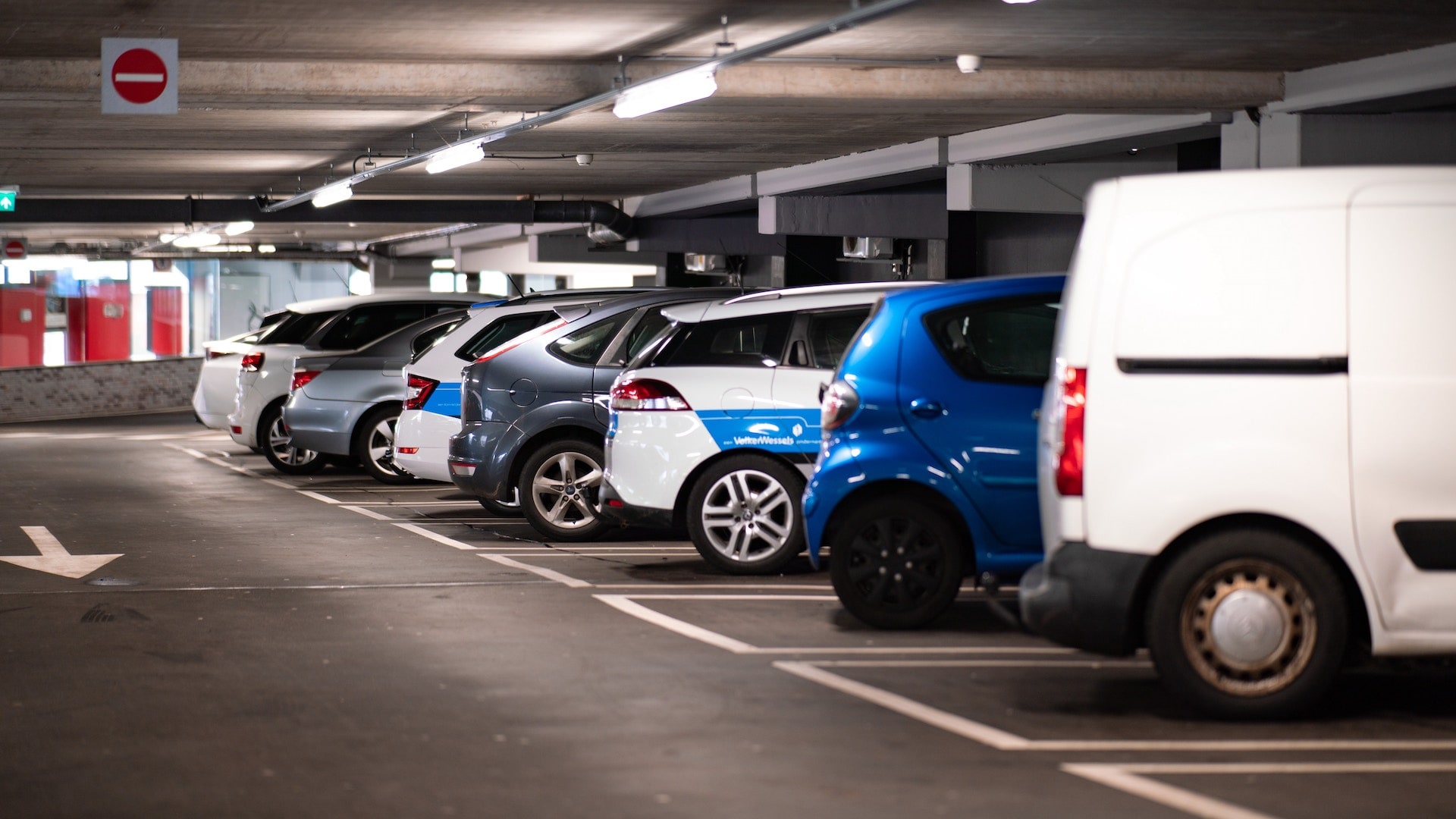
The process involves vehicles are being stripped for parts – often with alarming speed – when left in public car parks or on owners’ driveways.
“When the pandemic slammed on the brakes on new car manufacturing, the UK saw a surge in demand for used cars and with this a worrying increase in thefts of older vehicles and parts,” explains Clive Wain, head of police liaison at Tracker.
Enabled by illegal ‘chop shops’
Wain continues: “An influx of chop shops – illegal body shops used to illicitly disassemble stolen motor vehicles so their parts can be sold on – began appearing nationwide to support car-theft rings and organised crime gangs. This continues to be a significant concern for the police and car owners. This year to date, the number of illegal chop shops we have helped UK police forces uncover has more than doubled compared with the whole of 2022.”
Although criminal networks in the UK are the main marketplace for stolen car parts, Tracker says that items can end up being sold further afield. The rest of Europe, the Middle East and Africa have all become destinations for car parts stolen in the UK.
Opportunistic individuals are also said to be engaged in car cannibalisation, aided by the ease of selling used parts online.
Tips to deter the car cannibals
Tracker has provided a list of tips on how to reduce the risk of your car being cannibalised by criminals:
Avoid parking in unlit areas, as this gives thieves cover to work in. Fit motion-activated security lights at home if your driveway is in darkness.
Consider installing a dashcam in your car, or adding external CCTV to your house to deter thieves. Many dashcams come with a parking mode to begin recording automatically.
Upgrade your physical security at home, with security posts or a substantial gate to prevent easy access to your vehicle.
Etch easily stolen parts with the vehicle’s registration number. This could aid recovery, or dissuade thieves from taking them in the first place.
Add an alarm to your car if it does not already have one. Although it may not prevent an initial attack, it could stop multiple parts being taken.
Avoid leaving valuables on display inside your car, reducing the chance of it being attractive to opportunistic thieves.
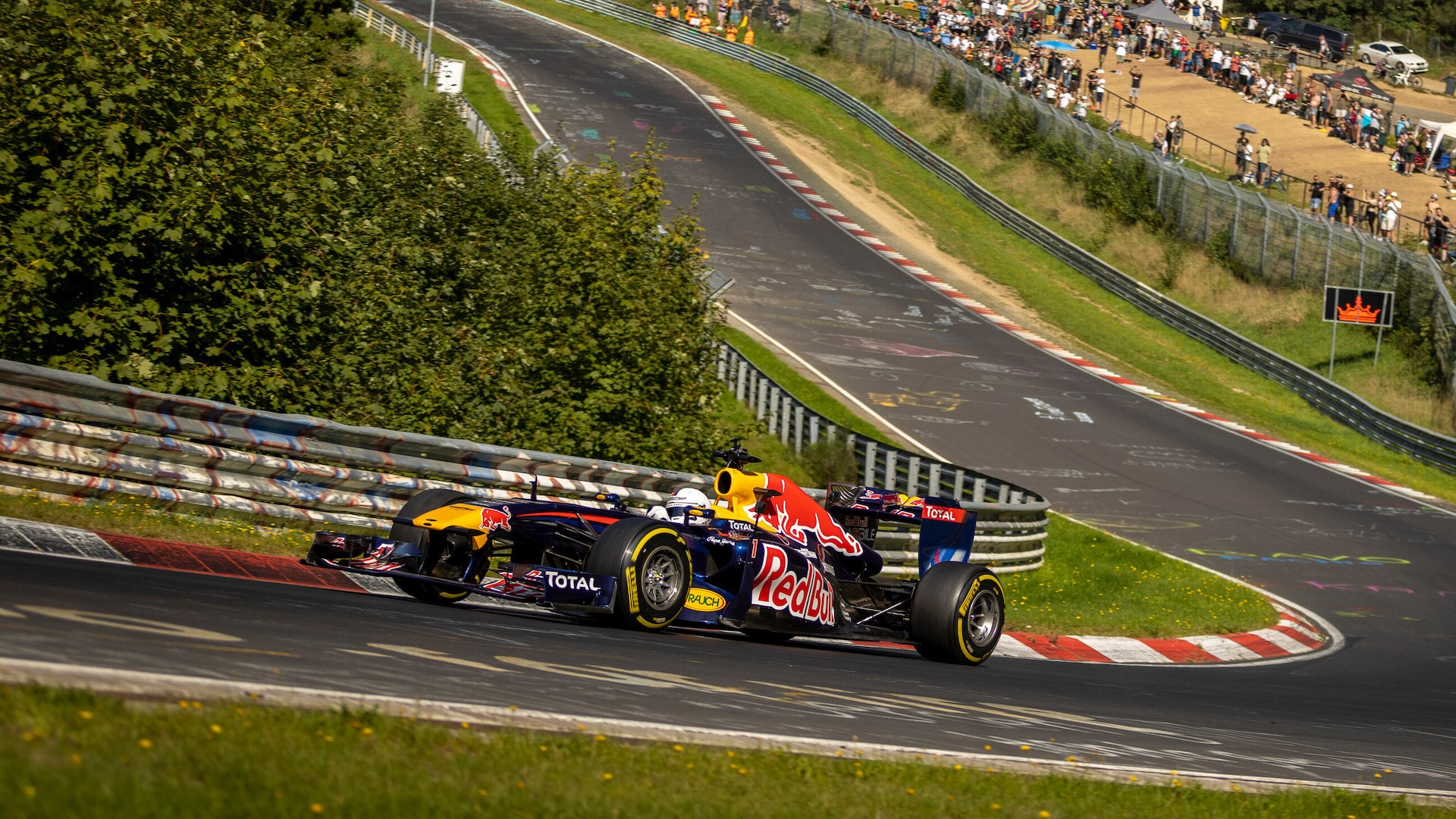
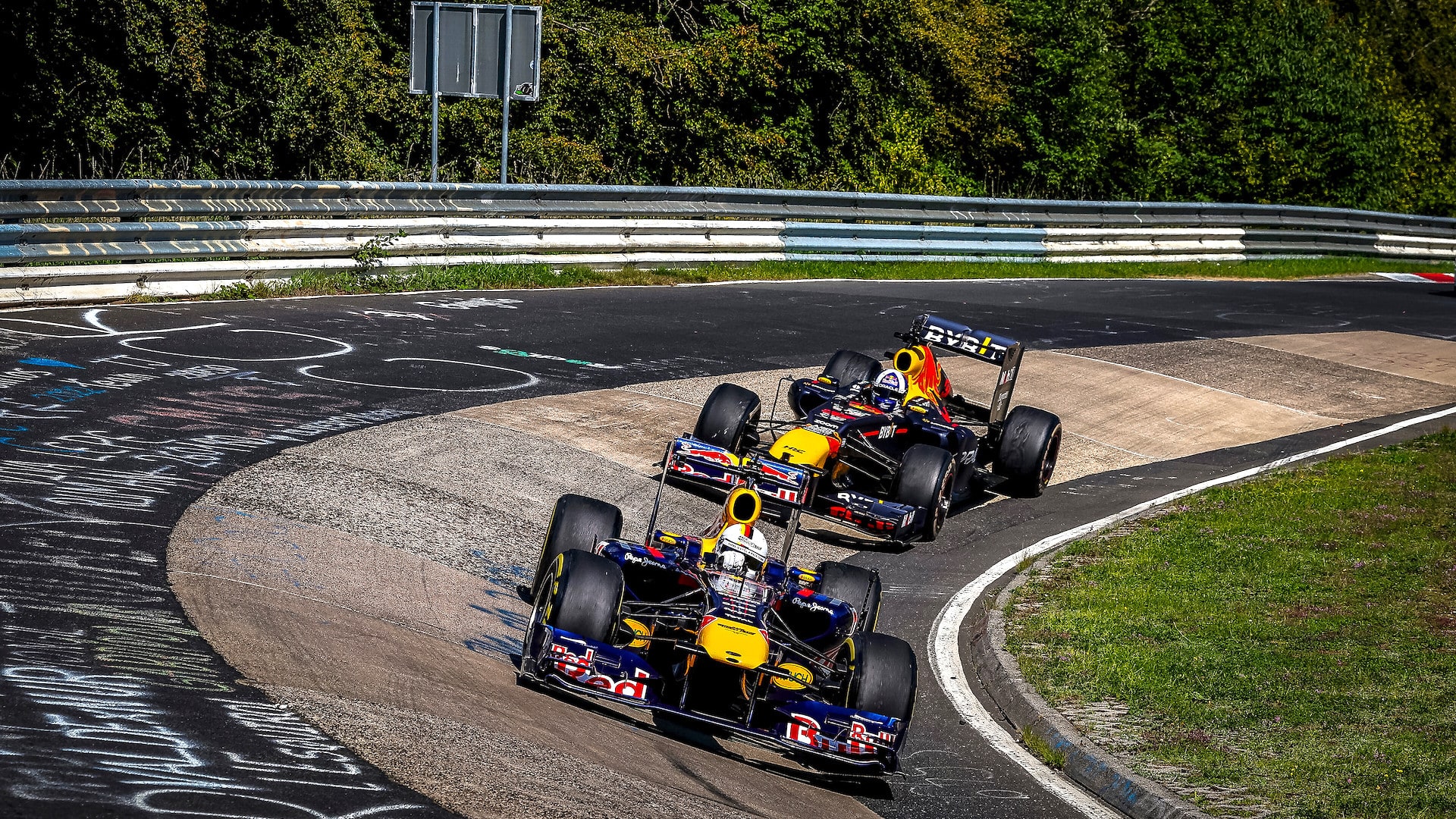
Red Bull and Sebastian Vettel have brought the excitement of Formula 1 back to Germany’s legendary Nurburgring Nordschleife circuit.
At a weekend packed with motorsport action, the highlight was seeing Vettel take to the track in a Red Bull Racing RB7 Formula 1 car.
The RB7 was previously used by the four-time Formula 1 World Champion during his dominant 2011 season. That year, Vettel won 11 of the 19 races with the RB7, making it one of the most successful Formula 1 cars ever.
Pushing F1 to a carbon-neutral future
Driving a modern Formula 1 car around the Nurburgring Nordschleife requires serious commitment. Vettel had to contend with some 154 corners on the undulating circuit, which measures close to 13 miles in length.
Formula 1 stopped using the full Nordschleife circuit after Niki Lauda’s horrifying crash in 1976. A modern Nurburgring track hosted F1 racing action until 2020, and was the scene of Vettel’s 2013 Eifel Grand Prix victory.
For its return to the Nurburgring, the Red Bull Racing RB7 was powered by carbon-neutral fuel. Vettel commented: “I feel like I’m in a time capsule – a lot of memories have come up once I got into the car. It’s going to be a lot of fun going on the big track and doing it in a way that I am happy with. Somehow everything fits together here today – including the fact that we are now running the car with CO2-neutral fuel.”
A celebration of motorsport
Alongside Vettel at the event was current Scuderia AlphaTauri driver Yuki Tsunoda in a Honda NSX GT3 Evo, along with former F1 drivers David Coulthard, Gerhard Berger and Ralf Schumacher.
Jos Verstappen, father of current Formula 1 driver Max Verstappen, took to the track in the all-electric Ford Transit Supervan 4.2. Mathias Lauda, son of the late Niki Lauda, drove a Ferrari 312 B3-74 used by his father.
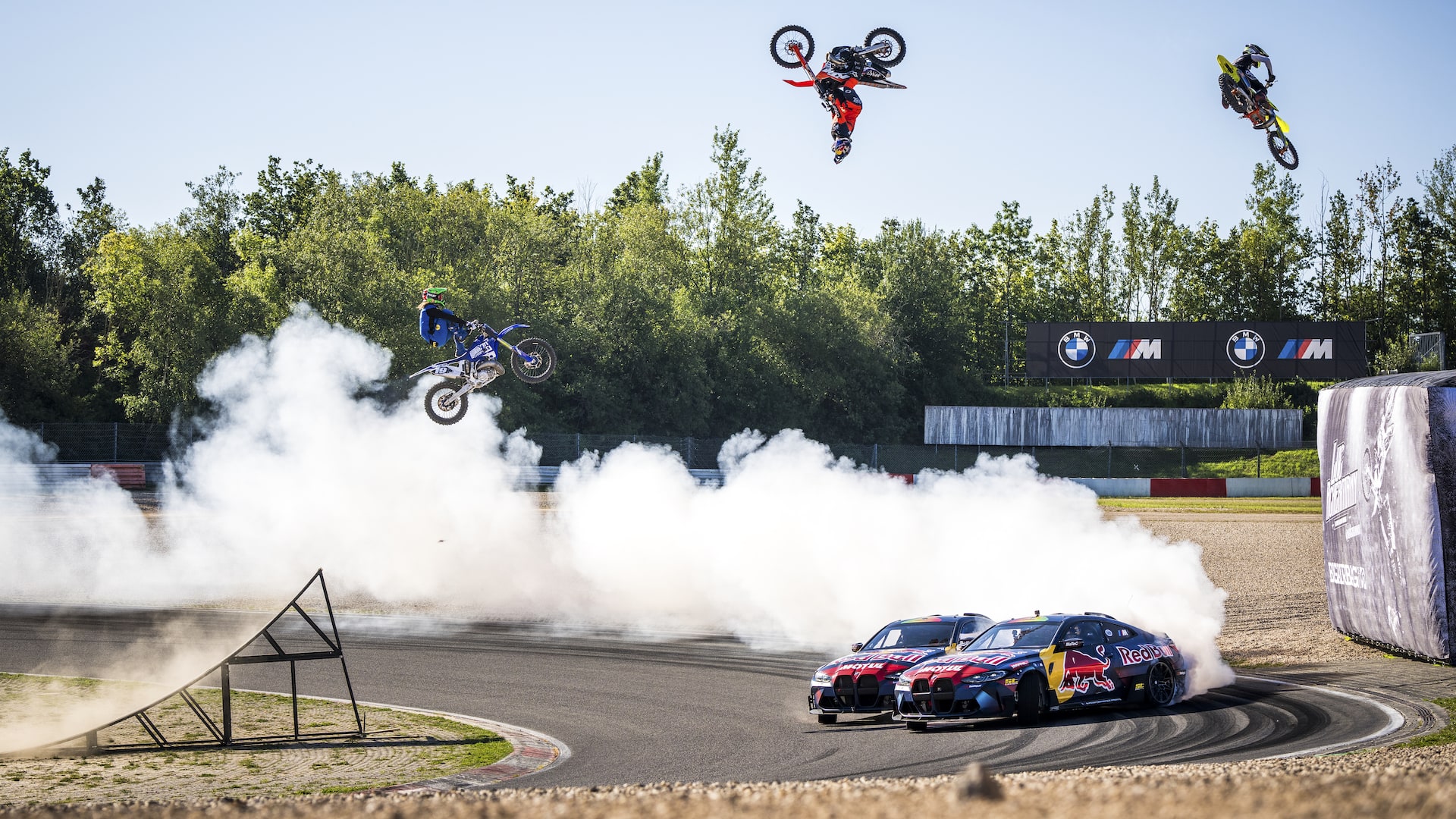
Other highlights included Red Bull drift cars, freestyle motocross exhibitions and even a NASCAR on the Nordschleife.
The Rimac Nevera has become the fastest production electric car to lap the Nurburgring, with a time of 7min 5.30sec around the notorious Nordschleife circuit in Germany – used as a benchmark for performance car testing.
This scorching lap-time places the Rimac just inside the top 20 road-legal cars around the ‘Ring. Here, we count down the incredible machines that have gone even quicker, including supercars from Porsche, Ferrari, Lamborghini, McLaren and more.
20. Rimac Nevera – 7:05.30
The Nevera’s record lap was driven by Croatian racing driver Martin Kodric, with the car wearing Michelin Cup 2R tyres. It’s one of more than 20 performance records the 1,914hp hypercar has broken this year, including the highest verified top speed for an EV – at 256mph.
19. Mercedes-AMG GT R Pro – 7:04.63
Mercedes-AMG’s ‘Beast of the Green Hell’ GT R received a selection of aerodynamic and chassis upgrades with this Pro package. That shaved valuable seconds from its lap-time, but the Black Series version would go even quicker.
18. Porsche 718 Cayman GT4 RS – 7:04.51
The ultimate Cayman has the same Porsche Motorsport-derived flat-six engine as the 911 GT3, producing 500hp at a frenzied 8,400rpm. Some consider it too hardcore for the road (we respectfully disagree), but the RS is a weapon on-track – as a 7min 4.51sec Nurburgring lap-time demonstrates.
17. Dodge Viper ACR 2017 – 7:01.30
The 2008 Viper ACR was one of the original ’Ring heroes. This brutal lump of American iron cemented itself as a serious contender by dominating the circuit. No pressure on the 2017 car, then, which was rumoured to be a contender for the record. Sadly, it never happened, with the Viper ACR failing to break seven minutes. That said, it remains the fastest car around the track with a manual gearbox.
16. Ferrari 488 Pista – 7:00.03
Pista means ‘track’ in Italian, so it’s no surprise this lighter, more powerful 488 was quick around the Nurburgring. Indeed it even borrowed some components from the 488 Challenge and GTE race cars, such as exotic Inconel exhaust manifolds. The open-top Spider version seemed to miss the point, somehow.
15. Porsche 992 GT3 – 6:59.93
The latest Porsche 911 GT3 still has a naturally aspirated flat-six and comes with a choice manual or PDK auto transmissions. With 510hp and a kerb weight of 1,418kg (1,435kg with PDK), it blasts to 62mph in 3.4 seconds and lapped the Nurburgring in a fraction under seven minutes. Porsche pro driver Jörg Bergmeister described it as “by far the best production car” he has driven around the circuit.
14. Lamborghini Aventador SV – 6:59.73
Before the record-breaking Aventador SVJ came the SV, with revised damping, less weight and some serious aero. It also boasted more power and stickier tyres, and became the second road car (after the Porsche 918 Spyder), to break the seven-minute barrier around the Nurburgring. Impressive at the time, but others have surpassed it now.
13. Ferrari 296 GTB– 6:58.70
Blisteringly fast and beautiful, the heart of the Ferrari 296 GTB is a 3.0-litre turbocharged V6 that revs to 8,500rpm, plus a plug-in hybrid system with a 7.45kW battery. Together, they serve up a mighty 830hp – good for a Nurburging lap-time that starts with a ‘six’.
12. Porsche 718 Cayman GT4 RS MR– 6:58.09
This harder, faster GT4 RS is a joint effort between the ‘Nordschleife specialists’ at Manthey and Porsche Motorsport. The improvements are focused mainly on aerodynamics, including a carbon fibre undertray with built-in diffusers and CFRP aerodisc rear wheels to help reduce turbulence. A serious bit of kit.
11. Porsche 918 Spyder – 6:57
Porsche works racing driver Marc Lieb was tasked with extracting the maximum from the firm’s 887hp hybrid hypercar. He did so brilliantly, setting a lap time of 6min 57sec. With Ferrari and McLaren not publishing times for the LaFerrari and P1 respectively, the Porsche is officially the quickest of the hypercar ‘Holy Trinity’.
10. Porsche 991.2 GT3 RS – 6:56.4
Not five years after the Porsche 918 owned the Nurburgring, the 911 went and beat it. Who needs nearly 900hp, all-wheel drive and instant electric power? Equipped with the lightweight Weissach package, Michelin Pilot Sport Cup 2 R tyres and a 500hp free-breathing flat-six, the previous 911 GT3 RS did the business a second quicker.
9. Radical SR8 – 6:55
The Radical SR8 isn’t a car for long motorway journeys. Its manic 2.6-litre V8 develops 360hp and, in theory, it generates enough downforce to drive upside-down. Back in 2005, it blasted around the Nurburgring in a supercar-slaying 6min 55sec.
8. Lamborghini Huracan Performante – 6:52.01
A year before the 911 GT2 fought back, the Lamborghini Huracan Performante put its active aerodynamics to the test for a scarcely believable 6min 52.01sec lap. In 2016, the thought of this relatively conventional supercar beating the sophisticated Porsche 918 Spyder was a real shock. Light weight is another of the Performante’s key strengths.
7. Radical SR8 LM – 6:48.28
When people say “It’s a racing car with number plates”, generally that’s not accurate. This actually is. Radicals race in this spec, minus headlights and those all-important plates. Michael Vergers drove the SR8 LM around the Nurburgring on street-legal tyres for a time of 6min 48.28sec. That’s pretty epic, particularly as it was achieved way back in 2009.
6. Porsche 991 GT2 RS – 6:47.25
The 911 GT2 RS was a fitting run-out model for the ‘991’ model. Its incredible performance at the Nurburgring places it sixth in the current ranking. Given the GT2 name’s reputation for spikiness, it’s quite an achievement to create such a well-rounded 700hp-plus 911.
5. Lamborghini Aventador SVJ – 6:44.97
The biggest and baddest of the raging bulls didn’t enjoy a lot of time atop the Nurburgring throne. Nevertheless, as a proof of how far the Aventador has come, the SVJ’s 6min 44.97sec time is undeniably incredible. Compare that to the original Aventador LP700’s time of 7min 25sec. Yes, that’s 40 seconds slower.
4. Porsche 992 GT3 RS – 6:44.85
With even more aero than a Le Mans-spec 911 RSR – including that monstrous rear wing – the latest Porsche 911 GT3 RS is all about downforce: 870kg at 177mph, to be precise. The extra grip generated means a 525hp 911 edges ahead of a 770hp Aventador around a lap of the ’Ring. Sensational.
3. Mercedes-AMG GT Black Series – 6:43.62
Amazingly, this scorching 6min 43.62sec time was achieved on a cold day with track tarmac that was still damp in patches. Could the mega-Merc emulate the Jaguar XE SV Project 8 and break its own record? Perhaps, but another Mercedes-Benz is faster still…
2. Porsche 991 GT2 RS MR – 6:43.30
Nurburgring lap times are often a bit controversial. So it proves with the second-placed Porsche 911 GT2 RS. Yes, it’s a production car – albeit now discontinued – but like the Cayman GT4 RS further up this list, the record-holder was fitted with the optional Manthey Performance Kit. This consists of chassis, brake and aerodynamic upgrades, plus the lightweight magnesium wheels of Porsche’s own Weissach Package.
1. Mercedes-AMG One – 6:30.71
Mercedes-Benz engineers spent five years grappling with the challenge of making a 1.6-litre V6 Formula One engine pass emissions and noise tests – arguably an even greater achievement than the AMG One’s all-conquering Nurburgring lap record. Still, a time of 6min 30.71sec, set by fearless driver Maro Engel, is pretty incredible. What will it take to beat it?
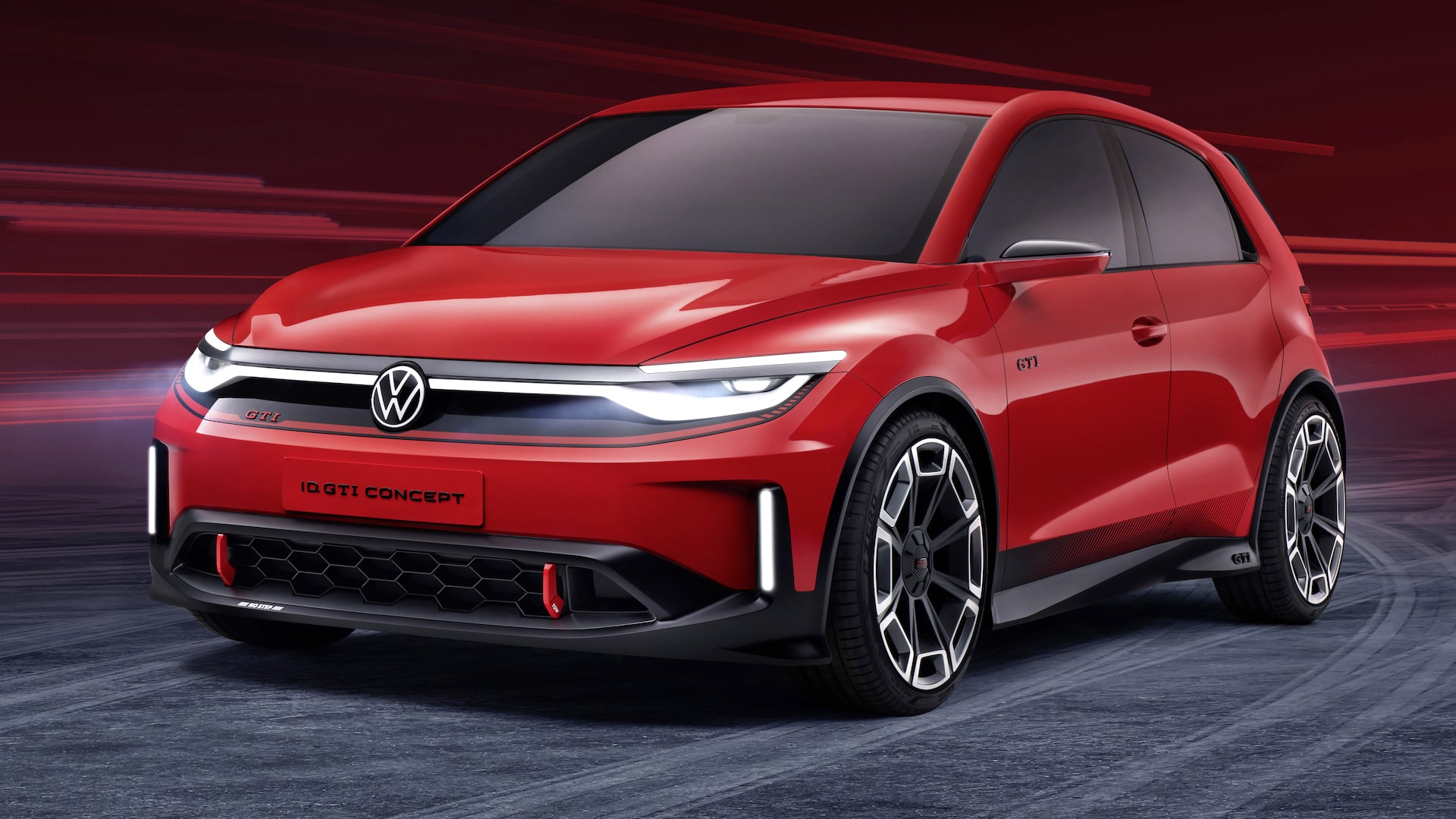
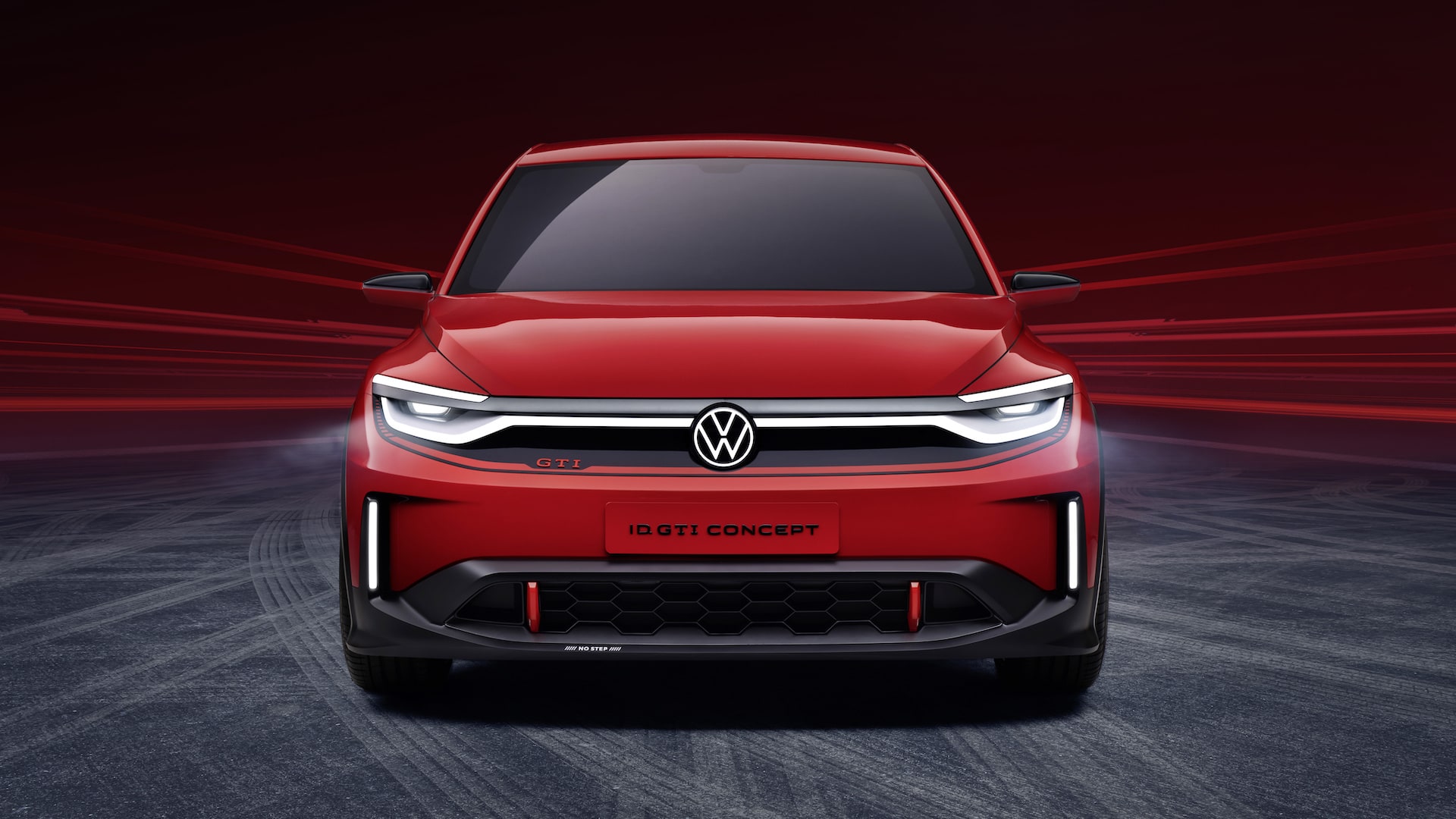
The legendary GTI badge has a place in Volkswagen’s electric future, as revealed by the new ID. GTI concept car.
Ahead of the 2023 Munich Motor Show, which opens its doors on Tuesday 5 September, Volkswagen has released these official images of the ID. GTI.
Based on the ID. 2all concept, shown earlier this year, the ID. GTI is described by Volkswagen CEO Thomas Schäfer as the “perfect combination of driving pleasure and everyday usability”.
Classic GTI styling
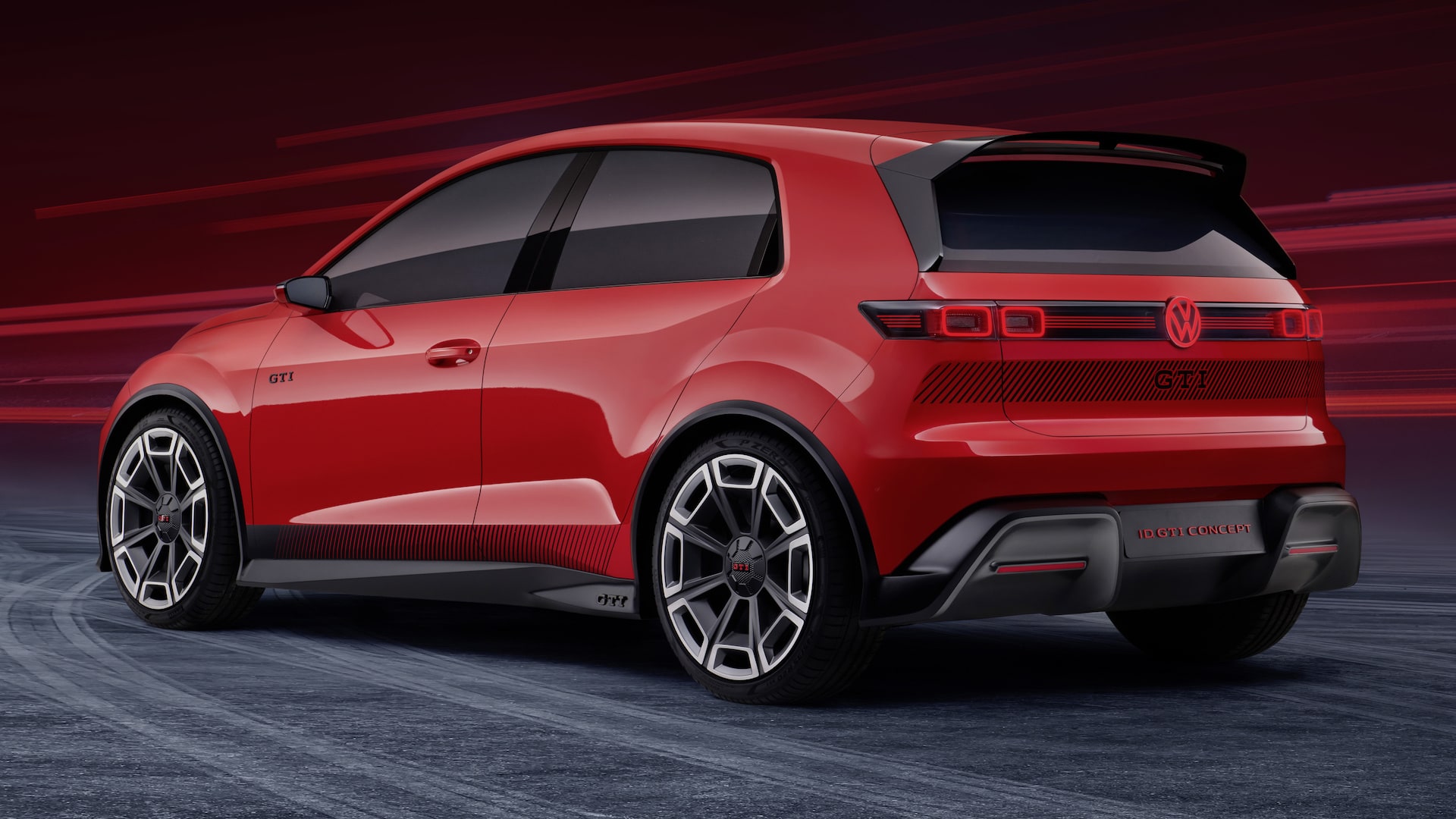
Volkswagen head of design Andreas Mindt ensured all the typical hot hatch styling features were included on the ID. GTI. In terms of proportions, the car is only fractionally larger than the ID. 2all, measuring 4,104mm in length. This makes it closer in scale to a Volkswagen Polo than the current Mk8 Golf.
Despite its supermini size, Volkswagen has fitted 20-inch alloy wheels, which are inspired by Golf GTI models of the past. At the rear, the darkened area below the tail light cluster is a nod to the original Mk1 Volkswagen Golf GTI.
Other GTI staples include a rear spoiler, plus liberal use of honeycomb trim inside the front bumper. A red stripe spans the radiator grille, while the Mars Red and Diamond Silver colours of the concept cars are also taken from Golf GTIs of the past.
A modern GTI interior
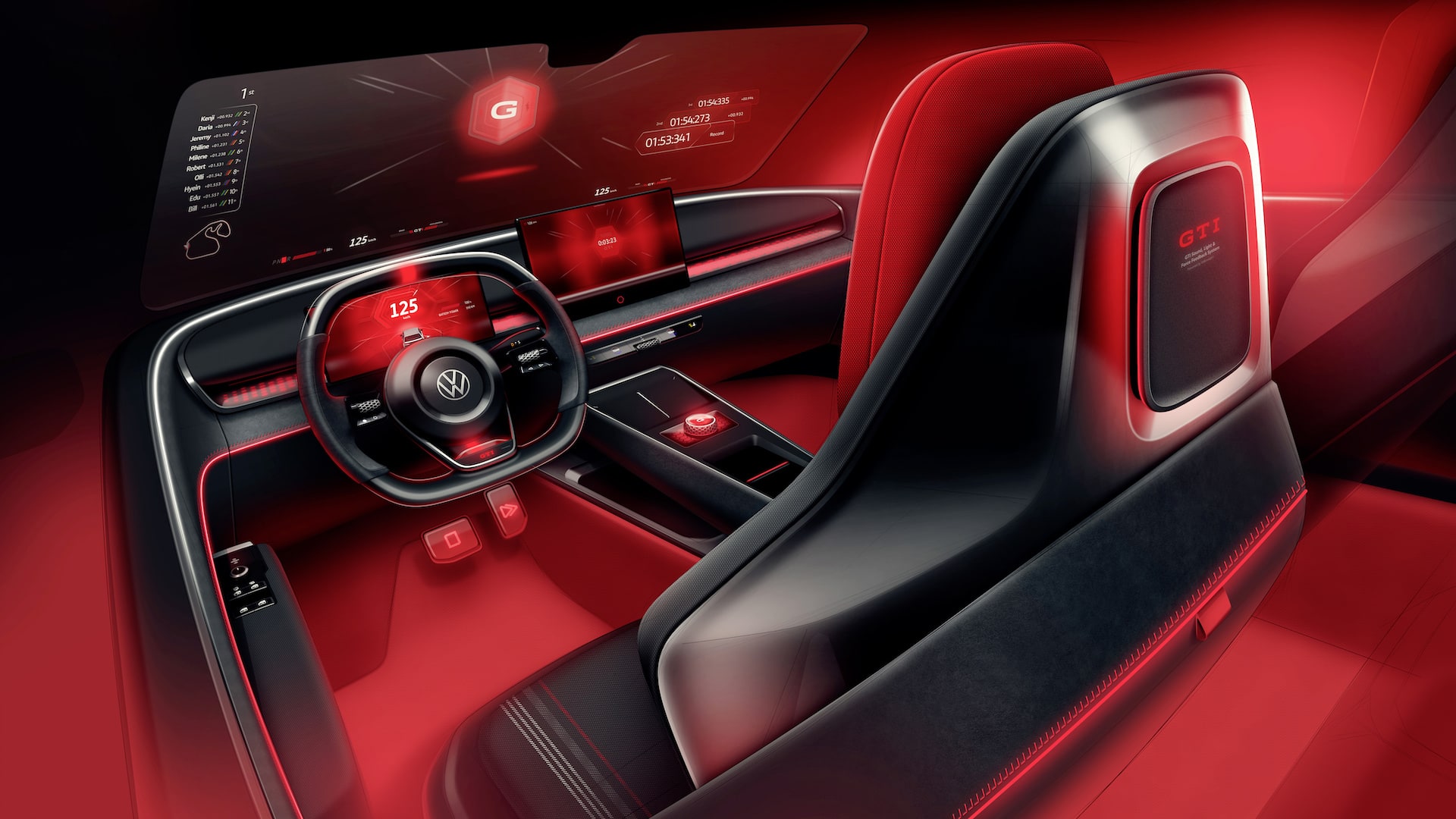
If the outside of the ID. GTI concept is all traditional Volkswagen hot hatchback, its interior is far more futuristic.
This includes a head-up display that can project across the entire windscreen. This allows the passenger to see lap times on a circuit, for example, along with other driving or infotainment data.
Engaging GTI mode via a steering wheel-mounted button switches the dashboard back-lighting to red. Take the ID. GTI concept onto Germany’s famous Nürburgring-Nordschleife circuit and a map of the track will appear on the windscreen.
Still a front-driven hot hatch
Currently just a concept car, Volkswagen has not released any major technical details about the ID. GTI. We know it’s front-wheel drive, but with an electronically controlled differential lock that can be adjusted by the driver.
With the production version of the Volkswagen ID. 2all concept expected to arrive in 2025, the electric GTI could reach showrooms the following year.
Volkswagen plans to launch 11 new EVs by 2027. However, enthusiasts can feel reassured that the GTI badge won’t be lost in the move to electrification.
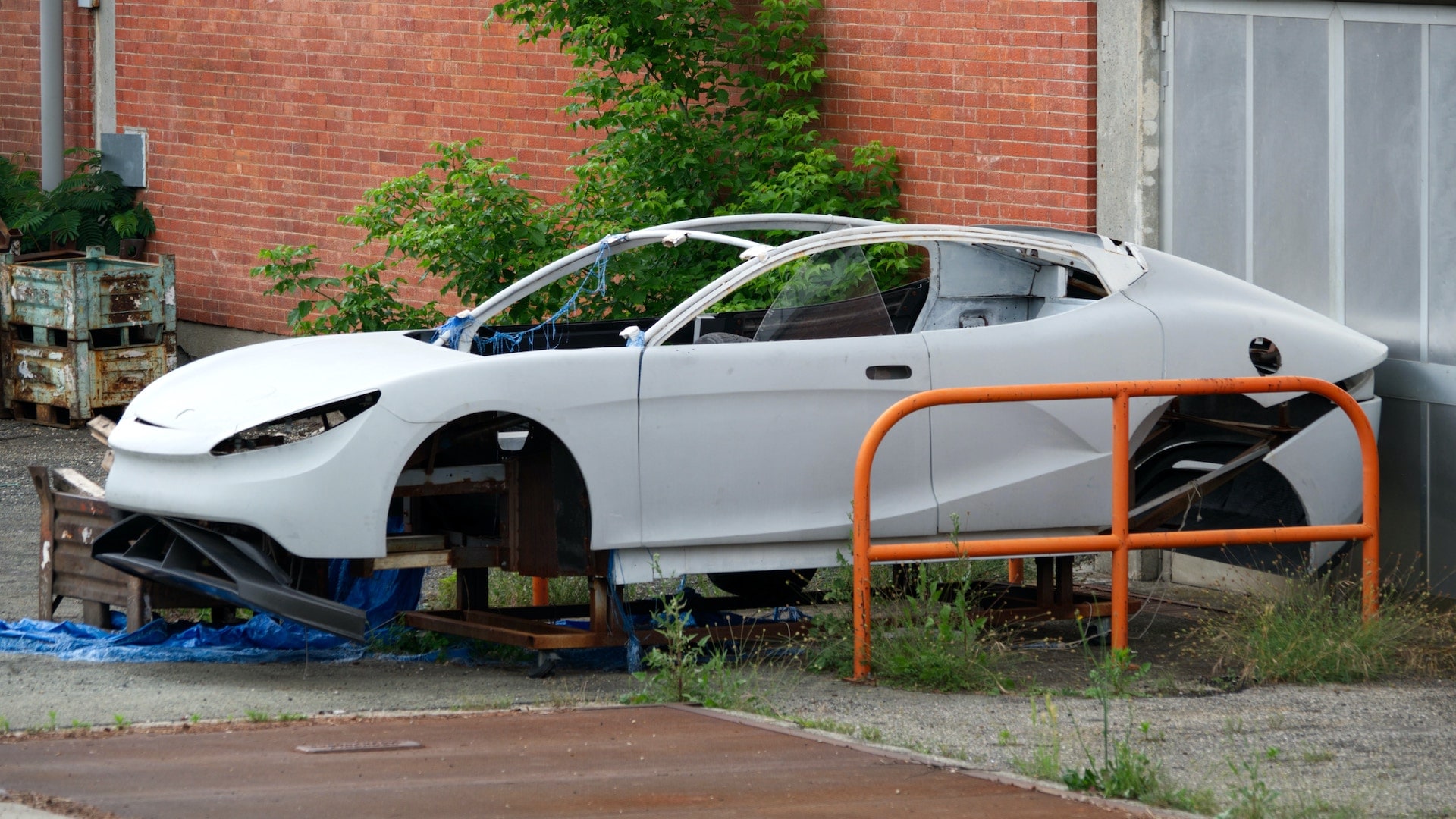
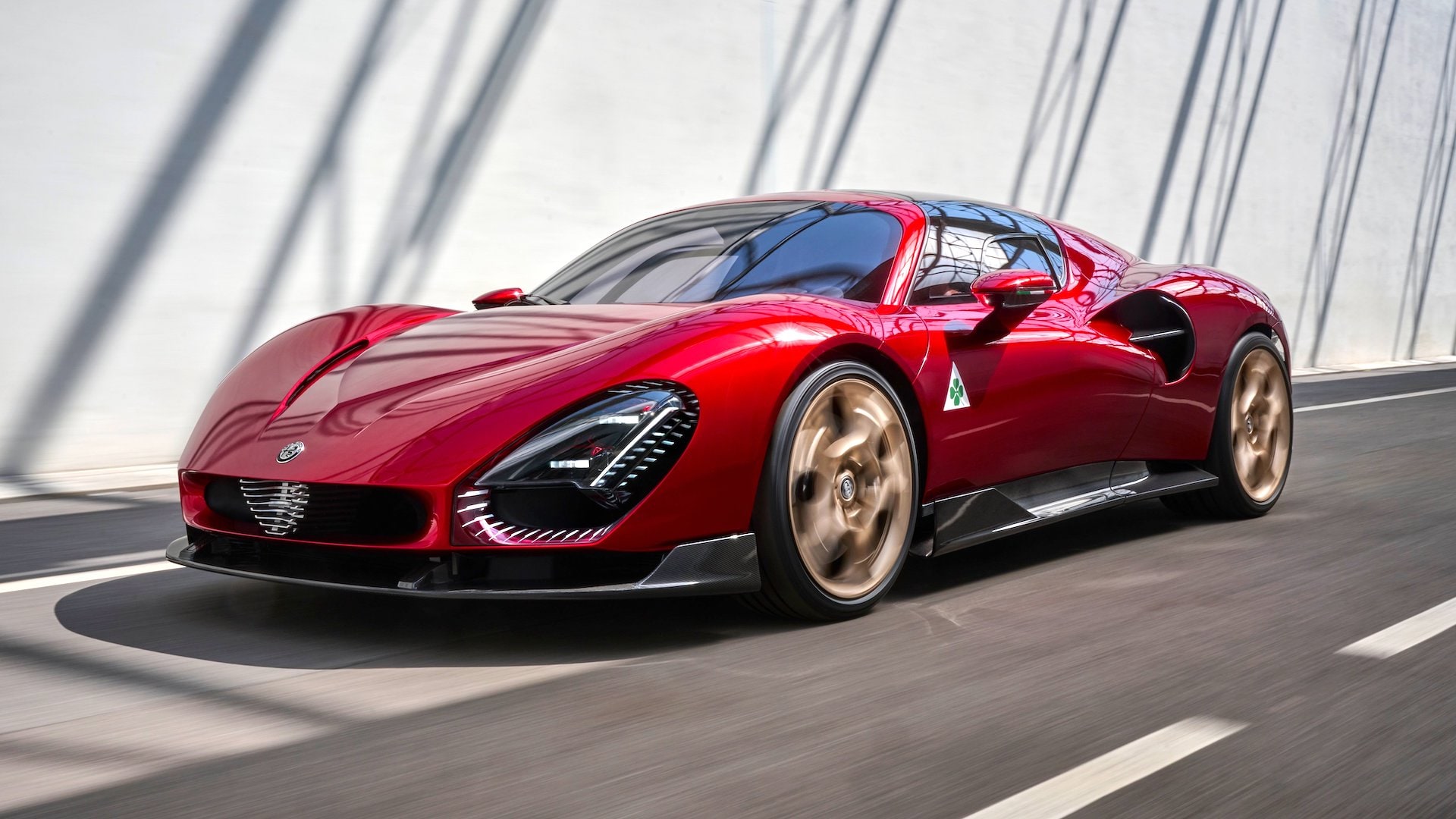
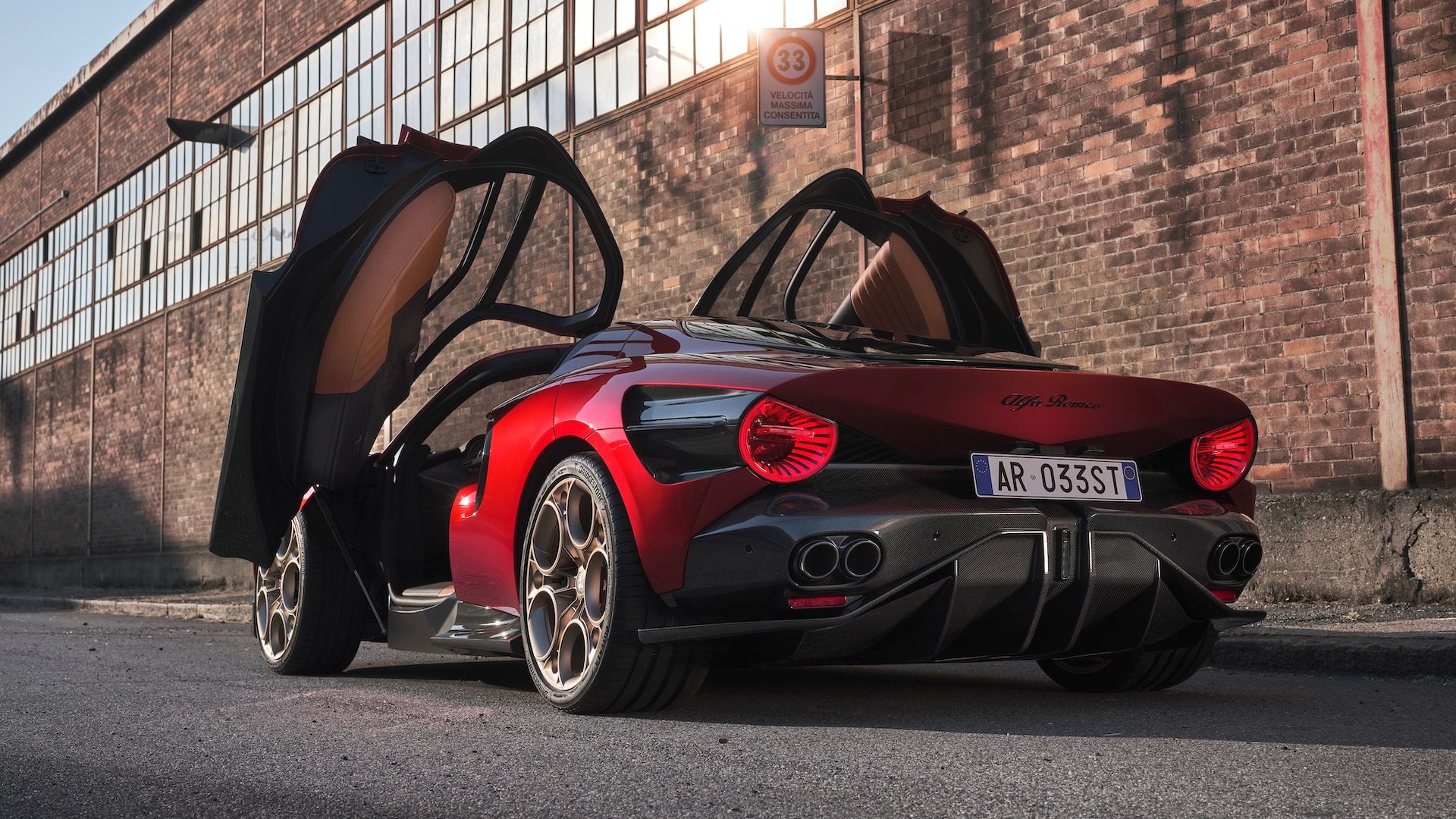
Now, as Alfa Romeo heads towards an electrified future, a limited production run of the reimagined 33 Stradale celebrates its past and future. Significantly, this will be the last combustion-engined supercar from the Italian marque.
Making the Alfisti proud
According to Alfa Romeo CEO Jean-Philippe Imparato, the aim with the new 33 Stradale was “to create something that lived up to our past, to serve the brand and to make the Alfisti fandom proud”.
The voluptuous design is by Alfa Romeo Centro Stile, and reinvents the classic model’s dramatic butterfly doors. Unlike the original, however, the latest 33 Stradale is made from a combination of lightweight carbon fibre and aluminium.
More radical is the choice of powertrains on offer. Buyers can choose a 620hp twin-turbocharged 3.0-litre V6 petrol engine or a fully electric version. The EV musters an even more substantial 750hp.
Both cars are said to be capable of 0-62mph in less than three seconds, plus a top speed of 207mph. Opting for battery power means an official range of 280 miles.
Handling by Valterri Bottas
Formula One driver Valterri Bottas is responsible for the car’s final chassis setup. Double wishbone suspension and carbon ceramic brakes with brake-by-wire technology should ensure the 33 Stradale handles and stops like a supercar, too.
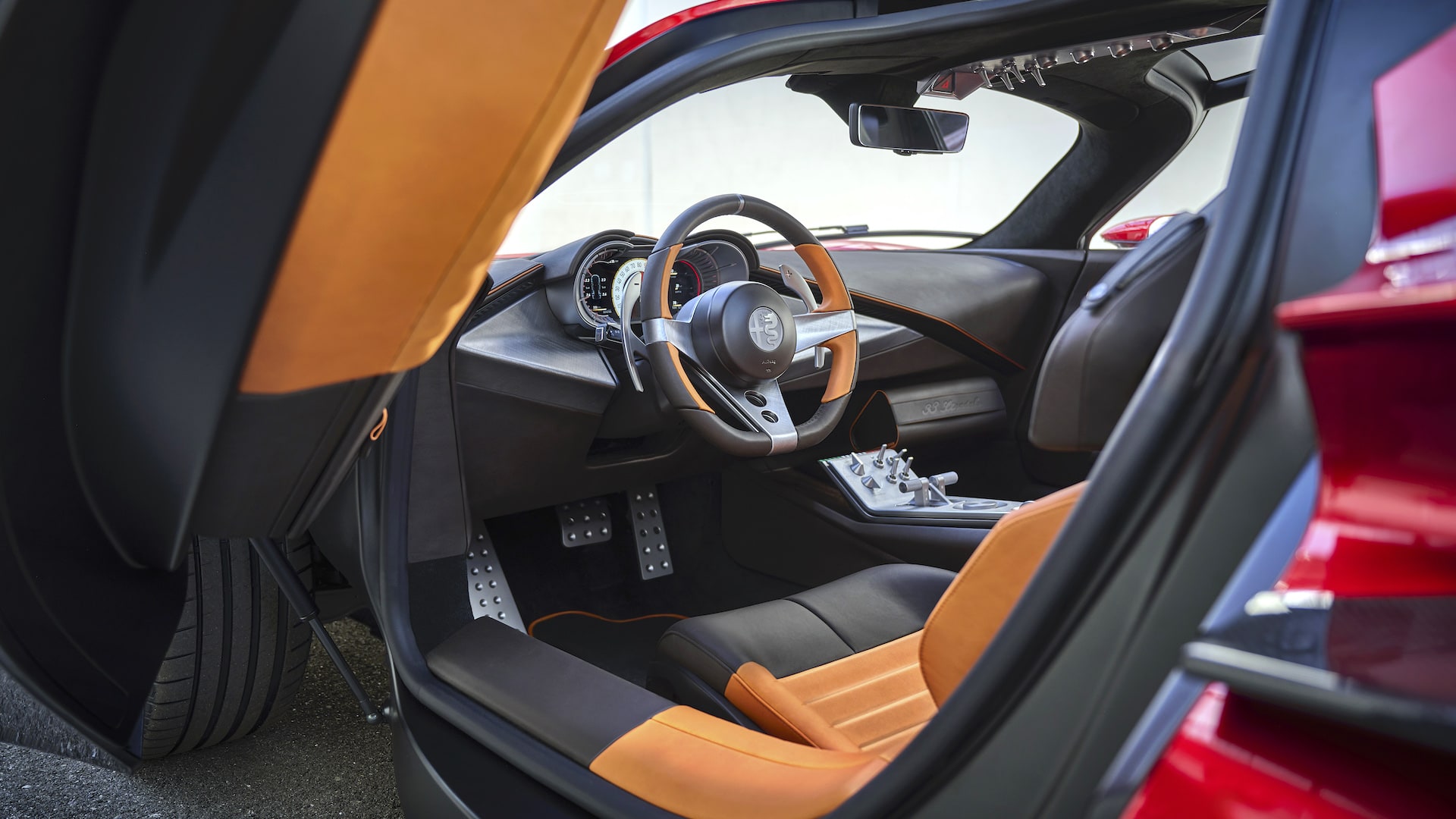
Buyers can opt for two different interior designs. Tributo honours the late-1960s classic, with aluminium design details, while the track-focused Alfa Corse option features exposed carbon fibre.
The 33 Stradale will be hand-built by Carrozzeria Touring Superleggera, and each of the 33 examples was sold within weeks of potential customers seeing design sketches at the 2022 Monza Grand Prix. The first lucky owners should receive their cars in 2024.
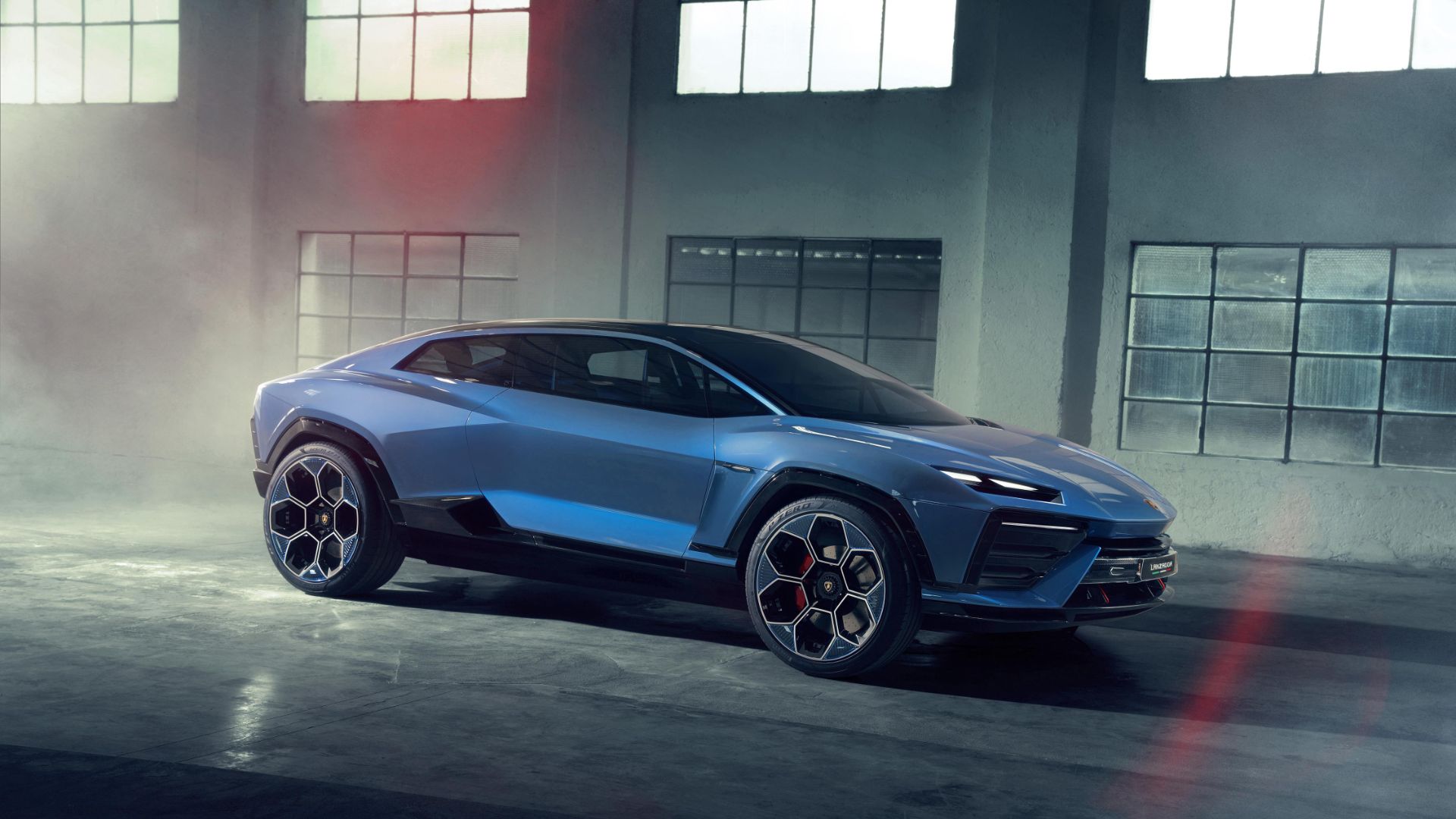
The first electric Lamborghini isn’t due until 2028, but we’re told the Lanzador concept provides ‘a concrete preview of the production vehicle’. For a car company that, perhaps more than any other, has outrageous combustion engines twisted into its DNA, this radical EV suggests the future definitely won’t be dull.
The Lanzador tees up a long-anticipated ‘fourth model line’ for Lamborghini, sitting alongside the Urus SUV and two supercars: the new plug-in hybrid Revuelto and smaller, soon-to-be-replaced Huracan. We’d call it a crossover if that word didn’t instantly invoke images of a Nissan Qashqai on the school run. Lamborghini terms it an ‘Ultra-GT’.
Technical details are a bit sparse, but the Lanzador uses two electric motors – one for each axle – to deliver ‘peak power of over one megawatt’ (circa. 1,360hp). If the showroom version follows suit, that would make it the most powerful production Lamborghini ever. CEO Stephan Winkelmann also suggested a minimum range of 300 miles, although we’d expect that figure to improve by 2028.
Between SUV and supercar
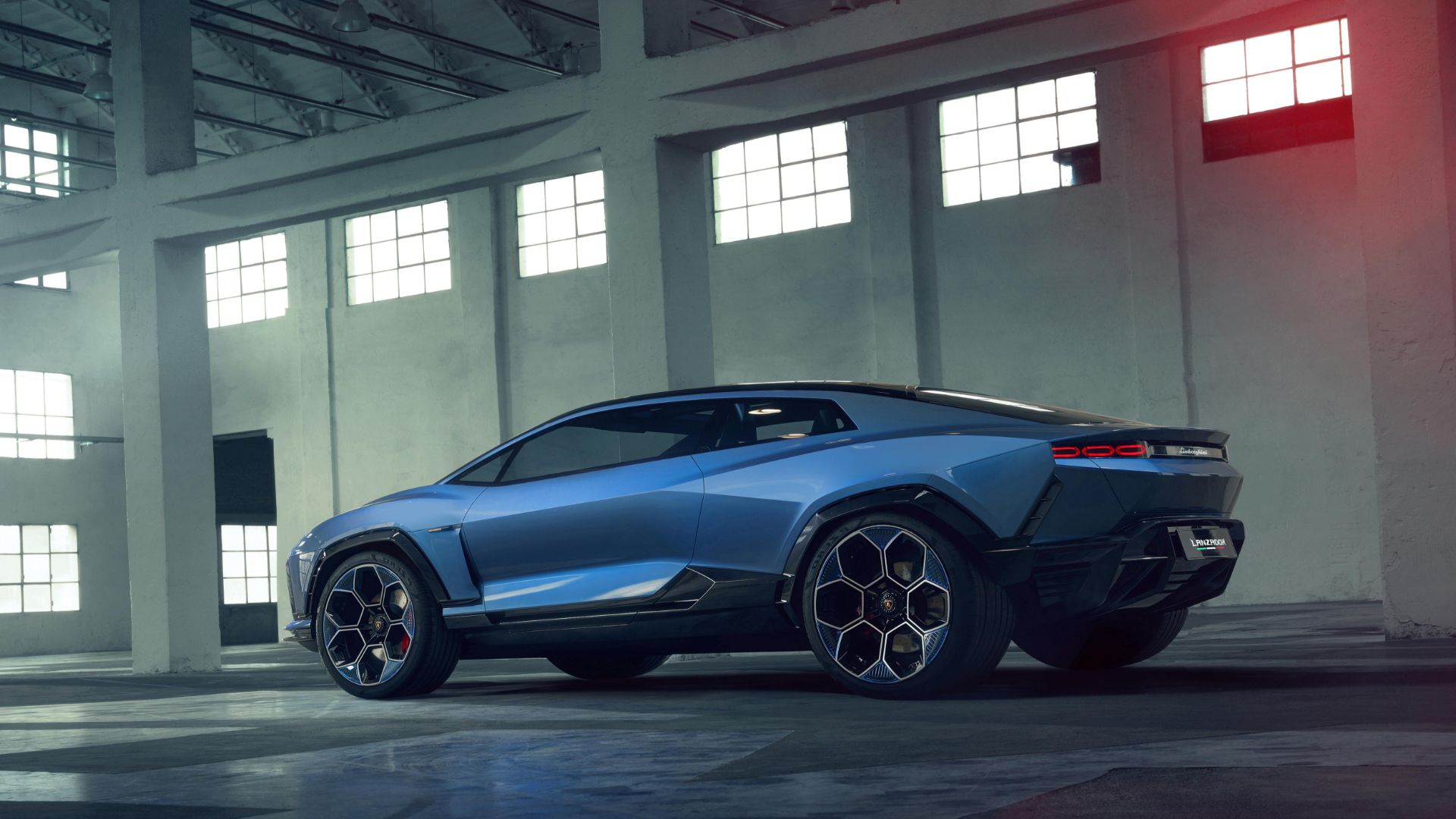
The Lanzador’s wedgy styling was apparently inspired by the Sesto Elemento concept, Murcielago and reborn Countach LPI 800-4. However, as a luxurious GT with two seats and four seats, we’d also draw a direct line to the most glamorous Lamborghini of all: the 1968 Espada.
However you define it, the Lanzador certainly bridges the gap between an SUV and a supercar. Its combination of a raised ride height and low-slung body looks genuinely different. Indeed, at around 1,500mm, the car is no taller than a typical hatchback, despite riding on huge 23-inch wheels.
Underneath all those aggressive angles is an entirely new platform that incorporates tech such as self-levelling air suspension, rear-wheel steering and ‘Wheelspeed Control’ for quicker and more precise cornering. “We are taking Lamborghini integrated driving dynamics control to a whole new level, which has not been possible for production sports cars before,” says chief engineer Rouven Mohr.
Fire up the jet
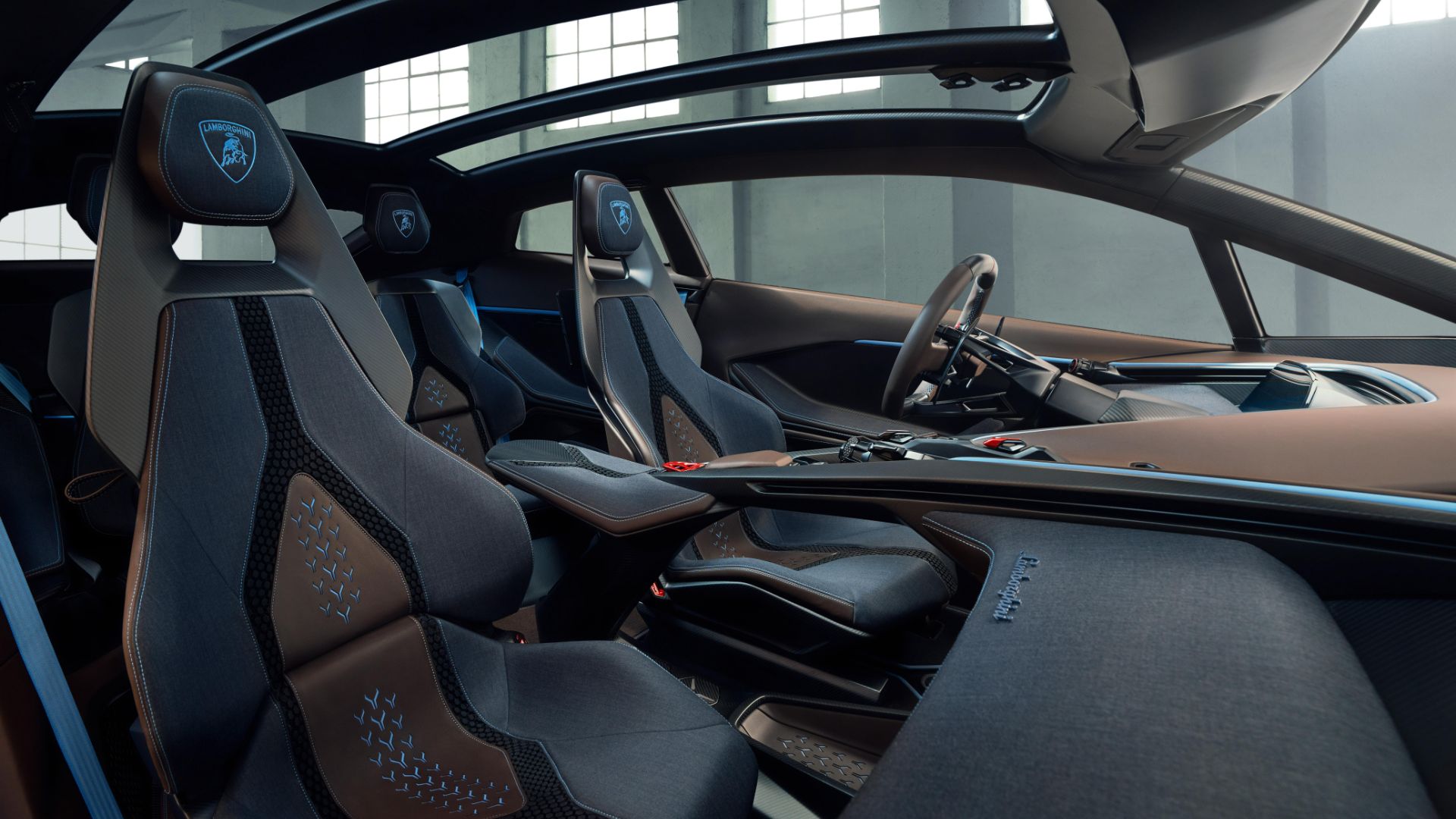
Inside, the Lanzador has four individual seats, acres of glass and a plethora of sustainable materials, including merino wool and 3D-printed recycled foam. ‘The pilot and co-pilot sit low within the cabin as if in a jet,’ says Lamborghini, while the minimalist dashboard features two digital displays that retract when not in use.
Can an electric car possibly recapture the visceral, emotional appeal of a voracious V10 or operatic V12? We’ll have to wait five years to find out, but the Lanzador proves that Lamborghini isn’t afraid to embrace EVs. And that not every SUV needs to be big and box-shaped.
The capital’s Ultra Low Emission Zone has expanded beyond the North and South Circular roads, meaning it now covers nearly all of Greater London. The new ULEZ applies from 29 August 2023.
The growth of the ULEZ has proved controversial and not without problems. Five London councils took legal action over the expansion, citing flawed consultation and a lack of information over a scrappage scheme for older, non-eligible vehicles. However, a High Court judge ruled the scheme is lawful.
More recently, scaffolder Noel Willcox won a ruling that signs for the Low Emissions Zone – sister scheme to the ULEZ – are illegal, as they don’t make the cost of entering the zone clear. And consumer group Which? has warned that copycat websites are ripping off motorists by adding extra charges to Transport for London’s £12.50 daily ULEZ fee.
London mayor Sadiq Kahn said the ULEZ expansion was “one of the toughest decisions I’ve taken”, but claimed “five million more people will be able to breathe cleaner air and live healthier lives” as a result.
So what is the Ultra Low Emissions Zone, what changes are coming and do you need to pay?To provide the answers, here’s our quick guide to the London ULEZ. If you have any other questions, please ask us in the comments below.
What is the London ULEZ?
Like the long-established Congestion Charge Zone, the Ultra Low Emissions Zone is an area of London that some drivers must pay to enter.
If your car doesn’t meet the required standard, driving into the ULEZ costs £12.50 per day. Unlike the London Congestion Charge, the fee applies no matter what time of day you travel.
The ULEZ operates around the clock, and every day of the year except for Christmas day.
London ULEZ: which vehicles are affected?
Only petrol cars meeting the Euro 4 emissions standard and diesel cars meeting the Euro 6 standard are exempt from paying the ULEZ charge of £12.50 per day.
The ULEZ also applies to vans, minibuses, coaches, lorries and other heavy vehicles. For motorcycles, it’s those with Euro 3 emissions or above that are exempt.
The Euro 4 standard became mandatory for all new cars in 2005. Euro 6 was introduced for all cars and light vans from September 2015 (January 2014 for larger vehicles). Euro 3 came into effect for motorcycles in 2007.
Vehicles likely to be liable for the ULEZ charge thus include:
Petrol cars and vans sold before 2006
Diesel cars and vans sold before 2015
Motorbikes sold before 2007
You can check whether your vehicle is compliant by entering its registration number on the TfL website.
Also, don’t forget this fee comes on top of the £15 Congestion Charge if you enter central London.
London ULEZ: the charging zone
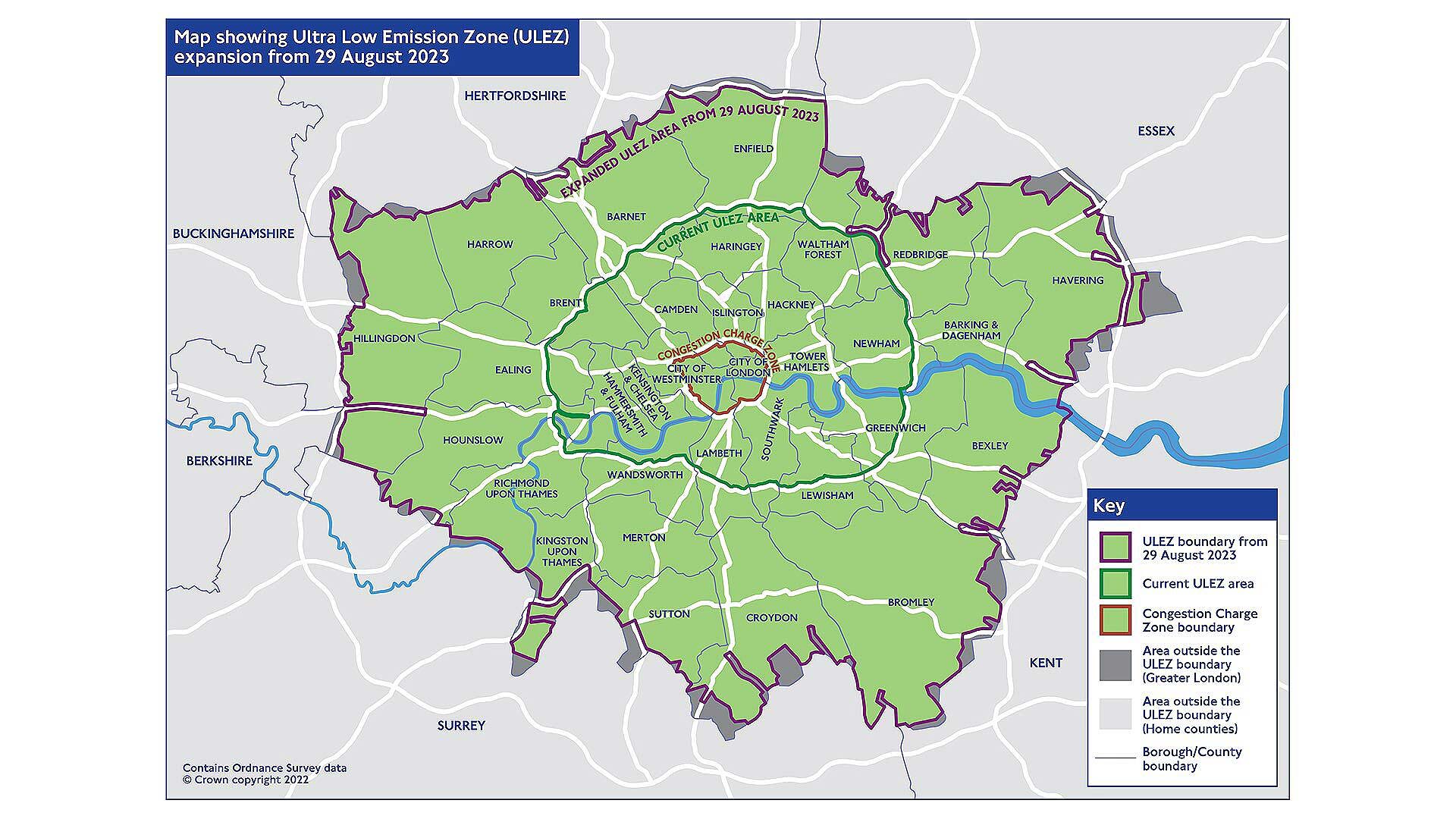
The ULEZ originally covered the same area as the London Congestion Charge – i.e. the small central shaded zone above. It then grew outwards to the North and South Circular roads (the darker green area), and now covers the entire green zone pictured here.
This means the Ultra Low Emissions Zone stretches as far as Waltham Abbey in the north, Upminster in the east, West Drayton in the west and Tatsfield in the south, covering most of the area inside the M25 orbital motorway.
The ULEZ fee is £12.50, payable by anyone driving a vehicle that isn’t compliant, whatever time of day they enter the zone. It’s £100 per day to enter for non-compliant vehicles over 3.5 tonnes.
A key point to note: the charge doesn’t buy you 24 hours in the ULEZ. The clock restarts at midnight, so if you drive a car into the zone at 11pm and leave at 3am the next day, you’ll be expected to pay £25 (2 x £12.50).
Inevitably, if the fee isn’t paid, a Penalty Charge Notice will be sent to the registered keeper of the vehicle.
Will you pay ULEZ if you drive to Heathrow airport?
Drivers could now pay up to £17.50 to drop off a friend or relative at Heathrow airport. The charge is mostly due to the Ultra Low Emissions Zone fee of £12.50 a day, payable for non-compliant cars to enter Greater London.
However, there is also a fixed £5 fee for entering the terminal drop-off areas at Heathrow, bringing the potential cost to £17.50.
How can I avoid the London ULEZ?
Navigation app Waze allows London residents to enter whether their vehicle is exempt or not. If not, the app can automatically guide you around the zone so you won’t have to pay.
If you’re a London resident on a low income or disability benefits, you may also be eligible for a £2,000 grant towards scrapping your old car and buying a ULEZ-compliant one. Click here for more details of TfL’s scrappage scheme.
Another option is simply to buy a suitable car. Many fun-to-drive modern classics, including the Vauxhall Monaro (pictured above), ‘997’ Porsche 911, Honda S2000 and Aston Martin V8 Vantage are exempt from the charge.
As Tom Wood, CEO of Car & Classic, points out, older classic cars can avoid the ULEZ, too. “The exemption for cars in historical tax status, e.g. any classic vehicle made before 1 January 1983, still stands – so you won’t have to pay,” he explains.
“It could be a great time to buy or even save a classic car and commission it for ULEZ commuting duties. If, however, your classic is not 40 years old, don’t write it off and send it to be scrapped, as this is a rolling scheme. So in 10 years’ time, cars built before 1 January 1993 should be eligible.”
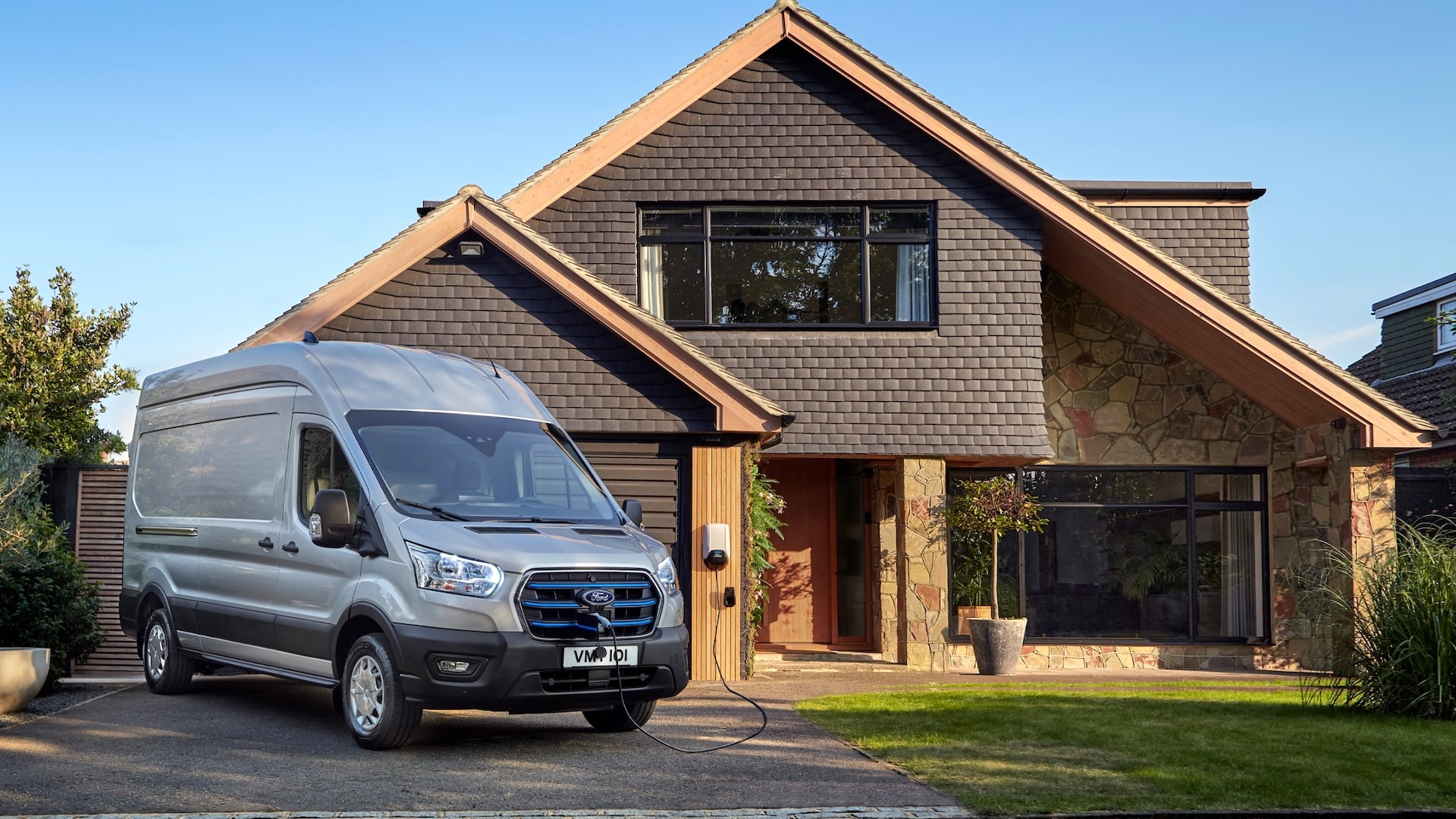
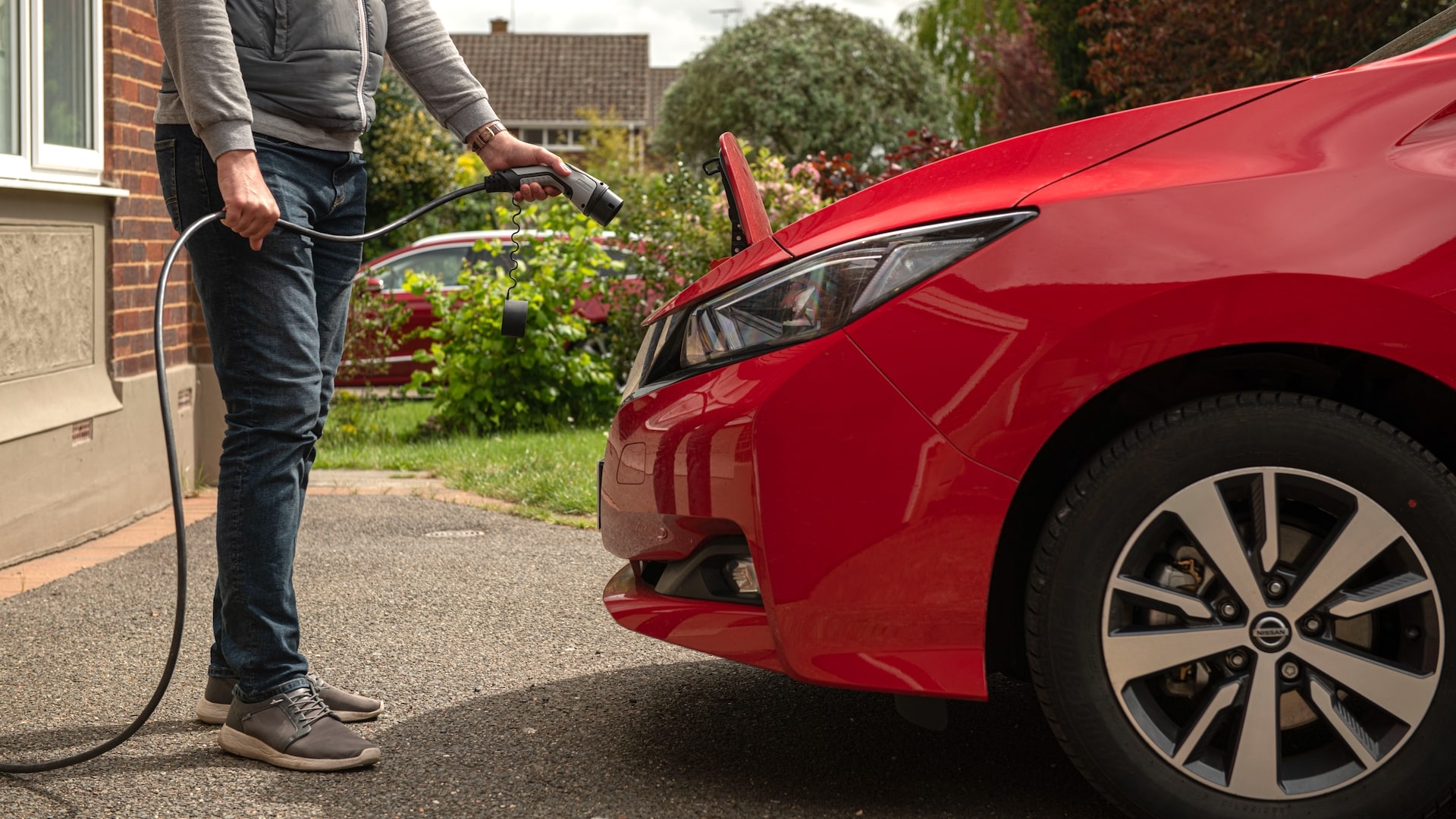
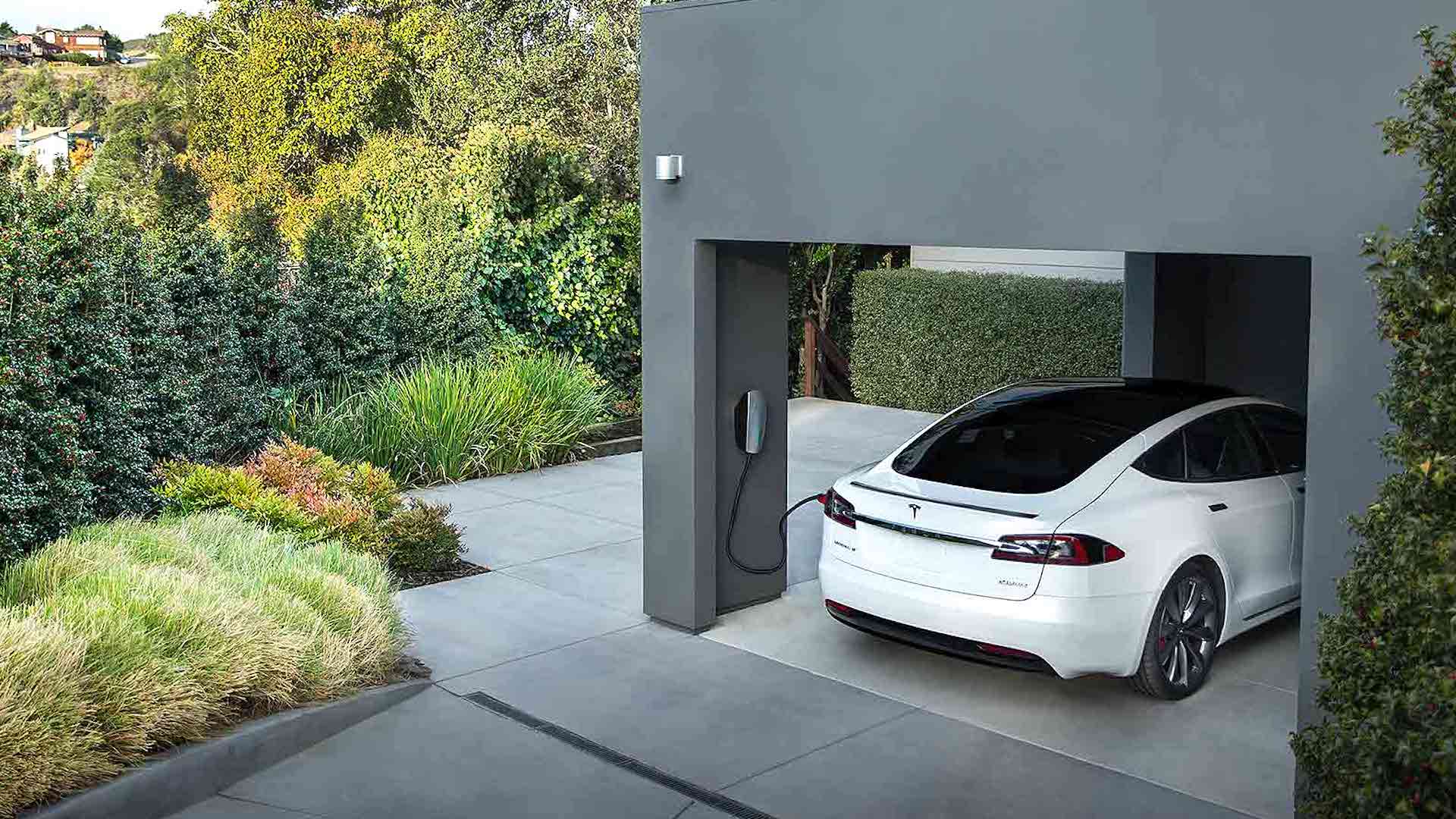
Nearly half of UK homeowners would consider paving over their front garden to make space for charging an electric vehicle.
New research by EO Charging found that 49 percent of the 2,000 respondents surveyed would remove gardens and lawns to make EV charging at home easier.
Despite this, more than half (53 percent) of those asked believe the trend for turning front gardens into parking spaces needs to be addressed.
Home charging concerns
In further findings from the survey, 13 percent of respondents said they already have an electric car. Londoners were most likely to be EV owners, with 29 percent of those from the capital having taken the plunge.
Among those who own an EV, 70 percent said they’d already made changes to the front of their homes to aid charging. And 22 percent had reduced green space to benefit their electric car.
However, some 28 percent of respondents are also concerned that an increase in EV charging will have a negative effect on their neighbourhood.
Worries about charging cables running across the pavement (42 percent), and a lack of off-road parking for EV charging (39 percent), are the biggest issues.
Living the suburban dream?
Respondents believed the loss of front gardens for parking is a concern, with 55 percent recognising that preserving garden greenery allows rainwater to soak away, helping reduce flood risks.
Charlie Jardine, CEO at EO Charging, said: “With the expansion of ULEZ around London and other cities likely to follow a similar path with congestion charging, more people living in the suburbs will benefit from choosing to drive EVs.
“This means the desire for home charging facilities will grow, putting more pressure on front gardens and neighbourhood green spaces.”
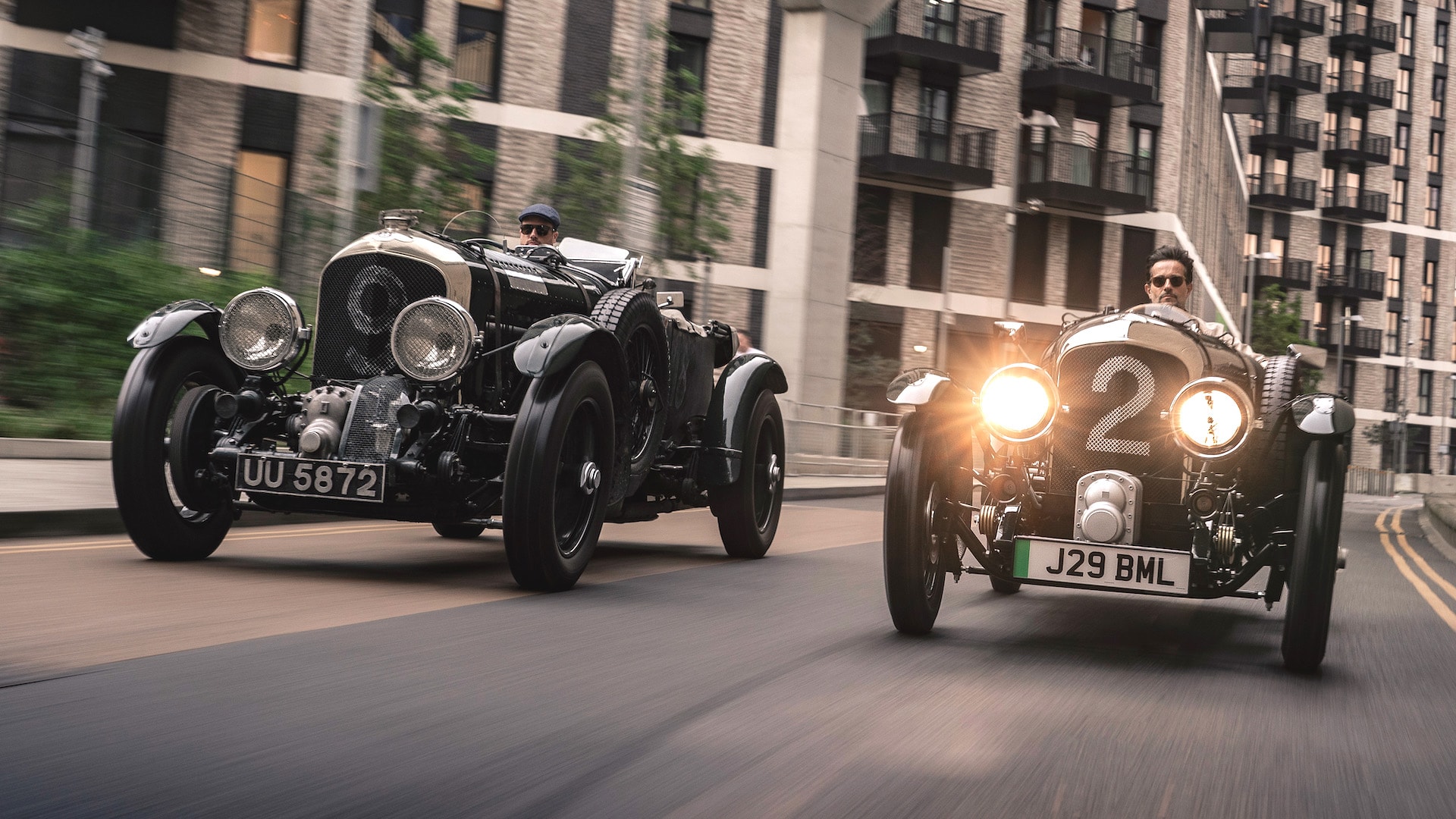
The 1929 Bentley 4½-litre supercharged Bentley Blower is an icon of British motorsport, thanks to its success at the Le Mans 24 Hours.
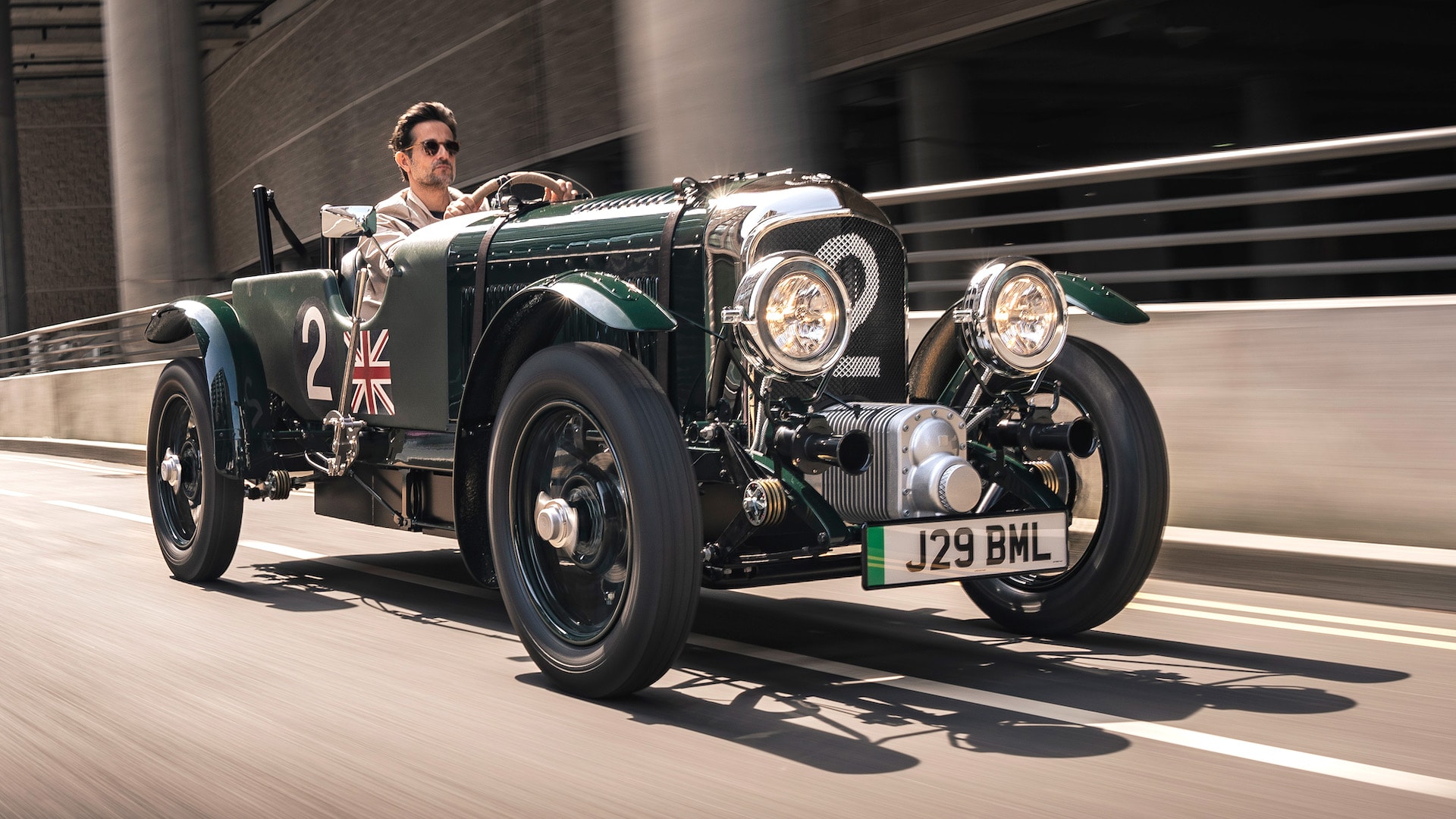
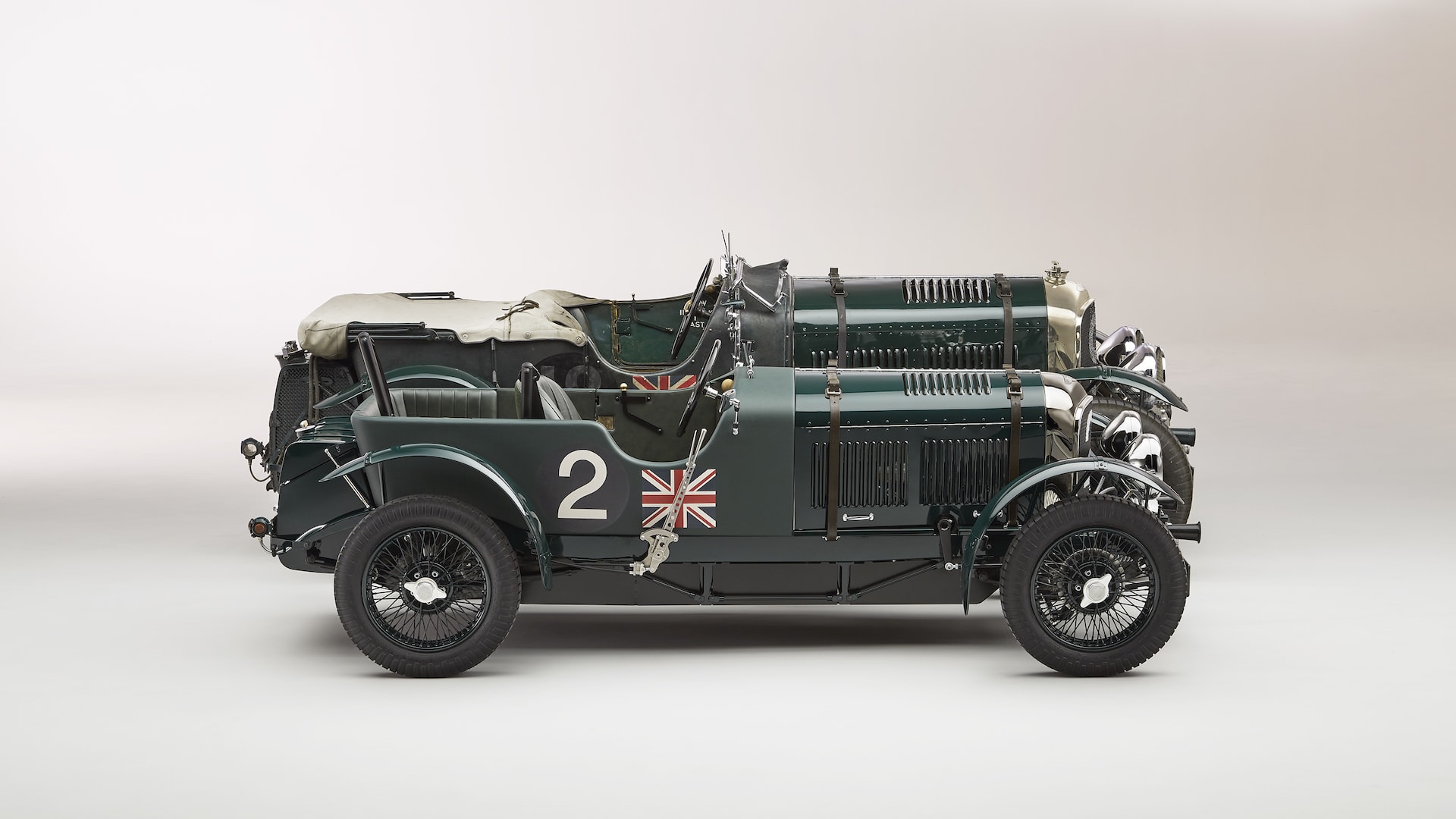
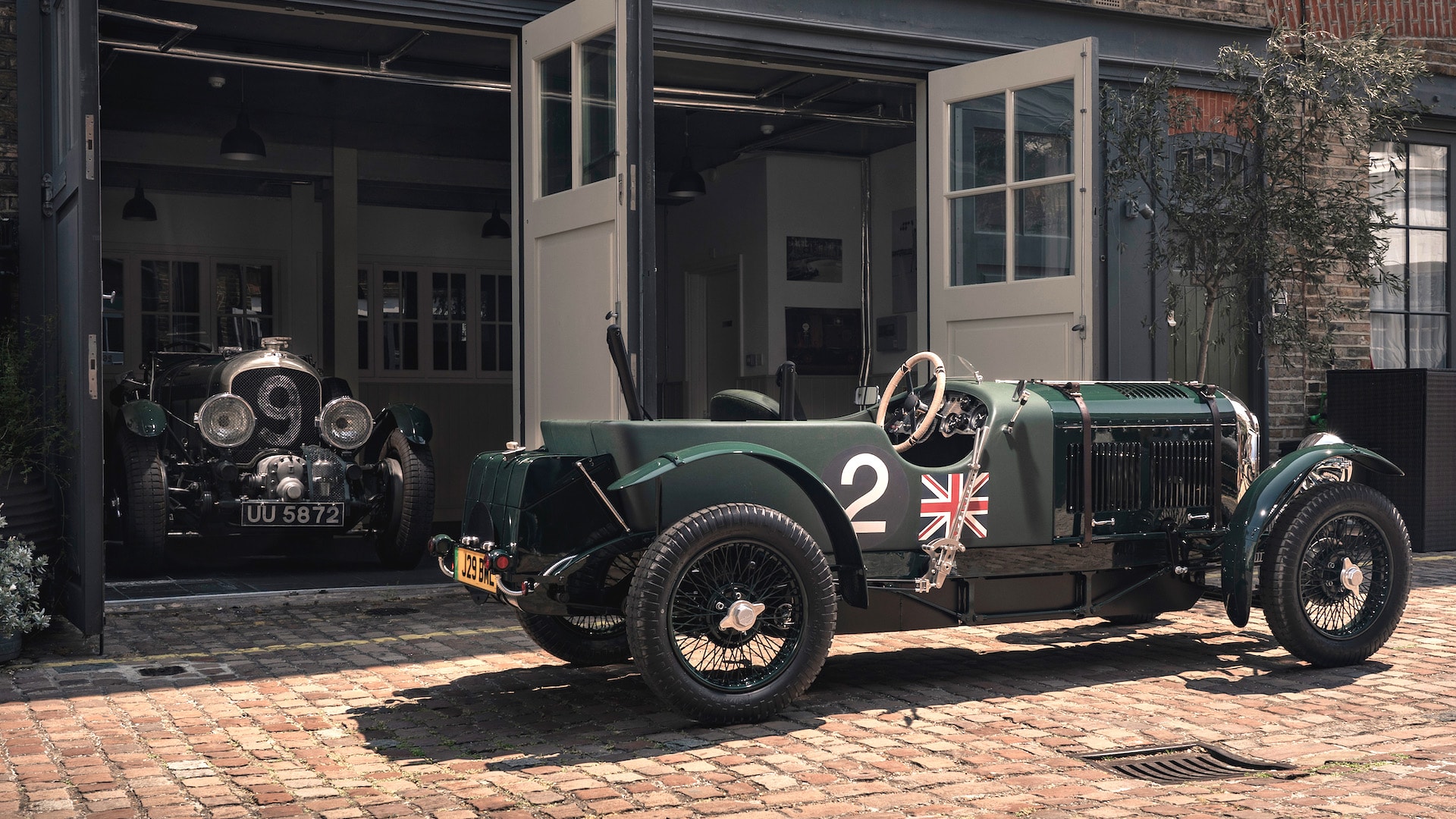
Now, a collaboration between Bentley and The Little Car Company has resulted in the creation of an 85-percent scale replica of the original.
Unlike previous vehicles from The Little Car Company, the appropriately named ‘Blower Jnr’ will be road legal in the UK, EU, and the USA.
Swapping supercharging for battery charging
There is no pint-sized supercharged petrol engine here, though. Instead, the Blower Jnr is powered by a 15kW electric motor, creating the potential for a top speed of up to 45mph.
An imitation ‘supercharger’ acts as the charging port, with the Blower Jnr’s batteries allowing a 60-mile range when fully charged.
The construction is a mixture of modern and traditional, with carbon fibre matched with impregnated fabric. Leaf springs and scale-down friction dampers replicate the original car’s suspension, but modern Brembo brakes are fitted.
British racing green reborn
Owing to the Blower Jnr’s 3.7-metre length, two adults can sit inside, with room for luggage behind them. Engine-turned aluminium has been used for the dashboard, just like the full-size car, with period-style magneto switches.
A dual-function display is used for both the Garmin satellite navigation system, and the reversing camera.
The first 99 examples of the Blower Jnr will be First Edition models, finished in classic Blower Green with a colour-coded chassis and wheels. A Union flag is painted on the side, with the seats upholstered in Dark Green Lustrana leather. Even the steering wheel is rope-bound, like the original Blower.
A Monterey Car Week debut
As for how much, the initial 99 First Edition examples of the Blower Jnr will cost £108,000 in the UK.
That may seem a lot for such a small car, but it is far cheaper than the £1.8 million charged by Bentley for one of the full-size Blower Continuation cars.
Following a public debut at Monterey Car Week, with the car on show at multiple events, production of the Blower Jnr is expected to commence in the second quarter of 2024.