The growing pressures throughout the European car industry have been highlighted by March 2018 new car registration figures that show the first March fall in four years. 5.3 percent fewer cars were sold across Europe than in 2017.
The biggest decline was, of course, in the UK, where March registrations plunged 15.7 percent. But the big markets of Italy and Germany were also down, by 5.8 percent and 3.4 percent respectively.
The only large markets to grow were France and Spain, by 2.2 percent and 2.1 percent.
Despite the declines, European new car registrations are still marginally up in 2018, but the market remains under pressure – which is being felt particularly acutely by some big-name brands. Ford is down 15.7 percent across Europe in the first three months of 2018, and Nissan is down 11 percent.
Opel/Vauxhall has been amalgamated into the PSA Group, so its 11 percent decline has been hidden in the figures. This is why PSA Group’s overall figures are up a hefty 65.9 percent – and, thanks to a strong performance by Peugeot and Citroen, it would be even better, if its new acquisition from GM hadn’t declined…
Jaguar Land Rover has recorded a worrying 16.5 percent thus far in 2018, with Jaguar down 10.9 percent and Land Rover an alarming 19.2 percent: that’s around 10,000 fewer high-value Land Rovers delivered in Europe so far this year.
Other premium brands are weathering the storm a little better. Audi is down 3.1 percent, BMW is down 2.8 percent and Mercedes-Benz is actually up marginally, by 1 percent.
The region’s biggest car brand is also outperforming the market. Volkswagen Group sales so far in 2018 are up 5.4 percent, to almost 1 million cars – helped by a strong performance at Seat and Skoda, and the improving fortunes of the Volkswagen brand itself.
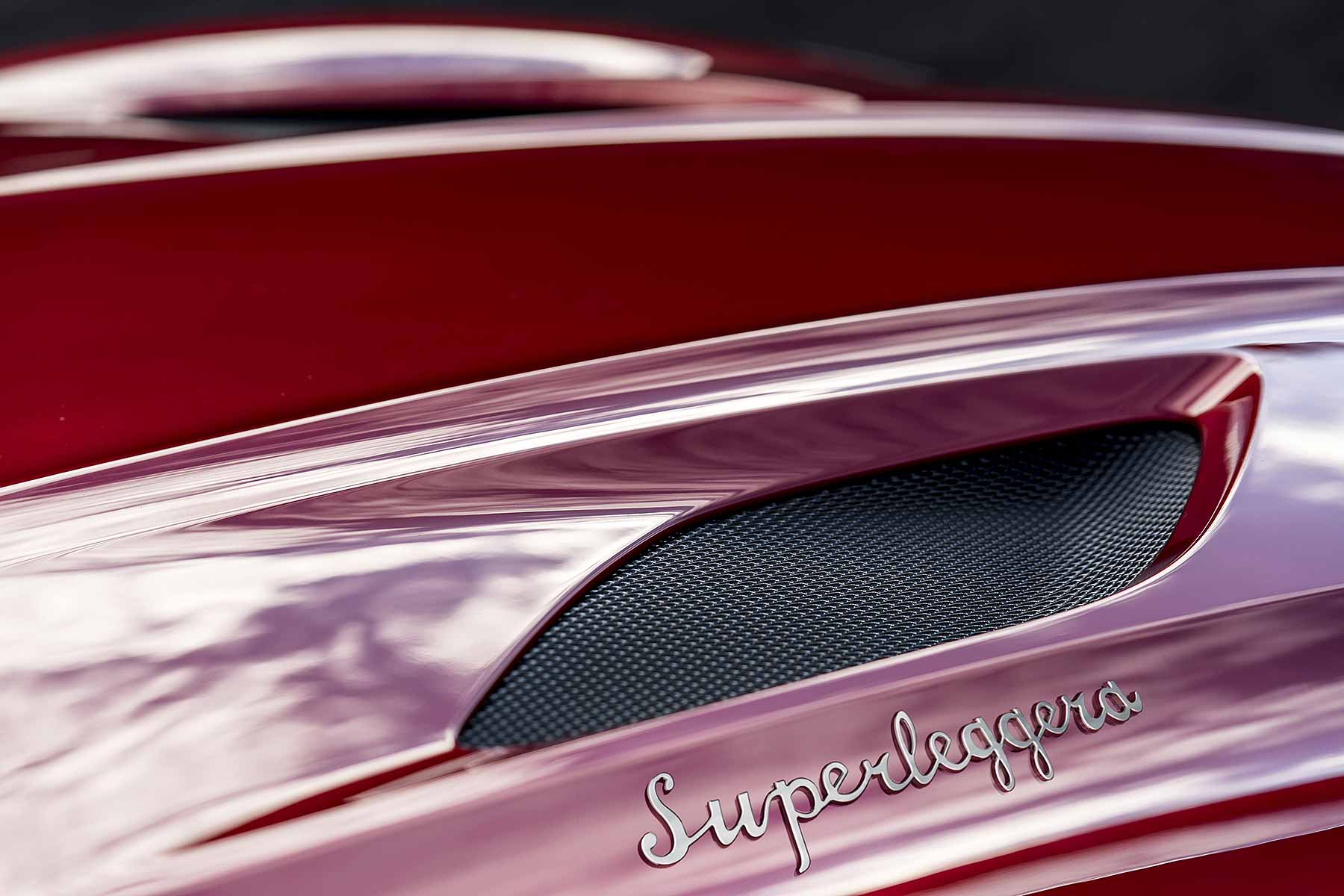
Aston Martin first used the DBS name back in 1967. It revived it in 2007. Now, for 2018, it’s back for a third time – adorning a car Aston describes as a range-topping super-GT.
It’s not just any old DBS, either. It’s an Aston Martin DBS Superleggera, the famed moniker of Italian styling house Touring. It designed the Aston Martin DB4, DB5 and original DB6; Touring’s famed ‘superlight’ branding is now back on the bonnet of an Aston Martin.
And although the Gaydon firm isn’t saying much at this stage, needless to say the new DBS Superleggera will offer just that – a generous helping of superlight tech. It will also have “the highest levels of performance, craftmanship and design”.
Aston Martin chief creative officer Marek Reichman said: “When you hear the name DBS Superleggera, you know what it is. It’s the definitive Aston Martin Super GT.
“It’s an icon, a statement and this one will be no different. We’ve pushed the boundaries of performance and design to give this car a distinct character and ensure it’s worthy of the heritage and weight that this name carries.”
Reichman’s focus on the word ‘super GT’ is significant: it suggest Aston Martin has new plans for the future Vanquish, which to date has been its top-line GT car. Some are suggesting it could even become a mid-engined supercar in the future.
Before it went out of business in 1966, Aston worked frequently with Milan’s Touring. Aston intended it to produce the replacement for the DB6, but only two prototypes were finished before it went bust. Aston designer William Towns used these as the basis for the new car – the DBS.
The original DBS is notable for being the last Aston Martin developed under the control of then Aston Martin company owner David Brown – he of ‘DB’ fame.
We’ll find out more about the new DBS Superleggera in the second quarter of 2018, confirms Aston.
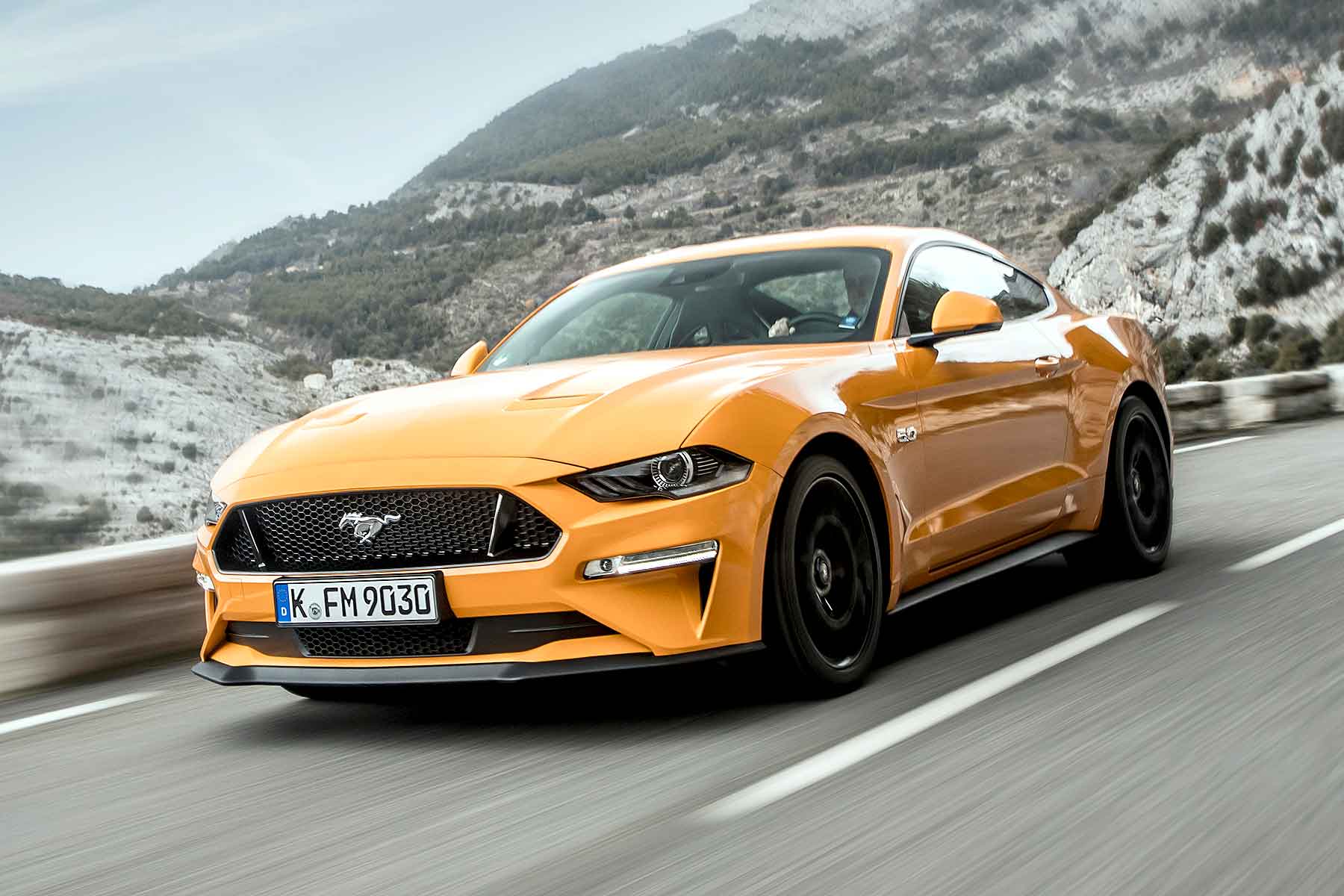
Global car sales data has confirmed the Ford Mustang is the best-selling coupe in the world, for the third straight year. In 2017, Ford sold 125,809 Mustangs in 146 different countries worldwide.
Analyst IHS Markit has compiled the data, which it says captures around 95 percent of all car sales across the globe. No other sports coupe on the planet comes close.
The 2017 total means Ford has sold a staggering 418,000 examples of the current Mustang since it was launched in 2015. The latest car is the first truly global Mustang in the car’s five-decade history, and is proving to be a runaway success.
“The world is falling in love with the Mustang,” said Erich Merkle, a sales analyst at Ford.
According to Ford’s own sales data, 81,866 Mustangs were sold in North America last year. In other words, one in three Mustang registrations was an export car, with particularly strong markets including China. With sales of 7,125 last year, the Mustang was the best-selling coupe there, too.
Making the Mustang global means more sales are being made to women. “Sports cars have traditionally skewed towards male buyers in the United States,” says Ford, but “Ford research shows a 10 percent gain in women buying Mustang in the last five years”.
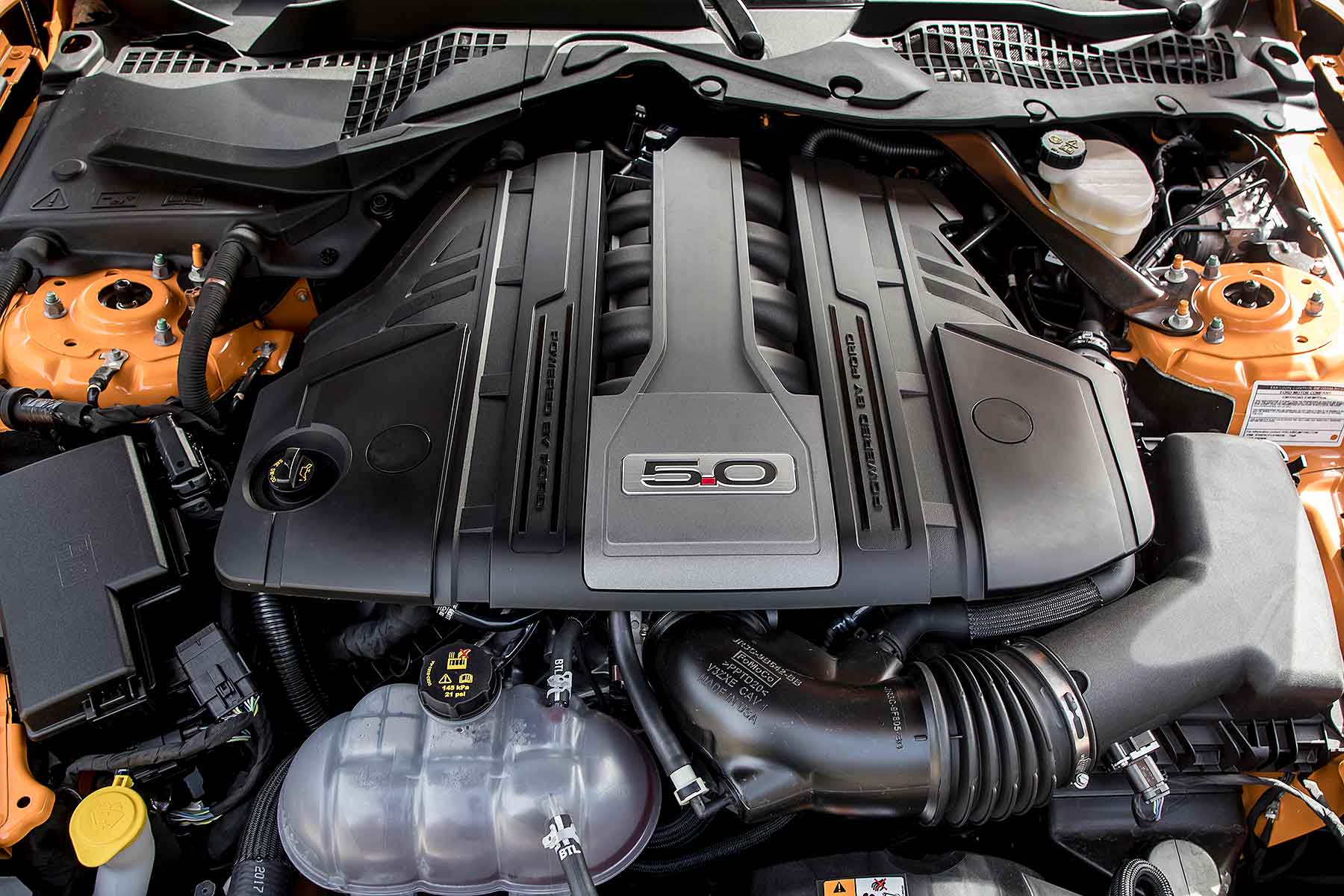
Of course, Ford sells the Mustang in two flavours, the 2.3-litre four-cylinder Ecoboost and the full-fat 5.0-litre V8. Which version sells best globally?
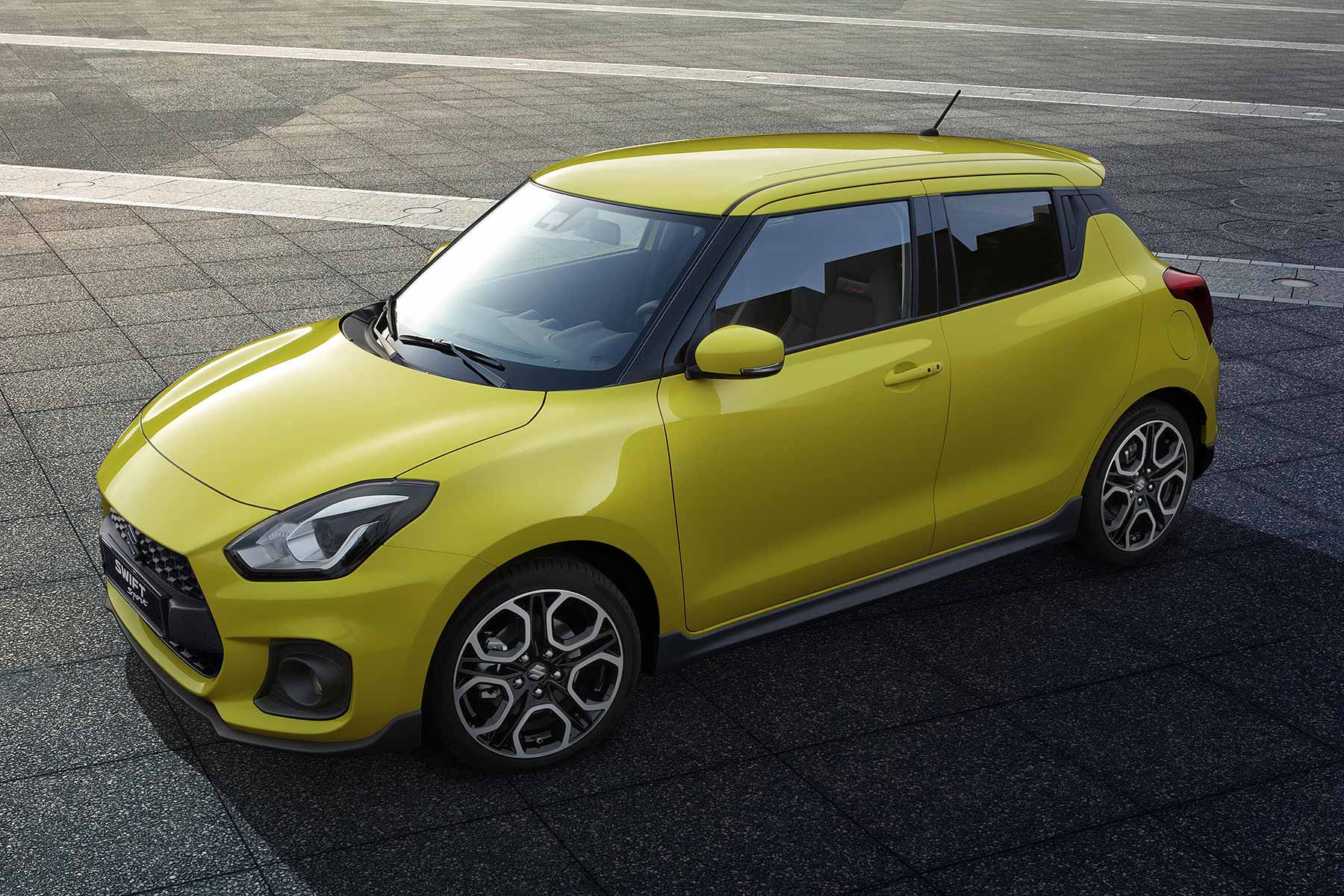
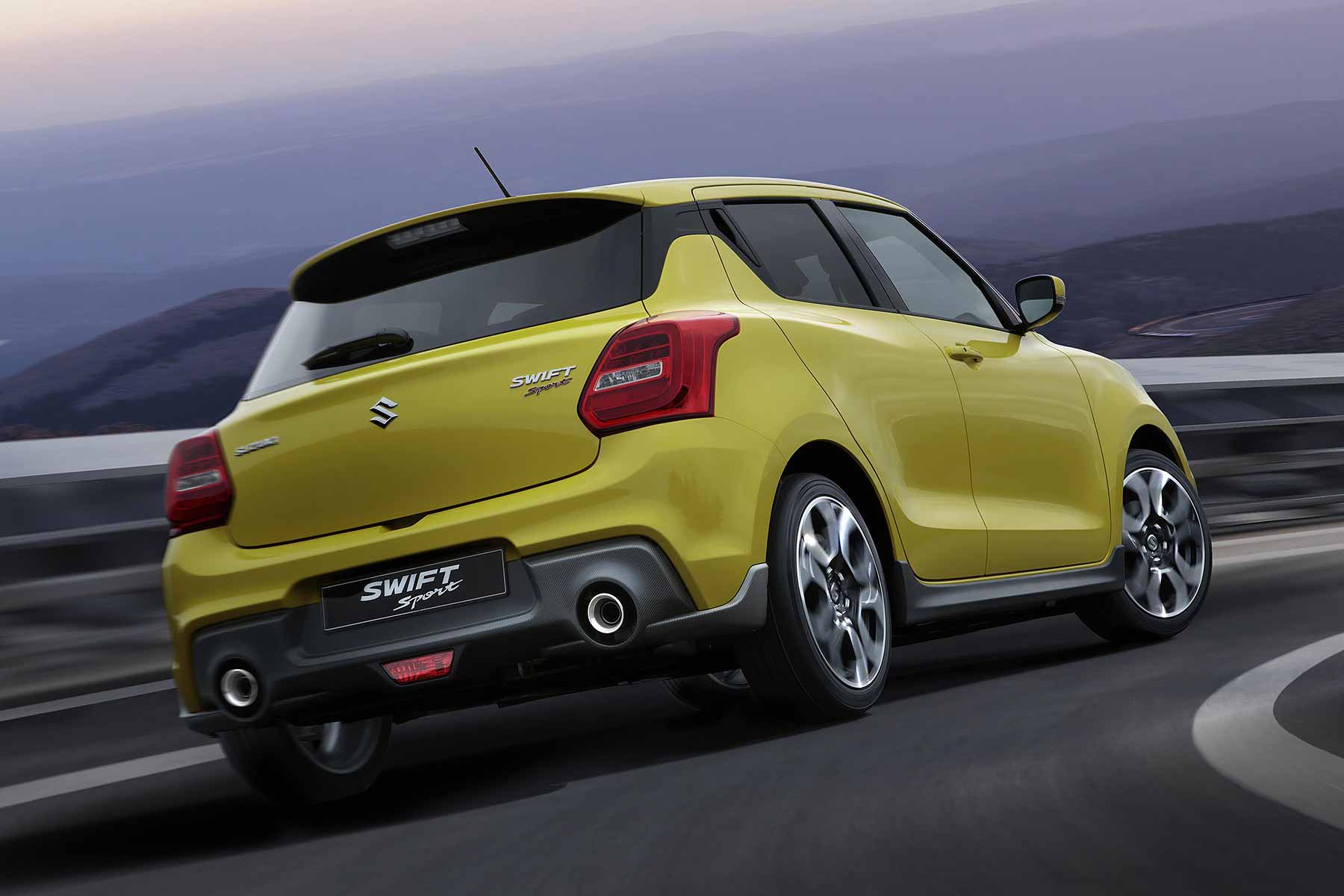
Suzuki has announced its new Swift Sport will cost £17,999 when it goes on sale later this year.
That puts the warm hatch close to Fiesta ST territory – and considerably more expensive than the Volkswagen Up GTI, which starts at £13,750.
The best 18-plate new car deals
The firm says the Swift Sport’s higher-than-expected price tag is down its extensive standard kit, including metallic paint, Apple CarPlay and lane-assist.
Suzuki has fitted a new 1.4-litre turbo engine to the Swift Sport, which produces 138hp, an increase of just 4hp over the old model. It does, however, have significantly more torque, and a sub-1,000kg kerbweight helps it to an 8.1-second 0-62mph dash (a 115hp Up GTI does it in 8.8 seconds).
Comment: why is the new Suzuki Swift Sport so expensive?
The old Swift Sport was fantastically good fun – and, at around £15k even for a well-stocked five-door with sat nav, a real steal. Settle for a basic one and you’d pay just £13,749. Then the VW Up GTI came along, and showed just what can be done for the money.
A headline-grabbing £13,750 entry-level price tag really put the cat amongst the pigeons, particularly as Volkswagen backed it up with a stonking £139 a month finance deal – great for those who have the necessary £3.5k to put down as a deposit (VW even chucks in an extra £500 sweetener).
Suzuki’s answer, we thought, would be to give us the perfect counterpoint to the Up GTI. More equipment, more power, more space – all, surely, for a price still under £16k. It could have continued the trend of the old one and been the hot hatch bargain of the year.
Yet Andrew, who’s on the launch as I type, has just reported back. Suzuki’s going to sell it for £17,999. Excuse me? £18k? Isn’t that the same price as a Mini Cooper five-door? Can’t you get a 205hp Corsa VXR, which will go from 0-62mph fully 1.5 seconds faster, for just £2k more? A 200hp VW Polo GTI, with DSG, a 2.0-litre Golf GTI engine and a fair bit more kudos, for £21k?
Suzuki will point to the all-inclusive standard spec. The four-year, zero-deposit, £249 a month PCP deal (although, I note, you can get a Mini Cooper five-door for £279 a month over four years, with £279 deposit…). And the fact, I’m sure, that it’s competitive with rivals.
But the bald facts are a massive price hike for a car that still only has 138hp. Nearly hot hatch money for what remains, on paper, a warm hatch pocket rocket. I think it’s simply too much. I look forward to the the car arriving in the UK, when I can ask Suzuki just why the Swift Sport is now so expensive.
Richard Aucock
Although resale values are yet to be confirmed, it’s aiming for a £249 a month PCP deal over four years – significantly, with zero deposit.
Suzuki’s sold 11,500 Swift Sports since it went on sale in 2005, and is aiming to sell 1,500 of the new model a year. Initially aiming to satisfy demand from existing owners, the manufacturer will move onto conquest sales in fleet and retail markets.
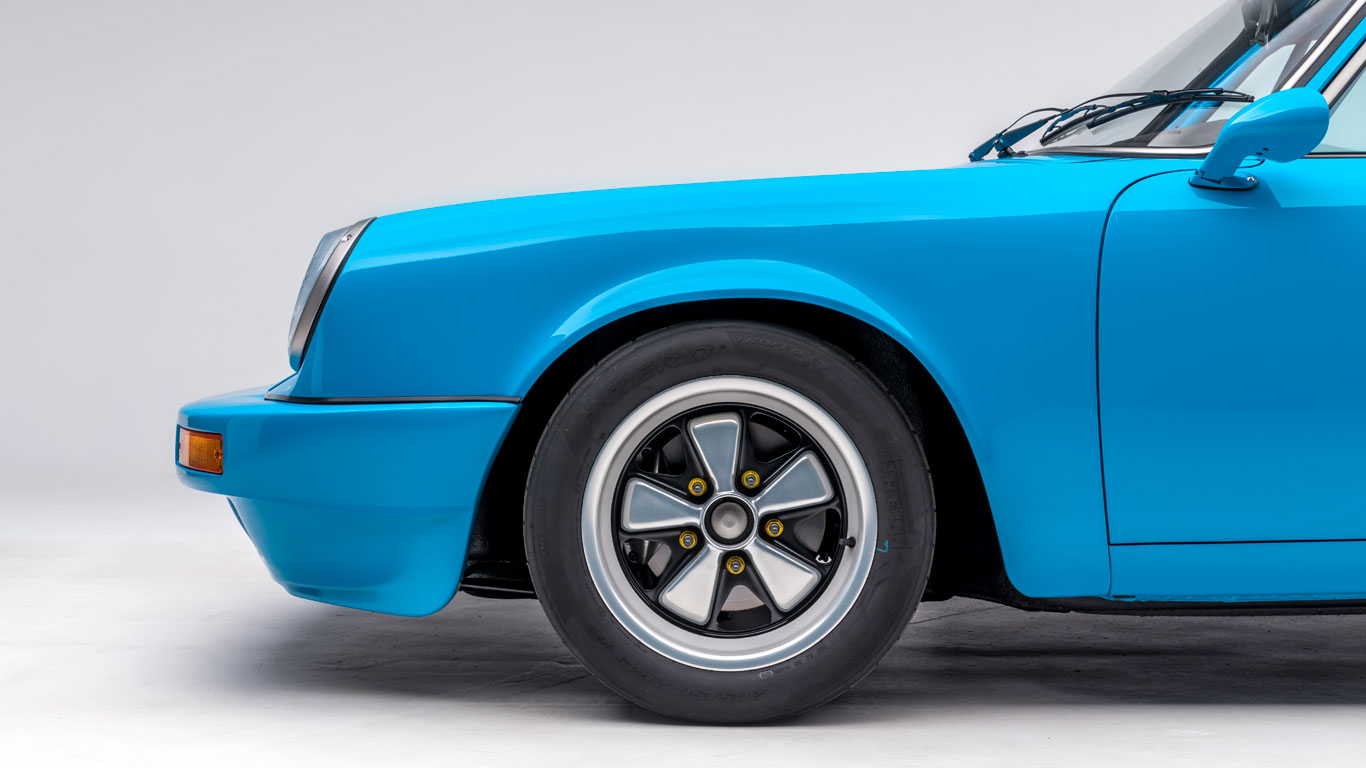
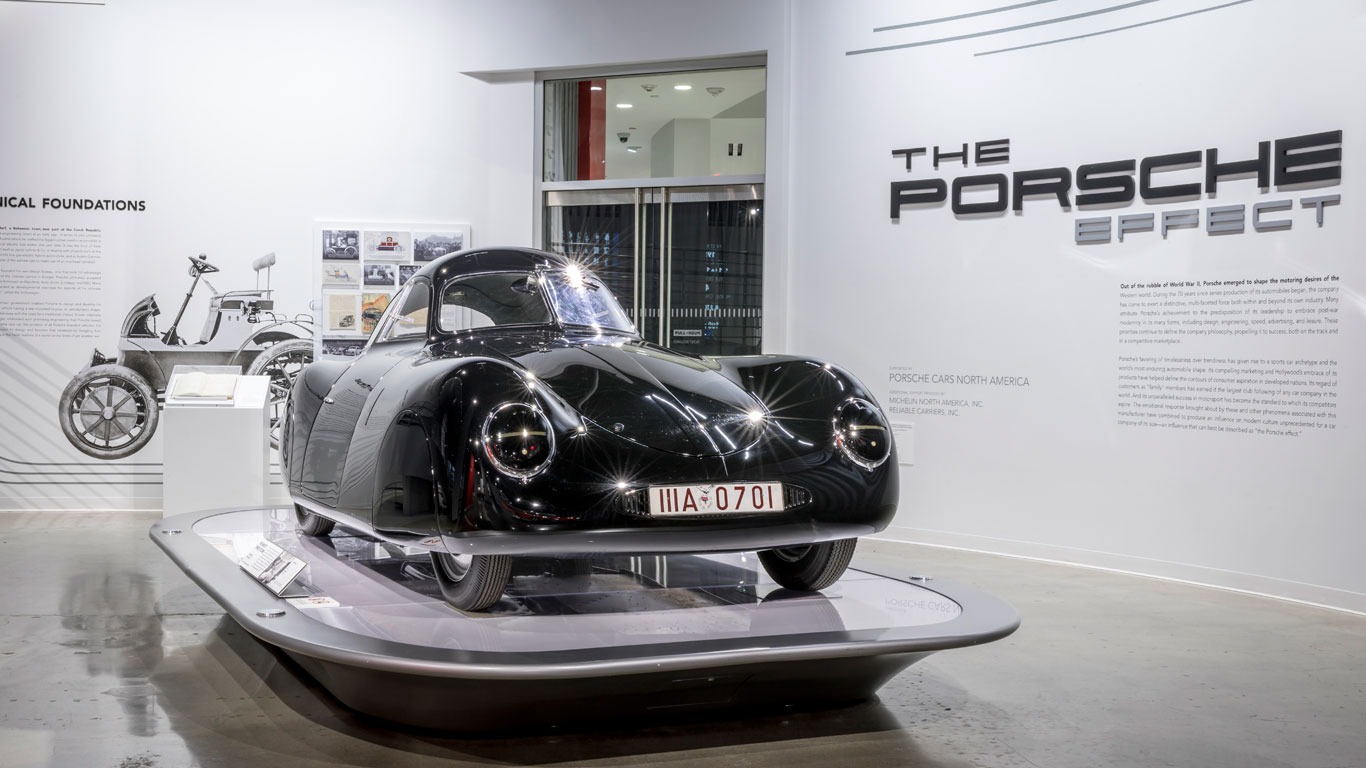
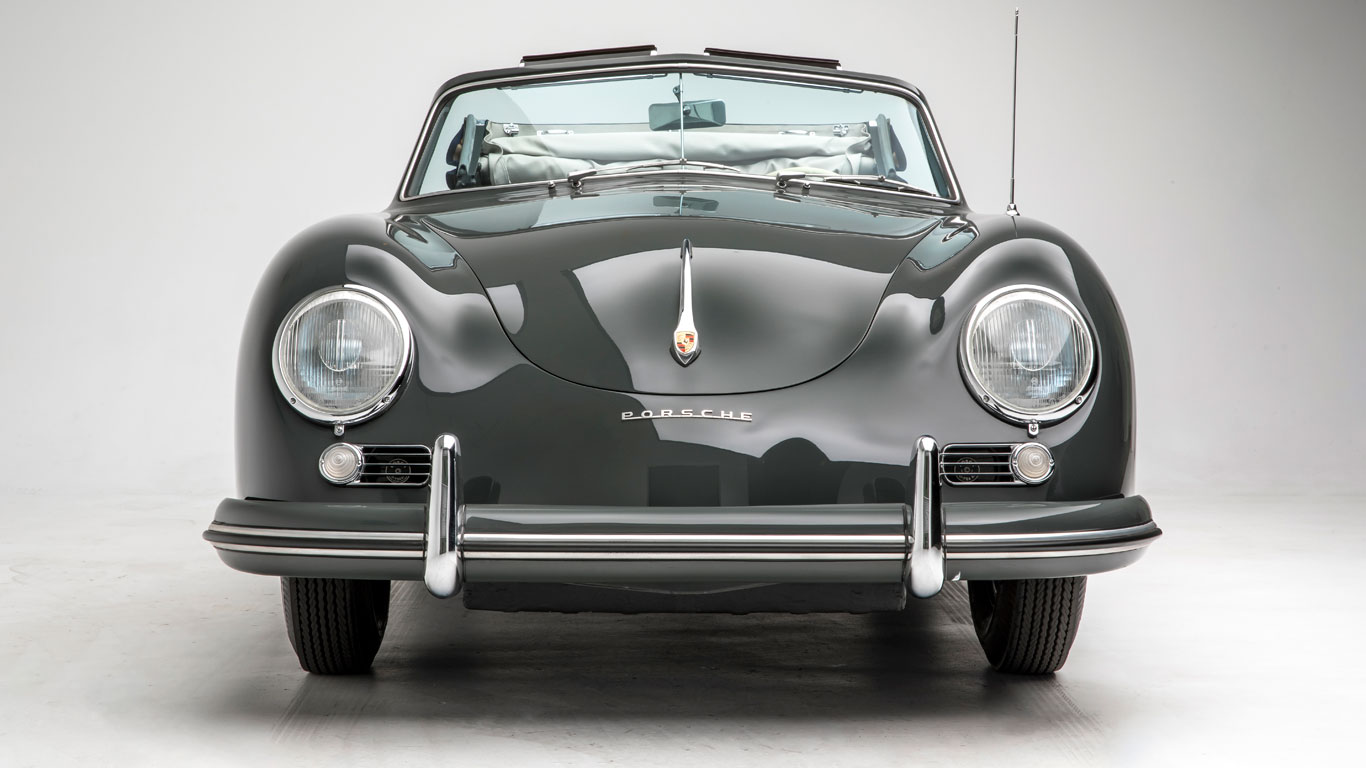
If you’re looking for holiday inspiration, may we suggest a visit to Los Angeles this summer? The Petersen Automotive Museum is hosting The Porsche Effect, an exhibition celebrating 70 years of Porsche sports cars. Here are some of the many highlights.
Porsche Type 64
The Type 64 was designed to compete in the 1939 Berlin to Rome race, but the outbreak of the Second World War meant that the event never took place and the project was short-lived. It was based on the Volkswagen Beetle but powered by an air-cooled 1.5-litre engine, while the aerodynamic aluminium shell provided the blueprint for future Porsche models.
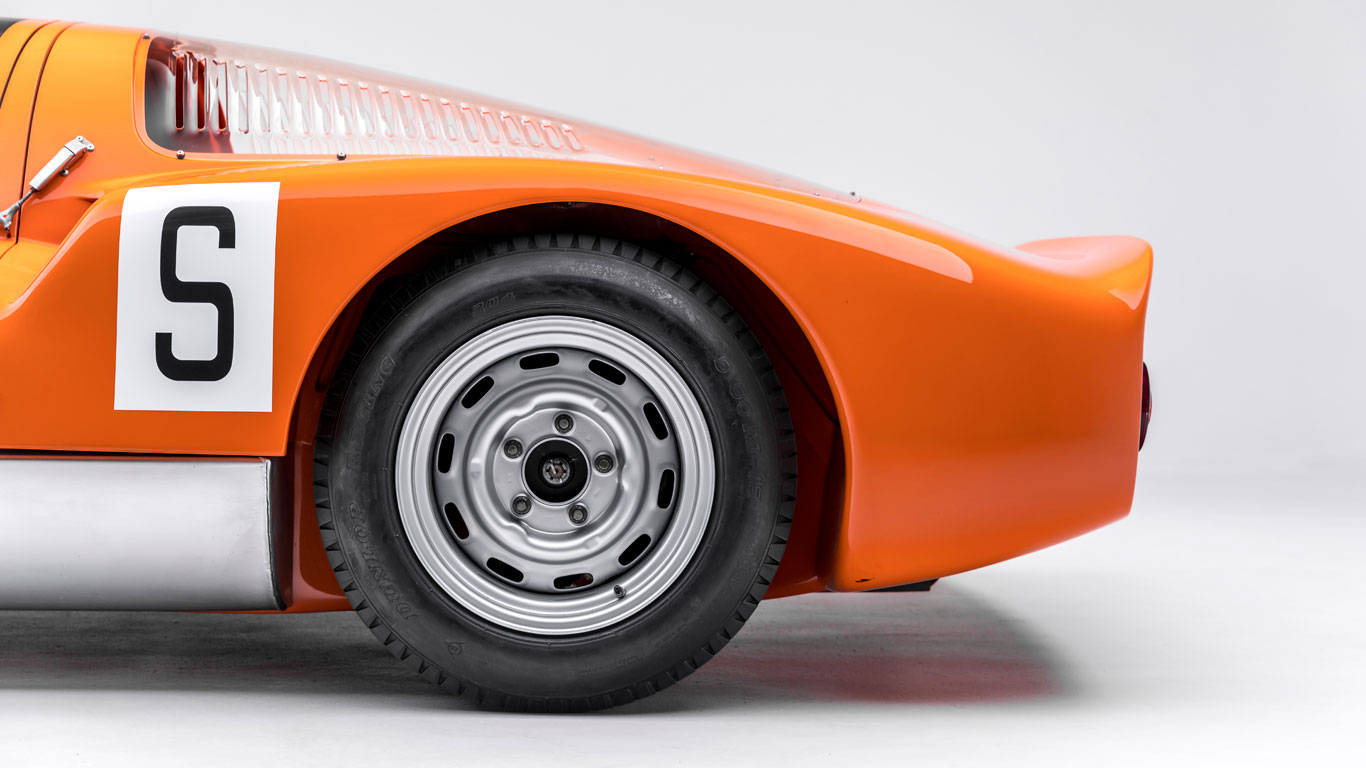
Porsche 906 Carrera 6
The 906 Carrera 6 was a development of the 904, featuring a lightweight fibreglass body, gull-wing doors and one-piece plexiglass engine cover. It made its debut at the Daytona 24-hour race in 1966, securing a sixth place finish and a class victory. At the 1966 Le Mans – the race famous for Ford’s 1-2-3 victory – the 906 took the following four places, a remarkable performance for a 2.0-litre flat-six sports car racing against the 7.0-litre V8 GT40s.
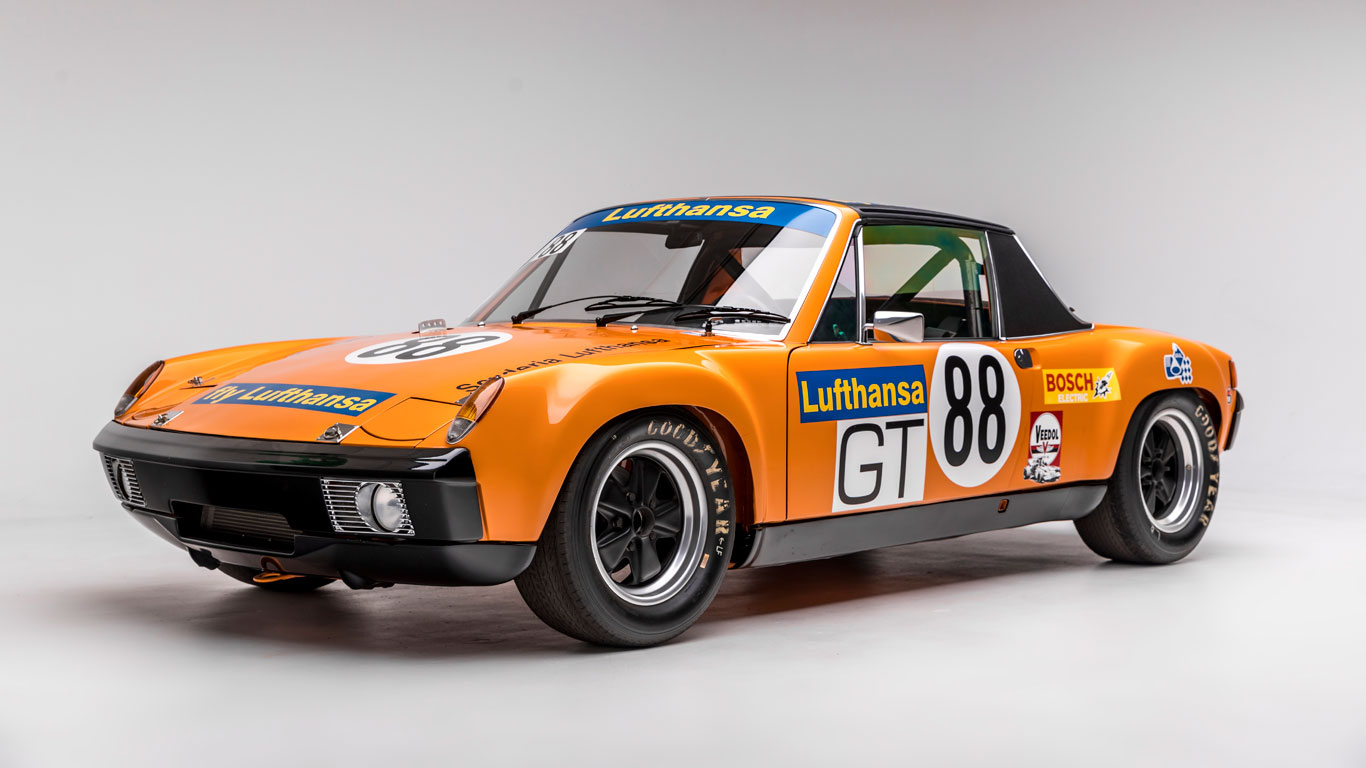
Porsche 914-6 GT
The 914-6 GT is a rare beast, listed in the 1971 Porsche catalogue as a Group 4 racer, with fewer than 50 leaving the factory. Power was sourced from a highly-tuned 2.0-litre engine developing around 210hp, which seemed woefully inadequate at the 1970 Le Mans. But this didn’t stop the 914-6 GT securing a fantastic sixth place finish, courtesy of Claude Ballot-Léna and Guy Chasseuil.
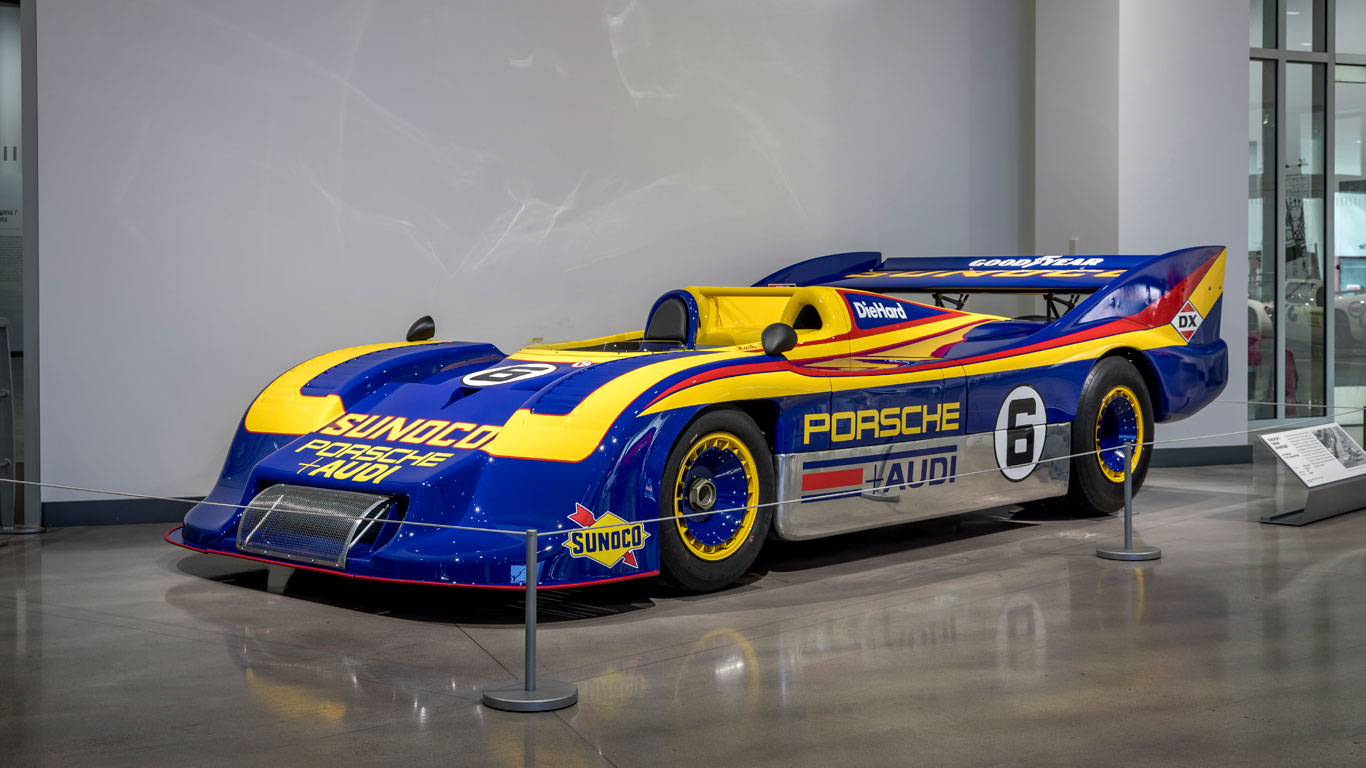
Porsche 917/30 Can-Am Spyder
In 1973, Porsche launched the final version of the 917 Spyder: the 917/30. To kids growing up in the 70s, this was the daddy, with its 5.4-litre flat-12 engine developing a reported 1,100hp. One of the primary sponsors was the American sales organisation, ‘Porsche + Audi’, hence the decals.
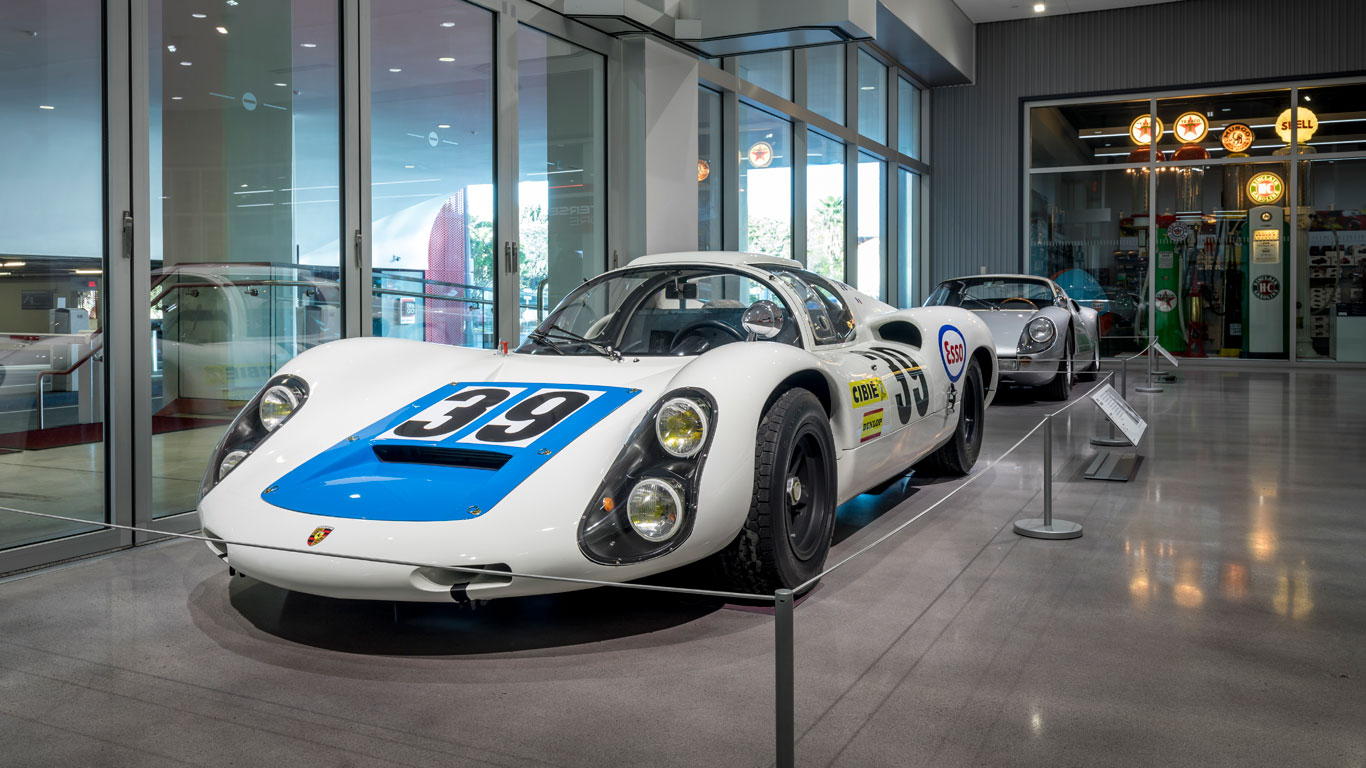
Porsche 910
It looks similar to the 906, but the Porsche 910 is distinguishable thanks to its smaller 13-inch wheels, front-hinged doors, and a removable roof to allow for open or closed racing. Speaking about the exhibition, Klaus Zellmer, president and CEO of Porsche Cars North America, said: “When the Petersen Museum first suggested we work together on what has become “The Porsche Effect,” I immediately saw the mutual benefits to both. We are looking forward to sharing the story of Porsche through rare and seldom seen artifacts and display elements, in addition to some of the most iconic cars of all time.”
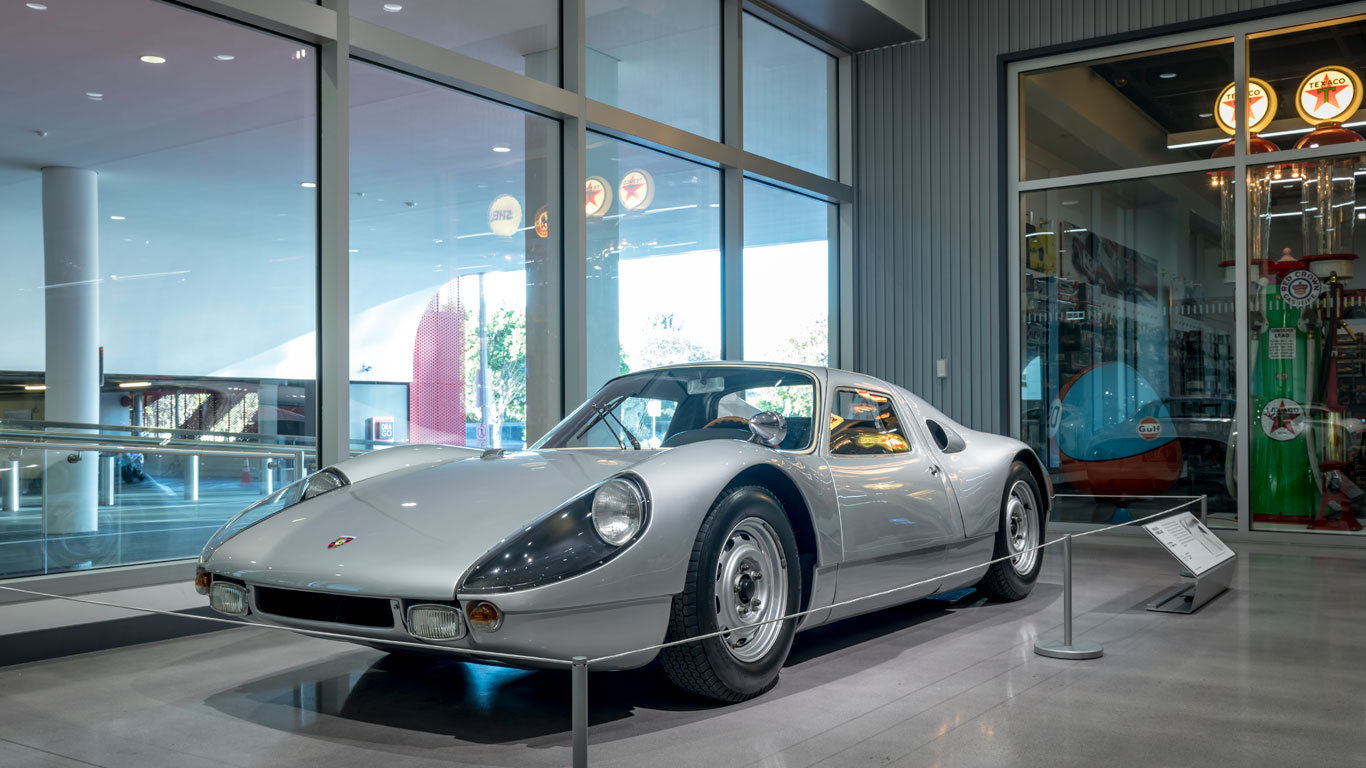
Porsche 904 Carrera GTS
The Porsche 904 – or Carrera GTS – was designed to be a fairly simple and low-cost car that could be built and sold in sufficient numbers for homologation purposes. Although it was built to go racing, the first 904 to come to Britain was driven by Richard ‘Dickie’ Stoop to go shopping. Porsche built far more than the 100 required for homologation purposes, with most sold in the USA.
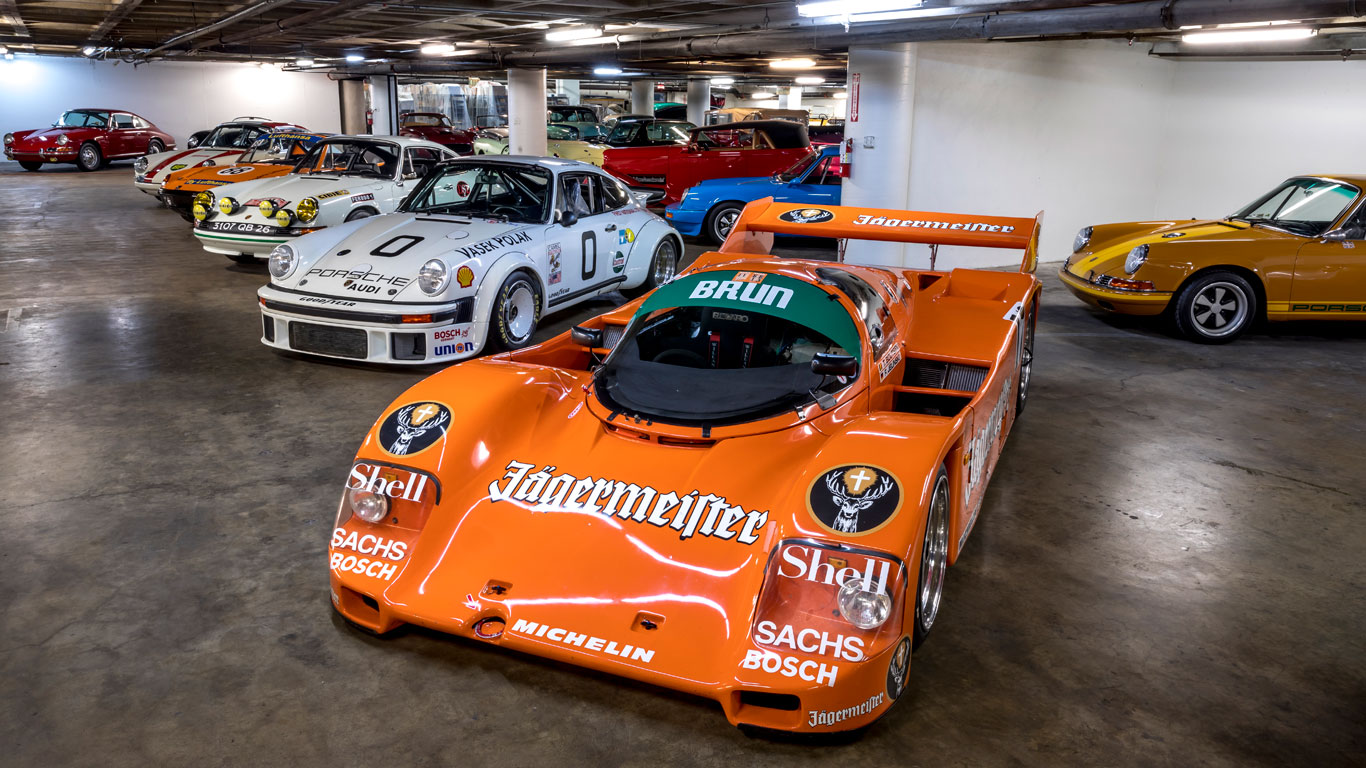
Porsche Jägermeister 962
“At the Petersen, we always seek out compelling new ways to engage our guests and pique their interests,” said Executive Director Terry L. Karges. “Because Porsche is so embedded in the Southern California landscape, we were thrilled to partner with the legendary automaker to create an experience that is truly remarkable and dedicated to the many Porsche lovers in the Southland.”
Porsche 935 K3
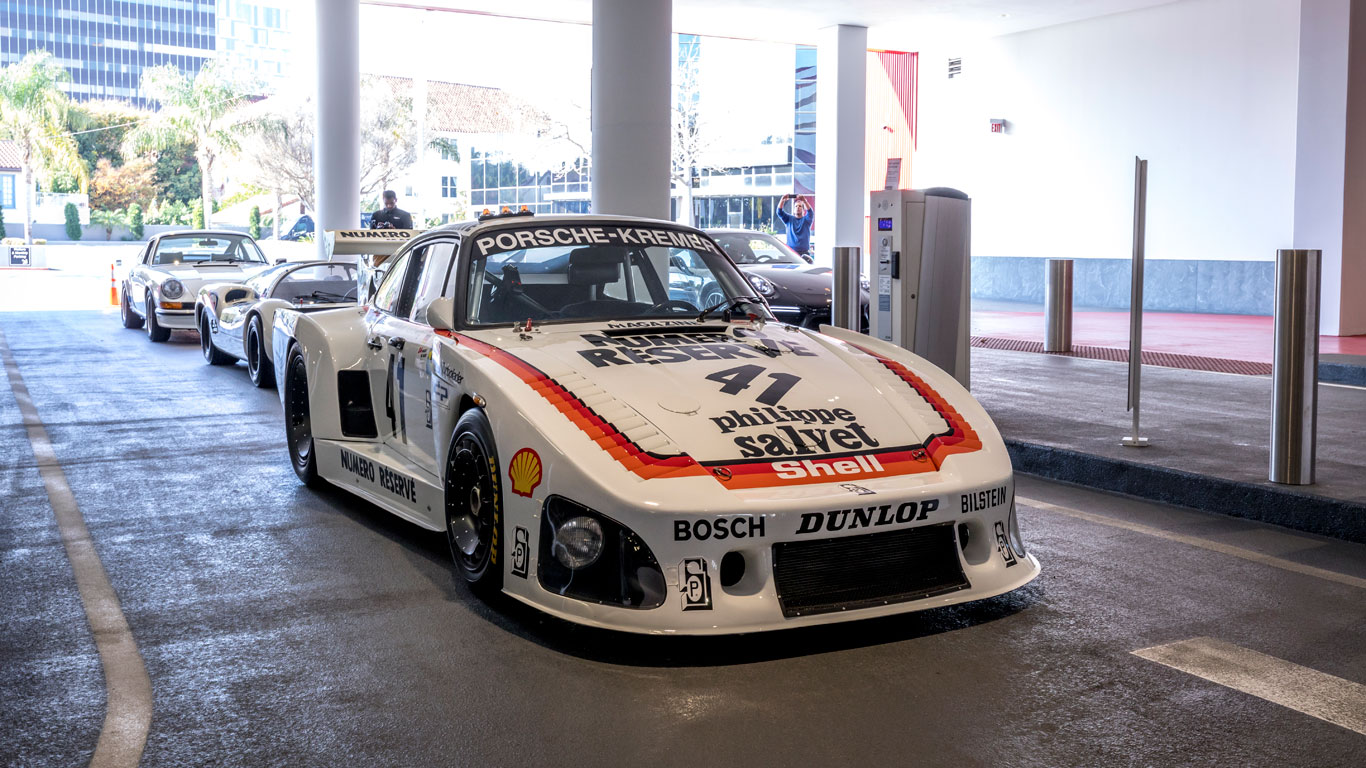
This was the actual Le Mans-winning Porsche Kremer Racing 935 K3 driven by Klaus Ludwig, Don Whittington and Bill Whittington in 1979. Actor Paul Newman finished second in a Dick Barbour Racing Porsche 935, while Kremer completed the top three in another 935. The K3 is owned by Petersen founding chairman, Bruce Meyer.
Porsche 928 H50
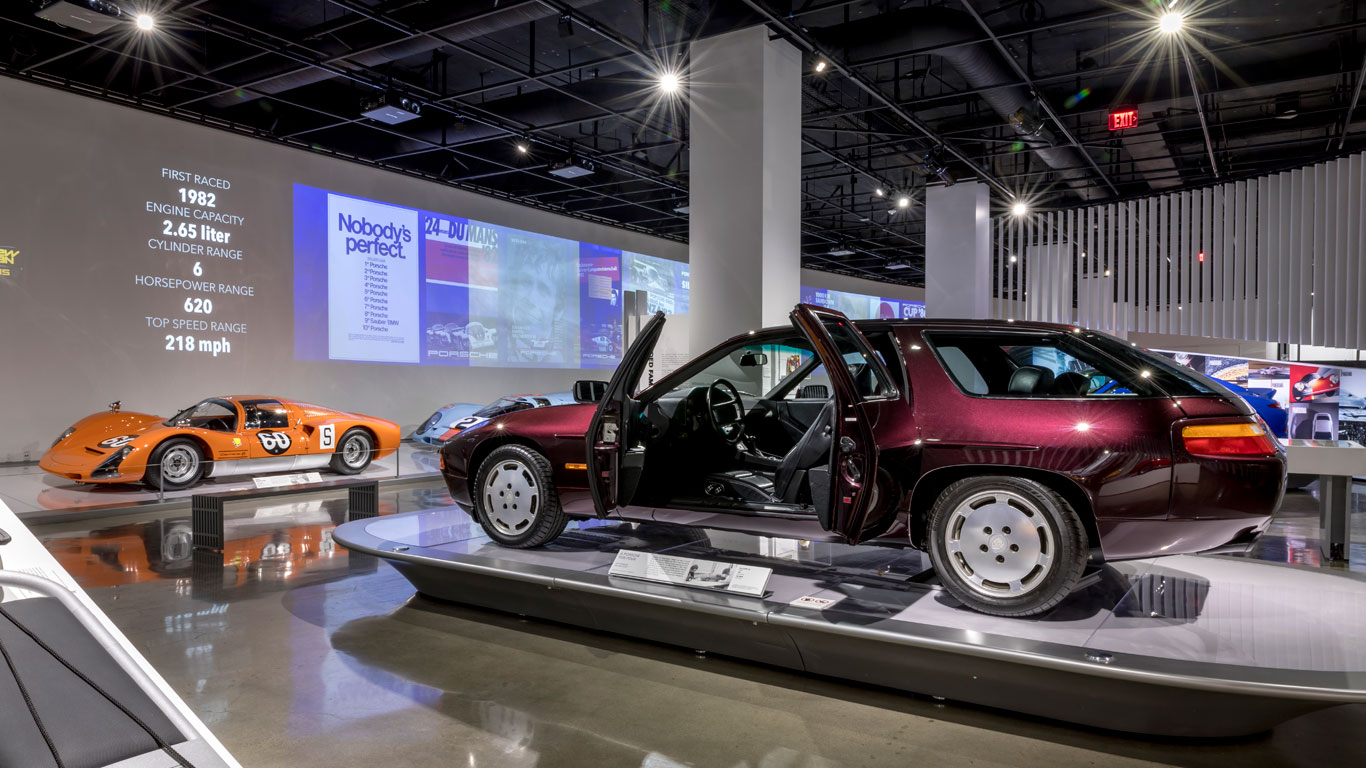
What you’re looking at is the godfather of the Porsche Panamera Sport Turismo: a four-seat, four-door Porsche 928. The H50 concept of 1987 is powered by a 330hp V8 engine, which is enough to propel this practical 928 to a top speed of 168mph. Sadly, after 5,000 miles of testing, the Porsche engineers decided that it lacked the required structural rigidity and it was pushed to the back of the factory.
Porsche 550/1500 RS Spyder
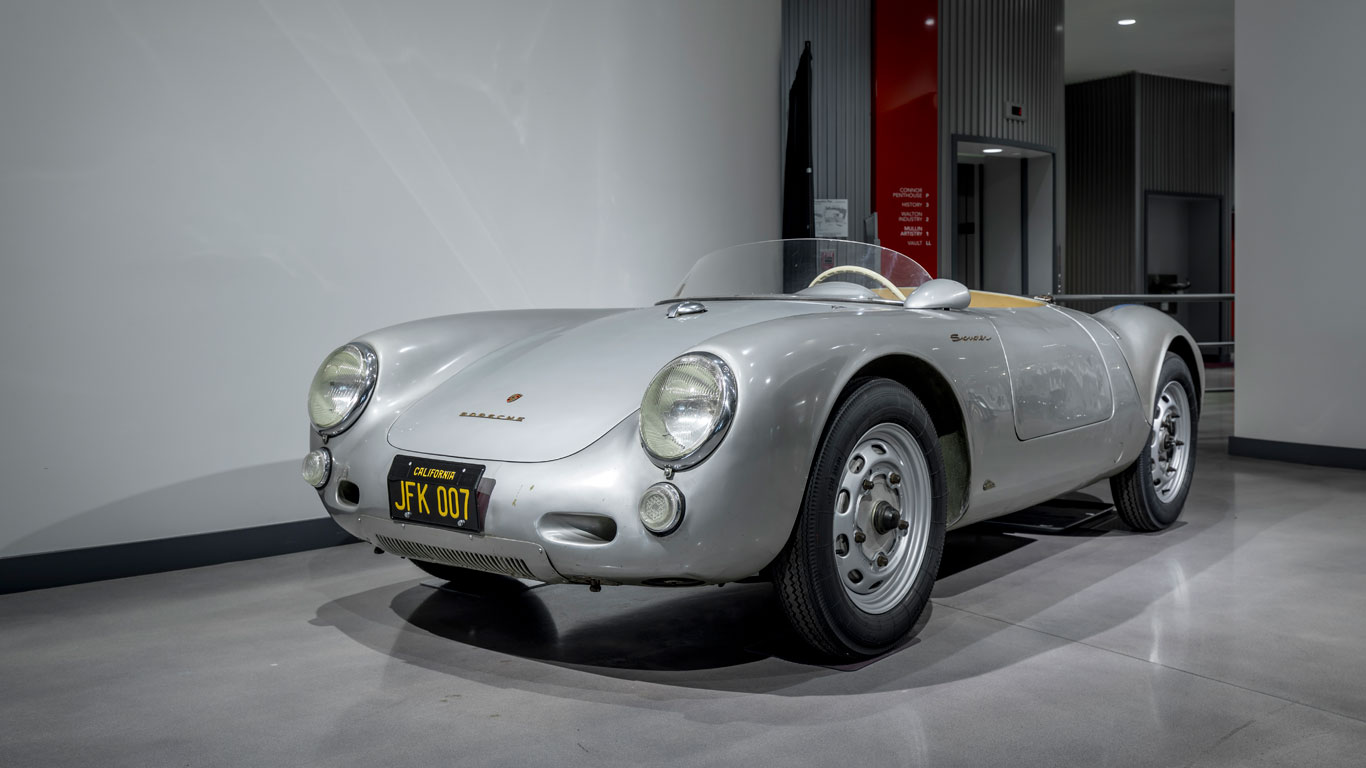
The majority of 550 Spyders were used for competition purposes, so to find such an original and unmodified example is a rare treat. In 2016, this 1956 example sold for a world record £4.6m at the Bonhams Goodwood Revival Auction. James Knight, the auctioneer on the day, said: “The car attracted much attention from bidders, with increments rising by hundreds of thousands until the gavel finally fell to achieve £4,593,500. The car is so original, that you could travel back in time 60 years and find it in much the same condition. It’s exactly how a 550 would have looked, smelt and felt like when James Dean famously purchased his example back in 1955.” Dean’s was perhaps the most famous of the 550s; he called his car the ‘Little B*stard’.”
Steve McQueen’s Porsche 356 Speedster
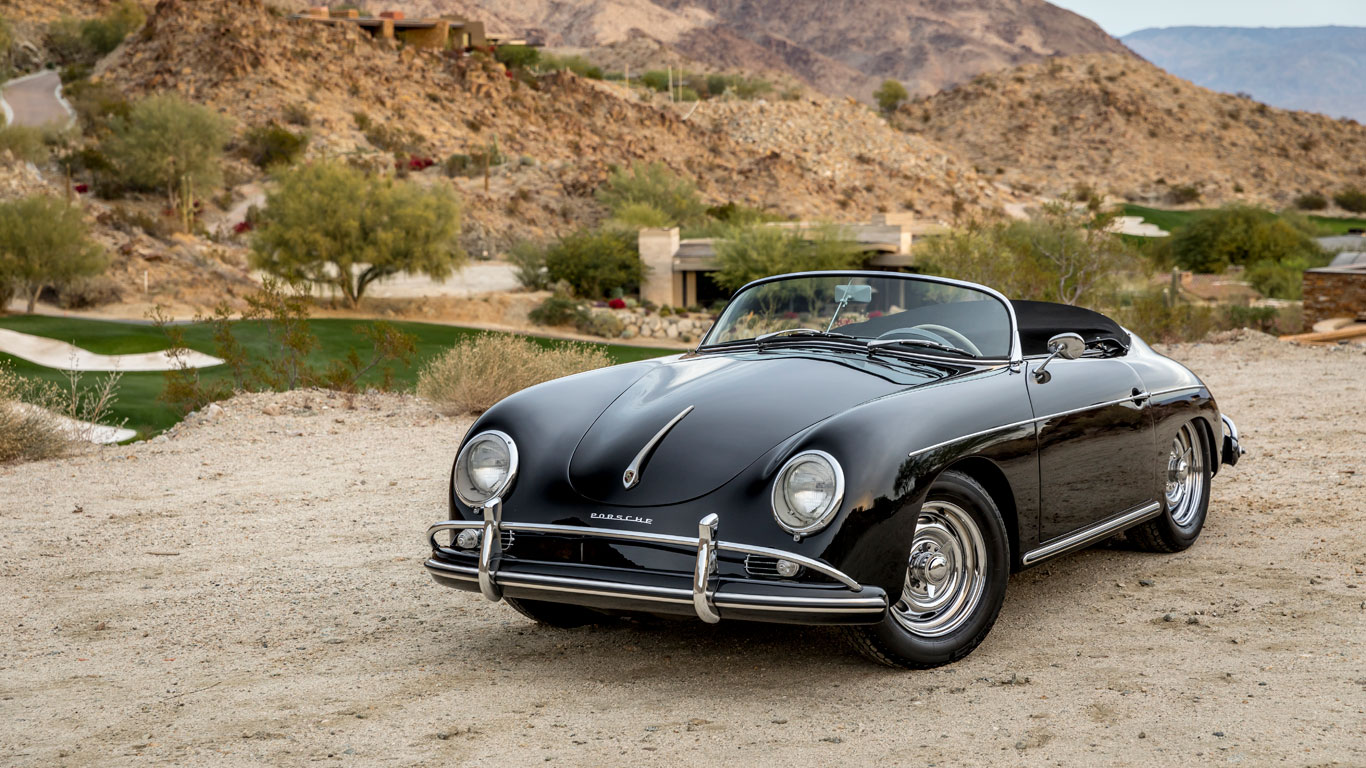
Speaking of Steve McQueen… this is his old Porsche 356 Speedster. In the 1960s, he sold the car to Bruce Meyer, but purchased the Porsche again just seven years later. Meyer regrets selling the Speedster, saying: “Steve called me and wanted to buy it back. We were friends, we’d done some motorcycle racing together. So I sold it back to him. His son Chad owns it today. “
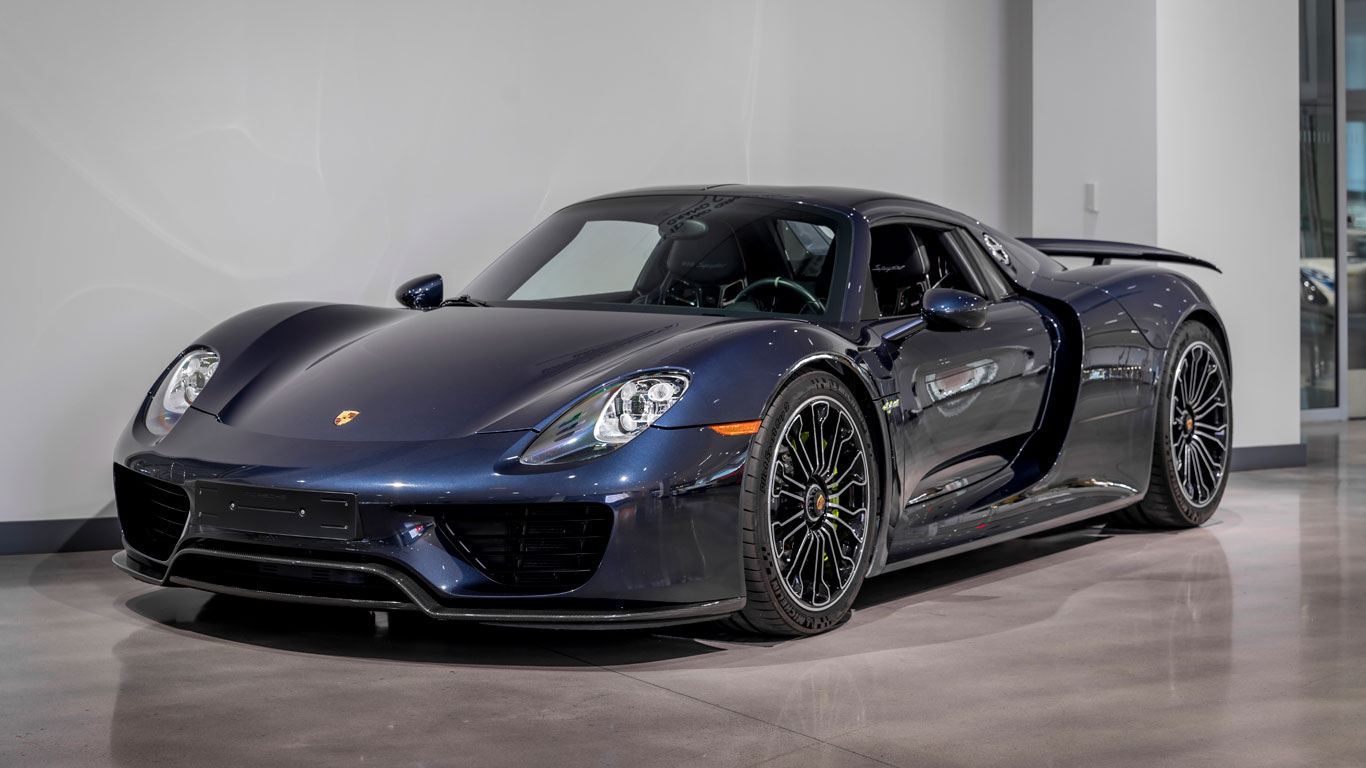
Porsche 918 Spyder
Bringing things right up-to-date, the 918 Spyder features a V8 engine and two electric motors delivering a combined 887hp. It’s enough to propel the four-wheel drive hybrid to 62mph in just 2.6 seconds, before hitting a top speed of 214mph. Amazingly, it’ll top 93mph in electric mode.
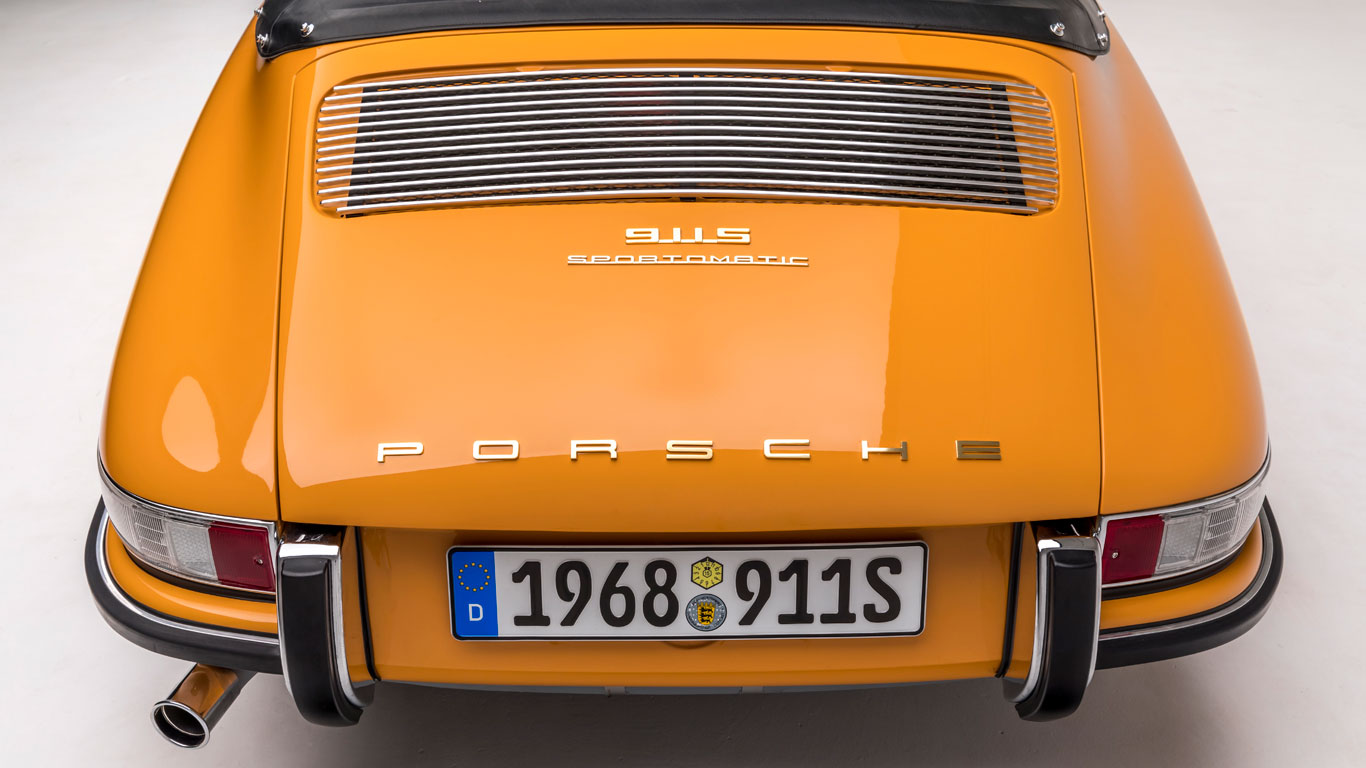
Porsche 911 Targa Sportomatic
Another rarity: the Porsche 911 Targa Sportomatic features a vacuum system and torque converter, which means that the driver is able to select their own gears without using a clutch pedal. Owners Alan and Lisa Grant are incredibly lucky to own this classic boulevard cruiser.
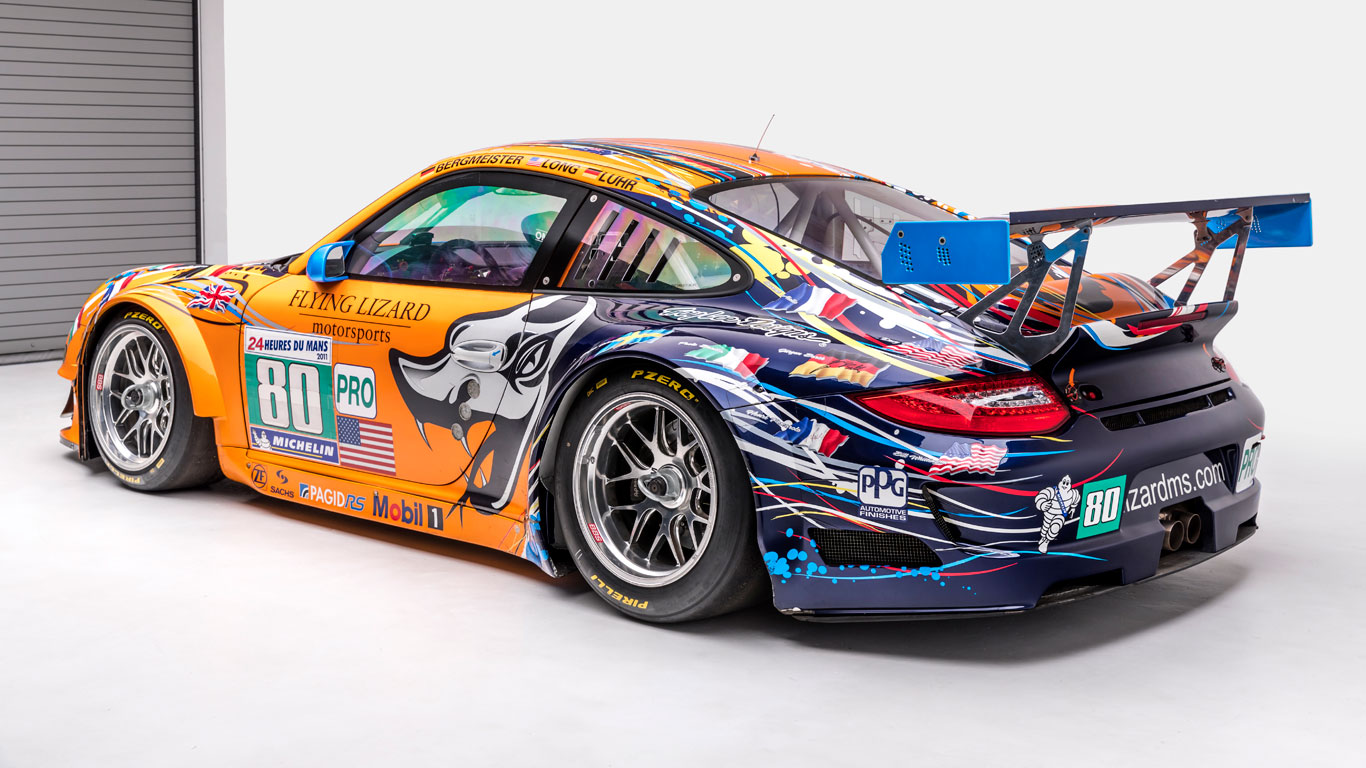
Porsche 997 RSR Flying Lizard Art Car
This Porsche 997 GT3 RSR showcases Flying Lizard’s livery for the 2011 Le Mans race. “The livery commemorates the heritage of Porsche at Le Mans, starting with drivers Hans Hermann and Richard Attwood, who secured the first overall victory for Porsche in 1970,” said Jennifer Hart, Flying Lizard’s vice president of marketing.
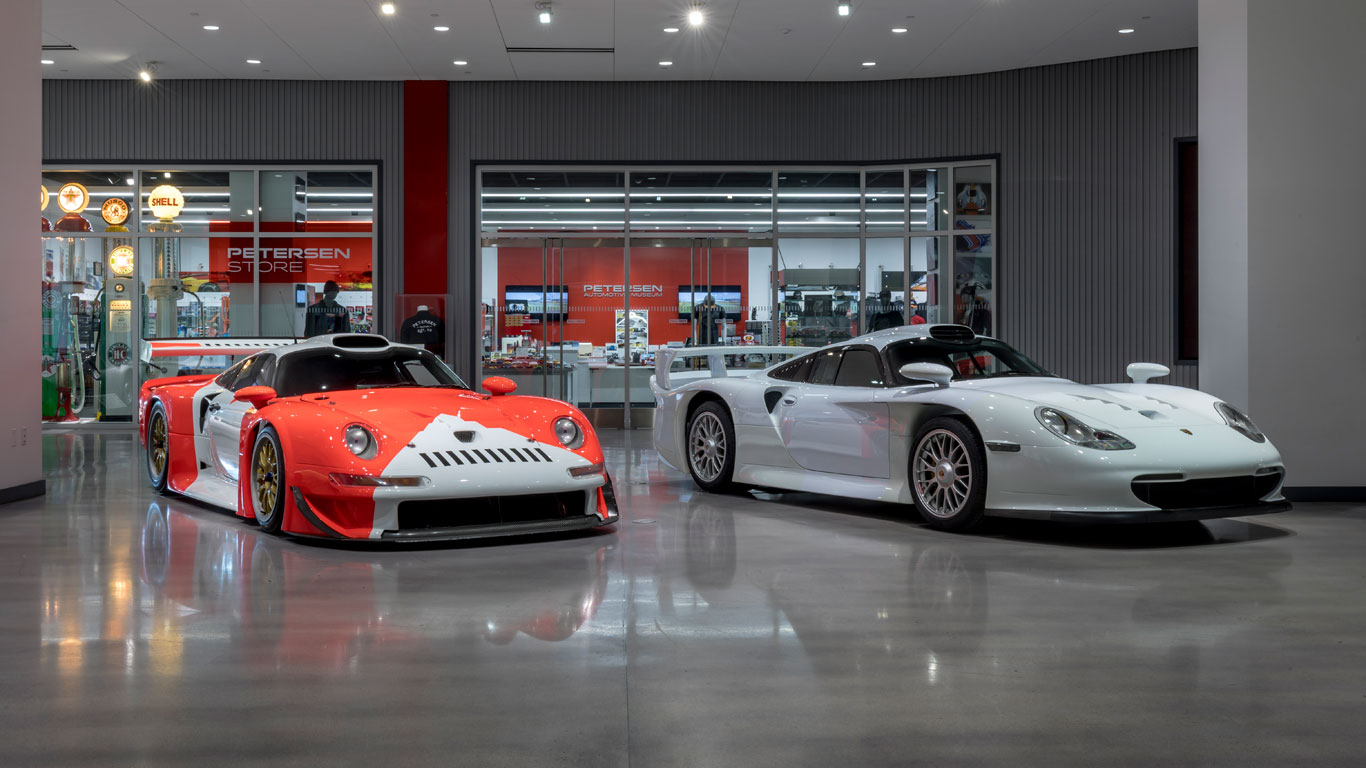
Porsche 911 GT1
Another treat: a road-legal Porsche 911 GT1 alongside its race-going sibling. The race version made its competition debut at Le Mans in 1996, where it finished second and third overall, winning the GT1 class in the process. A total of 25 ‘Strassenversion’ GT1s were built for homologation purposes, each one powered by a 3.2-litre flat-six, twin-turbocharged engine.
Porsche Continental
The 356 Continental was the brainchild of Max Hoffman, the North American importer of Porsche cars. The idea was to shift stock of the ageing 356, with Porsche using the tried and tested method of adding many extras to the standard car. But Ford wasn’t happy with the choice of name, and when the courts ruled in favour of the Blue Oval, the Continental name was dropped.
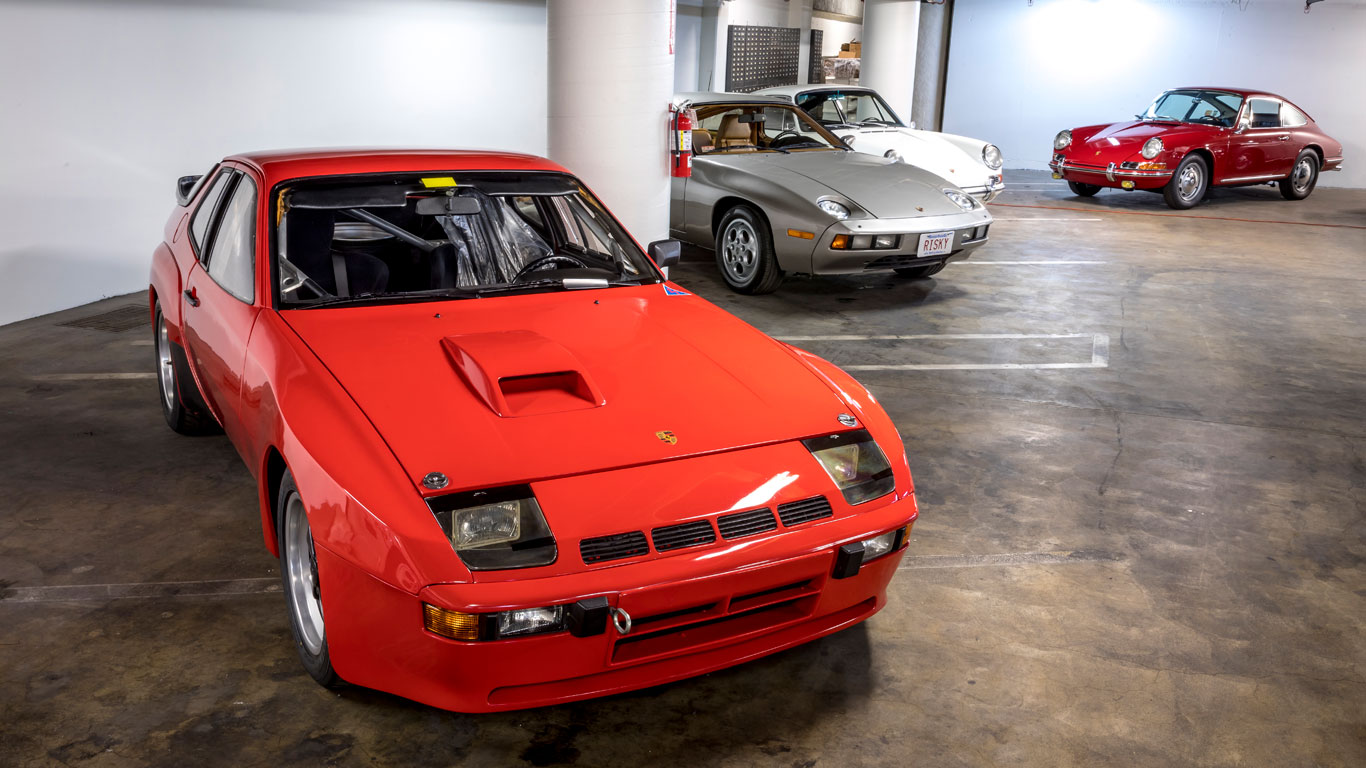
Porsche 924 Carrera GTS
The Porsche 924 Carrera GTS is distinguishable from the Carrera GT thanks to the perspex headlight covers and an intercooler in front of the engine, rather than on top of it. A mere 59 were built, making it one of the rarest and most coveted of Porsche models. It was 59kg lighter than the GT, although the Clubsport and GTR models were lighter still.
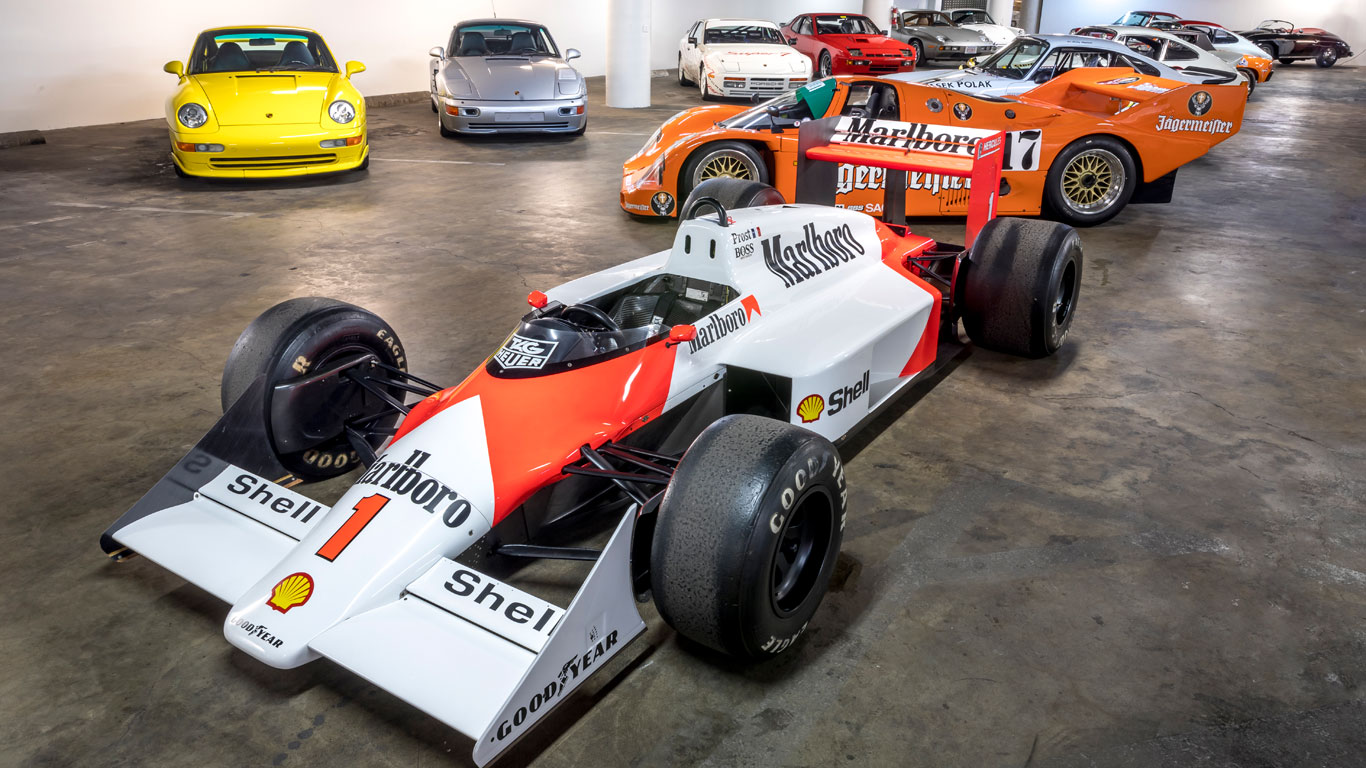
McLaren TAG-Porsche
This is the 1987 McLaren TAG-Porsche, as raced by Alain Prost. The Frenchman finished fourth in the 1987 drivers’ championship, winning a total of three races. In total, the TAG-Porsche engine propelled McLaren to 25 Grand Prix victories.
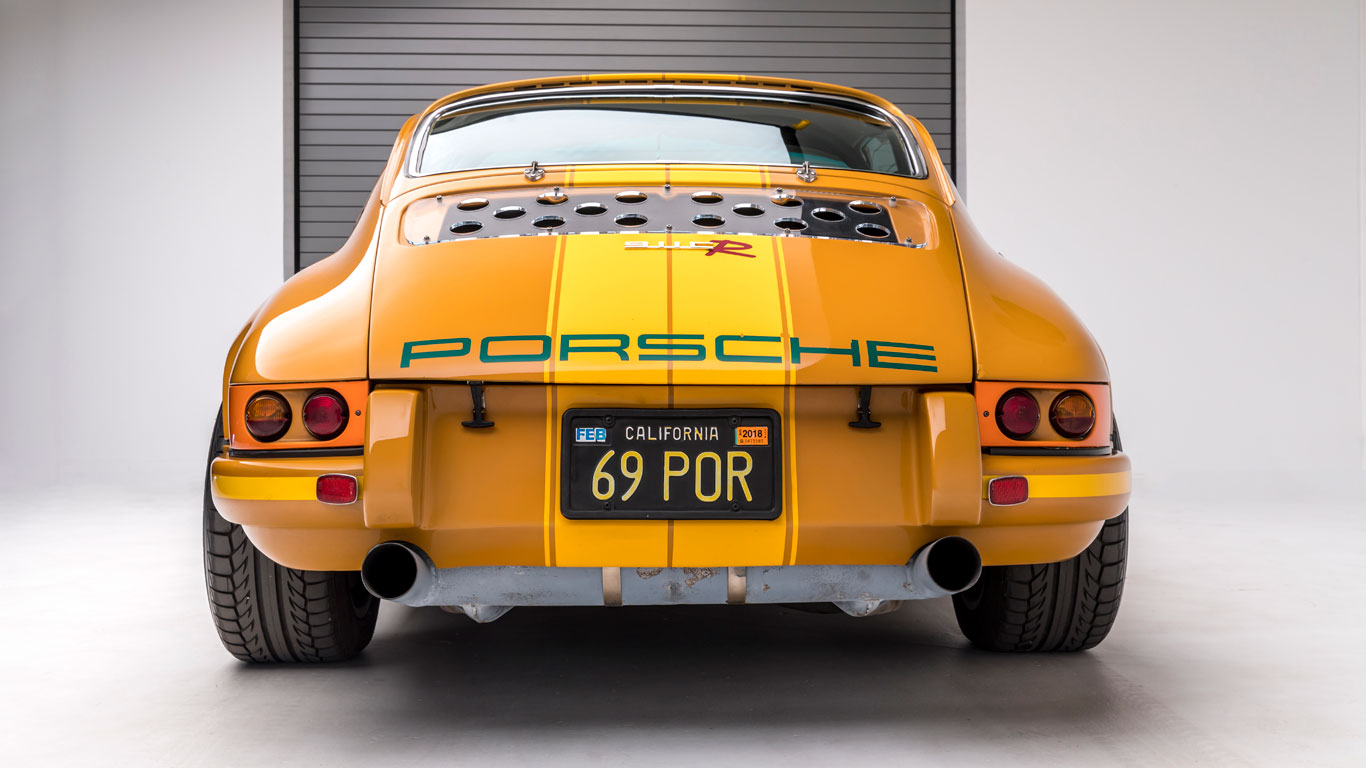
Porsche 911 Singer
Perfection.
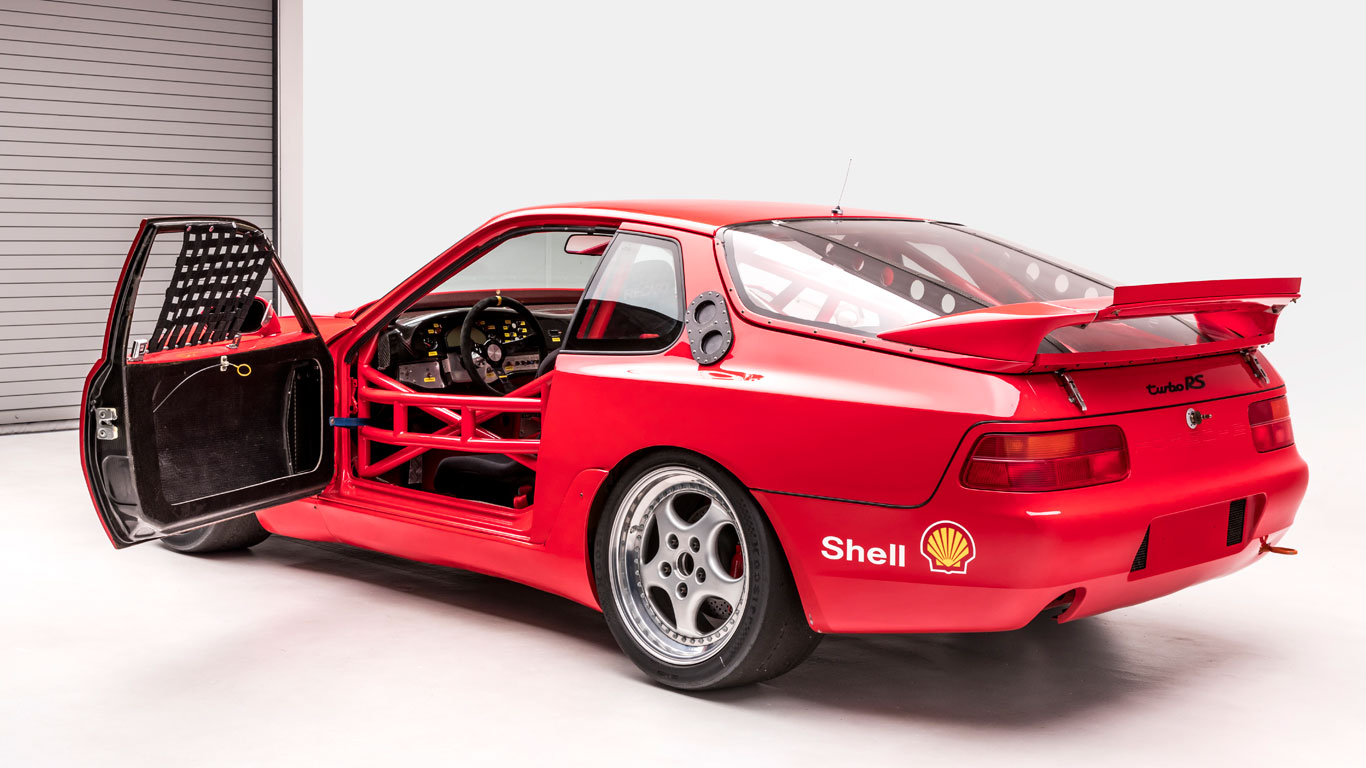
Porsche 968 Turbo RS
Just four 968 Turbo RS models were built, making it one of the rarest Porsche cars ever produced. With 337hp and 369lb ft of torque on tap, the Turbo RS wasn’t lacking in punch, offering an ability to hit a 911-troubling top speed of 175mph.
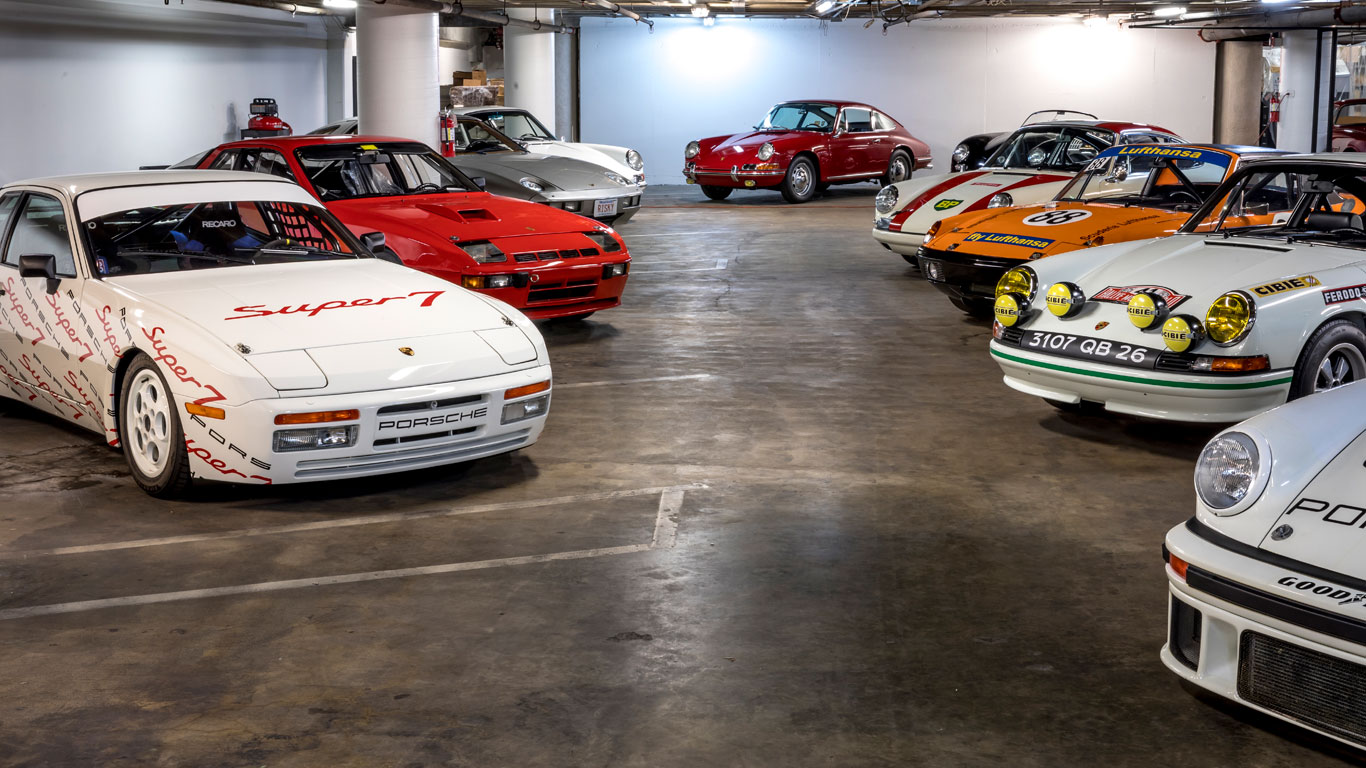
The vault
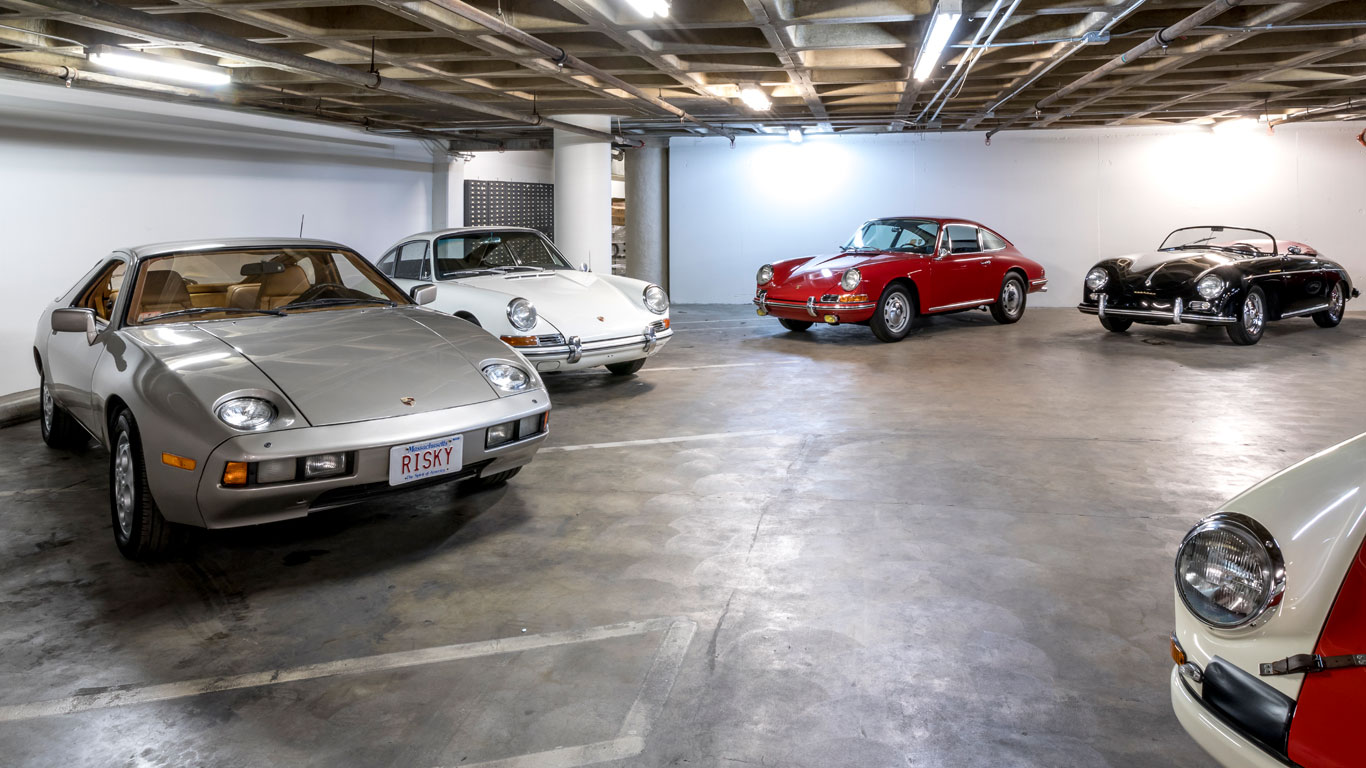
You’ll find the vault deep beneath the Petersen Automotive Museum, which is available for tours as a bolt-on to the general admission ticket. On the basis of this photo alone, it’s worth booking ahead.
The Porsche Effect
The Porsche Effect exhibition is in residence until 27 January 2019. You can find the Petersen Automotive Museum at 6060 Wilshire Boulevard in Los Angeles, California. View the slideshow below for more Porsche photos.
For my 18th birthday, my parents bought me a supercar experience day. I’d drive a Ferrari, Lotus and Porsche on-track, then take home a certificate as proof of my prowess. Unfortunately – sorry mum – it was rubbish. I spent 10 minutes in each car, accompanied by an officious instructor who ordered me not to exceed 5,000rpm.
Today is different. Based at Goodwood, it’s another supercar event, but this time there’ll be no overbearing passenger, no arbitrary rev limit and no certificate (well, you can’t have everything). I’ll sample six of the UK’s most exciting new cars on the roads of rural West Sussex. Which one offers the definitive supercar experience?
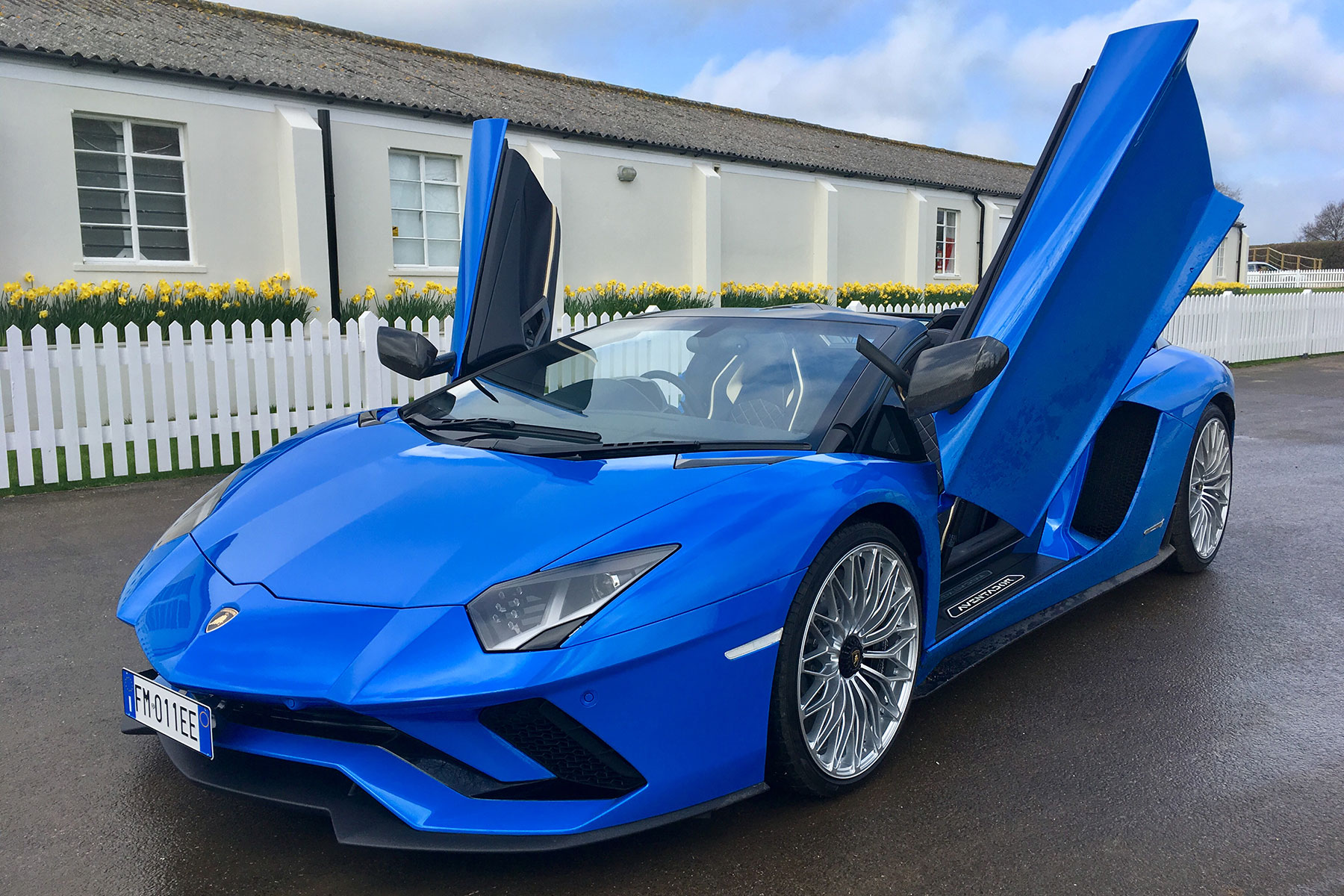
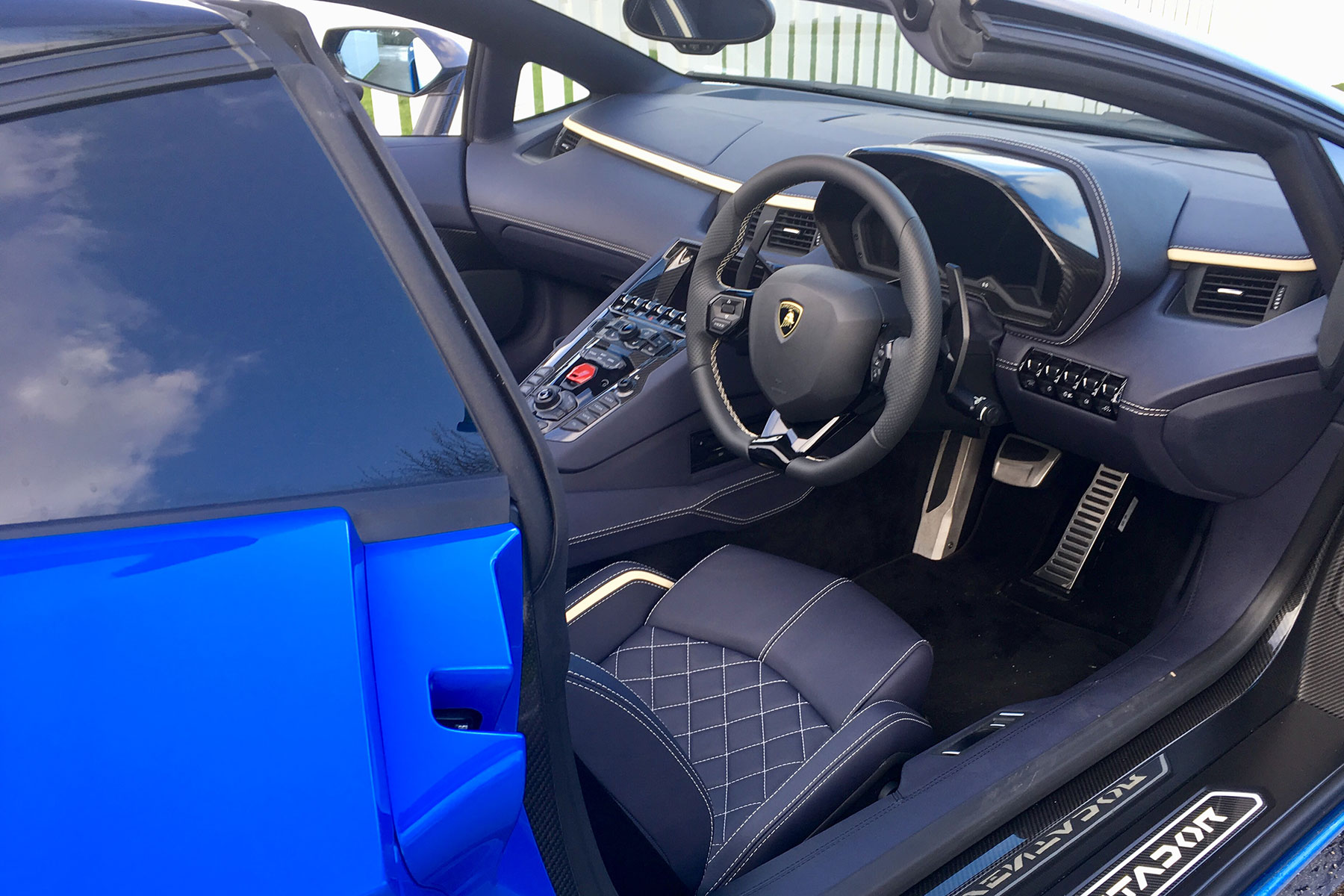
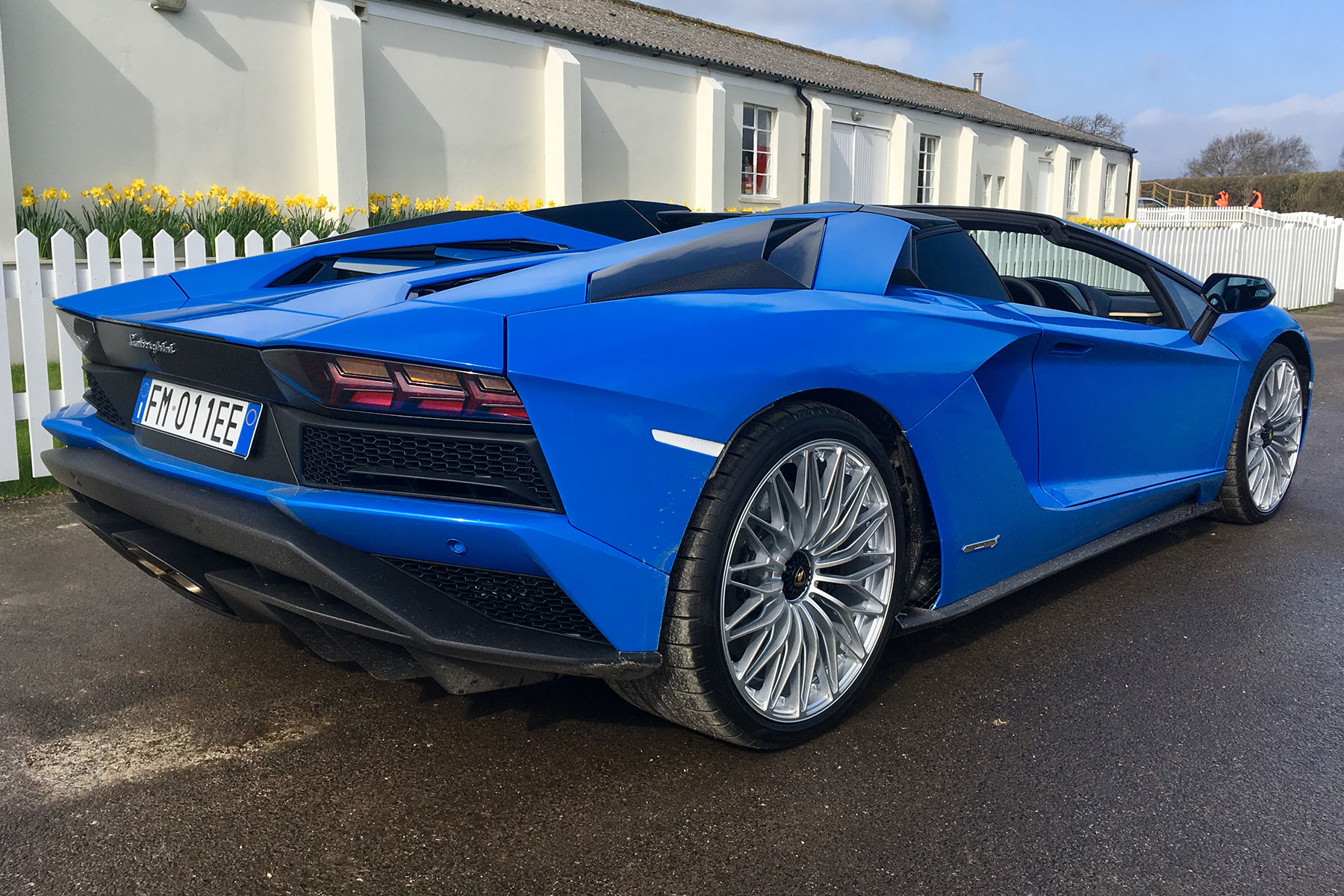
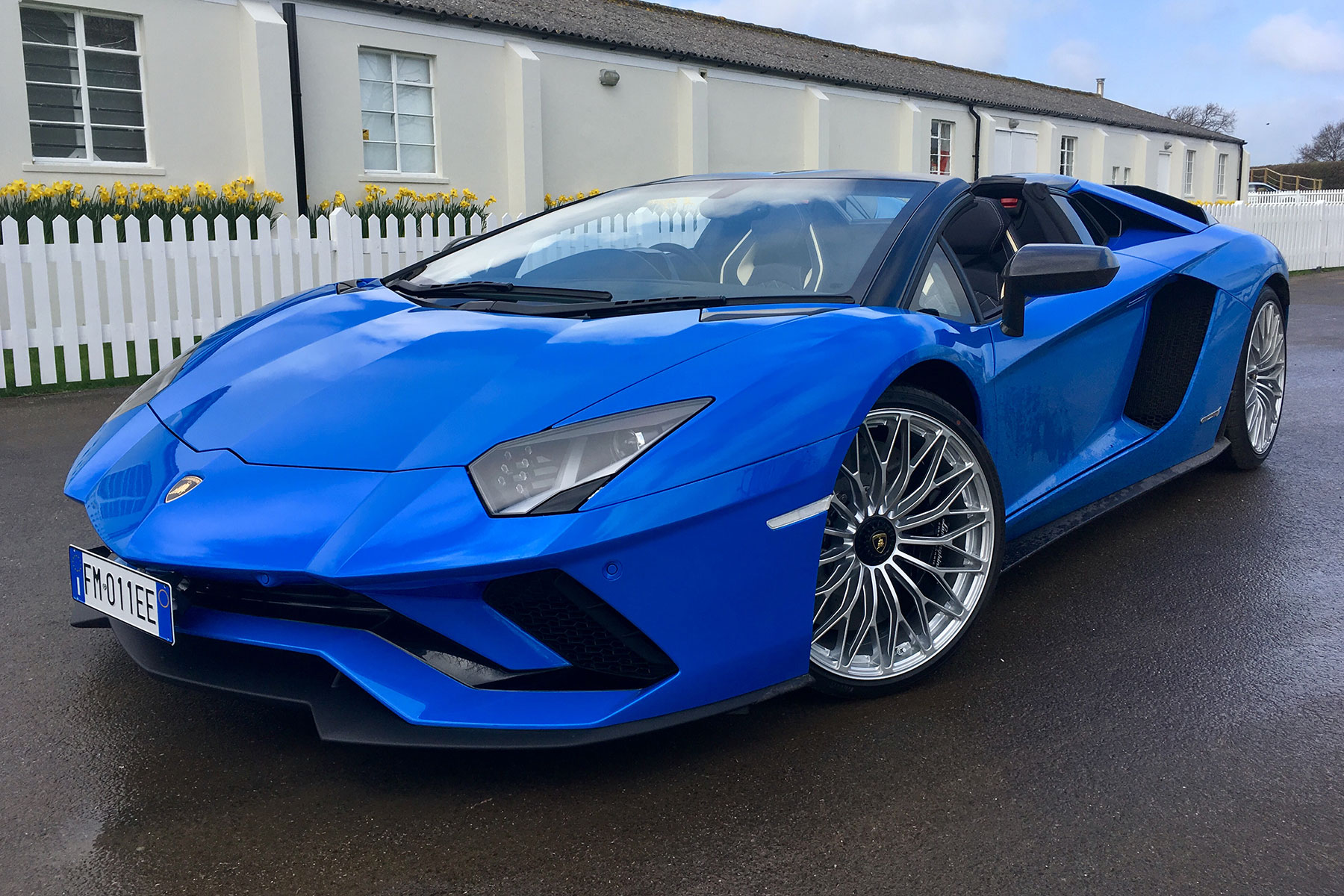
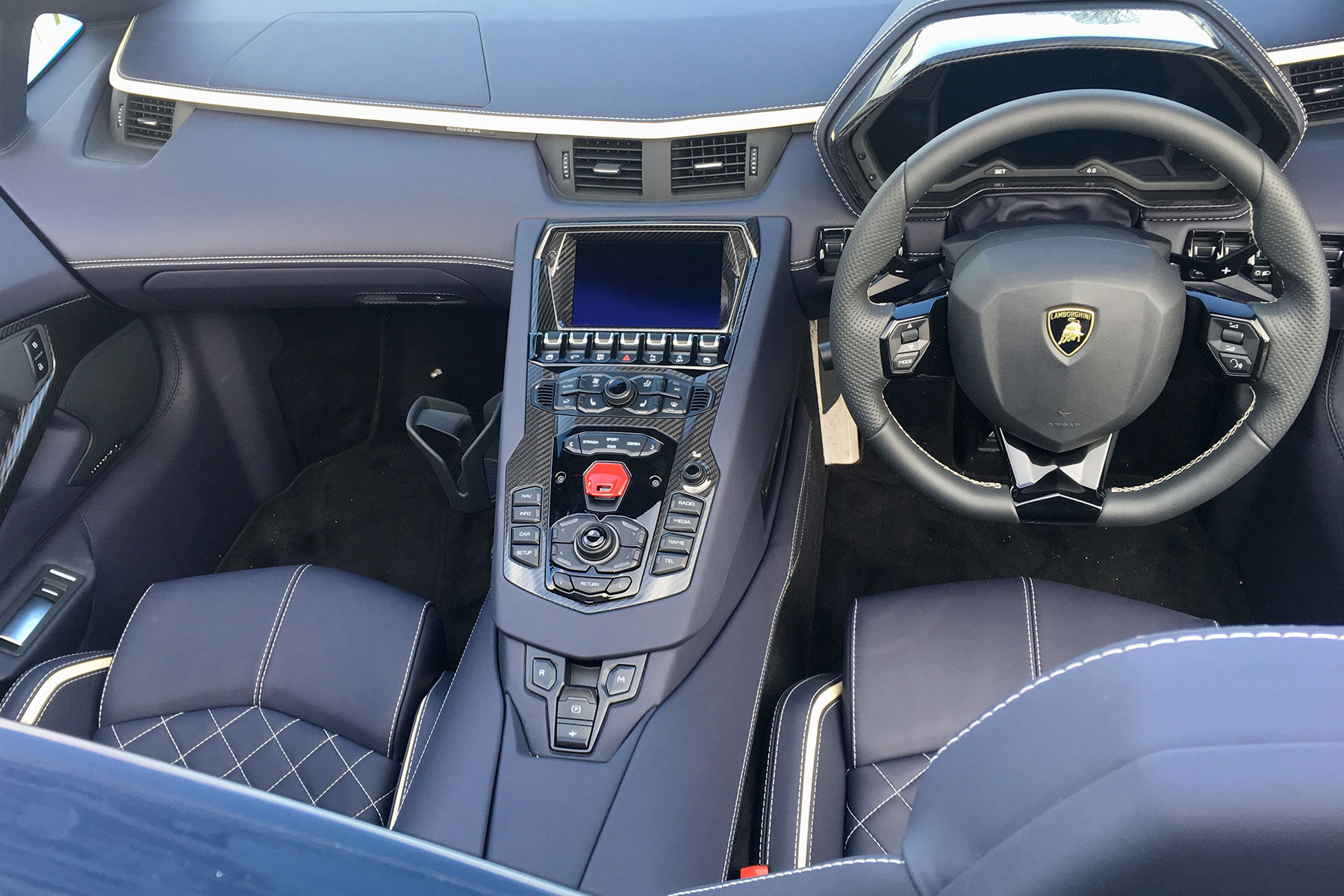
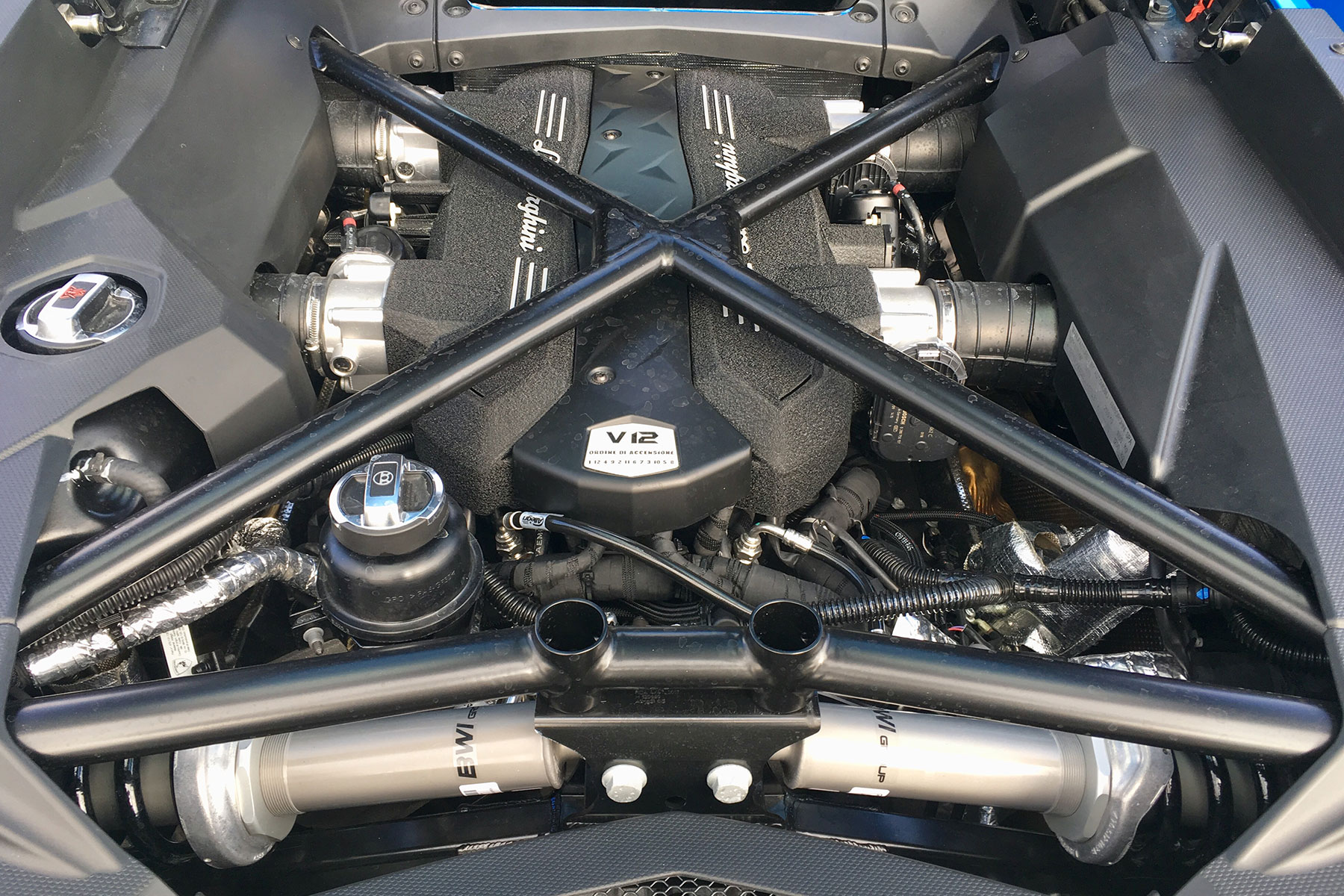
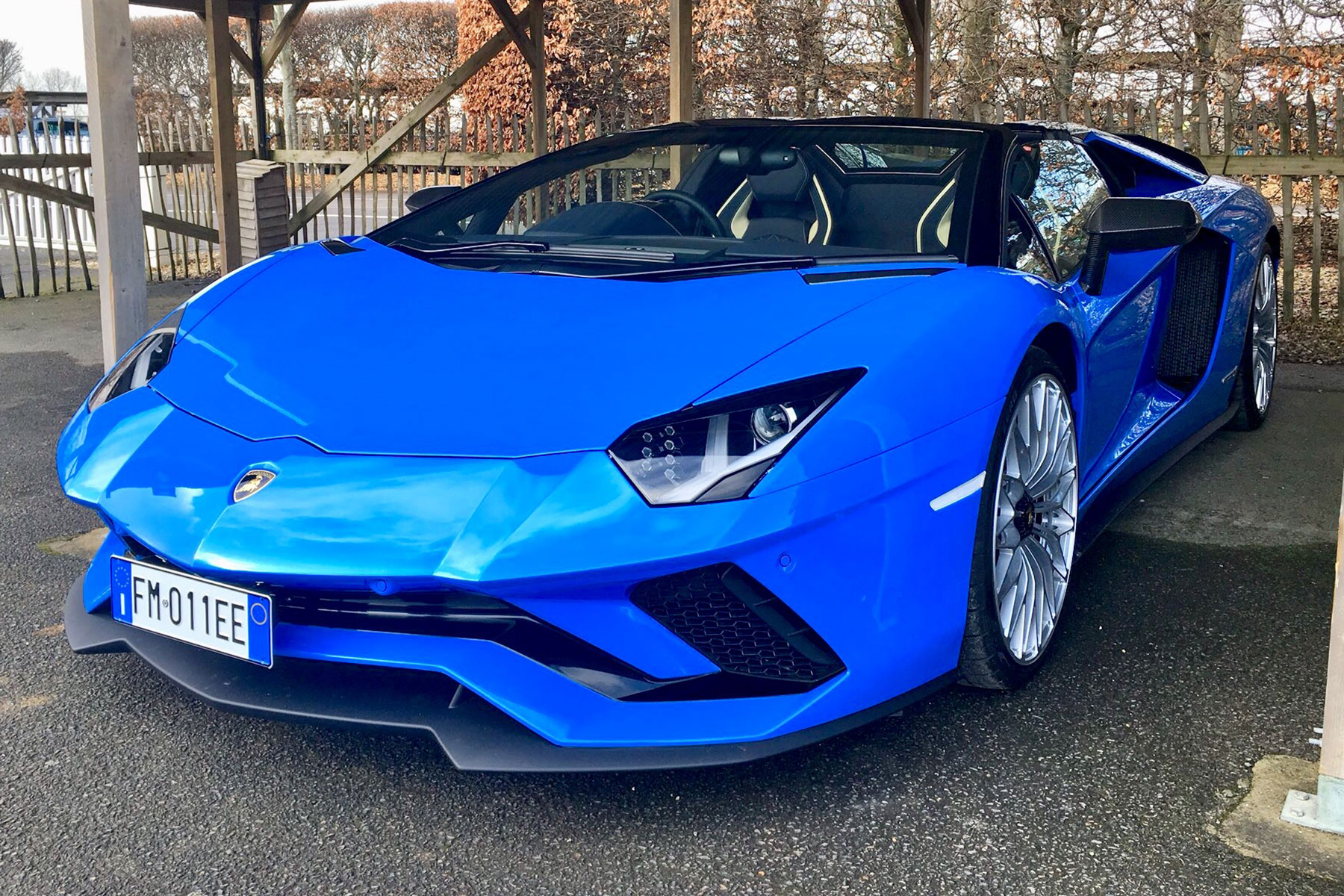
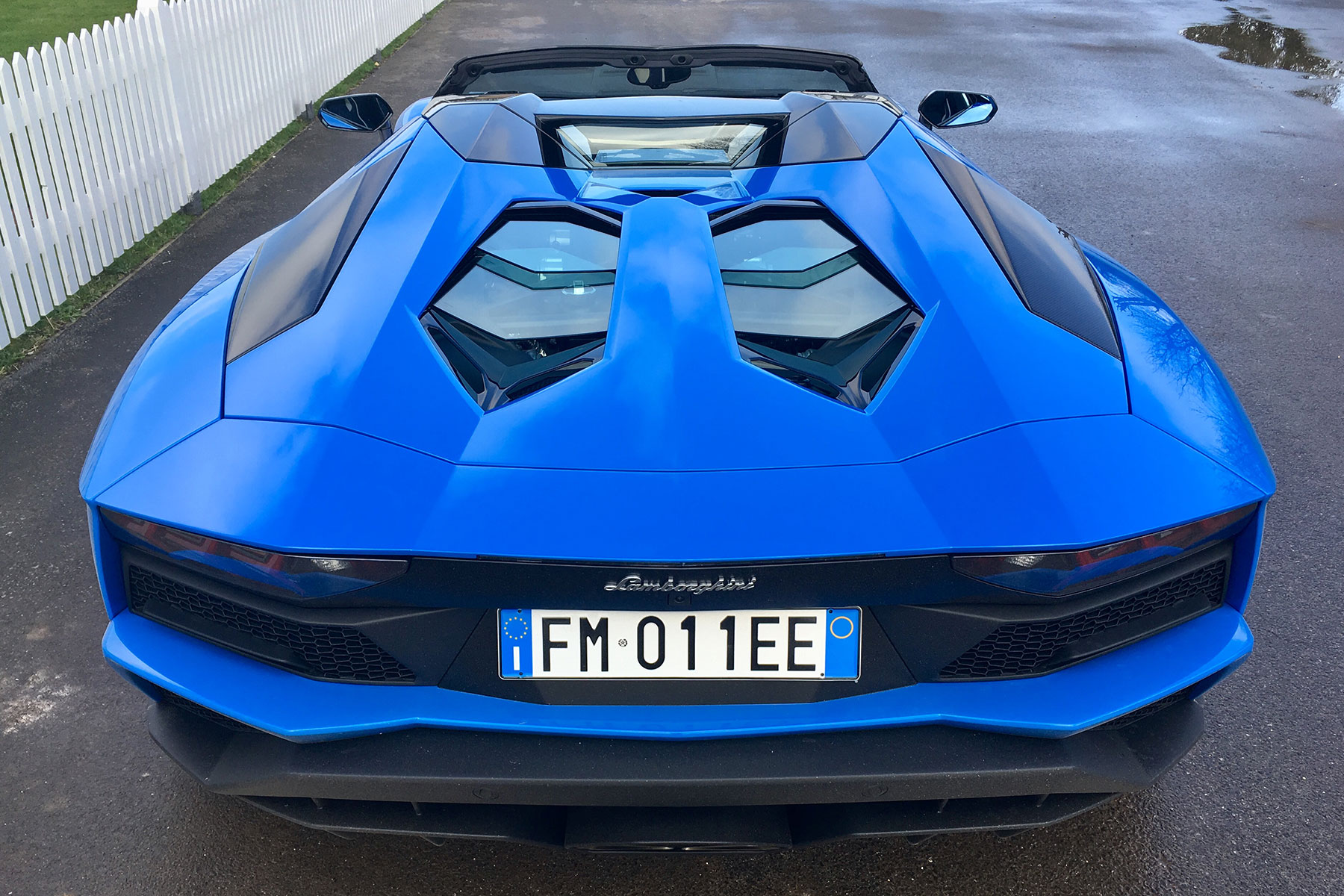
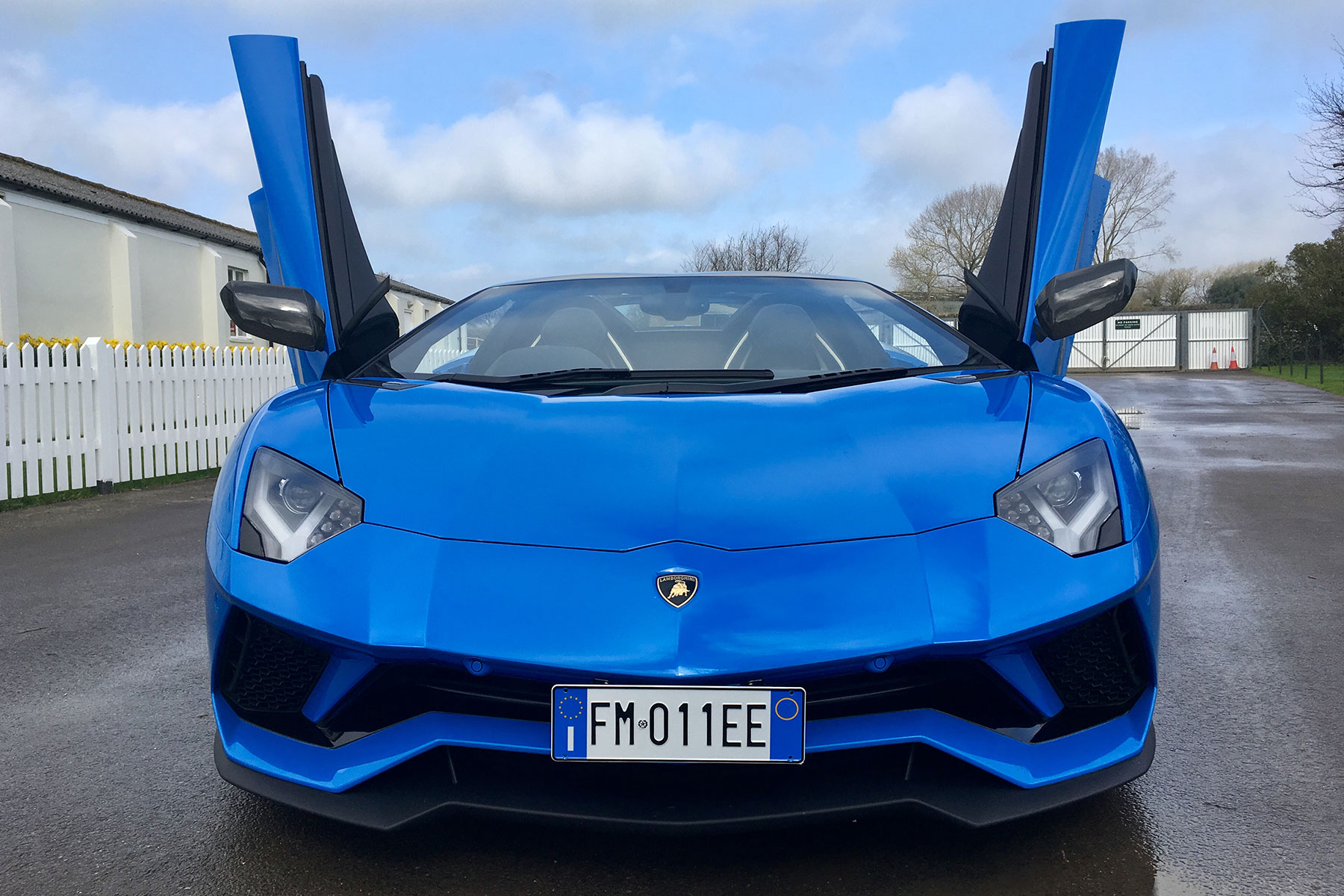
If anything here screams ‘SUPERCAR!’, it’s this. The Aventador S Roadster is a roofless wedge of naked aggression, with a 6.5-litre naturally-aspirated V12 and seven-speed paddleshift ’box. Power of 740hp matches the old Aventador SV, meaning 0-62mph in 3.0 seconds and 217mph flat-out.
Spring sunshine has burned off the morning mist, but the roads are still damp, so I’m thankful for four-wheel drive. Throttle response is savage and each rush of acceleration feels like a controlled explosion – followed by bazooka-esque bangs on the over-run. Amplified by the absence of roof (which stows neatly in the front boot), the sheer volume of Lamborghini’s V12 is startling.
Wow. New Aventador S Roadster is a breathtaking and magnificent sensory overload. Undiluted supercar drama – just as a Lambo should be. pic.twitter.com/mNatVh4Oqb
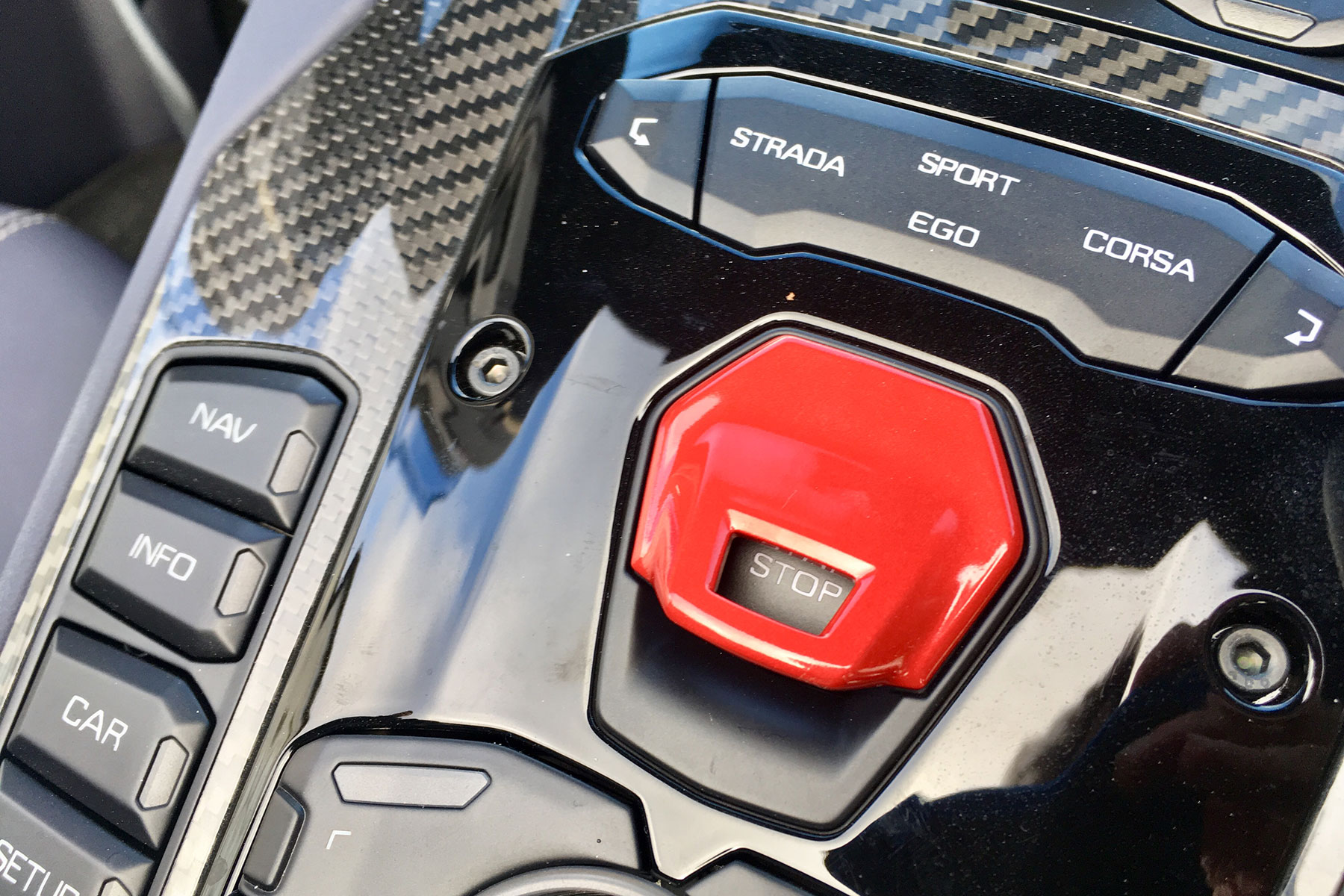
Rear-wheel steering makes the Roadster feel surprisingly nimble, and you can tailor throttle, gearbox and suspension settings via four modes: Strada, Sport, Corsa and the aptly-named Ego (individual). However, on narrow, hedge-lined lanes there’s no escaping the Aventador’s girth – 47mm wider than a Range Rover. It’s a dazzling, double-espresso rush, but you need to be on top of your game. Time for something less frenetic….
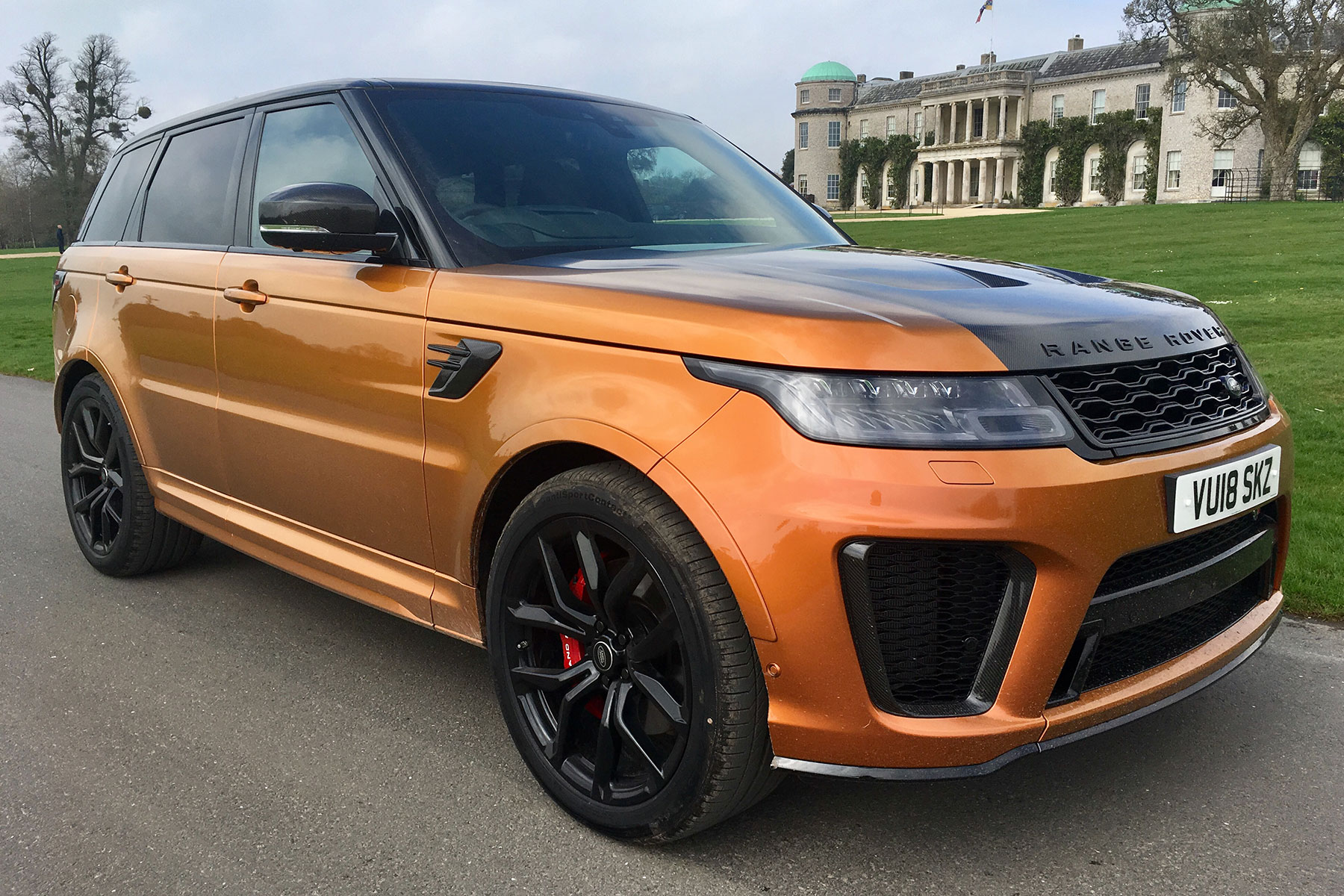
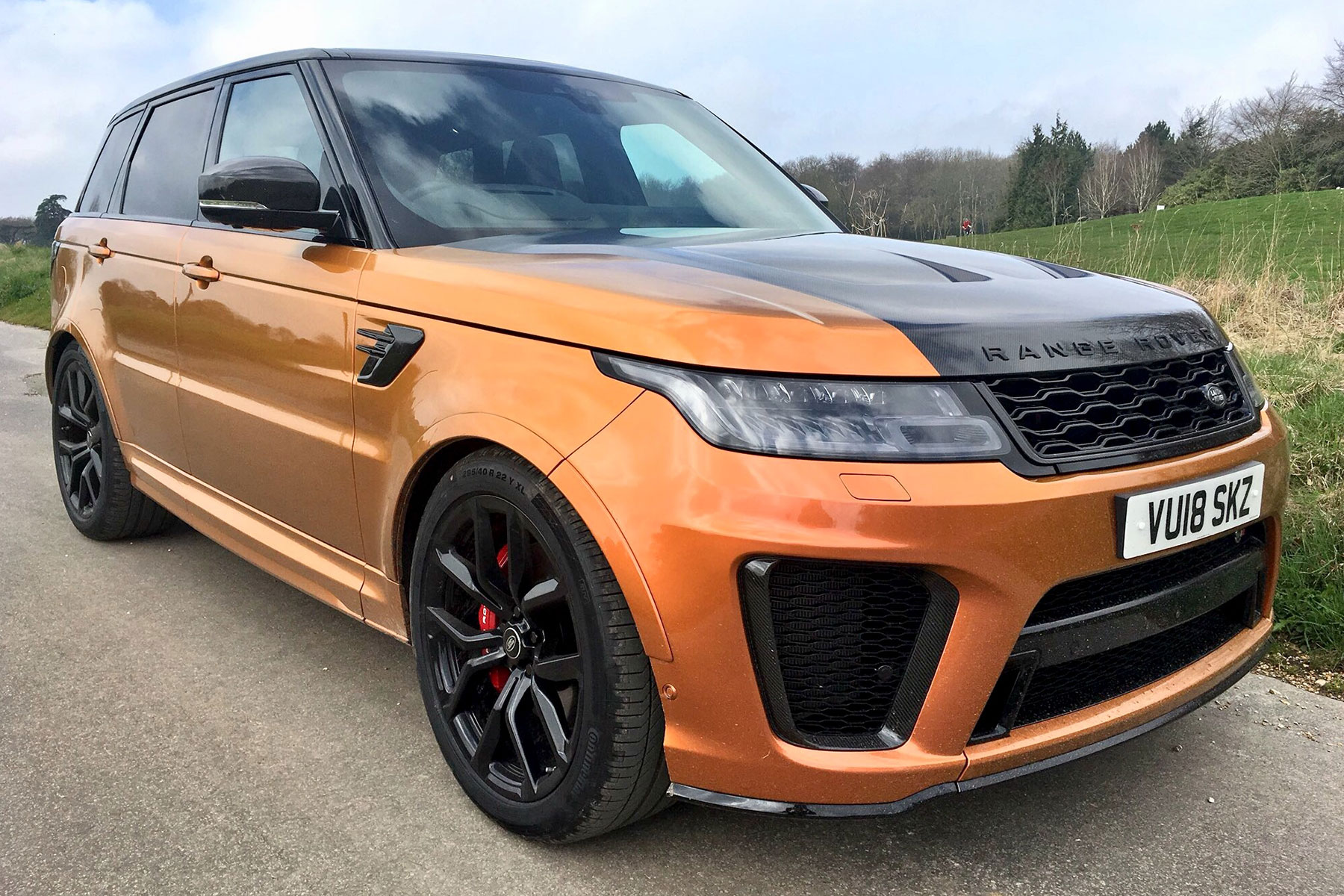
Range Rover Sport SVR
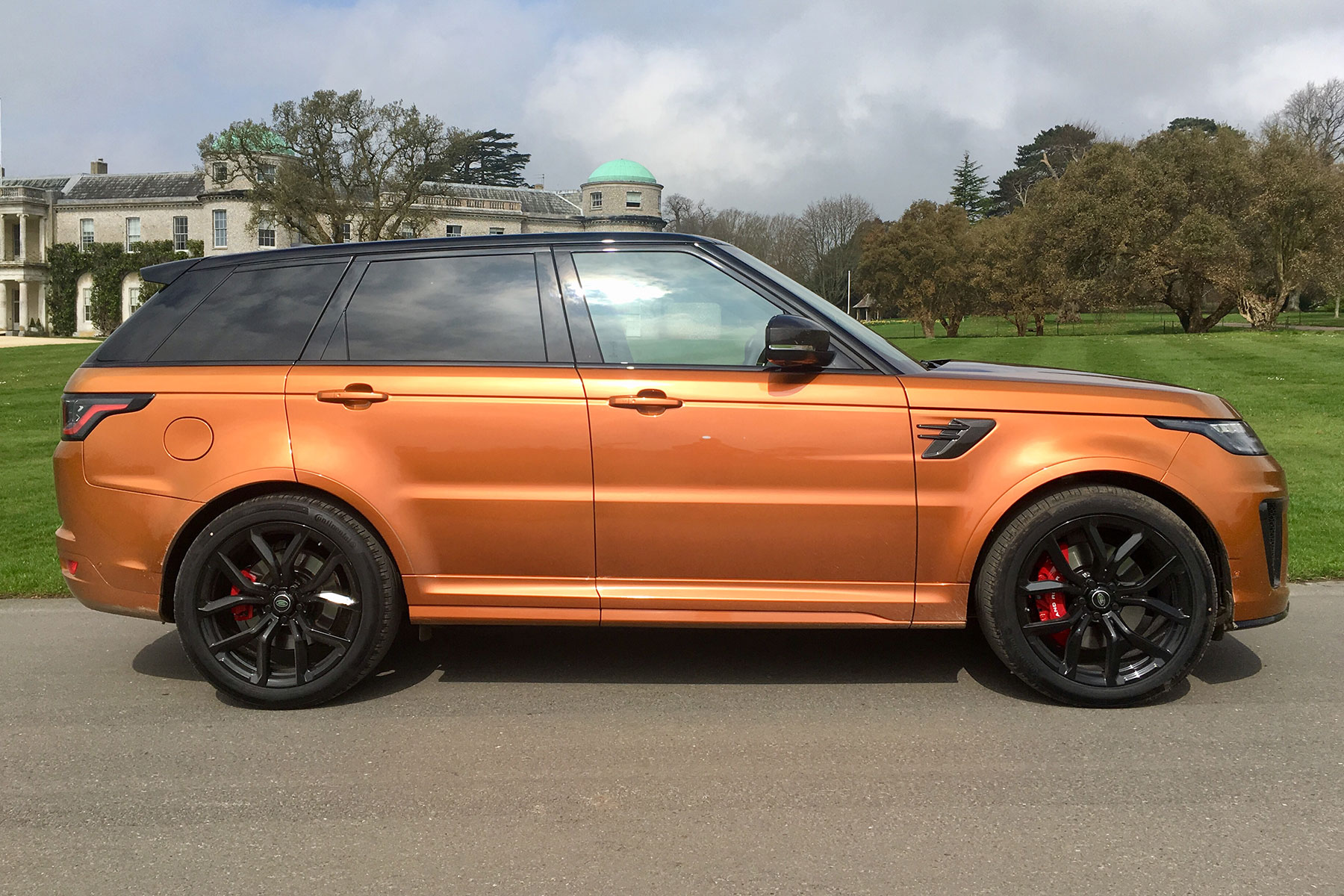
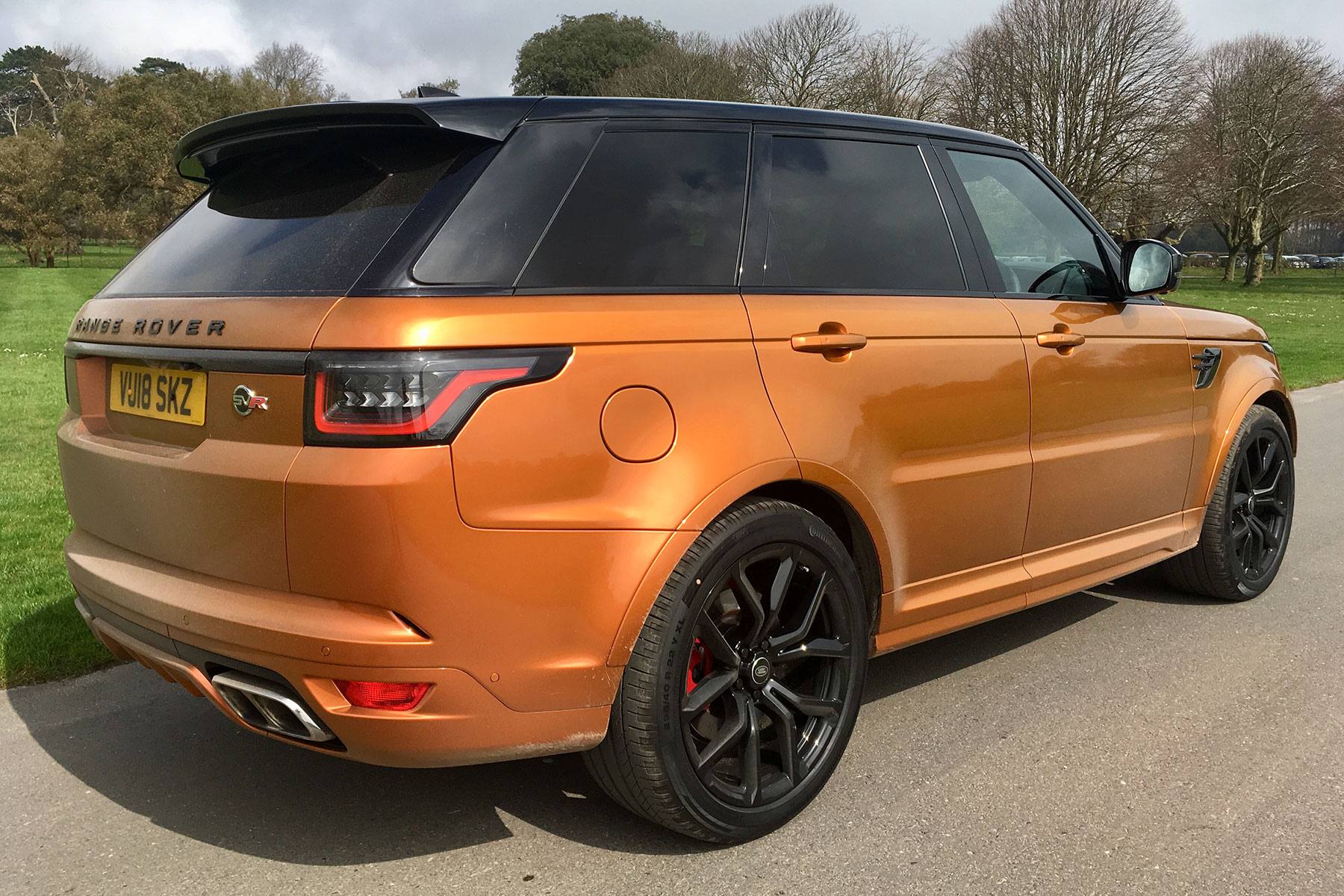
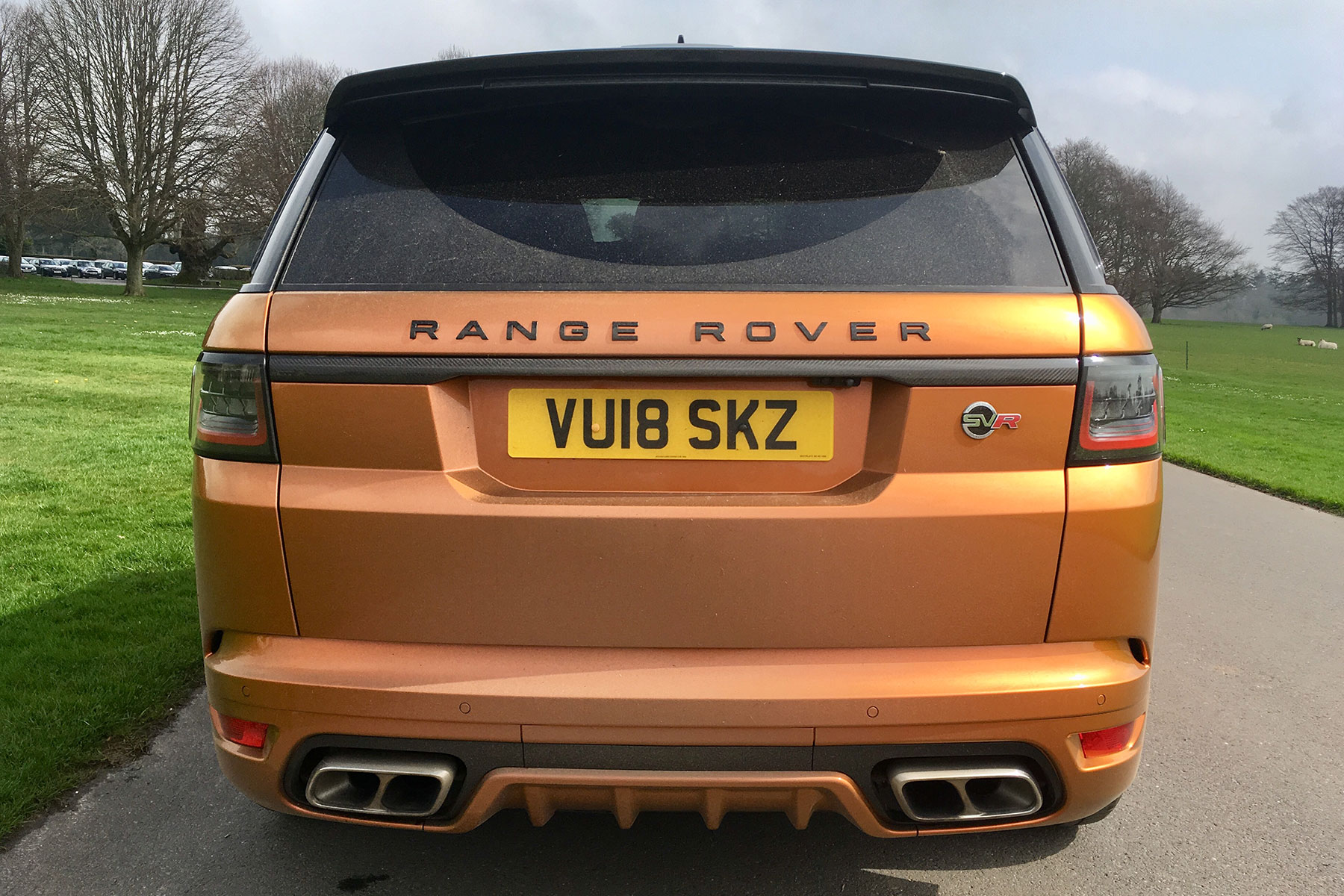
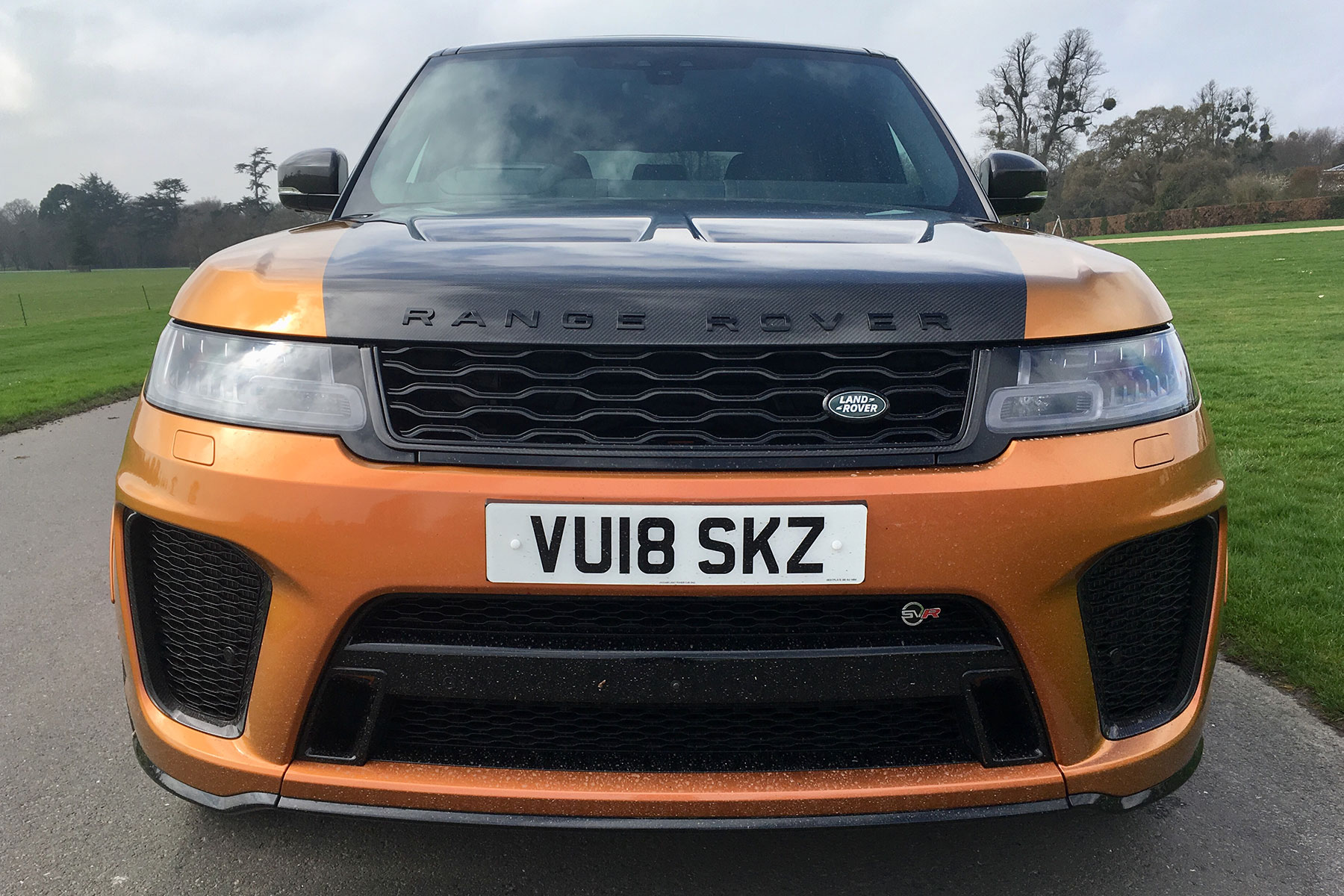
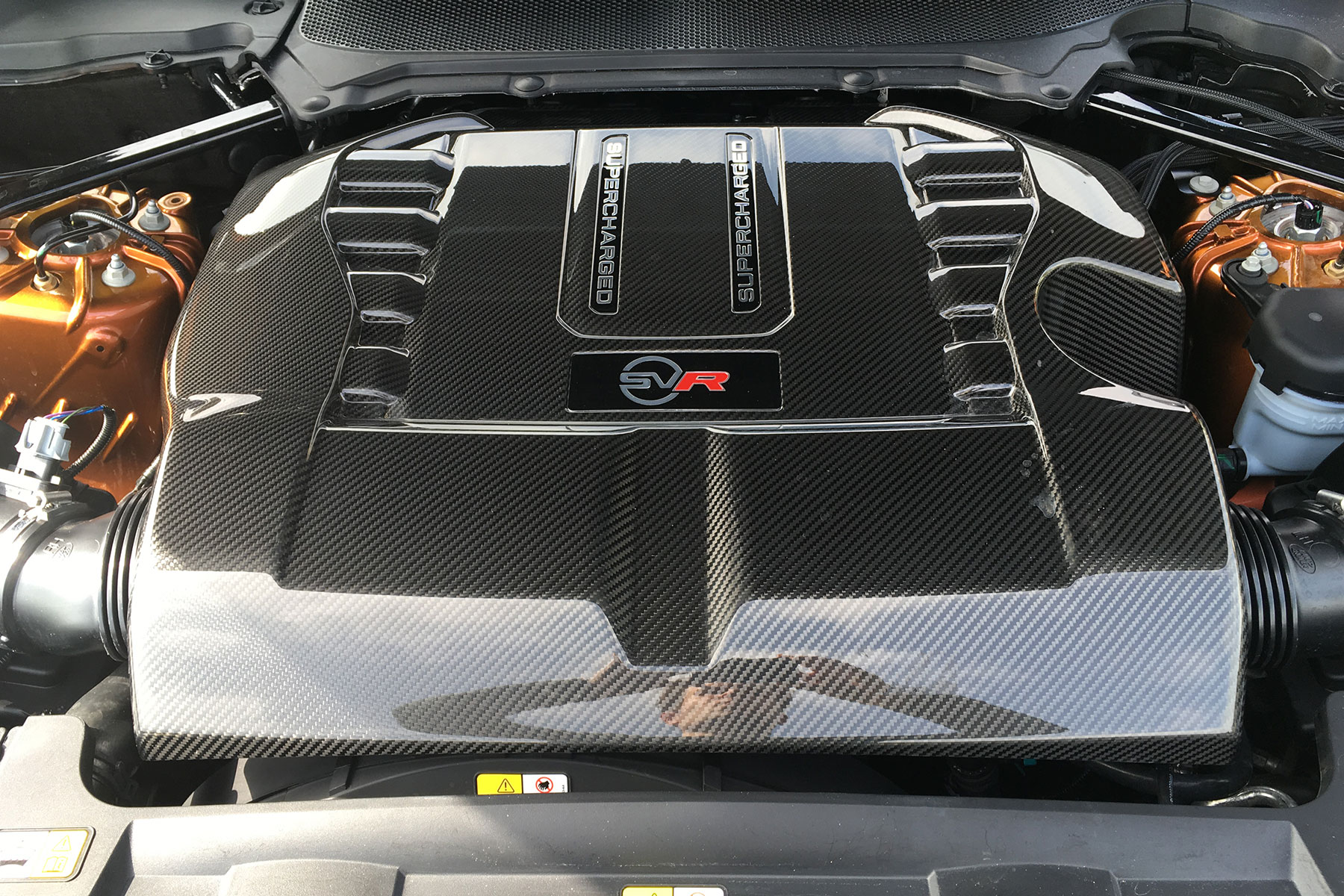
Is this steroid-pumped SUV a supercar? The SVR, developed by the same people who brought you the limited-run Range Rover SV Coupe, certainly boasts the on-paper credentials. Under its exposed carbon fibre bonnet (an option, thankfully – at £6,225) lurks the 575hp, 5.0-litre supercharged V8 from the Jaguar F-Type SVR. Even with 2,310kg to shift, it manages 0-62mph in 4.3 seconds and a 174mph top speed. The downside, inevitably, is 22.1mpg thirst.
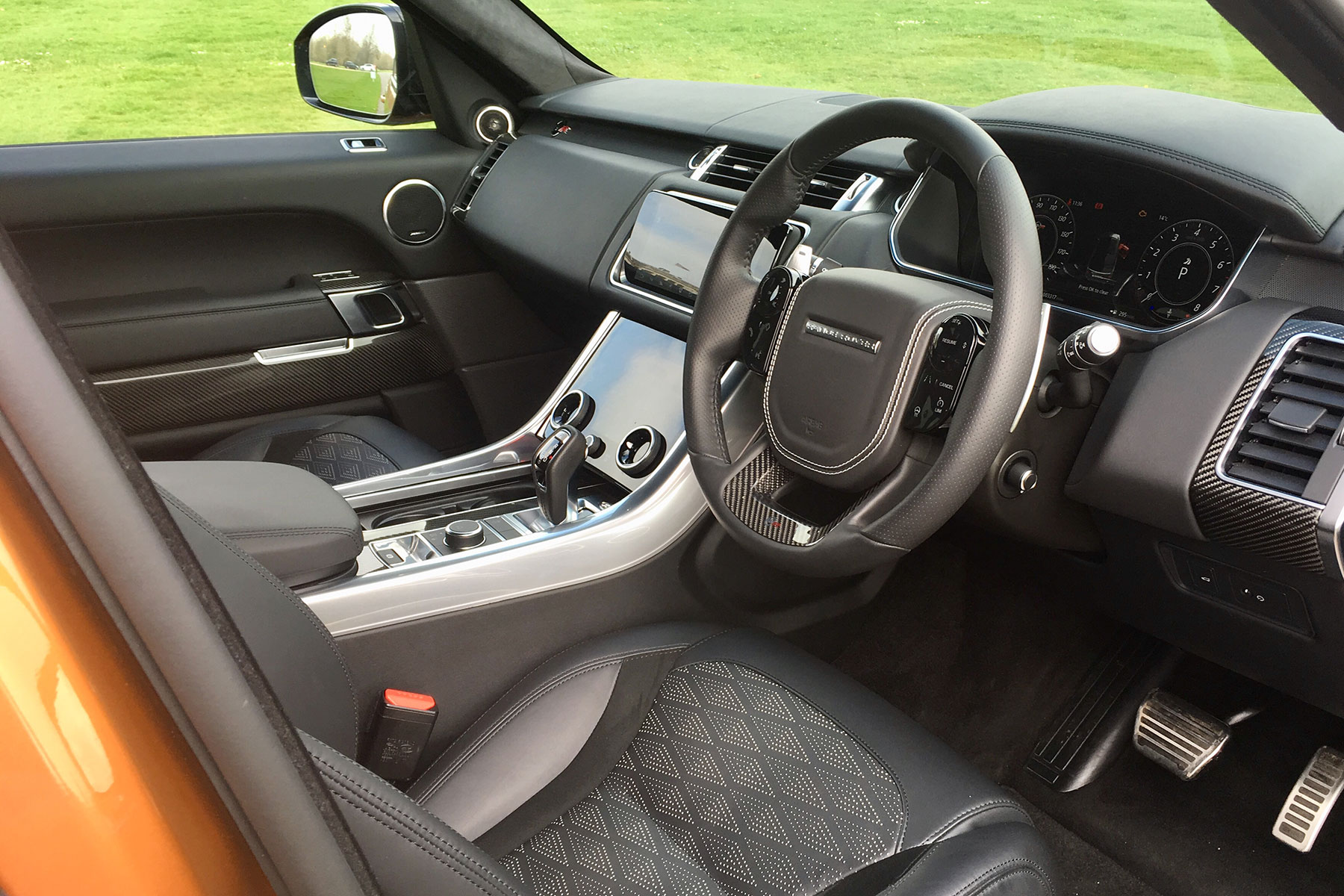
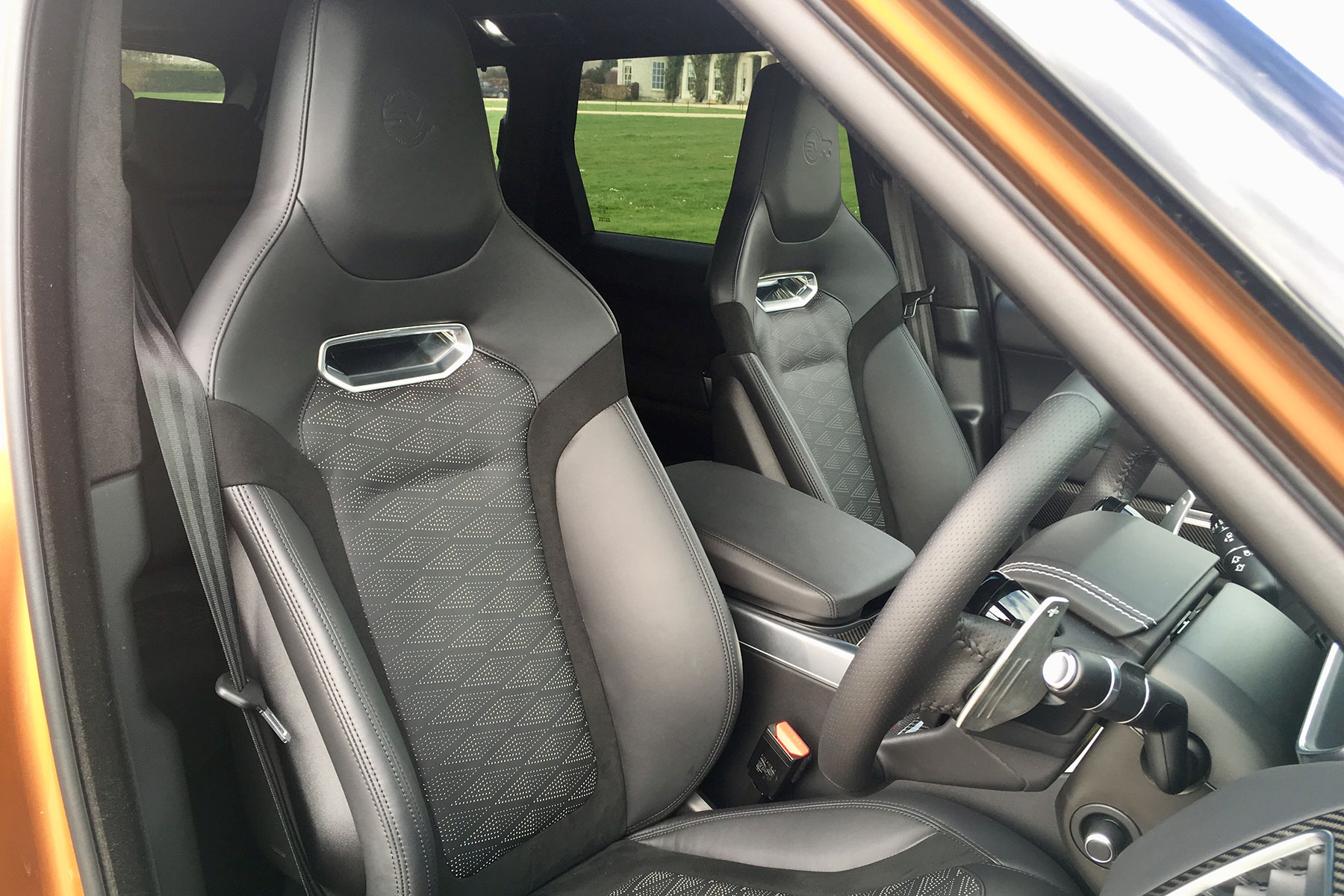
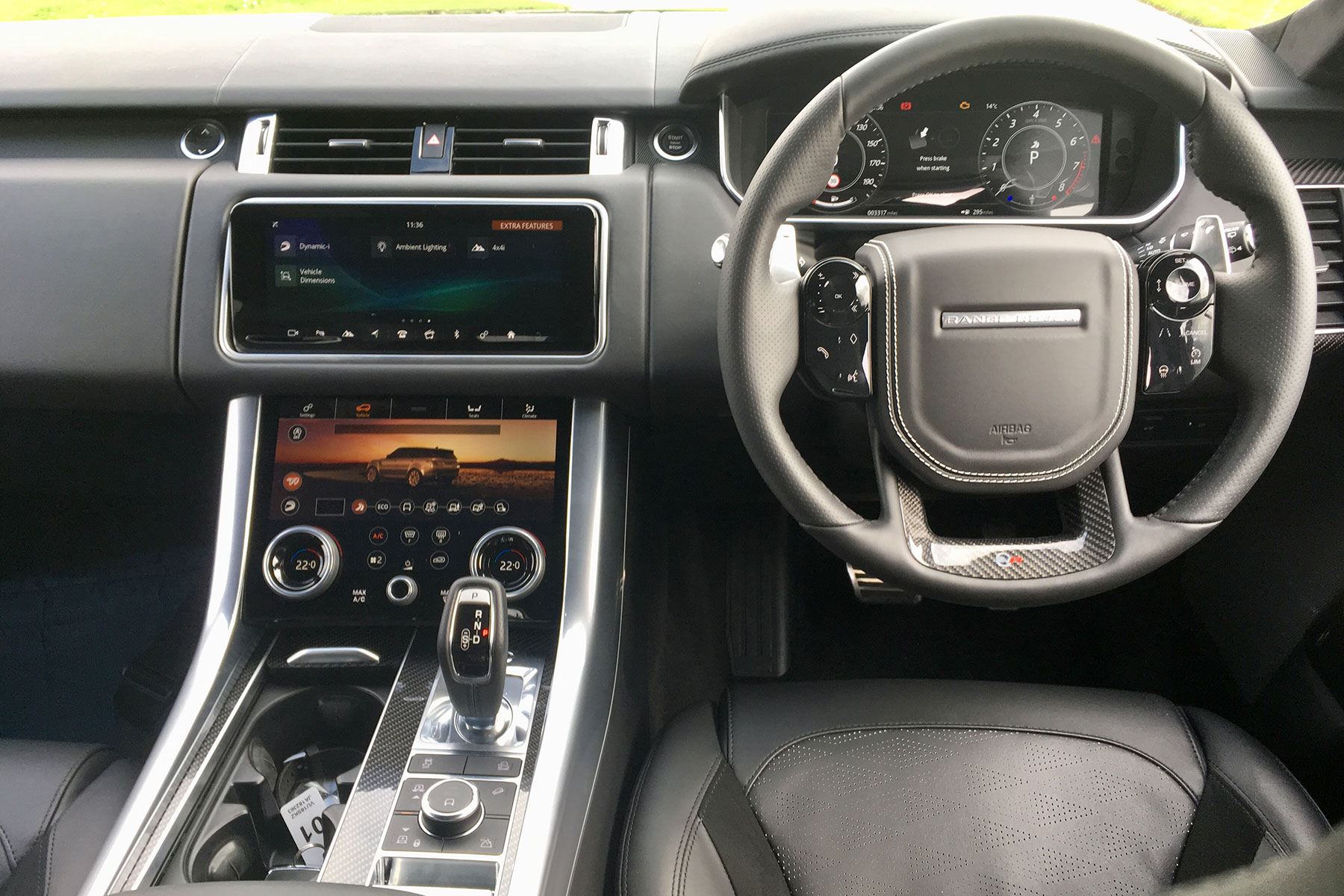
Inside, the flagship RR Sport is as well-appointed as you’d hope for £99,680. Bucket-style seats look racy but feel plush, while a new dual-screen infotainment system (first seen in the Velar) is slick and stylish. On the road, long suspension travel and a lofty driving position allow you to carry speed where stiffer, lower cars are forced to slow down. The SVR never feels light, but quick steering and a stubborn resistance to body-roll mean plenty of point-to-point pace.
The driving experience is dominated by that engine, though. It rumbles and coughs and bellows and roars – exhaling through four shotgun-style tailpipes as it slingshots the SVR between bends. It feels improbable and incredible, and it’s nigh-on impossible not to laugh out loud. A supercar? I’m not sure. A super car? Yes indeed.
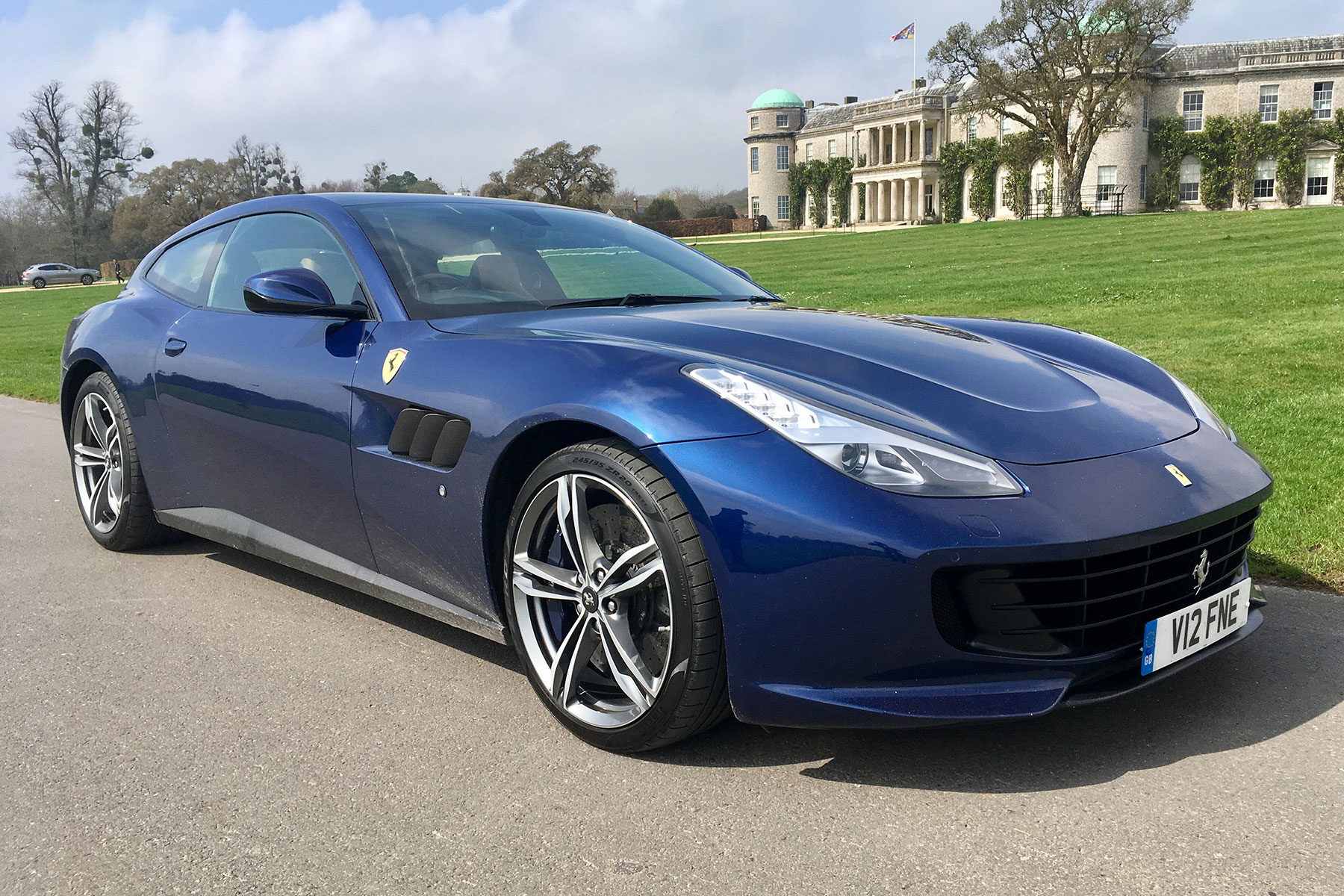
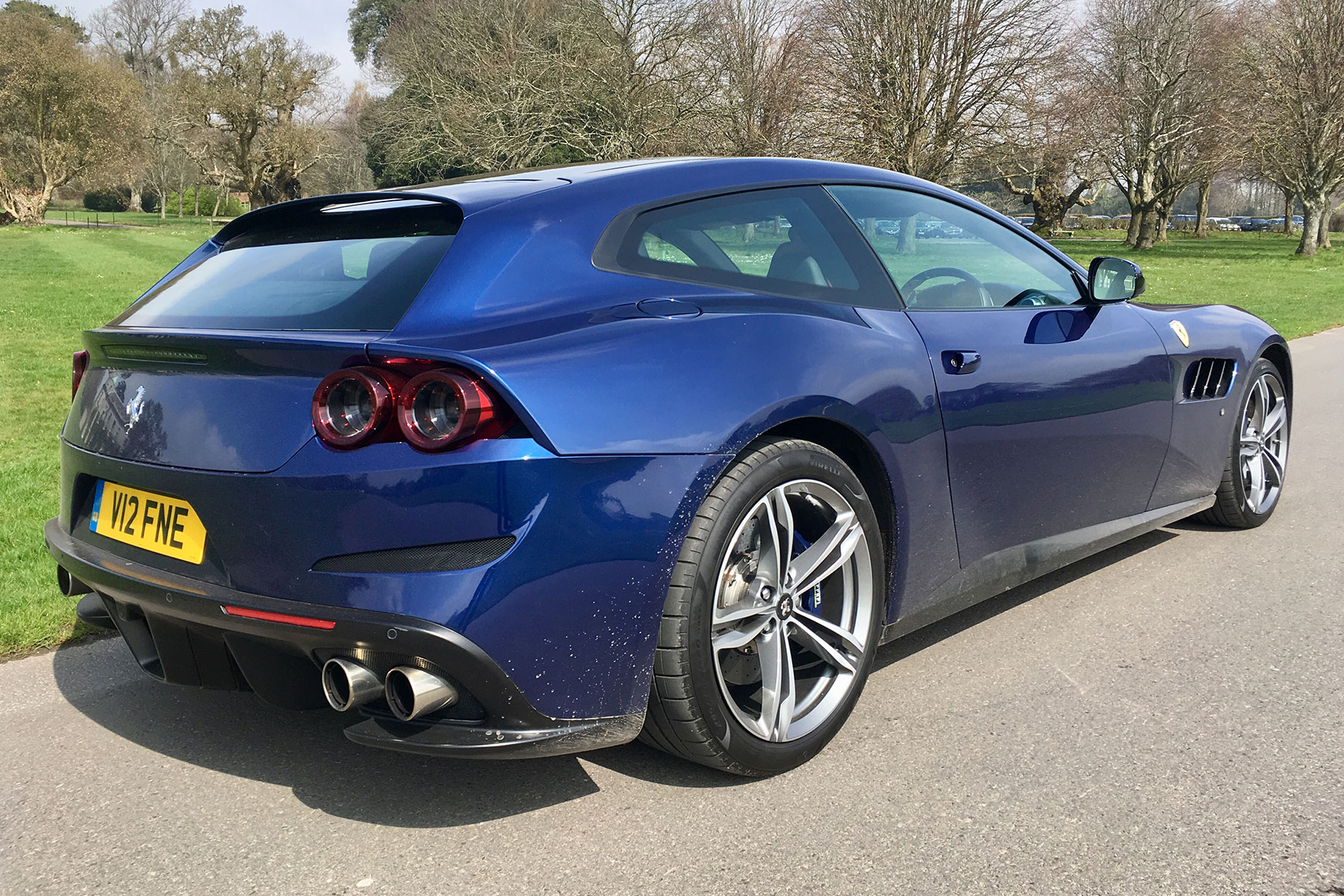
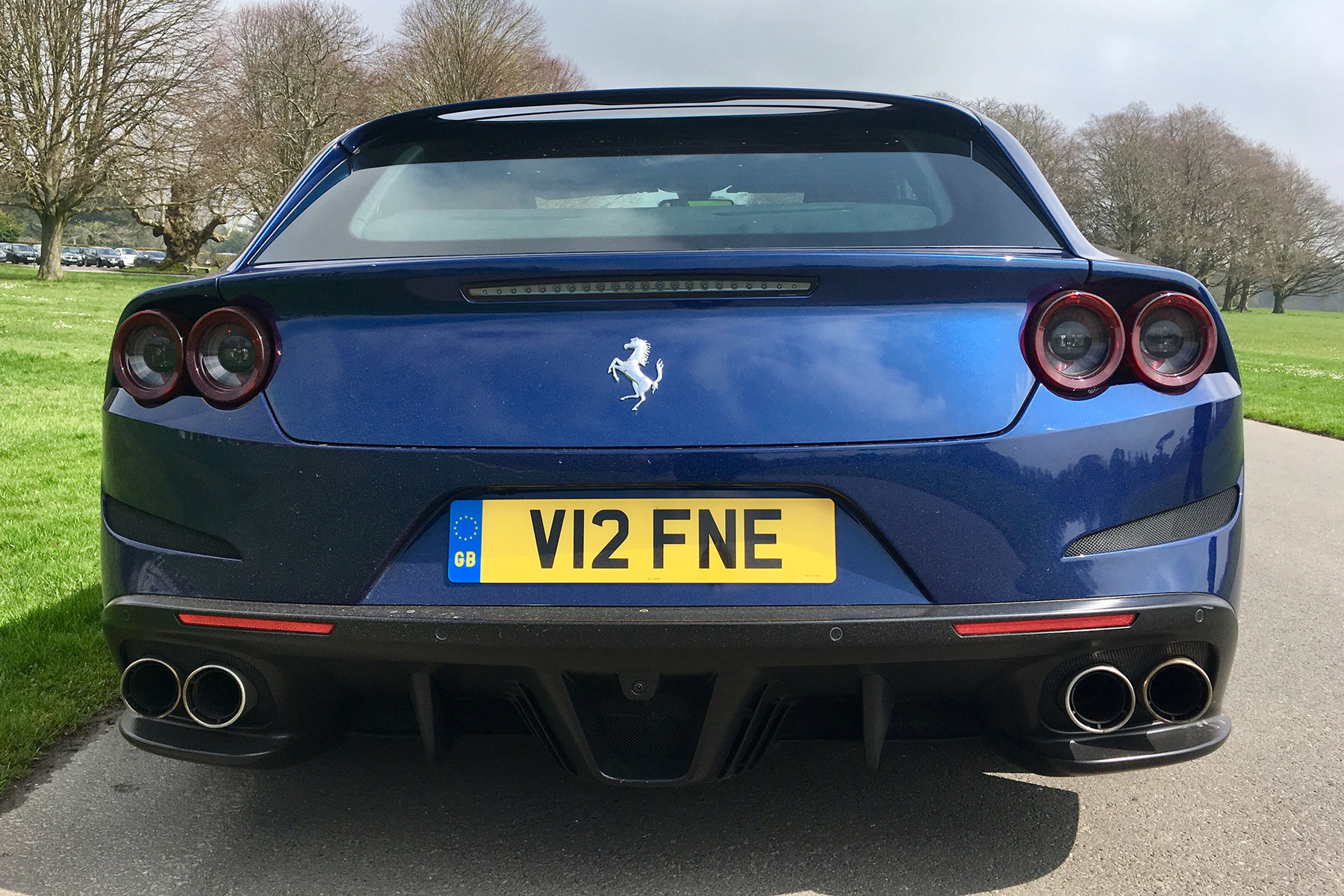
Ferrari GTC4Lusso
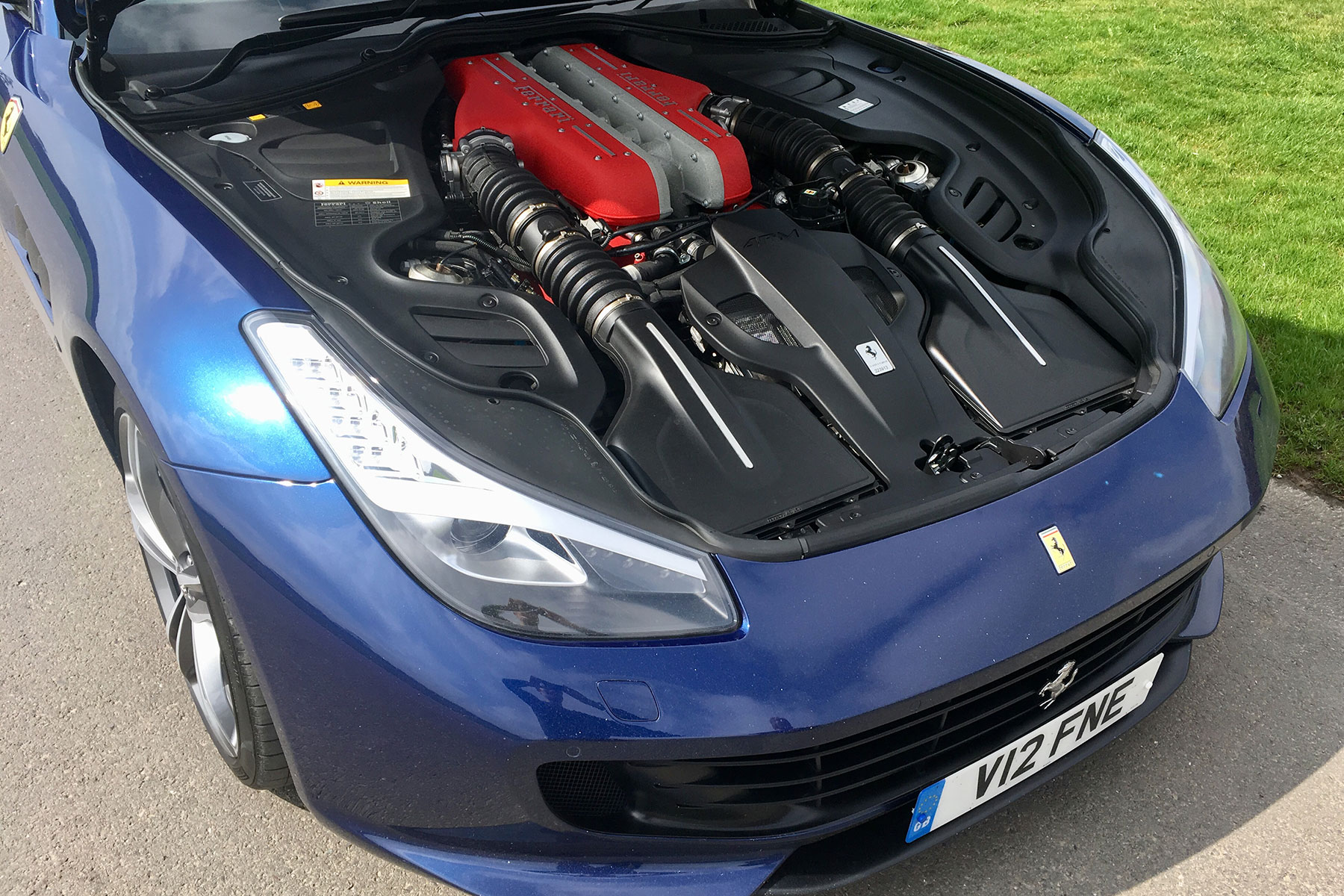
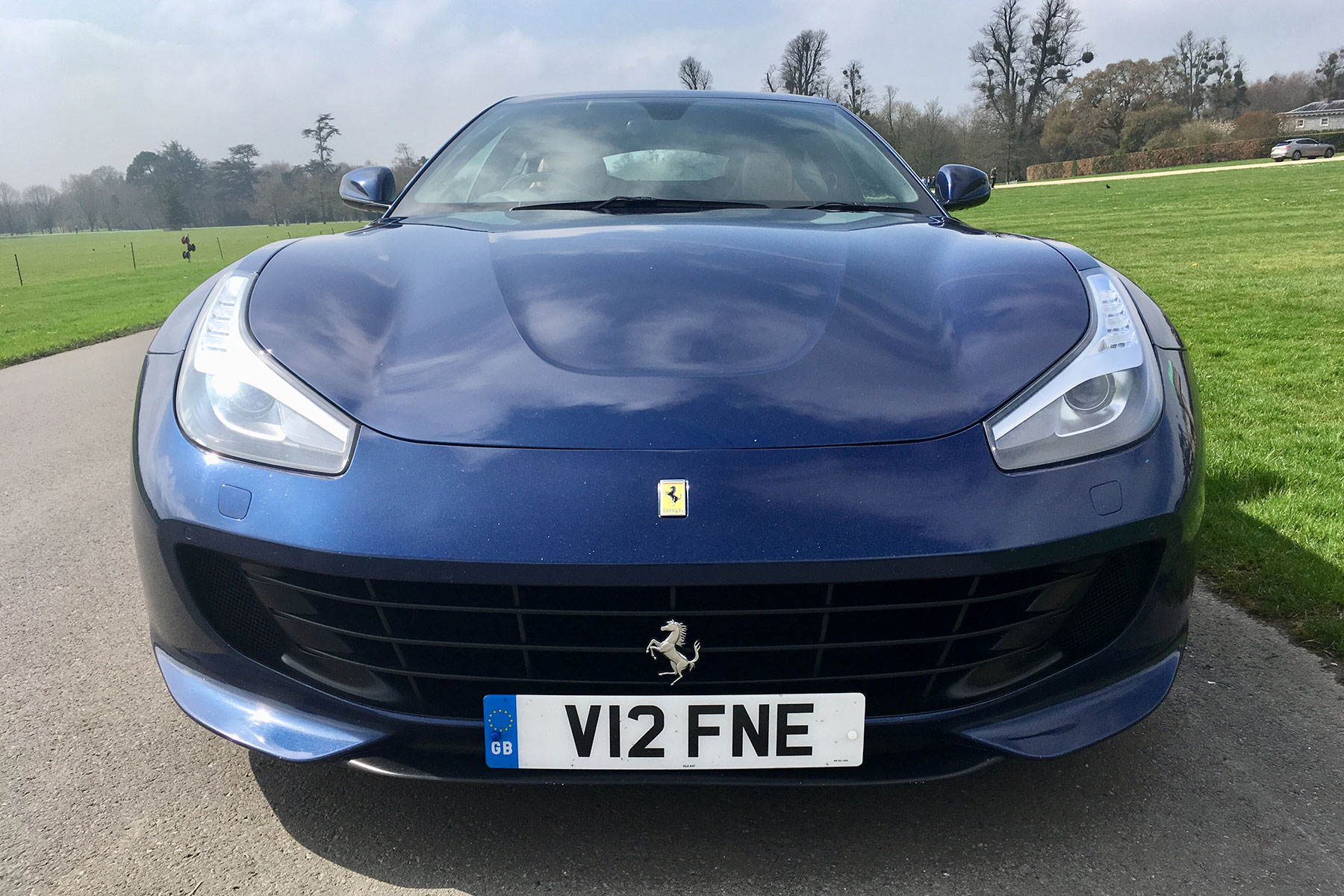
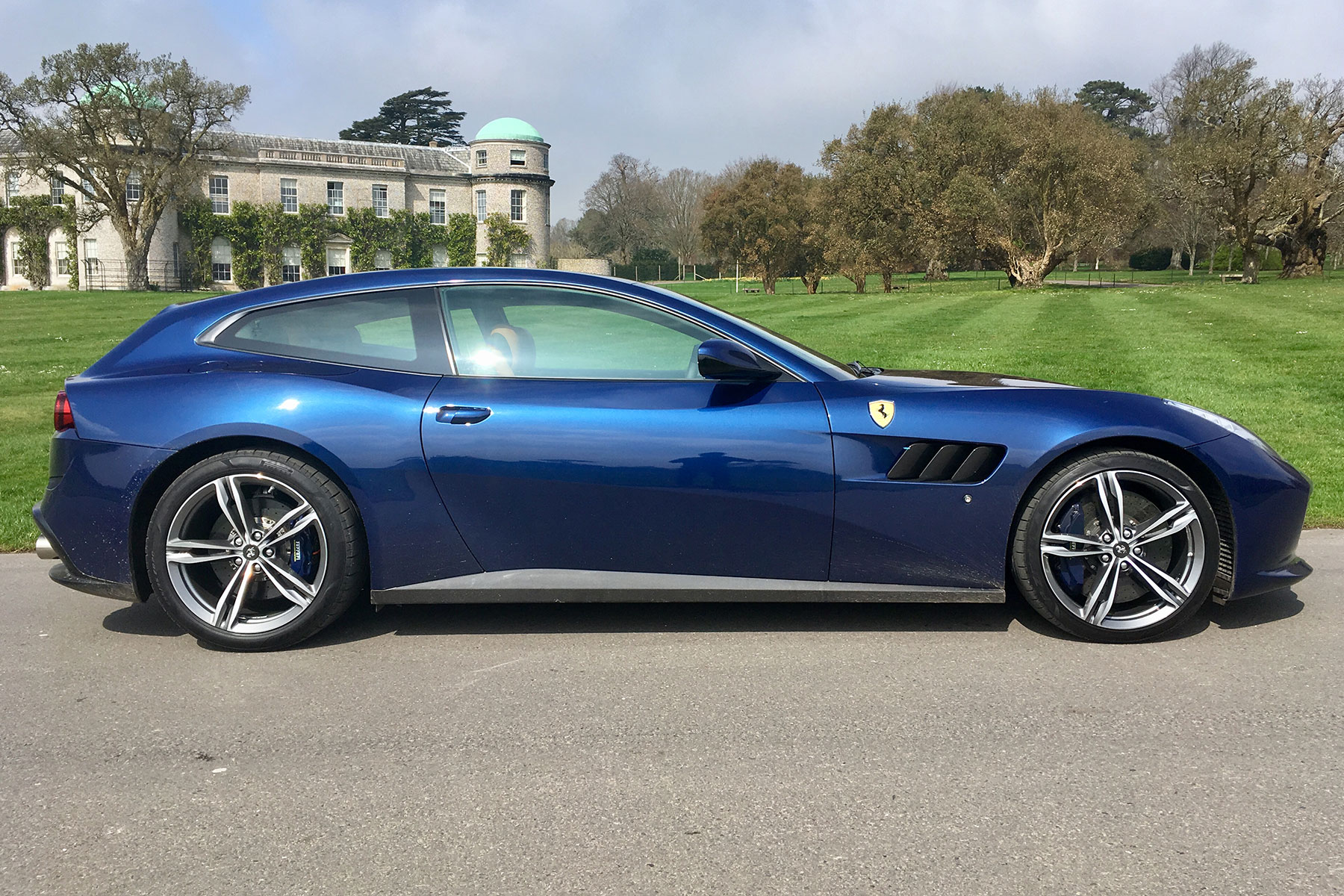
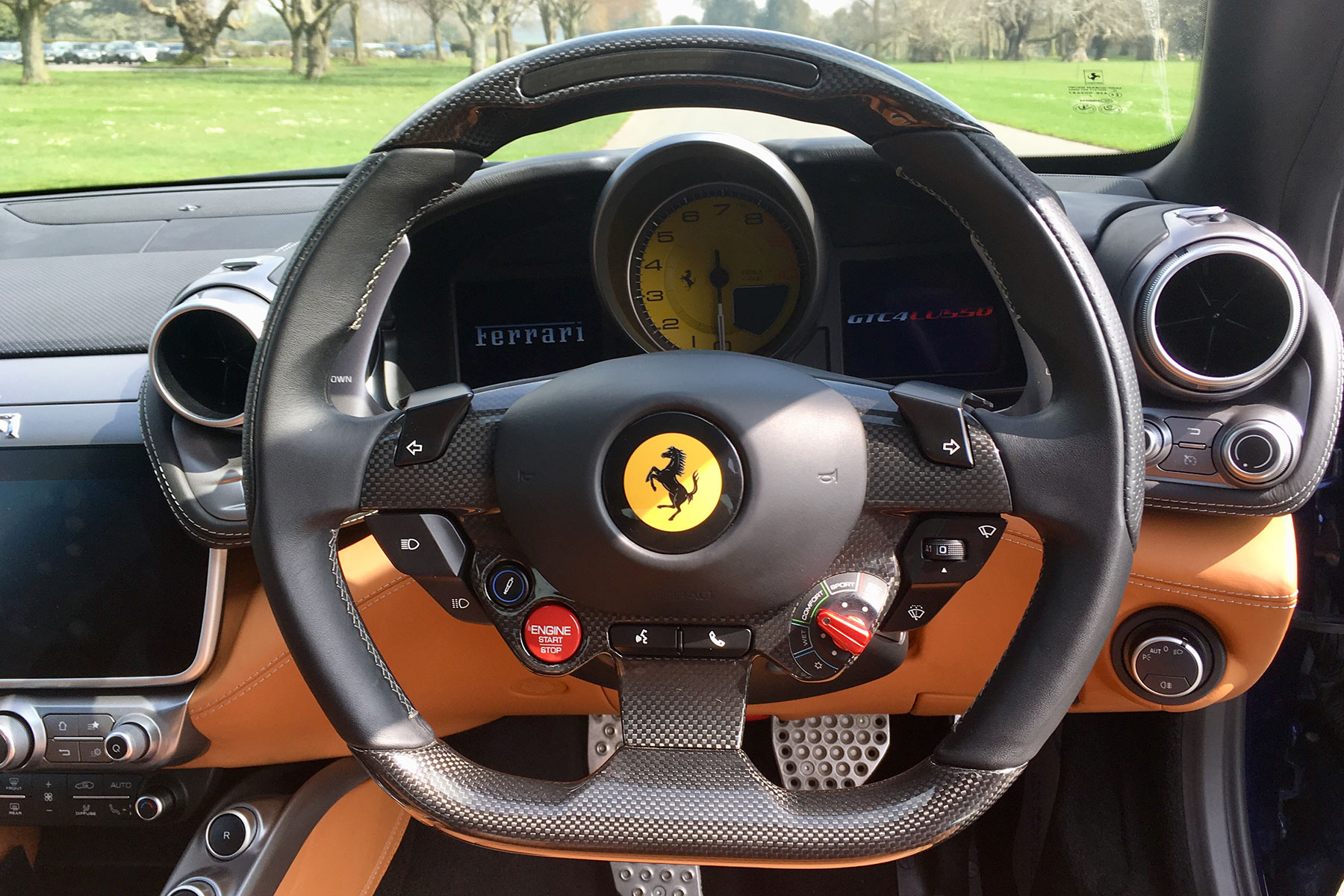
Driving a Ferrari always feels special, even if it does have four seats and a hatchback boot. The GTC4Lusso is a development of the FF, with four-wheel drive and four-wheel steering. There’s now a turbocharged V8 version, but this is the ‘proper’ V12 – all 690hp of it. For £230,430, you can blast to 62mph in 3.4 seconds and reach 208mph.
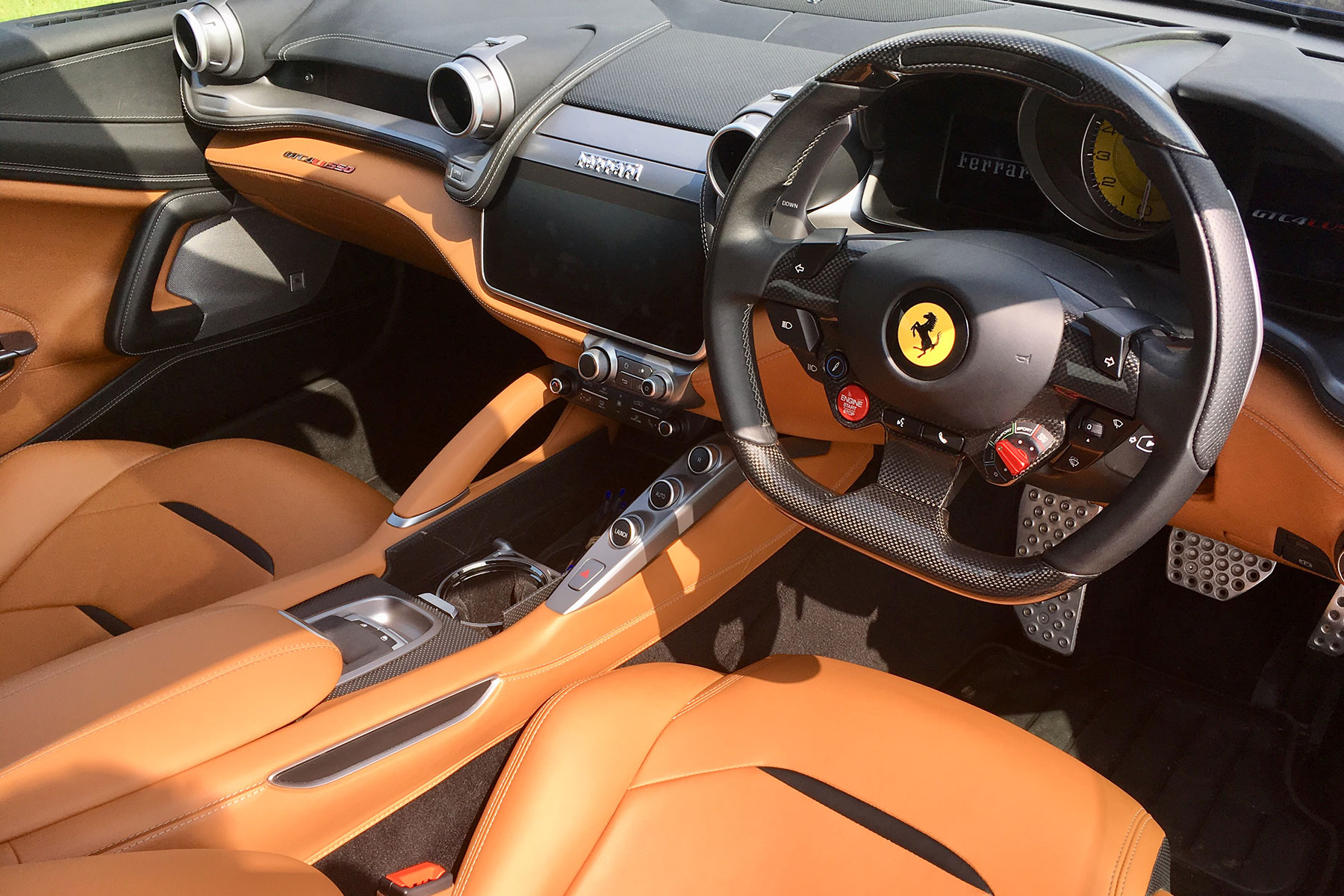
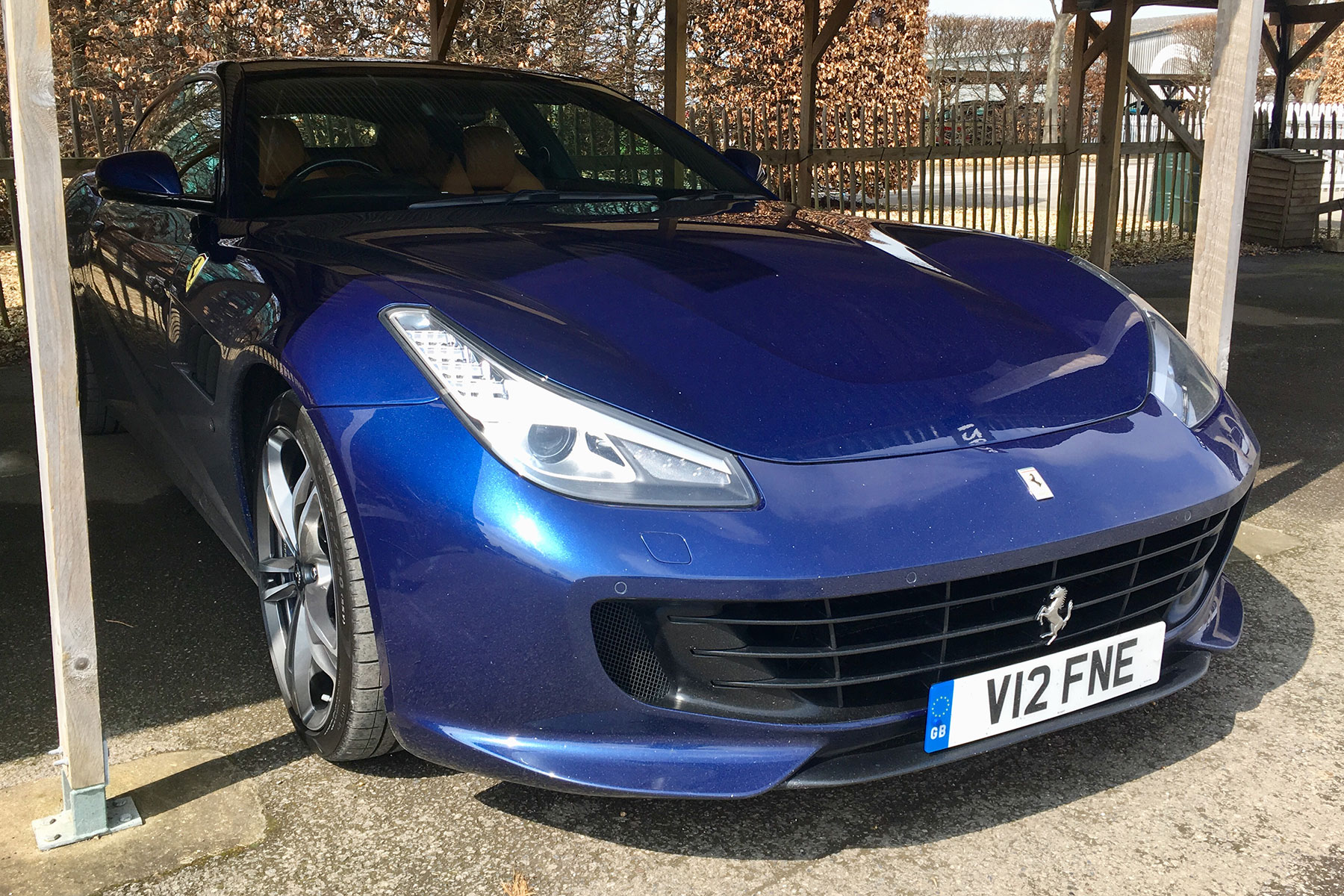
In dark blue rather than default Rosso Corsa, the family-oriented Ferrari scarcely stands out in the Goodwood supercar paddock. There’s still a sense of drama about its interior, though – particularly the F1-style carbon steering wheel with Manettino dial for drive modes and red LED shift lights in the rim. A huge yellow rev counter, redlined at 8,250rpm, ramps up my anticipation.
On now-dry roads, the GTC4Lusso feels precise, fluid and fantastically fast. With hyper-sensitive steering and a flighty chassis, it’s decidedly more sports car than GT. Despite its undoubted abilities, though, a lack of driver feedback leaves me slightly cold. I suspect it would be a wonderful daily-drive supercar, but as an ‘experience’, the Ferrari falls short.
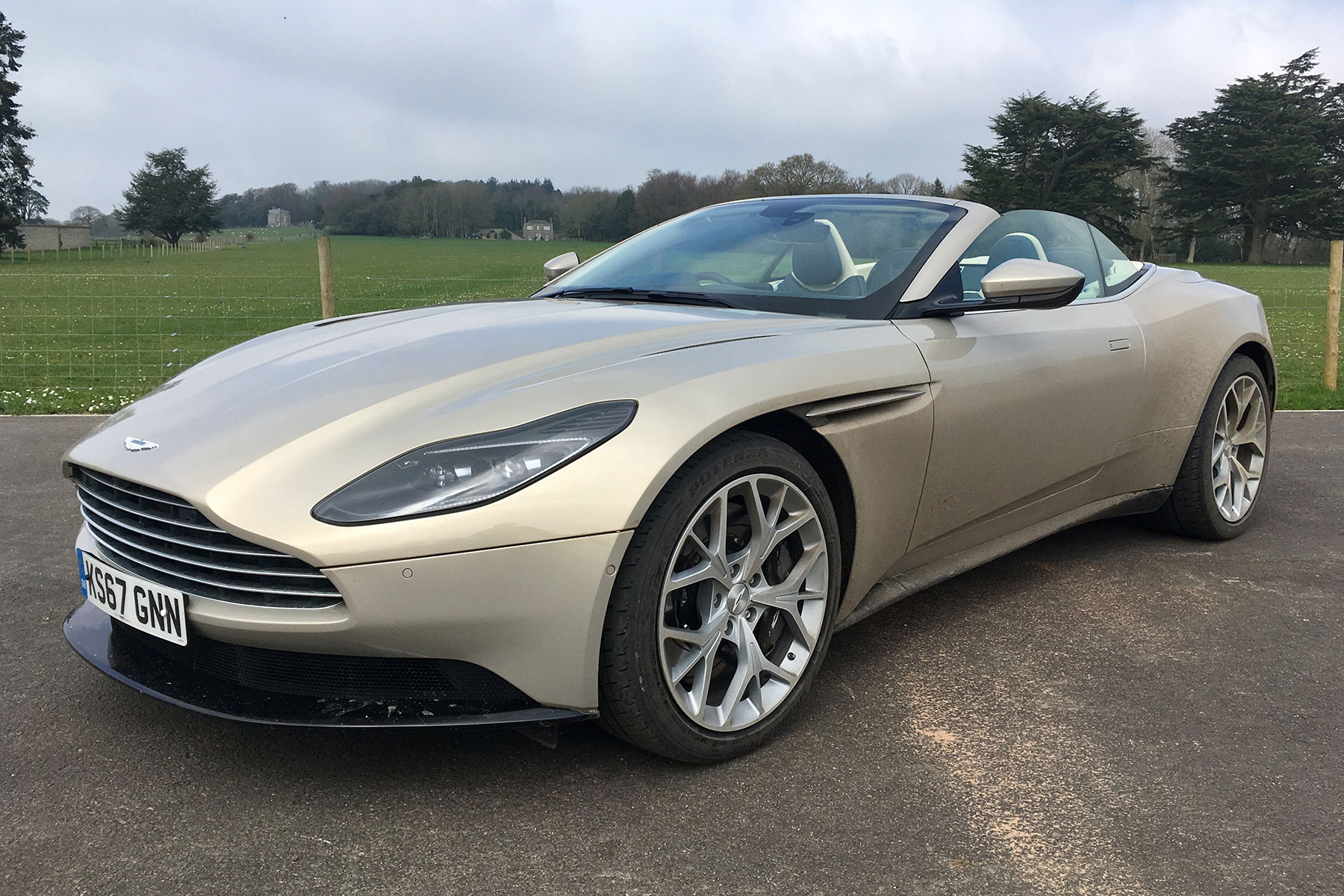
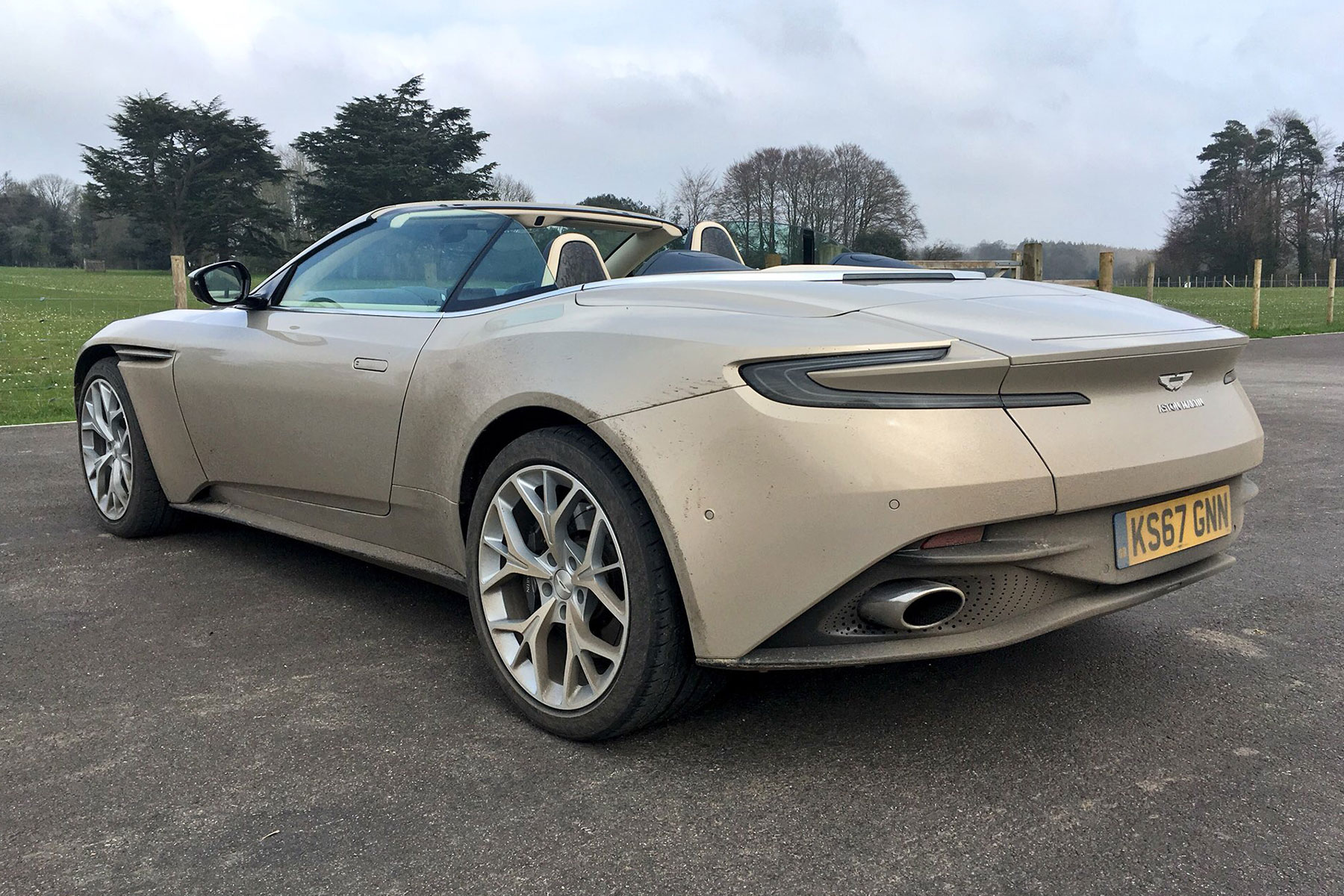
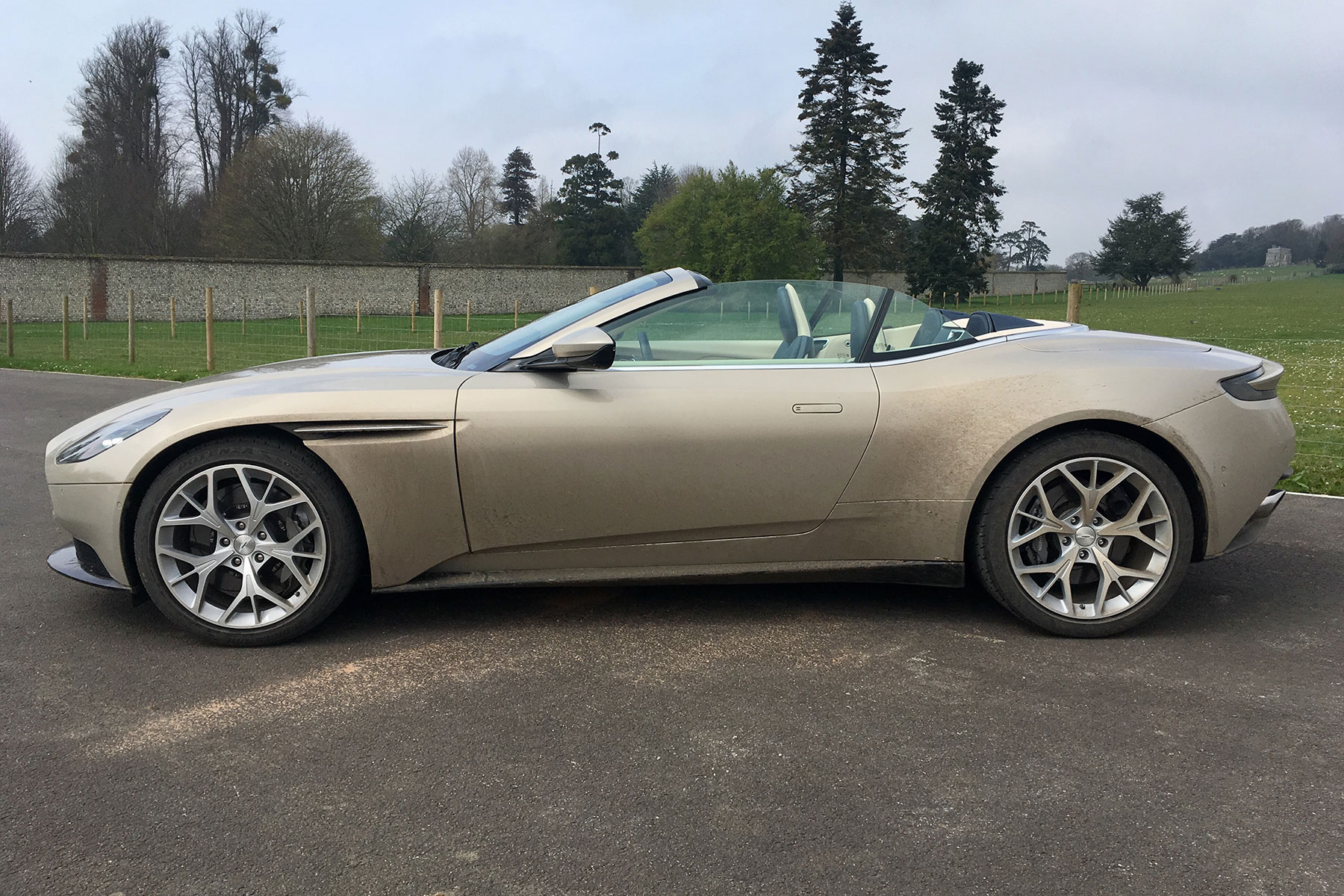
Aston Martin DB11 V8 Volante
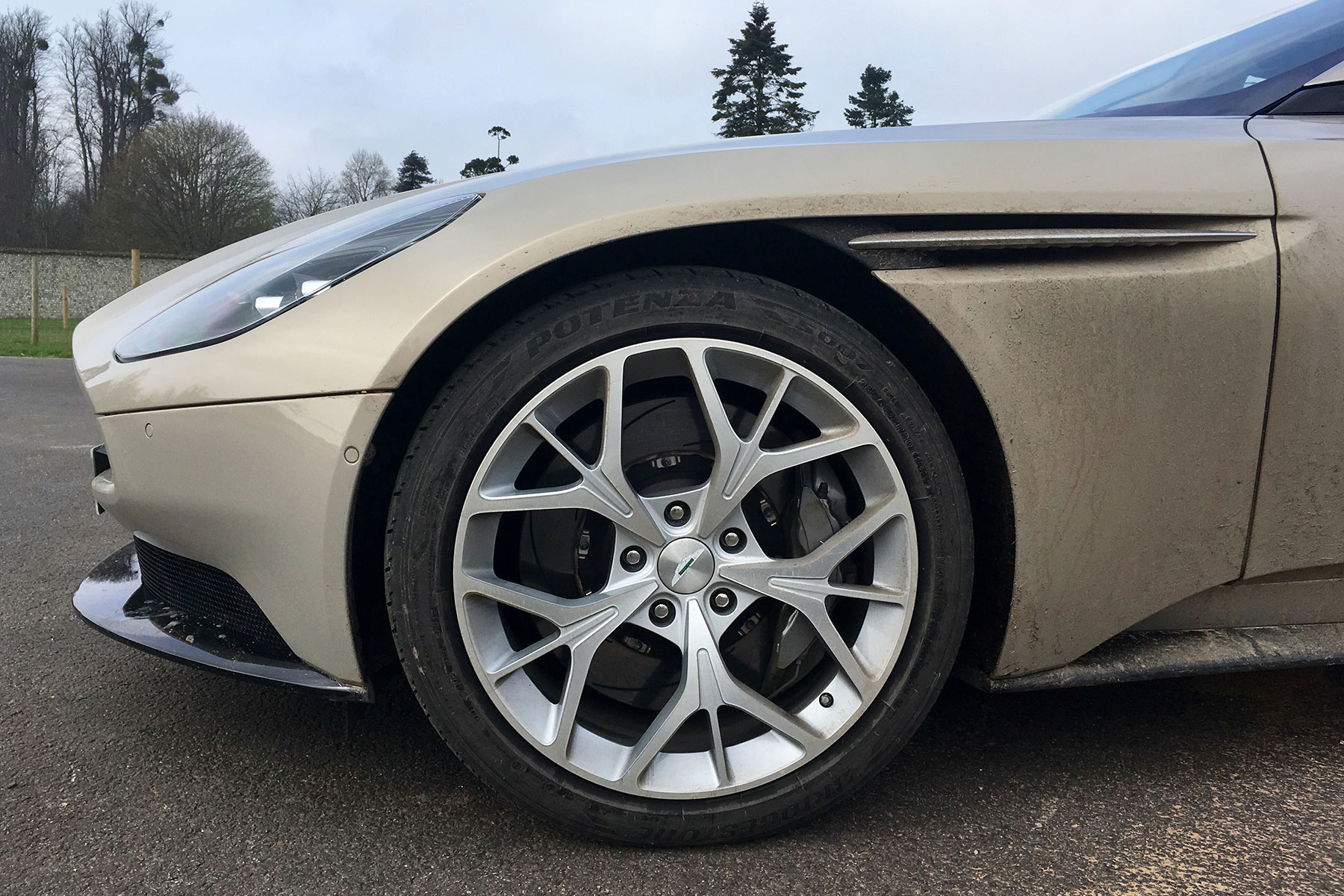
I’m almost indifferent to how the DB11 Volante drives: just look at it. Is there a more beautiful car on sale today? Even in pale gold that, away from direct sunlight, looks uncomfortably like beige, it’s a bona fide stunner.
Removing the roof can be a recipe for dynamic disaster, but Aston Martin has made the drop-top DB11 feel more-or-less identical to the coupe, despite a 100kg weight penalty. On roads peppered with potholes the size of bathtubs, it’s agile and engaging, yet still commendably comfortable. And that 510hp AMG-sourced V8 – now also fitted to the new Vantage – is a peach: cultured and effortlessly muscular.
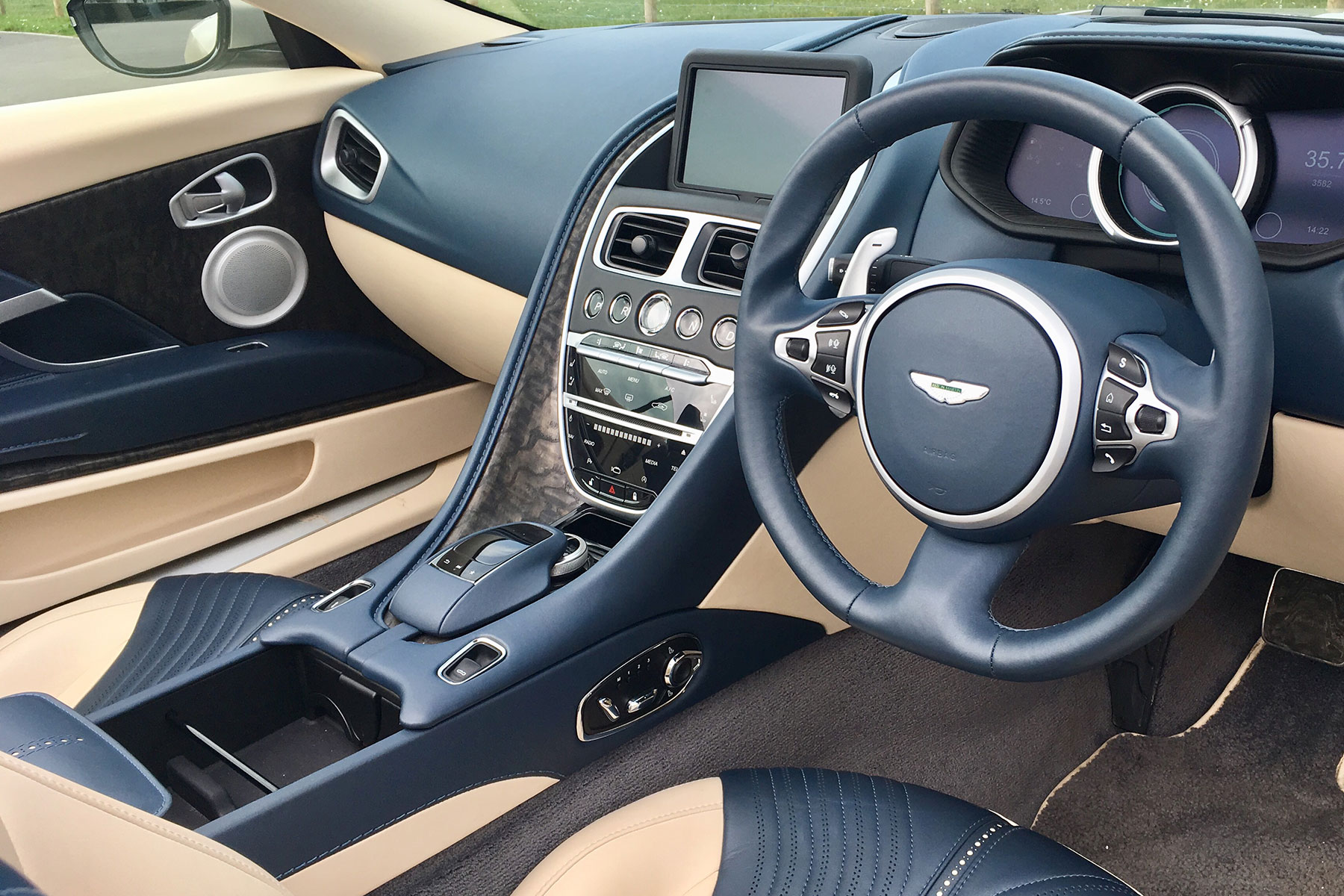
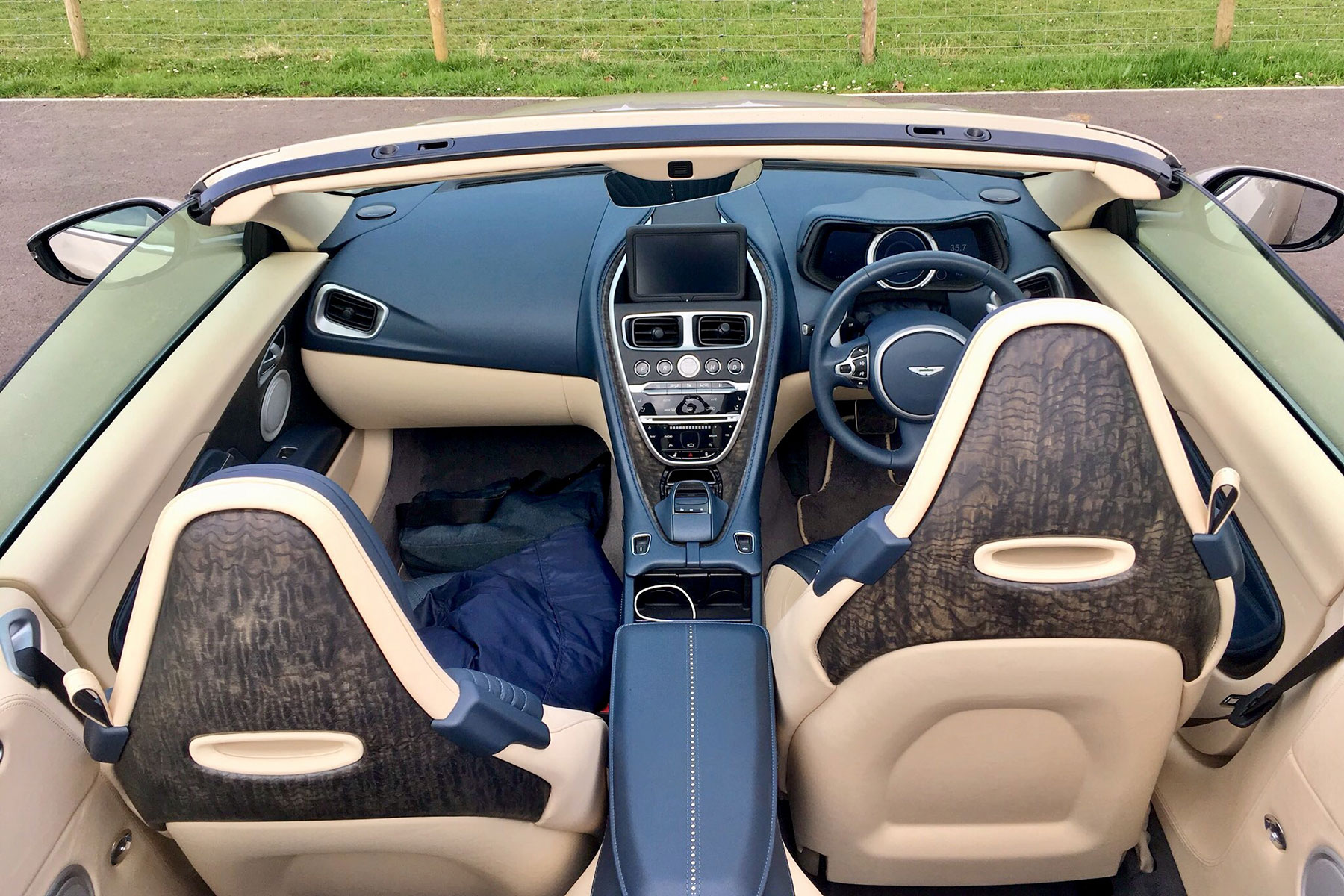
After its flawless exterior, the DB11’s cabin is a mild disappointment – particularly the last-generation Mercedes media system. Still, with the sun warming my shoulders and the tailpipes crackling wickedly, I’m struggling to care. The Volante is a laid-back sort of supercar, and none the worse for that.
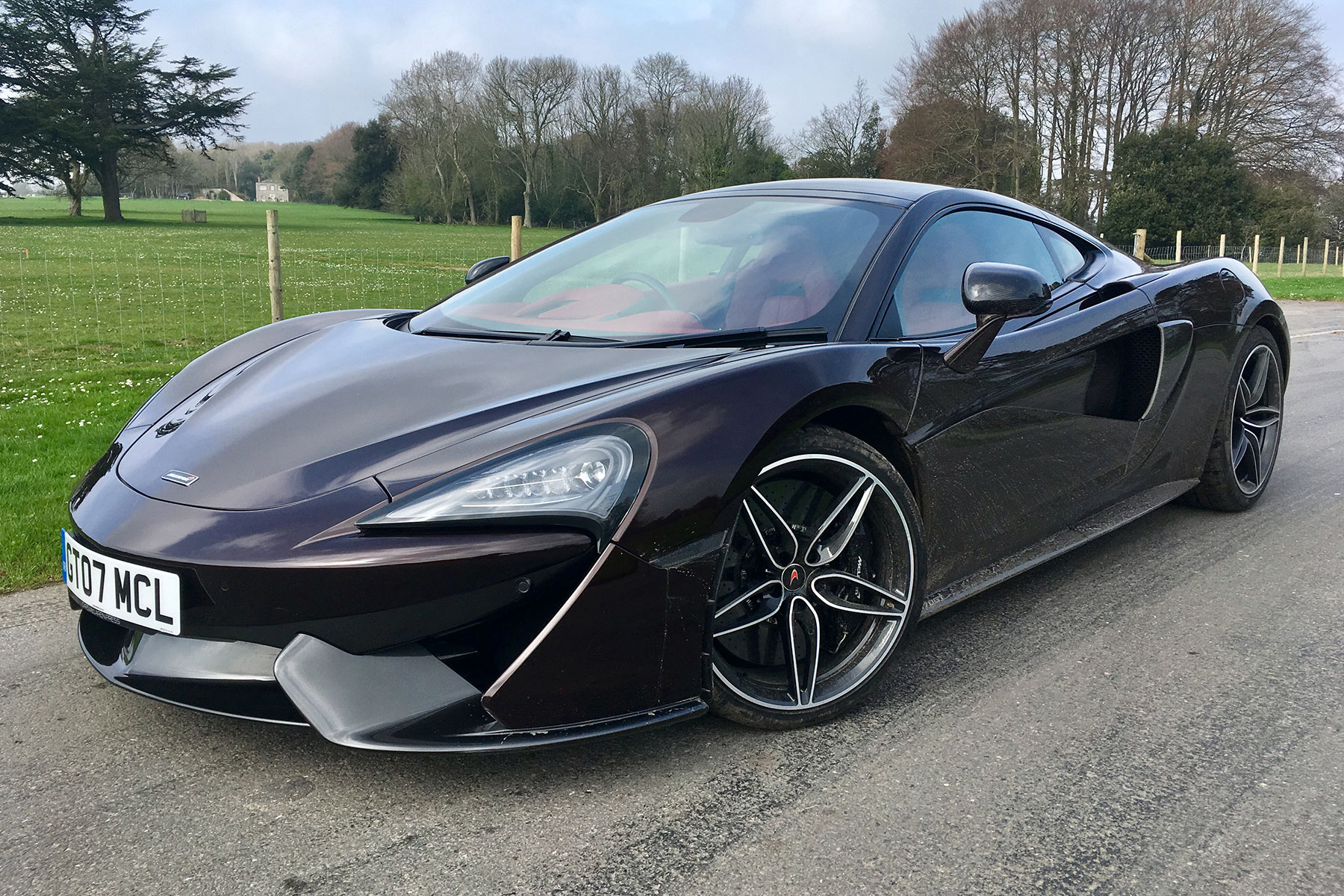
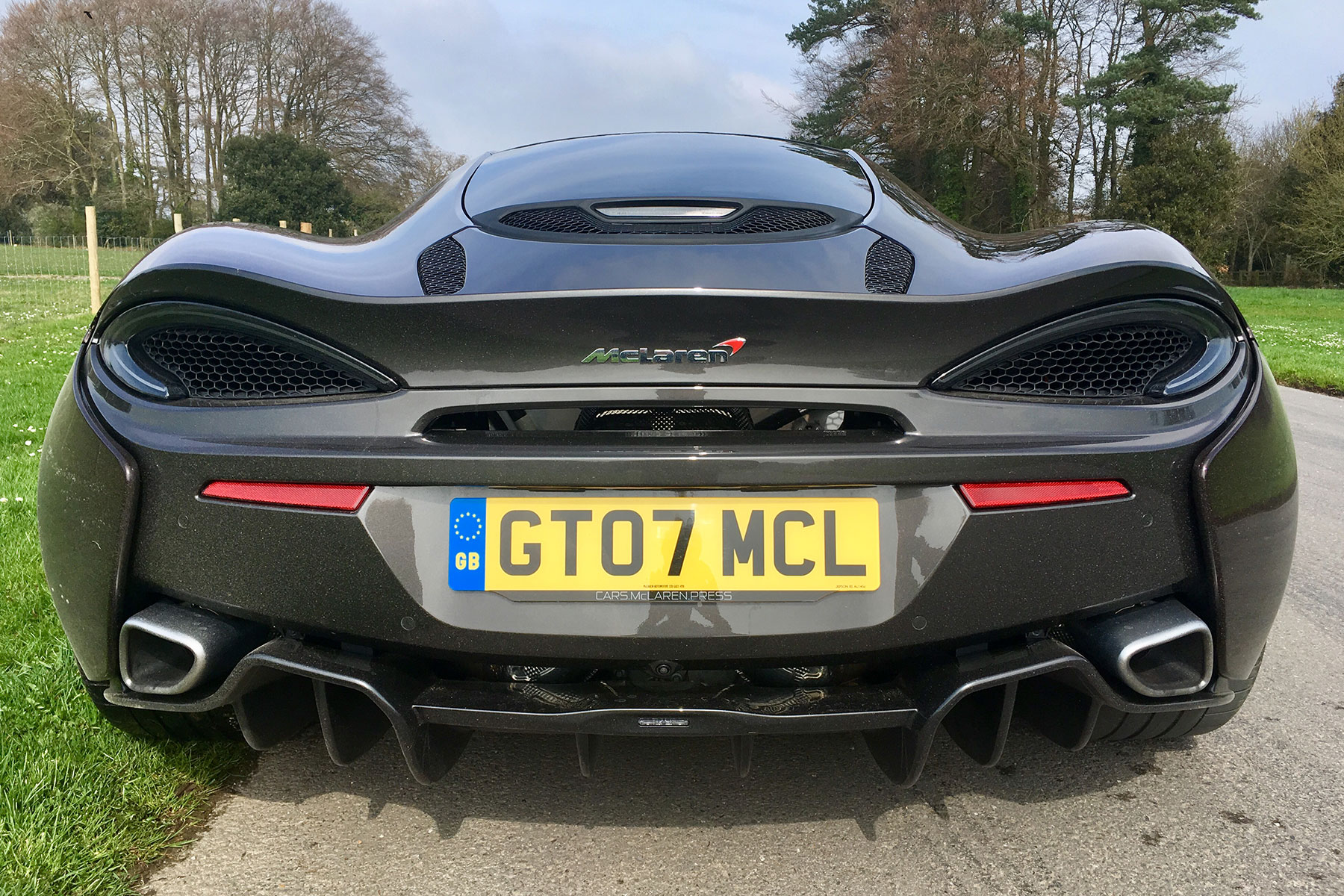
McLaren 570GT
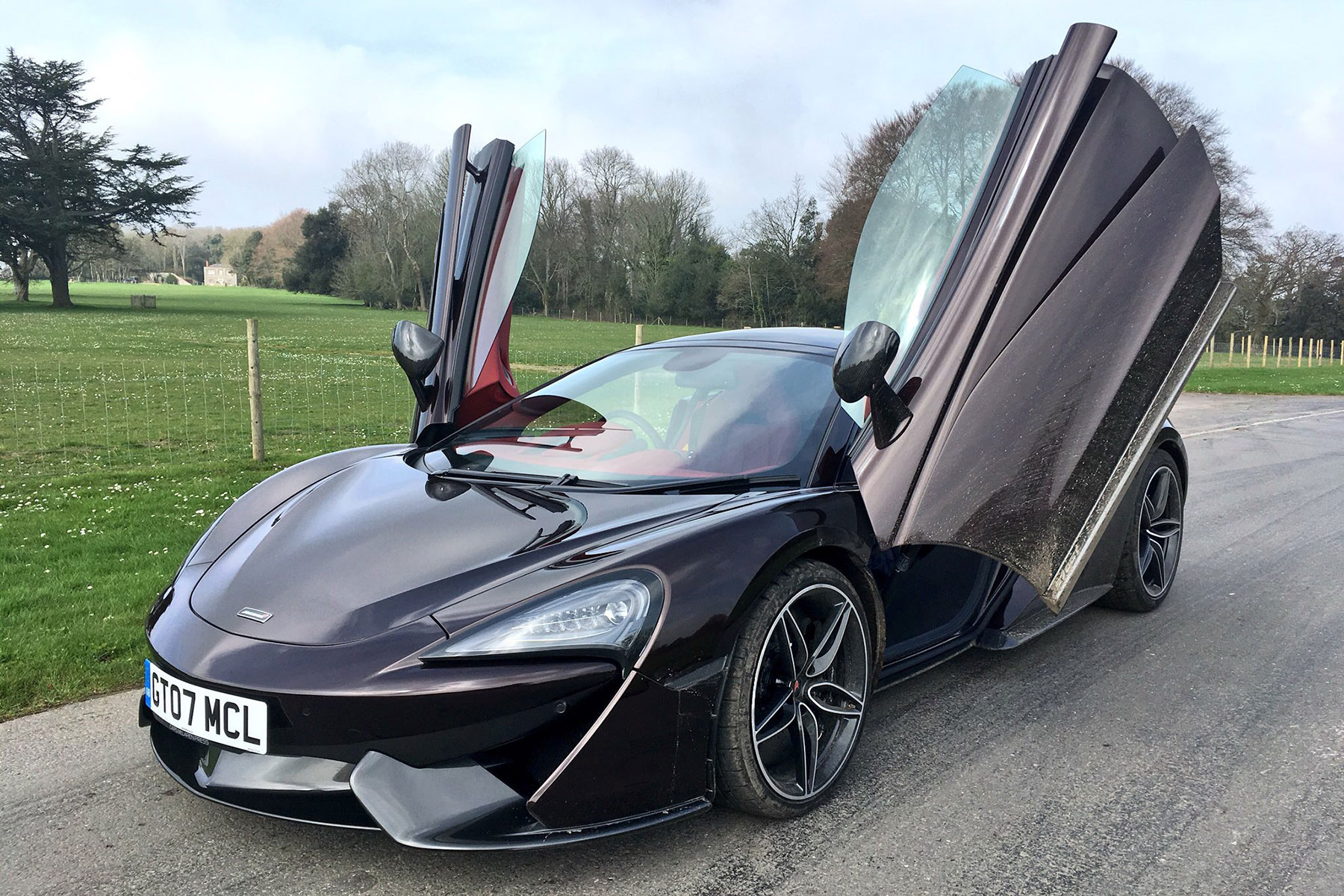
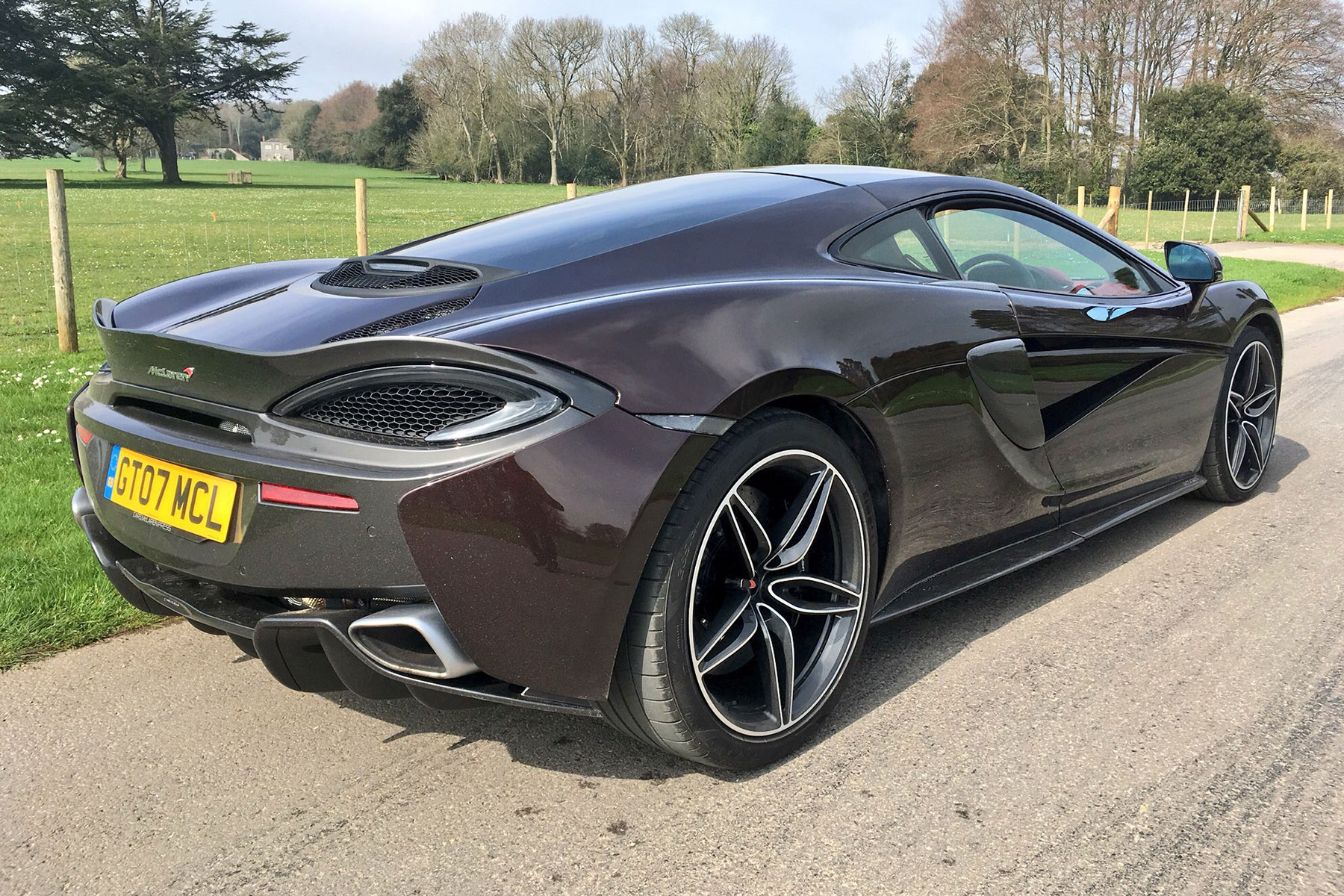
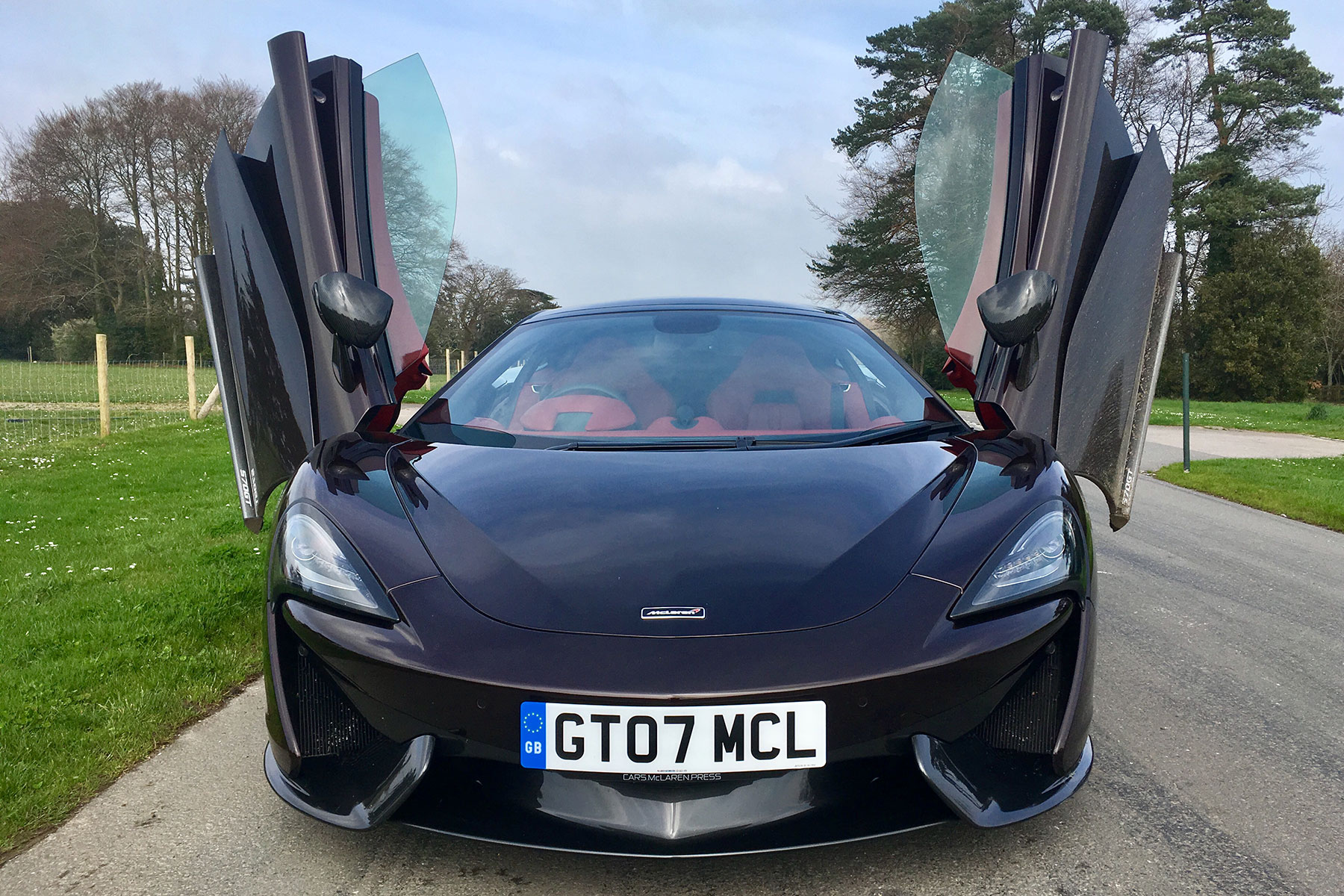
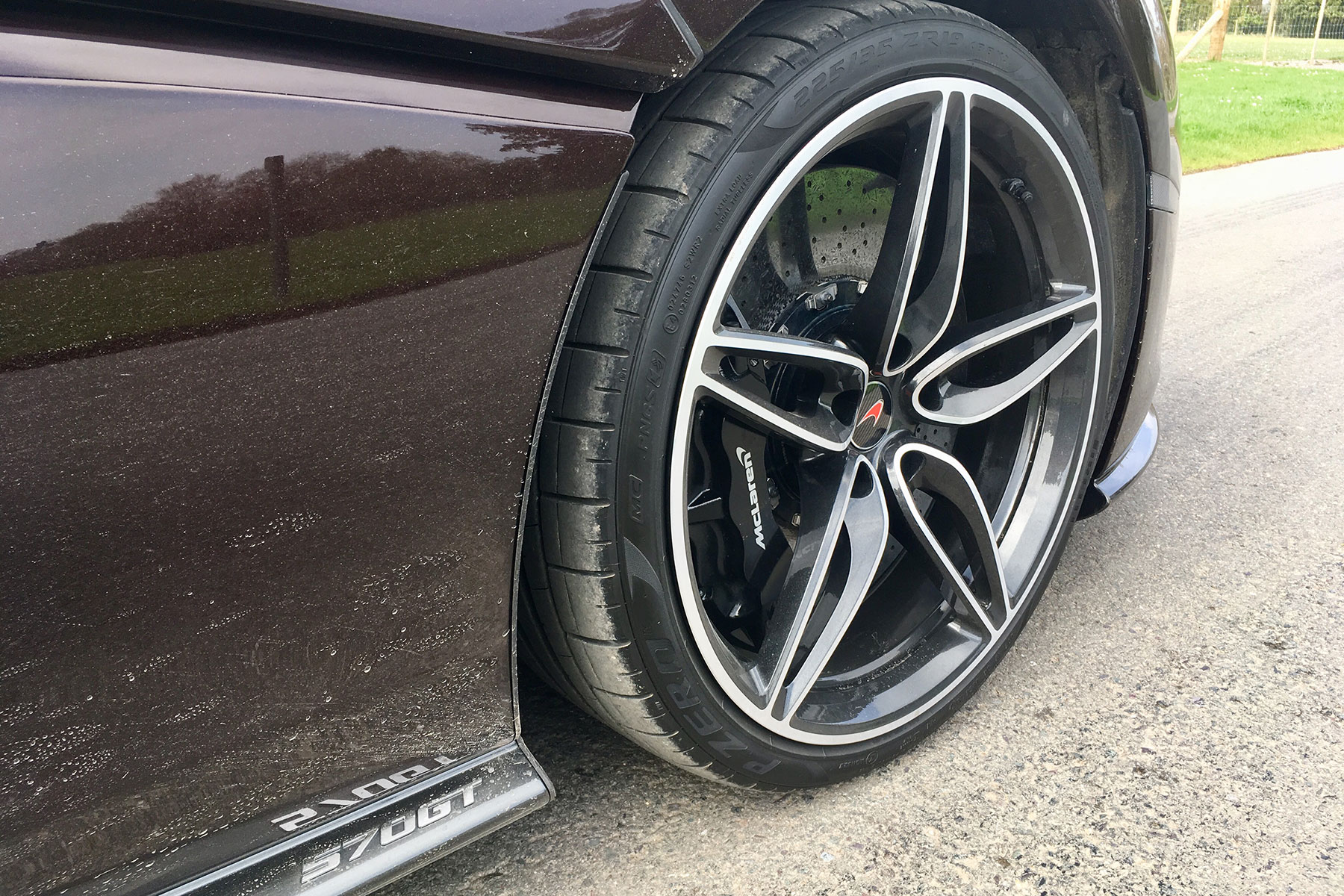
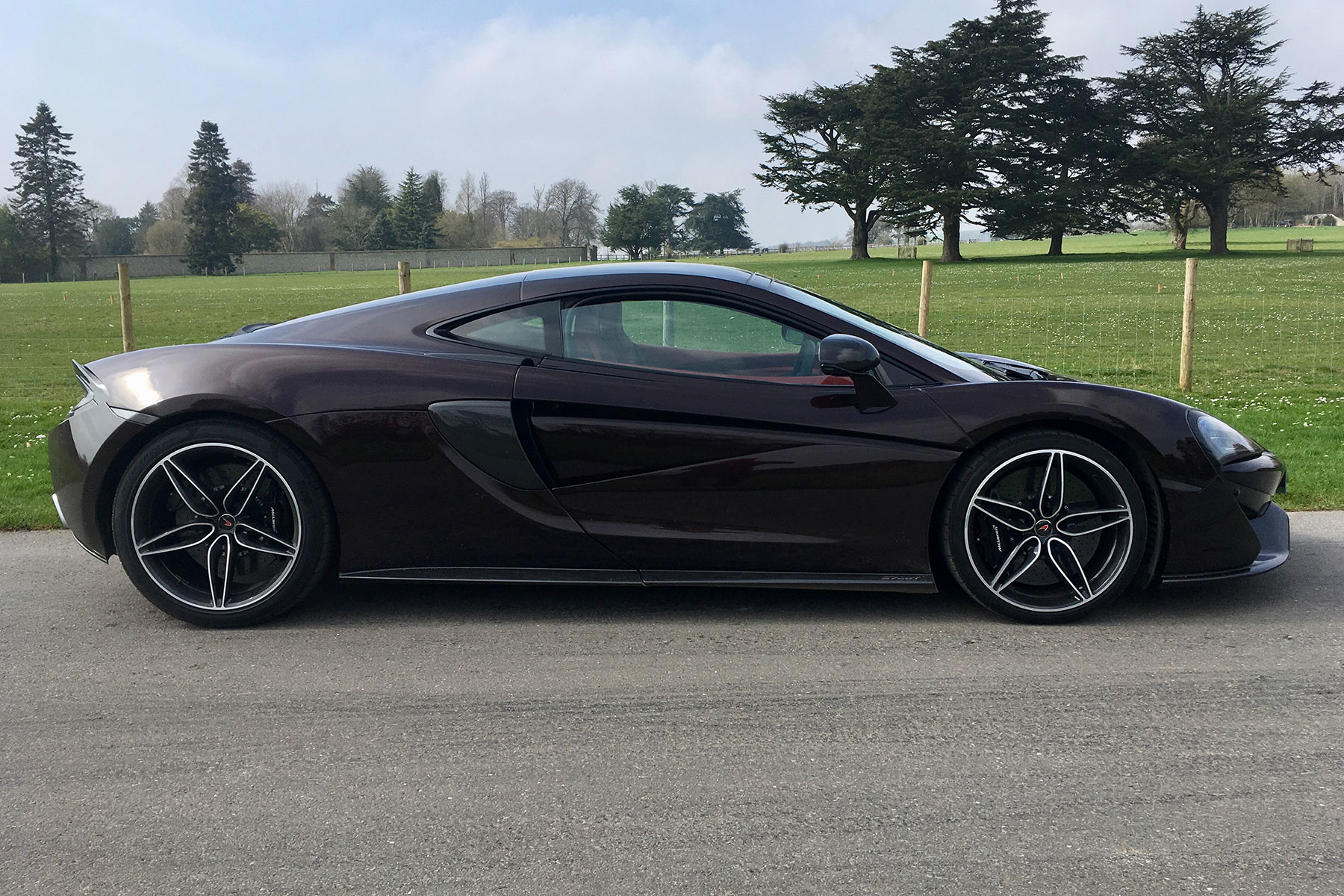
“It’s not brown, it’s Bourbon.” The man from McLaren is quite insistent. Whatever you call the colour of this 570GT, it’s not particularly flattering. No matter: my previous experience of the closely-related 570S Spider suggests the drive will provide ample compensation.
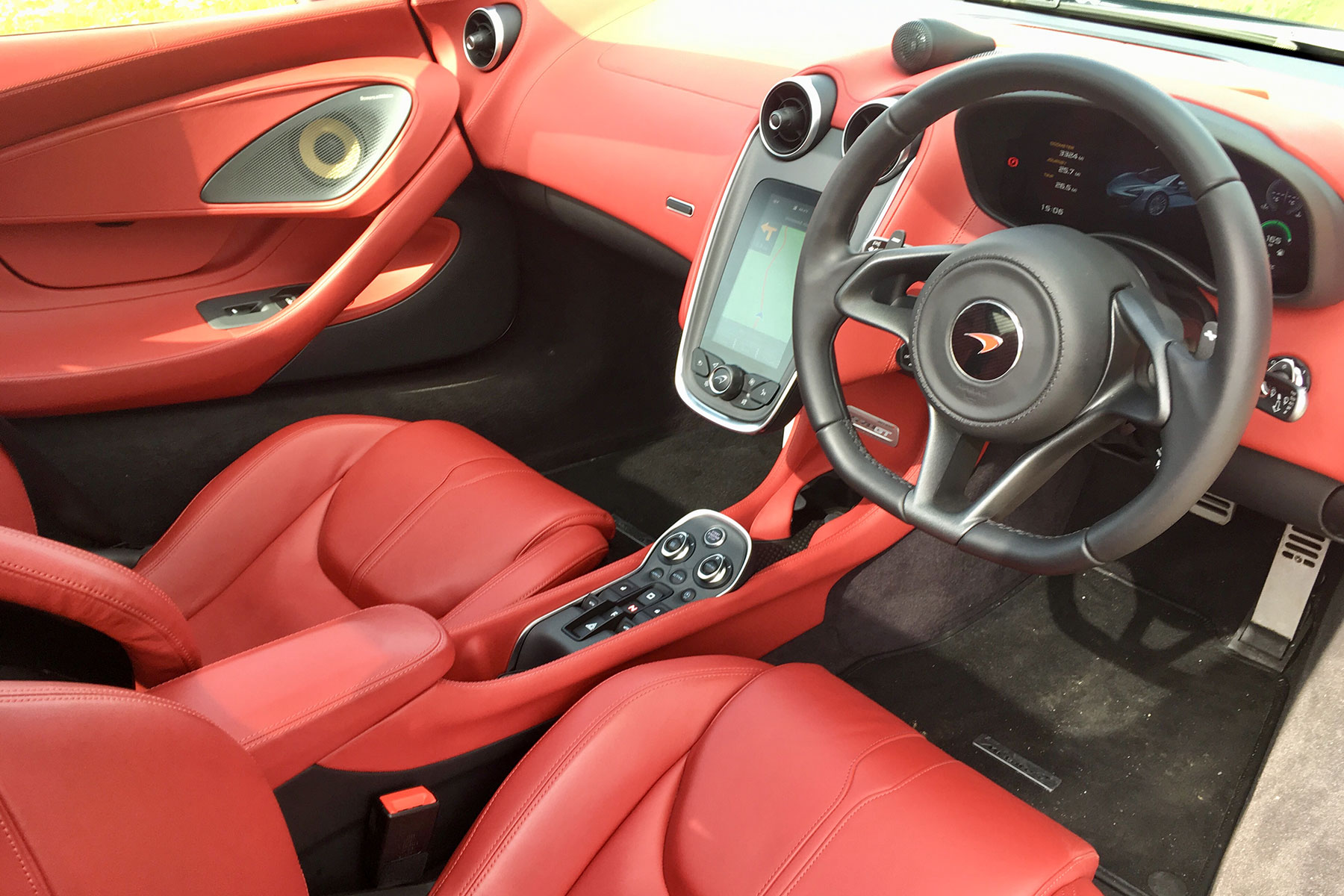
The GT is a more civilised, more practical McLaren, with a sideways-opening glass tailgate. Include the front boot and total luggage space – amazingly – is more than the outgoing Ford Focus. It also has softer springs, slower steering and quieter tyres, but these things are all relative. A brilliant B-road blat proves this ‘Sports Series’ McLaren hasn’t lost its edge.
The 570hp twin-turbo V8 has a broad powerband and a Haymaker punch, delivering 0-62mph in 3.4 seconds and 204mph. But it’s the chassis that steals the show, with talkative steering, razor-sharp turn-in and beautiful balance. Blasting up the famous Goodwood hill, I’m convinced I go quicker in the McLaren than anything else.
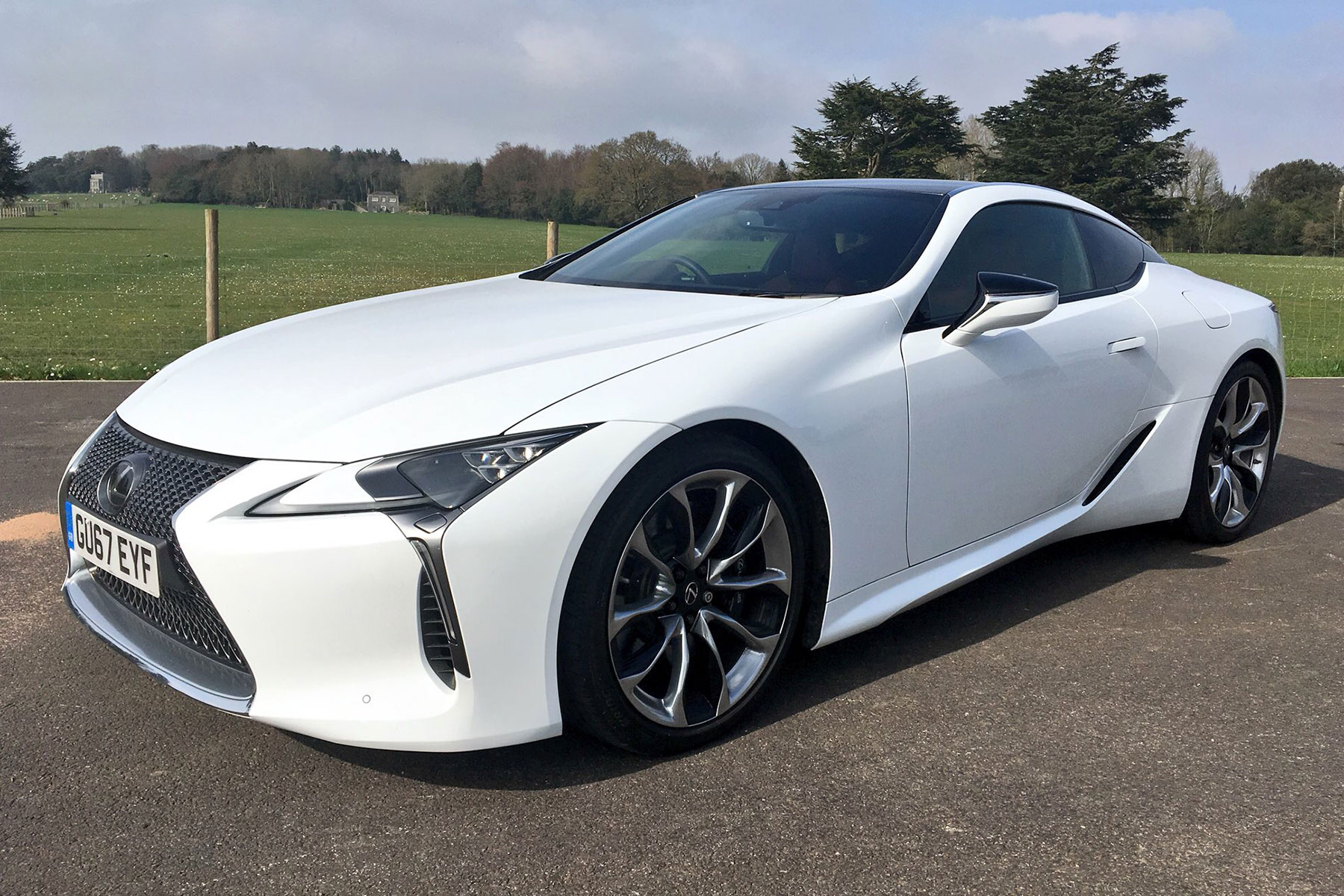
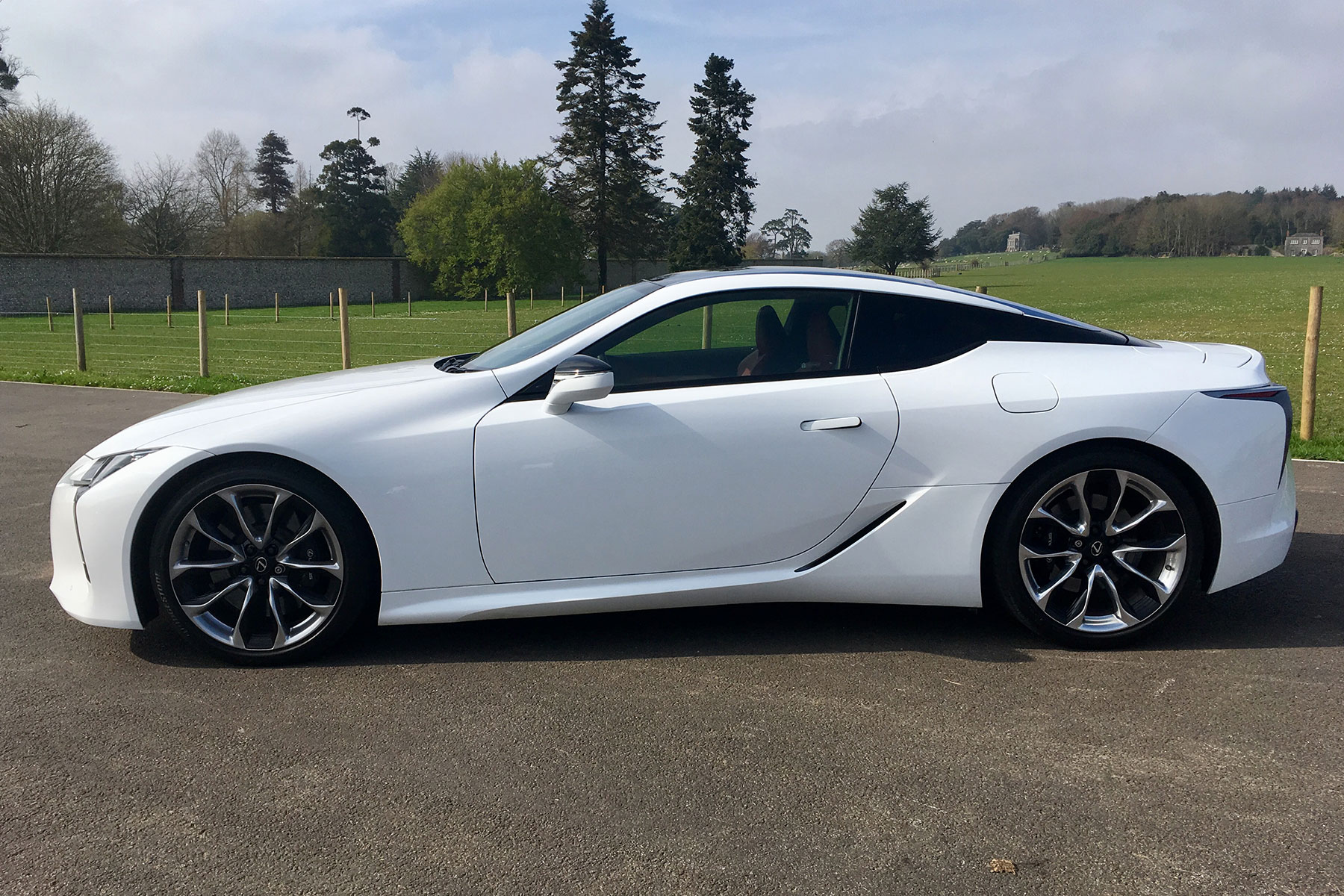
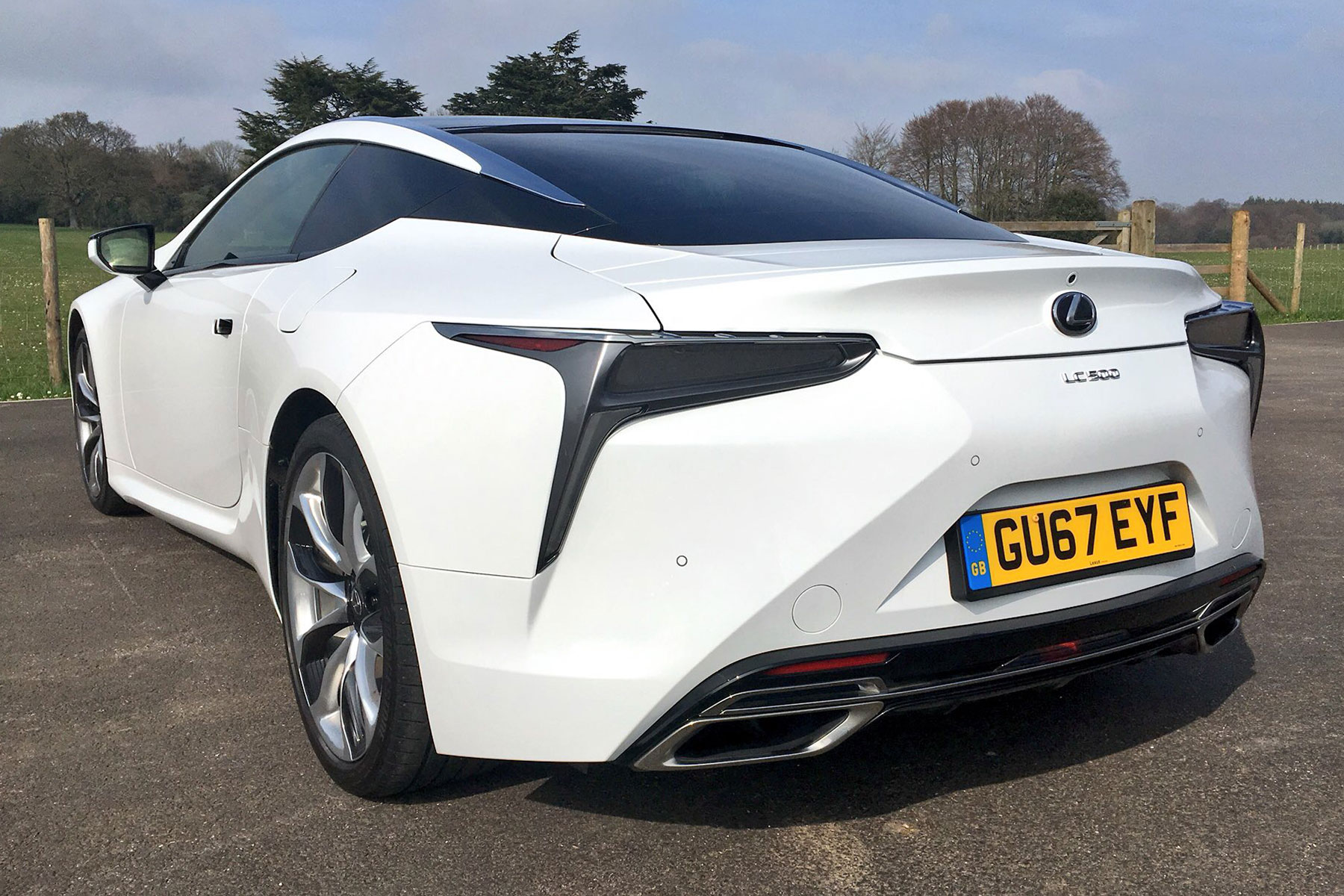
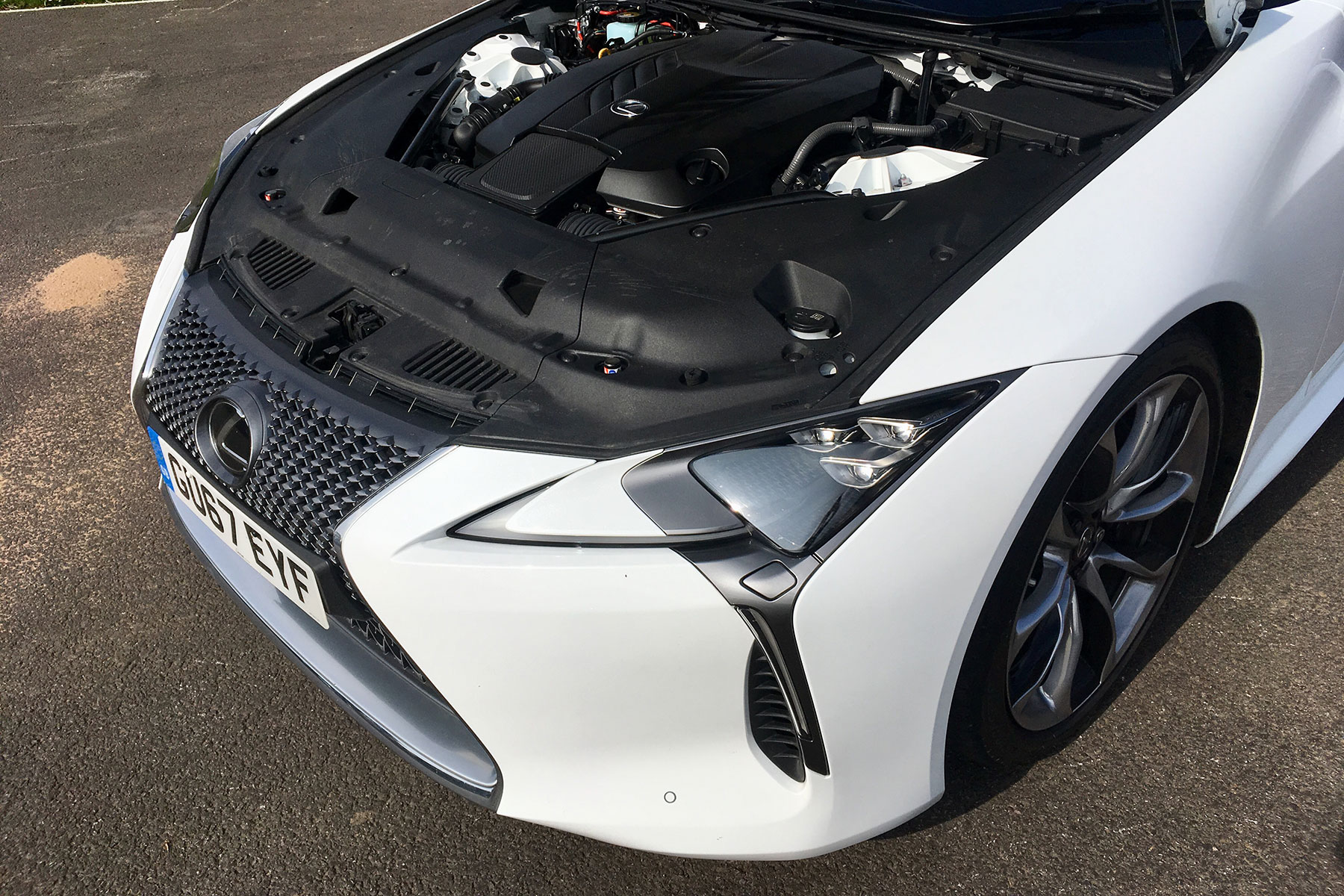
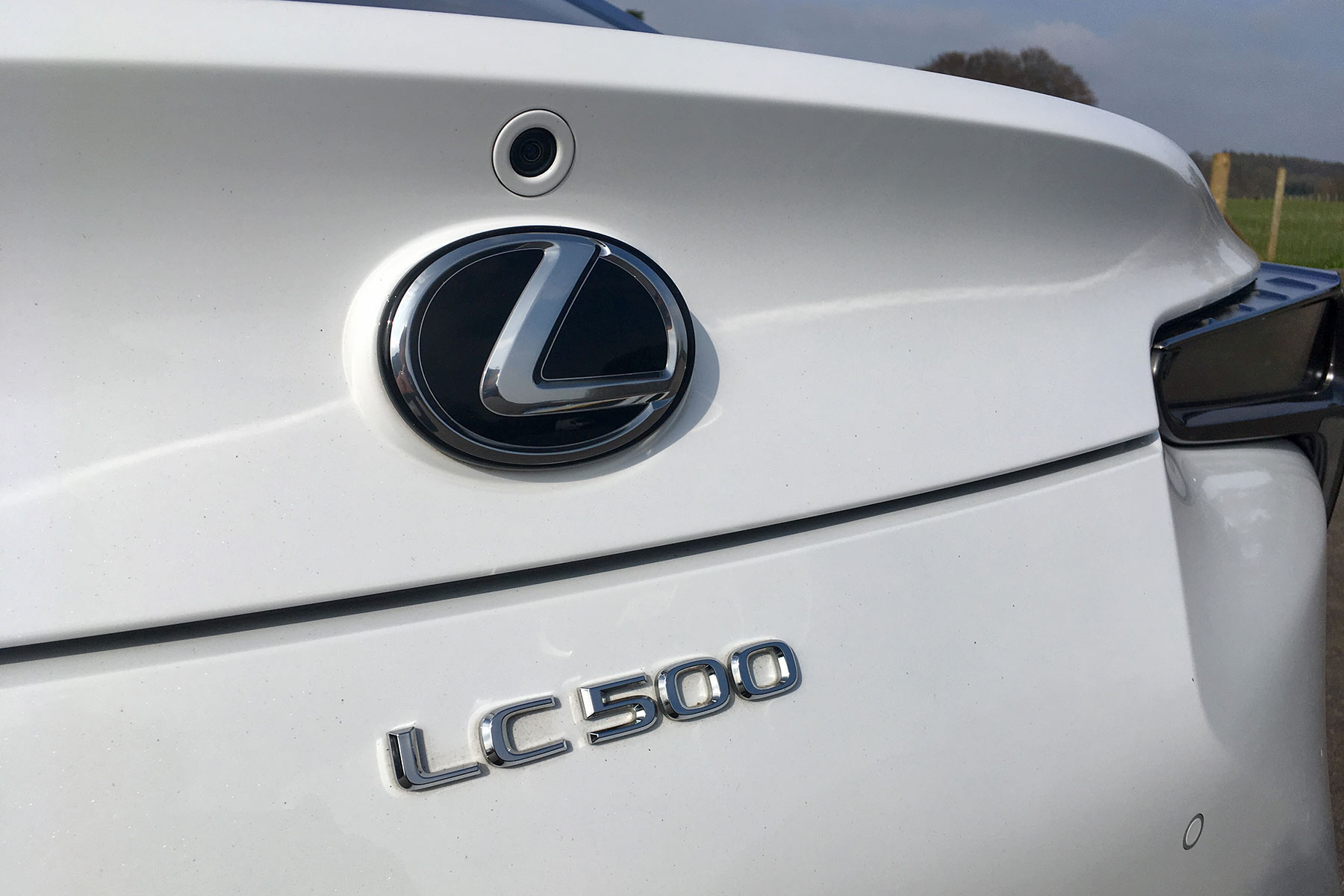
Lexus LC 500
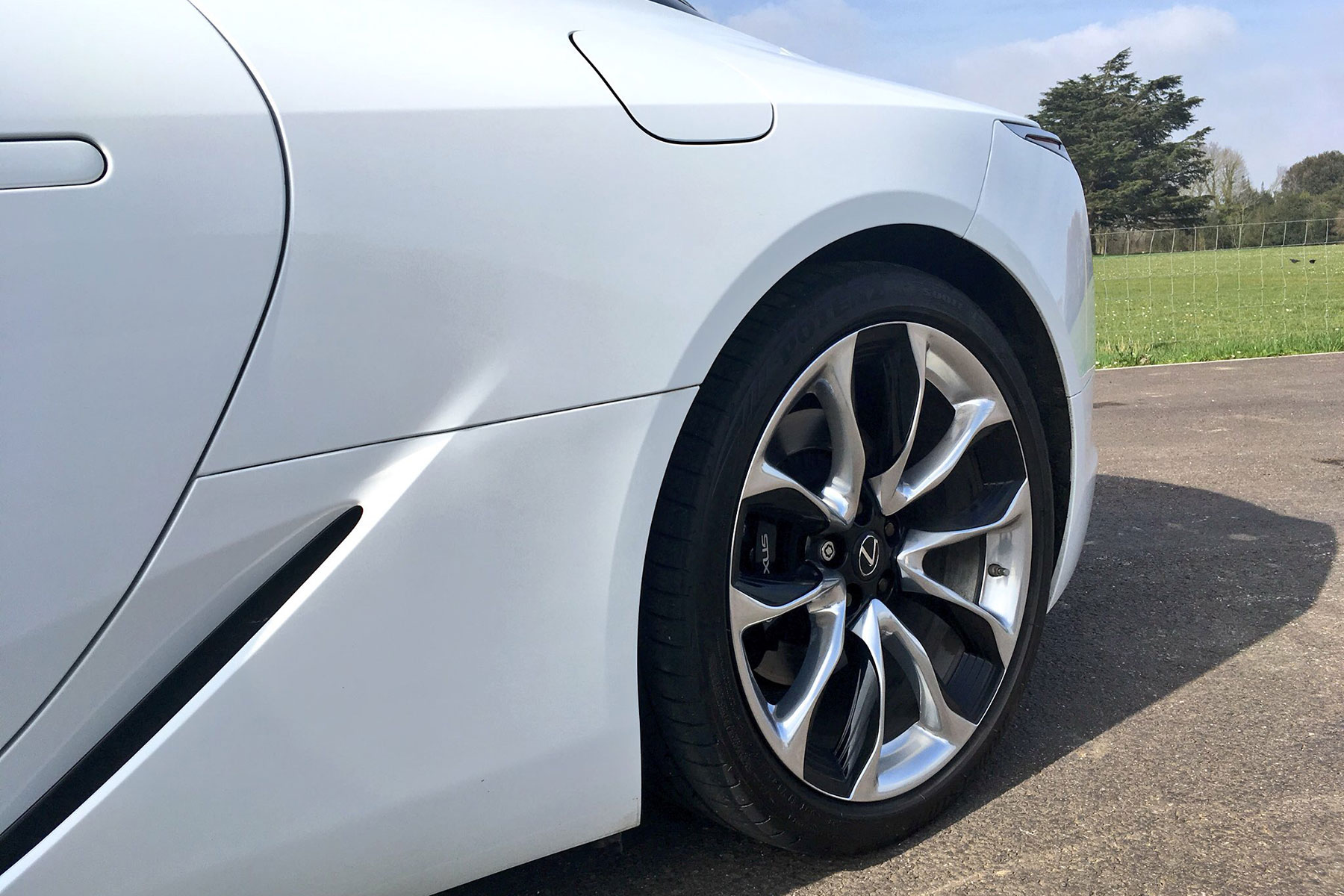
Here’s another wild card. The LC isn’t no-holds-barred supercar like the legendary LFA, and its £76,595 price tag looks cheap in this company. Nonetheless, a 477hp naturally-aspirated V8 is enough to grab anyone’s attention – assuming you hadn’t already stopped to stare. The Lexus looks truly unlike anything else, with slash-cut styling that’s unashamedly exotic.
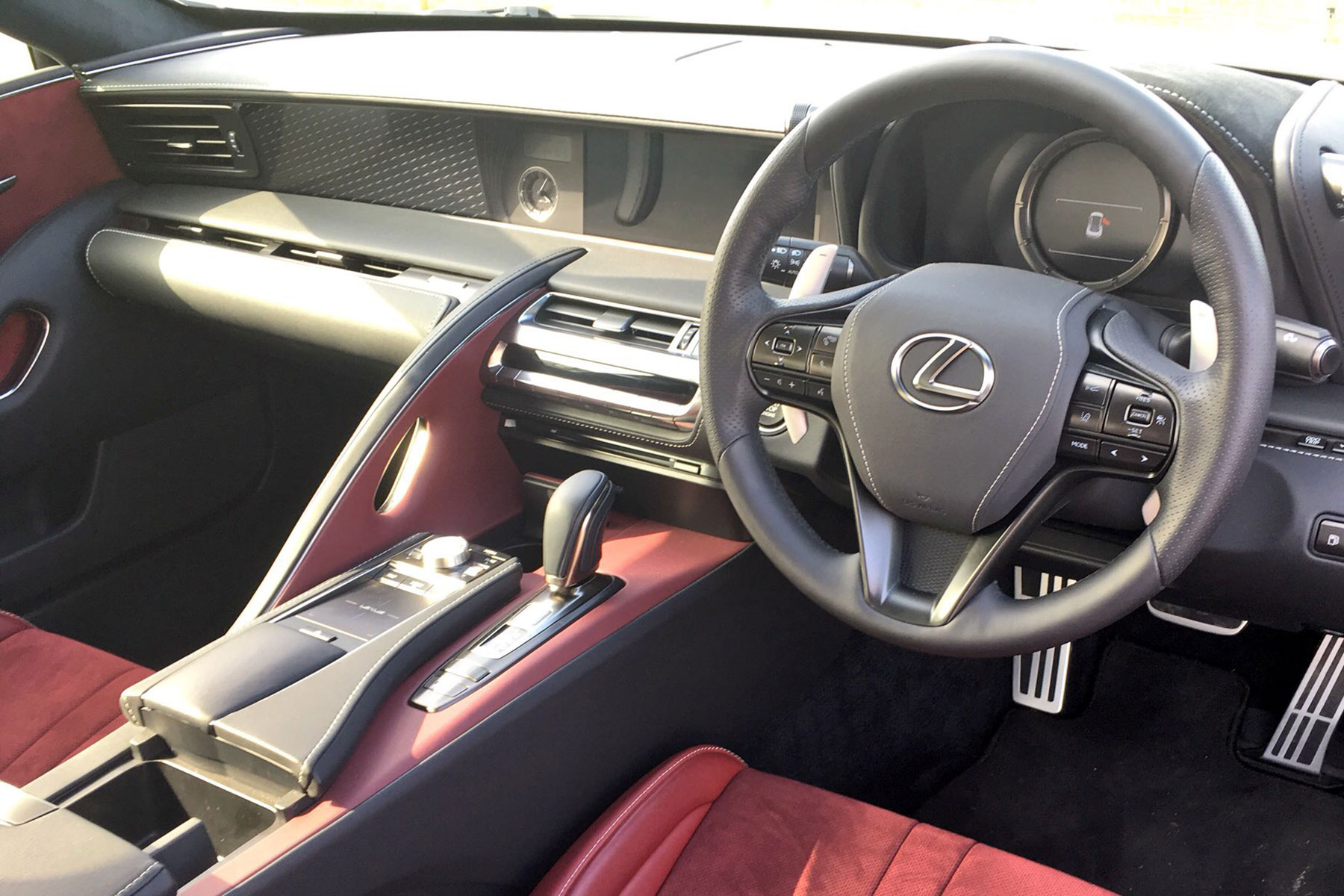
I was impressed by the LC 500h hybrid when we borrowed one for a week, only griping about its indecisive CVT gearbox and infuriating touchpad media controller. The V8 version still has the touchpad, but swaps the CVT for a 10-speed automatic with steering wheel paddles. The difference is dramatic, the occasional hesitancy of the hybrid replaced by instant response and a ravenous hunger for revs.
Final car of the day: Lexus LC 500 V8. Even after a Lamborghini, a Ferrari, an Aston Martin and a McLaren, this thing still looks – and drives – like a supercar. pic.twitter.com/atrLf369mh
Obviously, the Lexus feels a little heavy after the McLaren, yet this is no softly-sprung GT. Switch into Sport+ mode and it attacks a twisty road (or indeed the Goodwood hill) with rabid tenacity. Or you can simply cruise, enjoying the torque and lavishly luxurious interior. As a daily-driver, this is my pick – but it isn’t today’s winner.
Verdict
This is a supercar experience day, remember? So, in theory, the car that delivers the most exciting and memorable driving experience should win. By that reckoning, the Lamborghini comes out top. It’s a 99-octane feast for the senses, a car that shakes and stirs every synapse. But it also isn’t today’s winner.
That title goes to the McLaren 570GT. It doesn’t offer the ultimate adrenalin rush of the Aventador, but it’s a purer sports car: more enjoyable, more of the time, and still outrageously quick, capable and exciting. I’ll have mine in anything but brown.
We’ve all got stories to tell about the Vauxhall Corsa. A regular in the UK’s bestselling cars shortlist since it was launched in 1993, we’ve all either owned one, driven one or probably have a significant memory involving one.
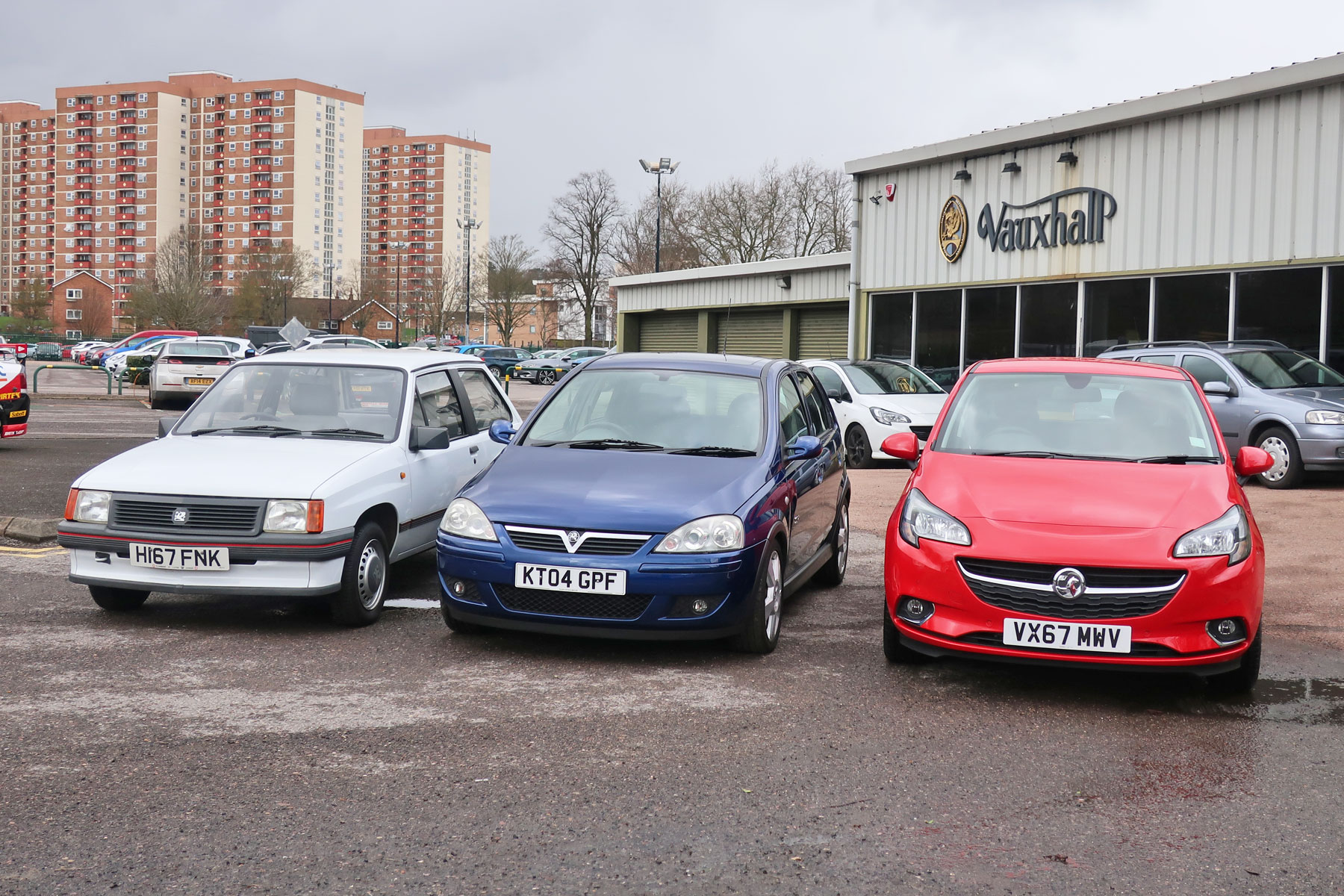
Vauxhall’s popular supermini celebrates its 25th year on sale in the UK in 2018, so we headed to the firm’s head office in Luton for a day discovering the Corsa’s heritage. Without further ado, this is what we drove.
Watch: celebrating 25 years of the Vauxhall Corsa
1990 Vauxhall Nova
Why start a feature celebrating a 25 years of the Vauxhall Corsa with a drive in a car that’s a) more than 25 years old and b) not a Corsa? Well, in markets other than the UK, the Vauxhall Nova was actually badged ‘Corsa’. The Corsa name wasn’t launched in the UK until 1993 as Vauxhall marketing chiefs believed it sounded too much like the word ‘coarser’.
Even if you don’t consider the Nova part of the Corsa’s history, it’s interesting to drive one as a precursor to the car we all think of as the Corsa.
I’ve driven this Nova before. Back in February 2016, I spent a cold week with H167 FNK. Since then, it’s remained high up on my list of favourite cars I’ve ever driven. Yes, a Vauxhall Nova.
Despite being ‘just’ a 1.2 Merit, FNK feels special. Its odometer is slowly edging towards 20,000 miles, and it still feels box-fresh. Clearly a local car, with its ‘Plowmans of Luton’ dealer sticker on the rear window, it must be one of the best examples of a Nova left on the roads.
It feels small, but it’s not unpleasant to drive. With a little bit of choke on start-up, it happily keeps up with modern traffic, although you’re very aware of its diminutive dimensions on the busy streets of Luton.
I soon notice that I’m driving along with a smile on my face, and cameraman Bradley points out that I’m no longer being grumpy about the awful weather and poor driving standards of other motorists. Driving a car like this in 2018 makes you slow down, relax and enjoy the experience. While they were once 10-a-penny, in a world of ever bigger, faster and more aggressive cars, the humble Nova is something that really deserves to be appreciated.
Today I’m mainly being sad that I don’t own a Nova. One of my favourite heritage cars, even on a wet day in Dunstable. pic.twitter.com/CQPL9ZSjv8
When I was 17 – not that long ago – this is the car everyone had for their first motor. Actually, that’s a lie – a regular Corsa C is the car everyone had for their first motor. We could but dream of affording the insurance on a 1.8 GSi.
Today, it feels old. It comes as more of a shock than the Nova in some ways – I guess I was expecting the Nova to feel ancient, but I still think of a 2004 Corsa as relatively modern. Finding a comfortable driving position is difficult, with no adjustment in the steering wheel, and there’s a strong smell of cheap air freshener.
I feel vulnerable in it – again, perhaps more so than the Nova – partly aware of all the Corsa Cs owned by friends that ended up wrapped around trees. It feels quick, though, it’s 8.0-second 0-62mph time impressive in a time before 300hp hot hatches.
Although it’s not slow in a straight line, things fall apart slightly in the corners. It just doesn’t handle as well as a Ford Fiesta of the same vintage does. There’s lots of body-roll, while the light steering doesn’t give you a lot of confidence. Of course, hooning down a B-road isn’t natural Corsa territory (even if some enthusiastic owners might argue otherwise). Around town it’s easy to drive – easier than the Nova – and visibility is good.
Is it a modern classic? No. Will it be? I doubt it’ll ever be on my shopping list, even if it does become ultra-rare.
I’d like to pretend that driving this Corsa C today took me back to my youth, but fortunately I was never young. pic.twitter.com/N0PdIfYIiA
In a competitive supermini world with the likes of the new Ford Fiesta and Seat Ibiza putting in very convincing arguments for your monthly PCP payment, it’s easy to forget just how good the latest Corsa is.
Driving the Nova and Corsa C beforehand might have warped my view slightly, but the new Corsa’s interior is pretty good. Red dash inlays (standard on the SRi) brighten up the inside, as does red stitching – no doubt appealing to young drivers (and me). The infotainment system is easy to use, with CarPlay as standard. We’ve got used to such luxuries now. Indeed, it’s hard to imagine a car in this sector without them.
Engine wise, the 1.4-litre turbo petrol feels eager. Noticeably easy to drive compared to the older cars, you feel safer in the latest Corsa because of the size of it (it’s 399mm longer than the Nova and 182mm longer than the Corsa C).
Even in the handling stakes – whether darting around city streets or on rural roads – the Corsa E feels safe yet fun. It’s no new Fiesta, admittedly, but it’s perfectly pleasant to drive.
Sure, if I was driving alongside modern-day rivals, I probably wouldn’t be quite so positive about the Corsa E. But I’m not, so I will. Besides, I ran one for six months as part of the MR long-term fleet and really enjoyed it. Vauxhall might be going through tricky times at the moment, but I for am looking forward to seeing what the next 25 years brings for the Corsa.
It’s not just expensive premium cars that offer smartphone apps, allowing you to remotely check on the vehicle’s status (and locate it when you lose it in a car park). All new VW Ups and Polos now come with the Volkswagen Connect connectivity system – for free.
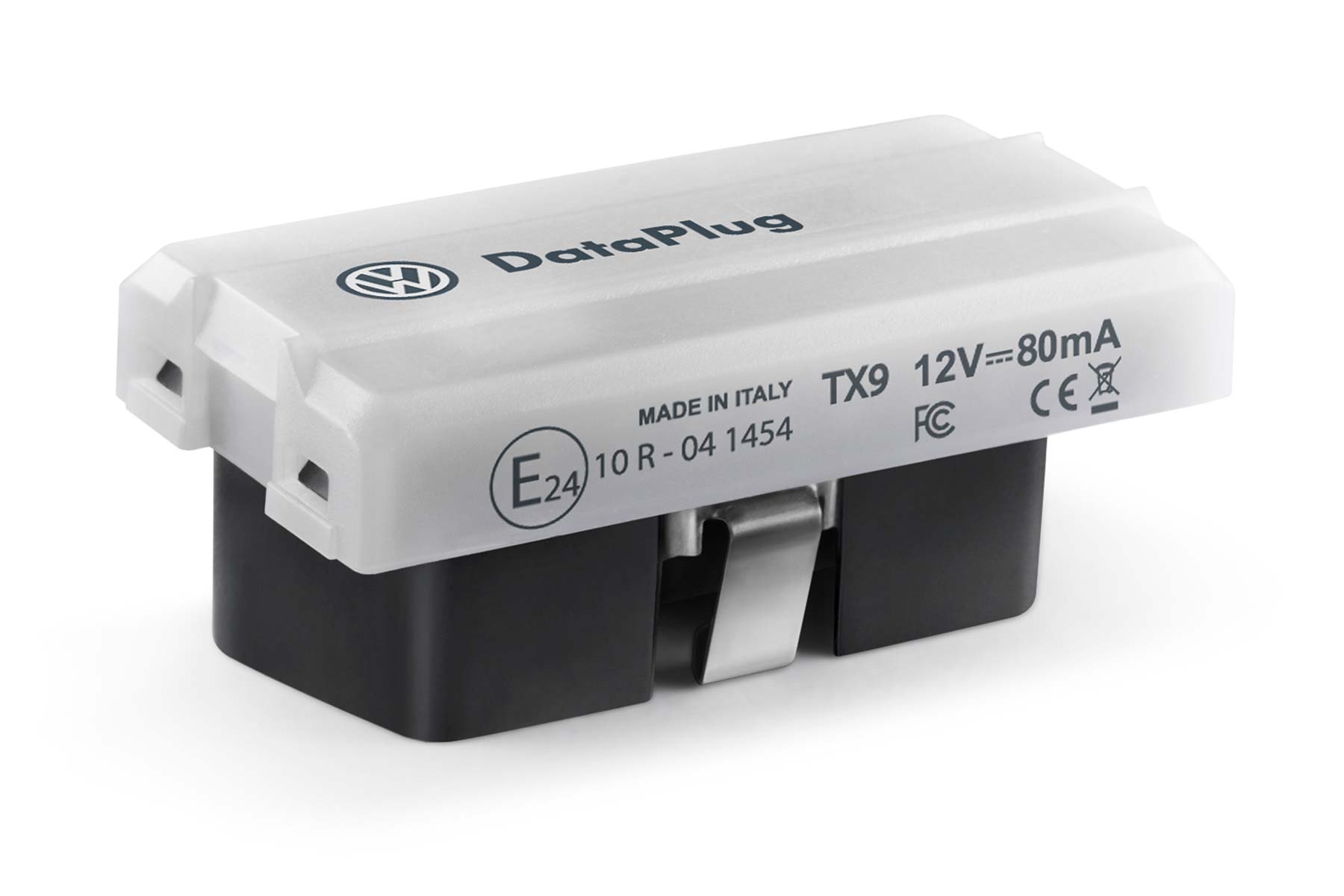
The UK’s second-largest car brand is giving away its DataPlug connected car plug-in gadget on all Up city cars and Polo superminis. It enables owners to download the free Volkswagen Connect app and access a wealth of information about their cars.
It works in a similar way to the pricey built-in Car-Net system found on high-end examples of the Golf, Tiguan and Arteon. Owners (or their dealers) plug a dongle into the car’s OBD socket, then pair it to the app on their smartphone via Bluetooth.
They then have seven new tools, which they can use to interact with the car even when they’re not inside it:
Trips – data about every trip, including miles driven
Fuel Monitor – blends fuel consumption and fuel cost to work out the cost of every journey
Driving Style – how smooth is your driving? It’ll give you tips if it thinks you could be smoother
My Volkswagen – check fuel level, distance to next service and so on
Service Partner – alerts drivers when a service is due, and can book it in if you add a preferred dealer. If a warning light illuminates, you can set it so the dealer calls you to explain it
Assistance Call – direct access to Volkswagen Customer Service or breakdown recovery
Parking Space – the location of the car is precisely recorded at the end of every journey: never lose your car again!
It’s not just Up and Polo owners that are getting a free DataPlug, either. If you buy any approved used car from Volkswagen via the Das WeltAuto scheme, they’ll get one too – as will anyone taking their car in for routine servicing.
Indeed, anyone who owns a Volkswagen built since 2008 can head over to their local retailer and get a free DataPlug. That’s how keen Volkswagen is to get its vehicle fleet connected up.
The firm expects customers to be similarly keen: 300,000 DataPlugs are expected to be handed out this year alone.
See more of what Volkswagen Connect can do here. Really though, unless you’re worried about being tracked via an app (it’s your data, says VW, and it’s fully secure so nobody can hack it), it’s surely a matter of ‘what are you waiting for’?
Aiming to regain the title of best family hatchback from the Volkswagen Golf
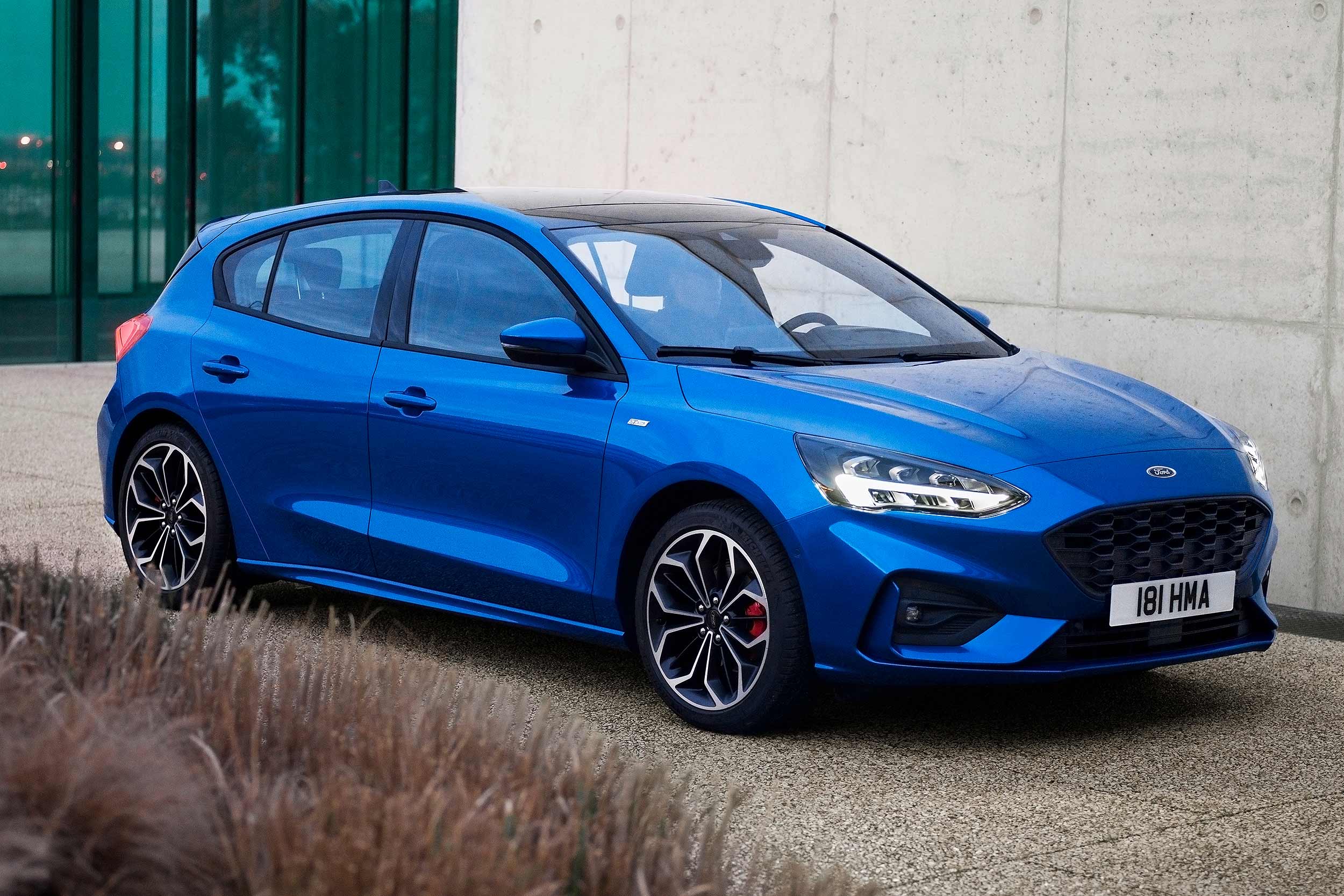
The new Ford Focus aims to build upon two decades of driver-pleasing appeal with more space, technology, luxury and comfort than ever before. Rather than rolling out a heavily-overhauled version of its predecessor, Ford’s invested in an all-new platform for the new Focus – and because the chance to design an all-new car from a clean sheet of paper doesn’t come around very often, Ford product development vice president Joe Bakaj says “we grabbed it with both hands”.
The original 1998 Focus changed the game by being brilliant to drive, in a sector full of dullards. The reason why so many high-volume hatchbacks today feel like premium cars behind the wheel is because of the Focus. These days, rivals such as the Volkswagen Golf have overtaken the Focus. With this new one, Ford’s looking to reassert its authority.
Ford is clear. The new Focus will be the most rewarding family hatchback on the market, both for drivers and passengers. It will also be the most confidence-inspiring and intuitive, the latter presumably in reference to the current car’s somewhat overburdened infotainment system and steering wheel controls. Ford says it’s never worked with customers more closely in developing this car: the new Focus is its most human-centric car ever.
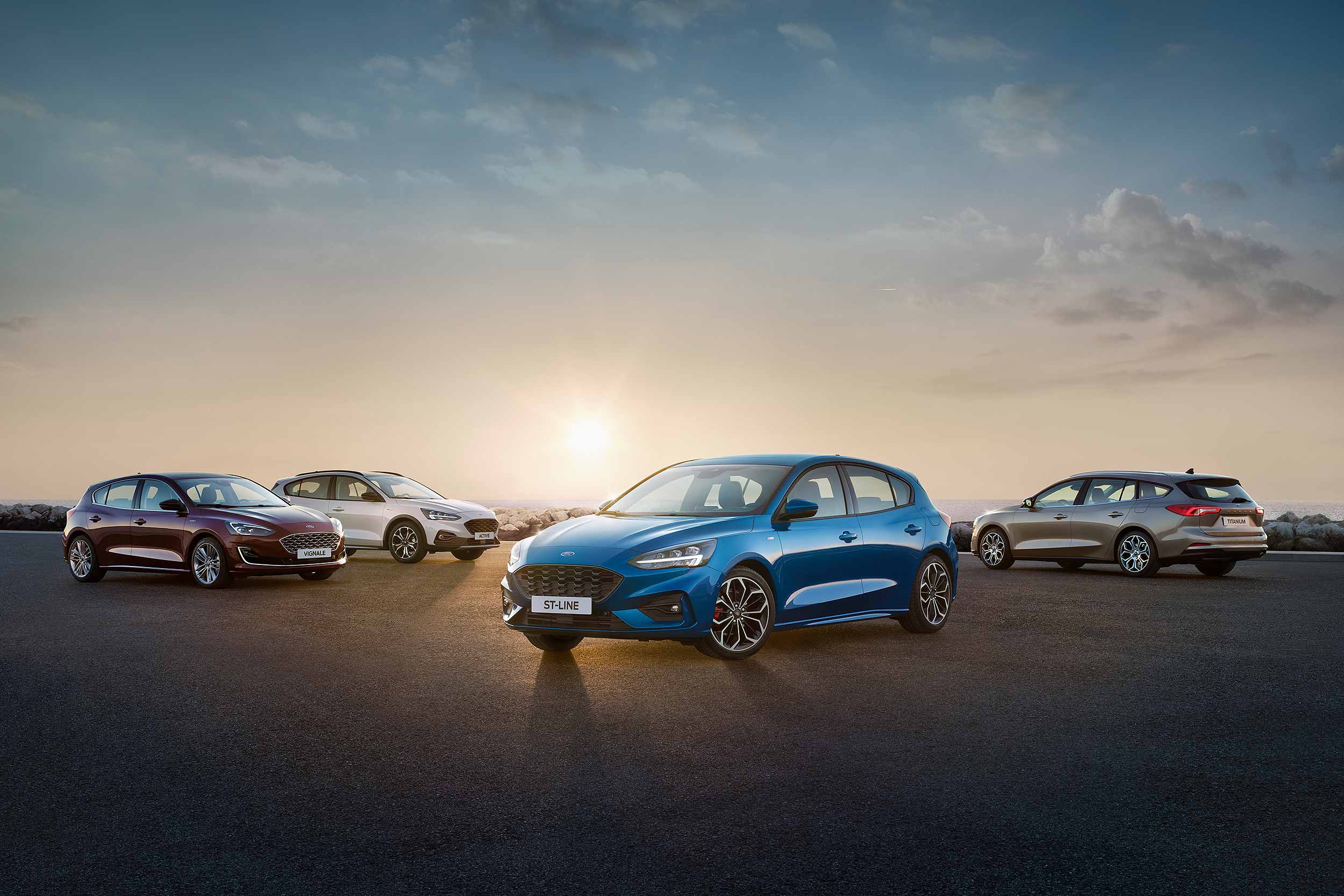
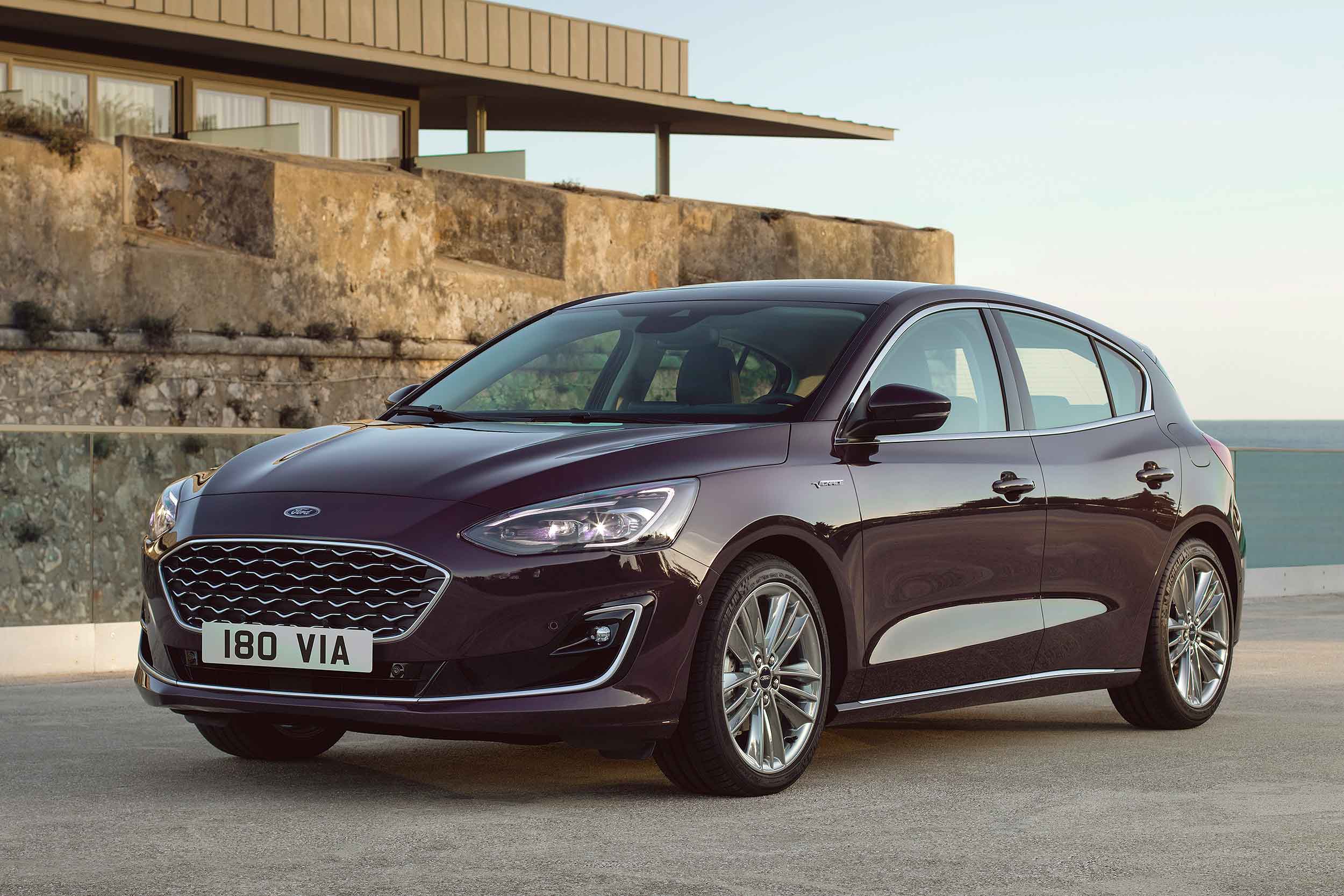
The new Ford Focus will go on sale from August 2018, for deliveries in time for the September registration plate change. Prices will start from £17,930, which Ford says is £2,300 cheaper than the current Focus Style entry-level car. Zetec and ST-Line variants are, respectively, £850 and £250 cheaper. Other variants include ST-Line X, Titanium, Titanium X and the first ultra-posh Ford Focus Vignale: it costs from £25,450. There’s also a crossover-style Focus Active, another Focus first, whose prices are still to be confirmed.
‘Fall in love with a Focus’
Ford’s European designers say they want customers to “fall in love with, and stay in love with,” the new Focus. Apparently, it’s all about “creating memorable moments of interaction”, which Ford’s done on the outside by lengthening the wheelbase and bonnet, shortening the overhangs and smoothing the wedge shape on the sides – making it look sportier and posher.
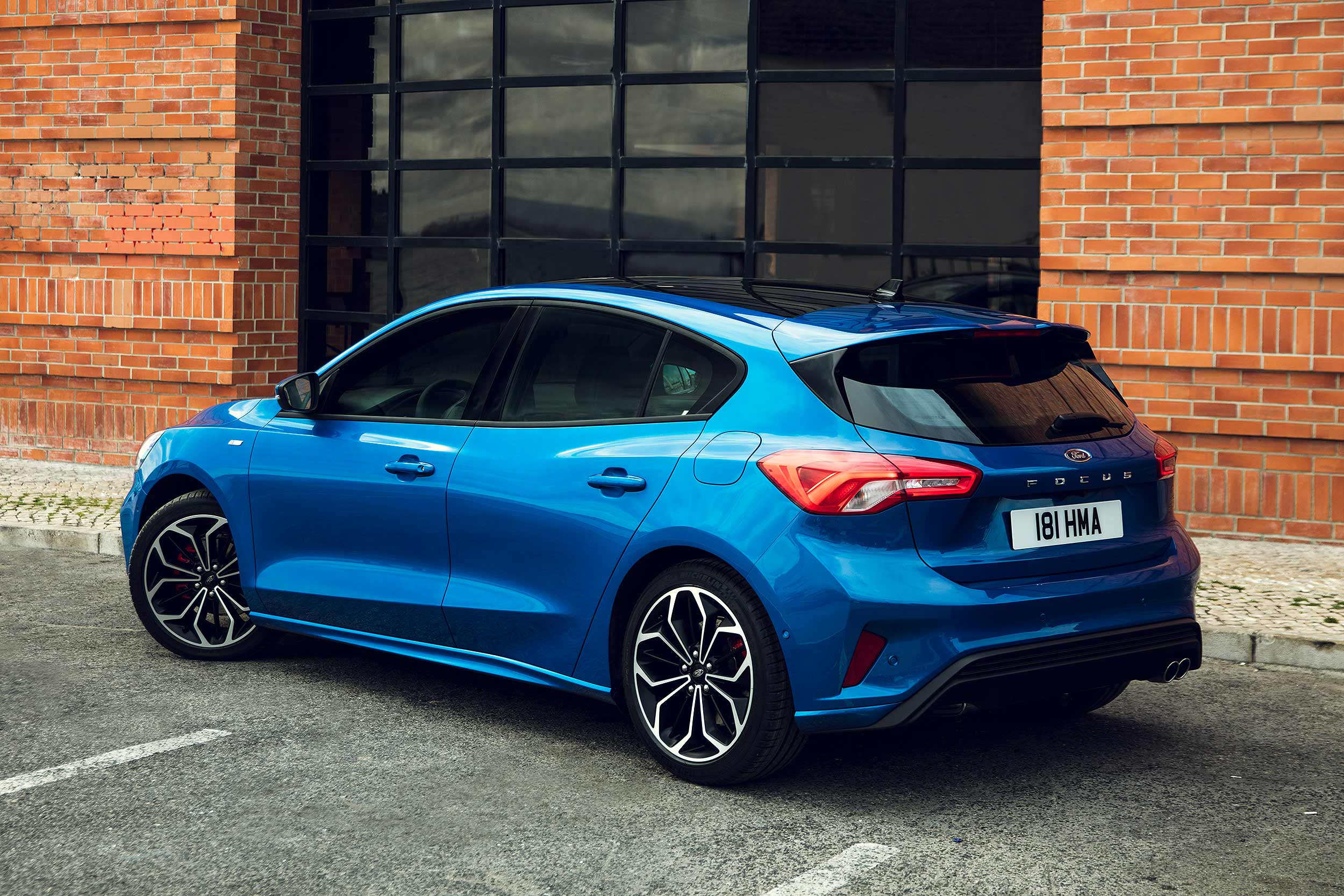
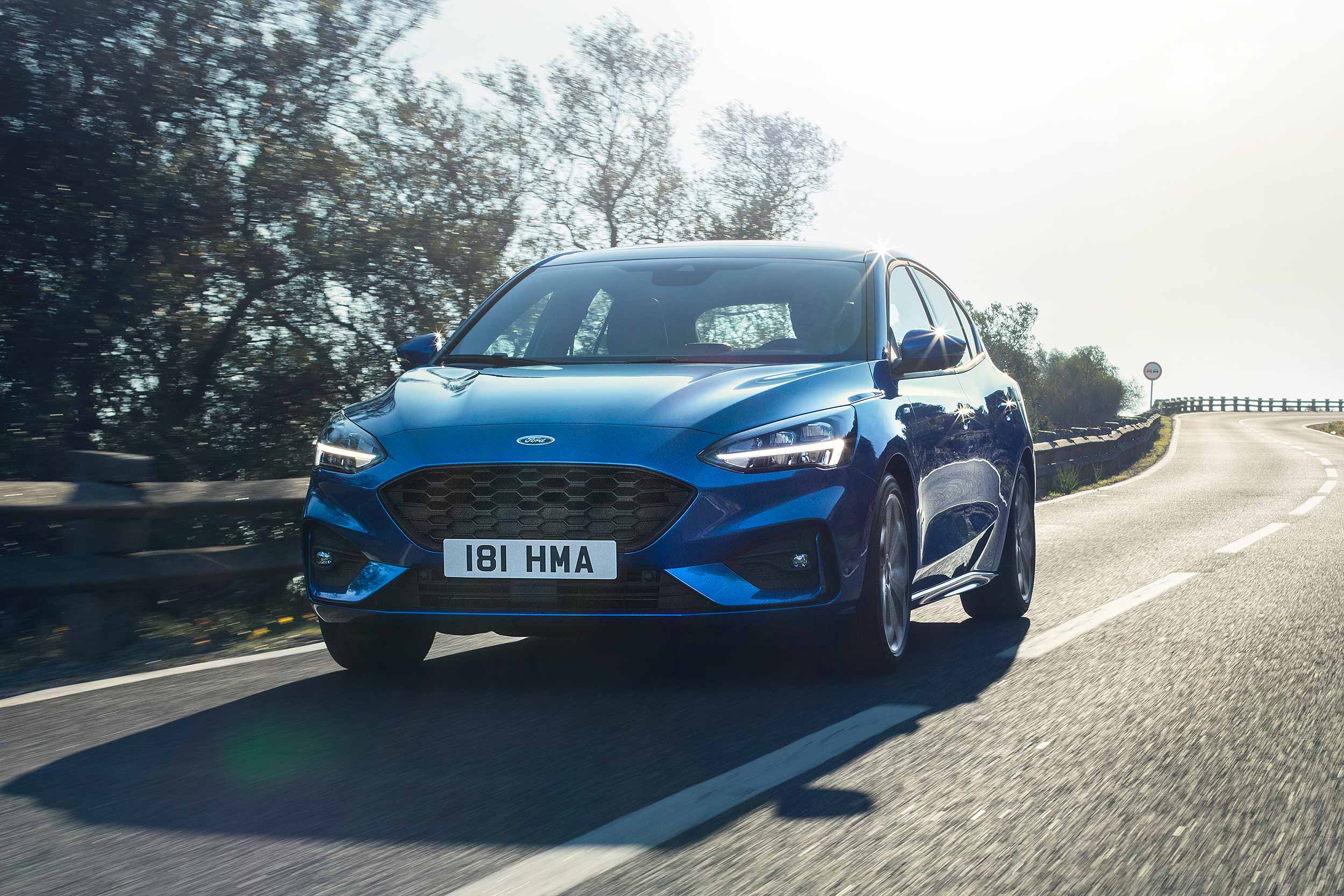
Bigger wheels that fill the wheelarches more fully give it a better stance, the body panels are sculptural and appear more tensioned than before, while longer wings and squat rear haunches give it an athletic appearance. Ford’s also made the grille even larger and fitted both front and rear lights as outboard as possible, to emphasise the car’s width.
Details you may spot at the rear: tail lamps are now two-piece, so the boot opening can be bigger, and there are distinctive LED lighting patters both day and night (same goes for the headlights). Also at the rear is a new individually-lettered ‘Focus’ script in the centre of the bootlid, whose satin-finished script further shouts ‘premium’.
Four Focus finishes
There are four different types of Ford Focus at launch – regular series models (including Style, Zetec and Titanium), the ST-Line, plus new Vignale and Focus Active variants. What marks out the latter three from regular models? The following features:
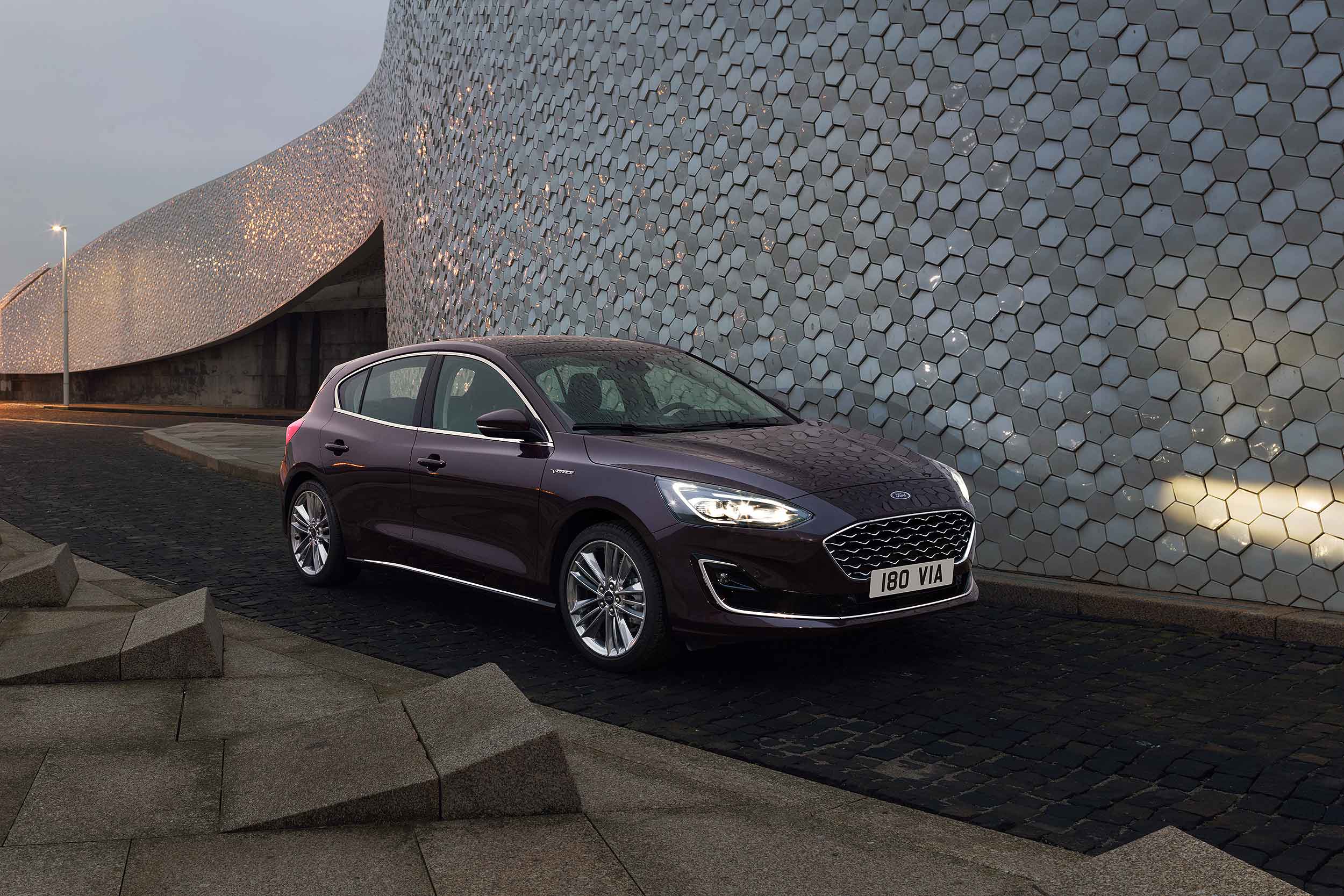
Focus Vignale – chrome-laden ‘coast-to-coast’ front bumper, Vignale grille mesh, satin aluminium roof rails and lower body trim, bespoke four-coat Dark Mulberry paint option
Focus ST-Line – 10mm lower ride height, rear diffuser and roof spoiler, sportier front bumper, ST-Line lower wing air curtains
Focus Active – 30mm taller ride height, black wheelarch mouldings, front and rear skid plates in contrast silver, crossover-style front end design
Simpler interior
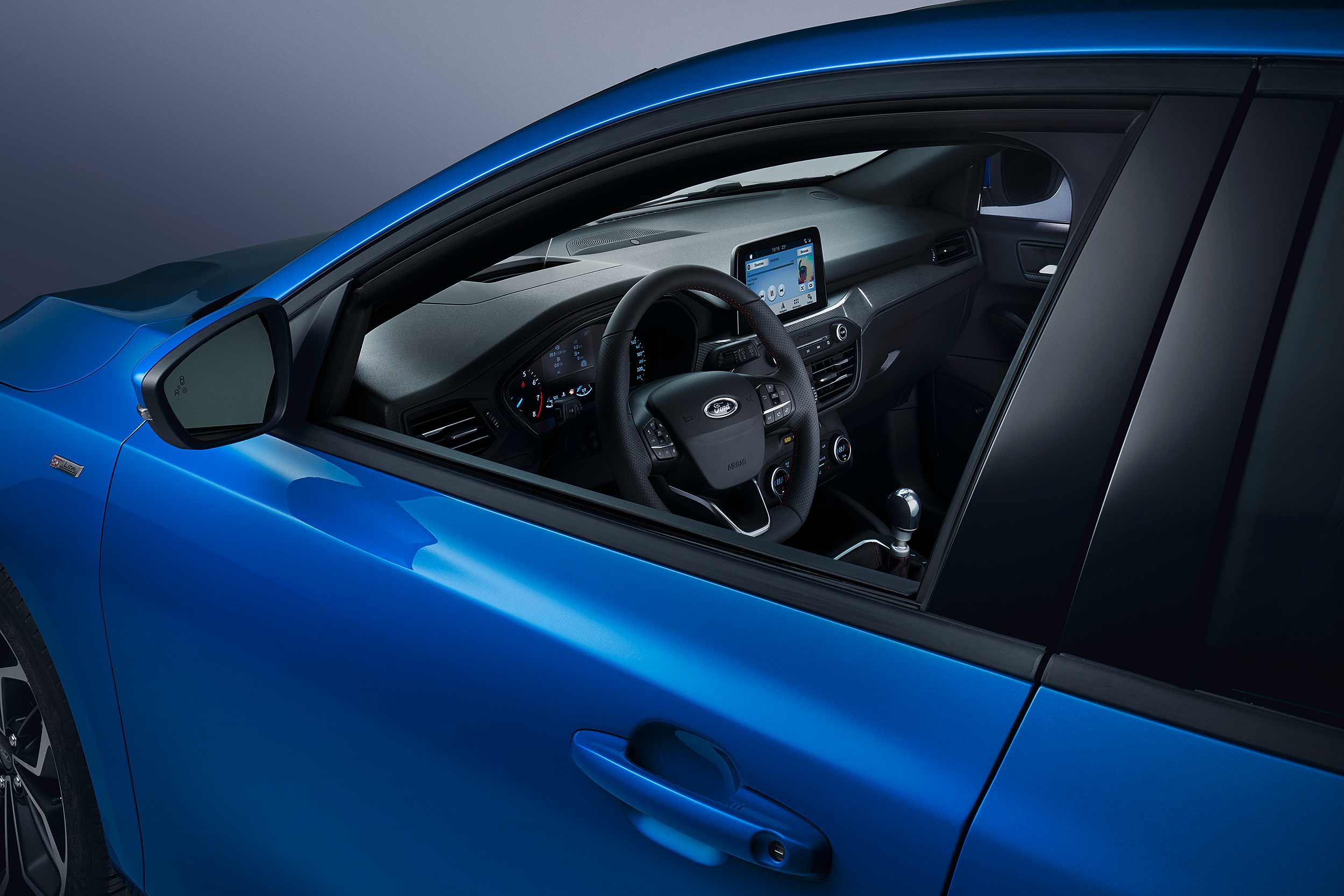
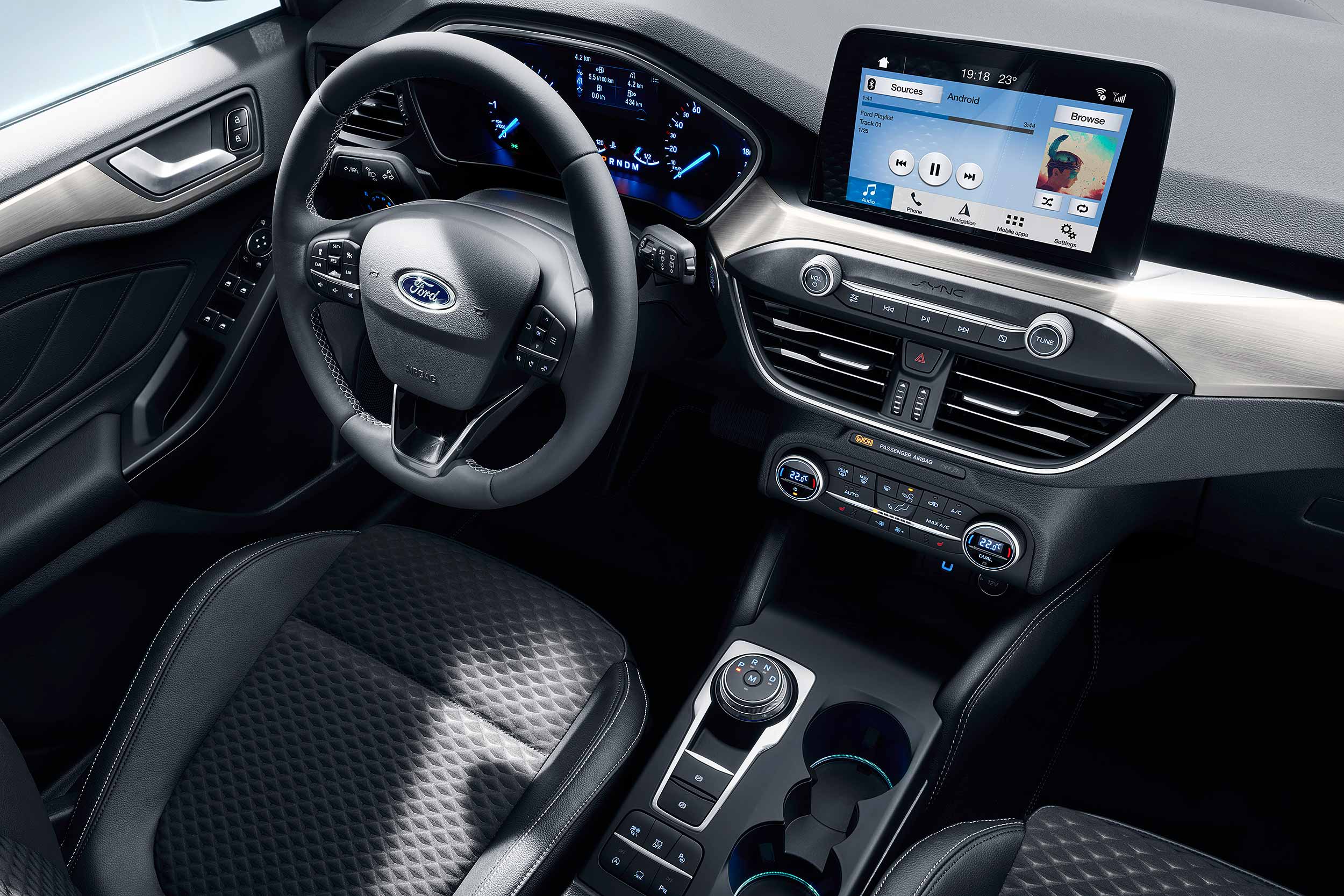
To measure up to cars such as the Volkswagen Golf, Ford has upped interior quality, and greatly simplified the layout. There’s a Fiesta-style floating central touchscreen, and optional new materials such as polished glass and brushed metal finishes. High-end and automatic models get an electronic parking brake to complete the clutter-free look.
Vignale models feature fine-grain wood and leather, ST-Line gets carbon fibre-effect and red stitching, while Active have rugged, textured surface and finishes.
Sync 3 infotainment offers Apple CarPlay and Android Auto compatibility via the 8-inch touchscreen: it’s standard on all but base Style models. For those who want to exploit its Spotify functionality, a new 675-watt B&O Play premium sound system plays through 10 speakers, including central mid-range speaker and a subwoofer in the boot.
The new Ford Focus is bigger inside. Knee room is up 50mm, there’s 60mm more shoulder room and details such as a flat floor and rear windows that stretch into the rear pillar enhance the spacious feel. An optional, openable, panoramic glass roof is available.
Focus on engines
Engine choice in the 2018 Focus is either Ecoboost petrol (1.0 or 1.5) or Ecoblue diesel (1.5 or 2.0). Both petrol engines are three-cylinder units, and you can get both with cylinder deactivation that cuts a cylinder when demand is light. Ford says the cylinder cuts and reengages in 14 milliseconds, and there’s “no compromise in performance or refinement”. The 1.0-litre comes in 85hp, 100hp or 125hp guise; the 1.5-litre comes in 150hp or 182hp form.
Ecoblue diesels deliver CO2 from 91g/km for the 95hp 1.5-litre engine; it’s also offered in 120hp form. The 2.0-litre produces 150hp, and is expected to boast CO2 emissions from 110g/km. A six-speed manual is standard on all Focus; an eight-speed automatic is offered for the first time, complete with Jaguar Land Rover-style rotary gearshifter.
Focus on chassis
The big deal with the Ford Focus ever since it was launched back in 1998 is how it drives. This one is no exception. But there is a cutback for lower-power variants: for the first time since the Escort, a Ford Focus comes with ‘lightweight’ (read: cheaper) twist-beam rear suspension, instead of the better, pricier independent short long arm (SLA) system on other models.
It’s a system derived from the setup in the Fiesta, so it should be one of the better torsion beam setups (and its more compact design yields a bigger, wider boot), but those seeking the best new Focus experience may prefer to avoid the 1.0-litre Ecoboost and 1.5-litre Ecoblue engines it’s paired with.
Because the independent SLA setup is more sophisticate than ever. Ford’s fitted variable bushes, which have different stiffnesses in different directions – so they can be firm where they need to be and soft where they don’t. They separate the subframe from the body, for a smoother ride and less noise, vibration and harshness; Ford also fits clever springs that pre-load the rear suspension with vectoring forces – making the rear suspension crisper and more responsive.
For the first time, adaptive dampers are offered on a Focus. Continuously Controlled Damping, or CCD, can adjust every 2 milliseconds. It adds intelligence to the Focus’ well-developed core chassis: for example, it can detect the very edge of a pothole and firm up the damper, so the wheel doesn’t fall as far down into it, for less of a crash-bang. While simultaneously sending a signal to the rear wheel, so it can be primed for the pothole too. Ingenious.
Different driving models are offered on a Focus for the first time – Normal, Sport or Eco; CCD adds two more modes, Comfort and Eco-Comfort, which softens the suspension accordingly. Other details Ford’s proud of include a bodyshell that’s 20 percent stiffer, and individual suspension mounting points that are 50 percent stiffer.
Focus on the future
Finally, with one eye on the future, Ford’s prepared the new Focus with a wealth of advanced driver assist tech. available tech includes Adaptive Cruise Control that includes stop and go, lane centreing and speed limit sign recognition. Evasive Steering Assist helps drivers steer around obstructions, and the Adaptive Front Lighting System has a camera-based predictive curve light and industry-first road sign detection.
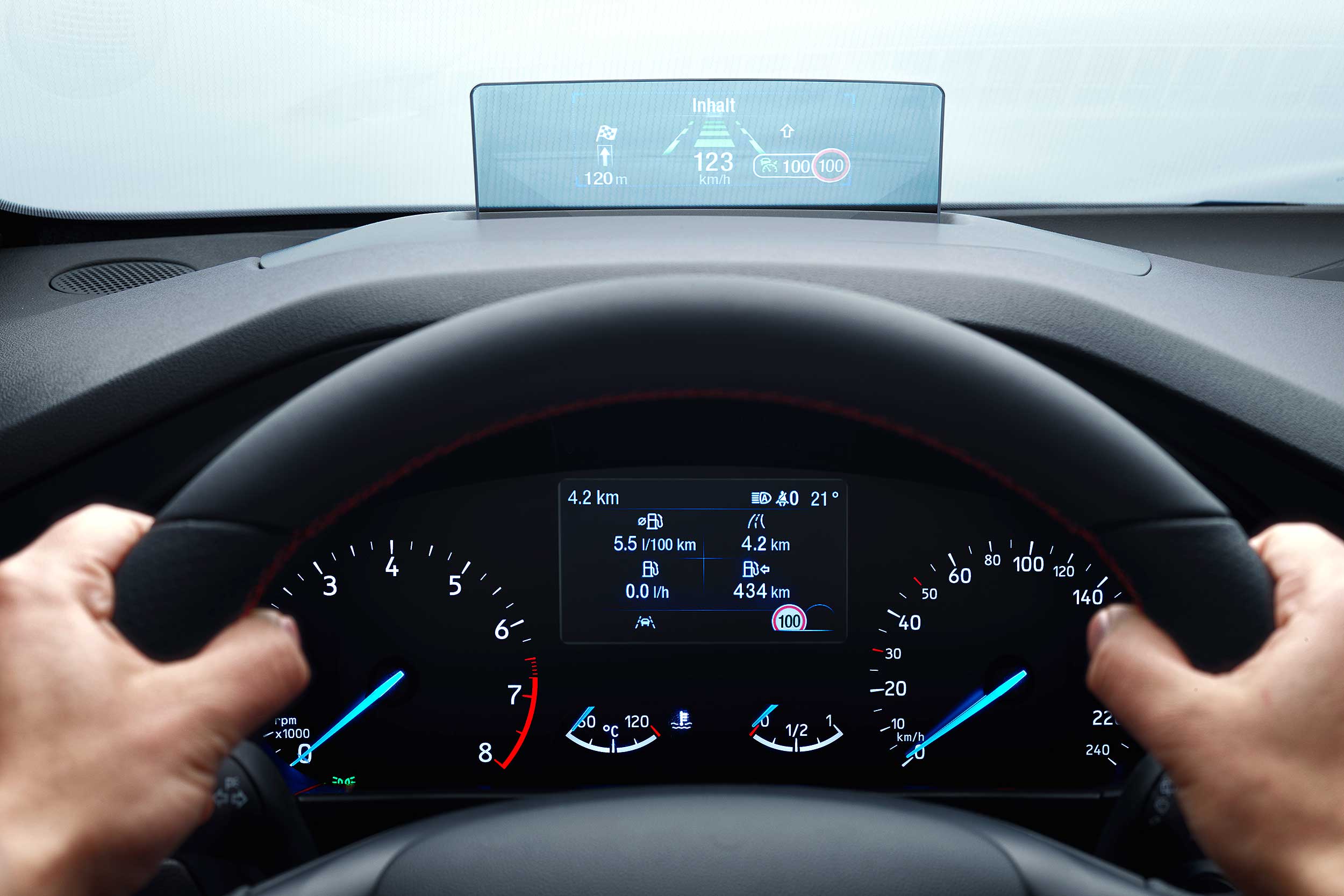
The new Focus brings head-up displays to the Ford range in Europe for the first time, while the latest generation of Active Park Assist 2 will now park it at the push of a button – handling all accelerator, brake and gear selection. Ford says the combination of autonomous technologies, under the banner Ford Co-Pilot360, “brings technologies synonymous with Level 2 automation to a family car”. Presumably the official Level 2 Focus will arrive later, to take on Nissan’s Level 2-compliant ProPilot system now offered in the Qashqai and Leaf.
Ford has sold 16 million Focus since the model was launched in 1998, including 7 million in Europe. Almost 2 million have been sold in the UK, showing what a key market Britain is for the new family hatch. Perhaps this is why Ford chose to launch the fourth-generation car here, in London. Later this year, we’ll find out if UK buyers will reward this decision with sales volumes strong enough to topple the Volkswagen Golf as Britain’s favourite family hatch…
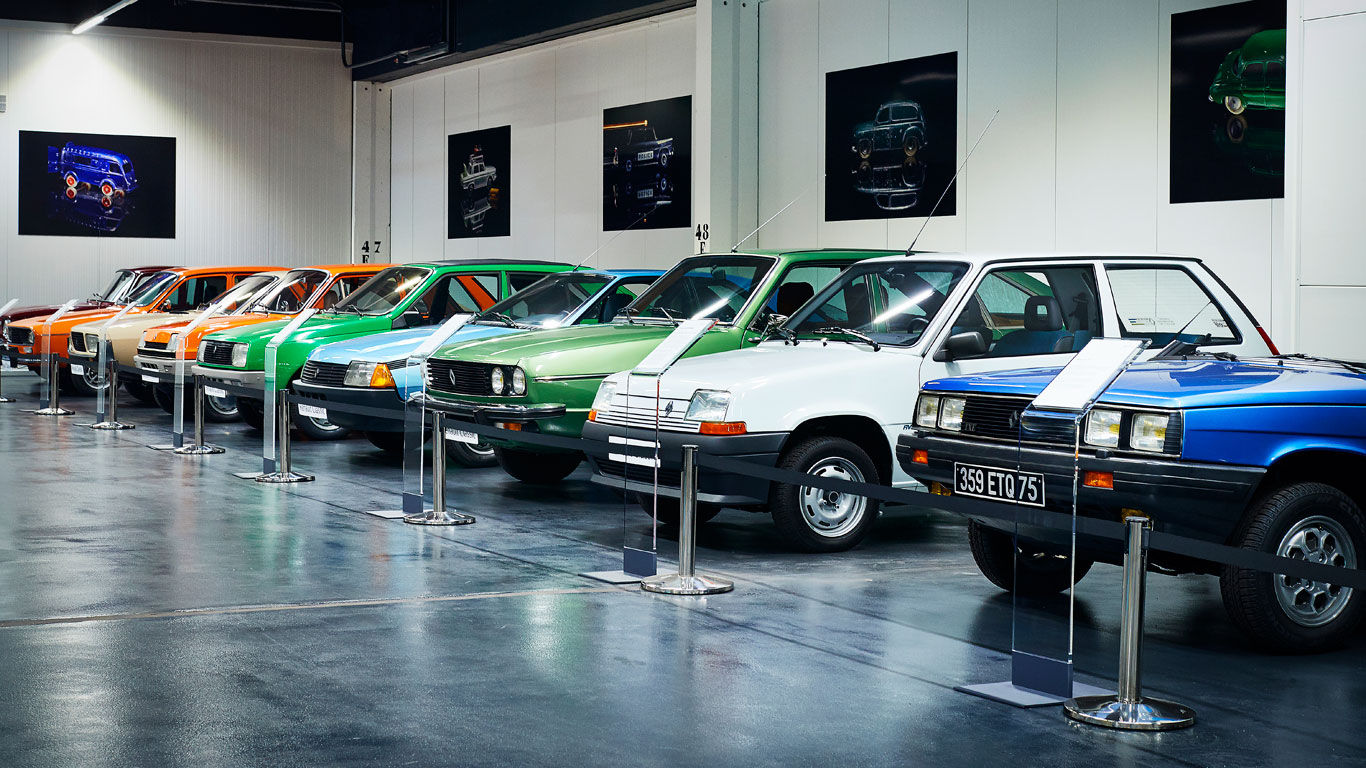
French car manufacturer Renault is celebrating its 120th anniversary this year. The firm – which is headquartered in Paris – has quite the heritage to celebrate, which explains why it has no fewer than 750 classic cars in its collection.
While the cars are dotted around France, a purpose-built garage has recently opened at its Flins factory to house a small part of the collection. Open only to members of staff, we were allowed inside for a sneak peek as part of the brand’s anniversary celebrations.
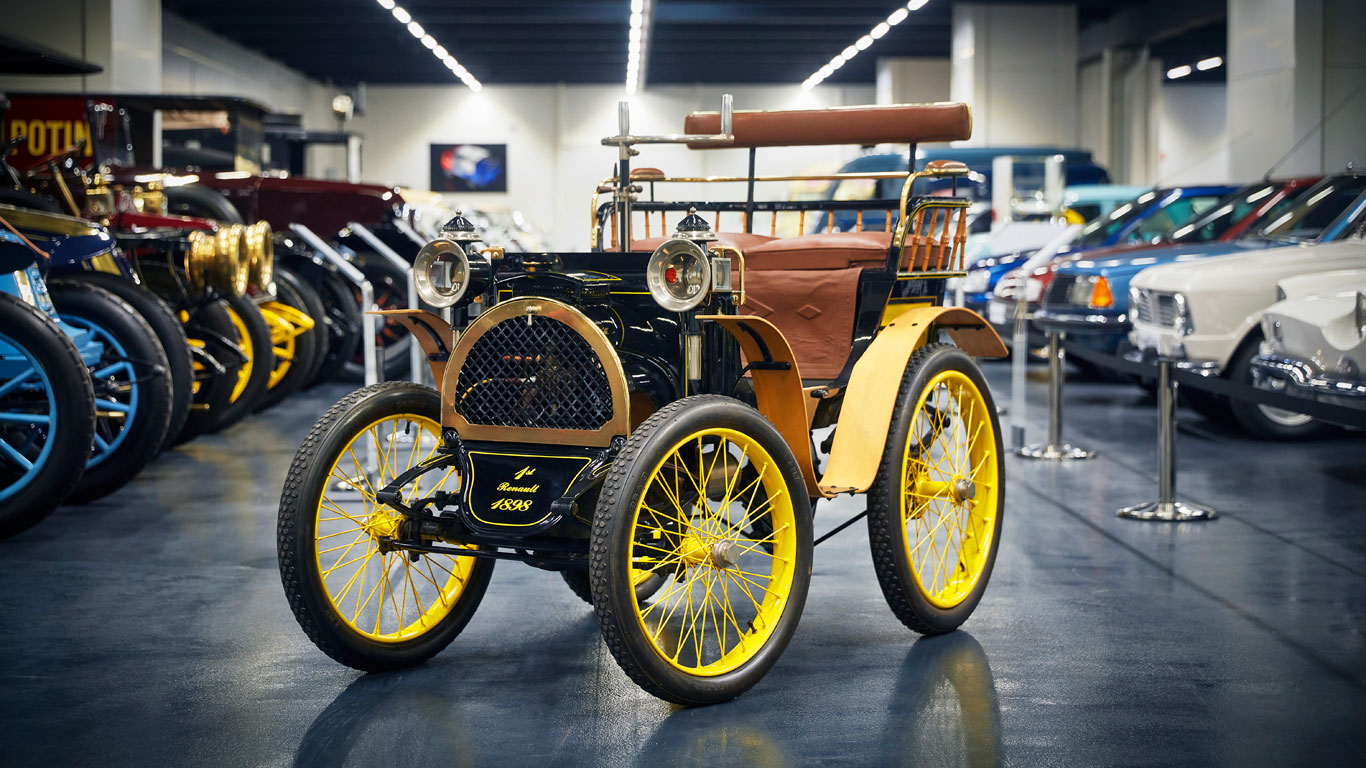
Renault Type A
The story goes that Renault was founded on Christmas Eve 1898, when aspiring engineer Louis Renault drove his first car, a Type A voiturette, up the incredibly steep Rue Lepic in Paris. The assembled audience was so impressed that 12 deposits were received, giving the 21-year-old the funds to acquire a factory.
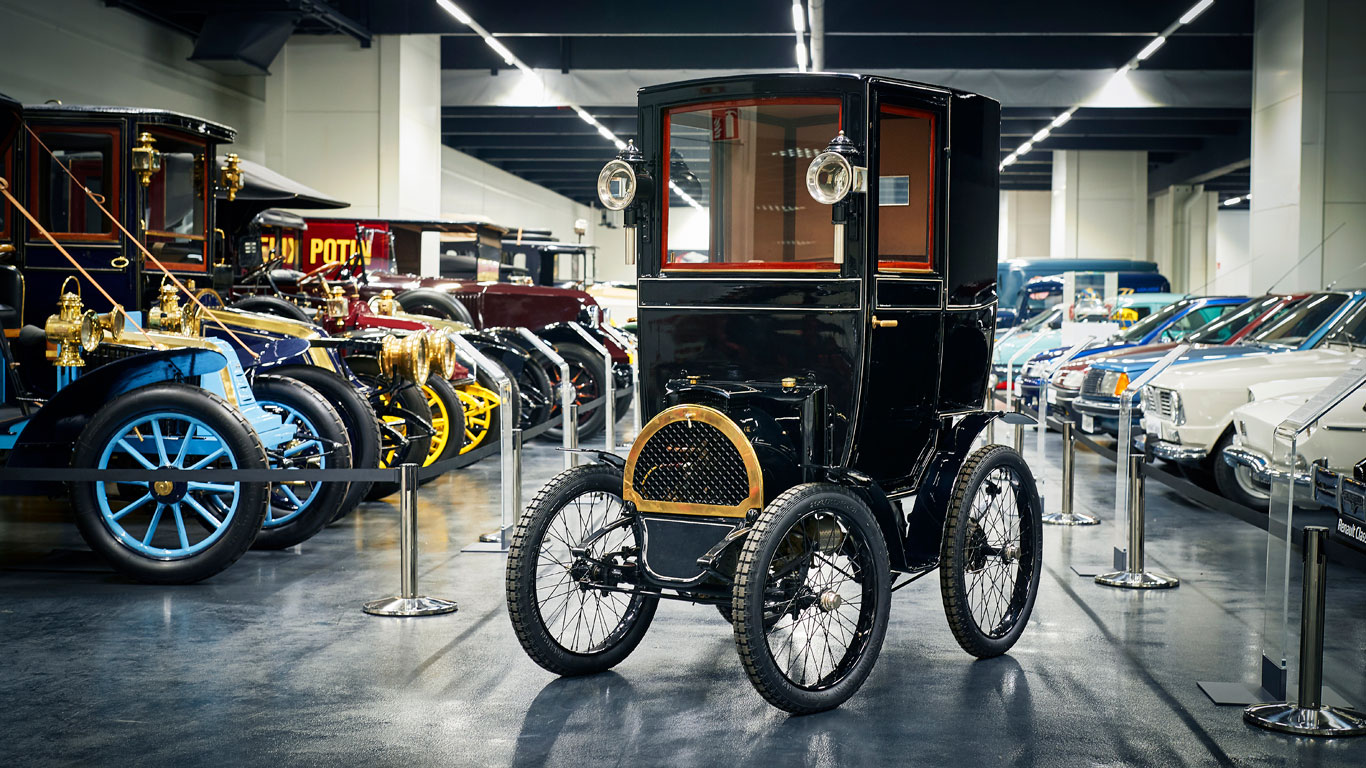
Renault Type B
Many of Louis Renault’s early customers were friends and family, so he was keen to listen to any feedback and demands they had. The main thing buyers wanted that the Type A didn’t satisfy was comfort. Working with coachbuilder Labourdette, Renault designed a closed body that appeared on the Type B in 1899.
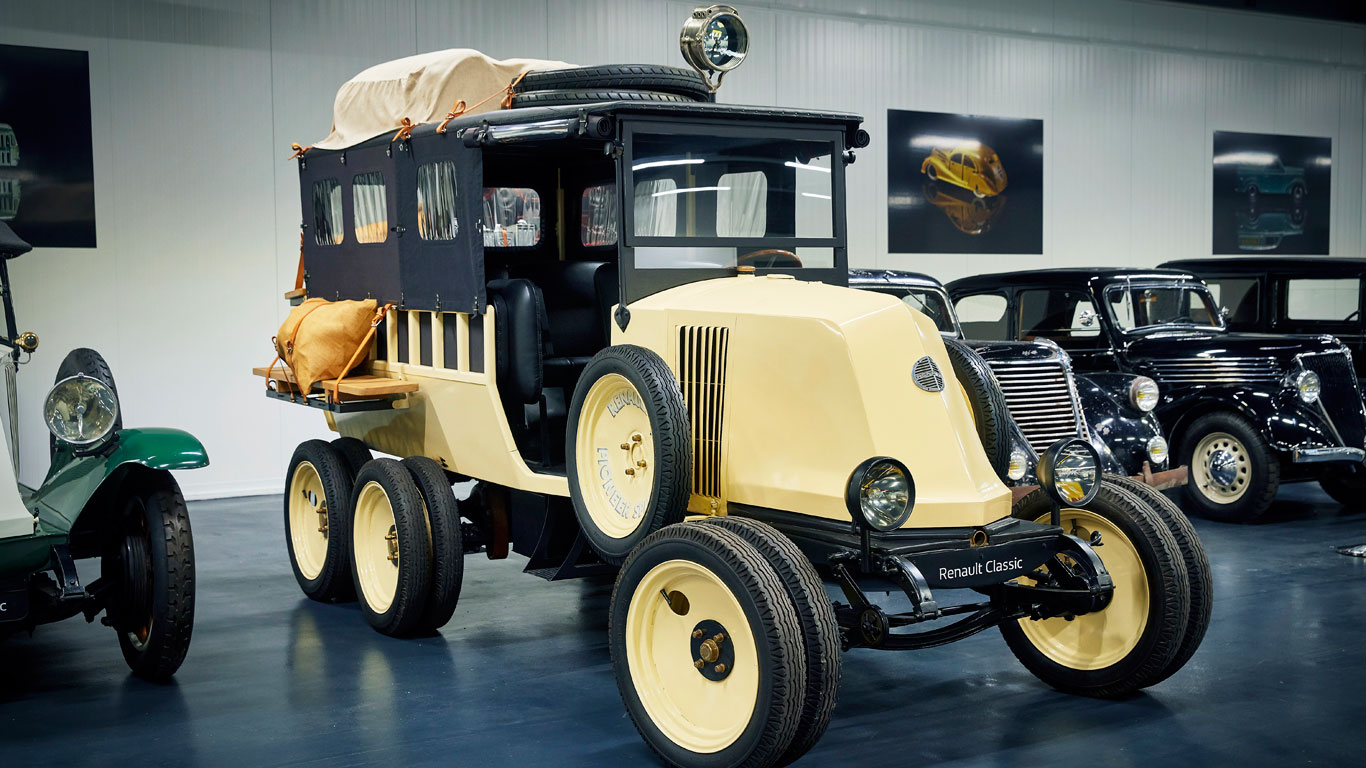
Renault six-wheel type MH
When you think of expedition by motor car, a Land Rover might spring to mind. But the French were doing it years before the British. In 1923, Renault revealed the Six-Roues – a powerful truck with six wheels and low-pressure tyres, along with two-axle drive to provide off-road capability. A number of expeditions followed, including numerous trips across the Sahara.
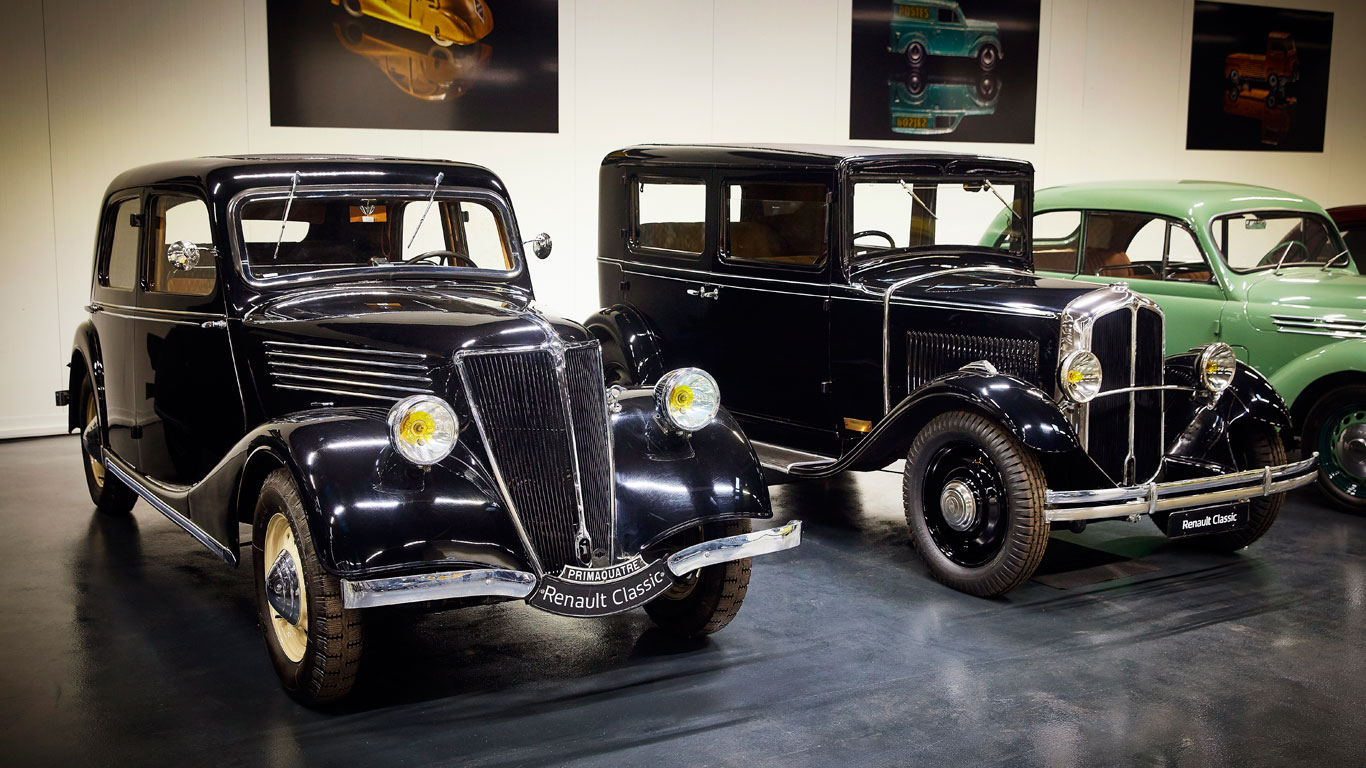
Renault Primaquatre
In the wake of the Great Depression, manufacturers were looking at building cheaper cars that were within reach of normal men and women. Louis Renault was adamant that this wasn’t the right approach and, during a time before the middle class emerged, Renault continued to build high-quality cars for affluent families. The Primaquatre of 1937 was a four-seat family car, 3.7 metres long and capable of 105km/h (65mph). It had a start price of 19,500 francs.
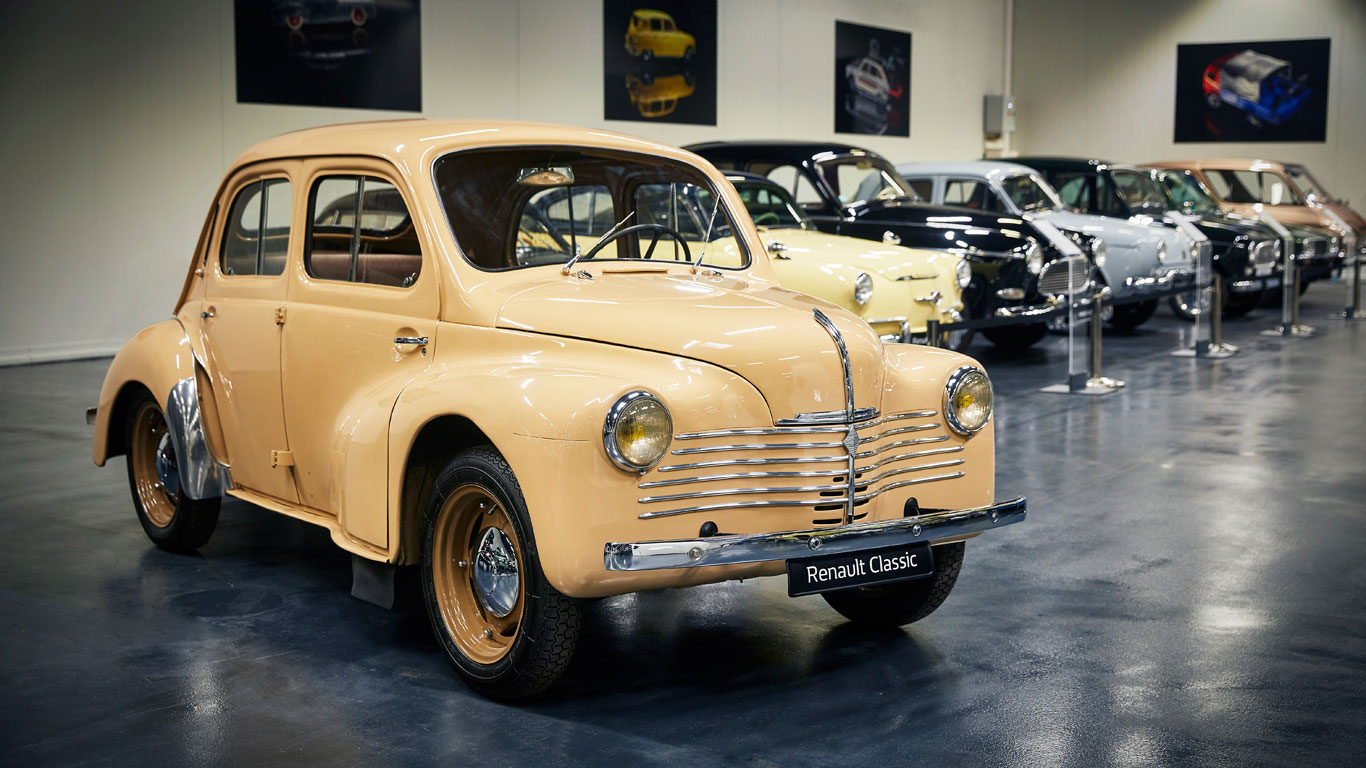
Renault 4CV
In contrast to Louis Renault’s beliefs that the firm should concentrate on premium cars for affluent motorists, the firm quietly worked on an affordable small car during the Second World War. The 4CV, as it went on to be named, was France’s answer to the Volkswagen Beetle. More than one million were produced before it was replaced by the Renault 4 in 1961.
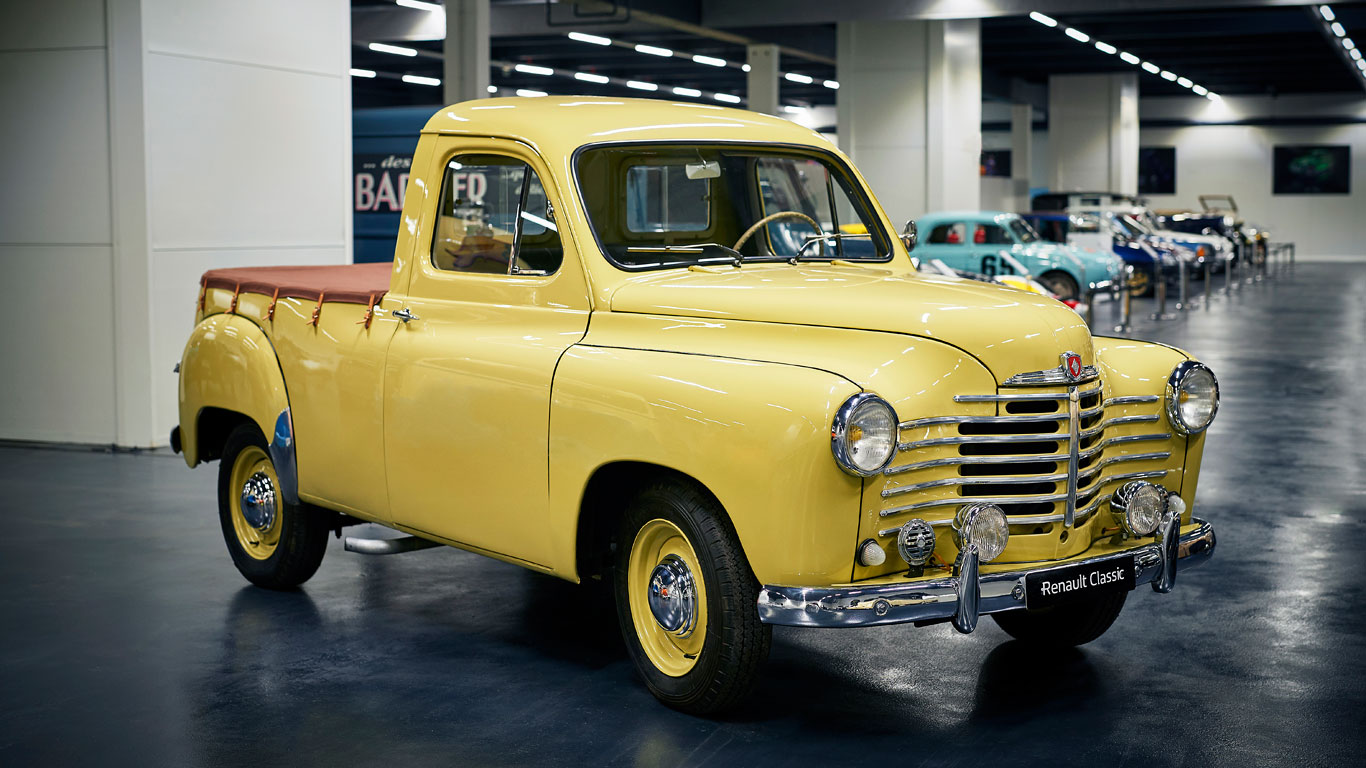
Renault Colorale
Think 4×4 pickups are a relatively recent thing? Think again. In 1946, Renault began considering a ‘station wagon for the countryside’. The result was the Colorale range, with a number of utilitarian and family versions introduced between 1950 and 1951. They were fairly old-fashioned from a technical point of view, with a truck-like chassis and a tractor engine.
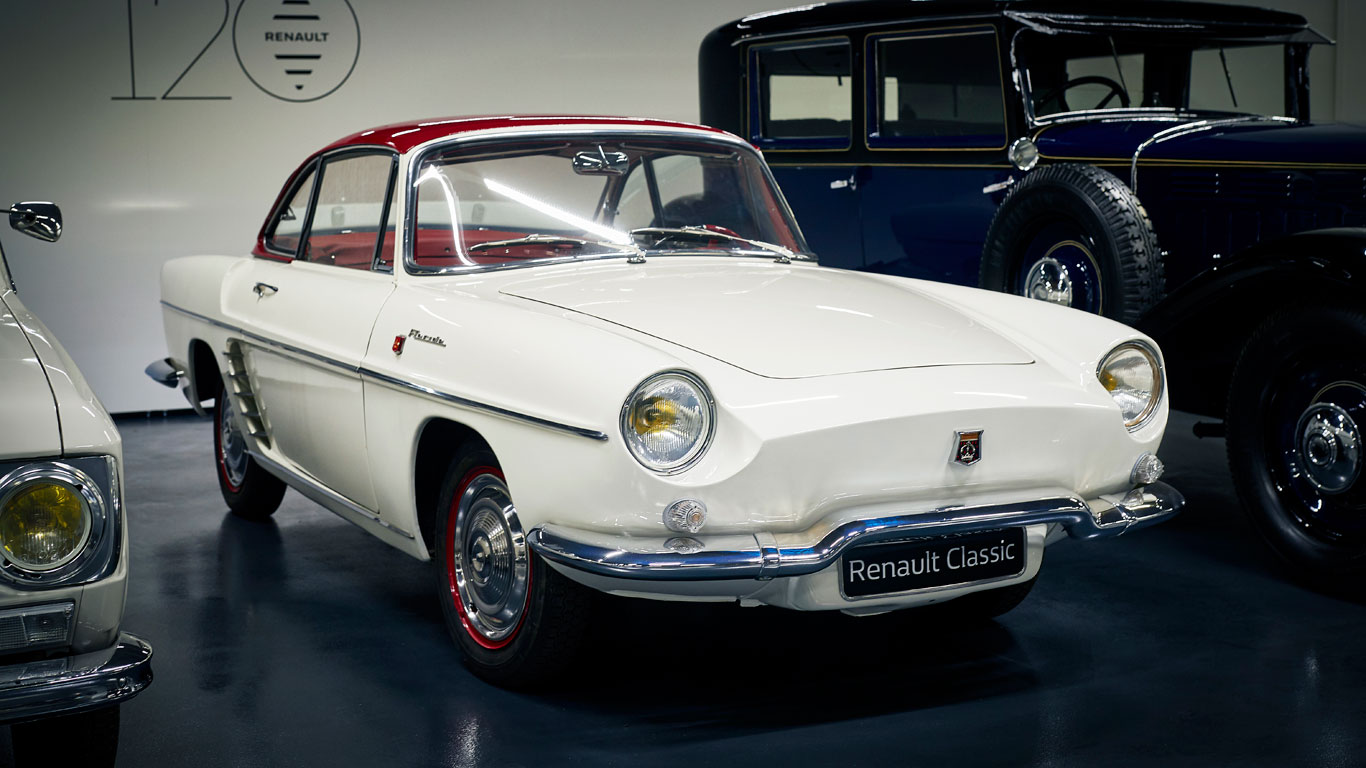
Renault Caravelle/Floride
Based on the Renault Dauphine (we’ll come onto that in a minute), the Caravelle was also known as the Floride. That’s because the idea was initially conceived by US dealers at a convention held in Florida, who said a coupe/cabriolet model would improve the brand’s image in the States. However, Renault was concerned that naming it after a US state would exclude buyers elsewhere, hence the Caravelle name.
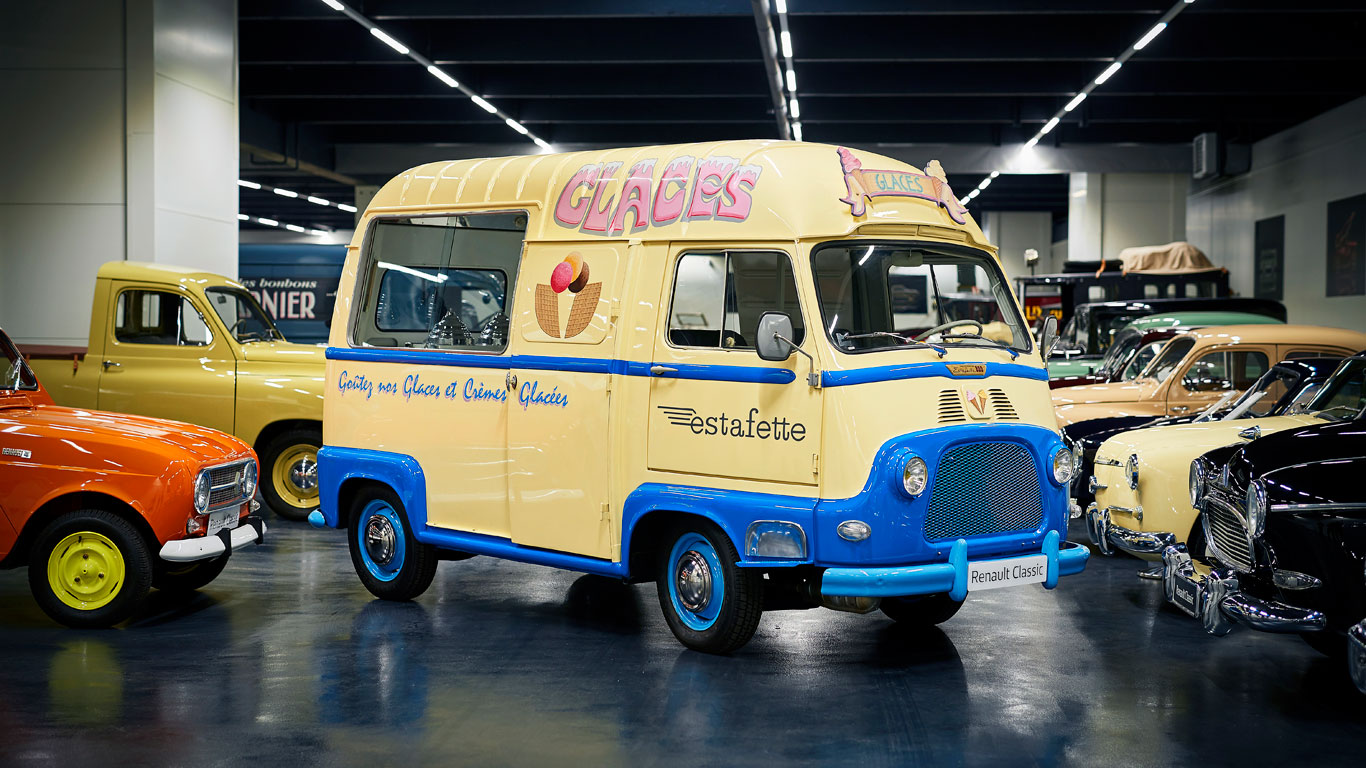
Renault Estafette
Introduced in 1959, the Estafette was a genuinely clever van. Front-wheel-drive (a first for Renault), it featured a flat floor and a short turning circle, as well as sliding doors, making it the perfect workhorse for French tradesmen. Production lasted until 1980, by which time more than 533,000 Estafettes had been produced.
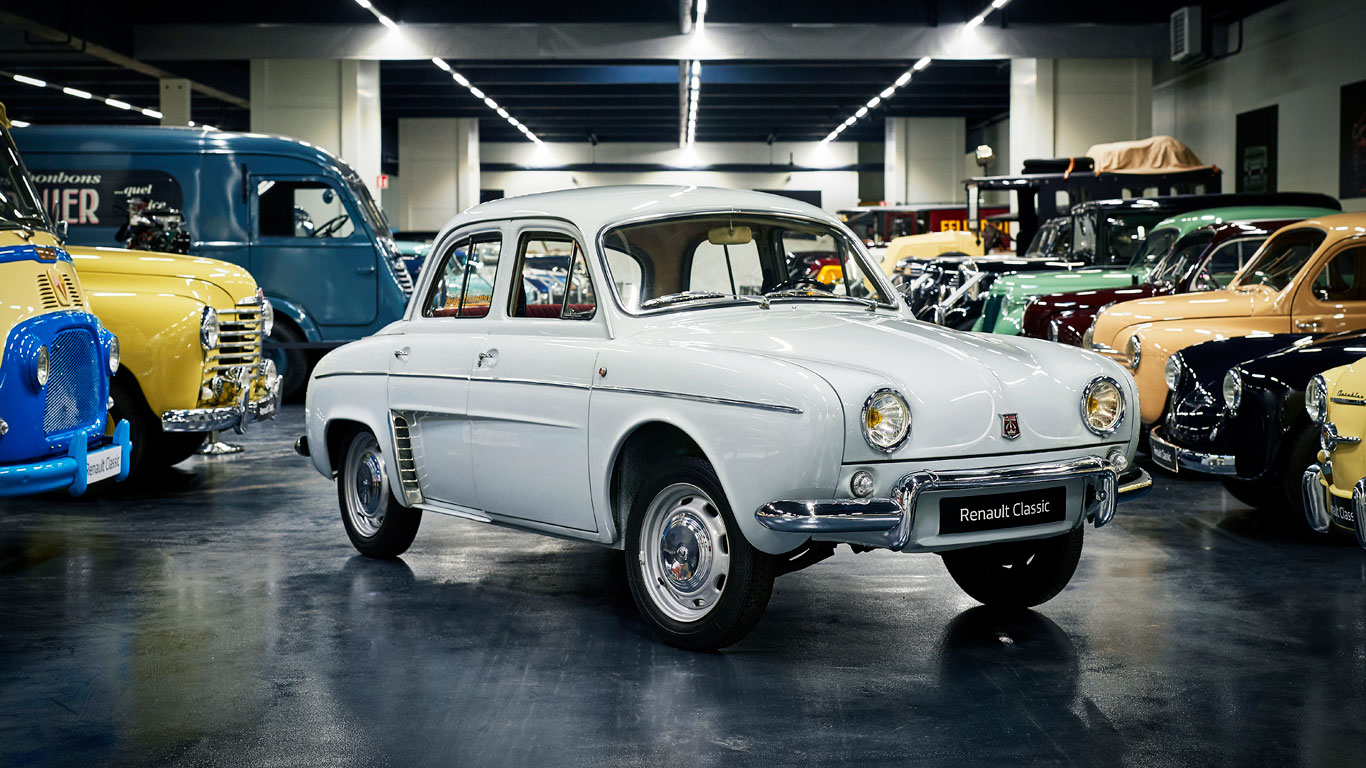
Renault Dauphine
As a successor to the Renault 4CV, the Dauphine continued to rebel against Louis Renault’s wish to target the affluent classes. A rear-engined rival to the likes of the Volkswagen Beetle and Morris Minor, the Dauphine was a hit the second it was revealed at the 1955 Paris Motor Show. More than two million were sold during its 11-year lifespan.
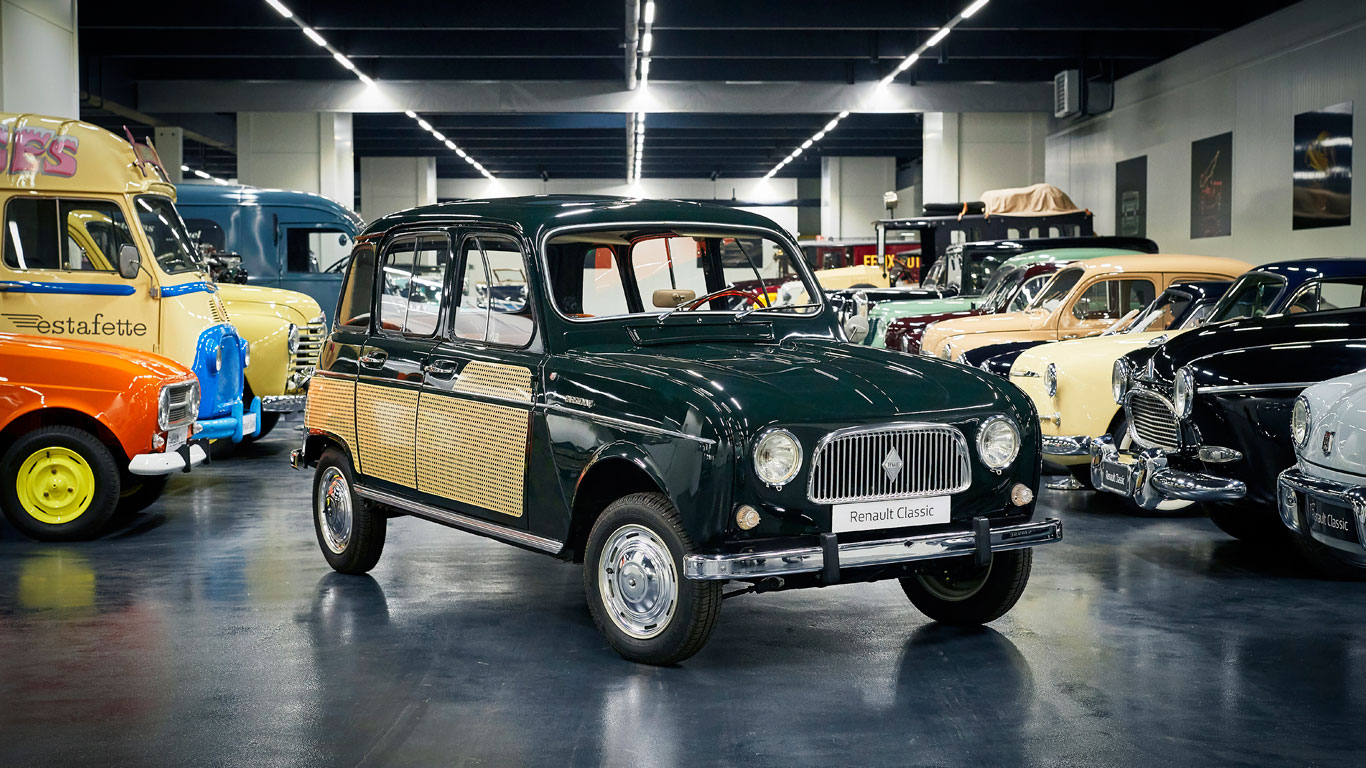
Renault 4
The Renault 4 was more than simply a replacement for the 4CV. It’s a symbol of France in the early 1960s. A rural exodus was happening, seeing people shift from the countryside to new suburbs being developed on the edge of urban areas. As such, Renault decided to launch ‘the ultimate versatile automobile’. Capable of serving as a workhorse during the week, the Renault 4 could also double up as a family car at weekends.
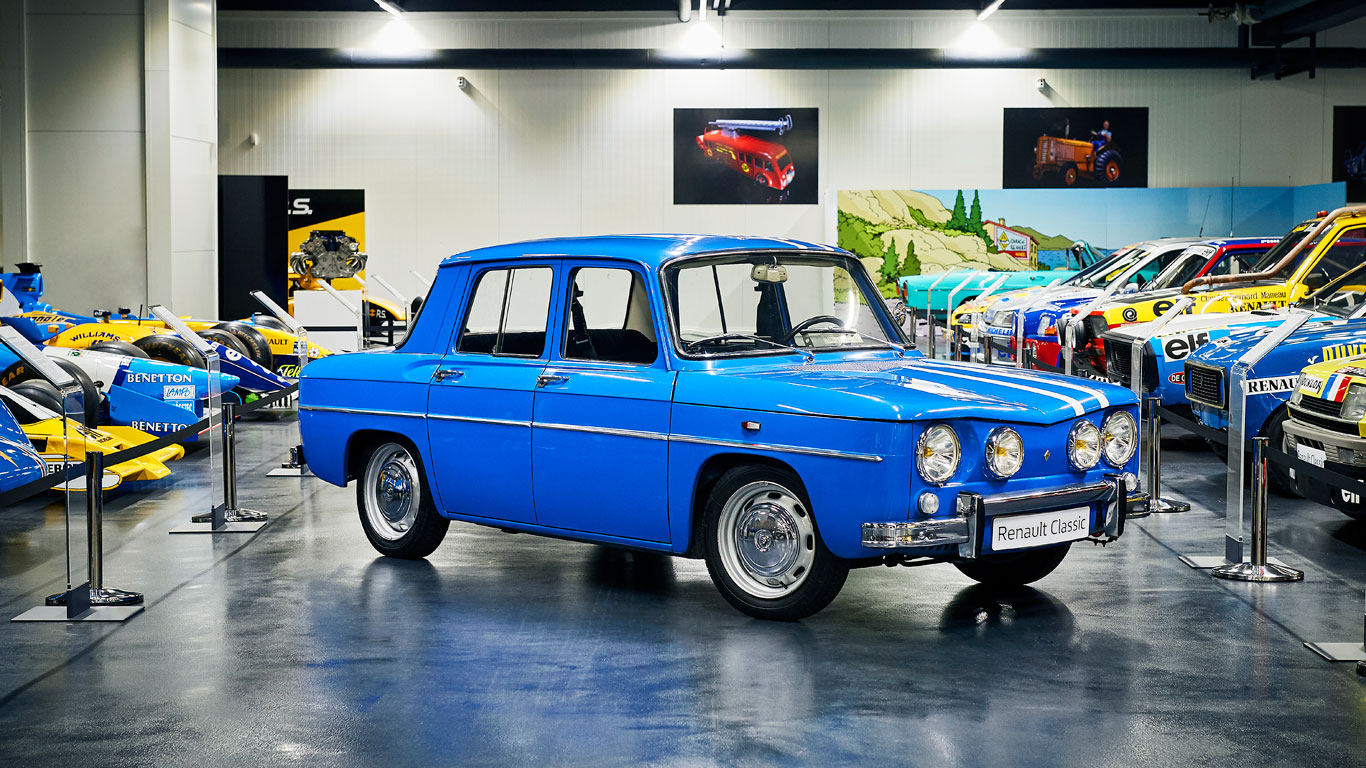
Renault 8 Gordini
Although by the 60s Renault primarily catered for people wanting affordable transport, there was still an enthusiastic audience captivated by the likes of the 4CV used in the Monte Carlo Rally. In 1964, Renault brought out the Renault 8 Gordini, with the standard car’s 50hp engine replaced by a 95hp 1,100cc unit. The firm intended to build just 1,000 cars, but 11,600 customers parted with money for the Gordini – despite a price tag close to double that of the standard car.
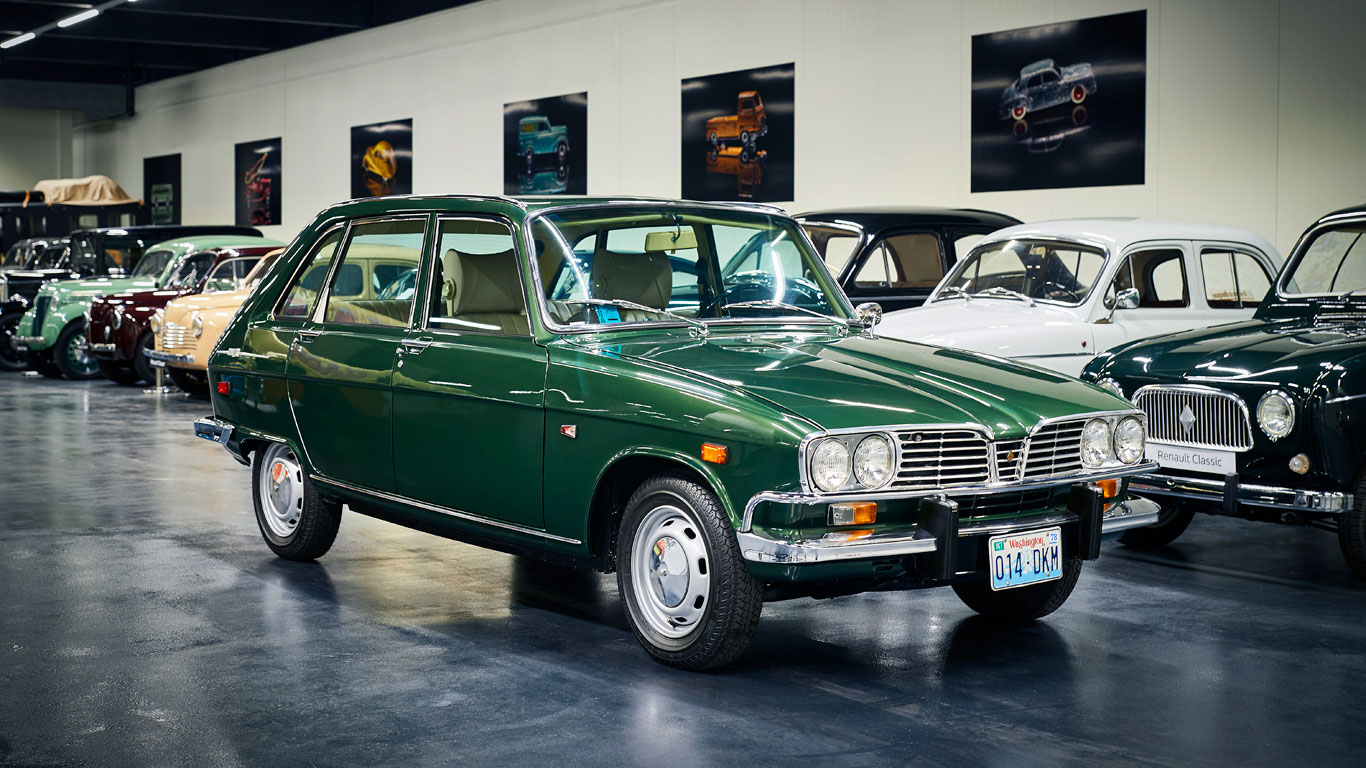
Renault 16
The world’s first production hatchback, the Renault 16 was launched in 1965 as a bigger, upmarket alternative to the Renault 4. Halfway between a saloon and an estate, buyers and journalists struggled to get their head around this new bodystyle at first, but it soon became a huge success. More than 1.8 million were sold worldwide during its 15 year production run. This example in Renault’s collection was destined for the US, where the 16 was sold in tiny numbers.
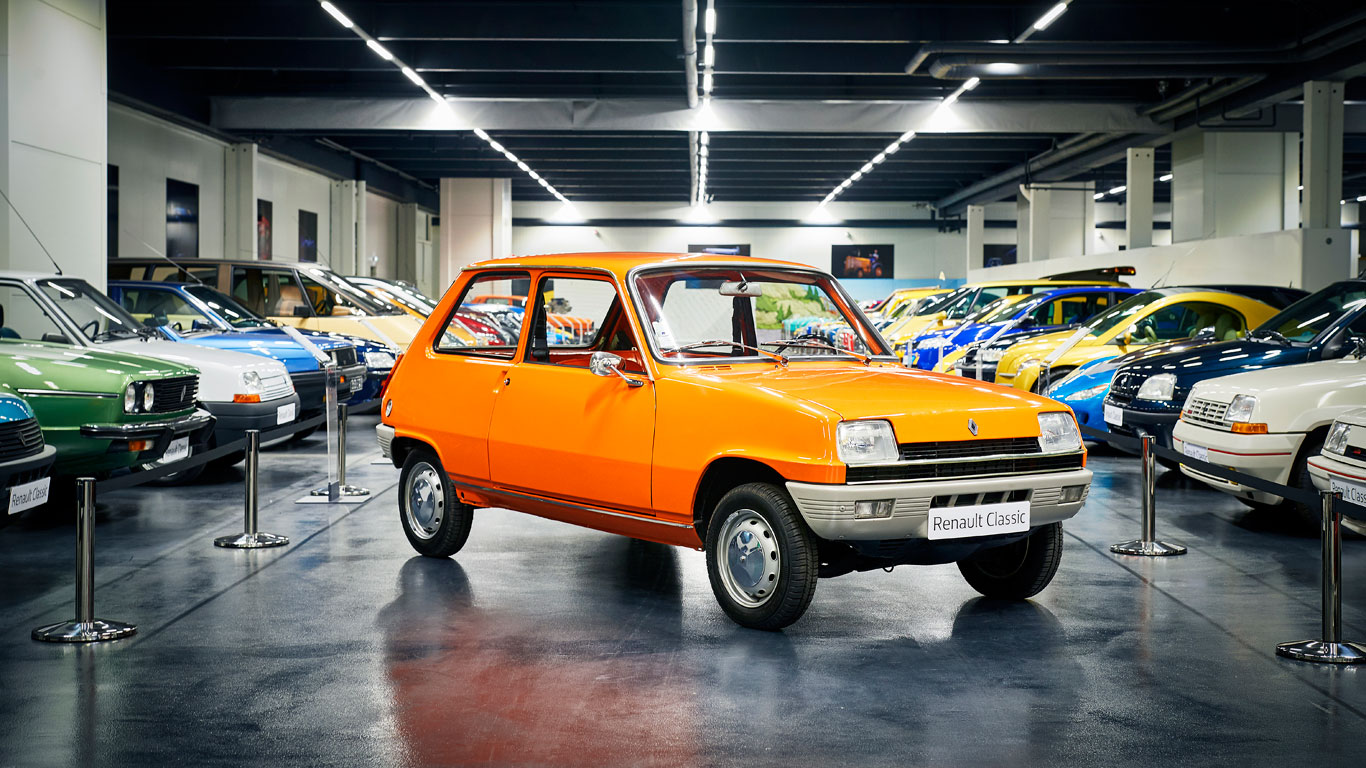
Renault 5
Launched in 1972, the Renault 5 was unashamedly a car designed for women. It featured a curvy shape, just two doors (allowing children to stay safe in the back without the threat of them opening a door) and an easy-to-lift hatchback making it convenient for supermarket shopping. Oh, and plastic bumpers were used for the first time, providing protection from minor impacts.
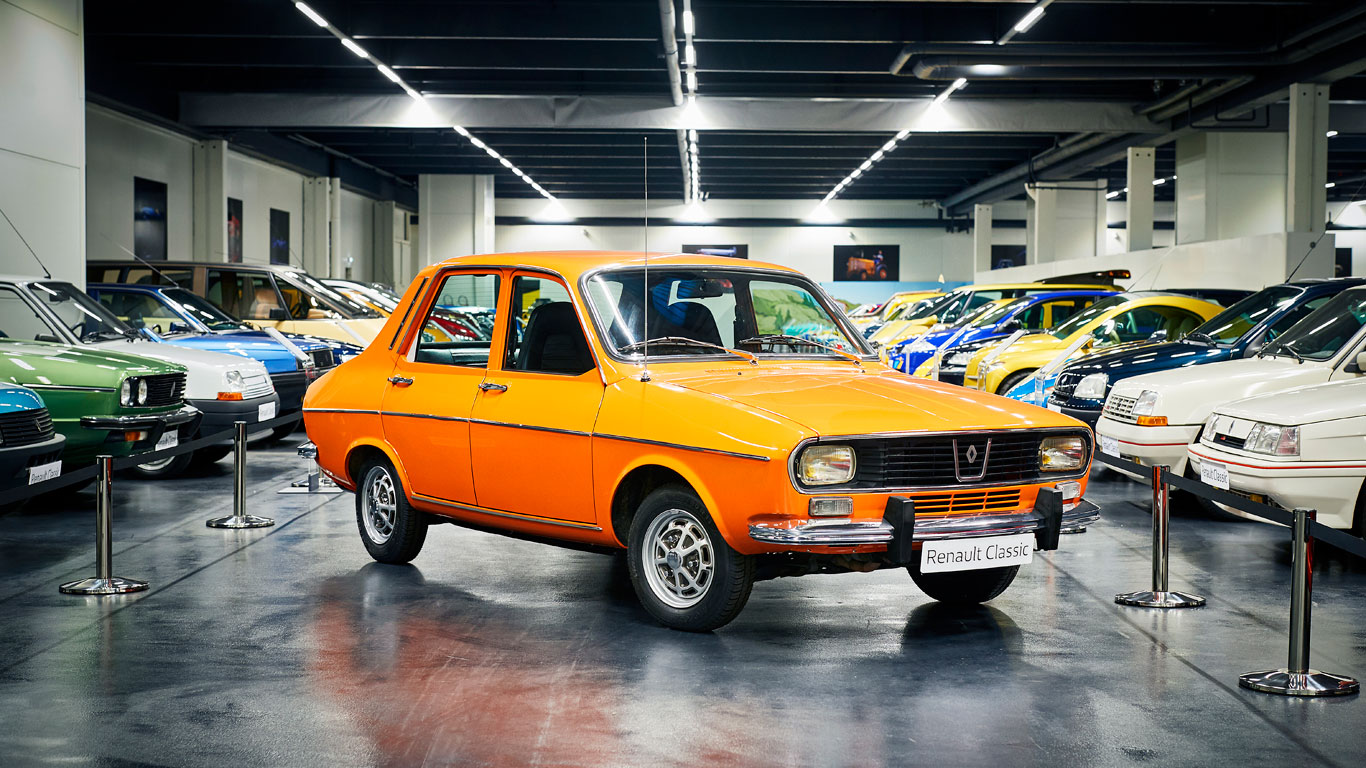
Renault 12
Simple, inexpensive and unbreakable. That was the brief for the Renault 12, revealed at the 1969 Paris Motor Show. Developed with international sales in mind, the 12 would take Renault to new markets, with much of its testing carried out in Brazil. It went on to find a following in Romania, where it was built under licence by the Dacia brand, and Turkey. It was a commercial success, with 2.5 million sold internationally.
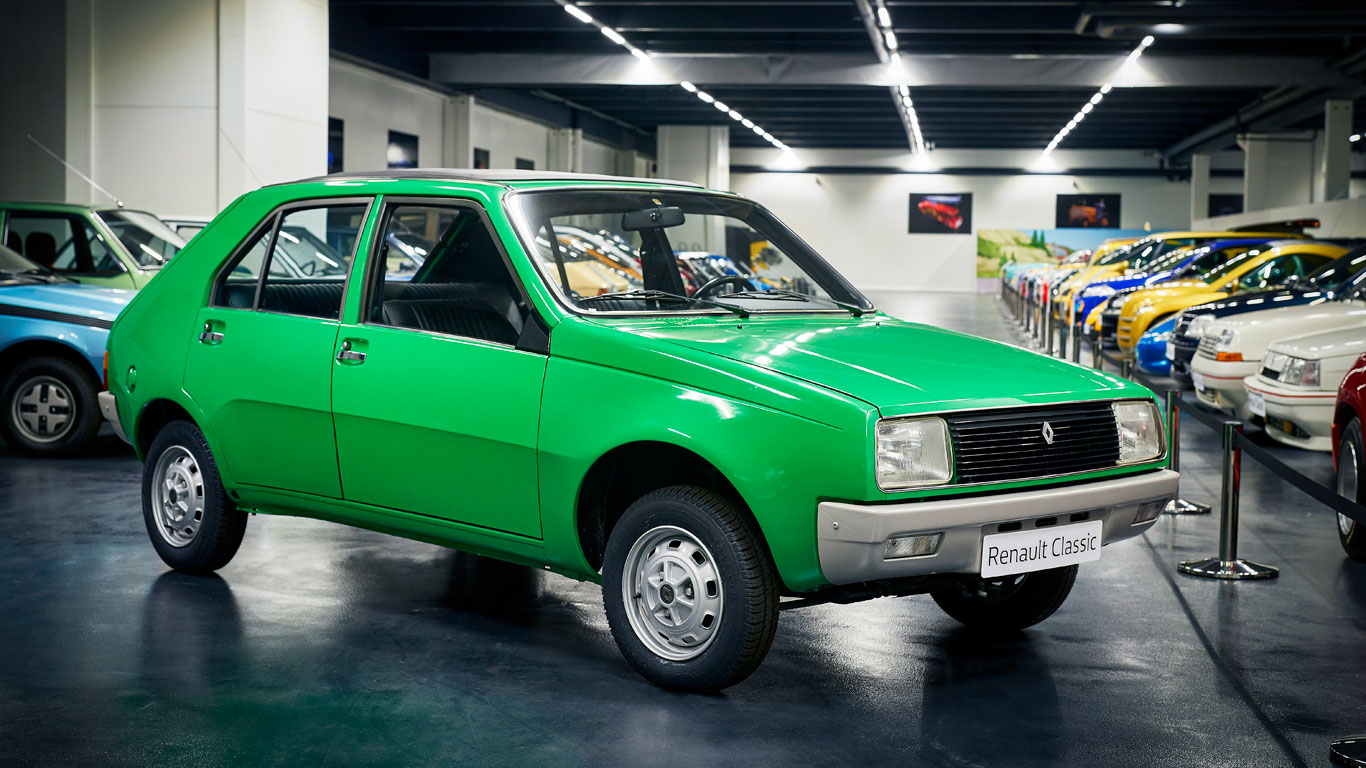
Renault 14
Renault’s trademark had become the hatchback since the R16, but it didn’t offer a mid-range hatch. The Renault 14 was introduced in 1976 following a clever advertising campaign that caused it to be known as the ‘pear-shaped’ car. It was the first Renault to be powered by a transversely-mounted powertrain, allowing a roomier cabin and increased luggage space.
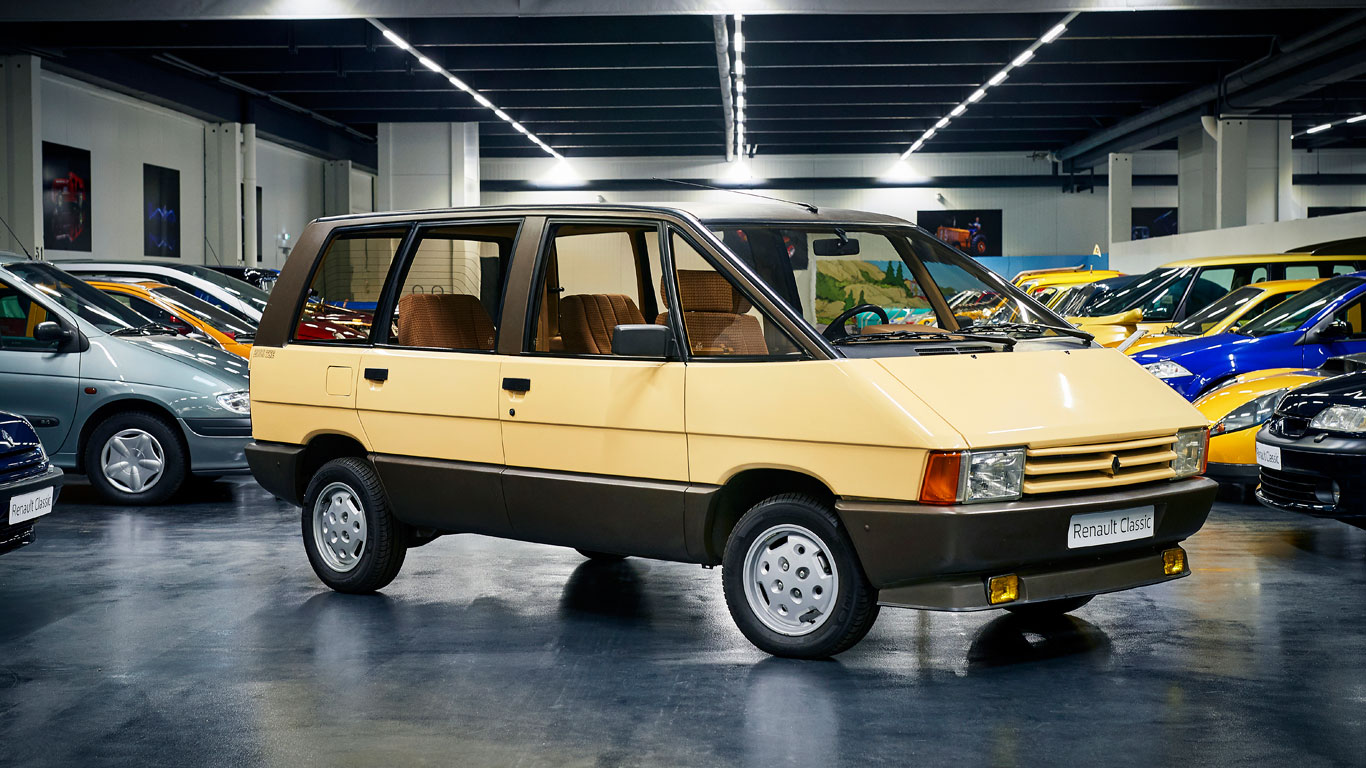
Renault Espace
Renault had been pushing a ‘car for living’ philosophy with its series of practical cars designed with families in mind – including the Renault 4, 16, 6 and 5. With the launch of its Espace people carrier, it pushed the idea further still, with a revolutionary new vehicle designed by Matra. Although sales were slow to begin with (just nine were sold in its first month on sale), families were soon tempted by the versatility offered by the world’s first MPV.
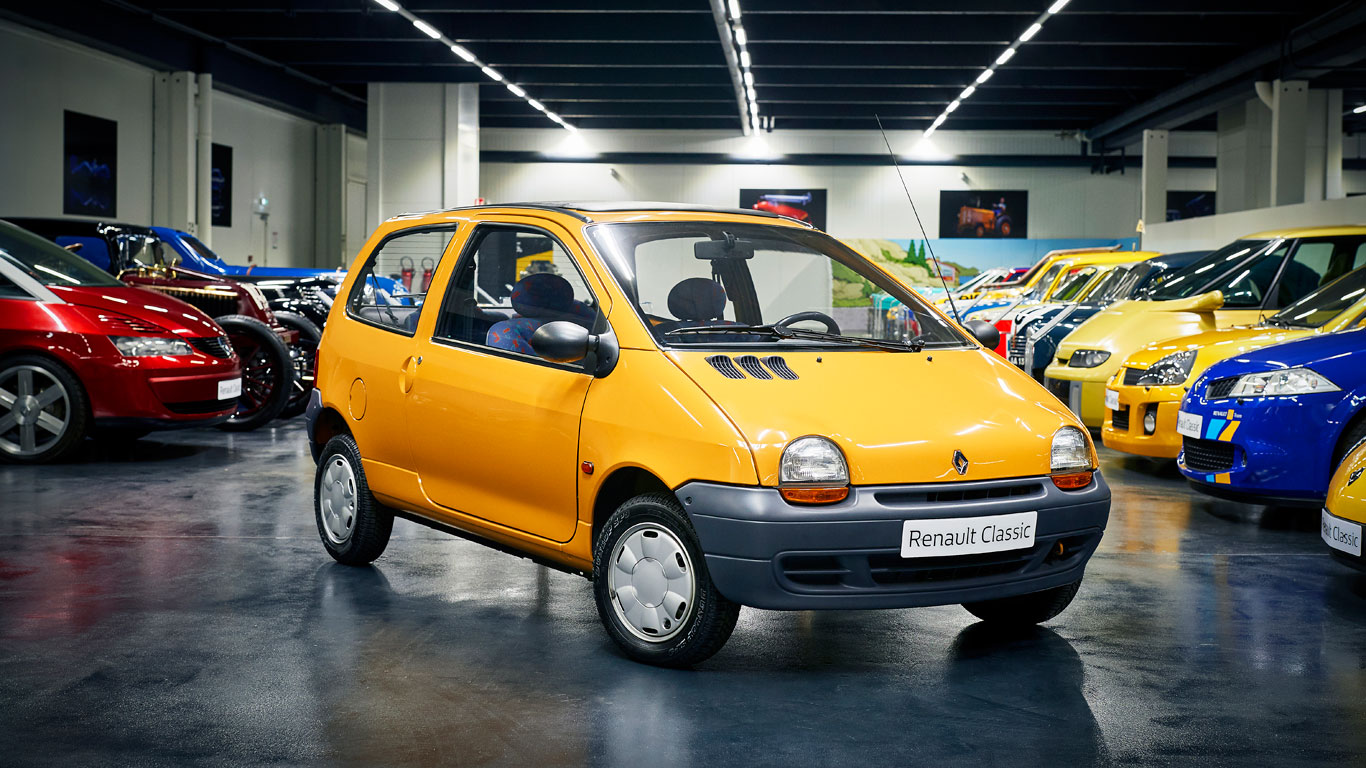
Renault Twingo
Described by Renault as having an exterior design that evokes a ‘small, friendly animal’ combined with the interior of a ‘mini passenger van’, the Twingo was launched in 1993 as a quirky yet affordable and practical city car. Initially available with just one trim level and a choice of four colours, “it’s up to you to invent the life that goes with it,” said its launch slogan.
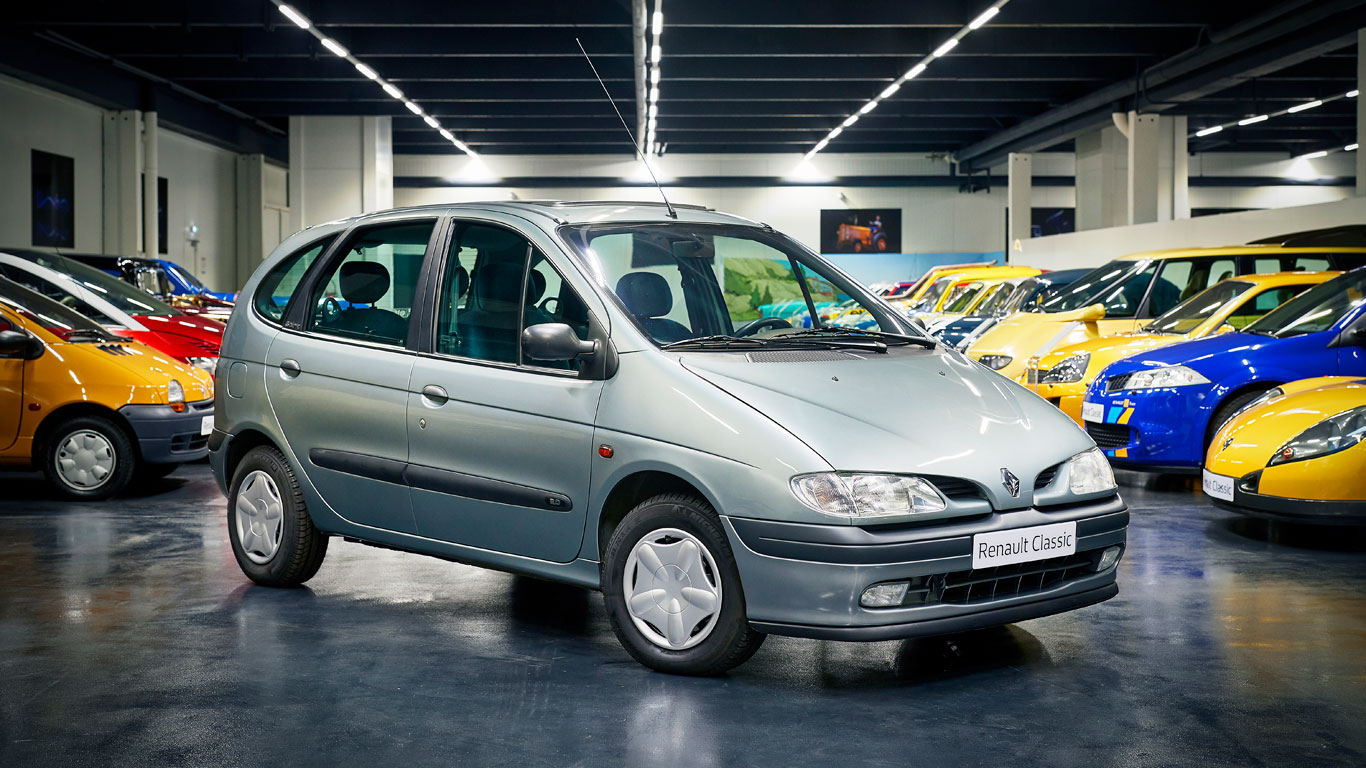
Renault Scenic
Having gained experience with its larger Espace people carrier, Renault set about launching a car for the late-20th-century family. Following on with the ‘car for living’ philosophy, the Scenic featured a sliding rear seat that could be used as a table, tilting rear side seats, tray tables for passengers and even a bottle rack. The Scenic was so impressive when it was launched in 1996 that it went on to win the 1997 European Car of the Year award.
Renault Avantime
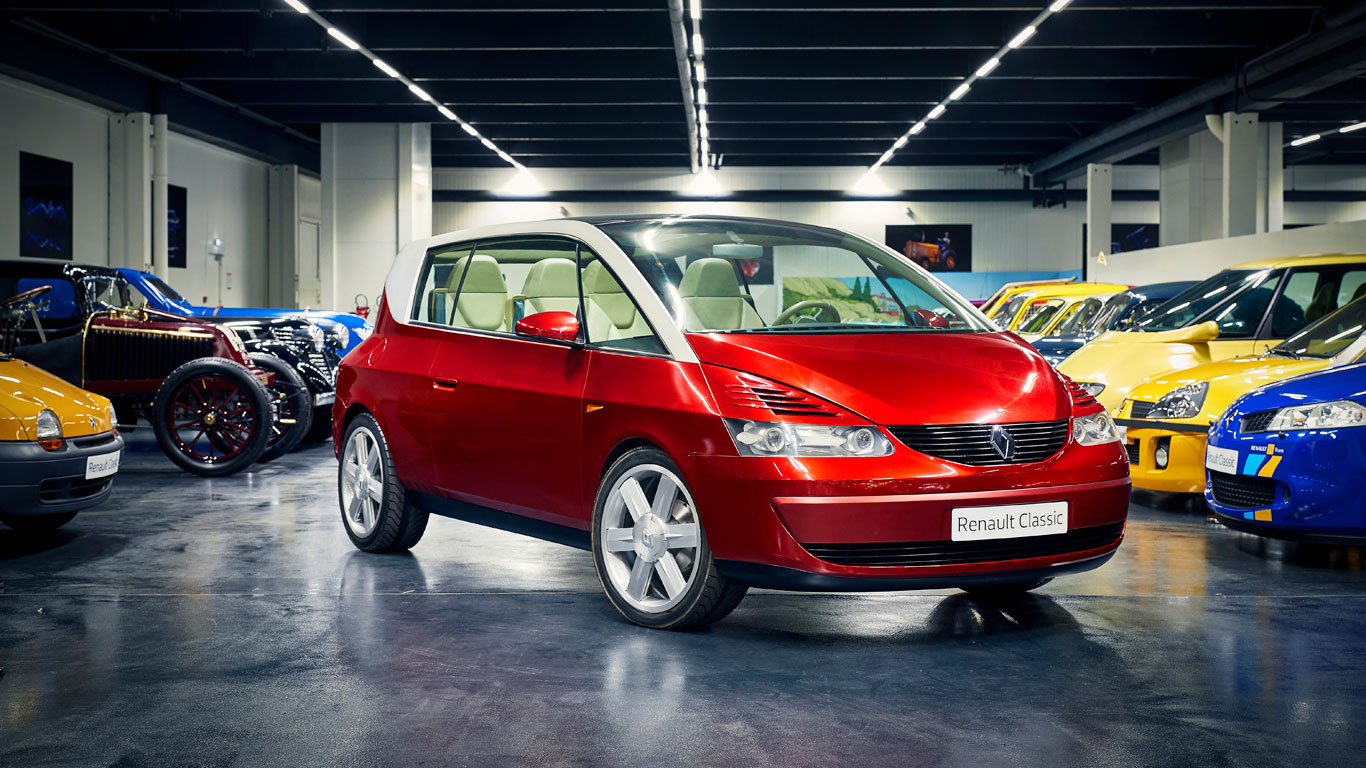
Renault’s never been afraid of taking risks, and in 1999 it launched a bizarre hybrid of coupe and people carrier. The Avantime ‘embodied the leisure car of the new millenium,’ says Renault, with large windows, an all-glass sunroof and a minimalist centre console. Although reception was generally good, it sold in tiny numbers and production was dropped after just two years on sale.
 The growing pressures throughout the European car industry have been highlighted by March 2018 new car registration figures that show the first March fall in four years. 5.3 percent fewer cars were sold across Europe than in 2017.
 Aston Martin first used the DBS name back in 1967. It revived it in 2007. Now, for 2018, it’s back for a third time – adorning a car Aston describes as a range-topping super-GT.
  Global car sales data has confirmed the


 Suzuki has announced its new Swift Sport will cost £17,999 when it goes on sale later this year.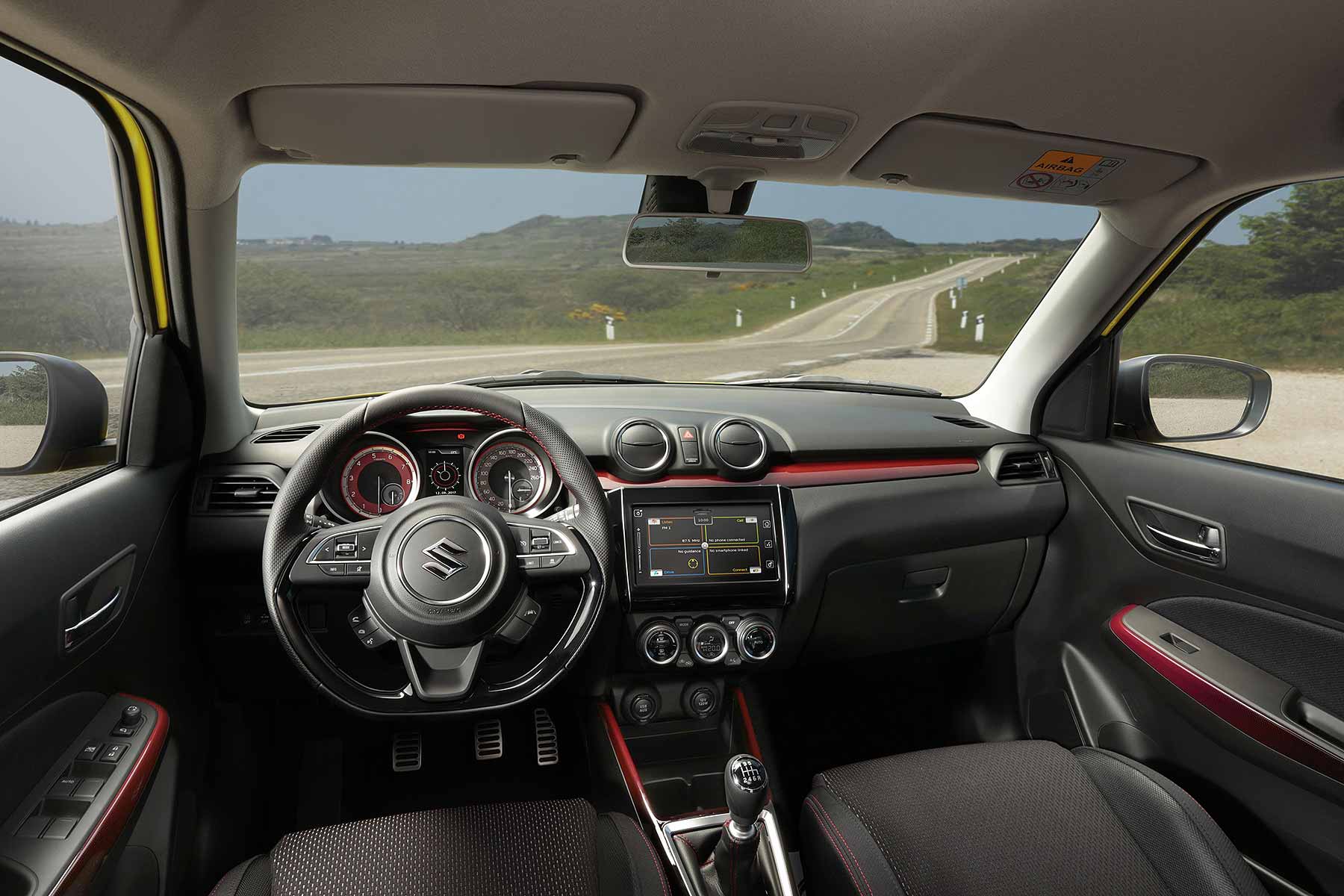
 For my 18th birthday, my parents bought me a supercar experience day. I’d drive a Ferrari, Lotus and Porsche on-track, then take home a certificate as proof of my prowess. Unfortunately – sorry mum – it was rubbish. I spent 10 minutes in each car, accompanied by an officious instructor who ordered me not to exceed 5,000rpm.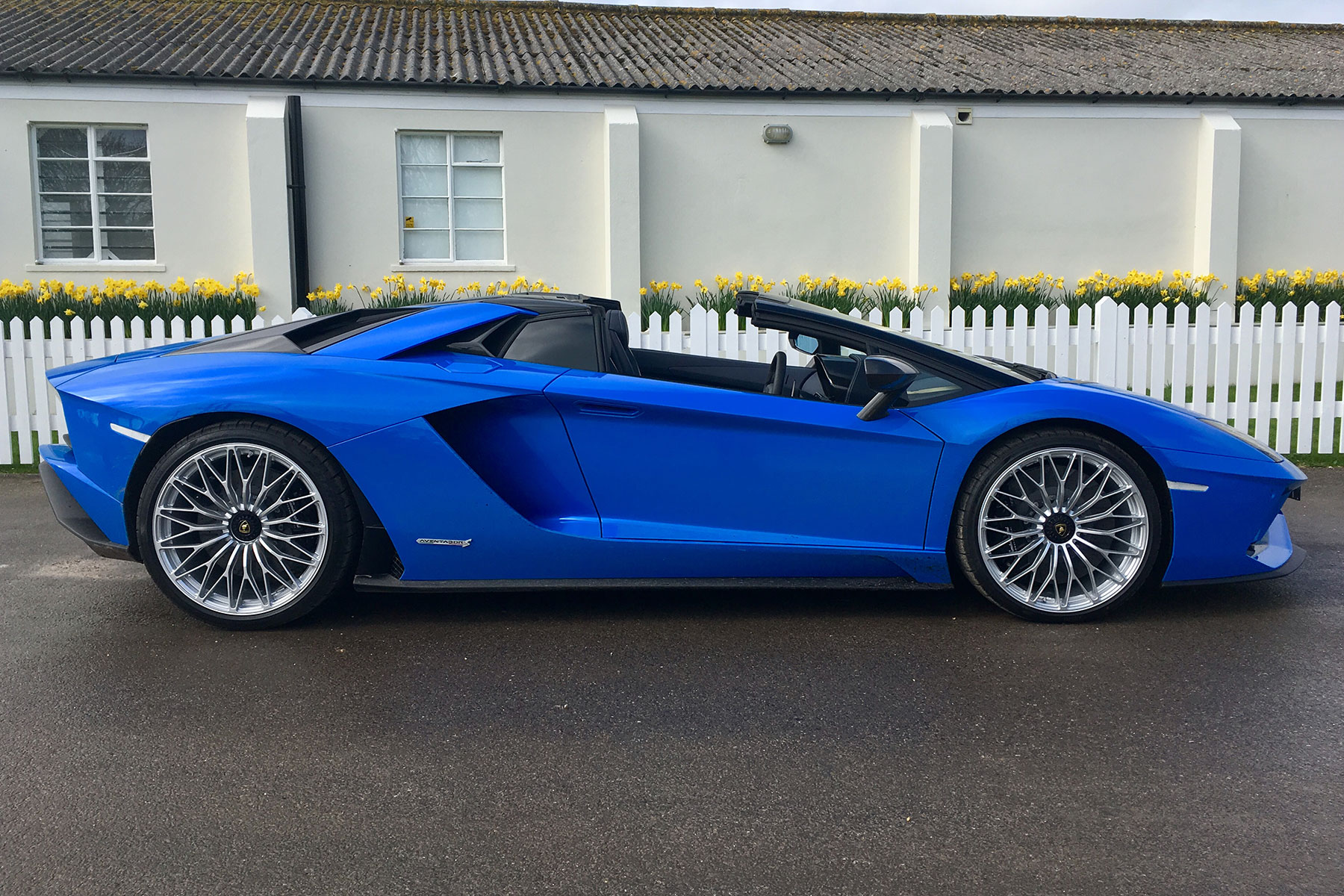


 It’s not just expensive premium cars that offer smartphone apps, allowing you to remotely check on the vehicle’s status (and locate it when you lose it in a car park). All new VW Ups and Polos now come with the Volkswagen Connect connectivity system – for free.