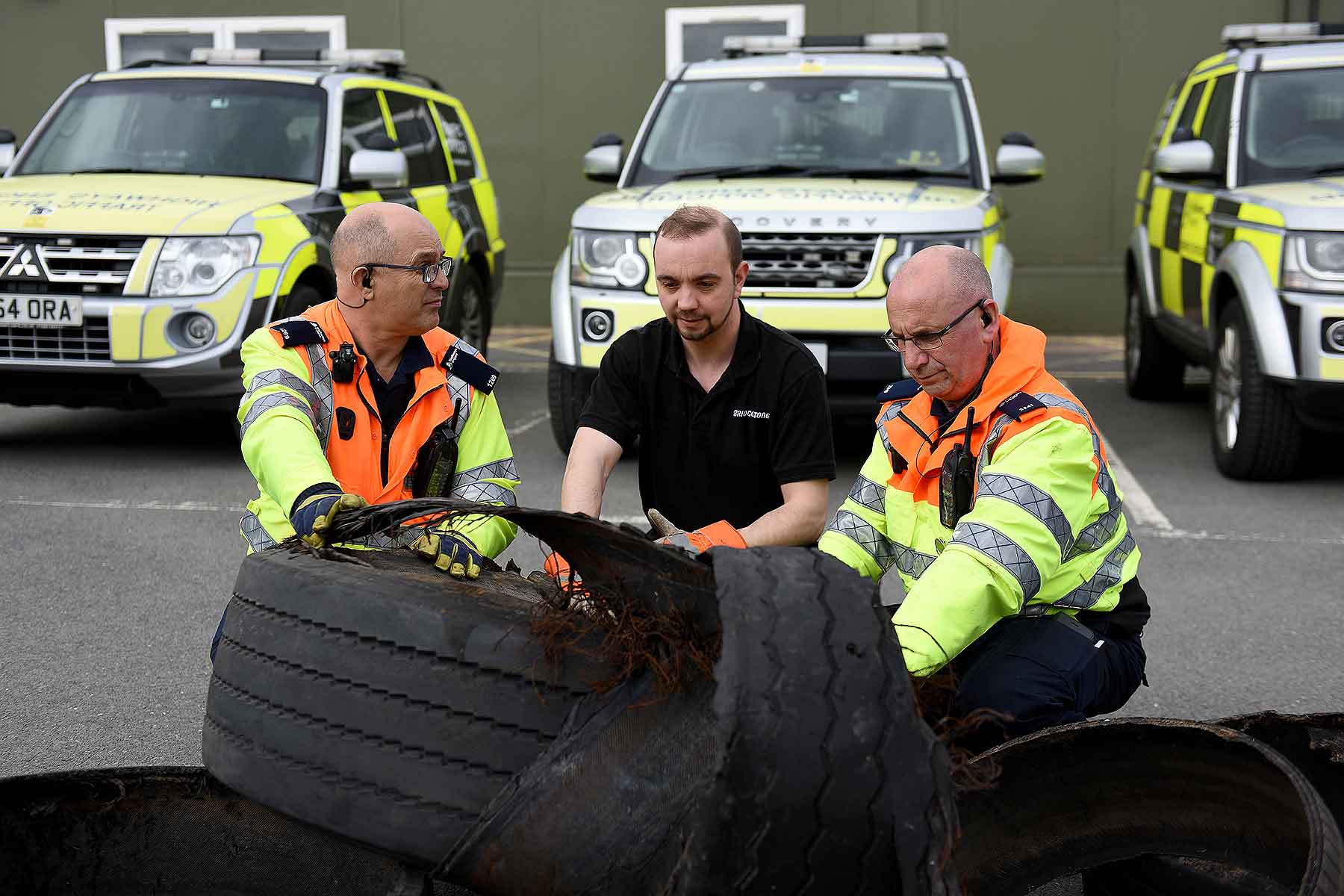
Shock figures show that 32 people were killed or seriously injured in motorway accidents in 2016 because of tyre failures – but almost 3 in 4 of them could have been prevented if motorists had simply carried out the most basic checks of their car’s rubber.
Uniquely, the 18-month study into motorway tyre failures, by Highways England and tyre company Bridgestone, carried out research by actually studying the debris of failed tyres on the motorway.
A total of 1,035 tyre segments were retrieved by Highways England officers from the M1, M5, M6, M40 and M42, then sent to a technical team at Bridgestone for analysis.
They were able to diagnose failures were caused by the following factors:
56 percent due to punctures
18 percent due to underinflation
8 percent due to poor maintenance
1 percent due to manufacturing defects
1 percent due to excessive heat
16 percent couldn’t be diagnosed
This, says Highways England, shows that a significant 26 percent of tyre failures were caused by poor maintenance – which is why it’s now promoting the message that “simple checks save lives”.
It’s not only lives in danger, either: there’s also the cost of delays caused by closing a motorway after a tyre-related crash. Often, officers were able to pick up the tyre debris because the motorway was shut – and the cost of closing a three-lane motorway for four hours stands at almost £1.5 million.
Watch: simple checks that save lives
Bridgestone technical manager said that the report involved “a painstaking process of collecting tyre debris over 18 months and analysing it in depth later.
“With proper vehicle inspection and maintenance programs, many of the failure methods noted should be detectable and preventable.”
Powell also called for vehicles without tyre pressure monitoring systems (TPMS) are equipped with the technology: as it detects deflations, it will not only help underinflation and poor maintenance, but it will also offer the 56 percent of motorists who suffered a puncture early warning of the damage – with potentially life-saving consequences…
With this in mind, we’ve found four of the best aftermarket TPMS kits on Amazon you might want to consider fitting.
A driver in North Yorkshire who used a laser jammer to prevent police from measuring his speed has been jailed for eight months.
67-year-old Timothy Hill made obscene gestures at mobile camera vans on three occasions in December as a device fitted to his Range Rover blocked police from measuring his speed. Although officers were unable to prosecute him for speeding, they launched an investigation into whether he was perverting the course of justice.
Hill initially denied the allegations and chucked the scanner into a river behind his home to destroy the evidence. Eventually he admitted to having the device fitted to his car.
Police charged Hill with perverting the course of justice and he was jailed for eight months after a trial at Teesside Crown Court.
“If you want to attract our attention, repeatedly gesturing at police camera vans with your middle finger while you’re driving a distinctive car fitted with a laser jammer is an excellent way to do it,” said North Yorkshire Police traffic constable, Andrew Forth.
“It’s also an excellent way to end up in prison. As Hill’s case shows, perverting the course of justice is a very serious charge which carries a custodial sentence.”
The laser jammers are readily available to buy online and are legal to own. However, if they’re used to prevent police from measuring your speed, you could be charged with perverting the course of justice.
Forth added: “Drivers who fit laser jammers may mistakenly feel smug about ‘getting one over’ on the police. But we can tell if motorists are using these devices, and we will always endeavour to bring them to justice.”
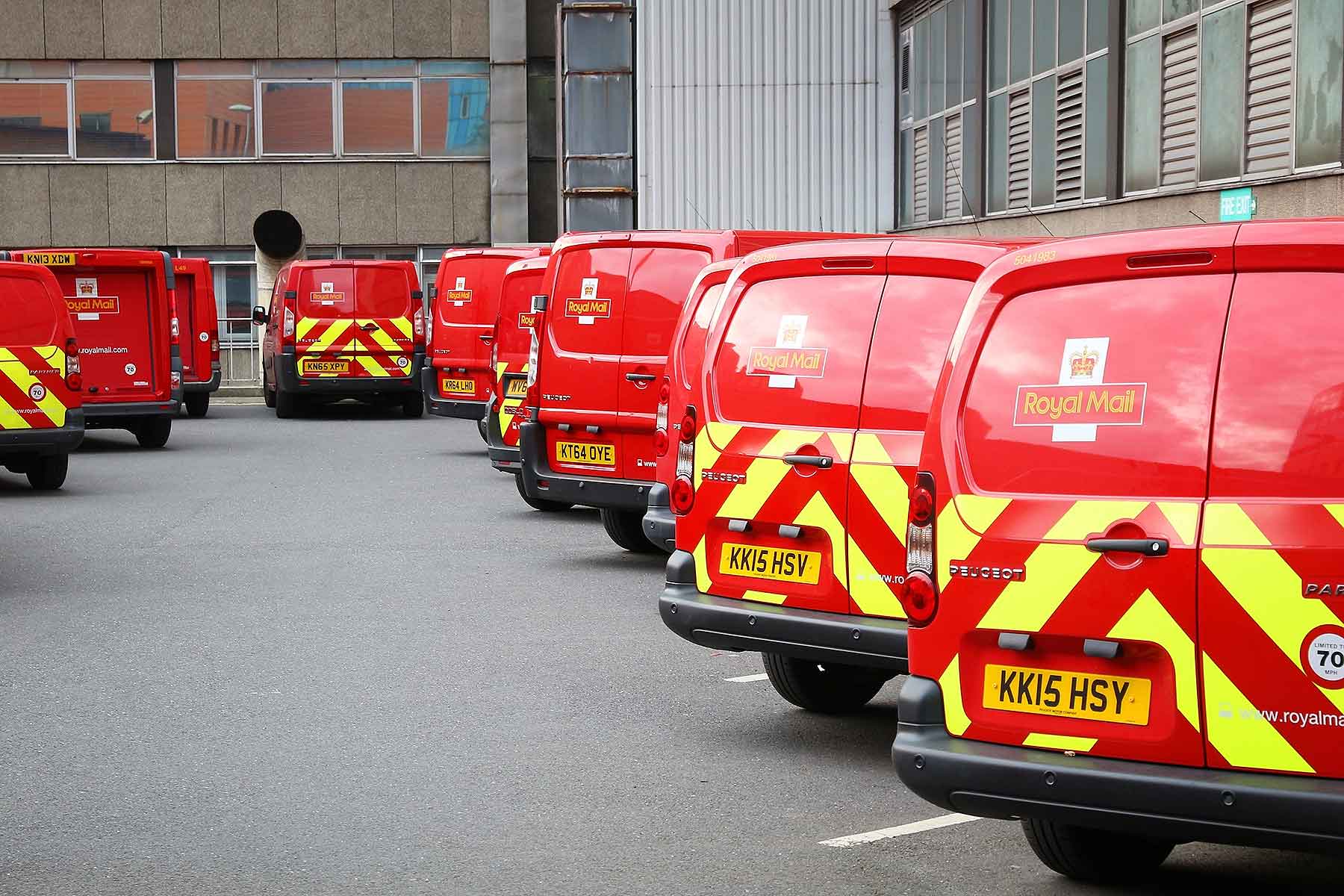
Britain is a nation powered by vans, with 88 percent of UK consumers believing everyday would be worse if commercial vehicles were restricted in any way. Almost half of respondents to a survey conducted by the Society of Motor Manufacturers and Traders (SMMT) said they’d benefitted from a van in the last 24 hours.
Increasingly, vans are becoming synonymous with online deliveries, but other services such as post, minibus transport and rubbish collection are relied upon by Brits.
SMMT chief executive Mike Hawes, speaking ahead of the opening of this year’s Commercial Vehicle Show at the NEC in Birmingham, said: “There are 5 million commercial vehicles on Britain’s roads and they play a vital role in powering our essential services.”
Their role in society is often overlooked, says the SMMT, but when prompted, 84 percent recognised how much they rely on them day-to-day. The figures include 1.8 million sole traders and 17,228 registered ambulances, which take five million people a year to A&E.
Britain is the biggest market in Europe for online deliveries, with a total market worth £67.3 billion – that’s 17.6 percent of all retail sales. Vans deliver 1.9 billion tonnes of online sales a year, and the figures are increasing all the time.
The SMMT continues with the van stats by revealing they deliver three times more goods than water and rail combined, and in total, according to the Office for National Statistics, contribute £27.5 billion to the UK economy.
And, diesel haters, apologies: 96 percent of them are diesel. That’s why continued van fleet renewal is so crucial – which, says Hawes, should be led by the government continuing to promote the right policies and initiatives.
21,000 people are expected to attend the CV show, which runs this week. 460 companies will exhibit – and, van fans, entry is free. If you’re keen to go, sign up at www.cvshow.com.
Diesel has come in for a lot of stick over recent years, but the fact remains: a modern diesel engine makes perfect sense if you cover a lot of miles.
The threat of anti-diesel legislation might deter you from taking the plunge, but as our list of the most economical new cars reveals, you could achieve some seriously impressive hypermiling with one of these motors.
We’ll present the results in reverse order.
*Note these fuel economy figures are obtained using the current NEDC testing regime and are likely to change when the new WLTP test gets fully underway in September 2018.
Suzuki Celerio 1.0 Dualjet: 78.4mpg
If you really can’t do the diesel thing, and you’re not intending to travel long distances, the Suzuki Celerio is a cheap and cheerful option. Right now, the Celerio SZ3 1.0-litre Dualjet petrol is available for £9,149, with a spec that includes air conditioning, 14-inch alloy wheels and DAB radio. Go easy on the right foot and you could see as much as 78.4mpg on the combined cycle.
Nissan Pulsar 1.5 dCi: 78.5mpg
You’ll have to be quick, because Nissan is pulling the plug on the Pulsar, but the 1.5-litre diesel engine could return as much as 78.5mpg. Nissan dealers will be keen to shift old stock, so haggle hard and grab yourself a deal.
Kia Cee’d 1.6 CRDi: 78.5mpg
Kia has ditched the apostrophe for the new Ceed, but if you’re a fan of punctuation on the back of your car, the outgoing Cee’d is still available. It’s no longer a bargain basement hatchback – the cheapest 1.6-litre diesel costs £17,330 – but with a seven-year warranty and CO2 emissions from just 94g/km, it’s certainly a rational choice.
Citroen C3 1.6 BlueHDi: 80.7mpg
While the C4 Cactus has largely turned its back on the Airbump, you can still wear your supermarket car park armour with pride on certain C3 models. Opt for the 1.6 BlueHDi engine if you like the sound of 80.7mpg combined.
Vauxhall Corsa 1.3 CDTi: 80.7mpg
If you hate filling up with fuel, you’ll love the 1.3-litre CDTi engine in the Vauxhall Corsa. With a little hypermiling, you could squeeze up to 798 miles out of a tank of diesel, which could mean you need only visit a filling station once a month. Think of the money you’d save on those chocolate bars you buy on impulse when queuing to pay for your fuel.
Renault Scenic/Grand Scenic 1.5 dCi Hybrid Assist: 80.7mpg
If you thought impressive fuel economy was the preserve of superminis and hatchbacks, the Renault Scenic and Grand Scenic are here to surprise you. Opt for the 1.5-litre diesel with Hybrid Assist and you could see as much as 80.7mpg. Not bad for a five- or seven-seat MPV riding on 20-inch rims.
Peugeot 308 1.5 BlueHDi: 80.7mpg
Earlier this year, Peugeot unveiled a new Euro 6.2 1.5-litre diesel engine to replace the old Euro 6 1.6-litre unit in the 308 hatchback. The promise: to deliver up to 80.7mpg when mated to a six-speed manual gearbox and riding on 15- or 16-inch alloy wheels. Of course, the reality will be slightly different, but that’s true of all the cars mentioned here.
Mercedes-Benz A 180d: 80.7mpg
There’s a new and much improved A-Class on the way, but if you can’t wait, the current A 180d is the best option if you’re hoping to maximise fuel economy. When mated to a six-speed manual gearbox, the entry-level SE could return as much as 80.7mpg, with CO2 emissions of just 89g/km.
Kia Rio 1.4 CRDi: 80.7mpg
The Kia Rio 2 costs £14,240 and offers a generous level of standard equipment, including autonomous emergency braking, lane departure warning, cruise control, reversing camera, parking sensors and 15-inch alloy wheels. Opt for the 1.4-litre diesel engine for up to 80.7mpg. And we didn’t even mention the warranty…
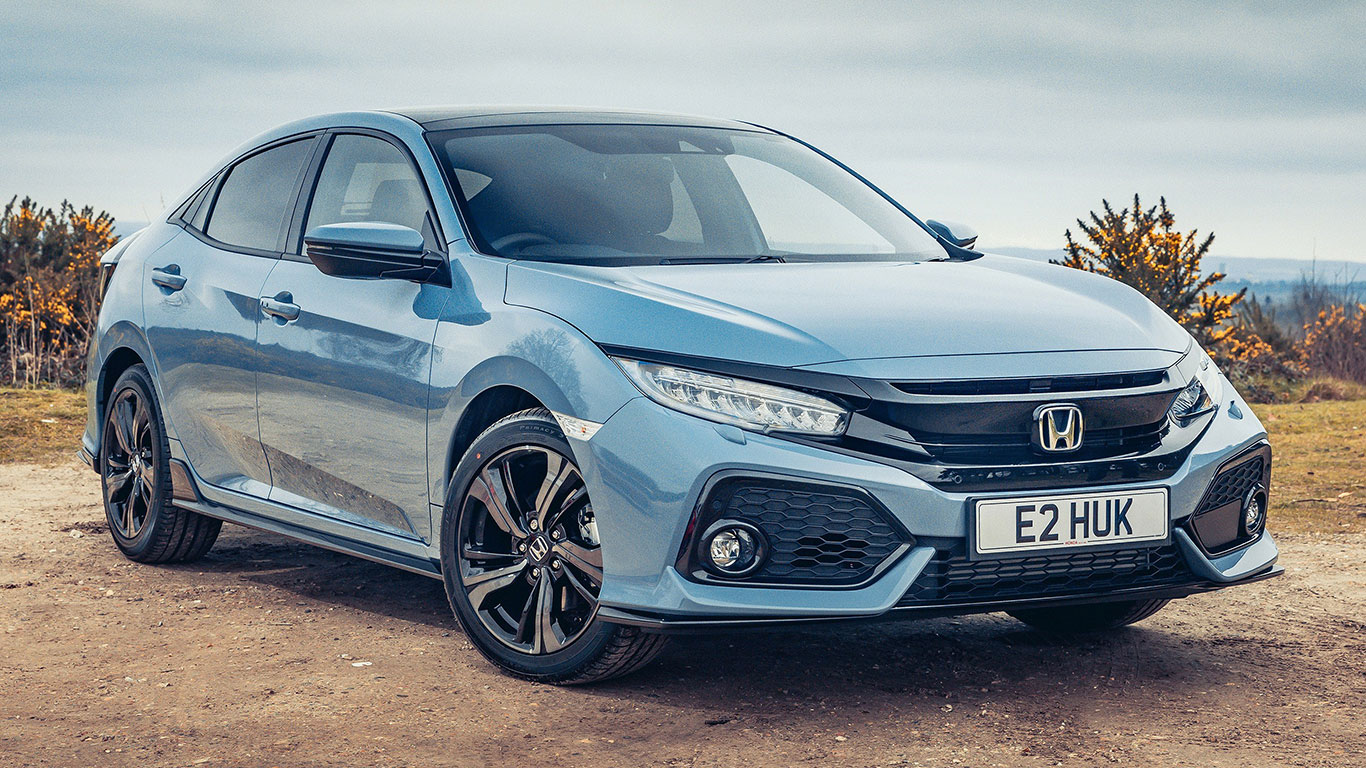
Honda Civic 1.6 i-DTEC: 80.7mpg
A Honda Civic SE with the 120hp 1.6 i-DTEC diesel engine will set you back £20,245. It’s the most striking car in its class, but the fuel economy is a more rational affair at 80.7mpg. Honda reckons three in 10 Civic buyers will opt for the diesel in the UK, even if overall diesel sales are down.
New Ford Focus 1.5 EcoBlue: 80.7mpg
An all-new Ford Focus will go on sale in August, with first deliveries expected in September. Ford is promising more space, technology, luxury and comfort than ever before, as it takes aim at the Volkswagen Golf. The 1.5-litre EcoBlue diesel will be the engine of choice for the nation’s hypermilers.
DS3 Cabrio 1.6 BlueHDi: 80.7mpg
Last month, DS announced that it was pulling the plug on the slow-selling 4 and 5 hatchbacks, but the 3 has escaped the cull. Opt for the Cabrio with a 1.6-litre BlueHDi engine and enjoy the thrill of open-air driving and 80.7mpg.
Dacia Sandero 1.5 dCi: 80.7mpg
Bad news if you want to combine maximum fuel economy with a minimum price. The super-frugal 1.5-litre dCi engine is available only on the Sandero Laureate, meaning you’ll have to fork out at least £11,195 for the bargain-basement hatchback. That’s a far cry from the headline-grabbing £6,995 Access.
Dacia Logan MCV 1.5 dCi: 80.7mpg
It’s a similar story with the Dacia Logan MCV, which is available from just £8,495. However, the diesel is available on the Ambiance and Laureate models, so you’ll need to fork out at least £11,695 for the cheap load-lugger.
Citroen C4 Cactus 1.6 BlueHDi: 83.1mpg
The Citroen C4 Cactus has grown up, adopting a softer stance and a focus on comfort and joy. There’s no doubt that it’s one of the most comfortable cars in its class, but will this be enough to cut it in a sector dominated by the Volkswagen Golf and Ford Focus? Maybe the fuel economy will tip the balance in Mr Soft’s favour.
Hyundai Ioniq Hybrid: 83.1mpg
The Hyundai Ioniq Hybrid combines a 1.6-litre petrol engine and an electric motor to deliver 83.1mpg on a combined cycle. Prices start from £21,240 for the SE model and you’ll get a five-year unlimited mileage warranty as standard.
Ford Focus 1.5 TDCi: 83.1mpg
Ford dealers will be rather keen to shift stock of the outgoing Focus, so haggle hard to secure a low price. The majority of cars will be available from stock, so don’t expect much in the way of personalisation options.
Fiat Tipo 1.6 MultiJet II: 83.1mpg
Opt for the DCT transmission in the Fiat Tipo diesel and you could look forward to 83.1mpg on a combined cycle. The 1.6 MultiJet isn’t available on the entry-level Easy, so you’ll need to find at least £18,820 by upgrading to the Easy Plus.
DS 3 1.6 BlueHDi: 83.1mpg
It’s the DS3 again, only this time with a fixed roof. In return for sacrificing open-air motoring, help yourself to an extra 2.4mpg.
Alfa Romeo Mito 1.3 JTDm-2: 83.1mpg
Yes, Alfa Romeo still sells the Mito, and yes, it is rather frugal. A standard Mito with the 95hp 1.3 JTDM-2 engine will set you back £16,105, but unless you’re doing mega-miles, we’d suggest opting for the cheaper 1.4-litre (50.4mpg) and 0.9-litre TwinAir (67.3mpg) petrol engines.
Vauxhall Astra 1.6 CDTi: 85.6mpg
Vauxhall has launched a new ad campaign aimed at positioning itself as ‘confidently British’, as it seeks to reverse a period of dwindling sales. As you may have noticed if you watched England beat Nigeria on Saturday, the Astra is the first model to benefit from the ‘True Brit’ rebrand. The 1.6-litre CDTi engine could offer as much as 85.6mpg on a combined cycle.
Toyota Yaris Hybrid: 85.6mpg
In the past, Toyota claimed that the Yaris Hybrid could offer an excellent 85.6mpg on a combined cycle. However, it’s worth noting that, using the World Harmonised Light Vehicle Test Procedure (WLTP), the figure drops to 76.3mpg. Still impressive and more reflective of real-world driving conditions.
Nissan Micra 1.5 dCi: 88.3mpg
We’re into the top three, where we find the Nissan Micra. When powered by a 1.5-litre dCi engine, the sharp-looking Micra could offer up to 88.3mpg on a combined cycle, with diesel prices starting from £15,000.
Toyota Prius Hybrid: 94.1mpg
In common with the Yaris, all Toyota Prius grades are now type-approved using WLTP, meaning the estimated fuel economy is more realistic than before. The WLTP of 83.1mpg isn’t as impressive as the old 94.1mpg, but you’ll stand more chance of achieving the revised figure.
Peugeot 208 1.6 BlueHDi: 94.2mpg
This is it: the most economical car you can buy today. The usual caveats apply, such as the on-paper figure not being representative of real-world driving, and forthcoming WLTP data being more accurate, but a supermini knocking on the door of 100mpg is truly impressive. Stick to the lower-powered 75hp 1.6-litre diesel to achieve the best results in the Peugeot 208.
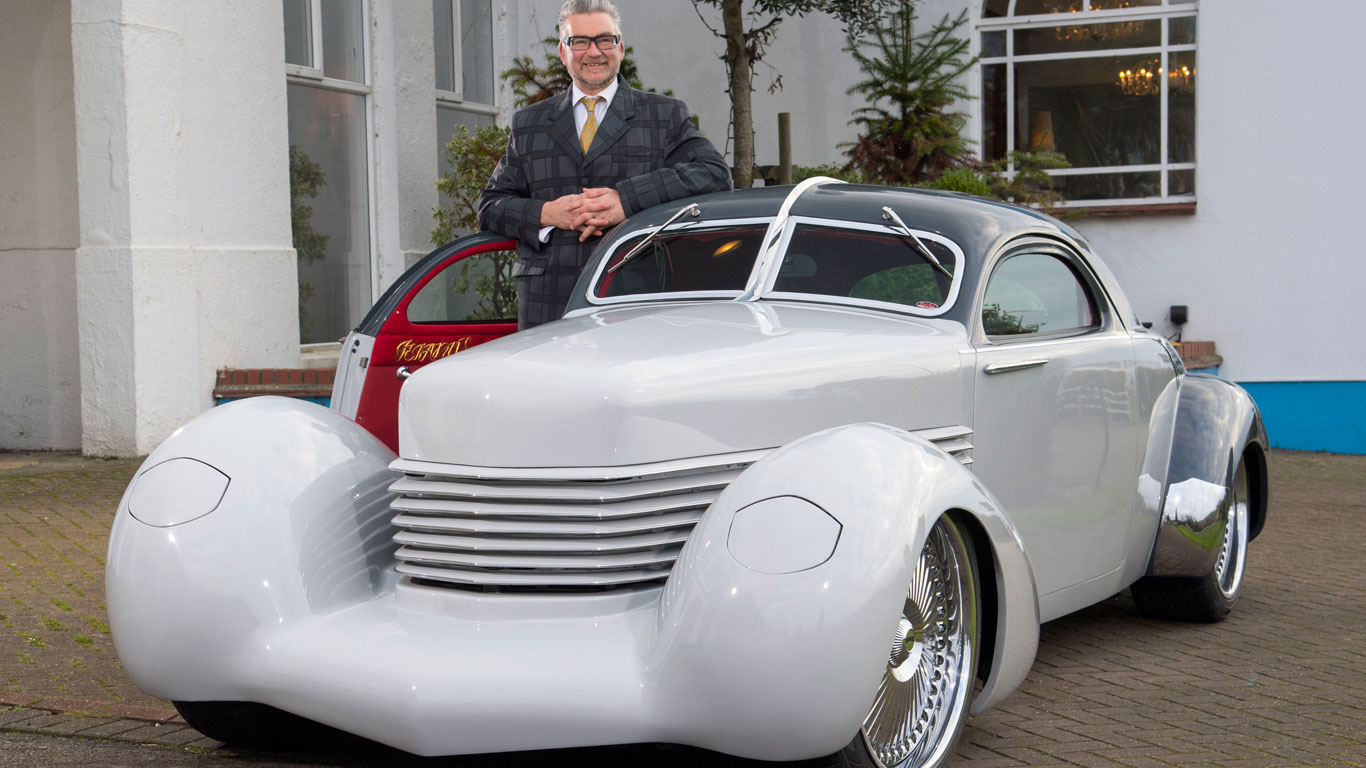
Andy Saunders is one of the country’s leading and most recognised ‘car artists’, responsible for a long line of unique, eye-catching and controversial projects. The customiser – or should that be ‘kustomiser’ – completed his first project before he was old enough to hold a driving licence and has held three Guinness World Records.
This summer, the National Motor Museum at Beaulieu will give visitors the opportunity to get up close and personal with some of his incredible creations, with its new exhibition: The Art of Kustom. Here, we take a look at one of this most famous creations, along with some of the other vehicles you can expect to find.
Tetanus
This car started life as a 1937 Cord 812 Westchester: the first American-designed and built front-wheel drive car with independent front suspension. The Cord 810/812 was the company’s second front-wheel drive car, with a body designed by Gordon Buehrig. It caused a stir at the 1935 New York Auto Show, with visitors left slack-jawed by the eye-catching features, such as the ‘coffin nose’ bonnet and lack of running boards.
Tetanus left the factory in Indiana as a right-hand-drive export model, destined for England. It was sold new by RSM Automobiles of Berkeley Square, its first owner being the Earl of Derby. It’s fair to say the Cord didn’t look like this when the Earl of Derby rocked up at a racecourse to watch one of this thoroughbred racehorses.
The Cord was sold to its second owner: Jerzy Wojtowicz of stock car racing fame. He carried out all the necessary engineering modifications to allow it to go racing, but it never turned a wheel in competition use. This meant the doors were never welded up and the body remained true to its original shape.
If you’re wondering about the ‘K’ in ‘Kustom’, Andy Saunders told Beaulieu: “Kustom is the only word to describe a period, authentic 1940s or 50s Kustom or any other car that has received major body work to make it more beautiful than it was when it left the factory.” Kustom cars are influenced by the post-war American Kustom scene.
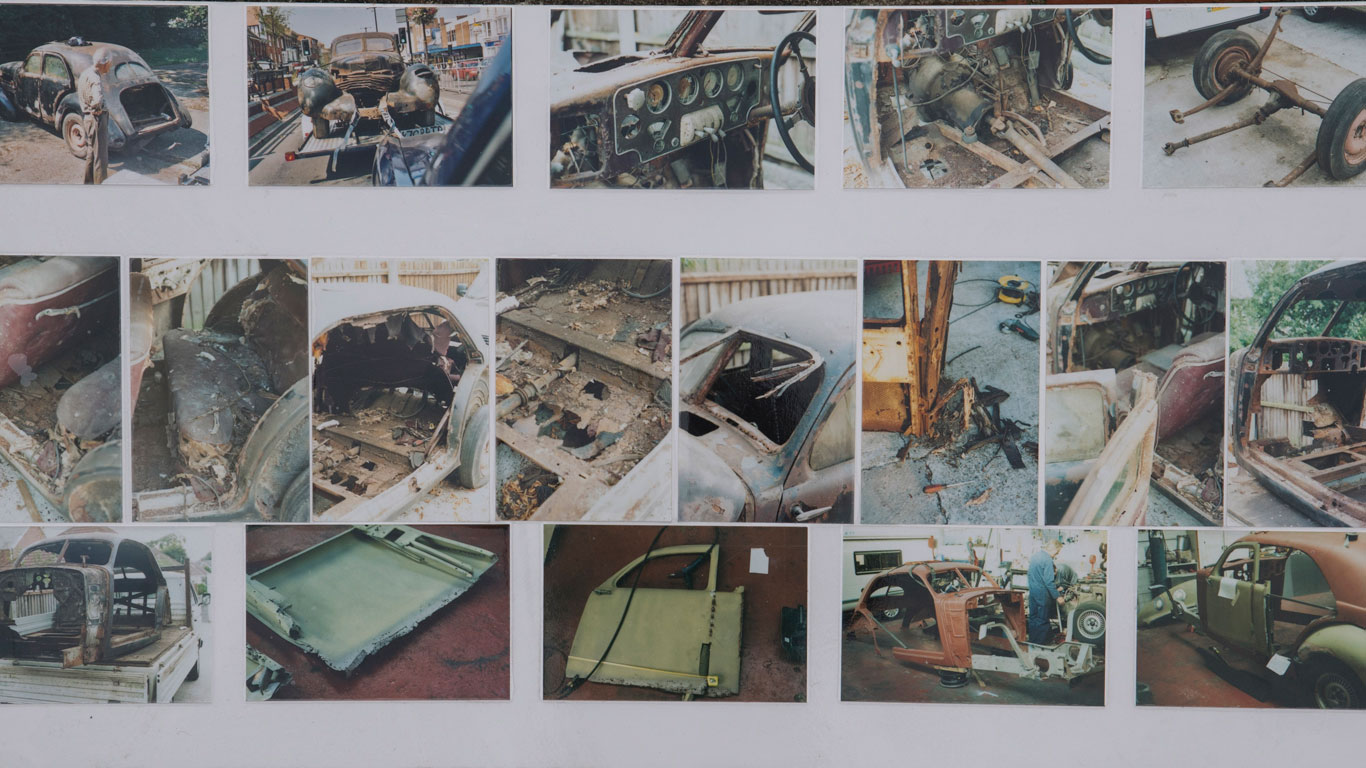
For the best part of 50 years, the Cord sat in a Yorkshire field, being used as a trampoline by local children and slowly being devoured by nature. Amazingly, it was for sale for close to 20 years before Andy saw it.
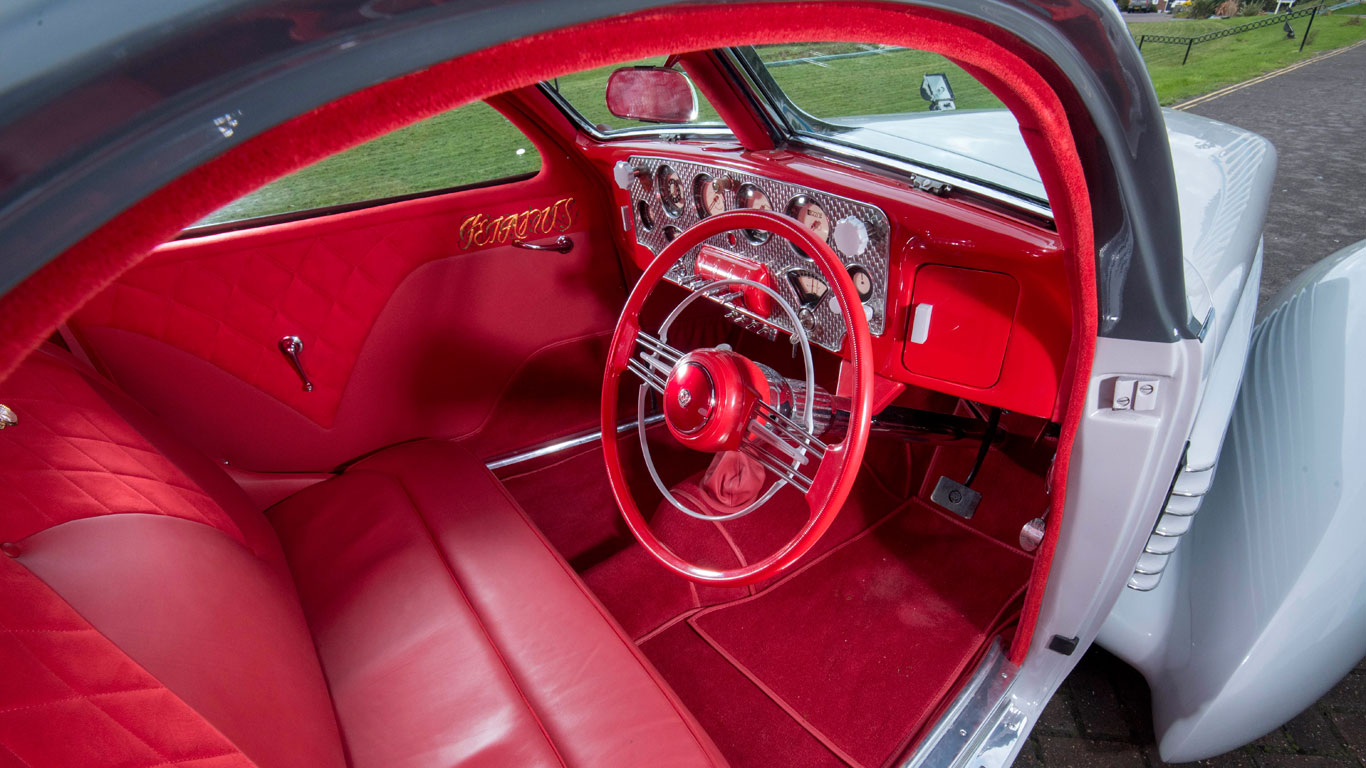
On the day of collection, Andy’s friend took one look at the rusting Cord and exclaimed: “I’m not touching that without having a tetanus [jab],” hence the name. The redesign and rebuild took 7,000 hours to complete, with Andy creating an imposing two-door coupe that wouldn’t have looked out of place in the Cord catalogue.
Tetanus was inspired by an illustration on a birthday card, with Andy widening and reworking the wings, lowering the roof, lengthening the doors, and rebuilding the rear end from scratch. Parts from a Jaguar Mk2 and Volkswagen Beetle were used to create that eye-catching back end.
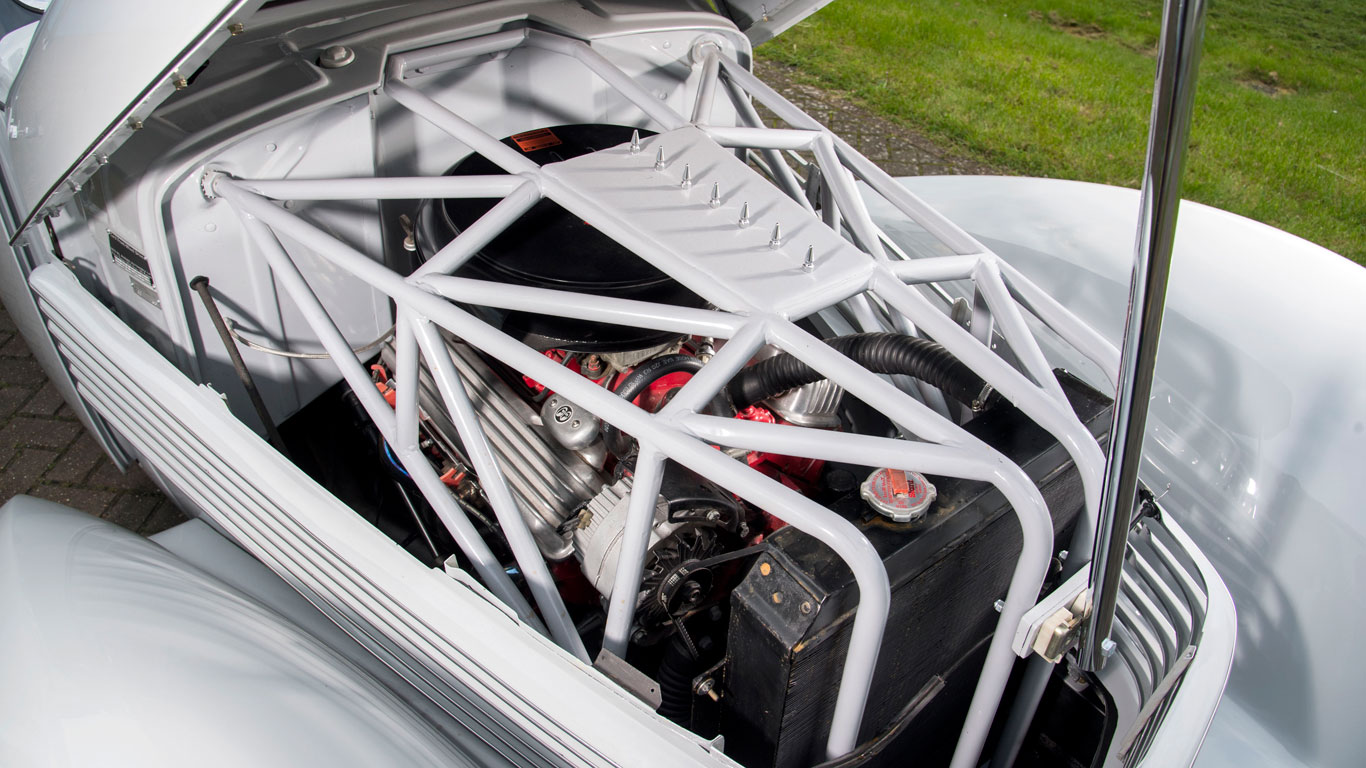
The car was unveiled at the Supernationals in August 2017 and is likely to be one of the stars of the Art of Kustom exhibition. Under the bonnet – or “coffin nose” – you’ll find the beating heart of a Chevrolet V8.
Andy’s first customisation was a Mk1 Ford Escort called ‘Bird Puller’, which he completed at the age of 15. In a video, he admitted that it wasn’t very good at “bird pulling”, not least because it had to be driven to shows by his mother. As Tetanus demonstrates, things have moved on since the Mk1 Escort.
“There’s nothing on cars I haven’t done or can’t achieve… if the budget’s there, it’s possible,” said Andy in an interview with Barcroft Cars. “Customisation is art.”
Mini Ha Ha
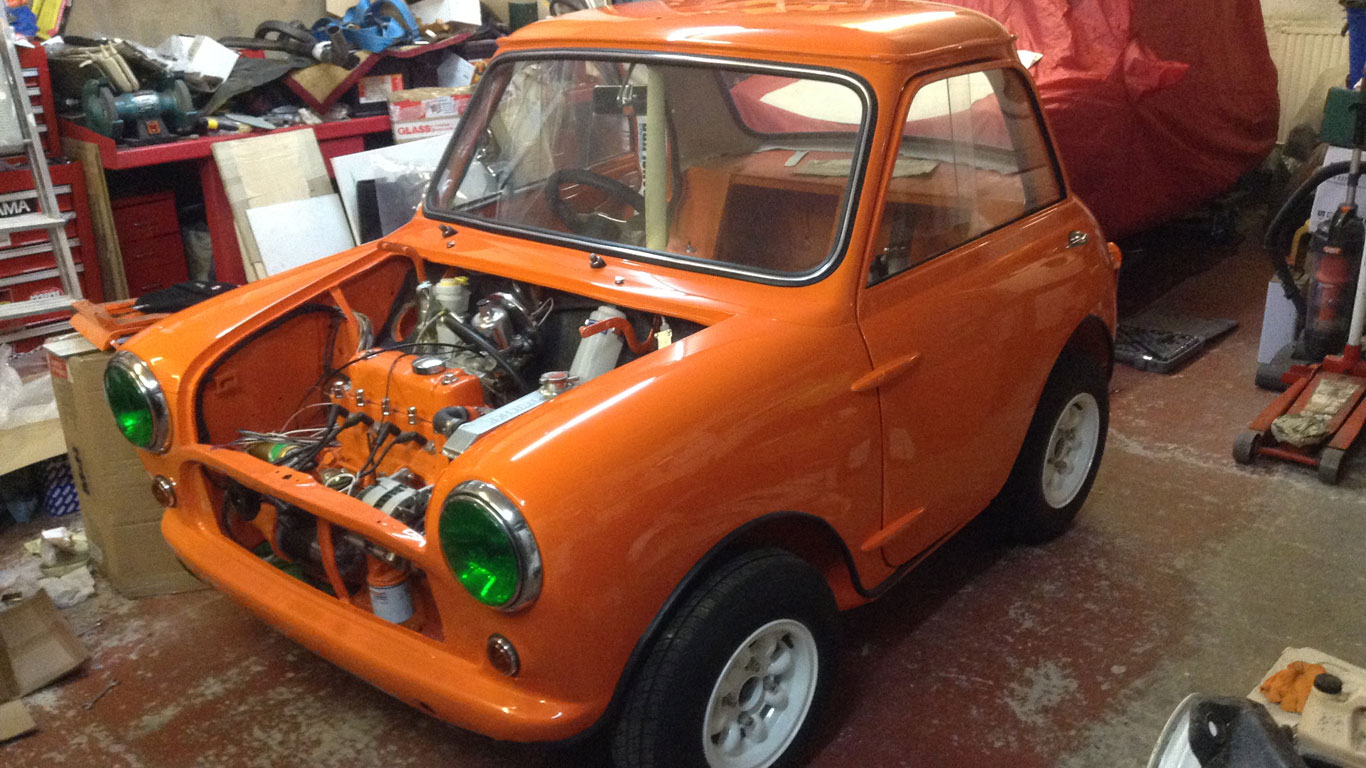
Newly restored to join the exhibition, the Mini Ha Ha will be on show for the first time since the 1980s. Andy came up with the concept as a schoolboy, completing the project on a shoestring when he was just 20. For a while, it was his daily-driver.
The Mini Ha Ha can actually perform wheelies in reverse gear, and Andy’s website has the photographic evidence to prove it.
Saline Warrior
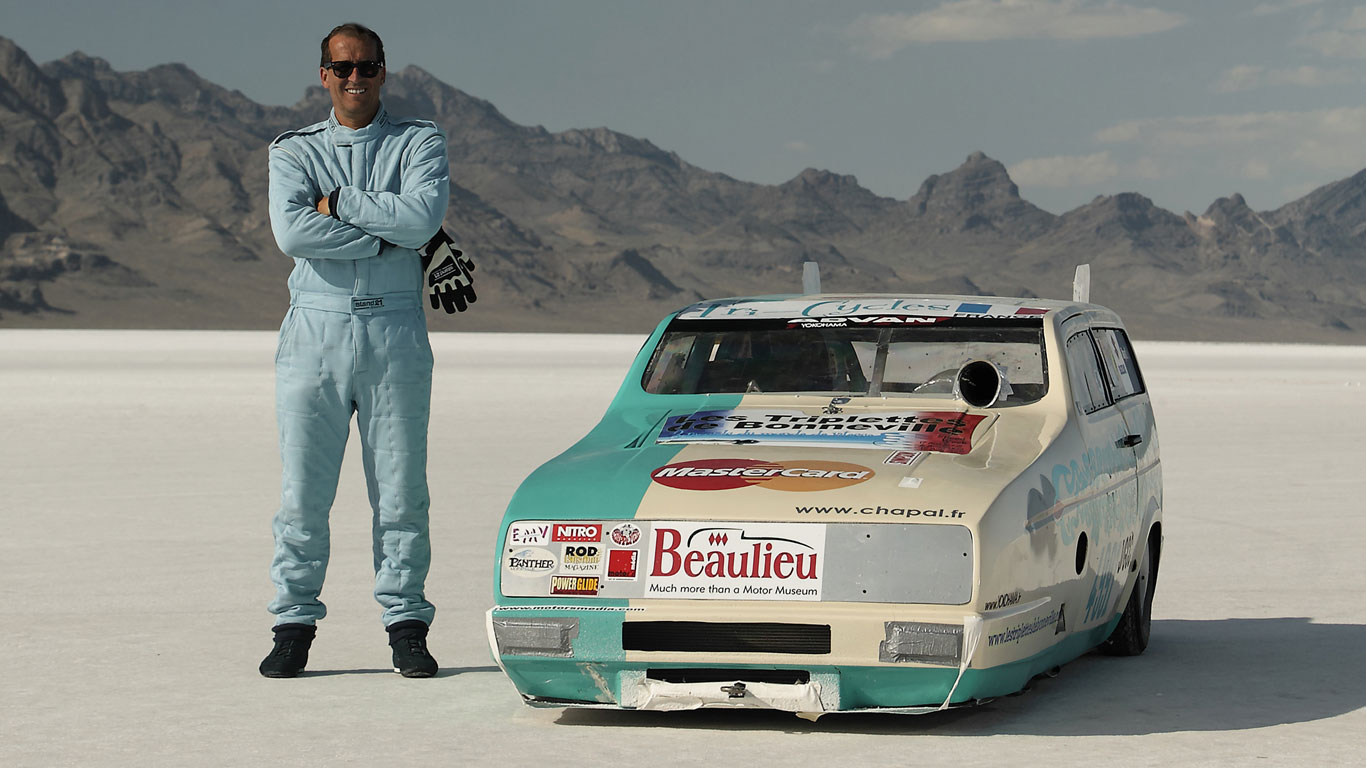
Saline Warrior started life as a Reliant Rialto, but Andy spent just two days converting it into a race car to tackle the famous Bonneville Salt Flats. It was created as part of the BBC’s Panic Mechanics show, and Andy’s solution was to emulate the aerodynamic appearance of a classic salt lake racer, with a lowered roofline, lengthened nose cone and smooth wheel discs.
Later, in the hands of French speed enthusiasts, Les Triplettes de Bonneville, the Reliant was modified with a 750cc Suzuki motorcycle engine and achieved 140mph at the annual Bonneville Speed Week. To set a record, the speed must be set on two runs, but the engine exploded on the second go.
Run A Ground
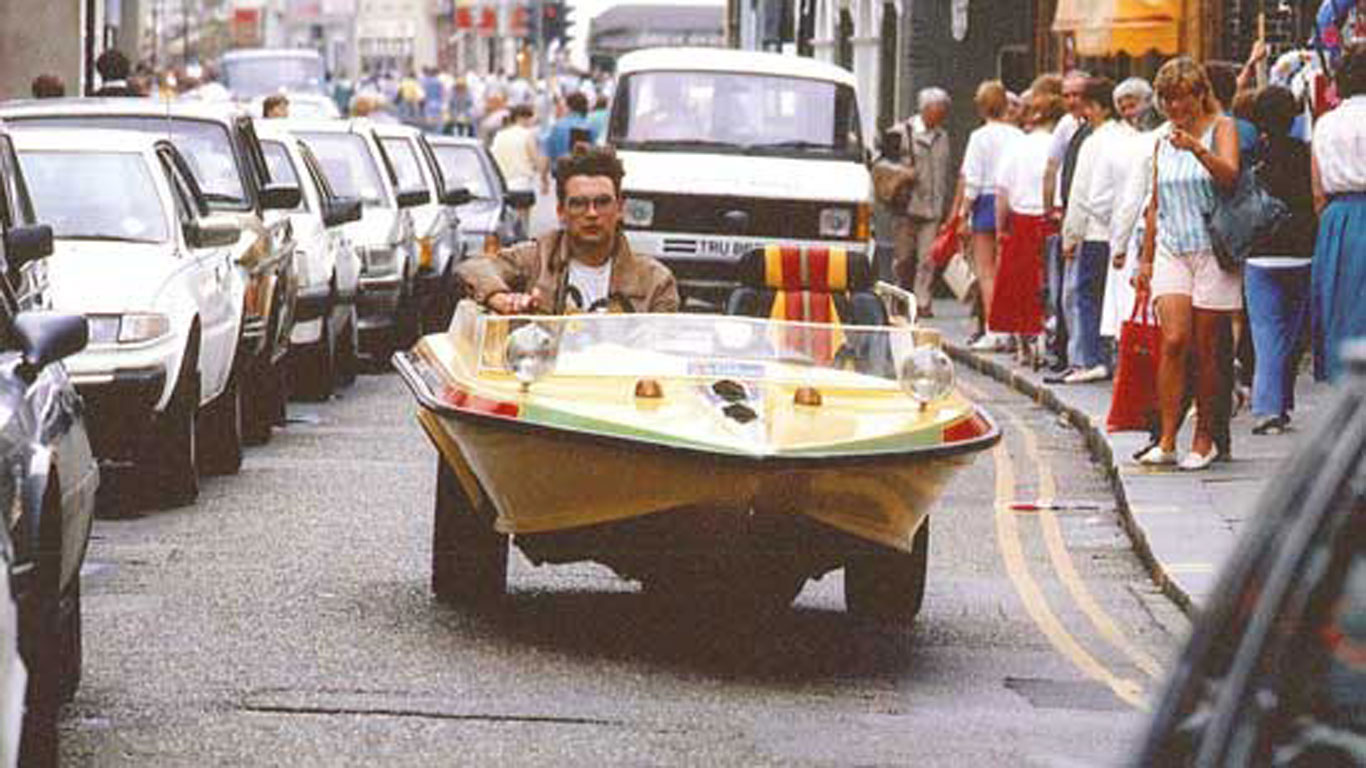
Another Reliant, this time a Regal, which has had an encounter with a Monbar 146 to become a road-legal speedboat. Yes, it really is road-legal…
Hesperus
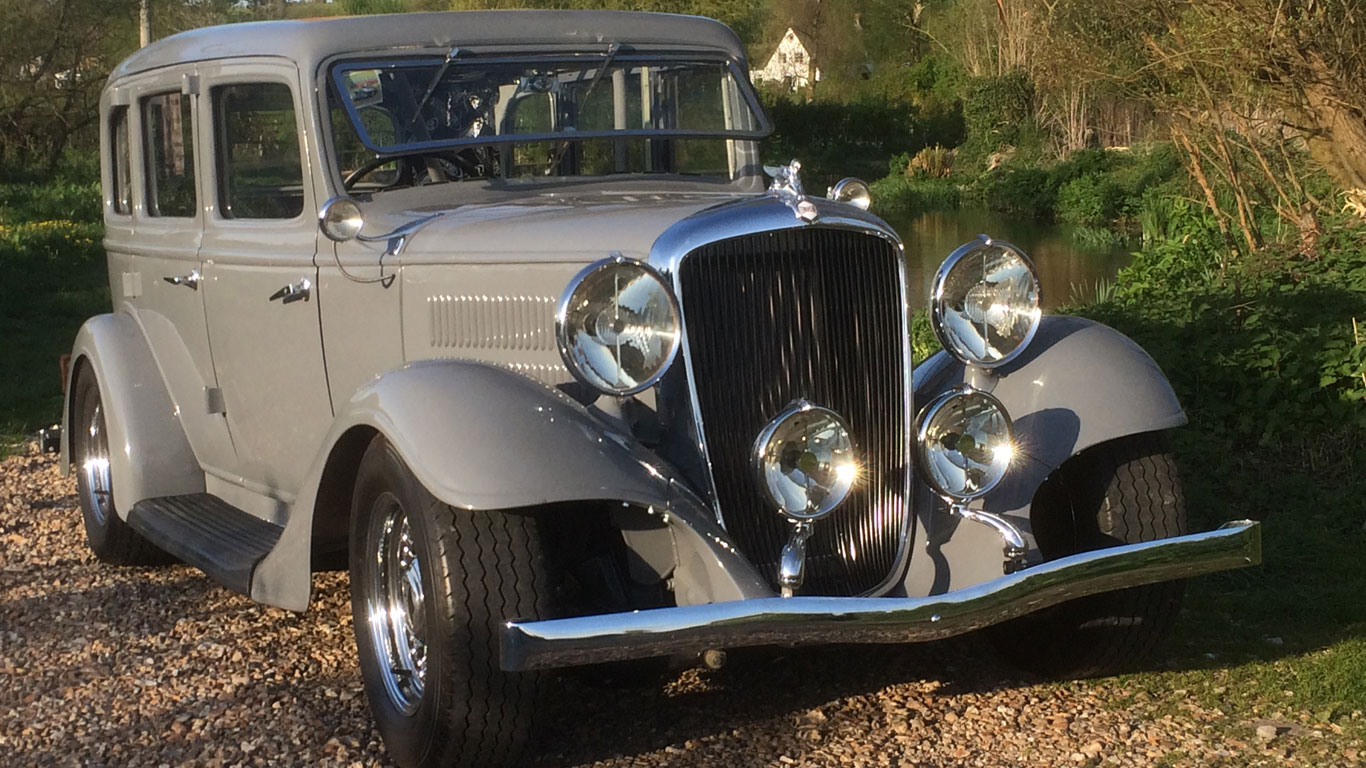
Following a six-year restoration, Hesperus is nearly complete. The 1930s Hudson was built as a street rod in the 1960s and was in remarkably good condition when Andy started the project. It just needs the interior to be trimmed, although Hesperus is already fine for road use.
Indecision
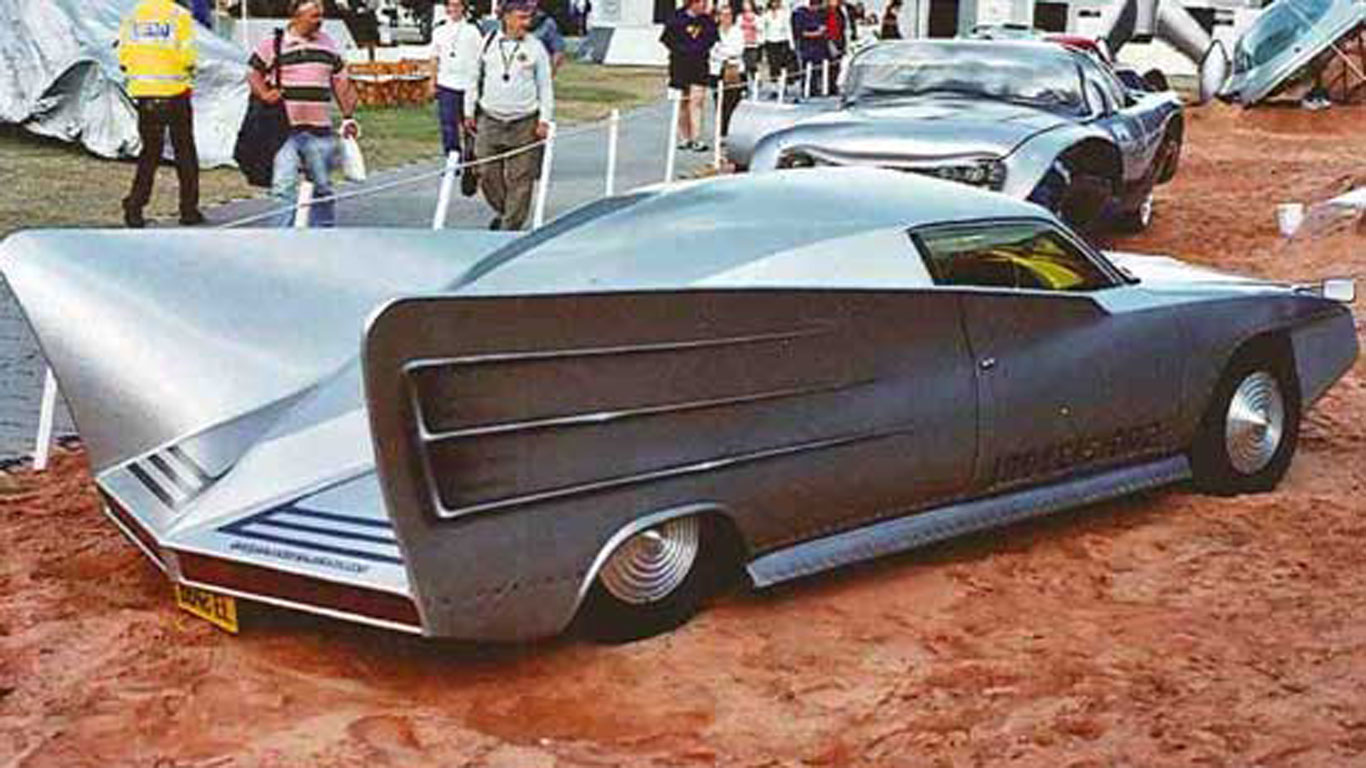
Indecision started life as a 1976 Citroen CX, with Andy adding huge rear wings and a sloping roofline to give it the look of something you might send into space. Amazingly, Andy used it as his everyday vehicle for two years.
Metropolis
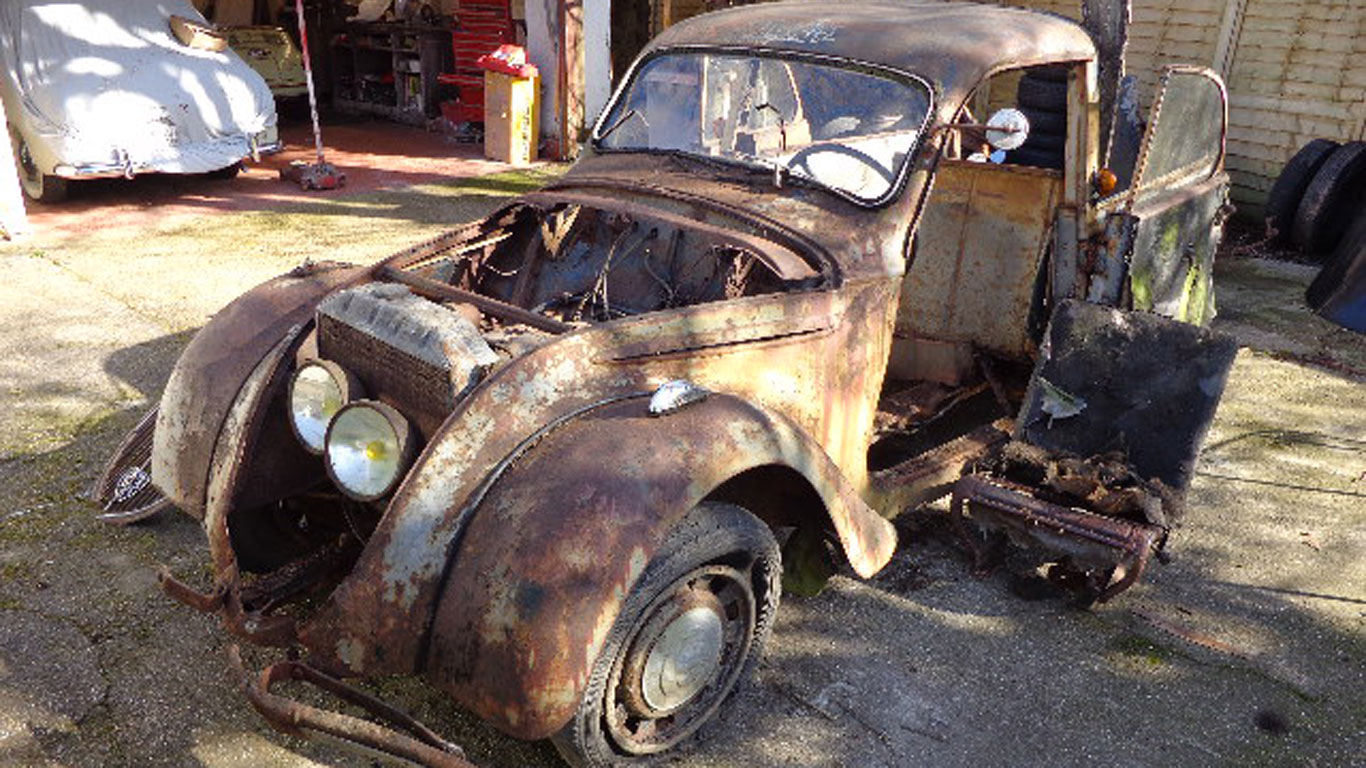
Andy Saunders will unveil his new project as part of the exhibition. Metropolis is a Peugeot 202 pick-up, which has been transformed from a rusty wreck into an Art Deco-style stunner.
The full showcase of Andy’s most jaw-dropping creations will go on display on Sunday 17 June to coincide with the Hot Rod & Custom Drive-in Day, when some of the cars will be driven around the attraction. The exhibition will remain in the museum until September.
The Art of Kustom exhibition can be seen as part of the standard admission to Beaulieu, which includes entry to the National Motor Museum, World of Top Gear and Palace House.
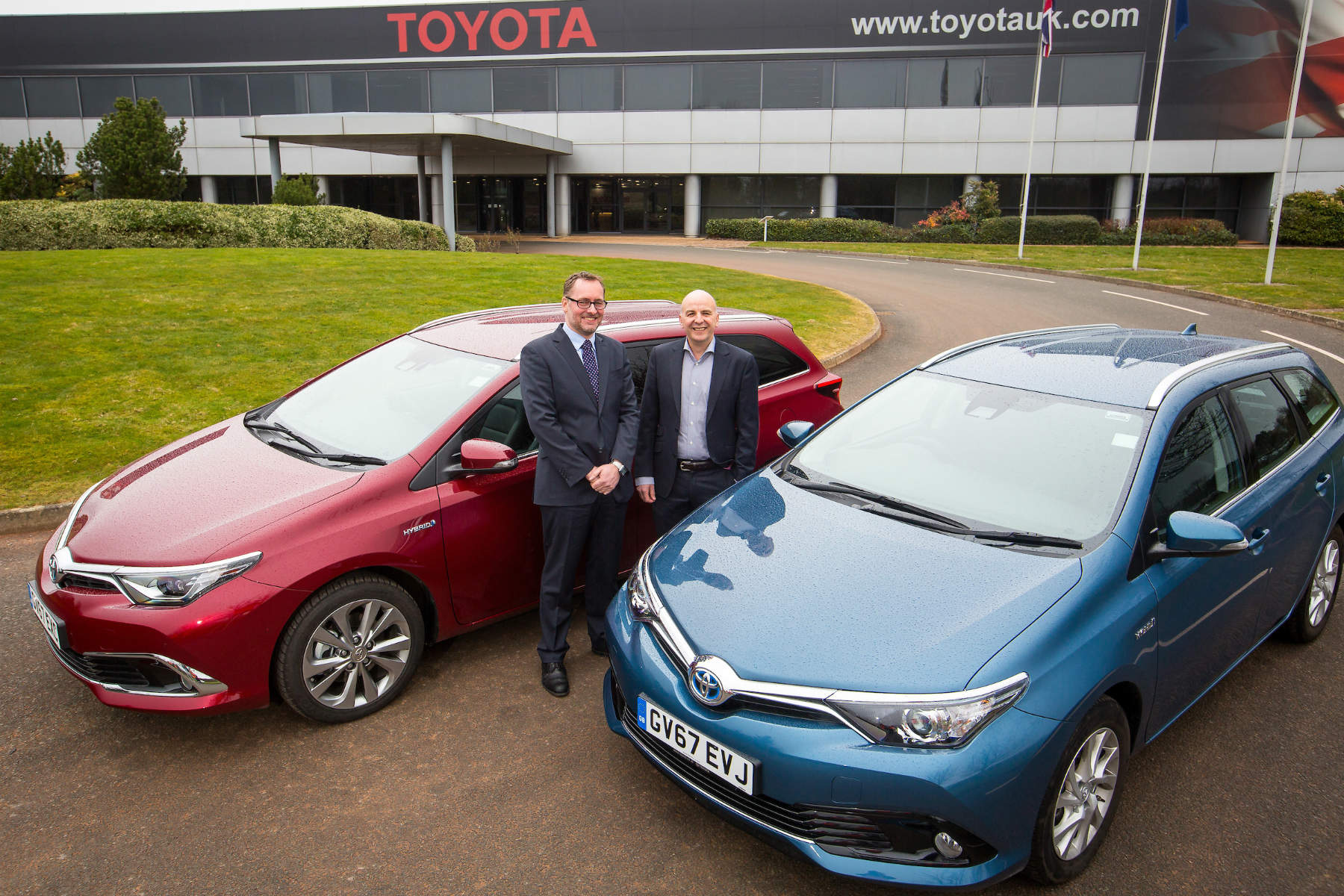
More than 400 diesel company cars used by government department Defra are being swapped for hybrid models under a shake-up intended to reduce harmful CO2 and NOx emissions.
Defra – the government department responsible for the environment, food and rural affairs – is replacing a significant proportion of its diesel car fleet with the British-built Toyota Auris hybrid within four of its organisations: the Environment Agency, Marine Management Organisation, Rural Payments Agency and Animal and Plant Health Agency.
“The cars from these four Defra organisations already represent one of the lowest CO2-emitting fleets in the UK,” said Defra’s strategic fleet manager, Jim Gregory.
“We have reduced nitrogen oxide gases (NOx) emissions, linked to respiratory illness, by nearly 10 percent, and CO2 by nearly 30 per cent, across our 7,000 cars, commercial vehicles, plant and machinery. We have challenged ourselves to go even further by buying only hybrid or electric vehicles from 2025, replacing our current fleet of diesels with cleaner vehicles and setting targets for NOx as well as CO2 emissions.”
The changeover of Defra’s fleet has already begun, and will continue throughout 2018 as an ongoing rolling replacement process.
It comes as figures revealed by Go Ultra Low today show that popularity of 100 percent electric and plug-in hybrid vehicles continued to grow in the first quarter of the year, following a record-breaking 2017. The first three months of this year saw 13,327 new cars registered to UK drivers, a 16% increase on the same quarter last year.
“This continuous growth in the plug-in market shows no signs of slowing down,” said Go Ultra Low’s head, Poppy Welch. “Month after month, we are seeing registrations increase, demonstrating that the public appetite for plug-in motoring is growing. With the range of pure electric cars constantly increasing and plug-in hybrids continuing to offer the best of both worlds, it’s getting easier for motorists to see the benefits of electric motoring.”
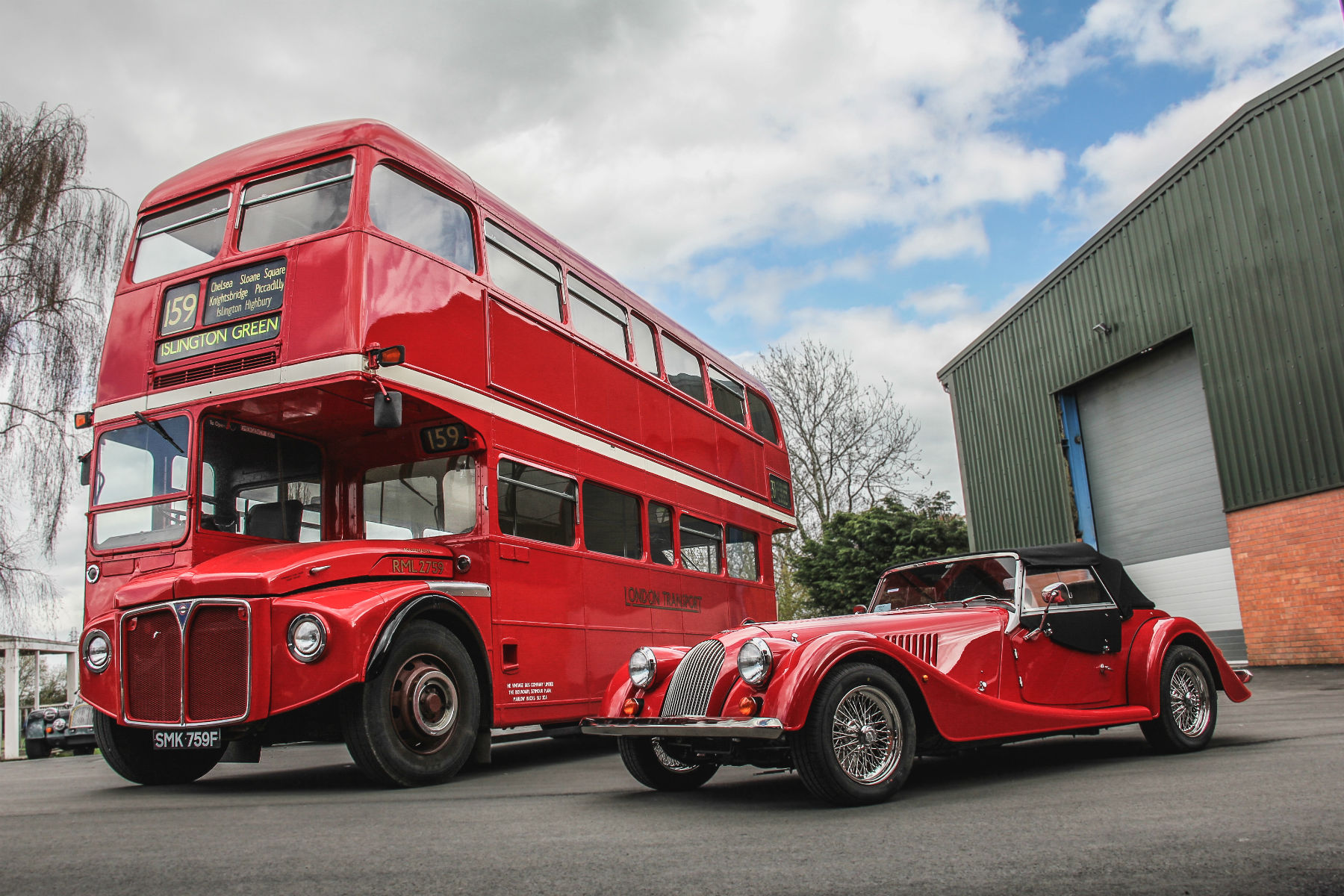
The second-to-last Routemaster bus to be withdrawn from service in 2005 has been bought by British sports car manufacturer Morgan.
Manufactured in 1968 – the year the first Morgan Plus 8 was sold – the iconic London bus entered service in January of that year. Since then, SMK 759F is believed to have clocked up more than 1.5 million miles before retiring nearly 44 years later. As it took its final journey on 9th December 2005, crowds gathered along the route to give it an admirable send-off.
Described as being in ‘incredible condition’, Morgan bought the bus earlier this year and has set to work making sympathetic conversions. It’s expecting to display it at events around the country this summer in a joint 50th anniversary celebration with the Morgan Plus 8.
“The Routemaster bus is arguably one of the most iconic vehicles in existence,” said Morgan’s managing director, Steve Morris. “It serves as a symbol of Britain and is part of our national identity. It therefore gives us great pleasure to continue the life of one of the last decommissioned buses as our event space. Morgan has an exciting year ahead, and we can’t wait to utilise the bus at events all around the UK.
“Our plans for the bus will make it the ideal event space for Morgan customers and enthusiasts alike.”
All the work will be carried out in-house by the same team responsible for hand-building Morgan sports cars.
Born in 1938, Marcello Gandini is one of the world’s best car designers, responsible for penning some of the most eye-catching, dramatic and important cars of the 20th century. Here, we take a look at some of his greatest hits. Prepare to be left slack-jawed by the man’s genius.
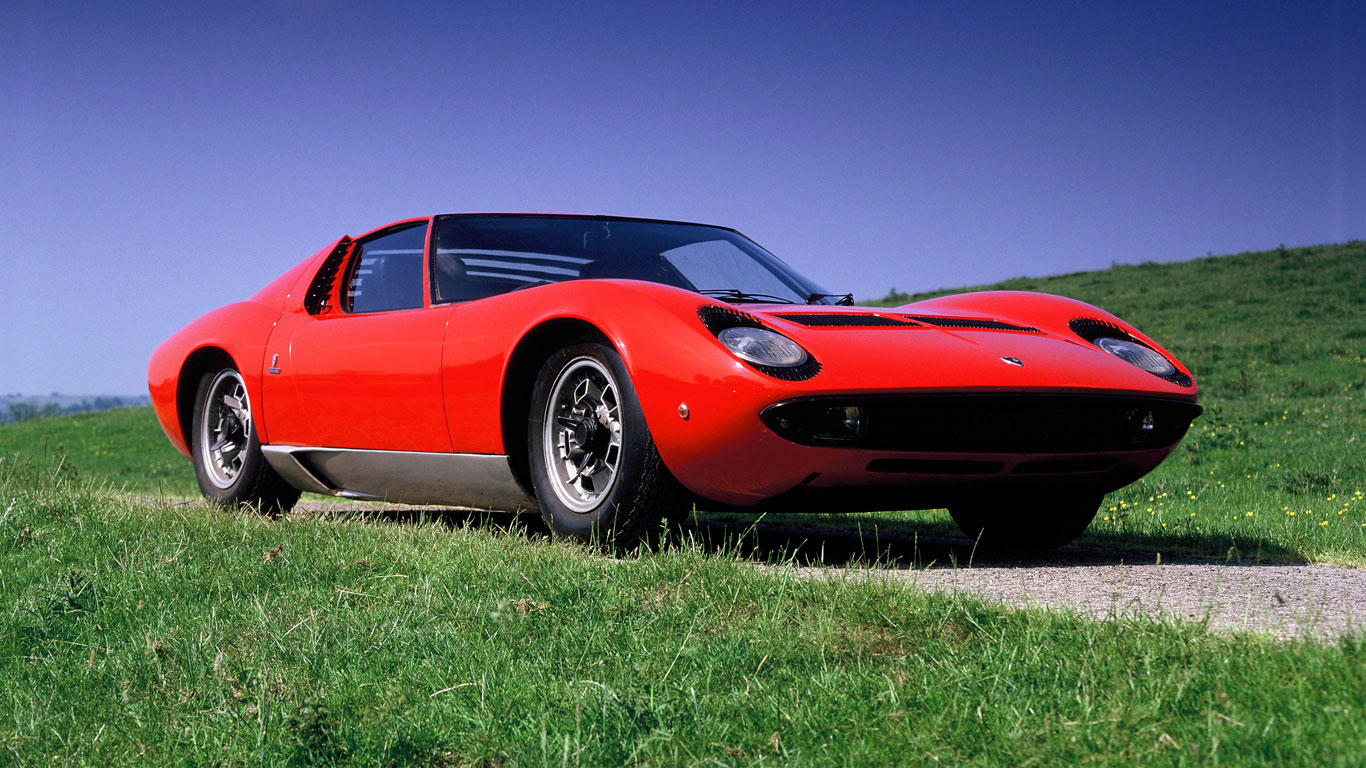
Lamborghini Miura
When Lamborghini unveiled the 400 TP rolling chassis at the 1965 Turin Auto Show, it was faced with a queue of potential customers armed with open wallets, and a number of coachbuilders hoping to create the body. Ferruccio Lamborghini turned to Bertone, with chassis developer Gian Paolo Dallara tasked with working with stylist Marcello Gandini. But is the Miura really Gandini’s baby?
Gandini replaced Giugiaro at Bertone and is credited as being the godfather of the Miura. Lamborghini’s own website is conclusive on the matter, saying: “He took over from his contemporary Giorgetti Giugiaro at Bertone, designing the most popular Italian sports vehicles in 60s and 70s, including the famous Lamborghini Miura and Countach. Giugiaro would beg to differ, and in a 1996 interview with Classic & Sports Car magazine, he claimed: “Gandini took my sketches and finished the car – 70 percent of the design is mine.”
But Gandini blames Giugiaro for allowing doubts to linger for five decades. In a 2009 interview with Automotive News Europe, he said bluntly: “I did the Miura – and I did it alone – in just three months. Any alleged influence by [Giorgetto] Giugiaro in that car is simply not true. This misinterpretation of history first surfaced when the car was unveiled in 1966.”
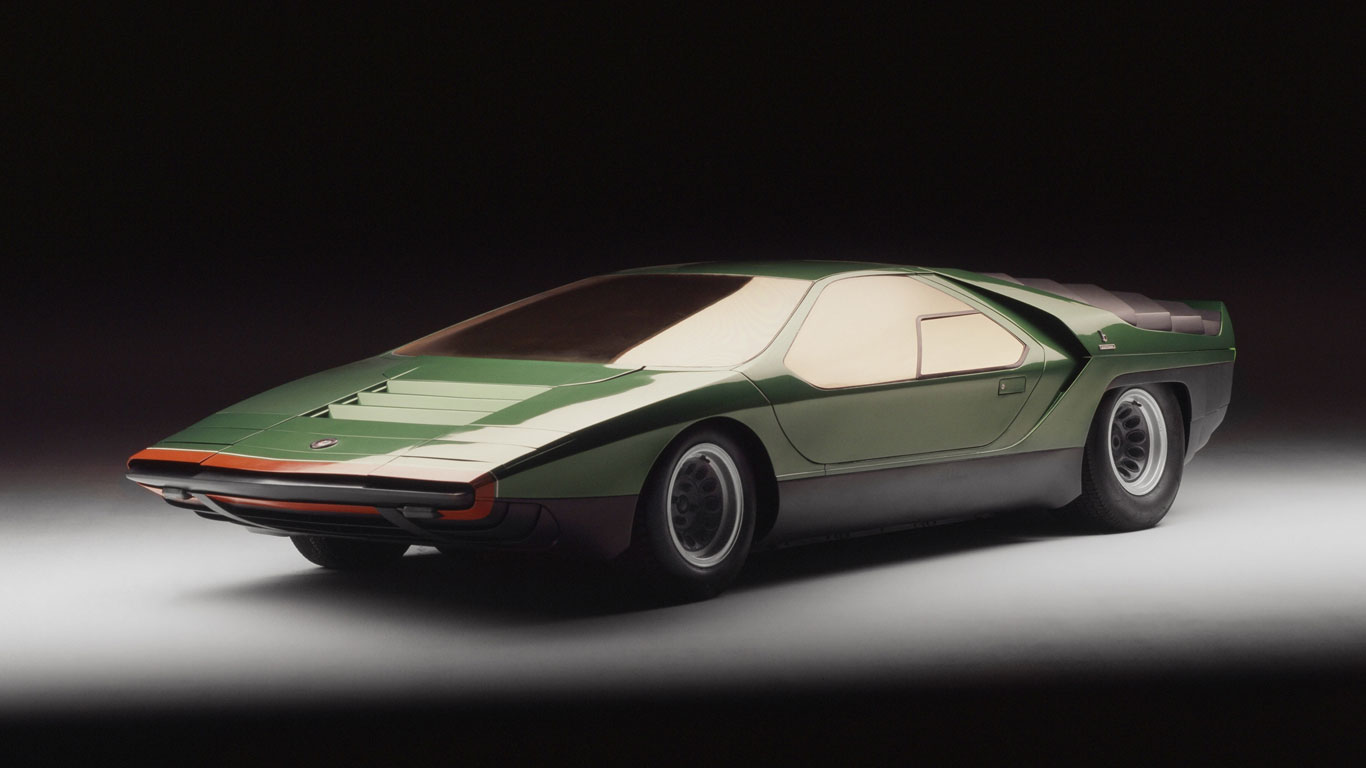
Alfa Romeo Carabo
The Alfa Romeo Carabo is a classic Gandini design. Unveiled in 1968, it championed the wedge shape at a time when sports cars featured smooth and flowing bodies. Stick the Carabo alongside a Miura, Toyota 2000GT or Jaguar E-Type and it’ll look like a car from another century, let alone the next decade. Chalk, meet cheese (wedge).
The shocked onlookers in attendance at the Porte de Versailles in Paris would not have known it at the time, but the experimental concept previewed the future of car design. It’s hard to believe that it was based on the voluptuous and alluring Alfa Romeo Tipo 33.
According to a Bertone press release, the Carabo was “a bold but aesthetically and functionally valid vision of the sporty car of the future. And the use of new materials and novel construction techniques means that this concept car was something more than just an exercise in styling.”
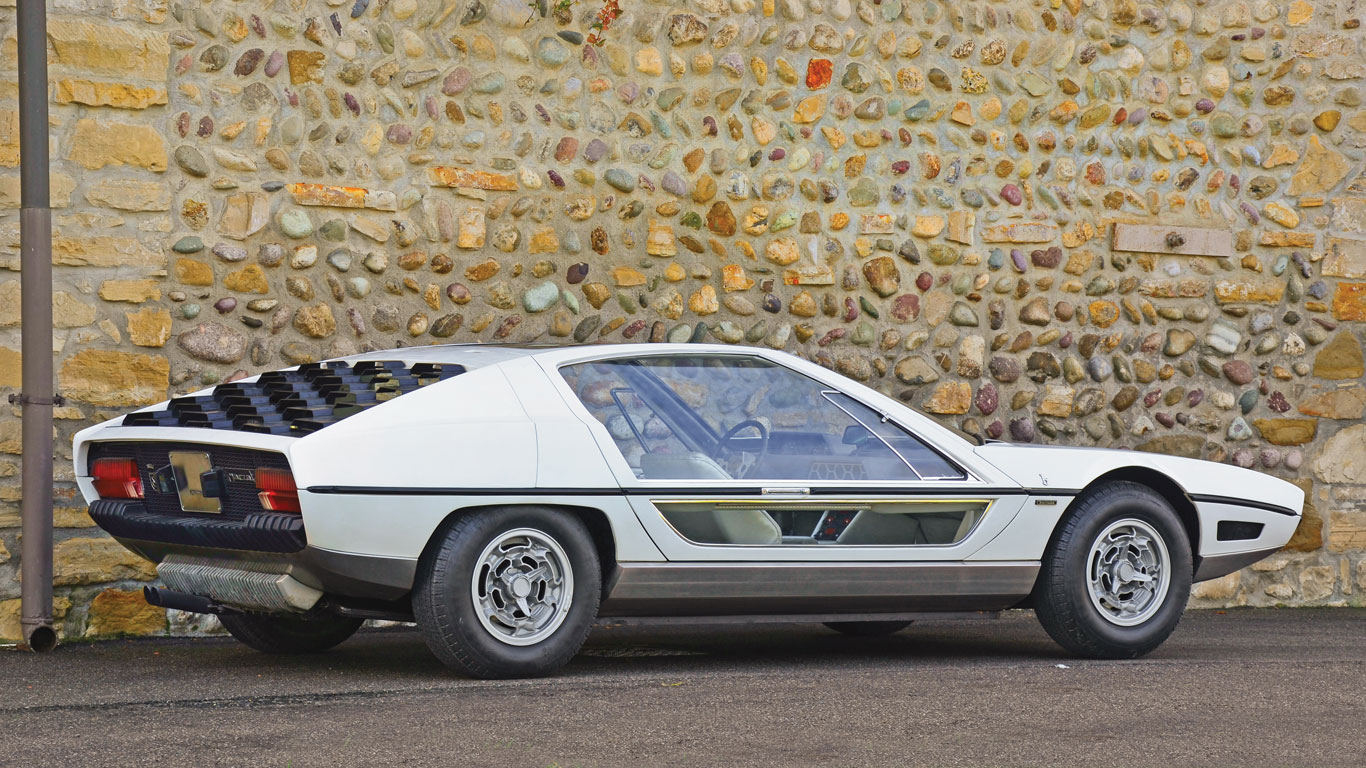
Lamborghini Marzal
None other than LJK Setright described the Lamborghini Marzal as “perhaps the most extravagant piece of virtuoso styling to have come out of Europe since the war.” Road & Track agreed, labelling it “so fresh that everything else looks old fashioned.”
Strong praise indeed, but it’s not hard to see why the Marzal was, and remains, held in such high regard. The glazed gullwing doors are a standout feature, although Ferruccio Lamborghini famously objected to the design, complaining that they would “offer no privacy: a lady’s leg would be there for all to see.”
But there could be no such complaints about the rest of the car, including that mad louvred rear window. Sadly, the Marzal remained a one-off creation, and was sold at an RM Sotheby’s auction in 2011 for €1,512,000. Fortunately, its design inspired the styling of the next car on our list…
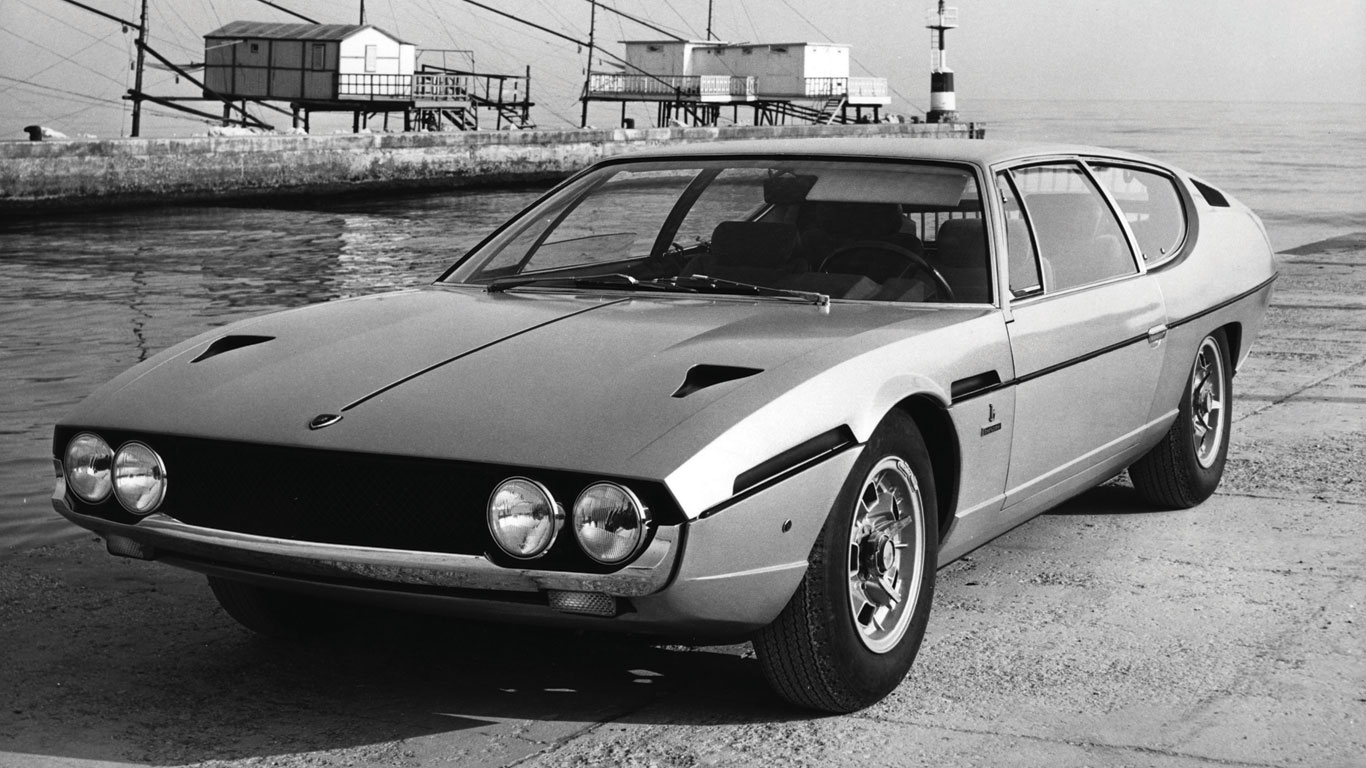
Lamborghini Espada
“Styling, of course, is always a personal matter, but you could call the Espada a classic of the sixties and a Bertone masterpiece not so much because of its sleek beauty but because of the extraordinary space utilisation contained within the low shape. At 104 inches its wheelbase is two inches shorter than the [Ferrari] GT/4s; it is shorter overall too, but nearly three inches wider and five inches lower.
“And yet it contains quite a deal more interior room – it is a full four-seater rather than a 2+2 and as such has unique attraction among the supercars.” The words of the esteemed motoring journalist, Mel Nichols, writing in Car, May 1974.
The Espada was created to satisfy Ferruccio Lamborghini’s desire to have a genuine four-seater GT car in his lineup, and the fact that it remained in production for a decade is testament to Gandini’s eye for design. That said, the Espada went through a series of changes before bowing out in 1978.
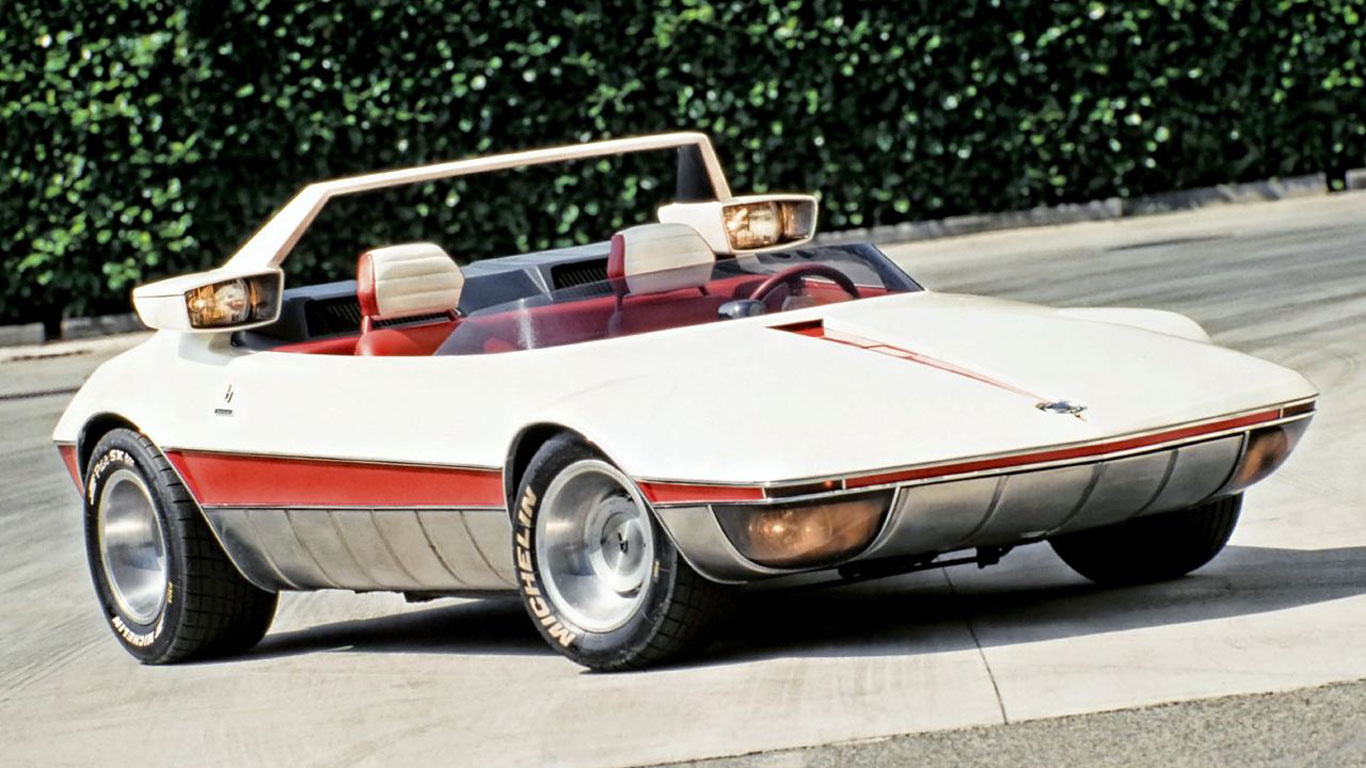
Autobianchi Runabout
If the Autobianchi Runabout looks familiar, it’s probably because you spent your formative years kneeling down in your living room, smashing a Matchbox Speed Kings version into the skirting boards. The Bertone concept was first shown at the 1969 Turin Motor Show and used the engine from a Fiat 128.
The design was inspired by the racing powerboats of the 1960s, most notably the shape of the body and the windscreen, while the car is loaded with neat details, such as the headlights mounted on the rollbar.
According to Bertone: “The Runabout is an invitation to fun, stress-free travelling, evoking the sheer joy of driving in places where traffic is no more than a distant memory.” Places like your parents’ living room, then?
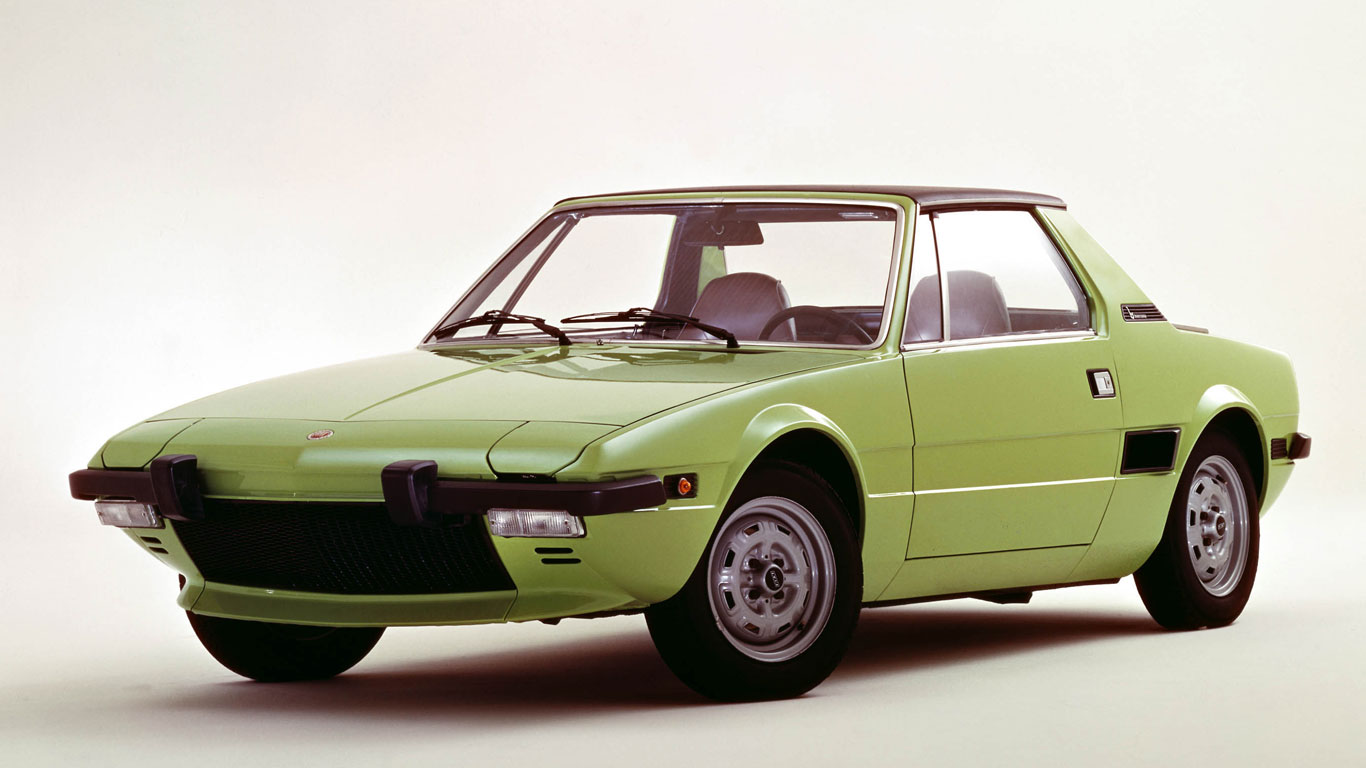
Fiat X1/9
While the Runabout remained a one-off concept, it inspired one of the most successful sports cars of the 1970s. The Fiat X1/9 was the replacement for the Giugiaro-designed 850 Spider and it made its debut in November 1972.
Bertone handled the production of the bodies, which were shipped to Lingotto to enable Fiat to fit the engine and running gear. The influence of the Runabout is clear, albeit with added stiffness and safety protection to comply with American crash legislation.
Fiat was never shy of playing the ‘baby Ferrari’ card in its promotional messages. A press ad of 1983 said: “This 1498cc mid-engine machine is a design by Bertone, the same people who created the Ferrari GT4. Like the GT4, Fiat’s X1/9 looks, feels and drives like a true Italian sports car.”
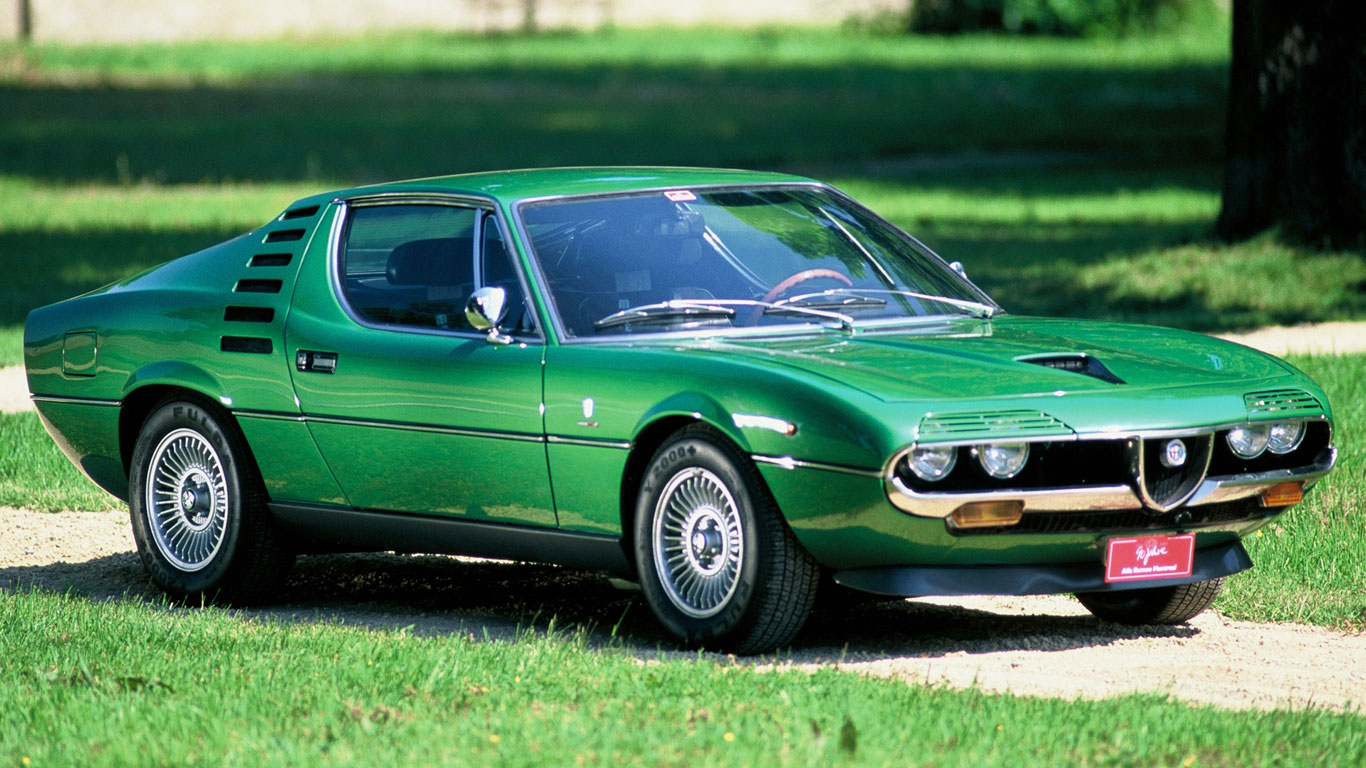
Alfa Romeo Montreal
Fate is a wonderful thing. This extraordinarily handsome Alfa Romeo was unveiled in concept form at Expo 67, before going on show as a production car in 1970. In 1967, the World Fair was held in Montreal, presenting Alfa with an evocative name for its V8 sports car. A year earlier, it would been Munich, while a year later it would have been San Antonio. Neither name has quite the same appeal as Montreal.
Location-inspired name aside, the Alfa Romeo Montreal is unquestionably one of Gandini’s finest achievements. Highlights include the slotted eyelid shutters over the headlights and the sliding shutters within the rear quarter panels.
Disputes in Milan meant that the Montreal didn’t arrive on these shores until 1972, a full 12 months behind schedule, but the delay did little to dilute the appetite for Alfa’s masterpiece.
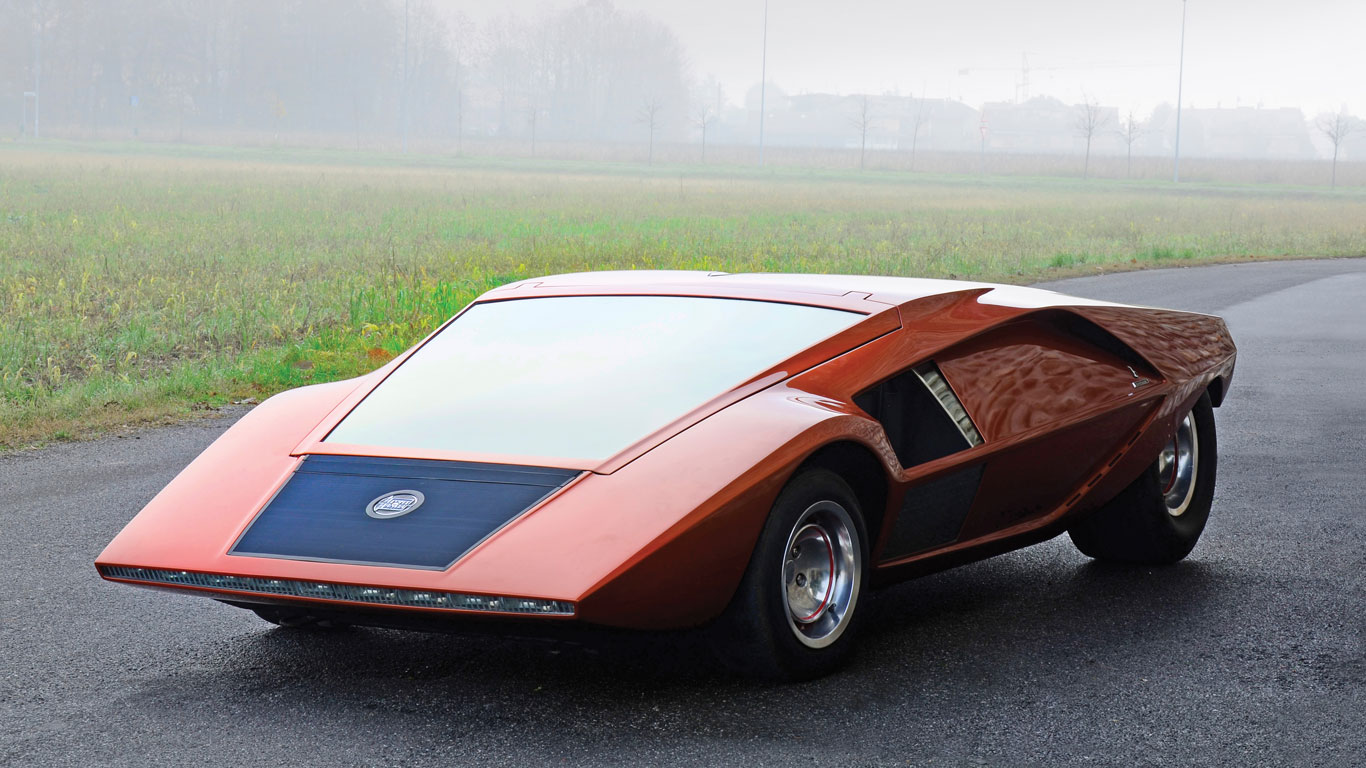
Lancia Stratos HF Zero
In 2011, the one-off Lancia Stratos HF Zero sold for €761,600 at RM Sotheby’s Villa D’este auction. Officially, the car was labelled “Stratos HF”, but Nuccio Bertone wanted to call it “Stratolimite”, or “limit of the stratosphere”. After time, it would become known by its internal nickname of “Zero”.
There’s so much for the eyes to take in, like the ultrathin row of headlights backlit by ten 55w bulbs, or the flip-up windscreen, which you’d expect to open up to reveal the Pink Panther staring back at you.
At the back, you’ll find a pair of exhausts protruding out alongside the gearbox case, along with a rear light strip containing no fewer than 84 tiny bulbs. It looks and feels like a flight of fancy, and yet it influenced the design of one of the greatest sports cars of the 20th century.
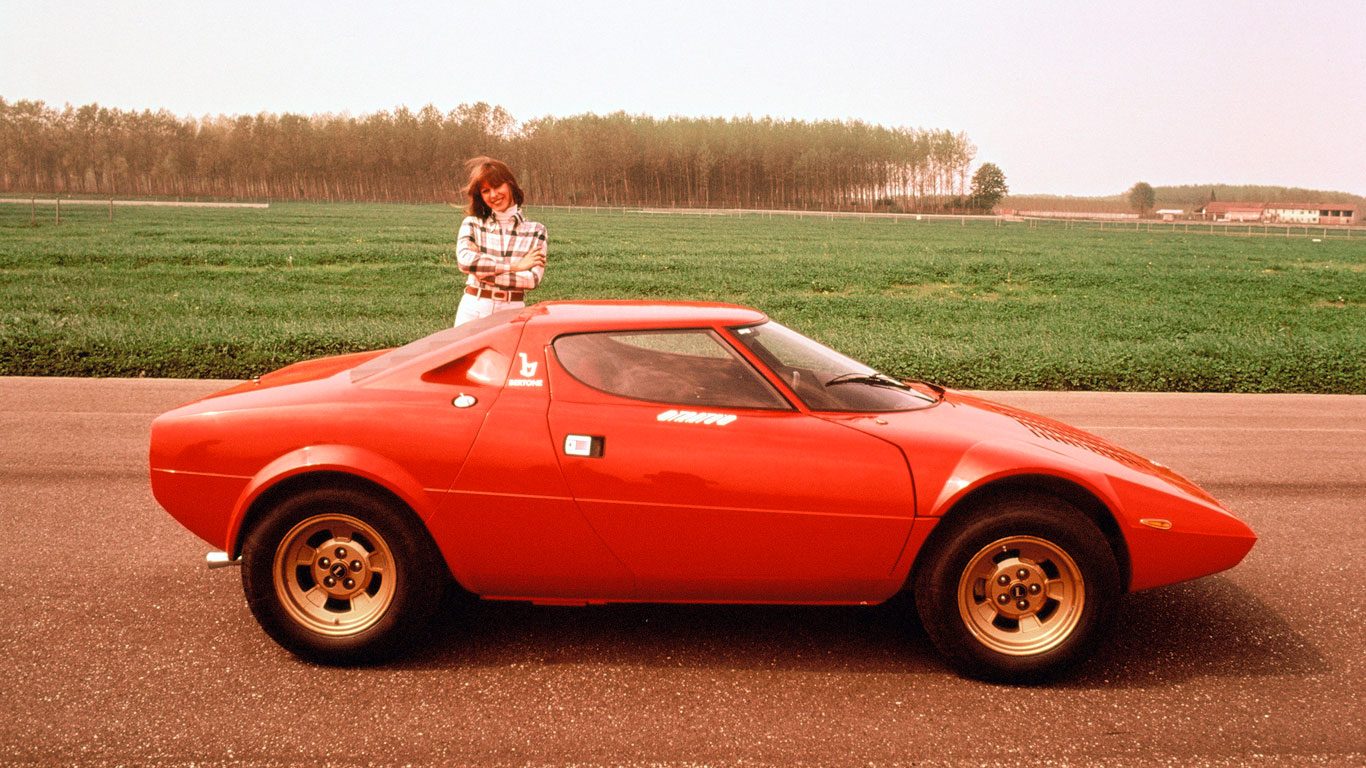
Lancia Stratos
The Lancia Stratos: a star of the road and track. From the outset, the Stratos was designed to build on the competition success of the Lancia Fulvia. Gandini worked alongside Sandro Munari (rally driver) and Cesare Fiorio (team boss), to develop a car in time for the 1974 season.
The result was a car with incredibly small dimensions, allowing it to corner with unbelievable speed and poise. In his book, Marcello Gandini: Maestro of Design, Gautam Sen suggests that Gandini looked at the wheelbase of the car’s two closest competitors as the starting point: the Alpine A110 and Porsche 911.
Once again, the Autobianchi Runabout is evident in the design, but the Stratos stands alone as a true great. Successful on the track and superbly packaged, yet its beauty appears to lie in its simplicity. A candidate for Gandini’s finest hour? Given that he worked on the body, chassis and the packaging, we think so.
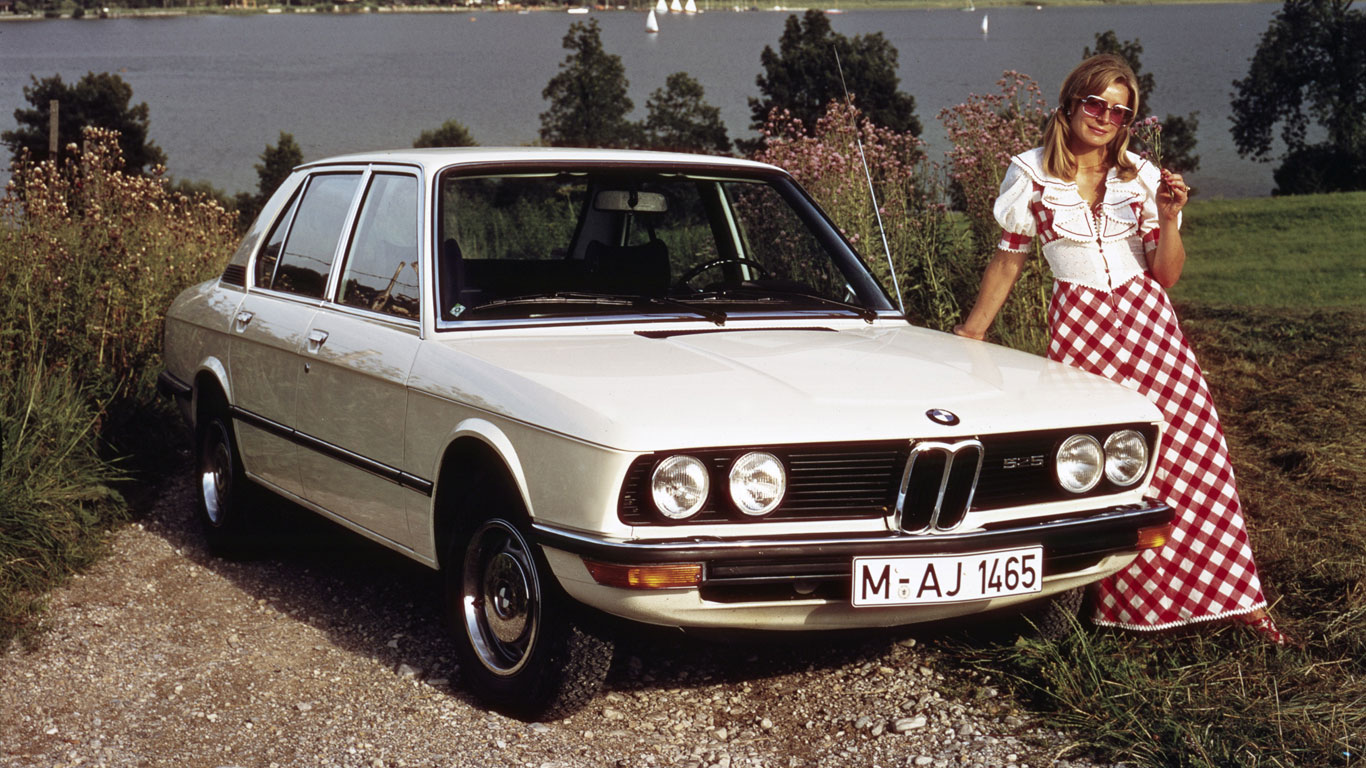
BMW 5 Series (E12)
The BMW 5 Series was the replacement for the long-running New Class (or Neue Klasse) of saloons dating back to the Michelotti-designed 1500 of 1961. Gandini’s 5 Series – internal code E12 – was a monumental leap forward, both in terms of how it looked and how it behaved on the road.
Bertone had worked with BMW since 1960 and first presented proposals for the new saloon in the late 60s. This was the all-new medium-size BMW for more than a decade and its launch coincided with Munich hosting the Olympic Games.
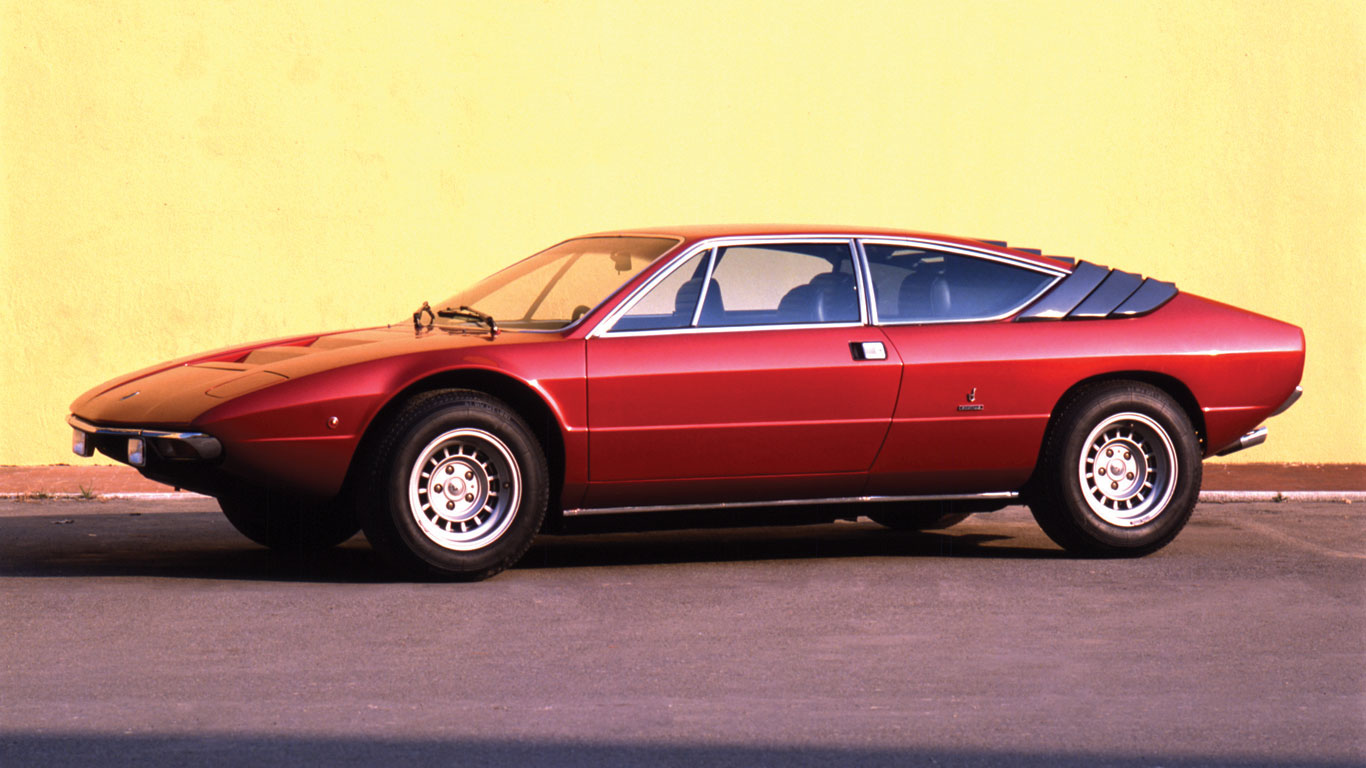
Lamborghini Urraco
Lamborghini’s brief to Bertone and Gandini was simple: to design a cost-effective four-seater GT to cope with the oil crisis of the 1970s. The result was the Urraco, powered by a 2.5-litre V8, which was increased in size to 3.0 litres in 1974.
At the time, the Italian manufacturers were jockeying for position, keen to grab a slice of the junior supercar market. Ferrari had the Dino 308 GT4 (more on this in a moment), while Maserati had the Merak. All offered engines with less than 3.0 litres, but were of a similar size to their more powerful siblings.
Of the three, the Urraco is the least conservative from a styling perspective, but is certainly less wild than Gandini’s other creations.
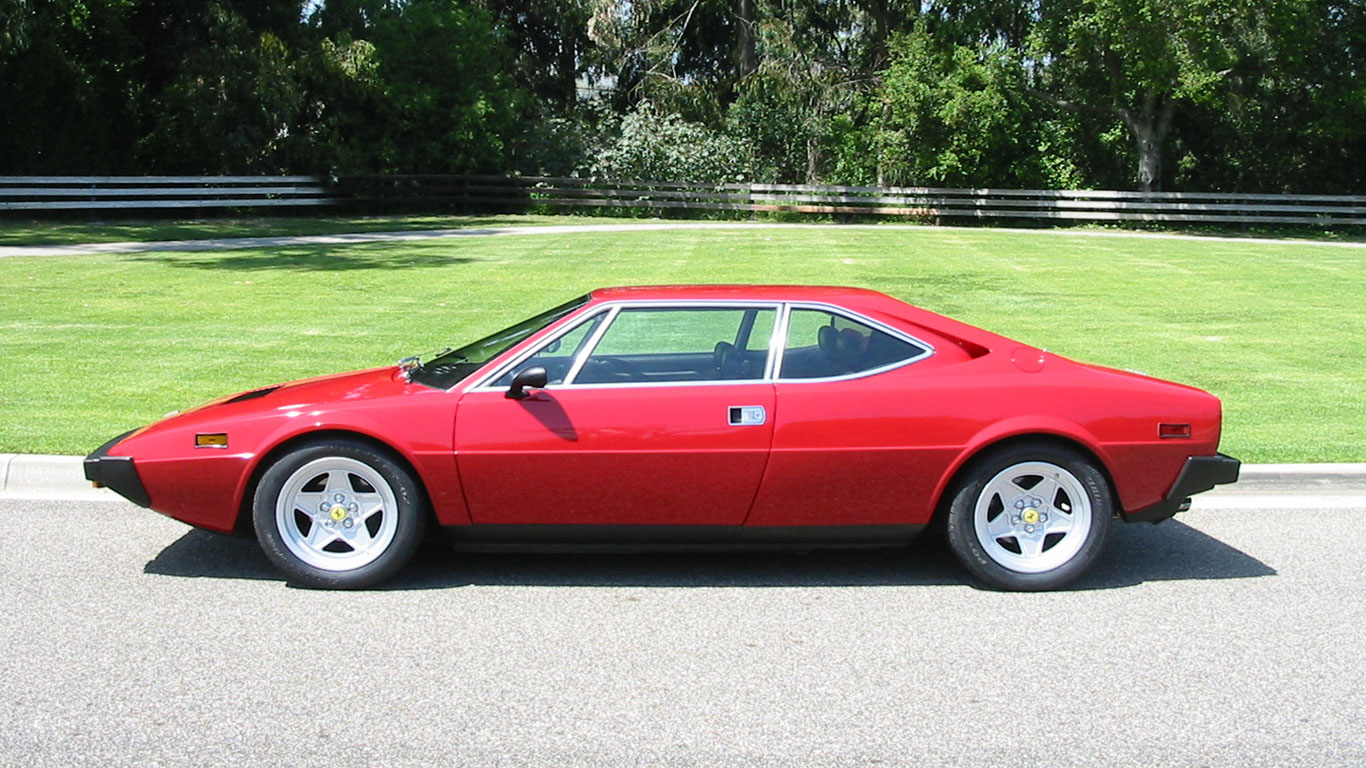
Dino 308 GT4
How do you follow a car like the 246 GT? The answer, if your name is Marcello Gandini, is the Dino 308 GT4, which found itself up against one of his other creations: the Lamborghini Urraco.
No surprise, then, that the 308 GT4 doesn’t look too dissimilar to the Urraco, albeit with a little less flair and muscle. Cruelly, and without a thought for political correctness, Car claimed that its rear end looked “fiddly and unattractive, rather like a woman with a narrow, pinched backside.”
Things were different in the 70s, lad. But to our eyes at least, the 308 GT4 has aged better than donkey jackets, flares and hostess trolleys.
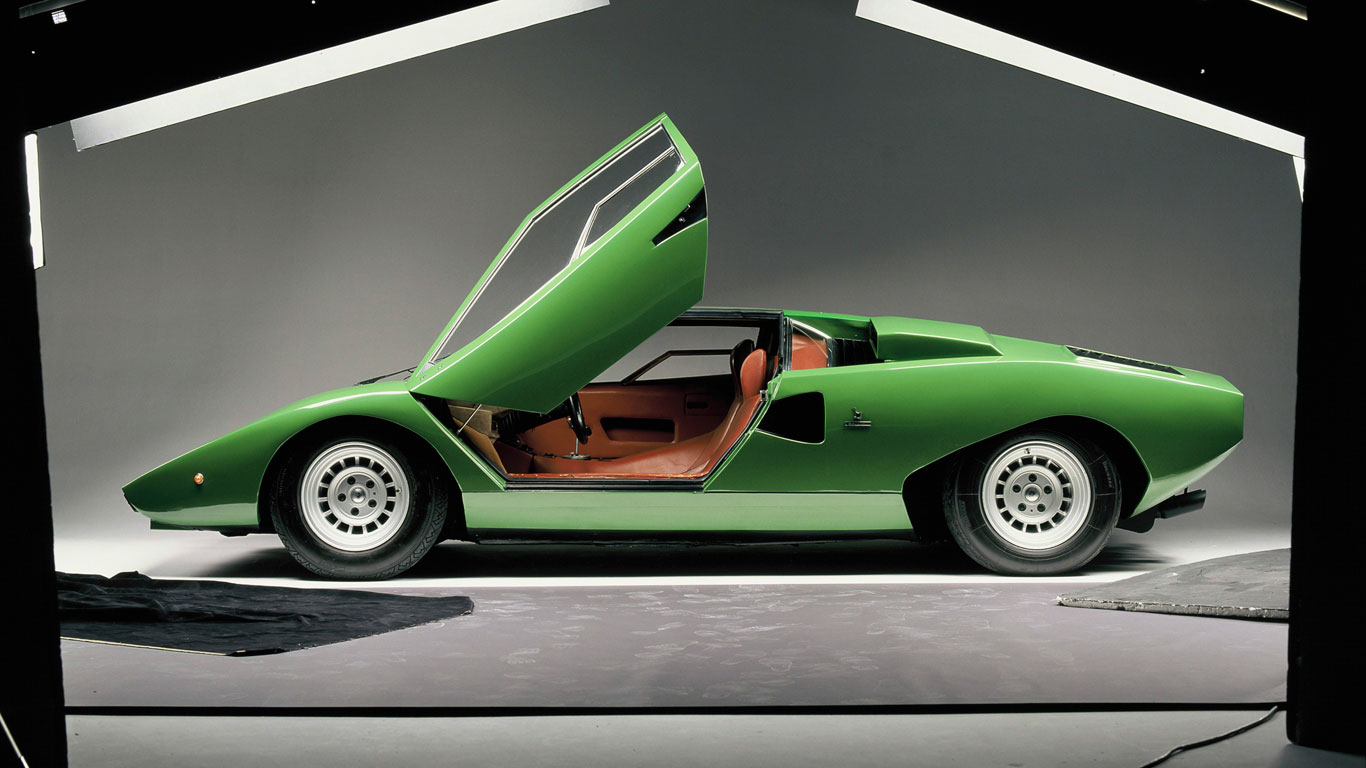
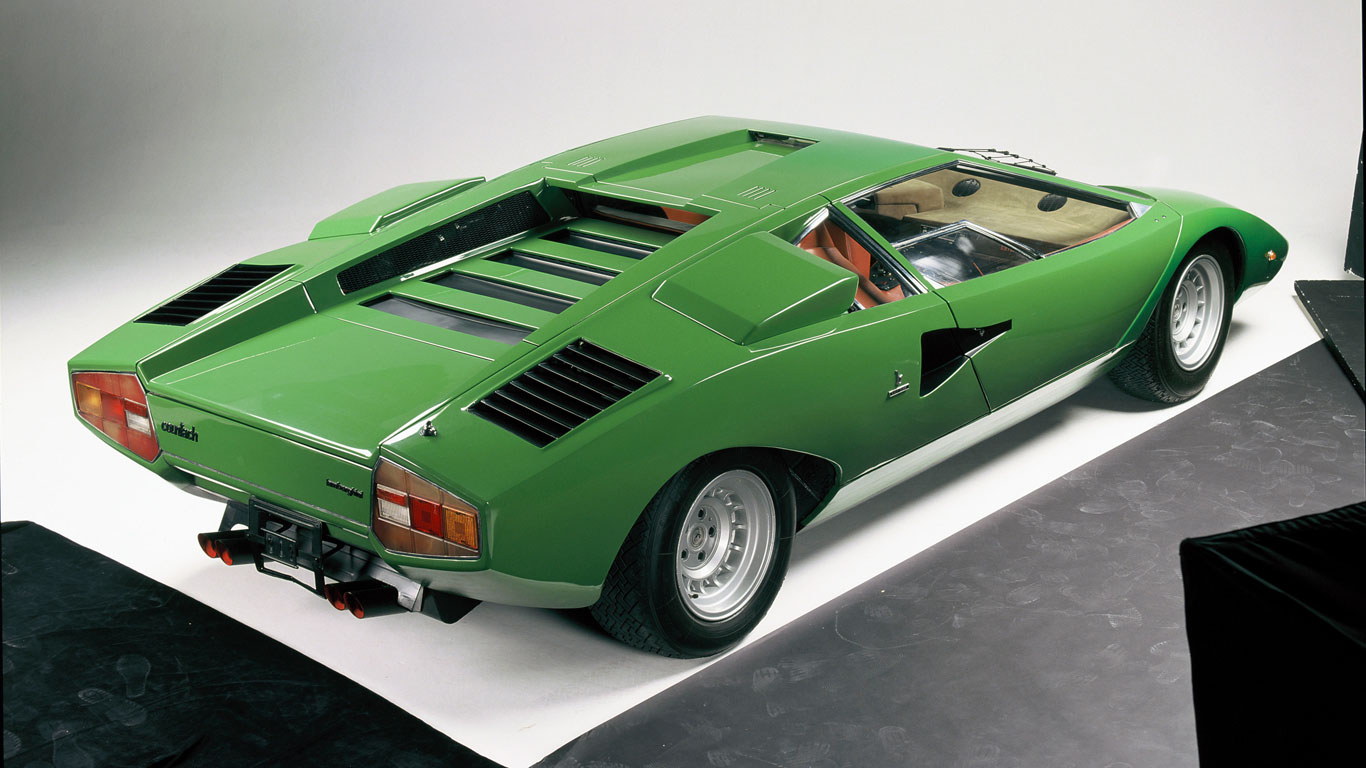
Lamborghini Countach
“Once again, designer Marcello Gandini managed to draw a fascinating, unconventional car that left everyone speechless,” says Lamborghini. We’re not going to wade into the debate over Gandini’s role in the design of the Miura – we don’t fancy a discussion with his lawyers – but there’s little doubt that the Countach is more Gandini than its predecessor.
Gandini said that he wanted people to be astonished when they first laid eyes on the car. Little wonder, then, that Lamborghini chose the Countach name, which is a Piedmontese expletive for “wow”.
The Countach is everything a supercar should be: otherworldly, impractical, inaccessible and prime bedroom-wall poster material.
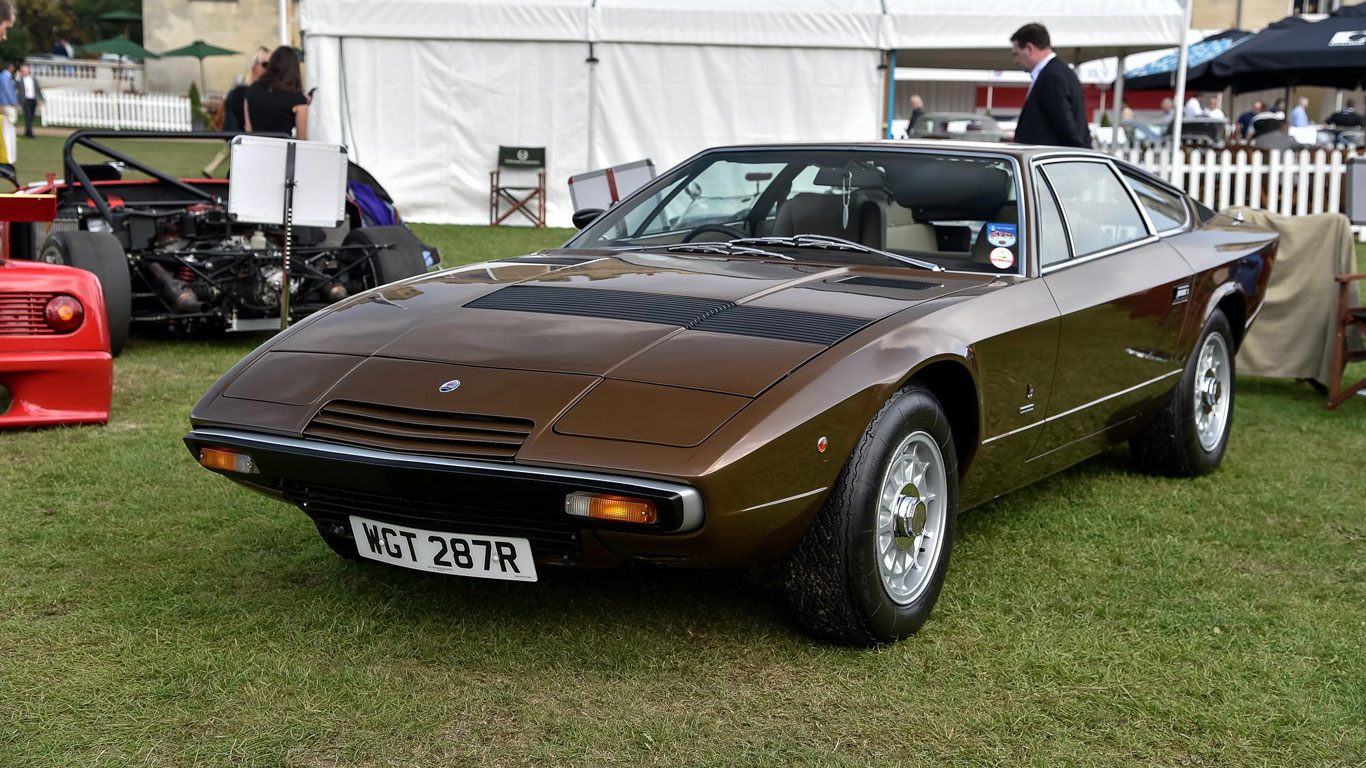
Maserati Khamsin
Unveiled at the 1972 Turin Motor Show, the Maserati Khamsin was a radical departure from the Indy, which was first shown in 1969. It would be another two years before the Khamsin made production, but it was still available in 1982.
Its beautiful lines are matched by a surprising level of practicality, which extends to the spare wheel, which is located underneath the front grille. Other nods to common sense include the safety glass housing the rear light clusters, and the rubber inserts within the bumpers.
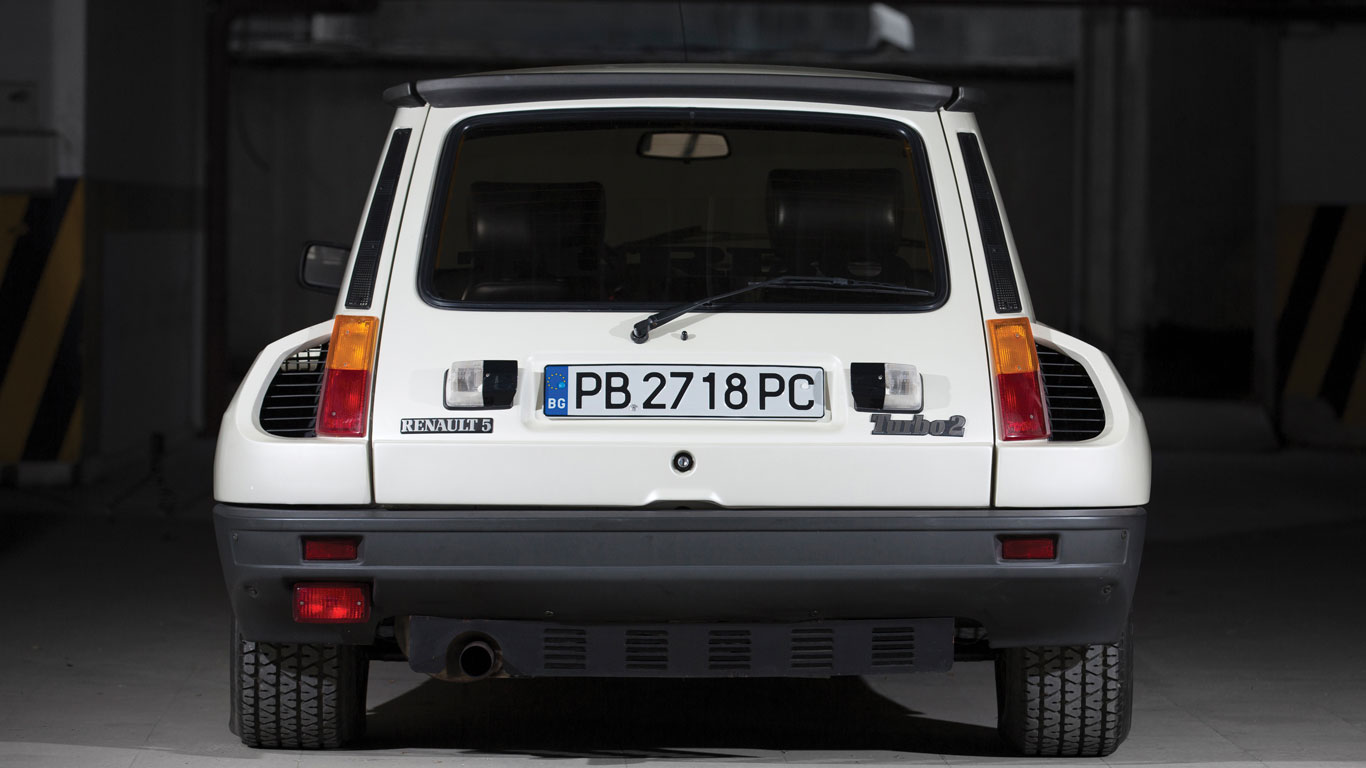
Renault 5 Turbo
We have to credit Marc Deschamps for the overall design of the Renault 5 Turbo, but the back end was the work of Marcello Gandini.
This low-mileage example sold at an RM Sotheby’s auction in 2017 for €89,600.
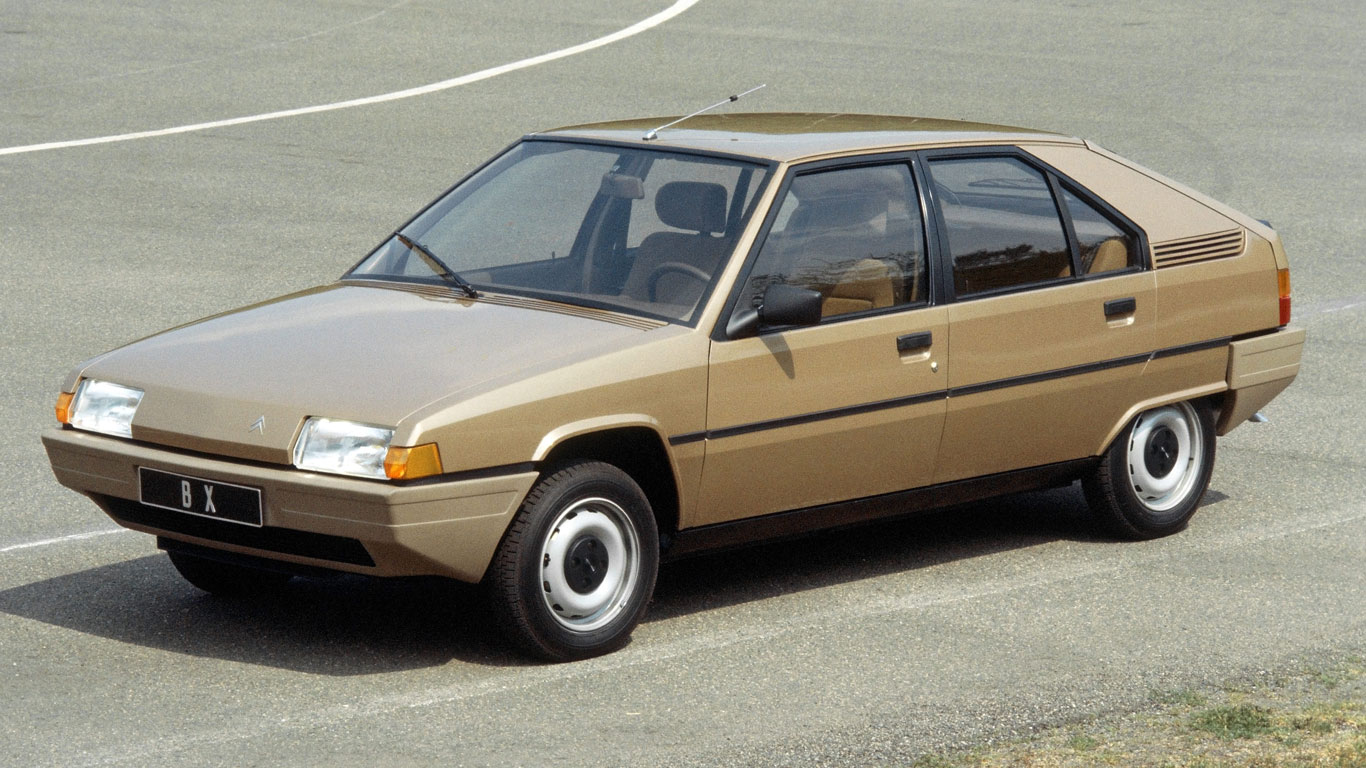
Citroen BX
The Citroen BX has its roots in the Gandini-designed Volvo Tundra concept of 1979. It shared its platform with the Volvo 343 and featured pop-up headlights, a digital dashboard and a Renault-sourced 1.4-litre engine. Sadly, Volvo canned the project and the Tundra never made it to production.
But the Tundra lived to fight another day, as Citroen asked Gandini to use elements from the concept in the design of the BX.
The great man even appeared in a television advert for the BX, in which he walks past a Countach as the narrator asks: “What does the Lamborghini designer drive to Lamborghini?” The answer, of course, was a Citroen BX.
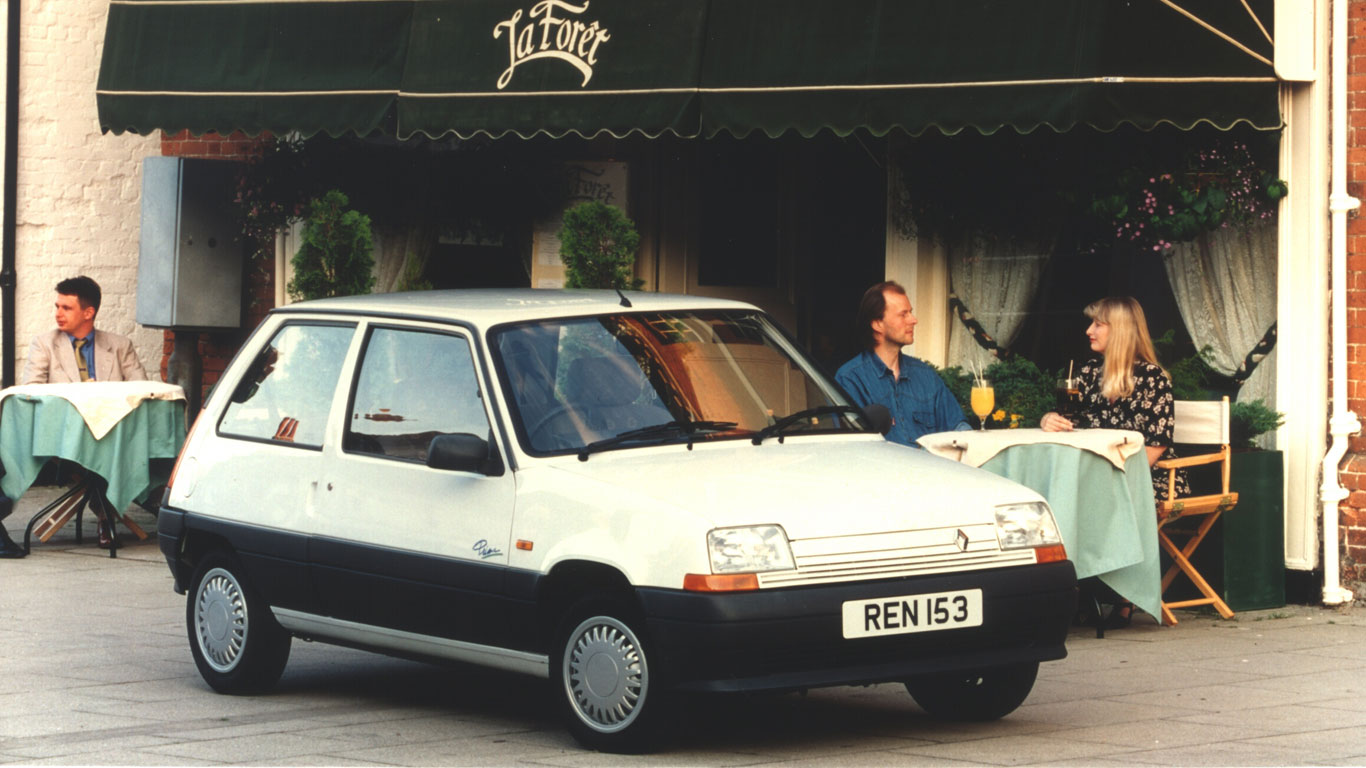
Renault 5 Supercinq
Renault left it very late before launching the second-generation Renault 5, or Supercinq. The hugely successful R5 had enjoyed 12 years of continuous production before Renault unveiled the Supercinq in 1984, by which time it was jostling for position with a plethora of chic superminis.
Marcello Gandini succeeded in staying true to the original’s cheeky charm, while giving the new car a more 80s vibe. Underneath, the Renault 5 was entirely new, but the fresh design enabled the Supercinq to live on until the the middle of the 1990s.
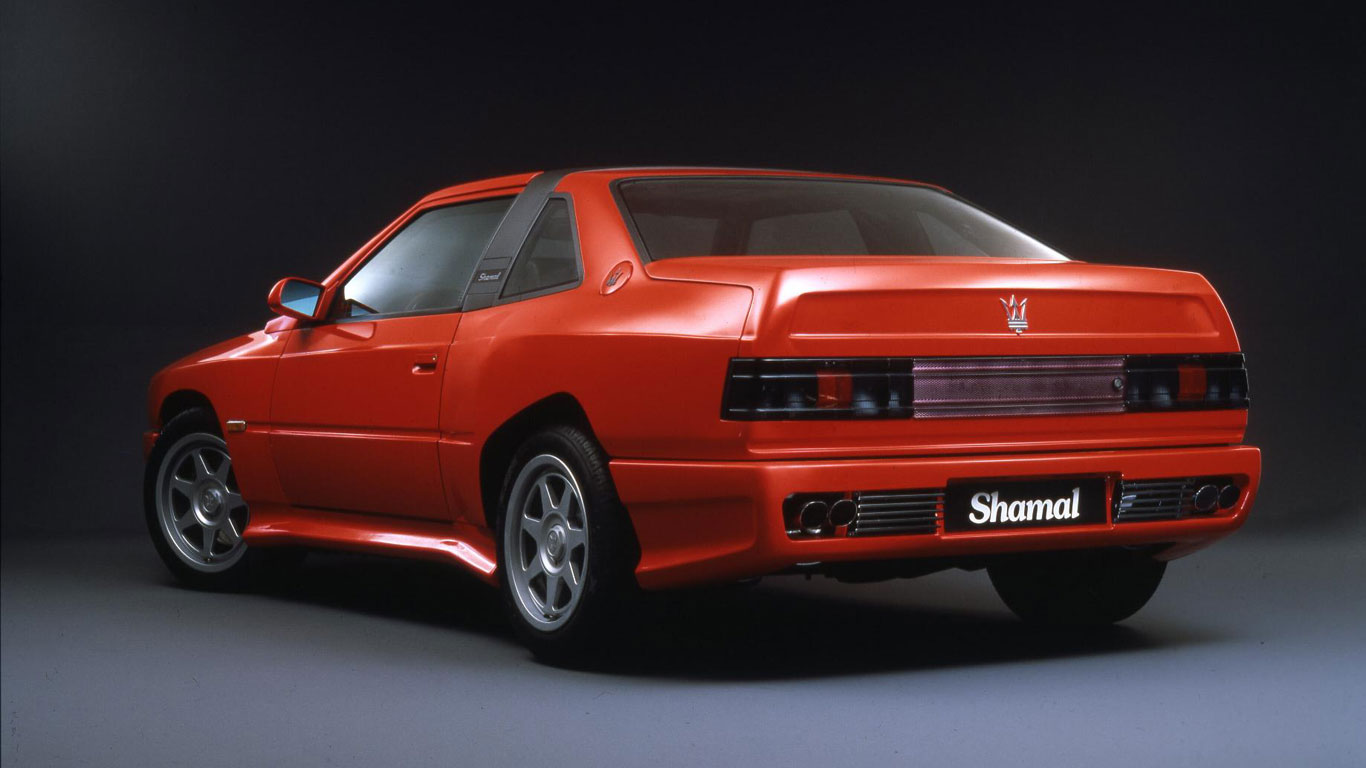
Maserati Shamal
The Maserati Shamal was a comprehensive overhaul of the Biturbo and the final car to be launched in the 80s. The styling was classic Gandini, complete with a pair of Countach-inspired rear wheelarches.
The interior was similarly exotic, but Maserati managed to shift just 369 examples of this 326hp supercar-tamer. That’s 369 people who know a good pair of arches when they see them.
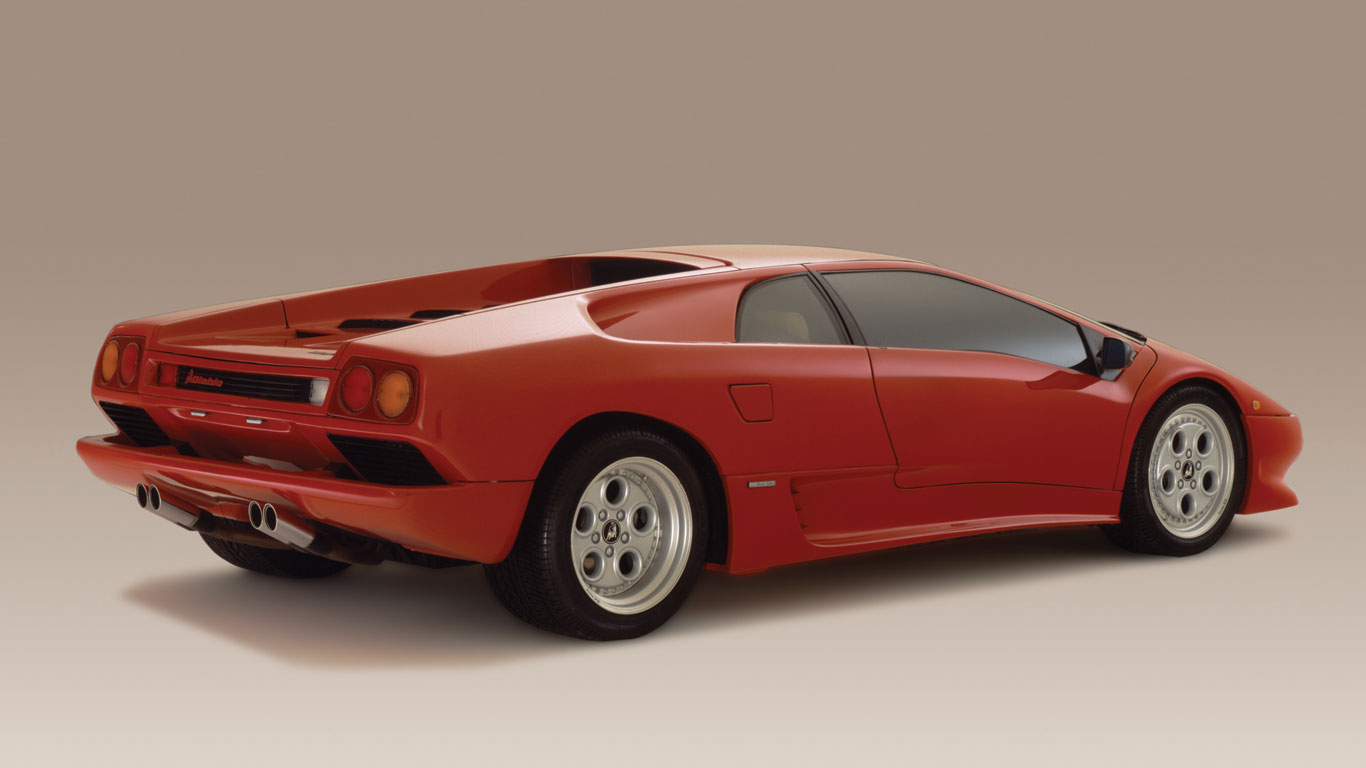
Lamborghini Diablo
With the success of the Countach, it was pretty obvious that Marcello Gandini would be contacted to work on its replacement. Lamborghini started working on the Diablo project in 1985, but it would be five years before it made its first public appearance.
The lineage was clear to see, although the Diablo was smoother and more rounded than the Countach, an approach far more in keeping with the trends of the time. Interestingly, although Gandini penned the original design, certain elements were changed following Chrysler’s takeover of Lamborghini in 1987.
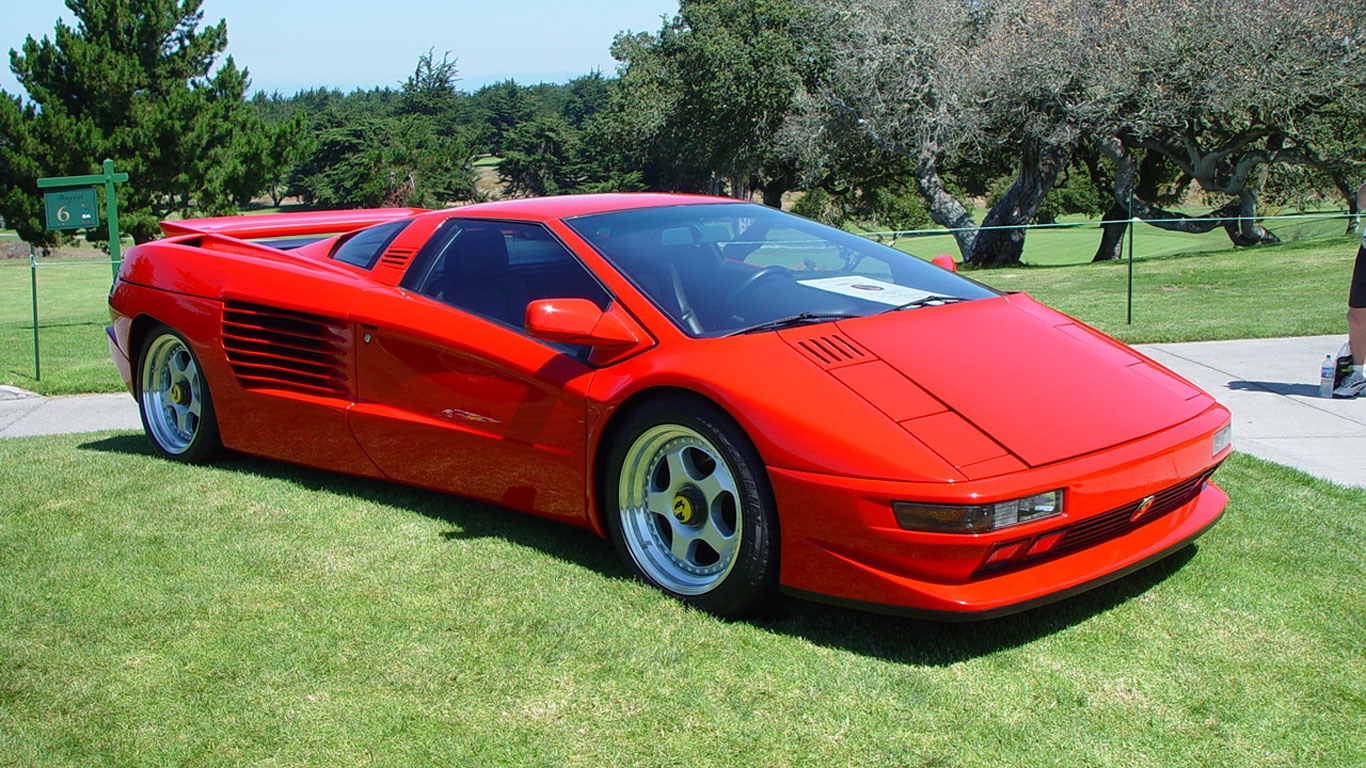
Cizeta-Moroder V16T
Marcello Gandini’s vision for the Lamborghini Diablo lived on in the Cizeta V16T: the supercar penned by the Italian before Chrysler waded in with its soft-focus lens and smoothing iron. It’s dramatic, OTT, and has more in common with the Countach than the Diablo.
The 6.0-litre V12 supercar was built in Modena by a team of ex-Lamborghini employees, headed up by Claudio Zampolli, Giorgio Moroder and Marcello Gandini. The company had plans to build 100 cars per year, but when Moroder walked away from the project, taking his money with him, the project was doomed to failure. As a result, only nine Cizetas were built.
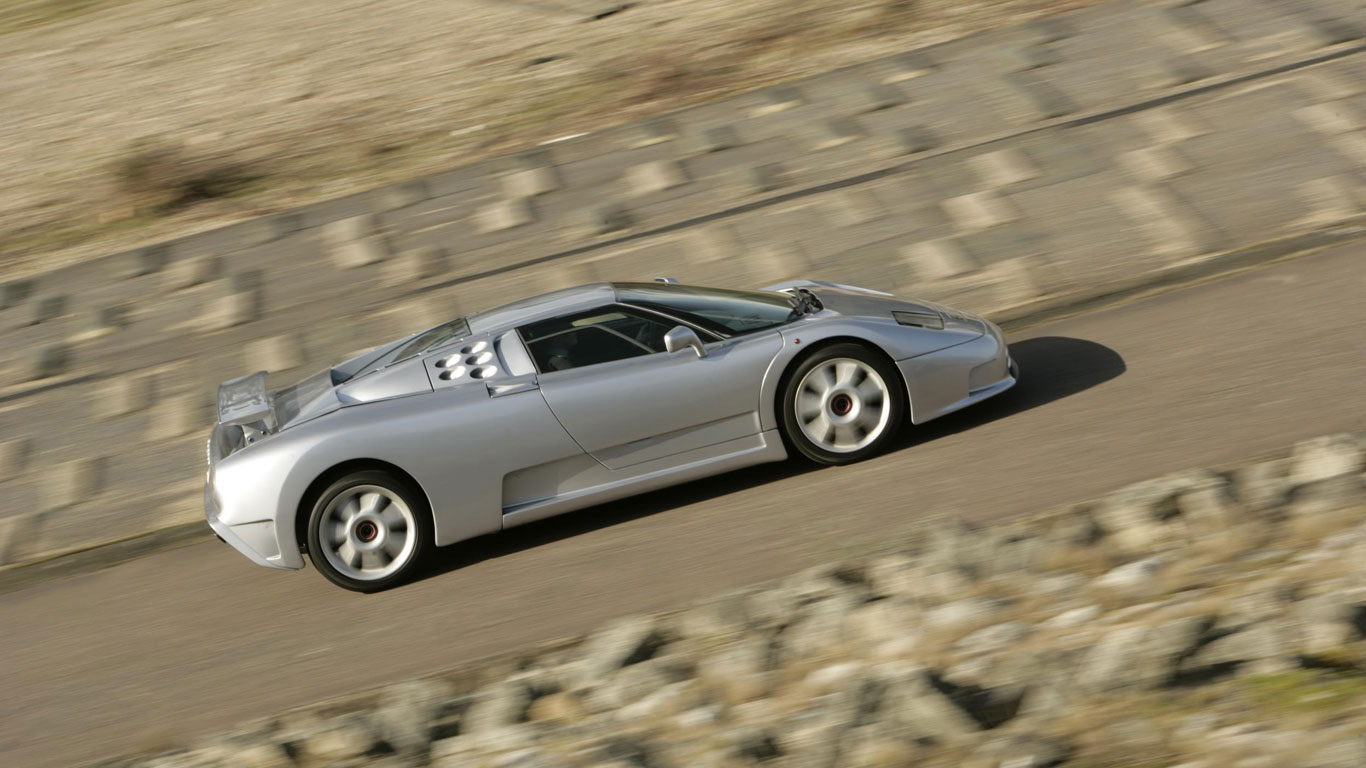
Bugatti EB110
In 1991, exactly 110 years after the birth of Ettore Bugatti, the company launched the EB110. The supercar featured a quad-turbocharged V12 engine, permanent four-wheel drive and the world’s first carbon fibre chassis. The body, as you might have guessed, was designed by Gandini.
According to The Economic Times, the great man lives in a 17th century villa, located in the foothills of the mountains near Turin. In an interview with Car & Driver, Gandini was asked if he would have done anything differently. “As with most people, many,” was his response.
We doubt that would include the Lancia Stratos and the Countach’s rear wheelarch.
What’s the best car currently on sale in the UK? A car that you’d enjoy owning with low running costs, excellent practicality and a disinclination to go wrong? Auto Express magazine has asked owners to rate their cars in a wide range of areas, compiling a list of the best cars to own and live with.
Each car is given a percentage score, which is based on the average rating given by owners across 31 subject areas in nine different categories. As you’ll see, they’re all pretty close…
20: Toyota Auris
Score: 91.67%
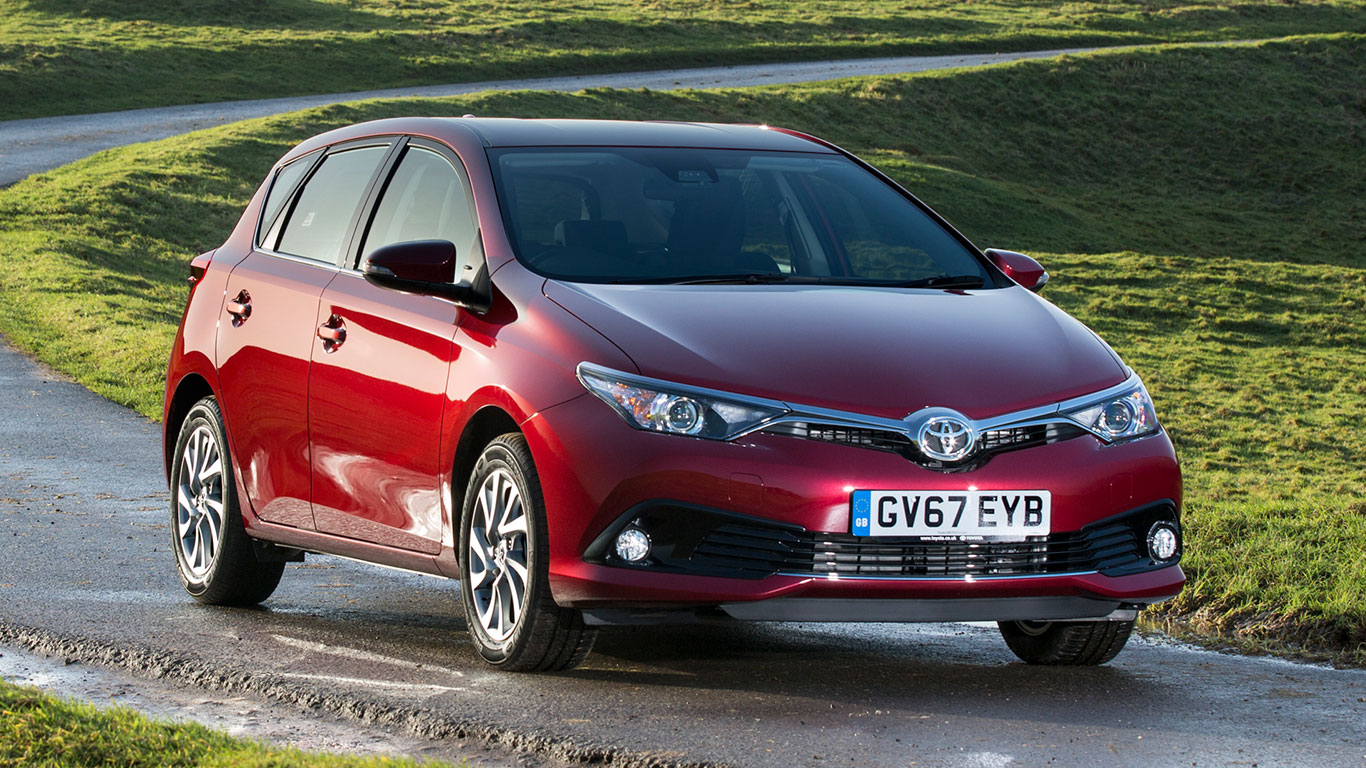
It’s no surprise to see a Toyota feature here. Toyota and its sister brand Lexus regularly perform well in the Driver Power survey. They rarely go wrong, and owners really like them. The Auris is due to be replaced, yet it still ranks highly. It scores well for its engine and gearbox, being let down slightly by its interior and comfort.
19: Mazda CX-5
Score: 91.82%
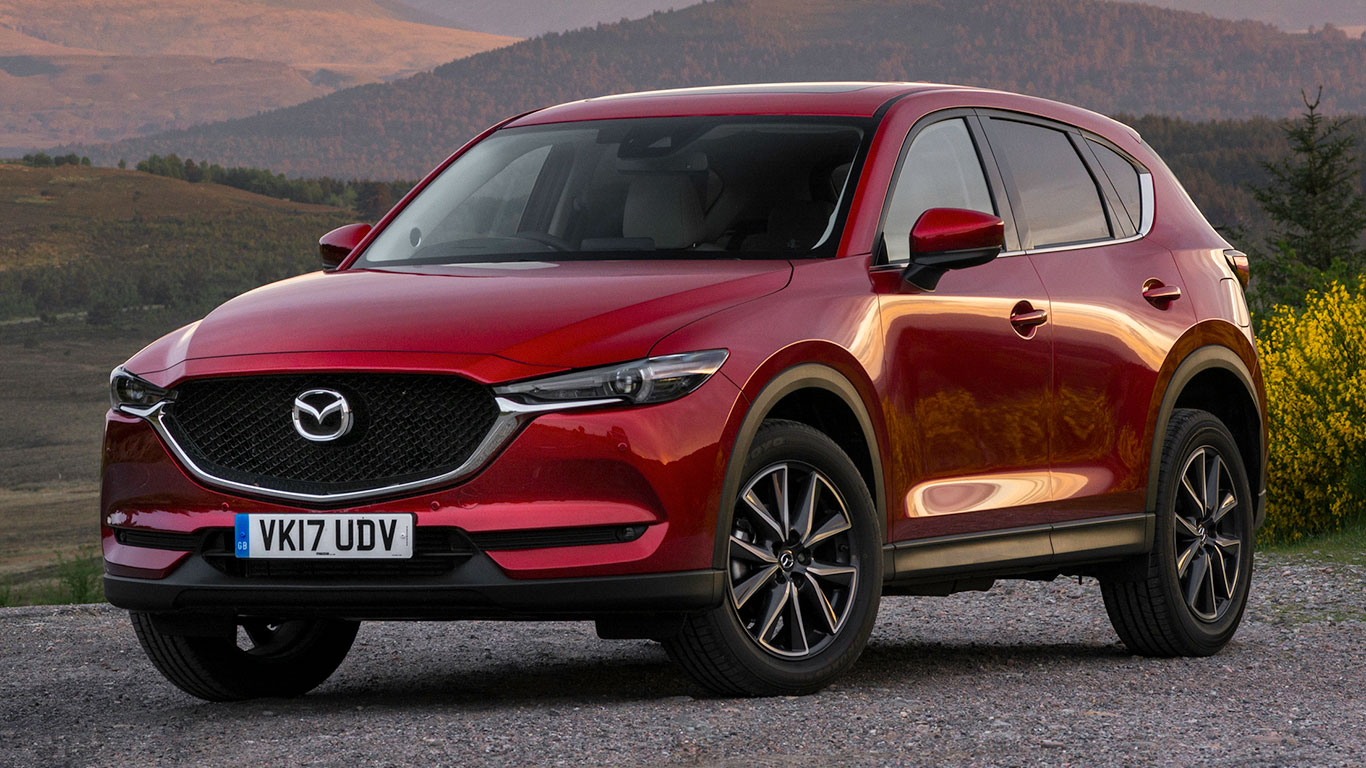
The Mazda CX-5 SUV looks great, is practical and is fun to drive. While owners generally like their CX-5s, some are disappointed with its fuel economy and running costs.
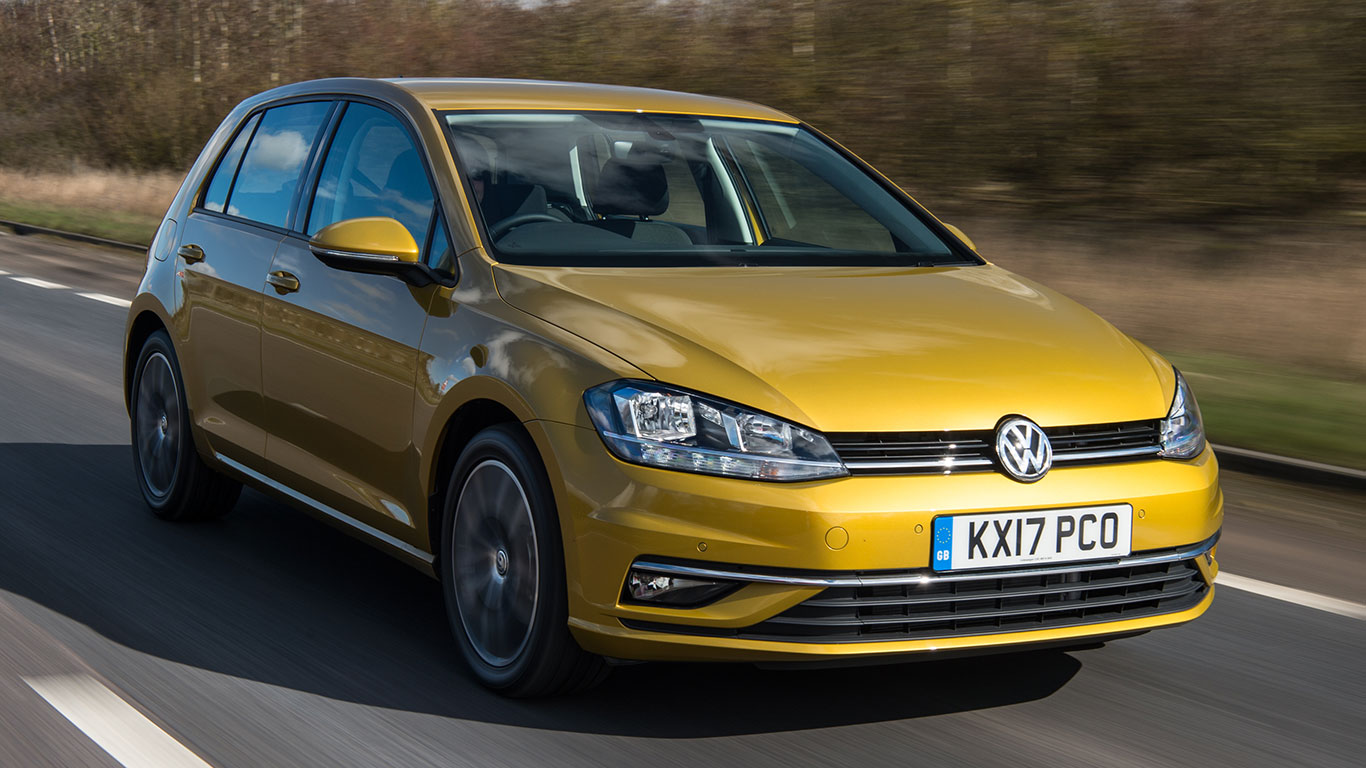
18: Volkswagen Golf
Score: 91.86%
The world loves a Vauxhall Golf. The ever-popular Mk7 Golf was given a facelift last year, which seems to have gone down well with owners. Like the CX-5, buyers would like to see better MPG, while practicality and space can also be a downside.
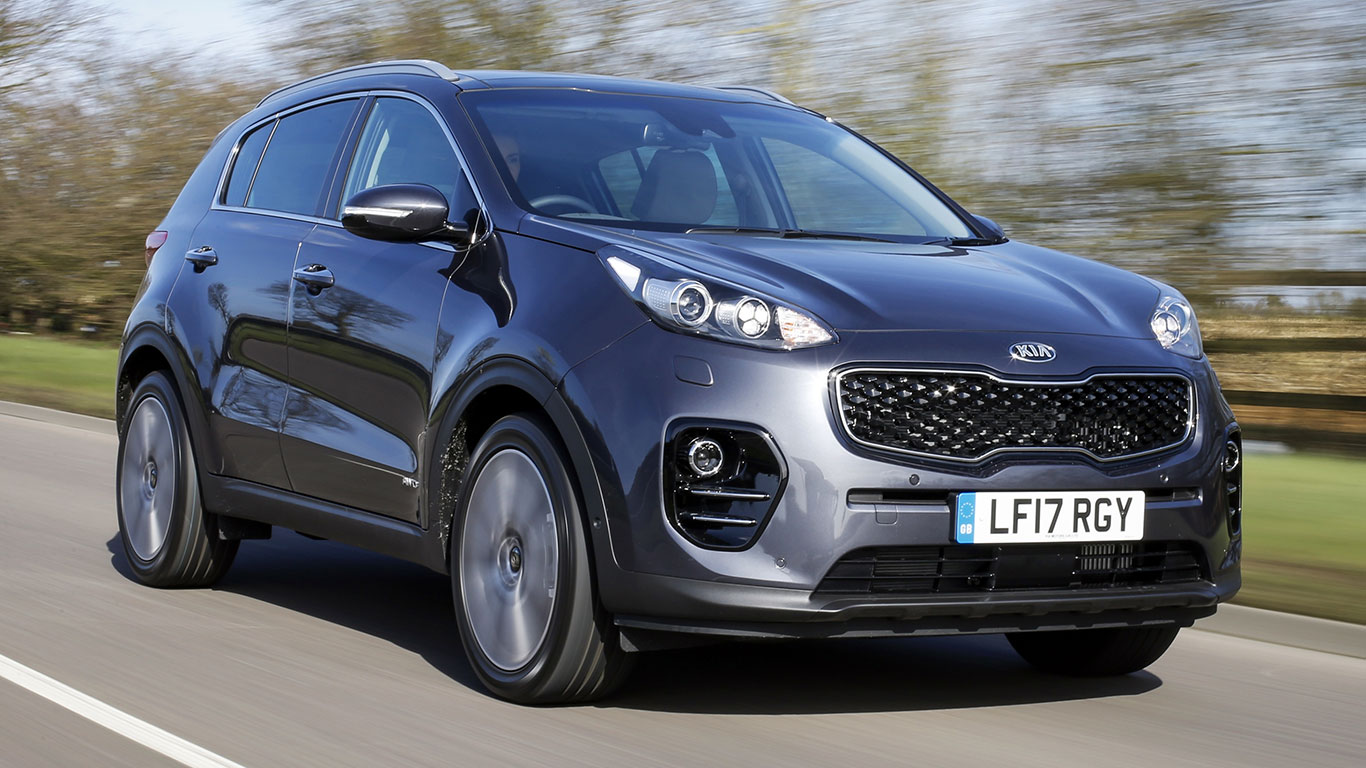
17: Kia Sportage
Score: 91.87%
You only need to look around on UK roads to see how successful the latest Sportage has been for Kia. Buyers think it looks good, while also rating its infotainment and in-car connectivity highly. Downsides? That’ll be the fuel economy and running costs. We spot a theme here.
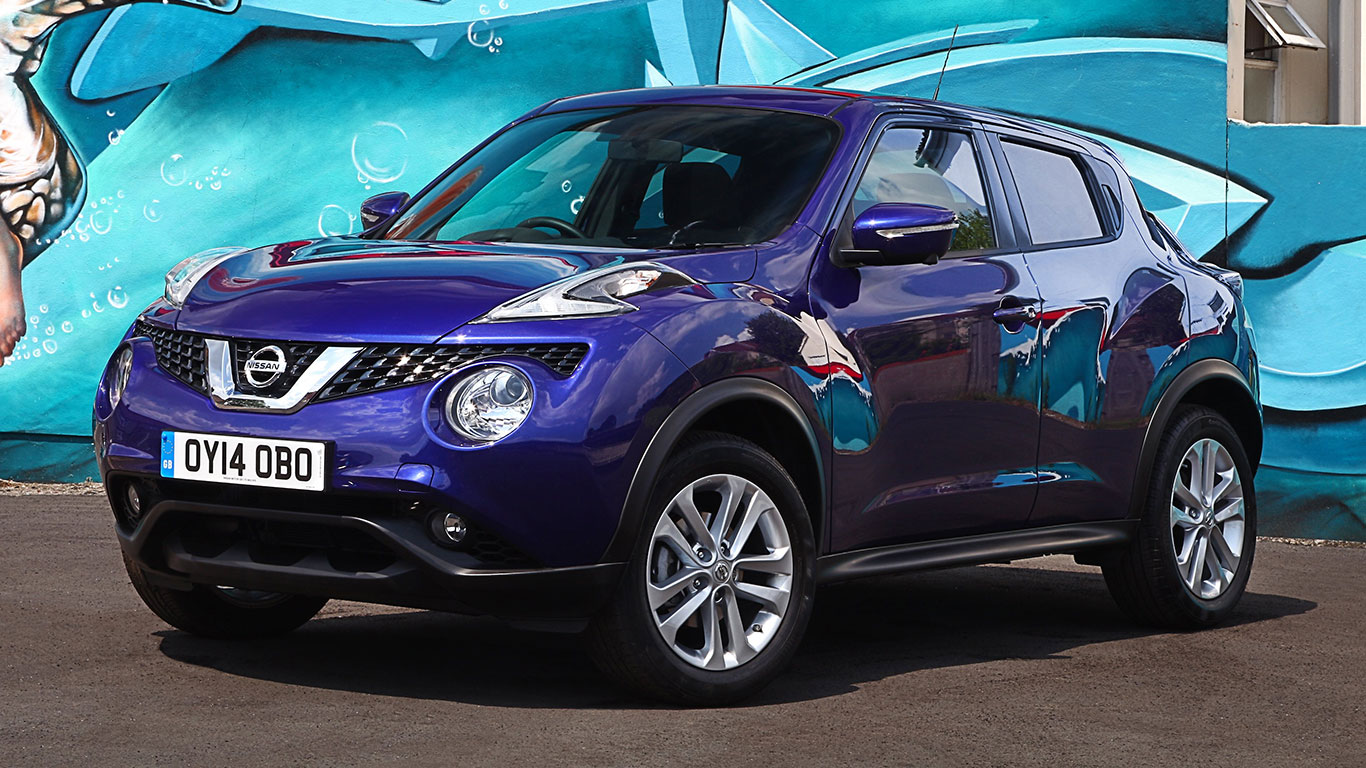
16: Nissan Juke
Score: 91.98%
The Nissan Juke might have been around a long time, but owners love the crossover. It scores particularly highly for its exterior design, safety features and in-car infotainment. Impressively, only two percent of Juke owners responding to the survey have experienced any faults.
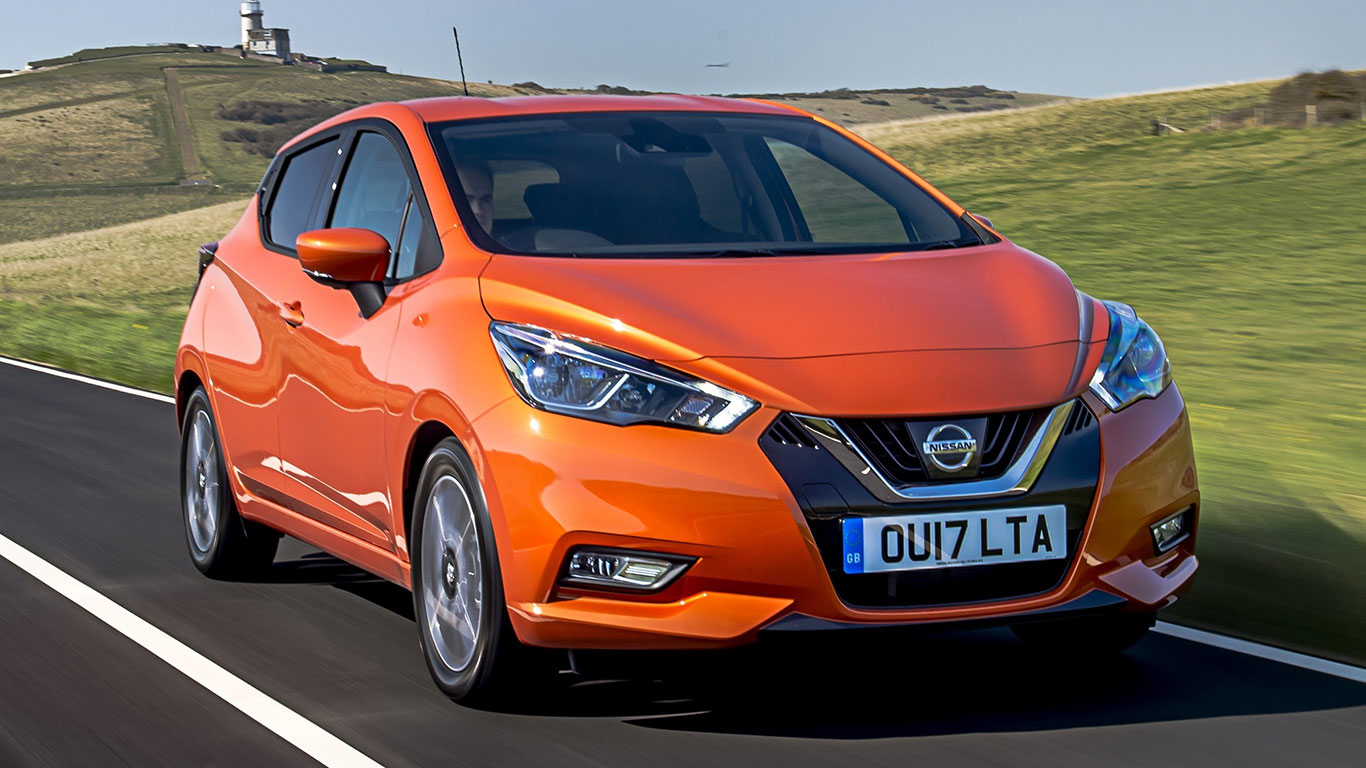
15: Nissan Micra
Score: 92.04%
The latest Nissan Micra is a huge improvement over its predecessor, and that’s reflected in the Driver Power results. It scores well across the board, with owners only slightly concerned with its running costs and reliability. Nearly one in five have reported issues with their Micras.
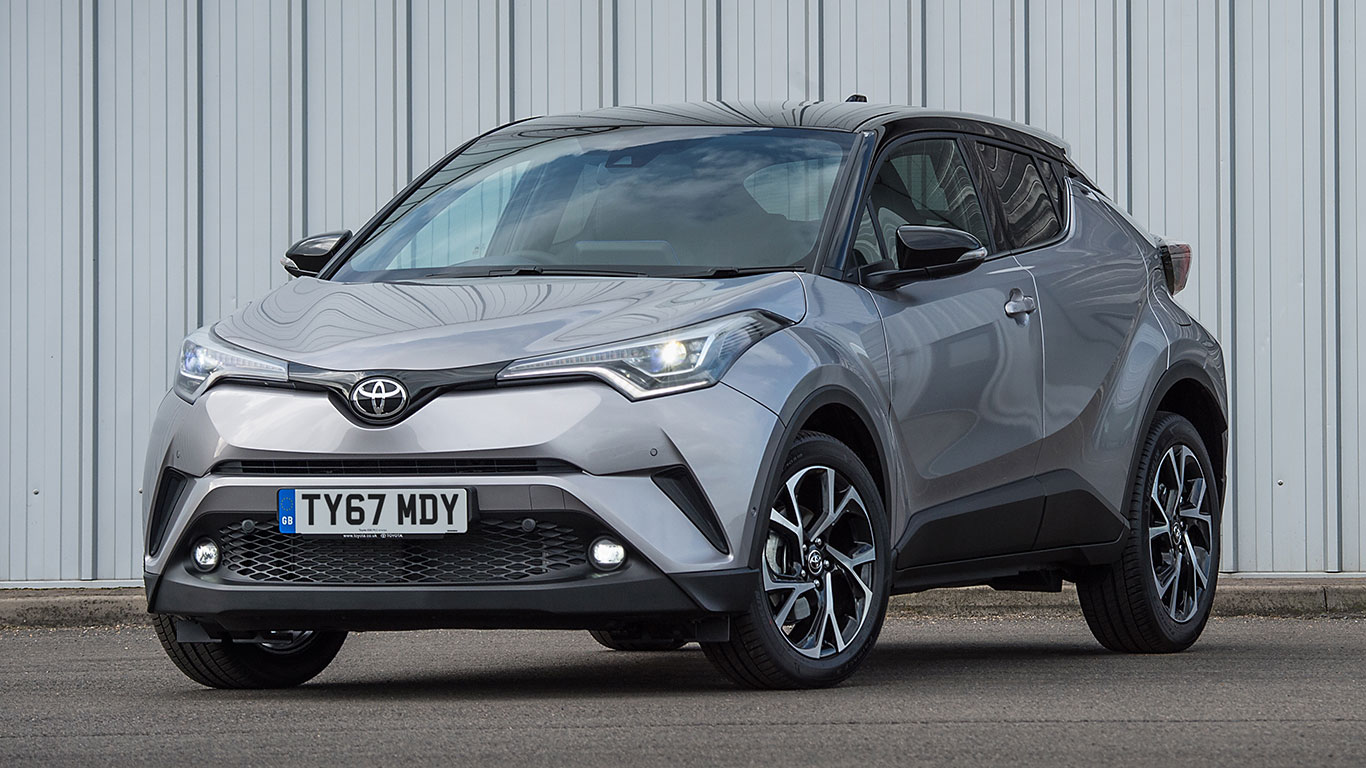
14: Toyota C-HR
Score: 92.08%
You’ll love or hate the C-HRs appearance, but owners are unanimous: they think it looks great. They also rate its ride and handling, but aren’t so sure about the interior or infotainment. Worryingly, 29 percent report faults.
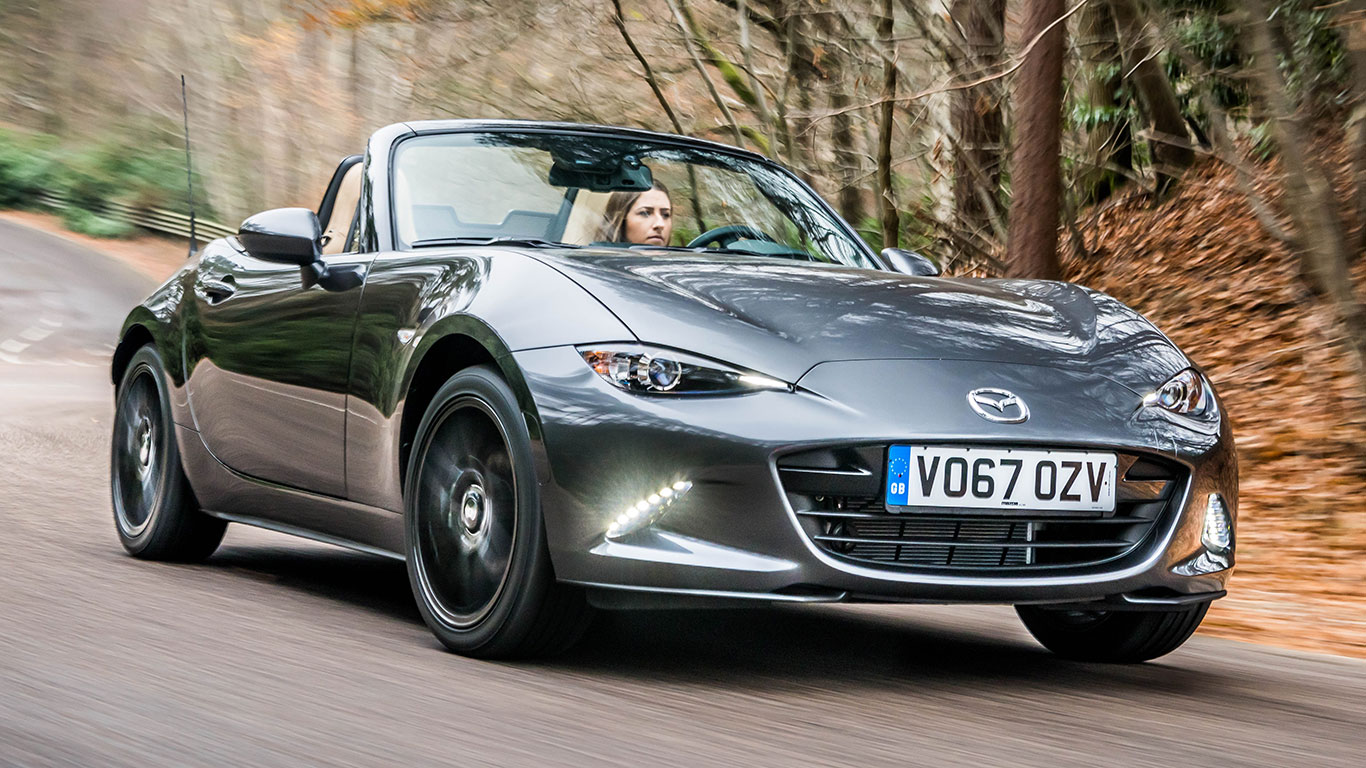
13: Mazda MX-5
Score: 92.12%
With a 97.5 percent satisfaction rating for ride and handling, Mazda’s MX-5 scores the highest individual category rating in the survey. Buyers love their MX-5s, with it only being let down for its interior, comfort and practicality. No surprises there for anyone who’s driven one.
12: Honda CR-V
Score: 92.15%
We saw the new Honda CR-V at Geneva Motor Show. The outgoing model might have been around since 2012, but it still pleases owners. It excels in most categories, only being let down in areas where it’s beginning to show its age, such as infotainment and safety features.
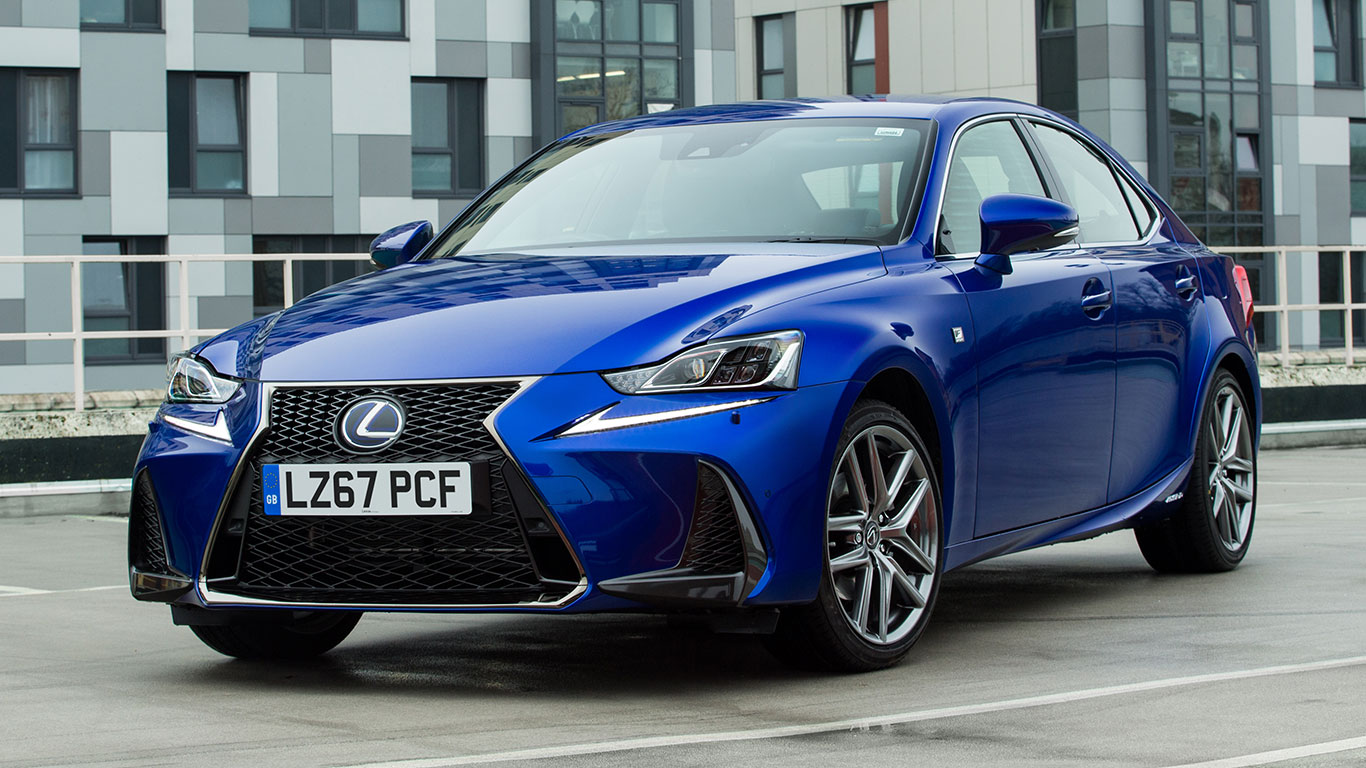
11: Lexus IS
Score: 92.19%
Like the Honda CR-V, Lexus IS owners are frustrated by the car’s dated technology. Fortunately, it scores well across most other categories, including its engine and running costs. Impressively, only 3.6 percent of owners report issues.
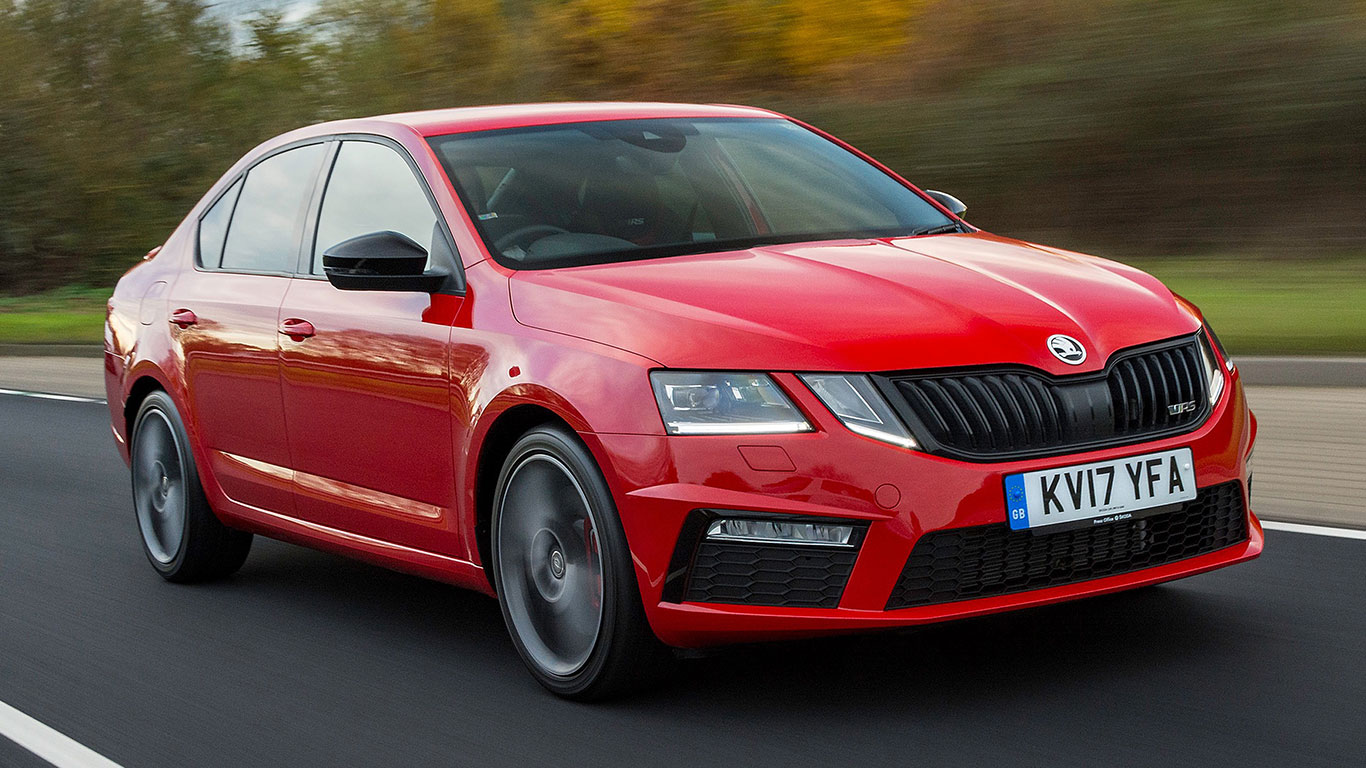
10: Skoda Octavia
Score: 92.45%
No one’s going to be excited by the Skoda Octavia’s aesthetics, but that doesn’t stop it edging into the Driver Power top 10. Owners really like the Octavia, rating its reliability, engine and running costs highly.
9: Honda Civic
Score: 92.50%
This is the first time the new Honda Civic has appeared in the Driver Power survey, coming in ninth place. Surprisingly, reliability appears to be an issue, with nearly one in 10 owners reporting issues – mainly with electronics.
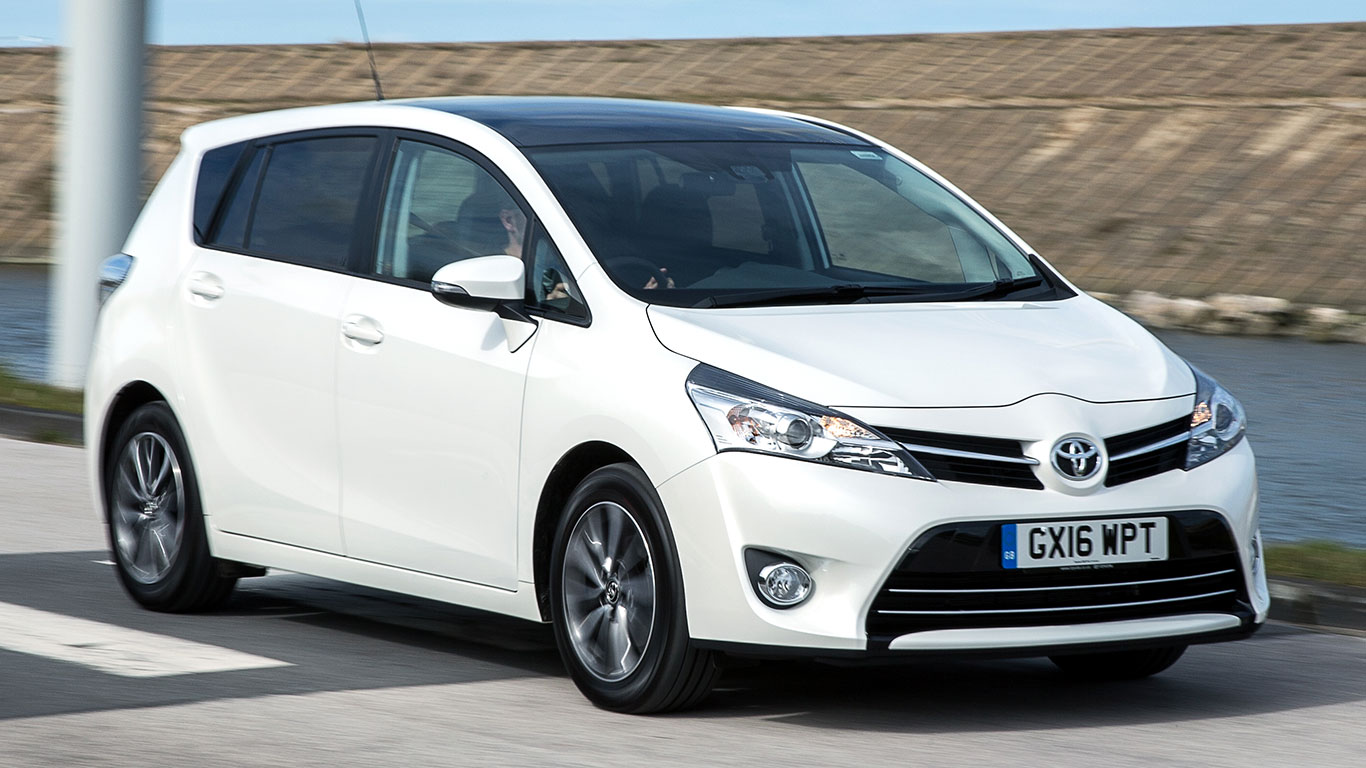
8: Toyota Verso
Score: 92.83%
Launched in 2009, the Toyota Verso is the oldest car to appear in the Driver Power top 20. Only really being let down by its exterior design (and, to an extent, its engine and gearbox), the Verso scores extremely well across the board.
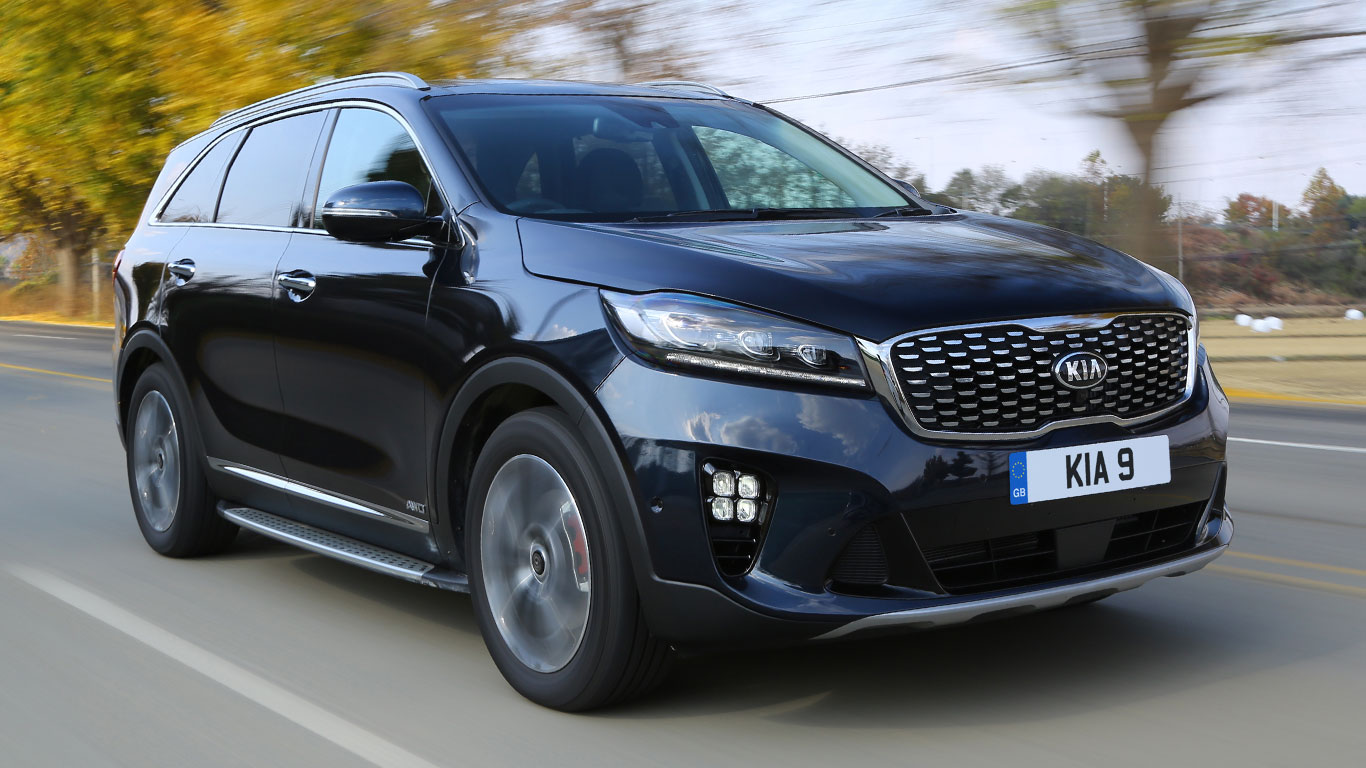
7: Kia Sorento
Score: 92.85%
There’s no fewer than three Kias in the top 20, proving the Korean firm continues to sell likeable, good-value vehicles. The latest Sorento achieves a 92.85 percent overall rating, with buyers particularly liking its practicality and build quality. Despite that, nearly a quarter have reported niggles.
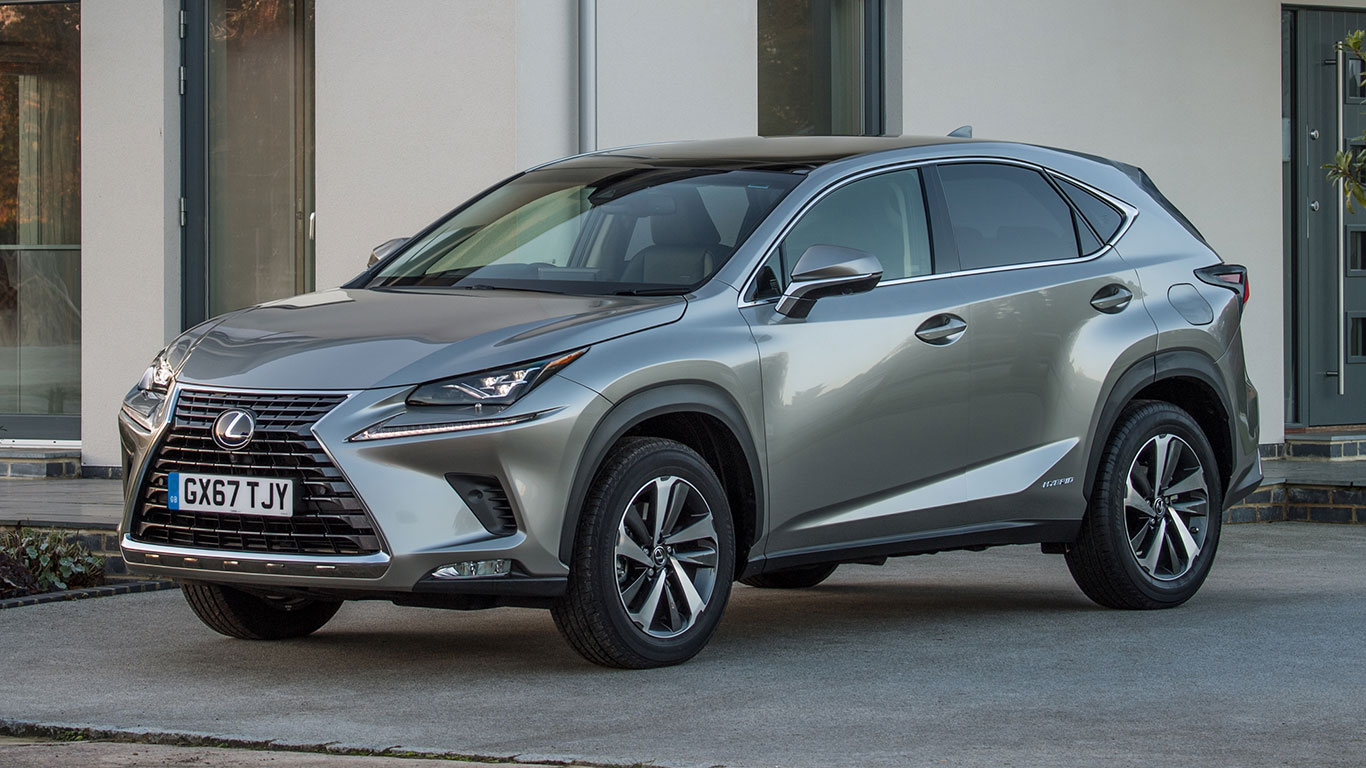
6: Lexus NX
Score: 92.90%
The Lexus NX is the best built car currently on sale in the UK, according to owners. If it wasn’t let down by its infotainment and running costs, the NX would be in the running for number one spot.
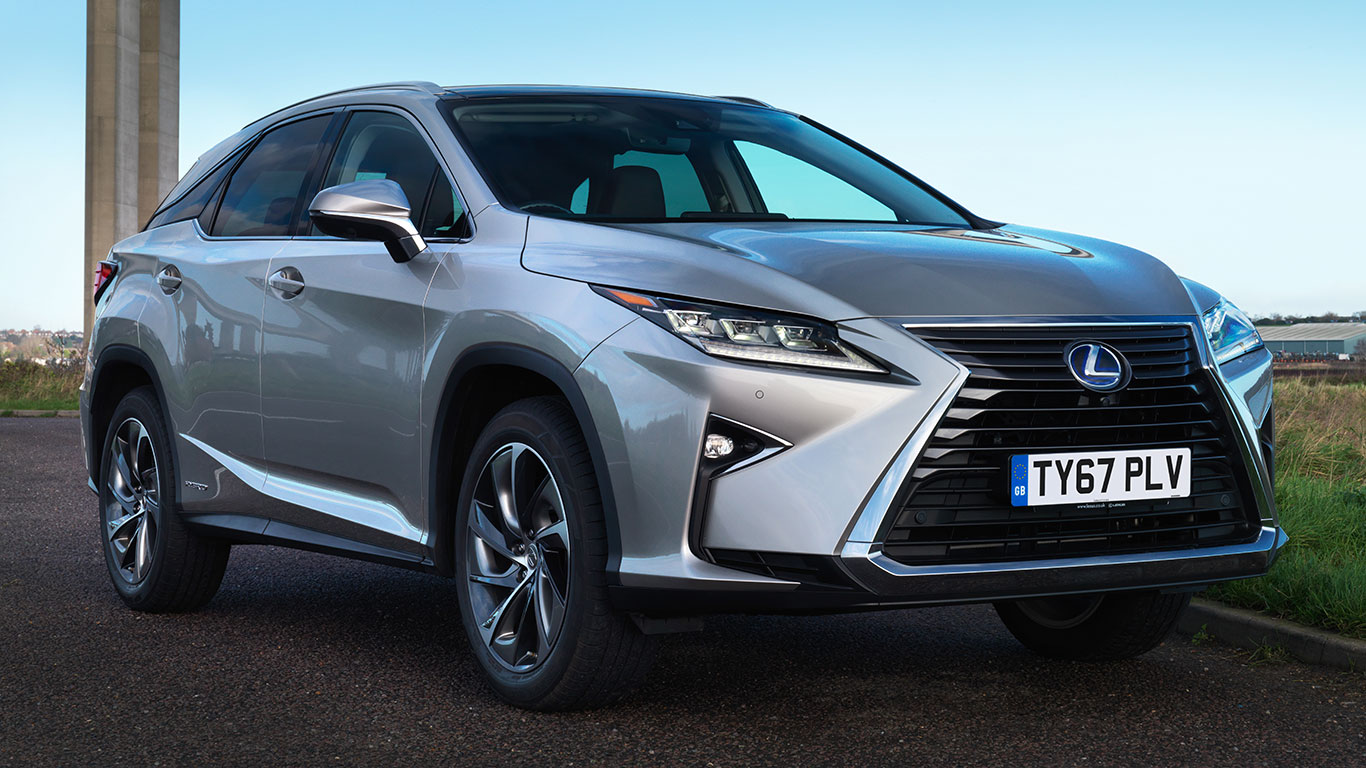
5: Lexus RX
Score: 92.99%
The NX is pipped to the top five by the bigger Lexus RX. Surprisingly, the RX doesn’t score as highly as the NX for its build quality, but owners appreciate its infotainment system, keen engine and upmarket interior.
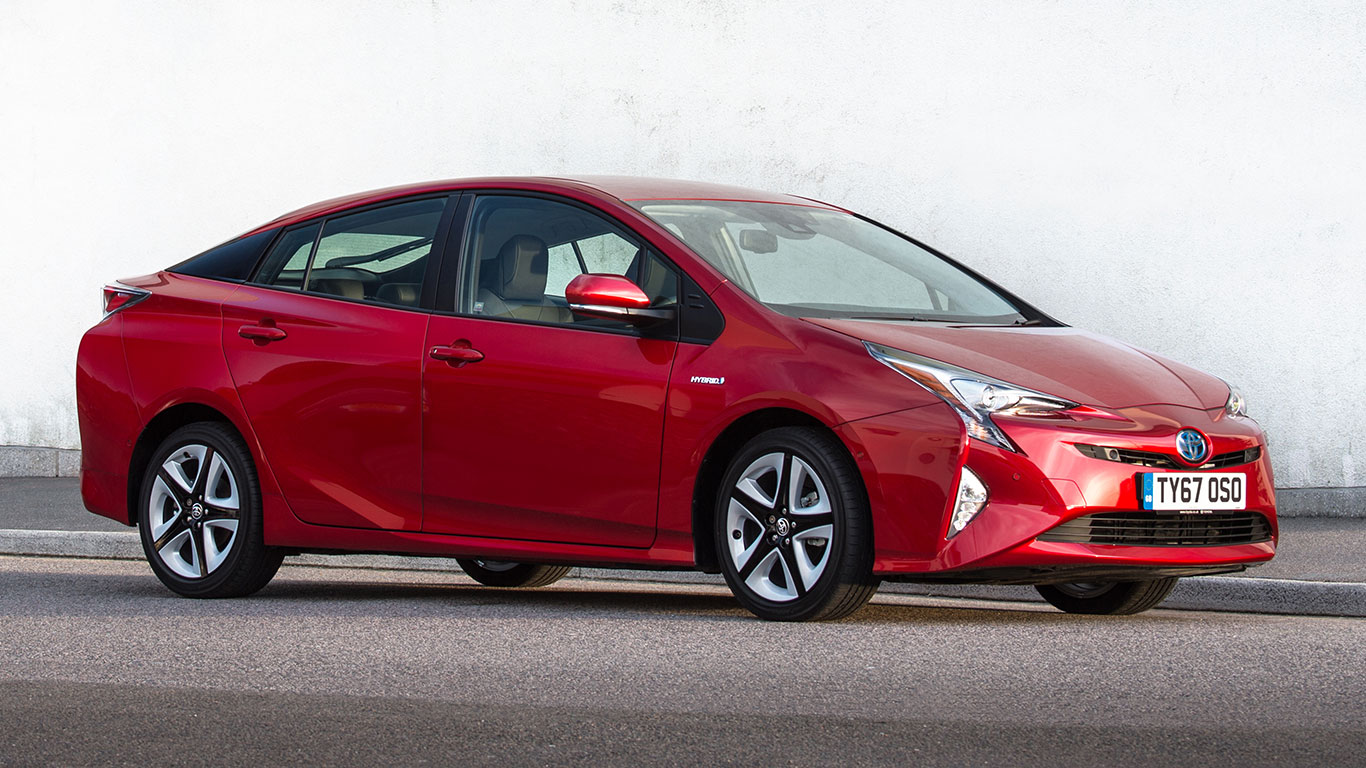
4: Toyota Prius
Score: 93.04%
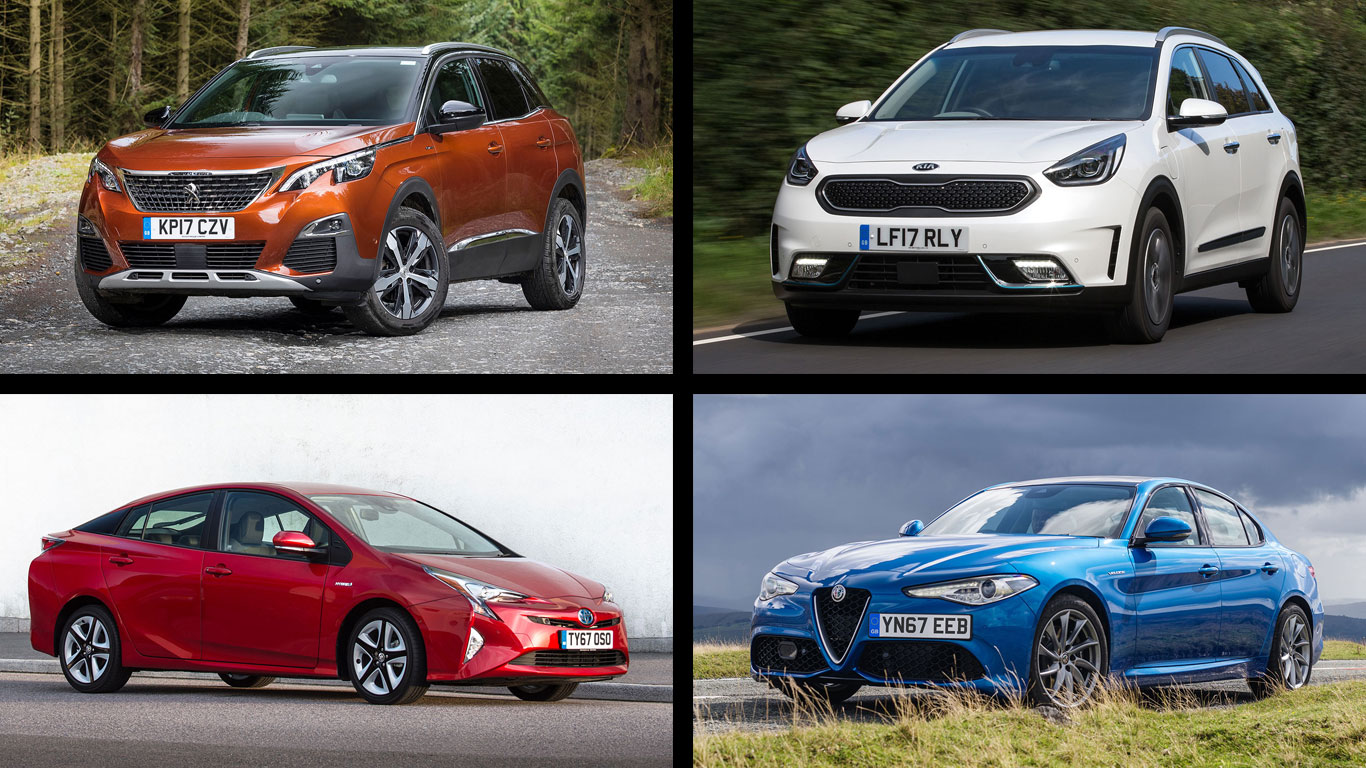
If you’re after a reliable car, it’s generally a good idea to look at what taxi drivers choose to spend their money on. The hybrid Toyota Prius is rated for its fuel economy – unsurprisingly – as well as its running costs and safety features. Owners would like a bit more practicality.
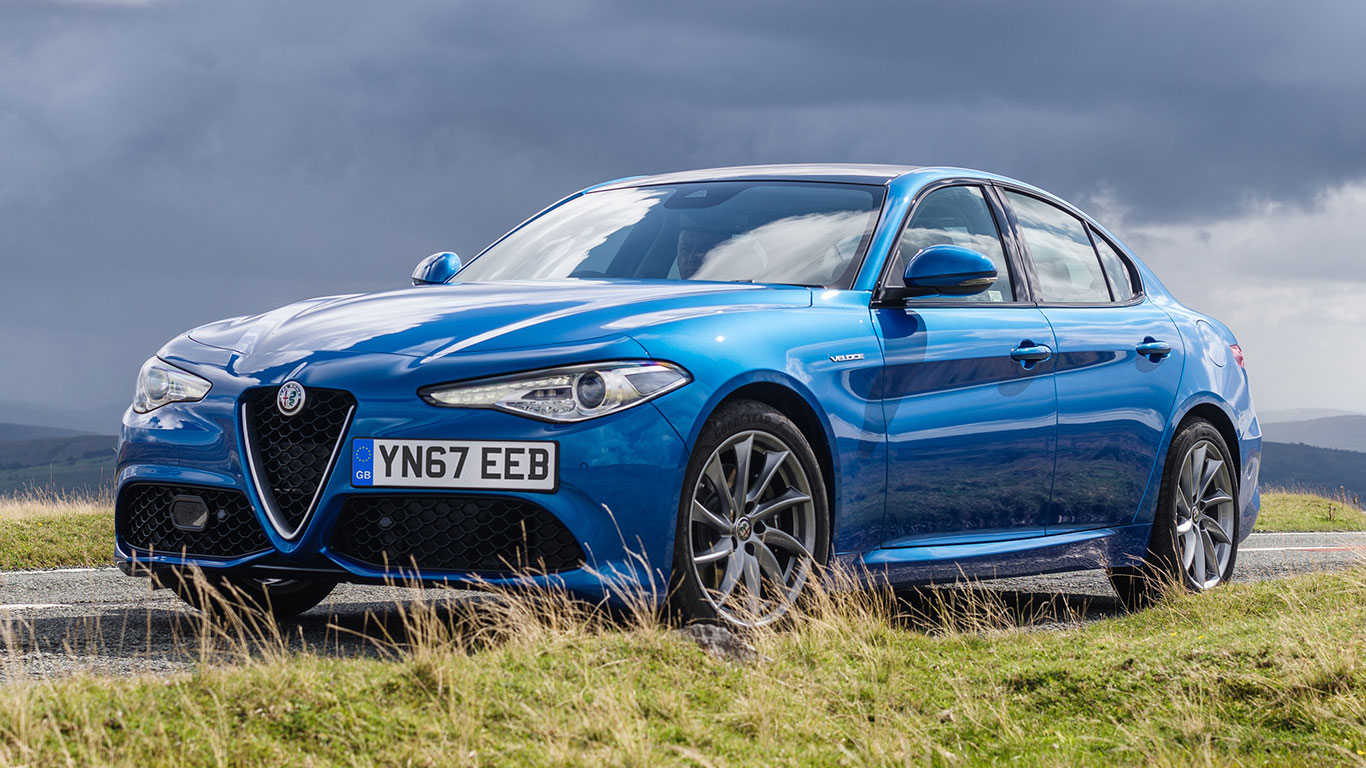
3: Alfa Romeo Giulia
Score: 93.06%
We’re into the top three now, and we’re a trifle surprised to see the Alfa Romeo Giulia appear here. It’s pipped rivals such as the BMW 3 Series and Audi A4, and if it scored better for reliability it’d be in an even stronger position. Incredibly, more than 40 percent of owners have reported faults – with electrics the most likely to go wrong.
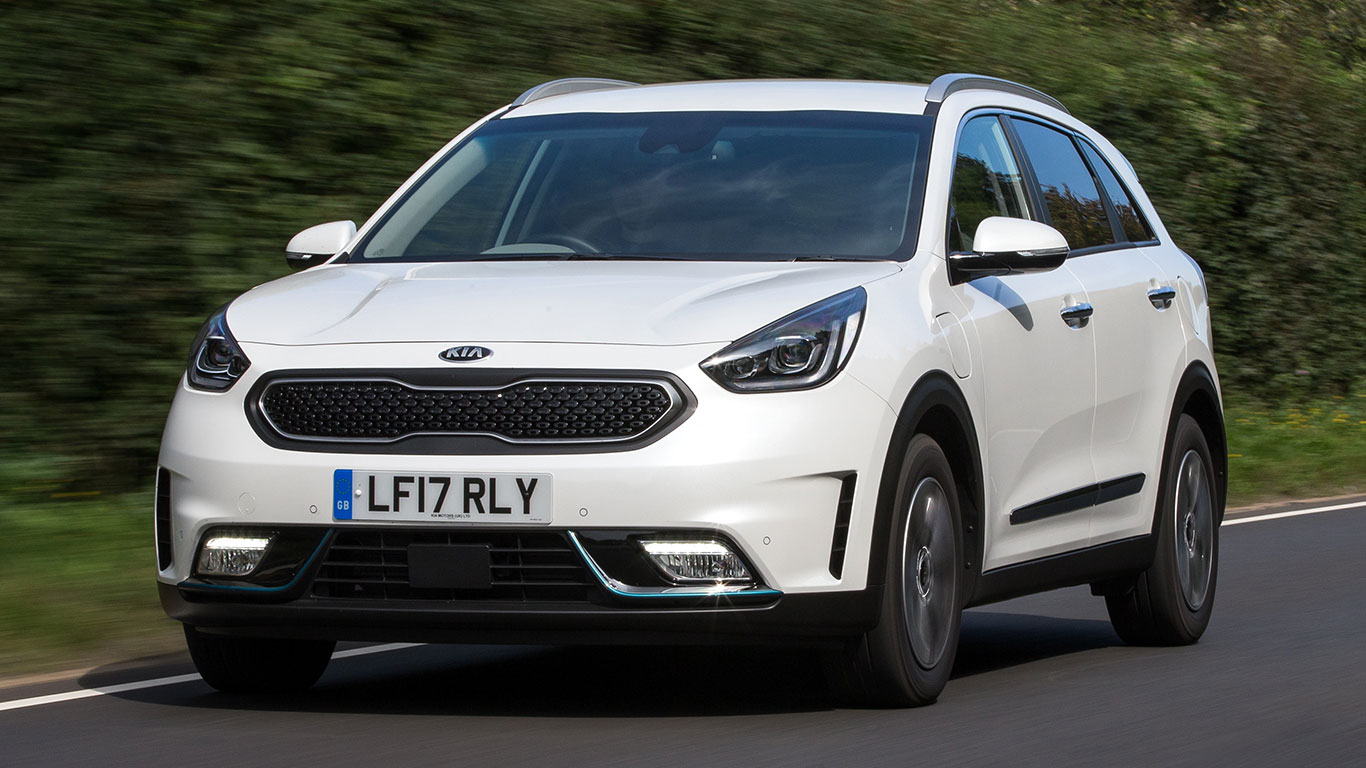
2: Kia Niro
Score: 93.07%
The final Kia to appear here just misses out on the number-one spot. Named by the survey as the most satisfying small SUV to own, Niro owners report that they like its user-friendly stereo and touchscreen infotainment system. They hybrid powertrain is a bit of a let-down, unfortunately.
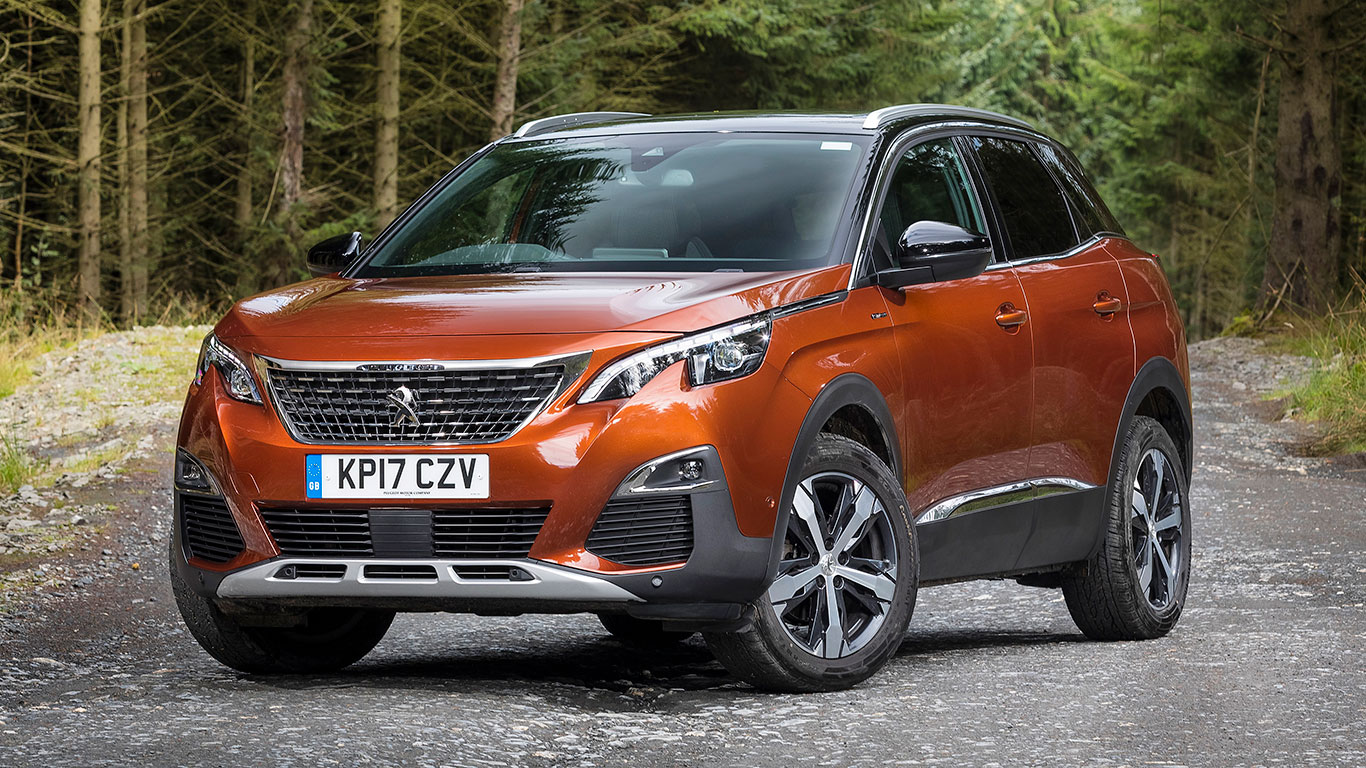
1: Peugeot 3008
Score: 93.88%
To number one… and the most satisfying new car to own is the Peugeot 3008, according to the Driver Power survey. If you’ve sat in its cabin you’ll understand why owners love the comfort on offer, while reliability is also excellent. It scores highly for safety – reflecting its five-star Euro NCAP safety rating – while only the engine and running costs are a slight disappointment.
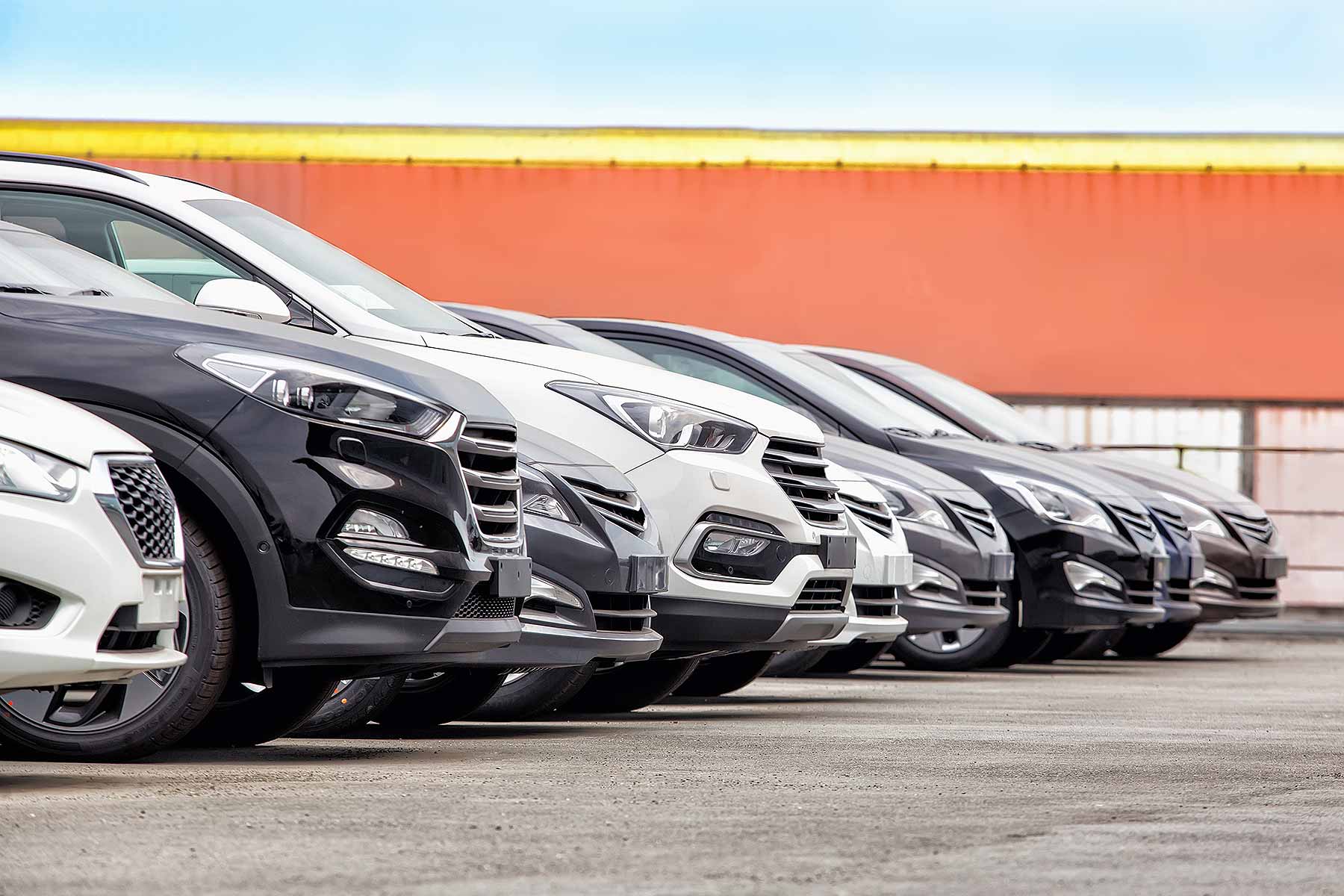
The growing pressures throughout the European car industry have been highlighted by March 2018 new car registration figures that show the first March fall in four years. 5.3 percent fewer cars were sold across Europe than in 2017.
The biggest decline was, of course, in the UK, where March registrations plunged 15.7 percent. But the big markets of Italy and Germany were also down, by 5.8 percent and 3.4 percent respectively.
The only large markets to grow were France and Spain, by 2.2 percent and 2.1 percent.
Despite the declines, European new car registrations are still marginally up in 2018, but the market remains under pressure – which is being felt particularly acutely by some big-name brands. Ford is down 15.7 percent across Europe in the first three months of 2018, and Nissan is down 11 percent.
Opel/Vauxhall has been amalgamated into the PSA Group, so its 11 percent decline has been hidden in the figures. This is why PSA Group’s overall figures are up a hefty 65.9 percent – and, thanks to a strong performance by Peugeot and Citroen, it would be even better, if its new acquisition from GM hadn’t declined…
Jaguar Land Rover has recorded a worrying 16.5 percent thus far in 2018, with Jaguar down 10.9 percent and Land Rover an alarming 19.2 percent: that’s around 10,000 fewer high-value Land Rovers delivered in Europe so far this year.
Other premium brands are weathering the storm a little better. Audi is down 3.1 percent, BMW is down 2.8 percent and Mercedes-Benz is actually up marginally, by 1 percent.
The region’s biggest car brand is also outperforming the market. Volkswagen Group sales so far in 2018 are up 5.4 percent, to almost 1 million cars – helped by a strong performance at Seat and Skoda, and the improving fortunes of the Volkswagen brand itself.
 Shock figures show that 32 people were killed or seriously injured in motorway accidents in 2016 because of tyre failures – but almost 3 in 4 of them could have been prevented if motorists had simply carried out the most basic checks of their car’s rubber.

 Britain is a nation powered by vans, with 88 percent of UK consumers believing everyday would be worse if commercial vehicles were restricted in any way. Almost half of respondents to a survey conducted by the Society of Motor Manufacturers and Traders (SMMT) said they’d benefitted from a van in the last 24 hours.


 Andy Saunders is one of the country’s leading and most recognised ‘car artists’, responsible for a long line of unique, eye-catching and controversial projects. The customiser – or should that be ‘kustomiser’ – completed his first project before he was old enough to hold a driving licence and has held three Guinness World Records.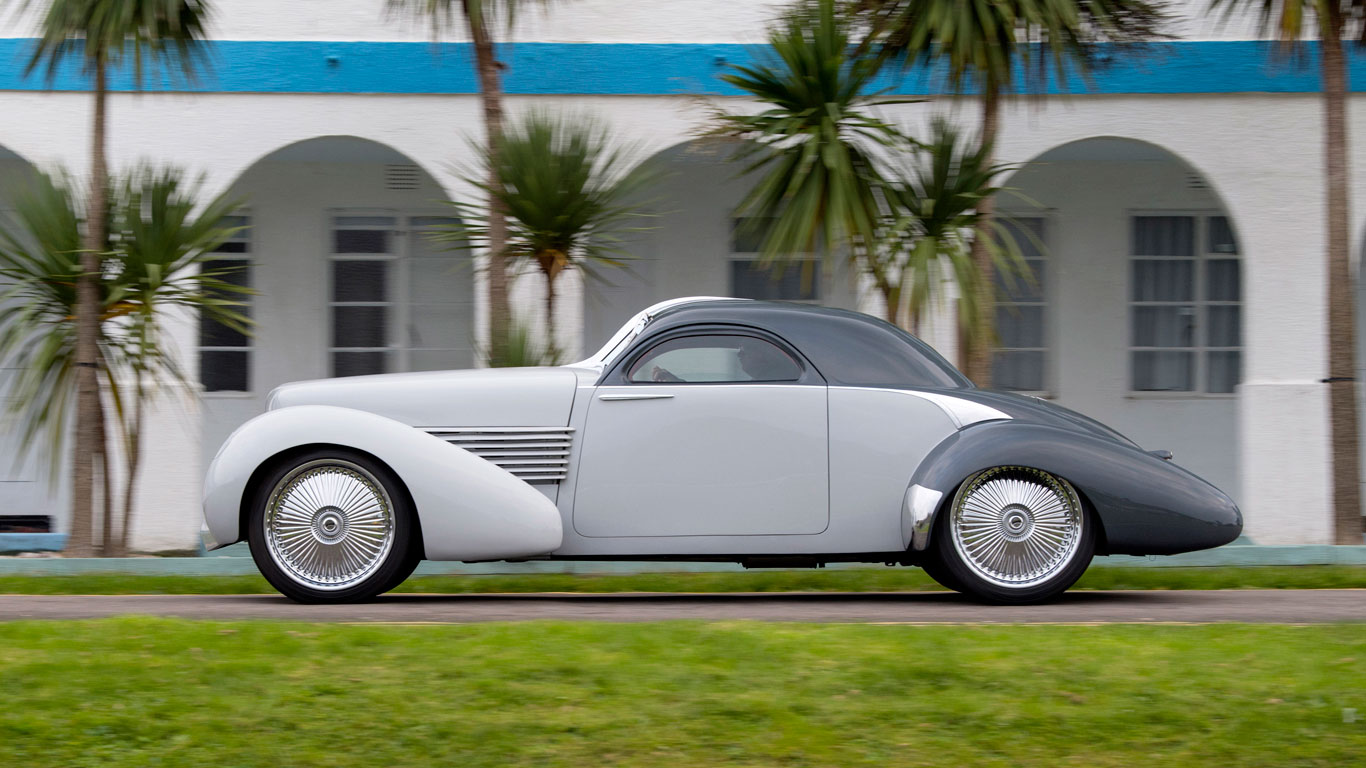

 The growing pressures throughout the European car industry have been highlighted by March 2018 new car registration figures that show the first March fall in four years. 5.3 percent fewer cars were sold across Europe than in 2017.