Life as a Formula 1 driver is pretty tough, what with the gruelling Grand Prix calendar, the need to stay ultra-fit, and the endless media requirements.
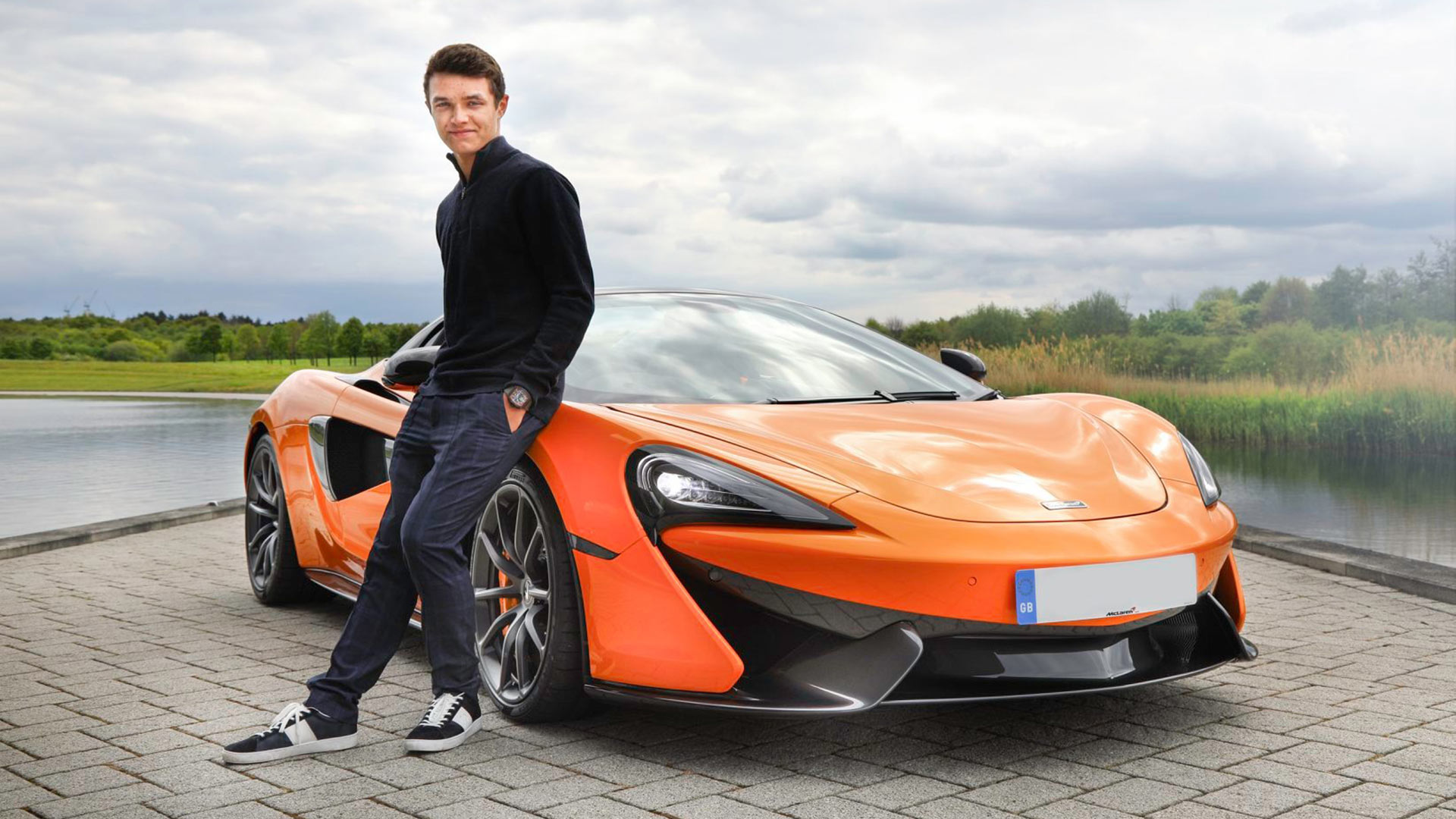
There are seemingly some perks to this career though, as rookie McLaren driver Lando Norris discovered this week.
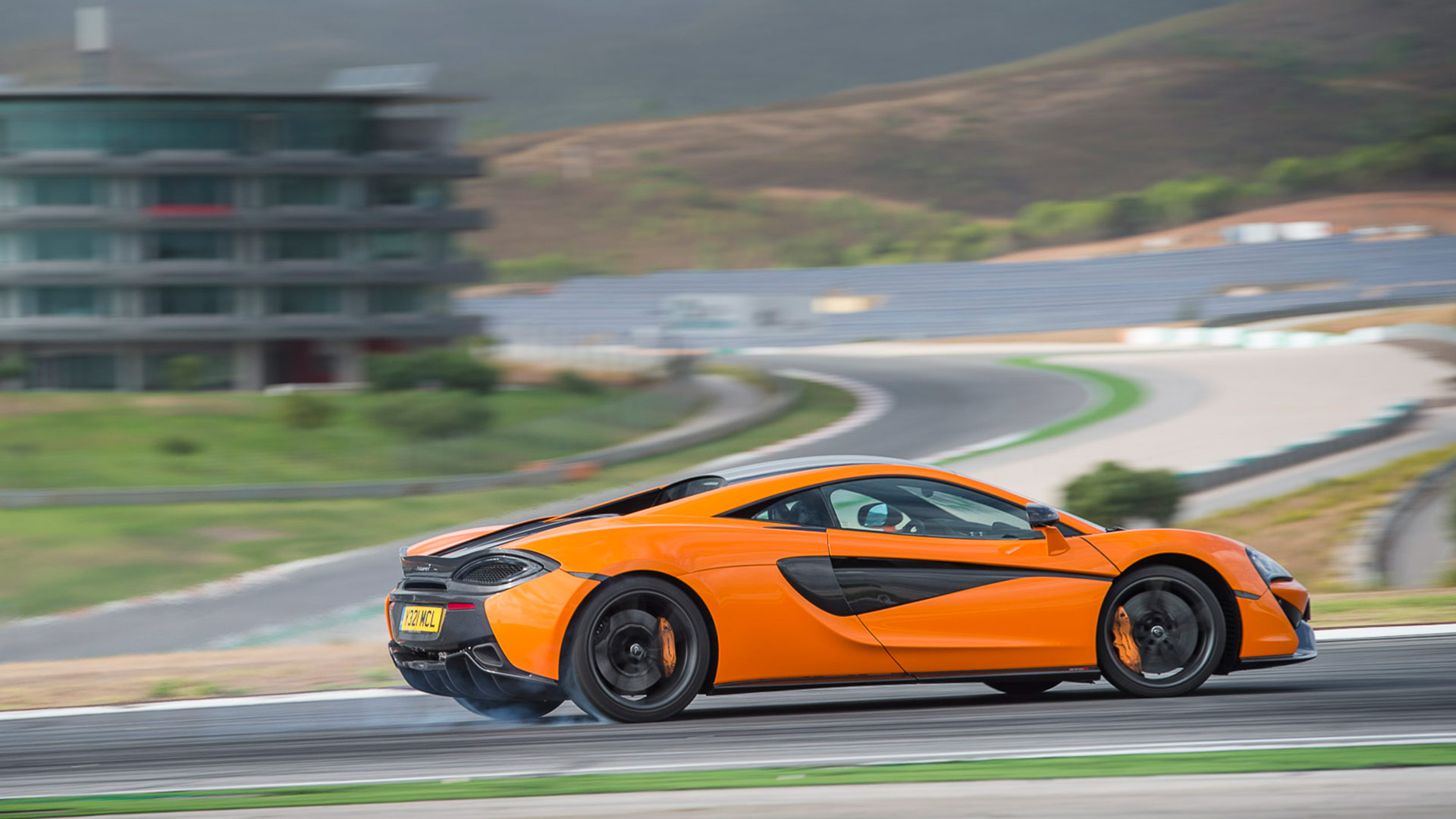
Forget having to choose between a diesel Audi or BMW for a company car – the 19-year-old Brit collected his new 3.8-litre twin-turbocharged V8 McLaren 570S Coupe.
Driving for a Formula 1 team connected to a road car manufacturer which exclusively builds supercars, means that Norris is naturally in an advantageous position.
There’s no risk of being forced into a supermini or SUV because it makes better PR for the company.
Instead, Lando has a 570hp mid-engined machine, capable of 0-124mph in just 9.5 seconds, with a top speed in excess of 200mph. Although given that he drives a Formula 1 car every other weekend, the performance might be less dramatic than for mere mortals.
Norris does at least seem happy with the colour of his £150,000 car, and has already discovered a potential perk to the eye-searing hue.
McLaren’s F1 team is enjoying a buoyant start to the 2019 season, with the Woking-based outfit currently fourth in the World Constructors’ Championship standings.
After the challenges of recent seasons, being in a strong position early in the year will be welcome relief for McLaren. Norris himself can also be pleased with having outperformed his more senior teammate, Carlos Sainz Jr. so far in 2019.
If Lando’s season continues the way it has began, he could be arguing for an upgrade to a 600LT Spider or maybe even a 720S by the end of the year.
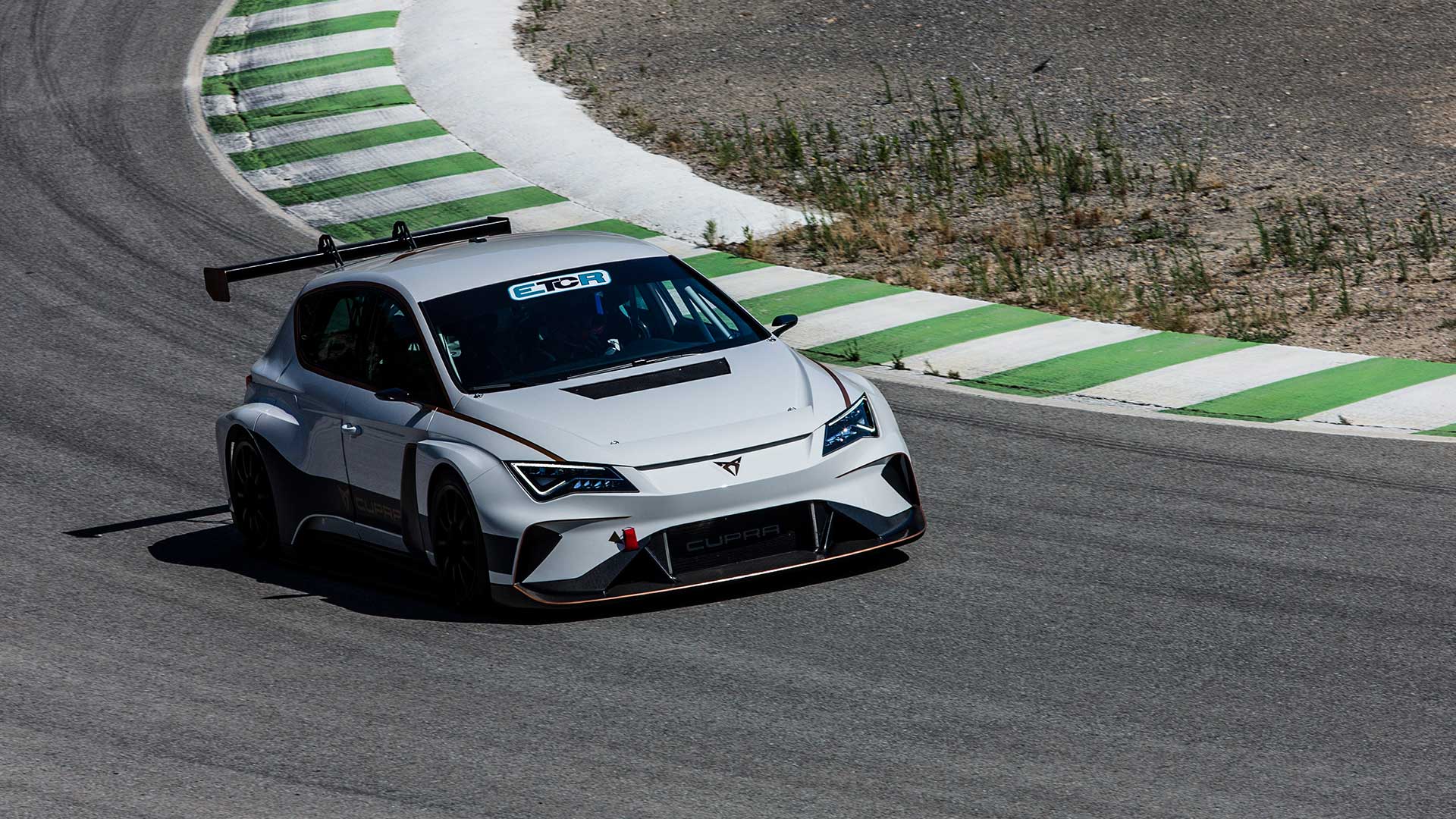
The technology and engineering subsidiary of the famous Williams Racing team has been picked to key components for the forthcoming ETCR electric touring car championship.
Williams Advanced Engineering will be responsible for supplying the batteries to be used by the electric racing cars, along with the vehicle control modules.
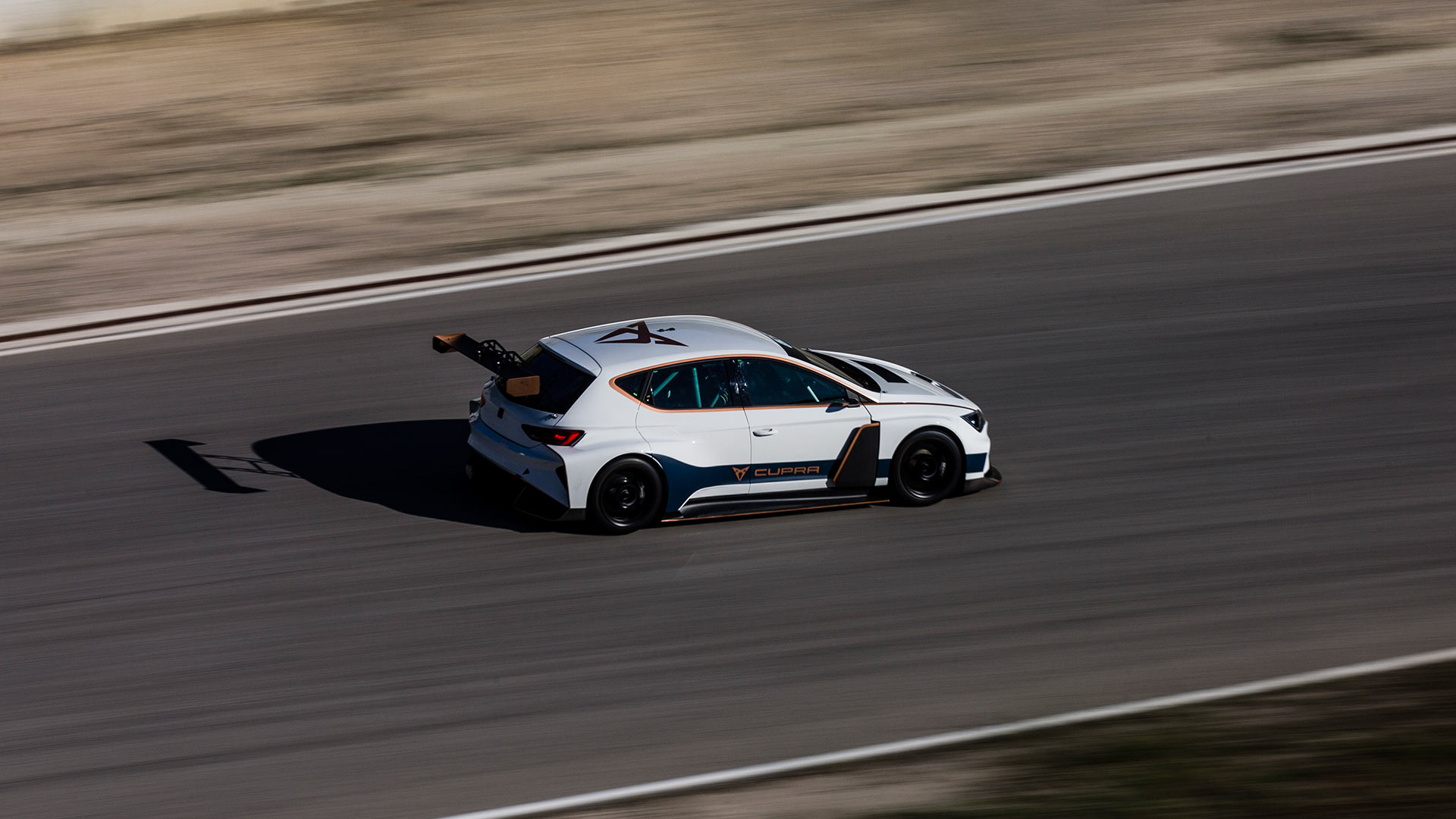
All cars in the ETCR series will use a common powertrain, but with multiple brands building touring cars around the shared componentry. The championship will begin in 2020, with up to six manufacturers reported to be interested.
Williams Advanced Engineering has already marked itself out as a leader in the fledgling electric motorsport world.
The company has supplied battery packs to the Formula E series since it began. Despite the high-performance operating conditions, the batteries used in Formula E have delivered an impressive 99.5 percent reliability record.
Such high-profile success in electric motorsport netted Williams Advanced Engineering a Queen’s Award for Enterprise in Innovation, last year. This recognised the considerable level of expertise and professionalism applied by the company in powering electric racers.
Choosing Williams to supply the important components for ETCR was seemingly a logical step for WSC Group, the organisers of the new electric touring car format.
According to WSC president Marcello Lotti: “Williams is synonymous with success in motorsport. The company’s achievements speak for themselves. We are proud of this agreement that associates the Williams name with a new and ambitious brand like ETCR.
“We are delighted to work together with a partner that knows all about motorsport and whose expertise will surely contribute to make ETCR successful.”
Iain Wight, Business Development Director of Williams Advanced Engineering, also commented that: “With the experience, skills and know-how accumulated within Williams from electrifying motorsport and road-going cars, we’re excited to work with the team at WSC Group to continue the progress of electric vehicles and racing to inspire the future of sustainable mobility.”
Williams Advanced Engineering expertise with electric power comes from more than just their Formula E involvement.
WSC Group has been responsible for the rapid growth of the TCR touring car format across the globe. Since the TCR specification was launched in 2014, more than 25 different championships have adopted the format for domestic and international competitions.
The news comes after the British Touring Car Championship recently announced plans to move to hybrid powertrains for 2021 – a year earlier than previously planned.
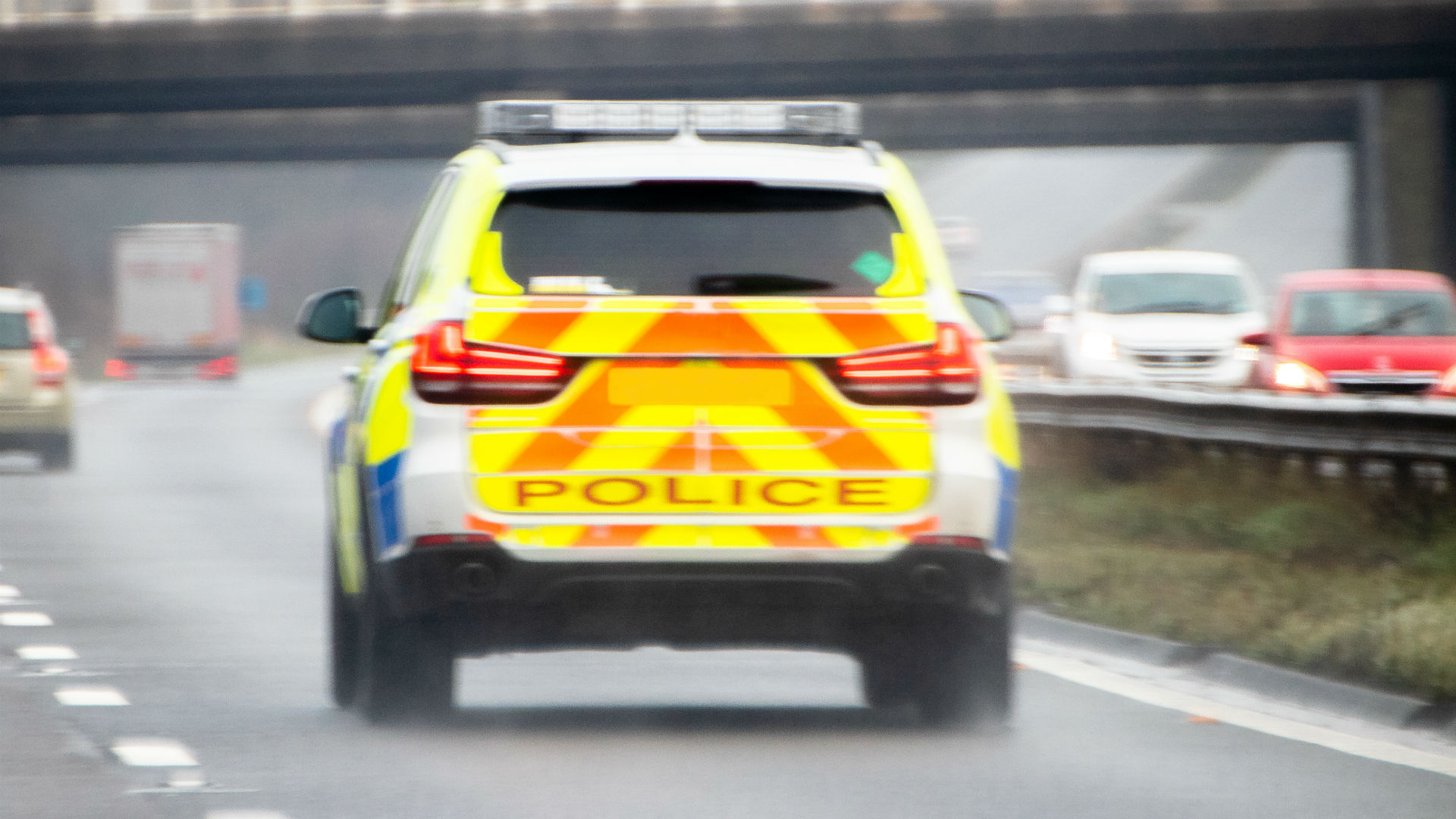
Police drivers chasing suspects on mopeds will be given greater legal protection under plans announced by Home Secretary Sajid Javid.
This follows the controversy surrounding the tactic of forcing suspects on mopeds and motorcycles off the road by ramming into them using police vehicles.
The Home Office said it is seeking to change the law to ensure that highly trained police drivers are better protected from the risk of lengthy investigation and potential prosecution.
Current laws do not recognise the training that response drivers undertake and the tactics they may use to pursue criminals, with officers held to the same standards as members of the public.
The changes are backed by a public consultation and will make it clear that officers should not be held accountable for the driving of a suspected criminal attempting to avoid arrest, providing the pursuit is justified and proportionate.
A clear message to criminals
Sajid Javid said: “It’s vital police officers feel confident and protected when pursuing suspects on the roads or responding to an emergency.
“It’s also crucial that we send a clear message that criminals – whether in cars or on mopeds – cannot escape arrest simply by driving recklessly.
“These proposed changes will strike the right balance – giving trained officers the confidence they need to fight crime effectively and ensure our roads are safe.”
The plans have been backed by John Apter, the national chair of the Police Federation of England and Wales, who said: “We are pleased and reassured by this announcement, which means police officers will be able to spend more time serving their communities rather than facing lengthy court proceedings simply for doing their job.
“Police officers are relied upon to respond to emergency and life-threatening situations.
“Members of the public would expect police officers to use their skills and training to respond to calls for assistance and a much needed change in the law will enable officers to do that without fear of prosecution.”
Earlier this year, the Met Police released figures showing that there has been a steady fall in the use of mopeds, motorcycles and scooters to commit crime.
There were 12,540 offences in the 12 months to January 2019 – a 48.6 percent reduction compared with the previous year.
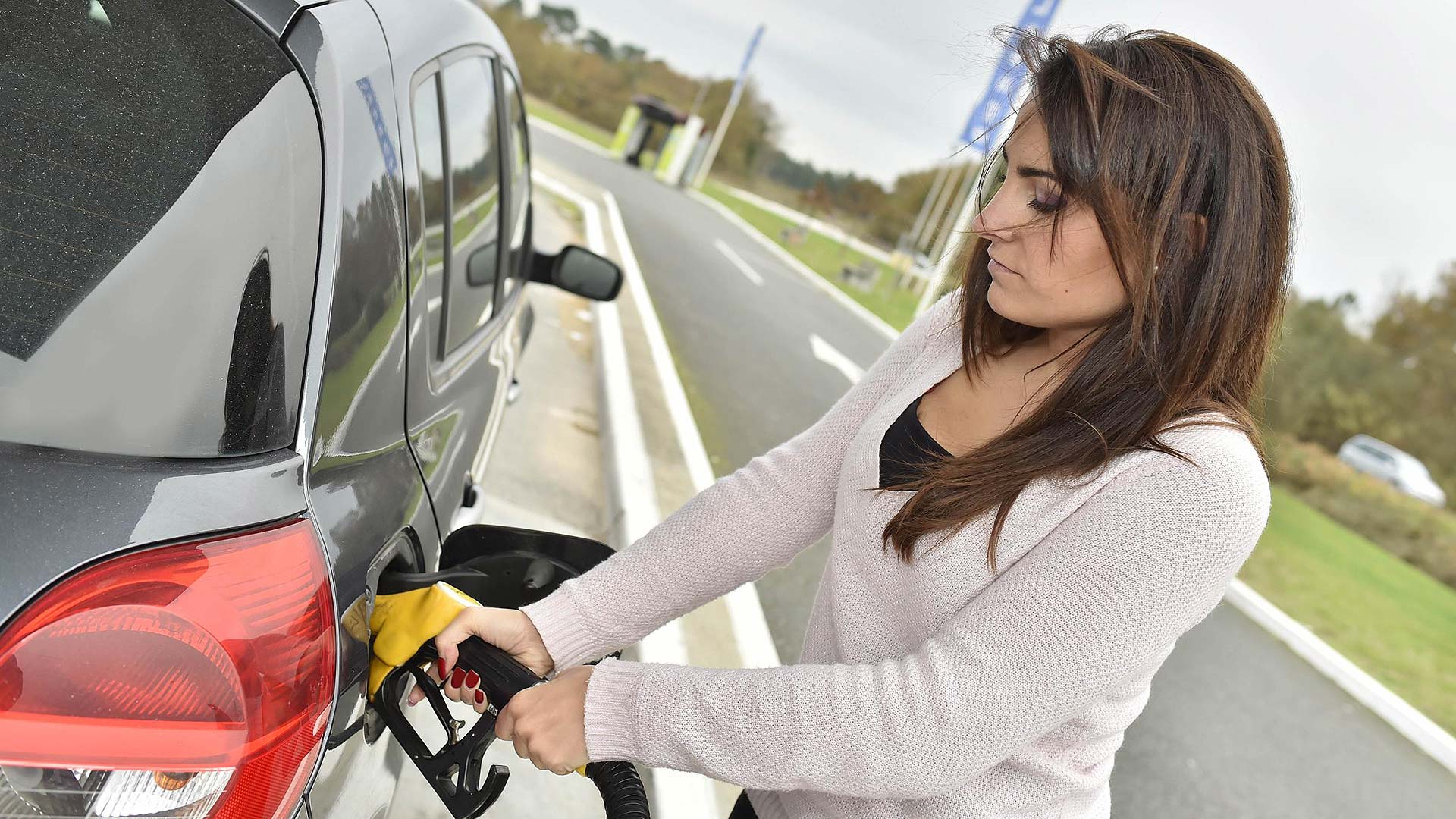
Unleaded petrol prices rose by 5.4p a litre in April 2019, which is the second-worst monthly price rise in almost two decades of records.
RAC Fuel Watch analysts say this has added £3 to the cost of filling the tank of an average petrol car.
How to find the cheapest diesel and petrol near you
The average price of petrol is now 128.1p a litre, up from 122.6p at the start of the month. A 5 percent rise in the cost of a barrel of oil is the cause, says the RAC: fuel retailers have quickly passed this on to motorists.
The scale of April 2019’s monthly price rise has only been topped once since 2000 – when petrol prices jumped by 6p a litre during May 2018.
It is also the third consecutive month of petrol price growth: back in February 2019, unleaded was down at 119.5p a litre.
“Despite the good weather, April turned out to be one of the bleakest months ever for drivers,“ said RAC fuel spokesman Simon Williams.
“RAC Fuel Watch data shows the price of unleaded rose every single day from the end of March, for three and a half weeks.
“This will have a damaging effect on household budgets across the country, and will inevitably mean there will be less money available for non-essential spending.”
Diesel subsidising petrol?
Diesel prices increased by 3p a litre during April 2019, taking the price up to 133.7p a litre.
However, the RAC has observed that the average difference between diesel and petrol wholesale prices was only 1p a litre during April, despite diesel costing 6p a litre more than petrol at the forecourts.
“It is very clear,” said Williams, “that retailers have been using the cheaper wholesale cost of diesel to subsidise petrol pump prices.
“Had they not, a new monthly price rise record for petrol would have been set.
“Diesel drivers – and businesses that don’t buy fuel in advance – are all now paying far more than they should be.”
In 2018, the amount of diesel sold in the UK was almost double that of petrol.
Forty-nine percent of Brits want older drivers banned from the road completely. That’s according to a survey of 2,101 people in April 2019.
Or, to put it another way, 51 percent of Brits DON’T want older drivers banned from the road.
The CarTakeBack.com and YouGov survey asked adults for their personal views and attitudes towards driving ages, with 69 percent of the respondents believing older drivers should have to retake their driving test, starting at the age of 60.
In November 2018, there were 5.3 million drivers over the age of 70 with a driving licence in Britain, according to the Driver and Vehicle Licensing Agency (DVLA).
There were 11,245 people involved in road traffic accidents when the driver was in this age group – a rate of two per 1,000 licence holders.
For the nation’s 2.8 million drivers aged 17 to 24, the rate was more than four times as high – nine per 1,000. This might be because younger drivers cover more miles than older people, but it would suggest that more mature drivers could be unfairly targetted.
Indeed, a 2016 study by Swansea University found that drivers aged 70 are involved in 3-4 times fewer accidents than 17-21-year-old men.
‘Less than half the crash rate’
Road safety charity Brake said drivers aged 60-69 “actually have less than half the crash rate than drivers aged 20-29”, arguing that older drivers are less likely to be distracted behind the wheel.
However, the risk of a person aged 60 or older being killed is more than double that of a younger person.
But one in ten of the respondents to this latest survey think a compulsory re-test should occur between the ages of 60 and 65, rather than the current 70. Reasons for this include:
Older drivers don’t have fast enough reaction times (71 percent)
Older drivers have bad eyesight (47 percent)
Older drivers drive slowly and cause more congestion (33 percent)
Older drivers don’t remember the rules of the road (26 percent)
‘Older drivers are among the safest’
Neil Greig, IAM RoadSmart director of policy and research, said: “Not surprisingly, the survey shows that many people blame the old and the young for crashes when this is not always the case.
“In reality, new drivers are the most at risk group and older drivers are among the safest. Statistics do however show that drivers over 85 do start to have more crashes as their faculties fade and their experience is no longer enough to compensate.”
When asked for a comment, a spokesperson for Brake said: “These are certainly some interesting findings that add to the debate about the most effective ways of ensuring the safety of our younger and older drivers who are amongst the most at risk on our roads.
“It is essential to have robust procedures in place that ensure younger and older drivers are not inadvertently putting themselves and others at risk.
“For older drivers, licence renewal at 70 prompts them to check and self-certify they are fit to drive but this process can be improved.
“The government needs to look at how fitness to drive regulation can be more rigorously enforced, such as compulsory eyesight testing throughout a driver’s career, rather than simply expecting drivers to self-certify that they are fit to drive.”
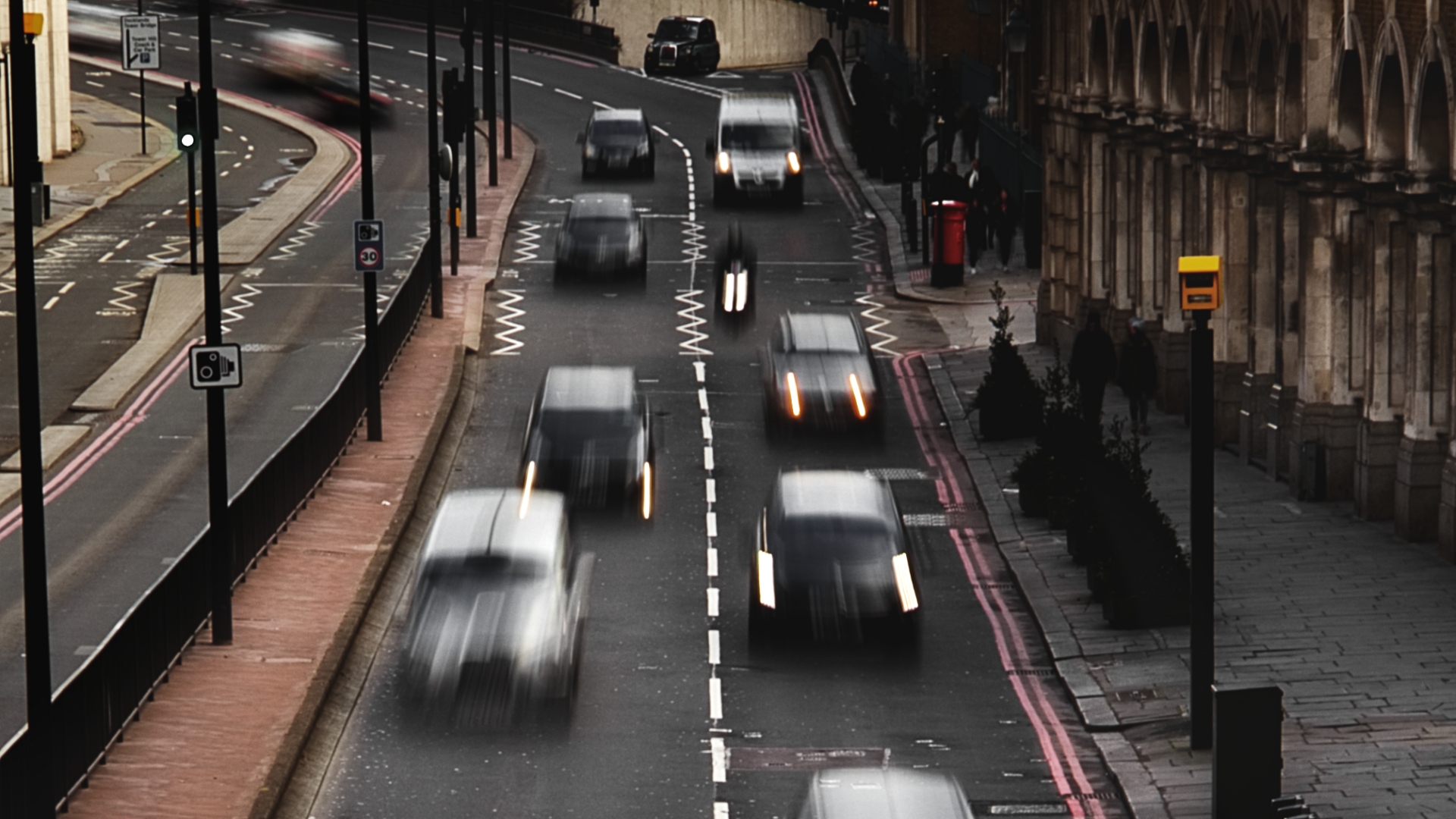
New government data, as collated by Moneybarn, reveals interesting information about speeding fines. It includes where in the UK you’re most likely to be caught, plus where the highest percentage get cancelled.
Our shocking headline figure belongs to the City of London, where over 62 percent of fixed penalty notice speeding fines were cancelled last year.
CoL is leagues ahead of second-placed Cambridgeshire here. Just over 30 percent of fines issued there were cancelled last year. Greater Manchester, London Metropolitan and Bedfordshire follow behind, with respective cancellation rates of 26, 24 and 23 percent.
Why would a speeding fine be cancelled?
There are four main reasons why a fine may be cancelled. Incorrect details about the offence, the accused wasn’t driving, missing or incorrect road signage denoting the presence of a camera, and faulty measuring equipment.
Is there a high rate of sign vandalism in the City of London? Possibly. Are speeders taking to other people’s cars and going AWOL? Also a possible. Realistically, there’s no way of knowing.
Where are the UK’s speeding ticket hotspots?
Avon and Somerset leads the way when it comes to speeding fines, with 199,337 issued last year. That’s the equivalent of 548 every day. You can chalk that up to around 800 active cameras spread across the counties.
In second place is West Yorkshire, with 174,796 FPNs issued last year. London Metropolitan and Thames Valley follow with 135,430 and 131,401 FPNs.
Curiously, City of London (local to London Metropolitan) is among those with the least FPNs issued, at just 3,888. Gwent in Wales has the lowest number of FPNs for speeding over the last year, with 242. Apparently, only eight of its 17 speed cameras are active at any one time.
Five million British drivers insist they won’t change the way they drive, even if it helps reduce emissions and lessen their environmental impact.
And the further North you get, the less people are willing to consider the environmental impact of their driving habits, according to a survey by connected car tech company Lightfoot.
Hard acceleration, late braking and heavy use of the air conditioning are all considered non-eco-friendly driving behaviours.
Just 1 in 4 Scottish drivers are willing to challenge such habits to help the environment: for those in the North East, the willingness to change plunges further, to 1 in 5 motorists.
Blissfully ignorant
Perhaps even more worryingly is that over half of 25-34 year olds simply don’t realise that changing your driving style can improve emissions and economy.
69 percent of respondents said that they couldn’t identify the driving behaviours and habits that increase emissions. 55 percent also didn’t know that heavy braking and air conditioning usage have a negative impact on emissions, for example.
Remarkably, 7 in 10 said that they didn’t know that stop-start was a fuel-saving system.
“A good driver can be 20 percent more efficient than a bad driver,” said Mark Roberts, CEO and Founder of Lightfoot.
“In the short term, not driving is not an option for everyone. We need to extend our green thinking to our driving style and make a real impact in reducing our emissions through better driving.”
Saving 1,000 cars’ worth of emissions
Lightfoot recently launched its ‘Breathe Exeter’ clean air initiative. It aims to save the equivalent of 1,000 cars’ worth of emissions by the end of the year. That’s how much it believes driving habits affect your emissions. Its ‘fitbit for cars’ is designed to draw more attention from drivers to the way they drive.
The University of Bath claims it reduces drivers’ fuel use and emissions by as much as 20 percent. Insurers and brokers report it reducing accident rates by as much as 80 percent.
“We want to show we can significantly cut emissions by making Exeter the first city-scale case study that proves the power of collective action,” continues Roberts.
“Jointly, we can create a blueprint for other cities to follow, proving that a social movement for change can have a bigger, more immediate impact than slow-moving national policy. Together, we can dramatically cut CO2 and NOx, through one simple action – smoother driving.”
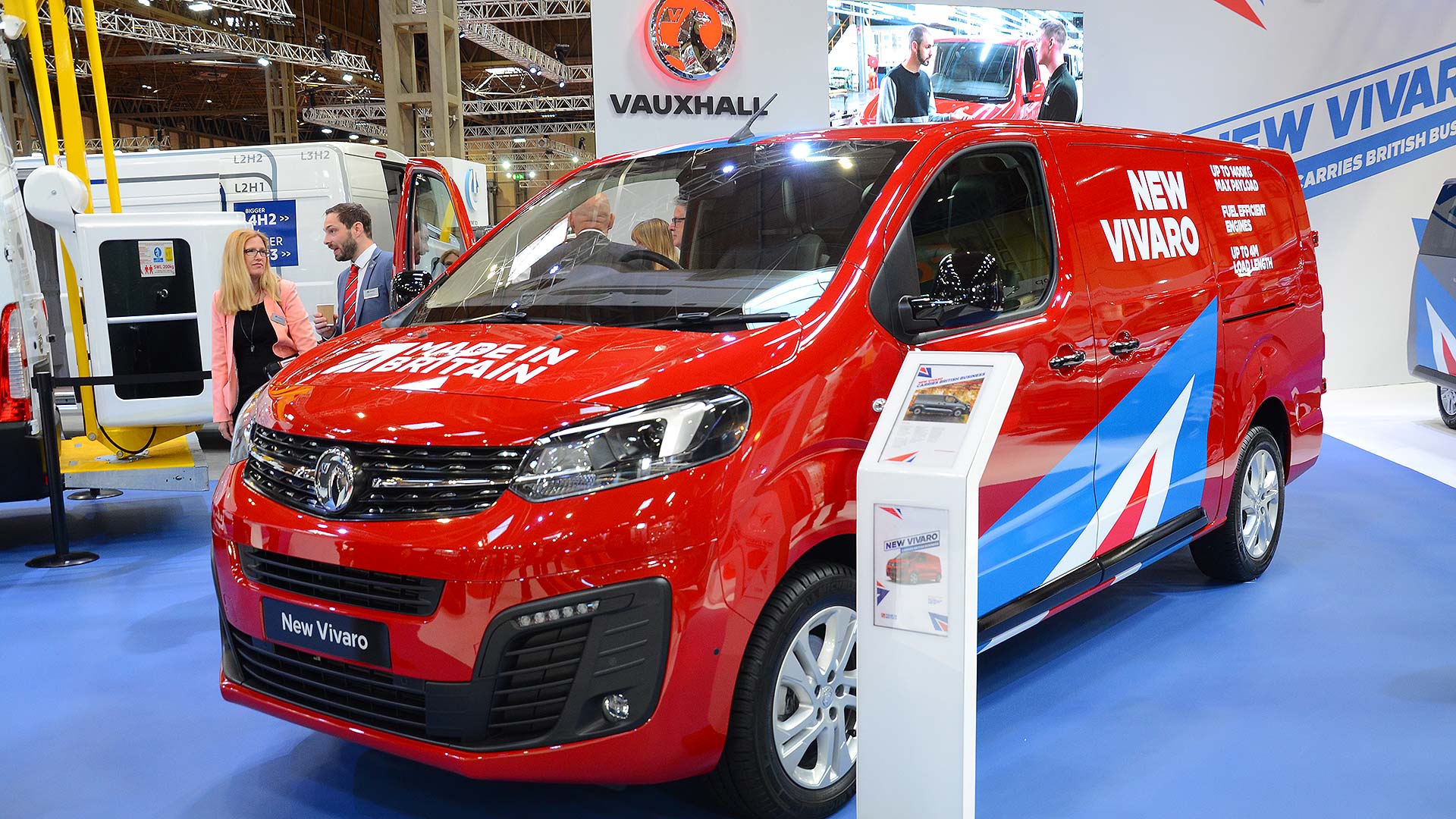
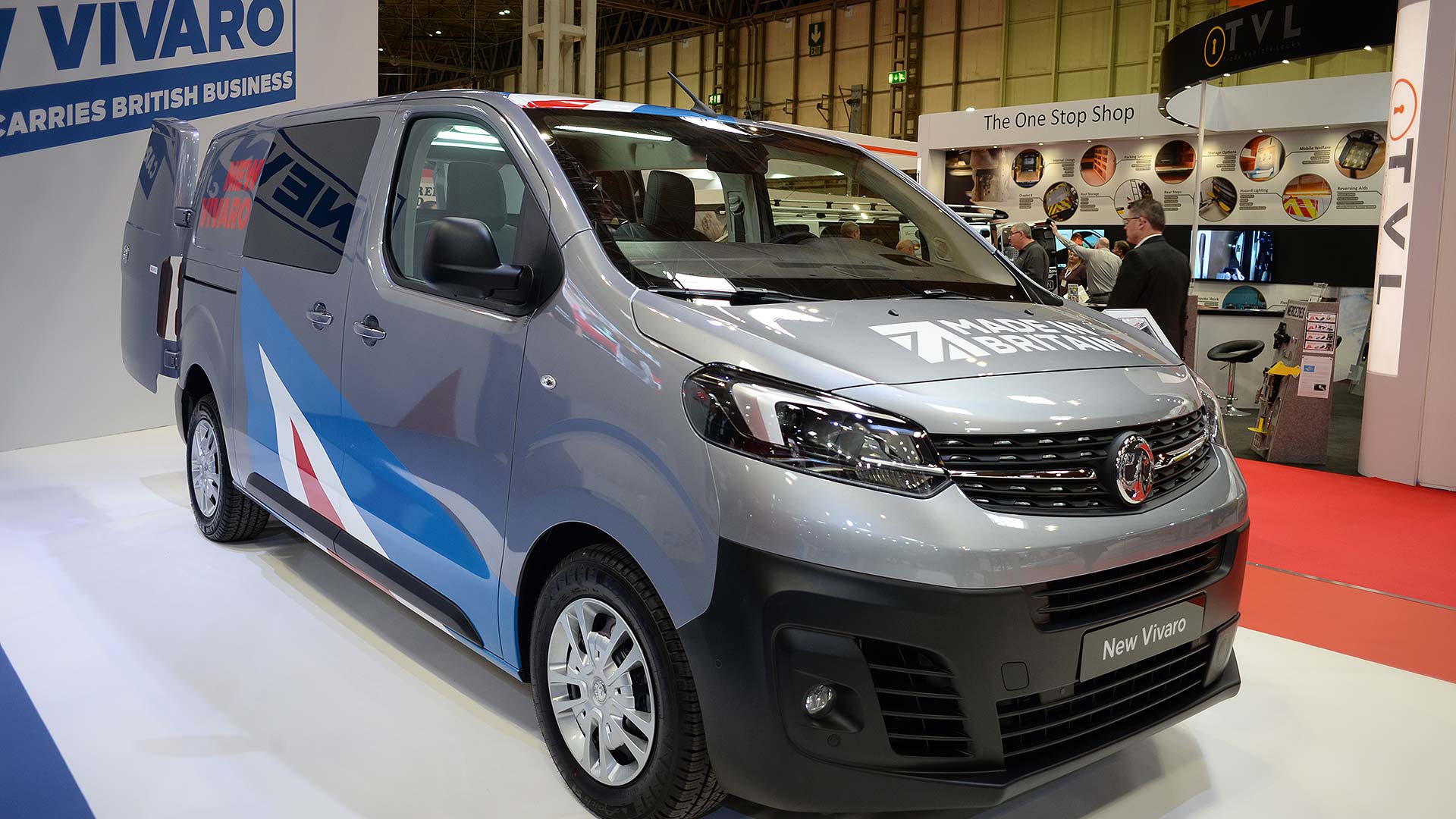
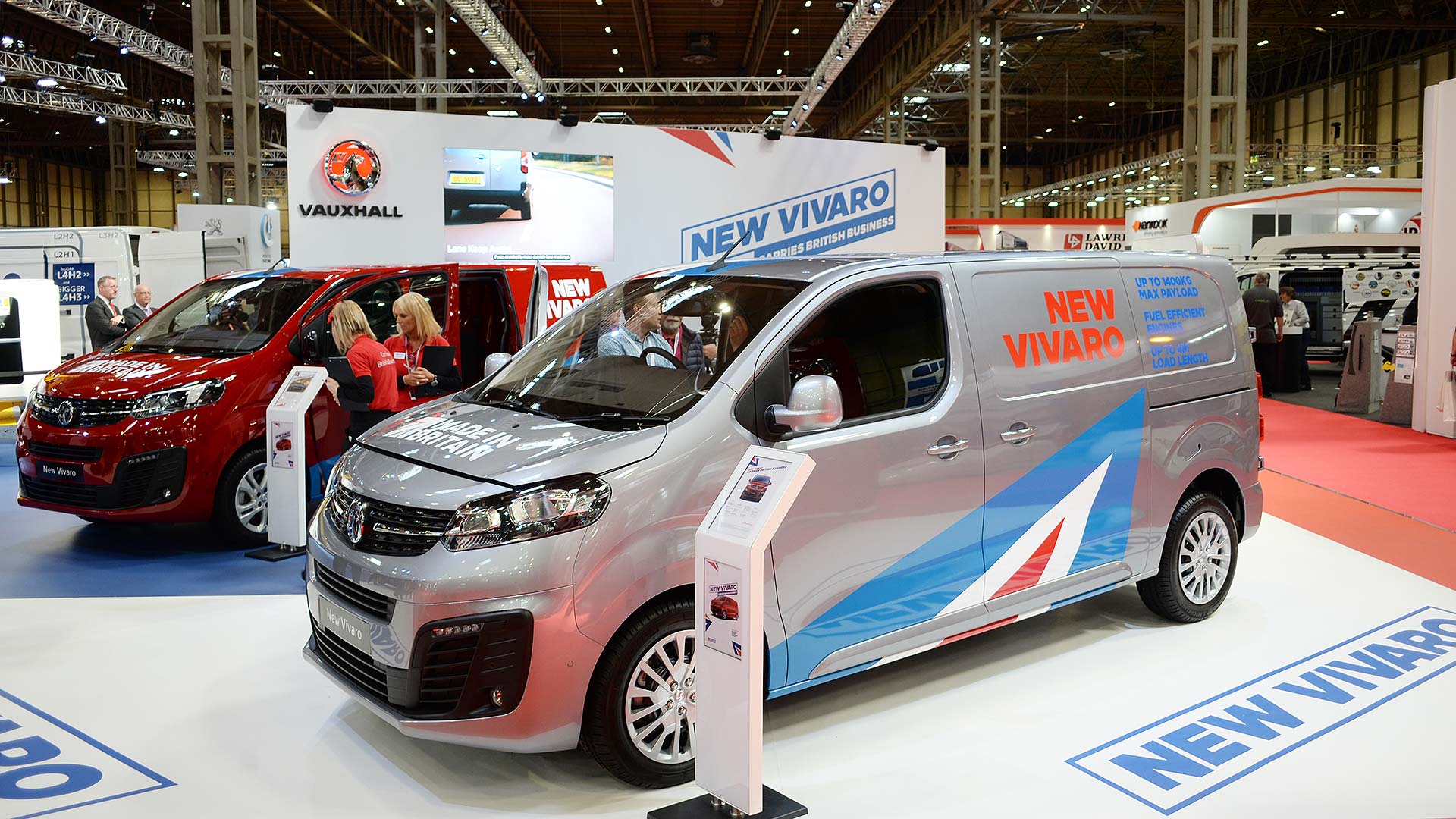
Which means the annual Commercial Vehicle Show (CV Show) at Birmingham’s NEC is a big deal. Particularly as many brands used the 2019 show to reveal their latest vans – with the headline-grabbing draw being the world debut of the Ford Transit-rivalling, British-built Vauxhall Vivaro.
Vauxhall Vivaro
The new Vauxhall Vivaro is the result of a £100 million investment into the firm’s Luton plant. 1,250 jobs have been secured and the target is to build 100,000 a year, including a fully electric version that arrives in 2020. Vauxhall chief Stephen Norman was on hand to debut the new Vivaro, and was full of facts: the entry-level 100 horsepower model emits 22 percent less CO2 than a comparable Ford Transit, for example. The 120 horsepower version puts out 27 percent less CO2 than its arch-rival. And it can take loads 21 percent longer than the Ford. No guessing which rival Vauxhall’s targeting – nor how bullish it is as to its chances…
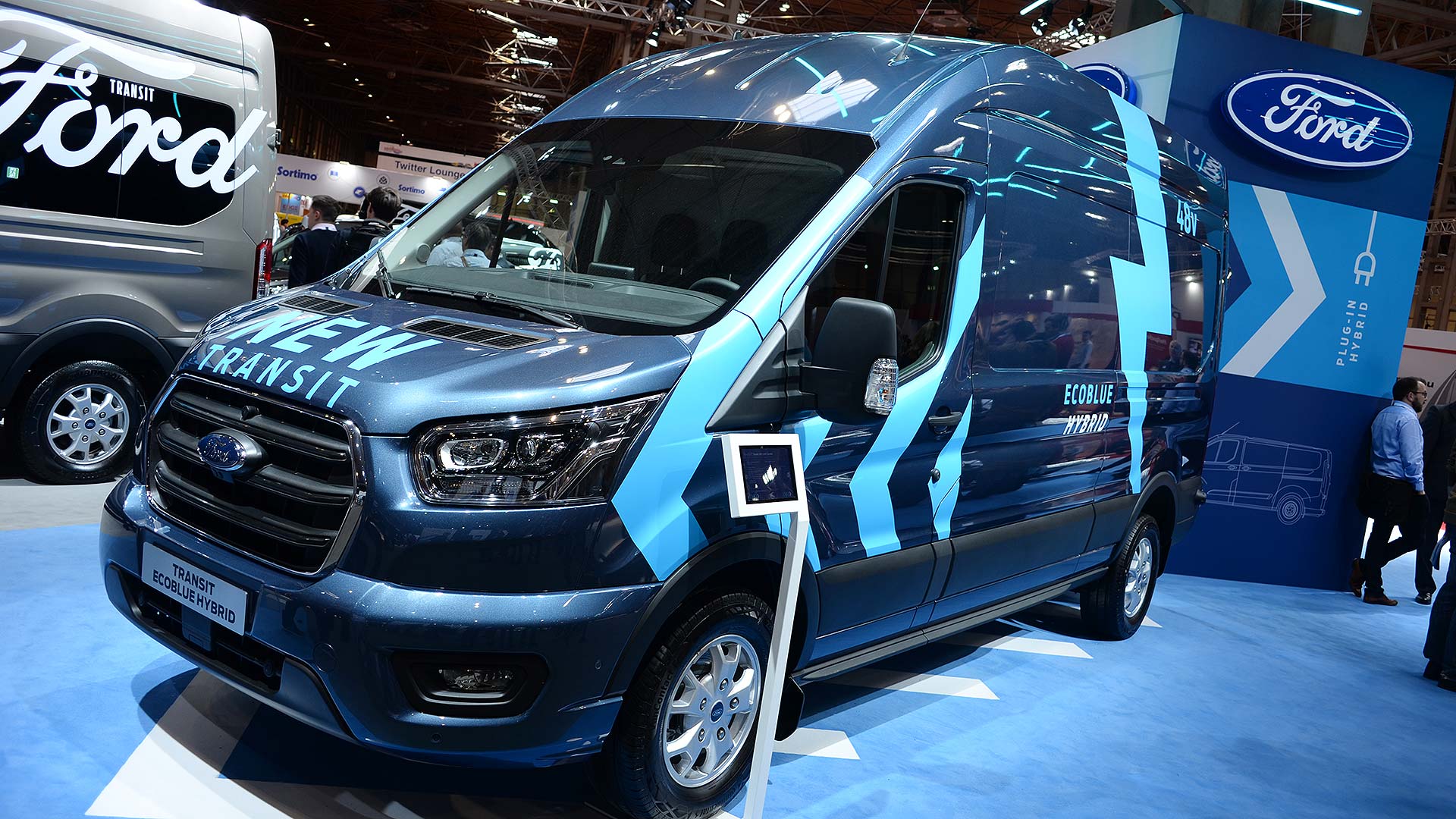
2020 Ford Transit
Ford isn’t standing still, though. It will update the market-leading Transit in mid-2019 with a series of tweaks that save weight and allow it to carry up to 80 kg more load. These include an aluminium bonnet – normally a feature of exotic supercars – CAD-designed wheels and a composite bulkhead. The new EcoBlue Hybrid is the van sector’s first 48V mild hybrid, with CO2 emissions from 144 g/km, and even the regular EcoBlue diesel is seven percent more economical. Ford says it all results in the “smartest and most productive Transit ever”.
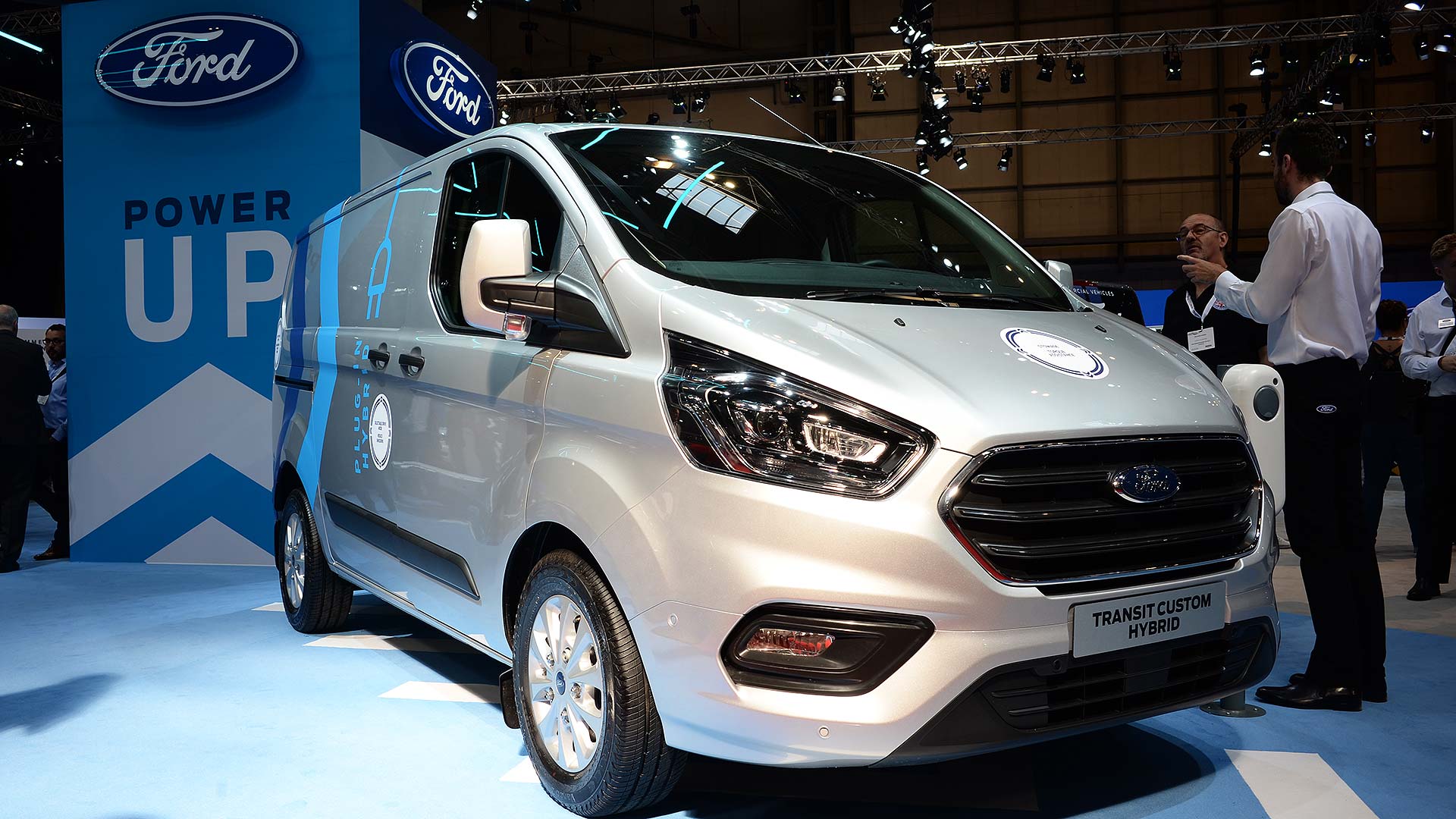
Ford Transit Custom Plug-in Hybrid
After several years of trials in London, the production version of the Ford Transit Custom Plug-In Hybrid also goes on sale at the end of 2019. It has a 30-mile electric range and a tiny 1.0-litre Ecoboost petrol engine to extend range further. Ford is also promising a fully electric Transit in 2021, to take on the 2020 Vauxhall Vivaro EV.
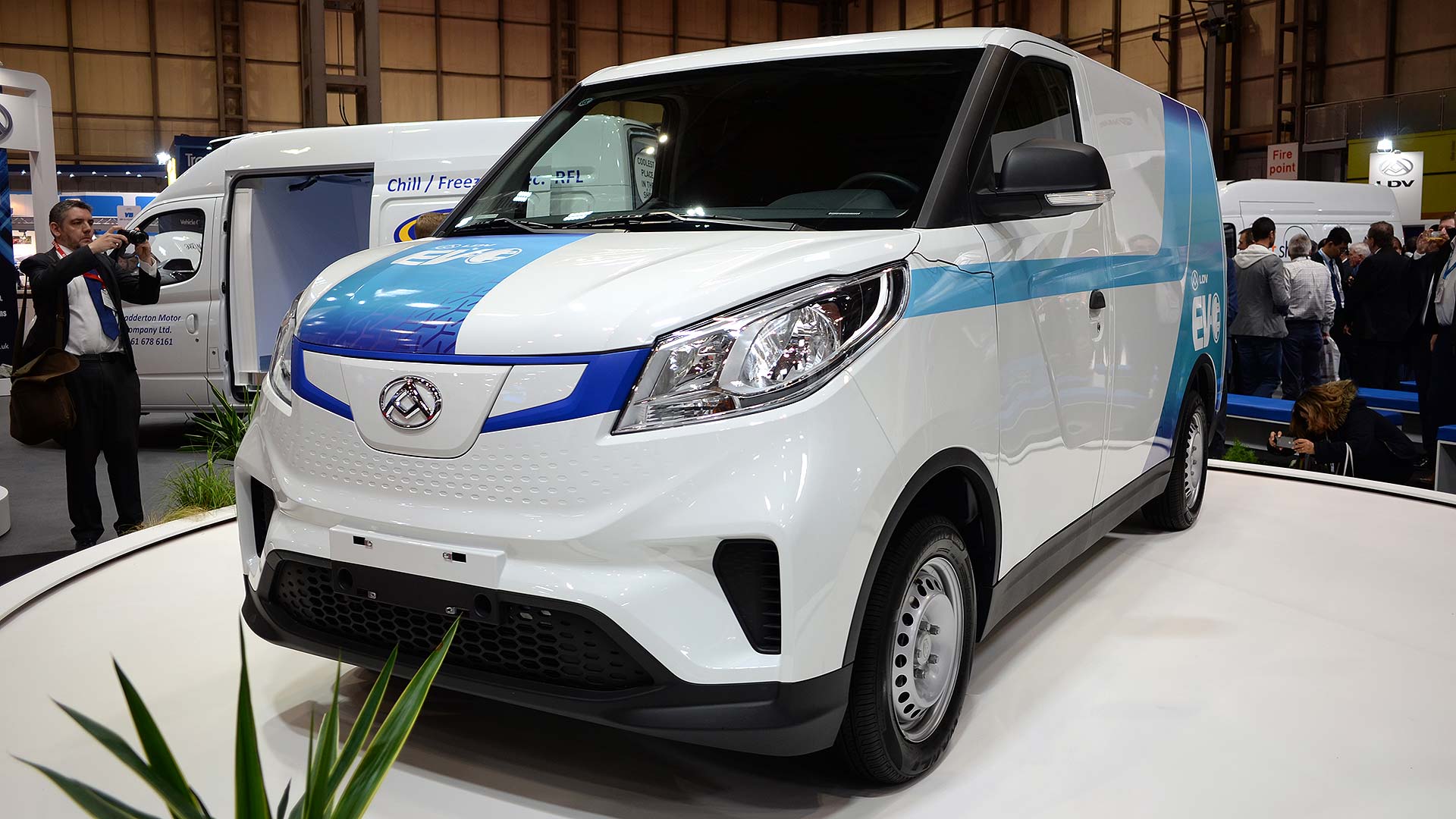
LDV EV30
At the value end of the new van sector, the LDV EV30 electric van was revealed at the 2019 CV Show. It is effectively a more affordable Chinese rival to the Nissan e-NV200 – the industry knows vans will have to go electric as soon as possible, to bypass ever-stricter city centre emissions limits. It will go on sale in 2020, with prices expected to start from £22,000.
Two bodystyles will be offered, a short-wheelbase and long-wheelbase, and there will be two battery options: 35 kWh (with a 127 mile range) and 53 kWh (offering a 200 mile range). Both will use a 114 horsepower electric motor, and total payload ranges from 600 kg to 1 tonne.
Isuzu D-Max Arctic Trucks AT35 Safir
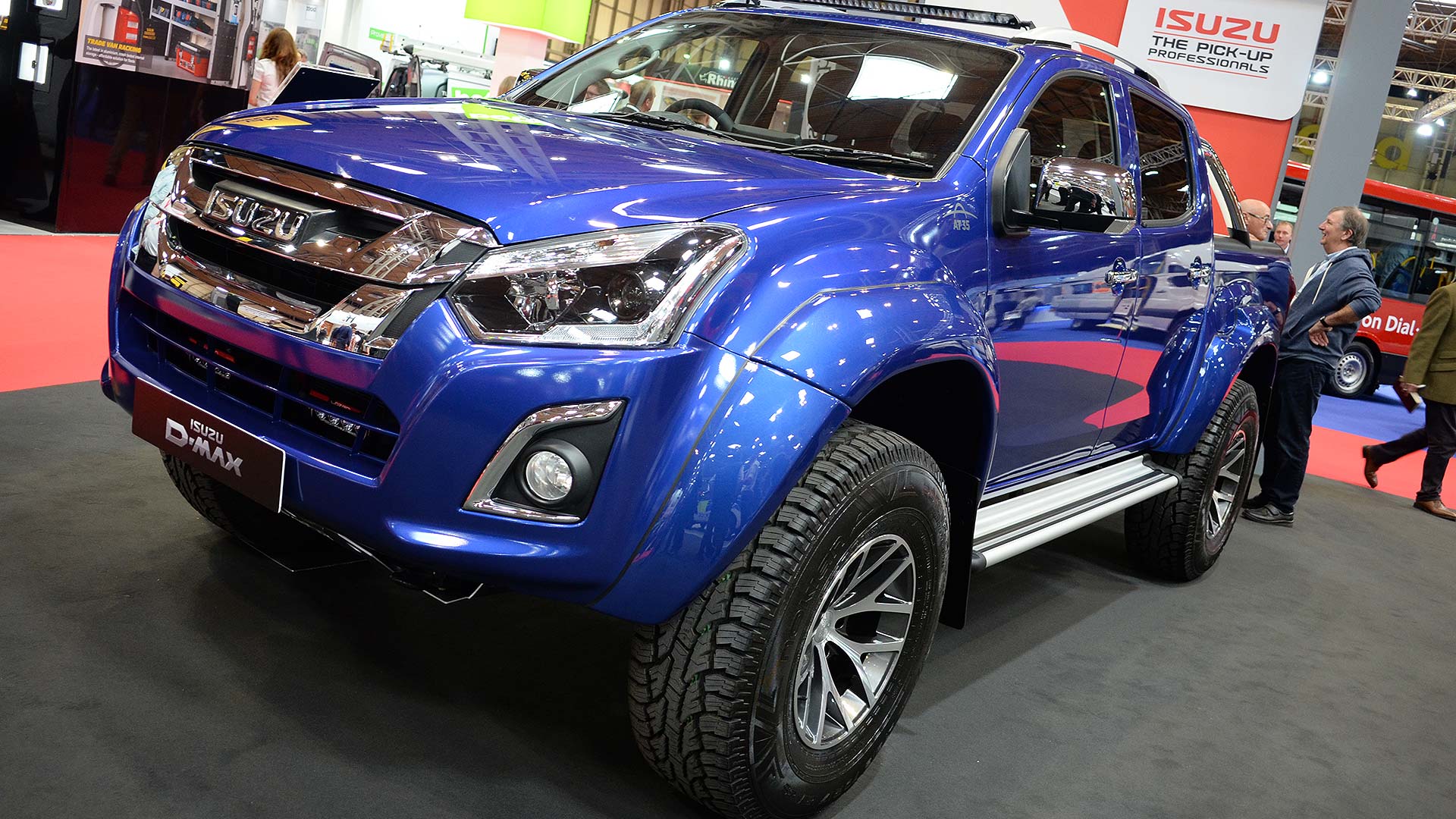
The British pickup truck sector is a particular hot spot in the market right now – and several brands had new variants to show. Isuzu’s successful partnership with Arctic Trucks continues with the special edition AT35 Safir. Just 10 will be sold, each costing a cool £45,000. They’ll all be individually numbered, and each will be painted in Sapphire Blue Mica. Bright Lazer Lights in the bumper are complemented by a new roof-mounted light bar, alloy wheels are diamond-cut and, inside, leather seats and premium audio with subwoofer and a 9-inch touchscreen are fitted.
Mitsubishi Shogun Sport SVP
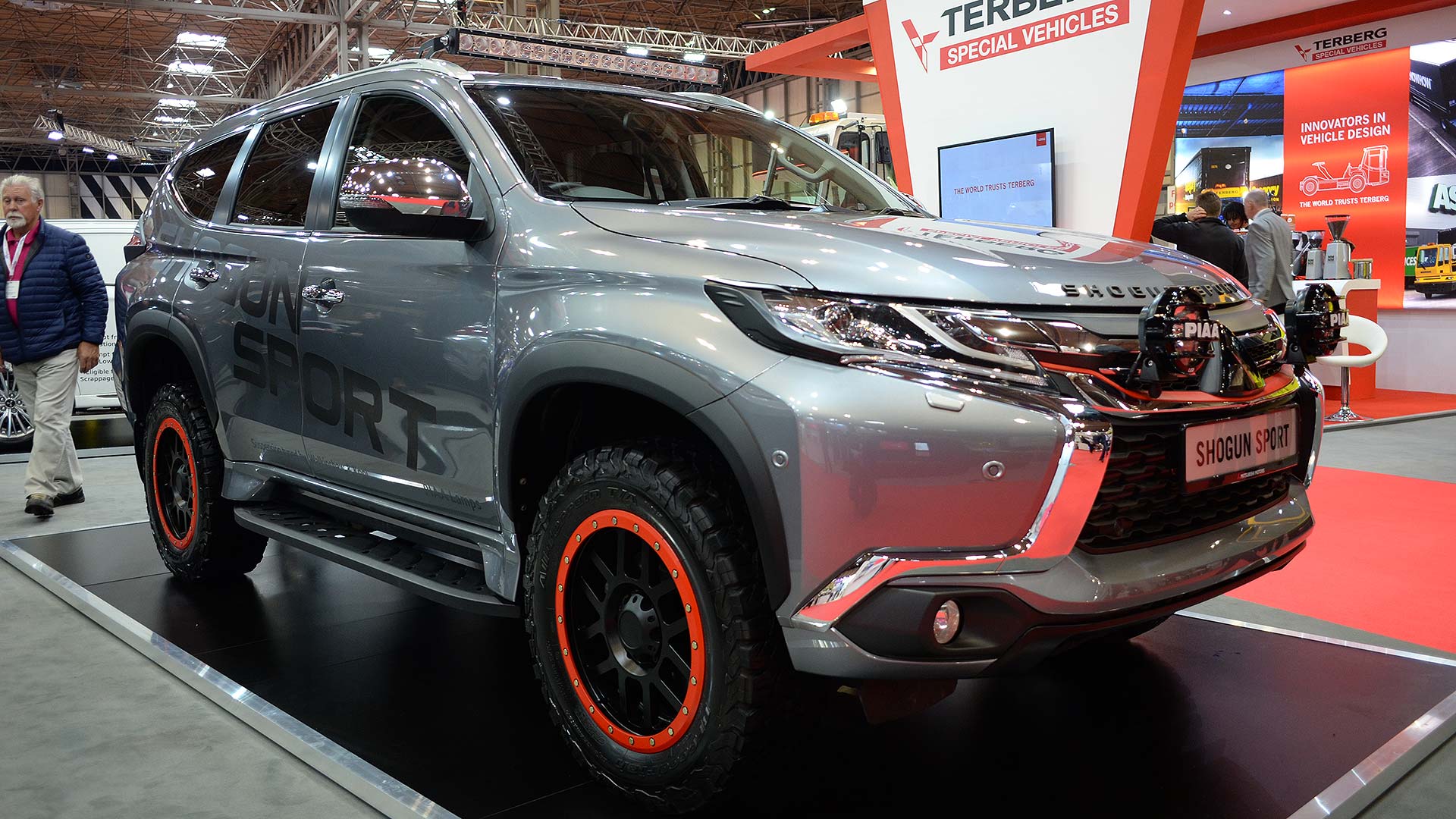
Mitsubishi showed a Shogun Sport concept at the 2019 CV Show, called SVP. It’s going to launch it in the summer – its show stand appearance was to get feedback from customers about what should be standard. The concept has black 18-inch wheels and BF Goodrich all-terrain tyres; they’re so chunky, the track is 40 mm wider and the wheelarches have been extended to suit. There’s also an LED light bar on the roof, PIAA rally driving lamps, black decals and badges set off by red detailing and, inside, leather seats and red LED mood lighting. We also like the sound of the Walkinshaw Performance Limited and Koni tuned suspension. Can we have it all please, Mitsubishi?
Ford Ranger Raptor
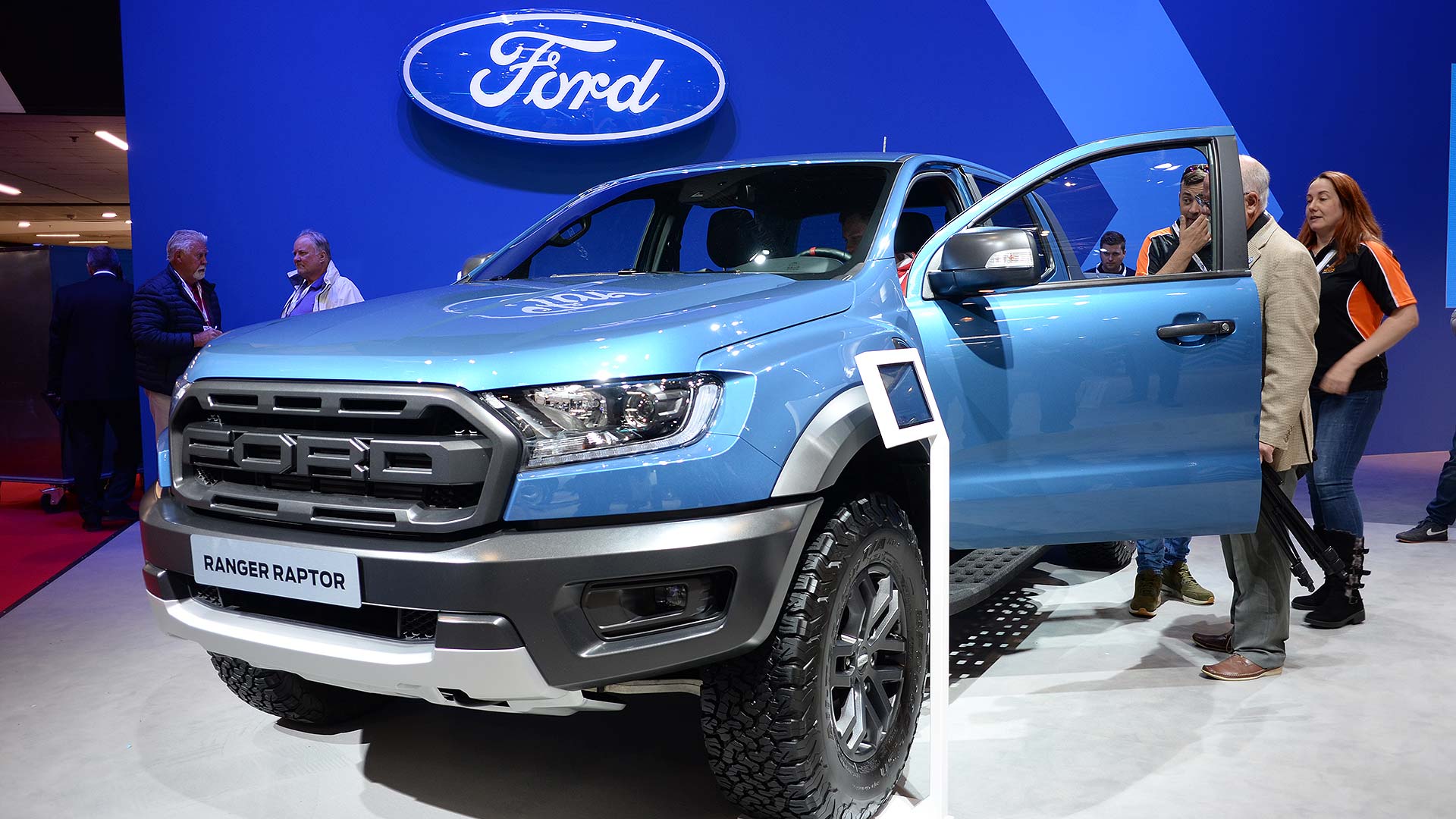
The Shogun Sport SVP will need to be tasty if it’s to take on Ford’s mighty Ranger Raptor. Described as a factory-built high-performance off-road truck, it has Fox Pro tuned suspension, multiple driving modes, a 210 horsepower 2.0-litre diesel engine and 10-speed automatic gearbox. It’s the styling both outside and in that really sets it apart, though – as it should, with prices starting from £40,696, plus VAT.
Toyota Hilux Invincible X
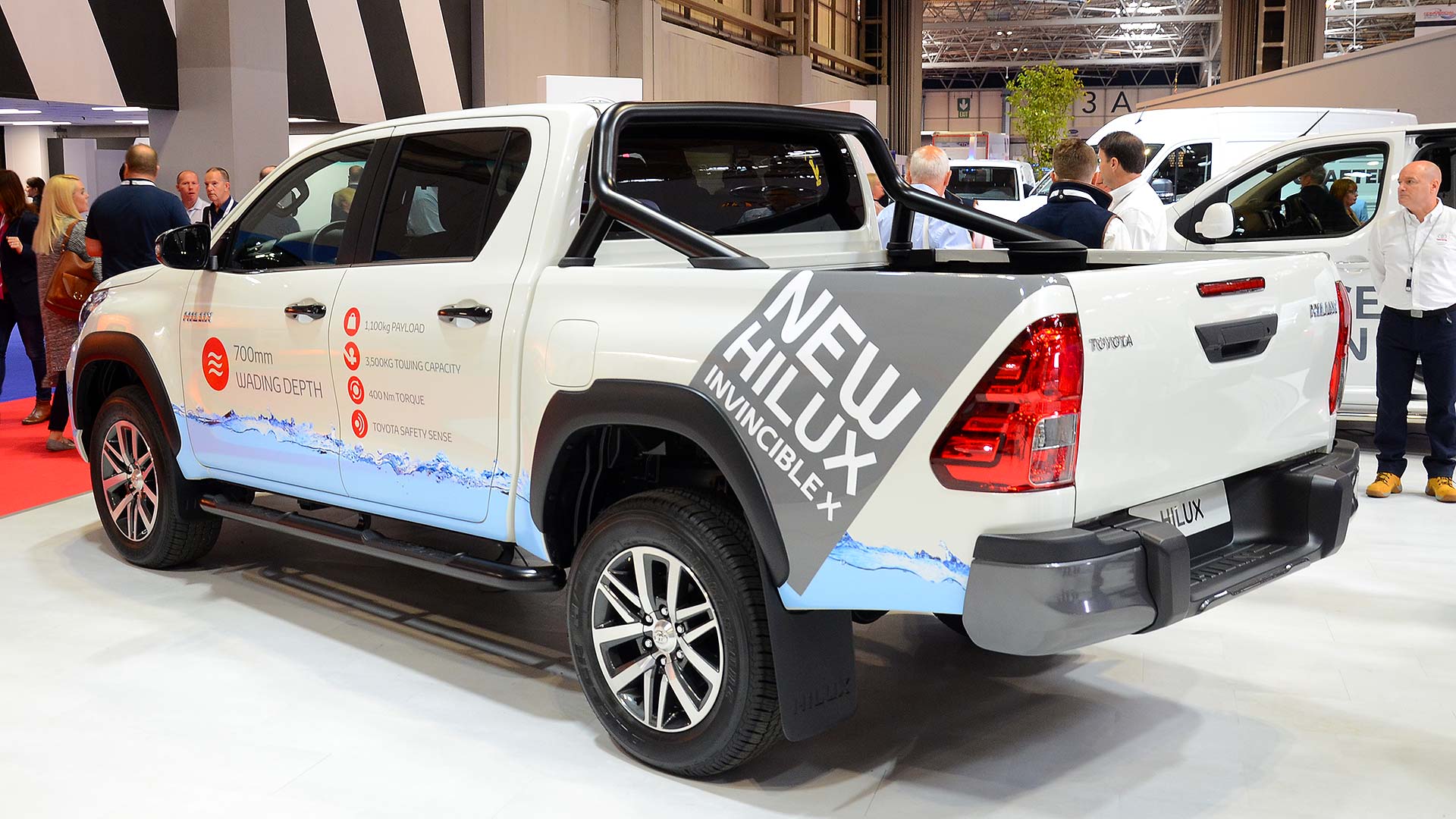
The updated Toyota Hilux Invincible X isn’t as aggressive as the hot Ranger Raptor, but it’s still more standout than regular Hilux. 18-inch wheels have a two-tone machined finish, there’s liberal use of smoked grey chrome, and the interior boasts an all-black colour scheme and piano black trim. A full suite of active safety kit is standard on 2019 models, too.
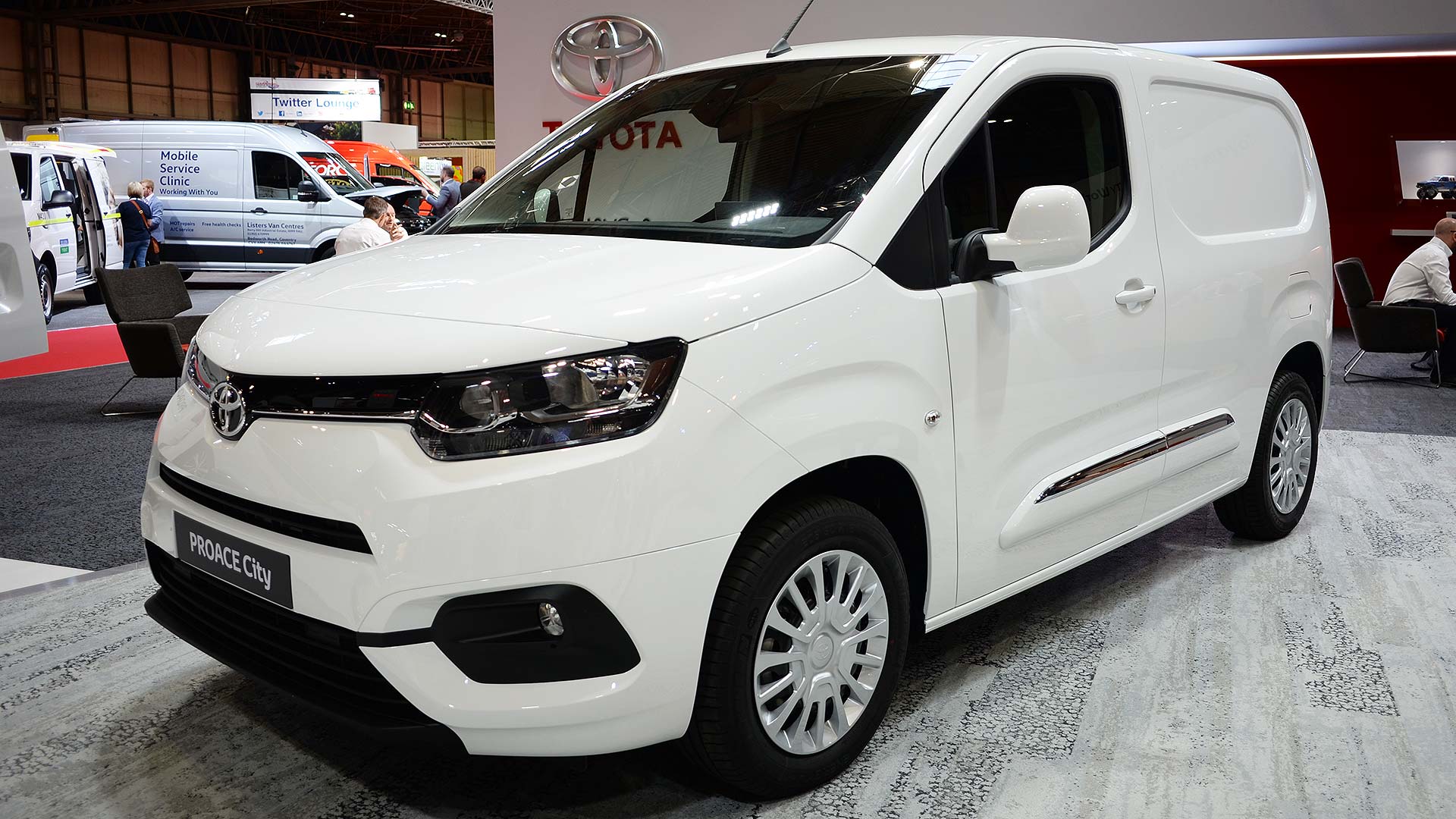
Toyota Proace City
The long-running Toyota Proace van is being joined by a smaller sibling, the Proace City. The 2019 CV Show marked its global debut ahead of taking on Europe’s small van sector, which accounts for 1 in 3 CV sales. If the looks are familiar, that’s because it’s been developed with PSA, so is also sold as the Citroen Berlingo, Peugeot Partner and Vauxhall Combo.
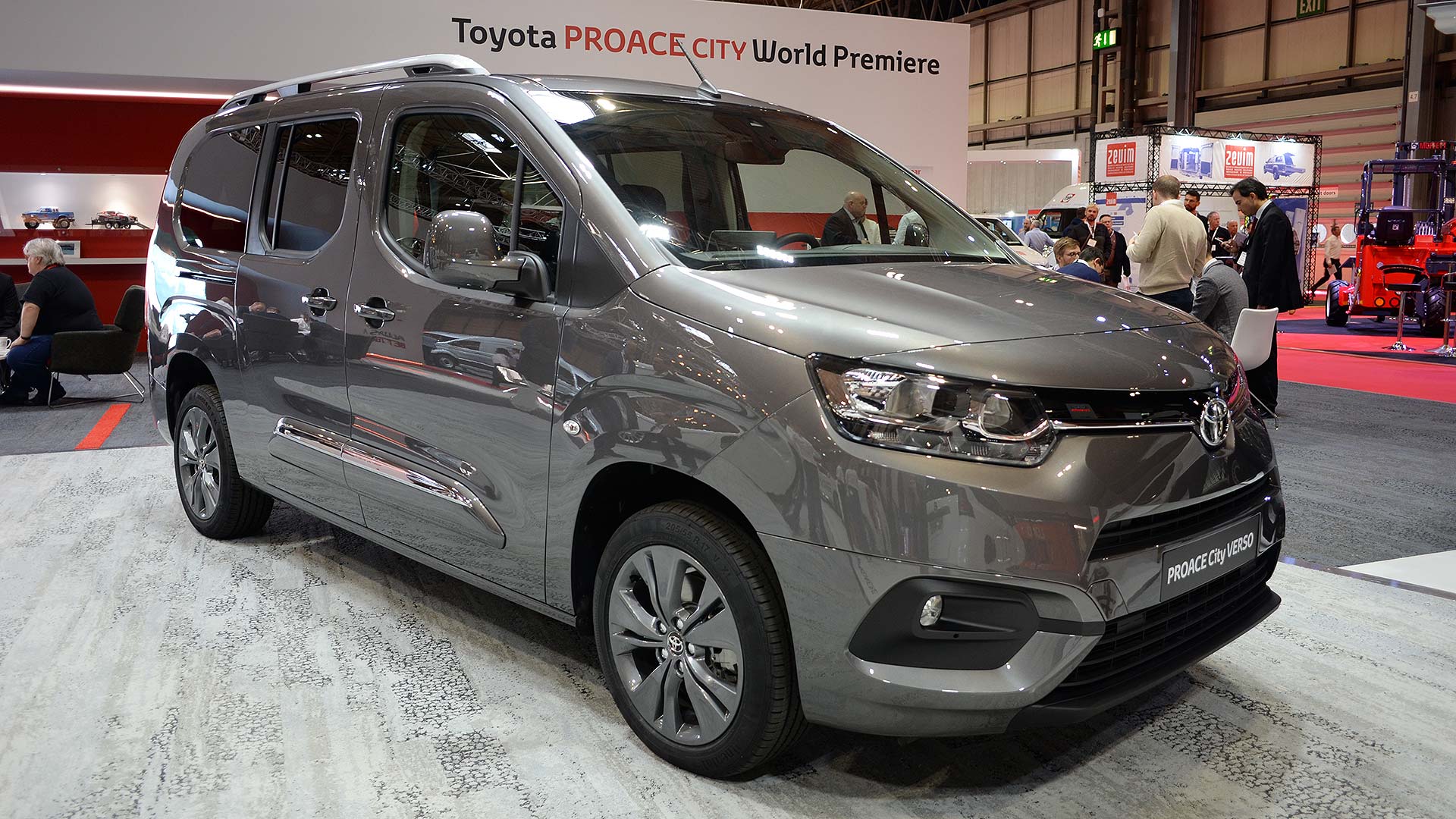
Toyota Proace City Verso
There’s a passenger version of Toyota’s new small van too, called the Proace City Verso. This is available with three rows of seats in both short-wheelbase and long-wheelbase guise.
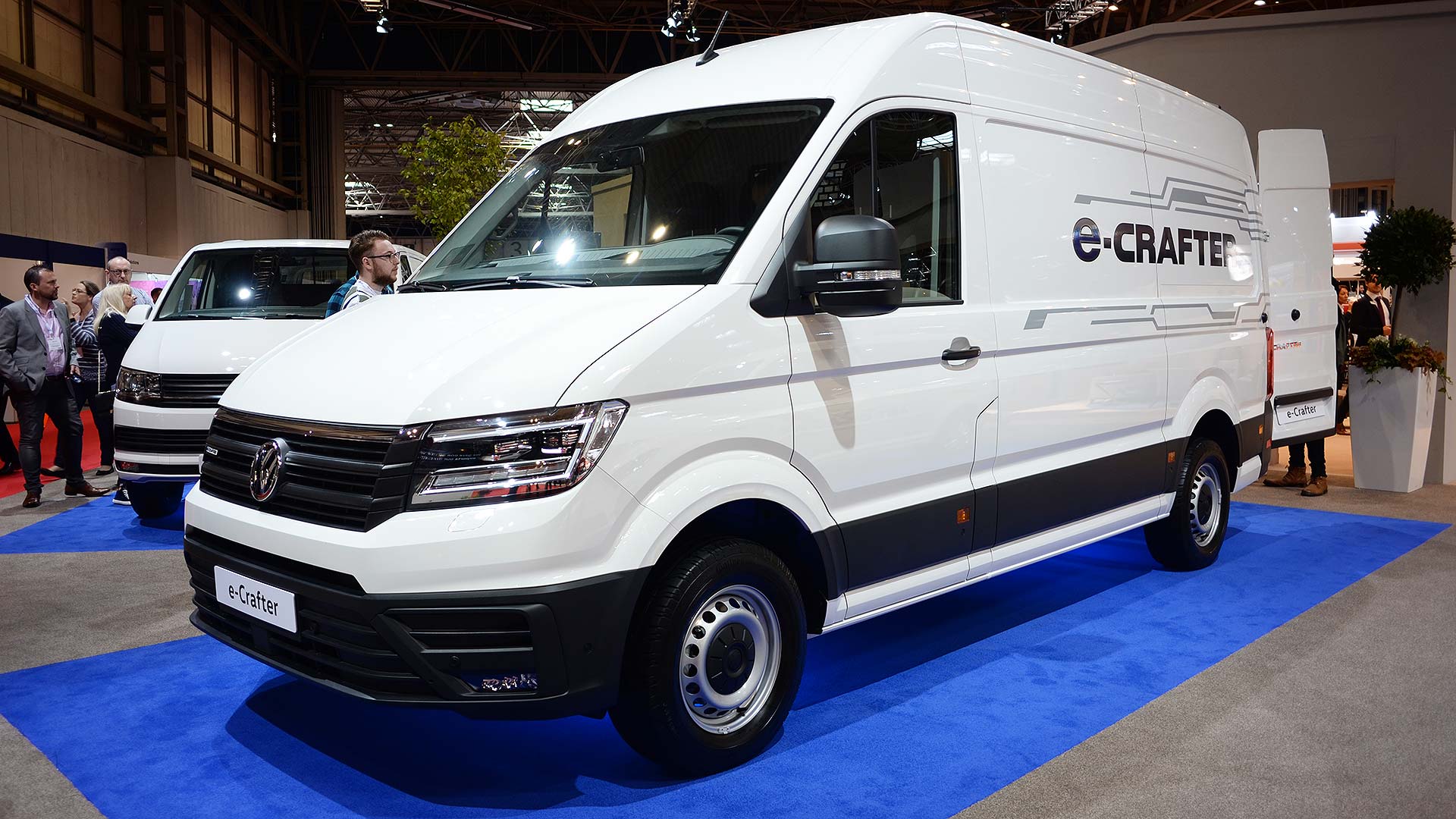
Volkswagen e-Crafter
Volkswagen was showing off the e-Crafter large van, which is coming to the UK in right-hand drive in 2021. This one has a 136 horsepower power output and a 35 kWh lithium ion battery, good for a range of 107 miles. Importantly, load space is unaffected by the batteries, so it can carry 10.7 square metres of load – and the total payload is up to 1.75 tonnes.
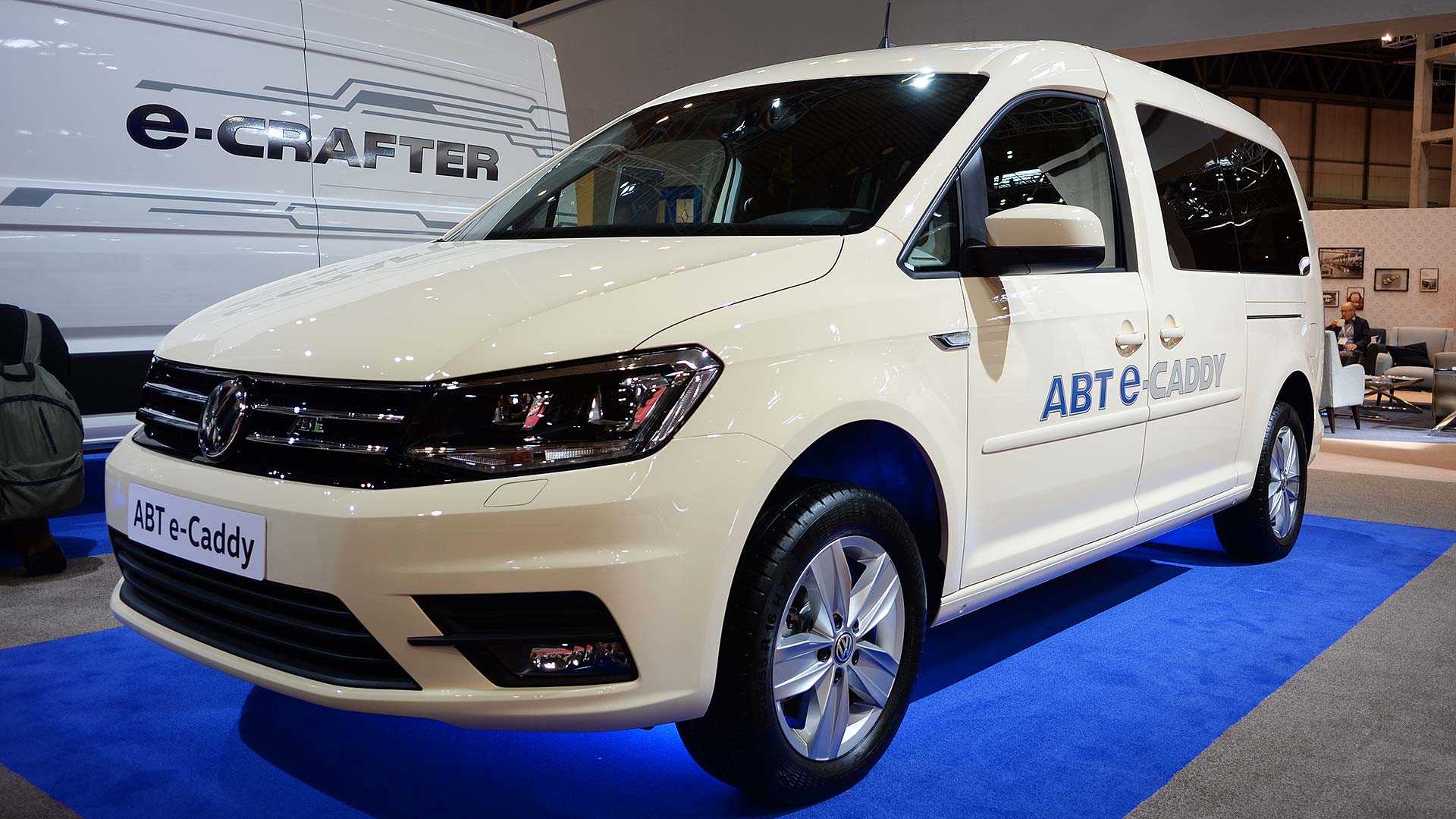
Volkswagen Abt e-Caddy
Volkswagen is planning to base its electric vans on its upcoming ‘MEB’ electric architecture. This isn’t ready yet – but it has a solution. Long-time VW tuning company Abt is, with official approval, converting current-generation vans to run on electric. The first to arrive is the Abt e-Caddy, which comes later in 2019. A range of around 140 miles sounds pretty good to us – and the conversion barely affects load capacity either.
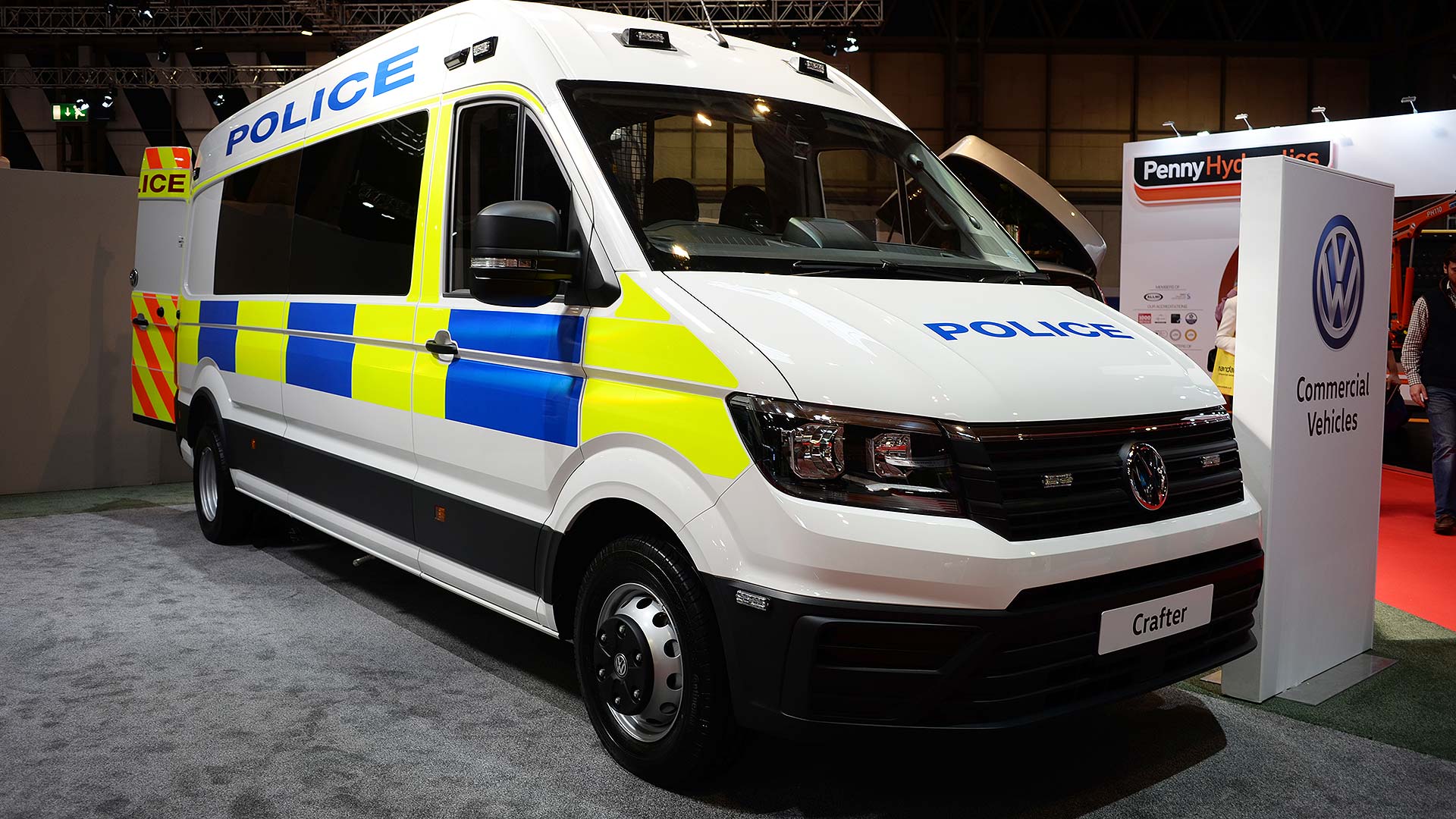
Volkswagen Crafter Police cell van
The Volkswagen ‘Engineered to Go’ customisation service is gathering pace in the UK. It relaunched earlier this year to offer high-quality, officially-approved conversions through Volkswagen UK van centres. This Police cell van apparently has toughened glass: one visitor asked if they could throw a brick at the windscreen to try it out. Presumably into the back of the van they went…
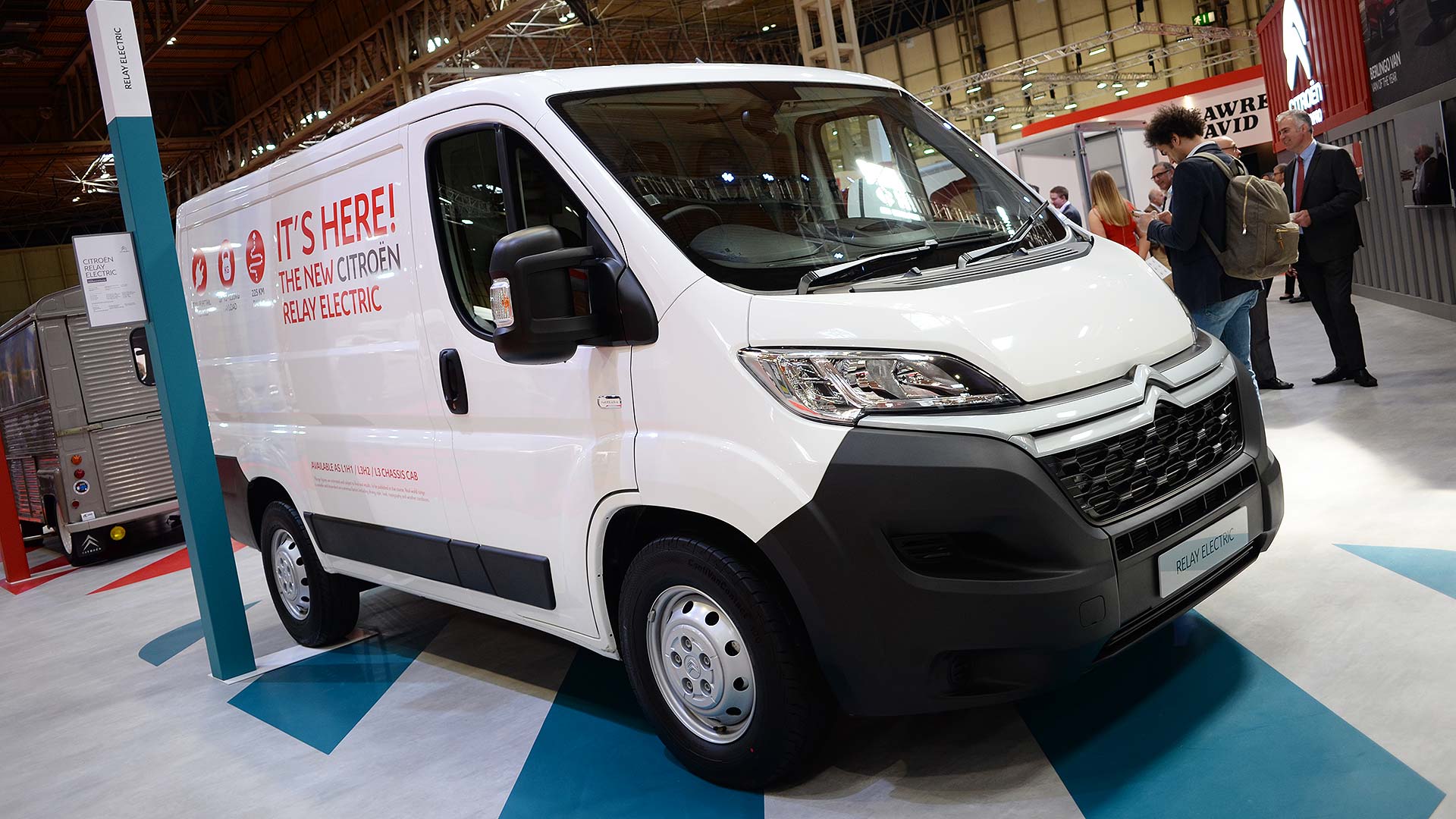
Citroen Relay Electric
PSA, parent company of Peugeot and Citroen, is another brand committed to electrifying its van range. At the 2019 CV Show, it previewed electric versions of both the Citroen Relay…
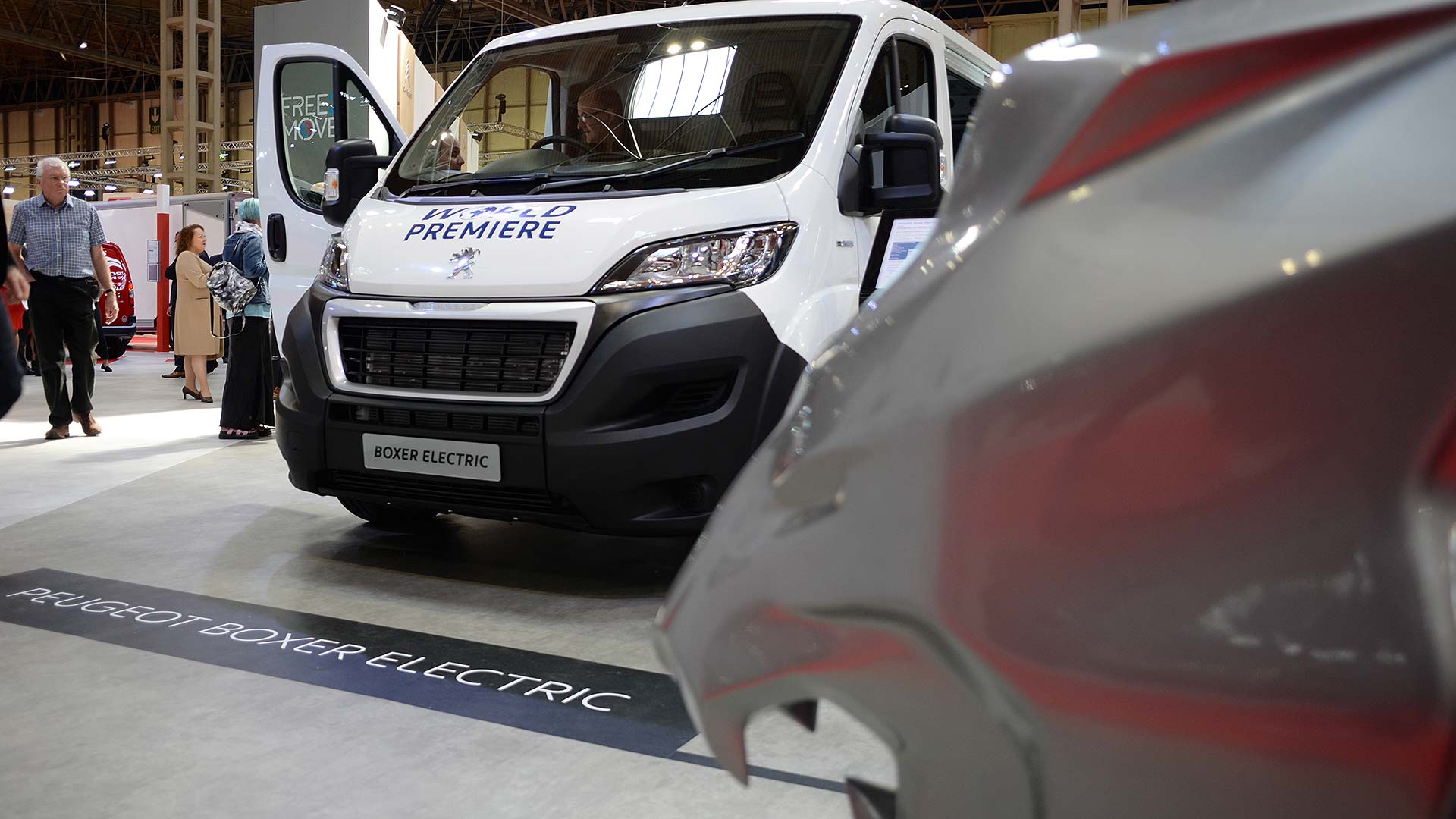
Peugeot Boxer Electric
… And the Peugeot Boxer. Standard length models will have a range of 141 miles, and longer versions will run for 169 miles between charges.
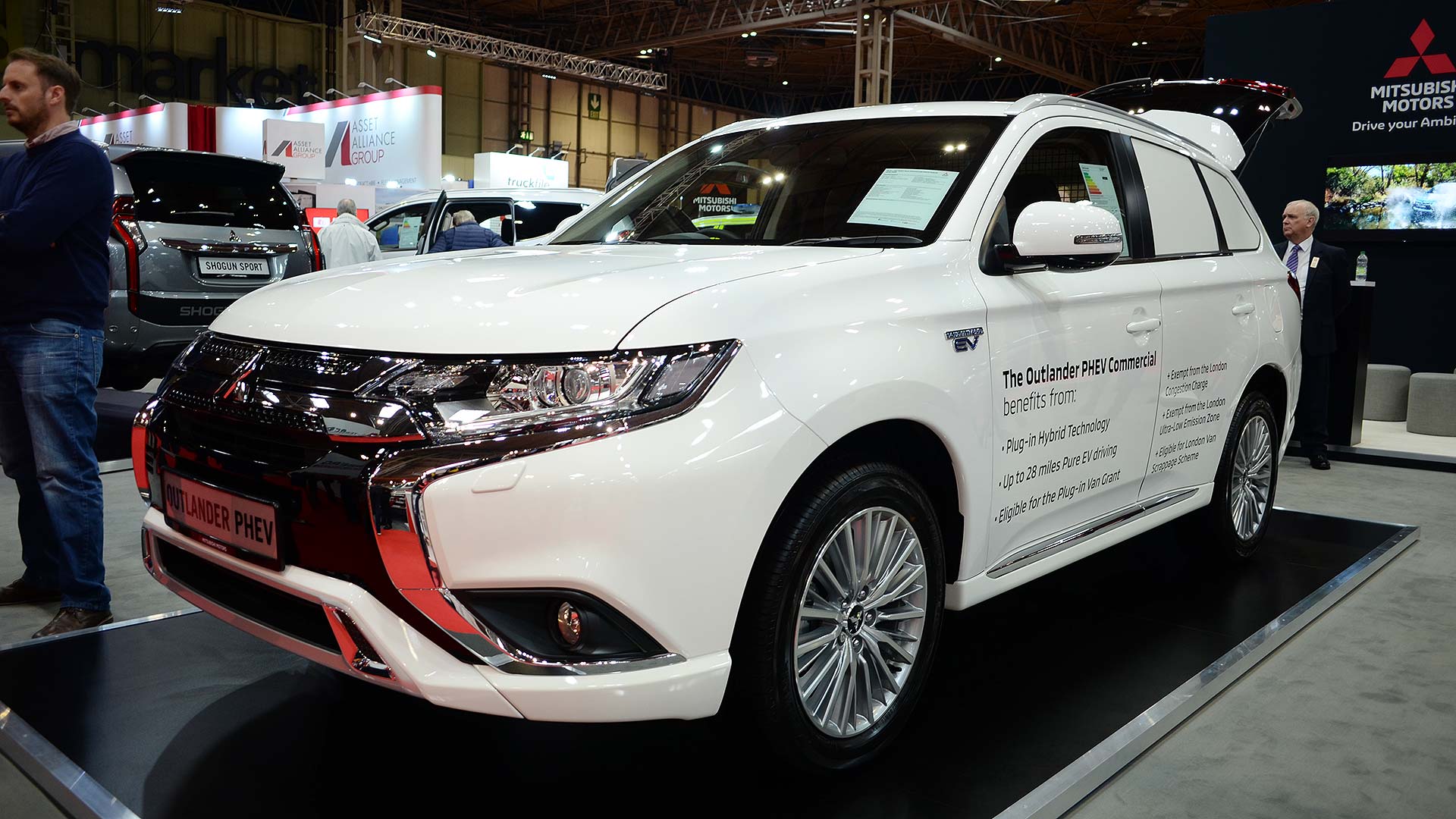
Mitsubishi Outlander PHEV Commercial
The London ULEZ has focused business attention on cleaning up their van range. For those who want to eschew diesel entirely, but aren’t yet ready to go fully-electric, Mitsubishi has the Outlander PHEV Commercial, a van version of Britain’s most popular plug-in electric car.
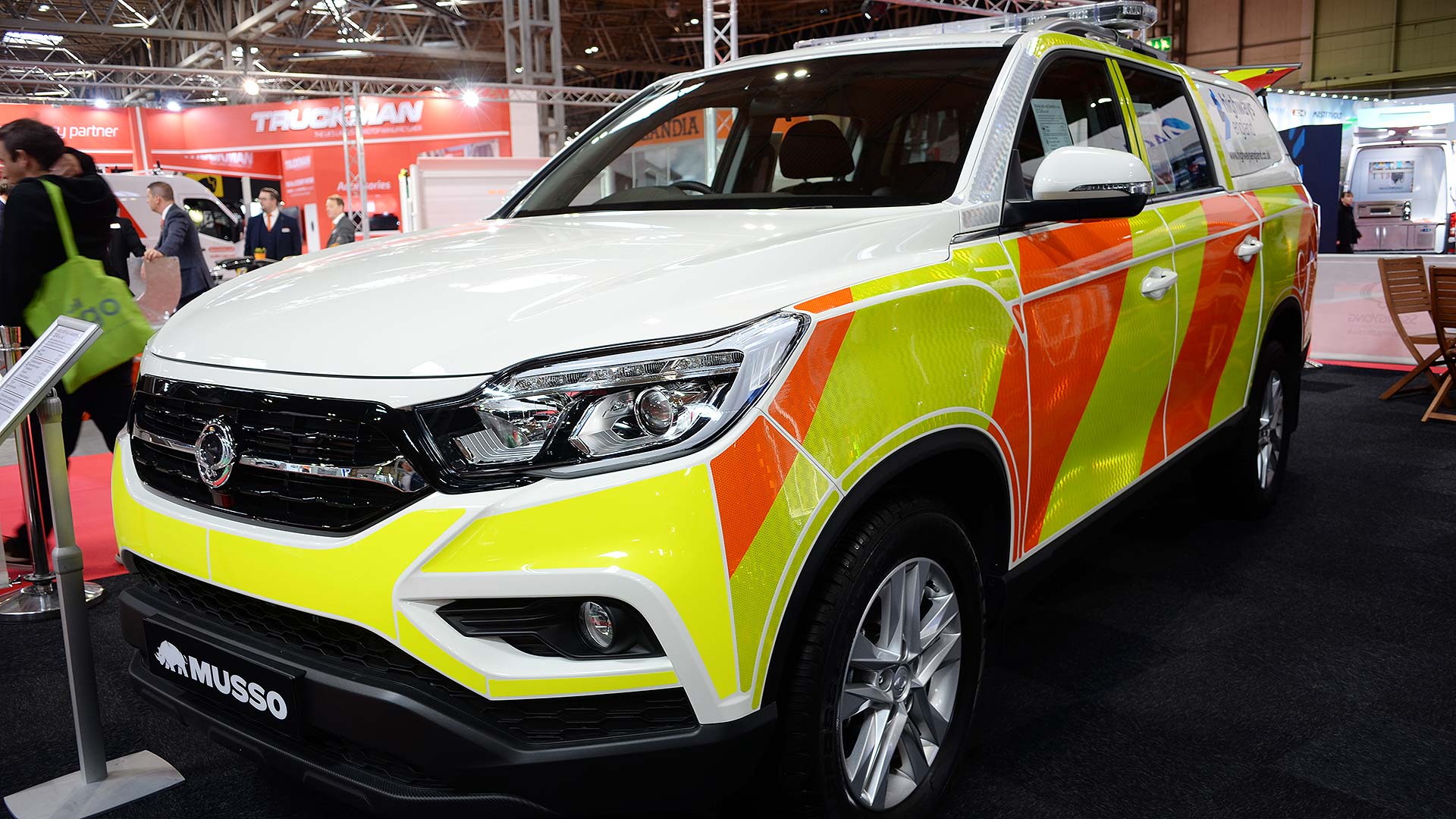
SsangYong Musso Highways England concept
SsangYong is now an official supplier to England’s ‘blue and orange light’ services. On display at the show was an early look at a collaboration it will soon announce with Highways England.
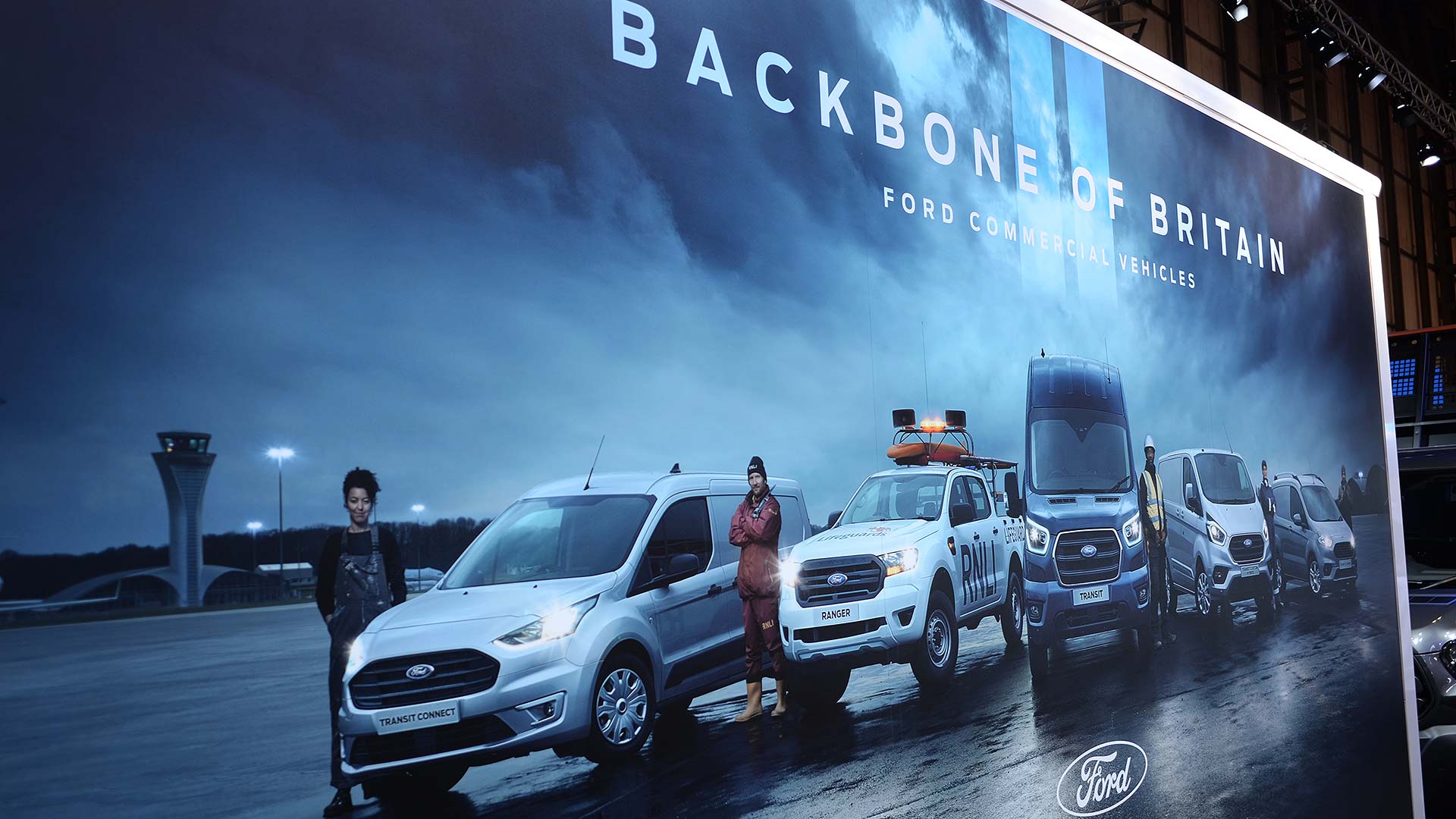
Ford Backbone of Britain campaign
Ford was showing off its latest big-budget advertising campaign for its commercial vehicle range. As the UK’s CV market leader for 54 years, it has plenty to shout about, and the billboards were evident throughout the NEC…
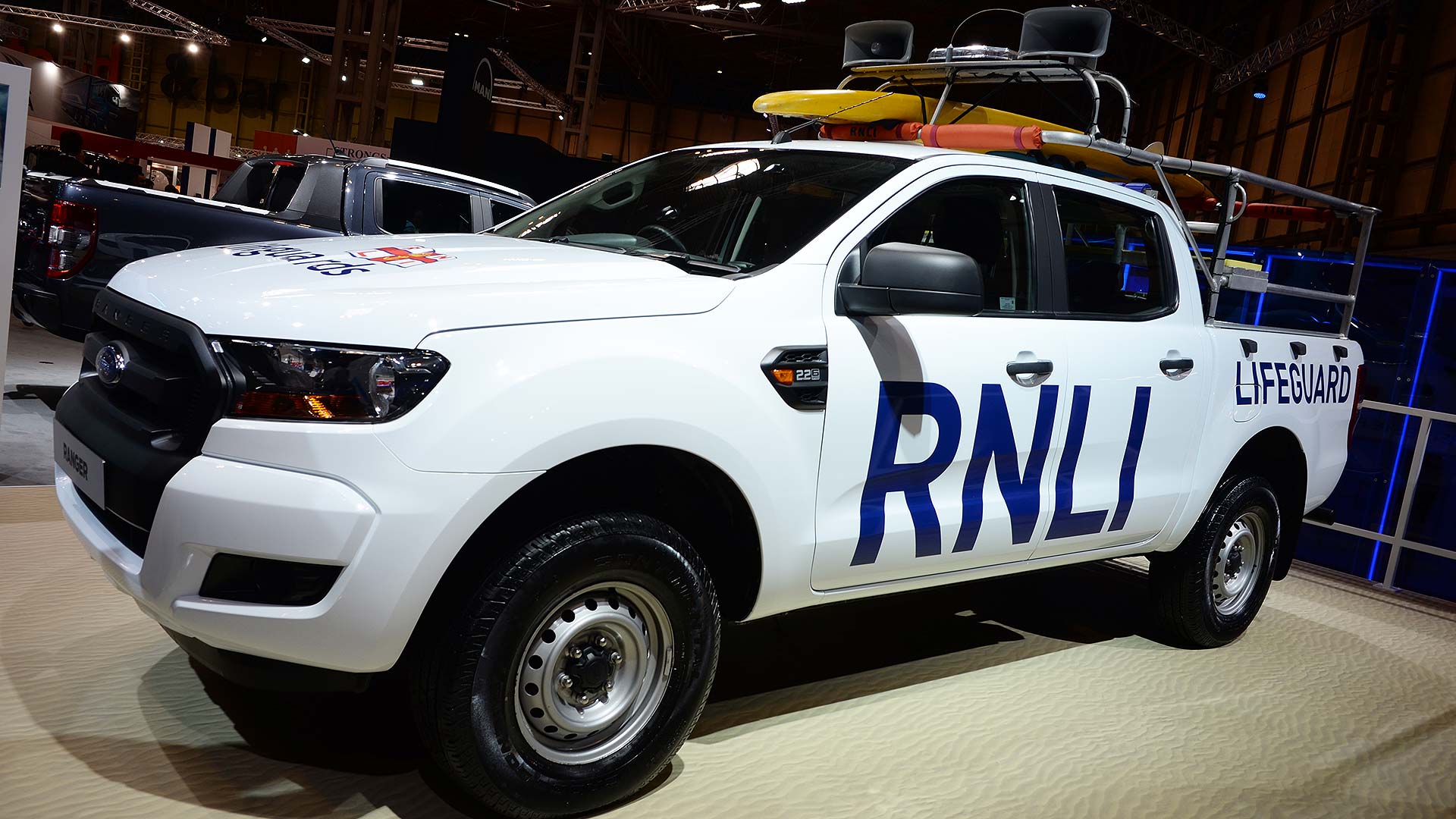
Ford Ranger RNLI
… And it even had a few star cars from the TV ad on its stand as well! Members of the RNLI used their presence to raise vital funds from well-wishing show-goers.
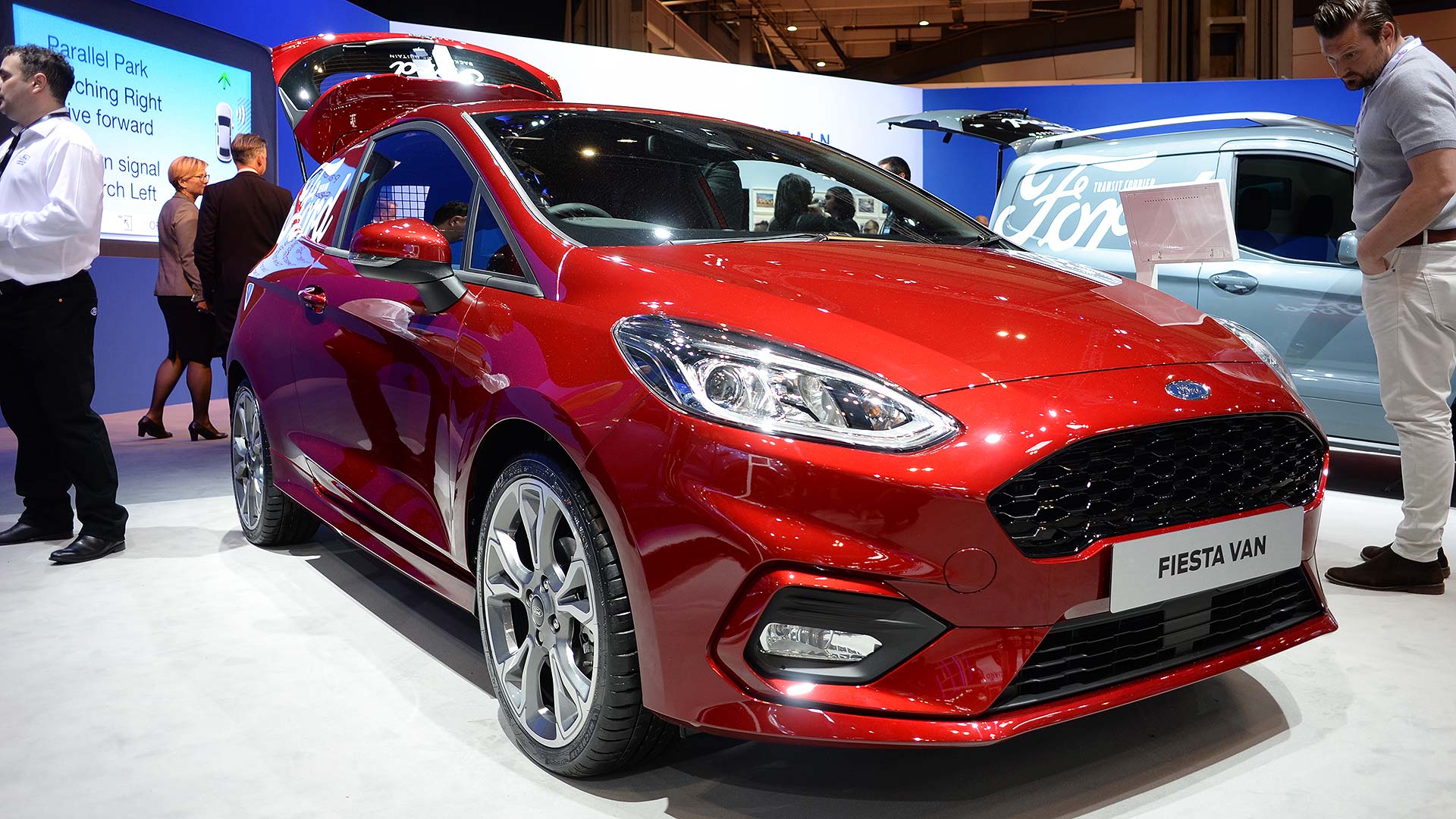
Ford Fiesta SportVan
A year on from launch, the Fiesta SportVan still cuts a dash. It’s probably the most enjoyable small van driving enthusiast can buy – a genuine ‘hot hatch’ van.
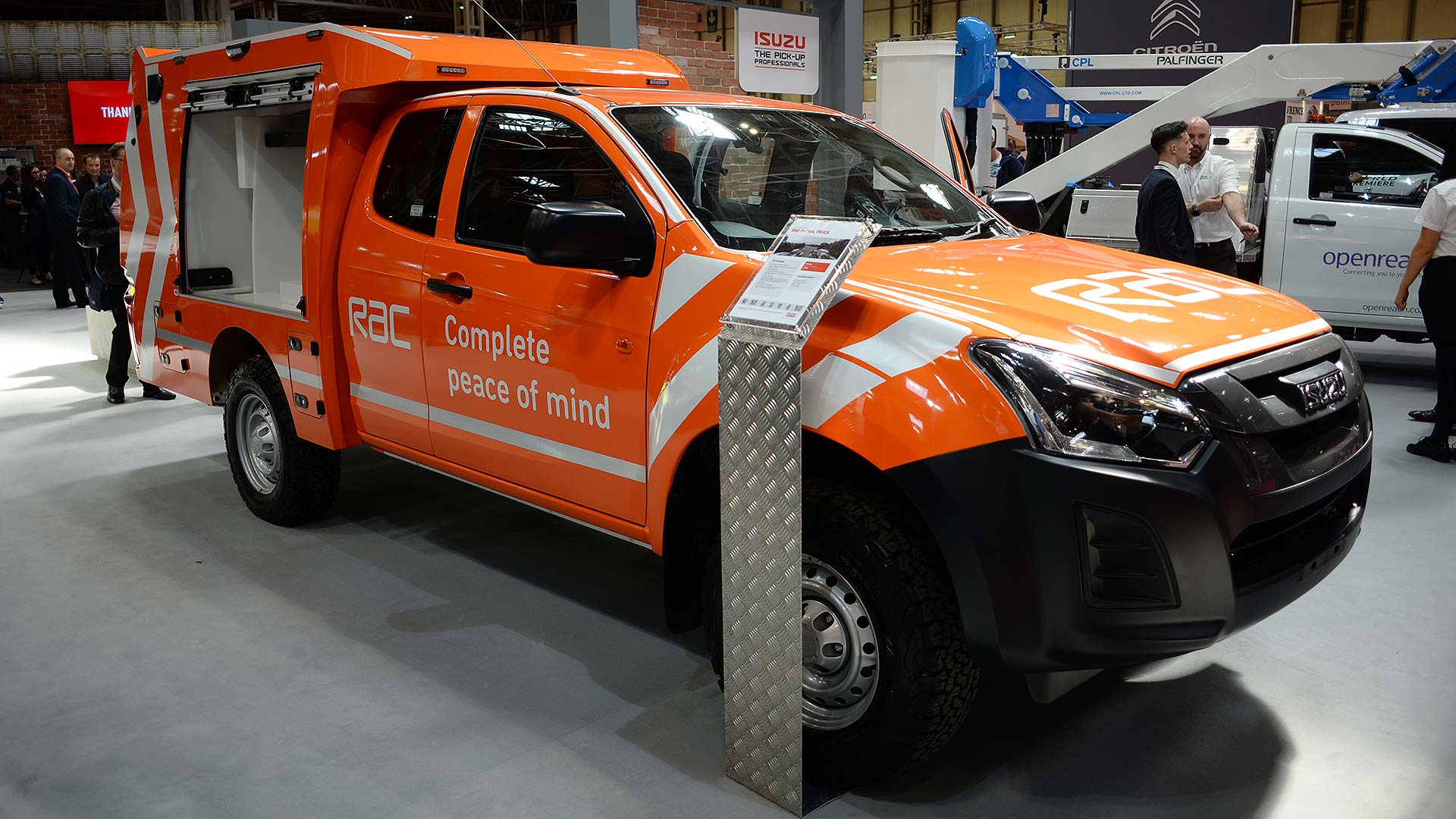
Isuzu D-Max RAC Heavy Duty Patrol Van
The innovations team at the RAC has worked with Isuzu and a specialist bodybuilder to create this clever new Heavy Duty Patrol Van. Based on a D-Max supercab, it can tow up to 2.8 tonnes – good for 90 percent of cars and vans on UK roads – but is much more manoeuvrable than big flat-bed trucks. It’s perfect for use in busy cities, particularly as it’s equipped with the RAC’s equally clever ‘All-Wheels Up’ towing kit that can recover stranded 4x4s and electric vehicles.
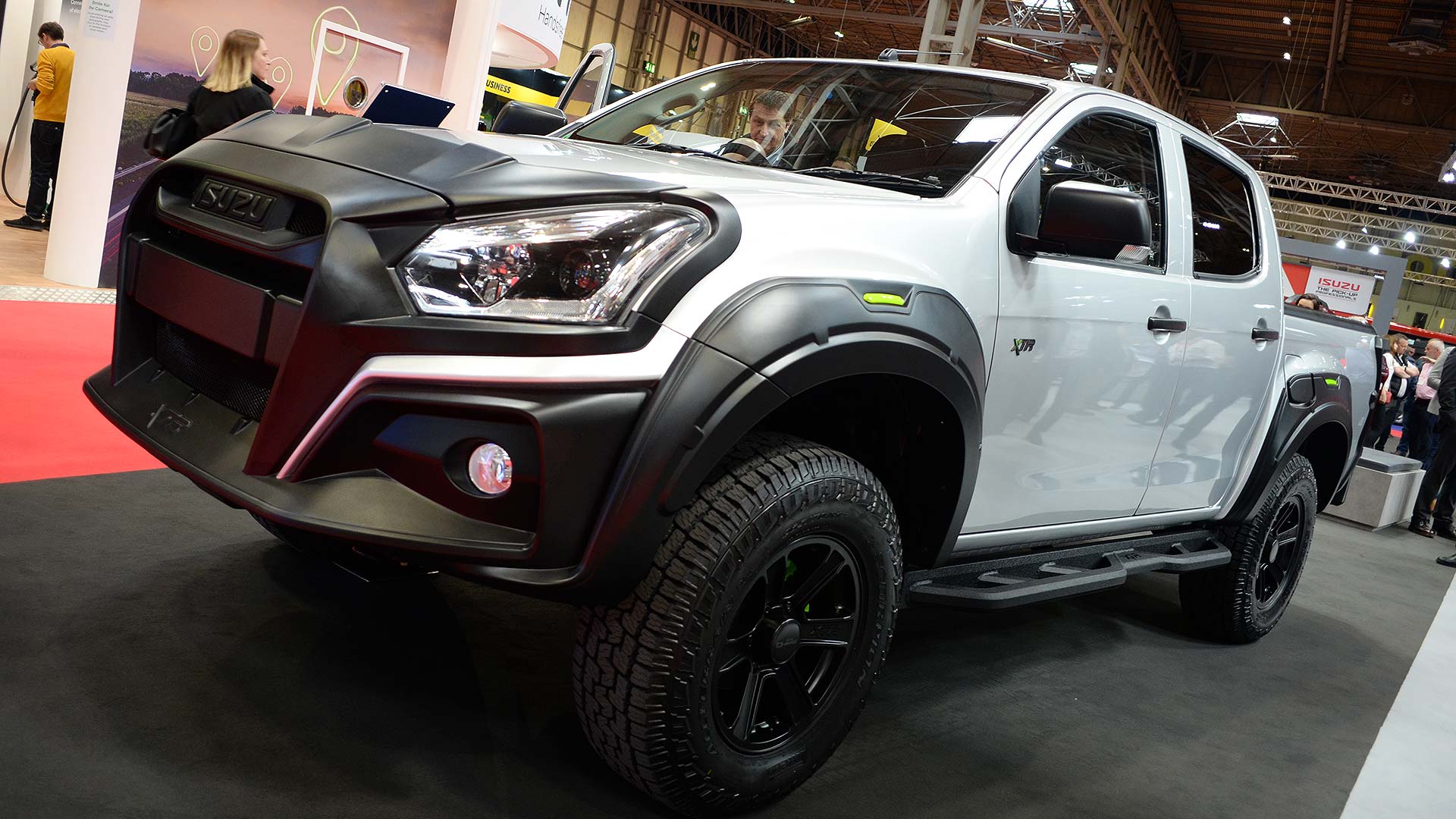
Isuzu D-Max XTR
The D-Max XTR is another appealing special from Isuzu. It has uprated suspension (including components to increase wheel articulation), 17-inch wheels and 32-inch tyres, adding an extra 250 mm of ground clearance. High-end Kevlar ceramic brake pads are fitted, and it’s equipped with all-new Pirelli Scorpion All-Terrain tyres. The tough bodykit is distinctive, and we love how the green detailing extends to vivid green-painted suspension and brake components beneath…
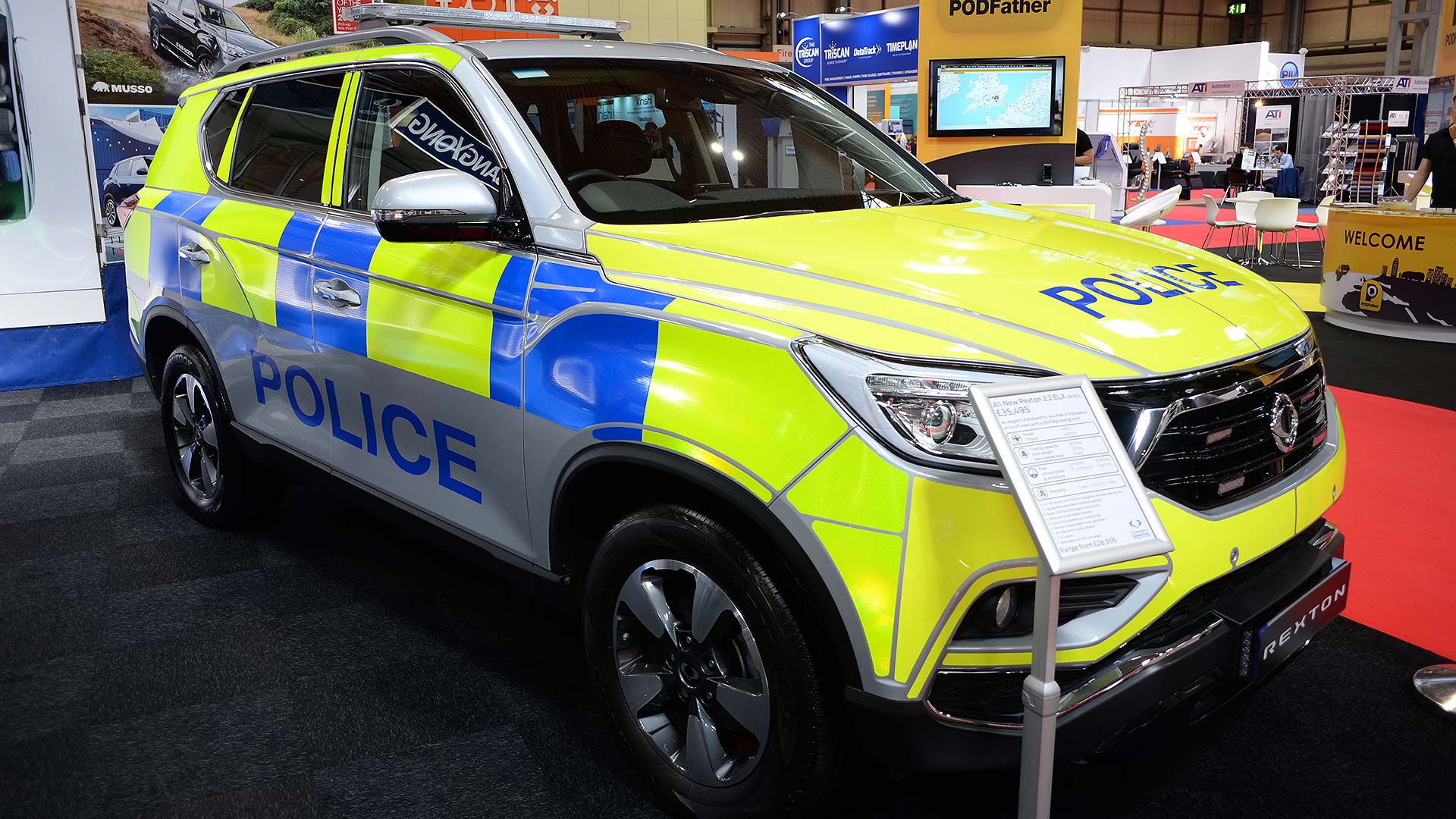
SsangYong Rexton Police
Another example of SsangYong’s successful partnership with authorities is this Police-liveried Rexton. The company hopes many more like this will be delivered in coming years.
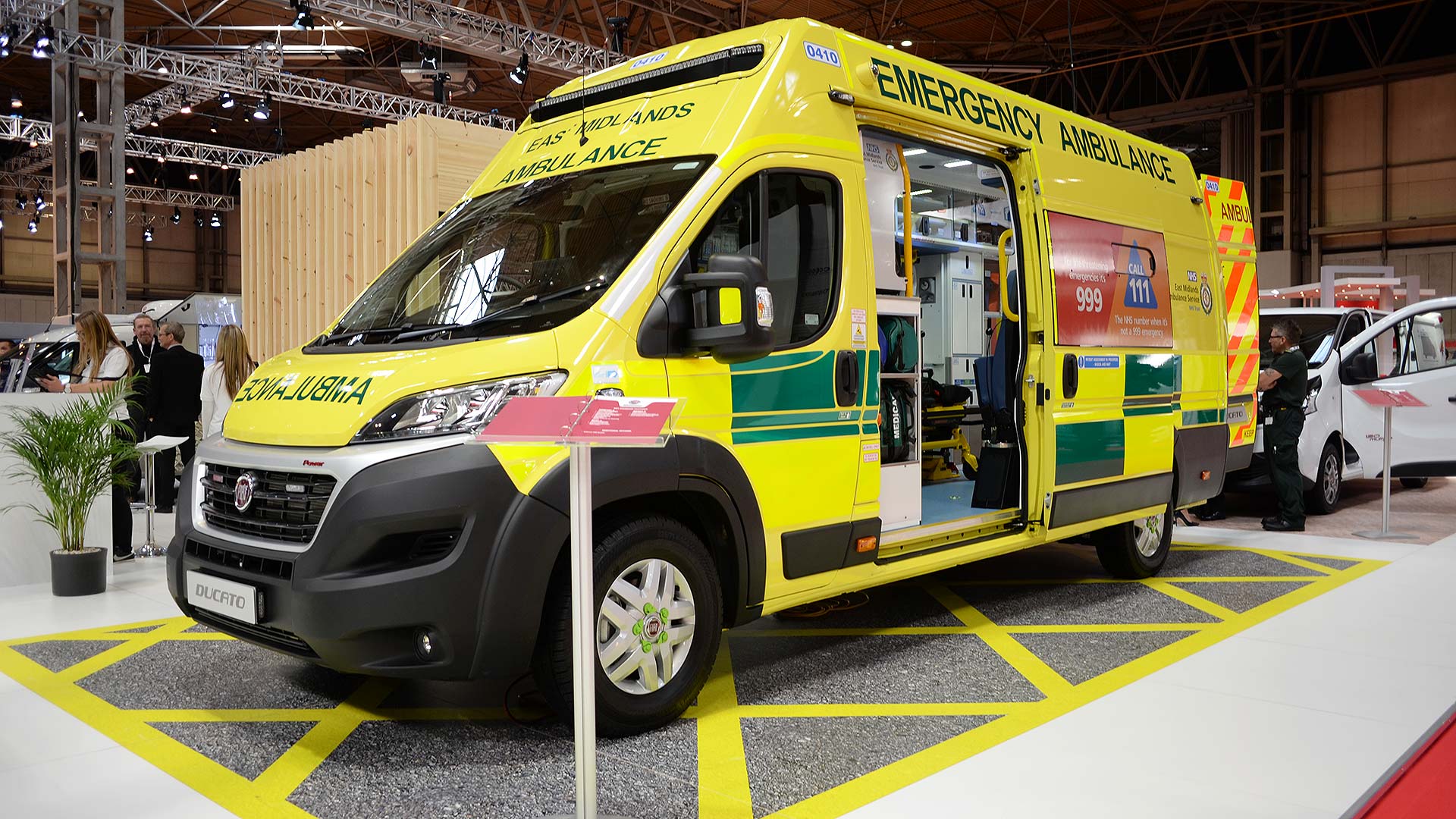
Fiat Ducato ambulance
A government report has recommended old-fashioned ‘box-style’ ambulances to be replaced by new, modular designs based on panel vans. Such as the popular Fiat Ducato conversion that’s already created hundreds of new British ambulances. If all ambulances switched to this design. The NHS could save more than £11 million each year: that’s why this exhibit was gaining a lot of attention from CV show-goers.
Vauxhall Vivaro Life
The passenger version of the new Vauxhall Vivaro is called the Vivaro Life. It can seat up to nine passengers, and it too will be offered as a fully-electric model from early 2021. It’s the perfect people carrier for those who want to treat passengers well – but, as it will also carry 3,397 litres of load with all seats removed, it remains a practical van at heart too.
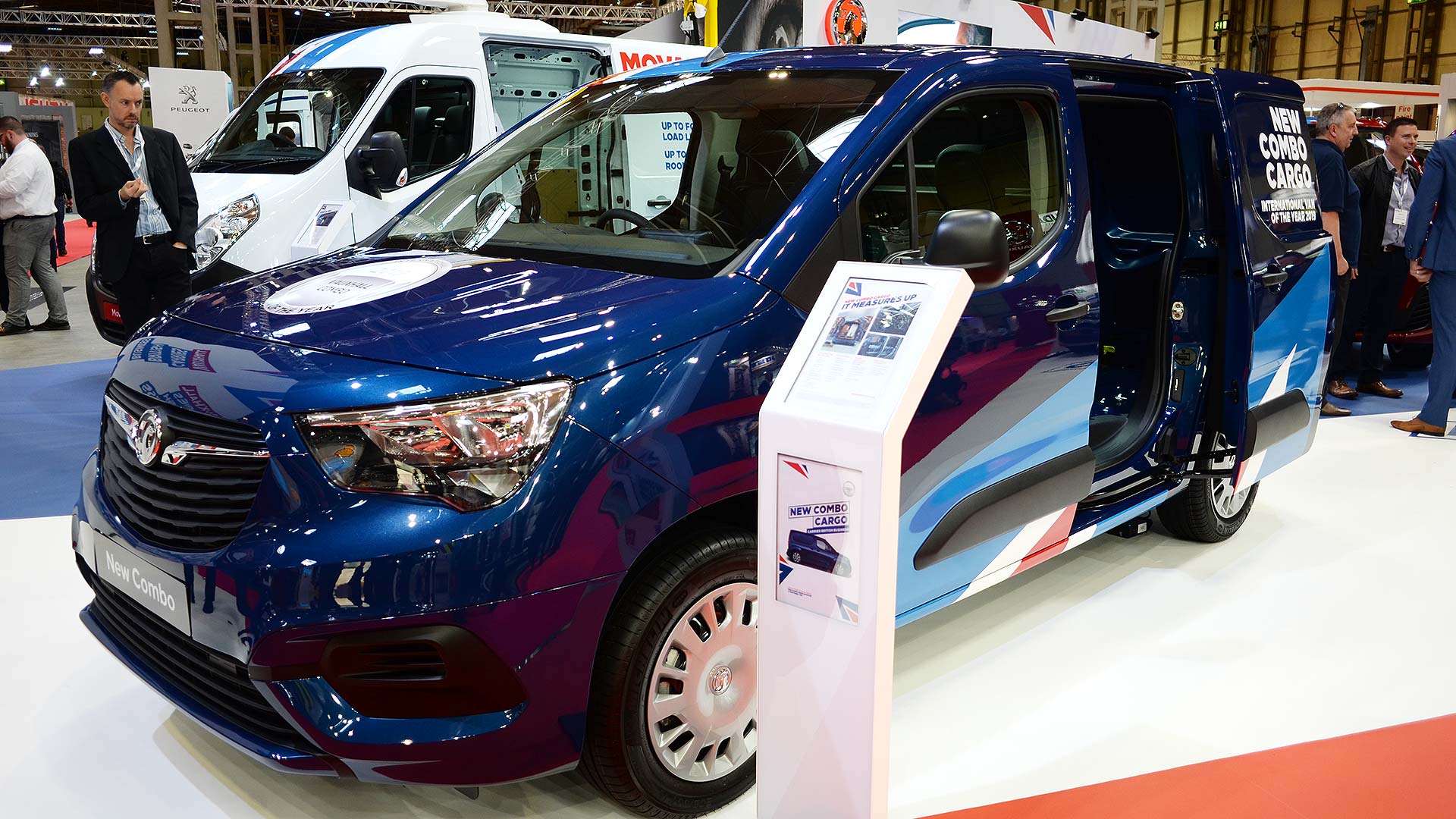
Vauxhall Combo Cargo
The Vauxhall Combo Cargo is the firm’s fresh new arrival in the small van sector, and it’s already winning fans. Over 5,000 have already been sold in the UK, making it one of the best-selling models in its sector. No wonder Vauxhall is so bullish about its chances in the British van market right now.
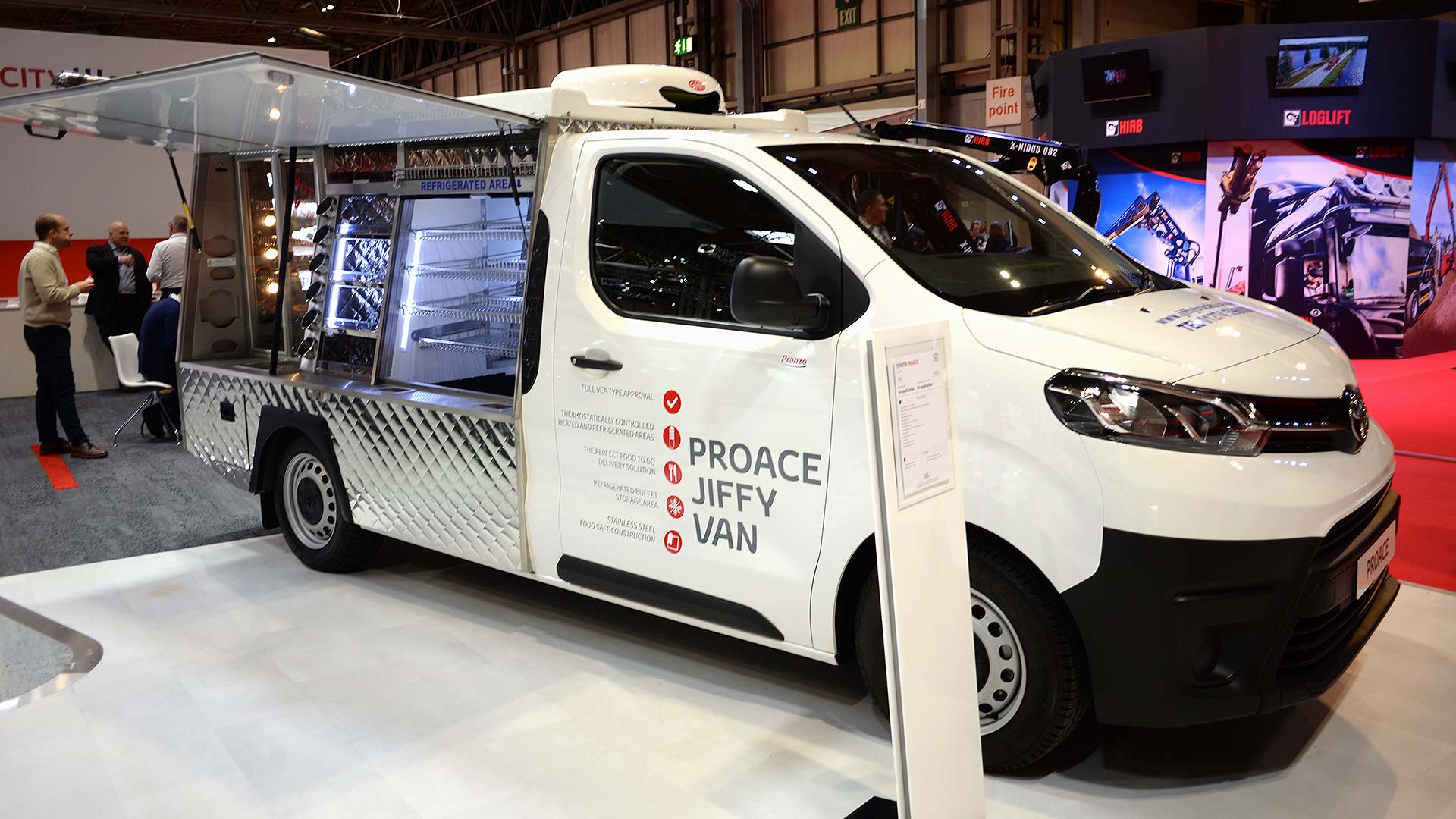
Toyota Proace Jiffy Van
Finally, we simply had to check this out: Toyota’s Proace Jiffy conversion. It’s a mobile food wagon, including a hot food display cabinet and space for a restaurant-spec coffee machine. Sadly, it hadn’t been kitted up, so we had to spend money at the NEC’s overpriced shops instead. How about decking it out for next year’s show, Toyota?
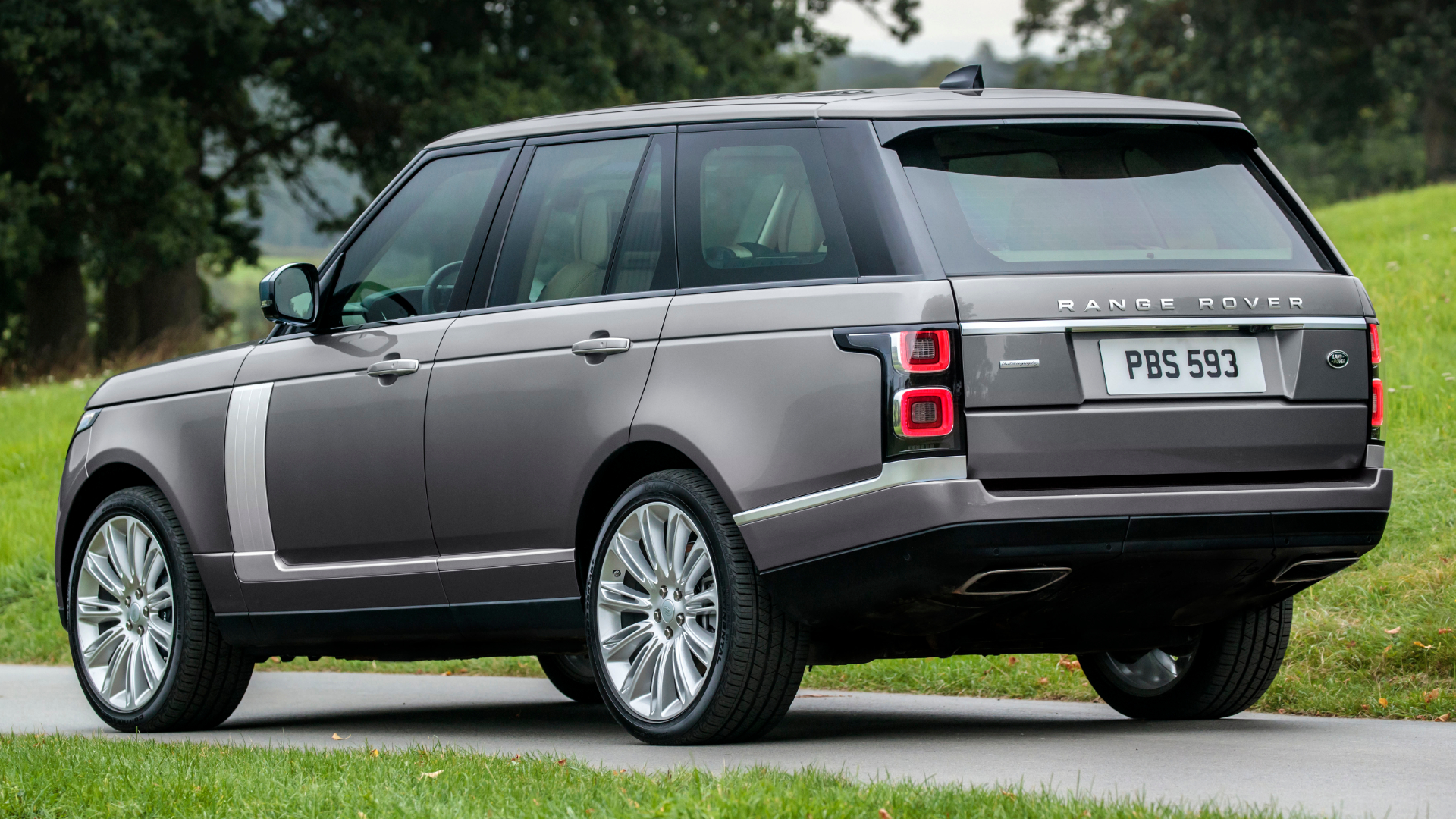
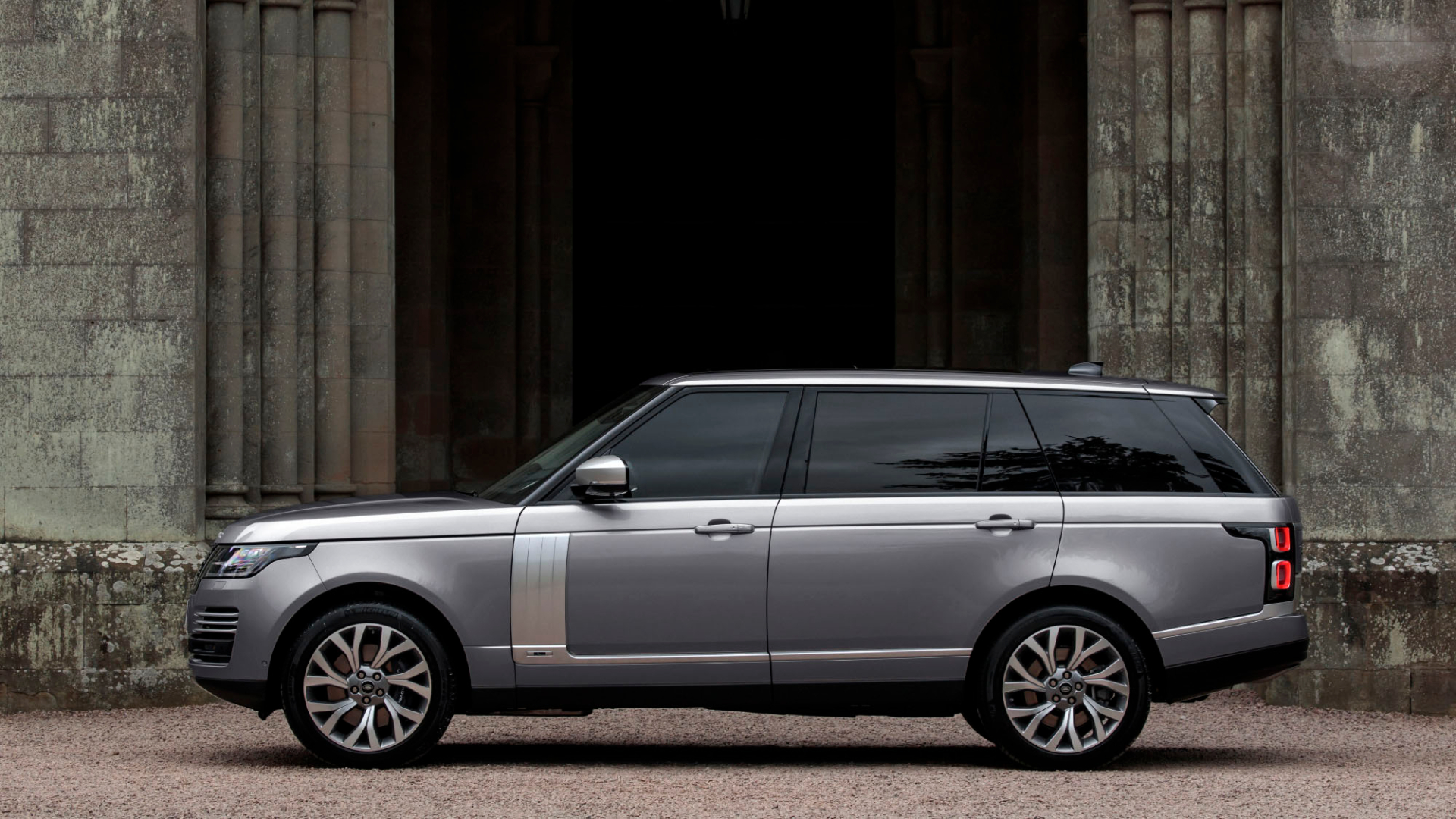
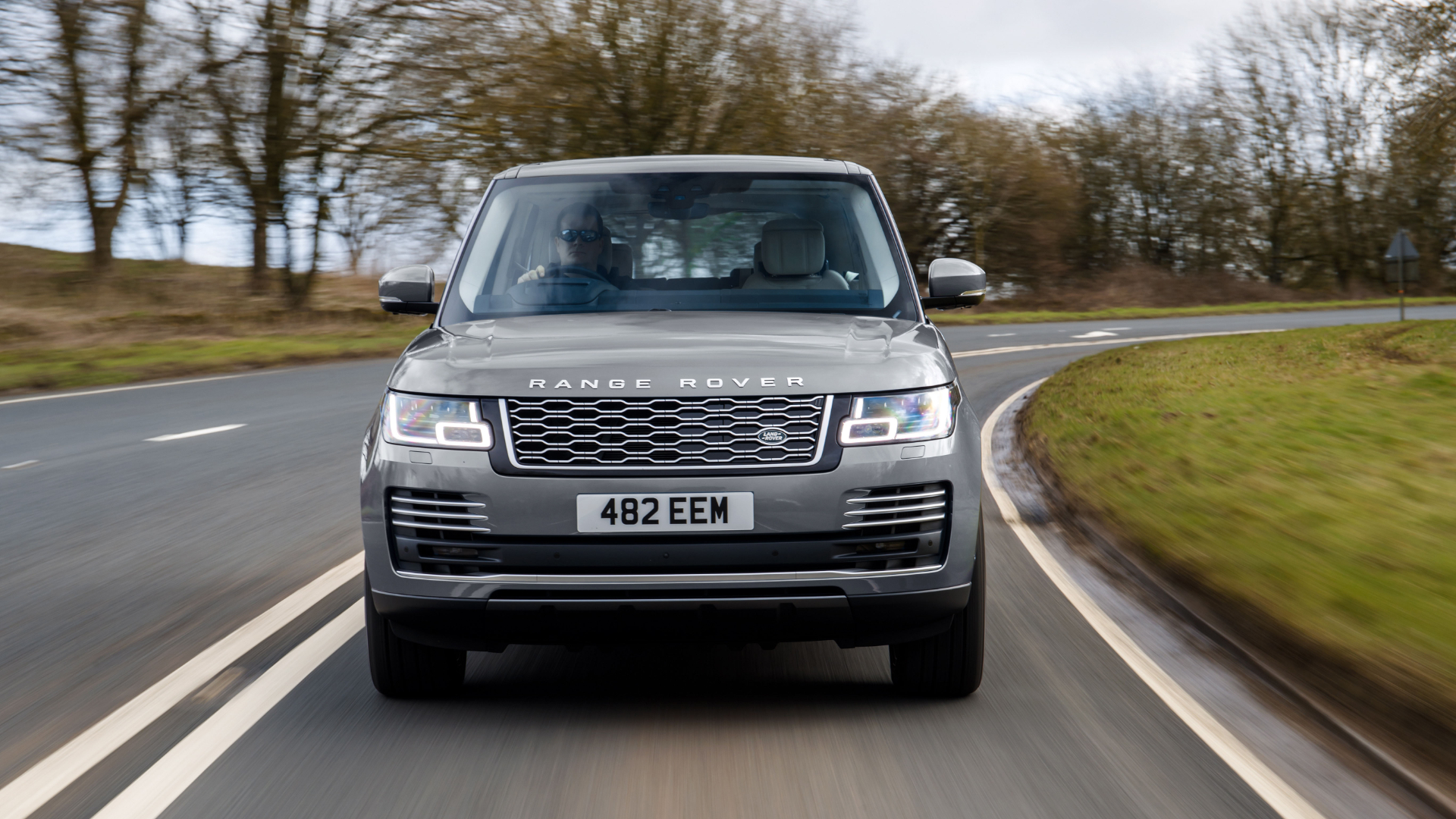
The Range Rover line-up has had a mild update for 2019, gaining a smooth-running inline six-cylinder petrol engine, as well as standard fitment of Apple CarPlay and Android Auto.
Colour and trim options have been revised, and detail changes include headlights that adjust to which of the road you’re driving at the press of a button. They even automatically dim when they sense you’re being glared by reflections from signposts.
CarPlay and Android Auto as standard
Admittedly, new engines aren’t always the hottest topic these days. Connectivity, however, is. You can’t call your car well-equipped these days without integration of Apple and Android’s proprietary in-car phone systems.
As such, the Range Rover has been playing catch-up, until now. Both systems now come as standard across the range.
Mild hybrid + clever engine = over 30mpg
The new engine is a 400 horsepower 3.0-litre ingenium straight-six with 48V mild hybrid technology: it’s called P400.
(It’s worth noting the P400e plug-in hybrid continues: this uses a 2.0-litre turbo petrol paired with an electric motor and higher-capacity battery.)
The new engine was first seen in the Range Rover Sport P400, and comes to the larger Range Rover more or less unchanged. That means the 3.0-litre straight-six comes with both a turbocharger and an electric supercharger, which work in harmony.
The technical jargon is available here in our story on the Sport P400, but it’s clever tech. All in, efficiency is improved, and lag is down. Not least on both parts, thanks to the 48-volt battery and the torque boost it provides, meaning the engine doesn’t have to lug as much during low-end acceleration.
Those first few moments of acceleration are some of the most stressful and least efficient in the usage cycle of a conventional internal combustion engine.
The battery can also recover charge during deceleration and braking, and works in tandem with a more sophisticated and comprehensive start-stop system. Overall, the new Range Rover equipped with this powertrain can achieve 30.4mpg on average and produces 212g/km of CO2 (on the NEDC cycle).
“Traditional Range Rover strengths have been heightened with the introduction of the latest 3.0-litre six-cylinder engine,” said Nick Rogers, Executive Director of Product Engineering, Jaguar Land Rover.
“Advanced technologies work alongside a mild-hybrid system that harvests energy as you drive, to improve fuel efficiency and lower emissions.
“The otherwise wasted energy is used to power the electric supercharger, which enhances vehicle capability by enhancing the torque curve at low engine speeds for greater responses.”
As for colours, Eiger Grey has replaced Corris Grey, and Portofino Blue replaces Loire Blue. A new 22-inch gloss black wheel option also joins the range.
Prices for the entry-level SDV6 Vogue start from £83,655; the new P400 engine costs from £90,010.
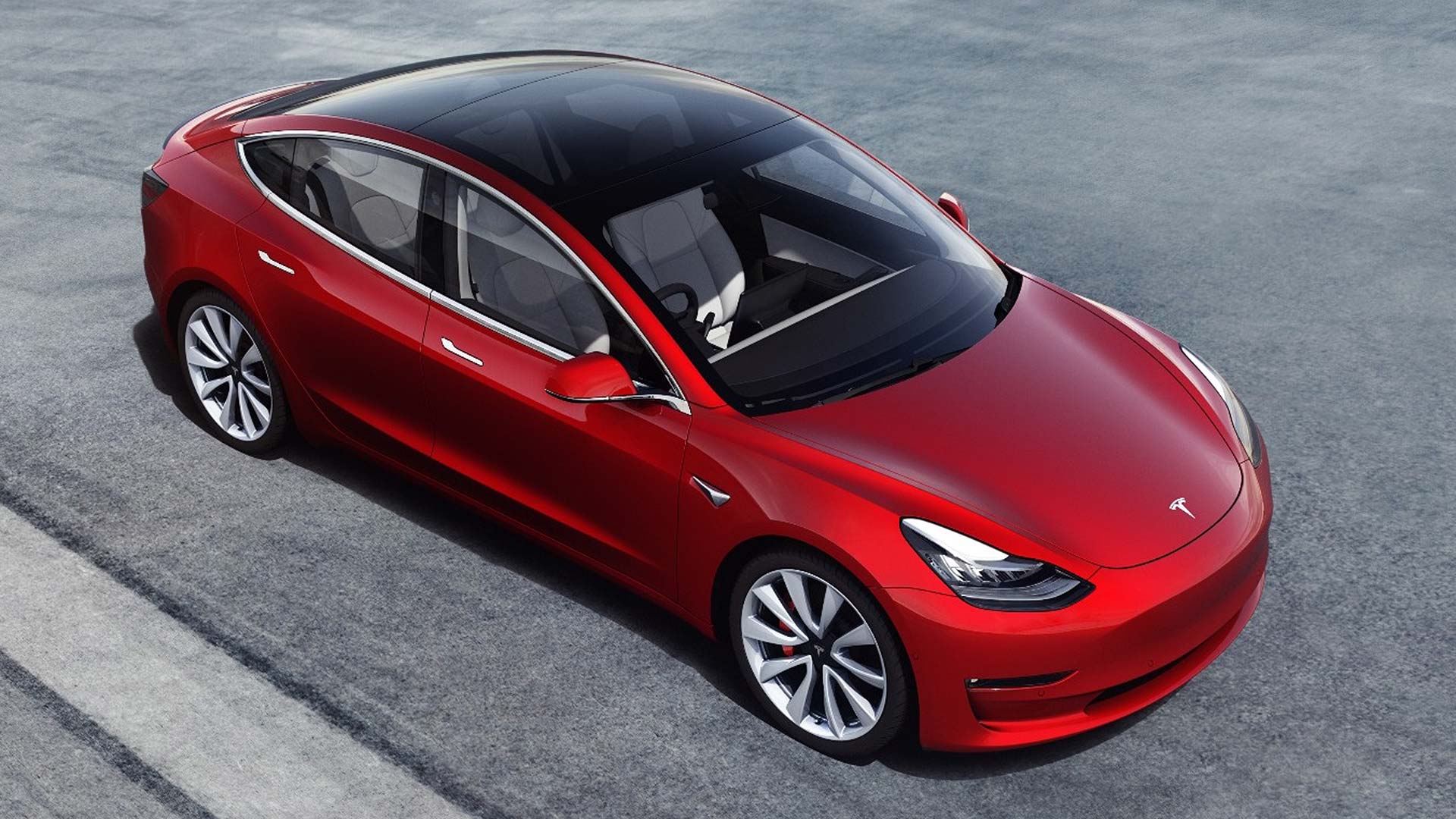
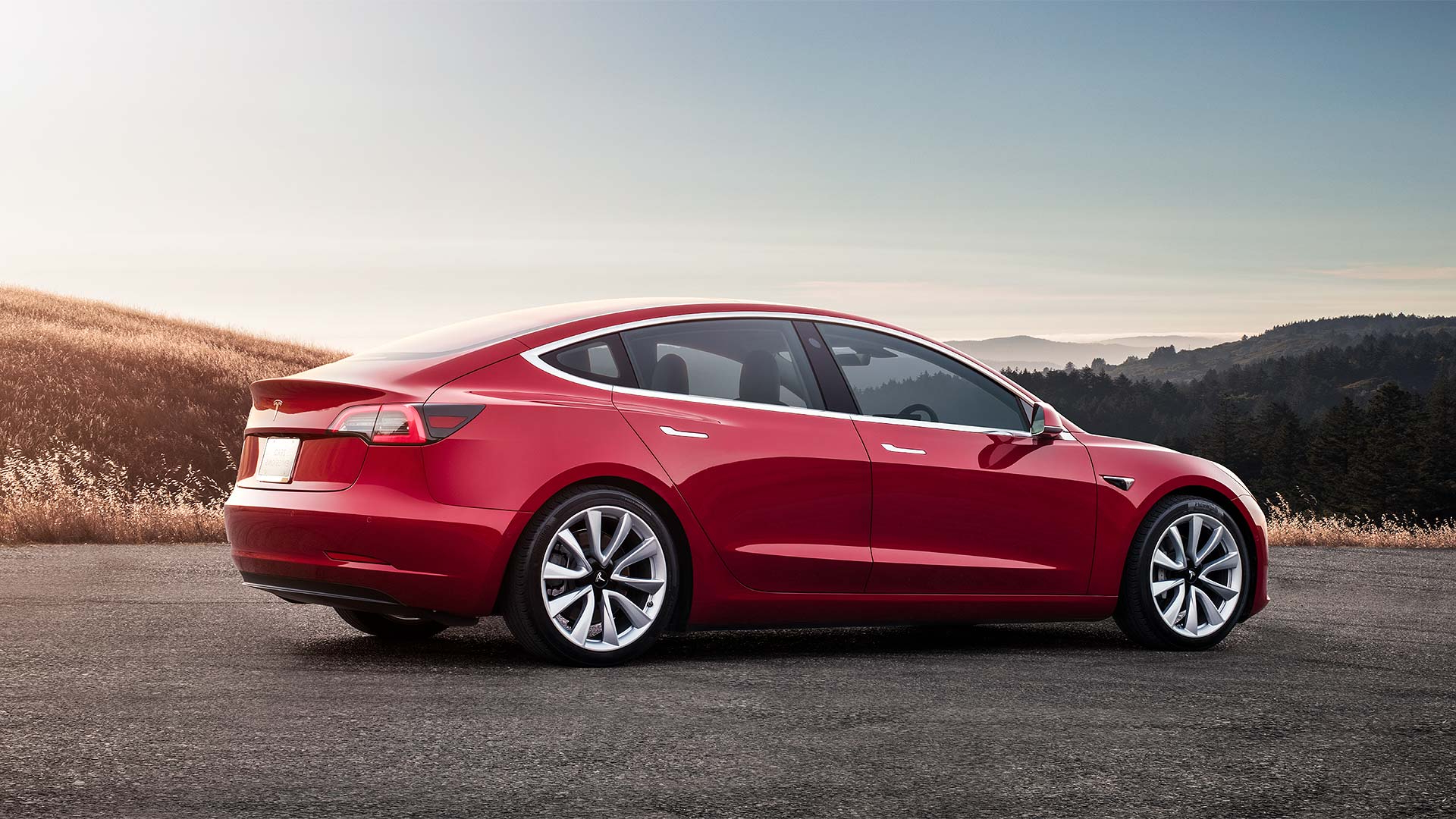
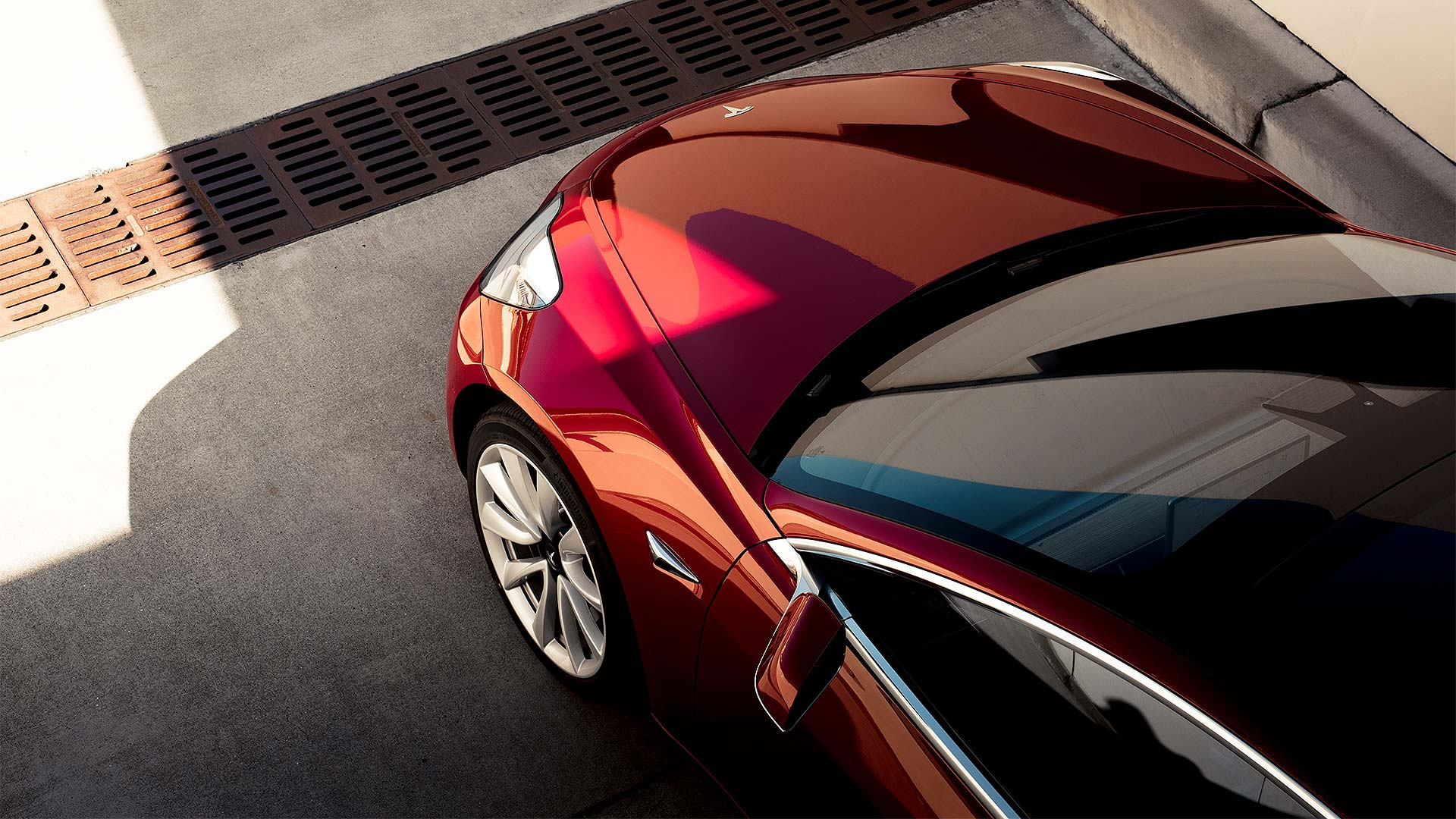
The Tesla Model 3 is finally within grasp for UK buyers, as the order books and configurator open for the right-hand drive version of Tesla’s volume seller. With that, also comes the answer to the question everyone’s been asking…
How much is the Tesla Model 3 in the UK?
The Tesla Model 3 will start from £38,900 in the UK. That’s for the Standard Range Plus model, including the £3,500 Plug-in Car Grant (and an £850 delivery charge).
Long Range AWD and Performance models will start from £47,900 and £56,900 respectively. That’s right, without the £3,500 electric car grant, the Performance Model 3 is a £60,000 car.
All Model 3s are warrantied for four years up to 50,000 miles. The battery and drive unit is warrantied for 8 years or 100,000 miles in the entry-level car, and 120,000 miles for the Long Range and Performance models.
What do you get for your money?
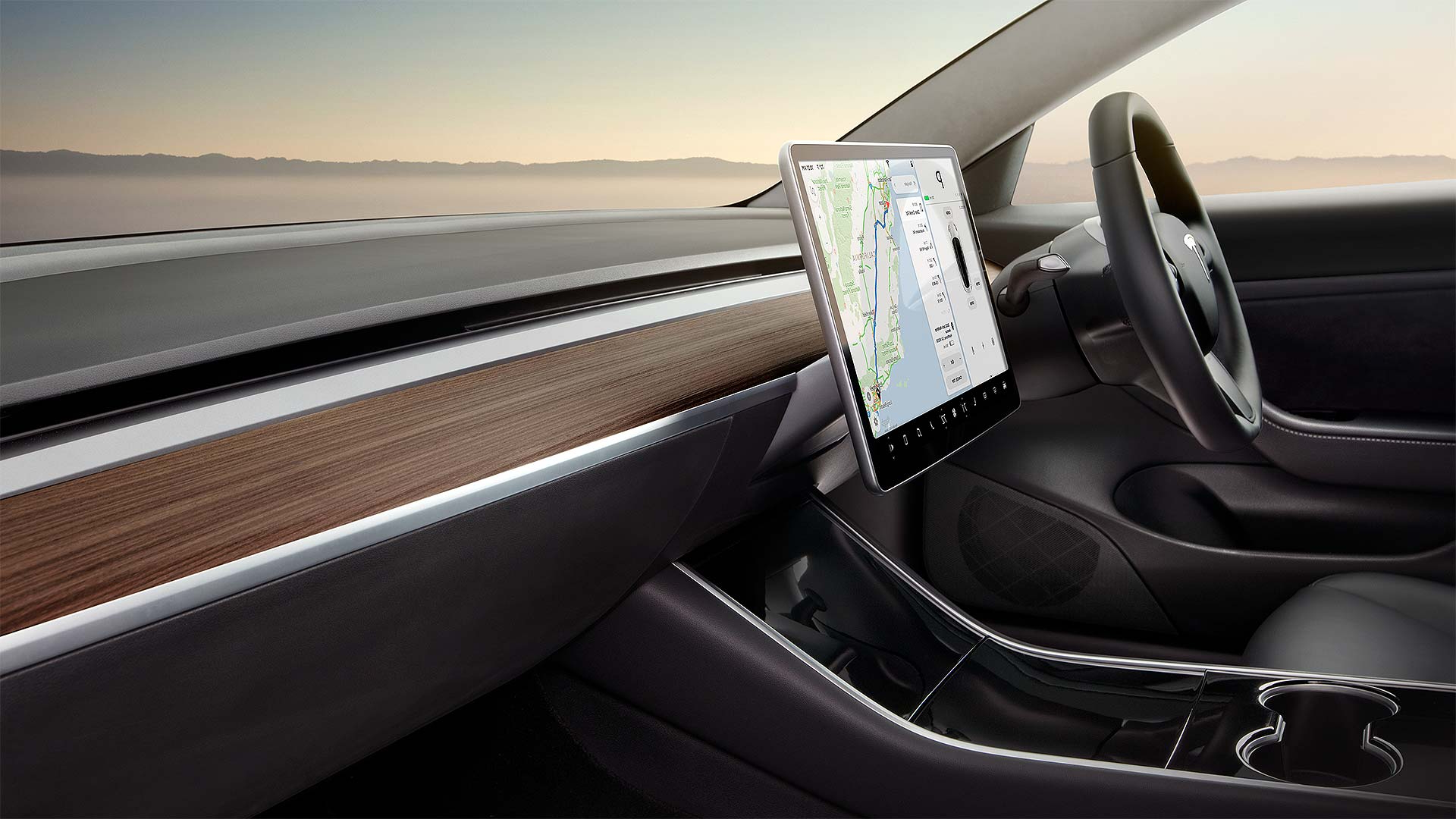
Note: LHD model pictured, edited to get a feel for RHD
All Model 3s come with Autopilot, which allows partially supervised (hands on the wheel) autonomous driving, with automatic accelerating and braking.
The Standard Range Plus model comes generously equipped out the box, with 12-way adjustable heated seats, a decent audio system and navigation included.
Higher-end models get the Premium Interior Package, satellite view on the navigation, premium 14-speaker audio and in-car internet.
What’s the UK Model 3 performance and range like?
In the Standard Range Plus model, you get 258 miles of (estimated) WLTP-rated range, a top speed of 140mph and a 5.3-second 0-60 mph capability.
Long Range AWD and Performance models will go for 348 and 329 miles respectively, based on an estimated WLTP rating. The Long Range reach 60mph in 4.5 seconds on its way to 145mph, while the Performance is good for 3.2 seconds to 60mph, on the way to a top end of 162mph.
The trade-off in the Performance and Long Range models, is weight. Both are over 200kg heavier than the entry-level car.
How much will a Tesla Model 3 cost to charge?
What you will be paying for, is juice. While the Supercharger network is there for your use in a Model 3, you will be paying for every ‘fill-up’. Model S and X owners get free usage of Tesla’s infamous network of chargers.
So how much is a full charge in a Model 3? Based on Tesla’s calculator, you won’t be out any more than £30 to ‘fill up’ any Model 3.
Tesla’s cost calculator reckons 400 miles of driving would cost £63 in petrol and quotes £29 for the equivalent in electricity. That’s based on an assumed internal combustion MPG figure of 32.7, at £1.14 per litre. Fuel is a bit more expensive these days, too…
What options are available on the Model 3?
The Model 3 has a choice of wheels and colours, but it’s not going to be troubling the Fiat 500 for supremacy in personalisation and customisation.
Larger 19-inch Sport wheels are a £1,450 option for the Standard Range Plus and Long Range AWD cars. Out of the box, you get 18-inch ‘Aero’ wheels, which we happen to be fans of… The Performance gets 20-inch ‘performance’ wheels, obviously.
In terms of paint, midnight silver and deep blue are available for a £950 premium. Multi-coat red and pearl white are a bit pricier, at £1,900.
When can I have one?
Tesla’s site says ‘estimated delivery: June’ at the moment, and first in the queue will be those who placed an early reservation.
Get your orders in quick if you want one, as there’s sure to be a lot of demand. Especially considering how many have had a downpayment outstanding for a couple of years now…
 Life as a Formula 1 driver is pretty tough, what with the gruelling Grand Prix calendar, the need to stay ultra-fit, and the endless media requirements.
 Driving for a Formula 1 team connected to a road car manufacturer which exclusively builds supercars, means that Norris is naturally in an advantageous position.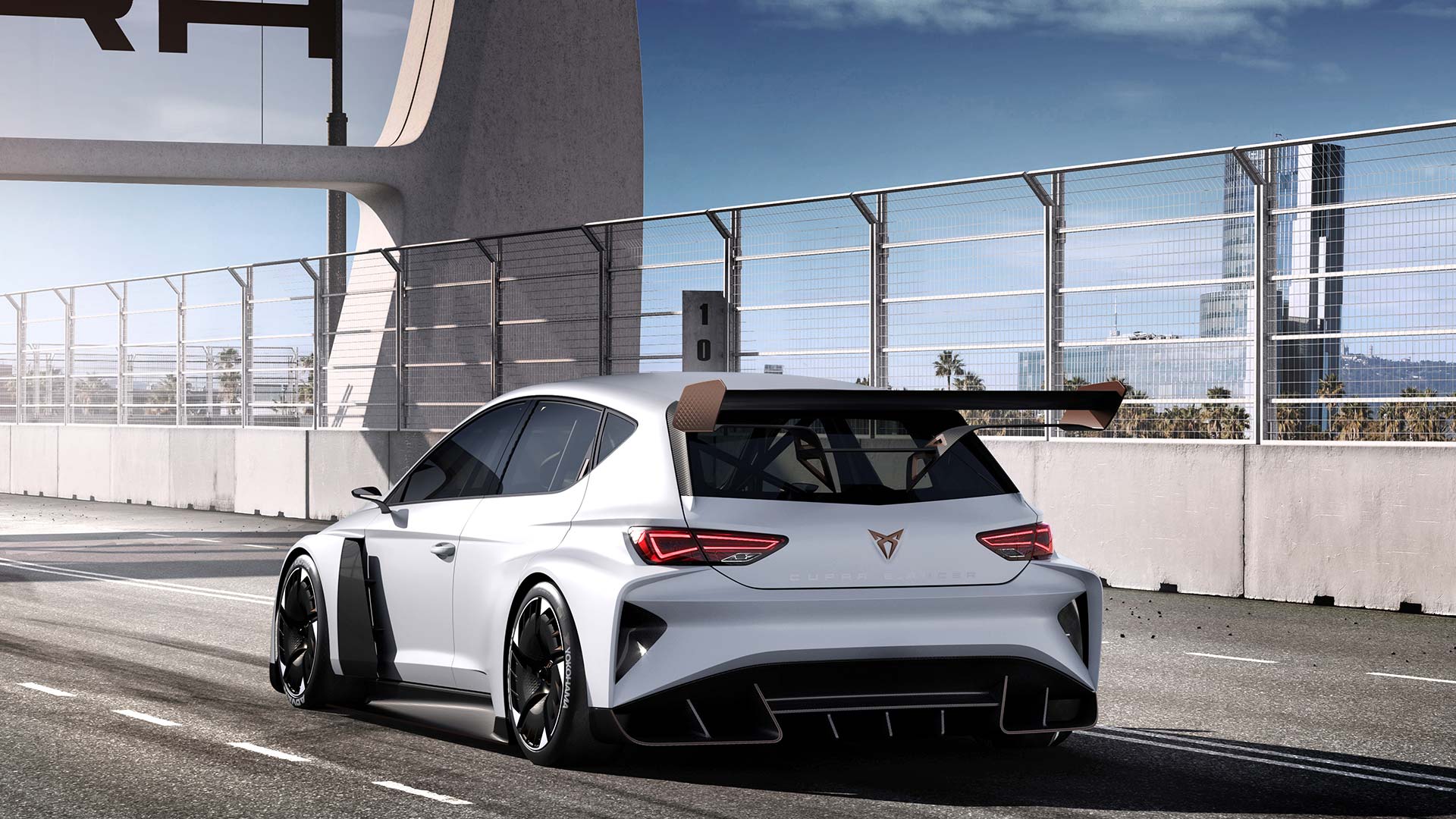


 Unleaded petrol prices rose by 5.4p a litre in April 2019, which is the second-worst monthly price rise in almost two decades of records.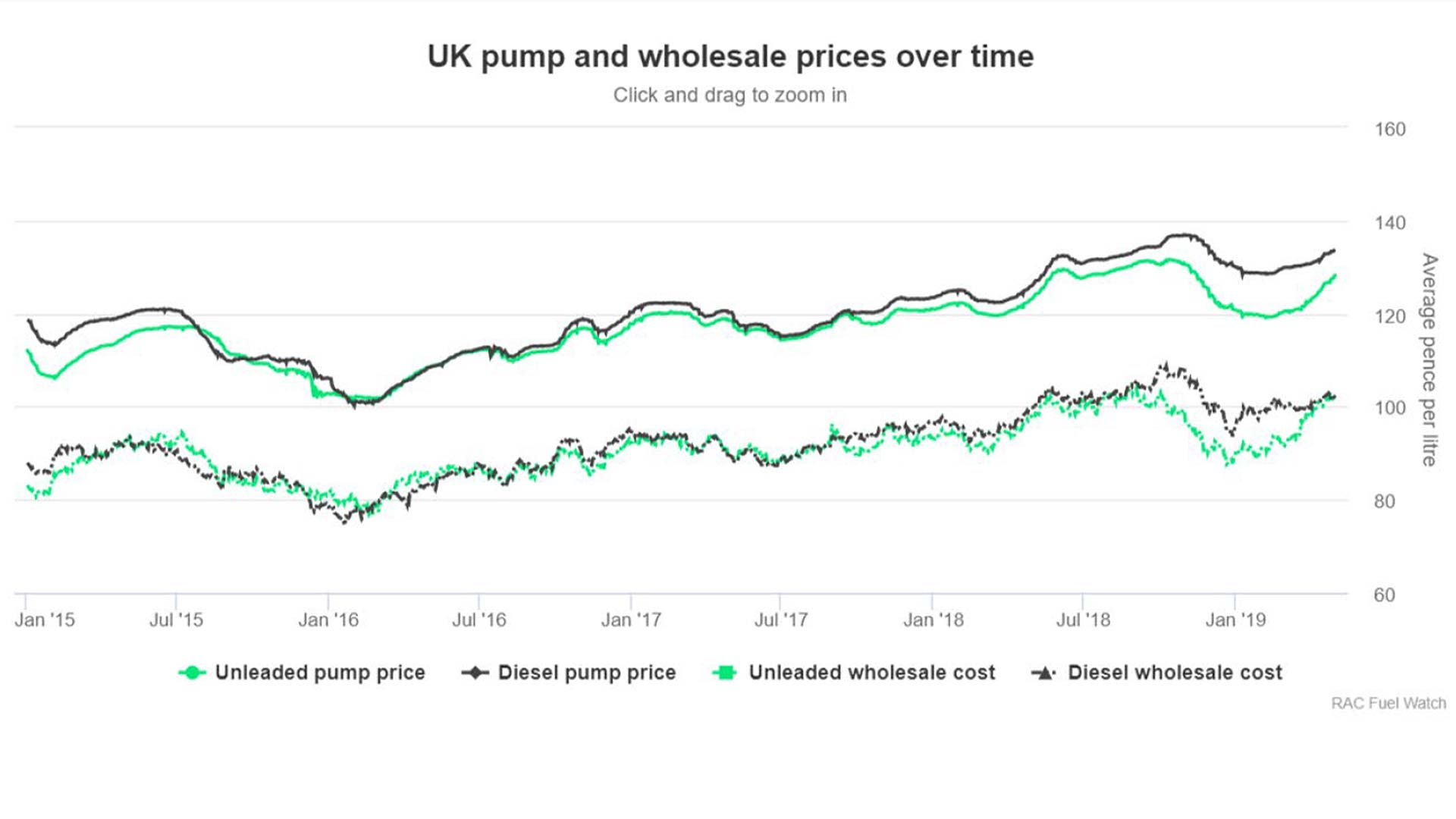







 While the