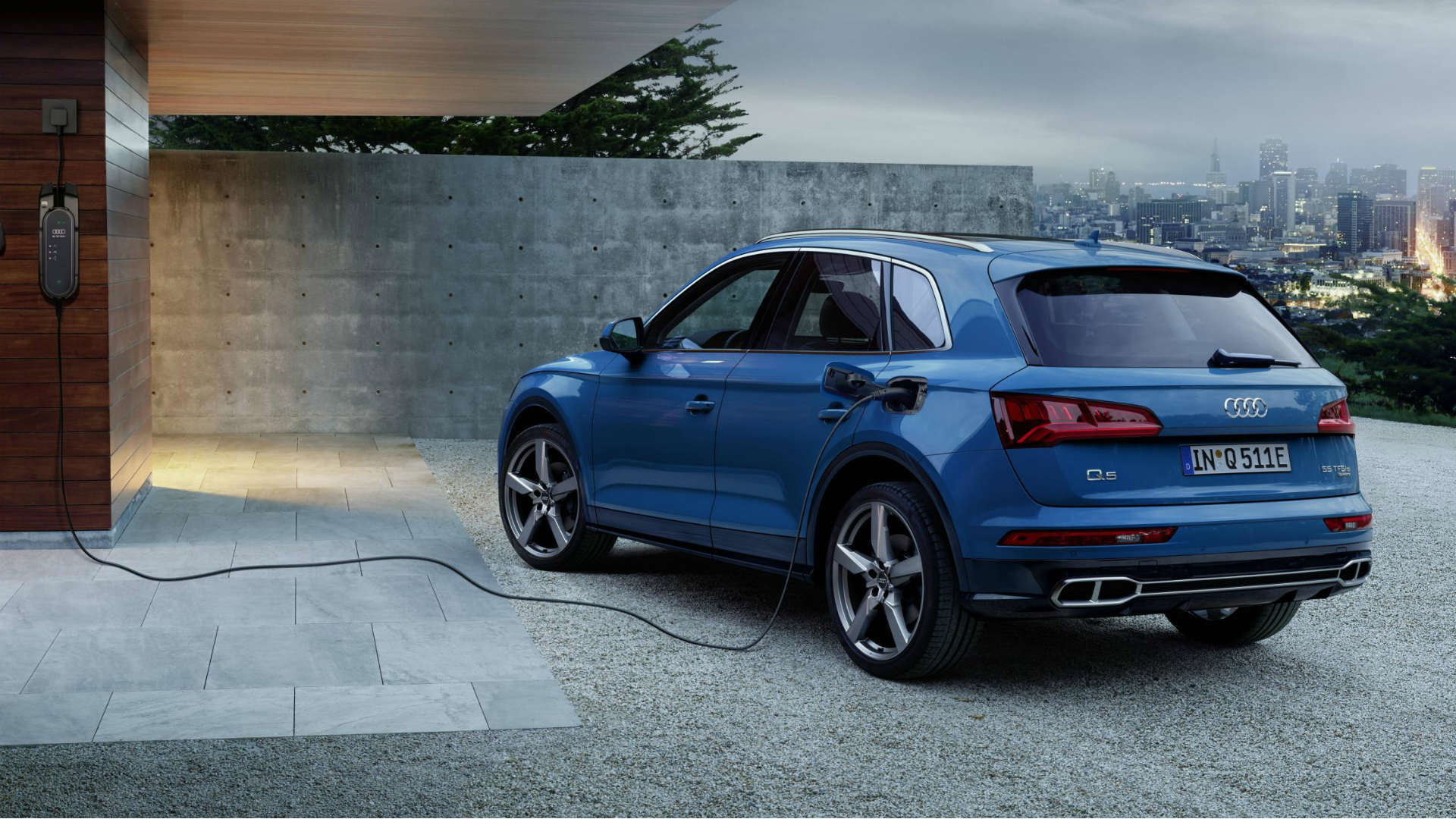
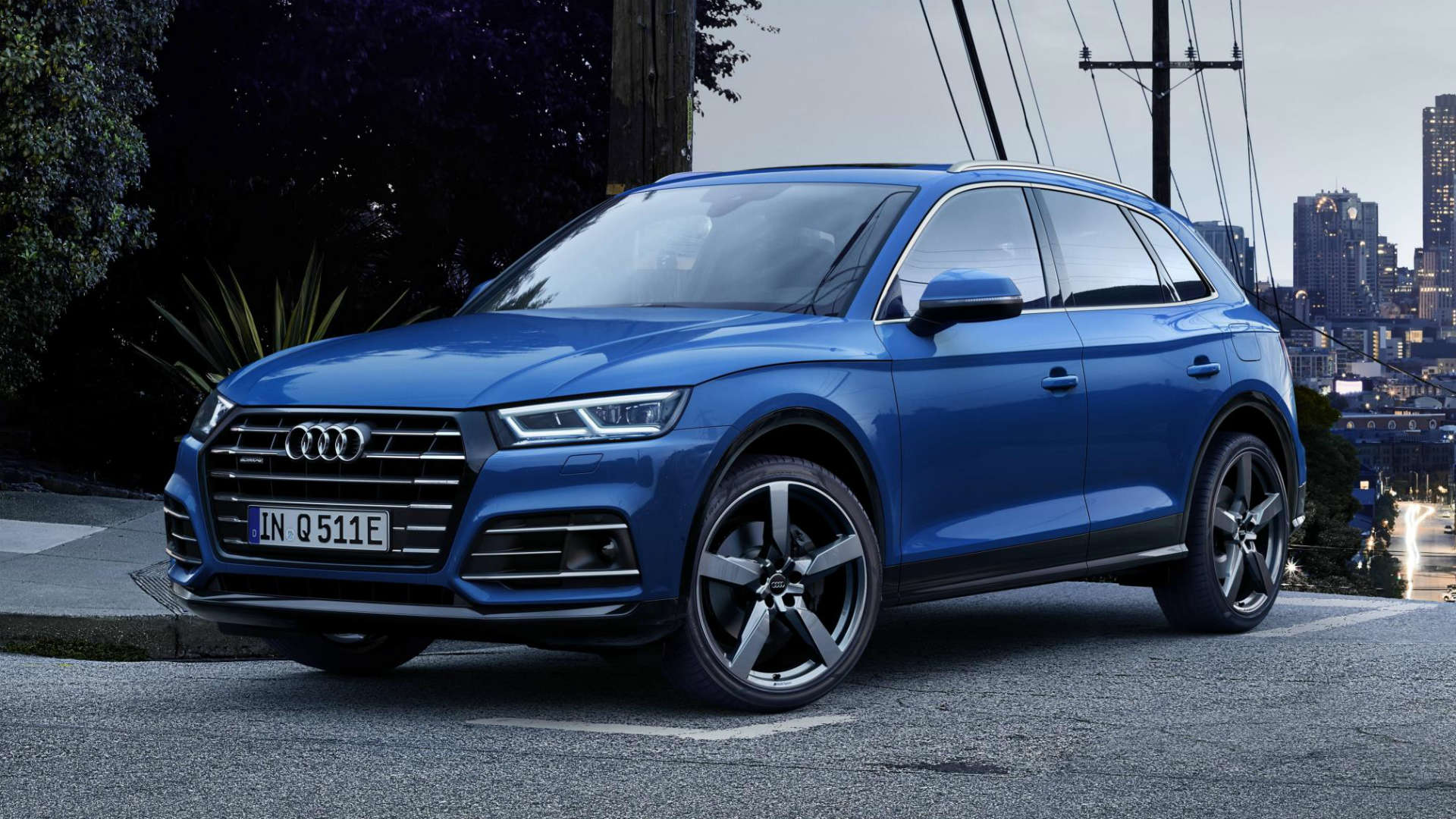
If you’re not ready to take the plunge on a EV, but fancy completing your commute on electric power, the new Audi Q5 plug-in hybrid will be of interest.
The Audi Q5 55 TFSI e – to give the SUV it’s long and convoluted name – pairs a 2.0-litre petrol engine with an electric motor to deliver 26 miles of range.
Useful for zero-emissions zones, then, but the Q5 plug-in hybrid can also hit 84mph in electric mode, plus a top speed of 148mph with help from the 252hp and 273lb ft petrol engine.
113mpg and 49g/km CO2
Crucially, the WLTP-certified economy is 113mpg, corresponding to CO2 emissions of 49g/km: the figures of most interest to plug-in hybrid (PHEV) buyers.
It’s the first time that Audi’s efficiency-optimised Quattro all-wheel-drive tech has been used in combination with an electric motor, with the system functioning in front-wheel drive when possible to save fuel.
A predictive efficiency assistant (PEA) uses data from the navigation database and the distance to the vehicle ahead to select between freewheeling with the engine switched off and coasting recuperation.
There are three driving modes – Hybrid, EV and Battery Hold – with EV mode the default setting each time the vehicle is started.
Deliveries by the end of 2019
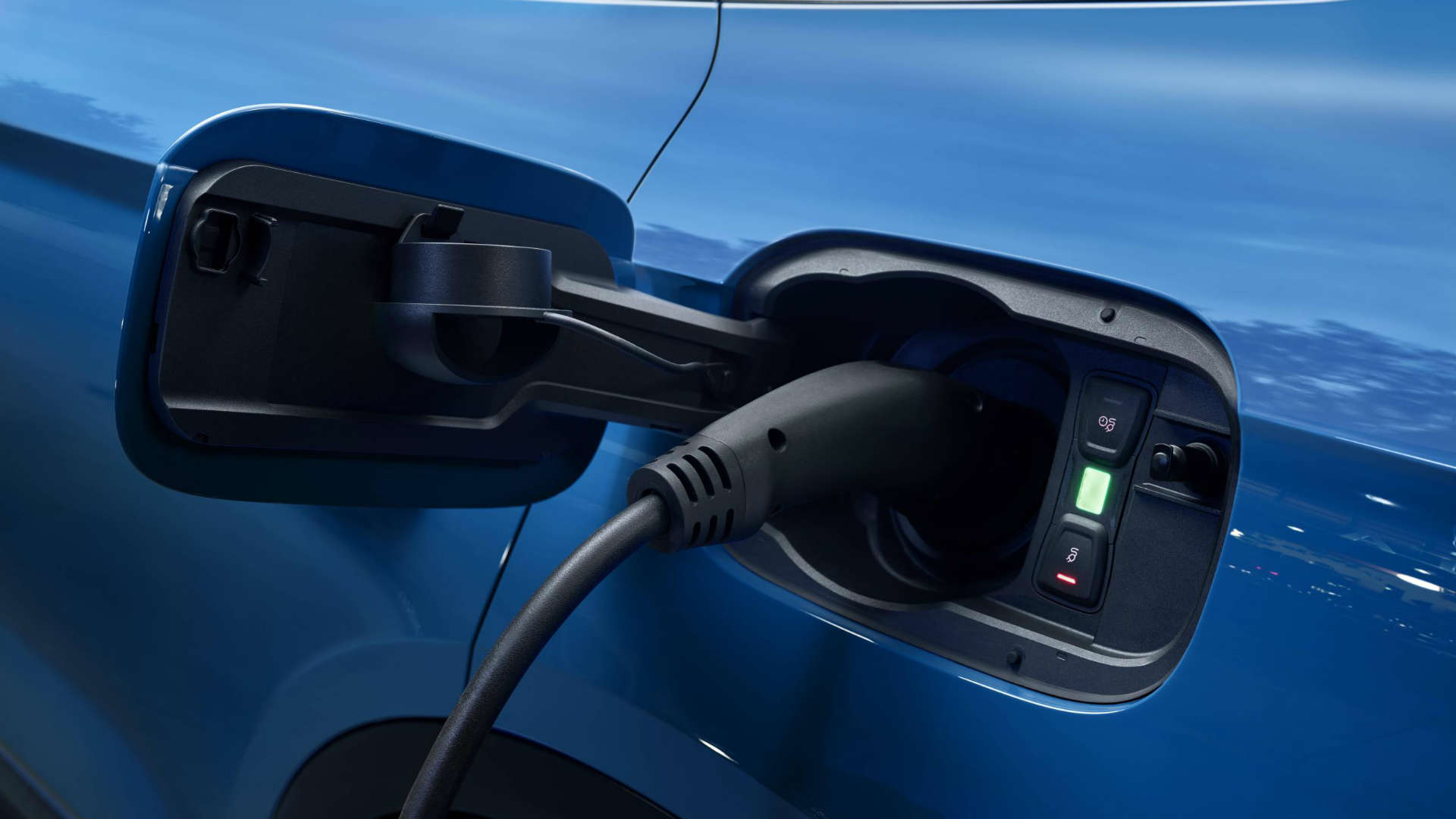
The Q5 plug-in hybrid is supplied with a compact charging system comprising cables for household and industrial outlets, plus a control unit. There’s also a Mode 3 cable with a Type 2 plug for use at public charging stations.
Standard kit includes LED headlights with high-beam assist, 20-inch alloy wheels, electric adjustable sports seats with massage function, three-zone climate control and Audi’s Virtual Cockpit dashboard display.
Customers can order an Audi Q5 plug-in hybrid in June, with deliveries expected by the end of the year. Prices will start from around £55,000.
Most iconic cars have a father (or mother) figure. An individual with the spark of an idea and the determination to see it through. In the case of the Porsche Speedster, that man was Max Hoffman.
The Austrian-born and New York-based car importer was responsible for the US introduction of countless European cars, not to mention the production of vehicles tailored to American audiences. One such car was the Porsche Speedster.
The Speedster story begins in 1950 when a Swiss journalist named Max Troesch showed Hoffman images of the first Porsche 356. He immediately ordered a pair, before travelling to the Paris Motor Show to meet Ferdinand Porsche.
Coming to America
The pair shook hands on a deal to export 15 more cars to the US, with Hoffman becoming the factory’s unofficial man in America. In 1952, while dining at a New York restaurant, Hoffman convinced Ferry Porsche that his company needed a crest. Ferry grabbed a napkin and proceeded to draw a logo complete with stag horns and prancing horse from Stuttgart’s coat of arms. A brand identity was born.
Hoffman was a huge fan of the Porsche 356 and he used the car to compete in numerous events around the US, which did a great deal for the company’s image. “On the 1951 Mount Equinox Hillclimb, I drove a Porsche cabriolet over a course with two miles of snow at the end. I was so fast, Briggs Cunningham claimed my time was impossible and forced the organisers to make me drive it again,” Hoffman told Panorama magazine shortly before his death in 1981.
But Hoffman saw a need for a lightweight and inexpensive variant of the 356. Taking his cue from the 356 America Roadster, an exclusive sports car developed for the US market, Hoffman requested an inexpensive, stripped-back Porsche with a price tag of less than $3,000.
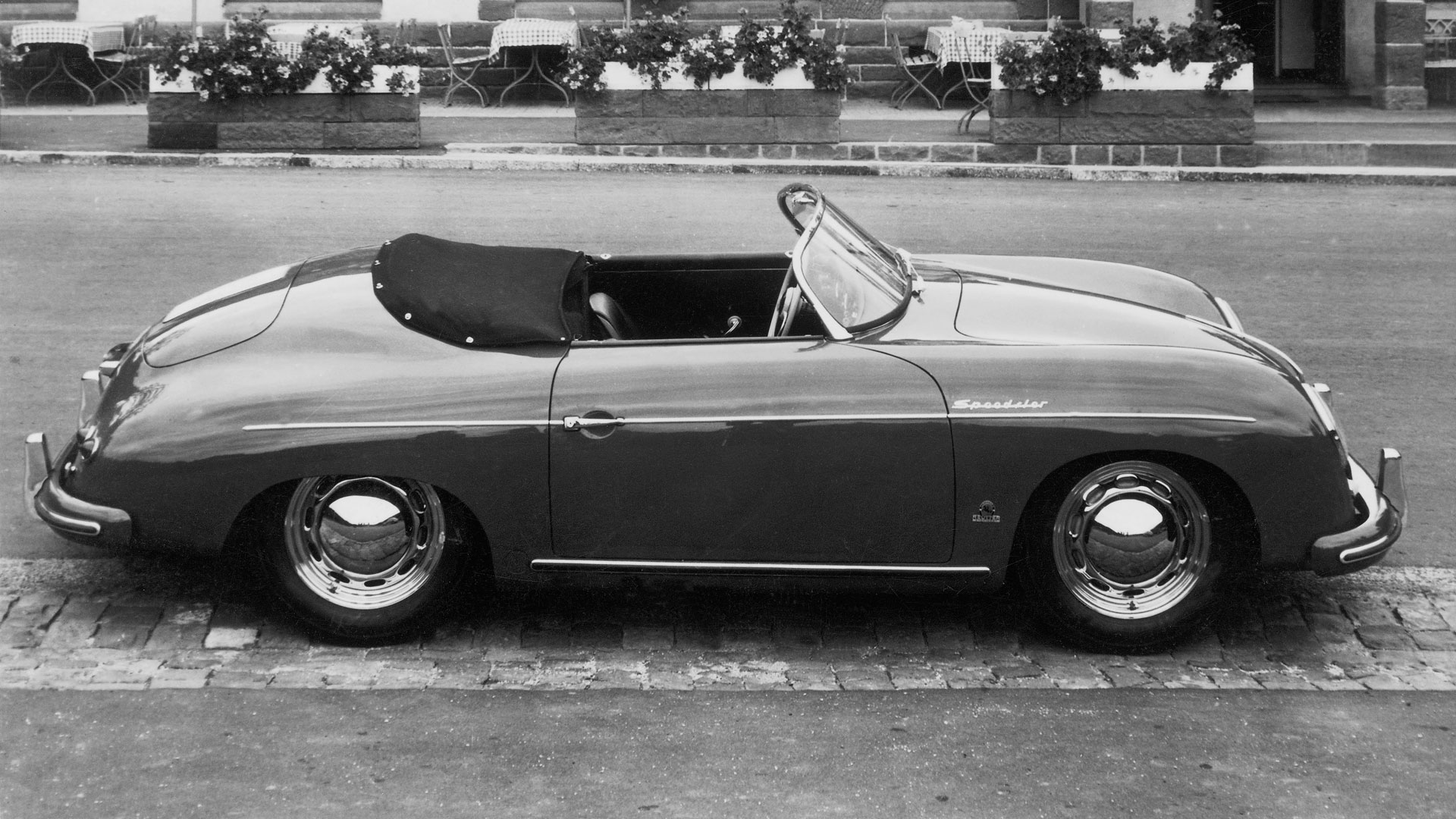
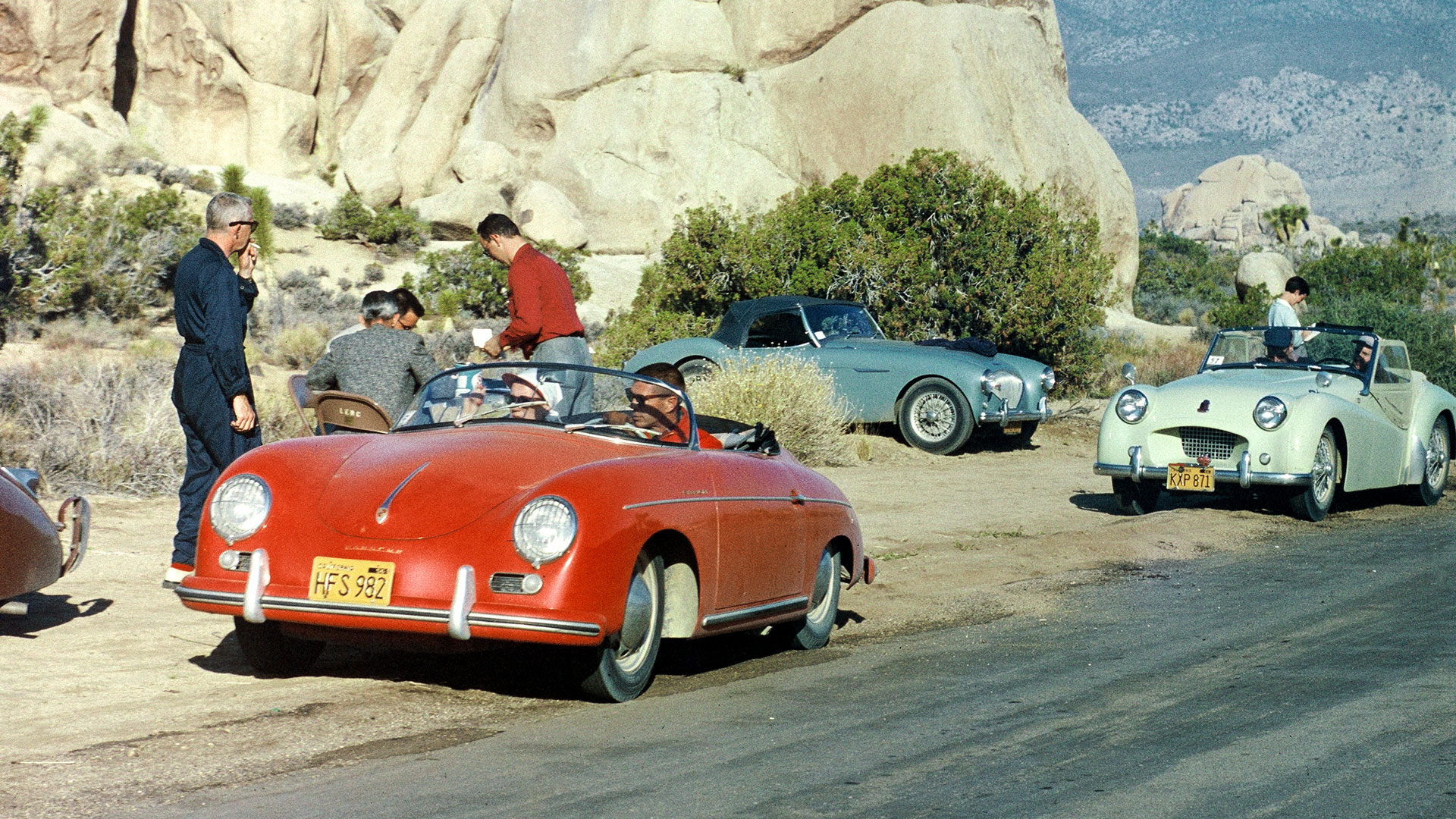
The result was the Porsche 356 Speedster, and the beginning of a bloodline stretching to the current day. The Speedster combined the sheet steel body of the cabriolet with a raked windscreen, reduced equipment and a rain top. It sold for just $2,995 and was popular in the sunny states, particularly Southern California.
It won many admirers, including Hollywood icon James Dean, and further generations of the 356 Speedster were developed. The model reached its pinnacle with the 356 A 1500 GS Carrera GT Speedster: the first production Porsche to hit a top speed of 200km/h (124mph).
Lean or mean?
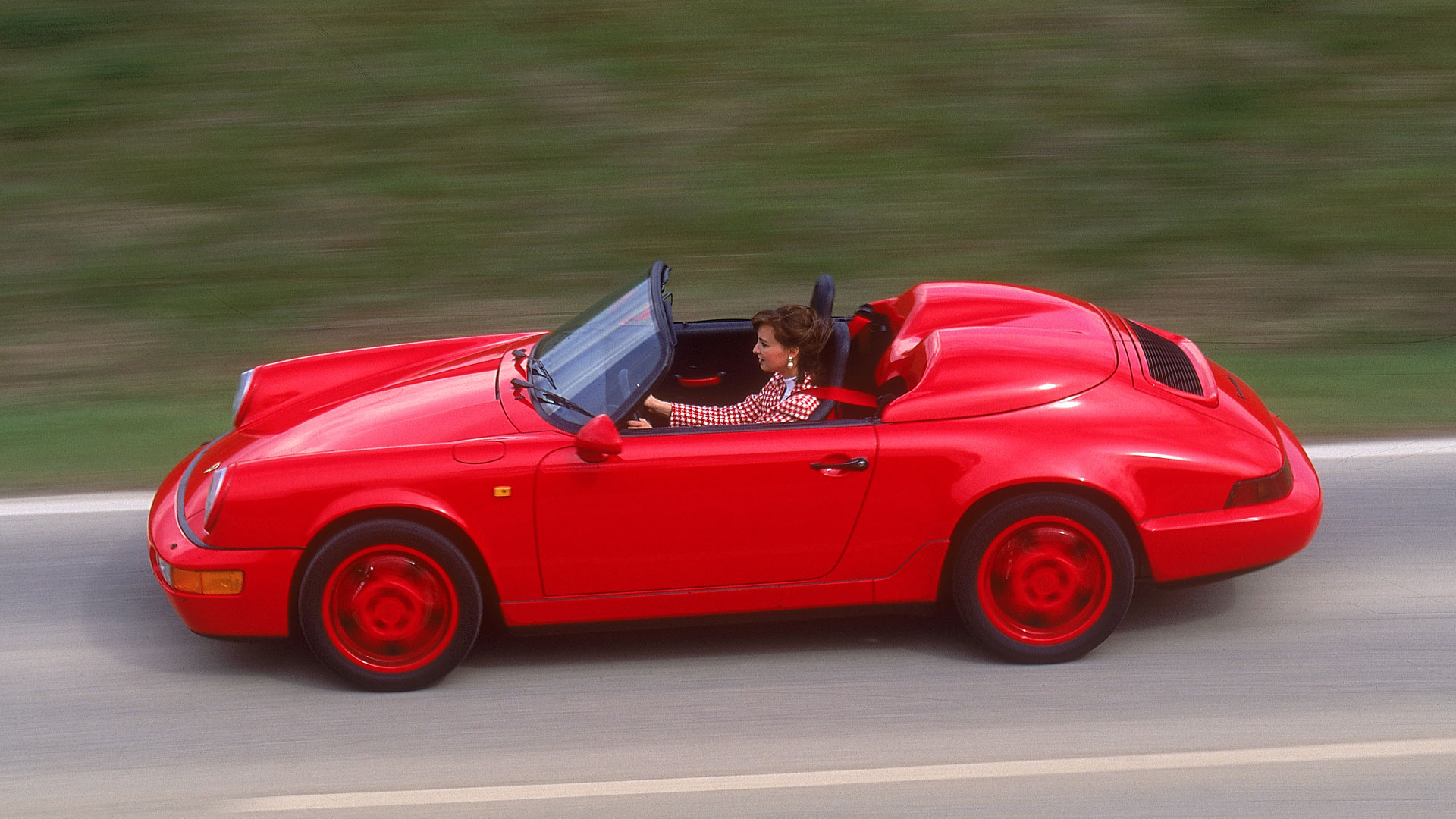
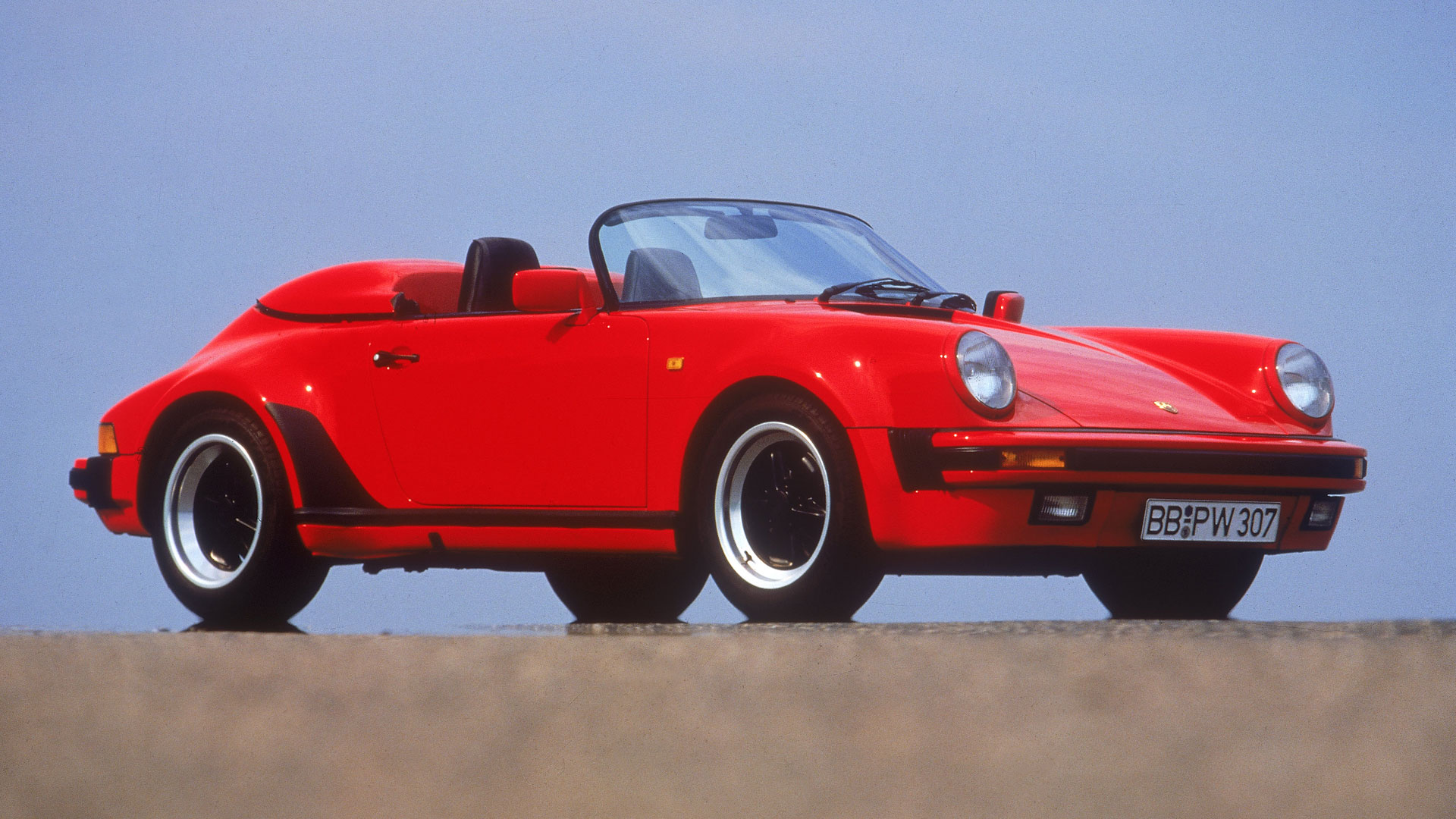
Production finished in 1958, and we’d have to wait three decades before the launch of a successor. It arrived in 1988 and was based on the 231hp 911 Carrera, featuring a wide ‘Turbo’ look. The removable windscreen was shortened and a manually operated rain top disappeared below a large plastic ‘bubble’ painted in the vehicle colour.
A leaner non-Turbo body was also available, but just 161 of these were built out of a total of 2,103 G-series Speedsters.
Both options were available on the 964 Carrera Speedster produced in 1992 and 1993, but while 930 units were ‘lean-bodied’, a mere 15 were built with the wider Turbo body. Highlights include a revamped roof mechanism for easier opening and closing, plus bucket seats from the Carrera RS painted in the vehicle colour.
Next up was one of the rarest Porsche cars ever built: the 993 Speedster. Just two were built: one for Ferdinand Alexander Porsche and the other for the US actor Jerry Seinfeld.
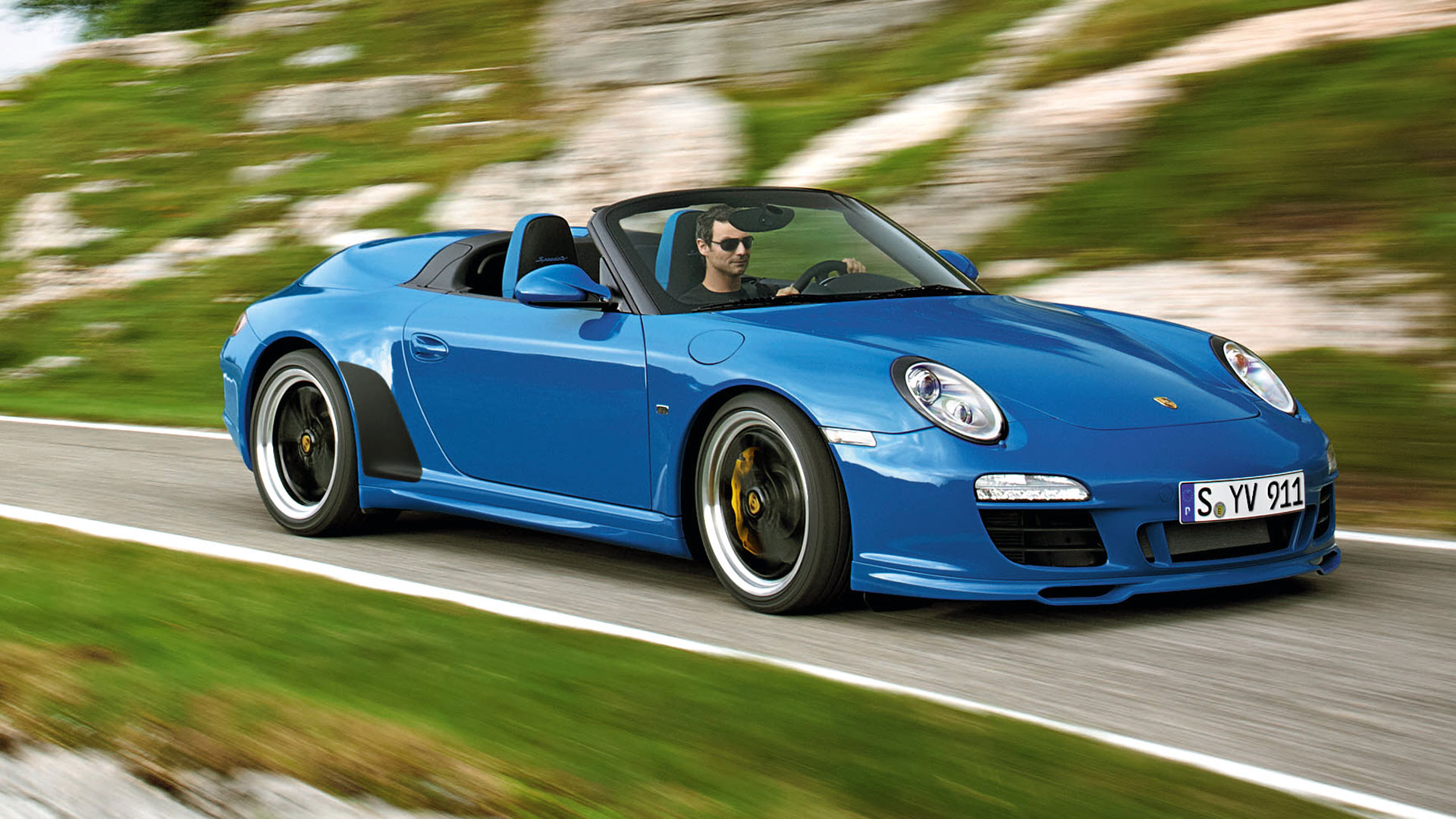
Porsche fans would have to wait a while before the arrival of the next Speedster, but it came in 2010 with the launch of the 997 variant. The traditional lower, more raked windscreen was present and correct, along with the evocative ‘double-bubble’ rear deck. Fittingly, just 356 units were produced.
One vision
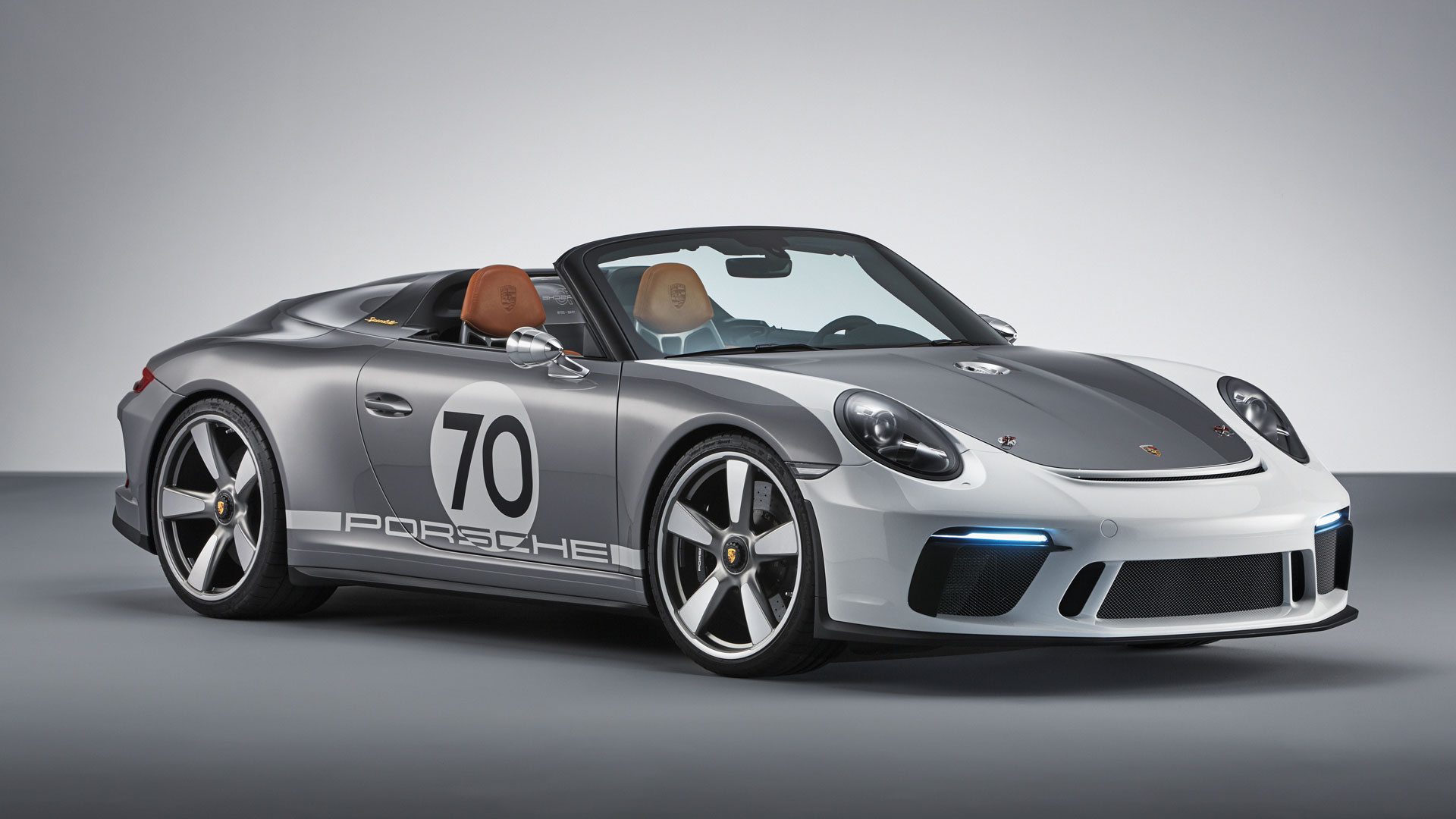
All of which brings us back to the present day and the launch of the latest Porsche Speedster. Built to celebrate 70 years of Porsche – and to line the coffers in Stuttgart – it’s the last hurrah for the 991.2 generation 911 and a fitting tribute to the 50s original.
In many ways, it stays true to Hoffman’s vision, but there are a couple of key differences. While the Speedster for California dreamers was available to all, just 1,948 of these tribute acts are available (and they’ve all been snapped up).
Secondly, you can forget the ‘sub-3k’ price tag, because the 2019 Porsche 911 Speedster costs upwards of £211,599.
The alternative is to pick up an older model, although Speedsters don’t come cheap. At last year’s RM Sotheby’s Porsche 70th Anniversary Auction, a 1994 911 Speedster sold for $190,400 (£150,131), while a restoration-ready 356 A 1600 Super Speedster sold for $307,500 (£242,465).
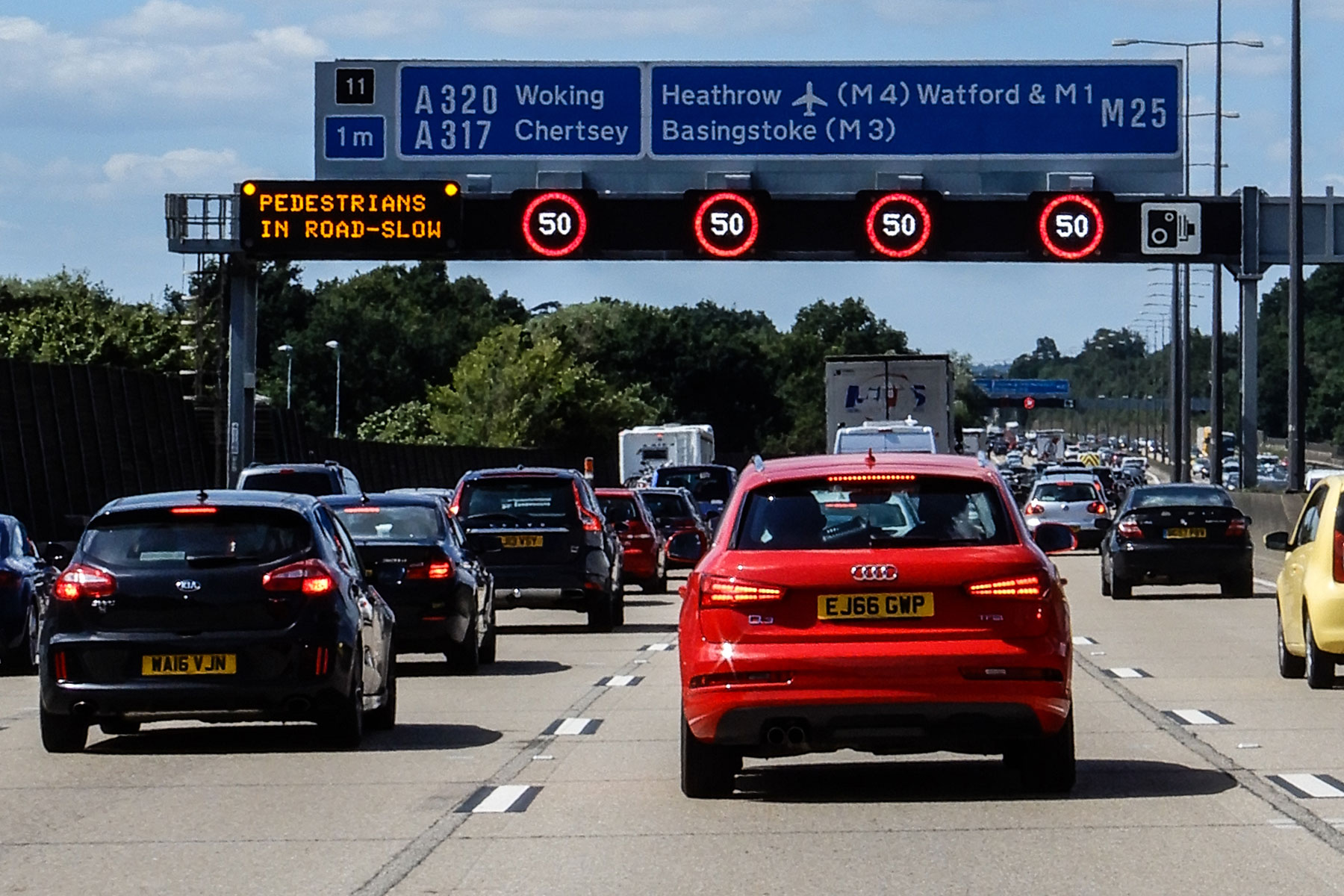
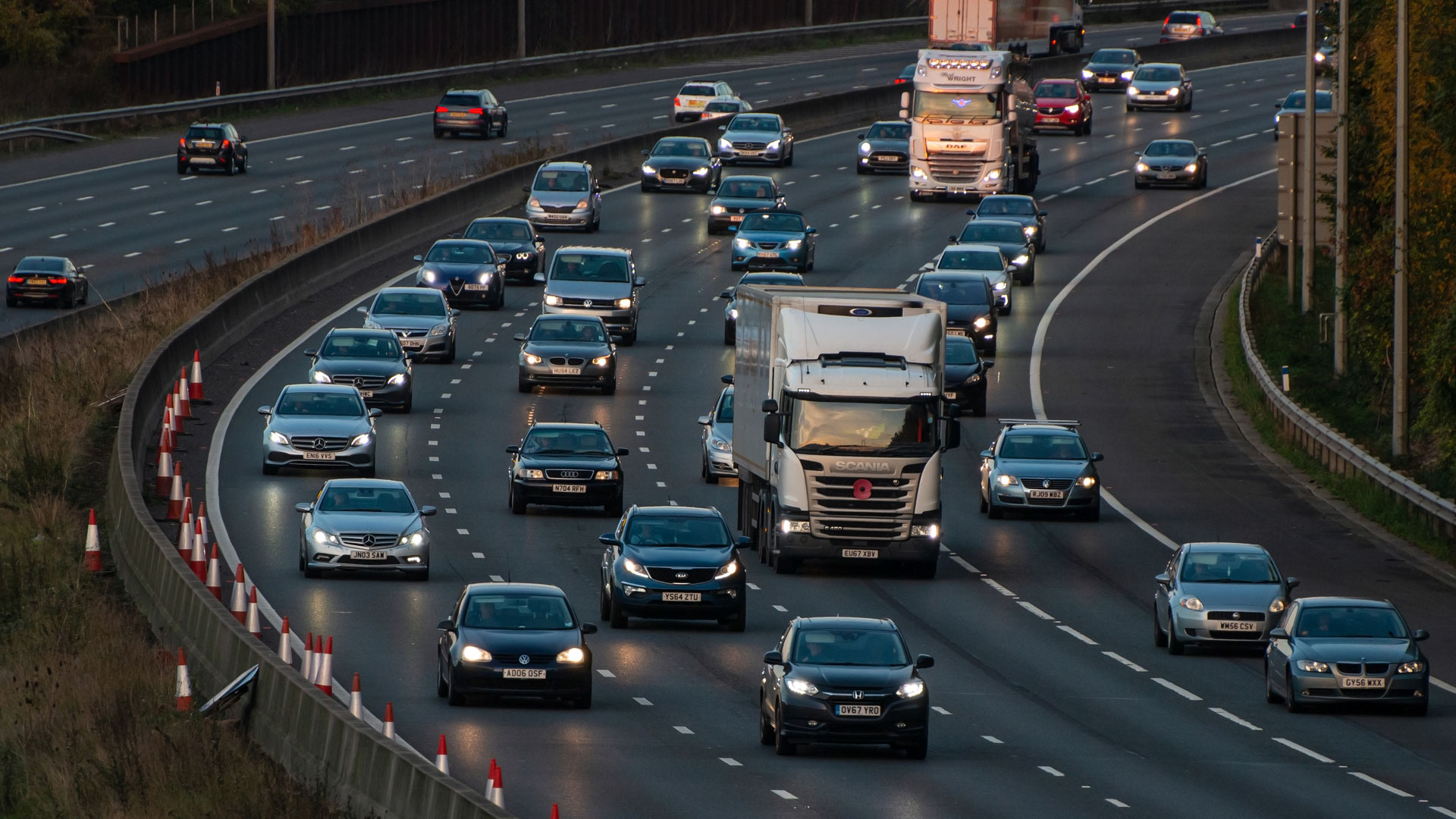
The government has revealed the five busiest road sections in Great Britain, and it won’t surprise you to discover that four of them are on the M25.
Predictably, the stretch linking junction 14 at Heathrow Airport with the M4 at junction 15 is the most congested, with 219,000 vehicles using the section EVERY DAY in 2018.
Junction 13 at Staines to junction 14 is the next busiest road with 206,000 vehicles, with junction 15 to junction 16 for the M40 motorway next up with 201,000 vehicles.
The section linking junctions 12 and 13 completes the misery for motorists forced to use the M25 on a daily basis, with 193,000 vehicles hitting the short section every day.
Only the M1 between junction 9 for Rebourn and junction 8 for Hemel Hempstead manages to muscle in on the M25’s dominance, with 184,000 vehicles using the stretch of motorway in Hertfordshire.
The figures were taken by an analysis of the Strategic Road Network (SRN), which is made up of motorways and major trunk roads managed by Highways England, or equivalent truck road networks in the devolved administrations.
Amazingly, although the SRN makes up just 2.4 percent of England’s road network, it carried 34 percent of all motorised traffic in England.
Even more amazing – if you enjoy road statistics – is the fact that, at a national level, 85 percent of Britain’s traffic was on England’s roads in 2018. If you need a break, head to Scotland or Wales…
Of the five local authorities in England with the highest levels of traffic, three are in the South East (Hampshire, Kent and Surrey), and the other two are in the East of England region (Essex and Hertfordshire).
But motor vehicle traffic is up across almost the entire country, with the South West showing the biggest increase since 1993 (39 percent), followed by Scotland and East of England (both up 37 percent).
Only Greater London bucked the trend, with traffic down 4 percent, presumably a symptom of anti-car legislation, expensive parking and the use of public transport.
If you’ve had enough of traffic congestion, we can recommend some terrific roads in Scotland and Wales. Alternatively, check out our list of the quietest A-roads in the country.
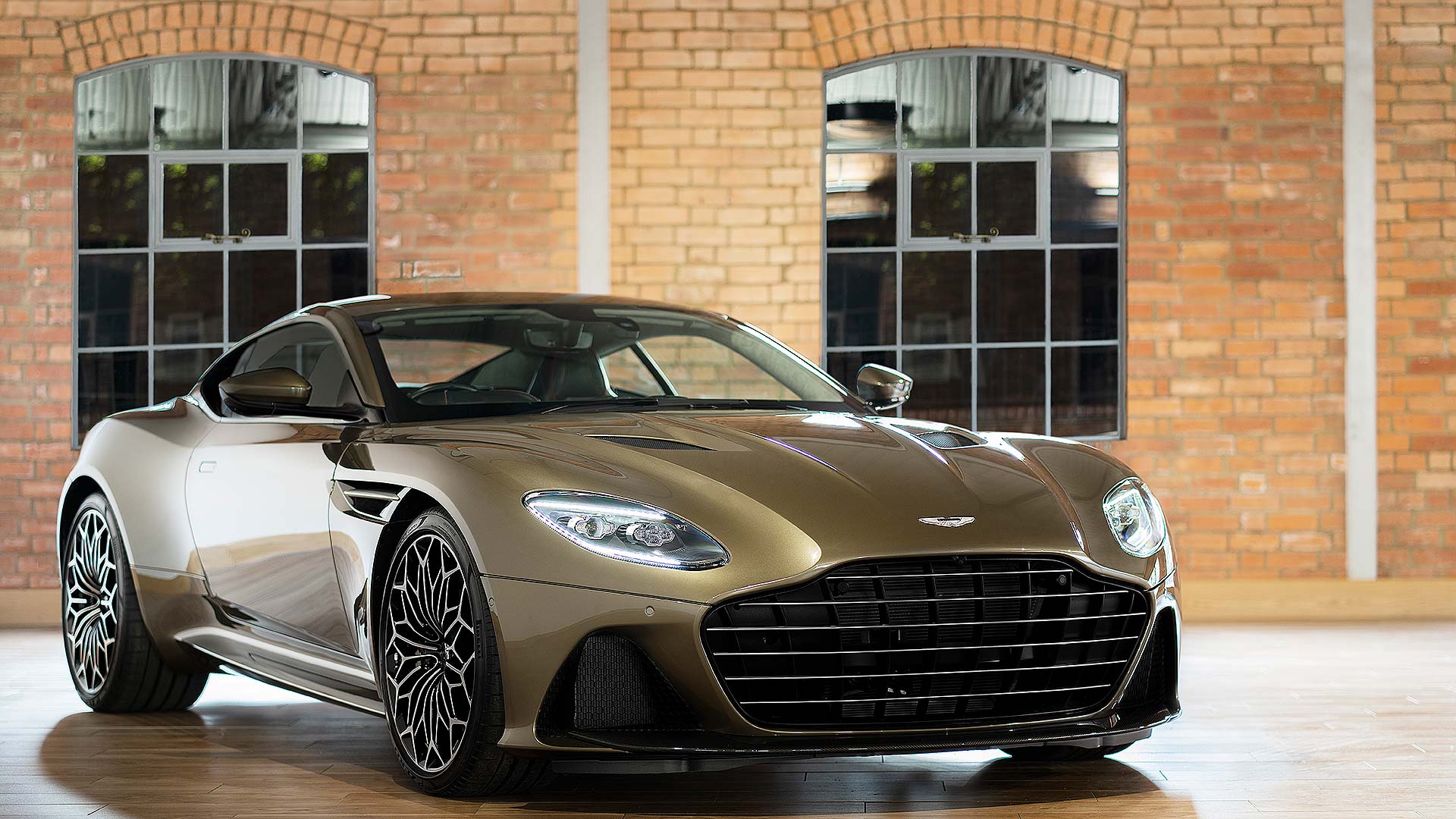
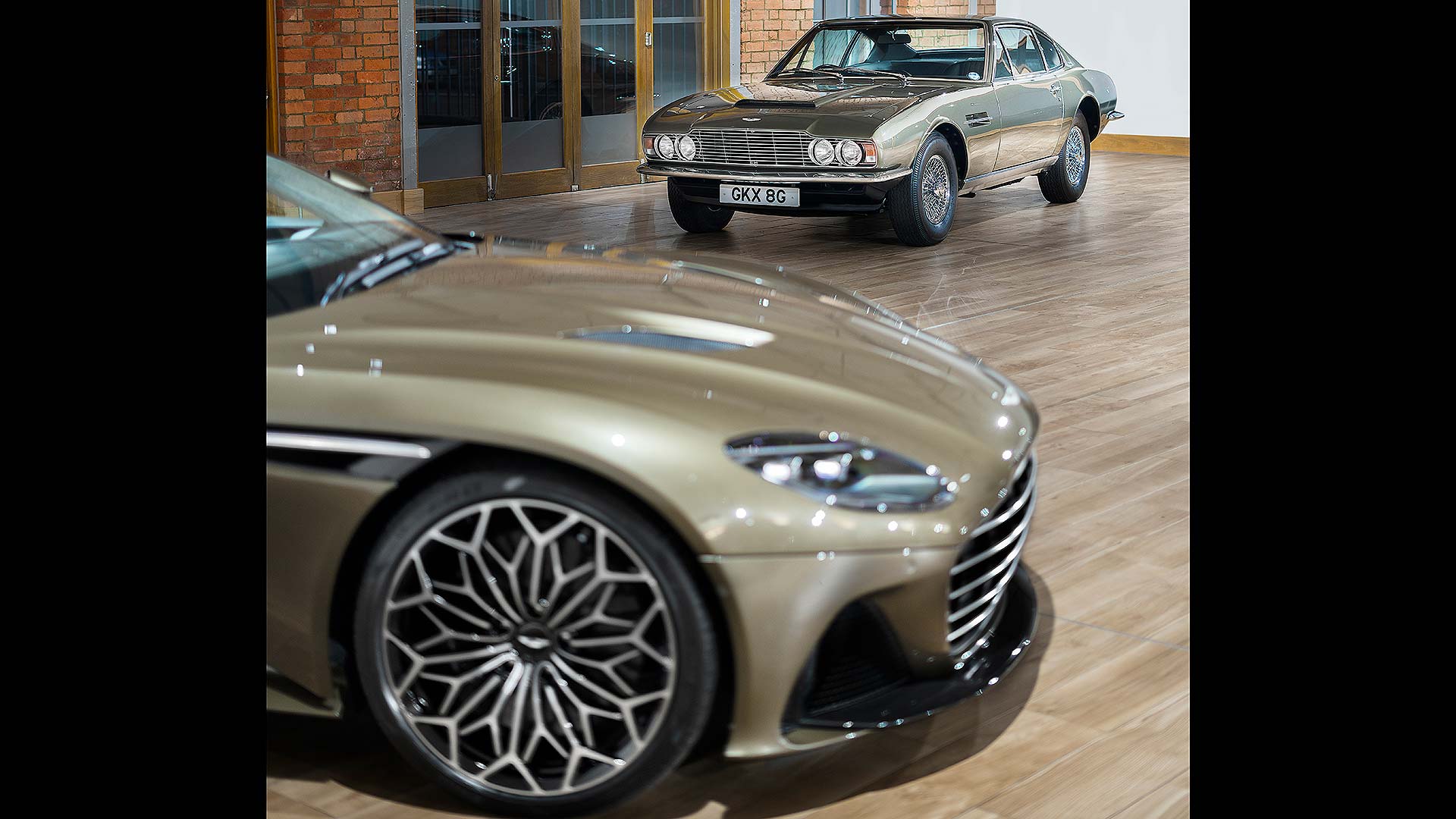
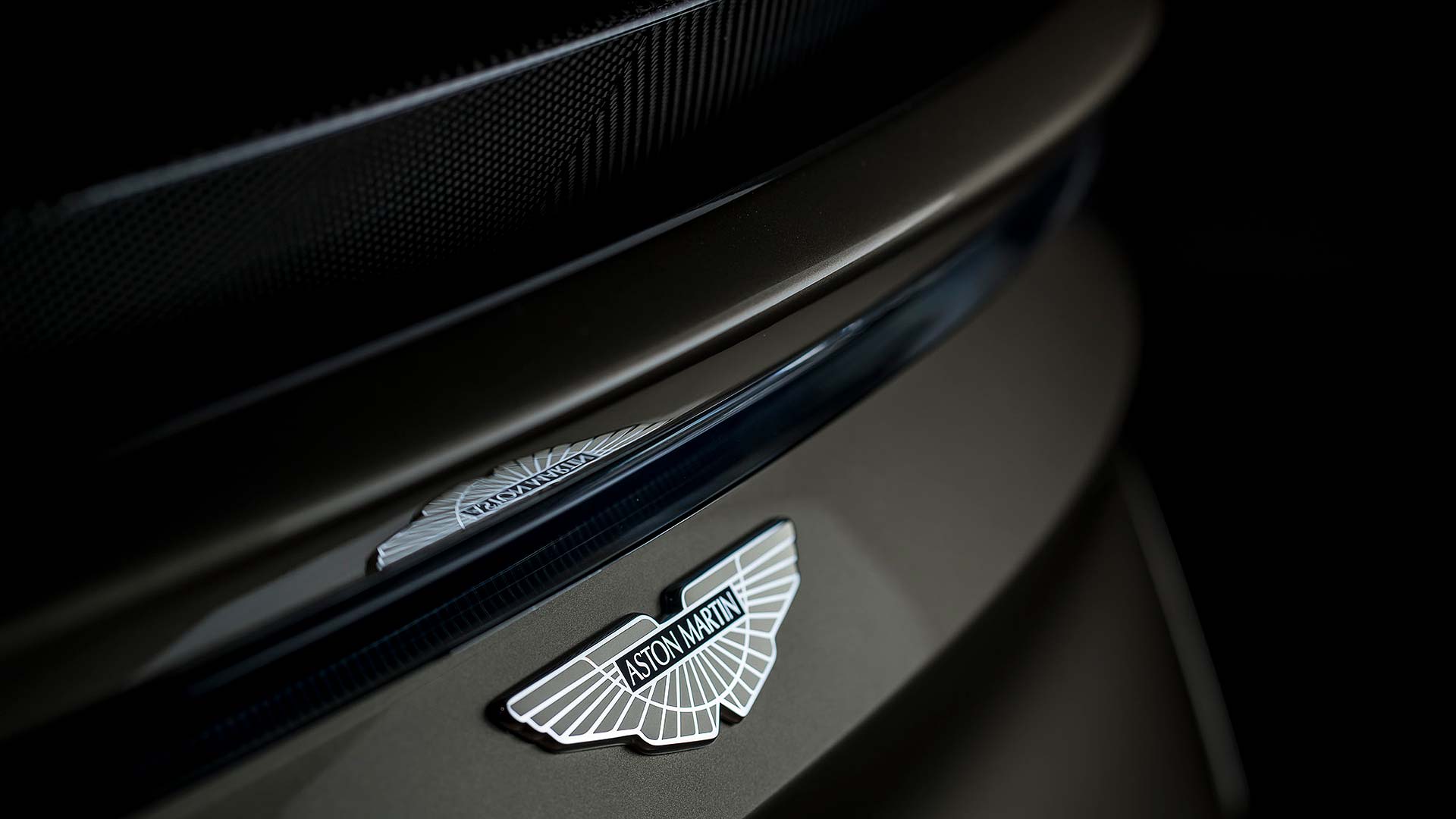
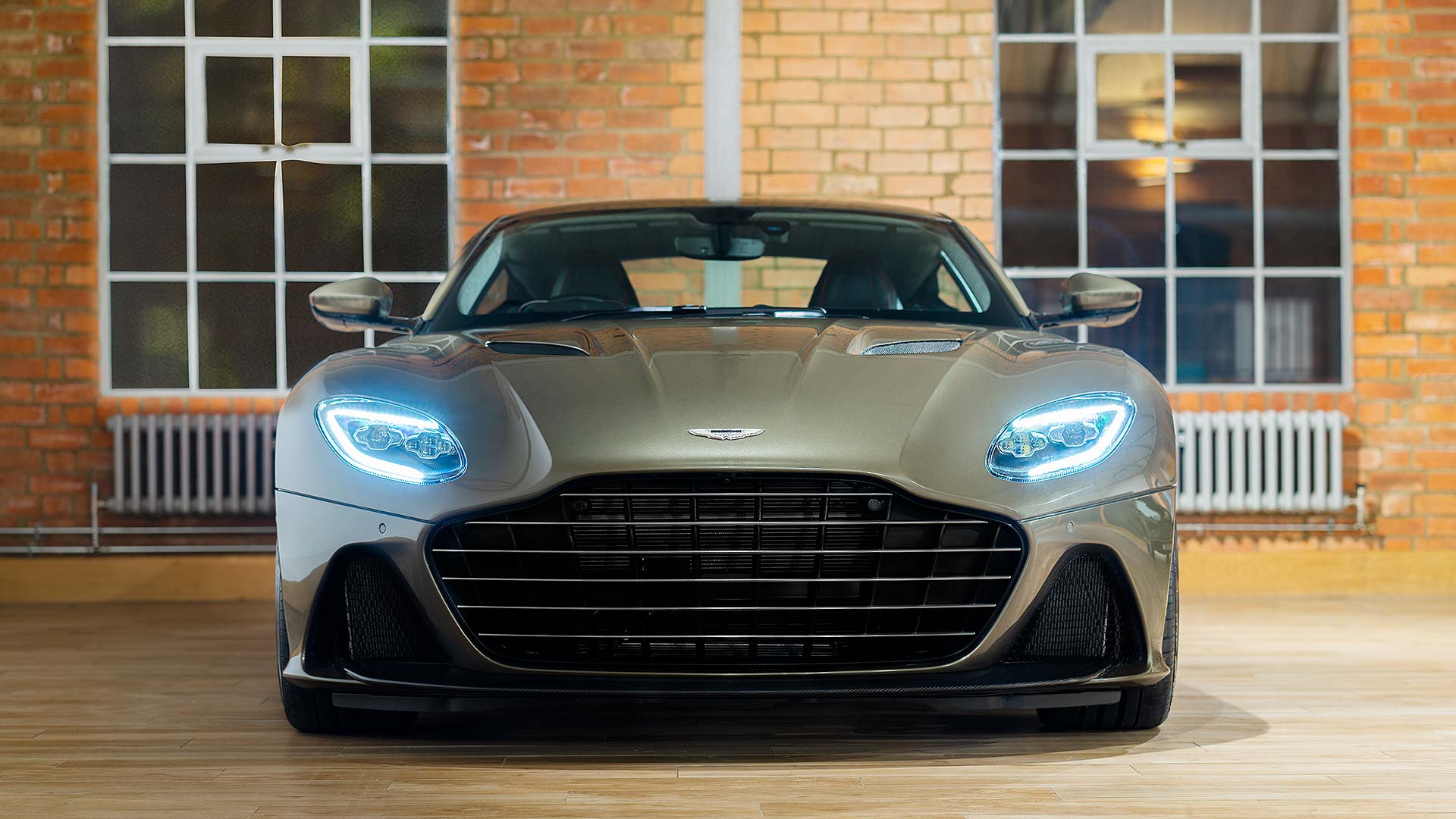
Why the special edition? Well, 2019 marks 50 years since production began on the film, so Aston Martin is producing 50 OHMSS Edition DBS Superleggeras to celebrate.
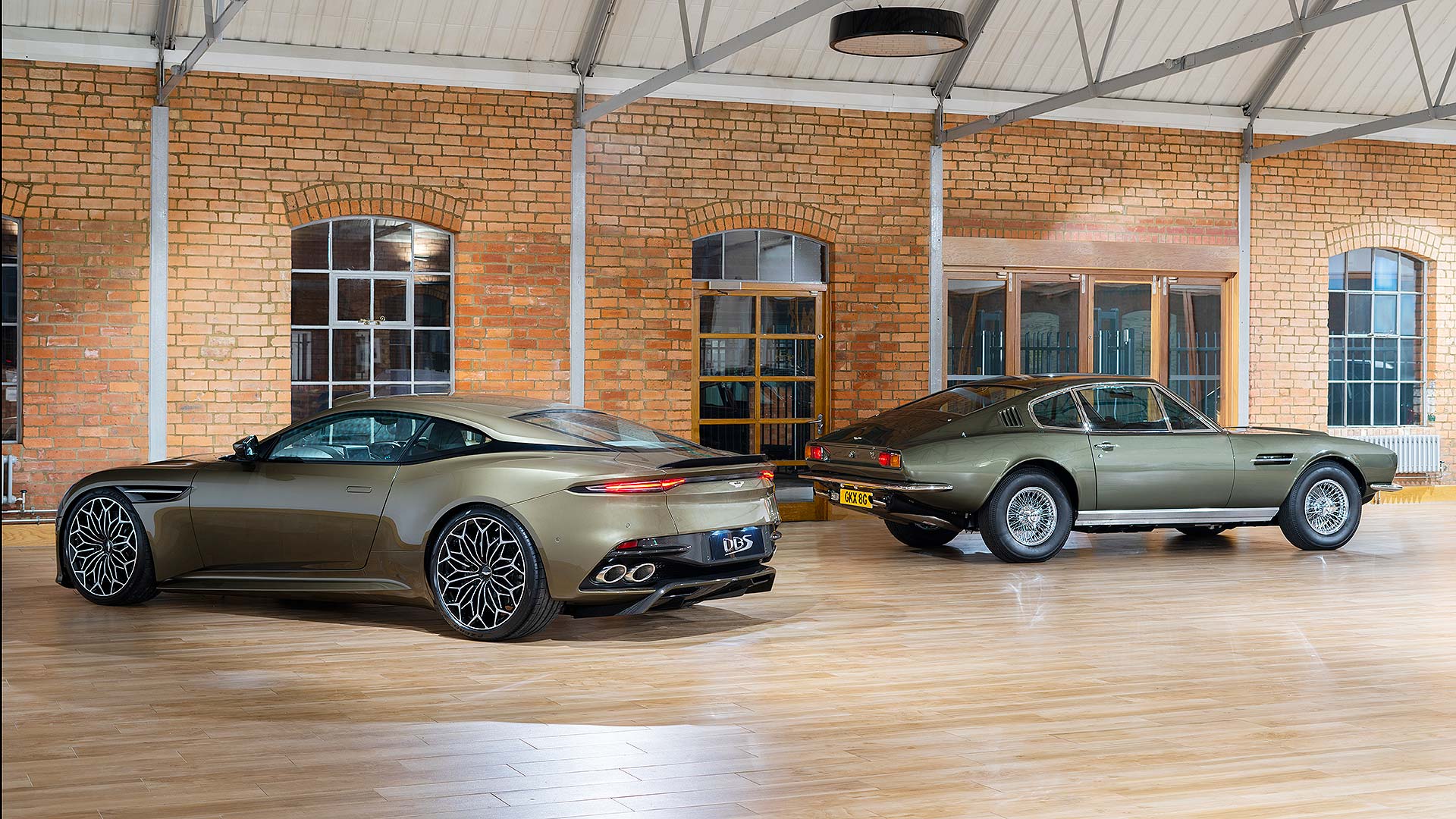
To recap, On Her Majesty’s Secret Service features one of the most underrated automotive cameos in a Bond film. Everyone remembers the DB5, but in 1969, 007 enlisted the services of a tricked-out Olive Green DBS V8.
Old-school style: new-school supercar
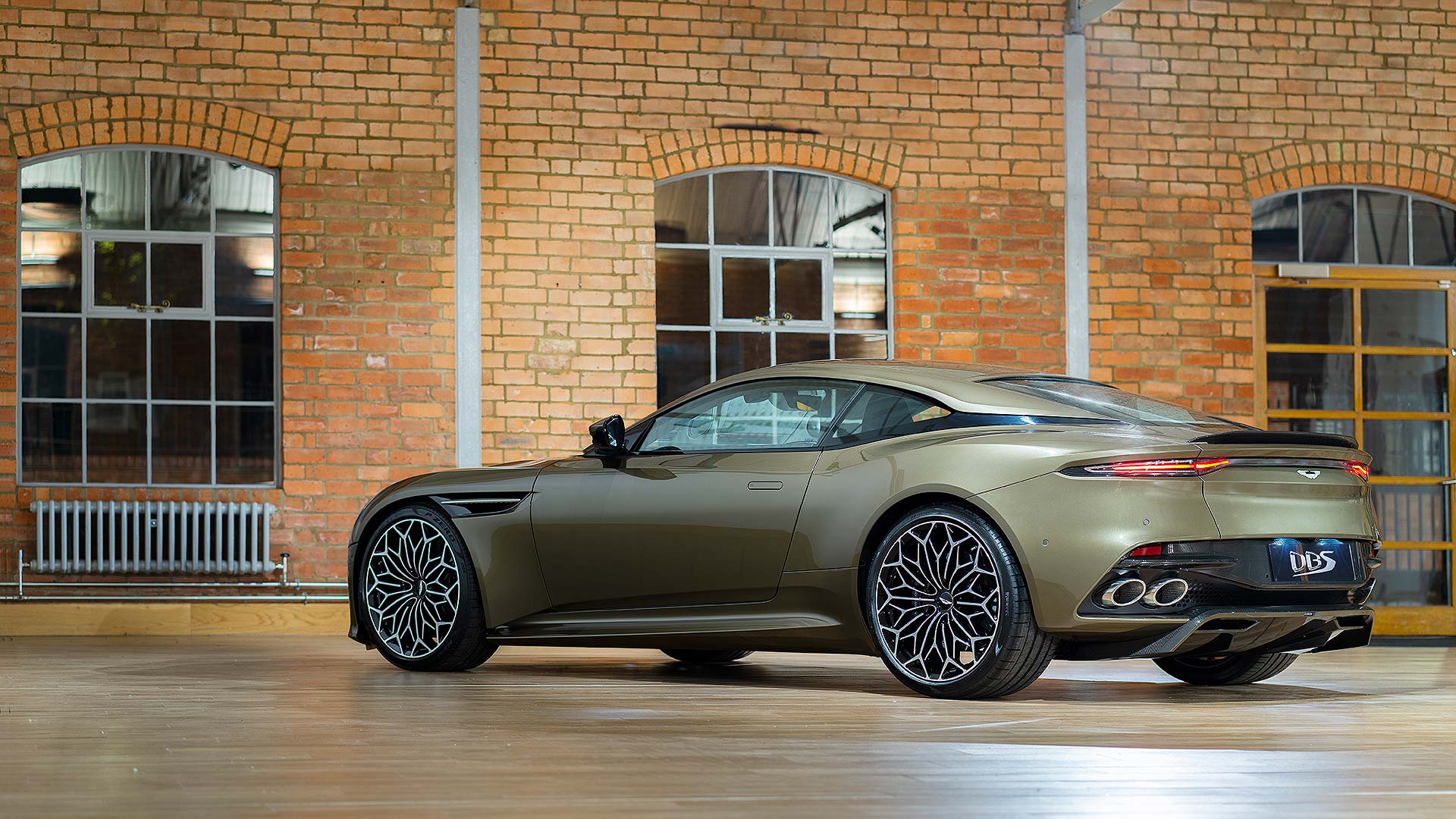
You’ll be able to tell an OHMSS apart by its special alloys, which pay tribute to the wire wheels on the original DBS, as well as a traditional slatted grille – a homage to the original’s mouth-spanning metalwork.
“The DBS Superleggera is a muscular car that commands attention, but the Olive Green gives it a subtlety that belies the beast beneath,” said Aston Martin vice president Marek Reichman of the car’s distinctive colour.
The devil’s in the details
Up-close, you’ll note the roof is body-colored and the brightwork is, well, bright. Even the lamp units at the front feature a lighter plastic material inside.
Many modern cars darken a lot of what was once chromed or brushed aluminum. Not here: along with the new grille, the exhaust tips are chromed.
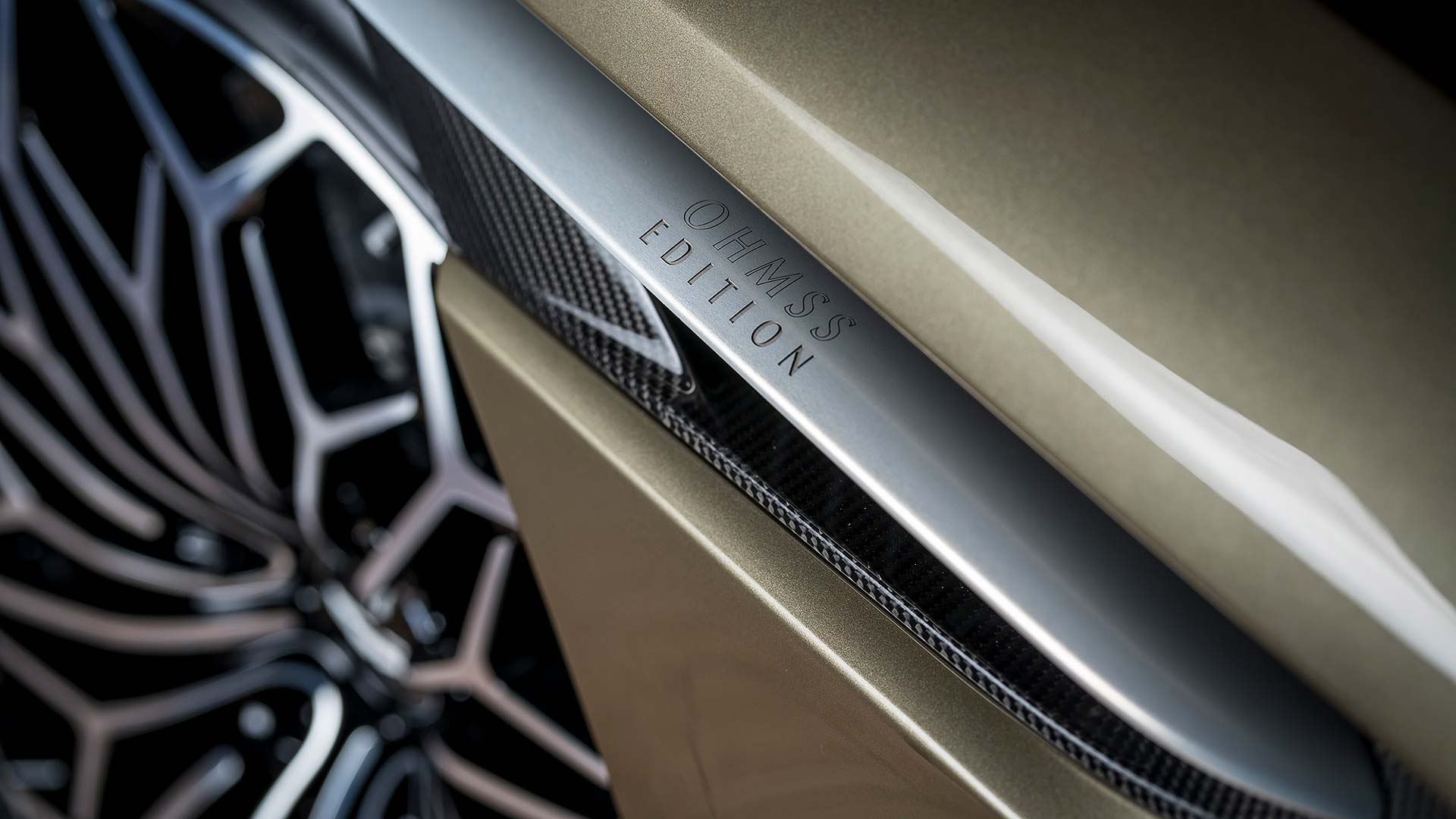
The side strakes are brushed alloy set in carbon fibre, with ‘OHMSS EDITION’ etched in to the metal. Just because this is a homage to a classic, it doesn’t mean you escape lashings of carbon…
For Your Eyes Only
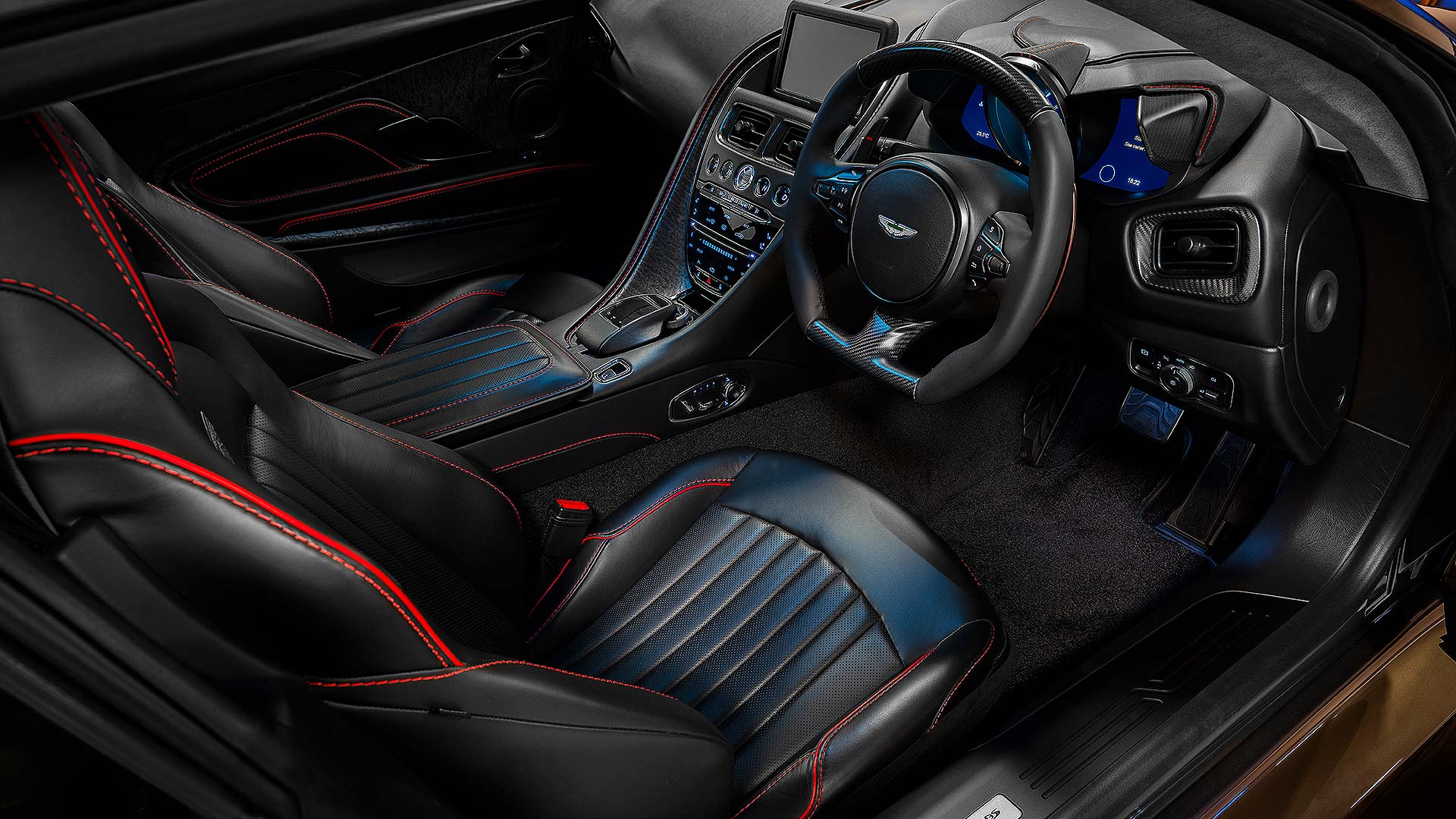
On the inside, this very special DBS is colored to match the 1969 car, with pure black leather and grey-blend Alcantara (man-made suede).
Flashes of red pay tribute to the red-trimmed glovebox of Bond’s original DBS, which carried his telescopic rifle. These include the stitching, leather pipework, carbon gearshift paddles and door pockets.
There’s also ‘007 OHMSS Edition’ red embroidery, with the iconic swirling gun barrel featured above.
Shaken not stirred
Optional on the OHMSS is a bespoke drinks case that fits perfectly in the boot, with space within for two bottles of champagne and four flutes. Black on the outside and red within, it’s also a nod to Bond’s gun-holding glovebox.
Even the price pays homage to the world’s most famous secret agent. You might need to be On Her Majesty’s Secret Service to afford it, too. Yours, Mr Bond, for £300,007, and not a penny less, with delivery expected towards the end of 2019.
The boss’s stamp of approval
“Aston Martin is synonymous with James Bond and the DBS from On Her Majesty’s Secret Service has provided great inspiration to the team tasked with creating this very special edition,” said Aston Martin CEO, Andy Palmer.
“This new DBS Superleggera will be an extremely distinguished ‘brute in a suit’, designed to capture the essence of the iconic DBS from the 1969 film, but with a 5.2-liter twin-turbo V12!”
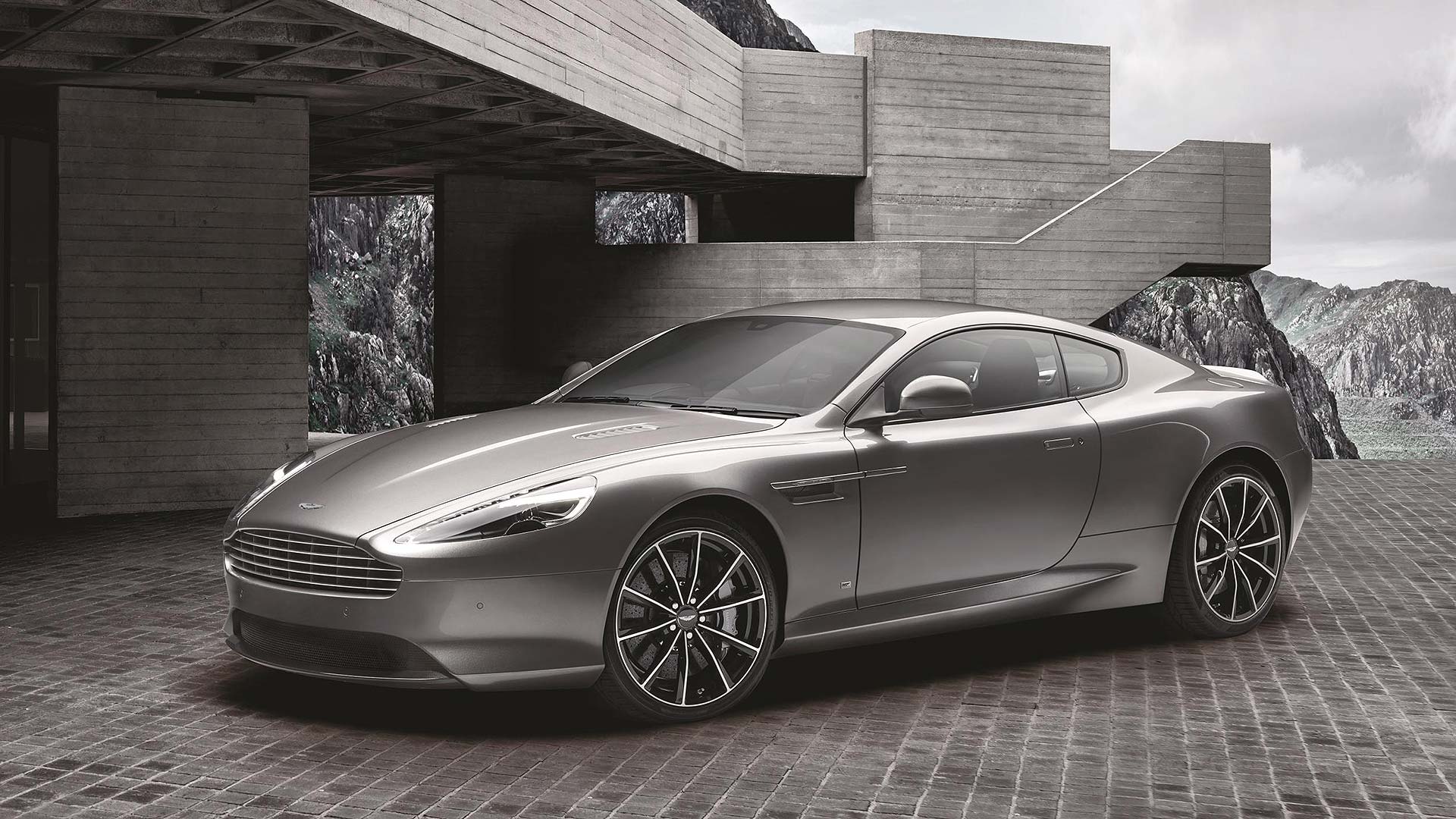
Needless to say, this isn’t the first time a special Aston has been created in tribute to 007. The DBS OHMSS joins the (ongoing) DB5 continuation and the 2015 DB9 GT Bond Edition.
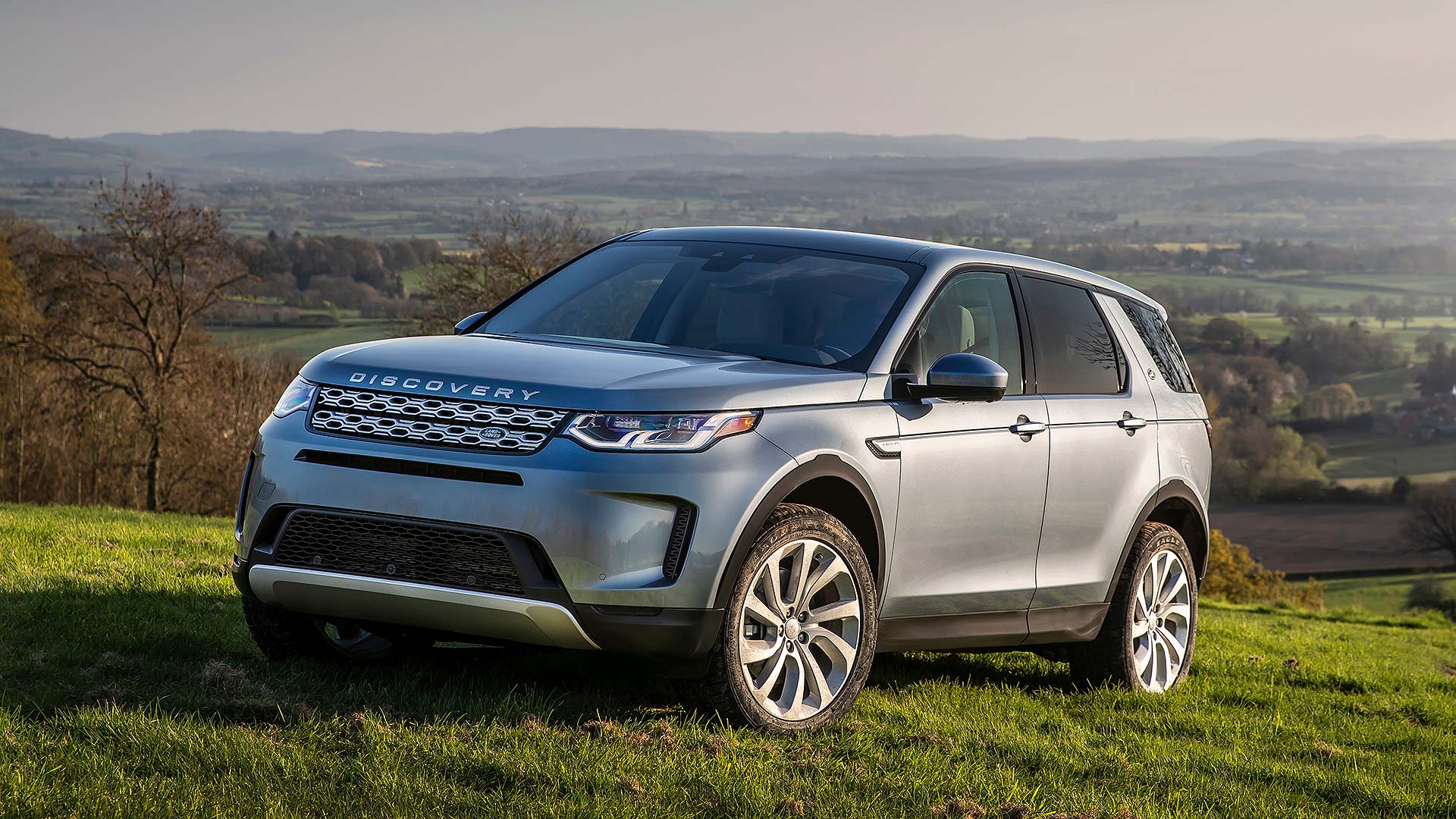
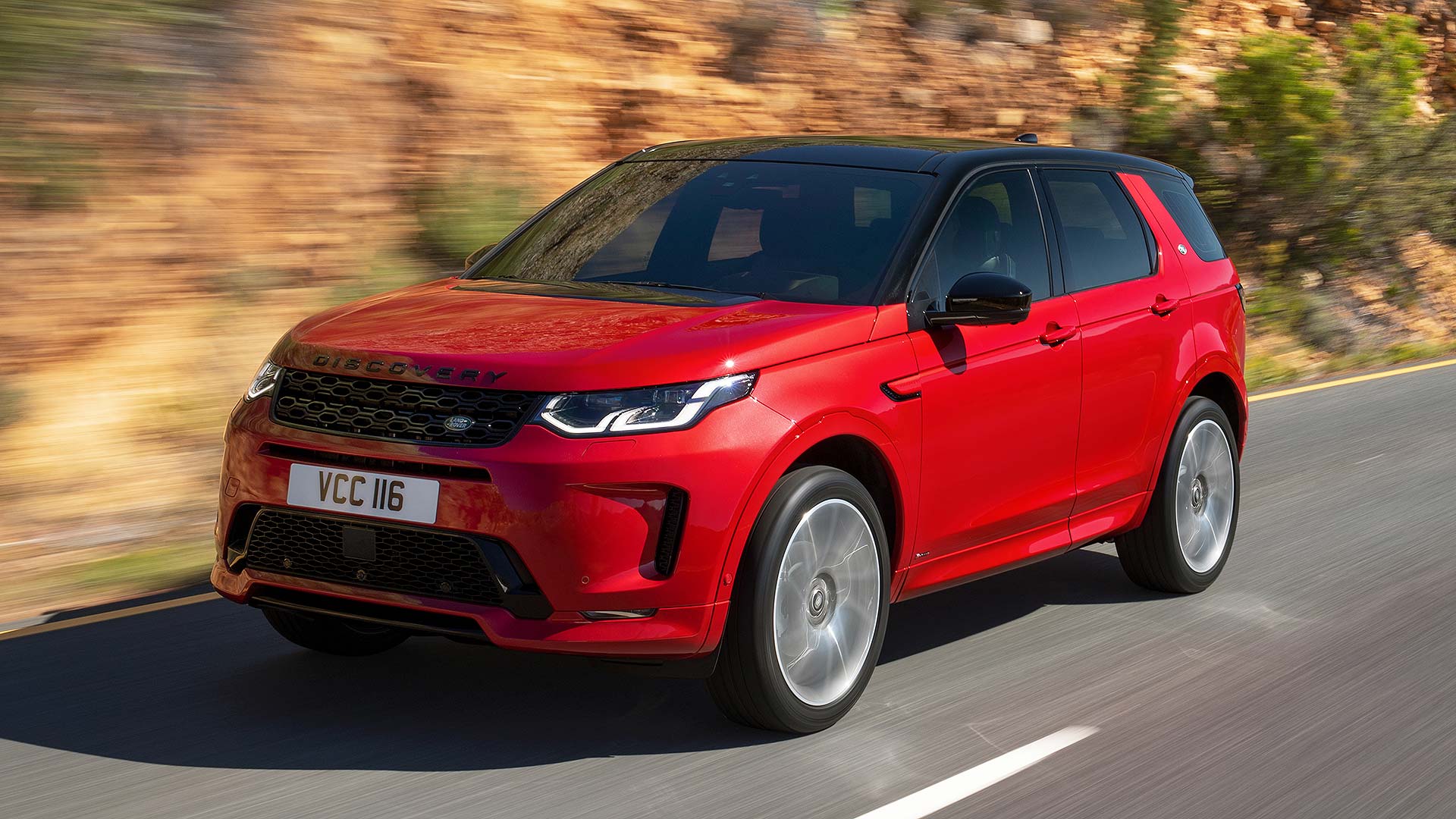
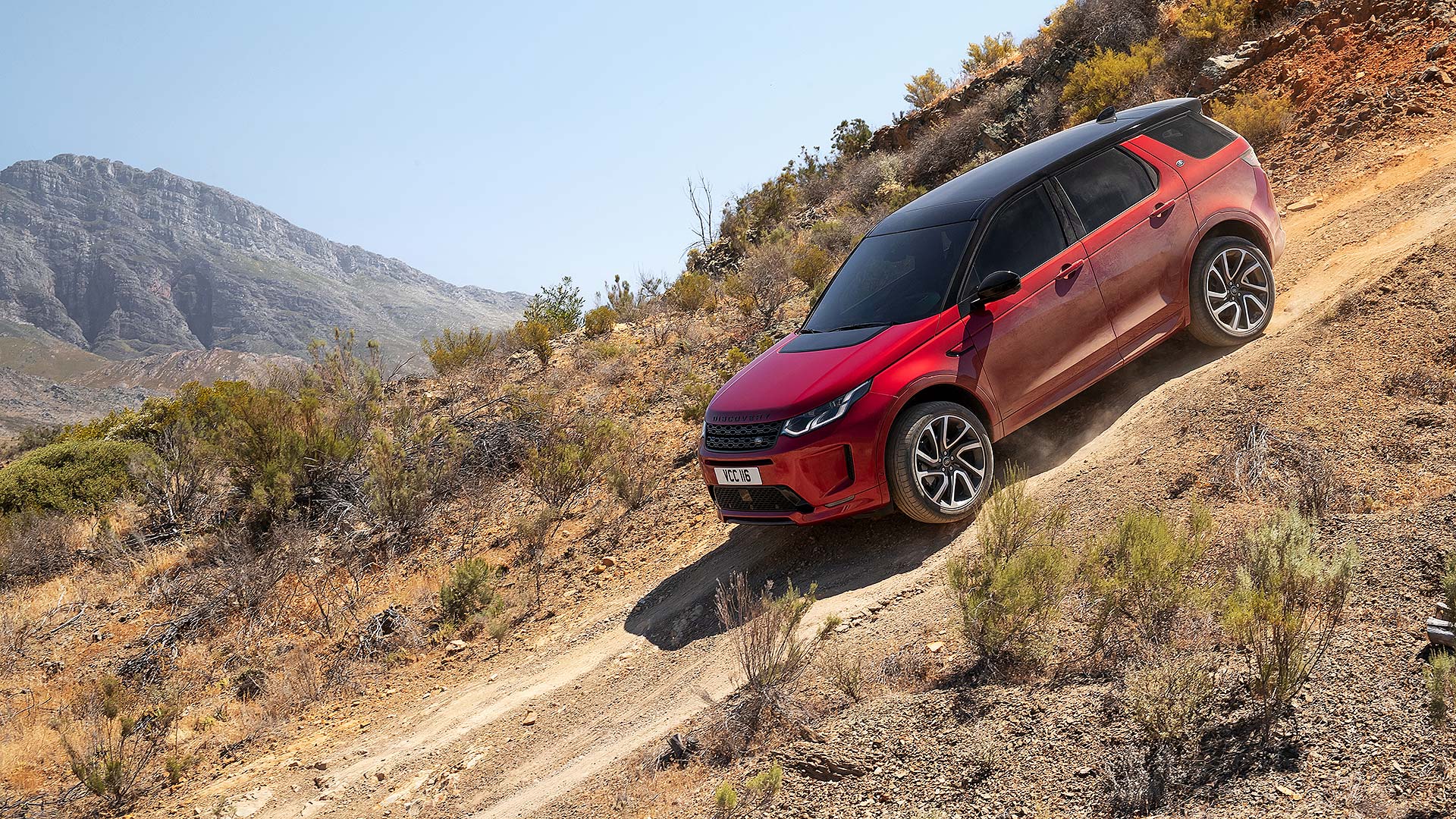
The new 2020 model year Land Rover Discovery Sport is a mid-cycle refresh with a difference – it is basically a brand new car. Crisper styling gives the seven-seat compact SUV a smart new look, but underneath, plenty more work has been done to keep one of the best-selling Land Rovers on the boil.
Remarkably, Land Rover has switched to an entirely new platform (the oily bits underneath the body). Out goes the old mechanical architecture and in comes the brand new platform also used by the critically-acclaimed new Range Rover Evoque. Such extensive mid-life upgrades are not normal in the auto industry: the scale of Land Rover’s upgrades are great news for customers.
The new underpinnings are called Premium Transverse Architecture, or PTA. Land Rover says they make the new Discovery Sport more comfortable than before, crisper to drive – and also mean it can bring in new mild hybrid (MHEV) and plug-in hybrid (PHEV) engines, from launch.
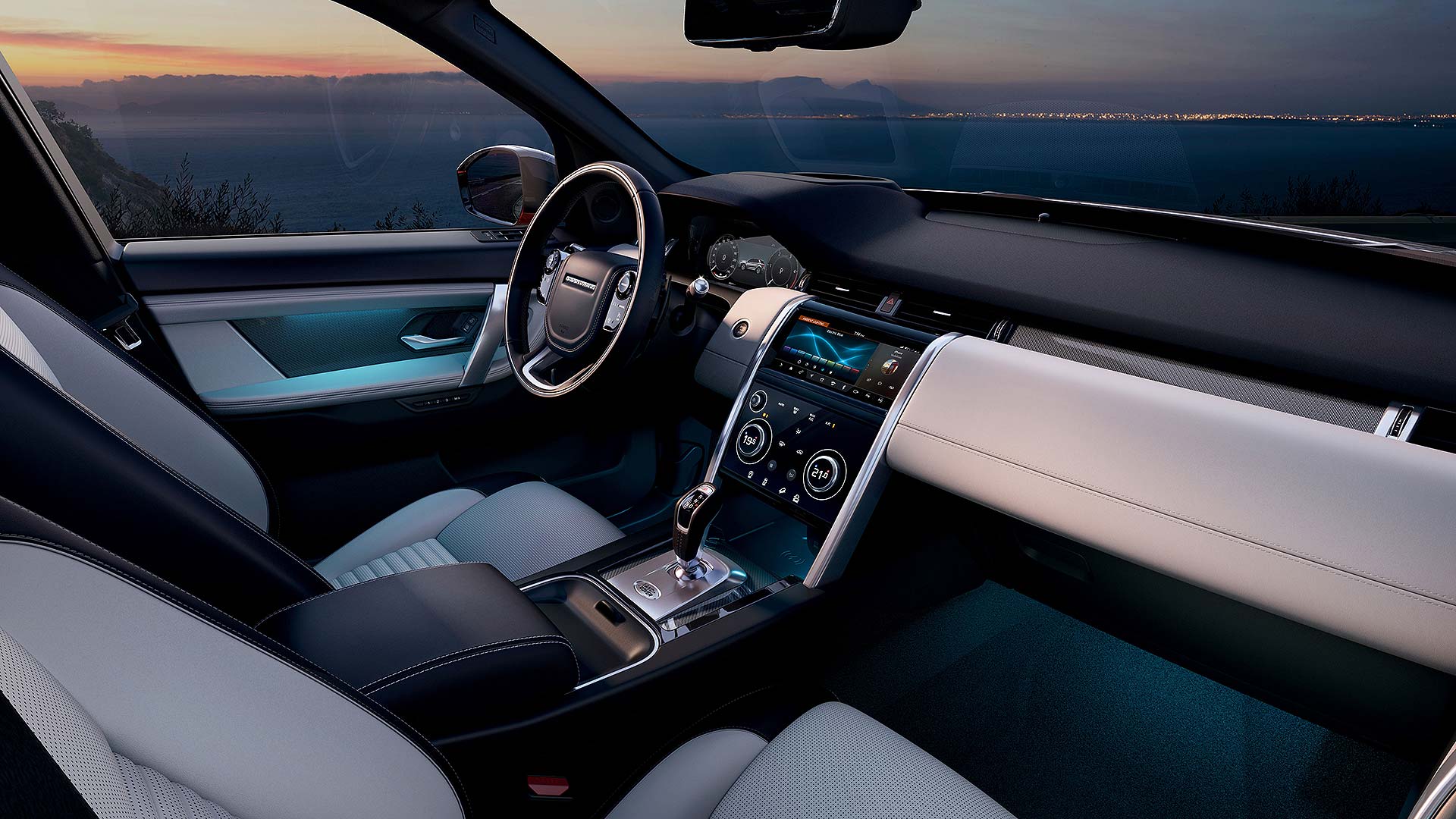
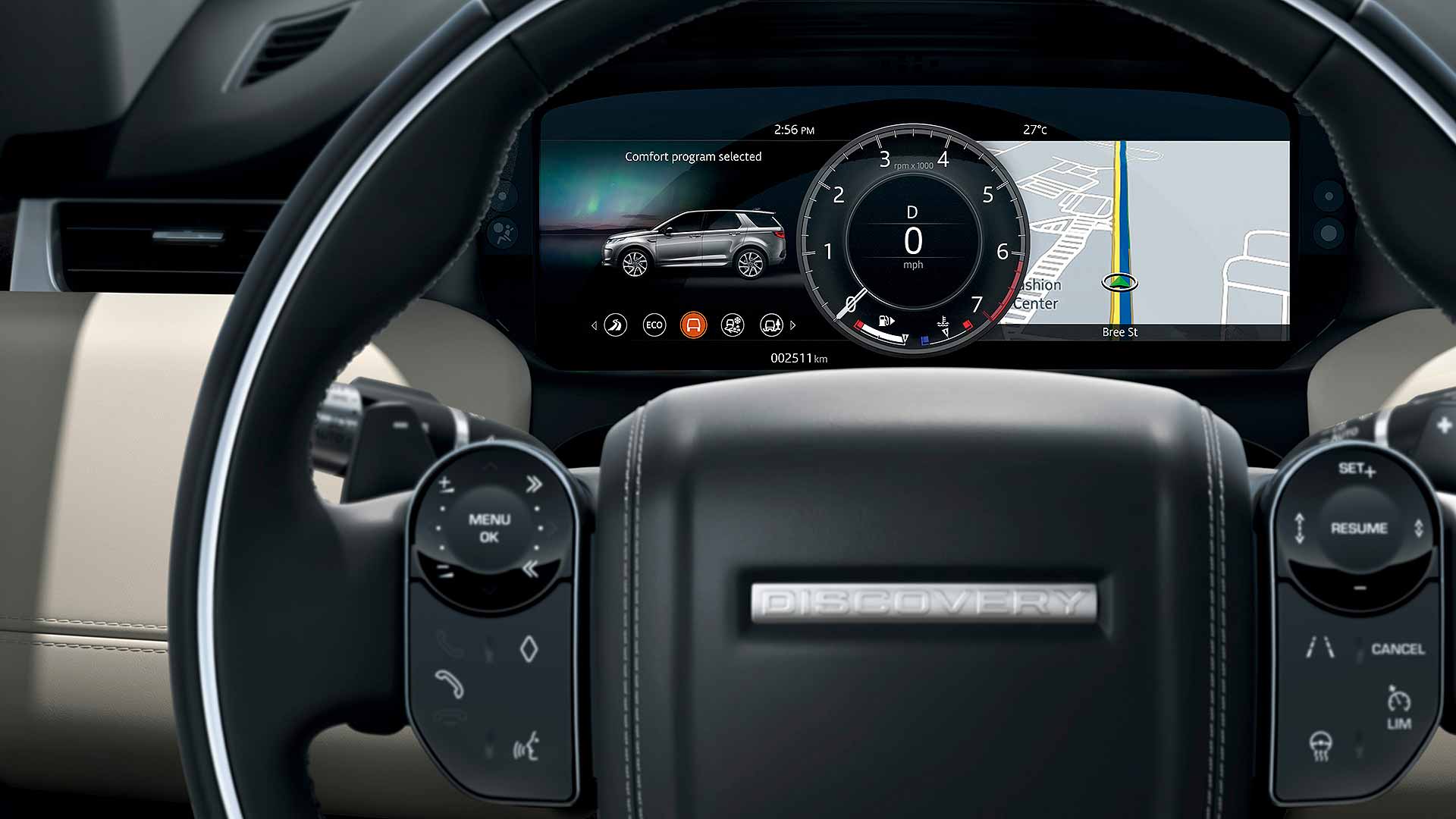
A full suite of new technology includes a vastly improved infotainment system that includes standard Apple CarPlay and Android Auto.
Range Rover-grade
Inside, the new Discovery Sport has been fully optimised. Land Rover has carved out 25 percent more stowage space – that’s 48 litres – with redesigned door bins and a bigger central cubby. Cupholders have been redesigned, rear seat stowage spaces repositioned, while the widescreen Touch Pro infotainment is standard on all models.
‘Black panel’ climate controls below give it a more modern appearance, and wireless smartphone charging lies below that. You can even now get massaging front seats: like the two rows behind, they’re all-new.
A new 12.3-inch digital cluster can be paired with a full-colour head-up display, bringing Range Rover technology into the practical entry-level Range Rover. Simon Barnes, Chief Programme Engineer, said: “Discovery Sport is the perfect balance of Land Rover capability and modern-day convenience.
“Every bit of technology throughout the cabin is there to make this vehicle easier to use. This compact SUV is so much more than the best in its class, it is a class act.”
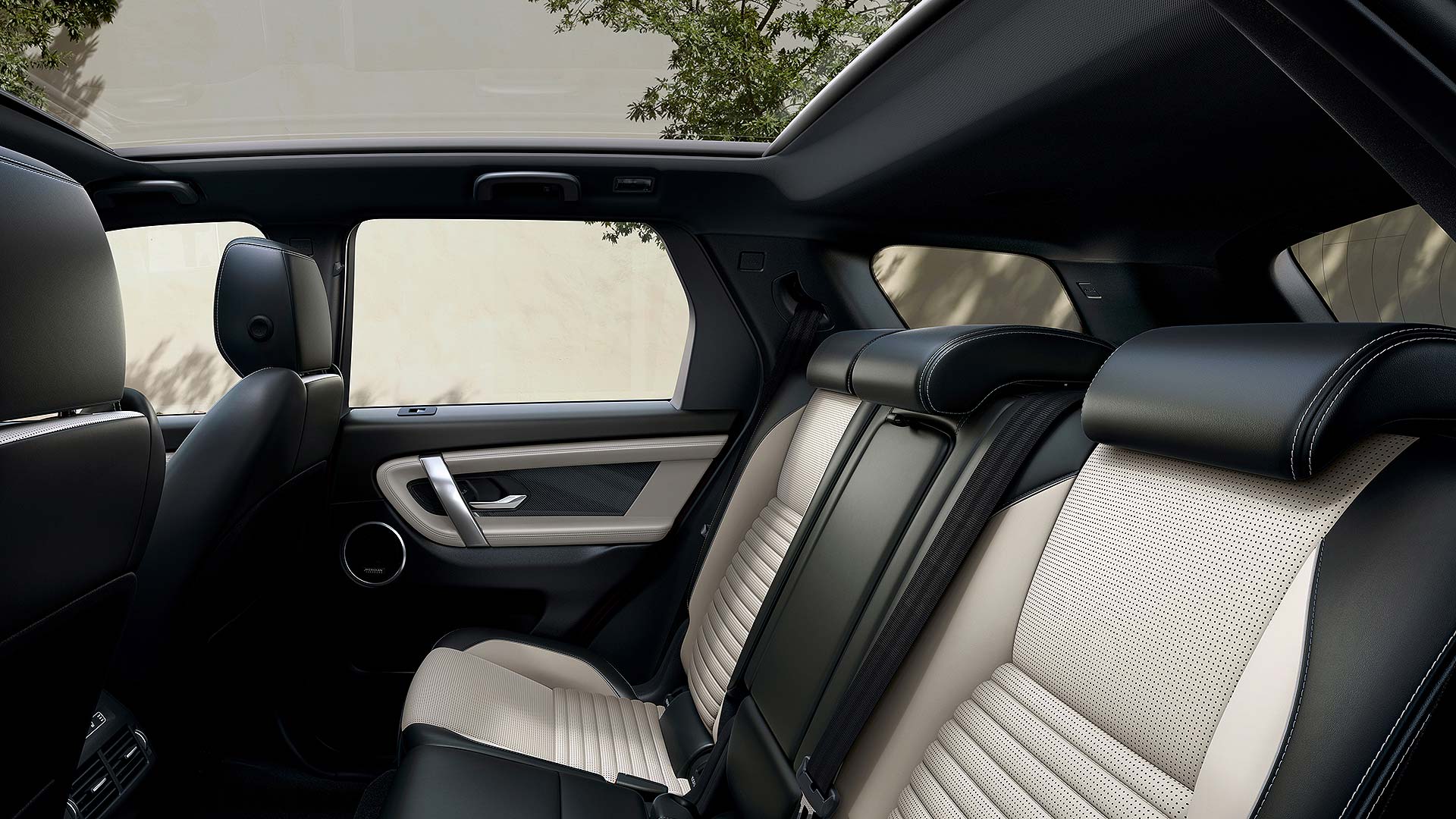
It’s roomier in the rear, with a 40:20:40 split second row sliding back and forth – second-row passengers can enjoy nearly 1 metre of legroom, and those in the third row can have 655mm if middle passengers compromise.
Land Rover says the seats now have 24 different configurations, and the boot extends from 1,179 litres to 1,794 litres with the second-row seats folded flat. Second- and third-row passengers can even have their own climate controls.
On-road transformation
The all-new PTA platform transforms how the Discovery Sport drives, reckon the engineers. There are three petrol and four diesel engines offered: the highlights include a 250 horsepower AWD turbo petrol that does 0-60 mph in 7.1 seconds, while MHEV mild hybrid tech is standard on nearly every version. It shuts the engine off at speeds below 11 mph, and electrically boosts it again under acceleration.
The nine-speed automatic transmission is better too, promises Land Rover – and a three-cylinder petrol PHEV plug-in is on the horizon too, it adds.
The latest Discovery Sport’s body is 13 percent stiffer, which helps improve both ride and handling. There’s less noise and vibration transmitted into the cabin, and it’s going to be safer in a crash as well.
Earning its off-road badges
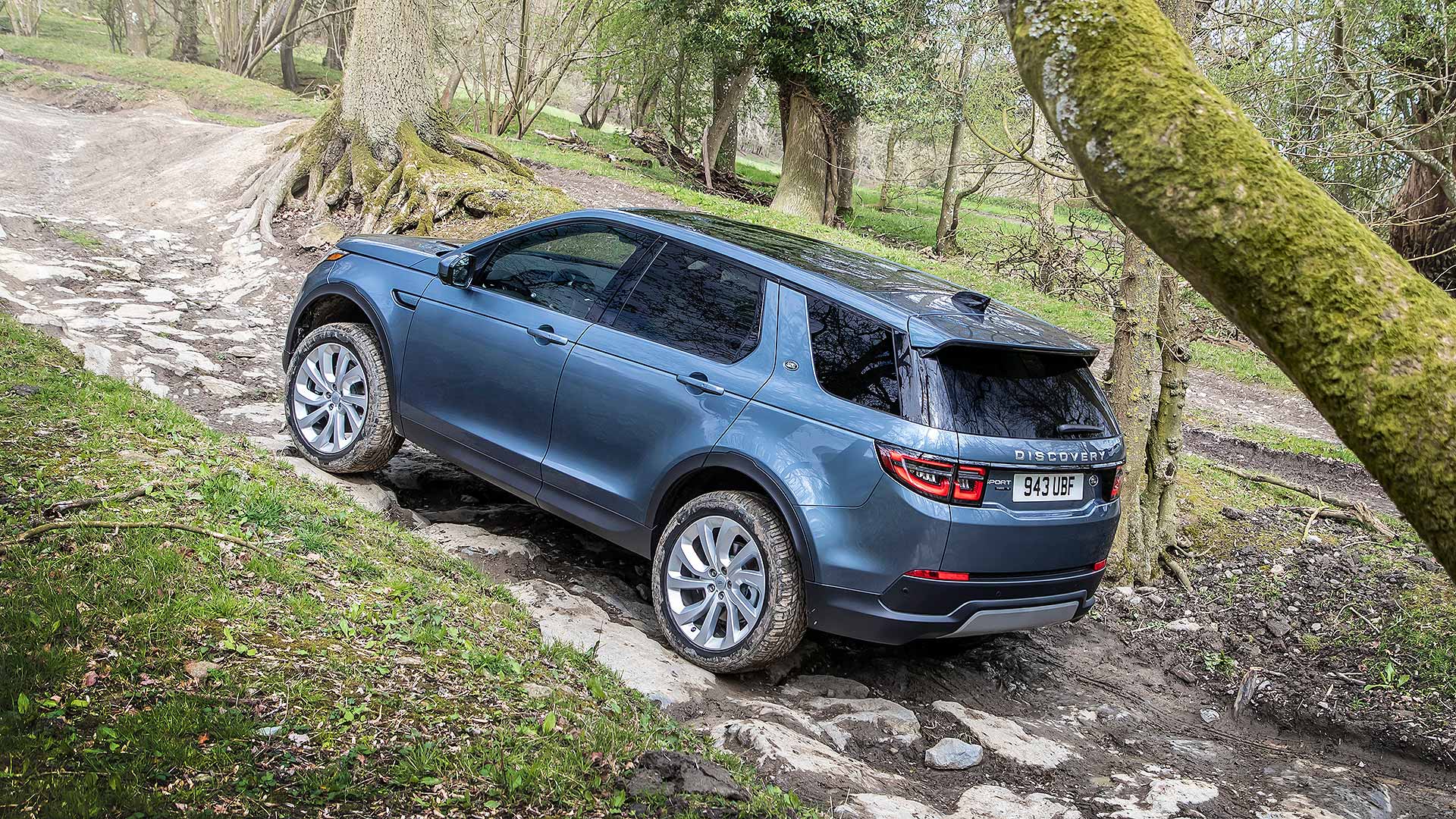
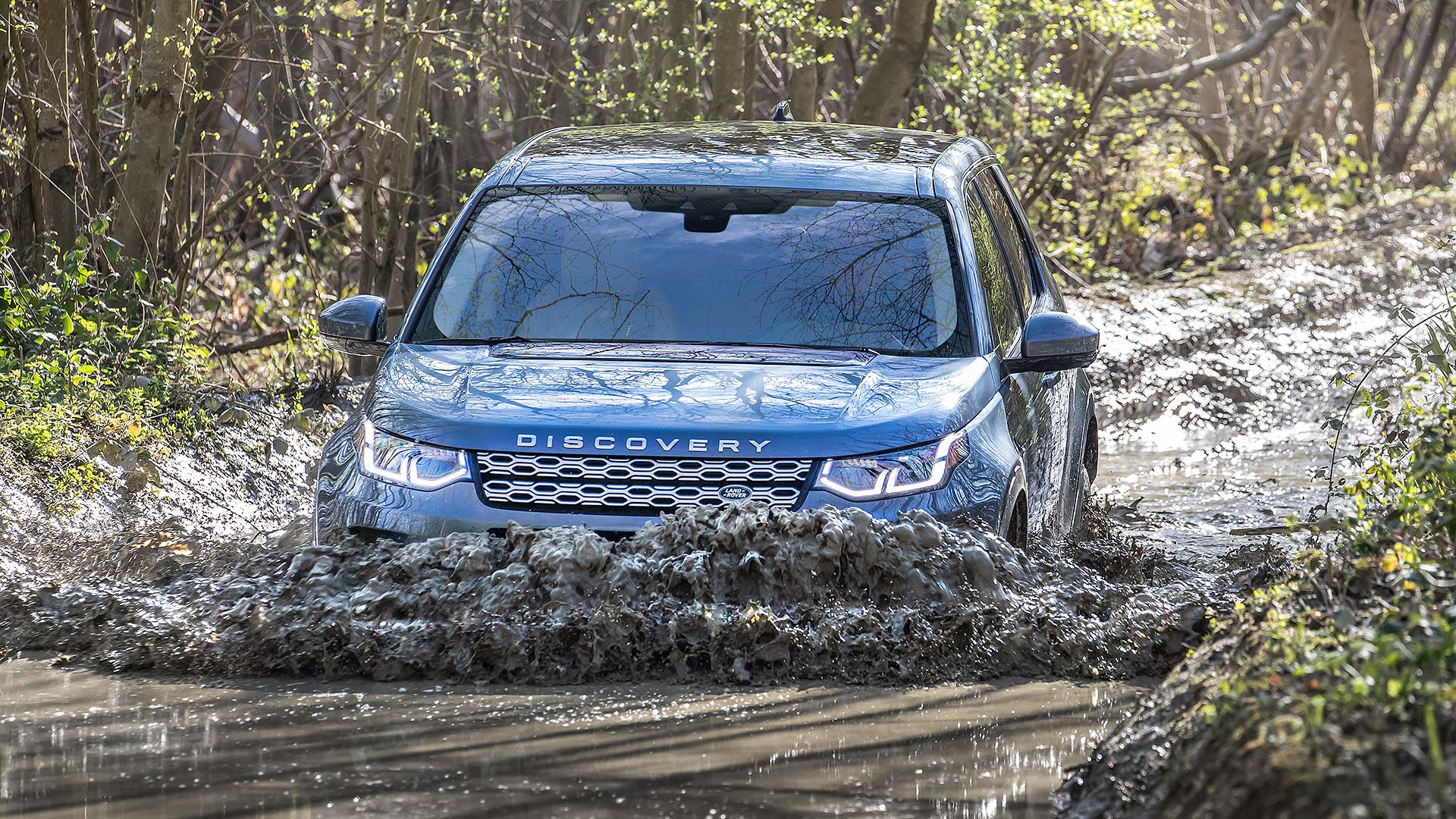
No Land Rover worth its salt skimps on off-road prowess. The new model can wade lakes 600 mm (23.6 inches) deep, has 212 mm (8.3 inches) of ground clearance and, in four-wheel drive guise, can climb up gradients of 45 degrees. New Terrain Response 2 automatically detects surfaces and adjusts for them, while approach, departure and breakover angles of 25, 30 and 20 degrees should keep real off-roaders happy.
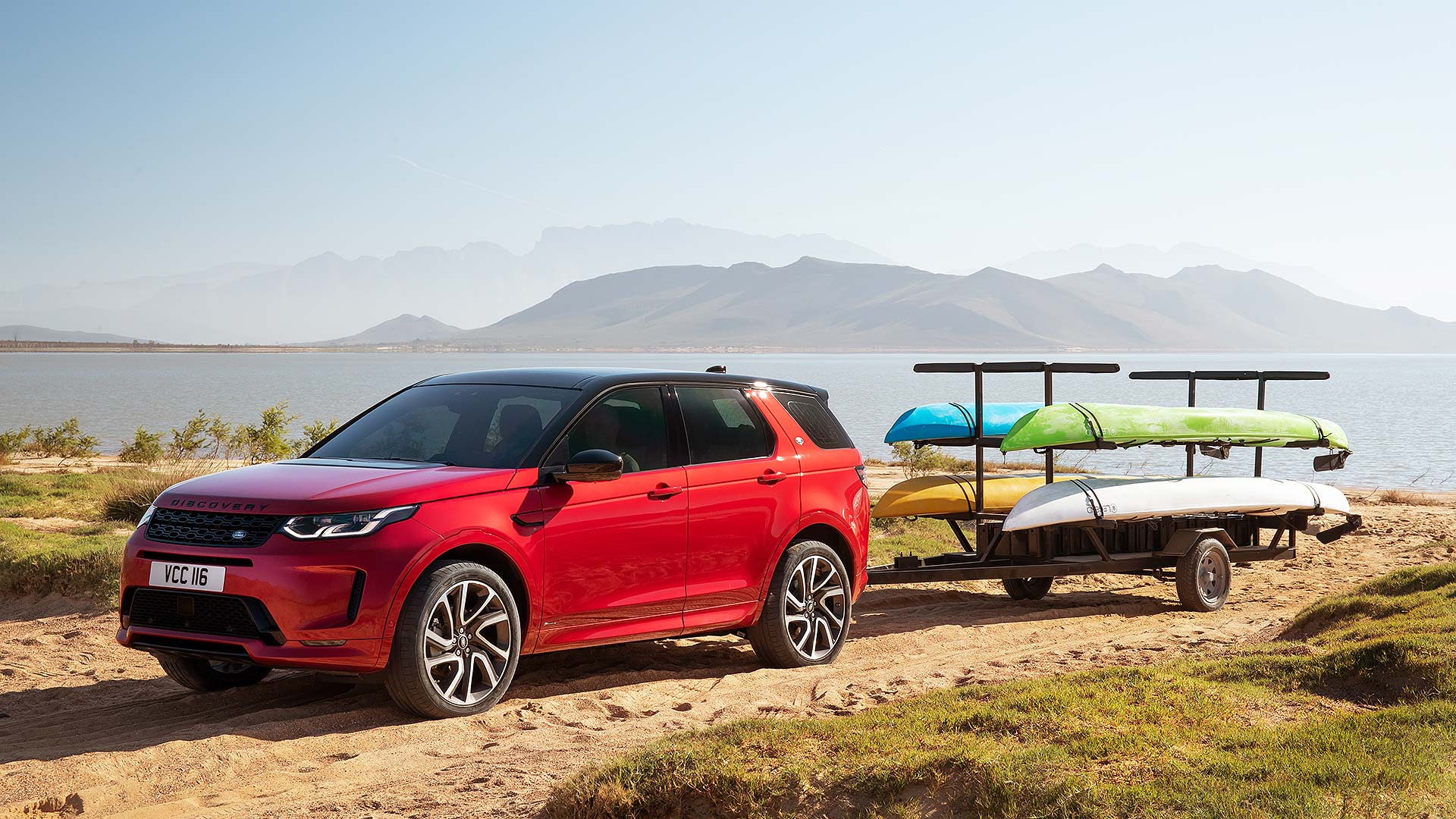
The 2020 Discovery Sport has a 2,500 kg (5,511 pounds) maximum towing capacity. Newly available is optional Advanced Tow Assist. Land Rover calls this semi-autonomous tech that means drivers can concentrate on steering the trailer, while the car guides itself. It all works through the touchscreen display on the dash: drivers ‘steer’ the trailer with one of the rotary knobs. Be gone, the challenge of counter steer!
A reversing camera is standard on every model too.
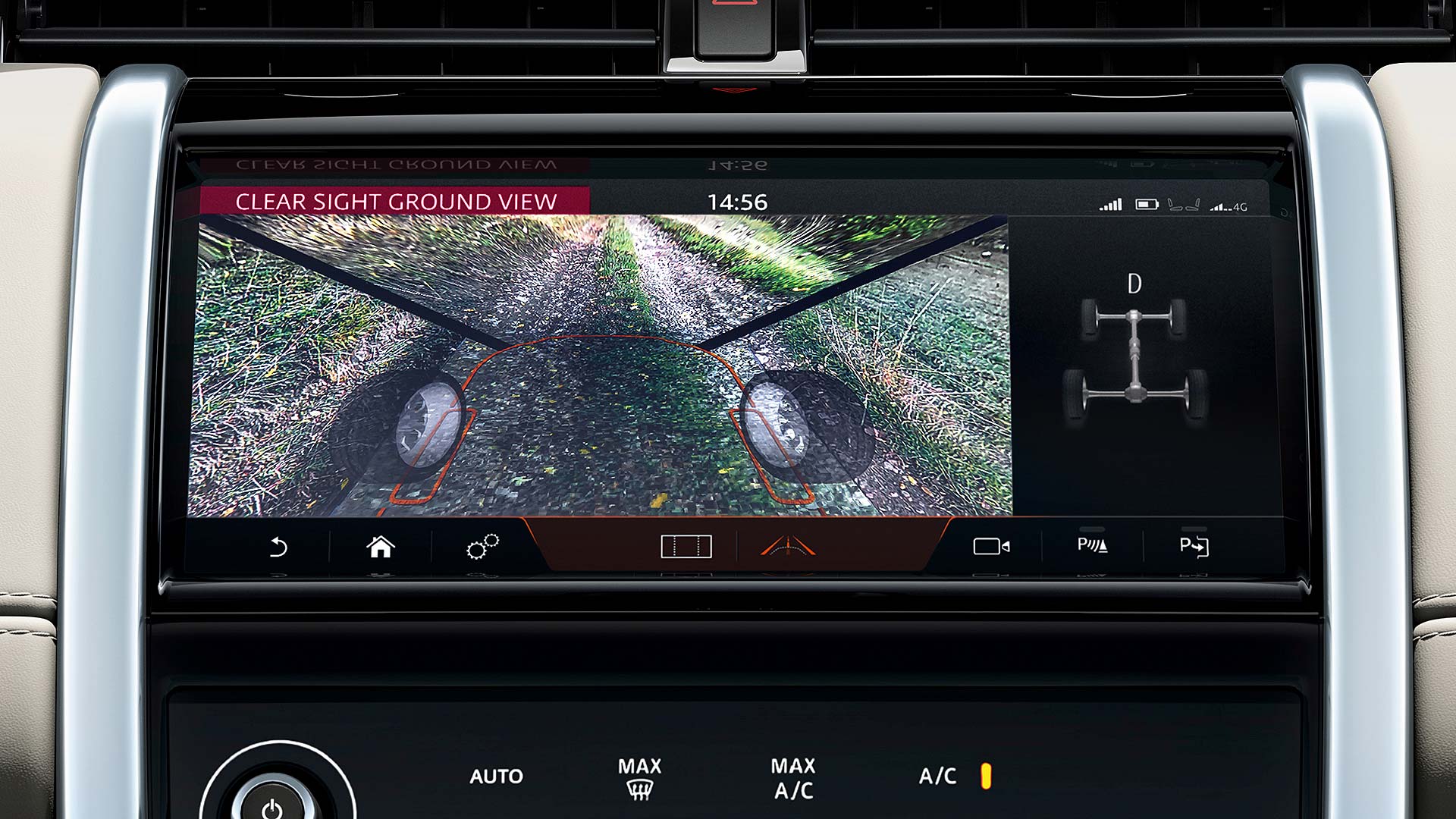
Trick Ground View tech, first seen as a futuristic concept five years ago (it was called Transparent Bonnet technology), is now available on the production 2020 Discovery Sport. This isn’t just useful when off-roading, because it also helps drivers navigate city centre kerbs. It uses camera projections to offer a virtual 180-degree view – effectively making the bonnet ‘invisible’.
And that’s not all. The Discovery Sport is a family-focused vehicle, and families like packing in either people, or stuff in the boot, or both. Rear vision suffers…
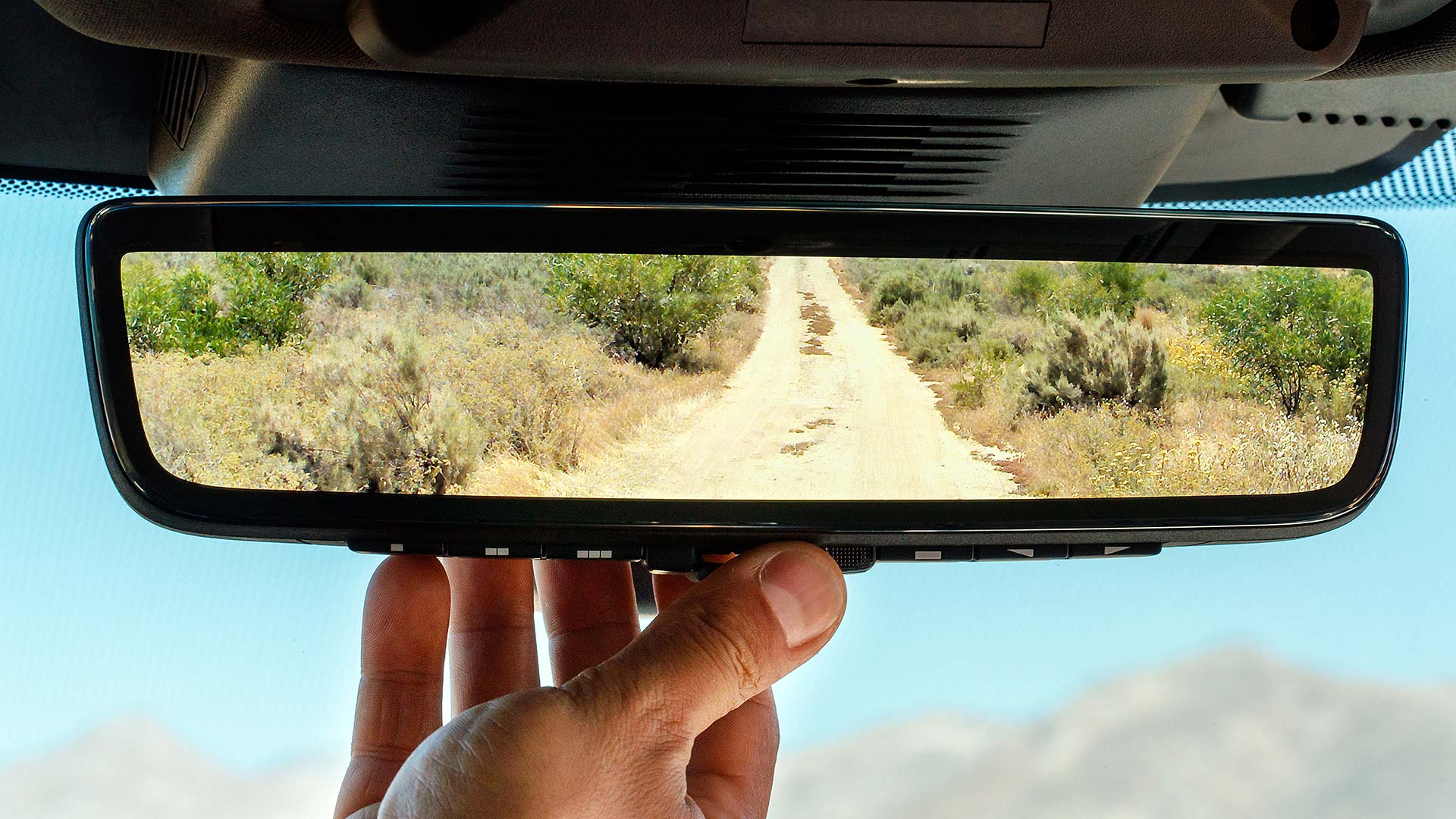
… But not with the new ClearSight smart review view mirror, that uses a camera on top of the roof to display video feed with a 50-degree field of vision. It works really well in low-light conditions, too.
Lightest of touches
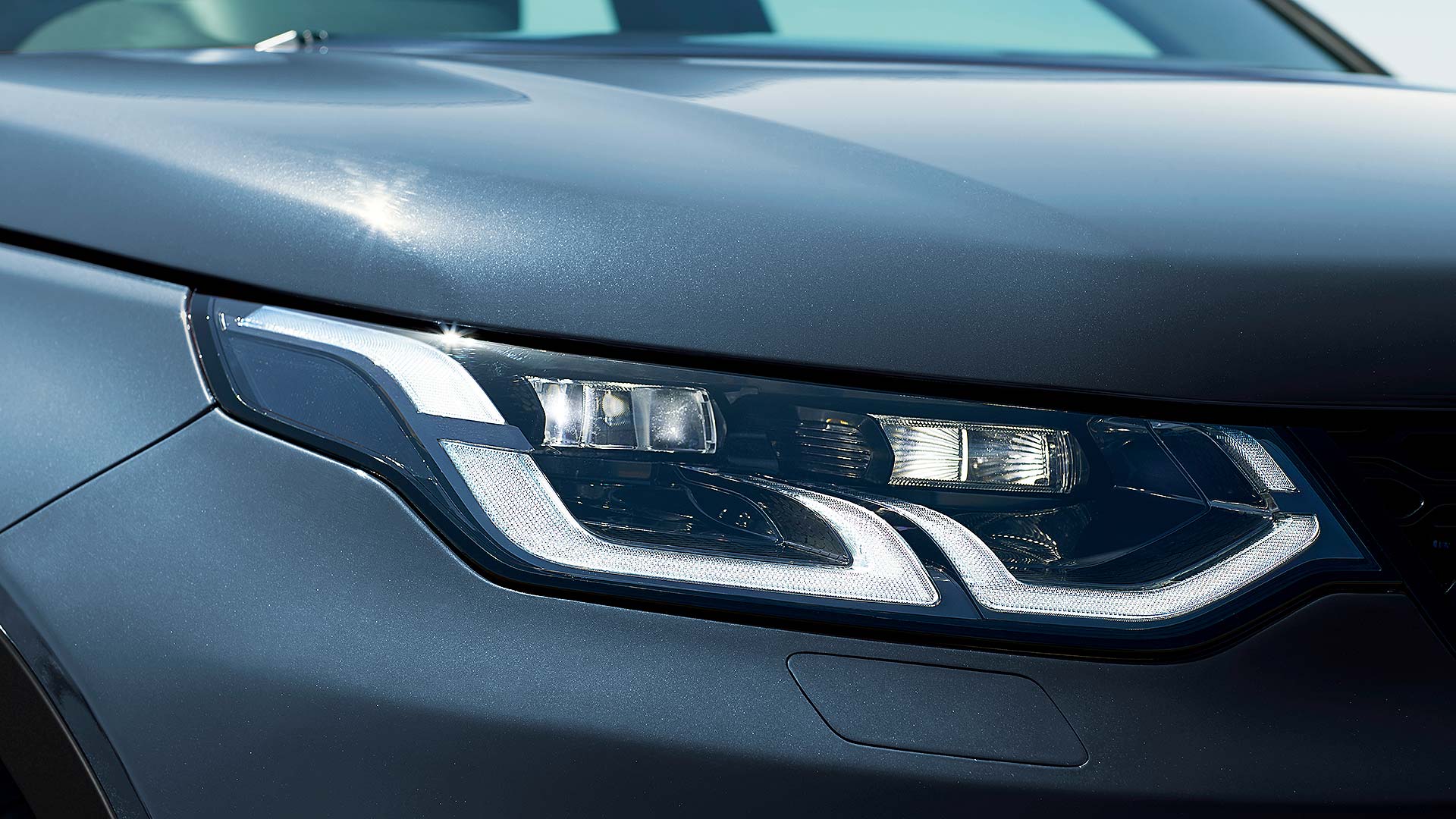
As mentioned earlier, styling changes are not as headline-grabbing as what’s beneath. But these new LED headlights give the front end a fresh look, and are joined by a smooth new grille and bumper.
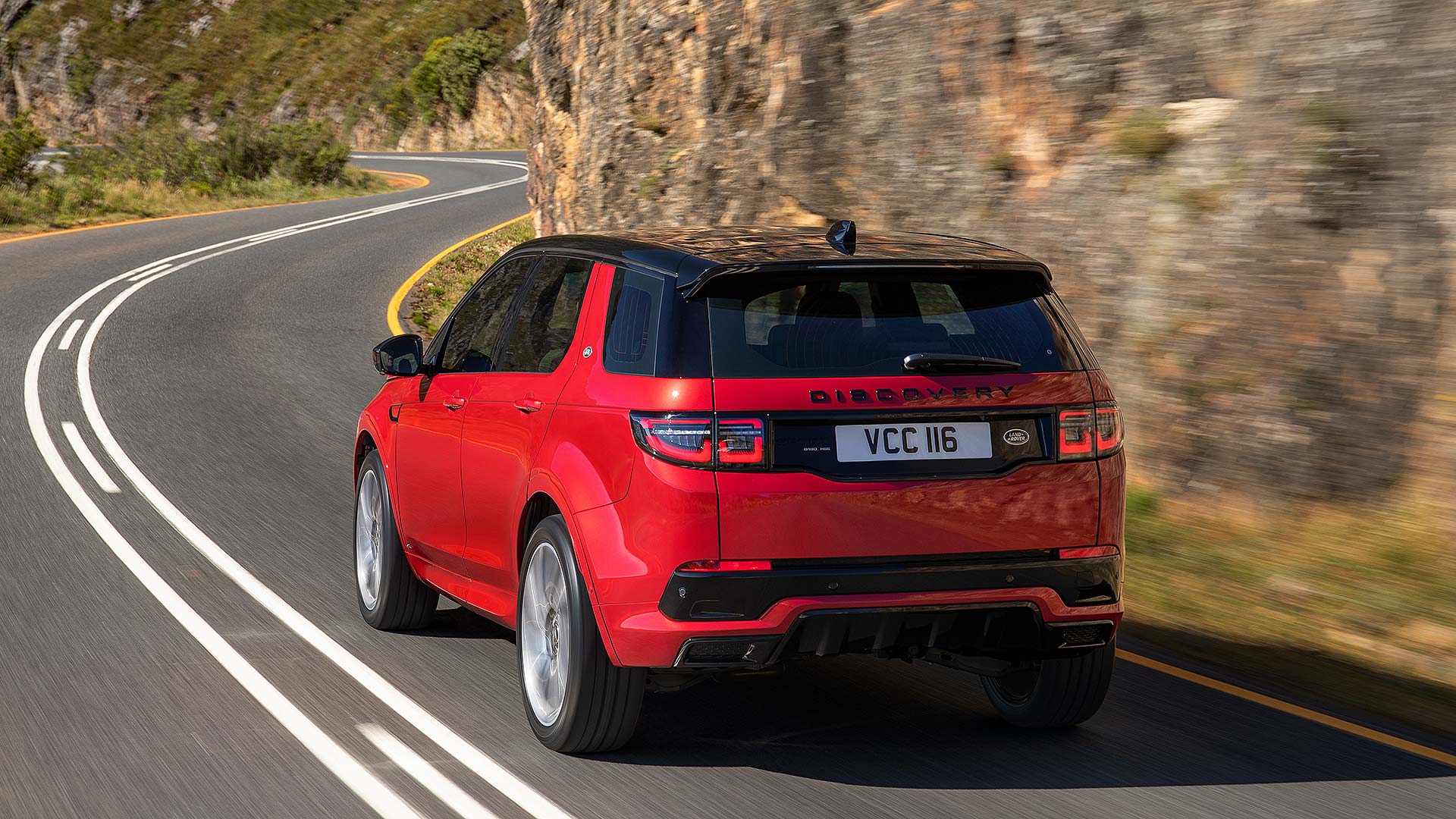
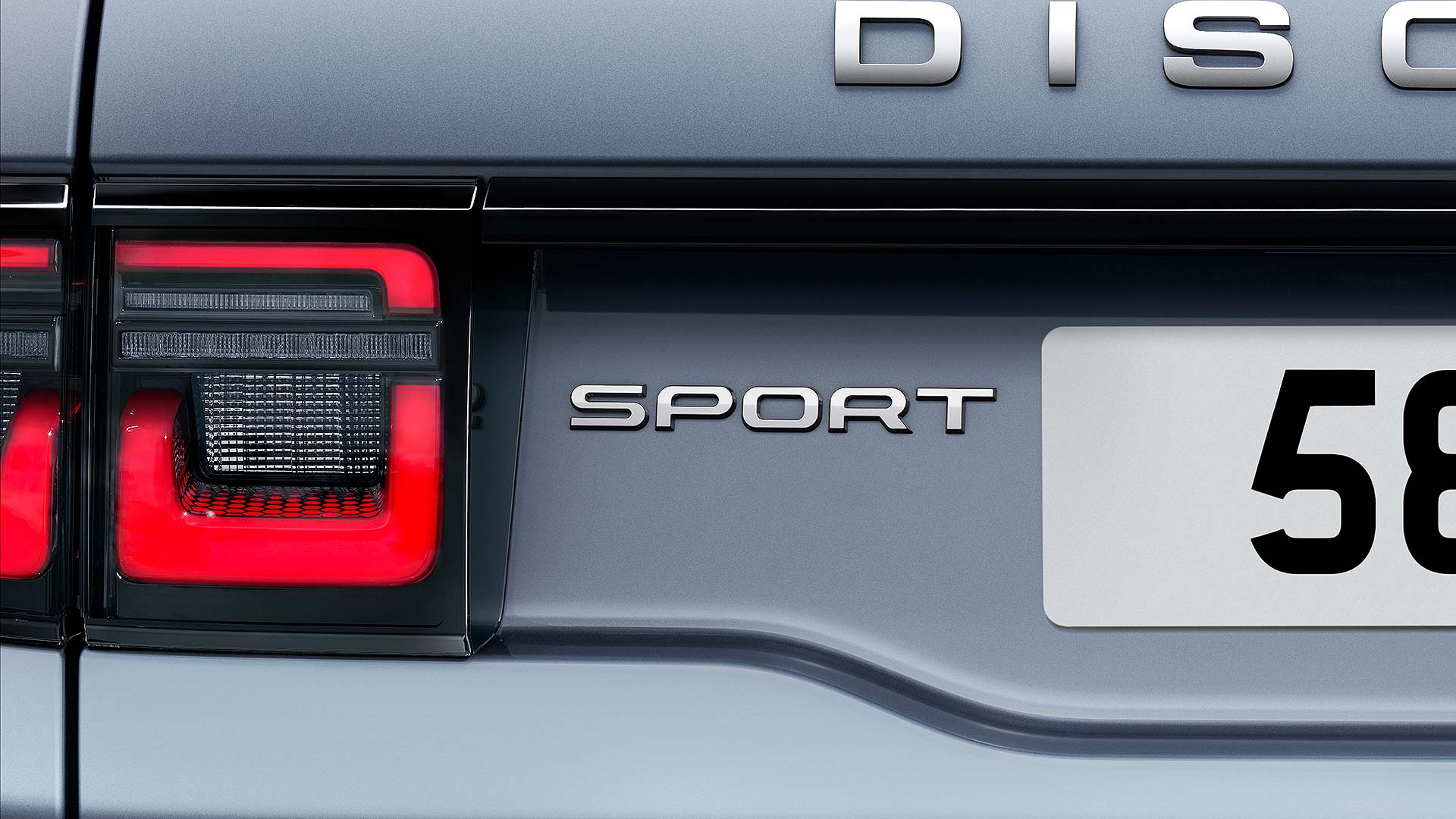
Neat darkened LED tail lamps are also new – and we can breathe a sigh of relief because the Discovery Sport has not adopted the offset number plate of its larger Discovery sibling.
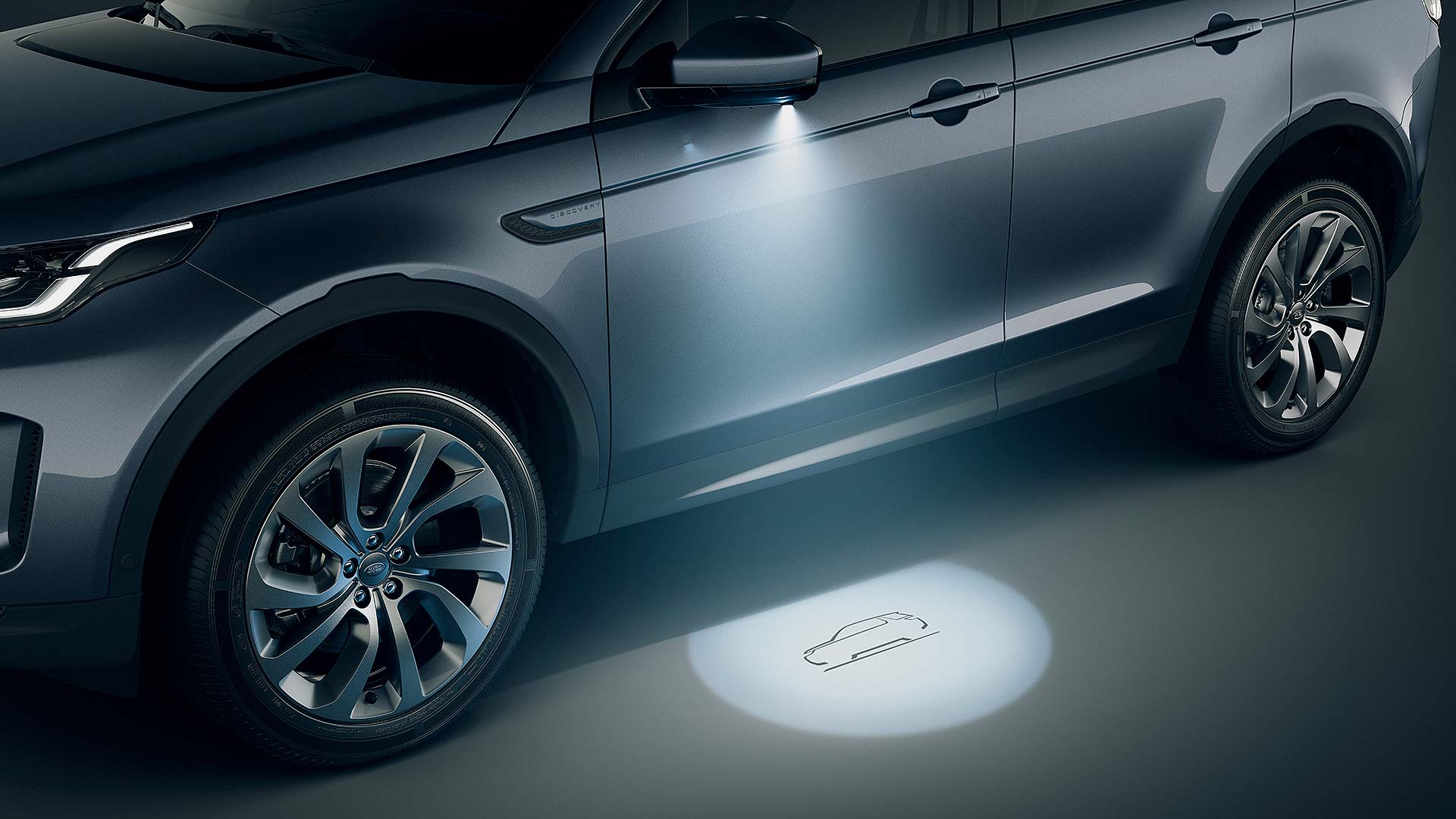
New downlighters built into the door mirrors are just one of the many neat touches offered on the new Discovery Sport. It can even be unlocked with the Land Rover Activity Key – a wearable band that you can put on when you’re off cycling, windsurfing or similar. It means you won’t lose your keys somewhere it’s unlikely you’ll ever find them…
There are four off-road mode: Comfort, Sand, Gras-Gravel-Snow, Mud and Ruts. Or simply switch it into Auto and let the car do the work. Land Rover has even increased the size of the fuel tank, so you can go deeper into the wilderness without worrying if you’ll make it back again.
JLR UK MD Rawdon Glover called the Discovery Sport a “stunning success for Land Rover… the new model combines everything the Discovery family of vehicles embodies, with a greater focus on modern life. The result is a compact seven-seat SUV that caters for every family, in every eventuality.”
2020 Land Rover Discovery: prices and specs
D150 FWD manual: from £31,575
D150 AWD auto: from £36,425
D180 AWD auto: from £40,325
D240 AWD auto: from £42,475
P200 AWD auto: from £36,775
P250 AWD auto: from £41,375
Grades: Standard, S, SE, HSE, R-Dynamic, R-Dynamic S, R-Dynamic SE, R-Dynamic HSE
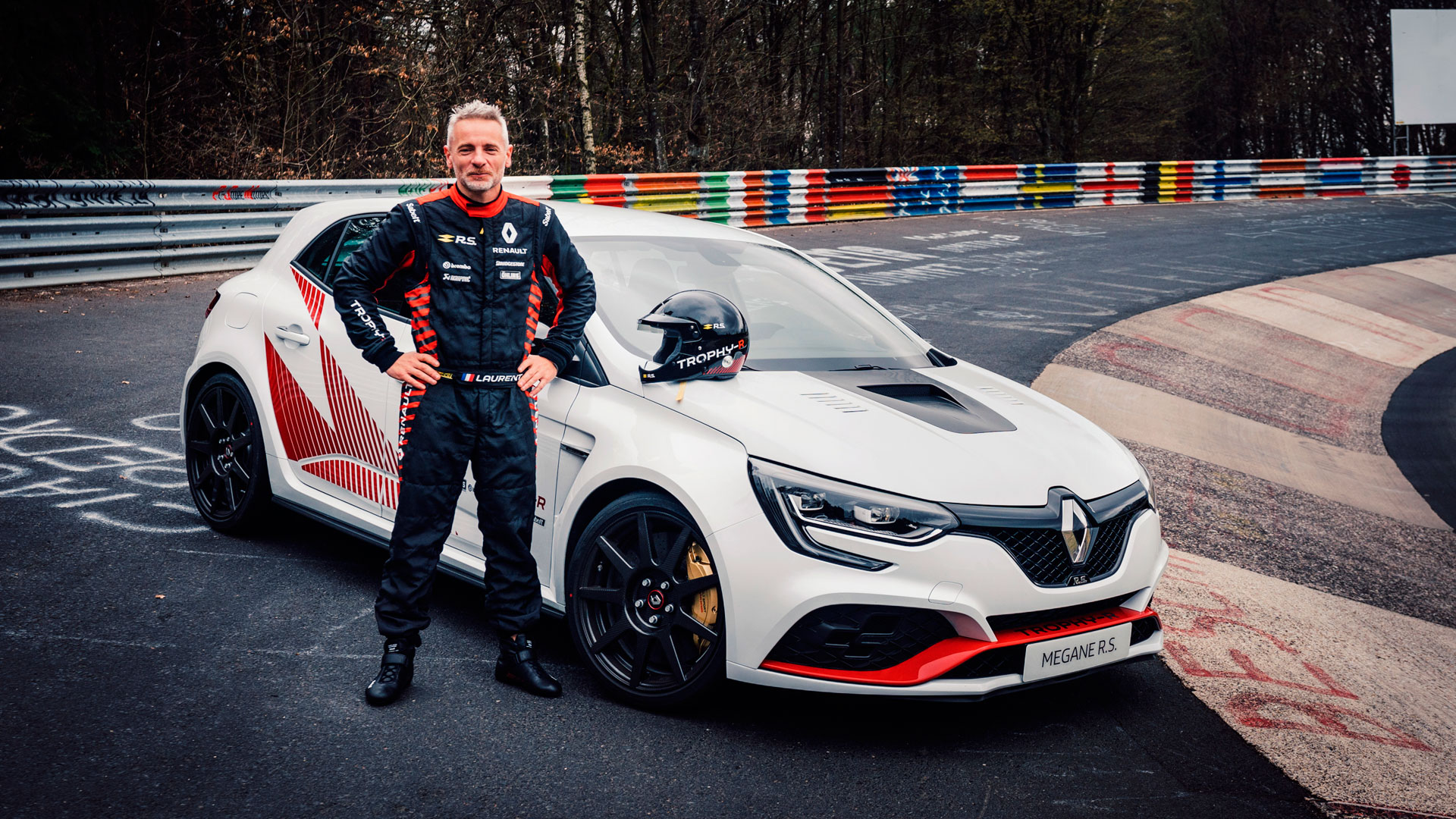
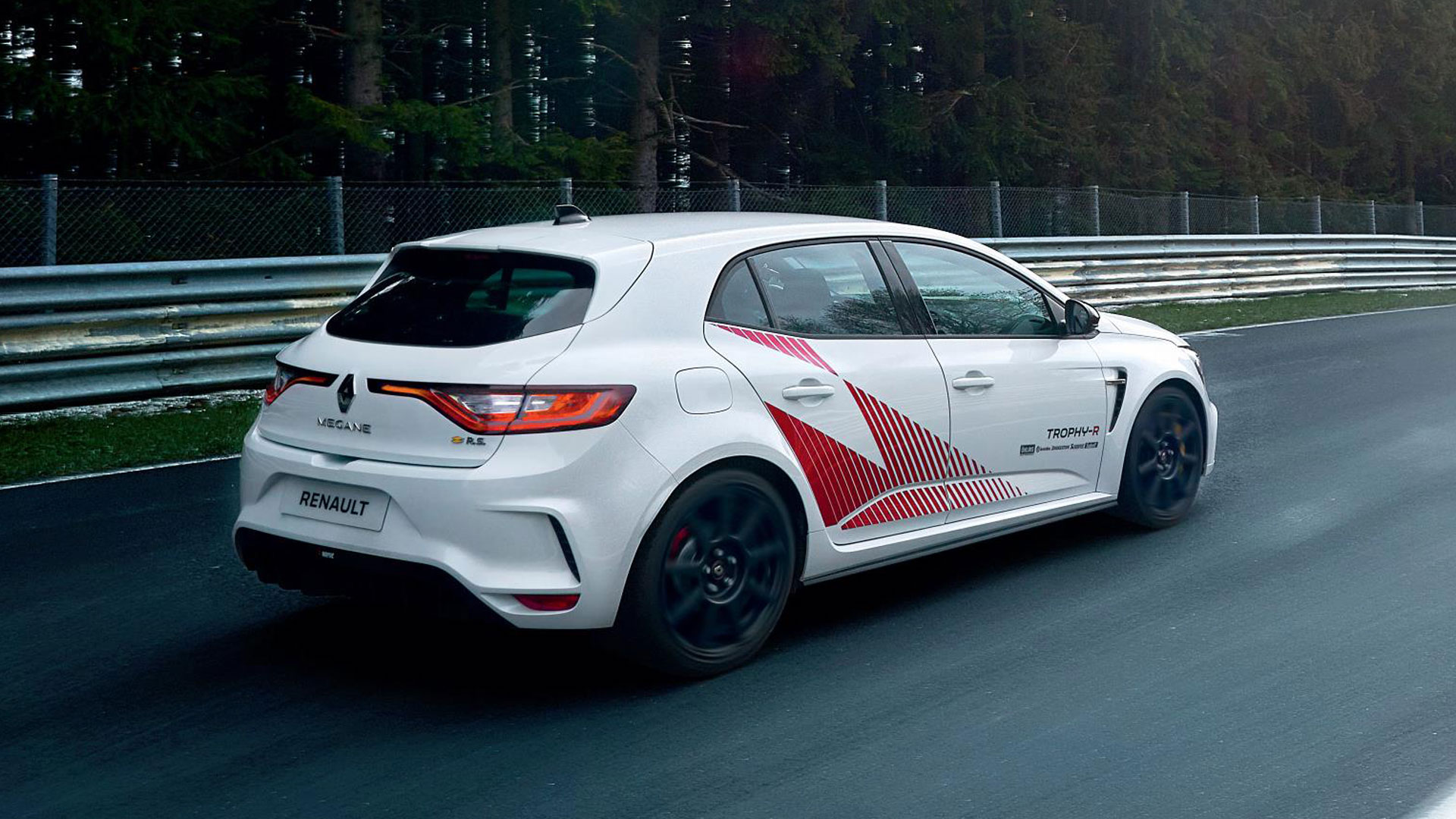
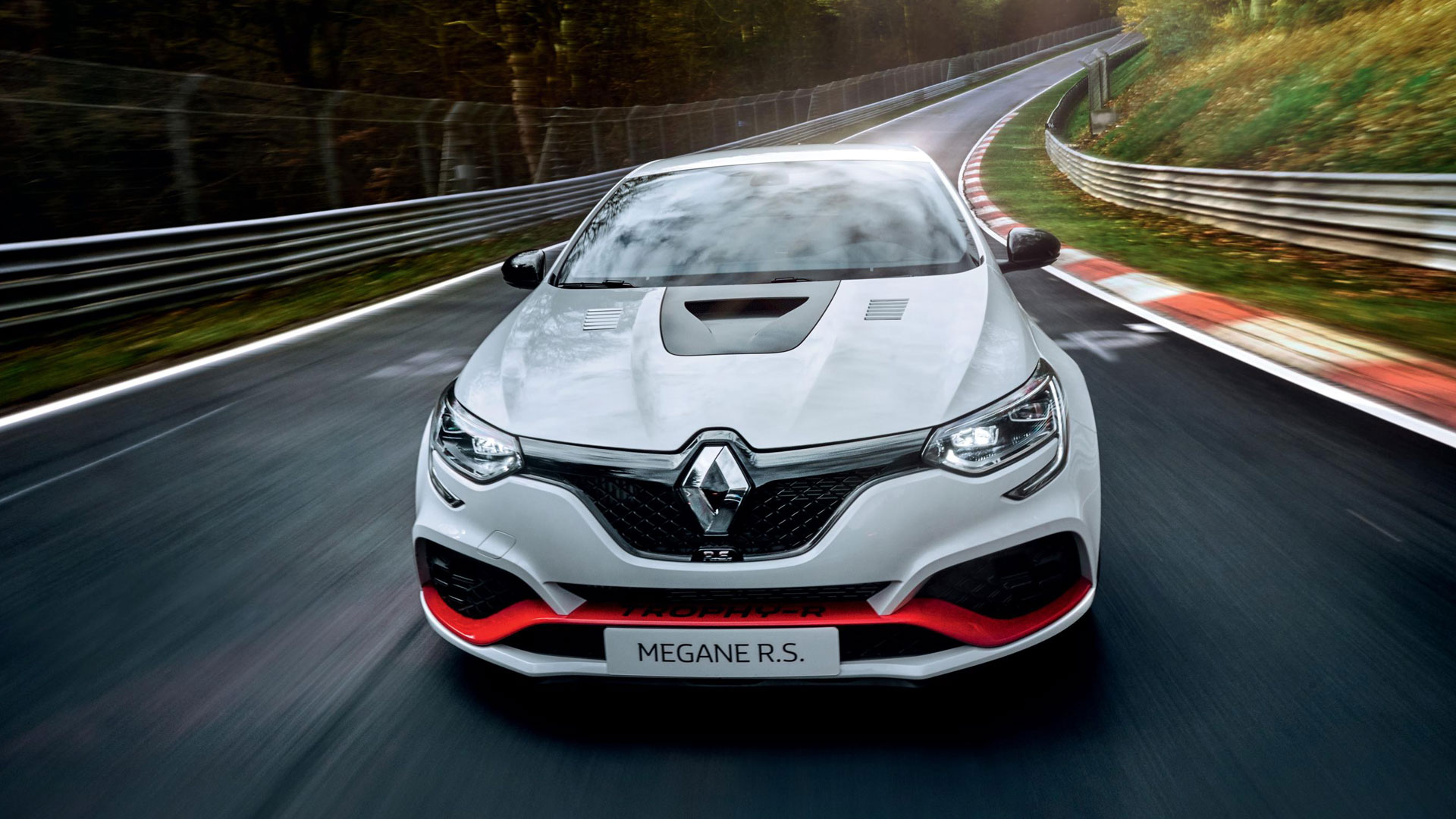
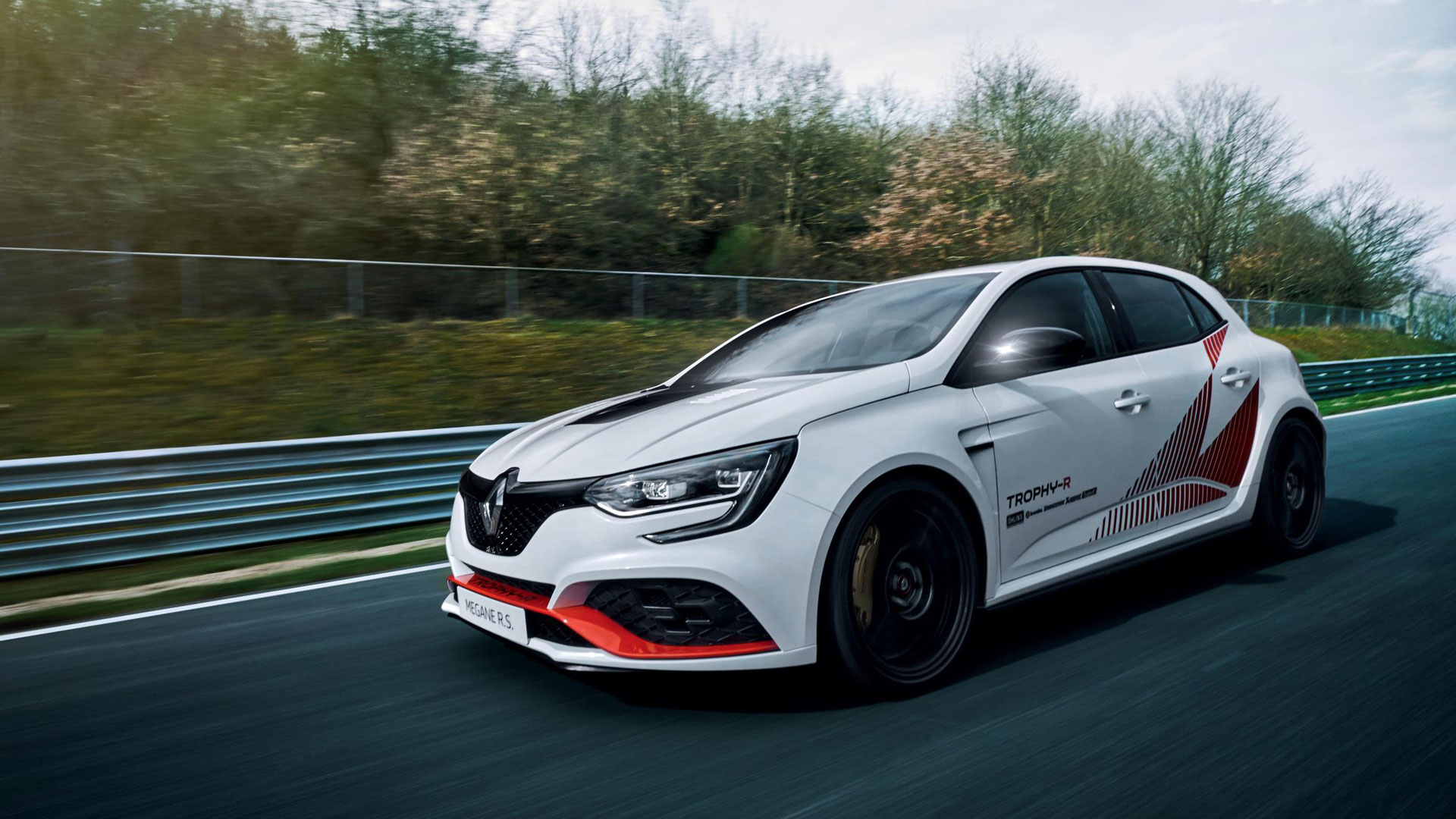
The new Renault Sport Megane R.S. Trophy-R has been revealed, and straight out of the blocks, it’s a Nurburgring lap record holder.
Once again, Renault has toppled the Honda Civic Type R for honours as the fastest front-wheel-drive hot hatch around the Nordschleife.
The time: a swift 7 minutes 40.1 seconds. It follows in the footsteps of past hardcore Meganes – the R26.R and Trophy R – cars that took the Nurburgring record in their day.
What makes the new Megane Trophy-R a Nurburgring champ?
The car was driven by Laurent Hurgon, the race ace who also took two previous hardcore Meganes to their respective Nurburgring lap records, with the new Meg undergoing a few changes to transform it into a ‘Ring champ.
Three areas were addressed by the team at Renault Sport: maximum weight reduction, reworked aerodynamics and ‘a radical development of its drive axels’, including how the car is suspended and how power is distributed at the front.
Chief among changes to the new 2019 Megane R.S. Trophy-R is a significant weight reduction. All in, you can have up to 130kg lopped off the kerb weight of your Megane.
The specifics of that weight reduction aren’t yet known, but you can bet the Sabelt bucket seats, new wheels and the special Akrapovic exhaust will have played a part.
Renault has also partnered with Bridgestone for the tyres on the Trophy-R. Previous ‘ultimate version’ Meganes have used Toyo R888 (2008’s R26.R) and Pirelli P-Zero Trofeo R (2014’s Trophy R) rubber respectively. Both were integral to their record-breaking ‘Ring laps.
In common with the last Trophy-R, Renault has partnered with Ohlins for the car’s trick damping, while Brembo has provided the car’s upgraded braking system.
An aggressive exterior makeover, complete with improved aerodynamics – most noticeably, a large duct on the bonnet – completes the transformation. The engine is carried over from the non-R Trophy, with 300hp on tap.
When can I have a new hardcore Megane?
The car will debut at the 2019 Monaco Grand Prix on 24 May and Renault says it will go on sale towards the end of 2019.
As for how many customers will be able to get their hands on one: Renault describes the car as ‘an exclusive limited edition of a few hundred units only’. Get in quick, if you want one.
Auction website Bring a Trailer has already helped many drool away their lunch breaks over interesting collector cars, but now the stakes are even higher.
New ‘Premium Listings’, aimed at cars of even greater significance than the regular curated offerings on the website, offer a higher degree of service to sellers.
Those opting for the ‘Plus’ package receive professional on-site photography, whilst the bespoke ‘White Glove’ service takes care of everything on behalf of the seller.
The latter aims to target the high-end collector car vendor, or those with a considerable number of vehicles to sell.
Other important changes as part of the Premium service include the ability to list cars for up to 21 days, instead of the regular seven-day auction used at present.
According to Bring a Trailer founder Randy Nonnenberg, the changes will still allow the site to continue its mission of being “the best way to buy and sell most sought after vehicles of all time,” and that the changes will let the company “connect more great cars to great car people than ever before.”
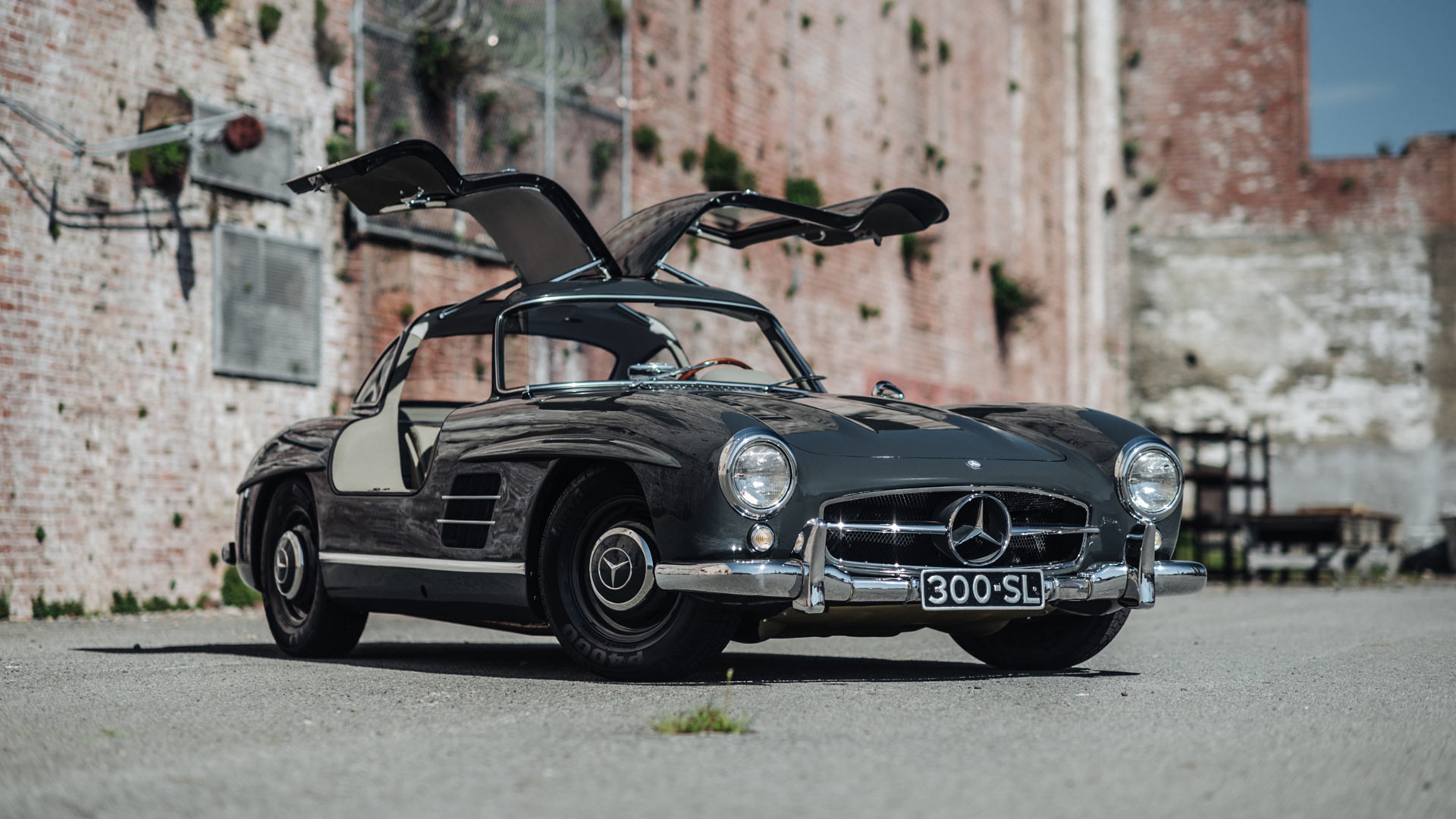
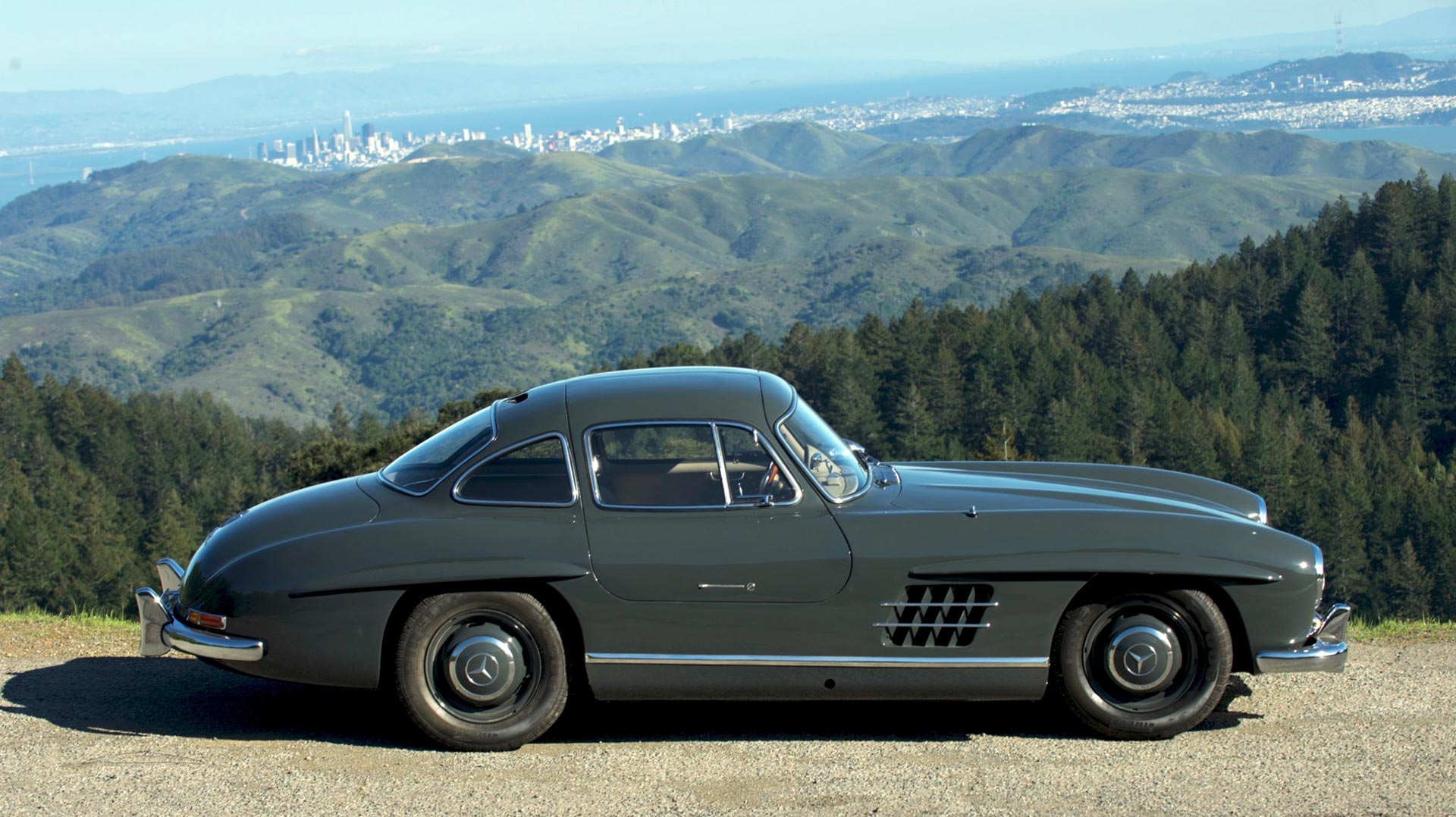
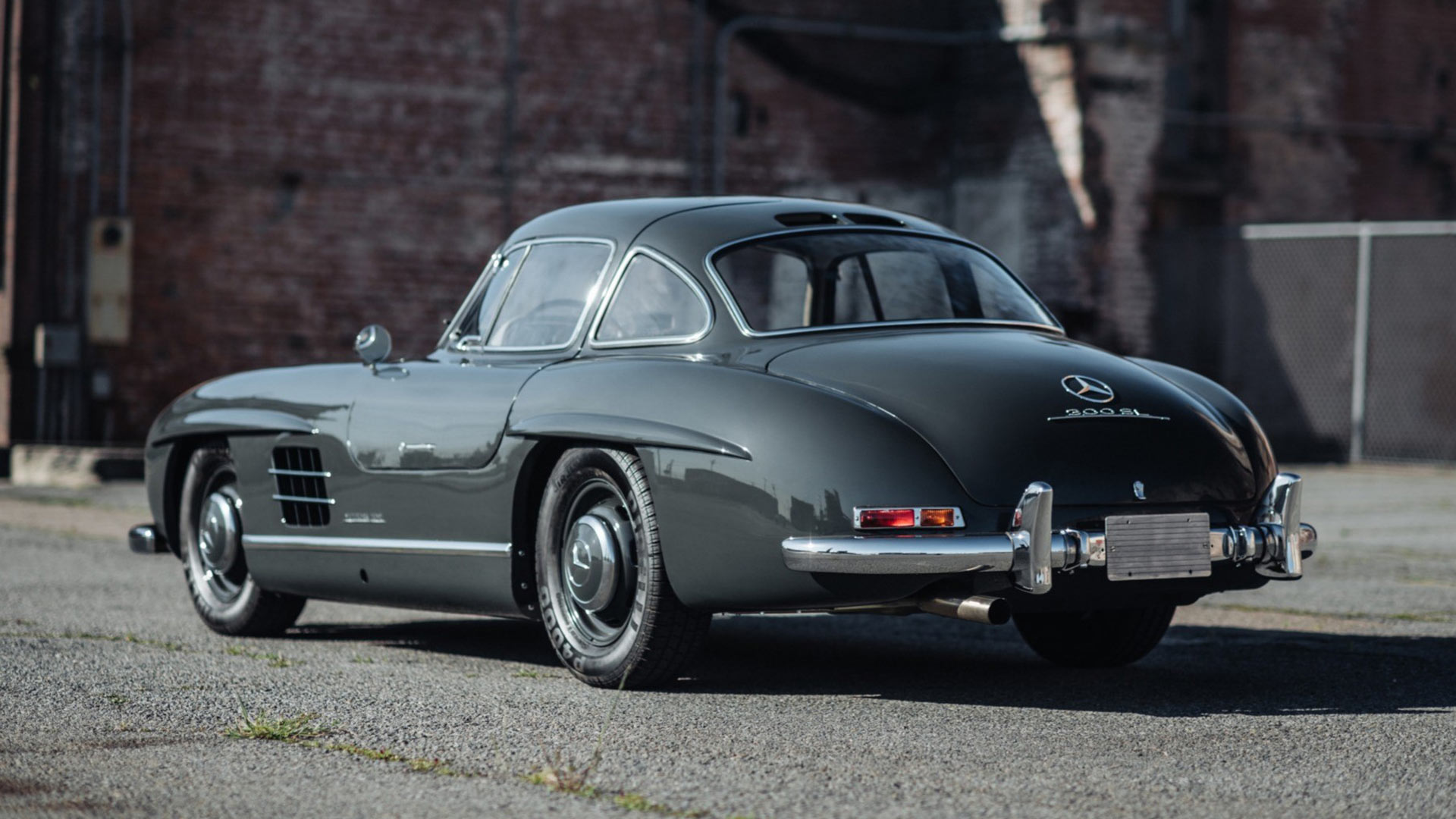
To launch the new service, the site picked a stunning 1956 Mercedes-Benz 300SL Gullwing to be the first car to ‘go premium’, which has now been joined by three other listings
1956 Mercedes-Benz 300SL Gullwing
Offered with no reserve, and currently attracting a bid of $1 million, this Graphite Gray 300SL Gullwing is an elaborate way to demonstrate the new premier service.
The car itself has had just three owners from new, with the latest owner actually being Bring a Trailer, Inc. since 2013. The company has kept the car in storage, apart from occasional outings and even use as a wedding car.
Subject to a thorough and detailed restoration, the car has received important parts such as the belly pans from Mercedes-Benz Classic. An engine rebuild and brake overhaul were also part of the work, along with a fully restored leather interior.
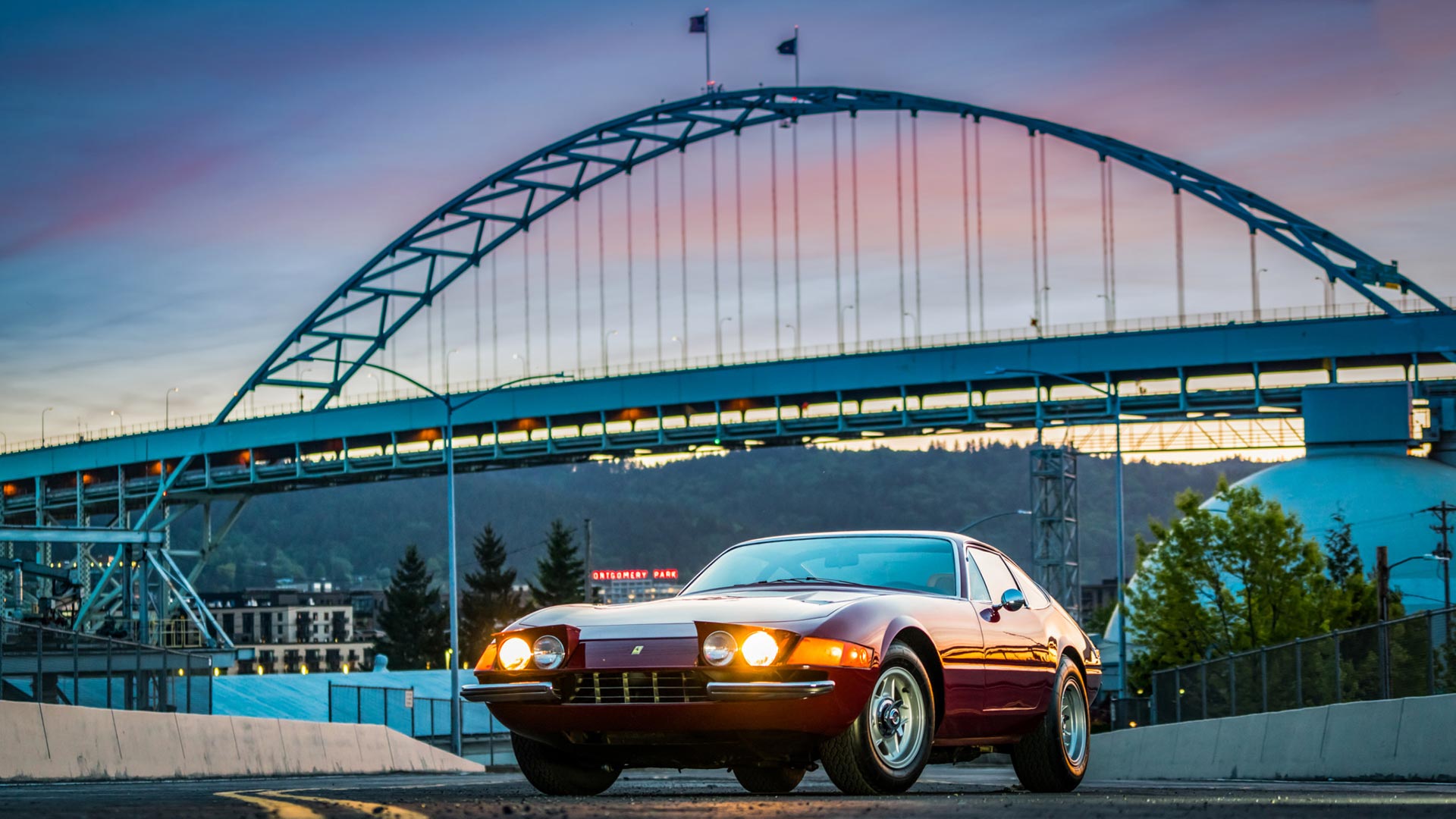
1971 Ferrari 365 GTB/4 Daytona Berlinetta
Noted to be just one of 1,406 365 GTB/4 Daytona models produced, this particular car was delivered new in North American specification, wearing yellow paintwork over a black interior.
In 1978 the car was repainted in distinctive Rosso Chiaro, whilst the tan interior was updated and refreshed in 2012. The advert notes that the dashboard was covered in the correct ‘mouse hair’ fabric, although many of the interior parts are original from the factory.
With receipts said to total more than $150,000 in maintenance work, the 4.4-liter Colombo V-12 has undergone a rebuild, along with work to the five-speed manual transaxle.
Most importantly, the seller notes that the pop-up headlights work correctly, and has provided more than 400 photos to indulge Daytona fans with.
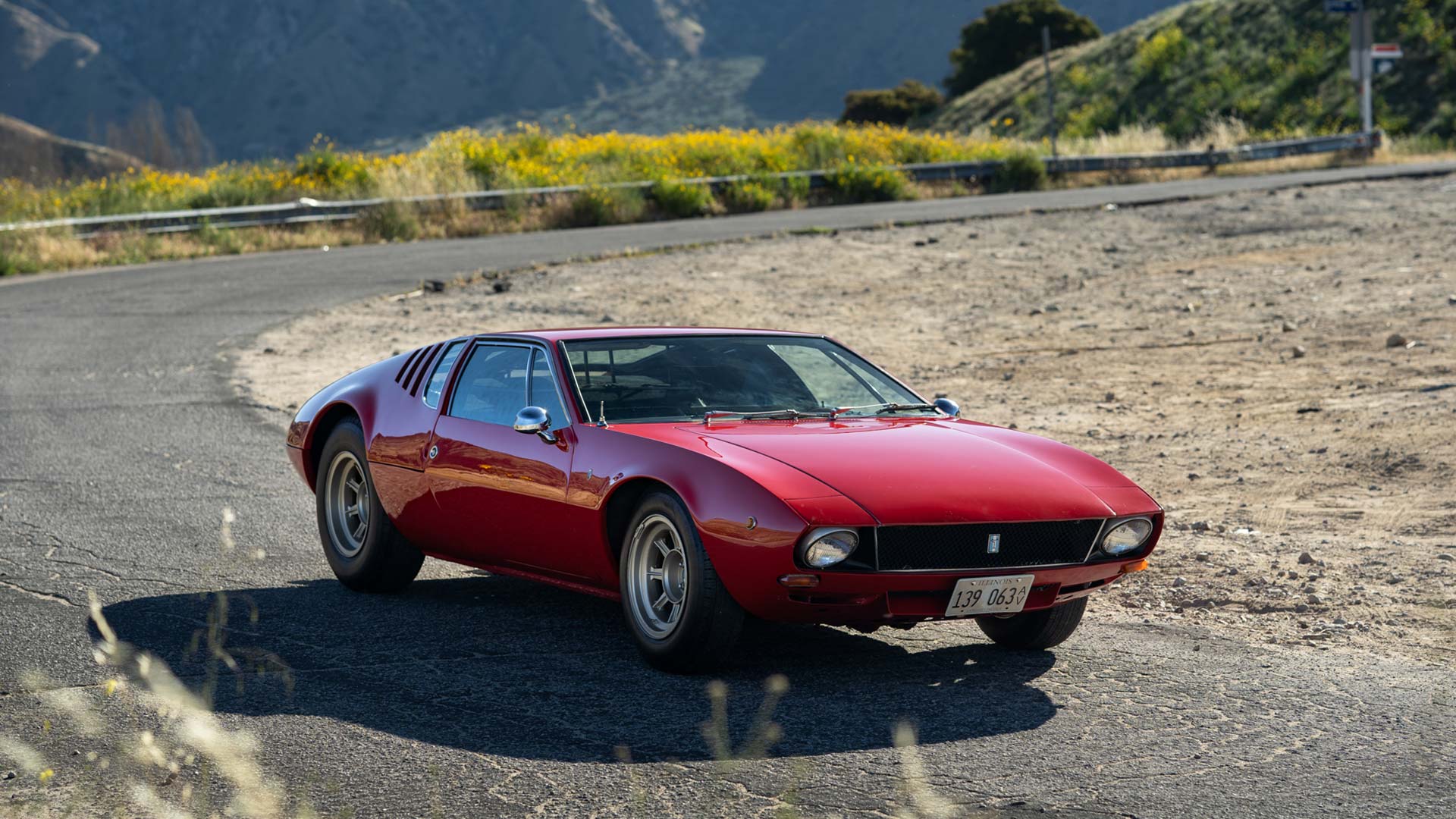
1970 DeTomaso Mangusta
There are more pop-up headlights on display, with another red Italian sports car in the BaT premium listings. With just 401 examples built, the DeTomaso Mangusta can legitimately claim to be rarer than the Ferrari shown above.
One of the later Mangustas built, this one features a 302-cubic inch Ford V-8 engine connected to a five-speed manual transaxle. Power steering, air conditioning, and disc brakes were all part of the standard equipment.
This car remained with the original purchaser until 2016, and features a fully documented history of the work done to it over several decades. Most impressive is the recorded mileage of less than 12,800 miles.
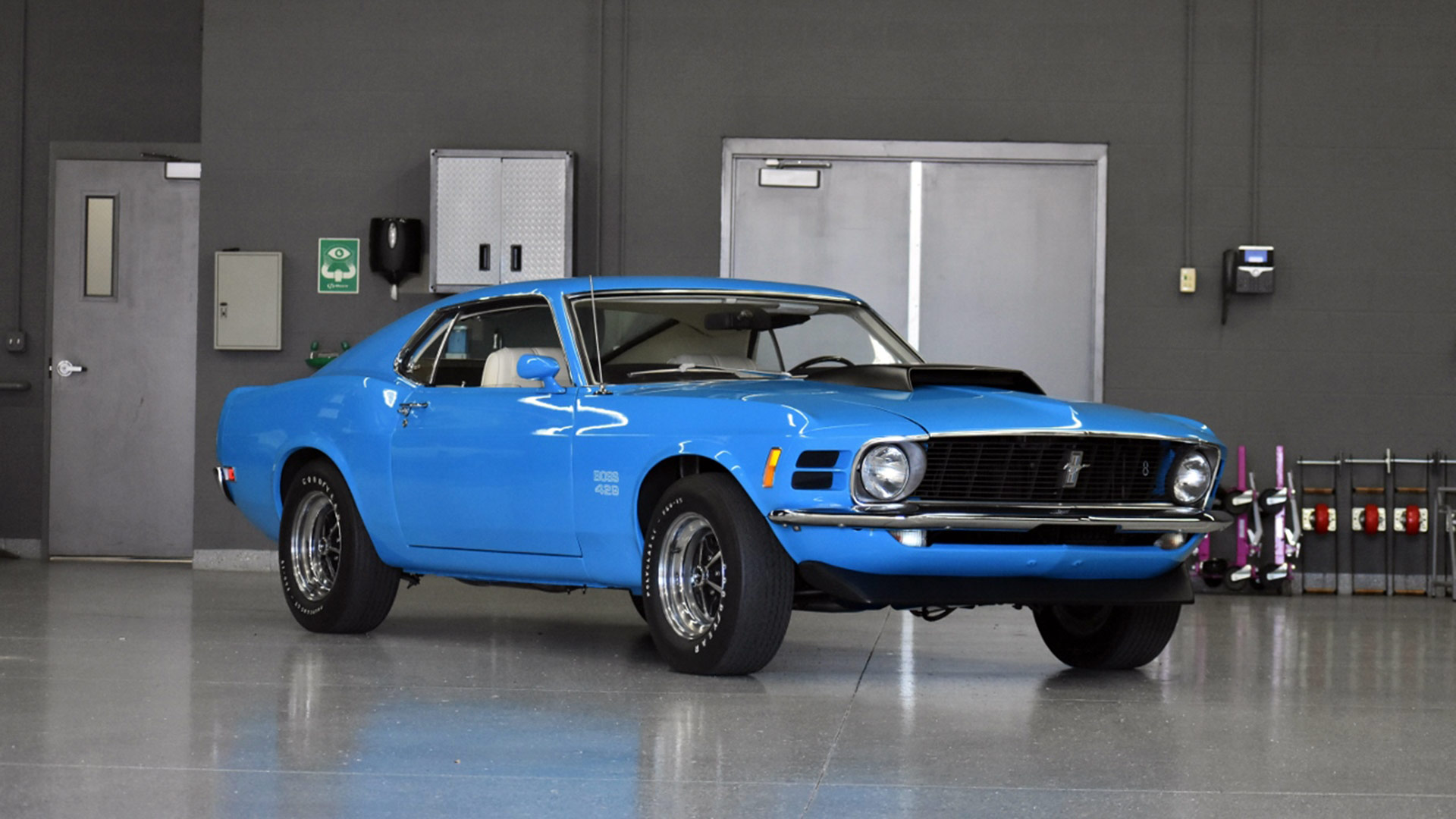
1970 Ford Mustang Boss 429
A true member of muscle car royalty, only 500 Mustang SportsRoof models were built in the 1970 model year featuring the legendary 429-cubic inch Boss V-8 engine and four-speed manual transmission.
The original owner did not skimp on options, ticking boxes for Competition Suspension, front disc brakes, Drag Pack, and a 3.91 Traction-Lok differential. Leaving the factory painted Grabber Blue, a full respray in 2012 returned the car to its original hue.
Having covered 48,000 miles from new, the current owner has added just a handful of miles to the odometer since acquiring it in 2014.
With the collector car market seemingly continuing to find strength, the decision by Bring a Trailer to target high-value sales is a logical move for the company to make. However, maintaining the affordable options for the average enthusiast is likely to be an important strategy.
Order a new Renault this week and you could save up to £1,000 EXTRA off selected models. The special offers are part of a Formula One celebration event in the build up to the Monaco Grand Prix.
The discounts are available on top of existing offers and apply to both cash and finance customers. You have until 27 May, the day of the Monaco GP, to order your new Renault, and cars must be registered by 30 June 2019.
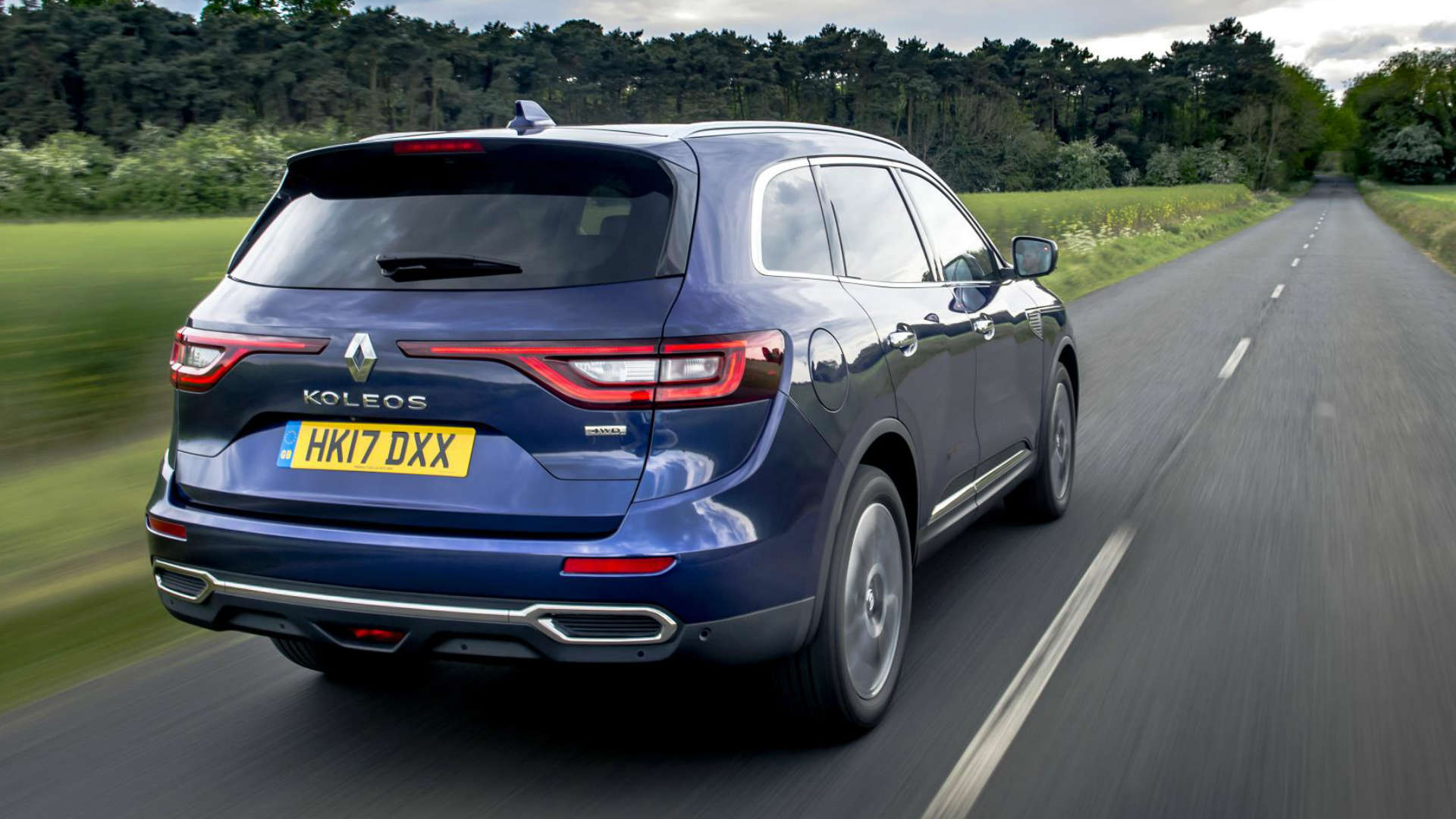
The maximum discount is available on Renault’s large SUVs, with £1,000 off the price of a Kadjar or Koleos. Meanwhile, a £500 discount is available on Clio, Zoe, Captur, Megane, Scenic and Grand Scenic models.
Highlights of the latest offers include:
Renault Koleos Iconic dCi 175 Auto X-Tronic
Specification: rear parking camera, front and rear parking sensors, blind-spot warning, climate control, automatic tailgate, 8.7-inch colour touchscreen, Apple Carplay and Android Auto.
Deal: £1,000 off and available from £189 a month.
Renault Kadjar Play TCe 140
Specification: automatic headlights and wipers, rear parking sensors, cruise control, climate control, 17-inch alloys and LED daytime running lights.
Deal: £1,000 off and available from £199 a month with a £3,000 deposit contribution.
Renault Clio Play
Specification: 16-inch alloys, DAB radio, Bluetooth, air conditioning, electrically adjustable and heated door mirrors and hands-free keycard.
Deal: £500 off.
The extra discount is available on all new cars ordered between 17 and 27 May 2019 and registered by 30 June 2019. It excludes the Trafic van and Twizy quadricycle, and applies to retail customers only.
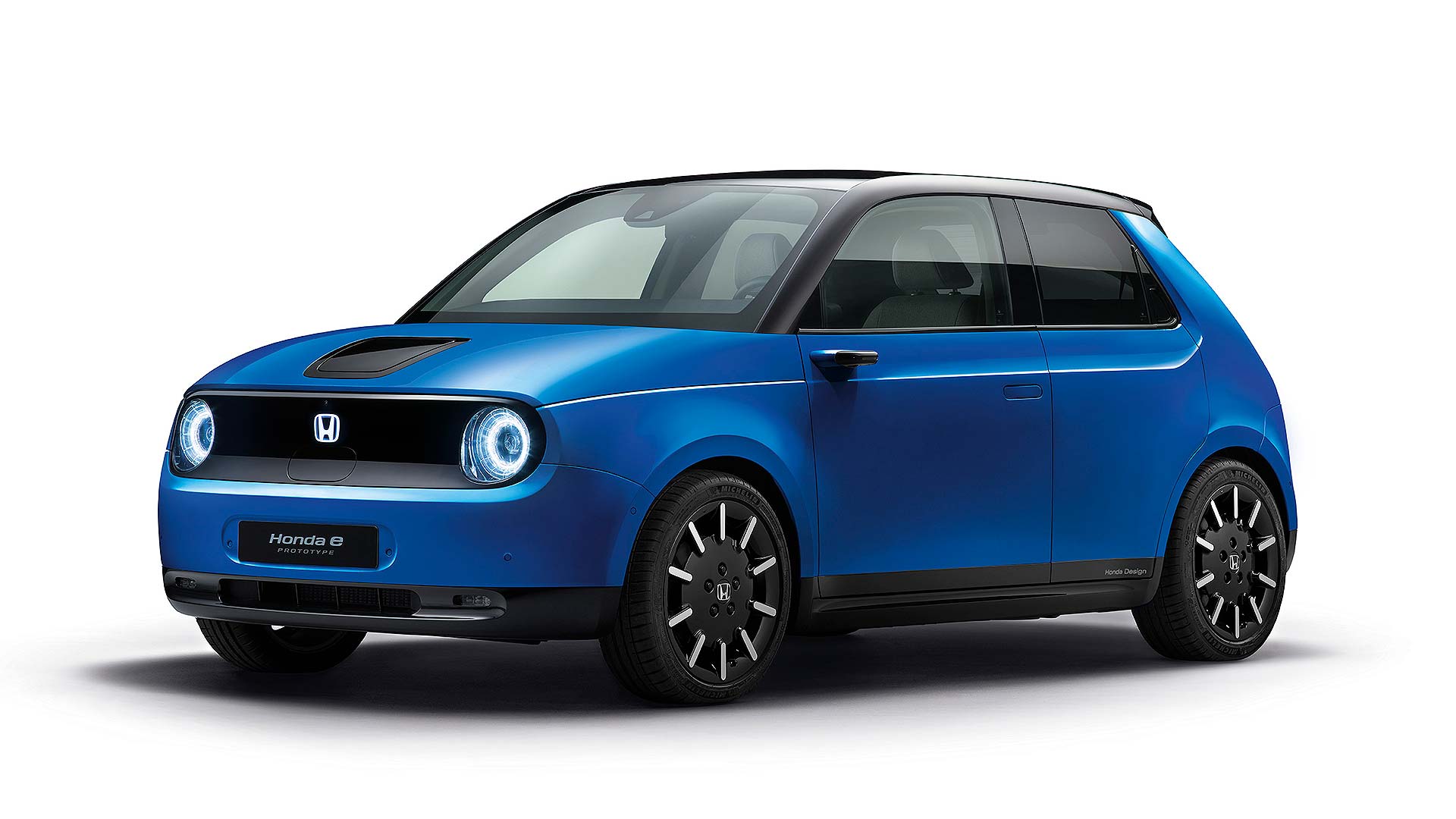
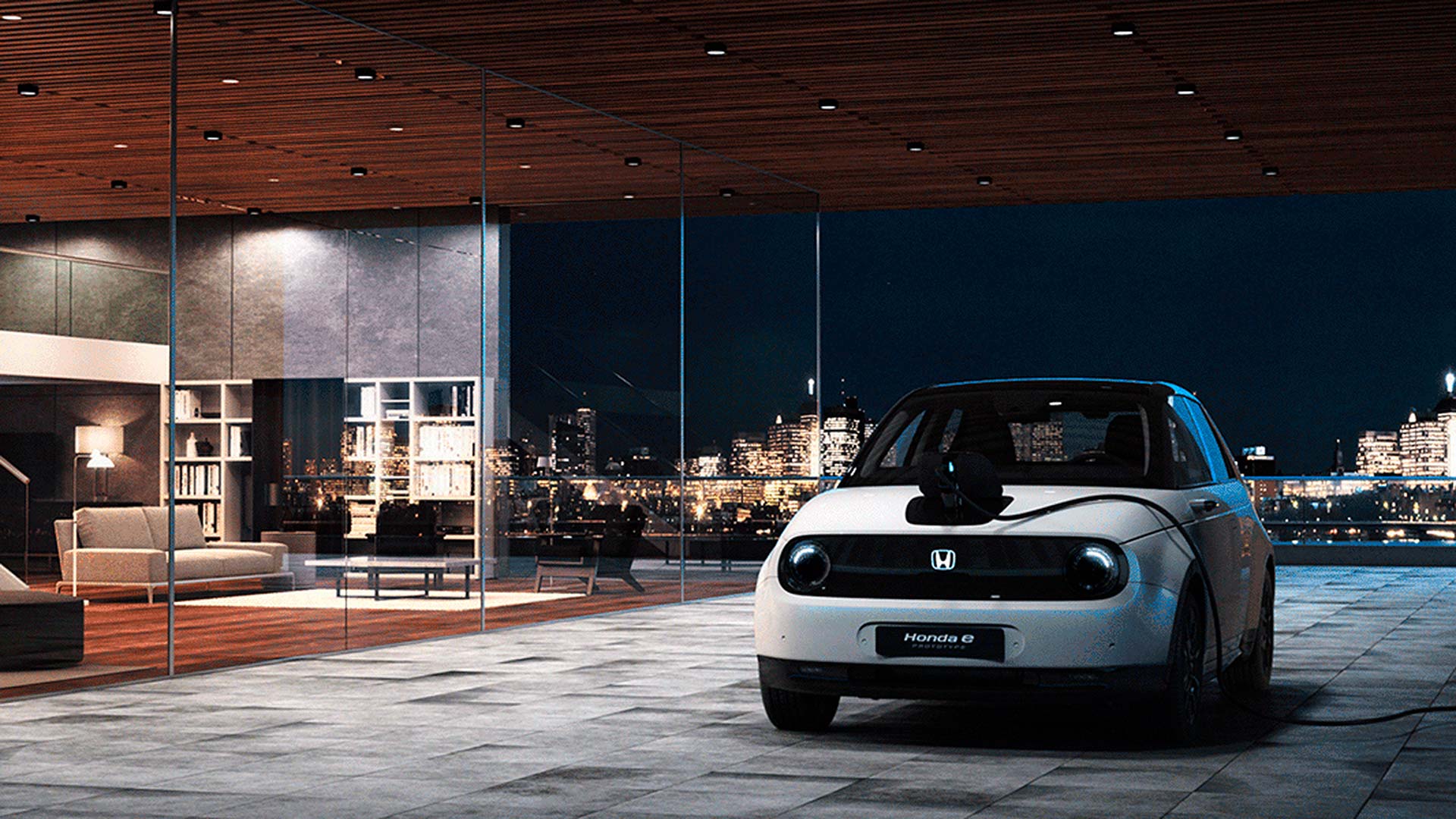
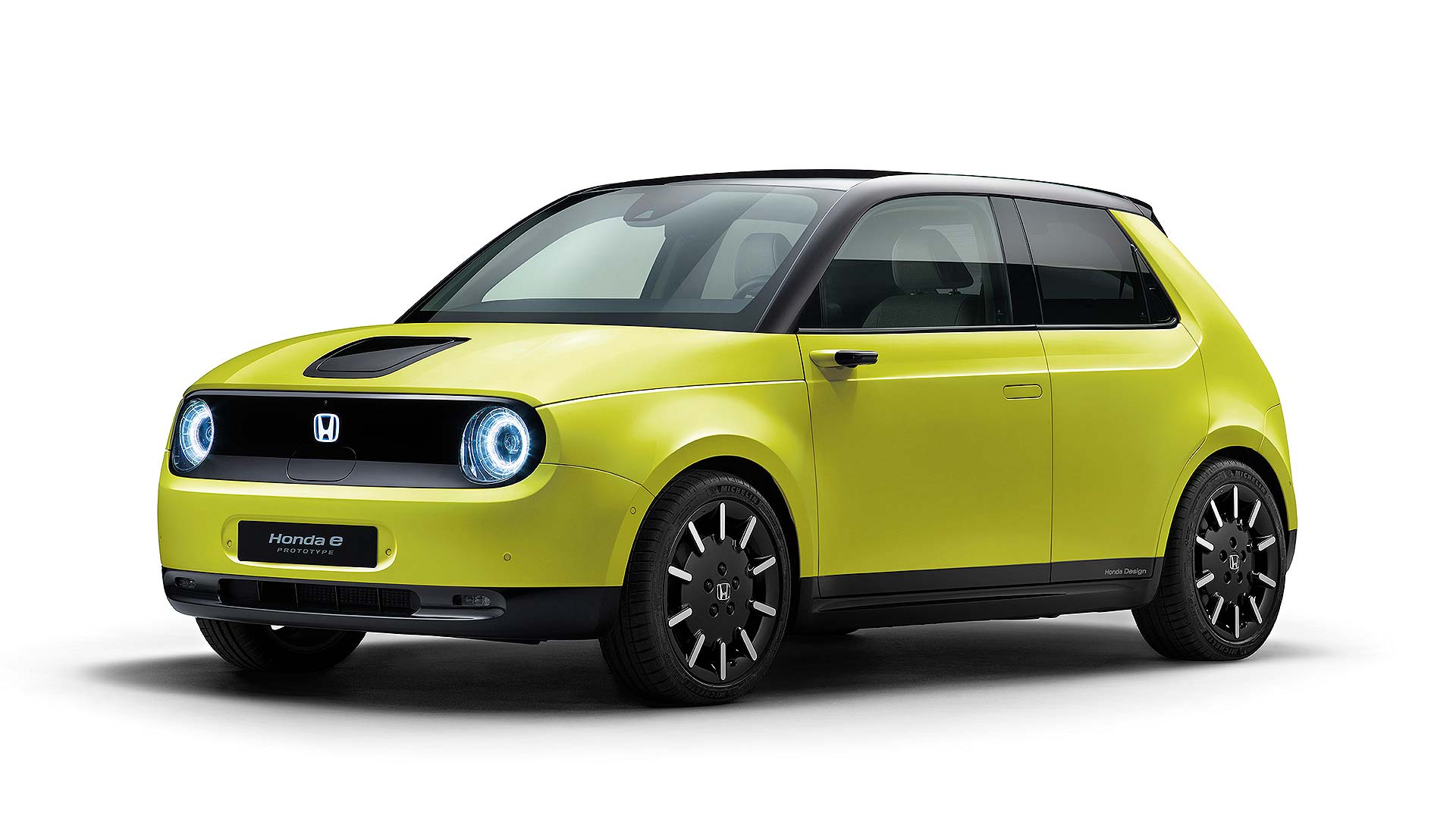
Honda has opened reservations for its new Honda e electric car, with Brits able to secure their place in the queue for an £800 deposit.
A special online reservation website has been set up to process the priority orders for the Honda e – and the firm adds the £800 fee is fully refundable if people later change their minds.
First deliveries are expected from spring 2020.
“We are delighted to be offering a reservation option to our customers in select European markets for the first time with the Honda e,” said Jean-Marc Streng from Honda Motor Europe.
“The Honda e in prototype form has received an overwhelming response and with over 25,000 registrations of interest across Europe, customers now have the opportunity to secure priority status to order the model”.
Honda UK head of car Phil Webb added that “UK customers are leading the charge by being among the first in Europe to reserve their priority status to order the Honda e”.
Already, more than 6,000 Brits have officially expressed interest in the new Honda e.
EV trend-setters can choose from five Honda e colours:
Platinum White Metallic
Crystal Black Pearl
Crystal Blue Metallic
Modern Steel Metallic
Charge Yellow
The firm isn’t yet ready to reveal full technical details, but does say the car will deliver an electric driving range of over 125 miles.
A battery charge to 80 percent capacity will take 30 minutes thanks to ‘fast charge’ capability.
What we don’t yet know is how much the Honda e will cost – although it is unlikely to be cheap. Project leader Kohei Hitomi compared the new model to an Apple iPhone during discussions with Motoring Research.
A list price of over £30,000 for the new Honda e city car is thus predicted by most analysts.
Fifty years ago, two iconic Nissan sports cars were born. We tell the story of the Z-car and the GT-R, from 1969 to the present day.
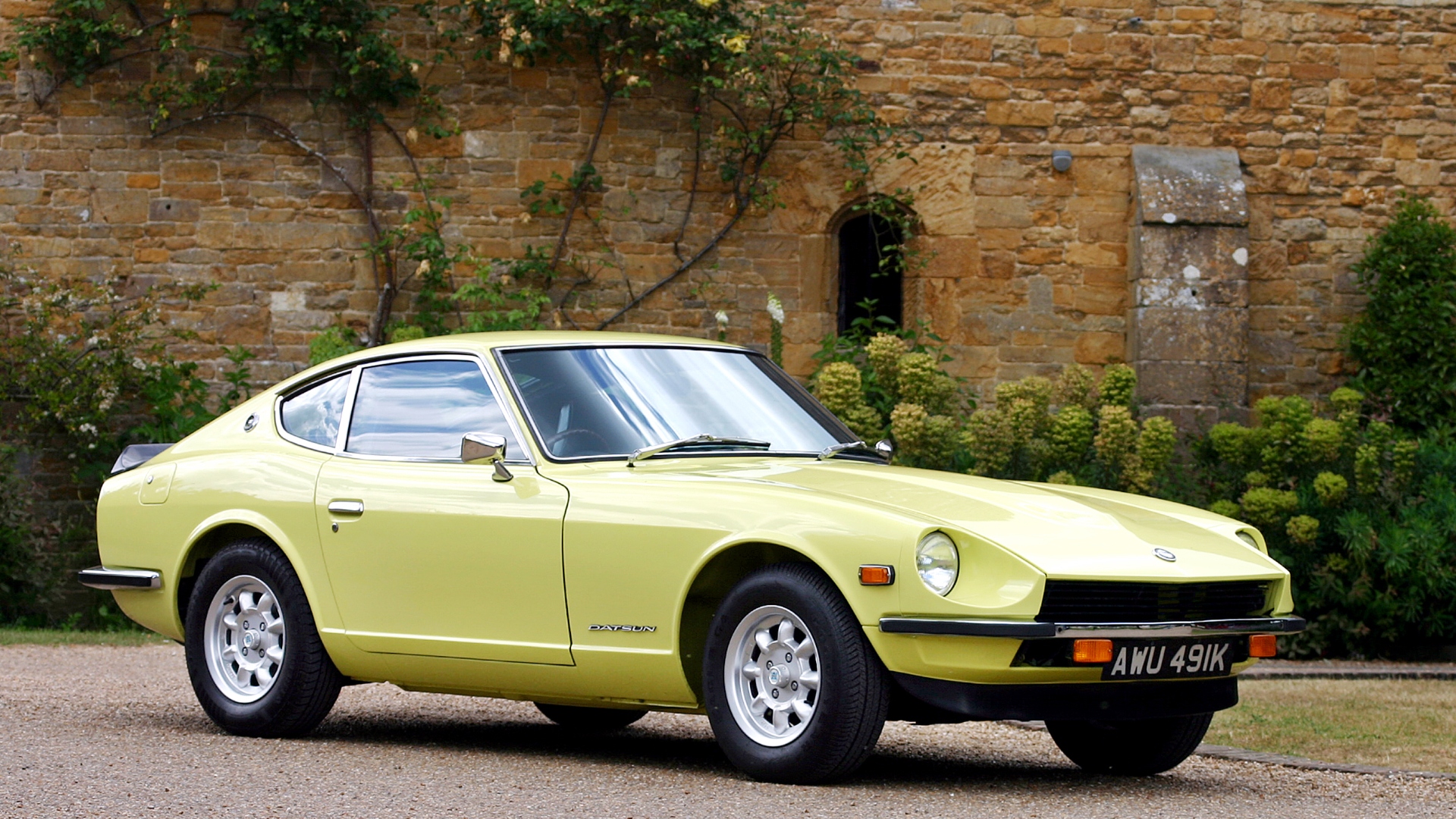
Nissan 240Z
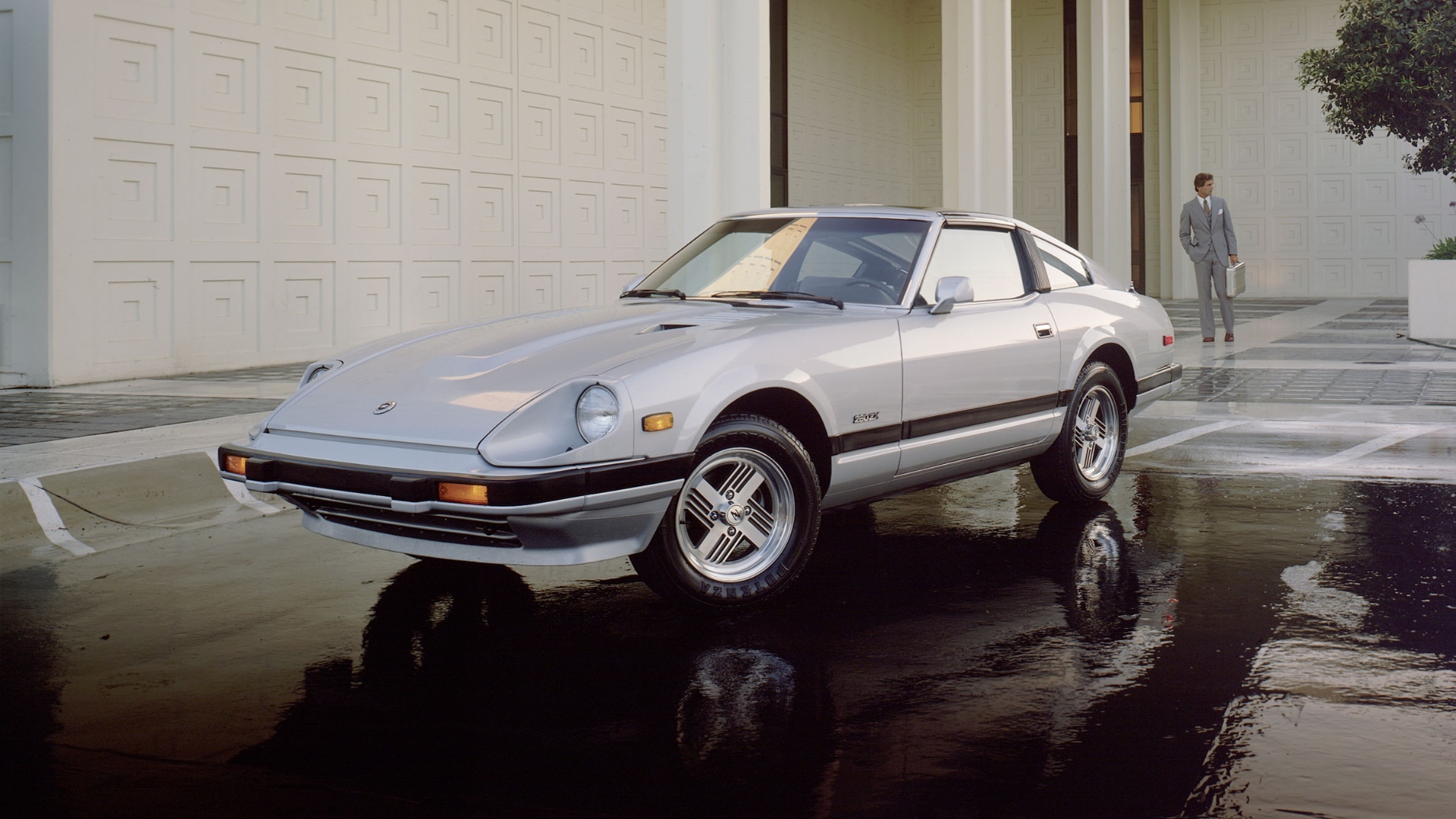
Six generations of Nissan Z-car began with the 240Z in 1969. In Japan, it was known as the Fairlady – and ‘fair’ it was, with styling that paid homage to the epochal Jaguar E-Type. From day one, the notion of six cylinders out-front, with power going to the rear wheels, was set in stone.
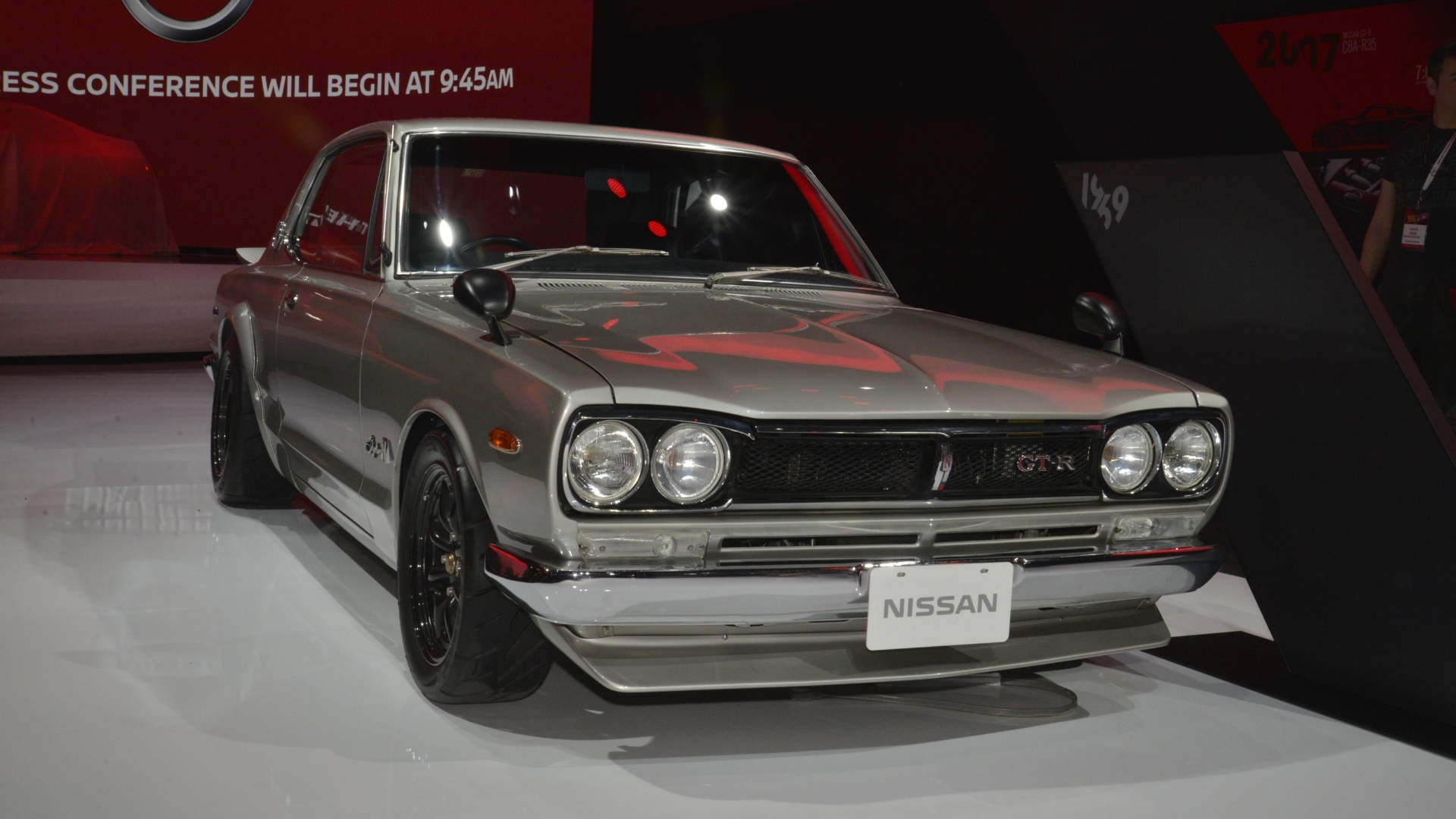
Nissan Skyline GT-R ‘Hakosuka’
The KPGC10 was unveiled in October 1970 before going on sale in March 1971, and the classic two-door box-shaped Skyline GT-R was born. A total of 1,197 two-door Skyline 2000 GT-Rs were built, making it more common than its four-door sibling. That said, the ‘Hakosuka’ is a rare beast, as many were lost in racing. Loosely translated, the nickname means ‘boxy Skyline’.
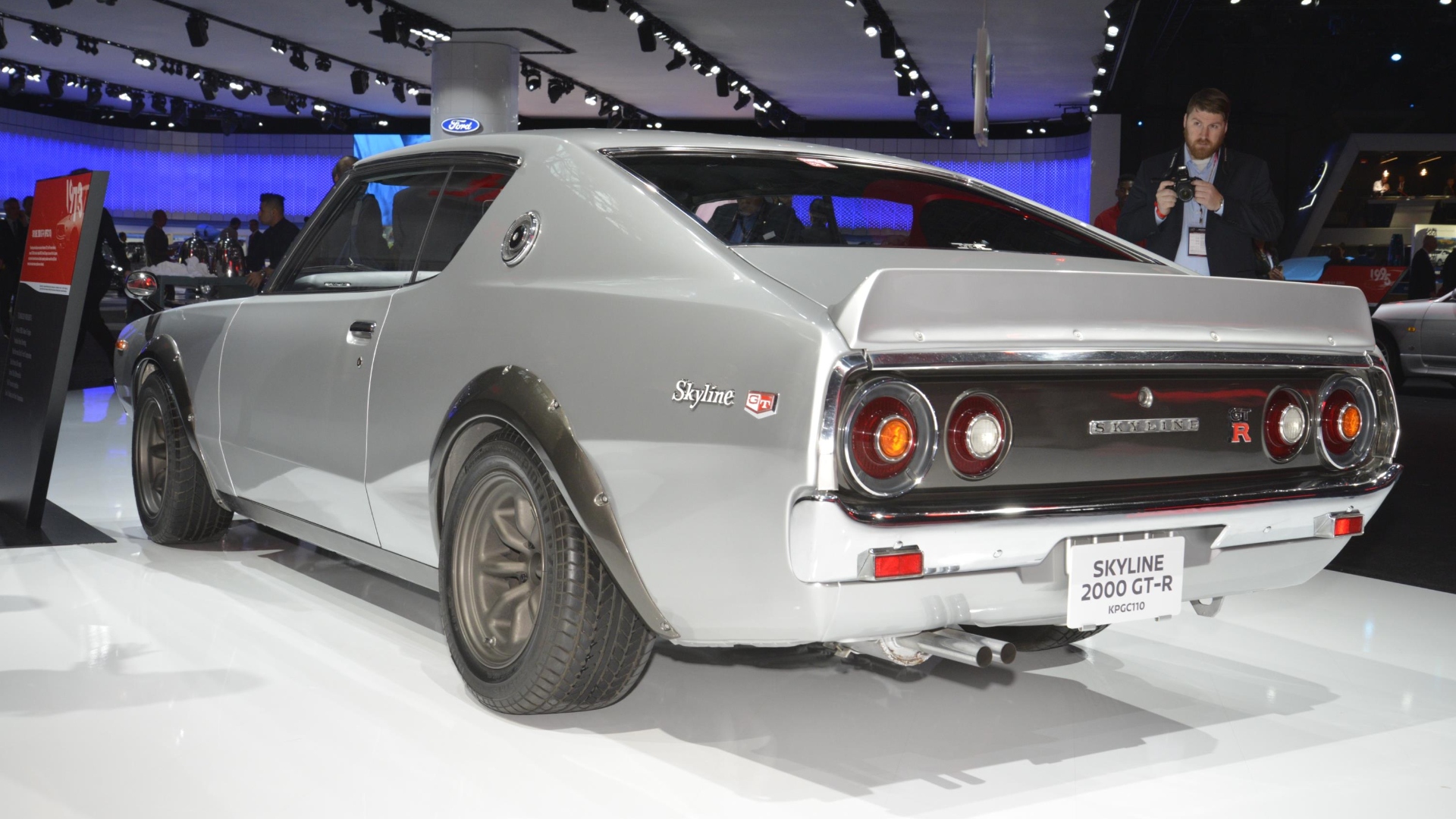
Nissan Skyline 2000 GT-R
A second-generation Skyline GT-R was unveiled in 1973. The KPGC110 was bigger and heavier than its predecessor, but its engine remained the same, meaning it was also slower. Its styling was more American muscle car than Japanese family saloon, but it did usher in one of the Skyline GT-R’s signature details: four round rear lights. Fewer than 200 GT-R coupes were built – all of which were sold in Japan – with production lasting just six months.
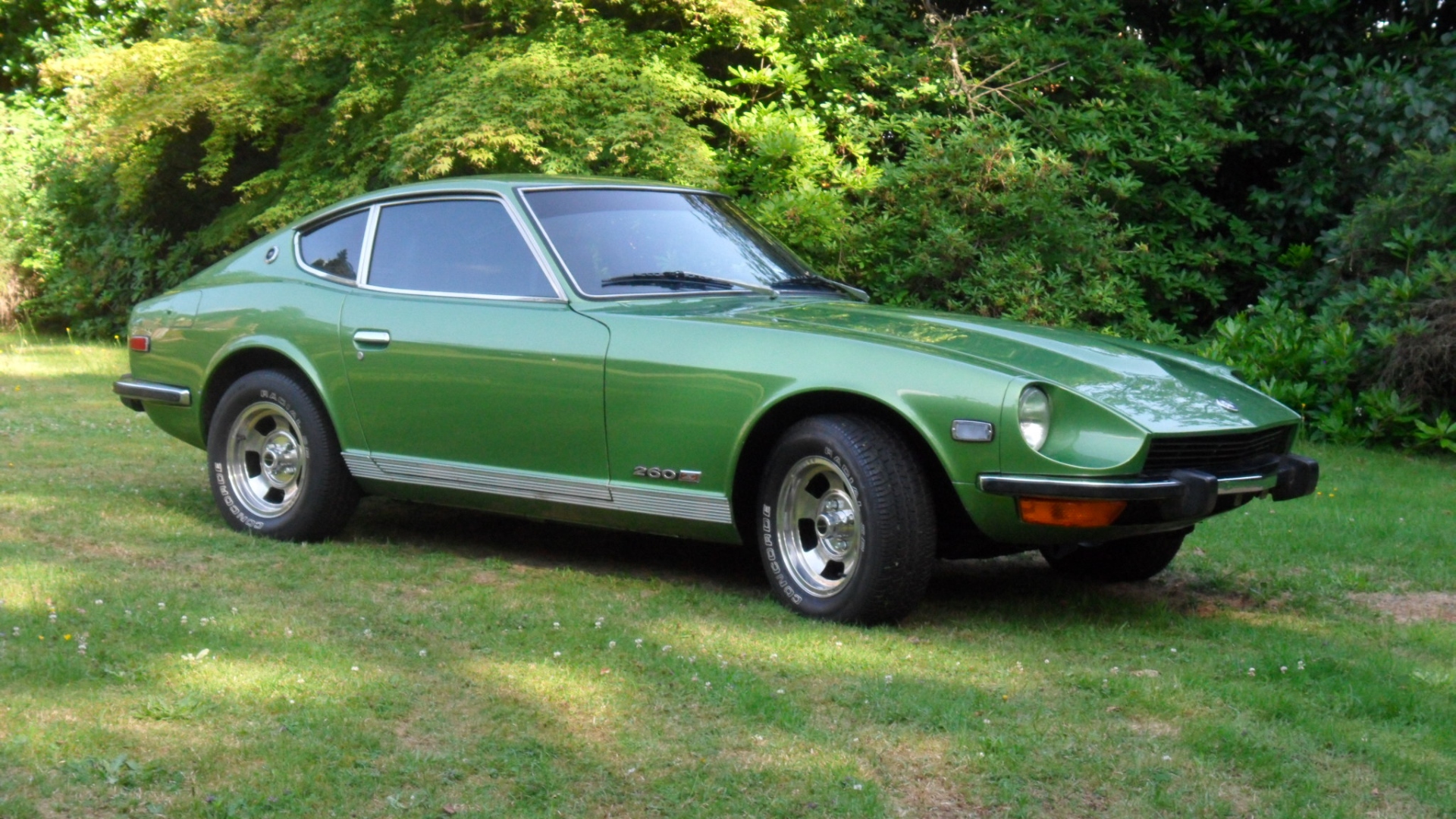
Nissan 260Z
The 260Z was released in 1974 and, although it’s closely related to the 240Z, it came with some significant updates. These included increased engine displacement – to 2.6 litres – plus a longer-wheelbase 2+2 version.
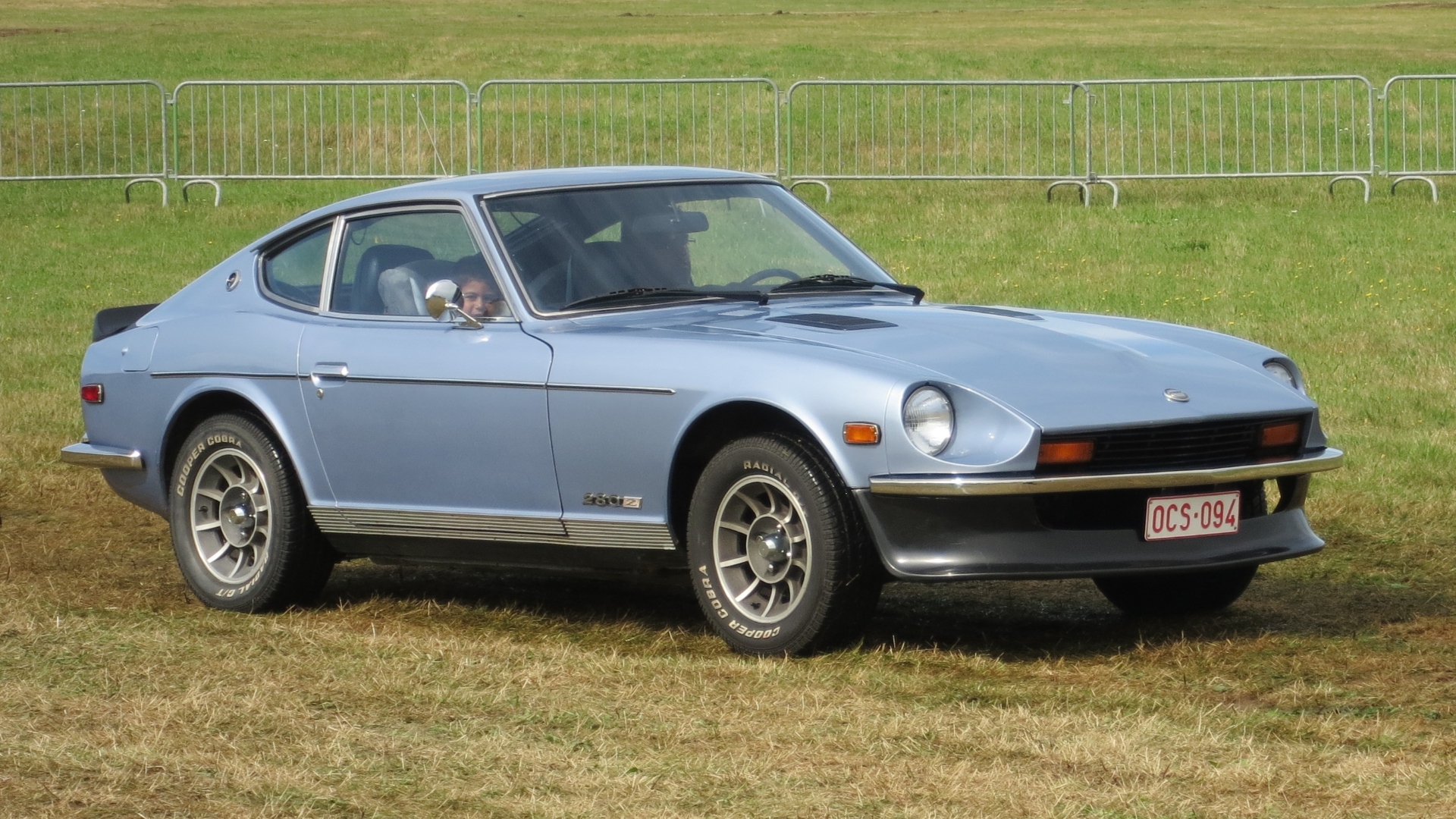
Nissan 280Z
More updates to the first Z in 1975 brought it up to 2.8 litres and added Bosch fuel injection. Although more powerful at 170hp, this update was also heavier, thanks in part to US federal safety regulations, as well as added luxuries.
Nissan 280ZX
The 280ZX of 1978 is considered the true second-generation Z car. It added yet more creature comforts, an optional T-top and a turbo for the American market. Like the E-Type that influenced it, the Z-car and its 60s curves had evolved over the course of a decade – and not for the better.
Nissan Skyline GT-R R32
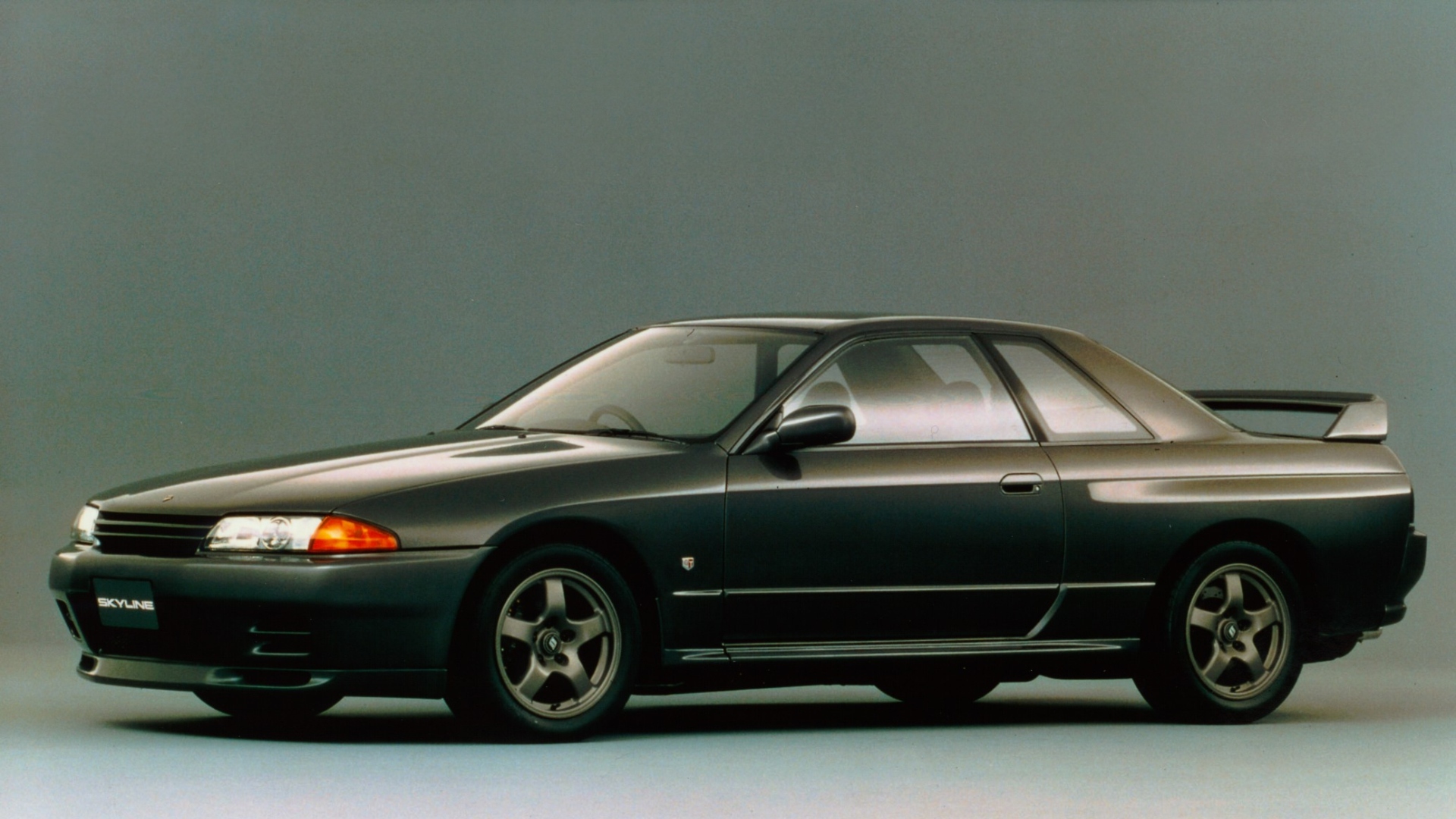
The GT-R name sat dormant for the rest of the 1970s and most of the 1980s. However, in 1985, Naganori Ito was given the task of developing a new range of Nissan sports cars. Work started on the top-secret Project GT-X in 1986, with Nissan launching a succession of production cars based on the Skyline R32, including a true icon: the GT-R. Alongside the Porsche 959, it pushed the boundaries of performance car development, and was the first all-wheel-drive GT-R.
Nissan 300ZX (Z31)
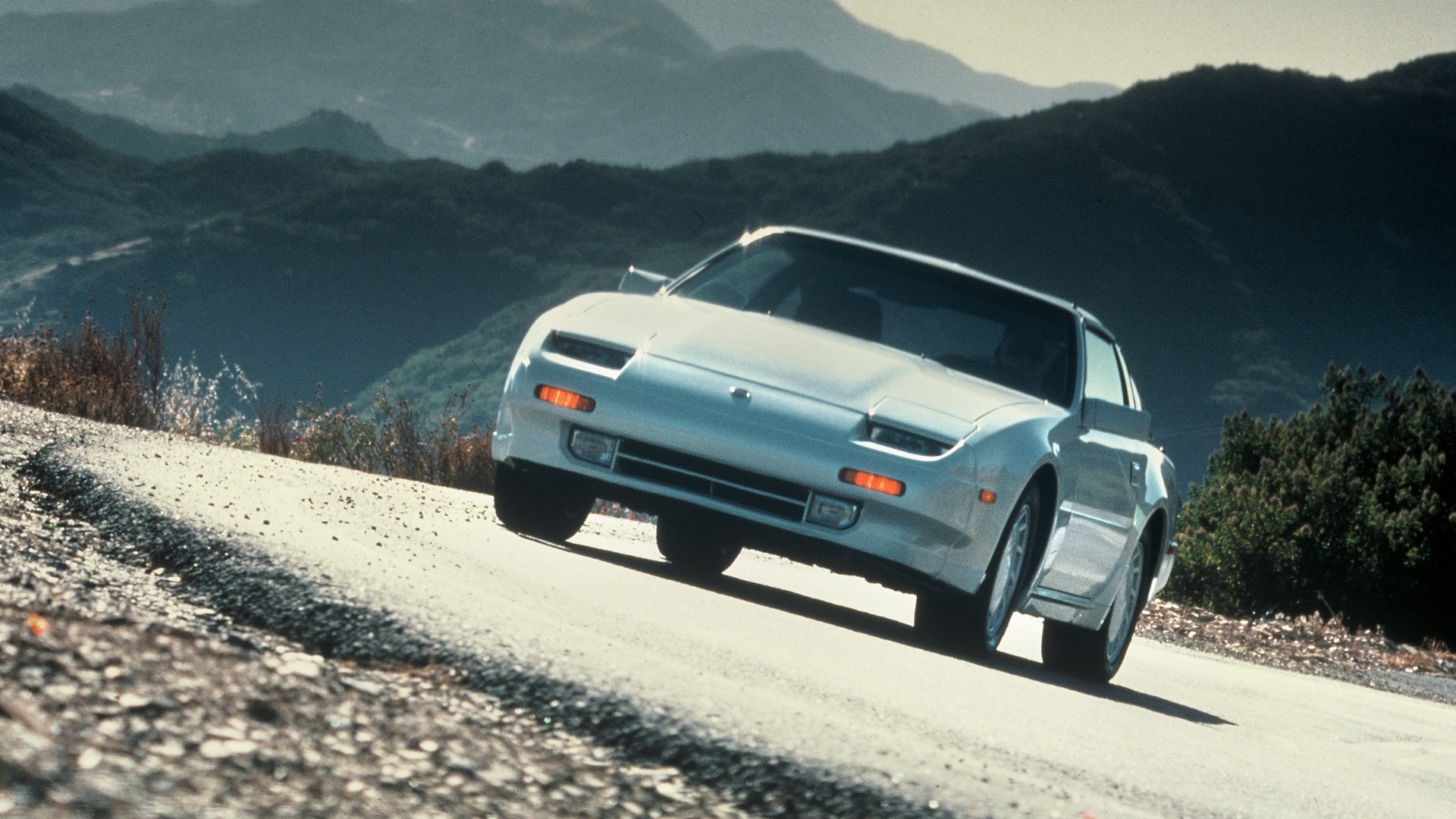
It wouldn’t be until 1984 that the Nissan Z-car got a major overhaul The 1980s hit the Z hard, with the 240’s sexy styling sacrificed for pop-up lights and a wedgy silhouette. Underneath, the inline six made way for the VG V6, which would later be turbocharged and used in IMSA GTP racing.
Nissan 300ZX (Z32)
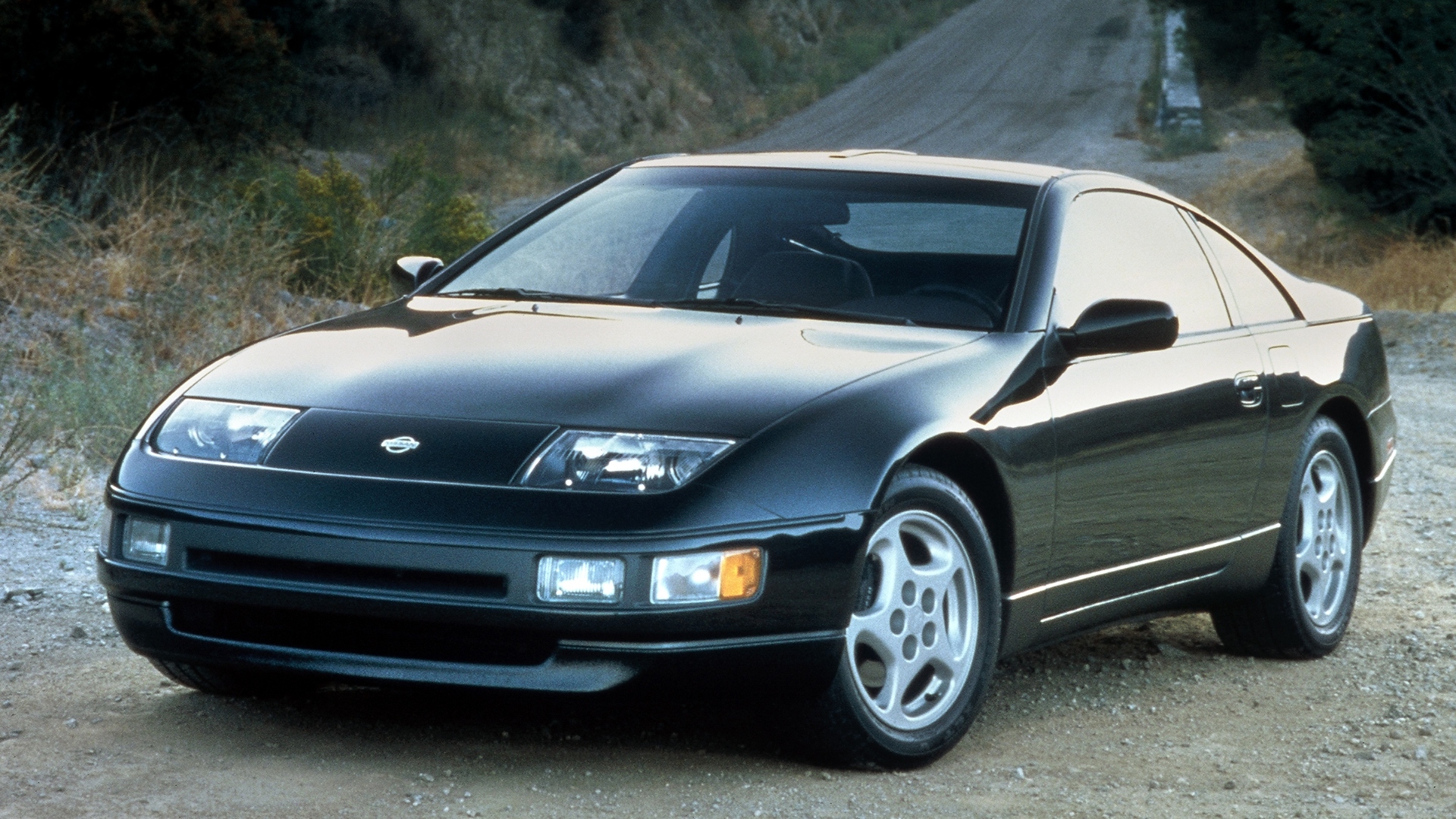
Another six years of tinkering would go by before the original 300ZX was replaced by the futuristic second-generation car. By 1990, we were comfortably into the era of the high-tech Skyline, and so the Z followed suit. This 300ZX was one of the first cars to be developed using computer-aided design.
Nissan Skyline GT-R (R33)
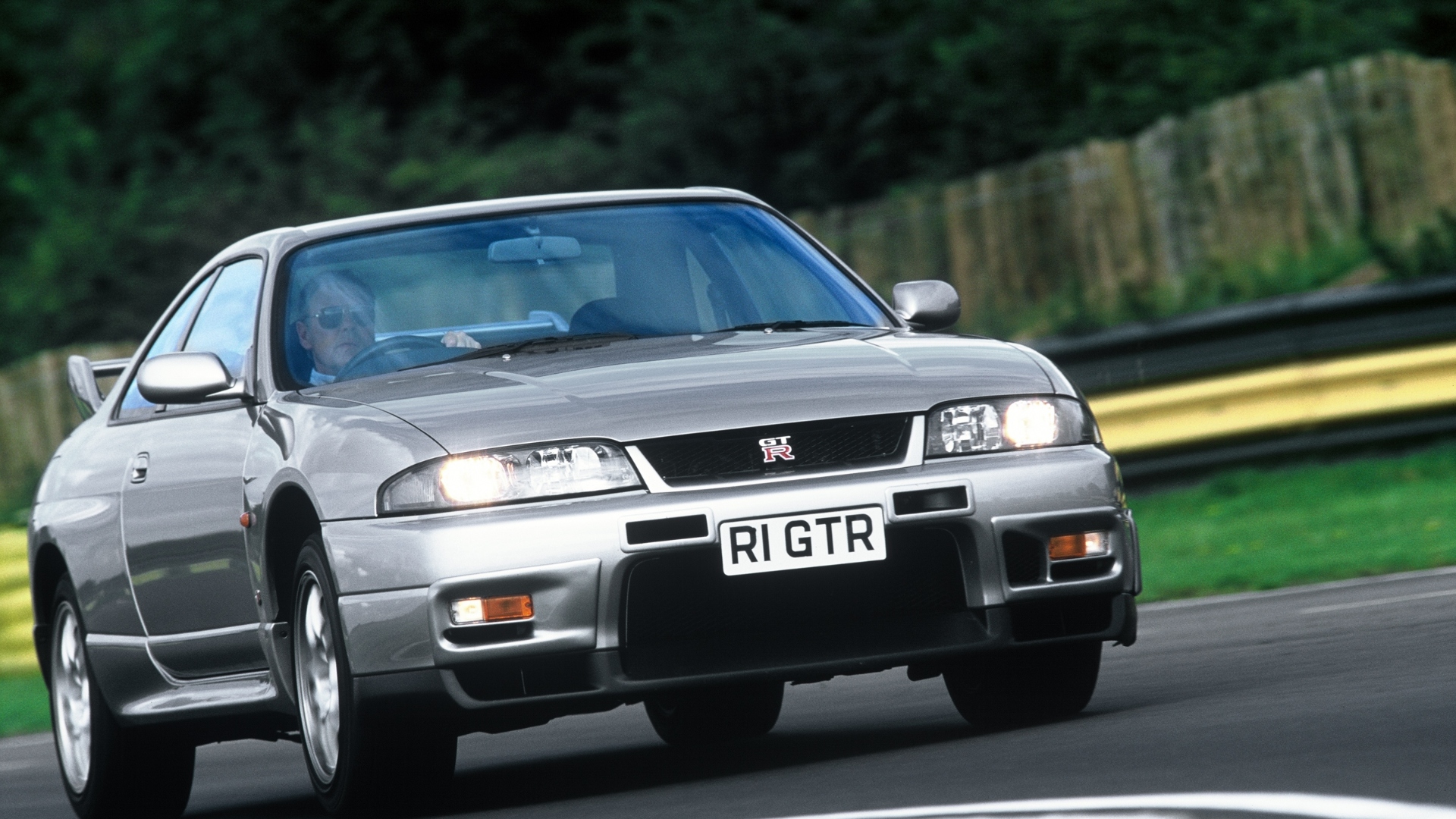
Today, Nurburgring lap records are two-a-penny, but the R33 Skyline GT-R sent shockwaves through the performance car world when it became the first production car to lap the ‘Green Hell’ in less than eight minutes. Its 2.6-litre straight-six engine was carried over from the R32, with output restricted to 280hp as part of a Japanese ‘gentlemen’s agreement’. A few engine tweaks meant that the R33 was a tad quicker to 62mph, but many people chose to take advantage of the RB26 engine’s seemingly unquenchable thirst for tuning. This was the first Skyline GT-R to be officially imported into the UK.
Nissan Skyline GT-R (R34)
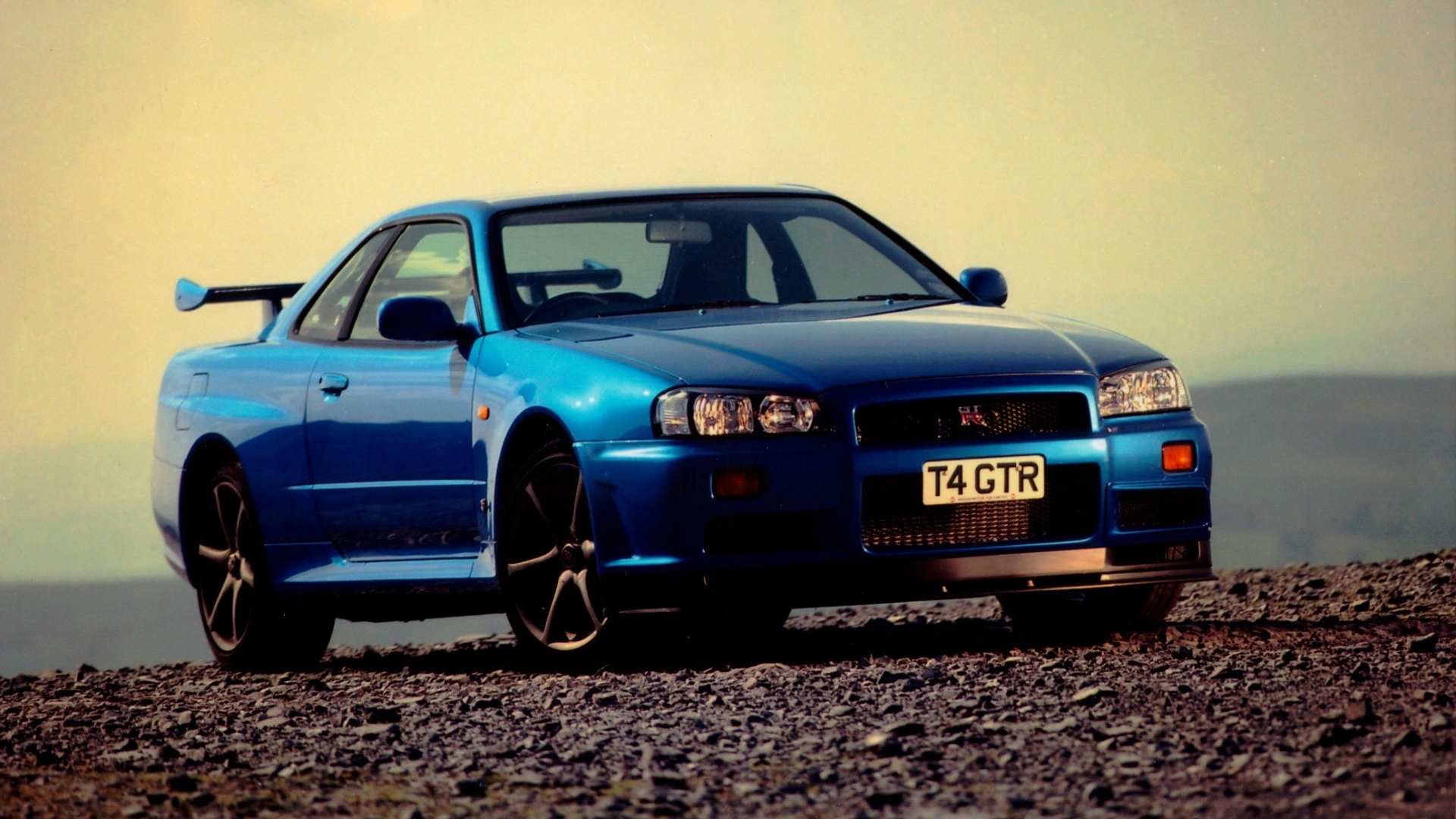
If you’d somehow managed to miss the hype surrounding the Skyline GT-R, there was no escaping the R34 of 1999. Thanks to Brian O’Conner (Paul Walker), the Skyline GT-R was thrust into the mainstream when it appeared in 2 Fast 2 Furious. But the R34 was more than just a movie prop – this was one of the most technically advanced cars on the planet, featuring a trick four-wheel-drive system and four-wheel steering.
Nissan 350Z
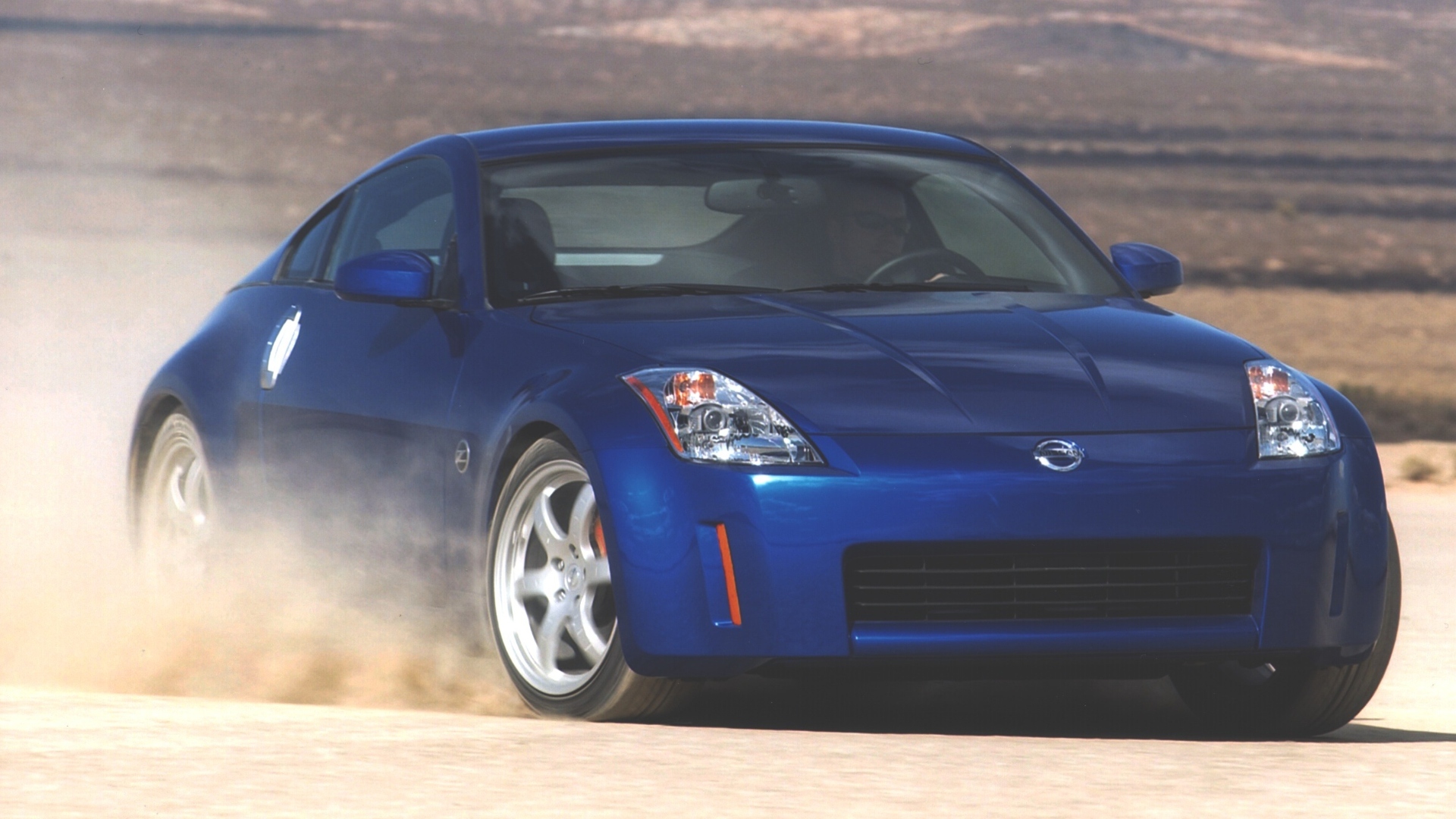
The last Z had a slow death towards the end of the 90s, with increasing prices and slowing sales bringing the model line’s validity into question. But by 2002, the Z had been reinvented for the new millennium. With a naturally-aspirated V6, chunky yet sporty styling and back-to-basics sports car driving dynamics, the 350Z was a breakout success and helped ease the loss of the R34 GT-R.
Nissan GT-R (R35)
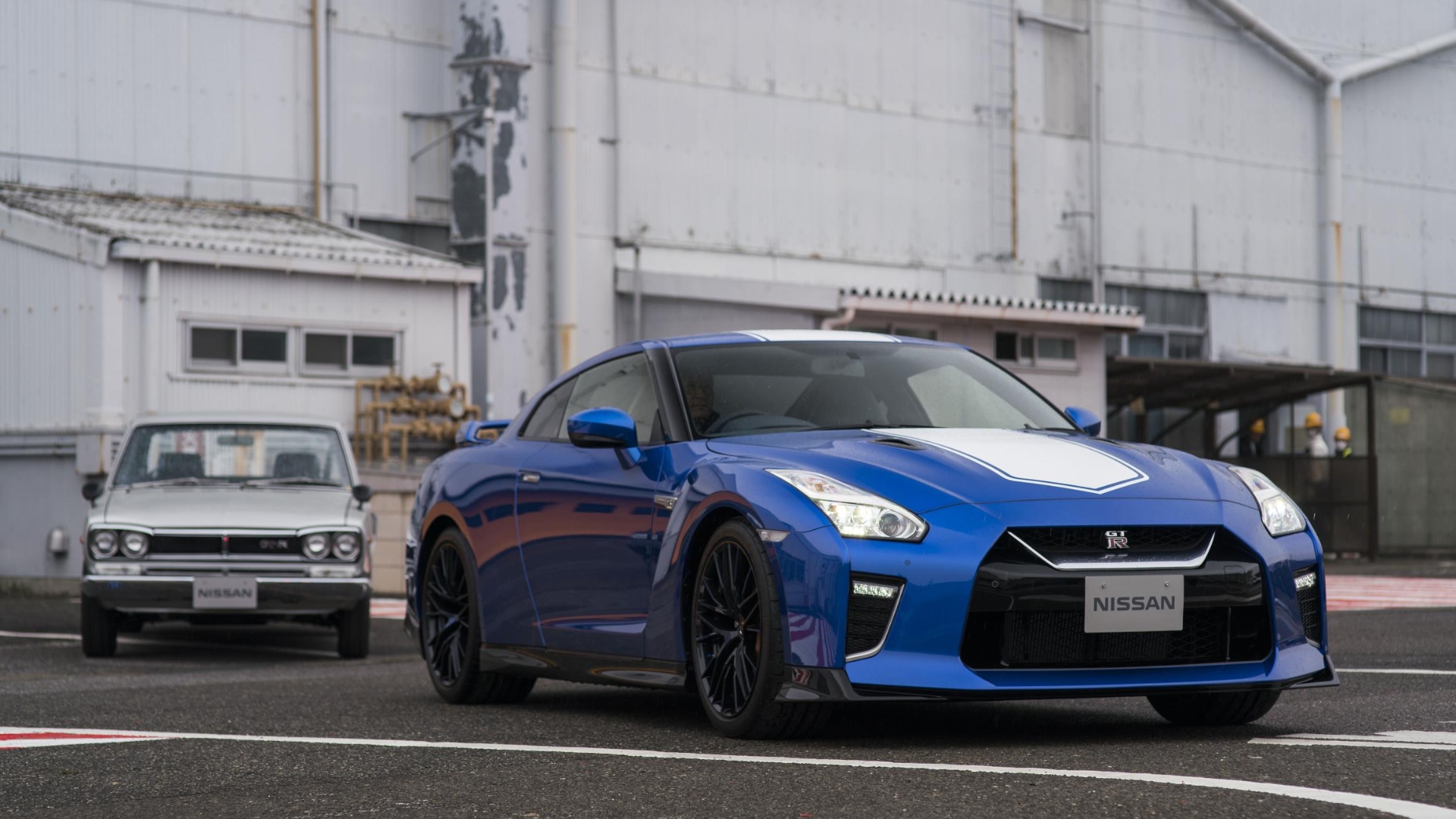
In truth, the Skyline GT-R story ends here, because Nissan chose to ditch the Skyline name. But the R35 GT-R didn’t just move the game on, it re-wrote the rulebook. With the Japanese agreement limiting horsepower consigned to the history books, Nissan was free to unleash fury. The £60,000 R35 featured a 485hp 3.8-litre twin-turbocharged V6 engine at launch – and has been regularly upgraded ever since. As it stands today, it’s a 600hp supercar-slayer.
Nissan 370Z (Z34)
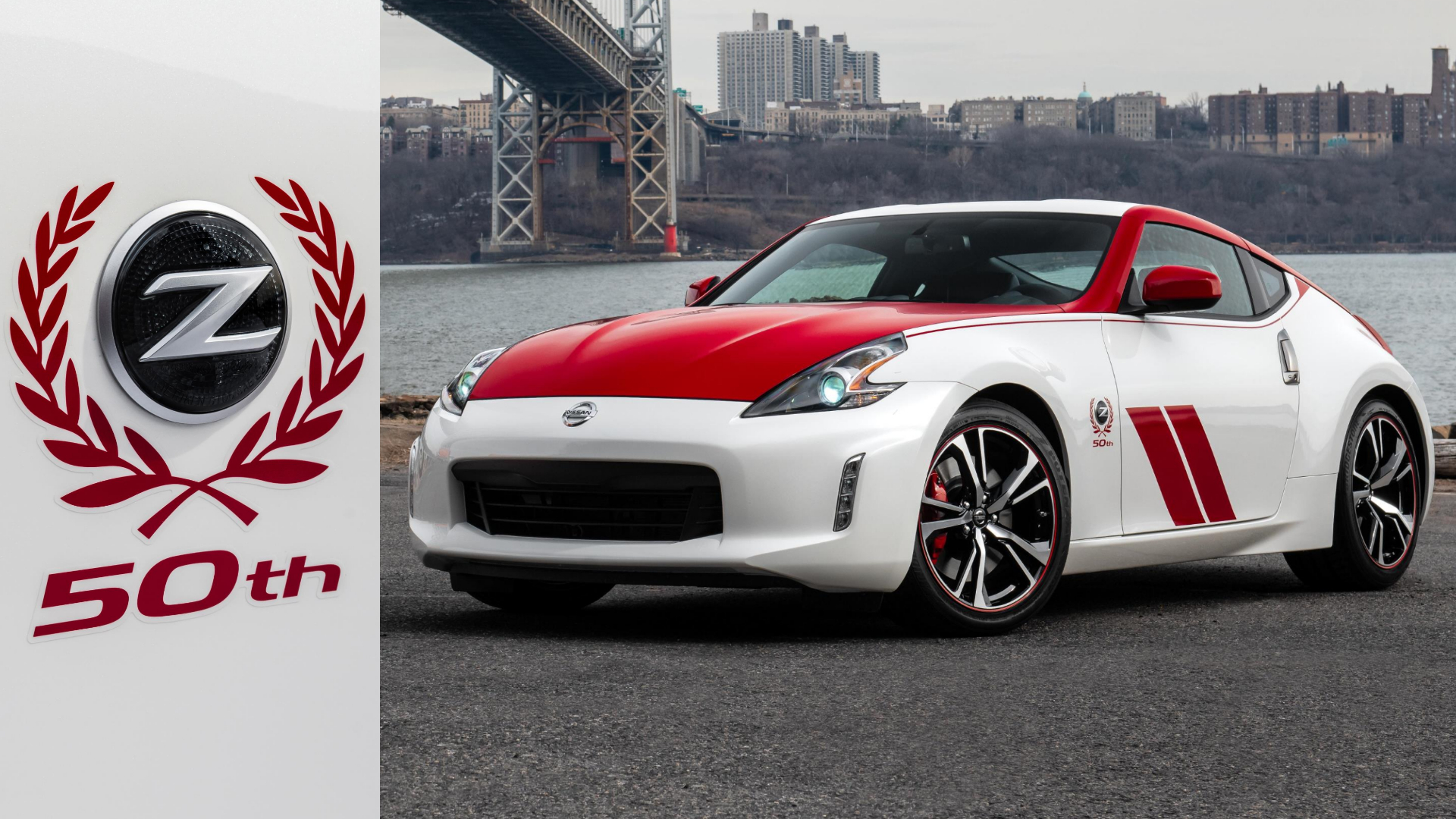
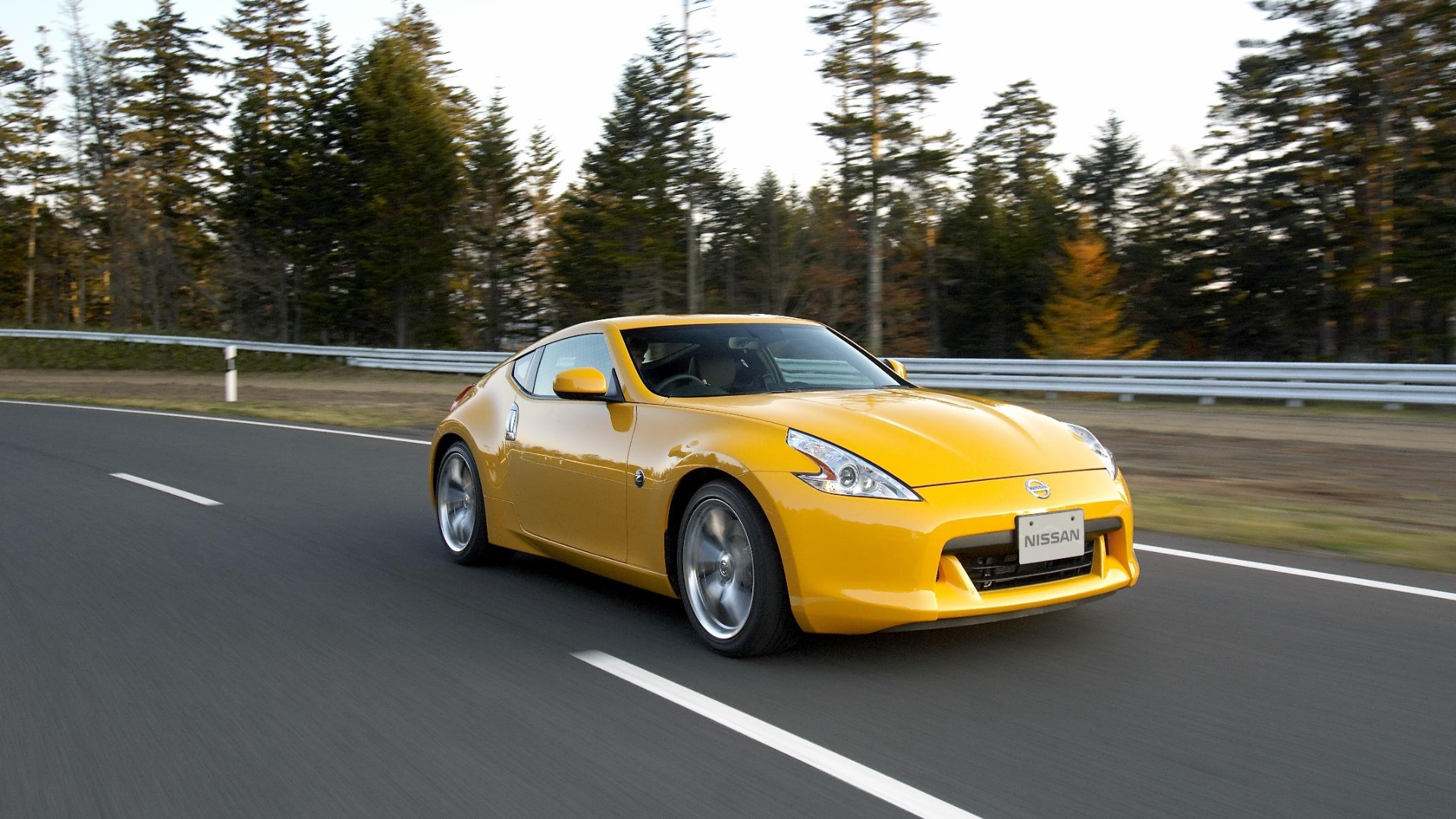
Even after seven years on sale, the 350Z didn’t evolve much to create the 3.7-litre 370Z. With a dusting of GT-R influence, it went on sale 10 years ago and continues to soldier on today, along with the R35 GT-R.
Nissan GT-R50
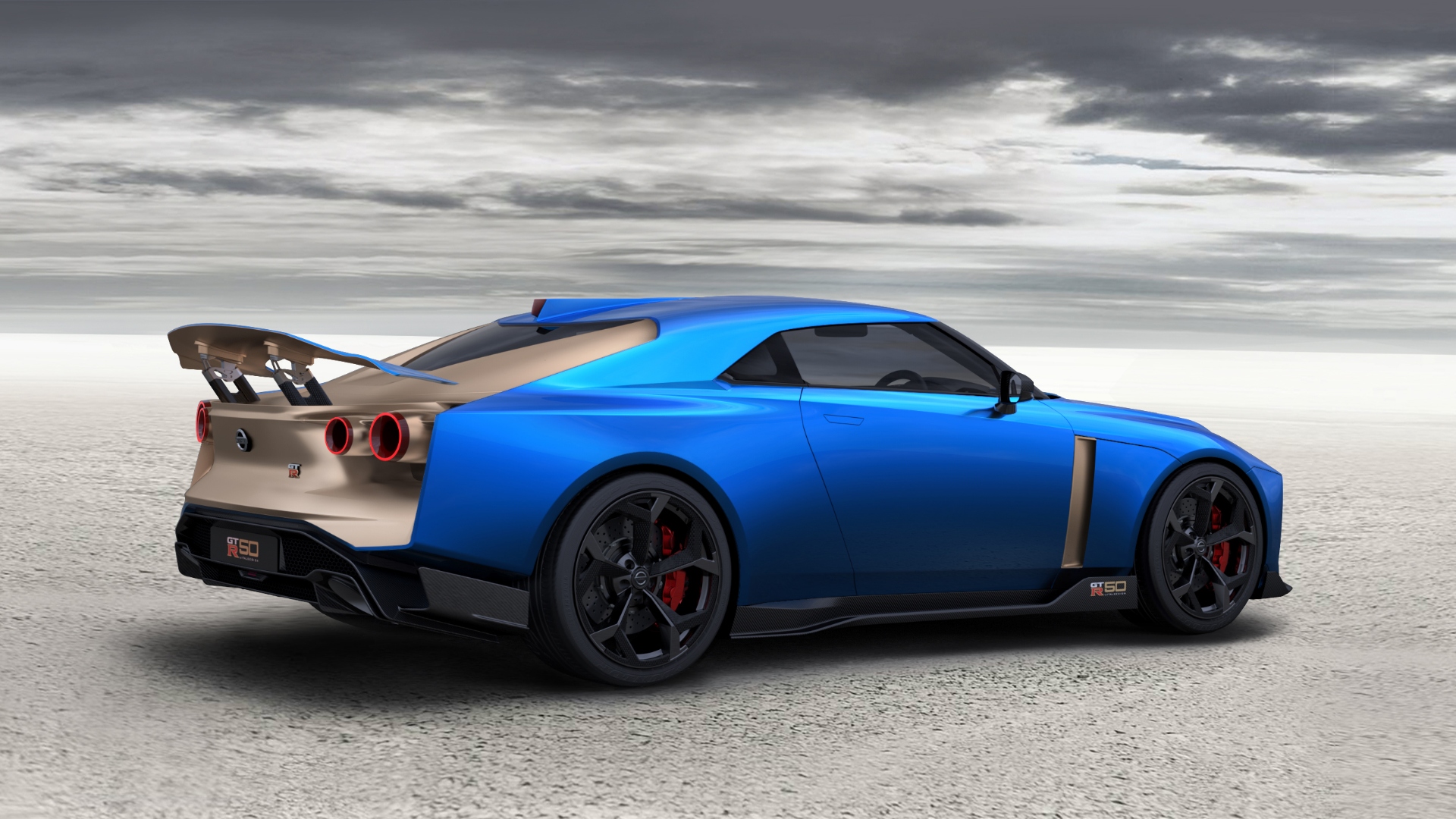
A coach-built GT-R by Italdesign is Nissan’s 50th birthday present to its most famous son. It will also be one of the most exclusive Nissans ever made, with just a handful of examples making their way to owners. As for the next-generation GT-R, rumours suggest a petrol/electric hybrid.
The next Nissan Z-car
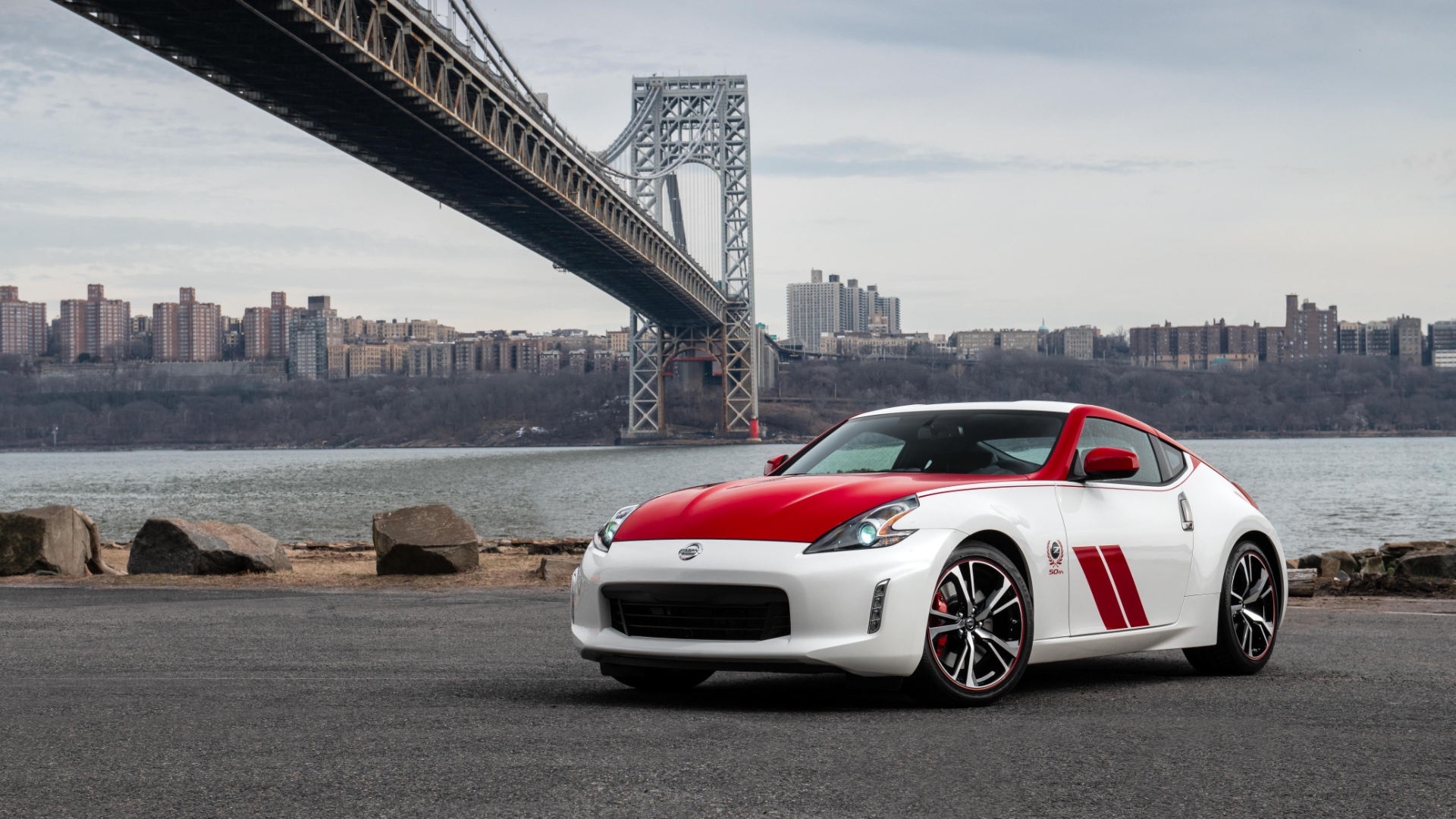
The future of the Z-car is even more mysterious – with a sporty crossover initially mooted. Those rumblings have since died down, with recent news suggesting a true sports car is on the way. Sadly, we’re not sure the six-cylinder engine will survive. For now, let’s enjoy this 370Z 50th Anniversary Edition and hope for more Z-badged muscle to come.
 Aston Martin continues its relationship with the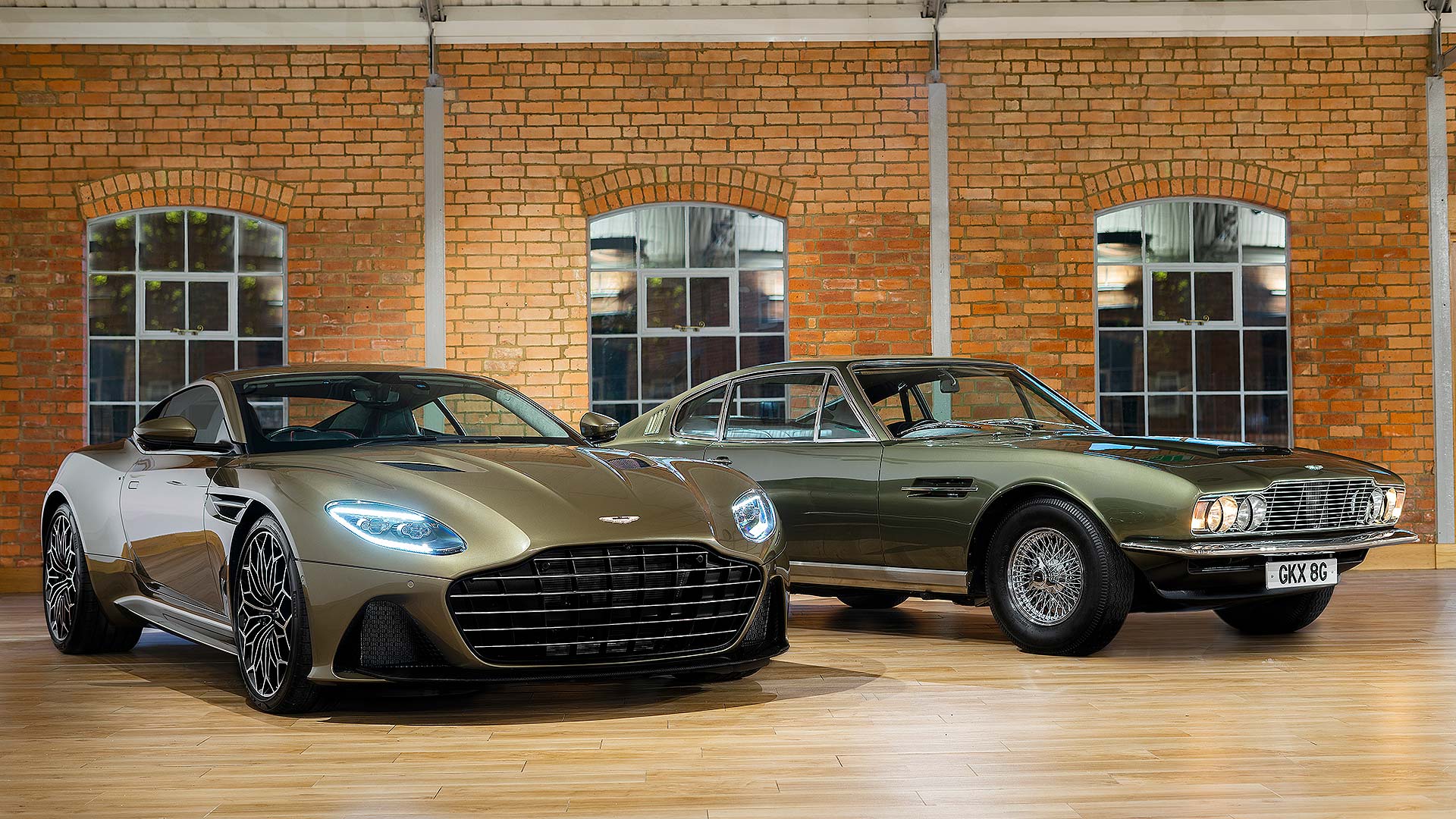
 The new 2020 model year Land Rover Discovery Sport is a mid-cycle refresh with a difference – it is basically a brand new car. Crisper styling gives the seven-seat compact SUV a smart new look, but underneath, plenty more work has been done to keep one of the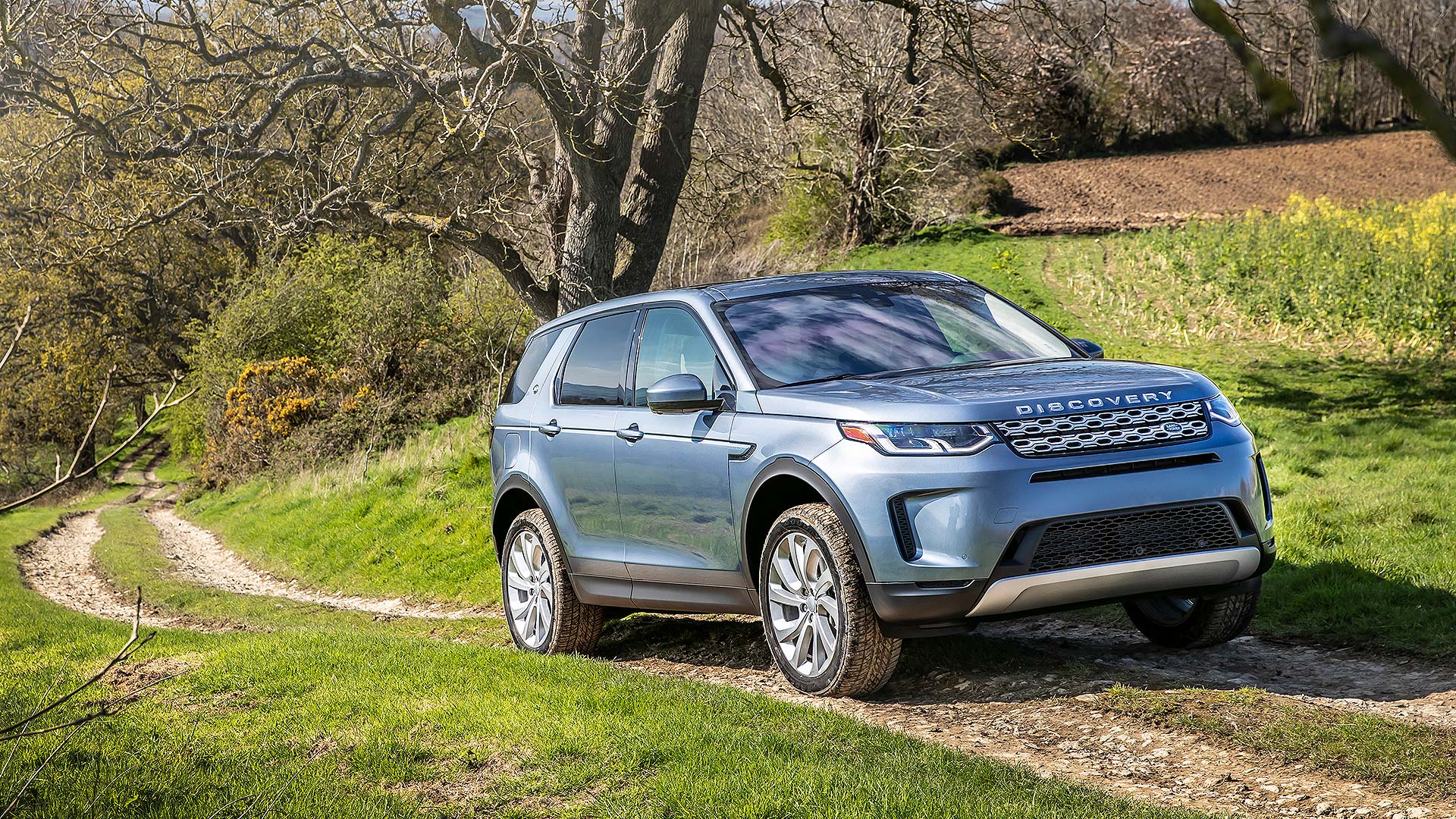
 Auction website Bring a Trailer has already helped many drool away their lunch breaks over interesting collector cars, but now the stakes are even higher.
 Other important changes as part of the Premium service include the ability to list cars for up to 21 days, instead of the regular seven-day auction used at present.
 Offered with no reserve, and currently attracting a bid of $1 million, this Graphite Gray 300SL Gullwing is an elaborate way to demonstrate the new premier service.
 Noted to be just one of 1,406 365 GTB/4 Daytona models produced,
  There are more pop-up headlights on display, with another red Italian sports car in the BaT premium listings. With just 401 examples built, the
  A true member of muscle car royalty, only 500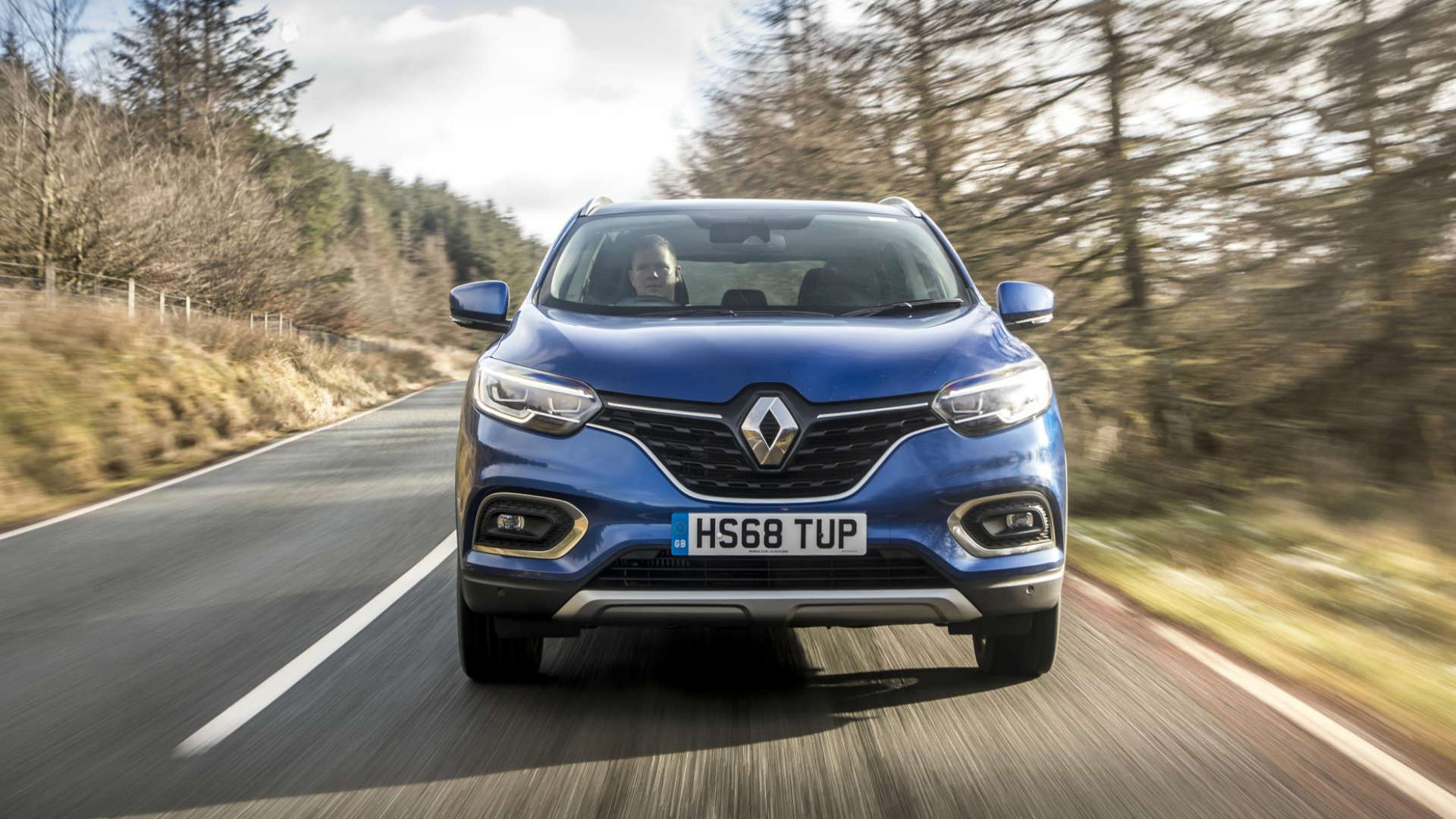
 Honda has opened reservations for its new