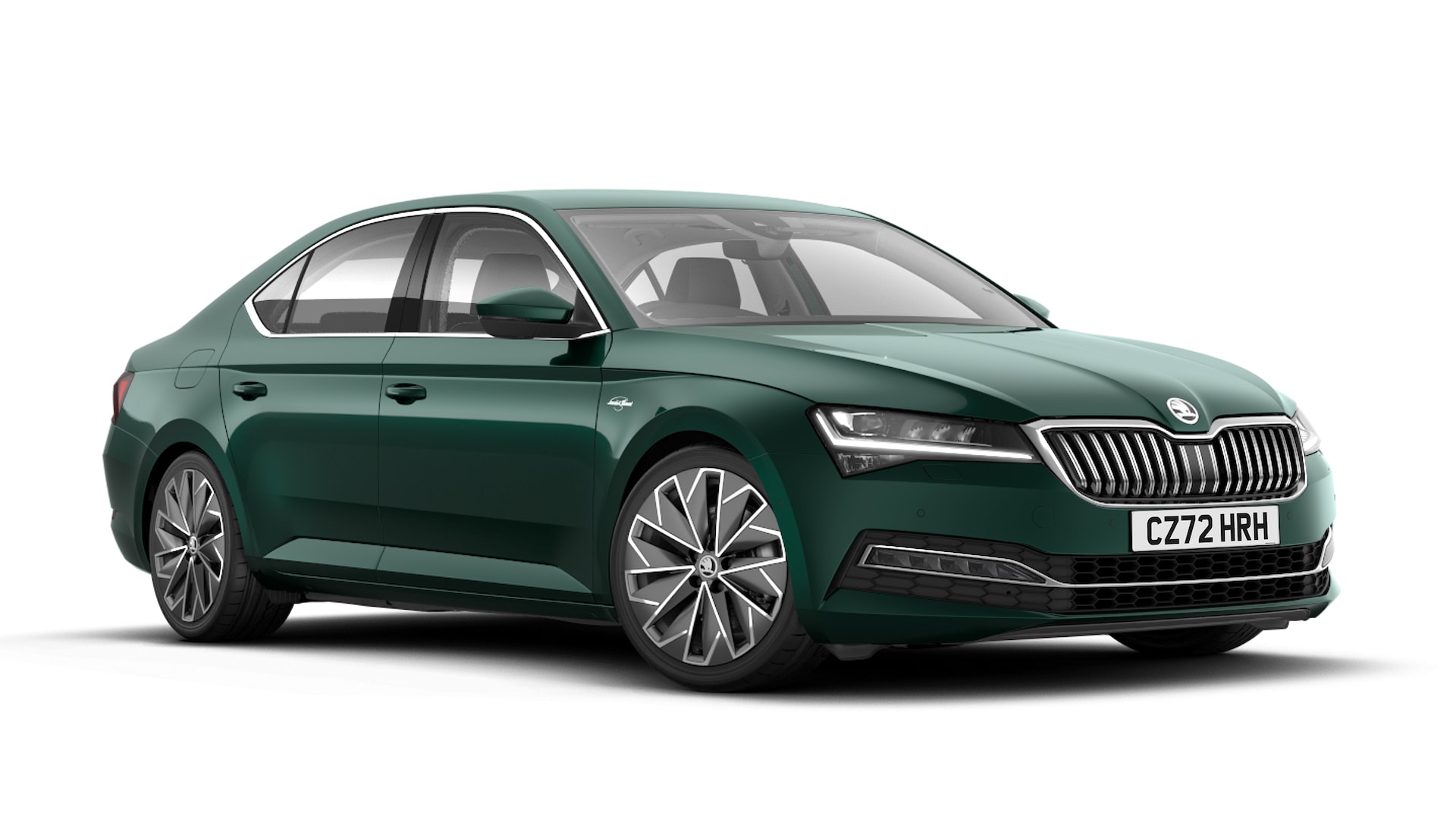
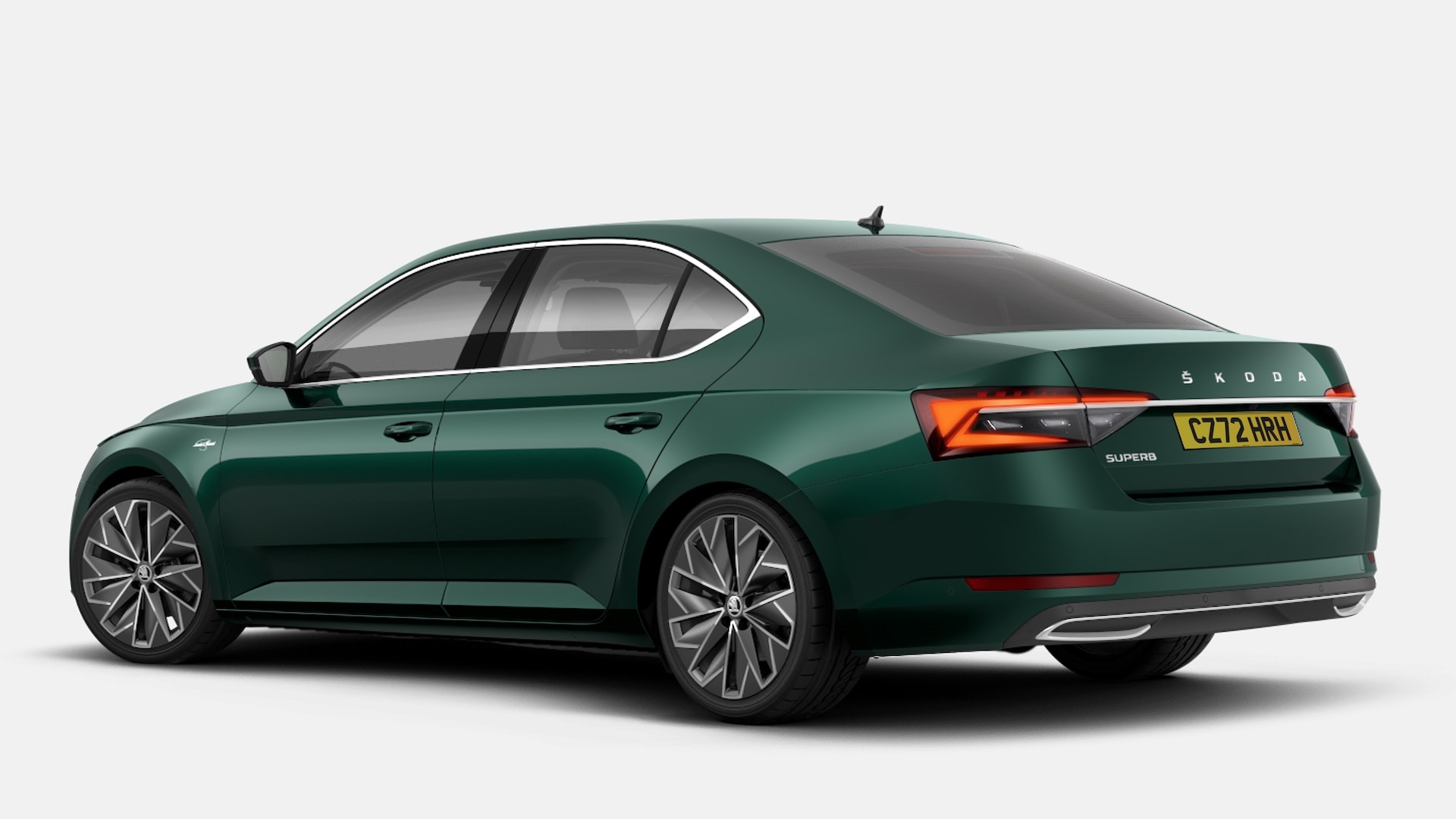
Skoda buyers excited about the forthcoming coronation of King Charles III can mark the occasion by choosing a new shade of Royal Green paint.
The colour is being added to the company’s paint palette ‘to celebrate the formal investiture of King Charles III and Queen Camilla, the Queen Consort’.
It makes for a rather larger coronation keepsake than the limited-edition Matchbox Gold State Coach model we featured last week.
Green with envy
The new paint hue is available to order from Tuesday 9 May 2023, and only offered for certain model and trim combinations.
For the flagship Skoda Superb hatchback and estate, Royal Green can be combined with the SE L and range-topping Laurin & Klement specifications.
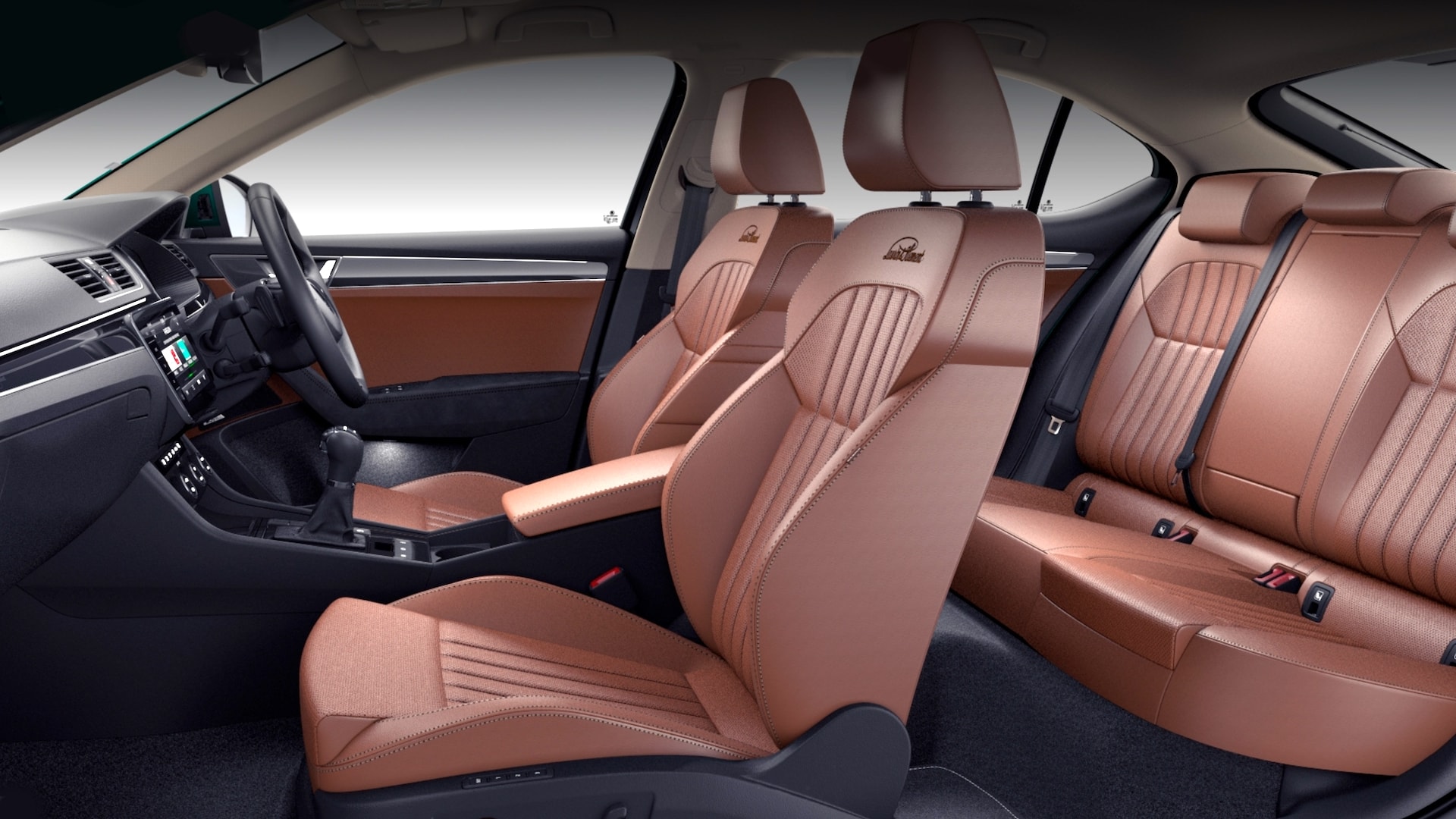
To make the most of the Superb’s ‘palatial levels of interior space’, customers can choose from black or beige interior trim on SE L models. The fancier L&K comes with leather upholstery, including the suitably plush cognac finish.
The sporty Skoda Octavia vRS and practical Kodiaq SE L SUV are also available with the Royal Green paint option.
A royal Czech mate
Skoda’s enthusiasm for all things royal is inspired by the former Prince Charles’s various visits to the Czech Republic.
The new King helped establish a heritage fund with then-president Václav Havel, helping restore and preserve the country’s historic buildings. The money raised has helped to restore the former monastery of St. Bartholomew in Prague’s Old Town, along with the terrace gardens below Prague Castle.
Three visits to Brno, the Czech Republic’s second largest city, were made by the Prince of Wales – in 1991, 2000 and 2010.
Skoda has not confirmed a price for its new regal hue. However, specifying – the rather similar-looking – Amazonian Green for a Superb costs £1,045.
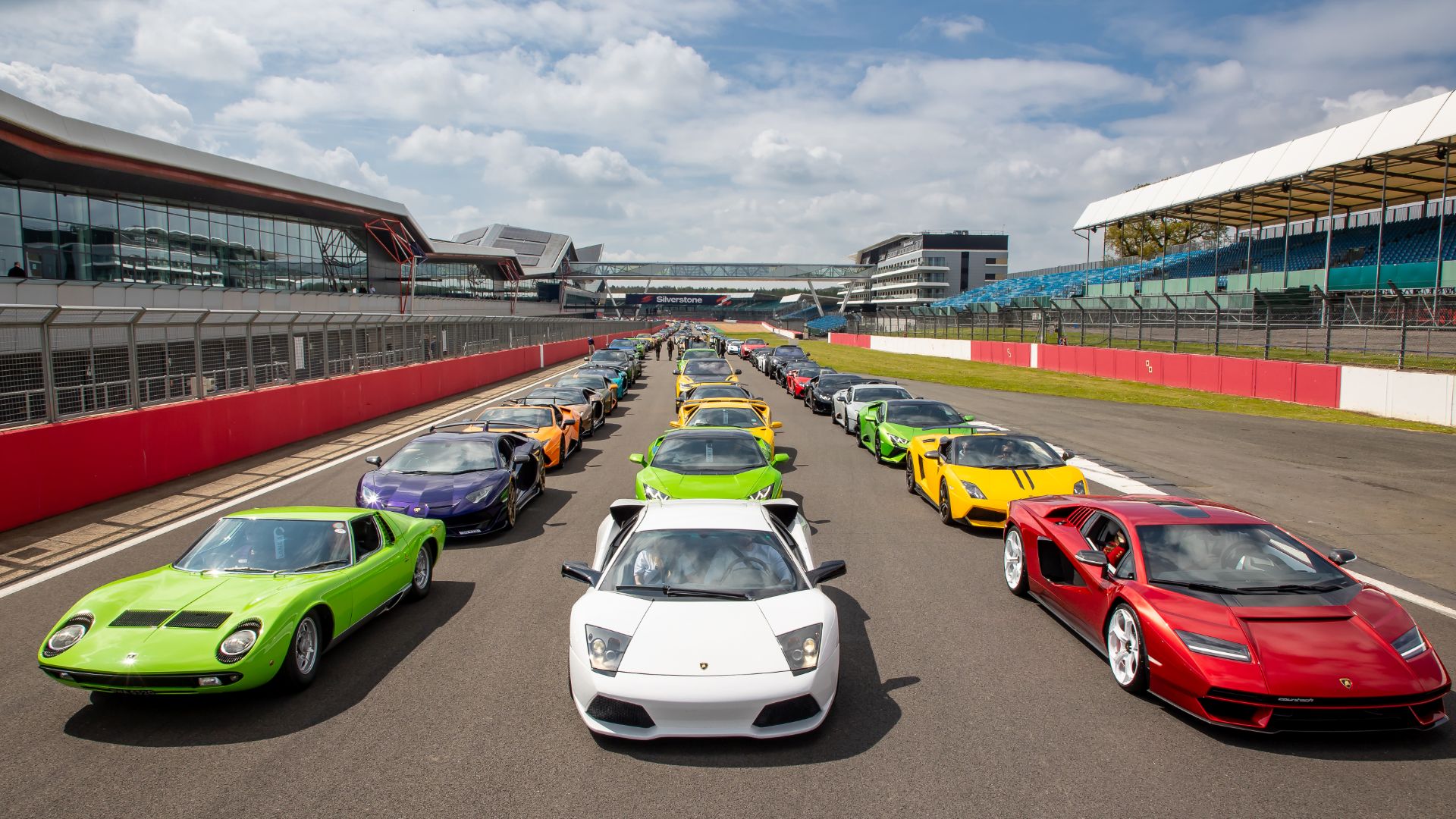
Lamborghini has marked its 60th anniversary in typically flamboyant style, with a record-breaking parade of 382 cars at Silverstone.
The home of British F1 reverberated to the roar of hundreds of V8, V10 and V12 engines as the colourful convoy lapped the 3.7-mile circuit. It represented the largest gathering of Lamborghinis ever, smashing the previous record of 251 cars at Suzuka in Japan.
The cars lined up in three columns, fronted by a Miura, Murcielago and new Countach LPI 800-4. Behind them, the raucous cavalcade was dominated by Huracan and Aventador supercars, along with a strong showing from Lamborghini’s best-seller: the Urus SUV.
Some guys have all the luck
There were plenty of classic Lamborghinis on show, too. These included a 400 GT 2+2 – an evolution of the 350 GT that launched Automobili Lamborghini to the world in 1963 – a Countach 5000 S and a stunning Miura SV previously owned by Rod Stewart.
Another rarity was a 1998 Diablo GT, a road-legal race car and one of only 80 made. But trumping that was a one-of-16 Reventon roadster, with radical ‘aerospace’ styling and the V12 heart of a Murcielago LP 640.
Arrived at Silverstone for Lamborghini’s 60th anniversary celebration.
This ex-Rod Stewart Miura SV – restored in-house by Polo Storico – is an early highlight.
Lamborghini also had some actual racing cars inside the pit garages, such as the highly successful Huracan GT3 Evo. However, our heart was won by an S3 Espada, an effortlessly exotic four-seat GT from 1972 – and the only example we spotted at Silverstone.
‘Thunder and lightning’
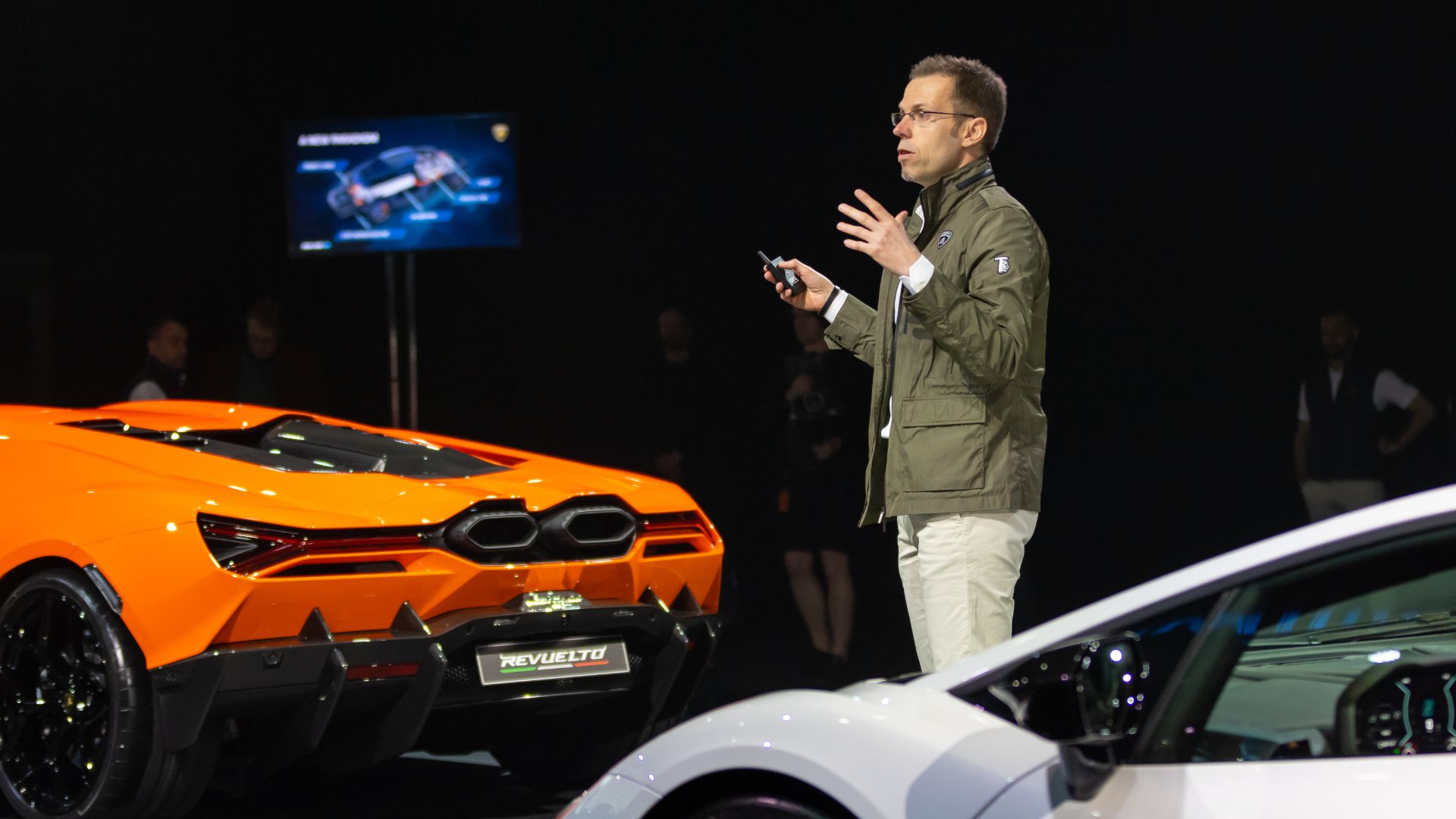
After the parade lap, owners and enthusiasts were invited inside for the UK debut of the new Lamborghini Revuelto. The 1,015hp plug-in hybrid replaces the Aventador and first deliveries are due later this year – at a likely price tag north of £500,000.
Introducing the Revuelto to the Lamborghini faithful, CEO Stephan Winkelmann compared its combination of a naturally aspirated V12 and three electric motors to “thunder and lightning”, adding that production is already sold out until the end of 2024.
UK debut of the new Lamborghini Revuelto – replacement for the Aventador.
Designer Mitja Borkert comapared the car’s styling to a spaceship, while chief engineer Rouven Mohr (pictured above) described it as “more practical and more emotional… three or four steps beyond anything that has come before”.
And the verdict of one Aventador SVJ owner we chatted to? “Awesome. It totally moves the game on – I want one.”
The best-selling open car in the history of Rolls-Royce will cease production soon.
Launched in 2015, the Dawn convertible became one of the British marque’s most successful models, drawing in younger buyers to the Rolls-Royce brand.
However, as Rolls-Royce heads towards an all-electric future, the sun has set on the Dawn. The forthcoming electric Spectre will replace it, along with the previously discontinued Wraith coupe.
A classier convertible
Rolls-Royce revealed the Dawn at the 2015 Frankfurt Motor Show. Following in the tyre tracks of the Phantom Coupe and Phantom Drophead Coupe, its mission was to attract an ‘increasingly youthful, universally self-confident and sociable client base’ to the brand.
Rolls-Royce CEO Torsten Müller-Ötvös challenged his team to create a convertible that would ‘evoke the romance and glamour’ of the company’s history. The Dawn was also a proper four-seater, rather than a ‘2+2’ with rear seats that are only suited to children.
Although the Dawn shared a platform with the Rolls-Royce Wraith, 80 percent of its body panels were bespoke. These included the bonnet, with its unique ‘wake channel’.
For the car’s name, Rolls-Royce turned for inspiration to the Silver Dawn drophead coupe, which was produced in limited numbers between 1950 and 1954.
This time it’s personal
Powered by twin-turbocharged 6.6-litre V12, the Dawn served up 563hp as standard. However, the Black Badge model, introduced in 2017, stretched this figure to a mighty 593hp.
The Dawn was also the basis for a number of special editions, including the Landspeed model of 2021. This paid tribute to Captain George E.T. Eyston, who set three land-speed records in the 1930s using Rolls-Royce power.
Endless personalisation options, made possible via the Rolls-Royce Bespoke Collective, were also demonstrated by the Dawn. These included a bright yellow model created for Google’s vice president of engineering, Benjamin Treynor Sloss.
Living ‘la dolce vita’
With the Spectre on the horizon, Rolls-Royce has now called time on the Dawn. The company’s first electric car will reach showrooms at the end of 2023 – but we’ll be driving it soon.
Torsten Müller-Ötvös said: “In reviving the Dawn nameplate, Rolls-Royce reinvigorated something much more than a motor car. Like the glamorous convertible it drew inspiration from, the contemporary Dawn has come to characterise a modern expression of ‘la dolce vita’ – a way of living that embraces the beauty and richness of life.
“As production of Dawn draws to a close, we can reflect on an extraordinary chapter in the marque’s history. This beautiful motor car perfectly embodies contemporary luxury, while celebrating the marque’s founding principles and heritage.”
Around half a million British motorists apply for a duplicate V5C registration document (car log book) every year – usually because their existing copy has been lost, damaged or stolen.
The Driver and Vehicle Licensing Agency (DVLA) allows motorists to get a new log book online. This facility was introduced in late 2020 – drivers previously had to send a paper form to Swansea – and it cut the typical time to receive a new log book from six weeks to five days.
“We know how important a log book is to motorists,” said DVLA chief executive, Julie Lennard. “If you have lost or damaged yours, the quickest way to get your duplicate document is to go to Gov.uk.” So, how exactly do you order a new V5C?
Ordering a new V5C online
You will need the following details to apply for a new car log book:
Vehicle registration number
Vehicle VIN/chassis number (usually stamped at the base of the windscreen)
Name and postcode printed on your log book
You can also apply by phone, although this will take significantly longer. Also, you may not use the phone service if any details on the V5C have changed. The number to call is 0300 790 6802.
Ordering a duplicate log book costs £25 and you can pay by credit or debit card. Note that you cannot get a refund if you later find your lost V5C form.
Twisted Automotive, famed for its bespoke Land Rover Defender creations, has announced plans to add a new model to its roster.
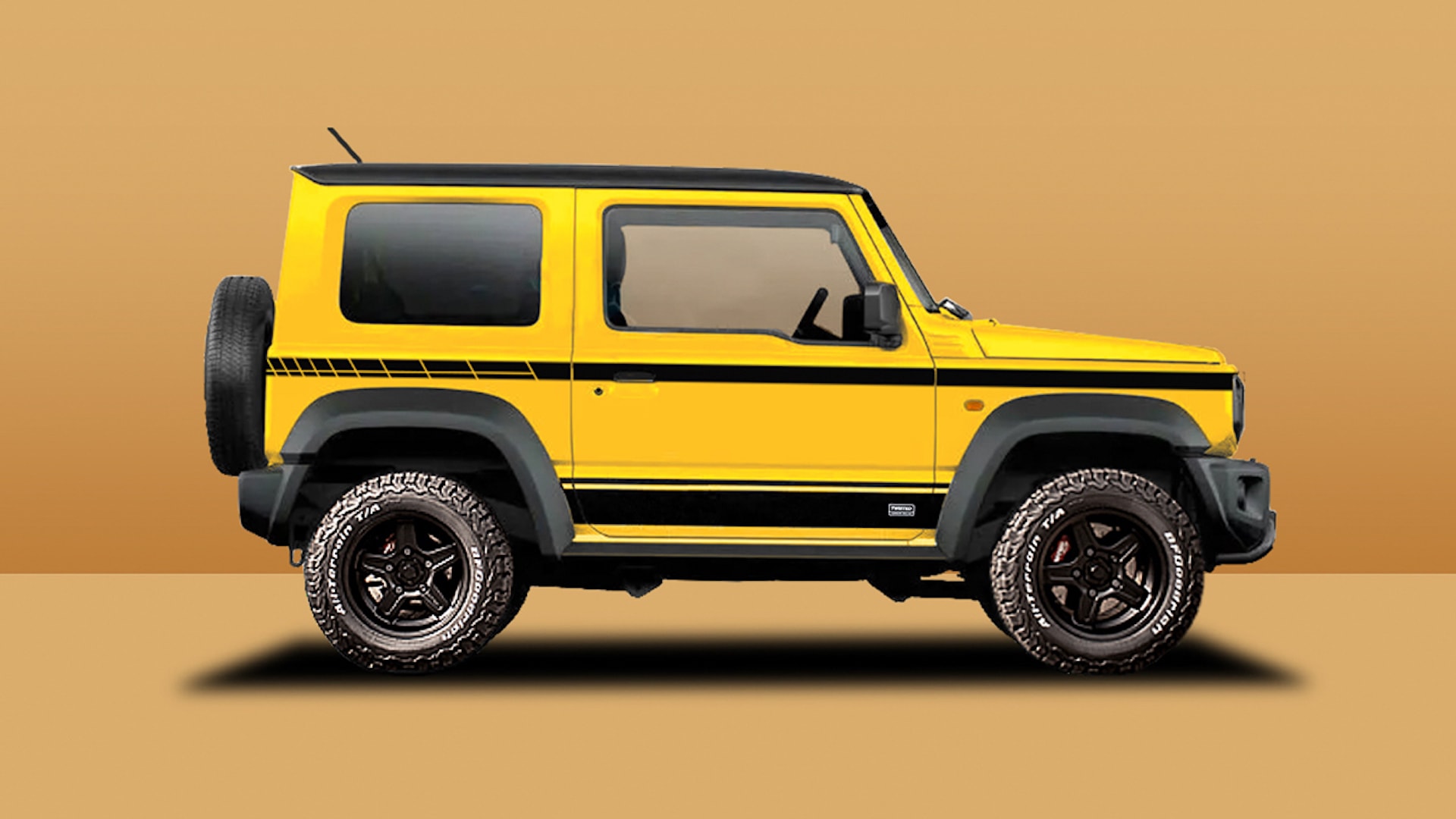
Along with the classic Defender, the Thirsk-based outfit will offer conversions of the latest Suzuki Jimny.
It will be the first time in the company’s 21-year history that it has undertaken full conversions on vehicles other than the original Defender.
But, as Charles Fawcett, founder and MD of Twisted, explains: “The much-loved Suzuki Jimny is a pure, proper little offroader. It’s evocative, engaging, and endearing. It’s almost a miniature Defender with similar architecture, driveline and analogue feel.”
Creating the ‘Little Twisted’
Exact details of what the Twisted conversion will include are yet to be confirmed. However, Charles Fawcett notes that each Jimny “will have more engaging handling and power delivery, utilising our Twisted wheel and tyre package along with honed progressive suspension.
“It will benefit from extensive soundproofing, upgraded media interface, audio system and our signature custom interior.”
Twisted has indicated that pricing for the complete Jimny conversion will be less than £50,000 (plus VAT).
Initial models will be based upon the two-seater Jimny Light Commercial Vehicle version, but other variants have not been ruled out.
Along with selling complete conversions, Twisted will also tweak and tailor customers’ vehicles.
Miniature tuning marvels
The fourth-generation Suzuki Jimny has already attracted plenty of attention from aftermarket tuners since being launched in 2018.
Not long after the Jimny made its debut, the Chelsea Truck Company announced a luxury version of the diminutive 4×4.
A host of modified Jimnys also took centre stage at the 2019 Tokyo Auto Salon, including a neat pick-up truck version.
However, the Little D kit from Japanese tuning outfit DAMD may be the most relevant, given Twisted’s heritage. This bodykit allows a Jimny to be made into a miniature replica of the original Land Rover Defender.
Twisted will announce final technical details, and pricing, for its Jimny creation later in 2023. Customers are invited to register their interest now in one of the limited build slots.
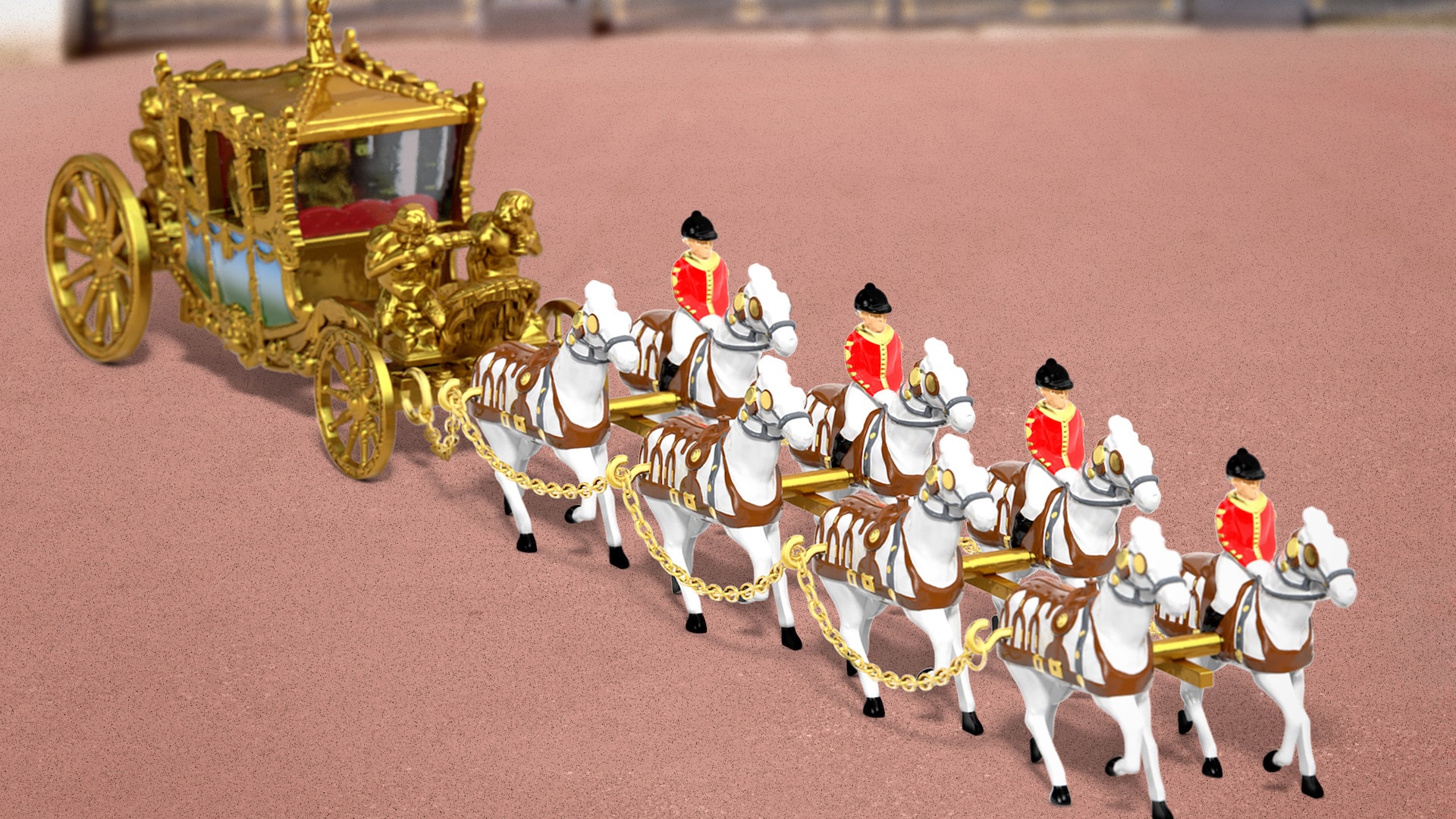
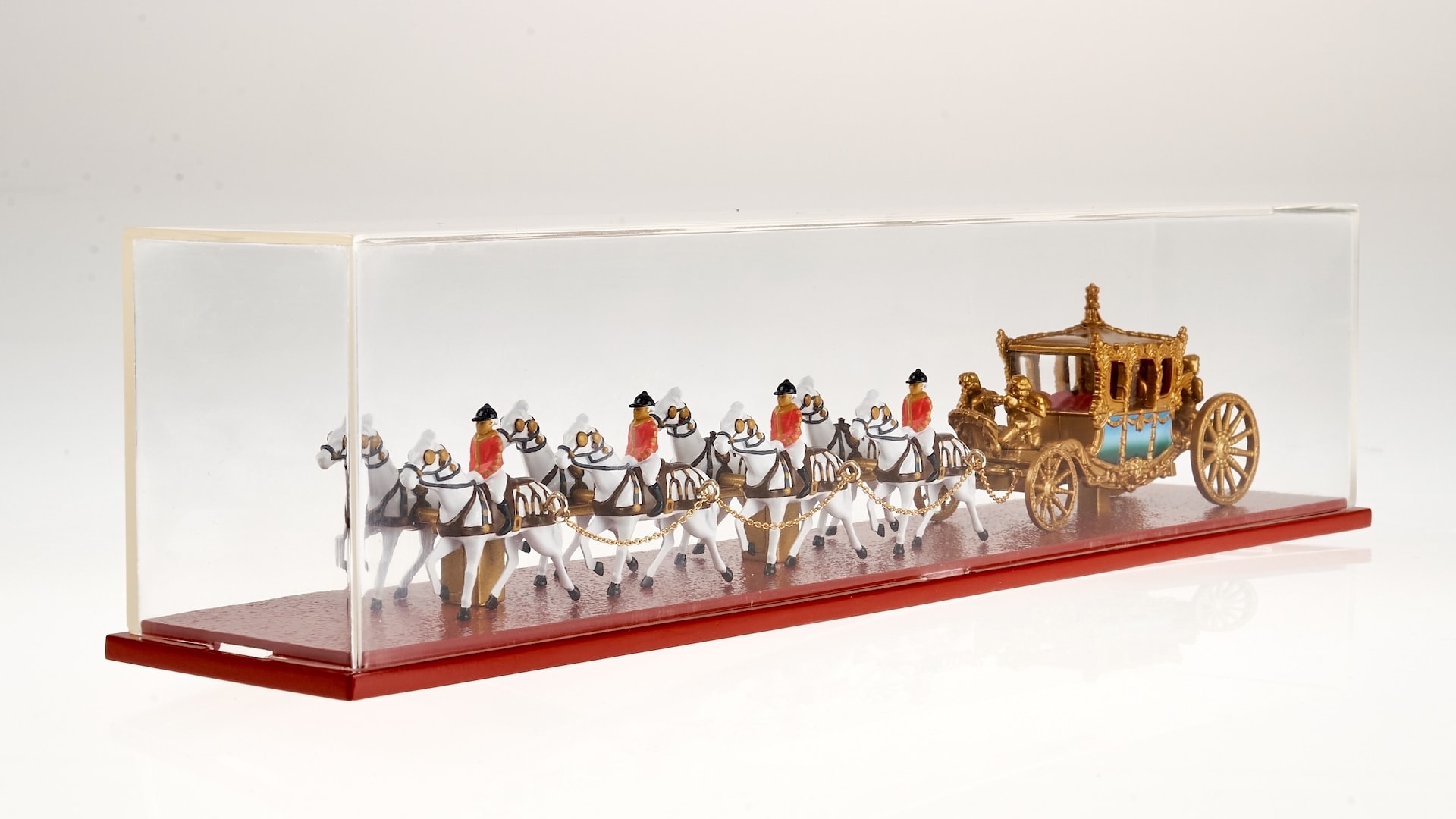
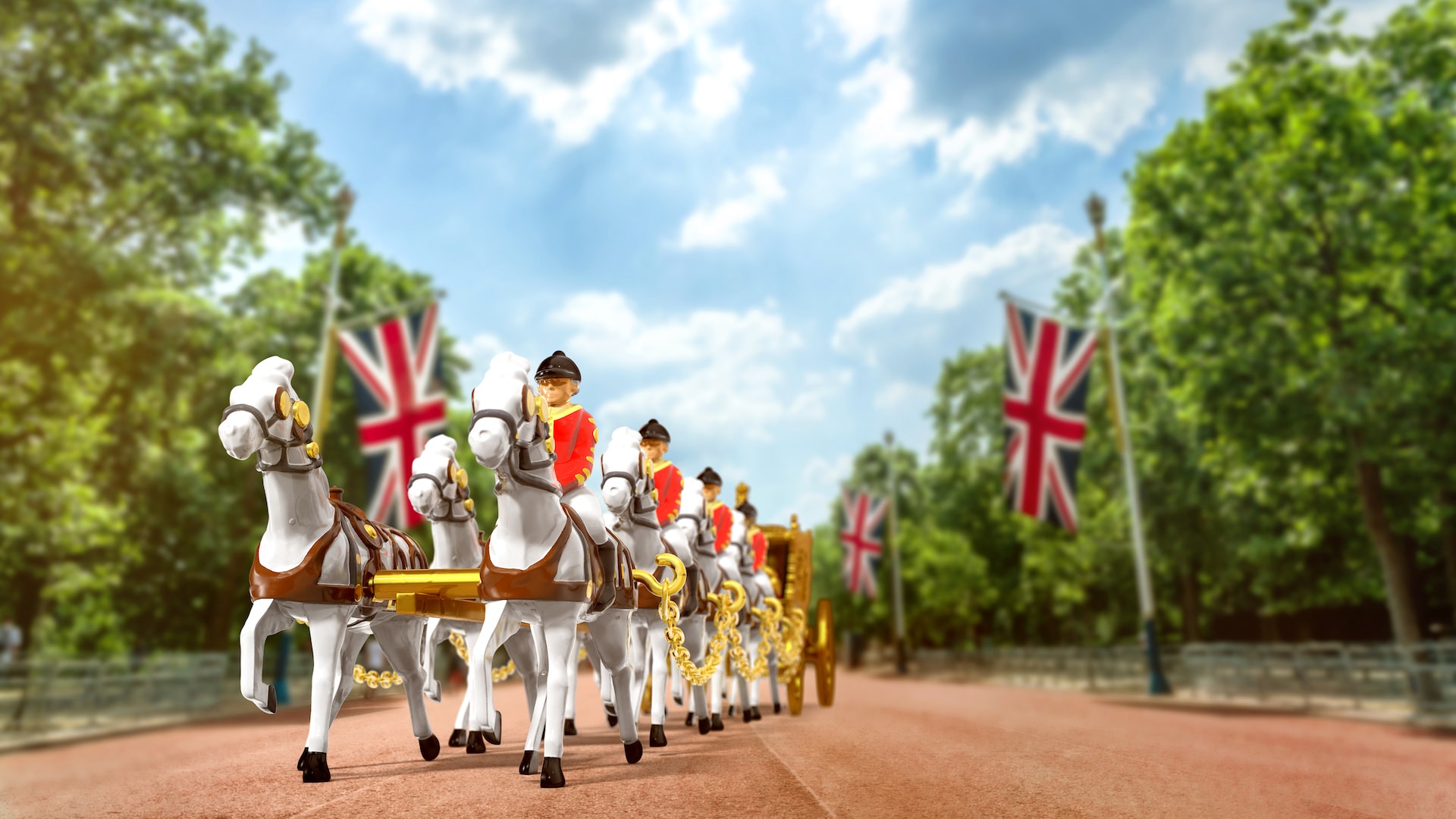
Matchbox has revealed a new limited-edition die-cast model of the British royal family’s Gold State Coach.
Launched to coincide with the coronation of King Charles III, the 1:64-scale model pays tribute to the new monarch – and the original Gold State Coach model by Lesney.
This year sees Matchbox celebrate its 70th anniversary. Seventy years ago, the success of the original Lesney Gold State Coach paved the way for the Matchbox toy brand.
A golden age reborn
Lesney sold more than one million examples of its 11.8cm-long Coronation Coach, produced to mark Queen Elizabeth II’s accession to the throne. This financial windfall allowed the company to invest in a new Matchbox brand. Three billion toy cars later, the rest is history.
Although other scale versions of the Gold State Coach model have been created, Matchbox aimed to make the best, most detailed example yet for 2023.
Hundreds of photos of the royal coach were taken, and hours of film footage studied. A four-month design process included making 3D scans of the sculpted horses and riders from the original Lesney model. Modern 3D printing was used to produce prototype parts.
The tritons on the front of the coach are now blowing horns, there are three cherubs –representing England, Scotland and Ireland – on the roof, and windows have been added. Metal figures of King Charles III and the Queen can be spotted inside the red interior.
An exclusive Matchbox model
The new model measures 23cm in length, and comes complete with a display box and textured plinth – the latter designed to look like The Mall, which leads up to Buckingham Palace.
“Not only is 2023 a pivotal moment in UK history, but it also marks an important one for Matchbox. Celebrating 70 years of rich design heritage, Matchbox is launching an exclusive coronation coach that evolves the brand’s signature craftsmanship while drawing on innovation and cutting-edge technology to write a new and exciting chapter in our history,” said Roberto Stanichi, head of vehicles at Mattel.
“Being built to order, we expect this coach to be one of the most exclusive models Matchbox has ever created.”
Priced at £60, the Matchbox Gold State Coach is available exclusively via the Mattel Creations website. You will need to place your order between 26 April and 18 May 2023.
Michael Leiters has been shaking things up at McLaren. The new CEO left his role as chief technology officer at Ferrari last summer, upping sticks from Maranello to Woking. One of his first decisions was to halt production of the just-launched Artura until its quality problems had been fixed.
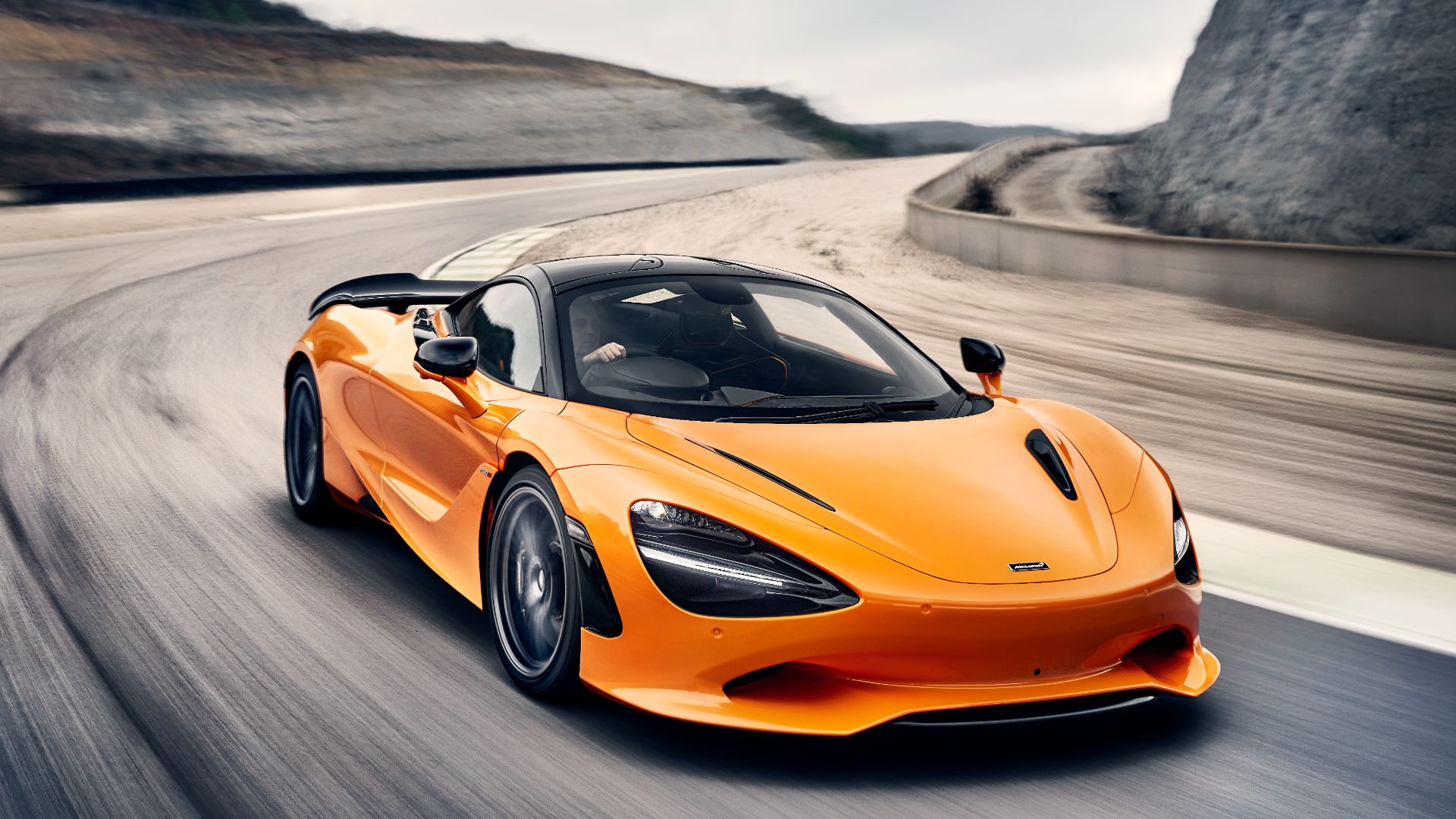
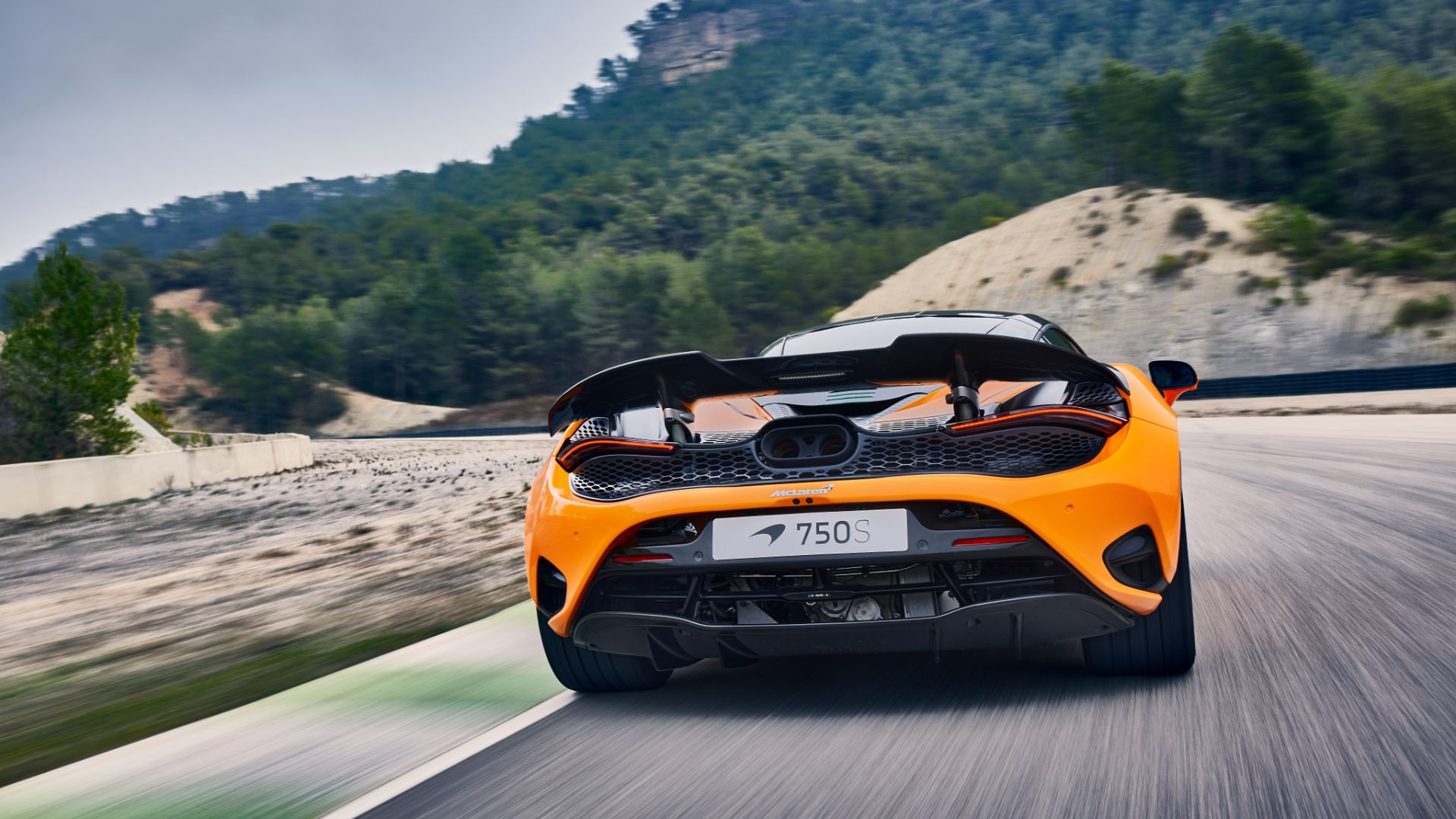
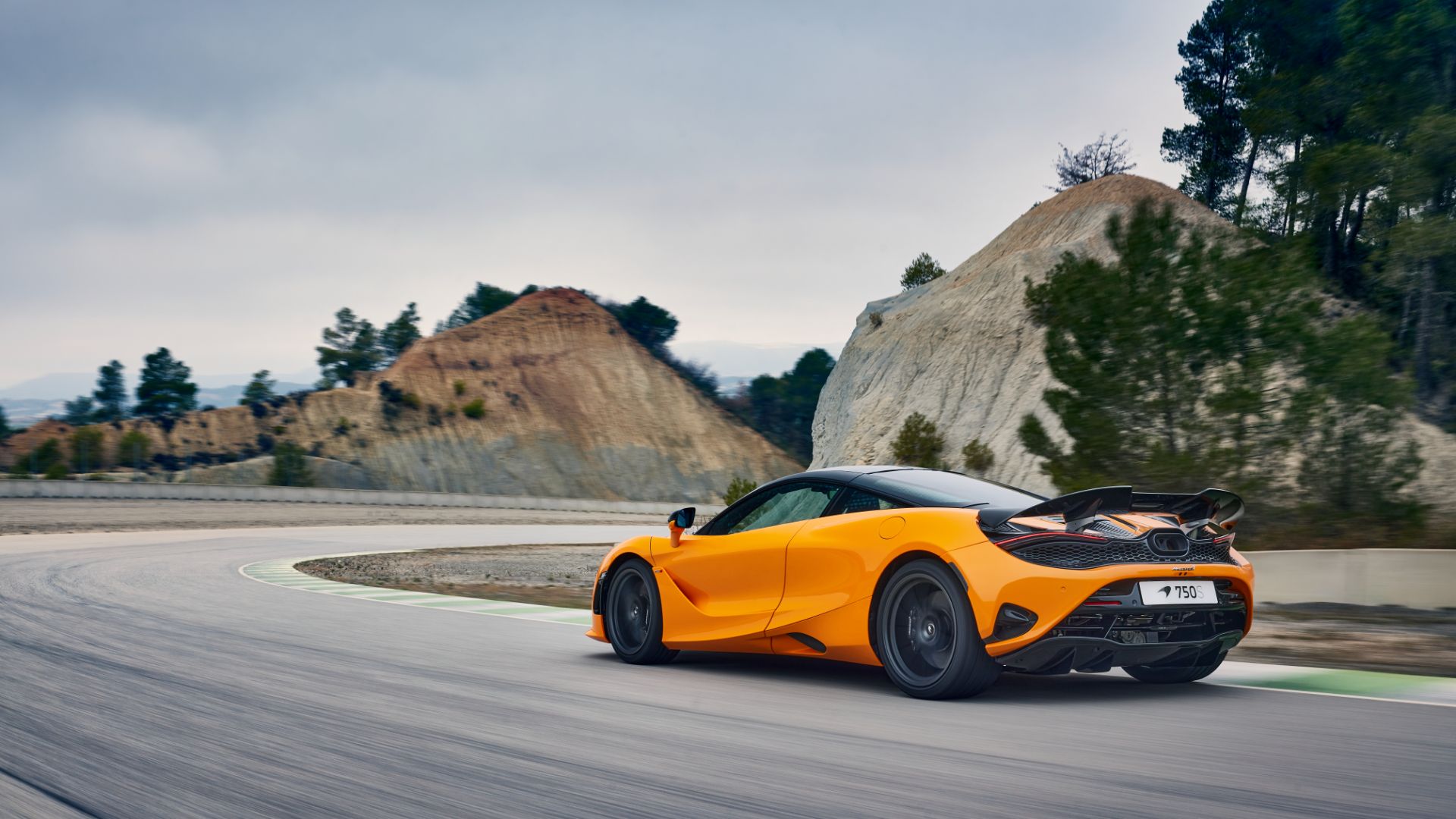
Leiters is a details man, then, and the 750S – the first new McLaren developed under his watch – is all about the details. It might look similar to the 720S it evolved from, but 30 percent of the car is all-new, including upgrades for the engine, chassis, interior and infotainment.
The lightest and most powerful series-production McLaren ever, the 750S also promises a greater emphasis on ‘engagement and fun’. We’ll be driving it in September, and first deliveries start soon afterwards. In the meantime, we visited McLaren’s futuristic HQ to get the full lowdown. Read on for those all-important details…
Light speed
The headline stats are 750hp and a DIN kerb weight of 1,389kg – plus 30hp and minus 30kg versus the 720S, respectively. That gives the McLaren a better power-to-weight ratio than the car it was benchmarked against: the Ferrari 296 GTB.
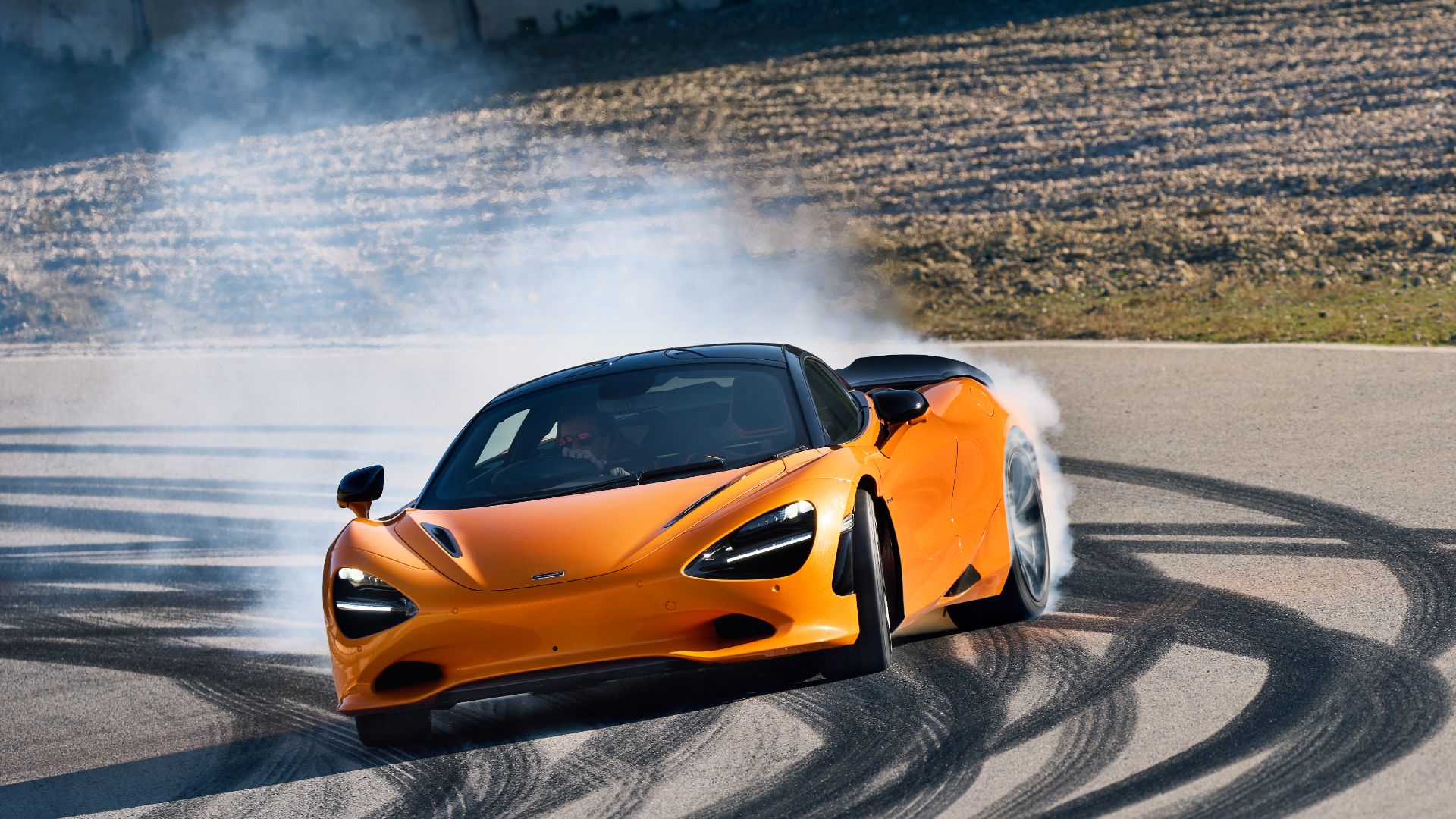
As you’d expect, performance is ferocious. The 0-62mph sprint takes 2.8 seconds, 124mph passes in 7.2 seconds and – for any American readers – a standing quarter-mile is dispatched in 10.1 seconds. Top speed is 206mph.
There’s also a Spider version, with a retractable hard-top that opens in 11 seconds at speeds up to 31mph. Prices will rise around 10 percent, which means a starting figure of £240,000 – or £40,000 more than the Artura.
‘For the purist’
A key difference between the Artura and 750S is the latter car doesn’t have any plug-in hybrid tech. While the Artura combines a 3.0-litre V6 engine with an axial flux electric motor, the 750S relies solely on McLaren’s venerable ‘M840T’ V8. “This car is unashamedly for the internal combustion engine purist,” says head of PR, Piers Scott.
The twin-turbocharged 4.0-litre V8 gains increased boost pressure and a higher-flow fuel pump, along with lightweight pistons from the 765LT. Alongside that 750hp output, torque is up 22lb ft to 590lb ft (800Nm) at 5,500rpm. There’s also a shorter final drive ratio for the seven-speed paddle-shift transmission
A new centre-exit sports exhaust inspired by the McLaren P1 is lighter and louder, delivering ‘a greater crescendo at high engine speeds’.
Like a Longtail
The 750S isn’t just faster – it should be more engaging to drive, too. Drawing comparisons with McLaren’s track-focused Longtail (LT) models, Jamie Corstorphine, director of product strategy, says it offers “a significant degree of ‘Longtail’ agility, feel and feedback, while ensuring that comfort and usability are not compromised”.
The car retains the carbon fibre Monocage II-S chassis and hydraulically linked suspension of the 720S, but spring rates are three percent softer at the front and four percent stiffer at the rear. Front track is 6mm wider, too.
A standard 750S can stop from 62mph in just 30 metres, helped by carbon-ceramic discs and a new brake booster. For trackday fans, there’s a new brake upgrade derived from the McLaren Senna, with meatier discs and monobloc callipers.
Crucially, the 750S still has hydraulic steering – a defining McLaren characteristic – now with a quicker ratio and an upgraded pump to better resist bump-steer. “We will resist electric power steering as long as we possibly can,” promises Ben Gulliver, head of vehicle development.
Socket to them
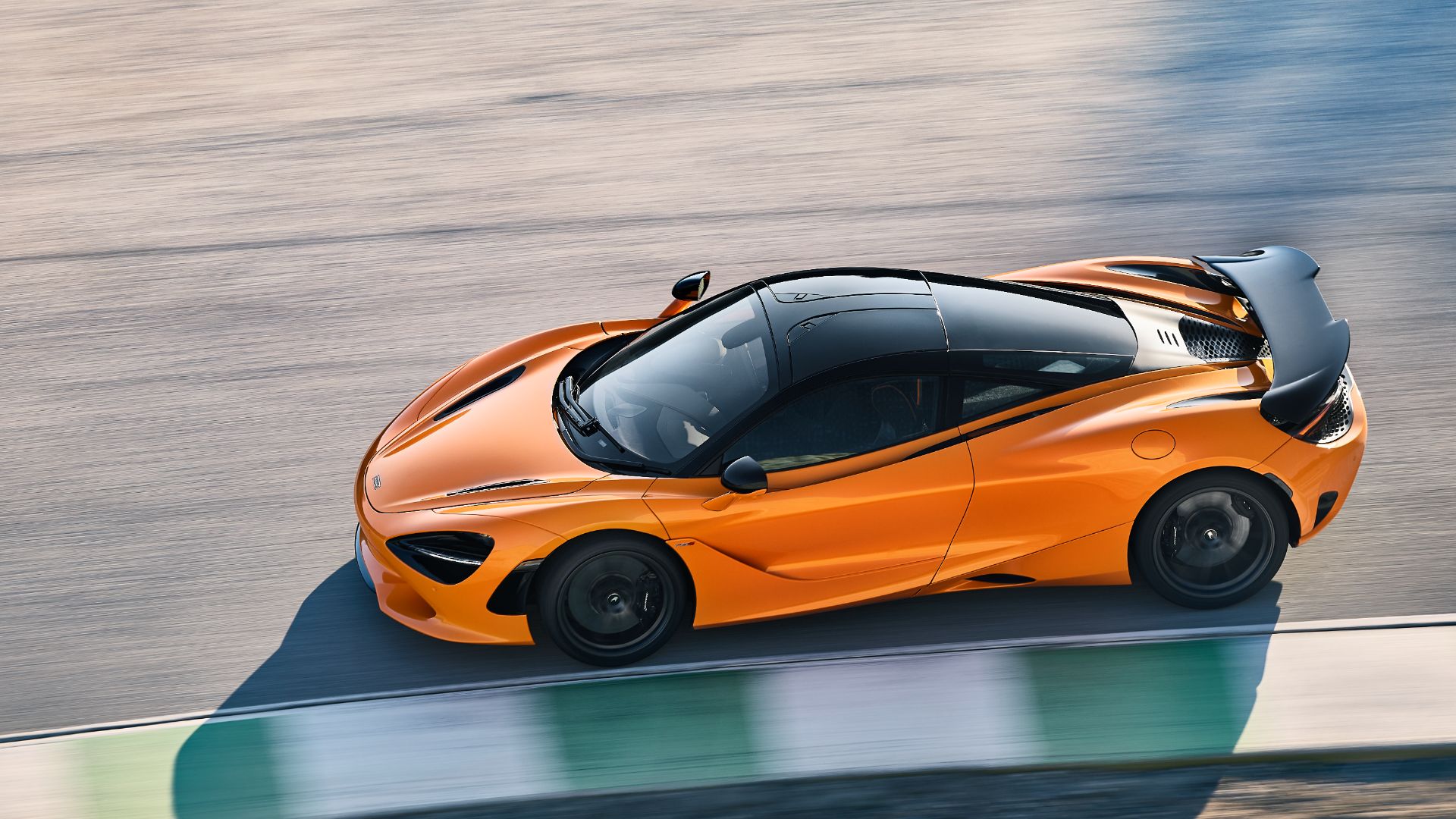
The 720S looked genuinely radical when launched in 2017, so perhaps it isn’t surprising that changes to its aluminium, carbon fibre and composite body are quite subtle. Also, as Piers Scott points out, the familiar styling of the 750S helps protect resale values for the outgoing car.
At the front, you’ll spot a longer splitter and narrower headlight ‘eye sockets’ – now optionally painted in body colour. Both bumpers have also been redesigned and there’s a larger pop-up rear spoiler. Further options include 765LT-style front wing vents and lots of external carbon fibre.
Chief engineer Sandy Holford says the car offers more downforce (“although this wasn’t our focus”) and better aerodynamic balance. And firmly back in the real world, a new nose-lift system takes four seconds, rather than the 10 seconds needed previously, saving time when you encounter speed humps.
Ready to launch
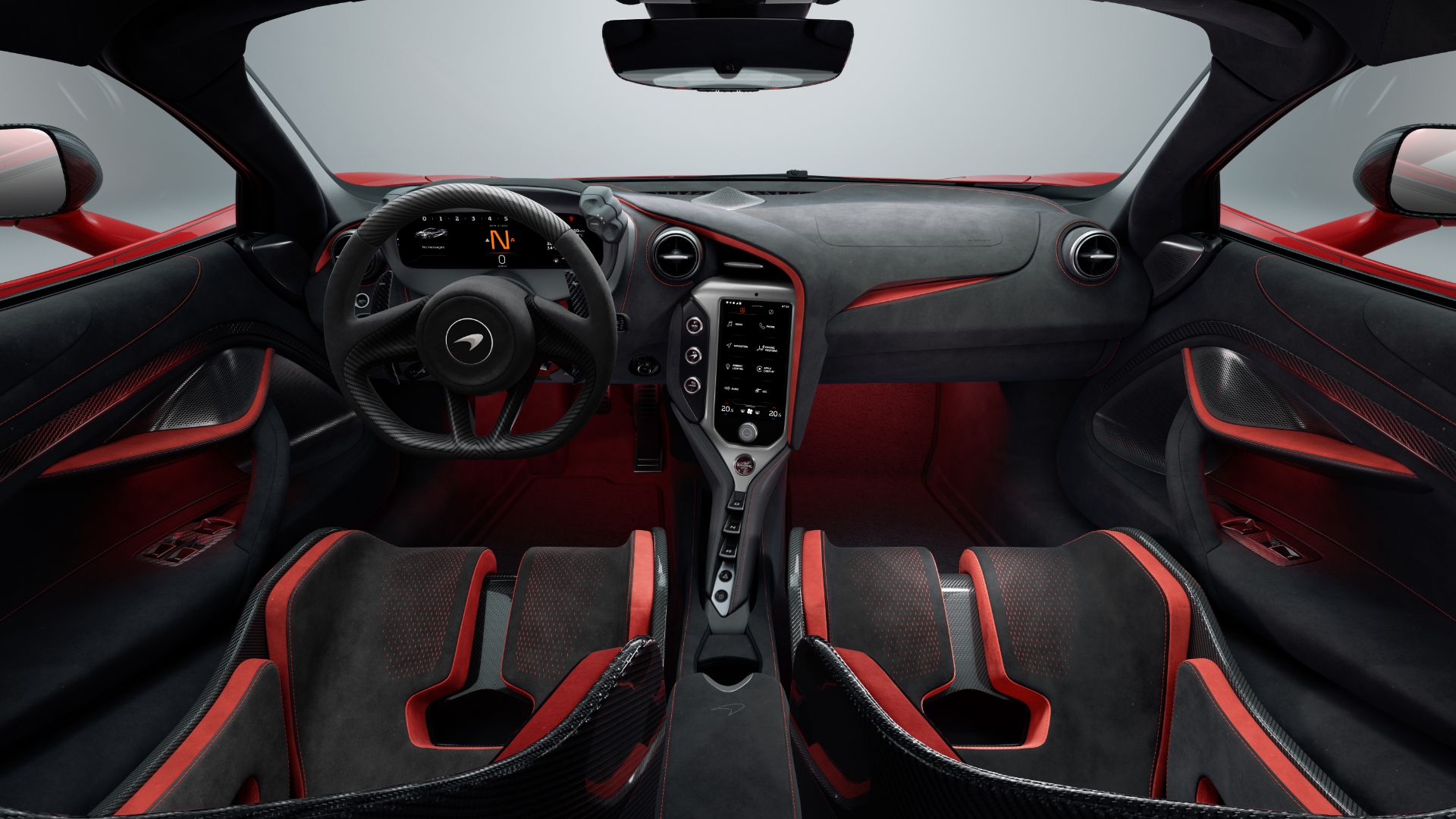
Lift the McLaren’s dihedral doors – which cut into the roof on the coupe – and the interior looks functional and driver-focused. The car we saw had the newly optional hard-shell ‘Senna seats’, but more padded, P1-style chairs are also available.
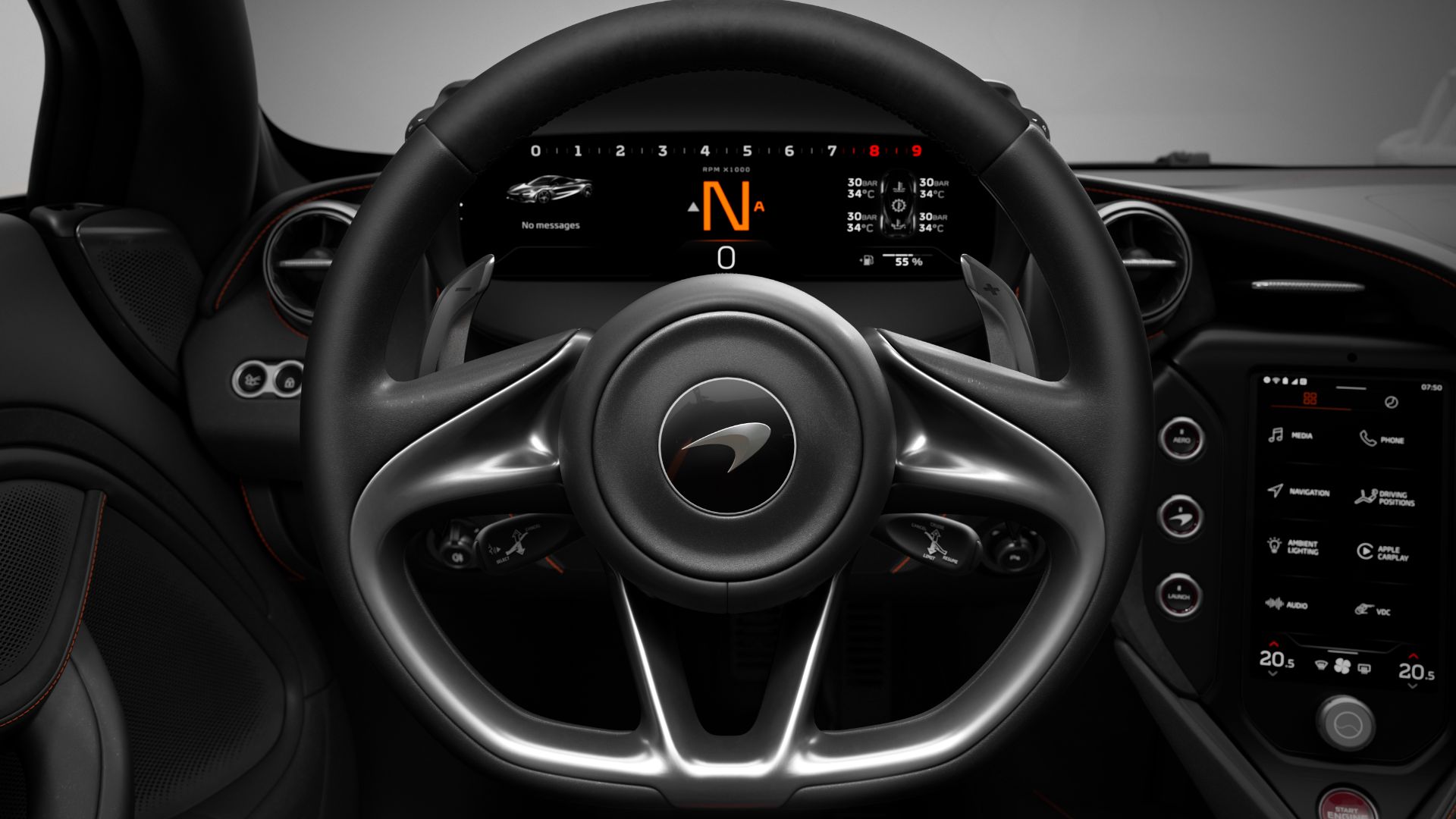
The ‘Active’ panel on the centre console has been replaced by rocker switches either side of the digital instrument binnacle. Positioned within fingertip-reach of the steering wheel, these allow the driver to toggle between Comfort, Sport and Track modes for the powertrain and chassis. Alternatively, the new McLaren Control Launcher (MCL) button provides quick, one-touch access to your preferred settings.
The portrait-style touchscreen has upgraded software and – praise be! – Apple CarPlay smartphone connectivity for the first time. Android Auto is coming soon, we are told.
Raising the bar
With the sold-out 765LT now out of production, the 750S becomes the flagship of a three-tier range, sitting above the GT and Artura. In some regards, it’s still a McLaren of the old school, yet the 720S – a five-star supercar in our reviews – always offered huge bandwidth, even without the ability to drive on electric power.
“When you have a car recognised by so many drivers as a benchmark, to do something even better you have to examine every detail and really push hard for improvements that raise the bar again,” explains Michael Leiters.
Has the bar been raised high enough to beat the car from Leiters’ ex-employer? We can’t wait to find out.
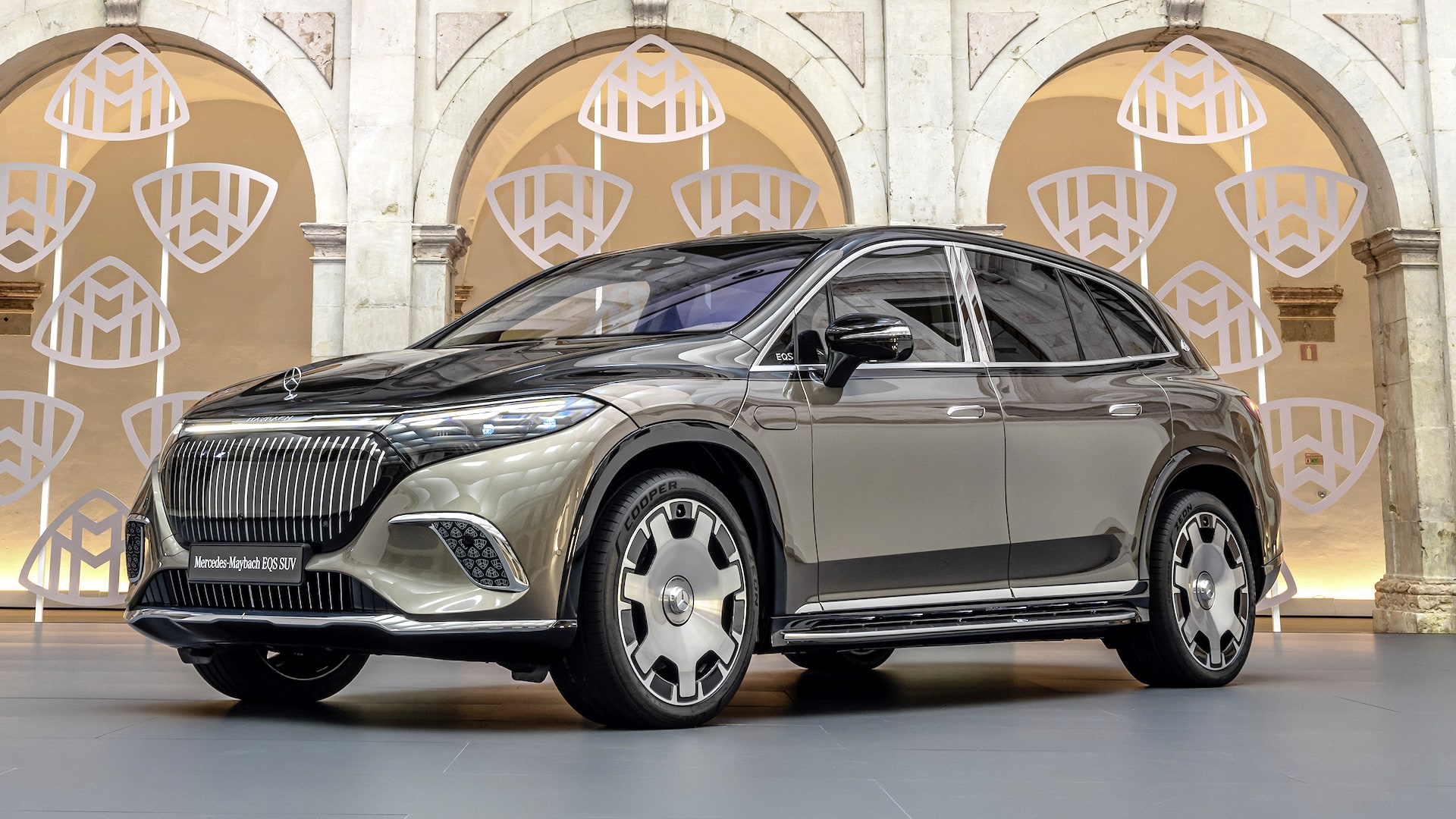
Mercedes-Maybach has revealed its first fully electric car. The opulent EQS 680 SUV is designed to deliver maximum comfort – particularly for those being chauffeured in the back – and effortless electric performance.
With two motors and four-wheel drive, the EQS 680 develops a mighty 649hp and 701lb ft of torque. Accelerating from 0-62mph takes just 4.4 seconds, while fully-charged range is up to 373 miles.
The flagship SUV from Mercedes-Benz is arguably the world’s most luxurious electric SUV – at least until battery-powered versions of the Bentley Bentayga and Rolls-Royce Cullinan arrive.
Big on bling
Starting with the Mercedes-Benz EQS SUV, the Maybach ladles on plenty of extra chrome and an imposing front grille. Illuminated sideboards and alloy wheels up to 22 inches in diameter also provide extra bling.
The Mercedes-Maybach ‘double M’ logo is even incorporated into the front bumper intakes, with a look seemingly inspired by high-end luggage and handbags.
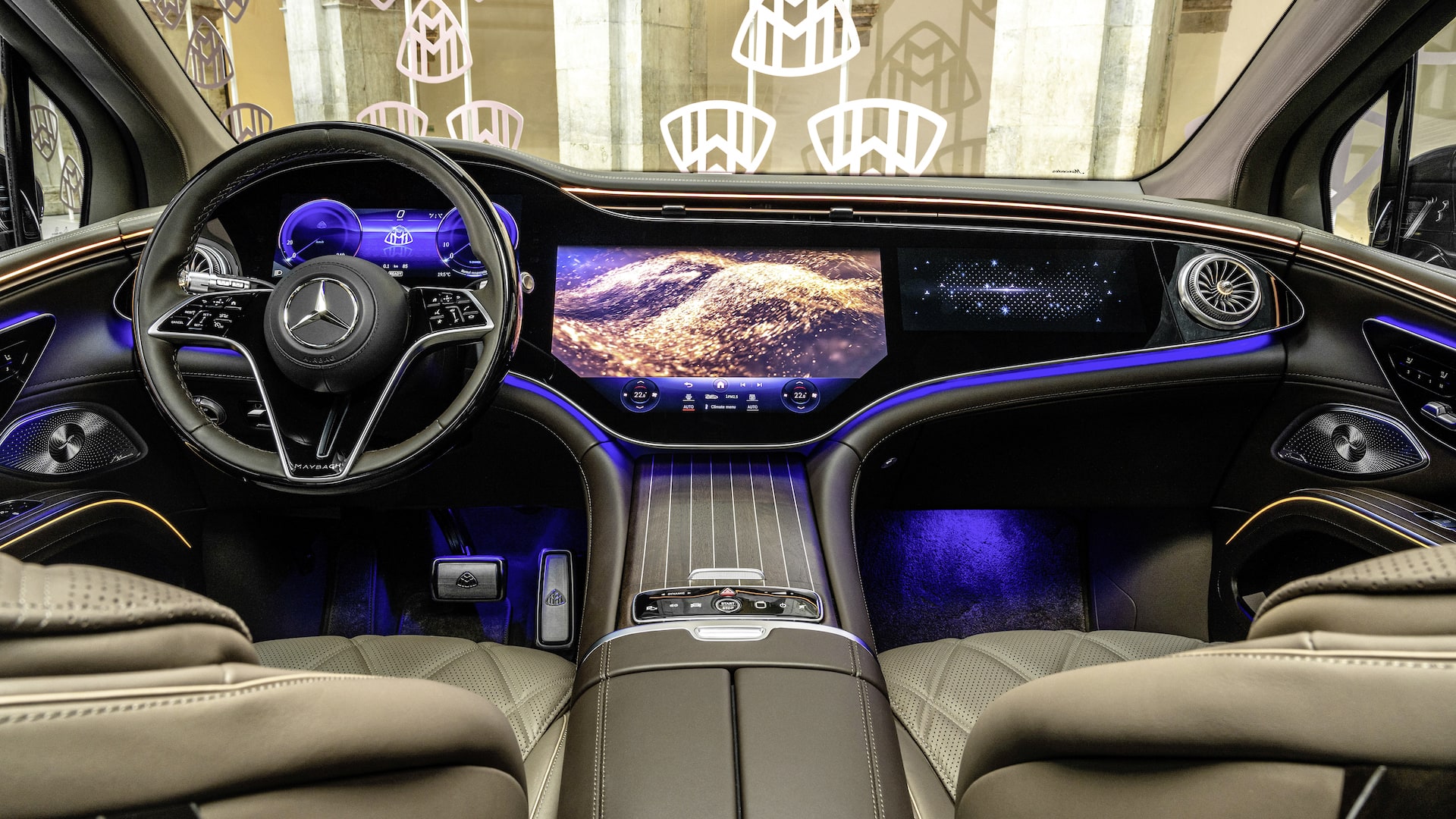
However, it is the 680’s interior that truly stands out from the regular Mercedes-EQ version. It features a Maybach-specific version of the full-width MBUX Hyperscreen for infotainment. The digital instrument panel is also customised with rose gold surrounds and pointers that are ‘designed like a silk scarf that moves elegantly in the wind’.
Rear of the year
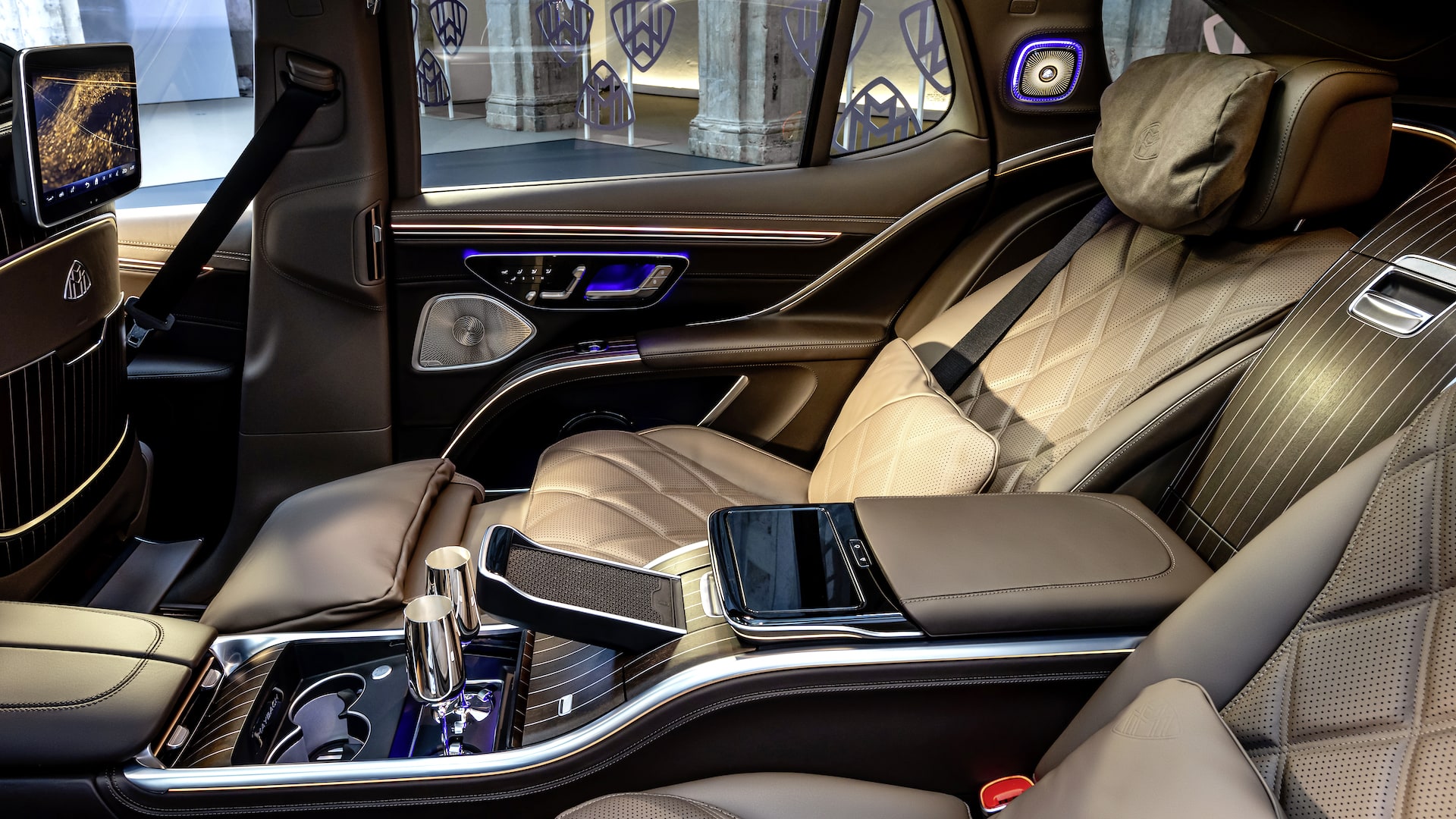
The Maybach EQS features the first use of vegetable-tanned Nappa leather, while other elements of the interior are derived from recycled or sustainable materials.
Two individual seats are separated by a large ‘floating’ centre console. Passengers can enjoy watching 11.6-inch multimedia screens, along with active ambient lighting that adjusts automatically throughout the day.
A Burmester 4D sound system with 15 speakers is standard, and those in the back receive their own special headphones. Extensive sound deadening has been installed around the rear of the cabin, helping cocoon occupants from road noise.
Mercedes has yet to announce prices for the Maybach EQS 680 SUV, but expect a hefty premium over the £153,495 asked for the existing EQS 580 4Matic SUV.
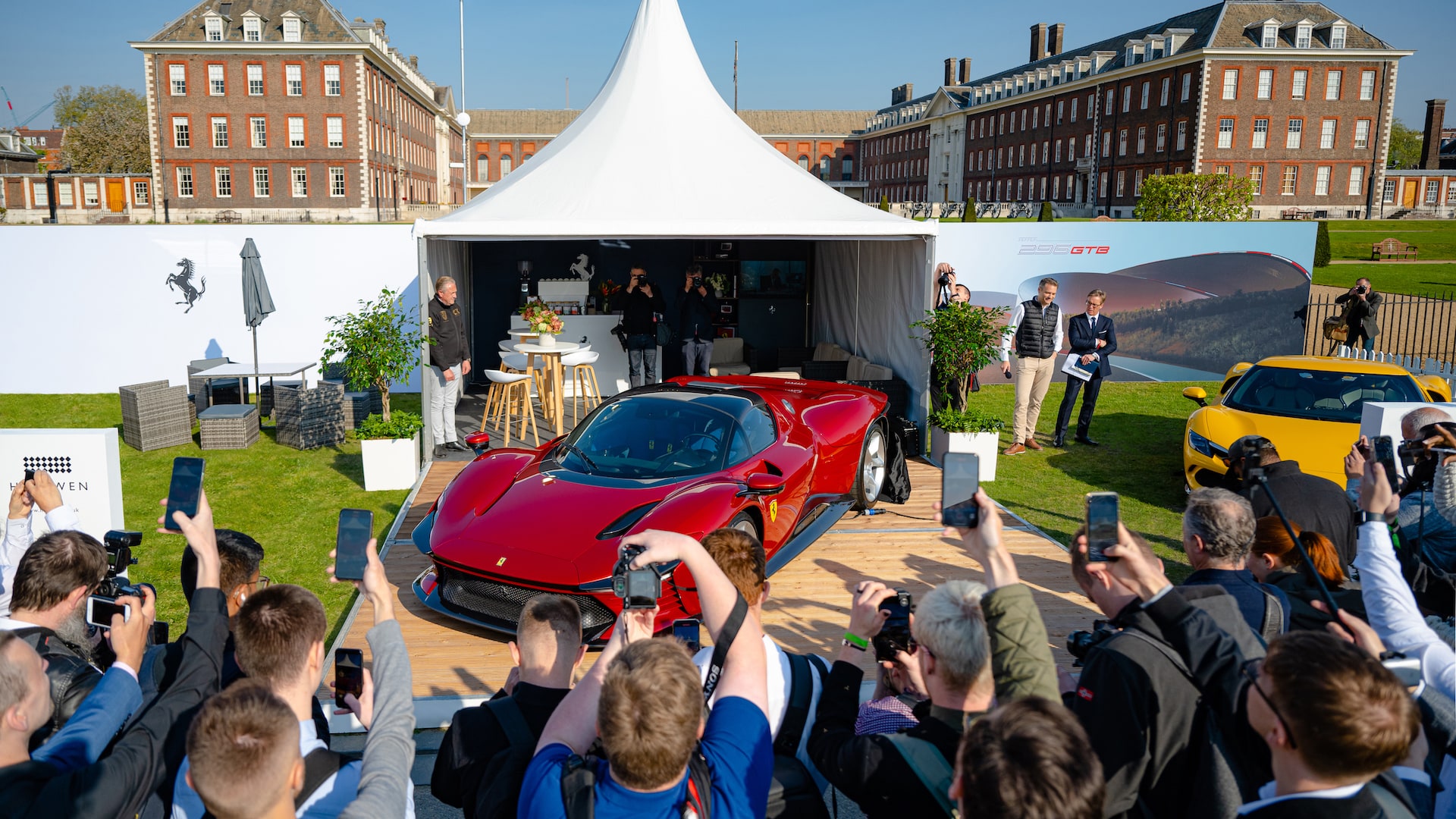
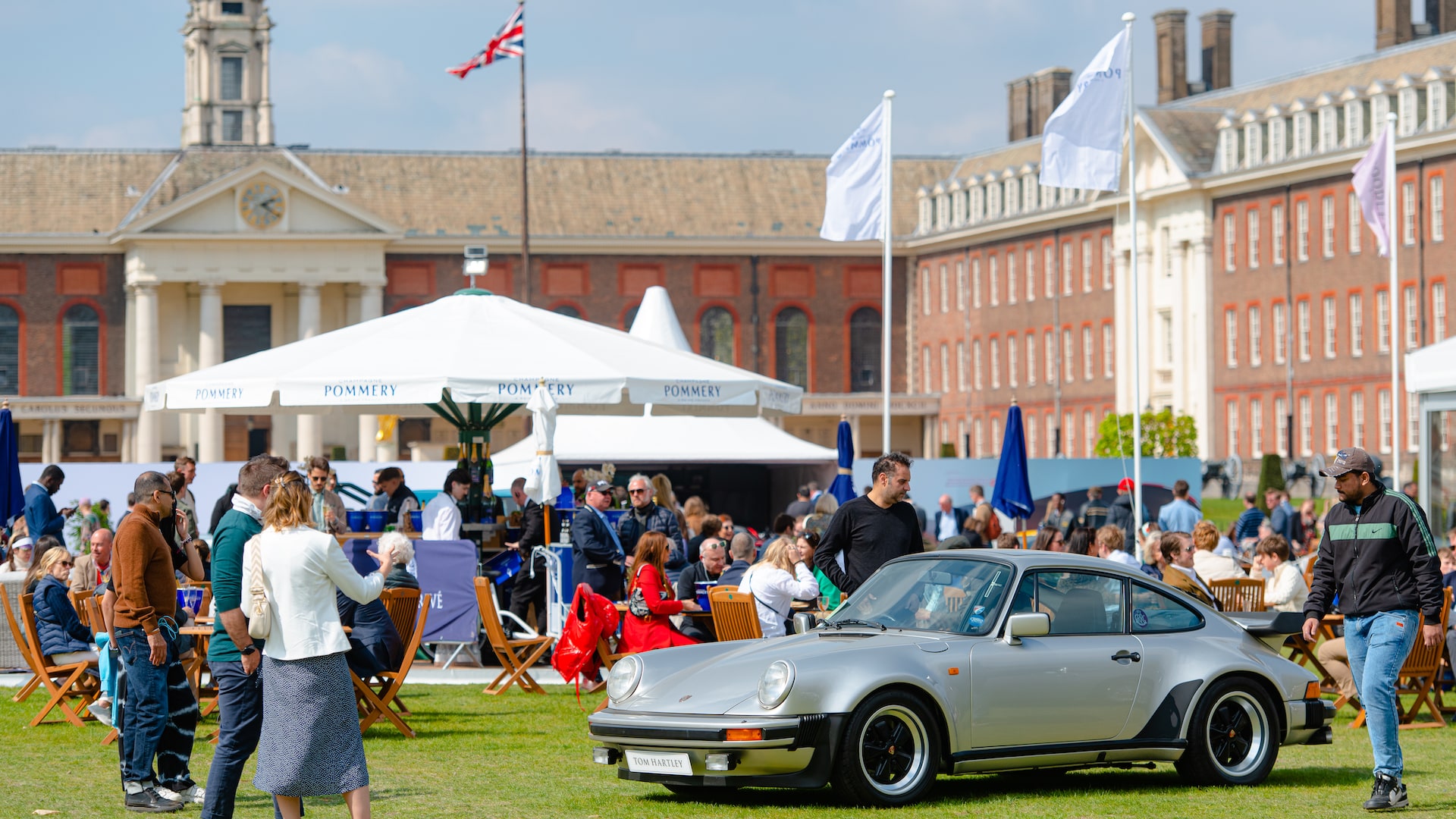
Next week sees the return of Salon Privé London, which will take place on the groomed lawns of the Royal Hospital in Chelsea.
The sister event to the established Salon Privé Concours d’Élégance at Blenheim Palace, the London show brings together the world’s finest hypercars, classics and restomods, and showcases new models from marques such as Ferrari, Bentley and Rolls-Royce.
Taking place on 20-22 April 2023, Salon Privé London will boast a high-end shopping village, plus food options that range from snacks to a formal three-course meal.
UK debut for Venom F5 Roadster
Demonstrating the breadth of UK debuts taking place at Salon Privé London, the show includes a first look at the electric Abarth 500e Scorpionissima hot hatchback.
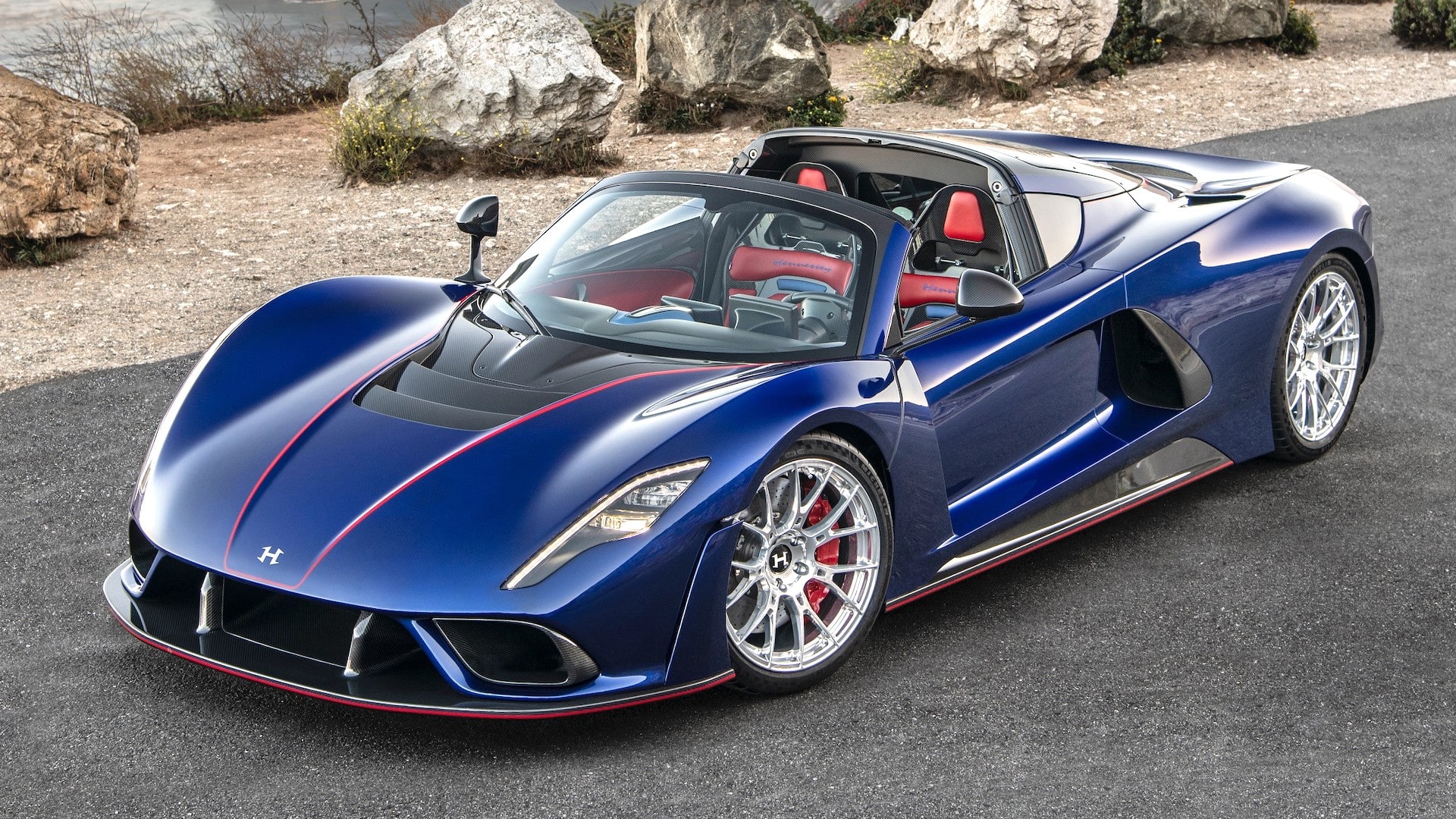
At the other end of the scale to the diminutive Abarth, the Hennessey Venom F5 Roadster will also appear for the first time. With a 1,187hp twin-turbocharged V8, the American-made roadster is the world’s fastest and most powerful convertible car.
Other highlights of the show include Theon Design‘s latest restomod Porsche 911, the off-road-ready Lamborghini Huracan Sterrato and the electric Wiesmann Project Thunderball.
Concours cars you can buy
One of the major attractions at Salon Privé London is the Concours de Vente. This will see premium dealers from the UK and beyond displaying their cars for sale.
Limited to 75 cars, the Concours de Vente is split into three classes. Class One is up to £250,000, Class Two is between £250,000 and £1 million, and Class Three is for cars costing more than £1 million. Best in class trophies, and an ultimate Prix d’Honneur for the top car overall, will be awarded.
Tickets for Salon Privé London are available to buy now, including hospitality packages for those who want the full VIP experience.
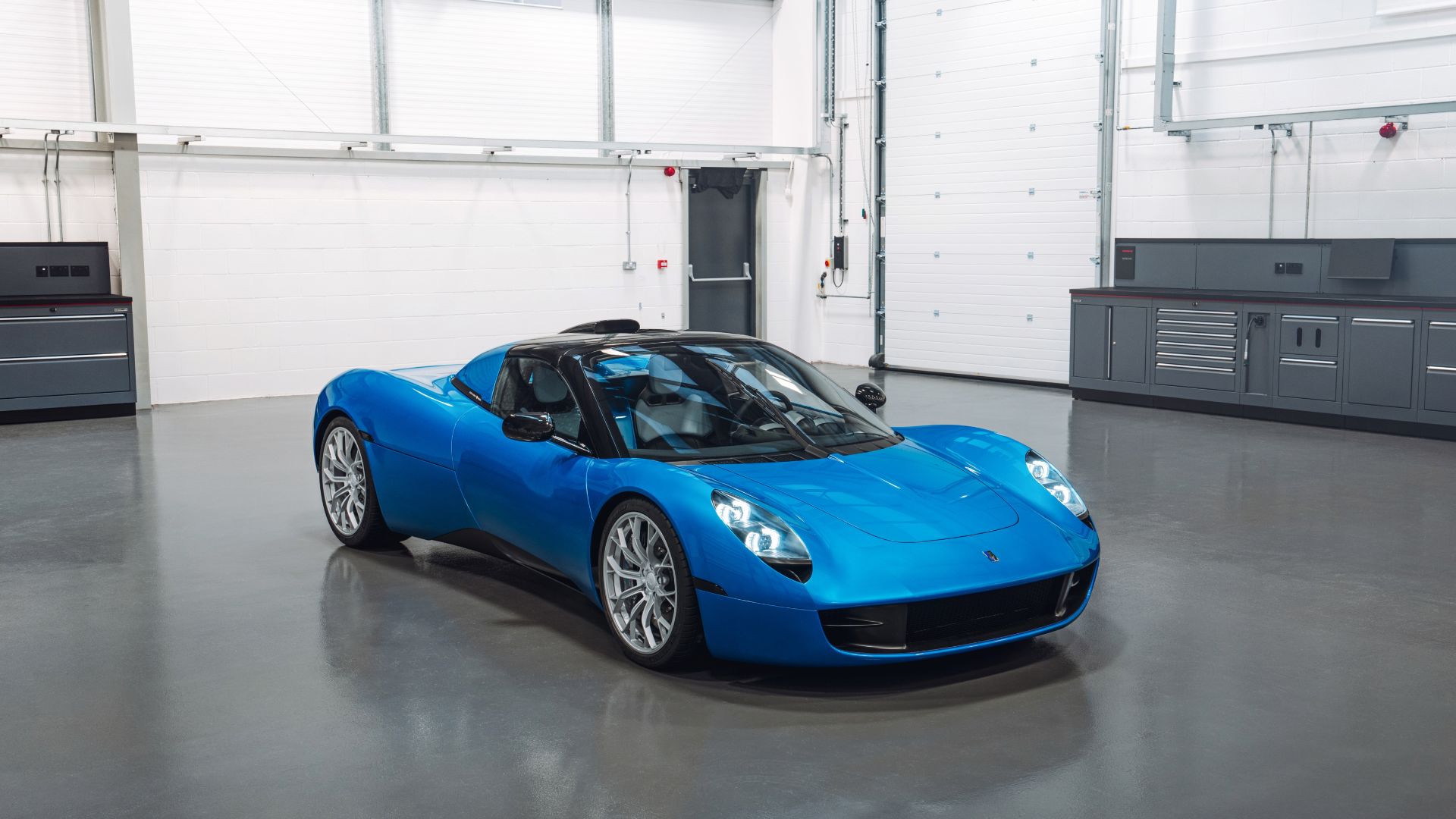
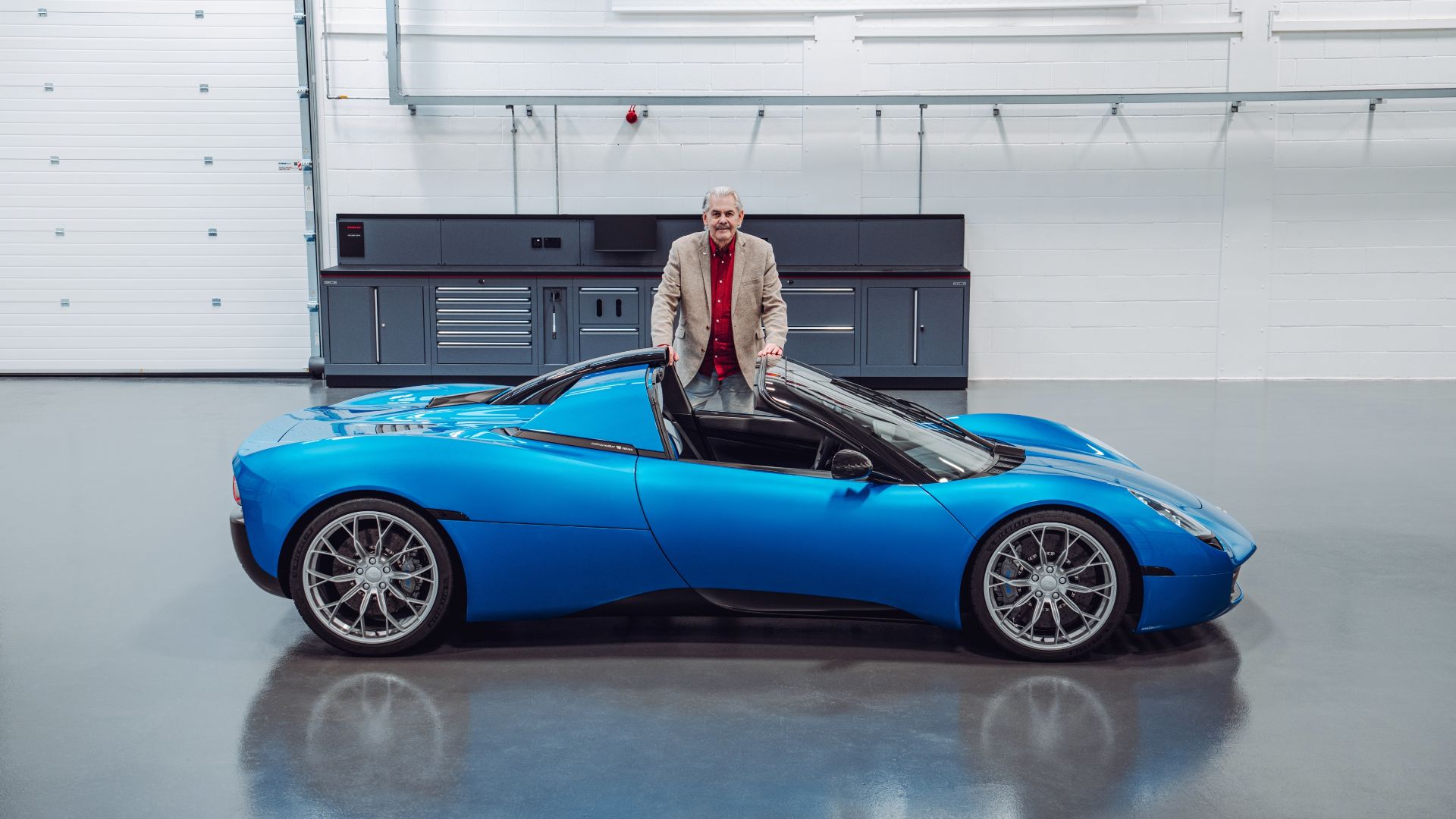
If you have a 617hp Cosworth V12 that screams to 11,100rpm, you’ll want to enjoy every last rev in glorious, unfettered surround-sound. In other words, you’ll want a T.33 Spider from Gordon Murray Automotive (GMA). Well, join the queue.
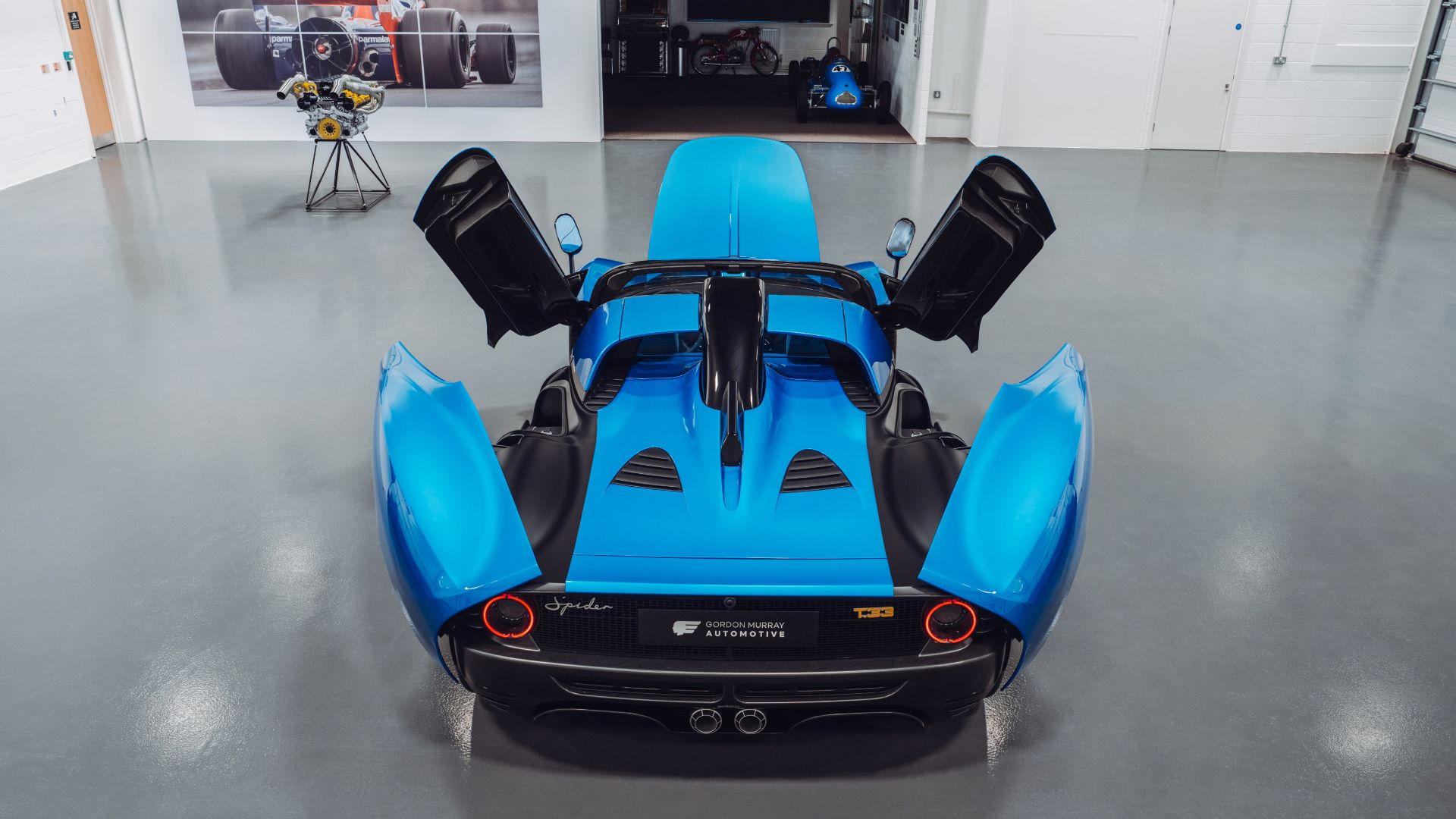
Based on the existing T.33 coupe, the Spider’s carbon composite bodywork is unique from the A-pillar backwards. Two lift-out roof panels can be stowed in the front luggage compartment – or you can leave the roof in place and simply retract the rear window.
The Spider will be hand-built at GMA’s new facility in Windlesham, Surrey, with first deliveries due in summer 2025. Production is limited to 100 cars, priced at £1.8 million apiece – some £500,000 more than its hard-top sibling.
Seeing the light
Incredibly, the open-air T.33 weighs just 18kg more than the equivalent coupe. A painstaking focus on weight reduction involved shaving ‘single grams from every component’.
Tipping the scales at 1,108kg, the Spider weighs approximately the same as an Alpine A110 – a car Murray himself owns and admires. It’s also nearly half a tonne lighter than a Porsche 911 Cabriolet.
Its pretty, slightly retro body panels are bonded to a carbon fibre monocoque chassis supported by extruded aluminium tubing. Designed as a convertible from the outset, GMA promises there are ‘no compromises to structural integrity’.
Simple pleasures
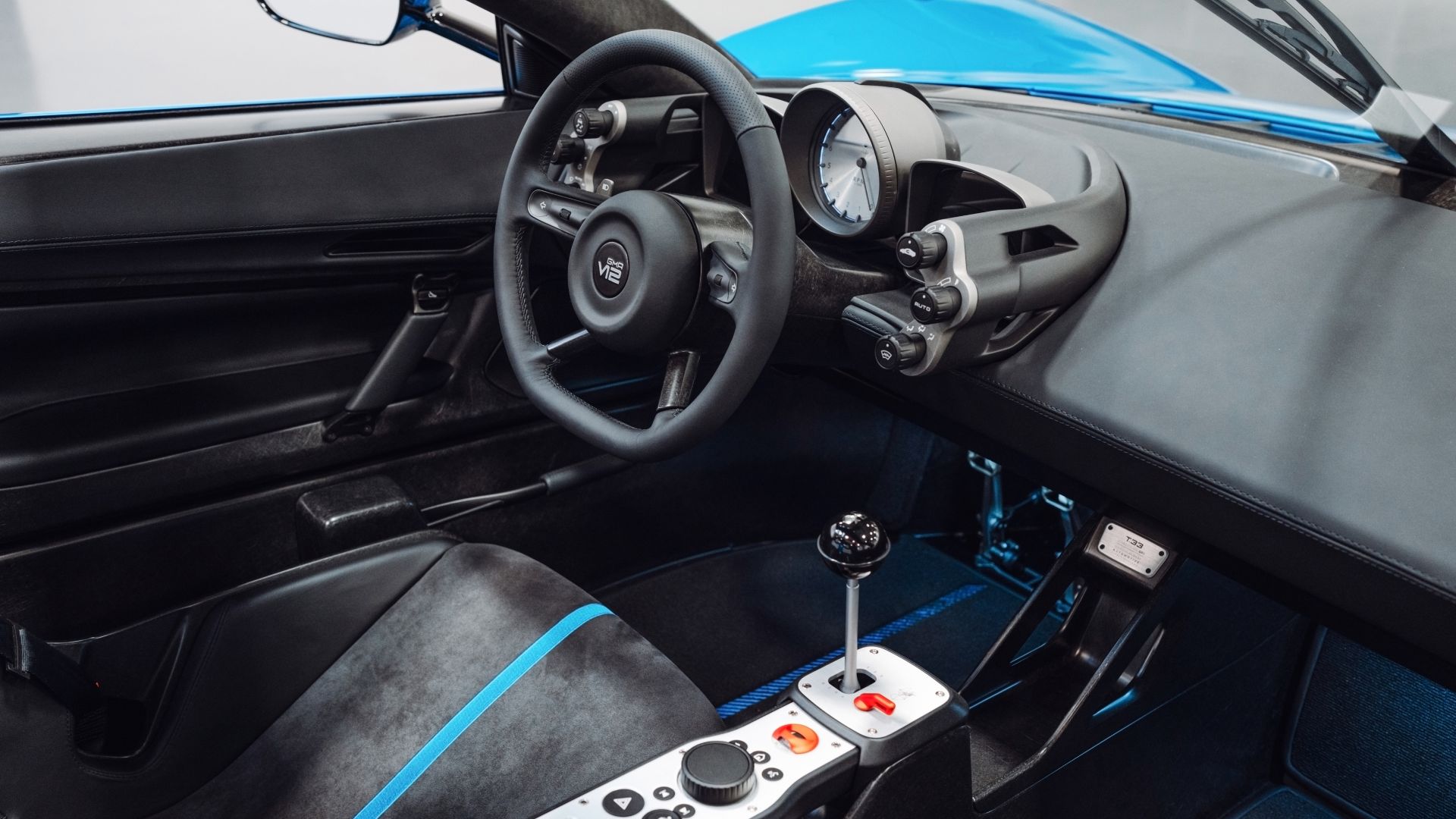
Inside, the T.33 Spider looks like a glowed-up Lotus Elise: minimalist, gorgeously tactile and totally driver-focused. A ‘defiantly analogue rev counter’ is flanked by a pair of small screens for climate control and infotainment – the latter with wireless Apple CarPlay and Android Auto connectivity.
A stubby, ball-topped gearlever takes centre-stage, controlling the six-speed Xtrac manual ‘box. The T.33’s carbon fibre steering wheel houses buttons for the wipers and indicators, in place of traditional stalks. The switchgear and pedals are machined from aluminium alloy.
Two carbon fibre bucket seats are trimmed in leather and Alcantara, and positioned beneath a huge ram air scoop that feeds the hungry V12. A pair of 90-litre stowage compartments are hidden in the rear haunches, increasing combined luggage capacity to 295 litres – on par with a small hatchback.
Totally tropical
The heart of the T.33 Spider, is, of course, that almighty engine, with its 12 cylinders, four throttle bodies, 24 injectors and superbike-style redline. Maximum power of 617hp arrives at 10,250rpm, while 75 percent of the 333lb ft of torque is available from 2,500rpm. It wears yellow cam covers inspired by the Murray-designed 1972 Duckhams Ford LM race car, too.
No performance figures are quoted, but reckon on 0-62mph in around three seconds and a top speed north of 200mph. If you want to go even faster, you’ll need the full-house 663hp GMA T.50 with its rear fan and ground-effect aero.
Lastly – and best of all – we’re told the T.33 Spider will be available in some very eye-catching colours, ‘acknowledging Gordon’s love for a tropical shirt’. It seems even Murray, a famously obsessive and serious engineer, isn’t afraid to have a bit of fun.