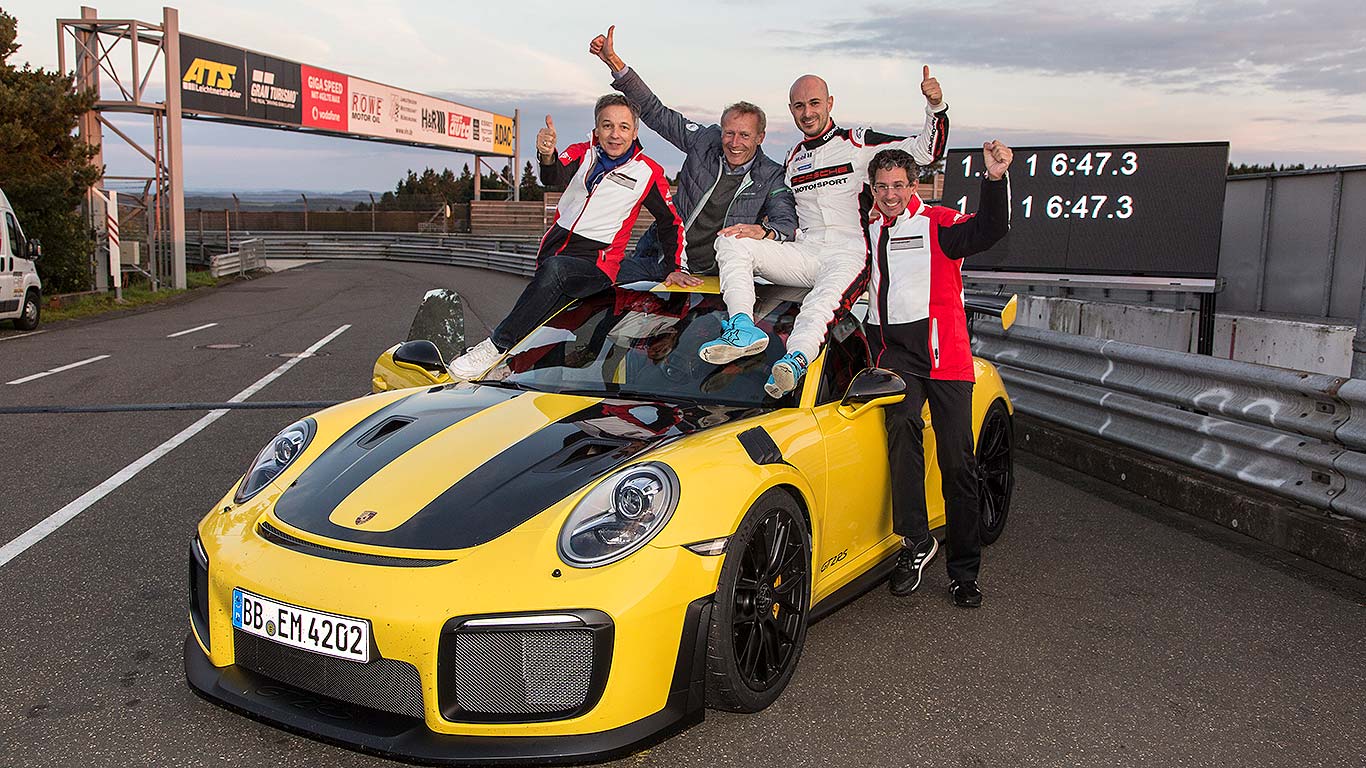
The Porsche 911 GT2 RS has just missed out on setting a new Nürburgring Nordschleife lap record for a production road car – but has still become the second-fastest showroom-spec car ever to lap the ‘Ring.
It also becomes the new 911 benchmark for Nürburgring lap times, with a record of 6 minutes 47.3 seconds.
Porsche didn’t quite manage to topple the dramatic 6 minutes 45.9 second time of the futuristic (albeit still to be fully road-approved) NextEV Nio EP9 electric supercar, which was set earlier this year, but it did still shatter its own internal benchmark time for the GT2 RS – by a considerable margin.
Frank-Steffen Walliser, vice president of Porsche Motorsport and GT cars, revealed: “At the start of the development process, we set ourselves a lap time target for the GT2 RS of less than 7 minutes and 5 seconds.
“The credit for beating this target by 17.7 seconds goes to our development engineers, mechanics and drivers, who demonstrated an exceptionally strong team performance.” The new 700hp GT2 RS is thus not only the most powerful 911 ever built, but also the fastest.
Porsche launched the GT2 RS at the Goodwood Festival of Speed back in June, but it’s only now that it’s been able to run in lap-time anger at the Nürburgring. The time wasn’t a one-off, either: the previous record for road-approved sports cars, of 6 minutes 52.01 seconds, was broken first time out by two factory works Porsche drivers, in two different GT2 RS: Britain’s Nick Tandy then joined Germany’s Lars Kem in completing five consecutive laps in under 6 minutes 50 seconds.
Andreas Preuninger, Porsche GT model line director, said: “It’s not just the record time achieved by the GT2 RS that demonstrates the vehicle’s class, but also its consistent performance in every lap.
“We’re particularly proud of the fact that this was achieved with two different vehicles and two different drivers, as this underlines the GT2 RS’s ability to reproduce this record result over and over again”.
Nürburgring VLN Endurance Championship expert Kem ultimately set the fastest time, with an average speed of 114.3mph. He “knows the Nordschleife inside out,” says Porsche.
We take it as a given that a sports car or hot hatch will be great fun to drive, some more so than others. But what of the seemingly ‘non-sporty’ cars that are surprisingly good at tackling a British B-road? We’ve created a list of 20 cars you’ll enjoy driving.
The Giulia Quadrifoglio is a bit of double-edged sword for Alfa Romeo. On the one hand, it’s the perfect halo model: a fire-breathing flagship with the essence of Ferrari. But it’s easy to forget there’s a complete range of vehicles jostling for showroom space beneath the 510hp M3-beater.
Take the Giulia Veloce, which undercuts the Quadrifoglio by a full £23,335. Sure, a 2.0-litre turbocharged engine developing 280hp might sound like sloppy seconds, but this rear-wheel drive saloon is beautifully balanced, while the eight-speed transmission is a joy to use. The question is: would you forever be kicking yourself for choosing ‘Giulia Lite’ and not going full-fat?
BMW i3
Head, meet heart. The BMW i3 is proof that going green shouldn’t come at the expense of having fun. A lightweight carbon-fibre-reinforced-plastic passenger cell combines with a low and centrally-positioned battery pack to deliver supreme agility, maintaining BMW’s acclaimed near 50:50 weight distribution.
The new i3 S, revealed at the Frankfurt Motor Show, will become the flagship of the range and the closest the EV has come to a performance model. Lowered sports suspension, a wider track and a small increase in performance are the highlights, along with a butch new look.
BMW 3 Series
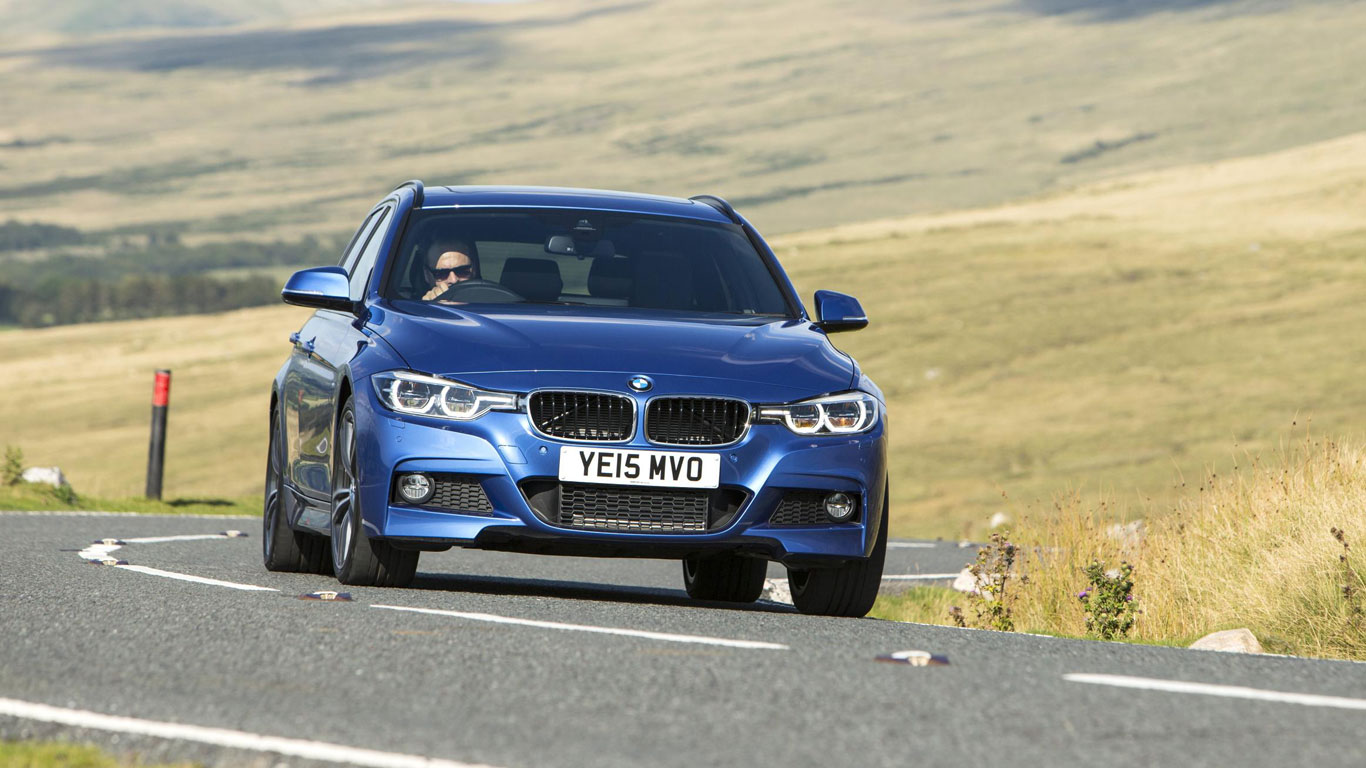
Even today, five years on from its launch, the current BMW 3 Series remains the class leader for those in search of razor-sharp dynamics. It’s always been this way, ever since the E21 3 Series was unveiled in 1975.
Today, the 3 Series faces an assault from all sides, with BMW X models the enemy from within and the likes of the C-Class, A4, XE and Giulia attempting to muscle in on the compact exec’s patch. For us, the 3 Series Touring is the perfect antidote to modern crossover, offering space, dynamics and classy looks.
Ford Fiesta
Of the gazillion Ford Fiesta owners in the UK, we wonder how many truly appreciate its outstanding dynamics. The seventh generation model picks up where the old version left off by cementing its position as the supermini of choice for keener drivers.
The 1.0-litre EcoBoost petrol engine remains a highlight, but the Fiesta is a terrific steer, no matter what the choice of engine. It bodes well for the new 1.5-litre three-cylinder turbocharged Fiesta ST, set to arrive in 2018.
Ford Focus
The Focus of 1998 had so little in common with the outdated and stodgy Escort, it’s hardly surprising that Ford felt that a new name was in order. It revolutionised the segment, with ‘New Edge’ styling combining with sharp dynamics to move Ford’s mainstream family hatch close to the Volkswagen Golf. Two decades on, we maintain that a three-door Focus 1.6 Zetec is a terrific driver’s car.
In truth, the current Focus is beginning to show its age, but it remains one of the best cars in its class, offering ‘warm hatch’ thrills on a British B-road. We’d opt for the 1.0-litre EcoBoost engine for maximum fun.
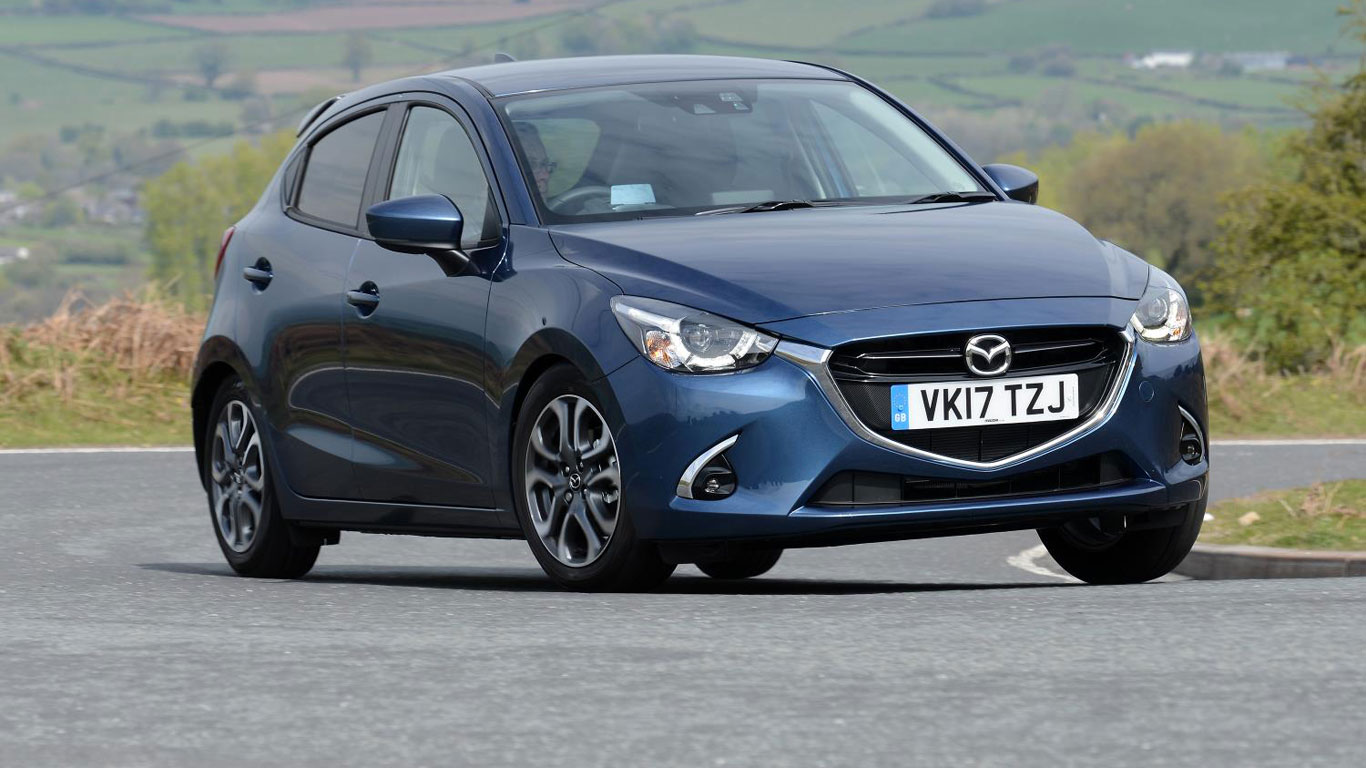
Mazda 2
You’d forgive Mazda if it decided to sit back and rest on its laurels, congratulating itself on a job well done. After all, the MX-5 has been the definitive junior sports car since 1989. But no, not only has Mazda refined the MX-5 to within an inch of perfection, it has sprinkled some Eunos magic dust across the entire range.
Take the Mazda 2, which feels like an MX-5 supermini. High praise indeed. At 1,050kg, it’s light in an old-school way, while the five-speed gearbox is MX-5-esque. Opt for one of the 1.5-litre Skyactiv petrol engines for the best driving experience this side of the Ford Fiesta. You know something, it might be even better.
Mazda 3
“Traditionally, enthusiastic company car drivers have opted for a Ford Focus or (if they’re lucky), a BMW 1 Series. But the Mazda 3 is a brilliant drive, taking traits such as its snickety gear change and direct steering from the MX-5 sports car. Body-roll is well controlled, while the suspension soaks up bumps well – even on the 18-inch wheels of our test car.”
That’s how we summarised the most overlooked car in the family hatchback segment when we reviewed it at the back end of last year. Subjectively, the Mazda 3 is the best looking car in its class, while a premium-feel interior puts its rivals to shame. What a pity there’s no MPS version…
Mazda 6
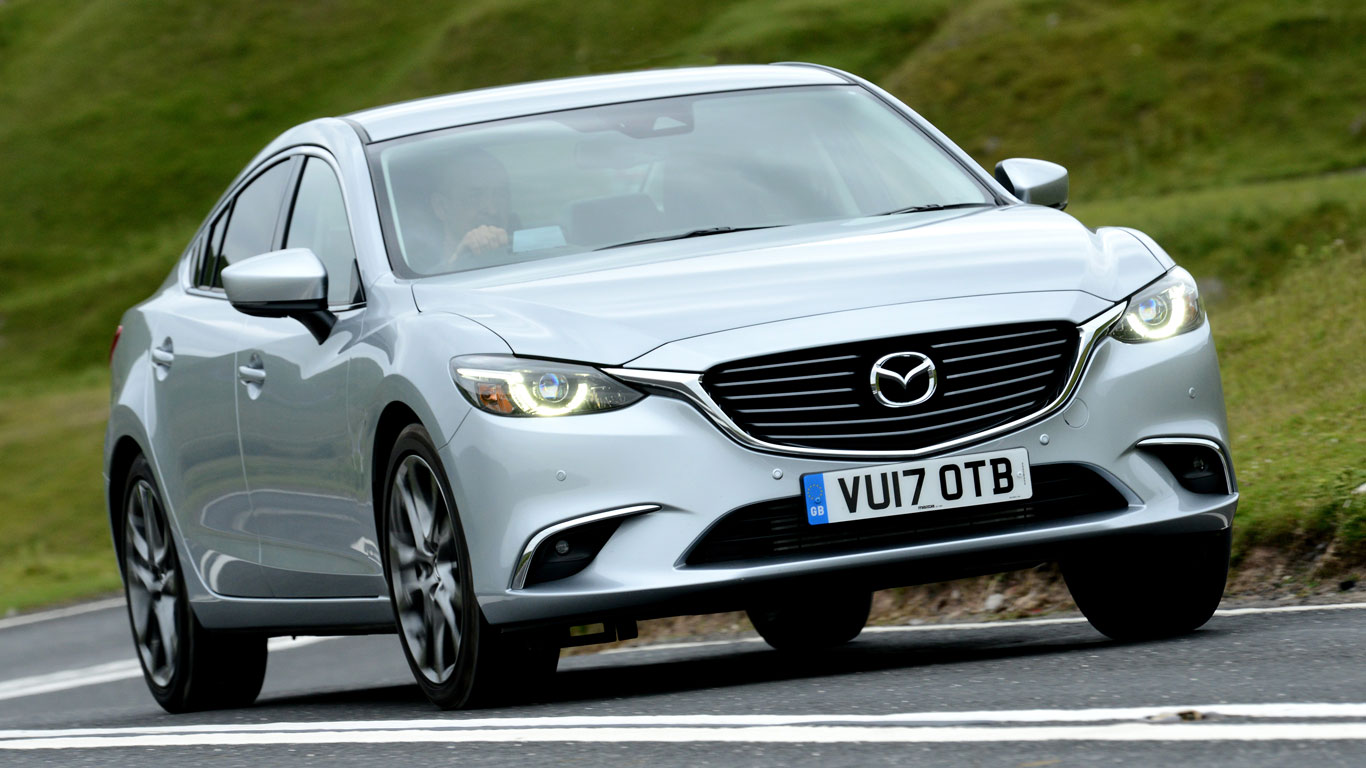
There’s a ‘Russian Dolls’ thing going on here, with the Mazda 6 joining the smaller 3 and 2 to complete a hattrick for the Japanese firm. Shun Mazda’s four-door saloon in favour of the Germans at your peril, because the Mazda 6 is one of the greatest all-rounders, with styling that makes the Giulia look a little ‘plain Jane’.
In many ways, the Mazda 6 is the Ford Mondeo of the past: the front-wheel drive and affordable challenger to the BMW 3 Series’ throne. It’s just a shame that the engine choice is so limited. Bring back the MPS.
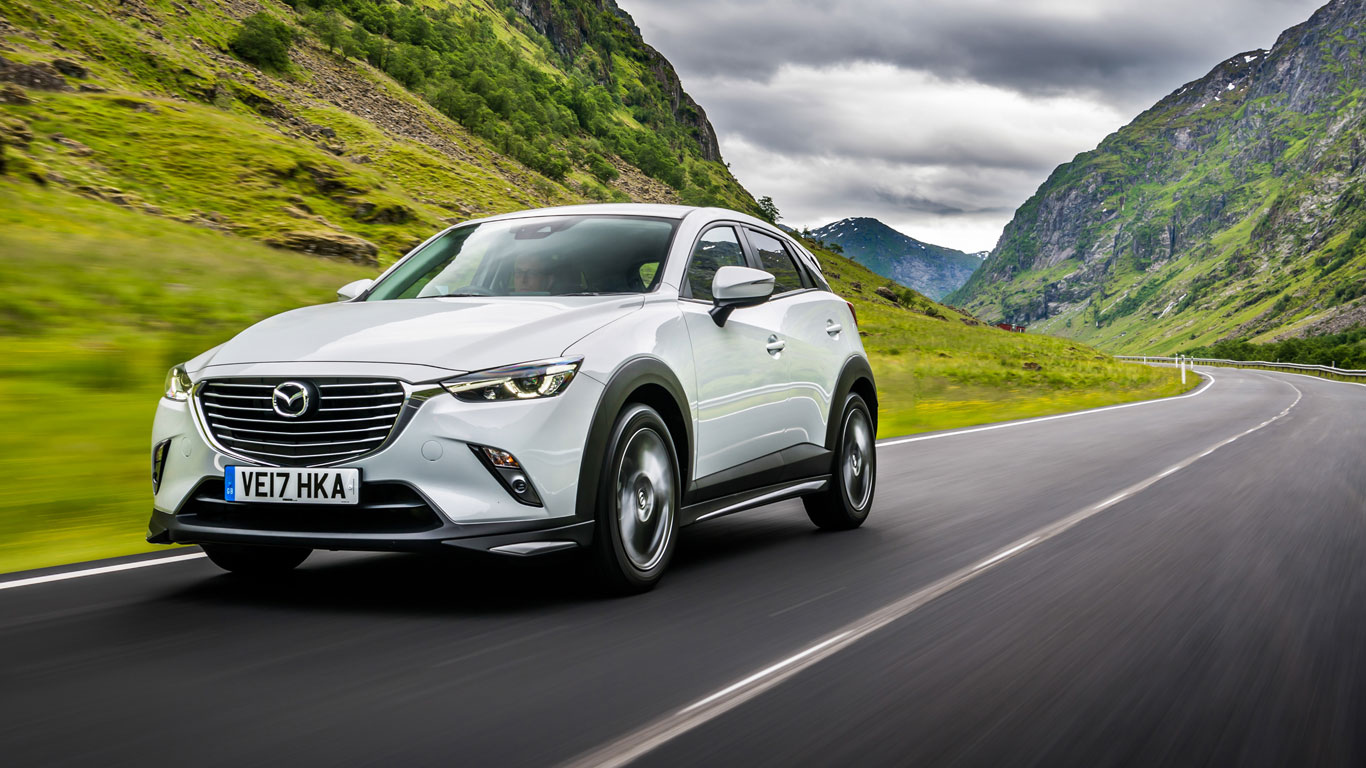
Mazda CX-3
We make no apology for featuring a fourth Mazda on our list, not least because the CX-3 is a rare example of a fun-to-drive crossover. “It’d be wrong to say the CX-3 is as enjoyable to drive as the iconic MX-5,” we said in 2015, “but it successfully delivers on the promise of being sufficiently sporty to add driving pleasure to your journey.”
Prices start from £18,495, but Mazda offers a GT Sport version, powered by a 120hp Skyactiv petrol engine and offered with a choice of six-speed manual or automatic transmissions. It might cost £22,895, but the styling kit gives it a much sharper look.
Mini One
Mini likes to shout about ‘go-kart handling’ and will do all it can to tempt you into one of the sportier and more expensive models. And, yes, the Cooper, Cooper S and John Cooper Works models are tremendous fun. But opt for the entry-level Mini One and you could save as much as £10,000 on the cost of a JCW.
The 1.2-litre three-cylinder engine might deliver a mere 102hp, but the performance sweet spot is between 4,000 and 6,000rpm, meaning it requires some old-school revs to get the best from it. When we drove one, it put us in mind of the original Suzuki Swift Sport, which is high praise indeed.
MG 3
The MG 3 is hamstrung by its 1.5-litre petrol engine, which feels outmoded in a world of downsized turbocharged motors and electrification. It would have been acceptable in the 90s, but 106hp and 51.5mpg from a 1498cc unit doesn’t cut it in 2017.
But in just about every other respect, the MG 3 is a cracking car to drive. The well-weighted steering offers genuine feedback, while the suspension was tuned for British roads. It adds up to a package that is far better than you’d expect, and even the top trim 3Style model costs a mere £11,695.
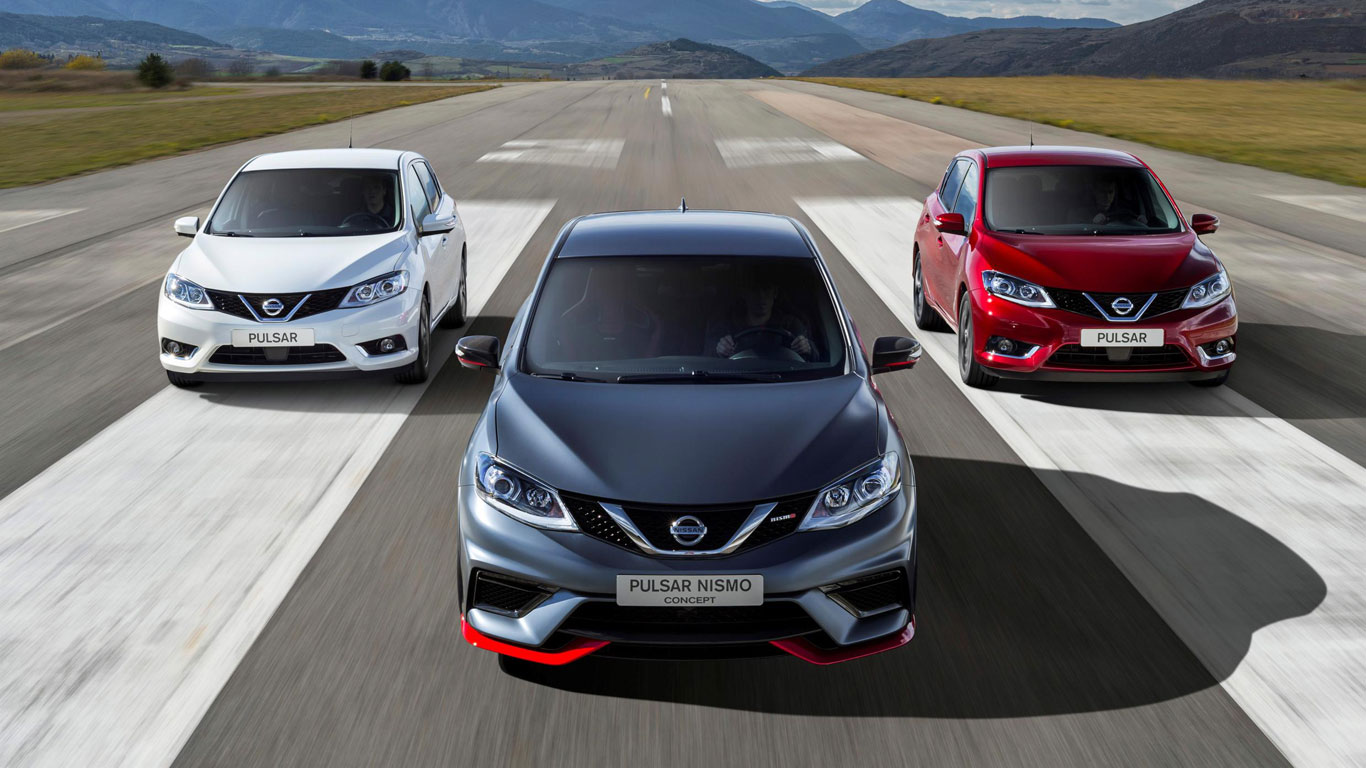
Nissan Pulsar DIG-T 190
The Nissan Pulsar has the feel of a square peg in a round hole: a family hatchback in a world obsessed with crossovers and SUVs. Which is all the more surprising given the fact that the Pulsar is essentially a born again Almera, the car ditched by Nissan when it embarked on its crossover adventure.
And we’re not going to pretend that the Pulsar DIG-T 190 is a true driver’s car, because it isn’t. But the 1.6-litre petrol engine offers a little sweet spot around 3,500rpm, where the turbocharger encourages you to use the full force of the 190hp at your disposal. It feels rapid, while the floaty-soft ride makes the experience all the more comical. A car to hire and enjoy.
Peugeot 308
Where did it all go wrong for Peugeot? In the 306, the French giant had a class-leader which was enjoyable to drive, even in the most basic of spec. But it was replaced by the lacklustre 307, which in turn was superseded by the dreary first generation 308. While we can’t forgive Peugeot for its barren years, the current 308 goes some way to redemption.
It rides and handles as well as any other car in its class, while there isn’t a weak link in the engine range. Some might find the driving position awkward, while others will revel in the tiny steering wheel.
Renault Twingo SCe
Sadly, the rear-engined Renault Twingo isn’t quite the firecracker we had hoped, with even the GT failing to deliver on its promise. But that doesn’t mean the Twingo is without appeal. In the city, the Twingo’s turning circle is comically good – the front wheels turn a full 45 degrees – so you’ll be doing 360s at any given opportunity.
Our advice would be to opt for the cheaper and naturally aspirated 1.0-litre SCe version, which offers a purity of drive absent from the flawed 0.9-litre turbocharged TCe 90. You’ll enjoy taking the Twingo to the redline time and time again, before enjoying another 360º turn, just for the hell of it.
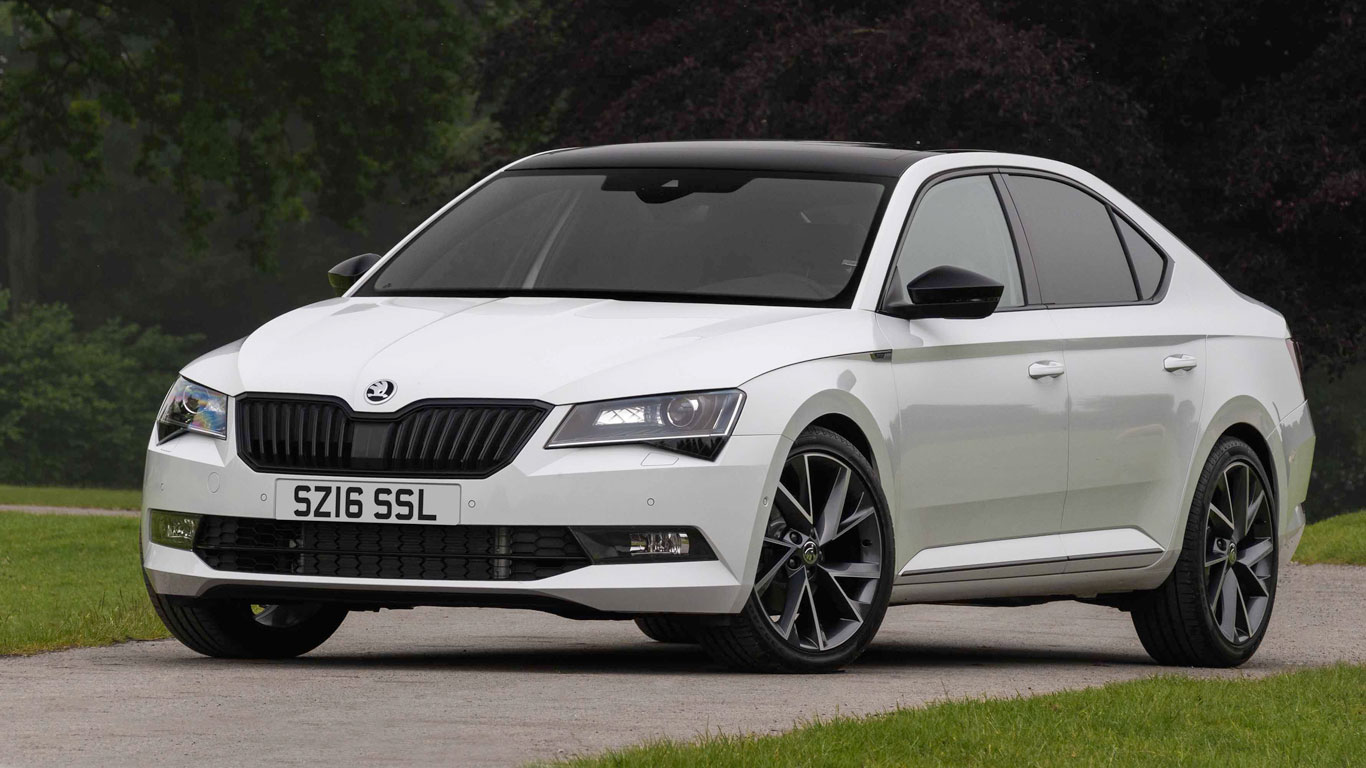
Skoda Superb 280 SportLine
No matter what the engine or spec, we’re huge fans of the Skoda Superb. We love its cavernous practicality, understated styling, excellent value for money and the fact that it hasn’t got a German badge. But best of all, we adore the 280hp version.
This is the automotive equivalent of having your sponge cake and scoffing it in one go. An unassuming saloon or estate car with a 2.0-litre petrol engine, yet capable of hitting a top speed limited to 155mph and 62mph in just 5.8 seconds.
Skoda Yeti
Be quick, because the Skoda Yeti is living on borrowed time, about to be usurped by the anonymous sounding and dull looking Karoq. Visit the Skoda website today and you’ll be told that Yeti Outdoor models are no longer available to factory order, so it’s a case of taking whatever stock is left in the dealer network. Sad times.
Recently, we took a Yeti 2.0 TDI 4×4 on a 1,500-mile trip across Wales, Ireland and Northern Ireland, which reminded us just how much we’re going to miss it. From mixing it with motorcyclists on the best roads of Wales, to tackling the drenched lanes of Northern Ireland, the Yeti was near driving perfection. A shame it has to go.
Suzuki Baleno Boosterjet
Suzuki has split its range right down the middle, with some cars offering emotional qualities, while others are strictly rational affairs. The Baleno is supposed to sit alongside the Celerio as a rational purchase, but we beg to differ.
Sure, it’s not as good to drive as the Swift, but the bonkers 1.0-litre Boosterjet engine adds a new dimension to this otherwise dull but worthy hatchback. Plant your right foot and the Baleno gathers pace remarkably quickly, with peak power arriving at 5,500rpm. Boosterjet: great name, but even better engine.
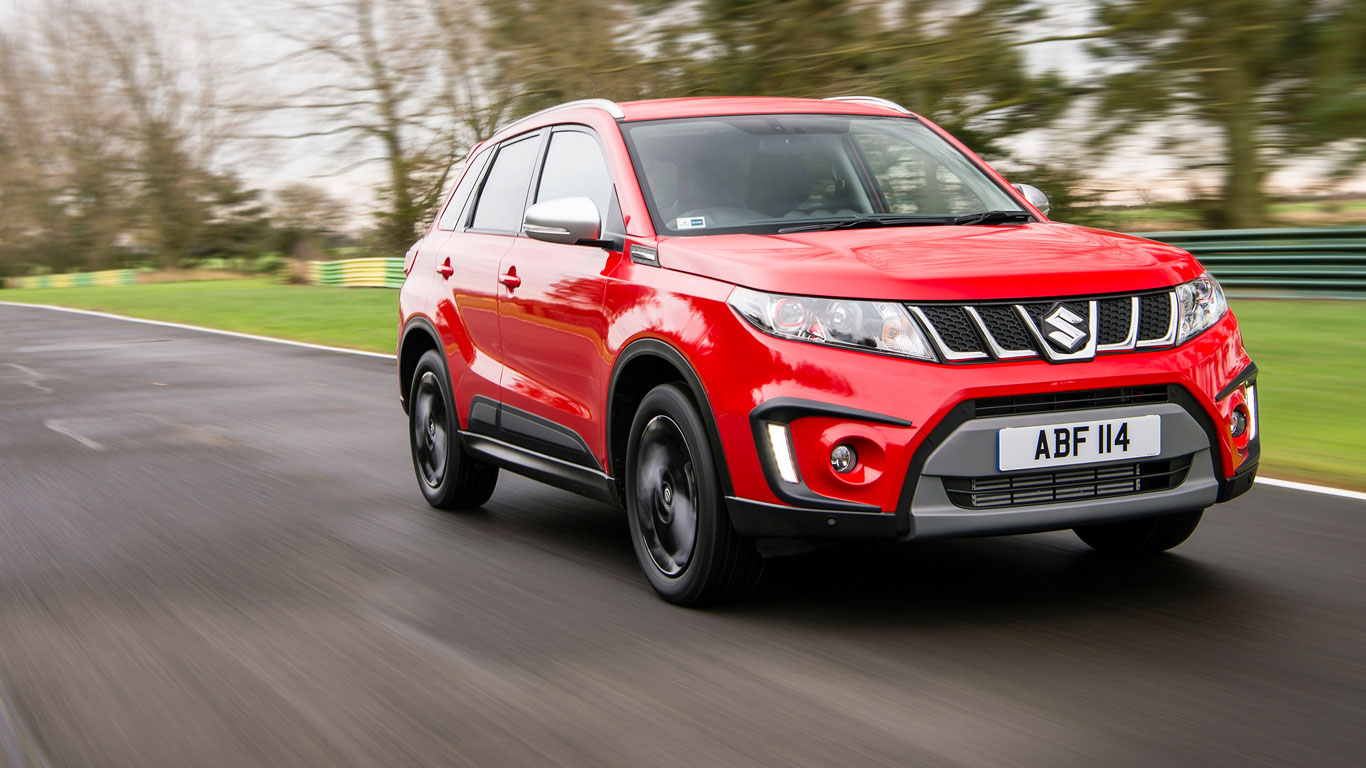
Suzuki Vitara S
“The standard Vitara, especially when fitted with four-wheel drive (standard on the Vitara S), handles really well. Body-roll is well controlled, while the steering provides plenty of feedback. It’s definitely a ‘warm hatch’ among crossover SUVs – even more so when fitted with this eager engine.”
We were extremely positive about the Vitara S when we reviewed it in April 2016, proclaiming it to be “the hot hatch of SUVs.” The 1.4-litre turbocharged petrol engine is a peach, while the 1,210kg kerb weight makes it pretty nimble.
Volkswagen Up 1.0 TSI
Is this the closest you can get to a modern-day Mk1 Golf GTI? The Volkswagen Up is our favourite city car by some margin – taking the Citigo and Mii out of the equation – and the turbocharged 1.0-litre engine is the icing on a very tasty and compact cake.
The 1.0 TSI unit develops 90hp, enough to take the 0-62mph time below the 10-sec mark, some 4.5 seconds quicker than the lowly 60hp version.
Volvo XC90 T8
There’s nothing ordinary about the Volvo XC90. In fact, it’s probably our favourite full-size SUV, bar none. It’s an extraordinary piece of kit, with one of the best interiors this side of a Rolls-Royce, understated styling and enough safety kit to keep a Euro NCAP inspector happy for a decade.
For maximum joy, opt for the Twin Engine T8, which pairs a 320hp petrol engine with an 87hp electric motor to deliver 407hp. In ‘power’ mode, this thing could give a sports car driver sleepless nights. It really is that good.
Car insurers have not been allowed to use gender as a factor in car insurance premiums since December 2012, as part of the EU Gender Directive – but comparethemarket.com has discovered the gender gap has widened nearly 8 percent since then.
It means men are paying an average of £170 more for car insurance than women. In August 2017, the average male policy was 27 percent higher than for a woman – £821, compared to £649.
Before the EU Gender Directive came into force, the difference was 20 percent.
Head of motor at comparethemarket.com, John Miles, said it “shows how little difference the EU Gender Directive has had on insurance premiums, with providers still giving big discounts to women”.
However, Miles added that there’s unlikely to be anything underhand at work here. The difference in premiums is likely for numerous reasons – such as statistically higher accident rates for men, and more men than women driving higher-risk business and commercial vehicles.
“The directive removed the ability of providers to give default discounts to women; however, the statistics and risk models used by insurers mean that the result is largely the same.”
Research also showed the difference between the cheapest car insurance premium and the average premium was bigger for men than women, “suggesting that men stand to save more by shopping around for their policy”.
The difference between cheapest and average was £101 between July and August 2017 for women; it was £151 for men.
The price comparison site added that, more generally, car insurance costs have been rocketing in Britain. “The past three years have been relentless for British drivers,” said Miles, “with the average insurance premium spiralling by over 38 percent to £740.
“The past year has been particularly hard, with changes to Insurance Premium Tax and the personal injury discount rate, or ‘Ogden’, draining the pockets of motorists at a time that wage growth remains stagnant.”
The average UK car insurance premium currently stands at £740.
Electric car manufacturer Tesla has hinted that it may soon be launching its own take on the traditional petrol station.
Rather than petrol pumps and a shop selling lukewarm pasties, Tesla is looking to open “mega supercharging locations” where owners can top up their electric cars in half an hour.
Currently, Tesla Model drivers can make use of the firm’s supercharger network. This uses 480-volt fast chargers to provide up to 120kW of power in 30 minutes, translating to up to 170 miles of range in a Model S. It’s currently attempting to double its number of superchargers, with 10,000 mooted worldwide by the end of 2017.
But the new mega-sites will go a step further than simply providing somewhere for drivers to charge their car. Speaking at FSTEC 2017, a food technology conference in California, Tesla’s chief technology officer JB Straubel explained these mega-stations would have up to 40 charge points, a lounge where drivers could sit back and relax, and coffee on-hand.
“People are coming and spending 20 to 30 minutes at these stops,” he said. “They want to eat, they want to have a cup of coffee, they want to use the bathroom.”
The firm plans to introduce the new supercharger stations between major cities, with the first one currently being built in California between Los Angeles and San Francisco. A similar one is expected to be built between LA and Las Vegas, while another is planned near Oslo in Norway.
Speaking about plans to reduce demand on Tesla’s current supercharger network earlier this year, CEO Elon Musk said: “We should see some immediate relief even for S and X customers on some of the key supercharge locations whilst we – experimenting with our first sort of – I don’t know what we call it – mega supercharging location, like really big supercharging location with a bunch of amenities.
“We’re going to unveil the first of those relatively soon. And I think we’ll get a sense for just sort of how cool it can be to have a great place to – if you’ve been driving for three, four hours – stop, have great restrooms, great food, amenities, hang out for half an hour and then be on your way.”
The firm isn’t expected to build and operate the locations itself. Instead, it will work with hotel and restaurant chains to act as partners.
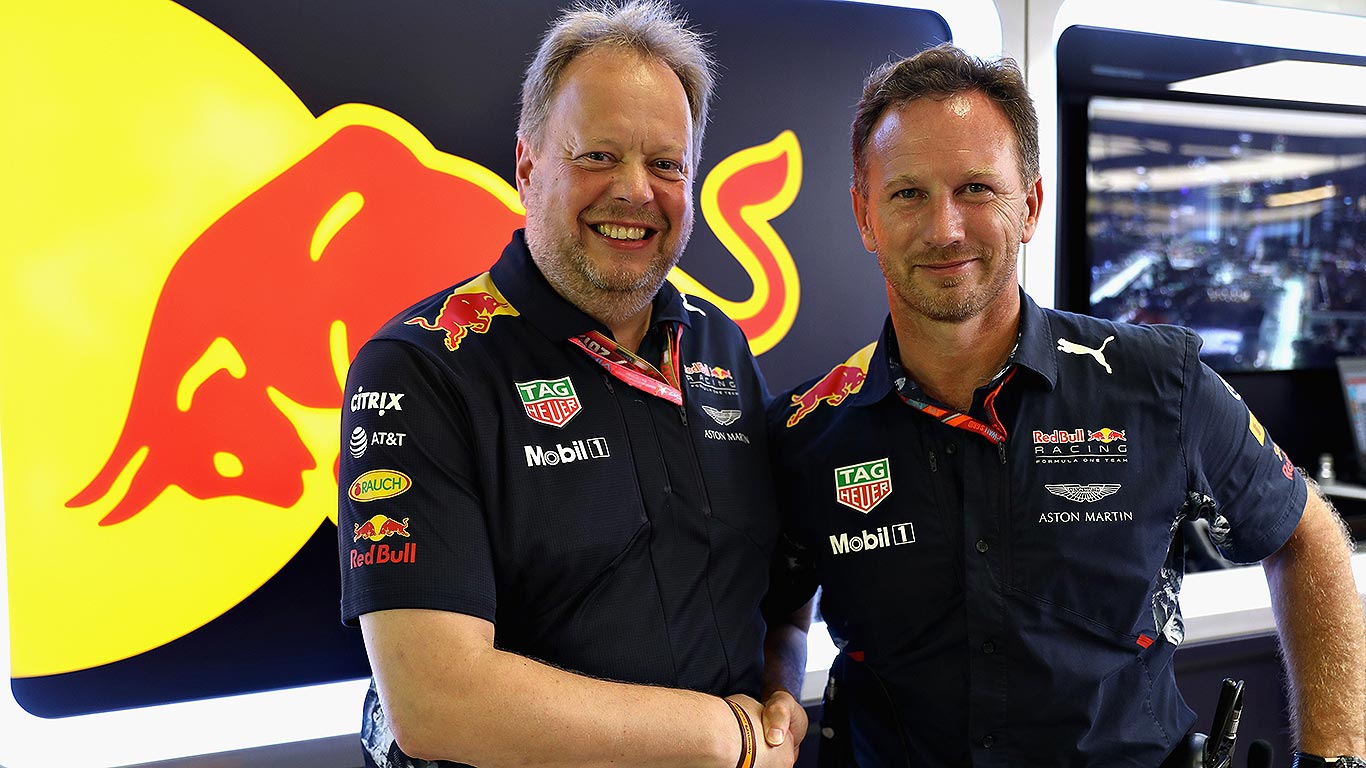
Aston Martin has announced it will become title sponsor of the Red Bull Racing F1 team in 2018 – and boss Andy Palmer has hinted that the firm could actually build an F1 engine for Red Bull in the future, “if the FIA can create the right environment”.
The 2018 title sponsorship deal also sees Aston Martin and Red Bull Racing strengthen an innovation partnership, one that’s already led to the creation of the Aston Martin Valkyrie hypercar. A new Advanced Performance Centre will open on the team’s F1 campus in Milton Keynes later in 2017.
“Title partnership is the next logical step for our Innovation Partnership with Red Bull Racing,” said Aston Martin president and CEO Andy Palmer as the 2018 Aston Martin Red Bull Racing team was announced. “We are enjoying the global brand awareness that a revitalised Formula One provides.”
And on the possibility of Aston Martin making an F1 engine, Palmer added: “The power unit discussions are of interest to us, but only if the circumstances are right.
“We are not about to enter an engine war with no restrictions in cost or dynamometer hours, but we believe that if the FIA can create the right environment we would be interested in getting involved.”
Aston Martin agrees £500 million trade deal with Japan
How Aston Martin helped Red Bull F1 genuis Adrian Newey realise a dream
Aston Martin logos will be splashed across the newly-named Aston Martin Red Bull Racing team from 2018. The two firms also revealed that Aston Martin has been asked by the FIA to join in discussions about future F1 engines from 2021, enabling it to “evaluate the opportunity to be involved”.
The new partnership is already creating jobs, added Aston Martin. The new Advanced Performance Centre will create 110 new jobs when it opens this year – where “Aston Martin’s second dedicated design centre and engineering personnel… will be working on future sports cars”.
The Aston Martin Valkyrie, which launched in 2019, has already sold out. Could this be the start of another Aston Martin Red Bull Racing road-going F1 of the future?
The Mercedes-Benz Vito Taxi has outsold the London Taxi Company’s TX4 black cab in London so far in 2017, latest Transport for London figures have revealed. It gives Mercedes-Benz a 55.1 percent market share of London’s black cab market.
489 Vito Taxis were sold, compared to 399 TX4 London black cabs – because, reckons Mercedes-Benz Vans UK Ltd MD Steve Bridge, “Vito Taxi provides the most comfortable, efficient journey”. The six-seater Merc cab includes air con for both driver and passengers, dual electric-slide passenger doors and even electrically-operated steps.
The diesel engines also all feature engine stop-start, killing the motor in traffic to cap city centre emissions. They’re Euro 6 emissions compliant too, and 2017 models also come with a spare wheel carrier as standard, by popular demand.
It needn’t cost London cabbies a fortune, either. Mercedes-Benz Vans is offering the Vito Taxi for £170 a week, with zero deposit, on a 48-month agreement (with a £15,900 final payment). The mileage is a generous 30,000 per year, although you must order before 1 October to take advantage of the zero-deposit deal.
Arch-rival the London Taxi Company is this year rebranding itself as the London Electric Vehicle Company (LEVC), in readiness to roll out an all-new petrol-electric hybrid London black cab that can run as a zero-emissions electric vehicle in town.
The new model will cost almost £56,000 to buy – although LEVC is offering it on a five-year lease deal for cabbies. Price? £177 a week – with, thanks to the 70-mile electric range, a potential £100 a week saving on fuel costs to factor in as well…
An estimated 40,000 Uber drivers will be removed from the capital’s streets as Transport for London (TfL) has announced a decision not to renew the ride-sharing app’s licence.
In a statement, TfL said: “[We consider] that Uber’s approach and conduct demonstrate a lack of corporate responsibility in relation to a number of issues which have potential public safety and security implications.”
It went on to outline its concerns, including Uber’s approach to reporting serious criminal offences and how medical certificates are obtained.
London is Uber’s biggest market in the UK, with 40,000 drivers registered in the capital.
The ride-hailing firm allows users to request a private hire car on their phone, booming in popularity over recent years and attracting criticism from traditional black cab drivers. Critics have argued that passengers are less safe with Uber drivers, citing reports of sexual assault.
Even Uber’s own drivers have complained about poor working conditions, with long hours and poor pay.
“3.5 million Londoners who use our app, and more than 40,000 licensed drivers who rely on Uber to make a living, will be astounded by this decision,” said Uber.
“By wanting to ban our app from the capital Transport for London and the Mayor have caved into a small number of people who want to restrict consumer choice. If this decision stands, it will put more than 40,000 licensed drivers out of work and deprive London of a convenient and affordable form of transport.”
In a Facebook post, London mayor Sadiq Khan said: “All companies in London must play by the rules and adhere to the high standards we expect – particularly when it comes to the safety of customers. Providing an innovative service must not be at the expense of customer safety and security.
“I fully support TfL’s decision – it would be wrong if TfL continued to license Uber if there is any way that this could pose a threat to Londoners’ safety and security.
“Any operator of private hire services in London needs to play by the rules.”
Under the Private Hire Vehicles (London) Act 1998, Uber will be able to appeal the decision within 21 days. The company’s current licence runs until the end of September, meaning it’ll be able to operate in London until then.
Environmental protesters have surrounded a ship carrying thousands of diesel Volkswagens to prevent it docking in the UK.
“Mothers, fathers and people from all walks of life are currently doing everything in their power to stop more diesel cars entering our streets and communities,” said Greenpeace in a statement.
“25 Greenpeace volunteers in kayaks and boats surrounded a 23,000 tonne ship attempting to block Volkswagen cars entering the UK.
“They drew up alongside the huge car carrier miles out at sea at 9am today and two are now hanging from the 27-metre-high unloading door.”
The Greenpeace members are believed to have boarded the ship close to Sheerness in Kent. At the same time, protesters are attempting to steal the keys to thousands of diesel cars at the port. They’re also applying stickers to the engines, with messages from Greenpeace members asking Volkswagen to ditch diesel.
“They won’t give up until VW commits to send it’s [sic] toxic cars away from the UK and ditch diesel for good,” added Greenpeace.
In the wake of the Dieselgate emissions scandal, Volkswagen Group has committed to accelerating plans for electrifying its range, with 80 new electric cars planned by 2025. It’s also recently launched a scrappage scheme, encouraging buyers to swap old Euro 1 – 4 diesels for more environmentally-friendly models.
Reacting to the protests, a Volkswagen spokesman said: “We are aware of a protest this morning at the Sheerness port in Kent.
“The ship contains a variety of Volkswagen Group vehicles, including petrol, diesel and plug-in hybrid models. The diesel vehicles, which are the subject of the protest, meet strict Euro 6 standards.”
It’s understood there are 37 plug-in hybrid electric vehicles on the ship that’s being prevented from docking. There are also more petrol than diesel vehicles on board.
In less than two months, 17 drivers have already caused tailbacks through a major section of roadworks due to running out of fuel – leading Highways England to introduce rapid-assistance motorcycles carrying emergency fuel to stranded motorists.
It’s the first time so-called ‘fuel bikes’ have been used by Highways England.
The bikes are being used on the M5 Oldbury Viaduct roadworks section in the West Midlands. The £100 million repair scheme has reduced both carriageways to two narrow lanes, with a 30mph speed limit.
The motorcycles are thus able to reach stranded motorists much more quickly, helping get them underway and keep traffic flowing.
“Since the contraflow came into effect, we’ve already seen a number of fuel-related breakdowns in the roadworks section,” said Highways England project manager Alastair Warnes.
“In fact, on the very first day of the contraflow coming into effect, the first breakdown was caused by someone that had run out of fuel.
“By offering this type of assistance, we’re able to minimise disruption to others driving through the roadworks.”
Although Warnes did add that motorists could also do their bit by ensuring they have enough fuel before setting off…
The M5 Oldbury Viaduct roadworks will remain in place until autumn 2018, with minor work continuing until spring 2019.
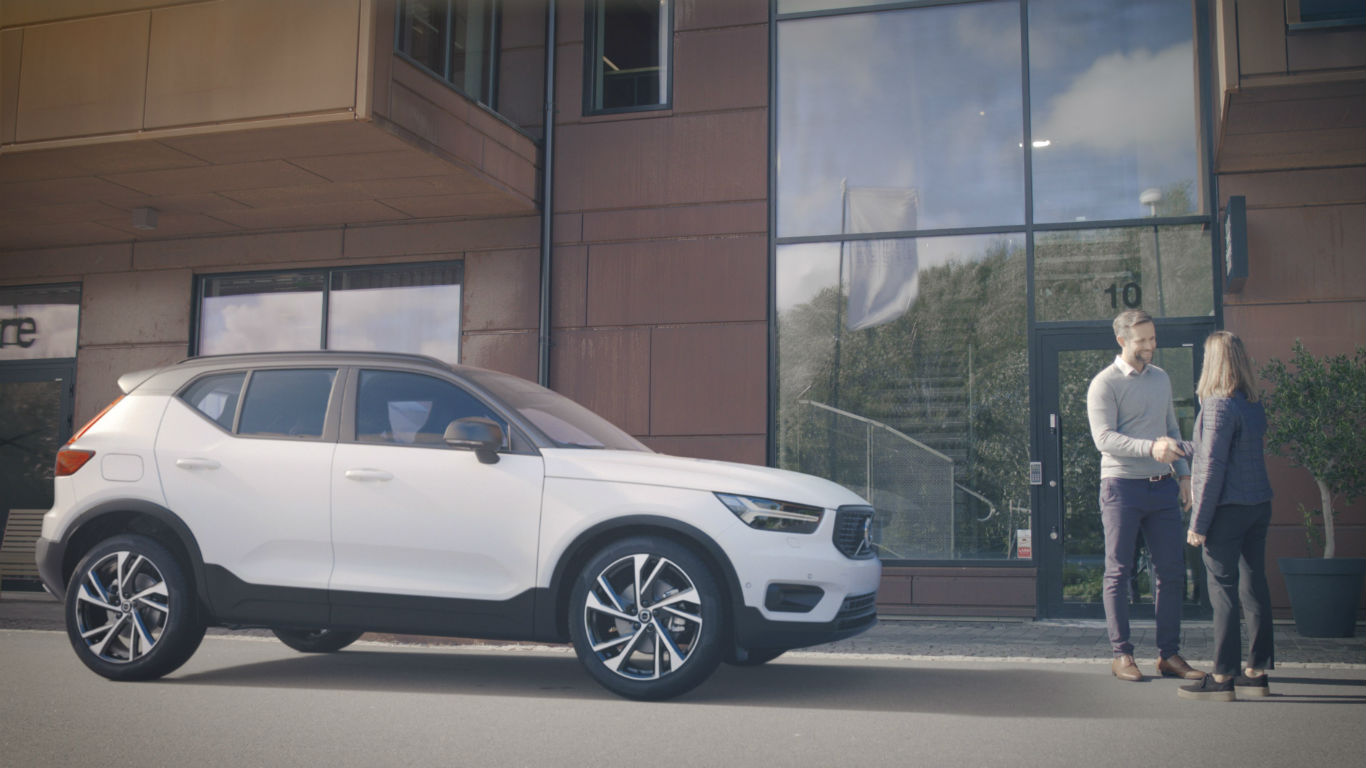
Forget traditional car leasing or PCPs – Volvo is launching a clever new 24-month ‘subscription service’ with its 2018 XC40 crossover.
Order a new Volvo XC40 online through its Care by Volvo scheme, and you’ll be able to drive the new model for a fixed monthly price without any extra fees: including tax and insurance. It goes a step further, too. Volvo will offer a range of digital concierge services, such as fuelling and cleaning. Details haven’t been confirmed yet, but expect to be able to arrange for someone to come and clean your car or refuel it at a touch of a button, presumably through a mobile phone or tablet app.
New Volvo XC40 compact SUV revealed: prices from £27,905
You’ll even be able to share the car with friends of family by sending them a virtual key. There’s a catch, though. In the UK, Care by Volvo will only be available within the M25 to start with. And the digital key isn’t available in the UK at all. It’s early days, but previews what’s possible in the future as the service is rolled out further afield.
“Our aim with Care by Volvo is to provide our customers with a transparent, premium car user experience,” said Car by Volvo vice president, Thomas Andersson. “With a fixed monthly payment, Volvo Cars provides a truly customer-focused alternative to the traditional purchase or leasing. Time is a luxury for our customers, and with this service we are able to free up time in their daily lives. This is simply making life easier for our customers.”
The new Volvo XC40, which has been revealed today, will cost £27,905 for buyers who do want to buy it outright. Monthly Care by Volvo rates are yet to be announced.
The service will be offered across other cars in Volvo’s range in the near future, including the new digital concierge services.
 The Porsche 911 GT2 RS has just missed out on setting a new Nürburgring Nordschleife lap record for a production road car – but has still become the second-fastest showroom-spec car ever to lap the ‘Ring.


 Car insurers have not been allowed to use gender as a factor in car insurance premiums since December 2012, as part of the EU Gender Directive – but comparethemarket.com has discovered the gender gap has widened nearly 8 percent since then.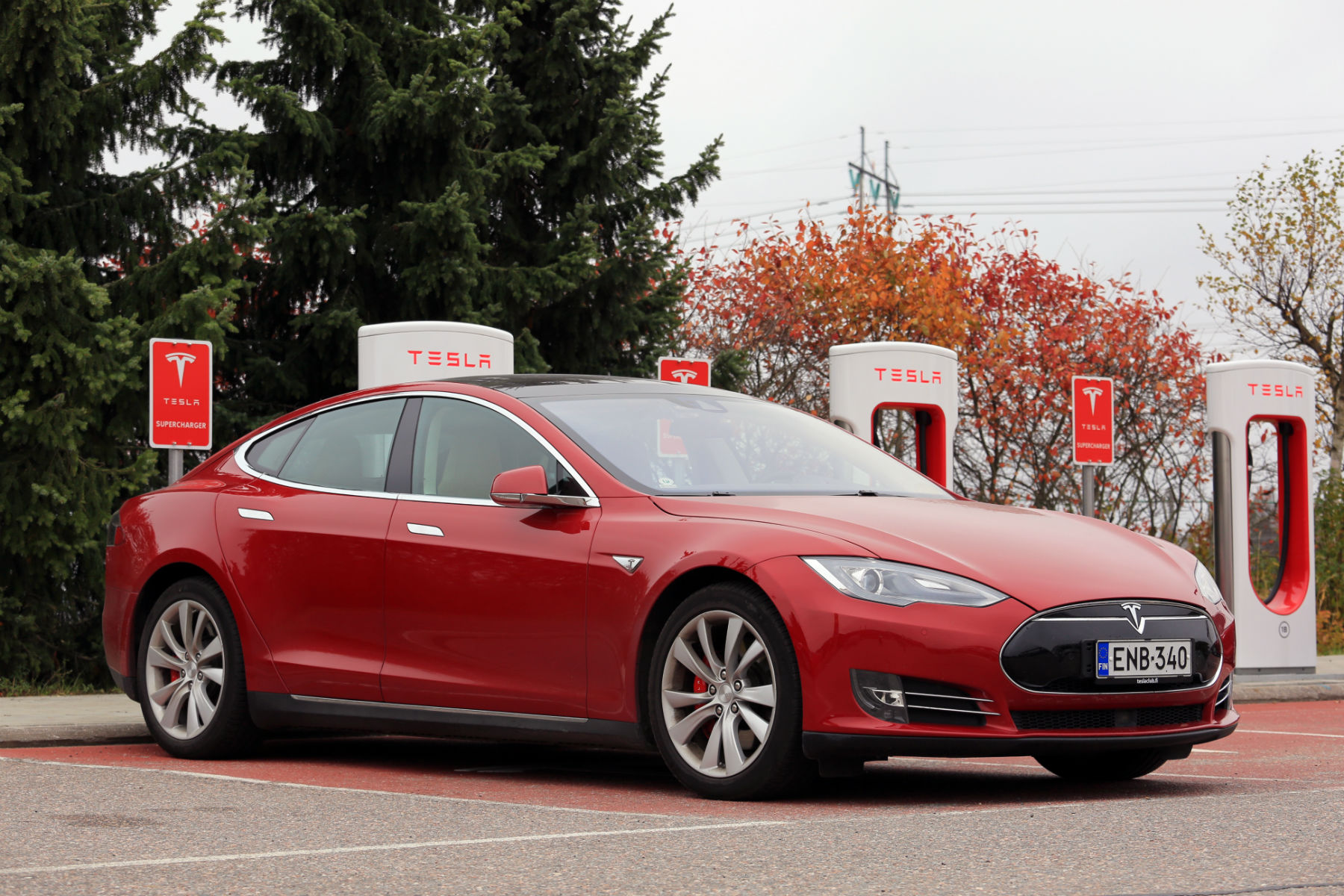
 Aston Martin has announced it will become title sponsor of the Red Bull Racing F1 team in 2018 – and boss Andy Palmer has hinted that the firm could actually build an F1 engine for Red Bull in the future, “if the FIA can create the right environment”.


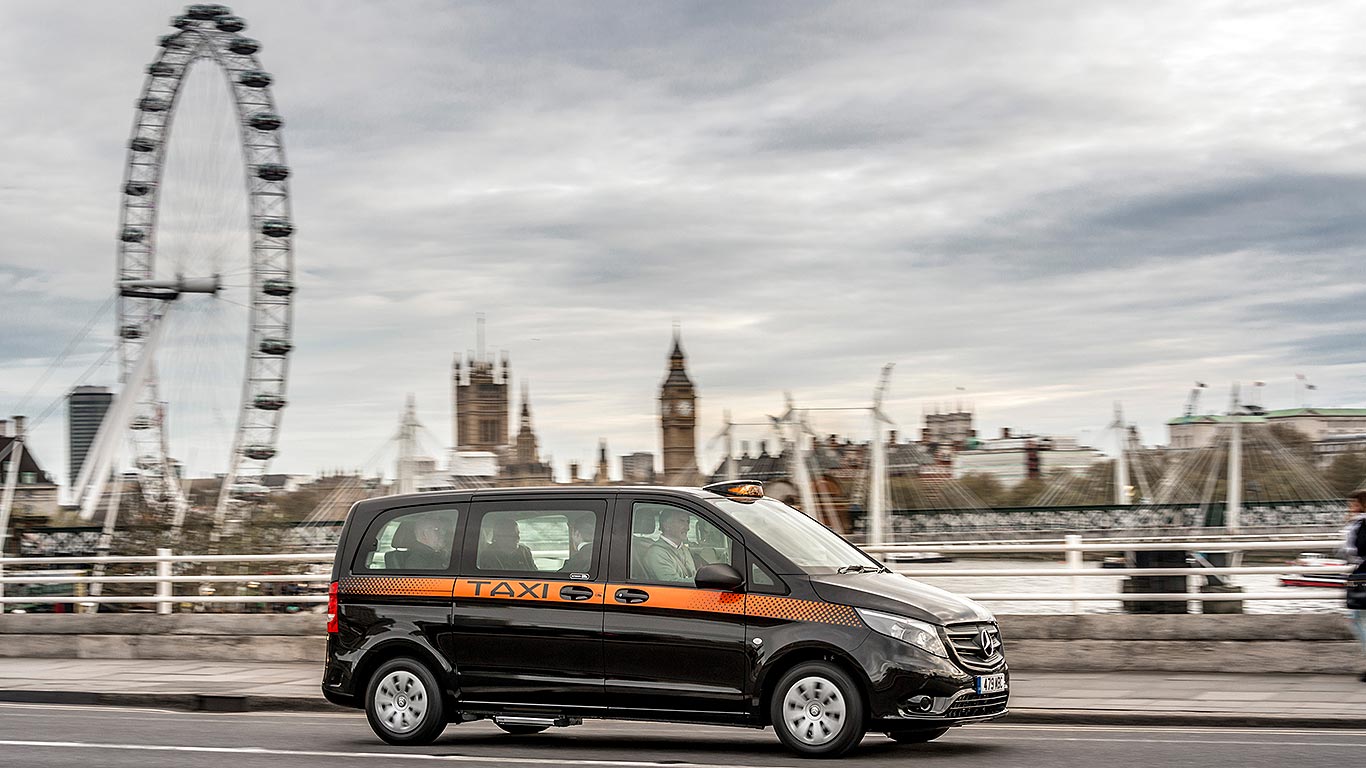 The Mercedes-Benz Vito Taxi has outsold the London Taxi Company’s TX4 black cab in London so far in 2017, latest Transport for London figures have revealed. It gives Mercedes-Benz a 55.1 percent market share of London’s black cab market.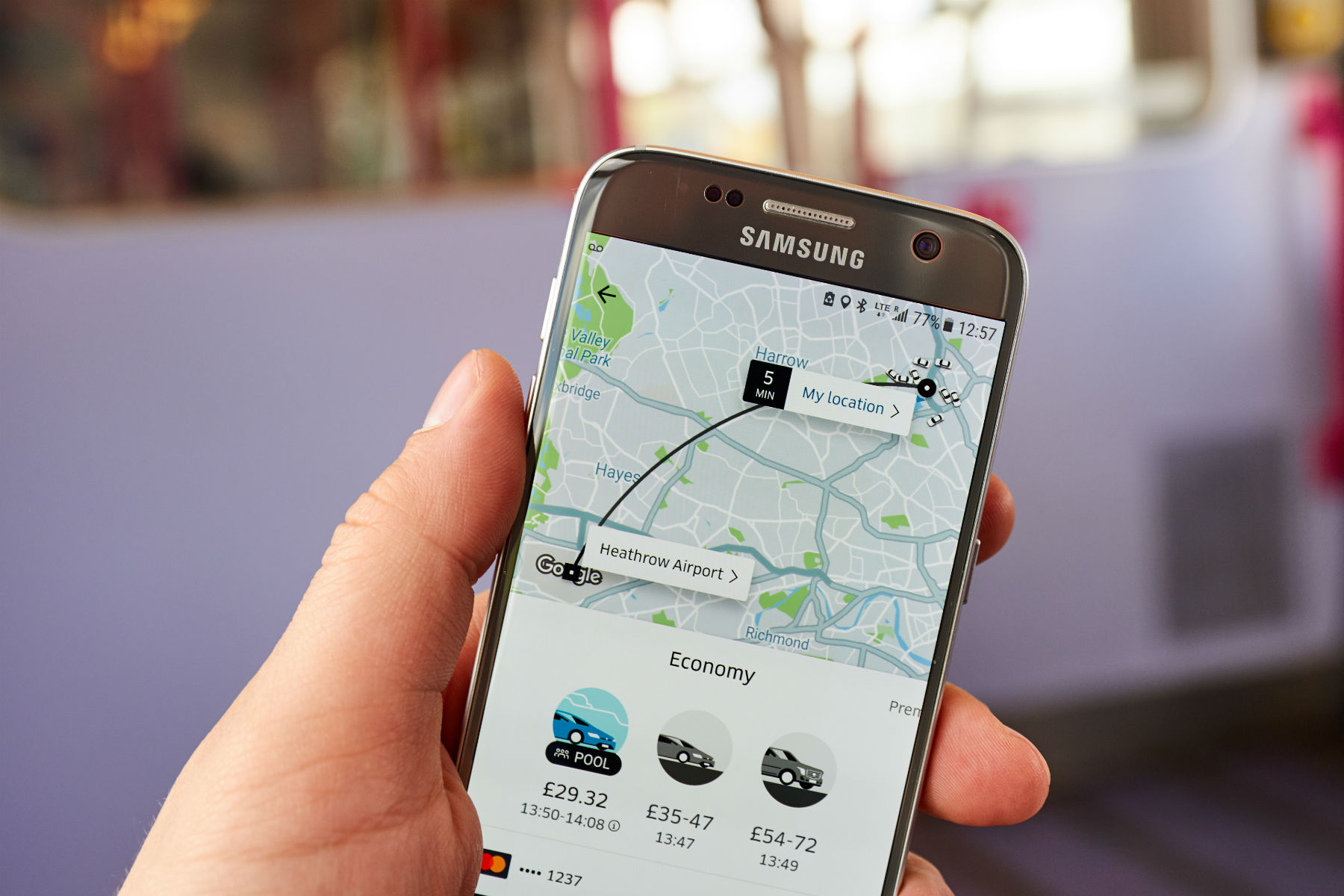



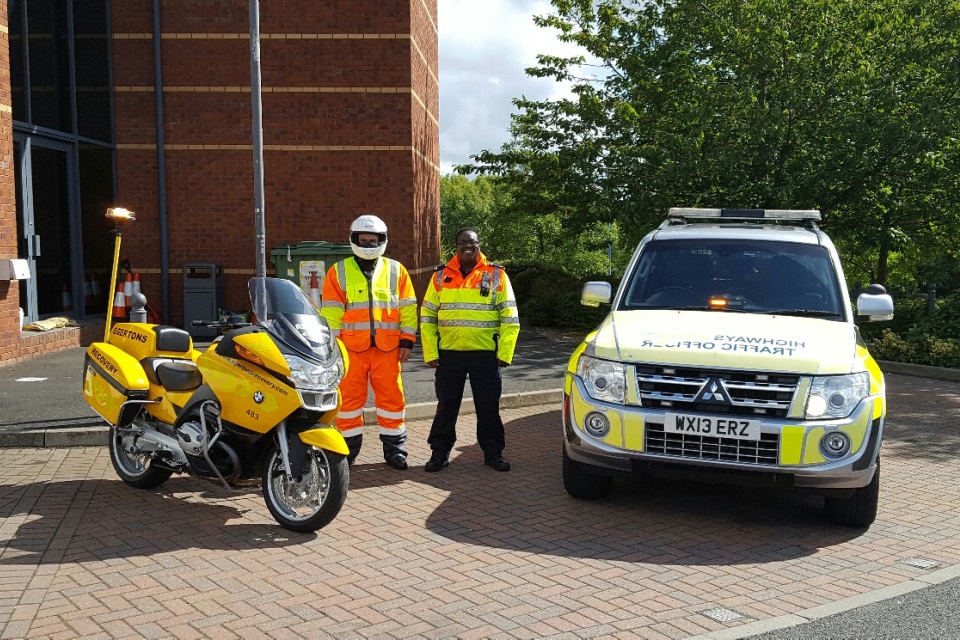 In less than two months, 17 drivers have already caused tailbacks through a major section of roadworks due to running out of fuel – leading Highways England to introduce rapid-assistance motorcycles carrying emergency fuel to stranded motorists.