Home Blog Page 500

Petersen Automotive Museum: inside America’s best car museum

0

Petersen Automotive Museum

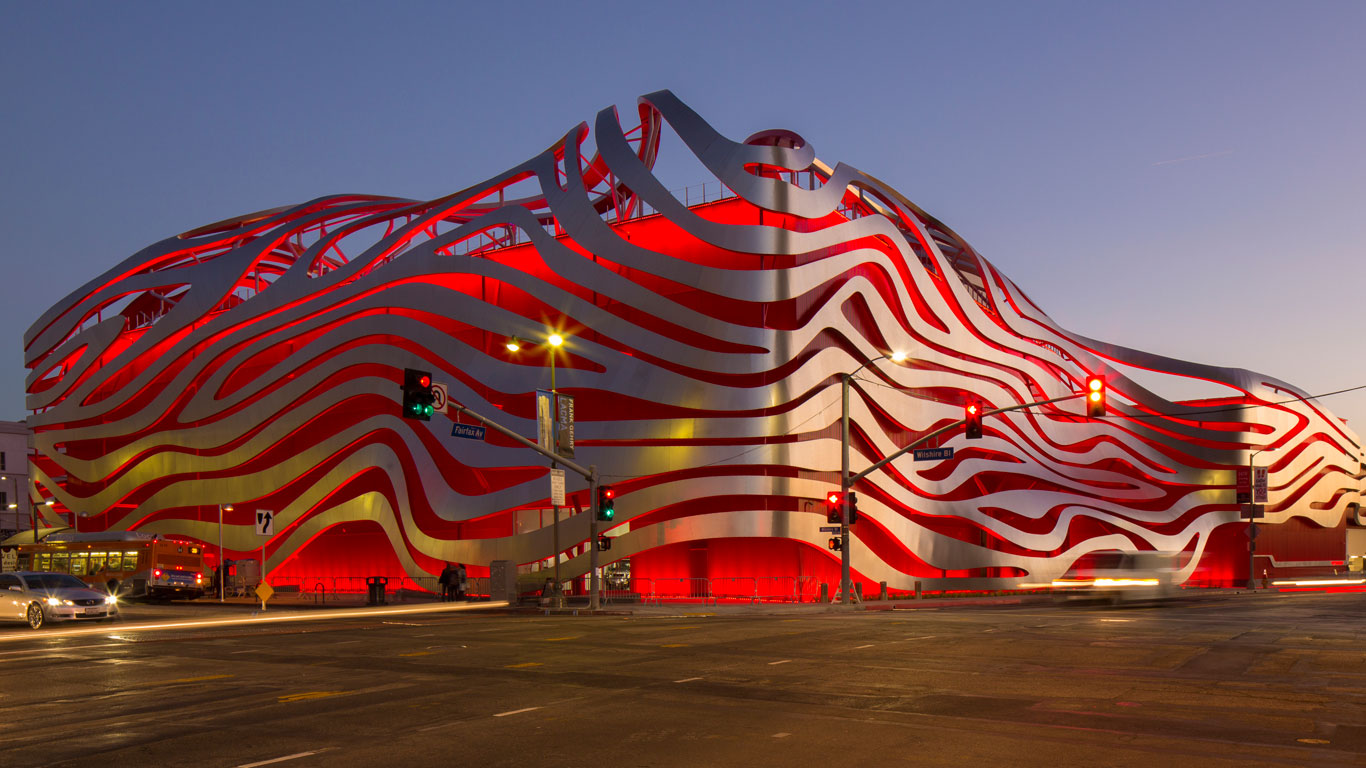
To paraphrase Randy Newman: LA… we love it. Or rather, we love the look of the Petersen Automotive Museum, which sits at the gateway to Los Angeles’ famed Museum Row.

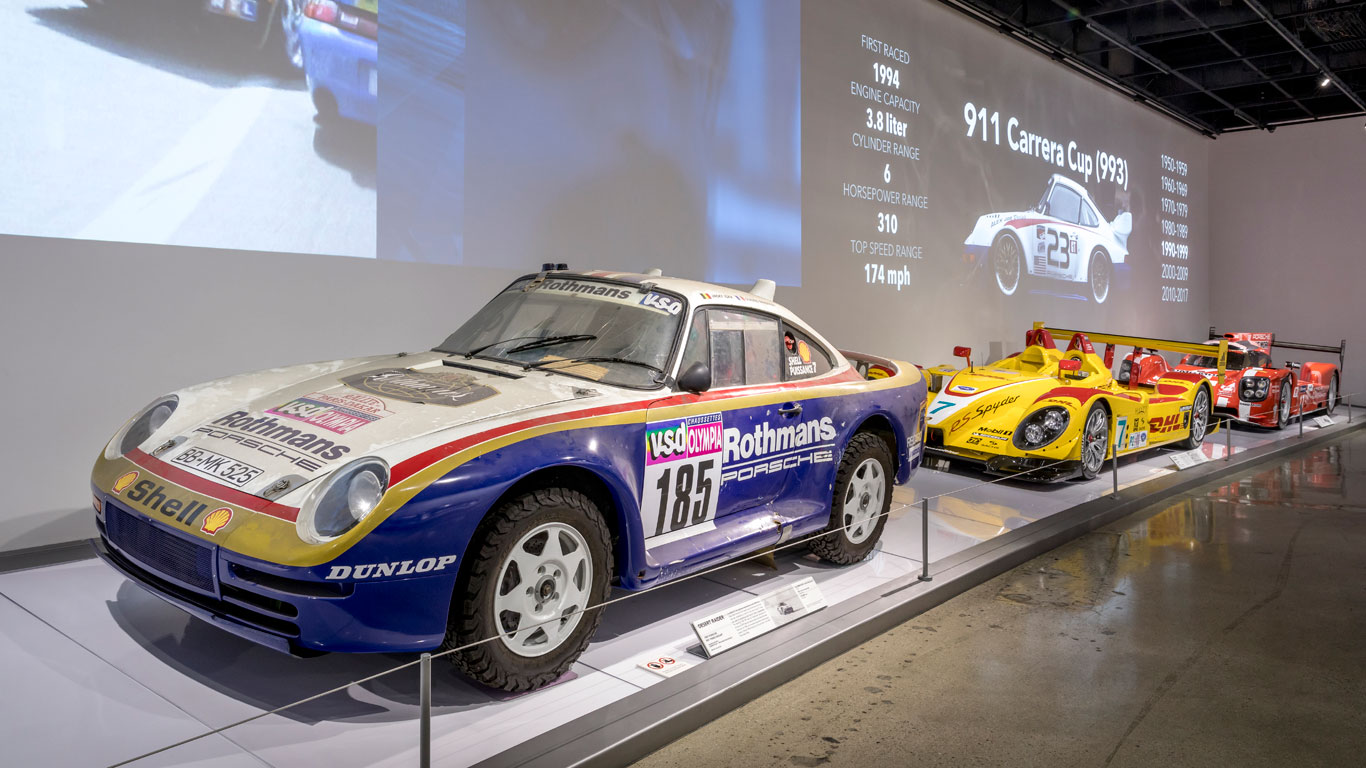
In conjunction with Porsche Cars North America, the museum has just thrown open the doors to its latest exhibition: The Porsche Effect.

We’ll showcase those 48 cars in a separate gallery, but for now, allow us to take you on a virtual tour of this wondrous museum.

$90m total renovation
$90m total renovation

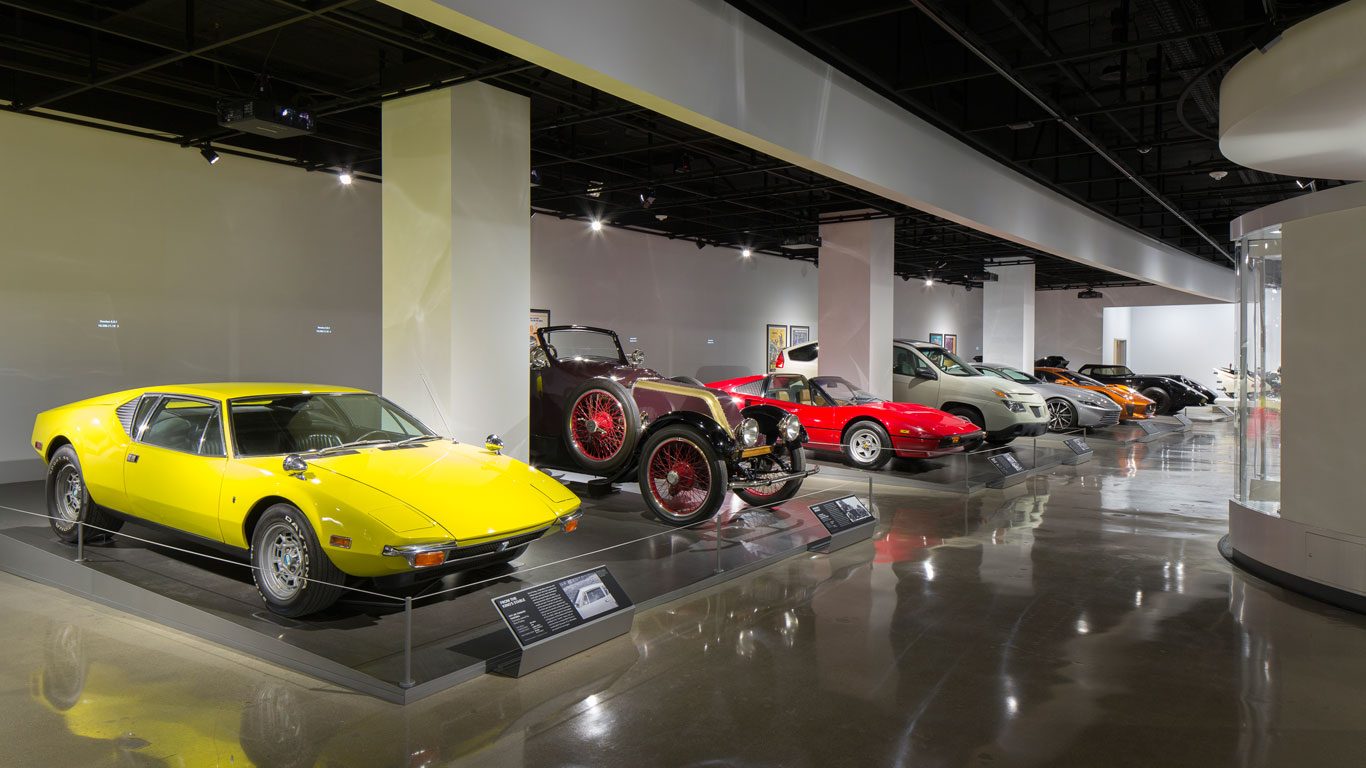
The Petersen Automotive Museum dates back to 1994, but reopened at the end of 2015 following a 14-month and $90 million renovation. Around 95,000 square feet of exhibit space is spread across three themed floors, with visitors encouraged to begin their experience on the History floor, before making their way down to the Artistry level.

25 rotating exhibitions
25 rotating exhibitions

The museum is housed in a former 1960s department store, with the Welton Becket-designed building featuring more than 150 vehicles and 25 rotating exhibitions, including the new display of Porsche vehicles. When you’re done with Santa Monica Boulevard and Hollywood, the Petersen Automotive Museum is the place to hang out.

The Porsche Effect
The Porsche Effect

The Porsche Effect – which we’ll showcase in a separate gallery – encompasses five thematic sections, including Elements of Style; Zuffenhausen and Beyond; Extended Families; Innovation through Competition; and World/Image/Object. The exhibit will remain at the Petersen Automotive Museum until 27 January 2019.

Seeing Red: 70 Years of Ferrari
Seeing Red: 70 Years of Ferrari

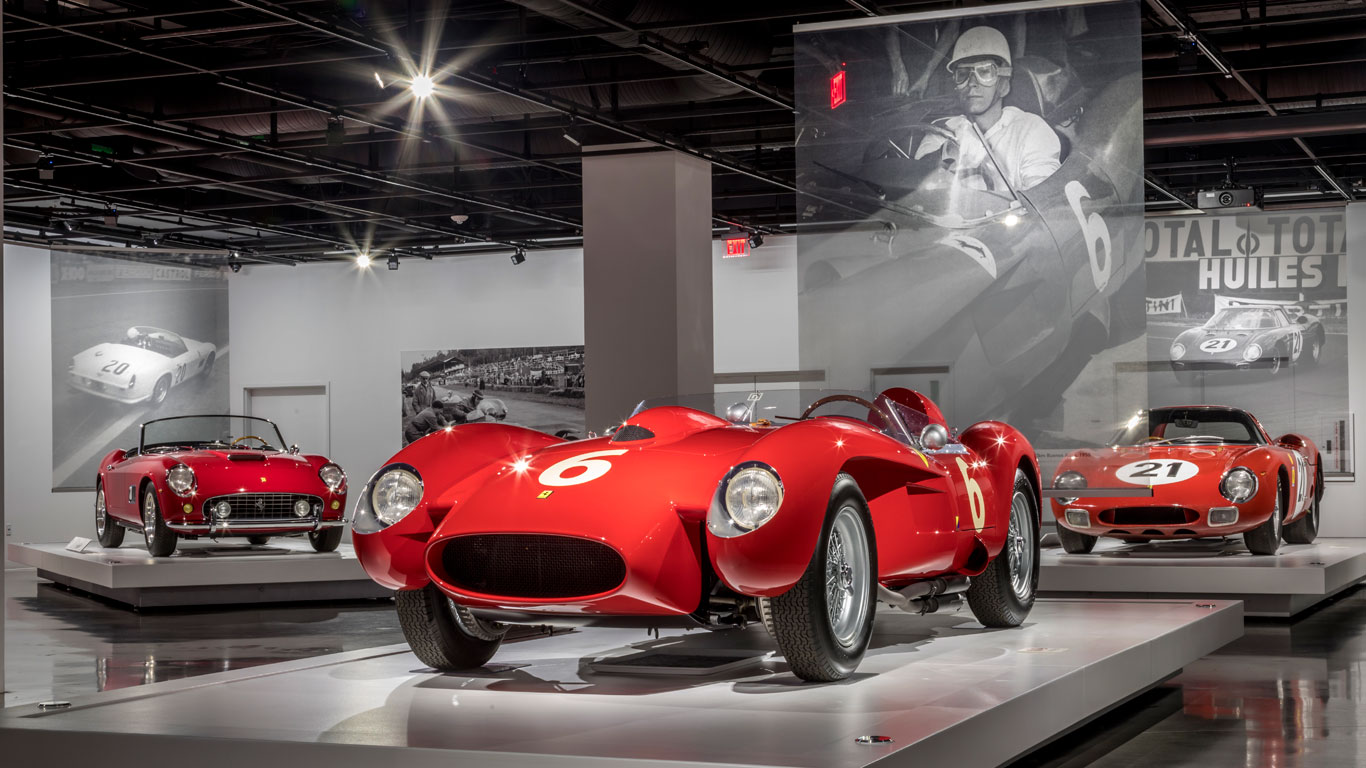
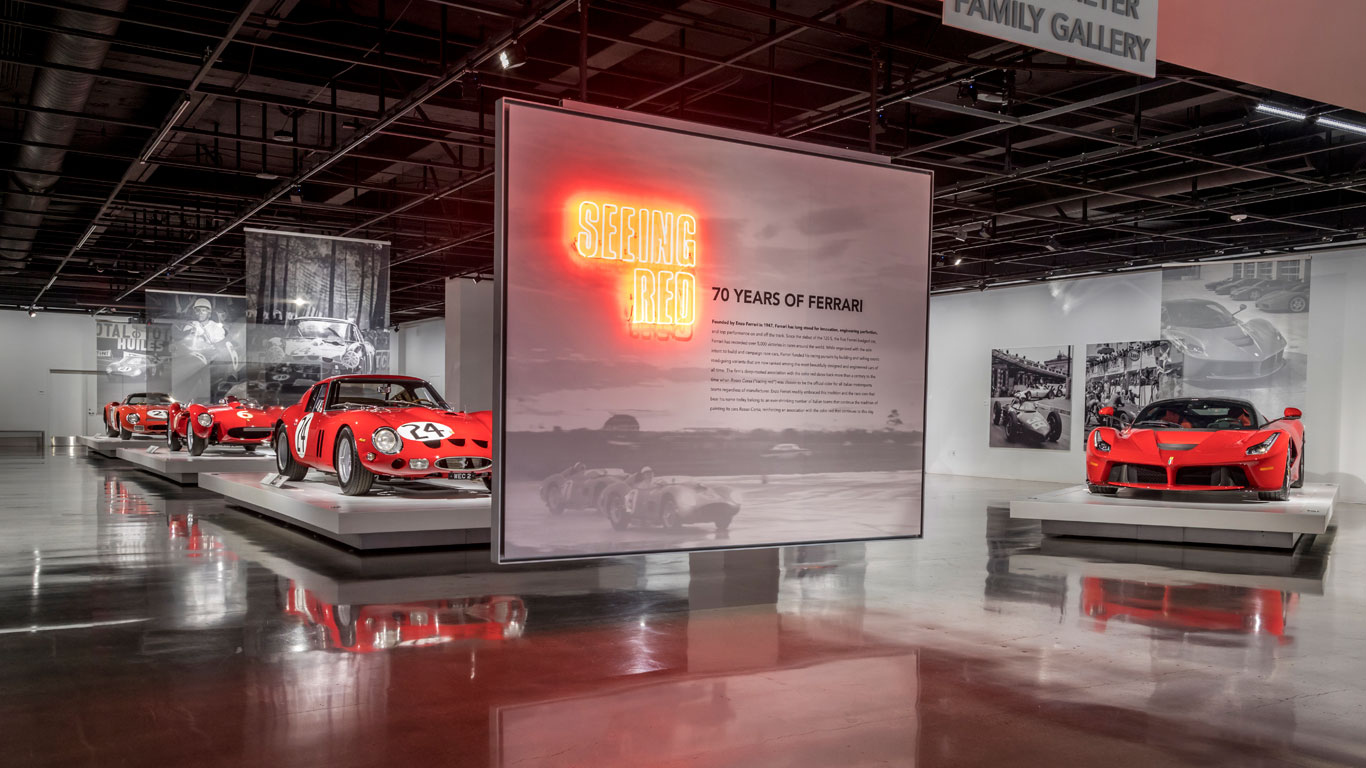
The Seeing Red: 70 Years of Ferrari exhibit does exactly what it says on sign: celebrate Ferrari’s 70th anniversary using only red cars. Eleven of the company’s most significant road and race cars are on display are on display until May 2018, so you’ll need to be quick.

Ferrari 250 GTO
Ferrari 250 GTO

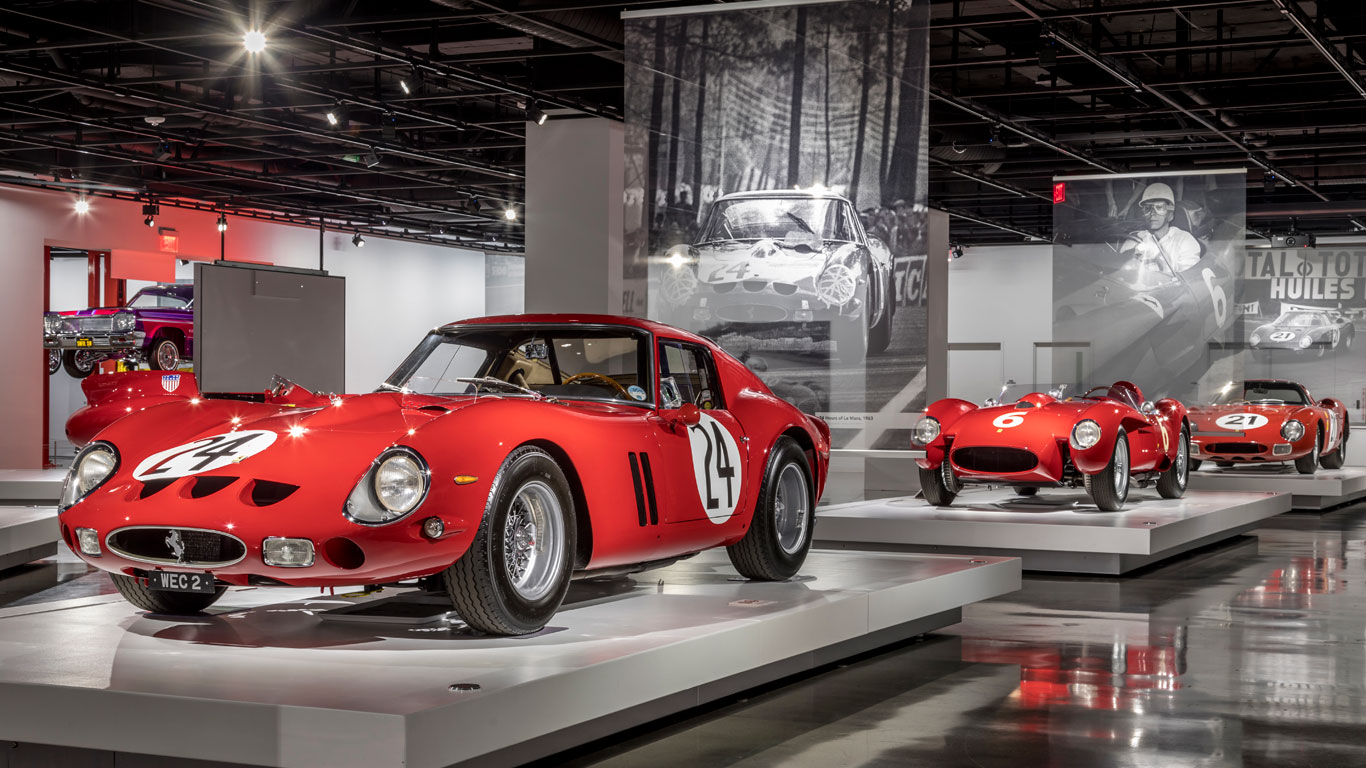
Of the Ferrari 250 GTO, Bruce Meyer, the Petersen’s founding chairman and member of its board of directors, told the Robb Report: “That car resonates with me the most because I’ve had considerable time behind the wheel.” It is owned by Meyer’s good friend, William “Chip” Connor, and the founding chairman said: “I have done rallies with Chip in it and have driven the car on the racetrack.”

Ferrari 248 F1
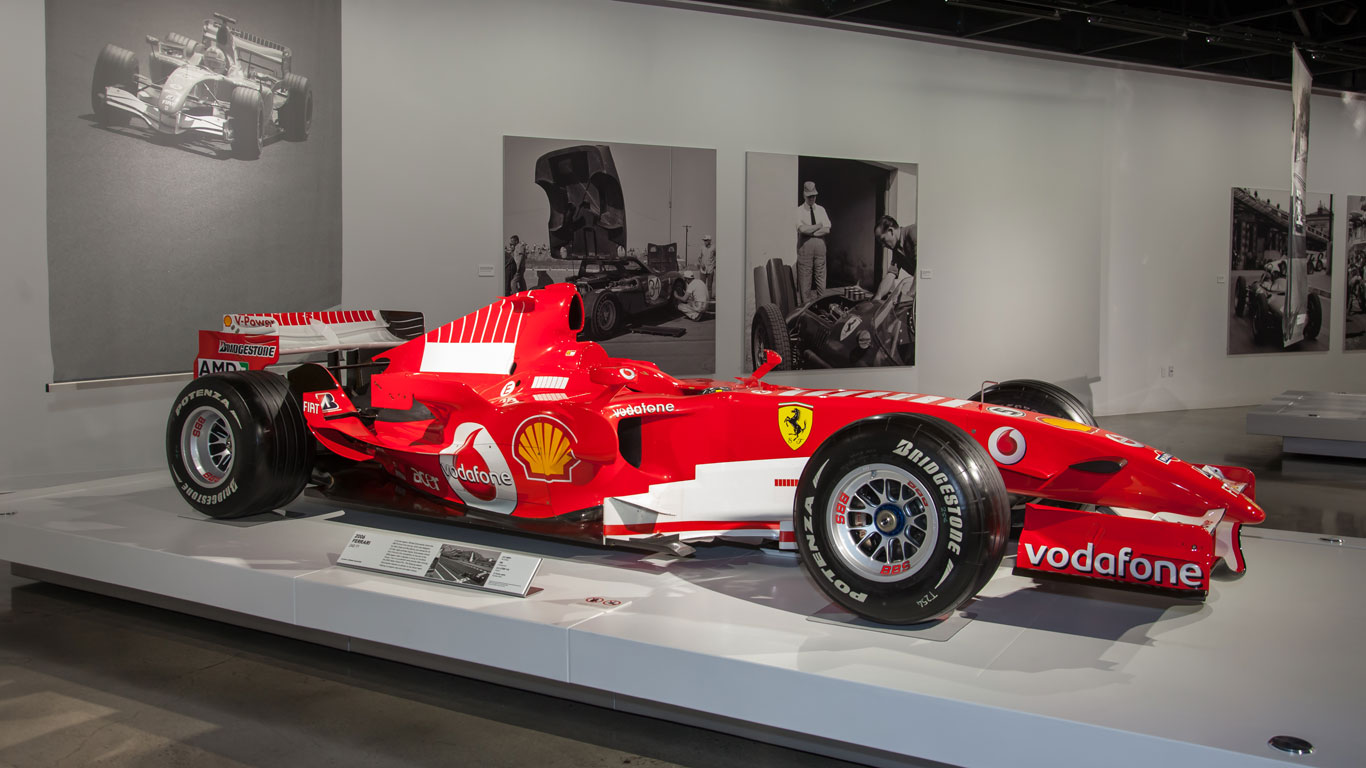
Ferrari 248 F1

This is the Ferrari 248 F1 car driven by Michael Schumacher in the 2006 Formula One World Championship. The German finished second, 13 points behind the 2006 champion, Fernando Alonso. Schumacher announced his retirement from F1 at the end of the season, but returned in 2010 to drive for the new Mercedes GP team.

Ferrari LaFerrari
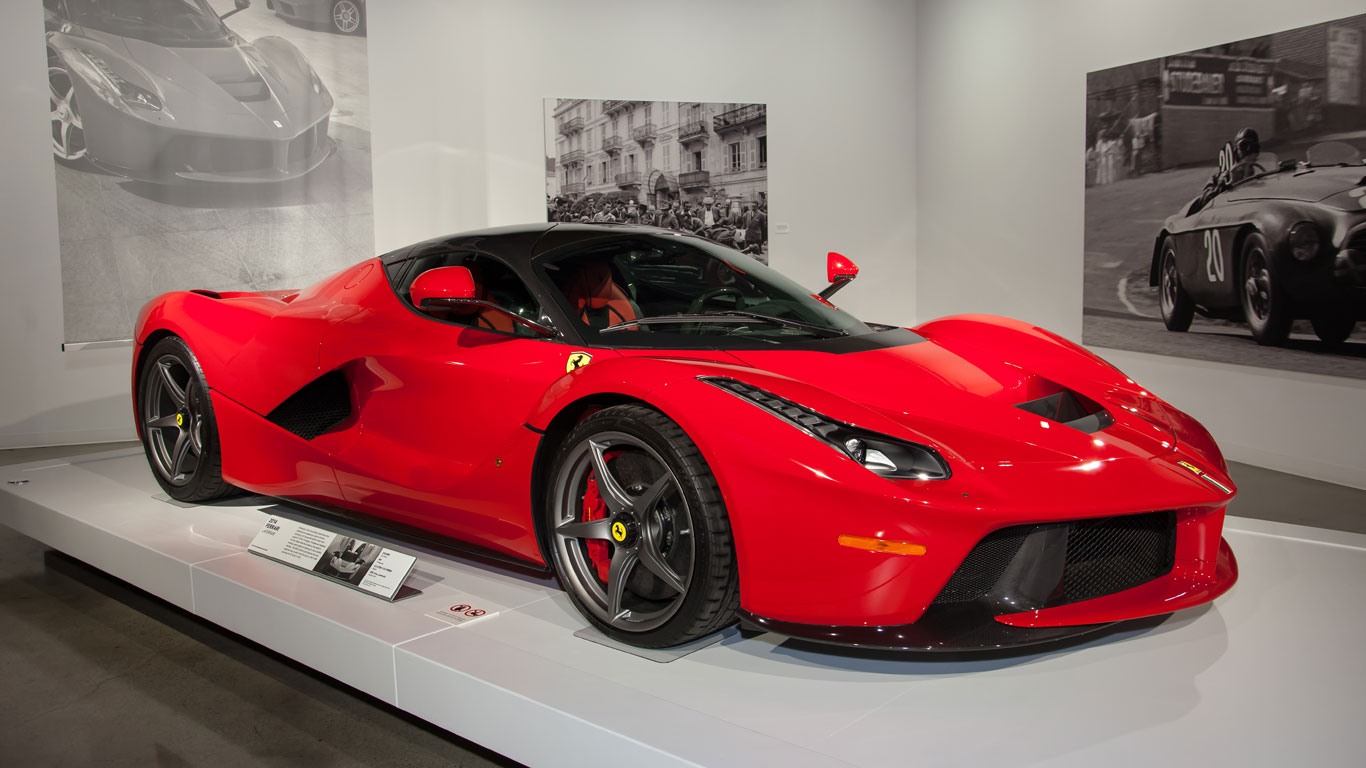
Ferrari LaFerrari

Bringing things right up-to-date, here’s a LaFerrari from 2014. The hybrid hypercar is capable of speeds in excess of 217mph, while the 0-62mph sprint is polished off in just three seconds. You can see more photos from the Seeing Red exhibition later in this gallery.

The Vault
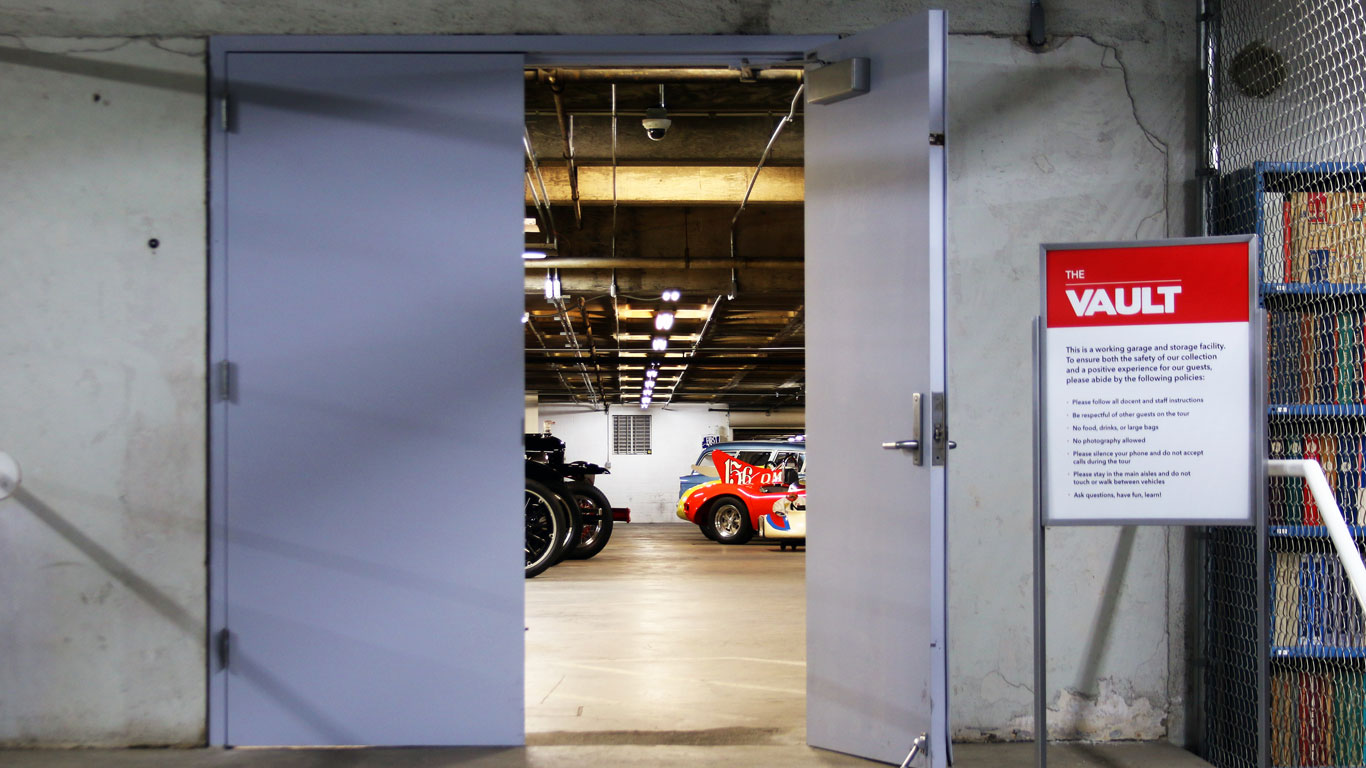
The Vault

Hidden underground beneath the heart of Los Angeles, The Vault features 120 cars within a working garage. The cars may have been part of the main museum at some point, but there’s nothing quite like seeing them in a subterranean environment. Access to The Vault is via a guided tour and is in addition to the general admission ticket.

The Vault
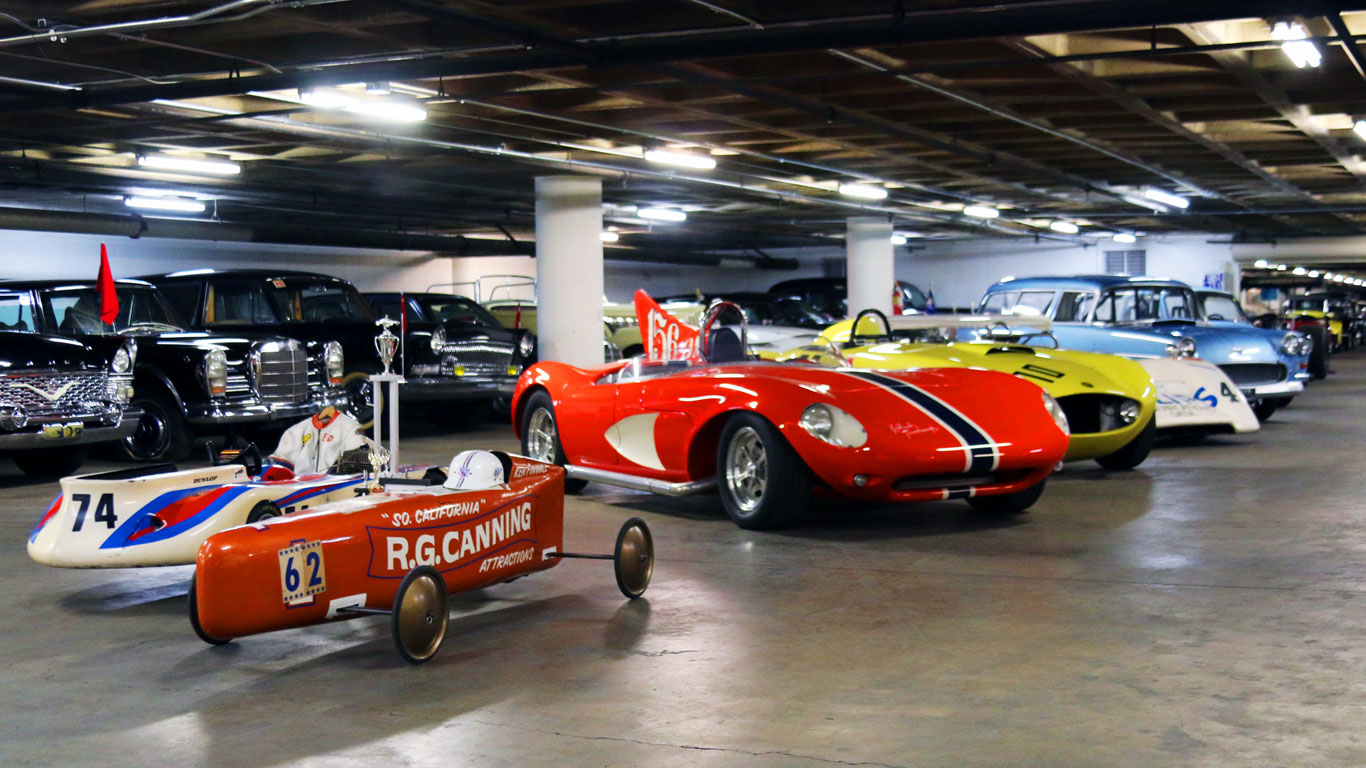
The Vault

What you’ll find in The Vault depends on the date of your visit, but it could include historic race cars, vehicles owned by heads of state, cars on loan to the museum, and some awaiting restoration.

Davis Divan
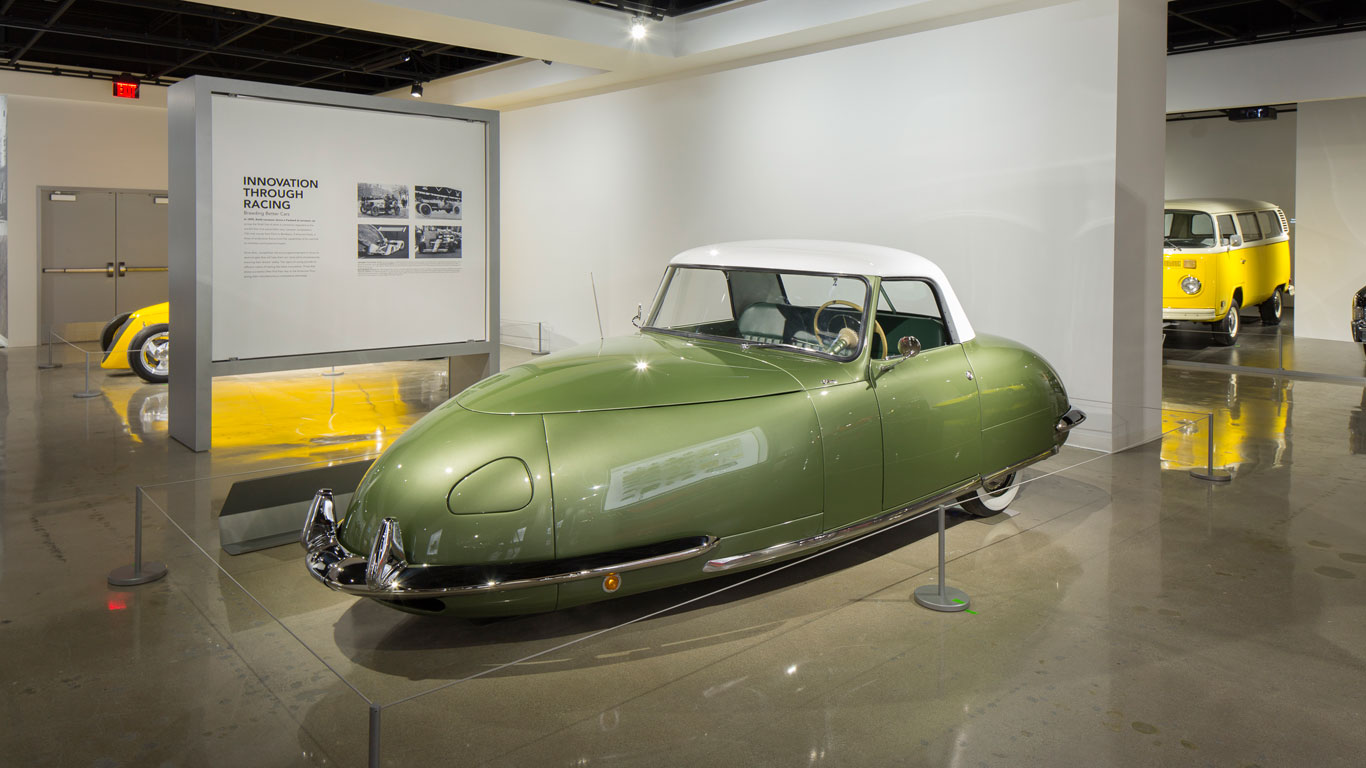
Davis Divan

The Perspective Gallery houses an exhibition focused on our love for the automobile, especially in Southern California, where residents embraced the independence offered by cars. This is a Davis Divan, a two-door, three-wheeled roadster dating back to the 1940s.

GM EV1
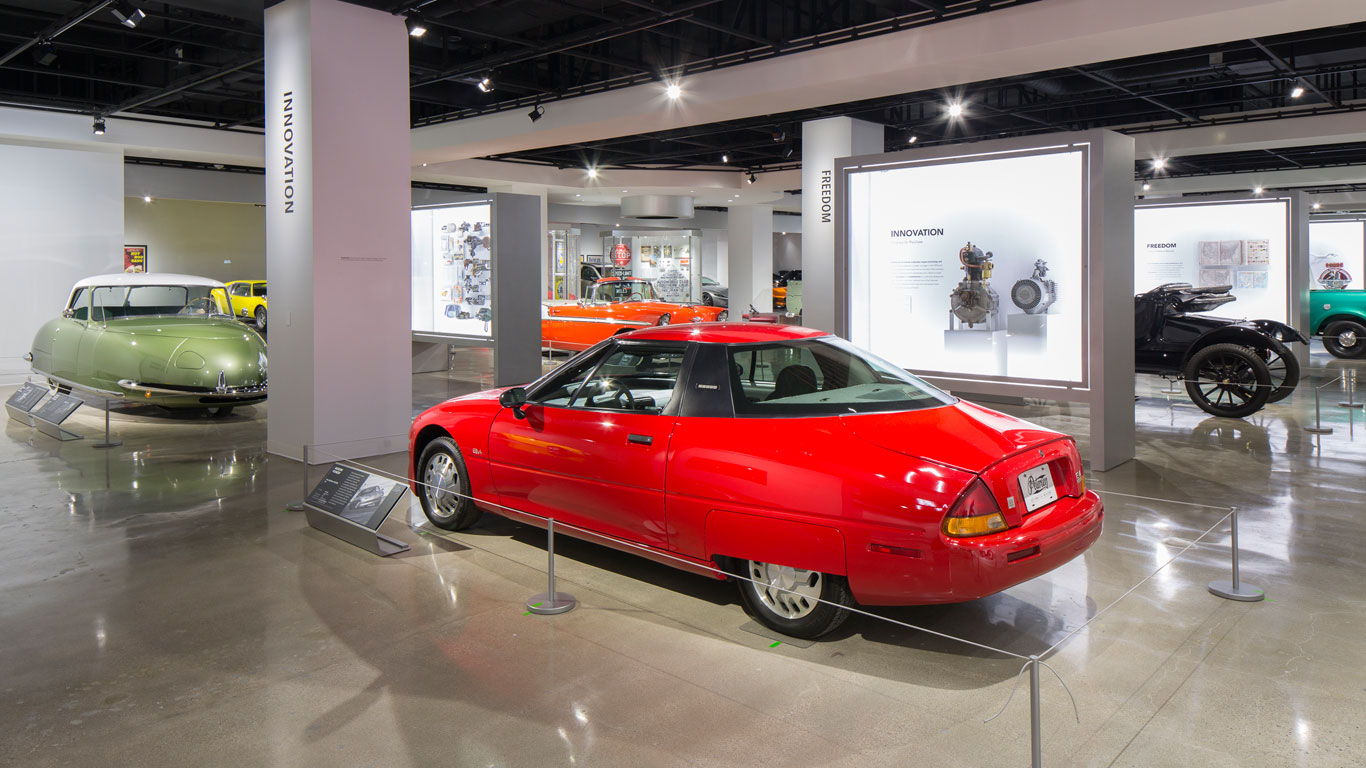
GM EV1

This is the GM EV1: the first mass-produced electric vehicle built by a major manufacturer. The EV1 was way ahead of its time and available on a lease-only basis. Sadly, after four years, GM pulled the plug on the project and all but 40 were sent to the crusher. Loyal fans of the pioneering EV were also left feeling crushed.

Cisitalia 202
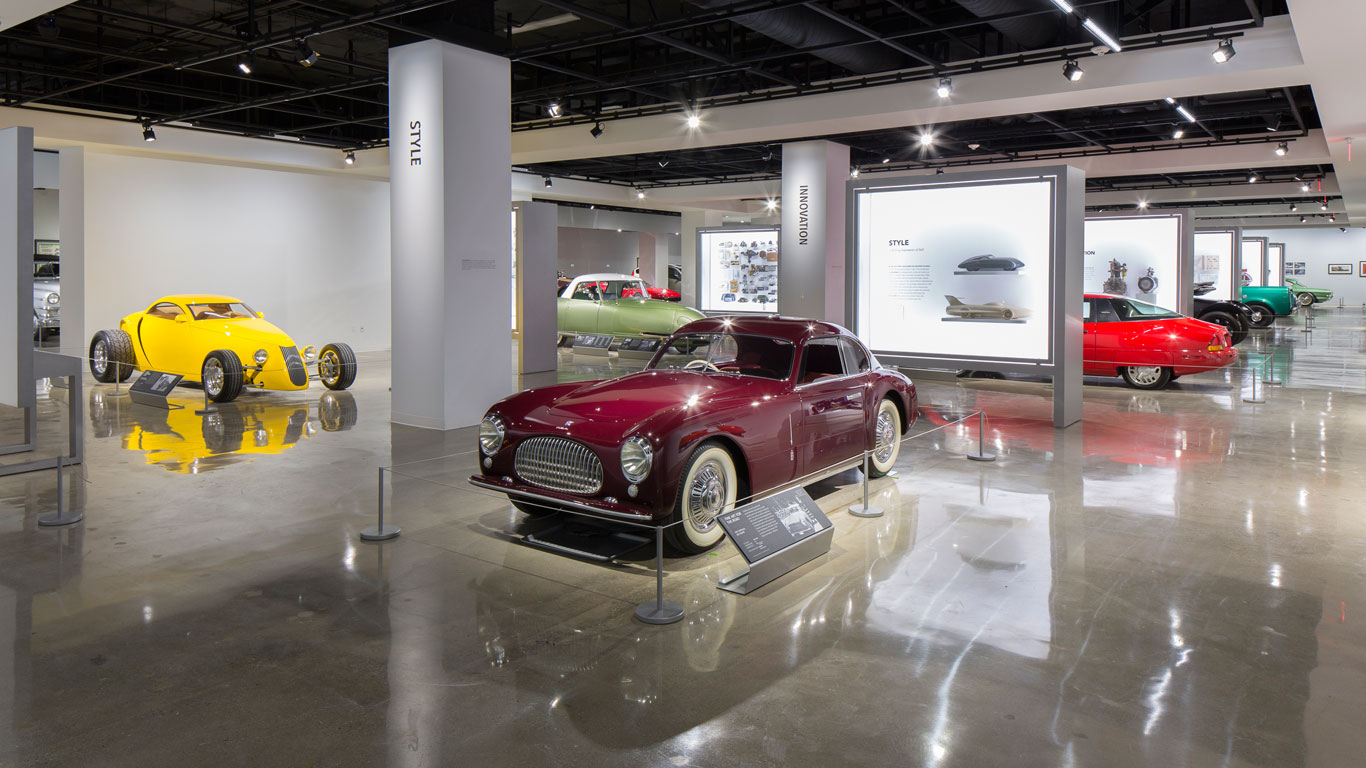
Cisitalia 202

Still on the third floor, this is a Cisitalia 202. Consorzio Industriale Sportiva Italia (Cisitalia) began building single-seat race cars after World War II and launched the 202 in 1947. The Pininfarina-designed coupe is considered to be one of the most beautiful cars of the era, but only 170 were built before the company folded.

Lightning McQueen
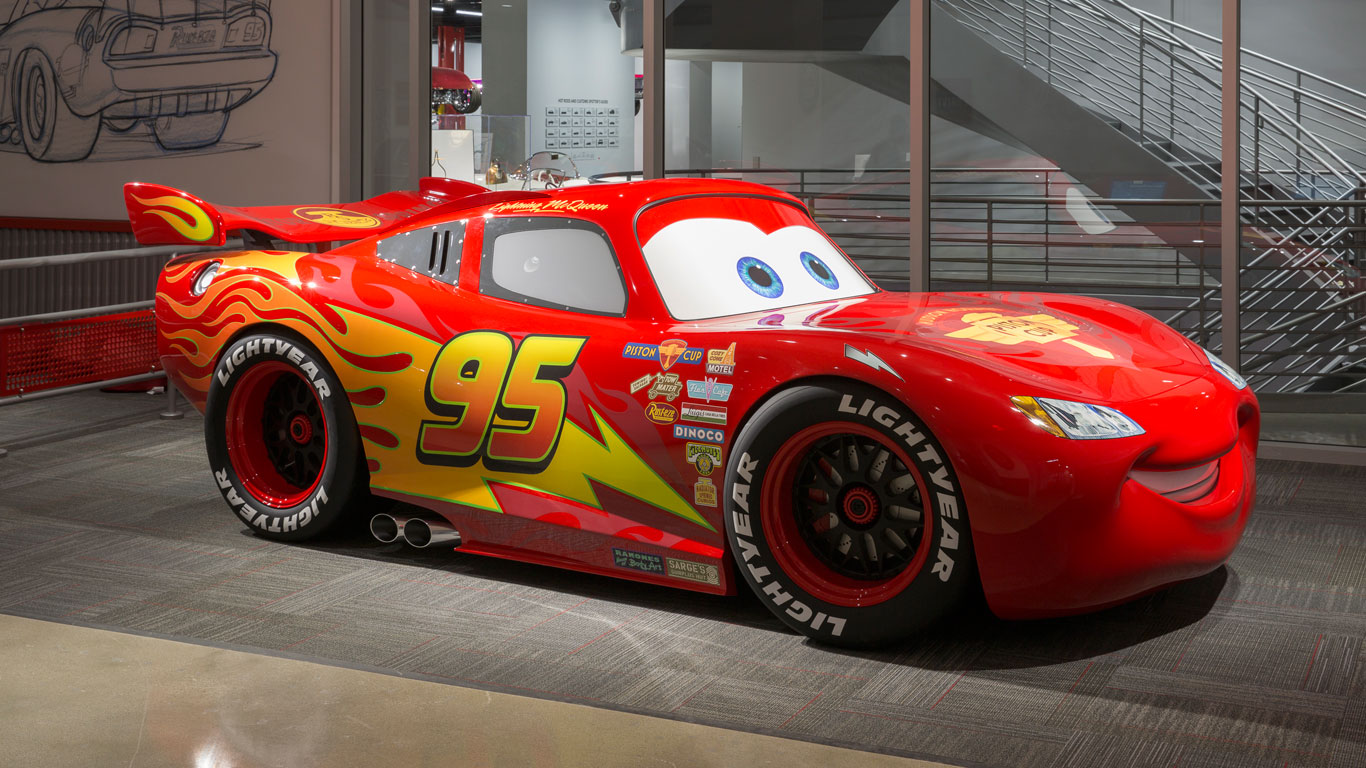
Lightning McQueen

Moving down to the second floor, here’s Lightning McQueen from Pixar’s Cars animated movie franchise. According to director John Lasseter, McQueen’s shape was influenced by the C6 Corvette and Ford GT40, along with sports stars Muhammad Ali, Charles Barkley and Joe Namath.

Ford GT40
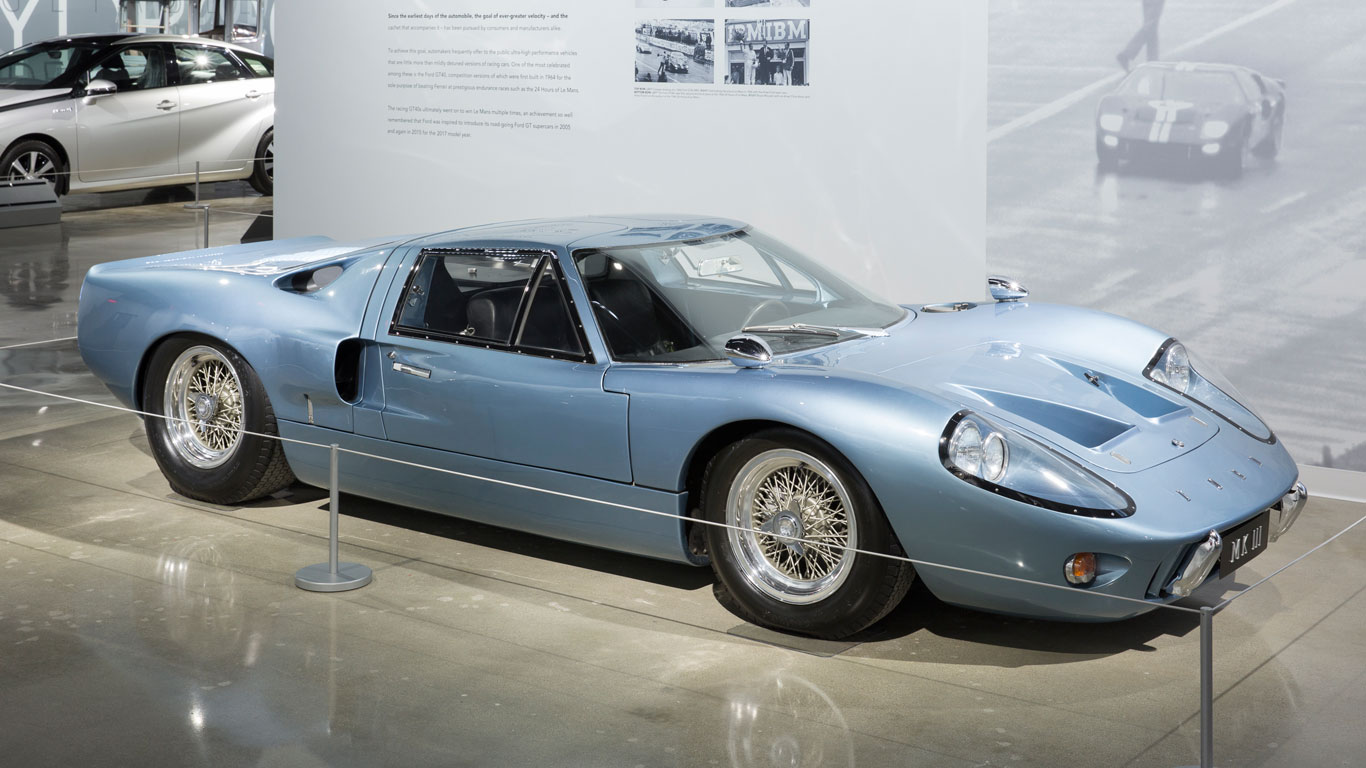
Ford GT40

Speaking of the Ford GT40… It’s a MkIII road car from 1967, originally owned by Austrian conductor Herbert von Karajan, and is one of just seven built.

Ford GT
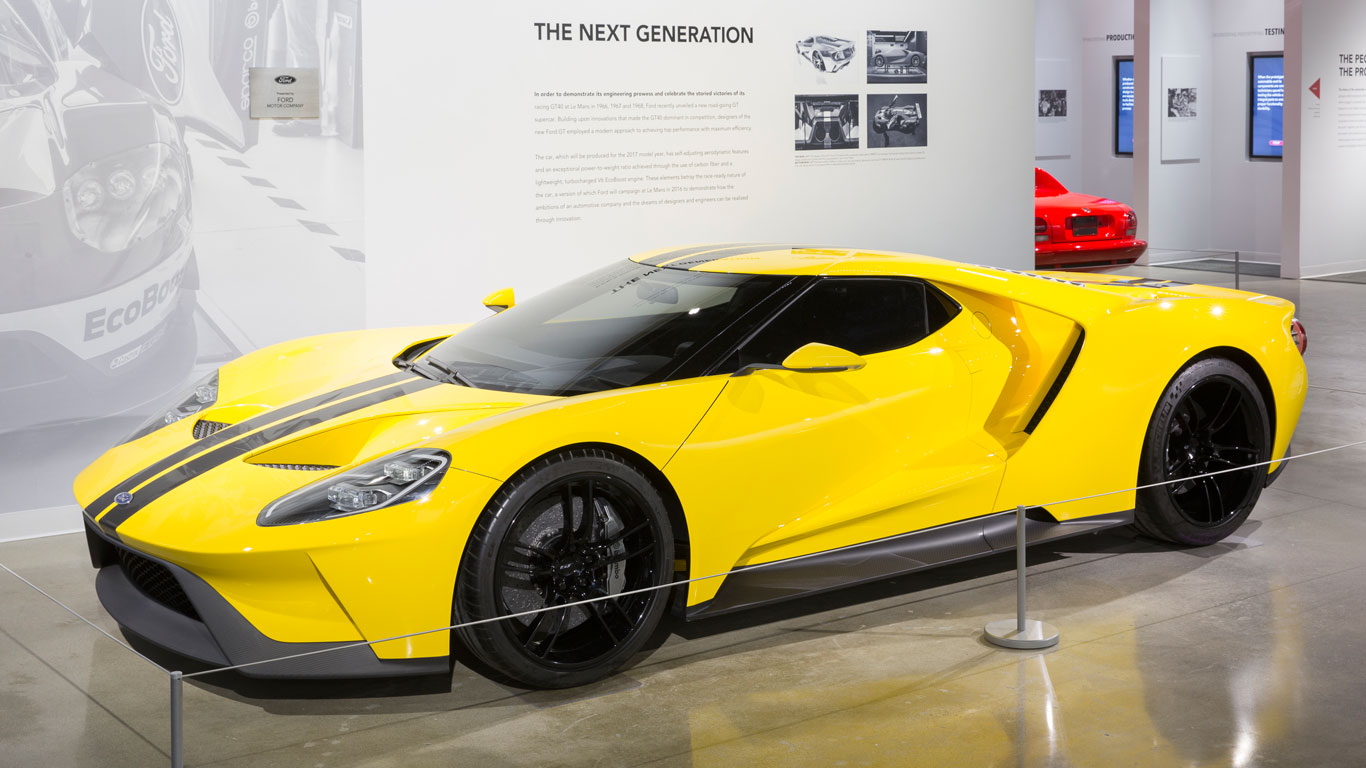
Ford GT

The GT40 is joined by its modern-day equivalent: the Ford GT. The next-generation supercar was unveiled at the 2015 Detroit Auto Show and is powered by a 3.5-litre V6 Ecoboost engine producing 656hp and 550lb ft of torque.

The High Art of Riding Low
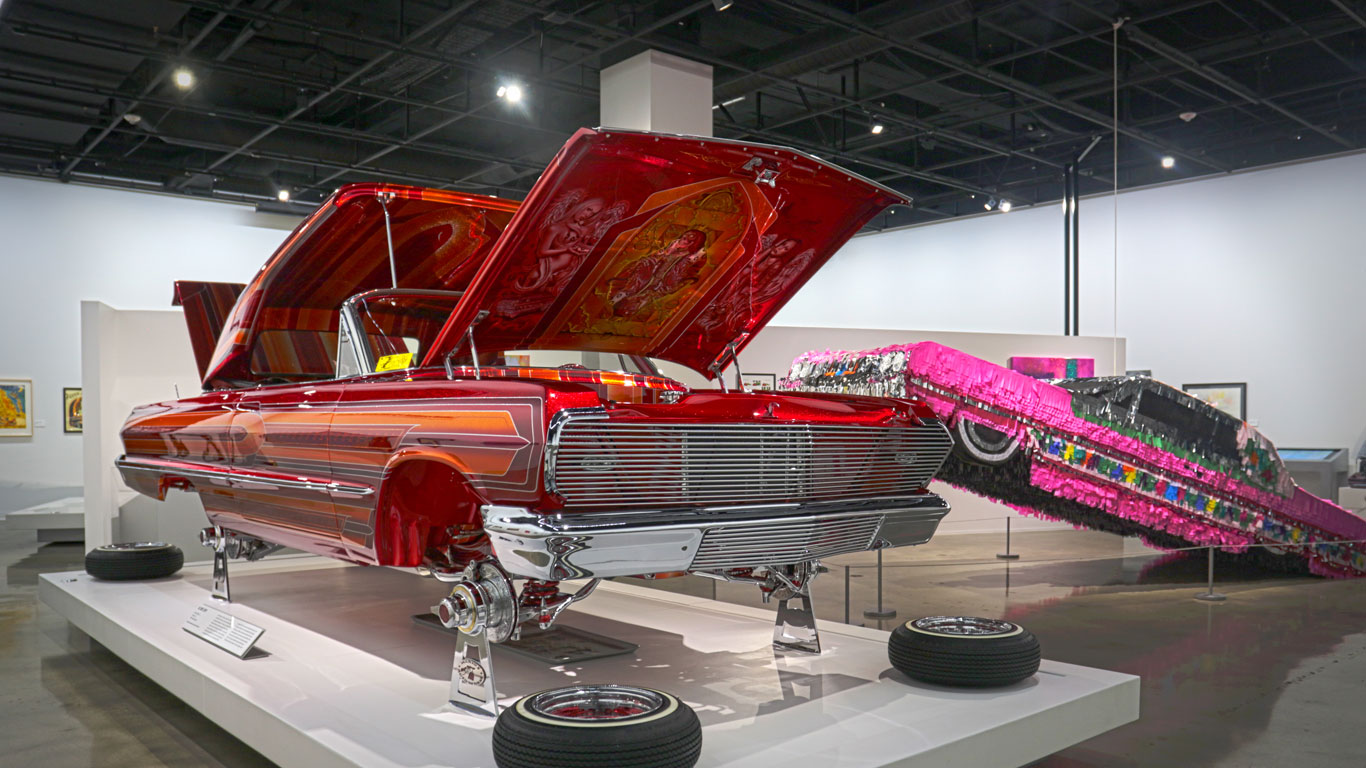
The High Art of Riding Low

Once on the first floor, you’ll find a celebration of the lowrider, in an exhibition called The High Art of Riding Low. Located in the Armand Hammer Foundation Gallery, the exhibition – which runs until July 2018 – examines the diversity and complexity with which 50 artists visualise and celebrate the lowrider through vehicles, paintings and sculptures.

Chevrolet Sedan
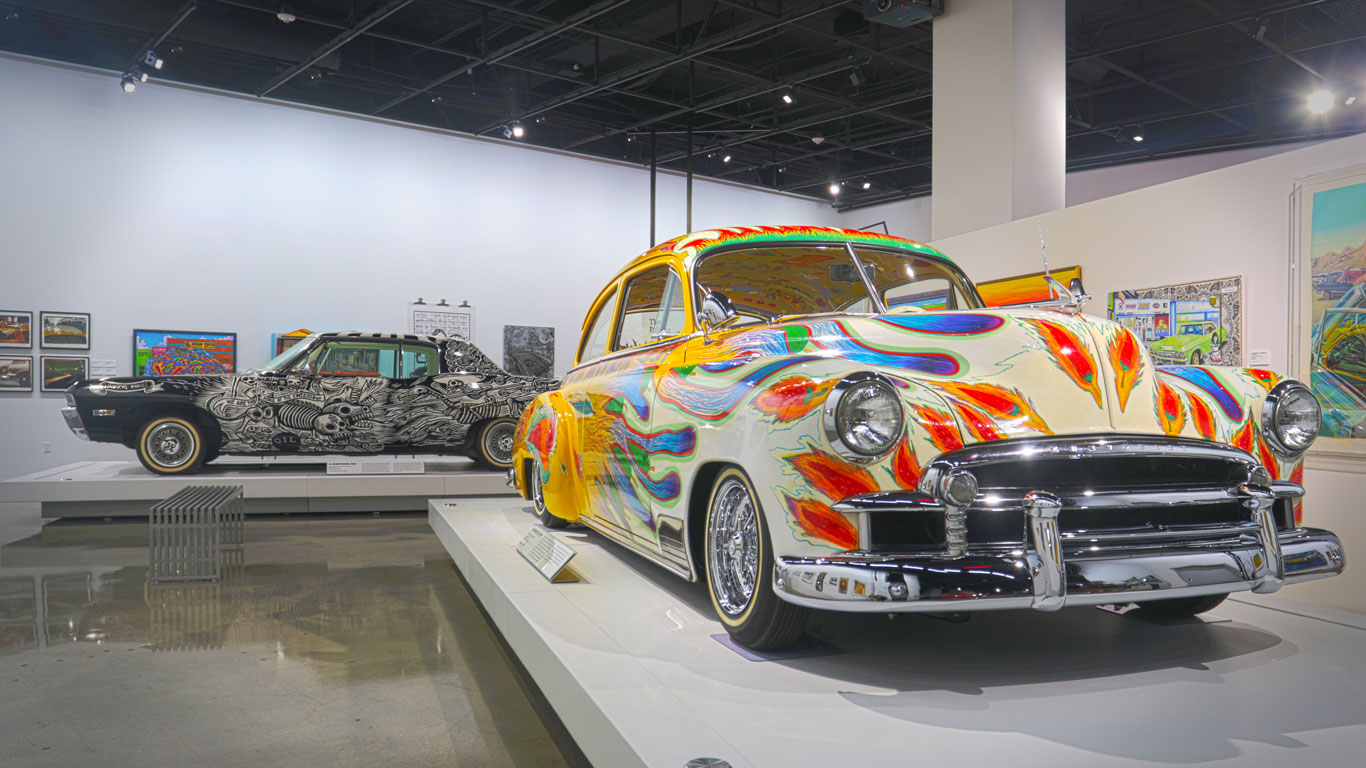
Chevrolet Sedan

Using pinstriping brushes and lacquer-based textile crayons, artist Gilbert ‘Magu’ Luján transformed his family’s 1950 Chevrolet sedan into a lowrider with what he called “a lighthearted kind of folk art narrative”.

Chevrolet Impala
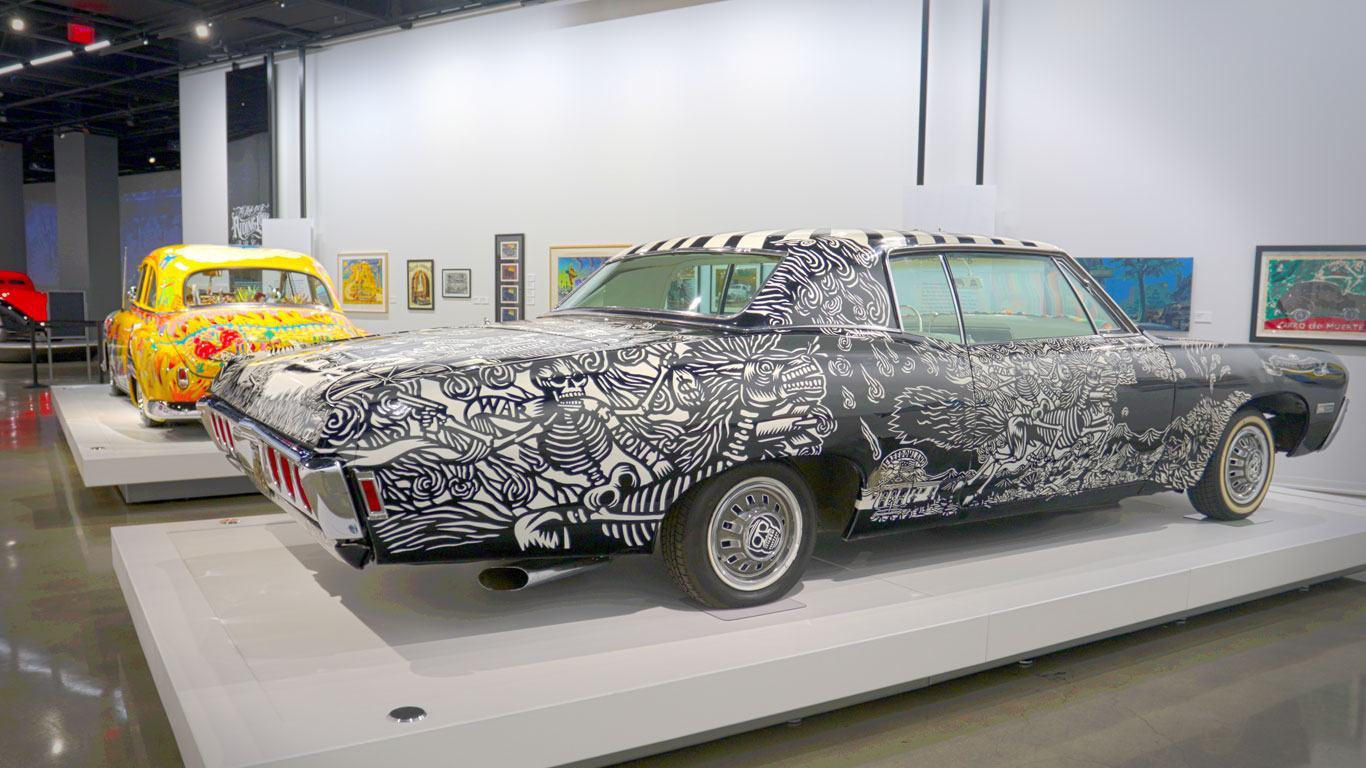
Chevrolet Impala

Created in 2006 by artists John Jota Leanos and Artemio Rodriguez, El Muertorider is an art installation that addresses themes related to the culture of lowriding. The artwork employs evocative imagery taken from Western art history and Day of the Dead.

Opening times
Opening times

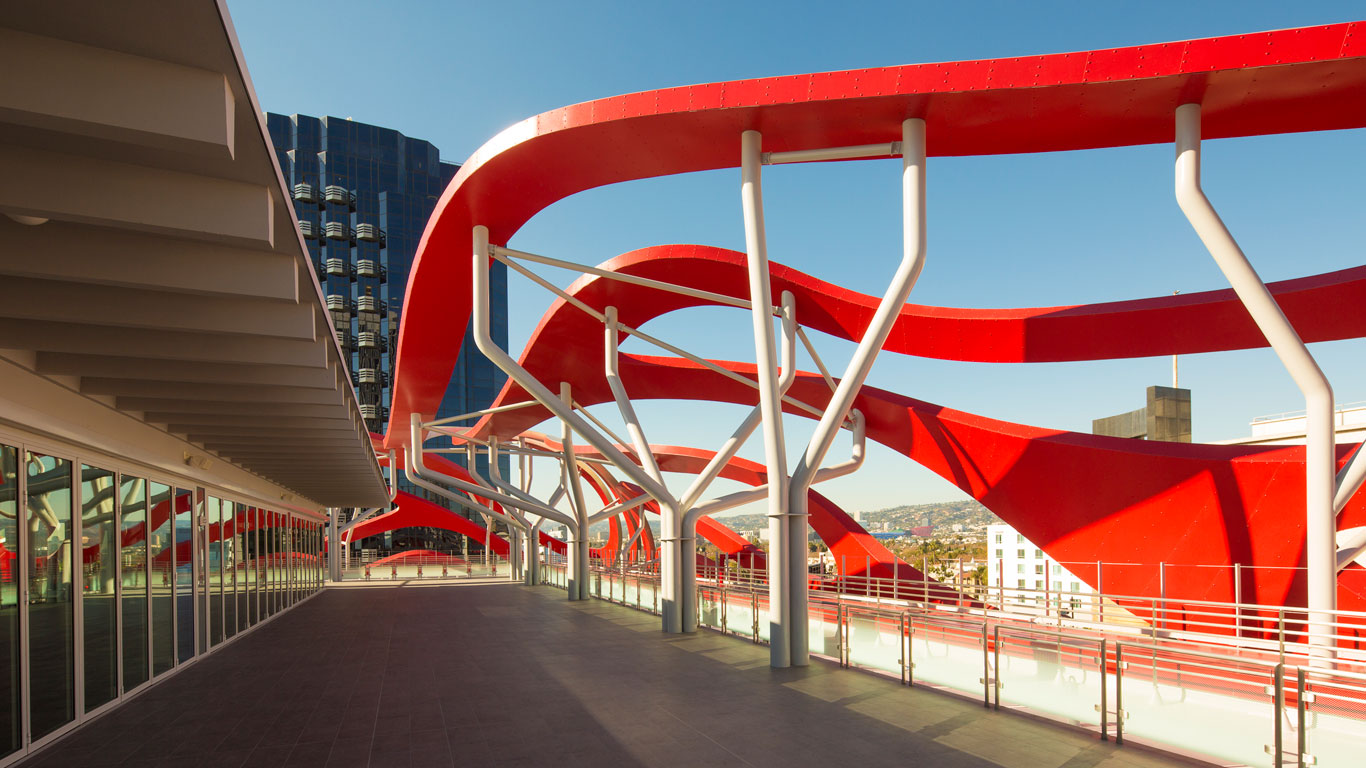
The Petersen Automotive Museum is open daily from 10am until 6pm and is located on Wilshire Boulevard, Los Angeles. Vault tours are available on a first come, first served basis, and tickets can be purchased one month in advance. Keep clicking for more photos from inside America’s best car museum.

Read more:

Is this Europe’s best car museum?
Star-spangled, no bangers: 25 important American cars
Wild and wonderful on display at the 2018 Detroit Auto Show
Advertisement

Even company car fleets are ditching diesel

0

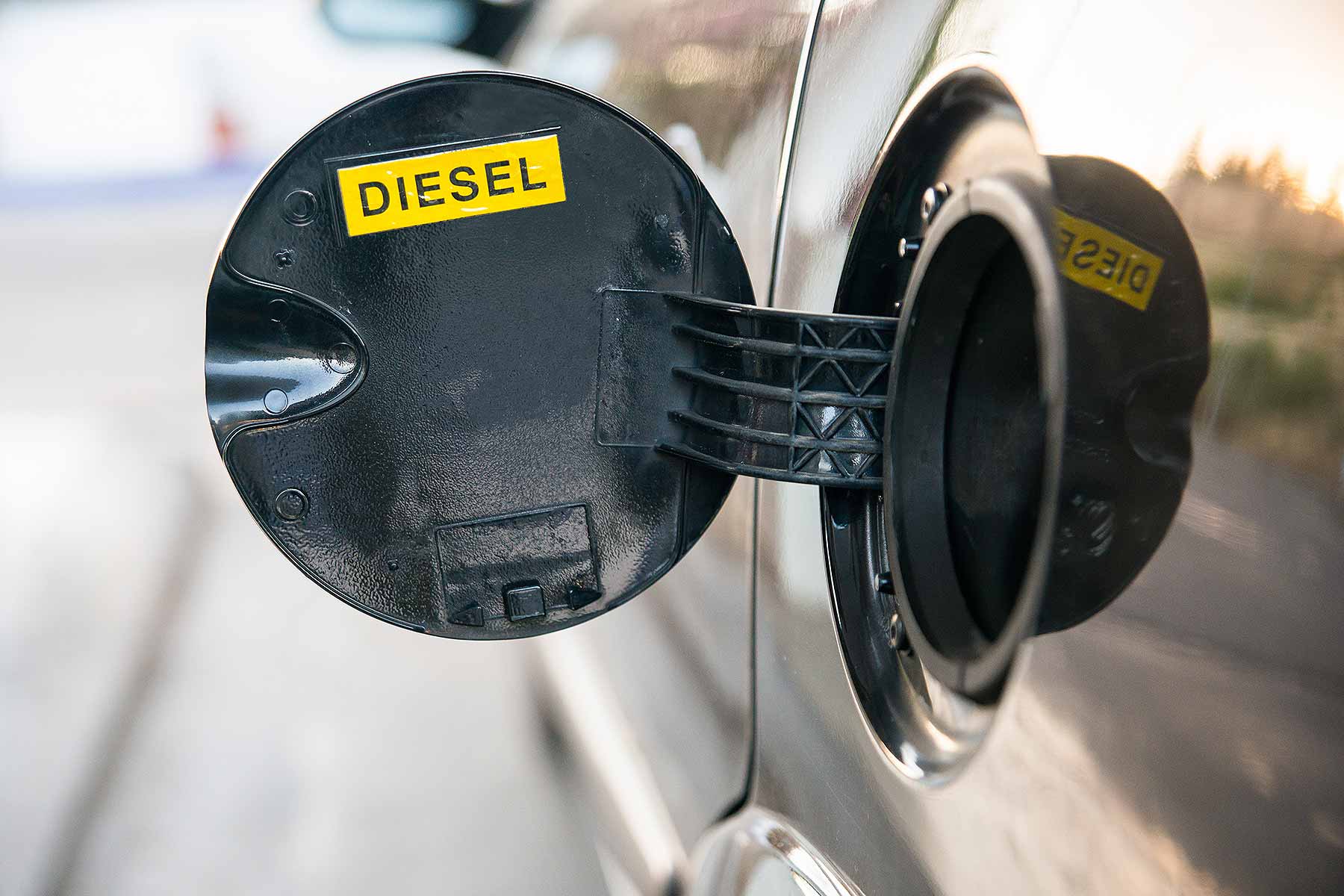
DieselCompany cars currently make up 55 percent of British new car sales. In recent years, diesel has dominated, thanks to its low CO2 and high MPG. But this is changing, reveals latest research – and more quickly than the industry anticipated.
Reflecting the move away from diesel by private car buyers, the latest Sewells Research & Insight Market Barometer survey suggests a 17 percent drop in new diesel car sales to fleets. Remember, when fleet and business sales comprise more than half of the 2.5 million cars sold in 2017, that’s a lot of sales to lose…

The short-term winner is petrol cars, but growing numbers of ambitious fleets are looking further afield: 30 percent of them expect hybrid cars will join their fleet in the next year… and 7 percent expect to be running pure electric cars.

For corporate fleets – those employing 250 or more people – the numbers are even higher. 47 percent expect to start running hybrids this year, and 16 percent preparing to replace their current cars with electric cars.

Today, barely 1 in 10 fleets run a hybrid, and just 3 percent are running EVs.

“Tipping point”

Fleets don’t seem to be put off by any usability concerns surrounding hybrids, either. It’s actually intensive-use utility companies, transport firms and construction businesses that are most eager to switch into hybrids and EVs, says the research.

As for the types of car fleets want to go hybrid and EV in, executive cars, SUVs and MPVs are set for the biggest change: the dominance of diesel in these sectors today will quickly switch to hybrids and, in time, electric cars. 

Simon Staplehurst, commercial research director, Sewells Research & Insight, said: “The Market Barometer reveals that fleets intend to switch to cleaner, lower emission cars much more quickly than many people in the industry expect.

“The fleet sector has passed the tipping point from a default to diesel towards a greener future.”

Read more: 

Advertisement

2018 GQ Car Awards: the ‘next-level’ luxury winners

0

GQ Car Awards 2018 - British GQ/Christoffer RudquistThere are car awards, and then there are the GQ Car Awards 2018. For the style-focused magazine, in which you can read about Brad Pitt’s epic grooming evolution, or learn how to woo Emily Ratajkowski (probably), the awards are less about boot space and fuel economy, and more about the way cars look and feel.
So who won? Comb your hair, moisturise your beard and step this way.

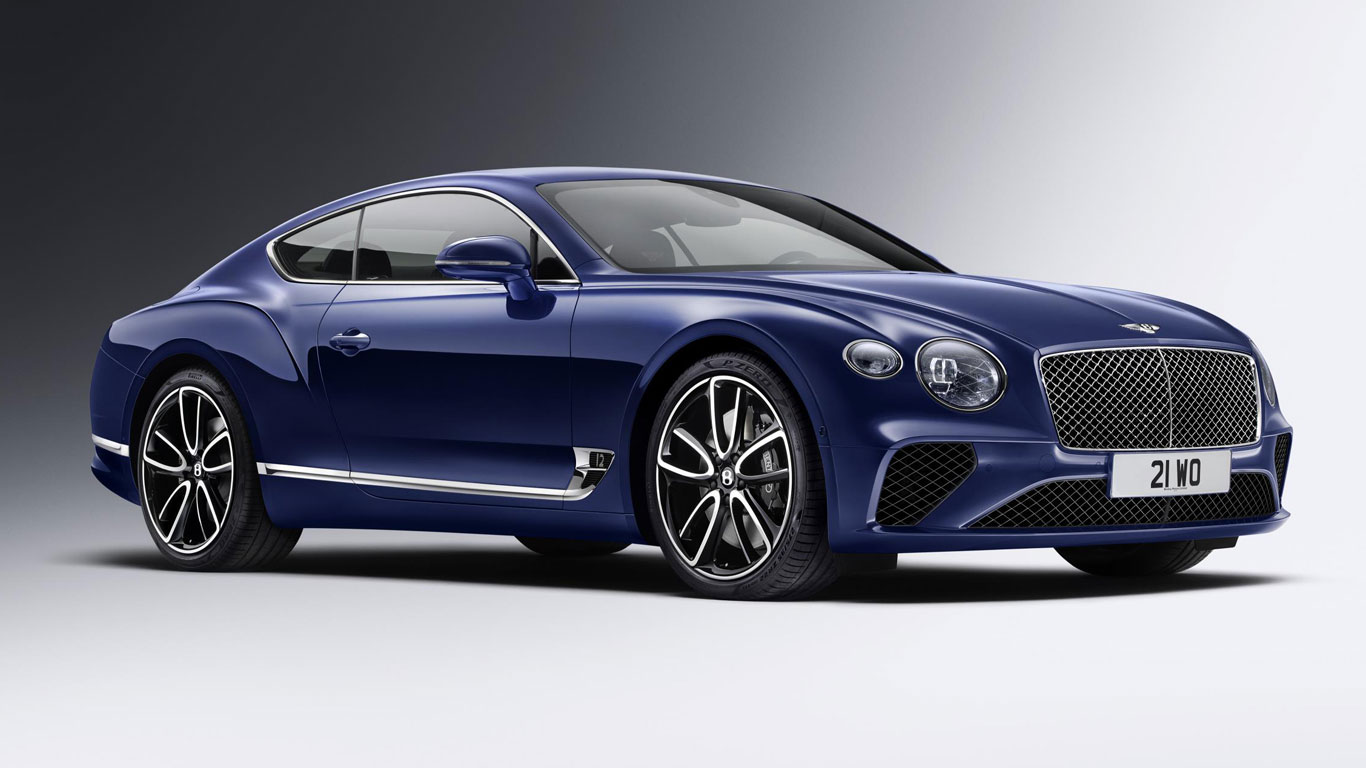
Best interior (and possibly exterior): Bentley Continental GT

We suspect this was a close run thing between the Suzuki Celerio, Dacia Sandero and Bentley Continental GT, but Crewe emerged victorious in the battle for the best interior. GQ points to the leather that swathes much of the GT’s cabin (complete with 310,675 stitches), along with the ten square metres of veneer and the new central infotainment display, as the primary reasons for the Continental GT’s success.

The Bentley Continental GT is powered by a new 635hp 6.0-litre W12 engine. Power goes to all four wheels, although most of the time it’s a rear-wheel-drive machine. Bentley claims that the interior offers “practically limitless scope for personalisation”, which isn’t necessarily a good thing when your client list includes Premier League footballers.

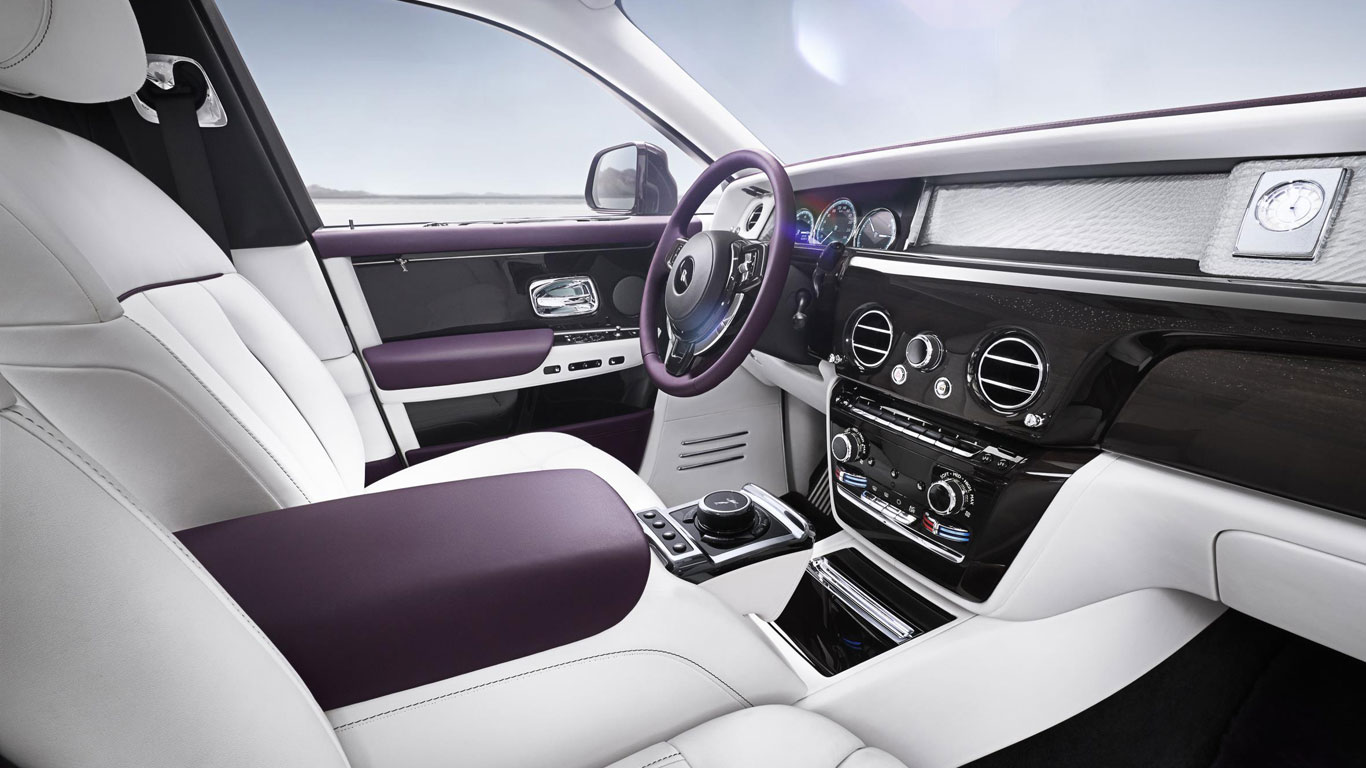
Best supernatural driving experience: Rolls-Royce Phantom

“Simply put, this beautiful machine does nothing less than reinvent the concept of car travel,” says GQ, using words that sound remarkably similar to something we read in the brochure for the 1995 Hyundai Lantra. Of the Phantom, GQ claims “it has an art gallery where others have a dashboard”.

This a reference to the glass-fronted, hermetically-sealed space which runs the full width of the dashboard, where owners can curate their own bespoke artworks. GQ invites you to “sink into the embrace of the most sumptuous rear compartment ever created”. In unrelated news, Kim Kardashian was conspicuous by her absence at the awards do.

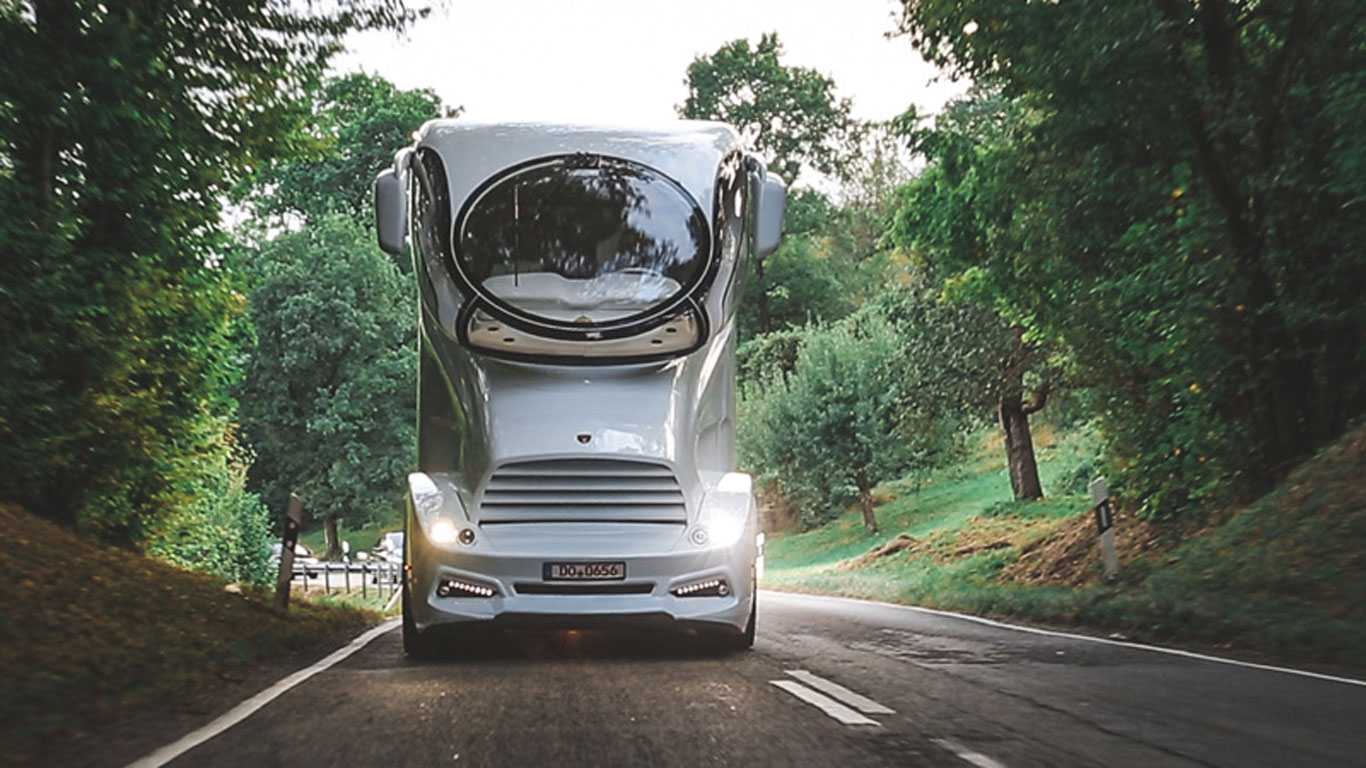
Best flightless private jet: Marchi Mobile Elemment

Don’t allow the Elephant Man styling to send you scurrying for the safety of behind the sofa because Marchi Mobile builds some incredible moveable mansions. The top-of-the-range Elemment Palazzo Superior features a panoramic, helicopter-like windscreen, a Sky Lounge on the roof, a four-metre sofa within reach of a bar, plus a king-size bed manufactured by the same company used by the Royal Family.

Sure, it comes with a £2 million price tag, but this thing can rival most homes for luxury and space. And if you don’t like your neighbours, you simply up sticks and move somewhere else. The company’s founder, Mario Marchi, has a background in trucking, but the Elemment series – officially ‘eleMMent’ – is far removed from the lorries you see pounding the A1.

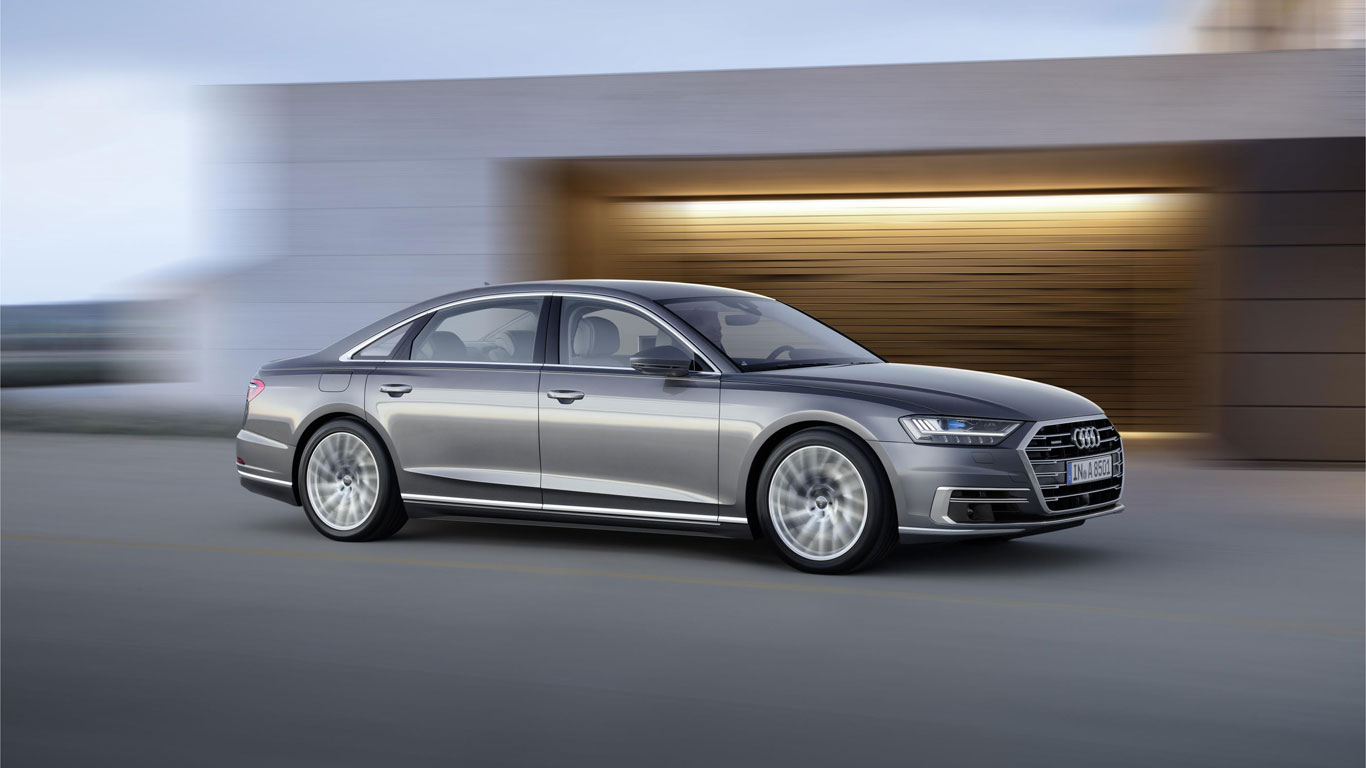
The taking the limo to the next level award: Audi A8

“The only surprise about the Audi A8 winning a GQ Award was that it didn’t turn up driving itself to collect the prize,” says GQ. The fact that the new A8 is the first production car to feature Level 3 autonomy is the primary reason for Audi’s success, with the car having an ability to take over driving duties at speeds of up to 37mph.

We’ve driven the new A8 and are in total agreement with the GQ judges. Our verdict: “The Audi A8 is a deeply impressive machine. It fulfils demands for luxury, space and discrete performance, and now has a statesman-like appearance that at least makes it the equal of its rivals, and a viable alternative to the Bentley Flying Spur. Whether all this will be enough to entice more buyers into the A8 fold, however, remains to be seen.”

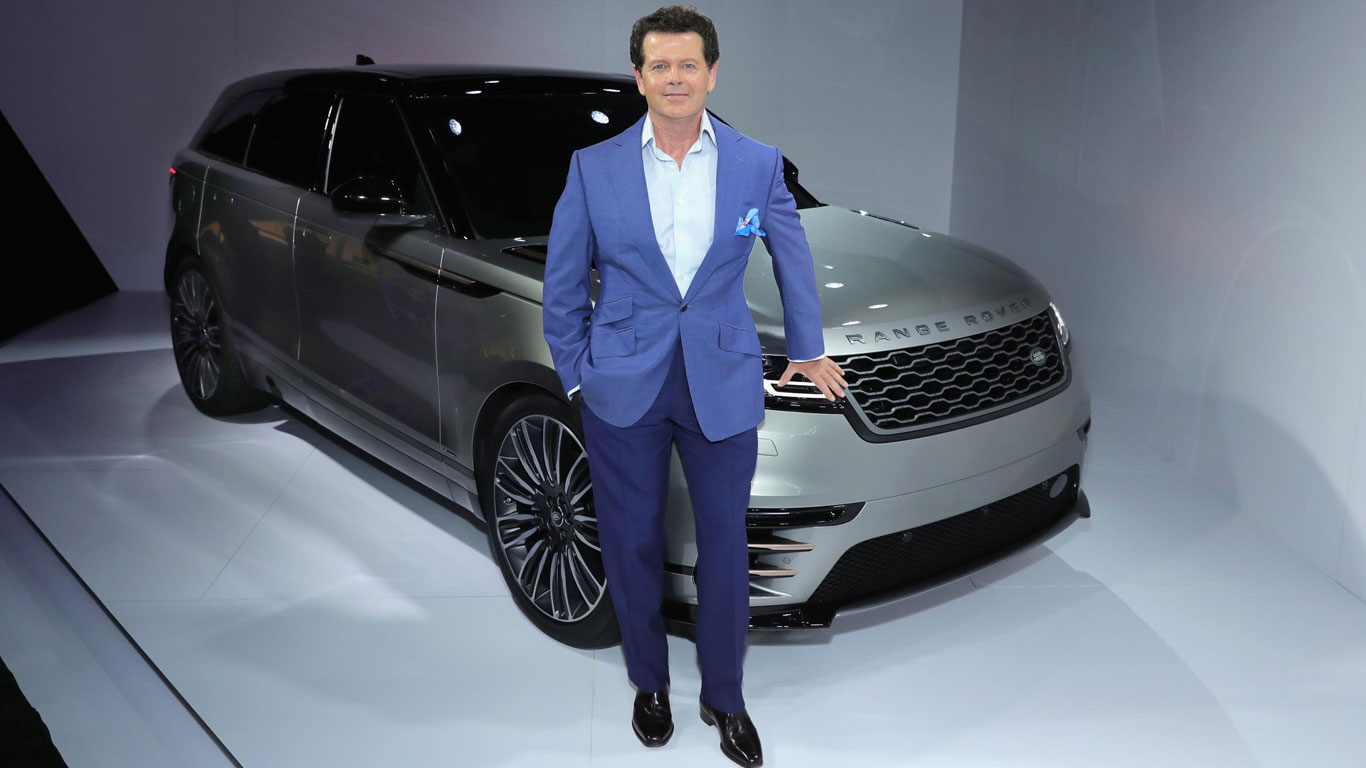
The climb every mountain in luxury award: Range Rover Velar

GQ says: “On the outside, this mid-sized SUV is a sleek and stylised take on the modern Range Rover: flush door handles, rakish roofline and Land Rover designer Gerry McGovern’s effortless reductionism. On the inside, it’s a futuristic reinterpretation of a cockpit governed by minimalism (three touchscreens control everything), sustainability (Kvadrat textiles are a seductive option) and elegance (it’s clean, clutter-free and cool).

“That it can cruise effortlessly through any urban landscape is a given, but when called upon, it can also conquer where mountain goats fear to tread. We love the new Velar. There, we said it.”

We said: “The Velar might be a landmark car for Land Rover. The machine that leads the brand’s move from traditional premium into futuristic, sophisticated luxury goods. Because if this is such an event, just imagine what the next Range Rover will be like. In focusing so much on tech-savvy, Apple-loving luxury buyers, it’s created a machine with untold showroom appeal. The drive, while good, is secondary. It’s all about the experience. And what an experience it is.”

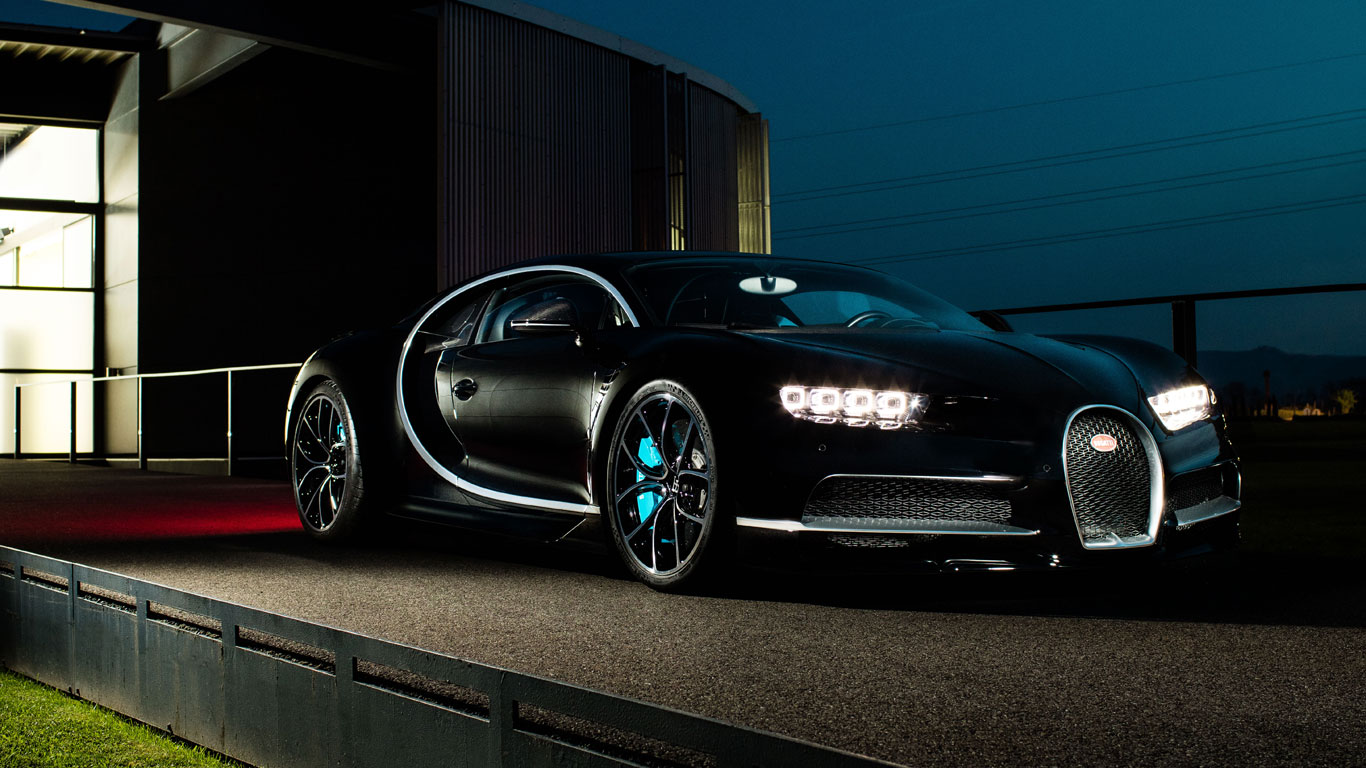
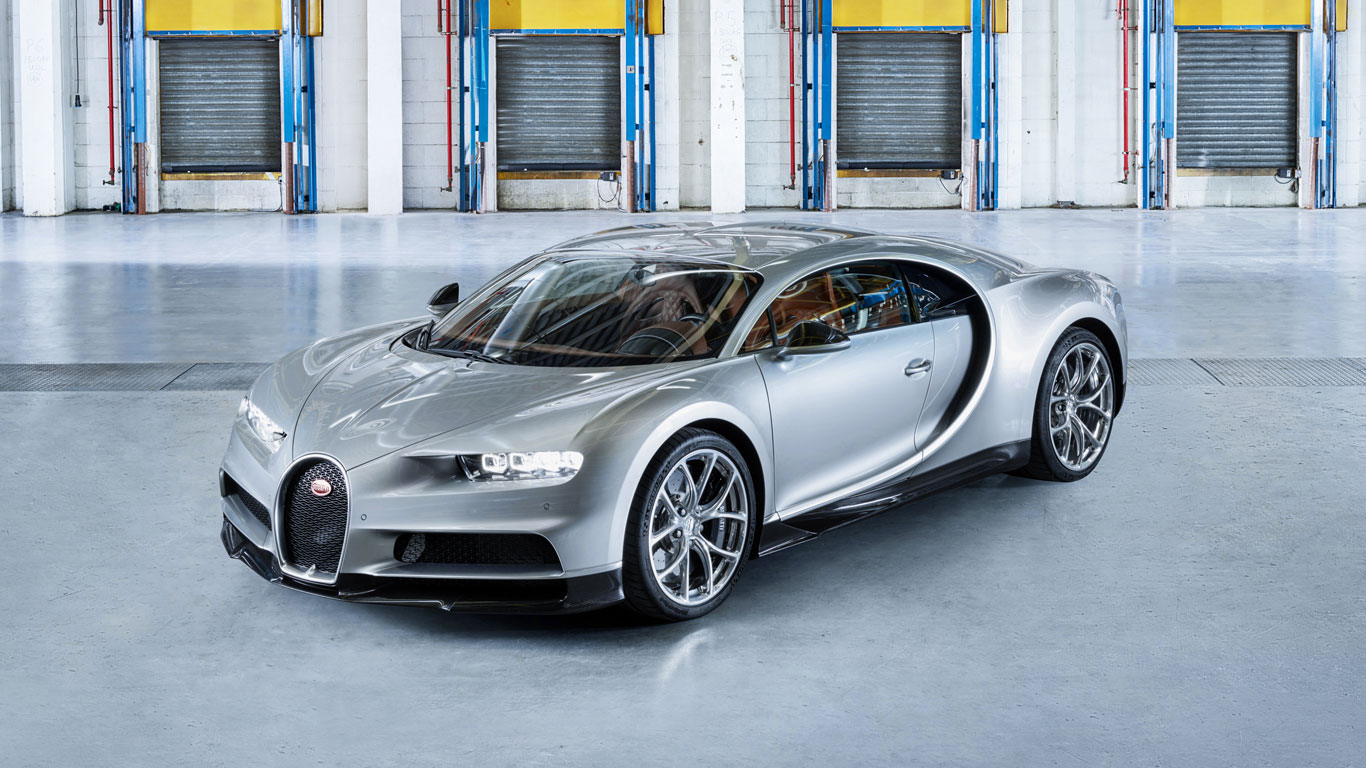
Best way to make the jump to lightspeed: Bugatti Chiron

In a recount, the Bugatti Chiron edged the Nissan Serena and Elon Musk’s space-invading Tesla Roadster to take this prestigious award. The Chiron is the perfect GQ car: as at home on a runway as it is on the catwalk. No matter how fast or how far you drive to the lavish VIP party, nothing says you’ve arrived quite like a 261mph Bugatti.

If you fancy rocking the Bugatti Chiron look on the cheap, you could always opt for the Passat W8, which stems from the same Volkswagen Group family tree and is essentially the same thing, only with fewer cylinders and more doors. In a recent interview with GQ, Daisy Lowe said that boot-cut jeans are the least sexy thing a man can wear. She also said that all would be forgiven if you turned up at her gaff in a Passat W8. Probably.

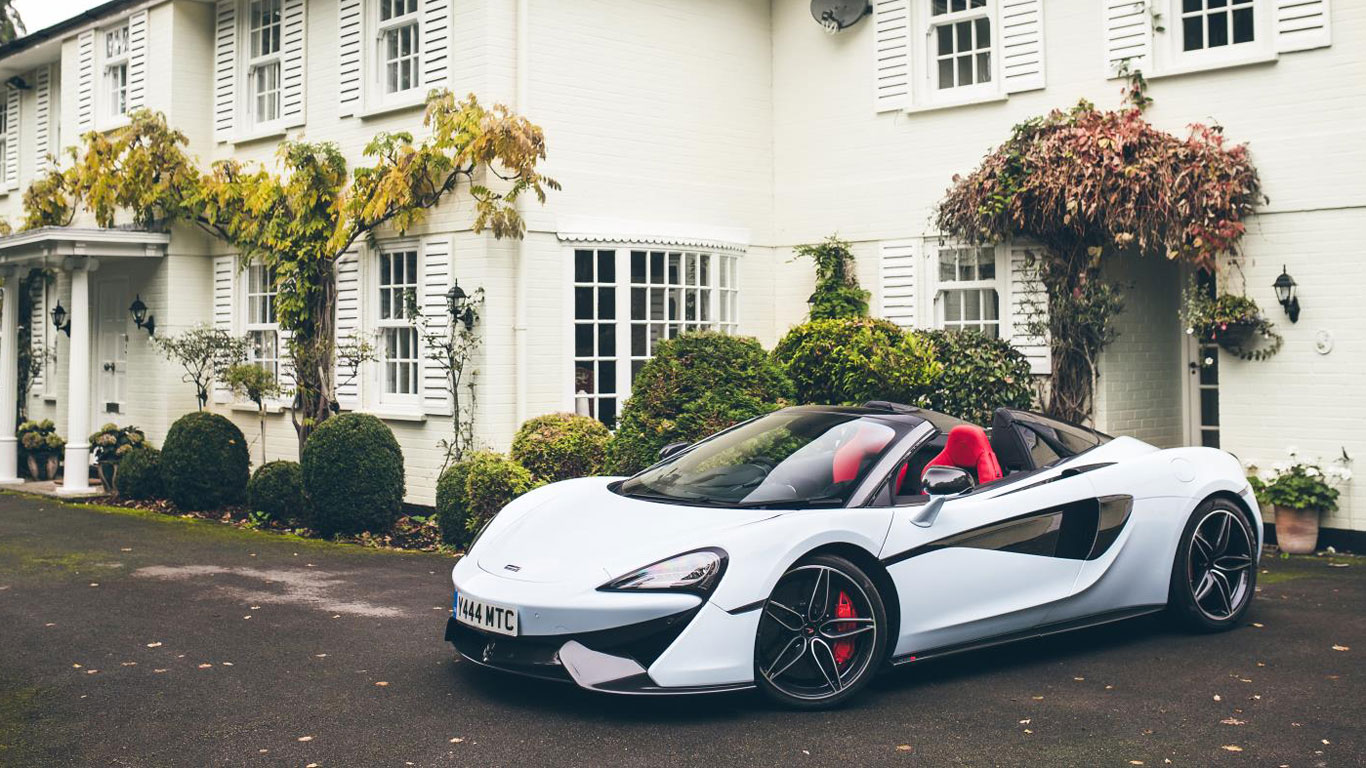
The technological hedonism award: McLaren 570S Spider

You wouldn’t expect to find an award for ‘technological hedonism’ in Which? magazine, but if you did, the Honda Jazz would win. For GQ, the Jazz was never in the running, which leaves the McLaren 570S Spider to scoop the award. According to the judges, the 570S Spider is the year’s purest driving machine. They’re yet to drive a Jazz Sport.

Our own Tim Pitt is a fan, saying: “The Huracan is still king if you like to show off, and the R8 offers 90% of the fun from up to £35k less. But for those who buy a supercar to drive, and hang the cost – to get up before dawn, forget A-to-B and just go, the McLaren goes straight to the top of the class.” He used to write for Which?. Jazz hands.

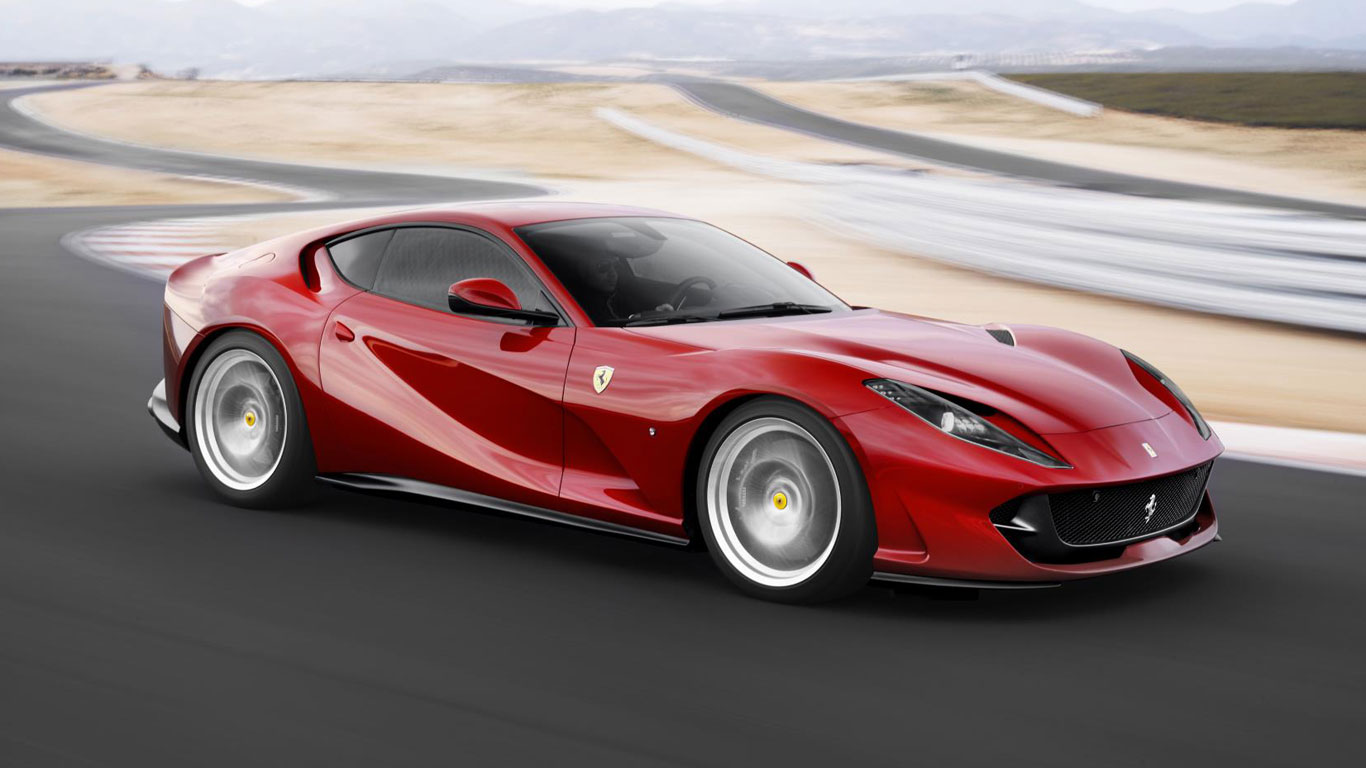
The most super superfast supercar award: Ferrari 812 Superfast

Tim hasn’t driven the Ferrari 812 Superfast, but if he had, we reckon he’d prefer it to the Honda Jazz. We get the impression that GQ had some fun coming up with the categories for the 2018 Car Awards, but things must be a little easier when you’re not dealing with crossovers and family hatchbacks.

What a way to celebrate your 70th anniversary. While some folk order a bespoke card from Moonpig and chuck a few trays of Iceland jumbo tempura prawns and sticky chicken skewers on a trestle table, Ferrari decides to launch a ‘suped-up’ version of the F12 Berlinetta. You’ll soon run out of superlatives to describe the most super superfast supercar in the world.

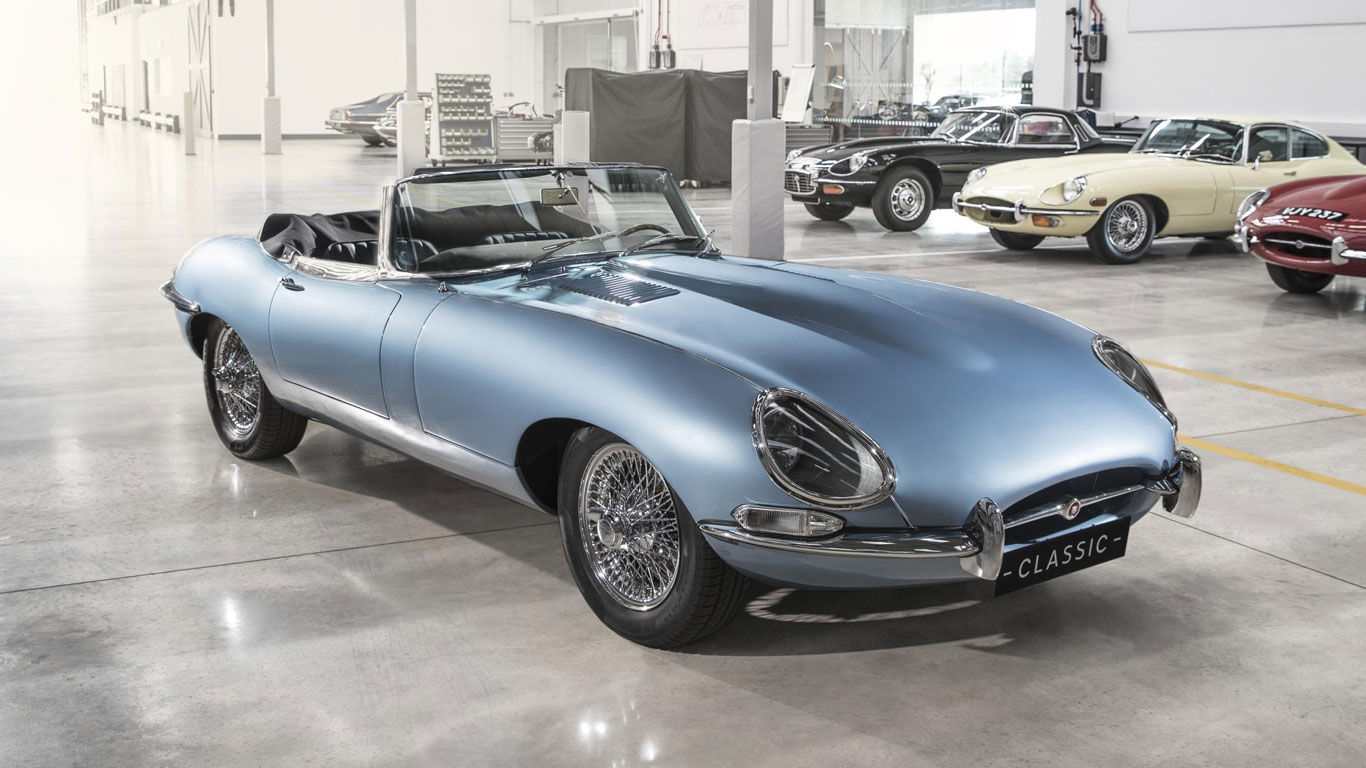
Best use of electricity since the lightbulb: Jaguar E-Type Zero

It looks like a regular E-Type, but the Zero is hiding an electrified secret. Jaguar has developed a 220kw powertrain for the E-Type Zero, with the lithium-ion battery pack the same weight and a similar size to the XK six-cylinder engine found in the E-Type. It’s 46kg lighter than the original, helping it to sprint to 62mph in just 5.5 seconds, about a second quicker than a Series 1 E-Type.

Jaguar will convert any classic Jag to electric – for a price – so form an orderly queue if you fancy a zero-emissions X-Type. As for the best use of electricity since the lightbulb, that has to be Mighty Metro Scalextric set of the 1980s, right?

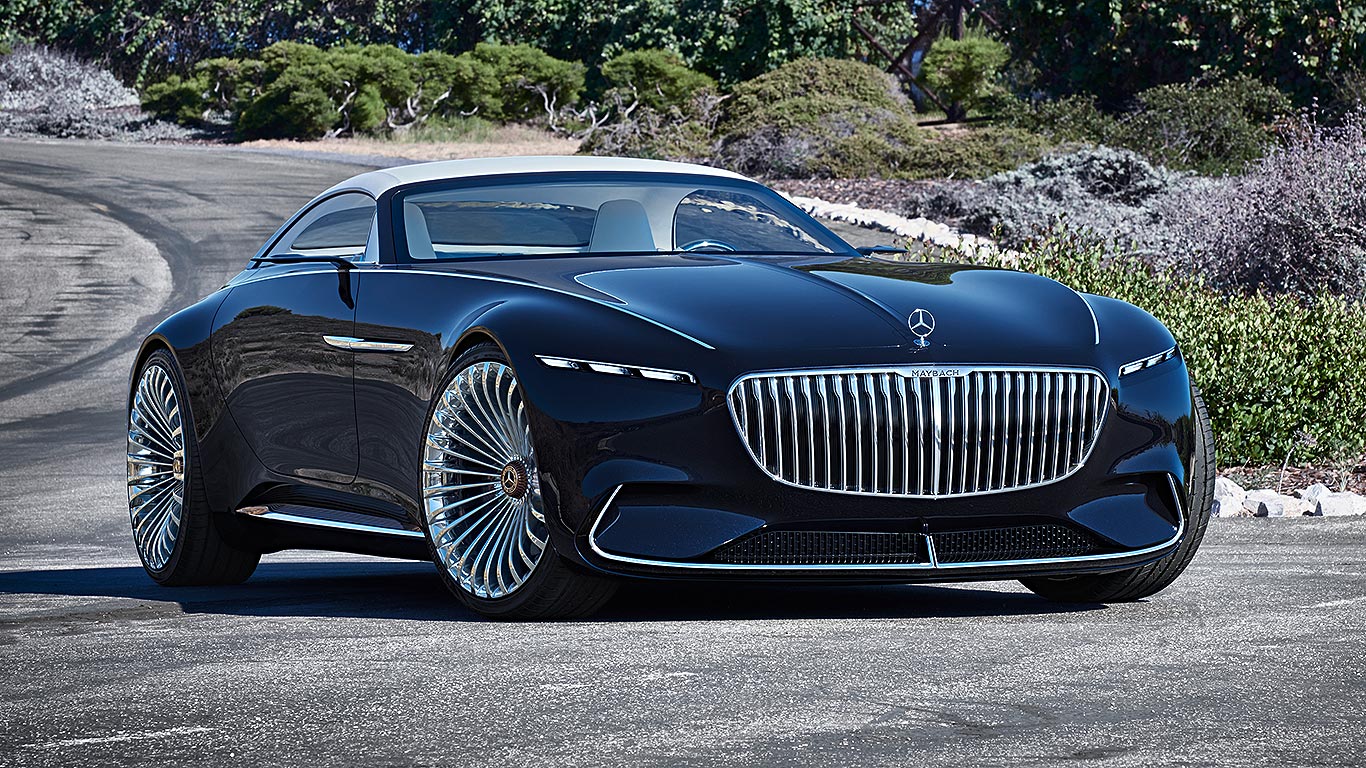
The vision of the future award: Vision Mercedes-Maybach 6 Cabriolet

The Vision Mercedes-Maybach 6 Cabriolet was unveiled at the appropriately lavish Monterey Car Week in California. The 5.7m beauty features a bonnet so long it spans two time zones, while the enormous 24-inch alloy wheels wouldn’t look out of place on a Hummer.

It has a mixed up personality, doing its bit for the planet courtesy of an all-electric powertrain, yet only offering enough seats for one passenger. GQ thinks it looks like a cross between the Batmobile and FAB 1 from Thunderbirds. All we know is that it’s delightfully decadent and wonderfully ambitious.

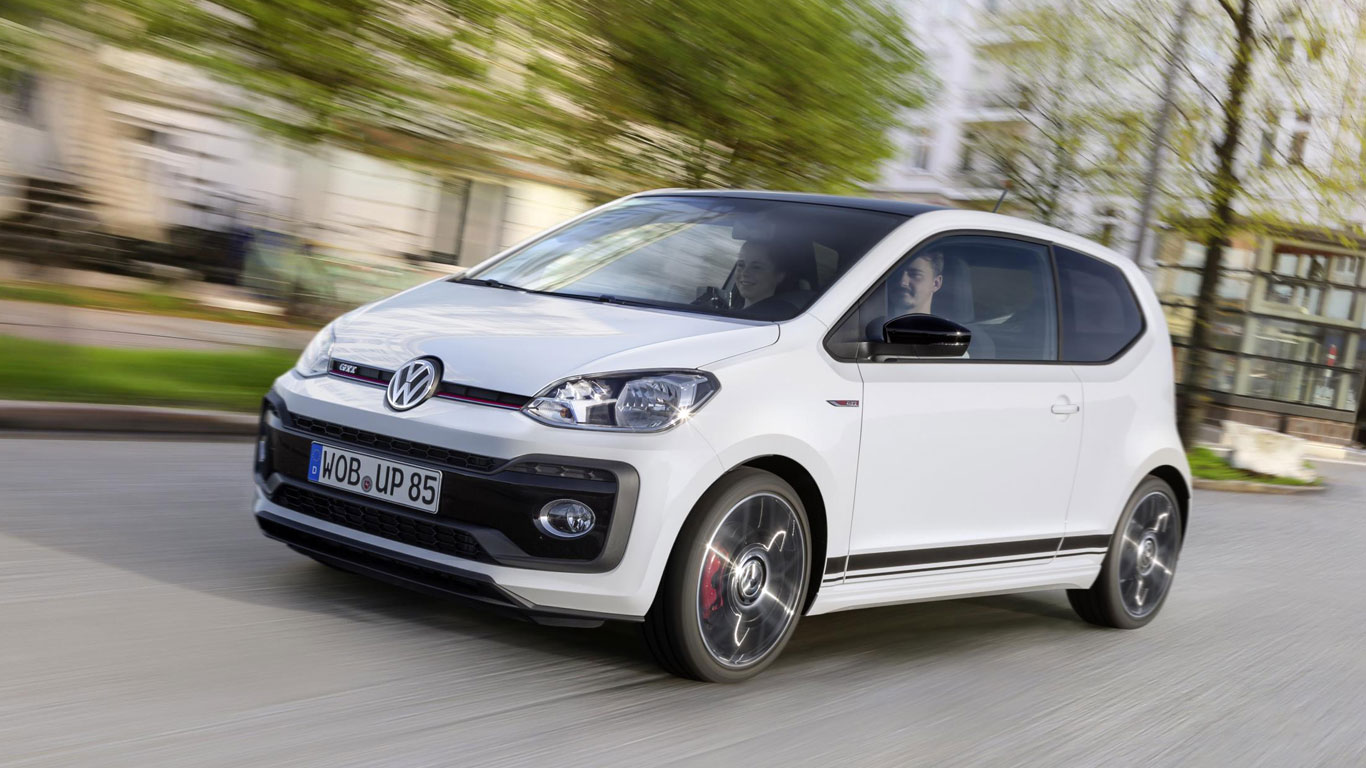
The scream if you want to go faster award: Volkswagen Up GTI

By this stage, you’d be forgiven for thinking the GQ awards are filled with cars so far out of reach you stand more chance of being named the hottest woman or best-dressed man by the magazine. But before you drown in a sea of depression, here’s a reason to be cheerful: the Volkswagen Up GTI.

A certain James May is a fan, pushing Volkswagen’s diminutive GTI to the limit on a recent episode of The Grand Tour. It costs £14,000, which is probably less than some of the grooming products featured in GQ, and while it won’t give you a fresh, clean and hydrated beard, it might shave a few seconds off your commute home this evening.

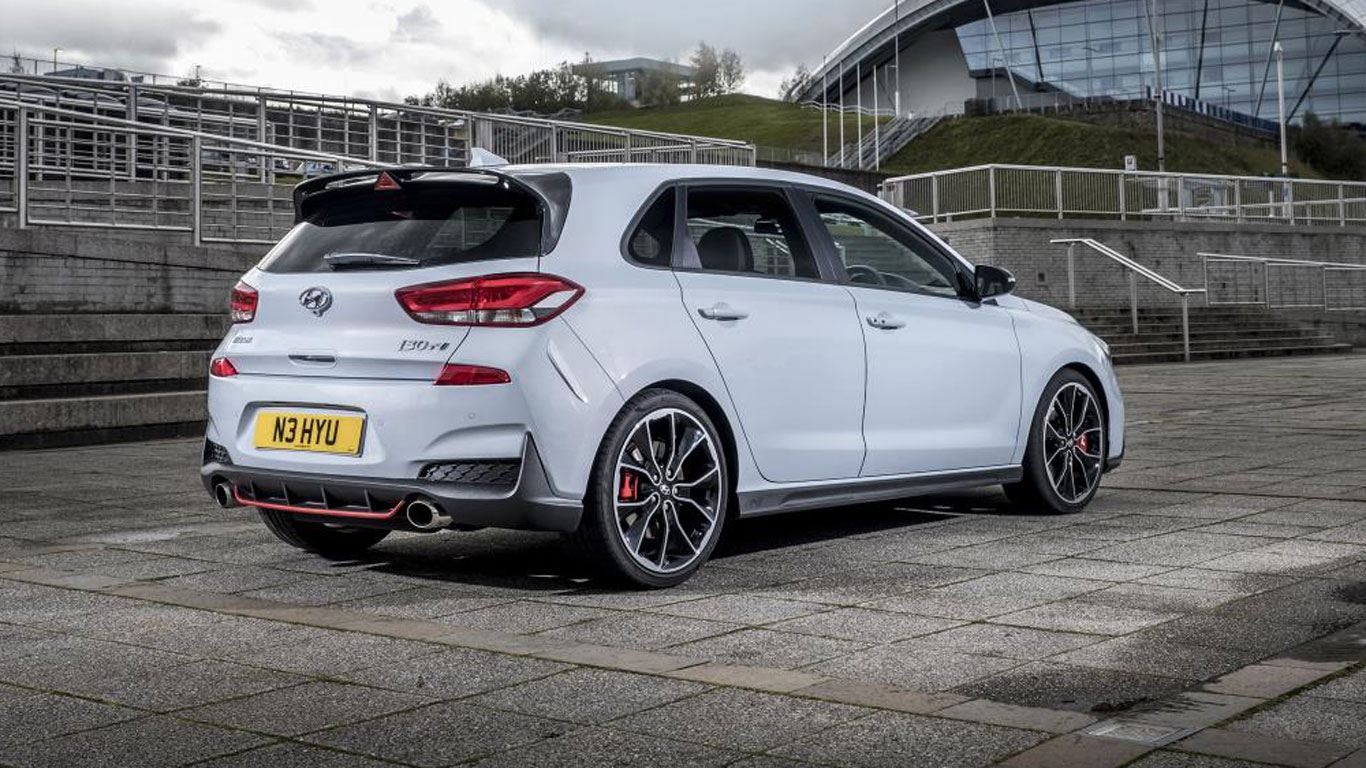
Life and Seoul of the party: Hyundai i30N

We searched the GQ website and, aside from two references to the Hyundai Mercury Prize, this is the first time the Korean giant has been mentioned on its carefully coiffured pages. A sign that Hyundai is as cool as a sports-inspired suit?* Maybe not, but the i30N has given the brand a considerable injection of kudos. *Sports-luxe is a 2018 thing, apparently.

“This ferociously fun five-door rocket ship has been developed on the Namyang proving ground and the Nürburgring Nordschleife (which might explain why Hyundai calls its sporting R&D team the N division) and, as a result, is giving the Focus RS, the Golf GTI and the Honda Civic Type-R a serious run for your money,” says GQ. Sports tailoring is optional.

ALSO READ

Jeep accidentally reveals new 2018 Wrangler

You can now use Waze via your Ford’s infotainment system

Wayne Rooney sells supercar after drink-drive ban

Advertisement

10 new self-driving technologies – and how they work

0

Driving to an autonomous future

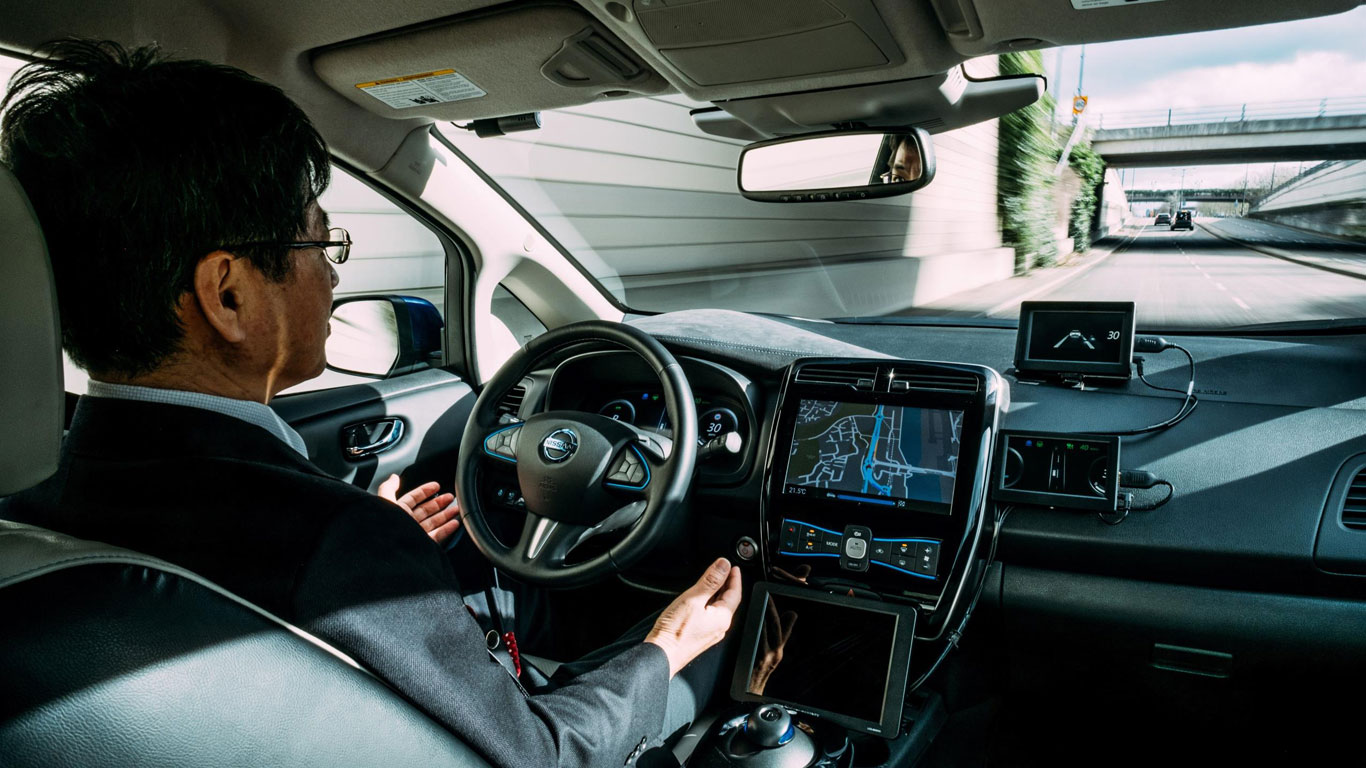
The connected and autonomous vehicle industry is big business, with the SMMT (Society of Motor Manufacturers and Traders) predicting the technology will have prevented 25,000 accidents and saved 2,500 lives in the UK by 2030.

There are six levels of autonomy (LOA), from vehicles with no intervening vehicle system active (Level 0) to full automation (Level 5). Many new cars feature assisted (Level 1) and partial automation (Level 2) systems, as we’re about to demonstrate via 10 self-driving technologies.

Park assist

Park assist

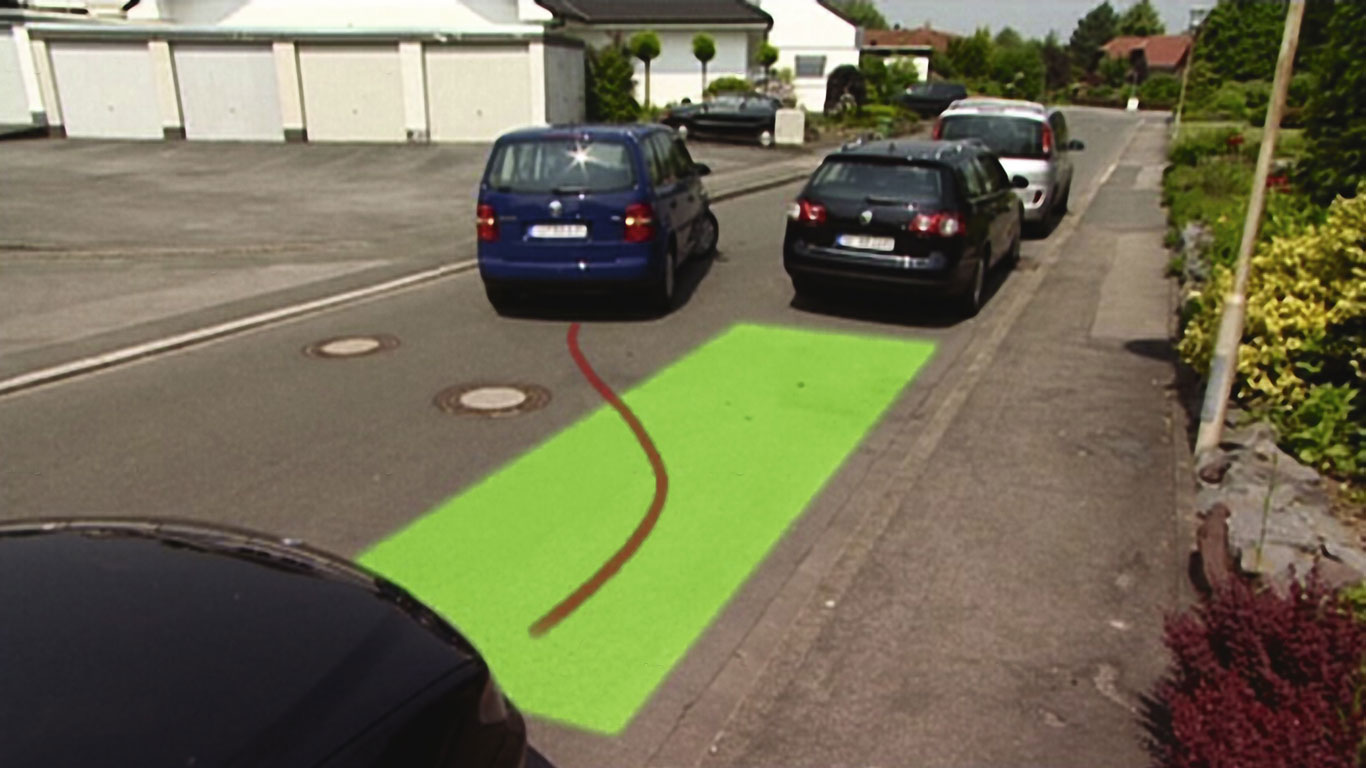
In simple terms, park assist automatically steers the car into and out of parallel and standard parking spaces. To activate park assist, you are required to press the appropriate button – either on the dashboard or the touchscreen – before using the indicator to allow the vehicle to search for an appropriate desired space. Cameras and sensors measure the size of the space, typically searching for a gap 20 percent larger than the car.

Once the car is stationary, you engage reverse gear and allow the car to steer automatically into the space. You remain in control of the accelerator, brakes and clutch, with the car left to do the manoeuvring. Some systems also include the option to exit the parking space. While park assist is good at measuring the size of the space and detecting cars and buildings, you should remain alert for pedestrians, cyclists, mesh fences and animals.

Adaptive cruise control

Adaptive cruise control

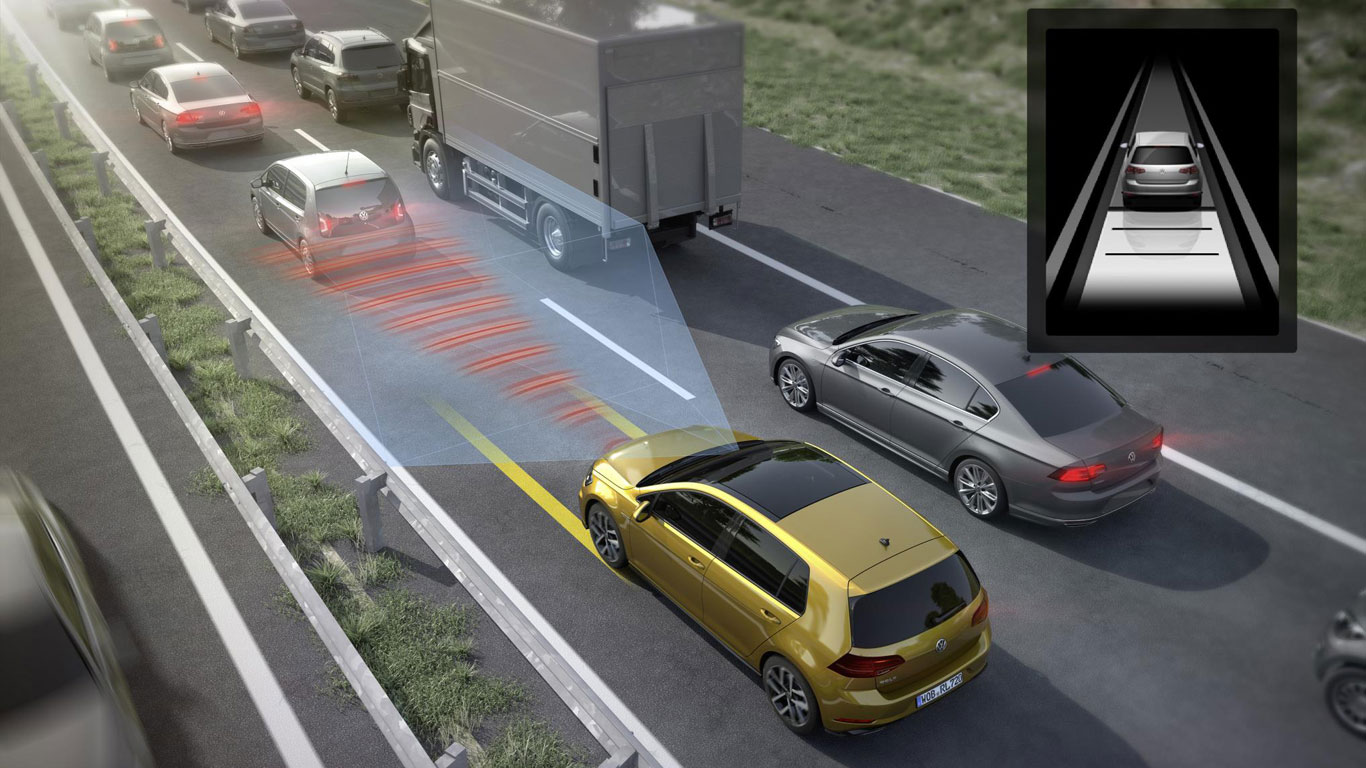
In a nutshell, adaptive cruise control (ACC) uses radars or sensors to adjust the speed of the vehicle to match the flow of traffic, with some systems edging closer to a fully autonomous future. It’s similar to standard cruise control, in that it will maintain a constant speed, but will also accelerate and decelerate to match the prevailing traffic conditions.

Should the car or cars in front of the vehicle begin to slow, the vehicle’s engine management system will act accordingly, applying the brakes if necessary. Visual and audible warnings are given should the driver not react in time, although some systems can bring the car to a complete stop. Other systems also include a traffic jam assist, which handles the braking and accelerating in areas of congestion. According to the SMMT, 6.9 percent of new cars are fitted with ACC as standard, with 29.3 percent offering it as an option.

Auto high beam

Auto high beam

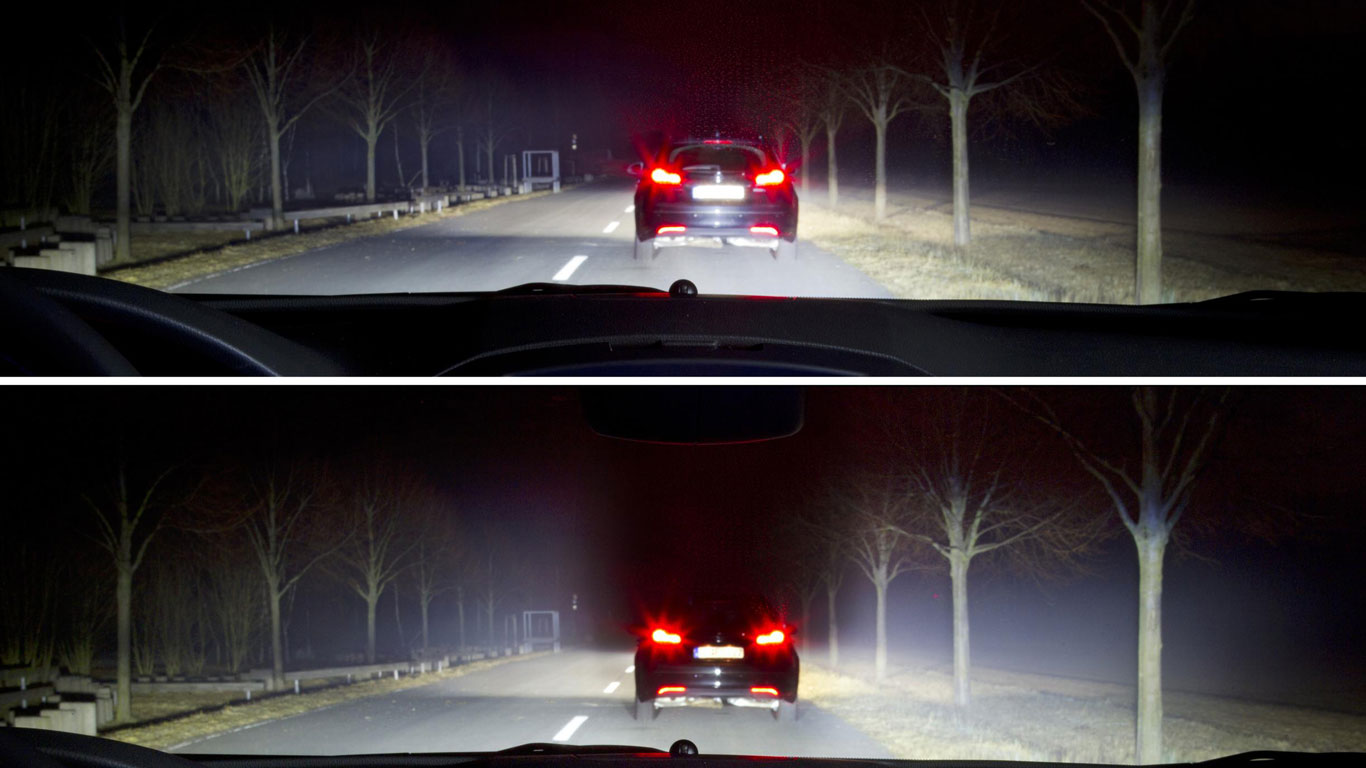
Auto high beam (or high beam assist) uses a sensor typically mounted on the rear-view mirror to detect nearby light sources – such as headlights or taillights – to automatically switch between high and low beam. It is particularly useful on rural roads, as it removes the need to manually change from dipped to main beam, but is less useful in urban areas and on motorways.

The technology is a bit hit and miss, with some systems failing to react to oncoming vehicles, dazzling the driver in the process. Matrix LED high beam takes the technology a step further by using a number of individual lights to dim the beam shining directly on oncoming and preceding vehicles while casting a full light on other areas.

Blind-spot information system

Blind-spot information system

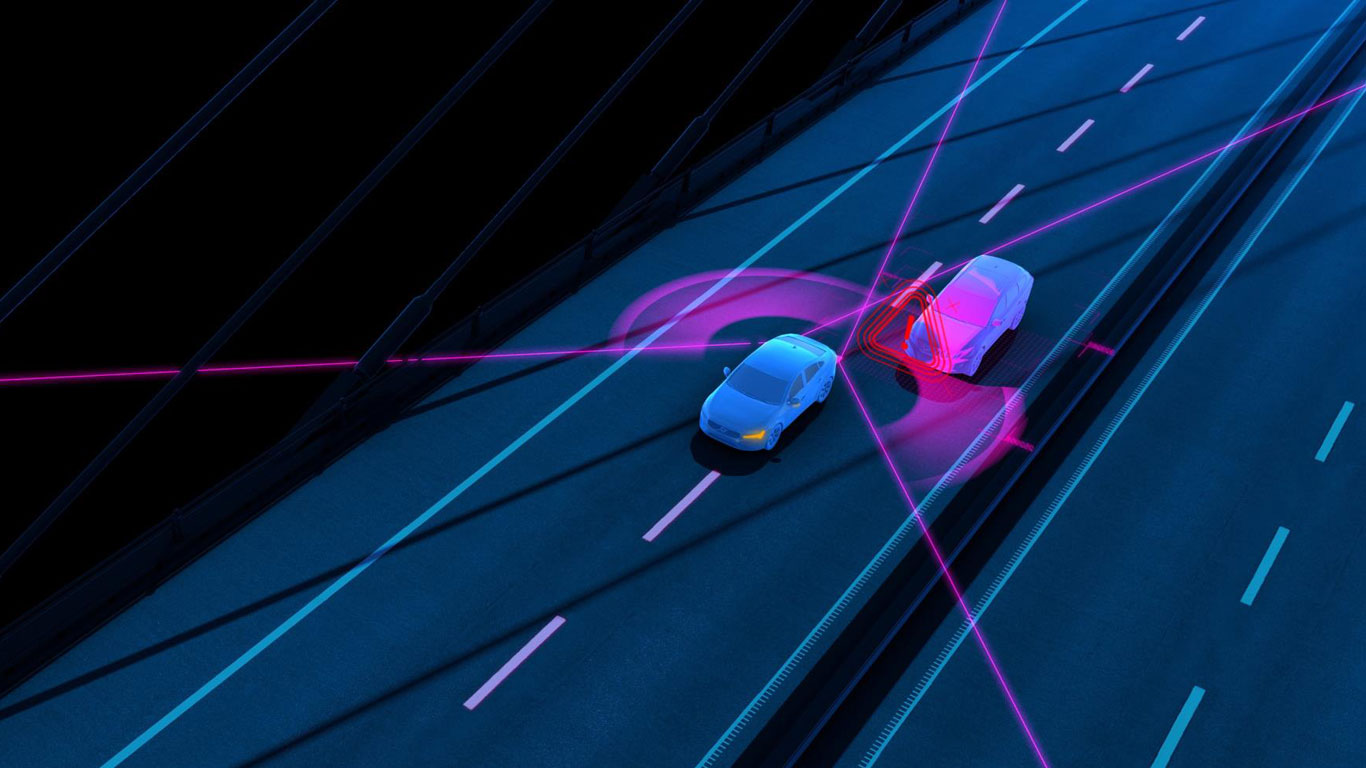
Blind spot information system – or blind spot monitoring – uses rear-facing digital cameras or radar sensors, typically mounted in the door mirrors, to detect vehicles entering the car’s blind spot. Should a vehicle pass into the driver’s blind spot area, a warning light will show in either the door mirror or within the A-pillar.

Should the driver begin to change lane with a vehicle in the blind spot area, an audible or haptic warning will alert them to the danger. In theory, the technology should reduce the number of collisions caused by changing lanes on a motorway or dual carriageway, but it doesn’t remove the need to check your mirrors or the view over your shoulder.

Cross-traffic alert

Cross-traffic alert

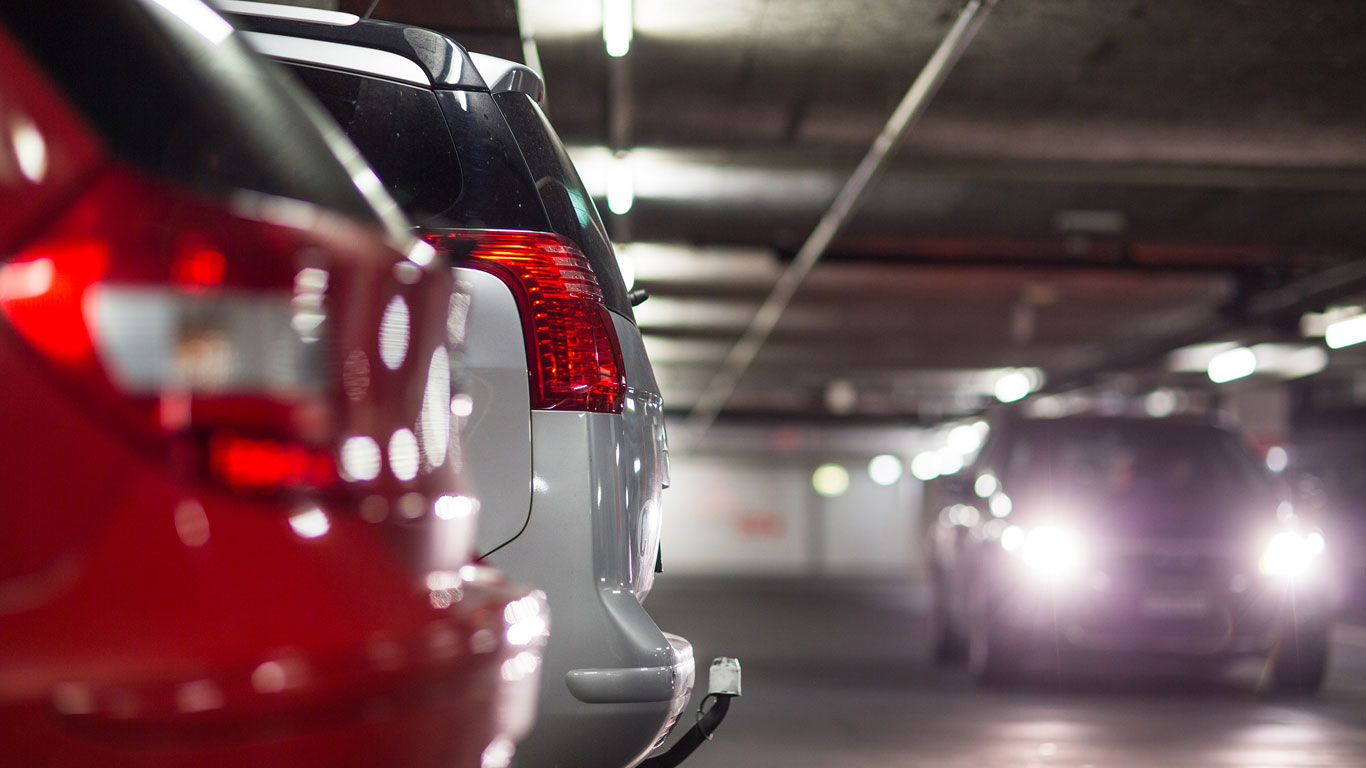
Cross-traffic alert is a boon for drivers who regularly park in busy car parks, such as those found at shopping centres and railway stations. It uses sensors to monitor passing traffic when reversing out of a parking space, which is especially helpful given the rising number of tall crossovers and SUVs.

In all cases, the system will alert the driver via an audible or visual warning should a moving object enter the blind spot, with some cars relaying the information to the infotainment system. While the technology is not a replacement for proper observation, once you’ve experienced it, you’ll find it hard to go without.

Driver alert

Driver alert

A driver alert system senses when the driver starts to feel tired and is in need of a break. According to Volkswagen, overtired drivers cause up to 25 percent of all motorway accidents, and these tend to be particularly severe because the driver has no chance to react and the associated speeds are higher.

It works by monitoring the driver’s behaviour, with erratic steering wheel movements and lane deviations a potential clue that the driver is beginning to feel sleepy. A visual display – typically a coffee cup – is accompanied by an audible signal, alerting the driver to the need for a break. The warning will be repeated until the driver acts accordingly.

Autonomous Emergency Braking

Autonomous Emergency Braking

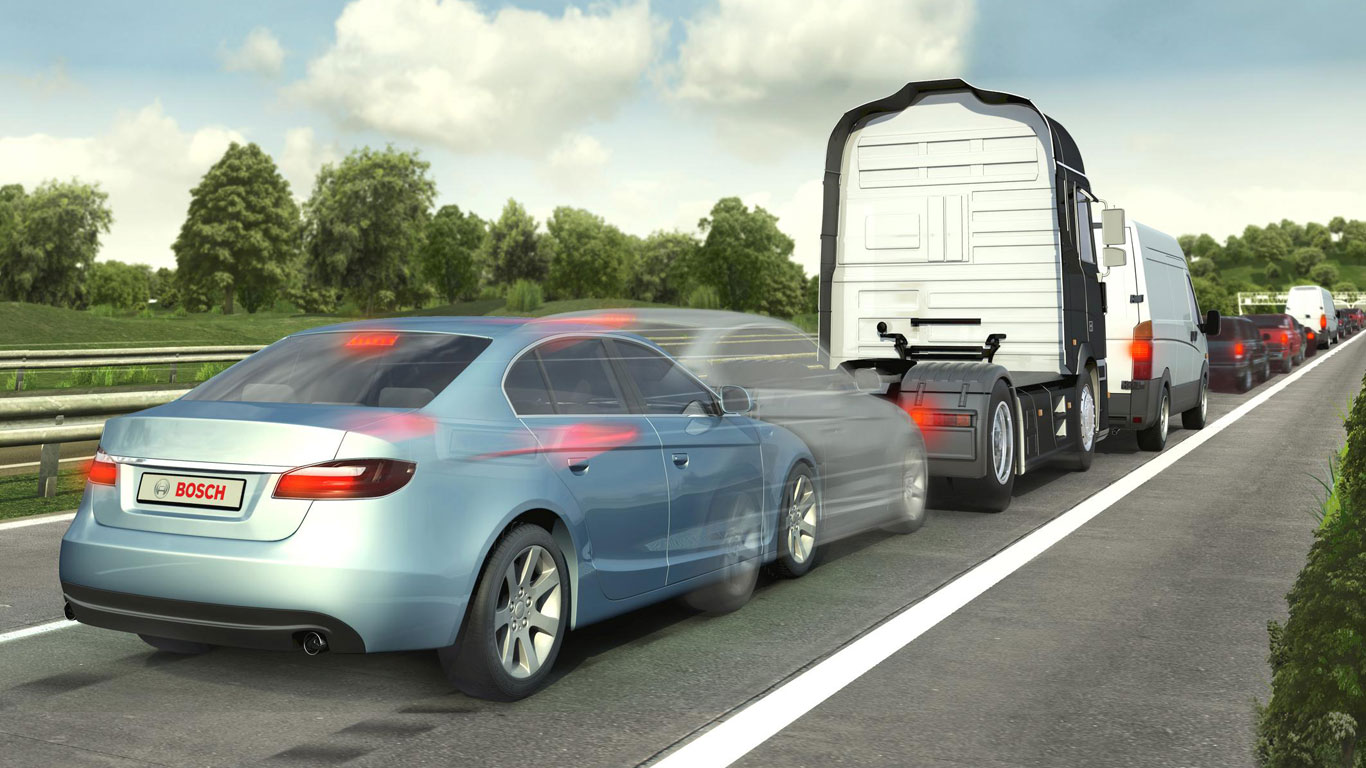
Autonomous Emergency Braking (AEB) uses cameras or radar sensors to monitor the traffic situation ahead, warning you when you get too close to the car in front and even applying the brakes if the system feels that a collision is imminent. It uses sensors to measure the distance and relative speed of other vehicles, providing an early warning system if it feels you aren’t alert to the danger.

AEB is seen by experts as an essential safety development, as it prevents a collision from taking place in the first place. It’s also seen as the answer to the increasing number of claims for whiplash, which are driving up the cost of car insurance. AEB – which comes under various different names – is fitted to 28.4 percent of new cars as standard, while 24.7 percent feature it as an option. There have been calls for the EU to make AEB compulsory for all new cars, but the directive is unlikely to come into force before 2020.

Lane-keeping alert and automatic steering assist

Lane-keeping alert and automatic steering assist

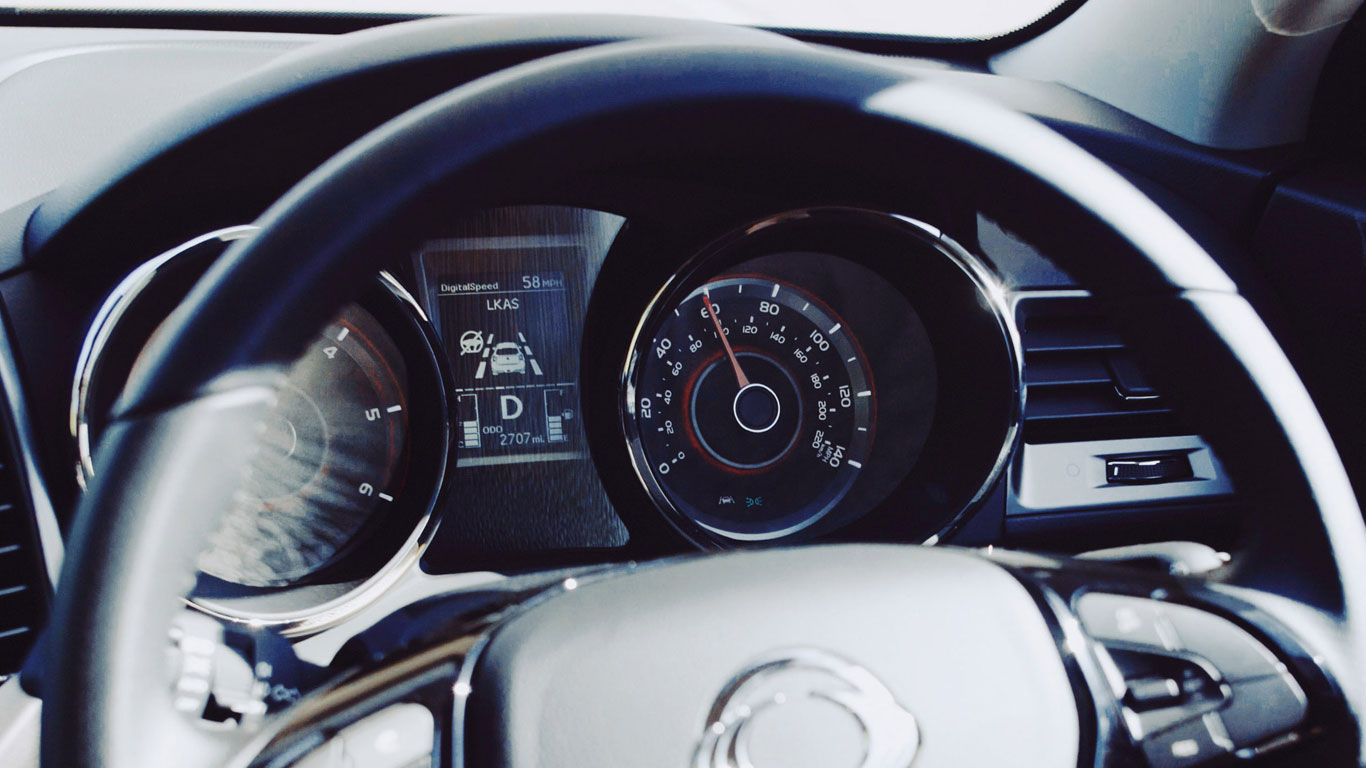
Cars fitted with this technology use a forward-looking camera to detect if drivers are unintentionally drifting out of a lane. Depending on the vehicle in question, the system will either provide a visual or audible warning or, on higher-end cars, safely steer the car back into its lane.

The systems can become quite intrusive, especially on rural roads, which leads to some drivers ignoring the warnings or pressing the ‘off’ button. Systems such as Volvo’s Pilot Assist are the next step up, providing steering, braking and acceleration assistance to deliver an experience close to what could be considered fully autonomous. By Volvo’s own admission, it’s designed to work best on dry motorways with clear lane lines and a smooth flow of traffic.

Traffic sign recognition

Traffic sign recognition

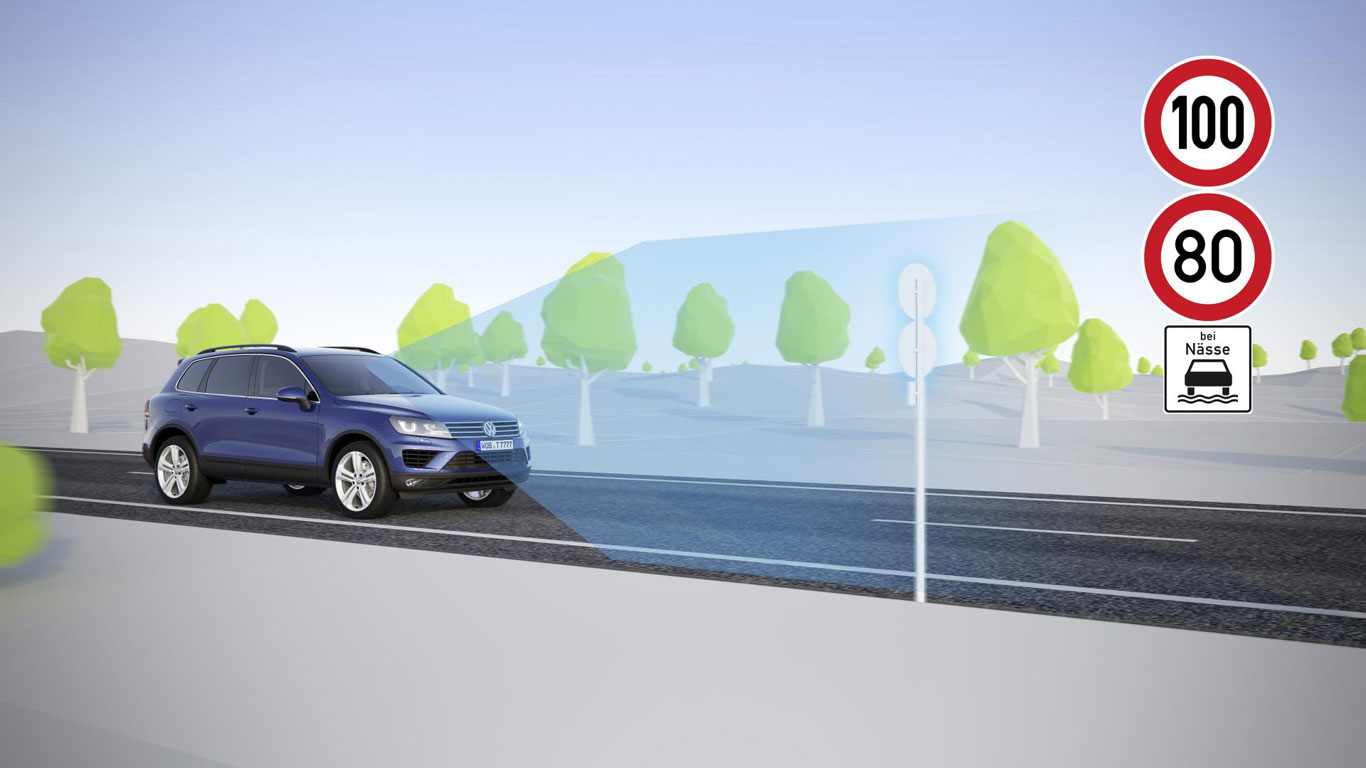
Traffic sign recognition uses a camera to scan road signs, then relays the information to the dashboard or infotainment display. The info remains on the screen until a change occurs, so the driver is always kept informed. That’s the theory, although the system can be ‘tricked’ by temporary road signs or matrix signs on a motorway.

Think of it as an extra pair of eyes, which might come in handy on unfamiliar roads or if you’ve missed a change in the speed limit. On some cars, you can actually restrict the speed according to the limit on the road signs.

Next level technologies

Next level technologies

Car-to-X communication is part of the next level of autonomy, in which information concerning hazardous situations which a vehicle on the road has detected is made available to all other Car-to-X users. This information might include ice on the road or traffic queuing on a blind bend. Other tech being developed includes a method by which cars can communicate with traffic lights, reducing fuel consumption and emissions.

Remote parking assist will enable the driver to manoeuvre the vehicle into tight spaces or garages via a smartphone app. The future may also include the scenario in which you exit your car at the entrance to a car park, leaving it to find the nearest free space.

Read more:

Advertisement

McLaren Senna: what you need to know

0

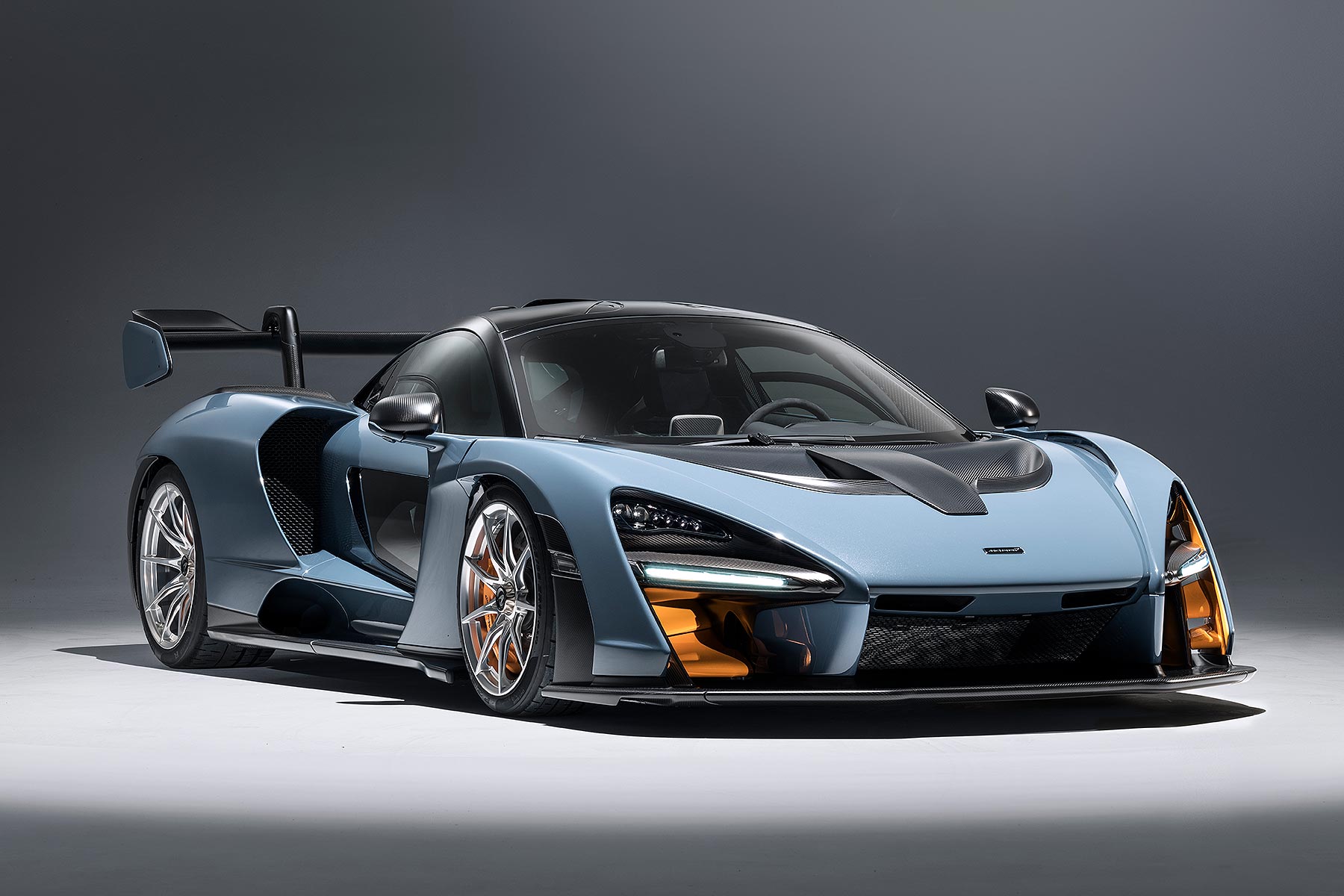
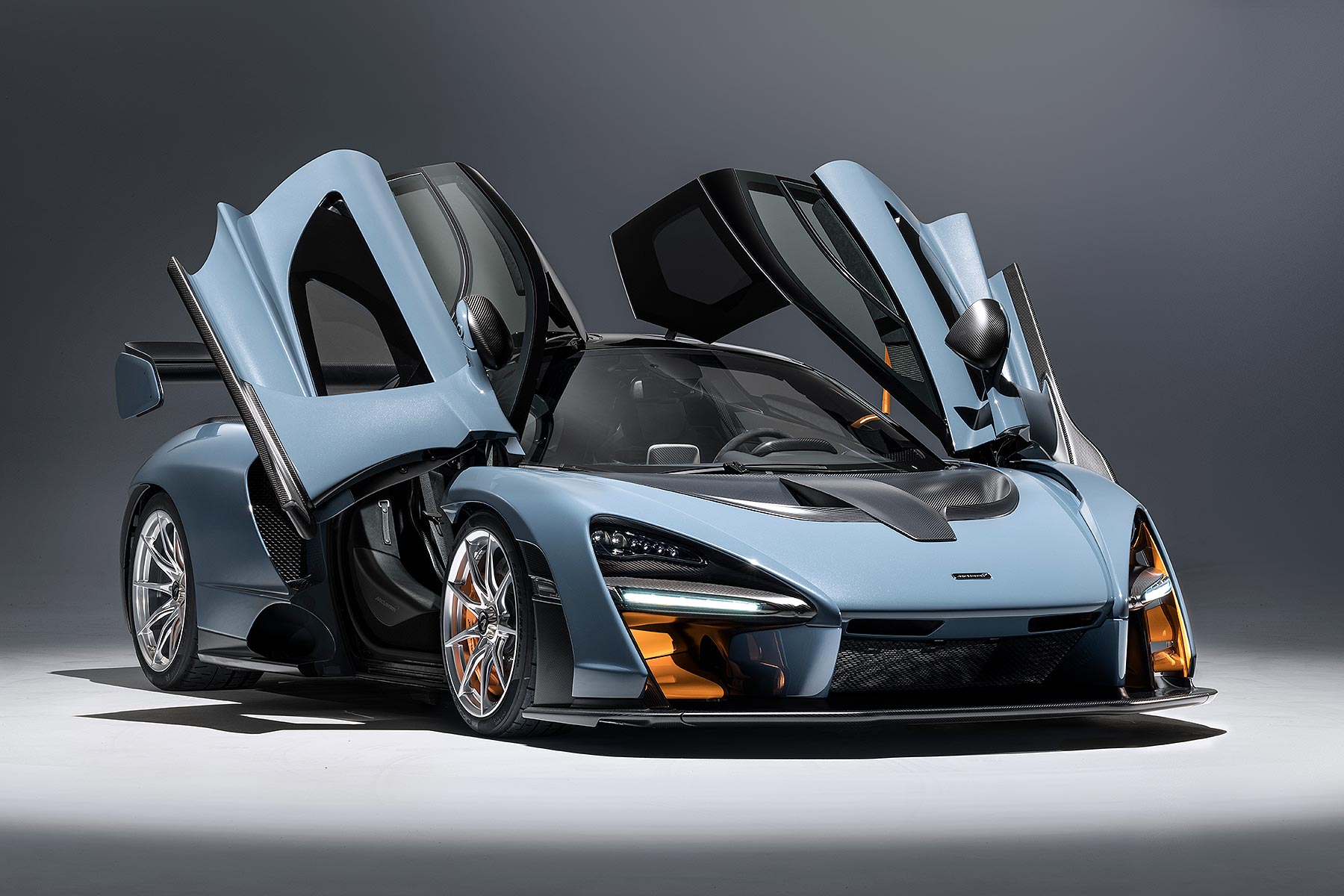
McLaren SennaThe McLaren Senna lives up to the three-time World Champion driver’s name by being the most extreme road car ever built by the British firm. It’s a bona fide McLaren Ultimate Series machine that is said to provide the purest connection between driver and car ever achieved by the company.
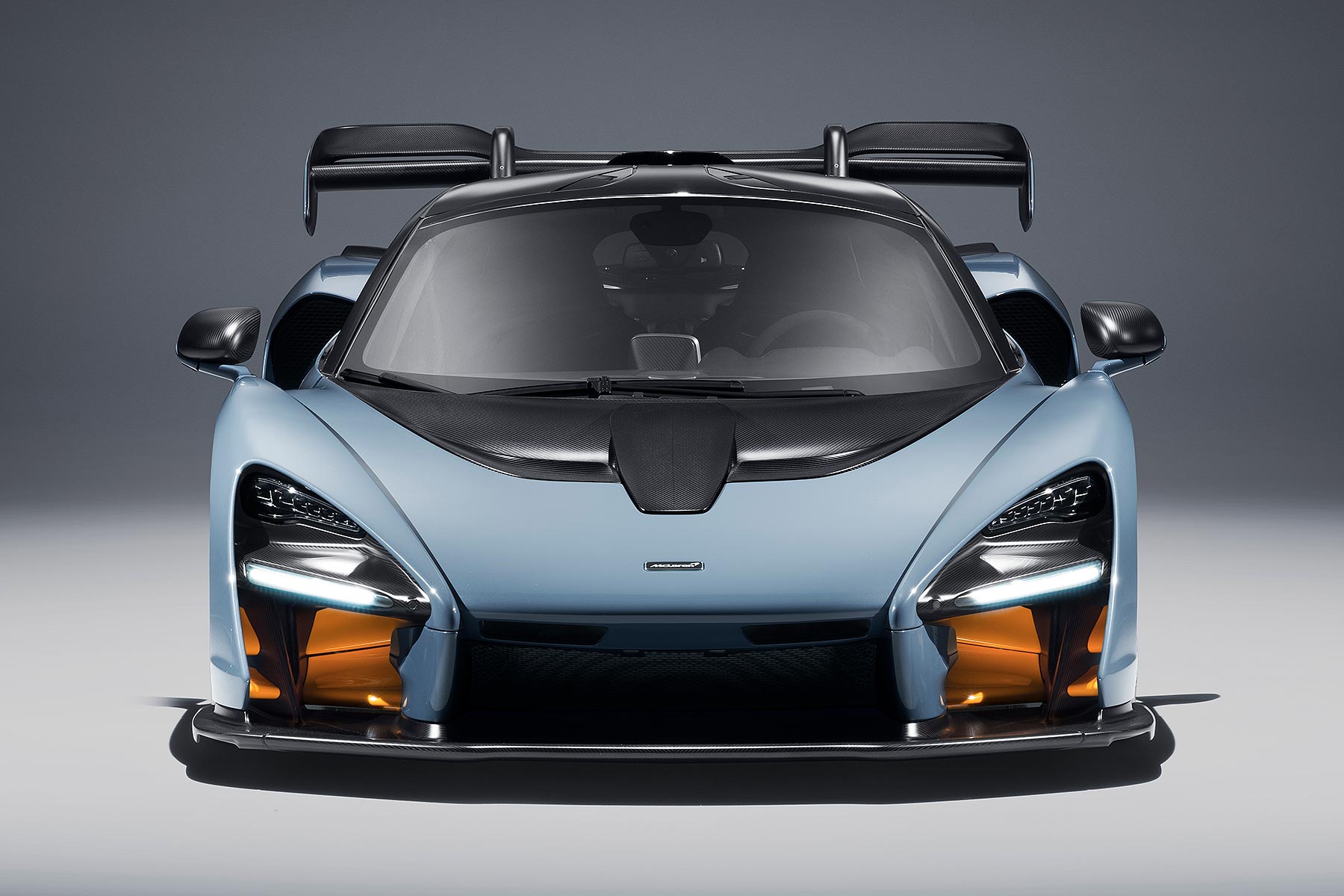
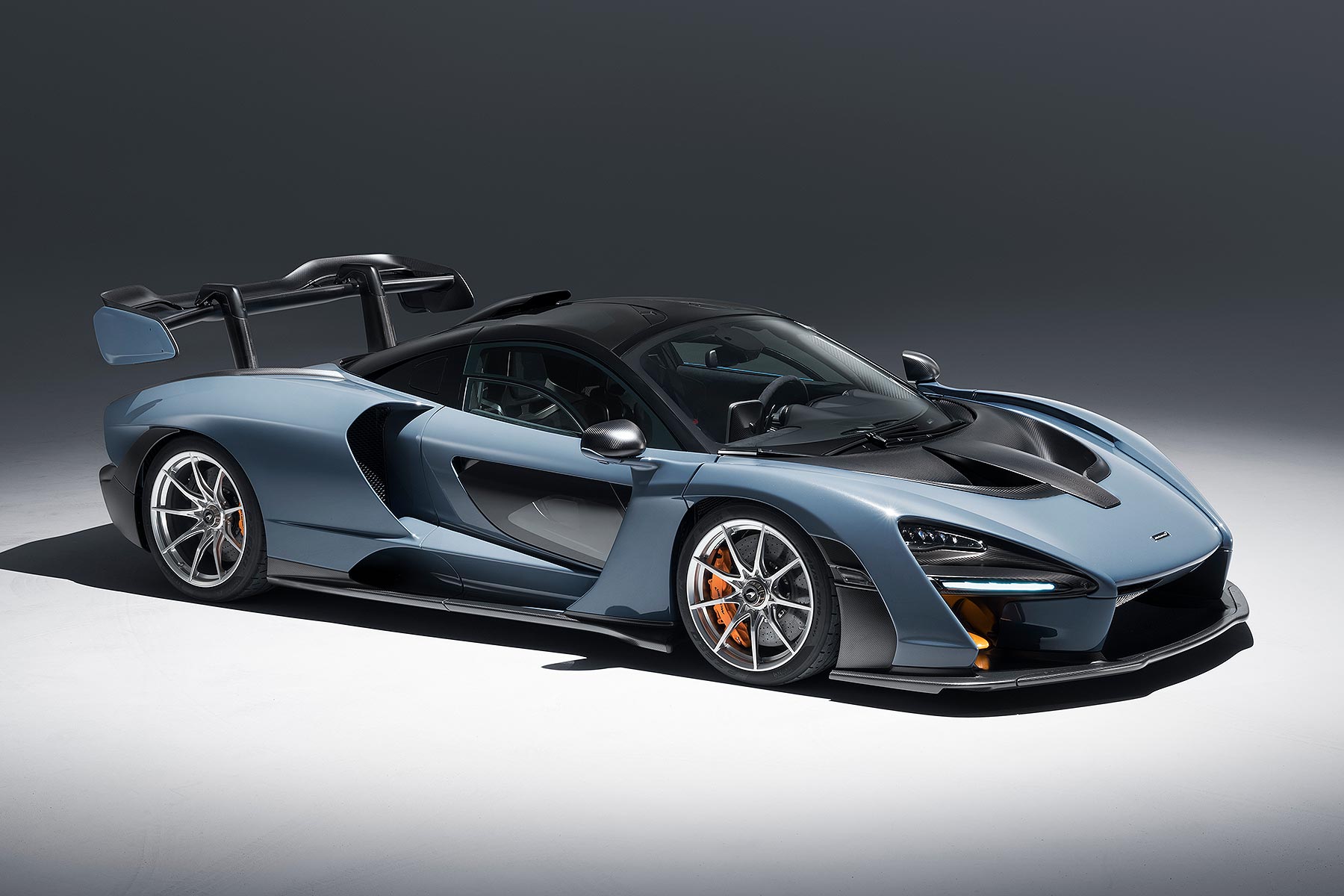
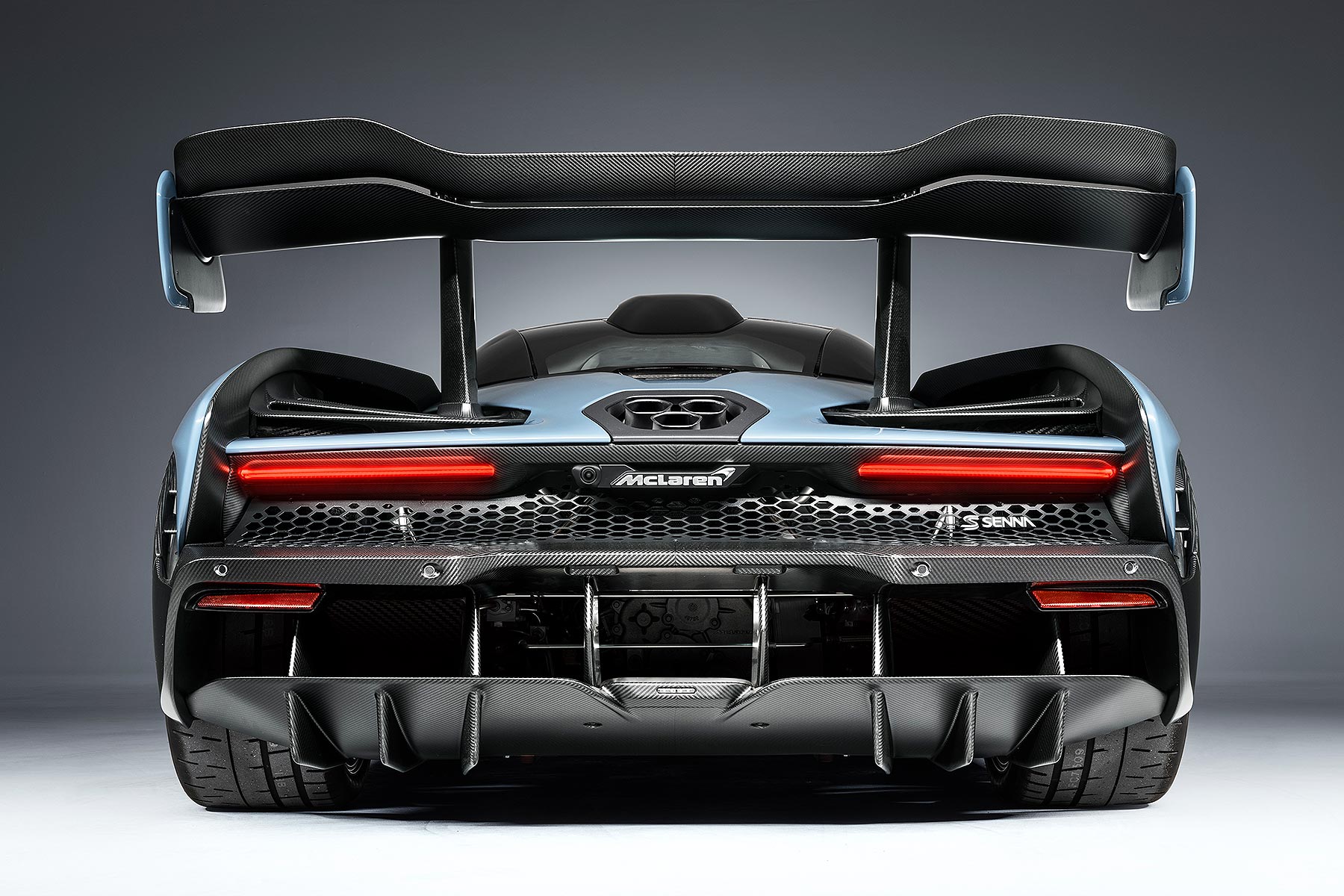
After revealing it during its 2017 festive party at McLaren Automotive HQ in Woking, the firm is now releasing full details about the new hypercar – with the headline being a combination of 800hp, 800Nm of torque and 800kg of downforce.

The latter is why it looks as extreme as it does. McLaren insiders admit they’ve had to bite their tongue since the car’s release, as onlookers question why its styling is so uncompromising. “Form follows function,” says McLaren: it’s aggressive because the active aerodynamics are so damn powerful.

“You commit yourself to such a level where there is no compromise,” Ayrton Senna once said. “You give everything you have; everything, absolutely everything.” Now, hopes McLaren, it should be clear why the Senna looks like it does.

Only 500 will be made, with production starting in Q3 2018. McLaren Senna prices start at £750,000 (and a portion of that will go to the Ayrton Senna Foundation).

In a special ceremony to mark the opening of its new composites factory in Sheffield, England, McLaren told us everything about the new Senna. Before christening the new factory by laying down some rubber with the new car – fittingly, with an original Senna McLaren watching on. 

Here’s what you need to know about the McLaren Senna.  

McLaren Senna: in detail

McLaren Senna

Unlike cars such as the Ferrari FXX and Aston Martin Valkyrie, the McLaren Senna is no track-only special. It may be the ultimate track-focused McLaren, but it’s still legal for road use. “But not sanitised to suit it,” adds McLaren. This is a car for which the racket from air rushing through the roof-mounted ‘snorkel’ intake is described as a positive.

McLaren Automotive CEO Mike Flewitt calls it a car like no other, in which every element has an uncompromised performance focus. The rawest, most responsive, most engaging McLaren ever. Organic styling is out, a design language “purposefully fragmented in its pursuit of absolute performance” is in.

The firm references the McLaren P1. That was a car designed to be the best driver’s machine on road and track. This is way more focused. The Senna is designed to be the best road-legal track car. Benchmarks on the circuit are being chased. The road-going stuff is almost inconsequential.

McLaren Senna

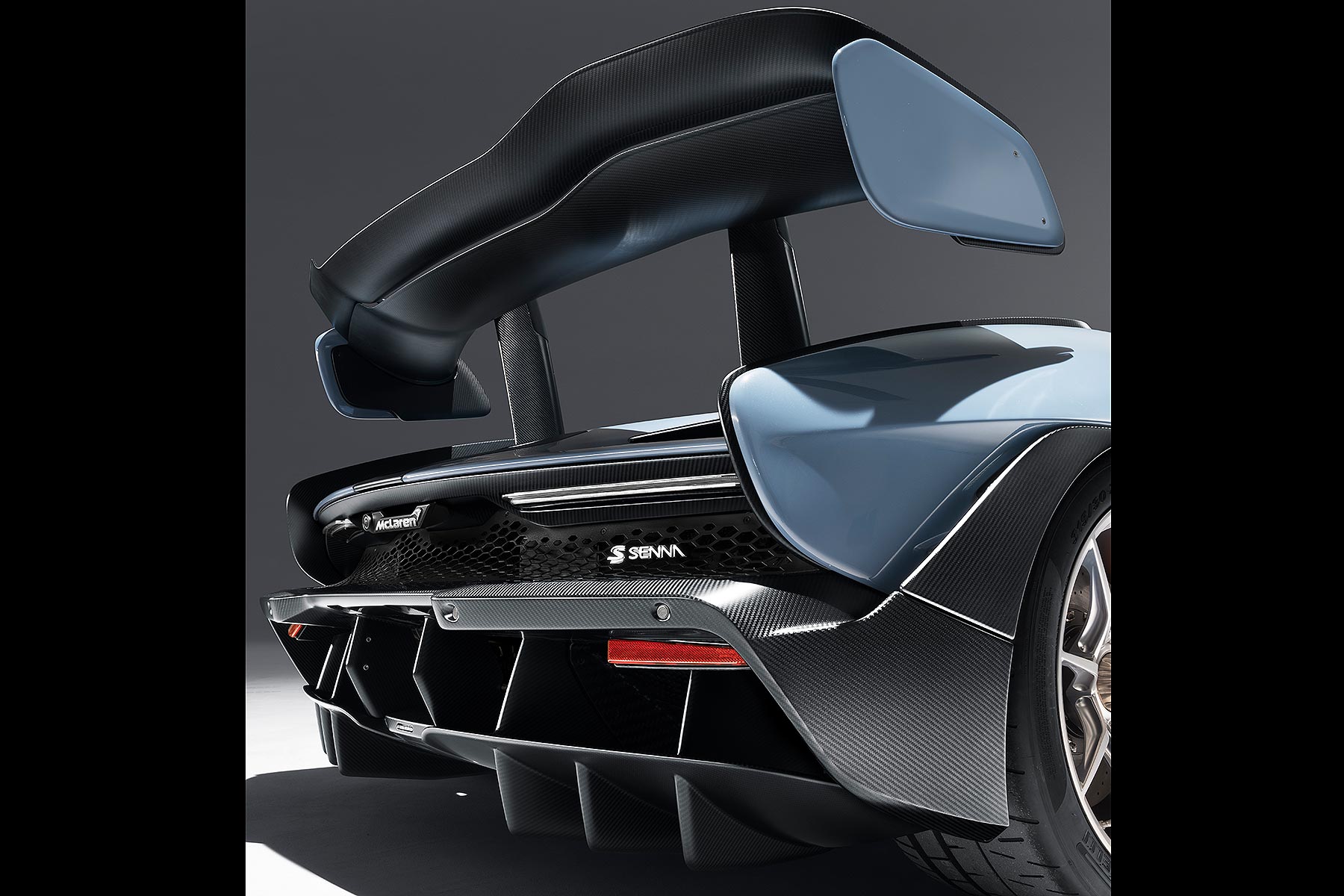
Aerodynamics are active front and rear. The front aero blades and ‘swan neck’ rear wing constantly vary their profile and there’s even an air brake function when you slam on the anchors. Downforce levels are maintained even when turning into a corner, resulting in “extraordinary” speeds through the bends.

“You cannot follow a single line from the front to the rear without it massing through a functional intake or vent,” says McLaren. In spite of all the criticism, the designers reckon it’s the most honest-looking McLaren they’ve yet achieved.

Even one of the paint options is unique. Caliber Black is a special lightweight colour that’s been formulated to cut the amount of paint actually needed to paint a Senna.

McLaren Senna: engine and suspension 

McLaren Senna

The familiar McLaren 4.0-litre V8 engine has been tuned up to 800hp and 580lb ft of torque (800Nm). It’s McLaren’s most potent road car engine yet. It will do 0-62mph in 2.8 seconds, 0-124mph in 6.8 seconds, 0-186mph in 17.5 seconds. And because, at 1,198kg, it’s the lightest McLaren since the original F1, it boasts a power-to-weight ratio of 668hp per tonne. Unique components include bespoke cams and by-cylinder ion sensing that allows higher pressures and temperatures than other McLaren engines.

An Inconel and titanium exhaust is piped through the rear deck, shaped to not disturb the rear aero. McLaren’s made it road legal with auto-close internal valves – but for continues with less strict noise regulations, a valve-less twin-exit unit is offered, sans silencer box and third exhaust exit.

McLaren reckons it’s ferocious, gets 10dB louder for every 2,000rpm, quite different to any other McLaren road car: it’s more like a motorcycle race engine, says the firm.

McLaren Senna

Pumped-up racing-spec carbon ceramic brakes will take it from 124mph to a standstill again in 100 metres.

Suspension uses RaceActive Chassis Control II (RCC II), an evolution of the 2012 P1’s setup. Adaptive dampers are hydraulically connected both left to right and front to back. Like the 720S, it’s continuously variable: unlike the 720S, there’s now a Race mode that lowers the ride height and centre of gravity, and “significantly” stiffens it.

Conventional springs and anti-roll bars have thus been ditched, along with the compromises to pitch, roll, heave and warp stiffness. The Senna’s hydraulic setup is staggering in its scope and even McLaren’s top-level descriptions of what it can do stretch to many, many pages. One thing that caught our eye is McLaren Variable Drift Control, or VDC: it “allows a driver to hone their skills,” and presumably become a drift king in their £750k Senna.

McLaren’s wrapped the Senna around its latest Monocage III central carbon fibre tub, the strongest monocoque it’s ever made for a road car. All the bodywork is carbon fibre as well, contributing to its bantamweight.

McLaren Senna: inside story

McLaren Senna

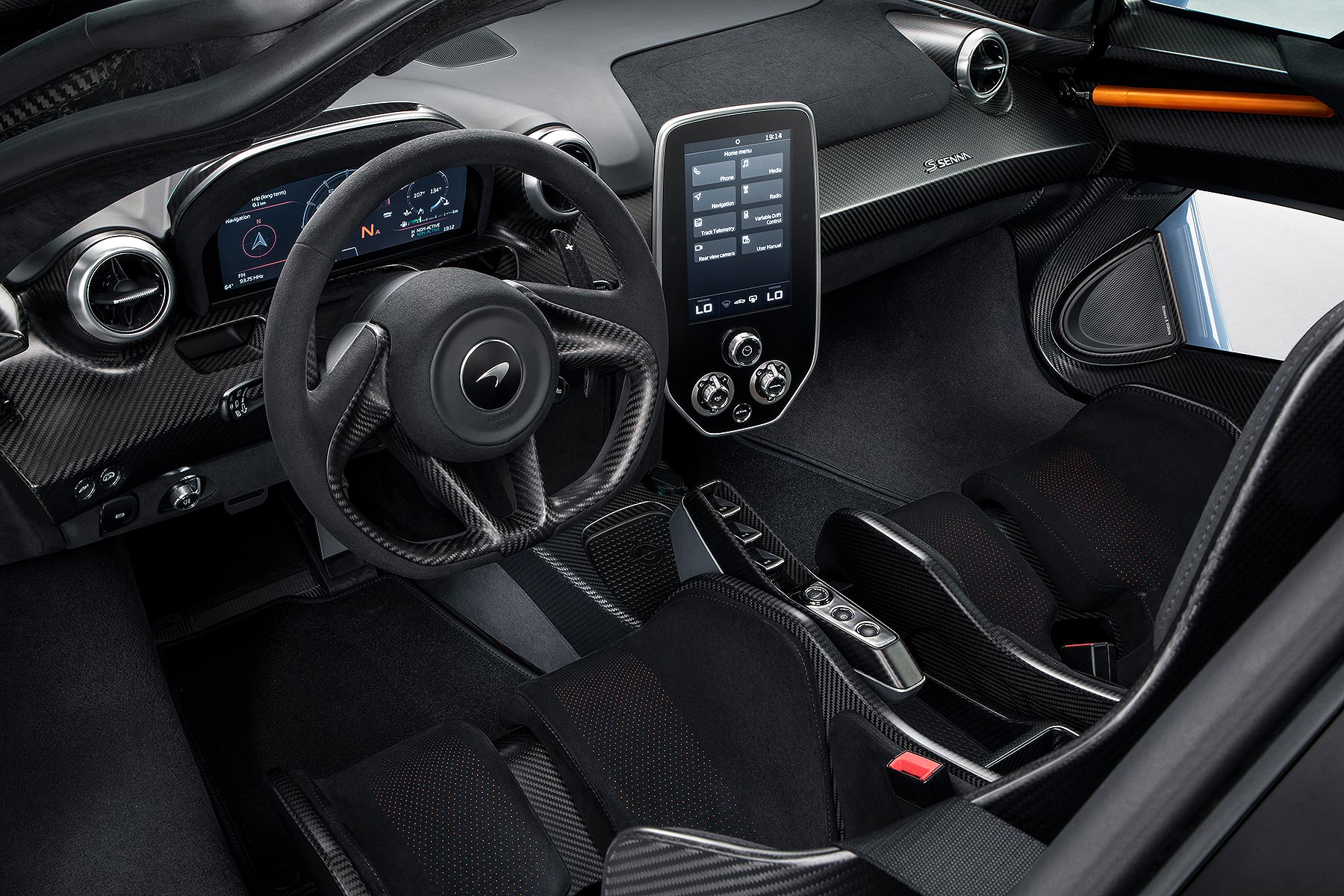
If you ever get to drive a McLaren Senna, prepared to be “hardwired into the experience at all times” – through the steering wheel, seat, even the pedals. The firm says it’s abandoned its trademark usability in the focus on making it thrilling. There have been no compromises here.

A standout feature are optional glazed lower doors, adding to the car’s already-amazing visibility and making it even more thrilling on a racetrack – you can see the kerbs you’re pummelling. They’re made of Gorilla Glass, so should withstand being smashed by stones or tyre marbles.

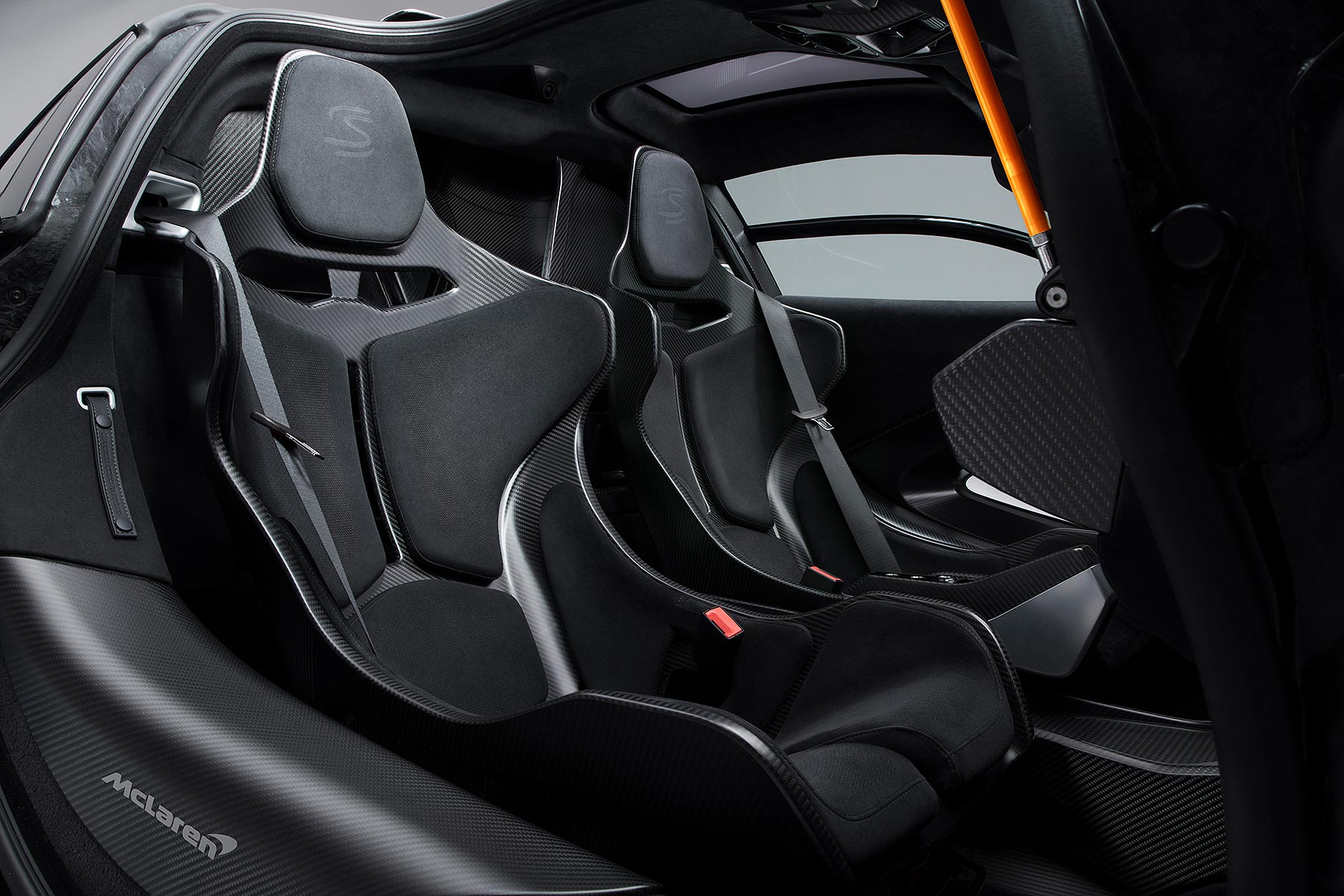
It’s been fully stripped back inside, using carbon fibre and Alcantara instead of fancy soft-touch plastics. Even the door struts are exposed, to save weight: the chance to colour-code them is a first for any car brand.

McLaren Senna

Seats are super-lightweight and weigh just 8kg each. They’re not fully-trimmed, having padding only in the right places. This doesn’t only look cool, McLaren also says it helps keep overall-clad occupants cool when driving hard on a racetrack. The driver’s stress levels are managed by minimising buttons inside, and locating the essential controls on the roof console. And there’s an optional ‘push-to-drink’ system for keeping hydrated when working it hard.

Owners can also choose to have McLaren Track Telemetry fitted, capturing data in real time. It can be augmented by a three-camera system (one looking forward, one mounted inside and one in the rear bumper for corner exits) for the ultimate F1 post-trackday analysis.

McLaren Senna

For added authenticity, Senna’s nephew Bruno is working with McLaren to hone the Senna. He reckons it honours his uncle “because it is so utterly focused upon the driver, and their absolute connection with the vehicle”. Don’t think it’s raw and rabid though, adds McLaren. “This is not a vehicle balanced on a knife edge; the intuitive connection comes from trust, from the fact that car and driver are as one”.

It’s “real performance,” reckons McLaren Automotive vehicle line director Andy Palmer, “accessible and attainable because of an intuitive connection”. It’s set to be quite some car. 

So now can you love the way it looks?

Click on the images to see the McLaren Senna in full

Advertisement

Diesel snubbed as used petrol cars hit record price high

0

Diesel snubbed as used petrol cars hit record price high

The average secondhand diesel car hit a record price high of £10,713 last month – up a whopping £1,733 compared to January 2017.

That’s according to the latest results released this morning by Auto Trader’s Retail Price Index.

The index, which monitors the price of used cars in the UK, reveals that the average price of a used car hit £12,775 in January – six percent higher than a year earlier.

On average, a secondhand diesel cost £14,405 in January. That’s an increase of £777 compared to 2017, but lagging behind petrol models.

The car classified website reveals that 22 percent of all searches that take place on Auto Trader each month are based on fuel type. The share of car buyers selecting diesel when searching on Auto Trader fell from 71 percent in November 2016 to an annual low of 54 percent in December.

This figure has continued to decline into the new year, dropping to a new low of 53 percent of all fuel-related searches in January.

Meanwhile, petrol has steadily gained further: rising from 26 percent of searches in November to a high of 43 percent in January.

Alternatively-fuelled vehicles (including hybrid and electric cars) made up just four percent of all fuel-related searched in January. This remains the same as December, but marking a one percent increase compared to January 2017.

“With new diesel registrations continuing to tumble, it’s very reassuring to see used diesel prices not only retaining their value, but actually increasing in January,” said Auto Trader’s retailed and consumer product director, Karolina Edwards-Smajda.

“It’s clear, however, just how harmful the government’s strong anti-diesel stance has been on the automotive industry. We can see that the misstep in not clarifying the difference between new Euro6 and older vehicles has seriously dampened consumer buying confidence, reflected in both the ongoing fall in new diesel registrations, as well as the searches on our market place.

“Unless the government is prepared to soften its position on diesel and offer car buyers greater incentives for buying electric, the year ahead will remain unnecessarily challenging for the market.”

Read more:

Advertisement

Jaguar is putting the 1955 D-type back into production

0

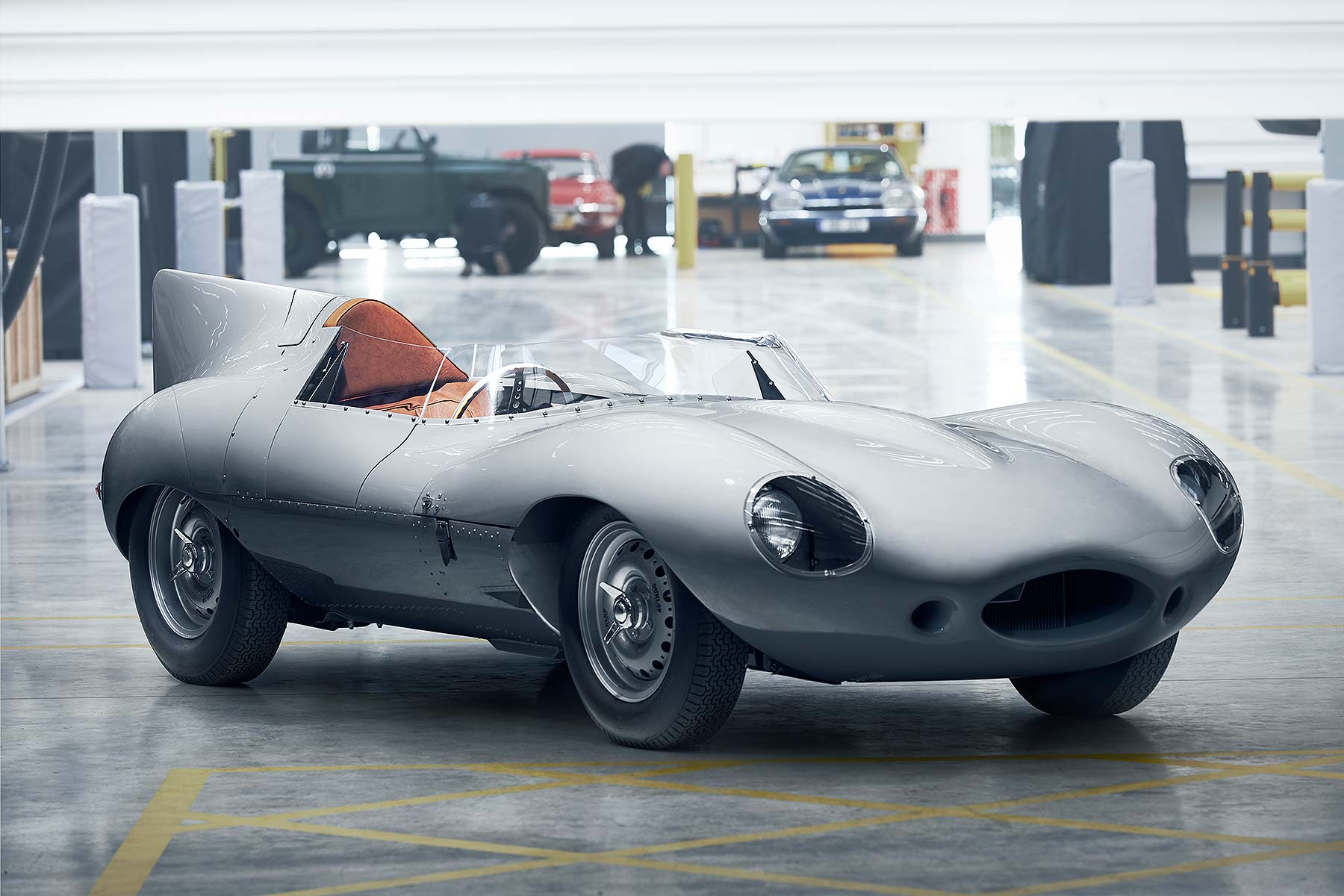
2018 Jaguar Classic D-typeIn 1955, Jaguar planned to build 100 D-type racing cars. In the end, it only built 75, with production ending in 1956.
Today, at the 2018 Salon Retromobile show in Paris, the Coventry firm is to announce it’s restarting production of the D-type, to make the final 25 models and finally take production up to the planned 100-car total.

An engineering prototype will be displayed at the retro car show to mark the occasion.

Although they’re all-new, each of the 25 2018 D-types will be entirely period-correct, produced using the original engineering drawings and production records. Jaguar Classic has been through Jaguar’s entire archives to discovery everything it needs to know to start remaking the classic D-type.

The Jaguar D-type recreation follows the firm’s famous ‘bring-back-to-life’ Lightweight E-types and XKSS projects.

Kev Riches, Jaguar Classic engineering manager, said: “Recreating the nine D-type-derived XKSSs was hugely satisfying, and an even bigger technical challenge than the six missing Lightweight E-types, but lessons learned from the XKSS project have given us a head start on the final 25 D-types.”

Period detail is guaranteed, he promised. “Each one will be absolutely correct, down to the very last detail, just as Jaguar’s Competitions Department intended.”

Famous Jaguar competitions manager Lofty England helped defined the D-type in the early 1950s, and today’s buyers, like then, can pick either a 1955-spec Shortnose or a 1956-spec Longnose; the Retromobile exhibit is a Longnose, which is marked out by:

  • Extended bonnet
  • Tail fin
  • Wide-angle cylinder head
  • Quick-change brake calipers

Under England’s watch, the D-type won the Le Mans 24 Hours race in 1955, 1956 and 1957.

Tim Hannig, Jaguar Land Rover Classic director, said: “The opportunity to continue the D-type’s success story, by completing its planned production run in Coventry, is one of those once-in-a-lifetime projects that our world-class experts at Jaguar Land Rover Classic are proud to fulfil.

“The Jaguar D-type is one of the most iconic and beautiful competition cars of all time, with an outstanding record in the world’s toughest motor races. And it’s just as spectacular today.”

Advertisement

Revealed: the cheapest cars to insure

0

Revealed: the cheapest cars to insureLooking to save money on your car insurance? Comparethemarket.com has released details of the top 10 cheapest cars to insure, based on the average price returned for cars with more than 1,000 enquiries for a particular model. By choosing one of these cars, you stand a better chance of not paying through the nose.
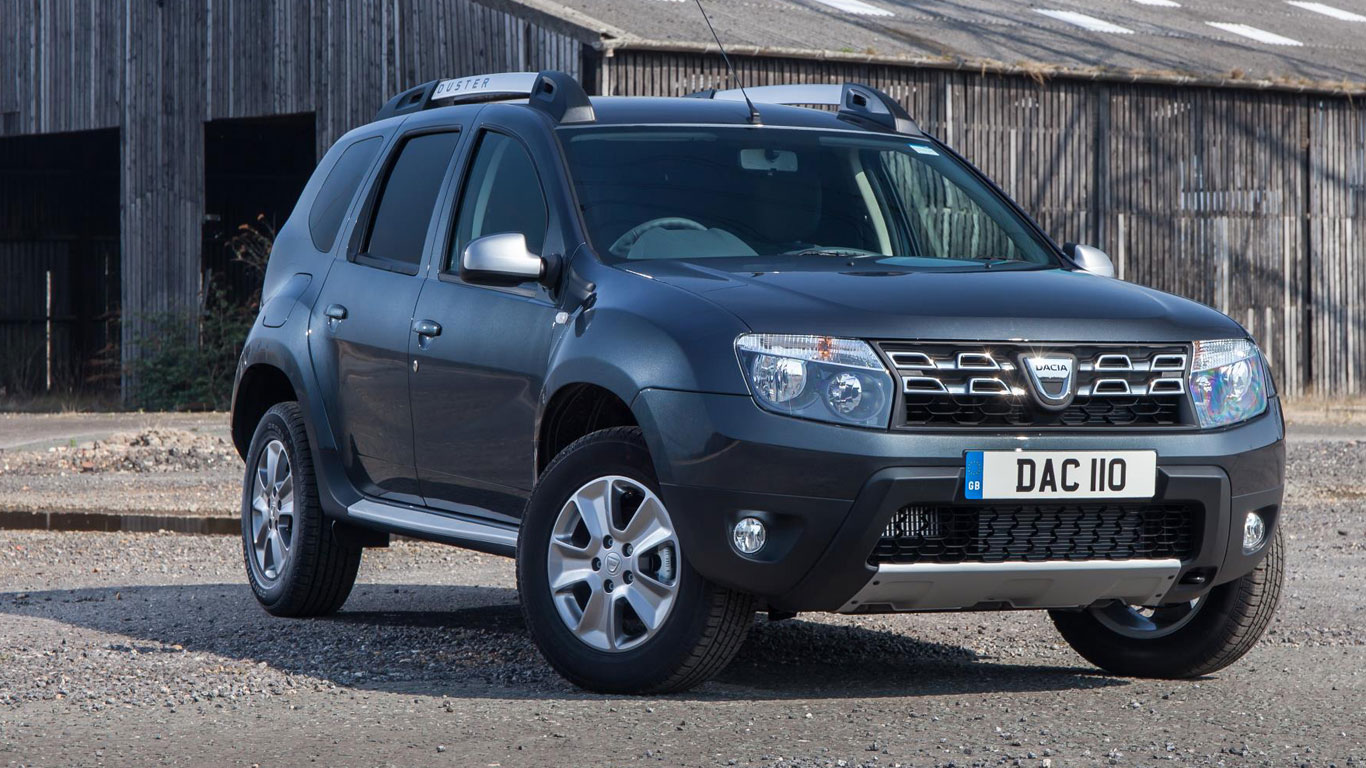
10. Dacia Duster: £541.72

Revealed: the cheapest cars to insure

According to Comparethemarket.com, where you live and where you store the car can have a big effect on the price of car insurance. The premium is affected by the risk of the vehicle being stolen and being bumped into when parked. Having access to a garage might lower the premium, but some insurers increase the price based on drivers misjudging the width of their car.

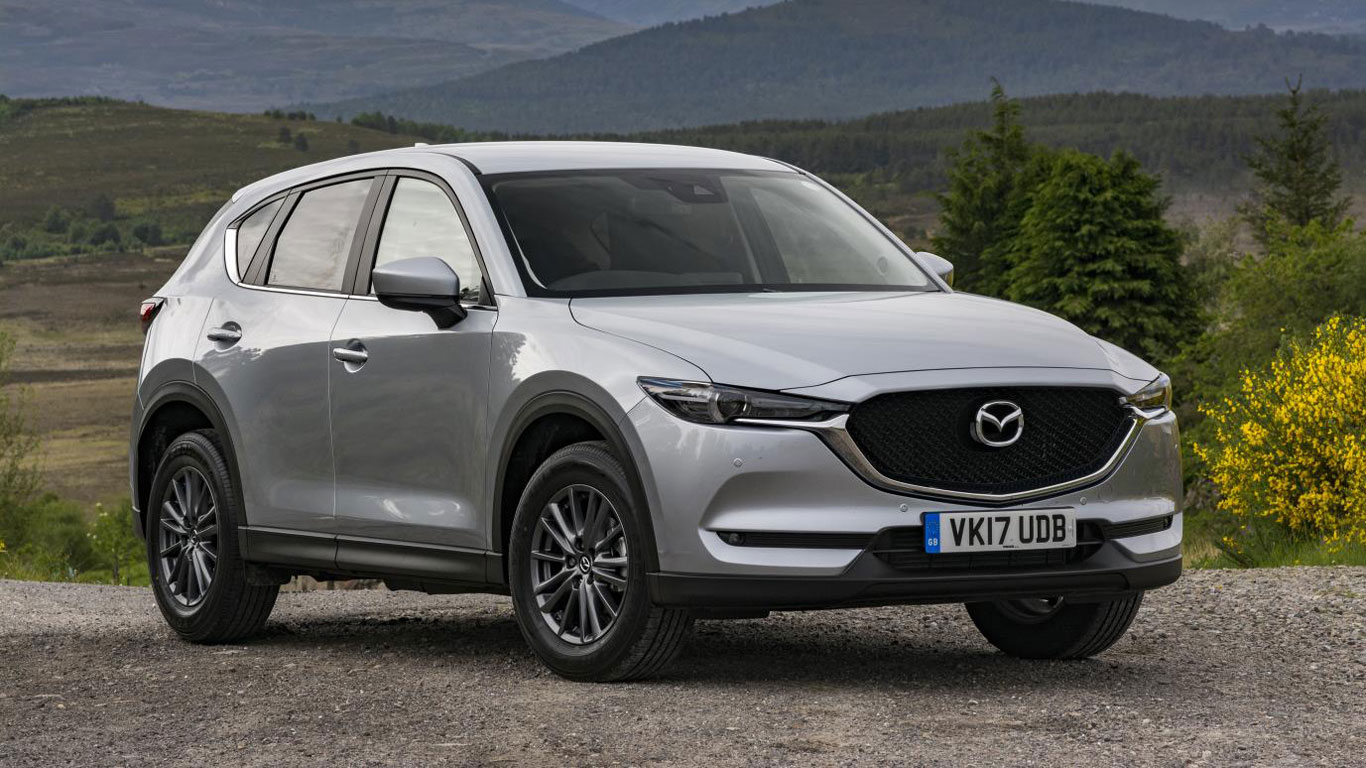
9. Mazda CX-5: £535.95

Revealed: the cheapest cars to insure

Your employment status will have also affect the premium. For example, you’ll pay more if you drive regularly as part of your job or if you carry expensive tools or equipment in your vehicle. Racing drivers pay more, as do journalists and window cleaners

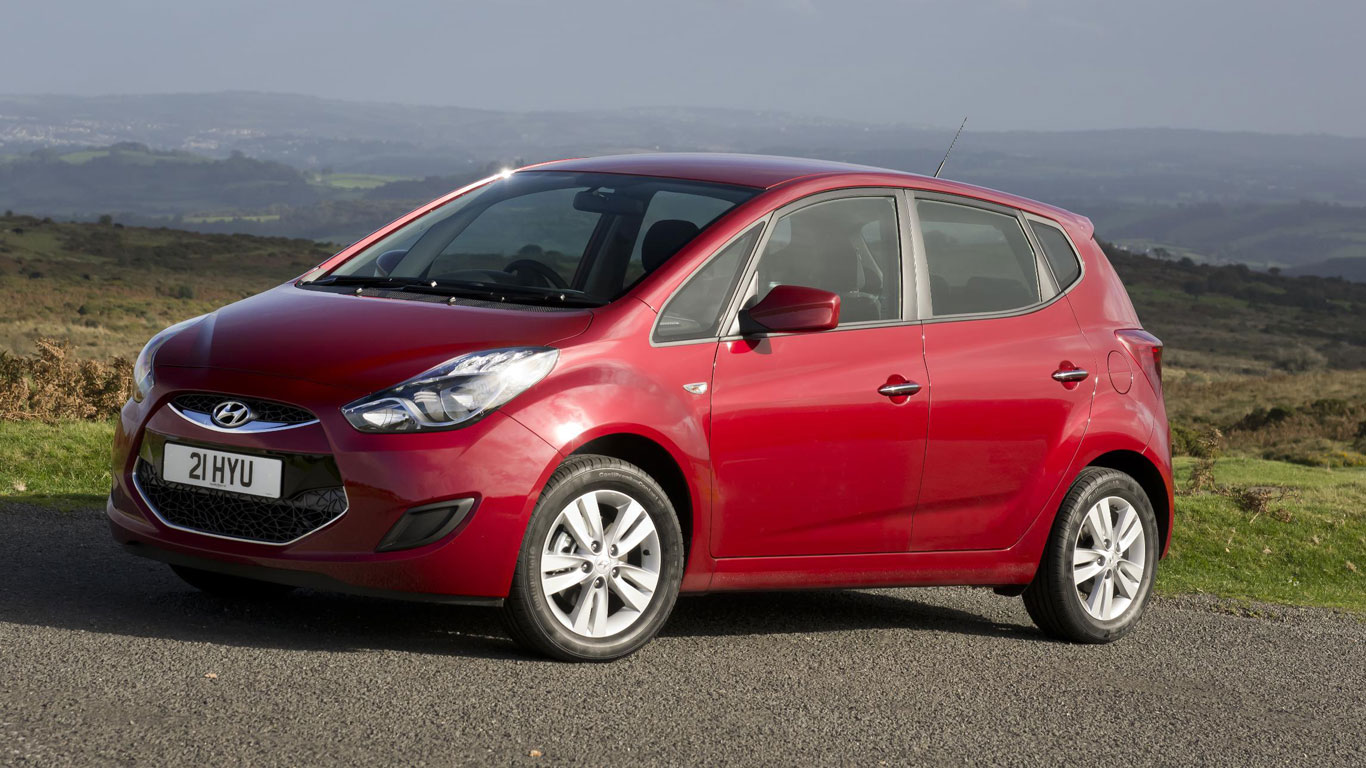
8. Hyundai ix20: £531.21

Revealed: the cheapest cars to insure

Well-mannered and law-abiding citizens drive cars like the Hyundai ix20, which is why it’s a cheap car to drive. Having three points on your licence for a minor speeding offence will have a small impact, whereas a previous ban for drink-driving will make it hard to find a cheap policy. Some insurers will refuse to insure a previously convicted drink-driver.

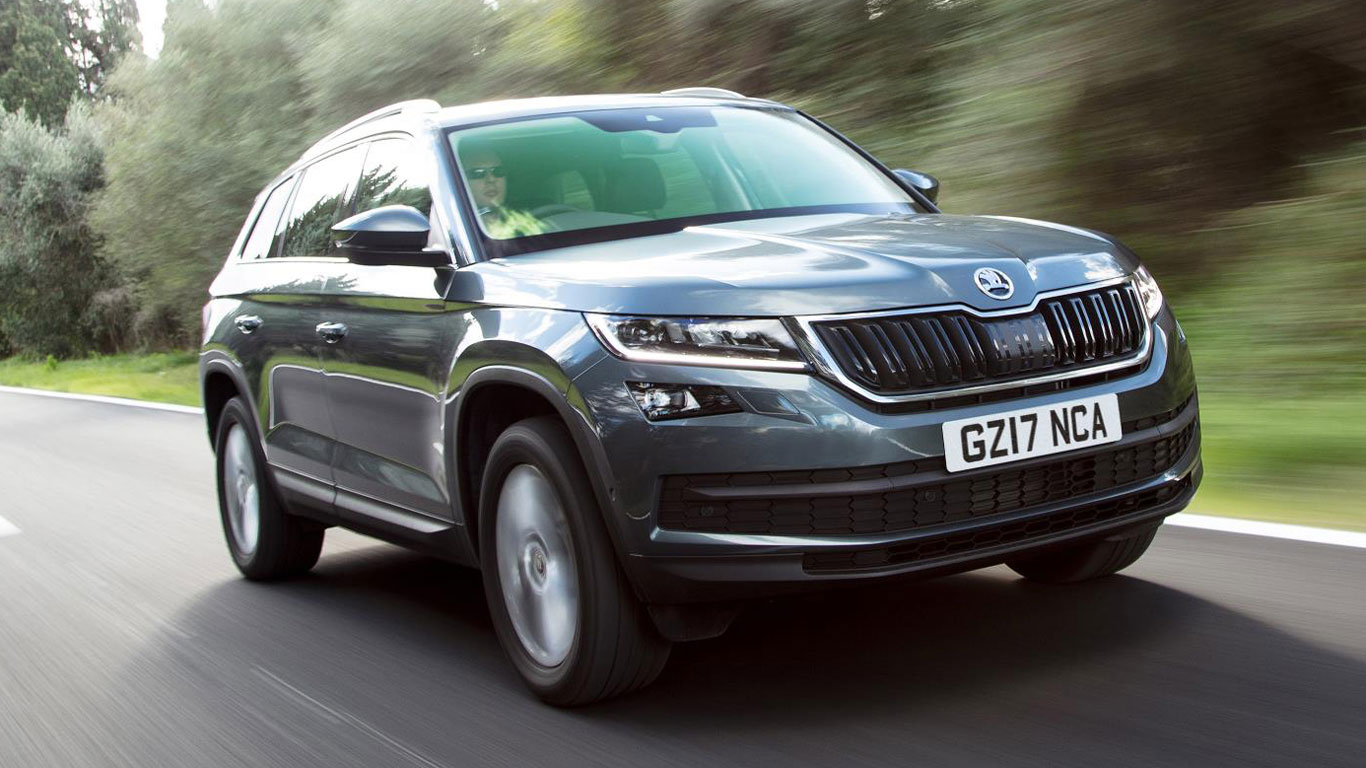
7. Skoda Kodiaq: £515.48

Revealed: the cheapest cars to insure

The Skoda Kodiaq is one of the best crossovers on the market, but it’s not going to appeal to a young driver. For 17 to 25-year-olds, the cost of insurance can be as expensive as the vehicle itself, but the premiums will start to decrease from the age of 26.

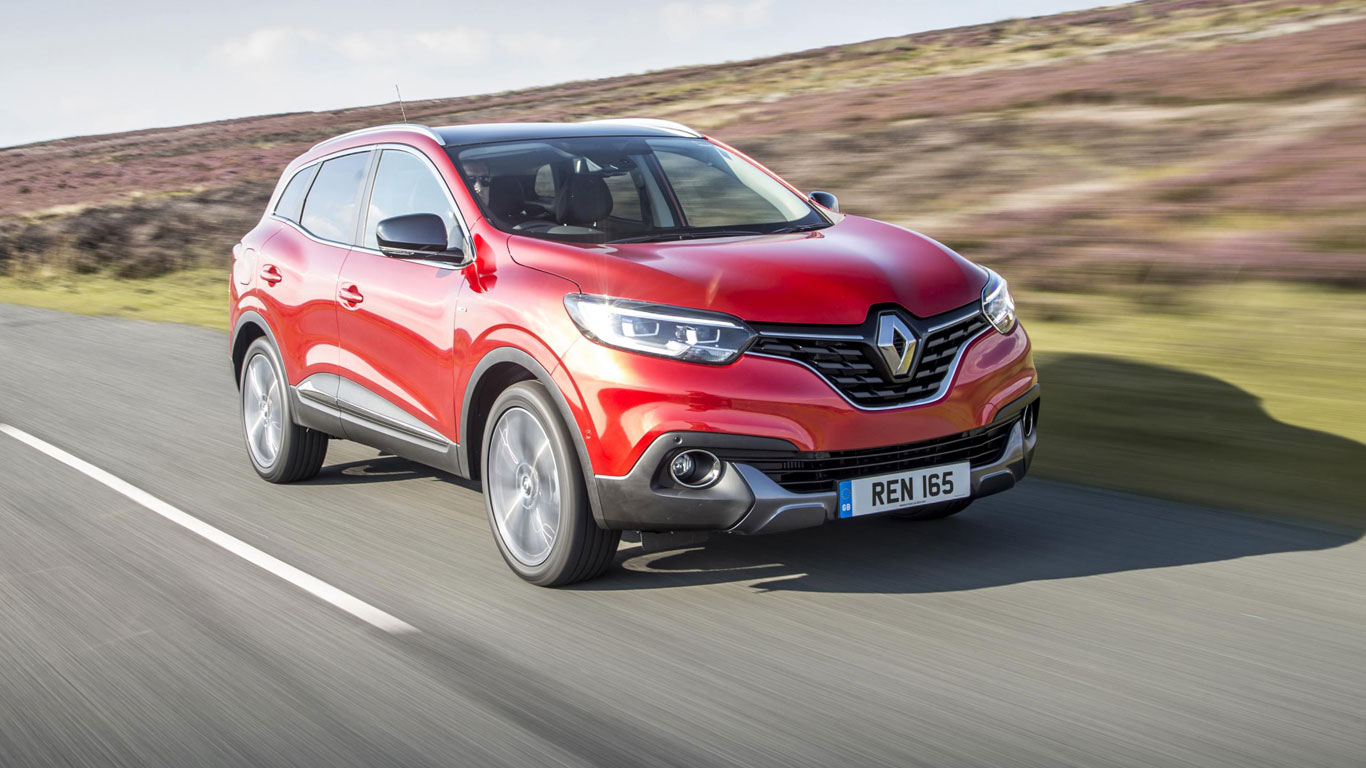
6. Renault Kadjar: £507.89

Revealed: the cheapest cars to insure

Comparethemarket.com is very specific here, referencing the Renault Kadjar Dynamique S Nav dCi 110 as one of the cheapest cars to insure.

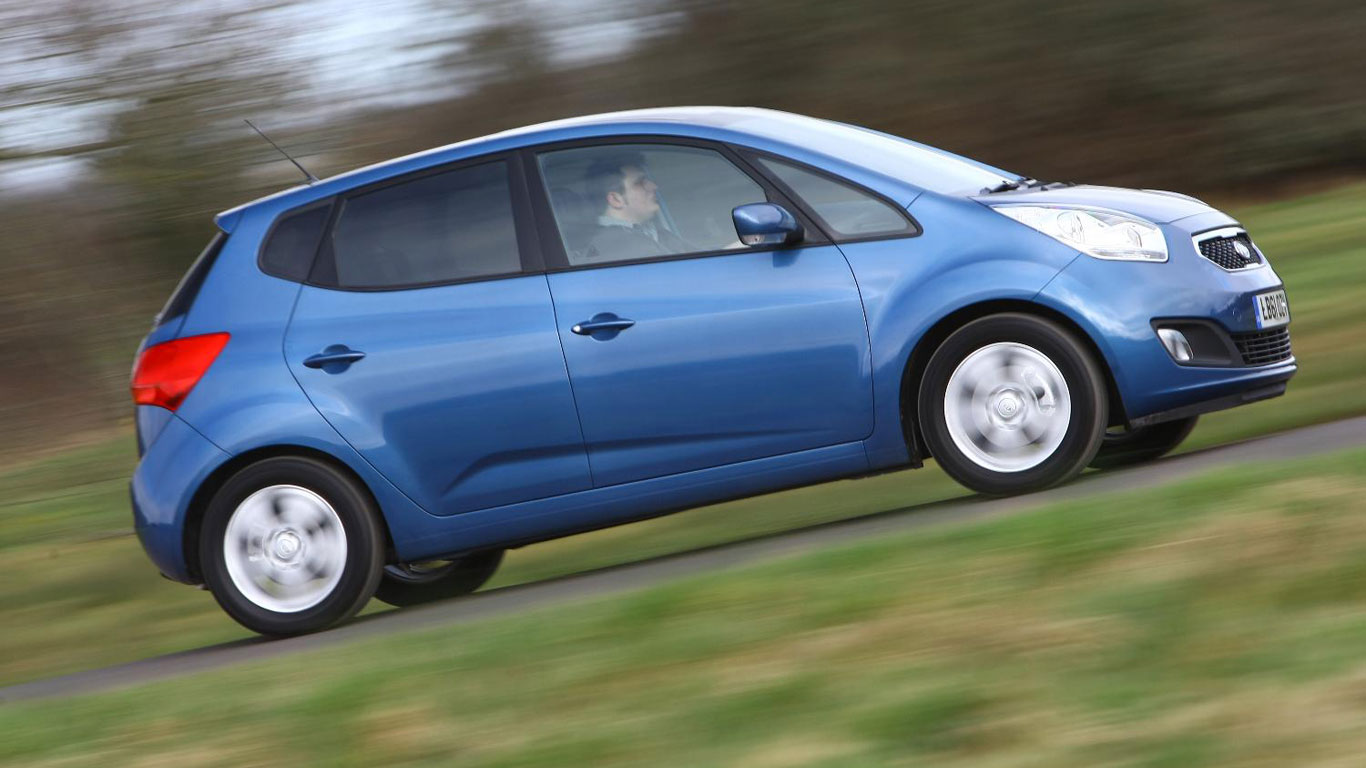
5. Kia Venga 3: £499.26

Revealed: the cheapest cars to insure

Look, it’s the Kia Venga…

Comparethemarket.com loves the Kia Venga, boys.

4. SsangYong Korando: £495.92

Revealed: the cheapest cars to insure

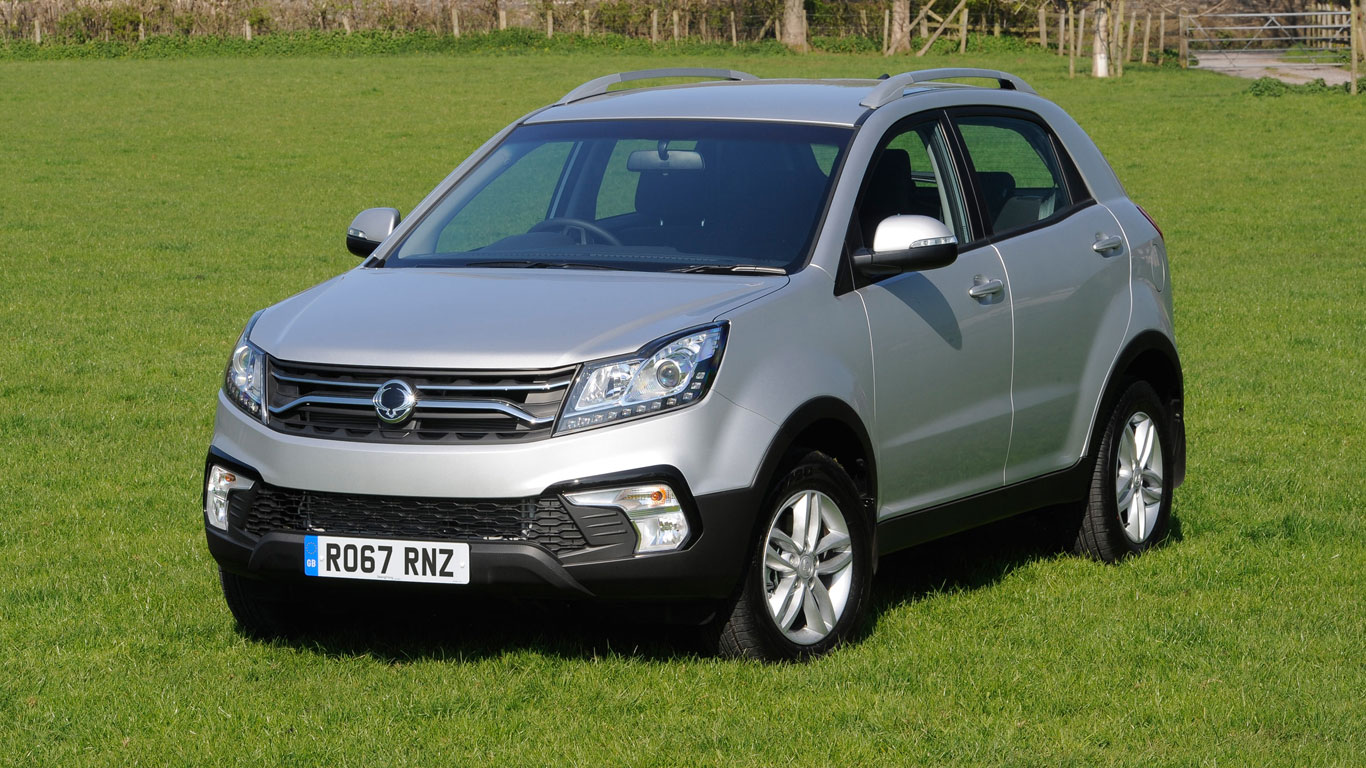
The SsangYong Korando offers exceptional value for money, with prices starting from as little as £16,295. It should be cheap to insure, with Comparethemarket.com quoting an average of £495.92 for the SUV.

3. Citroen C3 Picasso: £488.22

Revealed: the cheapest cars to insure

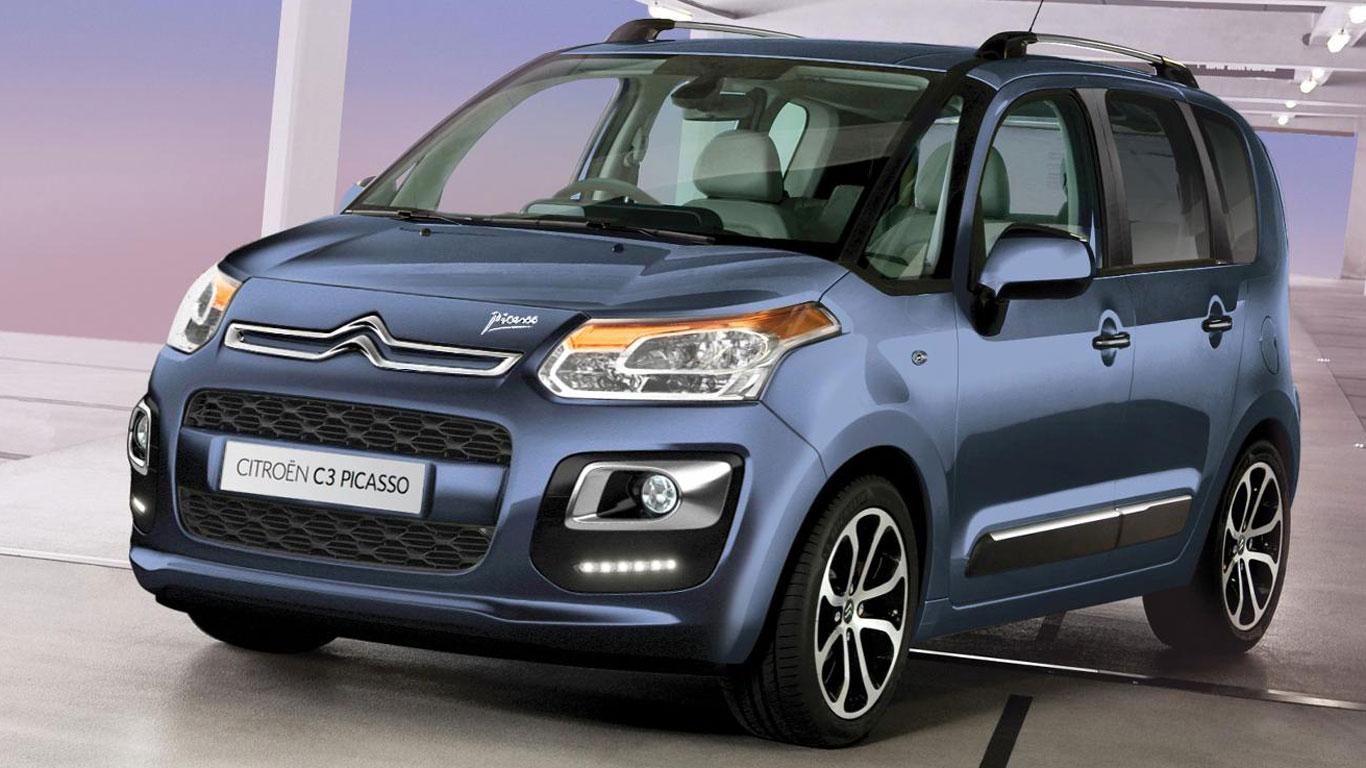
The Citroen C3 Picasso has been replaced by the new C3 Aircross, but the old model is the one to have if you’re hoping to save money on your car insurance.

2. Skoda Roomster: £481.44

Revealed: the cheapest cars to insure

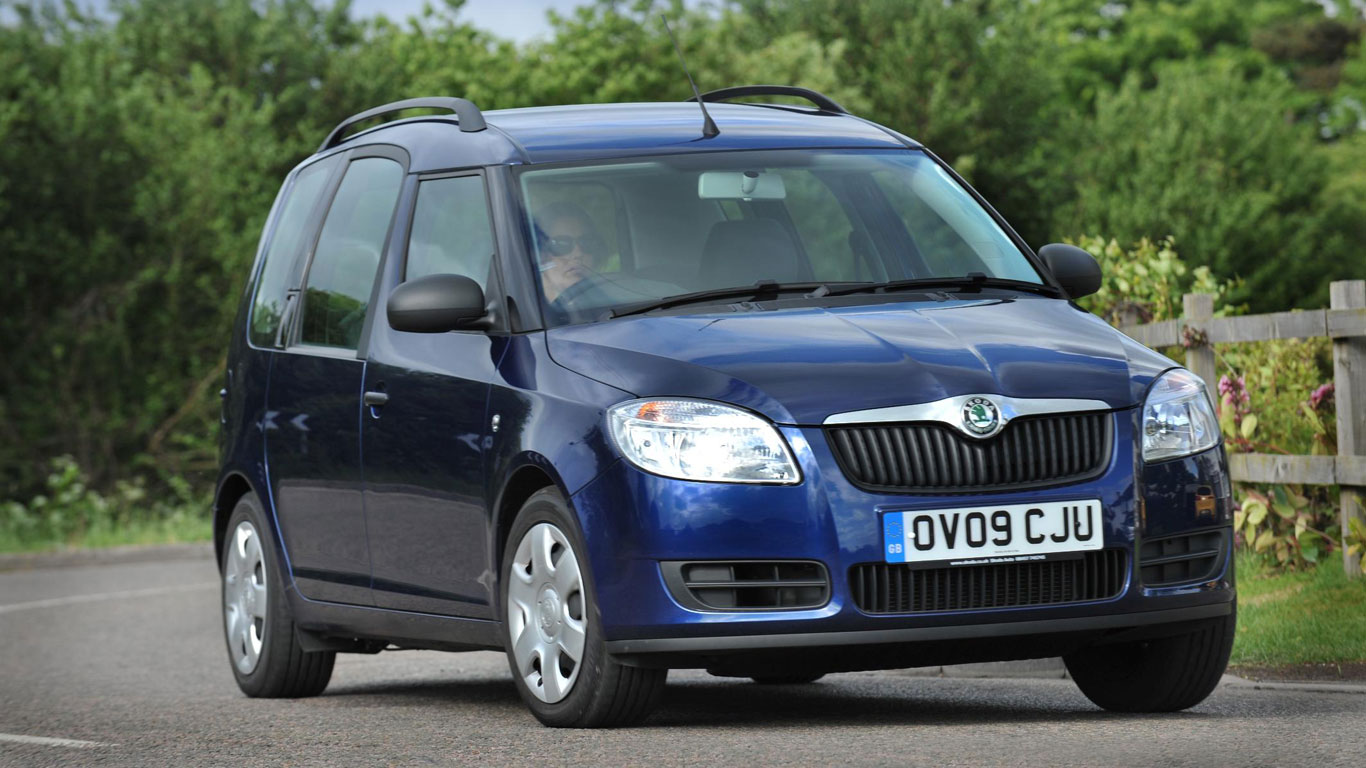
The Roomster disappeared from the Skoda range in 2015, but its practicality and clever packaging means that it’s a popular used car. It’s good to know it’ll be cheap to insure.

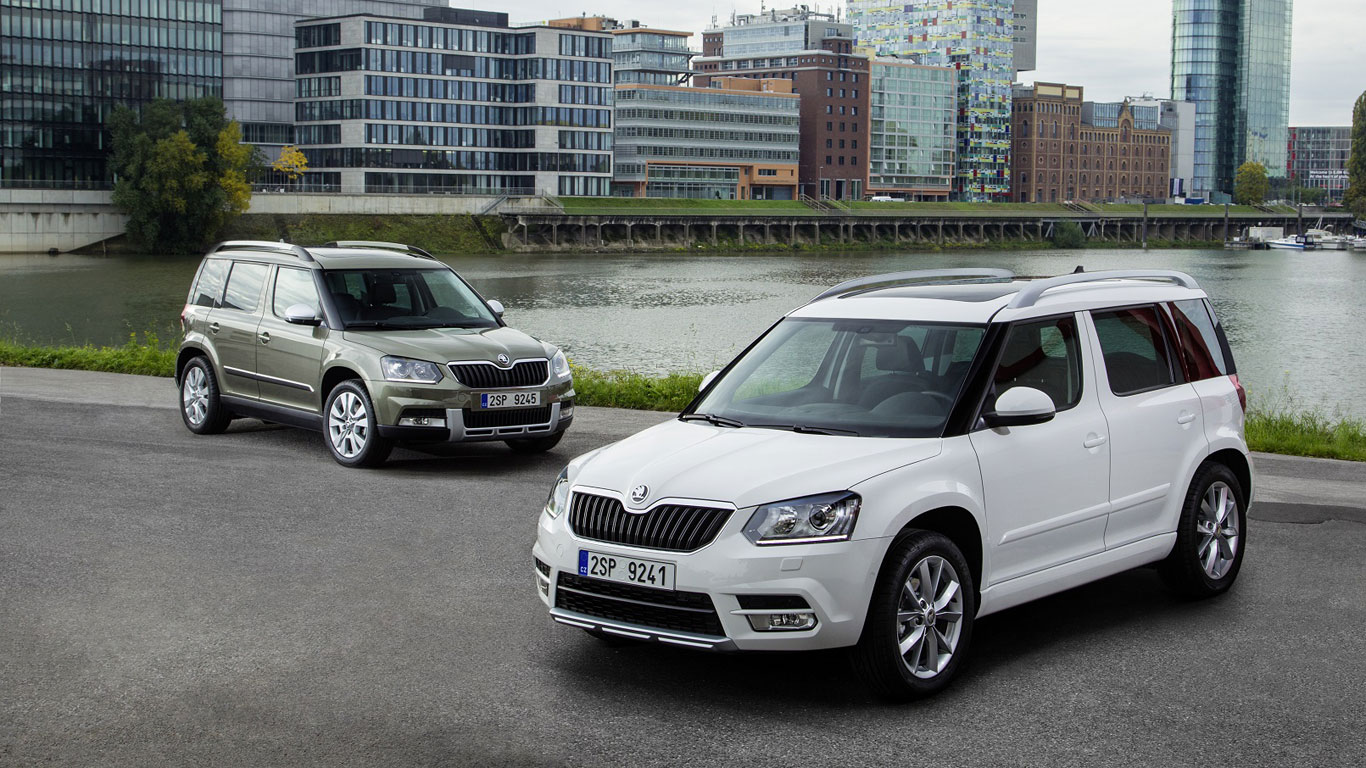
1. Skoda Yeti: £456.49

Revealed: the cheapest cars to insure

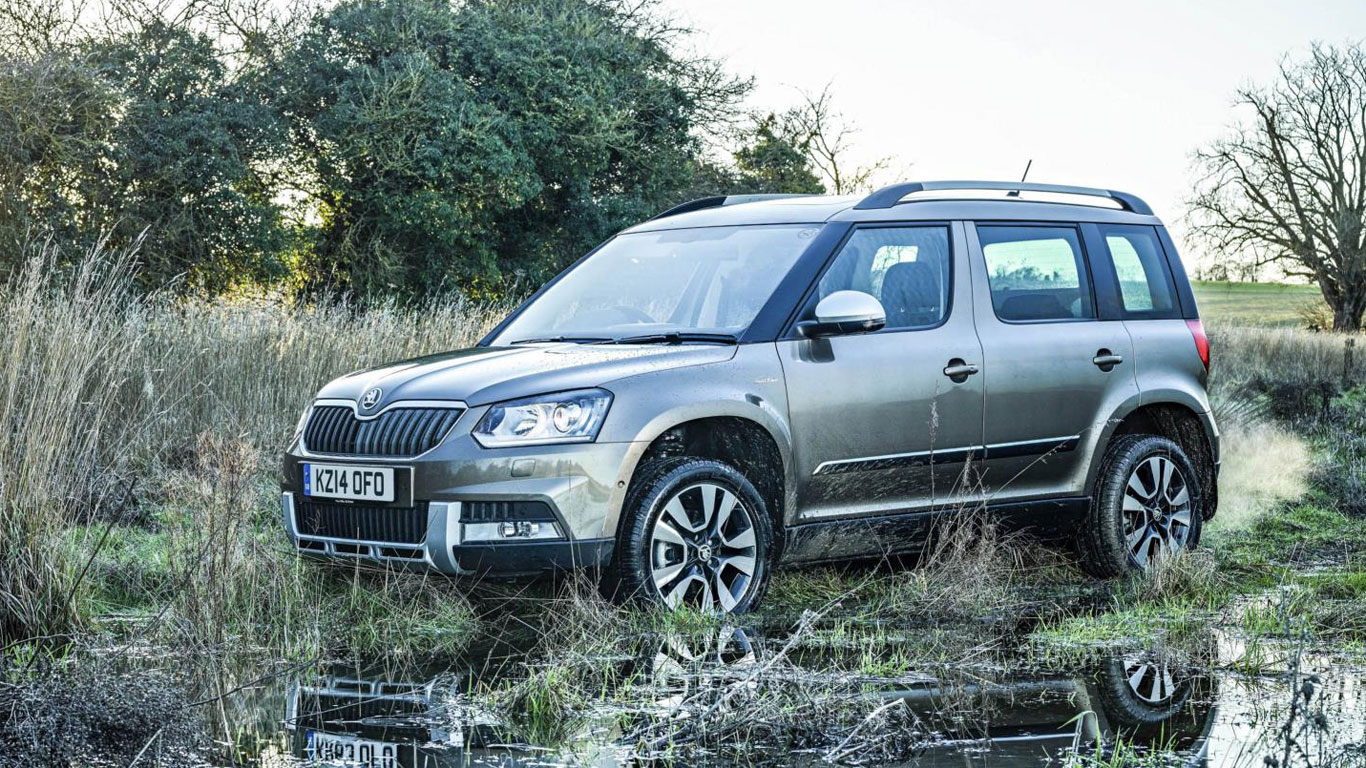
But it’s not the cheapest, because that accolade belongs to the now-departed Skoda Yeti. Another good reason to buy the quirky and brilliant Yeti, as if you needed an excuse.

Read more:

Advertisement

Rocket man: Rare Elton John Aston Martin up for auction

0

Rocket man: Elton John's rare Aston Martin up for auction

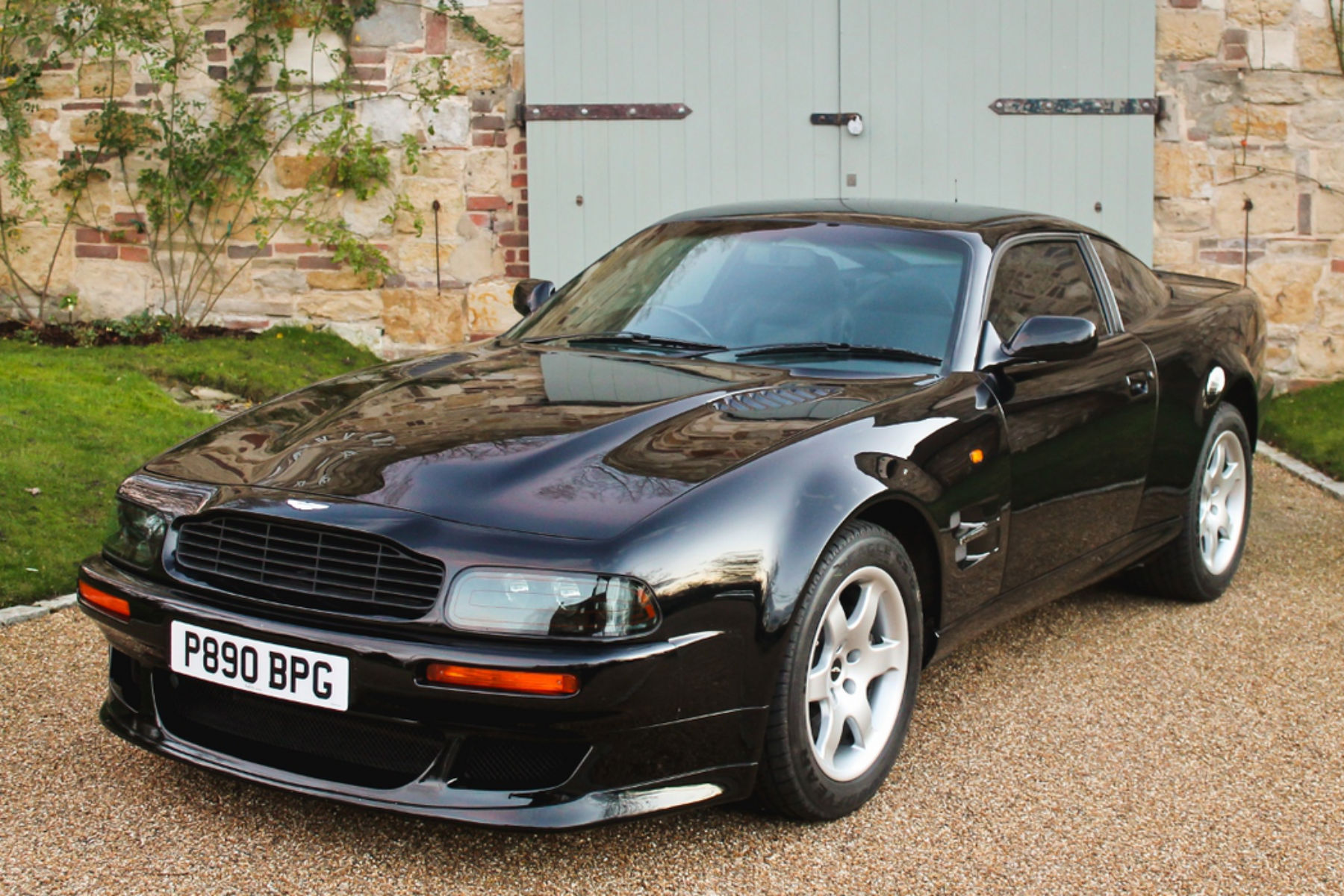
A 1997 Aston Martin V8 Vantage V550 ordered new by Sir Elton John will face the gavel at the Silverstone Auctions Race Retro classic car sale next month.

Showing less than 10,000 miles, auctioneers reckon this rare Aston could make as much as a quarter of a million at auction.

Based on the Virage coupe, the V550 nameplate was a nod to the 550bhp (558hp) twin-supercharged 5.3-litre V8 engine that took the two-tonne car to 60mph in 4.6 seconds and on to a 186mph top speed.

One of the last Astons to be hand-built at Newport Pagnell, Elton is said to have ordered it himself and had it built to his specification. Finished in black with a black leather interior, it’s one of just 239 V550s sold around the world, making it one of the most desirable supercars of its time.

“Sir Elton is a global superstar and is still making headlines around the world, so it’s a pleasure to offer for sale this Aston Martin that he ordered new back in 1997,” said Silverstone Auctions’ classic car specialist, Adam Rutter.

“As well as enjoying celebrity ownership, this stunning V8 Vantage has been maintained regardless of expense and has a mere 8,663 miles on the clock, that’s equivalent to being driven about 400 miles only a year.”

With such a low mileage, Elton must have hardly used his ultra-desirable Aston. Indeed, the auctioneers say it still has a ‘new car’ smell, helped no doubt by the sumptuous wood (look at it!) and leather.

Chassis number #70174 has spent a lot of time at specialist Rikki Cann and comes with the original service book showing 19 stamps in total. The seller says more than £7,600 was spent on work on the Aston last year.

Rutter added: “Our Race Retro auction is a rare opportunity to own one of the last coach-built Aston Martins. If that wasn’t enough, then throw in the fact it was ordered new by Sir Elton John and you have a truly special car.”

Watch: Jeremy Clarkson drives an Aston V8 Vantage V550

Read more:

Advertisement

New Kia Ceed confirmed for Geneva 2018

0

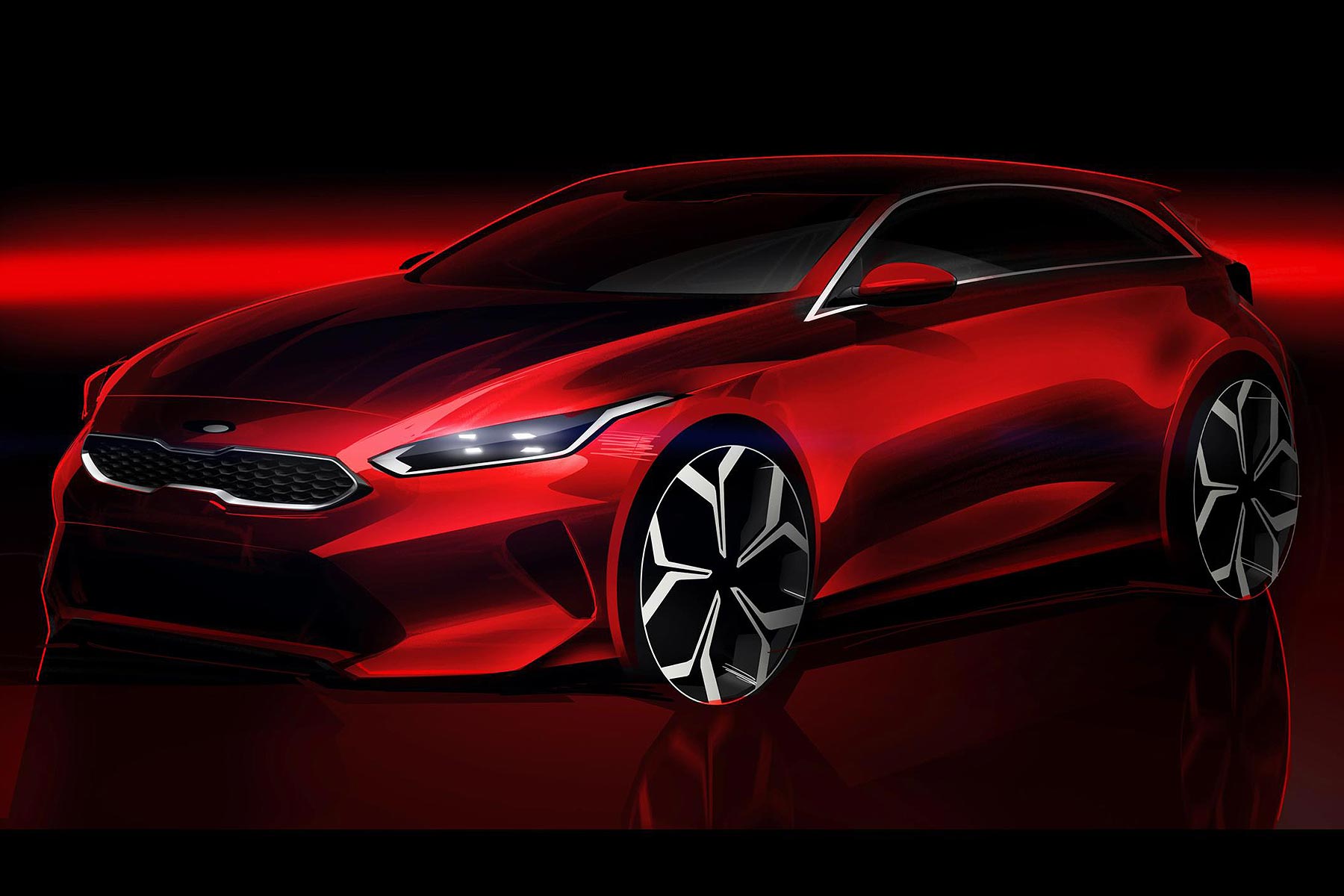
2018 Kia Ceed teaserKia has confirmed the new 2018 Ceed will make its world debut at the Geneva Motor Show in March. The European-designed car will be shown in five-door hatchback guise, plus “a second member of the Ceed family”.

It’s not yet clear what this second variant will be: Kia is dropping the slow-selling Pro_Cee’d three-door. Early rumours indicate the Geneva surprise could be a Kia Stinger-inspired fastback or shooting-brake style model: sister company Hyundai has recently rolled out a fastback version of its i30 hatchback.

Kia says the new Ceed hasn’t just been designed in Europe, but has been fully developed and engineered here too. Indeed, Kia says it’s been honed exclusively for Europe’s more challenging roads. Buyers are thus promised a more engaging drive, new engines and some innovative new tech.

The i30 offers 120hp 1.0-litre turbo and 140hp 1.4-litre turbo petrol engines, both of which will also be available in the new Ceed. The 1.6-litre turbodiesel will also be upgraded, and there’ll be a choice of manual or DCT automatic gearboxes. 

It’s also going to be simpler to write: at last, Kia has dropped the apostrophe from the name – so Cee’d becomes Ceed. Few got it right anyway, and the firm has at last banished two generations of irritation with this third-generation model.

Kia has reminded us what Ceed actually stands for, too: Community of Europe, with European Design. We hope it’s thus just a coincidence that European left-hand drive sales have been confirmed to begin in Q2 2018, but the UK on-sale date is currently simply to “be announced in due course”…

Also read: 

Advertisement