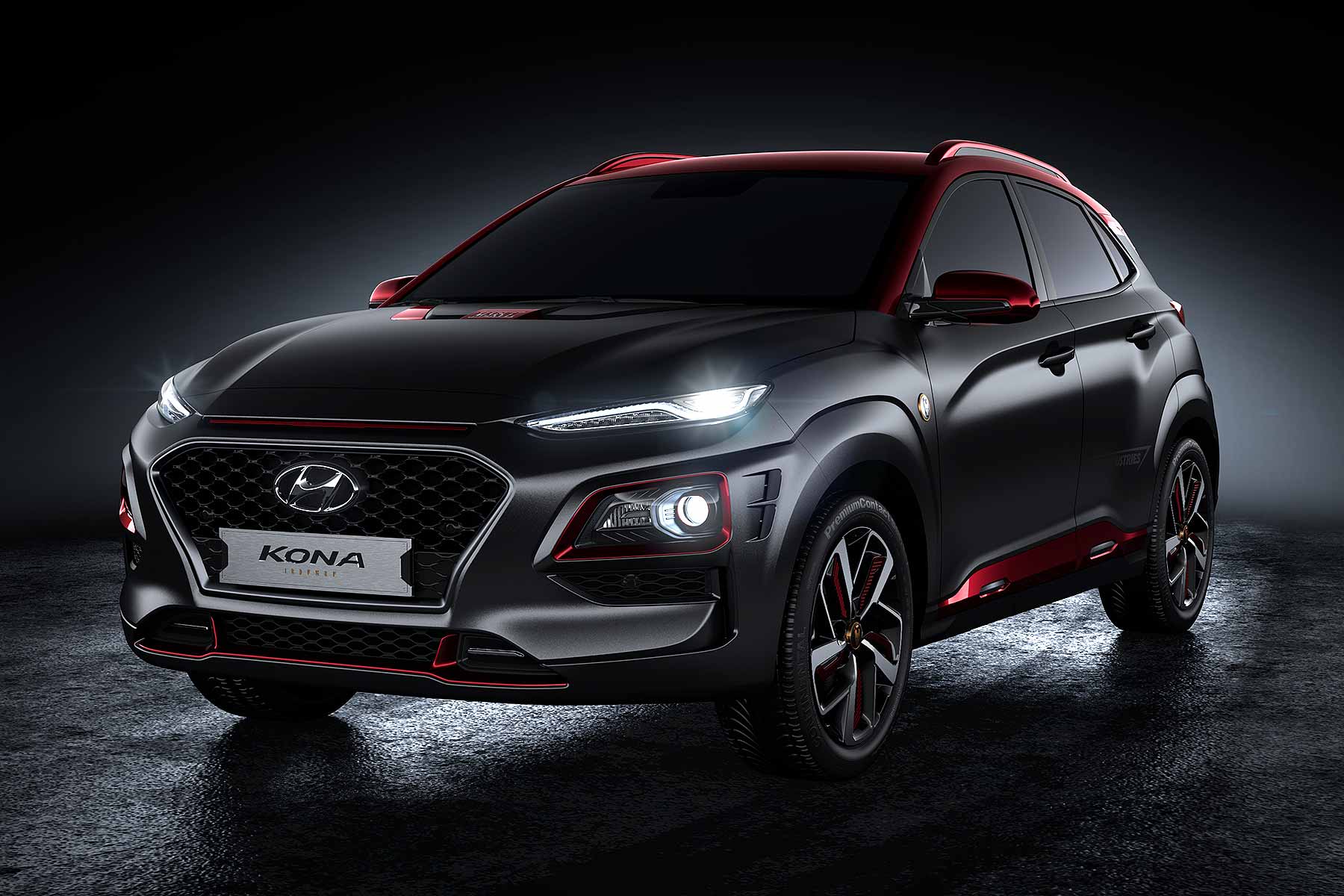
Hyundai has teamed up with Marvel to create a special Kona Iron Man Edition, which will be offered globally from December in very limited numbers.
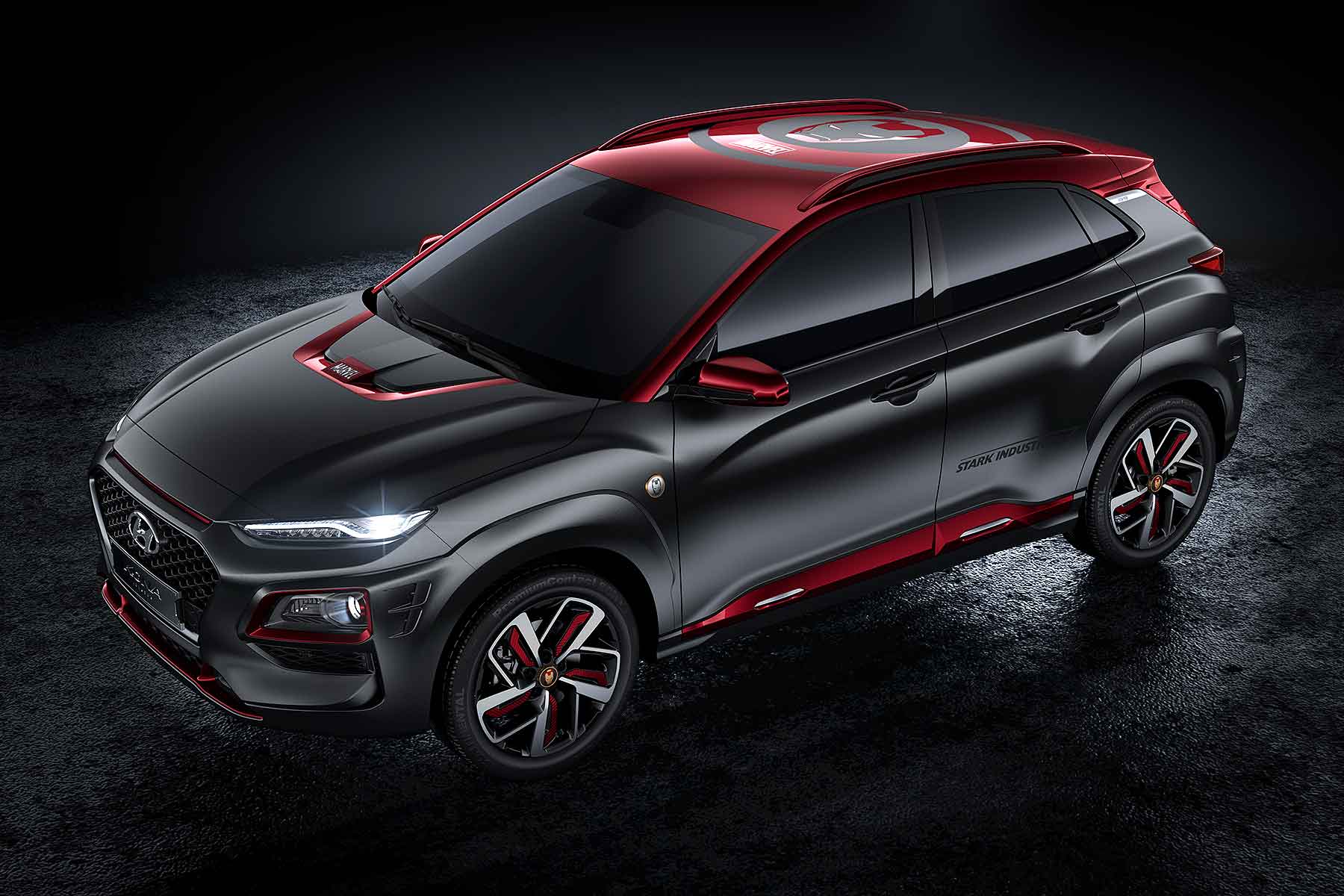
Revealed at 2018 San Diego Comic-Con, the sure-fire collectable pays automotive homage to Iron Man and Tony Stark through, says Hyundai, body styling that ‘closely resembles and gives a nod to’ the iron man suit.
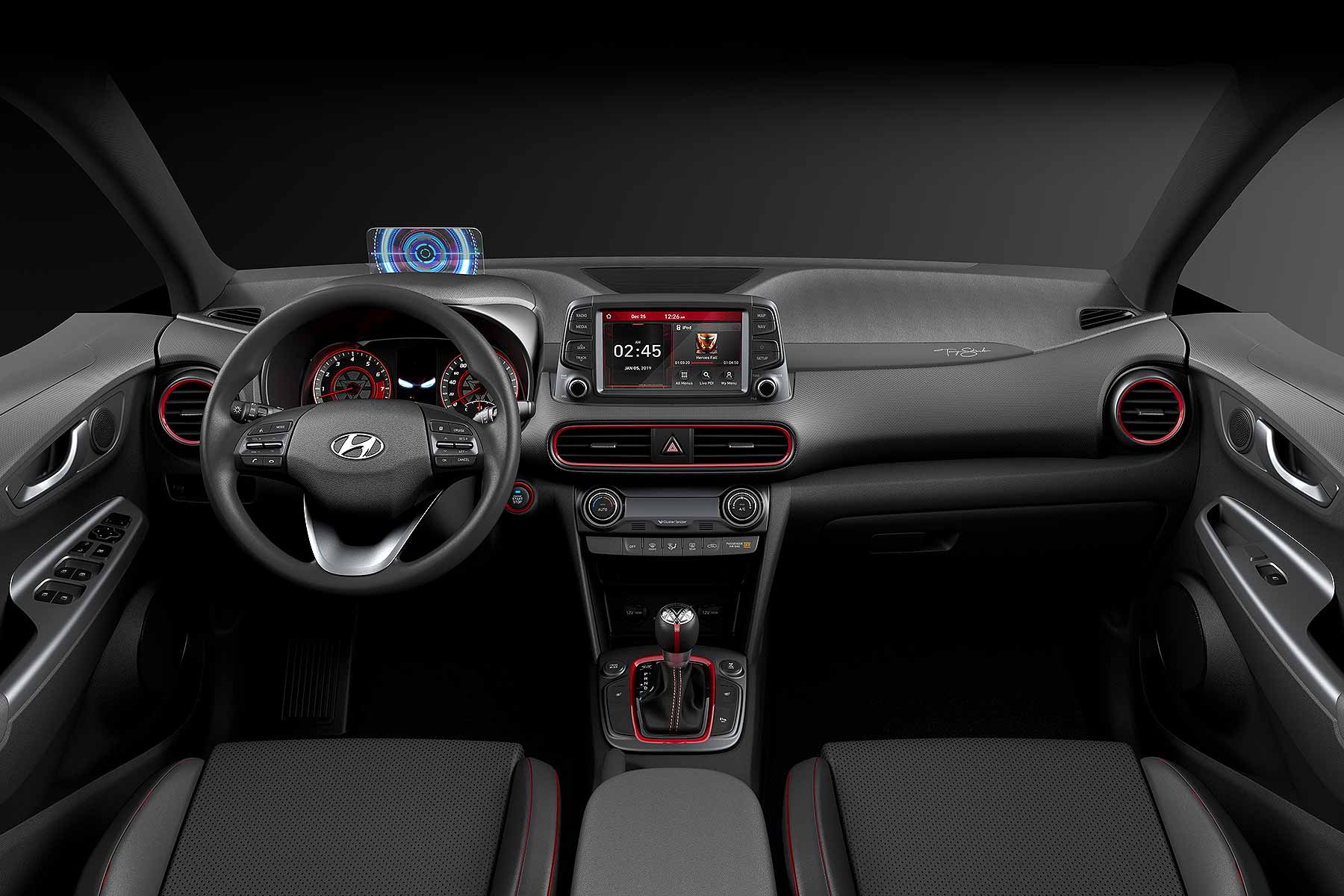
It also has an Iron Man-inspired interior makeover, which will be coming to showrooms from early 2019.
Rather unconvincingly, Hyundai Motor America chief marketing officer Dean Evans claimed: “The first time we saw the Kona, we knew its unique, rugged design drew a compelling resemblance to the strong and iconic Iron Man suit.”
Far more convincing is some of the detail development Hyundai’s put into the Iron Man Kona. Because this is a very desirable, very ‘special’ special edition. For example, it has a unique daytime running light that is modelled on the facemask and eye shape of the Iron Man Suit.
The roof has an Iron Man decal, a V-shaped bonnet garnish, Stark Industries body decals, Iron Man engraving for the rear pillars and new 18-inch alloys with Iron Man centre caps. Even the internals of the headlamps boast Iron Man engraving. Hard not to be impressed, isn’t it?
It has a unique, and seriously cool, body colour: Iron Man red over matt grey.
Hyundai’s fitted a new Iron Man gearknob, custom seats and an instrument panels with Tony Stark’s signature. There are Iron Man graphics on the centre console and, impressively, these stretch to an Iron Man graphical makeover for the head up display.
“Hyundai’s ongoing collaboration with Marvel is a great way for us to become a part of what people are interested in and engage with a highly passionate fan base,” said Hyundai marketing vice president Minsoo Kim.
What diesel witch-hunt? Hyundai prices clean-diesel Kona
“Our relationship is more than just product placement as we aim to create custom experiences that resonate with the Marvel audience. The Kona Iron Man Edition is a perfect example of blending our two worlds together into one special vehicle that we hope will excite fans of both brands all around the globe.”
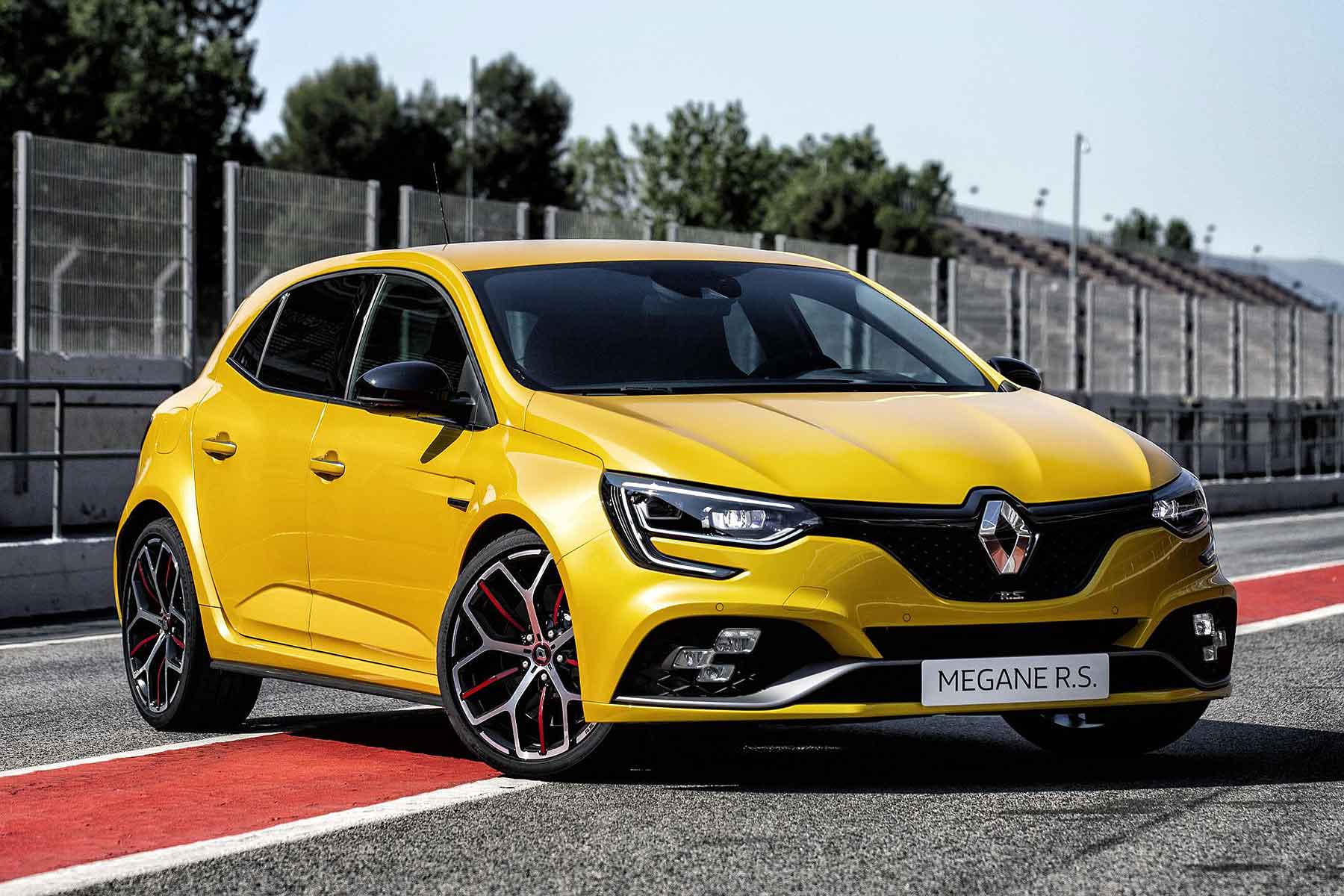
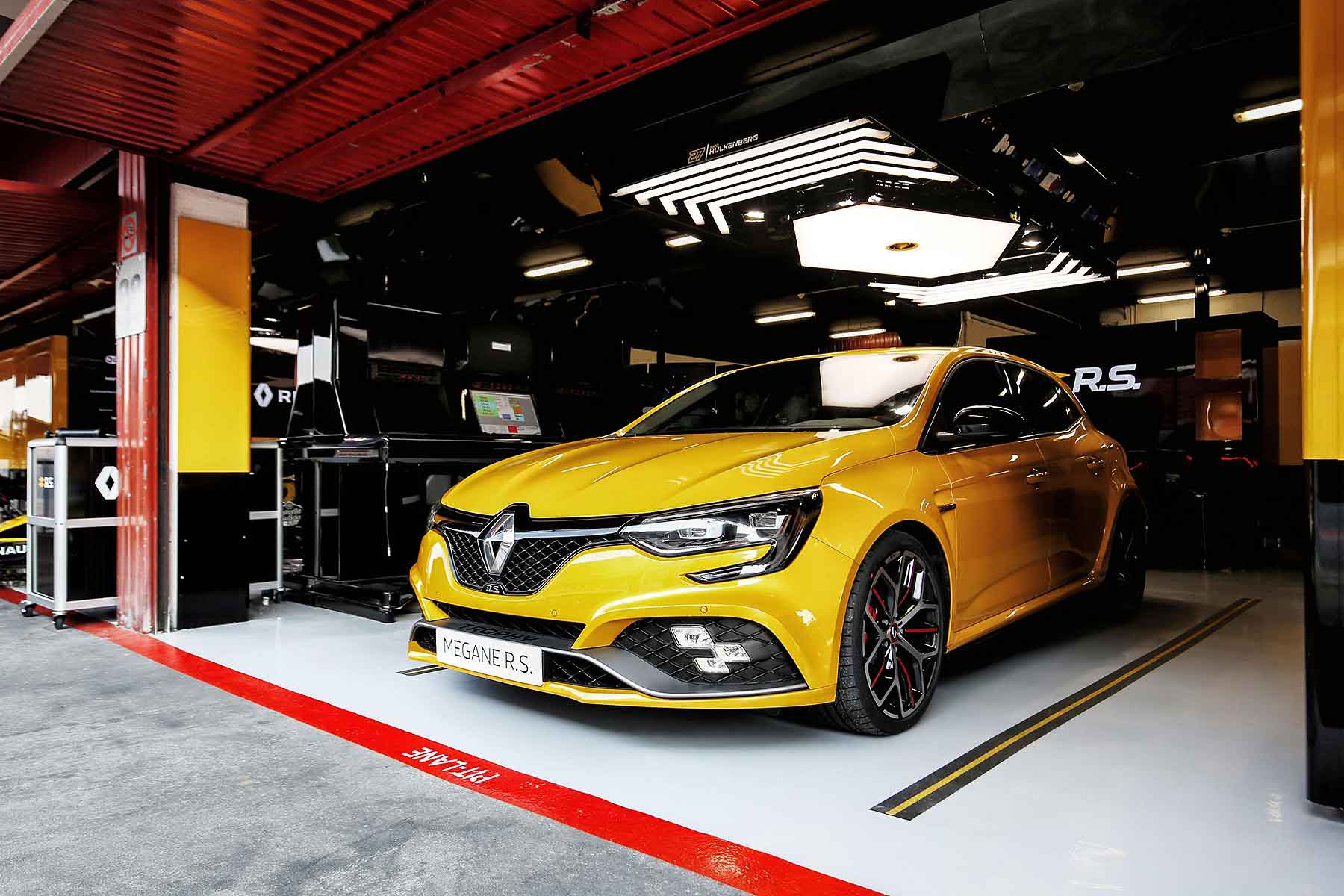
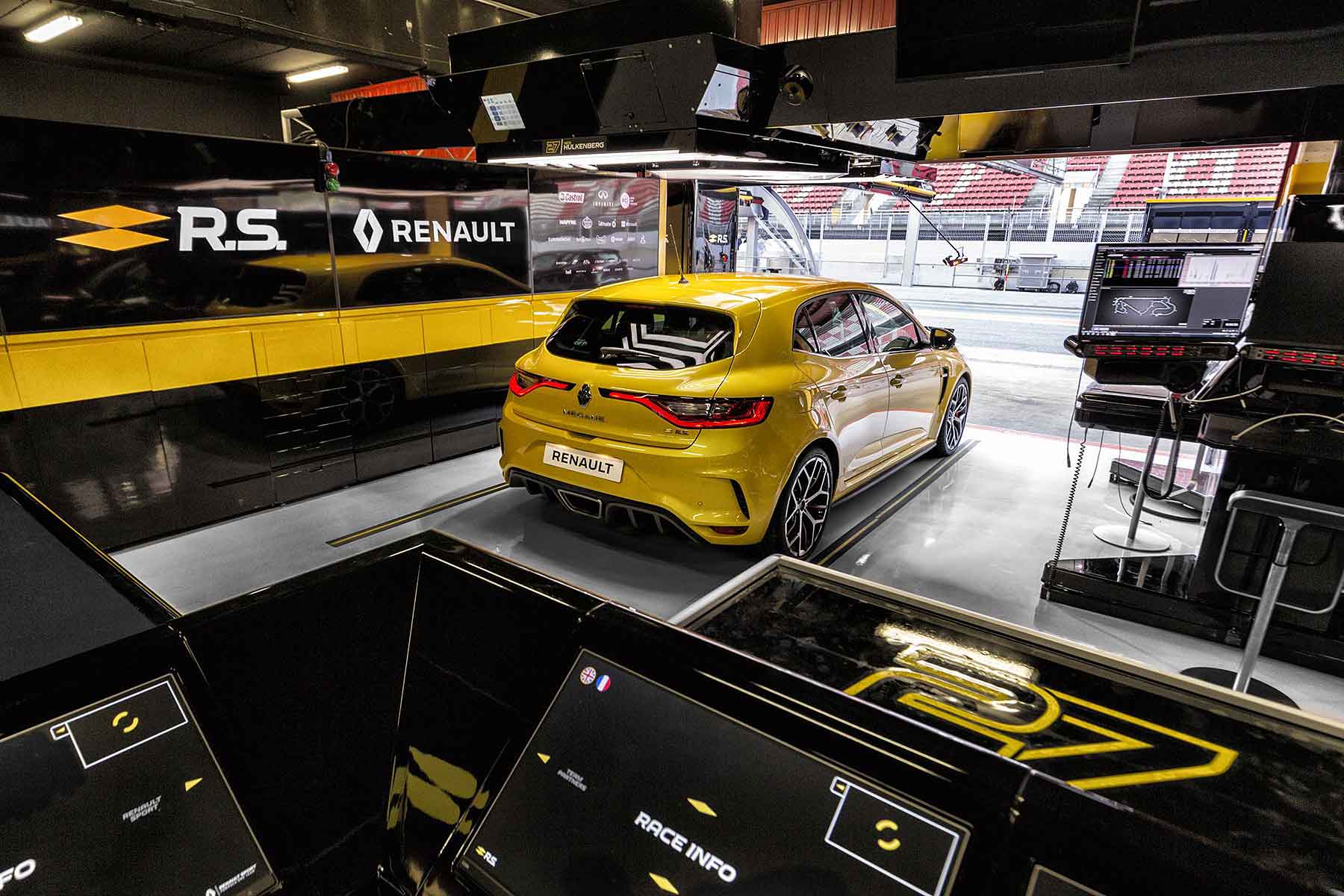
Renault has crowned its latest Megane hot hatch range with the new Megane R.S. Trophy – which, at 300hp, becomes the most powerful Renault Sport model ever launched by the firm’s crack performance division.
The car also has an upgraded chassis, that builds further upon the Cup option offered on the Renault Megane R.S. range. That car has stiffer suspension (25 percent firmer dampers, 30 percent stiffer springs, 10 percent stronger anti-roll bars) and a Torsen limited-slip differential: the Trophy adds lightweight bi-material front brake discs, new 19-inch alloys and performance Bridgestone Potenza S001 tyres.
Ultra-lightweight alloys can be optioned, reducing the car’s unsprung weight by a significant 8kg. Available from next year, these wheels will come with Bridgestone Potenza S007 tyres, developed specifically for Renault Sport and giving the Megane R.S. Trophy more direct steering, more grip and “greater durability” in performance driving.
The Trophy also has the 4CONTROL rear-wheel steering system and hydraulic bump-stops of regular Megane R.S. models.
Renault says the engine power has been boosted not through a simple ECU tune-up, but by fitting a bespoke turbo that uses tricks it’s learnt from its F1 programme. The turbine rests on a ceramic ball bearing, which reduces friction and makes the car more responsive: 0-62mph in 5.7 seconds proves its potency.
There’s also a new exhaust system with a mechanical valve in the rear silencer to alter the engine note – the first time a hot Megane has had such a system.
Both manual and EDC dual-clutch gearboxes are offered (the EDC has a little more torque than the manual, although both have improved pulling power over the regular car).
Renault Megane R.S. Trophy: yellow peril
The Megane R.S. Trophy is offered in a vibrant Liquid Yellow paint, along with the other colours regular R.S. come in. It also stands out through its 19-inch Jerez alloys, and ‘Trophy’ branding added to the F1-alike blade in the front bumper.
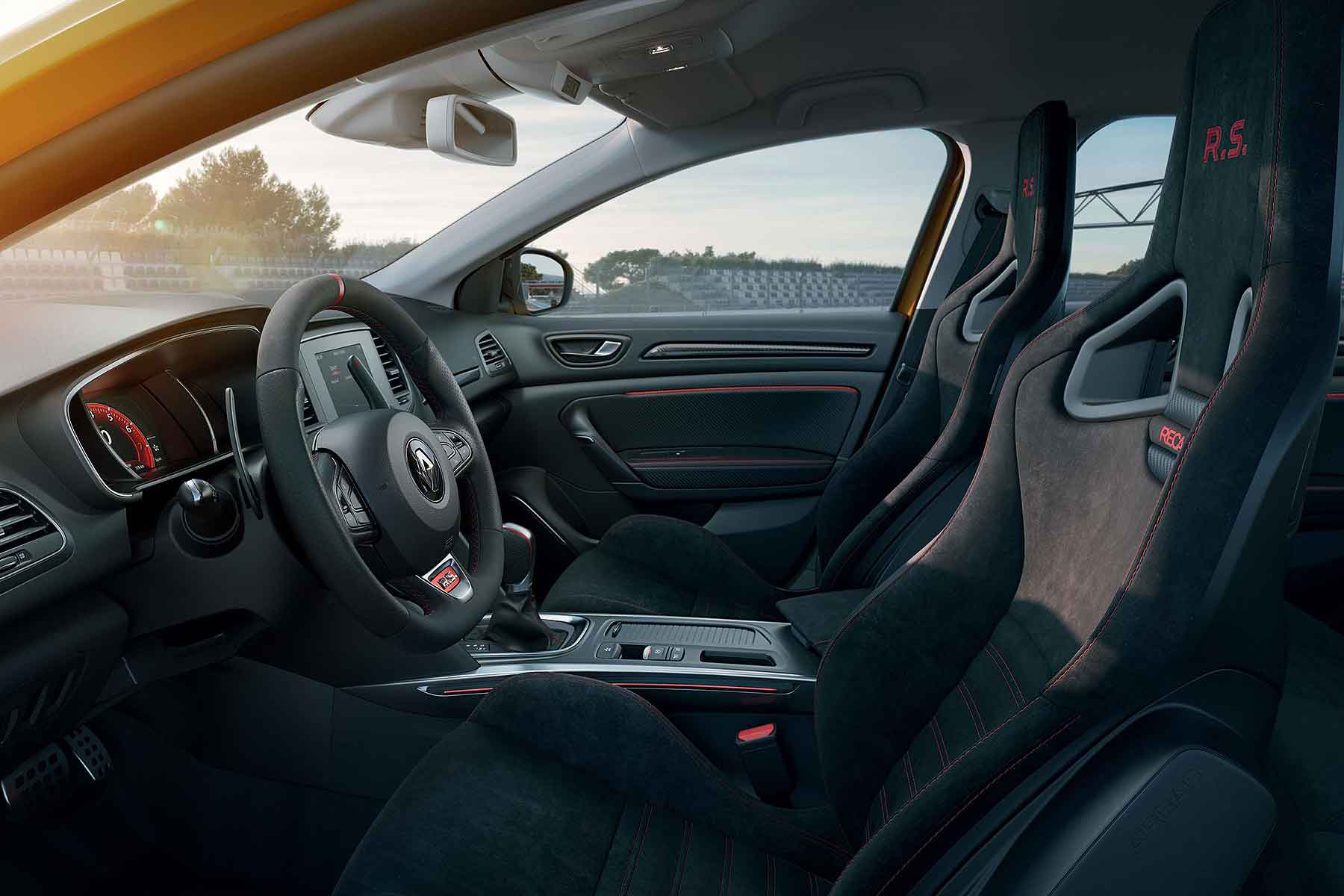
Inside, Renault offers optional Recaro seats, which can be positioned 20mm lower than the regular car. They’re clad in Alcantara for a racy feel and have a hard-shell design that mimics a racing car bucket seat.
Renault Sport F1 driver Nico Hulkenberg has been involved in the development of the Megane R.S. range since last year.
“Each of the new features on New Renault Megane R.S. Trophy offers greater sports performance and feel,” he said. “It’s obviously positive to have more power and better grip through the tyres and to benefit from improved braking endurance.”
Oh, and he’s certainly impressed by those Recaros. “I enjoyed the feeling offered by the new seats: the support they provide for sports driving is excellent.”
Pricing for the new Renault Megane R.S. Trophy will be confirmed nearer to ordering opening in the autumn; first deliveries are expected from the winter.
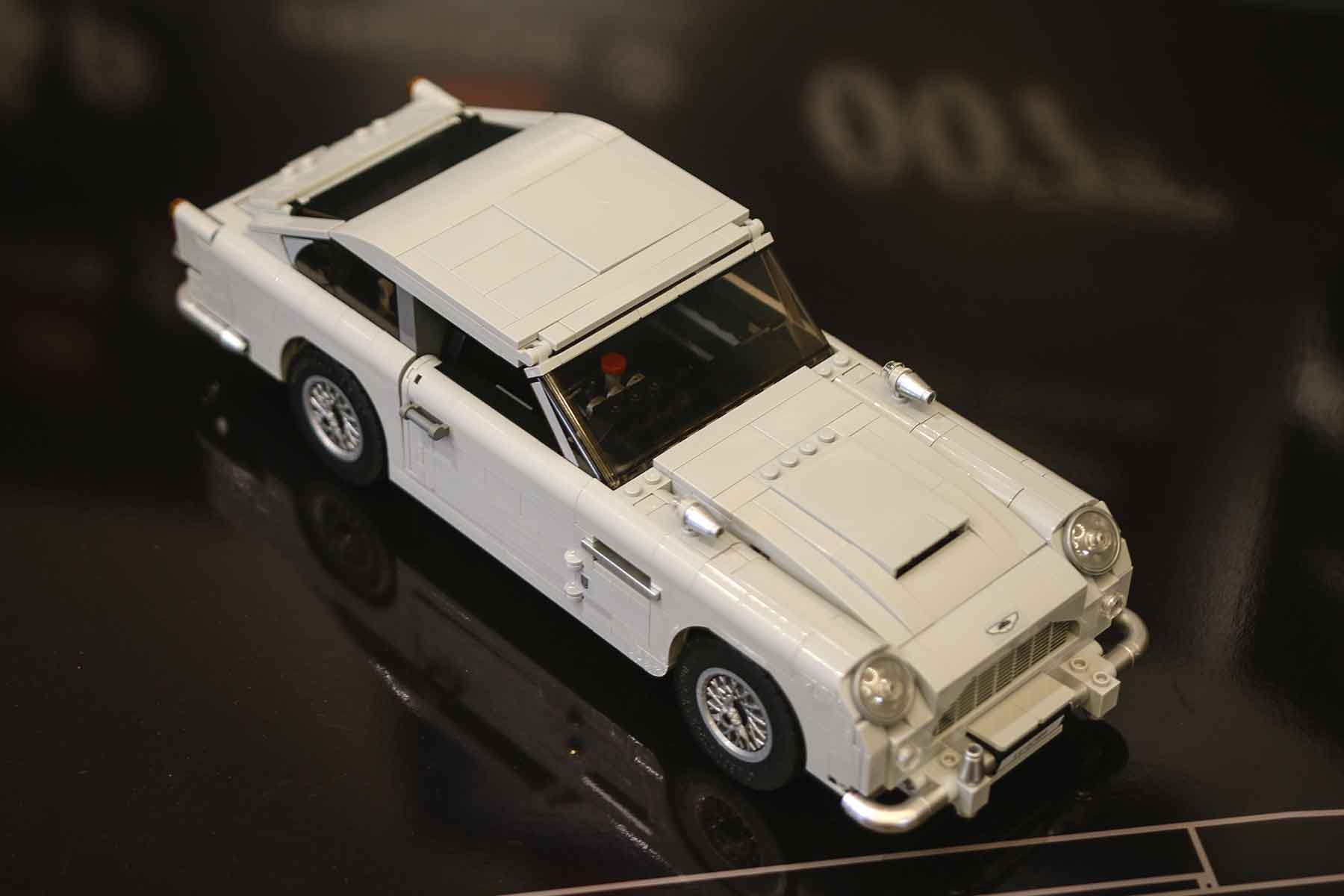
What is the most iconic car ever made? A car that means something to almost everyone – a pop culture hero, a timeless automotive star, almost of its own franchise? This is the question the boffins at Lego asked when tasked with picking something new for their Lego Creator Expert line.
Their conclusion is, we think, a just one – James Bond’s Aston Martin DB5 And the version immortalised in Lego has just been revealed.
For nearly 60 years this car, and subsequent Astons, have been the best-known automotive companions to the world’s most famous spy. The DB5 has served in no less than three outings of the world-famous Ian Fleming character – first in the immortal Goldfinger (1964), then in GoldenEye (1995) and once more in Skyfall (2012).
The DB5 is, and always will be, Bond’s most famous car. That makes it the world’s most famous car and as such, was the perfect next project for the guys at Lego to reimagine in brick form.
Now, the finished product is hitting shelves. We went to the global launch at the UK’s flagship Lego Store in Leicester Square, London.
Video: Lego releases James Bond Aston Martin DB5
Double-0 heaven/Lego paradise
A ride into the city in the back of a sumptuous Aston Martin Rapide S got us in the double-0 mood, as did the stunning full-size DB5 on display outside the shop itself. Walk in, and it’s as you’d expect: a Lego paradise, with an enormous and detailed Lego reproduction of Big Ben looming over the impressive historical Bond installations.
Speak of the devil, that’s the next thing that caught our eye. One-third scale replicas of Daniel Craig’s 007 DB5 – including the actual model used for the explosion scene in Skyfall – are proudly displayed. Even though it’s a scale model, the charred carcass of the DB5 reproduction was enough to muster a wince from us.
Other tidbits included the genuine ejector-seat gear-shifter used in the Goldfinger DB5, a few of modern Q’s bits and bobs (glasses, tea mug), M’s British bulldog and some 60s 007 figurine packaging, complete with a rather over-flattering drawn representation of Sean Connery in character.
“Now to your car, 007.”
It’s something of a masterpiece. Bugatti Chirons and Porsche GT3 RSs are all well and good, but a Bond car is invariably possessed of trinketry not often found on the average car’s options list. Part of what makes the original ‘Goldfinger’ DB5 the ultimate Bond car is the arsenal of gadgets and weapons it featured. Remember them fondly, and find them all faithfully recreated on this new Lego version. Everything from the bullet-proof shield popping out behind the rear window, to fog light machine guns. The swivelling number plate, interior radar trackers and tyre-destroying wheel blades make useful features on Bond’s company hack. All of which is great, but what makes the Lego DB5 is the inclusion of the ultimate Bond car gadget. A twist of the central piece of the rear bumper retracts the roof, revealing a seat ready to burst out at your whim. “That was the hardest and most important part to get right in the DB5,” said Lego designer Michael Psiaki.
“We’re really proud of how we worked it all in intricately, without altering the look of the car. We’re also very pleased with how the front end turned out, given the range of functions implemented – from the swivelling number plate to the hidden machine guns.”
One of our favourite features on the Lego DB5 isn’t actually a moving part. Pop the bonnet, and you’ll find a lovely accurate representation of the inline-six that powers the DB5, complete with inlet hose and chunky cam covers. “When I looked under the hood of a DB5 I originally thought it was a ‘V’ engine, due to the two side-by-side cam covers you see in there. I later found out it was a straight-six – it’s one of the things we’re most proud of in our recreation of this car.” We collared a representative from Aston Martin and asked if Lego versions of Timothy Dalton’s DBS, Pierce Brosnan’s Vanquish, Daniel Craig’s DBS, DB10 or even his new car due in Danny Boyle’s to-be-titled Bond 25 were in the pipeline. He smiled vividly but declined to comment. Watch this space… The ultimate Dad-and-lad Lego build project that is the Lego Creator Expert James Bond Aston Martin DB5 is on sale now in store and online for £129.99. It’s a 1,290-piece build, but we’re sure Dads the world over will persevere long after the kids’ patience has dried up. Just as well that it’s a 16+, too. Four months of solid design work from Psiaki might have yielded the coolest Bond toy yet.
The new 2018 Volvo XC40 SUV and Ford Focus hatchback have both scored a maximum five-star rating in the latest round of Euro NCAP safety crash tests.
The XC40 performed particularly well, with a 97 percent score for adult occupant protection. Euro NCAP says this puts it in the top five cars tested in the past three years.
Both cars were praised by Euro NCAP for a high level of active safety kit. Autonomous emergency braking (AEB) is fitted as standard to both of them – which can detect cyclists as well as pedestrians.
The Volvo XC40 also has emergency lane-keeping technology (dubbed ELK), which the safety organisation says will stop the car leaving the road or being steered into the path of oncoming traffic.
“Technologies like AEB and ELK deliver immediate safety benefits but they are also enabling technologies for the autonomous vehicles of the future,” said Euro NCAP secretary general, Michiel van Ratingen.
“Euro NCAP’s roadmap sets a series of demanding tests for each of these ‘milestone’ technologies seeking to ensure that their performance saves lives today as well as tomorrow.”
He was also full of praise for the two models overall. “It’s good to see that manufacturers, both in the premium sector and the volume market, are responding to our tough new requirements introduced in 2018 by fitting technologies that will save lives.”
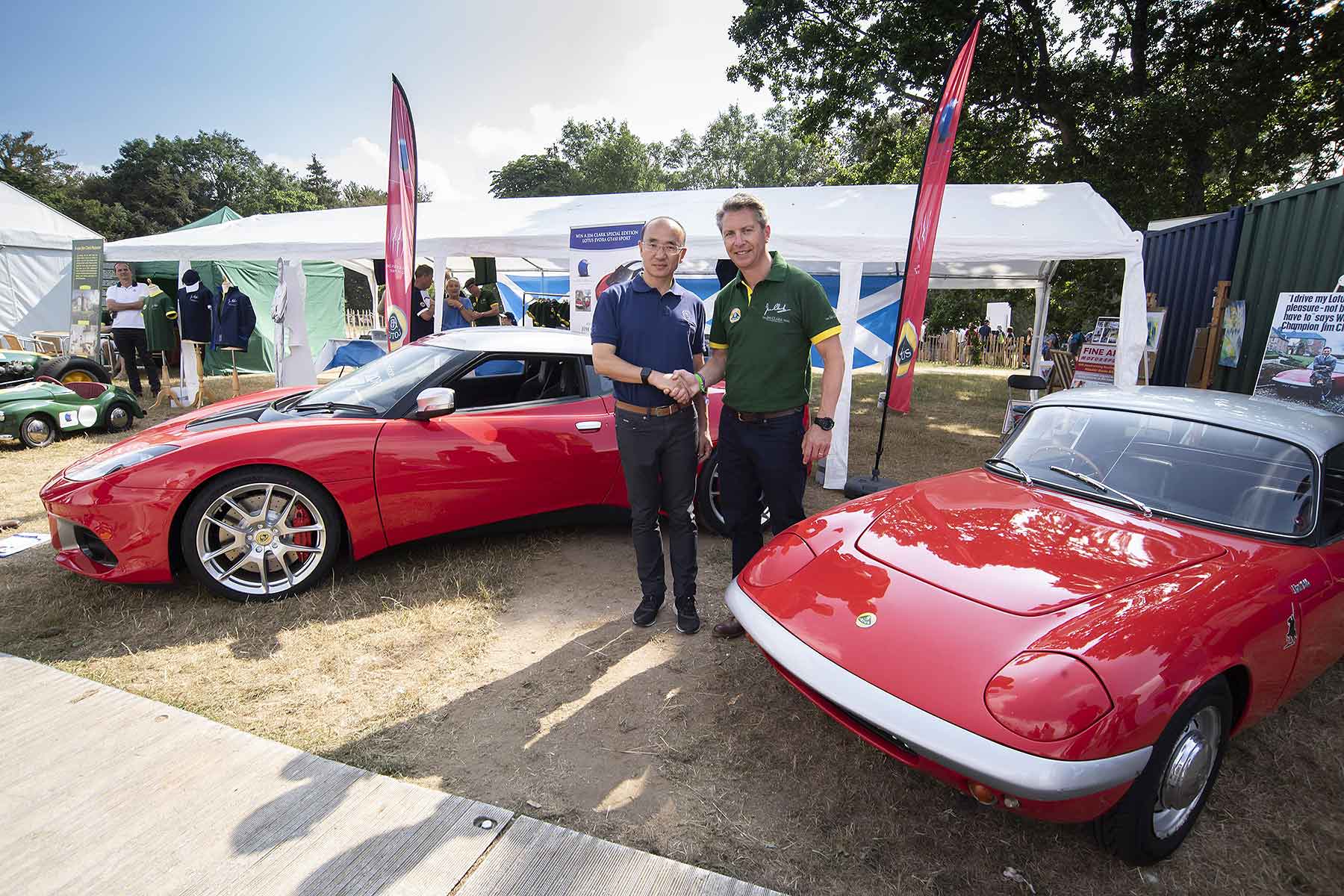
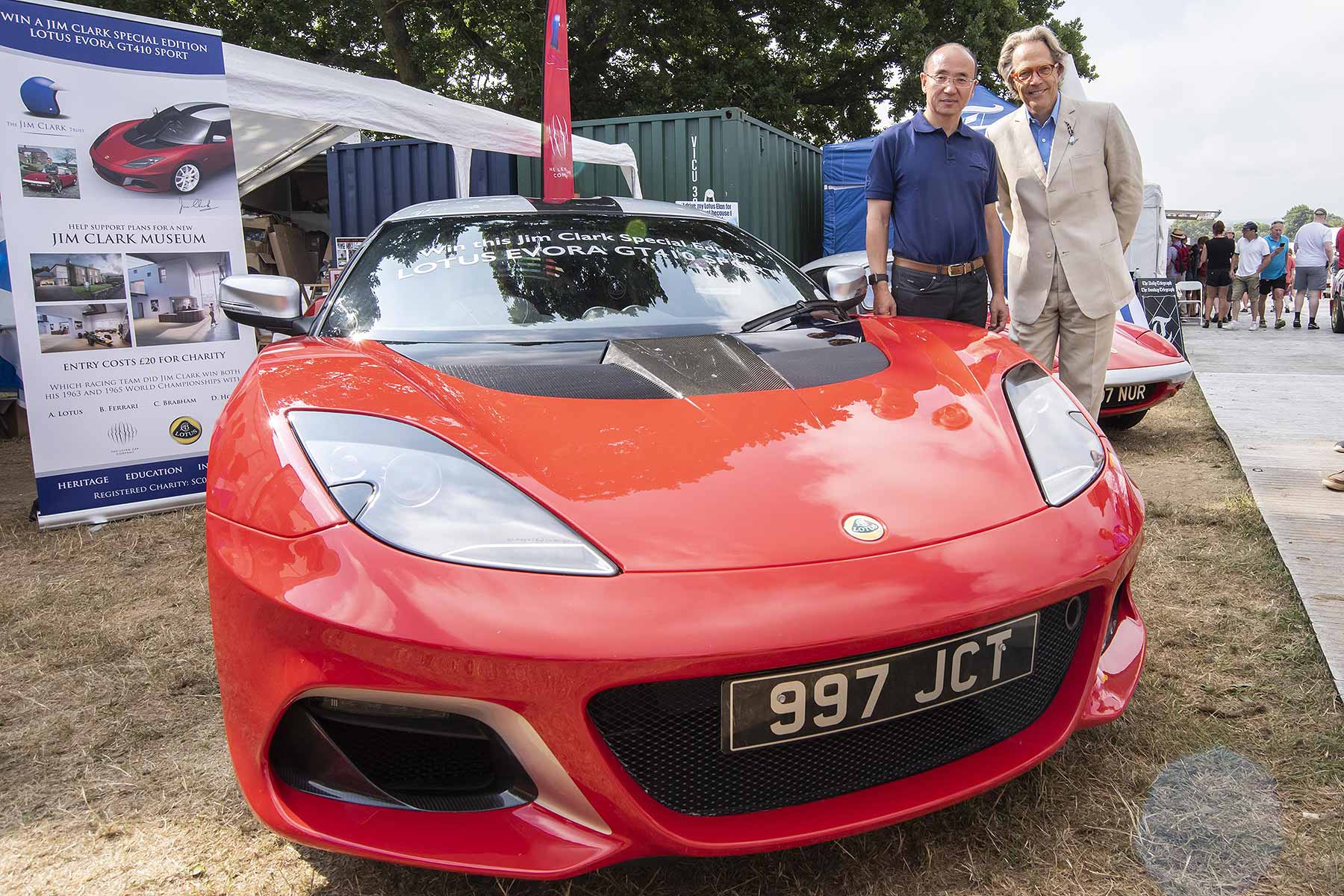
Lotus Cars is 70 years old in 2018 and, fittingly, has also just made its 100,000th car. The firm is teaming up with the Jim Clark Trust to mark the occasion and raise money for the charity by giving away the landmark Lotus.
The 100,000th car is a Lotus Evora GT410 Sport, which has been given a one-off Jim Clark special edition makeover. It was revealed at the 2018 Goodwood Festival of Speed with the help of new CEO Mr. Feng Qingfeng.
It’s been inspired by the 1960s Elan S2 driven by the revered two-time World Champion, with a matching colour scheme of red paint, silver roof and silver wheels – oh, and tartan upholstery inside, in honour of the beloved Scot.
Clark used it to commute from Lotus’ base in Cheshunt, just outside London, to his family home in Duns, in the Scottish Borders. It’s 350 miles each way – that’s why he averaged over 15,000 miles a year in the car.
Every Grand Prix Clark won was behind the wheel of a Lotus, and he also won the Indianapolis 500 in 1965. Tragically, he was killed in 1968, but the Jim Clark Trust works to keep his memory alive.
The trust was also the official charity of this year’s Goodwood Festival of Speed.
Lord March said during the unveiling of the car at Goodwood: “It’s fantastic to see the crowds here at Festival of Speed so engaged and excited to remember Jim Clark and celebrate his achievements in our Silver Jubilee year.
“The stunning Jim Clark special edition Evora is a fitting tribute to a legendary man and his iconic Elan. Clark’s exploits on track were very special indeed and we are proud to launch this competition here at Goodwood.”
Want to enter the competition? Head over to www.jimclarklotus.com, answer the simple question and pay £20 per entry to be in with a chance of winning – and every single penny goes to the charity, raising funds to help finish a brand-new Jim Clark Museum.
Understood as a piece of equipment, the primary purpose of a car is to get its occupants from point A to point B reliably and safely. Cars also cost money and, by and large, are costly when you consider depreciation.
So, with all that in mind, what are the safest second-hand cars on the market today? Co-op Insurance totted up the top 10. All cars have five-star Euro NCAP ratings, produce 120g/km of CO2 or less, and cost under £15,000.
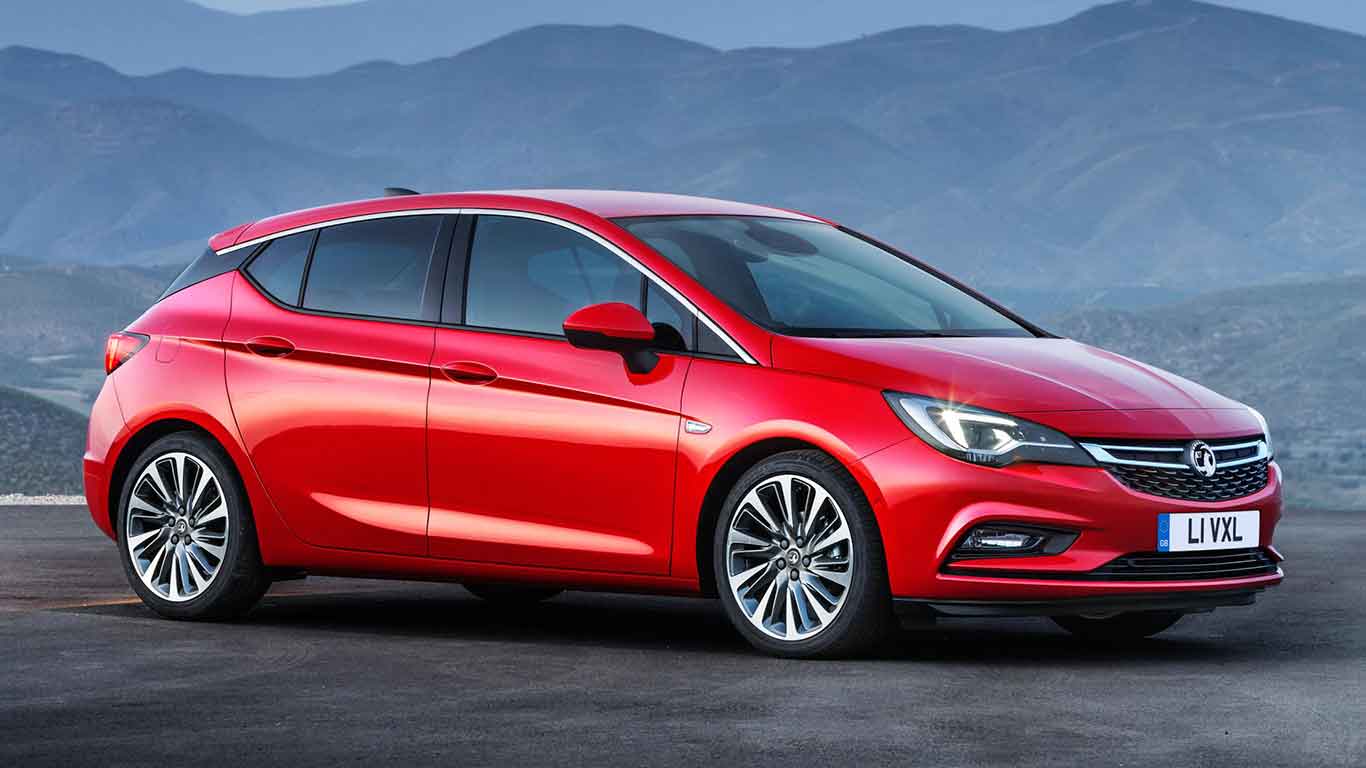
10. Vauxhall Astra
In at number 10 – a new entry for 2018 – is the humble Vauxhall Astra. A testament to the ‘bigger isn’t always better’ philosophy – bigger size doesn’t always imply better safety. A good option for a young family-to-be.
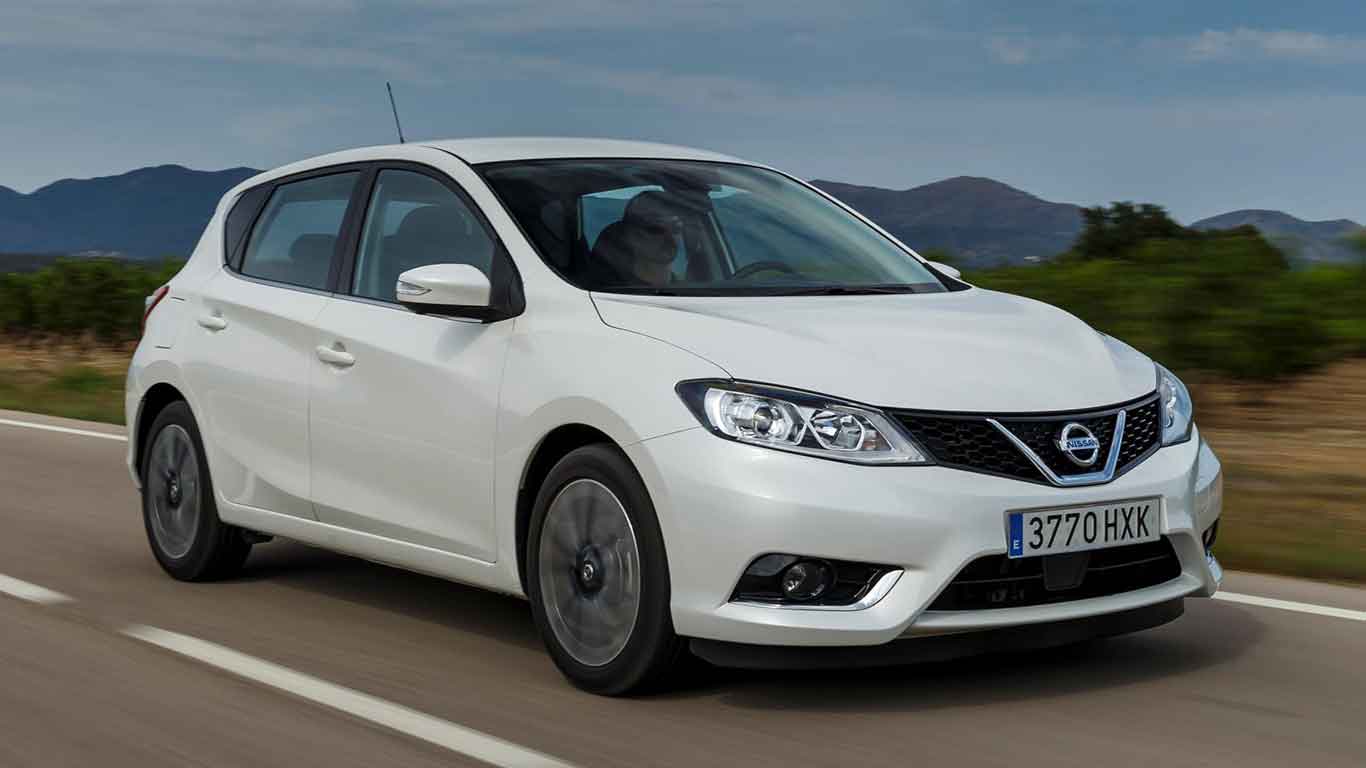
9. Nissan Pulsar
Number nine is also a new entry on the list and is another family hatch, rather than the large SUV many might assume. The Nissan Pulsar has been around for a couple of years and now represents a solid bargain for the safety-conscious motorist.
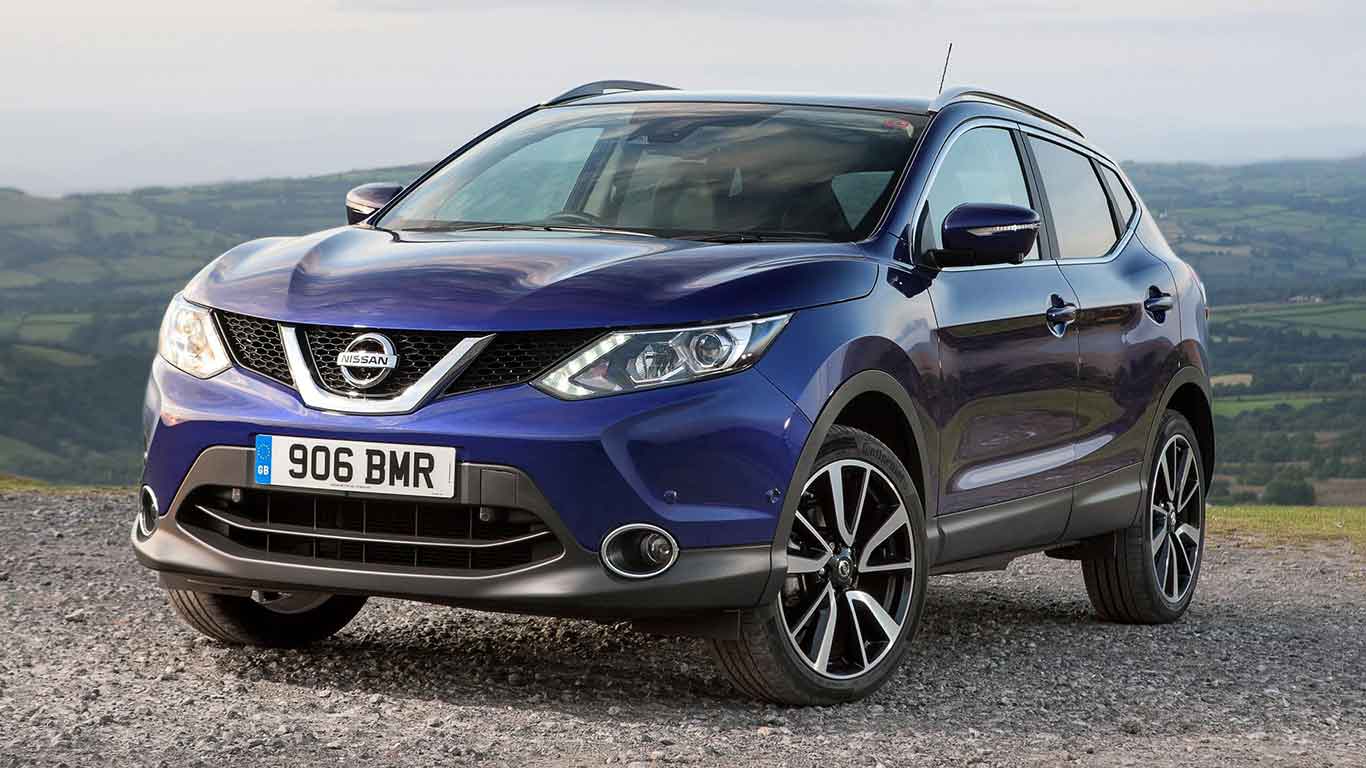
8. Nissan Qashqai
Another Nissan at number eight – the Qashqai is the first crossover on the list and arguably the most successful car of the breed since its introduction in 2007. Perhaps more reflective of the strength of the list this year, rather than issues with the Qashqai, it has dropped five places from where it was on last year’s list.
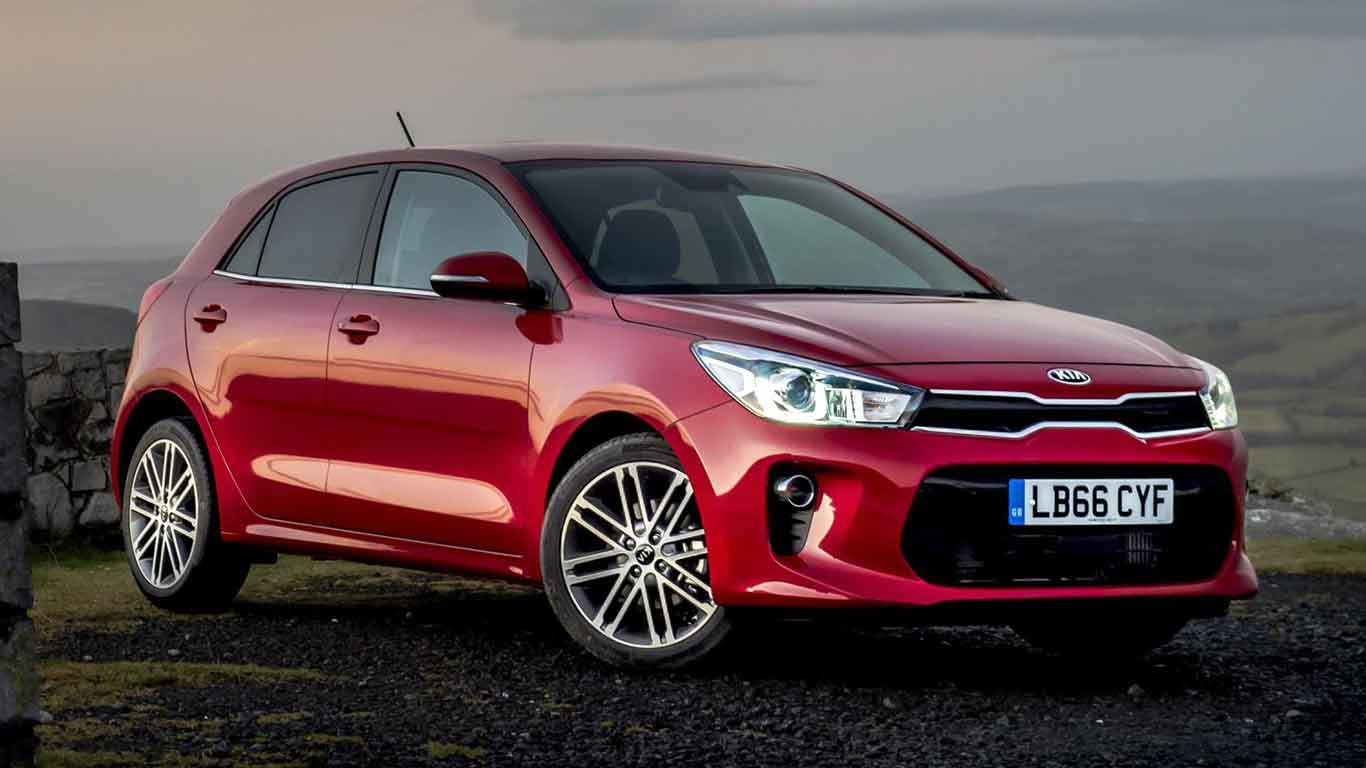
7. Kia Rio
Back in the smaller stuff, the little Kia Rio in at number seven is the antithesis to a bulky SUV. Yet it makes this list ahead of one of the most popular crossover SUVs on sale. A great safe little car if you don’t need masses of luggage space.
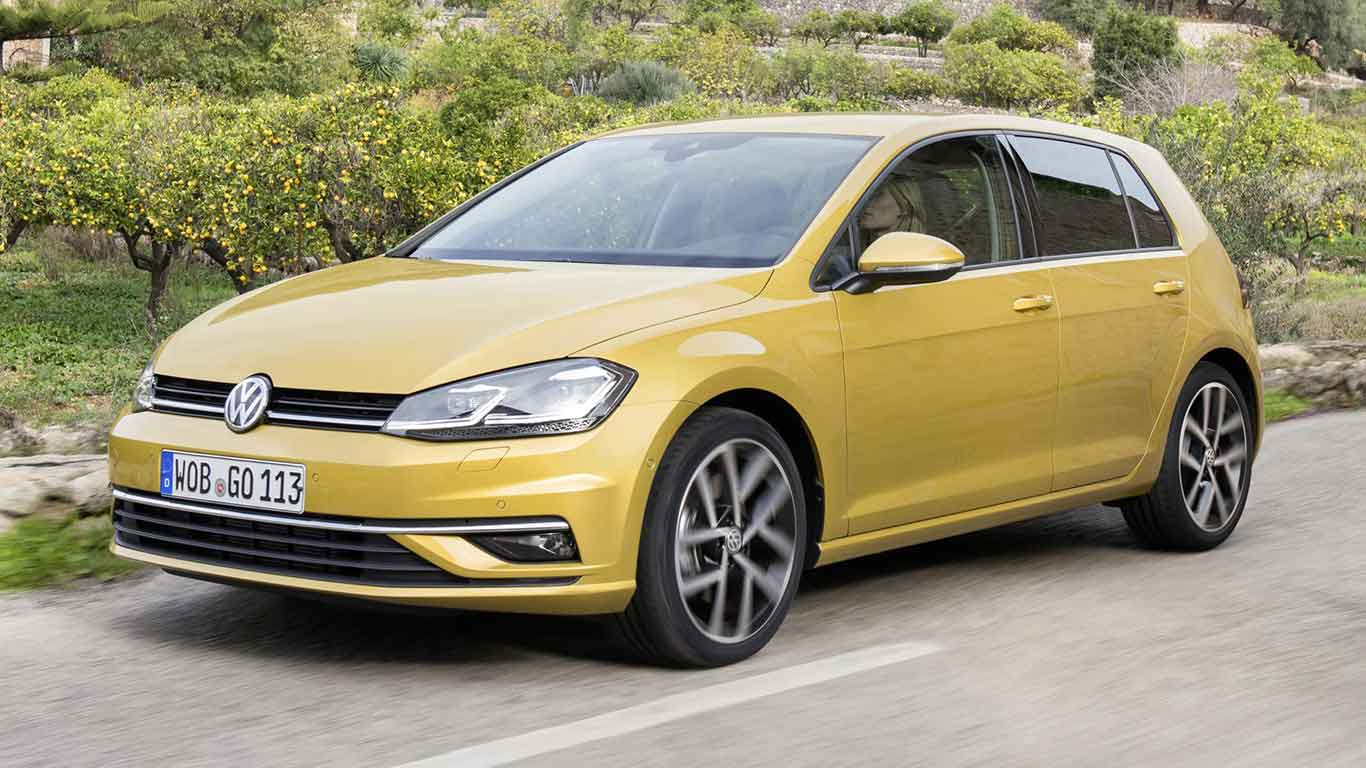
6. Volkswagen Golf
Old faithful still isn’t pulling its punches – the Golf has been serving drivers for 40 years. It remains one of one of the safest second-hand bargains for under 15k. At middling number six, it’s up one place on last year and also the first German entry on the list.
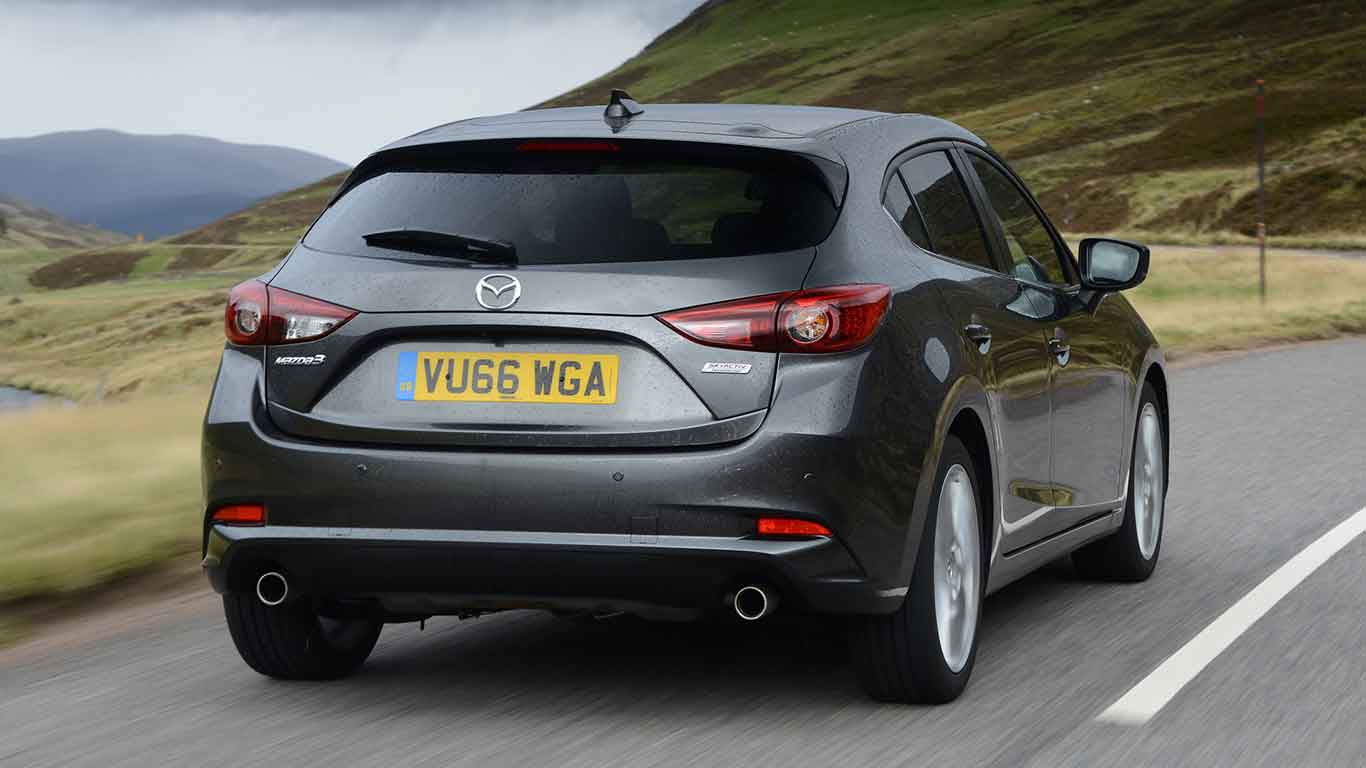
5. Mazda 3
Another mid-size hatch, the fifth-placed Mazda 3 brings a slightly sportier side to the safest car list. It’s also another new entry. Between this, the Golf, the Pulsar and the Astra, this style of hatch is looking to be the safest second-hand bet of the moment.
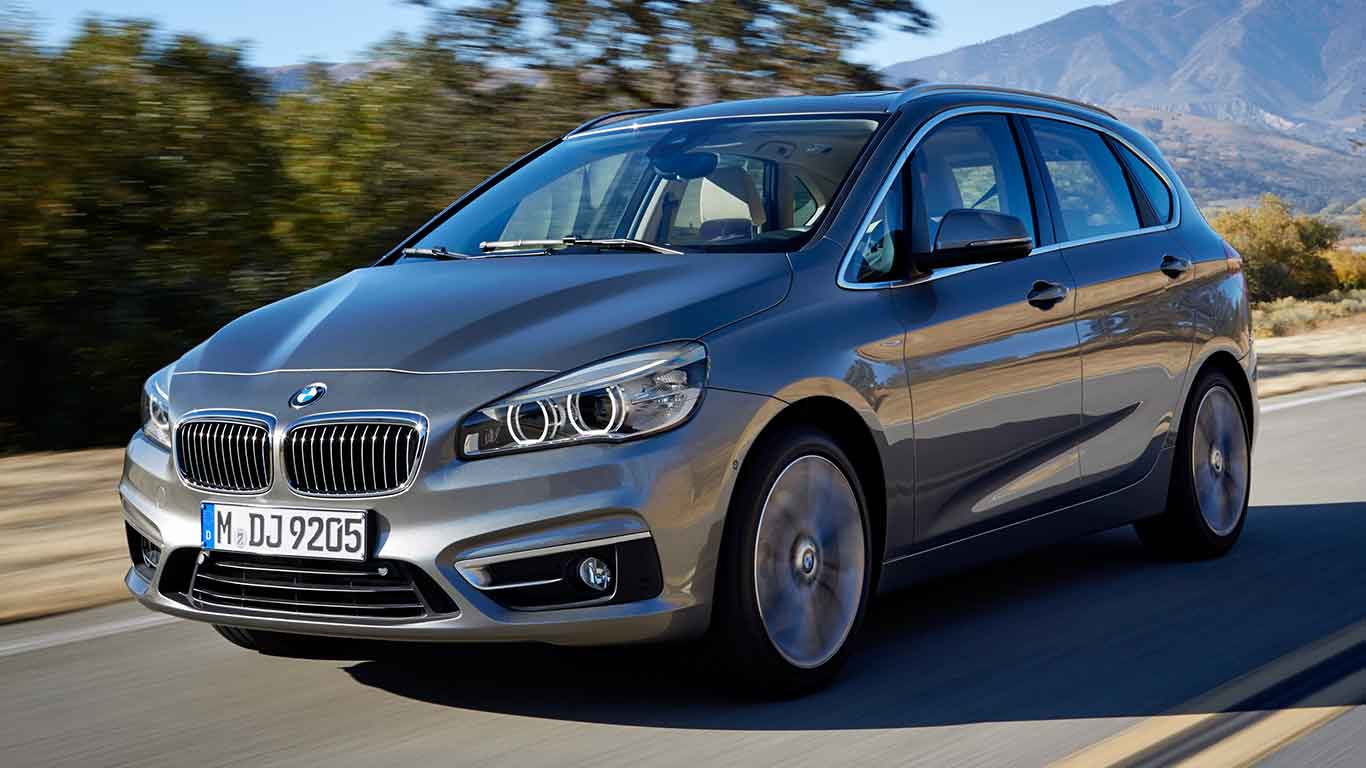
4. BMW 2-Series Active Tourer
Curious that the only people-carrier on the list of safest second-hand cars should be a BMW. What strange times we live in. The 2er offers strong BMW build, mega badge kudos, serious safety credentials and relative value for money. Everyone’s a winner with number four.
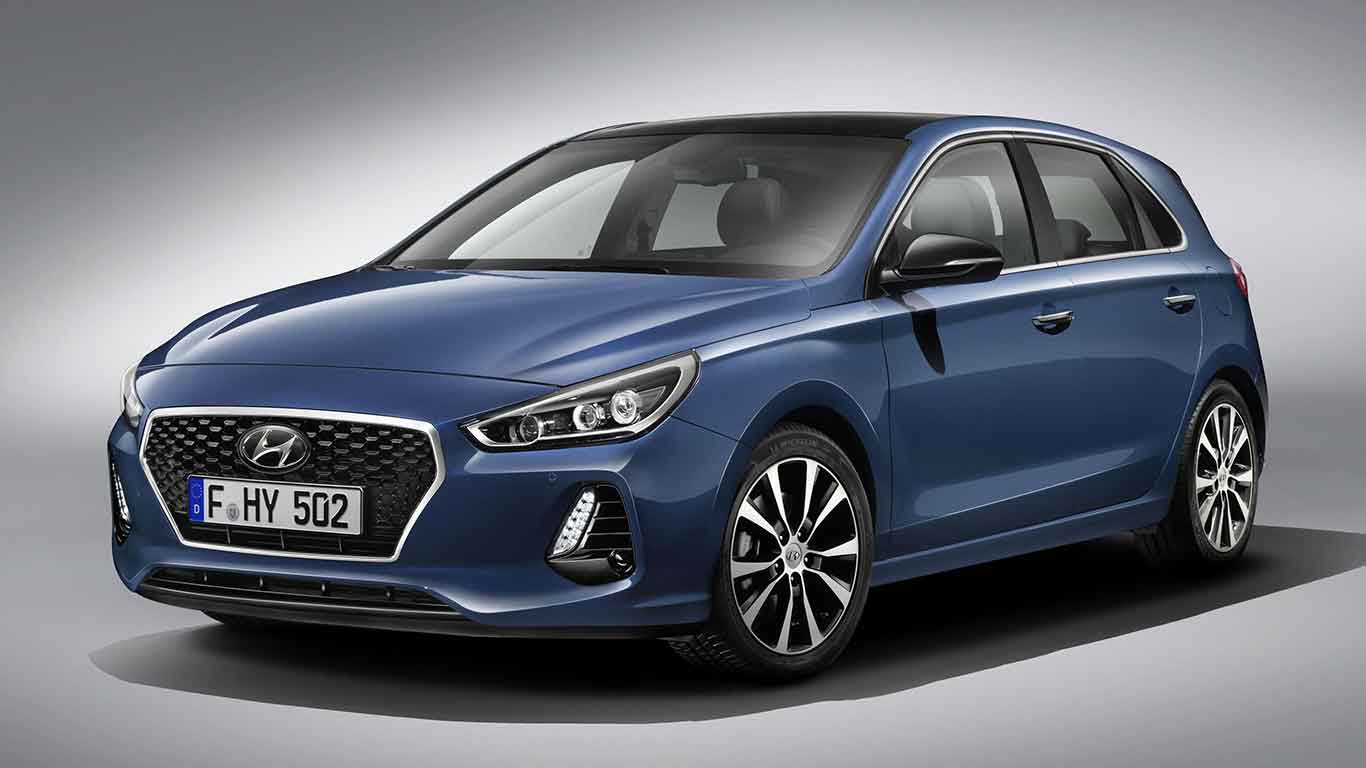
3. Hyundai i30
The Koreans have been making a splash for a while now with bombproof warranties and rising quality. Now the new-entry i30 is officially the third-safest second-hand hero, joining cousin Rio in the top 10. Any doubts about Korean cars are entirely ill-informed in 2018.
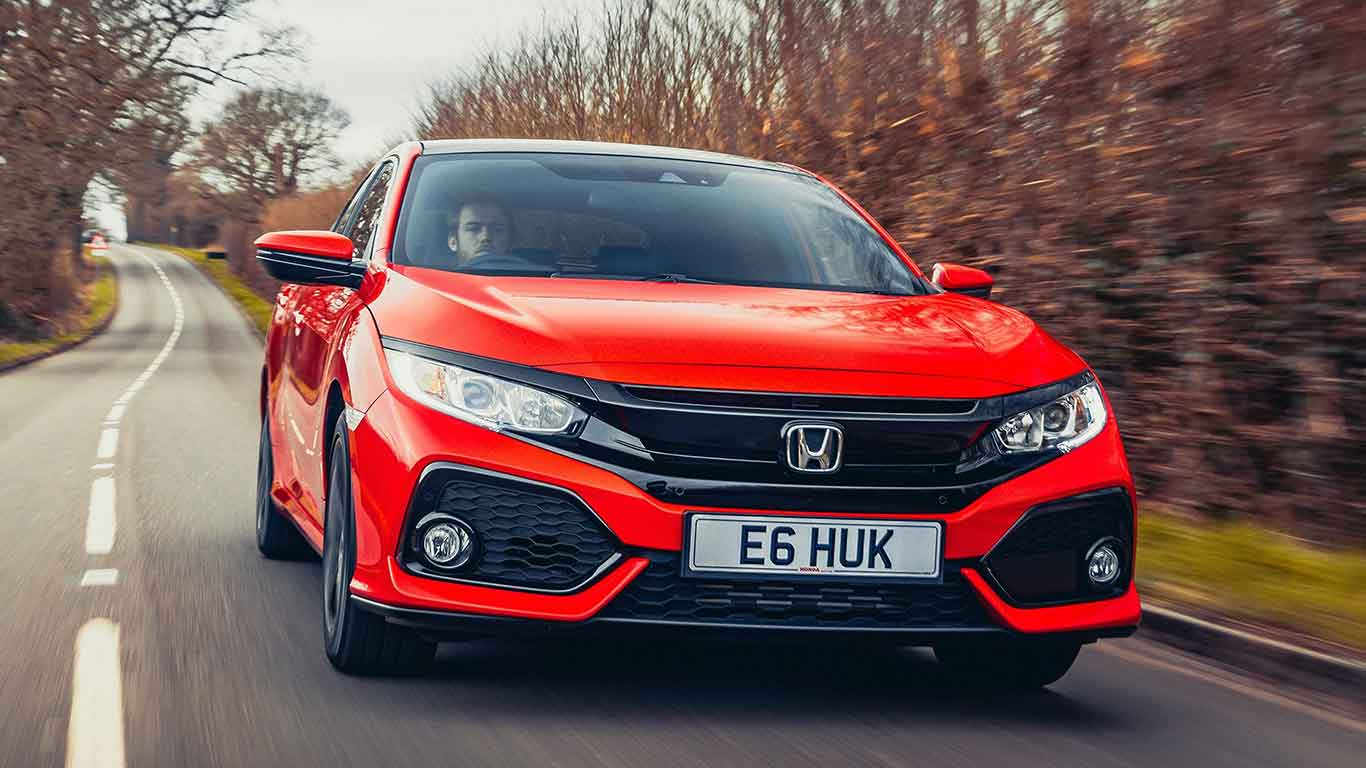
2. Honda Civic
Another long-serving mid-size hatch joining the five others on this list. The Civic has always felt like a strong opponent to Golf et al. Its new-entry position at number two on this list only reaffirms that. Every credit to it, too, given the leviathan of motoring safety that beat it to the top spot…
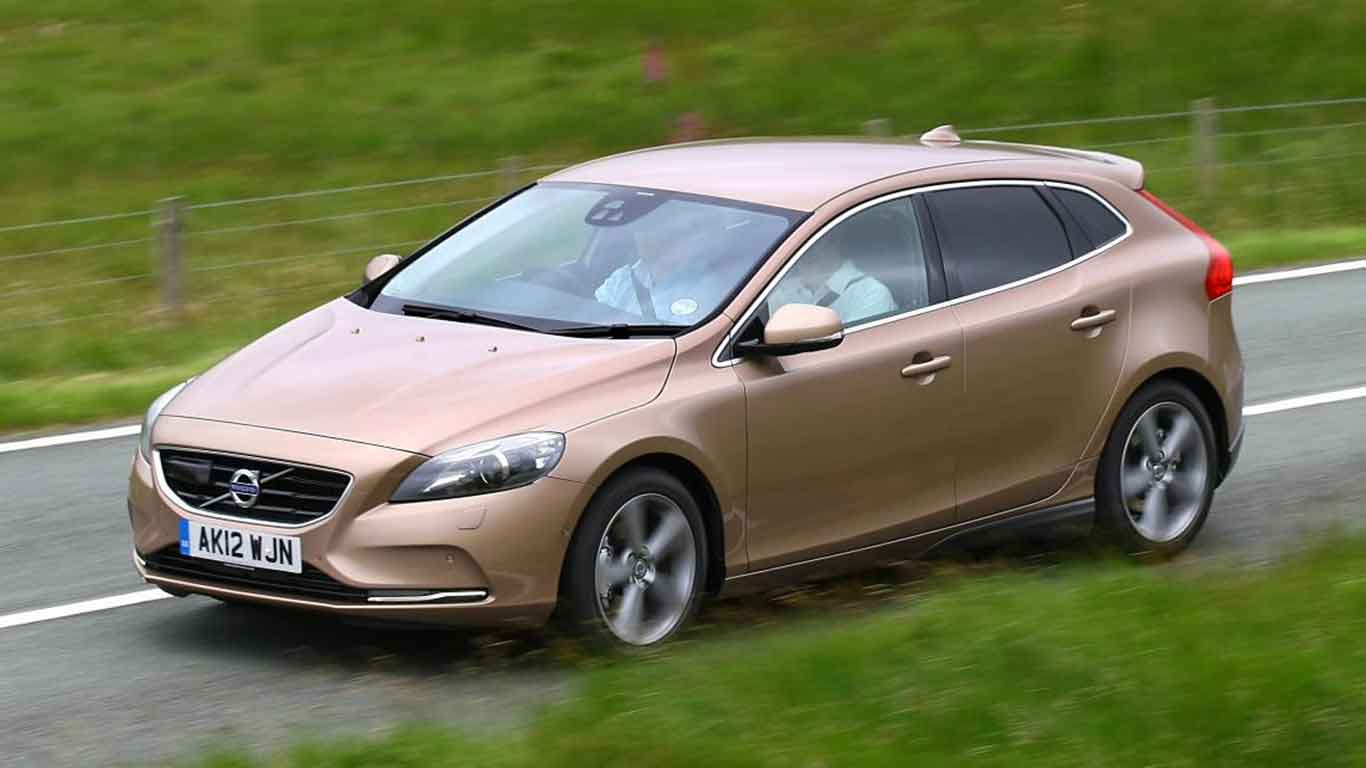
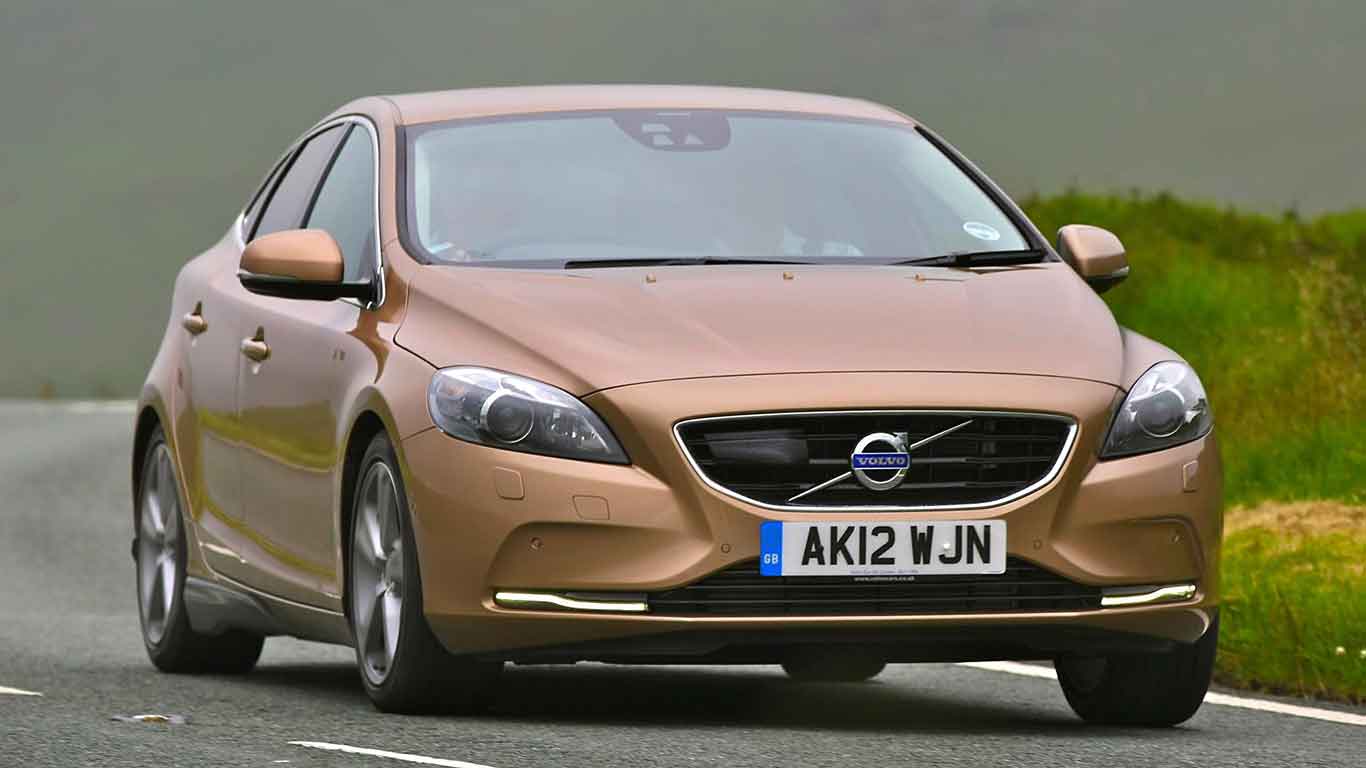
1. Volvo V40 with safety pack
As if it could be anything other than a Volvo. The Swedish marque has always been a stickler for safety and has consistently innovated in this field. The strength of the V40’s value and safety proposition is best conveyed by the fact it’s been a non-mover at the top of this list for three years running.
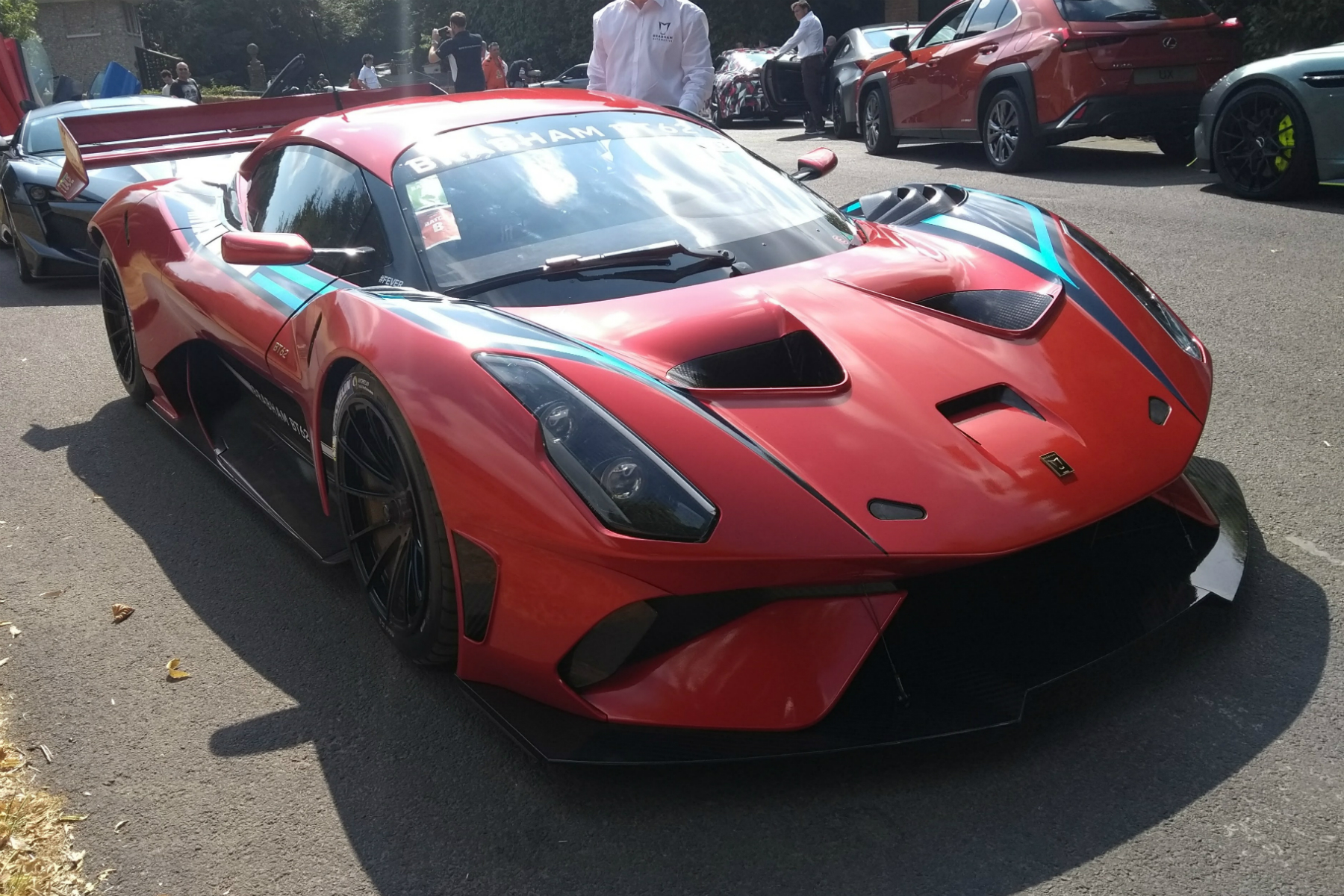
The last racing car to compete wearing the Brabham name was the BT60 in 1991. The last Brabham win was in 1985 at Paul Ricard, with Nelson Piquet at the wheel of the BMW-powered Brabham BT54. The first and last F1 world championship won in a car bearing the driver’s name was in 1966, with Sir Jack Brabham at the wheel of his Brabham-Repco BT19.
For a name so prominent throughout Formula 1’s golden years, and so dominant for long stretches within, Brabham has lain fallow for far too long.
David Brabham, son of Sir Jack and a proven top-class racer in his own right, has been of that opinion for many years. So, after his Le Mans win in 2009, he set about the difficult task of building a new car. Nine years on, David finds himself on the start line on the hill at 2018’s Goodwood Festival of Speed.
More than a tonne of downforce
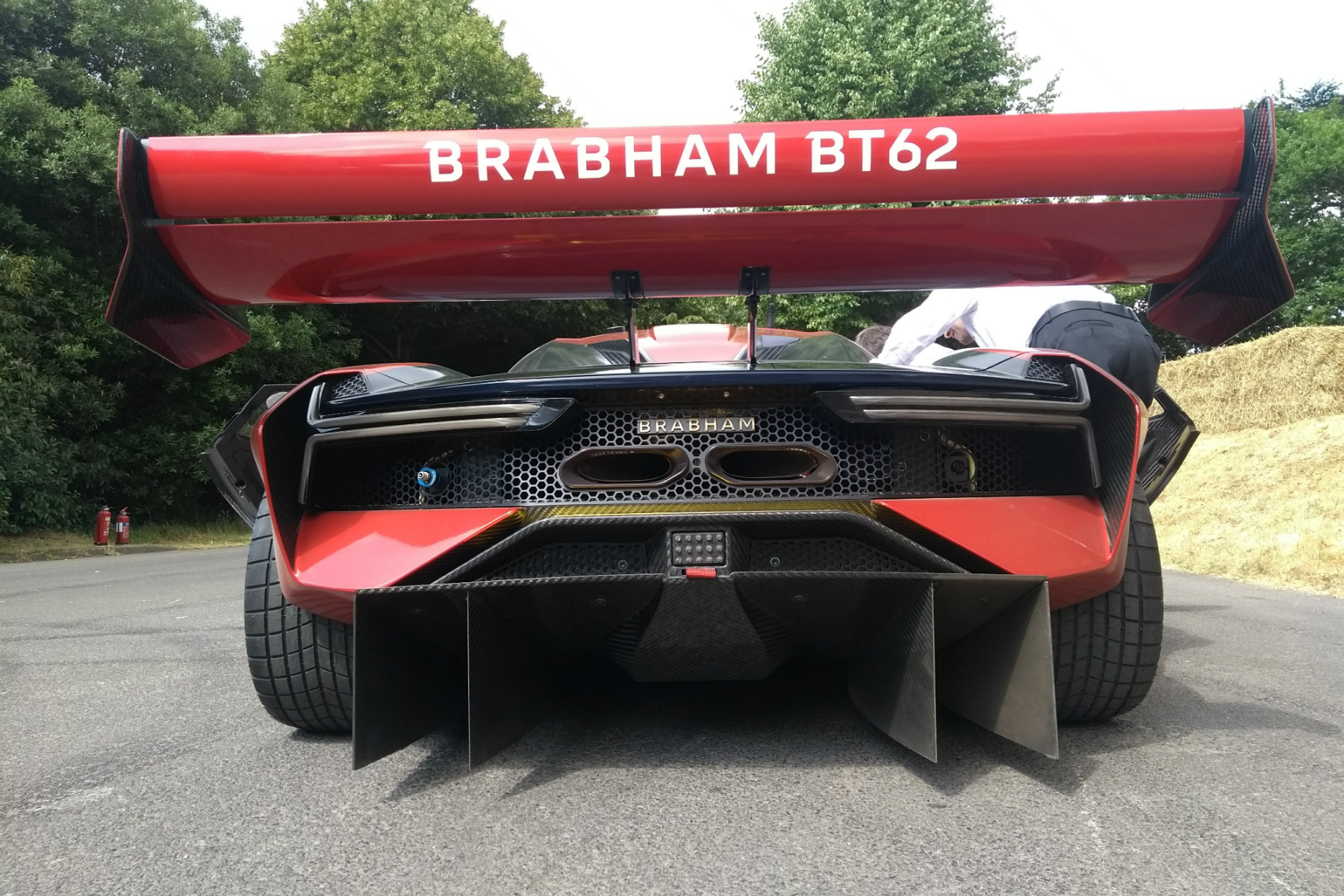
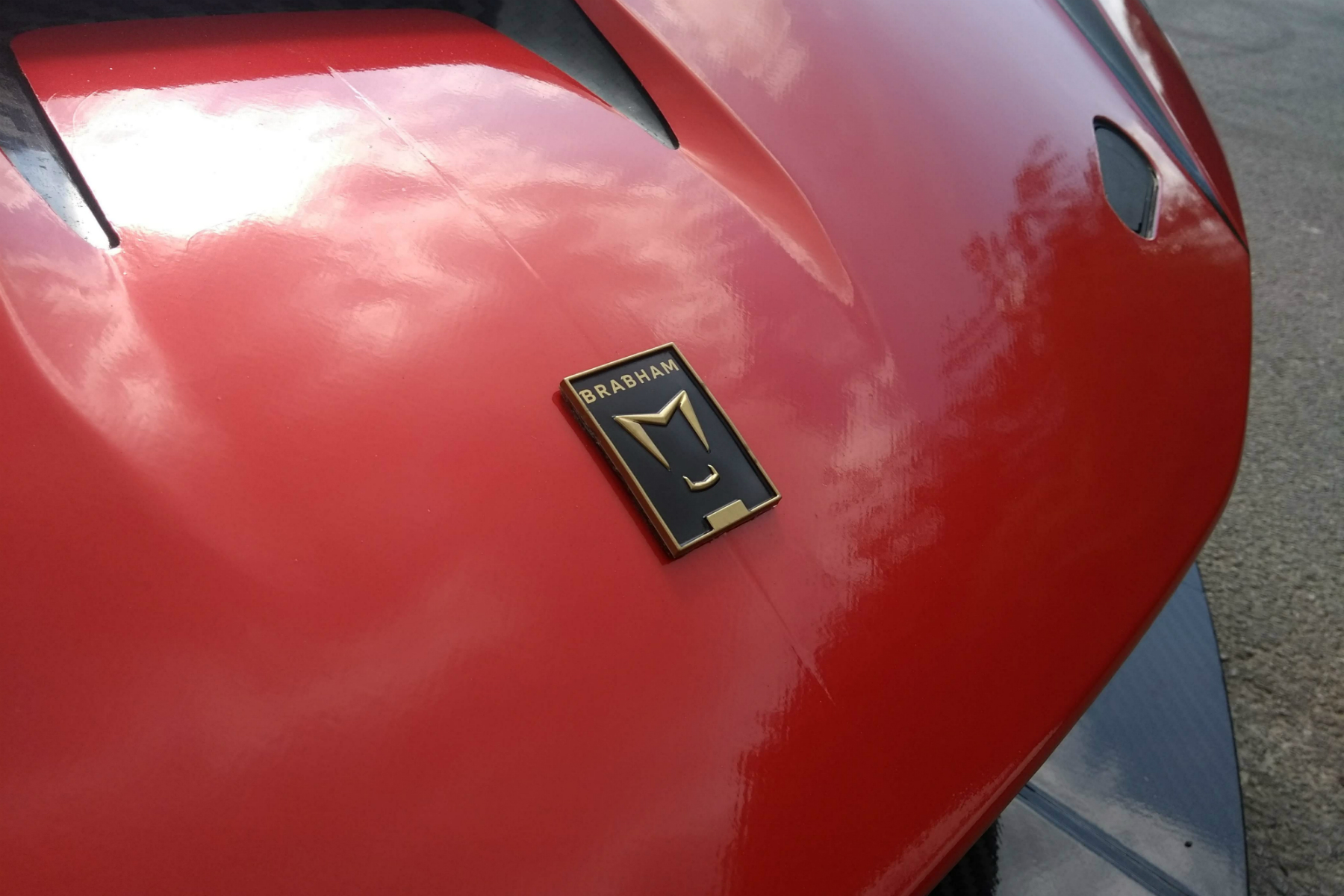
In the shadow of 1,200kg of downforce’s-worth of enormous rear wing, ‘Brabham’ is proudly splayed across the centre of its rump between distinctive LED light strips, above the exhausts and a gargantuan diffuser. The dream is alive, the Brabham BT62 is ready and we called shotgun for its first properly quick run.
Not before giving it a push up to the start line, mind. David was keen to stress that the BT62 was full race-spec. That means it’s most comfortable revving hard and going fast, not necessarily trundling up a West Sussex driveway in the most expensive traffic jam in the world. Especially given it was due to make eight runs that day, with more of the same for the Friday, Saturday and Sunday.
Still, a bit of hard labour was no price at all for what was a curious insight into the Brabham BT62 experience. The view through the slashes in the front haunches to the racing wets as we pushed against the A-pillar, a first glimpse into the cabin through the tiny door aperture – all aspects of the initial meet-and-greet experience that Brabham’s customers could well have before their first run on-track.
The car’s in position and we clamber aboard, contorting into shapes we probably ought to have stretched for first. As we flop into the purposeful race seat and get buckled in, a surprisingly relaxed-looking David Brabham greets us. Full-face lid on with the visor up a shade, there’s still no mistaking him for anyone else. A quick natter before he stokes the 5.4-litre 710hp V8 into life, we just had to ask how it felt to be in a new Brabham, ready to run at FOS. “It’s an incredible feeling to be here showing it off at Goodwood. It’s been such a journey, from getting the name back to bringing this car to life,” says David.
A raucous assault
Introductory formalities out of the way and, with the start-line beckoning, David pushes the button. As displays flash into life, the engine is a raucous assault on the car and its occupants, even at start-up and idle.
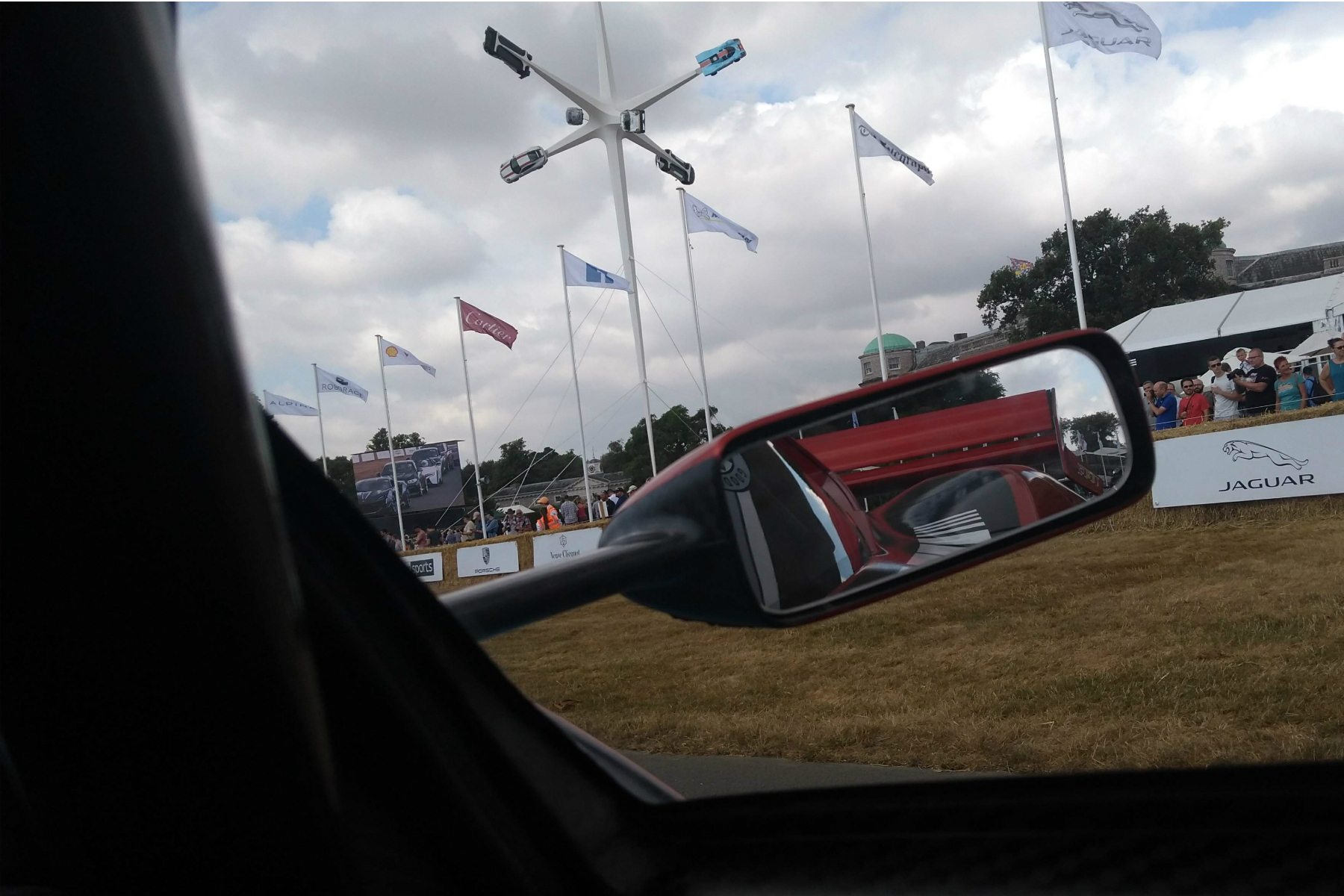
David eases up on the clutch from the start, but from then on it’s flat-out, with the nose tucking neatly into the first corner, kicking up a token puff of dust. It’s utterly welded to the tarmac, with the V8 howling as David clatters through the straight-cut gears. The central sculpture appears and disappears from view, as if the world were in fast-forward. The adoring crowds are an anonymous blur – surely taken aback by a lot more noise than an average supercar emits.
Under the bridge and towards the hump before Molecomb, the car brakes straight and true without so much as a twitch of the rear chasing us round. Back on the power and it’s up through the gears towards the flint wall. The incline does nothing to steady the rate of acceleration – the engine is just so strong.
With less than 1,000kg to shift, it’s no surprise. As we howl past the flint wall it occurs to us how this noise is what’s been sorely missing from most GT grids, and indeed most supercars of late. It’s just such a raw thing, with vicious purpose enough to make any twin-turbo McLaren fade into the background. An authentic representation of what a de-restricted GT racer could truly be.
Barrelling up the long sweeper towards the finish, the speed really builds with the V8 bellowing through the trees. As we emerge from the forest into the top paddock, the rest of the world’s mightiest supercars sit dormant after full-on runs. We pull up, the car shuts off and we take a breath. David is quiet but visibly excited. This is a huge moment for him and his family name. Seasoned drivers bound over to the Anglo-Australian racer to congratulate David on the car, ask him how it was and have a poke around. Cue a lengthy conversation about the virtues of running wets versus slicks on the FOS hill…
Heading for Le Mans
They disperse and there’s a moment of calm. We ask what cars inspired the Brabham driving experience. “One car I remember that was great to drive was the Aston Martin GT1 car – the DBR9. In terms of performance, balance and feel, we wanted this to be somewhere between that and a P2 car,” said Brabham.
On the future of the marque, David was positive, with an excellent response to BT62 since its May reveal.
“The response has been phenomenal. We only came to market in May when we revealed the car and we have several letters of intent. It’s now that we’re getting through them and getting orders booked in.
“We’ve got a product plan and we want to go racing, because that’s what Brabham is all about. Realistically we could be at Le Mans in 2021, maybe 2020. I’d love to see a Brabham hurtling down the Mulsanne. It would be incredible to see a Brabham win in a Brabham car once again.”
He’s not shy about his ambitions, then, with the “ultimate goal” being an all-star car and driver win at Le Sarthe to match Black Jack’s unique F1 championship achievement in 1966. The road cars are along the path that David hopes will lead to that. Sell on Friday, race on Sunday…
The car certainly has potential. So many marques come and go – few, admittedly, with a name as steeped in history as Brabham – but fall short, usually financially, before a car is even ready to demonstrate.
That the BT62 is in this almost-fully-developed state, with hungry customers waving cheques, bodes well for Brabham Automotive. This is an idea that’s been rattling around in David Brabham’s head for the better part of 15 years – time enough to really nail down what he wants and how to get it.
The BT62 delivers the raw racing car experience, the heritage and the passion that few emerging names can. We’re confident Brabham will go on to deliver on road and track in years to come.
Maserati is perhaps the ultimate underdog. An unfair assessment of a company that’s produced such distinctive and desirable cars for over 100 years? Well, any luxury or sporting marque from Italy that isn’t Ferrari has to be considered something of an underdog, doesn’t it?
For many, that’s always worked in Maserati’s favour. Ferrari is, well, Ferrari. Maserati trades on its own merits. Such as the distinctive marque-defining sporting GTs in its post-grand prix era, which fortified the brand for generations to come.
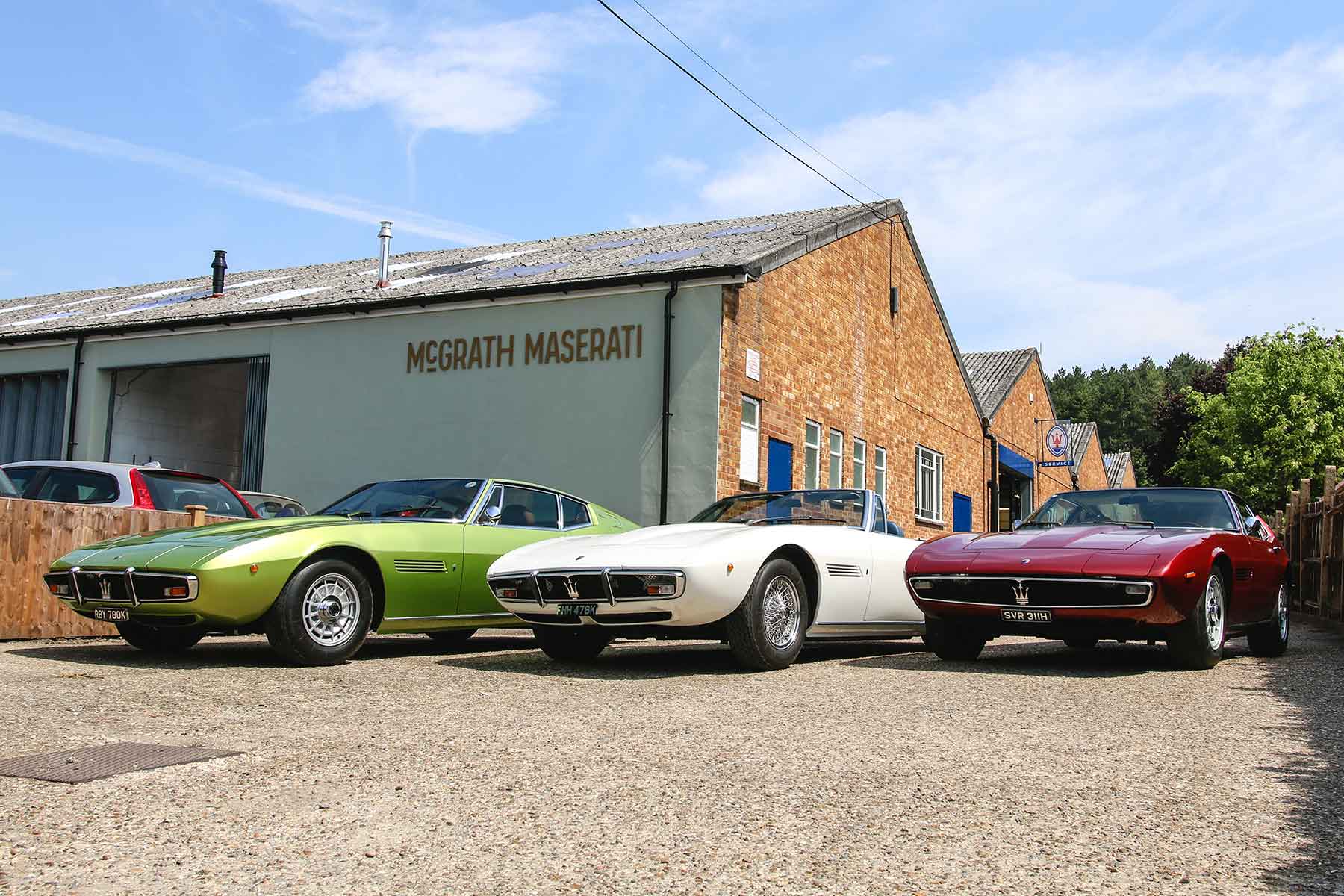
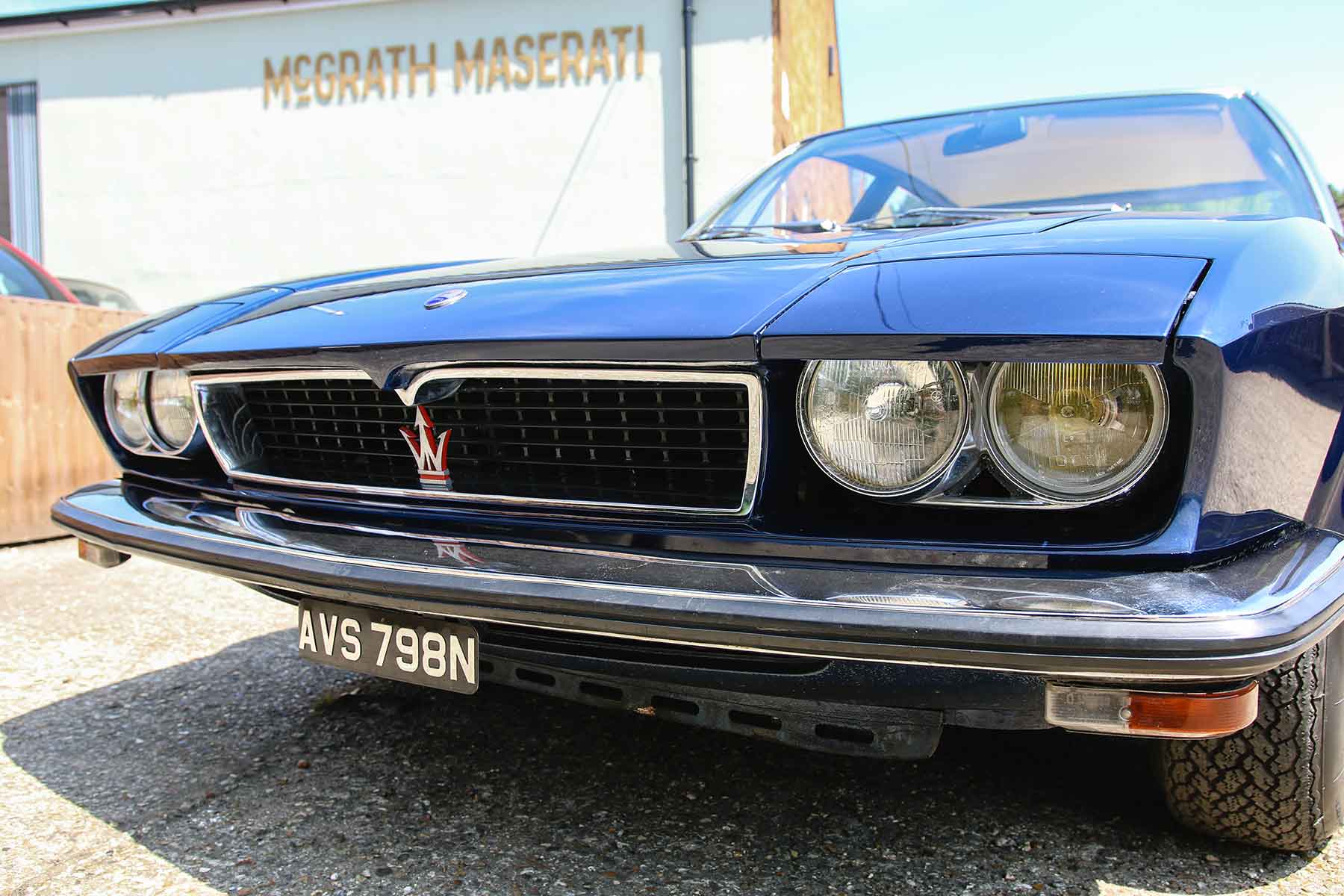
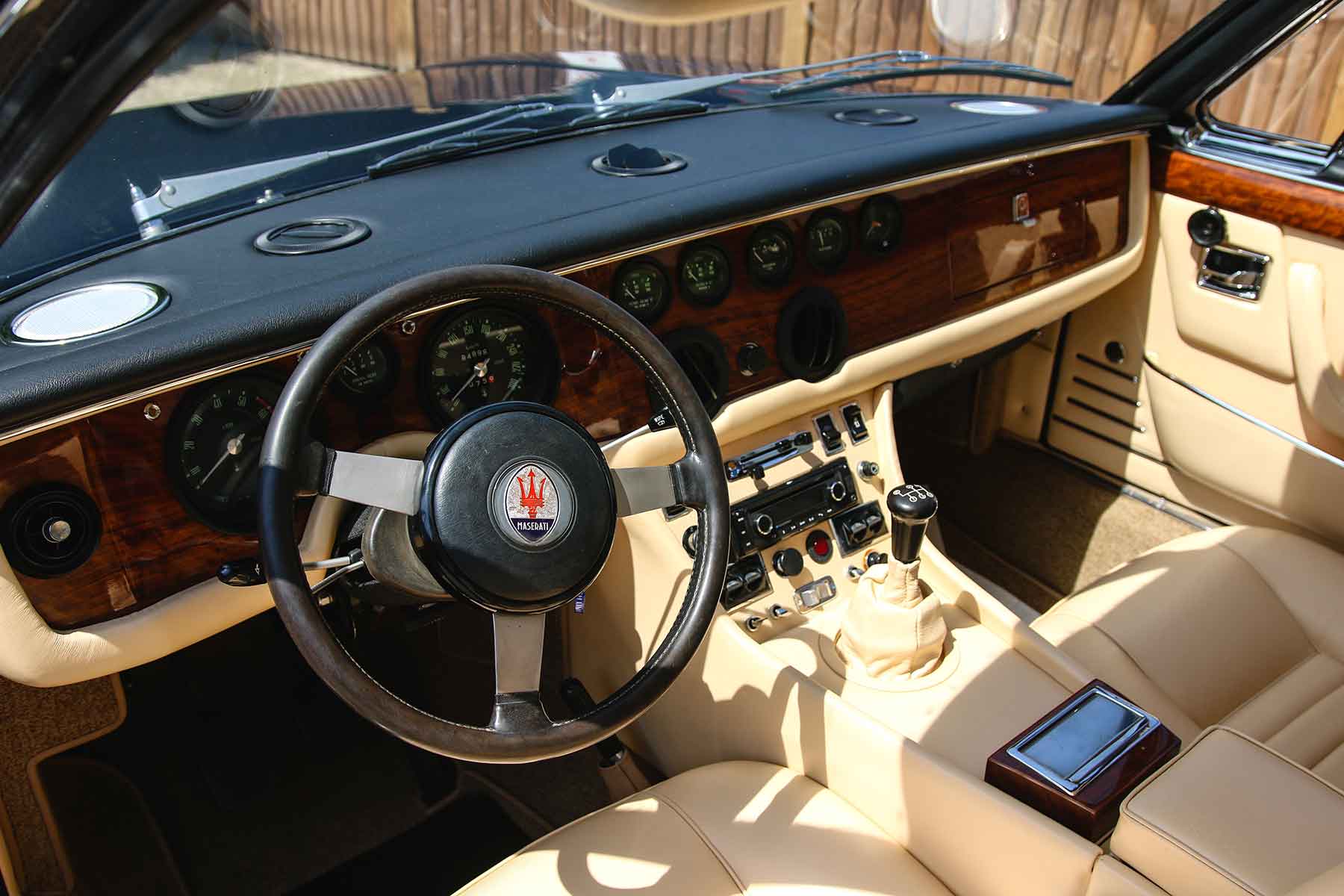
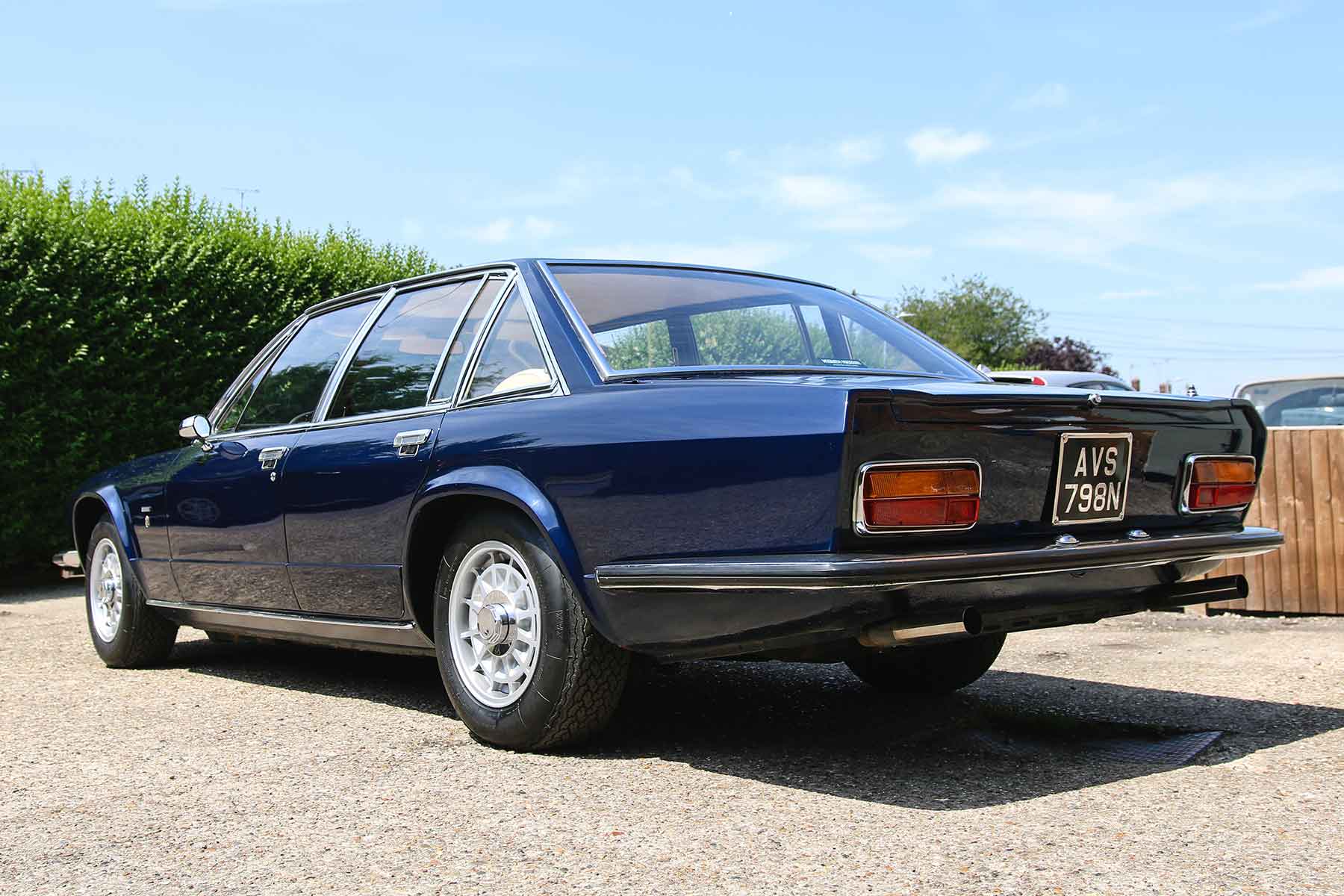
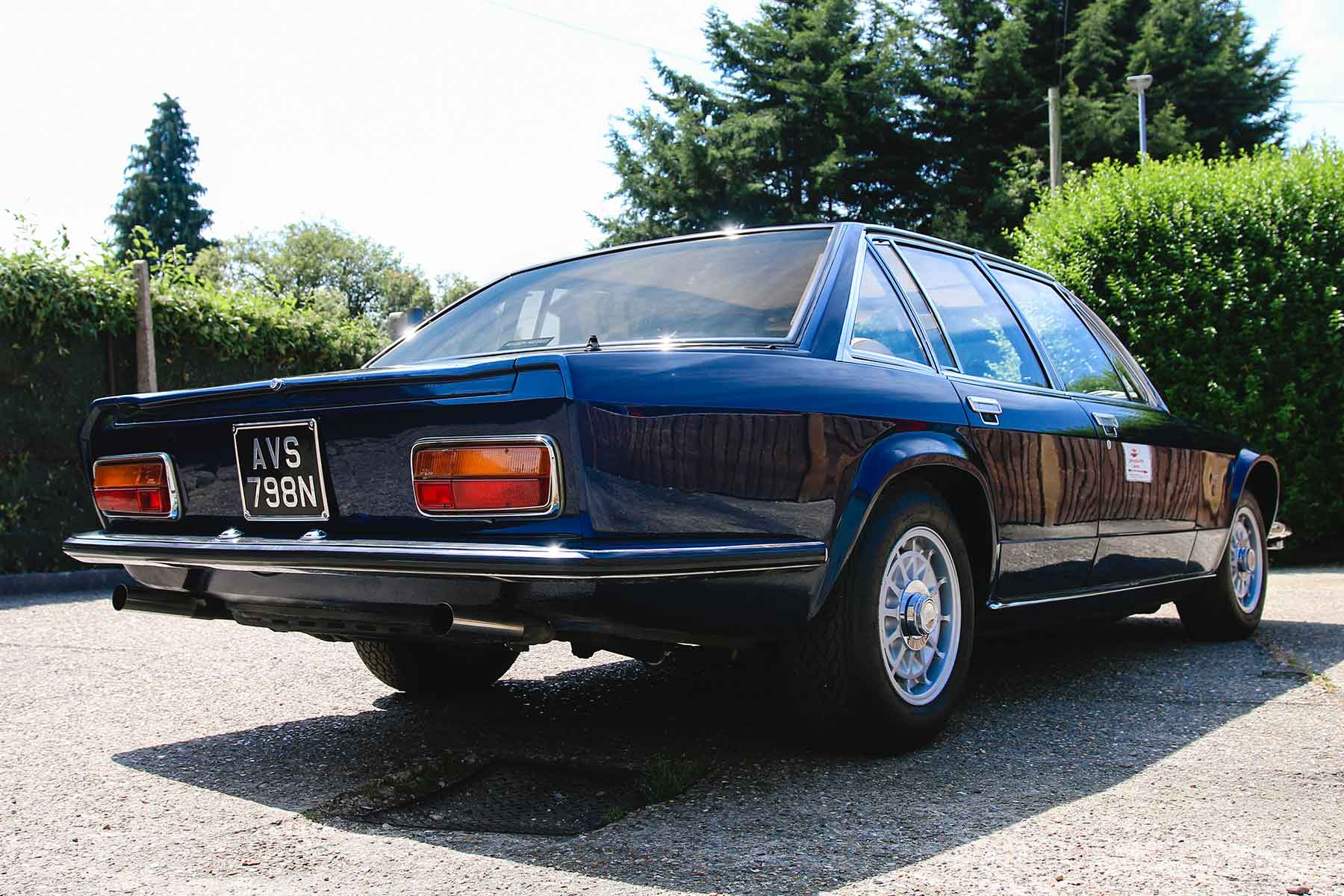
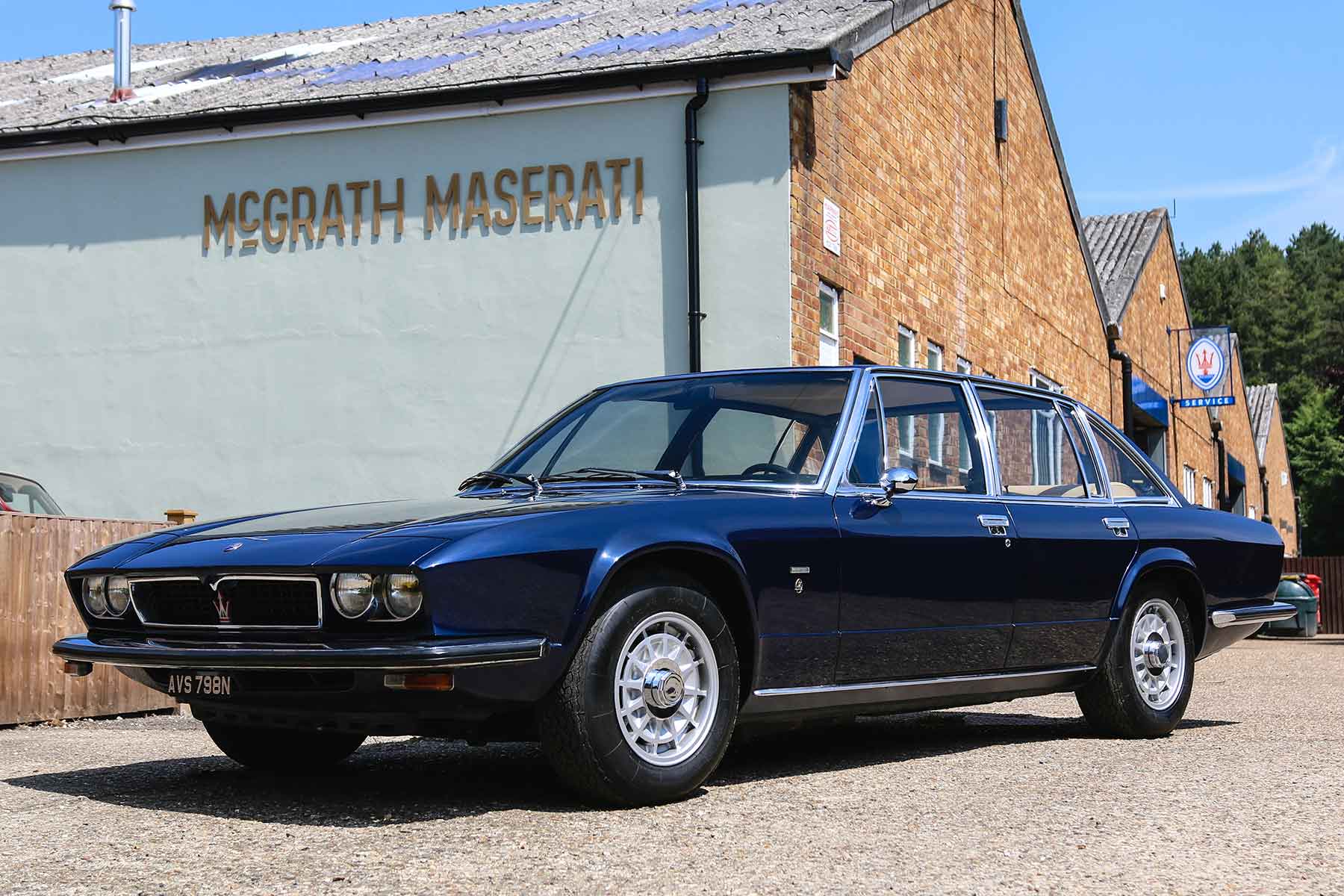
Cars like those in this six-car cohort of ‘60s and ‘70s examples, in fact. These comprise ‘An Important Maserati Collection’, according to RM Sotheby’s. They’ll be heading to auction in London in September. Until then, they litter the quaint yet capable workshops of Bill McGrath Maserati – the UK’s most prolific Maserati preparer, restorer and service. Current custodian Stephen Dowling has been loyal to the business for a number of years.
Andy Heywood, long-time McGrath Maserati employee and now company owner knows these cars very well. Indeed, for his 30 years in various roles around McGrath, he knows all Maseratis very well. Just the man for the job of taking us on a tour of this handsome cross-section of Maserati’s golden age of Grand Touring.
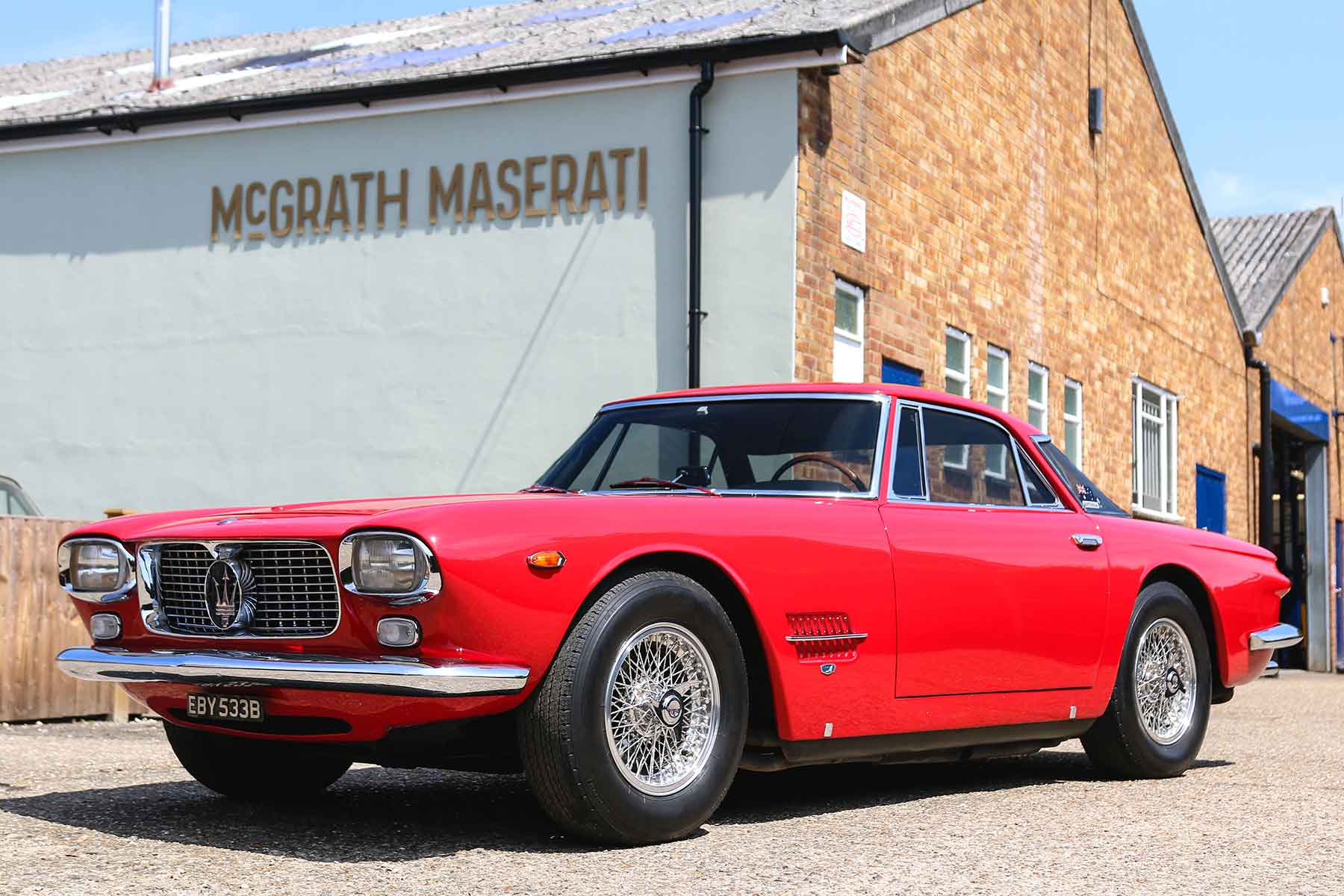
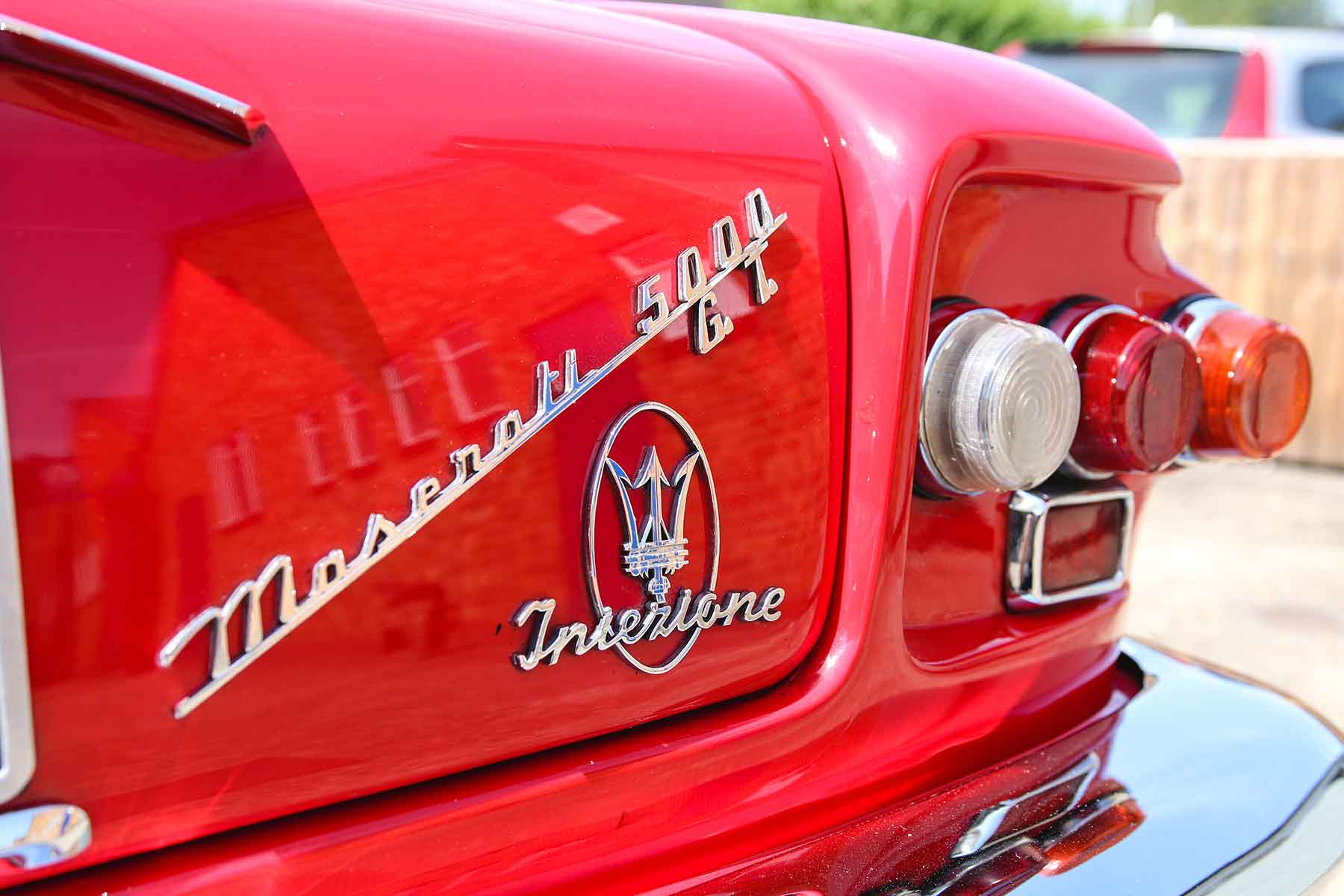
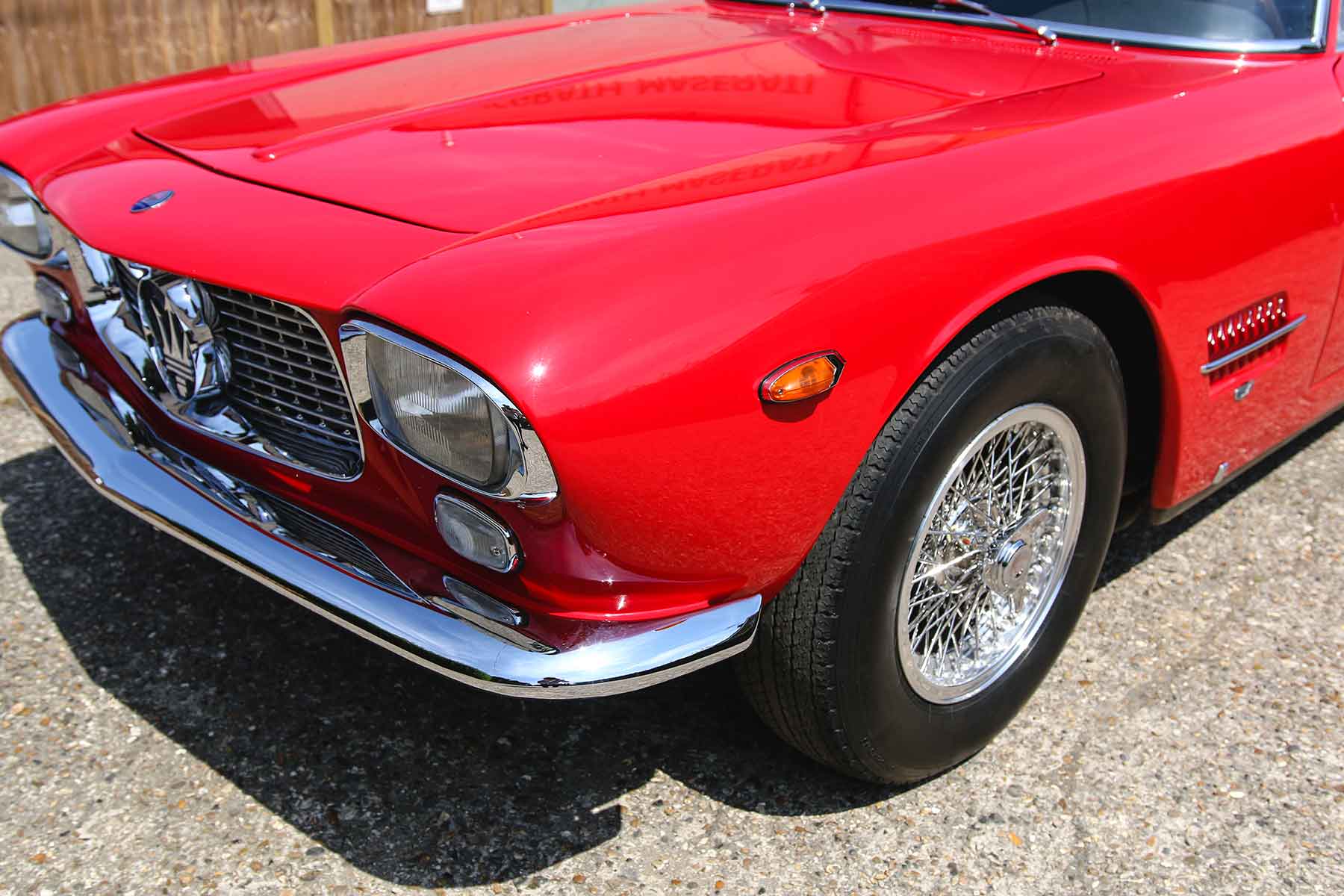
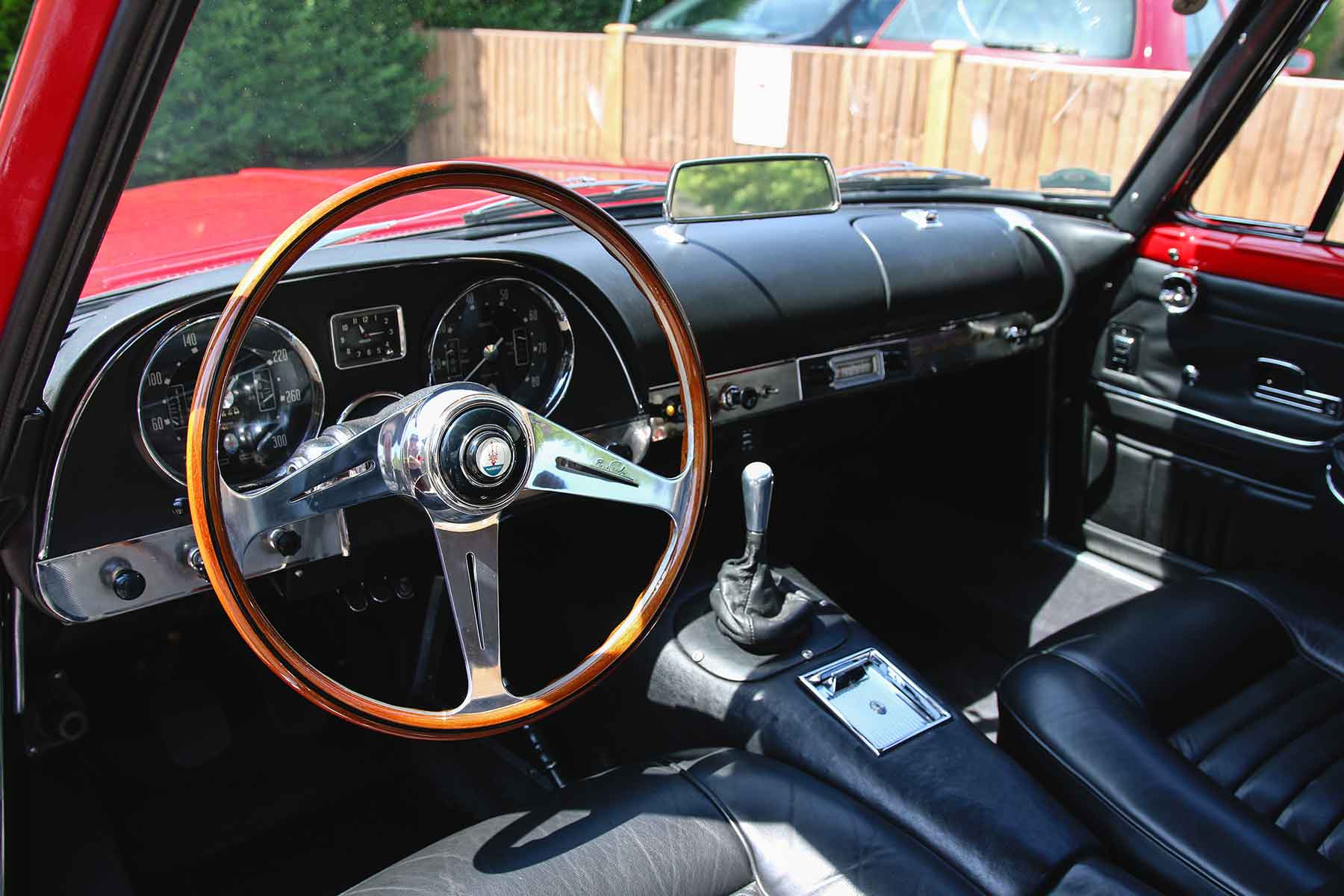
1964 Maserati 5000 GT by Allamano
“It’s the jewel in the crown”
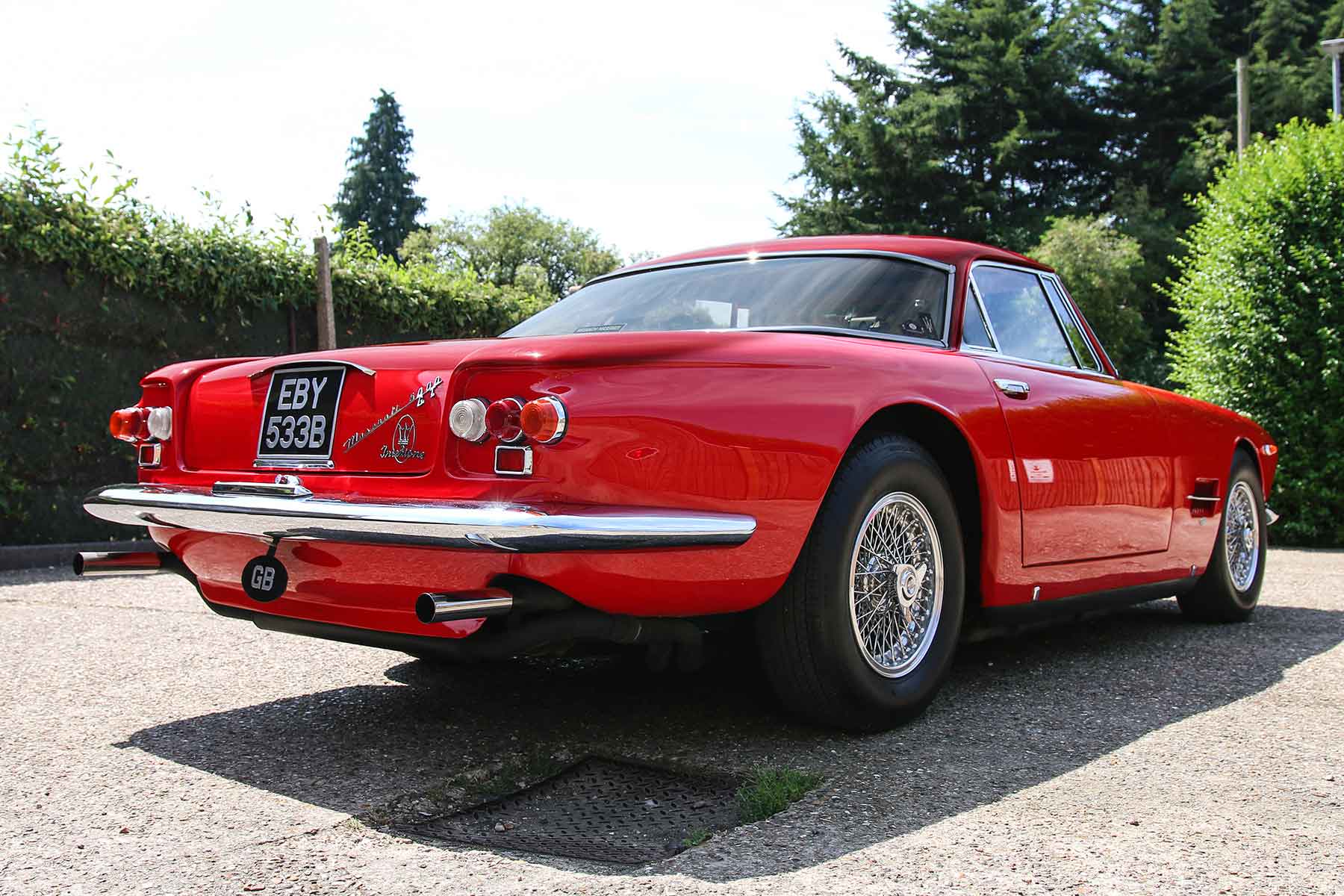
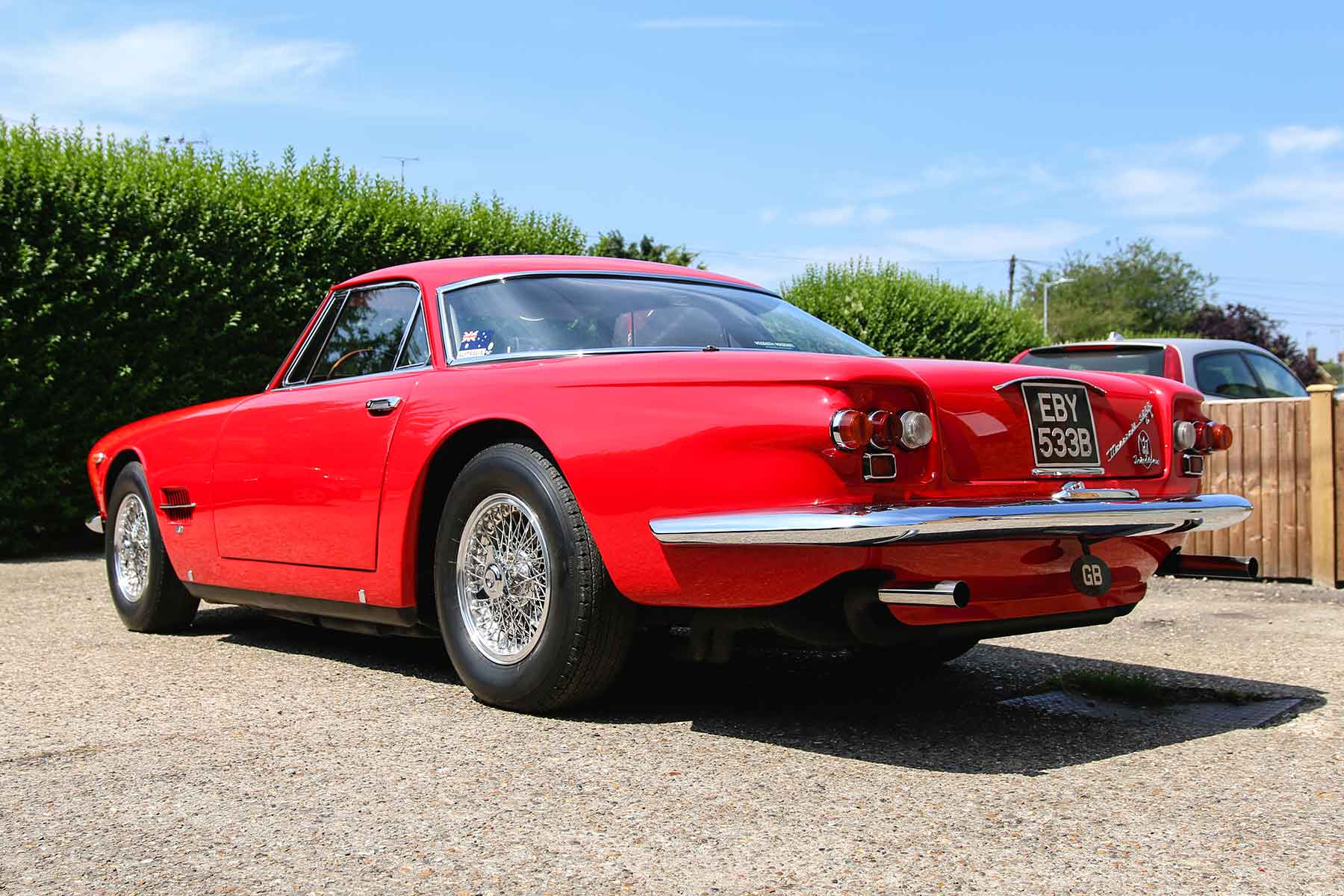
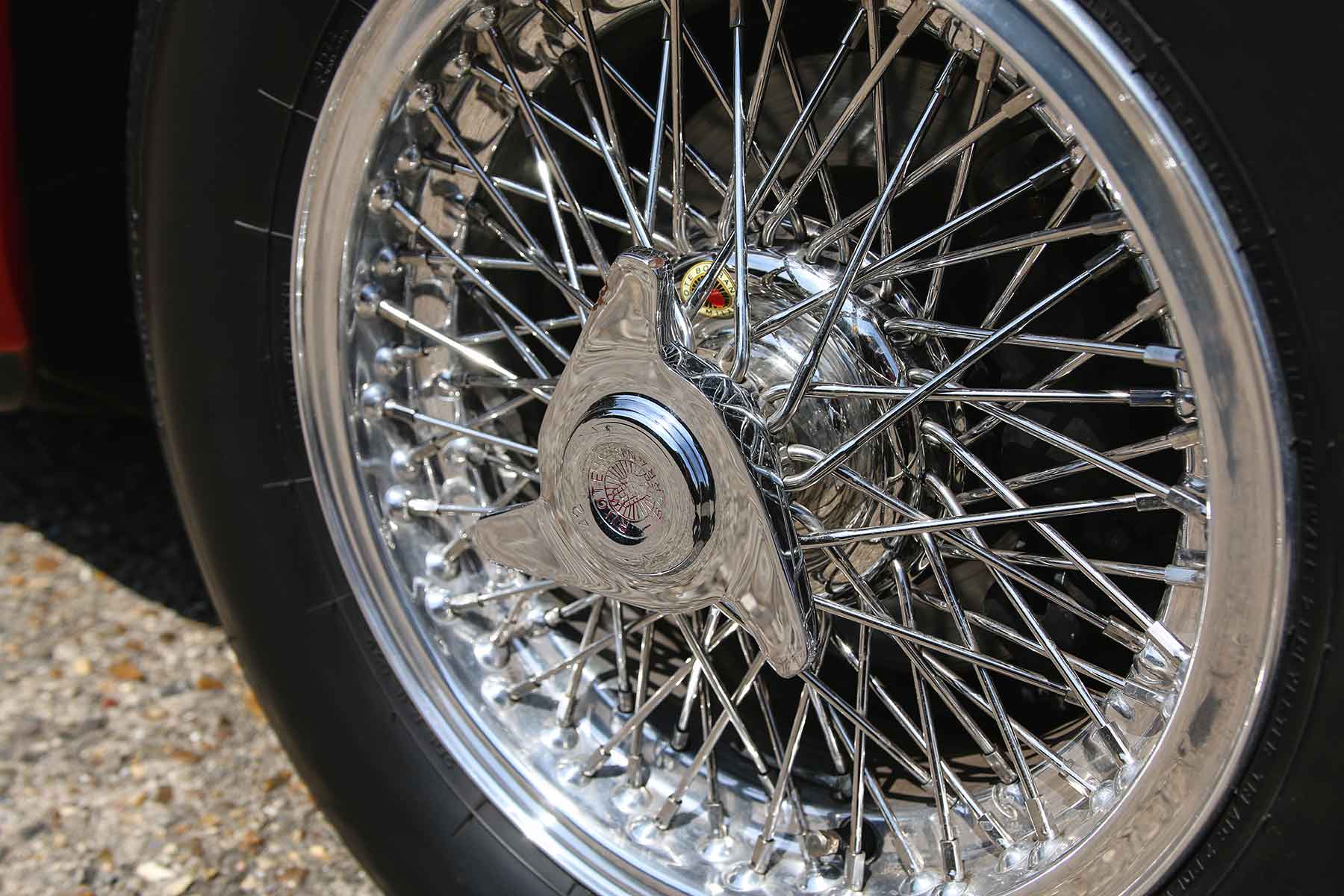
We start with what is arguably the star of the collection. This 1964 5000 GT by Allemano is a wondrous slice of Italian-built Americana, resplendent in red with a muscular yet subtle stance. In period, it was the most expensive car in the world. “It was like the McLaren P1 or Bugatti Chiron today. It was that kind of high-end thing,” says Andy.
This car was once in the ownership of Joe Walsh of The Eagles and allegedly inspired the lyric, “My Maserati does one eighty-five, I lost my licence, now I don’t drive” in his song Life’s been good.
Over the course of 34 cars, eight different coachbuilders were used to body them. Oddly, Allemano did the most, at 20 cars. “Allemano is a really obscure one… This is actually the most common one. Bizarre, because some of the coachbuilders were much more well-known and yet Allemano got the job to do more of those than anyone else,” Andy explain. Alhough he’s dealt with most of the 5000s that remain in circulation, Andy isn’t aware of any others that currently reside in the UK.
Owner Stephen Dowling took his nervous first drive of his 5000 – complete with McGrath engine rebuild – at the Goodwood Motor Circuit, only to have his nerves replaced by complete ease and the desire to stretch the old Maser’s legs. A smattering of European trips ensued – no garage queens or place-holders for hedge funds here.
“From a very nervous start, he’s been everywhere in it. He’s been all over Europe. He’s done more miles in one of those than I’m sure anyone has done, ever… He’s a user, you know. He’s not just a collector. He’s always been into using the cars.”
1974 Maserati Quattroporte by Frua
“Stately but still sexy”
Contrasting the delicate curves and blushing red paint of the 5000 comes the 1974 Quattroporte, as bodied by Frua. This car is just one of two examples of the Frua-bodied car built. The story goes that Frua built this car in a bid to win the contract to body the second-generation Quattroporte, as it did the series one. It was a speculative build displayed at a motor show and while it didn’t win Maserati’s favour, one customer was insistent that he had to have one – the Aga Khan, or the closest thing to Iranian royalty.
“While they had it on a stand at a show the Aga Khan came along and said “Oh, I really like that. I’ll buy it.” They said, “Well, you can’t buy that. It’s a prototype, it’s got a second-hand engine. It’s a demo, really – but we’ll build you one.” So they used a new chassis and running gear from Maserati. The other one was subsequently then sorted and sold to the king of Spain, so it must have been alright.”
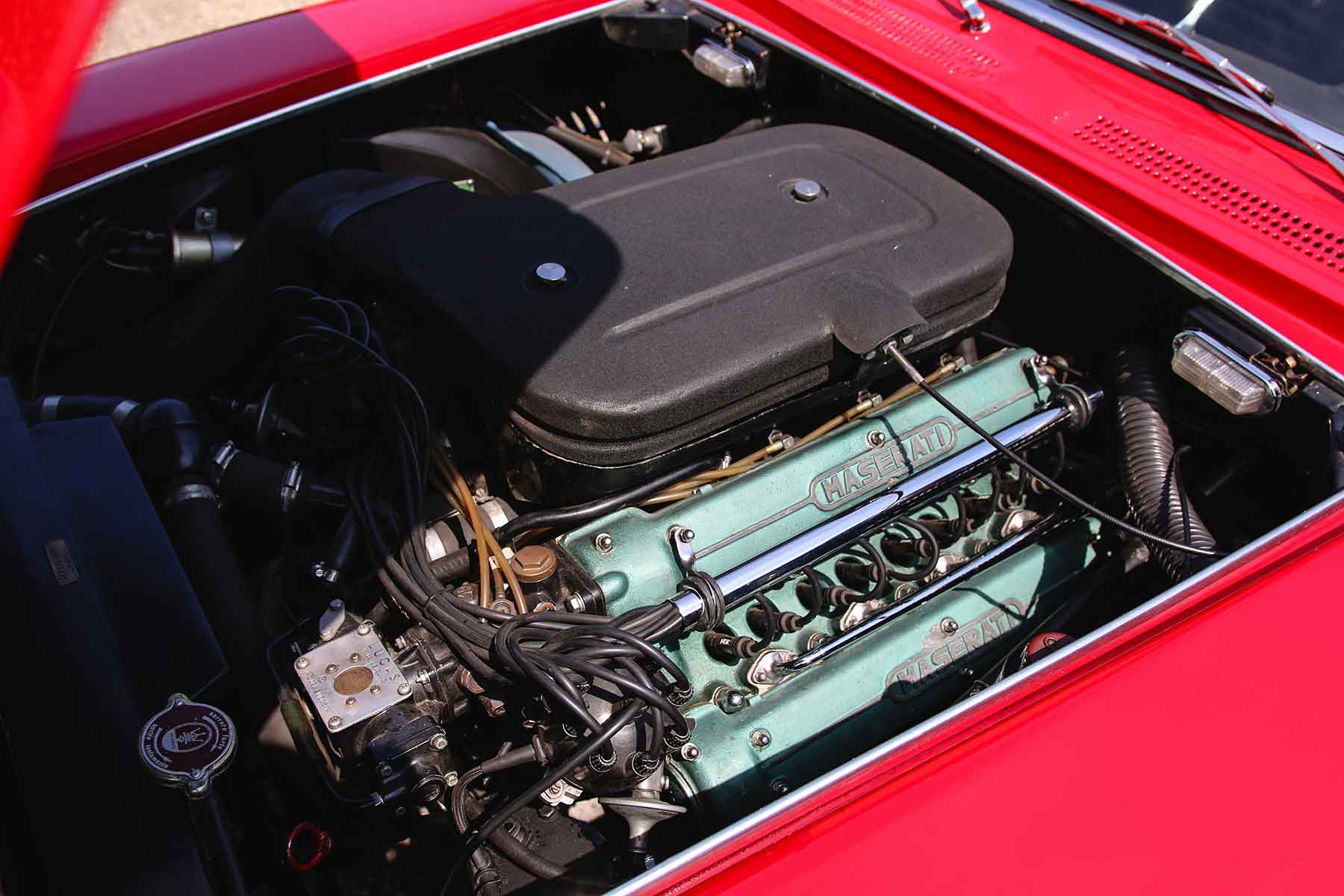
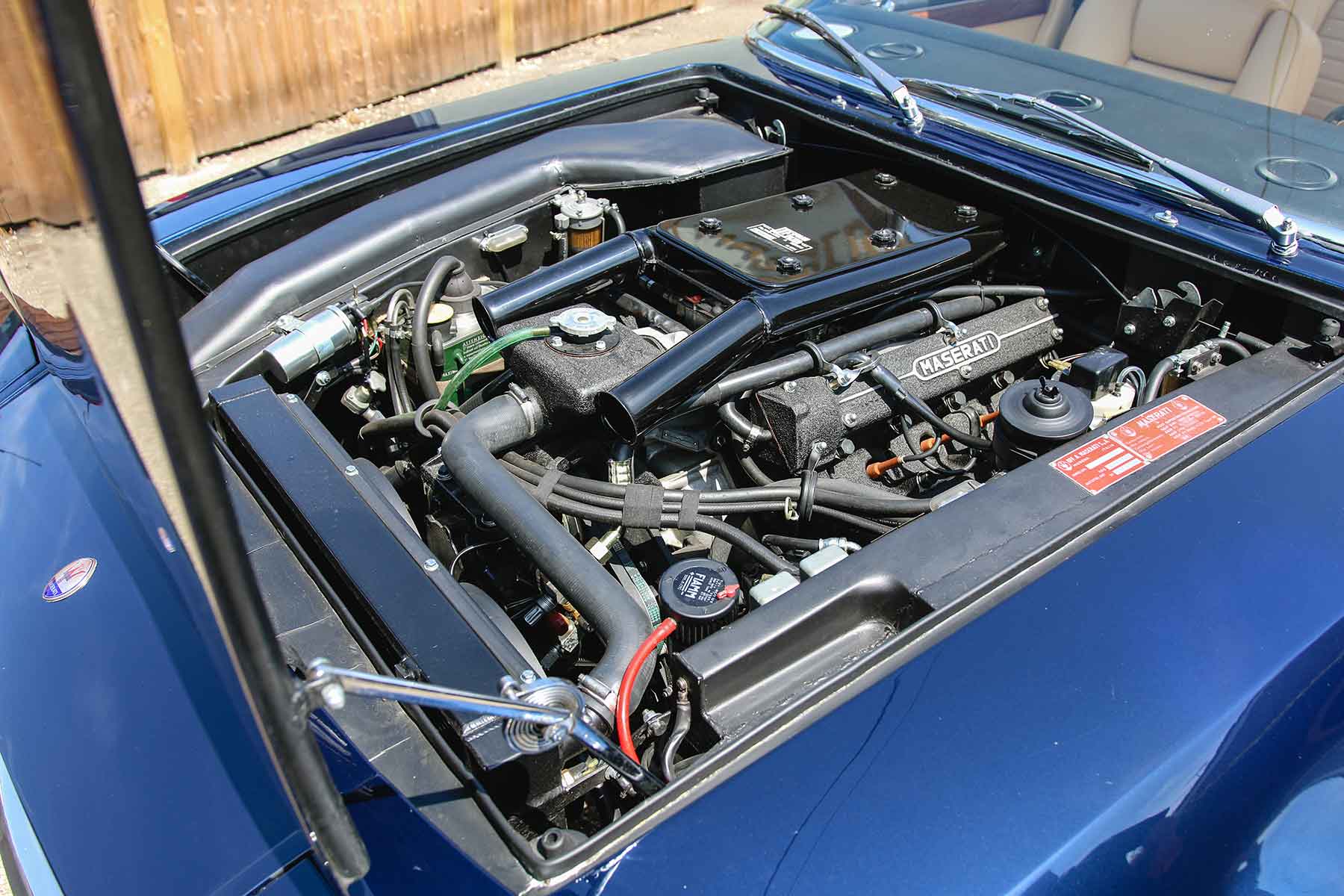
In its life, this the only ‘series’ Frua Quattroporte has shared garage space with the prototype that inspired it twice, with the cars holding high esteem among a seemingly closely-knit community of collectors. Based on a later Indy, it uses the 4.9-litre ‘Indy’ V8 engine: sufficient muscle to hustle what is a svelte yet stately beast. “The best resolved of all the Indys,” says Andy.
“What Maserati tried to build as the Series 2 Quattroporte, which Frua wanted their car to be, was based on the Citroen SM running gear. Nowhere near as classy as that [the Frua]. It’s a big car, kind of stately but still sexy at the same time” Andy mused. It’s certainly a highlight of the collection for us and being a one-of-two car, should stoke collectors’ interest sufficiently come September’s auction.
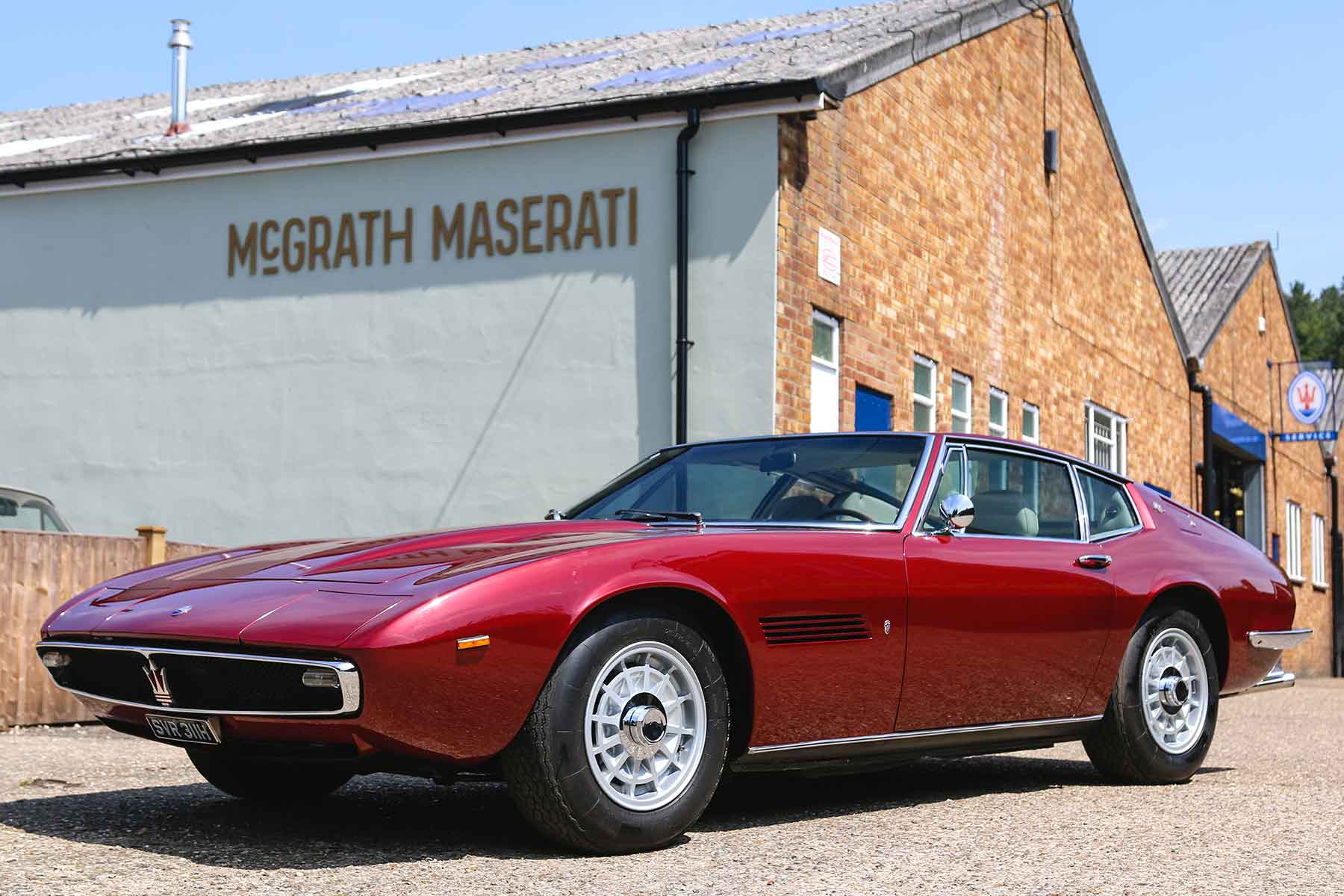
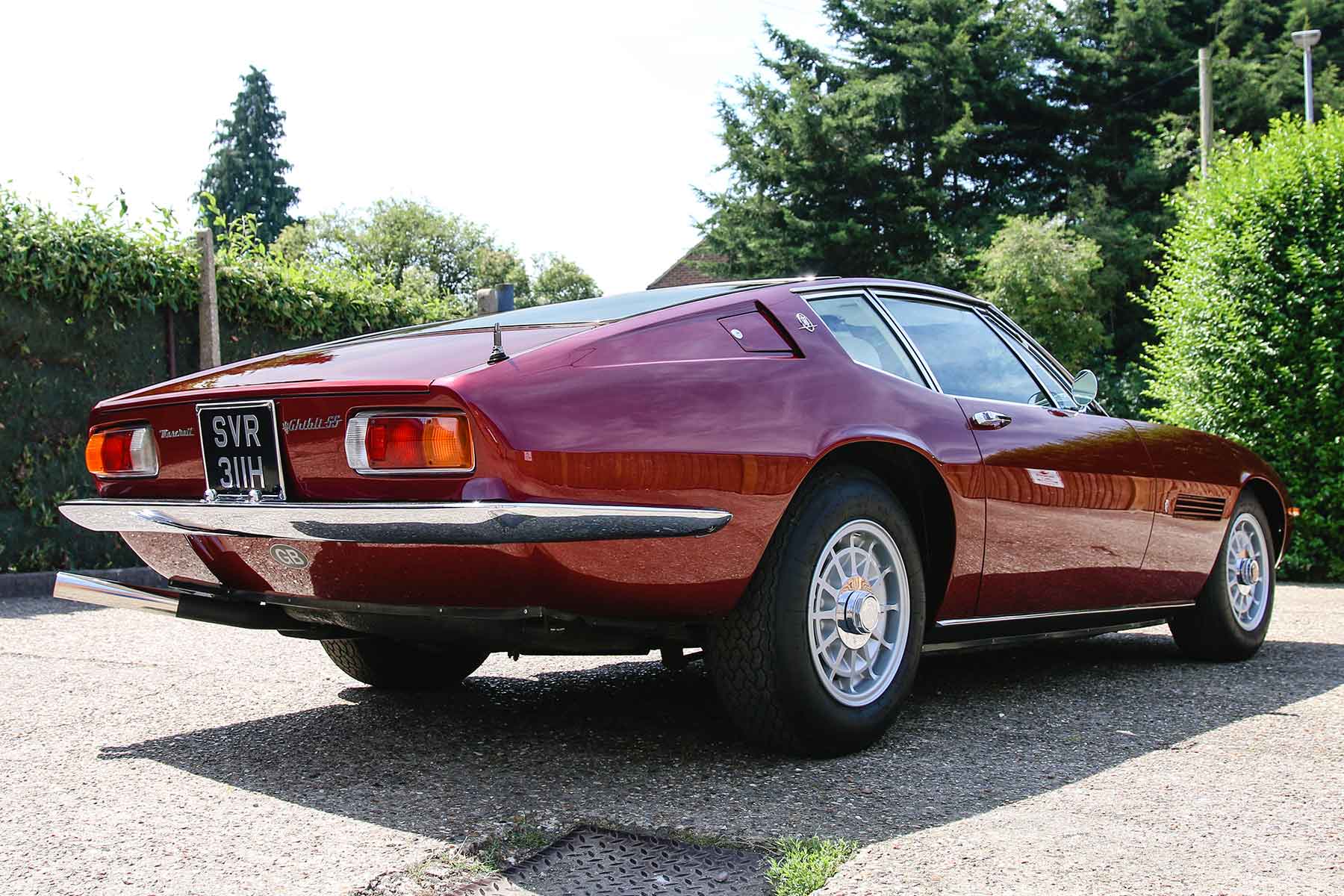
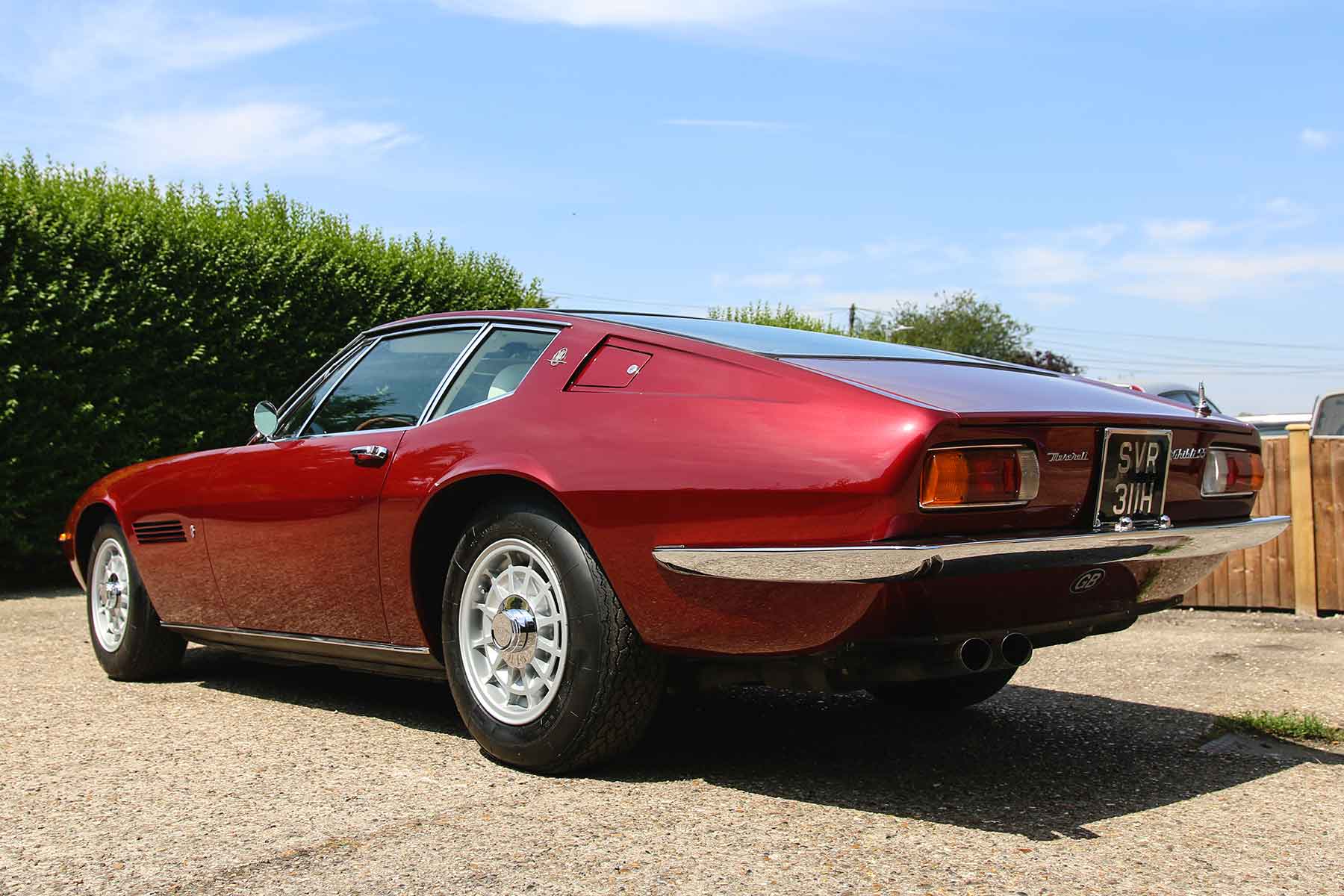
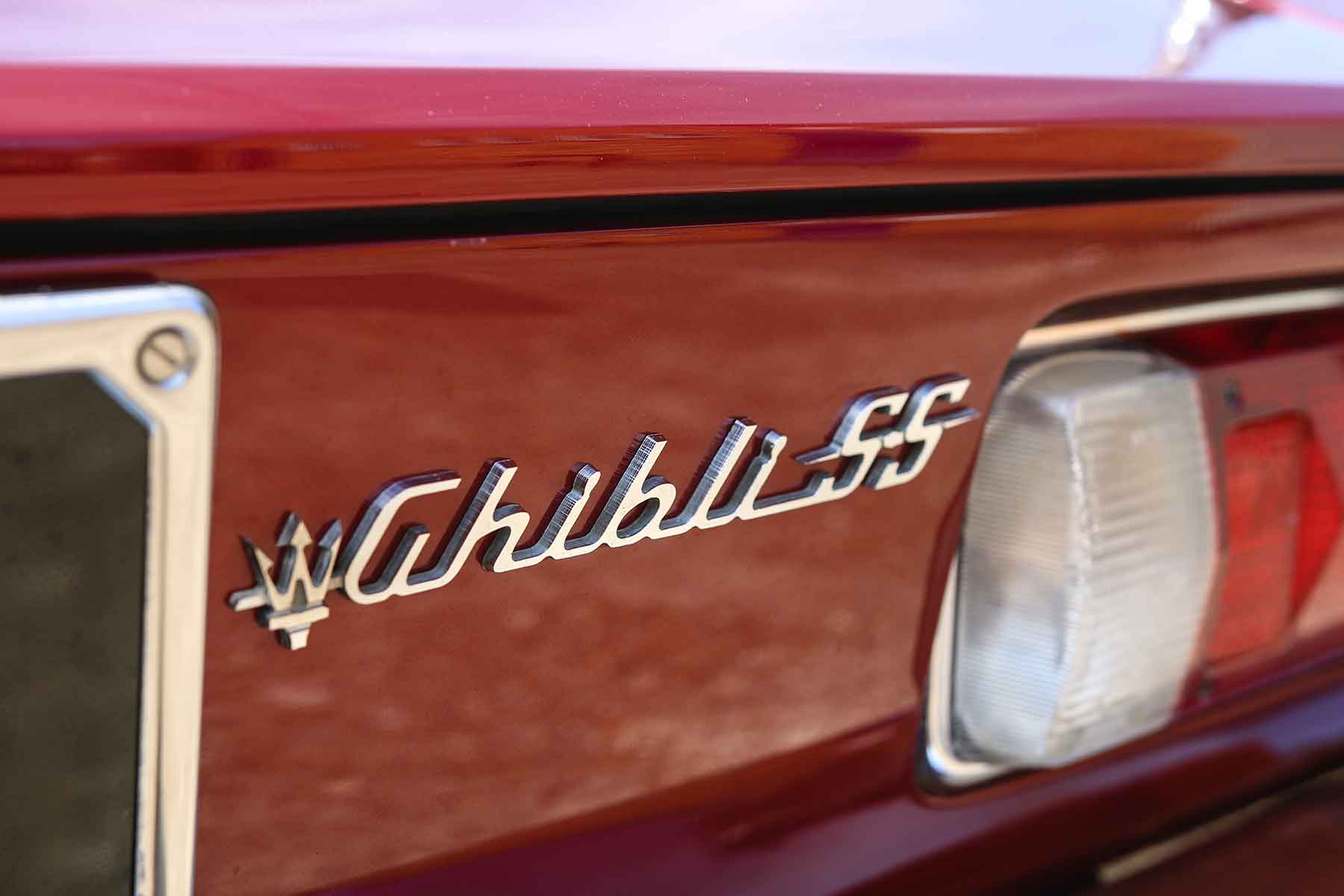
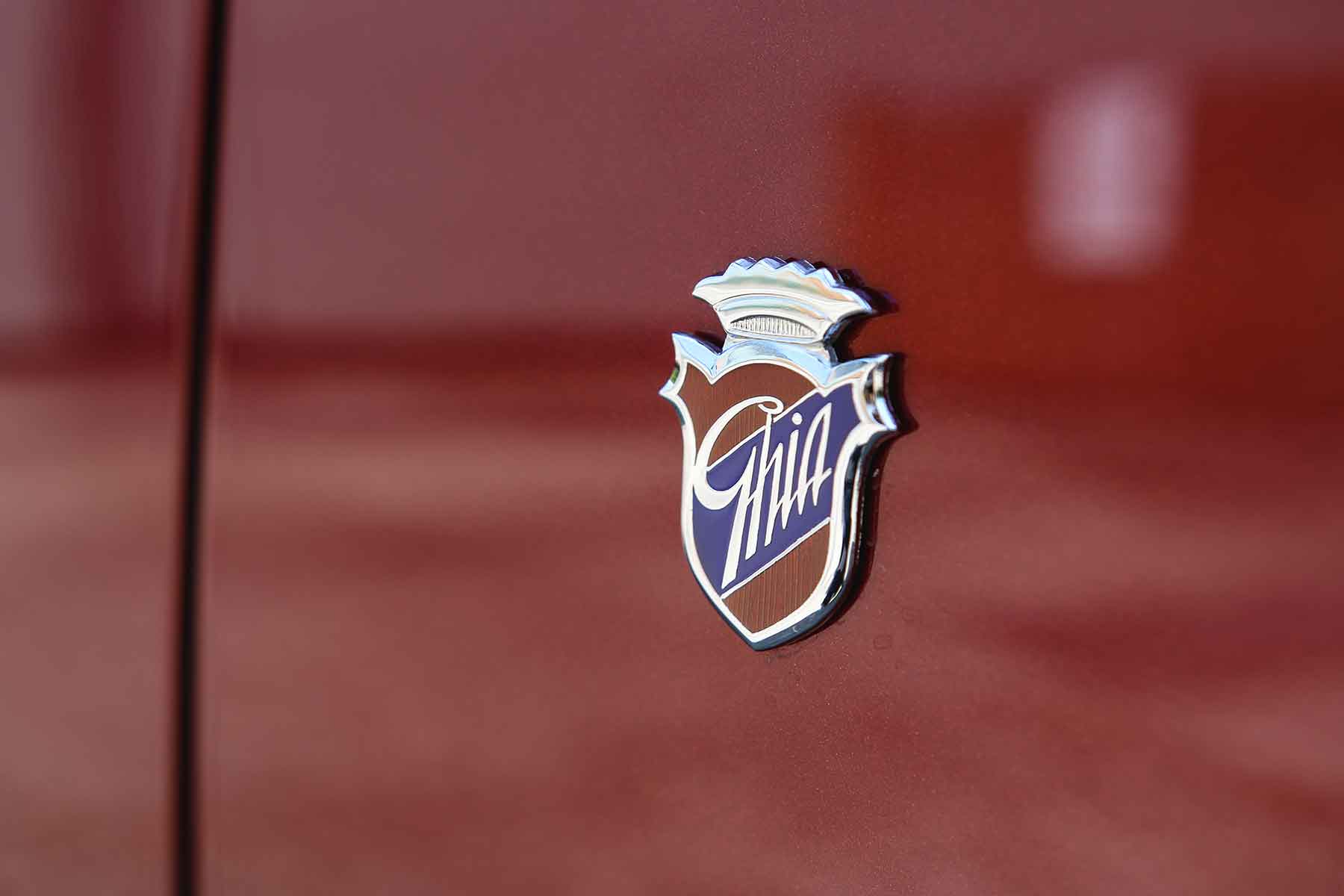
1970 Maserati Ghibli SS by Ghia
“Why would I buy an E-type when I can buy that?”
This, for Stephen, was the genesis moment. The car that gave him the bug. His first Maserati, as bought in Australia. “The original fascination was the red one” says Andy. “He hadn’t really been interested in old cars before that. Someone told him to go out and buy an E-Type. He went out to look at one at a dealership in Brisbane and saw the red Ghibli. He said, “why would I buy an E-Type when I can buy that?” – and from that moment he was hooked.”
This car had a difficult life prior to being bought and shipped to England. Import laws made it very difficult to have a left-hand-drive car brought in to Australia and, as such, the car suffered a slightly haphazard conversion. It landed on McGrath’s doorstep with both that and some questionable engine work to put right. From then on, the shop had a loyal customer.
Andy continues: “When that car had been imported it was an Italian-delivered car originally. It had been converted to right-hand drive from left. It was a bit compromised. He had an engine rebuild that didn’t work out by some guy in Australia. He turned up here one day, just walked in off the street and said “My name’s Steve, I’m from Brisbane. I’ve got a Ghibli out there with engine problems. How much to rebuild the engine?” and that was how our relationship started 14 years ago.”
You wouldn’t know this Ghibli’s troubled past from looking at it. This, as well as the other five cars, are presented in absolutely pristine condition, and rightly so. Giving someone the bug for a marque is the honour of very few cars. This red Ghibli has that honour. “It holds a very special place in his [Stephen’s] heart.”
1970 Maserati Ghibli SS Spyder by Ghia
“Made for the Cote D’Azure”
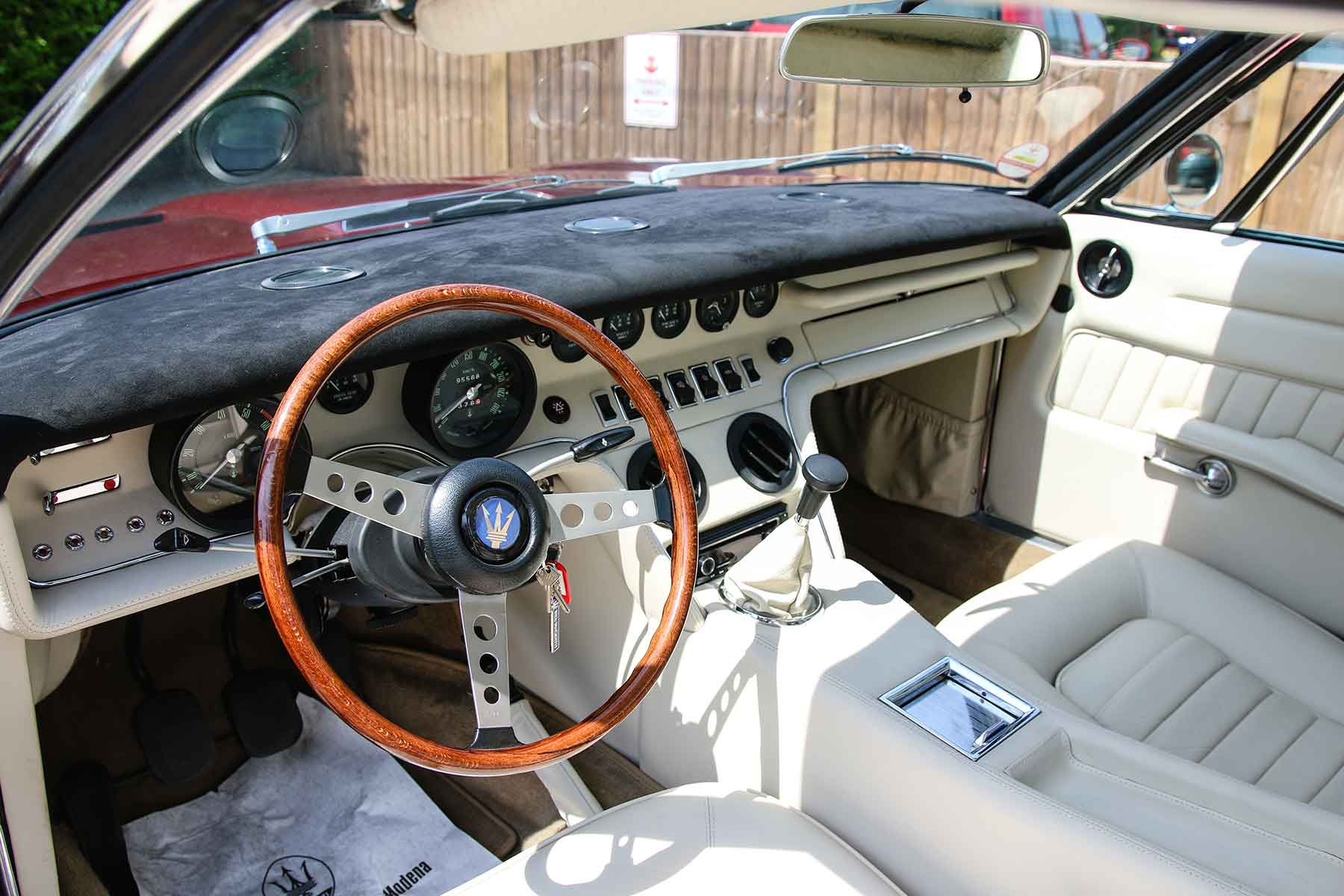
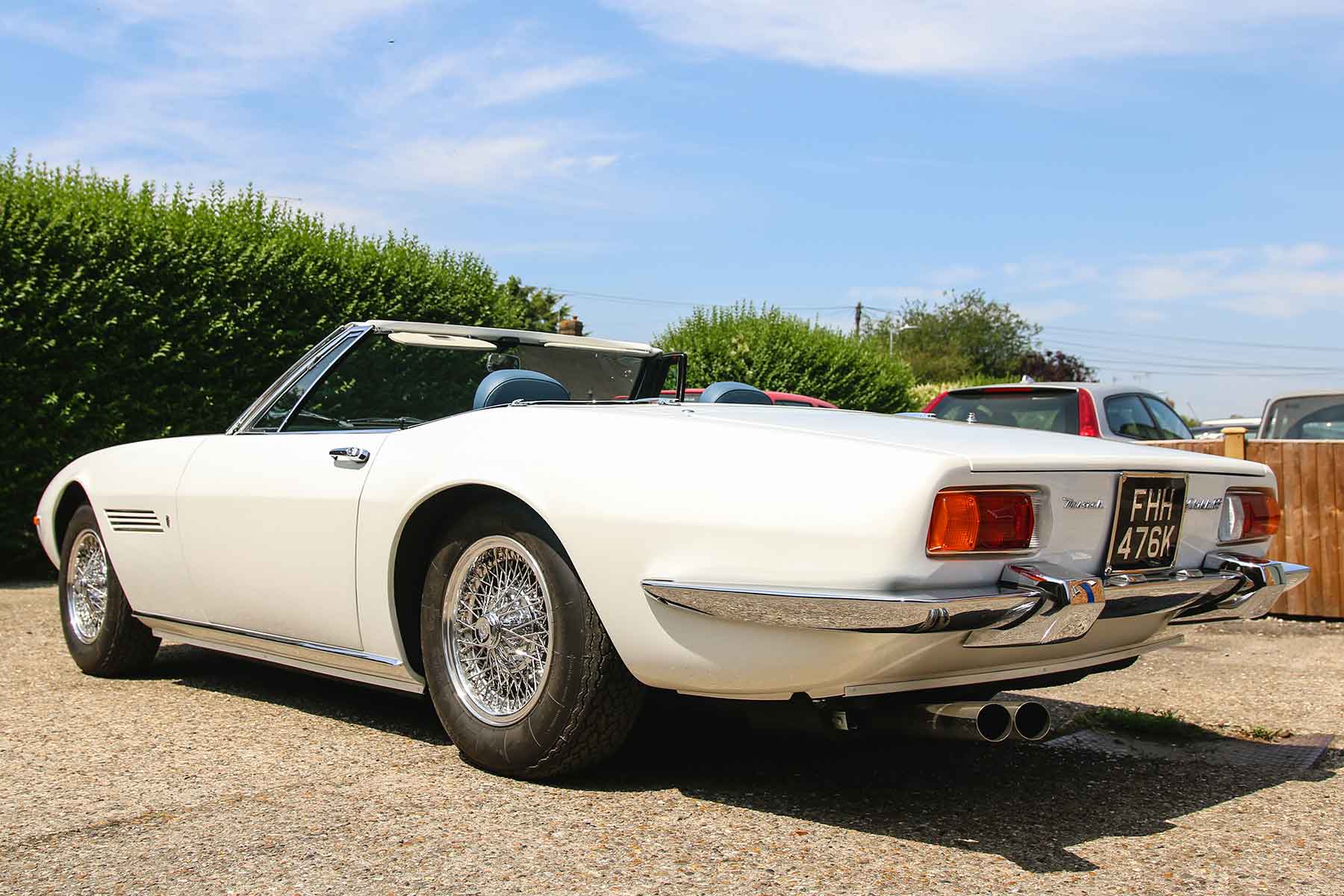
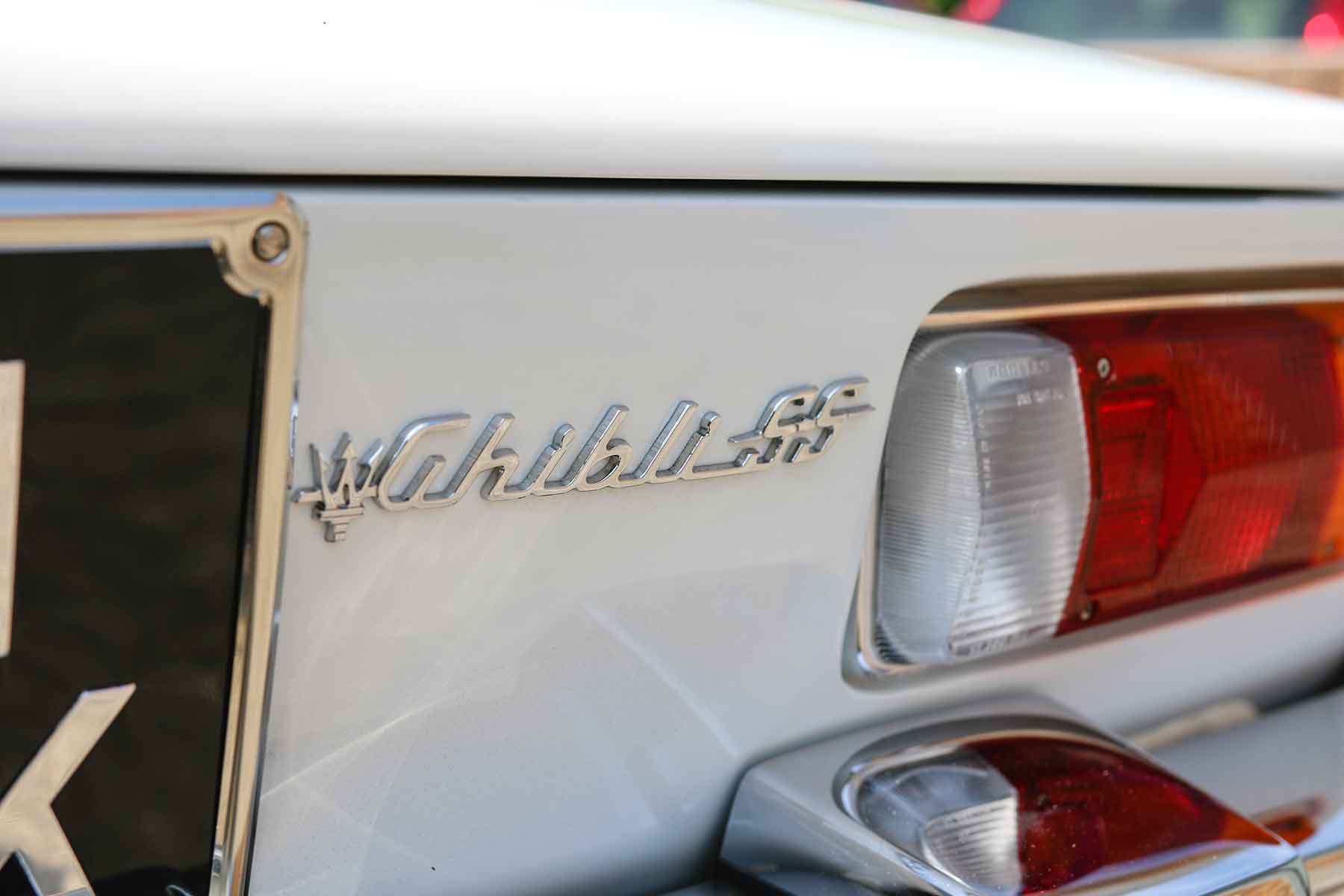
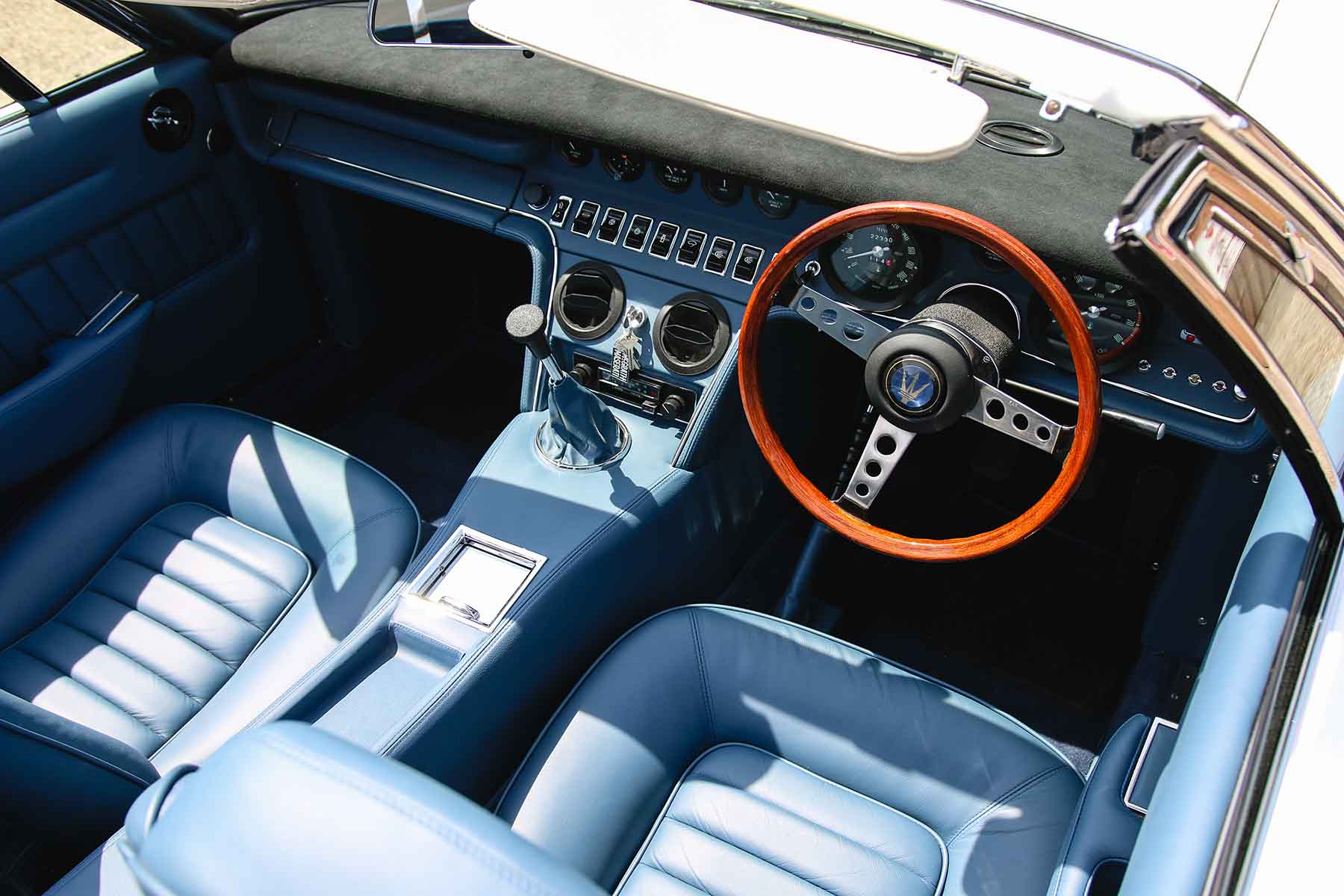
The white Ghibli SS Spyder is perhaps the most intriguing of the three in this collection. As an SS Spyder it’s already rare, but in right-hand-drive configuration, it’s one of just four cars made. For its rarity, this car also earned itself a concours-standard restoration with period-correct Connolly leather hides used in the cabin and a pristine Bianco repaint – a five-year undertaking that’s just finishing now.
The car had been restored previously around 30 years ago, albeit not to the standards customers ask of today. “When it came back before we began restoring it in 2013, it needed work but it was still good enough for the Maserati Club stand at the NEC Classic Car Show.”
“We’d restored that car for a previous owner who then sold it to Steve 15 years ago. He used that out there [Australia] for a number of years. We’ve been restoring it for five years – we’re just finishing it really. This is the concours-standard car – a brilliant challenge to relish taking the car to new levels. The one we’re probably most proud of.
Maserati. Variety. Struggle to pick to be honest, though the one-of-two Frua Quattroporte is a very special thing. pic.twitter.com/fJqfWFtsaT
“When it came back before we restored it in 2013, it needed work, but it was still good enough for the Maserati Club stand at the NEC Classic Car Show.” says Andy. Nothing less than perfection, then.
The car was originally delivered to the UK to its first owner, Sheikh Hamad bin Khalifa Al Thani. A first owner befitting, we think, of a right-hooker Spyder’s best talents – the unassuming yet impressive cruiser. Andy agrees: “You look at that car and you just imagine driving down the Cote D’Azur. It’s what these cars are made for.”
1971 Maserati Ghibli SS Coupe by Ghia
“The one they saved”
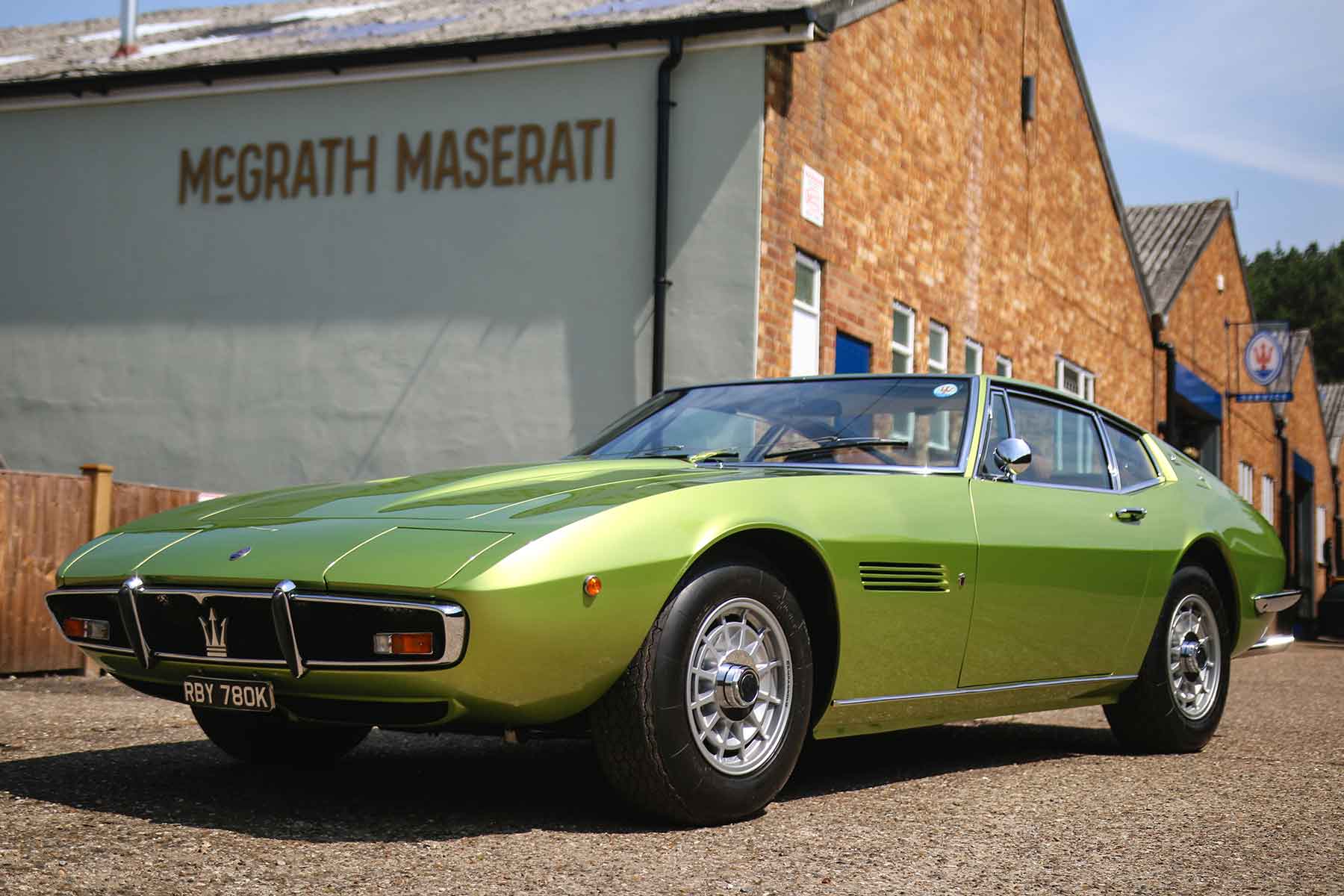
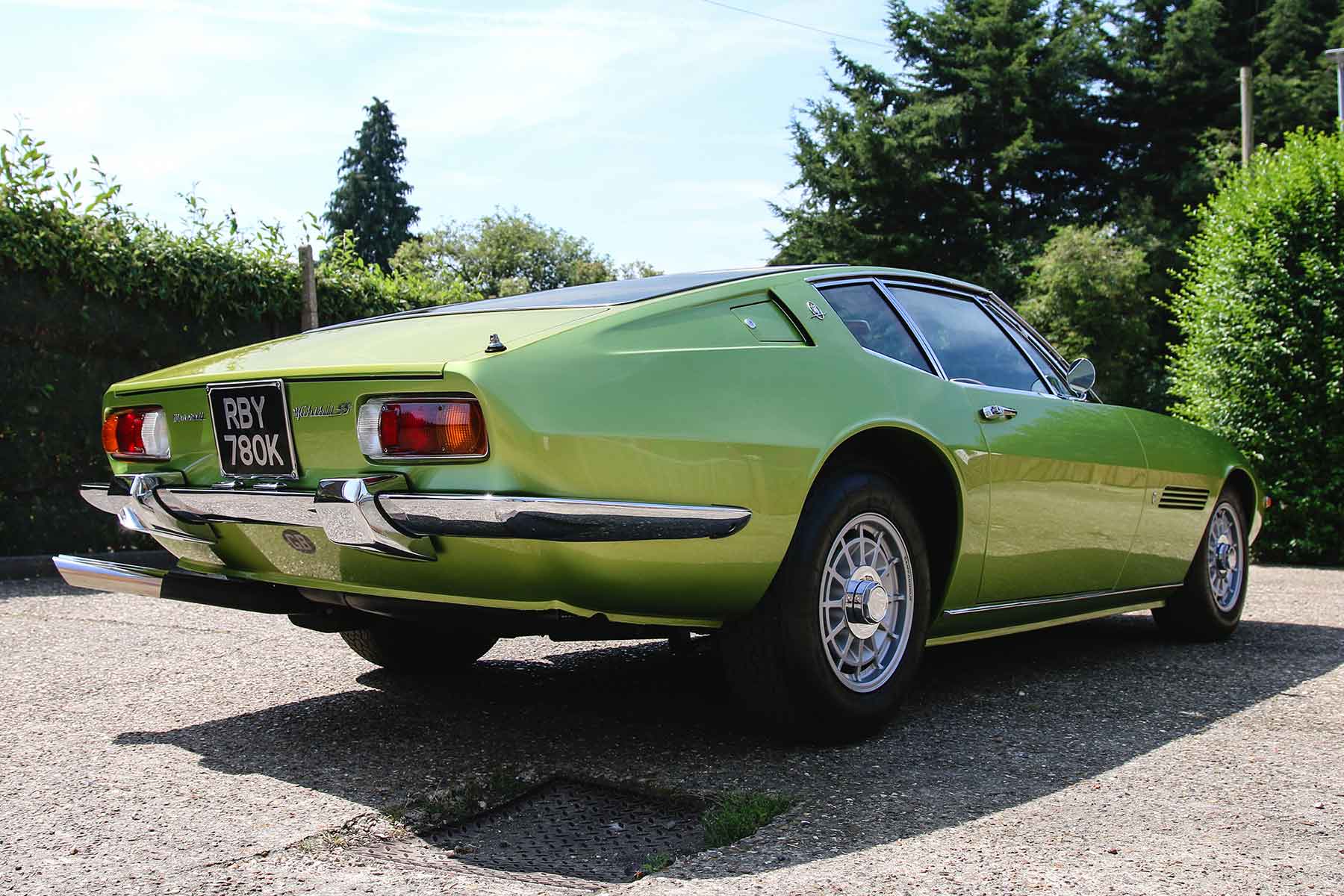
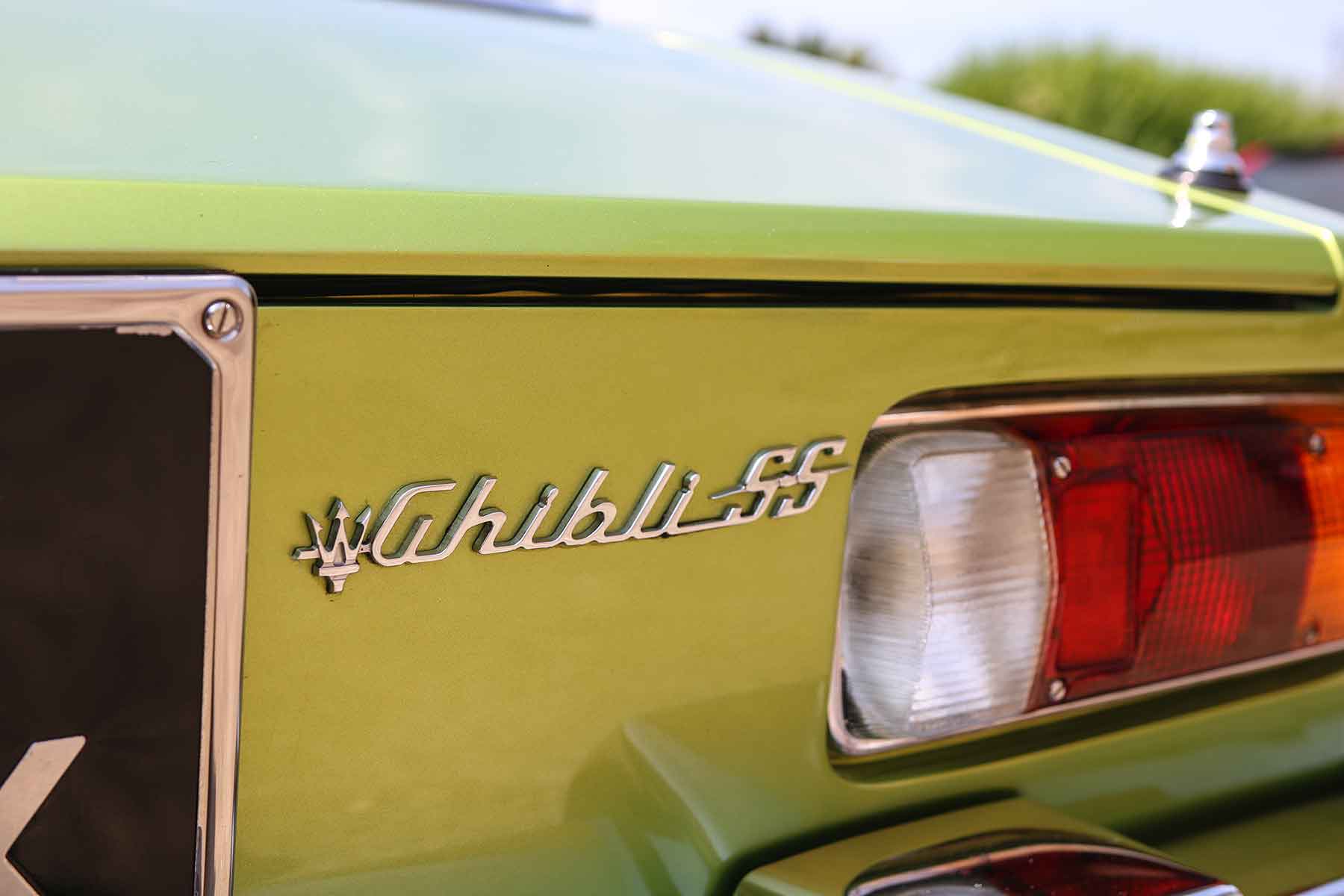
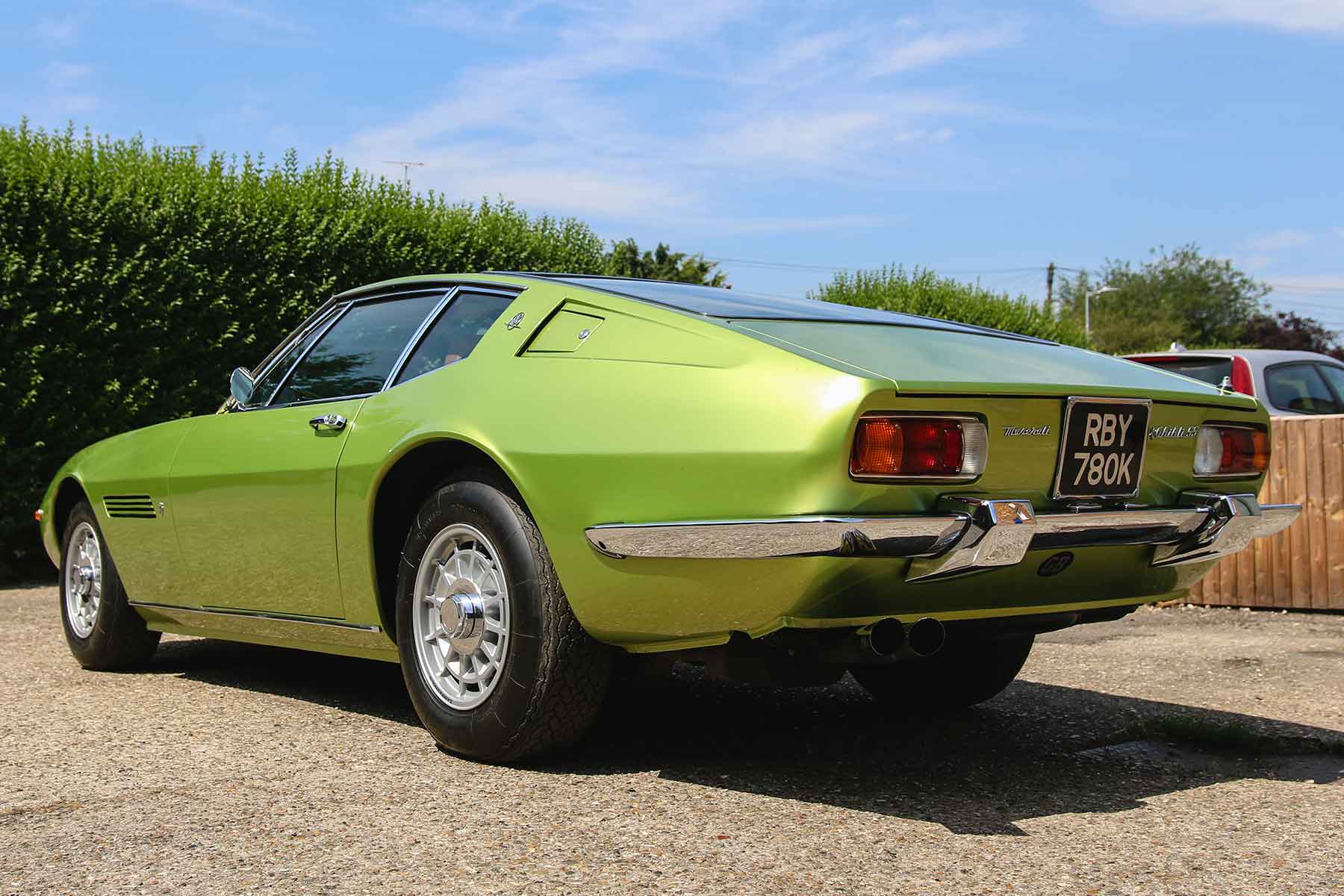
You could certainly claim that some of these cars have, to an extent, been saved by the owner – none more so than ‘Kermit’ the Verde Gemma Ghibli SS. Acquired in 2007, the car was, by all accounts, in something of a sorry state. A rare right-hand-drive SS, today this wouldn’t be enough to deter a prospective buyer, because it’d be well worth the investment. But at the time these cars hadn’t hit their stride in the classic market.
“This car was the biggest challenge” muses Andy. “Anyone else would have thrown this away… In anyone else’s hands at the time this car could well have been lost, but Stephen liked to set us a challenge.”
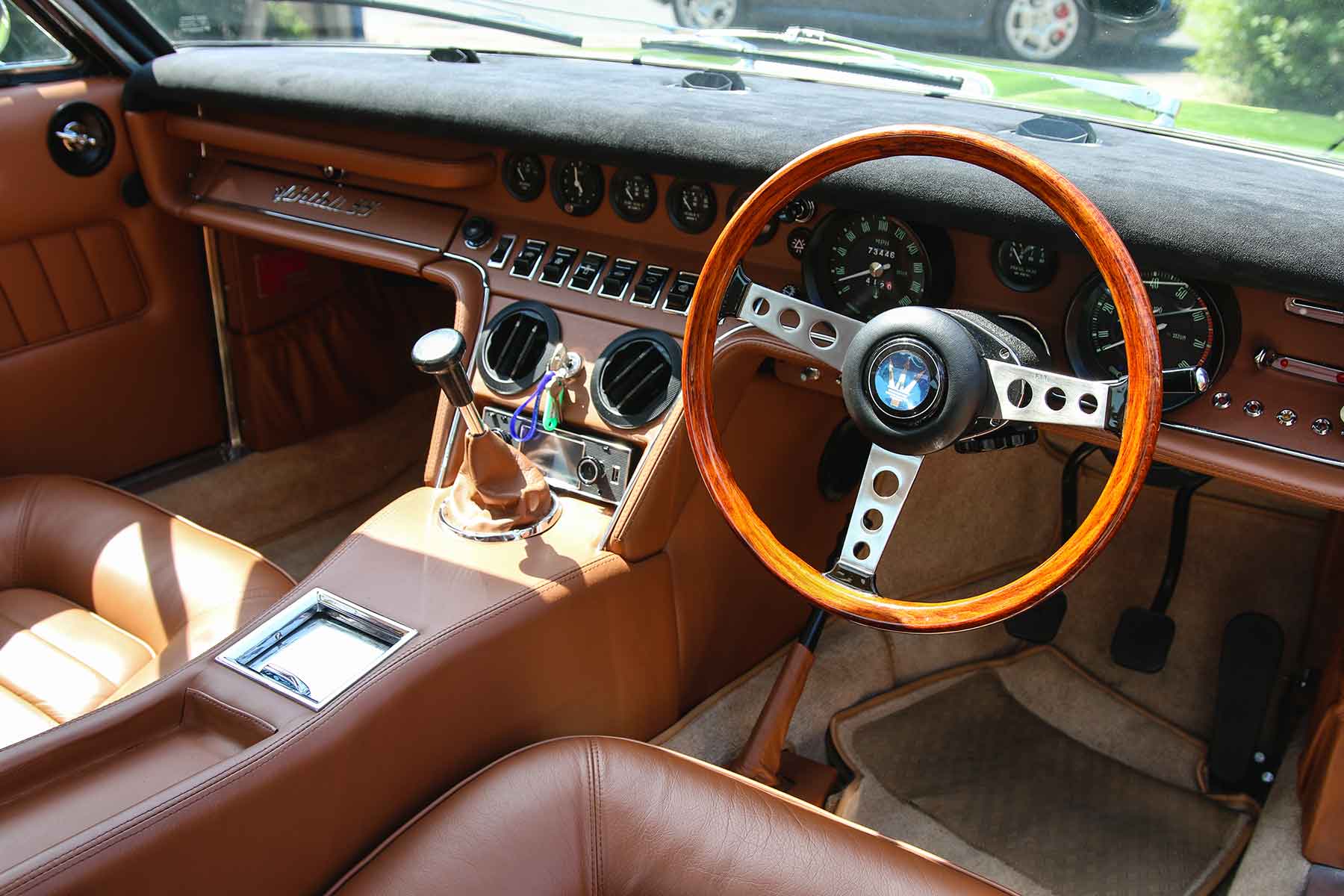
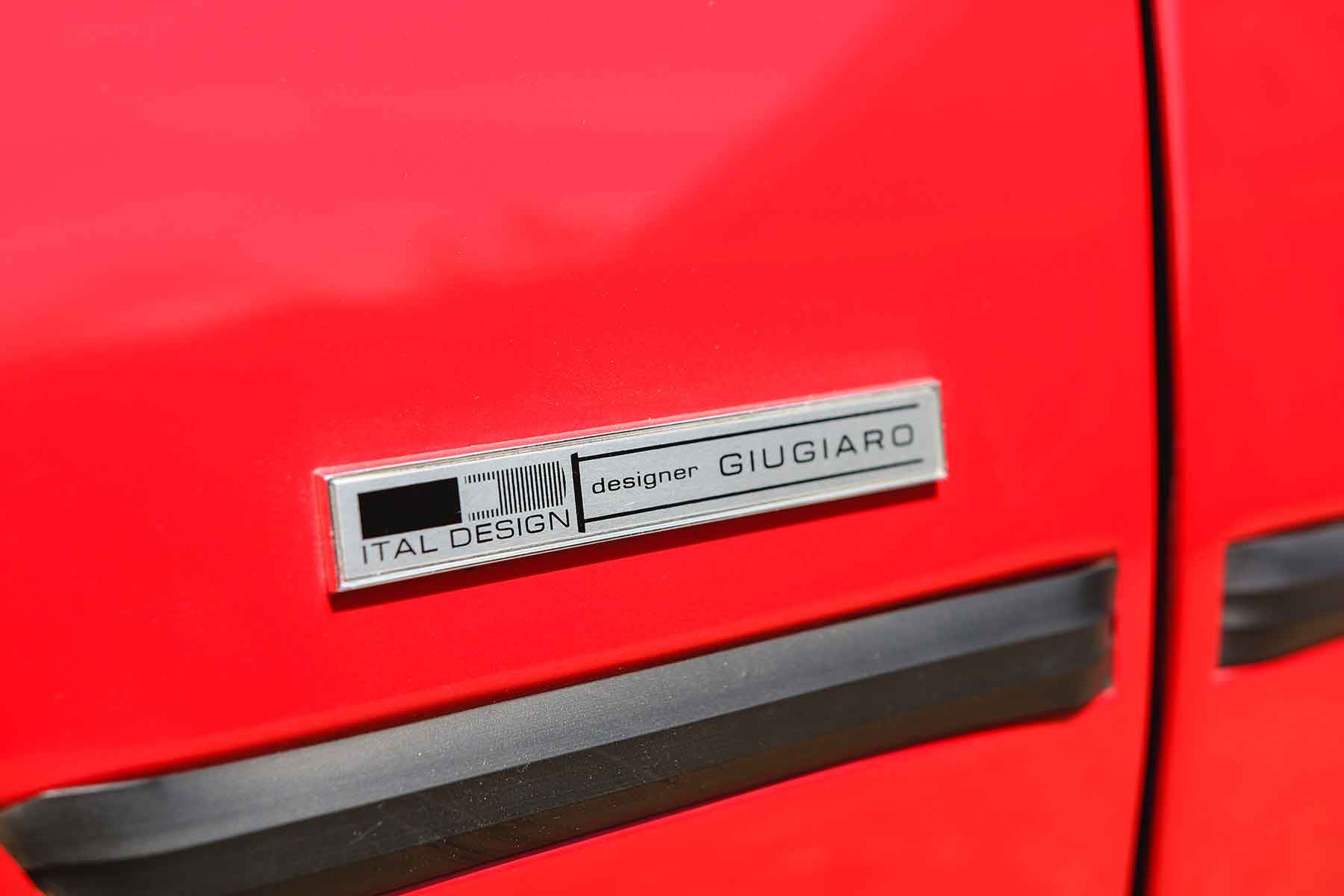
Looking at the way the pristine hue emboldens Giugiaro’s subtle humps and dips in the hand-rolled bodywork, we couldn’t possibly imagine a time when it had flirtations with the scrapheap. The cabin is a stunning ‘70s brown – proper GT spec.
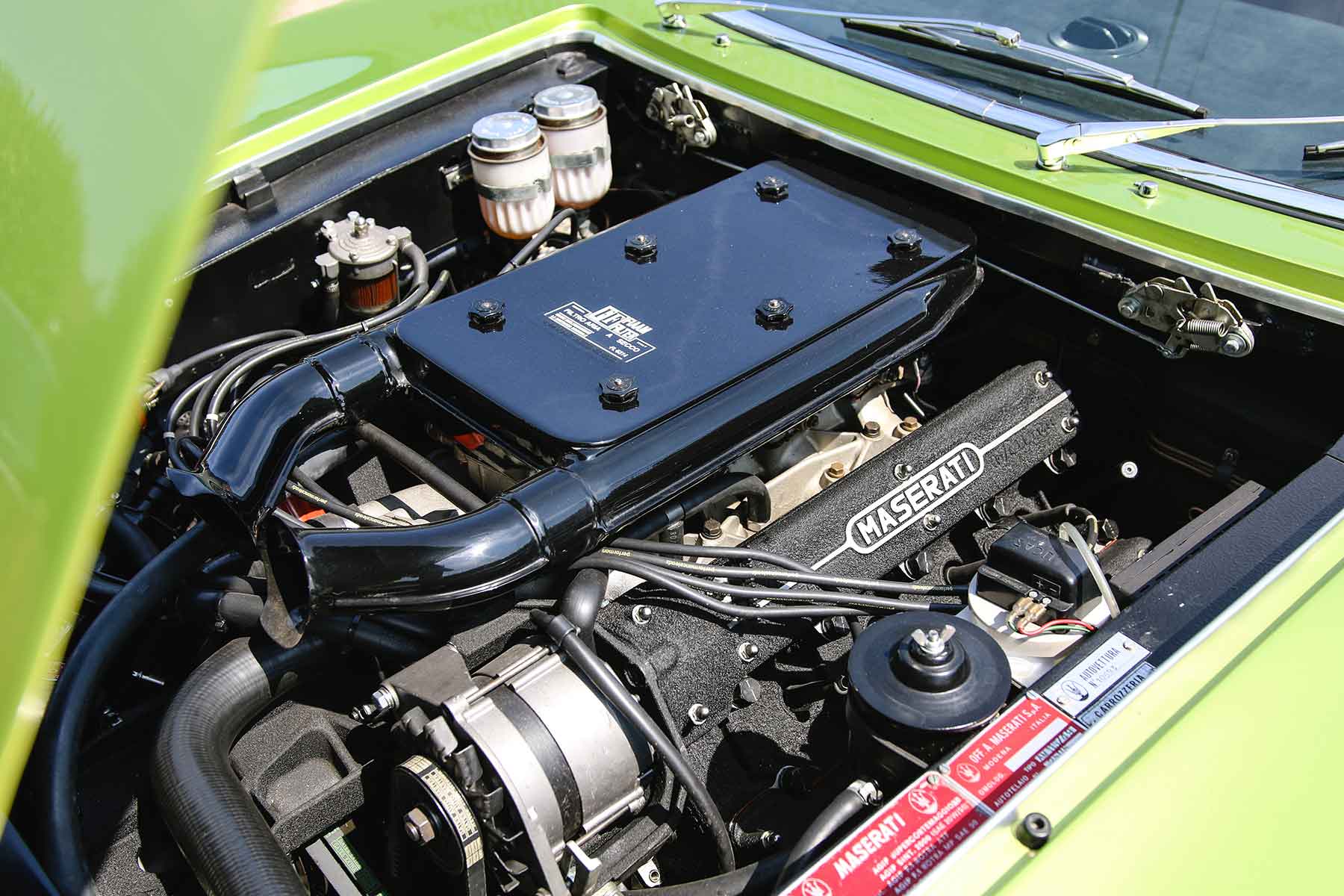
Andy tells us there are concessions to modern comfort and usage. A larger alloy radiator means this temperamental classic is just a touch better-prepared for day-to-day usage. “This was more about what Steve actually wanted. The day he collected it after the restoration, he took it straight to Austria. He called me up saying, “I’ve just been chasing a Gran Turismo – that car’s amazing!” I said, “It’s still running in, Steve!” He said, “I don’t care!” It’s had work since to keep it in tip-top shape…”
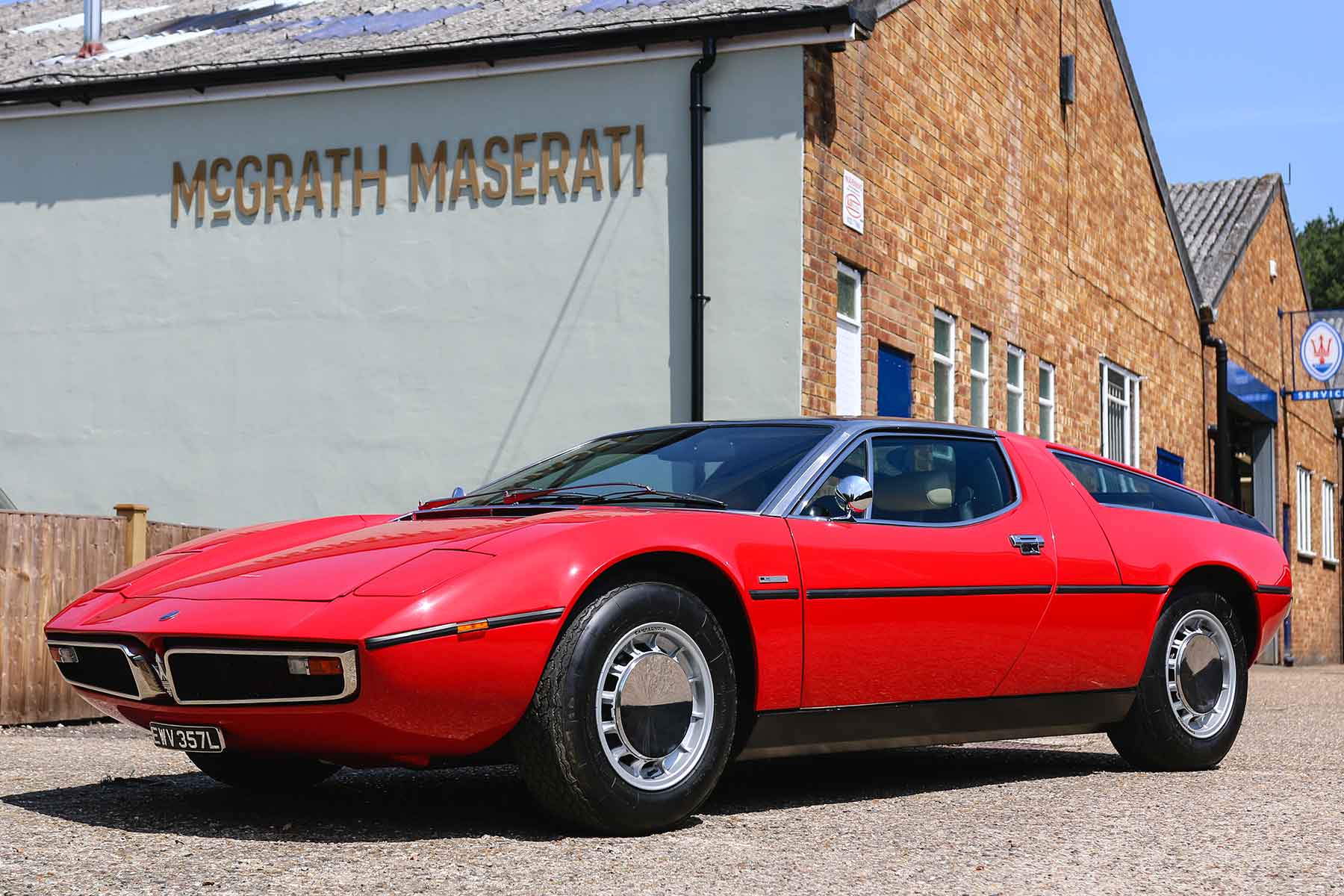
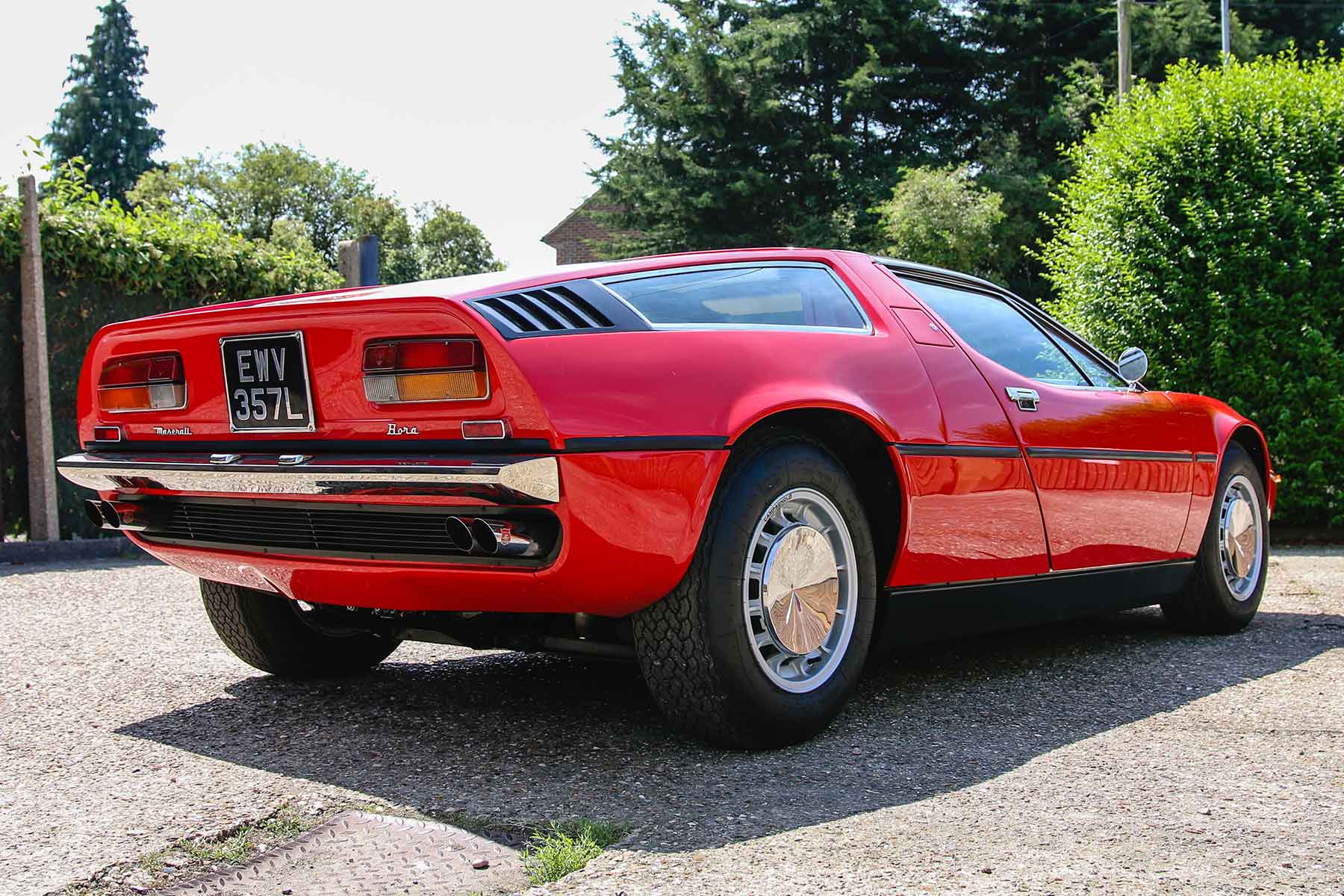
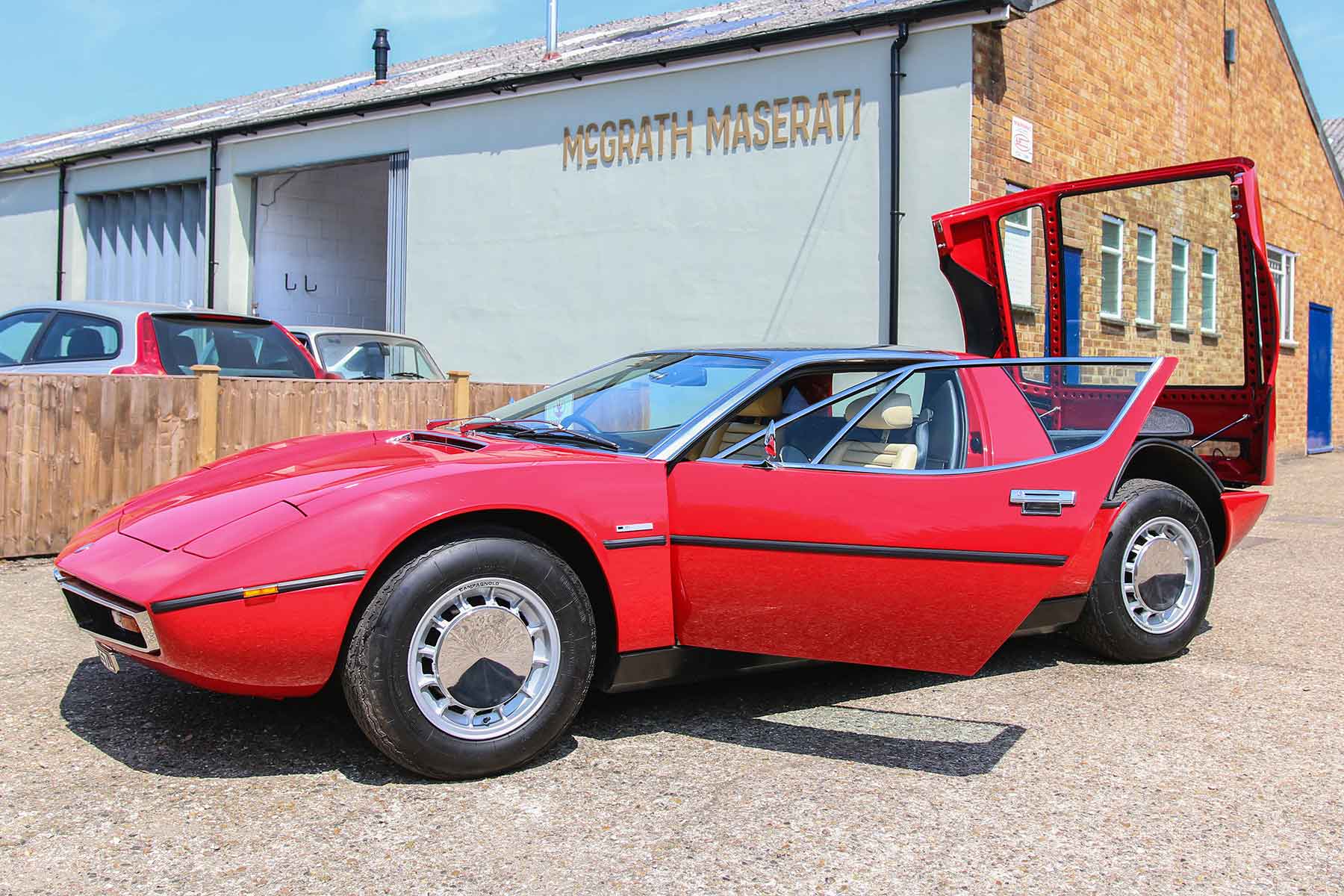
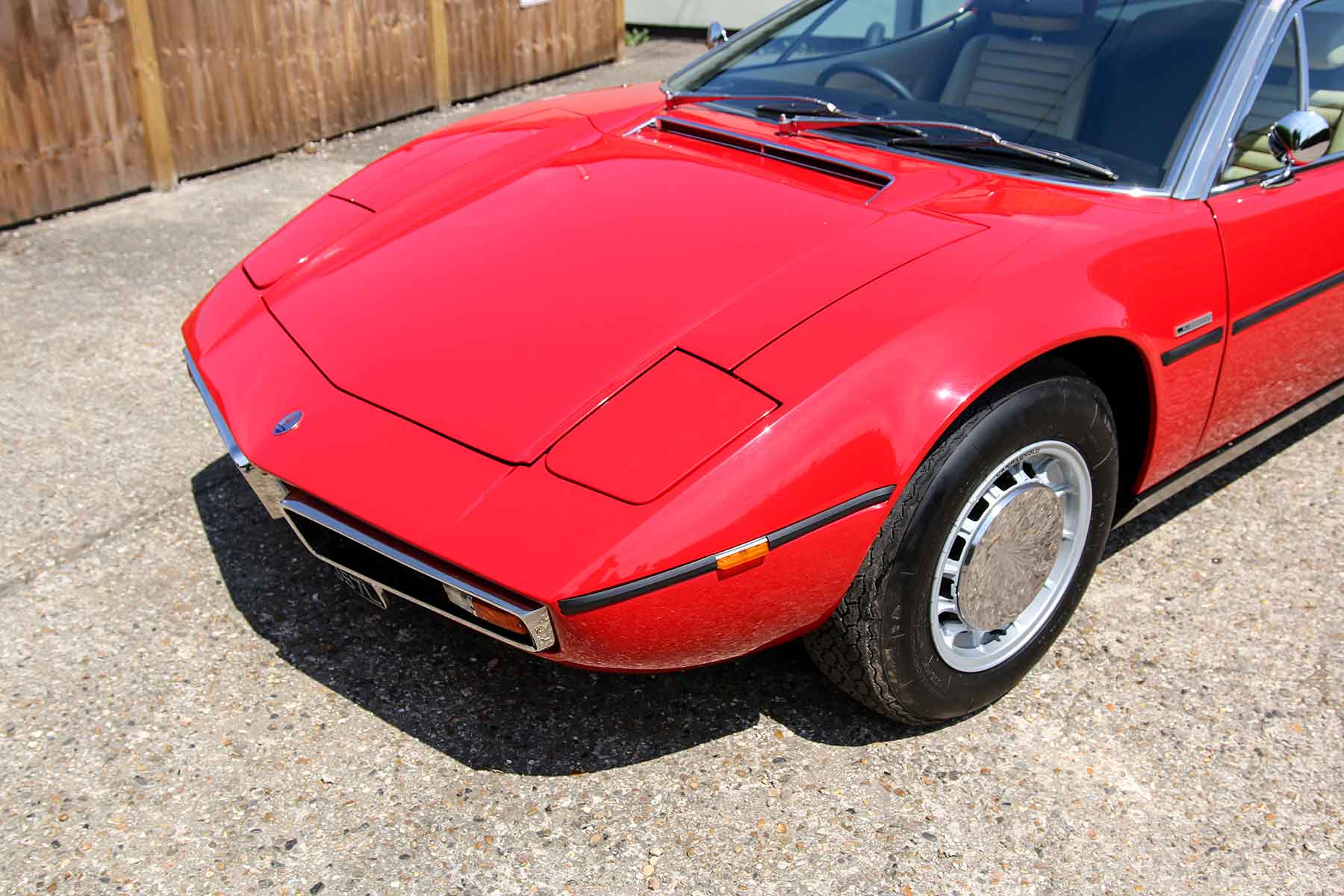
1972 Maserati Bora 4.7
“The more subtle ‘70s supercar”
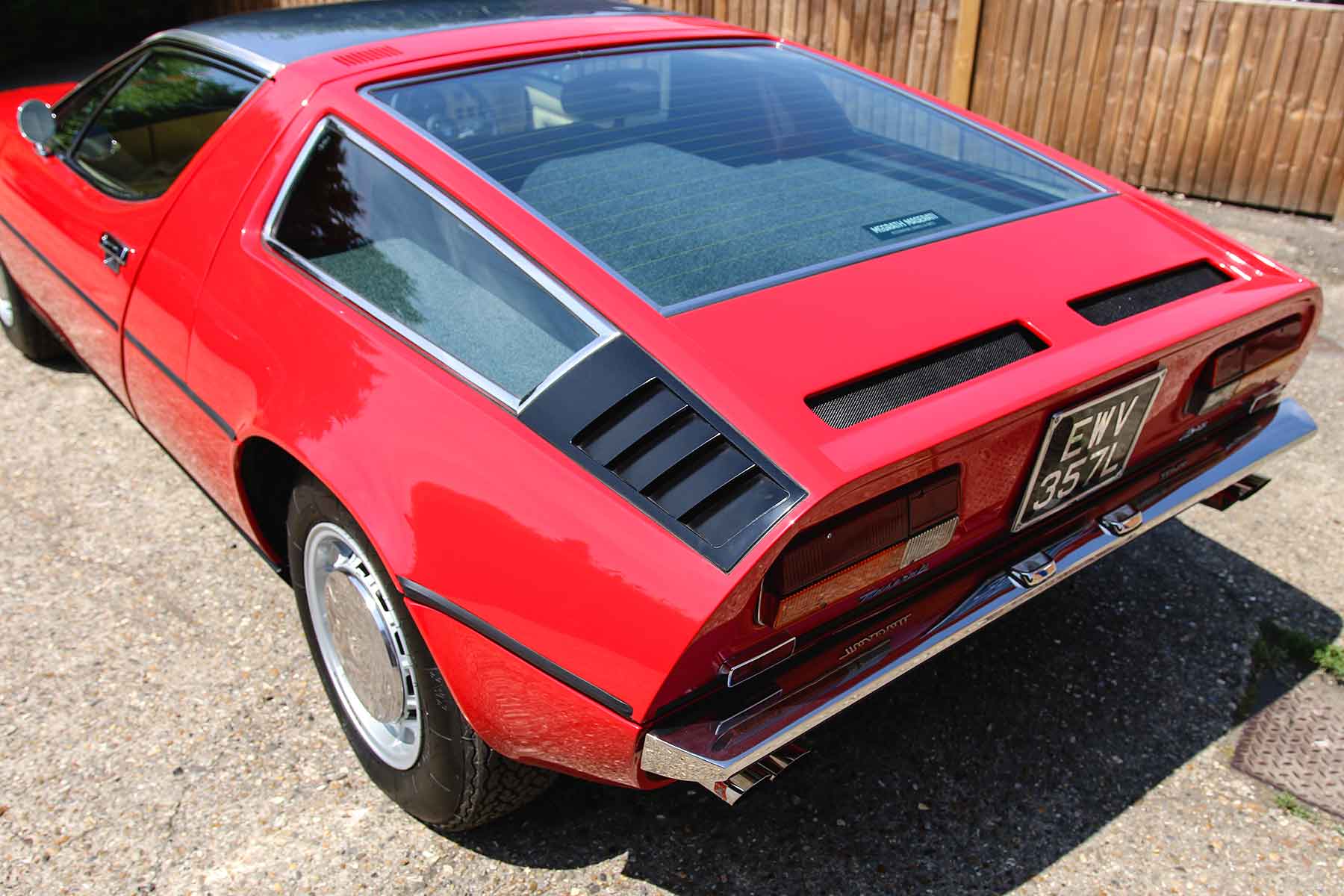
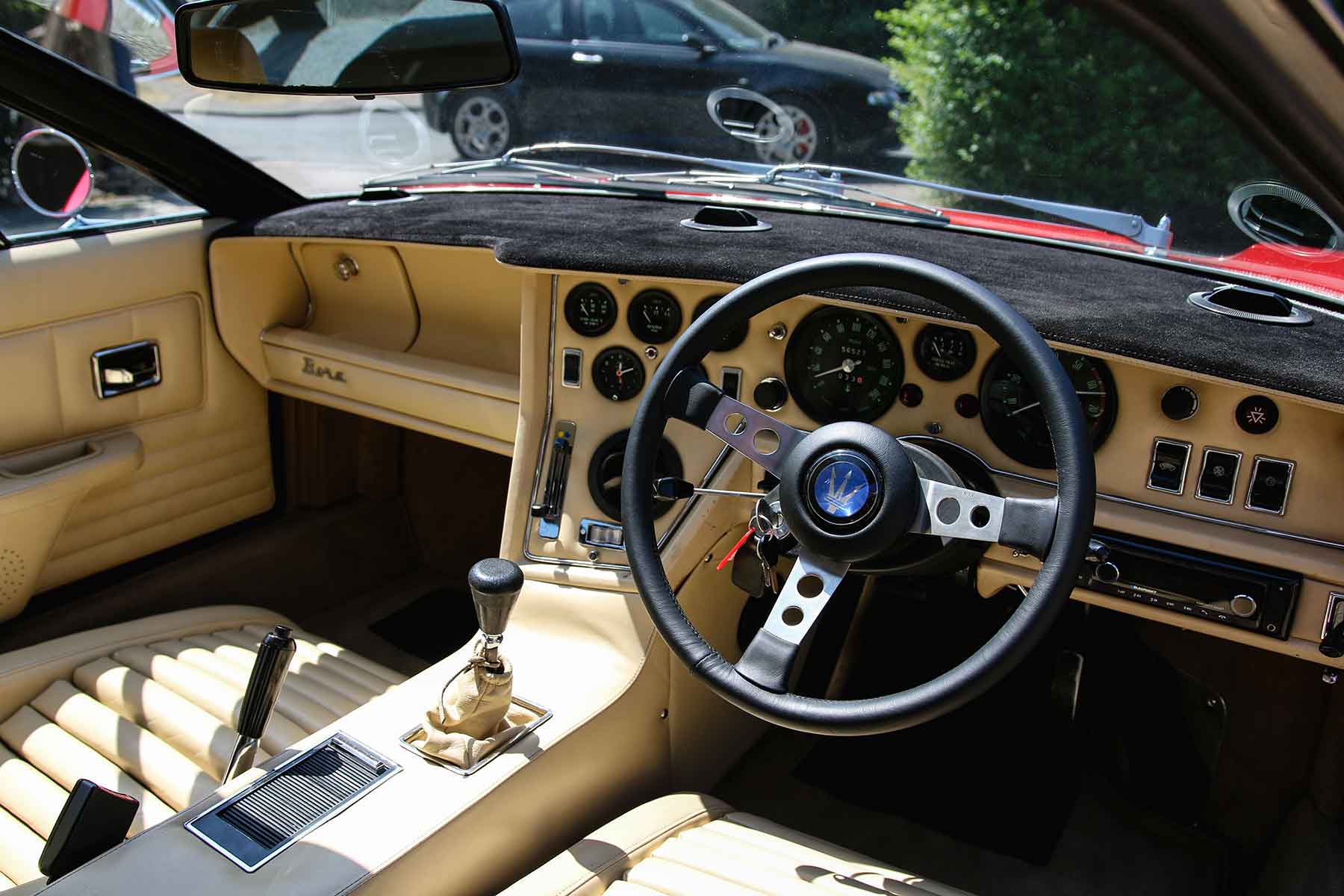
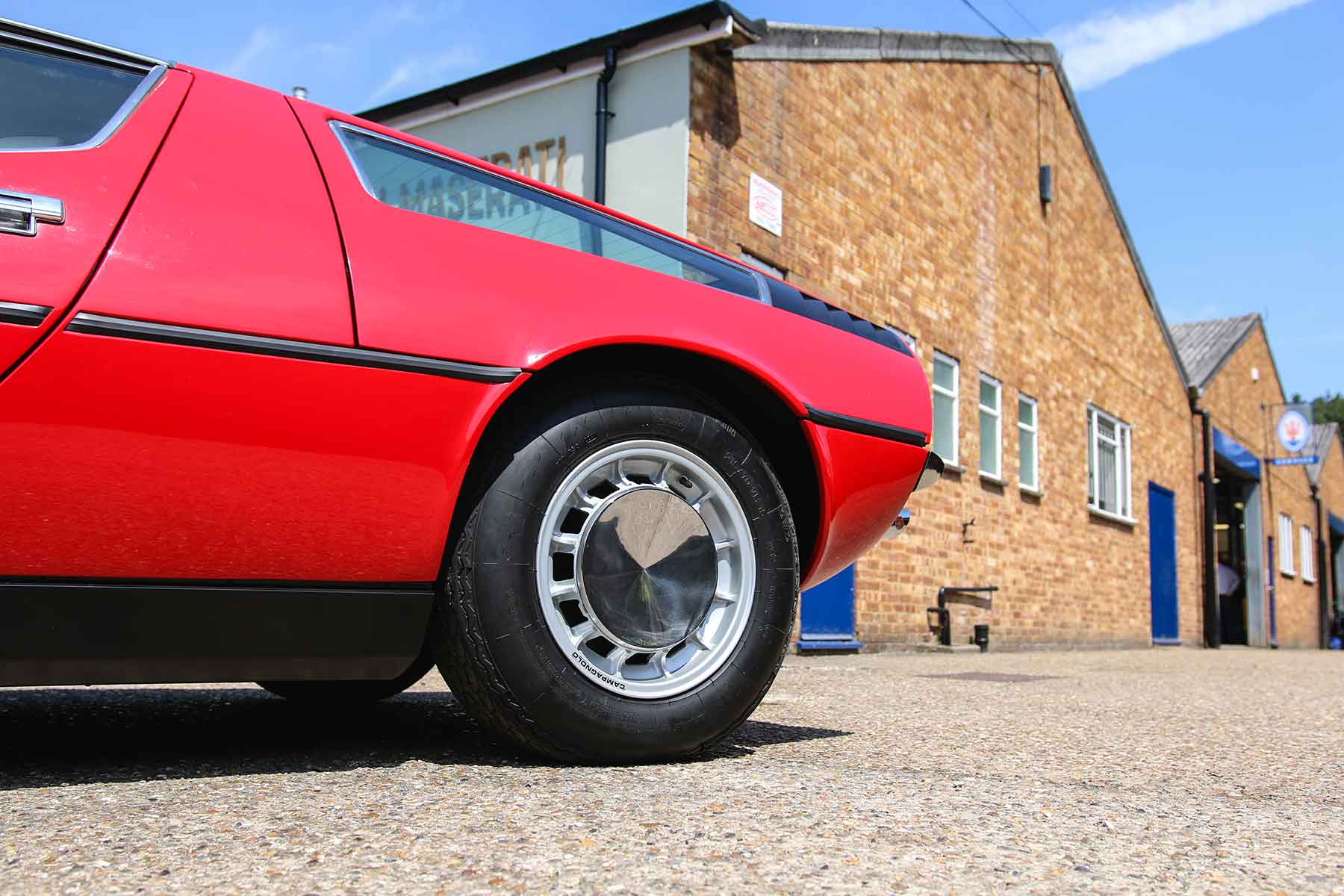
The Bora has this reputation as the ‘70s supercar that boyhood posters forgot. It’s very pretty, with the devil hiding in the details – a design philosophy not necessarily befitting the era that belonged to the Lamborghini Countach and Ferrari Daytona. Still, stainless steel sheeting on the roof makes an impression in person, as does the neat yet muscular hindquarters and purposeful snout.
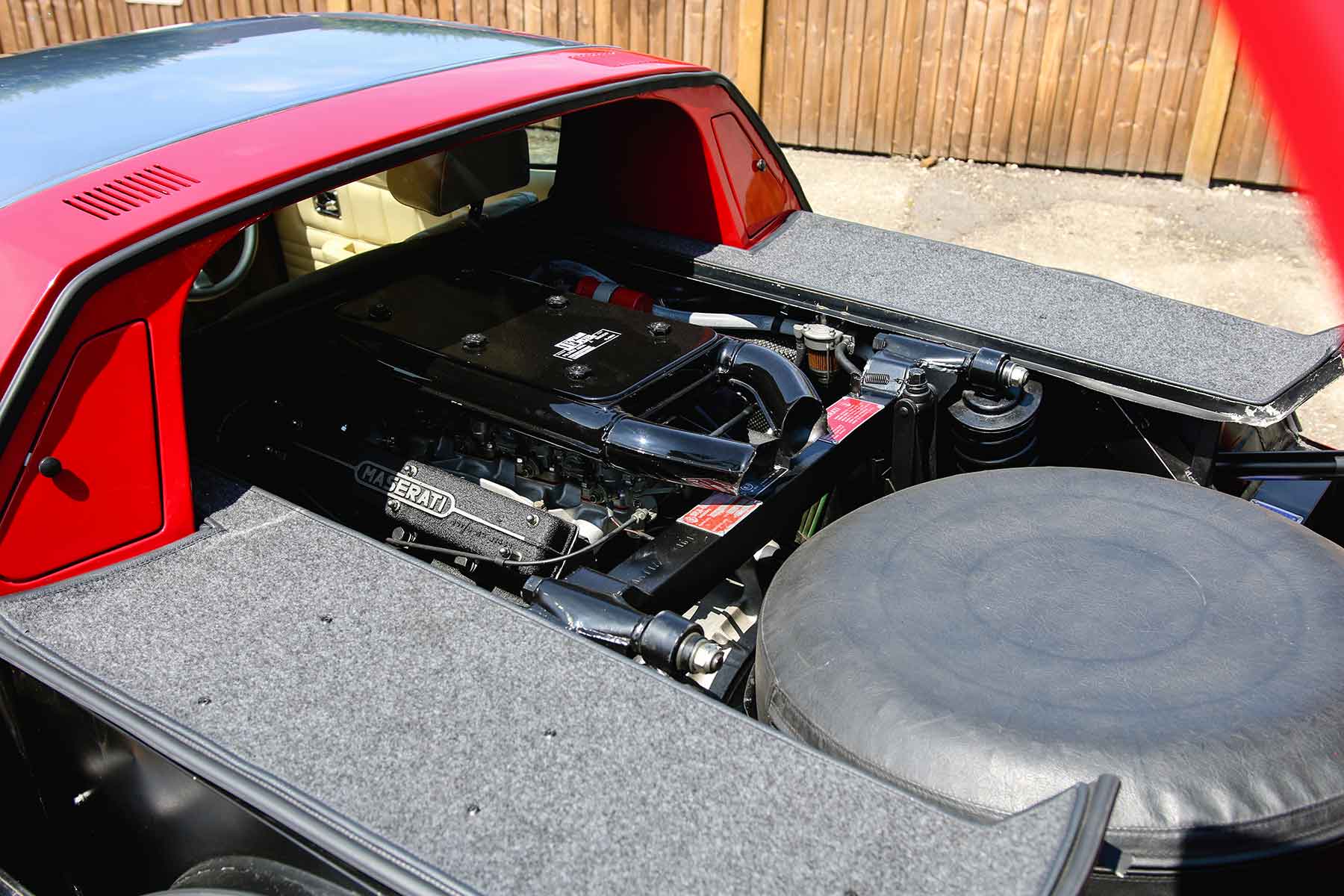
There’s evidence to suggest this is the first of what you might call user-friendly supercars. “The engine you can actually get out in five hours. Try that in a Miura… It’s that weird combination. Outrageous-looking yet it has space for luggage, and the cabin is comfy.” It even features pedals that move toward you with a steering column that goes up and down.” (The seat doesn’t move back and forward). Eat your heart out, Ford GT and LaFerrari…
While masters of the wedge since the introduction of Giugiaro’s Ghibli in the late ‘60s, Maserati never embraced the full supercar experience you associate with that design ethos. The Bora, while wearing that shape, was a classic Maserati at its core, like the Ghibli or the 5000 GT – a grand tourer.
“You’re not into fifth until past 130. It’s not a supercar as much as it is a super GT – a classic Maserati at its core. Still built with the Maserati DNA. Don’t make it like a go-kart, make it so you can cross continents.”
The golden age of Maserati
We asked whether our assessment that these cars represented a golden age for Maserati was fair. Andy’s response was fairly conclusive: “Definitely. Our era goes from about the mid-50s to about 2012, but that classic era from the mid-‘50s to the mid-‘80s has to be it”. What was Andy’s pick of the six? “It has to be the 5000 GT. It’s just the business, isn’t it?”
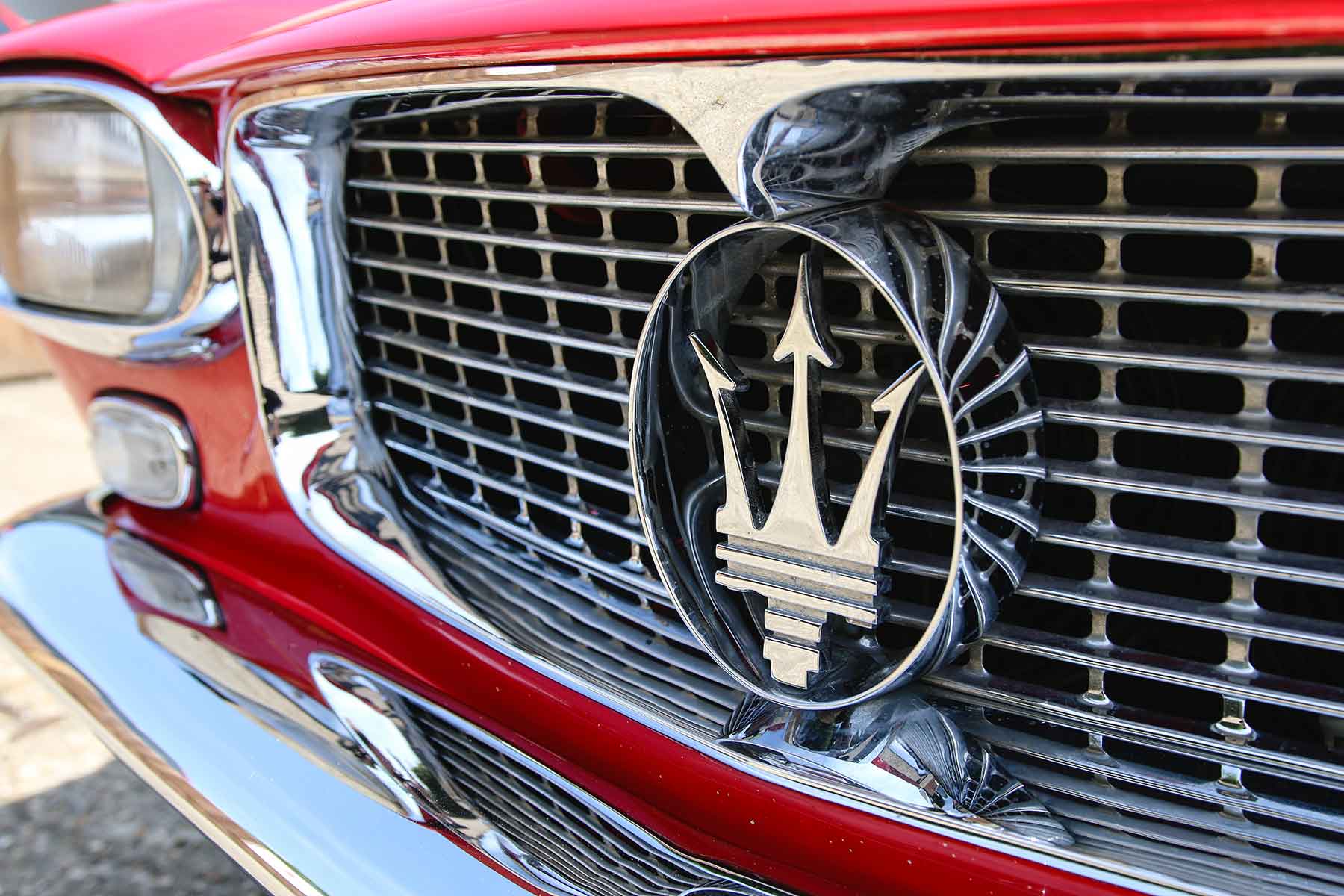
These cars then, are the perfect cross-section of everything we know and love about Maserati. Their legacy lives within the prongs of the trident. They’re why we forgave it for the anonymous (and ironically now quite desirable) boxes of the 1980s and 90s, only to rejoice at the return of the pretty grand tourer, only to forgive again that said car was the 3200 GT…
Today, Maserati is where it should be – selling to a bigger customer base than ever before, as well as building on its heritage. These classics give us a better appreciation of just what a proper Maserati should be — “An Important Maserati Collection” indeed. May they find loving homes with RM Sotheby’s in September.
Forget the Goodwood Festival of Speed or England’s third place playoff match against Belgium, because Stowe House was the only place to be on Saturday. The grand setting played host to the Festival of the Unexceptional, a celebration of everyday classics, the mundane and the oft-forgotten. We grabbed our Instamatic camera to bring you the best photos from the extravaganza of the ordinary.
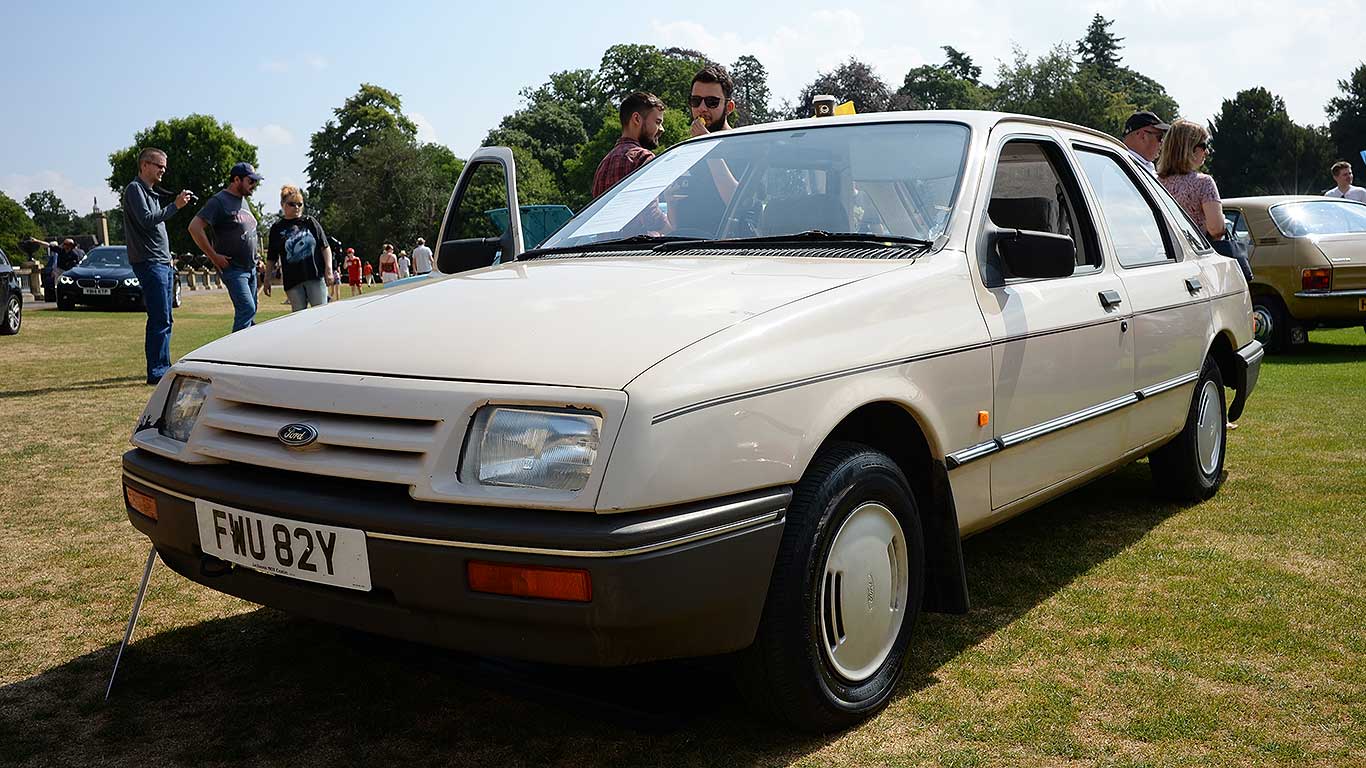
Ford Sierra
Once upon a time, the Ford Sierra was a familiar sight of Britain’s roads, but while your father yearned for a Ghia or XR4i, he probably had to ‘make do’ with something a little more mundane, like a beige 1.6 GL. This Sierra has survived scrappage schemes, the lure of a PCP deal and the British weather, and is, in our humble opinion, as exciting as anything on show at the Duke of Richmond’s garden party.
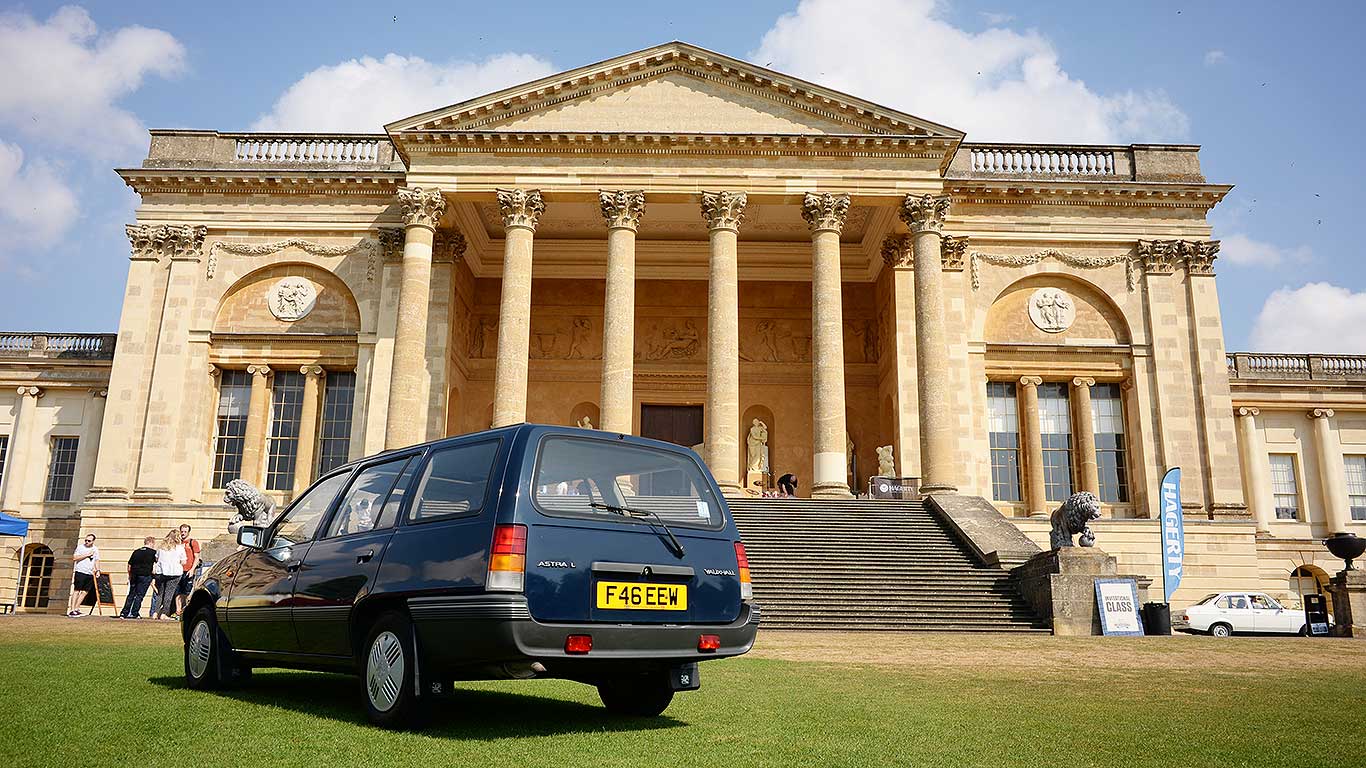
Vauxhall Astra
Today, this Vauxhall Astra 1.3 L Estate looks to the manor born, which shows how much has changed in three decades. When new in 1989, it wouldn’t have been allowed this close to Stowe House unless it was carrying Gary the window cleaner or Brian the gardener.
Ford Cortina
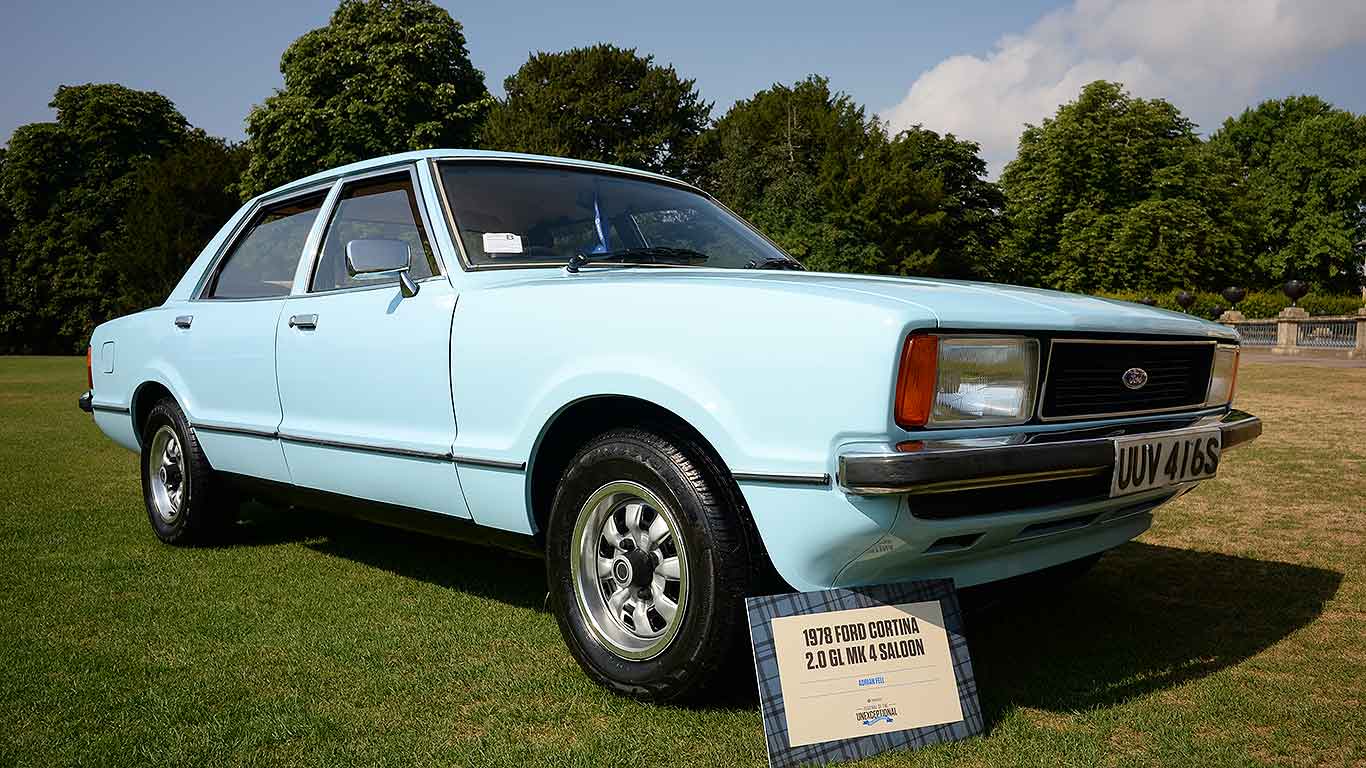
The Cortina was destined to be called the Consul 325, but Ford bosses decided its family saloon needed a more aspirational and exotic name. Having ruled out Skegness, Paignton or Morecambe, Ford settled on Cortina, after the Italian ski resort and host of the 1956 Winter Olympics.
Austin Allegro
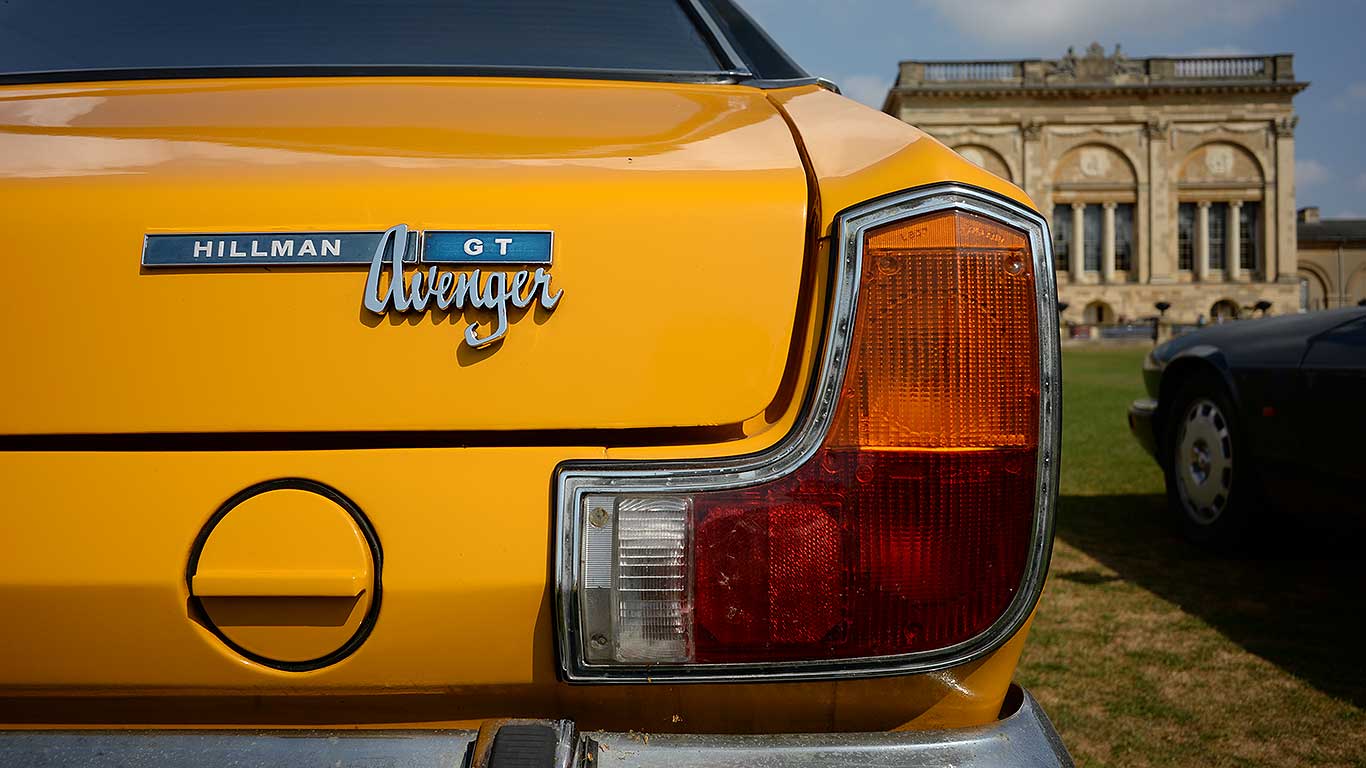
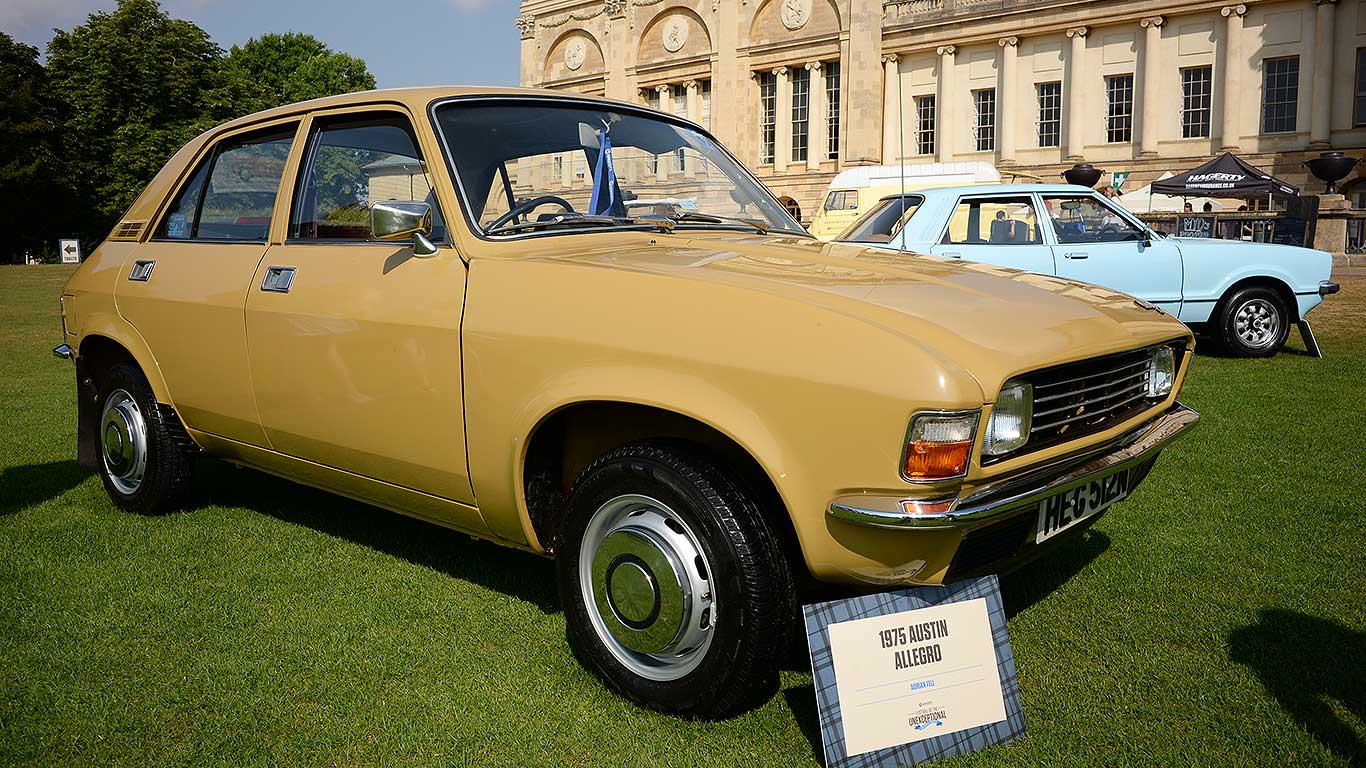
What could be more unexceptional than the Austin Allegro, the car often cited as representing all that was wrong with the British car industry? “It’s easy to like the Austin Allegro just for its looks,” proclaimed the press ad at its launch in 1973. You can decide if the ad man was speaking the truth.
Maestro meets Maxi
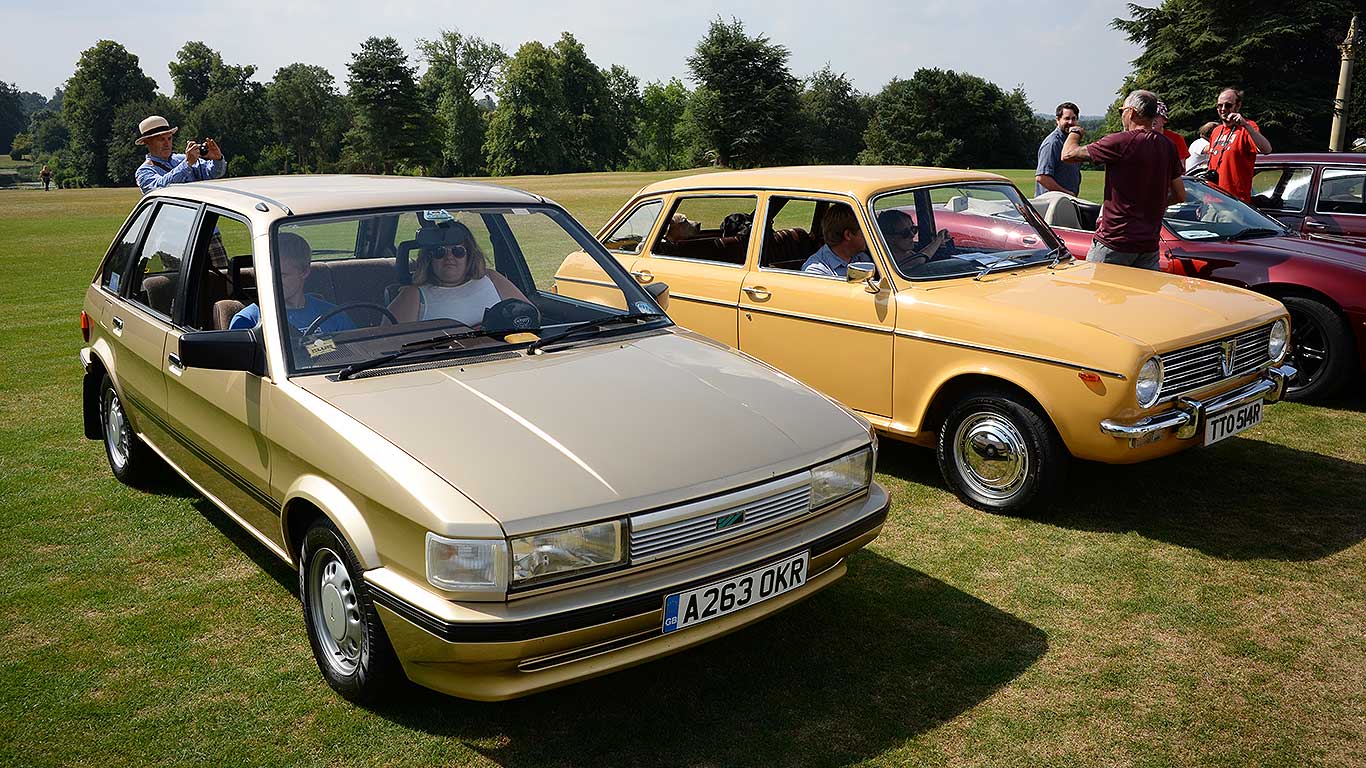
Left or right? Given the choice, would you prefer to travel home from Stowe in an Austin Maestro or an Austin Maxi. Waiting for the bus is not an option. For what it’s worth, we’d be happy in either.
Fiat Strada
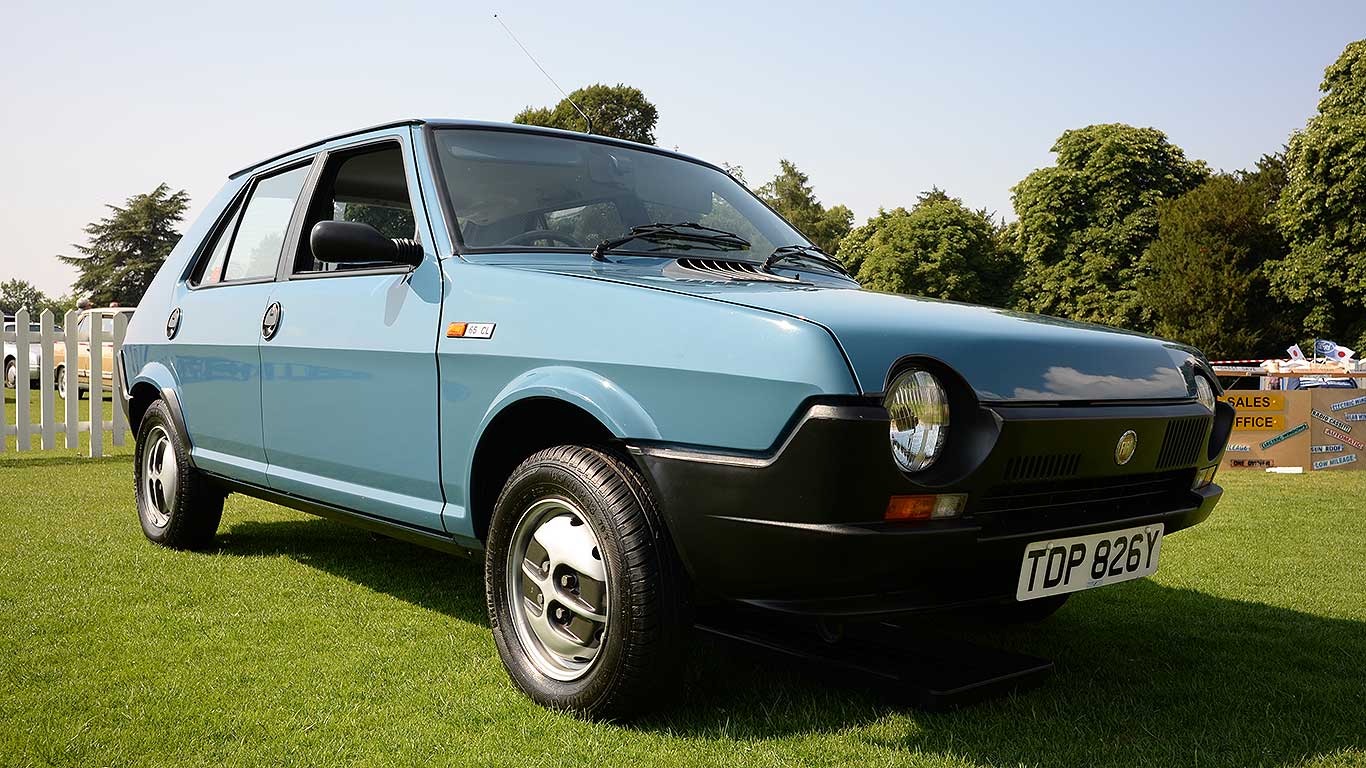
Now for something a little more exotic. The Fiat Strada – or Ritmo in its domestic market – is known for being the subject of one of the famous car adverts of all time. The ‘Handbuilt by Robots’ advert was set to the rousing soundtrack of Rossini’s Figaro and once filled an entire News at Ten ad break. According to Campaign, upon arrival in Turin, the production team were met by workers protesting about losing their jobs… to robots.
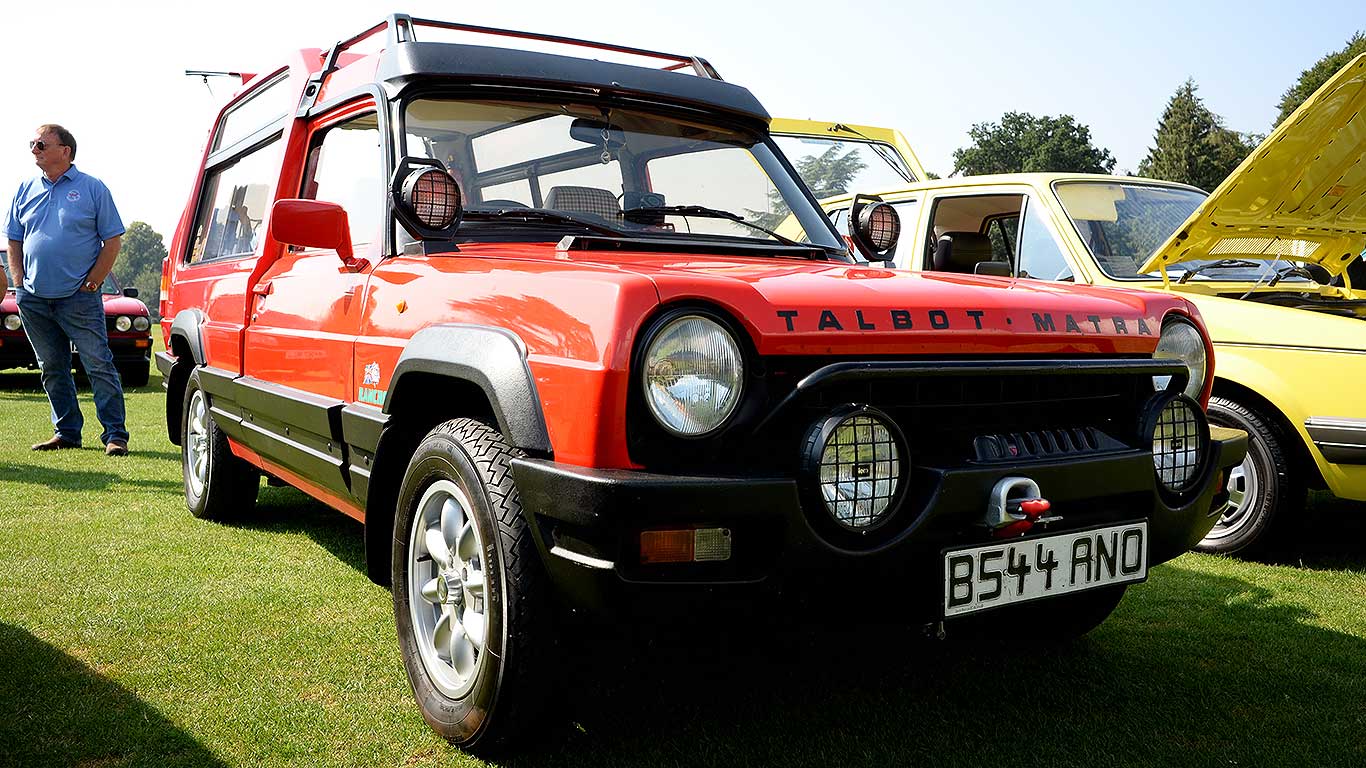
Talbot Matra Rancho
Ahead of its time in so many ways, the Matra Rancho was a ‘lifestyle’ vehicle before marketing people had cottoned on to the fact that people might use their cars for more than just commuting, shopping, school runs and family holidays. It looked like a pre-Discovery Discovery, but the front-wheel-drive Rancho offered little in the way of off-road ability. Cool thing.
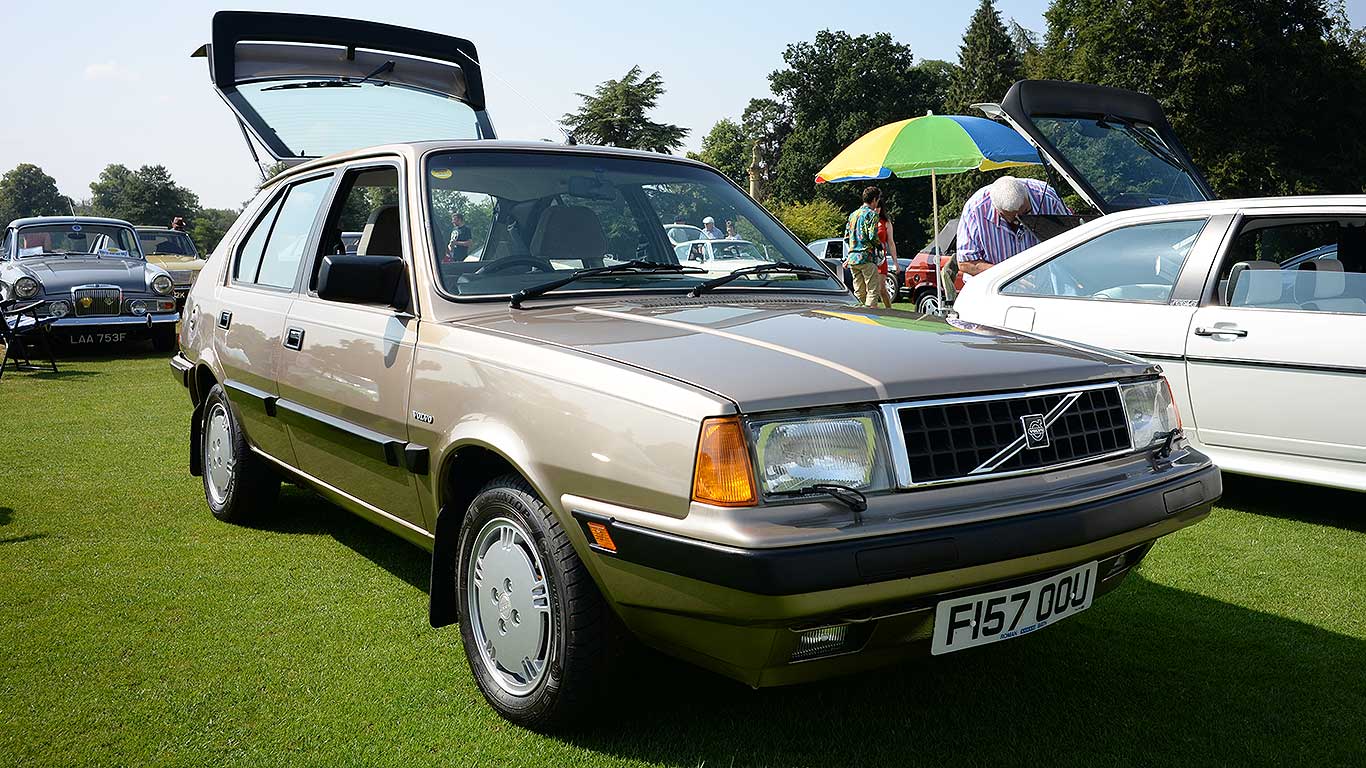
Volvo 360
Give yourself 1,000 I-Spy points for spotting a Volvo 360 away from its natural territory of a garden centre or a lawn bowls car park. The 360 was introduced in 1982 and featured a more powerful 2.0-litre engine, which enabled owners to reach the garden centre in record time. You can’t be late for those two-for-one flapjack deals in the tea shop.
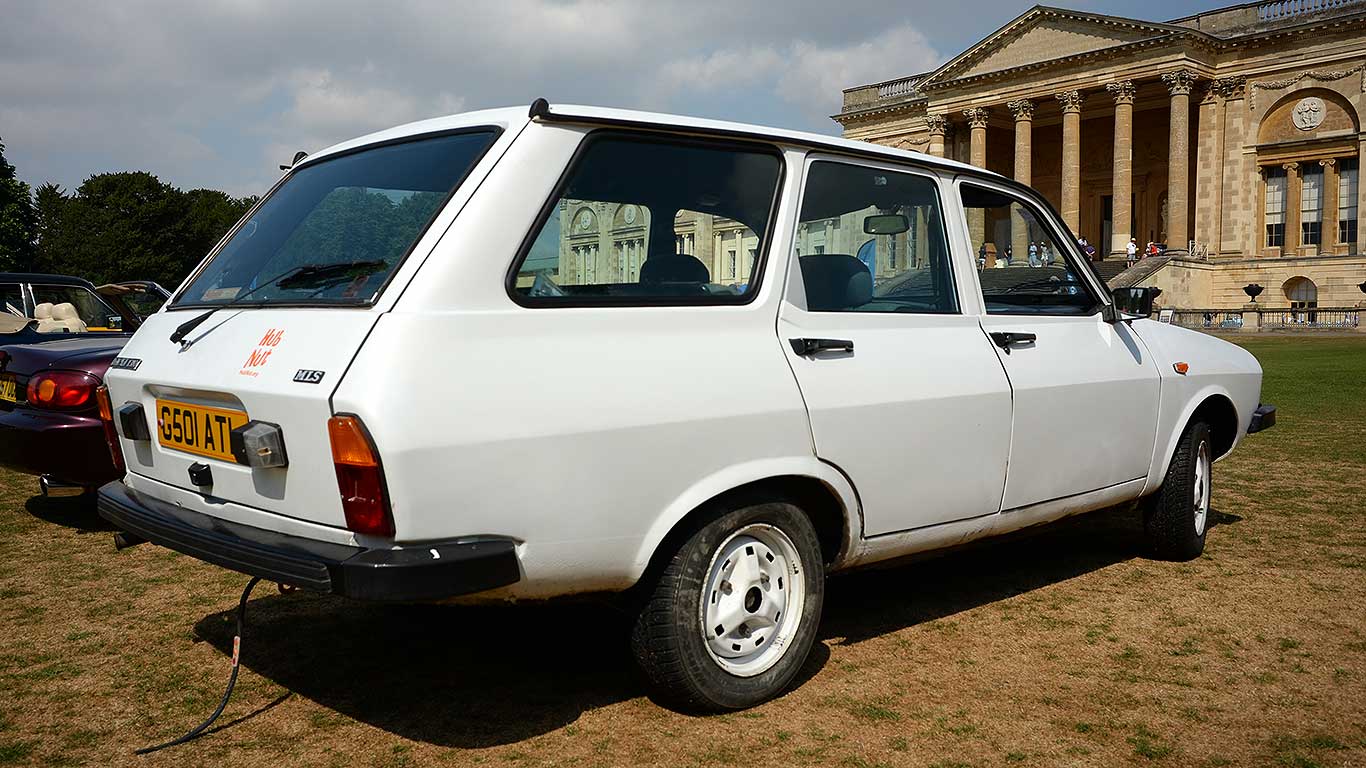
Dacia 1310
This is Ian ‘Hubnut’ Seabrook’s Dacia 1310, a recent import from Romania. Ian chronicled the journey home on YouTube, and the adventure is far more exciting than a supercar driving past a wall in Sussex. Probably.
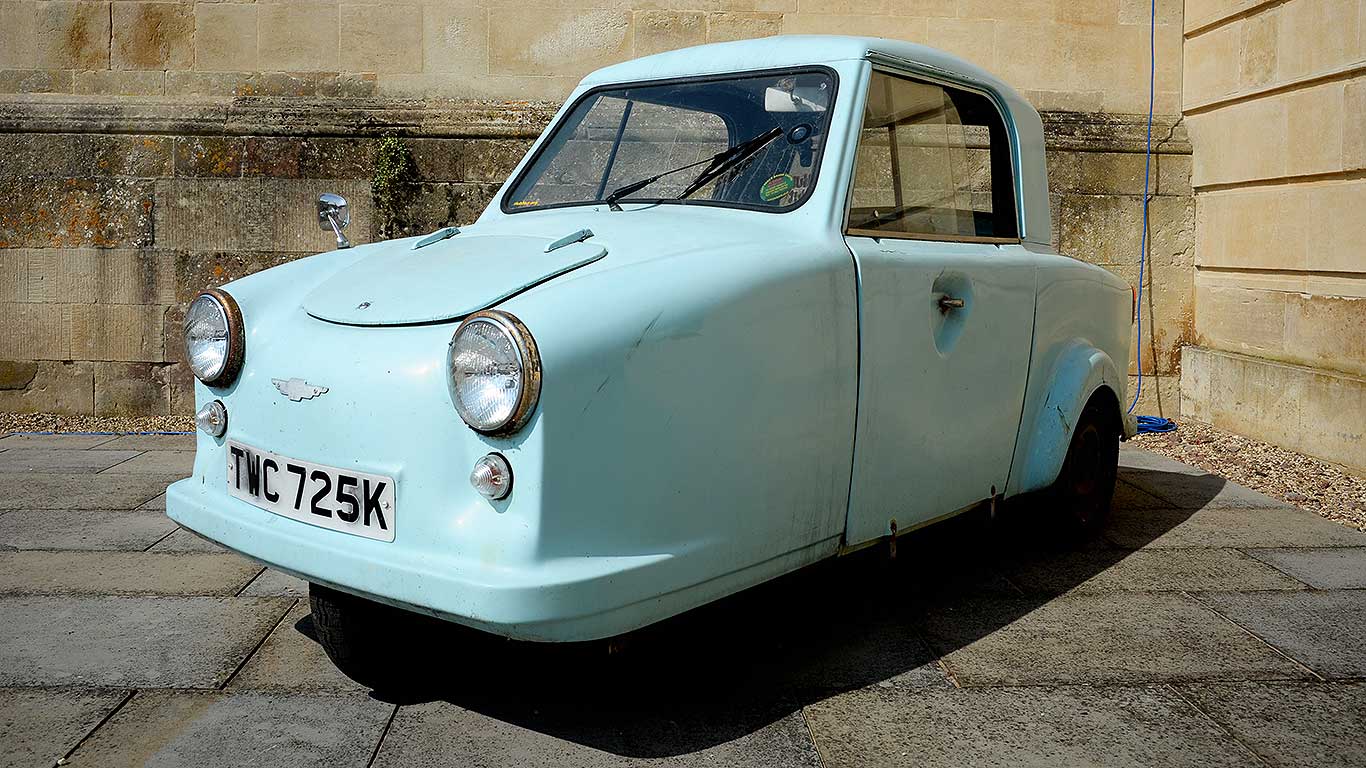
Invacar
This is one of Ian’s other cars: an Invacar. Again, you can catch up on the restoration job via HubNut’s YouTube channel. One day, we hope to see Ian invited to tackle the Goodwood hill in the Invacar. We hear Nick Heidfeld is a tad worried that his record might be broken.
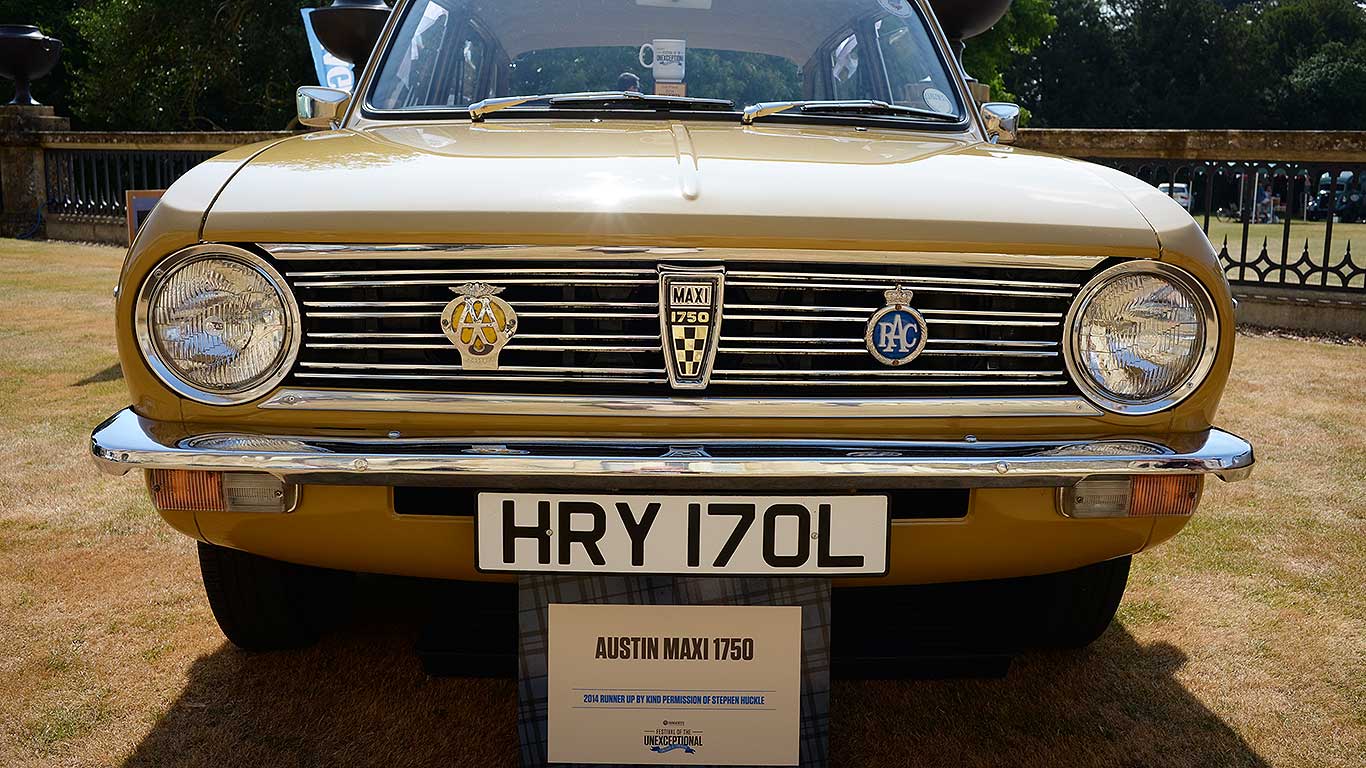
Austin Maxi
AA and RAC badges present and correct, because you can never have enough breakdown cover. In fairness, the Austin Maxi comes in for some unfair stick, but this was a genuinely innovative and spacious family car. Sadly, it was let down by poor build quality and a lack of investment.
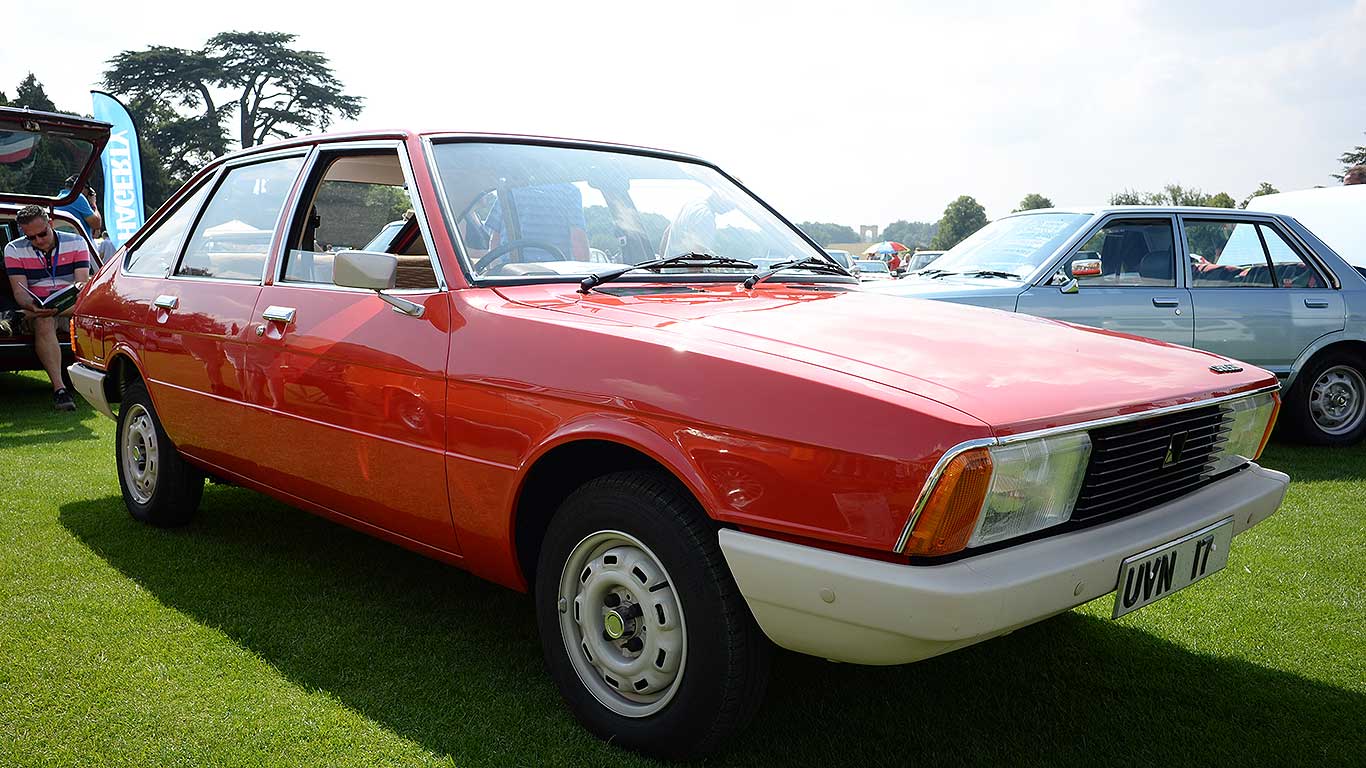
Chrysler Alpine
Good enough to be named European Car of the Year in 1976, and yet the Chrysler Alpine – or Simca 1307 – has been all but forgotten. Which is a shame, because the Alpine was an early pioneer of the hatchback bodystyle, offering a compelling blend of space and economy. Today, it’s as rare as many of the cars basking in the sun on the Cartier Lawn at Goodwood.
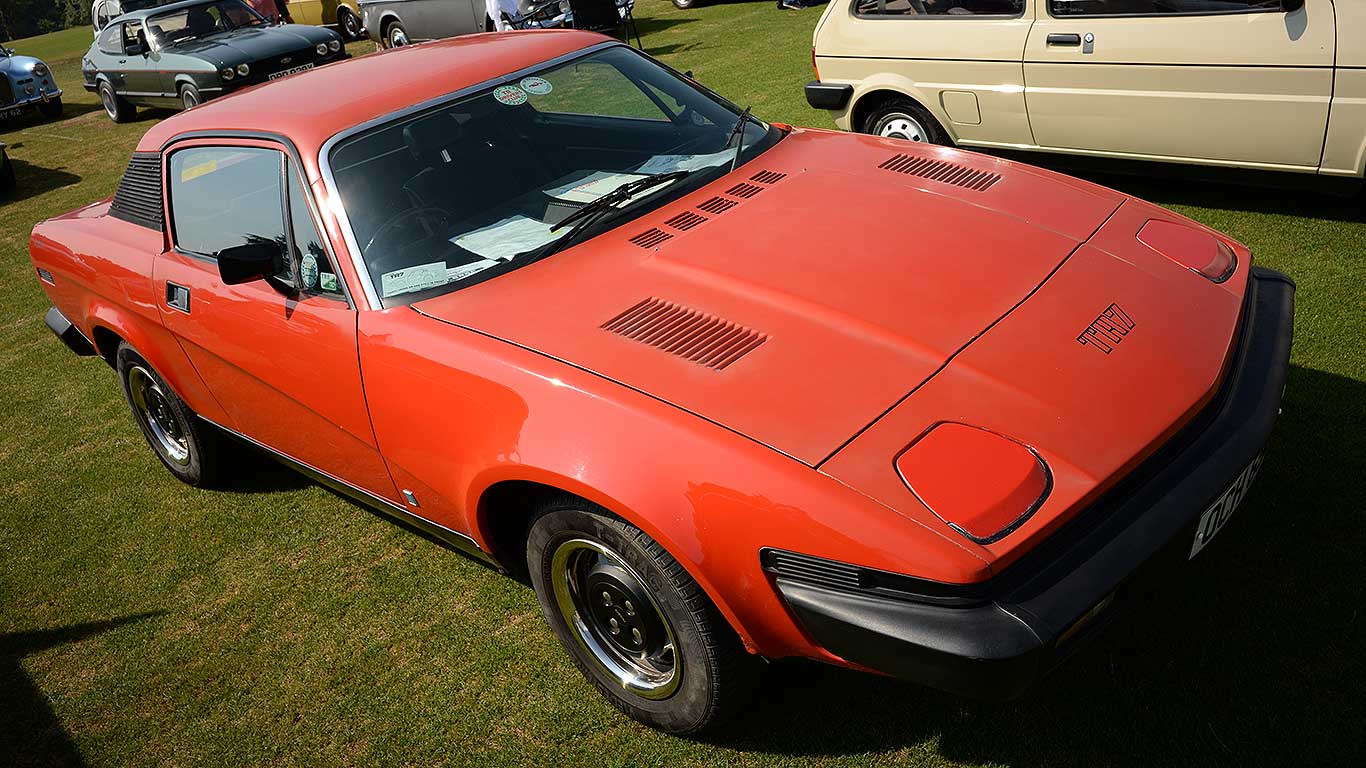
Triumph TR7
It’s a good job Giorgetto Giugiaro wasn’t at the Festival of the Unexceptional, because if he had, he’d have taken one look at this Triumph TR7, paused for a moment, wandered around to the other side, before proclaiming: “Good lord, a beige Metro.”
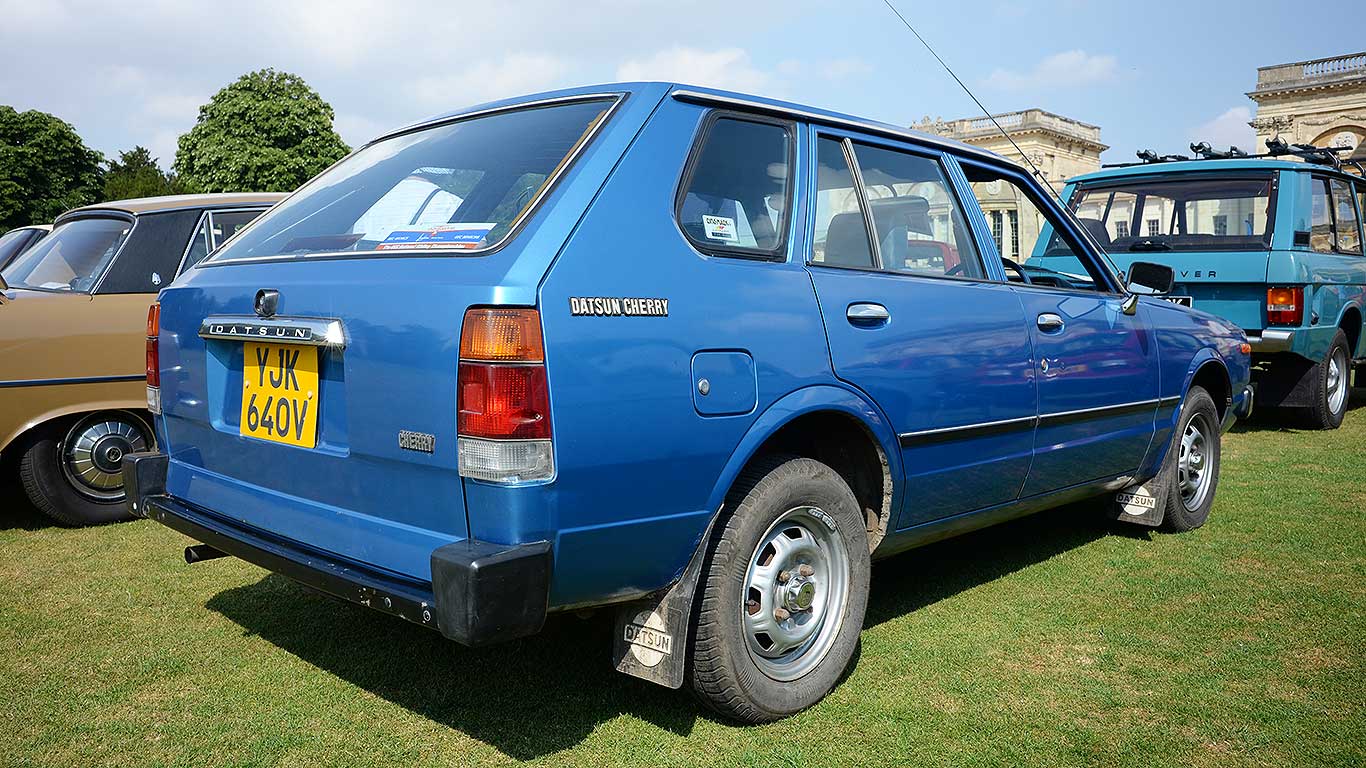
Datsun Cherry
In many ways, this photo represents the turning point in the British car industry. A Range Rover and Rover P6 – two of Britain’s greatest cars of the era – flanking a Datsun Cherry, one of the first of new wave of Japanese cars to hit these shores. The subject of derision when new, motorists loved the fact that, unlike many of the British cars of the day, a Japanese car would start in the morning and would almost certainly reach its destination.
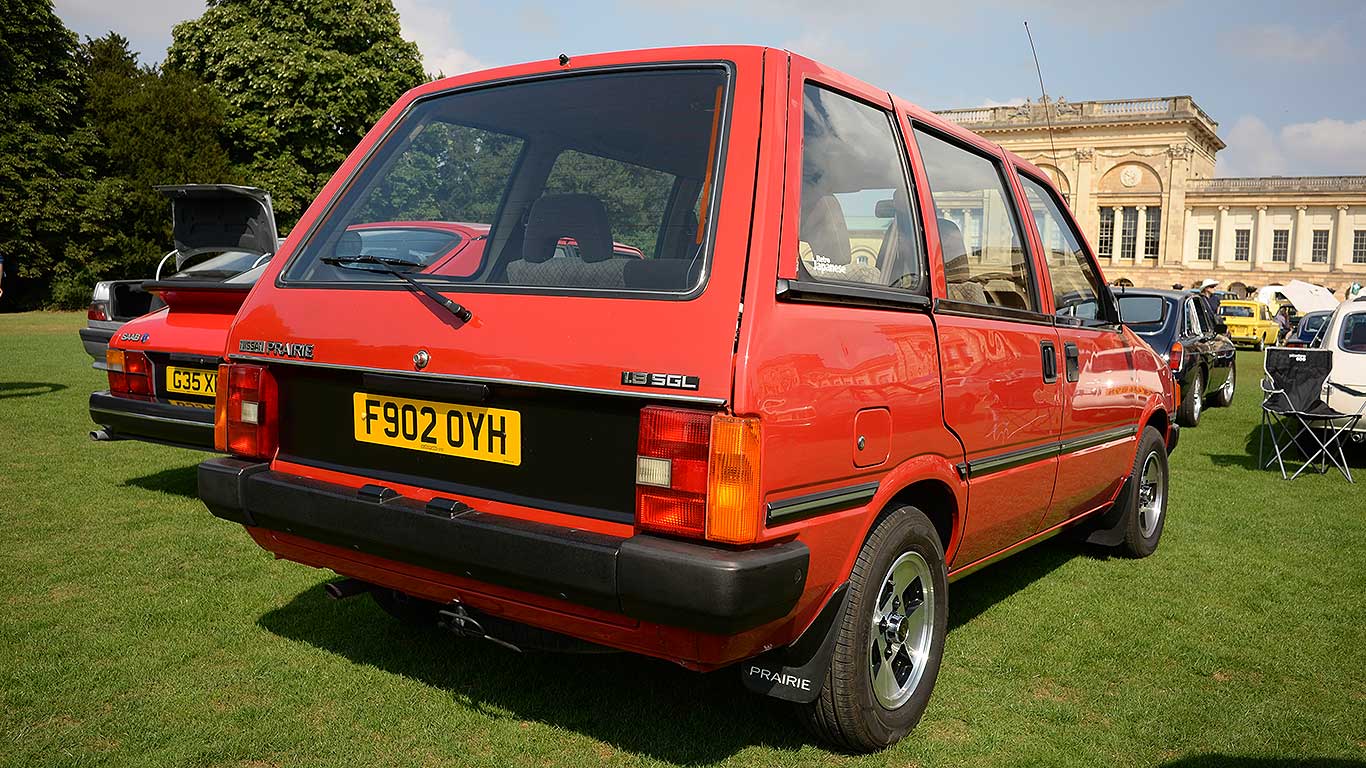
Nissan Prairie
The Chrysler Minivan and Renault Espace are credited with kickstarting the rise of the MPV, but the Nissan Prairie was there at the start. Indeed, the Prairie owes much to Giugiaro’s Megagamma concept of 1978.
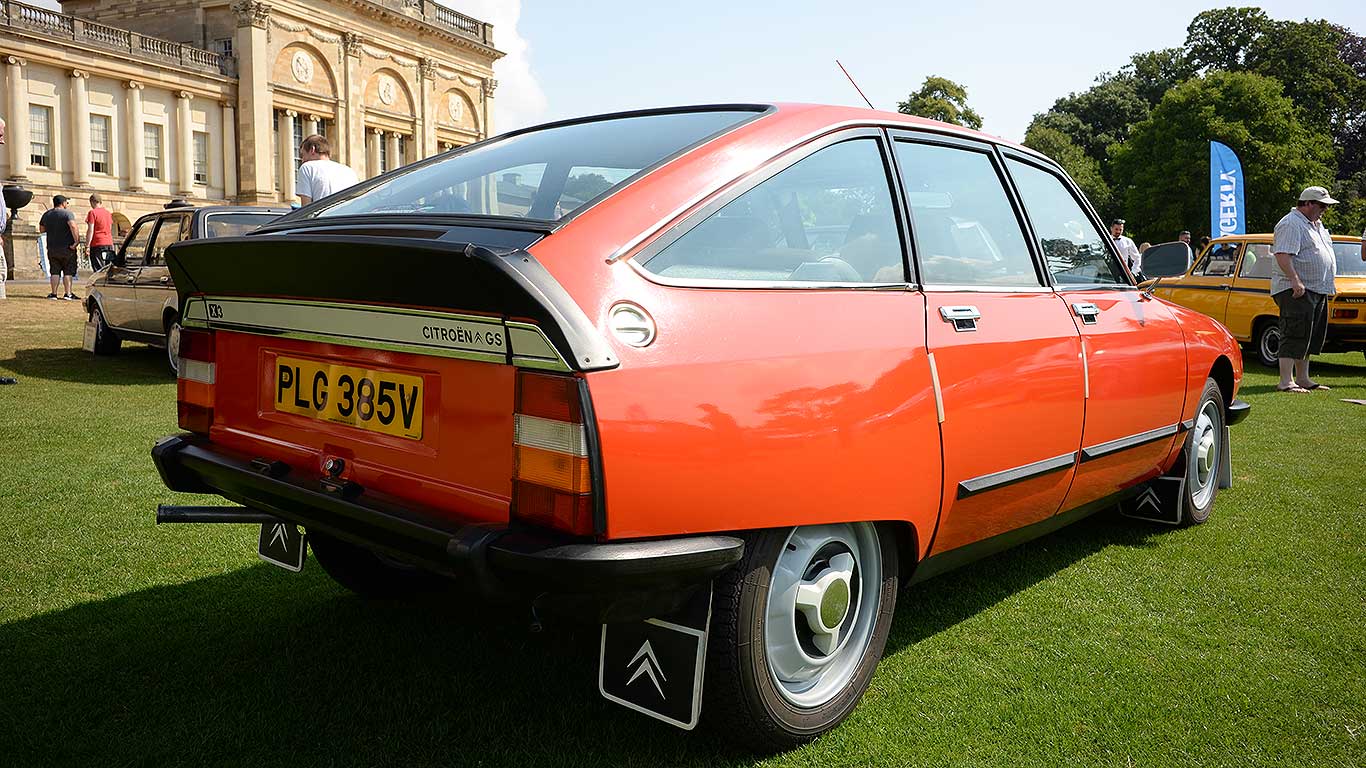
Citroen GS
Designed to fill the gap between the 2CV and the DS, the GS delivered Citroen’s famous innovation to the masses. Launched in 1970, the GS beat the SM to the European Car of the Year award in 1971 and was, by some margin, the most technically advanced car in its segment. Buy a GS today, while it remains relatively affordable.
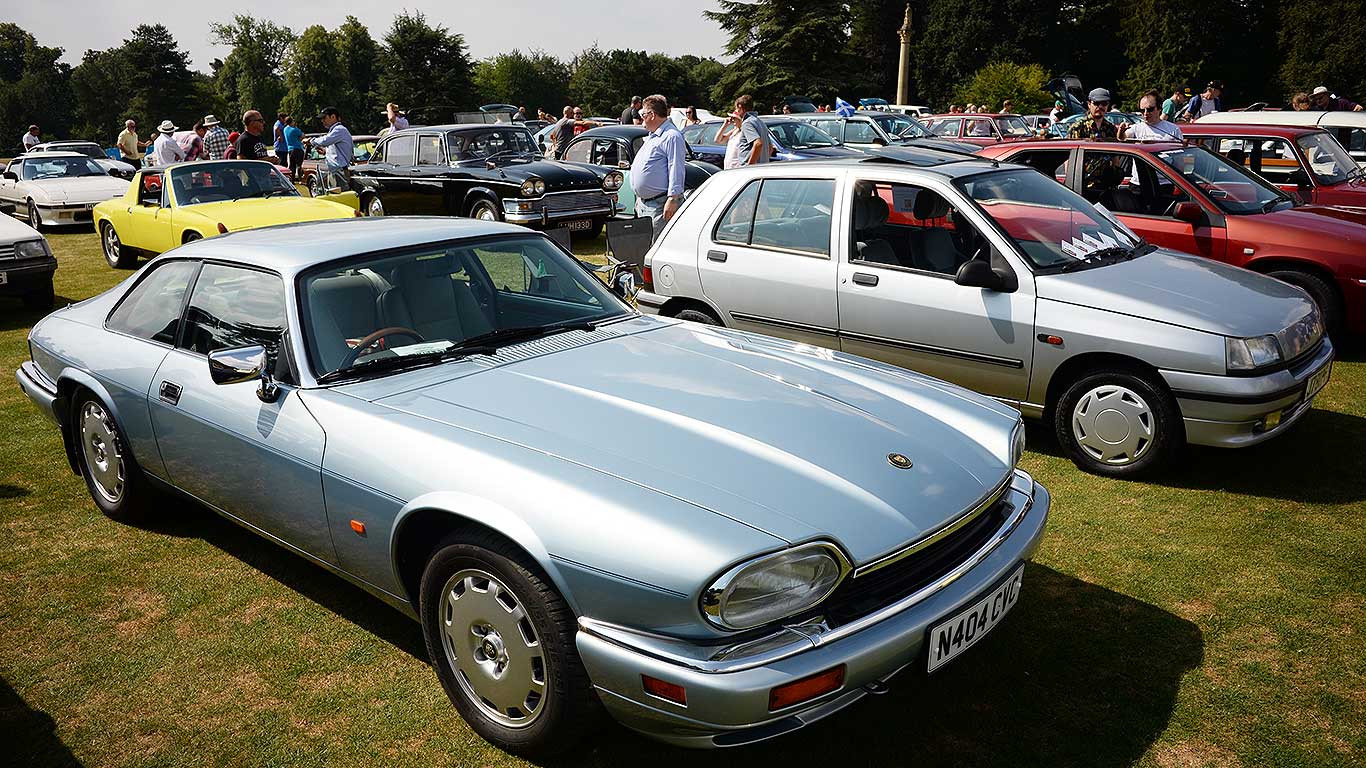
Oh, Nicole
A popular, forward-thinking, neatly-packaged and good looking car. Oh, and alongside the Renault Clio you’ll find a Jaguar XJ-S.
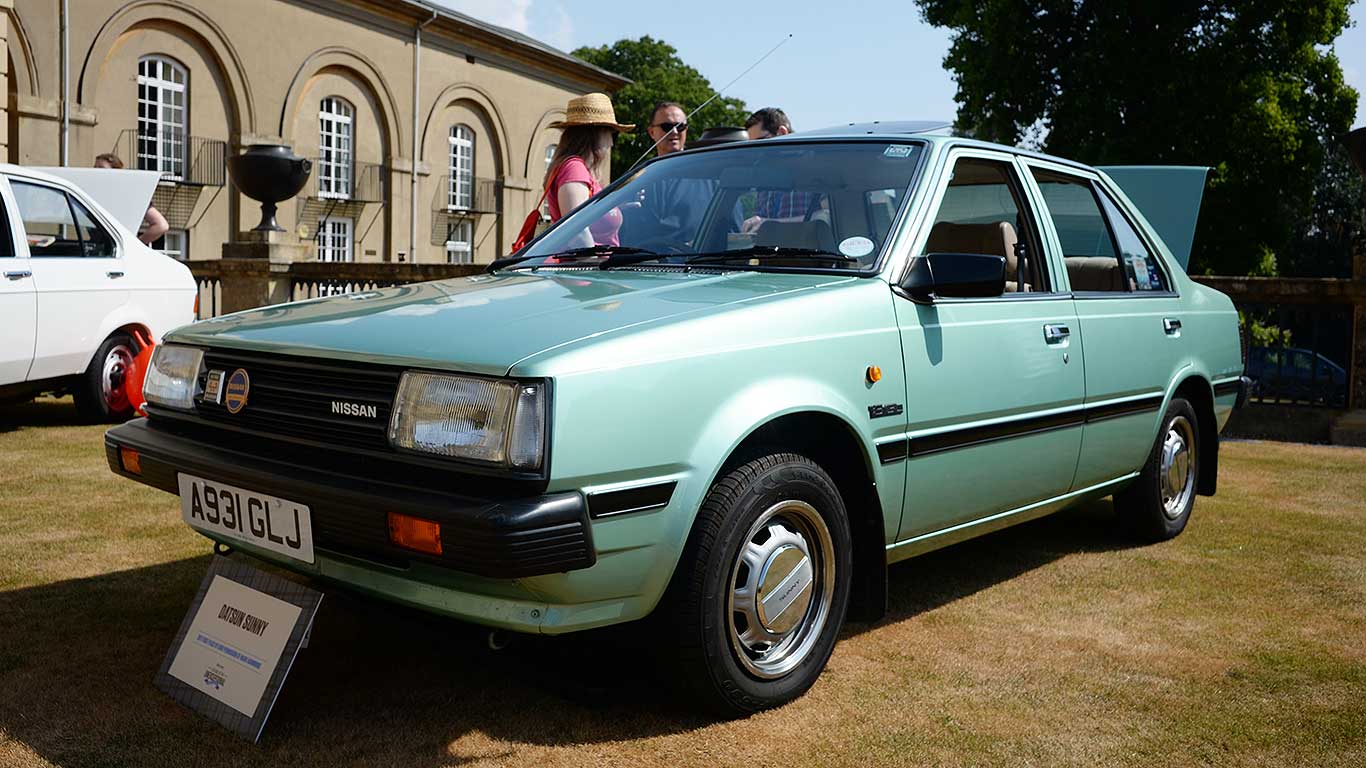
Datsun Sunny
Last year, this 1983 Datsun Sunny was named the most unexceptional car at the show. Which, in the case of this event, is a good thing.
Lobster Diecast
clud
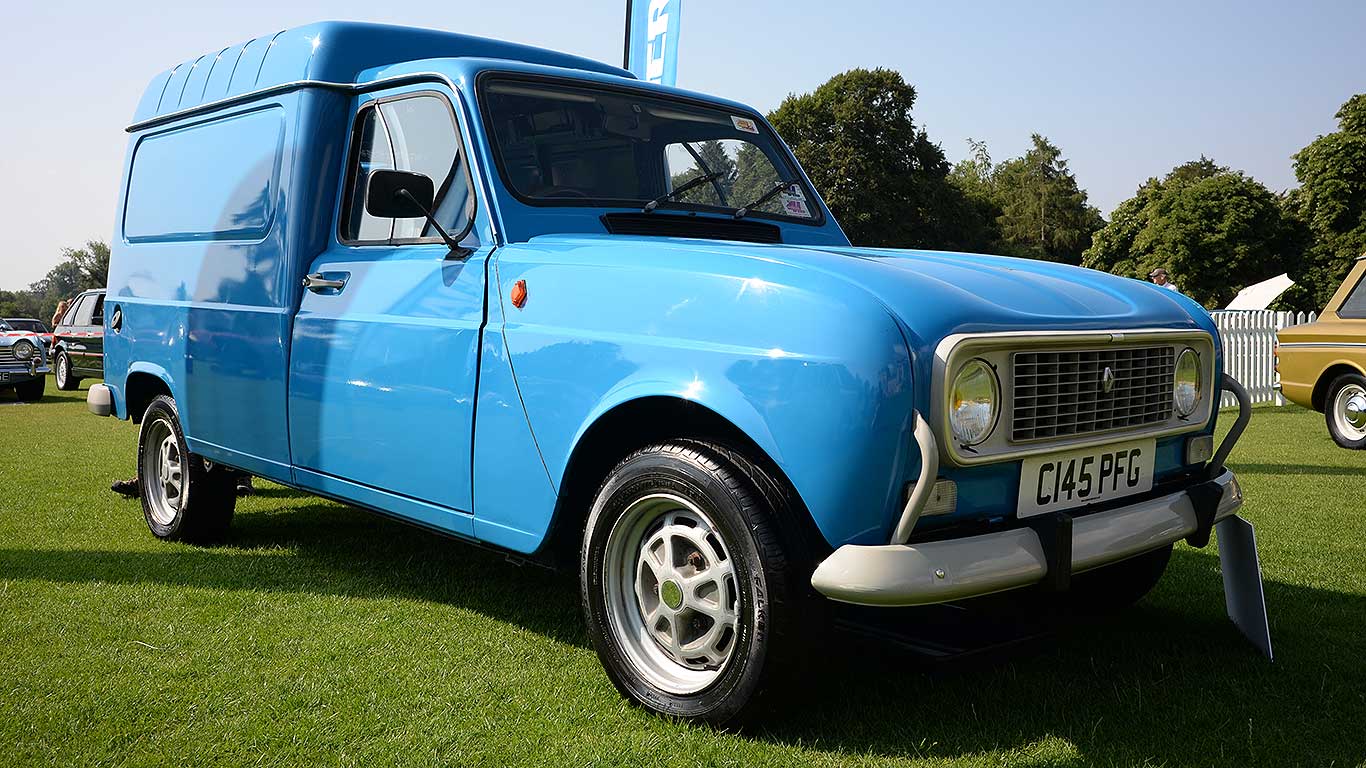
This is Lobster Diecast’s works van, which is one of our favourite cars of the show. Keep clicking for more unexceptional photos of exceptionally brilliant cars.
In June 2016, 71 percent of car searches by fuel type on Auto Trader were for diesel vehicles. Petrol was way back on just 27 percent. Just two years on, the tables have been dramatically turned, with the two fuels now neck-and-neck in searches.
Latest Auto Trader data shows a decline in diesel fuel type searches to just 47 percent – and petrol has grown to 46 percent. On current trends, June 2018 could therefore be the last month in many years that diesel holds a search advantage over petrol.
But although diesel was for years marketed as a greener choice, modern alternative fuel vehicles (AFVs) such as hybrids and electric cars are not picking up the slack. Searches for AFVs totalled just 4 percent in June 2018: that’s growth of a paltry two percentage points in two years.
“These figures underline the lack of momentum in electric and hybrid take-up to date,” said Karolina Edwards-Smajda.
“Consumers are hearing negative noises around diesel but confusion and a lack of clarity means they’re responding with either inaction or by shifting to another fuel type that they know and understand – petrol.
“Petrol is the clear winner so far from the campaign to ‘demonise diesel’.”
As for used car values overall, they’re on the up. The Auto Trader data showed the decline in diesel prices are being balanced by an increase in petrol. The average price of a used car is now £12,675, an increase of more than £1,000 over June 2017.
This is a like-for-like basis too, adds Auto Trader: the effects of changes in the mix of cars being sold – for example, more SUVs and fewer hatchbacks – are stripped out. It’s not your imagination: used cars really are getting more expensive.
 Hyundai has teamed up with Marvel to create a special Kona Iron Man Edition, which will be offered globally from December in very limited numbers.
 Renault has crowned its latest Megane hot hatch range with the new Megane R.S. Trophy – which, at 300hp, becomes the most powerful Renault Sport model ever launched by the firm’s crack performance division.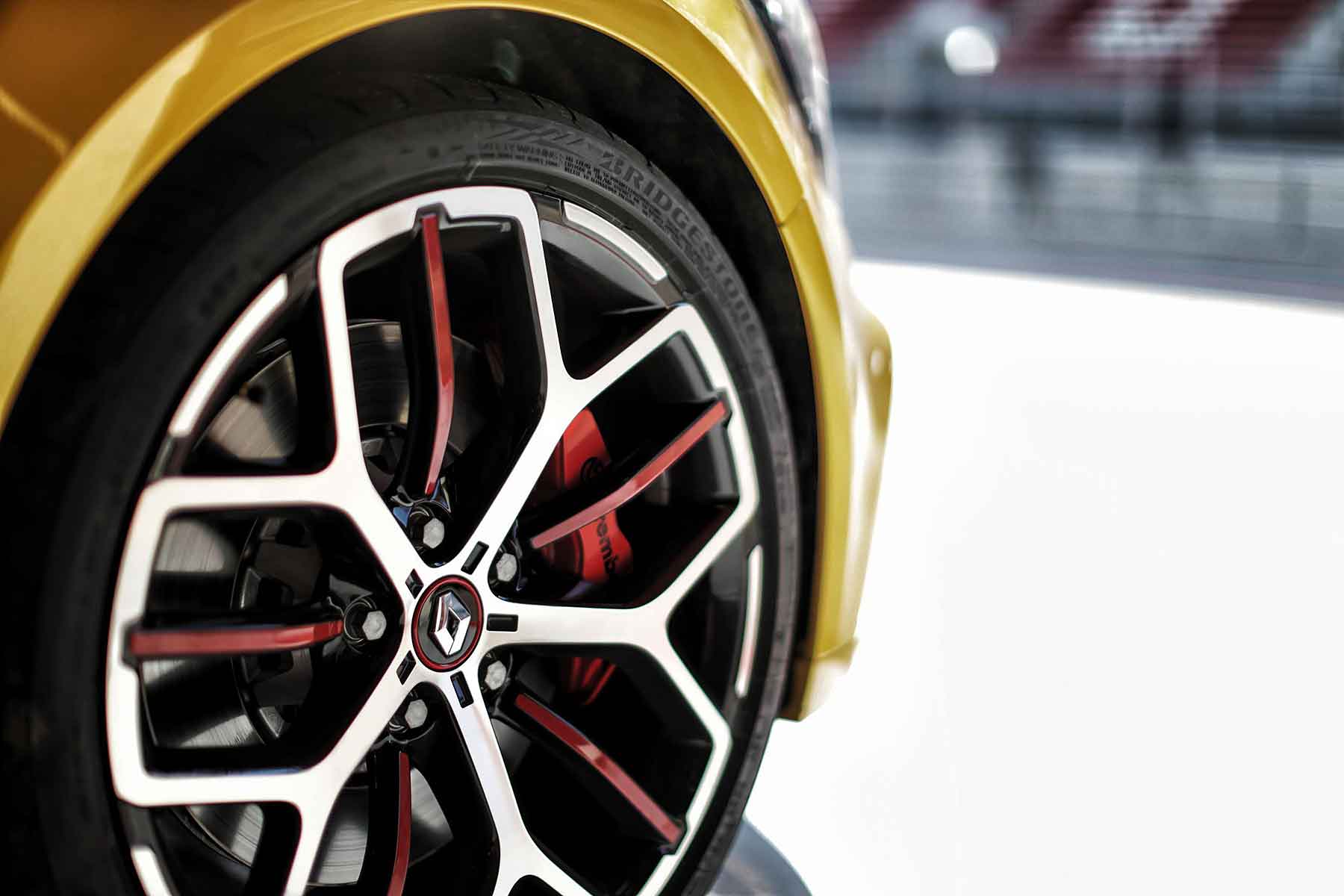


 The new 2018 Volvo XC40 SUV and Ford Focus hatchback have both scored a maximum five-star rating in the latest round of Euro NCAP safety crash tests.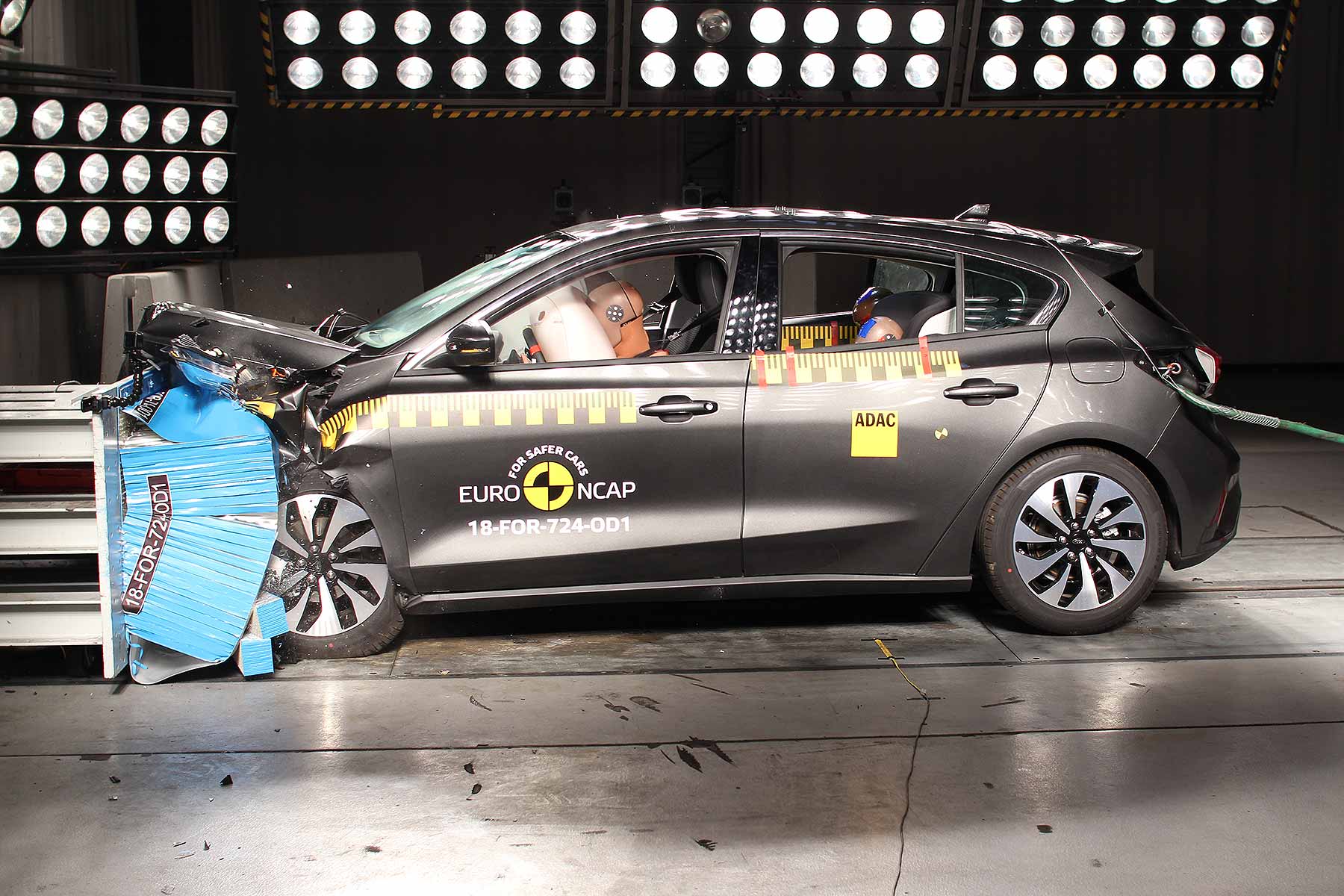
 Lotus Cars is 70 years old in 2018 and, fittingly, has also just made its 100,000th car. The firm is teaming up with the Jim Clark Trust to mark the occasion and raise money for the charity by giving away the landmark Lotus.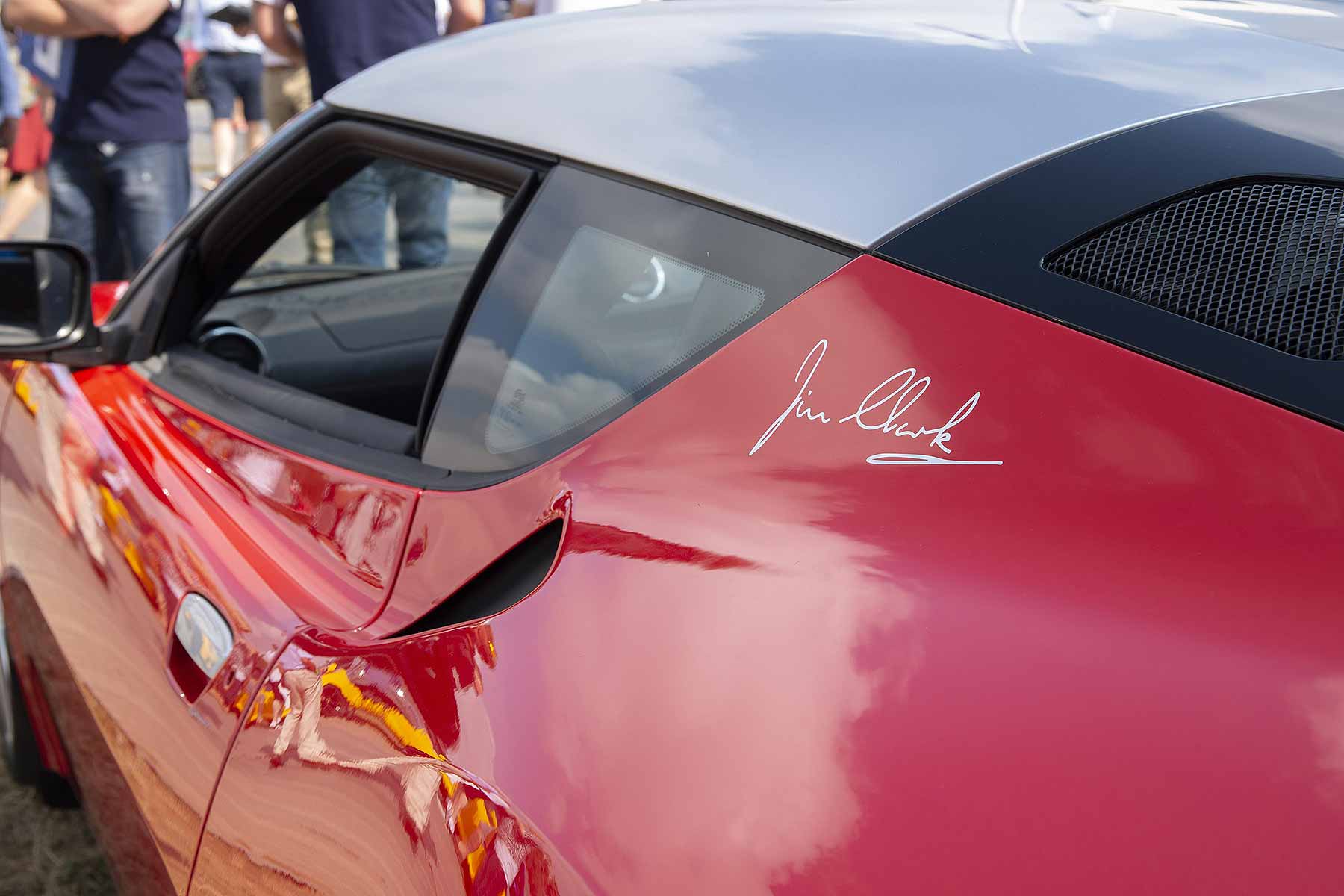

 clud
clud In June 2016, 71 percent of car searches by fuel type on Auto Trader were for diesel vehicles. Petrol was way back on just 27 percent. Just two years on, the tables have been dramatically turned, with the two fuels now neck-and-neck in searches.