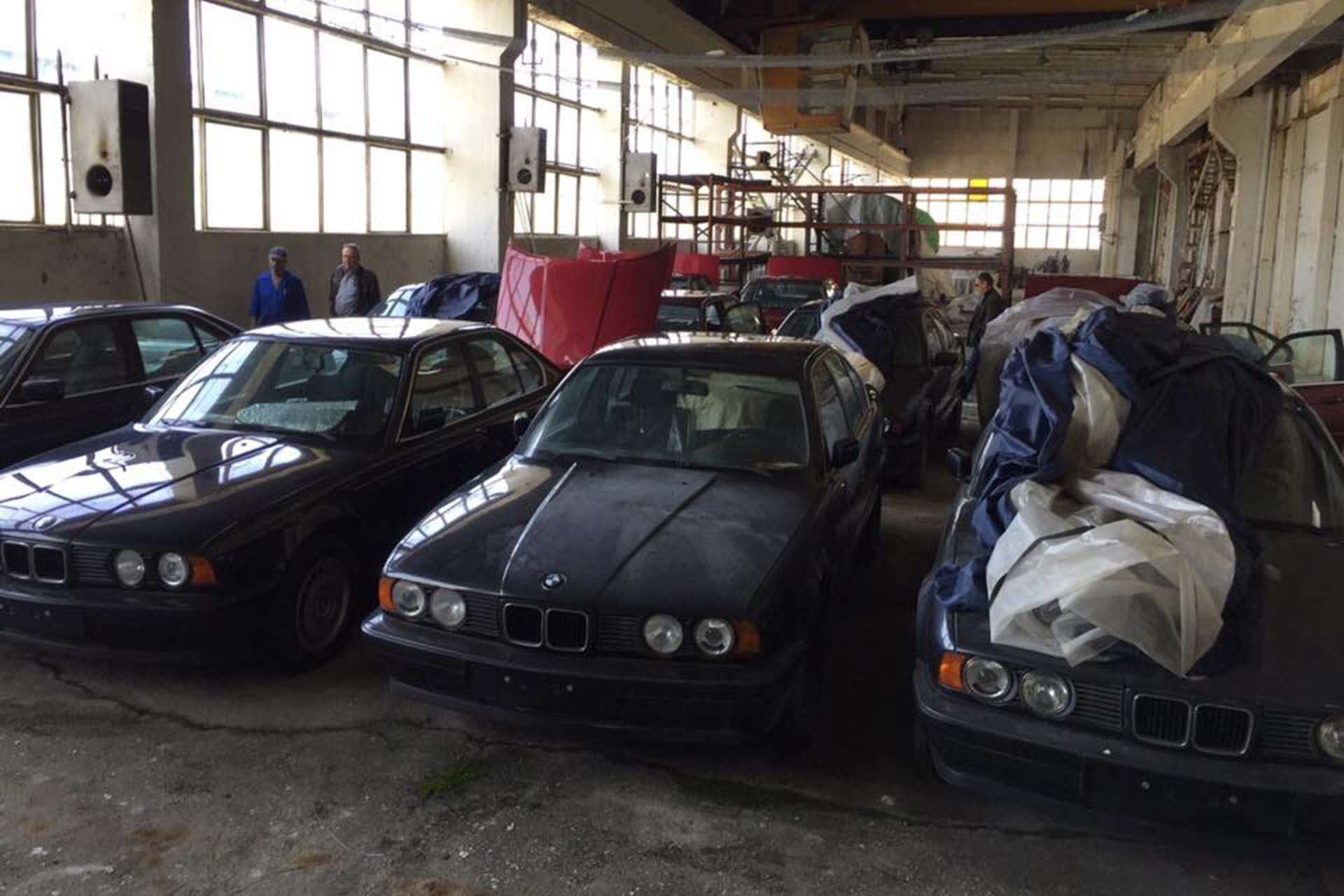
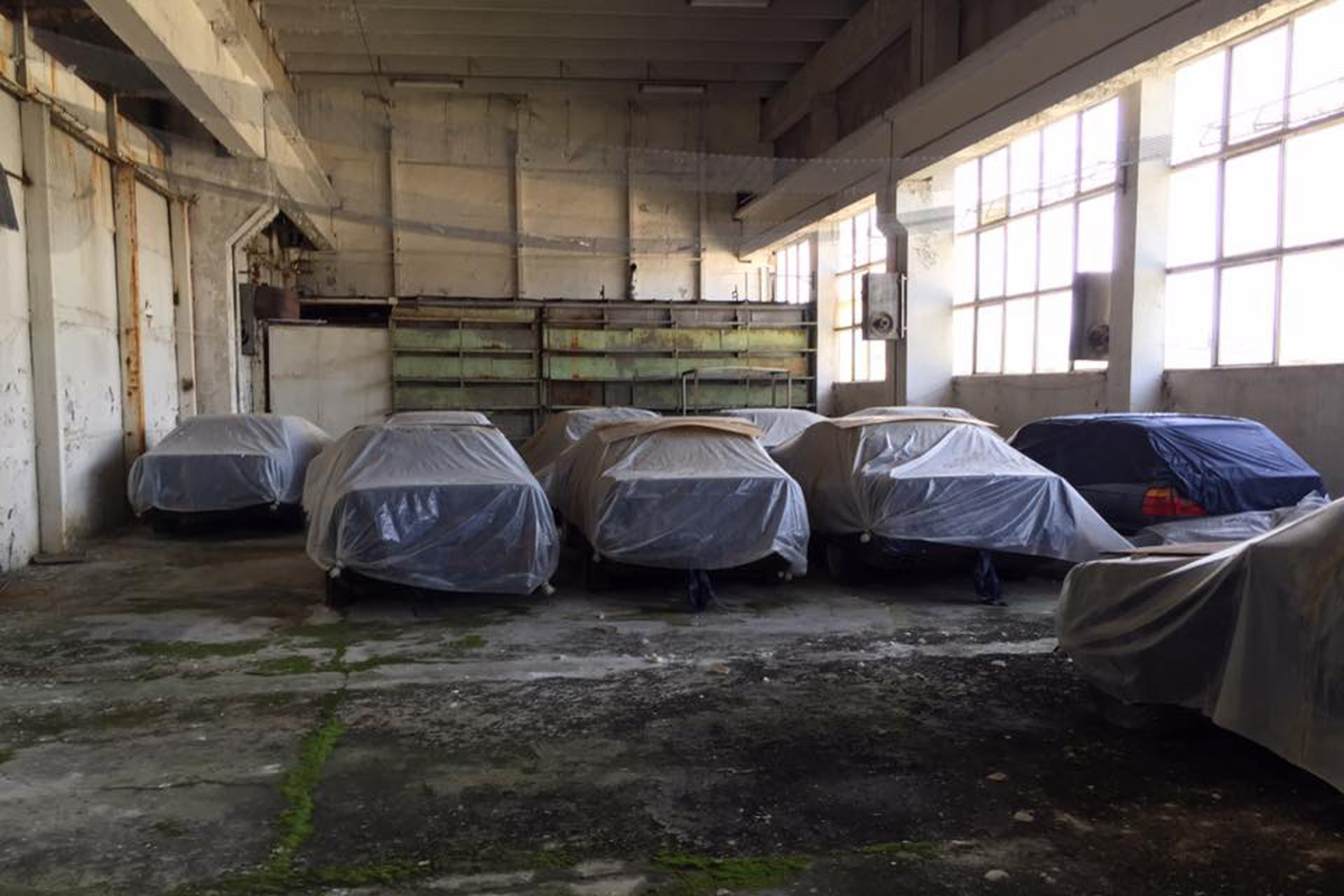
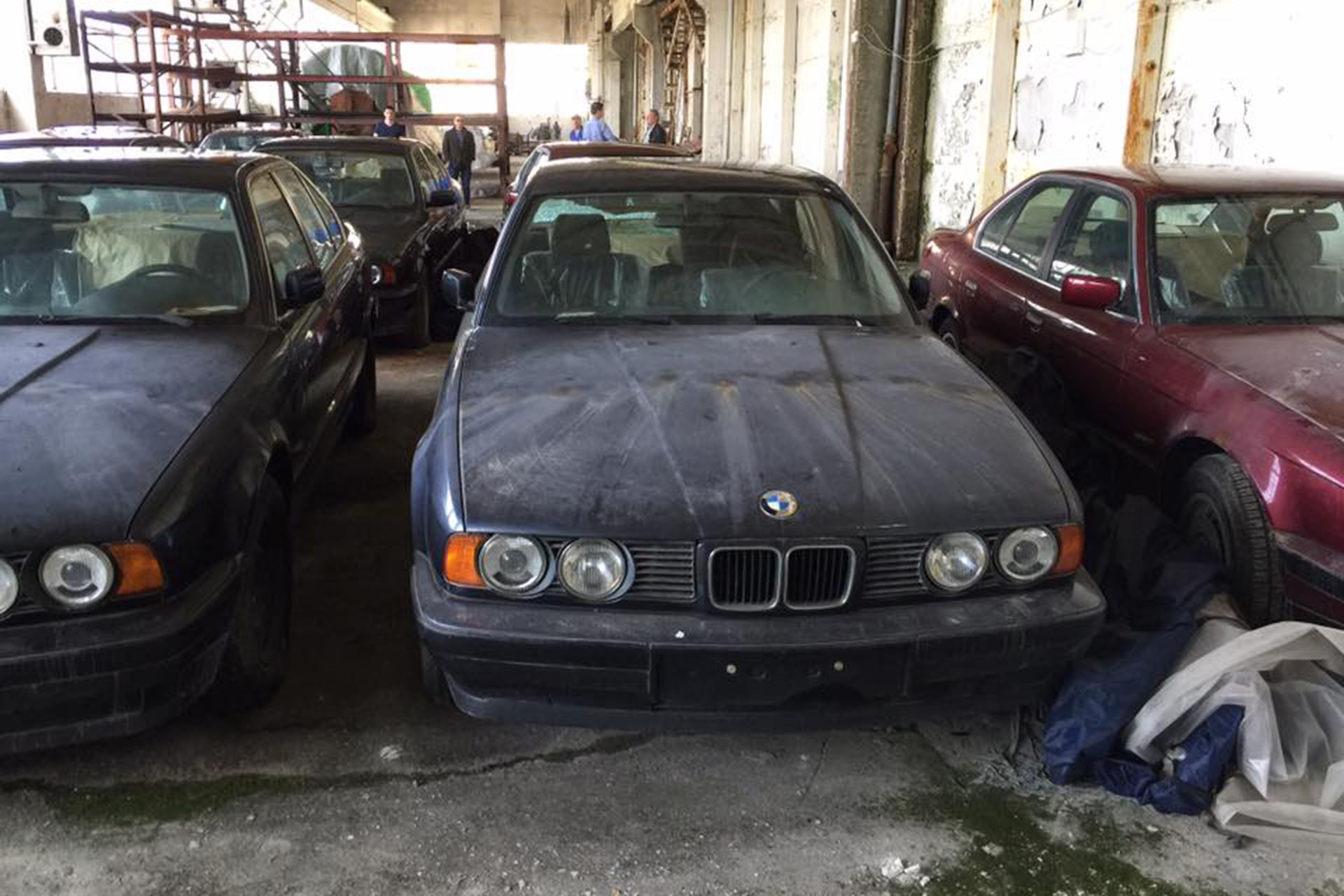
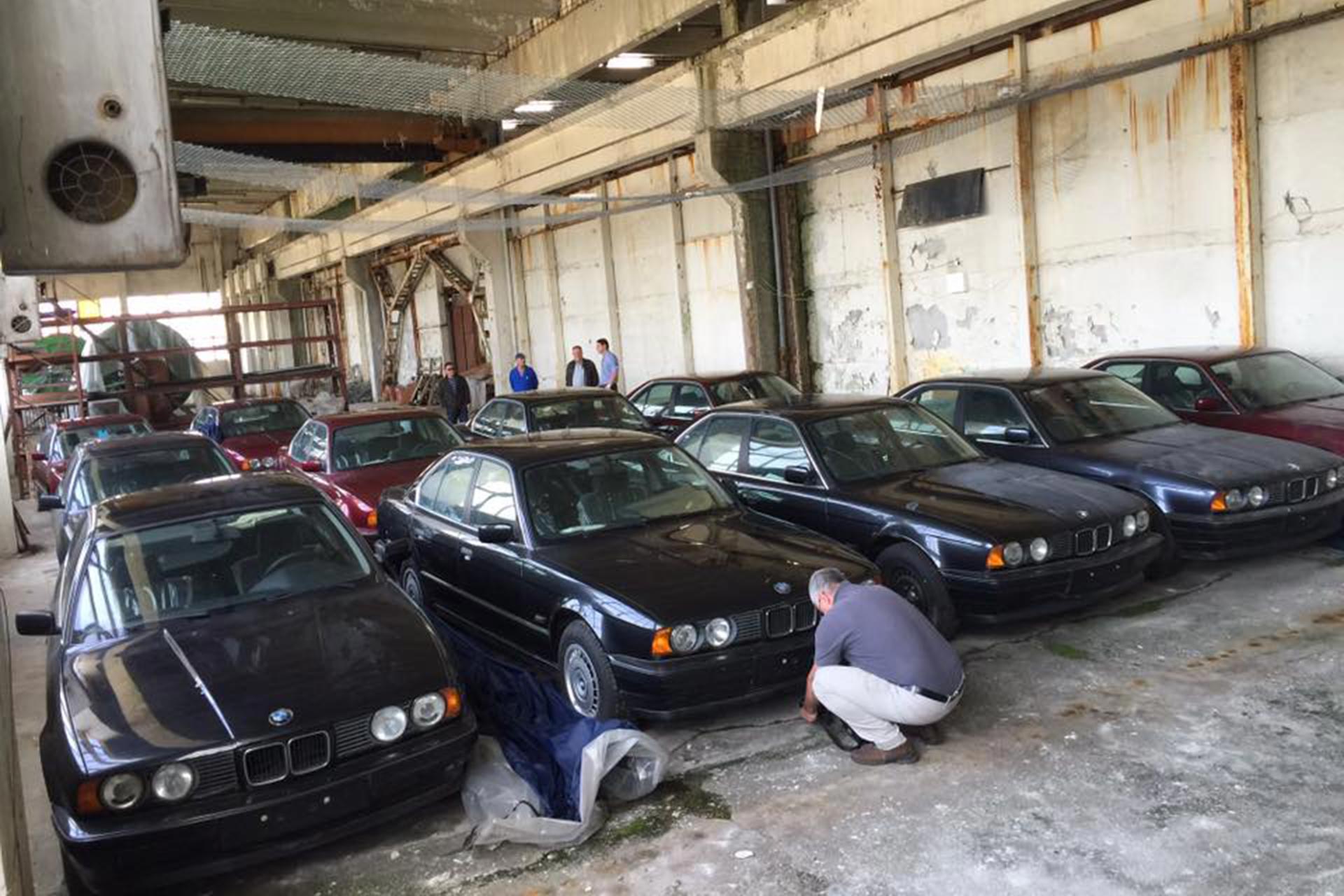
Forget your average classic car ‘barn find’ discovery. In Bulgaria, a warehouse containing eleven E34 5 Series BMWs, thought to date from 1994, have been uncovered.
Uncovered in a Facebook post by a Bulgarian garage, the photos of the abandoned BMWs have already generated lots of attention on the ‘Rust Free Zone’ page.
Stories of how the cars came to be left there for many years, along with speculators interested in buying them, are all fuelling the interest.
Hiding beneath the sheets
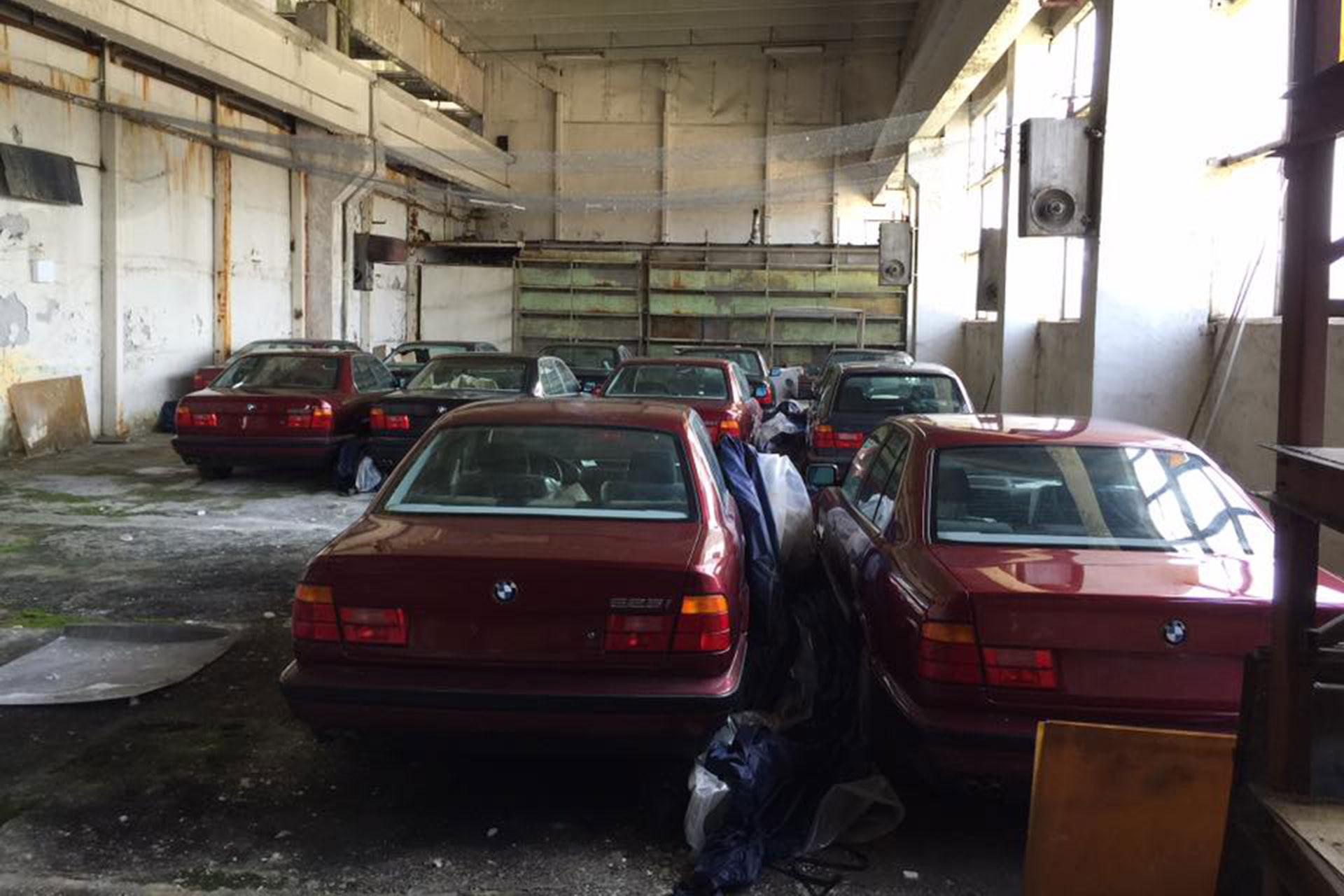
Consisting of ten saloons and one solitary Touring estate, the collection is made up of a mixture of 520i and 525i models. Black and Calypso Red appear to have been the colours of choice.
Due to the later construction of these cars, that means a 148hp 2.0-litre straight-six engine for the 520i models, and a more powerful 189hp 2.5-litre straight-six for the 525i cars.
Although clearly not about ultimate performance, these would offer more than adequate everyday performance. At least one car does have a manual gearbox, too.
Low miles, one previous owner
Whilst the mileage may be zero, being unused for 25 years has taken its toll on the cars. Some have smashed rear windows, or feature missing fuel flap doors. Others also show deteriorating paintwork due to water damage.
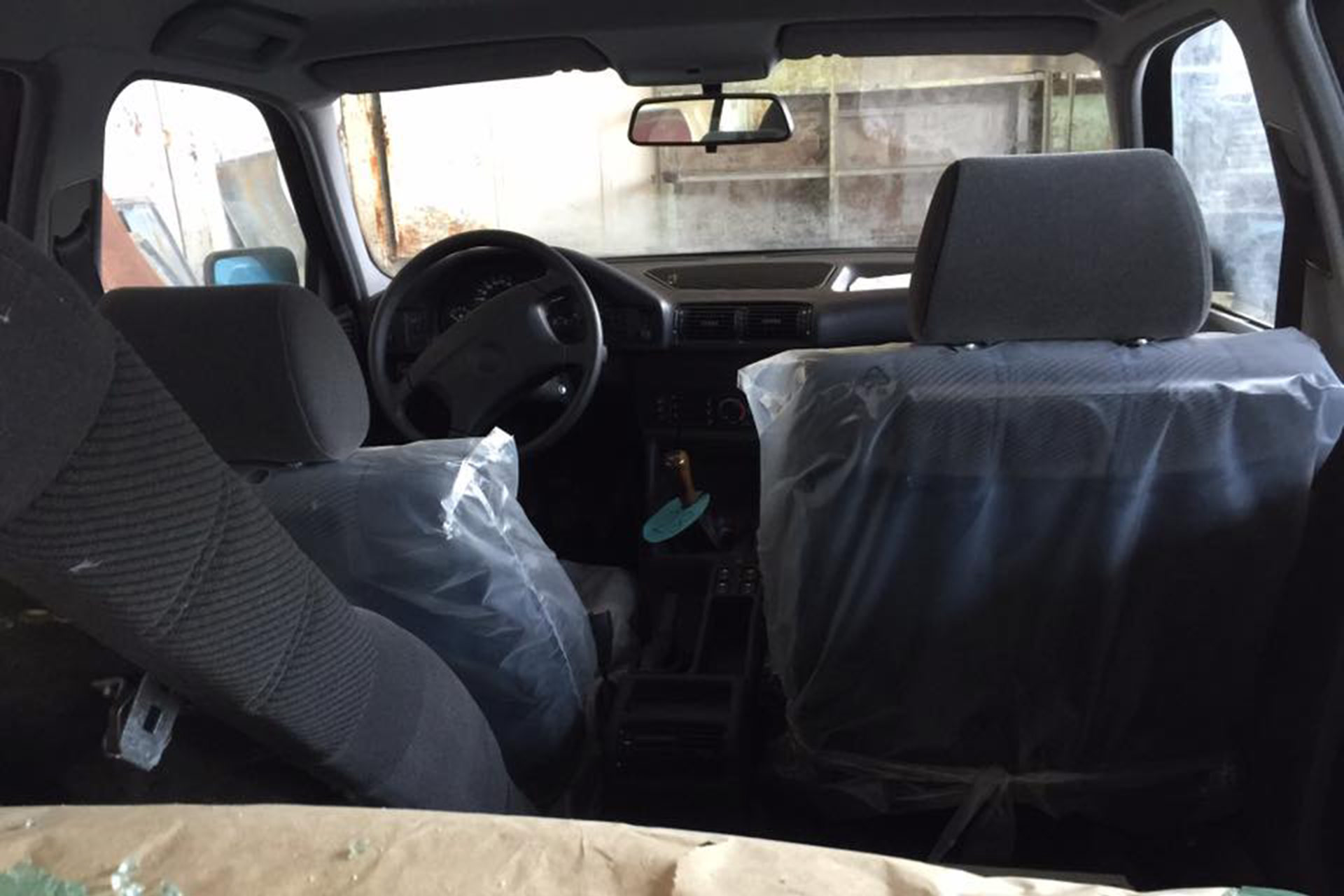
Interior photos do at least show seats still with plastic covers on them. Paperwork and stickers from the initial transport and delivery of the cars also appear present, and only add further to the air of mystery around them.
Initial reports suggested the cars may have been bought for use by a rental company, but were subsequently never registered.
The truth is out there
One commenter, Edis Shaban, claims to know the real story of how the cars came to be there. He believes that the cars were purchased by Nikolay Tadarukov – a former Bulgarian Minister of Agriculture.
Intended for use by members of the Bulgarian National Assembly, the BMWs were apparently abandoned due to politician prefering to use Mercedes-Benz cars instead.
As a result of being snubbed, the cars were then placed in storage in Blagoevgrad, located in southwestern Bulgaria. An old factory full of scrap metal is hardly a glamorous location, although it has at least protected the BMWs from the worst of the elements.
Stop! Hammertime
Given the length of time the cars have been left unused, the eleven examples are likely to need some gentle recommissioning before hitting the road for the first time.
The present owner of the warehouse, and the BMWs, is reported to be considering auctioning the cars off. Given the level of interest seen on social media, it is unlikely he will have any trouble finding buyers for these forgotten retro machines.
However, with more than 1.3 million examples of the E34 BMW 5 Series built, these particular cars are unlikely to reach staggering prices come sale time. In the UK, similar examples of the E34 range from £2,000 – £5,000 dependent on condition, with the rare M5 able to command much more.
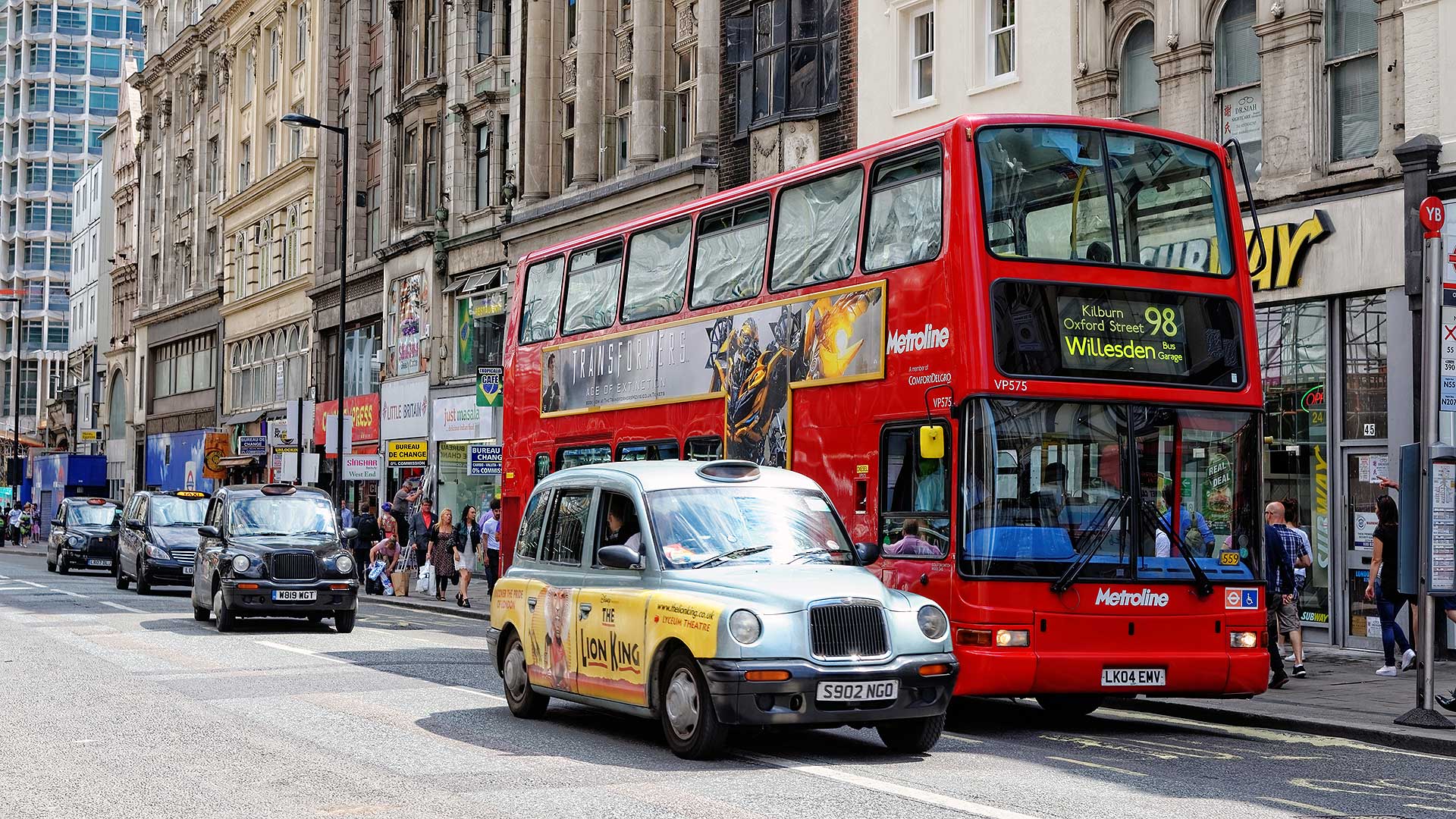
London’s Tottenham Court Road will be out of bounds for use by cars, lorries and taxis in peak times from March – and motorists who breach the ban face heavy fines.
The one-way street will be converted to two-way use in March. Between 8am and 7pm Monday to Saturday, only buses and bikes will be allowed to use it.
Motorists who use Tottenham Court Road when restrictions are in place face a £130 fine.
Cabbies have already slammed the new scheme. Steve McNamara, general secretary of the Licenced Taxi Drivers’ Association, called it an “ill thought out scheme.
“The major arteries of London are just that,” he told the Evening Standard. “They are the main method of London’s lifeblood moving around.
Camden council’s Adam Harrison countered by saying “not having taxis in the daytime will lead to 25 percent less traffic, with all the benefits for air quality and congestion that go along with it”.
7 in 10 think other UK cities should get a congestion charge
The taxi industry insists that congestion and pollution will instead worsen on surrounding roads.
Other changes on Tottenham Court Road, a key road in London’s West End, include wider pavements and bigger pedestrian crossings.
The six bus routes that use Tottenham Court Road will also benefit from improved timetabling, allowing up to 114 buses an hour to use the street during peak times.
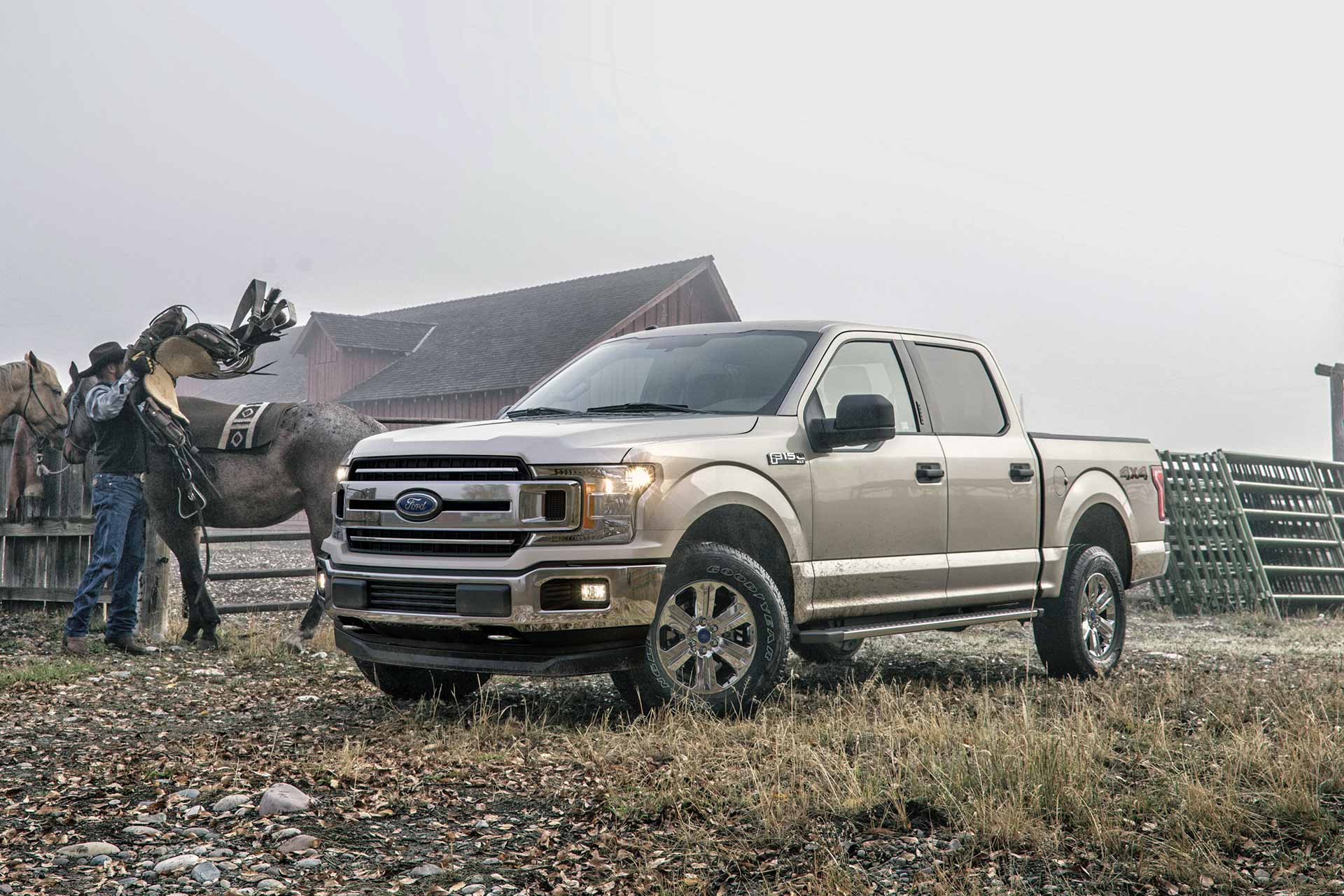
With over 900,000 trucks sold during 2018, the Ford F-Series has recorded an impressive 42nd year as the best-selling pickup in the United States.
More than 87,000 examples were sold in December 2018 alone, with 10 months throughout the year seeing sales above 70,000 – a new record. Average sale prices also increased, with Ford experiencing high demand for upmarket models of the F-Series.
Compared year-on-year to 2017, overall F-Series sales increased by 1.4 percent in 2018. Yet overall sales for the Blue Oval saw a 3.5 percent decrease against the previous year.
Vans up, cars down
Ford has made no secret of plans to end the sale of traditional cars in North America. The strategy seems to be clearly supported by the sales figures from last year.
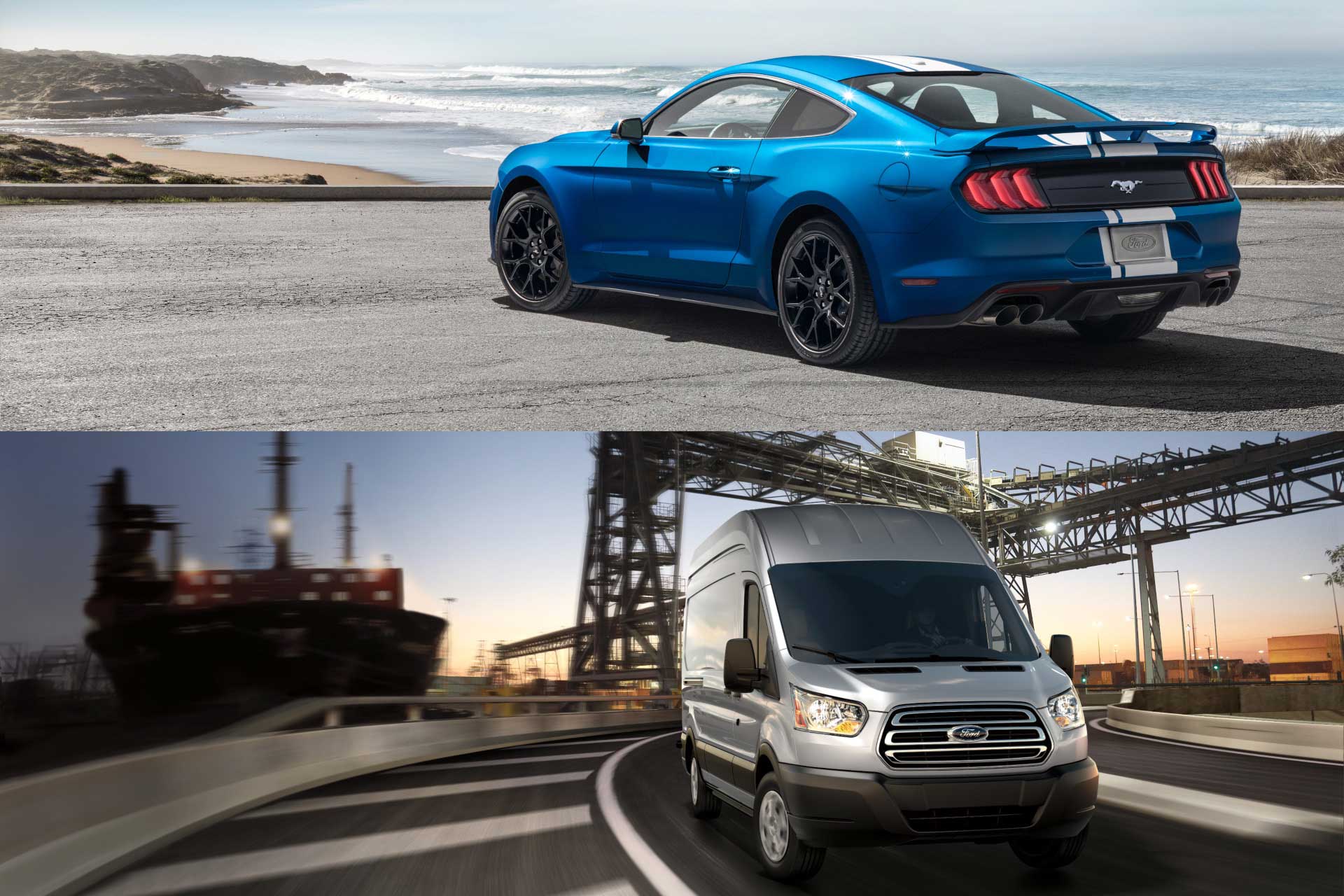
A total of just 486,024 Ford cars were sold during 2018 – a hefty 18.4 percent decrease from the 595,390 cars sold in 2017. Despite the launch of a heavily updated model, the Mustang also saw a drop in sales by 7.4 percent.
Intriguingly, the GT supercar was one of the only Ford cars to record an increase in sales – albeit from 89 to 126 models sold.
Along with modest growth for pickup trucks, one of the biggest climbers in sales figures was the Transit van. Over 137,000 units were sold in 2018, making the Transit the best-selling commercial vehicle in the United States.
Ford and Lincoln SUVs also see growth
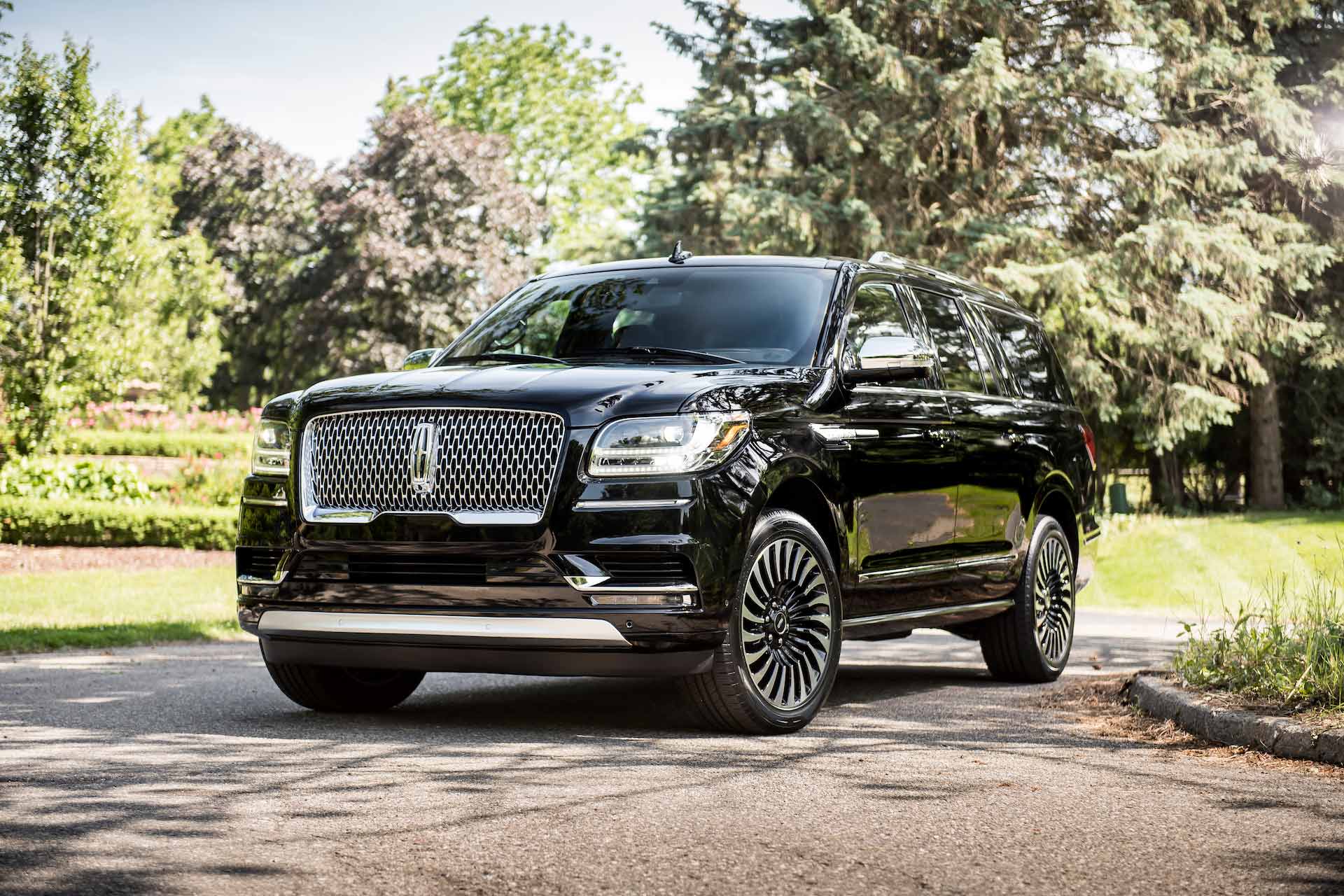
Overall sales of Ford SUVs in 2018 saw a marginal increase at 0.1%, buoyed by the large Expedition SUV recording 54,661 units sold. That 5.4 percent growth was, along with the Police Interceptor Utility model, the only Ford SUV to see higher demand.
The Lincoln brand also saw a 6.8 percent decrease in sales during 2018. Lincoln cars dropped by a staggering 27.7 percent compared to 2017, although SUV models did see an additional 4.7 percent models sold.
Launched in late 2017, the revised Lincoln Navigator was responsible for the higher overall SUV sales. With 17,839 units sold during 2018, the luxury SUV recorded a 69.5 percent increase compared to 2017.
A cross-party group of MPs is supporting a petition that calls for the setting up of an independent fuel pricing watchdog to ‘stop excessive prices at the fuel pumps’.
The petition was set up by campaigning body FairFuelUK, and already has more than 14,500 signatures.
“Drivers need reassurance that they are not paying way over the odds for fuel,” said Kirstene Hair, chair of the All-Party Parliamentary Group (APPG) for Fair Fuel for Motorists and Hauliers.
Highlighting the need for an independent fuel price regulator with @STVNews – motorists deserve fair fuel prices no matter where they’re fuelling up across the country. @FairFuelUKpic.twitter.com/Btd1pBcf3j
“In rural communities where public transport is poor and unreliable, people need their vehicles to get from A to B. It is essential that they pay the fairest price. That is where a price monitoring system would support them.”
Garages that charge fair prices would display a ‘kitemark’ logo.
How to find the cheapest petrol and diesel near you
However, Brian Madderson, chairman of fuel industry trade body the Petrol Retailers Association, rejected the idea. He told the BBC that a watchdog, although a well-meaning idea, “would be pretty impractical.
“Who is going to check prices at 8,500 forecourts? And if you have a kitemark, what’s going to be the acceptable margin?”
Profits made by filling stations rose from 8p on a litre of petrol to more than 13p a litre by the end of the year. Diesel profits currently stand at around 11p a litre.
Calls for a ‘petrolwatch’ come as RAC Fuel Watch reveals that although fuel prices fell in December 2018, it calculates they remain 8p a litre too high. “Drivers should feel cheated prices have not come down further,” said spokesperson Simon Williams.
He blamed this on two factors: petrol prices have not been cut sufficiently to reflect falls in the wholesale price, and three major supermarkets appear unwilling to compete with the cheapest retailer, Asda.
“Normally, the other three supermarkets are 1p to 1.5p more expensive on unleaded, but our data shows that since October, they have abandoned this strategy in favour of pricing 2.5p to 4p higher for a litre of petrol.”
He called the situation “highly unusual, the likes of which we haven’t seen before”. Supermarkets are key to sharp competition on forecourts in the UK, as they sell 45 percent of British fuel.
“Drivers could be paying around 3p a litre more for their fuel simply because of a retail pricing decision at three supermarkets.”
Mazda is showing that you don’t need to have a brand new car in order to benefit from Apple CarPlay. Models up to five years old can be retro-fitted with the smartphone-syncing tech. All they need is an MZD Connect infotainment screen.
It’s not just Apple CarPlay; Android Auto can also be integrated into older cars.
The dealer-fit upgrade includes both hardware and software upgrades – the latest version of Mazda Connect is installed, and Mazda dealers also install a more powerful and faster charging 2.1-amp USB port.
Software works using the rotary controller knob in the centre console and, where fitted (and when the vehicle is stationary), the central touchscreen. Voice control (via the built in voice control button) will also work in Apple CarPlay and Android Auto.
The upgrade takes around two hours at a dealer. It offically costs £350 (although some dealers are running special offers, trimming the cost to £299).
Mazda first introduced MZD Connect in 2014 and it features on popular models such as the CX-3 and CX-5 SUV, the Mazda 6 large family car and the MX-5 roadster range.
Last year was absolutely huge for record-breaking classics, including the most valuable car ever sold at auction.
That – plot spoiler – was a Ferrari, but it wasn’t all about Prancing Horses of the Swinging Sixties. Indeed, the top 12 sales of 2018 weren’t short on diversity…
For sale: the ultimate collection of modern classics
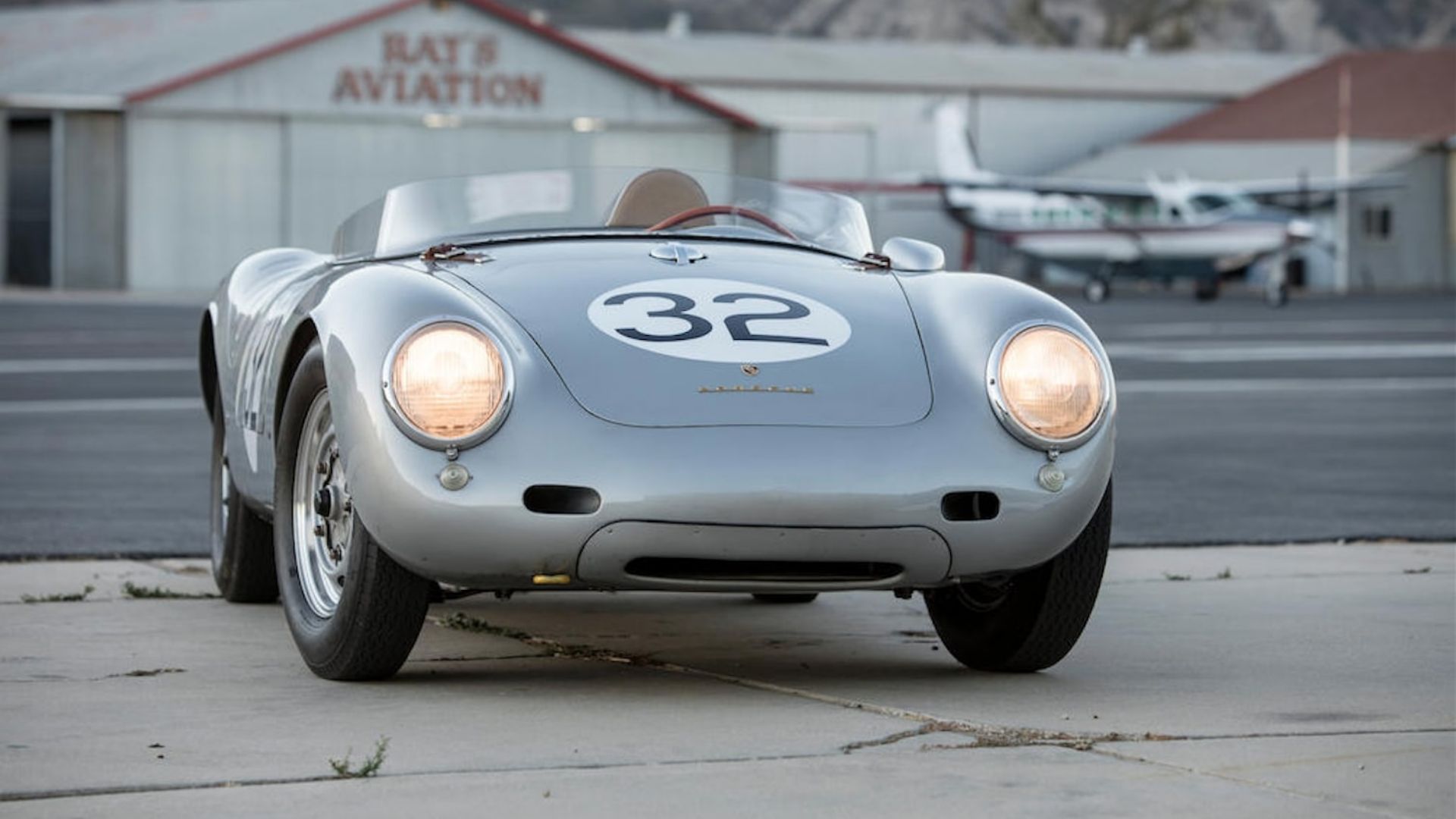
1958 Porsche 550A – £4.03 million
We kick off with a very appropriate sale for 2018. In Porsche’s 70th-anniversary year, this 1958 550A made a cool $5.17 million (£4.03 million) at the Bonhams Scottsdale sale.
It was a factory-backed car in period and, unsurprisingly, has quite a provenance and race history. How does second-in-class (fifth overall) at Le Mans and a class win in the Nürburgring 1,000km in 1958 sound? Few cars are as important to the genesis of Porsche as the 550.
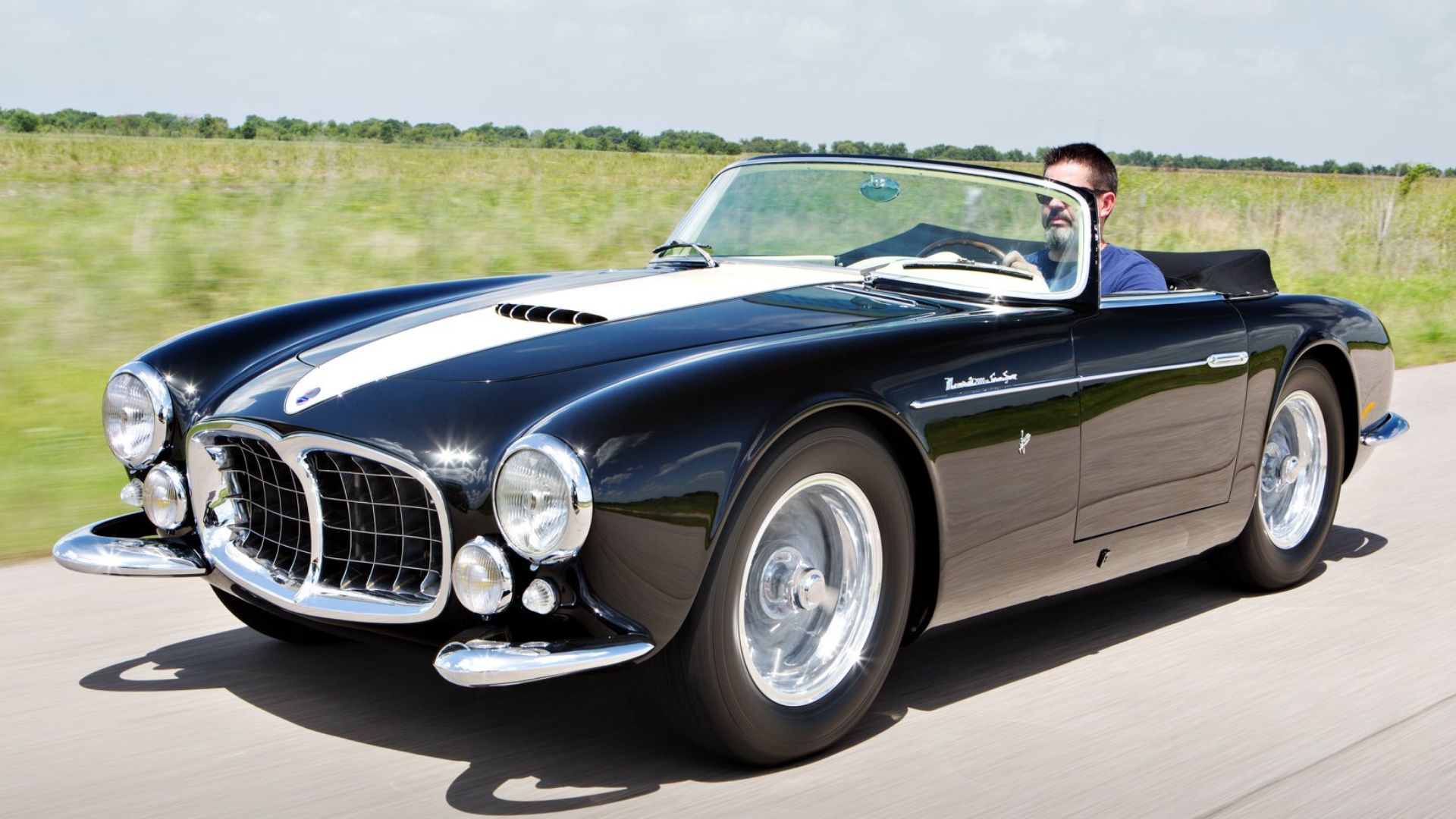
This one-of-three Frua-bodied 1955 A6GCS/53 Spider is a former concours winner and deserving record-holder, achieving the same $5.17 million (£4.03 million) at Pebble Beach as the Porsche. Interestingly, that was a few hundred thousand dollars short of the estimate.
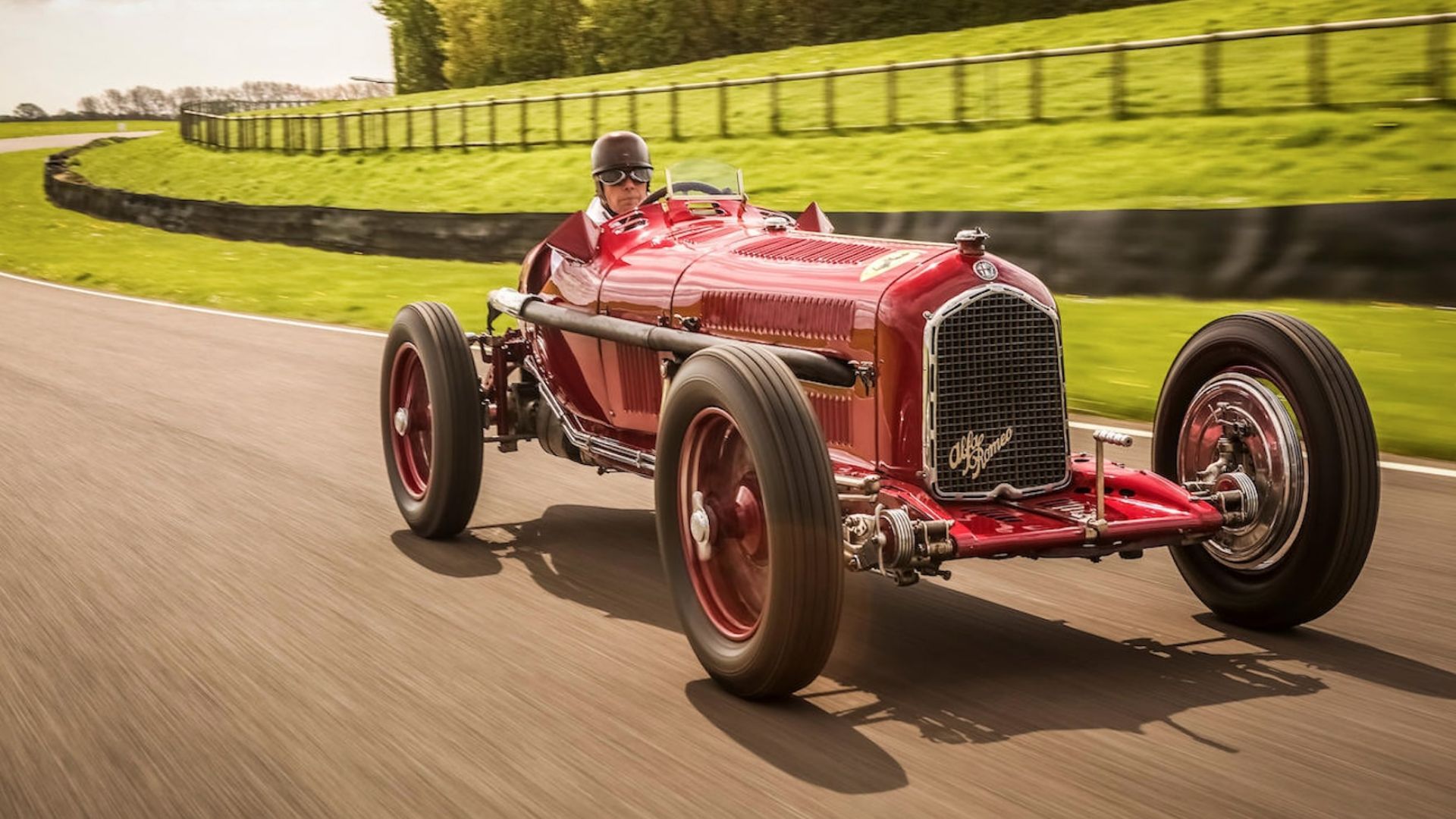
1932 Alfa Romeo Tipo B Grand Prix Monoposto – £4.5 million
This Alfa Romeo Tipo B earns its place thanks, principally, to its significance as the winner of the inaugural Donington Grand Prix in 1935, plus its status as the first successful central single-seat Grand Prix car.
It’s also a veteran of Scuderia Ferrari’s formative years – that is, as a team rather than a manufacturer. What price for this unique piece of racing history? Try $5.83 million (£4.5 million) for size.
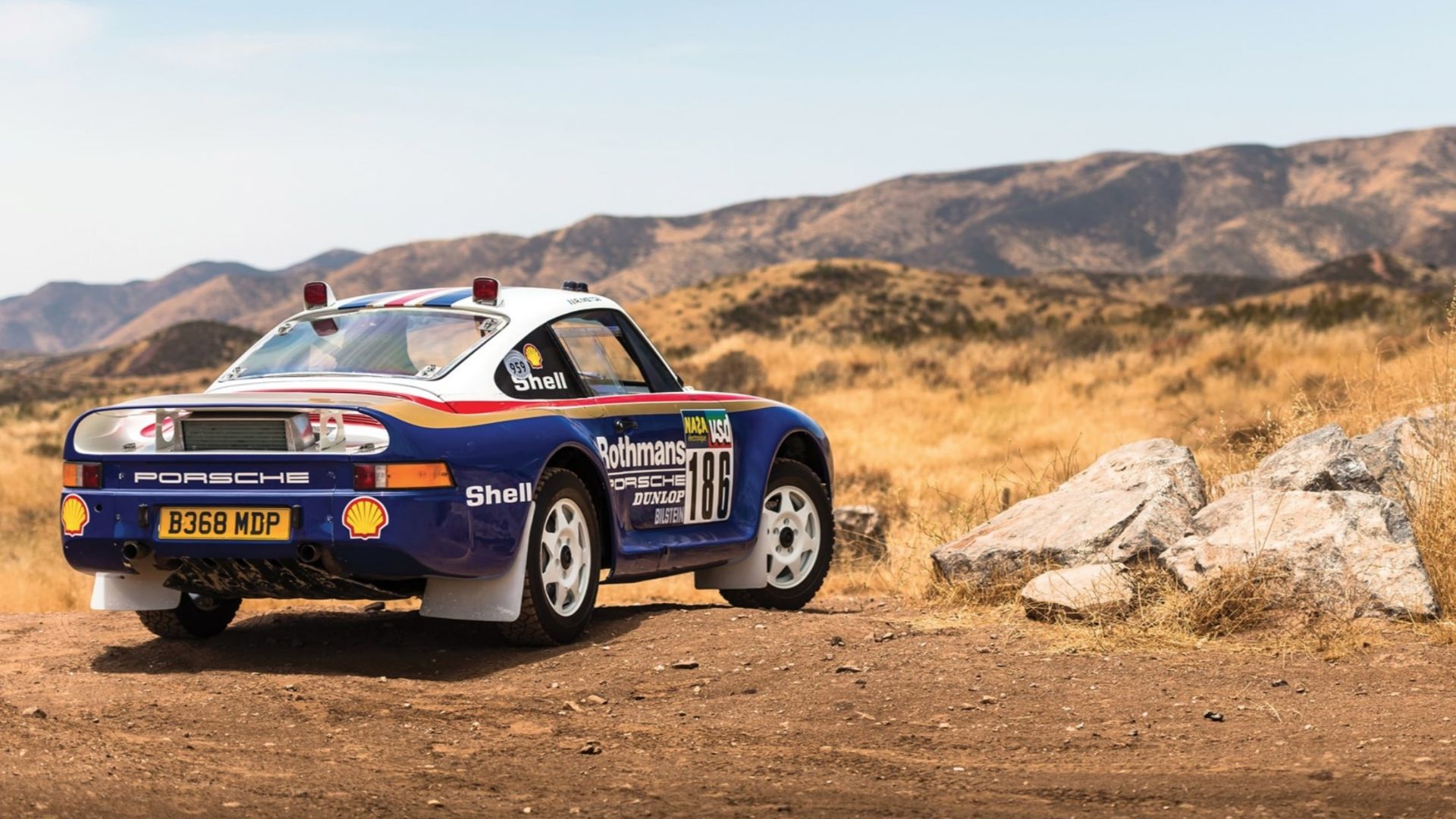
1985 Porsche 959 Paris-Dakar – £4.6million
Perhaps the biggest surprise of this list is this comparatively modern legend: a 1985 Porsche 959 Dakar. It sold at RM Sotheby’s Porsche anniversary sale for $5.95 million (£4.6 million).
Resplendent in its Rothmans livery, this unique rally-fettled supercar campaigned at the 1985 Paris-Dakar, is an Amelia Island concours winner and has seen action at the Goodwood Festival of Speed with Jacky Ickx at the wheel.
Interestingly, unlike the road-going 959, it does without turbochargers. Perhaps natural aspiration is more reliable when charging through hot desert sands? It’s one of just seven developmental examples built, of which four remain in Porsche’s care.
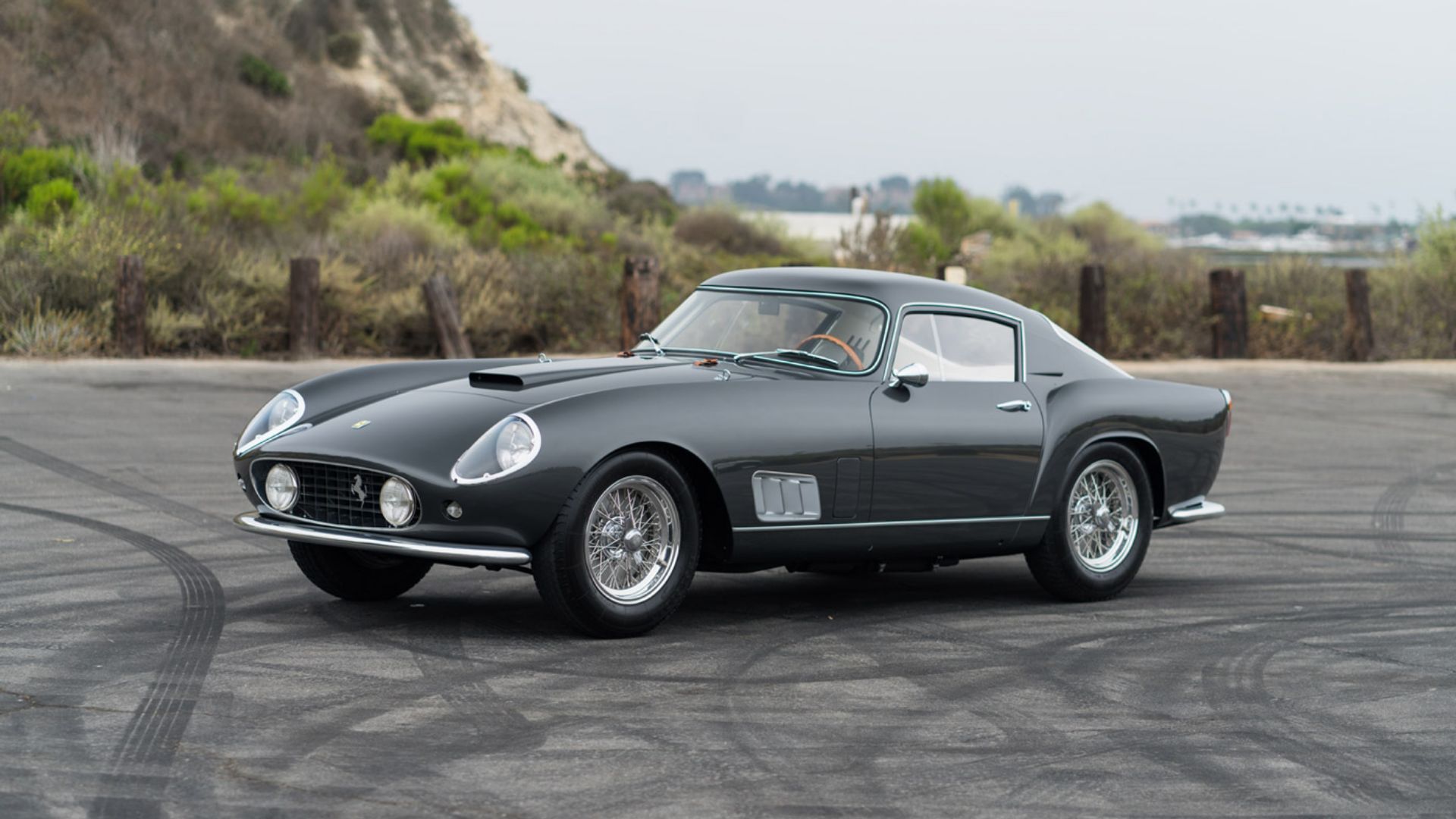
1958 Ferrari 250 GT TdF Berlinetta – £5.2 million
The Tour de France name was recently applied to the fastest, most extreme version of the Ferrari F12, but its origins date back to the 1950s. The 250 GT TdF Berlinetta comes from an era when road-going GTs also competed in endurance events. The car seen here raced in both the 1958 Targa Florio and Trieste-Opicina hillclimb.
With coachwork by Scaglietti and a V12 beneath its long, voluptuous bonnet, this TdF pushed bidders up and up and it sold for $6.6 million (£5.2 million) at Pebble Beach last year. It was previously owned by a renowned Ferrari collector for 52 years.
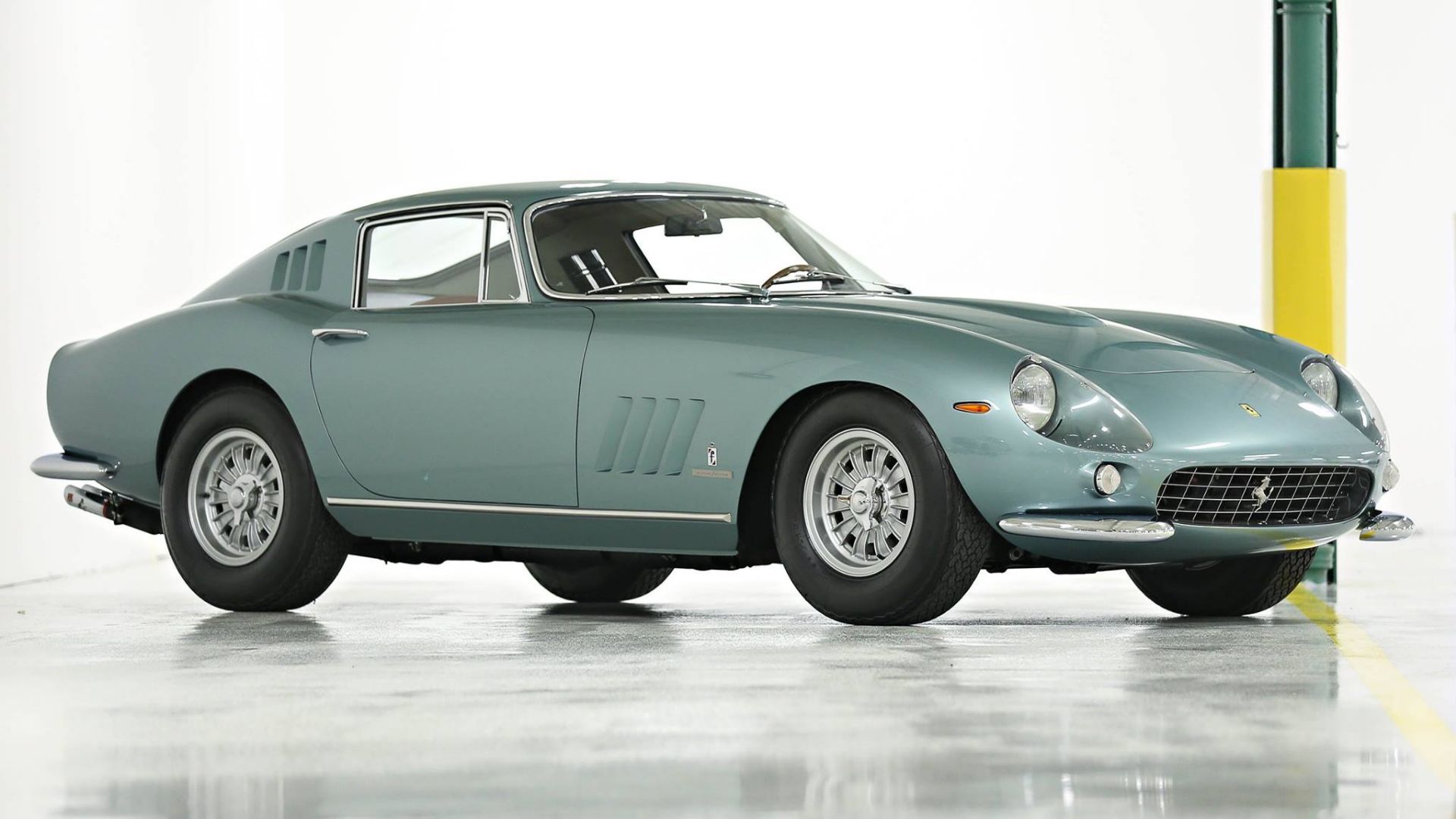
1965 Ferrari 275 GTB Speciale – £6.4 million
Now, this is something a bit, um… ‘speciale’: the only 275 GTB built by Pininfarina and the personal car of company boss Battista Pininfarina. The Ferrari has numerous bespoke design details and was displayed at many motor shows in-period, including Frankfurt, Paris and Turin.
Its V12 engine has the desirable six-carb specification but hasn’t been started in many years. As such, vendor Gooding and Company advised it ‘will require mechanical attention prior to road use’. The car sold for $8.09 million (£6.4 million) at Scottsdale in January.
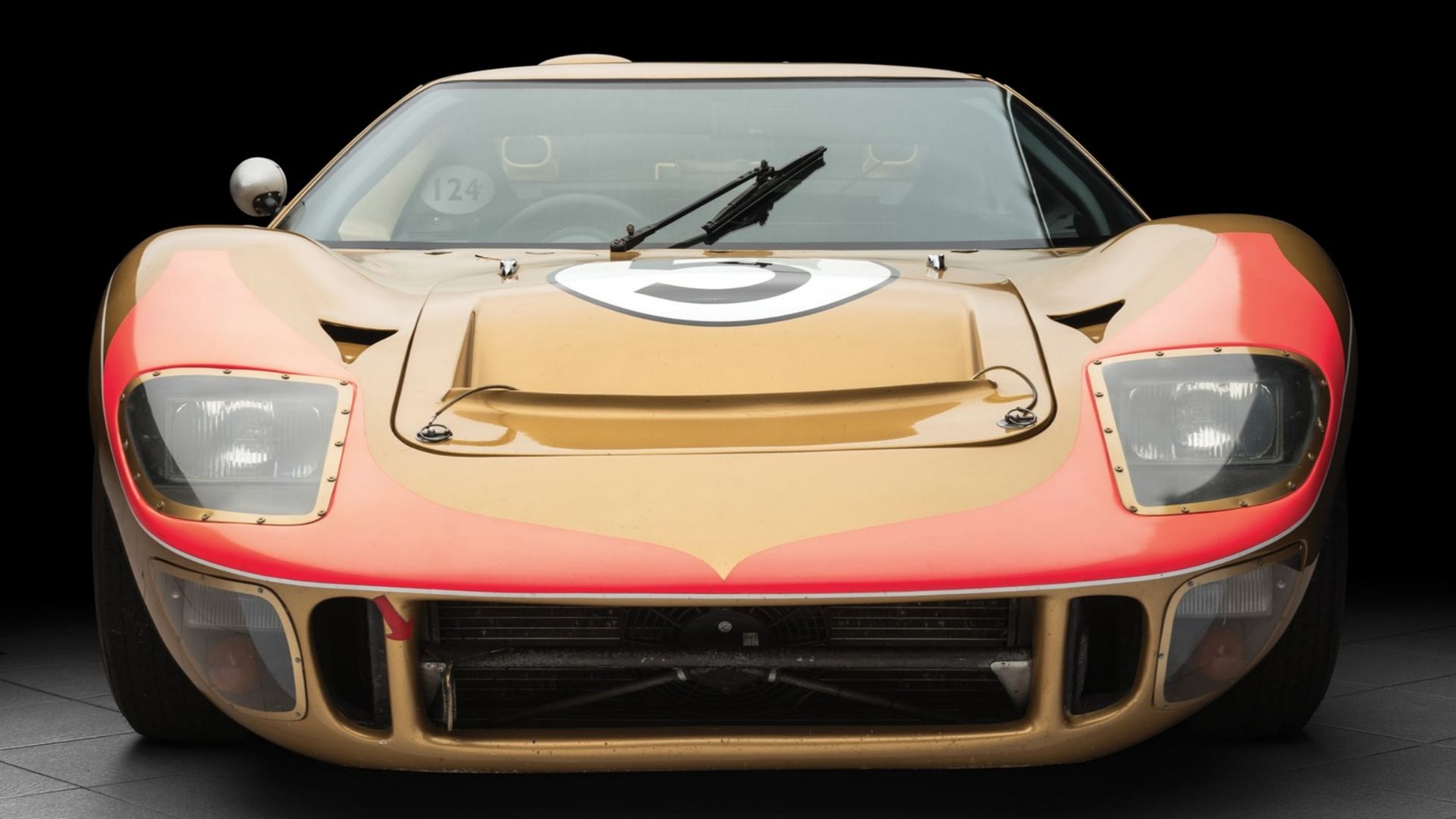
1966 Ford GT40 Mk II – £7.7 million
This is one of the three 1966 Le Mans GT40s that cemented this Ferrari-beating blue-collar legend into history. As racing provenance goes, it doesn’t get much better than that – which is why this third-placed GT40 sold for $9.8 million (£7.7 million) at RM Sotheby’s Monterey sale.
Since that famous finish at Le Mans in 1966, it’s been wheeled out at numerous historic motorsport events, including appearances at Goodwood (both for the Festival of Speed and Revival), and indeed Monterey. It received the people’s choice award at 2003’s Pebble Beach concours.
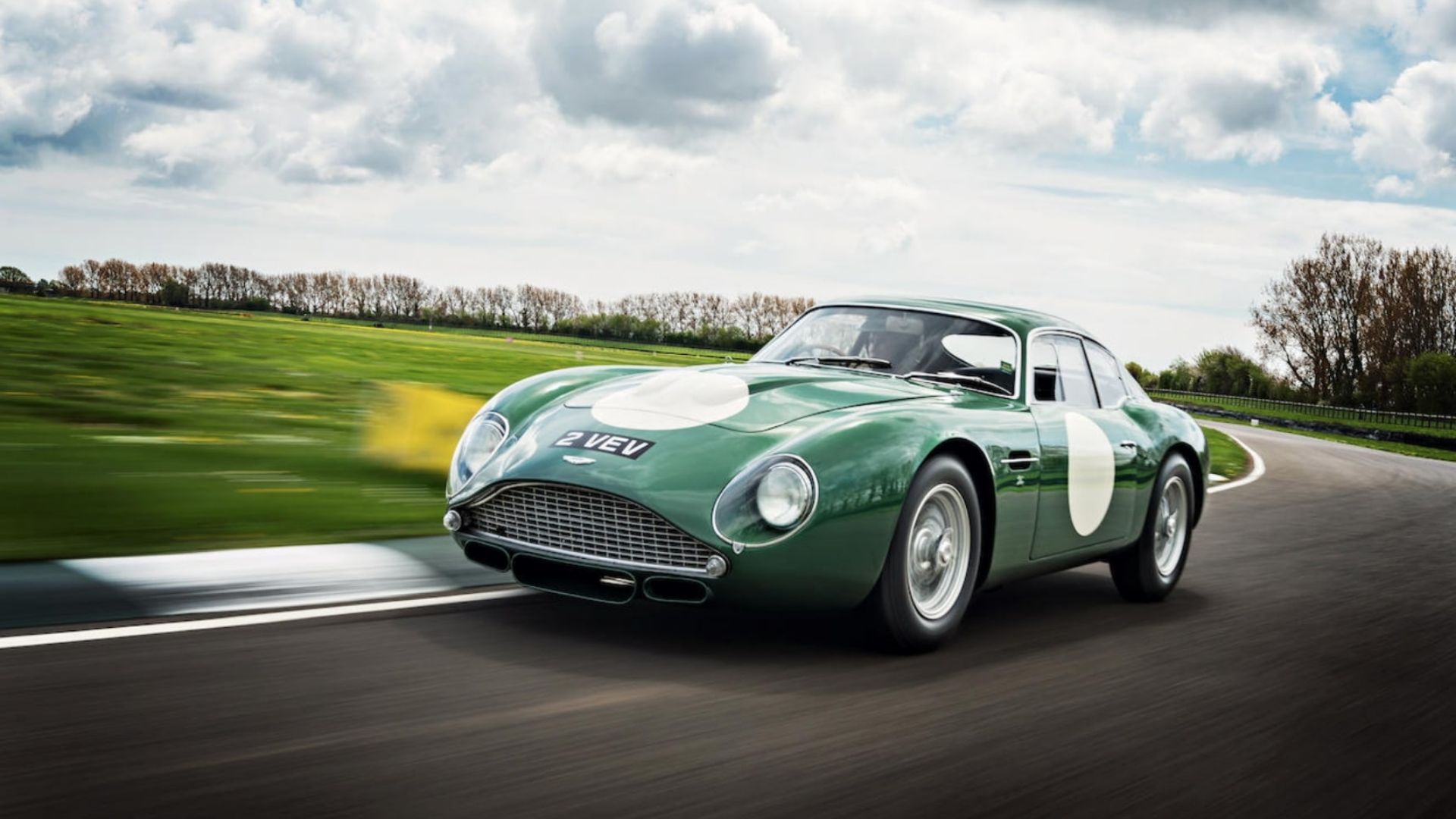
1961 Aston Martin DB4GT Zagato 2 VEV – £10.08 million
One of the most famous Aston Martin racing cars ever made is a coach-built victim of a prang at Goodwood. With F1 legend Jim Clark at the wheel, driving his – and the car’s – second Goodwood TT, it spun into the path of John Surtees’ Ferrari 250 GTO at Madgwick. The result was two bent super-GTs and one of the most famous crashes in Goodwood history.
Z Cars: the 58-year history of Aston Martin and Zagato
Fitting, then, that this one-of-three super lightweight Zagato was up for grabs at the 2018 Festival of Speed. It eventually crossed the block for £10.08 million. Prior to the sale, the car had been in the same family for 47 years. In 1993, a previous keeper was involved in another prang in ‘2 VEV’ on the Isle of Man. Since then, after a painstaking restoration, the car has led a somewhat more static concours-winning existence.
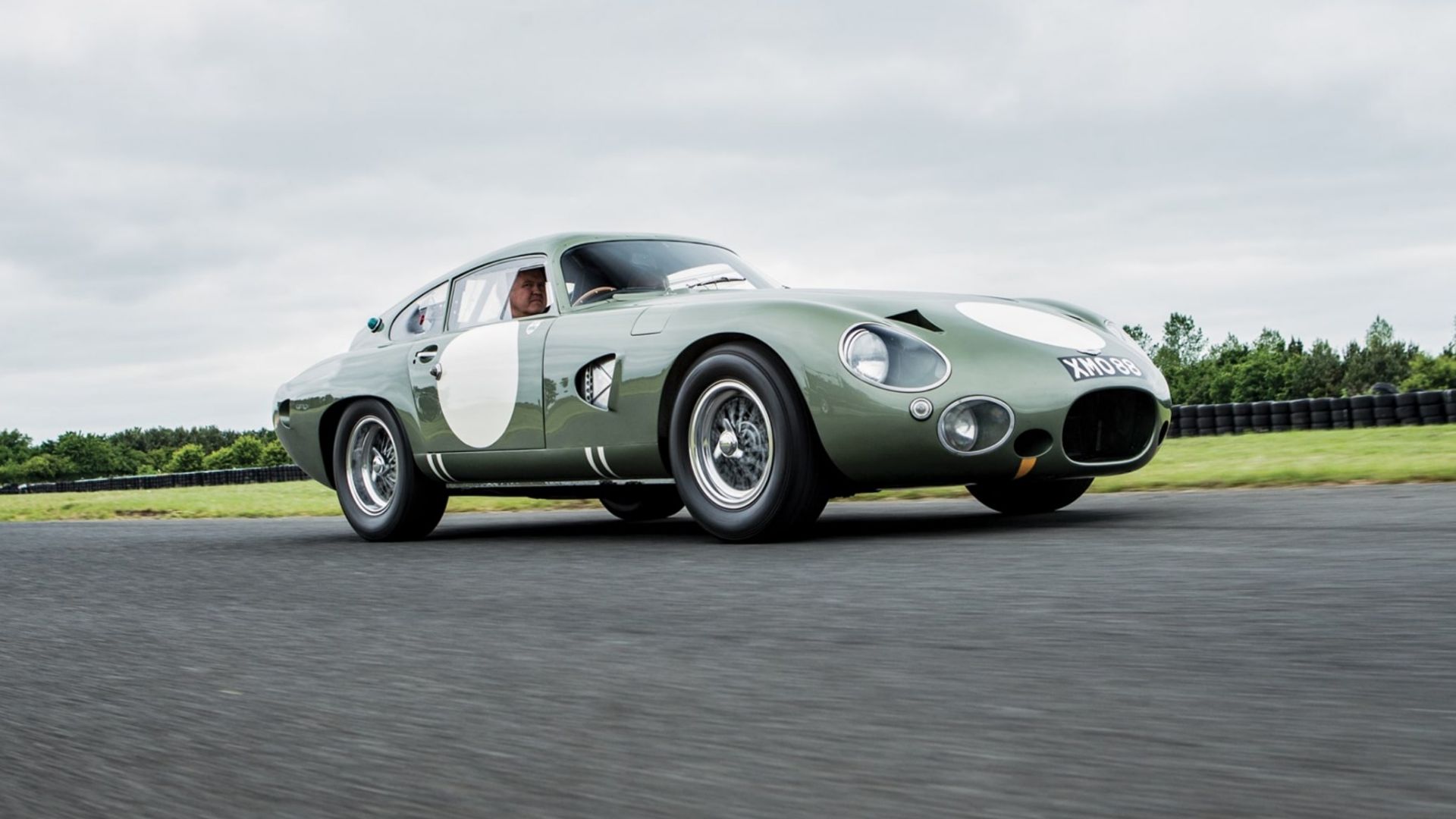
1963 Aston Martin DP215 – £16.9 million
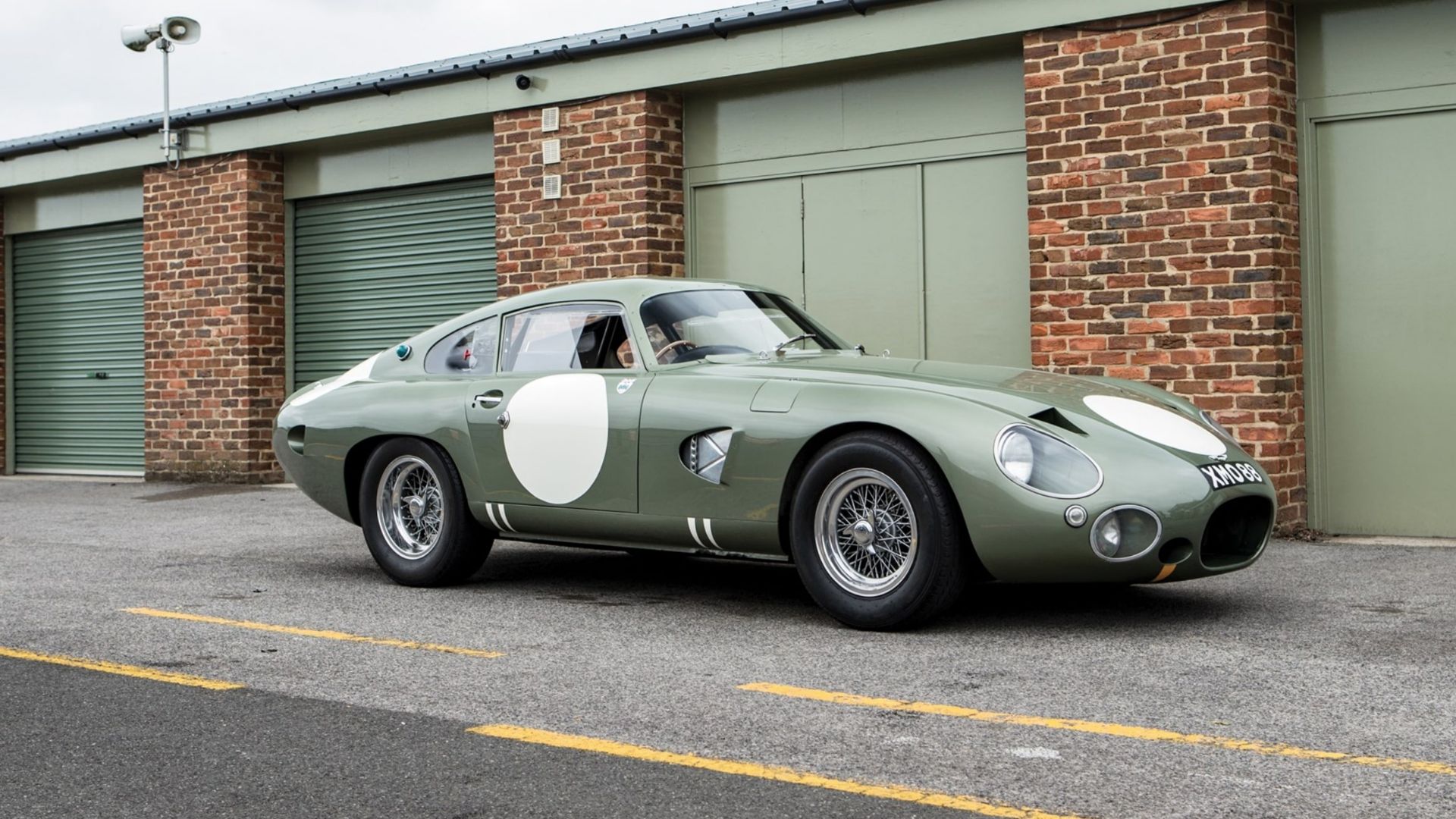
A Le Mans racer that reached 198.6mph on the Mulsanne Straight in 1963, this aero-enhanced Aston Martin sold for $21.5 million (£16.9 million) at RM Sotheby’s Monterey sale. That makes it almost the most valuable British car sold at auction – beaten only by a $22.5 million (£17.7 million) Aston Martin DBR 1 in 2017.
DP215 is a true one-off and the final racing Aston of the David Brown era. It was restored with help with designer Ted Cutting, who was originally tasked with building the car in just two months – with a budget of £1,500. Sadly, although DP215 led Le Mans for two hours, it would retire with gearbox problems.
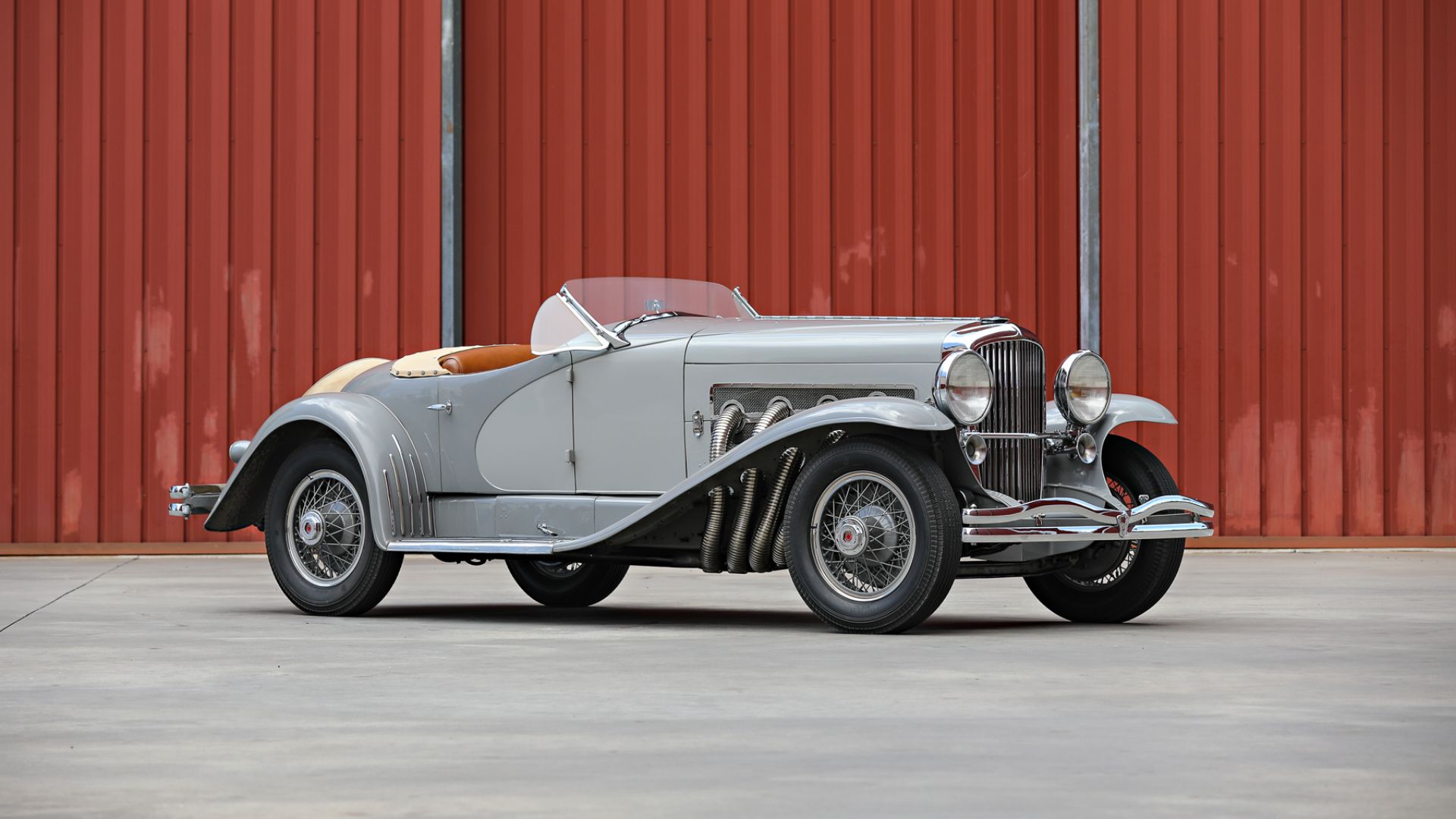
1935 Duesenberg SSJ – £17.3 million
This high-class hot rod became the most expensive American car ever sold at auction when it appeared at Pebble Beach. Dripping with raffish, jazz-age glamour, it’s one of only two SSJs built, combining a short-wheelbase chassis with a 400hp supercharged in-line 8-cylinder engine.
Duesenberg had factories in Minnesota, New Jersey and Indiana, and rivalled Cadillac, Rolls-Royce and Bugatti in its day. Production lasted from 1913 until shortly before World War II.
This particular car was delivered new to Hollywood actor Gary Cooper, then later owned by racing driver Briggs Cunningham.
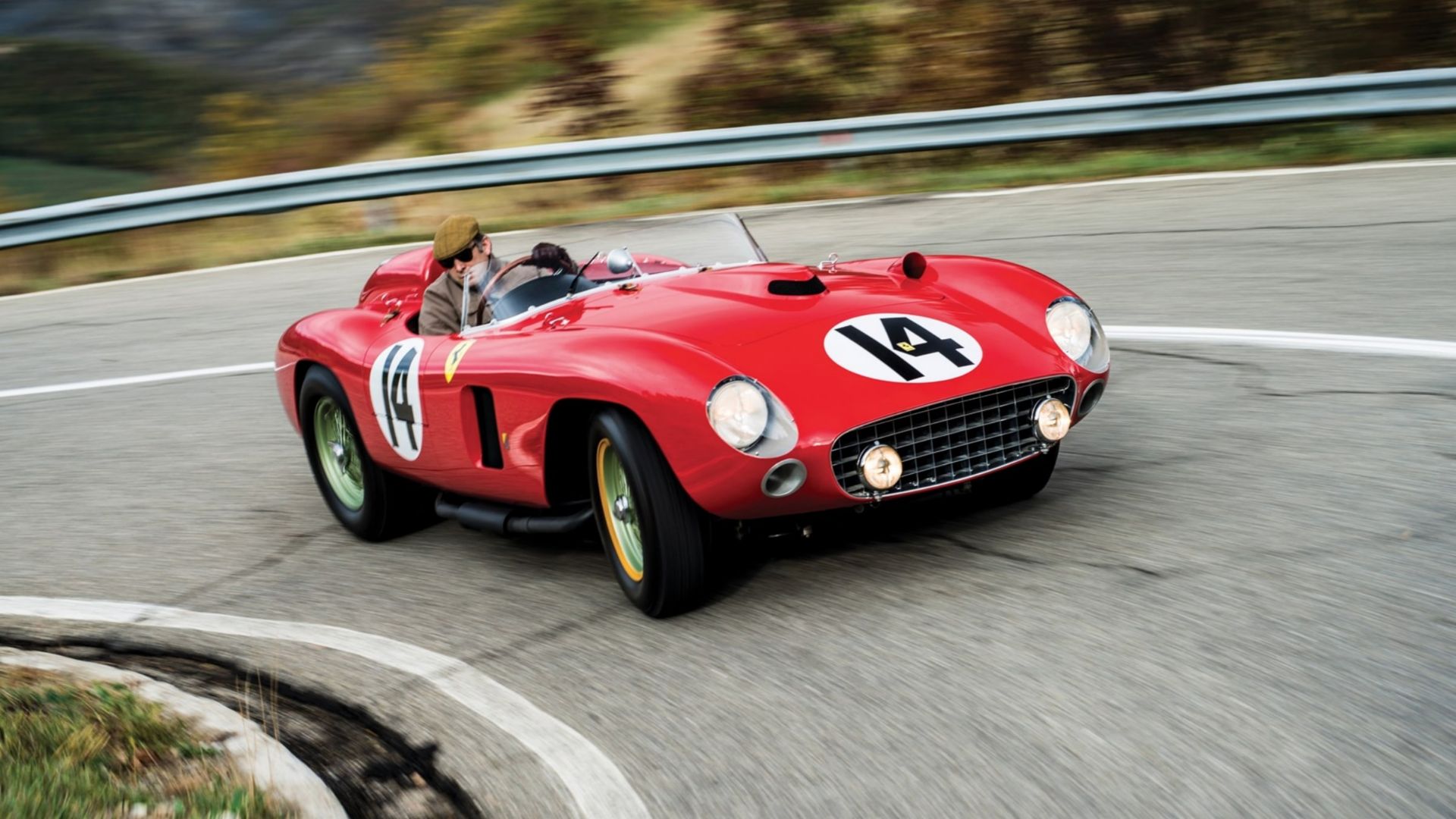
1956 Ferrari 290 MM – £17.3 million
Racing pedigree always boosts the values of classic cars – and this $22.005 million (£17.3 million) 290 MM has a suitably star-studded competition CV. It was a Scuderia Ferrari works car for the 1956 and 1957 seasons, driven by Juan Manuel Fangio, Peter Collins and Stirling Moss.
One of just three surviving 290 MMs, the car retains its original Scaglietti bodywork. It was restored by Ferrari’s in-house Classiche department in 2015, including a respray in 1957 ‘12 Hours of Sebring’ livery.
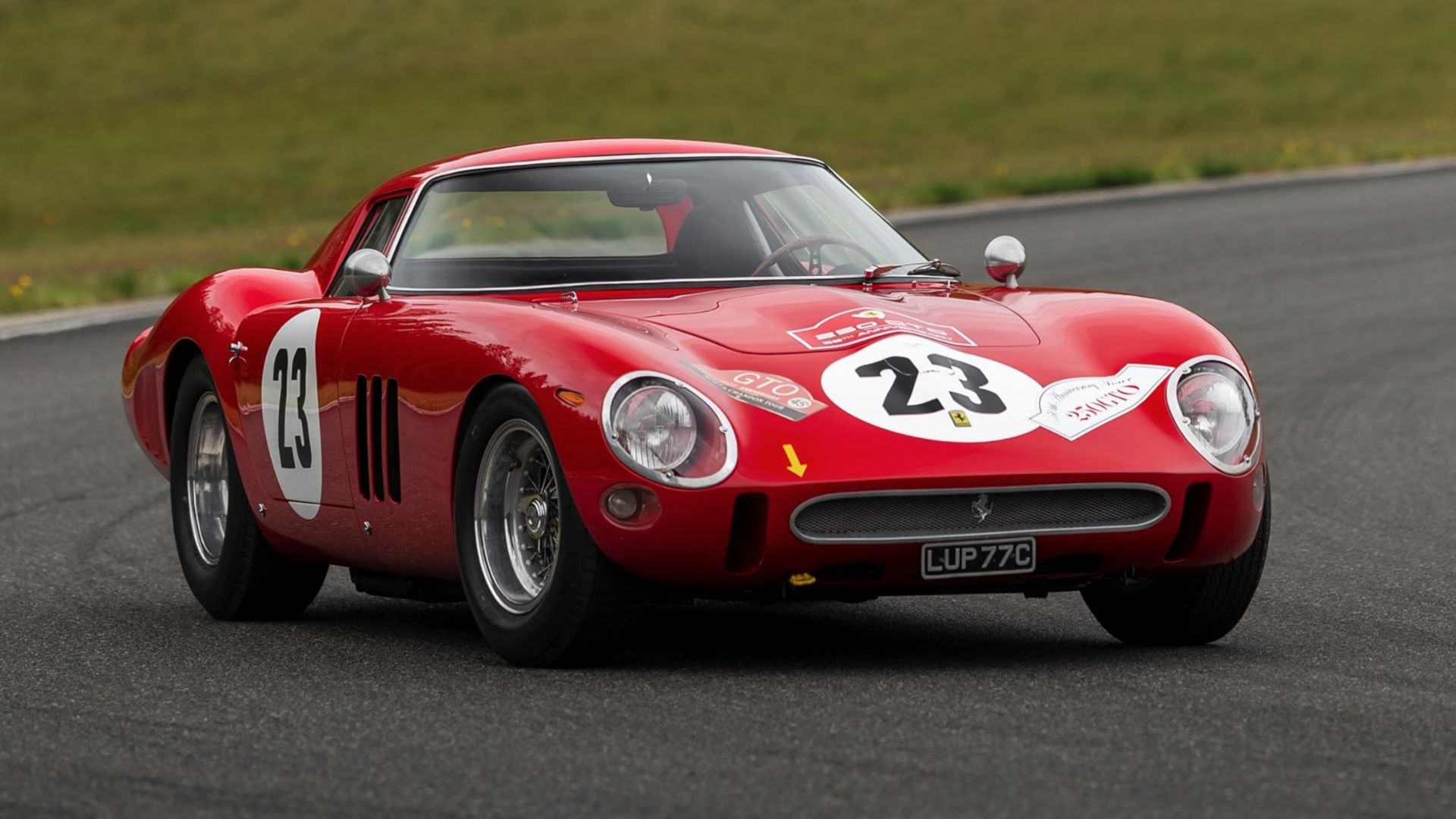
1962 Ferrari 250 GTO – £38.1 million
In first place on our list, somewhat predictably, is a Ferrari 250 GTO. This 1962 example enters the record books as the most expensive car ever sold at auction – with a hammer price of $48.4 million (£38.1 million) at Monterey in August.
The 250 GTO is the third of 36 examples built and won its class in the 1963 and 1964 Targa Florio. It still has its original engine, gearbox and rear axle, whilefactory Series II bodywork was added in period by Scaglietti. Will its record be beaten in 2019? If so, only another 250 GTO seems likely to top it…
Read more:
Volkswagen is going to deploy mobile charging stations
Women-only race series to face critics for the first time in Birmingham
This places BMW ahead of Volkswagen, Nissan, Renault and Tesla in the EU.
BMW also commands an eight percent share of global electric and plug-in hybrid electric cars, a total bettered only by Tesla and China’s BYD.
Nissan, which builds what’s considered the world’s first mainstream electric car, the Leaf, is way back on four percent worldwide market share. Toyota, the world’s biggest car company, has a lowly three percent global market share of electrified vehicles.
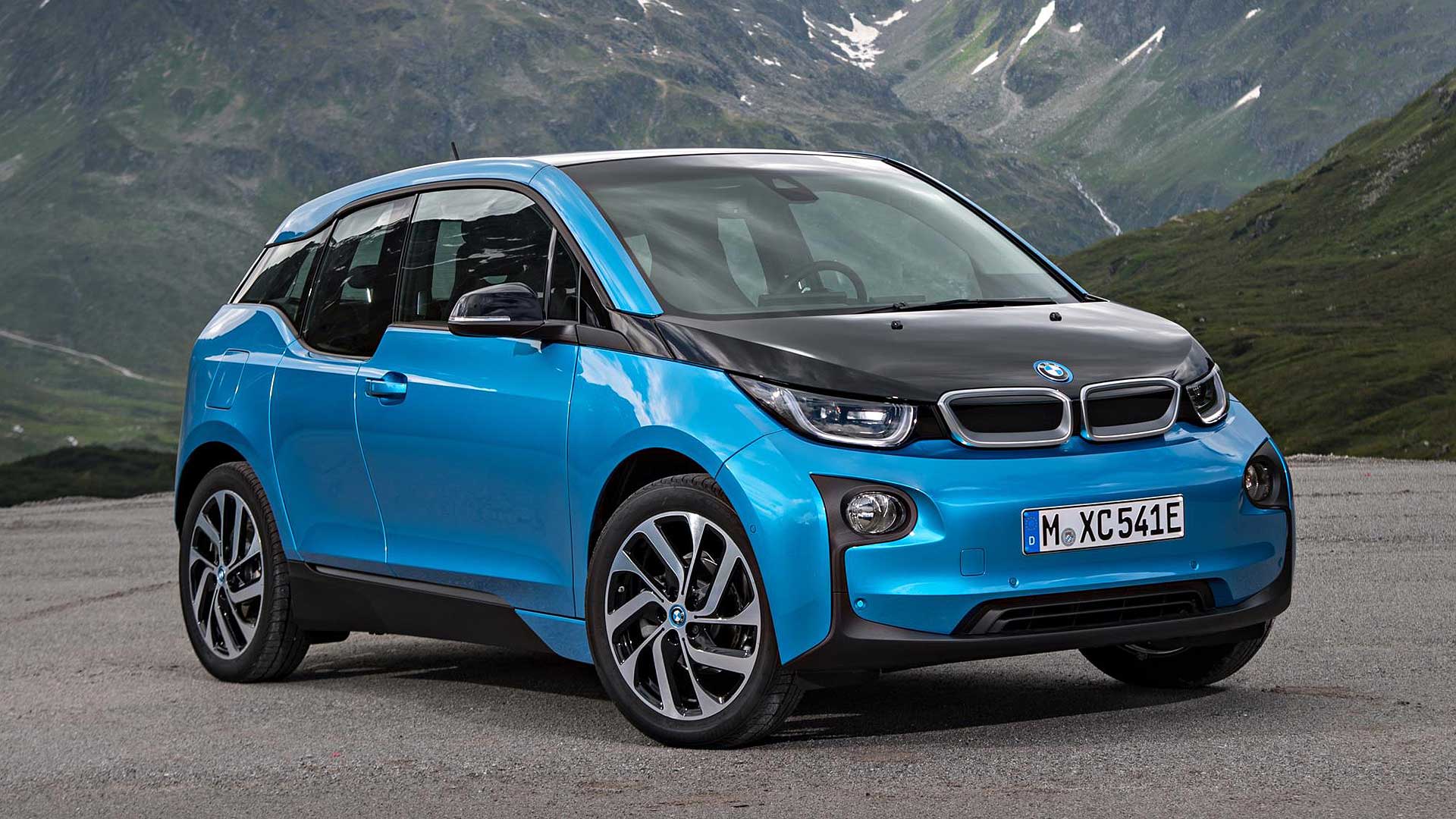
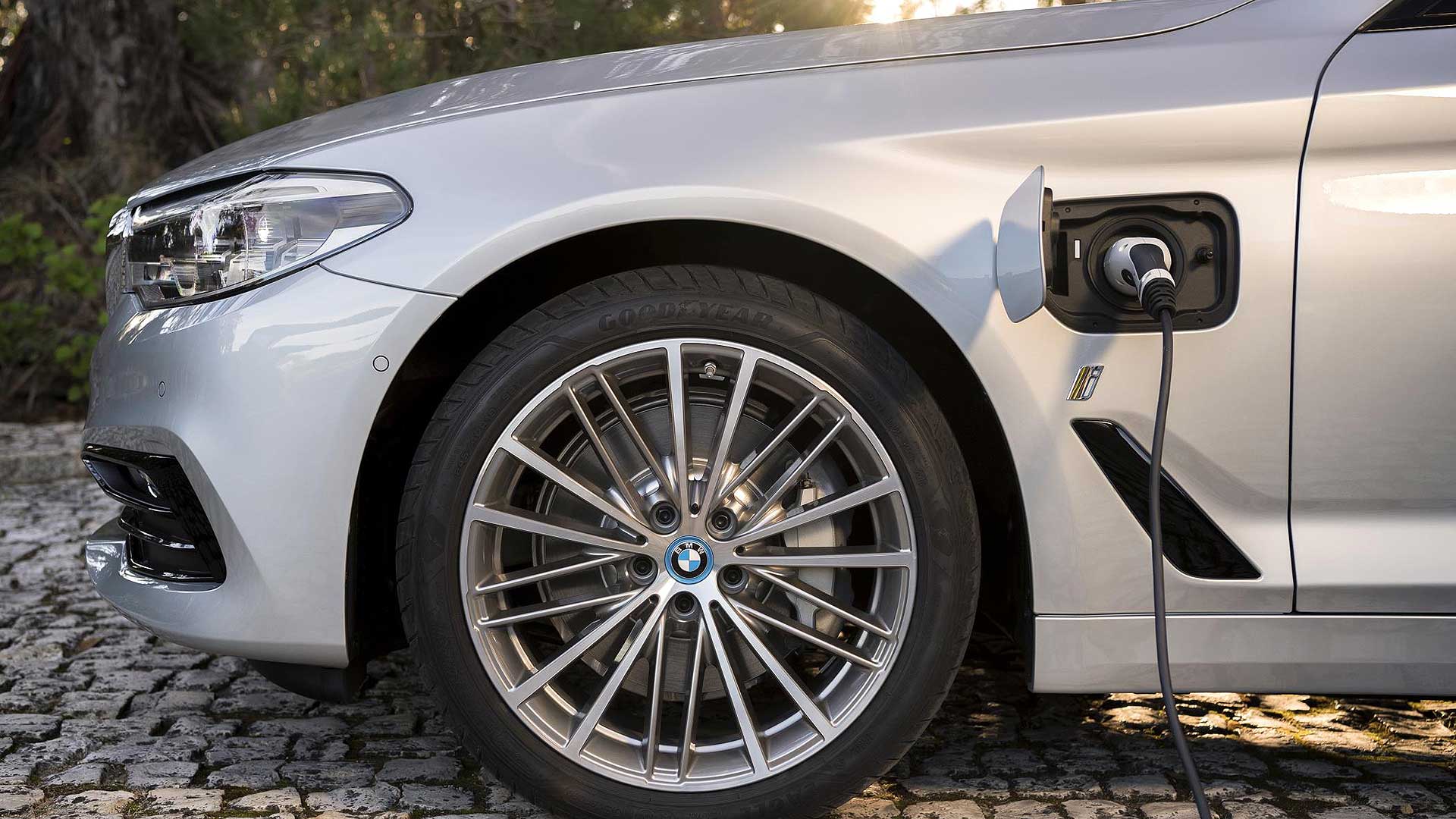
BMW’s impressive performance comes from a combination of innovation with the all-electric i3, and a big focus on plug-in hybrids with its iPerformance range of cars.
It’s this that seems almost one in five brand new BMWs in Germany being either electric or plug-in hybrid. Tesla has a three percent market share in BMW’s home market.
Here in the UK, BMW’s electromobility vehicles are easily outperforming its market average. In traditional new car registrations, BMW has an 8.1 percent market share; restrict the focus to EVs, and its command of the sector grows to almost 32 percent.
This means BMW GB has a far higher proportion of electric and plug-in hybrid sales than any other major market. In Germany, the share is 21.5 percent, and globally, it’s 8.7 percent.
The BMW i3 was introduced back in 2013 and since then, BMW has sold more than 100,000 cars. This is not as many as it perhaps envisaged (despite hitting the 10,000 UK sales total earlier in 2018), but strong sales of mainstream plug-in hybrids have compensated.
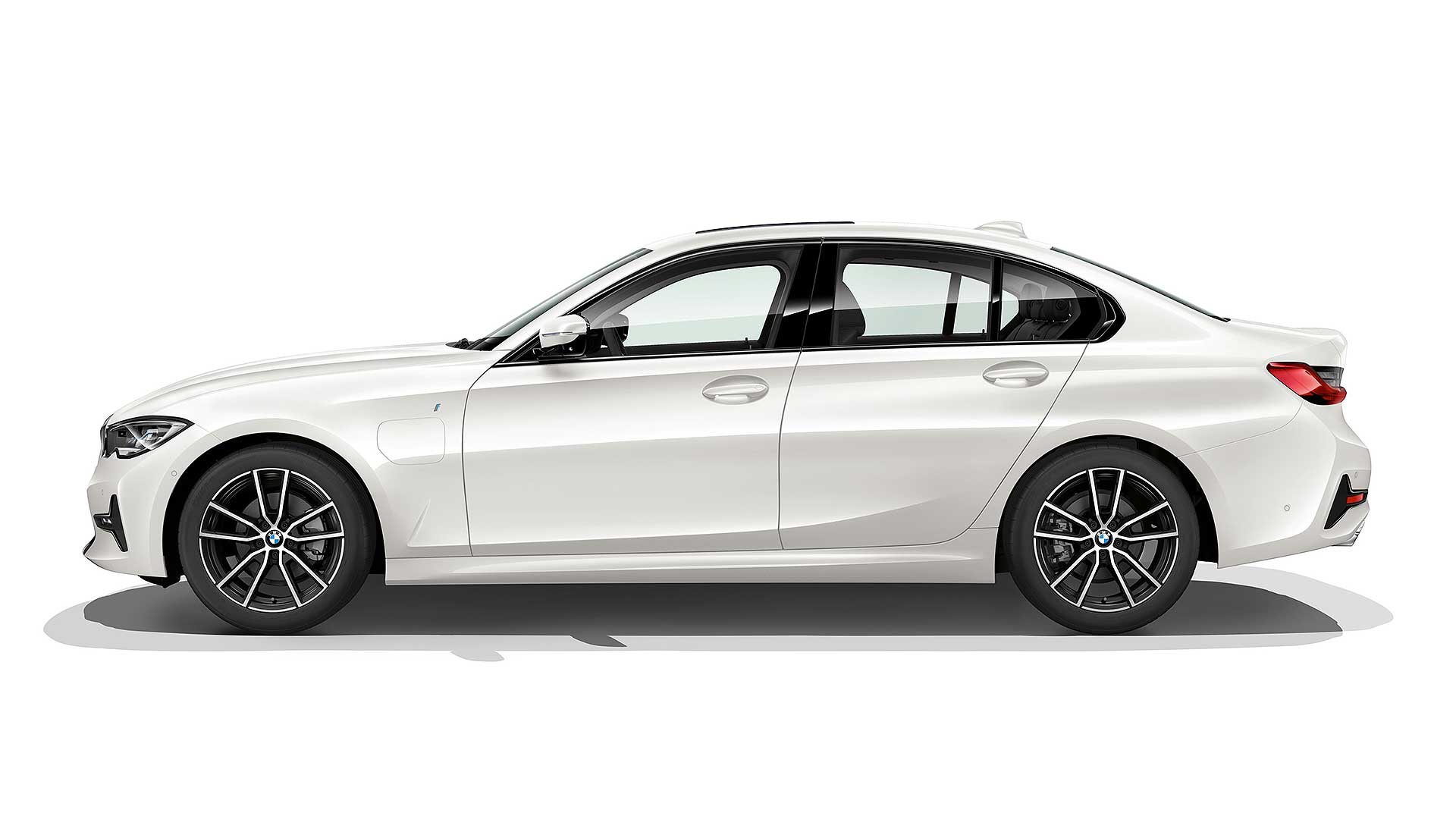
BMW is now delivering well over 100,000 electrified new cars a year, with the latest high-volume model – the new BMW 330e – due for launch in July 2019.
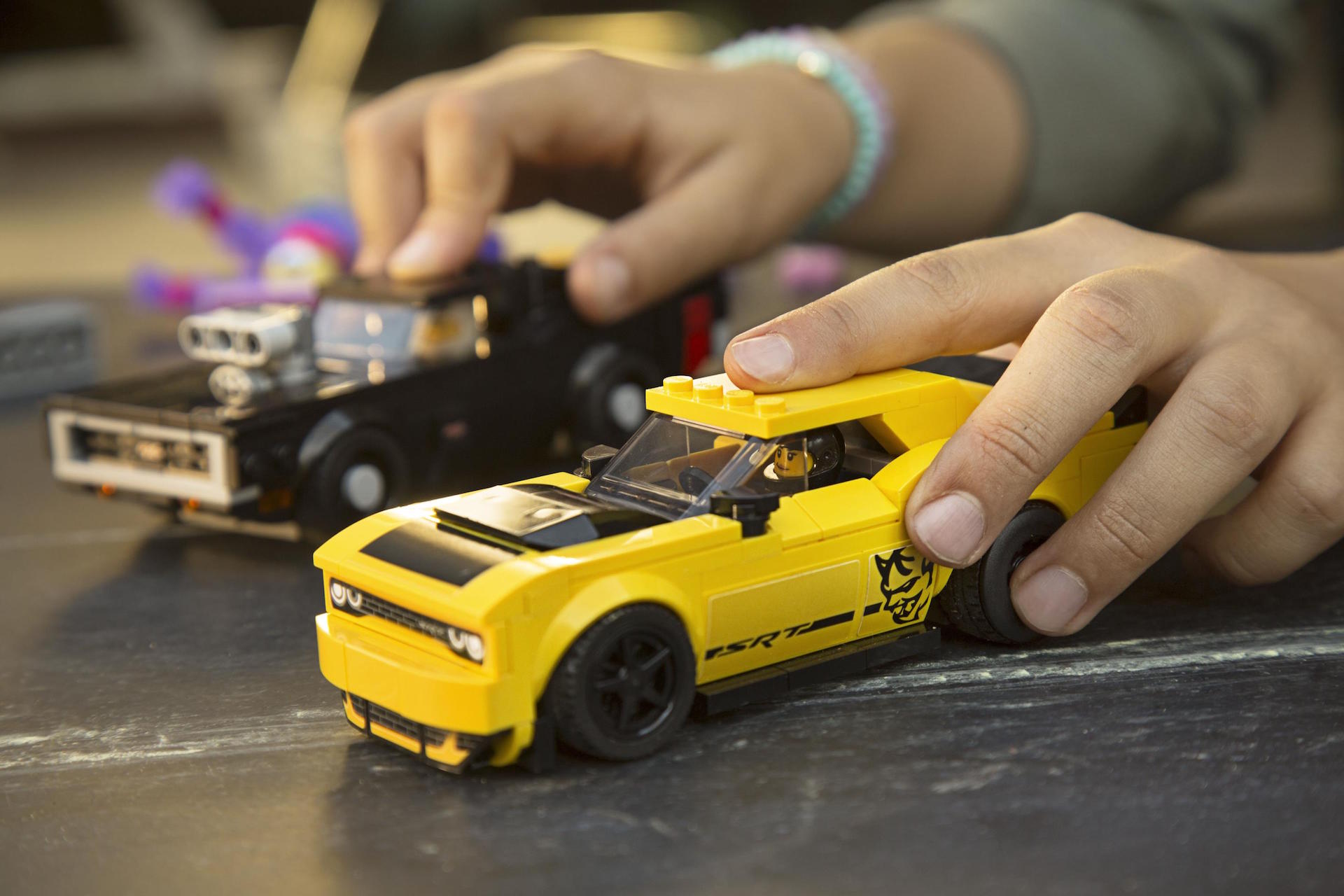
The popular Lego Speed Champions range has gained some extra American muscle. Two of Dodge’s greatest products can now be built in miniature brick form.
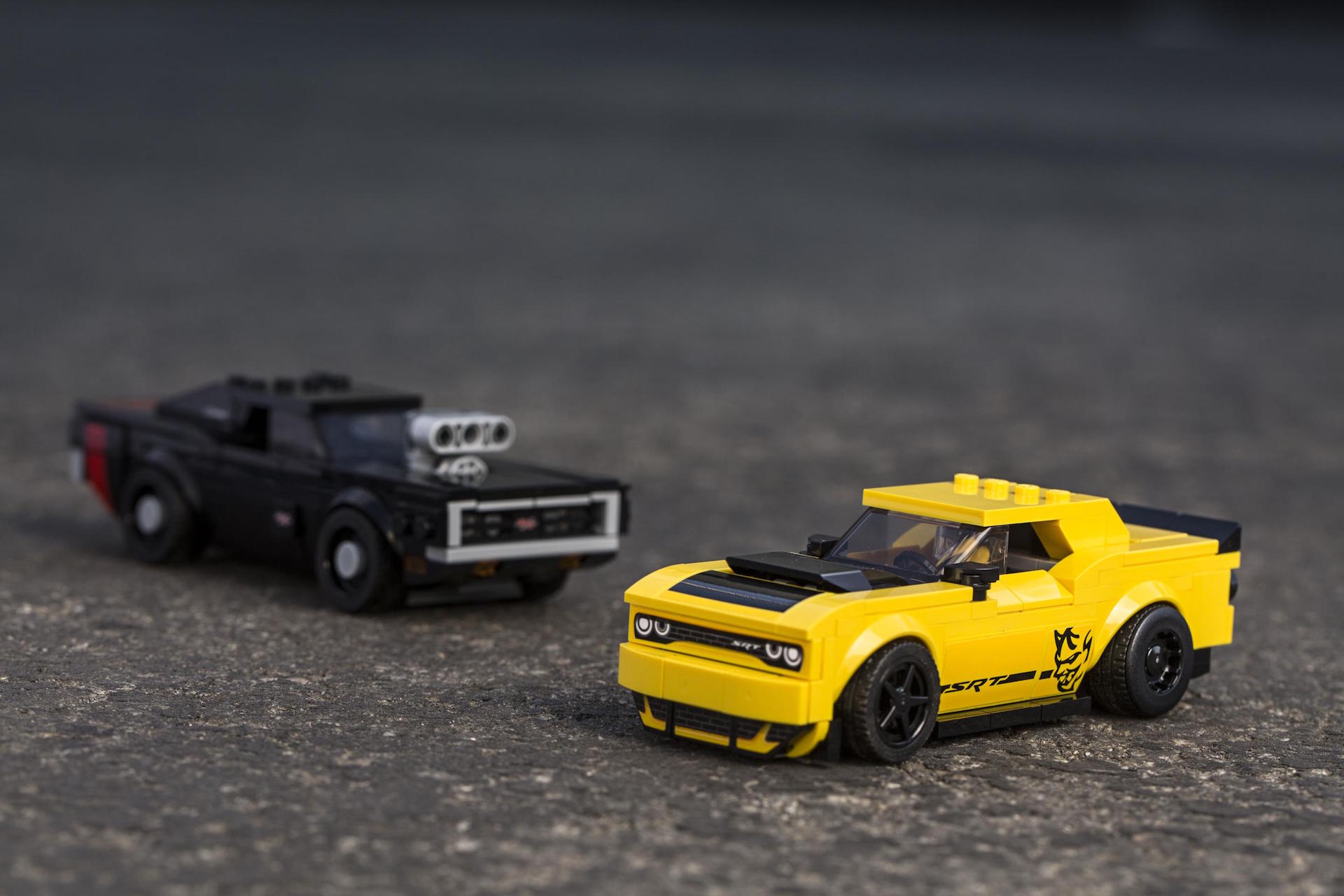
Combining two machines into one set, Mopar fans of any age can create the latest 2018 Challenger SRT Demon, along with the 1970 Charger R/T.
Modern or classic?
Although the Lego Challenger SRT Demon might not have a 840hp supercharged Hemi engine, it still has the many of the features recreated in miniature.
That means two sets of wheels – just like the SRT Demon, along with a hood scoop, dual-exit exhaust, and replica decals.
Going retro with the Charger R/T means a removable supercharger, an alternative engine cover, and a faithful recreation of the iconic hidden headlights.
Take it to the strip
Along with the two buildable cars, the set also includes three Lego minifigures. This means a driver for each of the respective Mopar machines, along with a race marshall.
Given the quarter-mile ability of the SRT Demon, the set also includes a Christmas tree start light. Operated by a lever, the Christmas tree counts down to start the race, making it a test of reactions.
Following the impressive array of records set by the SRT Demon, we imagine many Lego versions will be launching down miniature drag strips with their front wheels in the air.
Brick by brick
Whilst trying to find a 1970 Charger or Challenger SRT Demon is likely to need a trip to the auction house, buying the Lego set is much easier. Fans can purchase it right now from the online Lego Shop.
The latest Lego Speed Champions update also sees a Chevrolet Camaro ZL1 race car added to the range. Perfect if you need a GM machine to face-off against the two Mopar offerings.
Previous years have seen an ever-expanding collaboration between Lego and major car manufacturers. Last year saw the creation of a life-size Bugatti Chiron in brick form, with the car taking on a global tour.
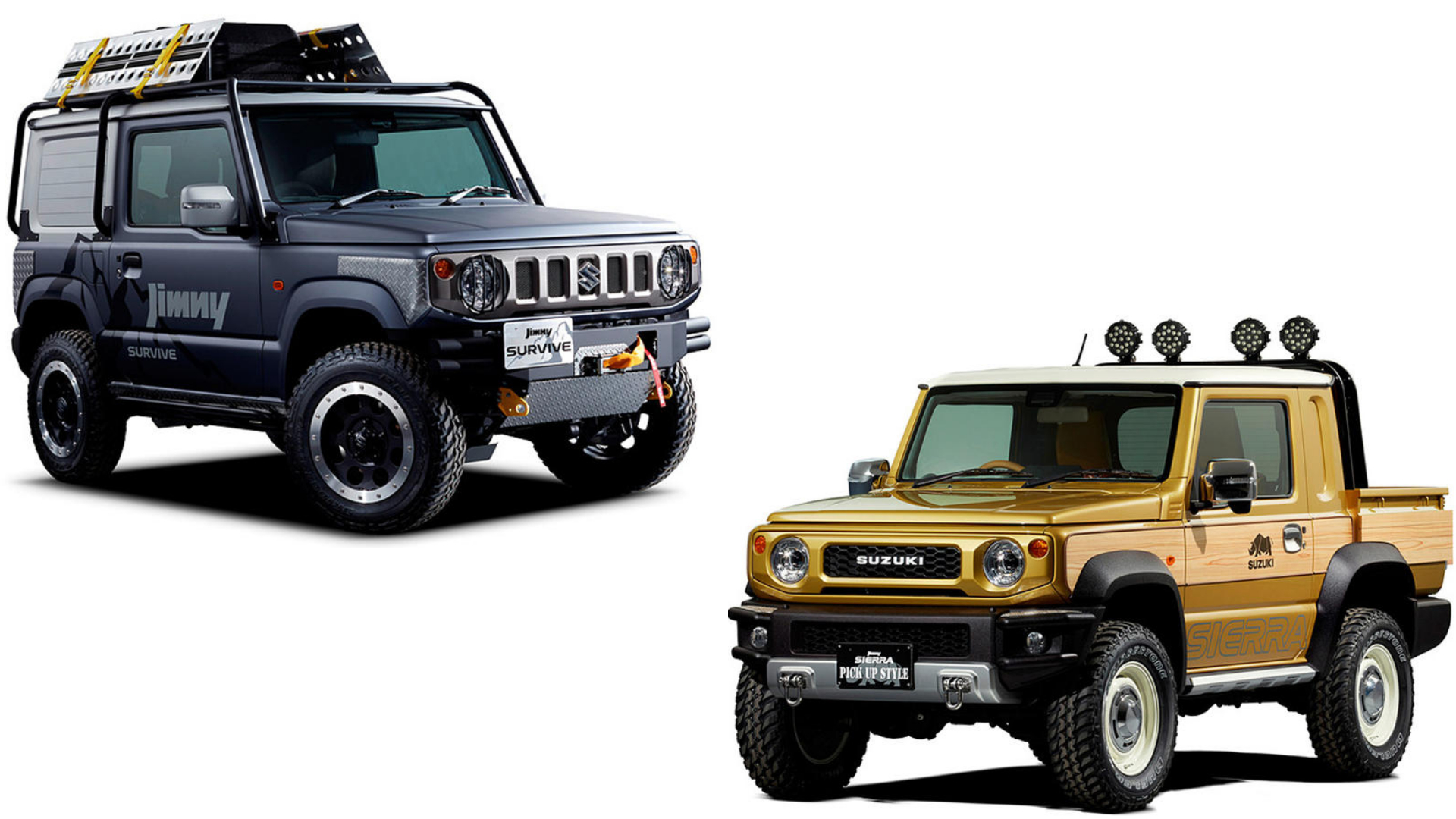
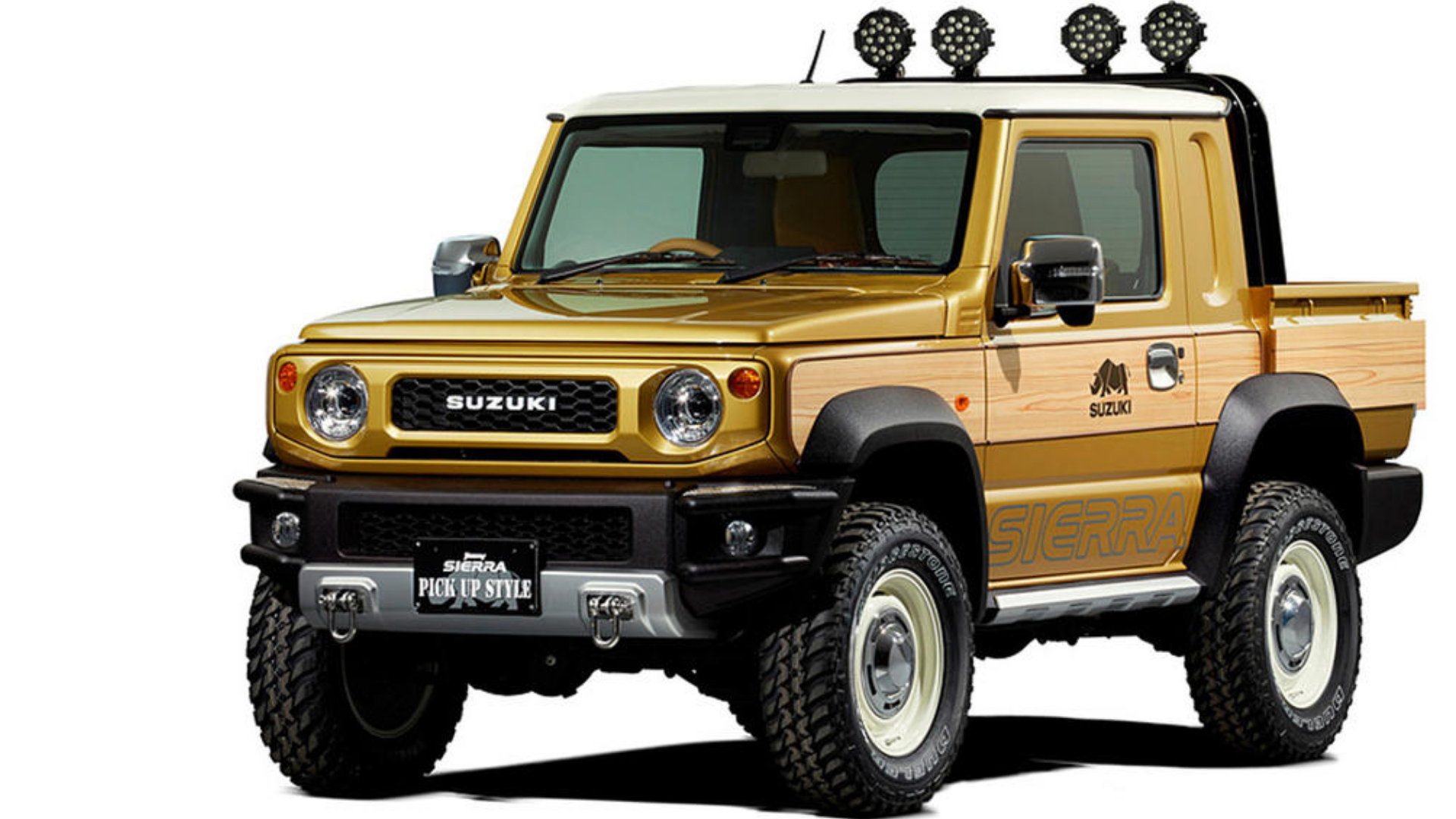
If you thought the Suzuki Jimny couldn’t get any cooler, you are sorely mistaken. Meet the Suzuki Jimny Sierra Pick Up Style – a concept car due to debut at the Tokyo Auto Salon on January 11-13.
Built by an aftermarket company, this petite pick-up looks ready for a safari, with wooden side panels, towing loops and chunky side steps. Note the classic Suzuki rhino logo and retro body-coloured snout, too. As for that dull sandy yellow colour, we can’t decide whether we hate to love, or love to hate. Still, there’ll be no going dark on your adventures across the desert, thanks to four chunky LED spotlights up-top.
The rear seats and boot have obviously gone in favour of the pick-up load bed; no huge loss given the standard Jimny isn’t exactly commodious. The ride height has also been jacked up, and the white/chrome wheels have bigger tyres for boosted off-road chops.
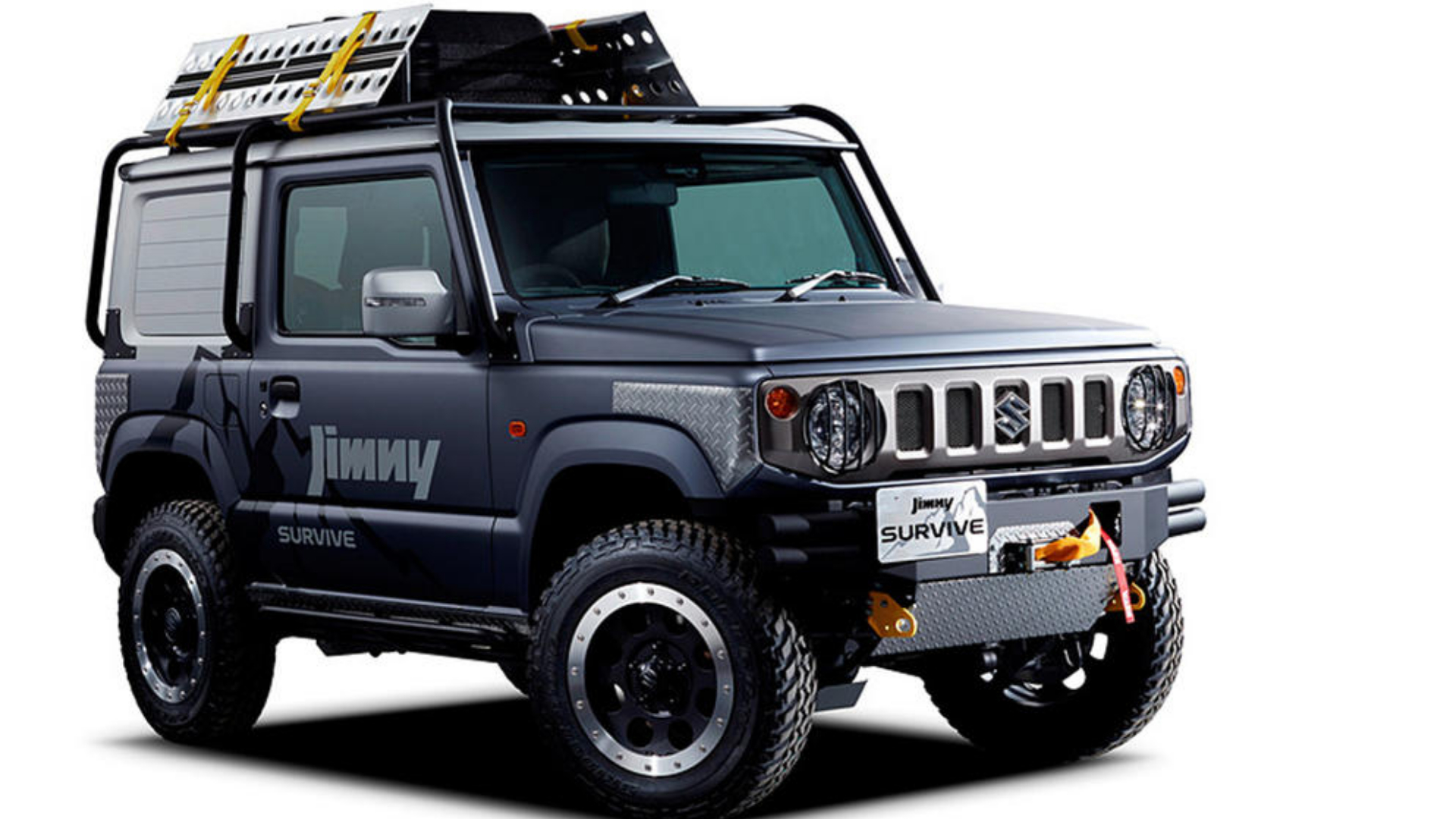
The Sierra isn’t alone. A ‘Jimny Survive’ concept will also join it in Tokyo. This isn’t quite as extreme a transformation as the Sierra, but features some cool toys befitting its name: jacked-up suspension, front and rear skid plates, bigger tyres, a protective rollcage and light guards. Get it stuck (unlikely) and it looks like there’s also provision for a winch.
2018 was a momentous year in the automotive world. New trucks were anticipated more highly than the Beatles while sedans were sent to death row. SUVs reached new heights of extravagance while manufacturers battled with tariffs and slashed production lines. Executives reached new heights of autocracy, even as industry stars left the firmament.
Stick it! The sports cars you can buy with a manual gearbox
January – Ford Ranger Returns
Ford kicked off the year by unveiling the U.S.-spec Ranger midsize pickup at the Detroit auto show in January.
The Ranger had been sold in the U.S. market from 1982 to 2012, but Ford ceased domestic production. The market was shrinking, and the redesigned version for 2013 had grown to nearly the size of the F-150. Ford wanted to avoid any cannibalization of profits from its best-selling model, so the new Ranger was manufactured and sold worldwide to critical and popular acclaim, but not here.
Ford said in a January press release that U.S. midsize truck sales had increased 83 percent since 2014, and the success of the rival Chevrolet Colorado certainly bears that out. Ranger fans had also been clamoring for the model’s return, and the confluence of multiple factors finally won them the day.
Ford is currently taking orders for the new truck, with prices starting at $24,300. One engine is available, a 2.3-liter turbo four making 310 lb-ft of torque and paired with a 10-speed automatic.
March – the first pedestrian death caused by an autonomous car
In March, Elaine Herzberg of Tempe, Arizona, was hit by an Uber car, thus becoming the first pedestrian to be killed by an autonomous car.
Although a driver was present behind the wheel, the vehicle was in self-driving mode when it struck Herzberg, who was pushing a bicycle across a street. It subsequently emerged that the car’s operator, Rafaela Vasquez, had been streaming an episode of The Voice and not monitoring the road ahead.
In a report, the Tempe police department said the crash was “entirely avoidable” if Vasquez had been watch looking forward and not down at a screen. Earlier, Tempe police chief Sylvia Moir had said: “It’s very clear it would have been difficult to avoid the collision in any kind of mode.”
Uber suspended self-driving car tests in North America and said that its “hearts go out to the victim’s family”.
It has since emerged that Uber bosses had been warned that its self-drive cars had been involved in crashes. In a leaked email from operations manager, Robbie Miller, Uber was told that its cars were “routinely in accidents”.
Miller blamed the technology and the “poor behavior” of operators. At the time of writing, Uber hasn’t responded to the revelations.
April – Ford Discontinues Cars
In a move that shocked industry spectators, Ford announced on April 26 that it would discontinue all passenger cars except for the Mustang in its North American markets.
The Dearborn company cited declining demand and decreasing profits for the change, and intends to shift focus to what the market wants: trucks, SUVs, and crossovers.
“We’re going to feed the healthy parts of our business and deal decisively with the areas that destroy value,” said CEO Jim Hackett.
The F-Series pickup has been the best-selling vehicle in the U.S. for decades, and the company has introduced a midsize Ranger model to capture additional market share. A sport Bronco SUV will join the lineup, along with a Focus-based crossover.
The models on the chopping block are the Fiesta subcompact, Focus compact, C-Max compact, midsize Fusion, and fullsize Taurus. Focus production ended in May, and the rest will wind down over 2019 except for the Fusion, which enjoys enough fleet sales to keep it afloat awhile longer.
Layoffs will be taking place at Ford, but spokeswoman Karen Hampton said they will affect the salaried workforce and not manufacturing positions.
May – Rolls-Royce Cullinan Revealed
Storied automaker Rolls Royce finally took the wraps off its ultra-luxury Cullinan SUV in May.
The public, said the manufacturer, demanded an alternative to the increasingly bland designs of the day. “Our customers are the new pioneers,” said design chief Giles Taylor, “And for them, it’s about their sense of adventure and daring in how they live their experiences.”
Starting over $400,000, the Cullinan is the latest in a crop of ultra-luxury SUVs. The Bentley Bentayga ($165,000) is definitely a member of the group. It might be argued that the Lamborghini Urus ($200,000) be included, along with the special edition Range Rover SV Coupe ($295,000), and perhaps the Mercedes-AMG G 65 ($223,000). One might argue, however, that those vehicle are merely very expensive, and not particularly exclusive.
The Cullinan, though, is a new watermark in luxury and truly represents a new world order of wealth. The center-opening coach doors allow rear occupants graceful ingress and egress. Second-row seating is carefully positioned to allow an outward and forward view for passengers while discouraging outside prying eyes. The armrests and C-pillars are heated. This is not a car meant for drivers, but for owners.
June – Trump Threatens Harley-Davidson
Harley-Davidson announced in June that it would be shifting some manufacturing out of the U.S. in a measure to avoid the European Union’s new tariffs on American motorcycles, imposed as retaliation for the Trump administration’s steel and aluminum tariffs.
The European tariffs added $2,200 on average to the price of the motorcycles, a cost likely to significantly depress sales. The company planned to shift production to a country that has lower or no tariffs to the EU, such as one of its facilities in Thailand, Brazil, India, or Australia.
Trump tweeted that Harley was waving the “White Flag” and that the taxes were “just a Harley excuse.” He then threatened the company by tweeting, “Harley must know that they won’t be able to sell back into U.S. without paying a big tax!”
The tirade continued: “If they move, watch, it will be the beginning of the end – they surrendered, they quit! The Aura will be gone and they will be taxed like never before!”
Harley decided to invest in the Thai plant after Trump withdrew from the Trans-Pacific Partnership. The trade deal would have lowered tariffs on the iconic American bikes in some of the fastest growing-markets in Asia.
“We would rather not make the investment in that facility, but that’s what’s necessary to access a very important market,” said Harley CEO Matt Levatich. “It is a direct example of how trade policies could help this company, but we have to get on with our work to grow the business by any means possible, and that’s what we’re doing.”
June – Detroit Auto Show Moving to June
2019 will be the last year Detroit sees its famed North American International Auto Show (NAIAS) take place during the chilly month of January. Organizers have announced that starting in 2020 the event will take place in June.
The show seeks to reinvent itself after multiple global manufacturers decided to skip the 2019 show. Audi, Mercedes, BMW, and some smaller automakers bowed out, attracting fewer journalists and new media outlets, creating a situation where even more brands might reconsider attendance.
In the modern world of marketing, auto shows are no longer the default way to introduce a new model. Appearances in video games, in the hands of social media influencers, and livestreamed private introductions away from the crowded show floor are all gaining in popularity as ways to connect with a new audience.
NAIAS also faces pressure from competing shows that attract attention from the coveted Millennials and Gen Z, such as the much larger and similarly-timed CES (Consumer Electronics Show). CES takes place in tourist-friendly Las Vegas and has ample crossover marketing opportunities, not just car shoppers.
The new NAIAS will embrace the warmer summer month, “Moving the show to the summer opens up new opportunities for companies as well as creating new experiences for attendees,” said Michigan Governor Rick Snyder in a release. The show hopes to energize attendees with ride and dives, off-road challenges, dynamic vehicle debuts, and autonomous driving demonstrations through multiple venues in downtown Detroit.
June – Ford goes hybrid for Police Interceptor Utility SUV
As Robert Zimmerman once said, “The Times They Are a-Changin”. Soon, U.S. criminals will be hunted down by cops in a hybrid.
But you can sleep easy in your beds, as Ford says the new Interceptor Utility will be even faster than the 3.7-liter V6 version. It’ll be quicker off the line, boast a higher top speed and, we suspect, be able to idle in silence. Perfect for those early evening stakeouts.
The new hybrid Interceptor is estimated to save around $3,200 per vehicle in fuel usage compared to the old model, with the hybrid technology having no impact on the amount of interior space. Indeed, Ford has managed to squeeze even more cargo space into the new Utility.
The 2020 Police Interceptor Utility, which is set go on sale in the summer 2019, will feature an improved version of surveillance mode, using the blind spot information system to provide 270-degree monitoring outside of the vehicle.
Any potential threats will be shown on the instrument panel, while the rear-view camera can be operated on demand, not just when the vehicle is in reverse.
July – Sergio Marchionne Dies
Sergio Marchionne, architect of Fiat Chrysler Automobiles, died on July 25 following complications from shoulder surgery. He was 66.
Marchionne took over a Fiat on the verge of bankruptcy in 2004, and drove the acquisition of Chrysler in 2009. Few onlookers predicted success, but on October 13, 2014, Marchionne rang the bell on Wall Street to celebrate the birth of London company Fiat Chrysler Automobiles NV (FCA). The Fiat of today is now worth nearly 10 times the amount as it was when Marchionne joined the company.
The Italian-born Canadian was known as a chain-smoking workaholic, fueled by a dozen espressos a day. In his Turin office hung a Picasso print adorned with the motto, “Every act of creation is first of all an act of destruction.” On his first day at Fiat, he fired most of the executives, the did the same again at Chrysler. In the pursuit of profitability, Marchionne laid off thousands of workers.
In spite of his tactics and demeanor, Marchionne was seen as a visionary and captain of the industry. The cuts were necessary for the firms to thrive, and even union leaders spoke of him with respect. “The success of his vision changed people’s lives,” said Cindy Estrada, United Auto Workers Vice President. “That is a rich legacy.”
Marchionne famously campaigned for consolidation in the auto industry; there was too much capacity for all carmakers to survive, he believed. In 2015, he instigated a merger with GM that was rebuffed. By 2018, both GM and Ford made decisions to cut production.
Motor Trend posthumously named Marchionne 2019’s “Person of the Year.”
August – Musk tweets ‘funding secured’
After tweeting that he had the funding and investors to take Tesla private at $420 a share, CEO Elon Musk was charged with fraud by SEC and forced to resign as chairman of the company.
A $40 million fine was also levied, to be split between Musk and Tesla. Neither party admitted wrongdoing,
The problematic social media post occured on August 7 and read,
“Am considering taking Tesla private at $420. Funding secured.”
Followed less than two hours later with,
“Shareholders could either to sell at 420 or hold shares & go private”
According to the SEC complaint, Musk calculated the $420 price per share by adding a 20 percent premium to the day’s closing price for a sum of $419. He rounded that figure up a dollar because “He had recently learned about the number’s significance in marijuana culture and thought his girlfriend ‘would find it funny, which admittedly is not a great reason to pick a price.’ ”
August – Ferrari 250 GTO sells for record fee
This 1962 Ferrari 250 GTO set a world record for the most valuable car ever sold at auction when bidding closed at $48,405,000 at Monterey Car Week.
There were audible gasps in the auction room as bidding hit $35 million, surpassing the previous record, before, after nearly 10 minutes, the three bidders competing via telephone, drew proceedings to a close.
The 250 GTO was effectively the final evolution of the 250 model, which debuted in 1953 and ended with the last GTO in 1964. Just 36 GTOs were built, all of which survive today.
Chassis number 3413 GT began life as a factory car and was driven by Phil Hill in the 1962 Targa Florio. It passed through an unbroken chain of ownership in the hands of the world’s preeminent Ferrari collectors, before ending up in the care of Dr Greg Whitten, chairman of Numerix and former chief software architect at Microsoft.
RM Sotheby’s reported sales totalling $157,931,940 at Pebble Beach, making it the highest-grossing auction of Monterey Car Week.
October – Rupert Stadler shown the door
Volkswagen formerly fired Audi CEO Rupert Stadler in October, months after he was arrested by German police for his alleged role in the diesel emissions scandal.
Stadler had been suspended by Volkswagen AG and Audi AG following the raid of his home in Bavaria, which followed an investigation into charges of fraud and misrepresentation as part of ‘Dieselgate’.
The CEO, who began working with Audi in 1990, strenuously denied the accusations, with VW Group boss Herbert Diess describing the charges as a “massive shock”.
A statement from Volkswagen said: “Mr Stadler is leaving the companies with immediate effect and will no longer work for the Volkswagen Group. Mr Stadler is doing so because, due to his ongoing pre-trial detention, he is unable to fulfil his duties as a member of the board of management and wishes to concentrate on his defence. The contractual execution depends on the course and outcome of the criminal proceedings.”
Prosecutors claim that Ghosn and board member Greg Kelly collaborated to underreport Ghosn’s income by approximately $44 million between 2010 and 2015. If convicted, the maximum penalty is ten years in prison and a 10 million yen (~$89,000) fine.
Nissan had been investigating Ghosn after a whistleblower filed a report, according to a statement released by the company. “The investigation showed that over many years both Ghosn and Kelly have been reporting compensation amounts in the Tokyo Stock Exchange securities report that were less than the actual amount, in order to reduce the disclosed amount of Carlos Ghosn’s compensation,” it said.
“Also, in regards to Ghosn, numerous other significant acts of misconduct have been uncovered, such as personal use of company assets, and Kelly’s deep involvement has also been confirmed.”
Japanese law allows a suspect to be detained without a formal charge for 20 days. Exactly 20 days after the first arrest, Ghosn was arrested again and indicted on the same charge.
November – GM Restructures
General Motors (GM) announced a massive restructuring plan in late November that would save the company $6 billion by year-end 2020, but result in the loss of 14,000 jobs.
Six sedans are to be scuttled and the five plants that build them. The Detroit-Hamtramck Assembly plant has already announced the first 714 layoffs of an expected 1,542. The Lordstown Assembly plant will lose 1,618 jobs. In Canada, the Oshawa Car Assembly in Ontario will close after 111 years, for a total of 2,900 jobs.
Two facilities that supply drivetrains will also shut: the Warren Transmission plant in Michigan will lose 335 jobs, and Baltimore Operations 335.
The models affected are the Chevrolet Volt, Cruze, and Impala; the Cadillac CTS and XT6; and the Buick LaCrosse.
The company will also reduce management and salaried staff by 15 percent, around 8,100 employees.
Additionally, GM will close three foreign plants by the end of 2019, an assembly plant in Gunsan, Korea and two others as yet unannounced.
The company plans to focus on better-selling SUVs, pickups, and crossovers, as well as its electric vehicle operations.
November – Trump responds to GM announcement
In response to the GM announcement, Donald Trump renewed his threat to impose tariffs on imported cars, tweeting that tariffs were “being studied now”.
“The reason that the small truck business in the U.S. is such a go to favorite is that, for many years, Tariffs of 25% have been put on small trucks coming into our country,” he tweeted. “It is called the “chicken tax”. If we did that with cars coming in, many more cars would be built here…”
Trump has made the rebuilding of the U.S. auto industry one of his main priorities, and GM’s restructuring plans appear to have accelerated his long-held desire to impose strict tariffs on imported vehicles.
The President said we was “very disappointed with General Motors and their CEO, Mary Barra”, adding that his administration would be “looking at cutting all GM subsidies”. The automaker’s shares fell 3 percent following Trump’s tweet.
December – the electric car takes charge
It’s too early to say whether or not 2018 was a turning point in the life of the electric car, but there’s a real sense that the EV is taking charge.
This was the year in which Jaguar, Audi and Mercedes-Benz entered the game, introducing SUVs with realistic range and a level of practicality demanded by families. When reporting on these vehicles, auto editors found it hard to resist a reference or two to Tesla, either in the headlines or within the opening paragraphs.
We’ve also seen the launch of the Kia Niro, an affordable crossover that makes the Nissan Leaf look outmoded.
Further evidence lies in the increasing number of cities introducing a ban on gasoline and diesel cars. Madrid, for example, has established a 472-hectare low-emission zone in the heart of the capital, while London will launch an Ultra Low Emission Zone (ULEZ) in April 2019.
Closer to home, British Columbia is planning to ban sales of new internal combustion cars by 2040, reportedly seeking to introduce legislation as early as 2019. With Europe taking the lead and Canada seemingly following suit, how long before U.S. cities adopt a similar strategy?
December – Jeep Gladiator Goes Live
In a fitting bookend to the year, the configurator for the all-new 2020 Jeep Gladiator pickup went live in December.
Jeep and FCA have been on a roll. The Wrangler was named Motor Trend’s “SUV of the Year” and the Ram 1500 as “Truck of the Year.” Given a pedigree such as that, a Jeep Wrangler pickup is a slam dunk.
The Gladiator name has not been seen on a Jeep since 1972, and the company’s last truck, the Comanche, ceased production in 1992. Fans have been roaring for the return of the Jeep pickup for years, and multiple concepts have been seen at the Easter Jeep Safari. Rumors and educated guesses flew, and the official announcement of the truck at the L.A. Auto Show in November came as no surprise.
The open-air Gladiator will launch with a 3.6-liter Pentastar V6, with production expected to begin in the first half of 2019. A diesel version will appear in 2020.
December – Tesla is boring
You have to hand it to Elon Musk. Just when we thought we’d conclude this gallery with the Gladiator, up he pops with the unveiling of the first test tunnel developed by The Boring Company.
The test tunnel, located in Hawthorne, California, runs from deep below the SpaceX property and will be used for the research and development of The Boring Company’s tunneling and public transportation systems.
Musk hopes to solve traffic problems by building a series of high-speed tunnel systems, wide enough to fit a single car. In what could pass as a Top Gear challenge, a Tesla is fitted with retractable wheel gear that turns the car into a rail-guided train.
The technology could be applied to any autonomous electric vehicle, with the system allowing for speeds in excess of 150mph. In tweet, Musk claimed that it would “feel like teleporting within a city”.
After a year of turmoil for Musk, could this be the light at the end of the tunnel?
 London’s Tottenham Court Road will be out of bounds for use by cars, lorries and taxis in peak times from March – and motorists who breach the ban face heavy fines.
 With over 900,000 trucks sold during 2018,
  Ford has made no secret of plans to
  Overall sales of Ford SUVs in 2018 saw a marginal increase at 0.1%, buoyed by the large Expedition SUV recording 54,661 units sold. That 5.4 percent growth was, along with the
  A cross-party group of MPs is supporting a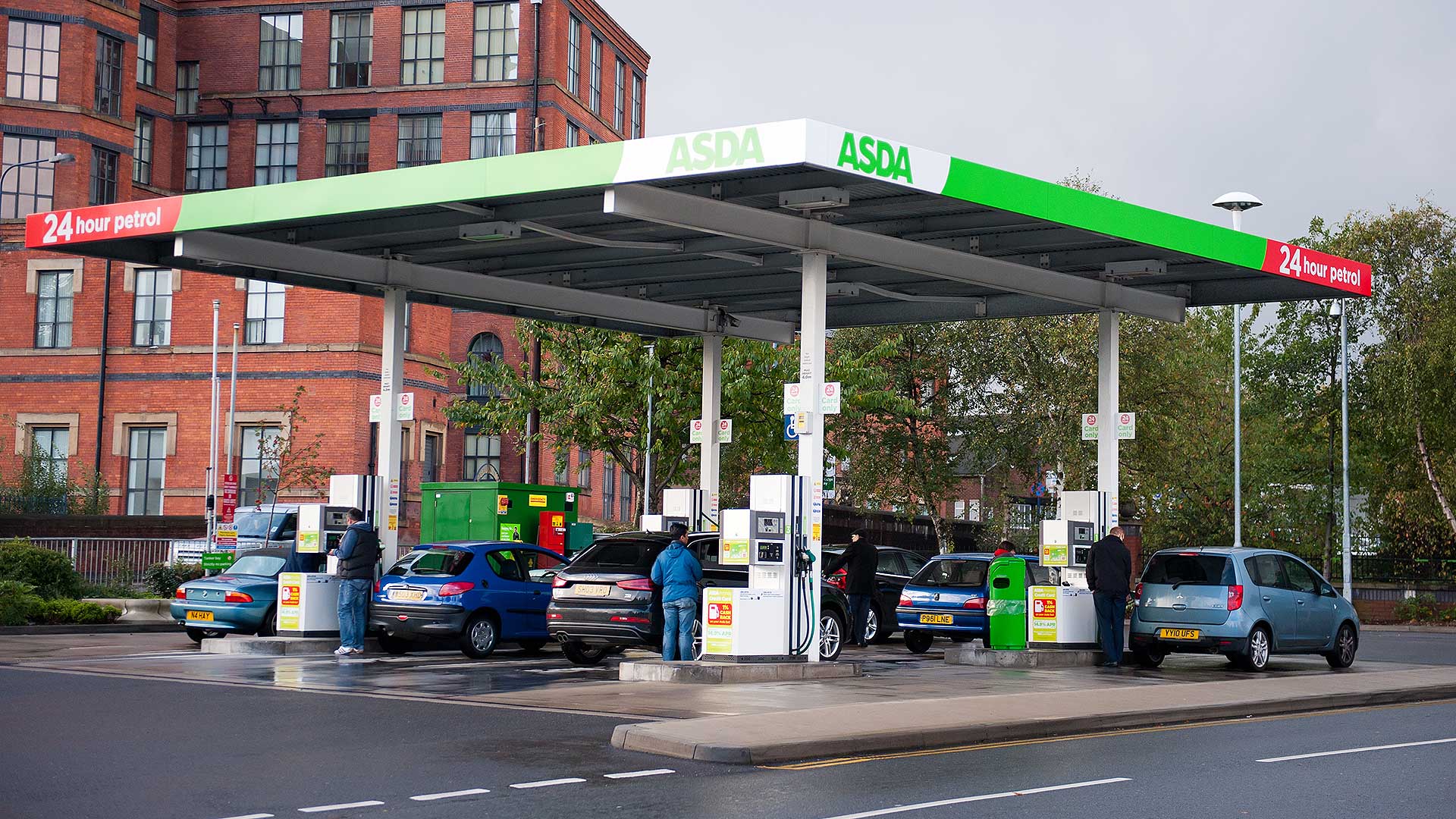
 Mazda is showing that you don’t need to have a brand new car in order to benefit from
 The biggest-selling maker of
 The popular Lego Speed Champions range has gained some extra American muscle. Two of

 2018 was a momentous year in the automotive world. New trucks were anticipated more highly than the Beatles while sedans were sent to death row. SUVs reached new heights of extravagance while manufacturers battled with tariffs and slashed production lines. Executives reached new heights of autocracy, even as industry stars left the firmament.


