Ford can feel deservedly pleased, as the Mustang has once again claimed the record for the world’s best-selling sports coupe.
Some 113,066 examples of the famous pony car found homes across the globe last year, with the ‘Stang now sold in an incredible 146 different countries.
According to Ford, the Mustang also increased its share of the global sports car market, adding an extra half a percent compared to the previous year.
Whilst American buyers took home the most Mustangs of all, accounting for almost 76,000 of all units sold, other markets saw growth too.
In the UK, Ford sold 2,323 examples of the Mustang. That represents an increase in sales of some 5 percent, set against a new car market generally hit by Brexit uncertainty.
The sales success looks set to be continuing into 2019, with a total of 2,300 Mustangs making their way to new customers across Europe so far this year.
Compared to 2018, Ford has sold 27 percent more examples of the muscle cars to European-based buyers for the first quarter of the year.
The news comes as the Mustang celebrates its 55th anniversary, with the latest sixth-generation car accounting for more than 500,000 sales alone.
As a true global brand, the Mustang is now successfully competing in the Virgin Australia Supercars Championship, features in NASCAR, and is also a highly competent drift racer.
Along with on-track action, associations with the silver screen are also said to be helping Mustang sales. The movie-inspired Bullitt edition has helped contribute to increased demand in Europe and other key markets.
Think of London in the swinging 60s and it won’t be long before a Mini zooms into your mind. The little car, born as an economy special in 1959, was quickly reinvented as an icon of cool, equal to the Beatles (who famously all owned one). What better way, then to remind ourselves what makes the Mini great than an adventure through central London?
Microscopic Mini
It’s been decades since I drove a Mini, after learning to drive in one when I was eight (amazing what you can do on private land). Even the Mk1 Ford Fiesta we traded up to back in 1992 felt like a huge step up; today, original Fiestas feel tiny. And the Mini? Microscopic.
As we stood by the blue 1998 Cooper, I felt like a giant, who could almost pick it up with two hands. Modern cars make original Minis seem like toys. I bent down to push in the cool metal button on the door, and pulled open a wafer-thin piece of metal. Crash safety? Best not ask. Later Minis had side impact bars; goodness knows how they squeezed them in, or what benefit they could possibly bring.
Getting into a Mini is like climbing aboard a go-kart. It’s awkward, you need to be limber, and you drop down much longer than you expect before your bum hits the seat. At my first go, I got my knee trapped under the steering wheel, and was literally stuck solid. A sideways bash with my fist released it and, once the pain subsided, I surveyed the interior.
Our Mini was an original, with the centre speedo. Posh 70s Clubmans had offset dials, and enviable 1275GTs had a three-pack set including a rev counter. This leather-lined later model carried the original Clubman dash, with the added dials, wood veneer and Metro column stalks Rover added in the late 1990s. The acutely-angled steering wheel was even given an airbag, another minor sign of modernity in a classic car cabin.
Archaic, then, but full of character. After doing what everyone does when they get into a Mini for the first time – trying to move the seat back, only to find that’s as far as it went – I whirred the starter motor and fired the classic A-Series engine into life. Fuel injection meant it started cleanly, but that’s about it for mod-cons.
A Mini adventure
A heavy, short-travel clutch matches the heavy, short-travel brakes, which complement the heavy non-assisted steering. Minis are tiny but it’s no small effort to drive one. Being sat almost on the floor, with other cars towering over you, is also different. You’re so low, you have to crane your neck just to enjoy the thumbs-up from those in the car next to you. But so little road does the Mini take up, you feel there’s always an escape route.
(The Minis driving across piazzas, down steps and through tunnels in the Italian Job could admittedly be a factor here. Perhaps best not to try any of that in London today.)
The engine is on your side, too. Unlike modern turbo units, it gives all its grunt virtually straight away – a bit like an electric car, albeit a noisy and throbby one. With the Mini’s lack of weight, it gives the car a great feeling of agility and energy, of little lost motion, as if it’s always ready to get up and at ’em.
As if this wasn’t exciting enough, then there’s the ride. Minis are bouncy cars, and you can see from the video how much I’m jostled about. Our videographer’s Vauxhall Corsa felt like a Rolls-Royce after a morning in the Mini. But it’s not actually uncomfortable, just lively, and this adds to the thrill and sense of spectacle when driving one.
Wooed and wowed
Particularly as you are flooded with so much feel and feedback. Honestly, this is why everyone needs to drive a Mini at least once in their lives, just to feel how lucky racing drivers are to use cars that are so communicative. At all times, I knew exactly how much grip there was, and the state of the road surface below. The precision was incredible. The more I drove, the more confident I felt, and the more the Mini wooed and wowed me.
London had never been more fun. I can barely remember reaching fourth gear, but was still buzzing and mentally tallying up how I could own one. And all the fun I was having seemed matched by tourists and onlookers, revelling in the sight of a classic Mini being used just like it should be.
There’s a year of Mini celebrations ahead, starting at Excel in London. Nearly two decades after production stopped, it’s easy to forget how much fun the Mini still is, and how immense it must have felt in its 1960s heyday. For a morning, I put the mighty Mini back into London, and loved every minute. Sixty years on, it remains as magical as ever.
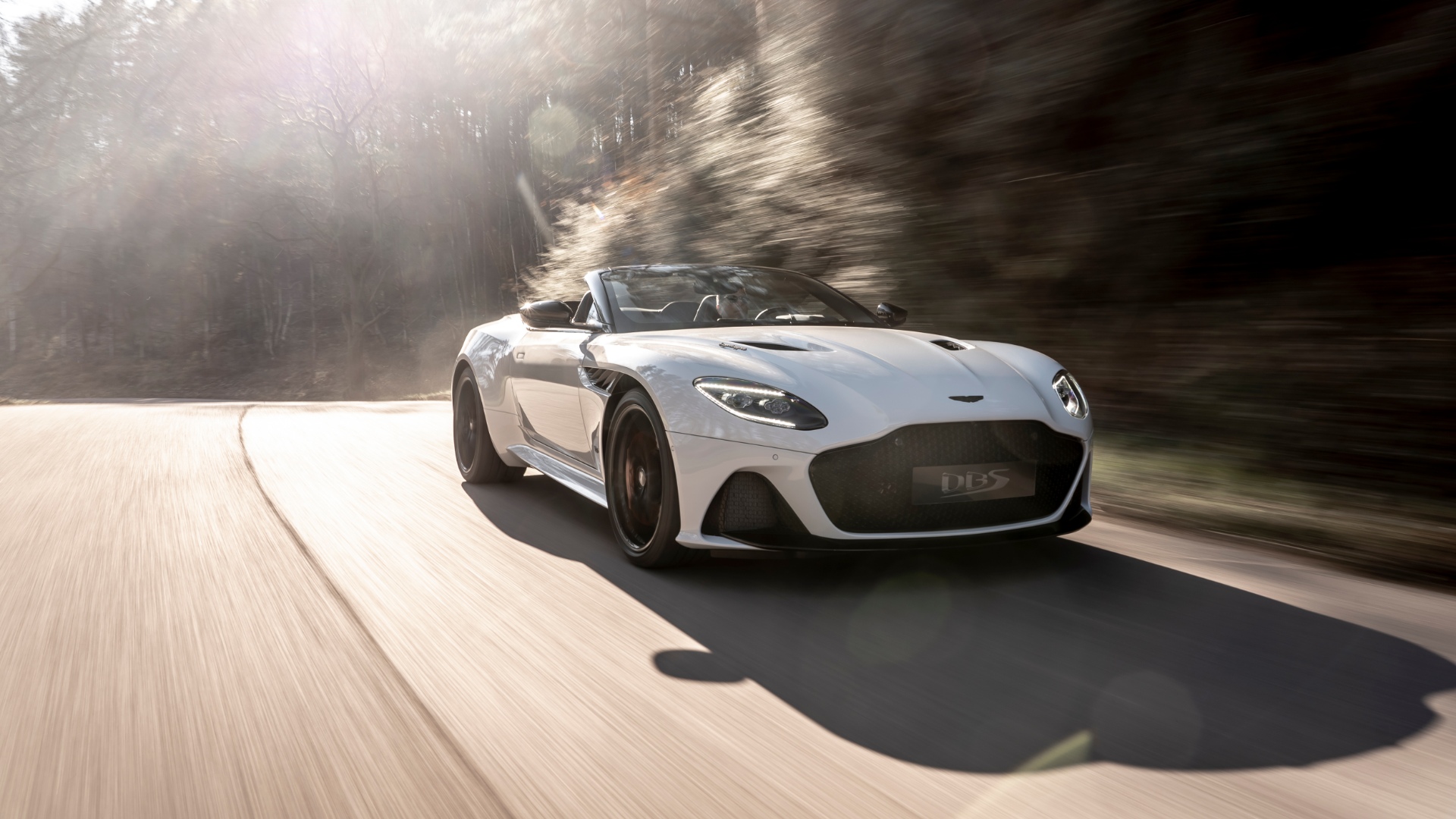
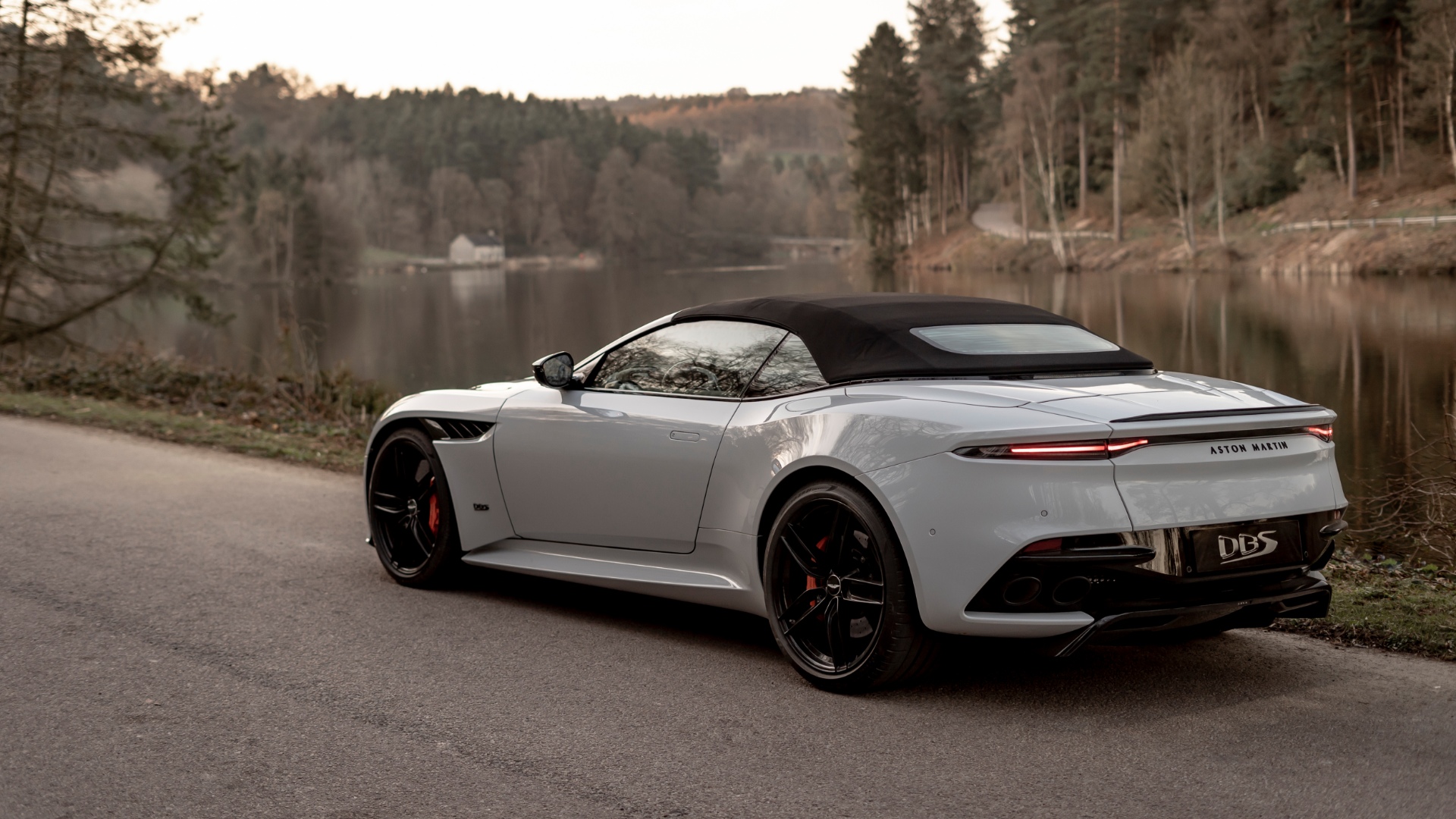
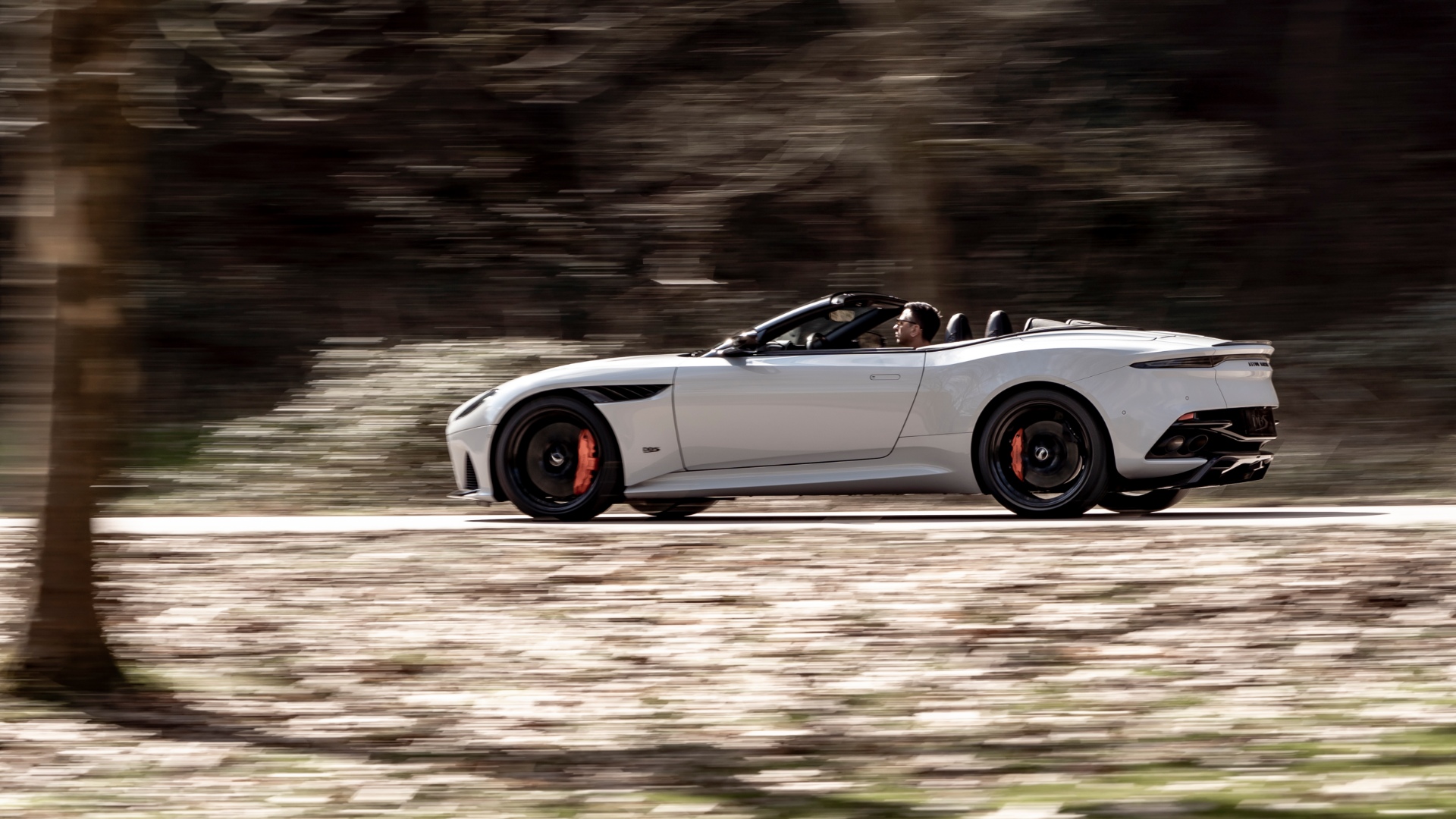
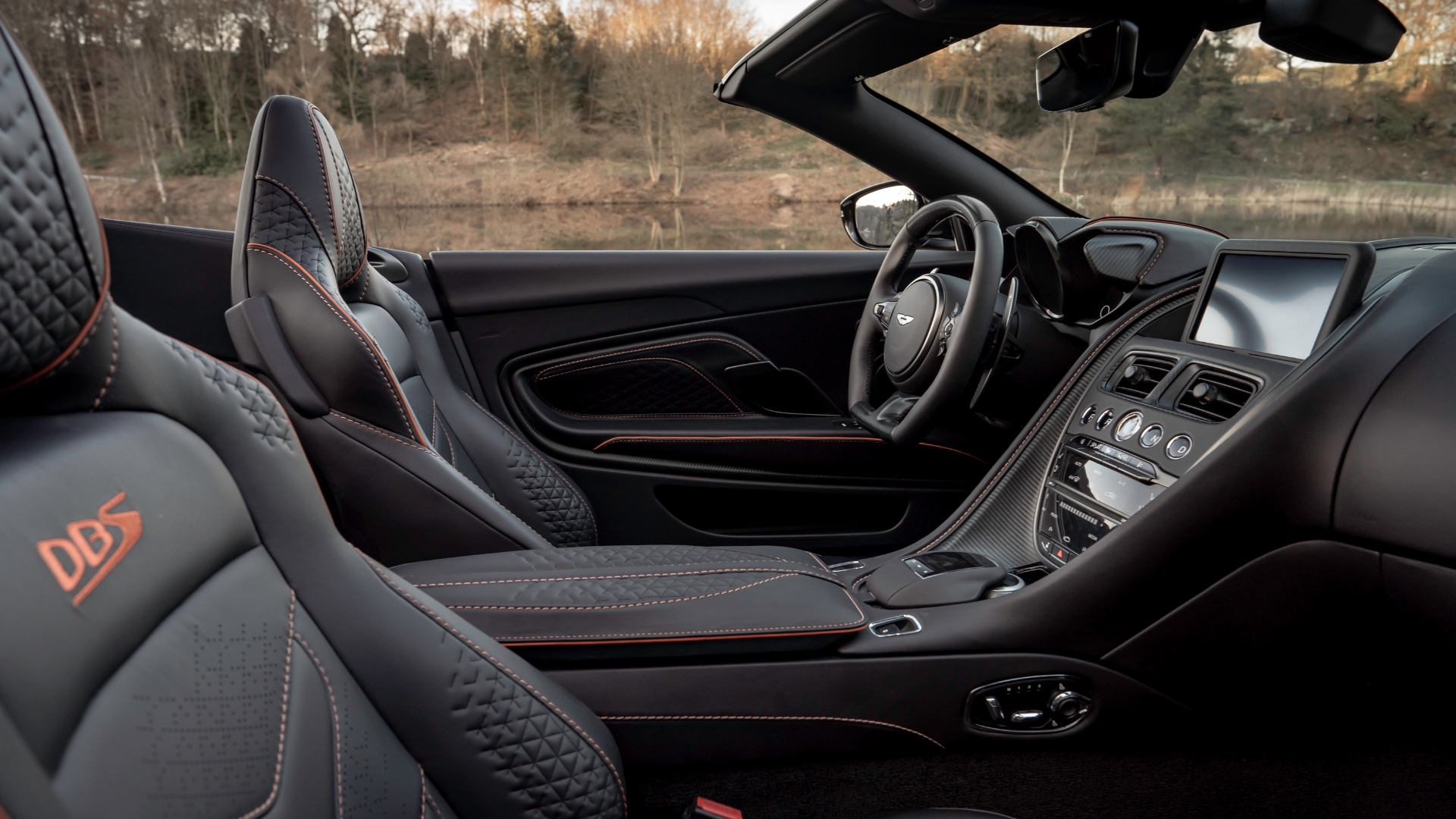
The soft-top version of the DBS is the second Volante model introduced under Aston Martin’s ‘Second-Century Plan’, following the DB11 Volante.
Raising the roof
The new roof has a class-leading stack height of just 260mm. That means the styling of the car doesn’t have to be ruined in order to stow the hood away. It also allows for better luggage space.
The roof itself can go from up to down in 14 seconds, then back up again in 16 seconds – and can be operated with the key.
Its made up of eight layers for maximum refinement. The mechanism and materials have been durability-tested to the tune of over 100,000 cycles, in conditions ranging from the searing heat of Death Valley to the vicious cold of the Arctic Circle.
It’s still a supercar
Under the skin, the coupe’s monstrous 725hp twin-turbo 5.2-litre V12 remains. Needless to say, this is the fastest Volante – and indeed the fastest soft-top Aston – ever made. It’ll crack 62mph in 3.6 seconds, on the way to a top speed of 211mph.
Also carried over is the eight-speed automatic gearbox from ZF and the clever aerodynamic addenda.
The latter includes the air extractors for the front arches and the double diffuser at the rear. The ‘Airblade II’ rear spoiler has also been revised. In total, the Volante produces 177kg of downforce at its top speed, just 3kg less than the coupe.
Open-air V12 soundtrack
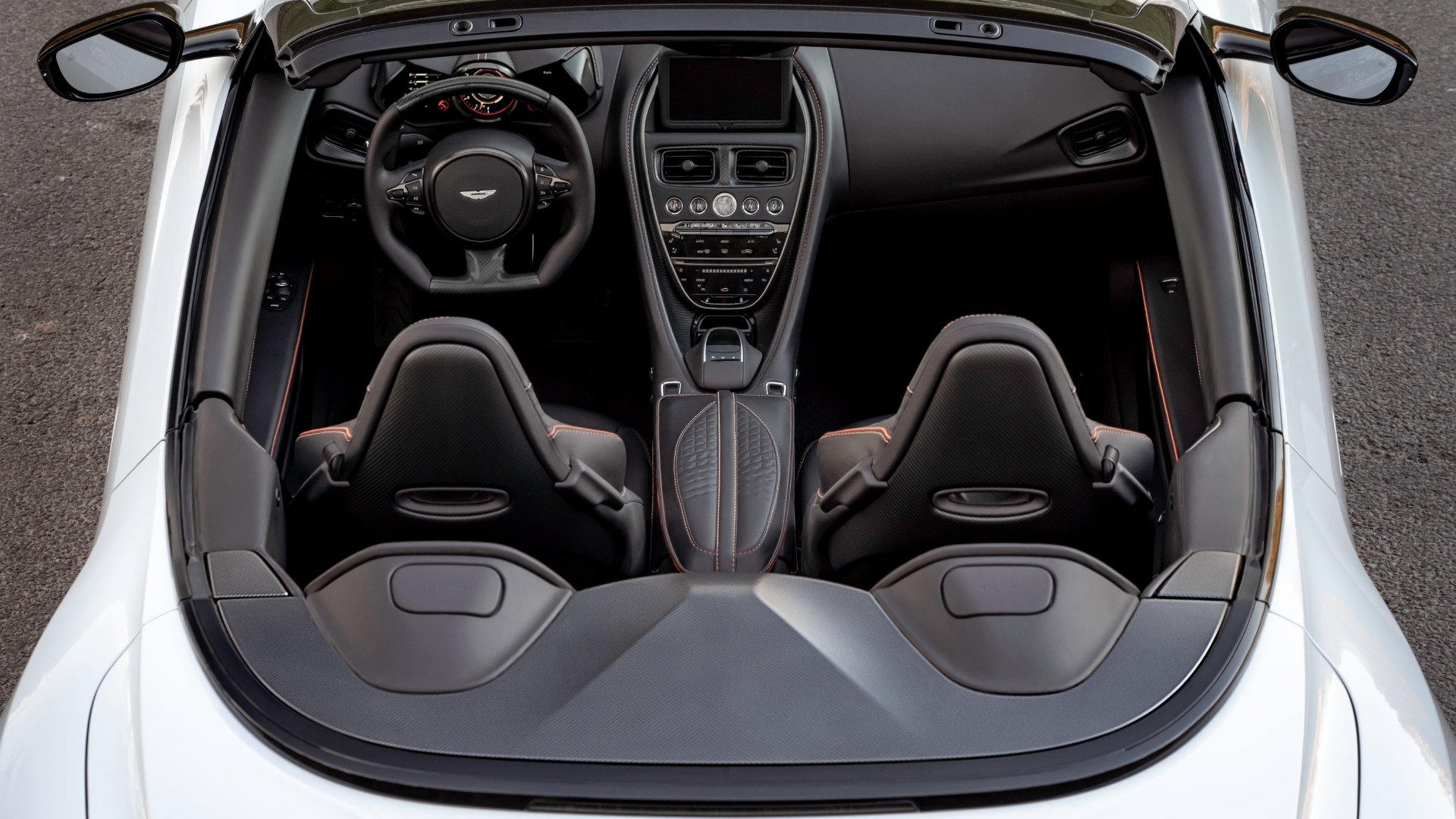
The elephant in the room with the DBS Superleggera was always the DB11. Especially with the excellent AMR revisions, the DB11 isn’t an awful lot less car than the DBS. Especially when you consider the similarities in the cabin. Yes, the DBS looks as striking as it is beautiful, but the family relationship isn’t hard to spot.
The DBS Volante, however, offers something unique. If you want a brand new convertible V12 Aston Martin, the DBS Volante is your only choice. The DB11 Volante only comes with the 4.0-litre twin-turbo V8.
Deliveries by autumn 2019
New Aston Martins aren’t a rare thing these days. A new Aston you can actually buy within six months of its reveal is something unusual, however.
Those interested in the DBS Zagato, 003, Valkyrie, Vanquish and DBX SUV will all have to wait; deliveries of the DBS Volante begin by the third quarter of 2019. Yours from £247,500…
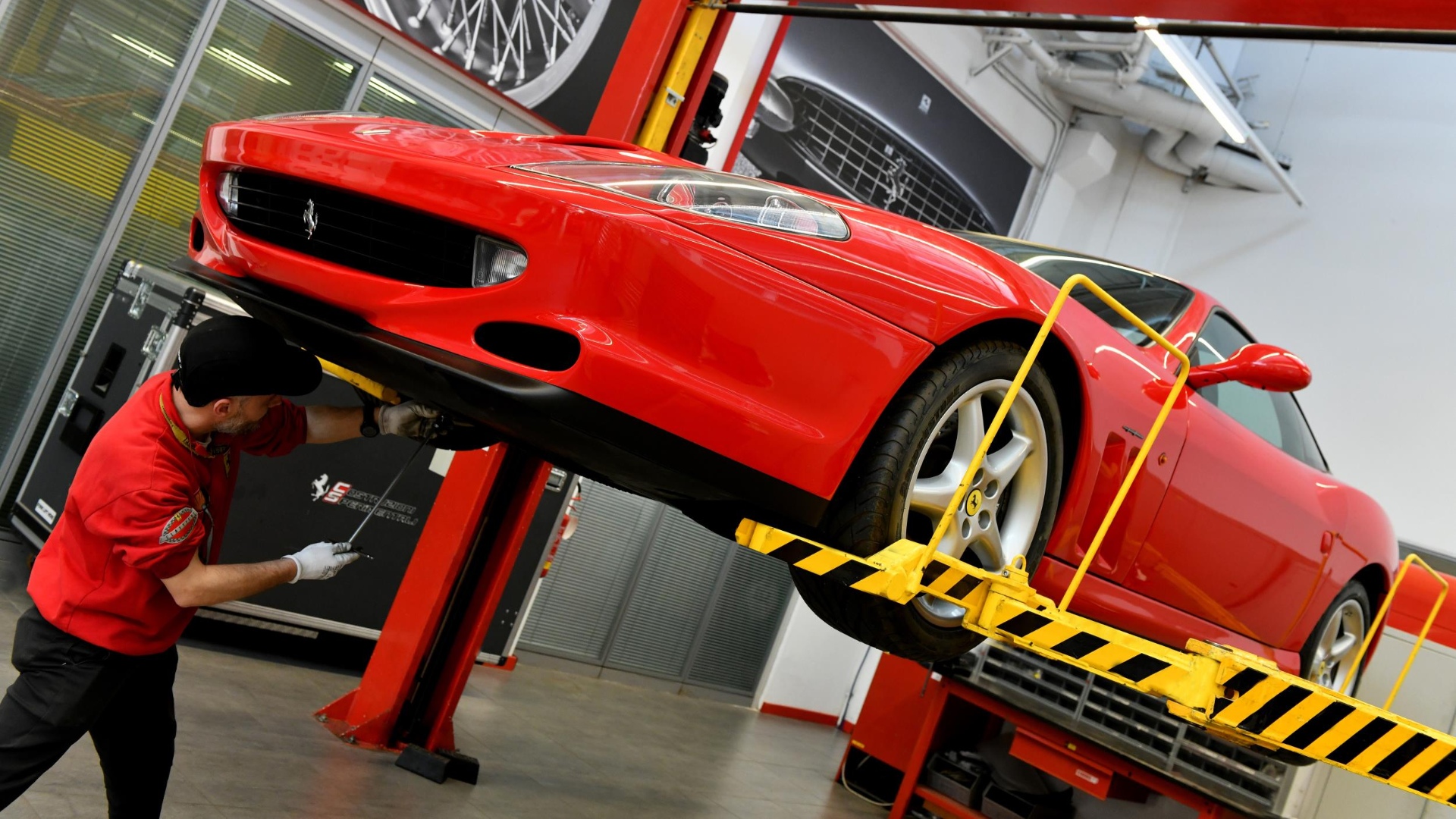
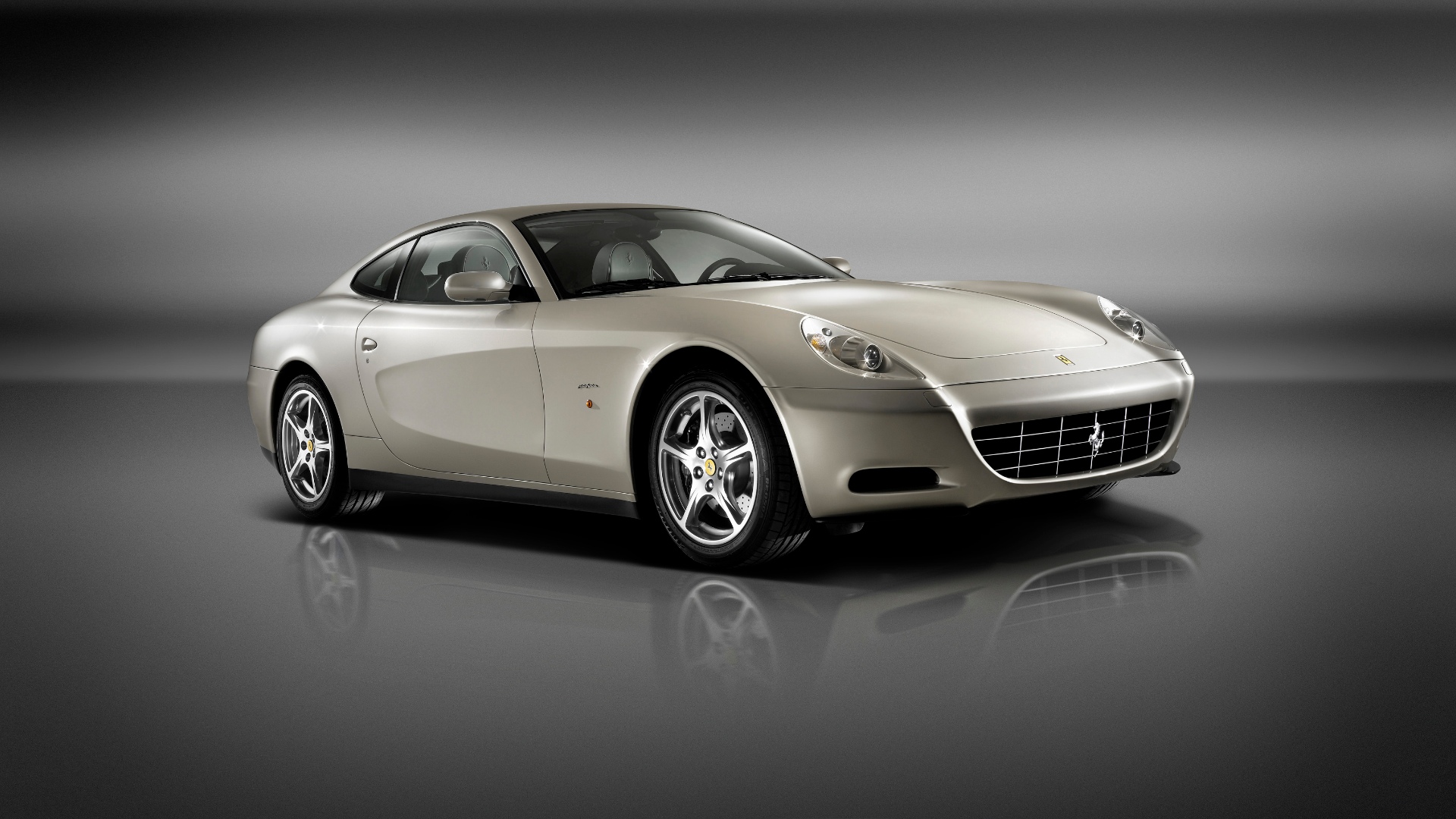
Ferrari Premium is the new scheme offering peace of mind to Ferrari owners with cars aged up to 25 years.
It involves providing eligible cars with a certificate attesting to service and maintenance history. This also certifies any recall repairs, revisions or replacements that have been carried out. In short, it confirms your classic Ferrari is the real deal.
Models eligible include the 456 GT, 456 GTA, 550 Maranello, 550 Barchetta, 360 Modena, 575, 575 SuperAmerica, 612 Scaglietti, F430, 599 and Enzo.
Yes, you can get a Premium certificate to confirm that your Enzo has been properly cared for. Quite what effect that has on the seven-figure value, we’d be intrigued to know.
Maintenance for the fuel, lubrication, hydraulic and braking systems are all available at special prices, too. And the scheme gives you a shortcut to Classiche certification once your car passes 20 years old.
Ferrari Premium complements the after-sales schemes on new cars. Impressively, for a supercar manufacturer, Ferrari also offers a four-year warranty and seven years of free maintenance (both extendable still further at added cost).
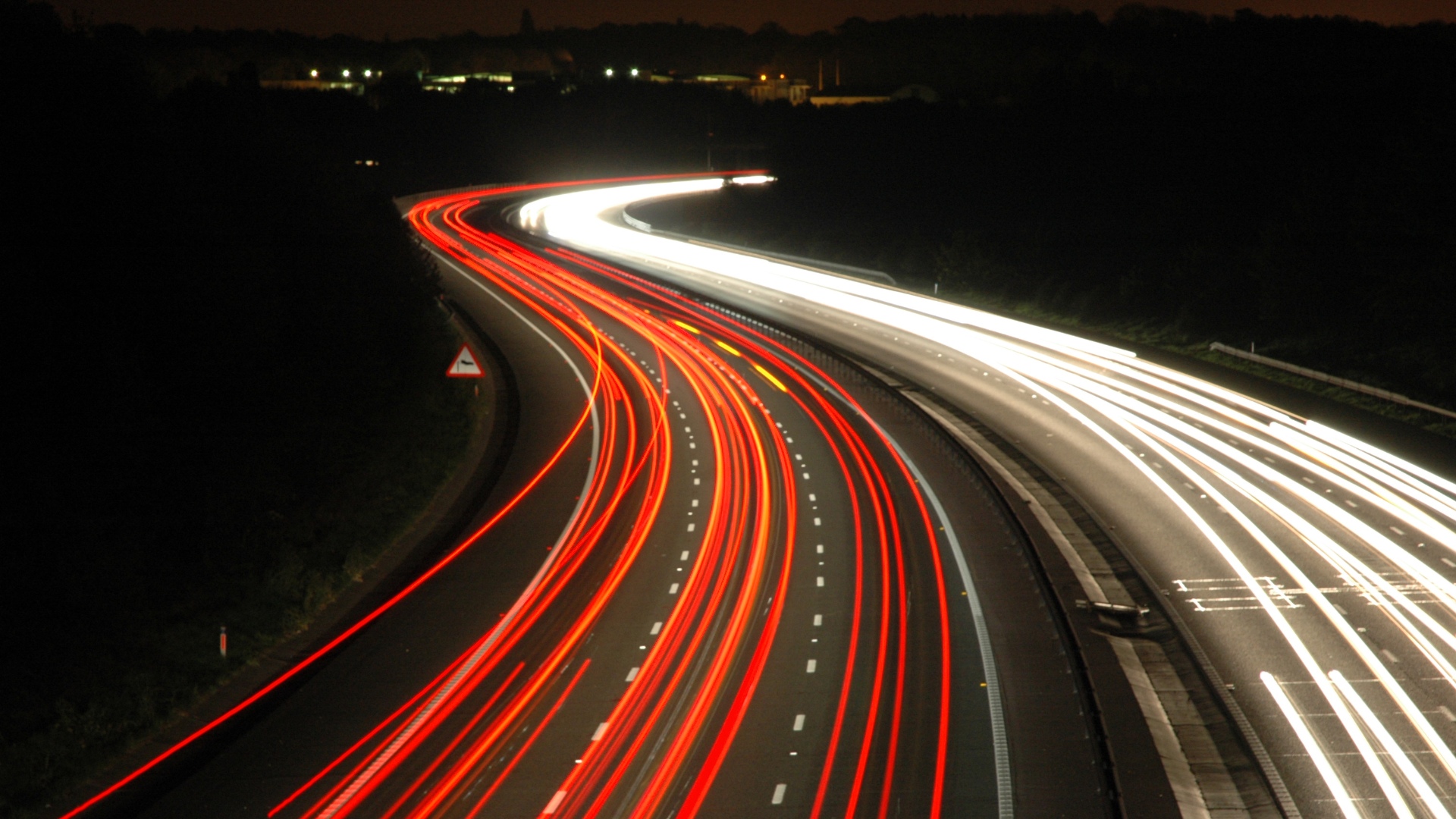
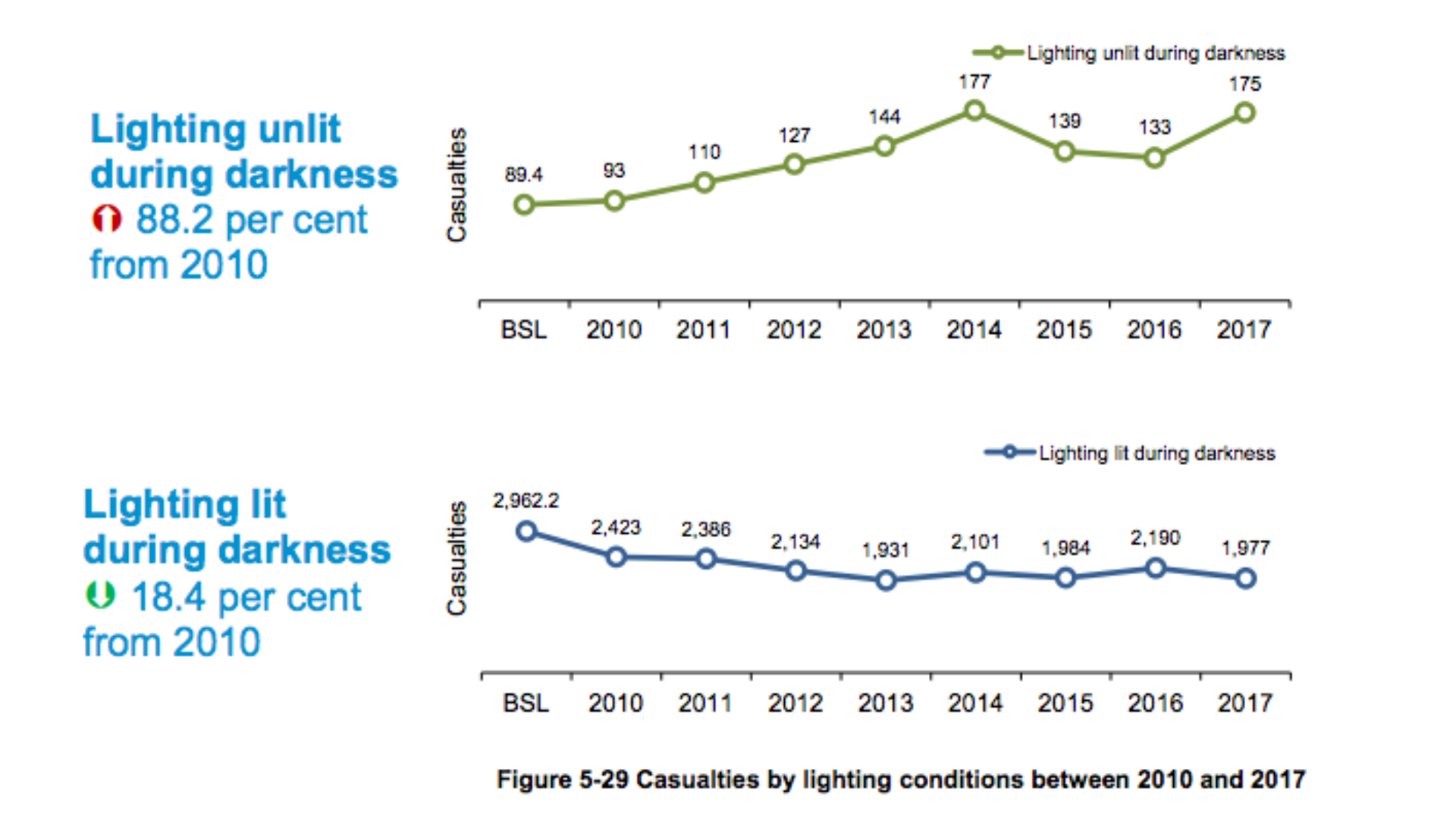
Accidents on UK motorways where lights are off at night – be that because they’re turned off or broken – have nearly doubled over the past nine years.
The Highways England report indicates casualties on motorways and A-roads with unused lighting have jumped 88.2 percent. Its counter argument is that while the percentage jump is large, the numbers involved aren’t so shocking. It represents an increase in annual casualties from 93 in 2010 to 175 in 2017.
The news contrasts with an overall drop of a quarter in accidents and subsequent casualties since the end of the last decade.
It is also interesting to make the comparison with ‘lit during darkness’ road casualty numbers. The fact they’re much higher merely indicates that there are more lit roads than unlit roads. For lit roads, 2017’s 1977 casualties were almost 500 down on 2010’s 2,423. There was an overall low of 1931 in 2013.
Accidents in the dark
Is the 88 percent figure attributable to the lights being off? The correlation is difficult to ignore. Motoring groups such as the AA, who warned of the dangers of turning off road lighting, suggest the two are linked. Back in 2010 when the initiative to turn off lights at night to save energy began, the AA warned that drivers would be more likely to have accidents.
The scheme saw lighting turned off between the hours of midnight and 05:00, on roads including stretches of the M6, M2, M54 and the M5. This, in a bid to save money and reduce CO2 emissions.
The AA continues to call for a full investigation into the effects of turning off lights on road accident rates, as well as research on the real-time effects on road users.
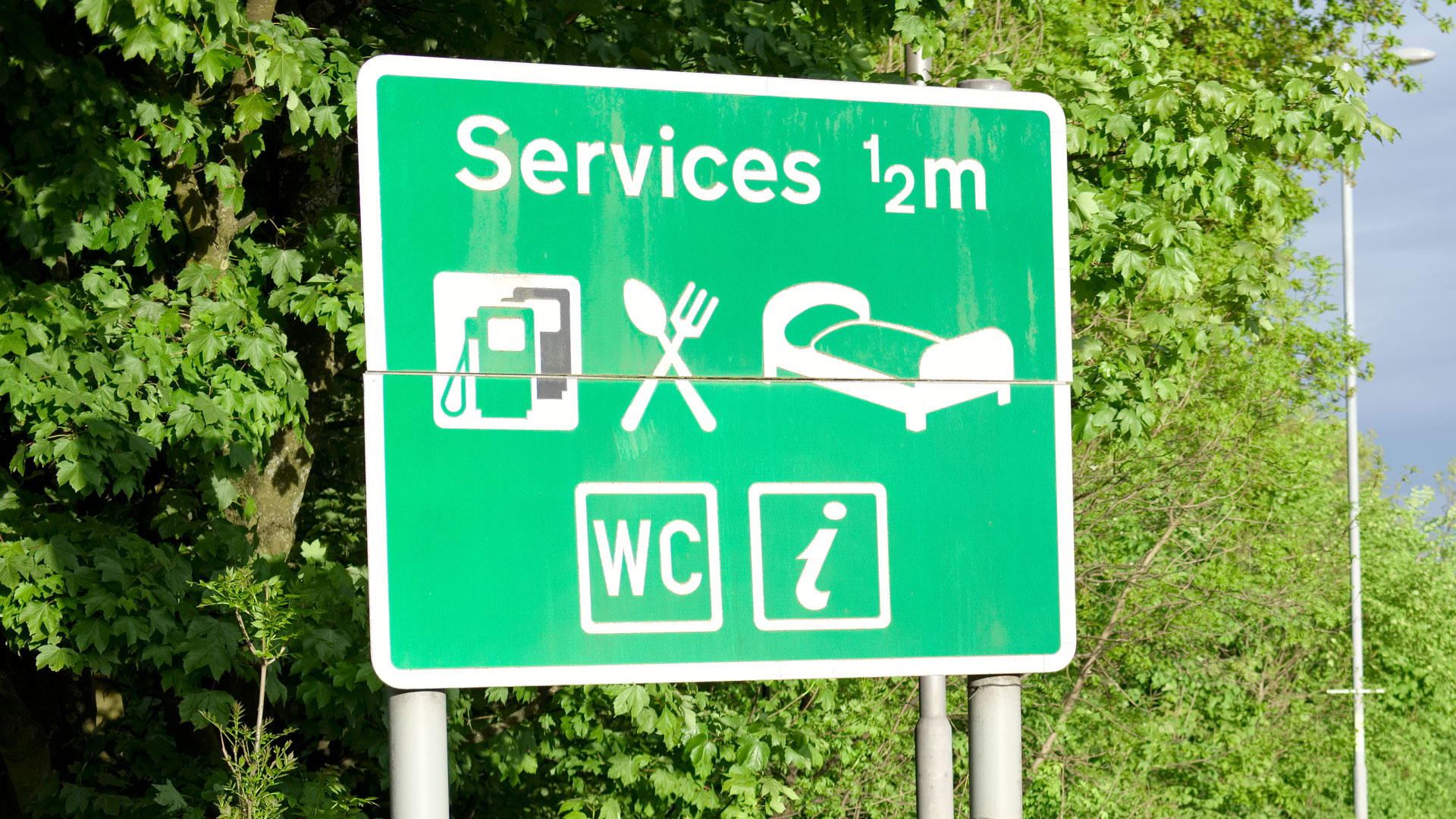
Motorway service stations are invited to apply for funding to improve facilities for travellers with disabilities, under a new £2 million government-backed scheme.
The Department for Transport (TfL) has teamed up with Muscular Dystrophy UK (MDUK) to award money for Changing Places toilets, which are expected to be ready by the early 2020s. Motorway service station operators have until 12 July 2019 to submit their application.
The Changing Places Consortium is a group of organisations working to support the rights of people with learning difficulties or physical disabilities by campaigning for accessible toilets to be installed in big public places.
More than a quarter of a million people across the UK cannot use standard toilets, meaning they have to travel without a bathroom break, be changed by their carers on toilet floors, or forced to stay at home.
Changing Places facilities allow people with conditions like muscular dystrophy and cerebral palsy to use toilets safely and comfortably. It’s important to note that these toilets are different to standard disabled toilets and need to be provided in addition to accessible facilities.
To support travellers, Changing Places has created a toilet map of the UK.
‘Determined to do more’
Transport accessibility minister Nusrat Ghani said: “Today marks the next step towards our ambition of delivering a fully inclusive transport network. It is unacceptable that, despite welcome investment in some areas, our roadside services are not more accessible for over a quarter of a million people, and I am determined to do more.
“Our partnership with MDUK will help ensure that everyone, disabled or not, can use our roads and I encourage as many operators as possible to apply for funding.”
Catherine Woodhead, chief executive of Muscular Dystrophy UK, added: “Individuals and families living with a disability often tell us that travelling by car is the easiest way for them to get from A to B.
“Building Changing Places toilets at motorway service stations will make it easier for more than a quarter of a million people and their families to visit friends, go on holiday, or simply enjoy a day out somewhere – activities the rest of us take for granted.
“We’re delighted the Department for Transport has recognised this need, and look forward to working together on delivering this transformational project.”
The Changing Places application portal will remain open for three months with successful applicants announced in September.
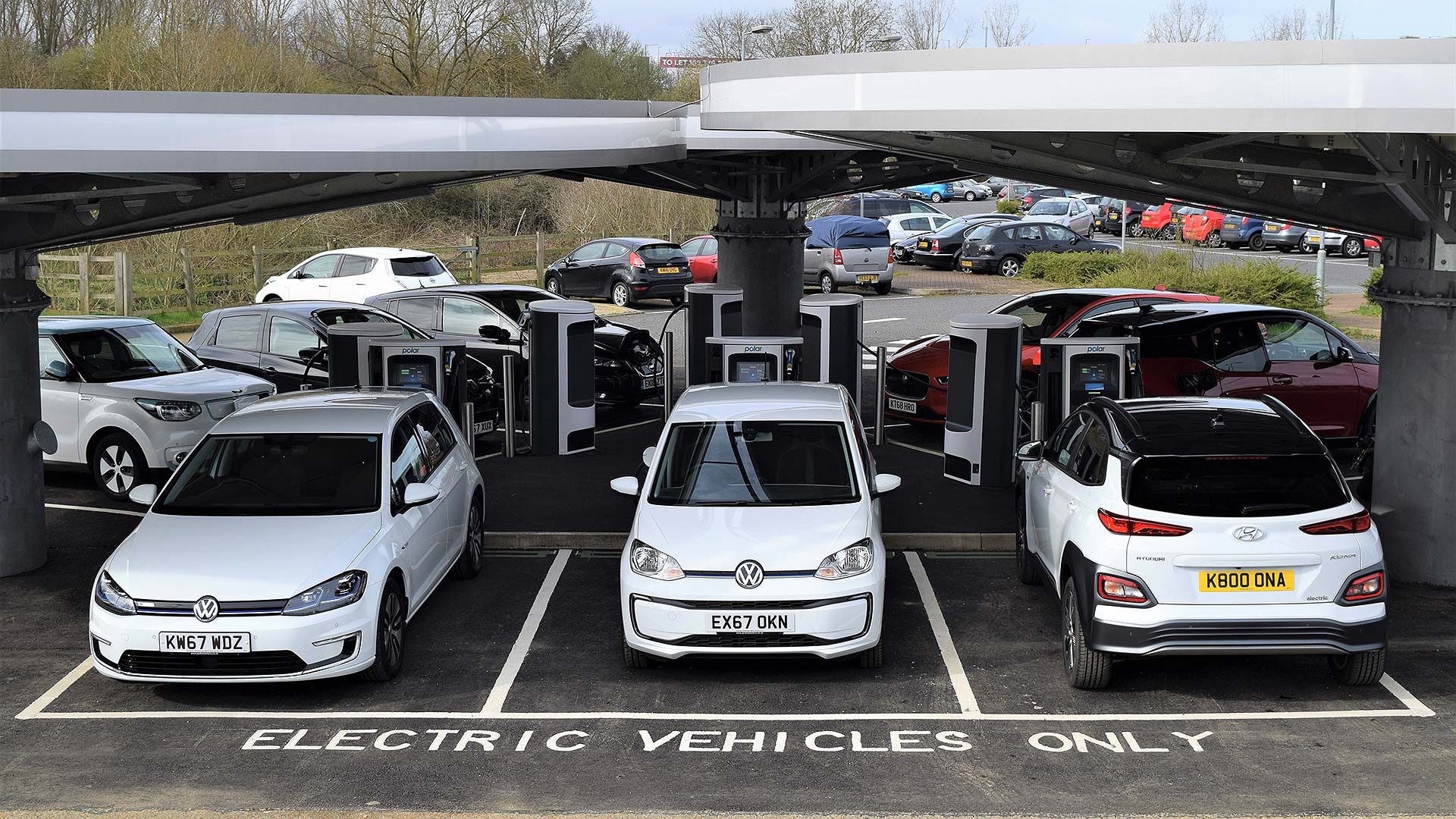
Ford has developed an algorithm that should make it easier to pinpoint the best places to install new rapid charging points.
According to Zap-Map, there are currently 4,826 rapid charge connectors spread across 1,447 different locations, with 180 new connectors installed in the last month alone.
Now, data scientists at Ford have developed an algorithm based on more than one million kilometres of driving data – including where people actually stopped – to pinpoint the best sites for new charging points.
Ford fitted 160 connected vans with a plug-in device to record journey data, generating more than 500 million data points from 15,000 days of vehicle use. Information collected included where vehicles went, where they stopped and how long they stopped for.
The analysis would help drivers integrate charging within their normal journeys, rather than making detours to out-of-the-way locations, Ford says.
Crucially, a great deal could be achieved through deploying a relatively small number of strategically positioned rapid-charging stations, rather than taking a scattergun approach.
‘Make a real difference’
“Being able to harness, analyse and leverage the huge amounts of data that is available through existing vehicle use can make a real difference to how easy we find it to get about in the cities of the future,” said John Scott of Ford Mobility.
“We at Ford are committed to delivering smart vehicles for a smart world – including electric vehicles that will contribute to cleaner, quieter towns and cities. But we also want to try to use data to help improve investment efficiency into the necessary infrastructure to support that approach.”
Rapid-charging stations can provide up to 80 percent battery charge in 30 to 40 minutes, but an improved network is required to support the expected growth in the EV sector.
“Electrification changes the way we drive – and refuel – our vehicles. We realise that charging time and behaviour are fundamentally different for electric vehicles compared with traditional models, where refilling with petrol or diesel may take only five minutes,” said Scott.
“In locating these additional charging points, we’ve attempted to take into account regular driving and stopping patterns so that topping up slots into drivers’ regular day-to-day activities.”
Being “green” doesn’t mean you’re a hippie. Electrification in the automotive world usually translates to increases in efficiency. Sometimes those gains equal better economy and cleaner air, and sometimes they equal raw power.
To celebrate Earth Day 2019, we looked at all the BEV (battery electric vehicles) on the market today and ranked them according to their zero-60 times, using top speed as a tiebreaker when necessary. While this might not be the greenest use of electricity out there, it is ridiculously fun.
More green vehicles from Motoring Research:
Hybrid vs. conventional cars: what are the real savings?
The best new hybrids for 2019
Electric vehicles threaten dealership profits
Green compacts: Non-hybrid small cars that save money
Eco-Loco: The wild and wonderful world of the green car
The 10 best states for EVs
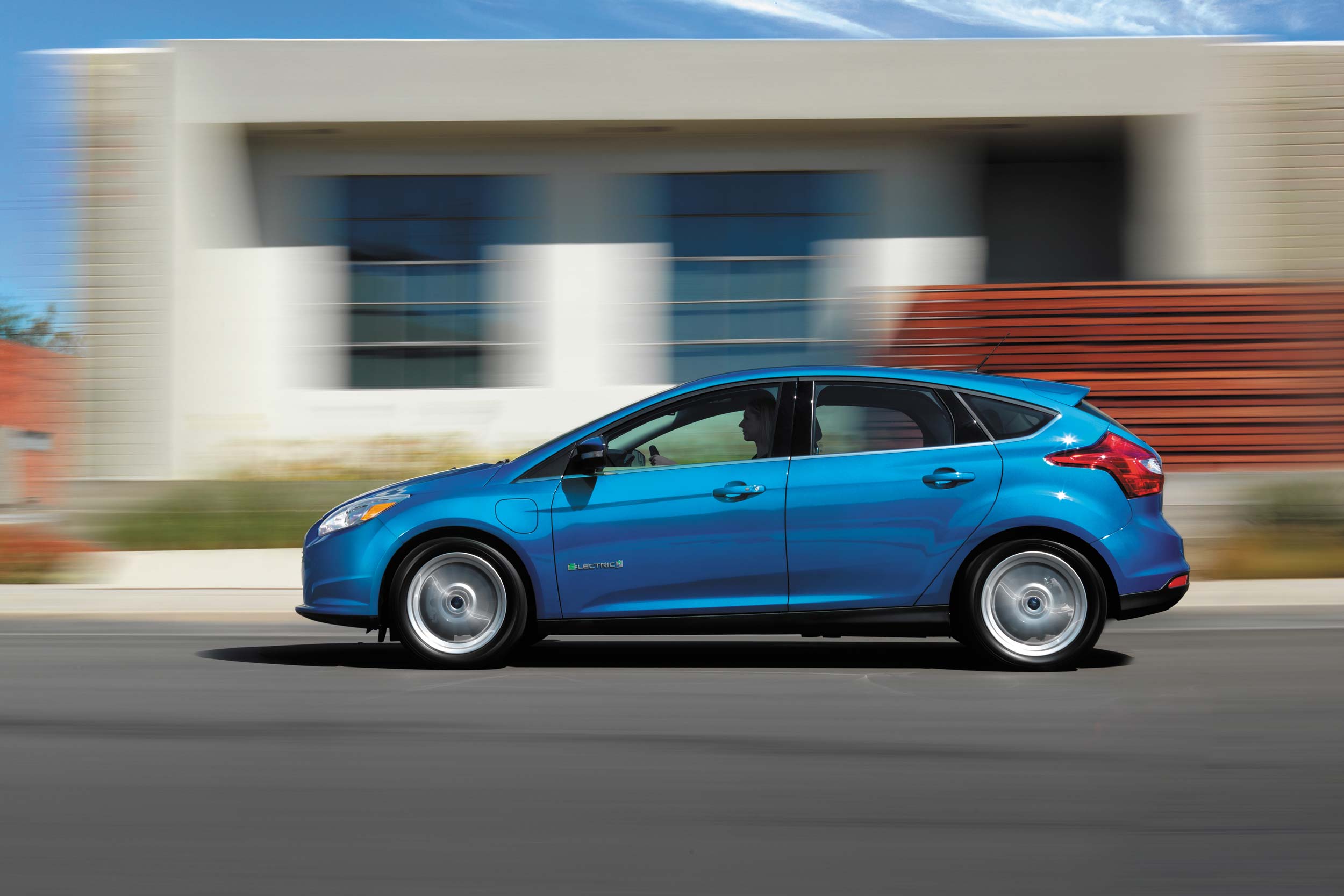
Ford Focus Electric
Starting MSRP: $28,120
Zero-60: 10.0 seconds
Top speed: 84 mph
Ford has abandoned its Focus lineup, but the Electric model is still *technically* for sale. Though the car is well-reviewed, the 143-horsepower drivetrain takes 10 seconds to hit 60 and range is just 115 miles.
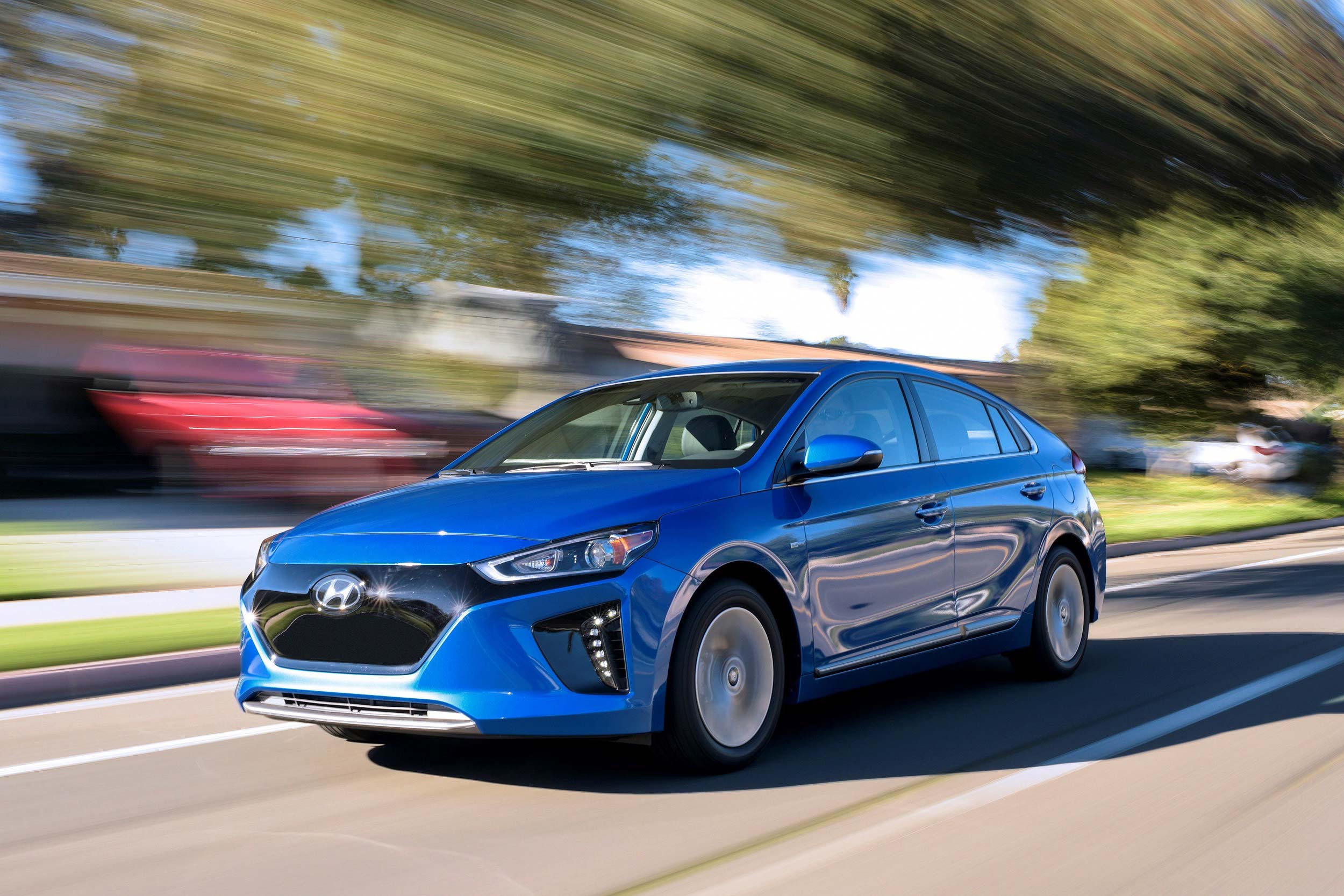
Hyundai Ioniq Electric
Starting MSRP: $29,815
Zero-60: 9.7 seconds
Top speed: 103 mph
The Ioniq Electric has the highest efficiency rating of any electric vehicle in the U.S., a stellar 136 MPGe. Power comes in at 118 horses and 218 lb-ft of torque, while the 28 kWh battery provides 124 miles of range.
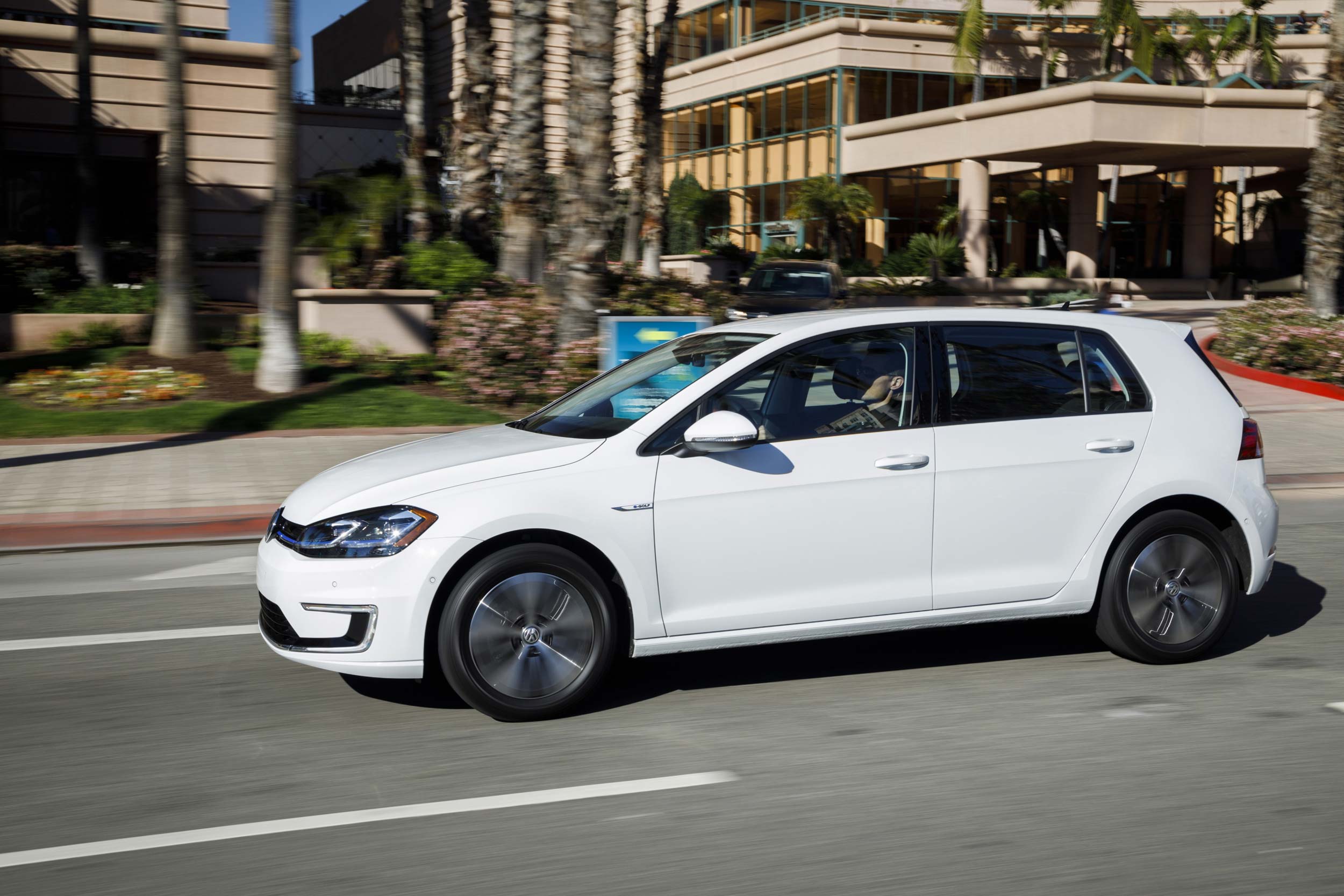
Volkswagen e-Golf
Starting MSRP: $31,895
Zero-60: 9.6 seconds
Top speed: 85 mph
Volkswagen made sure the e-Golf retained its fun-to-drive handling when installing the “e” portion of its name, but it is a tick on the slow side compared to the competition. Range is low by today’s standards at 125 miles from a 35.8 kWh battery. There’s 214 lb-ft of torque to play with, but only 134 horsepower.
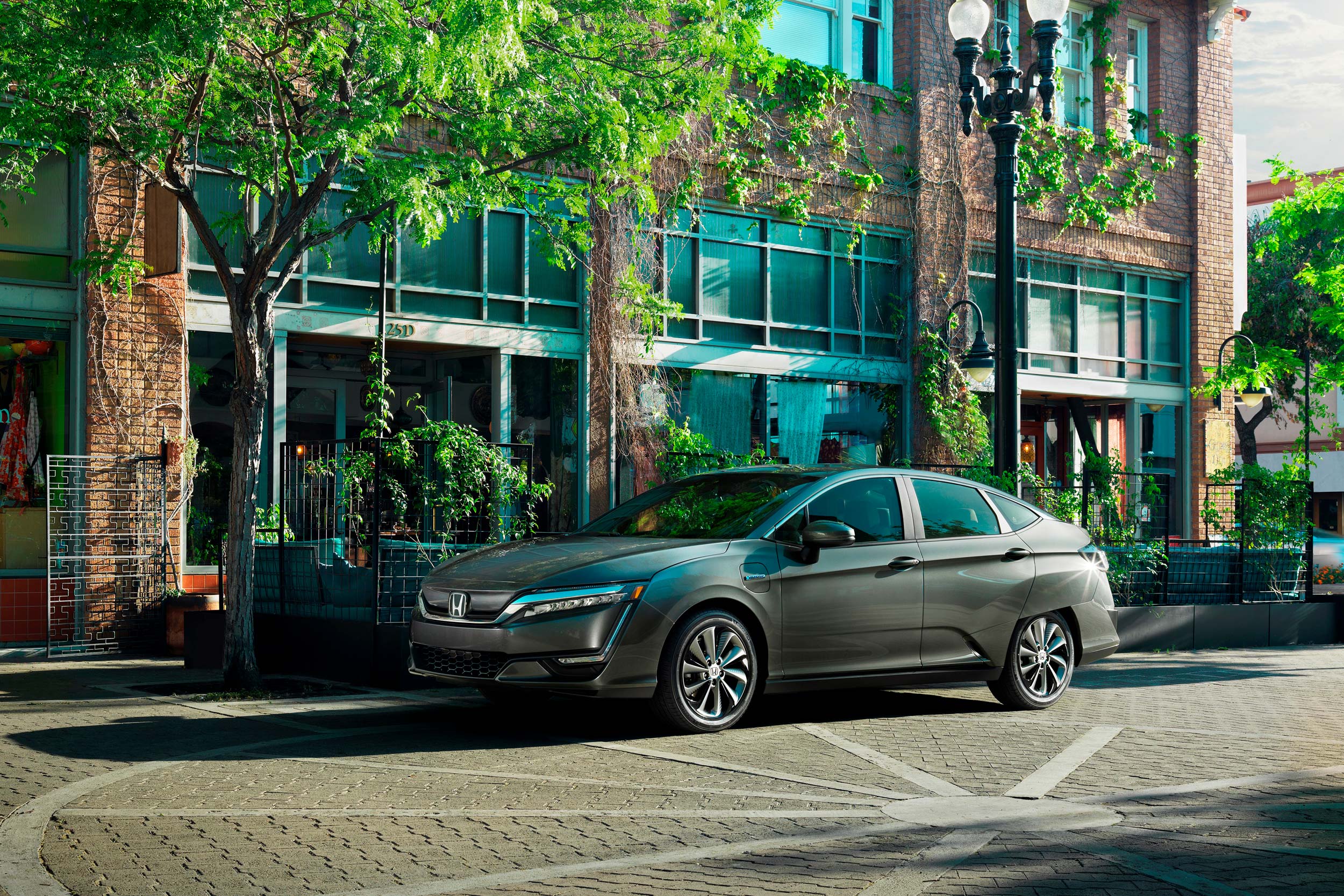
Honda Clarity EV
Starting MSRP: $36,620
Zero-60: 9.4 seconds
Top speed: 94 mph
The Honda Clarity is not actually for sale, but can be leased in California and Oregon (on approved credit, of course). The smallish 25.5 kWh battery is only good for 89 miles, however, so perhaps it’s not such a great loss. Horsepower is 161, torque 221 lb-ft.
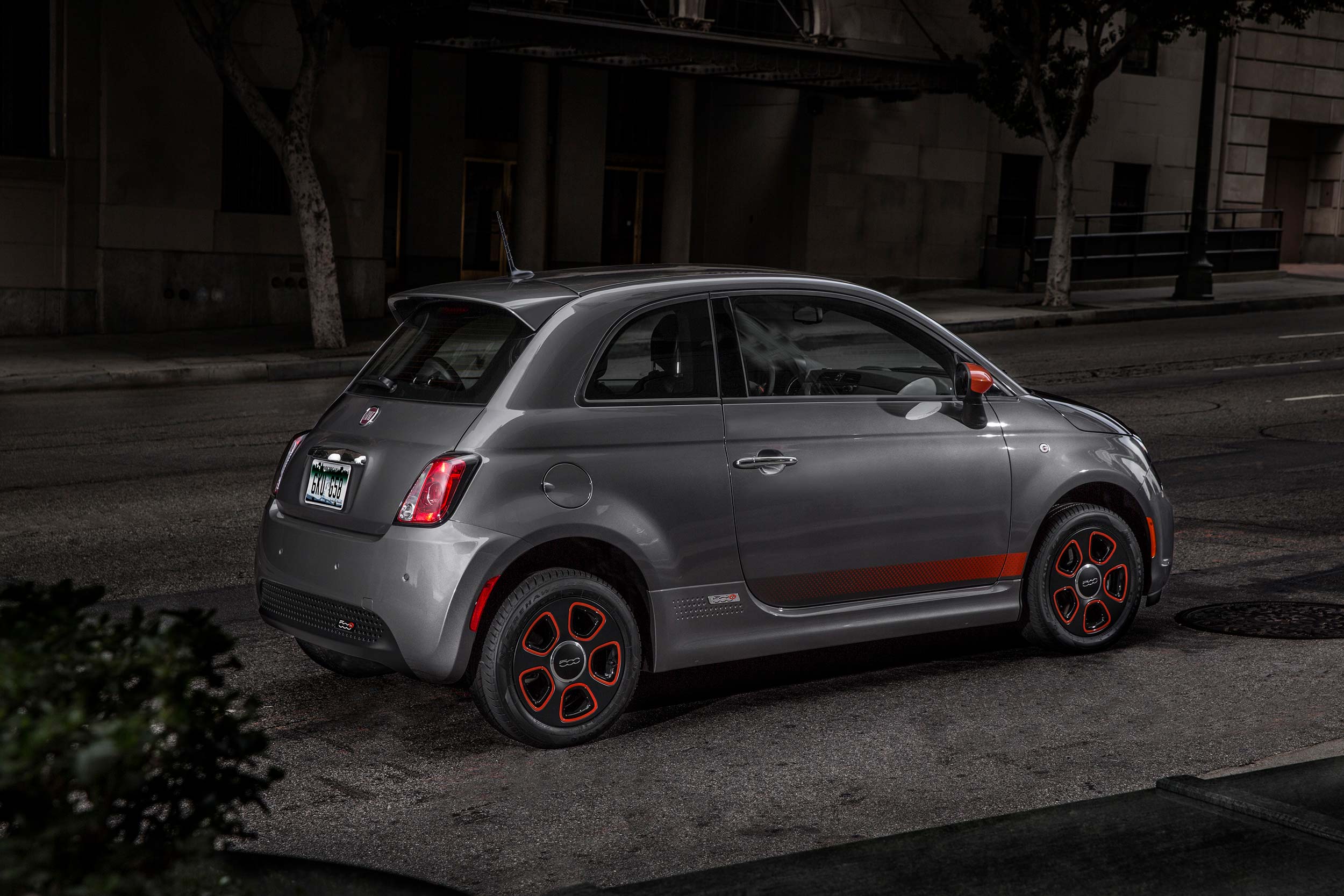
Fiat 500e
Starting MSRP: $32,995
Zero-60: 8.8 seconds
Top speed: 88 mph
The Fiat 500e is undeniably cute, but the current generation was introduced in 2013 and is quite long in the tooth. Performance specs are definitely last-generation EV: 111 horsepower and 147 lb-ft of torque, with a 24 kWh battery providing just 84 miles of range.
Thankfully, an all-new Fiat 500e is expected in 2020.
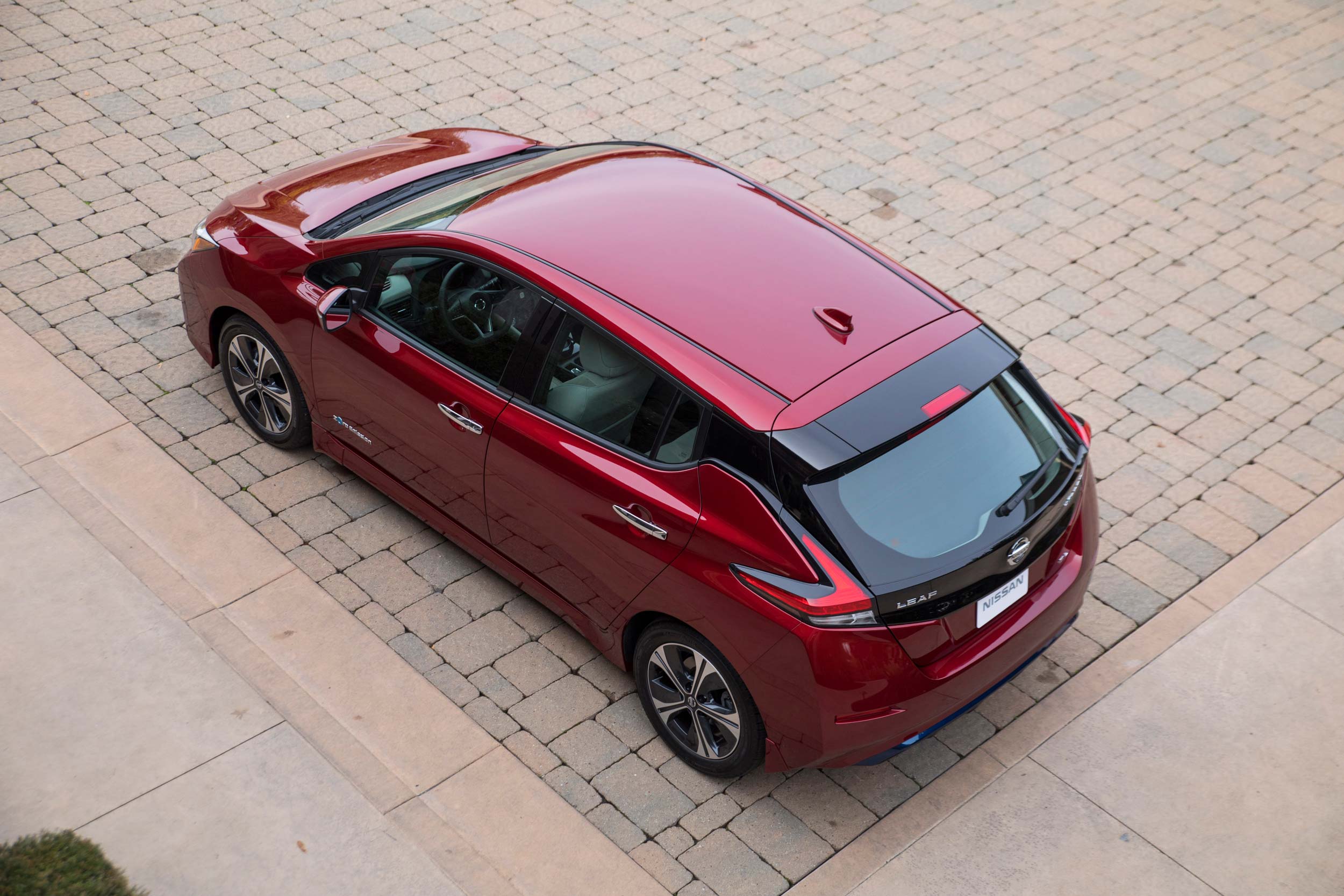
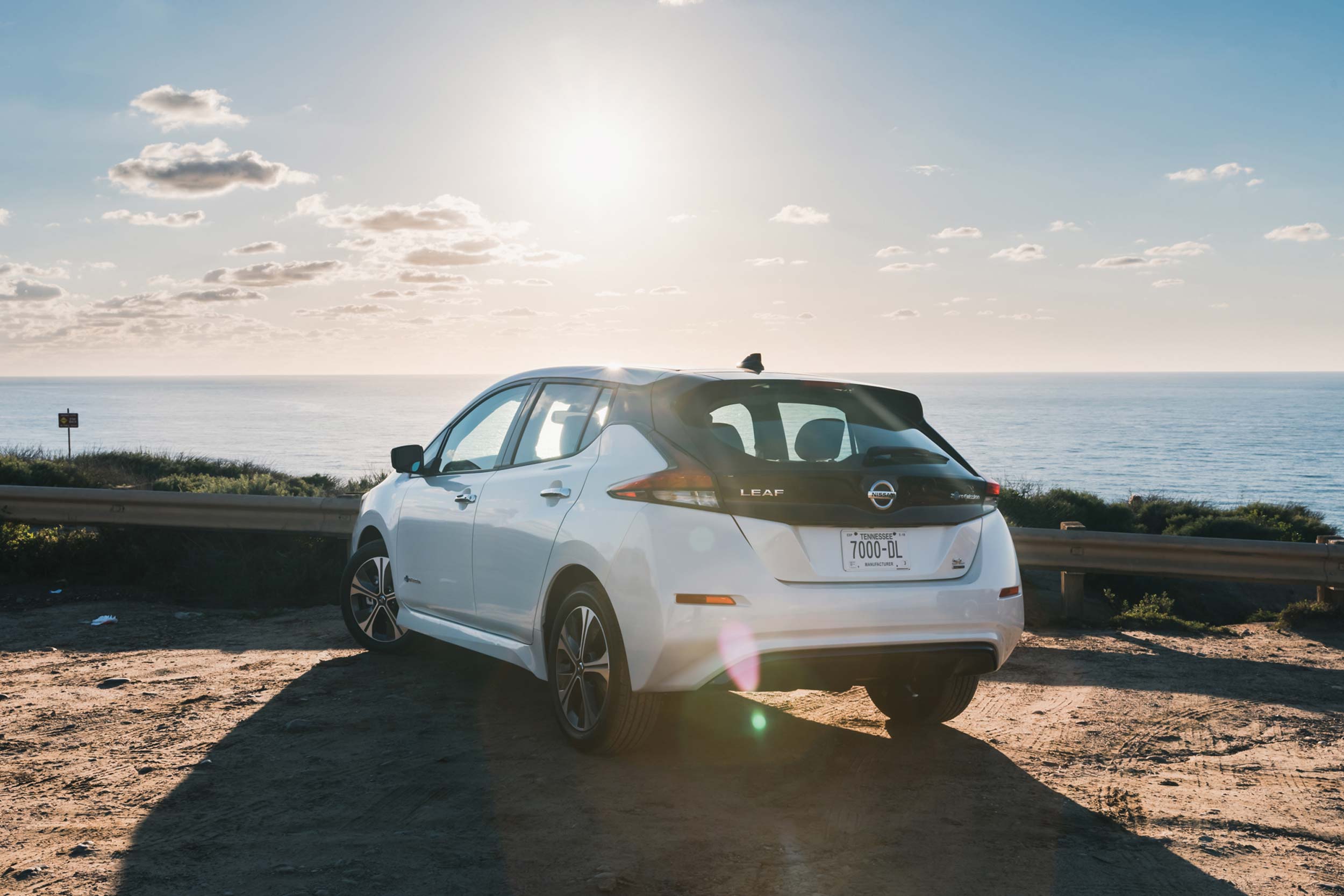
Nissan Leaf
Starting MSRP: $29,990
Zero-60: 7.9 seconds
Top speed: 90 mph
The Nissan Leaf is officially the best-selling EV in the world. Power comes from a 40 kWh battery combined with a 100 kW motor that translates to 147 horsepower and 236 lb-ft of torque. Range is 150 miles.
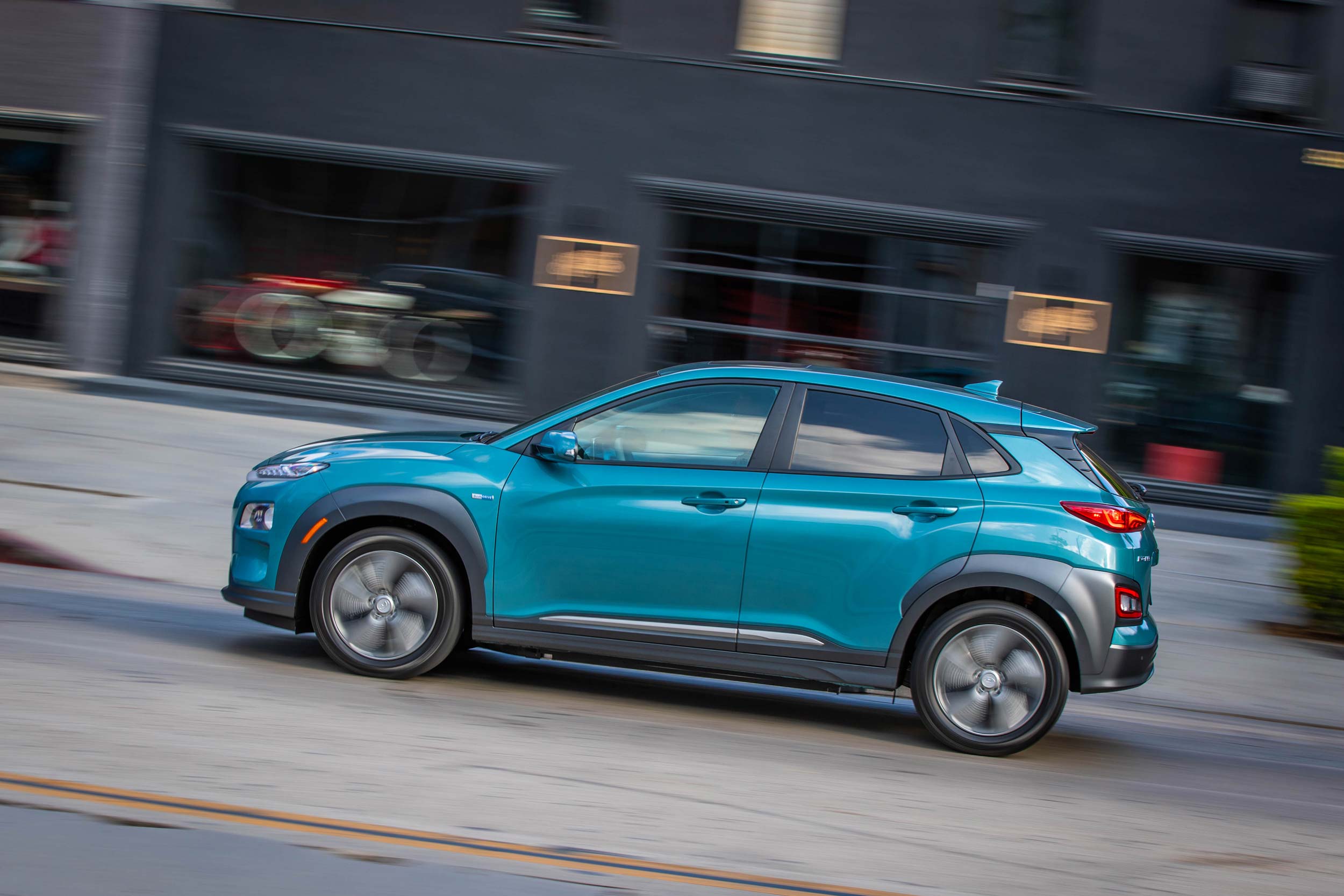
Hyundai Kona Electric
Starting MSRP: $36,950
Zero-60: 7.6 seconds
Top speed: 104 mph
The electric version of Hyundai’s Kona is proving to be a big hit with the press, and in no small part to its peppy handling. There is a stout 201 horsepower and 290 lb-ft of torque on tap from the company drivetrain. Range is 258 miles from the 64 kWh battery stack.
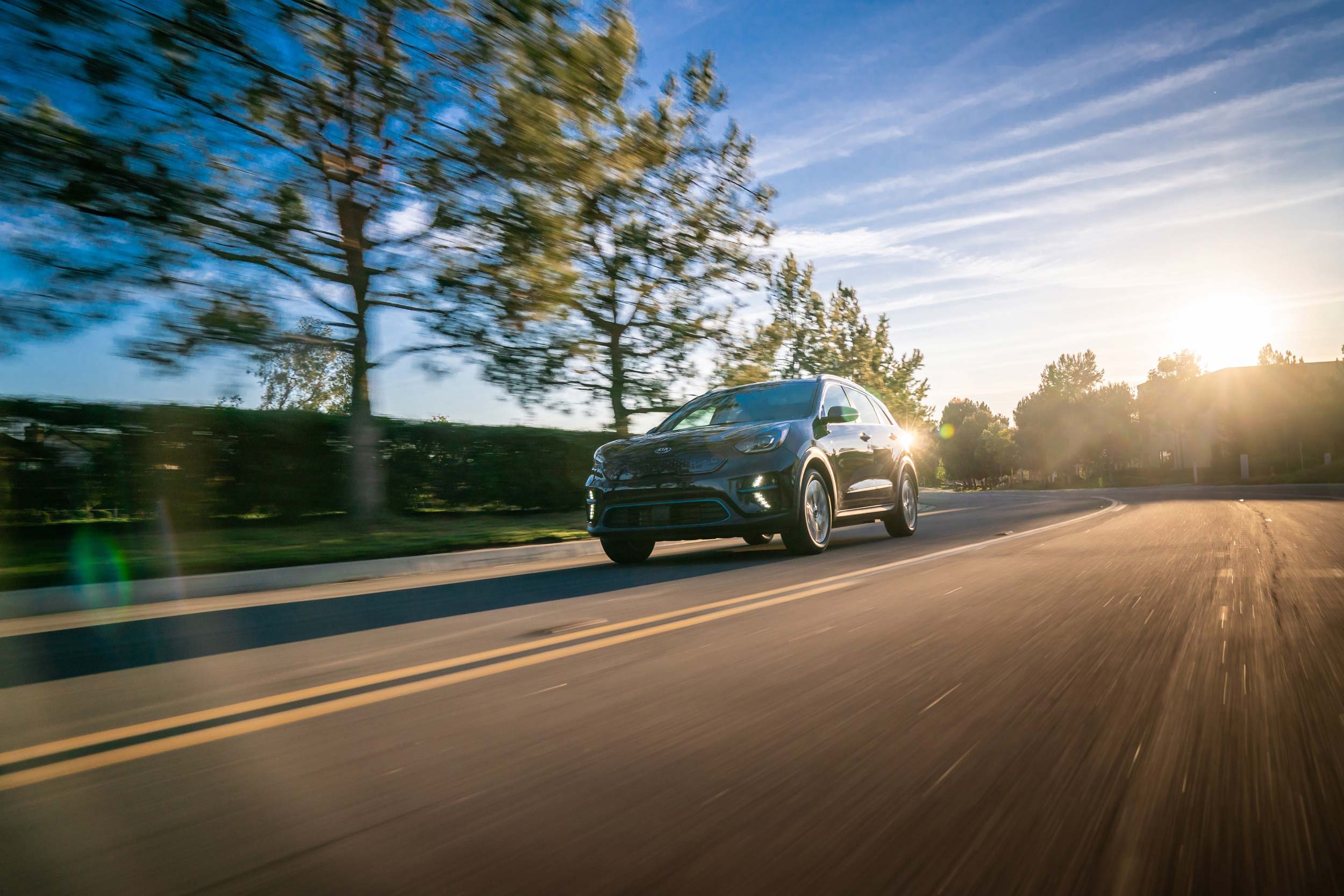
Kia Niro EV
Starting MSRP: $37,500 (est.)
Zero-60: 7.5 seconds
Top speed: 104 mph
Kia unveiled the new Niro EV at the Los Angeles auto show in November last year. A 64 kWh battery is combined with a 150 kW motor. Horsepower comes in a 201 and torque at a large 291 lb-ft. Range is an estimated 239 miles.
The Niro EV will go on limited sale in Spring.
Nissan Leaf Plus
Starting MSRP: $36,550
Zero-60: 7.3 seconds
Top speed: 98 mph
Adding a “Plus” to the Nissan Leaf beefs up the battery to 62 kWh and motor to 160 kW. Horsepower climbs to 214 and torque to 250; range is extended to 226 miles.
The Leaf Plus went on sale in March 2019.
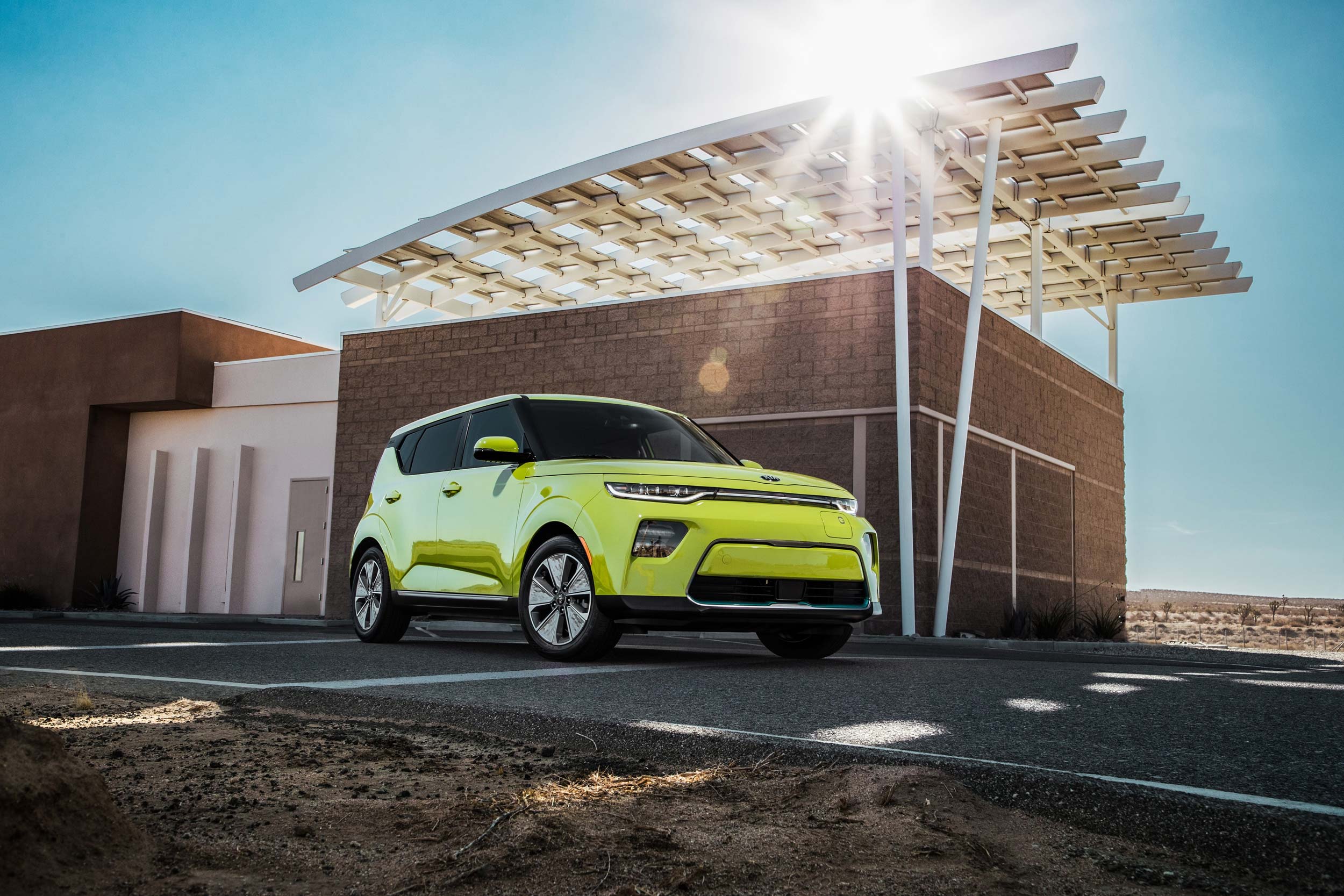
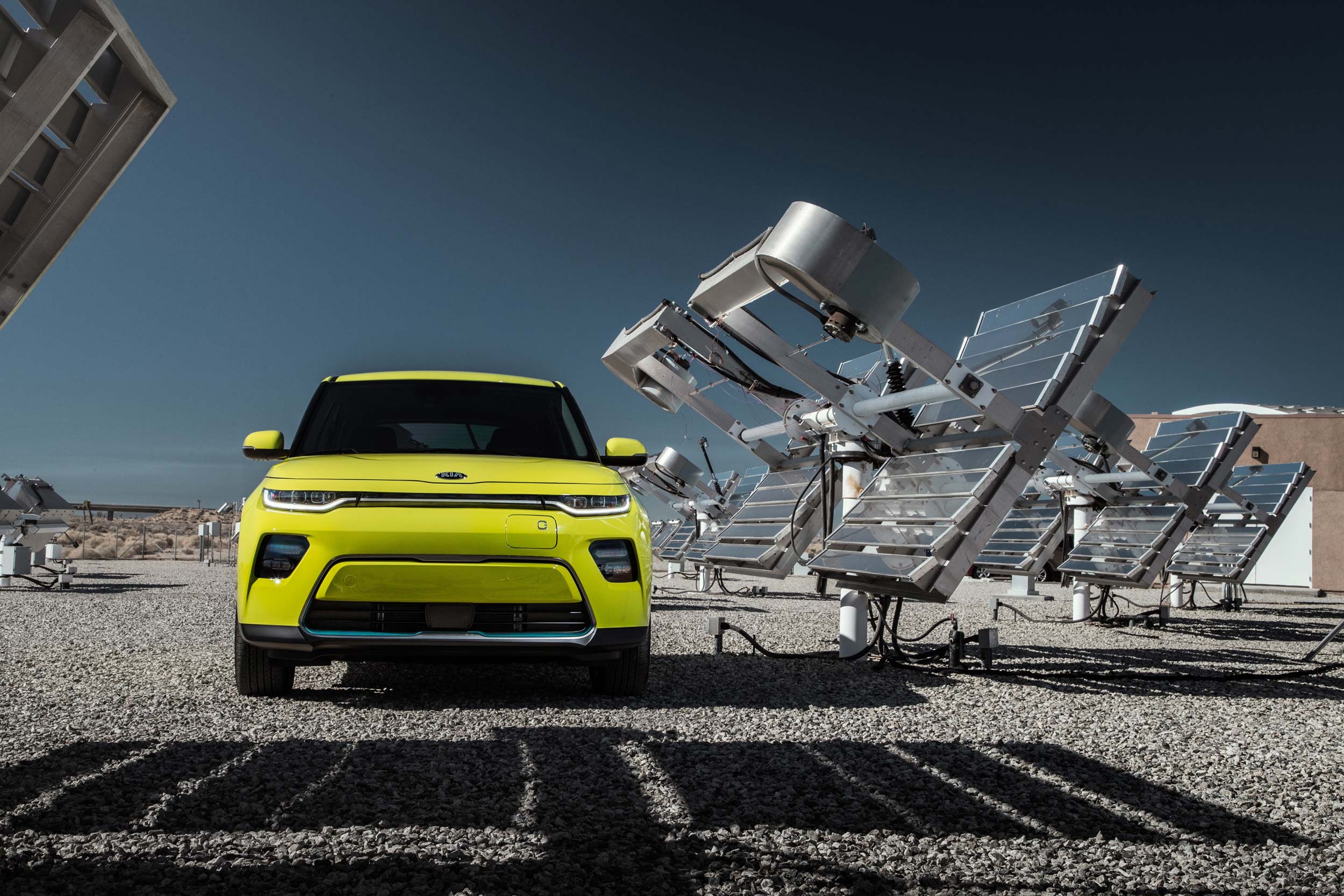
2020 Kia Soul EV
Starting MSRP: $35,500 (est.)
Zero-60: 7.3 seconds
Top speed: 104 mph
Like its Niro cousin, the Soul EV is powered by a 150 kW motor and 64 kWh battery. Horsepower is the same 201 and torque identical at 291. The Soul weighs over 100 pounds less than the Niro, which might account for quicker acceleration.
Range has not yet been announced. The Soul EV will appear in dealerships later this year.
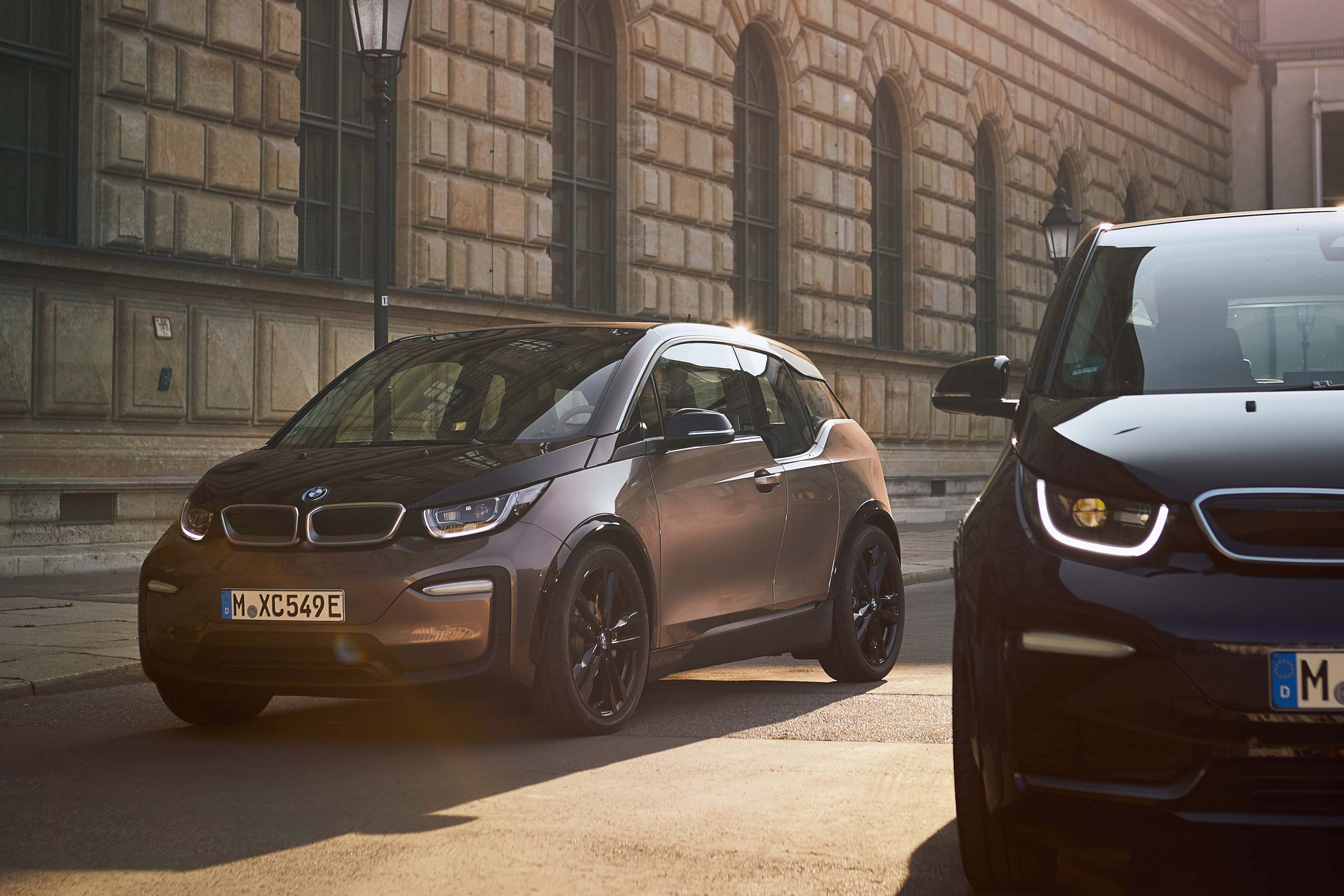
BMW i3 and i3s
Starting MSRP, i3: $44,450 (i3S: $47,450)
Zero-60, i3: 7.2 seconds (i3S: 6.8 seconds)
Top speed, i3: 93 mph (i3S: 99mph)
BMW’s adorable i3 got bigger batteries for 2019 and now offers a full 42.2 kWh, good for 153 miles of range. The standard i3 will sprint to 60 in 7.2 seconds thanks to a 170 horsepower motor, while the sporting i3s has 181 horses on tap and makes the jump in 6.8.
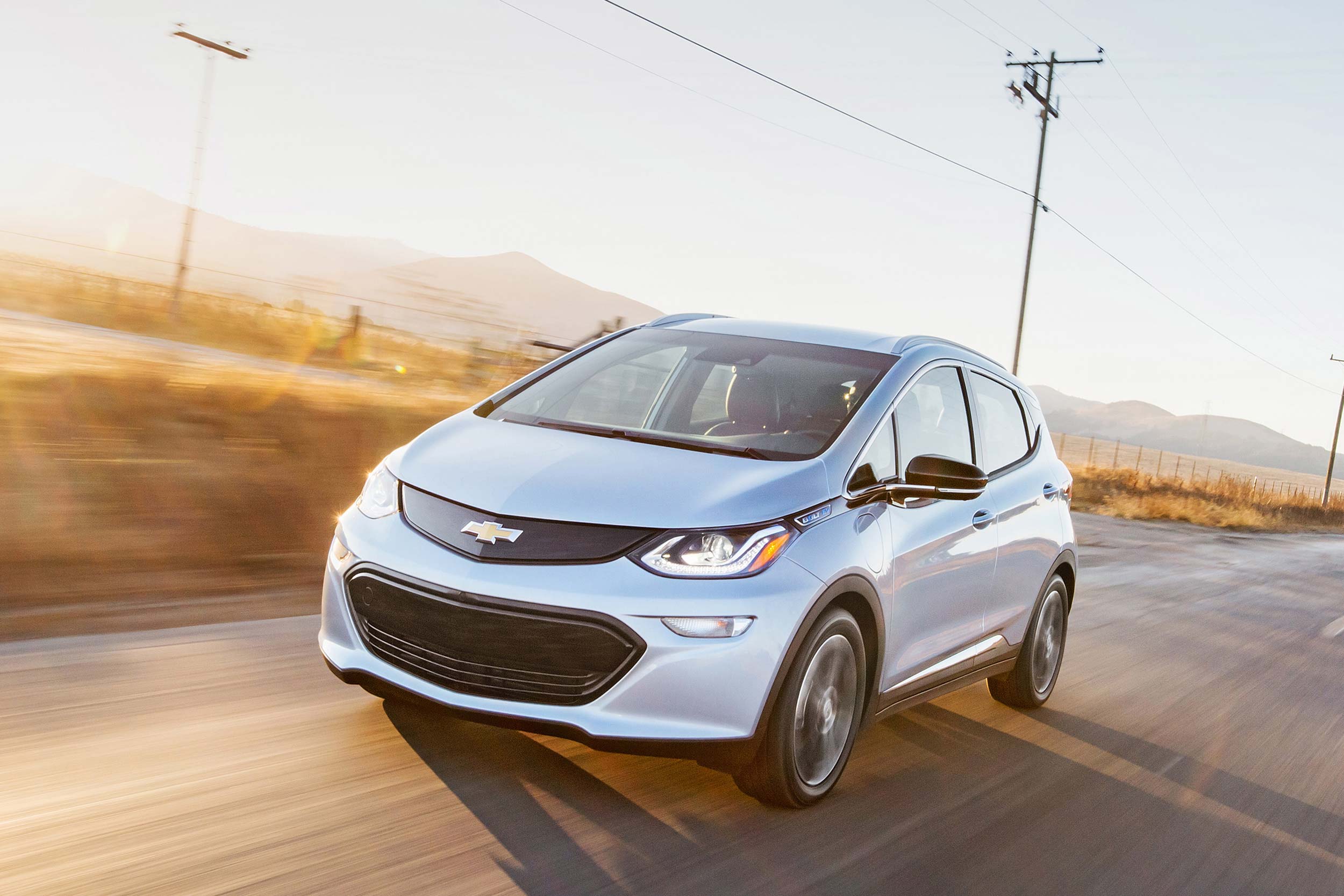
Chevrolet Bolt
Starting MSRP: $37,495
Zero-60: 6.5 seconds
Top speed: 91 mph
The Chevy Bolt was revolutionary when it appeared in 2017. Thanks to its powerful drivetrain with 200 horsepower and 266 lb-ft of torque, 60 mph came up (and still does) in a mere 6.5 seconds—heady stuff in a sub-$40K EV. Range was (and is) 238 miles.
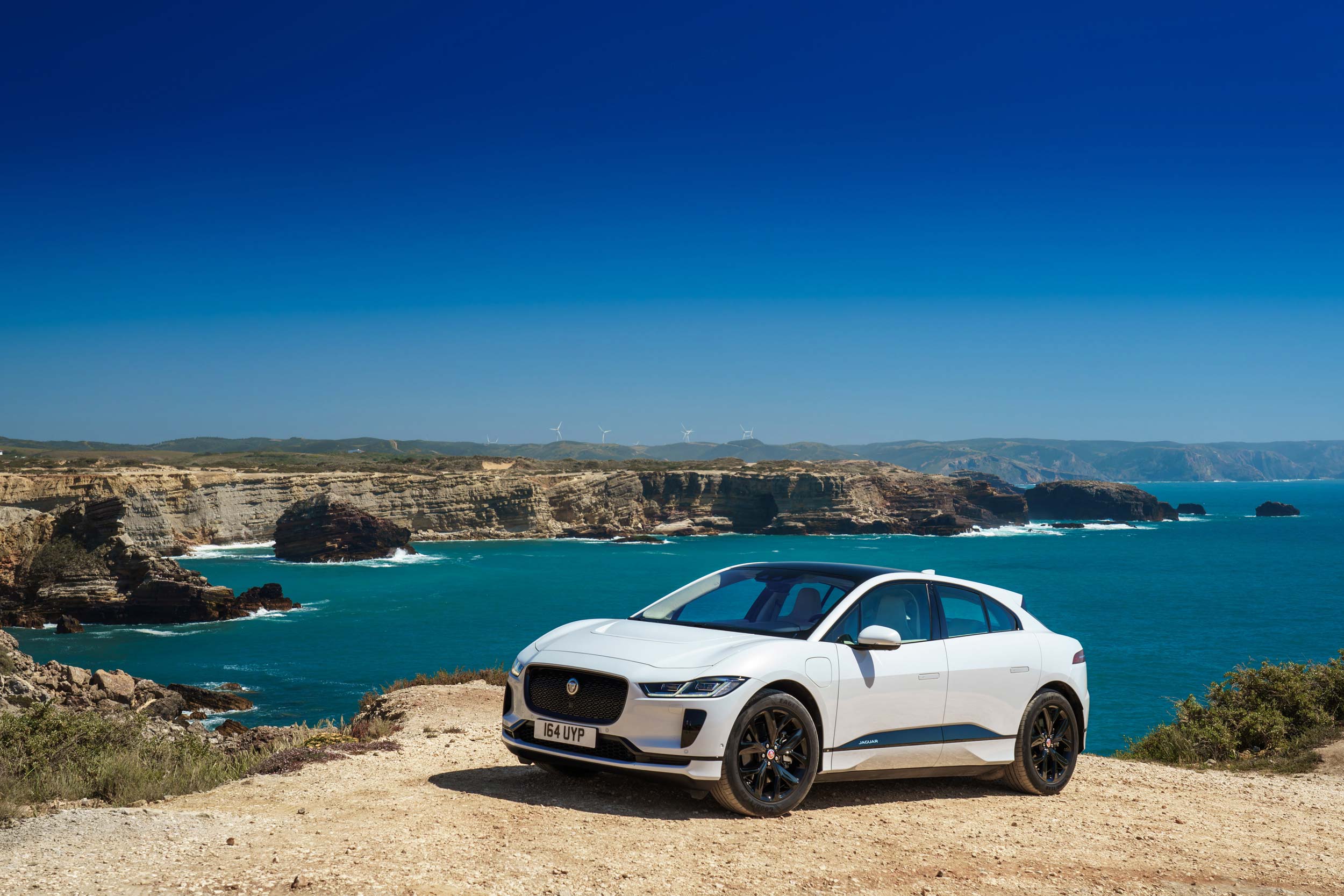
Jaguar I-Pace
Starting MSRP: $69,500
Zero-60: 4.5 seconds
Top speed: 124 mph
The Jaguar I-Pace just took three major awards: World Car of the Year, World Green Car of the Year, and World Car Design of the Year.
In addition to good looks, there’s also thrilling all-wheel drive performance: 395 horsepower and 512 lb-ft of torque. The powerful 90 kWh battery delivers up to 240 miles of range.
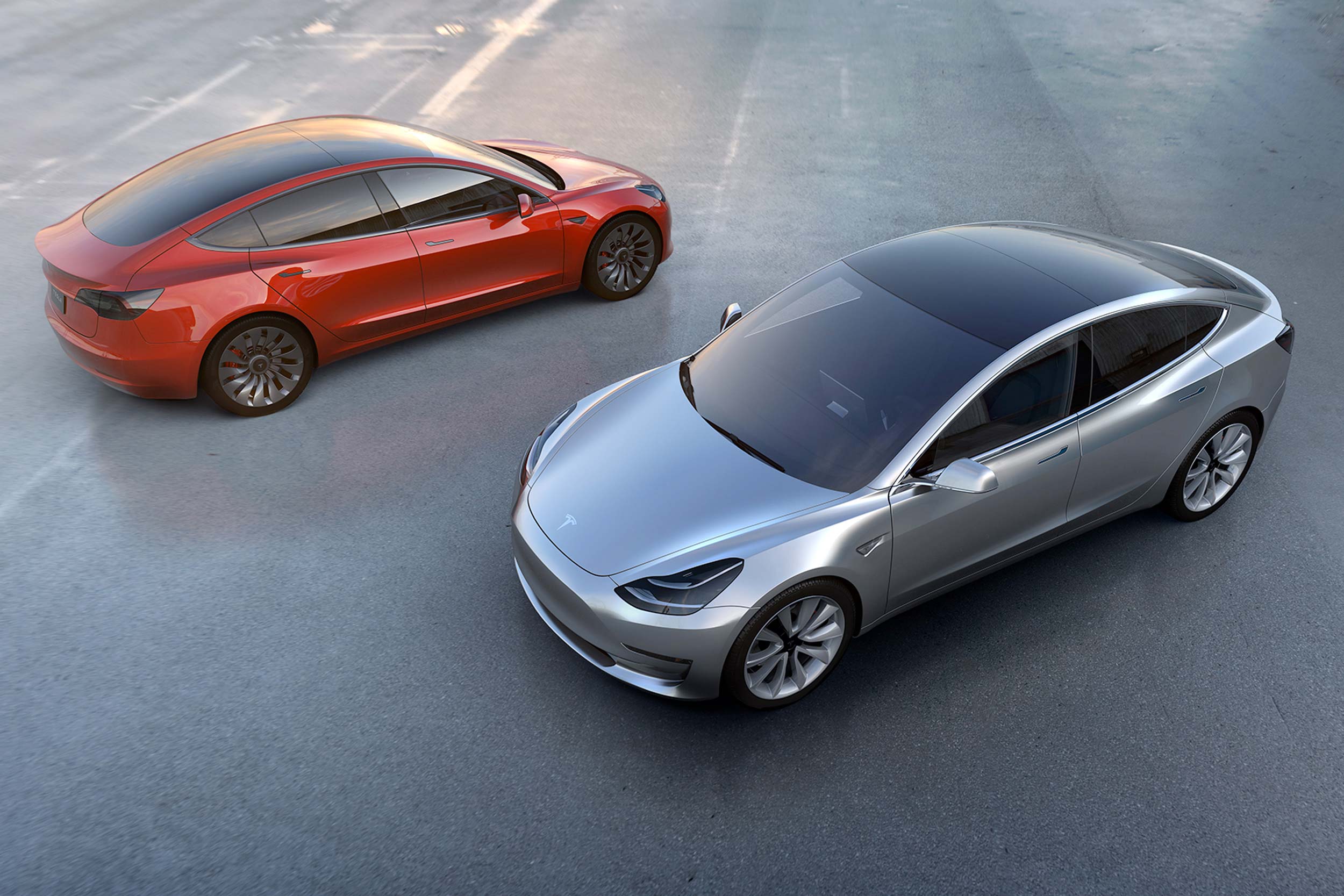
Tesla Model 3 Long Range and Performance
Starting MSRP, Long Range: $46,500 (Performance: $59,500)
Zero-60, Long Range: 4.5 seconds (Performance: 3.2 seconds)
Top speed, Long Range 145 mph (Performance: 162mph)
Tesla’s wildly popular Model 3 has impressive performances numbers thanks to dual motors and all-wheel drive. Range in the two available models is 310 miles.
The Long Range model will zip to 60 in 4.5 seconds and has a top speed of 145.
The Performance model will do the 60 hustle in a blistering 3.2 seconds and cruise on up to a top speed of 162.
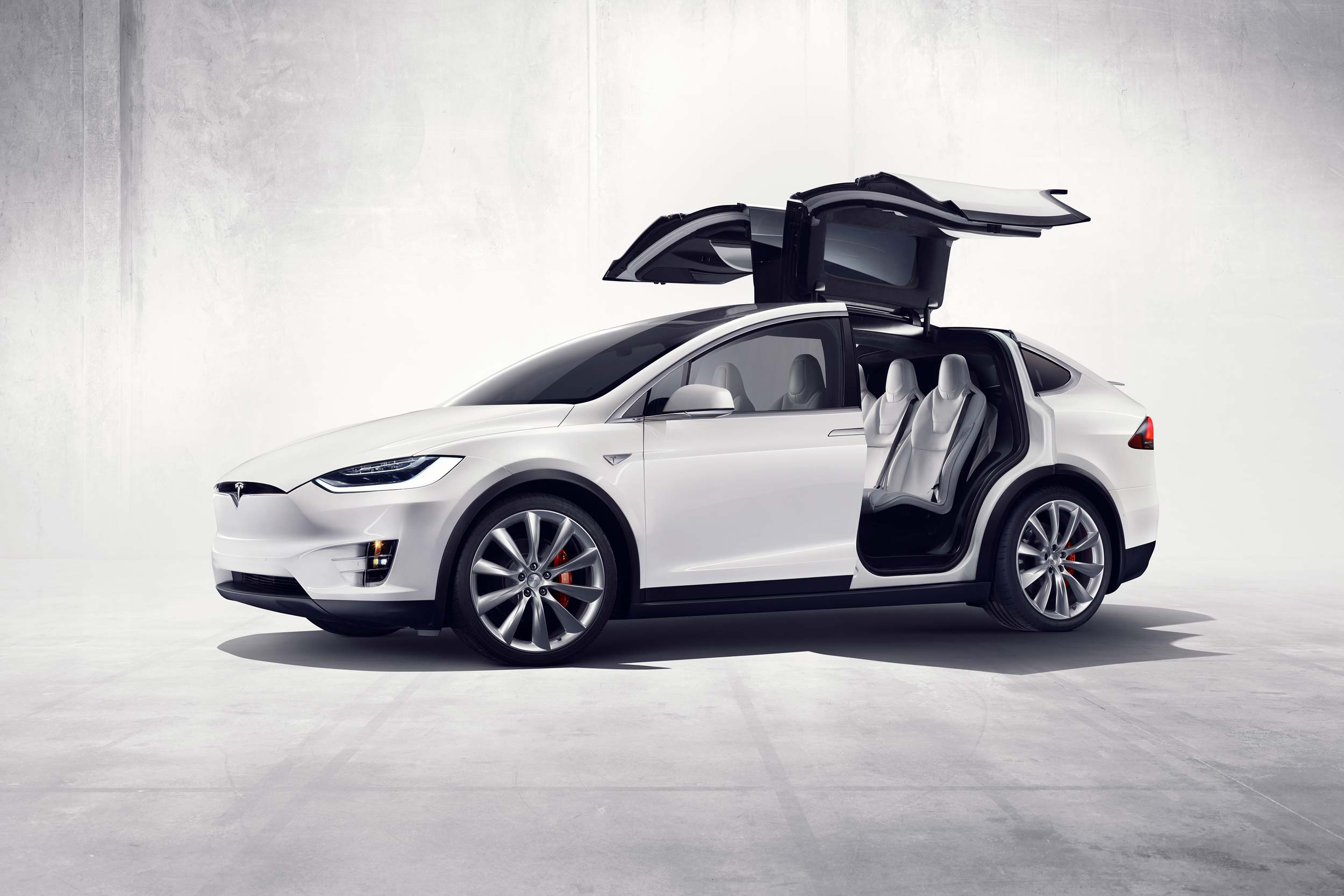
Tesla Model X
Starting MSRP, Long Range: $89,500 (Performance: $104,000)
Idiotic, brash, completely pointless, and utterly desirable, the only way the Tesla Model X could be more American is if it burned coal. The performance of the ultra-luxury SUV speaks for itself.
Ludicrous mode needs to be added to the Performance model to unlock maximum acceleration. The cost? $20,000.
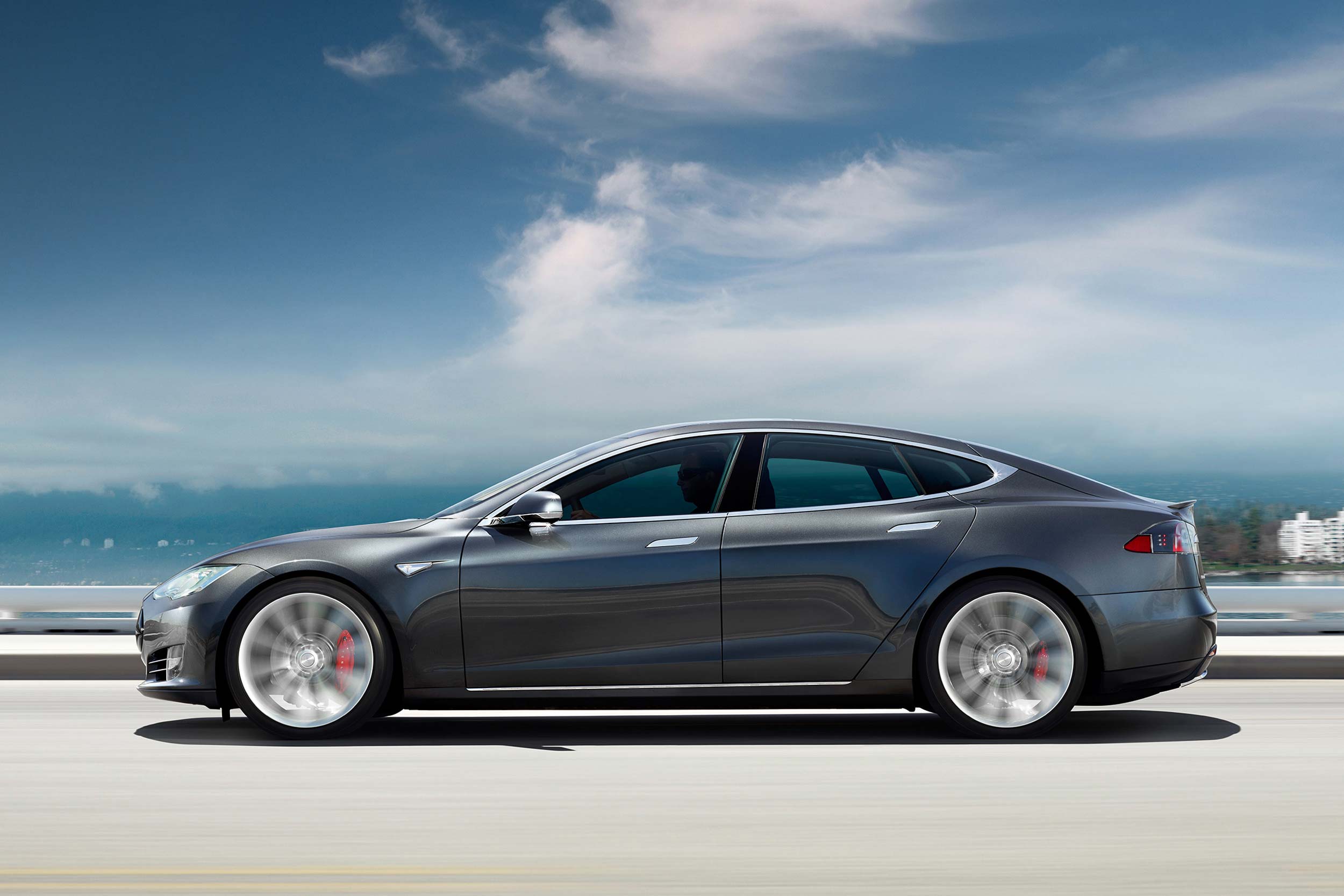
Tesla Model S
Starting MSRP, Long Range: $85,000 (Performance: $99,000)
The Model S could arguably be called the car that started the world trending towards EVs. Its legendary performance combined with an exclusive price tag make it the epitome of eco-luxury.
Adding Ludicrous mode to the Performance model adds $20,000 to the bottom line.
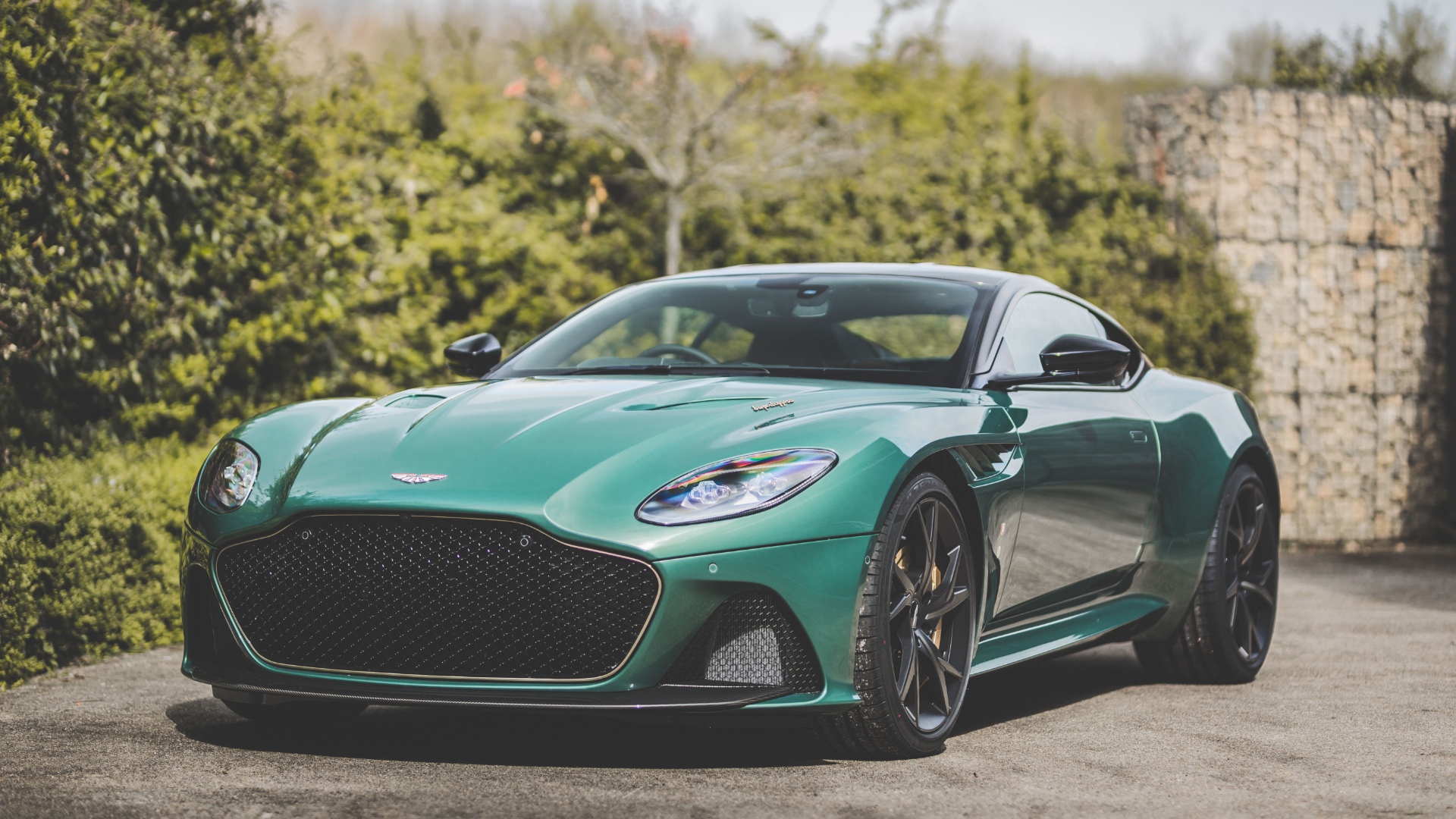
The first in-the-metal images of the Aston Martin DBS ’59’ edition have been revealed.
One thing is certain: this isn’t just any old limited edition. Here’s what makes it a bit special.
Le Mans, 1959
The DBS ’59’ pays homage to the 1959 Le Mans 24 Hours race. Aston Martin scored an historic 1-2 finish with the DBR1, with Carroll Shelby and Roy Salvadori sharing the lead car ahead of Maurice Trintignant and Paul Frére.
It’s now 60 years since that victory cemented Aston Martin as one of the greats of sports car racing – a history upon which subsequent DBR9 and Vantage GTE racers would build.
DBS ’59′ – the devil in the detail
This special project was commissioned by Aston Martin Cambridge and undertaken by Aston Martin’s Q division. Limited to 24 units – one for every race hour at Le Mans – DBS ’59’ features of a number of stunning details. It’s by no means just a spray and trim job.
Paint is, nonetheless, important. It wouldn’t pay homage to the Salvadori DBR1 if it wasn’t Aston Martin Racing Green, a hue also worn by GT racers of the last 15 years.
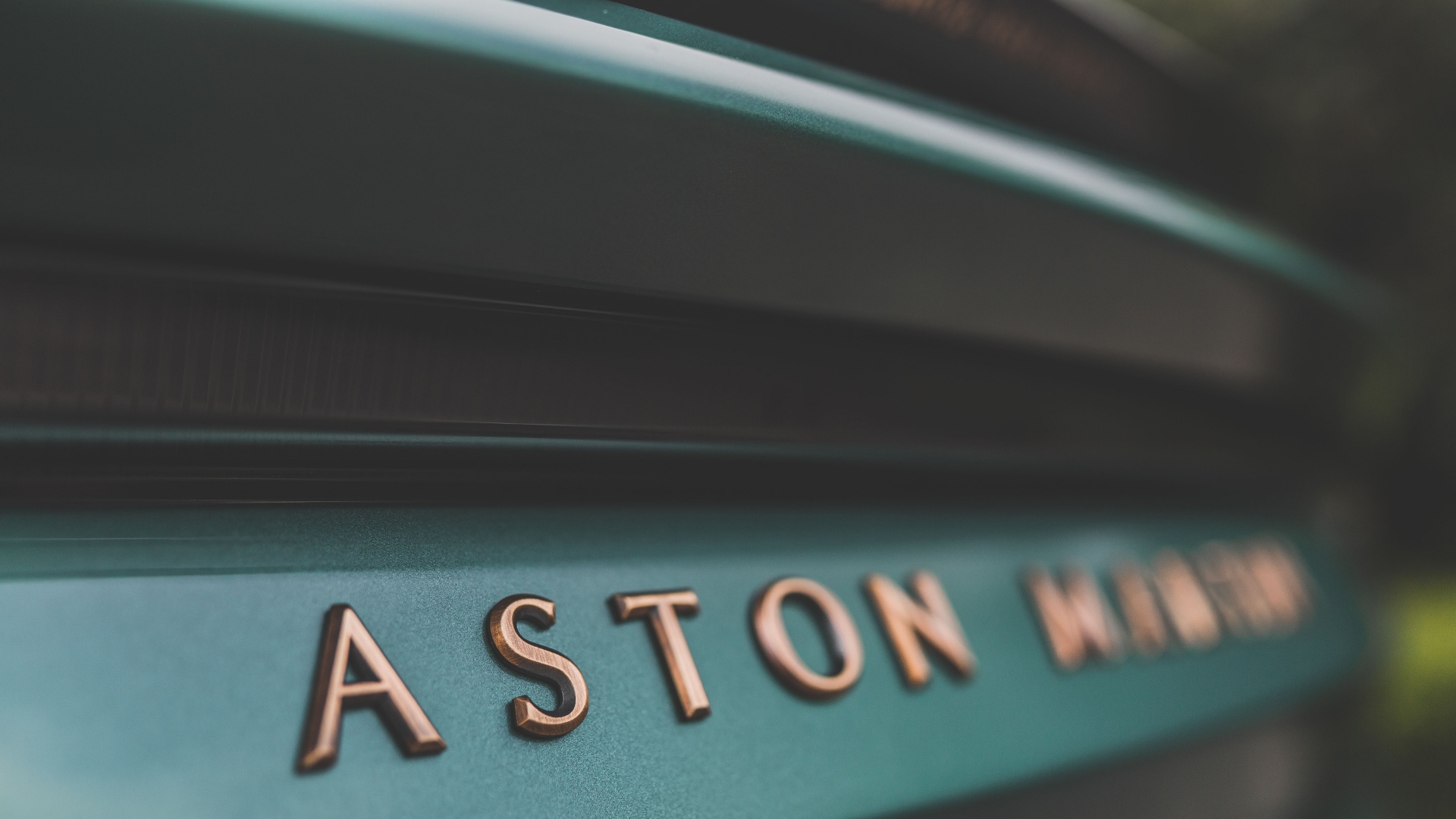
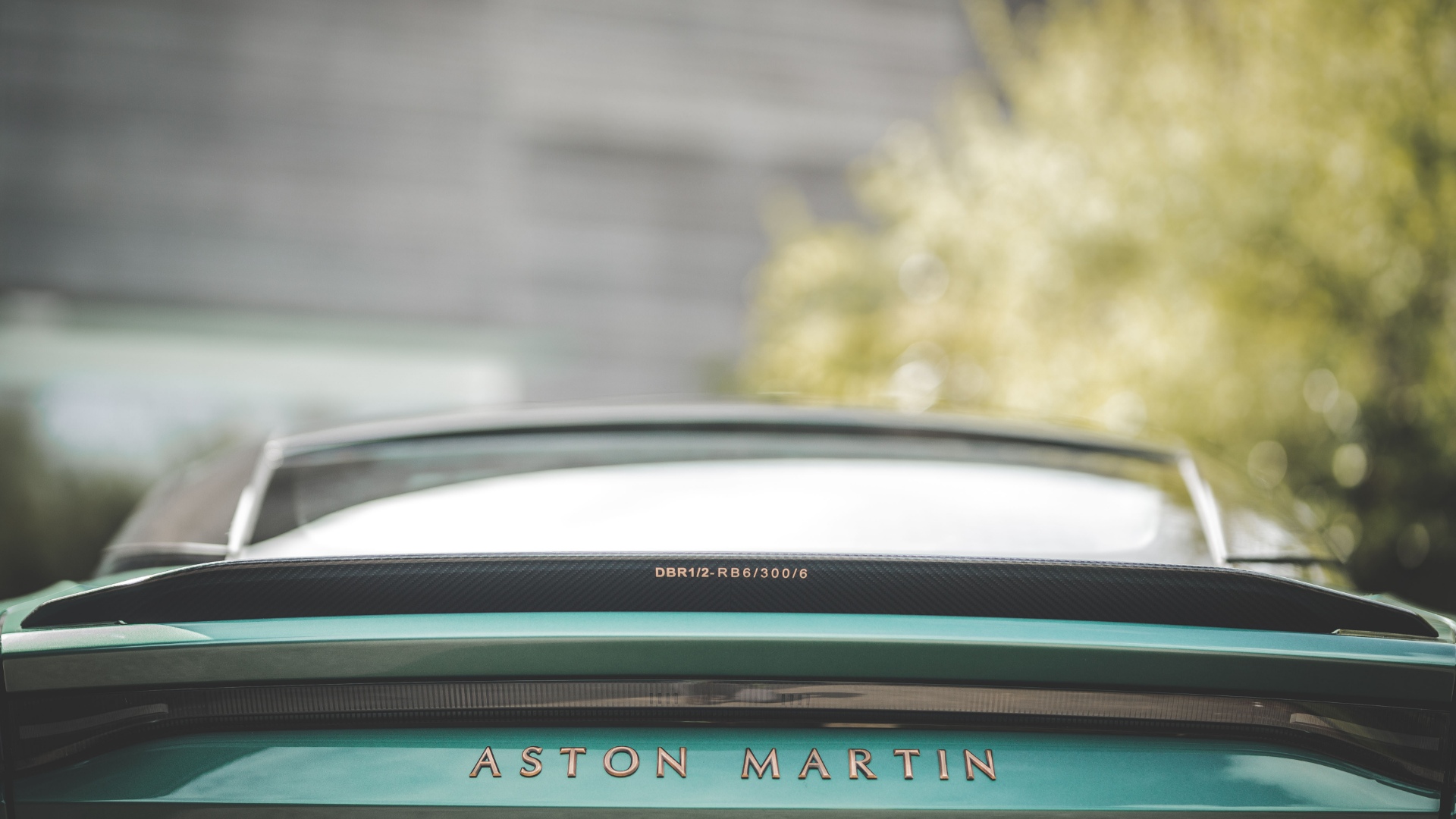
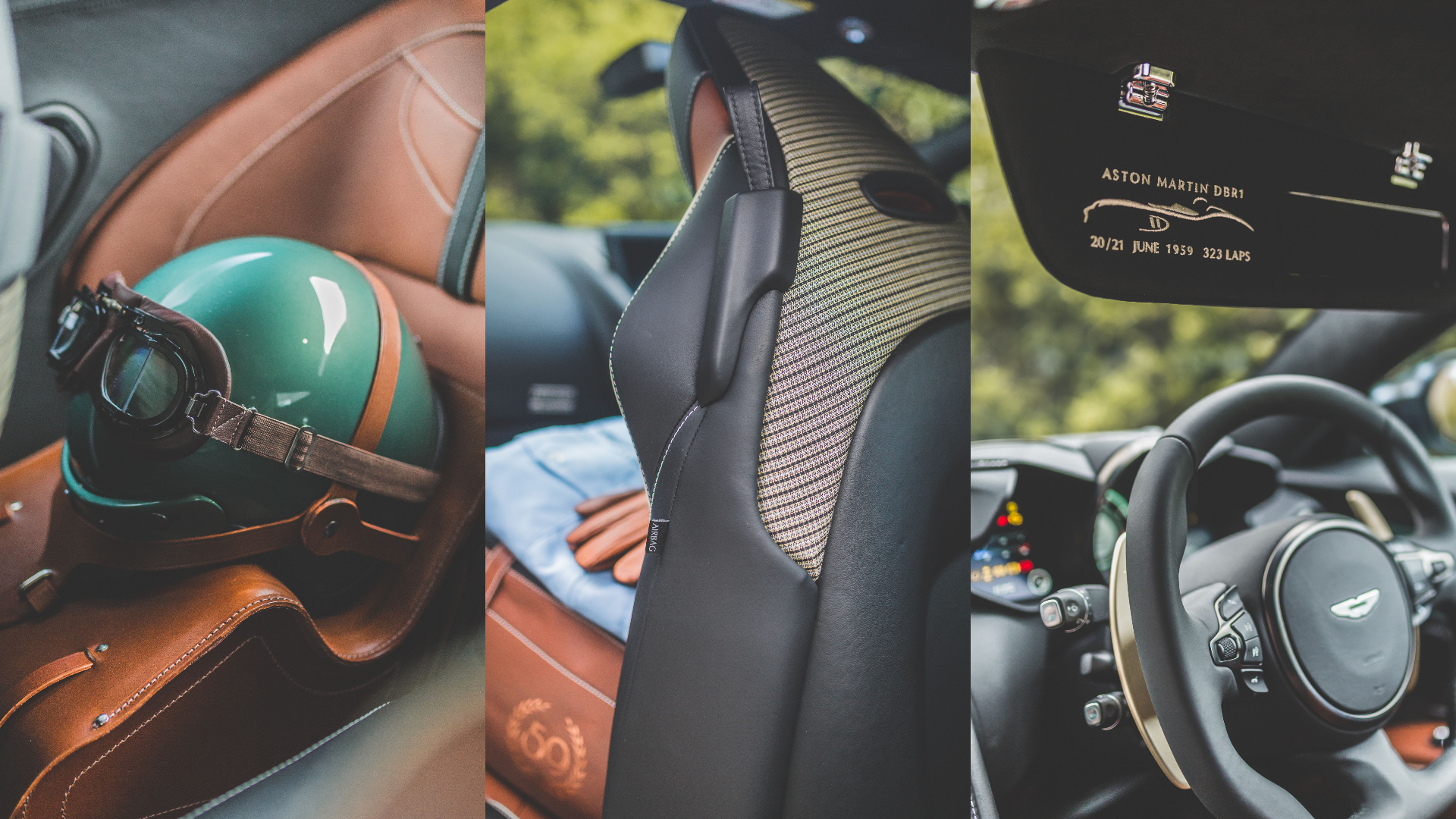
A carbon fibre roof, plus bronze detailing in the brightwork and badging, complete the exterior highlights of the ’59’. There’s also lettering on the ‘aeroblade’ rear spoiler, detailing the chassis and engine number of the Le Mans winner, alongside its silhouette.
Inside the DBS ’59′
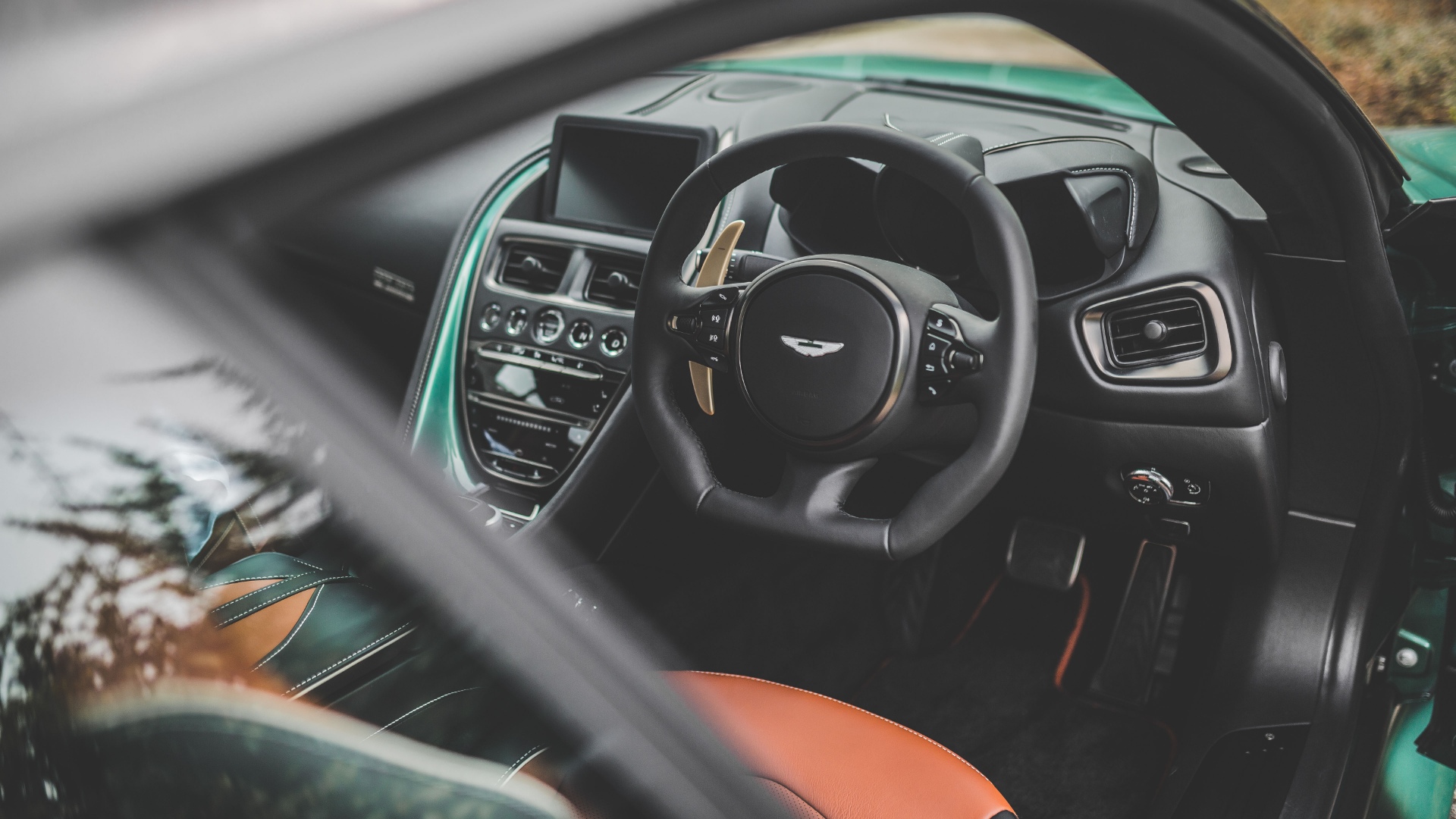
The interior is a tasteful tribute to the 1959 Le Mans winner. You’ll find tan-on-black leather and special embroidery on the speaker grilles and sun visor. The bronze detailing continues, too, aping the switchgear from the original DBR1.
Look in the back and you’ll find a colour-coded retro racing helmet, along with blue race suits and replicas of Shelby’s race gloves.
“The ‘DBS 59’ strikes a careful balance between a timeless design that respects our history and a modern take that celebrates our future,” said Simon Lane, director of Q and VIP sales.
“The DBS Superleggera is the most powerful production car ever produced by Aston Martin and so it is fitting that the ‘DBS 59’ special editions have been commissioned to mark 60 years since our iconic 1-2 win at Le Mans.”
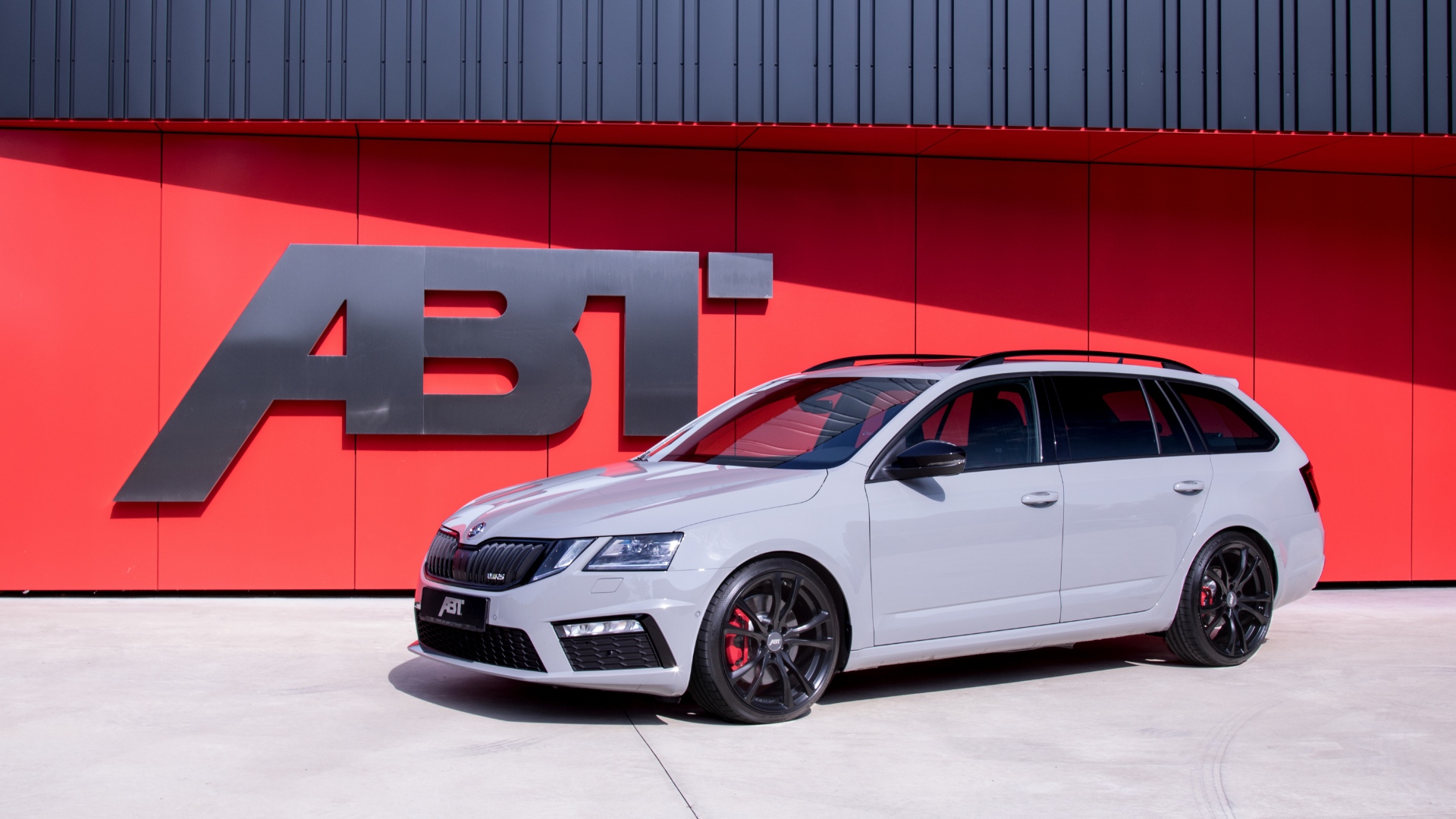
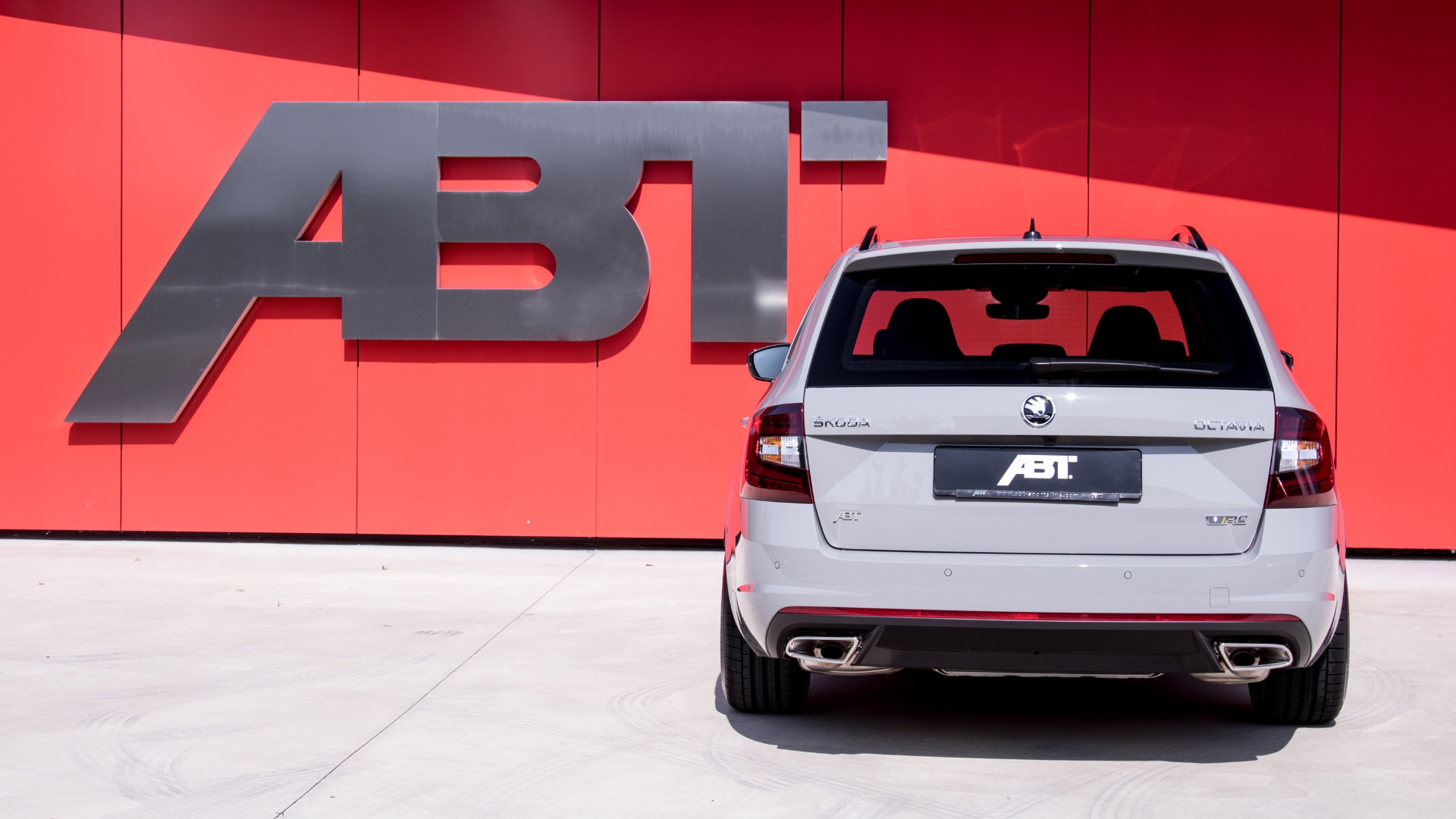
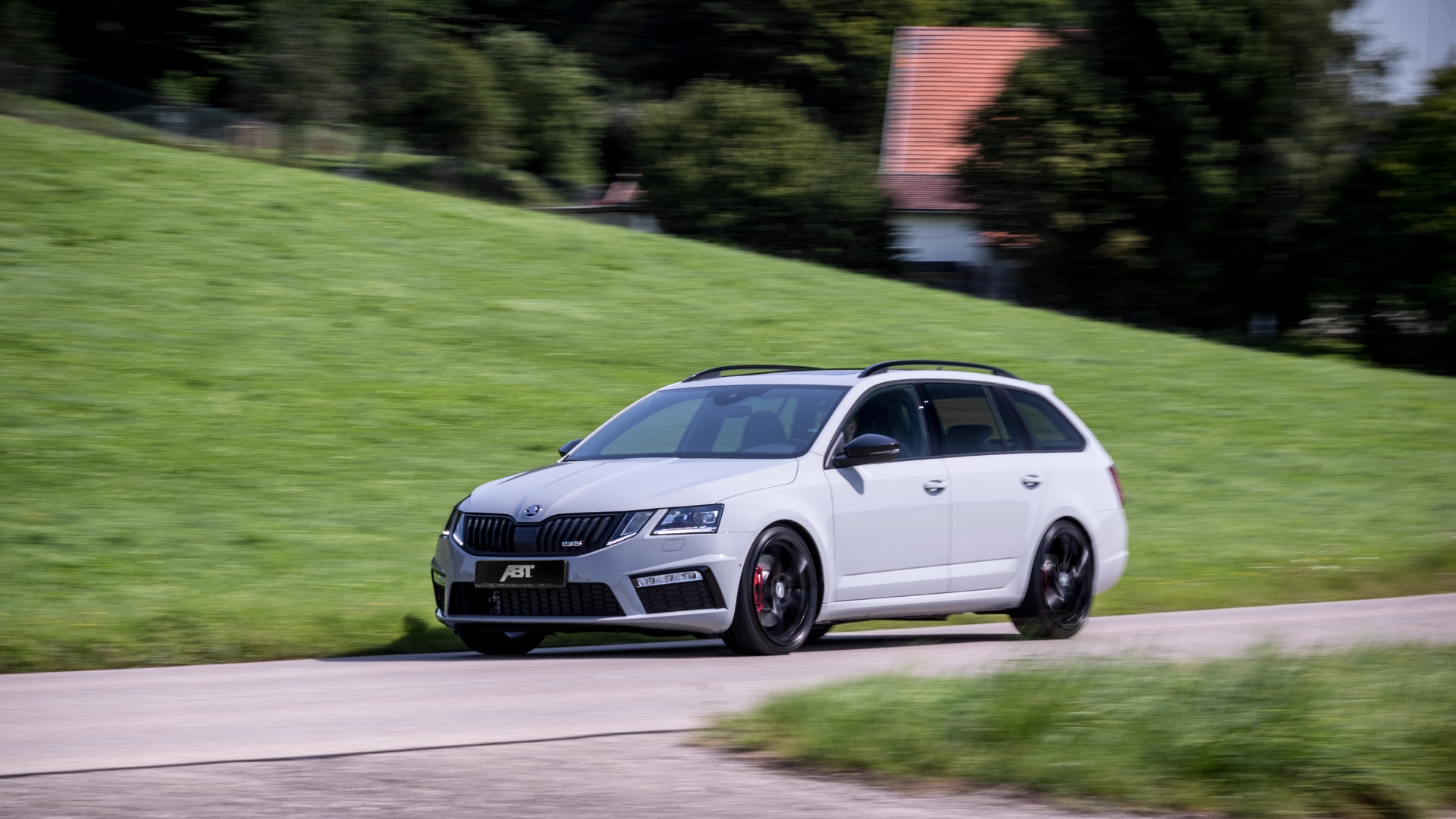
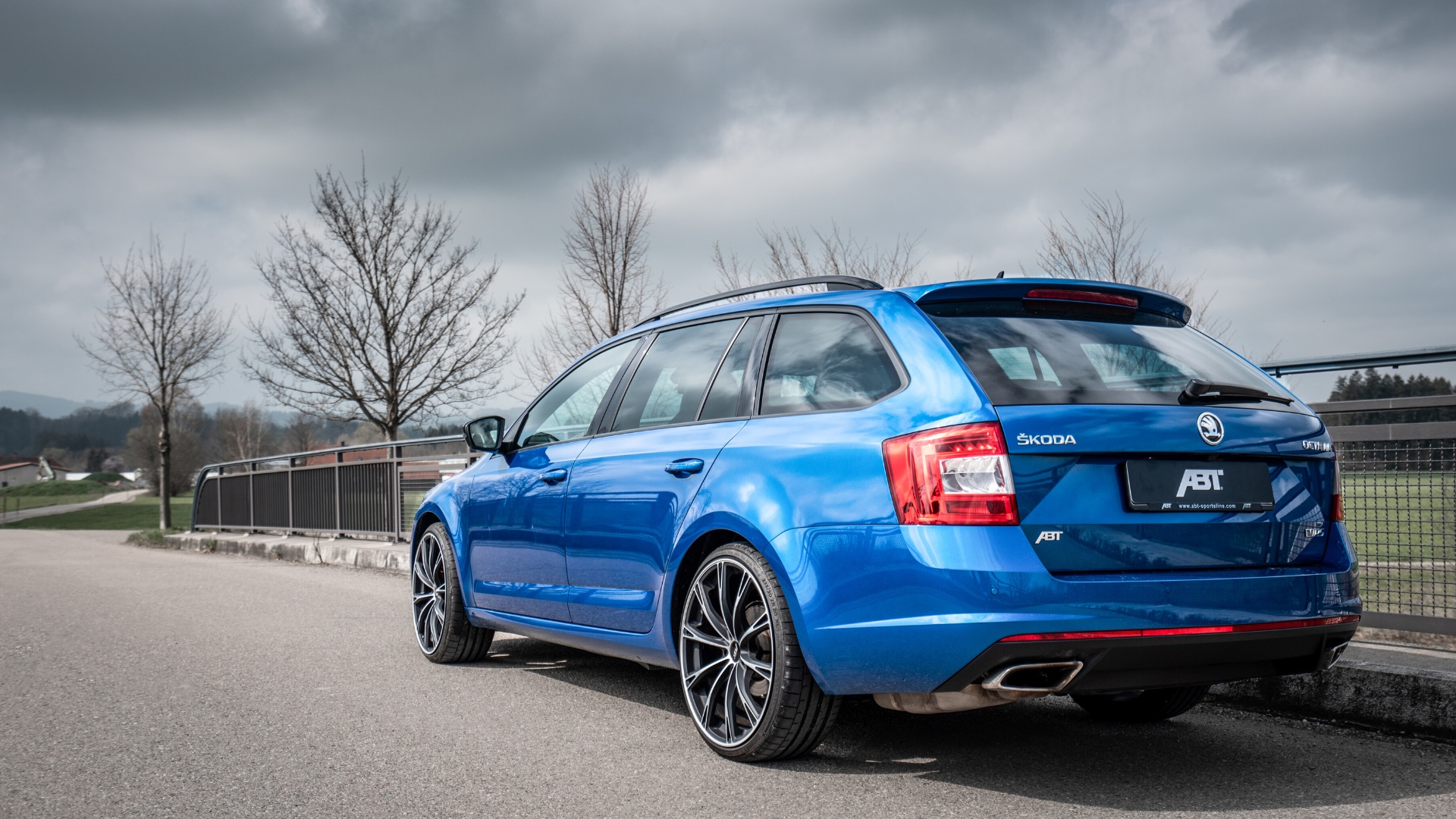
Volkswagen Group tuner ABT has got its hands on the practical Skoda Octavia VRS. And the result is a 290hp Golf R fighter…
Turning the Octavia VRS up to 290
A new ECU is behind the power increase from 255hp to 290hp. Torque is also improved, from 273lb ft to 302lb ft.
The 184hp diesel VRS can be boosted to 210hp, with torque up from 280lb ft to 310lb ft.
“Our auxiliary ABT Engine Control unit adds an extra 45hp to the already quite potent Octavia,” explains CEO Hans-Jürgen Abt. “This allows it to stand up even to much larger vehicles on the freeway.”
As for performance figures, nothing is stated. But with 290hp in your all-wheel-drive Octavia, you’ll be gnashing at the heels of Volkswagen Golf Rs and Seat Leon Cupras.
Putting the hammer down
Extra performance is all well and good, but power corrupts. To prevent that, ABT offers suspension springs to lower the car by 25mm at the front and 30mm at the rear.
An optional ABT anti-roll bar shore ups the dynamics of the VRS still further.
Mouth to match the trousers
It’s rare one gets a performance upgrade without some visual cues, so you can fit your VRS with ABT wheels.
Three options are available, with two in 18- and 19-inch versions, and a third in 20-inch size. The latter is probably only for those with a sturdy spine…
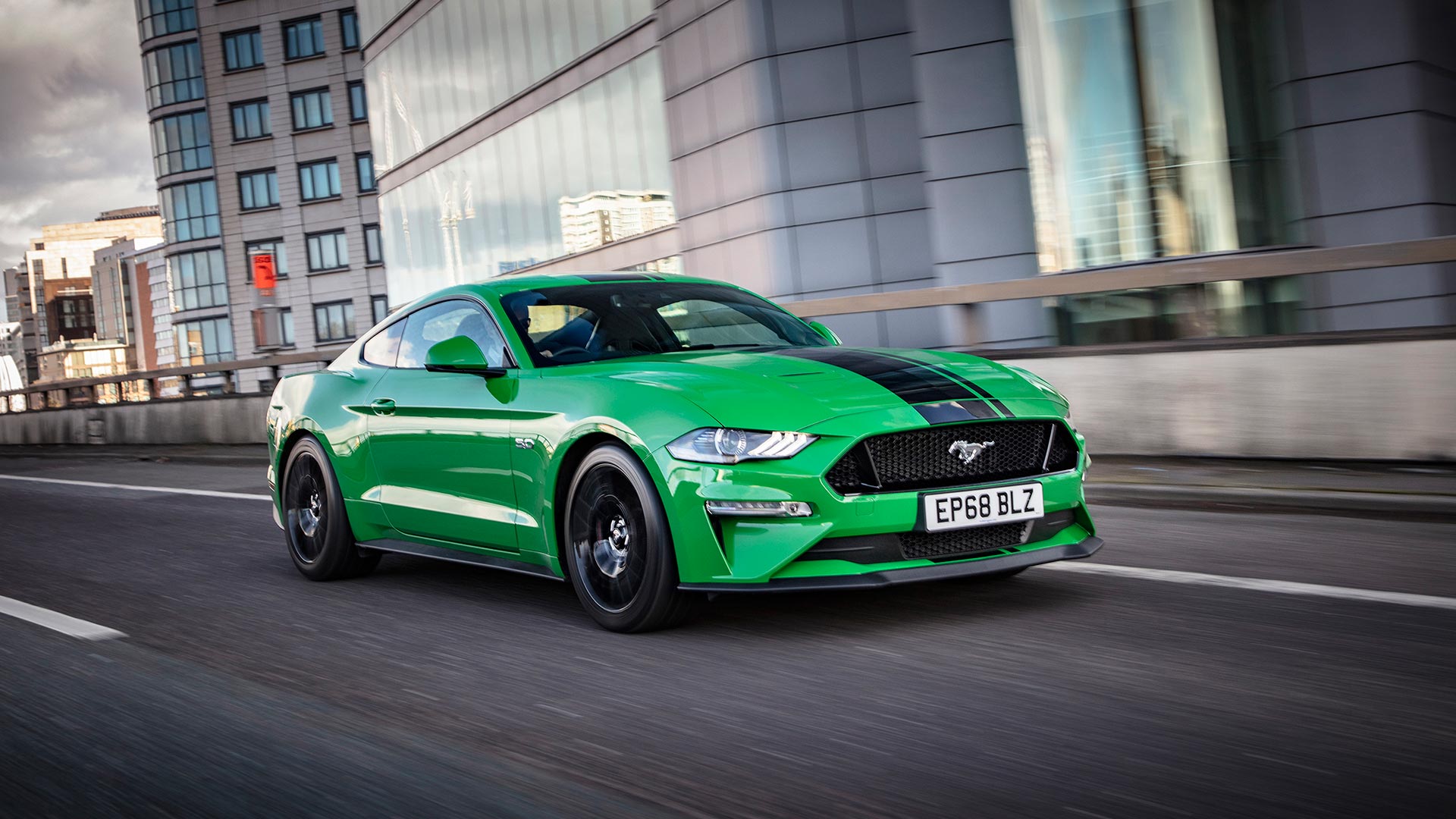
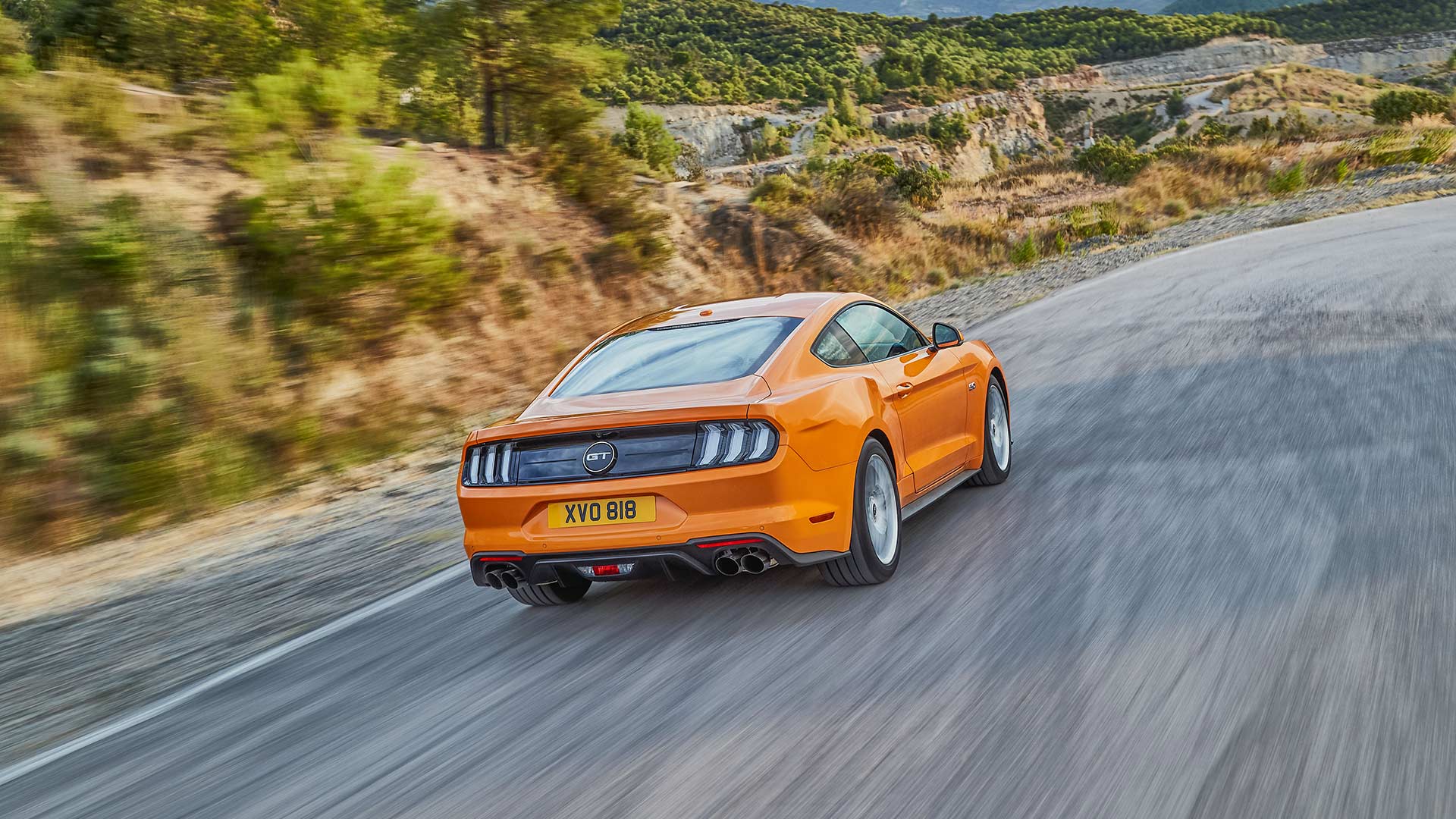 Whilst American buyers took home the most Mustangs of all, accounting for almost 76,000 of all units sold, other markets saw growth too.
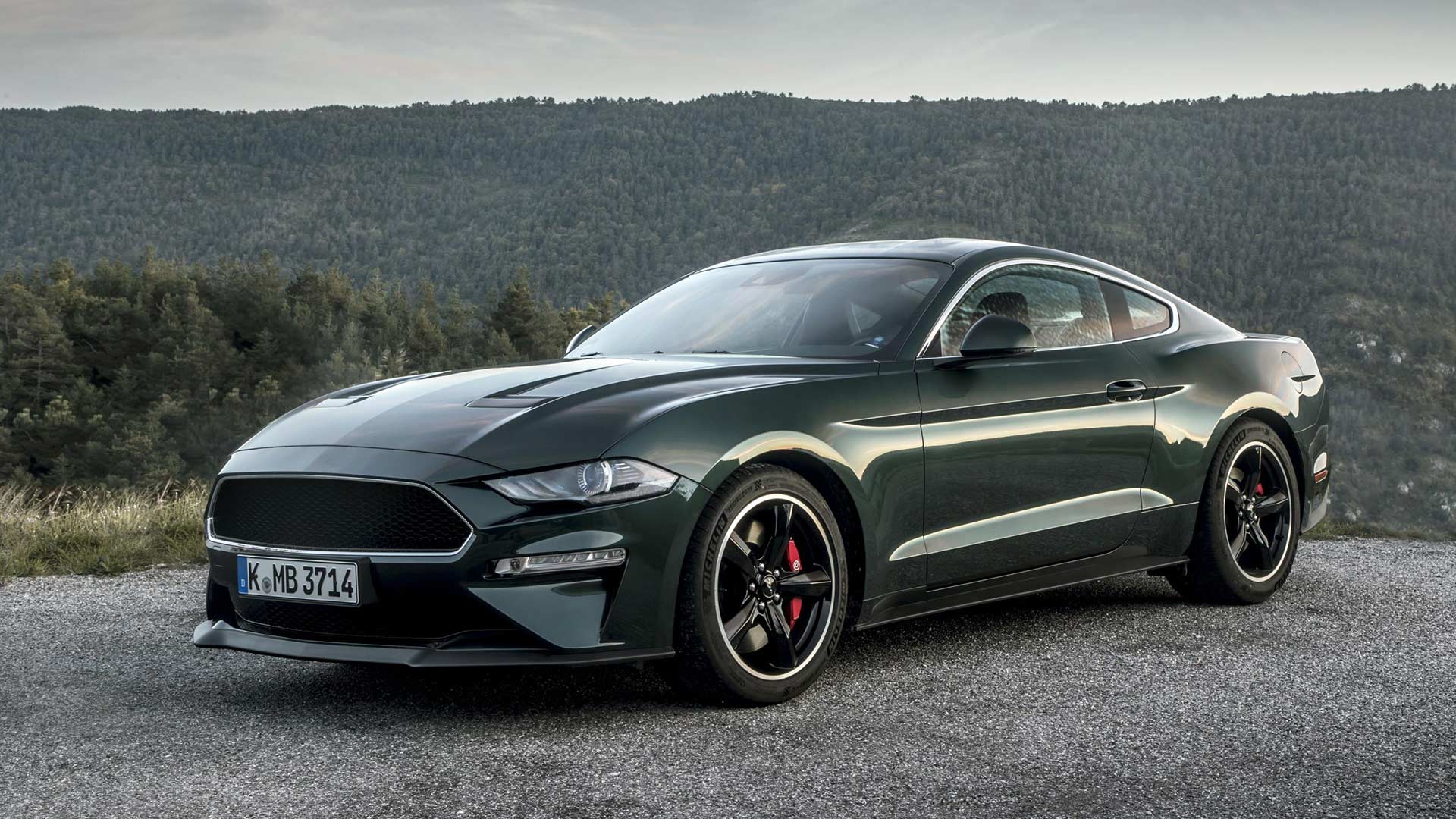 The news comes as the Mustang celebrates its 55th anniversary, with the latest sixth-generation car accounting for more than 500,000 sales alone.
 Think of London in the swinging 60s and it won’t be long before a Mini zooms into your mind. The little car,




 Being “green” doesn’t mean you’re a hippie. Electrification in the automotive world usually translates to increases in efficiency. Sometimes those gains equal better economy and cleaner air, and sometimes they equal raw power.