Noisy roadworks can be a real headache, not just for road workers, but for anyone living nearby.
But a new ‘neighbour-friendly’ rig could lead to quieter roadworks, which will be music to the ears of those within close proximity of road improvement schemes.
Traditionally, workers use a ‘hammering’ method to force steel sheets into the ground, resulting in noise and vibration for local residents and workers.
On the £17.5 million upgrade of the A500 in Staffordshire, new hydraulic piling equipment was deployed, with the silent rig used to install around 600 steel sheets.
It helps that the ground alongside the A500 is softer, which enables the use of hydraulic equipment, but Highways England is confident the technique can be used in other locations.
Because it’s silent, the work can be carried out at night, with the only noise coming from the generator, which Highways England says is minimal.
Quieter roadworks
Highways England project manager Humzah Mir said: “We know that roadworks can cause noise and disruption for people living nearby and try to keep that nuisance down to a minimum.
“Highways England is always investigating new ways to reduce any adverse impact we may have when carrying out our important work on England’s motorways and major A roads.
“Widening the A500 will tackle congestion and improve safety on one of the busiest roads in the city. And because we have been able to introduce hydraulic piling here, residents, as well as road users, have not had to experience the noise and vibration that traditional methods often bring.”
The scheme in Staffordshire will widen the road in Stoke-on-Trent from two lanes to three in both directions between Porthill (A5271) and Wolstanton (A527).
As part of the upgrade, a new pedestrian and cycle path will be installed along the A500 northbound. The work started in February and is expected to be completed in autumn 2020.
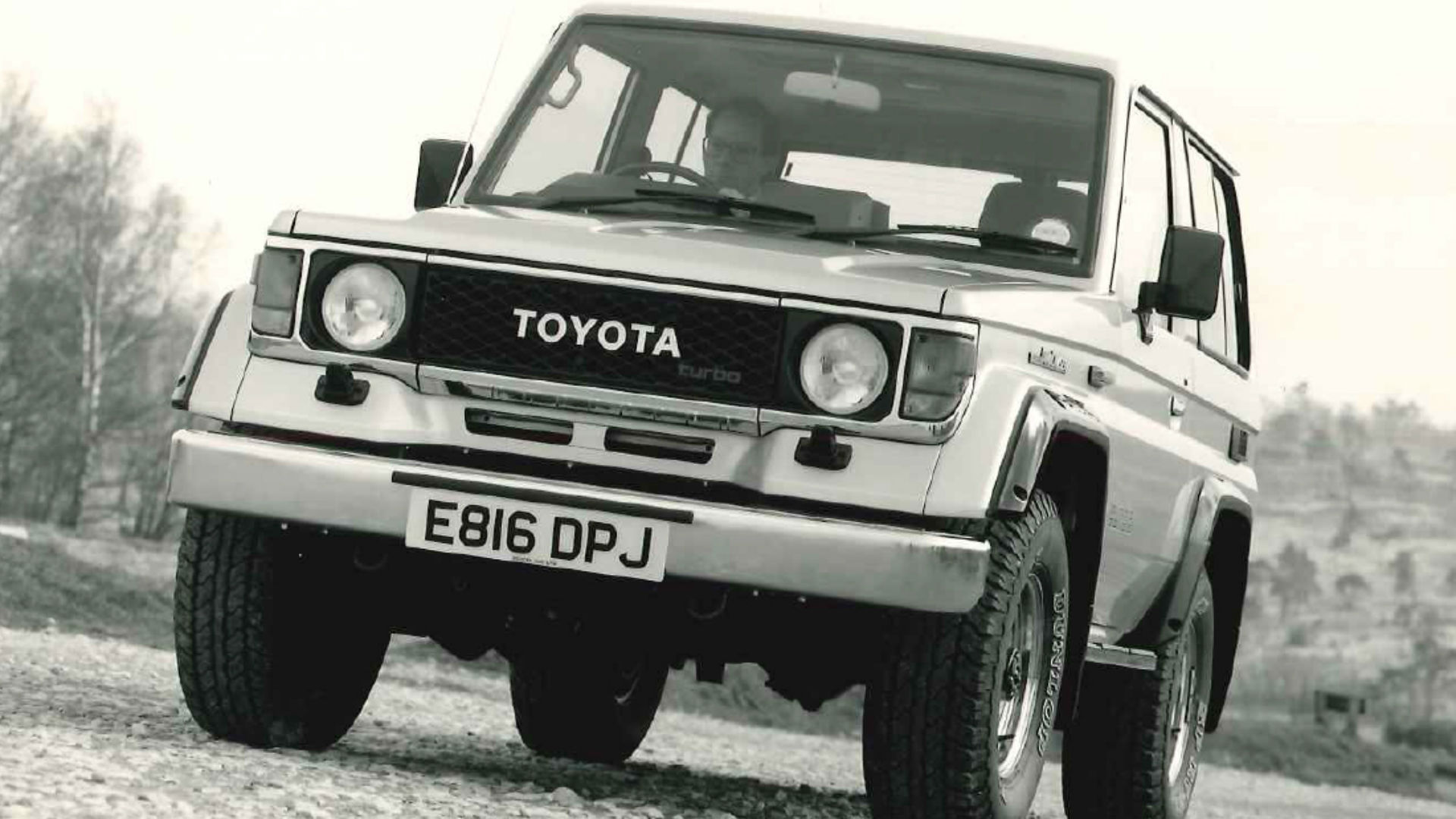
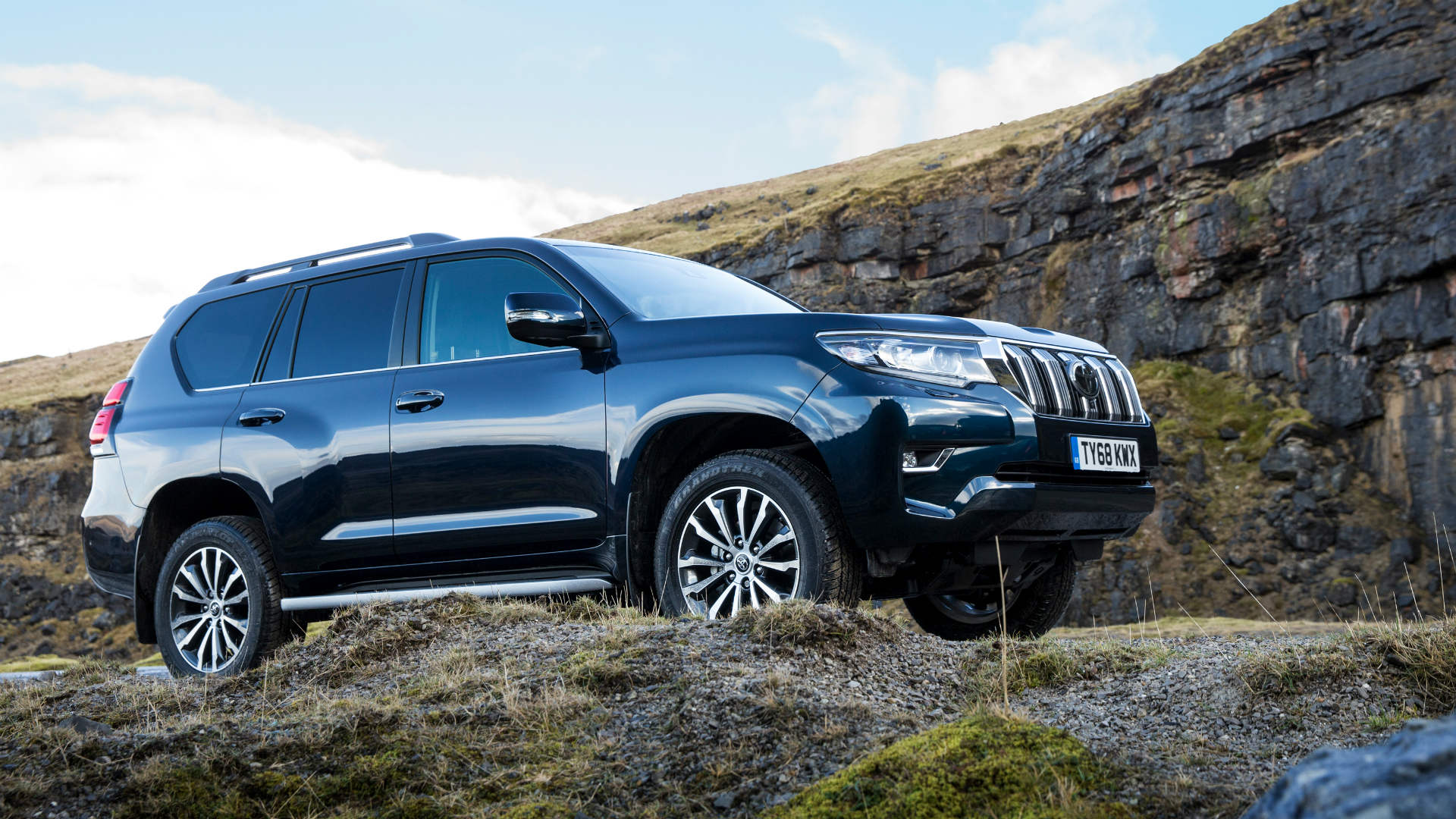
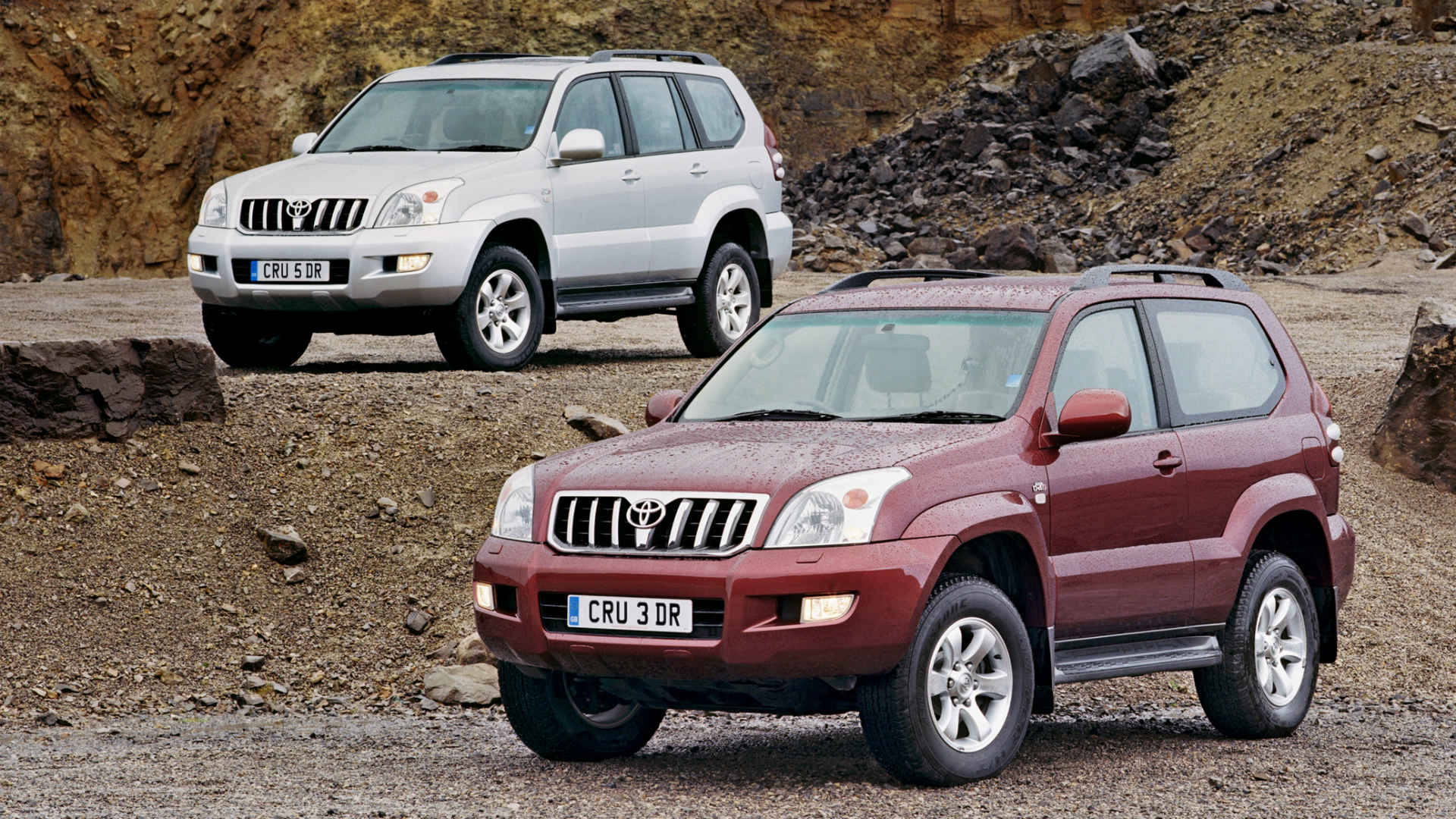
Toyota has built its 10 millionth Land Cruiser. The landmark vehicle rolled out of the factory at the end of August.
Since its launch as the Toyota ‘Jeep BJ’ in 1951, the Land Cruiser has cemented itself as the 4×4 for off-roaders who aren’t swayed by fashion, badges or soft-touch plastics.
If you want to drive into the jungle, take a Land Rover. If you want to drive out again, take a Land Cruiser.
It’s a mischievous phrase, but the Land Cruiser just gets on with being formidable without the need for fanfare, fireworks or celebrity endorsements.
Today, the Land Cruiser is sold in around 170 countries and regions, with the Middle East by far and away the biggest market. Europe is a distant second, followed by Oceania, Asia and the United States.
In the army now
The journey started in 1950 when Toyota was commissioned to build four-wheel-drive trucks for the U.S. military in support of South Korea.
Japan, which was still under American occupation, was given the green light to build vehicles similar to the Willys Jeep. Toyota presented a prototype to the National Police Reserve (NPR), but the contract was awarded to Mitsubishi.
Undeterred, Toyota developed the ‘BJ Jeep’ – the initials referred to the B-series engine and Jeep – with the aim of securing private customers and tapping into the export market.
To demonstrate its capabilities, Toyota took a vehicle to the Shinto temple atop Mount Atago and drove the pilgrim route to the sixth station on Mount Fuji. The result: Toyota replaced Mitsubishi as the official vehicle supplier to the NPR.
Five versions sprung from the BJ platform: mobile communications, touring liaison, fire fighter and two pick-ups. Series production began in 1953, with the ‘BJ Jeep’ tag dropped in favour of the Land Cruiser name in 1954.
Whatever you want
The rest is history, with the Toyota Land Cruiser hitting the million sales mark in 1975. A year earlier, official sales started in the UK.
Amazingly, the 40 series Land Cruiser, which arrived in 1960, is still in widespread use today, some 50 years after they were manufactured.
These aren’t 4x4s built for the school run – the Land Cruiser would laugh in the face of the ‘SUV’ tag. Here are a few examples of how the Land Cruiser is being used around the world:
Africa: to provide humanitarian support
Burundi: to carry malaria-infected children to hospital
Uganda: to transport patients to clinics
Australia: for use in zinc and copper mines
Costa Rica: to harvest carrots at altitudes of 3,500 metres
Kingston upon Thames: to take Tabitha and Tarquin to school
In the UK, Toyota Land Cruiser prices start from £34,750. Still want that #OMGNEWDEFENDER?
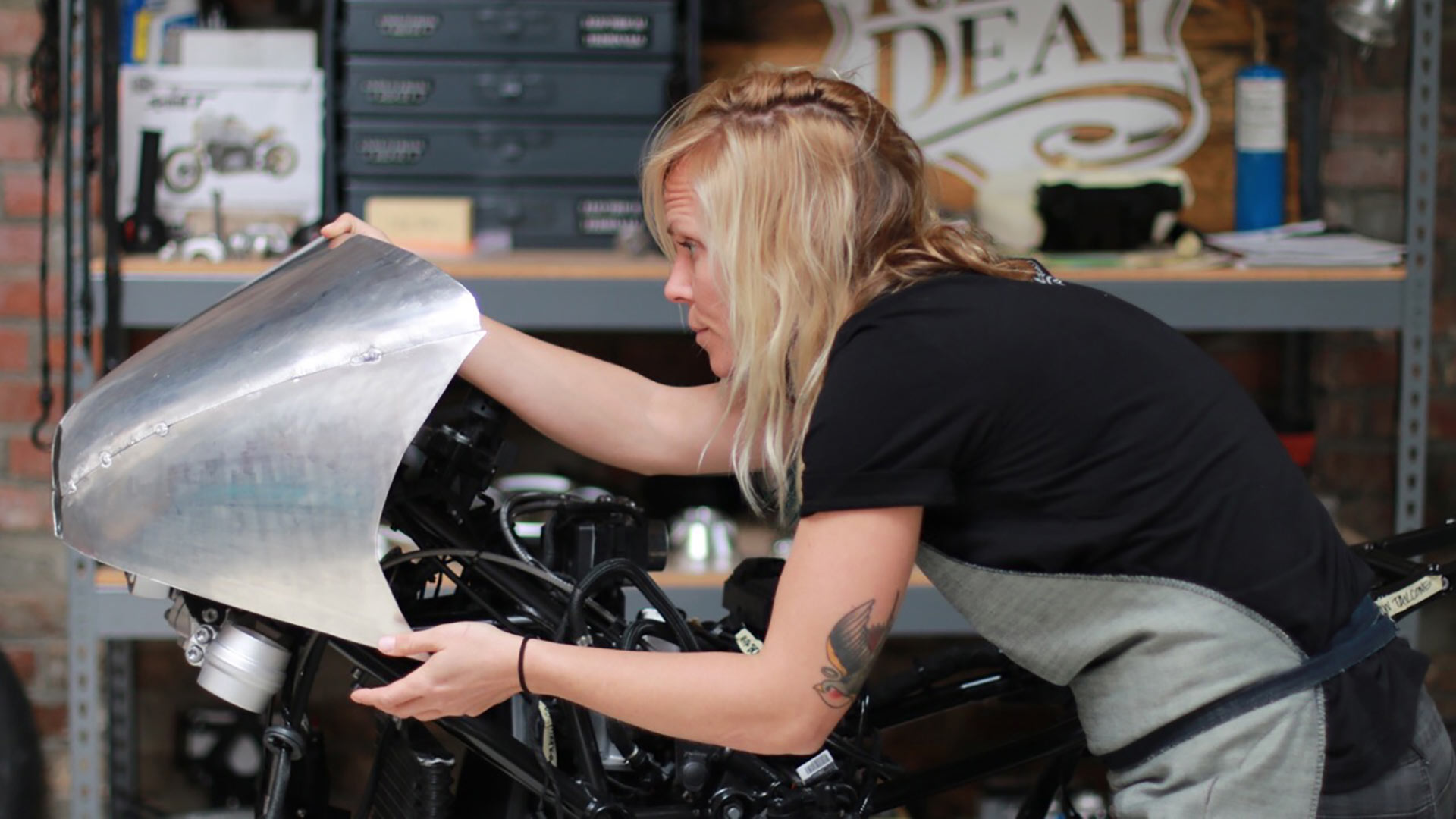
The Petersen Automotive Museum in Los Angeles has announced a special temporary exhibition, dedicated to the life of Jessi Combs.
Known as a TV presenter, racing driver, and metal fabricator, Combs tragically died last month whilst attempting to set a new land speed record.
Set to open this weekend, the Petersen exhibition will feature a celebration of the motoring achievements made by Combs both on and off screen.
Combs first rose to fame presenting the Xtreme 4×4 show on Spike TV between 2005 and 2009.
She would later achiever wider stardom by demonstrating her metal fabrication skills on the seventh season of Mythbusters on the Discovery Channel.
Other TV appearances included Overhaulin’ and All Girls Garage on the Velocity channel. Between 2011 and 2018 Combs also hosted The List:1001 Car Things To Do Before You Die, which featured on Autoblog.com.
Jessi Combs also competed in a number of extreme motorsport events, including winning her class in the fearsome King of the Hammers off-road race in 2016.
Combs died on August 27th in southern Oregon, whilst driving a jet-powered land speed record car. She had been attempting to beat her own previous record of 483.227 mph.
The ‘Jessi Combs: Life at Full Speed’ exhibition will open on Sunday, September 22nd 2019 and run through Wednesday, September 25th 2019. Items on display will include her motorcycles, featured alongside memorabilia such as race helmets and personal notebooks.
Admission to the exhibition is by suggested donation, with proceeds to be passed to the Jessi Combs Foundation.
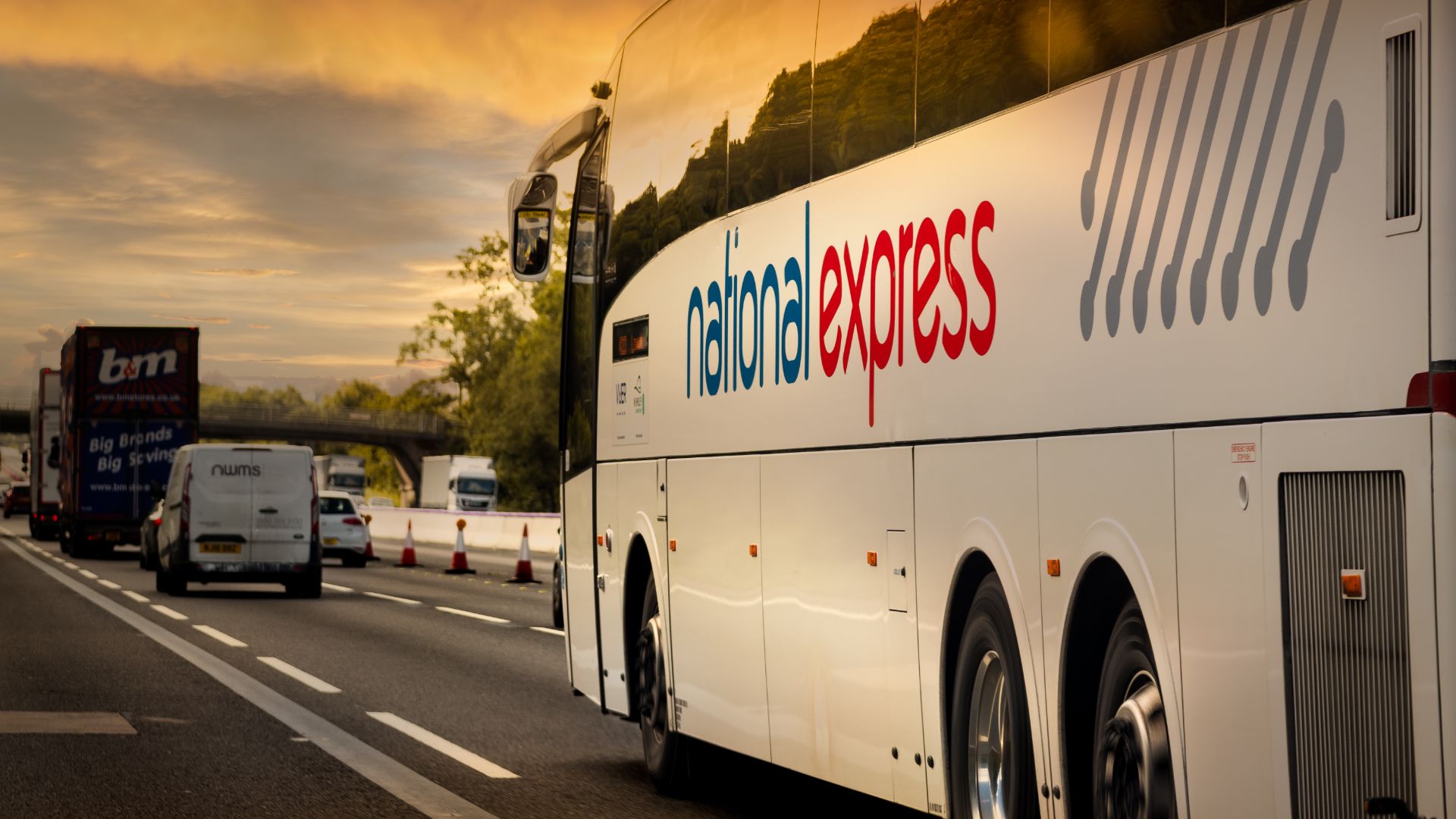
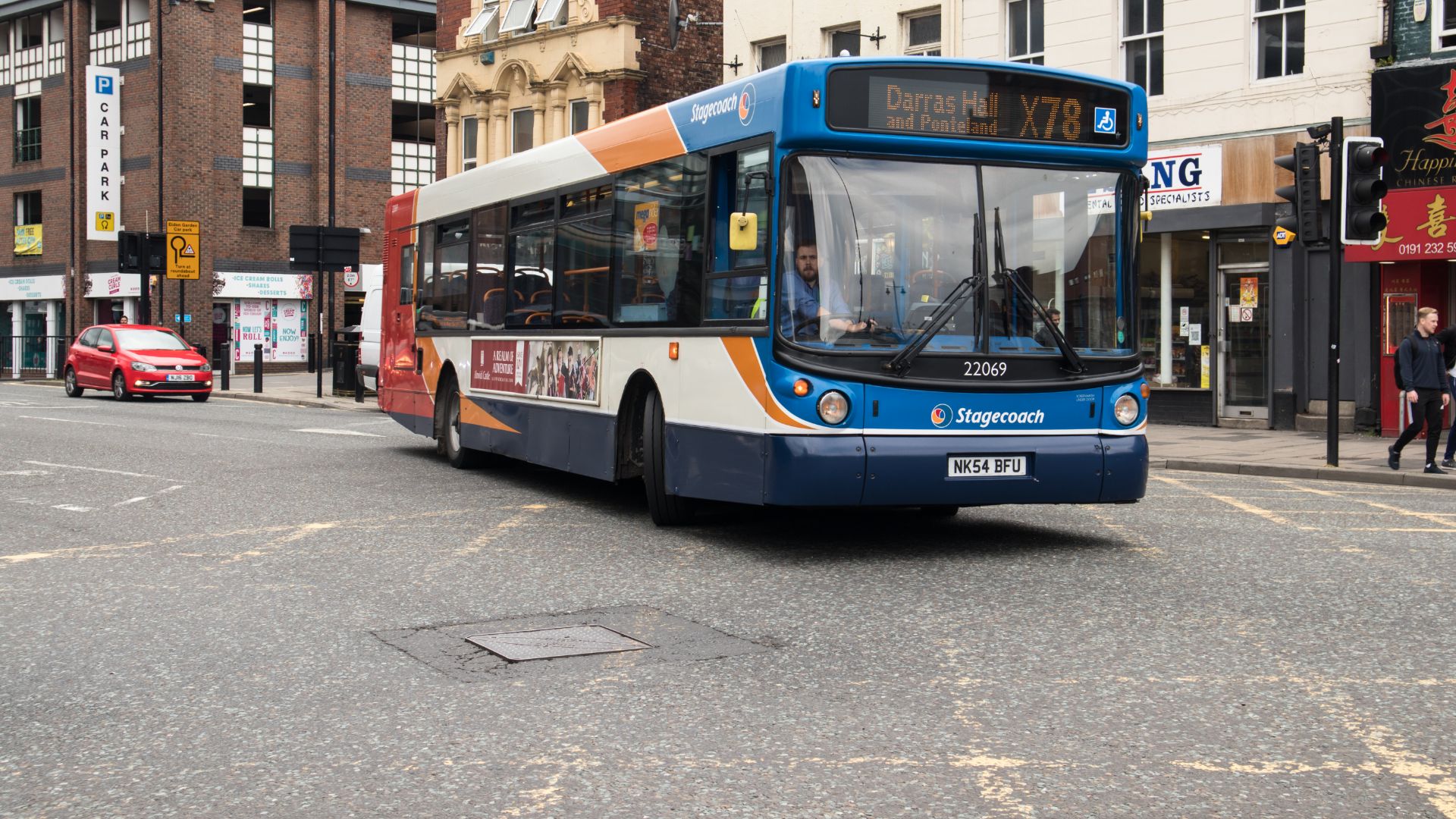
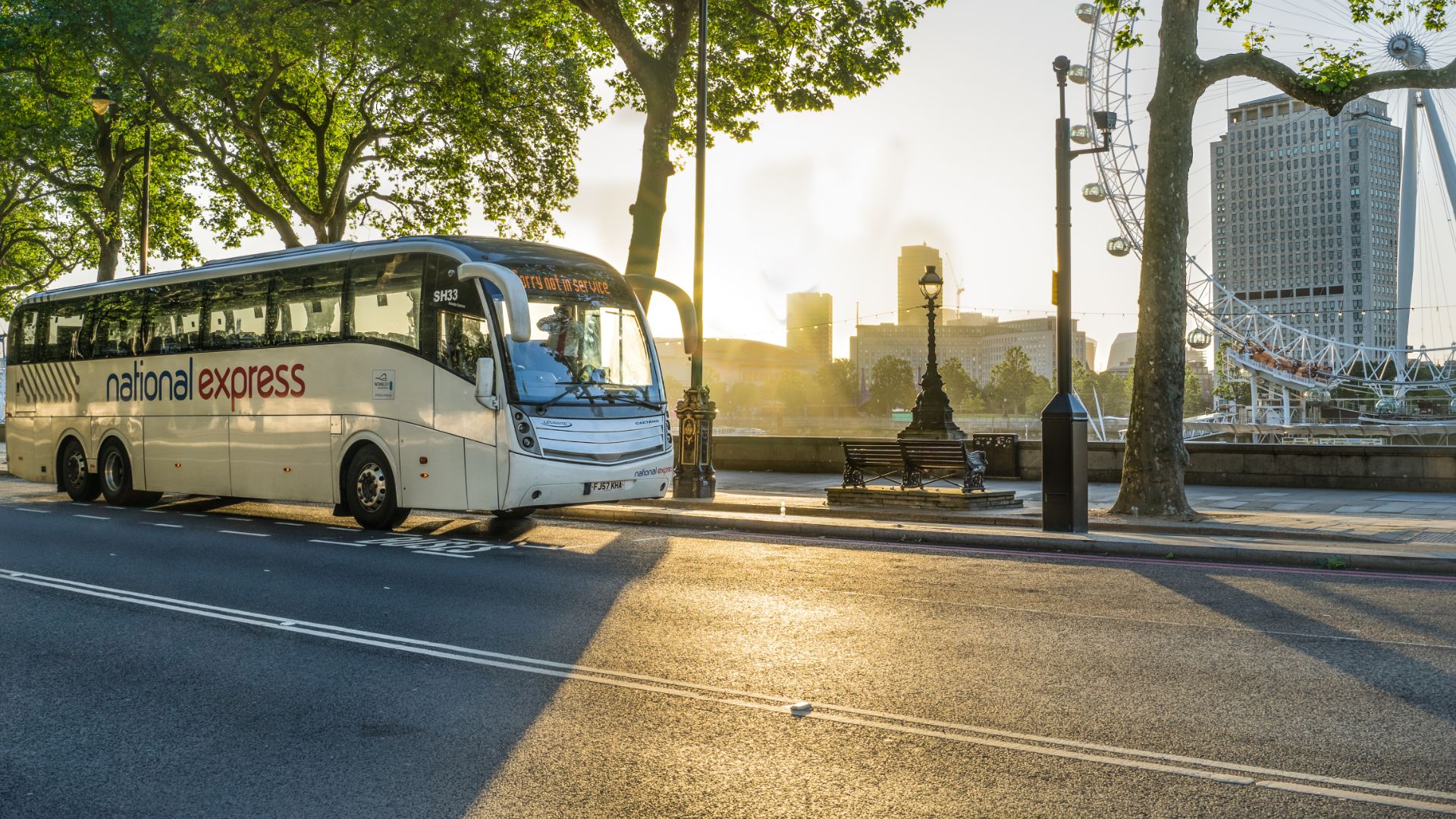
A new strategy called Moving Forward Together has been launched by the Confederation of Passenger Transport (CPT). It aims to improve bus services, lower prices and reduce emissions. It wants to achieve the latter by committing to making every new bus it buys ultra-low or zero-emission by 2025.
If you’re wondering exactly how much of a big deal that is, let us break it down for you. The CPT is made up of operators such as Arriva, National Express, Stagecoach, First Group and Go Ahead. The group represents over 95 percent of the bus industry, with the big players alongside smaller more local operations.
Emissions-related MOT failures DOUBLE since last year
“Buses are already the cleanest form of road transport and have a crucial role to play in tackling environmental issues and helping to meet important targets on improving air quality and reducing carbon emissions,” said Graham Vidler, CPT chief executive.
“With the right support from government to make the transition the bus industry will buy only ultra-low or zero emission buses by 2025, reducing CO2 emissions by half a million tonnes a year.”
That’s a lot of CO2. Not as much, however, as Vidler claims we’d save if everyone got out of their cars and onto a bus. “There would be a billion fewer car journeys and a saving of two million tonnes of CO2 a year.”
Getting people out of cars and on buses
Calls to abandon ‘private cars’ over brake and tyre pollution
It’s fine cleaning up the buses, but you have to make the service appealing. That means more competitive pricing and the right incentives. Alongside the pledge to go ultra low, the strategy wants the government’s help improving services.
That involves legitimising local services and making them more reliable. It’s also proposing reduced travel costs for job seekers and apprentices, and price capped daily and weekly ticketing for urban areas.
Vidler added: “Better bus services are the key to shifting travel habits and growing the significant economic contribution the industry makes. We know that congestion remains the biggest barrier to increasing passenger numbers in towns and cities and that many rural communities feel current bus services don’t meet their needs.
“We’ll continue to invest in better buses with better facilities and simpler ticketing. We need government to incentivise local authorities to cut congestion and work with us to examine new ways of delivering transport services that work for more isolated communities”.
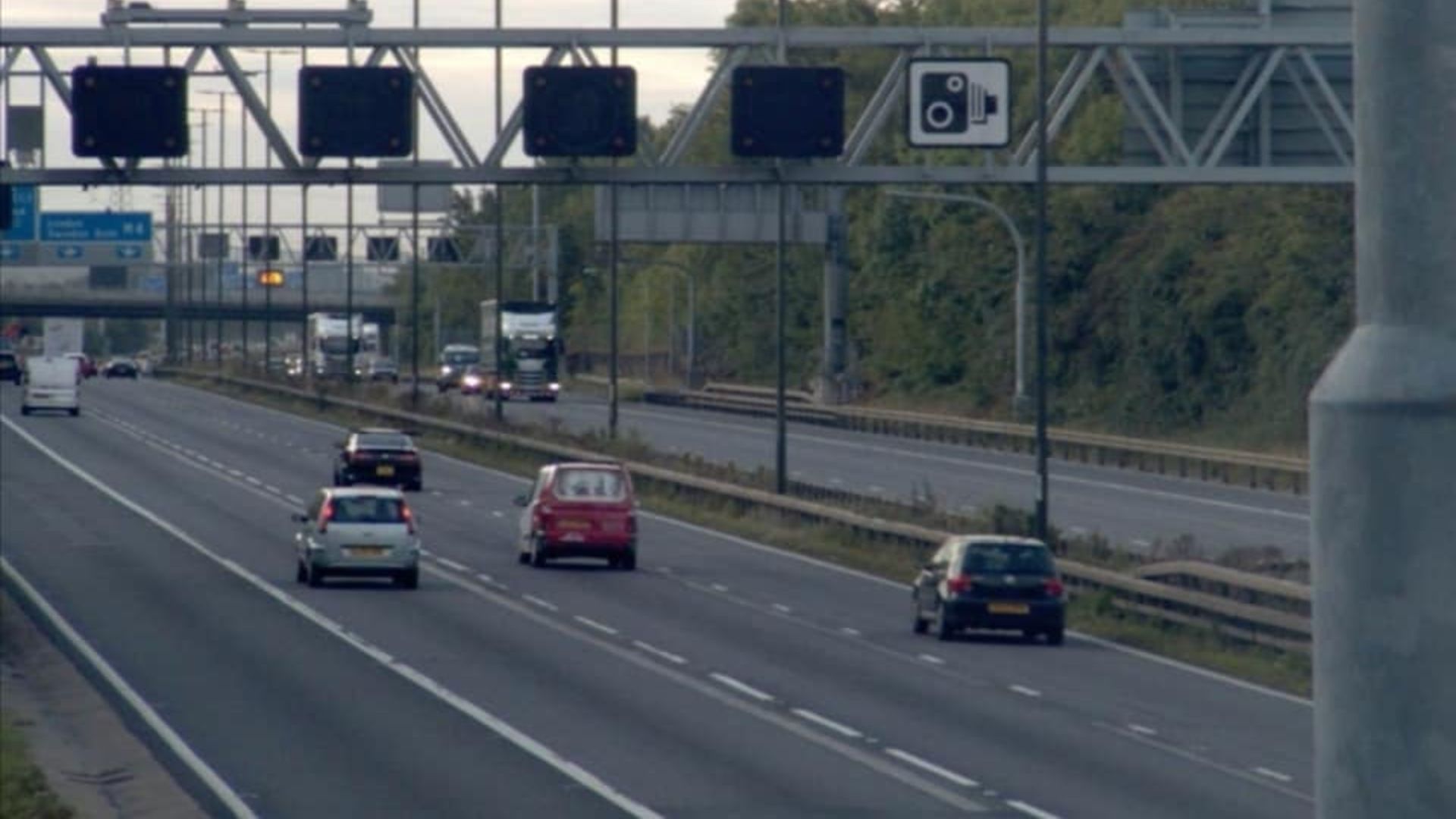
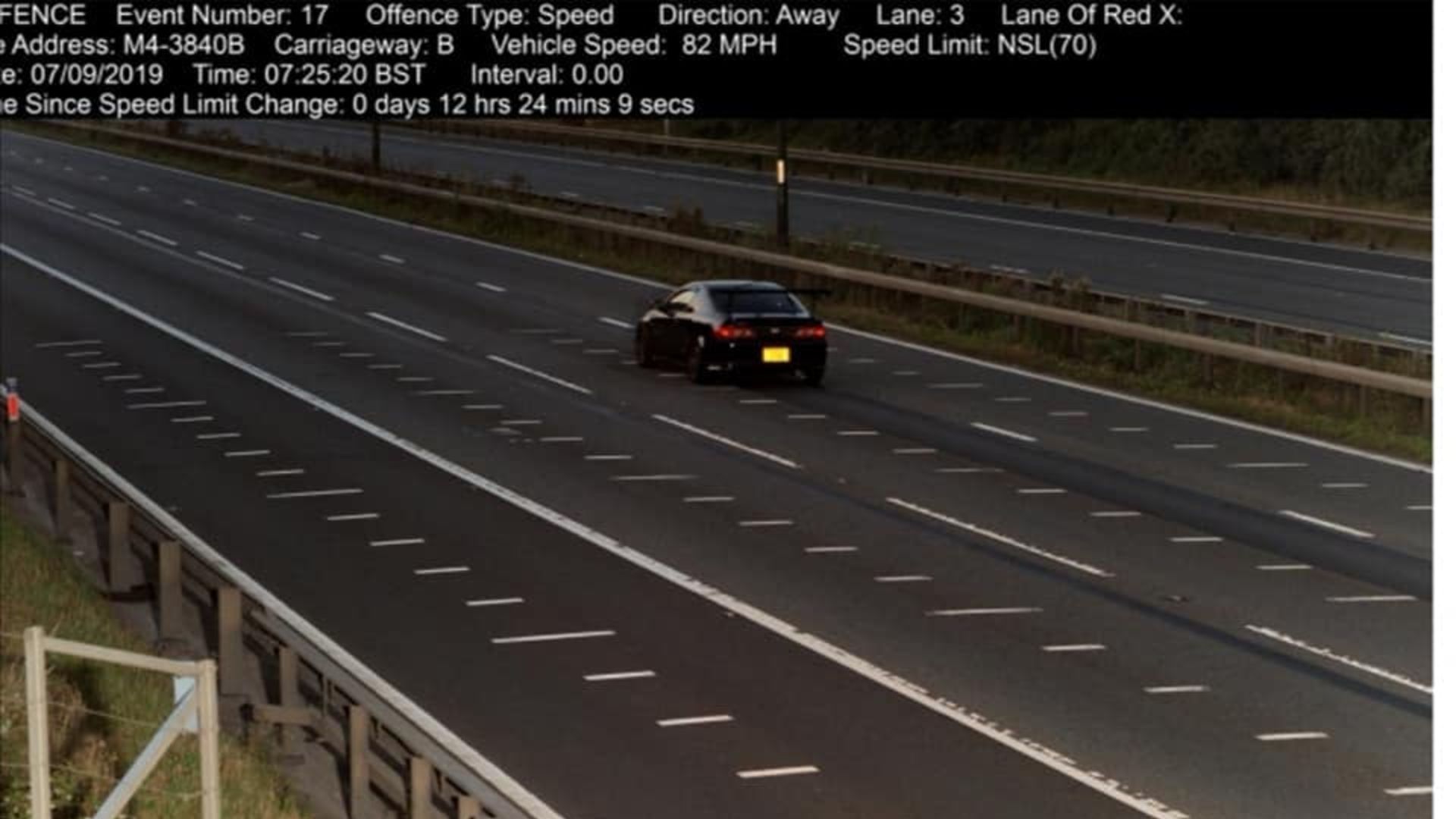
If you wanted proof that smart motorway speed cameras are always ON, even when the gantries are off, you’ve got it. Here are pictures of a Honda Integra Type R owner getting flashed under gantries that are ‘switched off’.
The driver was a customer of Tegiwa Imports. In a Facebook post, the company said “it’s the first time we’ve seen this happen. One of our good customers recently got busted by a speed camera (HADECS 3 type) on a smart motorway without a speed being displayed on the gantry!
“Luckily he wasn’t going too fast and only received a speed awareness course.”
As you can see, his speed was 82mph, so he was well above the legal motorway speed limit. That he got flashed by a camera would ordinarily come as no surprise.
What’s curious about this is the debate surrounding smart motorway cameras. Specifically, whether they operate when a speed, or any other sign, isn’t displayed on the smart gantries. Here is undeniable proof that they’re on.
Speed cameras in the UK: the truth
We’ve previously published a piece taking apart the myth of smart motorway cameras, as well as details on exactly how speed cameras in the UK work. A few key points are worth repeating.
Treat all cameras as if they’re always on
To assume that a camera is off when the associated displays are on seems daft. A blank display doesn’t mean there are no limits in place, so why would the camera turn off? A word to the wise: treat any and all cameras as if they’re on.
There was a rumour that motorway speed cameras would get you at 72. While you should always stick to prescribed speed limits, this isn’t the case. There is leniency based on discrepancies in indicated speed.
Tolerances – ten percent at most
The official line is that you should stick to prescribed speed limits. For those that don’t want to take that advice, heed our warning: you’ve got ten percent on top of the speed limit, with two or three miles per hour on. Our advice is stick to the ten percent if you must exceed the limits. That’s 55, 66, 77.
Like the gentleman in the 82mph Integra Type R, venture too far beyond and you’ll be made the example.
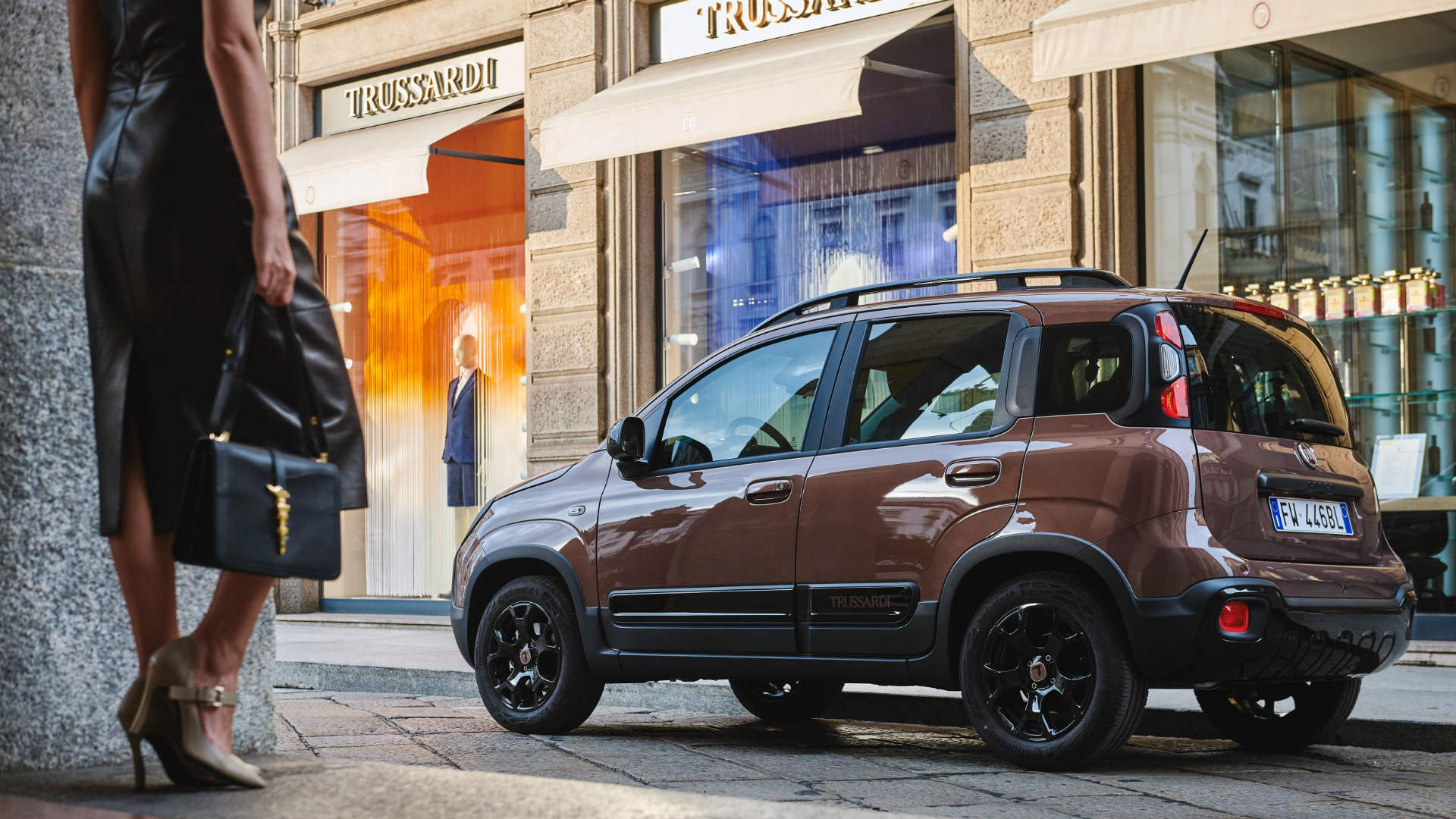
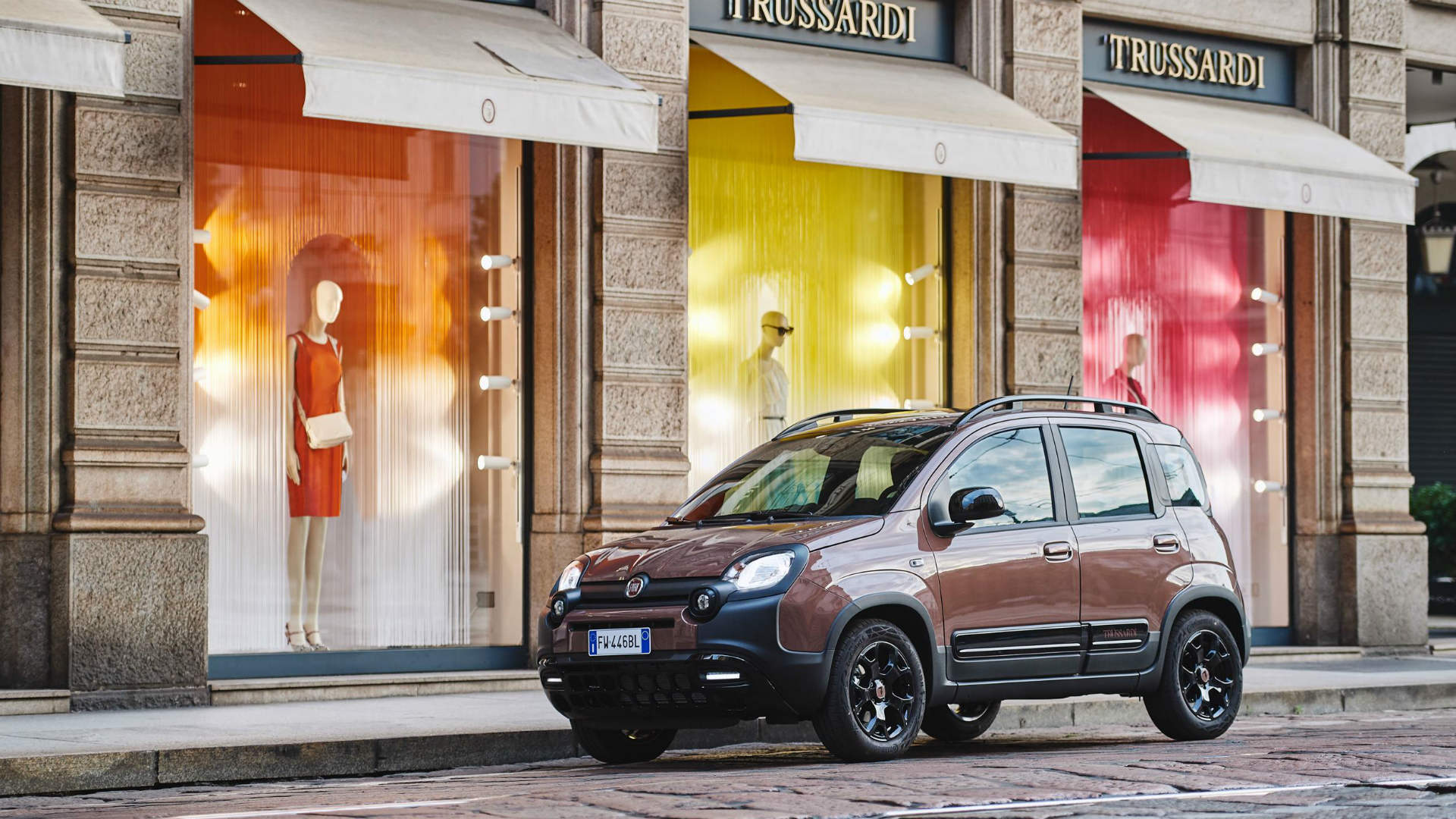
The Italians know a thing or two about fashion. They’ve also pretty good at building small cars. So the Fiat Panda Trussardi should be a match made in heaven.
Cynics might suggest this fashionable makeover is little more than an attempt to mask the zero-star Euro NCAP rating and the fact that the current Panda should be considering retirement.
In fairness, the Panda wears its Trussardi clothing well, although what we know about fashion can be written on the back of an M&S receipt for a pair of beige slacks.
It costs £14,060, which is a lot for a Panda, but fashion doesn’t come cheap, darling.
Besides, thanks to its faux-SUV styling, it looks well equipped to deal with a rumpus in Rome, a melée in Milan and a near-miss in Napoli. Other Italian cities are available.
A luxury Panda?
Further enhancements include black roof bars, mirror caps, 15-inch alloys and skid plate, plus a Caffé Italiano Brown colour, which is available in matt or metallic finishes, baby.
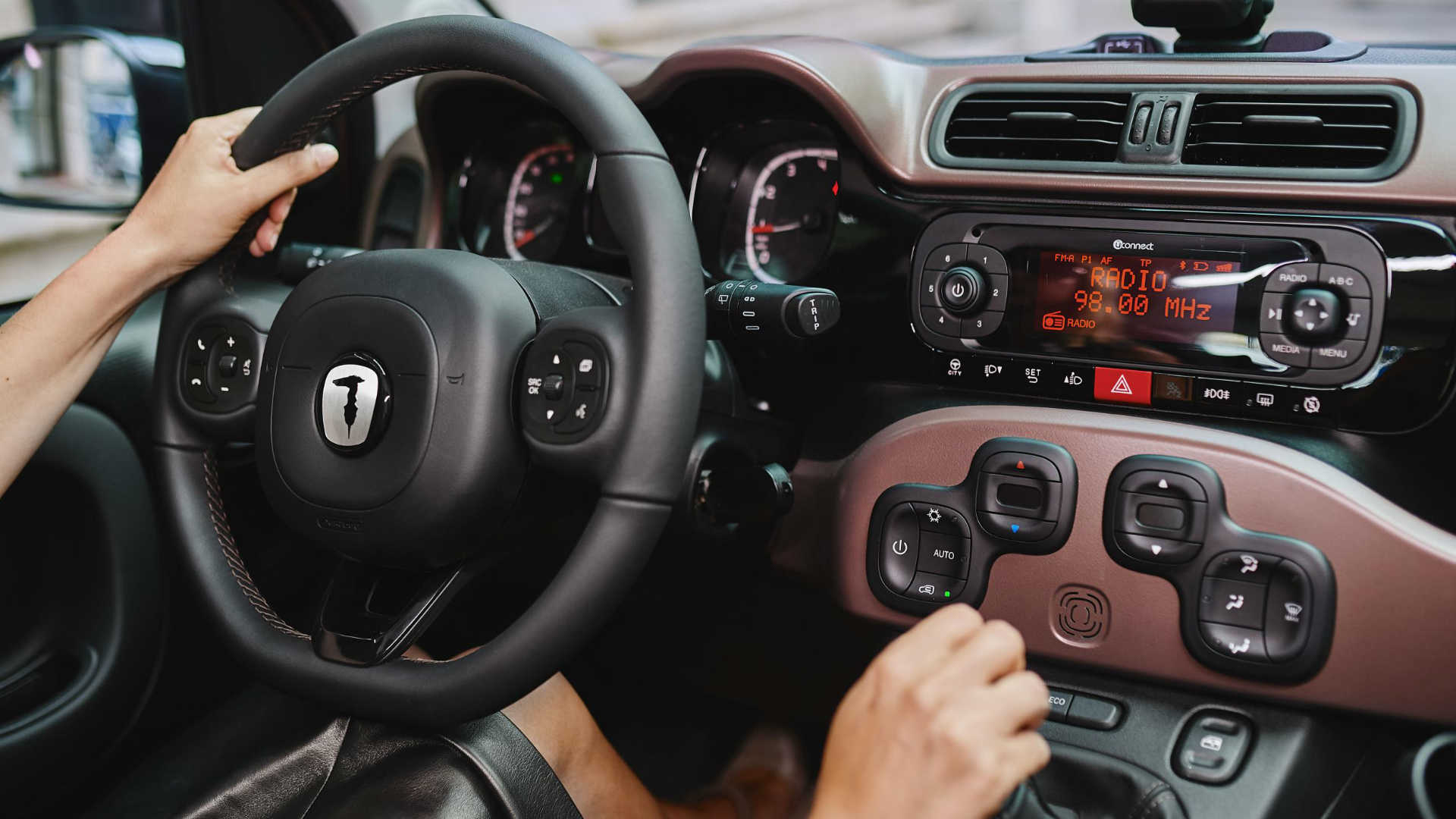
There’s a smattering of Trussardi logos, including, for the first time, one in the centre of the steering wheel. Still, according to Fiat this is the first ‘luxury Panda’. Does the world need a luxury Panda?
The world of fashion is far too highbrow to concern itself with the oily bits, but the Panda Trussardi is powered by a 69hp 1.2-litre engine mated to a five-speed manual gearbox. City Brake Control is an option (although it’s arguably a must-have in Rome).
Olivier Francois, president of Fiat brand, said: “Panda can boast 39 years of success and has been the most popular car in Italy for six years. It has been the best-selling city car in Europe since 2003. In total, 7.5 million units have been sold, of which five million are still on the road.
“It is also a record-breaker. It was the first 4WD city car, the first small car to fit an automatic transmission, the first urban SUV and the first car to climb Mount Everest. Today, we have the first ‘luxury Panda’, the Panda Trussardi.”
Tomaso Trussardi, CEO of Trussardi, added: “Today, Fiat Panda is wearing the Trussardi style and turning itself into a contemporary and functional car with great attention to detail. I am very satisfied with this collaboration and thank the Fiat team for having believed in this project with us.”
The Fiat Panda is available in showrooms (and on catwalks) now.
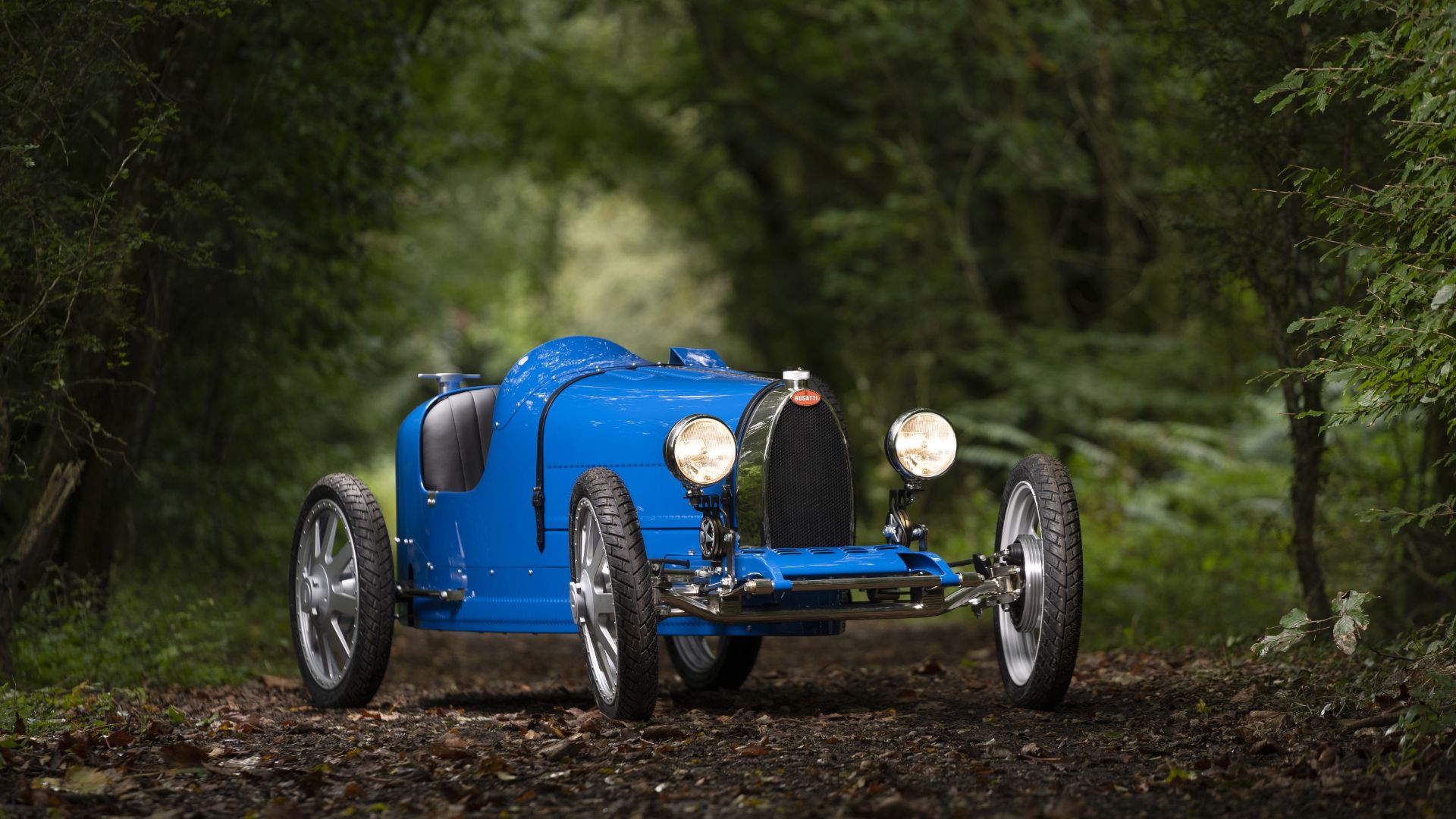
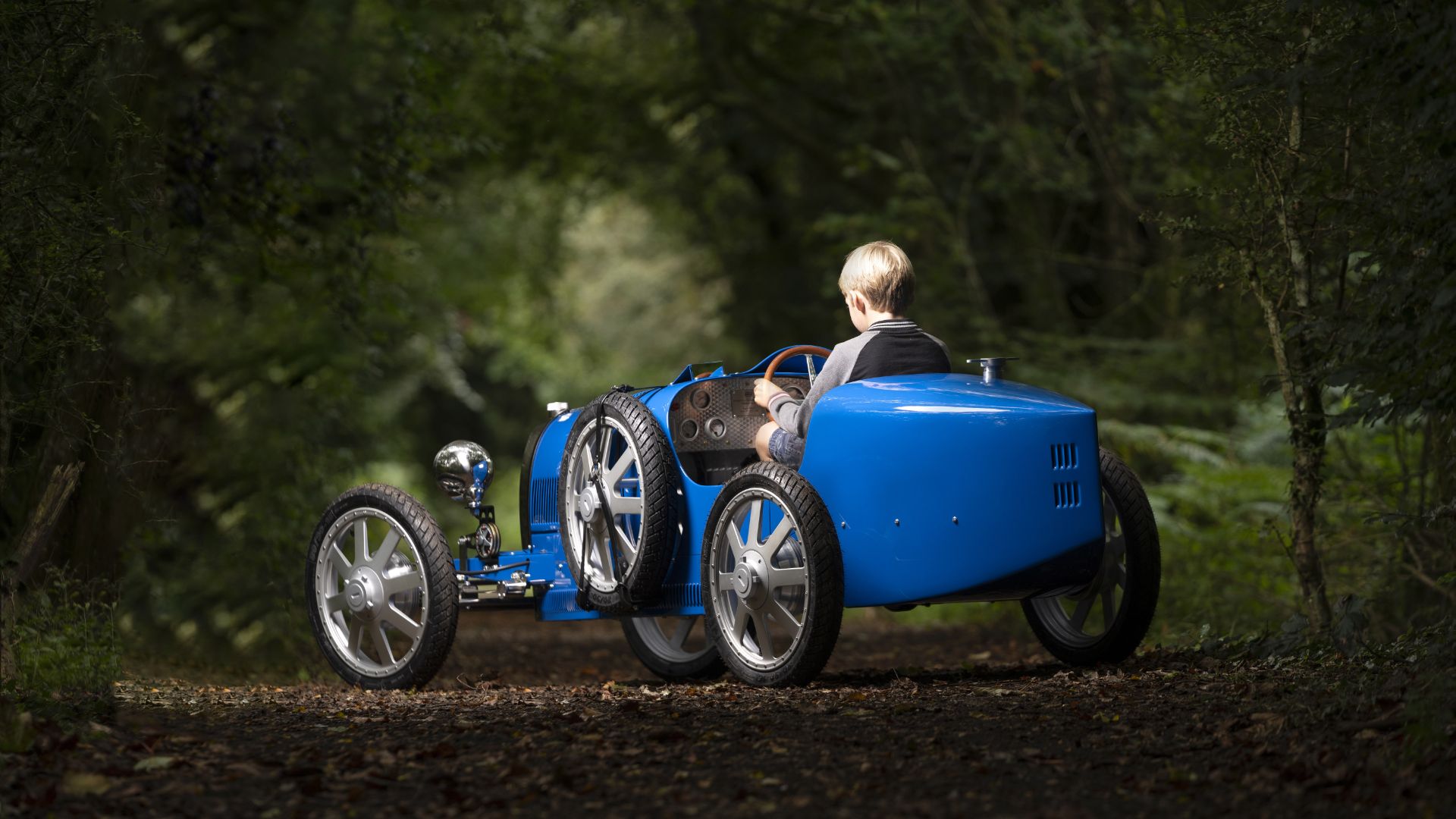
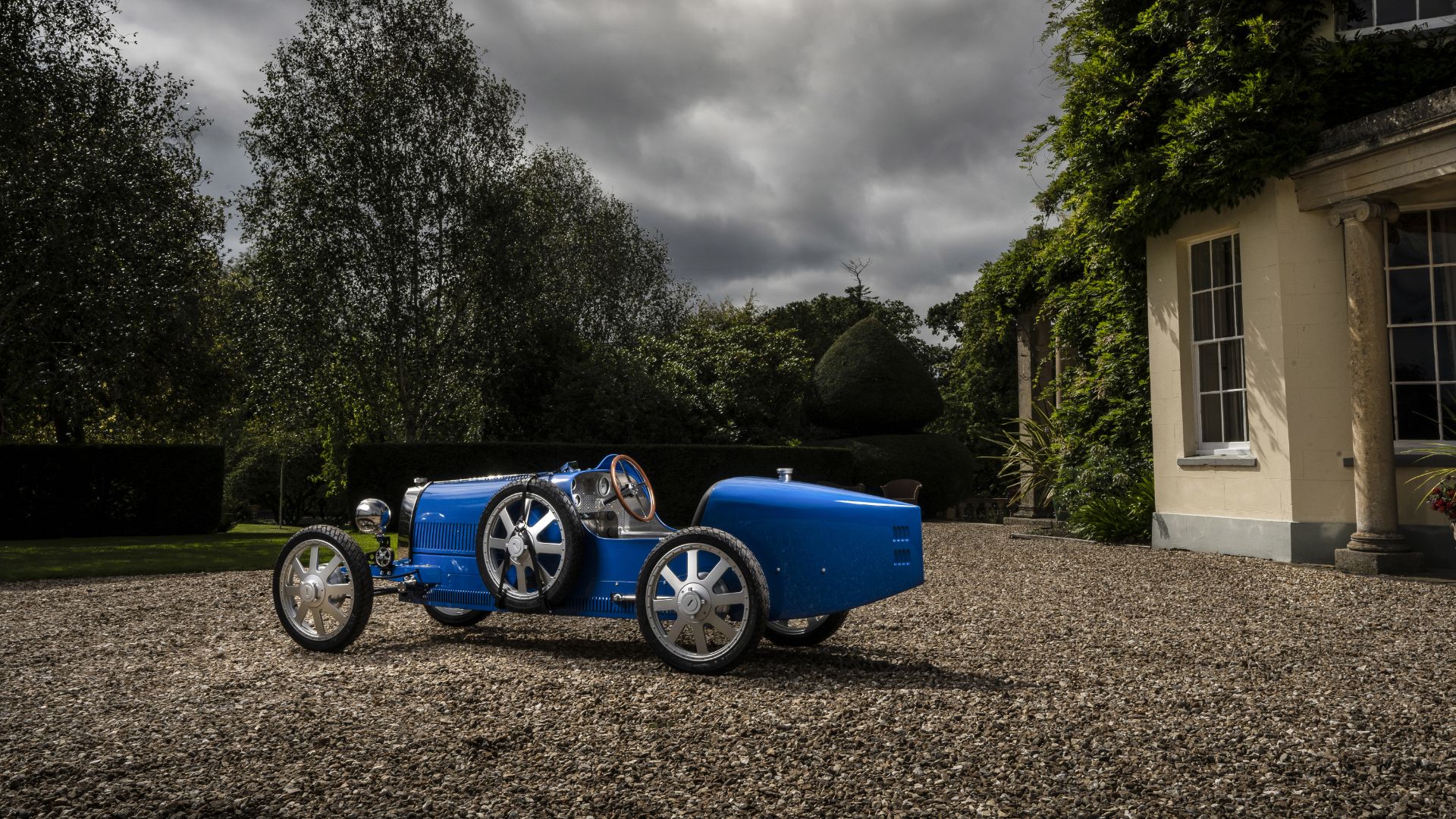
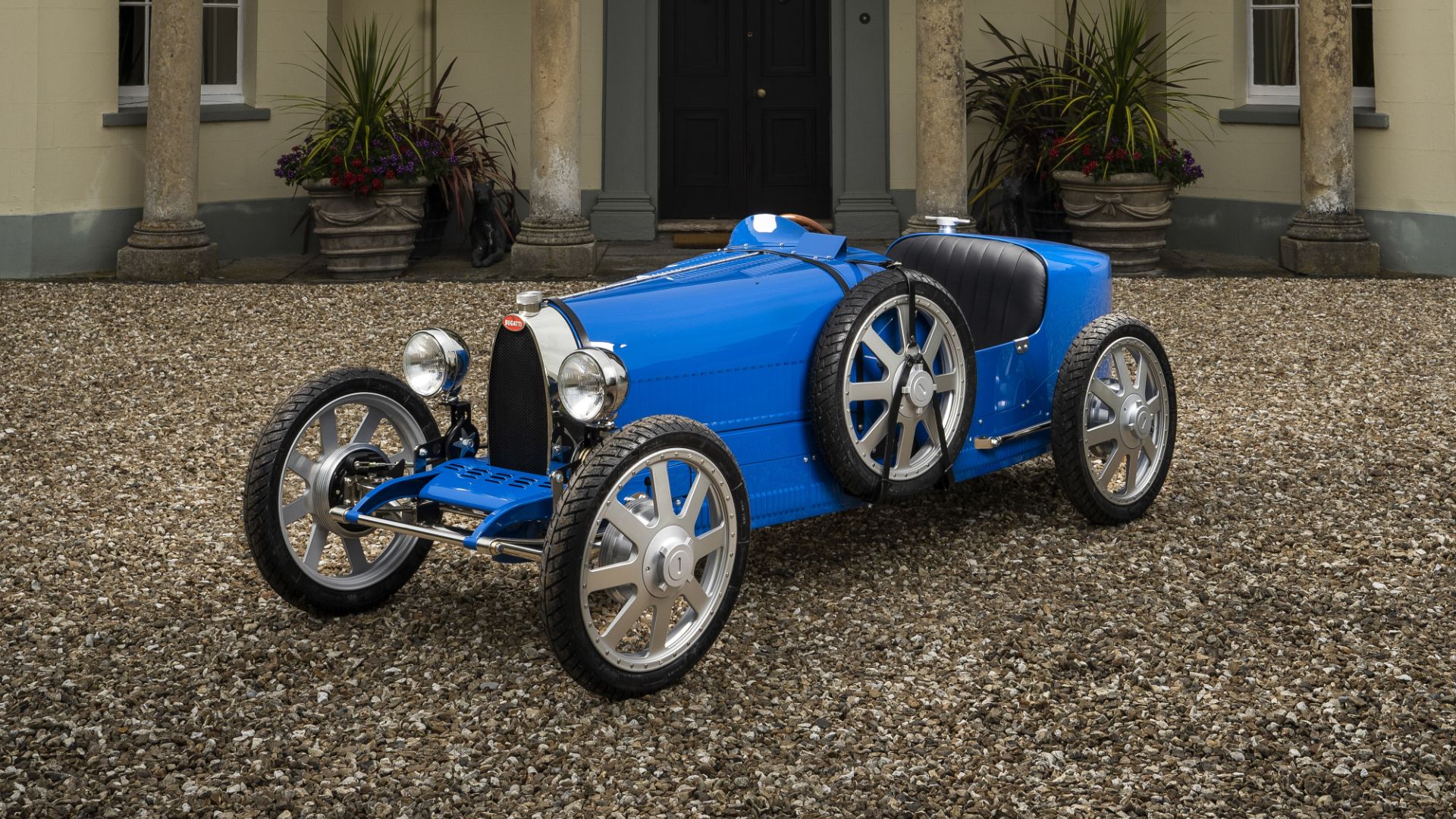
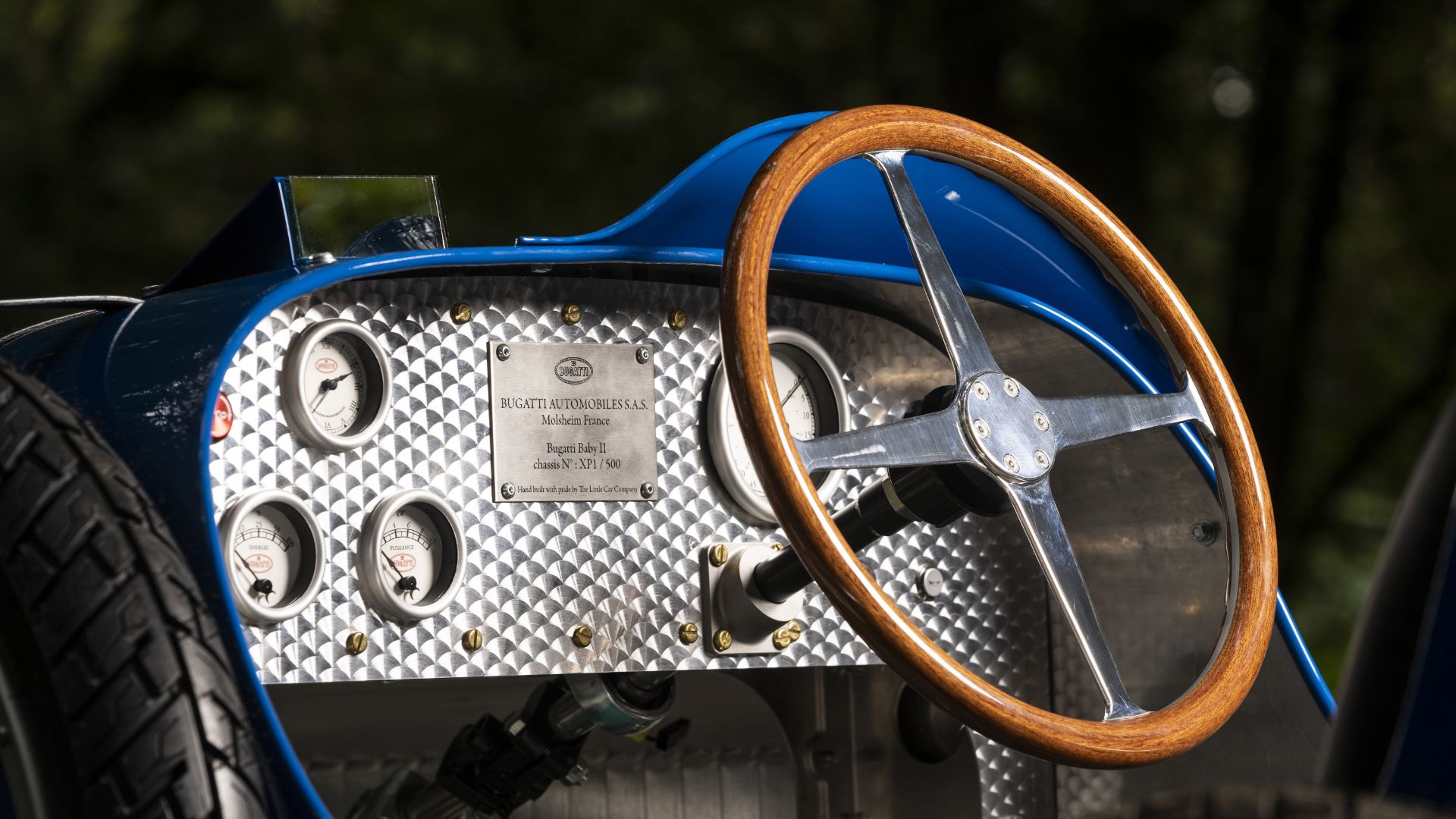
Bugatti’s 110th birthday present to itself is a very special recreation. It’s not the sort of thing you’ll find gathering dust in an underground collection, however. Meet Baby II, the second scaled-down Bugatti for kids, that’s a 75 percent scale replica of the Type 35.
“When a company with such a colourful and proud history as Bugatti turns 110, you can allow yourself to look into the rearview mirror a little bit more than you usually would,” said Stephan Winkelmann, President of Bugatti.
“Thus, it is only fitting for our anniversary year to revive the Bugatti Baby.
“The Bugatti Baby II has grown up to be more of a teenager now, and I must say I’m very excited to see it drive around on the Bugatti premises in Molsheim.”
Bugatti partnered with The Little Car Company to bring this next development of the baby to life. The XP1 prototype is now ready for testing by VIPs at Bugatti’s Molsheim home.
This iteration is a fair bit bigger than the 50 percent scale model revealed at Geneva. As a result, it can now take older drivers and passengers now, too.
It has got a sliding pedal box to accommodate people of all sizes, so more senior family members can come along for the ride.
You won’t find a historic straight-8 or a monstrous quad-turbo W16 under the bonnet of this miniature from Molsheim. The Baby II is currently the only electric Bugatti. It packs lithium ion batteries and even has regenerative braking.
Still true to the Type 35 are the iconic wheels, and the four-spoke steering wheel. Where once there was a rev counter, oil and fuel pressure gauges, there is now a speedo and battery level indicator.
There’s also a power gauge that tells you how much power you’re using. Just like in a Veyron or a Chiron. The fuel pump has been repurposed as a forward and reverse selector. A horn, rear-view mirror, handbrake and headlights also feature.
Performance is impressive for what it is. ‘Child mode’ sees the top speed limited to 12 mph, while ‘adult mode’ gets you up to 27 mph. Power for the respective modes is a respective 1.3 horsepower and 5.3 horsepower.
Very cool is the fact that some will come with a Veyron and Chiron-style ‘Speed Key’ to unlock even more performance. Ask for the ‘Vitesse’ or ‘Pur Sang’ specs for that.
It’s even got a limited-slip diff, which is actually a worthy addition given the all-electric torque. The larger 2.8 kWh battery will give the baby a range of over 20 miles, while there is also a 1.4 kWh pack available.
JCB is now building its electric digger
Those buying a Baby for their little escape artist will take comfort in knowing that you can also get a remote control, to shut the baby off from a range of up to 50 metres.
As per the reveal at Geneva, 500 are to be built and they all sold out within three weeks of the show. For your minimum of €30,000, you can get your Baby II in a variety of colour options, though French Racing Blue is the standard spec. Production starts early next year.
“We’re dropping the S from SUV,” said Ineos Automotive’s commercial director Mark Tennant. “This is going to be a Marmite design, a bit anti-trend. Grenadier is going to be an uncompromising 4×4.” Sound familiar?
The event today in London, where I heard confirmation Ineos isn’t simply going to build an all-new 4×4 but is going to assemble it in Wales, couldn’t have been better timed.
Less than a week ago, I was over in Frankfurt, standing in the crowd as cheers, whoops and applause welcomed the new Land Rover Defender. That’s an icon reinvented, a 21st century version of the original. Someone I was speaking to thought it was the concept car on the stand, and gasped when I said it was actually on sale.
It’s on sale for £45k, though. The smaller 90 is going to be around £40k, and you can bet most sold will be £50k and up. It’s that sort of machine – a wonderful possession… that many may not bear to put to work.
After the original Defender died, buyers switched to double cab pickups, a market that nudges 50,000 a year in the UK. It’s these people, and not new Defender buyers, that Ineos Automotive is going after with the Grenadier.
Hence the perfect timing. Land Rover is making the future, but the Grenadier will ensure those looking to do something the Defender was originally designed for won’t be left out. Farmers will surely queue up to push the considerable design tolerances of Grenadier. Fleets such as the Forestry Commission will use Grenadier like any other tool on the job: a piece of work equipment, to respect, but not love.
Some, of course, will never see a hard day’s graft in their lives. They’ll plough posh Wilton Road in London, where you’ll find the Grenadier pub after which this 4×4 is named.
But because it’s designed first and foremost to work for a living – and because it’s likely to cost tens of thousands less than the Defender – Grenadier seems set to do just that.
In being so proudly ‘UV’, Grenadier Defender might just complement the sleek new Defender uncommonly well. It’s even going to be built in Wales. And on which Anglesey beach was the concept for the original Series Land Rover sketched out? You’ve got it.
We’ve already got one new-age Defender. We don’t need another.
But a new iteration of the original Defender, with an accessible price tag to boot? Now you’re onto something, Ineos…
A Freedom of Information request to the DVSA has uncovered the most common reasons why learners fail their driving tests.
The information, acquired by Hippo Leasing, makes for interesting reading. Topping the list was pulling out of junctions safely, causing a fail on observation. Across the country, a total of 167,100 serious or dangerous faults were issued based on this.
Observations in general got learner drivers in trouble, with attentiveness to the mirrors coming in second as a reason for failure, with 139,883 faults issued.
In third, turning right at junctions was a fault noted 77,590 times. Steering control resulted in 73,715 faults for fourth place. And traffic light responses were next, with 72,110 faults.
Learners’ inability to move off, road positioning, reverse parking and responses to road signs fill up the rest of the top 10.
Shockingly, 577 faults were issued last year because a learner’s eyesight was too poor to drive. This is tested by being asked to read a number plate from 20 metres.
As for the only fault that was issued precisely zero times? That’ll be for promptness on a controlled stop. It seems UK learners’ reaction times are on the money when it comes to the emergency stop.
“At the end of 2017, the DVSA introduced changes to the practical driving test to increase driver safety and the quality of training in light of the troubling statistic that road collisions remain the biggest killer of young people in the UK,” said Tom Preston, MD of Hippo Leasing.
“Driving test faults reflect the factors which cause the most accidents on the road. Observation is the most common factor, according to the DfT.
“So while over 167,000 learners failed their practical test last year for this very reason, it’s important candidates learn from their mistakes to keep themselves and others safe once they’re qualified to drive.”
Artist’s impression of the Ineos Automotive Bridgend factory
Sir Jim Ratcliffe, Britain’s richest man, has given the green light to a tough, go-anywhere 4×4 called Grenadier that will be built in Wales and debut in 2021.
The new Ineos Automotive Grenadier, a vehicle inspired by the demise of the original Land Rover Defender, will create up to 500 jobs at a new factory in Bridgend. Ford currently builds engines in the region, but is closing the site in September 2020.
Ineos Automotive hopes to tap into this automotive expertise in recruiting for its new greenfield factory.
Prime Minister Boris Johnson has welcomed the announcement, calling it a “vote of confidence in UK expertise [which] keeps our status as pioneers of new vehicle technology”.
Ineos Group chairman Sir Jim Ratcliffe said the decision to build the Grenadier in the UK “is a significant expression of confidence in British manufacturing, which has always been at the heart of what Ineos stands for”.
The Grenadier name has been chosen via an online poll. The Grenadier pub on London’s Wilton Road was where Sir Jim first announced the new project to the world.
A total of £600 million will be invested in Ineos Automotive to create the Grenadier. The company aims to sell it globally as well as in the UK, with the U.S. a particular focus.
In a private briefing, commercial director Mark Tennant said the new 4×4 “will take the S out of SUV”. It will be a genuine utility vehicle, and there will be nothing sporting about it.
He told Motoring Research it will not be as cheap as the original Land Rover Defender, but won’t be as expensive as the new Defender, which is priced from £45,000 in launch 110 guise.
The final design, which has already been frozen, will be revealed in 12 months’ time, he said. “We will make a virtue of boxiness. This vehicle is about simplicity, of ‘less is more’.
“It has been very well received in focus groups.”
Ineos Automotive wants to make 25,000 Grenadiers in the medium term. Building up to this figure will take a few years. Bosses admitted they could grow this further if there was strong market demand for the new 4×4.
An ‘open source’ approach to engineering sees the firm working in partnership with engineering specialists. BMW is supplying latest-generation 3.0-litre turbo petrol and diesel engines, while a company in Austria is developing the chassis.
Ineos Automotive is building its own box frame ladder chassis, though, investing in a new site in Portugal to assemble and paint the bodies. Up to 500 jobs will be created there, too.
The bodies will be shipped to Wales, along with engines from Austria and other parts from European suppliers, for full assembly in Bridgend.
In making the project public today, Tennant said it would enable the company to start approaching local suppliers, to see if they could produce parts for the new Grenadier.
Localising the production of, for example, seats would help further grow the jobs creation potential in the UK, and south Wales in particular.
The Grenadier will be an ultra-tough 4×4 with a one-tonne payload and 3.5-tonne towing capacity. The company hopes to draw those who need a genuine working vehicle – such as farmers and the Forestry Commission – who are underserved by new vehicle options.
The demise of the original Land Rover Defender left a gap in the market that is currently being filled by double cab pick-ups. Ineos Automotive says the Grenadier will be more capable and better-optimised to hard work.
In the U.S., Tennant feels it can compete with America’s best-selling vehicle, the Ford F-150 truck, as well as the more spiritually-aligned Jeep Wrangler and Gladiator.
The company is already planning for the future. “This will be the first Ineos Automotive vehicle, but not the last,” said Tennant.
He said the company is working flat-out to a 2021 reveal. Ineos sponsors the Americas Cup boat race and “it would be nice to have prototypes to use in Auckland in March 2021”.
It is even planning zero-emissions alternative fuel versions – not battery electric vehicles, but using hydrogen fuel cells. “We could have one by 2026,” said engineering director Dirk Heilmann. “Will we, though? I can’t say… although the technology [to do it] is already here today.
“We are already Europe’s largest producer of hydrogen,” added Tennant.