Home Blog Page 232

More motorists risk car insurance ‘loyalty tax’

0
September is a peak month for car insurance renewals

This September’s peak car insurance renewal season could be busier than ever – and motorists who let their policy auto-renew rather than checking prices could be out of pocket by up to £289.

Called the auto-renewal ‘loyalty tax’, the number of motorists allowing auto-renewal is actually on the increase.

Research shows the number of auto-renewals has risen 40 percent over the past six months alone, to the highest level since early 2017.

GoCompare is now urging the 6.7 million motorists at risk of paying the car insurance loyalty tax to shop around and check if they could get identical cover for less money.

Lee Griffin, CEO and founder of GoCompare, said: “Our research shows that millions of drivers are not actively engaging with the renewal process this year, potentially leaving themselves hundreds of pounds out of pocket by effectively paying a ‘loyalty tax’.   

“We know insurers are helping those in extreme financial difficulty and, in these circumstances, it could be in the insured’s interest to remain with their current provider. 

“But drivers who are still paying their premiums really need to shop around this year to see what other insurers are willing to offer them.”

Lockdown saw fewer cars on the road, resulting in fewer accidents and claims which led one car insurer to issue automatic refunds.

This trend has continued since lockdown restrictions eased.

However, warned Mr Griffin, while this may mean some motorists are pleasantly surprised to find their auto-renewal quote coming in cheaper than last year, he still urged motorists to shop around.

“That is the signal that they could probably get an even better deal elsewhere.”

Top tips to get a better car insurance deal

  • Never accept your auto-renewal quote, even if it is cheaper than last year, without first checking prices
  • Give yourself at least a week ahead of your renewal date to shop around
  • Make sure you read the small print of new policies, so it is a like-for-like policy with no excess charges, penalties, exclusions or terms and conditions

For those who are facing financial difficulties and whose car insurance is coming up for renewal, GoCompare has also published some specific advice to help, including guidance from regulator the FCA.

ALSO READ

How to save money on car insurance

Popular car insurance myths: busted

What do the car insurance write-off categories mean?

Advertisement

First look at the new 2021 Dacia Sandero range

0
Dacia Sandero and Sandero Stepway

Dacia is preparing to launch all-new versions of the Sandero and Sandero Stepway and has revealed first images of the third-generation models.

Long famous as being Britain’s cheapest new car on sale, Dacia has given us our first look at the new Sandero range ahead of announcing further details – including an on-sale date – later in September.

The Sandero has been a top-10 best-selling car in Europe since 2017.

Dacia says the new Sandero has a more steeply-raked windscreen, lower roofline and more streamlined appearance.

Dacia Sandero and Sandero Stepway

The wheels now fill out the arches better, for a more grounded appearance, and it has modern features such as a ‘bee-sting’ aerial at the rear of the car, rather than today’s old-fashioned antenna.

The crossover-style Sandero Stepway – the most popular Dacia in the UK – has a unique bonnet with bulging domes, and a more rugged appearance.

Both Sandero and Sandero Stepway have a distinctive Y-shaped LED light signature. Neat LED tail lamps are also more streamlined.

Dacia isn’t revealing any information about the interiors yet: today’s car, although roomy, has a particularly dated dashboard, so buyers will be hoping for a big step forward.

The firm does say the new cars will be ‘smarter, more accessible and more Dacia’.

Dacia Sandero, Sandero Stepway and Logan

There will also be a new Logan saloon, although this is unlikely to go on sale in the UK. Dacia hasn’t yet confirmed if there will be a replacement for the Logan MCV small estate.

More details will be announced online on September 29th.  

The introduction of the new Sandero follows the 2018 launch of an all-new Dacia Duster family-sized crossover – which, despite its extra sophistication, retained its title of being Britain’s cheapest SUV.

The hope will be that Dacia can repeat this achievement with the all-new Sandero.

ALSO READ

Dacia Sandero Stepway Bi-Fuel (2020) review

How Dacia Bi-Fuel LPG cars will save you money

2018 Dacia Duster UK sales confirmed

Advertisement

Zap-Map adds payment service to cure ‘charger anxiety’

0
Zap-Pay

Zap-Map, the popular electric car chargepoint location app, has launched a new in-app payment tool called Zap-Pay to make charging an EV simpler and more seamless.

There are currently more than 40 individual charging networks operating in the UK. Most require individual sign-ups, meaning electric car owners have to use multiple apps and cards.

Charge anxiety’, or concern about being able to access the right public charge point when needed, is an issue for almost 7 in 10 EV drivers, according to Zap-Map research.

Zap-Pay will allow EV drivers to search, plan and pay, all in one app. Similar to using a Tesla Supercharger, drivers simply plug in, says the firm: the app manages the rest.

The first network to join the new cross-network payment service is Engenie.

The firm says “a wave of network partners” will follow in the autumn.

It will be rolled out “across UK networks in 2021, providing unique and unrivalled coverage across the whole country”.

Zap-Pay

‘As easy as filling up’

Government ministers have been critical of how complicated it is to charge an electric vehicle. “It should be as easy for drivers to charge their vehicles at public charge points as it is to pay for petrol or diesel,” said transport minister Rachel Maclean.

“As the EV market continues to go from strength to strength, journey planning and paying with one app or membership card must also follow – Zap-Pay will help do just that.”

Last week, Mike Hawes, chief executive of the Society of Motor Manufacturers said most research surveys suggest a key concern of potential electric car owners is charging.

“It should be as easy to charge as it is to fill up. We need a visible, reliable and interoperable network.”

Ben Lane, joint MD at Zap-Map, said that “no one should need dozens of accounts, apps and cards to charge their car.

“Providing a seamless charging experience is essential to accelerate this shift [to EVs].”

Zap-Map has been downloaded more than 250,000 times and a survey by Engenie showed 90 percent of drivers regularly use it.

“Zap-Map is the most used and trusted EV charger mapping tool in the UK,” said Engenie CEO Ian Johnston. “It is perfectly placed to bring this game-changing solution to market.”

Discover more about 100% zero emissions cars on Motoring Electric

ALSO READ

1 in 3 motorists ‘optimistic’ about buying an electric car by 2025

Electric car green number plates to launch in autumn

Does Tesla want to become a UK electricity provider?

Advertisement

How smoking affects the value of your car

0

No smoking sign

Everyone knows smoking is bad for your health. But when it comes to cars, it’s also bad for your wealth. A heavy smoker may lose up to £2,000 when they part-exchange a car at a dealer.

This is according to vehicle data specialist HPI, which says dealers take a dim view of smoke-soiled cars. The smell is one problem, but cigarette ash can cause damage to the seat upholstery and trim.

Fernando Garcia, consumer director at HPI, said: “The first thing a car dealer will do when looking at a car being sold by a smoker is to knock down the price of the part-exchange.

“That’s simply down to the fact that a car for part-ex has to be made fit for resale and this becomes considerably more difficult and expensive when that car was previously driven by a smoker.

“The two main impacts smoking has on a vehicle are physical damage to the interior and smell, something many smokers are often unaware of – or think can be resolved by using an air freshener.“

Resale values up in smoke

dirty car interior

Cleaning a car owned by a smoker can cost anything up to £150, but in severe cases, the internal fabric and headlining may need to be removed. This can cost hundreds or thousands of pounds, depending on the smell and type of vehicle.

Repairing any marks, stains or burns will add to the cost, reducing the resale value still further.

Garcia added: “Some dealers tell us they won’t even buy cars from smokers because of the time and expense of cleaning up a car and removing unpleasant smells. 

“Unless consumers want to see the residual value of their vehicles literally go up in smoke, I’d urge them to try to quit or at the very least refrain from smoking inside the car when driving.”

Smoking in a vehicle: the law

smoking in a car with a child

It has been illegal to smoke in a vehicle with anyone under the age of 18 since 2015, with the law introduced in England and Wales to protect young people from the dangers of second-hand smoke.

Both the driver and the smoker could be fined £50, and the law applies even if somebody is sat in the open doorway of a vehicle.

The law does not apply to e-cigarettes, a driver aged 17 if they are alone in the car, or a convertible with the roof completely down.

ALSO READ:

How to find the cheapest petrol and diesel near you

How to make your car last longer

How to prevent catalytic converter theft from cars

Advertisement

Used car prices in largest-ever monthly increase

1
DS Certified used cars

Used car prices are continuing to rise with Auto Trader figures showing a 6.1 percent increase in the average retail price of a secondhand car during August.

This is the largest monthly price increase ever recorded, and the fifth consecutive month of growth in 2020.

It means the average asking price of a secondhand car in the UK now stands at £13,705.  

Analysts add that during August, there were fewer diesel cars, automatic cars and vehicles aged under one year in the marketplace.

This actually helped slow down the rate of price growth – without these challenges, it would have been higher still.

“Over the last five months, we’ve observed a very positive trajectory for used car prices, driven largely by supply challenges and extremely strong consumer-led demand,” said Auto Trader insight director Richard Walker.

Mr Walker said that although some of the supply challenges are beginning to ease, strong consumer demand means that “whilst the trajectory may begin to level off slightly, we’re confident prices will remain buoyant over the coming months.”

Demand higher than UK population

Demand on Auto Trader was up a hefty 30.5 percent last month, with 67.1 million visits – more than the total population of the UK.

Petrol cars are proving particularly popular, with a 27.4 percent increase in demand, while diesel car demand rose 19.3 percent.

Surprisingly, demand for electric cars has actually fallen below supply, which saw prices actually decline 5.2 percent last month.

This is the biggest monthly fall in electric car prices in almost five years.  

The average used electric car now cost £25,880, compared to £12,389 for a petrol car.

This “suggests car buyer are reverting to the type of vehicles they are familiar with, and what they consider to be the most affordable choice”.

Sue Robinson, director of car dealer trade body the NFDA, said robust demand was likely to continue for a number of factors “including the movement away from public transport to owned vehicles, and the increase in disposable income for a number of consumers”.

ALSO READ

Used car prices have risen for 15 weeks running

Used car sales halve due to lockdown

How to sell your car for the best price

Advertisement

New car sales stumble as buyers prepare for September spree

0
2020 Kia Niro

New car registrations were down 5.8 percent in August as buyers appeared to hold off their purchases ahead of the key 70-plate September registration change.

August is traditionally the quietest month of the year and in 2020, just over 87,000 new cars were registered.

The Society of Motor Manufacturers and Traders (SMMT) said that although private buyers declined only marginally, there were bigger falls in the fleet and business car sectors.

Registrations of electric, hybrid and plug-in hybrid cars, however, were up almost 75 percent, taking a 16.1 percent market share.

Pure electric cars alone took a 6.4 percent market share in August, up 77.6 percent.

In contrast, the downfall of diesel continued, with the fuel accounting for less than 20 percent of overall new car registrations.

“The decline is disappointing, following some brief optimism in July,” said SMMT chief executive Mike Hawes.

“However… it’s important not to draw too many conclusions from these figures alone. With the all-important plate change month just around the corner, September is likely to prove a better barometer.”

Overall UK new car registrations are down 39.7 percent year to date. This equates to around 600,000 fewer new cars sold so far during 2020.

Top 10 best-selling new cars: August 2020

Ford Puma 2020

The Ford Fiesta returned to the top of the UK registrations chart in August, with a clear lead over the next-best Volkswagen Golf.

The Vauxhall Corsa, after a few months in top spot, fell back to fifth place.

There were two surprises in the top 10 – the first appearance of the all-new Ford Puma SUV, and the Kia Niro hybrid emerging in 10th place, just 17 registrations behind the Ford Kuga.

1: Ford Fiesta

2: Volkswagen Golf

3: Ford Focus

4: Ford Puma

5: Vauxhall Corsa

6: Mercedes-Benz A-Class

7: Volkswagen Tiguan

8: Volkswagen Polo

9: Ford Kuga

10: Kia Niro

ALSO READ

1 in 3 motorists ‘optimistic’ about buying an electric car by 2025

Fuel prices are rising – but ‘not back to pre-pandemic levels’

Car insurance claims halved during lockdown

Advertisement

1 in 3 motorists ‘optimistic’ about buying an electric car by 2025

0
Vauxhall Corsa-e

More than 1 in 3 motorists say they are feeling optimistic about buying an electric car in the next five years – but almost 1 in 4 say they can’t ever see themselves owning one.

And although Britain is expected to ban the sale of new petrol and diesel cars by as soon as 2035, 44 percent of motorists believe the technology won’t be ready by then.

The figures were revealed in a survey by trade body the Society of Motor Manufacturers and Traders on British motorists’ feelings towards fully electric cars.

The contrasting views, says the SMMT, shows how huge investment by car makers into EVs is starting to bear fruit – but how much work there still is to be done, particularly with affordability and in developing the UK’s meagre charging network.

There are currently around 19,000 public electric car charge points across the country: the SMMT believes there needs to be 1.7 million by 2030, and 2.8 million by 2035, in order to give motorists confidence to make the switch.

This would cost £16.7 billion and equate to 507 new public charge points being installed every day.

Vauxhall Corsa-e power display

‘Slow lane’

Car makers are leading the charge, said SMMT chief executive Mike Hawes, “but they can’t transform the market alone.

“Until these vehicles are as affordable to buy and as easy to own and operate as conventional cars, we risk the UK being in the slow lane, undermining industry investment and holding back progress.”

The biggest barriers to motorists switching into an electric car are higher purchase prices, lack of local charging points and fear about being caught short on longer journeys.

To address affordability, the SMMT is calling for a commitment to the Plug-in Car Grant of at least six years – and the revival of grants for all zero-emissions capable vehicles such as plug-in hybrids.

The organisation also suggests making the purchase price of zero emissions vehicles tax-free.

By making the average electric family car VAT-free, and including the Plug-in Car Grant, the purchase price could be reduced by £5,550.

An all-electric SUV could be almost £10,000 cheaper.

This could drive as many as 2.4 million sales over the next five years, taking the market share of electrified cars from today’s 8 percent up to almost 30 percent by 2025.

“To give consumers confidence to take the leap into these technologies, we need government and other sectors to step up and match manufacturers’ commitment by investing in the incentives and infrastructure needed to power our electric future,” concluded Mr Hawes.

ALSO READ

What is an electric car?

Can an electric car be your everyday car?

Electric cars 2020 – which EVs have the longest range?

Advertisement

Fuel prices are rising – but ‘not back to pre-pandemic levels’

0
Unleaded petrol pump

Average fuel prices rose for the third successive month in August, with petrol going up 0.5p and diesel rising 0.3p.

However, both fuels are still 13p a litre cheaper than they were at the end of January.

RAC Fuel Watch experts are now predicting there is little sign fuel prices are returning to pre-pandemic levels any time soon.

  • RELATED: How to find the cheapest petrol and diesel near you

“We had feared prices might rise more quickly as people started driving more after the lockdown,” said RAC Fuel Watch spokesman, Simon Williams.

“So far, petrol has only gone up 9p a litre from its low of 106p a litre in May.”

Prices may even fall in the coming weeks, added Mr Williams, if fuel retailers reflect the downward movement in the wholesale price of oil. He suggested a 5p a litre fall in the price of both petrol and diesel.

The average price of a litre of unleaded is 114.9p, and diesel is 118.5p.

Motorway fuel price surprise

Motorway fuel prices have, surprisingly, bucked the UK trend.

They are now only 10p a litre higher than the UK average, compared to a 20p a litre difference in January.

And even this is 5p a litre lower than the average over the past half-decade.

“It was positive that motorway fill-ups remained more reasonably priced than they have been in the past, with service station retailers apparently taking not as much margin as they have in the past,” said Mr Williams.

He pointed to Moto’s trial with selling fuel only a few pence a litre above supermarket prices, traditionally the lowest in the UK.

Although it’s unlikely the trial signals an industry-wide change in direction for motorway fuel retailers, “it won’t have gone unnoticed by its competitors”.

Could motorway fuel prices finally start becoming more competitive and become convenient go-to filling destinations of their own? Let us know in the comments below.

ALSO READ

How to prevent catalytic converter theft

The cars that go furthest with the fuel light on

How to save fuel when driving

Advertisement

Car insurance claims halved during lockdown

0
Isuzu D-Max car crash

New figures from the Association of British Insurers (ABI) show a dramatic fall in car insurance claims during the 2020 coronavirus lockdown period.

Between April and June 2020, motor insurance claims were down 48 percent, from approximately 678,000 claims to 324,000.

“The fall largely reflected the lockdown period, when far fewer vehicle journeys were made,” said the ABI.

This has helped push the average price paid for comprehensive car insurance down to a four-year low of £460.

“Insurers have been passing on cost savings to their customers,” said ABI manager Laura Hughes.

“However, cost pressures remain, such as rising vehicle repair costs reflecting ever-more complex vehicle technology, and increased vehicle theft.”

£19,500 personal injury average

While the value of claims settled during Q2 2020 also fell, it was only down five percent, with £2.1 billion paid out. This reflects existing claims from previous quarters – but also shows how the value of the average claim is rising.

Indeed, this was up 27 percent over the previous quarter, to £4,600.

This is the largest quarterly rise on record, and influenced by the value of both the average theft and accidental damage claim going up 14 percent.

Worryingly, the average value of personal injury claims also leapt 34 percent – to a staggering £19,500.

“With personal injury costs continuing to rise, it is important that the whiplash reforms scheduled to be implemented in April 2021 are not delayed further,” said Ms. Hughes.   

Matthew Scott, executive director of the Association of Consumer Support Organisations (ACSO), added it was not surprising that personal injury claims had risen by so much.

“With fewer cars on the road, incidents are likely to have taken place at higher speeds, and the injuries suffered much more severe.”

ALSO READ

How to save money on car insurance

Popular car insurance myths: busted

Young drivers targeted with fuss-free monthly car insurance

Advertisement

Care by Volvo car subscription service launched in UK

0
Care By Volvo

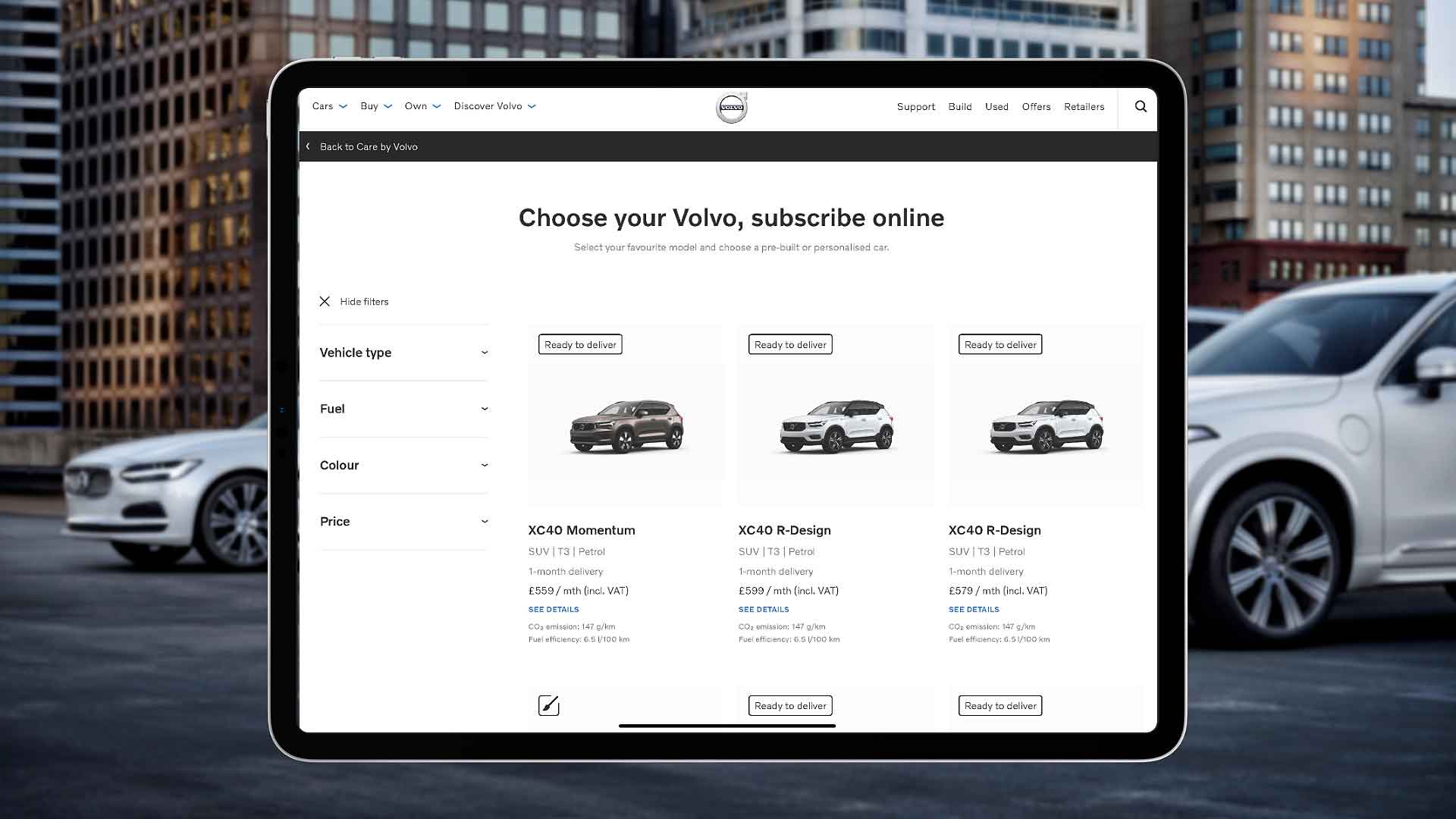
Volvo has launched a monthly subscription service for new cars called Care by Volvo, following a successful trial in London.

Customers choose and buy online, with fixed monthly prices starting from £559.

The price is all-inclusive, bundling servicing, tyres and other wear-and-tear maintenance, roadside assistance and 10GB of in-car wi-fi per month.

Insurance can be added for an extra monthly cost, although Volvo says many UK customers will prefer to arrange this themselves.

After a 30-day initial trial, customers can cancel with three months’ notice, at no cost. There’s no sign-up fee and no fixed-term agreement.

The service is “perfect for uncertain financial times” said head of Care by Volvo, Conor Horne.

With no long-term financial commitment, those hesitating about taking on a three-year new car PCP can manage their risks without “paying to get out early”.

Volvo’s Magnus Fredin told Motoring Research he expected most customers to take out subscriptions for at least six months.

Care By Volvo

Care by Volvo: how does it work?

Potential Care by Volvo customers don’t need to visit a Volvo retailer: the entire process can be completed online.

All in-stock cars are listed, with expected delivery times (usually within a month), along with the option to configure a factory order (with longer delivery times).

Mr Horne says early evidence suggests three in four people prefer to choose a pre-configured car, “like buying a pair of shoes or jeans”.

Care By Volvo

Once an order is made, a local Volvo dealer handles the delivery, along with routine service and maintenance.

The local retailer is also on hand to help customers through the purchase process, although the deal itself is done directly with Volvo. The fixed monthly prices are haggle-free, too.

Volvo predicts up to 10 percent of customers could eventually choose the Care by Volvo subscription route.

The firm’s data reveals more than nine in 10 customers are new to the brand, and they are much younger than the Volvo average.

Less than one percent choose to switch their car – and less than five percent actually end the deal once the three-month post-trial period is over.

The only other car company to offer a vehicle subscription service in the UK is Jaguar Land Rover, with its Pivotal subscription product.

ALSO READ

M is Volvo’s new Mobility brand

Is your Volvo dirty? There’s an app for that

Now you can arrange to test-drive a Volvo on Amazon

Advertisement