Home Blog Page 209

Rare BMW M1 once owned by Paul Walker is up for auction

0
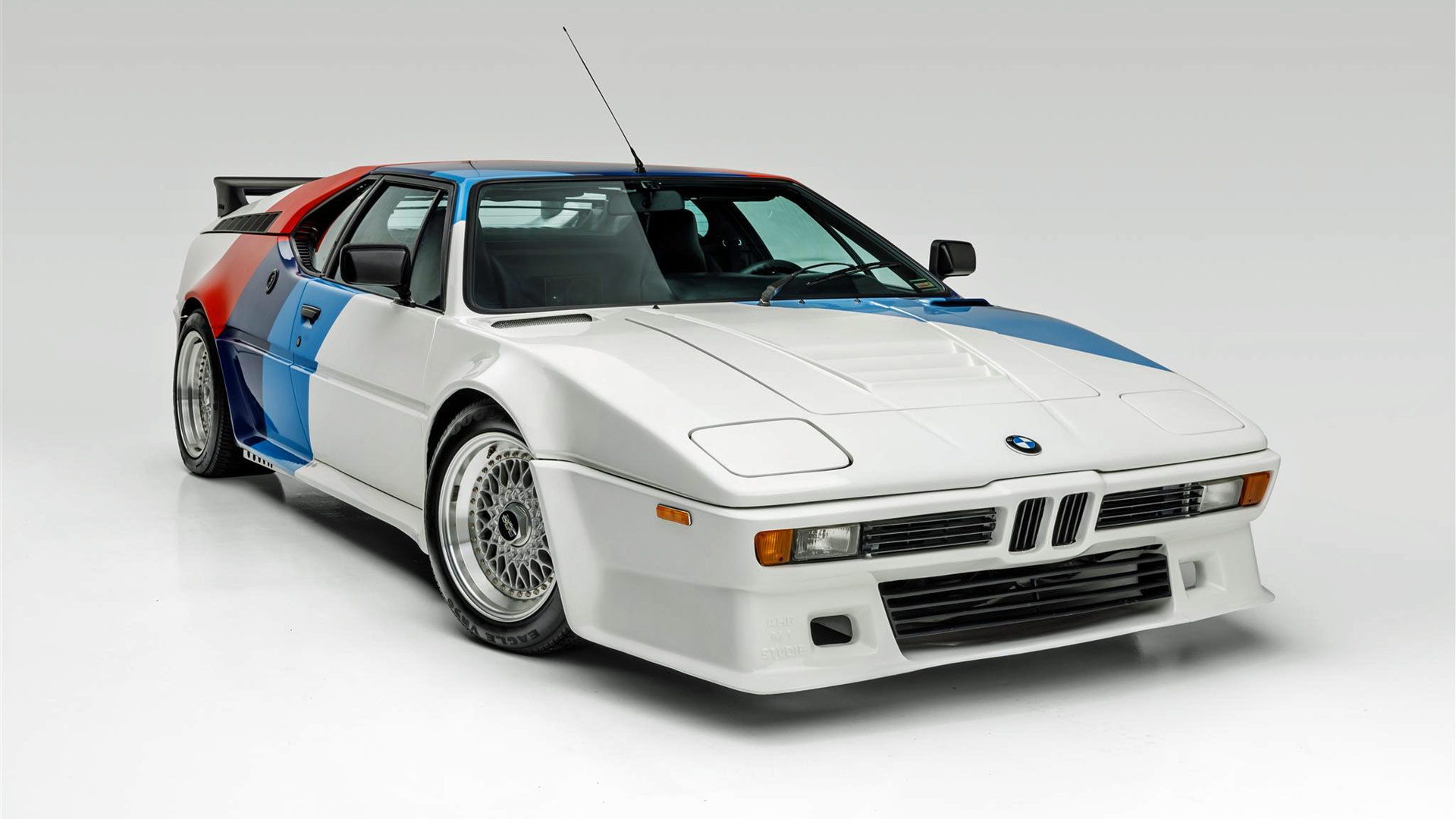
1980 BMW M1 AHG

BMW has recently announced the most powerful M-car it has ever made with the 2021 M5 CS

For those who prefer retro German performance, however, American auction website Bring a Trailer is currently hosting the sale of BMW’s original mid-engined supercar. 

Only 453 examples of the BMW M1 were made, and this modified AHG Studie is even rarer. That this exotic BMW was owned by the late actor – and noted car collector – Paul Walker will only add to its appeal. 

German heart, Italian body
1980 BMW M1 AHG

BMW embarked on the M1 project looking to enter FISA Group 5 sports car racing. The formula had been dominated by German rivals Porsche, but BMW wanted in on the action.

Lamborghini was initially chosen to develop and build the M1, with Giorgetto Giugiaro responsible for styling the fiberglass bodywork. A tubular spaceframe chassis was crafted by Dallara.

As the project developed, BMW feared that Lamborghini was not financially capable of completing the work. It took the M1 back in-house, with final hand-finished production undertaken by Baur in Germany.

Delays and rule changes meant the M1 was not used for Group 5 racing, with BMW switching to Group 4 competition instead.

A race car for the road
1980 BMW M1 AHG

A total of 53 examples would be made for motorsport, chiefly in BMW’s own one-make M1 Procar Championship. The remaining cars would all be for road use, but still packing the same competition technology as their racing siblings. 

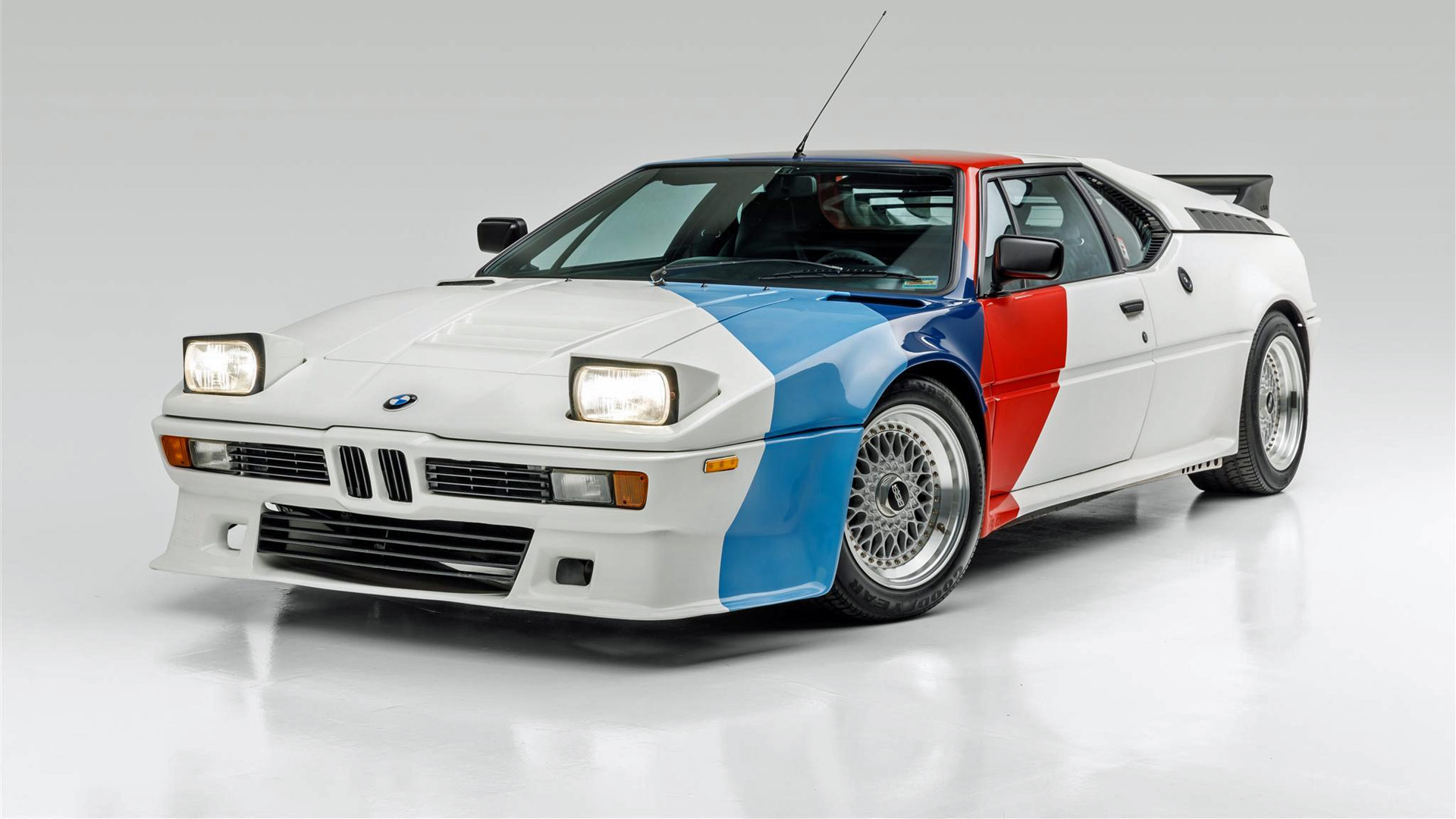
Ten of those road cars were modified by German BMW dealership AHG. Made to look like the racing M1s used in the Procar series, they received a comprehensive makeover. 

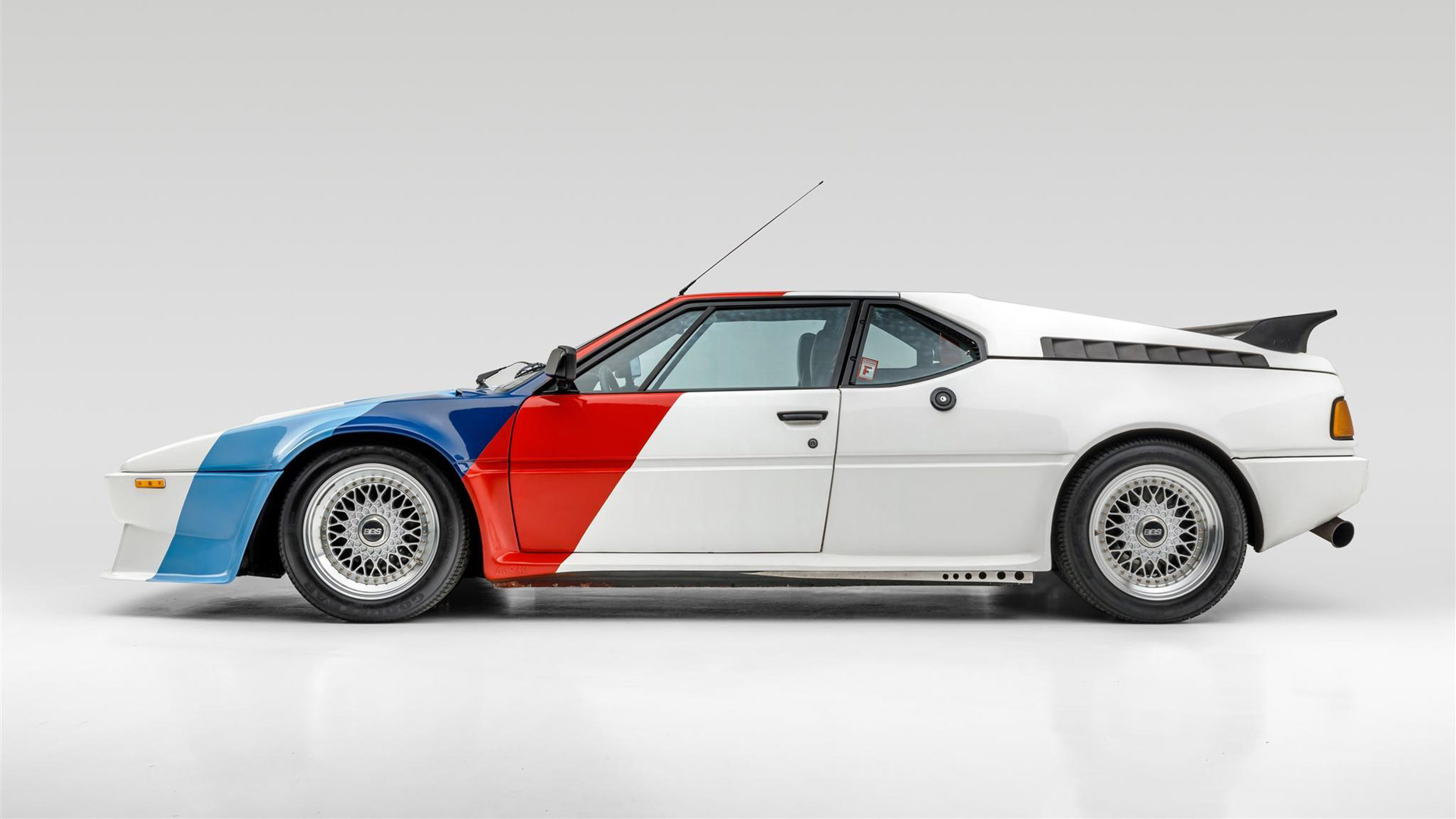
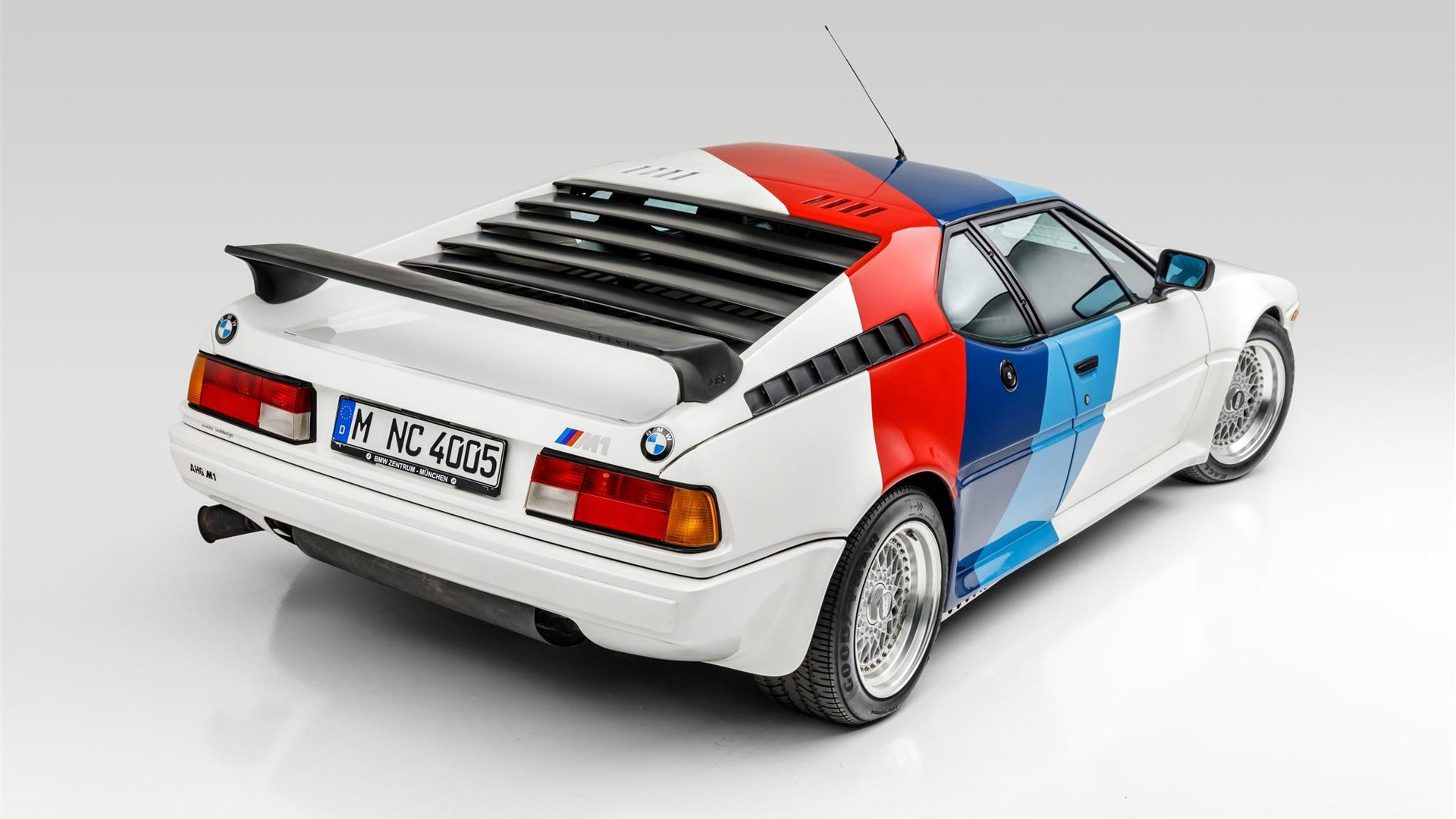
Most noticeable is the bespoke Hermann Altmiks paintwork, which was unique for every AHG M1. An aero kit inspired by the Procar racers, with a large front splitter, side skirts and rear spoiler, was also added.

Mid-engined masterpiece
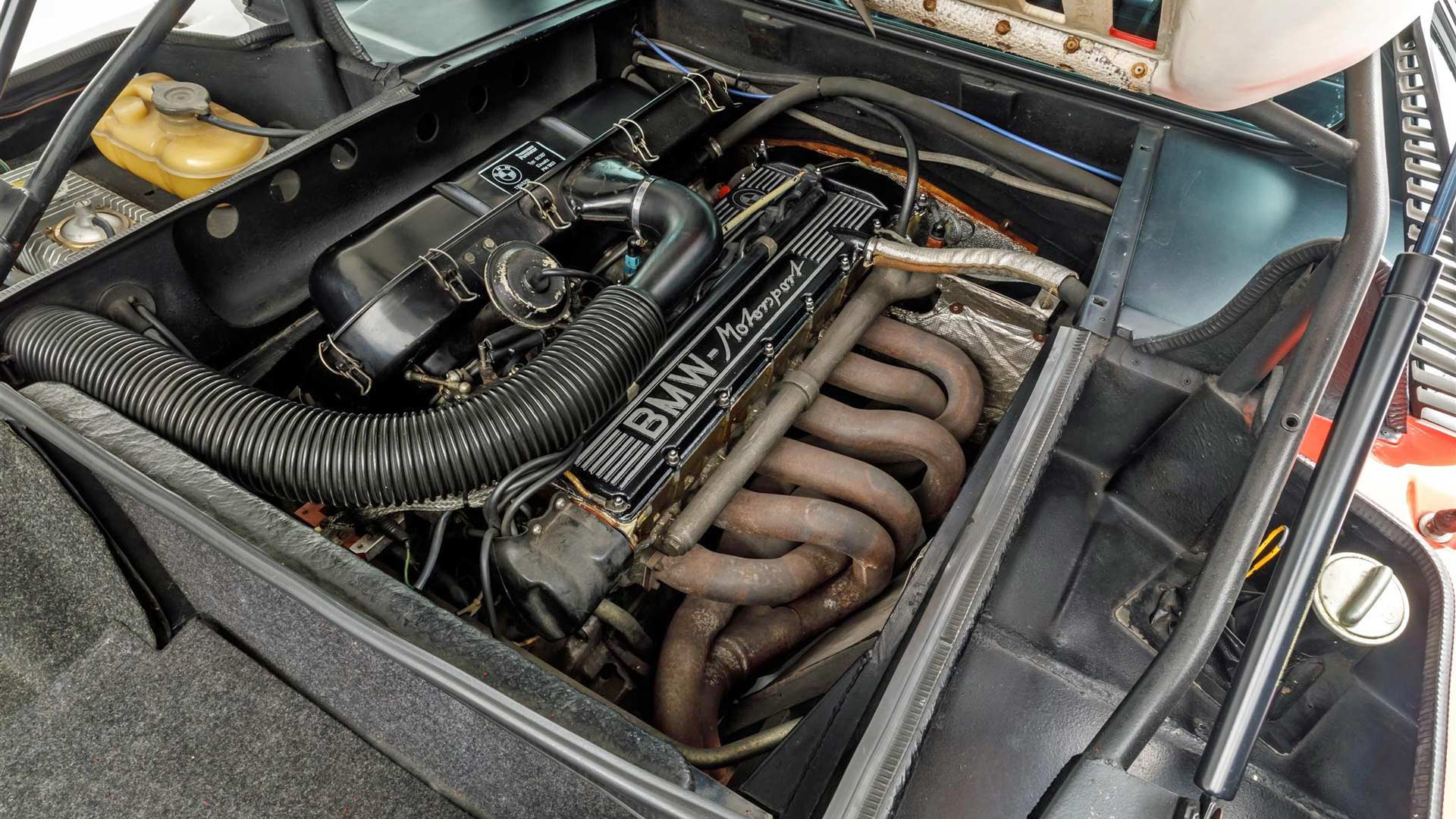
1980 BMW M1 AHG

AHG would also flare the fenders of the M1, fitting a set of 16-inch split-rim BBS alloy wheels wearing wide rubber. Adjustable suspension furthered the motorsport connection. 

The 3.5-liter straight-six engine, developed by Paul Rosche, produced 277 horsepower in a regular M1. However, AHG pushed this to an impressive 350 horsepower, helped by a new exhaust system. A five-speed manual transaxle with a limited-slip differential was standard.

Given that a standard BMW M1 is capable of 0-60 mph in 5.6 seconds, a modified AHG version should deliver even swifter supercar pace.

Ultimate low-mileage machine
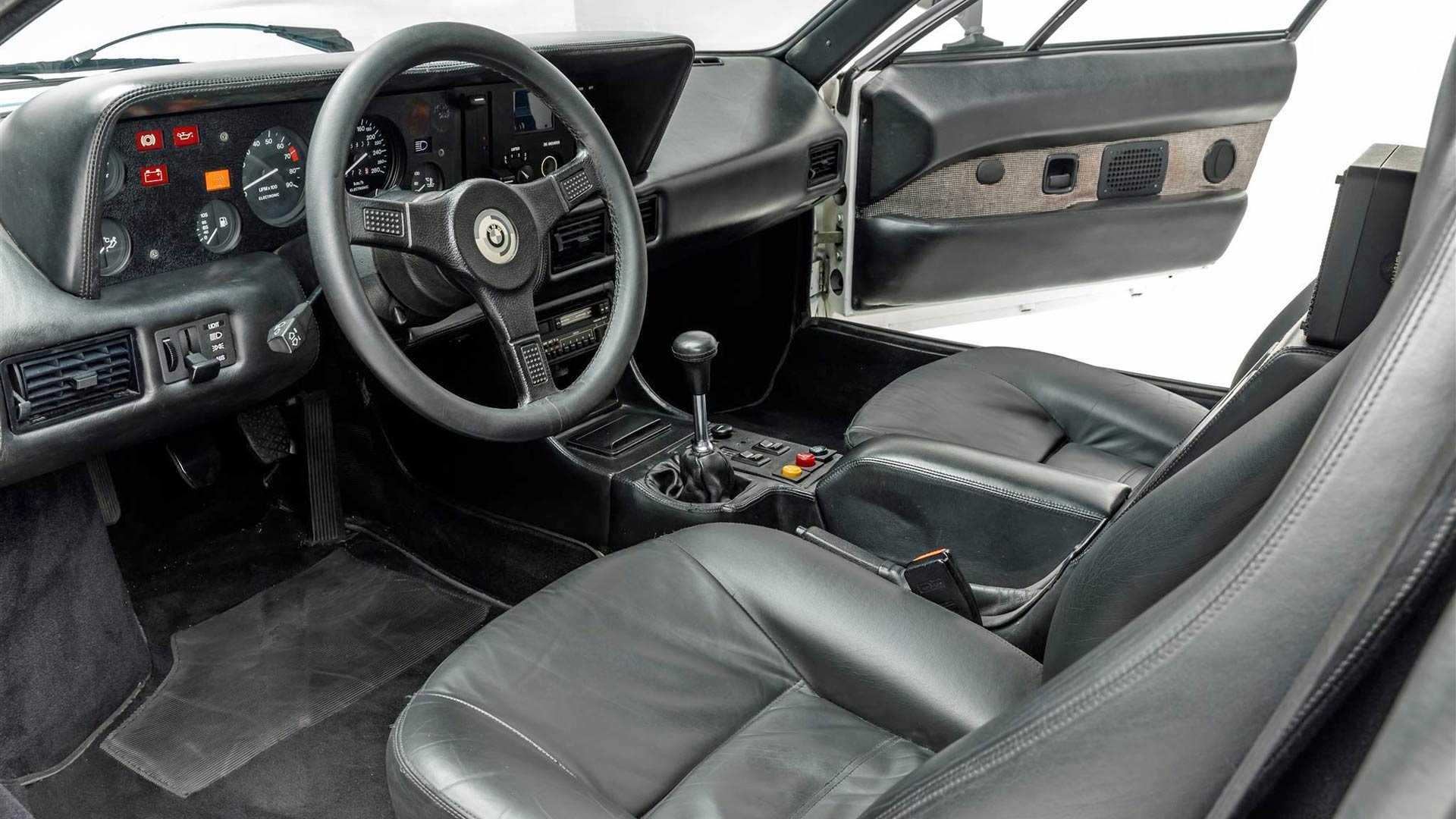
1980 BMW M1 AHG

Although the M1 may be a street racer on the outside, the interior is relatively comfortable. Leather upholstery, power windows, air conditioning, and a Blaupunkt cassette player are all included. 

This BMW was imported to the United States in 1995, remaining part of a collection in Georgia until 2011. It was later purchased by the AE Performance collection, shared between Paul Walker and Roger Rodas. 

Acquired by the seller in 2014, the M1 has covered 4,200 miles from new. Only 50 of those miles have been added to the odometer by the current owner.

The original M-car
1980 BMW M1 AHG

The rarity of an AHG-modified BMW M1 means the final selling price is likely to be substantial. A listing at the 2015 Mecum Monterey auction came with an estimate of $550,000 to $650,000 (£400,000 to £475,000), although the M1 failed to sell. 

Accordingly, the level of bidding on Bring a Trailer has already been strong, taking the car deep into six figures. 

The auction is set to end on Monday, February 1, with the final price likely to be far beyond even the new BMW M5 CS.

READ MORE:

New £140k BMW M5 CS is most powerful M-car ever

How the BMW 8 Series flopped – and fought back

The history of BMW Z cars

Advertisement

Toyota reclaims crown as world’s biggest car company

0
Toyota Supra sports cars

Toyota was the world’s best-selling carmaker in 2020, taking back the title from Volkswagen Group in a year hit by the coronavirus crisis.

The Japanese giant reclaimed the crown thanks to a sales decline that was less severe than its arch-rival during the global pandemic.

Toyota sales were down 11 percent in 2020, to 9.53 million vehicles.

Volkswagen Group deliveries fell 15 percent, to 9.31 million.  

It is because Volkswagen is more reliant on the European new car market that led to its greater decline: sales in the region fell 24 percent in 2020 (and they were down 29 percent in the UK).

Trade body the ACEA described the EU sales decline to less than 10 million vehicles as “unprecedented”, reports Automotive News.

Toyota performs more strongly in the US, said the industry title; sales there declined 14.4 percent in 2020.

It is the first time in five years that Toyota emerged as the world’s biggest car company.

Automotive News adds that it could be part of a longer-term trend.

Although VW Group is expected to regain the title again in 2021, Toyota will then pull back ahead every year to 2025, thanks to strong sales in Japan and the US.

Overall, 76.8 million cars were sold across the world in 2020. This should recover to 84.4 million in 2021, and hit almost 95 million by 2025.

ALSO READ

New Toyota RAV4 Plug-in 2021 review

Taking a Toyota GR Yaris on a track day WON’T invalidate warranty

Toyota Hilux: the story of the world’s toughest truck

Advertisement

Survey says ‘white van man’ cliche is outdated and offensive

0
Electric van drivers survey

The image of a dirty white diesel van, complete with a surly driver behind the wheel, could be a thing of the past. 

New research by Fiat Professional reveals that many drivers find the ‘white van man’ stereotype to be inaccurate.

In fact, many are contemplating a move to an electric vehicle, while greasy fry-ups have been ditched for vegetarian diets. 

Arise, ‘green van man’

Electric van drivers survey

Fiat surveyed 500 van drivers, gaining feedback ahead of launching the all-electric E-Ducato van later this year. 

A substantial 91 percent stated they believed being environmentally friendly was important. Two thirds support government plans to reduce overall vehicles emissions in the UK.

More than one third (35 percent) said they were considering switching to an electric model for their next van. An overwhelming proportion (84 percent) of those asked thought companies should ensure they have an eco-friendly fleet of vehicles.

Clean van, clean driving, clean living

Electric van drivers survey

Other cliches ready to be lost in transit include the notion that van drivers are aggressive. Almost two-thirds of those surveyed were offended by the idea that their driving was poor. 

More than three quarters (77 percent) said they took care of their van, ensuring it is always clean and tidy. Van drivers are, apparently, just as likely to listen to Radio 2 as they are to Radio 1 on the road. 

That commercial vehicle drivers all have an unhealthy diet was another tired claim, according to 66 percent of those questioned. A fifth stated they are either vegetarian or vegan.

Consumers are watching closely

Electric van drivers survey

Fiat Professional’s electric E-Ducato is set to arrive in the UK later in 2021, with a range of up to 192 miles. Such a distance is more than four times the average daily distance traveled by UK van drivers. 

A previous study by Fiat found that three quarters of consumers want delivery companies to use zero-emissions vehicles. Over half (52 percent) took an interest in the carbon footprint of UK logistics operators. 

Fiat Professional’s Richard Chamberlain said: “It’s a bit of a tired myth now that van drivers are tailgaters who take little pride in their vehicle or the environment.

“Caring about the planet is an important part of everyone’s lives, and while the growth in popularity of electric cars has been well publicised, it seems many van drivers are proud of their office and are also looking to make the switch to zero-emission motoring.”

READ MORE:

2020 van sales drop by a fifth… but a Ford van BEATS the VW Golf!

New van safety rating slams 1 in 4 new models

LEVC VN5 (2021) van review

Advertisement

Hybrids no longer defined as ‘electrified vehicles’

0
Renault Clio Hybrid logo

Hybrid cars will no longer be defined as ‘electrified vehicles’ by an influential automotive analyst – because their main fuel type is petrol or diesel, not electricity.

JATO Dynamics says only pure electric and plug-in hybrid (PHEV) vehicles will now meet its definition of electrified vehicles.

The firm has also removed mild hybrids (mHEVs) from the category. Both have been moved to the traditional internal combustion engine class.

“The primary fuel type of HEVs is not electricity, but consists of either petrol, diesel or alcohol,” says JATO.

“Similarly, despite featuring an electric machine that can provide electric assistance (or torque boost), mHEVs are fuelled by an internal combustion engine.”

The move is in line with industry definitions, added JATO.

Define ‘hybrid’

The UK government has bought forward the phase-out of regular petrol and diesel cars to 2030 – but there is a five-year ‘grace period’ for hybrid vehicles.

The government hasn’t yet defined what it will consider ‘hybrid’, other than stating such vehicles must ‘drive a significant distance with no carbon coming out of the tailpipe’.

Minimum pure electric distance requirements will be ‘defined through consultation’.

Many are assuming that only plug-in hybrid vehicles, some of which can cover 50 miles or more in zero-emissions mode before the engine starts up, will be included in this definition.

JATO Dynamics’ redefinition of electrified vehicles may now form part of the government’s decision-making evidence.

In research, global hybrid vehicle leader Toyota found that its cars average more than 50 percent of everyday journeys in engine-off zero-emissions mode – and the new Yaris can travel up to 80 percent of a journey in carbon-free mode.

As the 2030 deadline nears, the argument on both sides is certain to harden.

ALSO READ:

All-new Honda HR-V Hybrid teased ahead of reveal

McLaren’s new hybrid supercar to be called Artura

Renault Clio E-Tech Hybrid 2020 review

Advertisement

Euro NCAP only crash-tested 11 new cars in 2020

0
Euro NCAP crash test dummy

Euro NCAP normally tests dozens of new cars for crash safety every year – but the coronavirus pandemic severely curtailed its testing regime in 2020.

Last year, the independent safety organisation tested just 11 new models. This was “a stark drop” from the 55 new cars tested in 2019.

The shortfall was caused by a combination of pandemic-related restrictions leading test labs to halt operations, along with vehicle manufacturers postponing new model launches.

Of the 11 cars it did manage to test, nine were given a full five-star rating, one scored four stars and one was rated three stars.

There were no vehicles lower than three stars, which the organisation judged to be “a positive result” helped by manufacturers quickly adopting the latest safety technology.

Several cars tested last year featured centre airbags for far-side protection, attention assist tech and advanced autonomous emergency braking that prevents car, pedestrian and cyclist collisions.

Back in late 2018, the poor crash test of the Fiat Panda stunned Euro NCAP – which awarded it a zero-star rating.

Tougher tests

The strong across-the-board performance was particularly impressive given tougher Euro NCAP crash tests introduced for 2020.

A new moving barrier now forms part of the moving front-end crash, to evaluate the effect of big cars crashing into small ones.

To assess interaction between front-seat passengers, a new far-side impact protection test was introduced – this is where centre airbags prove beneficial.

Euro NCAP also improved its assessments of crash avoidance tech, and begun new tests of Driver Status Monitoring systems.

In a notable trend of the times, Euro NCAP added that of the cars tested during 2020, two in three were either battery electric or plug-in hybrid.

Of all the new cars sold in the UK and Europe in 2020, 98 percent have a valid Euro NCAP safety rating.

Euro NCAP 2020 test results

  • Audi A3: 5 stars
  • Honda e: 4 stars
  • Honda Jazz: 5 stars
  • Hyundai i10: 3 stars
  • Isuzu D-Max: 5 stars
  • Kia Sorento: 5 stars
  • Land Rover Defender: 5 stars
  • Mazda MX-30: 5 stars
  • Seat Leon: 5 stars
  • Toyota Yaris: 5 stars
  • Volkswagen ID.3: 5 stars

ALSO READ:

Euro NCAP launches new Assisted Driving rating

2020 Toyota Yaris a ‘safety benchmark’ says Euro NCAP

Tesla Model X a ‘standout performer’ in Euro NCAP tests

Advertisement

These were the most stolen cars in 2020

0
Stolen vehicle claims up 22 percent in first quarter

The Ford Fiesta is the most stolen car in the UK. This is according to a Freedom of Information (FOI) request submitted to the Driver and Vehicle Licensing Agency (DVLA).

A total of 3,392 Fiestas were stolen in 2020 – up from 2,384 in 2019. This represents around 4.5 percent of all cars stolen in 2020. The DVLA data reveals that 74,769 cars were stolen last year – the equivalent of 205 a day. Worryingly, this is up from 56,288 in 2019.

The list of stolen cars is certainly predictable. Nine of the cars retained their top 10 position for a second consecutive year. Only the Audi A3 dropped out of the top 10, to be replaced by the Nissan Qashqai.

Ford Fiesta

The Ford Fiesta is by far and away the UK’s most popular new car, so its position at the top of the list of most stolen isn’t necessarily a surprise. Nearly 50,000 Fiestas were registered in 2020 alone, in a market affected by the coronavirus pandemic. Strong sales are led by keen pricing, a large dealer network and brand awareness.

Some of the other cars in the top 15 might raise a few eyebrows. The FOI submitted by Rivervale Leasing found that premium cars are likely to be a target for thieves. The Range Rover is the second most stolen car for the second consecutive year, with the Land Rover Discovery also making the top 15.

There’s no place for the Land Rover Defender. This follows a report that at least four Defender thefts a week were being reported to NFU Mutual in January 2020. Organised criminals scour farmyards and country properties in search of Defenders and Series Land Rovers they can steal.

Top 15 most stolen cars of 2020

Range Rover
  • 1. Ford Fiesta: 3,392
  • 2. Range Rover: 2,881
  • 3. Volkswagen Golf: 1,975
  • 4. Ford Focus: 1,587
  • 5. BMW 3 Series: 1,435
  • 6. Vauxhall Astra: 1,126
  • 7. Land Rover Discovery: 900
  • 8. Mercedes-Benz E-Class: 766
  • 9. BMW 5 Series: 678
  • 10. Nissan Qashqai: 655
  • 11. Ford Kuga: 620
  • 12. BMW X5: 551
  • 13. Fiat 500: 358
  • 14. Mercedes-Benz GLC: 342
  • 15. Audi A6: 268

Click here to read the full Rivervale Leasing report.

READ MORE:

Advertisement

Volkswagen ID.4 orders open, with prices from £37,800

0
Volkswagen ID.4 2021

Volkswagen has opened ordering for the ID.4 electric SUV, with prices for the launch-spec 1st Edition starting from £37,800 after the Plug-in Car Grant.

UK deliveries are expected to begin in March 2021.

The ID.4 1st Edition comes with a 77kWh battery, which gives a 310-mile range.

Volkswagen ID.4 2021

It has a 204hp electric motor – and is Volkswagen’s first electric car to be available with an optional tow bar.

The ID.4 has a towing weight of 1,000kg.

More affordable ID.4 variants, including all-wheel-drive models, will follow later in 2021.

VW ID.4 1st Edition

Volkswagen ID.4 2021

Volkswagen ID.4 1st edition variants are marked out by ‘1st’ badging outside and in. Buyers can choose from four colours: Glacier White, Blue Dusk, Manganese Grey and the Honey Yellow pictured here.

20-inch alloys and LED lights front and rear are standard.

The interior is described as ‘striking’ and features Florence Brown highlights.

Volkswagen ID.4 2021

Seats are trimmed in ArtVelours microfleece, there a 10-inch infotainment display and 30-colour ambient lighting.

Stretching the full width of the windscreen is Volkswagen’s ‘ID Light’, which uses colourful light patterns to aid sat-nav signals, charging status and driver assist tech.

Volkswagen ID.4 2021

Volkswagen ID product manager Joe Laurence said the ID.4’s external dimensions are “similar to the Tiguan, but thanks to the MEV platform and the packaging benefits of an electric drivetrain, it boasts even more interior space along with that all-important lofty driving position.

“This really is an incredibly practical car… we know our customers are going to love it.”

ALSO READ:

Radical new Nissan Ariya electric SUV revealed

Best family SUVs to buy in 2021

Frankfurt goes green: all the new electric cars on show

Advertisement

UK car production plunged to 1984 levels in 2020

0
Bentley car production in Crewe

The number of cars built in Britain dropped 29.3 percent in 2020 to a level last seen back in 1984.

A total of 920,928 vehicles rolled off the production lines, a figure the Society of Motor Manufacturers and Traders described as “the worst in a generation”.

The numbers mirror a 29 percent fall in UK car sales while registrations in Europe declined 23.7 percent.

The coronavirus pandemic “slammed the brakes on the sector” with car manufacturing severely disrupted throughout the year due to lockdowns and social distancing measures.

Export demand was also depressed, again due to Covid-19, with exports to the EU down 30.8 percent and US exports falling 33.7 percent.

Brexit uncertainty was an added factor, added the SMMT, due to a deal not being reached until Christmas Eve.

Despite the lower numbers, more than 8 in 10 cars built in Britain last year were still exported, with the EU taking a 53.5 percent share of them, underlining the importance of a tariff-free trade deal.

‘Devastating’

The impact of the pandemic on UK car production has been “devastating”, said SMMT chief executive Mike Hawes, “with Covid lockdowns depressing demand, shuttering plants and threatening lives and livelihoods”.

Around 10,000 jobs have already been lost in the industry as a result and this is “just the tip of the iceberg”.

The outlook for 2021 is more positive, with car production forecast to rise back up to the 1 million mark – but much of this depends on the speed of rolling out Covid measures and reopening car showrooms.

Nissan was Britain’s biggest car producer in 2020, taking over the title from Jaguar Land Rover, with Mini in third and Toyota in fourth.

Production tumbled 47.8 percent at Vauxhall’s Ellesmere Port plant, with just over 61,000 Astra rolling off the line.

Bosses await a decision on the factory’s future with a decision expected within the next few weeks.

ALSO READ

Brexit: extra paperwork for motorsport teams heading to Europe

Have car number plates changed due to Brexit?

Advertisement

These are the countries with the best virtual racing drivers

0
Best racing gamers in the world

With racing games proving more popular than ever, new research has found which country has the greatest virtual racing drivers in the world. 

To find the nations with the best gamers, leaderboards for more than 800 different racing games were analysed. Top rankings were then scored, with weighting applied based on the population of each country. 

Esports have made racing games into serious competition, meaning there is potentially more than simple bragging rights at stake.

First-place Finnish

Best racing gamers in the world

Pentagon Motor Group began by looking at the nations that come out on top when all 801 games are compared.

Finland takes the prize as the top virtual driving nation. The Scandinavian country had more high-ranking gamer scores per capita than any other nation.

Estonia took the second podium place, followed by New Zealand in third. 

The UK is responsible for a seven-time Formula 1 World Champion, and even the World’s Fastest Gamer. However, it only ranked 15th in the overall racing gamer league table.

Gran Turismo Greats

Best racing gamers in the world

Along with overall rankings, Pentagon also examined which nations did best at individual games. 

The Gran Turismo series of games are some of the best-known and well-respected virtual racers. Gran Turismo Sport, the most recent game, even features FIA-certified esports competitions. 

When it comes to the nations rated best at ‘The Real Driving Simulator’, the UK does perform better. But, it is American gamers who lead the top five countries:

  1. United States
  2. Australia
  3. New Zealand
  4. United Kingdom
  5. Russia

Leading the virtual F1 grid

Best racing gamers in the world

Formula 1 games remain a constant favourite with virtual racers, with the officially licensed F1 2020 by Codemasters the most recent edition. 

With Formula 1 being such a global sport, it is pleasing to see that a diverse variety of countries make up the top five. Again, the UK manages to secure fourth in the rankings.

  1. Japan
  2. New Zealand
  3. Germany
  4. United Kingdom
  5. The Netherlands

Masters of Mario Kart

Best racing gamers in the world

Although Mario Kart may offer a slightly different racing game experience, mastering it still demands a particular set of skills. 

First released in 1992, more than 150 million copies of the various Mario Kart games have been sold since. European countries dominate the top five for this arcade experience. 

  1. The Netherlands
  2. Denmark
  3. Germany
  4. Sweden
  5. Finland

Top 15 nations for racing gamers

Best racing gamers in the world

European countries perform well in the overall top 15 nations for the best racing gamers, too. 

  1. Finland
  2. Estonia
  3. New Zealand
  4. Australia
  5. Switzerland
  6. Sweden
  7. Lithuania
  8. United States
  9. Denmark
  10. Canada
  11. Uruguay
  12. The Netherlands
  13. Bulgaria
  14. Hungary
  15. United Kingdom

ALSO READ

New £140k BMW M5 CS is most powerful M-car ever

Mini range revised with ‘minimalist’ makeover for 2021

Low Traffic Neighbourhoods: what are they and why are they so controversial?

Advertisement

New £140k BMW M5 CS is most powerful M-car ever

0
BMW M5 CS 2021

The new BMW M5 CS has been revealed ahead of its launch in the spring – with a headline power output of 635hp making it the most powerful M-car ever built.

It’s also likely to be one of the most expensive, with a confirmed UK list price of over £140,000…

BMW M5 CS 2021

It’s actually the first time BMW has launched a CS version of the M5, and the firm hasn’t held back in making it a landmark.

The M5 CS builds on the already-potent M5 Competition with bespoke ‘Goldbronze’ 20-inch alloys and body accents in the same colour.

BMW M5 CS 2021

The bonnet is made from lightweight carbon fibre-reinforced plastic (CFRP), as are the front splitter, rear spoiler and rear diffuser.

Lightweight materials also help the M5 CS weigh in 70kg lighter than the M5 Competition.

Standard BMW Laserlight headlights accent the daytime running lights in yellow when low or high beam is activated – or when the driver unlocks the car.

BMW M5 CS 2021

As well as the gorgeous Frozen Deep Green metallic featured here, the M5 CS is also available in Brands Hatch Grey metallic, and Frozen Brands Hatch Grey metallic (‘frozen’ is BMW-speak for matt-finish).

Four bucket seats

BMW M5 CS 2021

Inside, BMW has fitted a bespoke Alcantara steering wheel, carbon fibre gearshift paddles and a lightweight fixed cover for the centre console – which the firm says gives a “significant weight reduction”.

The front seats are M Carbon chairs and there are, uniquely, two individual bucket-style seats in the rear as well. All are trimmed in Merino leather with Mugello Red contrast detailing.

BMW M5 CS 2021

The head restraints on all four seats have an outline of the Nurburgring racetrack.

The 635hp 4.4-litre twin-turbo V8 is 10hp more powerful than the M5 Competition – and 0-62mph in just 3.0 seconds makes it 0.3 seconds faster than the car it’s based on.

Top speed is electronically capped… to 189mph.

Sensibly, M Carbon ceramic brakes are standard – pick from red calipers as standard or gold as an option – and the M5 CS is also 7mm lower than the M5 Competition, and fitted with dampers from the M8 Gran Coupe.

Various other parts of the suspension have been retuned and grippy Pirelli P Zero Corsa track tyres are standard.

BMW has confirmed the starting price of the new M5 CS will be £140,780, with deliveries beginning in the spring.

ALSO READ

Mini range revised with ‘minimalist’ makeover for 2021

New Jaguar XF P300 2021 review

First McLaren Speedtail sold at auction achieves $3.2m

Advertisement