Home Blog Page 208

Best of British: a celebration of the Morris Minor

1

70 years of Morris Minor

Fifty years ago, production of a British institution quietly came to an end. But the Morris Minor story begins much earlier, in the aftermath of the Second World War.

If ever a country was in need of some positivity, it was Britain in 1948. Still living on rations and recovering from the war, the British motor industry was like an addict in search of a hit, desperate for someone or something to inject a little spice.

It got more than it could ever wish for. The Morris Minor and Jaguar XK120, both of which were unveiled at the 1948 British Motor Show, may have been polar opposites on the car industry spectrum, but they were like a double dose of adrenaline, consumed at precisely the right time.

The XK120’s legend would be built on glamour, speed and passion. The first car ever to exceed 100mph for seven days and seven nights, the first car ever to win an Alpine Gold Cup, the fastest production sports car in the world – with headlines like these, the Jaguar ad man probably spent more time on the golf course than he did in front of a typewriter.

But for all of the Jaguar’s pace and style, the Morris Minor touched the lives of more British people – and set Alec Issigonis on the path towards designing another automotive icon: the Mini. In the meantime, the Morris had a decade to perform a Minor miracle.

It’s as British as a Victoria sponge, a village fete and moaning about the weather, but the Morris Minor was designed by the Smyrna-born son of Greek and German parents, with styling that was more transatlantic than what we’d expect from a project planned in Cowley. Today, the Minor might look as traditional as a postbox and a bowler hat, but it was more radical in 1948.

Mossie becomes a Moggie

Development work began in the early 1940s under the project name Mosquito, a reference to the de Havilland combat aircraft flown during the Second World War. The first functional prototype looked remarkably similar to the production Minor, but the flat-four engine, three-speed gearbox and column gear change didn’t make the cut.

Neither did the name, with Morris bosses worried that ‘Mosquito’ might deter conservative buyers. The Minor name felt more traditional, more in keeping with the buttoned-up and skirts-below-the-knees mood of the era. A touch of the schoolmaster, perhaps, referencing a pillar of society. Ford’s ageing rival was called the Prefect, after all.

Morris Minor 1949

‘Thoroughly tested, new from radiator badge to rear bumper, the Morris Minor brings motoring perfection within reach by satisfying your ideas and your pocket,’ proclaimed the press ads, emphasising the innovation beneath that warm and homely exterior.

Independent front suspension, rack and pinion steering and longitudinally mounted rear leaf springs were lifted from the Mosquito and hinted at a new era of car design, although the 917cc side-valve engine was straight out of the 1930s and felt out of touch with the Minor’s vision of the future.

But in just about every other respect, the Minor felt new and exciting. A unitary body, Lockheed hydraulic brakes, a four-speed gearbox and cleverly-positioned 14-inch wheels designed to reduce cabin intrusion were just part of the package. ‘The world’s supreme small car,’ declared Morris, in a claim that wasn’t entirely unjustified.

Even the woeful performance could be forgiven, because the Minor set new standards for roadholding and handling, enabling it to cover ground as quickly as more powerful vehicles. The top speed may have been a lowly 60mph – it would also take 35 seconds to hit 50mph – but once up to speed, the Minor was almost untouchable.

From MM to Series II

The Series MM – as the ‘Mk1’ was known – was available for just £358 at launch, a remarkably low price given the fact that the pre-war Ford Anglia was only £48 cheaper. That’s about £13,000 in today’s money or less than the price of a new Ford Fiesta.

A convertible version – known as the Minor Tourer – was available from the outset, before a four-door Minor joined the range in October 1950. At the same time, an interior heater was added as an option, along with improved paint and an engine oil filter as standard.

More importantly, the four-door model also introduced the new raised lights, which had been standard on every Minor exported to America since 1949. It would be a while before these became standard equipment in the UK.

It wasn’t cheap. At £569, the four-door Minor was far more expensive than the two-door and Tourer (£383), although this more extravagant price was in part justified by the more lavish specification. An interior light, ashtrays, front door straps and twin windscreen wipers represented the height of luxury for the Minor driver.

The Series II Minor arrived in July 1952, first as an export model, then standard in 1953 when the MM was phased out. The old Morris Eight engine was pensioned off and replaced by the 803cc engine from the Austin A30, a development made possible by the Austin/Morris merger.

The engine, with its SU carburettor, was a significant improvement, but any performance gains were negated by the weight of the Minor. Little else changed, aside from the M motif on the bonnet.

Morris Minor Traveller

Also in 1953, Morris launched the ash-framed Minor Traveller, one of the most quintessentially British estate cars ever built. The Traveller conjures up images of picnic rugs, bunting, West Highland Terriers, WI meetings and National Trust stickers. If the Traveller were a television show, it would be Heartbeat. If it were a hymn, it would be Jerusalem.

In standard guise, the Traveller, with its side-hinged rear doors, cost £599, with the De Luxe adding £23 to the price tag. For that, motorists were treated to a heater, passenger sun visor, leather seat facings and bumper over-riders. Soon, the saloon and Tourer could be upgraded to the space spec for the same price.

From then, the Minor was subjected to a period of continuous development, ensuring it would live on way beyond its sell-by date. For example, there were new seats in 1954, along with a new grille and a re-styled facia.

But the big news came in 1956 when the Minor was finally treated to the engine its handling deserved. The Minor 1000 was powered by a 948cc development of the BMC A-series unit, enabling it to hit speeds over 70mph.

At the same time, Morris introduced a deeper and wider one-piece windscreen (although curiously the original wipers were left untouched), along with a larger rear window, new rear wings and a dished steering wheel. Sales increased in 1957 before softer rear springs were introduced in 1958.

Meanwhile, on the other side of the Atlantic, the Minor was still holding its own, more than a decade after its Earls Court debut. Indeed, US sales peaked in 1959, with just under 15,000 Minors finding a home in the year BMC launched the Mini. Incidentally, the 100,000th export vehicle rolled off the production line back in 1950.

Morris Minor Tourer

A major achievement

By now, the Morris Minor was feeling outmoded, out of touch and out of time. Its styling, once futuristic and radical, was looking unfashionable, while its lack of luggage and cabin space was becoming less forgivable. Time to call time on the Minor?

Not a bit of it. The Minor had worked its way into British culture and society by virtue of its rear-wheel-drive characteristics, unyielding charm and fix-on-the-driveway simplicity. It was as comforting as a mother’s cuddle and as welcoming as a pot of tea. Against all the odds, the Minor would live on through the Swinging Sixties.

In December 1960, the Minor became the first British car to sell a million, with Morris celebrating with a Minor 1,000,000 special edition. With its lilac paintwork and white upholstery, it looked like the automotive equivalent of Carnaby Street. If Mary Quant designed cars…

Development continued, with a 1,098cc engine added in 1962, decent wipers in 1962 and an optional fresh air heater in 1963. Sadly, a host of changes in 1965 included the replacement of the dished steering wheel, although a self-supporting boot lid was a long overdue ‘upgrade’.

But there was no getting away from the fact that the Minor was living on borrowed time and, with little thought for sentiment or nostalgia, the formation of British Leyland signalled the end for the much-loved car. The Tourer went in 1969, then the two- and four-door in 1970, with the Traveller, van and pick-up holding on until 1971.

It lived through two entire decades, bookended by the 1940s and 1970s, during which time some 1.6 million units, including 300,000 commercial vehicles, rolled out of the factory. Since then, it has become a British institution, both as a starter classic and a car for every occasion. Weddings, proms and even funerals – the Morris Minor has been there, done that.

It harks back to a more innocent time. Of a Britain before Brexit, the EU and the Americanisation of British culture. Of rolling hills un-blighted by plans for HS2 and when footballers resembled Subbuteo men. Of Nurse Gladys Emmanuel and pale blue and white panda cars making proper ‘nee-nah’ sounds.

Regardless of your views on British history and the state of the nation, a combination of great design, outstanding value for money and surprisingly good dynamics combine to create a national treasure.

ALSO READ:

How Covid has transformed the classic car market

The best classic cars for investment and driving fun

Rover Mini Cooper Sport review: Retro Road Test
Advertisement

New car sales down nearly 40% in January 2021

0
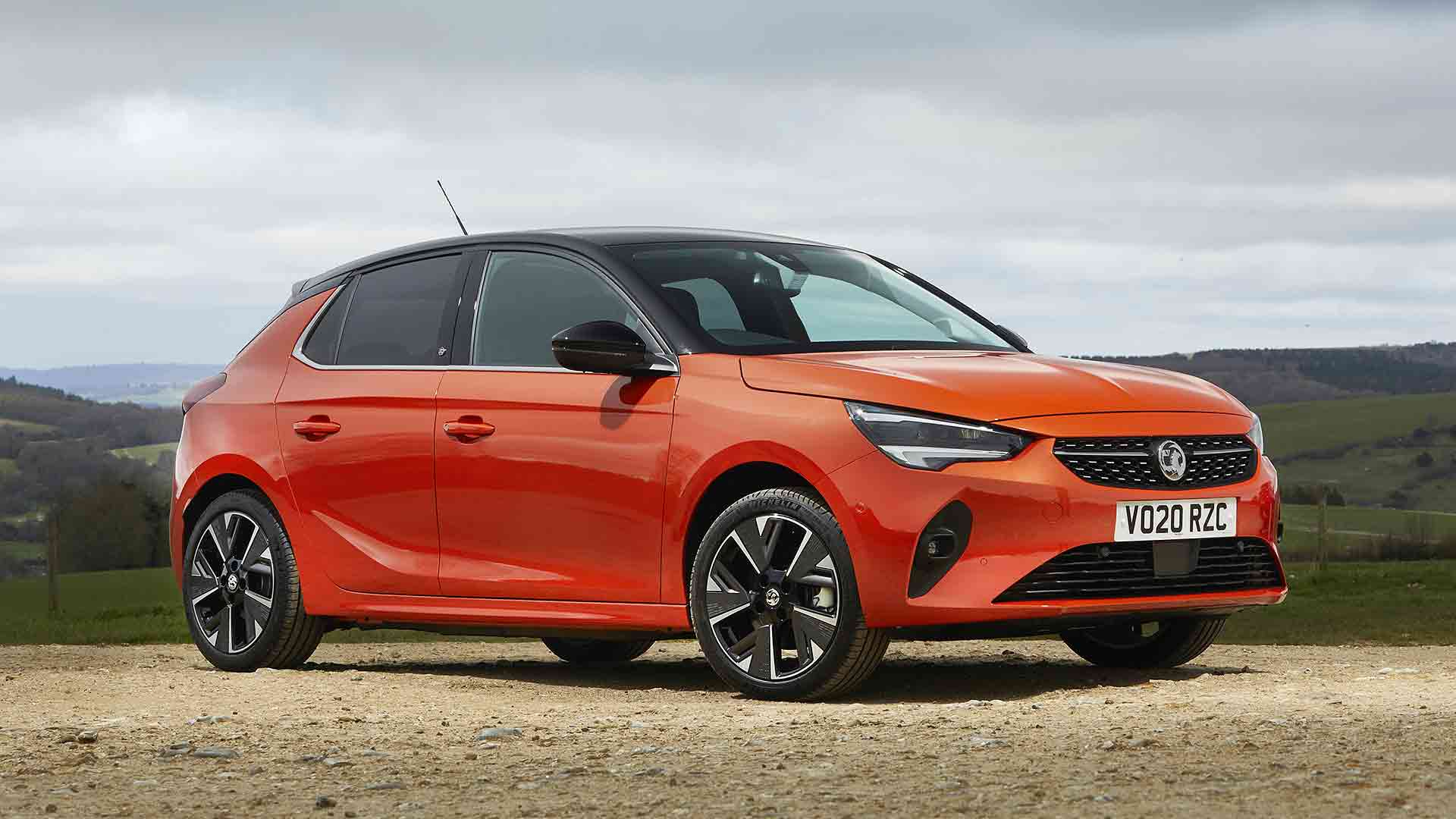
Vauxhall Corsa

New car sales fell 39.5 percent in January 2021 as fresh lockdown measures saw showrooms close and registrations plummet.

Just 90,249 new cars were registered in January – the worst start to a new year since 1970, says the Society of Motor Manufacturers and Traders (SMMT).

The sales decline represents a massive 59,030 fewer cars registered compared to January 2020.

There were more positive signs in the UK’s move towards electric cars though, with battery electric registrations leaping 54.4 percent to a 6.9 percent market share.

Plug-in hybrids accounted for 6.8 percent: combined, this represents 13.7 percent of sales.

Traditional hybrids took 7.6 percent of the market: combine all three and EVs, plug-ins and hybrids outsold diesel-engined vehicles.

“The auto industry faces a difficult start to 2021,” said SMMT chief executive Mike Hawes.

“The necessary lockdown will challenge society, the economy and our industry’s ability to move quickly towards our ambitious environmental goals.

“Every day that showrooms can safely open will matter, especially with the critical month of March looming.

Vauxhall Corsa is no. 1

The Vauxhall Corsa took the top spot in January, well ahead of its arch-rival, the Ford Fiesta, which ended up back in fourth.

The Kia Sportage sprung a surprise in second place though, finishing just behind the Corsa, and just ahead of the British-built Nissan Qashqai.

Kia took a top-10 double with the Niro ending up in ninth place.

The Volvo XC40 continues to perform well in the UK with with fifth place in the January 2021 registrations, while Ford’s Focus was well back in 10th place.

Vauxhall says it is pleased with its January performance, growing its market share to 7.3 percent.

January 2021 best-selling cars

1: Vauxhall Corsa

2: Kia Sportage

3: Nissan Qashqai

4: Ford Fiesta

5: Volvo XC40

6: Mercedes-Benz A-Class

7: Volkswagen Golf

8: Ford Puma

9: Kia Niro

10: Ford Focus

ALSO READ:

Petrol prices rise for third month running

Euro NCAP only crash-tested 11 new cars in 2020

Parts of UK will be ‘left behind’ in electric car charging point rollout

Advertisement

Petrol prices rise for third month running

0
Petrol and diesel pumps at a filling station

Estimated reading time: 2 minutes

Petrol prices rose by another 3.5p a litre in January 2021, the third consecutive month of fuel price increases.

The steep rise in January alone added nearly £2 to the price of an average 55-litre tankful of unleaded.

Petrol now costs 120p a litre, the highest price since before the first coronavirus lockdown in March 2020.

How to find the cheapest petrol and diesel near you

RAC Fuel Watch reports that a 55-litre tank of unleaded is now £8 more expensive than the May 2020 low.

Diesel prices also rose by more than 3p a litre, meaning diesel now costs 123.4p a litre.

Surprisingly, it is supermarkets that are leading the increase in fuel prices, say RAC Fuel Watch experts.

Fuel prices at Asda were hiked more than 5p a litre during January, although its unleaded is still the cheapest in the country, at 115.9p a litre.

Supermarkets sell 60 percent of all fuel sold in the UK – and the recent rises mean it’s now only 3p-3.5p a litre cheaper to use one, compared to the 4p-4.5p saving back in December.

“The increase stems from $5 being added to price of a barrel of oil,” said RAC fuel spokesperson Simon Williams, “although this has been cushioned by the pound strengthening a little against the dollar.

“These latest fuel prices unfortunately show the power of oil production cuts in getting the barrel price back up from the floor at $13.21, when the impact of international travel restrictions first hit last April, to the $55 mark now.”

Mr Williams said eyes will be on the Chancellor in his March 2021 Budget “as to whether to pile further misery on drivers by raising fuel duty at a time when pump prices are on this rise and many household incomes are being squeezed as a result of the pandemic”.

ALSO READ:

How to save money on fuel

What to do if you fill your car with the wrong fuel

The cheapest new cars on sale

Advertisement

European green car targets ‘far removed’ from reality

0
Air pollution in Turin

There needs to be a 50-fold increase in the number of zero emission cars on the roads of the EU by 2030. That’s if the European Commission wants to meet its ‘bold ambition’ to have at least 30 million zero emission cars on the road by the end of the decade.

The target has been slammed by the European Automobile Manufacturers’ Association (ACEA). It says the Commission’s ambitions are ‘far removed from today’s reality’, pointing to a small number of zero emission cars in the EU.

Of the 243 million passenger cars on the road in 2019, just 615,000 cars were zero emission. That’s approximately 0.25 percent of the entire fleet.

In the UK, battery electric vehicles accounted for 6.6 percent of new car registrations in 2020. That’s up from 1.6 percent in 2019. Sales totalled 108,205 in a market severely affected by the coronavirus pandemic and lockdown restrictions. The clock is ticking on the countdown to the 2030 ban on sales of new petrol and diesel cars.

The European Commission has set its own targets for 2030. Encouraging the uptake of zero emission vehicles is a key part of the Sustainable and Smart Mobility Package, published in December 2020.

‘Massive leap’

Eric-Mark Huitema, ACEA director general, has warned that more needs to be done if the targets are to be met. “Despite industry investments in such vehicles and their growing market share, not all the right conditions are in place to make such a massive leap,” he said.

“As recognised by the Commission, an essential condition for zero-emission mobility is the widespread availability of charging and refuelling infrastructure, both for passenger cars and heavy-duty vehicles.

In common with the UK, the EU has a shortage of public charging points. The ACEA says three million points will be required by 2030 – up from 200,000 in 2019.

“Experience has shown us that a voluntary approach to these infrastructure targets does not work,” stated Mr Huitema. “While some EU countries have been very active, others have done little or nothing. The AFID (Alternative Fuels Infrastructure Directive) review really must include binding infrastructure targets for member states.”

In a final warning, ACEA points out the the average European car is almost 11 years old. As Europeans recover from the economic impact of Covid-19, will they have the disposable income to spend on an expensive electric car?

Few EVs cost less than £20,000, although the Dacia Spring EV will become Europe’s cheapest electric car when it goes on sale. Unfortunately, it’s not coming to the UK.

READ MORE:

Advertisement

Parts of UK will be ‘left behind’ in rollout of electric car charging points

0
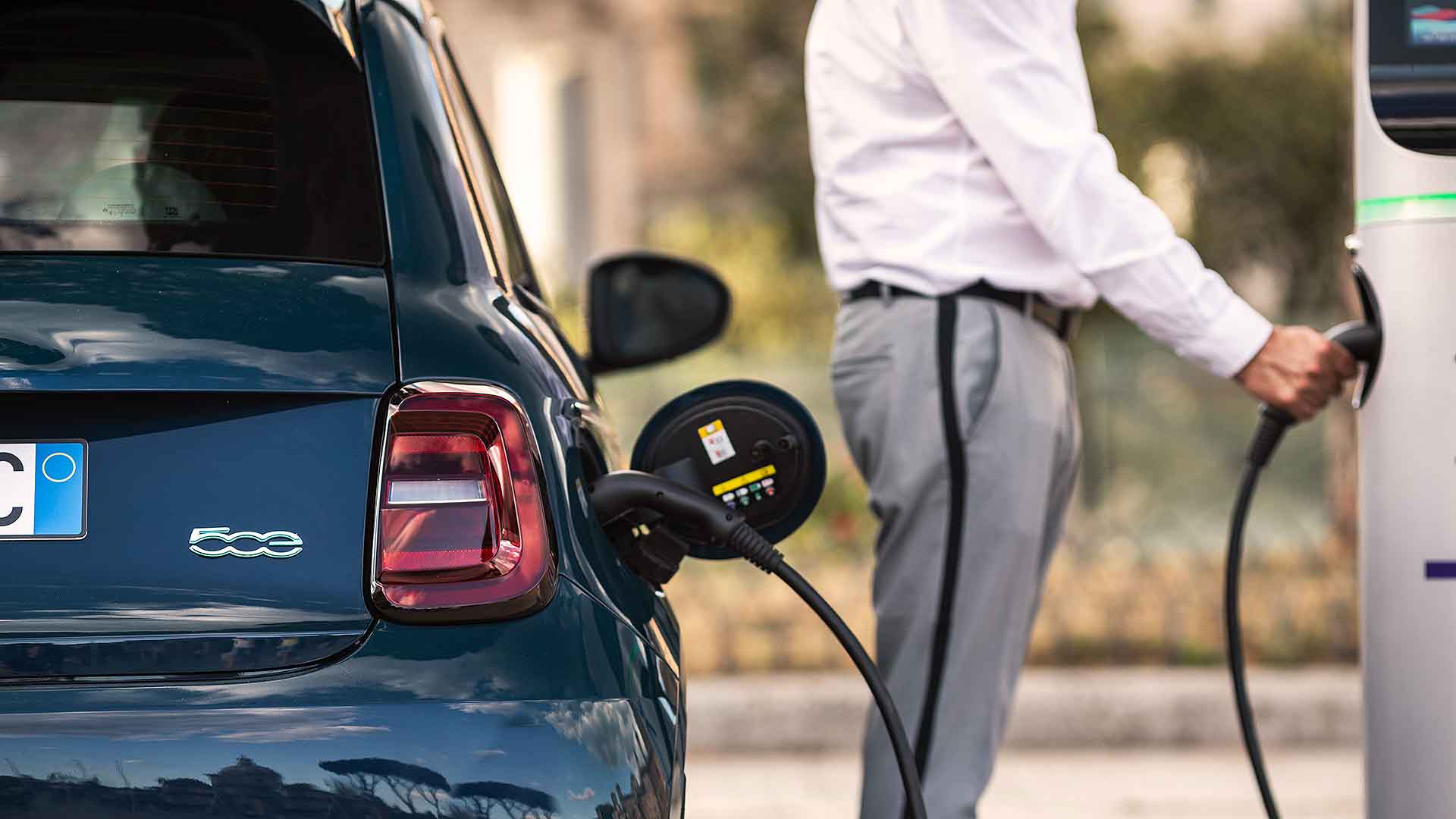
Electric Fiat 500 hatch charging

There are warnings that ‘certain parts of the country risk being left behind’ in the rollout of electric vehicle charging points. This comes as the government insists the UK’s network is ‘world-leading’.

Transport secretary Grant Shapps is urging local authorities to take advantage of a further £20 million of funding to add 4,000 more charging points. The government has received applications for nearly 4,000 points since the On-Street Residential Chargepoint Scheme (ORCS) was introduced in 2017.

A leading think-tank says this won’t be enough. The Policy Exchange says the UK will need 400,000 public chargers by 2030 – the year of the ban on sales of new petrol and diesel cars. The annual rate of installation must increase from 7,000 to 35,000 over the next decade.

In the foreword to a report published by Policy Exchange, Simon Clarke wrote: ‘Whereas a driver of a petrol car can travel confidently from Land’s End to John O’Groats, knowing that they can refill the tank every few miles, that is not yet the case for EVs.

‘Some areas have naturally built up impressive coverage, such as central London, but vast swathes of the country have not. This important report sets out a way to meet the challenge.’

‘Major policy failure’

On-street EV Charging Research

The RAC agrees that a rapid expansion is required. Rod Dennis said: “Without a big increase in the number of charge points right across the UK, certain parts of the country risk getting left behind as 2030 approaches. Everyone remembers what happened when broadband started to be rolled out and some areas were left with poor connections. It would be a major policy failure if something similar happened in the next few years with communities missing out on good charging provision.

“The UK’s charging infrastructure also needs simplifying to avoid drivers having to try to understand a plethora of different apps and charging systems. Something more akin to the simple process of filling up by petrol and diesel would be very welcome. At least drivers can be comforted by the fact all new charge points installed have to allow payment by contactless bank card.”

The ORCS was introduced in 2017 to provide funding for on-street residential projects. Local authorities can apply for 75 percent of the capital costs of procuring and installing an electric charge point and associated dedicated parking bay. Typically, the maximum the Office for Low Emission Vehicles (OLEV) will fund per charge point is £6,500.

‘Build back greener’

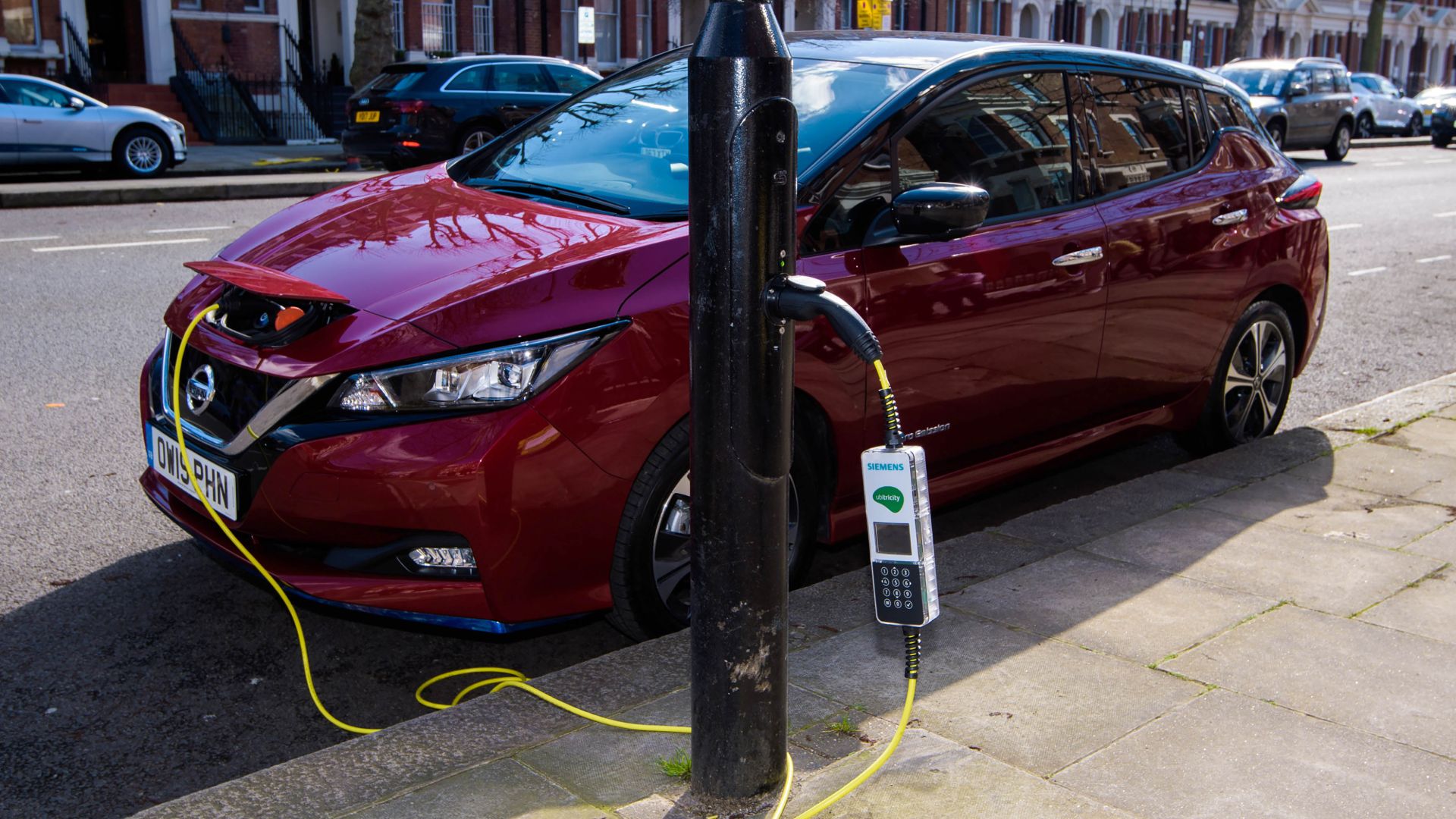
'Electric avenue' opens in london with full street lamp car charging conversion

Recent research revealed that some councils have no plans to install more EV charging points before the end of 2025.

Announcing the additional funding, Grant Shapps said: “From Cumbria to Cornwall, drivers across the country should benefit from the electric vehicle revolution we’re seeing right now.

“With a world-leading charging network, we’re making it easier for more people to switch to electric vehicles, creating healthier neighbourhoods and cleaning up our air as we build back greener.”

Nick Harvey, senior programme manager at Energy Saving Trust, added: “The confirmation of £20 million of funding for the ORCS in 2021/22 is great news. This funding will allow local authorities to install convenient and cost-effective electric vehicle charging infrastructure for those who rely on on-street parking. This helps to support the fair transition to the increased adoption of low carbon transport.

“We’re therefore encouraging local authorities to access this funding as part of their plans to decarbonise transport and improve local air quality.”

READ MORE:

Advertisement

Volkswagen Golf GTI TCR vs the best roads in Wales

0

Volkswagen Golf GTI TCR in Wales

A hot hatchback is best enjoyed alone. I came to this conclusion after spending a day in the company of the new Volkswagen Golf GTI TCR on the roads of Mid Wales. It was the kind of day that might have prompted Lou Reed to write a song. Almost everything was perfect, including the weather, which was very Welsh.

I’d arrived in Crickhowell, a small town in the foothills of the Black Mountains, just before 8am, feeling decidedly jaded following a three-hour motorway slog in a diesel-powered MPV. But there’s nothing like the sight of a freshly washed hot hatch – not to mention a fresh pot of tea – to stir the soul and awaken the senses.

Before most people had finished their morning commute, I was behind the wheel of a five-door Golf GTI TCR finished in Pure Grey, a colour unique to this run-out model. No passenger, no predefined road route and no rush to get back. Just a full tank of fuel and the entire Welsh road network at my disposal.

In truth, it wouldn’t have mattered where I went, because Wales is essentially a greatest hits album of epic roads: Now That’s What I Call Great Driving Roads. But I intended to put together a playlist of Welsh gems, so I took the A479 to Talgarth and headed for Builth Wells.

T, C and R, please, Bob

Volkswagen Golf GTI TCR decals

First, a bit about the Golf GTI TCR. This is the last hurrah for the Mk7.5 Golf, its name and styling inspired by the Touring Car Racing series. Volkswagen has been successful in the formula, so it made sense to create a hotter Golf GTI inspired by the race car.

The tribute act is a lot more subtle than the track star, especially if you resist the temptation to spend £550 on the honeycomb design side decals. Maybe I’m getting old, but I’d prefer my TCR without the homage to Blockbusters plastered on the side. The letters T, C and R on the base of the rear doors are enough for me, Bob.

Other aesthetic upgrades over the Golf GTI Performance include a new front splitter, side skirts, a rear diffuser, black door mirrors and a larger tailgate spoiler. This particular car had the optional TCR Performance Pack, comprising 19-inch black alloys (18s are standard), semi-slick Pirelli tyres, a de-restricted top speed of 164mph, suspension lowered by 20mm and Dynamic Chassis Control.

Volkswagen Golf GTI TCR interior

All in, my test car cost a not insignificant £41,289.19, its price inflated by the £2,900 TCR Performance Pack, £1,000 panoramic sunroof, £100 rear tinted glass, £555 decals, £300 rear side airbags and £534.19 vehicle tracker. A panoramic sunroof on a track-inspired hot hatch? No thanks.

But then everyday usability has always been one of the Golf GTI’s greatest strengths. An ability to switch from mellow roast to espresso in the blink of an eye. The TCR is no stripped-out hardcore racer in the style of the Clubsport S, it’s a car for all reasons, even if the Golf R is – on paper at least – a superior car for all seasons.

I hadn’t so much left the suburbs of Crickhowell before I had settled into a groove. Finding the perfect driving position is easy, while the TCR seats provide good initial comfort and superb long-term support. But while the red marker at the top of the steering wheel is a neat touch, I wish Volkswagen had finished the wheel in Alcantara to match the gear gaiter and door inserts.

Engage Sport mode

Volkswagen Golf GTI TCR steering wheel

You can play around with the driving modes until your heart’s content, but for 90 percent of the time, I found myself in Sport mode and with the seven-speed DSG transmission set to manual. Some may bemoan the absence of a manual gearbox, but in the hills and mountains of Wales, the paddles weren’t a spoiler, they added to the event.

It’s not as though Sport mode turns the TCR into a rabid beast, loaded with pent-up aggression and egging you on to drive faster – this is not a hot hatch in the style of the Honda Civic Type R. There’s a noticeable difference between Comfort and Sport, but the ride quality is never uncomfortable, even on the 19-inch rims, and the exhaust pop-pops on the overrun are more pronounced.

Forget Eco mode, which is akin to exchanging the sticky Pirellis for a set of waders and asking the TCR to go bog snorkelling in Llanwrtyd Wells.

Volkswagen Golf GTI TCR seats

Not that the car ever lets you forget that we’re living in eco-conscious times. Every so often, the dashboard would display an ‘eco tip’ advising me to flick the shifter into automatic to save fuel. An unwanted distraction, especially when you’re enjoying the asphalt of Mid Wales.

The 20-mile drive to Talgarth was like a familiarisation event; like being reacquainted with an old friend, everything feels right in a Golf GTI. It might be easy to poke a stick at VW for being a little unadventurous with its interiors, but when the quality is this good, and the ergonomics are near-faultless, who’s complaining?

It puts you at ease and delivers the confidence you require to really enjoy a hot hatch. And as I peeled off the A483 at Beulah, that was precisely what I intended to do.

The Abergwesyn Pass

Volkswagen Golf GTI TCR Abergwesyn

By now, the fine weather that had greeted me as I crossed the Severn Bridge had given way to sleet. The clouds hung heavy over the peaks of the hills towering over the Abergwesyn Pass, while the roads were coated in a treacherous blend of sheep mess and drizzle. Conditions more suited to the Golf R, perhaps?

Not a bit of it. Up here, in splendid isolation, this was everything a car enthusiast could dream of. No phone reception, no need to be anywhere, no Slack notifications, no four-wheel drive. A hot hatch should be driven through the front wheels. End of story.

Just a few weeks earlier, this road had been rendered almost impassable by Storm Whateveritsnamewas, but today it created a playground for the TCR, the peace and tranquillity pierced by the tuneful burble of the stainless steel exhaust system. It’s not anti-social loud, but it’s just enough to add something to the occasion.

Volkswagen Golf GTI TCR Devils Staircase

From the three fords at the bottom of the pass, the road climbs up Devil’s Staircase, a one-in-four zig-zag hill requiring the use of first gear and an ability to see around corners. Here, the TCR struggled for grip, with a shift from first into second causing the traction control light to flash up as the car propelled itself to the next switchback.

I still hadn’t been able to make full use of the 290hp 2.0-litre turbocharged engine – that would come later – but I was already enjoying the thin-rimmed steering wheel, a welcome tonic to the ‘phat’ wheels deployed on some other hot hatches.

The steering itself is hardly brimming with feel, but it’s communicative enough to let you know what the front wheels are doing. It rewards a light grip on the wheel, and there’s a noticeable difference in weight between low-speed manoeuvring and high-speed cornering.

Volkswagen Golf GTI TCR on road to Tregaron

It was from here to Tregaron that I truly appreciated the manual function of the DSG transmission. Blessed with a stretch of freshly-laid asphalt, the first section is a series of tight corners, woven together by short and snappy straights. While the shifts through the gears aren’t lightning quick, the paddles mean that you can keep your hands on the wheel, which is handy when the road is barely wide enough for one car.

Get it wrong and a multitude of terrors lie in wait, including rolling down the hillside, wheels wiped out by roadside rocks or a head-on collision with one of the many sheep. Get it right and it feels like heaven, even if the sleet had turned to snow and the pine forests were in full-on Narnia fancy dress mode.

Once past the long-since-retired red telephone box, the road climbs like a helter-skelter, with the fresh tarmac making way for a more pitted surface. It’s here that I discover that the TCR can feel a little skittish when cornering on the limit, a symptom of the larger wheels and lowered ride height, perhaps?

Volkswagen Golf GTI TCR 19-inch wheels

On the flip side, the way in which the TCR corners is utterly intoxicating and in many ways the raison d’être of a car of this ilk. It turns in with such precision and vigour – and the harder the corner, the more rewarding it gets.

I’m not ashamed to admit that I channelled my inner Meg Ryan on a number of occasions – remember what I said about enjoying a hot hatch alone? – and my heart skipped a beat when I laced together a series of bends to absolute perfection. And if I entered a corner too quickly, the TCR was on hand to get me out of trouble, and there was no passenger on hand to judge me.

Mountain road and the Elan Valley

Volkswagen Golf GTI TCR in Wales

Dropping down into Tregaron and below the snow line, it was back to reality. The first sign of civilisation since I left Beulah over an hour ago, and the unwanted influx of messages appearing on the crystal-clear 9.2-inch infotainment screen.

Not that my playlist of great roads was about to fade to grey – there were no fillers or makeweights on this greatest hits album. Instead, I took the B4343 to Cymystwyth, where I’d join the mountain road to Rhayader, via the sublime Elan Valley.

It was on the mountain road that I finally managed to stretch the TCR’s legs. It begins with a tight, technical section, the road behaving like a temptress and provoking you into a wrong decision. One minute you’re enjoying a ribbon of bends, the next minute you’re tangling with a savage cocktail of sudden camber changes, blind summits or unexpectedly tight turns.

Occasionally it’s a blend of all three…

‘Properly quick’

Volkswagen Golf GTI TCR near Rhayader

It’s fun, exhilarating and at times scary, but it serves as a prelude to the main event: a fast, open section to the junction for the Elan Valley, blessed with wild vistas and, on this occasion, snow-capped peaks.

When the road is free of sheep and day-trippers, it’s possible to unleash the full force of the TCR’s 290hp engine. A 0-62mph time of 5.6 seconds seems a tad pessimistic, but it’s the mid-range muscle that’s most impressive. The full 280lb ft of torque is available from 1,950rpm to 5,300rpm, so there’s plenty of pull in whatever gear and at whatever speed. Make no mistake: the TCR is properly quick.

Peak power is from 5,000rpm to 6,200rpm, so there’s a reward for holding on to a gear for longer, especially given the fact that the soundtrack is at its most raucous above 4,000rpm. Annoyingly, the DSG ‘box will change up when you approach the redline, diluting the feel of total involvement, not to mention providing fuel for the fire for those who’d argue that the TCR should have a manual option.

Volkswagen Golf GTI TCR exhaust

Not me. I was revelling into the feeling of leaving my hands on the wheel, clicking up and down through the gears, listening to the pop-pops and spits on the over-run. With the sun shining and the road blessed with a 60mph limit, the Elan Valley road to Rhayader was arguably the high note of the trip. Everything fell into place – I felt no urge to stop for pictures.

After an unhealthy snack at Rhayader, I had a decision to make: take the A470 and A479 to Crickhowell, or the longer route via Llandovery and the Black Mountain Pass. Needless to say, I chose the latter.

Black Mountain Pass

In truth, playtime was over. After the rollercoaster B4358 to Beulah, this section of the journey was a frustrating mix of no overtaking zones, lorries and mid-range hatchbacks. Worse still, by the time I had reached the bustling town of Llandovery, the sun had turned to rain and, for the second time this year, I was predicting a rather wet drive along the A4069.

Volkswagen Golf GTI TCR in snow

I was wrong. The A4069 – known to car enthusiasts as the Black Mountain Pass – was in the midst of a pounding by near blizzard conditions. For the first time on this trip, I figured that a Golf R might be more appropriate.

And the Golf R is arguably the Golf GTI TCR’s chief rival. While the Renault Megane RS Trophy, Civic Type R and Hyundai i30 N might seek to tempt a Golf driver away from Volkswagen, if you fancy a hot Golf, you’re unlikely to be swayed by much else.

Personally, I’d choose a TCR over a Golf R. While the additional 10hp and 4Motion four-wheel drive might be appealing, the R is also heavier and seems to be driven by every Tom, Dick and Gary living along the M4 corridor.

Volkswagen Golf GTI TCR Black Mountain Pass

The TCR feels a tad more special, even if Volkswagen could have worked harder to increase the sense that it’s derived from a successful race car. And no, I’m not talking about adding more decals.

Whether or not the TCR was worth the £2,310 extra over the Golf GTI Performance is a matter of opinion. Subjectively, the TCR is the best looking Mk7 Golf GTI – especially in Pure Grey and without the decals – and the additional 45hp is most welcome.

But you’ll want the Performance Pack, which added another £2,900 to the price when new. Heck, ‘my’ test car cost an eye-watering £41,300, which is big money for a Golf GTI, especially one based on an outgoing model and without the attraction of limited-run status.

All by myself

Volkswagen Golf GTI TCR at ford

I called it quits on the ‘White’ Mountain Pass and endured a slow crawl back to Crickhowell, energy and enthusiasm levels hitting the floor after 12 hours on the road (including my drive to Wales). I had done around 200 miles in the TCR, mostly on mountain passes and technical B-roads, averaging 22mpg in the process.

Nearly a week on, I was still thinking about the Golf GTI TCR. It has renewed my interest in the Golf GTI and awakened a former desire to own a new one. I have owned a GTI in Mk1, Mk2 and Mk3 flavours – and enjoyed a brief romance with a Golf Rallye – but the newer models have passed me by.

Thanks to the TCR and the magical Welsh roads, I’ve added the Mk7 Golf GTI to the shortlist of new cars I would buy with my own money. And the first place I’d head to having taken delivery? Mid Wales. Alone.

READ MORE:

New Volkswagen Golf R – and its hot hatch ancestors

Volkswagen Golf GTI Stage 2+ by Mountune (2020) review

Remember when Volkswagen built a London taxi?

Advertisement

UK supercar ownership is on the rise

0
McLaren Automotive

The City of Westminster has been named the ‘supercar capital of the UK’ following a recent Freedom of Information request. The London borough, which has a population of around 250,000, is home to 532 supercars.

This is according to a Guardian investigation that shows wealthy people are buying more supercars than ever before. Almost 16,000 supercars were registered in 2019, according to Driver and Vehicle Licensing Agency (DVLA) figures. That’s up from 14,000 in 2018.

For context, the 2019 figure is roughly the same as the 2020 sales figures of Jeep (4,639 registrations), Mitsubishi (9,076), Smart (1,377), SsangYong (1,488) and Subaru (951) combined. It’s only 3,000 fewer than Dacia (18,918).

The underground car park at One Hyde Park in Knightsbridge is said to hold the highest concentration of supercars in the world.

‘The supercars of choice’

White McLaren 765LT

David Kendrick, a partner at UHY Hacker Young told the Guardian: “Despite all of the economic uncertainty around Brexit, UK celebrities, sports stars and business executives continue to snap up the latest supercars, leading to many manufacturers having lengthy waiting lists.

“Out of all of the brands, Ferrari is still the biggest selling, but Lamborghinis and McLarens are quickly becoming the supercars of choice. While Westminster maintains its supercar hotspot crown, we’re likely to see a bigger concentration of supercars outside of London as the wealthy seek more space as working from home becomes the new norm.”

Last year, the Royal Borough of Kensington and Chelsea installed noise cameras after receiving complaints that local roads were a ‘magnet for Lamborghinis and Ferraris’. The cameras, which have a 74 decibel (dB) noise threshold, were activated more than 130 times in the first 11 days.

One supercar was measured at 104dB – the equivalent of a helicopter flying overhead.

Johnny Thalassites, Kensington’s lead member for transport, “Residents have had enough of drivers using our streets as a racetrack. Supercars look good and most drivers are considerate. But when they’re not, it is disruptive and irritating for people living and working in the area.”

READ MORE:

Advertisement

Diesel car MOT emissions failures rise 240%

0
MOT inspection

Strict new emissions regulations for MOT tests introduced in 2018 have led to a huge increase in diesel car MOT failures, a Freedom of Information request has revealed.

Since the tough new rules came into force in May 2018, diesel car MOT failures have risen 240 percent due to emissions.

This is significantly higher than the 37 percent increase in petrol car emissions test failures.

In 2020, 1.3 million cars failed MOT tests due to emissions, revealed the FOI request by garage comparison site bookmygarage.com.

More cars have failed MOT tests due to emissions in the last two years than any previous year.

“The regulations have mostly impacted diesel cars, causing more than triple the number to fail,” said bookmygarage.com’s Jessica Potts.

“An increasing number of relatively modern diesels are struggling to pass the MOT test as their emissions control systems face tougher scrutiny.

“Putting them right can cost owners thousands of pounds.”

The tough new regulations for emissions focused on problematic diesel particulate filters (DPF). An MOT test failure will be given if there’s any smoke coming out the exhaust, or if there is evidence the DPF has been tampered with.

Cars will automatically fail the MOT if the DPF has been removed – which some owners are doing due to the high replacement cost of faulty filters.

DPFs were made mandatory for diesel cars from 2009.

However, despite the huge spike in diesel car MOT emissions failures, petrol cars remain more likely to fail the test, with a 4.5 percent failure rate, compared to 3.3 percent for diesel cars.

ALSO READ

Simple and essential checks before your car’s MOT

What is checked in a car MOT test?

MOT goes paperless for emissions test passes

Advertisement

Old tyres to be banned following fatal coach crash

0
Proposed ban on old tyres

A new law banning the use of old tyres on lorries, buses, coaches and minibuses has come into force. It follows nearly a decade of campaigning by the mother of a teenage son killed in a coach crash.

In September 2012, a coach returning from a music festival crashed after a 19-year-old tyre blew out. It caused the death of three people on the coach, including Michael Molloy. His mother Frances set up the campaign group called Tyred to put pressure on the Government to change the law and to raise awareness of the dangers of old tyres.

It’s now illegal to use tyres aged over 10 years old on the front-steered axles of HGVs, buses, coaches or all single wheels fitted to a minibus (nine to 16 passenger seats). The use of such tyres will result in a ‘dangerous fail’ at an annual test and a prohibition.

If inspected at a Driver and Vehicle Standards Agency (DVSA) enforcement check, tyres aged over 10 years old will be considered dangerous and attract an ‘S’ marked immediate prohibition notice. The manufacturer’s date code must be legible on all tyres fitted to HGVs, trailers over 3.5 tonnes, buses, coaches and minibuses.

The new legislation was announced by the Department for Transport (DfT) in July 2020. Speaking at the time, roads minister Baroness Vere said: “This change is in no small way the result of years of campaigning, particularly from Frances Molloy, to whom I thank and pay tribute.”

‘Loophole’ for operators

Old tyres banned

Tyred welcomed the changes, but said it was a ‘surprise and a disappointment’ that old tyres in twin configuration on vehicles would not be included in the ban. It warned that not implementing a total ban on old tyres ‘leaves a “loophole” for operators who do not have safety as their number one priority’.

Frances Molloy tweeted: “Thank you for all of the messages of support today. Whilst I am disappointed it wasn’t a total ban, this is clearly a victory for [the] Tyred campaign. There is no doubt lives will be saved and this is due to everybody who supported the campaign. For Michael, Kerry and Colin.”

The MOT testing blog outlines the changes for test stations. It says that although the legislation applies mainly to heavy commercial vehicles, it also applies to some vehicles that fall into the MOT scheme. This includes vehicles with more than eight passenger seats that are not tested as PSVs.

This means failures for tyres over 10 years old on the front axle of any vehicle with nine or more passenger seats, and any single wheels of a minibus (nine to 16 passenger seats).

Regardless of the legislation, drivers of all vehicles should consider replacing tyres over 10 years old. While they might be functional and legal, rubber cracking or deterioration could make them unsafe for use. If in doubt, change your tyres.

For more information, visit the Tyred website.

READ MORE:

Advertisement

New smart tariff uses AI for cheaper home EV charging

0
Ovo Drive Anytime EV Tariff

A new ‘smart’ electricity tariff has been introduced to offer electric vehicle drivers a cheaper, greener, home charging option.

Ovo Energy’s ‘type of use’ tariff could potentially reduce charging costs by 63 percent over the course of a year. This could equate to an average annual saving of £200, according to the Bristol-based energy supplier. 

Whereas many energy tariffs are linked to time of use, Drive Anytime guarantees the same price regardless of it being day or night.

Optimal charging from AI technology

Ovo Drive Anytime EV Tariff

The Ovo Drive Anytime tariff will offer EV owners a flat rate of 6p per kWh. 

By comparison, Ovo states that the average price from top suppliers is 16p per kWh.

Controlling the smart tariff is Ovo’s Kaluza technology, which uses artificial intelligence and machine learning for optimal efficiency. Kaluza constantly monitors weather conditions, demand on the energy network, and energy pricing trends. 

The Drive Anytime tariff lets owners simply plug their car in, with Kaluza determining the best time to charge. Ovo believes this will allow drivers to benefit from cheaper energy prices, and greener sources of electricity.

Preparing the grid for future demand

Ovo Drive Anytime EV Tariff

Increased popularity of electric vehicles means ensuring the electricity grid can cope with demand will be a major future concern. 

Ovo Energy believes that using technology like Kaluza will be increasingly important in shifting use away from peak times. 

Marzia Zafar, head of strategy and policy at Kaluza, said: “Our intelligent software is designed to give EV users the energy they need, precisely when they need it, at the lowest environmental impact, and now at a guaranteed price that saves them money.”

At present, the Ovo Drive Anytime tariff is in an initial launch phase. A wider roll out to more Ovo Energy members later this year.

ALSO READ

Hybrids no longer defined as ‘electrified vehicles’

Toyota reclaims crown as world’s biggest car company

Rare BMW M1 once owned by Paul Walker is up for auction

Advertisement