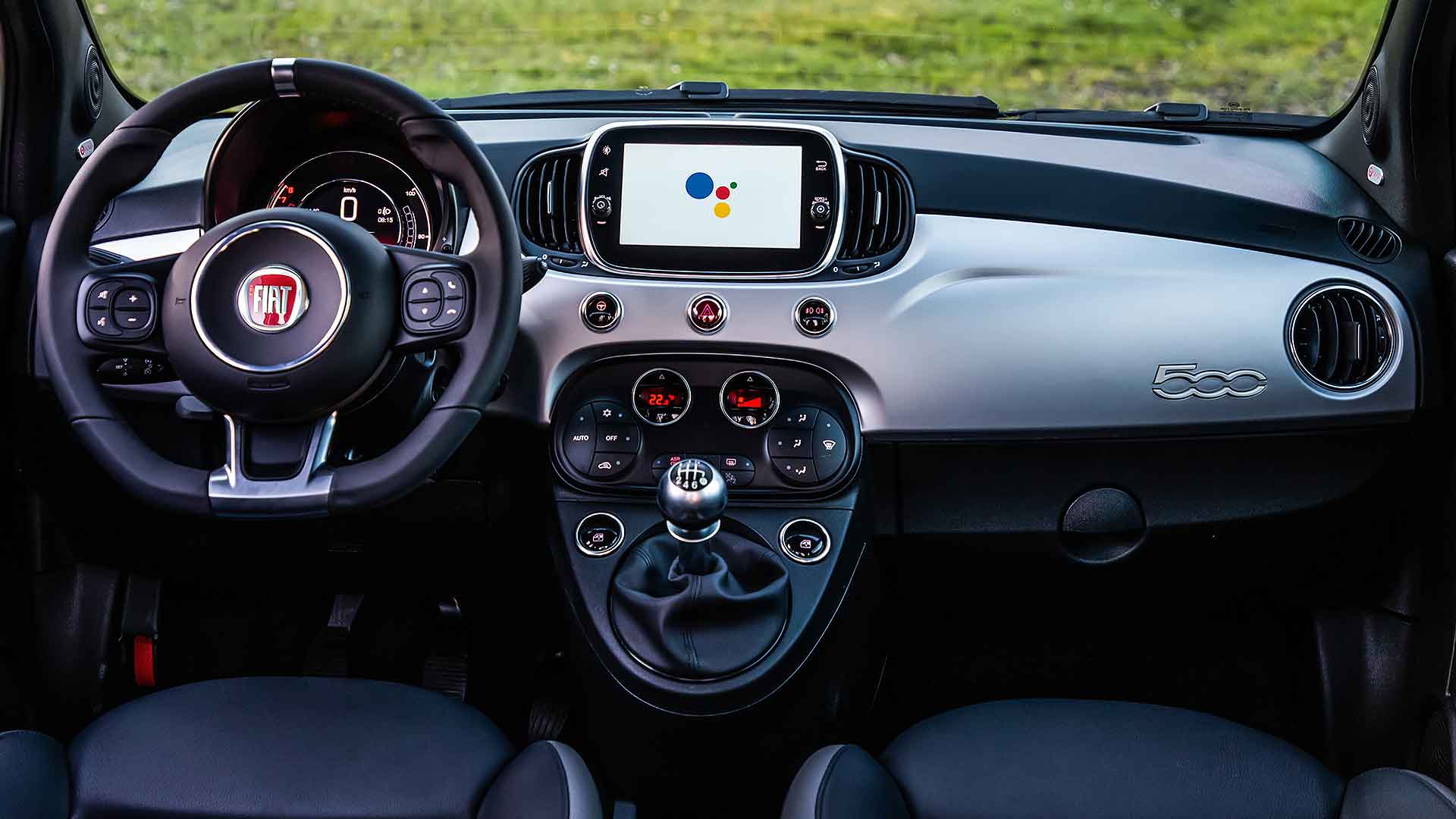
Fiat has partnered with Google to launch a new range of 500, 500L and 500X ‘Hey Google’ special editions.
The cars come equipped with the Hey Google voice assistant, which they firm says allows customers to interact with their car even when they’re away from it.
This can be done either through the Google smartphone app – or the Google Nest hub that’s included for free with every Fiat 500 Hey Google car.
Fiat says customers can say ‘Hey Google, ask my Fiat’ about:
Where it is parked
How much fuel is left
Total mileage driven that day
The status of the car can also be monitored – an alert is sent if a theft is attempted, for example.
Alerts can also be set if the Fiat 500 Hey Google leaves a preset area, or exceeds a predefined speed.
Exterior changes aren’t extensive (all come in two-tone white and gloss black), but they are significant: this is the first time the Google logo has appeared on a car, on the wheelarches of each special Fiat 500.
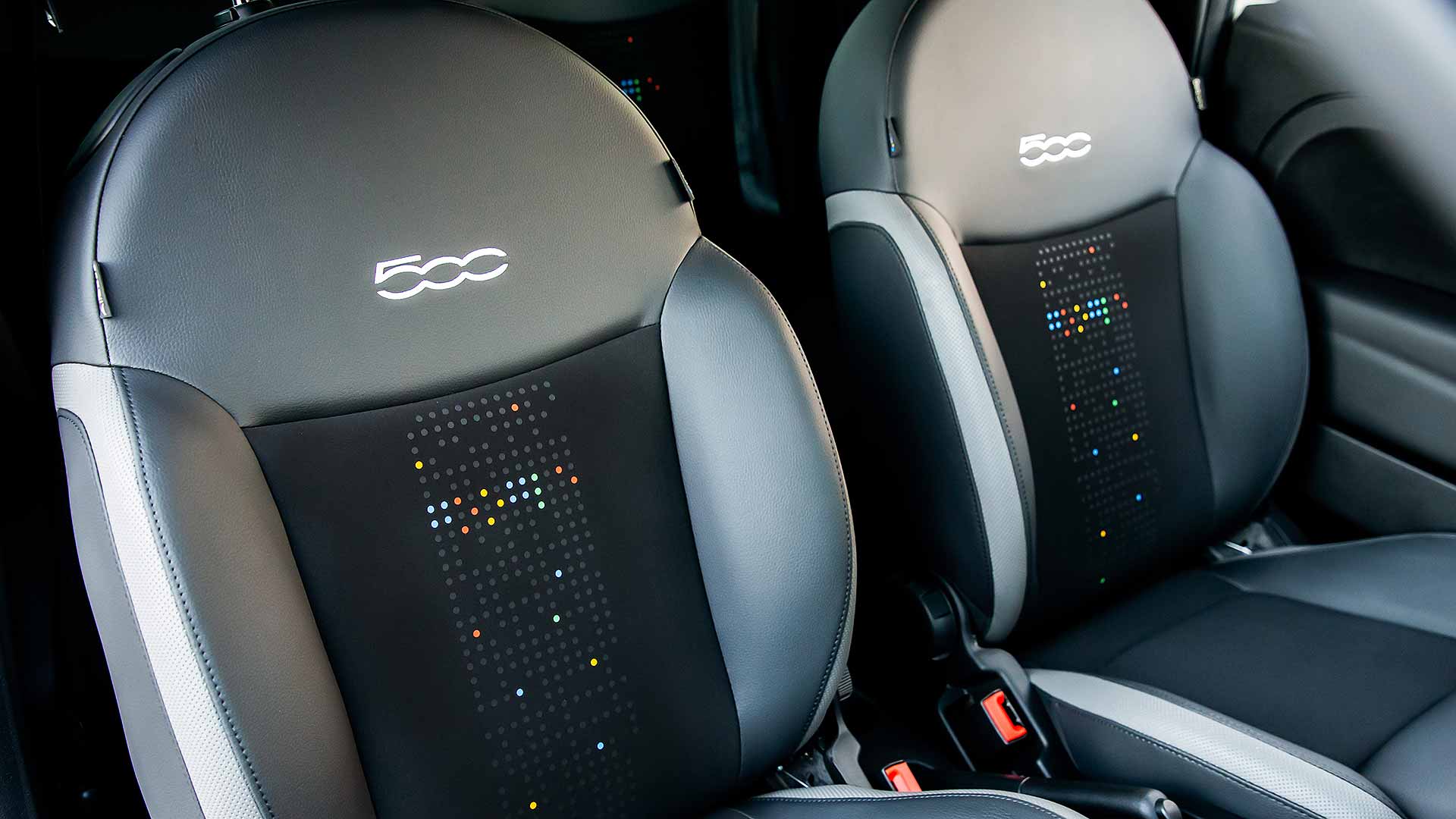
There’s also the multicoloured Hey Google ‘molecules’ on the central pillars and, inside, on the seats.
The chairs also feature a Hey Google tag, while the 7.0-inch touchscreen has an animated Google start-up sequence.
And what’s in the goodie bag that all owners receive at purchase? Their Google Next Hub device – with a skin colour-matched to the car – plus a key cover and a welcome letter advising how to set up the Hey Google voice assistant in their car.
More than three-quarters of motorists feel confident about taking their car to a garage for an MOT during the Covid-19 pandemic. That’s thanks to safety measures that garages have put in place, results from a new survey suggest.
According to a poll conducted by The Motor Ombudsman, 81 percent of drivers would be comfortable taking their car to a garage for its annual inspection.
Male drivers (85 percent) are more at ease than females (76 percent) about the prospect of visiting a garage, while 12 percent of motorists would feel nervous and just four percent said they would opt for a collection service instead.
The research was conducted a year on from the MOT extension introduced by the government in response to the coronavirus pandemic, which allowed motorists to postpone the due-date of their vehicle’s compulsory annual assessment by six months if they had a test expiring between 30 March and 31 July 2020.
During that period, 10 million MOT test exemptions were issued. Despite the volume of postponements, the majority of drivers (89 percent) said they still knew the expiry date of their vehicle’s annual certificate, an unexpected positive result from the extension.
Most drivers know when their MOT expires
The findings also revealed that awareness of the deadline was consistently high across all age groups and regions in the country (equating to an average of 89 percent), while the study highlighted that only around one in 10 drivers (11 percent) were unable to recall the expiry date of their car’s MOT.
“With the six-month extension changing the natural rhythm of when people would have traditionally got their MOT done, it is encouraging to see that such an important annual assessment remains at the forefront of people’s minds and a key date in the diary for so many,” said Bill Fennell, chief ombudsman and managing director of The Motor Ombudsman.
“Nevertheless, when our lives do return to some degree of normality in the coming months as lockdown restrictions are lifted, it’s still advisable for motorists to sign up for free MOT reminders and have their car’s documentation readily available to jog their memory if needed, so that they can make a booking ahead of time.
“The annual test is such a critical part of vehicle maintenance and staying safe and legal when at the wheel, so it really is a date that can’t be left to chance.”
The frontrunners for the 2021 World Car Awards have been revealed – with the line-up for the prestigious World Car of the Year prize boasting an all-electrified shortlist.
The Honda e, Toyota Yaris and Volkswagen ID.4 are all going forward to the main World Car of the Year prize, which will be announced in April.
The overall victor will succeed 2020’s World Car of the Year, the Kia Telluride.
The Honda e and Toyota Yaris are also named as Top Three in the World finalists in the World Urban Car prize… along with another Japanese model, the Honda Jazz / Fit.
In the World Luxury Car awards, the Land Rover Defender is going up against the Mercedes-Benz S-Class and Polestar 2.
The Land Rover Defender is a finalist in the 2021 World Car Design of the Year award, along with the Mazda MX-30 and, again, the Honda e.
Perhaps the most diverse category is World Performance Car, where the Audi RS Q8 will battle the Porsche 911 Turbo and Toyota GR Yaris for the overall award.
The overall winners will be announced during a special ceremony on Tuesday 20th April, which will be hosted on World Car TV.
Although the World Car Awards is normally announced at the New York International Auto Show, the global pandemic means this will not be possible for the second year running. However, organisers have confirmed the partnership with the show remains, for the 16th consecutive year.
Both the 2022 awards and the 18th edition of the ‘Road to the World Car Awards’ assessment process will begin at the 2021 New York show on 19 August.
Motorists aged 70 and over in poor health may be restricted to driving in daylight hours only. They may also be ordered to stay near to home, with their cars fitted with trackers to ensure compliance.
Under proposals discussed between the DVLA and Driving Mobility – a network of test centres – over 70s who could otherwise lose their licence because of ill health could be eligible for ‘graduated driving licences’. These would restrict them to a radius of 20 or 30 miles from home and ban them from night-time driving.
Driving licences expire when a driver turns 70, and those wanting to stay on the roads must inform the DVLA of medical conditions such as dementia, Parkinson’s, epilepsy, diabetes (if treated with insulin) and any condition that affects both eyes or the total loss of sight in one eye. Reviews take place every three years.
According to a Sunday Times report, there has been an increase in elderly drivers on the roads in the last 25 years, with the proportion of drivers over 70 doubling, from a third to two thirds. However, the number of deaths on the road in this age group leapt from 95 in 2010 to 145 last year, while fatalities for every other age group fell sharply or stayed stable.
Proposal could lead to loneliness
Edmund King, president of the AA, criticised the possible plan, warning it could lead to loneliness, and called on the medical profession to report drivers to the DVLA: “They are there to save lives and what better way to save lives than to prevent someone who you know is capable of killing through their own medical condition,” he said.
However, Edward Trewhella, chief executive of Driving Mobility, defended the proposals, saying many elderly motorists stick to their own local area already. “They go to the shop, the doctor’s surgery, go and see a granddaughter down the road, probably on minor roads with which they are familiar.
“This process would regularise that, and make it legal for them to do so as long as they didn’t take a trip outside of an area or outside of a time restriction. That would mean that they were driving safely within their familiar environment.”
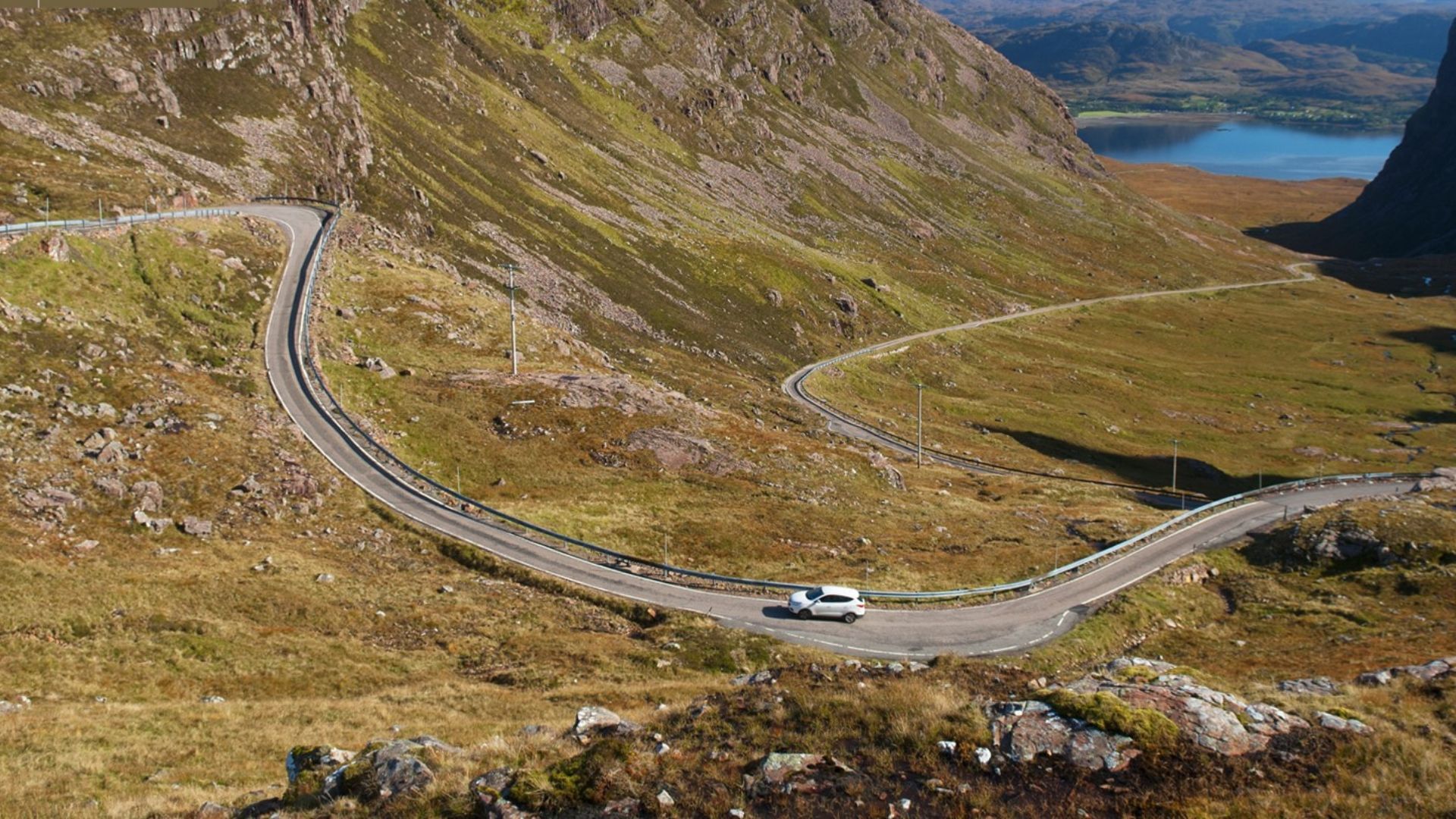
The RAC has called on Scottish authorities to conduct “swift corrective maintenance” to the North Coast 500 route in Scotland ahead of the summer, following a report that the roads are in a “terrible” condition.
The North Coast 500 follows the main roads along the coastal edges of northern Scotland and is popular with sightseers and car enthusiasts due to the rugged nature of the terrain – and twisting roads.
According to The Scotsman, the 519-mile tourist trail has ‘big holes in sections’ and there are also ‘suspension-destroying’ potholes along the route.
Fraser Mackenzie, a Highlands-based renewable energy project manager, claimed a harsh winter and underinvestment has led to a deterioration in maintenance and said some sections resemble a cart track. He said: “The surface has gone from huge sections, with an uncountable number of potholes and mere metres of newish tarmac”.
‘A blessing and a curse’
RAC spokesman Rod Dennis told Motoring Research: “The wild, exposed nature of many of the roads that make up the NC500 are both a blessing and a curse – great from a scenic point of view, but a real problem when it comes to the elements getting the better of them.”
Dennis added: “This year, the colder winter we’ve had means potholes are likely to make driving some stretches of the route a lot less enjoyable, but they also risk causing expensive damage to vehicles.
“Between October and December last year, RAC patrols attended more than 1,400 breakdowns nationally where potholes were most likely to be the cause, and without some swift corrective maintenance it looks as though the arrival of spring could coincide with many more drivers running into problems, including on the NC500 itself.”
Responding to the complaint, a spokesman for Highland Council – which is responsible for maintaining the majority of the route – said: “The recent severe weather between January and March has caused considerable damage to Highland roads. We have a process in place regarding potholes and defects, and all incidents that are reported are followed up.”
EV entrepreneur Henrik Fisker has predicted that petrol and diesel cars could fall out of favour with the public well before the UK’s 2030 ban on the sale of new fossil-fuelled vehicles (excluding hybrids).
Speaking to Motoring Research, the founder of the eponymous EV start-up suggested motorists wouldn’t buy a petrol or diesel car for fear of losing money on it. “If you buy a petrol or diesel car in 2023 – who is going to buy that car in 2026? You won’t be allowed to drive into the centre of London or Manchester and everyone hates the car because it is essentially forbidden,” he said.
“It’s like trying to sell a horse to someone who needs to commute to work every day and saying ‘why don’t you just ride that to work?’ It isn’t going to work anymore. Gasoline vehicles could be extinct much faster and the resale value is going to fall.”
Fisker’s company is set to launch its Tesla Model Y-rivalling Ocean EV in the UK in late 2022. He says British customers will pay the same price for vehicles as Americans, because European-bound models will be manufactured by Magna Steyr in Austria.
“Our vehicle has a price of $37,500, which will translate to less than €40,000 (£35,632). We won’t upcharge people in England. Because it is coming from Graz, you don’t have to factor in transport costs from America, so pricing will be pretty similar,” he said.
Specifications for the Ocean are yet to be revealed in full, but Fisker says it has a maximum range of 350 miles, calculated using the American testing cycle, so he expects the European test to record a higher figure.
Like Tesla, Fisker said the Ocean will be fitted with ‘fun’ features: “I know in England it can suddenly start raining and we are planning a special ‘UK mode’ which we will announce closer to the launch,” he teased.
‘Different plugs become annoying’
Fisker did, however, take a swipe at his Californian rival over its decision to build up its own Supercharger network and socket design.
“I don’t think it would be an advantage for the customer if every car maker makes their own charging station and own plug like Tesla has done because it becomes annoying for the consumer. Ultimately, the consumer needs to be able to go to any charging station – just like you would go to a gas station – and charge your car.”
Fisker confirmed the Ocean will be fitted with a CCS plug and will be able to accept a charging speed that adds 100 miles of range within 10 minutes.
Buying a petrol hybrid vehicle minimises the likelihood of problems when buying a used car. That’s according to the results of the latest Which? Car Survey.
Analysis of 47,013 drivers and 55,833 cars shows that petrol hybrids are the most resilient. This is despite the complexity of combining a petrol engine with an electric motor. It’s also good news for Toyota and Lexus drivers.
The Which? data also revealed that 97 percent of electric car owners haven’t yet needed to get a new EV battery. This is based on cars registered between 2014 and 2020.
But what of the more general faults you’re likely to find when looking at a used car? There are four main issues, according to the report.
Suspension
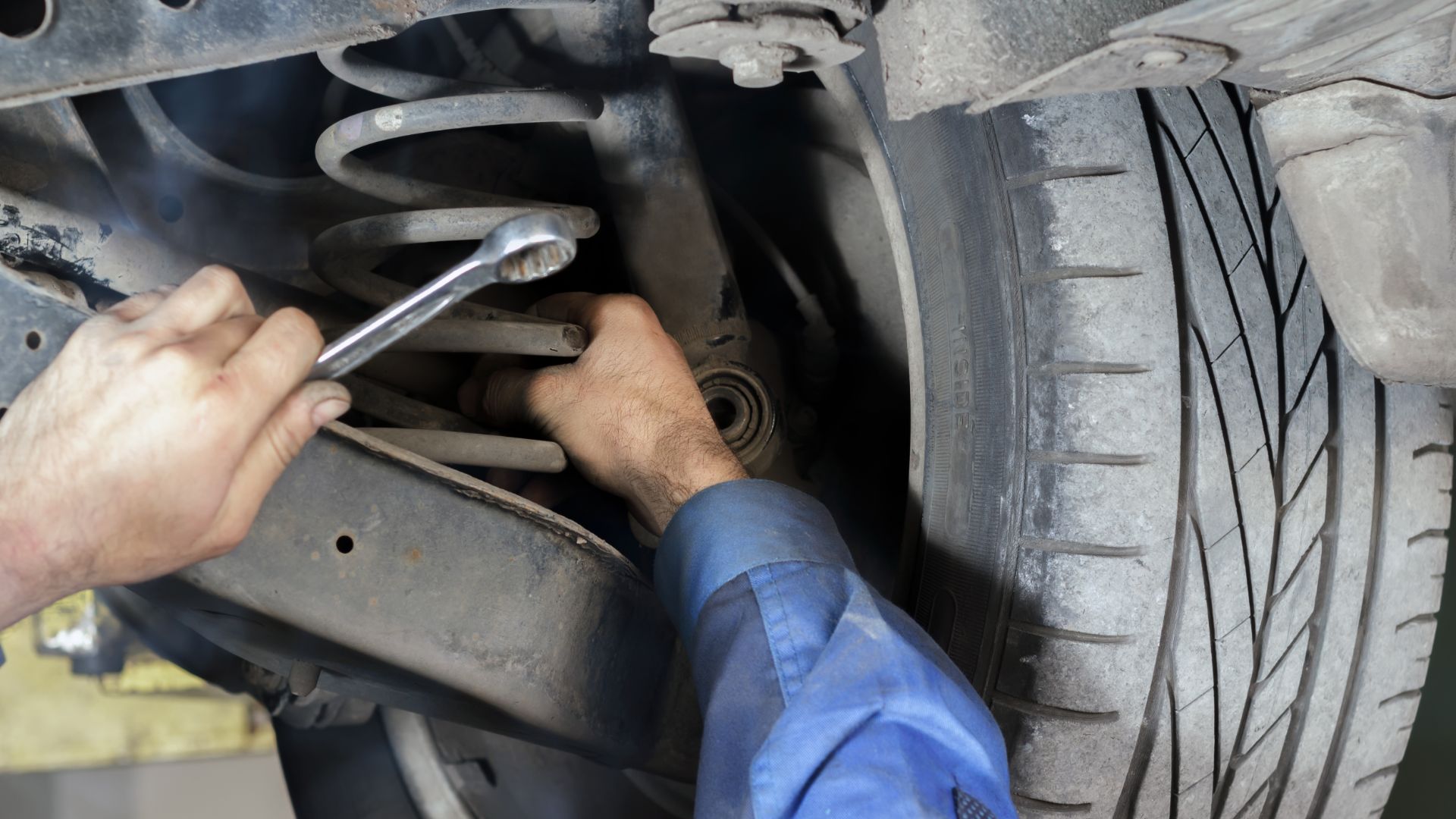
Problems with suspension components, including faulty or broken springs and dampers, are the most common issues in cars over nine years old. The Which? data reveals that this affects one in 10 drivers.
Many faults are difficult to detect without driving the car. The advice is to take the car on a variety of roads, including speed bumps and rough surfaces. ‘Baggy’ handling, knocks, thumps or jolts are signs of trouble.
Battery
A battery should last between three and five years, so check this when looking at a used car. If the car struggles to start or the interior/exterior lights are dim, it could be a sign that the battery needs replacing.
Prices range from £50 to £150, depending on the size of the battery. Insist on a replacement or use it as a negotiation tool. Click here to find out how to charge your battery.
Exhaust and emissions
Blue smoke suggests the car is burning oil. Black smoke could be down to a number of different issues, but it’s a sign that all isn’t well with the engine. Either way, it could be reason to consider an alternative used car.
Do you hear a hollow or rattling sound when you start the engine? The exhaust could need replacing. A relatively easy fix, but another expense you could do without.
Air conditioning
It’s important to use the air conditioning to keep it fault-free. The air-con should be used to cool the cabin in warm weather and de-mist the windows in the winter. Failure to do this risks bacteria developing in the system.
Check that the air-con is working. A ‘re-gas’ is a cheap and easy fix, but a faulty system will be more expensive to rectify. If nothing else, it’s another negotiation tool for you as a buyer.
Click here for a list of cheap used cars you can rely on.
With the end of lockdown potentially in sight, many are looking forward to driving further afield.
The ‘stay at home’ rule ends on 29 March, but many restrictions remain in place. You should continue to work from home if possible and minimise your number of journeys. Travel abroad will continue to be outlawed, except in certain circumstances.
There remains specific guidance for private cars and other vehicles. This can be split into four categories: plan your journey, car sharing, on your journey and completing your journey. These are summarised as follows:
Plan your journey
Plan your route, including any breaks, before setting off
Check that your vehicle is roadworthy. This is especially important if you haven’t used it for several weeks
People from a household or support bubble can travel together in a vehicle
You should wear a face mask in an enclosed space where social distancing isn’t possible
Make a list of items to take with you
Only travel into, out of and within areas under local lockdown if essential
Car sharing
Avoid car sharing with people from other households or support bubbles
Share transport with the same people each time
Open windows for ventilation
Travel side by side or behind people
Face away from each other
Consider seating arrangements to maximise distance between people in the vehicle
Clean your car between journeys using standard cleaning products
Limit the time you spent a garages, petrol stations and motorway services. Use contactless for payments
Wash your hands for at least 20 seconds or sanitise your hands often
Completing your journey
Wash your hands or sanitise your hands again
‘Open up the windows’
As has been widely reported, Covid-19 isn’t just spread via coughs and sneezes. Even talking and breathing has the potential to spread the virus, especially in a confined space. This is a potential problem in a car.
As this USA Today article explains, a car’s cabin is cocooned from the outside world. Every gap has been sealed to improve the sound installation and to reduce the amount of wind and road noise entering the cabin. The ventilation rate is quite low.
‘When the windows are closed, SARS-CoV-2 (in fine aerosol particles) accumulates in the car cabin,’ it says.
‘With each new cough, the concentration builds up with no significant dilution happening. But even cracking one window open just three inches can keep this at bay.
‘So the next time you’re in the car — be it your own vehicle with others or in a taxi, Uber or Lyft — it’s all the same advice: Open up the windows just a bit, even if everyone is feeling fine.’
Neutralise Covid-19 in seven minutes
You should also consider using a spray designed to neutralise the coronavirus. The disinfectant, which costs £12.49, breaks down and kills Covid-19 bacteria. It’s distributed throughout the vehicle via the ventilation system, with the active ingredient spread across all surfaces.
The aptly-named CV1 Shot comes in a one shot canister which should be placed in the passenger footwell. With the ventilation system on full and the doors shut, the job is complete in seven minutes. After this, the doors should be opened for five minutes to fully ventilate the cabin.
Helen Robinson at Euro Car Parts, said: “As many people will be spending more and more time on the roads over the next few weeks, we are pleased to offer a product that will help eliminate the transmission of the virus within our vehicles.
“Returning to the roads will be daunting for many, but hopefully, the CV1 Shot helps to provide some reassurance that our cars can be safe places.”
Auto Trader has launched a guaranteed part-exchange tool which gives car buyers an instant and haggle-free online price for their old vehicle.
Underwritten by auction house Manheim, the guaranteed part-exchange service aims to speed up the online car buying process, and help retailers capitalise on sales opportunities.
The online part-exchange price can be generated directly from within the car dealer’s adverts, further boosting customer convenience.
Retailers can either take the part-exchange vehicle for their own forecourts to sell as a used vehicle, or dispose of it through Manheim auctions.
“The part-exchange process represents a common pain-point for both retailers and consumers, which often results in wasted time and energy, as well as missed sales opportunities,” said Auto Trader commercial product director Karolina Edwards-Smajda.
“Our objective was to create a more efficient solution which significantly improves the consumer user experience, and in doing so, helps retailers sell more vehicles, more profitability.”
The price guarantee effectively switches a traditionally challenging process into a sales channel in its own right, she said.
It also enables car buyers to complete the whole process from home, as consumers increasingly embrace click and collect and home delivery for big ticket items such as cars.
“The service marks an important step in our commitment to support retailers with their digital retailing ambitions and complements the blended retailing experience many consumers have come to expect,” said Ms. Edwards-Smajda.
Auto Trader is now encouraging retailers to sign up for the guaranteed part-exchange tool by offering their first 60 days free.
Rejuvenated retro British brand Radford has announced it will have access to its own racetrack in North America – for 2009 World Champion and Radford partner Jenson Button to personally sign off each car it builds.
The circuit, now renamed Radford Racing School Arizona, USA, is where Button will put each bespoke creation through its paces.
It will also be the centre of dynamic development for all future Radford models, and where owners will be able to receive tuition and guidance on how to get the best from their bespoke creations.
Radford is a British coachbuilder that famously built four bespoke Minis for the Beatles in the 1960s.
It has been revitalised under the leadership of TV’s Ant Antstead, F1’s Jenson Button, car designer Mark Stubbs and business adviser Roger Behle.
Stig Investments, which bought the circuit follow the bankruptcy of former resident, the famous Bob Bondurant School of High Performance Driving, has granted Radford access to the well-loved circuit.
“Great engineering is only achieved through obsession over every detail and marginal gains,” said Jenson Button.
“A race track is the perfect environment for this… and it’s also my happy place, of course.”
The company confirmed the first car is already in development, with more news due to be revealed soon.