Home Blog Page 171

Richard Hammond’s car and motorbike collection up for grabs

0
Richard Hammond Collection

This weekend’s Classic Sale at Silverstone sees eight vehicles offered for auction by journalist and TV star, Richard Hammond. Proceeds from the sale will fund Hammond’s new Discovery+ TV venture, in which he runs a classic car restoration business.

The eight cars and bikes all have personal meaning to Hammond, but their sale will give “life back to countless other classic vehicles.” 

As part of the Silverstone Classic event, Hammond’s vehicles will be sold on Sunday 1 August. We take a look at what’s up for grabs, along with other lots listed for the Classic Sale.

1969 Porsche 911T

Richard Hammond Collection

Hammond is renowned for his love of the Porsche 911, so it’s no surprise to see one in this collection. Bought in 2018, he commented at the time that the 911T was “born the same year as me, though it’s in rather better condition”.

Imported from California, this 911T was one of the first to use the larger 2.2-litre flat-six engine. Although 125hp may seem tame by modern standards, the 911T can still deliver a rewarding driving experience. 

The left-hand-drive Porsche comes with Fuchs five-spoke wheels, and is reported to have covered only 56,000 miles.

1999 Lotus Esprit 350 Sport

Richard Hammond Collection

Hammond deliberated for months before buying this rare Lotus Esprit in 2017. Often claimed to be the ultimate road-going Esprit, fewer than 50 examples of the 350 Sport were produced. 

Lotus made the 350 Sport totally track-focused, lightening the body and fitting OZ Racing wheels made from magnesium. The twin-turbocharged V8 engine was boosted to 350hp, with AP Racing brakes and stiffer Monroe suspension added.

A large carbon fibre wing on the outside, and blue Alcantara trim on the inside, were added features on the 350 Sport.

1959 Bentley S2

Richard Hammond Collection

Subject to extensive restoration work during Hammond’s ownership, this Bentley S2 is noted as being ‘resplendent’. Four previous owners have enjoyed the 6.2-litre V8 engine before Hammond, with a replacement gearbox fitted two years ago. 

The colour scheme of Silver Blue over Midnight Blue is how the car was first produced. A blue leather interior, featuring plenty of wood veneer, complements the exterior. 

Hammond did specify to have whitewall tyres added during the restoration of the Bentley, but even he admits they are an acquired taste.

1927 Sunbeam Model 2

Richard Hammond Collection

Having bought his first motorbike at just 16, Hammond has maintained a healthy number of bikes throughout his adult life. Several are part of this auction. 

The Sunbeam Model 2 is one of the oldest bikes he has owned, produced at the Sunbeamland works in Wolverhampton. Powered by a 2.75hp 350cc single-cylinder engine, it benefited from a restoration in early 2000s.

1932 Velocette KSS Mk1

Richard Hammond Collection

Birmingham-based Velocette set speed records and won two World Championship titles between 1904 and 1971. One of its most successful model lines was the K Series, created with an eye on the Isle of Man TT race.

The KSS owned by Richard Hammond is powered by a 350cc engine, with a reputation for reliability and performance. Restored to a high standard, the KSS comes complete with Isle of Man number plates.

1976 Kawasaki Z900 A4

Richard Hammond Collection

Proving just how seriously Hammond is taking the sale, the ‘Big-Z’ Kawasaki was bought as a 40th birthday present to himself. Yet it still finds itself entered into the sale at Silverstone. 

Often described as one of the best-looking motorbikes of the 1970s, the Z900 gained a stronger frame over the Z1 that preceded it. Originally a UK-supplied bike, Hammond’s Z900 was rebuilt in the 1990s. It comes with an extensive history file to support all the work done.

1977 Moto Guzzi Le Mans Mk1

Richard Hammond Collection

A classic café racer from the 1970s, the Mk1 version of the Moto Guzzi Le Mans has become desirable to collectors. 

Hammond’s own Le Mans comes with a rare period fairing, and is fitted with extras such as rear-sets and clip-on bars. Restoration work has been undertaken, with the engine rebuilt and numerous parts replaced.

2019 Norton Dominator 961 Street

Richard Hammond Collection

Like with the Kawasaki Z900, the Norton Dominator 961 was a birthday present from Hammond to himself. In fact, the limited-edition Street was purchased for his 50th birthday, with Richard getting bike number 50 of the 50 made.

The fuel tank is handmade, the rear shock absorbers supplied by Ohlins, and carbon fibre is used for multiple parts. Despite the desirable specification, Hammond has added just 121 miles to the Dominator since buying it.

2016 Bowler CSP V8 Prototype

Richard Hammond Collection

Along with the Richard Hammond Collection, the Classic Sale at Silverstone is packed with numerous other impressive cars and motorbikes. They include this prototype Bowler off-road racer. An earlier Bowler Wildcat is perhaps best known for Hammond’s “I am a Driving God” moment on Top Gear

This particular Bowler may look like a Land Rover Defender on the outside, but underneath it uses Bowler’s own Cross Sector Platform (CSP) chassis. Powered by a 5.0-litre supercharged Jaguar V8, power output is said to be close to 570hp.

A 300-litre long-range fuel cell, air conditioning and racing bucket seats are all included. An eight-speed ZF automatic gearbox handles the power, while Brembo brakes and Bilstein suspension are fitted to control it all. Oh, and it is road legal.

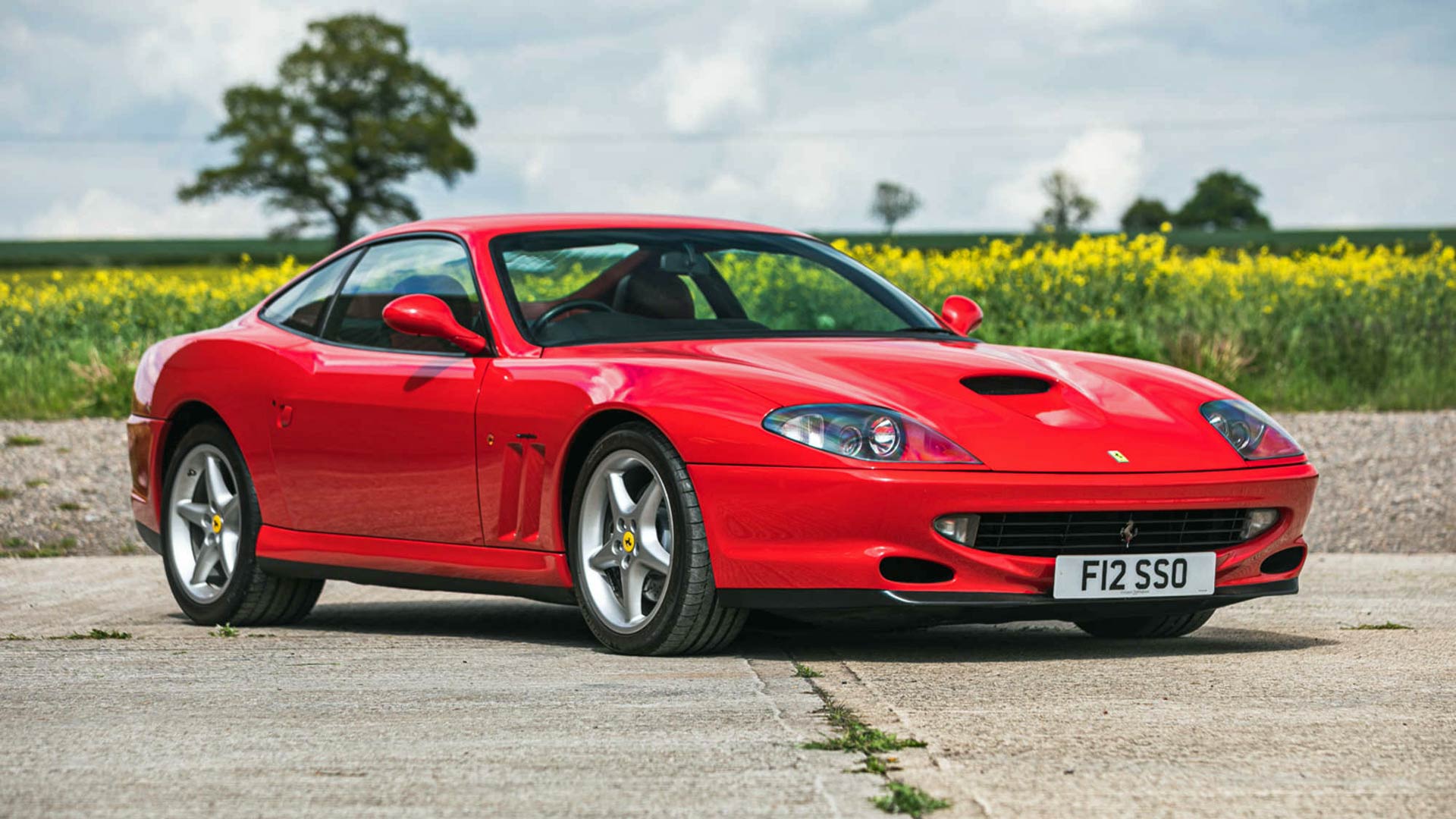
1997 Ferrari 550 Maranello
Richard Hammond Collection

Richard Hammond is reported to have said his Ferrari 550 Maranello was one car he truly regrets selling. This particular car is not the one previously owned by the star, but is a similar specification, with Rosso Corsa paintwork and six-speed manual transmission. 

First supplied to Hong Kong, this right-hand-drive 550 Maranello came to the UK in 2012. It has an extensive service history, with the 485hp V12 having covered only 26,000 miles.

We can only hope the current vendor has no regrets after the hammer falls on this 550.

2018 Dodge Challenger SRT Demon

Richard Hammond Collection

For the ultimate in All-American performance, the Dodge Challenger SRT Demon is hard to beat. Little more than a thinly disguised dragster, it packs a supercharged 6.2-litre Hemi V8 with an astonishing 840hp.

The Demon set numerous Guinness World Records when launched. This included the fastest 0-60 mph time of 1.9 seconds, and being the first production car to pull a wheelie. Imported into the UK by Clive Sutton, this Dodge has been driven for just 245 miles. 

Having driven an SRT Demon on The Grand Tour, we imagine Richard Hammond would approve of this one.

ALSO READ:

The golden age of Top Gear in pictures

1983 Lotus Esprit S3 review: Retro Road Test

The story of the classic Porsche 911
Advertisement

Hennessey celebrates 30 years with wild Exorcist Camaro muscle car

0
Hennessey Exorcist 30th Anniversary

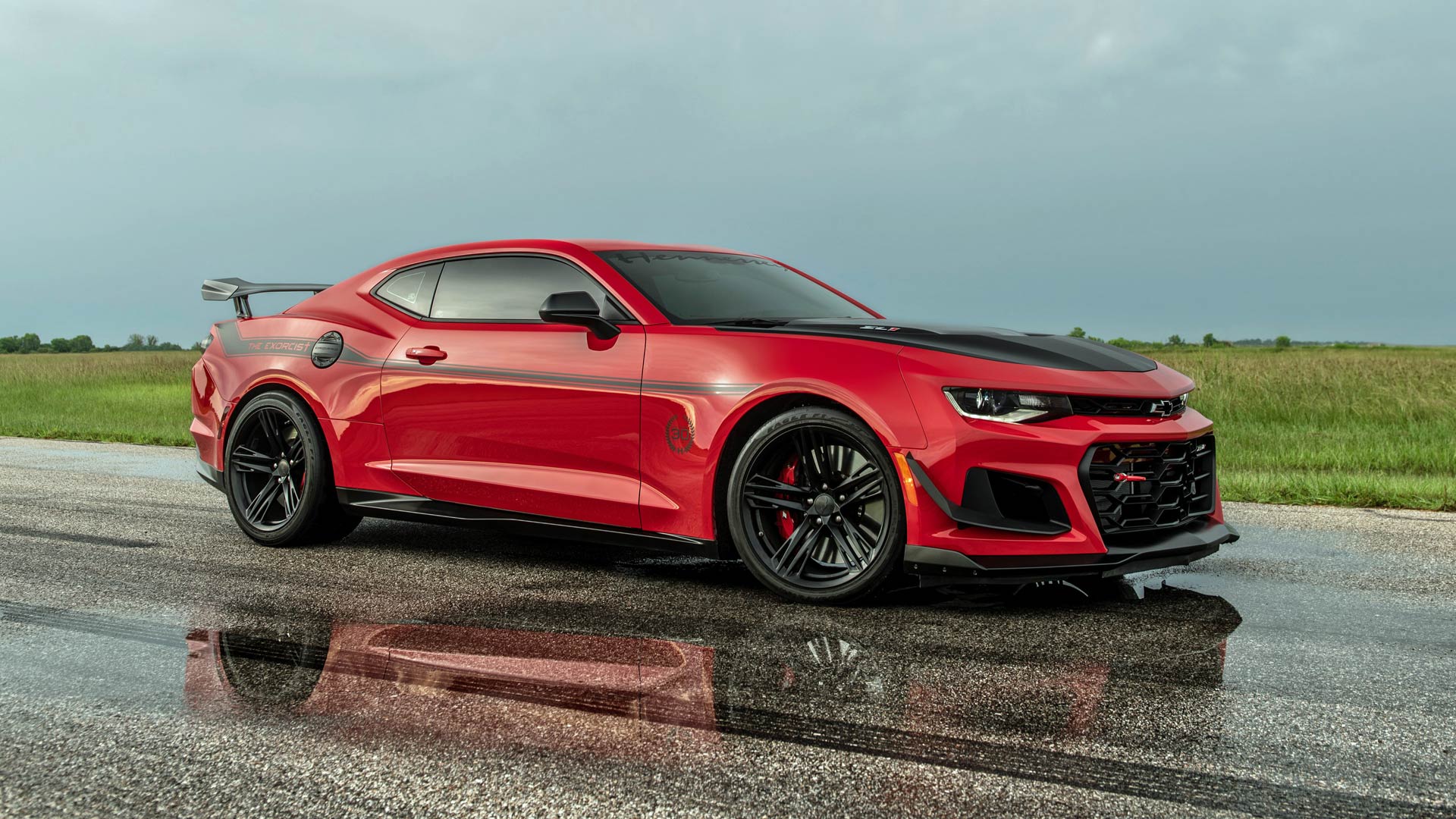
Hennessey Performance has announced a limited-edition run of its wild Exorcist Camaro ZL1 muscle car. 

The new release is intended to commemorate the 30th anniversary of the infamous Texas tuning company

Instead of cake or balloons, Hennessey will celebrate in the only way it knows how: with 1,000 horsepower of supercharged performance.

Heart of darkness

Hennessey Exorcist 30th Anniversary

Hennessey introduced the Chevrolet Camaro-based Exorcist as a riposte to the Dodge Challenger SRT Demon. With such an incredible ouput, company founder John Hennessey believes the Exorcist could easily slay the Demon.

The headline 1,000 horsepower and 883 lb-ft of torque come from extensive modifications to the Camaro’s V8 engine. This includes a high-flow supercharger, custom exhaust system, and a host of upgraded internal parts for the engine. 

It means that the Exorcist can accelerate from 0-60 mph in 2.1 seconds, and push all the way to a 217 mph top speed. Drag racing fans will be impressed by a quarter-mile time of 9.57 seconds. 

Offered with either a manual or automatic transmission, Hennessey provides each Exorcist with a two-year or 24,000-mile warranty.

Super-fast celebration

Hennessey Exorcist 30th Anniversary

A 100-car production run of the Exorcist Camaro had previously been planned by Hennessey. 

Now, 30 of those cars will be designated as 30th Anniversary models. Identifying these will be easy, thanks to the commemorative logos set behind the front wheels. 

A special Anniversary Edition chassis plate will also be added to each car. This will be individually numbered, designating the build number of the 30 cars.

The Anniversary Edition model will cost buyers from $135,000 (£96,500), a price which includes the base Camaro ZL1. Both coupe or convertible models can be specified.

‘Ferocious supercar slayer

Hennessey Exorcist 30th Anniversary

Founded in 1991, Hennessey Performance has gone from working in a small rented garage to becoming a world-renowned turning company. Later, with its Venom GT hypercar, the company claimed Guinness World Records. 

Along with tuning other performance cars, Hennessey is currently engaged in building its bespoke 1,800 horsepower Venom F5 hypercar.

John Hennessey, company founder and CEO, commented: “The Exorcist is the epitome of the American muscle car and has the off-the-line performance to embarrass almost any car on the planet. We’ve been making fast cars faster since 1991, so our 30th Anniversary Exorcist pools all we know into one ferocious supercar slayer.”

ALSO READ:

Rare classic muscle cars head to Orlando auction

Along came a Spider: drop-top McLaren 765LT supercar breaks cover

Insight: the rights and wrongs of car design

Advertisement

Driving advice from the man who coaches F1 racing stars

0

Rob Wilson F1 driver training

Even the professionals need a bit of guidance. At least, that’s what I’m told as I book a session with Rob Wilson, coach to racing superstars from the heady heights of Formula One, Indycar, the World Rally Championship and more.

Wilson has been doing his job for three decades. His wisdom and techniques won’t register on a telemetry box, but they will get you around a racetrack half-a-second faster.

Here’s a taster of Wilson’s advice for driving like a pro. Don’t try this at home, etc…

In search of Flat Car

Rob Wilson F1 driver training

“There’s fast driving and there’s race driving,” Wilson tells me. Conventional wisdom would have you take the smoothest line through a corner, maintaining the highest average speed possible. You carve an arc and keep it smooth.

Not here, Rob says. In a humble Vauxhall Astra estate, I learn about “Flat Car”: the first of many revelations to come.

If you think of conventional cornering technique as a smooth arc, carrying on in the same direction will make a circle – a penny. This is not the way to go fast, apparently. What you want is to drive in the shape of a 50-pence piece, turning that giant never-ending corner into a series of straights and bends. Accelerate, chuck it in, accelerate, chuck it in.

Flat Car is the point at which the car is going fastest, during those straights. Or, in the case of a conventional corner: never. The car is never flat, always loaded up. It makes sense when you think about it. A car will always be going its fastest in a straight line. Whenever you’re turning, you’re scrubbing speed.

The goal, then, is to keep the actual corners as brief as possible. If you want Flat Car, you need to be going straight. Then you can use the speed-scrubbing of the corner as your brakes.

The result is piling into the first turn for Wilson’s makeshift circuit, off the throttle for the rapid and aggressive turn, ready to plant it as soon as I’m flat. This only applies within reason, however – the act of turning in won’t reduce speed sufficiently for a hairpin after a long straight.

Heel-and-toe harmony

Rob Wilson F1 driver training

Why you may be asking, does a Formula One driver need to know heel-and-toe shifting technique? F1 cars haven’t had a manual gearbox for more than 20 years.

For those who don’t know, heel-and-toe is the process of smooth down-shifting while braking. As you’re on the brakes, you slide your foot across onto the throttle to get a blip as you shift down the gears. This puts the gearbox and engine speeds in sync, taking the jerkiness out of slowing down.

Wilson says the skill of heel-and-toe isn’t what’s important, it’s the sensation of feeling the way the car responds to smoother shifts. Being able to look out for the results of a bad shift versus a good shift, to feel the car rocking about on its suspension if you don’t quite nail it.

Tuning in to such chassis movements means drivers will be able to sense judders in a paddle-shift gearbox car as it downshifts, too. Movements the telemetry wouldn’t otherwise tell you about. They can then feed that back to engineers who recalibrate things for a smoother shift.

The result of a pro practising heel-and-toe in a diesel Astra is a faster, smoother, better F1 car come race-day.

Pre-tension the brakes

Rob Wilson F1 driver training

This leads us on to a theory of Wilson’s, where old-school feel and practice can win out even over the most sophisticated modern tech. He didn’t quite give a word for it but I’m calling it pre-tensioning. It was by far the most difficult thing to master when behind the wheel, given the delicacy of the inputs.

It’s best to imagine it via the medium of a braking system. When you brake, you put your foot on the pedal and you slow down. In between those two things happening, pressure builds up in the fluid systems of the brakes. It’s a matter of milliseconds but there is something of a preamble, a delay.

What Rob would have you do is brake very gently, before leaning in. The result is that the braking system is, for want of a better word, prepared, for your heavy-footed demands of deceleration. No preamble, just full braking force the instant you press with intent.

Get the weight transfer right

Rob Wilson F1 driver training

It’s the same when cornering. Turn in hard, as late as possible, and you can expect the car to roll a bit, taking a few milliseconds to settle onto the side that’s loading up. Rob would have you turn ever so slightly first, a matter of single degrees of lock.

At speed, that achieves a weight transfer of about 10-20kg onto the side you’ll be leaning on. Once you turn in properly, milliseconds later, the suspension system is pre-tensed and ready for the full force of cornering.

It all makes sense, but that’s not the mind-blowing thing. As with the computer systems not being able to tell you how to perfectly calibrate an F1 car’s shift, nor can they tell you what’s happening as you brake quicker and corner harder due to pre-tensioning.

You’re lapping tangibly quicker, but the lines on the graph show very little difference. It’s a ripple effect, the origin of which is almost imperceptible to even the most advanced of digital eyes.

Against the clock: the result

Rob Wilson F1 driver training

The results were pretty incredible, if we’re honest. The first proper lap that I felt proud of was a 1min 43sec. That compares to Rob’s 1min 29sec benchmark. After some practice, some lunch, a few pep talks and the times tumbling steadily, I got down to 1min 33sec.

The sensation is quite incredible when you put some of these techniques into action and the results are evident in the speed at which you approach the next corner. I had heel-and-toe functionally down before getting in, but the Flat Car idea was something wholly new.

It’s actually quite terrifying to realise how fast you’re suddenly going. Hence the best drivers get into a ‘zone’ of sorts.

Coach class

Rob Wilson F1 driver training

Even a day with Wilson was enough to significantly refine my ham-fisted helmsmanship.

Top drivers visit for days and weeks at a time, and return multiple times year-round, to keep their heads in the game. Perfection is a moving target, after all. 

READ MORE:

Lotus Elise Sport 240 Final Edition 2021 road test review

Bentley Continental GT Speed 2021 track test review

Best supercars to buy in 2021

Advertisement

Along came a Spider: drop-top McLaren 765LT supercar breaks cover

0
McLaren 765LT Spider

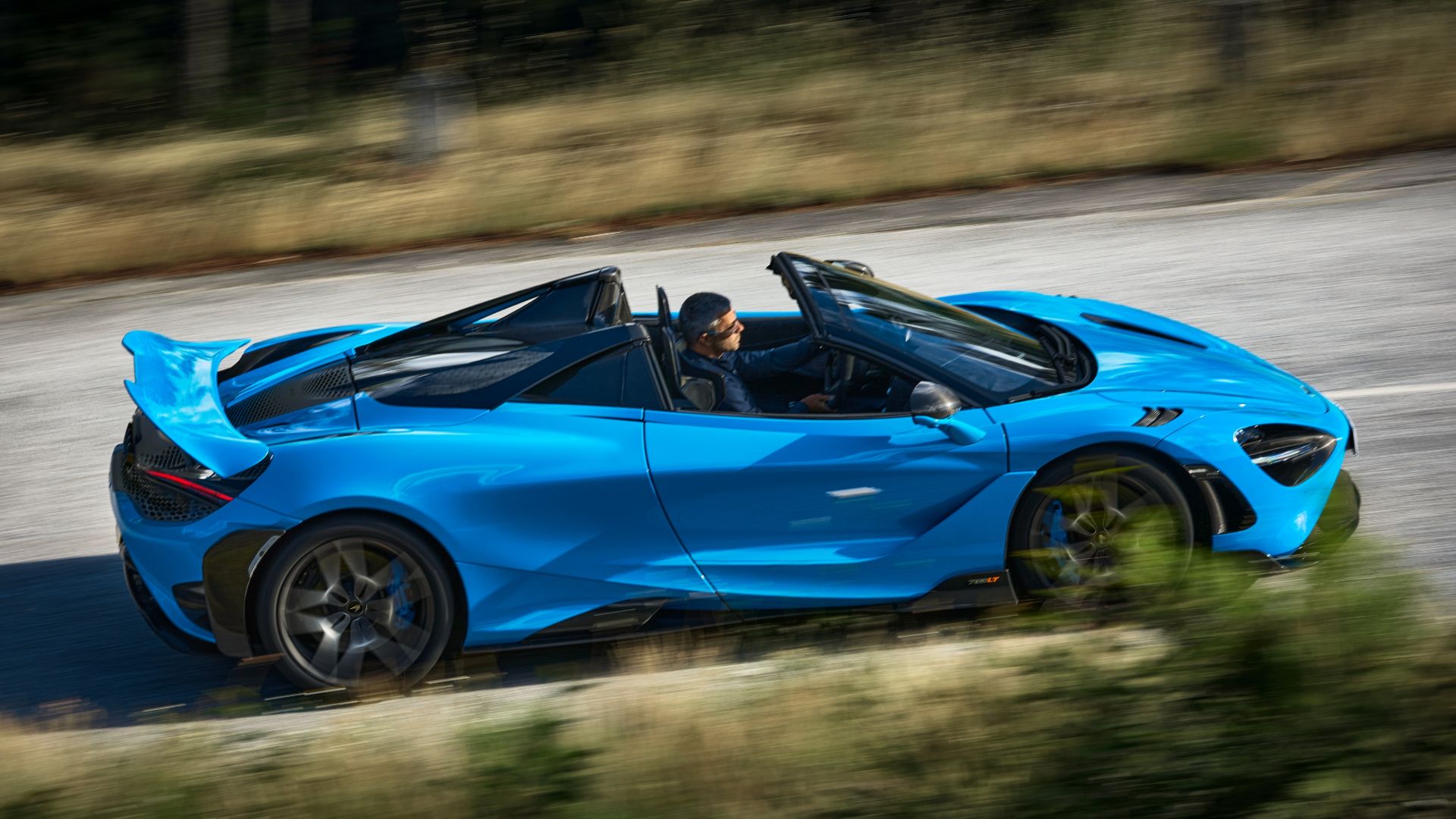
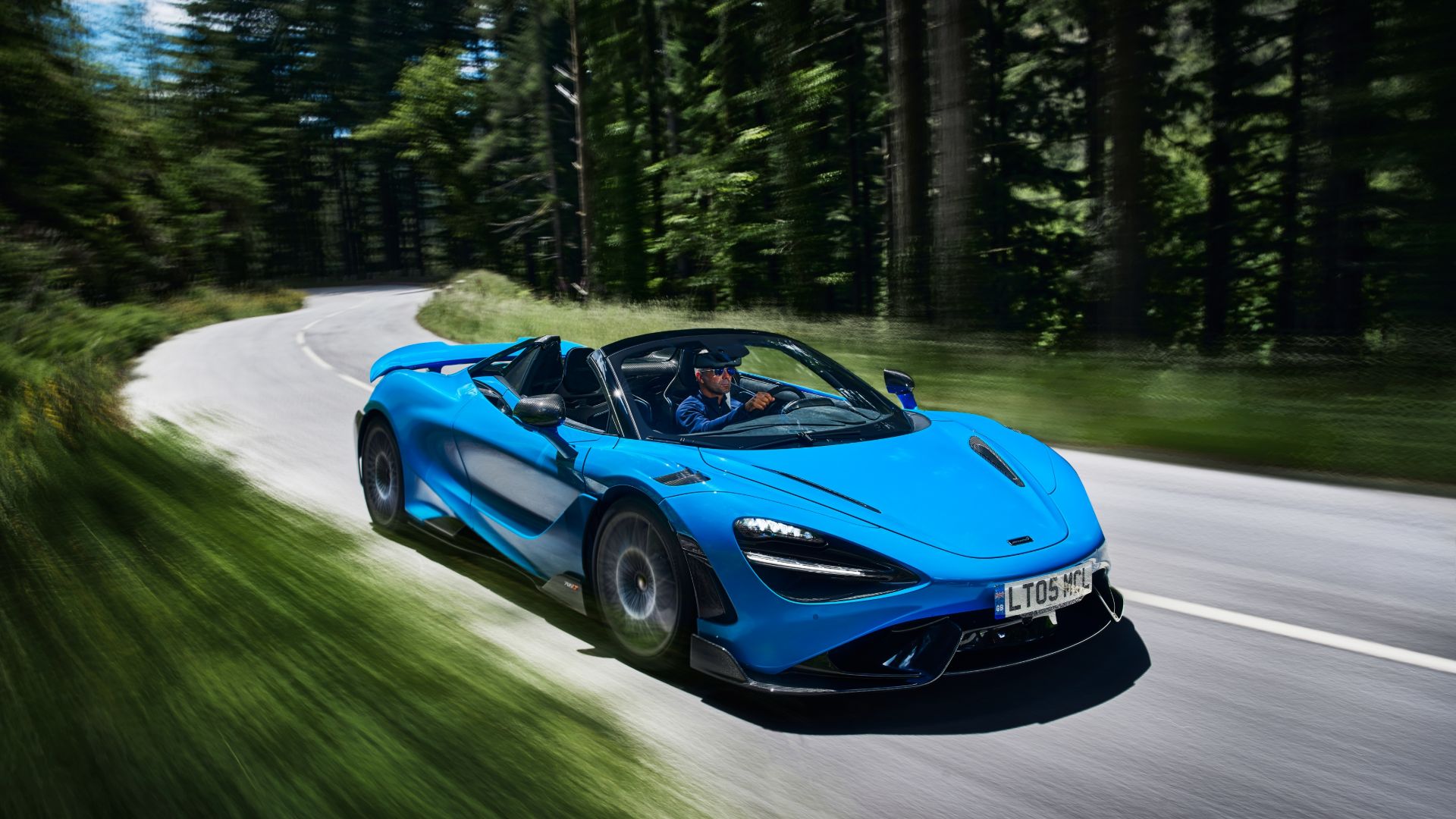
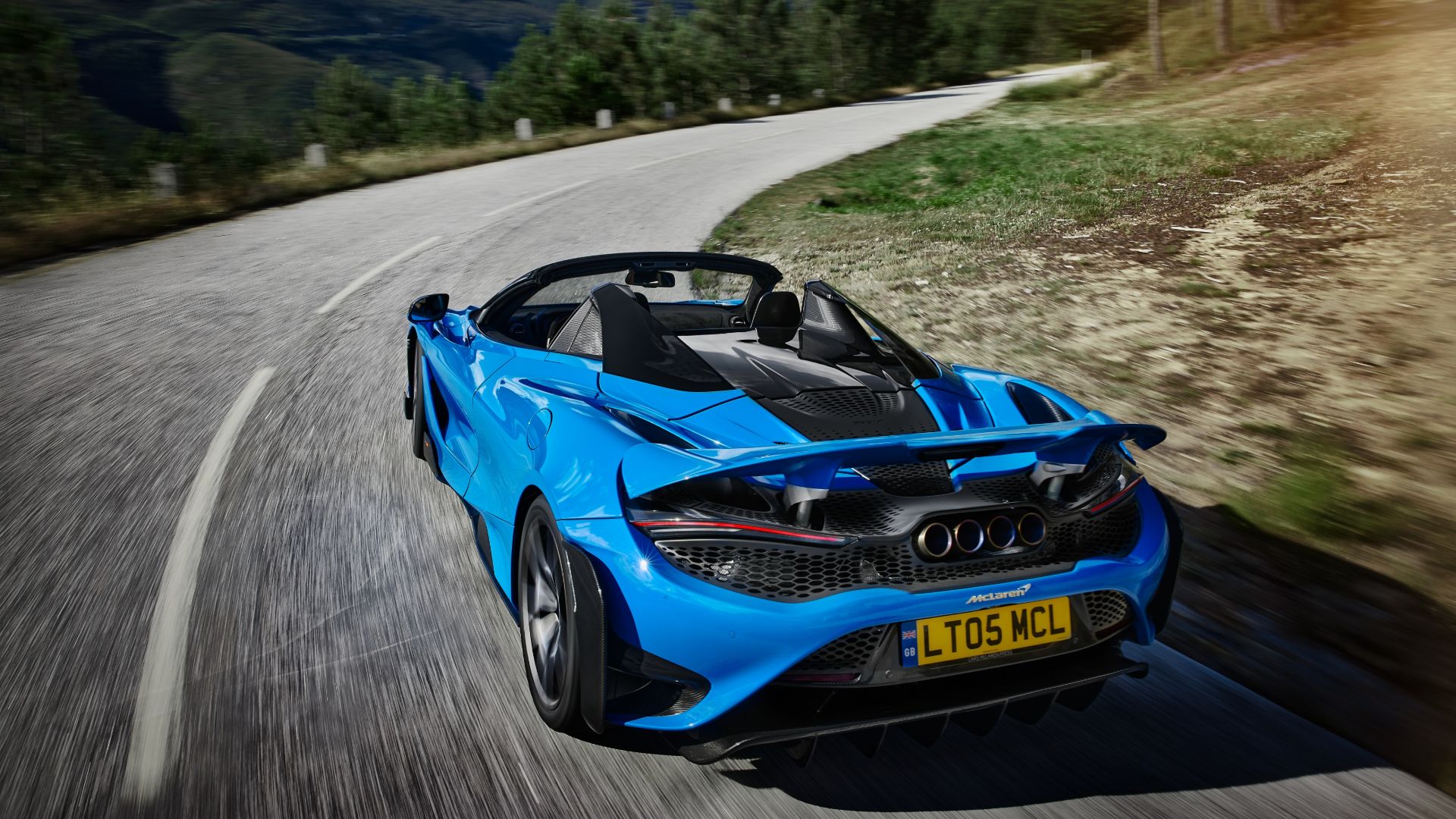
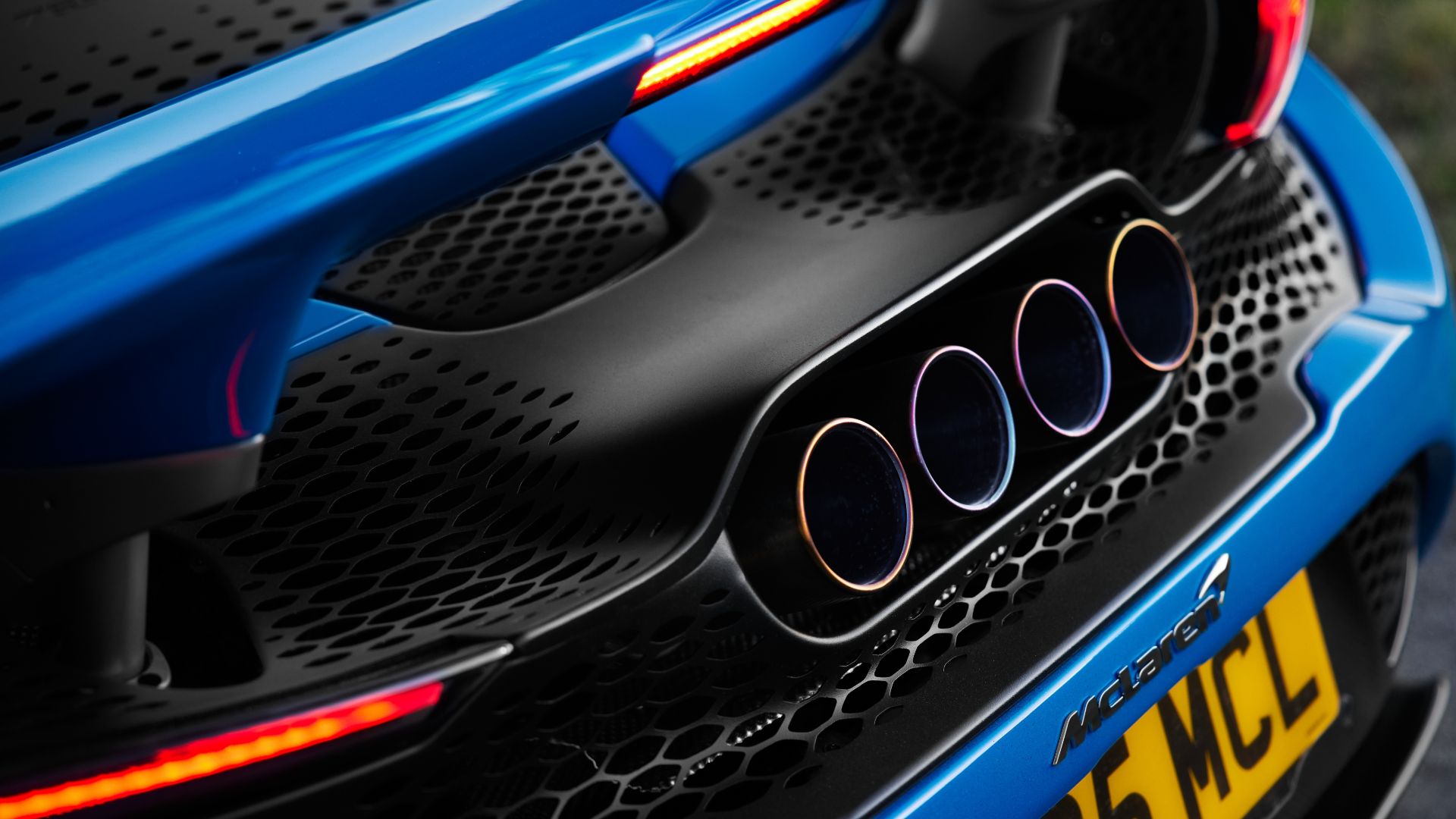
McLaren has pulled the wraps off its new 765LT Spider. The latest ‘Longtail’ combines ferocious performance with a retractable carbon fibre roof. A 765hp twin-turbocharged V8 blasts it to 62mph in 2.8 seconds.

The Spider is the open-air version of McLaren’s track-focused 765LT. A run of 765 individually numbered cars is planned – the same total as the sold-out coupe – priced at £310,500 apiece.

The new folding hard-top disappears in 11 seconds at speeds up to 31mph, or you can lower the rear window to enjoy the ‘searing LT soundtrack’ even when the British weather does its worst. Just take it easy on those Trofeo R tyres…

The big numbers

McLaren 765LT Spider

Let’s start with some stats. That eponymous 765hp output is combined with 590lb ft of torque, giving the Spider a class-leading power-to-weight ratio. At 1,388kg (DIN weight), it’s 49kg heavier than the 765LT coupe but 80kg lighter than a 720S Spider. 

With a racetrack to hand, that means 0-200kph (124mph) in 7.2 seconds and a standing quarter-mile (400m) in 10 seconds flat. Top speed is 205mph.

Downforce is also 25 percent greater than the 720S. An Aero button in the cabin automatically adjusts the elongated rear spoiler according to speed – and whether the roof is raised or lowered . McLaren says the car posts quicker lap times than either of its Longtail predecessors: the 600LT Spider and 675LT Spider.

Exhilarating and extreme

McLaren 765LT Spider

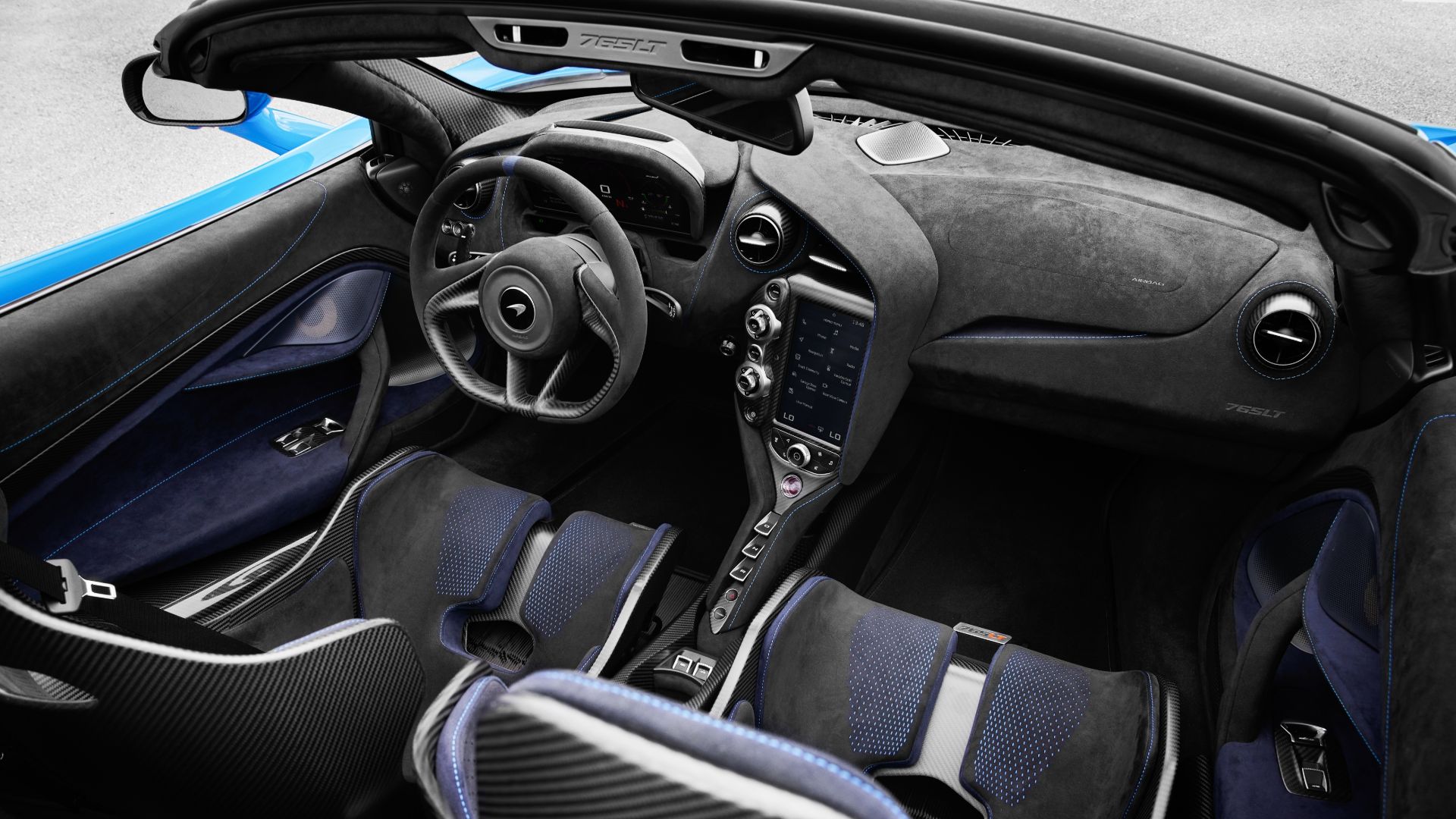
The Spider’s ‘Monocage II’ carbon fibre chassis is sufficiently stiff that no additional bracing is required over the coupe. Carbon fibre is also used extensively elsewhere to shave vital kilos. The hard-shell ‘Senna’ seats, for example, weigh just 3.35kg each. Forged alloy wheels with titanium bolts save a further 22kg.

Buyers can also dive headlong into the MSO options list. The Clubsport Pack includes track telemetry hardware with three cameras and upgraded brakes from the McLaren Senna. The Black Pack gives the car a more stealthy look, with a gloss finish for the front splitter, diffuser and air intakes. If you insist, you can even have a carbon fibre ignition key.

Ian Howshall, global product manager at McLaren, says: “When you lower the roof of the Spider, there is a step-change in character – almost a theatrical element, like experiencing a live orchestra from right in front of the stage”. Company CEO Mike Flewitt promises “exhilarating, extreme performance”. 

A long tale

McLaren 765LT Spider

Flewitt is a particular fan of the 765LT – and McLaren’s harder, faster Longtail cars in general. In an interview last year, he told us: “Perhaps the LT brand is what I’m proudest of. The cars are daily usable and very exciting even at low speed, yet they’re amazing on a track. They absolutely hit the spot for McLaren – and for me.”

Referring to the 765LT coupe, he continued: “Before this, I’d have probably said [my favourite McLaren road car was] the 675LT. We took the 650S and made it a little lighter, faster and more aerodynamic, but the result was way more than the sum of its parts.”

Flewitt’s enthusiasm makes an LT version of the forthcoming McLaren Artura look likely. You can read our full preview of the new plug-in hybrid supercar here.

Racing into 2022

McLaren 765LT Spider

We’re also fans of the 765LT coupe, having named it one of our 10 best supercars of 2021

After driving it on-track at Silverstone, we said: ‘This isn’t a hold-on-and-hope rollercoaster ride. The McLaren’s hydraulic steering overflows with tactility and its chassis is benign and forgiving. Oversteer is there if you want it, of course, but the car rewards tidy lines and accurate inputs, not heavy-footed hooliganism… The 765LT sees Woking flexing its muscles and playing to its strengths.’ 

What are the odds on the 765LT Spider making our ‘10 best supercars of 2022’ list? We’ll find out later this year.

ALSO READ:

New McLaren Artura in detail: we ask the experts

McLaren 620R review

McLaren GT review

Advertisement

£20m government funding for zero-emissions HGVs

0
Zero Emission HGV Funding

New government funding has been announced to encourage road freight operators to switch to zero-emissions trucks. 

Compared to cars and vans, bringing zero-emissions to heavy goods vehicles (HGVs) is seen as a greater challenge. Yet a government consultation could see the sale of new fossil-fuelled lorries banned by 2040.

The £20 million funding will be used on a number of projects across the UK, aimed at evaluating zero-emissions trucks.

Connected to the grid

Zero Emission HGV Funding

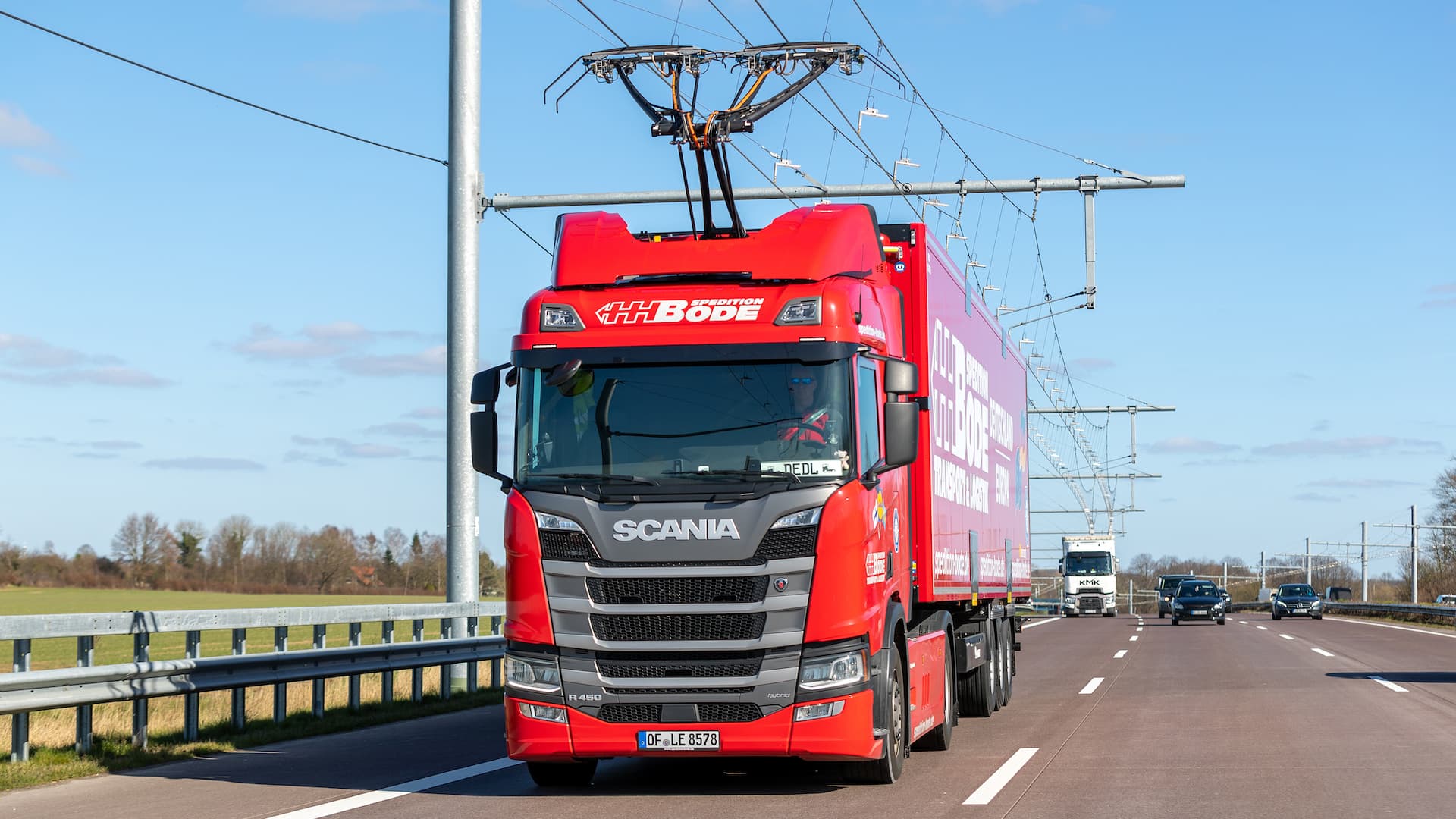
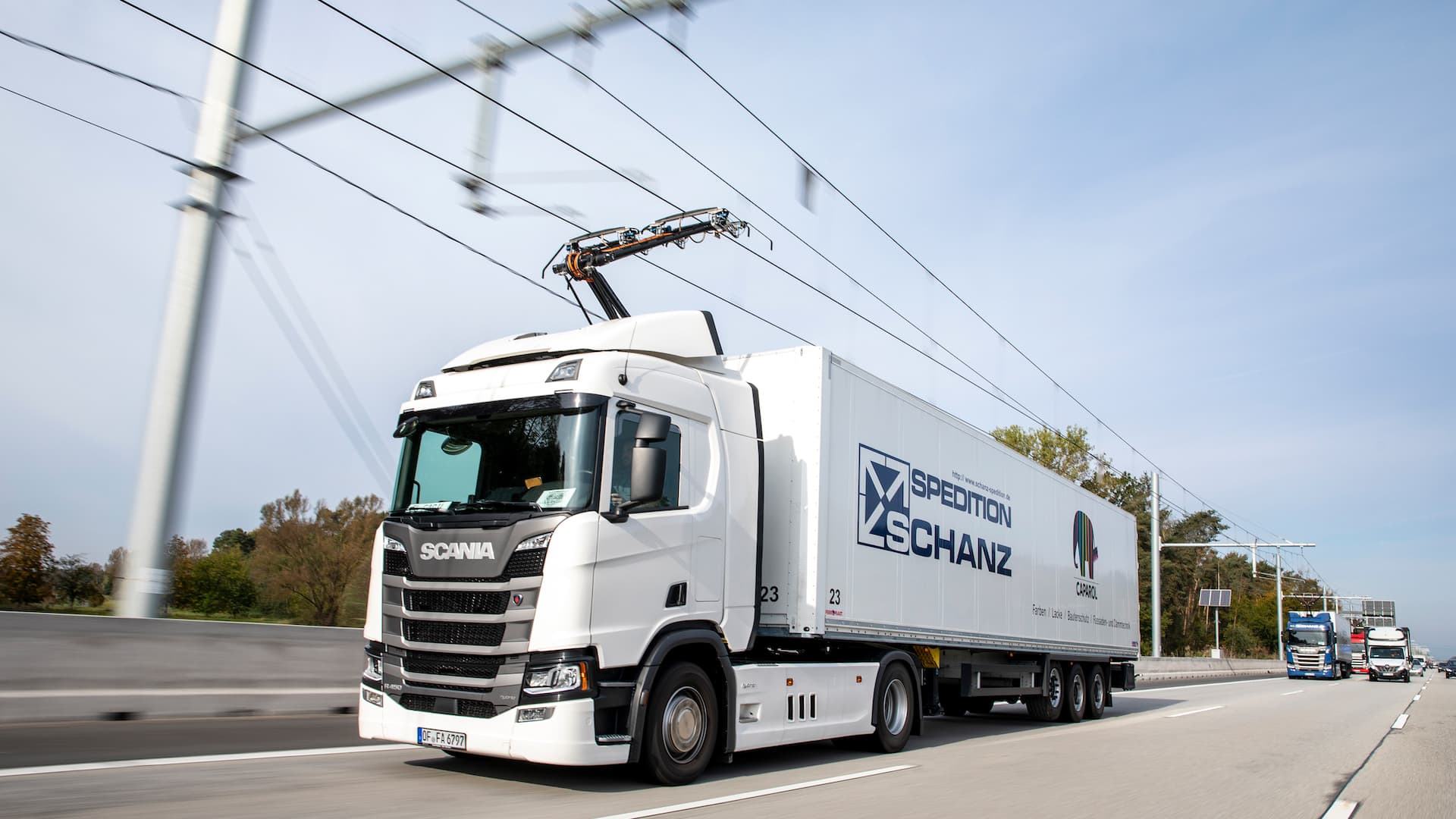
One of the standout projects to be funded is an elaborate ‘Electric Road System’ near Scunthorpe in Lincolnshire. This will see battery-electric HGVs powered by overhead cables, connected via tram-style pantographs.

This allows the lorries to receive electric power, but without the weight and packaging problems of substantial lithium-ion batteries. Plans to convert more than 12 miles of the M180 will be investigated, with electric HGVs potentially on the road by 2024.

Similar eHighway systems have already been developed by Siemens and Scania. Successful testing has been undertaken in Germany and the United States.

Hydrogen haulers

Zero Emission HGV Funding

Leyland Trucks will receive funding to develop a fleet of 20 battery-electric HGVs. These will be offered to public sector organisations, allowing for data to be collected on their effectiveness. 

Such real-world information will hopefully inform whether electric HGVs can be successfully integrated into UK fleet operations. 

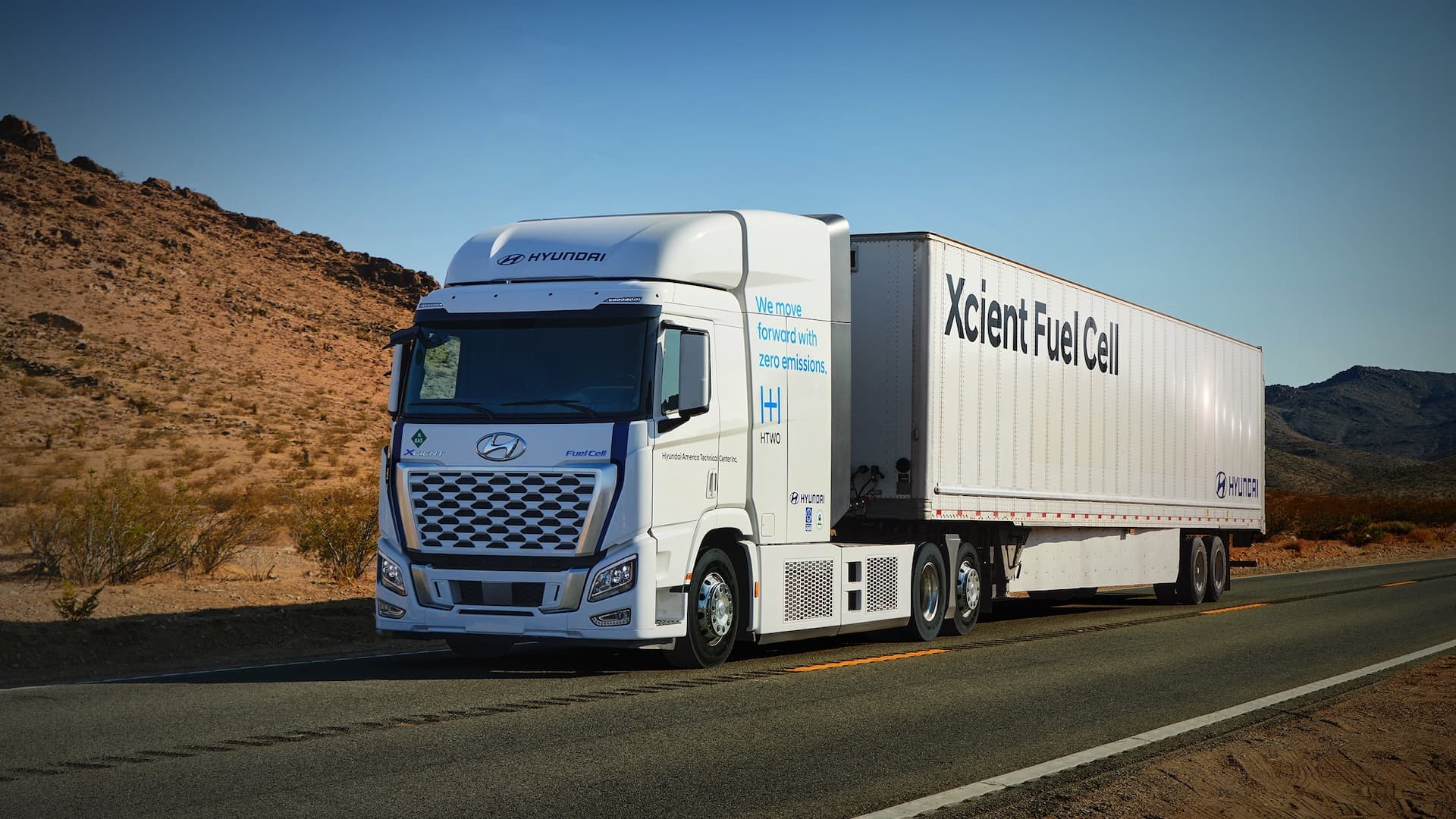
As an alternative to battery-electric power, a feasibility study for hydrogen fuel cell HGVs will be undertaken in Scotland. Arcola Energy may then move to live tests of hydrogen-powered trucks, along with developing the supporting infrastructure. 

Hyundai has completed more than one million kilometres (620,000 miles) of on-road testing with its Xcient hydrogen fuel cell trucks. The company has recently deployed its zero-emissions HGVs to California, as part of a 12-month pilot.

ALSO READ:

Covid backlog means learners can wait 6 months for driving lessons

The £46,250 Toyota Corolla: cult-classic AE86 smashes auction record

How to avoid buying a cloned car

Advertisement

The £46,250 Toyota Corolla: cult-classic AE86 smashes auction record

0
Toyota Corolla AE86

A 1987 Toyota Corolla GT has sold for an unprecedented £46,250 at auction. The ‘AE86’ model smashed the US record price of $40,000 (£29,004), set earlier this year.

Bought new for £12,500 from Hallens Toyota of Cambridge, the Corolla still wears its original Wine Red paintwork, dealer-fit number plates and mud flaps. It has covered 92,000 miles in the hands of one lady owner.

The sales invoice shows no extra-cost options were chosen, but standard equipment includes side stripes, multi-spoke alloy wheels, a sunroof and a cassette player.

Saved from the crusher

Toyota Corolla AE86

Sold via Car & Classic’s online auction website, the Corolla nearly didn’t make it this far. After vandals keyed the paint in 2006, it was effectively written-off by the high cost of repair.

Thankfully, the owner bought it back from her insurer and had it restored to as-new condition. According to Car & Classic: ‘she simply couldn’t contemplate her beloved car being unjustly sent to the crusher’.

After 34 years, she finally decided to sell. A injury had made the Toyota, without power-assisted steering, a difficult car to drive every day.

As seen on screen

Toyota Corolla AE86

The rear-wheel-drive Corolla AE86, built between 1984 and 1987, was originally considered to be a fairly vanilla grocery-getter. However, a starring role in Japanese manga film Initial D, coupled with success in rallying, soon elevated it to cult status.

Appearances in the Fast and the Furious movies and Gran Turismo PlayStation games followed, and the AE86 became a favourite of modified car fans – particularly those with a penchant for drifting.

As a result, very few original examples are left, which explains why this standard-spec survivor was so sought-after. Let’s hope it remains as Toyota intended.

Steer from the rear

Toyota Corolla AE86

Several years ago, we drove Toyota UK’s heritage AE86 for our Retro Road Test. Let’s conclude with an excerpt from that review, revealing what makes this outwardly humble hatchback so special:

‘The twin-overhead-cam engine offers electric throttle response and revs all the way to 7,700rpm. It sounds fantastic, too, the noise hardening to a visceral snarl as the needle passes 4,500rpm. The Toyota isn’t fast by modern standards, but there’s ample performance here – if you’re prepared to work for it.

‘However, the AE86 legend was built on the drift circuit, not the drag strip. And it’s the way this car goes around corners that still gets enthusiasts excited. The unassisted steering feels wonderfully delicate, while a prod of the throttle adds some easily-controlled steer-from-the-rear.

‘We couldn’t make the pilgrimage to Japan’s Mount Fuji, but a few empty roundabouts near Crawley provided plenty of laugh-out-loud fun.’

ALSO READ:

Toyota GR Yaris review

Toyota GR Supra 2.0 review

Listers Toyota Supra 450hp review

Advertisement

Covid backlog means learners can wait 6 months for driving lessons

0
Driving lessons

Coronavirus restrictions have led to long waiting lists for driving lessons. That’s according to a new survey of 150 driving instructors by Young Driver.

Just three per cent of UK instructors are available to take pupils on immediately, with 68 percent saying learner drivers need to wait more than two months. Six percent report a waiting list of over six months.

Moreover, 69 percent of driving instructors said they cannot meet demand among existing customers, with many only able to offer one lesson per fortnight. And 37 percent claimed some of their pupils had – at least temporarily – given up on learning to drive.

Be ready for driving lessons

Driving lessons

If you plan to have driving lessons, here are Young Driver’s tips for how to prepare. The Vauxhall-sponsored scheme offers lessons for anyone aged 10 and upwards, so it’s never too early to start…

Plan ahead. If you are approaching 17 years old, start looking now. You are likely to be on a waiting list for a while.

Cast your net wide. Ask friends for their recommendations, but also contact your local driving instructor association and use the government website. Get on several waiting lists – you never know who may get a cancellation.

Get some private practice. Get behind the wheel with trusted family members or friends. They must be over 21, fully qualified and have had a driving licence for at least three years.

Use technology to hone your skills. Young Driver recently launched an app that includes 360-degree in-car videos, taking pupils from first lesson to driving test. Using a smartphone or VR headset, they cover everything from tackling junctions to parking and reversing.

Use this time to prepare for your theory test. Familiarise yourself with the driving test format and the ‘show me, tell me’ questions. Learning to drive isn’t all about being behind the wheel of a car, so get ahead by doing the foundations. The Young Driver app includes theory test practice modules and hazard perception videos.

Don’t feel pressured to go with any instructor you can find. It’s very important to choose an instructor you feel comfortable with as it will make the learning process much easier.

Of Corsa you can

Driving lessons

Sue Waterfield, head of marketing at Young Driver, said: “The delays in the system are very frustrating for teenagers who want to learn to drive and it’s disheartening to hear many are having to put their dream of learning to drive on hold.”

Established in 2009, Young Driver has delivered more than 950,000 driving lessons at 70 private venues across the UK. Anyone aged over 10 and above 1.42 metres tall can get behind the wheel of a dual controlled Vauxhall Corsa SE Premium, alongside a fully qualified ADI driving instructor.

The organisation also offers driving experiences in three classic cars: a Vauxhall VX490, Morris Minor or Austin 7 – plus a genuine ex-service fire engine.

ALSO READ:

Vauxhall Corsa 1.2T 100 SRi Nav 2020 review

The Highway Code turns 90: here are the road rules you may not know

How to move over safely for the emergency services

Advertisement

George Harrison’s classic Mercedes is up for auction

0
George Harrison Mercedes-Benz 600

A classic Mercedes-Benz owned by The Beatles’ lead guitarist, George Harrison, is up for auction on the Collecting Cars platform

As if the ownership history was not enough, this is also a rare W100 version of the 600 limousine

Typically known as the ‘Grosse Mercedes’, the 600 comes packed with luxury features and elaborate 1960s technology.

All Those Years Ago

George Harrison Mercedes-Benz 600George Harrison Mercedes-Benz 600

Launched in 1963, the Mercedes-Benz 600 replaced the previous 300D ‘Adenauer’ as the marque’s flagship model. It became a hit with both dictators and celebrities. 

Elvis Presley was a noted former owner of a 600, having registered one to his Graceland address. 

Running a 600 was not for the faint of heart or short of pocket. Mercedes-Benz had developed a brand-new engine for the four-door: the M100 6.3 V8. 

With 250 hp, it was powerful, but had to contend with plenty of weight. A four-speed automatic transmission focuses on smoothness over speed.

My Sweet Lord

George Harrison Mercedes-Benz 600

However, what made the 600 truly special was its 150-bar hydraulic system. This operates the windows, door locks, seats, and sunroof, all without the noise of an electric motor. 

Mercedes-Benz produced 2,190 examples of the 600 in short-wheelbase form between 1967 and 1981. This particular car was used as a dealership demonstrator, before being purchased by George Harrison.

Numerous photos supplied with the car show it during Harrison’s ownership. At the time, the car wore the UK registration number ‘OLA 600E’, which has now been returned to the car.

Got My Mind Set on You

George Harrison Mercedes-Benz 600

The 600 is currently owned by businessman and entrepreneur, Sukhpal Singh Ahluwalia. He describes it as being “an important piece of rock and roll history”, and has spent much on maintenance and refurbishment work.

This includes a complete overhaul of the hydraulic system, with the bumpers and headlights returned to period-correct style. The leather interior is said to be original, and in good condition, with everything working as it should. 

It means whoever purchases the 600 will have a usable classic car, with an extraordinary ownership history. 

As expected, the Mercedes has already attracted plenty of attention. The auction on Collecting Cars is due to run until Tuesday, 26 July, so expect the bids to keep on climbing.

ALSO READ:

Petersen Museum to exhibit iconic F1 cars

Why you may find a puddle under your car on hot days

Covid-19: how to sanitise your car

Advertisement

Drift club: we go seriously sideways… in a Morris Marina

0
Video: we broke a Morris Marina (without dropping a piano on it)

I’ve just broken a man’s Morris Marina. There are owners’ clubs stickers in the windows. It’s a rare classic car, and his pride and joy. And it’s just relieved itself of oil all over the floor while I was doing doughnuts.

Fortunately, Patxi Beasley is a pretty chilled guy. A young lad who works for a Land Rover specialist, I ask him how on earth he came to own a Morris Marina.

“I wanted a car from this era,” he told me. “And it needed to be rear-wheel drive.”

Of course, back when the Marina was launched in 1971, most of its competitors were rear-driven. But the Marina seemed a bit of a backward step for British Leyland. The firm had been pumping out the Issigonis-designed Mini for more than a decade, the front-wheel-drive Austin Maxi was introduced two years earlier, and the ‘innovative’ new Allegro was on its way.

But rear-wheel drive is what the market wanted, so that’s what the market got. The Marina was a success for BL, regularly appearing in the top three cars on sale in the UK – despite receiving a pasting from the automotive press for its understeer-prone handling.

Today, the Morris Marina still hasn’t got a brilliant reputation. Jeremy Clarkson described it as “one of the worst cars ever made” and, after offending the owners’ club by setting one on fire, the former Top Gear host would regularly drop pianos on Marinas as part of an ongoing gag.

No scene tax

Video: we broke a Morris Marina (without dropping a piano on it)

The advantage of buying a Morris Marina today over, say, a first- or second-generation Ford Escort is its price. Hardly anyone wants them.

“I picked it up off eBay for £720,” explains Beasley. “It had been in a garage for years.”

So why is he so relaxed about me breaking his pride and joy? Well, in part because it’s not exactly original. “It’s got a 2.0-litre Zetec engine out of a Ford Mondeo at the moment. It hasn’t been right for a while. We’ve got a pile of engines, so I’ll just do a swap.”

The Marina’s infamous rear leaf springs (partly to blame for the ‘bad handling’ claims by motoring journalists of the time) have been replaced by coilover springs and dampers. And the differential has been welded. The result? A Marina that’ll go sideways quicker than you can say ‘smoked tyres’.

My drive was part of a drift day organised by Falken Tyres. But, it’s not all about skidding British Leyland’s finest sideways, there are some grown-up cars to drive, too…

Falken quick

Video: we broke a Morris Marina (without dropping a piano on it)

Like this one. A Nissan 200SX S14 used as a training car by Learn2Drift, ‘Betty’ has a 260hp turbocharged engine (the firm also had a 130hp naturally-aspirated 200SX to break drifters in gently).

It’s clear why the Nissan is so popular in the drifting scene. Capable of holding extreme angles and taking serious abuse – despite this car’s 250,000 miles on the clock – it must be one of the most accessible ways into drifting.

Video: we broke a Morris Marina (without dropping a piano on it)

It’s not just for beginners, though. James Deane is a Falken Motorsport drift driver with several Formula Drift Championship titles under his belt.

His car was a frankly mental Nissan 200SX (S14) powered by a twin-turbocharged six-cylinder Toyota Supra engine. With 750hp, plus more lock than a high-security prison, Dean’s car makes holding near-90-degree drifts look like child’s play. From the outside, at least.

Trucking mega

Video: we broke a Morris Marina (without dropping a piano on it)

So back to the obscure stuff – and a 1,250hp Volvo RG13 racing truck driven by British Truck Racing Champion Stuart Oliver.

Make no mistake, this is very different to a standard truck used for pounding our motorways lugging heavy loads. The inside feels more akin to a (very large) race car, with bucket seats and harnesses holding you in place.

Shod with 315mm-wide Falken tyres, the Volvo is surprisingly easy to get sideways – or, at least, Oliver makes it look that way. It’s a weird thing, looking out of the side window of a truck as it squeals around cones, but also really good fun. Like the Marina, it shouldn’t work, but it does.

ALSO READ:

Ferdinand Piech: the incredible cars of ‘Mr Volkswagen’

RML Short Wheelbase in detail: new supercar, old-fashioned values

New BMW M3 Competition 2021 review

Advertisement

Petersen Museum to exhibit iconic F1 cars

0
Petersen Museum F1 Exhibition

The Petersen Automotive Museum in Los Angeles is set to open a brand-new exhibition dedicated to Formula 1 cars.

Opening on July 24, “Pole Position: The Juan Gonzalez Formula 1 Collection”, includes F1 racers from the 1980s through to 2018.

Ten cars owned by Juan Gonzalez, Chairman of the Board of Mission Foods, will be accompanied by an immersive 180-degree video experience.

Taking pole position

Petersen Museum F1 Exhibition

Two of the cars on show at the Petersen Museum will have a link to the late Ayrton Senna

The bright yellow Lotus 99T took the Brazilian driver to two victories in the 1987 season. This included the prestigious Monaco Grand Prix.

The 1994 Williams FW15D is one of the last Formula 1 cars driven by Senna before his tragic death.

Intended for use in the 1994 Formula 1 World Championship, the FW15D was developed from the team’s successful 1993 racer. A change in rules meant the car would be sidelined, with a new model created instead.

This left the FW15D to be used for early testing only. Yet the association with Ayrton Senna still makes it an important piece of Formula 1 history.

Three decades of F1 history

Petersen Museum F1 Exhibition

Juan Gonzalez has a passion for McLaren Racing cars, with five set to appear in the exhibition. Mission Foods is a sponsor of the McLaren Formula team, along with the Arrow McLaren SP IndyCar team. 

Other cars on display will include a pair of Ferraris, and a Toro Rosso from 2017. 

Petersen Executive Director, Terry L. Karges commented that: “Seeing these cars up close and personal is a rare opportunity. Anyone who is fascinated by the mechanics of speed and aerodynamics will be entranced by this stunning display of sophisticated machinery.”

The Pole Position exhibition will be on display in the Charles Nearburg Family Gallery until June 5, 2022.

ALSO READ

All you need to know about Formula E

Amazing RUF display opens at the Petersen

Advertisement