A homage to one of BMW’s most recognisable Art Cars has been unveiled at the Frieze Los Angeles event.
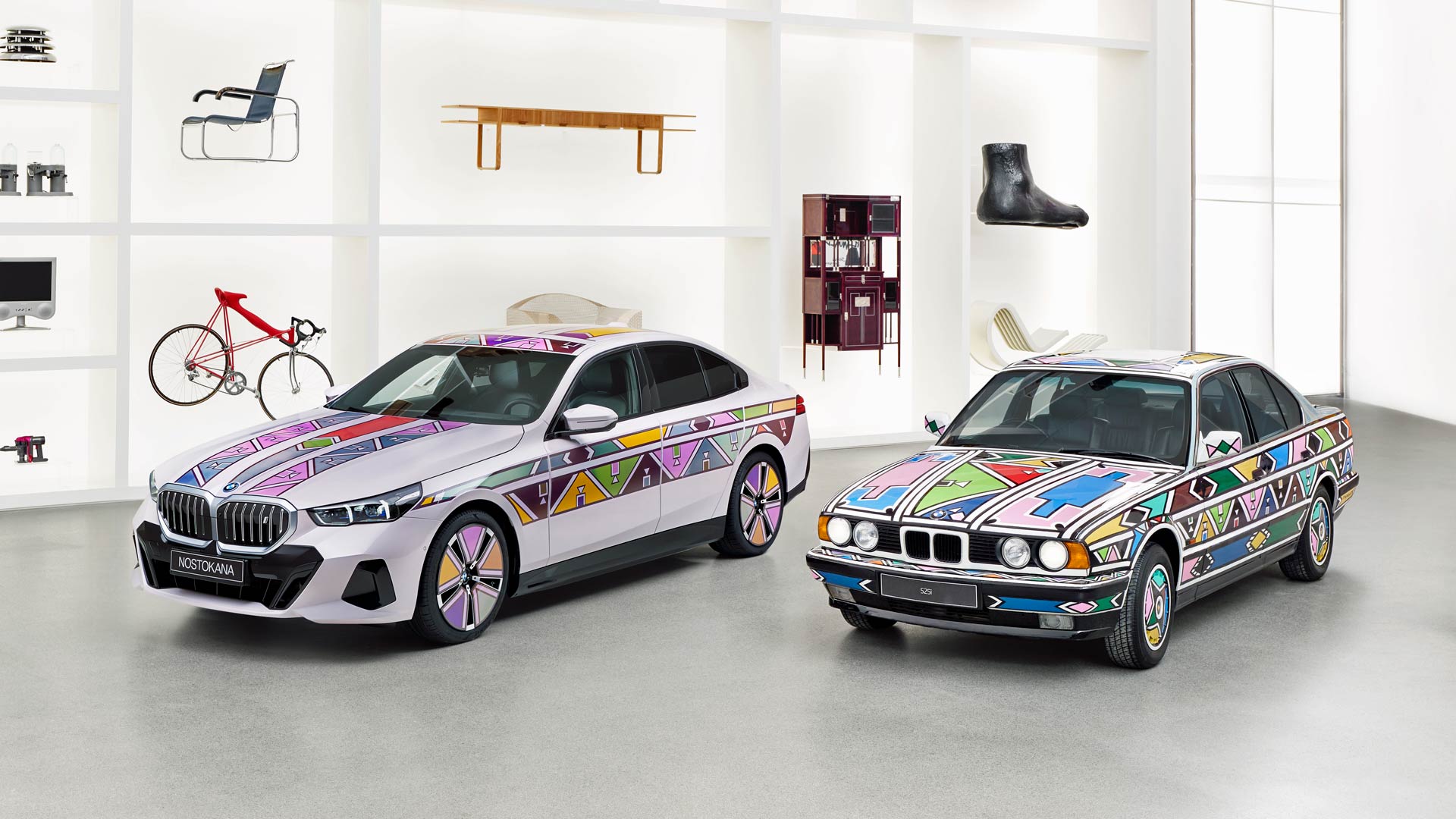
The BMW i5 Flow Nostokana is intended as a tribute to the 5 Series Art Car from 1991, created by Esther Mahlangu.
One of South Africa’s best-known artists, the distinctive style of 88-year-old Mahlangu’s work has been combined with modern technology to create a new Art Car. The one-off electric i5 takes its ‘Nostokana’ name from Mahlangu’s first son.
A cutting-edge canvas
Esther Mahlangu was the first woman, and the first African, to create an Art Car when she painted the BMW 525i in 1991. Using elements that reference her Ndebele heritage, the brightly coloured 5 Series has been displayed around the world, including at the British Museum in 2017.
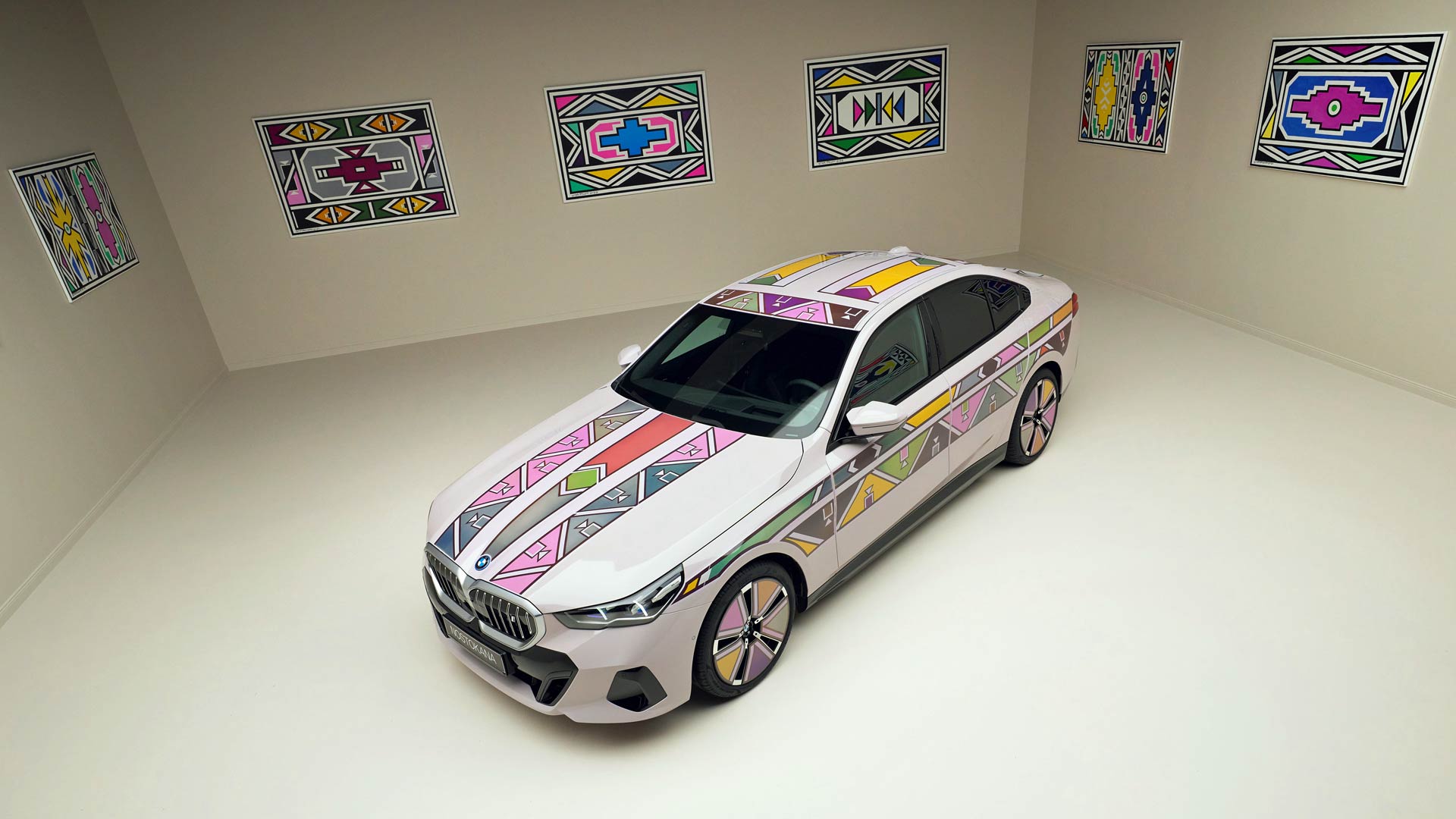
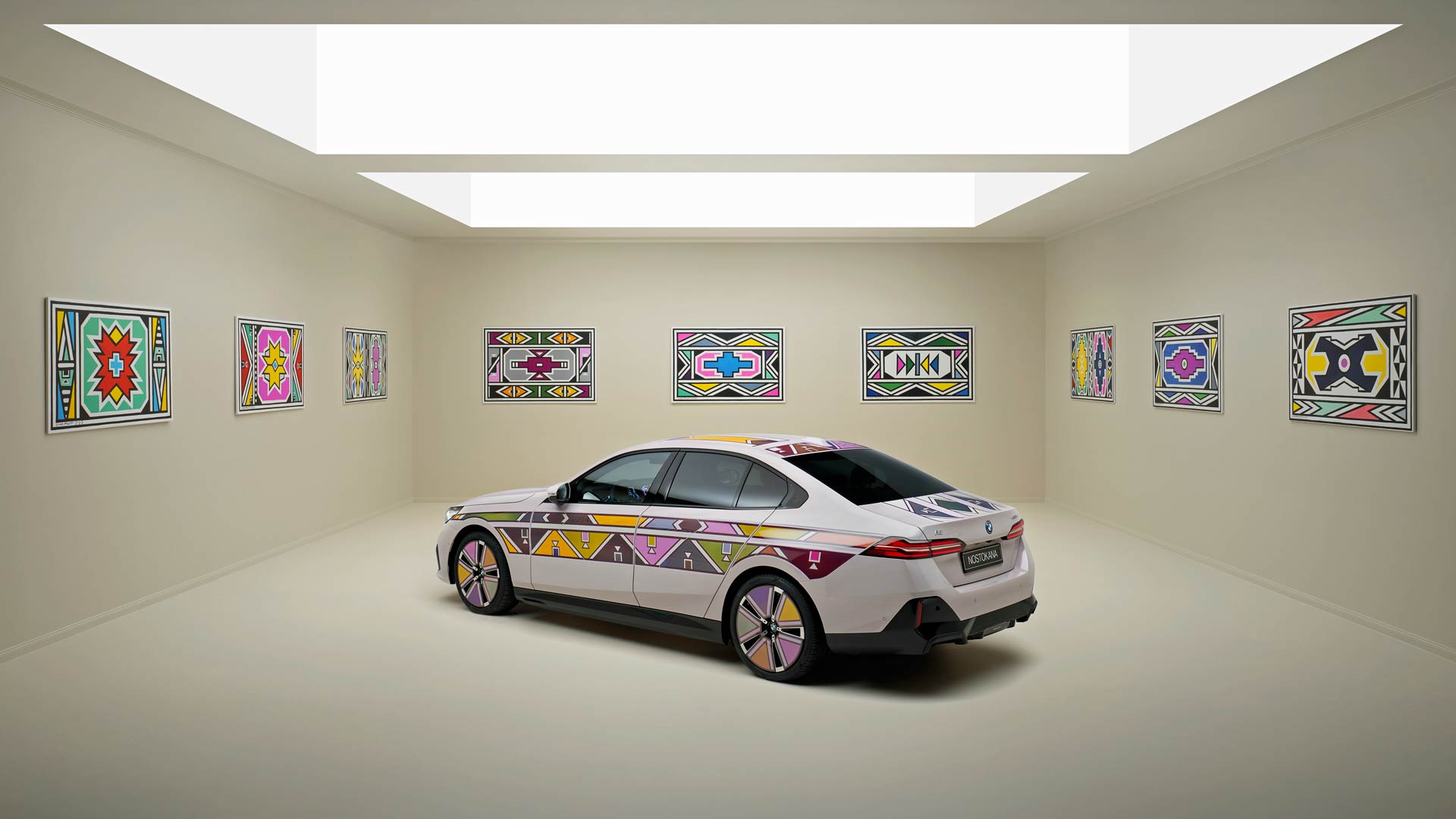
For its innovative tribute, BMW has used E-Ink technology on the body of an i5 saloon. Almost 1,350 sections of E-Ink film, which can be separately controlled, have been applied to the sides, roof, bonnet and boot of the i5.
This allows for the colour and pattern shown to be changed by varying the electrical current applied, similar to an e-book reader.
The result is a constantly changing pattern in the style of Mahlangu’s painting, combined with sounds that increase in intensity as the artwork evolves on the car.
‘Technology itself becomes art’
BMW has demonstrated its E-Ink technology before, using it on the iX Flow concept in 2022. This could transform from having white to black bodywork instantly. Multi-coloured E-Ink was also used on the BMW i Vision Dee concept.
It points to a future where owners could rapidly change the exterior colour of their car.
Adrian van Hooydonk, head of BMW Group Design, commented: “The BMW i5 Flow Nostokana honours the history of the BMW brand and continues the story of our global cultural engagement in a unique way. It combines art and design through progressive technology. Here, technology itself becomes art”.
Esther Mahlangu added: “It is fascinating to me to see how modern technology can expand my art and make it accessible to a completely new audience”.
With the i5 Nostokana on display in Los Angeles, the company will also show the original 1991 5 Series Art Car in Cape Town as part of an exhibition dedicated to Mahlangu’s work.
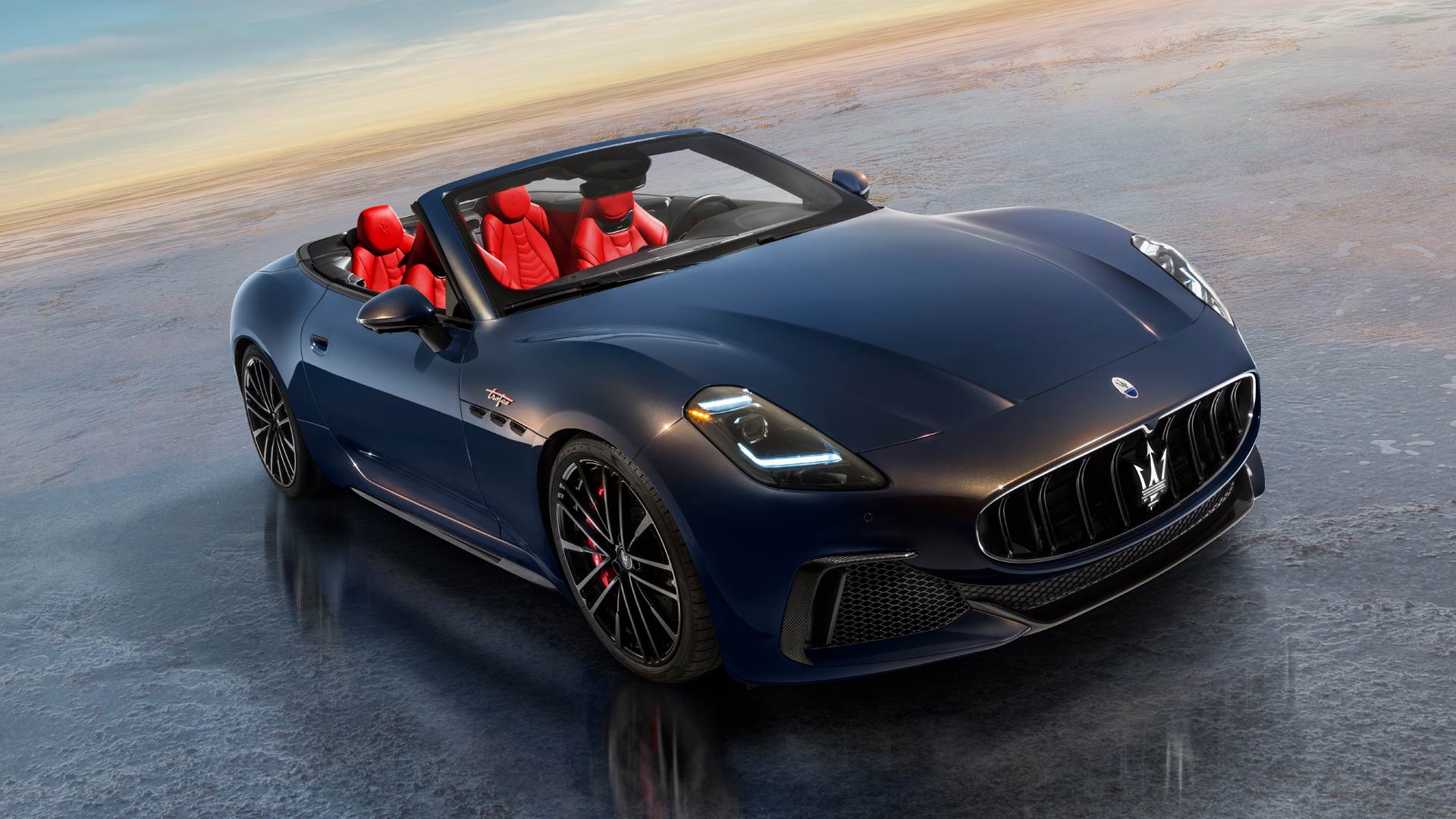
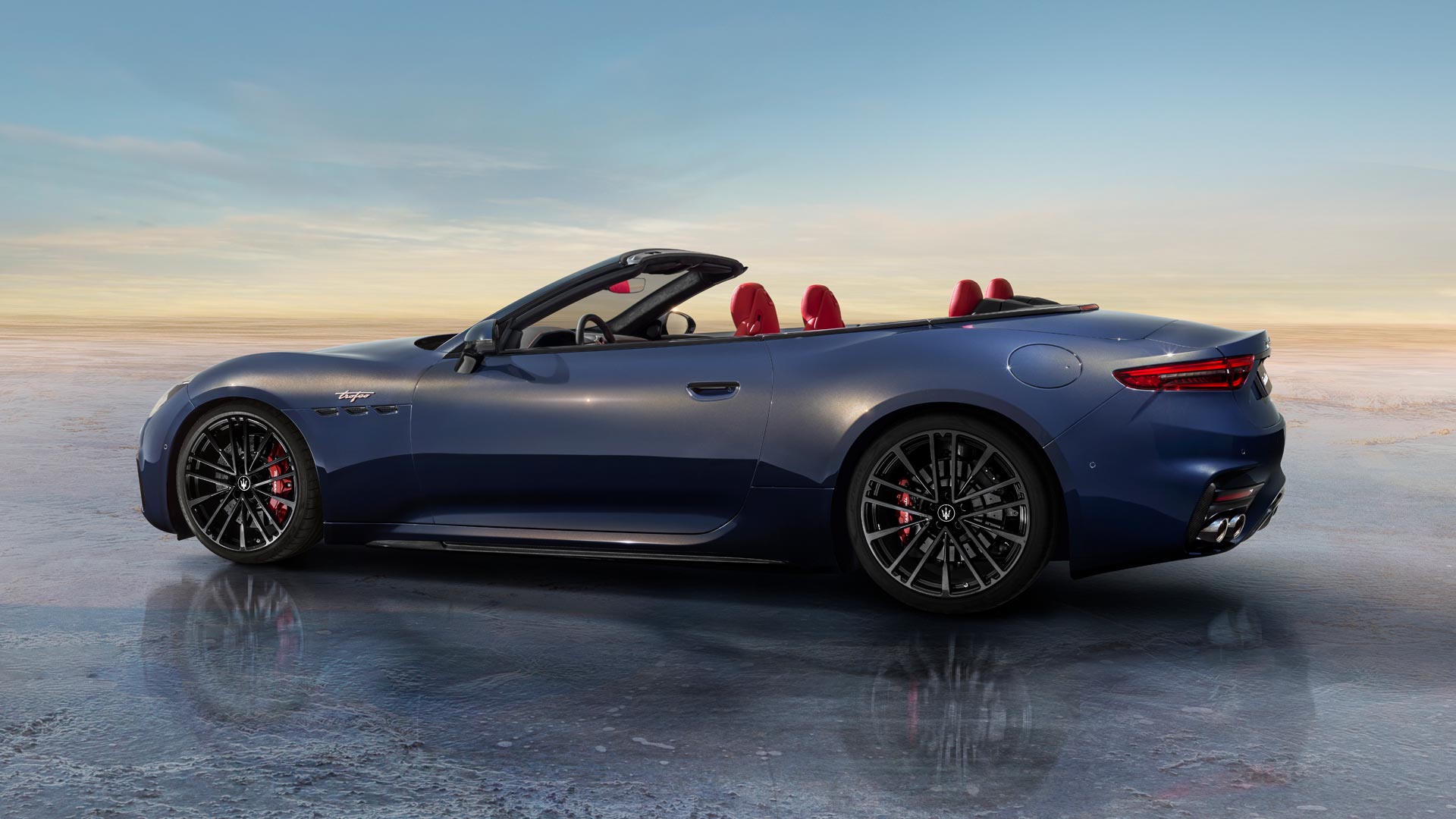
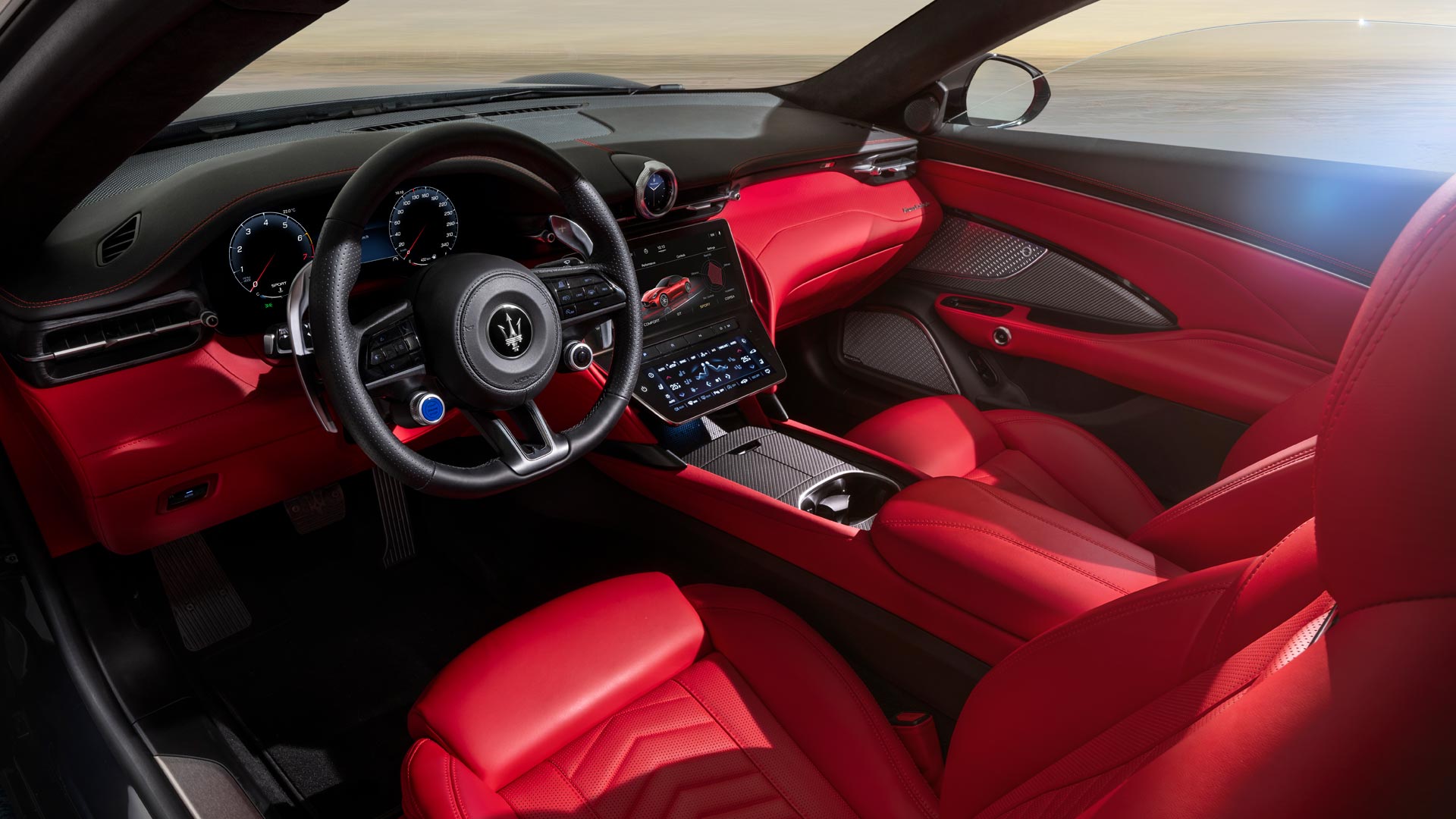
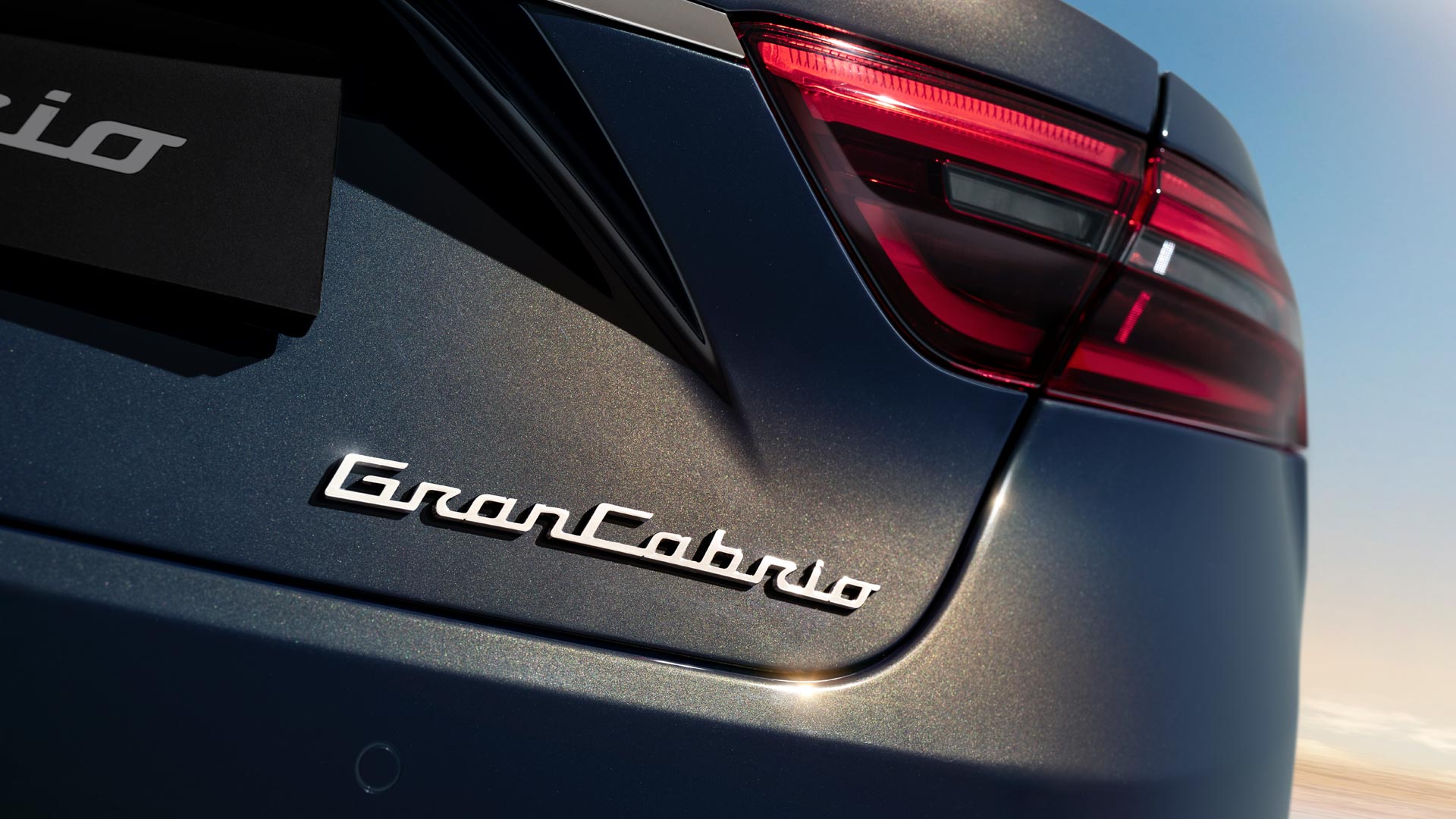
Following on from the new GranTurismo, Maserati has added the head-turning GranCabrio convertible to its refreshed range.
The open-air GT is said to be dedicated to driving enthusiasts who ‘demand the greatest levels of comfort and style’.
Much is shared with the GranTurismo coupe, including the same V6 petrol or fully electric powertrain options, along with all-wheel drive.
‘Grand tourer par excellence’
In contrast to the regular GranTurismo, Maserati has dispensed with entry-level Modena trim for the GranCabrio.
That makes Trofeo spec the starting point for the spyder model, with an upgraded version of the 3.0-litre twin-turbo V6 ‘Nettuno’ petrol engine and an eight-speed ZF automatic gearbox fitted as standard.
A power output of 550hp, along with 479lb ft of torque, allows the GranCabrio Trofeo to accelerate from 0-62mph in just 3.6 seconds. A top speed of 196mph also makes the al fresco Maserati only a fraction slower than its fixed-roof sibling.
Aflagship 761hp electric Folgore model will join the range soon, with a likely price tag of close to £200,000.
Rapid performance, rapid roof
Designed to be a genuine four-seater, the GranCabrio has a fabric roof to save space and weight versus a folding hard-top. It can be opened in 14 seconds and operates at speeds of up to 31mph.
A three-stage neck warmer heating system is standard, while buyers can also specify an optional Windstop device to reduce turbulence inside the cabin.
The opening roof does sacrifice some boot space, however. The GranCabrio offers a luggage capacity of 172 litres, compared to 310 litres in the GranTurismo.
Bespoke options available
Following the reveal of the GranCabrio, the Trofeo version can now be configured to your dream specification through the Maserati website.
Alternatively, orders for the GranCabrio can also be placed via Maserati dealers. Prices start at just under £169,500, but diving into the extensive options list – such as paint from Maserati’s bespoke Fuoriserie range, for example – could ramp up this total considerably.
Success on race circuits around the globe in 2023 has given Aston Martin buyers a new favourite paint colour.
Motorsport-inspired Racing Green has become the brand’s most chosen option, based upon new car retail data.
Last year, Aston Martin found that almost one quarter of customers (24 percent) picked from one of nine shades of green for their new supercar or SUV.
Among these, the distinctive Aston Martin Racing Green, offered in either a gloss or satin finish, was the top choice for buyers.
Nine shades of green
Aston Martin Racing Green now accounts for 12 percent of new models sold, up from seven percent the previous year. The colour was only added to the brand’s palette in 2021, intended to celebrate Aston Martin’s return to Formula One.
Peak interest in the green paint colour coincided with Fernando Alonso taking a historic podium finish for the Aston Martin F1 team.
Alonso’s third place in the season-opening Bahrain Grand Prix created a 29 percent increase in traffic to the Aston Martin website, along with a spike in orders for Racing Green-painted cars.
The success of Aston Martin Racing Green has seen traditional favourite colours slip down the popularity rankings. Xenon Grey was the second most popular colour in 2023, followed by Magnetic Silver.
The Fernando Alonso effect
Aston Martin’s Formula 1 involvement has already proved to be a positive influence for sales. Nearly three quarters (72 percent) of those buying F1-inspired special editions were new to the brand.
In addition, Aston Martin experienced a 20 percent increase in online configurations sent to dealers on race weekends, compared to non-race weekends in 2023.
Marco Mattiacci, chief brand and commercial officer at Aston Martin, said: “Our presence on the grid has propelled the brand onto the global stage, but also captured the imagination of loyal and new customers who are specifying more cars in green than ever before.
“Just as James Bond made the Silver Birch paint tone synonymous with DB5 and the brand more broadly, 60 years on, Aston Martin’s on-track success is putting Racing Green at the forefront of customers’ minds when purchasing their Aston Martin.”
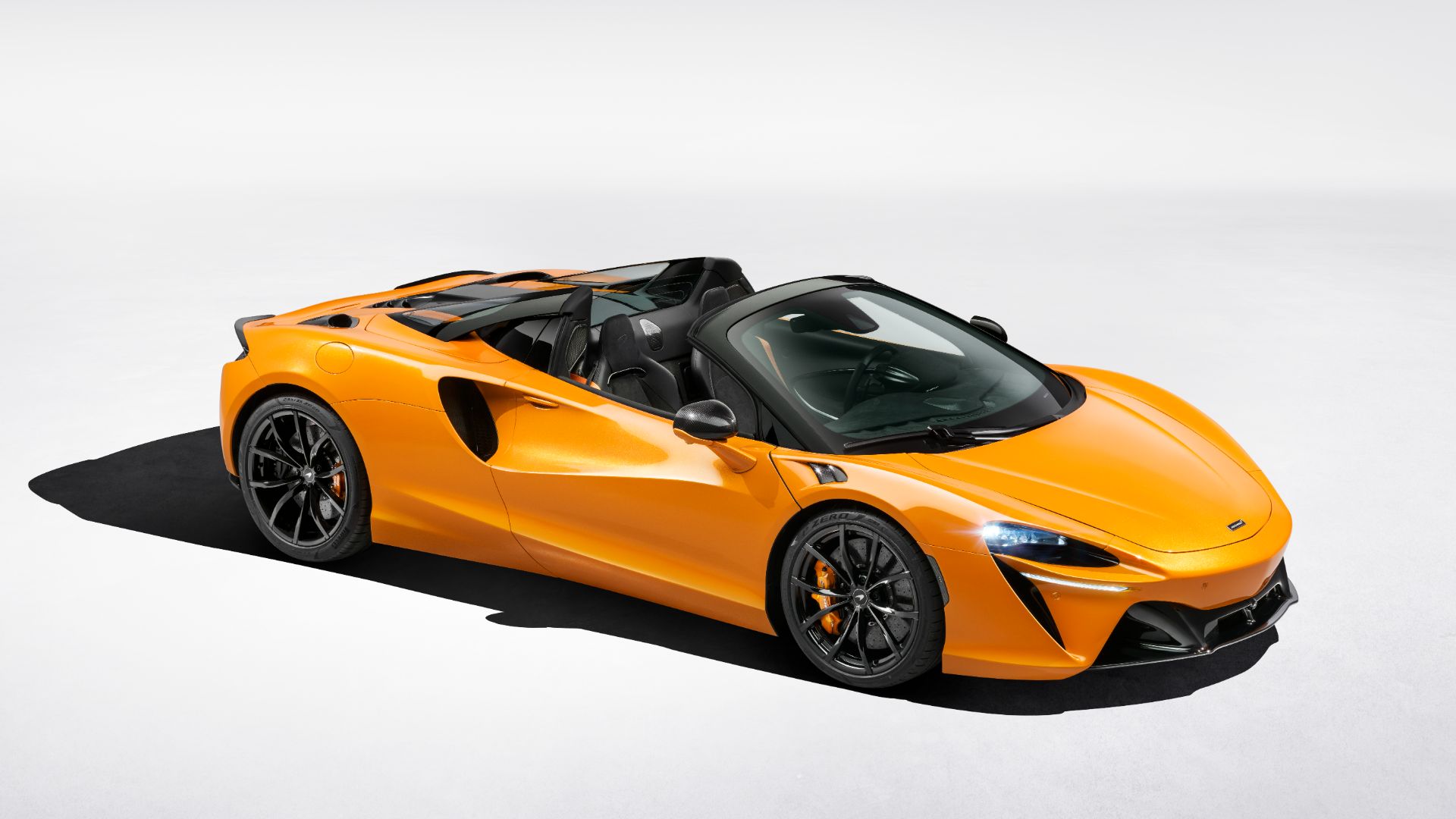
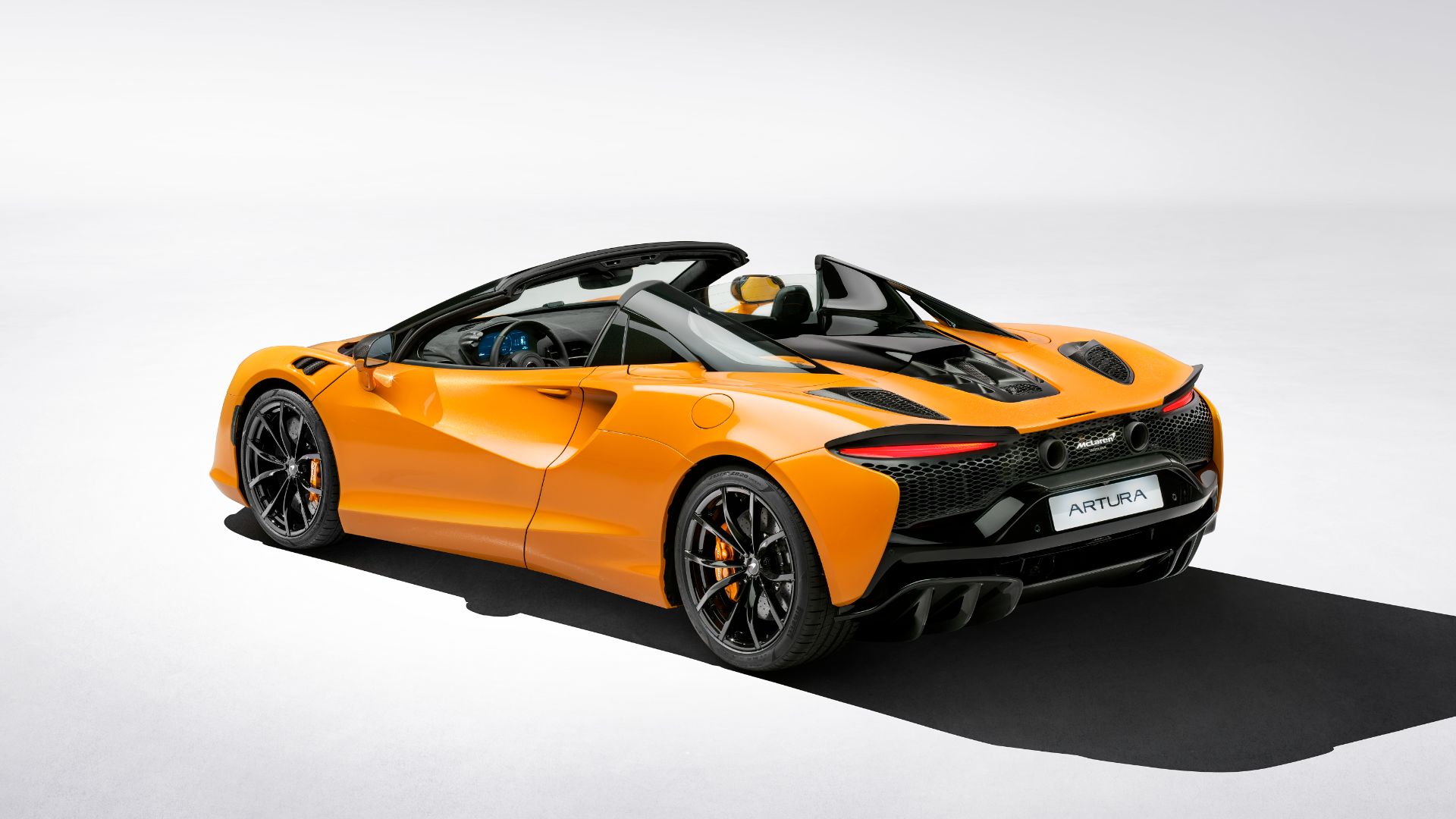
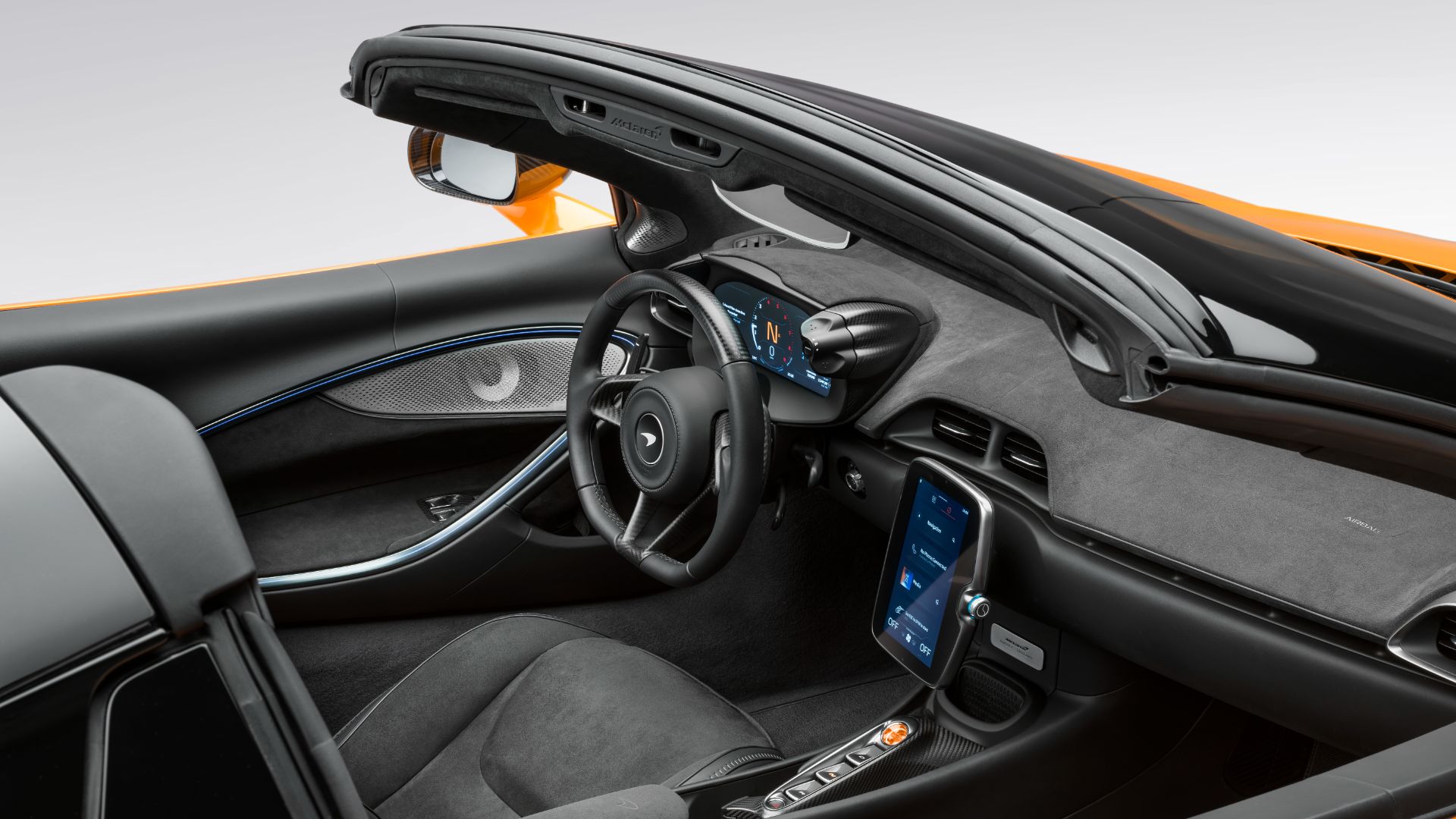
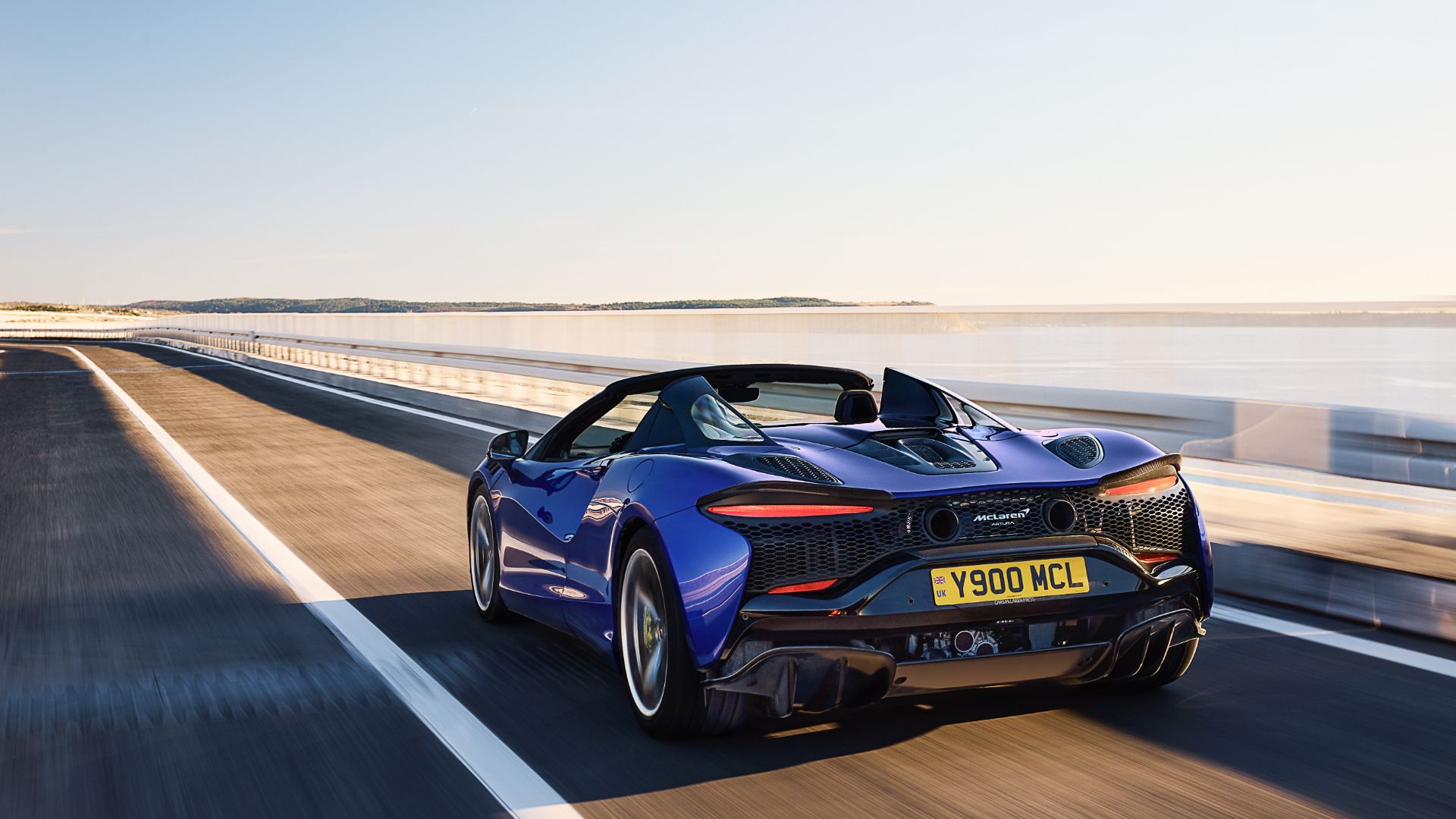
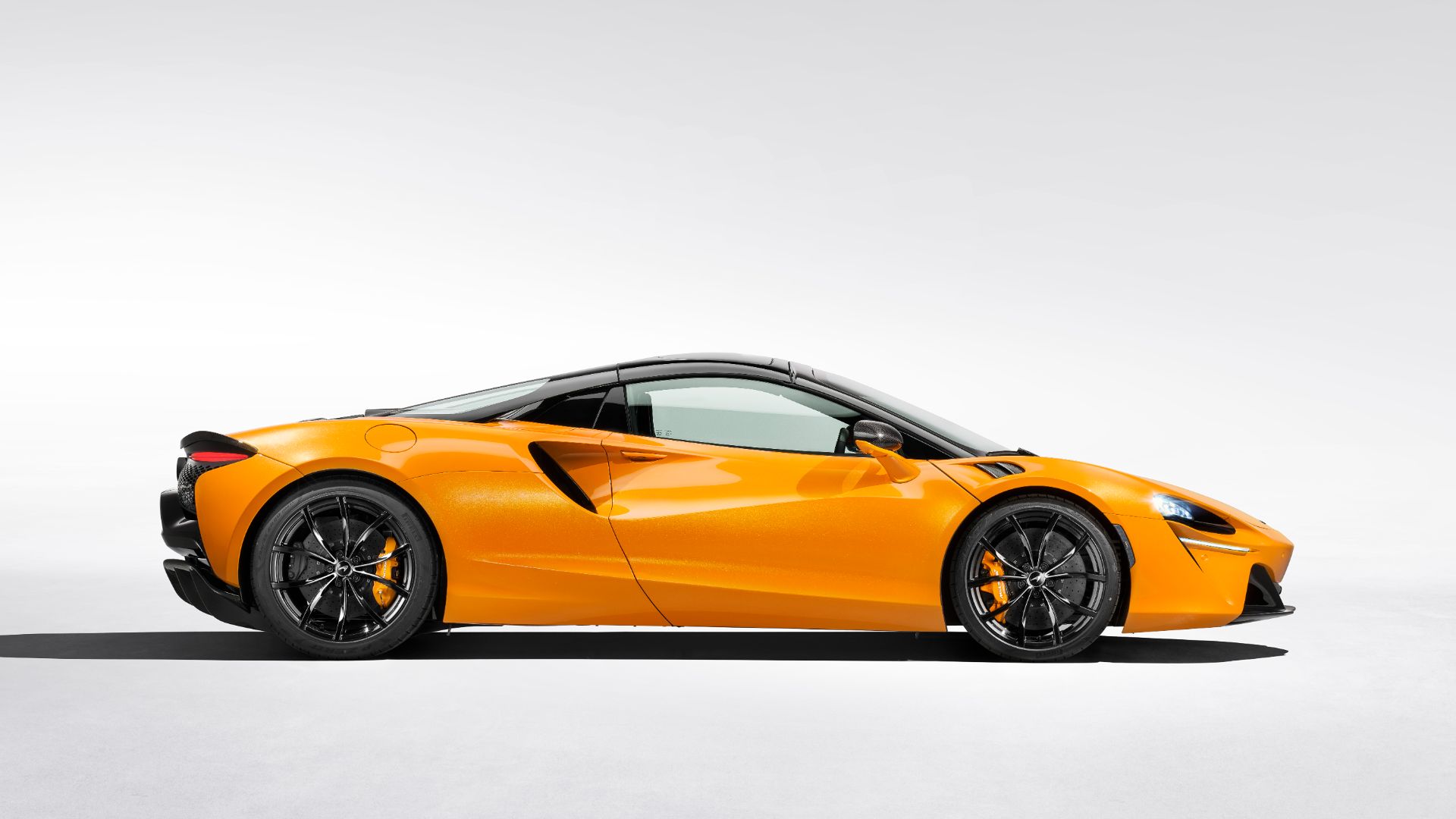
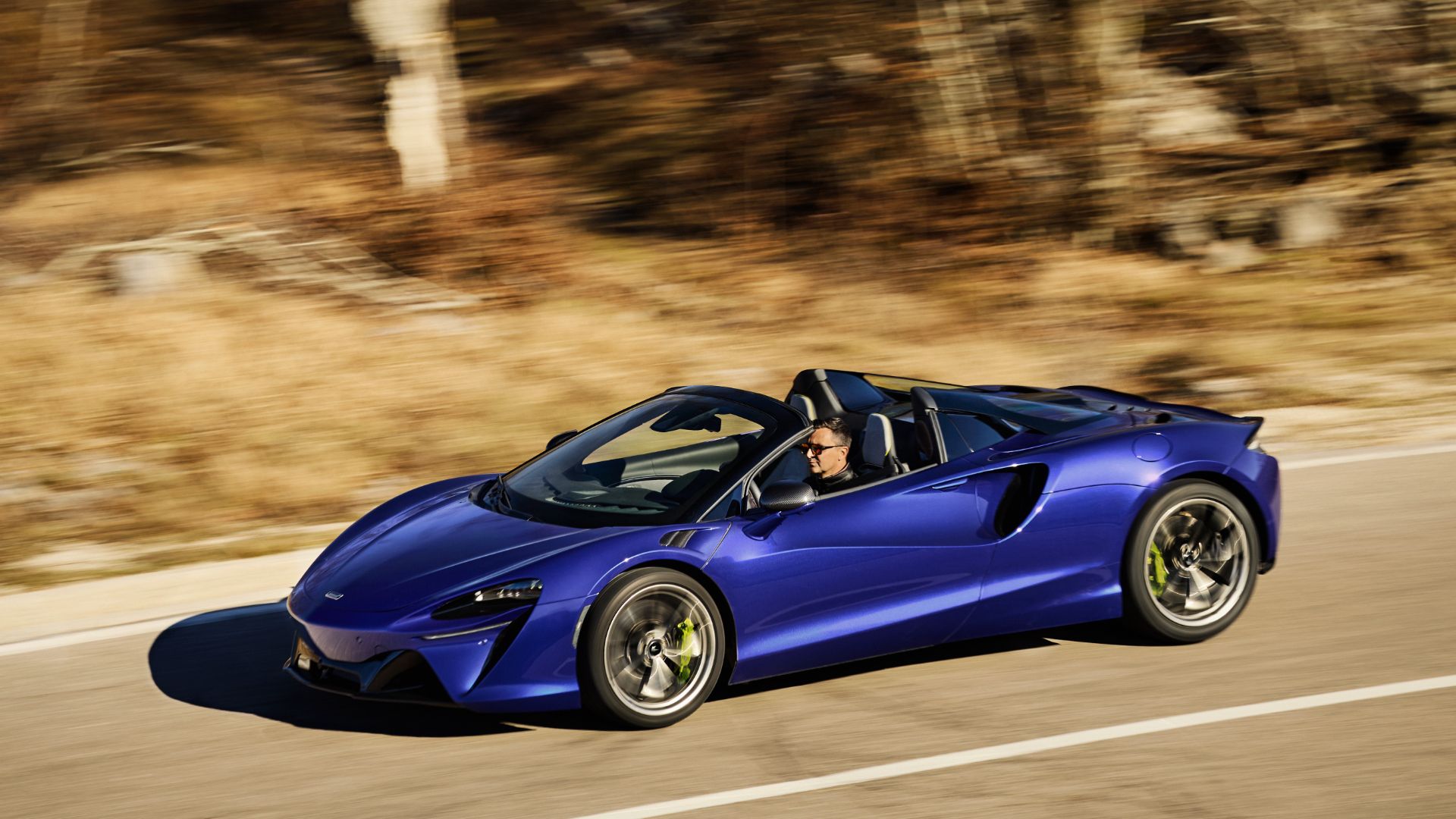
McLaren has lifted the lid off its plug-in hybrid supercar. The new Artura Spider promises more power, ‘no compromise’ dynamic performance, a spicier soundtrack and option to go al fresco.
Priced from £221,500 – a premium of around £20,000 over the Artura coupe – the Spider is available to order now, with first deliveries expected this summer.
We visited McLaren’s futuristic factory in Woking for a secret preview of the Artura Spider, followed by a chat with the senior engineers who developed it. Read on for everything we know so far.
Open to the elements
There is more to the Artura Spider than just a new roof, but that’s the headline news here. Powered by eight electric motors, it disappears acrobatically and near-silently beneath the rear deck in 11 seconds – and at speeds up to 31mph.
The roof itself is made from unpainted carbon fibre composite, with an optional electrochromic glass panel that goes from opaque to transparent at the touch of a button.
Made in Sheffield, the Spider’s ultra-rigid ‘MCLA’ carbon fibre chassis requires no extra strengthening to compensate for its opening top. However, the roof motors and mechanism mean 62kg of added weight.
McLaren quotes a lightest dry figure of 1,457kg, plus a kerb weight of 1,560kg: measured with all fluids and the fuel tank 90 percent full. “Either way, we have the lightest convertible supercar in its class,” says chief engineer Andy Beale.
More power, more range
The Artura Spider also gains an extra 20hp, bringing total output to 700hp at 7,500rpm. Key performance stats are identical to its coupe sibling: 0-62mph in 3.0 seconds and a top speed of 205mph.
Achieved via a software tweak for the 3.0-litre twin-turbocharged V6, the extra power makes its presence felt between 4,000rpm and the 8,500rpm redline. Maximum torque is unchanged at 531lb ft, but the axial flux motor contributes an instant 166lb ft for electrified throttle response.
McLaren has also reworked the eight-speed dual-clutch gearbox, introducing a new ‘pre-fill’ function that pressurises the hydraulic fluid to reduce shift times by 25 percent. And proving that you can, occasionally, have your cake and drive it, the Artura offers a longer zero-emissions range: up from 19 miles to 21 miles with the powertrain in fully electric E-Mode.
Thank you for smoking
We’ll come to the cosmetic differences in a minute, but there are further changes beneath the Spider’s skin. New damper valving and improvements to its innovative ‘ethernet’ electronic architecture make the adaptive suspension up to 90 percent quicker to react. “We’ve increased the bandwidth of the car,” explains Andy Beale, a veteran of 21 years at McLaren. “It combines a more supple ride with better body control.”
Beale also highlights the new brake cooling ducts, which provide “greater stopping power and consistency at high speeds”, and the retuned exhaust system with its “cleaner tone” and greater crescendo as the revs rise.
Oh, and if all that sounds a bit serious, a new “spinning wheel pull-away” function complements the existing launch control, allowing you to blast off in clouds of dramatic tyre smoke – and probably vaporise a pair of Pirelli P Zeros in the process. Note: don’t try this at the drive-thru.
The future is orange
With the technical briefing complete, Artura programme manager Michael Norrington takes us for a walk around the first pre-production Spider. Resplendent in Papaya Spark – a pearlescent version of McLaren’s trademark bright orange, seen above – it outshines even the sparkling white tiles of the factory’s inner sanctum.
Unsurprisingly, most of the design changes are focused around the Spider’s rear end. The ‘hot vee chimney’, which vents heat from the hybrid powertrain, has moved backwards by around 200mm to avoid scorching the folded roof, and now has additional air intakes on either side.
Unique to the Spider are shapely rear buttresses made from motorsport-style clear polycarbonate. “They were a real engineering challenge,” admits Norrington, “but they have two functions: improving visibility and channelling cold air into the engine compartment.”
Look closely and you’ll also spot small gurneys on the windscreen header rail, designed to deflect air over the cabin, plus the new vertical rear window. The latter drops down electrically so your ears can enjoy unfettered access to the snarling 120-degree V6, even on a wet day in Woking.
Get yourself connected
McLaren CEO Michael Leiters says the Spider offers “even higher levels of connection, without any compromise in everyday driving.” We’ll test that claim at the launch in a few months’ time, but the regular Artura has already set a high bar. Our review described it as ‘a multi-faceted and very modern kind of supercar… efficient and unobtrusive when you’re not in the mood, then riotously fast and entertaining when conditions allow’.
In the meantime, the good news is that most of the improvements made to the Spider will be carried across to the coupe, as part of a 2025 model-year update.
Existing Artura owners can also visit their McLaren dealer to receive the 700hp power upgrade free of charge. The electric range extension won’t be offered, however, as doing so would contravene homologation rules and require the car to be re-registered.
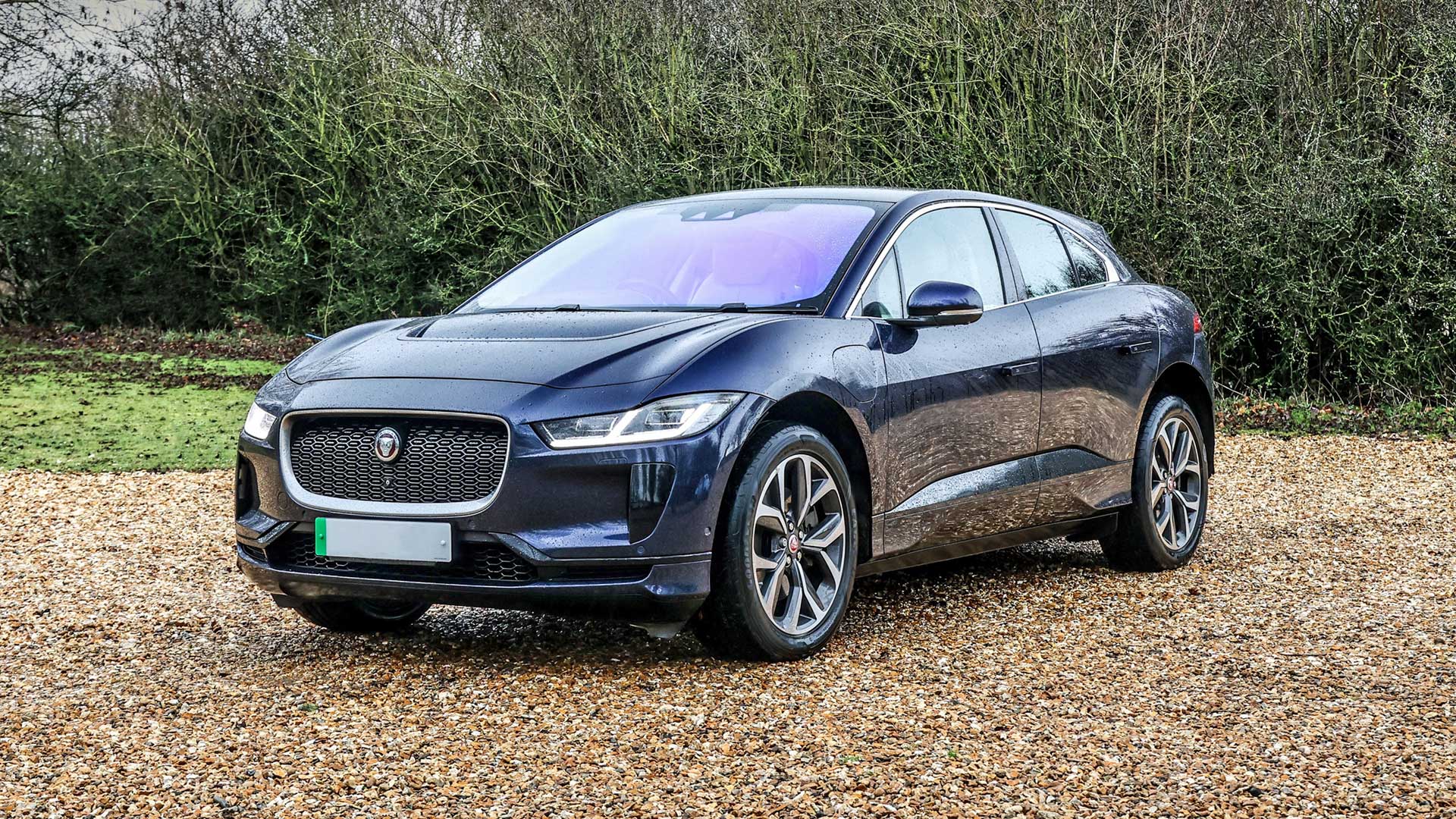
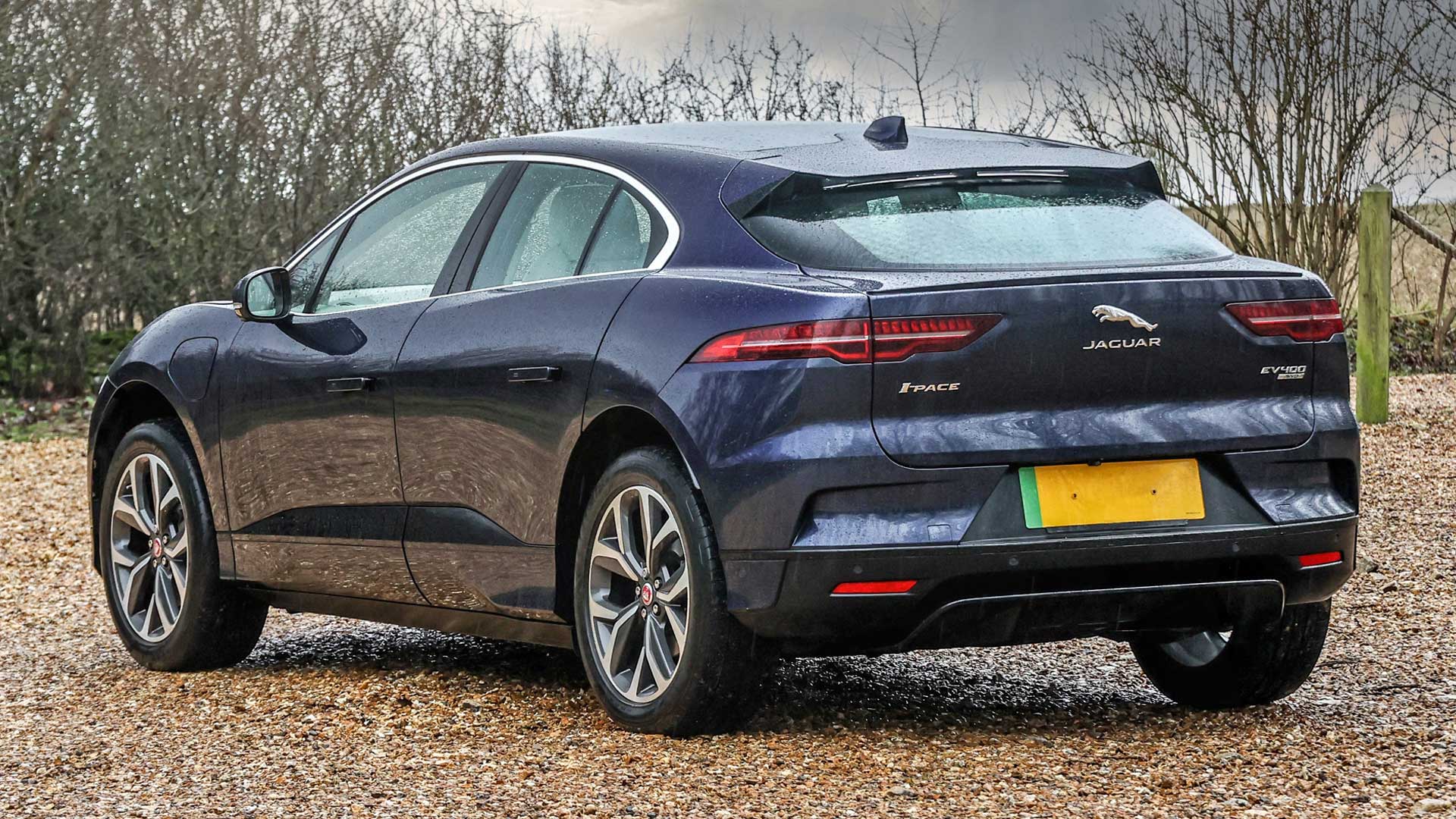
A Jaguar I-Pace bought personally by King Charles III will head to auction next month.
The 2018 I-Pace is the first fully electric car owned by the British royal family – and an early example of the battery-powered SUV.
Its famous first owner will likely make the Jaguar a desirable lot when it appears at the Historic Auctioneers sale, taking place at Ascot racecourse on 2 March 2024.
Leading the charge
The former Prince of Wales is well known for his interest in environmental issues, and ordering a Jaguar I-Pace saw him lead the way in electrifying the royal fleet.
The range-topping I-Pace EV400 HSE was purchased in September 2018, and initially ordered with Eiger Grey paintwork. However, the car is said to have been returned to Jaguar, then finished in Loire Blue instead.
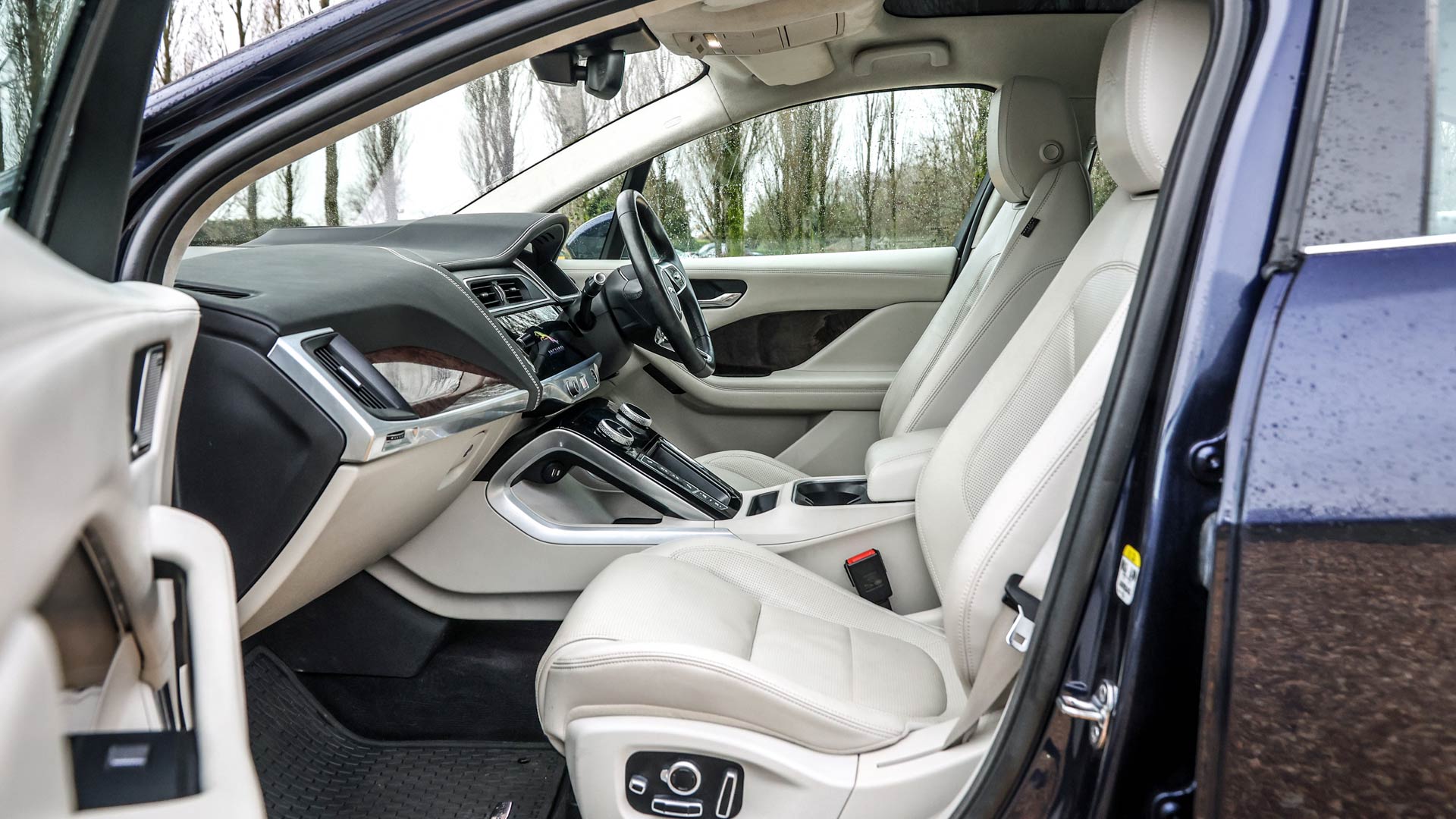
As a non-standard colour, it remains the only I-Pace to be painted in this hue. Rather fittingly, the interior is upholstered in Light Oyster Windsor leather.
A Jaguar fast charger was installed at Clarence House to ensure the I-Pace’s battery could be easily topped up.
An EV fit for a king
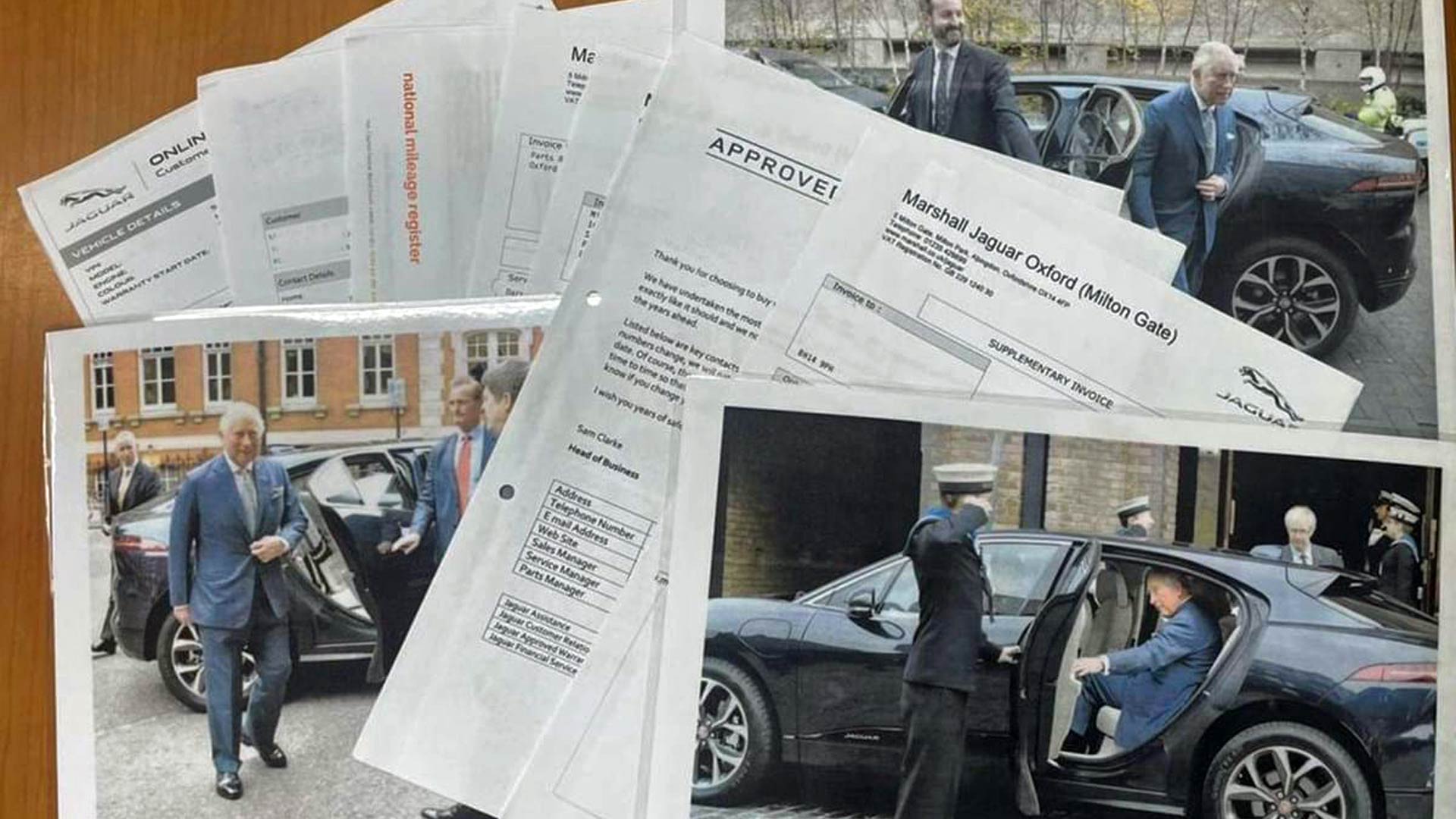
Driven by the King until December 2021, other members of the royal family such as Queen Camilla were also transported in the unique Jaguar.
After racking up around 3,000 miles, the I-Pace was returned to Jaguar and later sold by a dealership in Oxford. Understandably, the original number plate was replaced, and the royal provenance wasn’t mentioned in the advert.
Karen French, the current owner of the I-Pace, was told of its former keeper after she had purchased the car. French has added 30,000 miles since , but has now decided “that it was time for a change”.
The ‘most significant’ I-Pace
As a car bought and driven personally by His Majesty King Charles, the pre-auction estimate for the I-Pace has been set at between £55,000 and £70,000.
Historics’ head of auctions, Mathew Priddy, talked up the car’s collector status, saying: “We are thrilled to bring this royal icon to auction. It’s an unrepeatable piece of electric motoring history.
“With the Jaguar I-Pace being discontinued ahead of Jaguar’s re-launch in 2025, this will remain surely the most significant example, which will be reflected in its increasing value.”
The Historic Auctioneers sale will be held at Ascot Racecourse on Saturday 2 March, although bids for the Jaguar can also be placed online.
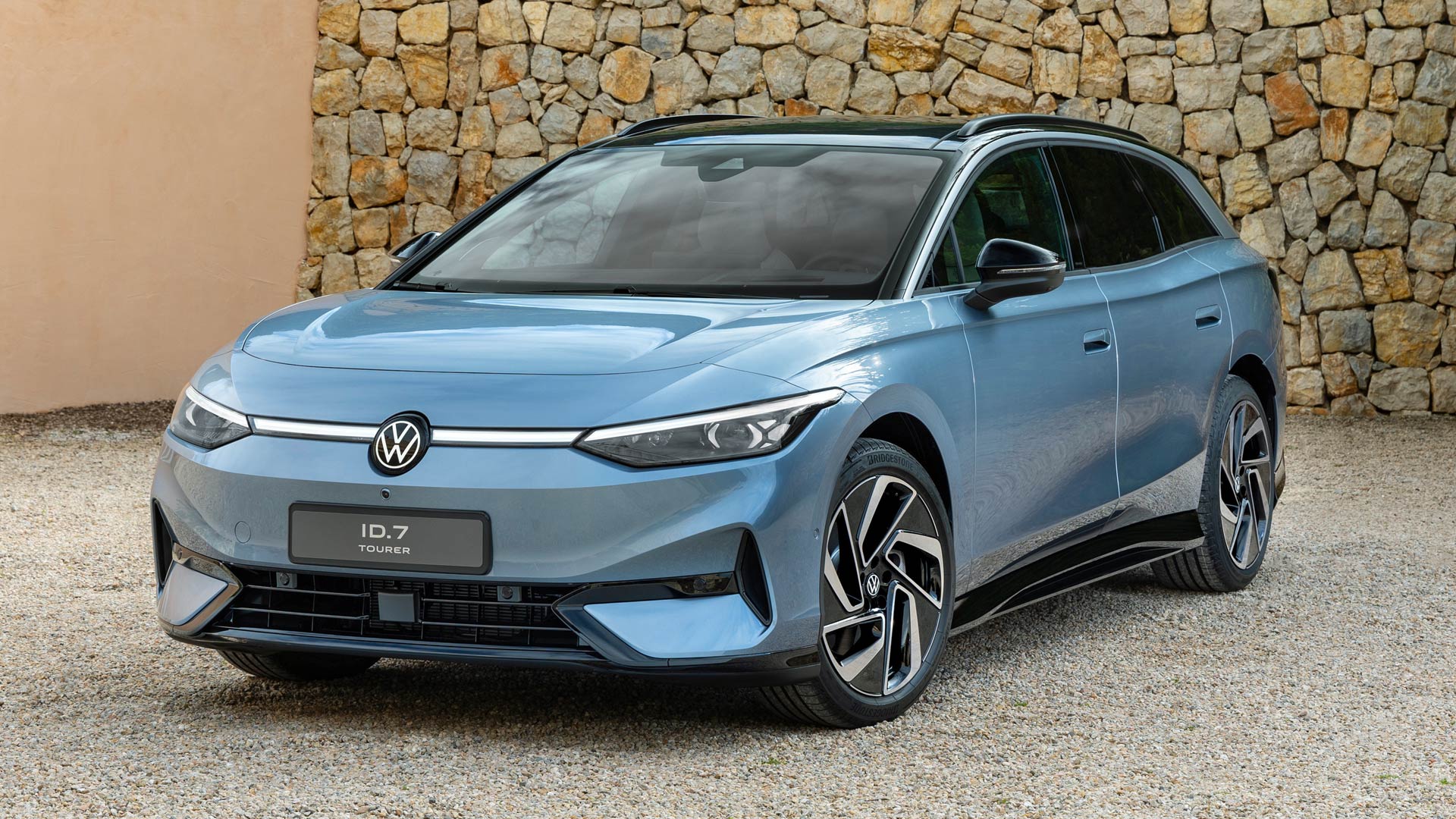
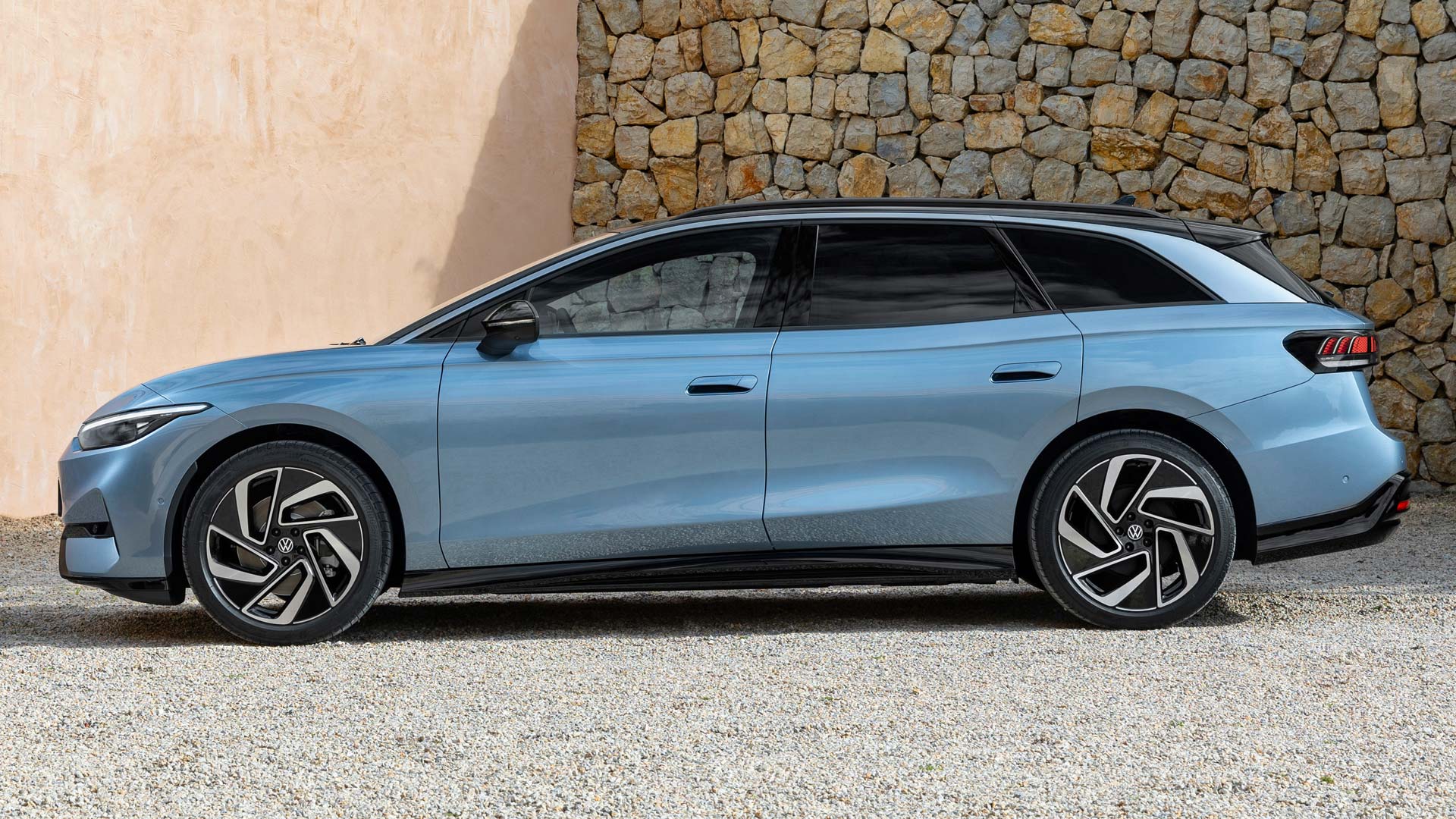
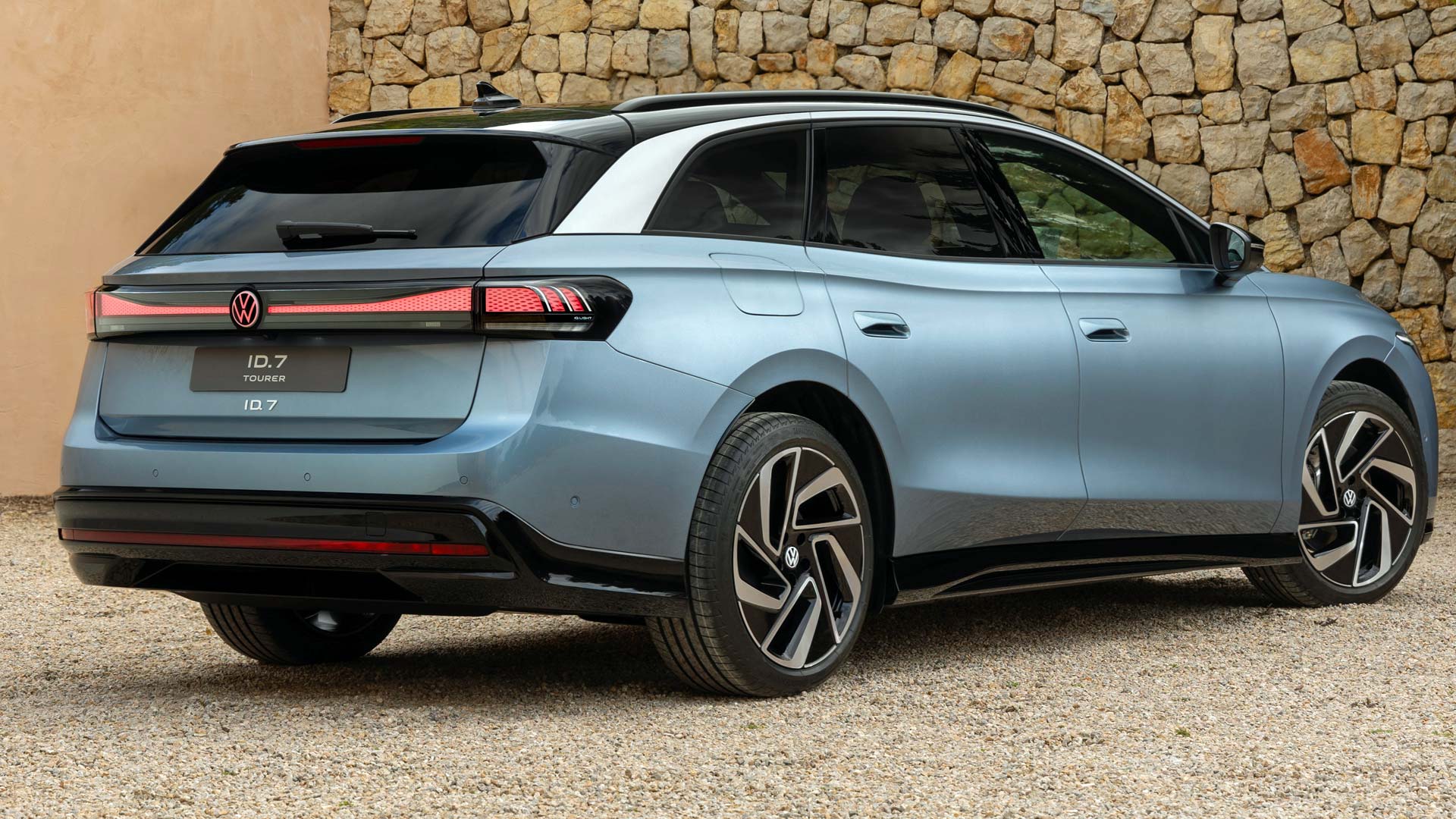
Volkswagen has announced a new estate version of ID.7 fastback saloon, as the company expands its ID range of fully electric cars.
The ID.7 Tourer is partly inspired by a concept car, the Volkswagen ID. Space Vizzion, which was first shown at the Los Angeles Auto Show in 2019.
The latest entrant in a growing electric estate market, the ID.7 Tourer offers an alternative to an SUV for those who want battery-powered practicality.
Rapid charging, chilled attitude
As one of its flagship models, Volkswagen has made the ID.7 Tourer’s interior feel suitably luxurious. An augmented reality head-up display will be fitted as standard, along with an in-car ‘Wellness’ application.
The latter connects with a phone app to change background lighting colours, air-con settings and seat massage functions, as part of three pre-configured programmes.
Battery options for the ID.7 Tourer allow a range of up to 425 miles when fully charged. Compatibility with rapid charging at speeds of 200kW means the battery can go from 10-80 percent capacity in 30 minutes.
Carrying antiques quietly
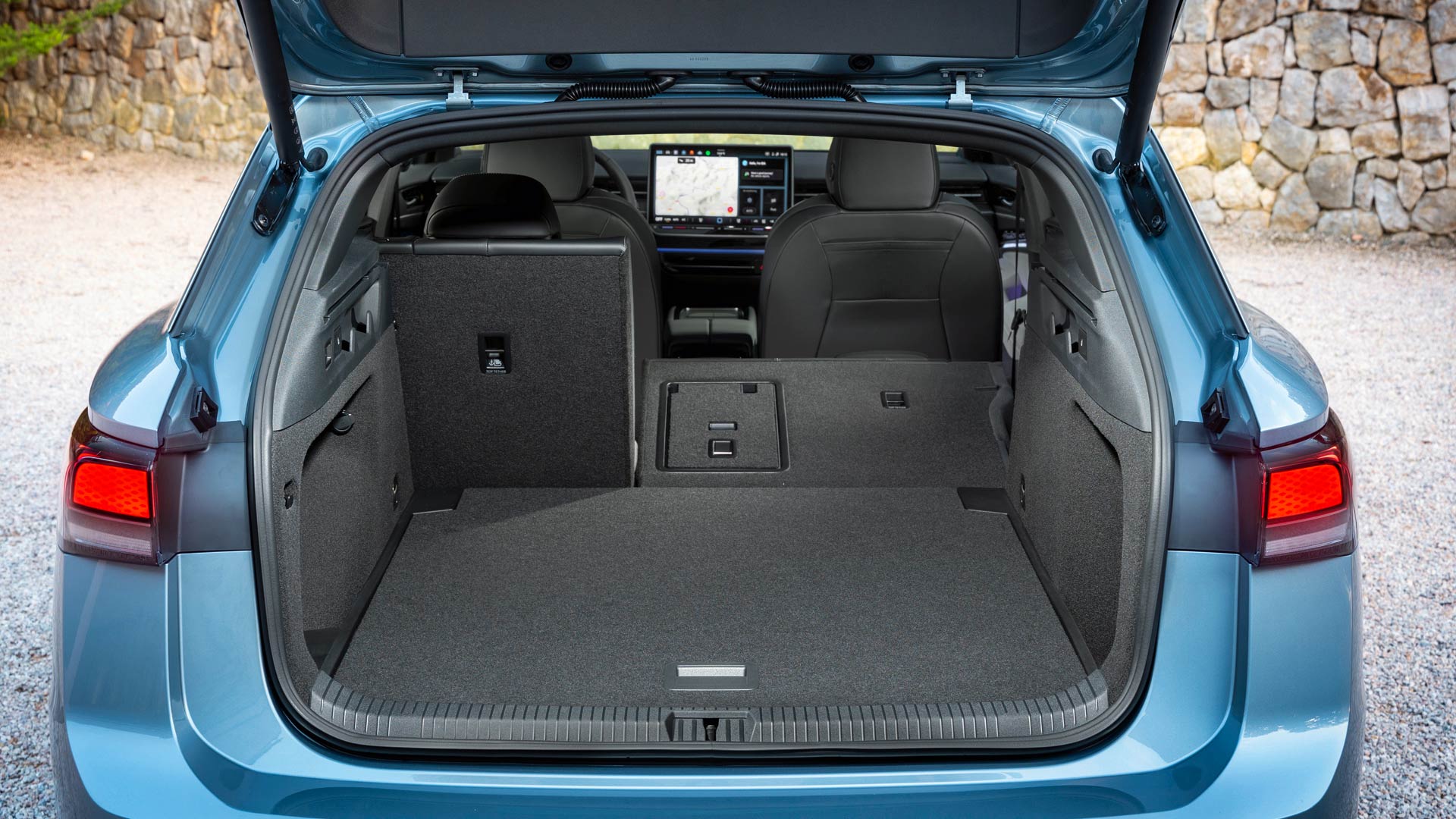
Volkswagen is keen to stress the ID.7 Tourer’s practicality. With the rear seats in place, it provides 605 litres of luggage space. Drop them down and the ID.7 Tourer will hold a more-than-respectable 1,714 litres when loaded up to the roof.
For comparison, the recently announced Volkswagen Passat Estate can carry up to 1,920 litres of luggage with the rear seats folded down.
However, the ID.7 Tourer beats the new BMW i5 Touring in the battle of the most accommodating electric estate car.
The ‘perfect estate model’
Following the reveal, Imelda Labbé, member of the Volkswagen board of management, said: “The new ID.7 Tourer is a perfect estate model, especially for families and long-distance drivers. With plenty of space and a high level of comfort, it impresses fully electrically with long ranges.”
The ID.7 Tourer seen pictured is referred to by Volkswagen as a ‘near-production vehicle’. However, any major changes seem unlikely before the car begins rolling off the production line at Volkswagen’s ‘electric mobility’ plant in Emden, Germany – where it will be assembled alongside the ID.7 fastback saloon and ID.4 SUV.
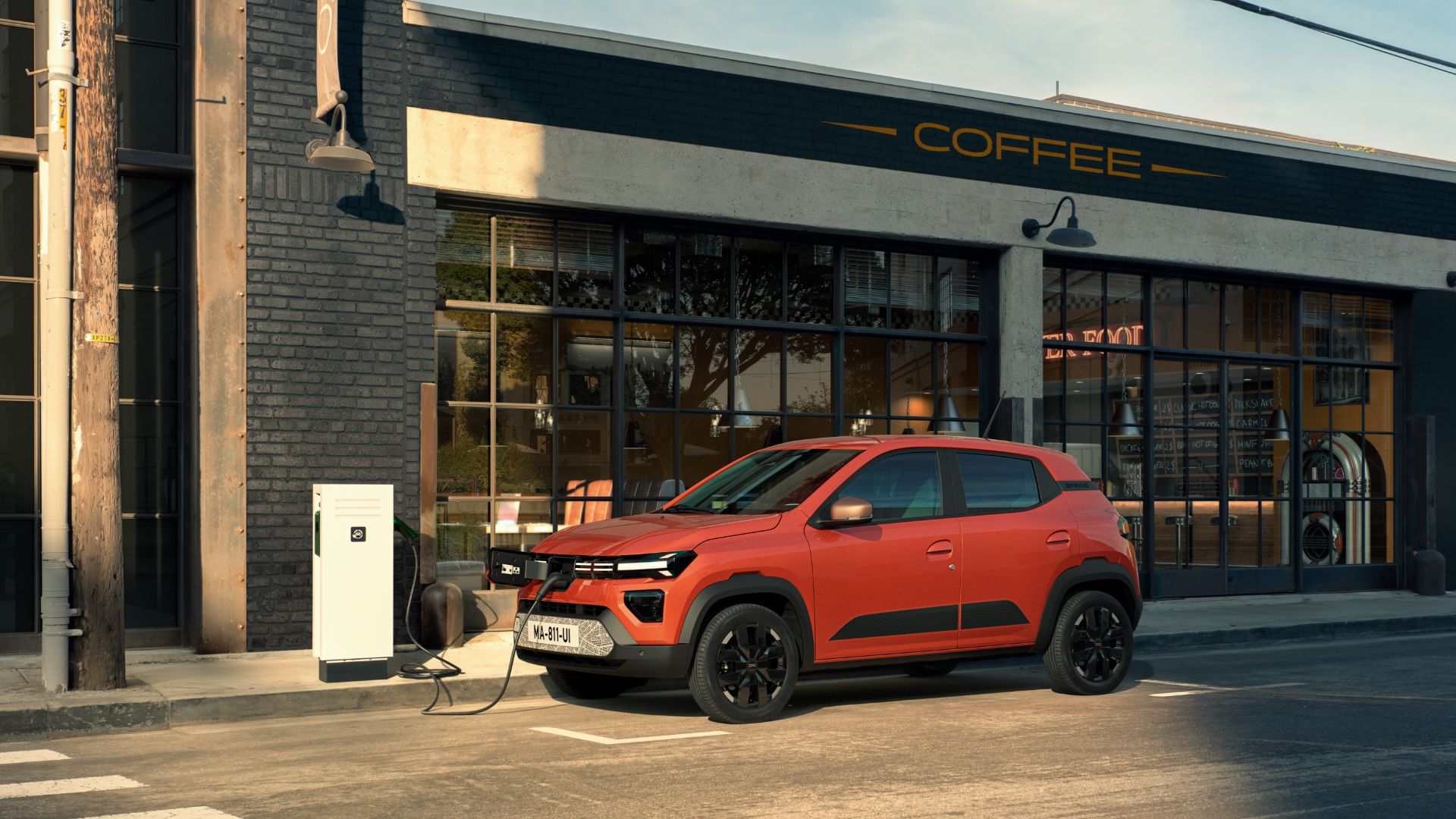
Europe’s cheapest electric car is coming to the UK. Prices for the right-hand-drive Dacia Spring will be announced when order books open on 12 March.
How cheap? Well, in France the Dacia Spring starts from €20,800 before a government grant of €5,000 is deducted. UK consumers haven’t received any financial incentive to buy an EV since the Plug-in Car Grant was scrapped in 2022, so a price tag of around £18,000 looks likely here.
To put that figure into perspective, the MG4 EV costs from £26,995, while a Fiat 500e will set you back upwards of £28,195. So, what is the Dacia Spring – and is this the affordable electric car we’ve been waiting for?
Seeing the light
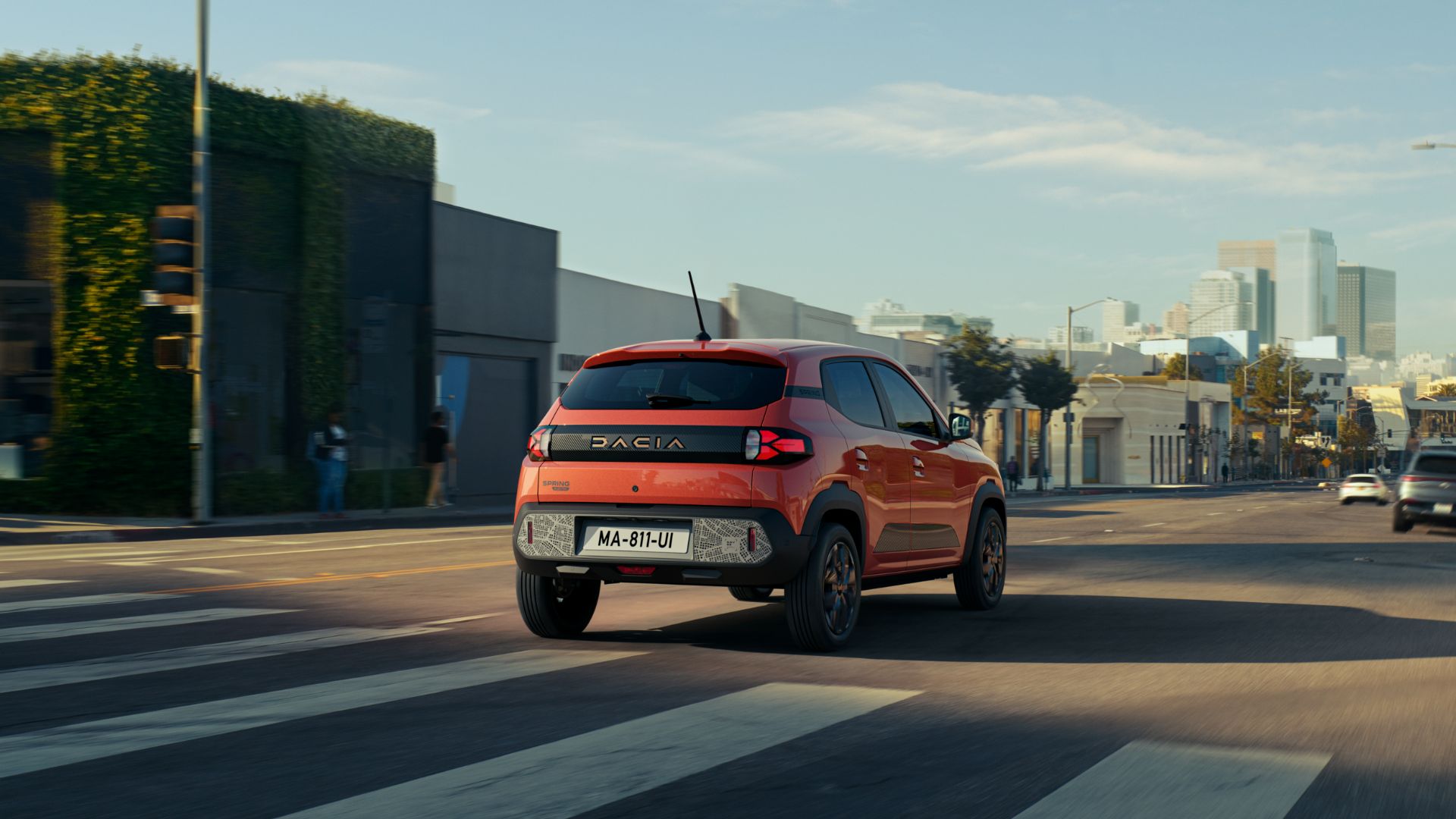
The Dacia Spring was actually launched in 2021 and more than 140,000 examples have already found homes in Europe and beyond. However, this is the first time the budget EV will be sold in Britain.
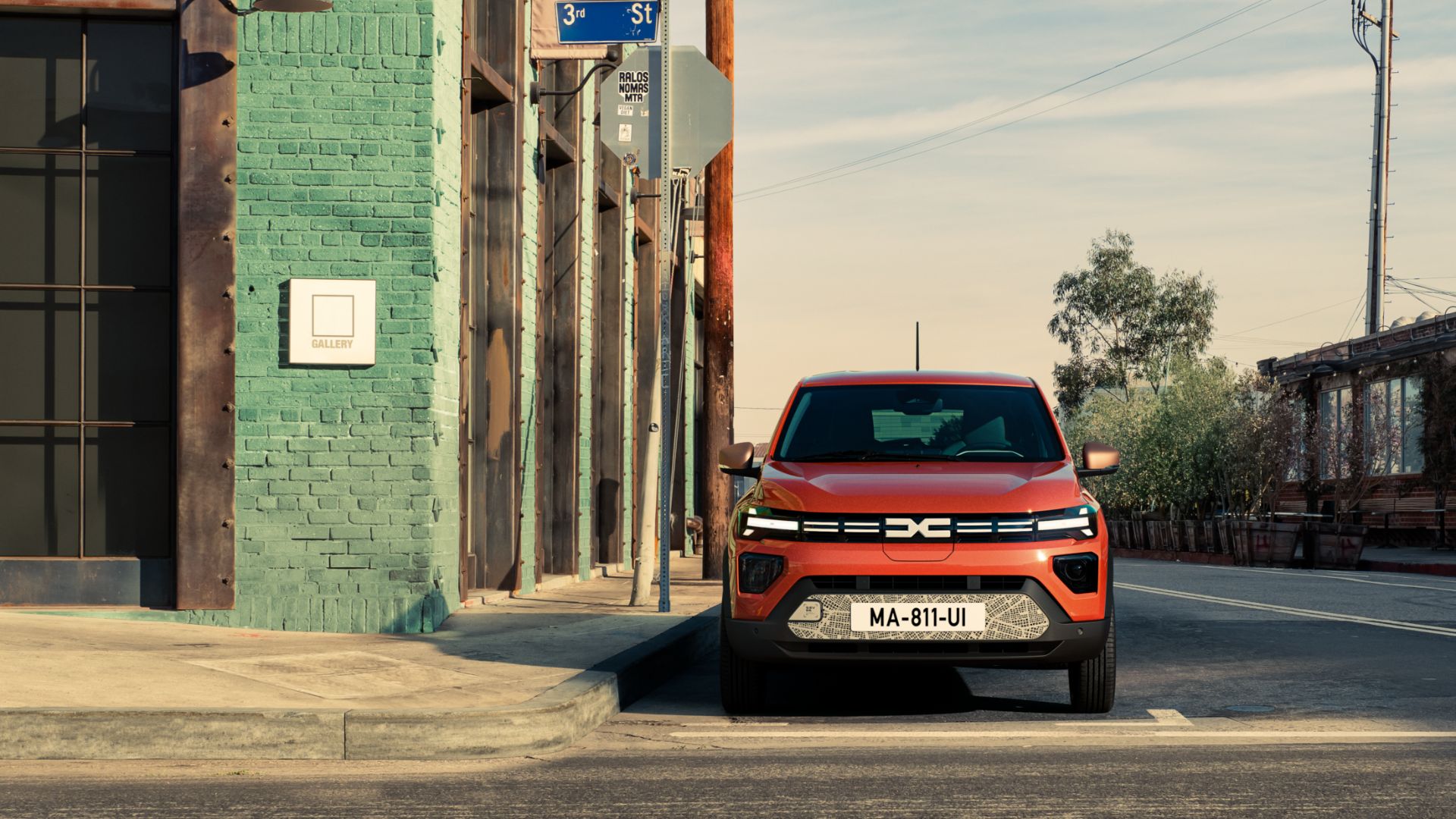
Its chunky, crossover styling contains elements of the larger Dacia Duster SUV, but the Spring is closer in size to city cars such as the Hyundai i10 and Toyota Aygo X. It offers space for two adults in the back – at a squeeze – and a roomy 308-litre boot, which expands to 1,004 litres with the rear seats folded down.
A kerb weight of 984kg in range-topping Extreme trim is impressively light for an electric car. Only flimsy quadricycles such as the Citroen Ami and Renault Twizy weigh less.
Spring has sprung
The Spring’s electric motor develops either 45hp or 65hp, with the more powerful version managing 0-62mph in ‘less than 14 seconds’. Quicker than walking, then.
A 26.8kWh battery offers a fully charged range of 137 miles, according to the official WLTP tests. That looks rather limited, particularly once you factor in the detrimental effect of cold weather, but Dacia says the typical Spring owner drives just 23 miles a day, at an average speed of 23mph.
Charging the Spring from 20-100 percent with a 7kW home wallbox takes four hours, or 11 hours using a three-pin plug. Find a 30kW public charger and you could top up the battery from 20-80 percent in 45 minutes. You can also power accessories such as a fridge or camping lights via the vehicle-to-load charging socket.
To the Extreme
Dacia UK will offer the Spring in three trim levels: Essential, Expression and Extreme. Standard kit on the base version includes a simple media system with a USB socket, cruise control, electric front windows and rear parking sensors.
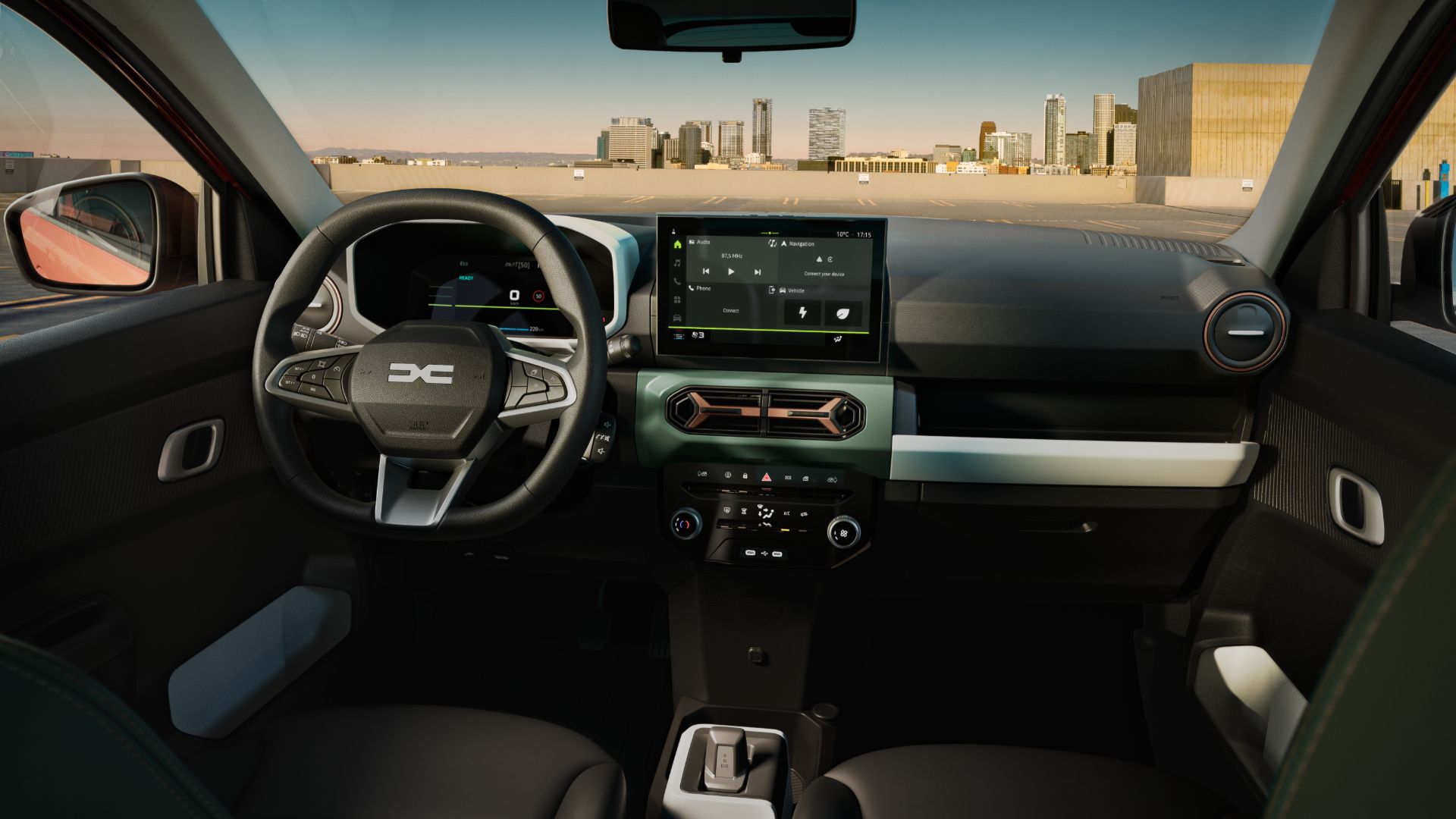
Stepping up to Expression adds manual air conditioning and larger 15-inch wheels, while the top-spec Extreme comes with a 10-inch central touchscreen, sat nav, Apple CarPlay and Android Auto connectivity, electric rear windows, electric mirrors and lashings of copper-look trim.
If Dacia can deliver all this for less than £20,000, the Spring could become a common sight in British cities. Come back to the Motoring Research website for a first drive verdict soon.
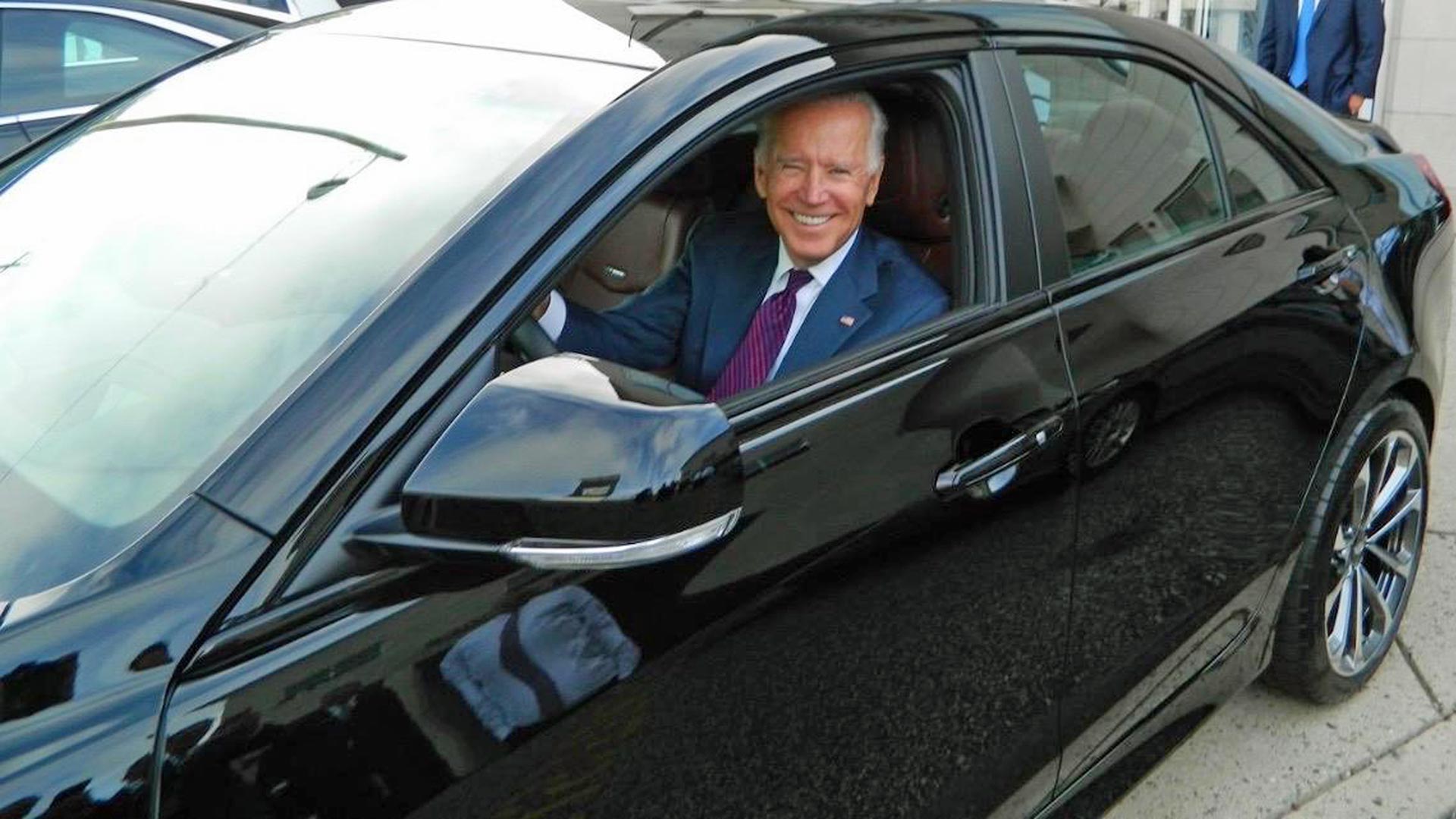
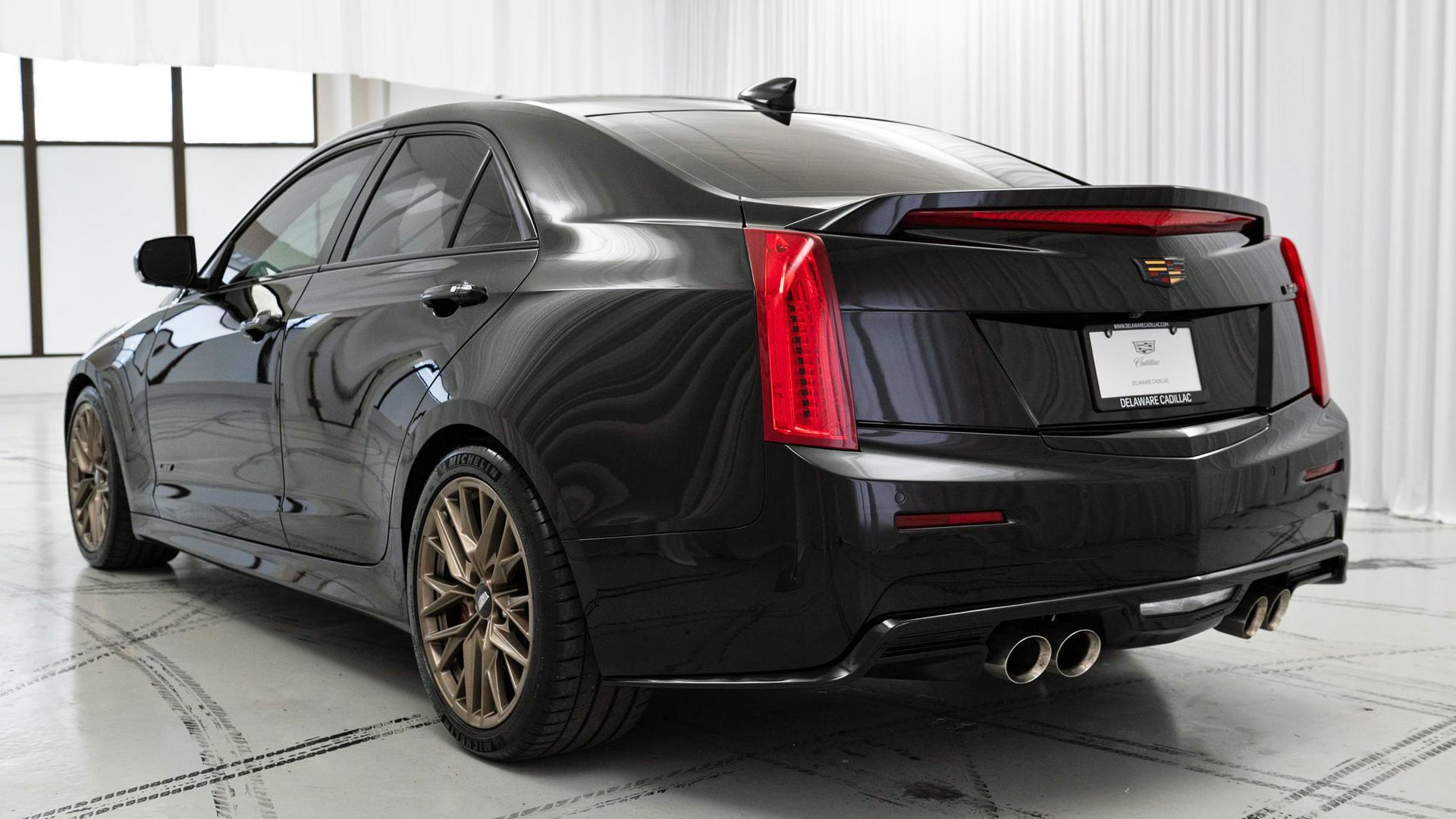
A Cadillac ATS-V built for President Joe Biden is currently listed for sale on the Cars & Bids online auction website.
President Biden is known to be a keen auto enthusiast, and the powerful four-door Cadillac was built to his individual specification.
Unsurprisingly, given the significance of its first owner, the 2018 ATS-V has already attracted plenty of attention and numerous auction bids.
A bespoke VIP build
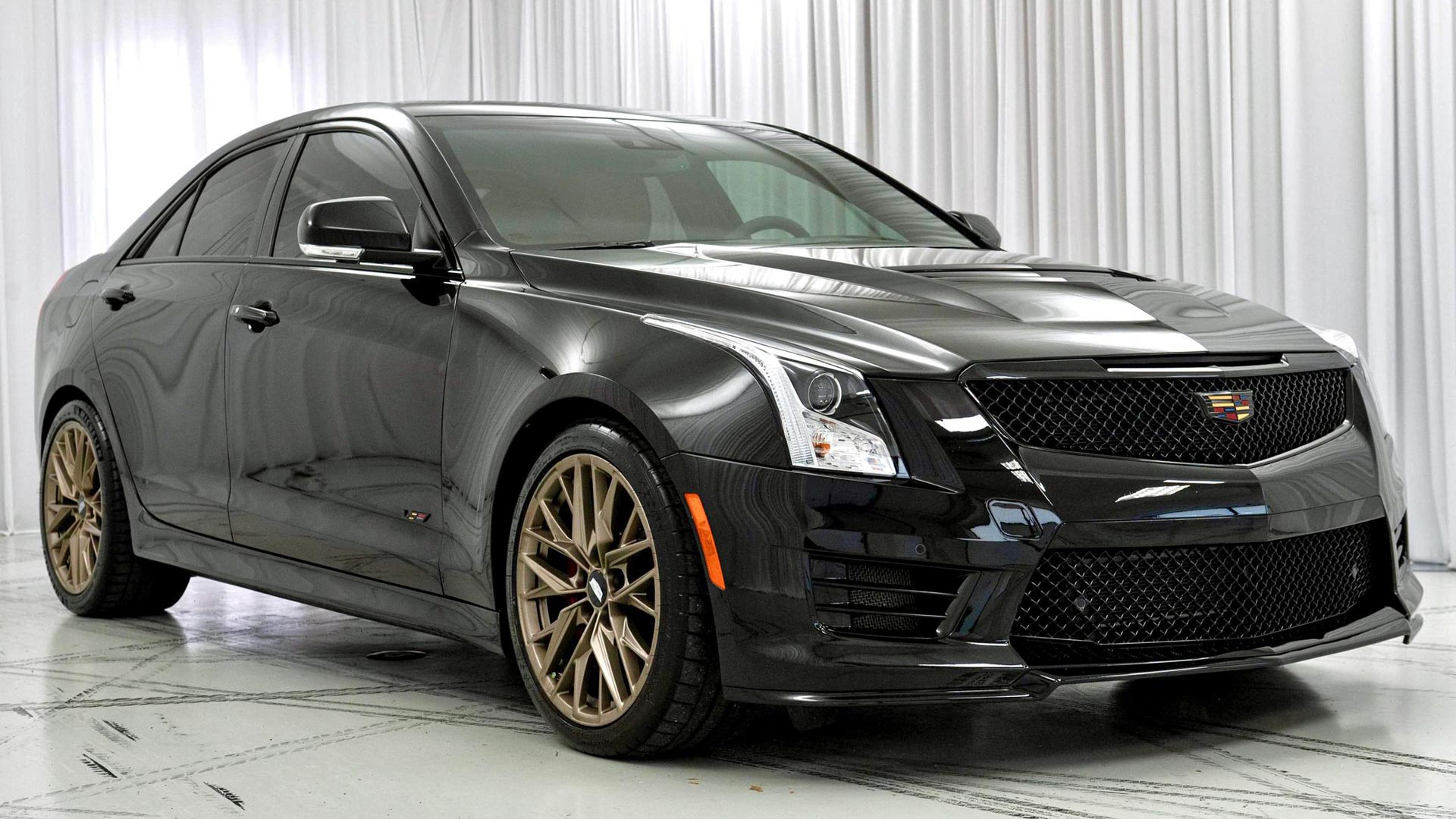
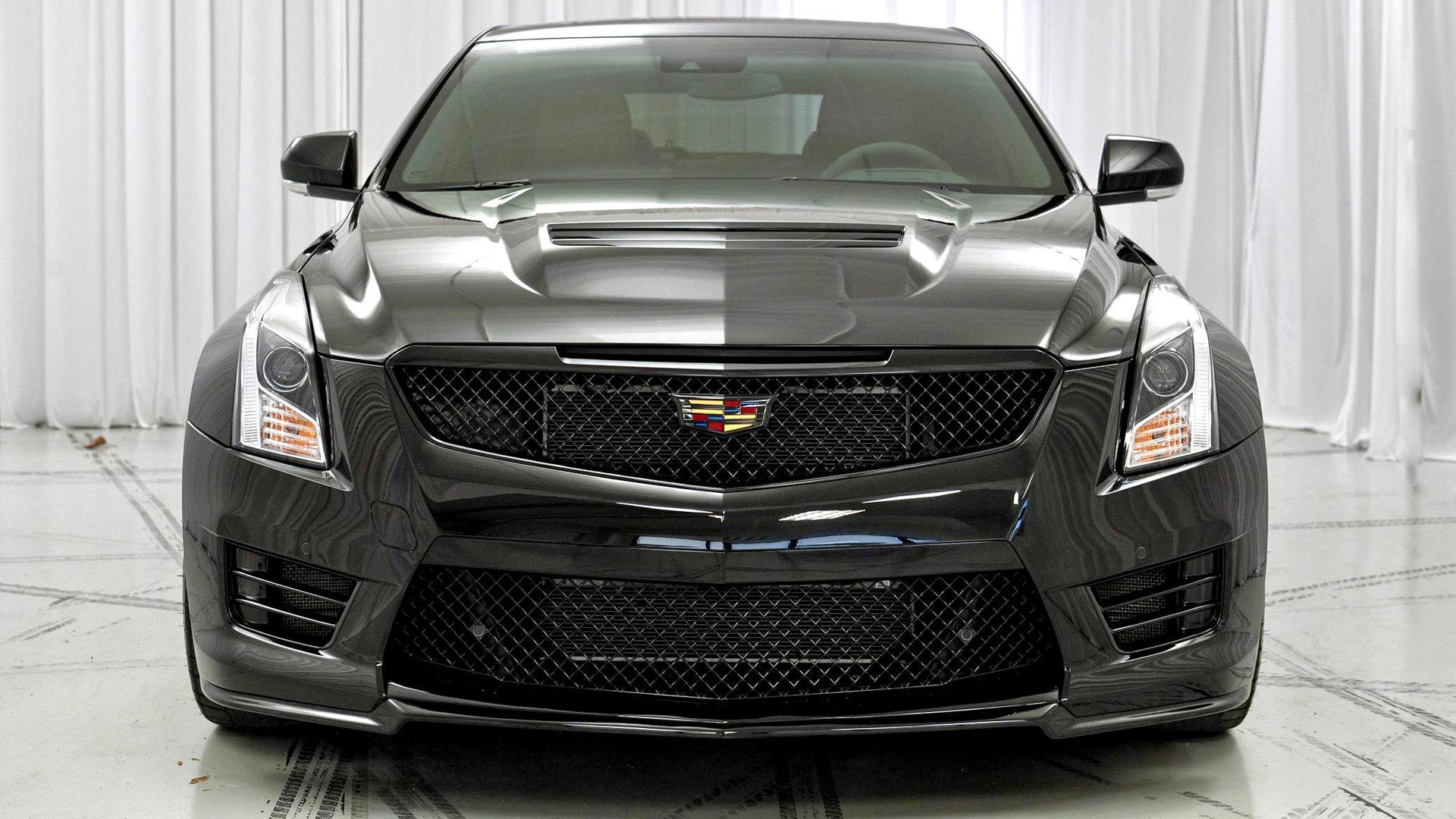
Designed to challenge the BMW M3 and Lexus GS F, the Cadillac ATS-V features a twin-turbocharged 3.8-liter V-6 engine serving up 464 horsepower and 445 lb ft of torque. Offered exclusively with rear-wheel drive, this addition to Cadillac’s V-Series range was a serious performance sedan.
According to documents provided by the seller, President Biden noted that he could amend his security detail in order to drive the Cadillac himself.
Doing so potentially all owed him to hit 60 mph in 3.9 seconds, then reach a top speed of 189 mph. A presidential pardon may come in useful at those speeds.
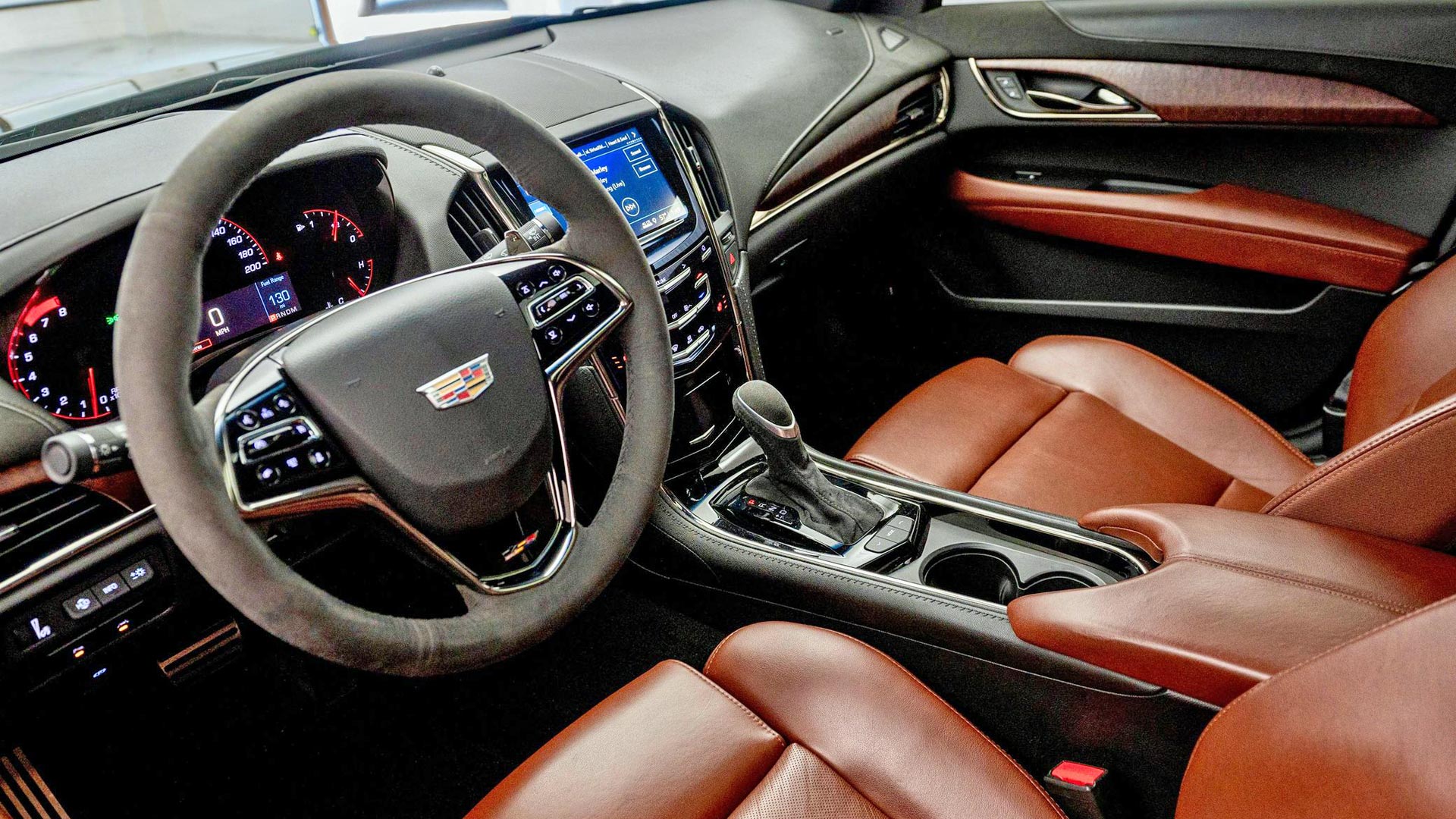
Ordering the Cadillac with Black Raven exterior paint, the POTUS made a unique request for an interior finished in Kona Brown semi-aniline leather upholstery. This complements the Sapele wood trim, making for a truly one-off ATS-V.
Presidential seal of approval
Other key features of the 2018 ATS-V include a carbon engine cover, Brembo brakes with red-painted calipers, an eight-speed automatic transmission and Magnetic Ride Control suspension.
Delivered to the President in October 2017, the Cadillac comes with a Delaware title certificate issued to Joseph Robinette Biden Jr. Photos of it being handed over to Mr Biden are included in the sale, too.
Accompanying emails note that President Biden was very pleased with his new Cadillac. Another message pre-warns Cadillac’s V-Performance Academy that it could might expect a very important student to attend.
Low miles and extra enhancements
The selling dealership took ownership of the ATS-V in March 2020, and has since added a number of upgrades to the car.
These include a set of 18-inch CT4-V Blackwing wheels finished in Tech Bronze, tinted windows, black exterior emblems and a suede-covered steering wheel.
A total of 15,900 miles have been added to the Cadillac’s odometer, with the car being subject to comprehensive maintenance in recent years.
Some minor cosmetic damage has been repaired during the dealership’s time with the car, with the outer bolster of the driver’s seat also showing signs of wear.
A piece of American auto history
Vehicles associated with the White House have appeared for auction before. However, a car driven by a sitting president, and during an election year, is certainly a unique attraction.
As a result, it’s no surprise to discover the ATS-V had already recorded bids in excess of $70,000 (£55,000) at the time of writing.
There is still a little time remaining on the Cars & Bids auction, with the virtual hammer set to fall on February 21 2024. Hopefully there will be no need for a recount this time…
Disabled drivers eligible for a Blue Badge can apply for or renew one online, using the UK Government website.
A Blue Badge permits the user to park in disabled bays. It means people with mobility issues can stop closer to their destination.
The online service makes the process of applying for a Blue Badge quick and easy. The Department for Transport (DfT) says it can be completed in less than 30 minutes.
In the past, applicants were asked to send supporting documents in the post, leading to lengthy waiting times while the application was assessed. A survey found it took an average of 17 days for a driver to receive a Blue Badge – or 28 days if a medical assessment was required.
Now, all documents, including photographs and proof of identity, can be uploaded to the Blue Badge page on the UK Government website. We found it takes around 13 minutes, or closer to 30 minutes if additional information is required.
Video guide to applying for a Blue Badge
The video above provides a quick guide to applying for or renewing a Blue Badge. To go through the process yourself, visit the Gov.uk website.
You will need details of your current badge (if you have one), along with a digital or signed photograph, your National Insurance number, proof of identification, proof of benefits (if you receive any) and proof of residence.
The fee for a Blue Badge is up to £10 in England and £20 in Scotland, while Welsh motorists don’t have to pay. A badge usually lasts up to three years.
Note: you can save your part-completed application and return to it later if needed.
Applying for a Blue Badge works differently if you live in Northern Ireland. Follow this link to apply if so.
Visit an internet forum for electric car owners and ICEing is invariably one of the topics. Tesla even introduced pop-up barriers to some of its Supercharger bays to prevent the problem.
So what exactly is ICEing?You might not be familiar with the issue, so here’s a brief guide to bring you up to speed.
Most of our photos come from America, but ICEing is also prevalent in the UK. And it has nothing to do with the recent winter weather…
ICE, ICE baby
Firstly, let’s explain ICE. This is a common acronym in the car world. Confusingly, it’s used to mean both internal combustion engines (i.e. petrol or diesel) or in-car entertainment (audio systems and the like). In the context of ICEing, it’s the former.
The act of ICEing is to park in a space intended for electric cars, without making use of, or having any need for, the charger. In other words, a car with an internal combustion engine using a parking space reserved for electric cars.
It can be a hugely frustrating obstacle for EV owners looking to charge their car – the equivalent of somebody blocking a petrol pump. Drivers have reported ICEing on social media for years now. As seen in these photos, some unhelpful advocates of internal combustion appear to do it deliberately.
Taking it to Tesla
The term ‘ICEing’ was first coined in America, when repeated instances of large pick-up trucks parking in Tesla Supercharger bays were reported.
There were reports of Tesla owners being harassed by and getting abuse from truck drivers. Some even parked their trucks then mockingly clamped the chargers to the load bed.
In China, Tesla has introduced floor-locking barriers for some of its charging bays, which legitimate EV drivers can release using a QR code and a third-party app.
Charge or be charged
Technically, ICEing specifically refers to petrol- or diesel-powered cars taking electric car charging spots.
However, some charging points, such as those operated by Alfa Power, are now guarded by CCTV cameras – and anyone who doesn’t charge can expect a fine. Yes, even if they’re driving an electric car. Are you ICEing if your car is electric?
The moral of the story is, don’t park in electric car charging bays unless you have the capacity – and the intention – to charge your car. EV owners need that plug more than you do.