A new twin-turbocharged V12 engine will power the replacement for the Aston Martin DBS, due to be revealed soon.
With a mighty output of 835hp (824bhp), bolstered by 738lb ft (1,000Nm) of torque, the new V12 is said to be a ‘defiant defender of emotional engagement’.
Other limited-edition Aston Martin models will also use the V12, with production volumes set to be strictly capped each year. And there are strong hints that the storied Vanquish name will reappear for the first time since 2018.
Dawn of a new era
Aston Martin says developing the new V12 engine has involved fastidious engineering work. Highlights include redesigned cylinder heads, a strengthened block and a reprofiled camshaft. New turbochargers help deliver more power and improved throttle response.
Aston Martin chief technical officer Roberto Fedeli said: “The V12 engine has long been a symbol of power and prestige, but it is also a statement of engineering passion and technical prowess.
“With 835hp and 1,000Nm of torque, this unparalleled engine represents nothing less than the dawn of a dazzling new V12 era for Aston Martin.”
‘All will be Vanquished’
Aston Martin hasn’t officially confirmed the replacement for the DBS will be badged ‘Vanquish’. However, it has dropped some less-than-subtle hints. The press release concludes with the words ‘All will be Vanquished’ – a clear nod to the name of the new model.
Two generations of the Vanquish have previously been built, both powered by naturally aspirated V12 engines. A mid-engined Vanquish concept car was also teased at the 2019 Geneva Motor Show.
Aston Martin plans to reveal the ‘Vanquish’ to the world later in 2024. Until then, simply luxuriate in the sound of its V12 engine by watching the video below.
Whatever you think about the Cybertruck, this otherworldly EV is certain to turn heads. Tesla will showcase the fully electric pick-up in the UK and Ireland for the first time next month – offering the public an opportunity to ‘meet the vehicle and learn more about its specs and engineering’.
During the whistle-stop tour – part of a wider European journey that will see the vehicle exhibited in 100 locations across 20 countries – motorists will also be able to test-drive the Tesla Model Y and Model 3.
Tesla will also sell Cybertruck merchandise while on tour, including everything from a £1,450 Cyberquad for kids (yes, really) to branded socks (£15) and a Cybertruck blanket (£140).
Where can I see the Cybertruck on its travels?
Here are the locations and dates to see the Tesla Cybertruck on its UK and Ireland tour:
Tesla Centre, Park Royal, West London: 4-5 May
Tesla Centre, Westfield shopping centre, West London: 6-10 May
Kings Cross, London: 11 May
Tesla Centre Solihull: 13-17 May
Birmingham Bullring: 18-19 May
Spinningfields Square, Manchester: 20-21 May
Tesla Central Manchester: 22-31 May
Edinburgh City Centre: 1 June
Tesla Centre Glasgow: 2-6 June
Tesla Centre Belfast: 7-9 June
Tesla Centre Dublin: 14 June
Dundrum shopping centre, Dublin: 15 June
Tesla Centre Cork: 18-23 June
Cybertruck deliveries in the USA started in December 2023, but Tesla says ‘timescales for deliveries outside of North America are yet to be announced’. It cites a preference to focus on its home territory: ‘the main volume market for pick-up trucks’.
Will the Cybertruck be legal in Europe?
Perhaps another reason Tesla has focused on the US market is because of doubts over whether the Cybertruck will be allowed on European roads.
According to a German TUV safety certification expert, the vehicle will require “strong modifications to the basic structure” before it can be sold on this side of the Atlantic.
Because the Cybertruck is classed as a light duty truck in the USA, it gets exemption from many safety regulations, including those for pedestrian impact protection. That isn’t the case in Europe, however.
Stefan Teller of SGS-TUV Saar GmbH outlined his concerns about the Cybertruck. “The front of the vehicle must not be stiff,” he explained. “The bumper and bonnet must also be able to absorb energy to protect pedestrians.”
Teller added that, to satisfy European type approval, the Cybertruck needs to comply with around 50-60 different regulations.
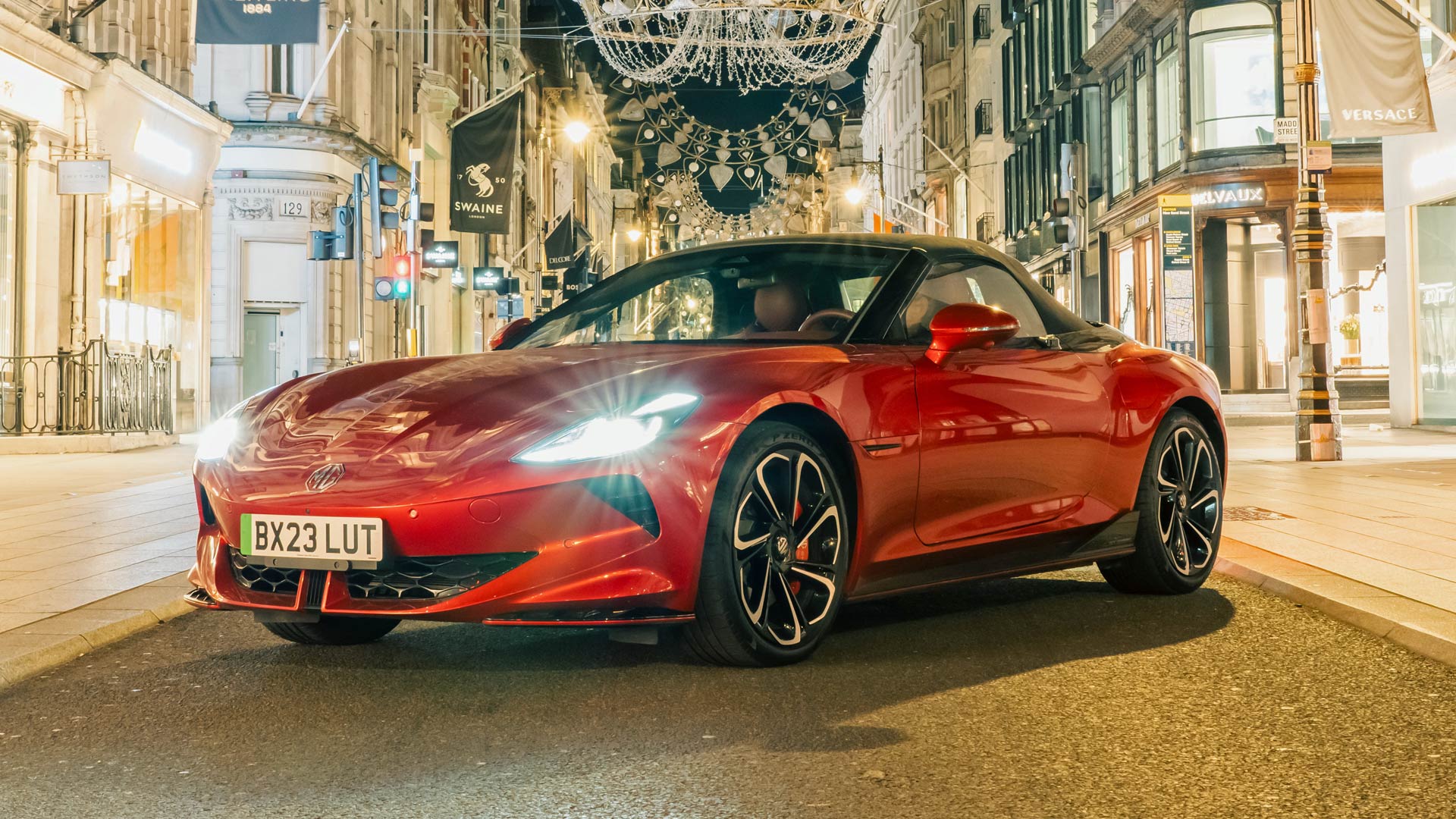
The first examples of the electric MG Cyberster sports car will reach UK roads later this year, with orders now being accepted.
As the reborn MG pivots further towards electrification, the Cyberster is its attempt to create a modern twist on the classic MG roadster.
With the promise of serious power and performance, along with zero tailpipe emissions, the open-top Cyberster will be priced from £54,995.
Classic badge, modern pace
The Cyberster Trophy is the starting point for the new roadster range, with 335hp and 350lb ft of torque from its rear-driven drivetrain.
Accelerating from 0-62mph takes 5.0 seconds and the 77kWh battery pack offers an officially tested range of 316 miles when fully charged.
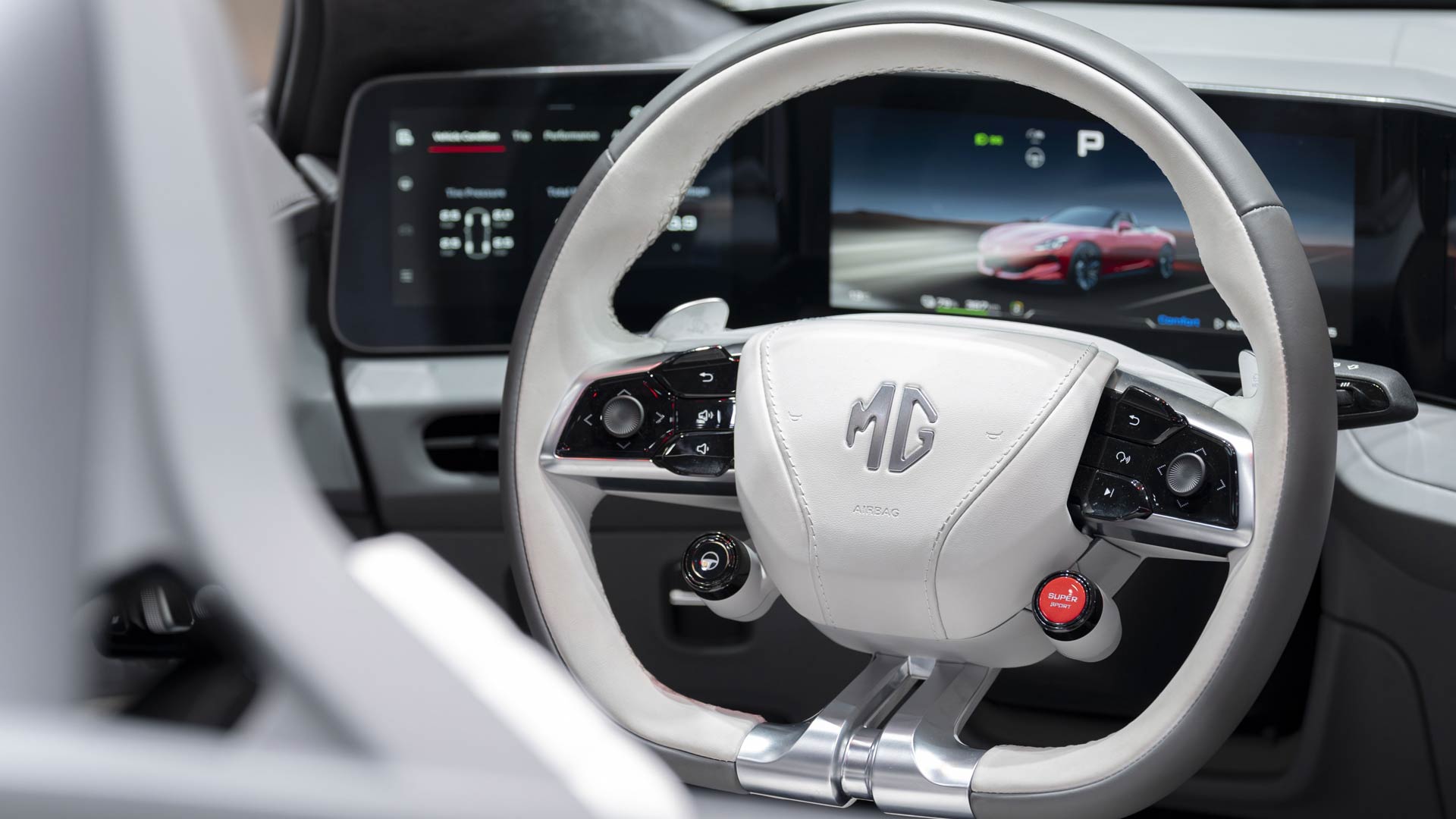
Standard equipment for the MG Cyberster Trophy includes Brembo brakes, 19-inch alloy wheels and a 10.25-inch instrument panel flanked by two 7.0-inch displays. Heated seats in faux-leather upholstery are also included.
Satellite navigation, a 360-degree parking camera, a heated steering wheel and dual-zone climate control complete the Trophy specification.
GoingTrophy hunting
Topping the MG Cyberster range is the flagship GT model, priced from £59,995. A dual-motor all-wheel-drive setup increases power output to 496hp, along with 535lb ft of torque. Thanks also to the extra traction, its 0-62mph time drops to a blistering 3.2 seconds.
Externally, a set of 20-inch alloy wheels wrapped in Pirelli P Zero tyres mark out the Cyberster GT from the Trophy version.
With the same 77kWh battery pack, the faster car comes with an official range of 276 miles. Rapid charging can see it replenished from 10 to 80 percent battery capacity in 38 minutes.
Seven-year MG warranty
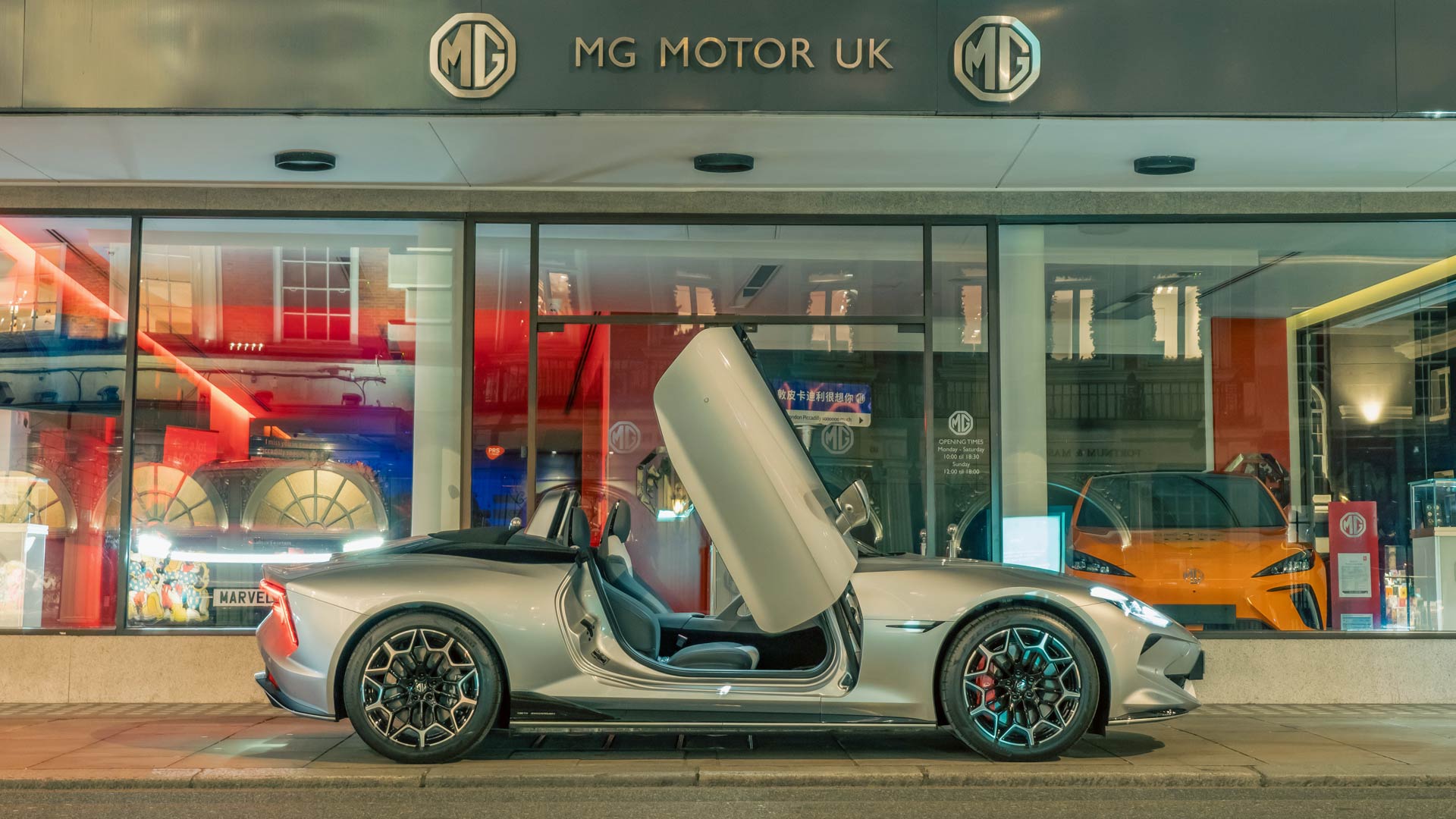
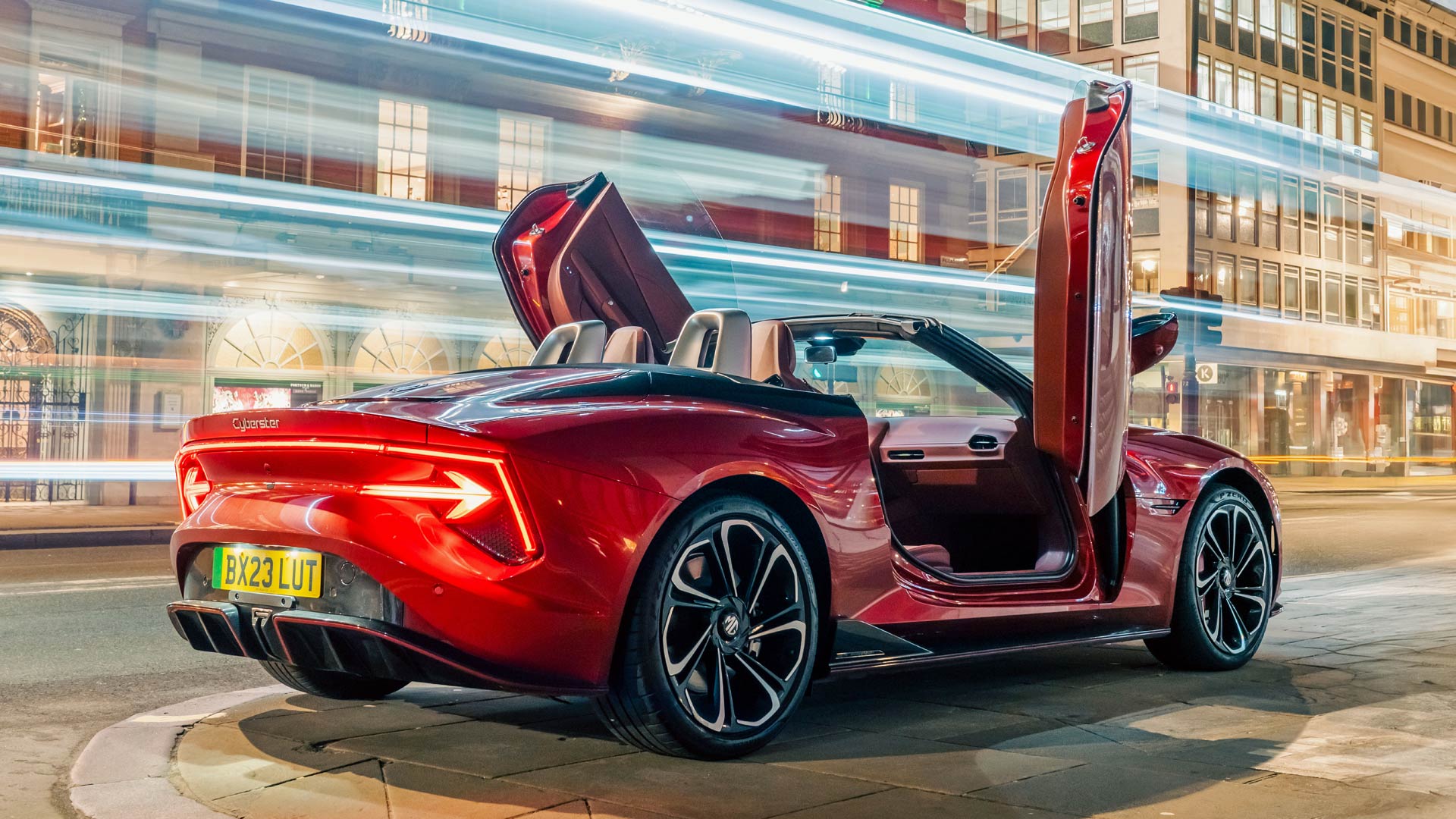
Both versions of the Cyberster have scissor-style doors and a fabric convertible roof. Operable at speeds of up to 30mph, opening and closing the top takes 15 seconds.
Orders for the Cyberster can be placed with MG dealerships now, and first deliveries of the Chinese-made roadster are expected in August 2024.
As with other MG models, a seven-year/80,000-mile warranty is included as standard.
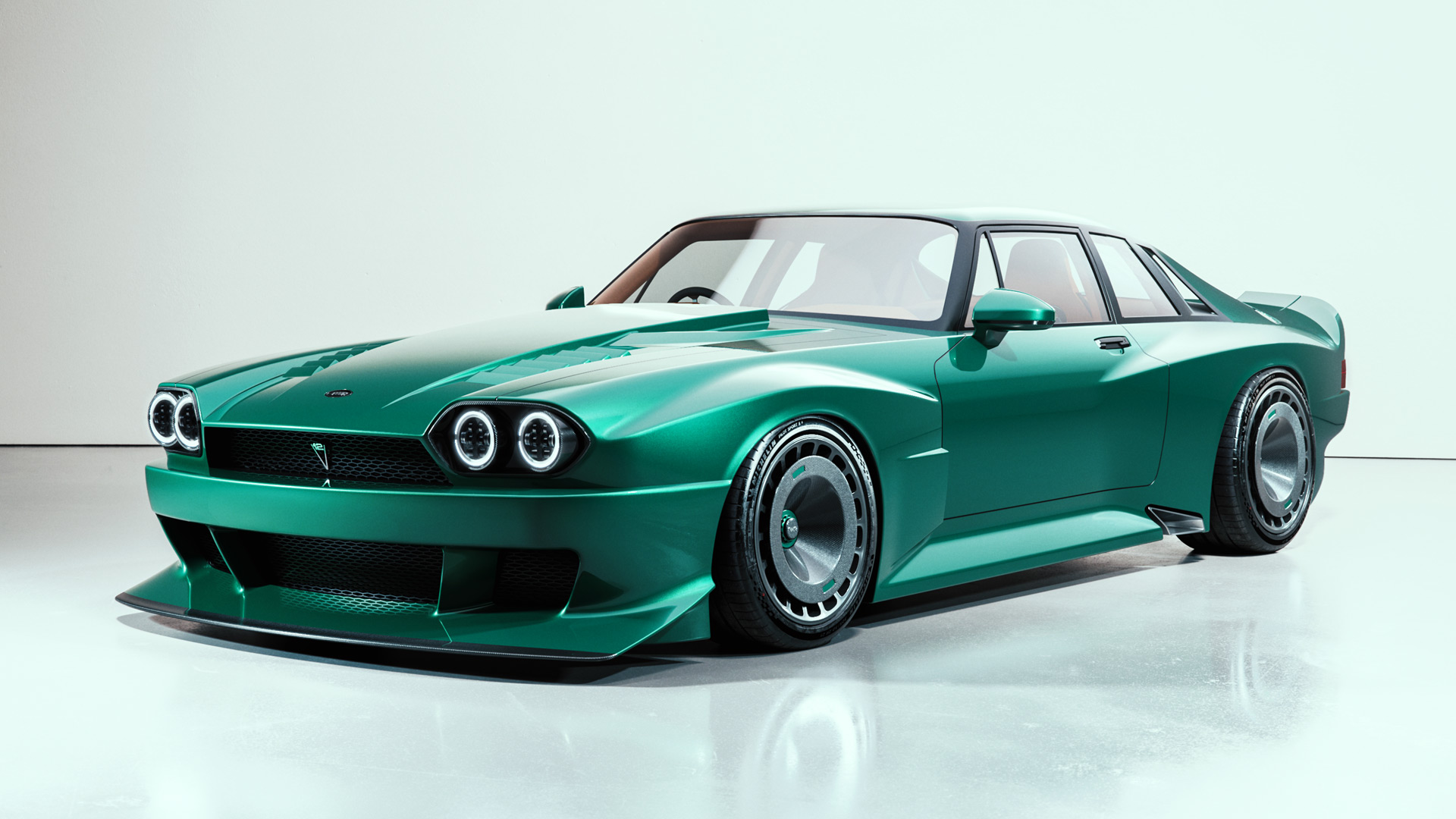
The first car from the reborn TWR outfit has been revealed, ahead of its launch later this year.
Created with help from Porsche guru Magnus Walker, alongside bodykit designer and influencer Khyzyl Saleem, TWR’s unexpected comeback is a restomod version of the classic Jaguar XJS.
Called the TWR Supercat, the reworked Jaguar promises motorsport-inspired performance and an analogue driving experience.
Orders for the limited edition Supercat are being accepted now, with the first completed cars due to be delivered in winter 2024.
A British icon reborn
The original TWR, founded by the late Tom Walkinshaw, had an illustrious association with Jaguar. Indeed, the XJS was campaigned by TWR in the European Touring Car Championship during the 1980s, making it an obvious choice for the company’s comeback.
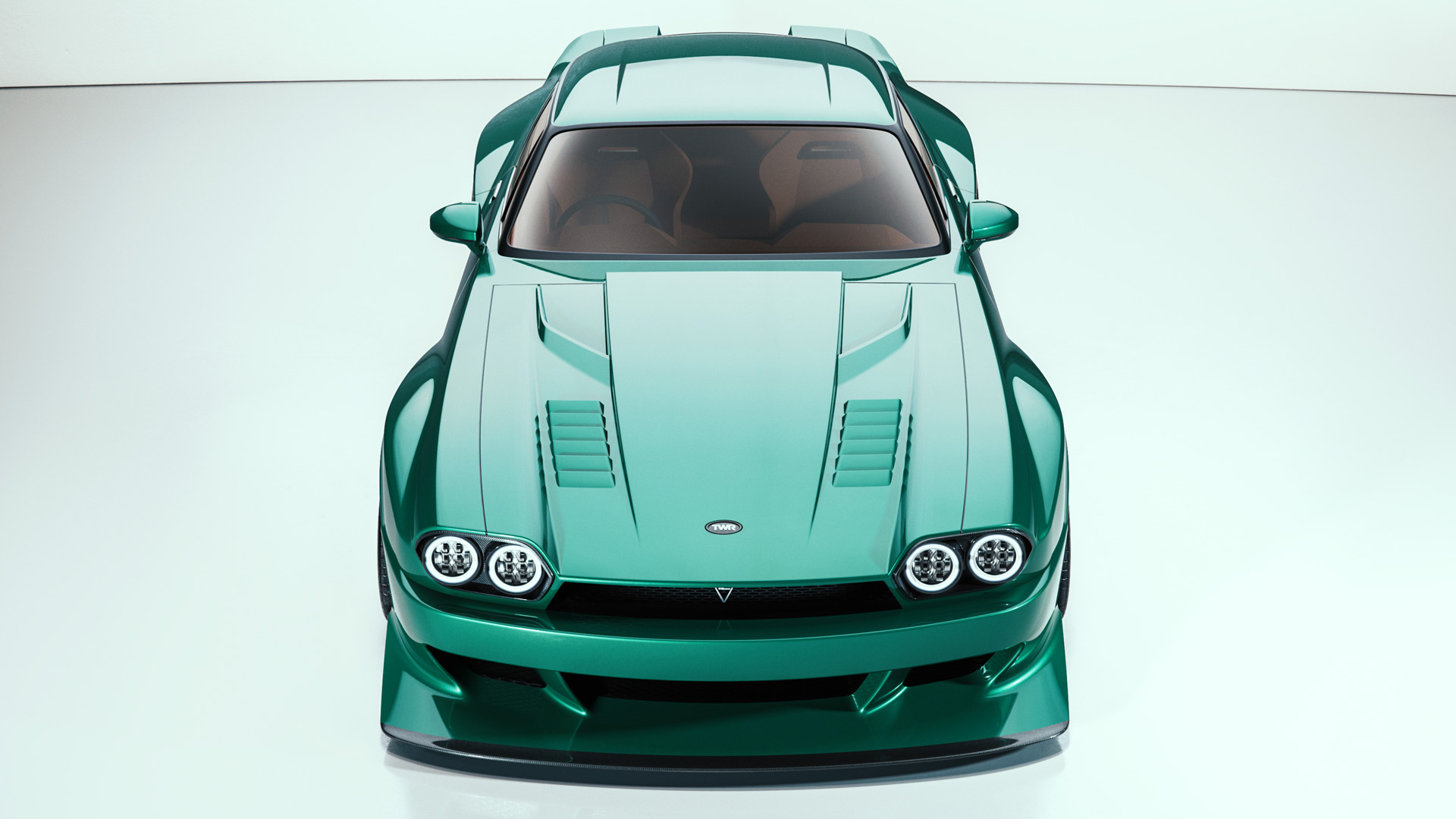
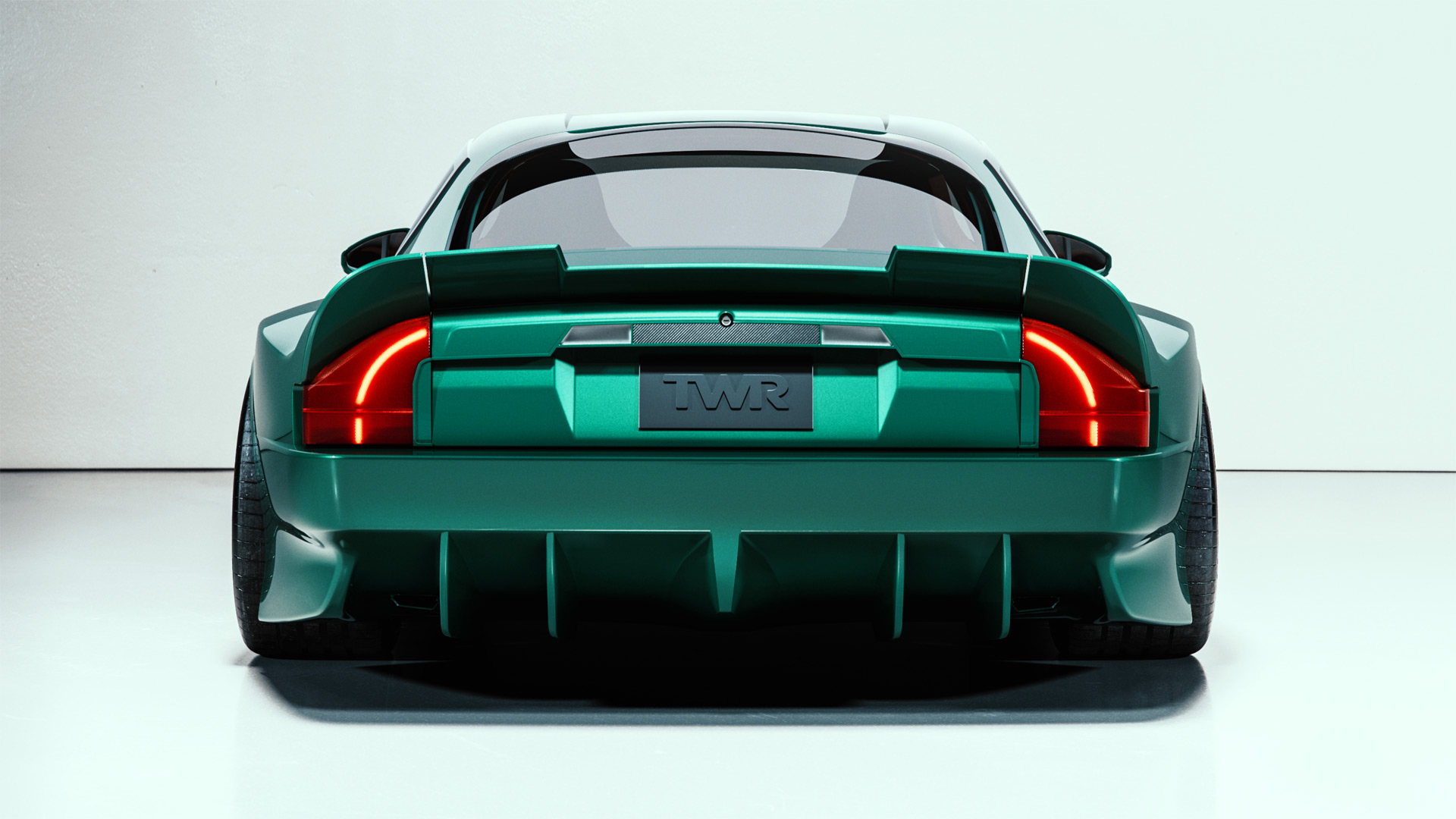
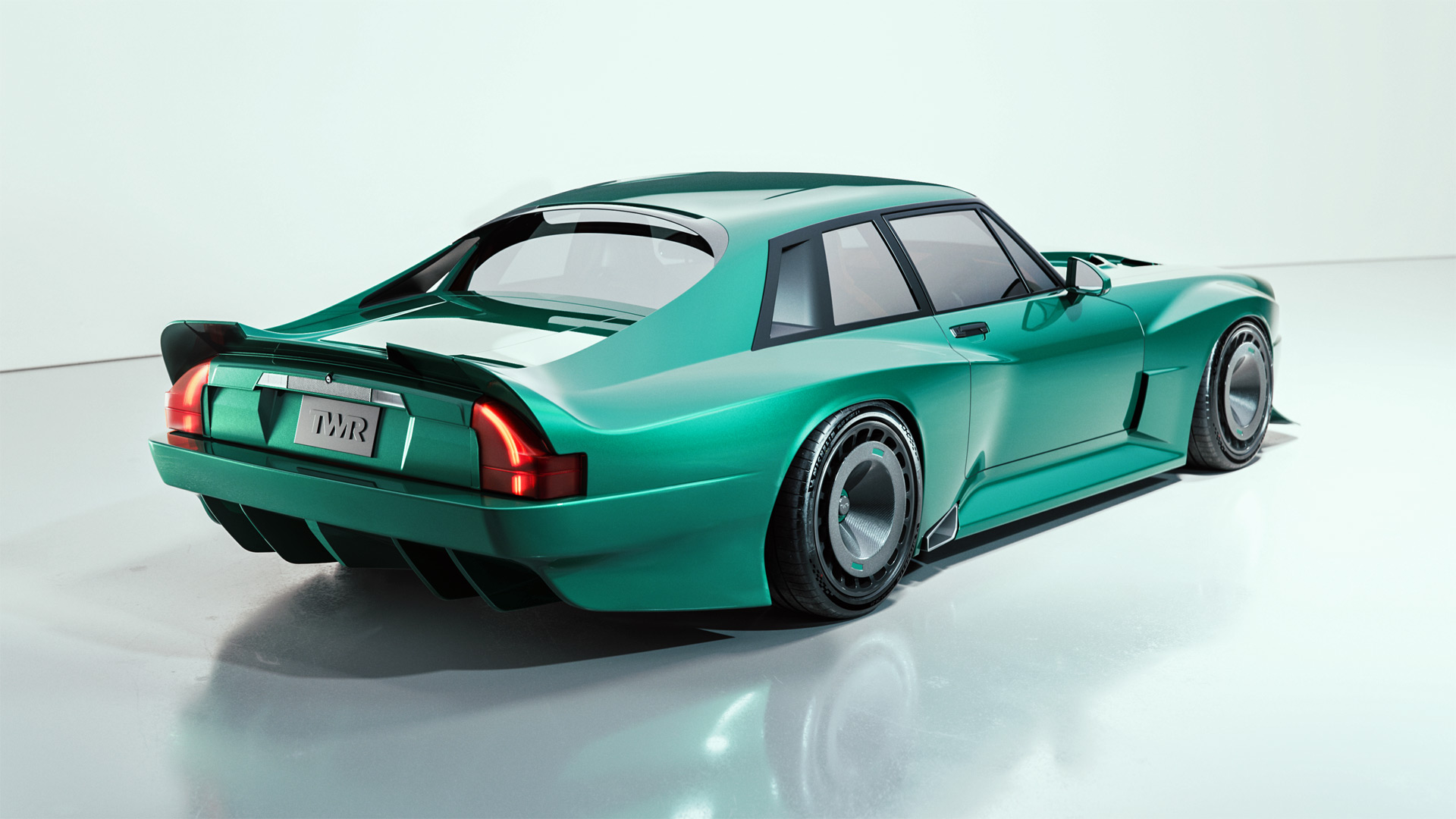
Khyzyl Saleem has led the design process, with new carbon fibre panels resculpting every part of the Jaguar XJS. Along with saving weight, the new bodywork is said to improve aerodynamics and rigidity, too.
Saleem has retained the trademark flying buttress pillars from the XJS coupe, but the Supercat’s wild flared wheelarches and deep front splitter are straight from motorsport.
Quad LED headlights are reminiscent of Lister-modified XJS models, with the wheels seemingly inspired by the TWR XJR-S from the late 1980s.
‘Powerful, dynamic and visceral’
Mechanical details of the Supercat are limited at this point, with more information still to be announced. However, a supercharged V12 engine will be the star of the show, delivering a mighty 600hp.
A six-speed manual transmission has also been confirmed, deliberately chosen to deliver a ‘connected and analogue driving experience’.
Fergus Walkinshaw, director and founder of TWR, said: “As order books open, we cannot wait for clients to experience the most powerful, dynamic and visceral evocation of a British icon. It has been revolutionised from the ground-up to be ready for those that demand to be connected to the cars they drive, whether on the track or the road.”
A bespoke big cat
TWR has yet to confirm how the Supercat’s interior will look, but expect to learn more when the car makes a dynamic debut this summer.
Production of the Supercat will be limited to 88 examples, a deliberate nod to TWR’s victory at the 24 Hours of Le Mans with the Jaguar XJR-9 in 1988.
Customisation will be an important part of the build process, with those interested able to place a £10,000 refundable deposit now to reserve a build slot.
Prices will start from £225,000 before taxes (£270,000 including VAT) – a lot of money for what has traditionally been an unloved old Jaguar, but competitive for a hand-built and bespoke restomod classic.
Nissan will sell an electric quadricycle in Europe after signing a deal with a Spanish start-up company called Silence.
From June 2024, the Japanese giant will begin distributing Silence’s tiny 504 Nanocar in Italy and France, followed by an ‘expansion into additional European markets’ in September.
You’re not alone if you have never heard of Silence or the 504 Nanocar. Described as a vehicle ‘specifically designed for urban living’, it comes in two guises. The lower-spec L6E is powered by a 6kW (8hp) motor, offering a range of 108 miles and top speed of 28mph. It has two 5.6kWh batteries and can be driven without a driving licence – in Spain, at least.
Meanwhile, the higher-spec Silence Nanocar L7e offers 14kW (19hp) of power, a top speed of 52mph and a range of 92 miles.
Will the Silence Nanocar come to the UK?
It isn’t clear if the Nanocar will come to the UK yet. We have asked Silence for further information and will update this article when we hear more. Intriguingly, a price in UK pounds is shown on the company’s website: the entry-level model costs from £13,044, while the L7e is £14,614.
Silence does have a small presence in Britain via independent motorcycle dealers (as well as making the Nanocar, it builds electric scooters and motorbikes). The impact of the Nissan deal is unknown when it comes to these distributors, though.
Battery swaps
As well as offering conventional recharging, the two-seat vehicle uses a removable EV battery system. Silence says it will extend its battery exchange service to further European markets next year, mirroring its existing network in Spain and reducing the initial purchase cost of its cars.
The battery station ecosystem in Spain already includes more than 110 locations and 1,110 battery-swap units. The goal is to reach 160 stations and 1,600 battery-swap units before the end of this year.
Broadening Nissan’s horizons
According to Silence, the distribution deal with Nissan ‘will lower the barrier for those who want to go electric’. It’s part of a Nissan programme named The Arc that aims to use partnerships to drive business growth.
“Opening access to Silence’s diverse range of alternative products creates new and exciting possibilities for customers who are eager to join the EV revolution – combining clean mobility with cutting-edge technology, in functional and flexible vehicles,” said Leon Dorssers, senior vice president of marketing and sales at Nissan Europe.
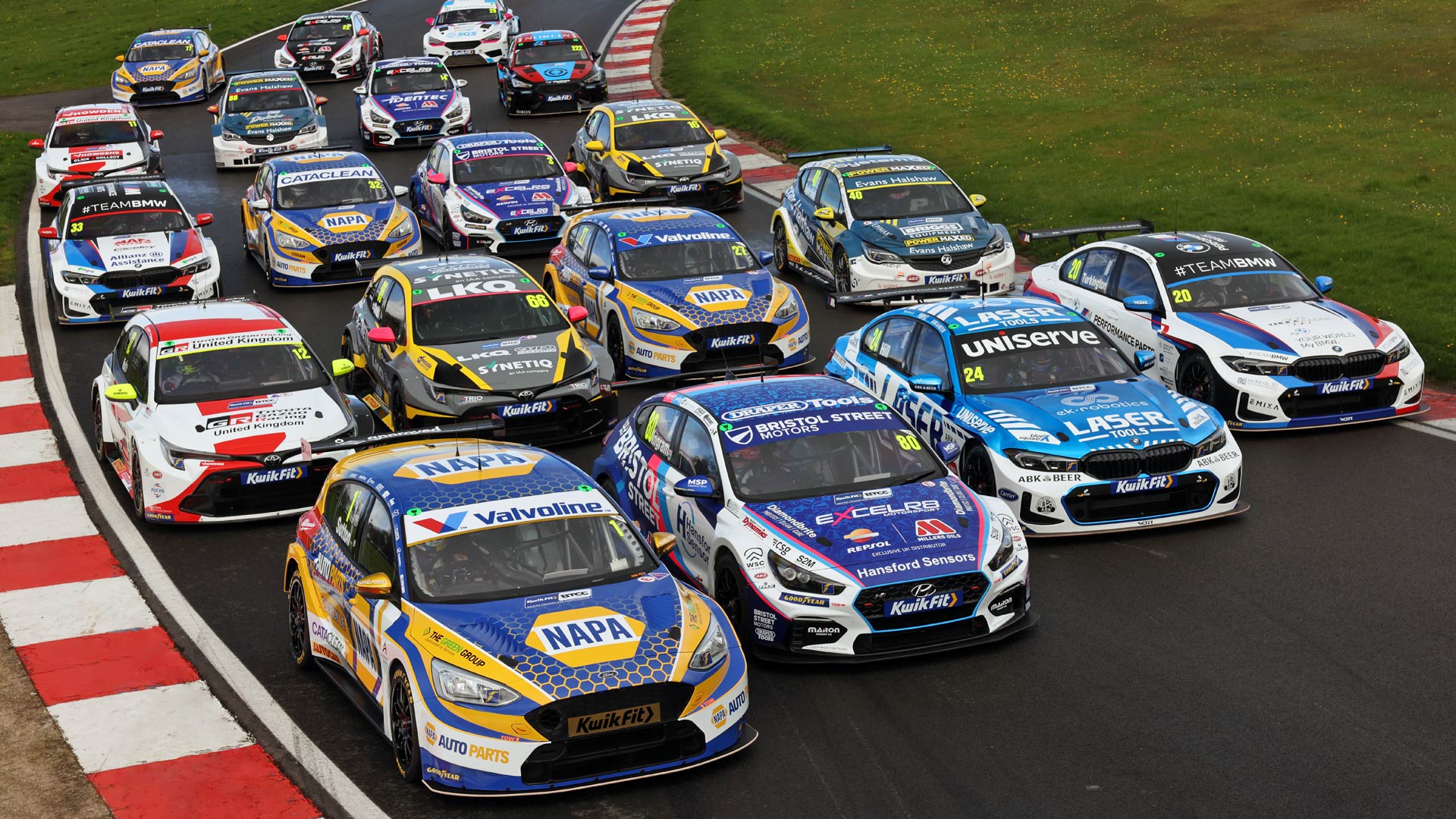
This weekend sees the start of the 2024 British Touring Car Championship (BTCC) season.
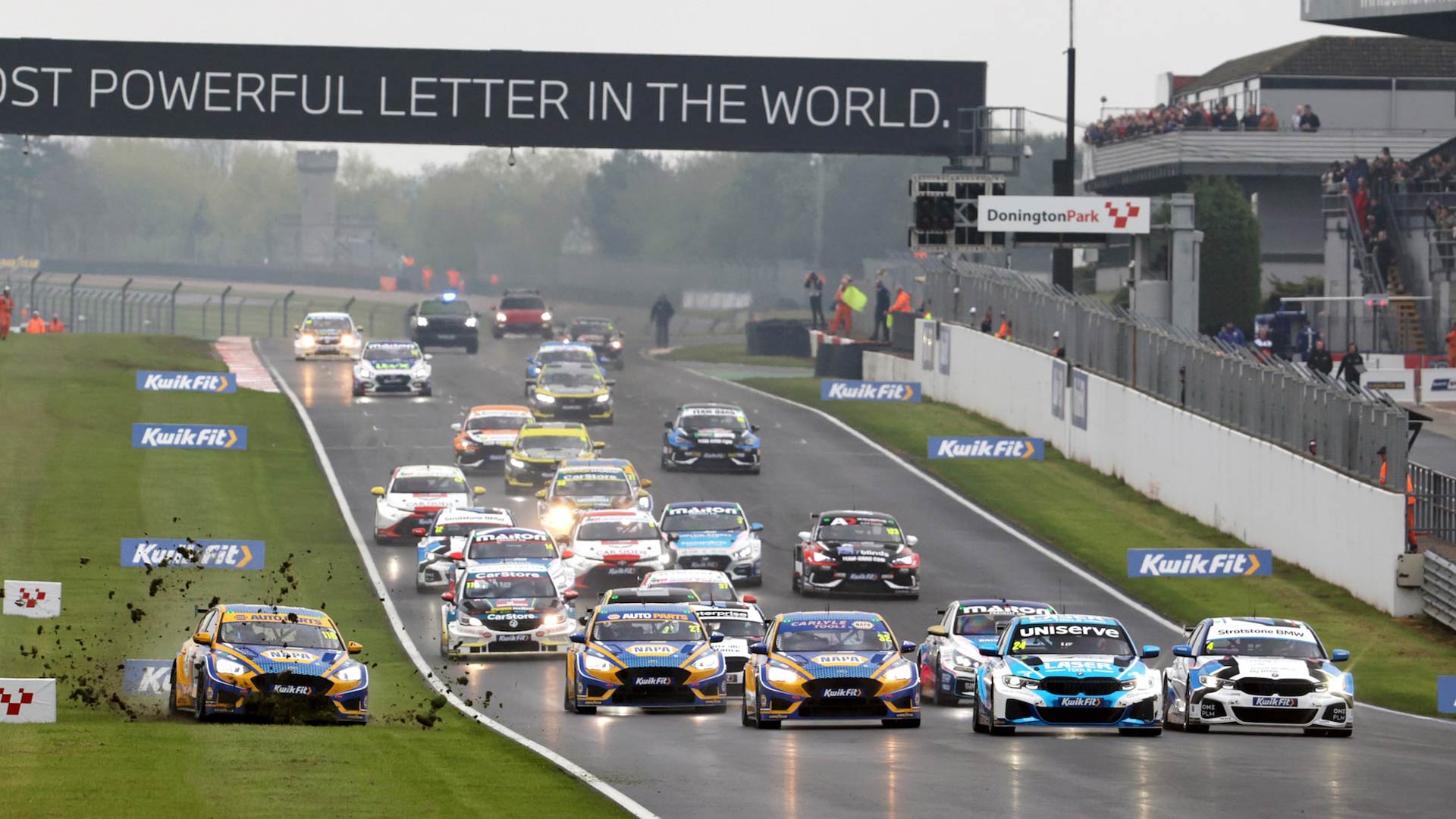
Fans have been counting down the days to the return of the biggest national motorsport series in the UK. Teams and drivers will be at Donington Park for three races that promise plenty of on-track action this Sunday (28 April).
Changes have been made for 2024 to increase the level of on-track competition, following Ash Sutton’s runaway success in 2023.
If you are new to the BTCC, read on for a full guide to everything you need to know.
What is the British Touring Car Championship?
The BTCC is one of the oldest motorsport competitions in the world, with roots that stretch back to 1958. Production-based cars, like those driven by millions across the country, have been the foundation of the series since it began.
Each race weekend consists of a qualifying session on Saturday, followed by three individual races on Sunday. Various regulations aim to make the racing as competitive as possible, with a real emphasis on entertaining spectators and those watching at home on TV.
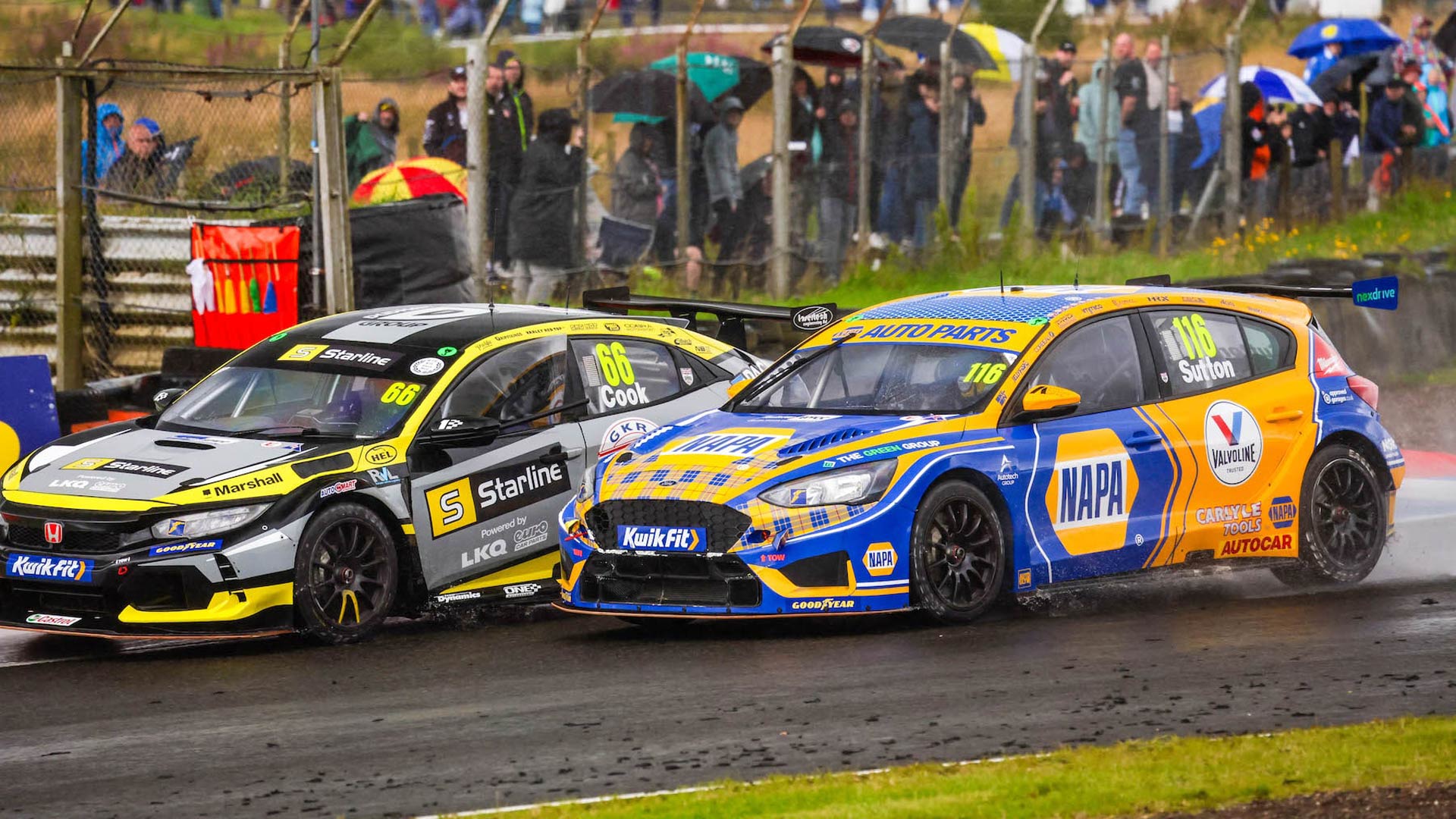
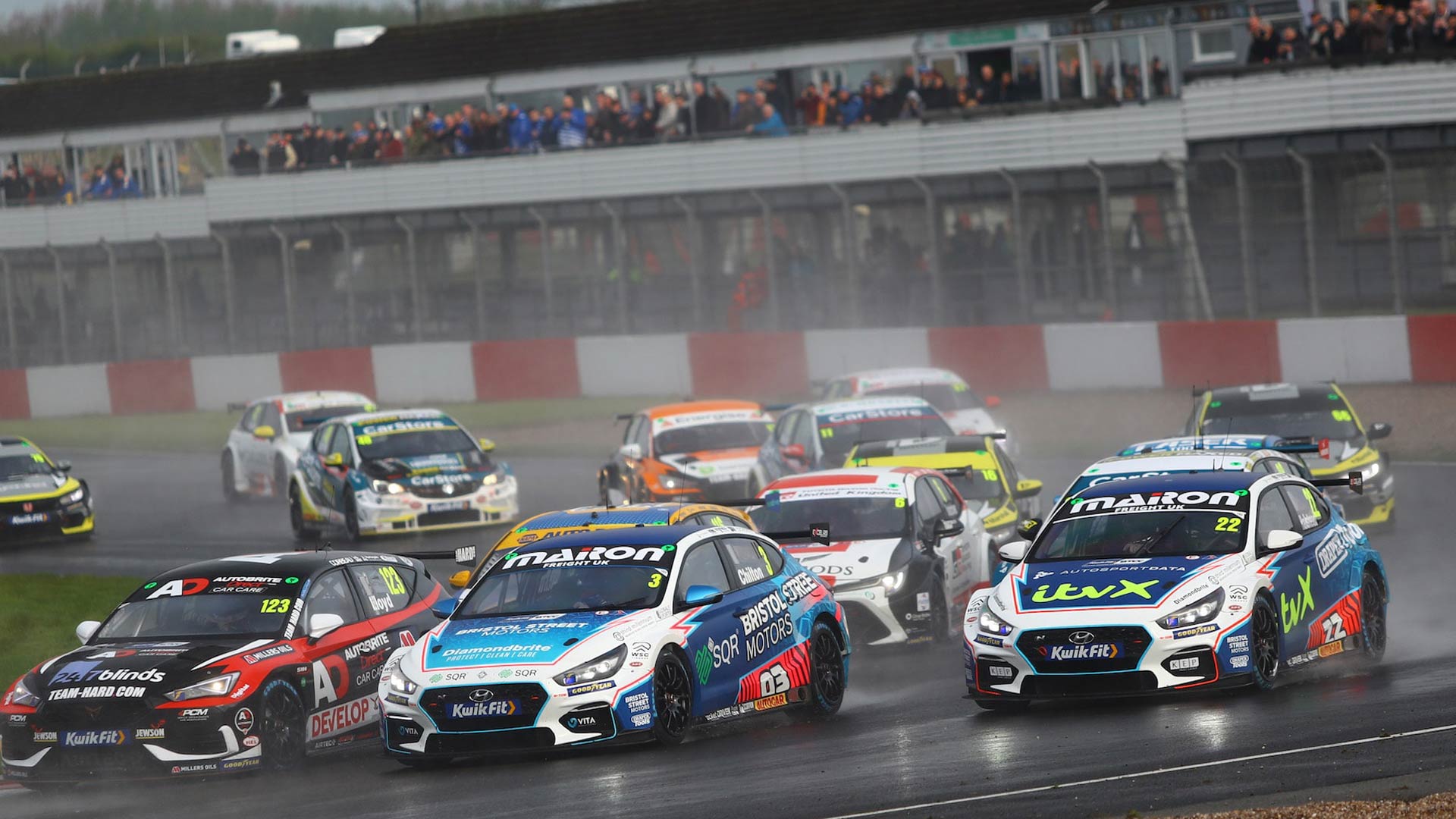
The series has become well known for close contact action, with plenty of rubbing and barging between the cars. It means a BTCC race weekend is unlikely to be without a dose of drama and controversy, along with unpredictable results.
Which cars are used in the BTCC?
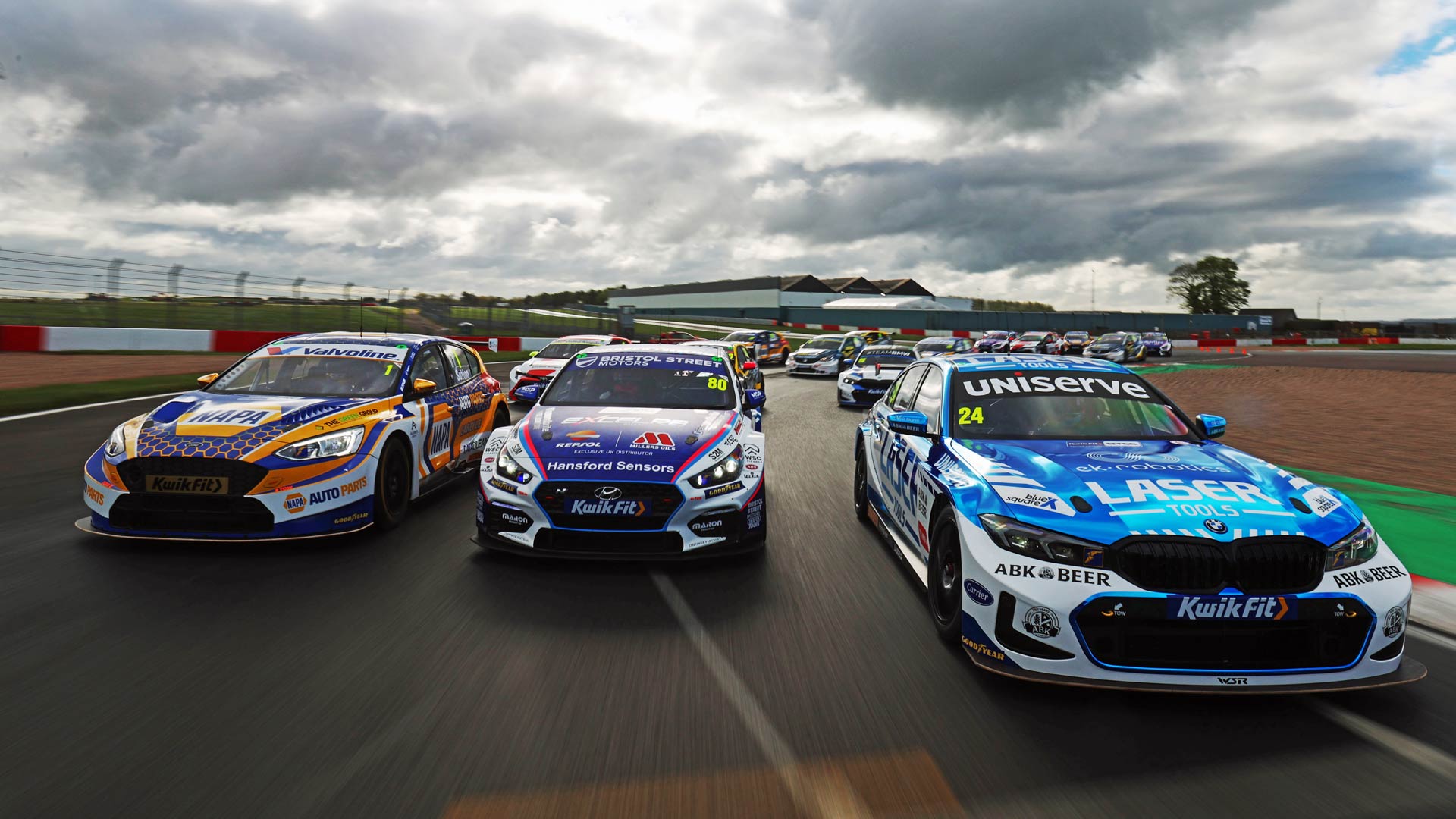
Cars used in the BTCC are meant to resemble modified examples of the vehicles fans have parked on their own driveways. That means a mixture of family hatchbacks and compact saloons, ranging from the BMW 3 Series to the Ford Focus ST and Hyundai i30 N.
Using standard production cars as a base helps reduce the costs of competing. BTCC cars are built to Next Generation Touring Car (NGTC) rules. This includes standardised parts for suspension, aerodynamics, brakes and wheels.
Teams can choose to build their own engine, or use a standard motor developed by the BTCC organisers.
How has hybrid power changed the BTCC in 2024?
In order to stay relevant to the cars driven by those who watch BTCC racing, the series committed to introducing hybrid petrol cars in 2022.
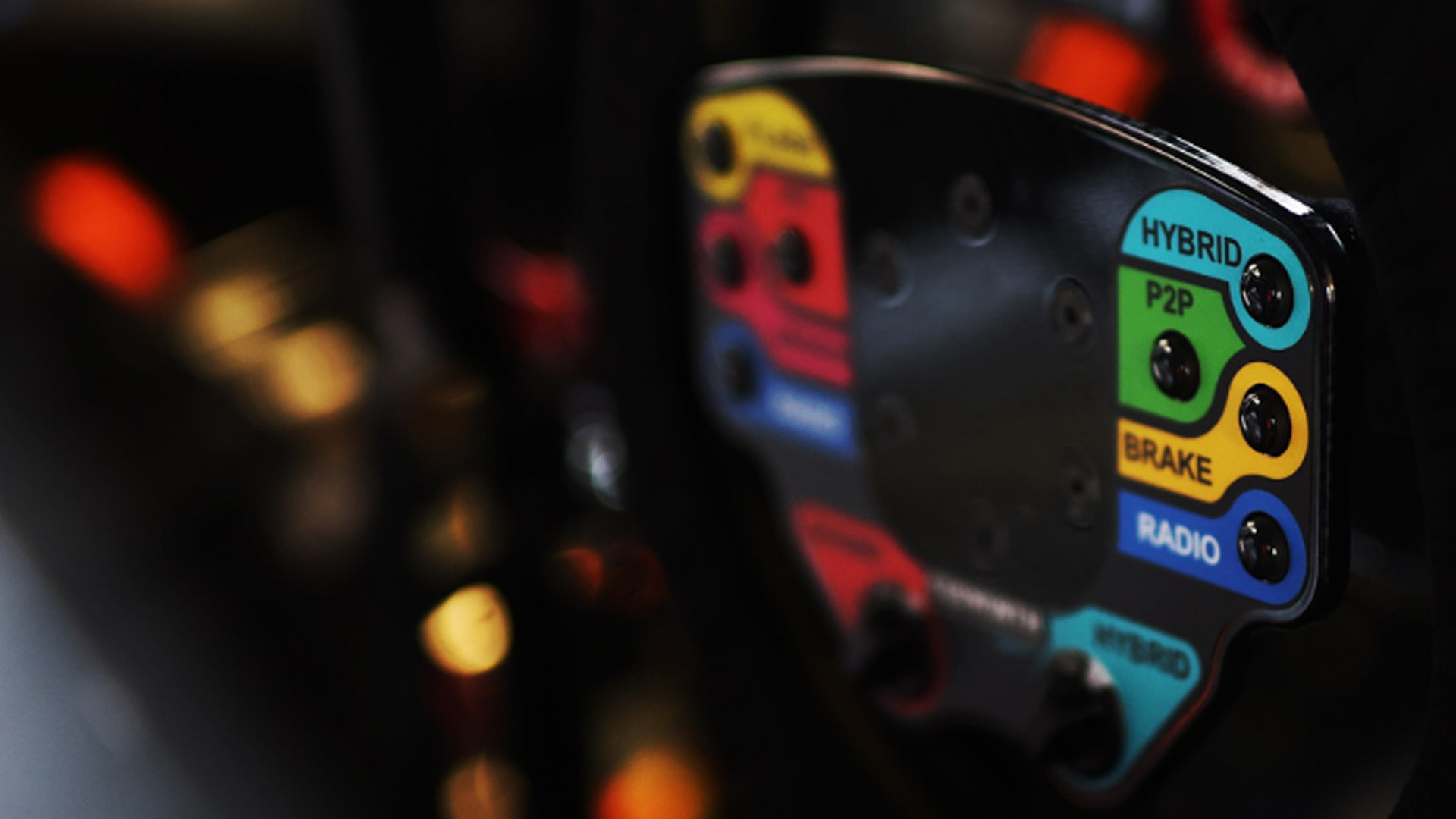
Although not as complicated as the hybrid systems used in Formula One, drivers will be able to use the electric power for an additional performance boost.
An electric motor is integrated into the standard Xtrac gearbox, and is powered by a 48-volt battery. This can be charged from a 240-volt wall socket before the race, but is also regenerated by braking when the cars are on-track.
For 2024, the hybrid system has been changed to combine electric power with a short increase in turbo boost. This should give a combined total of 60hp, meaning hybrid deployment should have a noticeable effect.
What other changes are there for 2024?
For 2024, the BTCC has introduced its new ‘Quick Six’ qualifying format. This is very similar to the ‘Fast Six’ system used in the American IndyCar series.
Cars will now be divided into two groups at the start of qualifying, with the fastest six from each group progressing to a top 12 group. The best six from this second round will then move into the Quick Six competition, with a final ten-minute shootout.
Goodyear have introduced a new option tyre for 2024, allowing further strategic options. The top 10 cars from race one at each event will be made to use the hardest tyre compound in the following race, with the aim of making successive victories harder to achieve.
Which car manufacturers are involved in the 2024 BTCC?
Unlike its heyday in the 1990s, the BTCC currently has only a small number of car manufacturer teams competing.
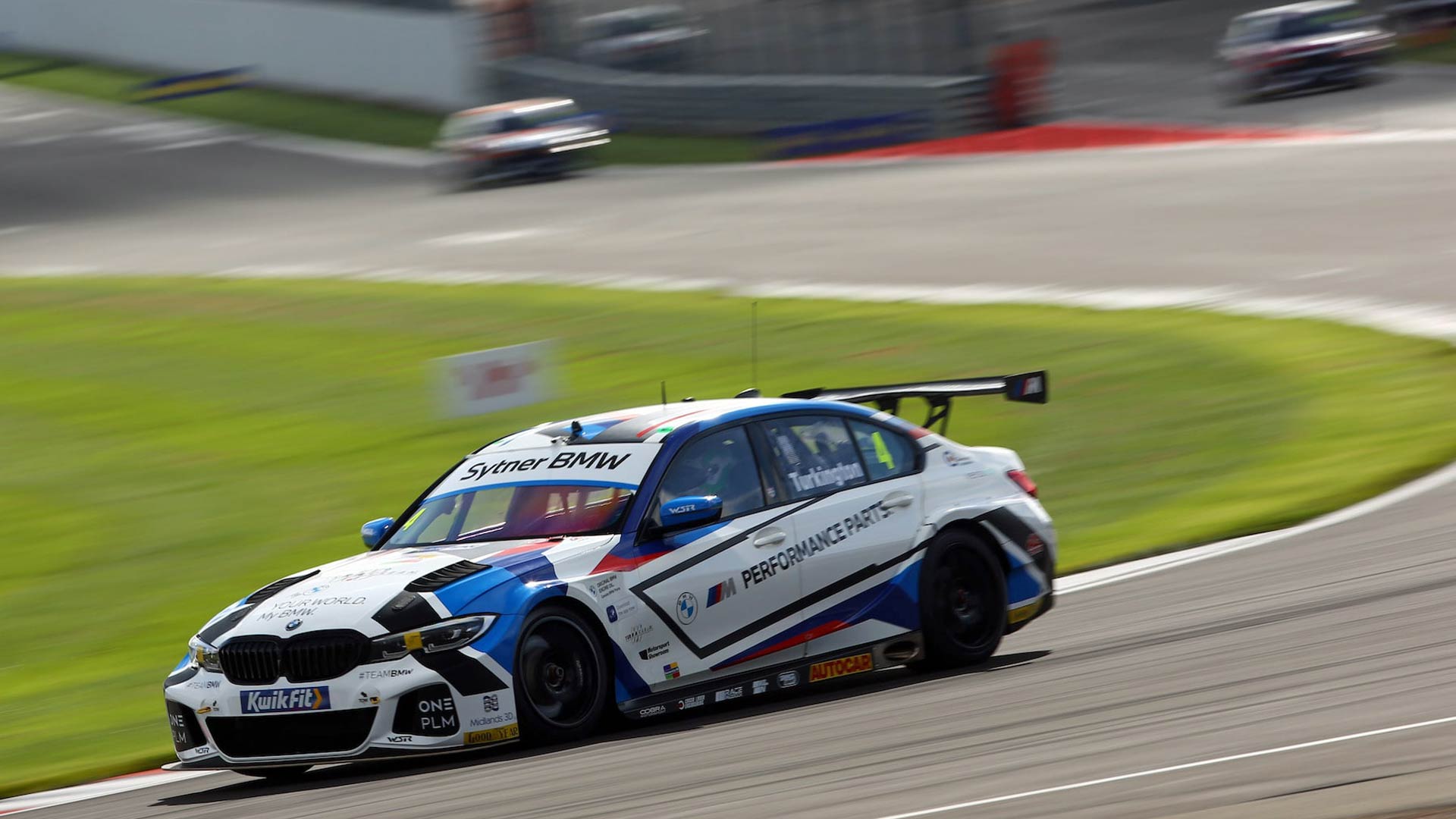
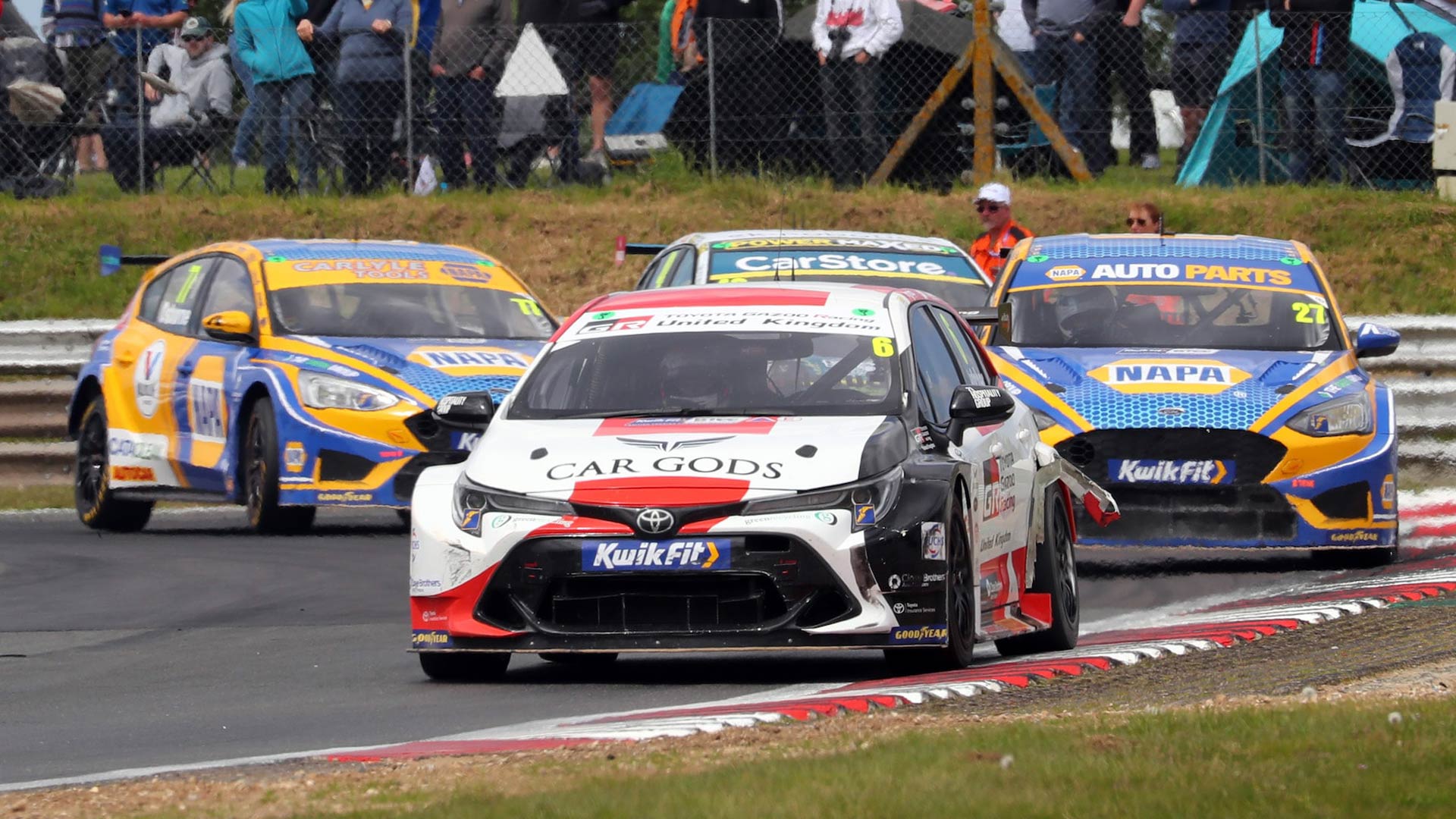
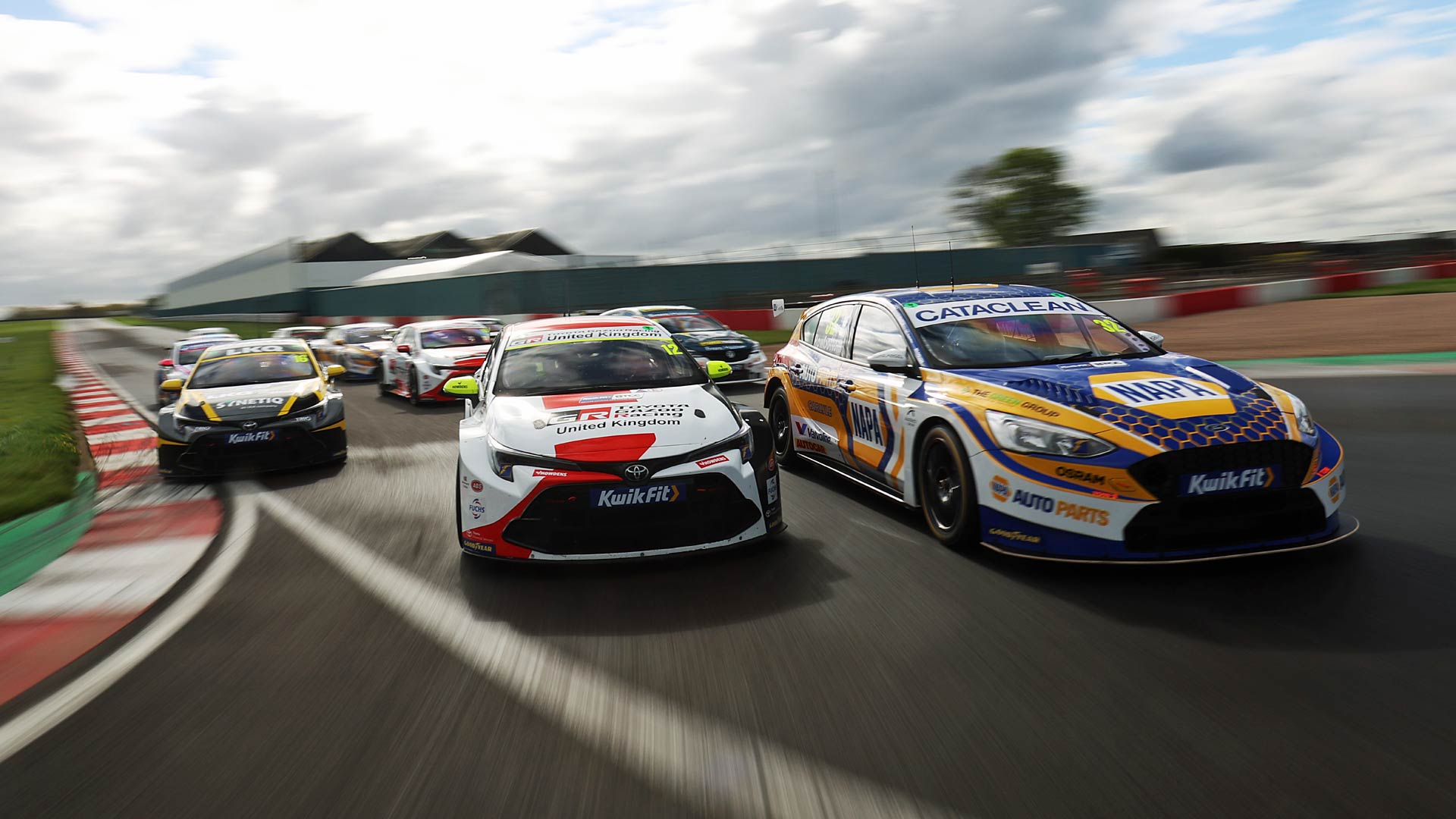
Team BMW is the most prominent outfit with official factory backing, along with the Toyota Gazoo Racing team. They make use of the BMW 3 Series and Toyota Corolla hatchback respectively.
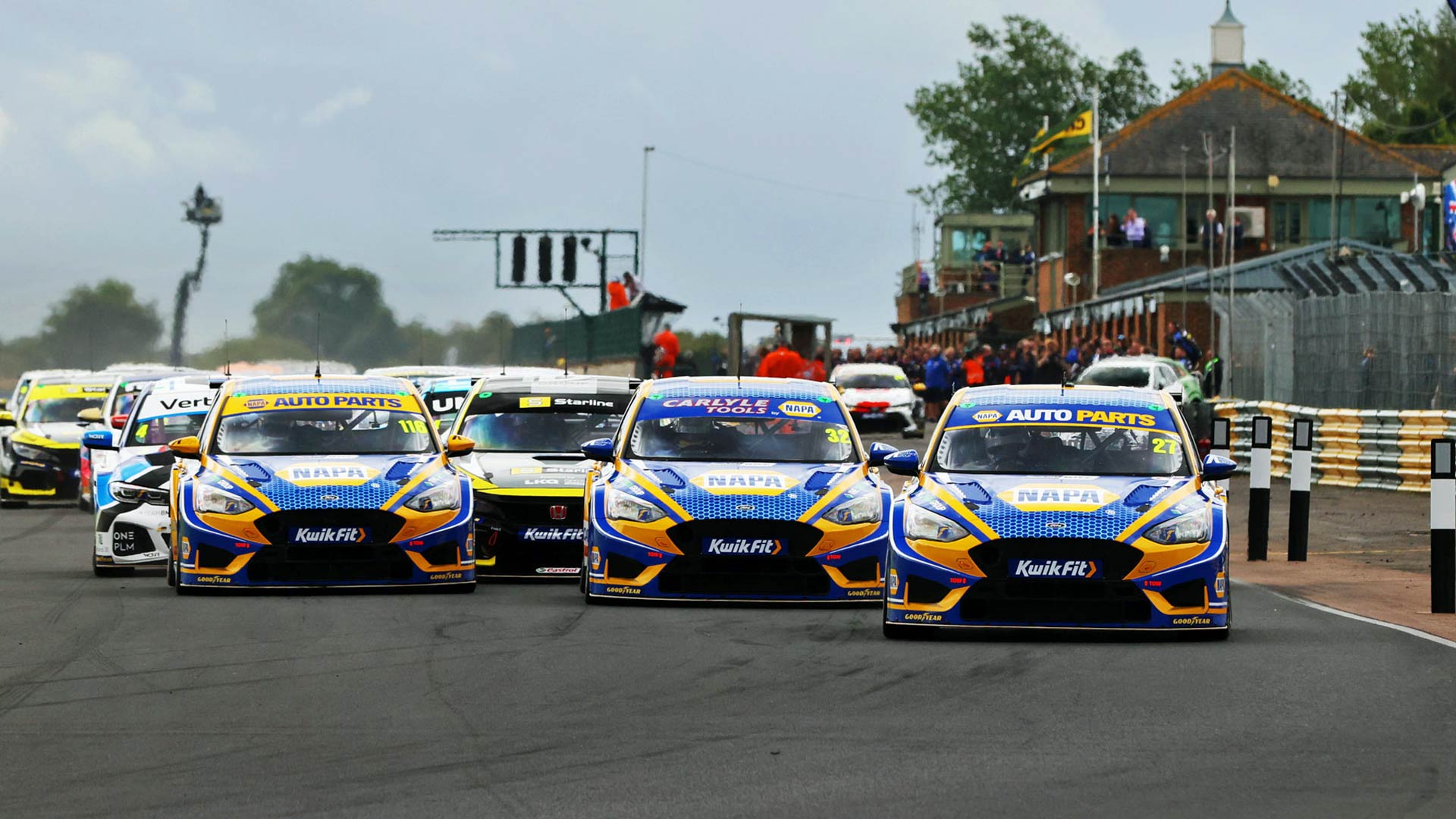
Other teams are classed as manufacturer/constructor entries for 2024, such as the NAPA Racing UK team and its Ford Focus ST racers.
Do the rules make BTCC racing competitive?
Chief executive Alan Gow is renowned for trying to make racing in the BTCC as close as possible. Various rules and regulations aim to prevent the recent situation in Formula One, for example, where a single driver and team dominates the competition.
However, 2023 saw the NAPA Racing UK team win more than half of all races, including clean sweeps of entire weekends. The changes for 2024 should ensure closer racing this year.
Starting positions are dictated differently for each of the three races across the weekend.
Grid places for race one are determined by qualifying on Saturday, then race two is based upon the finishing positions of race one.
Finally, race three uses the finishing order of race two, but with randomised reversed positions. It is all intended to encourage overtaking and prevent races from being a foregone conclusion before they even start.
Is contact allowed between BTCC cars?
Despite being a non-contact series, packed grids and rules that encourage competition result in cars getting up close and personal on the track.
However, the championship organisers have taken an increasingly strict view on contact, punishing drivers who cause unnecessary collisions.
A panel of three stewards reviews incidents that happen on the circuit, with penalties handed out to those judged to have breached driving standards.
Who is the defending BTCC champion?
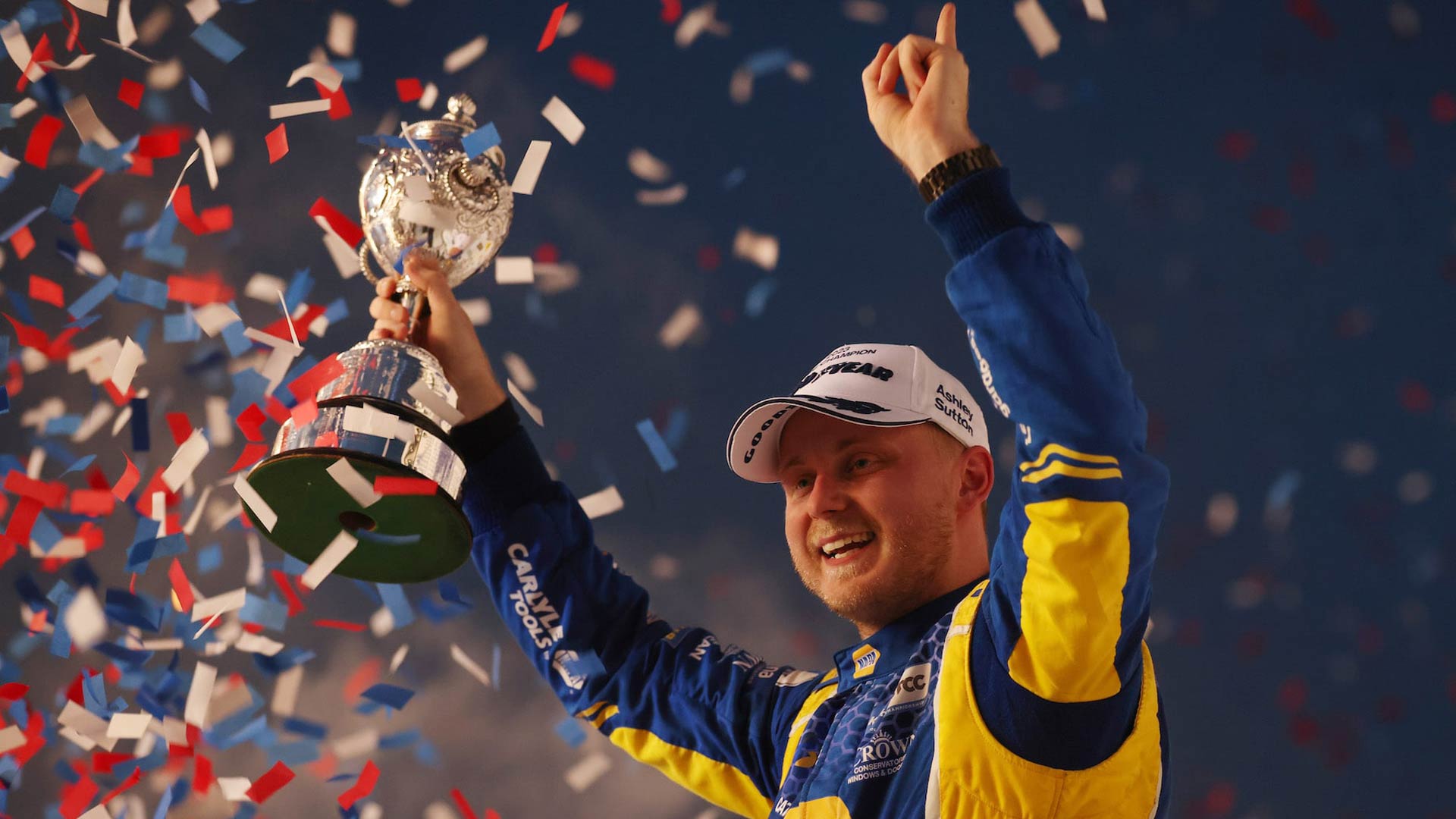
Proving that independent teams can challenge the major manufacturers, Ashley Sutton is the current BTCC Drivers’ Champion. Sutton drove the NAPA Racing UK Ford Focus ST to victory in 2023, taking his fourth title win.
The Manufacturers’ Championship was narrowly won by Ford over BMW, with the Teams’ title claimed by NAPA Racing UK.
Andrew Watson was the winner of the Jack Sears Trophy. This is contested by drivers who have never previously achieved a podium position in the BTCC.
Which races will support the BTCC for 2024?
The BTCC is the main draw on each race weekend, but is not the only on-track action taking place. Numerous other support championships happen at each event, ensuring a packed day of racing.
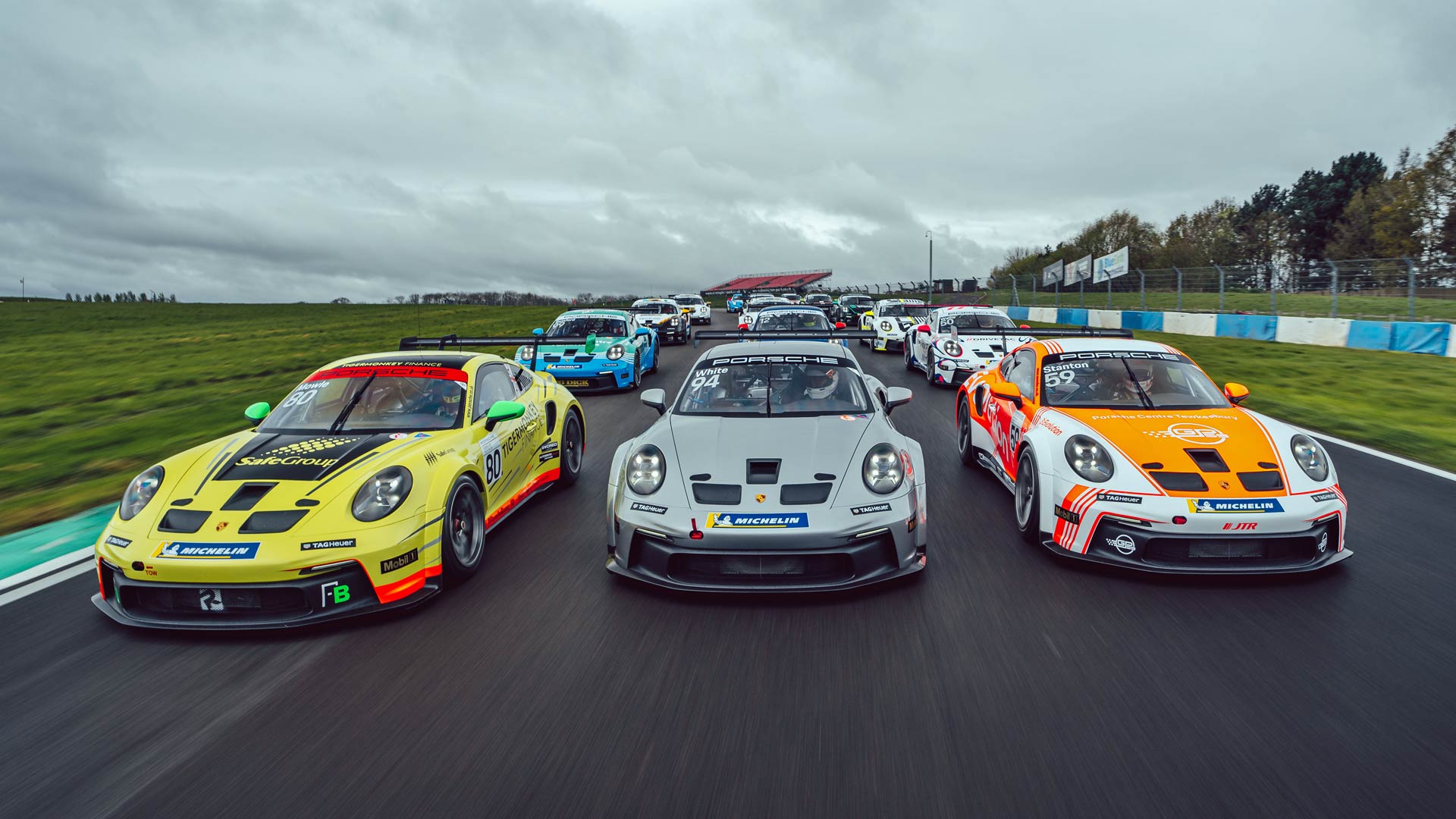
Leading the support act is the Porsche Carrera Cup GB (pictured above), which has helped to develop numerous endurance racing drivers since 2003.
Other championships include the Mini Challenge UK and the single-seater F4 British Championship.
How can I watch the BTCC in 2024?
A long-term agreement between the BTCC and ITV means the race series is available on free-to-air TV.
Freeview channel ITV4 will show live coverage from each race day. Fans can watch race action online through ITVX, which also screens live qualifying on Saturdays. Highlights will be shown on ITV4 and ITVX after each event.
For 2024, the BTCC will be streamed live via TikTok by ITV Sport, aiming to attract a new global audience to the competition.
BTCC driver Jade Edwards, who has unfortunately missed out on a BTCC race seat for 2024, will be acting as an expert pundit for selected rounds throughout the season.
2024 British Touring Car Championship calendar
The BTCC will span 10 race weekends during 2024, with a traditional season-opening event at Donington Park.
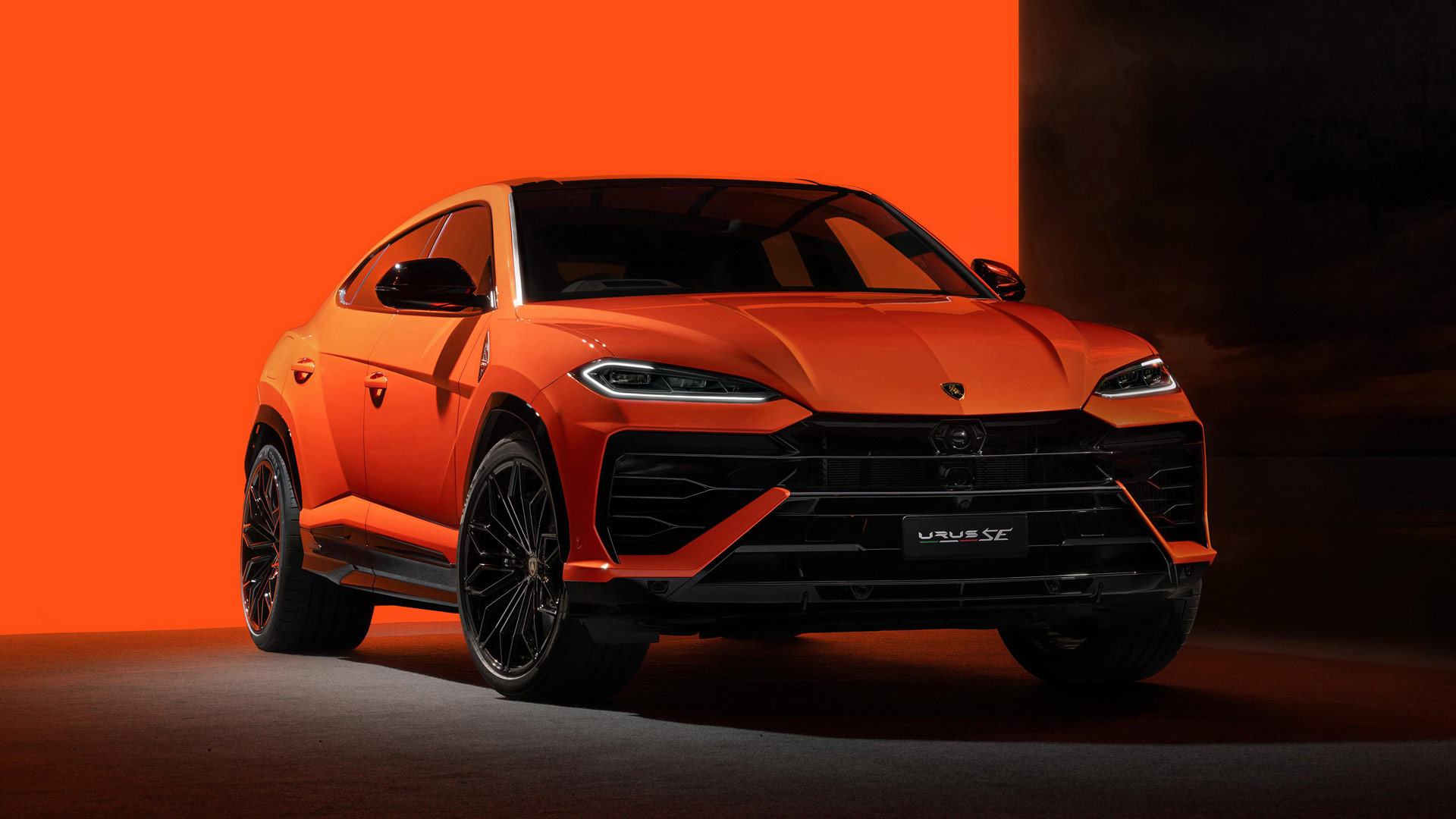
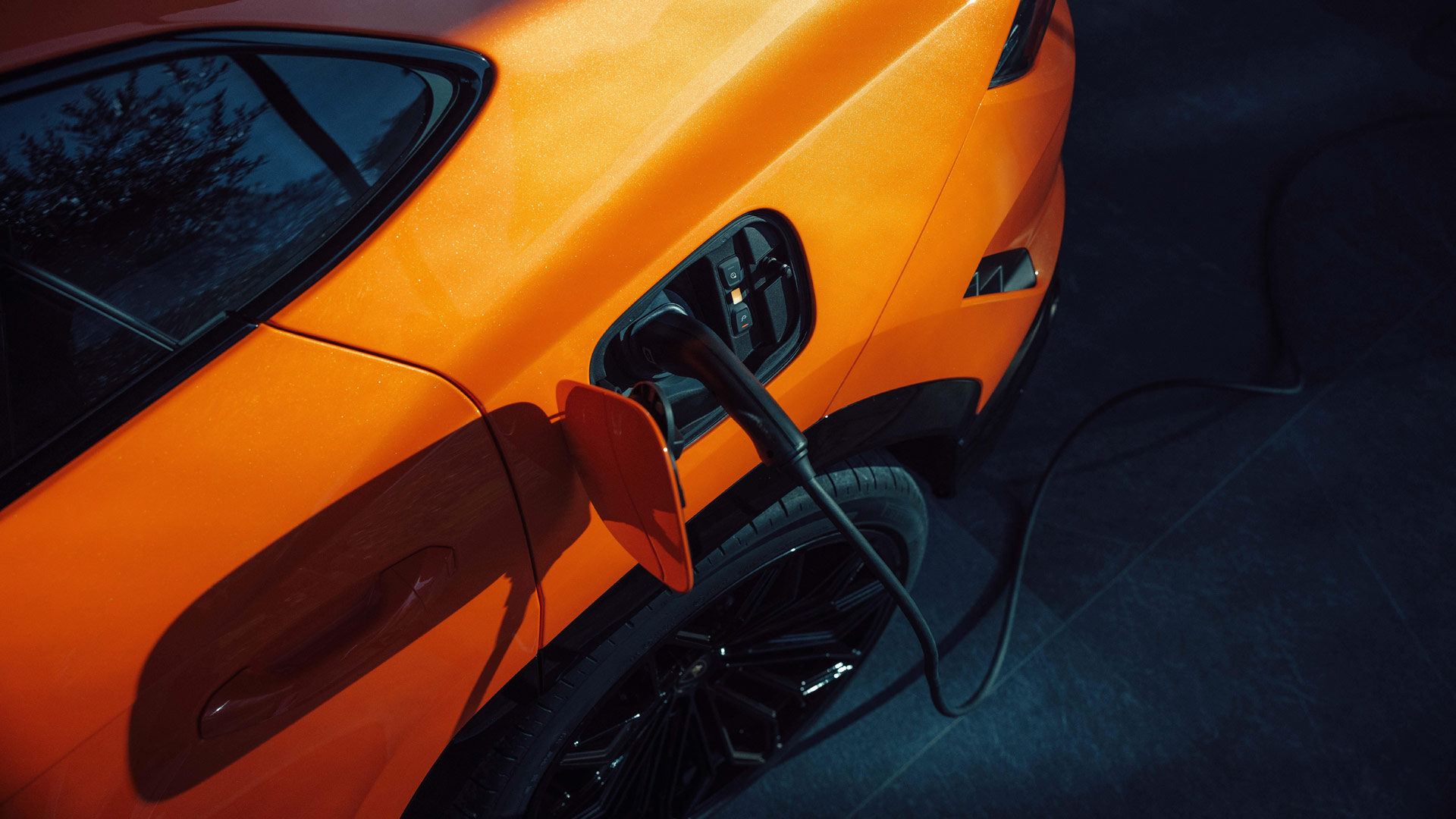
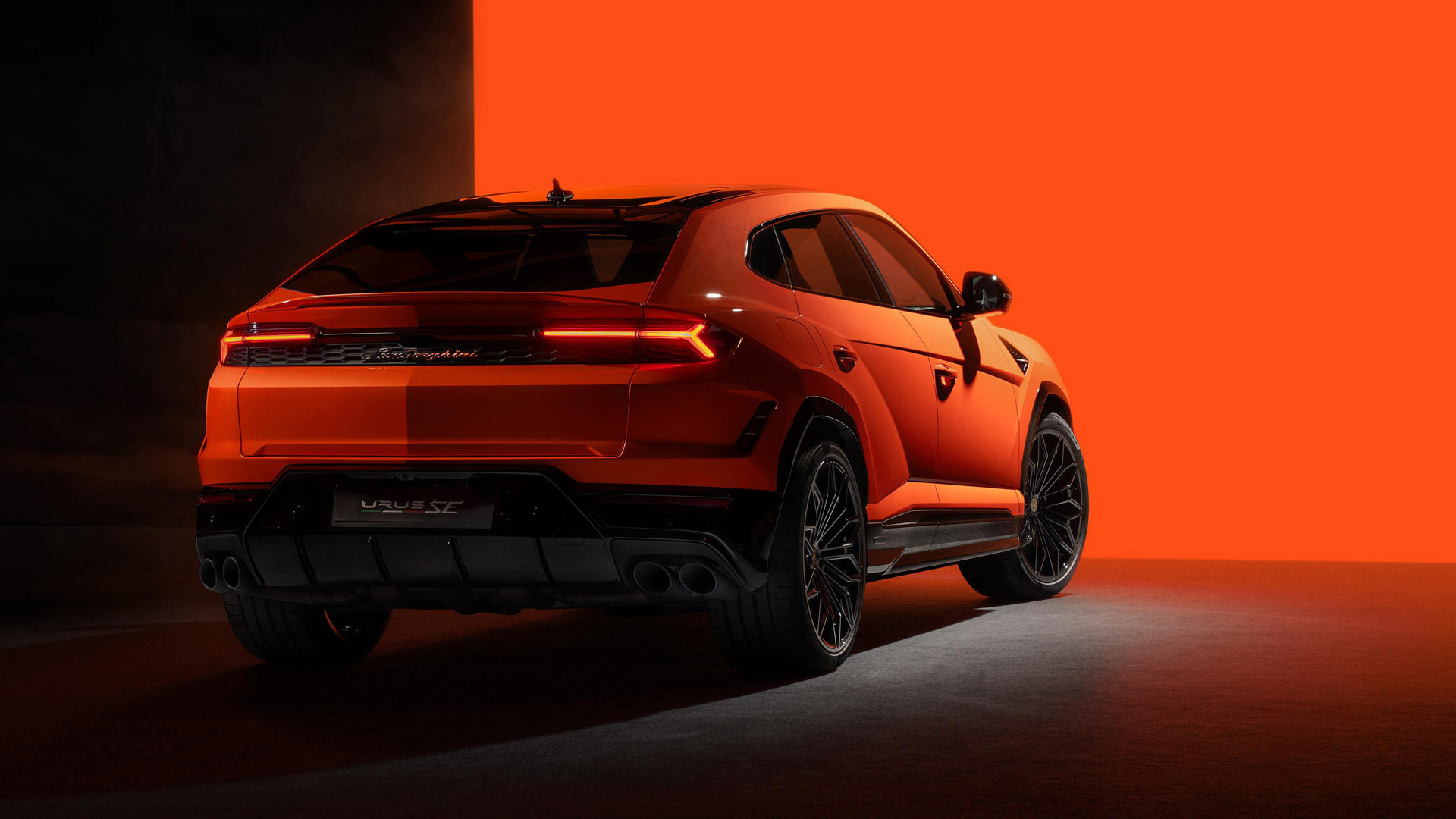
The most powerful version of the Lamborghini Urus SUV has been announced – and yes, it’s a plug-in hybrid.
Revealed ahead of the Auto Beijing China motor show, the new Urus SE introduces an electrified powertrain to Lamborghini’s ‘Super SUV’.
As the Italian marque’s best-selling model, broadening the appeal of the Urus clearly matters. The SE also feeds into Lamborghini’s long-term plans for electrification, which began with the Revuelto supercar launched last year.
Lamborghini goes hybrid
As you’d expect from Lamborghini, this move towards decarbonisation doesn’t come at the expense of outrageous performance.
The familiar 4.0-litre twin-turbocharged V8, used in the existing Urus and a host of Porsche and Bentley vehicles, has been re-engineered for use with the plug-in hybrid system. Producing 611hp on its own, the engine is mated to an electric motor inside the eight-speed auto transmission.
A combined output of 800hp and 701lb ft of torque allows the Urus SE to accelerate from 0-62mph in just 3.4 seconds, and reach a top speed of 193mph.
With a 25.9kWh lithium-ion battery pack, the newest Urus SUV can also cover up to 37 miles on battery power alone.
Oversteer on demand
Lamborghini has fitted the Urus SE with a new torque-vectoring system, which allows oversteer ‘on demand’. Proof, if it were needed, that hybrid power doesn’t have to be boring.
The car’s six existing drive modes gain four new ‘electric performance strategies’, including a battery-only EV Drive setting. Recharge mode balances performance with replenishing the batteries to 80 percent charge.
The increased kerb weight of the Urus SE also means Lamborghini has retuned its air suspension settings. Their scope ranges from on-track performance to off-road ability.
Inside the Urus SE
Along with its new hybrid powertrain, Lamborghini has also treated the Urus SE to a visual makeover focused on aerodynamic efficiency.
The bonnet has been reprofiled, and the eagle-eyed will also spot a new front grille and bumper, combined with LED matrix headlights. At the rear, the hatchback gains styling elements that were apparently inspired by the Gallardo supercar.
A new diffuser increases rear-end downforce by 35 percent, with extra underbody vents allowing 15 percent more air to cool mechanical components.
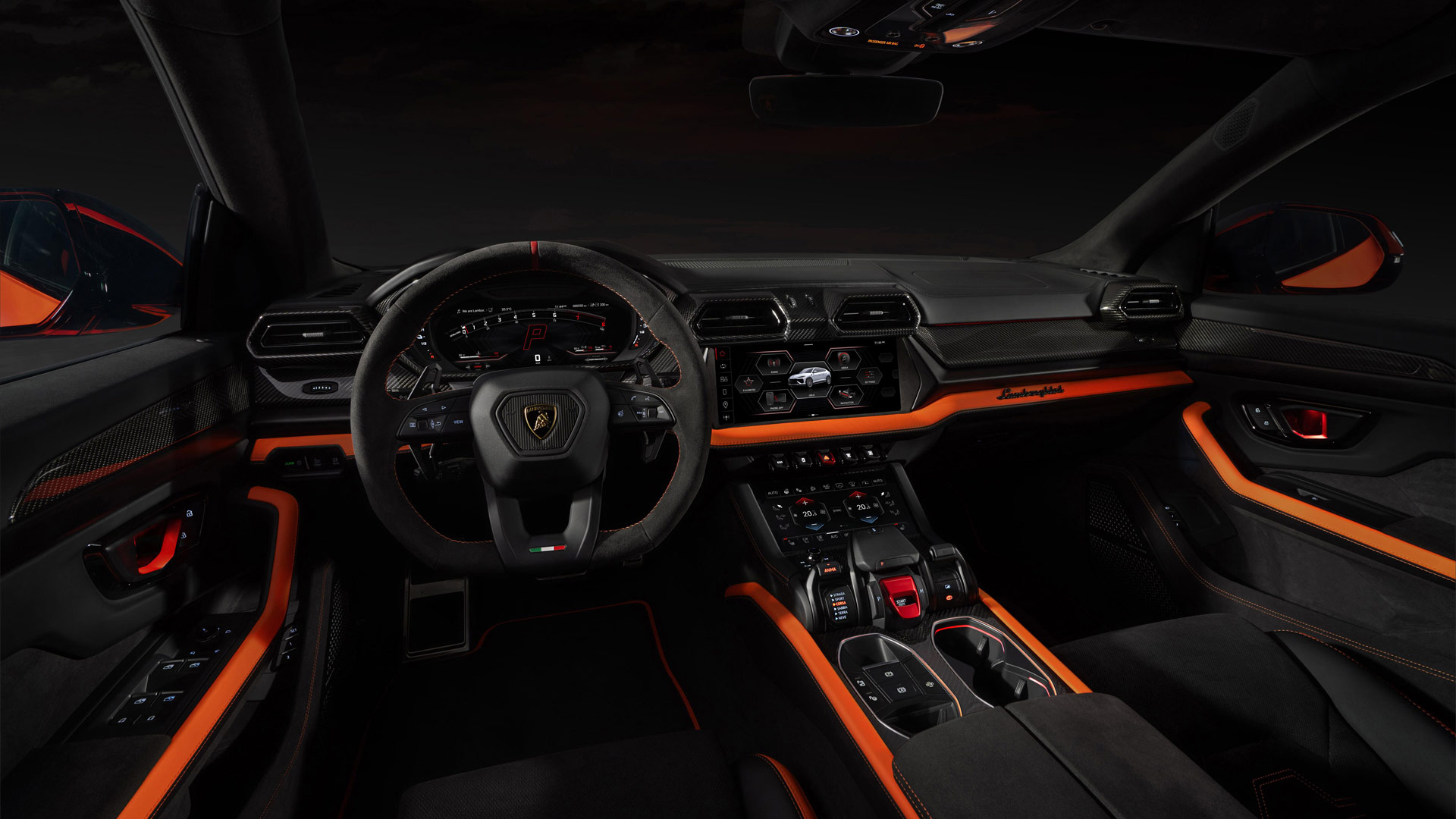
On the inside, a larger 12.3-inch central touchscreen comes with revised graphics, plus a new telemetry page for the SE’s hybrid system. Redesigned air vents and dashboard coverings, plus new anodised aluminium trim, complete the changes.
Pricier than a Performante
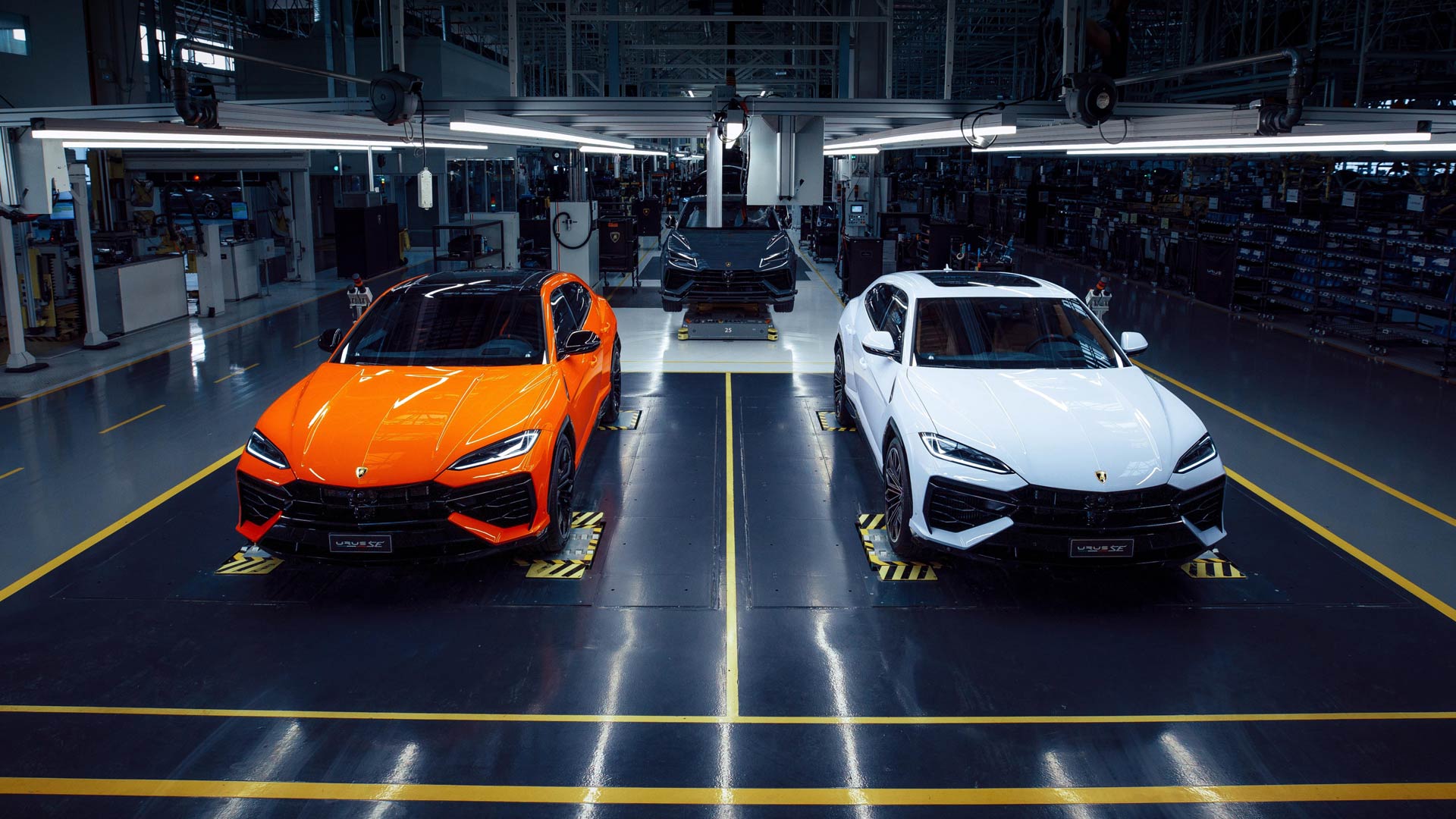
Personalisation has become a popular part of the Urus experience. For the SE, Lamborghini offers 100 paintwork options, including the new Arancio Egon (orange) and Bianco Sapphirus (white).
Prices have yet to be confirmed, but expect a premium above the £209,000 asked for the Performante version. Even so, the Urus SE is likely to become the company’s best-seller.
Lamborghini CEO Stephan Winkelmann said: “In just a few years, the Urus has become our brand’s best-seller, enabling Lamborghini to attract new customers and strengthen its position in the most important markets. With the Urus SE, we have taken another step towards the future”.
What’s the most fun you can have at 20mph? I’ll give you a clue: it isn’t stop-starting across most of south London on a Tuesday morning.
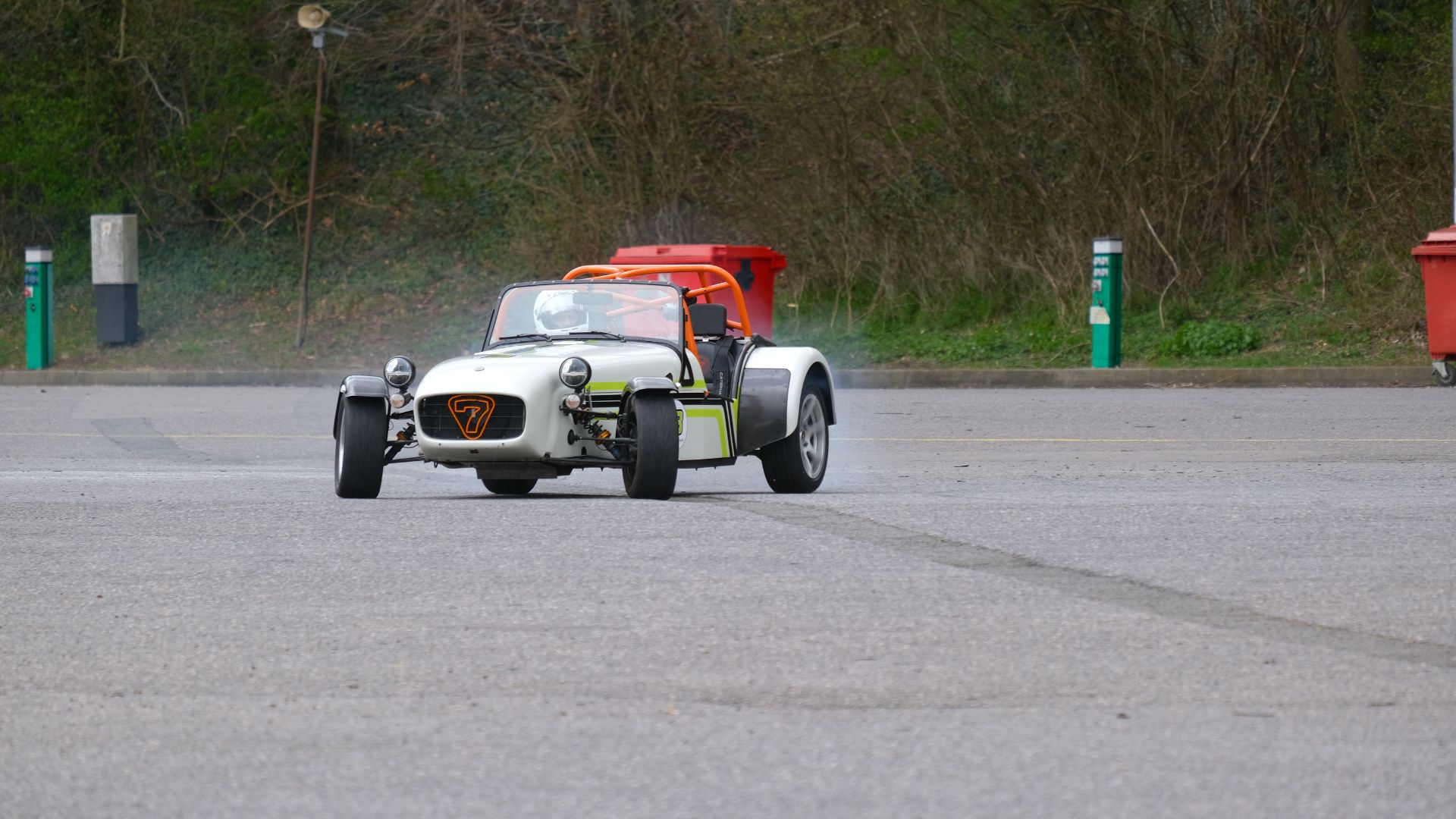
Thankfully, things are about to get considerably more exciting. The venue is Brands Hatch, the car is a Caterham Seven and today’s ‘work’ involves skids, spins and generally going sideways.
By the time we finish, I’ll have improved my car control, steamed up my crash helmet from laughing and massacred many unsuspecting plastic cones. All at less than 20mph.
Story of the Seven
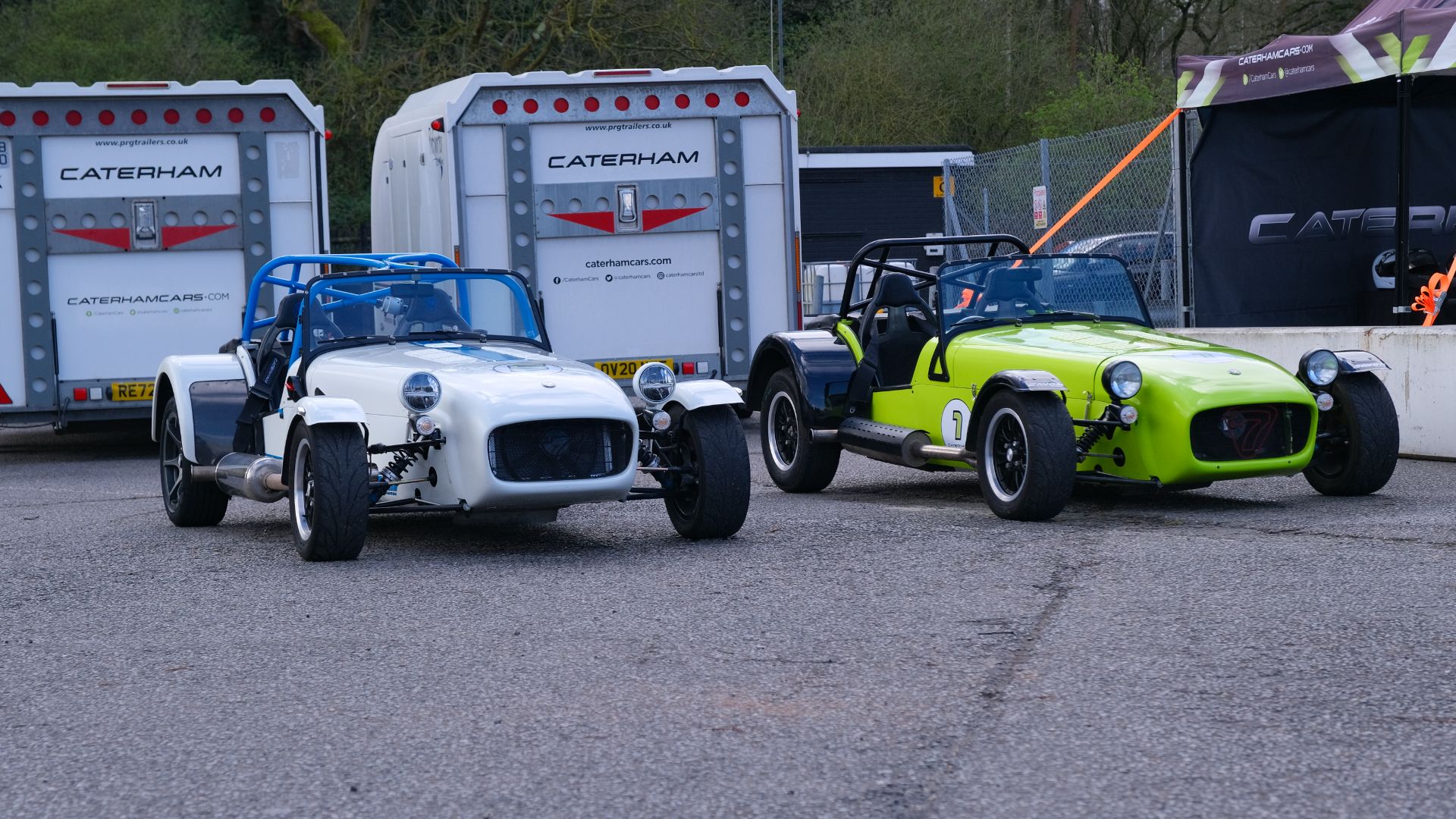
If you want a raw, unfiltered driving experience, nothing beats a Caterham Seven. First conceived as the Lotus Seven in 1957, this open-wheeled roadster embodied Colin Chapman’s much-quoted mantra of “Simplify, then add lightness”.
Caterham Cars bought the rights to the Seven in 1973 and has assembled it ever since – originally in my home town of Caterham, Surrey, and now in nearby Dartford, Kent. The Seven has grown more powerful and (slightly) more comfortable over the years, but the basic recipe hasn’t changed.
The current range stretches from the three-cylinder 85hp Seven 170 to the supercar-baiting 310hp 620R. Today, I’ll be driving the mid-range Seven 360R, powered by a 180hp Ford Duratec engine with a five-speed manual gearbox driving the rear wheels: good for 0-62mph in 4.8 seconds and 130mph. Track-focused ‘R’ specification adds a limited-slip differential, composite race seats, a beefier brake master cylinder and a lightweight flywheel.
Force and finesse
I arrive at Brands Hatch, grab a coffee, then join my fellow journalists for a driver briefing. After a few stern safety warnings, motorsport presenter Samantha Parker, who will race a Seven in the Caterham Academy this year, talks me through the technique.
Drifting requires a combination of force and finesse: a sharp right-foot jab to unsettle the car’s rear end and get it sliding, then delicate throttle and steering inputs to keep it from straightening up (understeer) or spinning out (excessive oversteer).
To help these Sevens drift, they feature harder compound tyres and slightly jacked-up rear suspension. Each one also has a substantial roll cage, as fitted to the Caterham race cars, which removes the option to fit a roof. “What happens if it rains?” I ask naively. “You’ll get wet,” says Sam.
Strapped in and ready
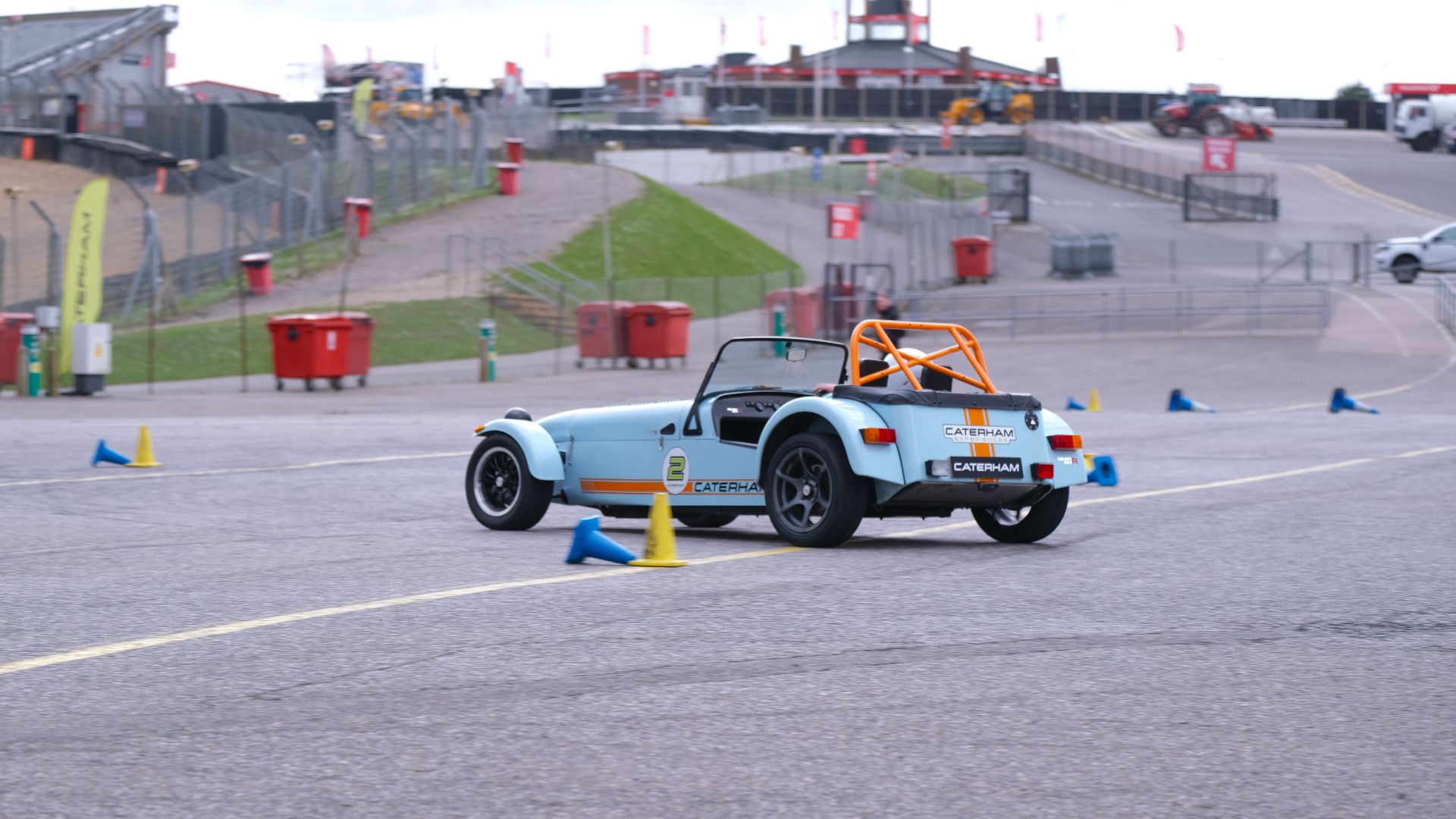
The clouds are dark and ominous as we head outside. The drift experience doesn’t actually take place on Brands Hatch circuit, but in the huge parking area next to Hailwoods cafe. As Sam and her team lay out some sacrificial cones, I clamber aboard a Seven and get strapped in.
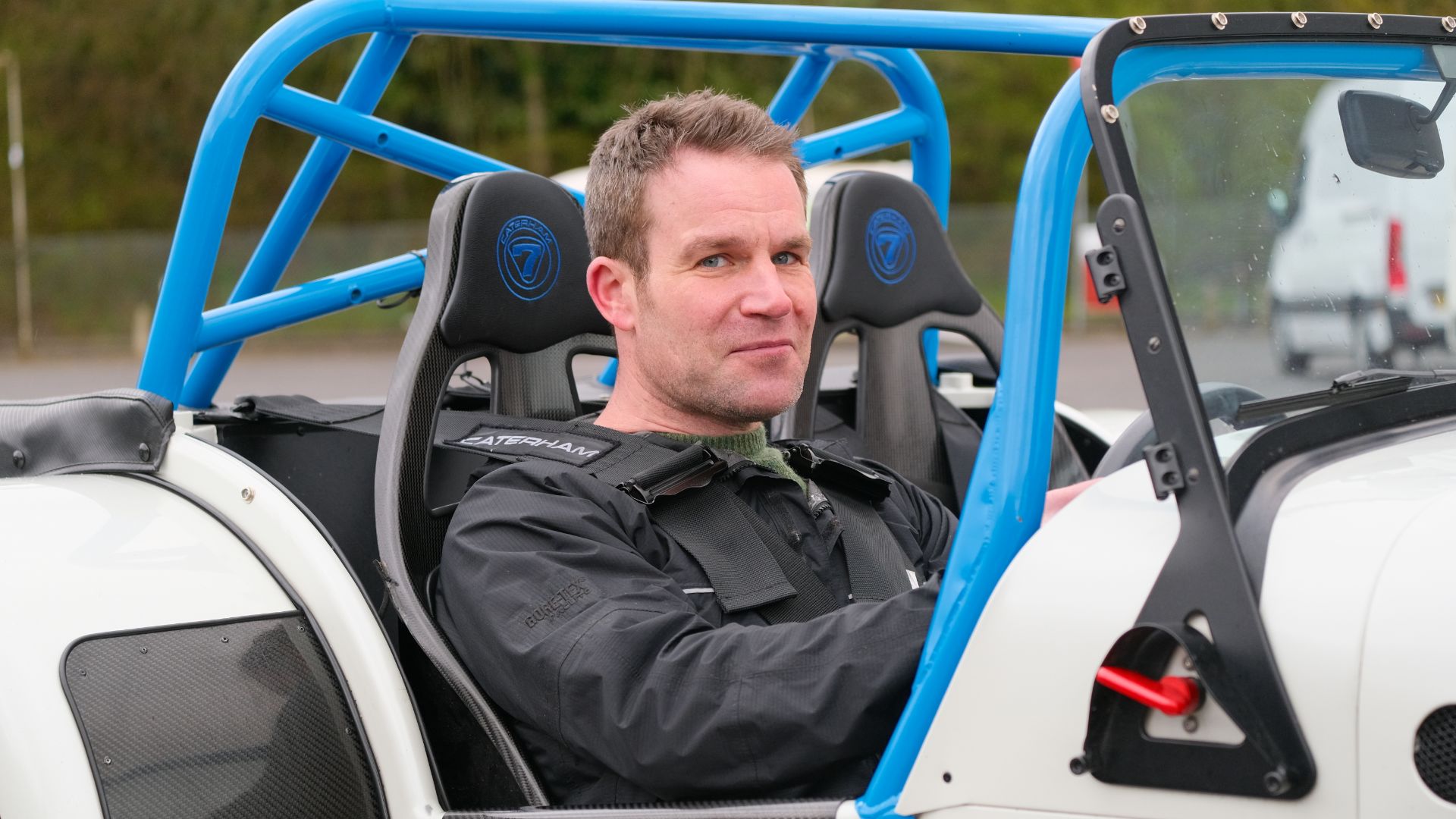
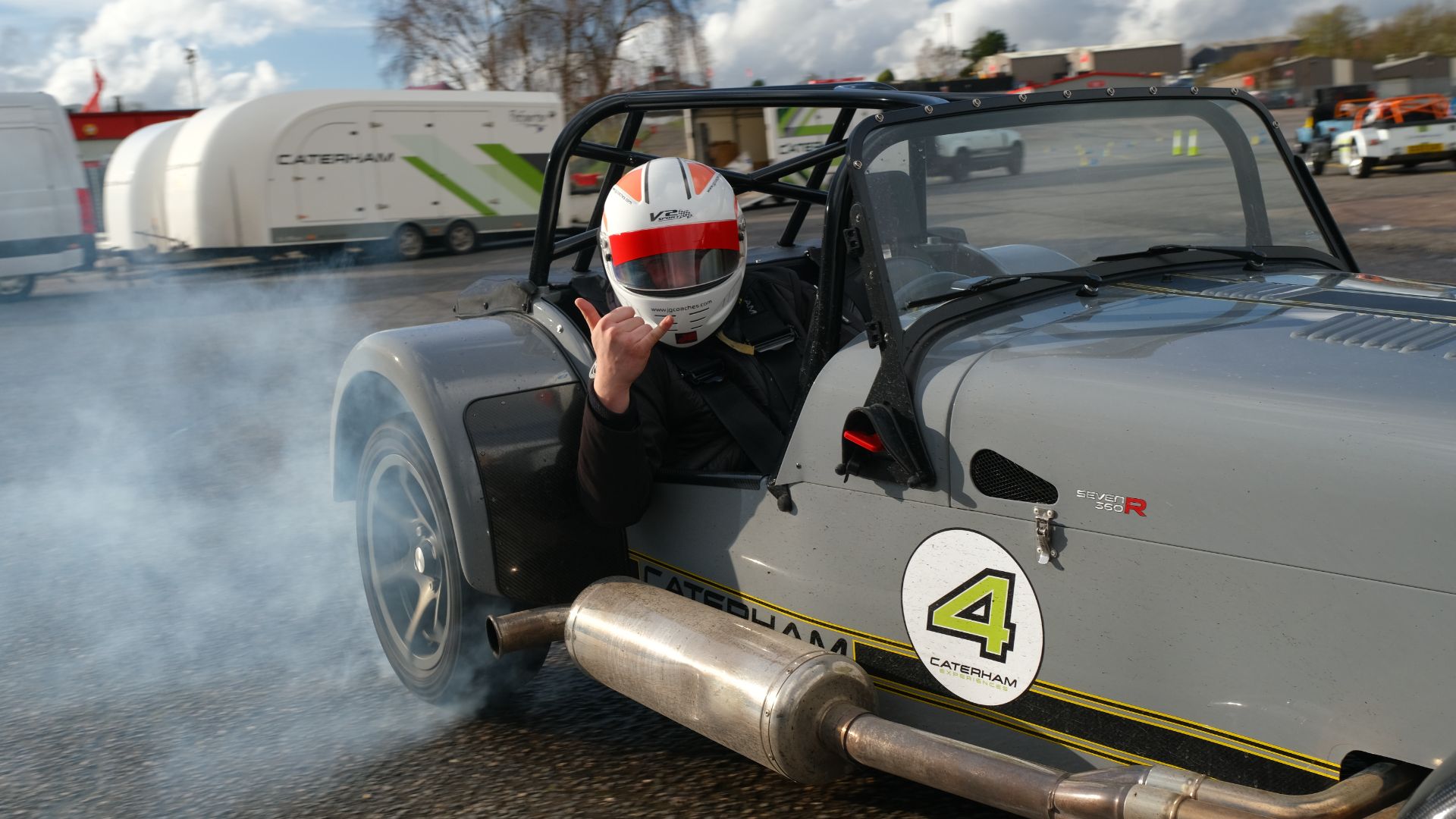
Mine is a wide-bodied SV model, but it’s still a snug fit. I step carefully over the hot side-exit exhaust, then drop down into a hip-hugging seat. The 360R has a carbon fibre dashboard and four-point harness belts, but it does without the heater and carpets of the plusher ‘S’ version. There are no frills – and no distractions from driving.
Prod a red button and the engine ignites with a gruff growl. I pull down my visor and edge forwards, impatient to get started. Seriously, how hard can this be?
Slide away
Our day will be split into four challenges: slalom, donuts, figures of eight and then a full drift course – with style points awarded for the most flamboyant driving.
The slalom weaves back and forth between cones, which are positioned wide apart to allow space for mistakes. I’m surprised by how easily the Caterham can be provoked into a slide, but holding it there is far trickier. I spin and stall the engine a couple of times, then gradually start to find a flow. When I get it right, it feels fantastic.
After a quick debrief (I’m working too hard at the wheel, apparently, so need to relax my arms, make smaller inputs and look further ahead), we try a tighter, more technical slalom, then move on to donuts. Essentially, this is what I attempted in the college car park 25 years ago: going in circles and making tyre smoke. Only no one orders me off the premises this time.
Interestingly, the Seven is easier to drift in a clockwise direction than anti-clockwise, because I’m sitting on the inside of the ‘corner’. These details make a difference when your car weighs just 560kg.
Making a splash
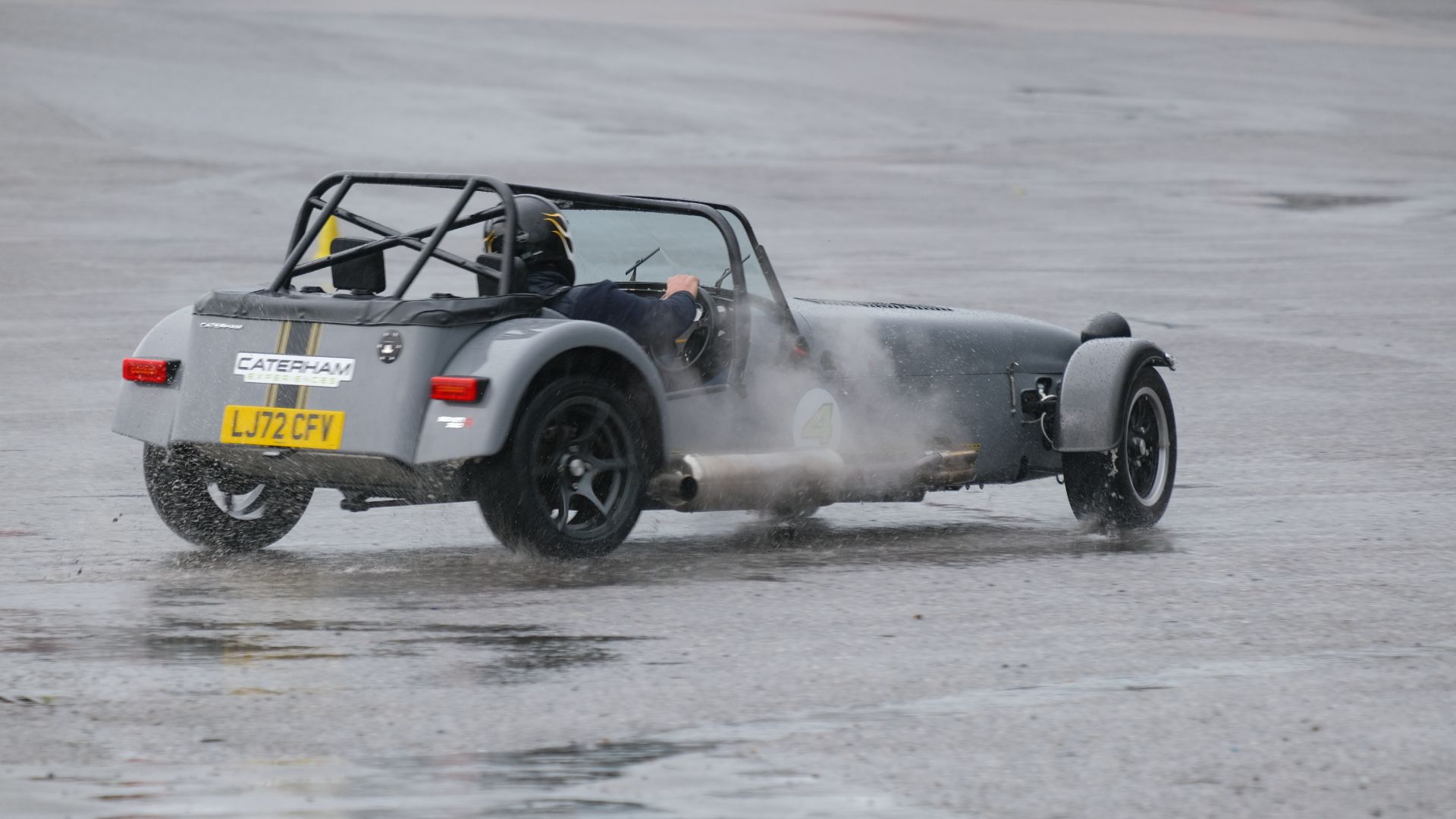
Before we attempt the figures of eight, the leaden clouds finally come good on their threat and it starts to rain. I assume that wet tarmac will make drifting more difficult, but actually the opposite proves true. Not only is the Caterham easier to flick sideways, it seems to slide more progressively as well.
Executed perfectly, the figure of eight can be one continuous drift with a transition in the middle. For me, it’s more like a couple of long corners joined up by a straight, but I manage several good circuits – punctuated by several spins and scattered cones.
Driving the Caterham Seven 360 R in wide-body SV spec today (roomier footwell means I can actually press the pedals with shoes on).
Powered by a 180hp 2.0-litre Ford Duratec engine, it weighs 560kg, reaches 60mph in 4.8 seconds and tops out at 130mph. Prices start at £38,490. pic.twitter.com/4FR3nZeWF7
By the time we break for lunch, I’m soaking wet, but gaining confidence and eager to get back in the car. Like any motorsport, drifting is addictive and seriously good fun.
It’s not the winning…
The final challenge of the day is the drift course, which combines all of the above with the promise of prizes for the winner – and an audience watching your every slip-up and slide. The rain has stopped now and some sections of the drying tarmac have more grip than others, making it harder to predict how the car will react.
I manage a near-flawless practice run, then get carried away when it counts, losing control on the final figure of eight and pirouetting through a full 360 degrees. Dammit! When the points are totted up, Matt Prior from Autocar magazine wins the bottle of bubbly and baseball cap, along with the grudging admiration of his peers.
If you’d like to try for yourself, Caterham drift days are held at Brands Hatch and Donington Park circuit in Leicestershire. The price of £359 includes breakfast, lunch and far more driving time than most track experiences allow. I’m told some drift novices have even progressed to racing in the Caterham Academy. Like I said, motorsport is addictive.
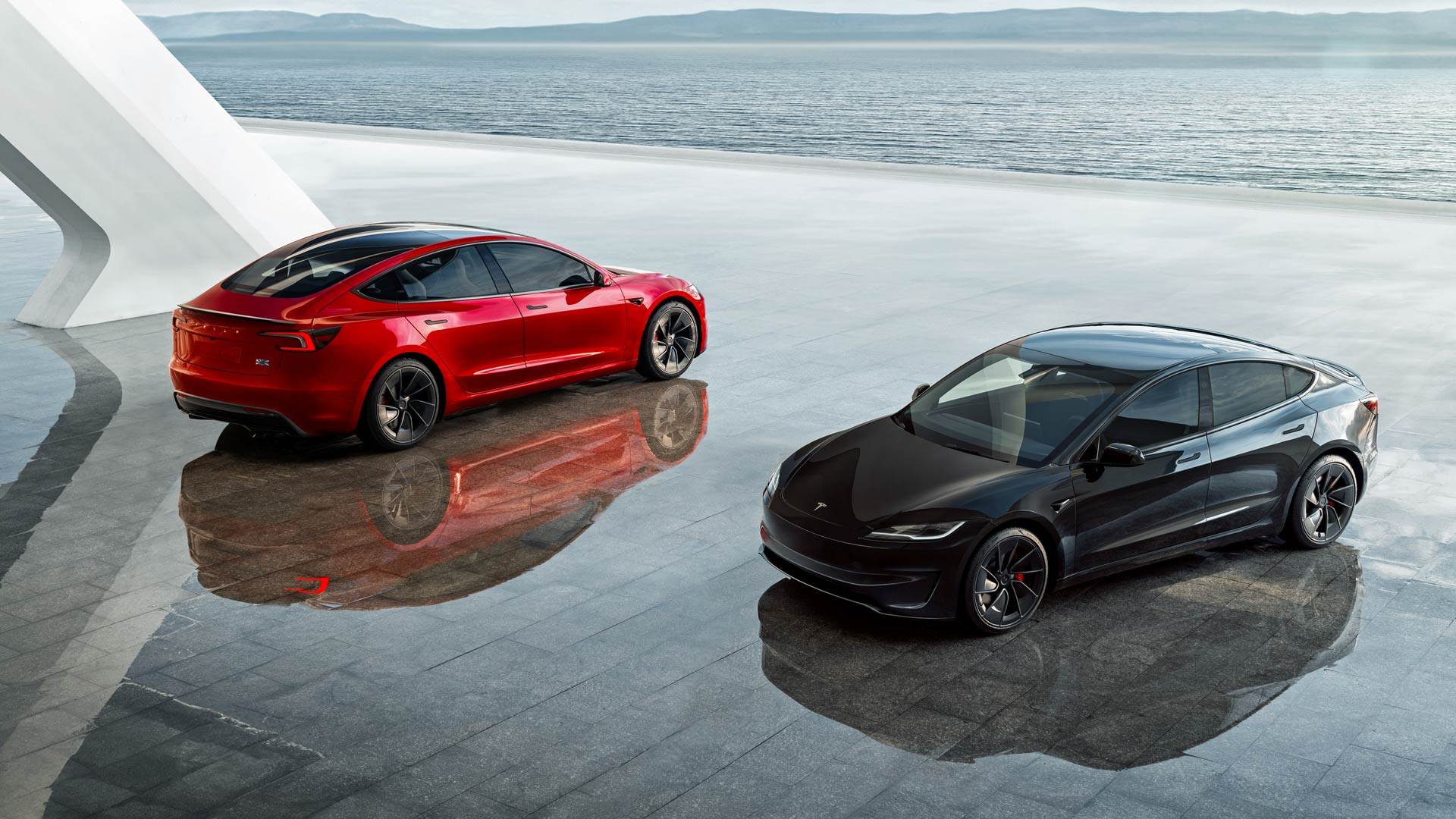
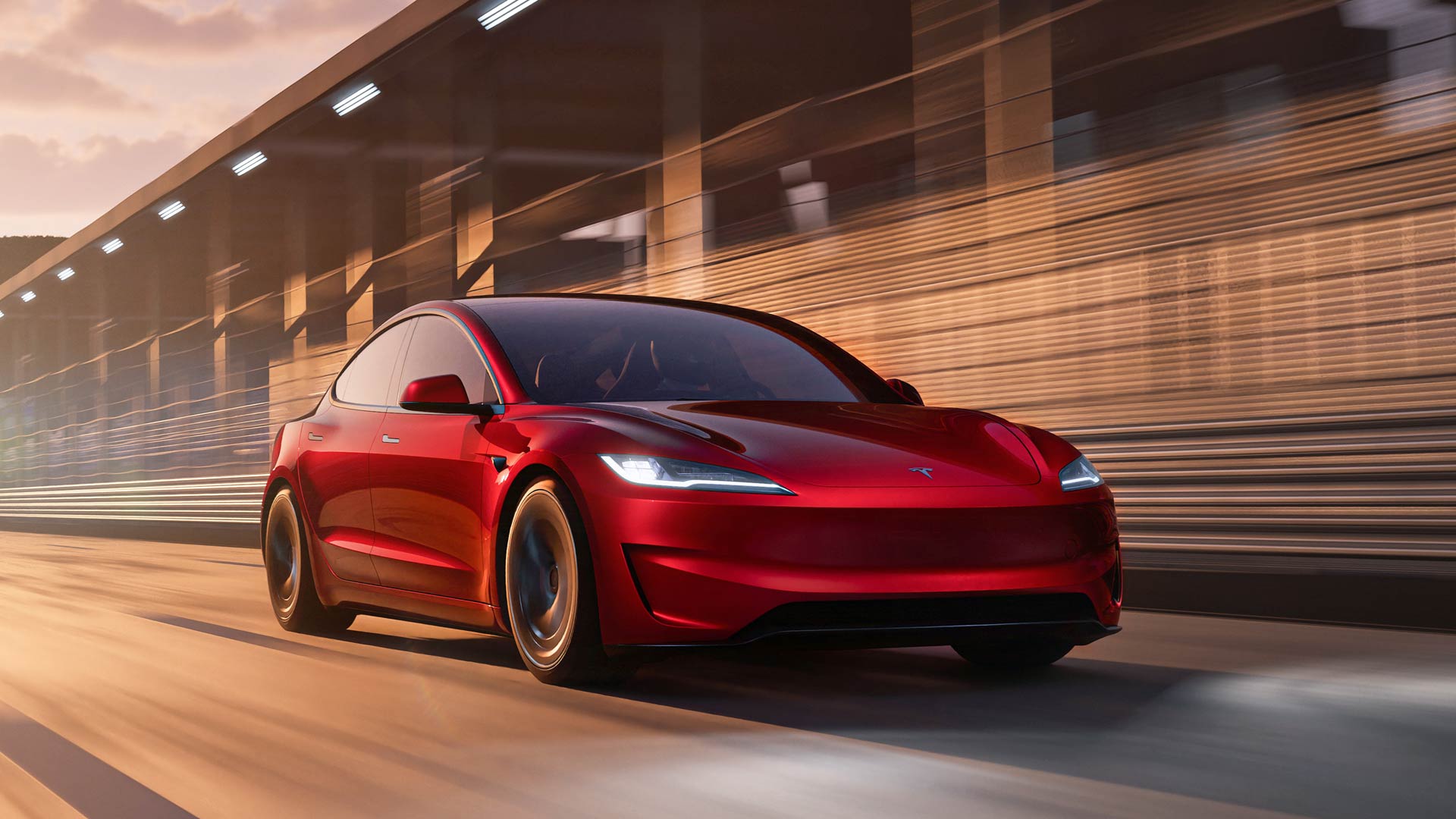
The most powerful version of the updated 2024 Tesla Model 3 has been revealed, bringing super saloon levels of acceleration to the family EV.
Despite rumours Tesla would use the Plaid name for its most potent Model 3, it has stuck with the familiar Performance badge.
However, while the name of the Model 3 Performance hasn’t changed, Tesla promises this new version will deliver an enhanced driving experience – both on the road and track.
Engage Track Mode
A new dual-motor setup produces 460hp in the all-wheel-drive Model 3 Performance. This results in a 0-62mph time of 3.1 seconds, plus a potential top speed of 163mph.
Pirelli P Zero 4 tyres are mounted on new 20-inch ‘Warp’ alloy wheels, which have a staggered fitment. This is said to provide faster steering turn-in, along with better traction out of corners.
New springs and anti-roll bars are combined with adaptive suspension dampers, while the red-painted brake calipers are matched with uprated brake pads.
A new, third-generation Track Mode can be used to tailor both the powertrain and suspension settings, along with regenerative braking levels.
Enhanced inside and out
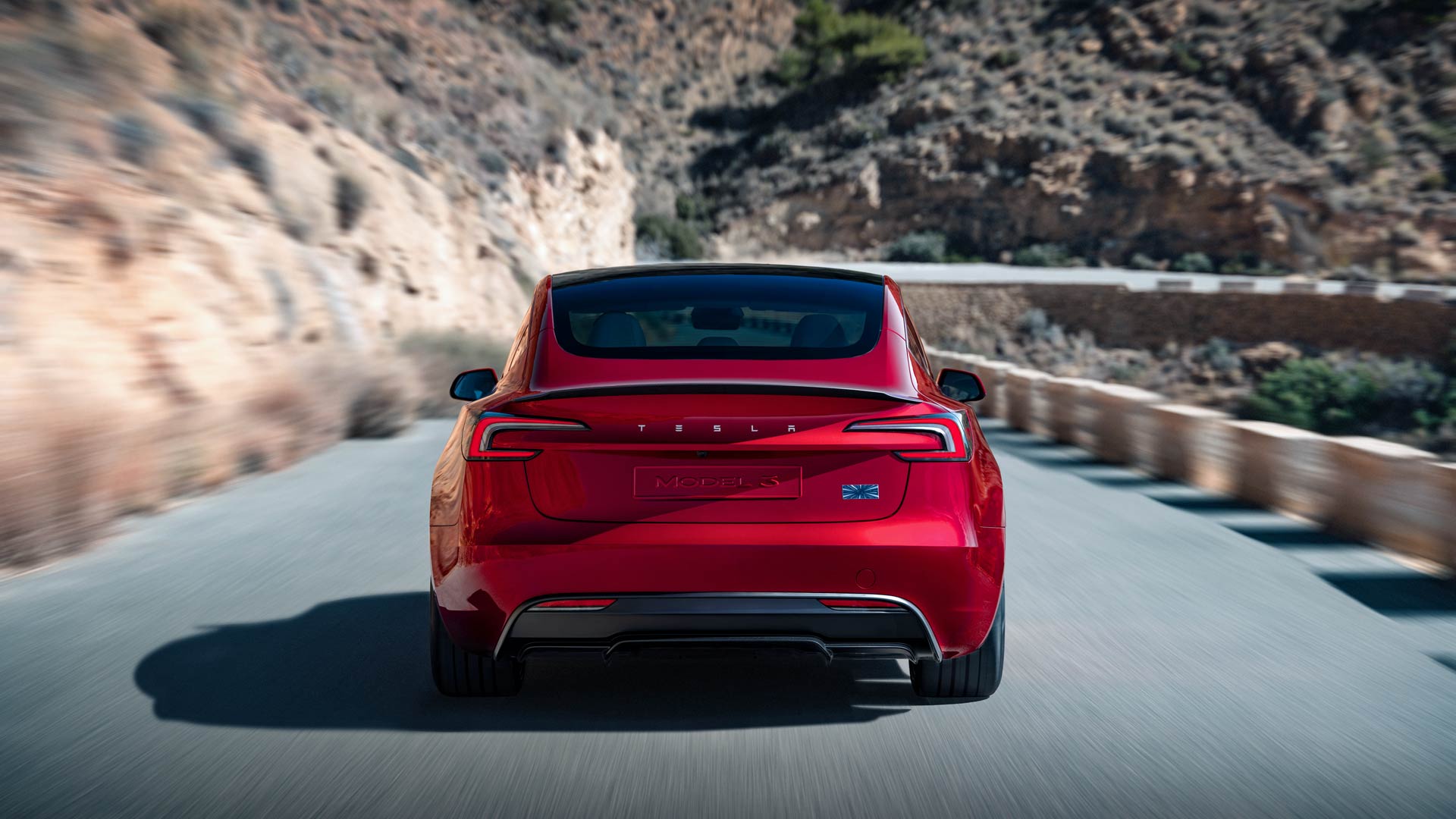
To ensure the Model 3 Performance ticks all the hot saloon boxes, Tesla has given it bespoke exterior styling. New front and rear bumpers are designed to optimise aerodynamics and improve cooling.
A rear diffuser is combined with a carbon fibre tailgate spoiler, designed to enhance high-speed stability.
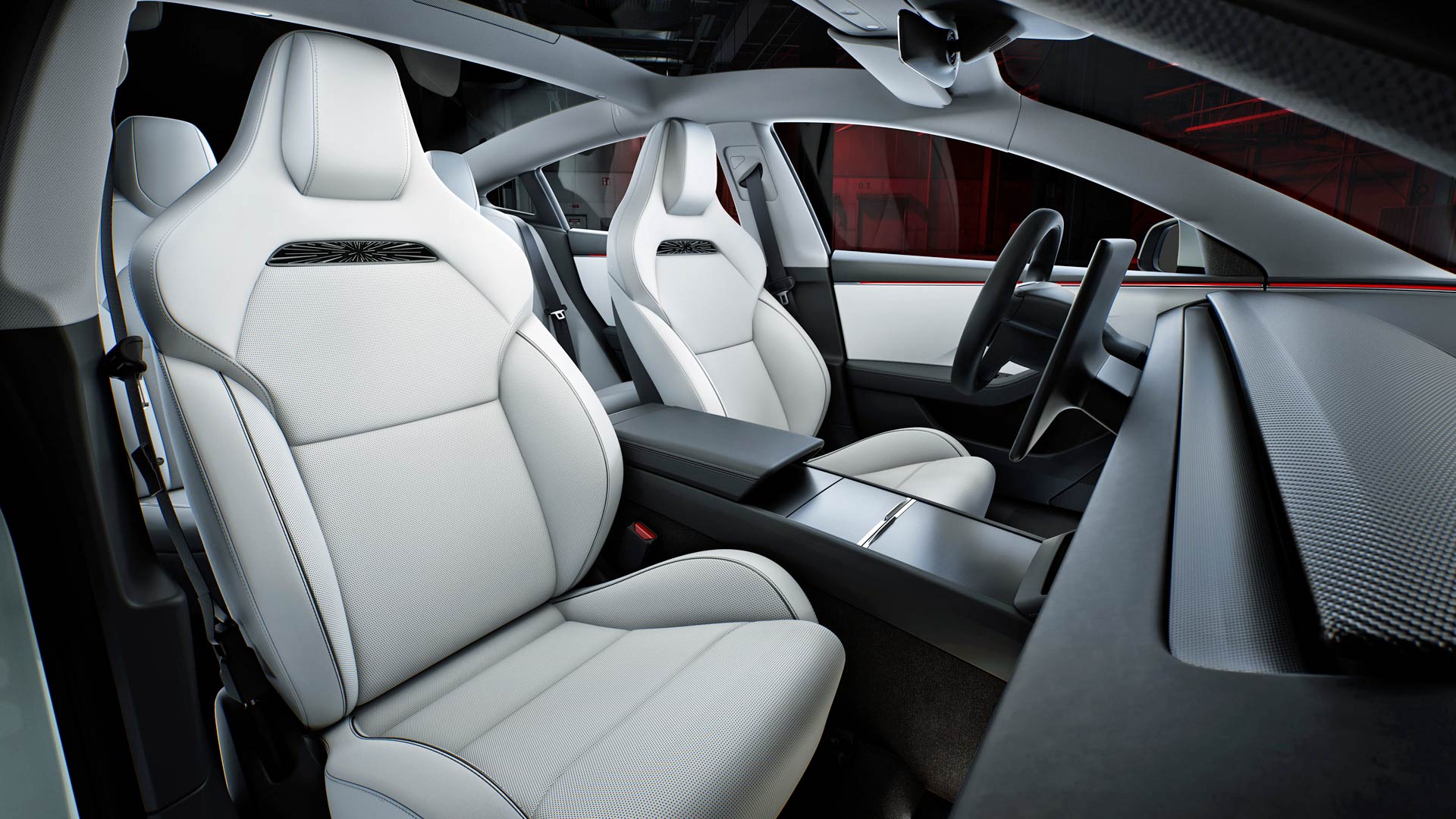
On the inside, the sports seats feature more pronounced side bolsters to aid lateral support when cornering. They also have Tesla’s Plaid detailing, matching a badge on the boot lid.
Aluminium pedals and carbon fibre trim with a bespoke Tesla pattern complete the Model 3 Performance makeover.
On sale right now
The launch of the Model 3 Performance comes as Tesla cuts prices in certain markets such as China and the United States, following a fall in sales this year.
Last week, CEO Elon Musk announced that Tesla will also reduce its global workforce of 140,000 employees by 10 percent, in a bid to lower production costs.
UK prices for the Model 3 Performance start from £59,990, and orders can be placed through the Tesla website. The first first deliveries of completed cars are due in the second quarter of 2024.
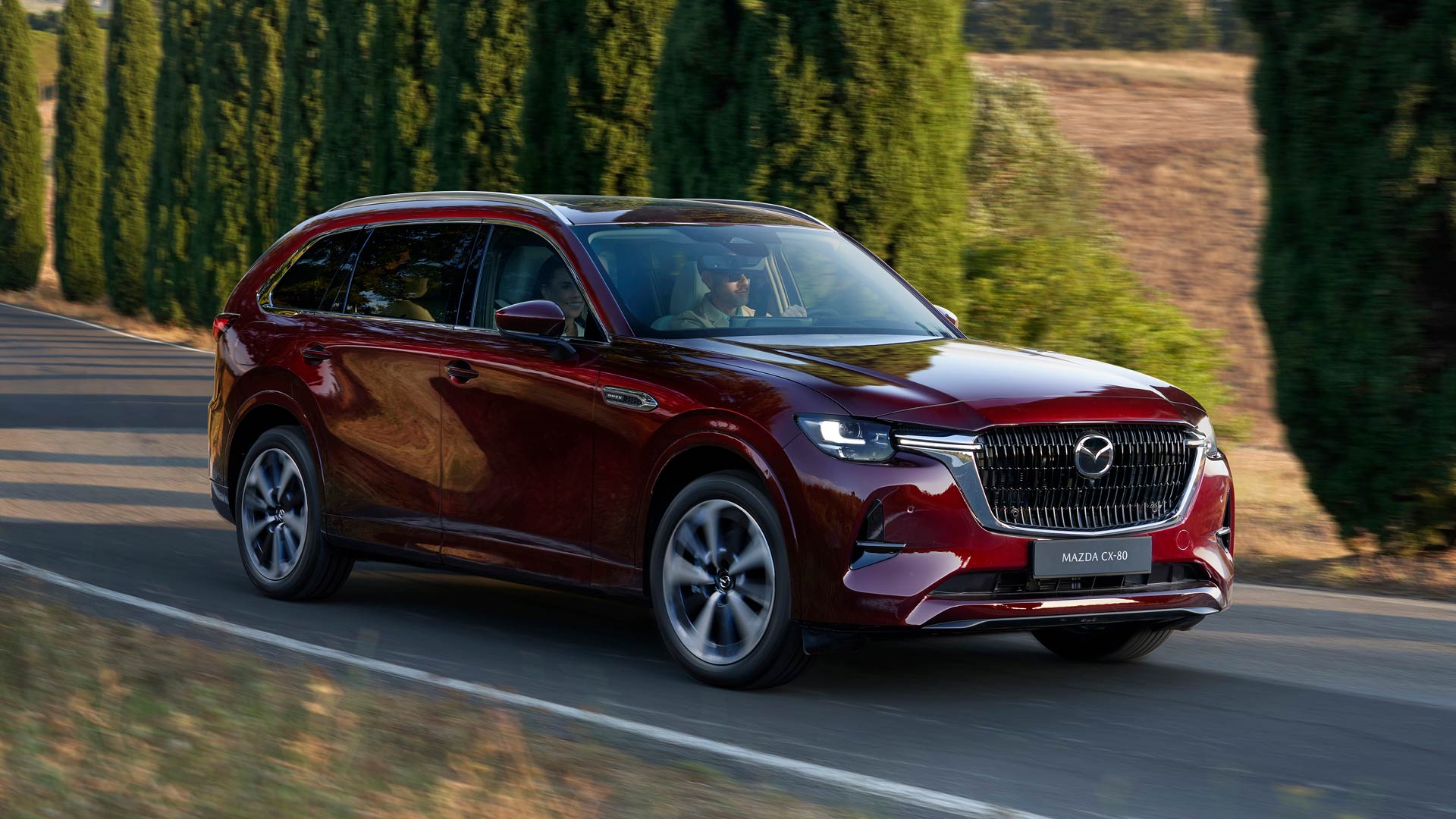
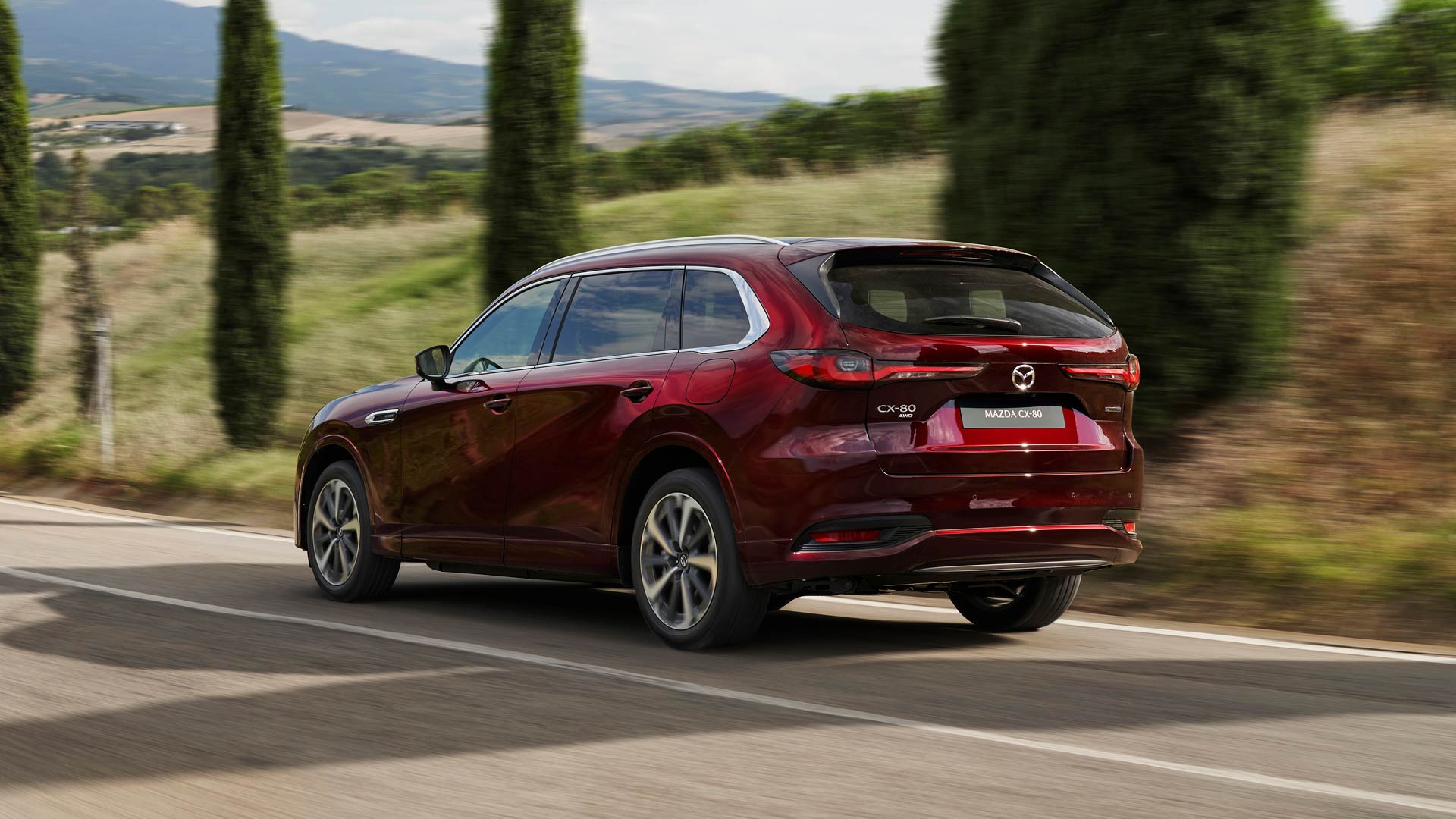
Mazda has announced the largest model in its European range, with the CX-80 debuting as the Japanese company’s new flagship SUV.
The latest vehicle from Mazda’s aptly named Large Product Group, the CX-80 is longer and more spacious than the already sizeable CX-60.
With the promise of a versatile interior and efficient engines, the CX-80 should prove a worthy contender in the hard-fought family SUV market.
Direct rivals for the Mazda will include the Volvo XC90 and new Hyundai Santa Fe.
Room for the whole family
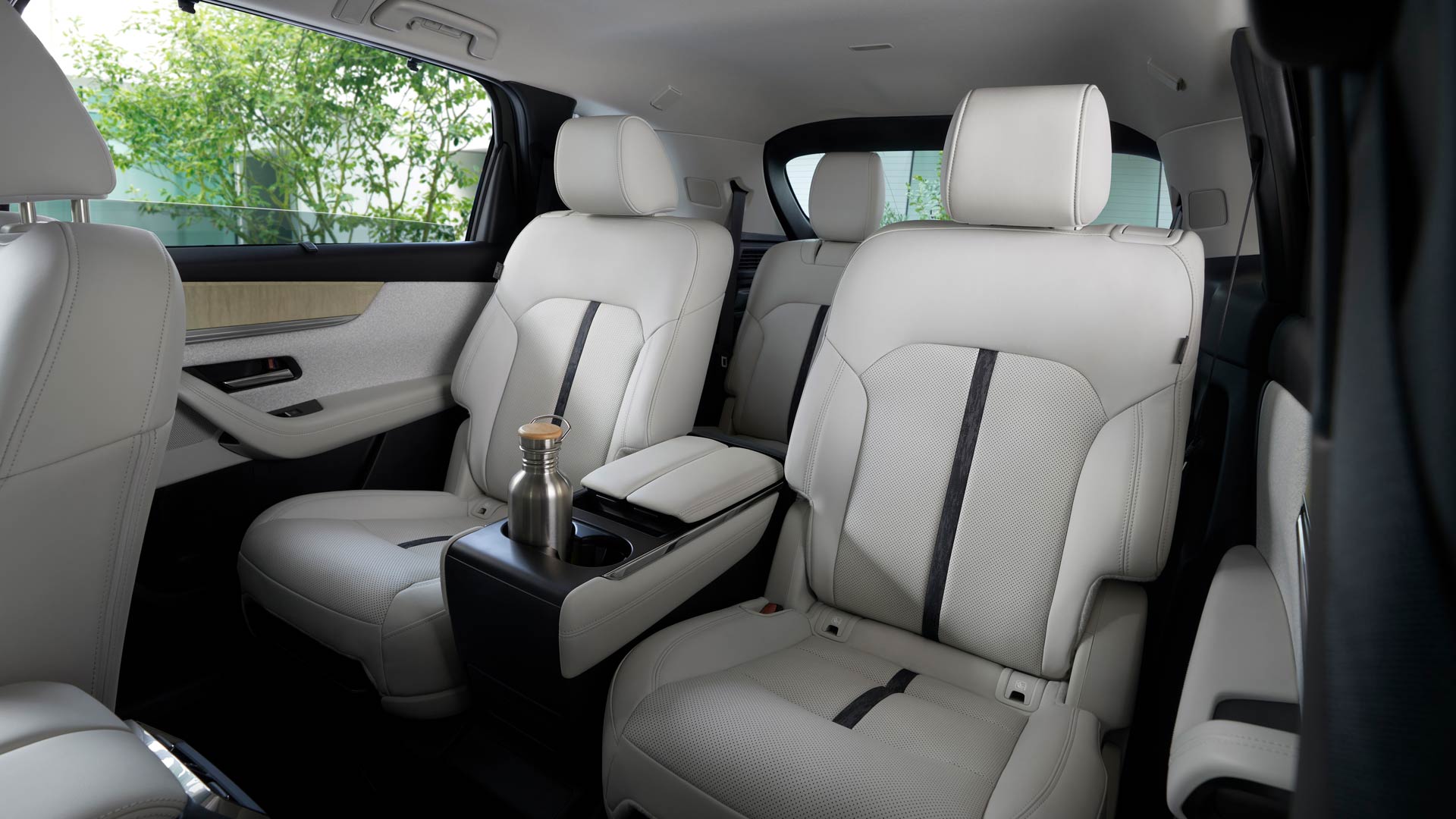
At almost five metres in length, the key selling point for the Mazda CX-80 is its three rows of seats. Depending on the version, customers can choose between six- and seven-seat configurations.
Mazda expects the standard seven-seat version to be the biggest seller in the UK.
Accommodating the extra chairs accounts for the extra 250mm in wheelbase versus the CX-60. Mazda says this is the most spacious SUV it has offered in Europe, although North American customers get access to the even larger CX-90.
The CX-60 and CX-80 do share the same width, and front-end styling is virtually identical between the two SUVs.
Diesel or plug-in hybrid
Unsurprisingly, engine options for the Mazda CX-80 have been lifted directly from the CX-60. This means either a 3.3-litre six-cylinder diesel with 254hp, or a petrol plug-in hybrid with a combined total of 327hp.
For the UK market, all versions of the CX-80 will come with all-wheel drive, which works together with an eight-speed automatic gearbox.
Along with classic Mazda paint colours such as Soul Red Crystal, the CX-80 will introduce two fresh hues for the UK market. Artisan Red and Melting Copper are the new options, available alongside seven traditional colours.
Amazon Alexa inside
Mazda will release full spec details for the CX-80 nearer its launch date, but has confirmed there will be five trim levels: Exclusive-Line, Homura, Takumi, Homura Plus and Takumi Plus.
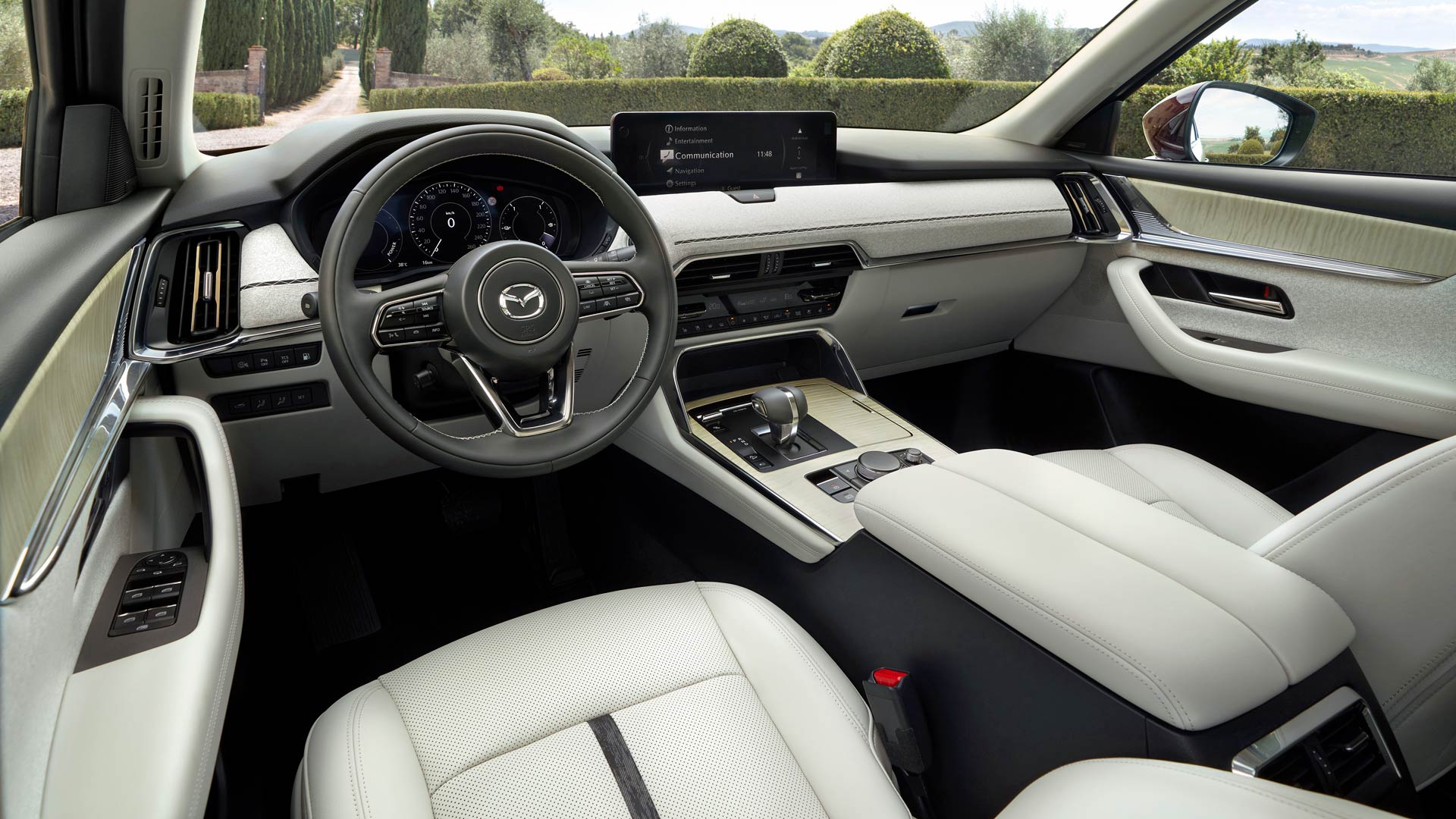
The CX-80 will feature the company’s first use of integrated Amazon Alexa. This allows for voice commands inside the car, used to control music, navigation and the climate control settings.
Sales of the CX-80 are expected to start in the autumn, with prices at £3,500 more than an equivalent Mazda CX-60. The cheapest model should therefore cost from £48,920.