Renault has announced an ambitious target of becoming as consistently profitable as a premium brand by 2022 – and plans to launch 21 new vehicles, including eight all-electric models, to help it achieve this.
By 2022, it’s hoping to achieve an operating margin of 7 percent on sales, with a 5 percent baseline bare minimum figure. For comparison, Audi made a 5.1 percent operating martin in 2016 (admittedly, down from its usual 8-10 percent range); volume sister company (and Renault rival) Volkswagen makes just 1.8 percent on sales.
Of those 21 new Renaults, three will be all-new versions not currently sold, while 12 of them will be electrified: in other words, of all the new vehicles Renault will launch between now and 2022, all but one will offer some form of electric drive. They’ll all be fully connected via onboard SIM cards, too.
And there will be a lot of them: 40 percent more Renaults will be sold by 2022 compared to 2016, hopes the firm. Sales outside its European heartland, in countries such as Russia, Brazil, India and Iran, will double.
Renault robot taxis
The new business plan, called Drive The Future, is aiming to draw in €70 billion (£62.5 billion) in revenues over five years, €18 billion of which will be interested in research and development. Renault will tap into its partnership with Nissan and Mitsubishi – the world’s largest automotive alliance – to push new tech to market.
4 in 5 of the newly launched cars will be built on architectures shared with other Nissans and Mitsubishis. This scale is how Renault aims to launch mass-market autonomous drive: 15 of the new models will offer some form of autonomy.
By 2022, Renault aims to have launched ride-hailing and robot taxis.
Renault chairman and CEO Carlos Ghosn said: “Groupe Renault is now a healthy, profitable, global company looking confidently ahead.” This is following the successful implementation of the firm’s previous corporate strategy, called Drive The Change.
“Drive the Future is about delivering strong, sustainable growth benefiting from investments in key regions and products, leveraging Alliance resources and technologies, and increasing our cost competitiveness.”
He also added that “this new plan will unleash our full potential to innovate and grow in a rapidly-changing industry.” Renault, like so many other car brands, appreciates the need to evolve and believes it has the ability to grow at the same time. Simply maintaining market share is not enough; why not, believes the firm use the disruption as an opportunity to nab some market share and make more money in the process?
The 2018 Toyota Century is a 5.0-litre V8 hybrid we won’t get in the UK
Interbrand pioneered brand valuation in 1988, recognising that strong brands influence customer choice and create loyalty; attract, retain and motivate talent; and lower the cost of financing.
The brand value is based on three factors: financial forecast, the role of the brand, and brand strength. The study is designed to identify the world’s 100 most valuable brands.
Three new entrants make the top 100, with appearances by Netflix ($5.59 billion), Salesforce ($5.22 billion) and Ferrari ($4.88 billion) highlighting the diversity of the Interbrand list.
As expected, the top 10 is dominated by technology companies, with Apple perched at the top of the tree.
Interestingly, Tesla only moved up one position in 2017, having made the top 100 for the first time in 2016. According to Interbrand, its brand value is unchanged at $4.01 billion. Meanwhile, Volkswagen recovered from dieselgate to return a 1% increase, securing a top 40 position in the process.
Speaking about the results, Dr Jens Thiemer, vice president of marketing for Mercedes-Benz Cars, said: “This demonstrates that we’re well placed worldwide with our future-oriented strategy CASE, a consistently innovative brand identity and our wide-ranging product portfolio.
“With our unique combination of tradition and modernity as well as constant innovation as part of the Mercedes-Benz brand DNA, we are ideally placed to play a successful and active role in helping shape the necessary transformations of the digital age.”
The World Car Awards is the biggest automotive awards program out there – bigger than the European Car of the Year awards, bigger than the North American Car of the Year program.
2018 is its 14th year and, at the 2017 Frankfurt Motor Show, the road to the World Car Awards final at the 2018 New York International Auto Show commenced.
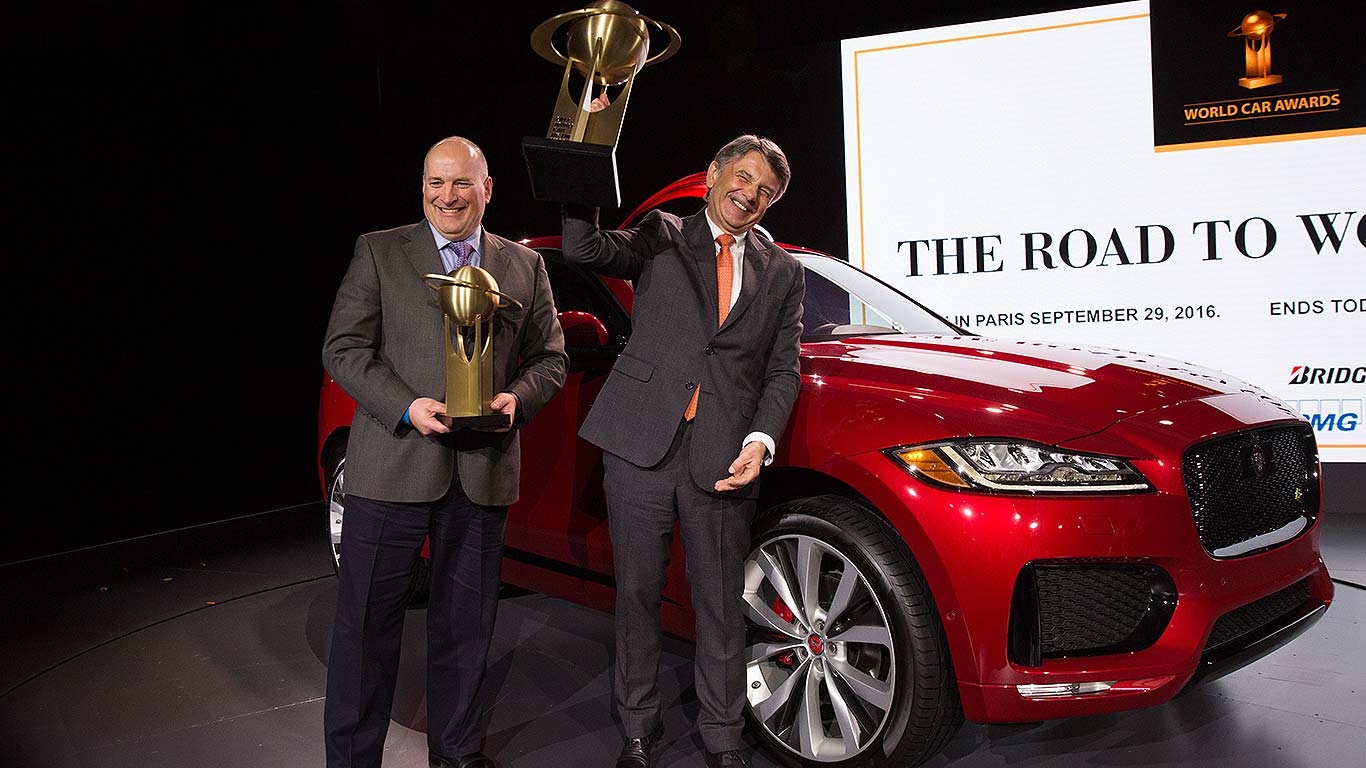
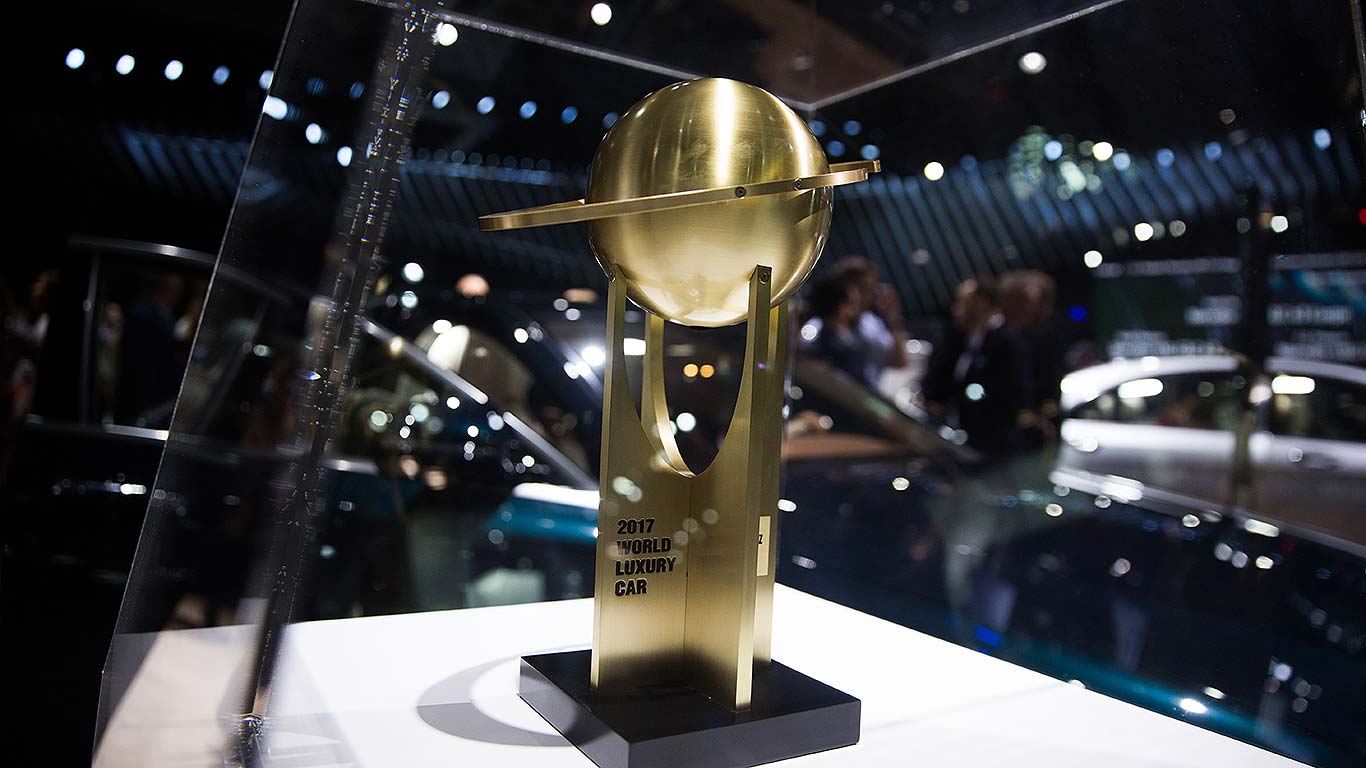
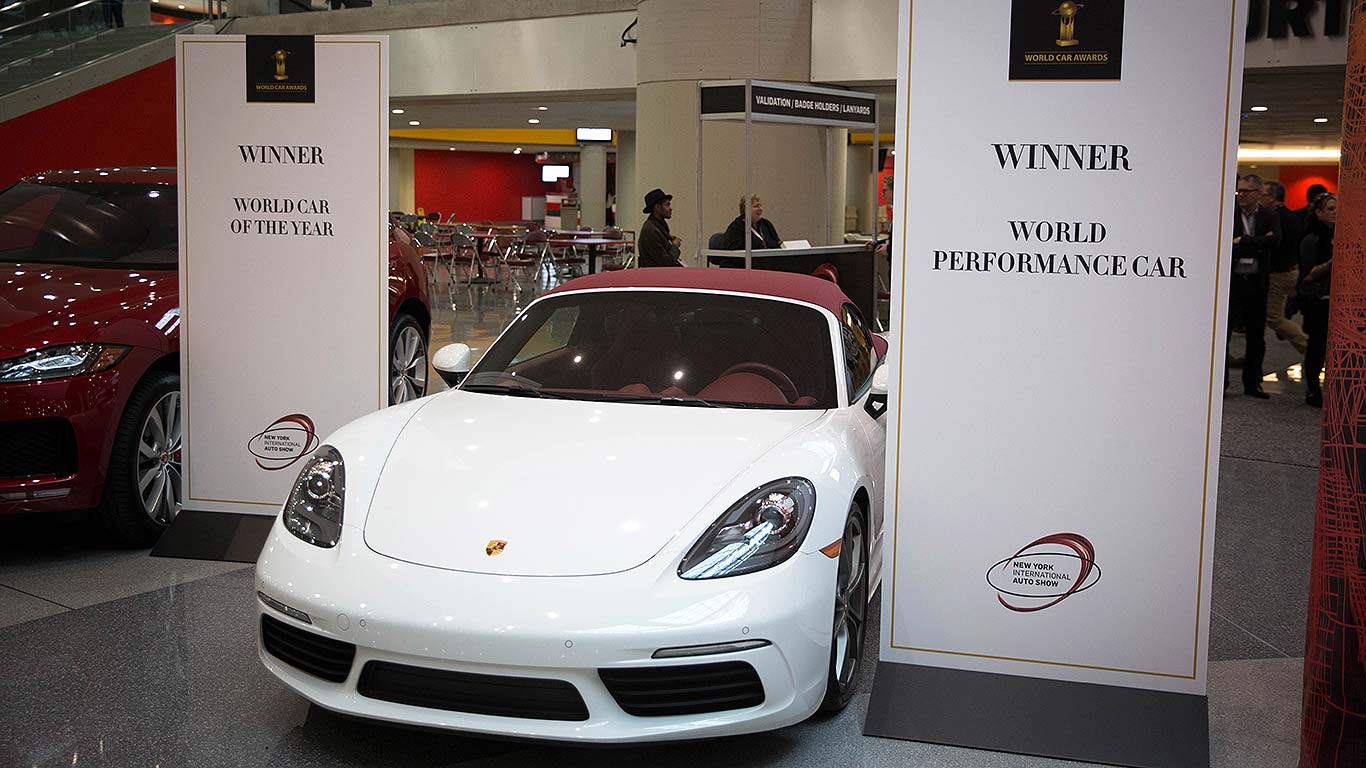
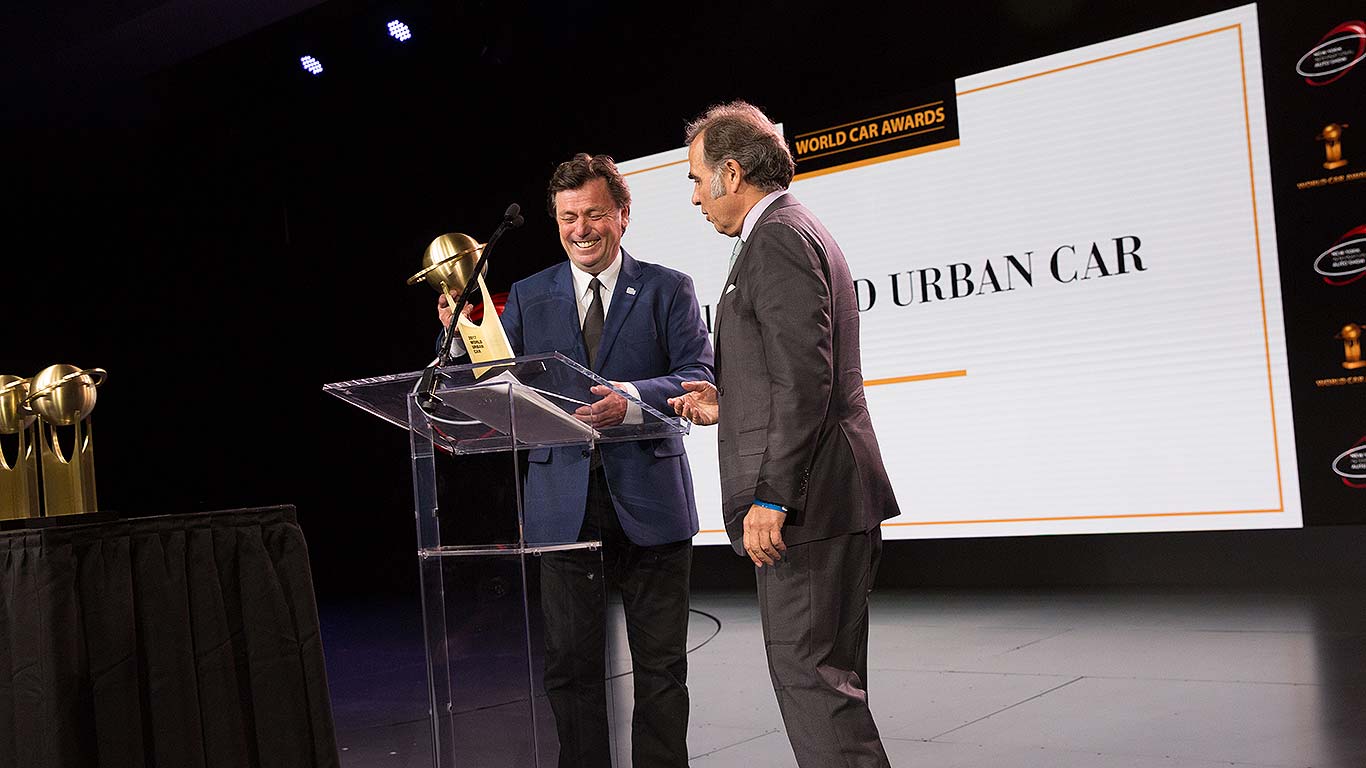
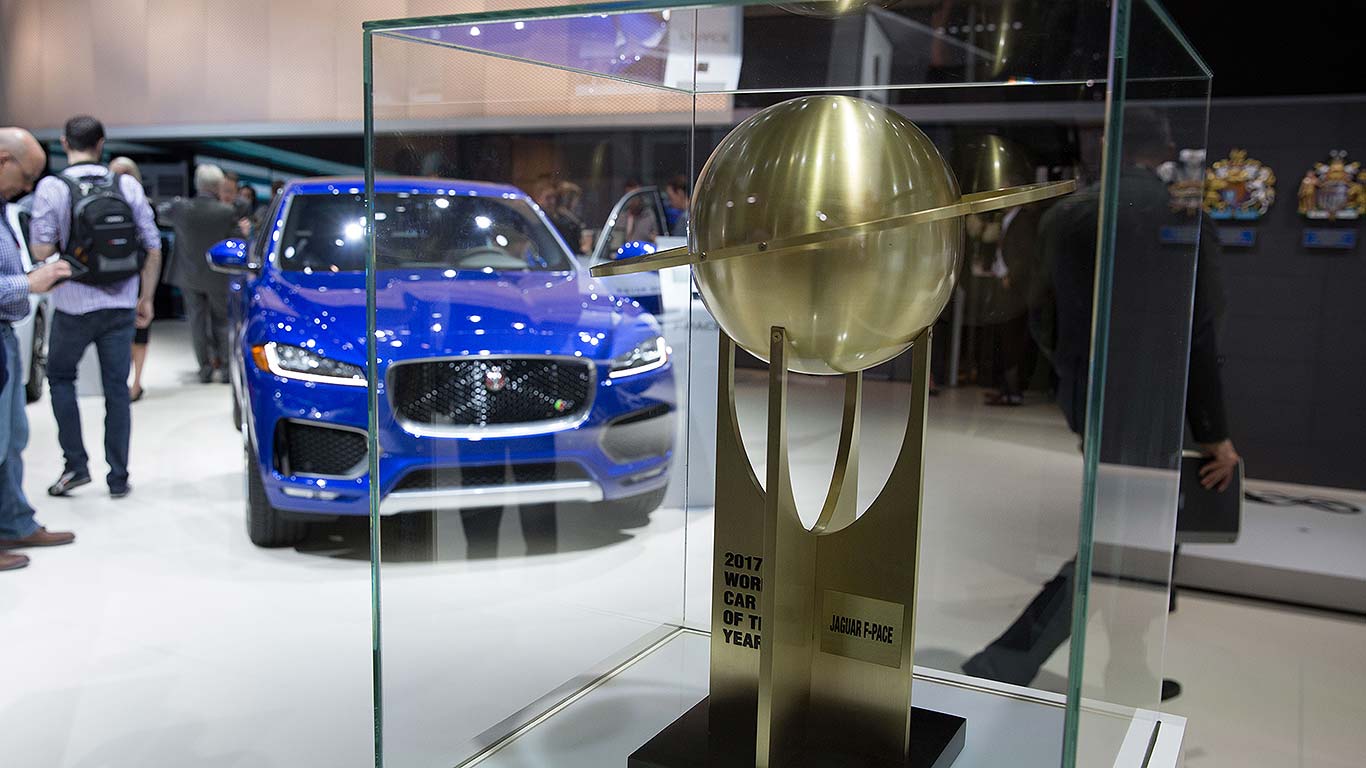
The awards are split into six categories: World Car Design, World Luxury Car, World Performance Car, World Green Car, World Urban Car and the overall World Car of the Year. The overall World Car of the Year Award is the one they all want to win. Last year, Jaguar triumphed with the F-Pace, and the Mazda MX-5 won the year before that.
More than 80 export motoring journalists are jurors for the World Car Awards, across every continent. The awards are split into six categories: World Car Design, World Luxury Car, World Performance Car, World Green Car, World Urban Car and the overall World Car of the Year. And the contenders for 2018 are..?
World Car of the Year 2018: the contenders
The 2018 jurors have a tough task ahead of them – assessing the cream of the new model launches and deciding which of the world’s best cars should have a shot at scooping a prestigious World Car Awards gong. Which new model will succeed the Jaguar F-Pace? The cars in the running for the 2018 prize are…
Click on the images to see the contenders in fullscreen; scroll down to read all about them
Alfa Romeo Giulia
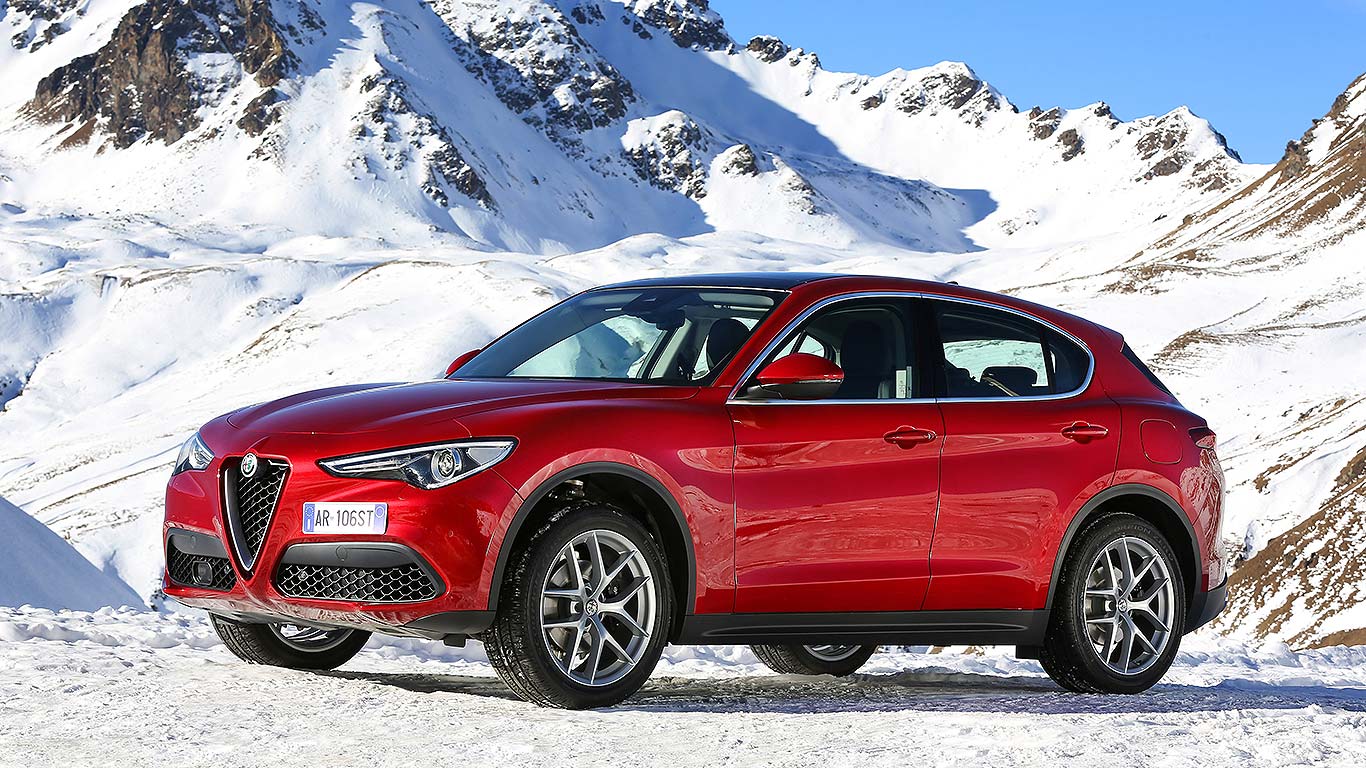
Alfa Romeo Stelvio
BMW Concept X2
BMW X3
Vauxhall Insignia Grand Sport
Citroen C3 Aircross
Dacia Duster
Ford Fiesta
Genesis G70
Honda Accord
Hyundai Kona
Jeep Compass
Kia Niro
Kia Picanto
Kia Stinger
Kia Stonic
Land Rover Discovery
Mazda CX-5
Mitsubishi Eclipse Cross
Nissan Leaf
Nissan Micra
Peugeot 3008
Range Rover Velar
Renault Koleos
Seat Ibiza
Skoda Karoq
SsangYong Rexton
Subaru Crosstrek
Suzuki Swift
Toyota Camry
Volkswagen Polo
Volkswagen T-Roc
Volkswagen Arteon
Volvo XC60
Volvo XC40
Alfa Romeo Giulia
The breakthrough Alfa Romeo sporting saloon has put this famed Italian brand back on the map. It’s as good as we hoped it would be, particularly the thrilling Quadrifoglio model, which squeezes a 510-horsepower V6 engine into a chassis more than capable of coping with it. Even the regular cars are engaging though, bringing a welcome new contender to the BMW 3 Series and Mercedes-Benz C-Class sector.
Alfa Romeo Stelvio
Following up the Giulia in quick succession is the firm’s first-ever SUV, the Stelvio. Using much of the acclaimed tech behind its sports saloon sibling, the Stelvio looks good, drives well and, perhaps even more so than the Giulia, is like to deliver the growth and profits the firm desperately needs.
BMW X2
We’ve yet to drive, or even see, BMW’s promising-sounding X2 small and sporty SUV. It’s taking on the Audi Q2 and, if the X2 Concept we saw last year is anything to go by, should at least be a smart-looking thing. We don’t doubt BMW will deliver on the driving front, either.
BMW X3
The X3 is a crucially important SUV for BMW, one that sells very well around the world. The previous model was always a bit bland and humdrum, despite its popularity: this all-new one thus may even drive yet more sales, because it’s not only more attractive and interesting, it’s also more engaging and enjoyable to drive and travel in.
Buick Regal / Opel/Vauxhall Insignia
A car with many names, the UK’s Vauxhall Insignia Grand Sport is sold as an Opel in Europe and a Buick in North America and China. A talented large car whose abilities and appeal see it almost tiptoe into the premium brand arena, We just hope buyers will be able to look past the badges…
Citroen C3 Aircross
It’s a sign of the times that the Citroen C3 Picasso small MPV has been replaced by this, the C3 Aircross small SUV. Again derived from the talented C3 supermini, it boasts the latest appealing Citroen style outside and in, is decent to drive and is very spacious and practical inside.
Dacia Duster
Dacia has given the popular Duster an extensive mid-life facelift. It’s not an all-new car, but lots of important parts are – such as the front end design, the interior and much of the onboard tech.
Ford Fiesta
The best-selling car in the UK for years, and an European favourite too, the Fiesta is one of Ford’s most popular models outside North America. The previous generation car was an acclaimed star and this new one is even better – the driving magic of its predecessor has been maintained, enhanced with step-ahead infotainment, ride comfort, interior ambience and overall fit and finish.
Genesis G70
The new Genesis G70 is how Hyundai aims to take on the BMW 3 Series and Mercedes-Benz C-Class. Previewed by a striking concept at the New York Auto Show, the production model is a little more conventional but still a standout by class standards. If the superb G90 is anything to go by, we’re hopeful of great things.
Honda Accord
The 10th generation Honda Accord has undergone some big changes. Not least the loss of its creamy V6 engine – instead, buyers are offered four-cylinder motors, either 1.5-litre turbo or 2.0-litre turbo. Let’s not panic too much though: in the Civic, the 1.5-litre is excellent, and the 2.0-litre is basically a detuned Civic Type R motor. With its sharp new styling and much-improved interior, this North American favourite looks in rude health.
Hyundai Kona
The small crossover SUV is the car of the moment and, after the chart-topping success of the pioneering Nissan Juke, carmakers are falling over themselves to introduce rivals. Hyundai’s Kona is one of the crispest-looking of the lot, and first reports suggest it’s decent to drive as well.
Jeep Compass
We like the logic behind the new Jeep Compass. It’s based on a stretched Jeep Renegade platform and looks like a downsized Jeep Cherokee, perfectly filling the gap in the firm’s model range. As with other Jeeps, most are biased for all-road use but there’s a ‘Trail Rated’ full-bore off-roader sitting at the top of the range, for a bit of top-line authenticity.
Kia Niro
The Kia Niro is an interesting compact hybrid crossover SUV. It’s more passenger car than 4×4, and offers a toughened-up alternative to sister company Hyundai’s equivalent Ioniq range. It’s neat, although not as standout as the perennially popular Kia Sportage.
Kia Picanto
The little Kia Picanto is a thoroughly well sorted city car that shows big advances over previous models. It’s pretty much as refined as a supermini, and surprisingly spacious inside, while some strong engines enhance good on-road manners while others appreciate the neat styling.
Kia Stinger
Here’s a Kia with a difference – a rear-wheel drive model with a 365hp 3.3-litre twin-turbo V6 engine! You can of course get lesser Stingers, but all carry the same GT four-door looks: think of it as Kia’s alternative to the Mercedes-Benz CLS. Early reports suggest it drives pretty tidily as well…
Kia Stonic
Kia’s sister car to the Hyundai Kona, the Stonic is as boldly styled as many such compact crossovers, with a practical and family-friendly interior, decent equipment levels and good value for money.
Land Rover Discovery
What a formidable off-road machine the new Land Rover Discovery is – and what a quantum leap it is over the old one when back on it. Refinement is almost Range Rover-like, the interior ambience is far more premium, it’s packed with tech, exceedingly spacious… although for all its excellence, it’s still able to generate controversy with its unusual rear end design – to the frustration of Land Rover’s chief designer…
Mazda CX-5
The previous Mazda CX-5 wasn’t all that old and still drove nicely – regardless, Mazda’s still replaced it with this new one, which carries similar styling but is even better resolved and more capable to drive. It now really is a premium compact SUV in disguise.
Mitsubishi Eclipse Cross
Mitsubishi has been starved of product in recent years, so the introduction of the Eclipse Cross can’t come too soon. Joining the burgeoning compact SUV sector, it brings the firm’s familiar styling themes into a new sector that bosses hope will help it turn around flatlining sales in most markets outside of North America.
Nissan Leaf
Many car makers haven’t even launched their first-generation electric car, yet here’s Nissan with the second generation of the world’s best-selling EV. The all-new Leaf is all set to be an electric car star: it’s far better looking and more appealing than the first, the interior is much nicer, the range is longer, performance is stronger yet it’s no more expensive to buy. With all eyes on the Tesla Model 3, here is the car set to truly take the EV mainstream.
Nissan Micra
After comprehensively dropping the ball with the previous Micra, Nissan’s upped its game significantly with this new one. Built alongside the Renault Clio it shares so many bits beneath the surface with, it’s once again a good-looking, contemporary supermini that marks Nissan’s long-awaited competitive return to this popular new car sector.
Peugeot 3008
The first Peugeot 3008 was a crossover that was more MPV than SUV. Here, Peugeot’s twisted the dial more towards the SUV end, with its chunky, crisp-edged styling benefitting no end. The interior is a genuine triumph as well, and it’s also extremely good to drive. This one surprised many with just how good it is.
Range Rover Velar
The fourth Range Rover model line, Velar sits in between Range Rover Evoque and the Range Rover Sport. It’s a slightly more road-orientated model with elegant styling and a truly standout interior, one that’s plush to drive and, in V6 guise, performs strongly. It’s not cheap, but this probably won’t dent its desirability one bit.
Renault Koleos
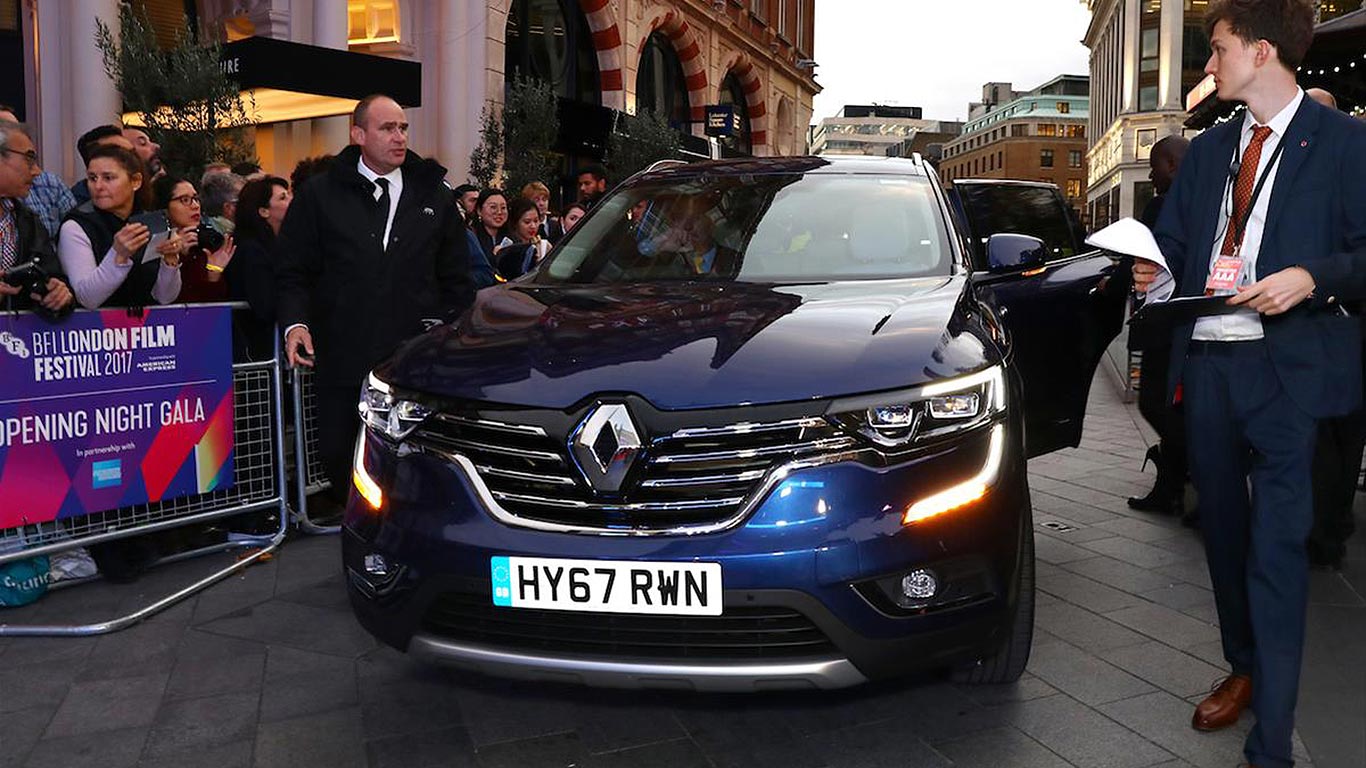
Forget the terrible first-generation Koleos and take a look at this upscale new one. It is a larger, posher five-seat range-topper, sitting above the Kadjar and effectively becoming Renault’s new flagship. It drives nicely and the interior is very practical, so long as you don’t need seven seats.
Seat Ibiza
Wow – what a turnaround for the Seat Ibiza. From a middling, forgotten class player to a true front-runner, the exceptional new Ibiza is a class act to drive, has an interior that wouldn’t shame the larger Leon, and packs in some cutting-edge tech. It’s now closer to the class-leading Ford Fiesta than it’s ever been.
Skoda Karoq
A replacement for the charismatic Yeti, some have mourned the fact the Karoq is more conventional, but this downsized Kodiaq model is exactly what’s needed for the Czech firm to take on the sales-busting Nissan Qashqai it has in its targets.
SsangYong Rexton G4
Big, tough 4x4s are now many times outnumbered by more road-biased crossover SUVs, but that hasn’t stopped SsangYong rolling out the tough-as-old-boots Rexton G4. It’s claimed to offer one of the beefiest towing capacities – 3500kg – for one of the lowest entry-level prices, and all the off-road ability any amateur explorer could ever need, but this time blended with new levels of plushness and refinement for the SsangYong brand.
Subaru XV / Crosstrek
Customers love the Subaru XV and more crossover-style Crosstrek. It’s a superbly reliable go-anywhere car that drives nicely on road and is unstoppable off road for virtually everyone. A welcome upgrade with the latest one is a better quality, more appealing interior.
Suzuki Swift
Suzuki is the master of the small car and its latest triumph is the new Swift supermini. The previous car was just a bit too much on the small side, with a tiny boot and so-so rear space. Both are fixed here, yet without gaining weight or spoiling the racy drive. The interior’s a big step on too, and the Boosterjet engine is a gem.
Toyota Camry
Like Honda, Toyota’s gone bold with its latest Camry – it’s arguably now even more standout than its North American arch-rival. It’s sportier to drive, has far more active safety feature as standard and is more fuel-efficient than the old one.
Volkswagen Polo
If the new Seat Ibiza is good, the new Volkswagen Polo should be even better. It’s built using the same architecture, but with materials just that bit more upscale in quality. You pay a bit more for it, of course, but it’s still not as much as the larger Golf this car is now so expertly imitating. Don’t underestimate the mighty Polo.
Volkswagen T-Roc
What’s this – a standout, head-turning Volkswagen? Yes indeed! To take on the Nissan Qashqai with its first compact crossover, VW knew it had to go radical – but everyone has been surprised by just how bold the T-Roc has turned out to be, both outside and in. We have little doubt it will drive extremely well, either.
Volkswagen Arteon
Volkswagen’s new range-topping passenger car, the Arteon is a replacement for both the CC and, in a sense, the Phaeton. It’s a big car that sits above the Passat, once again bringing striking standout style to Volkswagen retailers.
Volvo XC60
Aiming to repeat the success of the landmark second-generation Volvo XC90 is this, the second-gen XC60. Styling is very much in the vein of the 90, and that’s no bad thing, while the five-seat interior is a triumph and it’s as classy to drive as its bigger sibling too.
Volvo XC40
Can Volvo make it a hat trick of SUV successes? The striking-looking XC40 aims to do just that. It’s as distinctive inside as it is out, and the firm’s promising the all-new architecture is as world-class as the larger 60 and 90. We can’t wait to find out more.
World Luxury Car 2018: the contenders
The world’s most sumptuous cars are rewarded here; last year, the Mercedes-Benz E-Class topped the table, and the contenders for 2018 look equally formidable.
Audi A8
BMW 6 Series GT
Lexus LS
Porsche Cayenne
Porsche Panamera
Audi A8
The Mercedes-Benz S-Class has long been the luxury car to beat, but that hasn’t stopped BMW and now Audi giving it a jolly good fight. The new BMW 7 Series was a step on and Audi’s aiming for the svelte-looking new A8 to make a similar jump. It’s so advanced, it’s the world’s first car to have Level 3-standard autonomous drive functionality, beating even Tesla here.
BMW 6 Series Gran Turismo
Replacing the unfortunate-looking BMW 5 Series Gran Turismo is the newly-elevated 6 Series GT. Gone are the awkward looks and in comes something much more elegant. The interior is, impressively even more spacious and far more luxurious than before. A feel-good car to ride in that BMW says is perfect for China and should do much better than the 5GT in Europe and North America.
Lexus LS
Lexus’ technological flagship, the mighty LS continues to lead the way. This one looks way more modern than the old one and has a quite extraordinary interior, while leading-edge petrol-electric running gear is much cleaner and greener than the old one too.
Porsche Cayenne
It looks pretty similar to the old one but beneath the surface, the all-new Cayenne aims to up this oh-so profitable Porsche’s luxury credentials. It’s always driven well: Porsche now wants the experience to be just as good for passengers.
Porsche Panamera
Porsche has perfected the Panamera concept with this second-generation model. The uncomfortable looks have been smoothed out, the interior’s more spacious and luxurious, while the dashboard is a masterpiece of state-of-the-art design. Petrol-electric hybrid versions are very clever, the Turbo petrols very, very fast.
World Performance Car 2018: the contenders
Judging the World Performance Car contenders is always a treat for any World Car Awards judge. It was the Porsche duo of 718 Boxster and 718 Cayman that triumphed last year: check out the hot cars in the running for the 2018 prize.
Alfa Romeo Giulia Quadrifoglio
Audi RS3 Sedan
Audi RS5 Coupe
BMW M5
Ferrari Portofino
Honda Civic Type R
Hyundai i30 N
Lexus LC 500
Alpine A110
Vokswagen Polo GTI
Alfa Romeo Giulia Quadrifoglio
The sportiest version of the new Giulia saloon is a BMW M and Mercedes-AMG beater straight out the box. The company has spared no expense in equipping it with race-grade tech to give it incredible sporting attitude. It’s a glorious, hilarious blast to drive.
Audi RS3 Sedan
Audi doesn’t know where to stop when it comes to adding power under the bonnet of the RS3. The latest model, newly available in four-door sedan guise, packs a whopping 400hp from the 2.5-litre turbo engine, which means acceleration is nothing short of ludicrous. For such a relatively compact car, it’s fantastic.
Audi RS5 Coupe
Gone is the old Audi RS5 Coupe’s highly-strung V8 and ill-sorted chassis, in comes something far more well-rounded and desirable. This feels like a true high-performance Audi, one with an intelligent and understated breadth of talents. It’s also good-looking, has a sensational cabin and is wildly fast in all weathers.
BMW M5
The new BMW M5 uses a version of the old car’s turbo V8 engine pumped up to 600hp – tamed, for the first time ever, by all-wheel drive. This gives it the traction to serve up crazy acceleration times for such a large car – yet the all-wheel drive system can also be deactivated for tail-out rear wheel drifts on a racetrack all day long (or at least as long as there’s rubber on the tyres…).
Ferrari Portofino
Another car that’s been turned from an ugly duckling into something genuinely pretty and head-turning. The Portofino replaces the California T and finally gives the brand a lead-in convertible hard-top to be proud of.
Honda Civic Type R
This is the hot hatch of the moment, full stop. It doesn’t have the sheer power of the Ford Focus RS, but it’s not far off, and Honda’s managed to develop a car that has thrills, vibrancy and excitement in abundance while also proving well-rounded and full of finesse in everyday driving. It looks amazing, both outside and in – it’s not subtle, sure, but in terms of sheer impact, nothing beats the mighty Type R.
Hyundai i30 N
The talents of the Hyundai i30 N have proven to be a genuine surprise. Perhaps we should have expected the first hot Hyundai to come under the watch of former BMW’s M boss Albert Biermann to be good, but the sheer focus and breadth of abilities demonstrated by the hot N have still wowed us – particularly given the great value for money the car offers.
Lexus LC 500
It looks good, but there’s more to the Lexus LC 500 to simply appearing pretty. It has a well-developed chassis beneath it all, and a very exciting V8 range-topping engine. The GT car that can teach Mercedes-Benz and even Aston Martin a thing or two?
Renault Alpine A110
To say anticipation is high for this exciting little rocketship of a coupe is putting it mildly. It’s been a long time in the making but will be driven very, very soon – and we’re fully expecting sparks to fly. We can’t wait to get behind the wheel.
Volkswagen Polo GTI
The new Volkswagen Polo is brilliant, and the most appealing one of all may well be the range-topping GTI. Using the same 2.0-litre turbo engine as in the Golf GTI is a great start, as is being developed by the same man responsible for recent hot Golfs. It has all the makings of being a bit of a gem.
World Green Car 2018: the contenders
Judges voted the plug-in hybrid Toyota Prius Prime (also known as the Prius PHEV) as the greenest new car of 2017. There are some equally forward-looking contenders in the running for the 2018 gong too.
BMW 530e iPerformance
Chevrolet Cruze Diesel
Chrysler Pacifica Hybrid
Hyundai FE Fuel Cell
Nissan Leaf
BMW 530e iPerformance
Diesel is fast dropping down the agenda, with electric-assist hybrids being the name of the game. BMW is able to respond in one of the most important model sectors it competes in, the executive class, with the petrol-electric 530e iPerformance. This plug-in hybrid model is all set to take a significant proportion of sales – some of which will come at the expense of the 520d and 530d…
Chevrolet Cruze Diesel
Diesel is dead in North America? Try telling that to Chevrolet, which is going ahead with its roll out of the Cruze Diesel. The firm is hoping there’s still an appetite for diesel in the States: will customers agree?
Chrysler Pacifica Hybrid
Adding electric hybrid assistance to the innovative, well-liked Chrysler Pacifica boosts its green credentials. For customers, it means better fuel efficiency and lower tax, for the planet it means fewer nasties being pumped out by America’s top-selling minivan.
Hyundai FE
We’ve only seen this as a concept, but it’s going to be here any time soon – the svelte Hyundai FE fuel cell will build upon the firm’s experience in retailing the Hyundai ix35 hydrogen fuel cell. Can it take the fight to the Honda Clarity and Toyota Mirai? If it can, it could genuinely be a front-runner for the 2018 Green Car Award.
Nissan Leaf
Nissan has learnt so much with the original Nissan Leaf, it’s putting all this knowledge into the second-generation model, which is all set to be the best all-electric car the world has yet seen. Do not be surprised if the new Leaf is a grade-A groundbreaker.
World Urban Car 2018: the contenders
This was a new category for 2017, honouring the greatest cars for use in the city. Last year, the ingenious all-electric BMW i3 won… which will be the best car for urbanites in 2018, though?
Ford Fiesta
Volkswagen Polo
Suzuki Swift
Seat Ibiza
Nissan Micra
Kia Stonic
Kia Picanto
Hyundai Kona
Ford Fiesta
For years, the Ford Fiesta has been an exemplar. With this all-new one, Ford has improved all the old model’s weaknesses, upped the premium-finish appeal, yet barely grown it an inch over the old one. With the added draw of an ultra-posh Vignale range-topper, more than ever it’s a supermini star.
Hyundai Kona
SUV crossovers are taking over from superminis as the car to have for urbanites. Whereas the Hyundai i20 is worthy but dull, the similarly-sized Kona is all cool appeal and striking looks. It could even trade places with the i20 in terms of sales – and we’d fully understand why.
Kia Picanto
New city cars are a bit thin on the ground, making Kia’s achievement in making the all-new Picanto such a talented micro-sized model all the more praiseworthy. It’s a budget car that never feels cheap, and still manages to put a smile on your face even in its most affordable guise.
Kia Stonic
The Kia Rio, like the Hyundai i20, is an able car, but not the most thrilling of machines. So, again, the Stonic is coming to spice up the firm’s small car line-up – and we expect it to have a similarly significant effect on the sales mix.
Nissan Micra
At last, Nissan has upped its game in the small car sector, after years of lagging behind with the old Micra. This new one is at last a car worthy of sitting in the same showroom as the Qashqai and Leaf – and some of the onboard tech it packs in makes it a genuinely appealing supermini in its own right.
Seat Ibiza
Seat has transformed the Ibiza’s fortunes, following up on the success it’s enjoyed with the latest Leon and new Ateca. The Ibiza enjoys one of the youngest new car buyer profiles in Europe – who are now being treated to one of the best cars in its class for the money.
Suzuki Swift
Clever, value-priced small car engineering, the ingenuous Swift is a triumph of Japanese design. It’s thoughtful, usable, robust and dependable, and the cute looks of the original have made a welcome return on this latest one too.
Volkswagen Polo
Like a Golf, only smaller. The new Polo distils all the brilliance of Volkswagen’s best-selling family hatch into a more compact package, making it a car that’s all set to return to the top tier of Europe’s best-seller charts.
World Car Design 2018: the contenders
All cars eligible for the other World Car Awards categories are also entered into the overall World Car Design award – which is judged by an expert panel of car designers. Last year, the Jaguar F-Pace triumphed. Which will win this year? Because they’re not represented elsewhere, the jurors have added two other new models that they think are worthy of consideration, too.
BMW i8 Roadster
The open-top version of BMW’s dramatic i8 petrol-electric supercar, this has been a long time coming but is finally set to launch in dramatic style.
Lamborghini Urus
Lamborghini’s first modern SUV, the Urus has been shown in concept guise for years – its production launch is imminent… so the world will finally be able to see if the maker of the world’s most dramatic supercars can also turn its talents to making the most radical-looking production SUV design on the planet.
The list of contenders for World Car Awards 2018 is now out – and, of the 35 models longlisted for the prestigious World Car of the Year honour, a full 21 of them are either SUVs, crossovers or 4x4s.
Yes, the world really can’t get enough of the SUV.
A bit of background: the World Car Awards initiative is one that complements important regional Car of the Year prizes, such as North American Car of the Year, and European COTY. It’s been independently judged the largest automotive awards in the world, for several years running.
It’s judged by auto journalists across the globe, and only cars launched over the past year, which are available in at least five countries or two continents, are eligible.
So, the fact 6 in 10 of the newest cars offered in multiple regions is proof positive of the global clamour for SUVs.
They come in all shapes and sizes: the little Hyundai Kona, Kia Stonic and Citroen C3 Aircross. The affordable Dacia Duster. The family-friendly BMW X3, Mazda CX-5 and Volvo XC60, the go-anywhere Land Rover Discovery and SsangYong Rexton G4, the lavish Range Rover Velar, the radical Volkswagen T-Roc, the sporty Alfa Romeo Stelvio.
No matter what type of SUV you want, there’s a new SUV on the market for you.
That’s all well and good, but what about the cars of the future? Well, it seems they’re still not quite ready yet. Of the newly-launched cars in the running for the World Car of the Year prize, only one – the Nissan Leaf – is a fully electric car.
But then, only six of the 35 longlisted cars are traditional small car superminis, and just eight of them are sedans or family-focused models.
See, the old guard is changing, and car manufacturers are responding to changing tastes. It’s just that the mouthwatering cars of today, no matter where in the world you live, are decidedly SUV-shaped. We’ll be clamouring over electric cars in the future. For now, everyone on the planet only has eyes for the SUV, the crossover, the 4×4.
Will an SUV go the full distance and win the 2018 World Car of the Year prize, following 2017’s triumphant Jaguar F-Pace? Or, could the judges decided that another type of car is actually the smartest, most appealing and market-friendly new model launched this year instead?
That’s what the panel will be spending the next few months deciding – and, as a UK juror, I’ll be driving and reviewing them all ahead of casting my votes.
One thing’s for sure: I’d best get used to having an SUV on my driveway…
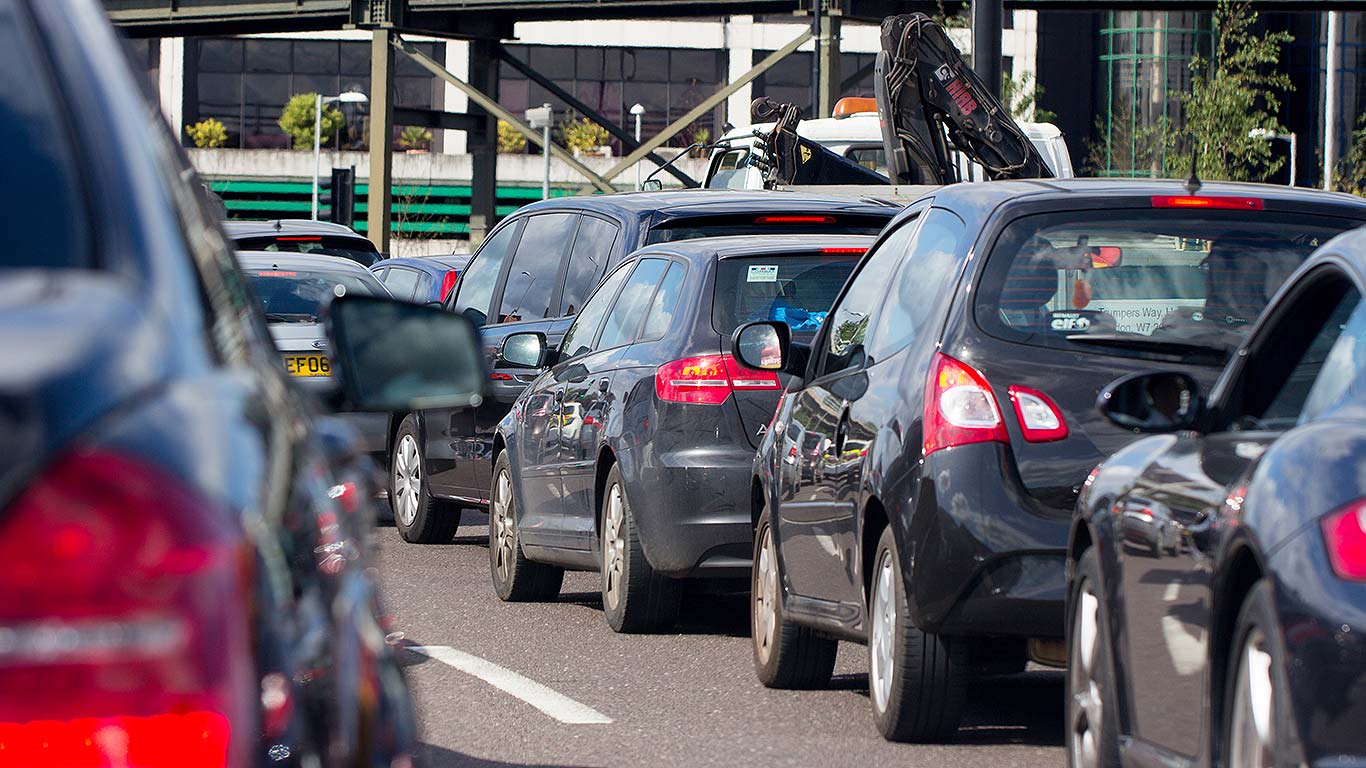
Those who are railing against diesel car emissions are generally missing one important detail: it’s older diesels that are the problem, not brand-new ones. And this failure to bother about the facts in the witch hunt for a headline-grabbing rallying call is set to have one ironic side-effect.
Air quality will get worse.
Already, new car buyers are steering clear of diesel cars – the latest Society of Motor Manufactures and Traders (SMMT) figures show demand for diesel has plummeted 21.7 percent in the key new car sales month of September. Last year, almost 218,000 diesels were registered: this year, it’s barely 170,000 – a whopping fall of over 47,000 diesel cars.
Diesel took a 40.1 percent market share last month, compared to 46.4 percent in 2016. What are car buyers choosing instead? Well, some of them are choosing alternative fuel vehicles, such as hybrids and plug-in hybrids, which is great: sales were up 41 percent in September.
But this is from a low base and still only represents a 5.3 percent market share. And, heavens forbid if some of them are misused: Motoring Research reported only last month on how one company has found plug-in hybrids emit more CO2 than diesel cars because people are not plugging them in.
Most car buyers, though, are simply switching back to petrol: the fuel took a 54.6 percent share in September 2017. Which is awkward for those proclaiming to care about air quality, because modern, brand-new Euro 6 diesel cars are, in official testing, allowed to emit little more NOx than petrols, can’t emit any more particulates than petrol…
…But, thanks to the greater efficiency of diesel fuel over petrol, generally produce around 20 percent less CO2 (and, per kilometre, half the amount of ground-level ozone-forming carbon monoxide). So by scaring people off diesel cars, environmentalists are pushing people into motors that produce significantly higher amounts of greenhouse gases, for a negligible if non-existent reduction in NOx emissions.
Daft, huh?
Even more daft is the fact people are so worried by this confusion, they’re actually putting off buying new cars entirely. So the single biggest thing someone could do to improve air quality – swap a dirty old model for a clean, green new one – is being put on hold. Old smokers will continue smoking around for a while yet; air quality will thus fail to get better.
OK, maybe that’s an anecdotal example. For hard facts on how the diesel debate (or, anti-diesel diatribe) is going to affect air quality, look to the SMMT’s own data. “Confusion surround air quality plans has inevitably led to a drop in consumer and business demand for diesel vehicles, which is undermining the roll out of the latest low emissions models and thwarting the ambitions of both industry and government to meet challenging CO2 levels.”
Which means? At the current rate, “UK average new car CO2 levels could actually rise this year, the first time such an increase would have occurred since average CO2 emissions were recorded”.
That’s right – CO2 is, officially, set to go up. Air quality is going to get worse. And all because some can’t tell the difference – or aren’t interested in explaining the difference – between a clean new diesel and a smoky old one.
Question is, just how much worse will air quality have to get before we can start having a grown-up and informed debate about all this?
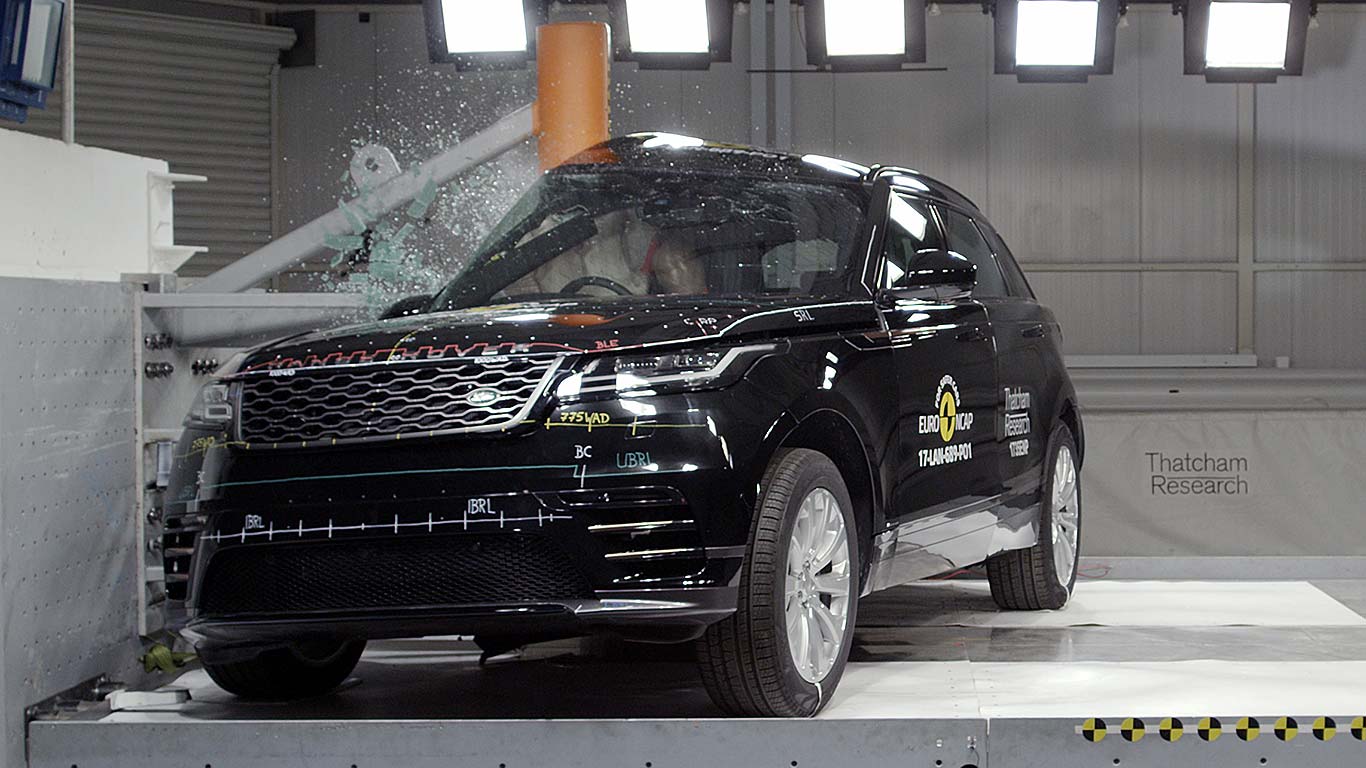
Euro NCAP has declared the modern SUV one of the safest types of new car motorists can choose. The organisation has tested 15 SUVs since 2016 and says they “perform consistently well in impact testing, particularly for adult occupant protection”.
This is good news for new car buyers who are turning to SUVs in ever-greater numbers: following fashion is having a positive knock-on effect on crash protection.
Global NCAP ‘frustrated’ by slow Mexican new car safety laws
The latest model to be tested is the Range Rover Velar, which has scored a full five-star Euro NCAP safety rating, winning particular praise for a very strong side impact test performance: driver’s head protection is particularly crucial here.
And allaying fears that big, heavy SUVs’ safety strength for occupants could be to the detriment of pedestrians, Euro NCAP has also applauded the Velar’s active safety technology, including standard-fit features “designed to avoid the crash happening at all”.
The newest Range Rover scored 75 percent in the Safety Assist category, which is a full seven percentage points better than the SUV average. As standard, it’s equipped with adaptive speed limiter, lane departure warnings, seat belt reminders for passengers – and autonomous emergency braking that can slow the car to a halt if it detects a car or pedestrian ahead that the driver hasn’t reacted to.
“With small SUV sales set to break the two million barrier in 2018, it’s exciting to see one of the leading carmakers in the category deliver on standard-fit active safety systems,” said safety organisation Thatcham Research’s director Matthew Avery.
Indeed, Jaguar Land Rover was earmarked for particular praise, after the Land Rover Discovery and Discovery Sport also recently scored five-star Euro NCAP ratings. “This is another signal from Jaguar Land Rover that safety is a priority.”
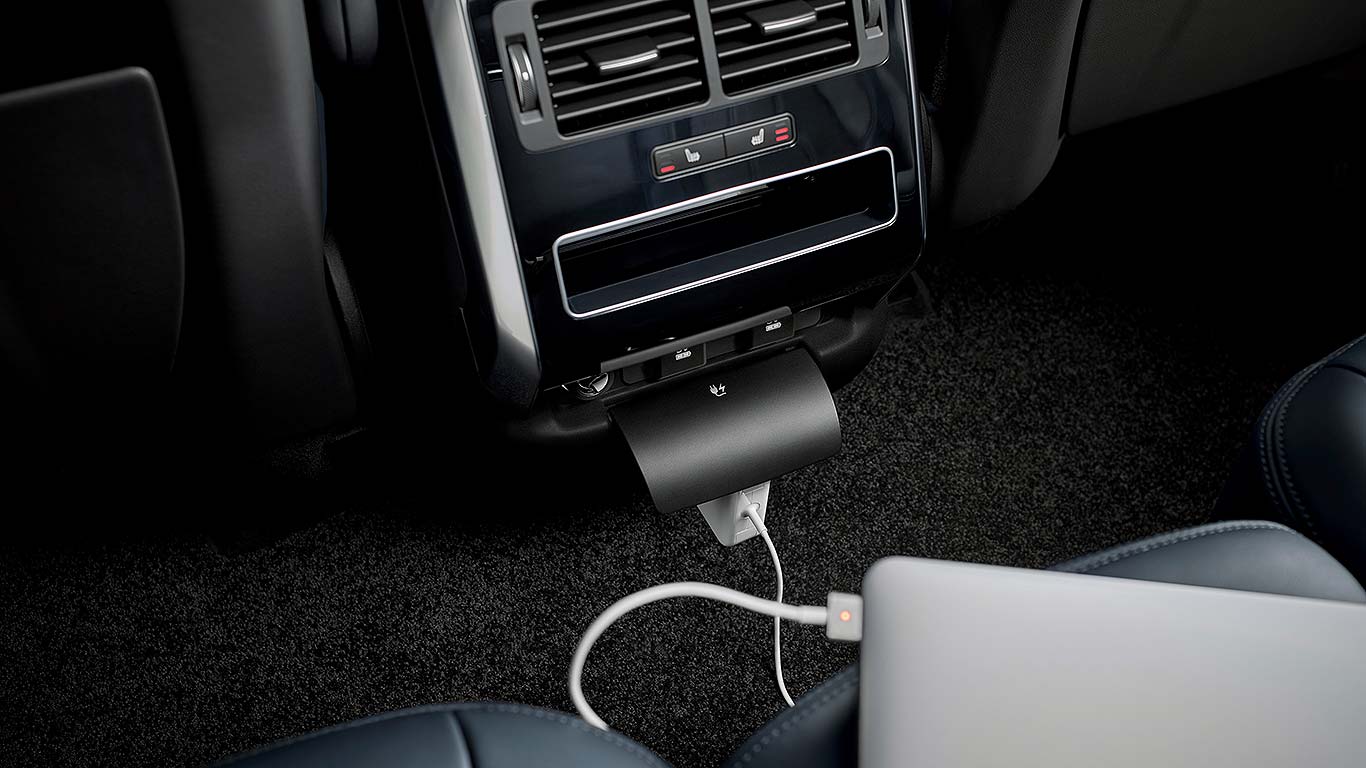
New cars come with umpteen sockets for charging 12V and USB devices, but what about if you need to plug in something you’d ordinarily hook up at home? Land Rover thinks it’s stolen a march on the competition here – by introducing its first model with built-in three-pin plug sockets.
The new 2018 Range Rover Sport now comes equipped with two three-pin plug sockets. There’s one domestic socket in the rear of the centre console, for back-seat passengers, and Land Rover has also fitted one in the load compartment.
The idea is to allow passengers to charge up laptop computers, and owners to plug in, say, portable coolboxes in the boot – although the possibilities are endless: if it has a plug, plug it in. The car won’t quite have the electrical oomph of a domestic socket, but it should easily handle a power-hungry laptop while you sip your motorway service station coffee.
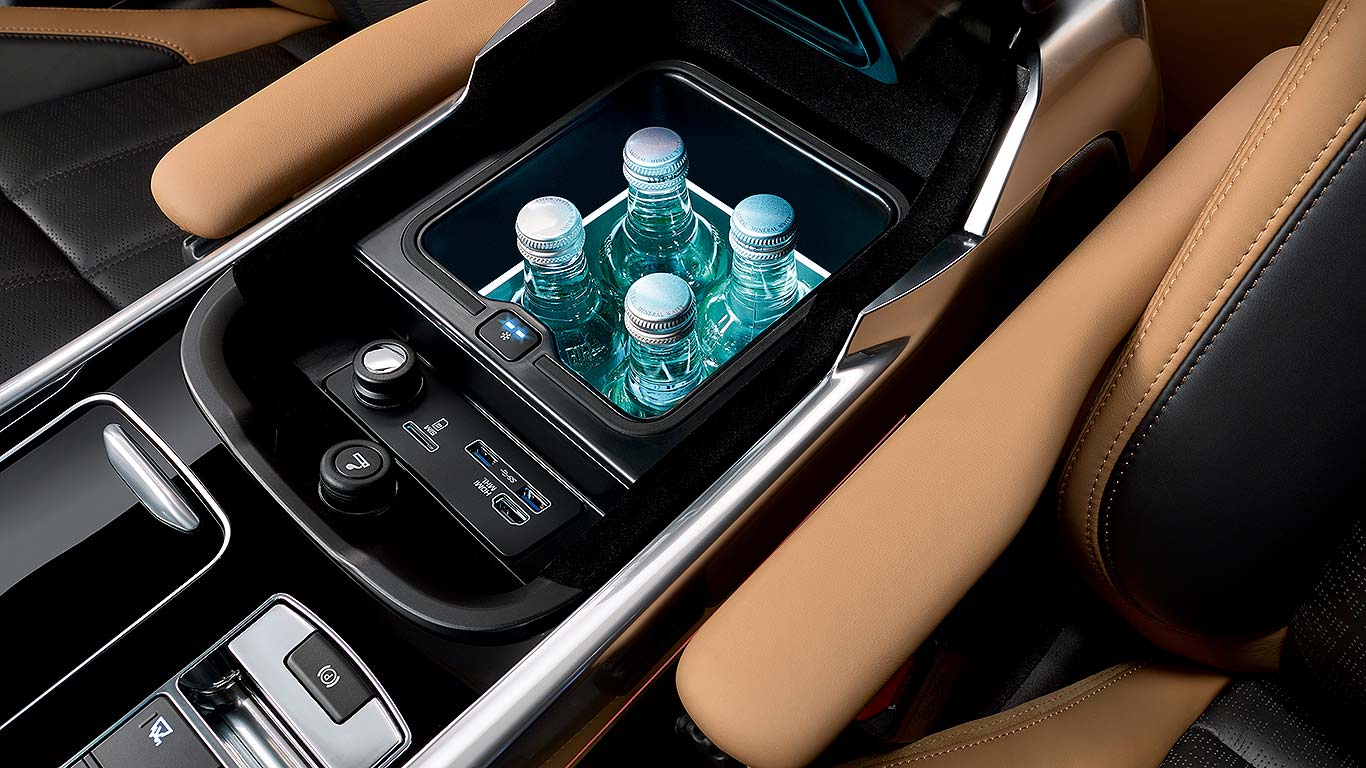
The addition of two domestic sockets takes the total connection points on board the new Range Rover Sport up to 14 (yes, they’ve counted them). In the front, there are USB, HDMI and 12V connections in the front cubby, plus another 12V socket in the glovebox.
In the rear, there’s another suite of 12V, USB and HDMI sockets, plus the domestic plug socket, and the boot carries both the second three-pin plug socket and yet another 12V hub.
Swelling the 2018 Sport’s plug and play credentials yet further is the introduction of a new P400e plug-in hybrid version – whose petrol-electric drivetrain and extra-capacity lithium ion batteries give the big SUV 101mpg claimed fuel economy potential and the ability to run for 31 miles as a pure EV.
Making the new Range Rover Sport the most plugged-in new car on sale?
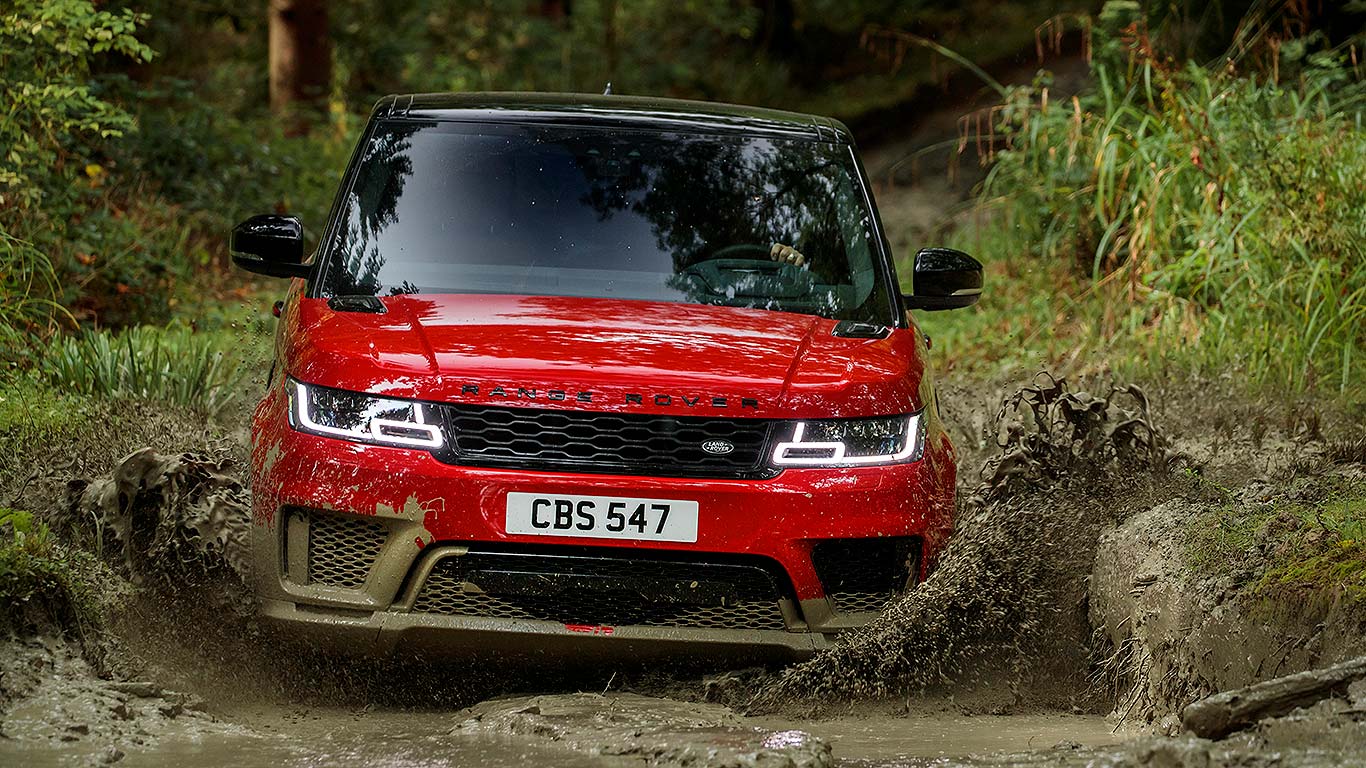
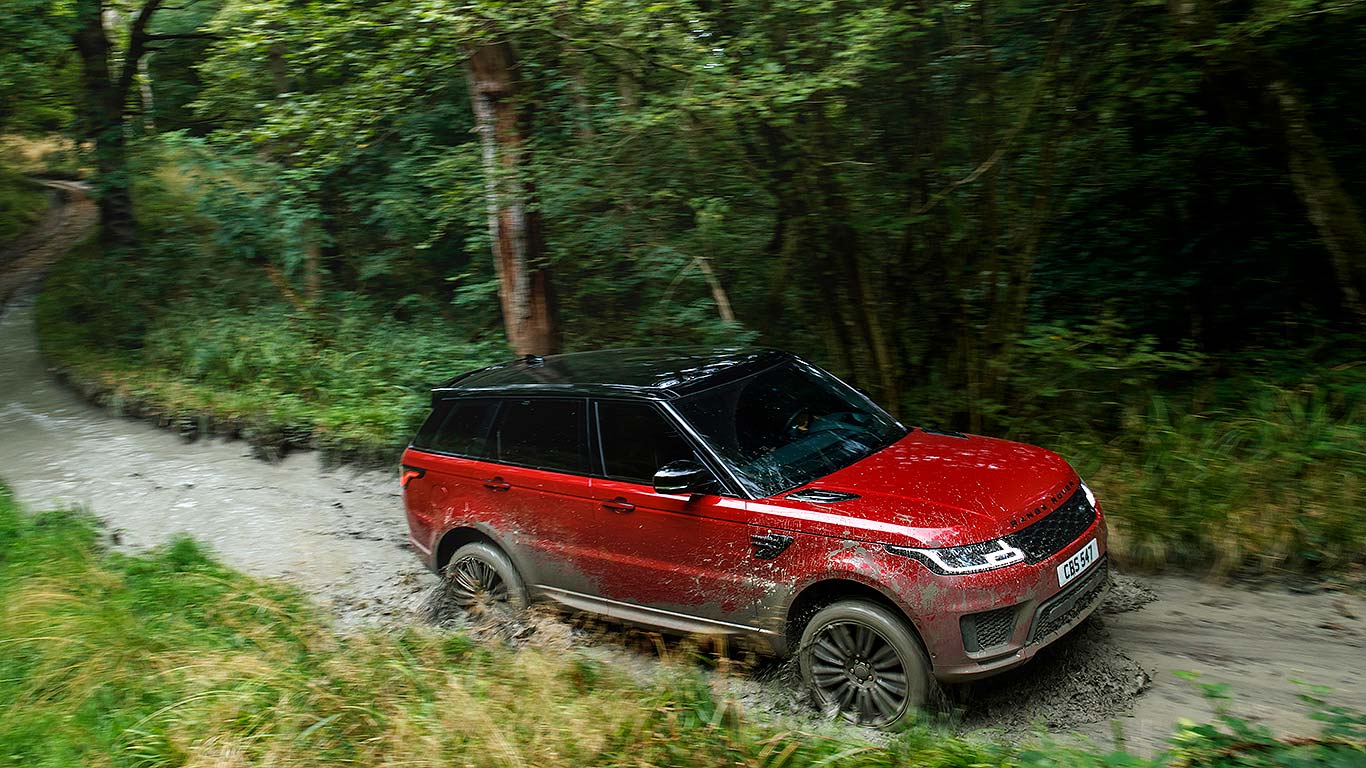
Land Rover has launched the first-ever Range Rover Sport plug-in hybrid, one that combines a 404hp total power output with official fuel economy of 101mpg and an all-electric driving range of up to 31 miles. It joins the range in a series of updates for the 2018 model year.
The new Range Rover Sport P400e pairs a 300hp 2.0-litre four-cylinder turbo Ingenium engine with an 85kW electric motor. Combined with permanent four-wheel drive, this gives it a 0-62mph time of 6.7 seconds and a top speed of 137mph.
Yet the Range Rover Sport P400e PHEV also officially emits 67g/km – making it easily the best-ever Land Rover or Range Rover for exhaust emissions.
A 13.1kWh lithium ion battery gives it enough juice to travel over 30 miles as a pure EV, which also makes it the first time a zero-emissions Land Rover has ever been offered. Owners can even programme the sat nav to work out when best to swap between engine-on and engine-off modes, by using GPS data along the route.
Land Rover hasn’t given it umpteen confusing driving modes though, choosing instead to keep things simple – either Parallel Hybrid mode, which juggles engine and electric motor automatically, or EV mode, which runs the Range Rover Sport as a pure EV until the batteries are low.
The batteries take 7 hours 30 minutes to charge from a home socket, or 2 hours 45 minutes from a dedicated wall box.
The off-road Terrain Response 2 tech has been reprogrammed as well, so it’s able to make best use of the high-power, instantly-accessible electric motor’s output. And it performs so well, it’s led Nick Collins, JLR vehicle line director to exclaim: “The introduction of our advanced plug-in hybrid powertrain is a watershed moment in the history of our performance SUV.”
By 2020, all new Jaguars and Land Rovers will be offered with an electrified drivetrain: the Range Rover Sport PHEV is thus just the first of many new JLR plug-ins, hybrids and full EVs to come.
2018 Range Rover Sport revisions
Since launching it in 2005, Land Rover has sold 732,000 Range Rover Sport – and almost 50,000 of the latest 2013 model in the UK alone. This mid-life facelift aims to continue its strong sales with mildly tweaked looks and more tech.
Slimmer new Matrix Pixel LED headlights sit astride a redesigned grille, while a new front bumper gets a sportier style. On PHEV models, the 7kW charger socket is hidden behind the Land Rover badge on the grille. At the rear, a new roof spoiler has more slots, and is claimed to keep the rear window cleaner in grotty weather.
Land Rover’s introduced a new colour, Byron Blue, and a new carbon fibre exterior detailing pack. There are three new alloy wheel choices too, including 21-inch and 22-inch designs.
Inside, all new Range Rover Sport get the Touch Pro Duo ‘twin screen’ infotainment system first seen in the Range Rover Velar. There also up to 12 power points, including two domestic plug sockets, and a new gesture-controlled sunblind. The front seats are slimmer and more supportive, and have ‘a more technical appearance’.
A neat touch is a bigger central cubby, up from 5.8 litres to 7.8 litres. Land Rover says it can not only swallow four 500ml drinks bottles, optional cooler functionality can ‘rapid chill’ them down to 5 degrees C in minutes.
At the top of the line, the Range Rover Sport SVR’s power has been upped to 575hp: 0-62mph in 4.5 seconds makes it the fastest Range Rover ever.
Ordering is open now, with first deliveries of the revised Range Rover Sport due in early 2018.
You wouldn’t sell your mobile phone without giving it a hard reset to clear important data such as call records and messages – but many company car drivers are happy to hand their vehicles back without removing such information.
Until now, firms that handle the remarketing of secondhand cars haven’t been under any pressure to delete these records, meaning they could soon be passed onto the car’s second owner. However, new data protection rules set to be introduced in May 2018 could give remarketers a headache, the Vehicle Remarketing Association (VRA) has warned.
“Anyone who has bought a used car in the last few years will know data such as satnav and phone records from the previous owner is often not removed when a vehicle is sold,” said the VRA’s deputy chair, Sam Watkins.
“It’s probably a good idea in general that this data should be deleted – it provides a very good indication of a person’s movements, work and social activities – but GDPR [General Data Protection Regulation] makes it a legal responsibility. At some point in the supply chain, it has to be deleted. The question is – who should be responsible for doing this?”
General Data Protection Regulation will replace the Data Protection Act 1998 in May 2018. It is European legislation designed to unify the separate EU member states’ regulations and to give people living in the EU more control over their personal data. It’s fundamentally the same as the Data Protection Act, but with a higher degree of emphasis on accountability and transparency.
“We have been aware of the GDPR legislation for some time and preparing for this legislation in a number of areas,” said Tim Bailey, fleet services director at Auxillis Services, a vehicle rental company providing replacement vehicle services. “Since the end of last year, on collection of vehicles from our customers, we remove all previous sat nav and in-car phone records as a matter of course. Given the varying methods employed by the manufacturers, this is no easy task, but is essential nevertheless.
“Any record that can be tied back to an individual needs to be dealt with in accordance with GDPR and your company’s resultant control policies.”
Deleting all sat-nav and phone records from your car can be a fairly simple task, depending on the car. Consult your owner’s manual for detailed advice – and let us know how easy it is with your car.
What’s your favourite movie car chase? Steve McQueen screeching through San Francisco in Bullitt? Gene Hackman racing a New York High Line train in The French Connection? Or perhaps – for younger readers – Vin Diesel blasting through the desert in The Fast and the Furious?
Modern movies are increasingly filmed in front of green screens, with computers filling in the gaps, yet the art of the stunt driver is alive and well. Which is how I ended up in a dreary car park in Dagenham, being shouted at by an actor with a clipboard and a fake upper-class accent. Welcome to stunt school.
Learning to Go Faster
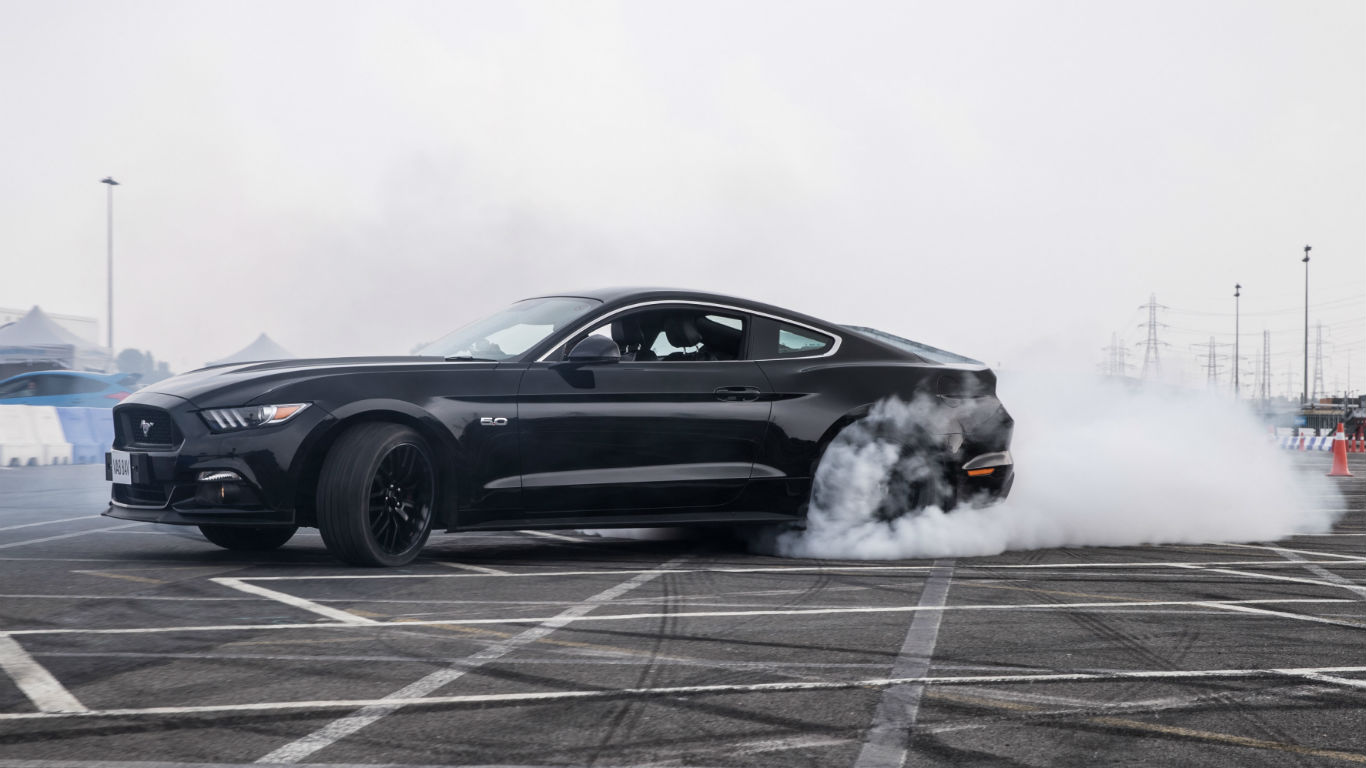
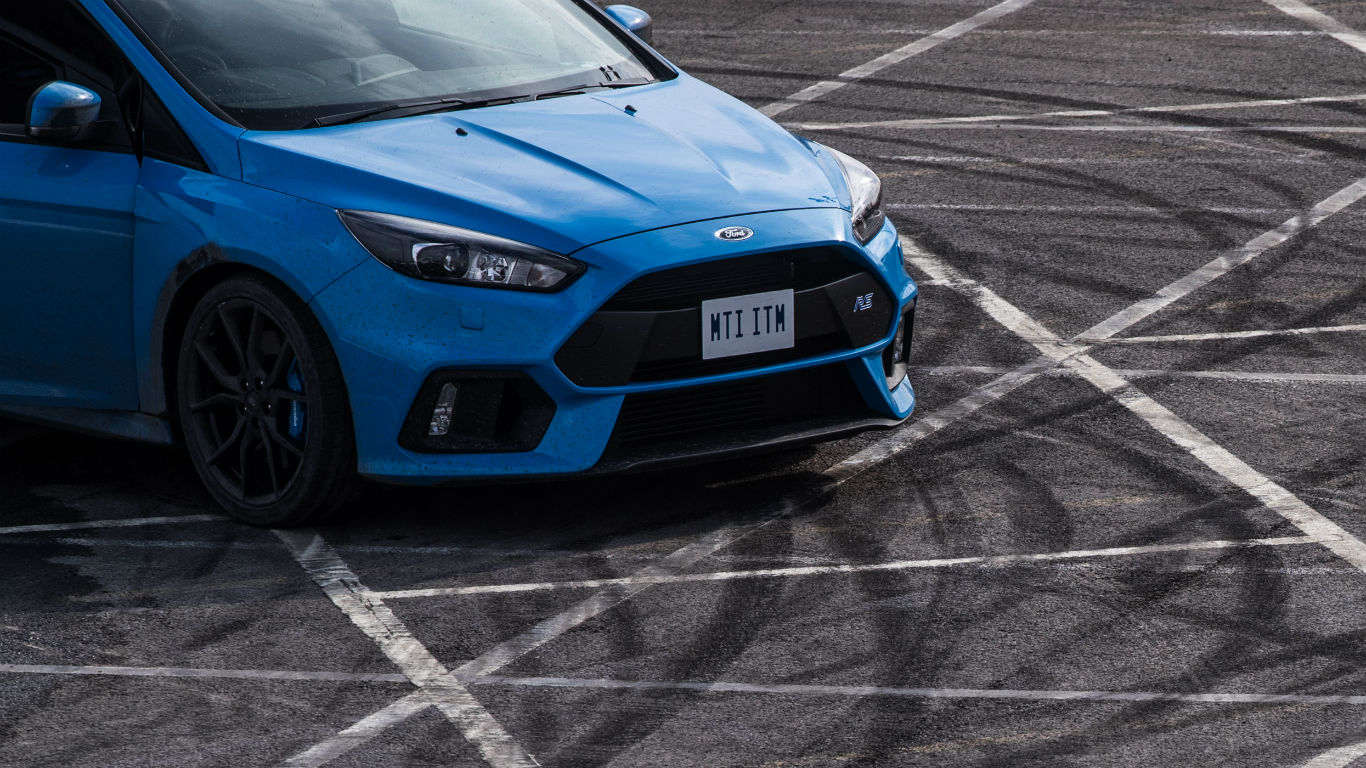
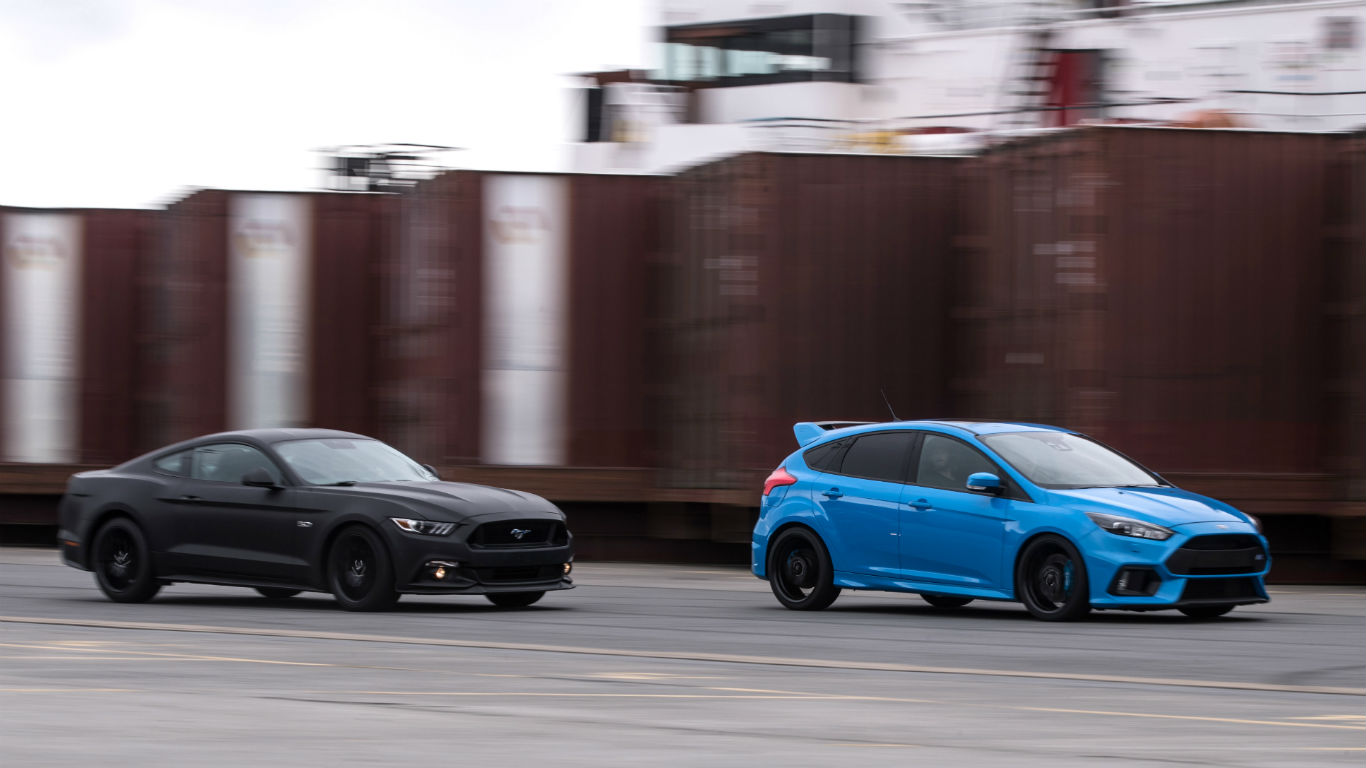
I was among the guinea pigs for Ford’s Go Faster experience, which takes place in East London from 13-22 October. For a very reasonable £99, you spend half a day torturing tyres in a Focus RS and Mustang V8, being taught manoeuvres such as drifting and J-turns by stunt professionals.
As an added twist, your finest moments are filmed, then spliced together into a heist movie trailer that you can download to show your friends. You play the part of ‘Wheels’, a cool-as-ice getaway driver with nothing to lose. And the Go Faster staff stay in character as your accomplices and film crew throughout the day, which makes for some hilarious off-camera conversations.
The J-turn
The first move I learned was the J-turn, where the car is reversed at speed then spun around to face forwards. Useful for escaping unexpected roadblocks or dead-end alleyways – or so my henchmen told me.
Starting with your right arm across the steering wheel in the nine ‘o’ clock position, you hit the gas hard in reverse – not something that feels natural, even in an empty car park. Then, you dip the clutch to disengage the engine and hook the wheel around 180 degrees so your right hand is back at three ‘o’ clock. As the car rotates, use your left hand to select second gear, then lift the clutch and go, go, go!
I found getting the Focus RS to rotate on its axis quite straightforward, but stalled several times trying to grab second for the getaway. After my fifth attempt, however, I had this one nailed.
The getaway
For the next stunt – the getaway – I jumped into the brawny Mustang V8. This was a tricky, technical slalom against the clock, including two smoky 360-degree donuts. And it would scatter my early confidence in a trail of plastic cones.
After a brief run-through, my instructor jumped into the passenger seat, grabbed the remote engine cut-off switch (just to be sure) and started the stopwatch. The Mustang lunged back and forth through the slalom as I juggled the steering from lock to lock. It felt big, but not unwieldy, with ample grip on the dry tarmac.
So far, so good: the problem came when I had to overwhelm said grip for the donuts. I stabbed at the throttle to dislodge the Mustang’s back end and felt it slide gracefully sideways. But I failed to counter-steer quickly enough, resulting in a stalled engine and multi-cone carnage. Great fun, but with five seconds added to my time for each toppled cone, I ended up near the bottom of the lap-time leaderboard.
The powerslide
What Ford calls a powerslide, the rest of us would probably call a handbrake turn. But hey, we’re making movies, so a little artistic licence is allowed.
This manoeuvre takes place at slower speed than the J-turn. Again, you position your right hand at nine ‘o’ clock, then accelerate to around 25mph before dipping the clutch, swinging the wheel through 180 degrees (so your right hand is back at three ‘o’ clock) and pulling on the handbrake. The Focus RS stunt cars have beefed-up hydraulic handbrakes to make the process easier, but you still need to yank the lever with all the force your left bicep can muster.
I find getting the car to powerslide is relatively easy, but positioning it in the ‘box’ of cones is much harder. Only on my final attempt do I get the RS lined up correctly. Shame they weren’t filming that one…
The drift
Unless you only get your car reviews from Sensible Driver magazine, you’ll be aware the Focus RS has a Drift Mode. Intended for track use only (it says here), this sends 70 percent of the Ford’s 350 horses to those poor, unsuspecting rear tyres. Goodbye 4WD hot hatch; hello RWD hooligan.
Steering slowly around a cone, I bury my right foot to kick off the drift. It’s incredibly easy to make this car go sideways, but holding the slide – via a delicate balance of steering and throttle inputs – takes plenty of practice. Too little power and you’ll understeer (run wide), too much and you’ll spin.
Eventually, I manage a full drift-lap of the cone. I step out of the RS in a cloud of tyre smoke, grinning ear-to-ear and feeling like a hero.
Making movies
Finally, it was time to prove my skills (or otherwise) as a getaway driver by filming the trailer. This combined all of the above, with a few moody looks to camera and a ‘safe cracking’ shot thrown in. Watch the end result below and let us know what you think.
I also sat inside a mock-up car for the movie poster – another great memento of the day, and perfect for sharing on social media.
Overall, I had a fantastic morning, learned some new skills and gained a real insight into the life of a stunt driver. All from the very people who powerslide, drift and crash cars for a living. If you ever find yourself trapped down a dead-end alleyway, you’ll be glad you heeded their advice.
 Renault has announced an ambitious target of becoming as consistently profitable as a premium brand by 2022 – and plans to launch 21 new vehicles, including eight all-electric models, to help it achieve this.


 The World Car Awards is the biggest automotive awards program out there – bigger than the European Car of the Year awards, bigger than the North American Car of the Year program.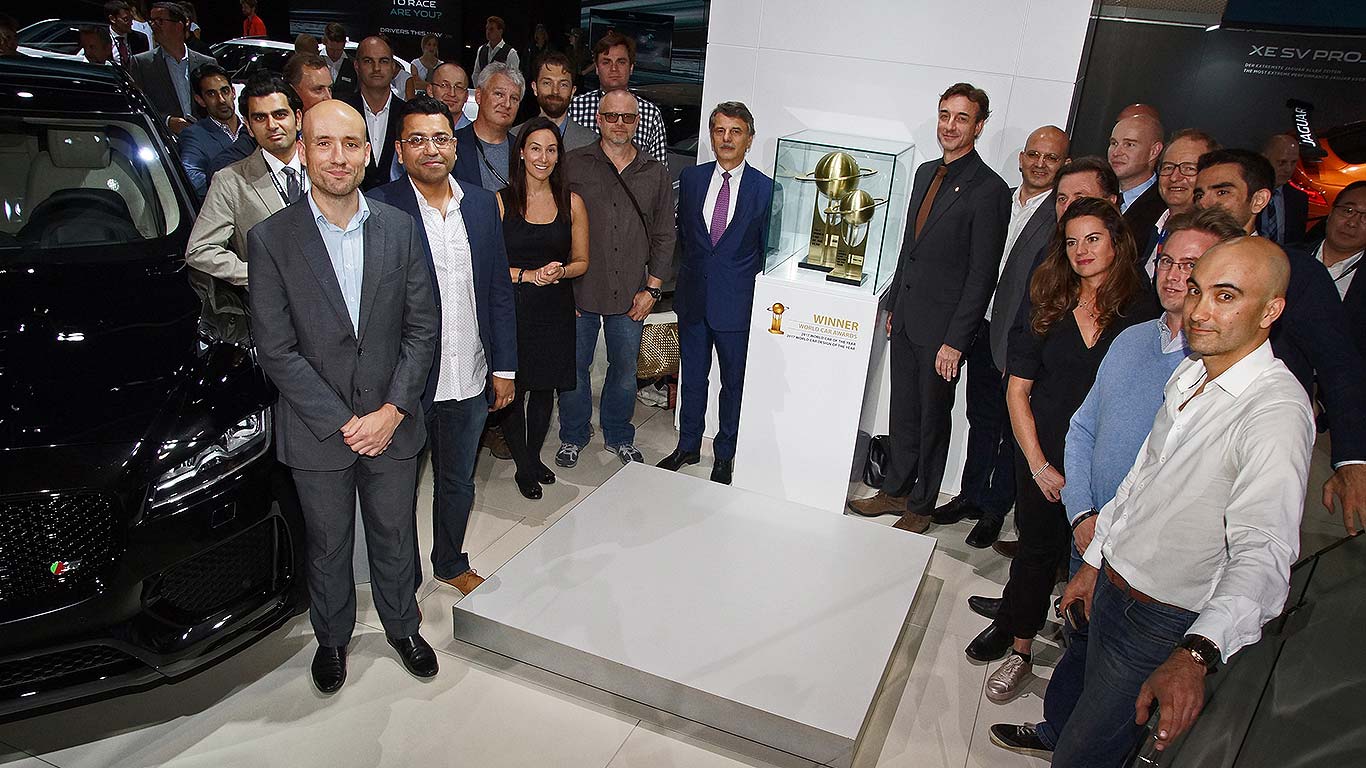











 The list of contenders for
  Those who are
  Euro NCAP has declared the modern SUV one of the safest types of new car motorists can choose. The organisation has tested 15 SUVs since 2016 and says they “perform consistently well in impact testing, particularly for adult occupant protection”.
 New cars come with umpteen sockets for charging 12V and USB devices, but what about if you need to plug in something you’d ordinarily hook up at home? Land Rover thinks it’s stolen a march on the competition here – by introducing its first model with built-in three-pin plug sockets.
 Land Rover has launched the first-ever Range Rover Sport plug-in hybrid, one that combines a 404hp total power output with official fuel economy of 101mpg and an all-electric driving range of up to 31 miles. It joins the range in a series of updates for the 2018 model year.




 What’s your favourite movie car chase? Steve McQueen screeching through San Francisco in Bullitt? Gene Hackman racing a New York High Line train in The French Connection? Or perhaps