The days of a £5 car wash could be coming to an end. MPs have launched an investigation into the ethics of working practices at hand car washes.
The Environment Audit Committee will look into employment conditions at hand car washes as well as the impact of chemicals used during the process on nearby water sources, plants and wildlife.
Mary Creagh, who chairs the committee, told the BBC: “We have environmental concerns, we have employment concerns, we have slavery concerns.
“We are trying to get to a place where the public can have confidence that if they are using a hand car wash, they are not contributing to modern slavery. If it only costs a fiver, it may be a slave driver.”
She also said that although such car washes are “cheap and convenient”, the prices may be “too good to be true”.
The concerns have been raised after a Romanian man in east London died in 2014. Sandu Laurentiu was electrocuted while taking a shower in “dilapidated, cramped, rat-infested” living quarters close to the car wash where he worked in Bethnal Green.
The car wash’s owner was jailed for four years after pleading guilty to manslaughter by gross negligence.
There are between 10,000 and 20,000 hand car washes in the UK – with The Car Wash Advisory Service suggesting that as many as 8,000 are ‘bad boys’ engaged in criminal activities.
An investigation by the service in 2014 found that most operators did not have the necessary planning permission to operate a car wash. They also didn’t pay business rates and would illegally dispose of chemicals in sewers.
“The problem is right across the board, it is not just [the fault of] the hand car-wash firms,” said The Car Wash Advisory Service’s director, Dawn Fraser.
“The majority of firms do not pay a legitimate wage, but that is because it is just not being enforced.”
Volvo caused widespread confusion last year when it made a commitment that all its new cars would be ‘electric’ by 2019. Hiding behind the many mainstream headlines was the fact this included plug-in hybrid cars. Really, Volvo meant either electric or electrified cars.
Now, it’s decided to be clearer in its statement. At the 2018 Beijing Auto Show, it’s announced that 50 percent of its new cars will be fully electric by 2025 – and just in case we’re in any doubt, Volvo Cars president and CEO Hakan Samuelsson makes things clear.
“Last year we made a commitment to electrification in preparation for an era beyond the internal combustion engine.
“Today we reinforce and expand that commitment in the world’s leading market for electrified cars. China’s electric future is Volvo Cars’ electric future.”
Volvo’s making the announcement in China because of the country’s significant commitment to electric cars. Zero-emissions models are part of its solution to air quality problems – and the Chinese government wants ‘new energy’ vehicles to make up 20 percent of total new car sales by 2025.
Forecasts suggest that equates to seven million cars a year.
China is already Volvo’s biggest global market, beating the US, and first-quarter figures this year are up 23.3 percent. Last year, Volvo topped a whopping 100,000 sales in China alone.
That’s why it chose China to launch its new Polestar performance brand – which, once the launch Polestar 1 plug-in hybrid car is launched, has itself committed to a fully-electric range of cars.
The new Electric Production Car Series (EPCS), an all-electric road car-based racing championship, has revealed the 10 rounds that will make up its debut season in 2018/19 – and a race at Silverstone in September 2019 is amongst the confirmed dates.
The EPCS will also conduct a special closed-door ‘pre-race’ trial event at France’s Pau Arnos on 26-27 October 2018, giving competitors a dry run at a race weekend in race-prepared all-electric passenger cars. (To make up for the fact it’s not open to the public, complementary tickets are on offer for the first round to those who register on the Electric GT website)
Then it’s into full-on racing in November, at the former F1 circuit of Jerez, before the series gets underway in earnest in 2019. The Silverstone round, at a date to be confirmed in September, will be the eighth round of the 10-round series.
Other big-name circuits to be visited by the EPCS include France’s Paul Ricard, the Netherland’s challenging Assen and the famous Nürburgring in Germany (albeit the Grand Prix course, not the full Nordschleife…).
Electric GT Holdings, Inc is running the series. Its CEO Mark Gemmell said that “without a doubt, we have secured some of the most exciting European tracks for our first season of the Electric Production Car Series and this gives us a great platform to further expand the championship.
“We have received a great deal of interest from circuits around the world excited by the possibilities that electric racing brings.”
With lots more news promised, Gemmell said he was “stoked about the future and we are all looking forward to bringing elbows-out electric racing action to fans around the world”.
There’s but one slight disclaimer: all the Electric GT series needs to do now, we’re told, is close the first institutional fundraising round and firm up the financing before its “definitive” launch this autumn.
But with the promise of 20 drivers racing identical Tesla Model S P100D, all with custom-developed Pirelli tyres and Alcon brakes, for a 60km day race and a 60km night race – streamed via YouTube, Periscope and Twitch, surely it won’t be long before the FIA-sanctioned zero-emissions series receives the final full green light?
Shock figures show that 32 people were killed or seriously injured in motorway accidents in 2016 because of tyre failures – but almost 3 in 4 of them could have been prevented if motorists had simply carried out the most basic checks of their car’s rubber.
Uniquely, the 18-month study into motorway tyre failures, by Highways England and tyre company Bridgestone, carried out research by actually studying the debris of failed tyres on the motorway.
A total of 1,035 tyre segments were retrieved by Highways England officers from the M1, M5, M6, M40 and M42, then sent to a technical team at Bridgestone for analysis.
They were able to diagnose failures were caused by the following factors:
56 percent due to punctures
18 percent due to underinflation
8 percent due to poor maintenance
1 percent due to manufacturing defects
1 percent due to excessive heat
16 percent couldn’t be diagnosed
This, says Highways England, shows that a significant 26 percent of tyre failures were caused by poor maintenance – which is why it’s now promoting the message that “simple checks save lives”.
It’s not only lives in danger, either: there’s also the cost of delays caused by closing a motorway after a tyre-related crash. Often, officers were able to pick up the tyre debris because the motorway was shut – and the cost of closing a three-lane motorway for four hours stands at almost £1.5 million.
Watch: simple checks that save lives
Bridgestone technical manager said that the report involved “a painstaking process of collecting tyre debris over 18 months and analysing it in depth later.
“With proper vehicle inspection and maintenance programs, many of the failure methods noted should be detectable and preventable.”
Powell also called for vehicles without tyre pressure monitoring systems (TPMS) are equipped with the technology: as it detects deflations, it will not only help underinflation and poor maintenance, but it will also offer the 56 percent of motorists who suffered a puncture early warning of the damage – with potentially life-saving consequences…
With this in mind, we’ve found four of the best aftermarket TPMS kits on Amazon you might want to consider fitting.
A driver in North Yorkshire who used a laser jammer to prevent police from measuring his speed has been jailed for eight months.
67-year-old Timothy Hill made obscene gestures at mobile camera vans on three occasions in December as a device fitted to his Range Rover blocked police from measuring his speed. Although officers were unable to prosecute him for speeding, they launched an investigation into whether he was perverting the course of justice.
Hill initially denied the allegations and chucked the scanner into a river behind his home to destroy the evidence. Eventually he admitted to having the device fitted to his car.
Police charged Hill with perverting the course of justice and he was jailed for eight months after a trial at Teesside Crown Court.
“If you want to attract our attention, repeatedly gesturing at police camera vans with your middle finger while you’re driving a distinctive car fitted with a laser jammer is an excellent way to do it,” said North Yorkshire Police traffic constable, Andrew Forth.
“It’s also an excellent way to end up in prison. As Hill’s case shows, perverting the course of justice is a very serious charge which carries a custodial sentence.”
The laser jammers are readily available to buy online and are legal to own. However, if they’re used to prevent police from measuring your speed, you could be charged with perverting the course of justice.
Forth added: “Drivers who fit laser jammers may mistakenly feel smug about ‘getting one over’ on the police. But we can tell if motorists are using these devices, and we will always endeavour to bring them to justice.”
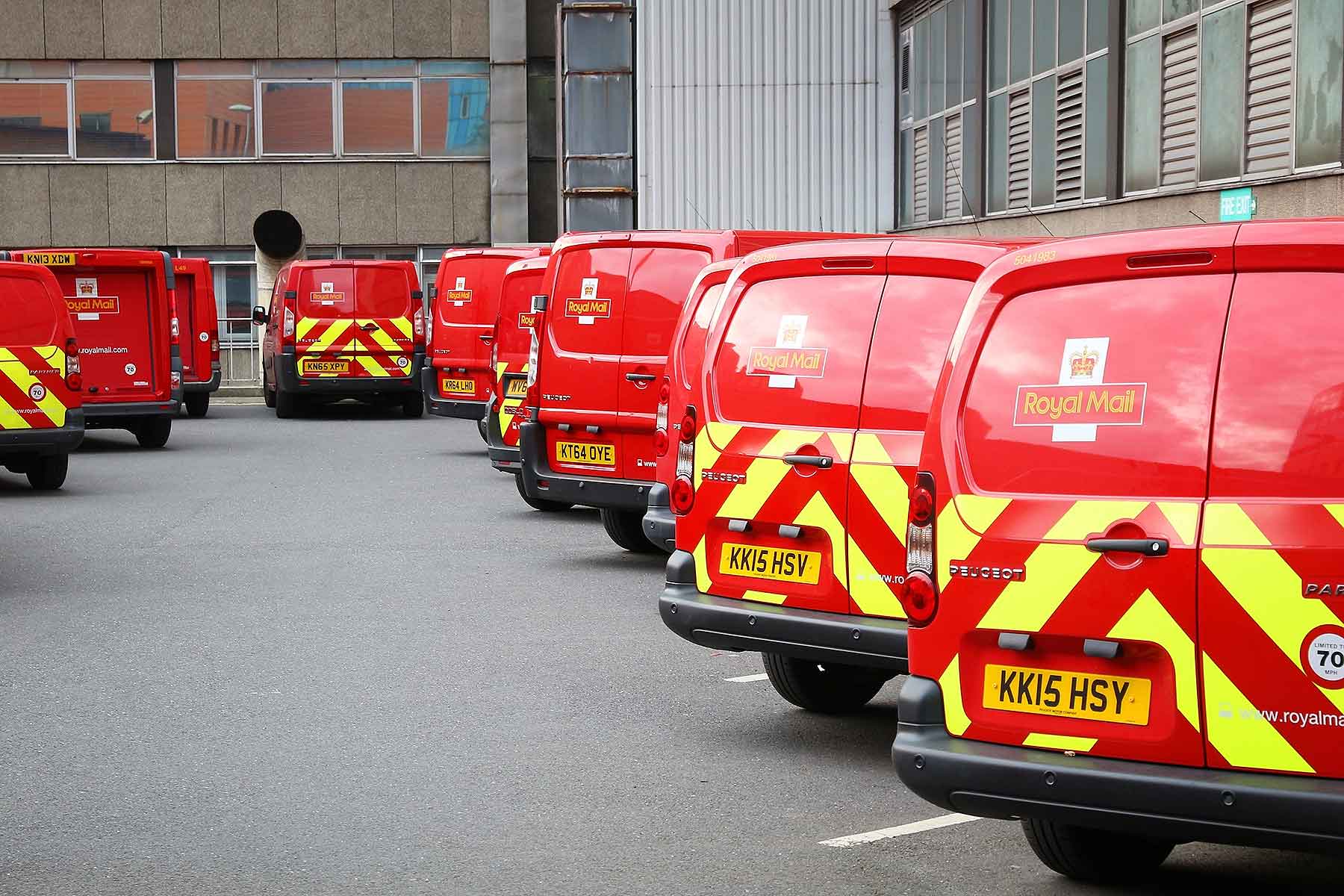
Britain is a nation powered by vans, with 88 percent of UK consumers believing everyday would be worse if commercial vehicles were restricted in any way. Almost half of respondents to a survey conducted by the Society of Motor Manufacturers and Traders (SMMT) said they’d benefitted from a van in the last 24 hours.
Increasingly, vans are becoming synonymous with online deliveries, but other services such as post, minibus transport and rubbish collection are relied upon by Brits.
SMMT chief executive Mike Hawes, speaking ahead of the opening of this year’s Commercial Vehicle Show at the NEC in Birmingham, said: “There are 5 million commercial vehicles on Britain’s roads and they play a vital role in powering our essential services.”
Their role in society is often overlooked, says the SMMT, but when prompted, 84 percent recognised how much they rely on them day-to-day. The figures include 1.8 million sole traders and 17,228 registered ambulances, which take five million people a year to A&E.
Britain is the biggest market in Europe for online deliveries, with a total market worth £67.3 billion – that’s 17.6 percent of all retail sales. Vans deliver 1.9 billion tonnes of online sales a year, and the figures are increasing all the time.
The SMMT continues with the van stats by revealing they deliver three times more goods than water and rail combined, and in total, according to the Office for National Statistics, contribute £27.5 billion to the UK economy.
And, diesel haters, apologies: 96 percent of them are diesel. That’s why continued van fleet renewal is so crucial – which, says Hawes, should be led by the government continuing to promote the right policies and initiatives.
21,000 people are expected to attend the CV show, which runs this week. 460 companies will exhibit – and, van fans, entry is free. If you’re keen to go, sign up at www.cvshow.com.
Diesel has come in for a lot of stick over recent years, but the fact remains: a modern diesel engine makes perfect sense if you cover a lot of miles.
The threat of anti-diesel legislation might deter you from taking the plunge, but as our list of the most economical new cars reveals, you could achieve some seriously impressive hypermiling with one of these motors.
We’ll present the results in reverse order.
*Note these fuel economy figures are obtained using the current NEDC testing regime and are likely to change when the new WLTP test gets fully underway in September 2018.
Suzuki Celerio 1.0 Dualjet: 78.4mpg
If you really can’t do the diesel thing, and you’re not intending to travel long distances, the Suzuki Celerio is a cheap and cheerful option. Right now, the Celerio SZ3 1.0-litre Dualjet petrol is available for £9,149, with a spec that includes air conditioning, 14-inch alloy wheels and DAB radio. Go easy on the right foot and you could see as much as 78.4mpg on the combined cycle.
Nissan Pulsar 1.5 dCi: 78.5mpg
You’ll have to be quick, because Nissan is pulling the plug on the Pulsar, but the 1.5-litre diesel engine could return as much as 78.5mpg. Nissan dealers will be keen to shift old stock, so haggle hard and grab yourself a deal.
Kia Cee’d 1.6 CRDi: 78.5mpg
Kia has ditched the apostrophe for the new Ceed, but if you’re a fan of punctuation on the back of your car, the outgoing Cee’d is still available. It’s no longer a bargain basement hatchback – the cheapest 1.6-litre diesel costs £17,330 – but with a seven-year warranty and CO2 emissions from just 94g/km, it’s certainly a rational choice.
Citroen C3 1.6 BlueHDi: 80.7mpg
While the C4 Cactus has largely turned its back on the Airbump, you can still wear your supermarket car park armour with pride on certain C3 models. Opt for the 1.6 BlueHDi engine if you like the sound of 80.7mpg combined.
Vauxhall Corsa 1.3 CDTi: 80.7mpg
If you hate filling up with fuel, you’ll love the 1.3-litre CDTi engine in the Vauxhall Corsa. With a little hypermiling, you could squeeze up to 798 miles out of a tank of diesel, which could mean you need only visit a filling station once a month. Think of the money you’d save on those chocolate bars you buy on impulse when queuing to pay for your fuel.
Renault Scenic/Grand Scenic 1.5 dCi Hybrid Assist: 80.7mpg
If you thought impressive fuel economy was the preserve of superminis and hatchbacks, the Renault Scenic and Grand Scenic are here to surprise you. Opt for the 1.5-litre diesel with Hybrid Assist and you could see as much as 80.7mpg. Not bad for a five- or seven-seat MPV riding on 20-inch rims.
Peugeot 308 1.5 BlueHDi: 80.7mpg
Earlier this year, Peugeot unveiled a new Euro 6.2 1.5-litre diesel engine to replace the old Euro 6 1.6-litre unit in the 308 hatchback. The promise: to deliver up to 80.7mpg when mated to a six-speed manual gearbox and riding on 15- or 16-inch alloy wheels. Of course, the reality will be slightly different, but that’s true of all the cars mentioned here.
Mercedes-Benz A 180d: 80.7mpg
There’s a new and much improved A-Class on the way, but if you can’t wait, the current A 180d is the best option if you’re hoping to maximise fuel economy. When mated to a six-speed manual gearbox, the entry-level SE could return as much as 80.7mpg, with CO2 emissions of just 89g/km.
Kia Rio 1.4 CRDi: 80.7mpg
The Kia Rio 2 costs £14,240 and offers a generous level of standard equipment, including autonomous emergency braking, lane departure warning, cruise control, reversing camera, parking sensors and 15-inch alloy wheels. Opt for the 1.4-litre diesel engine for up to 80.7mpg. And we didn’t even mention the warranty…
Honda Civic 1.6 i-DTEC: 80.7mpg
A Honda Civic SE with the 120hp 1.6 i-DTEC diesel engine will set you back £20,245. It’s the most striking car in its class, but the fuel economy is a more rational affair at 80.7mpg. Honda reckons three in 10 Civic buyers will opt for the diesel in the UK, even if overall diesel sales are down.
New Ford Focus 1.5 EcoBlue: 80.7mpg
An all-new Ford Focus will go on sale in August, with first deliveries expected in September. Ford is promising more space, technology, luxury and comfort than ever before, as it takes aim at the Volkswagen Golf. The 1.5-litre EcoBlue diesel will be the engine of choice for the nation’s hypermilers.
DS3 Cabrio 1.6 BlueHDi: 80.7mpg
Last month, DS announced that it was pulling the plug on the slow-selling 4 and 5 hatchbacks, but the 3 has escaped the cull. Opt for the Cabrio with a 1.6-litre BlueHDi engine and enjoy the thrill of open-air driving and 80.7mpg.
Dacia Sandero 1.5 dCi: 80.7mpg
Bad news if you want to combine maximum fuel economy with a minimum price. The super-frugal 1.5-litre dCi engine is available only on the Sandero Laureate, meaning you’ll have to fork out at least £11,195 for the bargain-basement hatchback. That’s a far cry from the headline-grabbing £6,995 Access.
Dacia Logan MCV 1.5 dCi: 80.7mpg
It’s a similar story with the Dacia Logan MCV, which is available from just £8,495. However, the diesel is available on the Ambiance and Laureate models, so you’ll need to fork out at least £11,695 for the cheap load-lugger.
Citroen C4 Cactus 1.6 BlueHDi: 83.1mpg
The Citroen C4 Cactus has grown up, adopting a softer stance and a focus on comfort and joy. There’s no doubt that it’s one of the most comfortable cars in its class, but will this be enough to cut it in a sector dominated by the Volkswagen Golf and Ford Focus? Maybe the fuel economy will tip the balance in Mr Soft’s favour.
Hyundai Ioniq Hybrid: 83.1mpg
The Hyundai Ioniq Hybrid combines a 1.6-litre petrol engine and an electric motor to deliver 83.1mpg on a combined cycle. Prices start from £21,240 for the SE model and you’ll get a five-year unlimited mileage warranty as standard.
Ford Focus 1.5 TDCi: 83.1mpg
Ford dealers will be rather keen to shift stock of the outgoing Focus, so haggle hard to secure a low price. The majority of cars will be available from stock, so don’t expect much in the way of personalisation options.
Fiat Tipo 1.6 MultiJet II: 83.1mpg
Opt for the DCT transmission in the Fiat Tipo diesel and you could look forward to 83.1mpg on a combined cycle. The 1.6 MultiJet isn’t available on the entry-level Easy, so you’ll need to find at least £18,820 by upgrading to the Easy Plus.
DS 3 1.6 BlueHDi: 83.1mpg
It’s the DS3 again, only this time with a fixed roof. In return for sacrificing open-air motoring, help yourself to an extra 2.4mpg.
Alfa Romeo Mito 1.3 JTDm-2: 83.1mpg
Yes, Alfa Romeo still sells the Mito, and yes, it is rather frugal. A standard Mito with the 95hp 1.3 JTDM-2 engine will set you back £16,105, but unless you’re doing mega-miles, we’d suggest opting for the cheaper 1.4-litre (50.4mpg) and 0.9-litre TwinAir (67.3mpg) petrol engines.
Vauxhall Astra 1.6 CDTi: 85.6mpg
Vauxhall has launched a new ad campaign aimed at positioning itself as ‘confidently British’, as it seeks to reverse a period of dwindling sales. As you may have noticed if you watched England beat Nigeria on Saturday, the Astra is the first model to benefit from the ‘True Brit’ rebrand. The 1.6-litre CDTi engine could offer as much as 85.6mpg on a combined cycle.
Toyota Yaris Hybrid: 85.6mpg
In the past, Toyota claimed that the Yaris Hybrid could offer an excellent 85.6mpg on a combined cycle. However, it’s worth noting that, using the World Harmonised Light Vehicle Test Procedure (WLTP), the figure drops to 76.3mpg. Still impressive and more reflective of real-world driving conditions.
Nissan Micra 1.5 dCi: 88.3mpg
We’re into the top three, where we find the Nissan Micra. When powered by a 1.5-litre dCi engine, the sharp-looking Micra could offer up to 88.3mpg on a combined cycle, with diesel prices starting from £15,000.
Toyota Prius Hybrid: 94.1mpg
In common with the Yaris, all Toyota Prius grades are now type-approved using WLTP, meaning the estimated fuel economy is more realistic than before. The WLTP of 83.1mpg isn’t as impressive as the old 94.1mpg, but you’ll stand more chance of achieving the revised figure.
Peugeot 208 1.6 BlueHDi: 94.2mpg
This is it: the most economical car you can buy today. The usual caveats apply, such as the on-paper figure not being representative of real-world driving, and forthcoming WLTP data being more accurate, but a supermini knocking on the door of 100mpg is truly impressive. Stick to the lower-powered 75hp 1.6-litre diesel to achieve the best results in the Peugeot 208.
Andy Saunders is one of the country’s leading and most recognised ‘car artists’, responsible for a long line of unique, eye-catching and controversial projects. The customiser – or should that be ‘kustomiser’ – completed his first project before he was old enough to hold a driving licence and has held three Guinness World Records.
This summer, the National Motor Museum at Beaulieu will give visitors the opportunity to get up close and personal with some of his incredible creations, with its new exhibition: The Art of Kustom. Here, we take a look at one of this most famous creations, along with some of the other vehicles you can expect to find.
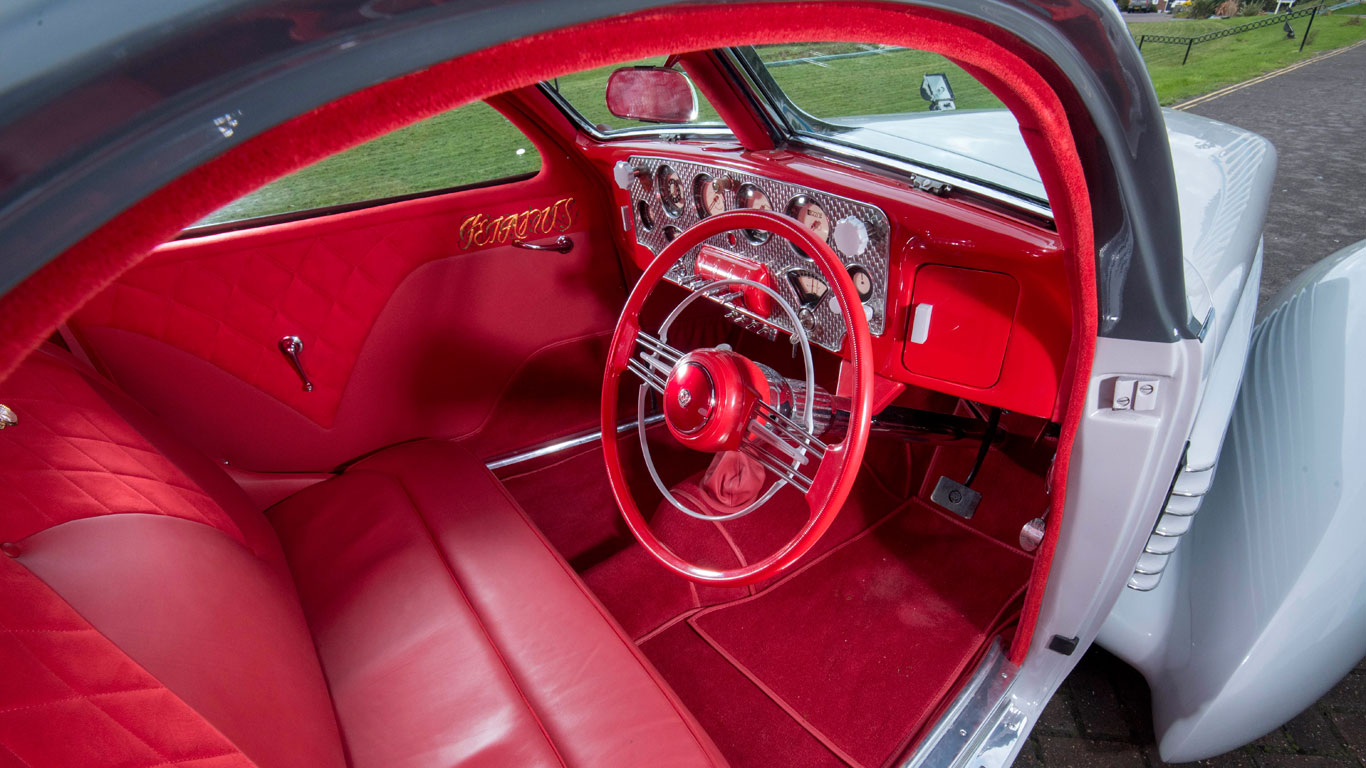
Tetanus
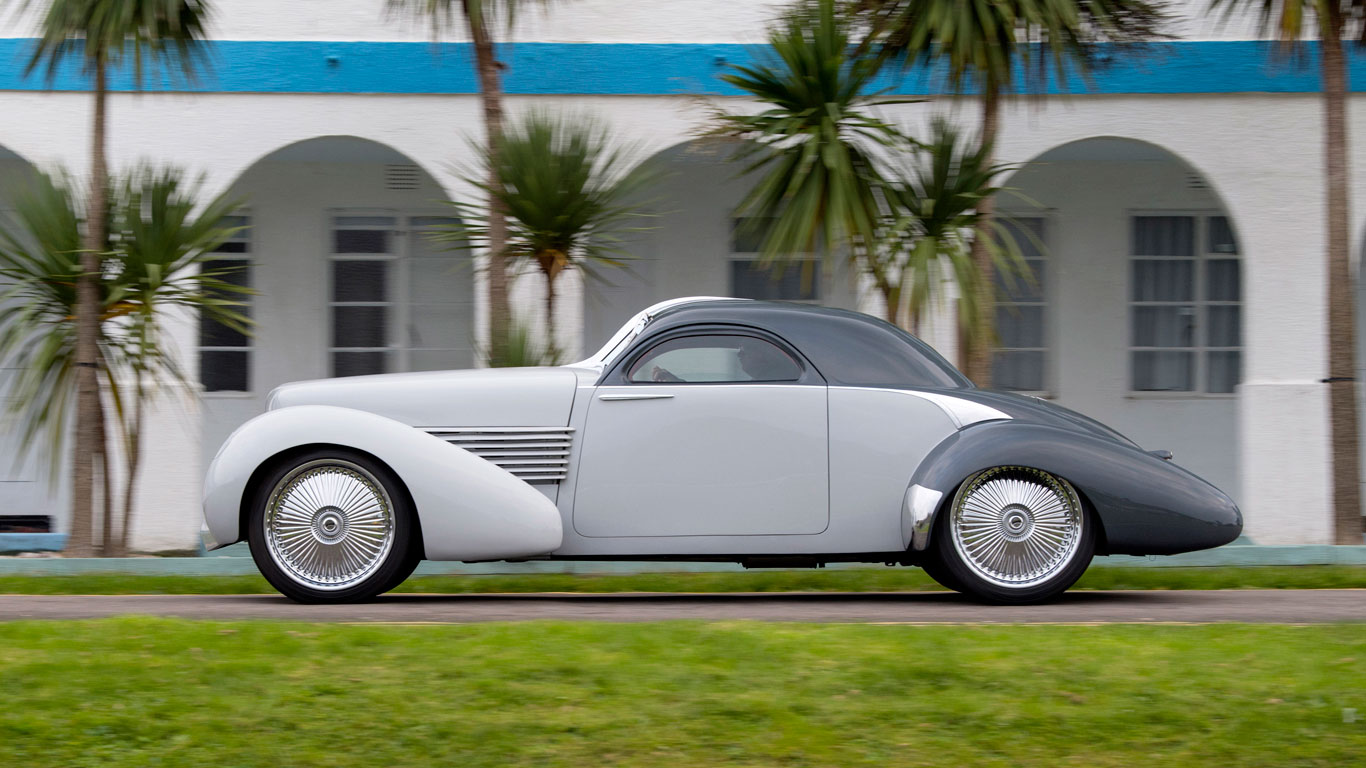
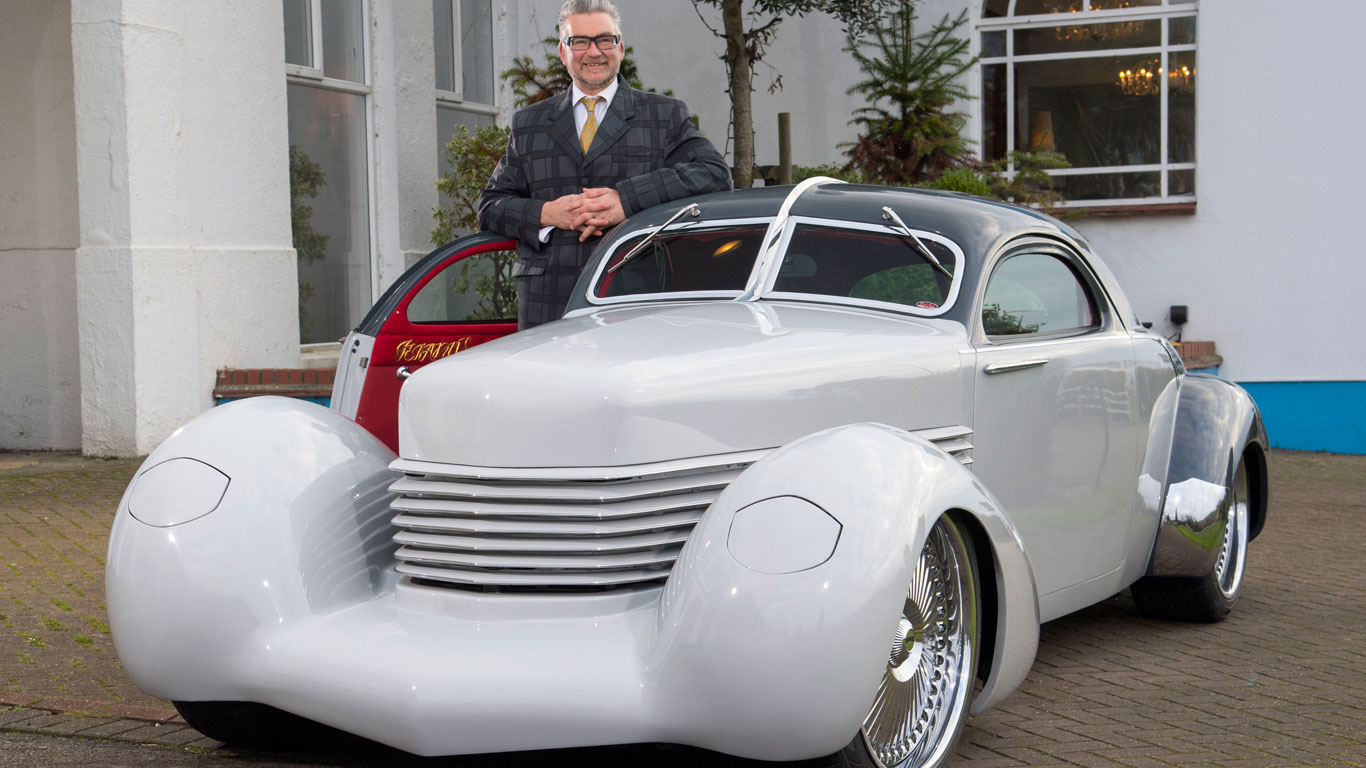
This car started life as a 1937 Cord 812 Westchester: the first American-designed and built front-wheel drive car with independent front suspension. The Cord 810/812 was the company’s second front-wheel drive car, with a body designed by Gordon Buehrig. It caused a stir at the 1935 New York Auto Show, with visitors left slack-jawed by the eye-catching features, such as the ‘coffin nose’ bonnet and lack of running boards.
Tetanus left the factory in Indiana as a right-hand-drive export model, destined for England. It was sold new by RSM Automobiles of Berkeley Square, its first owner being the Earl of Derby. It’s fair to say the Cord didn’t look like this when the Earl of Derby rocked up at a racecourse to watch one of this thoroughbred racehorses.
The Cord was sold to its second owner: Jerzy Wojtowicz of stock car racing fame. He carried out all the necessary engineering modifications to allow it to go racing, but it never turned a wheel in competition use. This meant the doors were never welded up and the body remained true to its original shape.
If you’re wondering about the ‘K’ in ‘Kustom’, Andy Saunders told Beaulieu: “Kustom is the only word to describe a period, authentic 1940s or 50s Kustom or any other car that has received major body work to make it more beautiful than it was when it left the factory.” Kustom cars are influenced by the post-war American Kustom scene.
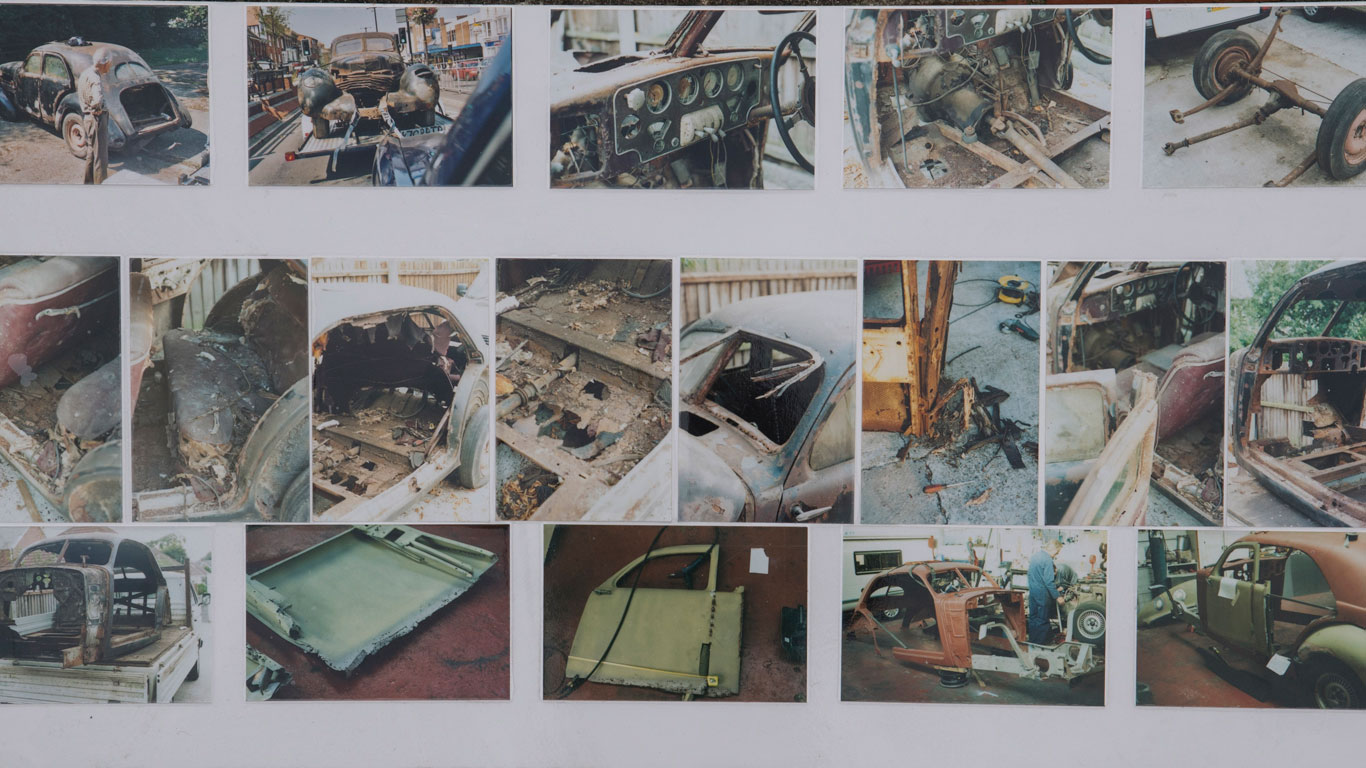
For the best part of 50 years, the Cord sat in a Yorkshire field, being used as a trampoline by local children and slowly being devoured by nature. Amazingly, it was for sale for close to 20 years before Andy saw it.
On the day of collection, Andy’s friend took one look at the rusting Cord and exclaimed: “I’m not touching that without having a tetanus [jab],” hence the name. The redesign and rebuild took 7,000 hours to complete, with Andy creating an imposing two-door coupe that wouldn’t have looked out of place in the Cord catalogue.
Tetanus was inspired by an illustration on a birthday card, with Andy widening and reworking the wings, lowering the roof, lengthening the doors, and rebuilding the rear end from scratch. Parts from a Jaguar Mk2 and Volkswagen Beetle were used to create that eye-catching back end.
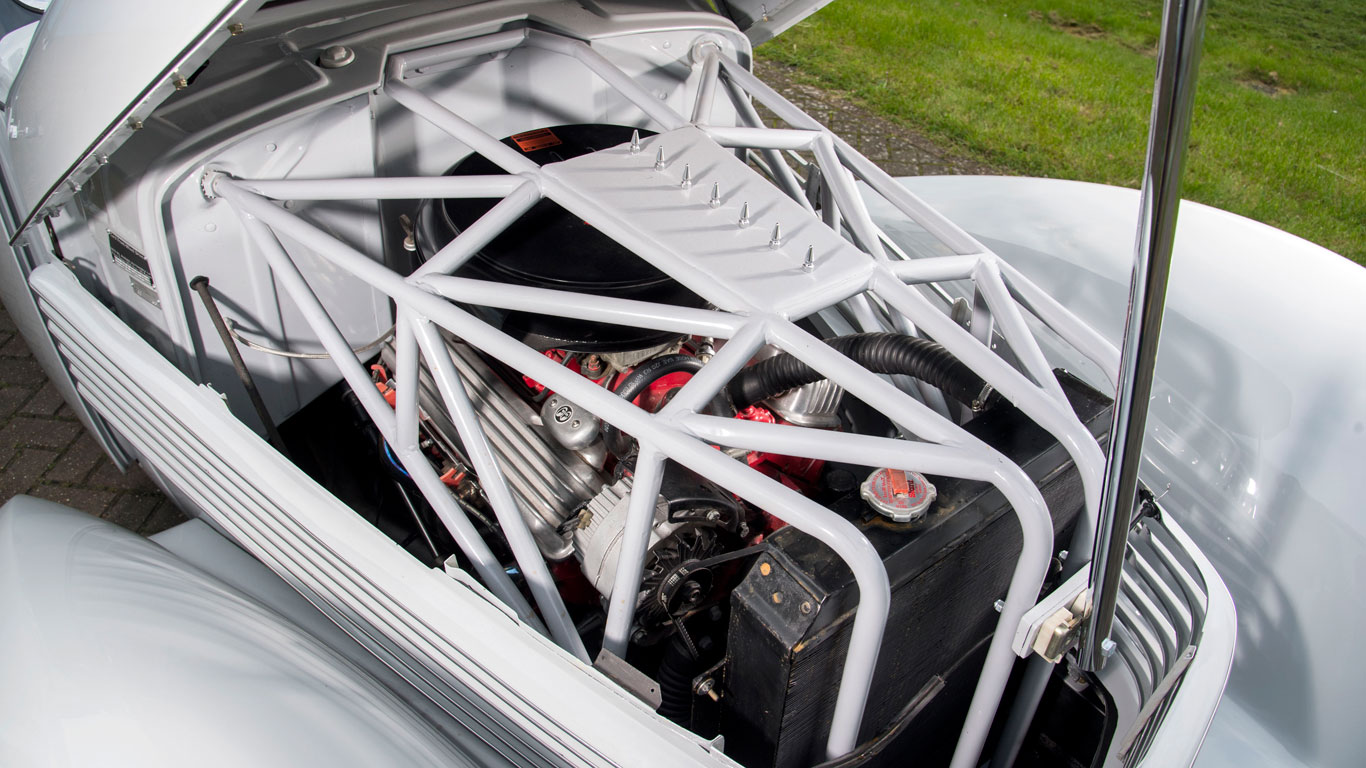
The car was unveiled at the Supernationals in August 2017 and is likely to be one of the stars of the Art of Kustom exhibition. Under the bonnet – or “coffin nose” – you’ll find the beating heart of a Chevrolet V8.
Andy’s first customisation was a Mk1 Ford Escort called ‘Bird Puller’, which he completed at the age of 15. In a video, he admitted that it wasn’t very good at “bird pulling”, not least because it had to be driven to shows by his mother. As Tetanus demonstrates, things have moved on since the Mk1 Escort.
“There’s nothing on cars I haven’t done or can’t achieve… if the budget’s there, it’s possible,” said Andy in an interview with Barcroft Cars. “Customisation is art.”
Mini Ha Ha
Newly restored to join the exhibition, the Mini Ha Ha will be on show for the first time since the 1980s. Andy came up with the concept as a schoolboy, completing the project on a shoestring when he was just 20. For a while, it was his daily-driver.
The Mini Ha Ha can actually perform wheelies in reverse gear, and Andy’s website has the photographic evidence to prove it.
Saline Warrior
Saline Warrior started life as a Reliant Rialto, but Andy spent just two days converting it into a race car to tackle the famous Bonneville Salt Flats. It was created as part of the BBC’s Panic Mechanics show, and Andy’s solution was to emulate the aerodynamic appearance of a classic salt lake racer, with a lowered roofline, lengthened nose cone and smooth wheel discs.
Later, in the hands of French speed enthusiasts, Les Triplettes de Bonneville, the Reliant was modified with a 750cc Suzuki motorcycle engine and achieved 140mph at the annual Bonneville Speed Week. To set a record, the speed must be set on two runs, but the engine exploded on the second go.
Run A Ground
Another Reliant, this time a Regal, which has had an encounter with a Monbar 146 to become a road-legal speedboat. Yes, it really is road-legal…
Hesperus
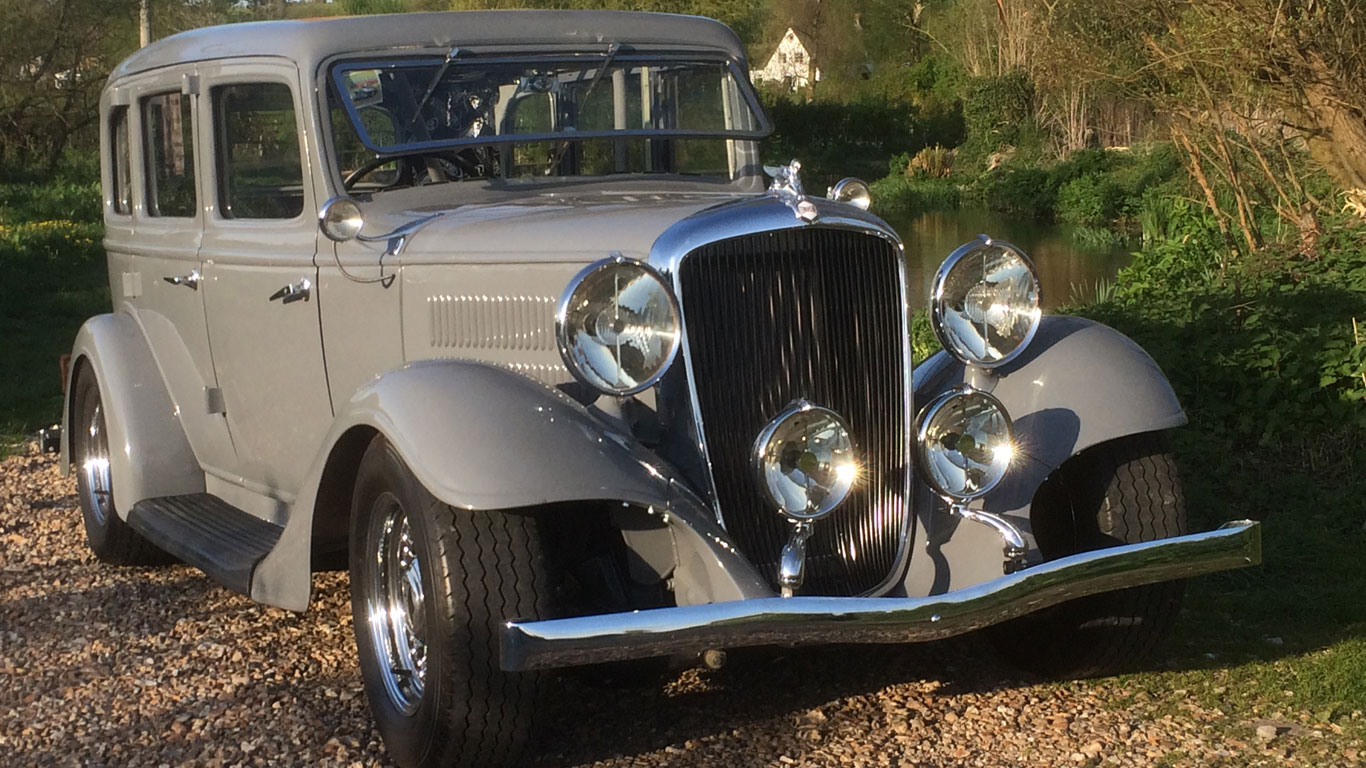
Following a six-year restoration, Hesperus is nearly complete. The 1930s Hudson was built as a street rod in the 1960s and was in remarkably good condition when Andy started the project. It just needs the interior to be trimmed, although Hesperus is already fine for road use.
Indecision
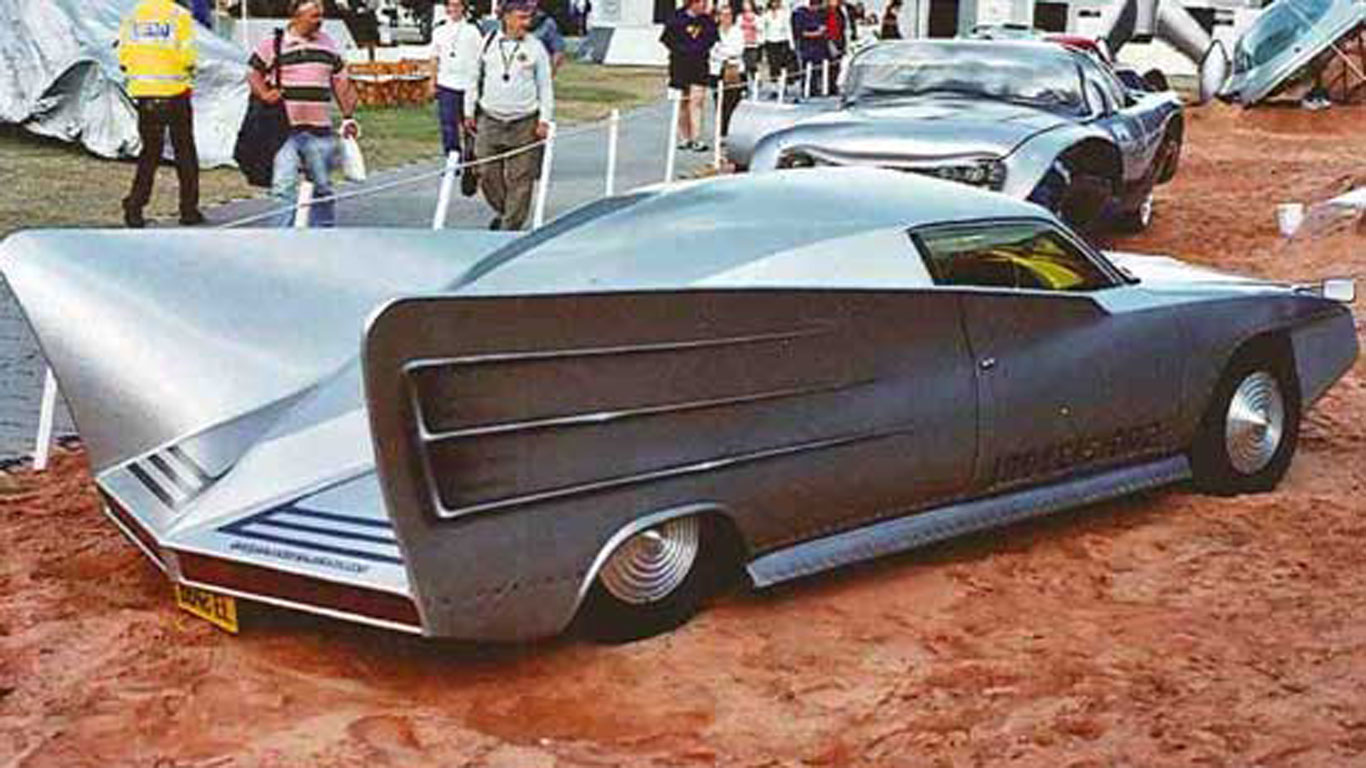
Indecision started life as a 1976 Citroen CX, with Andy adding huge rear wings and a sloping roofline to give it the look of something you might send into space. Amazingly, Andy used it as his everyday vehicle for two years.
Metropolis
Andy Saunders will unveil his new project as part of the exhibition. Metropolis is a Peugeot 202 pick-up, which has been transformed from a rusty wreck into an Art Deco-style stunner.
The full showcase of Andy’s most jaw-dropping creations will go on display on Sunday 17 June to coincide with the Hot Rod & Custom Drive-in Day, when some of the cars will be driven around the attraction. The exhibition will remain in the museum until September.
The Art of Kustom exhibition can be seen as part of the standard admission to Beaulieu, which includes entry to the National Motor Museum, World of Top Gear and Palace House.
More than 400 diesel company cars used by government department Defra are being swapped for hybrid models under a shake-up intended to reduce harmful CO2 and NOx emissions.
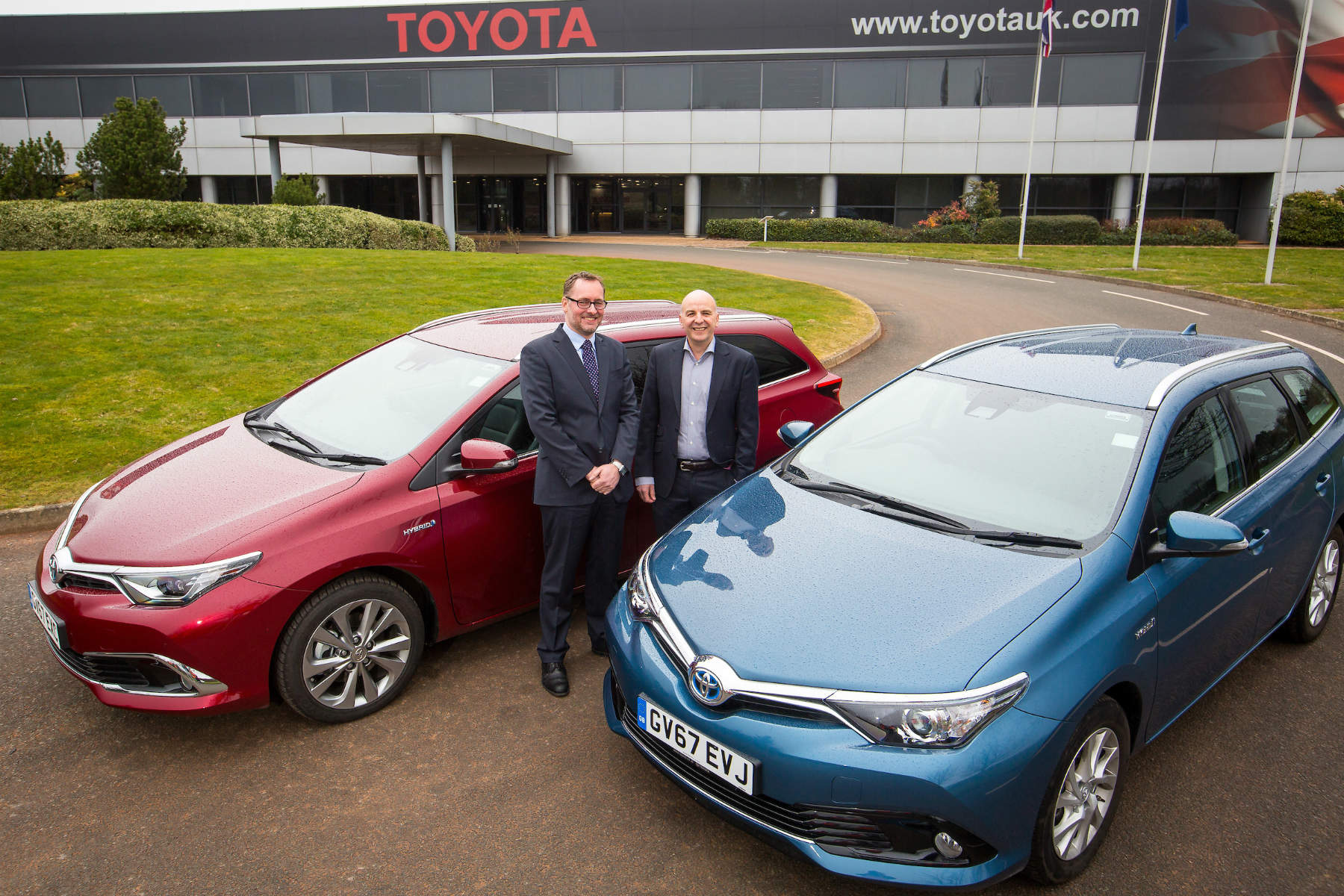
Defra – the government department responsible for the environment, food and rural affairs – is replacing a significant proportion of its diesel car fleet with the British-built Toyota Auris hybrid within four of its organisations: the Environment Agency, Marine Management Organisation, Rural Payments Agency and Animal and Plant Health Agency.
“The cars from these four Defra organisations already represent one of the lowest CO2-emitting fleets in the UK,” said Defra’s strategic fleet manager, Jim Gregory.
“We have reduced nitrogen oxide gases (NOx) emissions, linked to respiratory illness, by nearly 10 percent, and CO2 by nearly 30 per cent, across our 7,000 cars, commercial vehicles, plant and machinery. We have challenged ourselves to go even further by buying only hybrid or electric vehicles from 2025, replacing our current fleet of diesels with cleaner vehicles and setting targets for NOx as well as CO2 emissions.”
The changeover of Defra’s fleet has already begun, and will continue throughout 2018 as an ongoing rolling replacement process.
It comes as figures revealed by Go Ultra Low today show that popularity of 100 percent electric and plug-in hybrid vehicles continued to grow in the first quarter of the year, following a record-breaking 2017. The first three months of this year saw 13,327 new cars registered to UK drivers, a 16% increase on the same quarter last year.
“This continuous growth in the plug-in market shows no signs of slowing down,” said Go Ultra Low’s head, Poppy Welch. “Month after month, we are seeing registrations increase, demonstrating that the public appetite for plug-in motoring is growing. With the range of pure electric cars constantly increasing and plug-in hybrids continuing to offer the best of both worlds, it’s getting easier for motorists to see the benefits of electric motoring.”
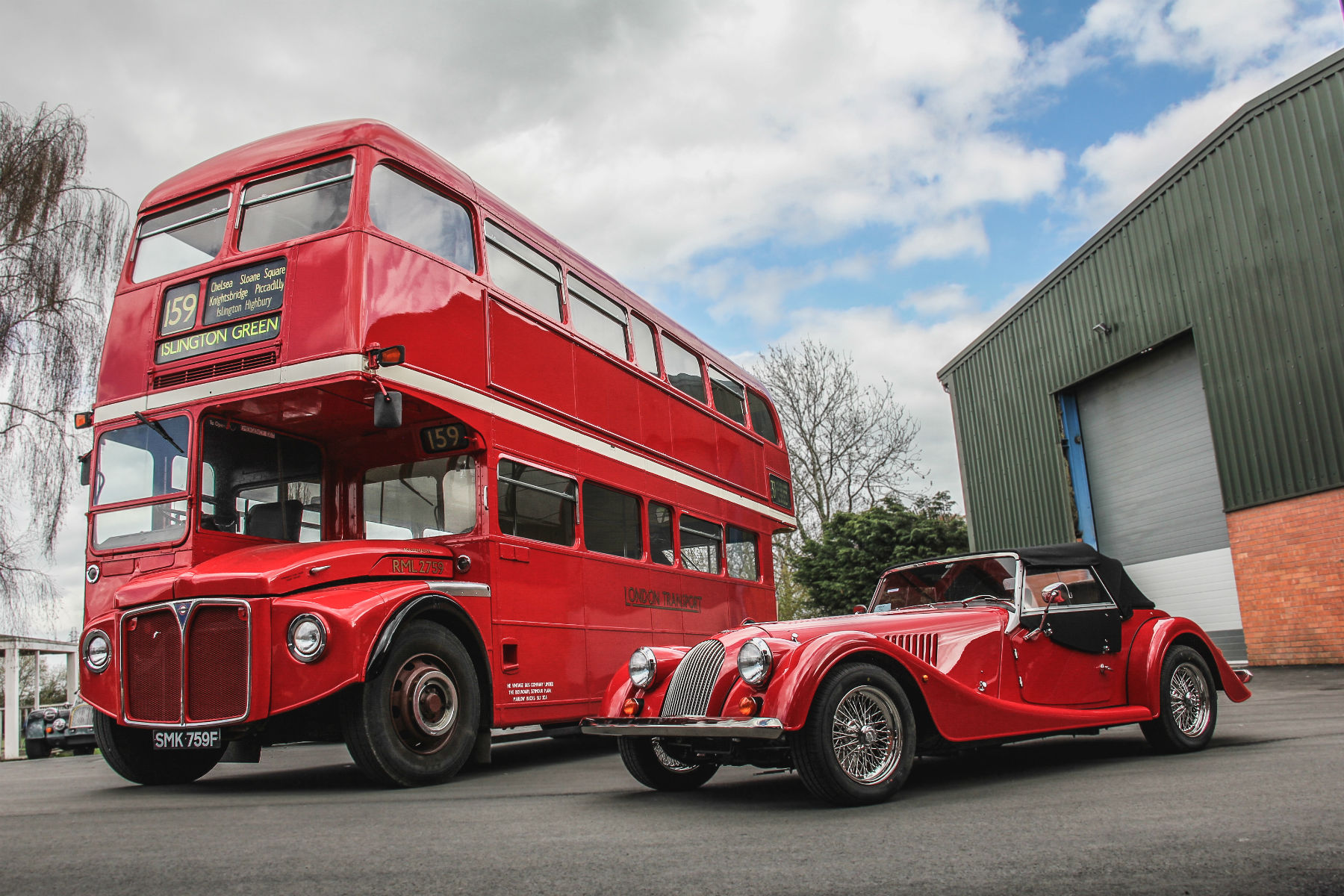
The second-to-last Routemaster bus to be withdrawn from service in 2005 has been bought by British sports car manufacturer Morgan.
Manufactured in 1968 – the year the first Morgan Plus 8 was sold – the iconic London bus entered service in January of that year. Since then, SMK 759F is believed to have clocked up more than 1.5 million miles before retiring nearly 44 years later. As it took its final journey on 9th December 2005, crowds gathered along the route to give it an admirable send-off.
Described as being in ‘incredible condition’, Morgan bought the bus earlier this year and has set to work making sympathetic conversions. It’s expecting to display it at events around the country this summer in a joint 50th anniversary celebration with the Morgan Plus 8.
“The Routemaster bus is arguably one of the most iconic vehicles in existence,” said Morgan’s managing director, Steve Morris. “It serves as a symbol of Britain and is part of our national identity. It therefore gives us great pleasure to continue the life of one of the last decommissioned buses as our event space. Morgan has an exciting year ahead, and we can’t wait to utilise the bus at events all around the UK.
“Our plans for the bus will make it the ideal event space for Morgan customers and enthusiasts alike.”
All the work will be carried out in-house by the same team responsible for hand-building Morgan sports cars.

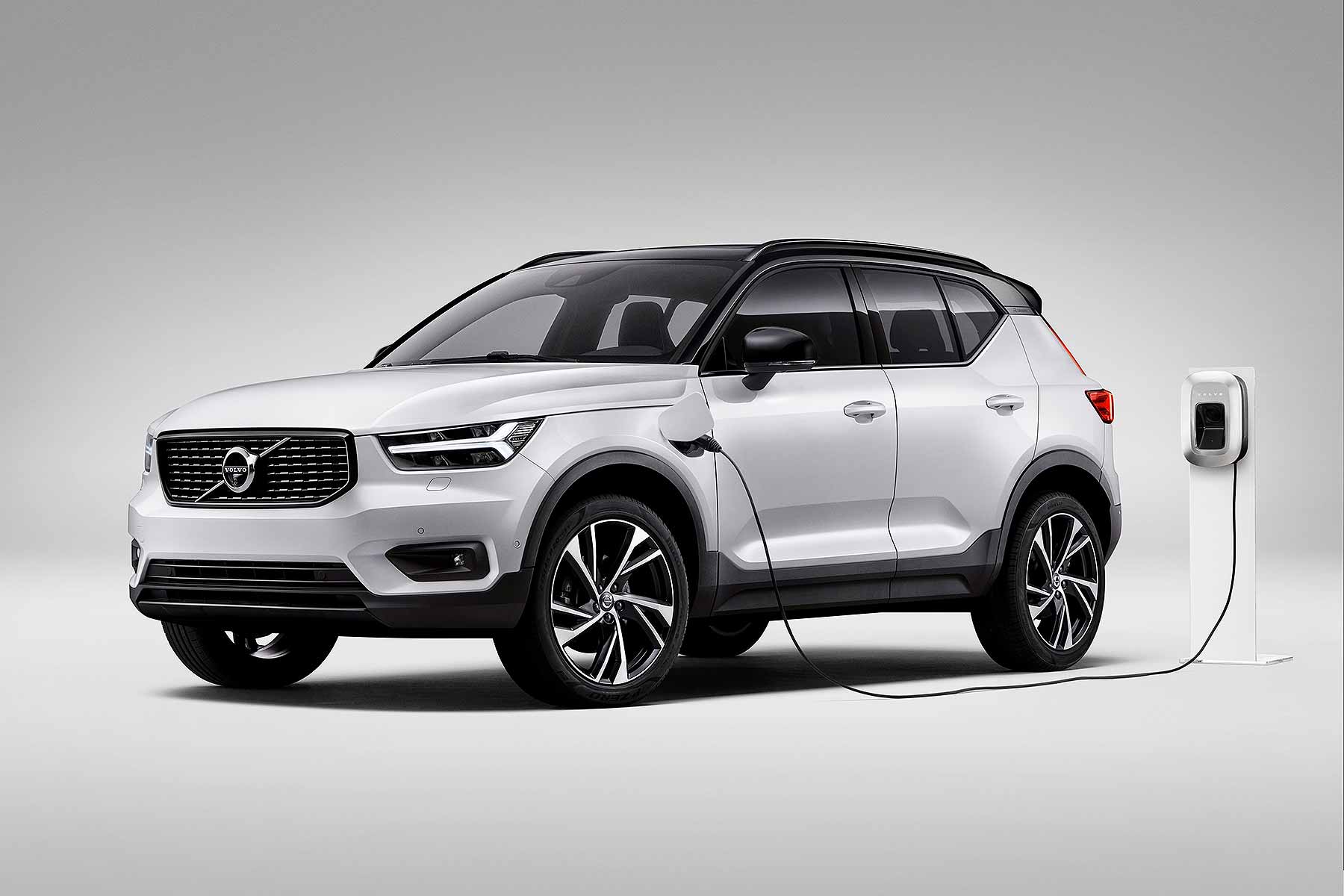 Volvo caused widespread confusion last year when it made a commitment that
 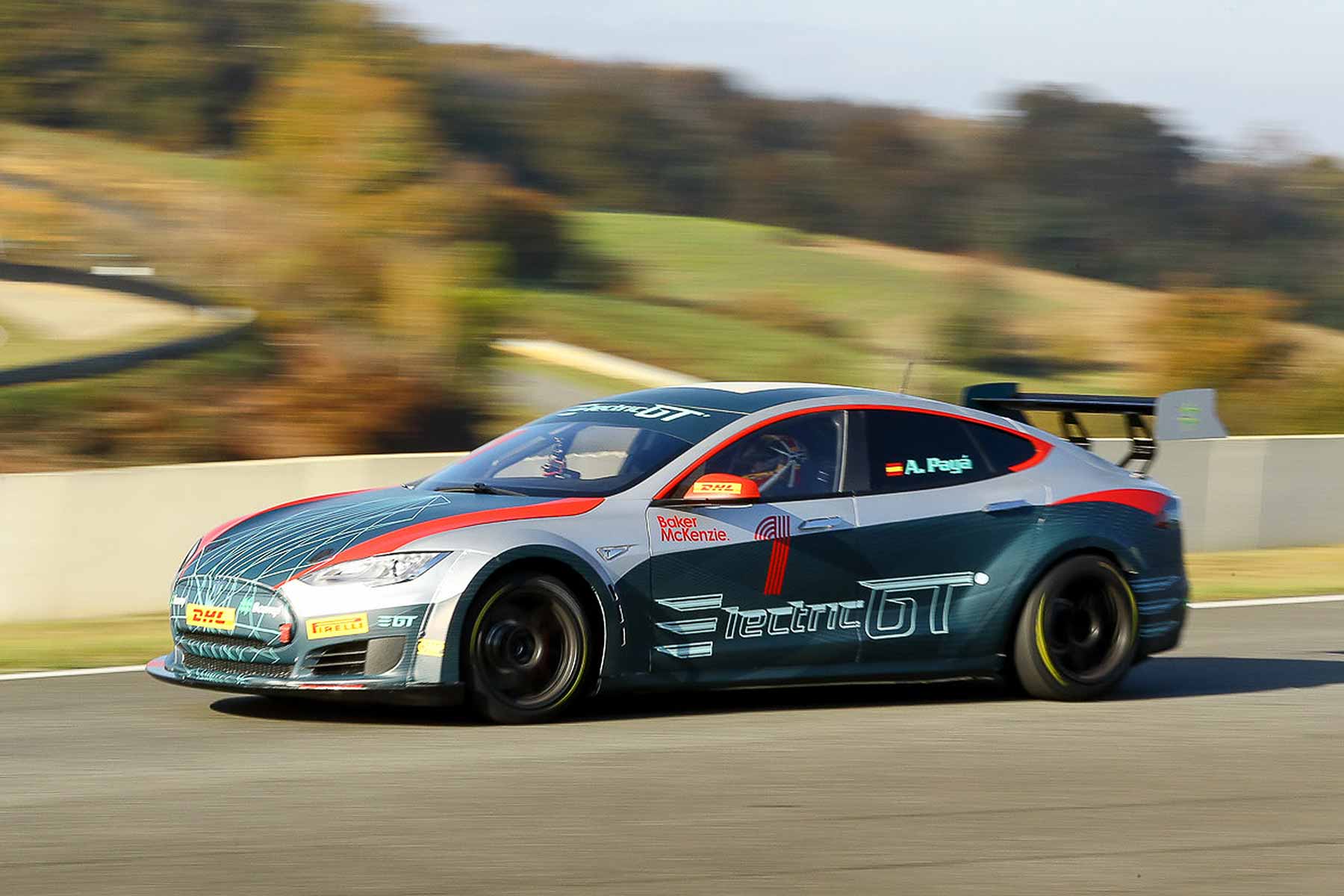 The new Electric Production Car Series (EPCS), an all-electric road car-based racing championship, has revealed the 10 rounds that will make up its debut season in 2018/19 – and a race at Silverstone in September 2019 is amongst the confirmed dates.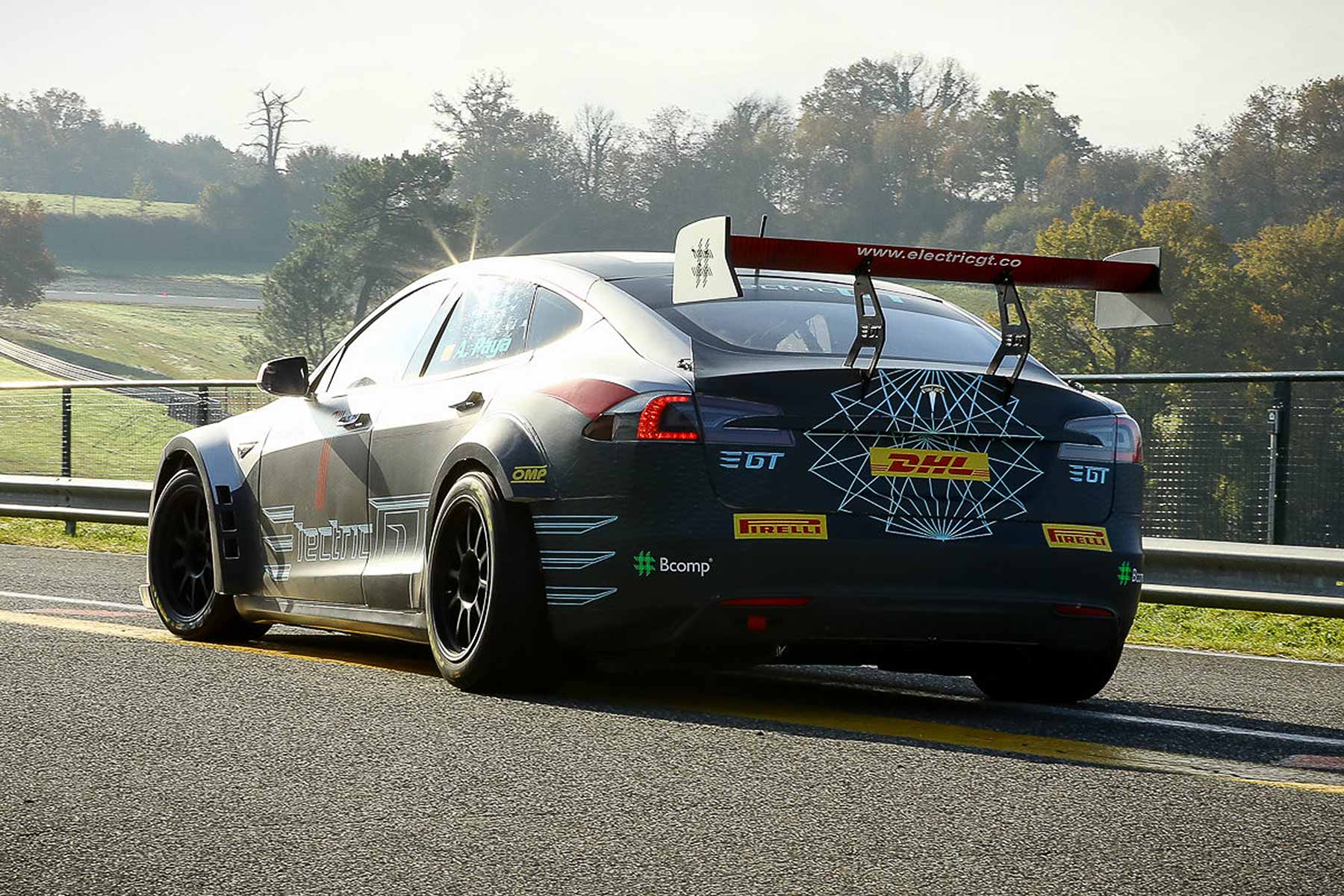


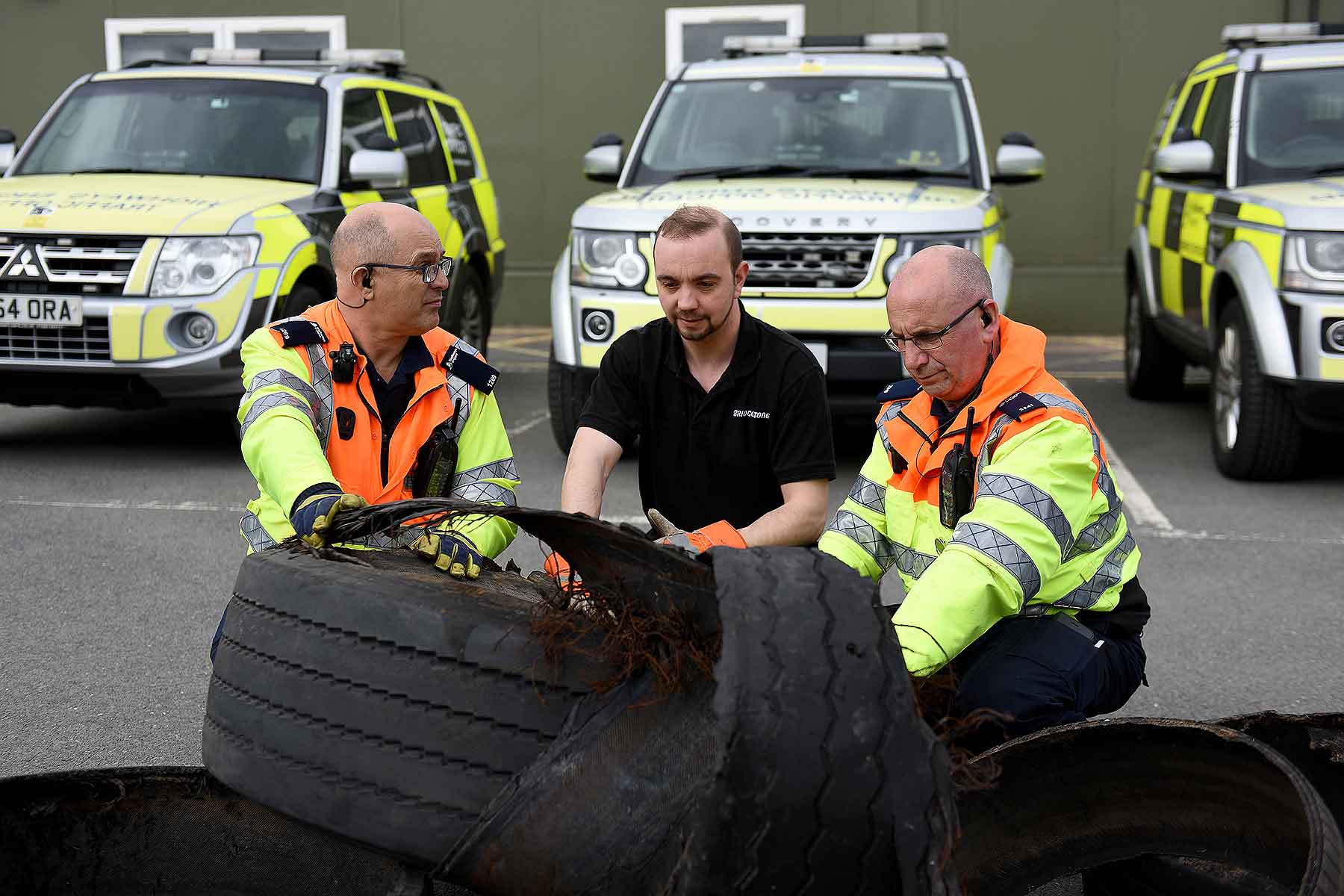 Shock figures show that 32 people were killed or seriously injured in motorway accidents in 2016 because of tyre failures – but almost 3 in 4 of them could have been prevented if motorists had simply carried out the most basic checks of their car’s rubber.

 Britain is a nation powered by vans, with 88 percent of UK consumers believing everyday would be worse if commercial vehicles were restricted in any way. Almost half of respondents to a survey conducted by the Society of Motor Manufacturers and Traders (SMMT) said they’d benefitted from a van in the last 24 hours.


 Andy Saunders is one of the country’s leading and most recognised ‘car artists’, responsible for a long line of unique, eye-catching and controversial projects. The customiser – or should that be ‘kustomiser’ – completed his first project before he was old enough to hold a driving licence and has held three Guinness World Records.