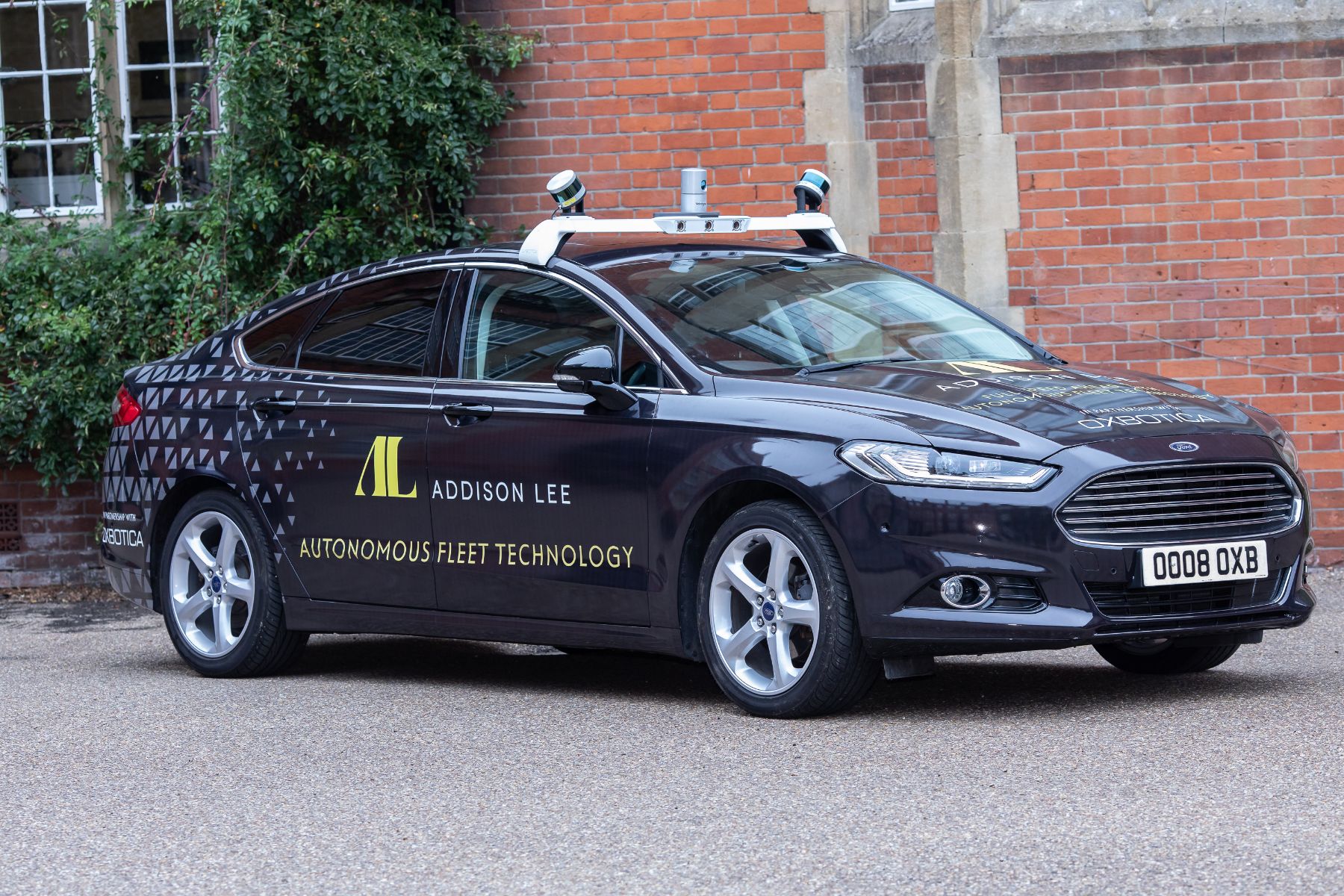
Taxi company Addison Lee has partnered with Oxbotica, a British leader in self-driving software, to begin developing autonomous taxis for future use.
A car equipped with mapping technology will cover the 128-acre Canary Wharf estate, recognising everything from kerbs to road signs, traffic lights and landmarks. It’s the first step towards mapping some 250,000 miles of London road network. The project is to be covered by AXA XL insurance, a company with previous experience working with Oxbotica.
The car utilises cameras to take images of the streets, and lidar sensors to send out laser pulses that map the car’s surroundings – a bit like how race tracks are mapped for modern driving games. Eventually, a 3D map is generated, allowing the analysis and identification of important points, road sign meanings and more.
The aim is to make autonomous cars as knowledgeable as any local resident – or indeed more. The eventual endgame is a system in Addison Lee taxis that knows London, and how to drive it, better than any cabbie.
“With its campus-style arrangement and high number of commuters, Canary Wharf is the perfect place to begin our mapping of London with Oxbotica and a possible location for new Addison Lee Group services,” said Andy Boland, Addison Lee Group’s CEO
“This mapping is another step towards making autonomous vehicles a reality in complex urban environments such as Canary Wharf,” added Graeme Smith, CEO of Oxbotica.
“This partnership shows the trust we have gained to deploy our integrated autonomous vehicle and fleet management software in even the most challenging of environments.”
Read more:
All-new Mazda3 to debut at 2018 LA Auto Show
Skoda Scala will have the biggest driver display in its class – and the largest boot
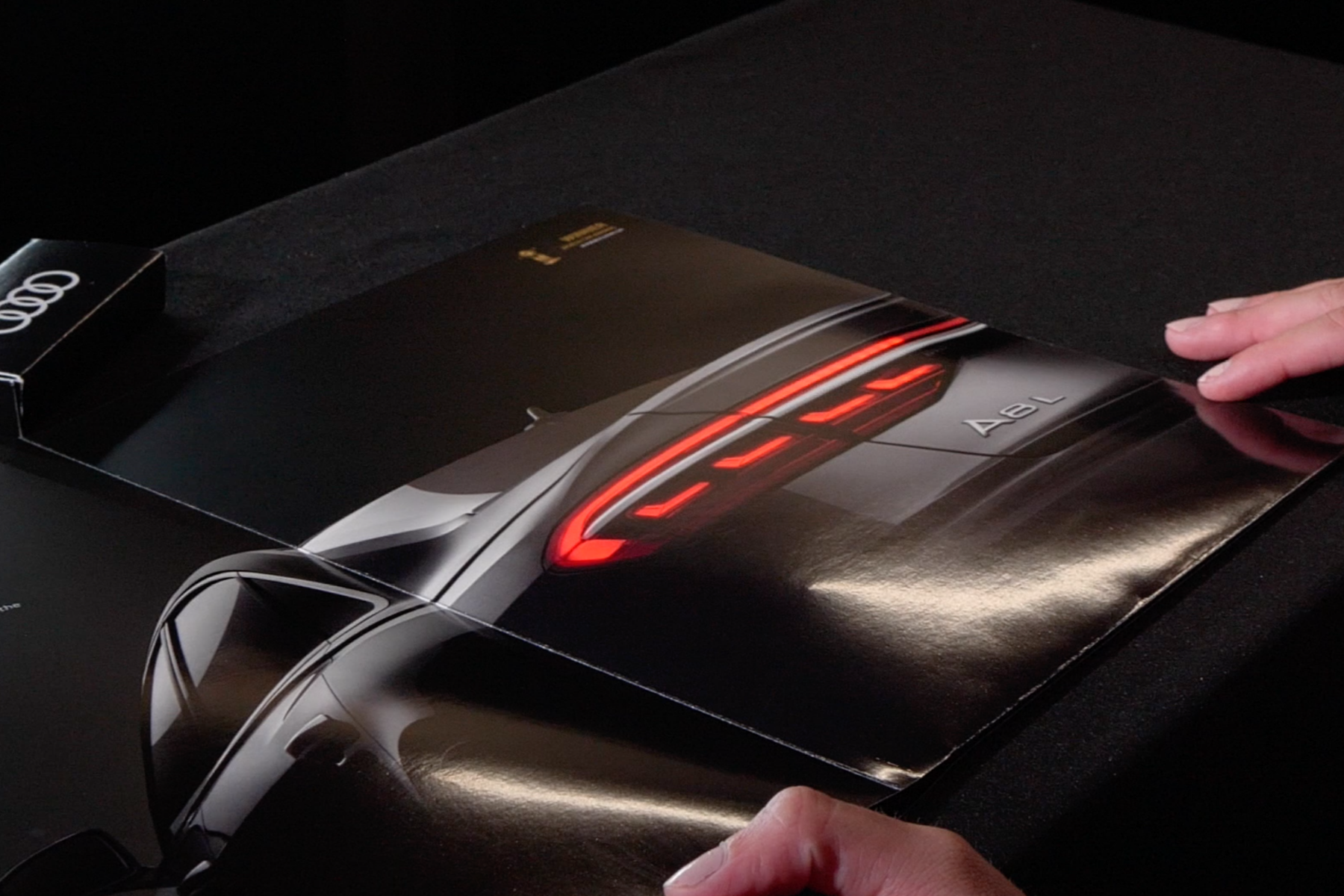
Audi has worked with the high-end Departuresmagazine for a unique, interactive piece of print advertising in the U.S. featuring an A8… with working lights.
Yes, that’s right. The page comes alive. How? With the magic of OLED lighting and a ‘key’, you can unlock the A8 on the page. The same lighting signature on the real Audi A8 springs to life on the page. We genuinely have never seen anything like it.
Departures is an exclusive magazine that goes out to American Express platinum card members, of which 25,000 have been specially selected to receive this ad.
Alongside the special insert, Audi has provided a replica key fob, sent via mail, that can be used to activate the lights of, or ‘unlock’, the A8 (the 2018 World Luxury Car of the Year) on the page. The balletic lighting sequence that new high-level Audis feature – the ‘greeting’, as Audi calls it – then unfolds on the page. It also does it as you open the booklet – you use the key for a repeat performance.
How does it work? With an ultra-thin microprocessor sandwiched between the card of the insert that controls the rear light-imitating OLEDs.
The real cleverness of this advert is the fact that not only is the print-and-digital-merging ad itself amazing, but that the real car features similar boundary-pushing technology.
Audi has arguably led the automotive lighting arena since the gradual roll out of LED and Matrix LED headlights. The latest technology in car lighting, organic LEDs, now feature in the A8’s delectable lighting architecture and help this advert come to life.
Very clever stuff. We’d be prompted to go take a test drive based on the ad, that’s for sure. How many Departures readers will be similarly won over?
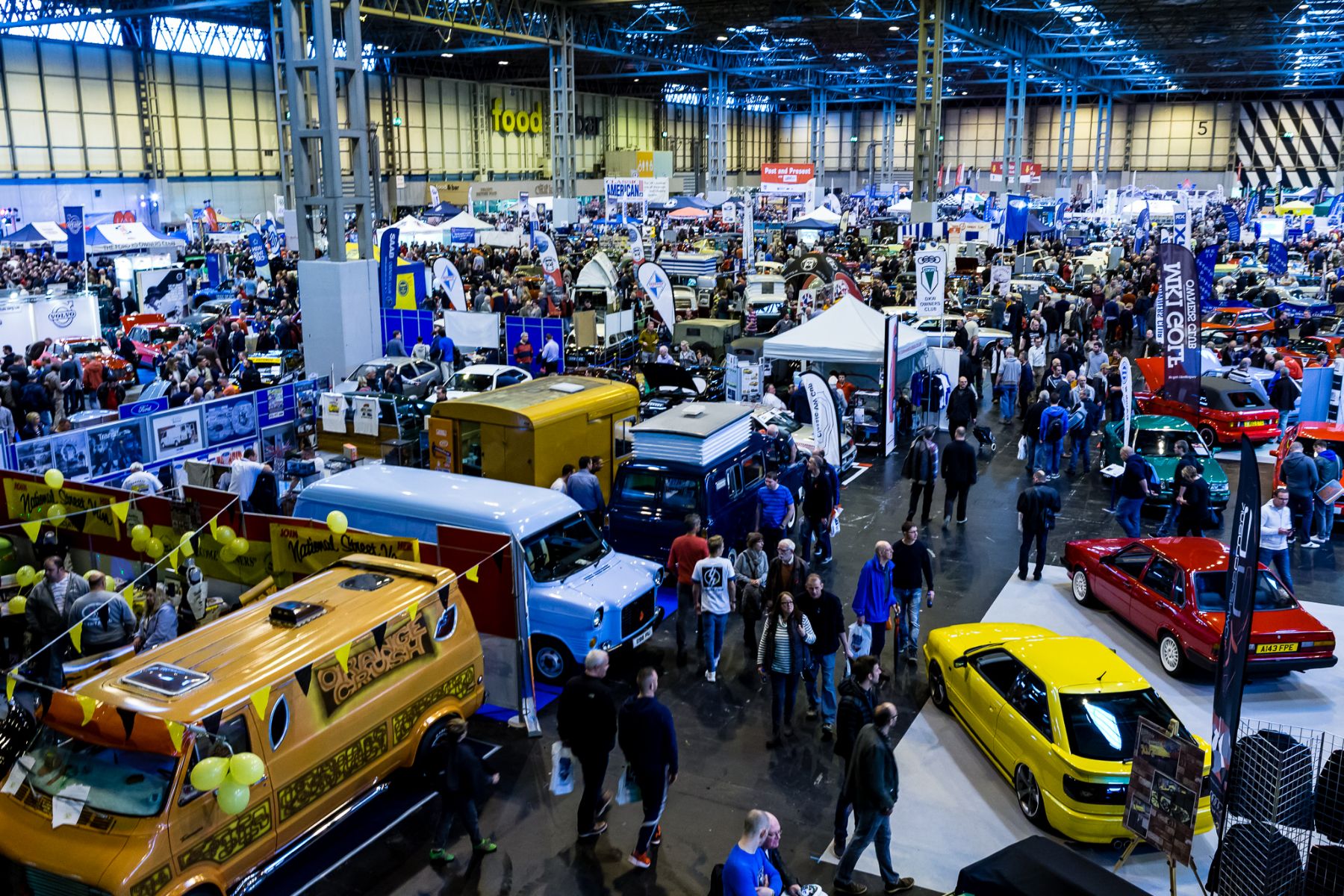
Aside from the circa. 3,000 classic cars in the show halls, including the world’s largest gathering of classic car clubs, here are some highlights you definitely won’t want to miss…
Wheeler Dealers Discovery Live Stage
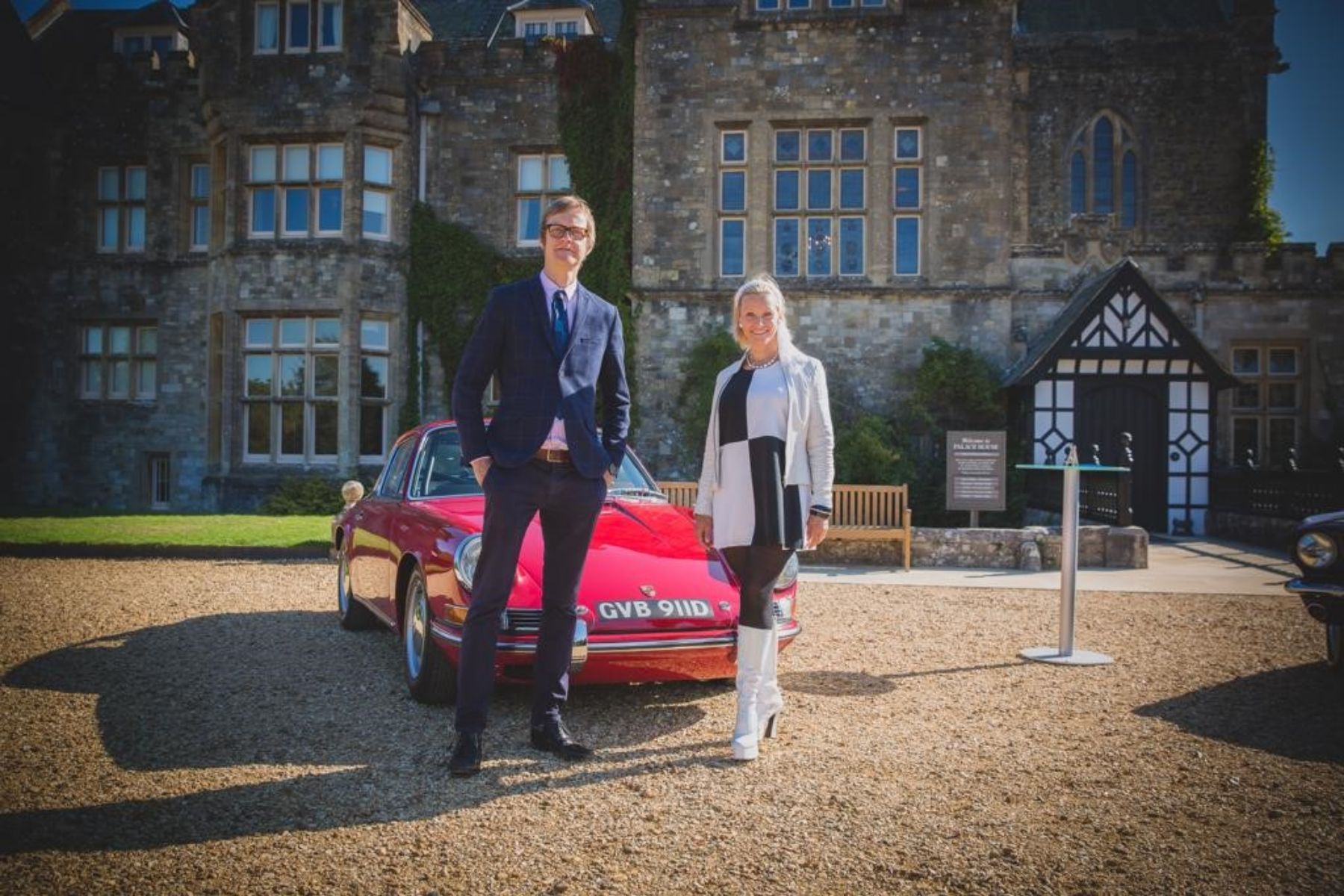
The Wheeler Dealers Discovery Live stage should be one of the coolest attractions of the show. Mike Brewer and Ant Anstead from the TV show will be joining a host of other motoring personalities, including Jimmy DeVille of Goblin Works Garage and Paul Cowland from Salvage Hunters.
Mike will be setting the Practical Classics Practical Challenge to Ant and writers from the magazine. Their task will be to assemble a fully working car from a box of bits, and fire it up before the show ends on Sunday.
Silverstone Auctions two-day sale
The Silverstone Auctions sale is bursting with curious classics of all vintages. It’s sure to be one of the coolest attractions at the NEC Classic Motor Show.
A selection of cars from Jamiroquai rocker Jay Kay’s collection will be hitting the block, along with Jenson Button’s old V10 BMW M5, a unicorn VW XL1 and hundreds more. Memorabilia, parts, clothes and other such trinkets are also up for grabs at the auction.
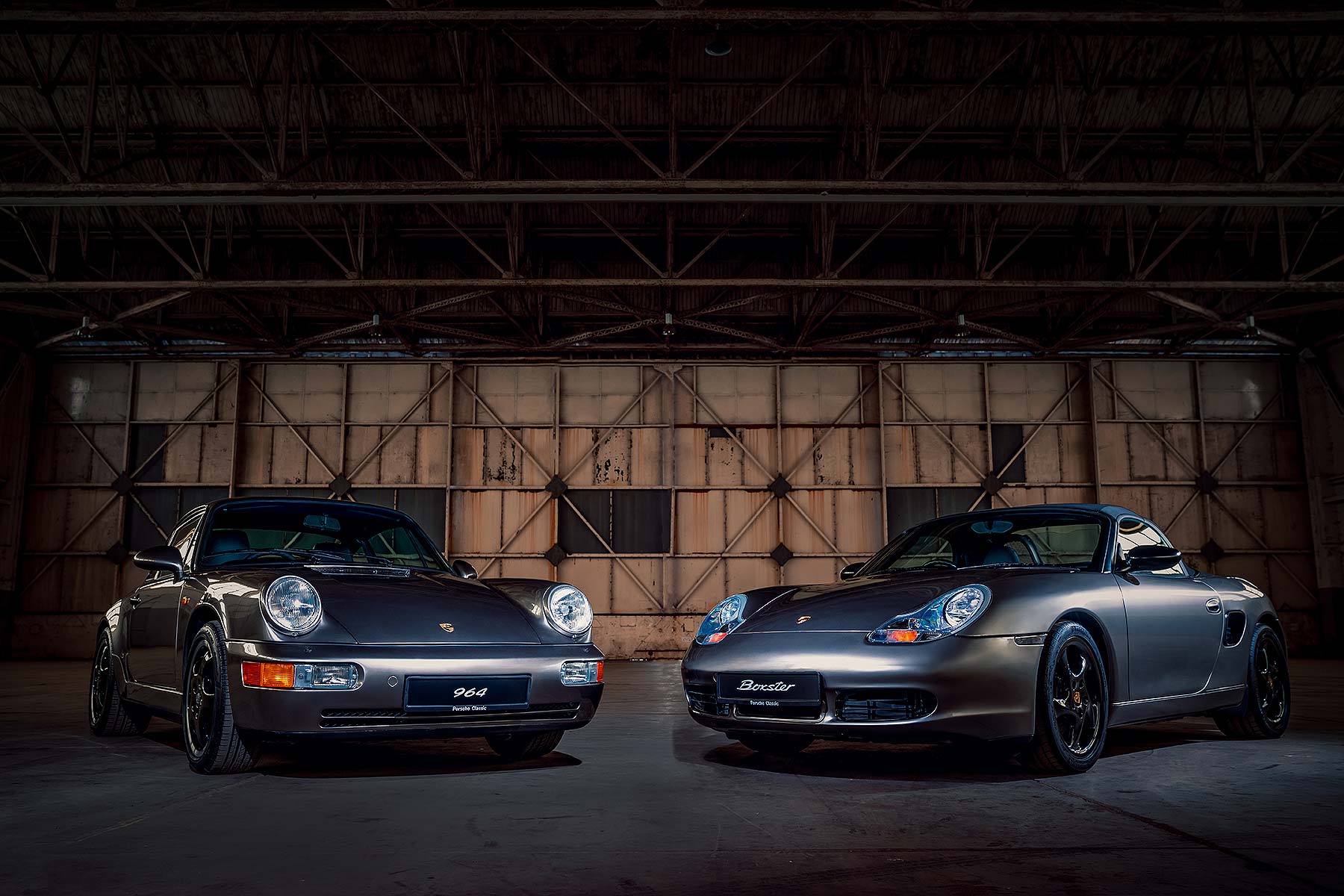
’70 years of Porsche’ restorations
Porsche GB set a selection of dealers and specialists an epic challenge: to restore a classic Porsche to better-than-new condition. A smattering of 911s, Boxsters and front-engined sports cars all feature – each one painted in 918 Spyder ‘Liquid Metal’ silver. Many also have Porsche Classic retro-fit sat nav and alarm systems.
Porsche GB will have an 11,000 square-foot stand at the NEC Classic Motor Show
Hero Arrive and Drive Classic Car Experience
You can drive some of the most iconic cars in motoring history with the Hero events Arrive and Drive Classic Car experience. All you’ll need is a clean licence, to be over 25 (or under 70) and to have the confidence to get behind the wheel. You get four miles of driving around the NEC and you can either drive or be a passenger.
There are two groups – A and B. The former costs £65 to get behind the wheel, the latter £47. Both cost £32 for a passenger ride. Group A contains a 1968 Jaguar E-type, a 1990 Lancia Delta Integrale and a 1958 MGA Roadster. Group B is headed by a 1969 Lancia Fulvia Sport Zagato, with an MGB and Triumph TR3/TR4 also available.
Other highlights at the NEC include the Meguiars Best of the Best showcase and the Lancaster Insurance Pride of Ownership competition. It should add up to a great weekend of classic-themed fun.
Alert: NEC car parking!
Car parking arrangements at the NEC has changed this year. If you prebook, it’s £12… but if you pay on the day, this rises to £16. Be sure to book your pre-paid NEC car parking beforehand and maybe put the cash you save towards a pre-show bacon roll…
Remembrance Sunday and Armistice Day this year coincide with the 2018 Brazilian Grand Prix. Williams F1 is taking the opportunity to raise awareness of the Royal British Legion with a series of poppy-themed initiatives.
This year, Remembrance Sunday marks the centenary of the end of the First World War.
Every Williams trackside team member will therefore wear a poppy in Brazil throughout the weekend’s activities in Sao Paulo. The Williams FW41 livery will also have a poppy incorporated.
Williams says it wants to help maximise awareness of the Royal British Legion’s fundraising efforts, and also to support those who serve and who have served.
“It is an honour to support The Royal British Legion in commemorating the centenary of the First World War,” said deputy team principal Claire Williams.
“Williams has close ties to the Armed Forces, so it is important for us to show our support on such an important day.
“Our activities over the weekend hope to raise funds for the Royal British Legion, while also remembering those who have given their lives in service.”
Team Williams will be supporting Remembrance Sunday back at its HQ in Grove, too. Everyone, including the team in Williams Advanced Engineering, will be encouraged to wear poppies.
Williams has also given its famous pitstop topiaries a makeover of poppies – and the team has promised to sign a race car part and later auction it for the Royal British Legion, to raise money for veterans.
There seems to be no stopping the aggressive expansion of Aston Martin at the moment. A near-total range overhaul in the space of three years, a world-beating hypercar, an SUV in the works and electrification on the way – not to mention the newly reborn Lagonda EV luxury brand.
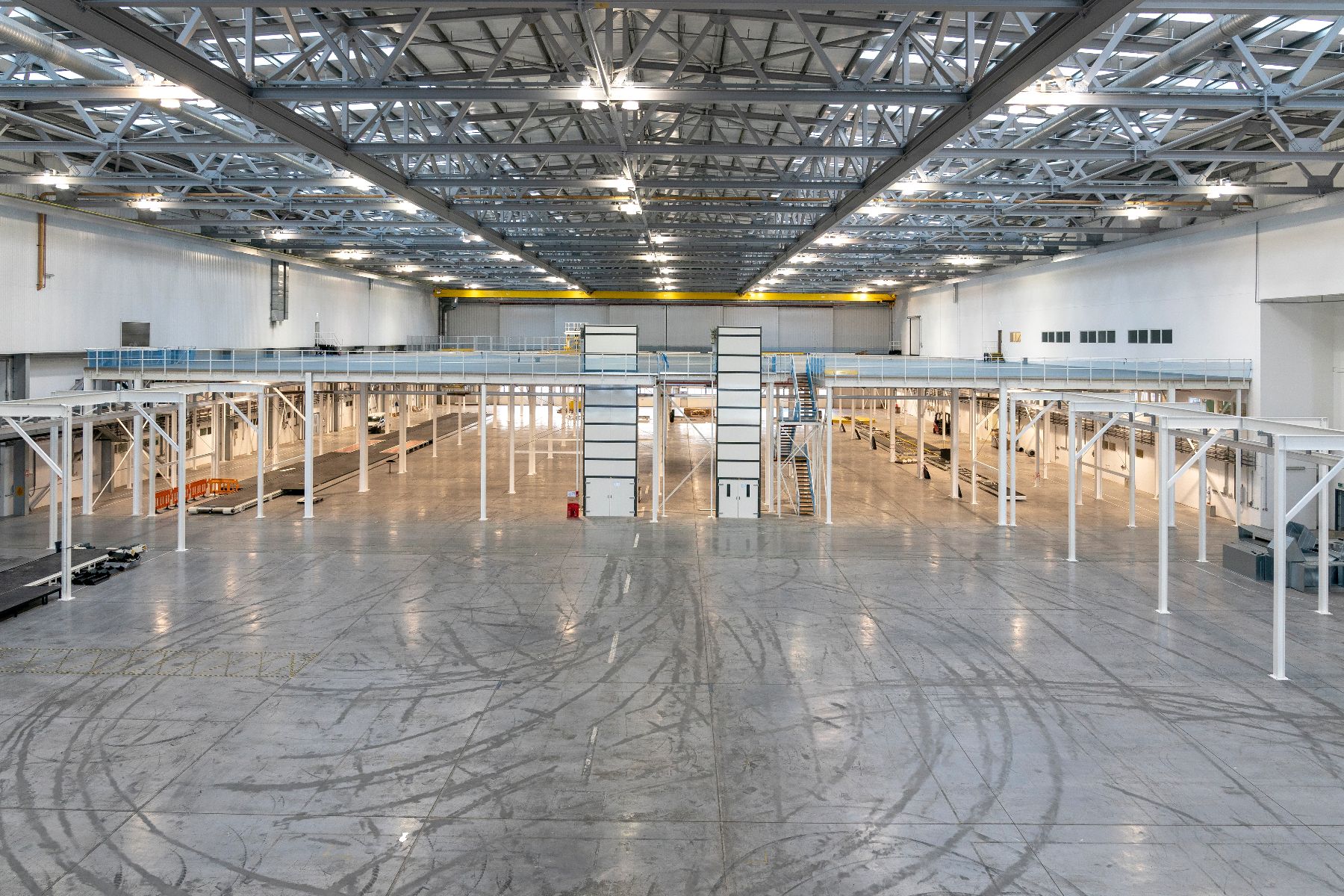
Part of the challenge here is having somewhere to build all these cars, a welcome problem previously alien to Aston. The St Athan facility in Wales is to be Aston’s ‘Home of Electrification’ as well as its SUV hub, and will open its doors just three years on from announcing its plans with the facility.
We’re now around a year away from the debut of the Varekai (DBX) SUV’s unveil and subsequently, production commencing.
Where is Aston Martin at with St Athan?
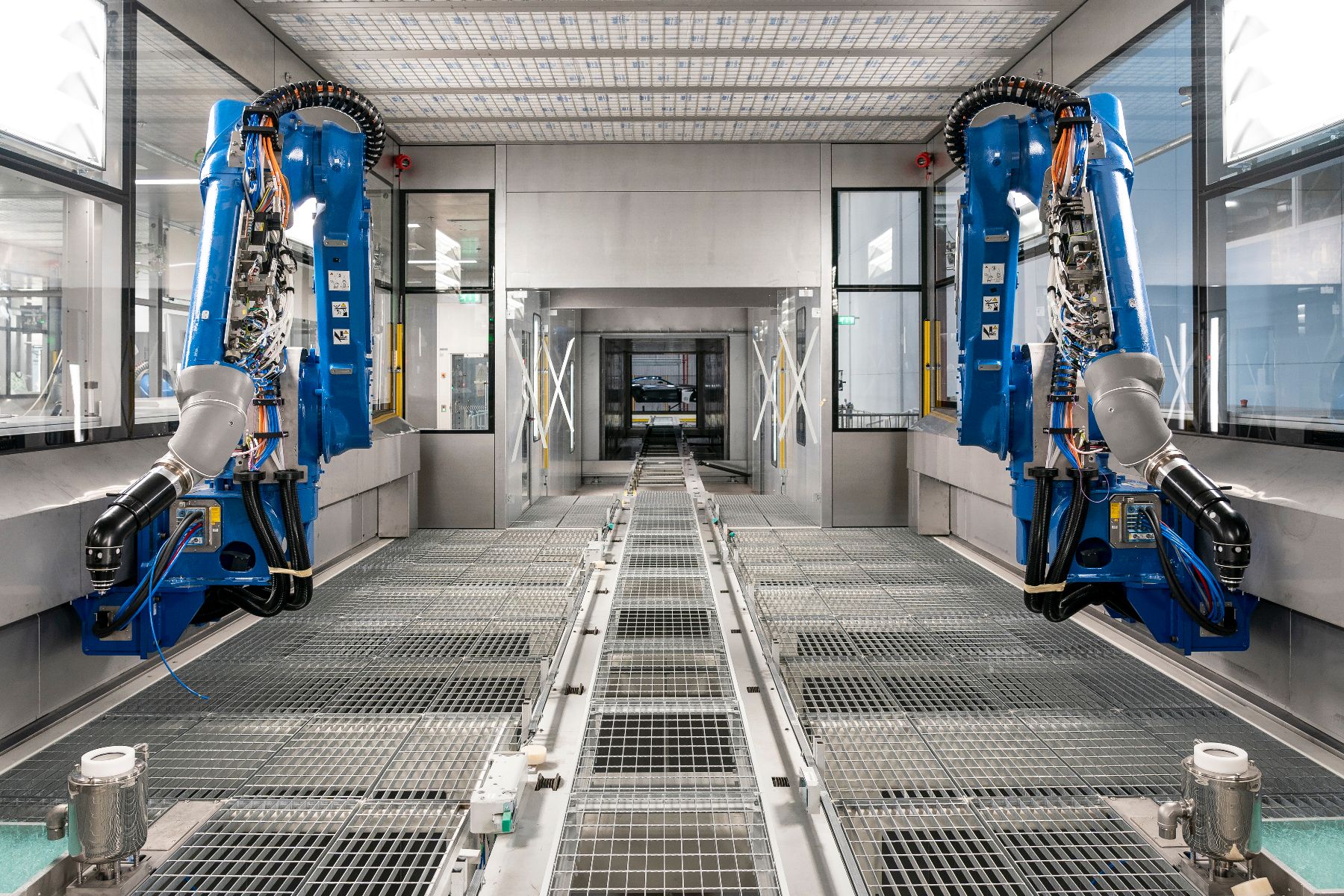
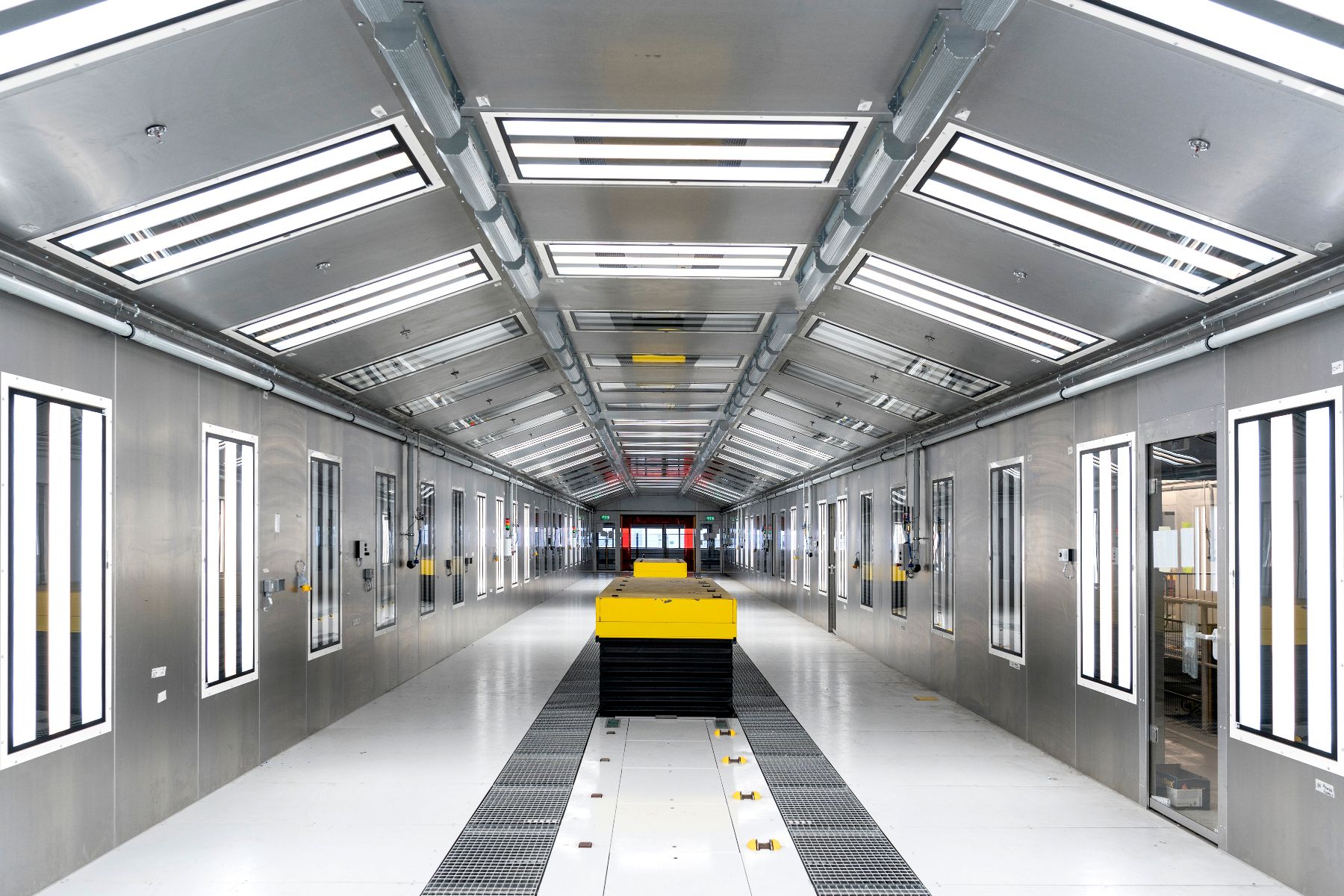
The site, formerly an array of MOD super hangars, is all but ready to go. The paint shop is fully installed and the production line is nearing completion. It’s already home to 100 Aston employees, though that’s due to rise to 700 by 2020, once car production is in full swing.
Prototype vehicles are due to start production at the facility at the beginning of next year, at which point as many as 200 workers will be based there.
When fully up and running and when the highly anticipated Lagonda models arrive, St Athan will be the home of all things Aston EV, as well as the imminent SUV.
“As the St Athan facility nears completion, there is a very real sense this is the start of a bold new era for Aston Martin Lagonda,” said president and CEO Dr Andy Palmer.
“The St Athan facility will initially commence with the production of our first SUV but will ultimately be a global centre of excellence for the production of luxury high-performance EVs, including Lagonda: the world’s first luxury electric automotive brand.”
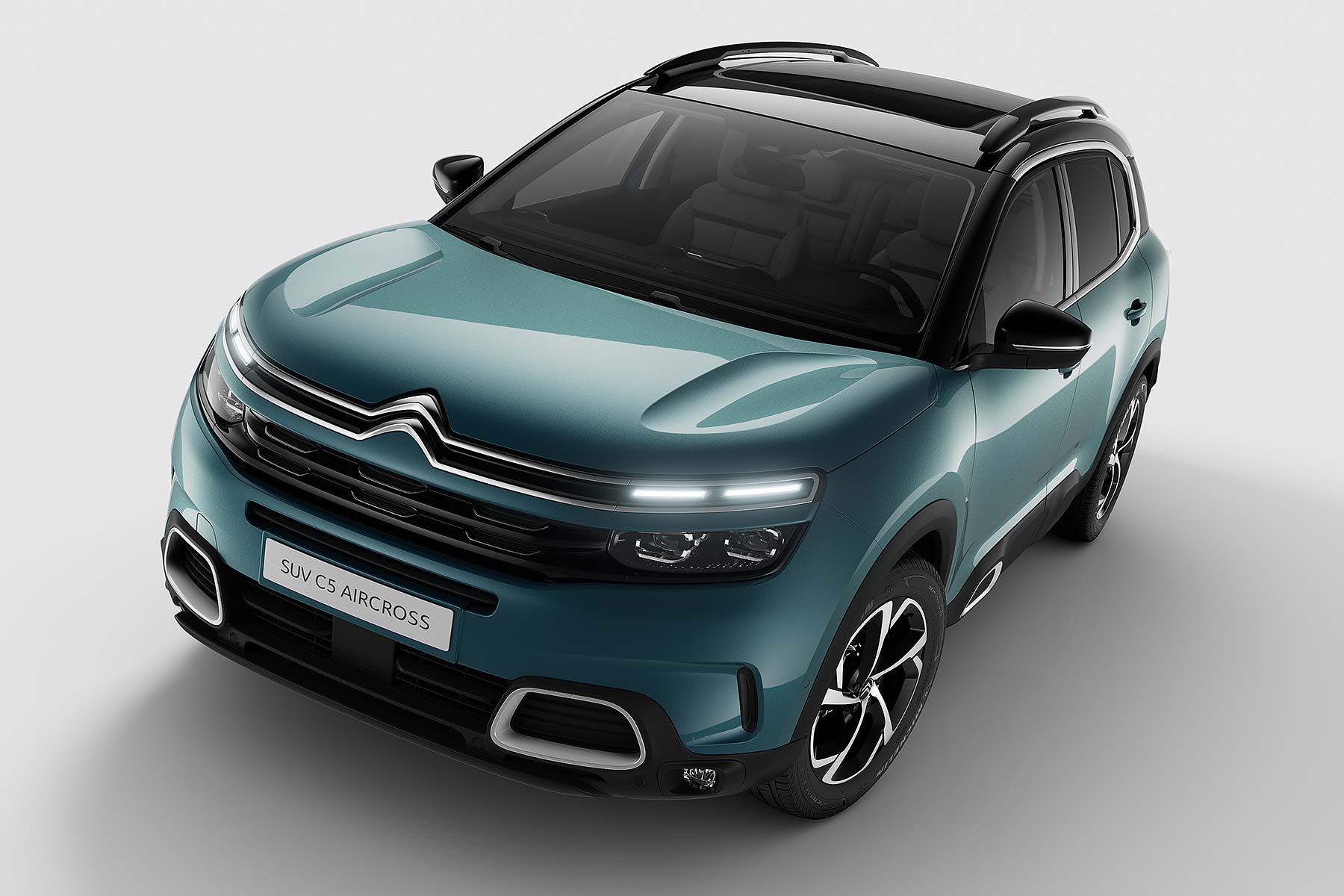
The new Citroen C5 Aicross family-sized SUV opens for ordering on Monday 3 December, ahead of deliveries beginning in early February 2019. The firm has now revealed pricing for its new range-topper, which starts from £23,225.
The five-seat SUV will be offered in Feel, Flair and Flair Plus trims. All will have best-in-class boot space, says Citroen: a sliding rear seat varies it between 580 litres and 720 litres. Fold the rear seats and 1,630 litres is opened up.
All are likely to prove very comfortable to ride in as well, as Citroen’s unique suspension with Progressive Hydraulic Cushions features on all. Flair and Flair Plus versions of the 2019 World Car Awards contender add armchair-like Advanced Comfort Seats.
Even the base Feel is well equipped, featuring 17-inch alloys, dual-zone climate control, rear parking sensors and touchscreen infortainment with Apple CarPlay and Android Auto as standard. Safety equipment is impressive, with active safety braking, blind-spot warning and lane-departure warning.
Flair (priced from £25,325) adds 18-inch alloys, a reversing camera, TomTom sat nav, dark rear glass, voice recognition and Citroen’s ConnectedCAM built-in dashcam.
Flair Plus (priced from £27,725) includes 19-inch alloys, active cruise control, an opening panoramic roof and wireless smartphone charging.
The engine line-up is simple: 1.2-litre PureTech 130 or 1.6-litre PureTech 180 petrol, plus 1.5-litre BlueHDi 130 and 2.0-litre BlueHDi 180 diesel. Both 180hp engines have an automatic as standard (you can’t get an auto on the PureTech 130).
Citroen suggests the trickiest part may be selecting colour and trim: with seven paint colours, an optional black roof, three colour packs and four alloy wheel options, there are a total of 30 different combinations of C5 Aircross. There’s sure to be one for you, no matter what your tastes…
It’s more than 15 years since Rolls-Royce introduced the Phantom VII and with it, floating hubcaps. Now, BMW has introduced the feature as an optional extra.
So, what is a floating hubcap? You’ll know when you look at a Phantom rolling by: you see the wheels turning, but the Rolls-Royce symbol isn’t. That’s the floating hubcap – and you can now get one for your 3 Series.
Will Rolls-Royce drivers feel their cars have been cheapened, given this previously exclusive feature is now available on BMWs? Hopefully not…
The add-on floating hubcaps will fit any BMW alloy wheels as long as they have a pitch circle diameter of 112mm. The BMW logo itself is 56mm wide.
How much for a set, then? That’ll be £75 – including VAT – for four. They could make a fun, and relatively inexpensive, addition to your BMW.
Subaru is one of the most interesting Japanese car manufacturers, if hardly the most prolific. A steady stream of incredible Imprezas defines it in the hearts and minds of enthusiasts, but there’s much more to this eclectic brand – as we’ll see.
Taking Subaru on merit of the Impreza alone is like looking only at the 911 for all things Porsche. How, then, do you get a grip on the weird and wonderful world of Subaru beyond the WRX? You start by visiting perhaps the most eager Subaru collector in the country.
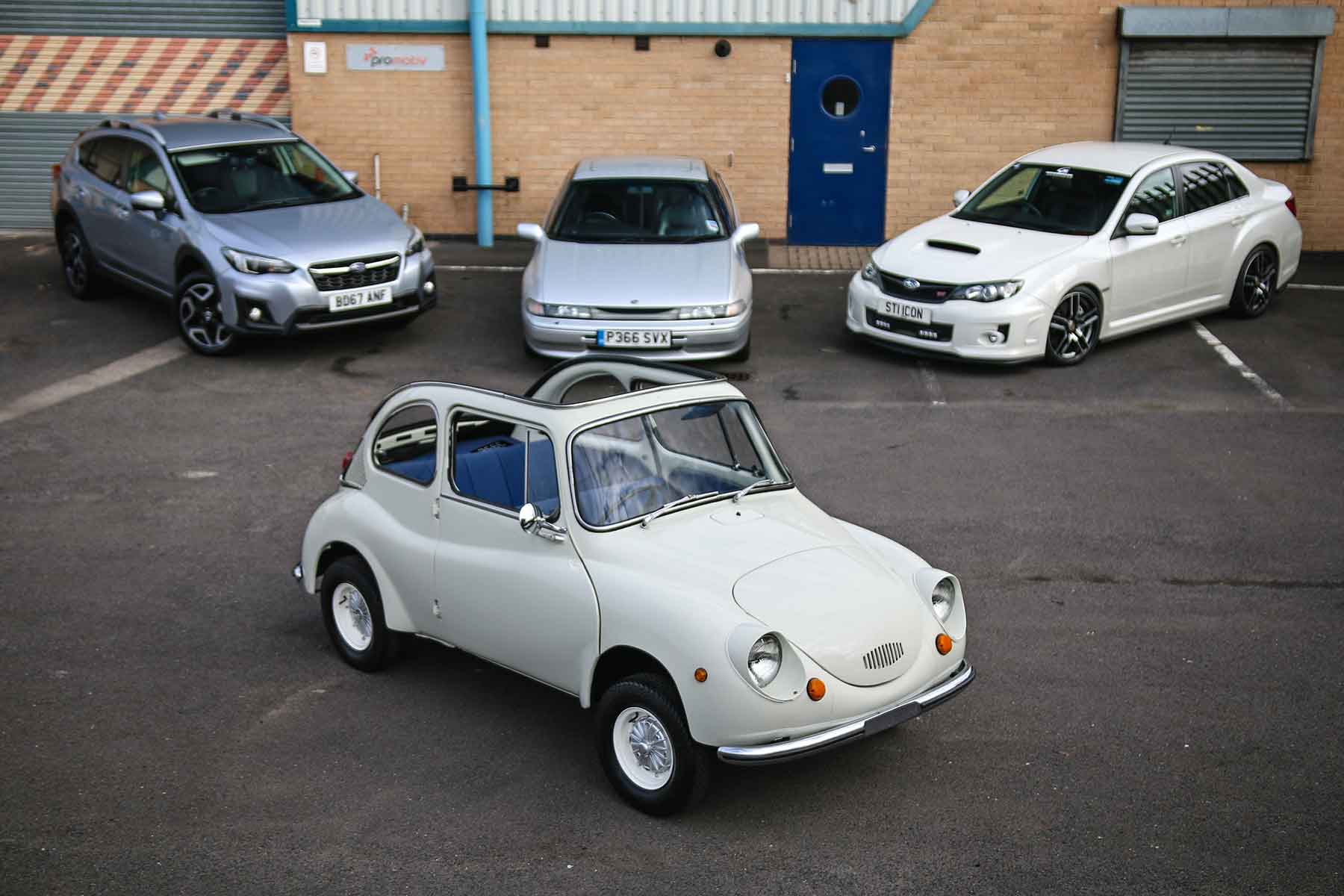
Paul Cowland is a PR wizard, TV personality and self-proclaimed 1980s tat enthusiast. That is, of course, a very self-deprecatory way of describing a very cool collection of cars, many of which are Subarus. There is a token Impreza – although not a typical choice – but the rest is leftfield, foreign market-specific or just plain weird.
Let’s dive in to perhaps the most unique all-Subaru car collections in the world.
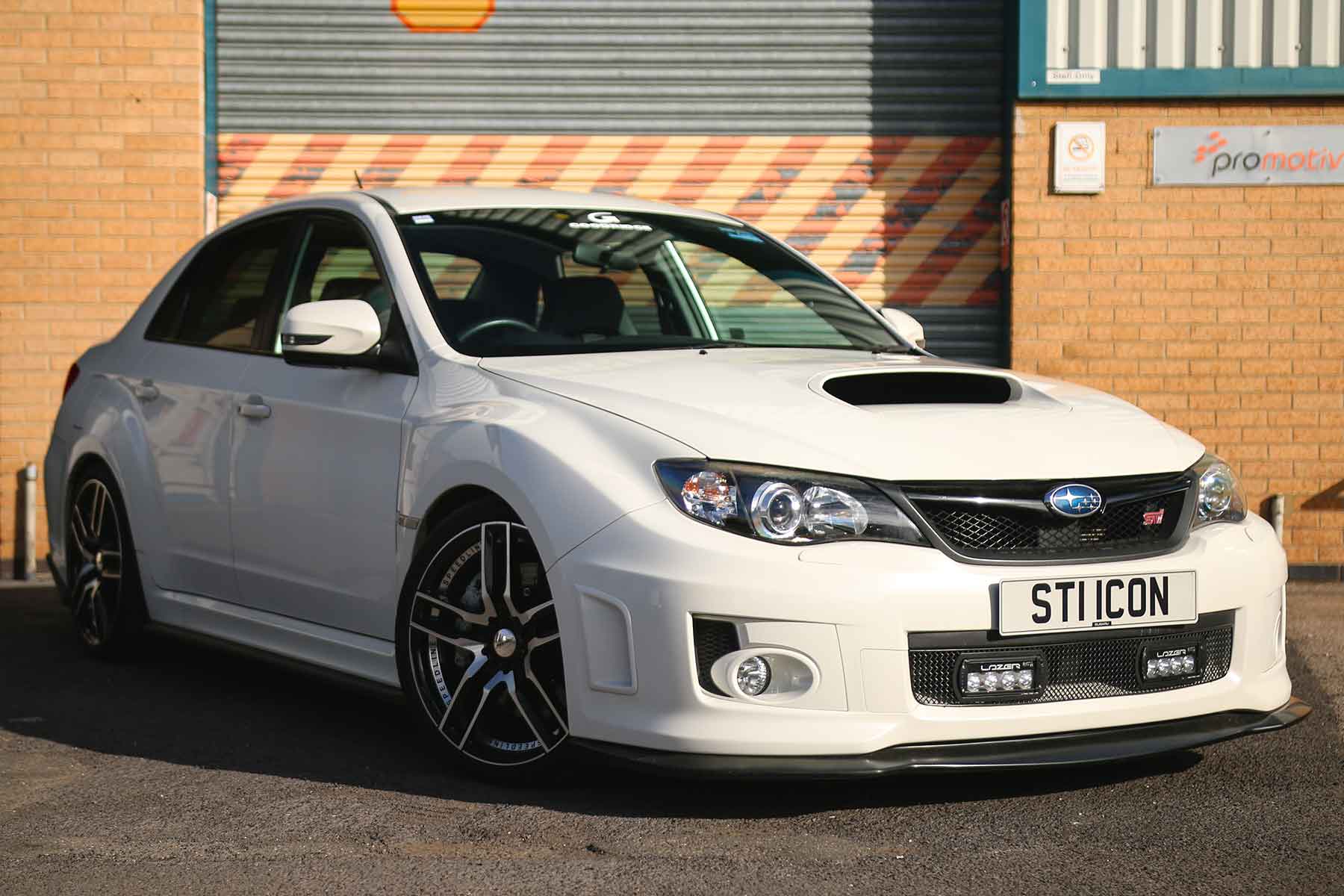
Subaru Impreza WRX STi
Firstly, that Impreza – it’s not the typical rally refugee you might expect. Paul himself is a veteran of a very specific era in car modification culture. He had a (now very sought-after and expensive) Impreza 22B around the time it was new – the archetypal stage-splattered Scoob. This… is not a 22B.
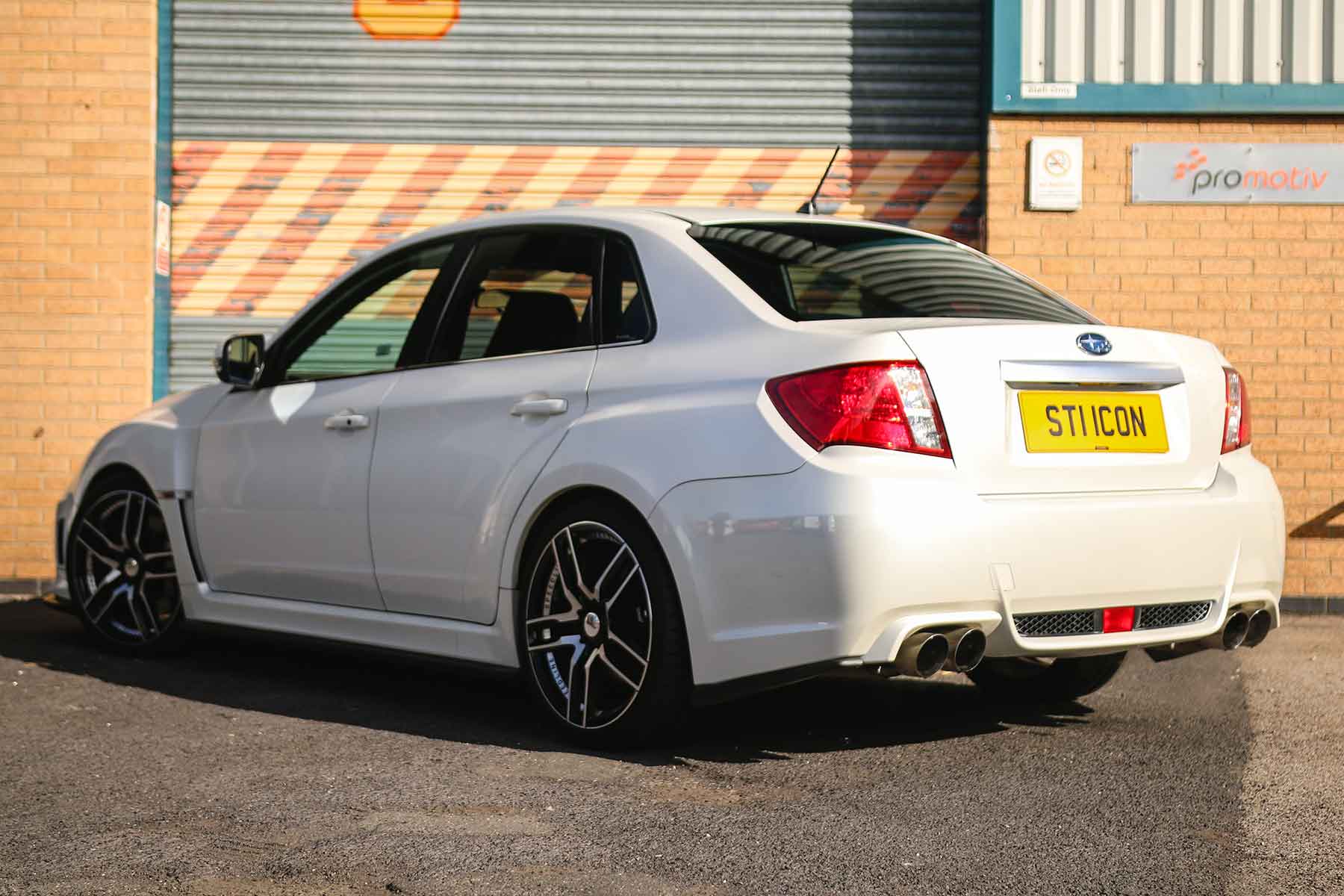
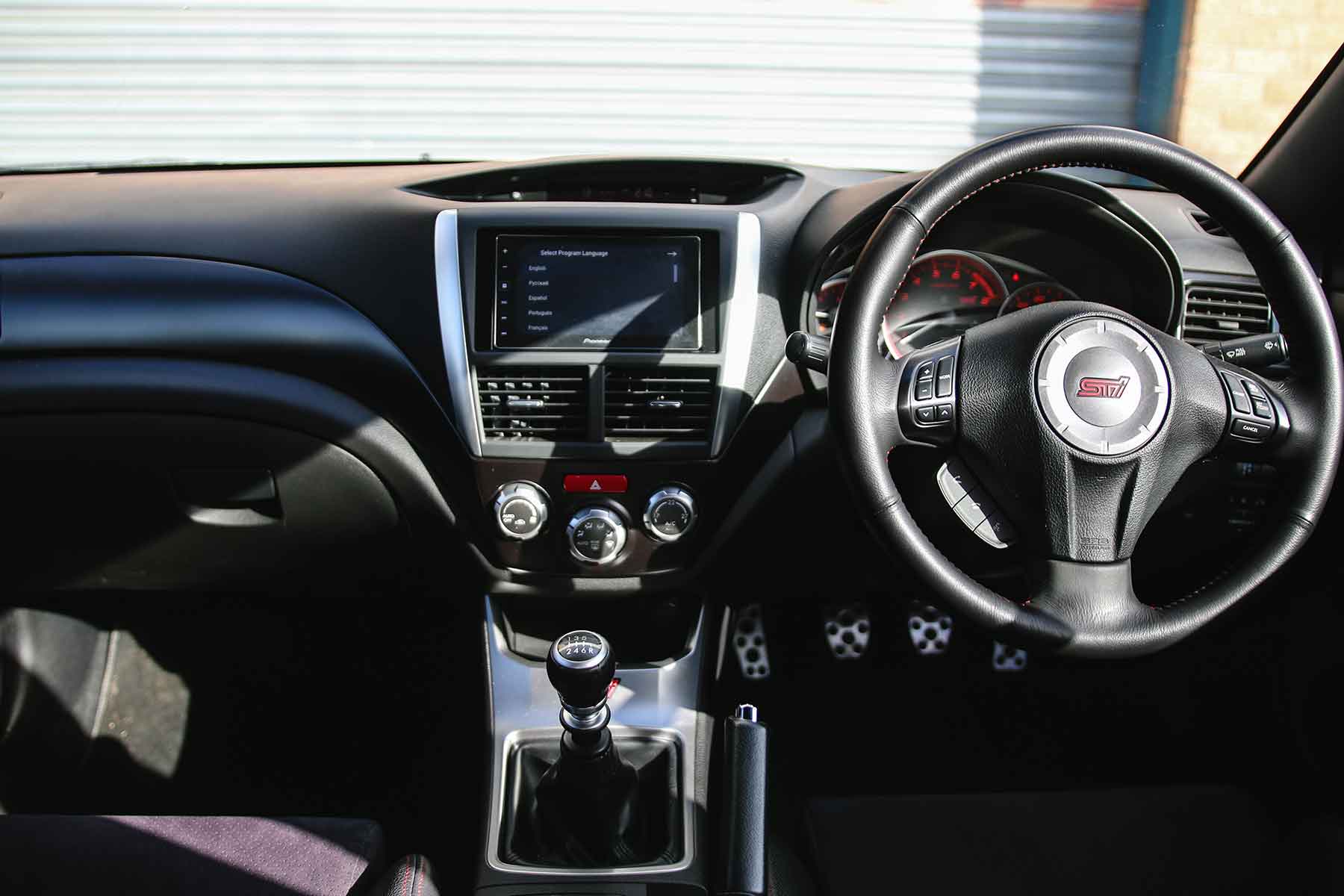
It’s a saloon version of the Impreza hatchback launched in 2010. The car spent its working life ripping around skid pans, showing people what the Impreza can do. It’s also a parts guinea pig for in-house tuner Pro R and boasts a not-inconsiderable 370hp. This wingless white wonder is the perfect Scooby sleeper.
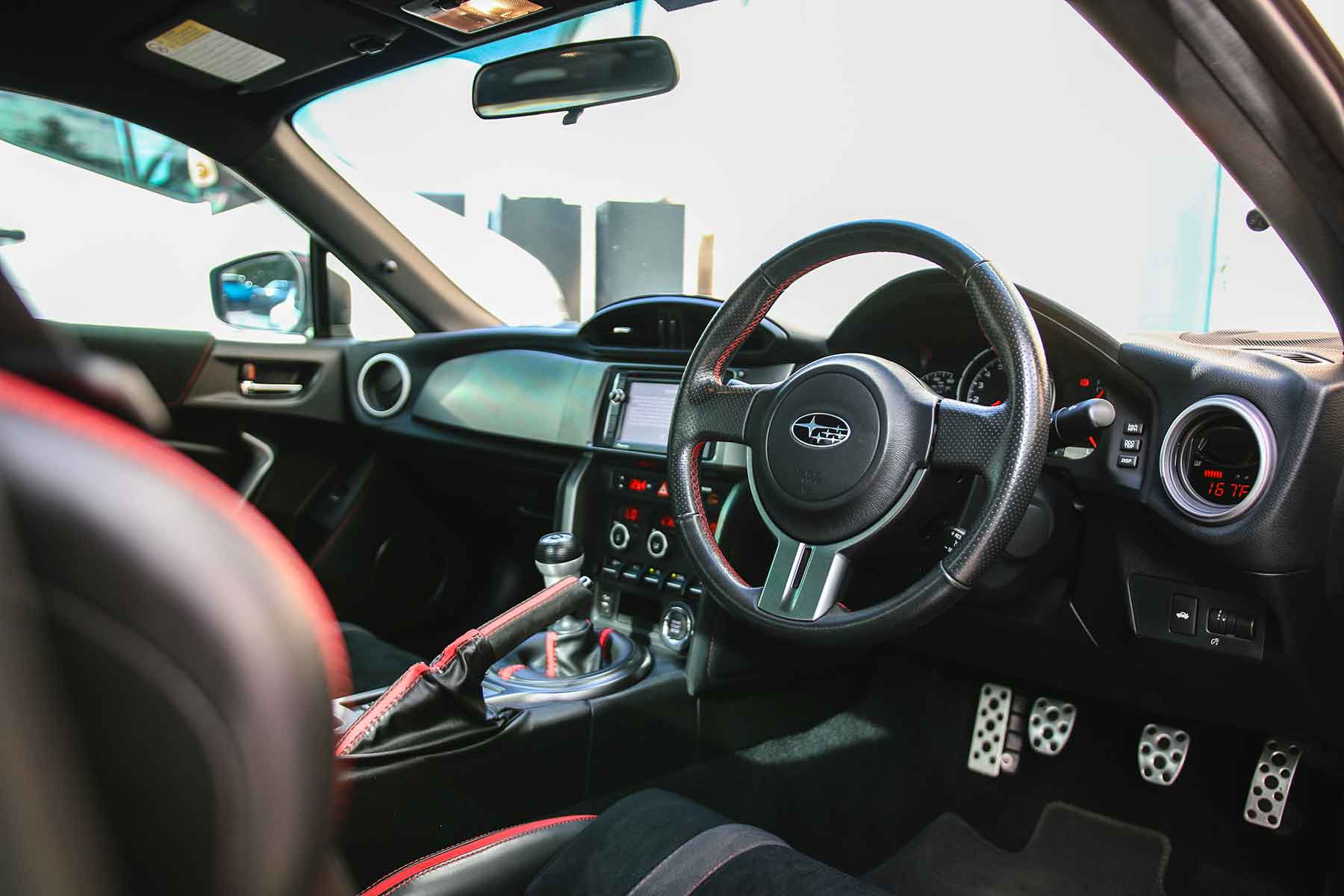
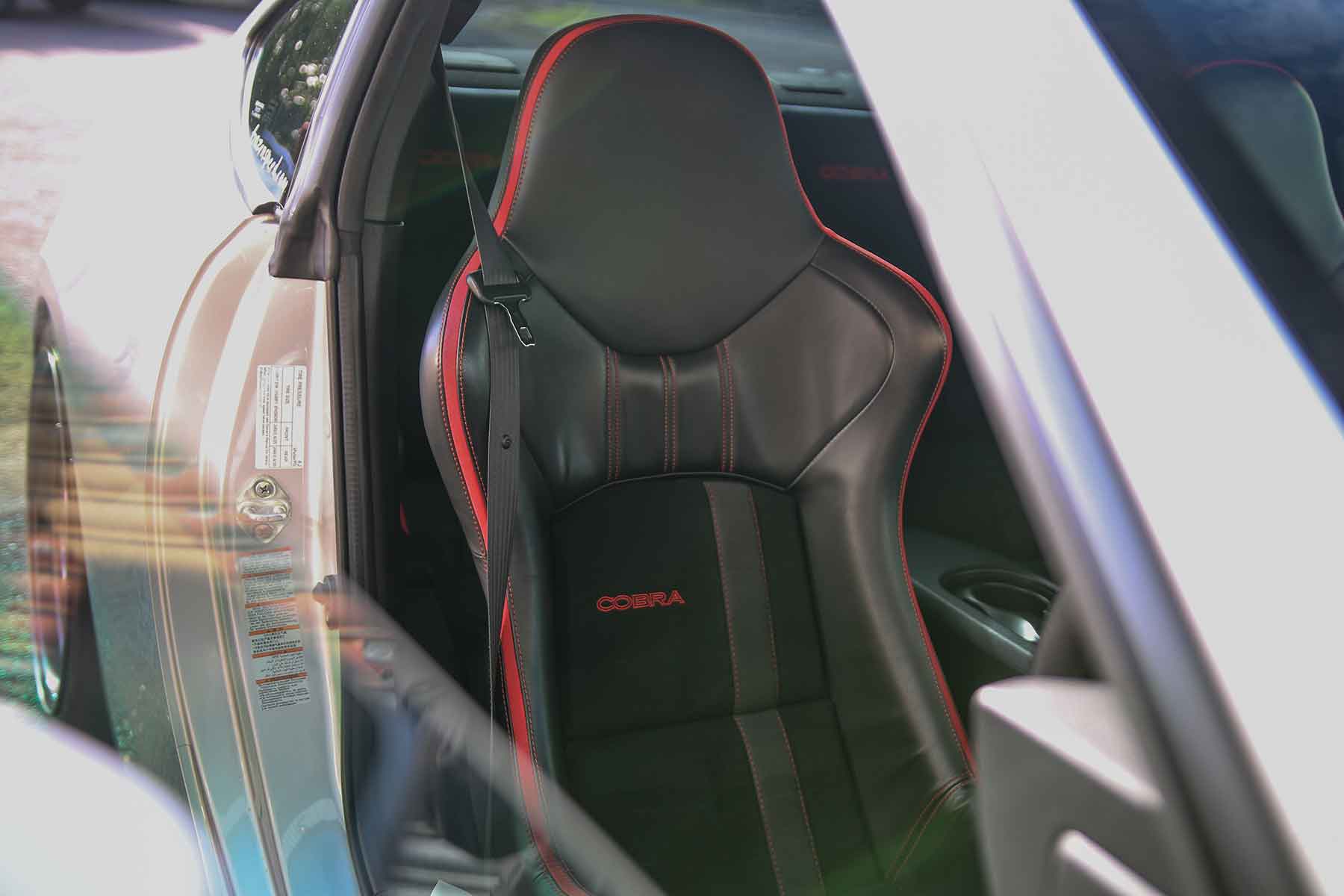
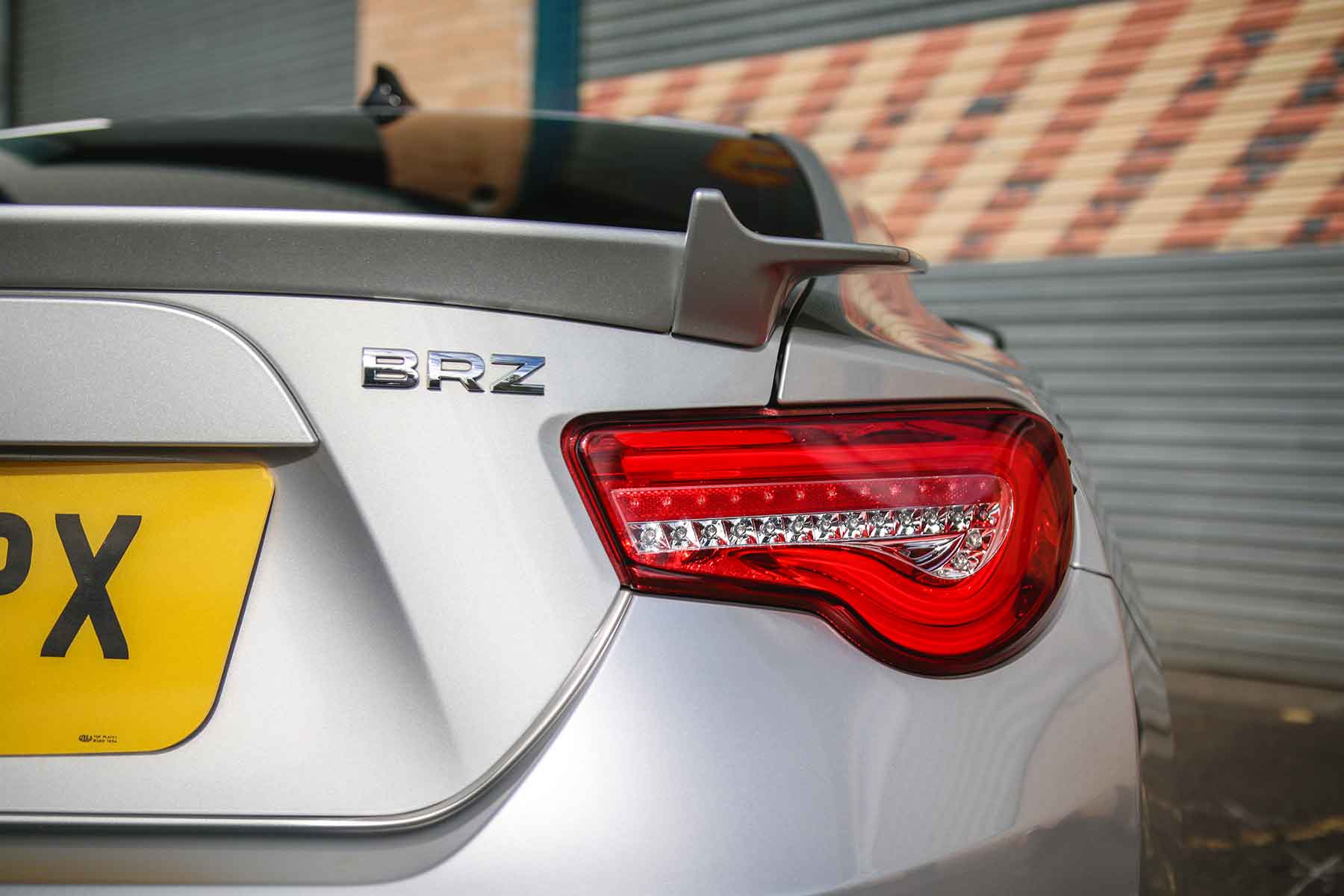
Subaru BRZ
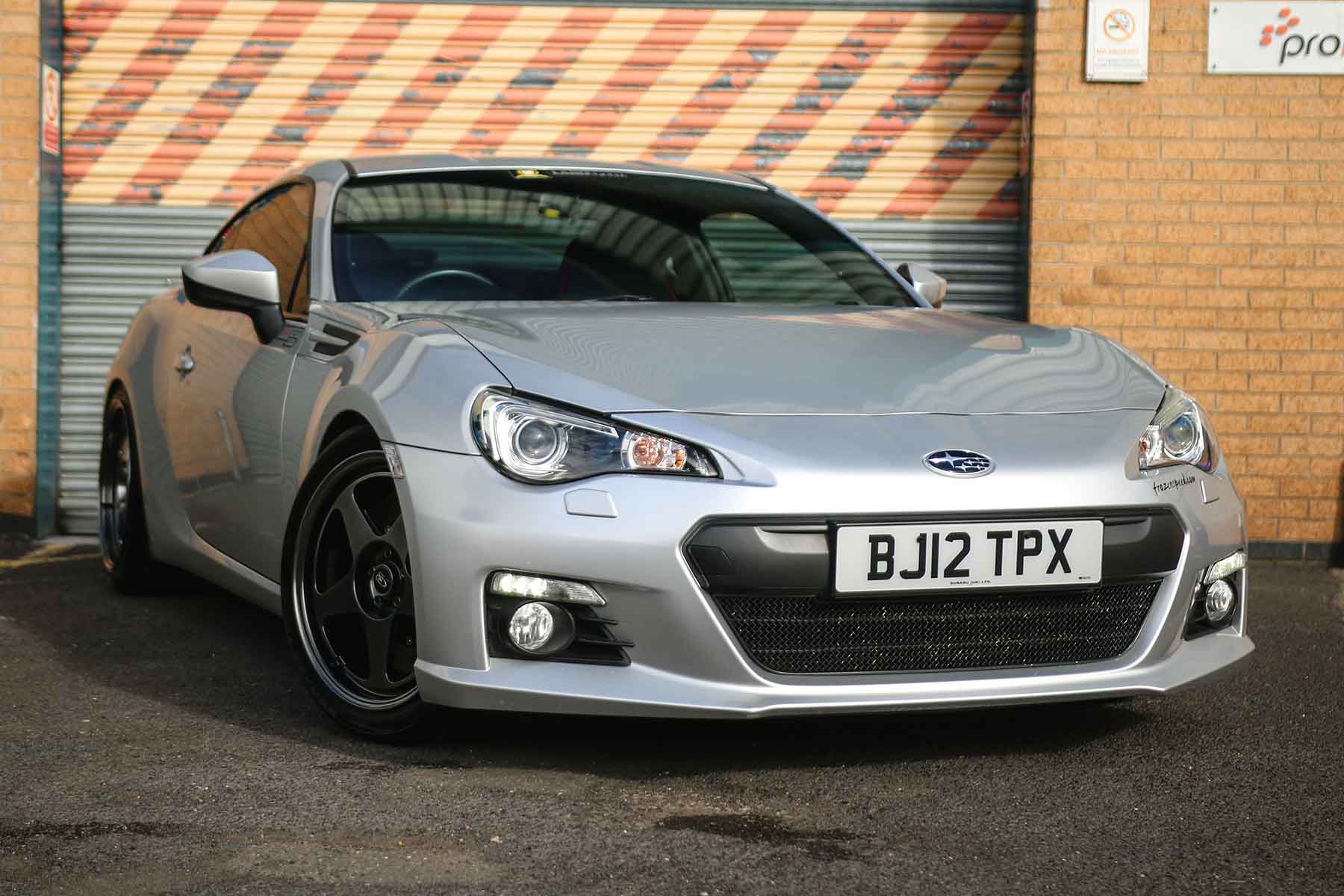
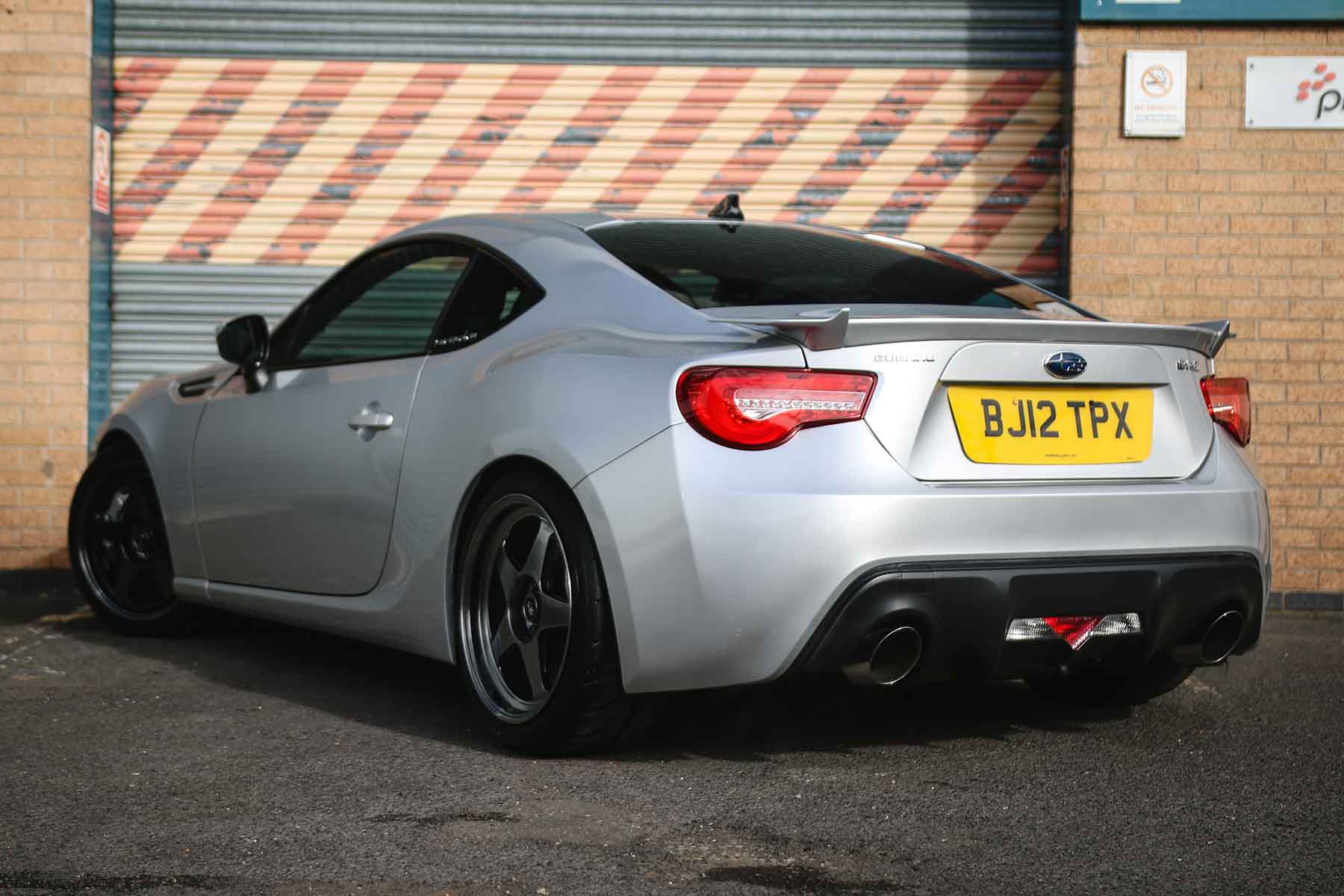
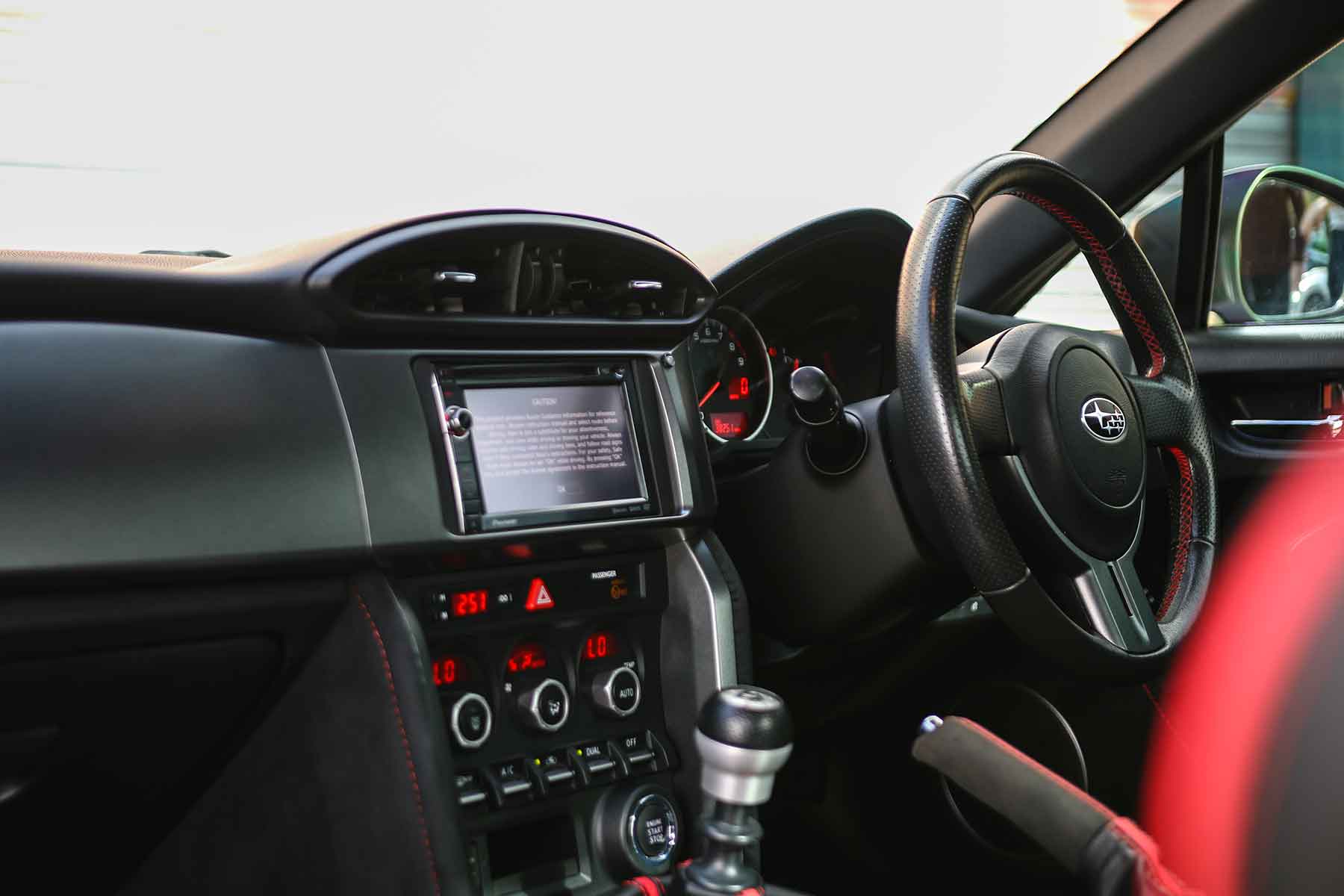
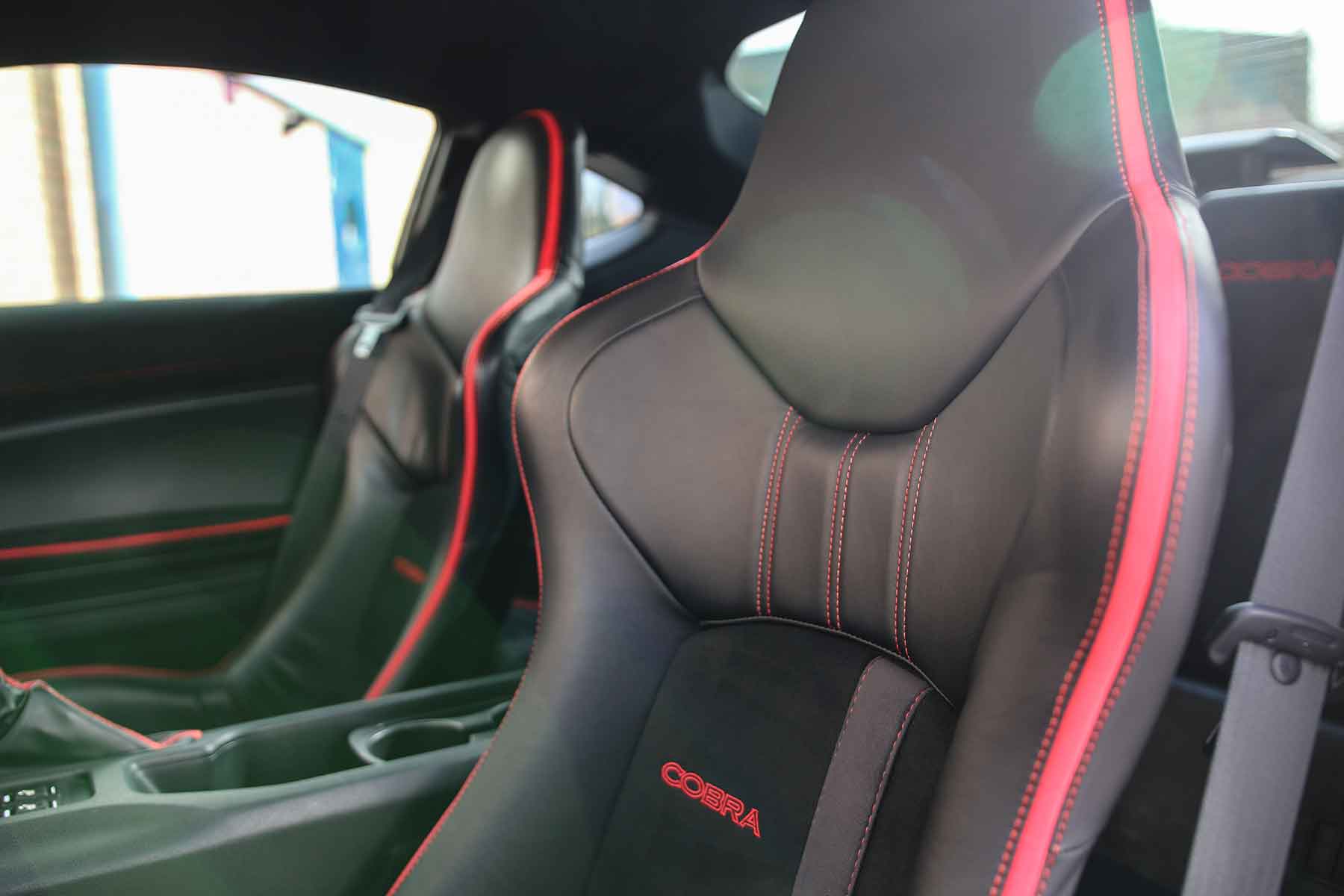
This is quite an important car in the pantheon of Subarus, especially in the UK, as it’s the first BRZ registered here. Naturally, that suggests this was once in the careful ownership of Subaru UK. We say ‘careful’ because it, like the Impreza, has seen a decent amount of action. In its current, perfectly-optimised state, it’s broadly reminiscent of what this car was for – a prototyping vehicle for tuning parts.
It’s got 40hp over standard, dialled-in coilover suspension for perfect fitment, Toyo track tyres and a proper exhaust rasp to boot. This is the ultimate Subaru track toy.
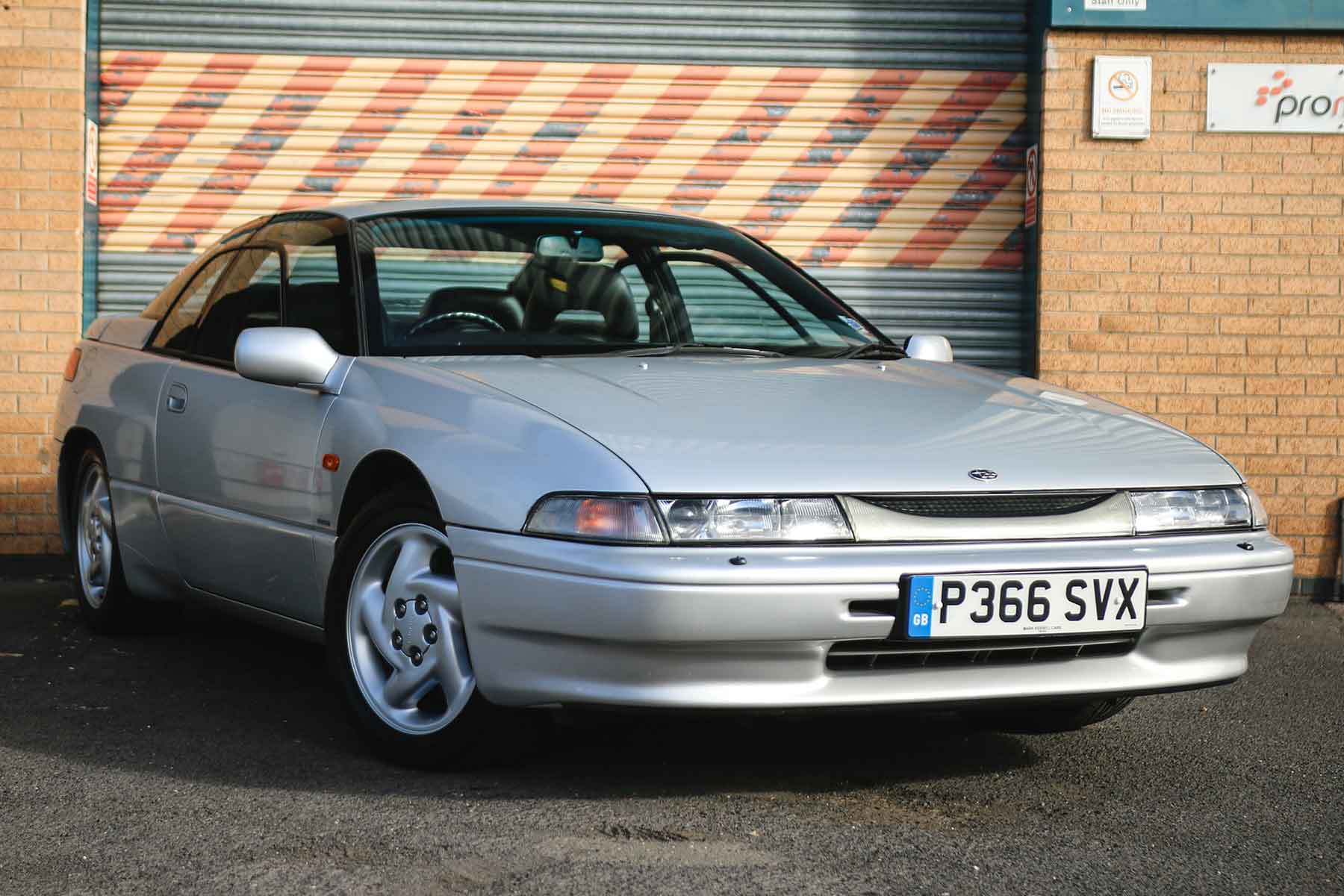
Subaru SVX
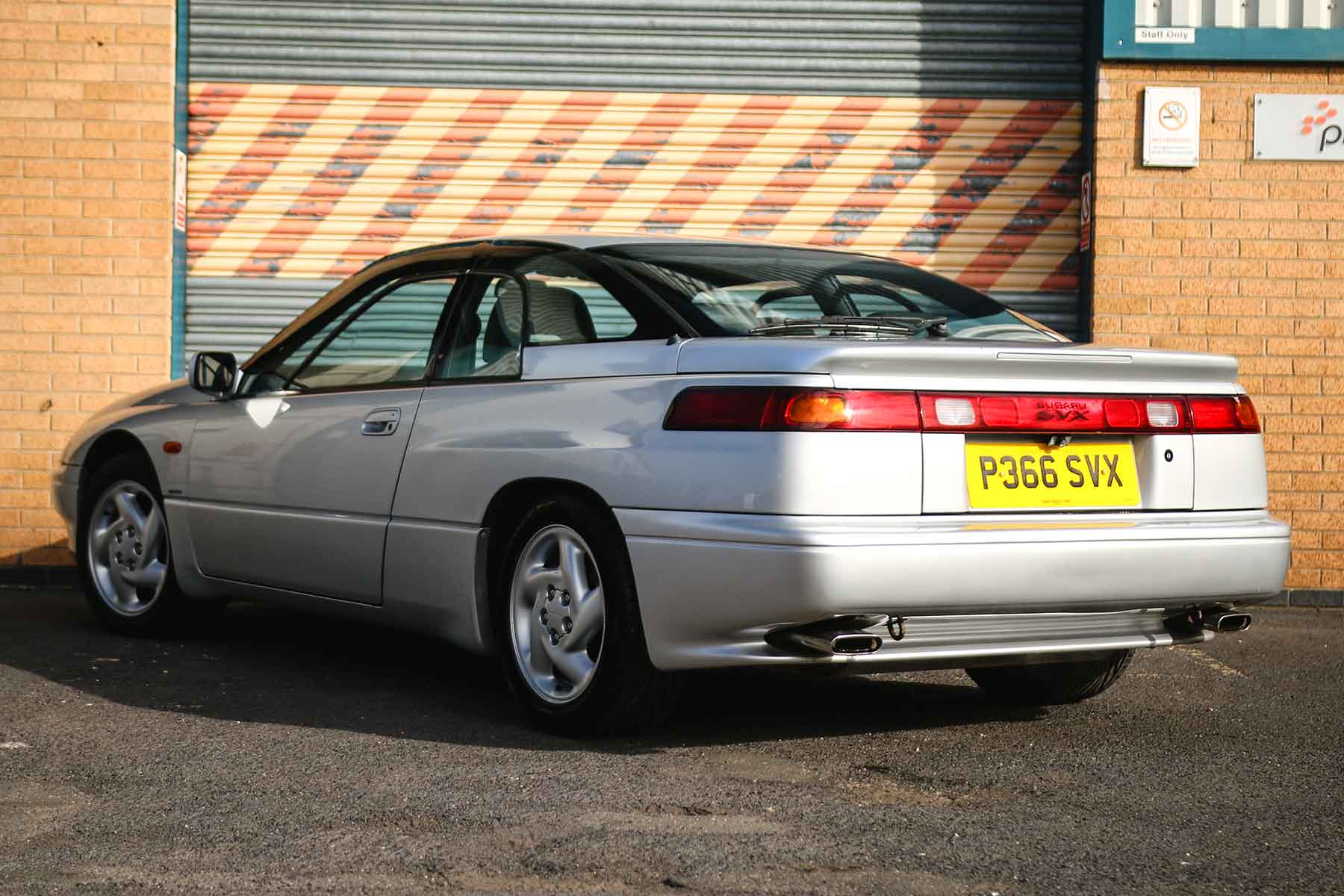
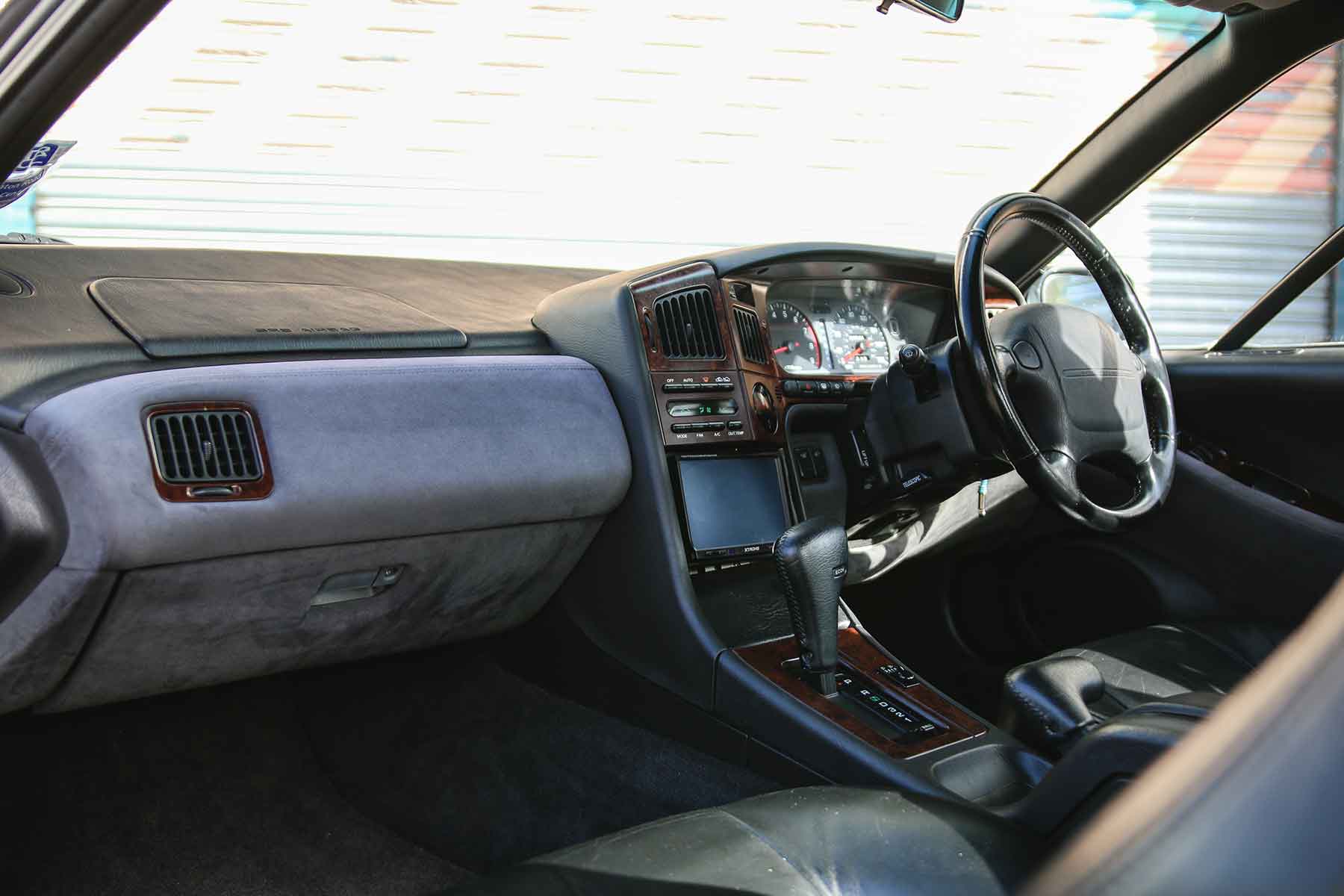
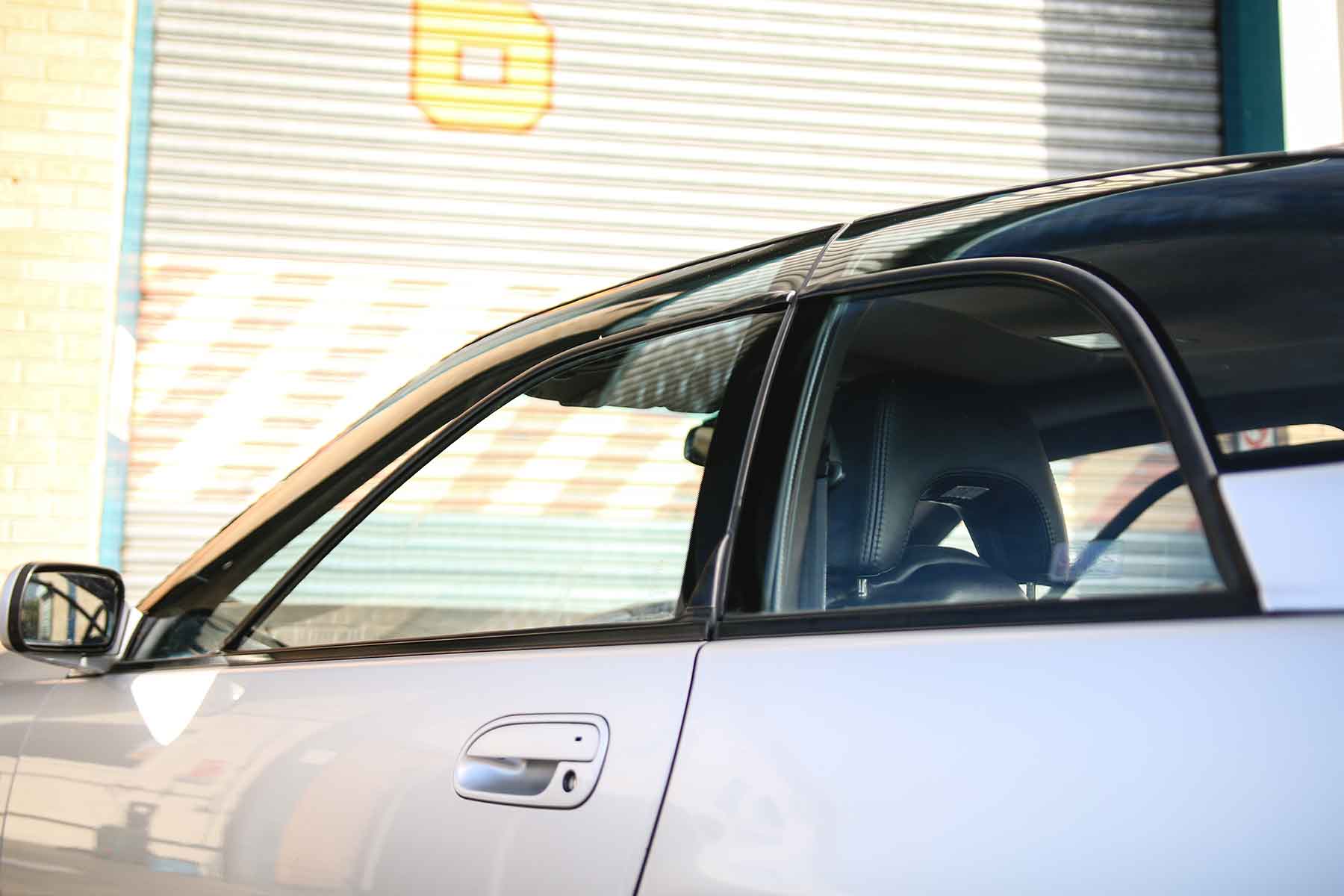
The best way to introduce the weirder years, meet the Subaru SVX. It’s four-seat, low-slung GT car, not unlike what the Lexus LC is today – funky window line and all. It has a 3.3-litre flat-six engine and, at the time of release, was something of a rival to Porsche’s ageing 928, the Mitsubishi 3000GT and Lexus SC. Infamously, it put power to all four wheels via a much-derided automatic transmission.
The Giugiaro-styled body is as arresting as it is unconventional: contemporarily beautiful from some angles, just plain peculiar from others. Paul’s is a later 1997 car with 60,000 miles. Despite the need for a good thrashing and some TLC, it runs like a watch.
Subaru XT
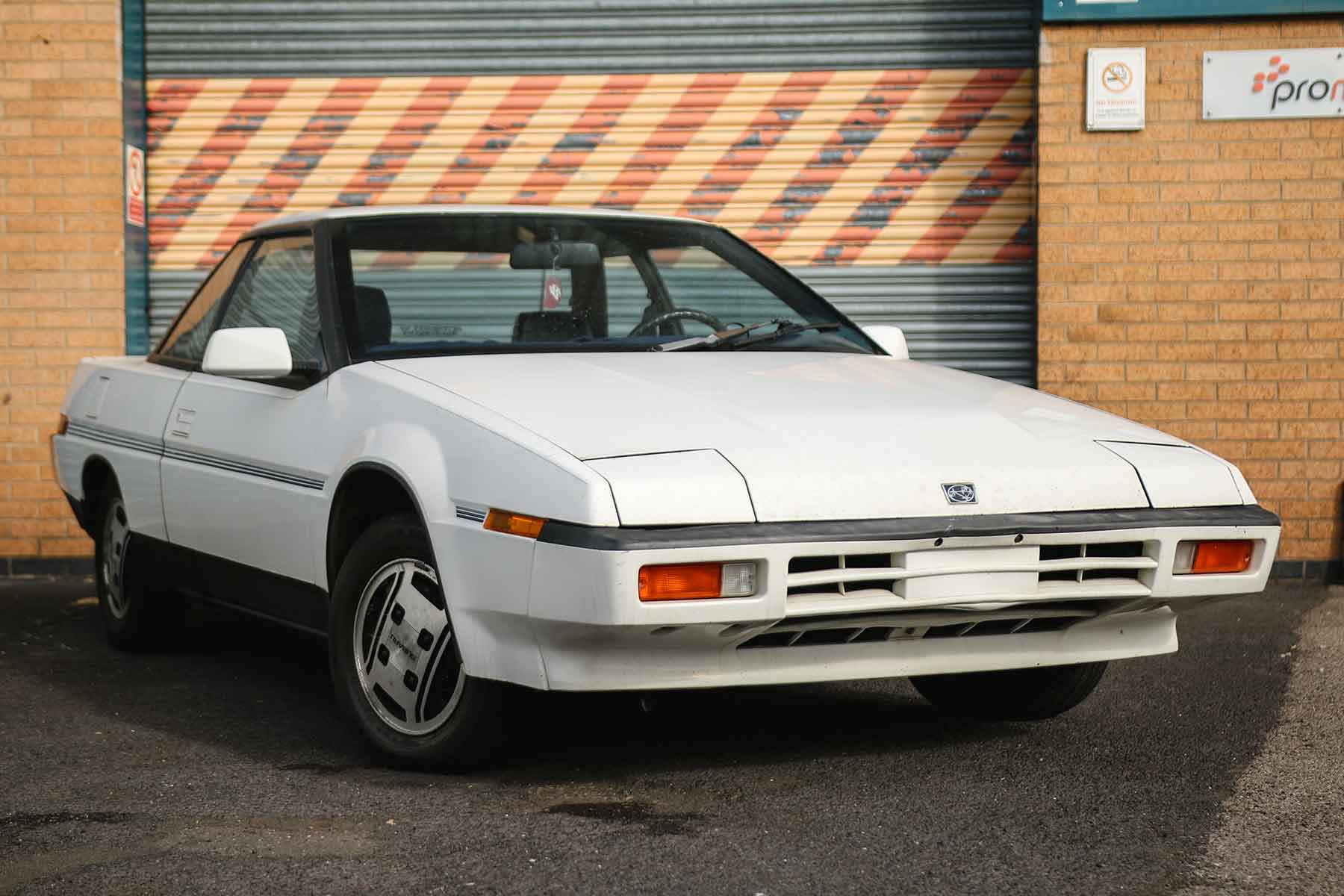
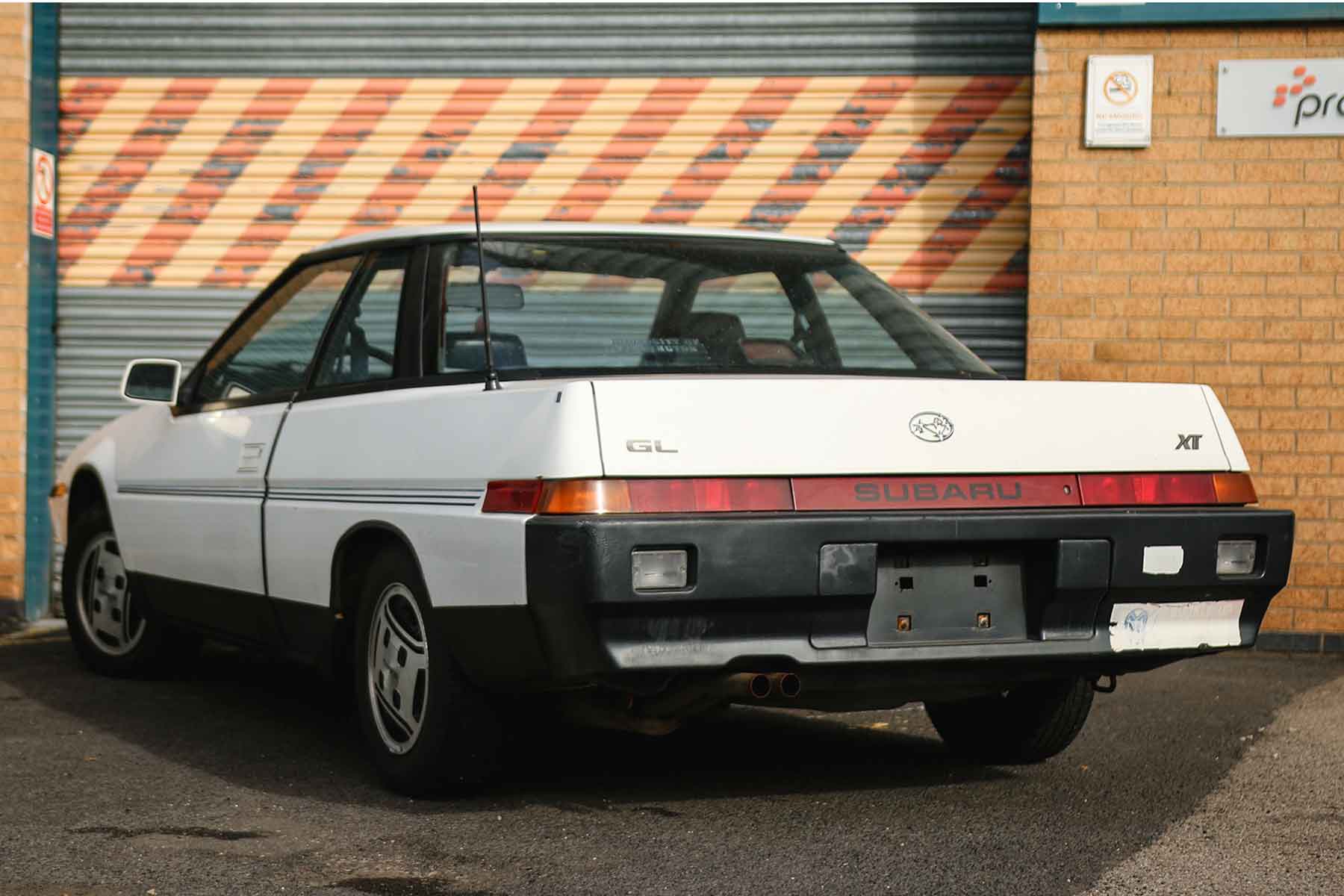
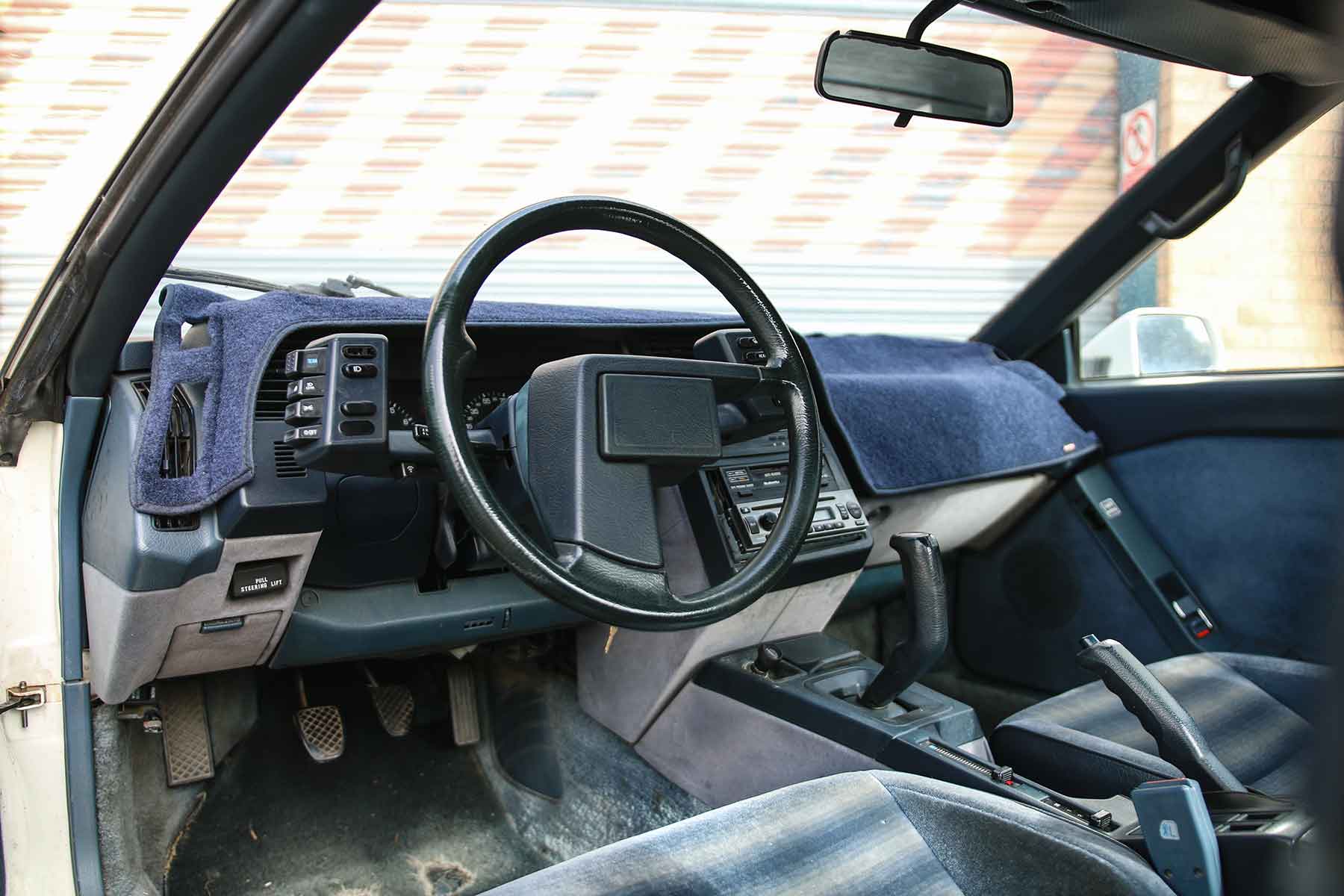
The tale of curious Subaru coupes continues with this delightful pre-restoration XT. Yes, it’s fresh out of the container from Washington and the perfect example of a ‘beater’ car, as the Americans call it – even down to the tired ‘University of Washington’ window stickers. Paul was amazed at the car’s clean bodywork given a life in one of the chillier (read: saltier) US states.
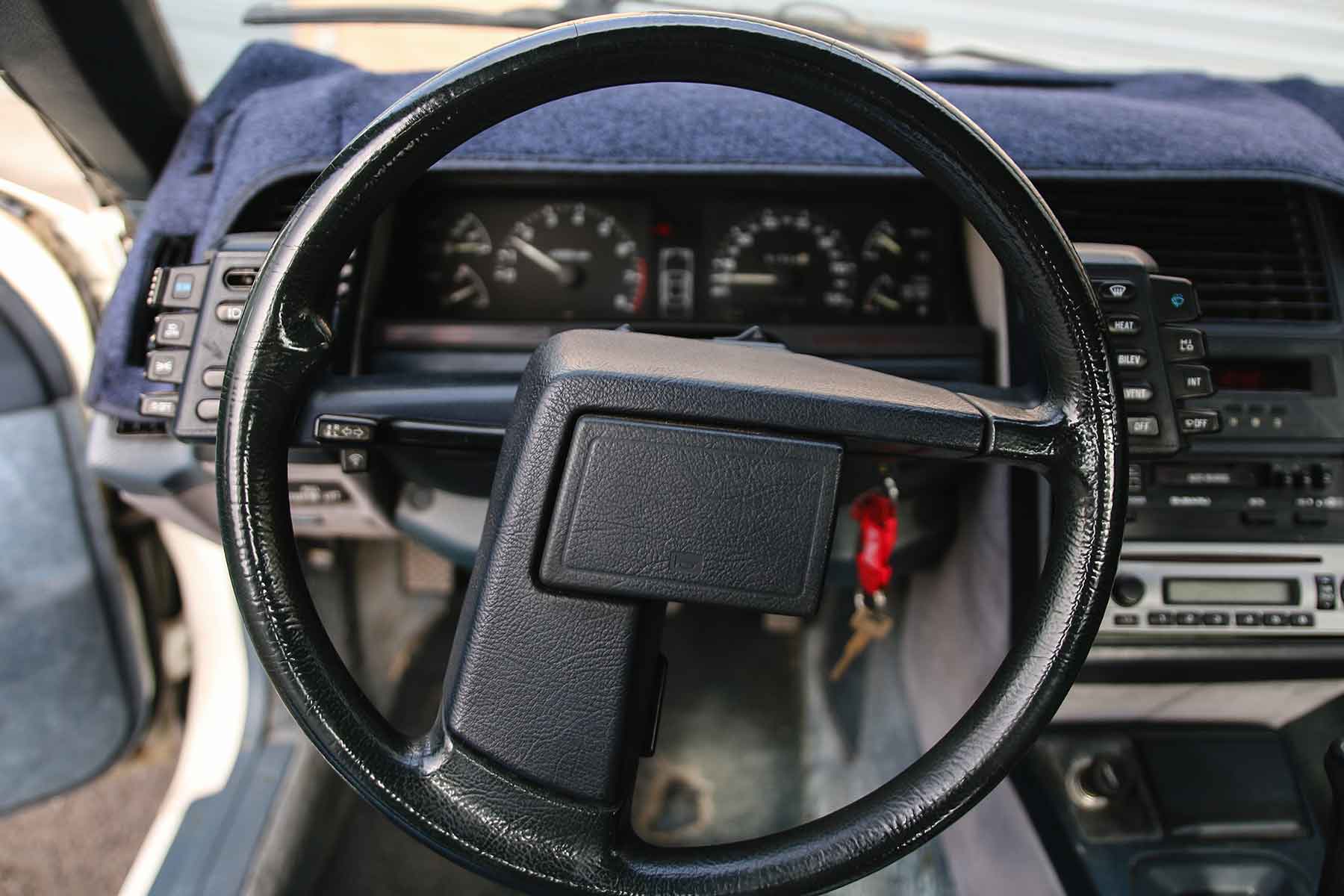
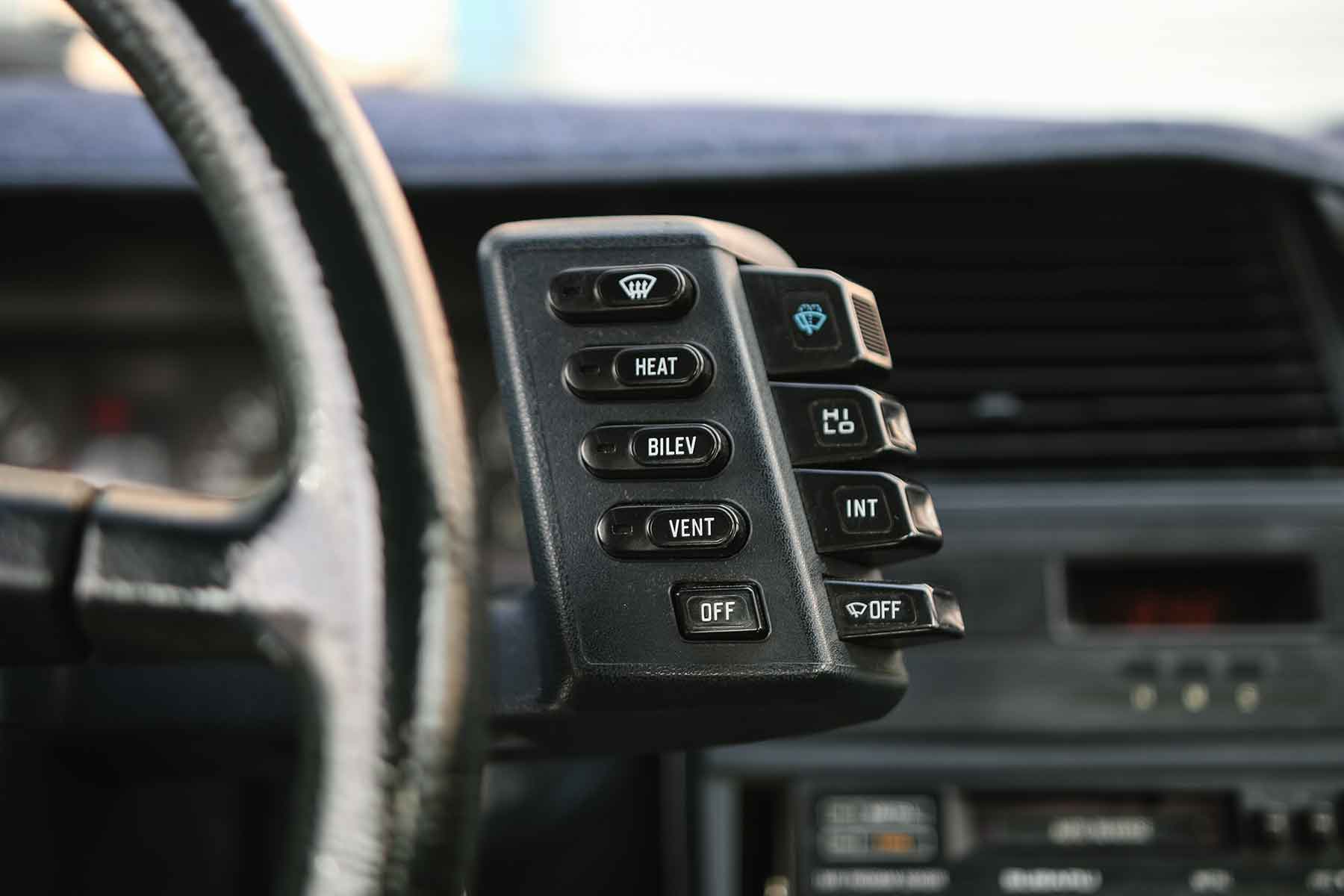
Yet again, even this daily driver coupe (not unlike a modern Honda Civic Si) is delightfully unconventional in a way only Subaru (and 1980s car design) could muster. That wedge shape boasts a drag coefficient that would impress even today. The cabin looks as if it was ripped from a Star Trek set. Space age and humdrum have never met in quite the same way. Expect Paul to pump out an immaculate restoration on this one.
Subaru Leone
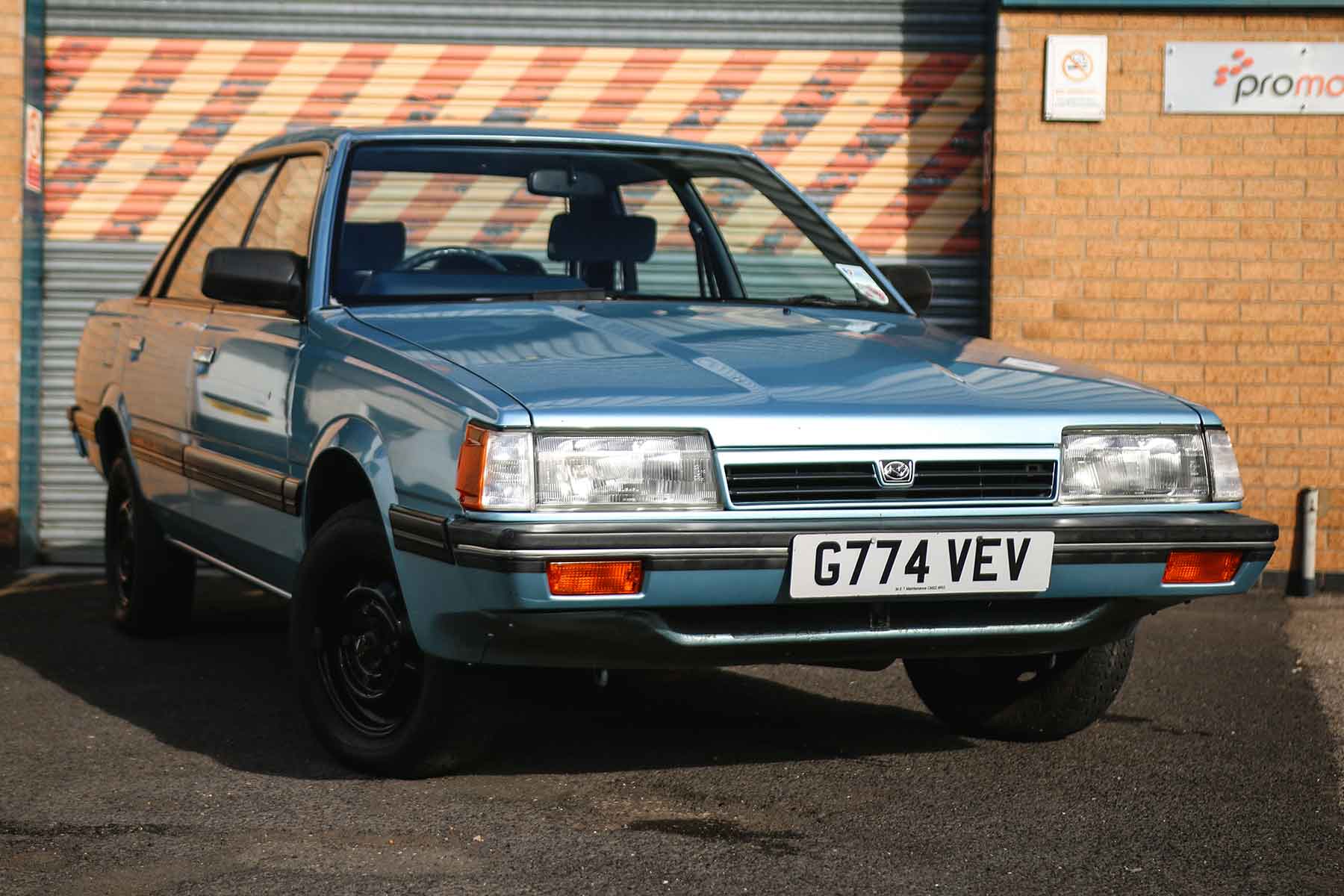
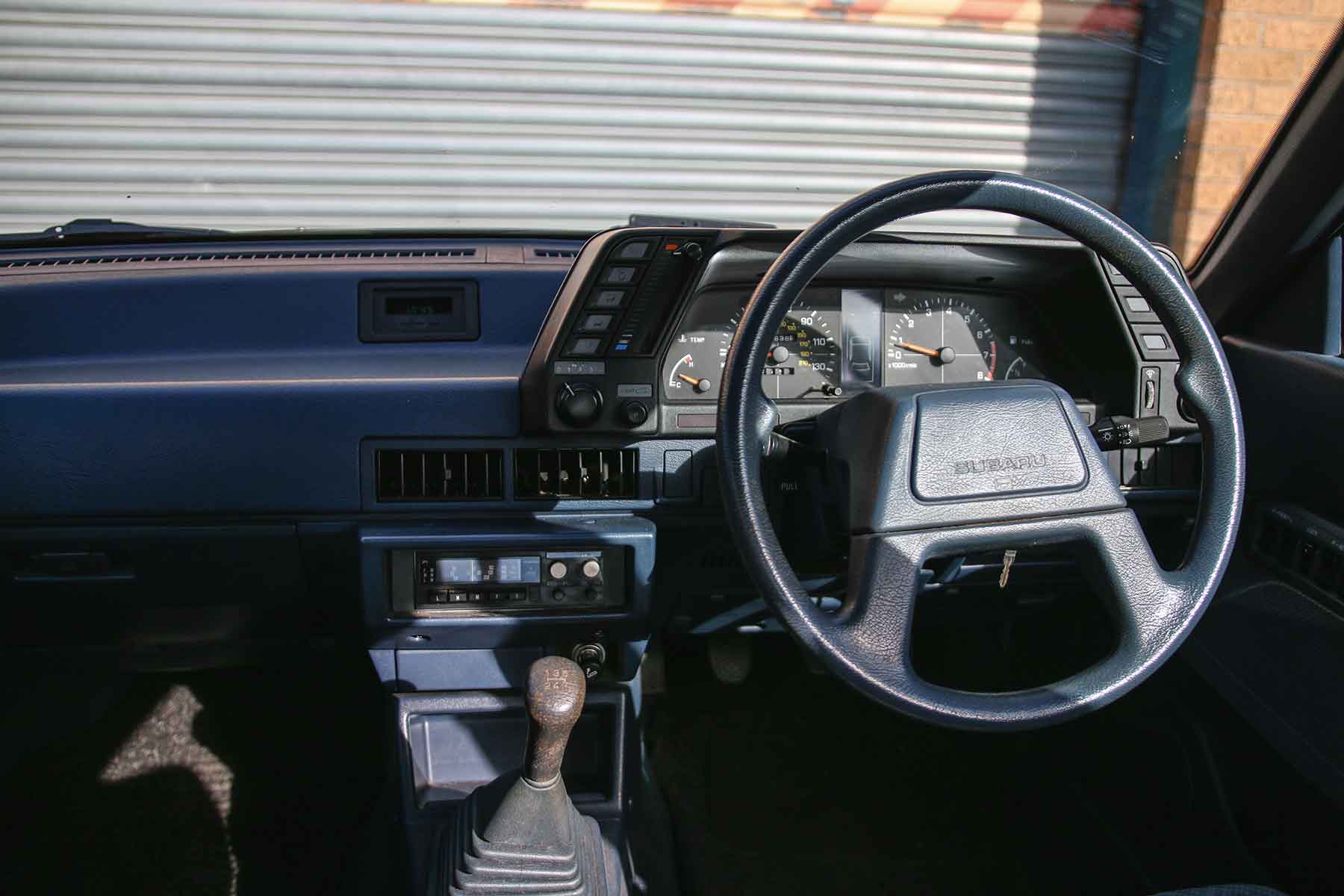
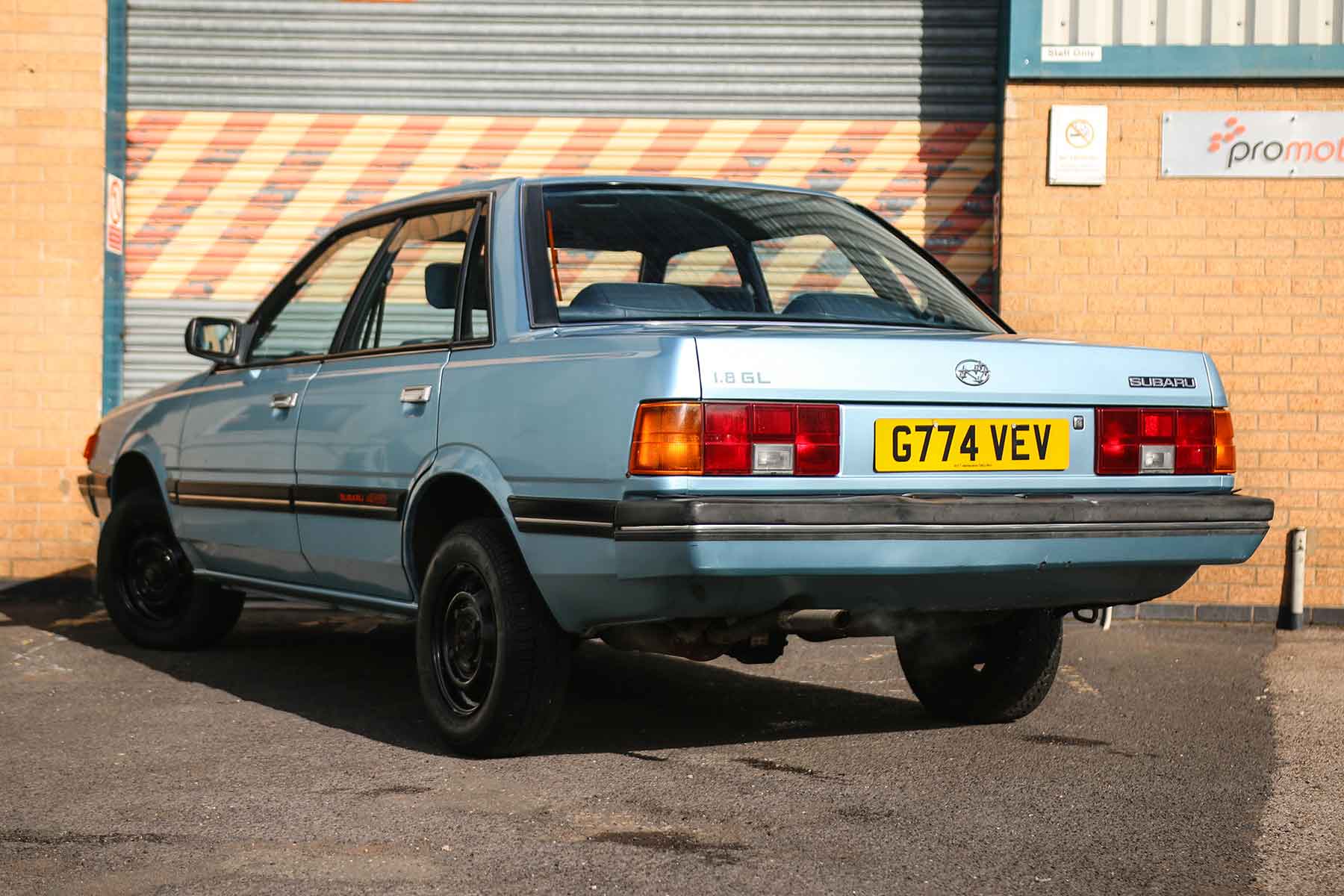
Where can the trail-ripping Imprezas trace their heritage back to? Why, the humble Leone – the first Subaru rally car. In this case, it’s part-way to a World Rally battle axe, being the pumped-up 4WD variant. Paul rightly says this car is the crossover that came before all crossovers. Up on stilts and with switchable all-wheel-drive, this humble saloon is ready to tackle the outback. Anyone wonder where later Legacy Outback models got their name? These cars proved popular in the colonies…
Paul found this example a good way closer to home: in Cornwall. Given it was rescued from a lifetime at the seaside, it’s remarkably devoid of rust – something old Scoobies often suffer with. It seems to have enjoyed a relatively easy life, too, with just 59,000 miles showing on the odometer.
Subaru 360
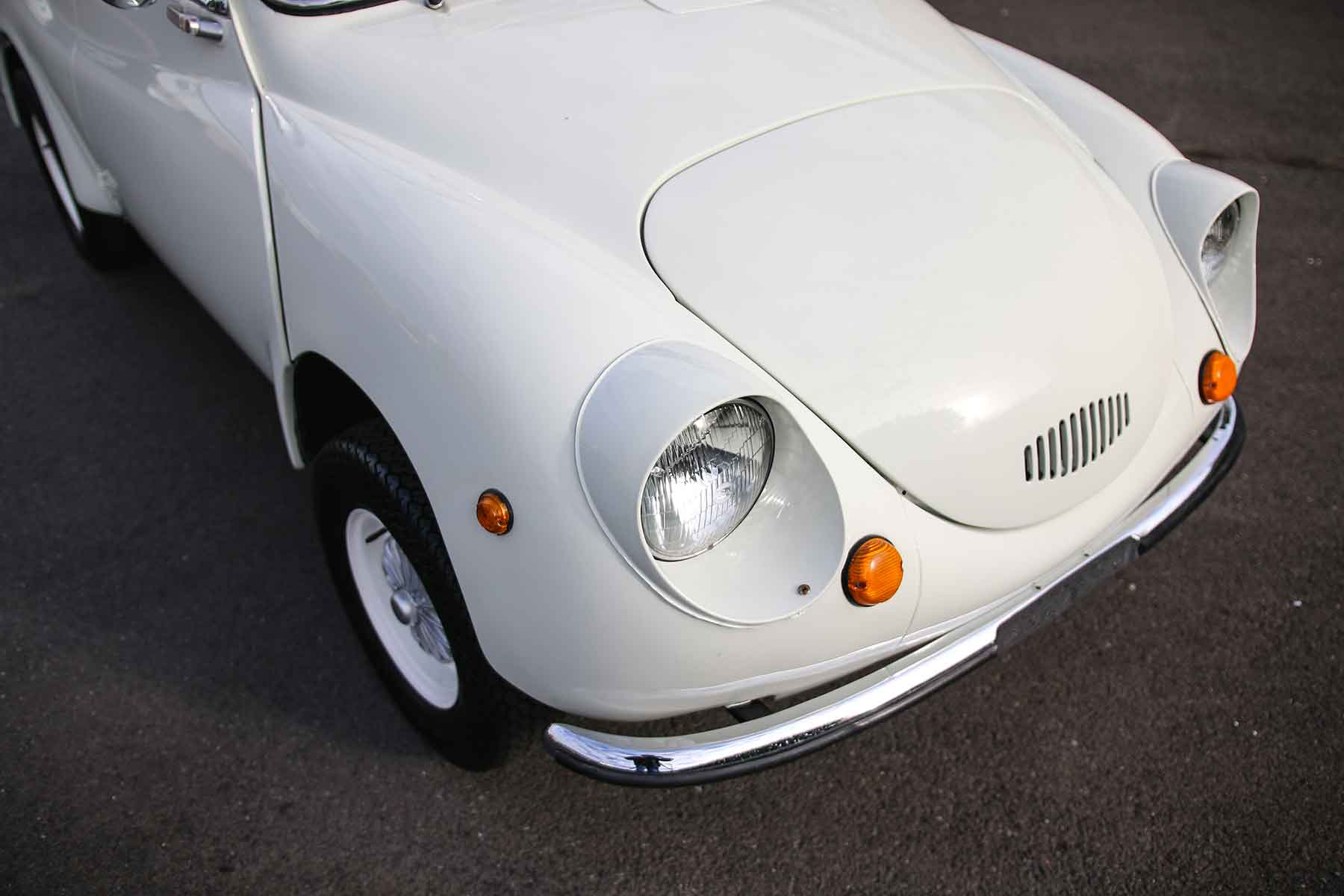
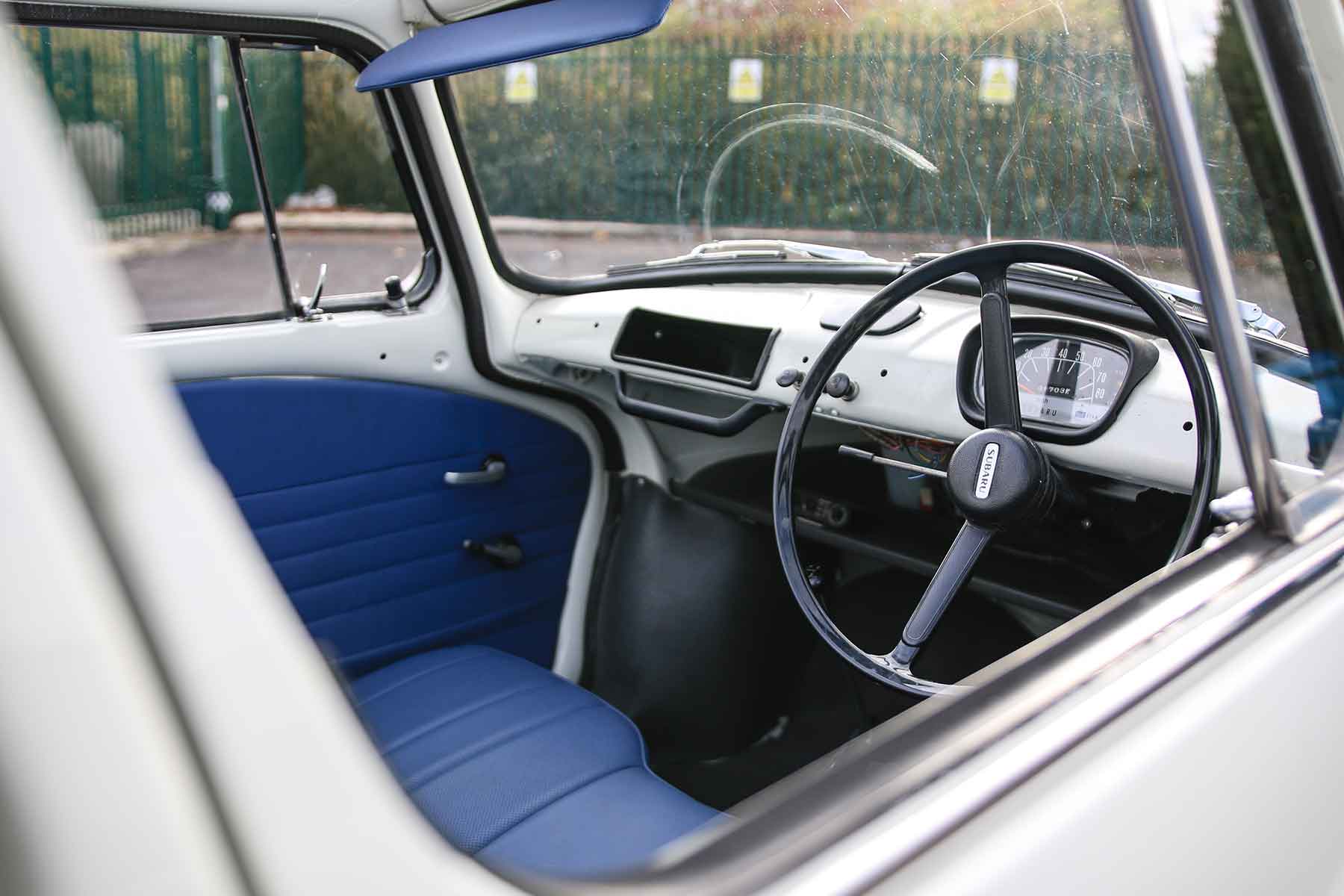
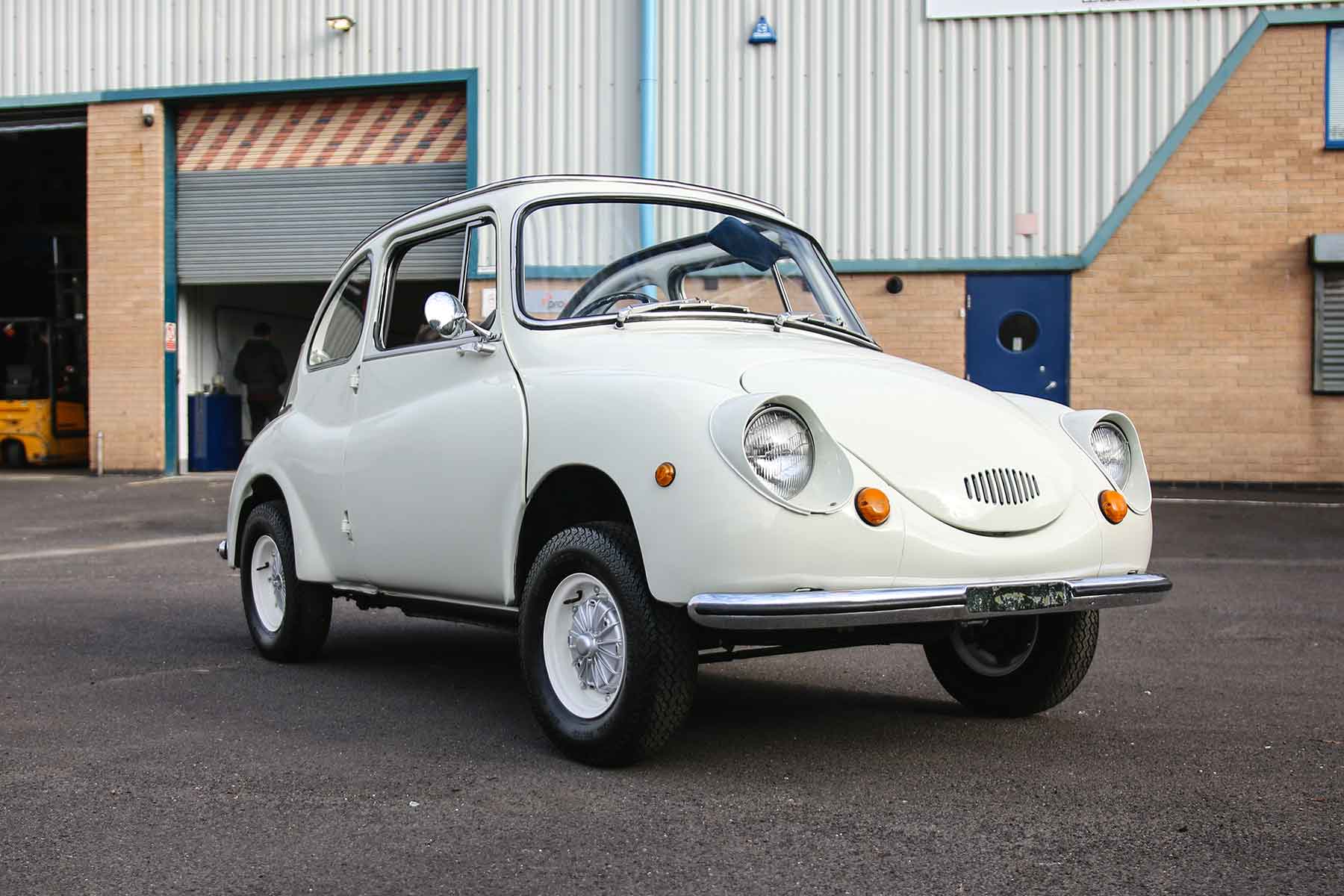
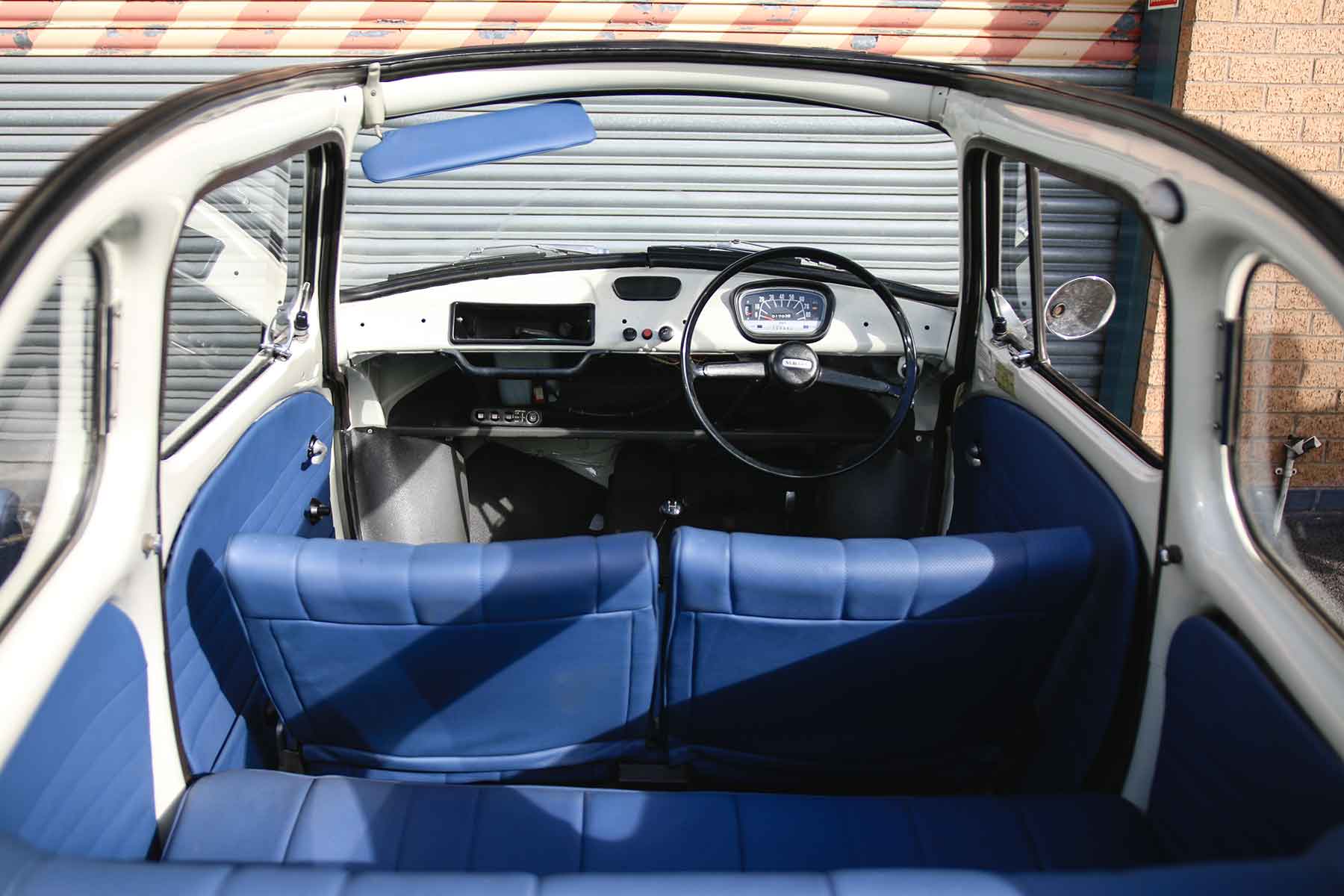
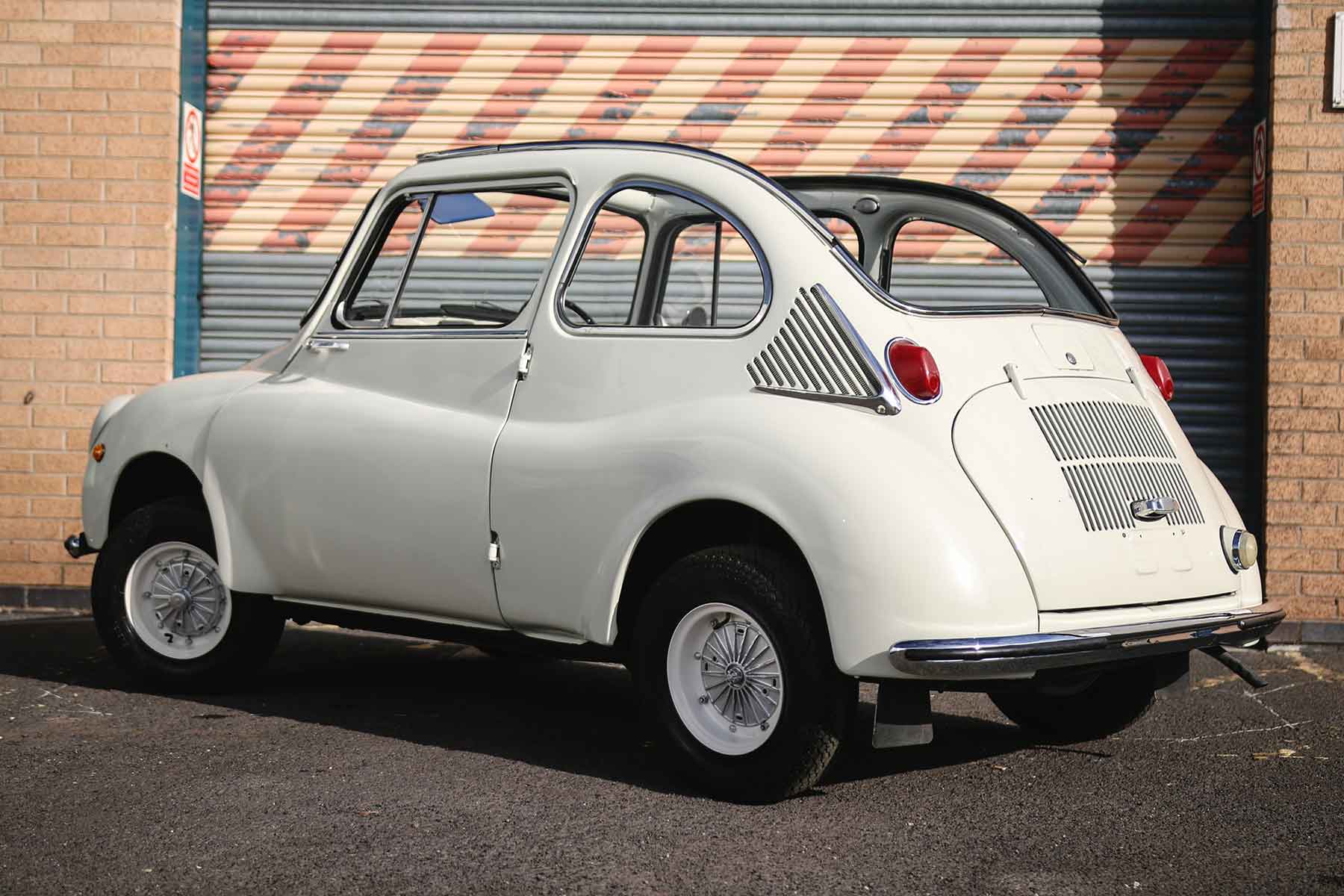
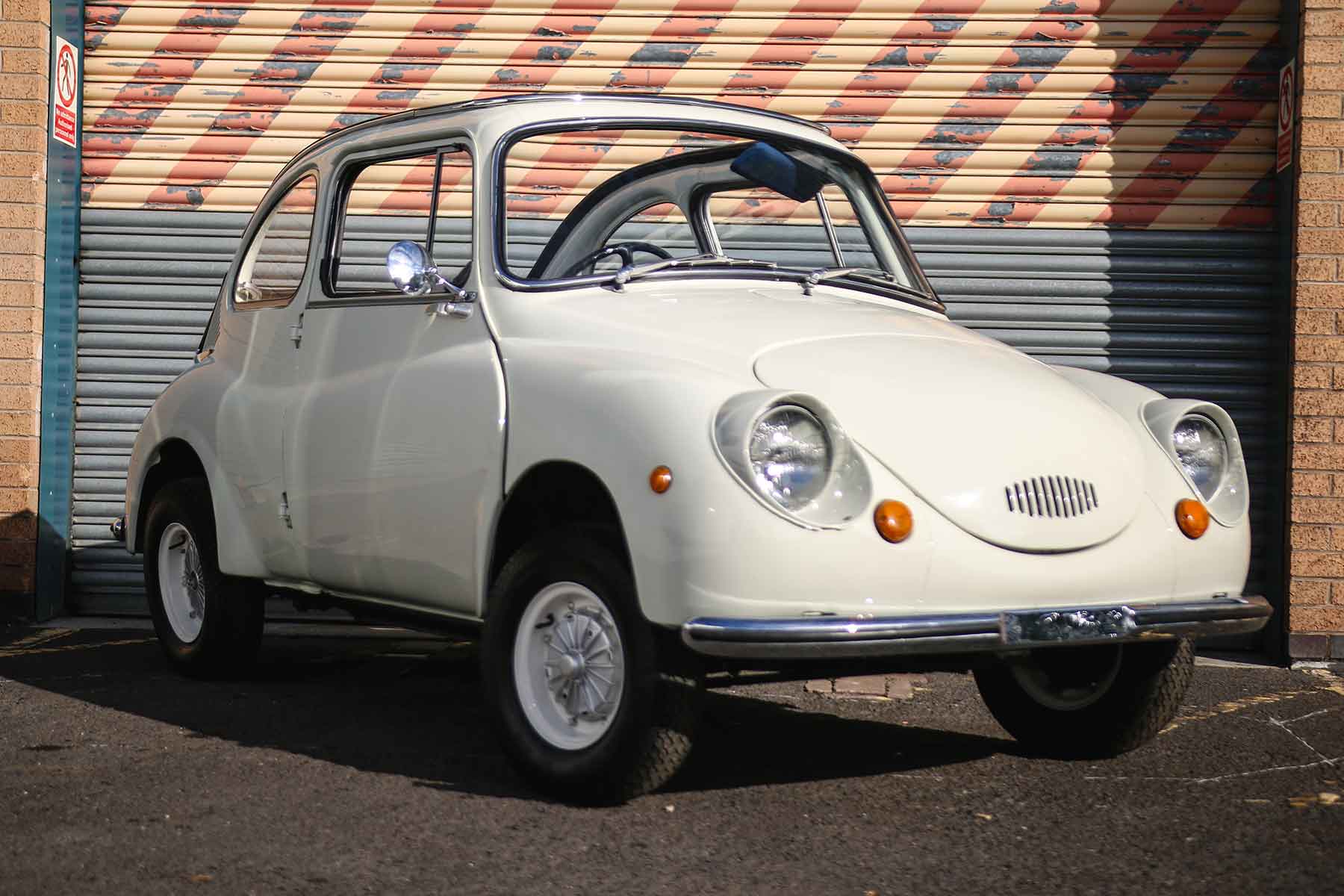
Here we arrive at arguably the coolest car out of this set. Not that the others aren’t without their curiosities and quirks, but the 360 is Subaru’s first proper car and, as such, was built in service of its home nation. This tiny little machine is an early Kei car, a sub-500cc-engined vehicle that weighs less than 500kg thanks to its tiny dimensions and simple construction. Introduced in the late 1950s, it was an effort to get Japan mobile in the post-war years.
Paul’s car, on loan from Subaru, is mid-restoration, with its stunning paint and interior complemented by a few niggles. In short, it didn’t run and was in need of parts – the most difficult element of restoring this car. Although Subaru built nearly 400,000 examples, spares are a real challenge to track down and are expensive to buy when you do. When it came to pushing the little 360 into position for shots, we hit a snag. A sticking brake would have rendered any other non-starter immobile. Not the featherweight 360 – we got it yanked out of there in no time.
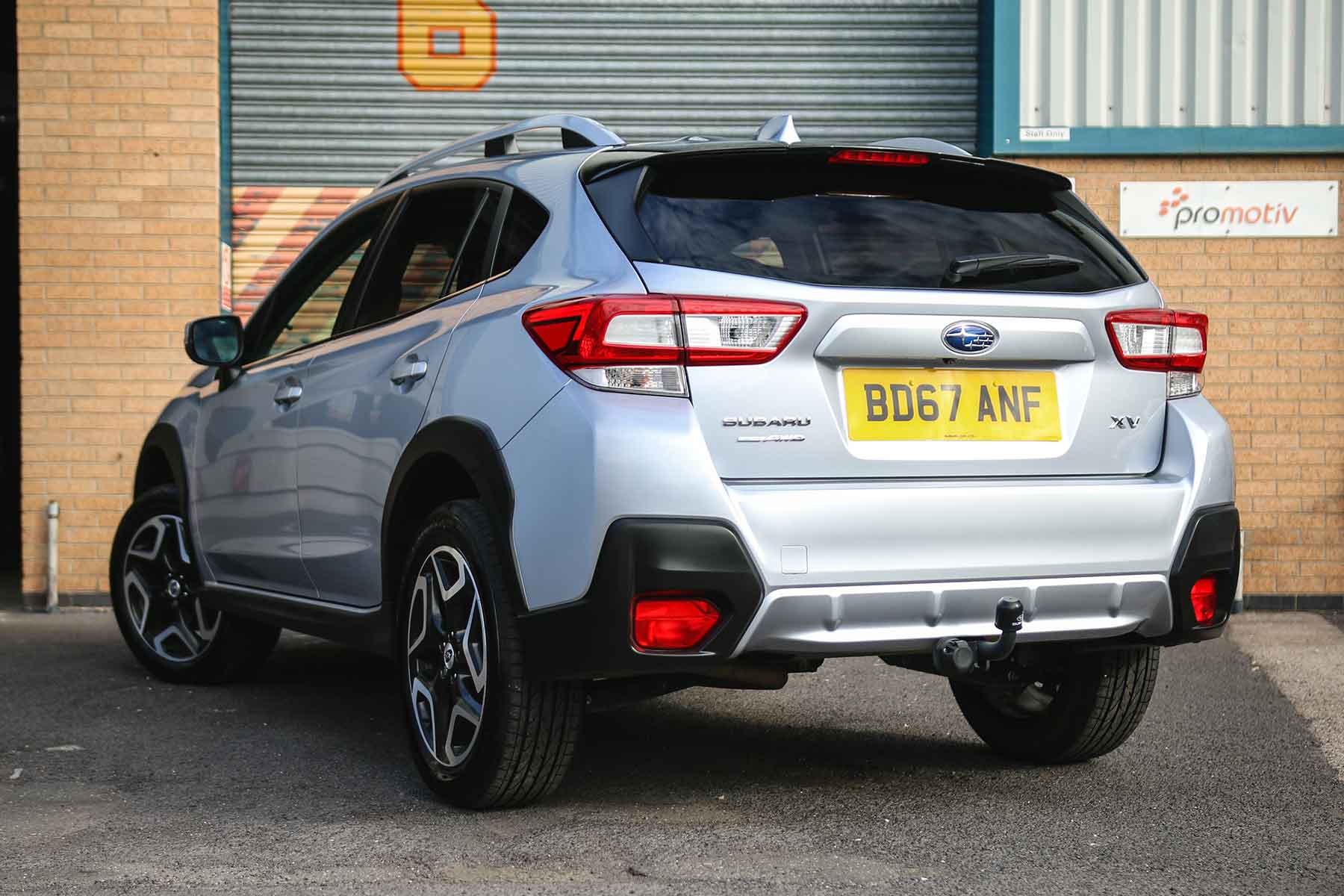
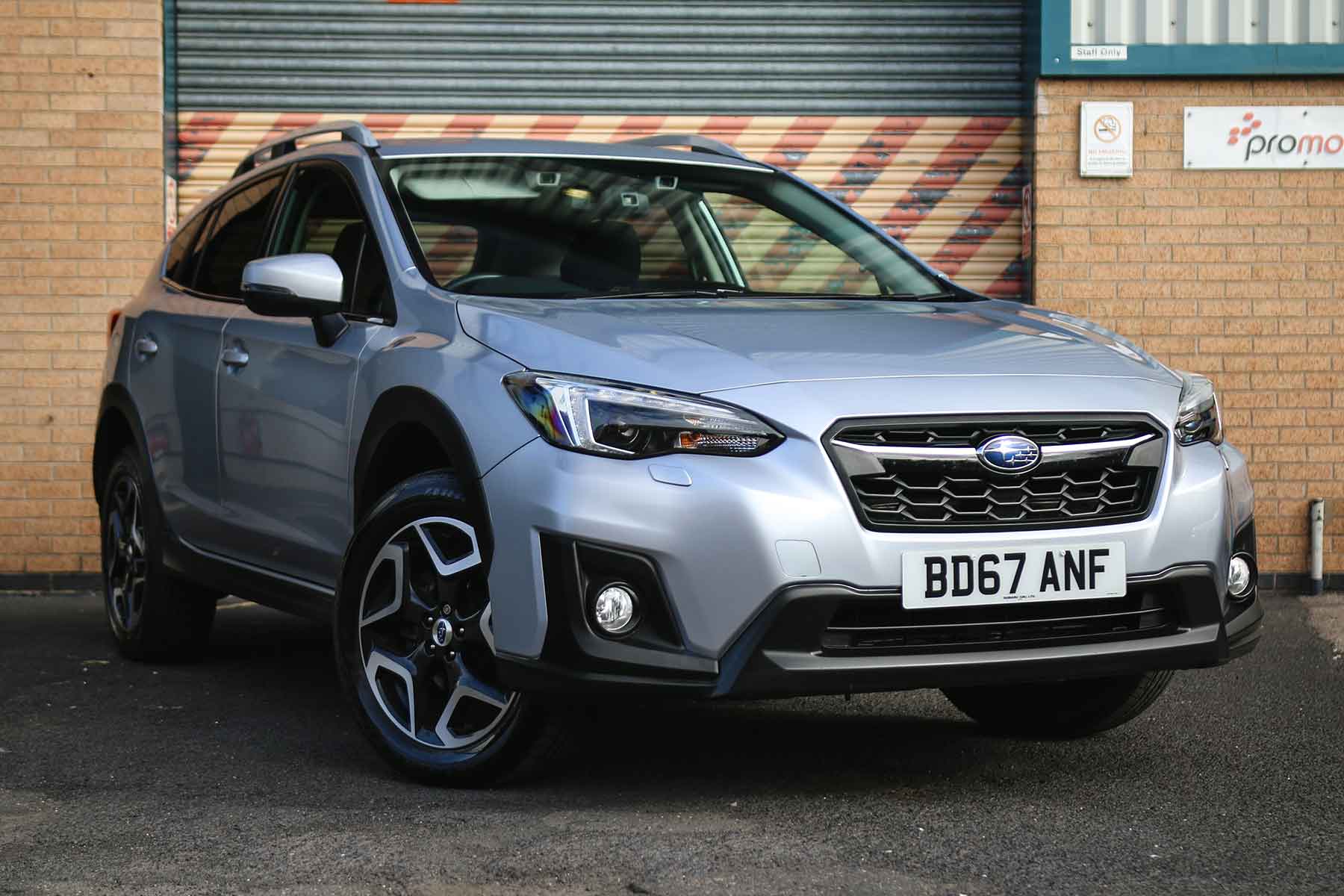
Subaru XV
From where it all began, we end with where Subaru is now. From a distance, the XV is a paint-by-numbers crossover, but the Subaru magic soon shines through. Especially when found in a car park full of its ancestors. While it shares very little with that tiny 360 that started it all, there’s something of the angular design of the XT and Leone. The arches of the old Impreza are evident, and the curious form – and indeed colour – of the SVX is plain to see.
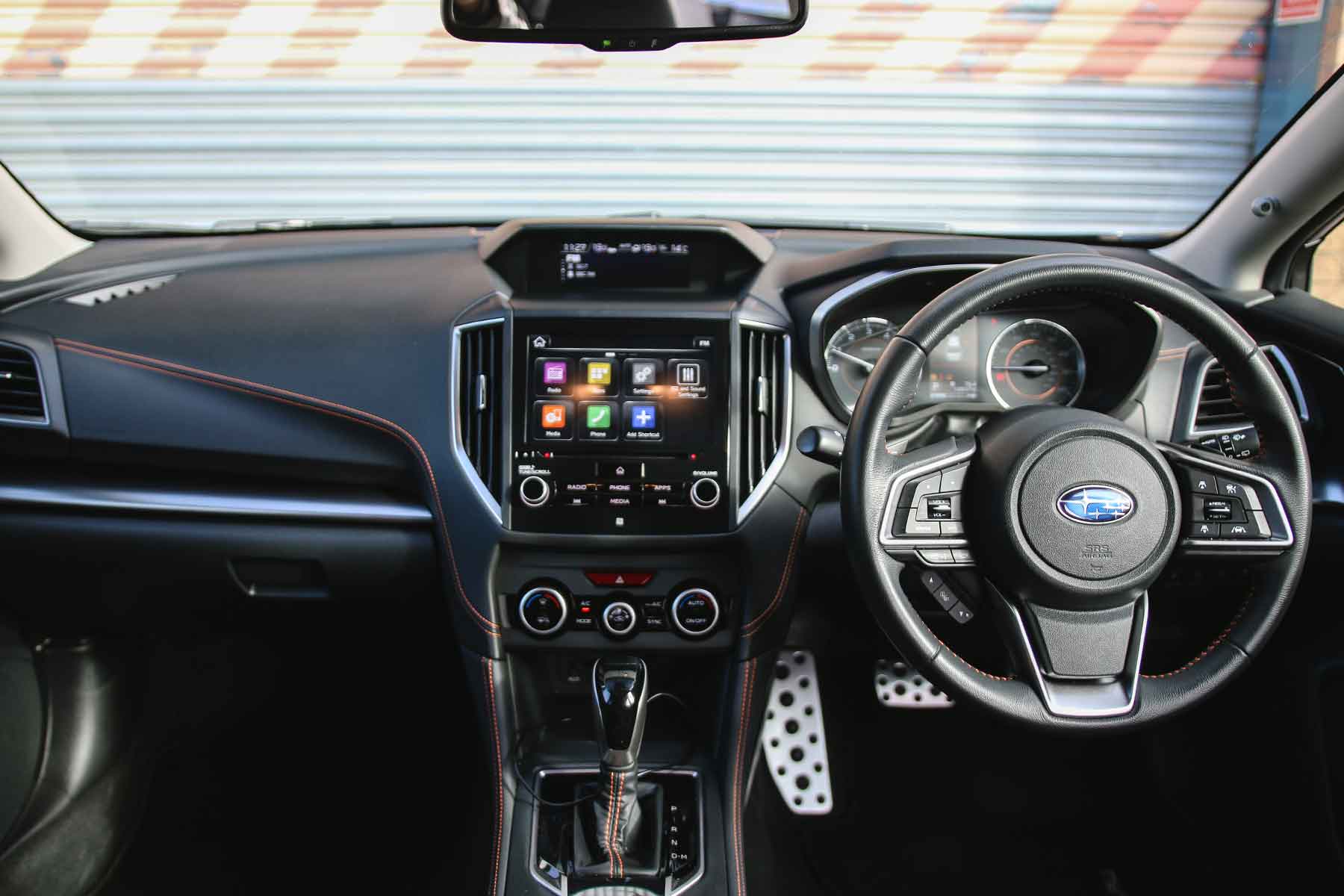
There’s also the tactility you expect of a Subaru. Not luxurious or gratuitous in the traditional sense, it simply feels hard-wearing. Then of course, under the bonnet, you find a distinctive flat engine – a Subaru hallmark evident in all cars here except the 360. This is still a proper Subaru, perhaps not in the tyre-ripping sense of the BRZ and Impreza, but rather the honest, well-thought-out style of that old Leone.
The Manx TT is one of the greatest races in all of motorsport. Over two weeks in late spring every year, motorcycles shriek though thirty-seven miles of public roads: narrow streets, rollings hills, blind corners, and stone walls.
Superbikes will repeatedly cross the 200 mph mark in search of a lap record, and the average speed is over 135 mph. This brutal course claims lives in numbers not seen since before the invention of the seat belt.
British journalist Steve Sutcliffe understands the singular intensity of the Isle of Man: “Imagine German autobahns, then add hills and twists, and shrink it to a single carriageway with incredible views, and what you have are these utterly fantastic, and dramatic, roads,” said Sutcliffe.
“The Mountain Road [the race course] feels—and is—an utterly dramatic place to drive. It’s epic, and quite unlike anywhere else.”
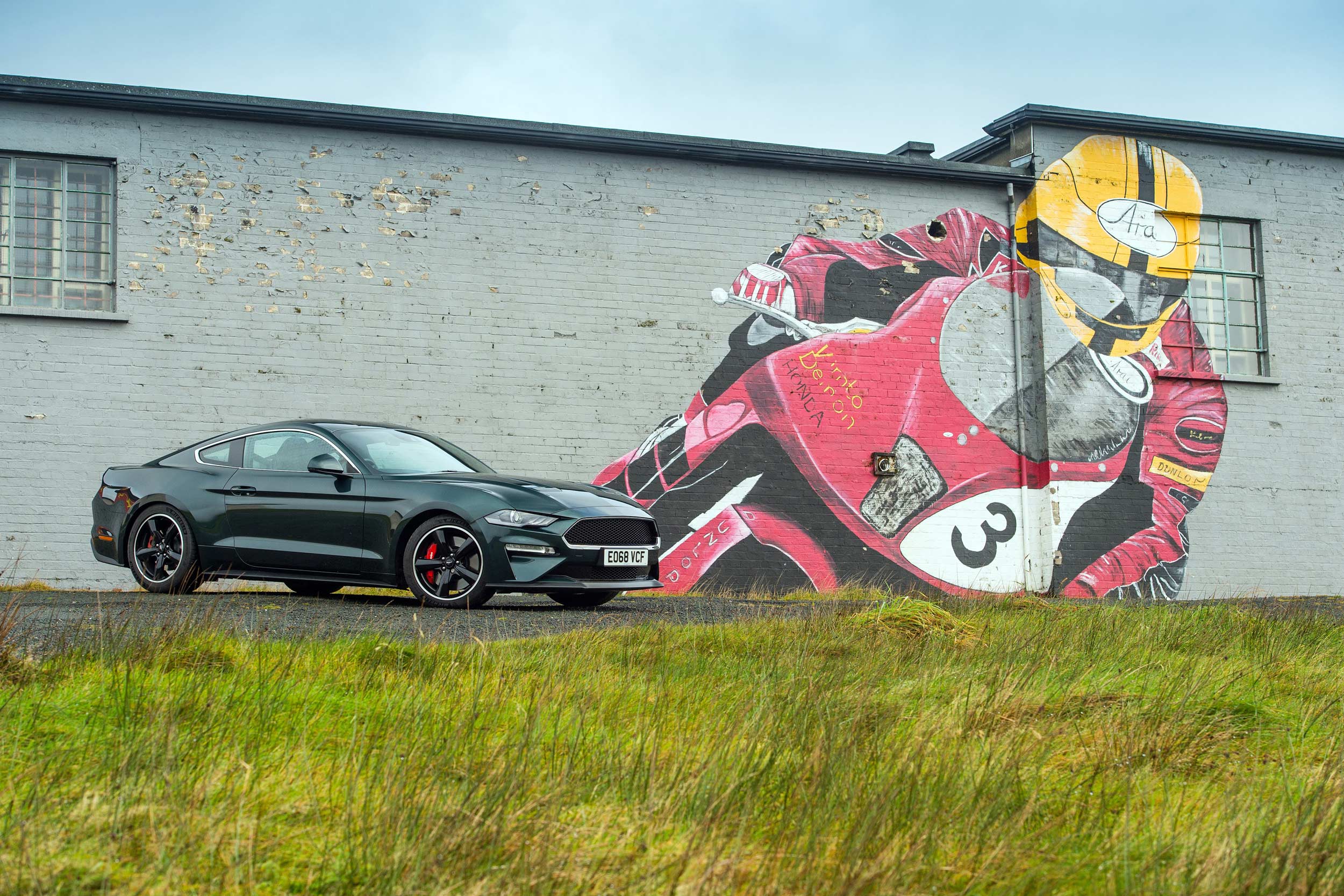
Sutcliffe got to drive the course behind the wheel of the Mustang Bullitt as part of the Europe’s Greatest Driving Roads series from Ford. There are many sections of the islands without speeds limits, and the sound of the 480-horsepower V8 bellowing through the gears as it explores the historic track enough to bring a gearhead to tears.
So put on your headphones, crank up the sound, and enjoy. Beware though, Sutcliffe starts narration 30 seconds in.
Dacia Buy Online is a new online sales platform that allows motorists to buy a new car at any time, from any platform or device – and the UK is the first country in the world to go live with it.
Dacia, slightly tongue in cheek, says it effectively opens 150 million new dealers in the UK: that’s how many connected devices there now are in Britain.
But the claim is still partly valid because this is a genuine purchase platform. It handles every step of the sales process, including finance and part exchanges. Cars can even be delivered to a buyers’ home, rather than them having to visit a dealer.
Dealers are still involved in the process, though, because it’s the dealer network that supplies cars to customers.
“We’re making car buying simpler,” said head of Dacia UK Louise O’Sullivan. “You can order a Dacia today and have it delivered to your driveway within two weeks.”
Dacia has launched it, she said, after research showed “customers are prepared to click and buy whenever and wherever is most convenient for them, regardless of time or day or location, due to the time pressures of everyday life”.
One in three people aged 30 to 44 say they would happily ‘click and ship’ a new car to a dealership without even test-driving it. Three in four ‘silver surfers’ would prefer to buy a car online for the convenience, reckons Dacia’s research.
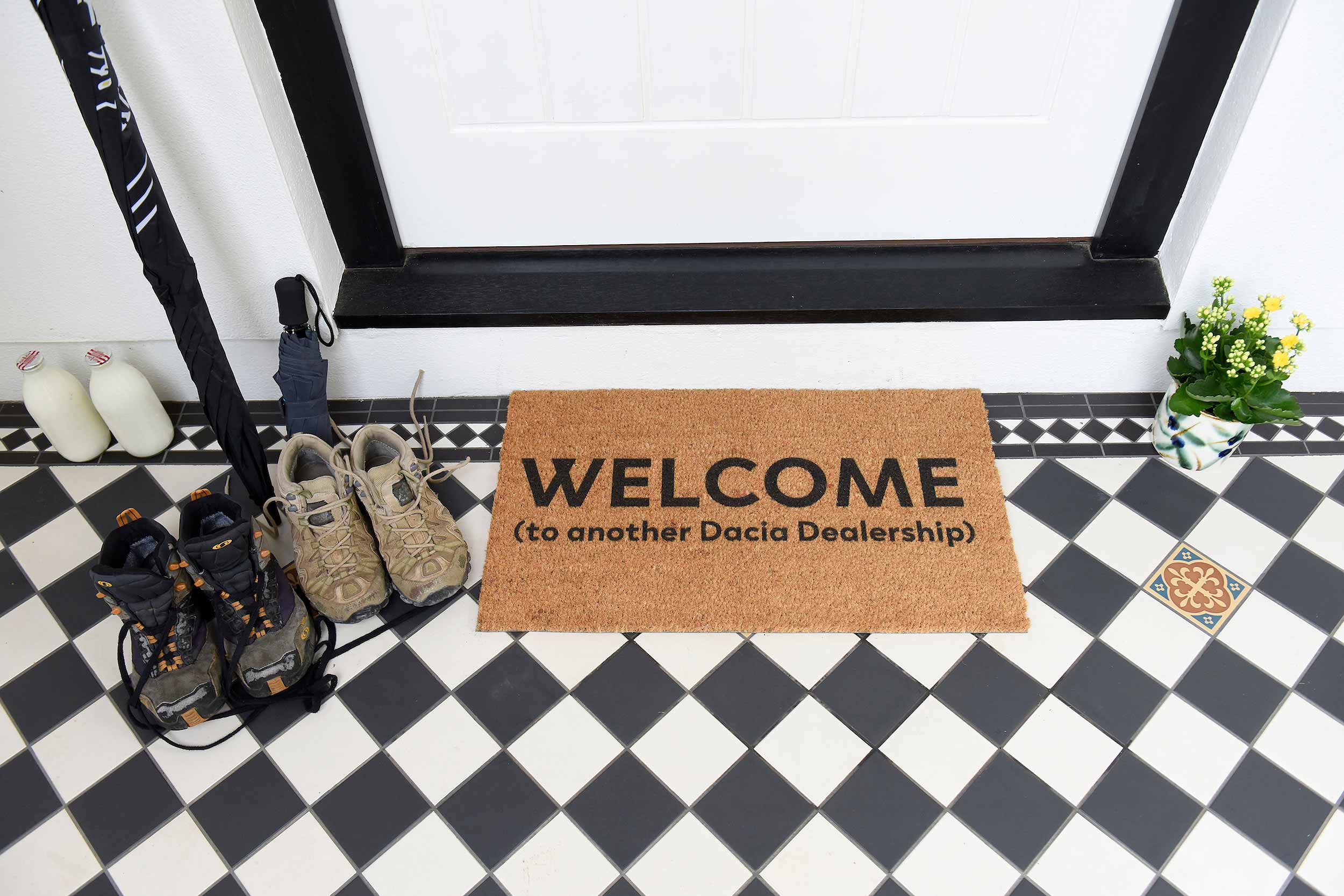
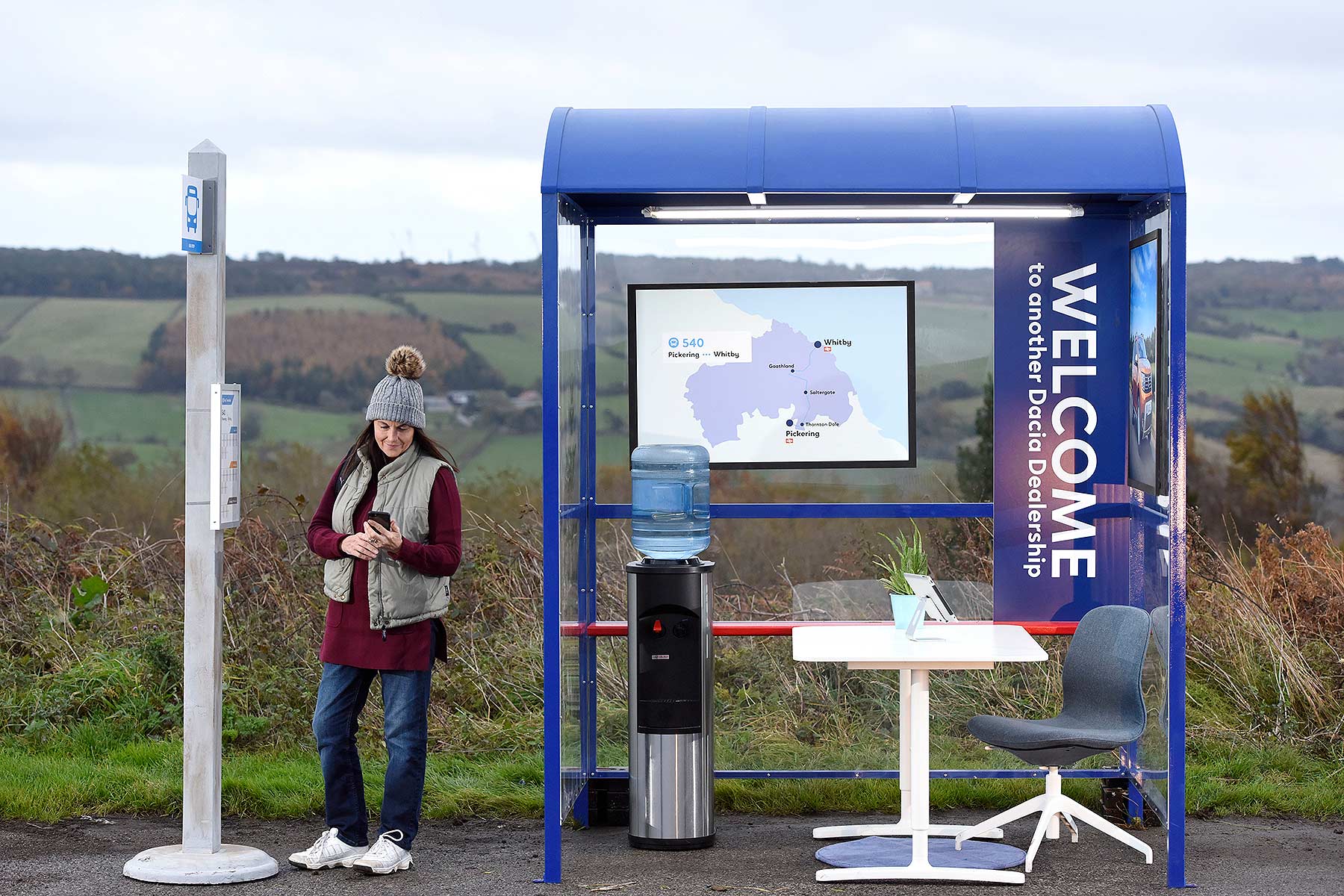
Every Dacia model is available to buy online – and Dacia is marking the opening of Dacia Buy Online with a ‘pop up dealership’ inside a remote bus stop on the A64 between Pickering and Whitby. Fancy visiting the temporary new Dacia dealer? Be quick – it’s only open today, 7 November, between 9am and 2pm…




 Remembrance Sunday and Armistice Day this year coincide with the 2018 Brazilian Grand Prix. Williams F1 is taking the opportunity to raise awareness of the Royal British Legion with a series of poppy-themed initiatives.





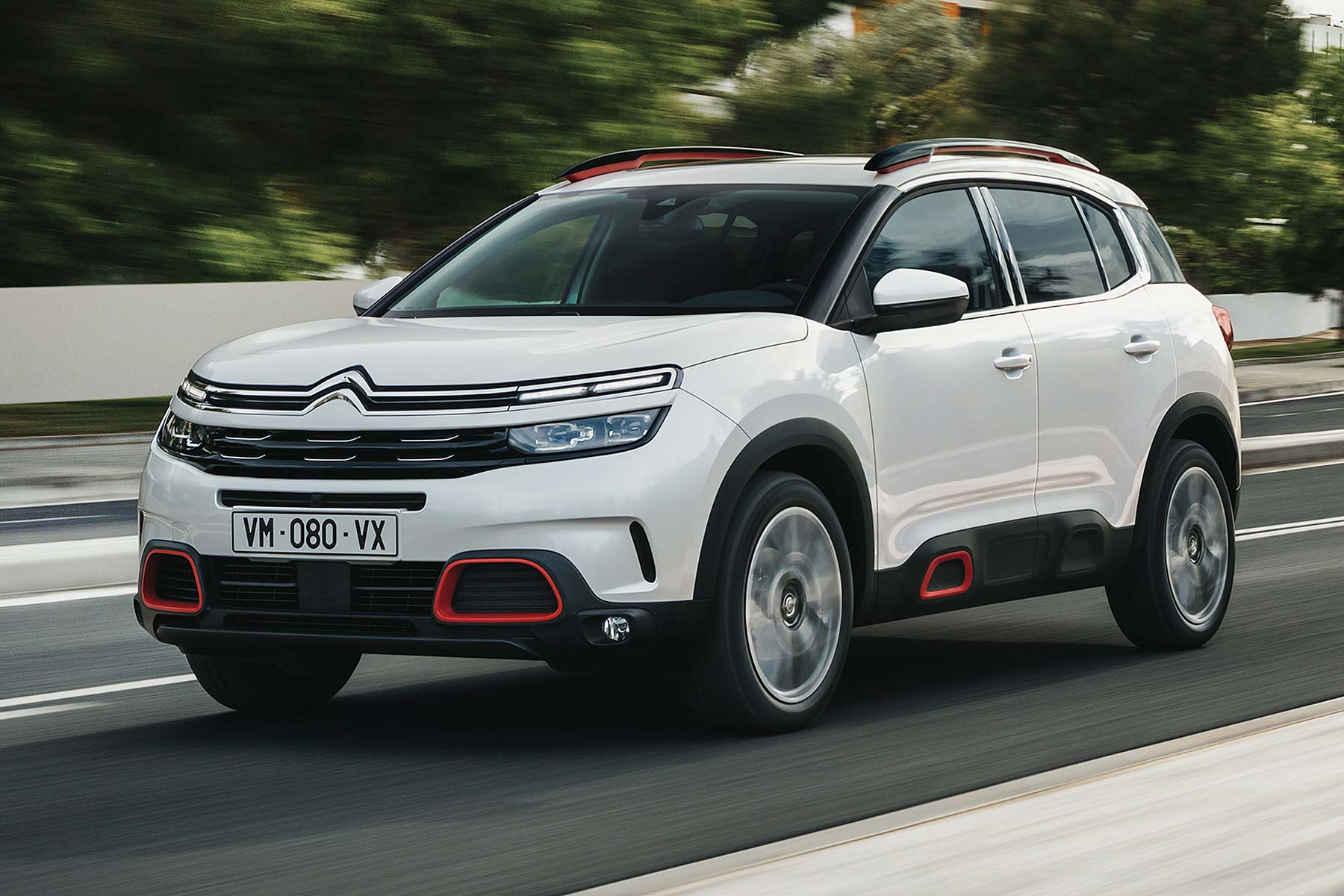 The new Citroen C5 Aicross family-sized SUV opens for ordering on Monday 3 December, ahead of deliveries beginning in early February 2019. The firm has now revealed pricing for its new range-topper, which starts from £23,225.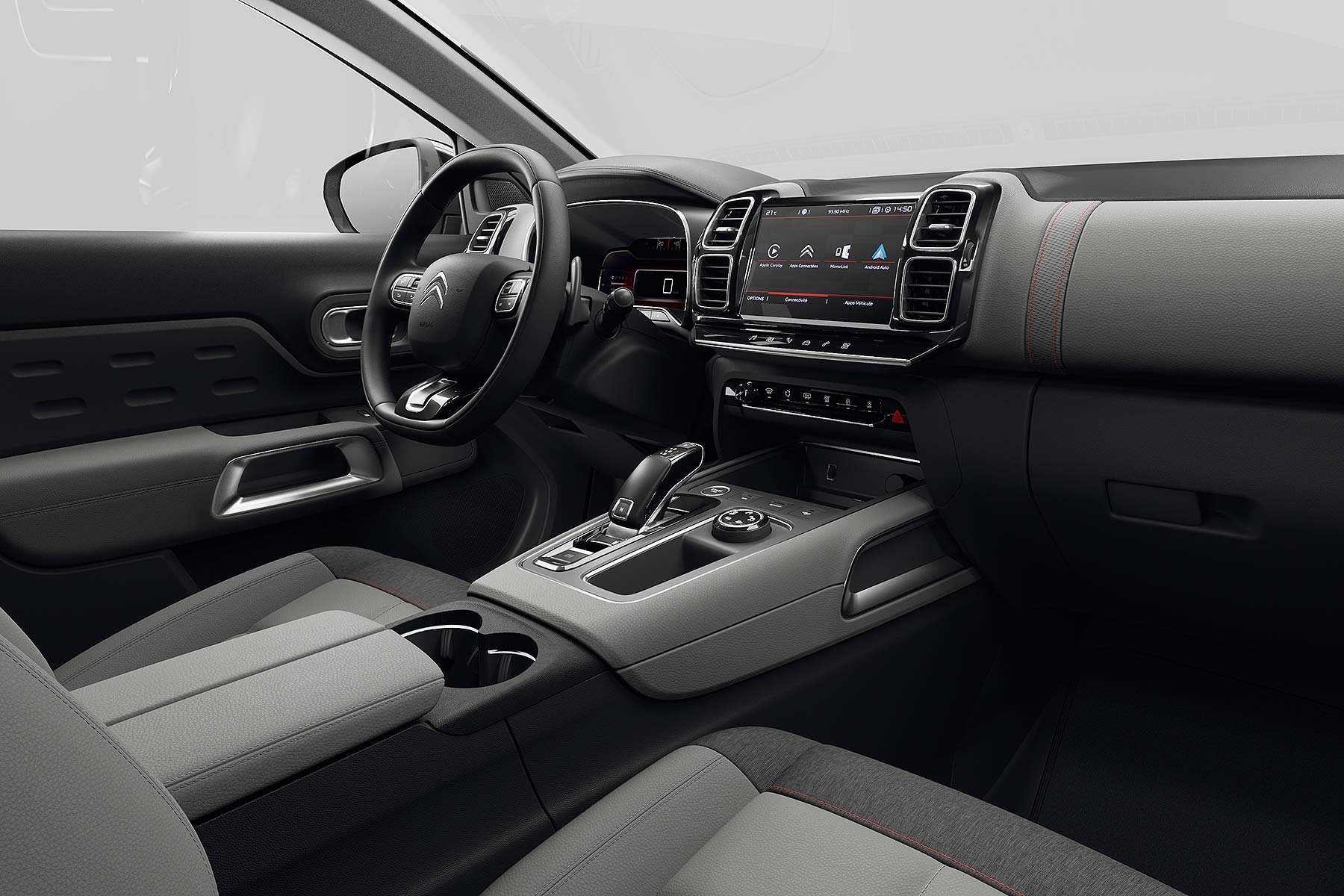

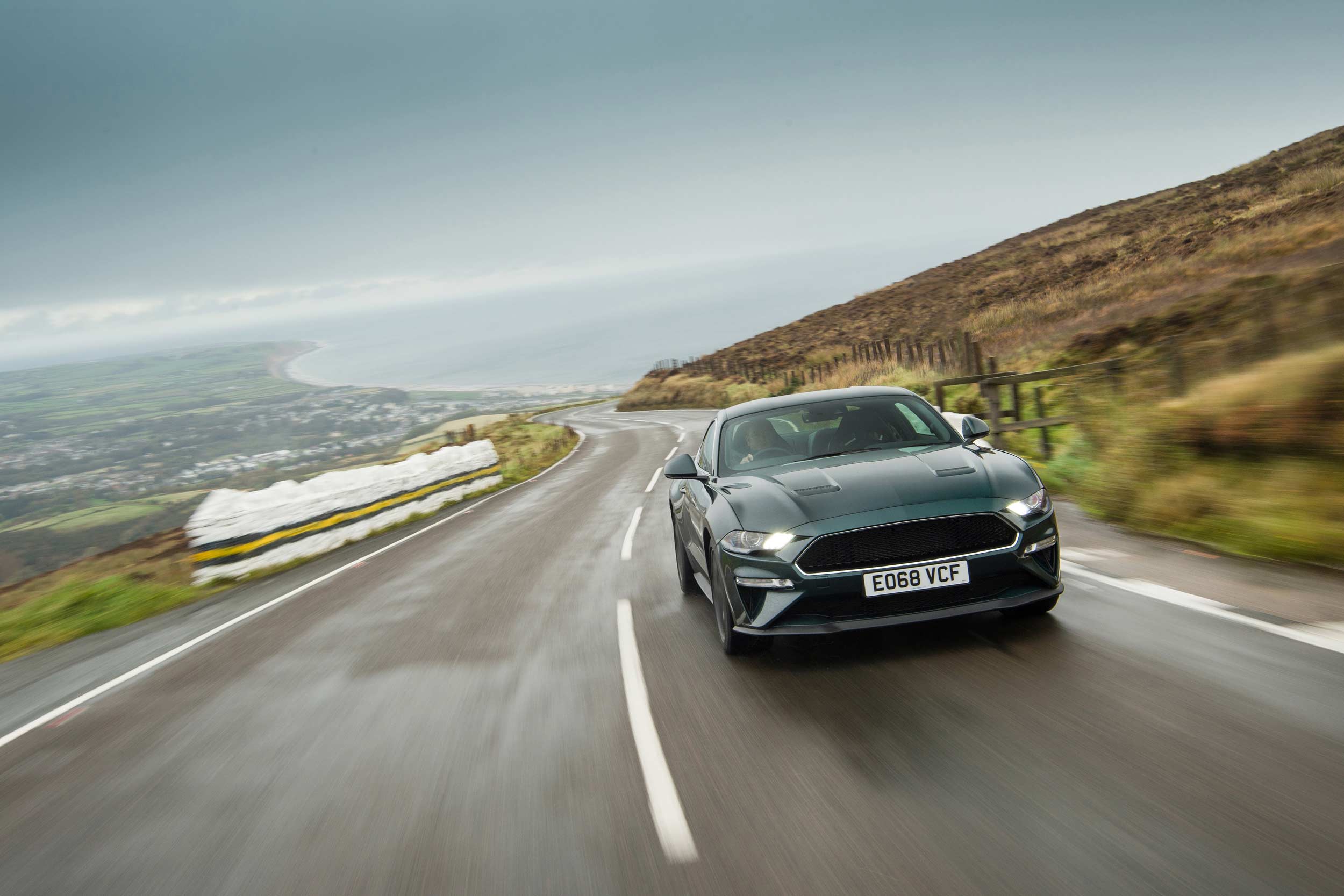 The Manx TT is one of the greatest races in all of motorsport. Over two weeks in late spring every year, motorcycles shriek though thirty-seven miles of public roads: narrow streets, rollings hills, blind corners, and stone walls.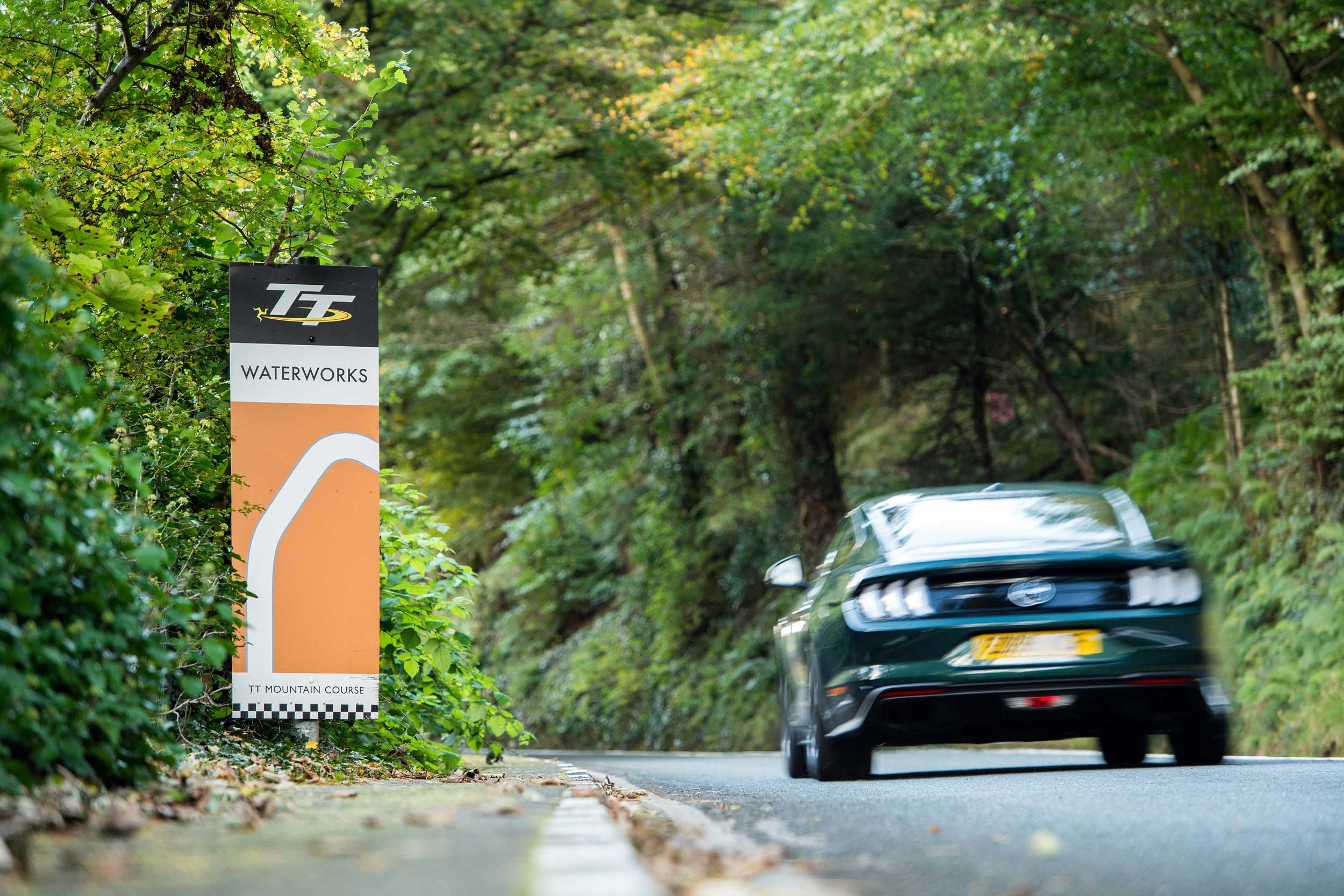
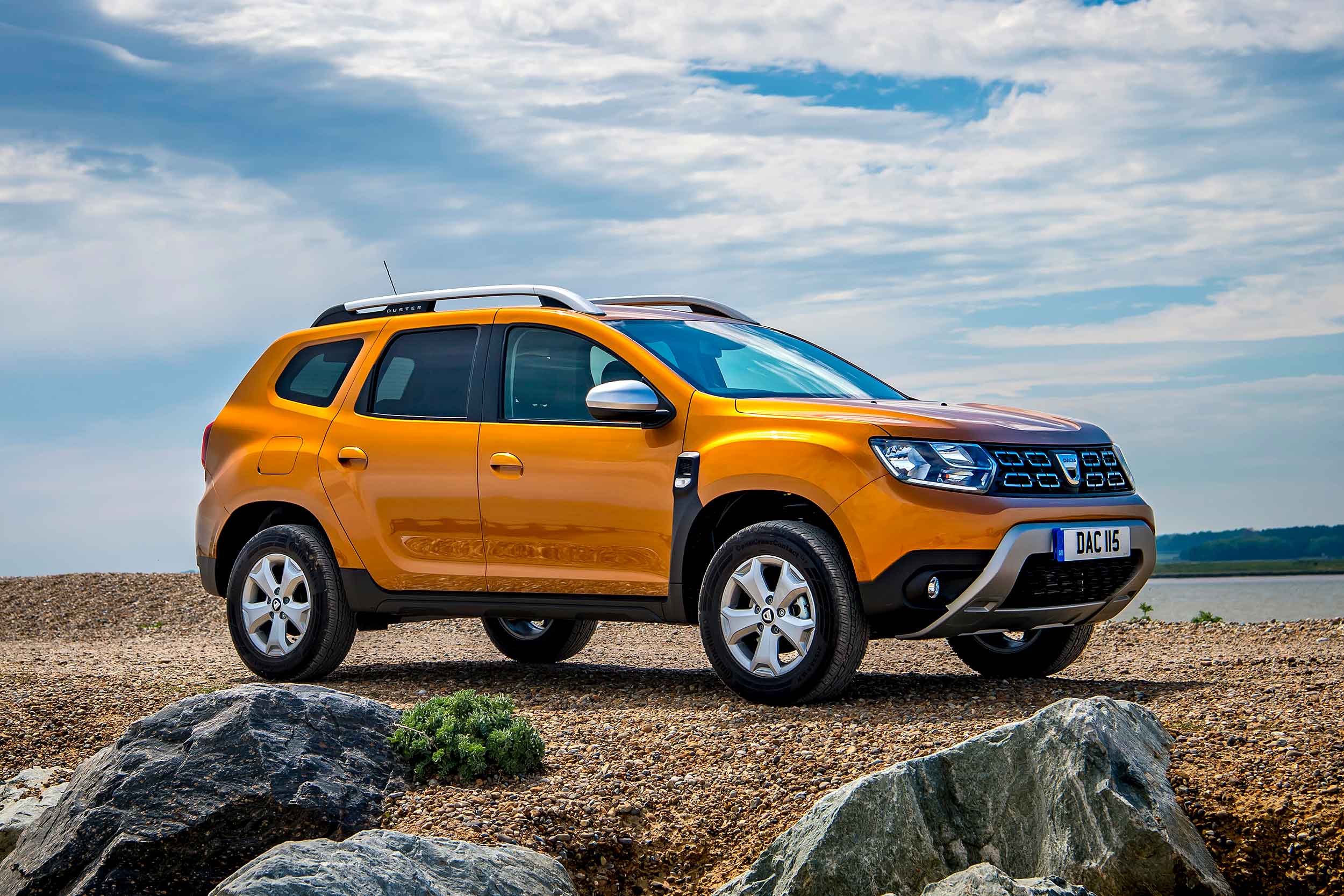 Dacia Buy Online is a new online sales platform that allows motorists to buy a new car at any time, from any platform or device – and the UK is the first country in the world to go live with it.