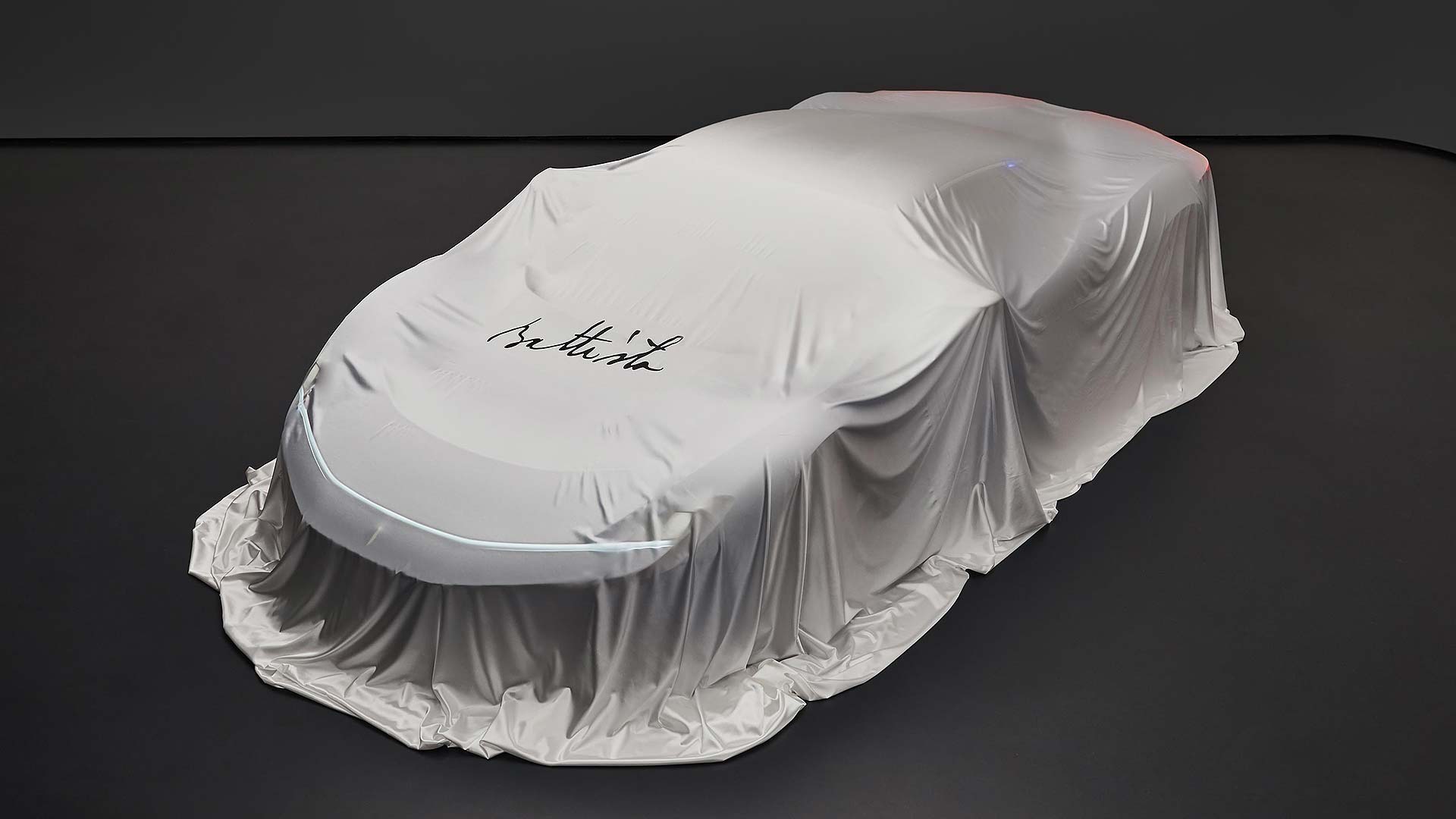
 The Pininfarina Battista is the confirmed name of the world’s first luxury electric hypercar which will launch in late 2020 to bring clean, green performance better than a Formula 1 car to the world’s streets.
Advertisement
The Pininfarina Battista is the confirmed name of the world’s first luxury electric hypercar which will launch in late 2020 to bring clean, green performance better than a Formula 1 car to the world’s streets.
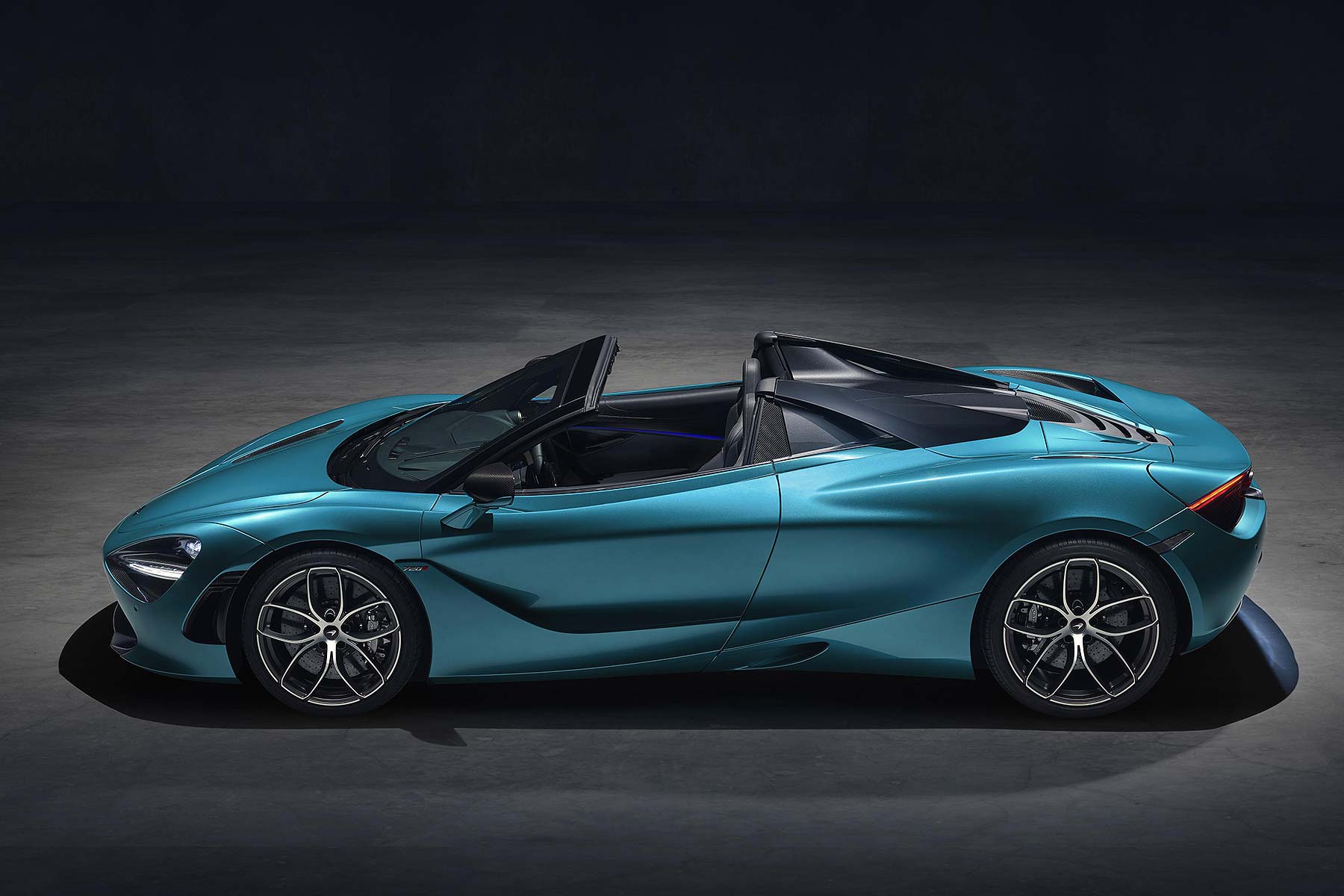 The new McLaren 720S Spider is the new open-top version of the 720S Coupe that will top 200mph with the roof down as well as up.
On sale now with prices from £237,000, McLaren proudly says the 720S Spider needs no additional strengthening over the coupe: that’s how robust its carbon fibre ‘Monocage II-S’ structure is.
This also caps the weight gain over the coupe to just 49kg (less than 4 percent). Its ‘dry’ weight is 1,332kg, 88kg less than its nearest rival (and far lighter than is the norm in this sector).
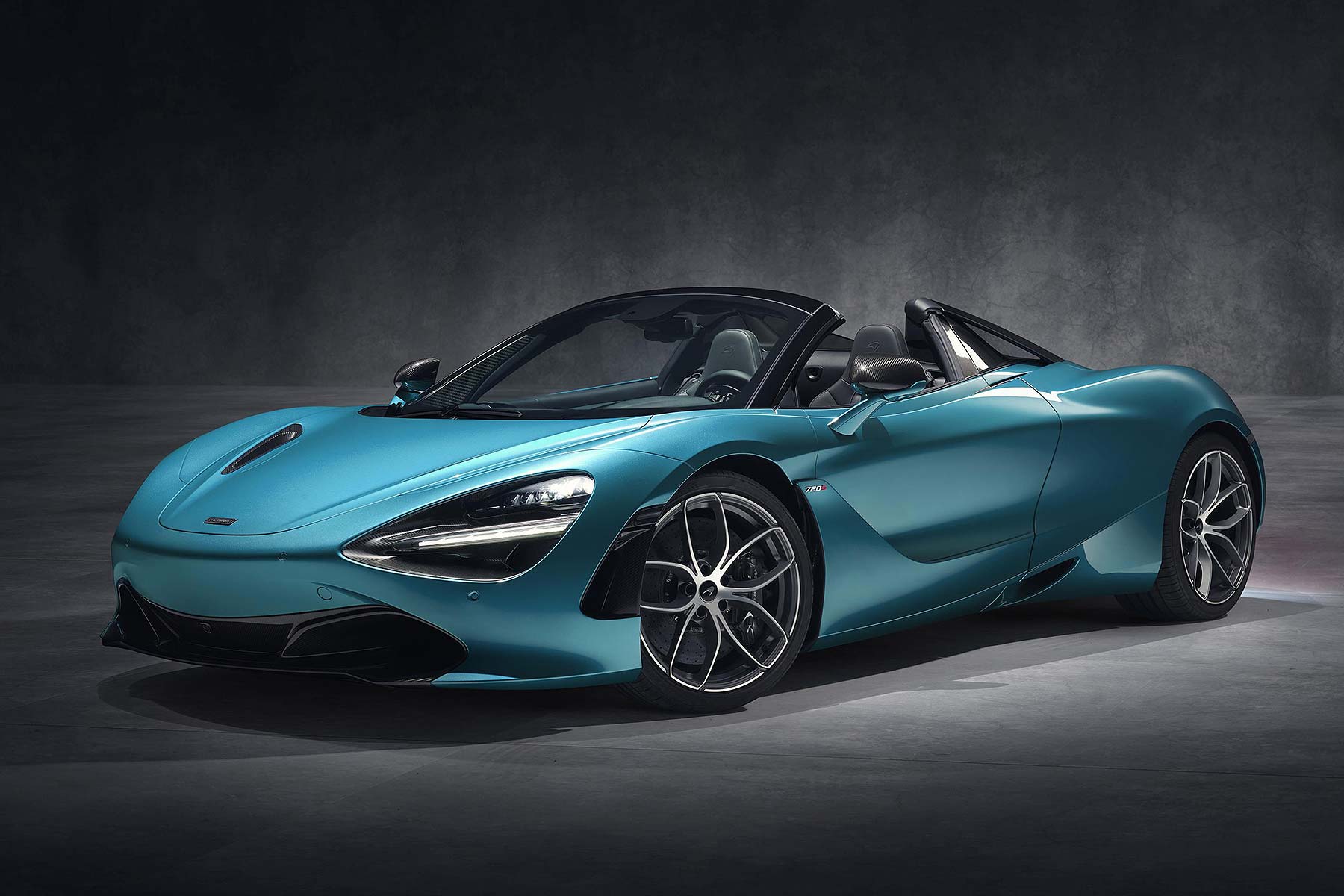
Because of this, the 0-62mph time of 2.9 seconds matches the coupe. The 720hp 4.0-litre V8 twin-turbo engine will do 0-124mph in 7.9 seconds and reach 212mph with the roof up.
The top speed with the roof down is an impressive 202mph. Thank the active rear spoiler for this, which tunes the aerodynamics according to the position of the roof. It rises at lower speeds than the coupe and raises up to a higher overall position.
Deliveries of the new McLaren 720S Spider will begin in March 2019.
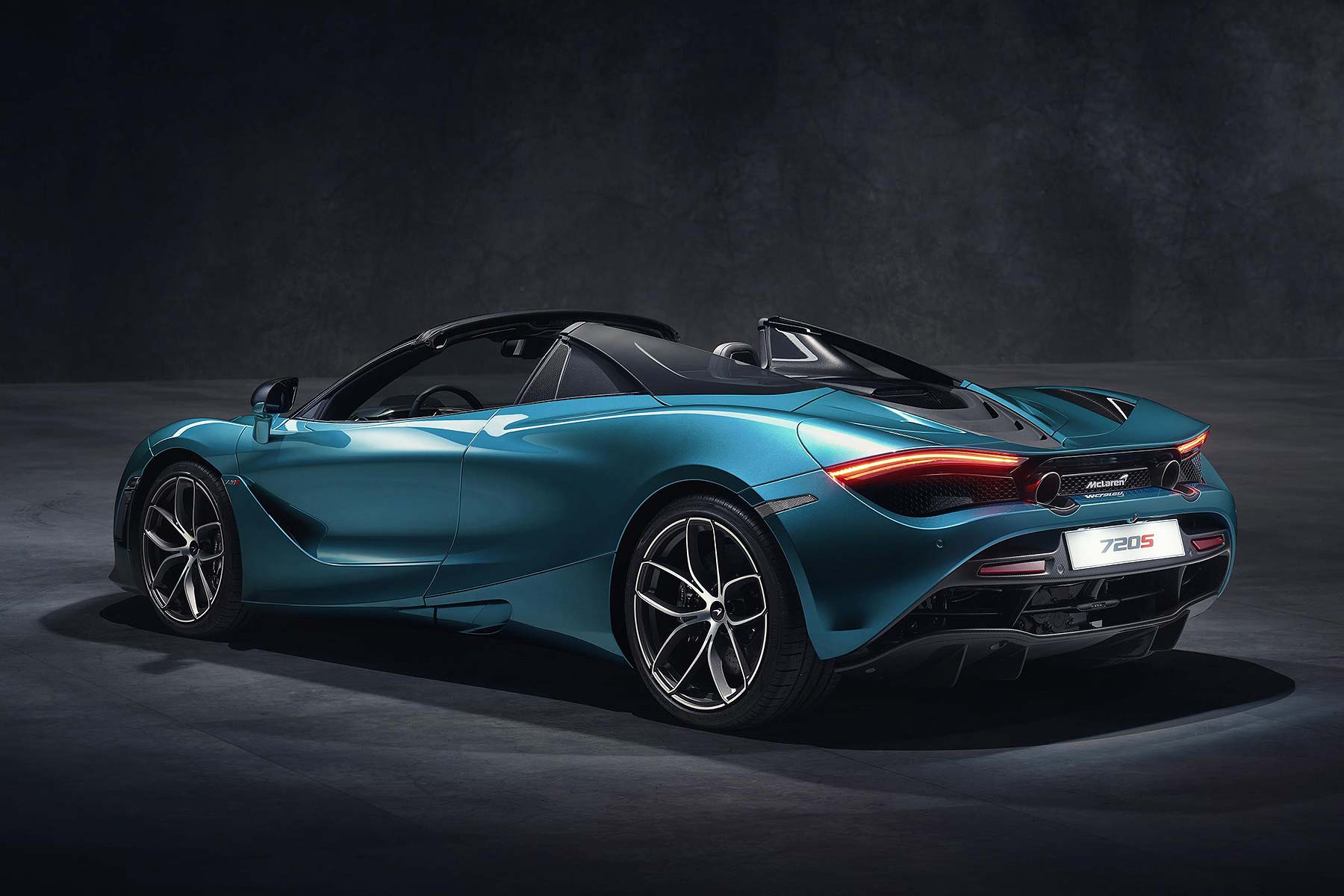
The design is a faithful open-top interpretation of the 720S. McLaren says visibility is “unparalleled” thanks to glazed rear flying buttresses. These unique structures help increase downforce too.
The folding hard-top roof’s design is patented and it goes up and down in just 11 seconds, the fastest of any open-top supercar. Being able to do it on the move at speeds of up to 31mph saves embarrassment when the traffic lights change (you had to keep speeds below 19mph on its predecessor, the 650S Spider).
The roof is also available as a glazed structure. To save glare from the sun, the panel is electrochromatic and can almost instantly switch from transparent to tinted.
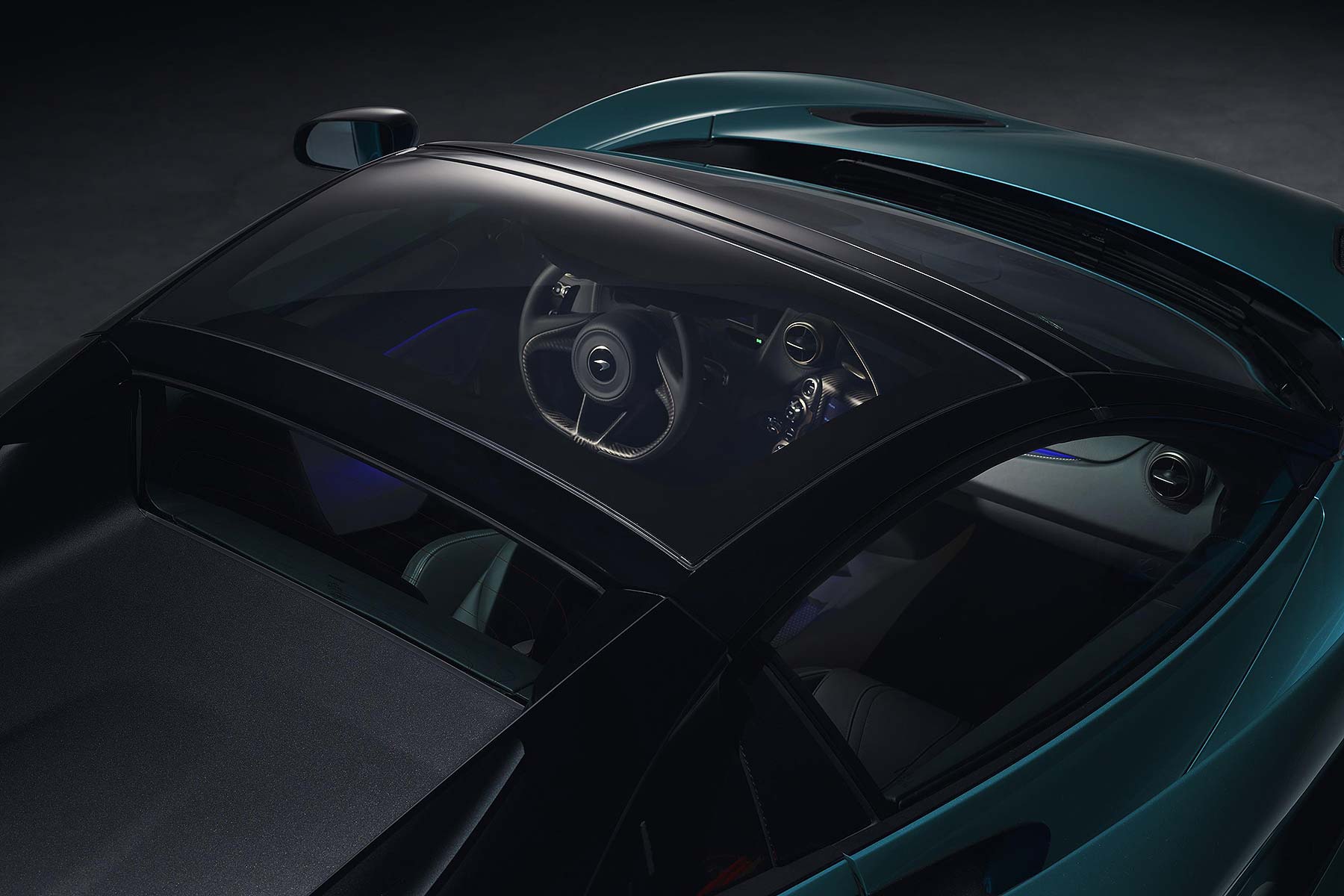
When parked up, it defaults to tinted, to keep the cabin cool; it ‘remembers’ the previous setting when the car is started.
The glass back window is separate and can be lowered independently. McLaren says this is ideal for “inviting the sound of the powertrain into the cabin”.
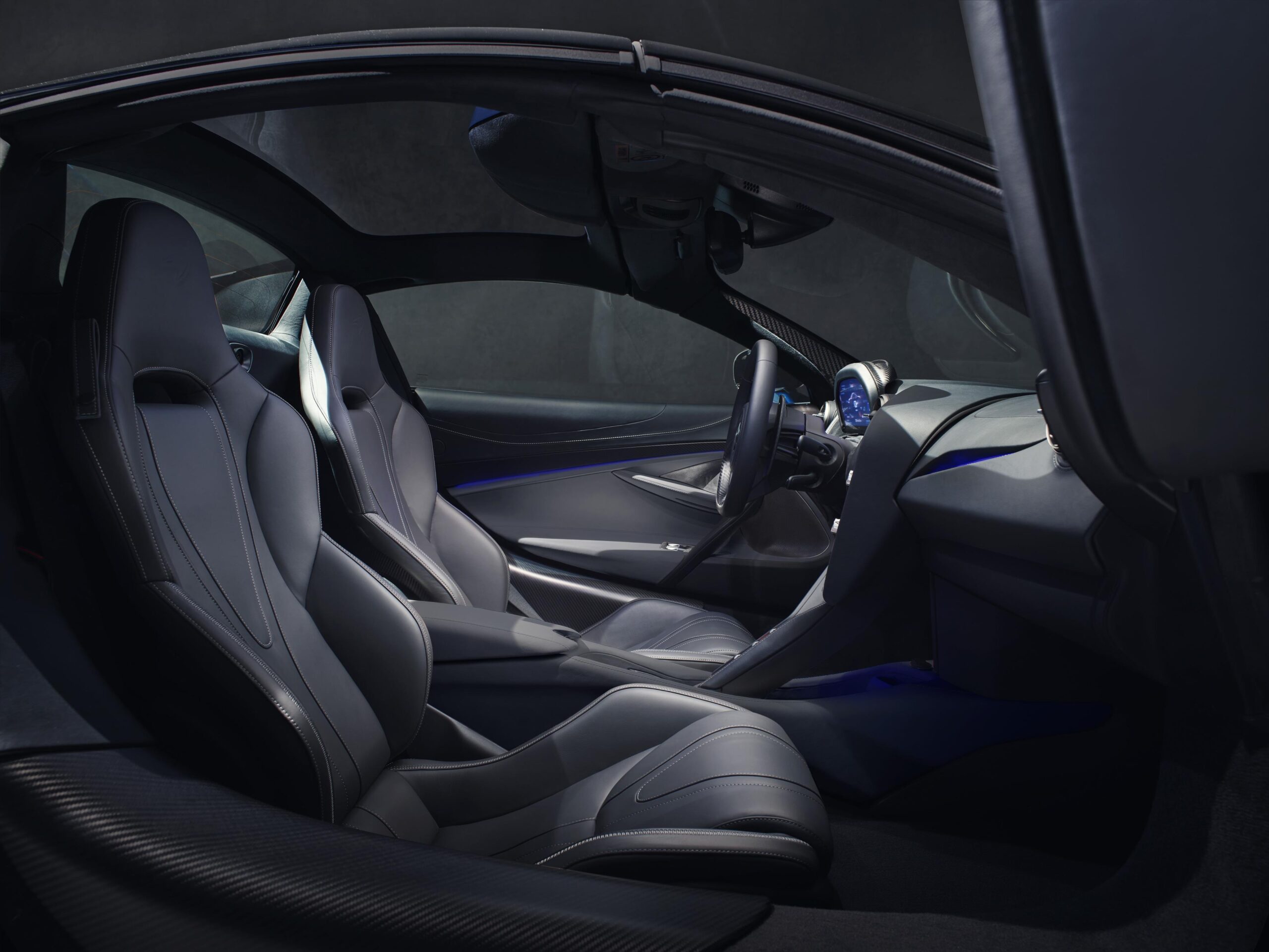
The climate control system has a series of bespoke settings that adjust temperature and airflow according to whether the roof is down or up. The system increases airflow speed and more air blasts to the footwells and upper cabin areas.
On sale now, McLaren is offering the 720S Spider in the same three specifications as the coupe: standard, Performance and Luxury. It can be had in one of 23 standard colours. Two of them – Belize Blue and Aztec Gold – are new for the Spider.
Bugatti launches sunroof option for Chiron hypercar
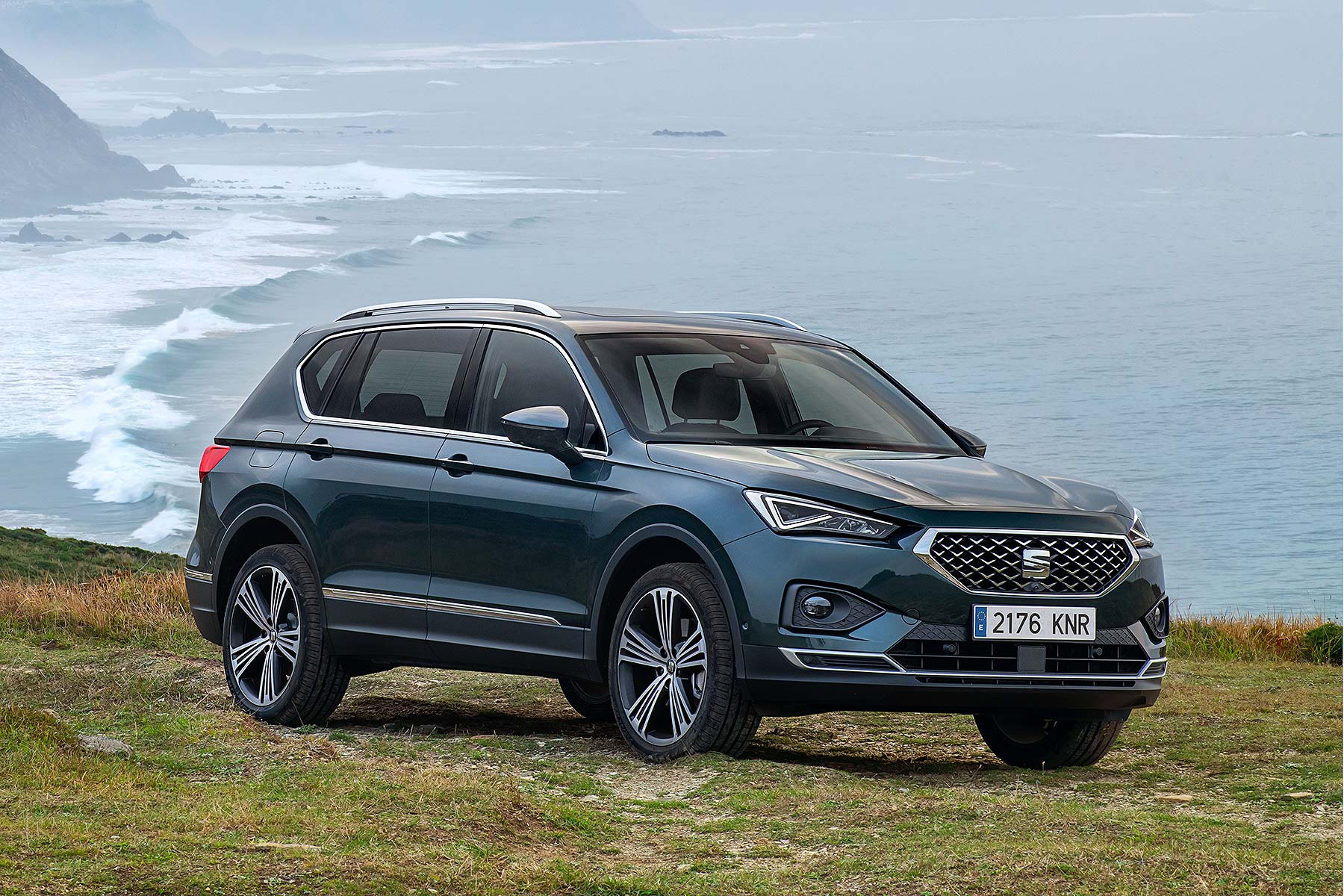
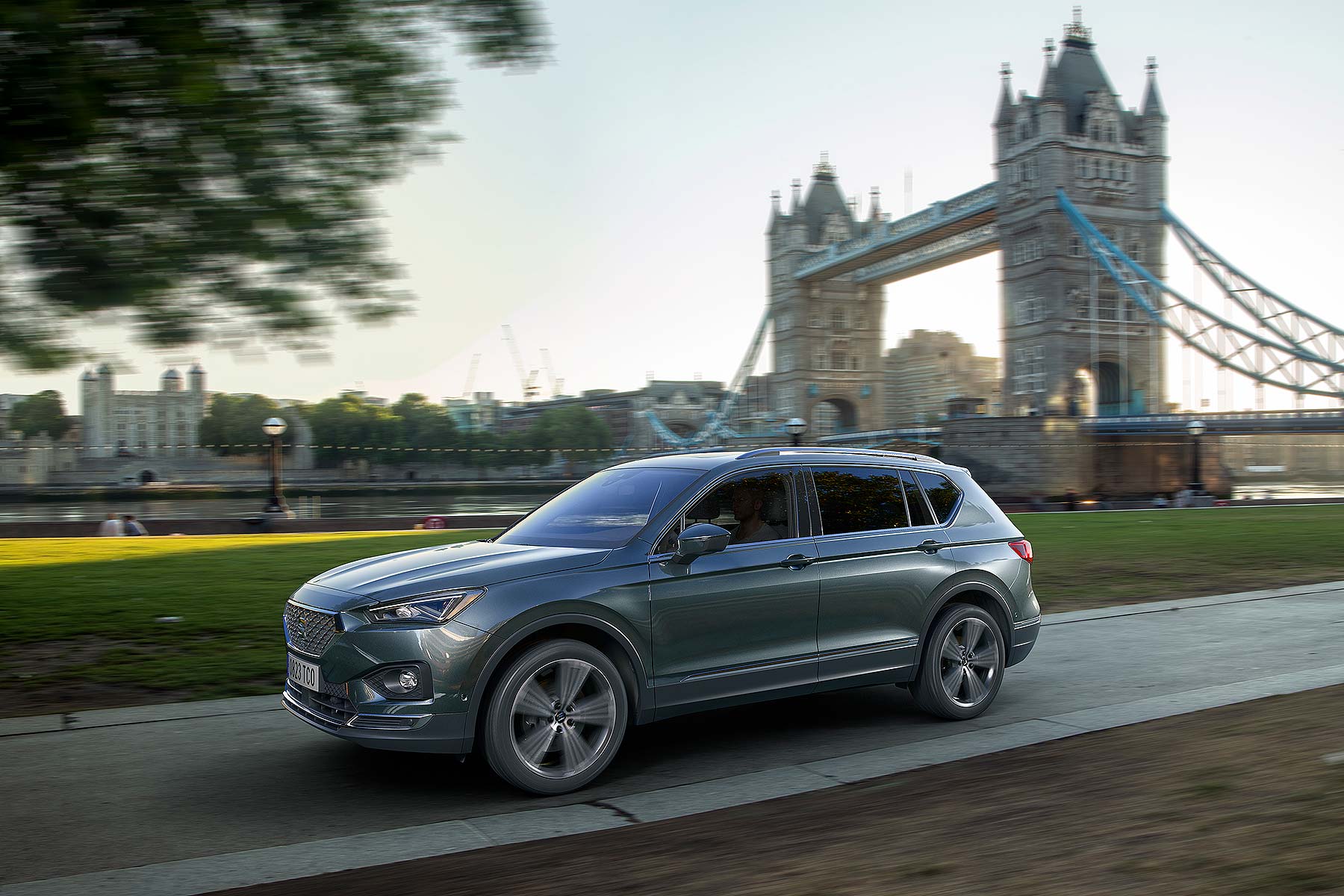
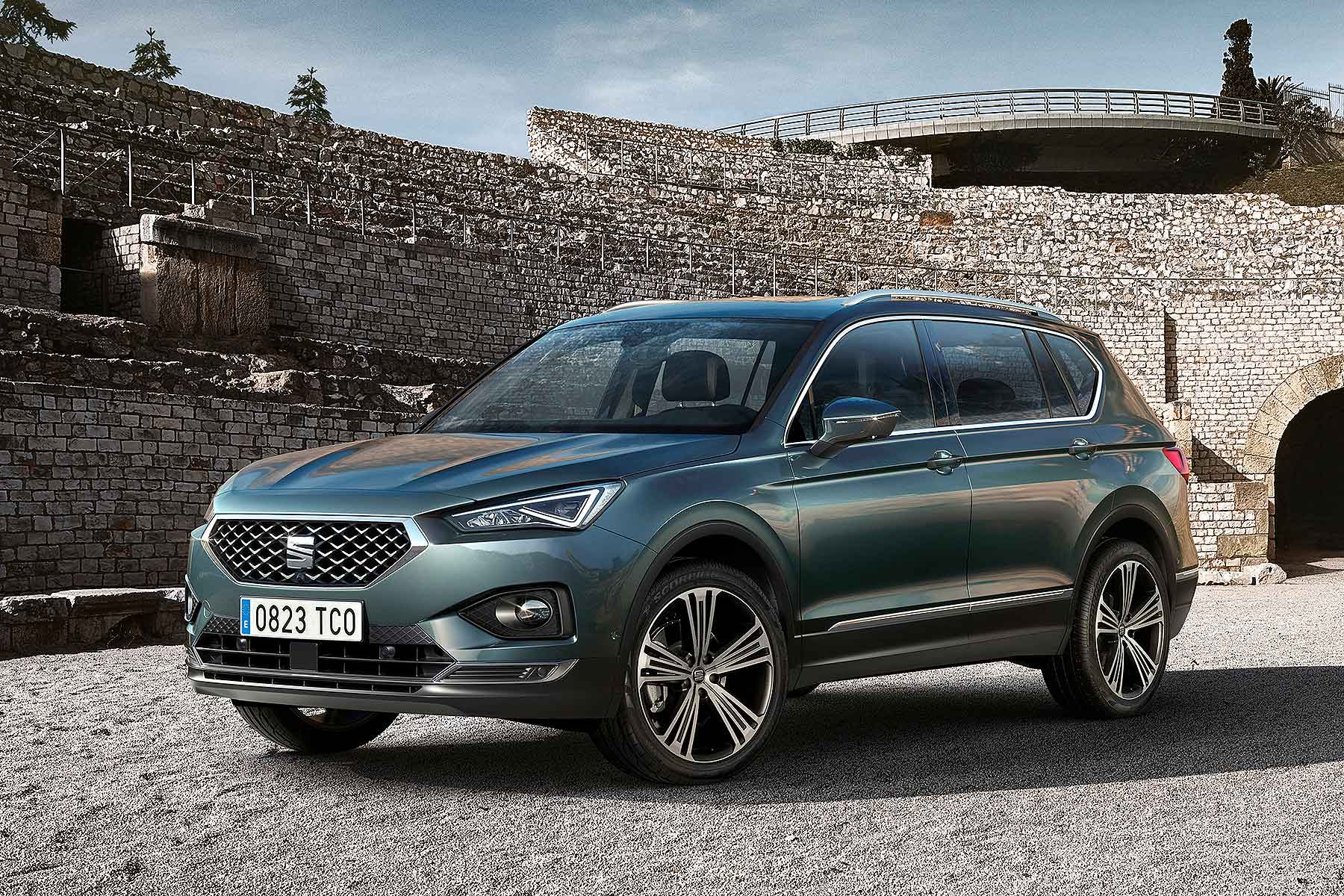 The Seat Tarraco is the first large SUV seve-seater from the Spanish brand. It’s on sale now in the UK with prices starting from £28,320.
Seat’s alternative to the Skoda Kodiaq, the Tarraco sits above the Arona small SUV and Ateca mid-size SUV. The firm has a trio of SUVs on sale for the first time.
The Tarraco is certainly a big car. It is 4,735mm long, over 1,800mm wide and 1,658mm tall. This helps the boot stretch from 230 litres in seven-seat mode, to 700 litres as a five-seater, to a mammoth 1,775 litres with all five rear seats down.
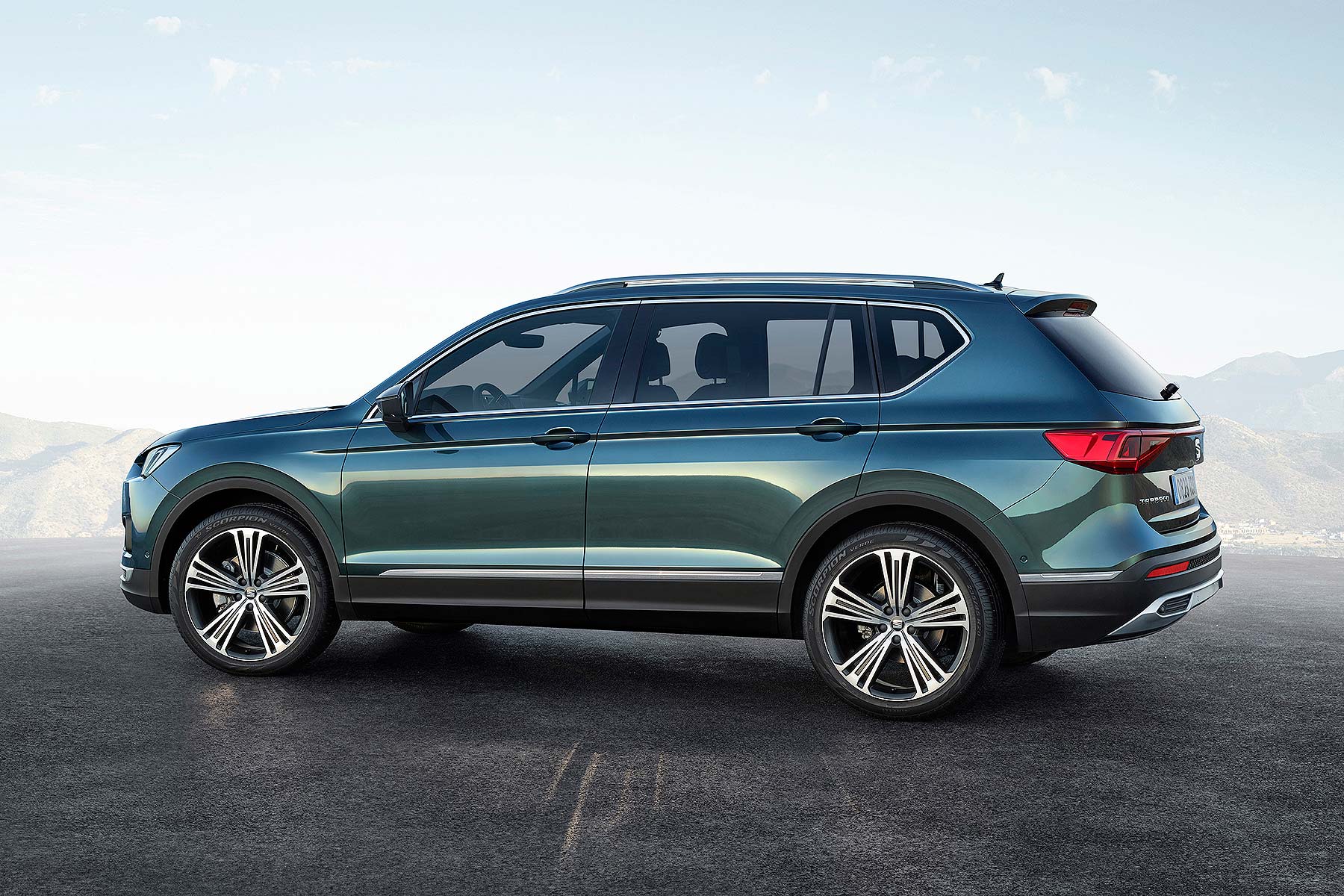
UK MD Richard Harrison says the Tarraco is a “cracker, and the perfect way to complete our full range of SUVs.
“The Tarraco represents exceptional value for money. It is sure to fly out of showrooms in the new year.”
Harrison says the Tarraco is the latest Seat to follow its ‘easymove’ trim level line-up. There are only four well-defined variants and each gets metallic paint as standard, rather than an add-on cost extra.
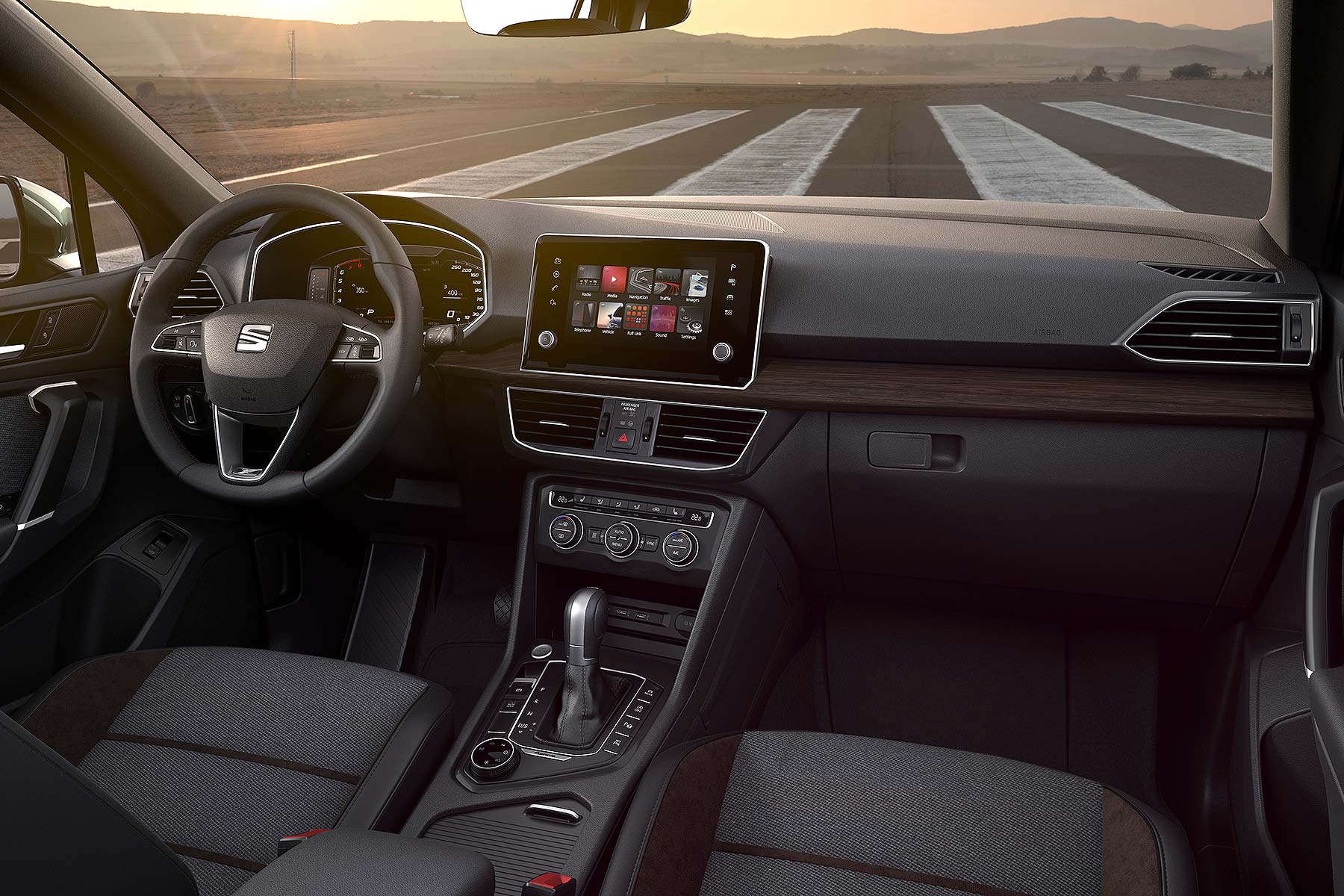
The trim lines are SE, SE Technology, Xcellence and Xcellence Lux. Standard on all is three-zone climate control, 17-inch alloys, DAB and ‘Full Link’ infotainment with smartphone mirroring.
SE Technology adds on sat nav, 18-inch alloys and dark rear glass. Xcellence brings wireless smartphone charging, 19-inch alloys, rear view camera, electric tailgate, Alcantara upholstery and adaptive cruise control.
Range-topping Xcellence Lux has 20-inch alloys, leather upholstery and a winter pack.
Seat has tried to keep things simple with engine choice too: there are two petrols and two diesels. The 1.5 TSI 150 petrol is the entry-level motor, with a 2.0 TSI 190 DSG 4Drive (Seat’s name for all-wheel drive) at the top of the range.
Diesel opens with a 2.0 TDI 150 (either front-wheel drive or 4Drive), with a 2.0 TDI 190 DSG 4Drive alternative.
As an incentive to order early, Seat is offering ‘First Edition’ variants that are packed with extra kit. The SE Technology First Edition 1.5 TSI 150 costs £30,475, and adds in rear-view camera, dark rear glass, wireless smartphone charging and a ‘safe driving pack’.
Xcellence First Edition comes with a 1.5 TSI 150 engine for £33,260, or a 2.0 TDI 150 for £34,745. It has 20-inch alloys, panoramic roof, plus winter and safe driving packs.
There’s also an Xcellence First Edition Plus, with a 2.0 TSI 190 DSG 4Drive for £38,020 or the 2.0 TDI 190 DSG 4Drive for £39,505. Extras include a Beats audio system and electric driver’s seat.
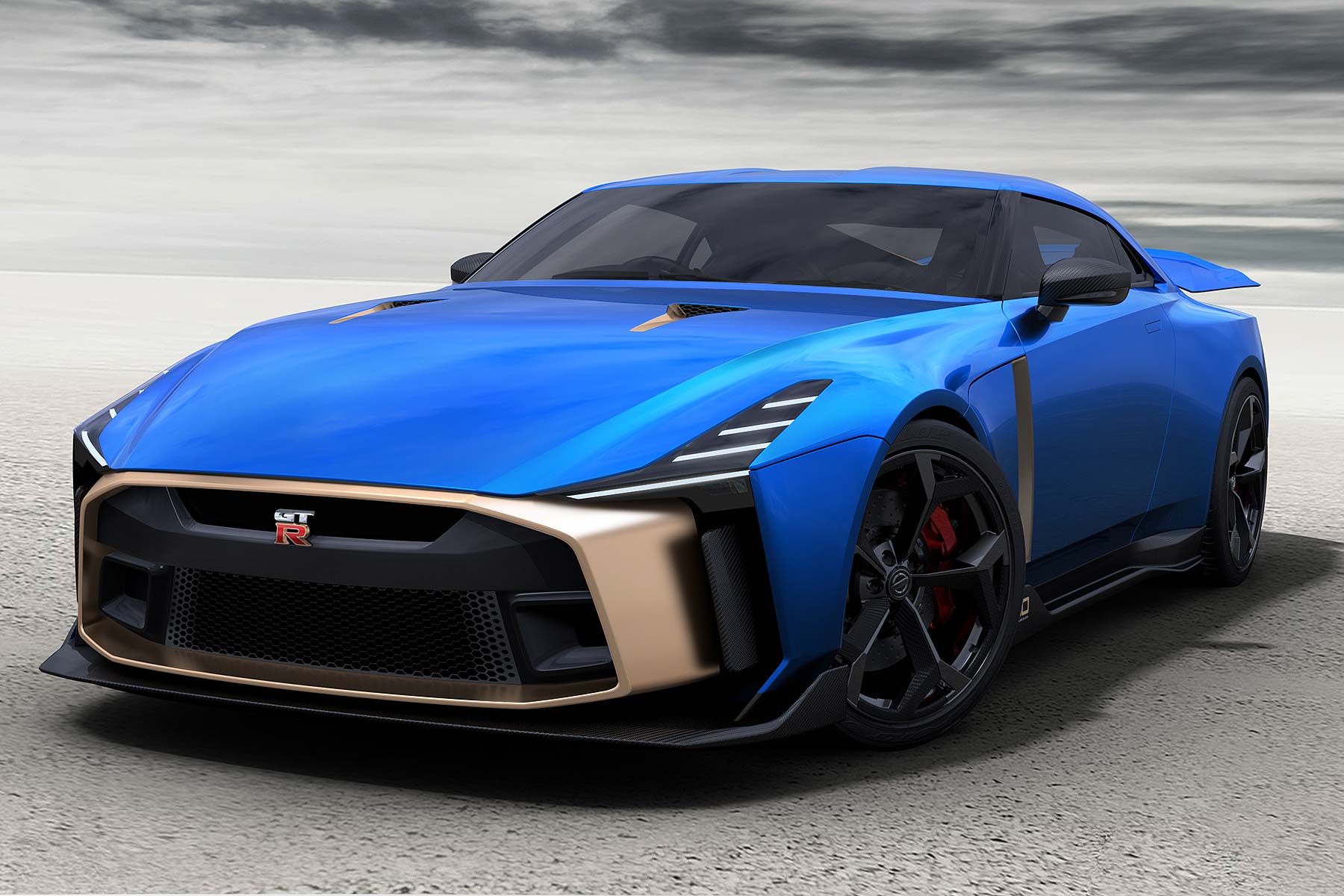 The Nissan GT-R50 by Italdesign concept that wowed visitors to the 2018 Goodwood Festival of Speed is going into production, the Japanese company has confirmed.
Just 50 cars will be built, but they won’t be cheap. Each will cost over £880,000. Before taxes. And options.
That equals a price tag of over £1 million…
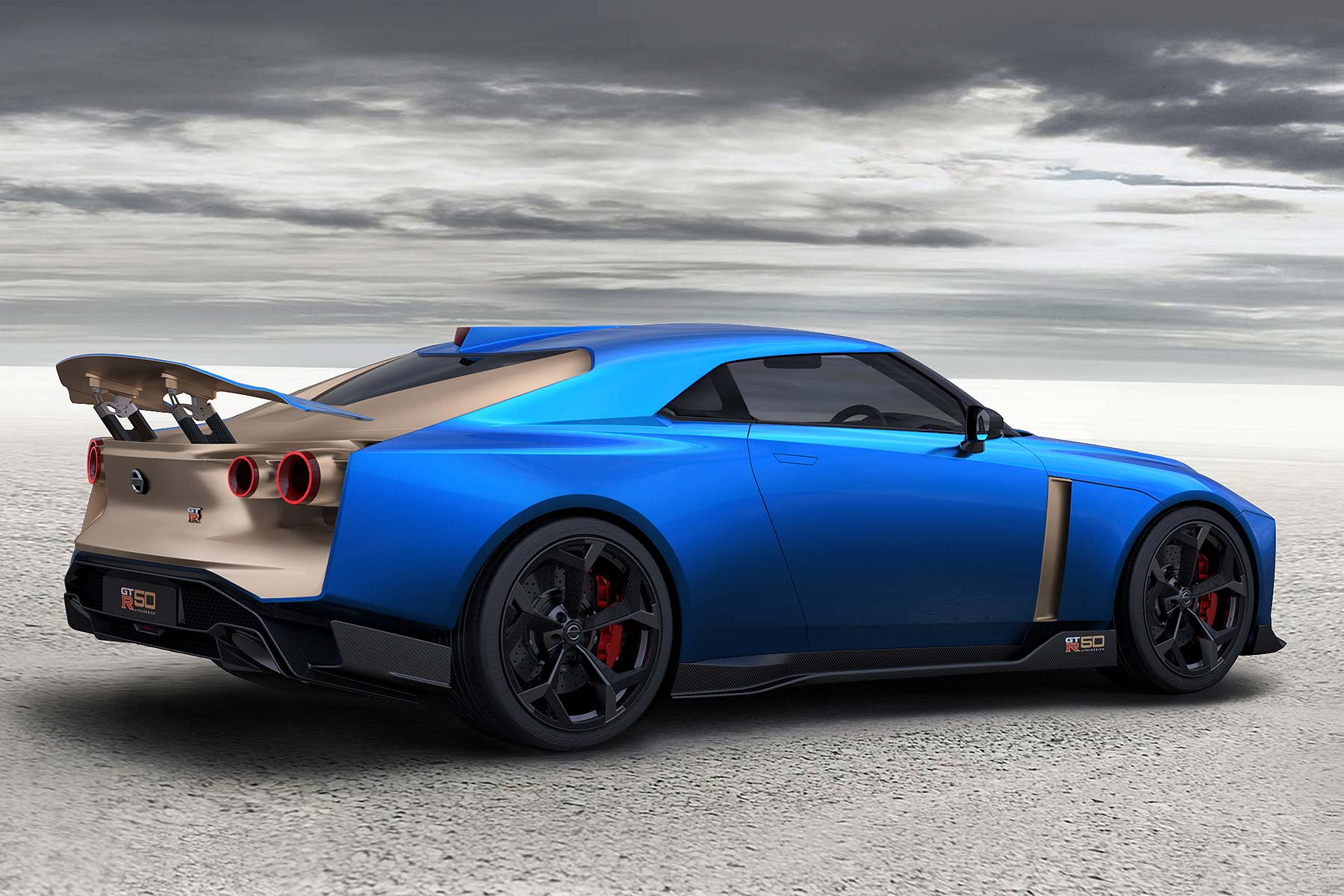
For those with funds for the ultimate Nissan GT-R, ordering is open now. Nissan’s even set up a car configurator on www.gt-r50.nissan.
Deliveries, adds Nissan, will begin in 2019 and continue into 2020 until all 50 cars have been built.
We are officially opening the order-books for a customer version of the GT-R50 by Italdesign, which made its grand debut this past summer. Only 50 units will be produced. ? Learn more about the GT-R50 at https://t.co/0Gqecd7GEq. #Nissan #OMGTR50 pic.twitter.com/sHOJHCQG2h
— Nissan (@Nissan) December 7, 2018
Nismo has tuned the GT-R50 to 720 horsepower, but it’s Italdesign in Turin, Italy, that’s created it. This celebrated 50 years of Italdesign in 2018, and 50 years of GT-R in 2019.
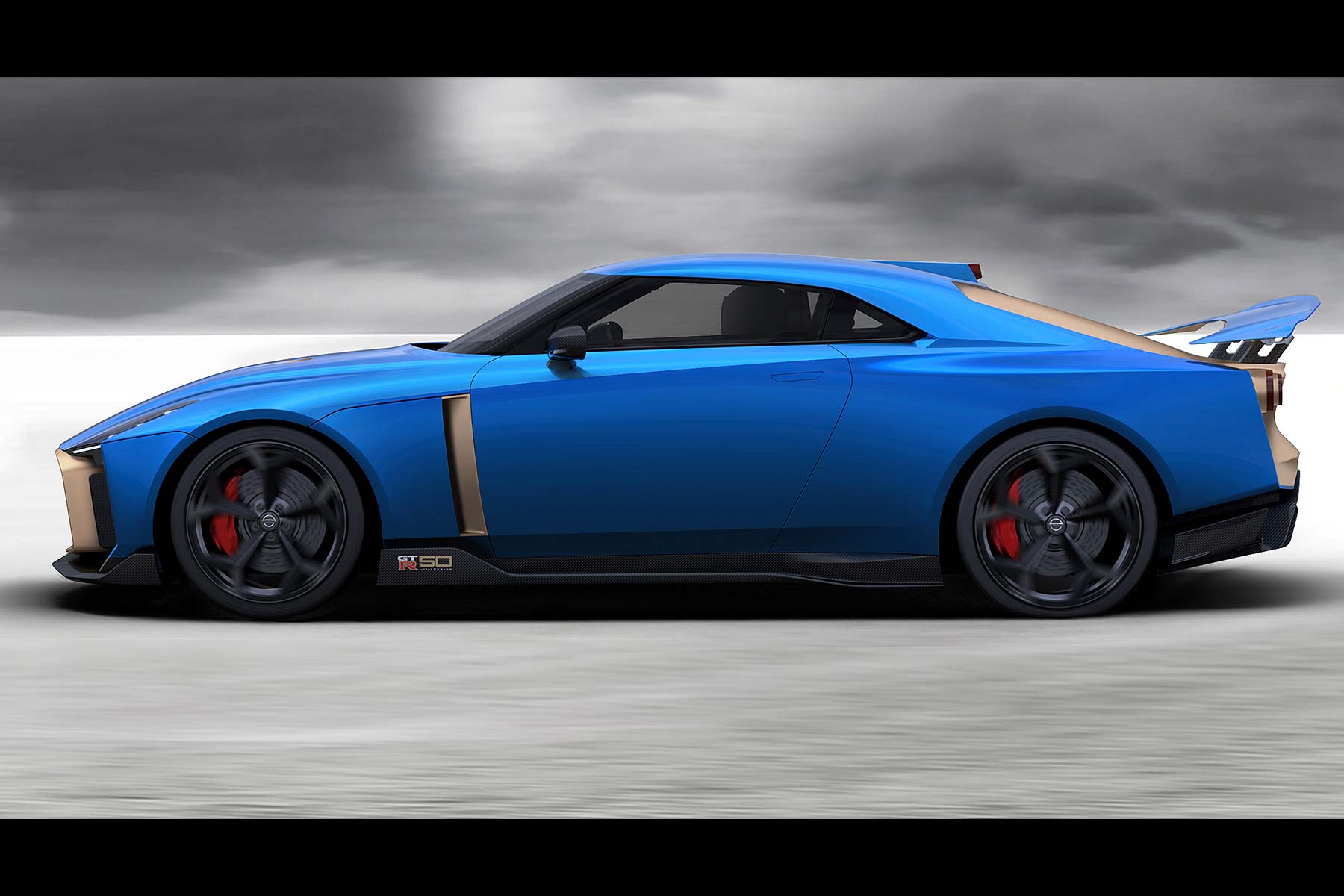
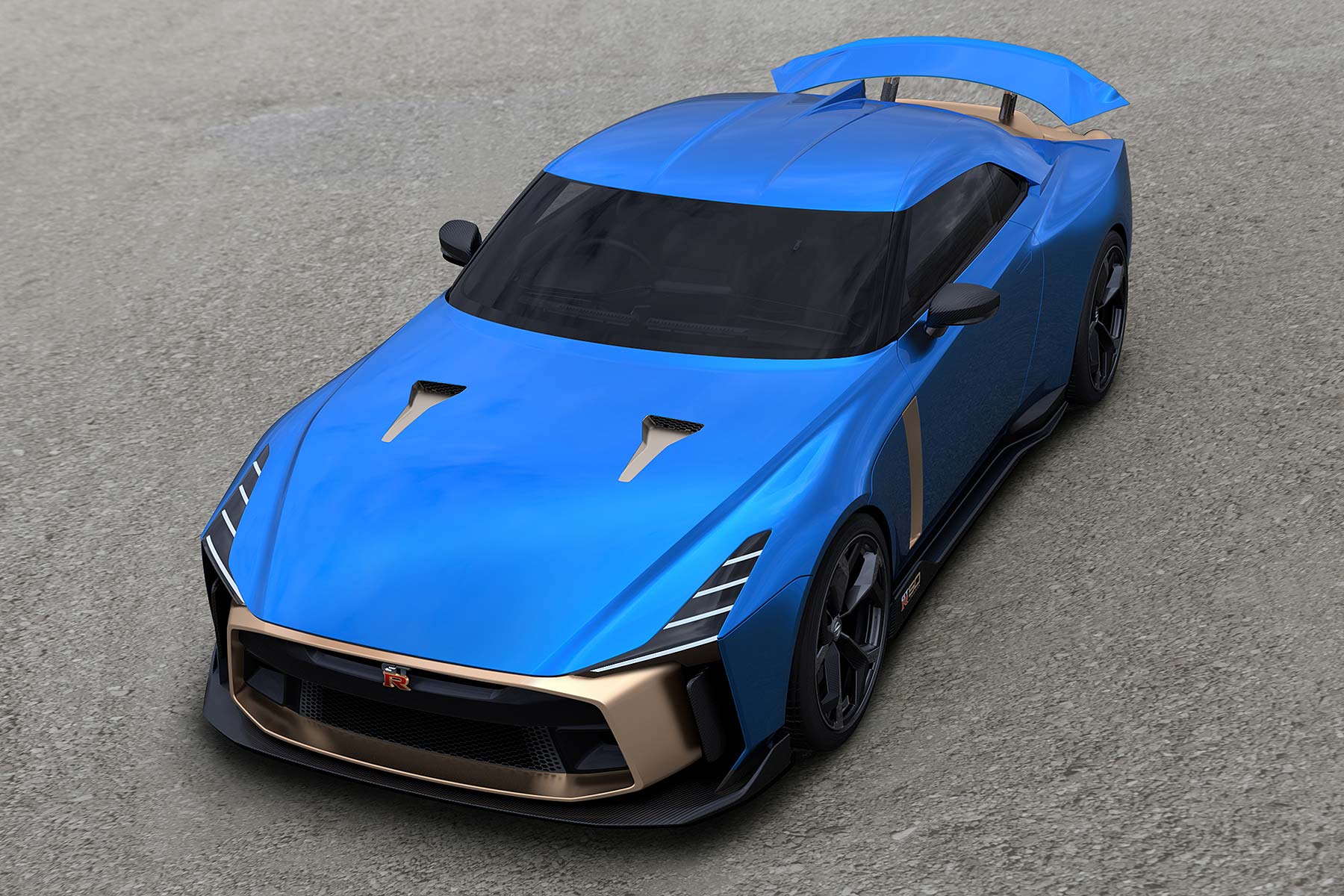
The concept version was finished in grey with gold accents. This production blue-and-gold version shows how customers will be able to specify their own colour combinations.
Interior packages will also be customisable.
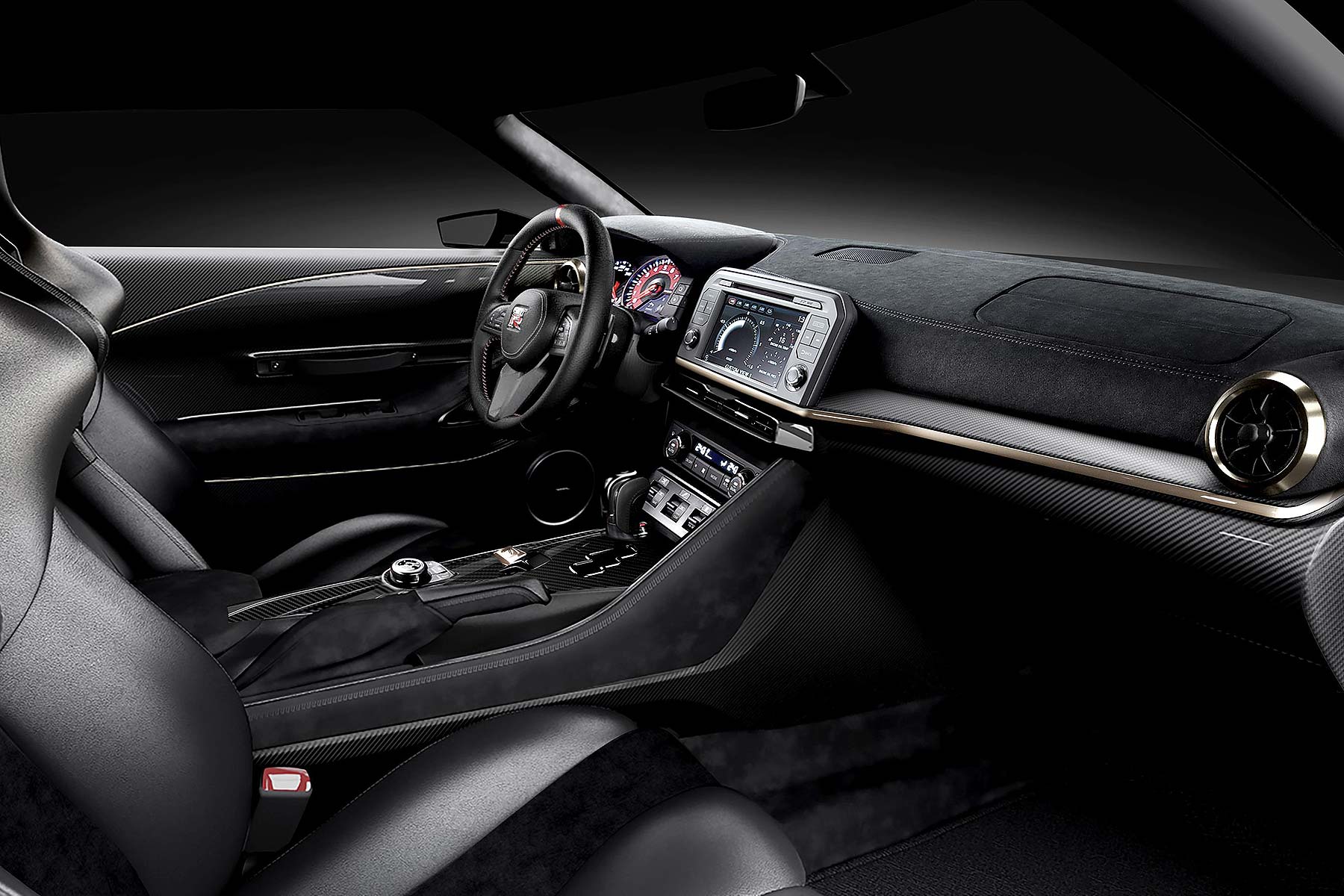
Otherwise, it’s virtually unchanged to the concept that was first seen at Goodwood. It’s since also been shown at Spa-Francorchamps in Belgium, the Rolex Monterey Motorsports Reunion in the U.S. and the Nissan Crossing in Tokyo.
From the Goodwood Festival of Speed in England to Nissan Crossing in Tokyo, Japan, here are some highlights from the GT-R50 by Italdesigns international tour. #OMGTR50 pic.twitter.com/F3AkYJv8Ii
— Nissan (@Nissan) December 7, 2018
To mark the confirmation of production, the concept will now be on display at the Nissan Gallery in Yokohama from today.
“The reaction from Nissan fans around the world – and potential customers of the GT-R50 – has greatly exceeded our expectations,” said Bob Laishley, global sports car program director at Nissan.
“These 50 cars, which celebrate 50 years of the GT-R as well as 50 years of Italdesign, will be rolling tributes to Nissan’s engineering leadership and rich sports car heritage for a long time to come.”
ALSO READ
The most reliable company cars
Hyundai Nexo scores five stars in Euro NCAP crash test
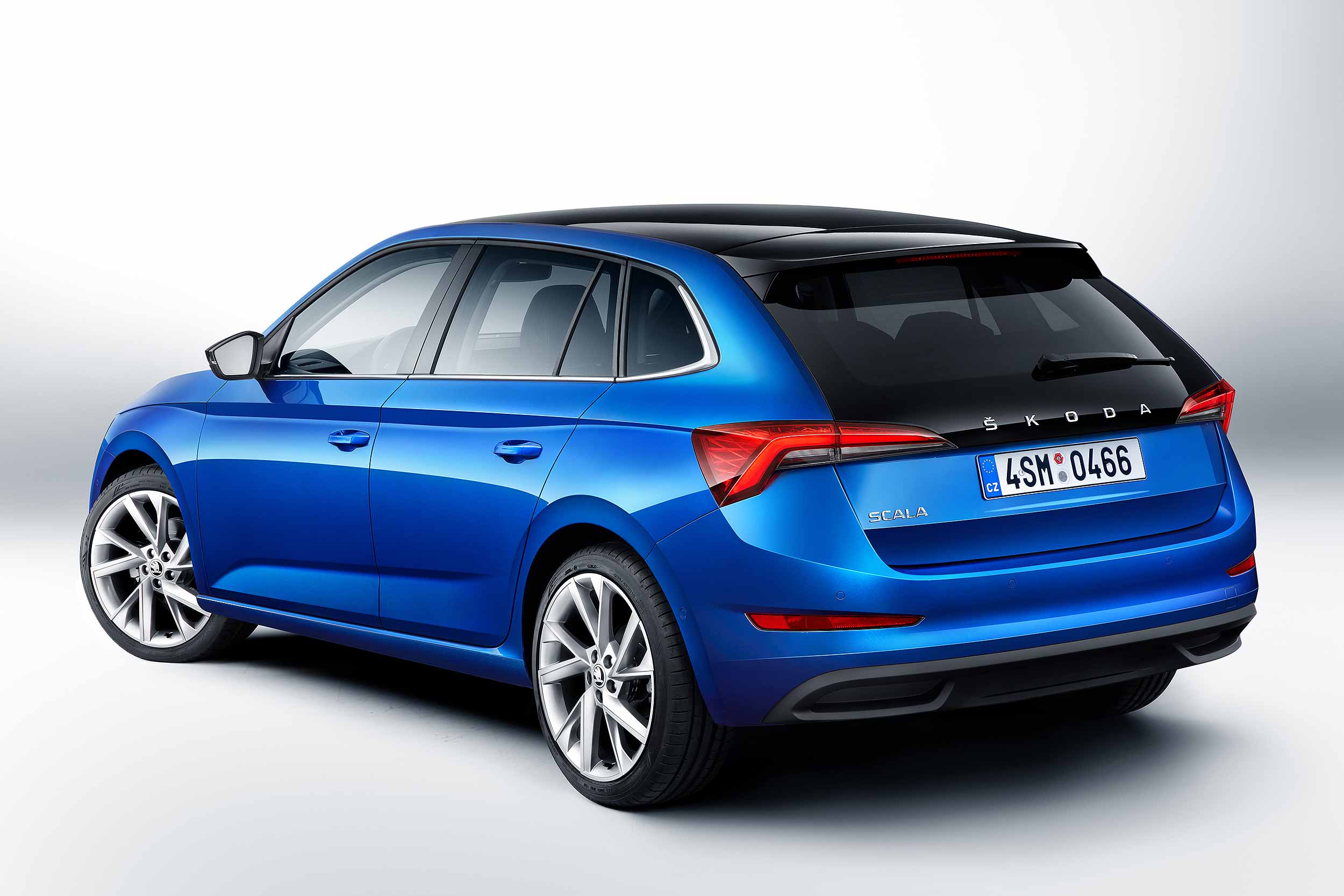
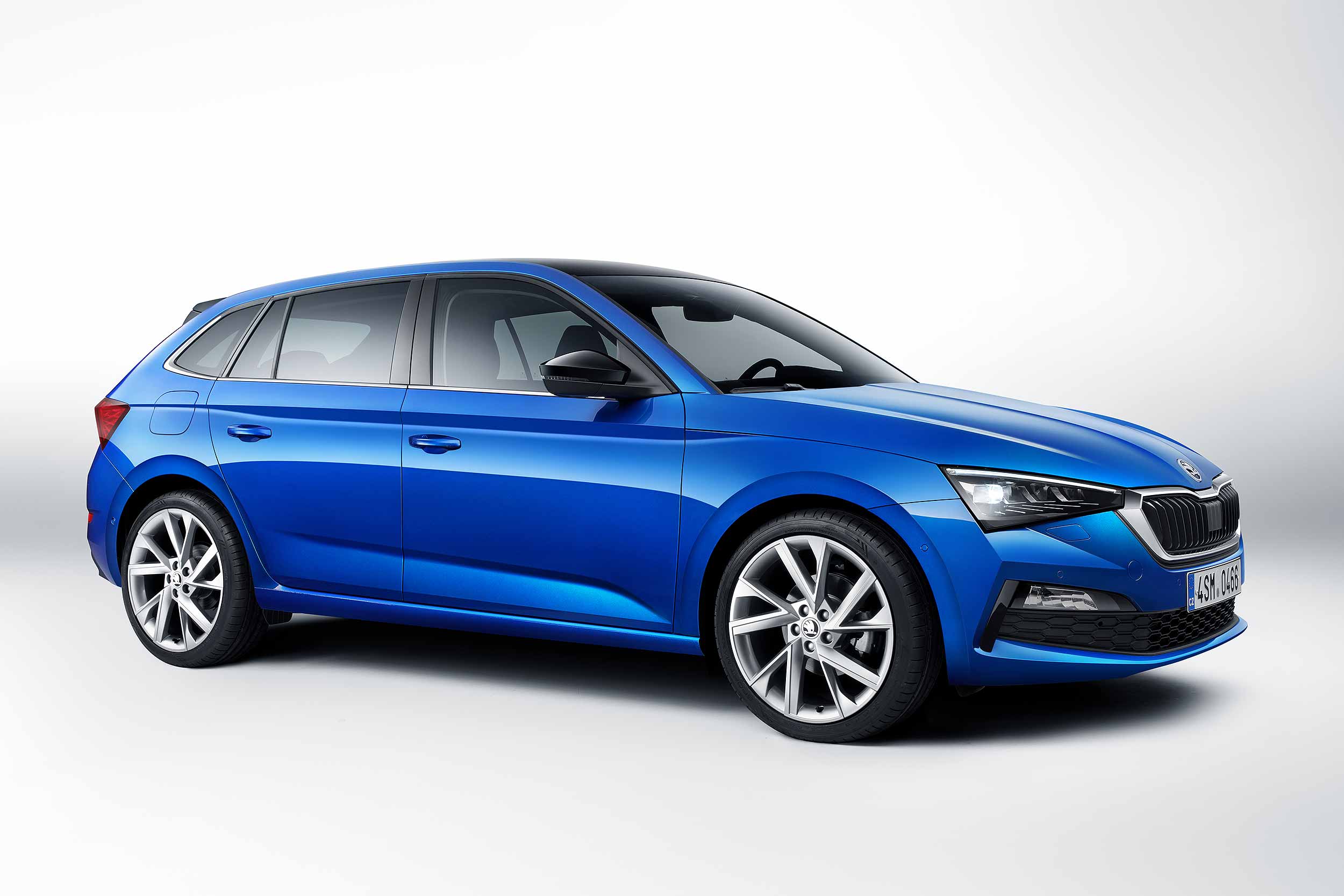
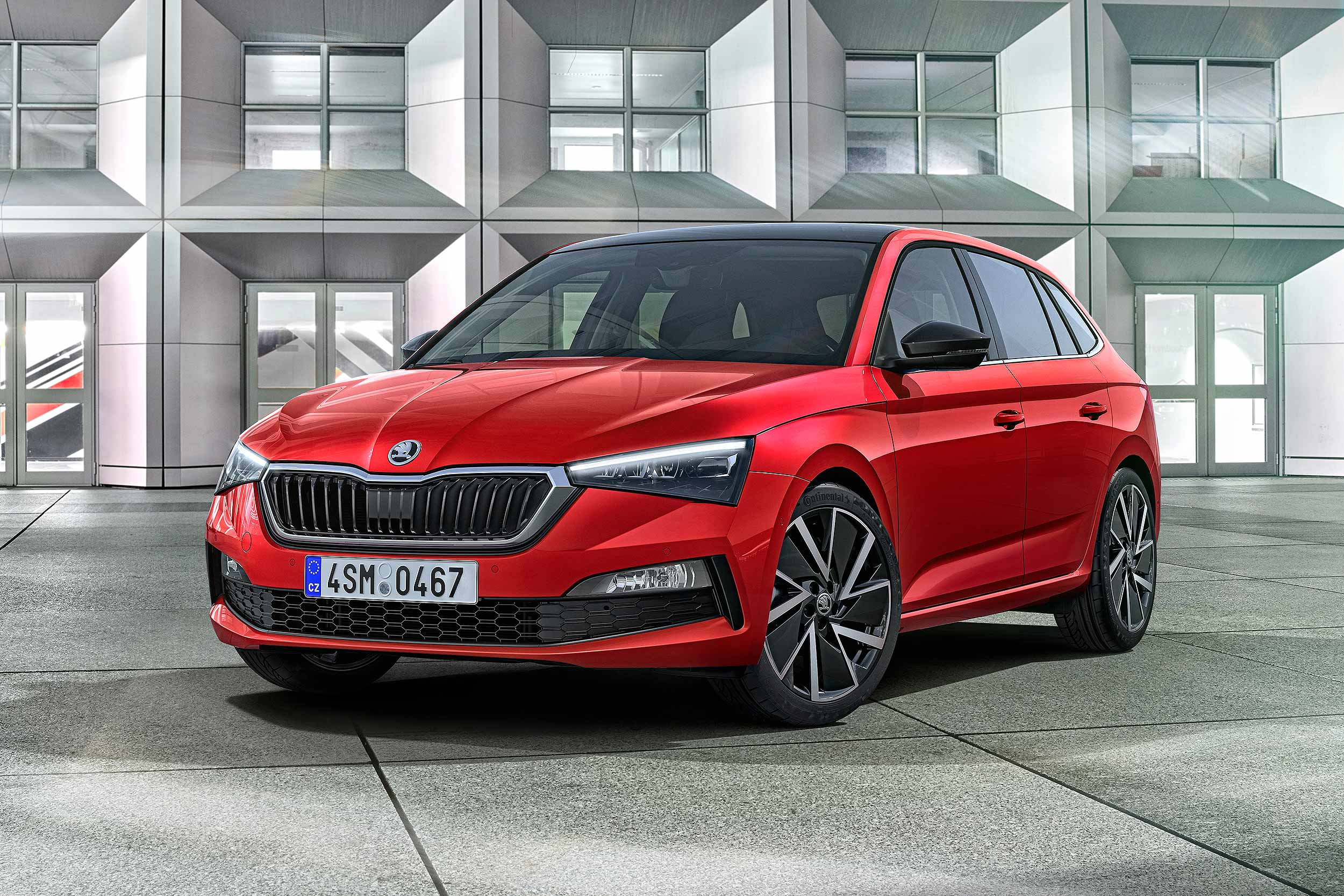
 The new Skoda Scala is the Czech firm’s first direct rival to the Ford Focus, Vauxhall Astra – and its Volkswagen Group siblings, the Seat Leon and Volkswagen Golf.
The five-door family hatchback replaces the dreary Rapid and is a much more appealing value-priced contender from the fast-growing brand.
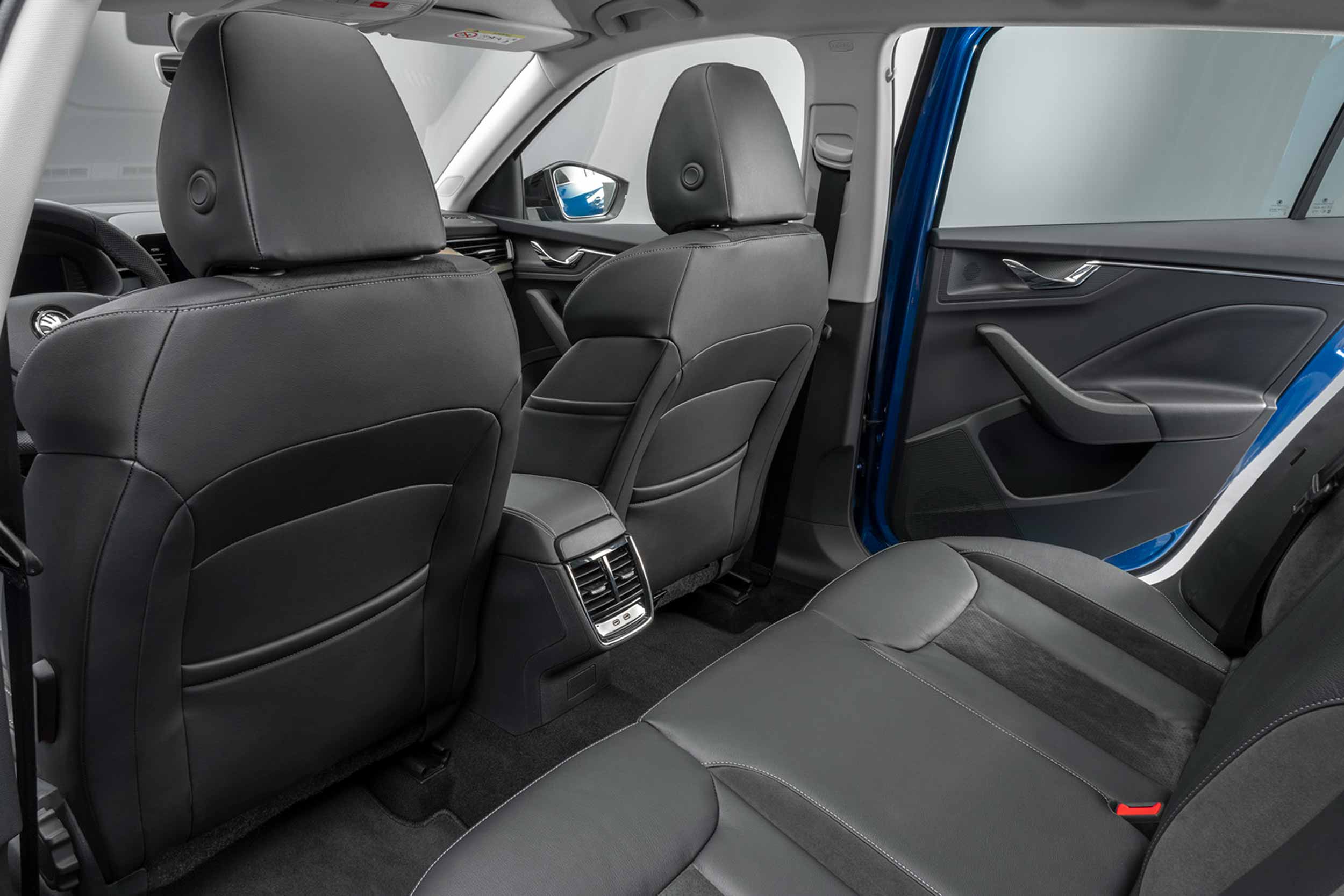
And although the Scala sits between the Fabia supermini and Octavia large family car, Skoda isn’t shy on the internal comparisons. The Scala is a very roomy car indeed.
It has, for example, identical 73 mm rear kneeroom as the Octavia. Elbow room of 1,425 mm isn’t far show of the Octavia’s 1,449 mm. Headroom of 982 mm actually betters the Octavia’s 980 mm.
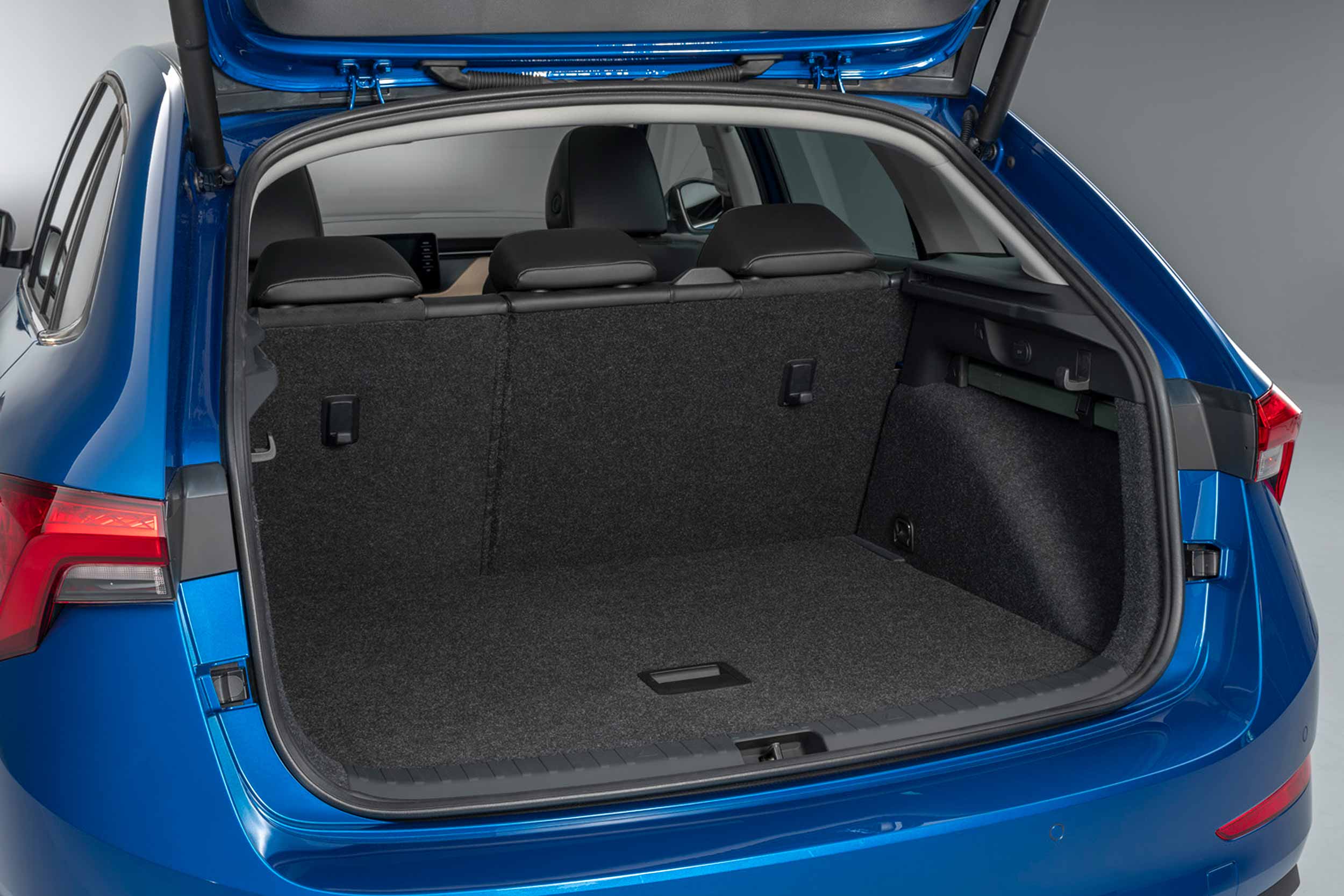
And the boot may not be as large as the Octavia’s famously cavernous luggage bay but it’s still bigger than anything else in the segment. By far: 467 litres is way larger than a Volkswagen Golf’s 380 litres. It extends to 1,410 litres with the seats down.
The packaging skill becomes more impressive still when you clock the dimensions: it’s 4,362 mm long, which compares closely to the 4,255 mm of a Golf. It’s 1,793 mm wide (a Golf is 1,799 mm) and 1,471 mm tall, with a long 2,649 mm wheelbase.
The Skoda Scala goes on sale in spring 2019.
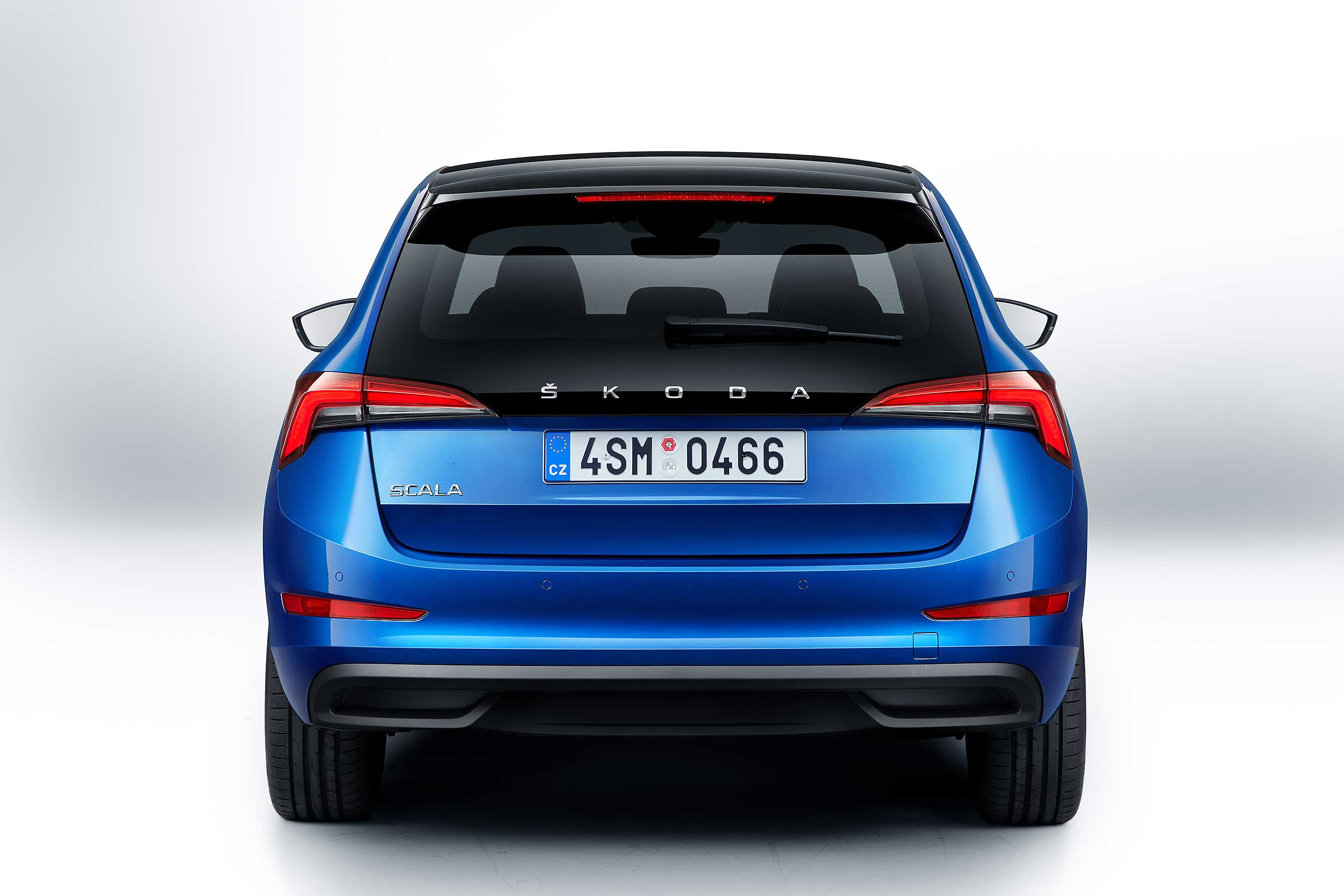
Scala is derived from Latin: it means ‘stairs’ or ‘ladders’. Skoda’s picked it because, ahem, the brand “has climbed several rungs on the development ladder.
“It perfectly embodies a set of brand values which can be summarised very well under the term ‘smart understatement.
We wonder if the fact the Volkswagen Group already owns the rights to the name ‘Scala’ helps: it was first seen on a special edition VW Scirocco back in the late 1980s…
Bosses also proudly point out this is its first car to have the brand name written out in letters on the (black glass) tailgate. SKODA is coming to the rear end of all models in the future.
The Skoda Scala will, in the UK, be offered with four different engines – three petrols and a diesel. All are turbocharged and all have engine stop/start.
The entry-level 1.0 TSI produces 95hp and is paired with a five-speed manual gearbox. There’s a more powerful 1.0 TSI 115, which has a six-speed gearbox as standard, or a seven-speed DSG as an option.
Volkswagen Group’s outstanding 1.5 TSI 150 is also available – again with a six-speed manual or seven-speed DSG. And, although diesel is hardly flavour of the month, a 1.6 TDI 115 is also available. Again, it’s either six-speed manual or seven-speed DSG. The exhaust emissions are cleaned up by a diesel particulate filter, SCR catalyst and AdBlue injection.
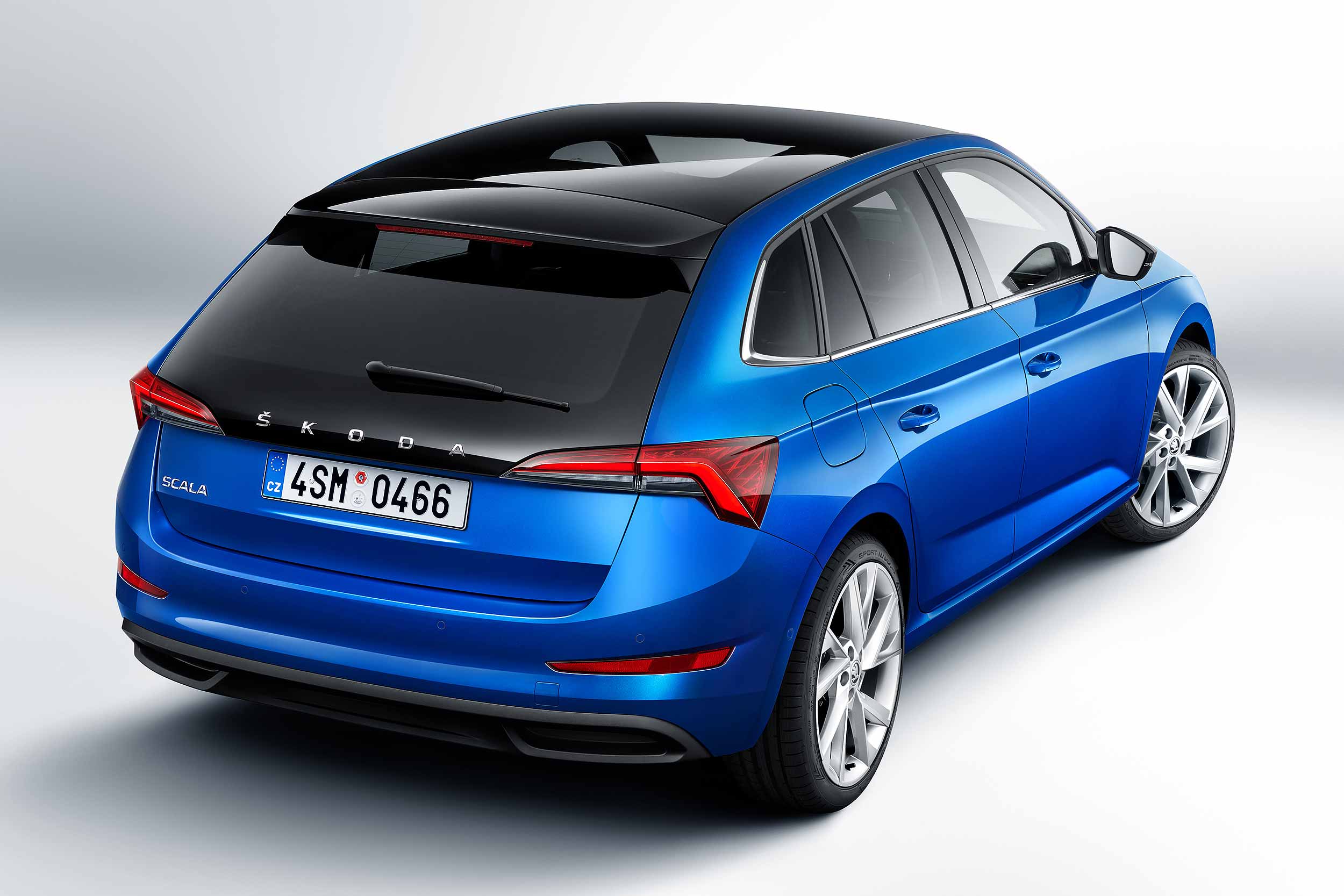
In Europe, Skoda Scala buyers have an additional engine – a 1.0 G-TEC, which runs on compressed natural gas (CNG). Sadly, we won’t get it in the UK, as we don’t have a refuelling infrastructure for clean-burning CNG. Pity.
Skoda adds the Scala will come with an optional Sport Chassis Control. This is lowered 15mm and has adaptive dampers to offer a firmer Sport mode as well as a softer-riding Normal setting.
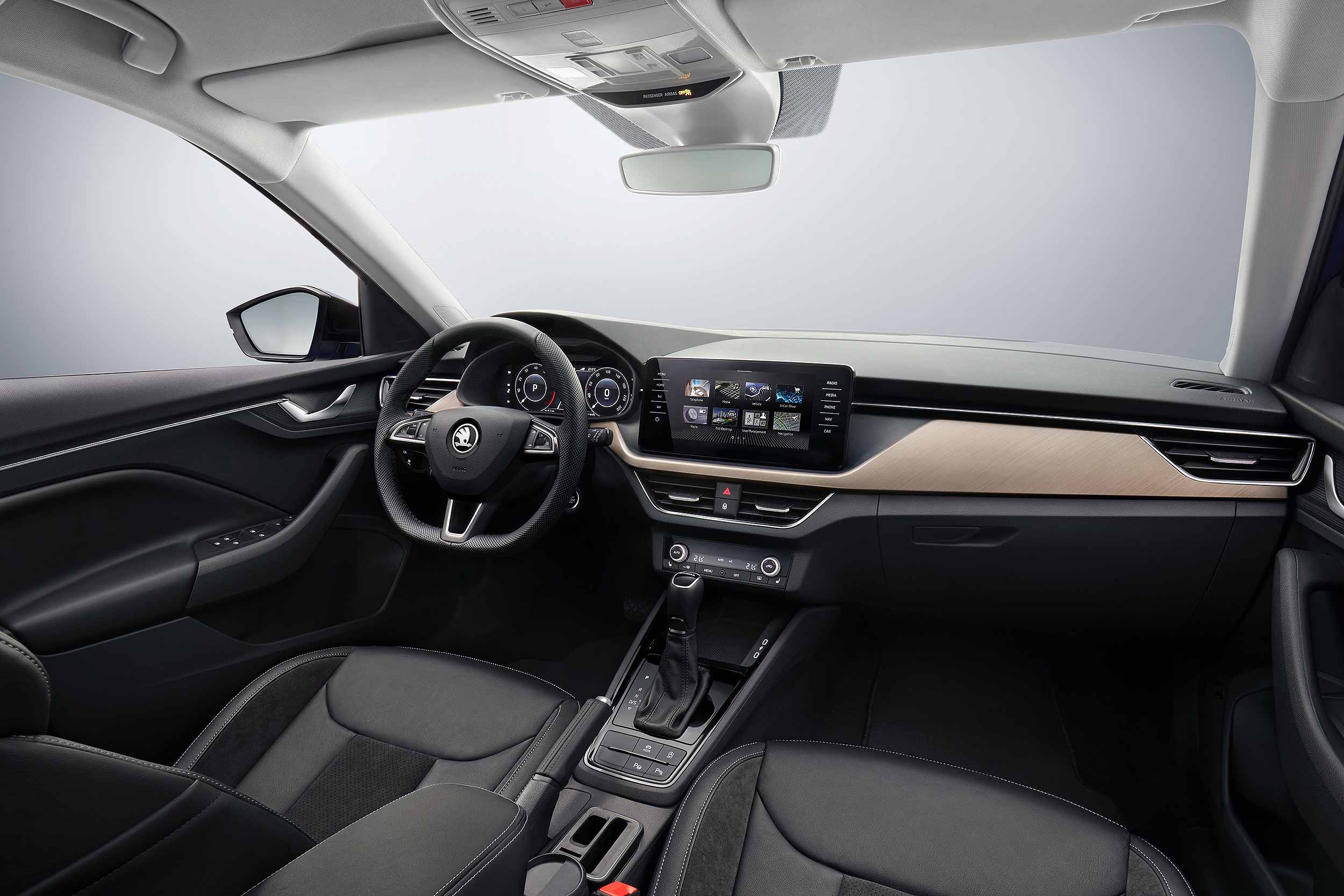
Skoda has already revealed the interior of the Scala. It’s a big step on for the value brand, that head of interior design Norbert Weber says marks the introduction of its new interior concept. This “introduces an updated design language alongside new colours and materials.
“Its premiere in the Scala marks the beginning of a new brand identity for Skoda, which is as emotive as it is functional.”
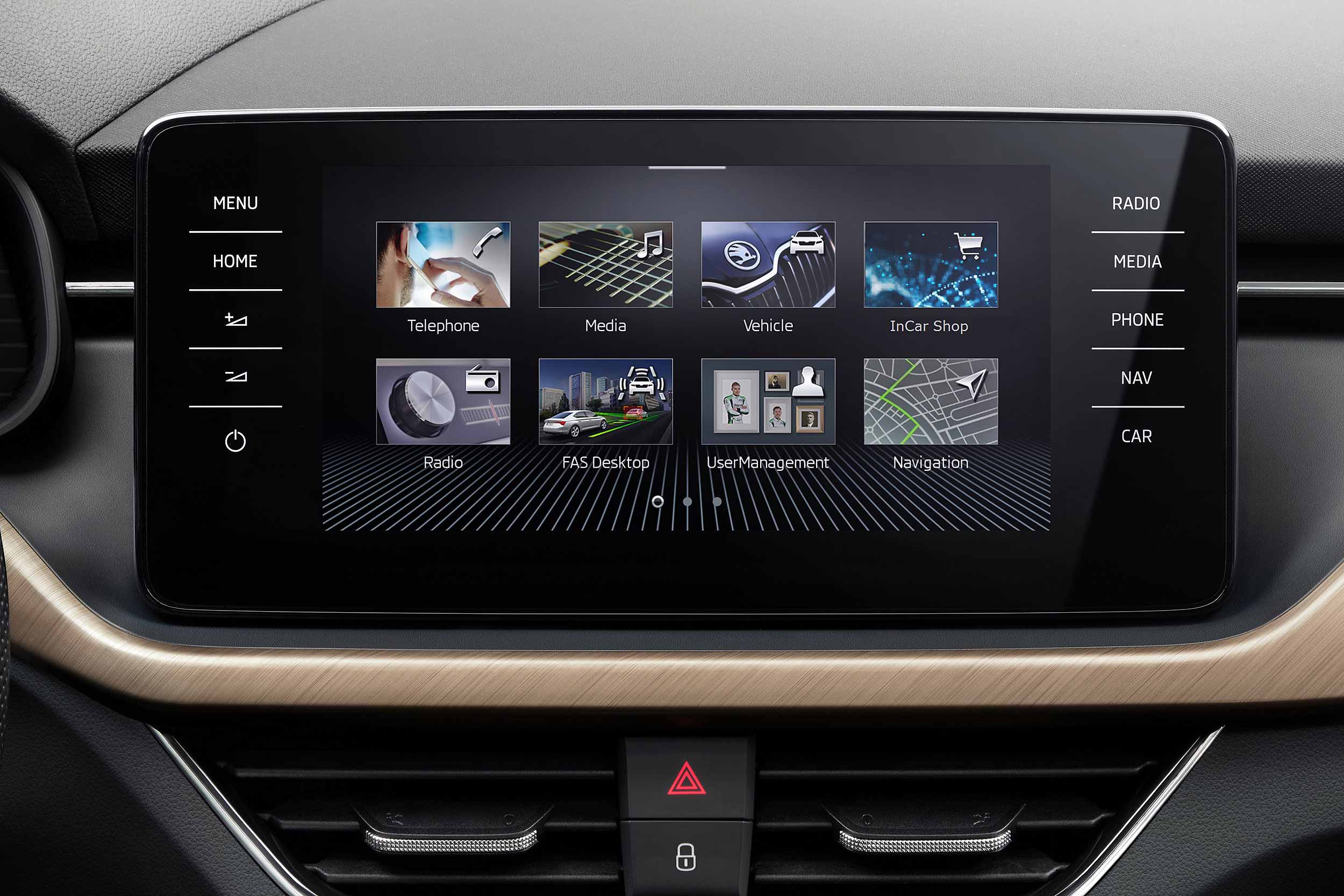
Highlights include the freestanding infotainment screen in the centre, which can be as large as 9.2 inches. This makes it the biggest touchscreen in the family hatch sector.
It’s the first Skoda to be ‘always online’ courtesy of an embedded eSim. This enables owners to use Skoda Connect mobile online services: they’ll be able to check their fuel level whether their car’s locked, or simply where it is, via an app on their smartphone.
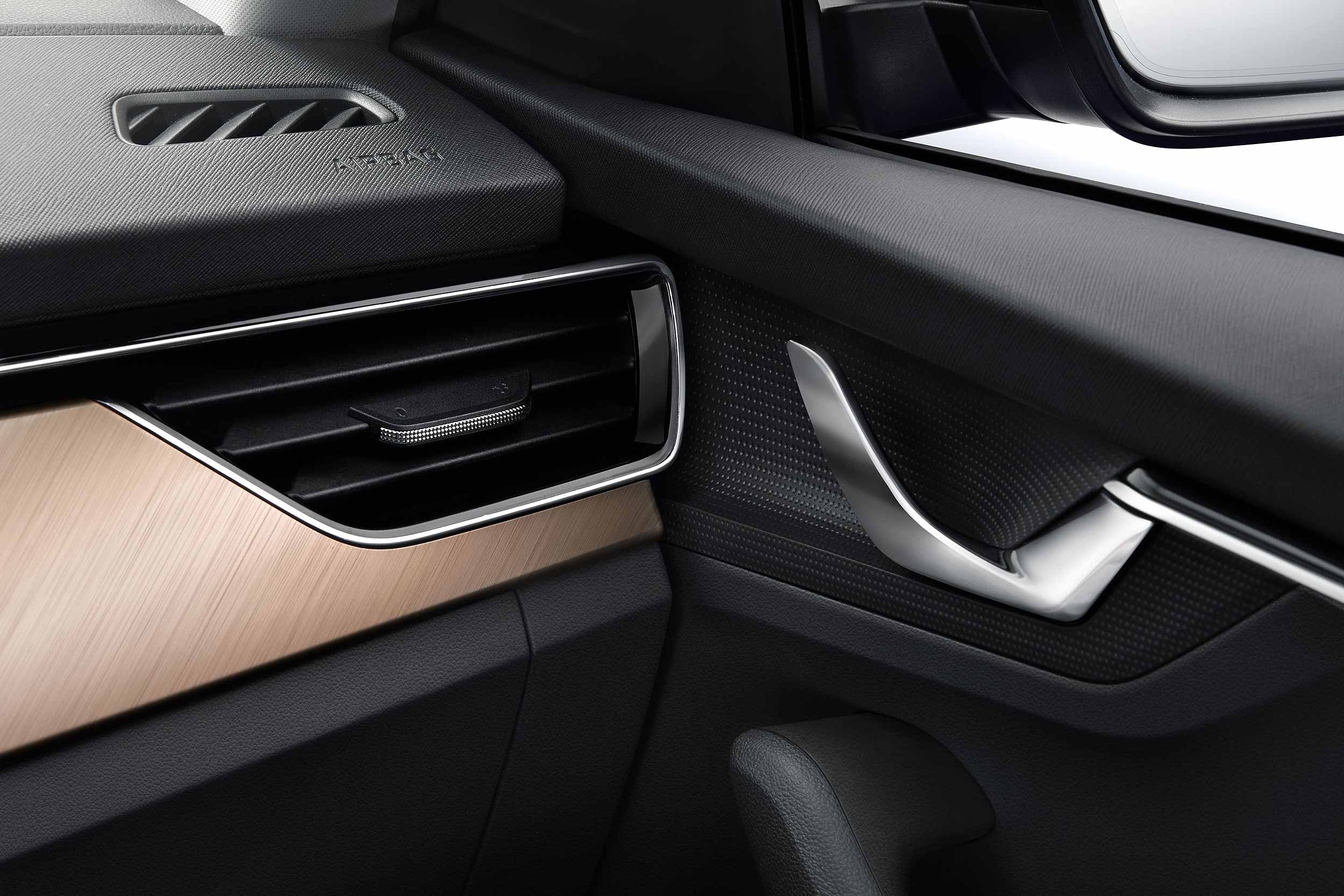
The instrument panel and door trims are made from soft-touch plastics which feature a new ‘crystalline’ grain structure that’s coming to all Skodas in the future. The firm’s also proud of how the air vents extend into the door panels, giving an impression of width within.
LED ambient lighting is available, as are up to nine airbags. The windscreen, steering wheel and both front and rear seats can all be heated.
Skoda loves its Simply Clever features. Like most of its cars, the Scala gets an umbrella compartment in the driver’s door (yes, it includes a free umbrella). It also has a fluorescent yellow ice scraper built into the fuel filler flap.
A new feature is an electrically retractable tow bar, which whirrs in and out of the rear bumper via a button in the boot. There’s also an electric tailgate with ‘tip-to-close’ function.
A more ‘Simply Audi’ feature is standard LED headlights; LED tail lights are also included, with a very Audi-style ‘sweeping’ indicator function.
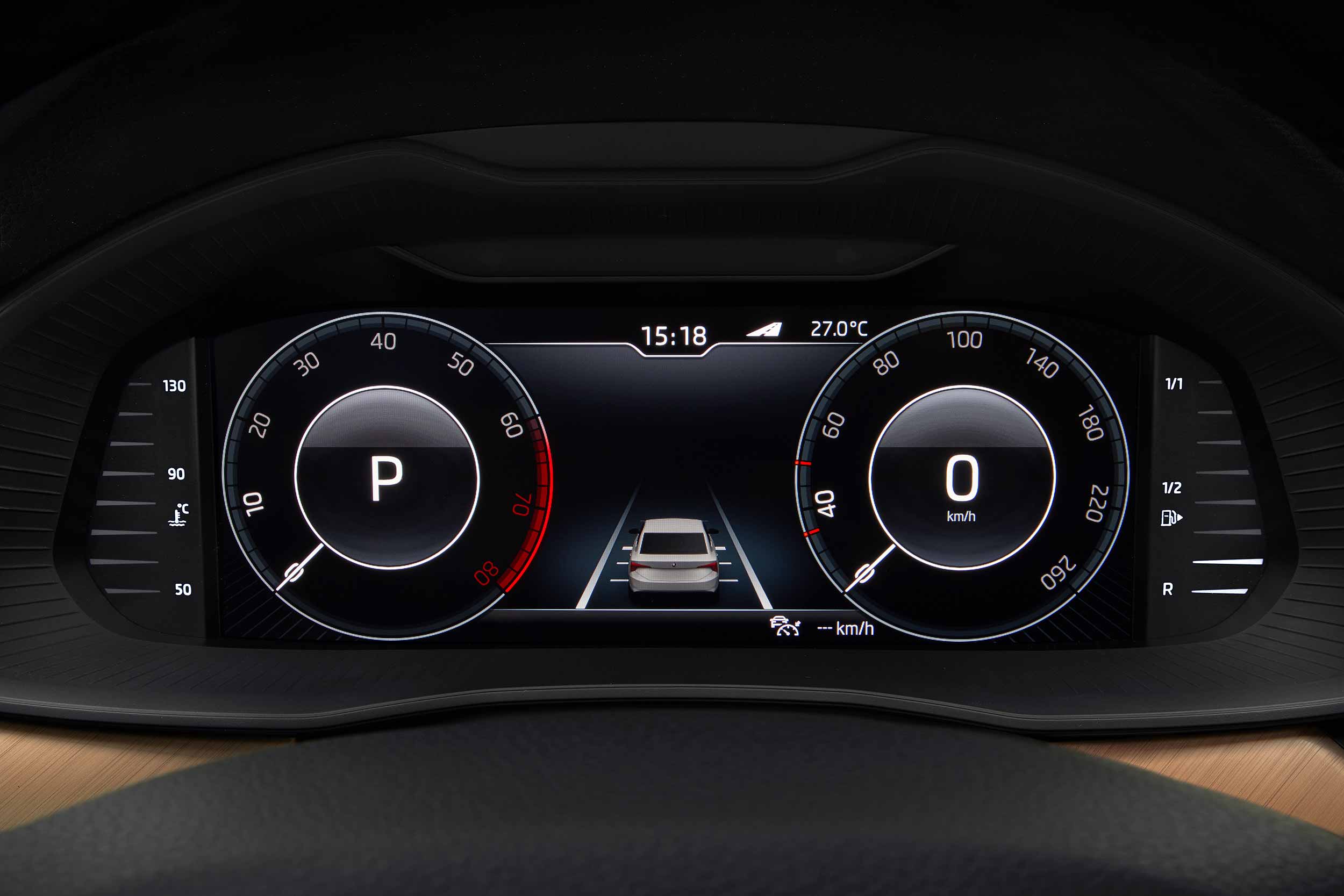
Speaking of Audi, Skoda’s offering the 10.25-inch Virtual Cockpit as an option. This is the ‘digital instrument panel’ first seen in the Audi TT.
Side Assist is also clever. It’s a step on from blind spot assist: that can only spy cars up to 20 metres away, whereas Side Assist can ‘see’ them up to 70 metres away. It can therefore warn the driver of fast-approaching cars from far further away, potentially avoiding nasty rear-end crashes.
Adaptive Cruise Control, Rear Traffic Alert, Lane Assist and Front Assist are also available, along with City Emergency Brake.
And for those who like big wheels, 15-inch and 16-inch rims are joined by 17-inch and 18-inch options.


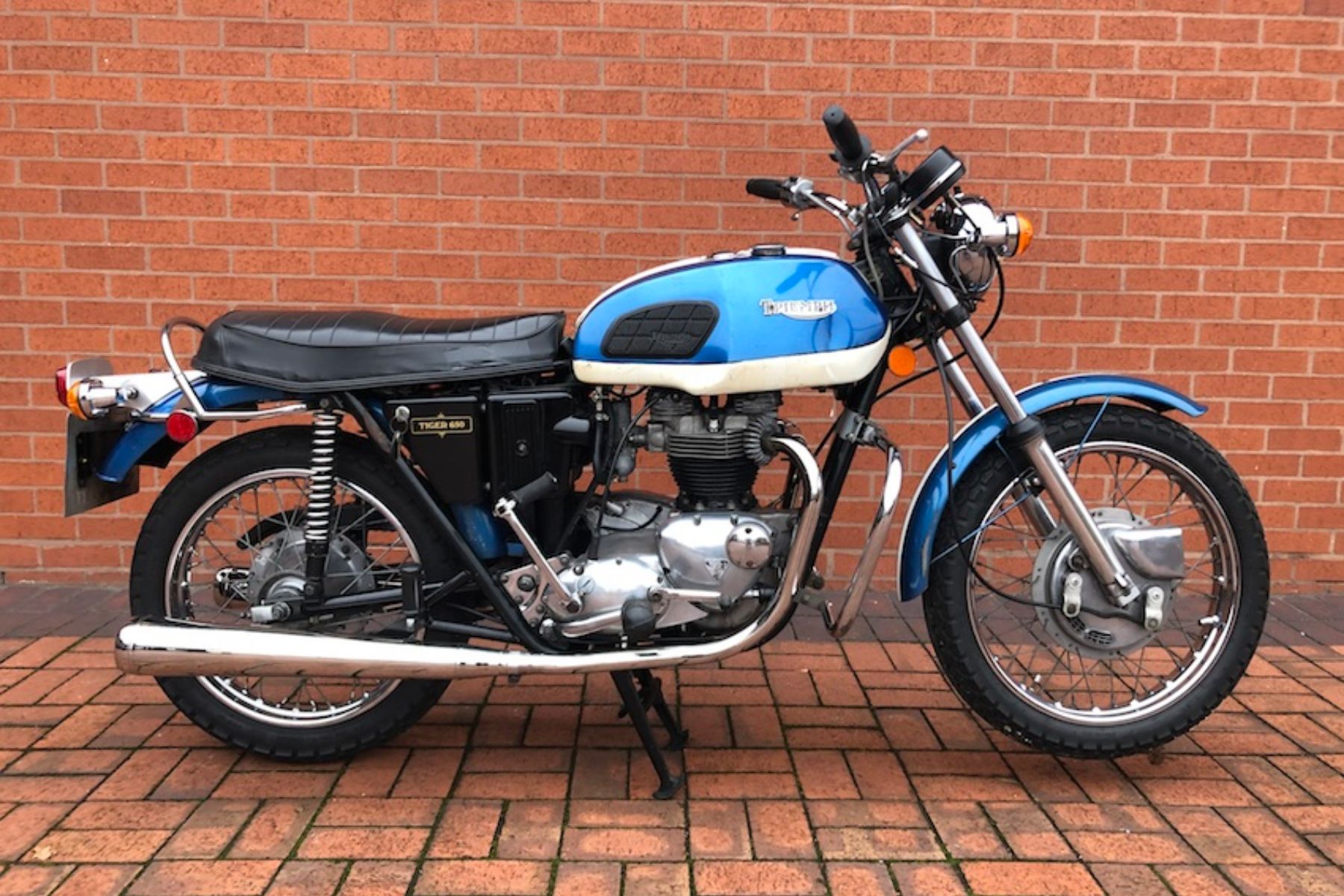
The bike from the Highway Code book of the 1970s and 1980s is up for sale. And you could own a piece of British motoring history.
H&H Classics will be offering the 1973 Triumph TR6R Tiger 650 for sale at the National Motorcycle Museum in Birmingham on March 2 2019. That’s just over 40 years on from the bike’s first appearance in the Highway Code.
How much for this little-known slice of road regulatory history? Far from big bucks, the little Triumph is expected to fetch between £4,500 and £5,500 when it hits the block.
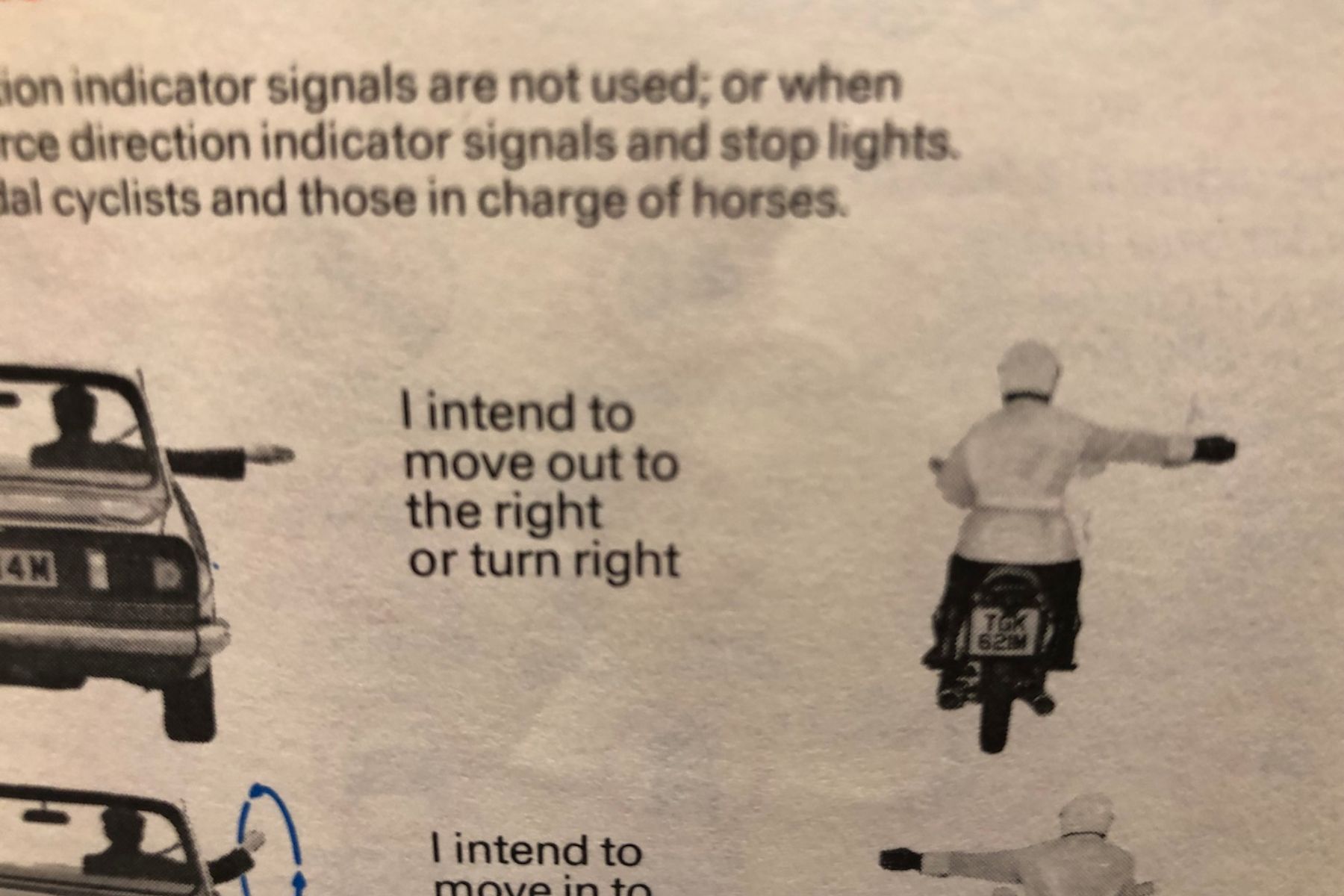
You could be forgiven for not recognising the bike. It was only ever pictured from the rear, to show signalling while riding. Then again, we expect the number plate rang a few bells over the years…
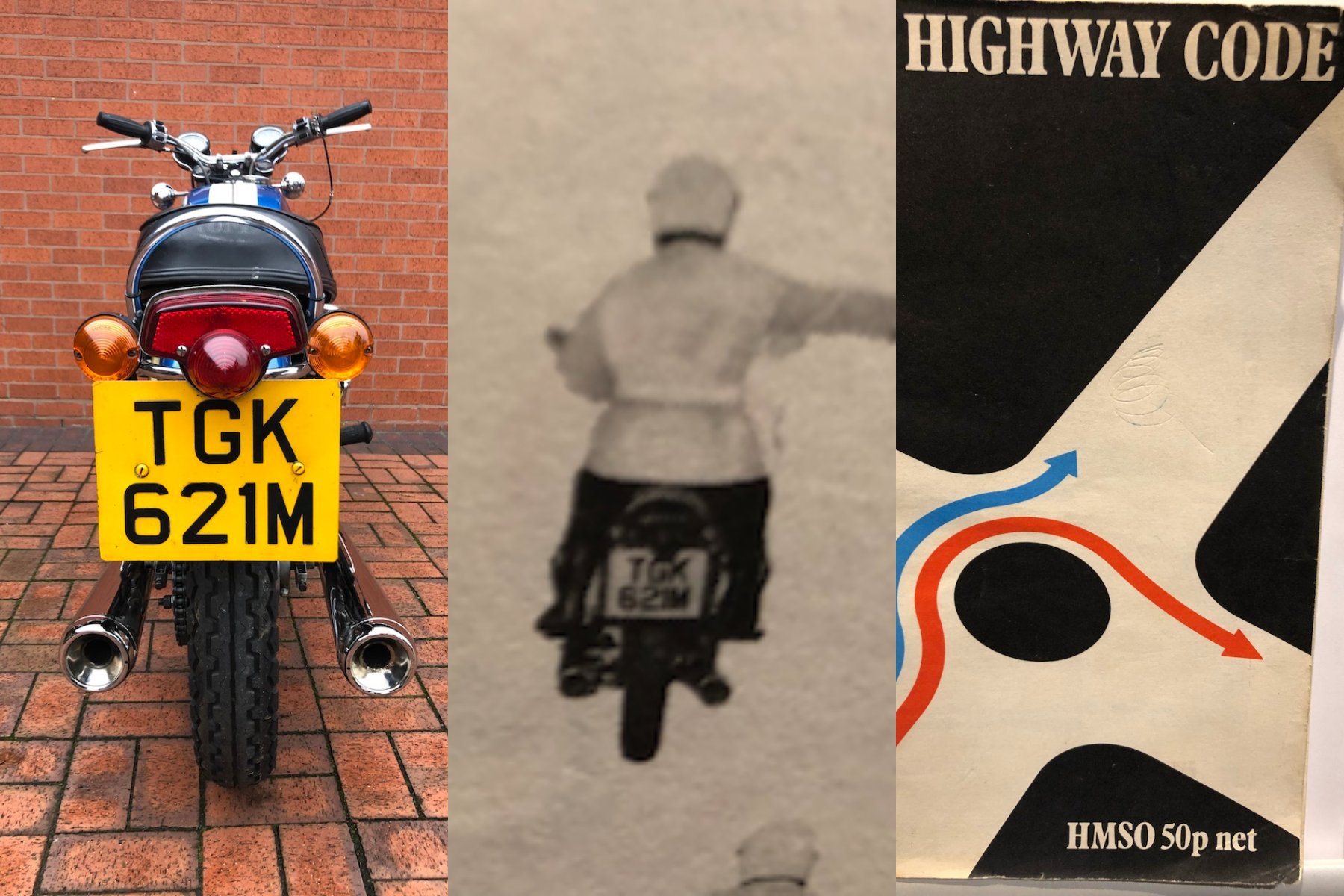
It was owned from new by the Ministry of Transport but wouldn’t feature in print until five years later. After its appearance in the 1978 Highway Code, it was sold to a traffic police officer. He then sold it to one Nick Searson in 1982, who has owned, used and maintained it ever since.
The bike is presented in excellent condition and comes complete with a copy of the Highway Code in which it starred, as well as an issue of Road Safety magazine featuring its former owner.
“This modest bike is part of our collective automotive history,” said Mark Bryan, Head of Motorcycle sales at H&H Classics.
“You could say it is an urban legend, a bike used to teach us how to stay safe and keep bike riders safe.”

Ride-hailing company Uber is going to be offering two free trips to NHS workers who are working shifts between Christmas Eve and Boxing Day.
The Christmas shift is rarely a pleasant thing for anyone, let alone NHS staff who keep our health service ticking over year-round. In recognition of their service, and as a gesture of good will, Uber will offer £20-worth of rides to NHS workers on the clock between Christmas Eve and Boxing Day. That’s split up into two rides costing up to £10.
Register on Uber’s website with your NHS email to confirm that you’re eligible – you’ll get your codes by December 21st.
Once you’ve completed that, make sure you have the Uber app. In the menu on the top left, tap ‘add promo code’ and enter the code once you’ve received it.
Following this, you should be good for £10 off two rides between December 24 and December 26.

Uber has experienced some sub-optimal PR over the last few months and years. Driver treatment, pay, its legitimacy of operation, licensing, solvency questions and more have marred the company of late.
This little gesture is a nice reassurance that there is a warmer side to even the most controversial of companies. The ball is in Elon Musk’s court to do something quirky and interesting for Christmas with one of his many endeavours…

With the world’s population reaching 7.7 billion, delivering presents gets harder and harder each year for Santa Claus.
Dodge seems to have provided the solution for making Santa’s life a little bit easier. Naturally, it happens to involve the now ubiquitous supercharged 6.2-litre Hemi V8 engine.
What started out as a special motor for the Dodge Challenger and Charger SRT Hellcat models, has found its way into a number of other vehicles.
A modified version appears in the crazy Challenger SRT Demon, whilst the Jeep Grand Cherokee Trackhawk also receives a version of the thumping V8 engine.
There is even the option to buy a version of the 707hp Hemi in a crate, ready to fit into whatever your wildest dreams may envisage.

The latest product to feature the powerful 6.2-litre Hemi engine is the Challenger SRT Hellcat Redeye. Offered to fill the gap between the Demon and regular Challenger Hellcat, the Redeye features a power output of 797hp.
It’s this version of the Challenger Hellcat which has formed the basis for Santa’s new Redeye Express sleigh.
Visitors to the 2018 LA Auto Show have already had chance to see the go-fast sleigh in person. However, Dodge is now rolling out a substantial marketing series to explain the festive tale behind its creation.

With a series of seven separate video clips, Dodge offers a (fictional) journey into the making of the Redeye Express.
Santa is played by former professional wrestler Bill Goldberg, whilst Cristy Lee takes on the role of Mrs. Claus. Viewers of TV programmes such as Fast N’ Loud will notice the presentation style being parodied.
If you find yourself awoken by the sound of a flame-spitting V8 engine on Christmas Eve, don’t say we didn’t warn you.
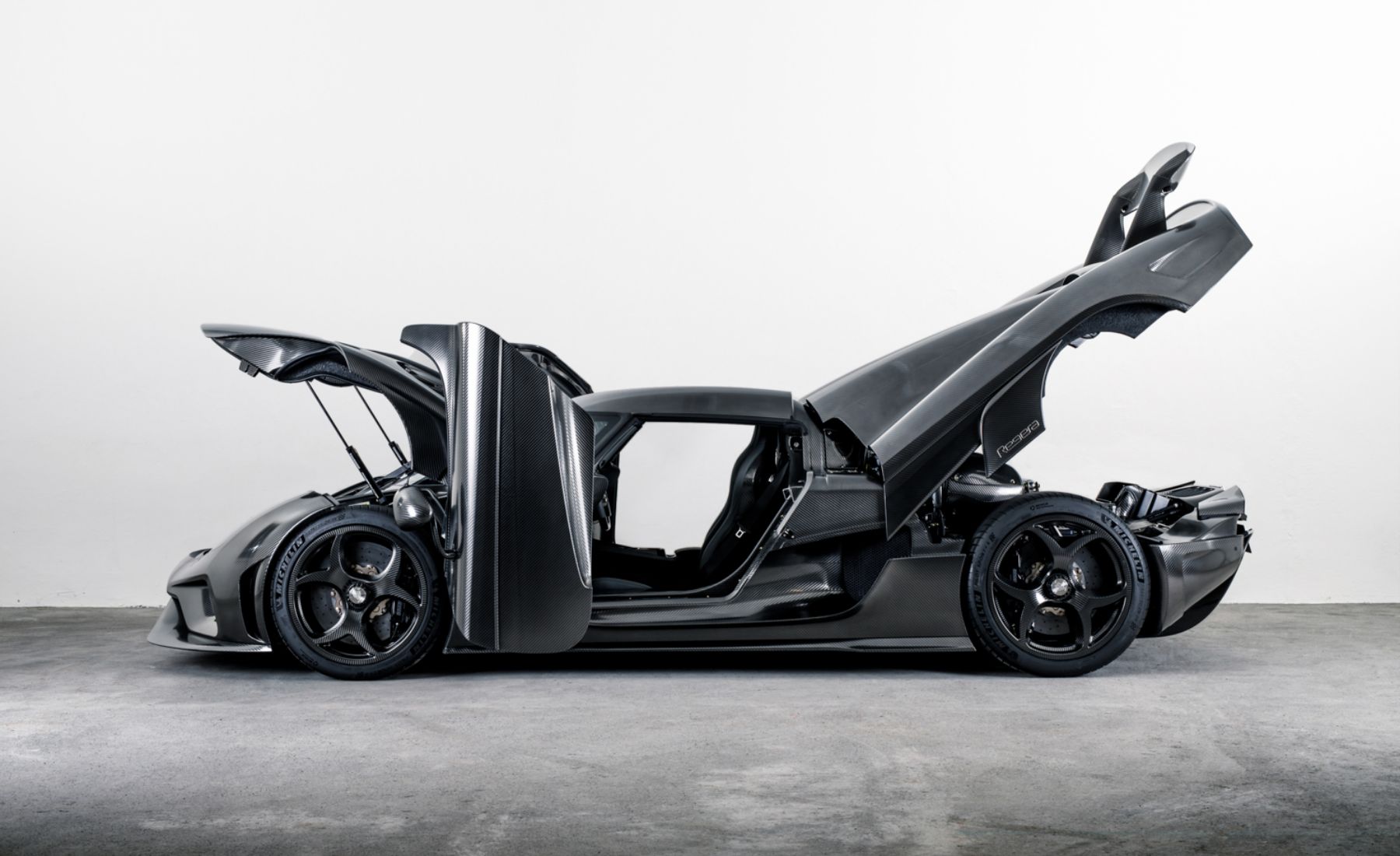
It’s what’s underneath that counts, they say. That’s certainly the case with the first KNC Koenigsegg Regera… What’s KNC? That’s Koenigsegg Naked Carbon, and, other than the fully automated bodywork that you can open with the touch of a button, it’s Koenigsegg’s way of saying beauty is more than skin deep.
Bare carbon is nothing new in the world of hypercars. Pagani pioneered the art form near-on 20 years ago with a bare carbon fibre Zonda, featuring perfectly symmetrical weaves with a line going down the centre of the car. Even down to neighbouring body panels, the weaves matched.
This Regera is the latest to bare its construction for all to see and it’s a testament to how far carbon fibre work has come in the 30 years it’s been in use in road cars. The sophistication of the shapes it can take and the absolutely perfect symmetry is candy for the eyes.
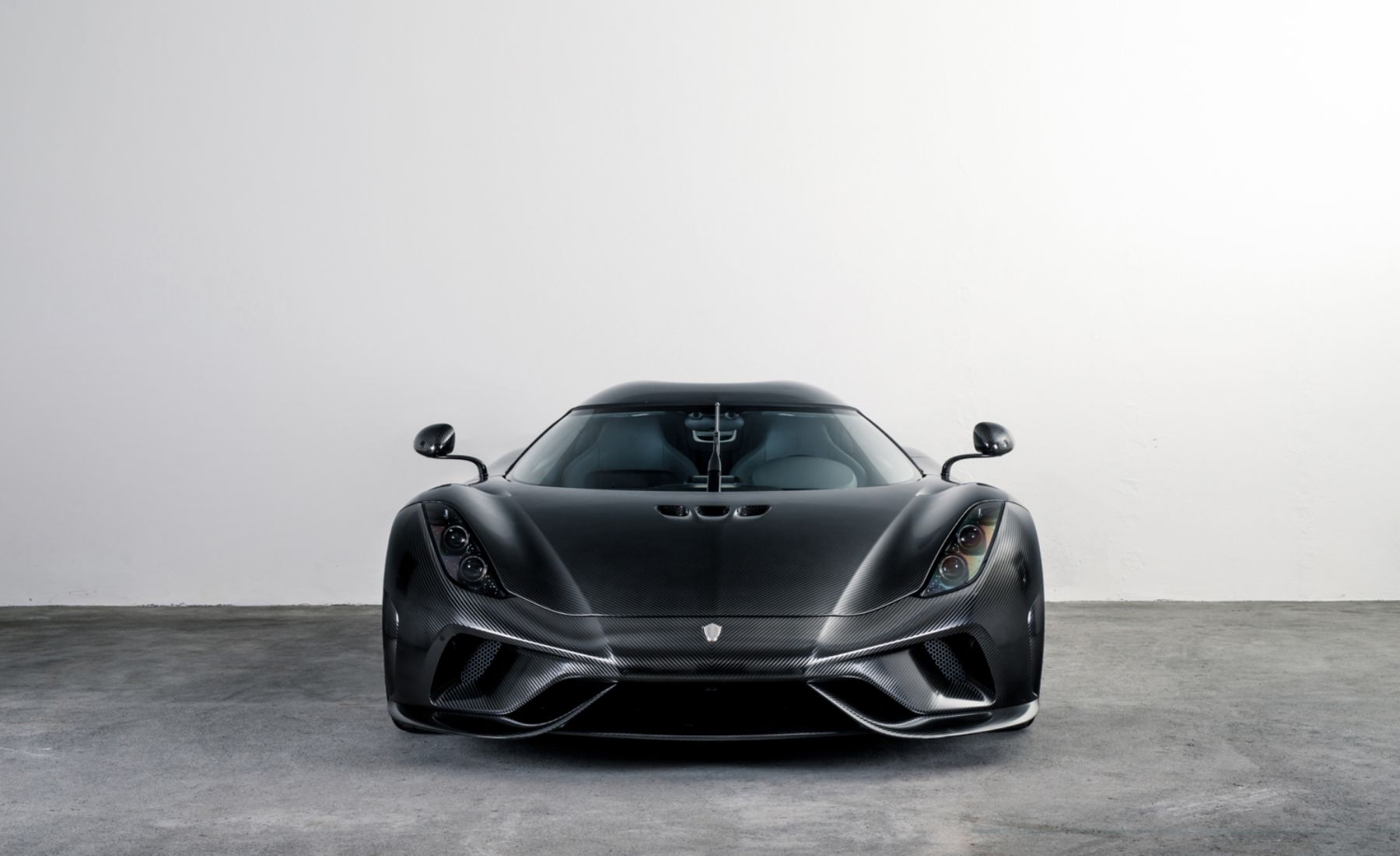
To say that many cars before are bare carbon is a little bit of a porky, however. This Koenigsegg is genuinely as close as you’ll get. Most ‘bare carbon’ cars are in fact painted with a lacquer layer. It’s one of the ways Koenigsegg has done it before. It can be combined with a colour for a different tone to the carbon fibre finish.
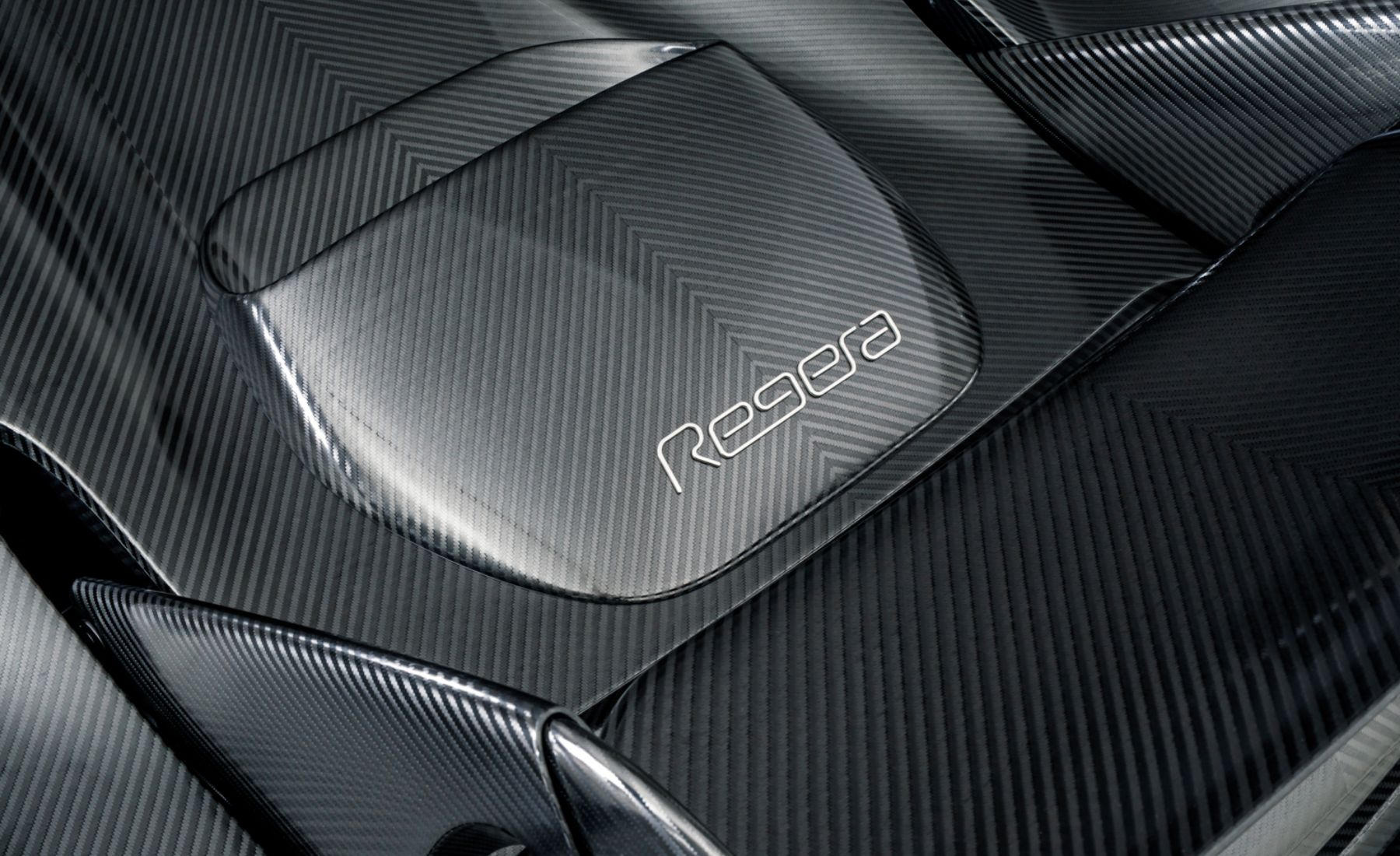
In the case of the KNC Regera, however, the epoxy layer that would ordinarily cover the carbon, as it does on underside pieces and interior trim pieces on other cars, has been sanded back. For the first time, the whole body of this car has had that layer removed and the carbon fibre itself has been polished to deliver the finish.
It’s a delicate process, so says Koenigsegg, given one rub the wrong way can result in carbon fibre threads frayed and curling out from the panel.
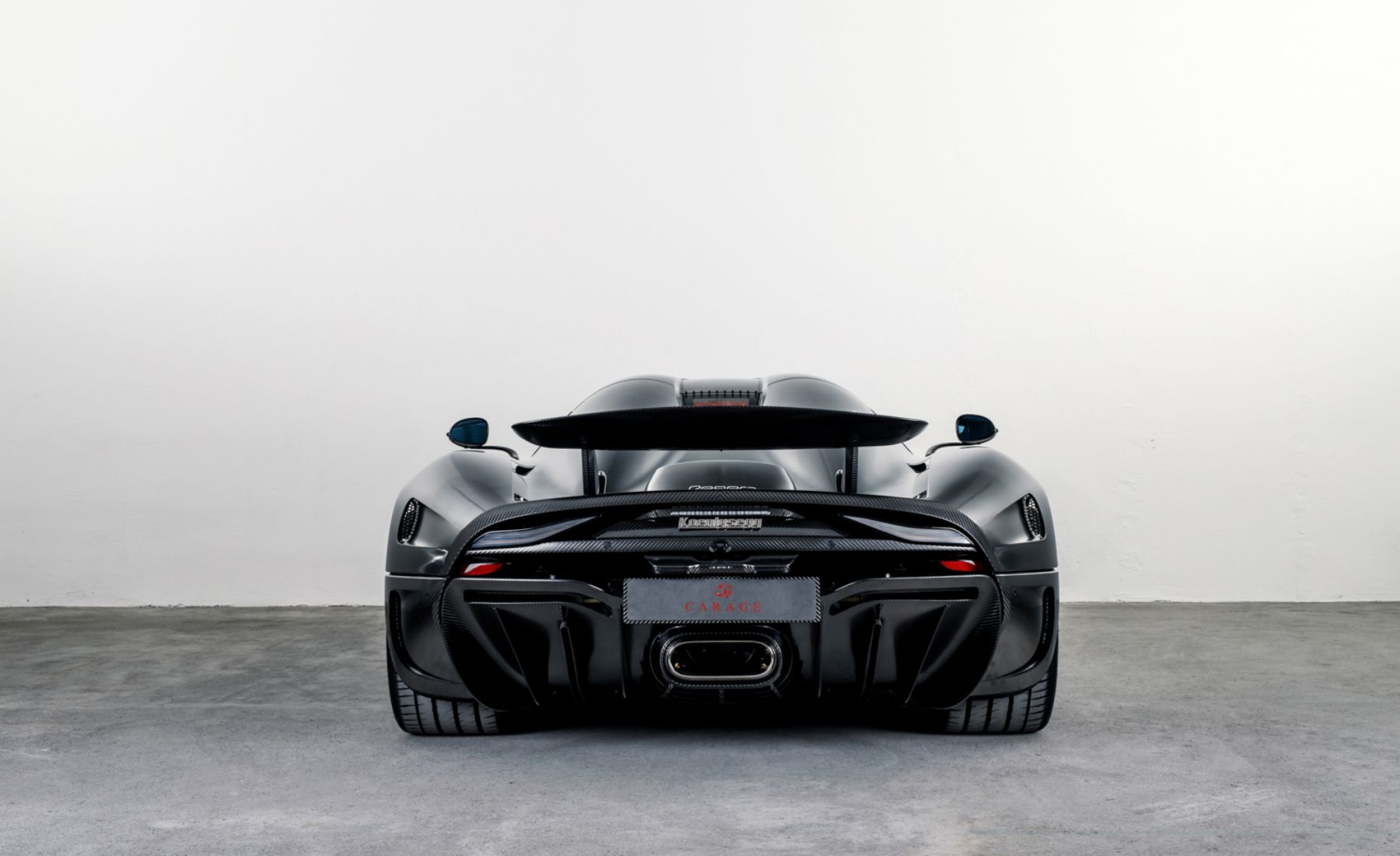
What are the advantages of this polished exposed carbon? Apparently, it’s a much hardier surface when it comes to dealing with the rigours of road-faring life. Stone blasts and other impacts that would otherwise damage a layer of lacquer are much less damaging to the harder exposed carbon. The other advantage is that the car is 20kg lighter, given there’s no heavy lacquer or paint coating it.
It ought to have its advantages, given how difficult it is to execute. Never mind the process of stripping the carbon back, in order to be suitable for the treatment, every panel has to be nothing short of perfect in terms of its carbon quality. As it should be regardless, you’d have thought.
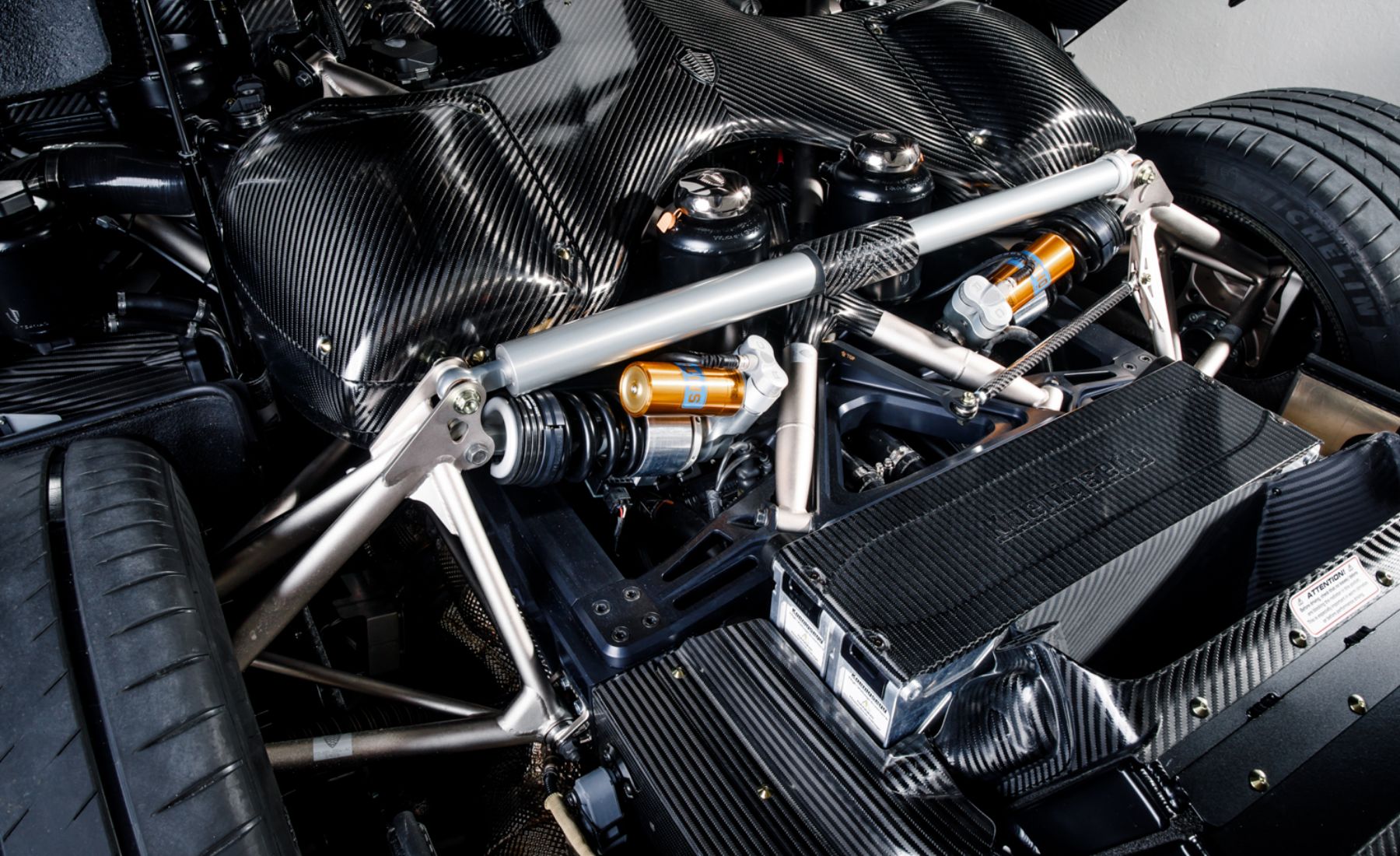
“KNC takes the idea of visible carbon fibre to a whole new level, revealing a beautiful lustre and a very silky finish,” said Christian von Koenigsegg, CEO of Koenigsegg.
“The Koenigsegg philosophy has always been about exploring extremes. It’s great to extend that idea to a whole new way of finishing and presenting a car.”
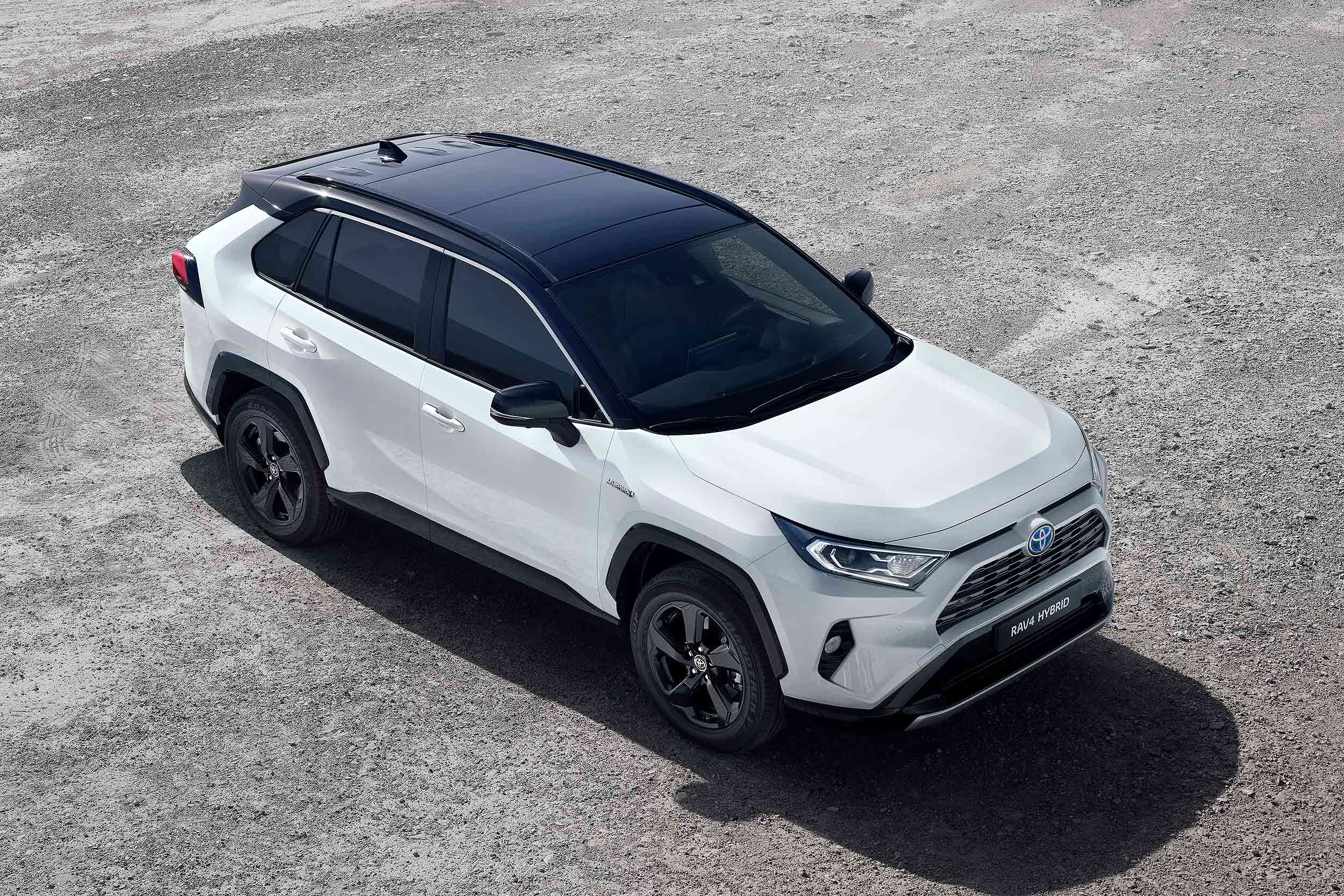 Toyota has revealed prices and specs for the new RAV4, and opened ordering at UK dealers for those keen to get one of the first new cars when deliveries begin in April 2019.
The firm hopes to have cars in retailers from February for early test-drives.
The all-new model is priced from £29,635 in entry-level Icon front-wheel drive spec, with the cheapest all-wheel drive model being the £33,430 Design AWD.
All new RAV4 use the same 2.5-litre Hybrid engine, which produces 215hp in front-wheel drive guise, and a slightly higher 219hp in all-wheel drive form.
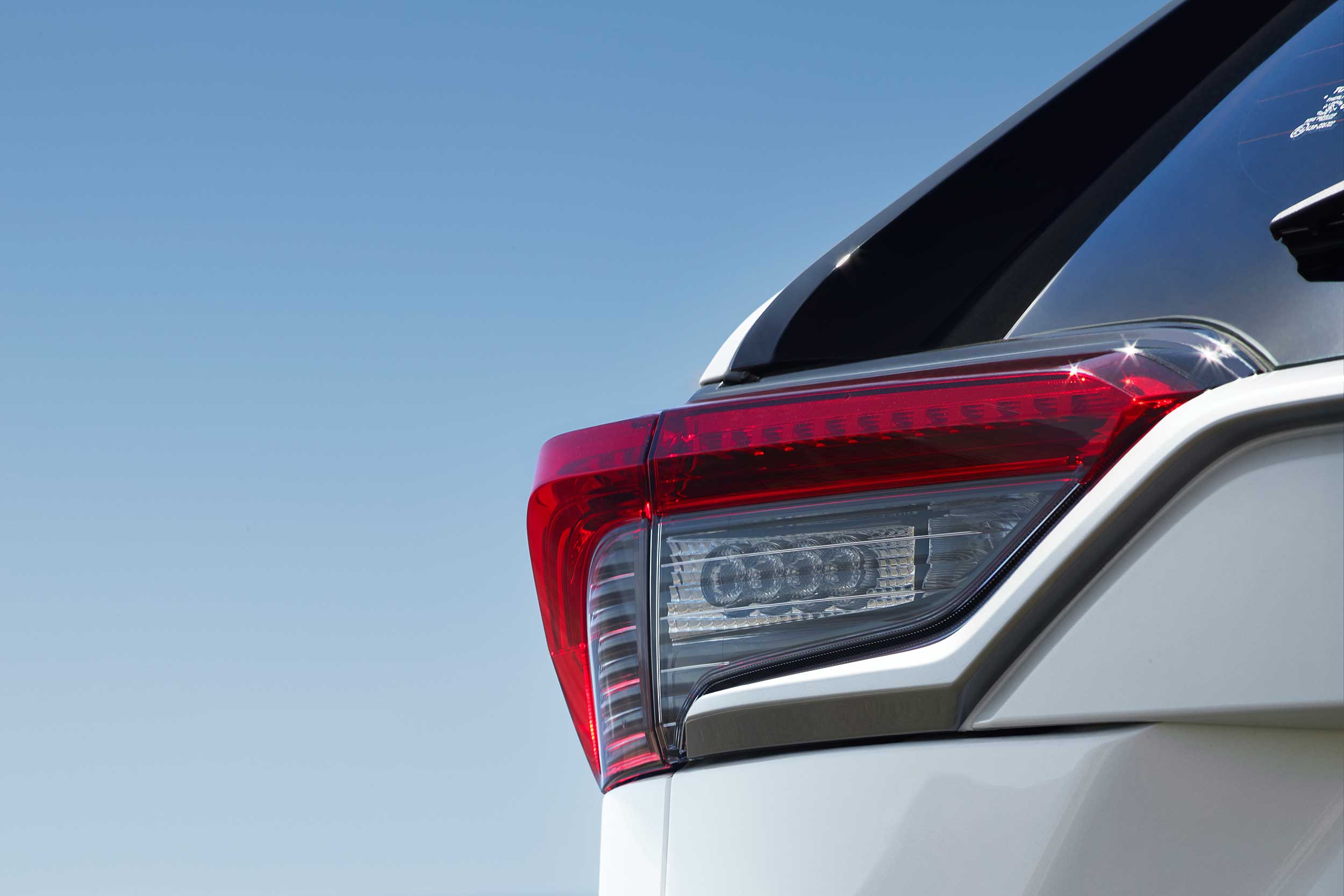
Emissions of both are seriously impressive: from 102g/km CO2 with the base car, with the AWD running from 103g/km. Fuel economy figures will be revealed later once the new RAV4 has been officially homologated.
Called Hybrid AWD-I, the all-wheel drive hybrid system is fully automatic, and actually sends drive torque to the rear wheels when pulling away, to improve traction. A Trail function helps maintain grip on loose terrain.
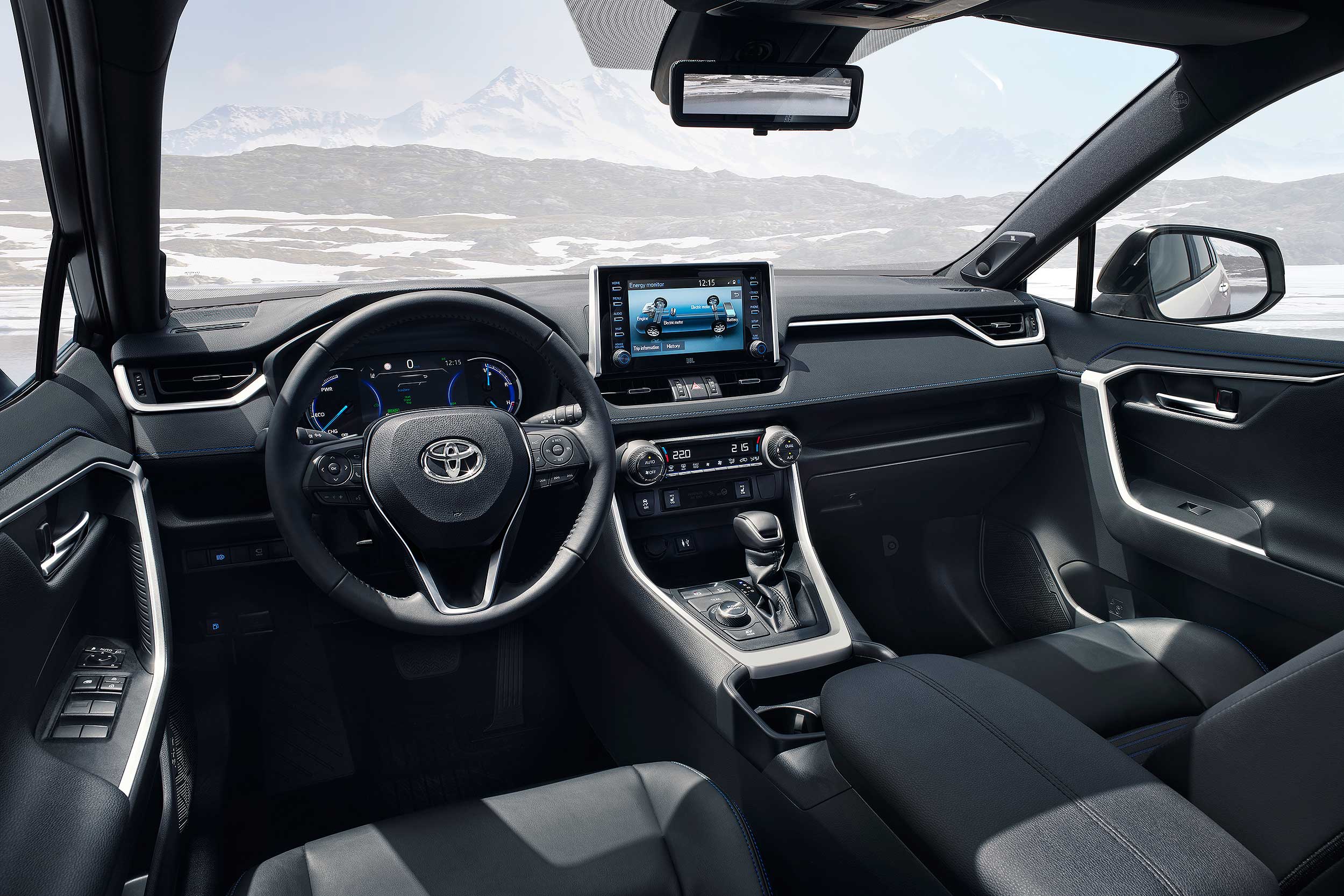
Toyota says the new RAV4 is lower overall than the outgoing car, with a lower bonnet height, but a longer wheelbase gives more passenger and boot space. It also has a lower centre of gravity, benefitting handling.
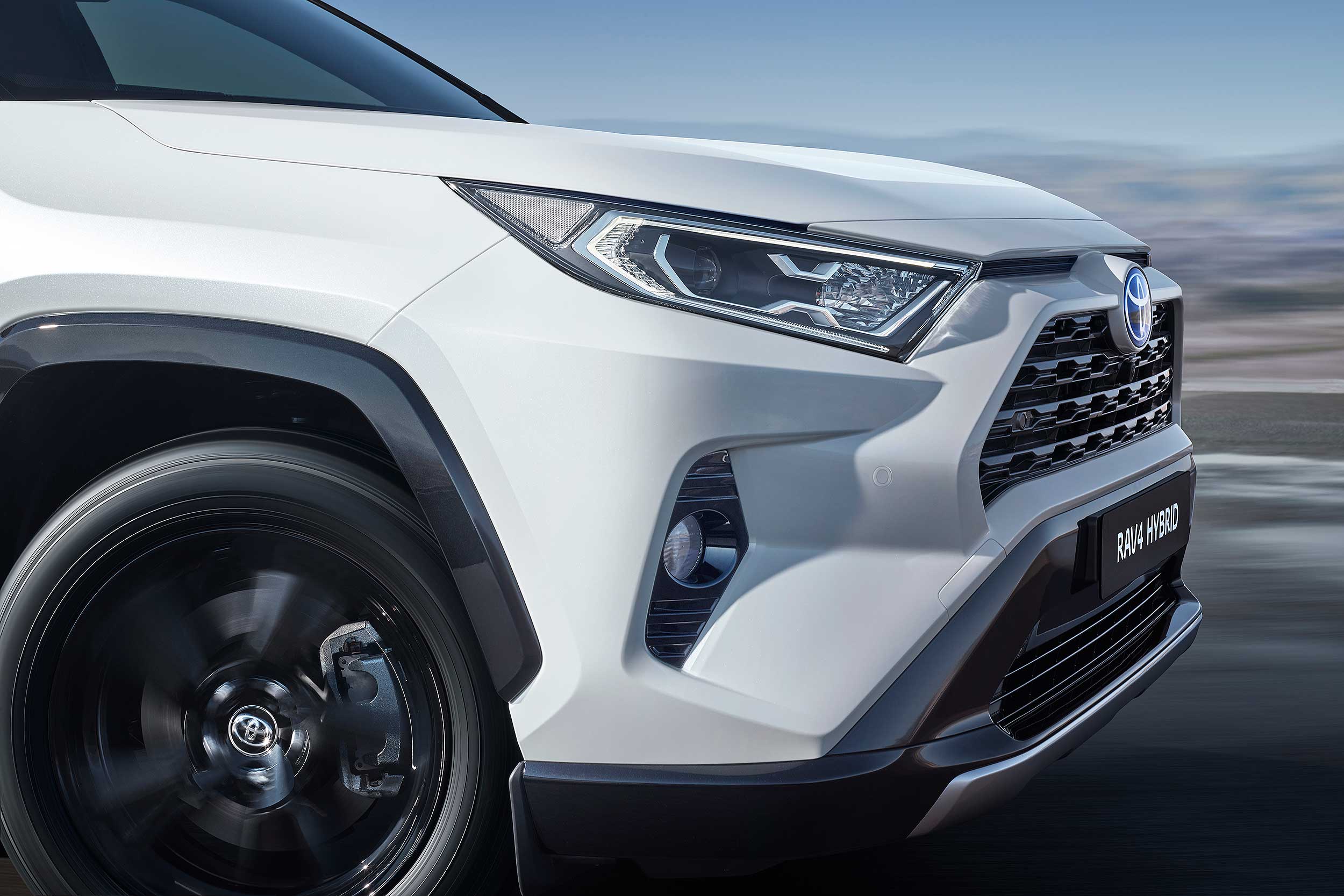
The new RAV4 is offered in four specs: Icon, Design, Dynamic and Excel.
Even the base Excel has 8-inch Toyota Touch 2 infotainment, 17-inch alloys, a rear-view camera, privacy glass, LED headlights and Toyota Safety Sense 2 protection pack.
This includes adaptive cruise control and autonomous emergency braking that can detect cyclists by day, as well as other cars, and sense pedestrians both day and night.
Design ups the alloy wheels to 18-inches and adds front parking sensors and an electronic tailgate.
Excel has projector LED headlights, full leather interior, heated steering wheel, headlight washers and a blind spot monitor. Dynamic, meanwhile, adds black five-spoke 18-inch alloys, heated front sports seats, bi-tone metallic paint and a black interior headliner.
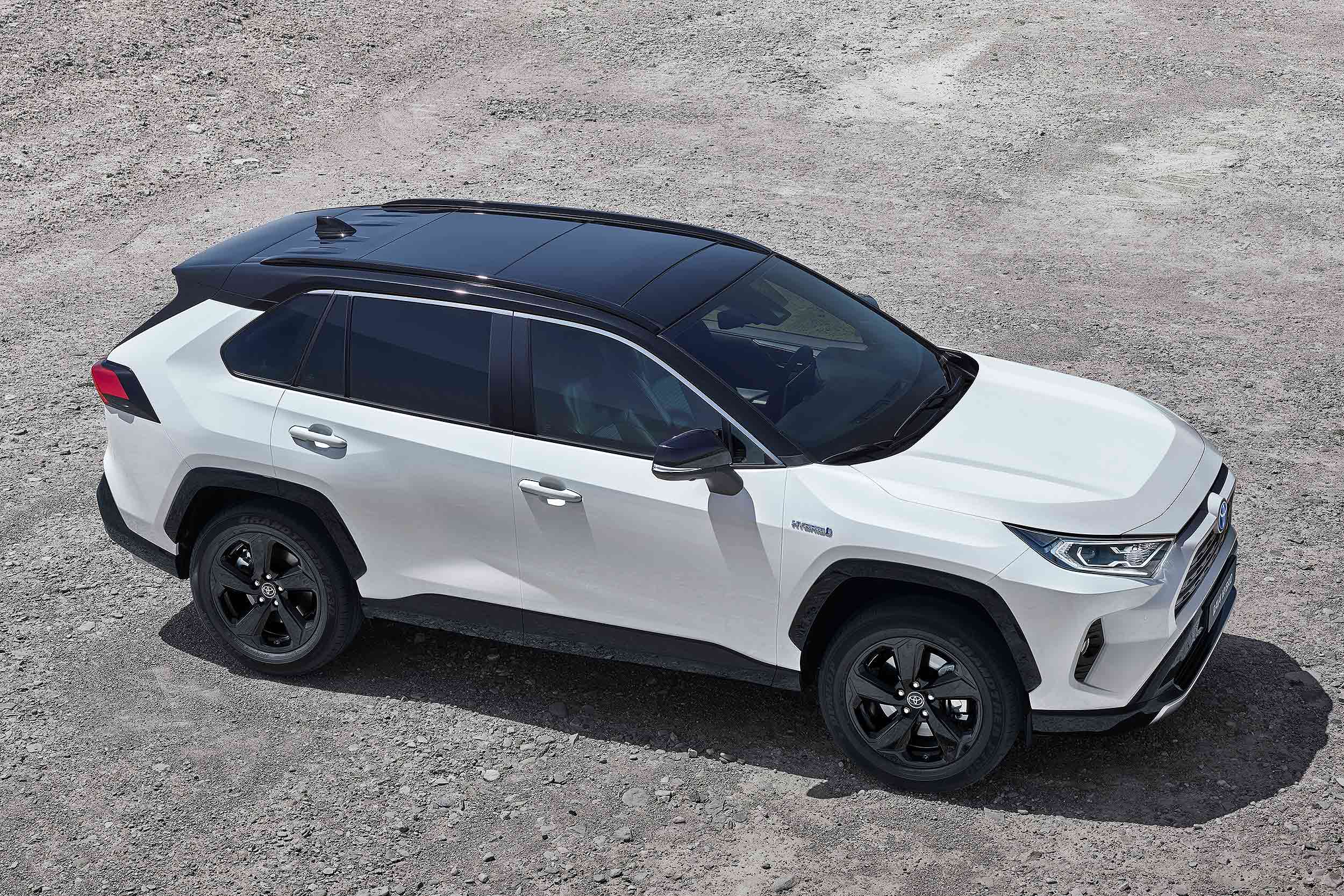
Buyers can choose from nine colours and the Dynamic’s bi-tone paint combines a black roof and pillars with White Pearl, Silver Blade, Decuma Grey or Obsidian Blue.
Icon
2.5 Hybrid FWD: £29,635
Design
2.5 Hybrid FWD: £31,190
2.5 Hybrid AWD: £33,430
Excel
2.5 Hybrid FWD: £33,610
2.5 Hybrid AWD: £35,850
Dynamic
2.5 Hybrid FWD: £34,400
2.5 Hybrid AWD: £36,640