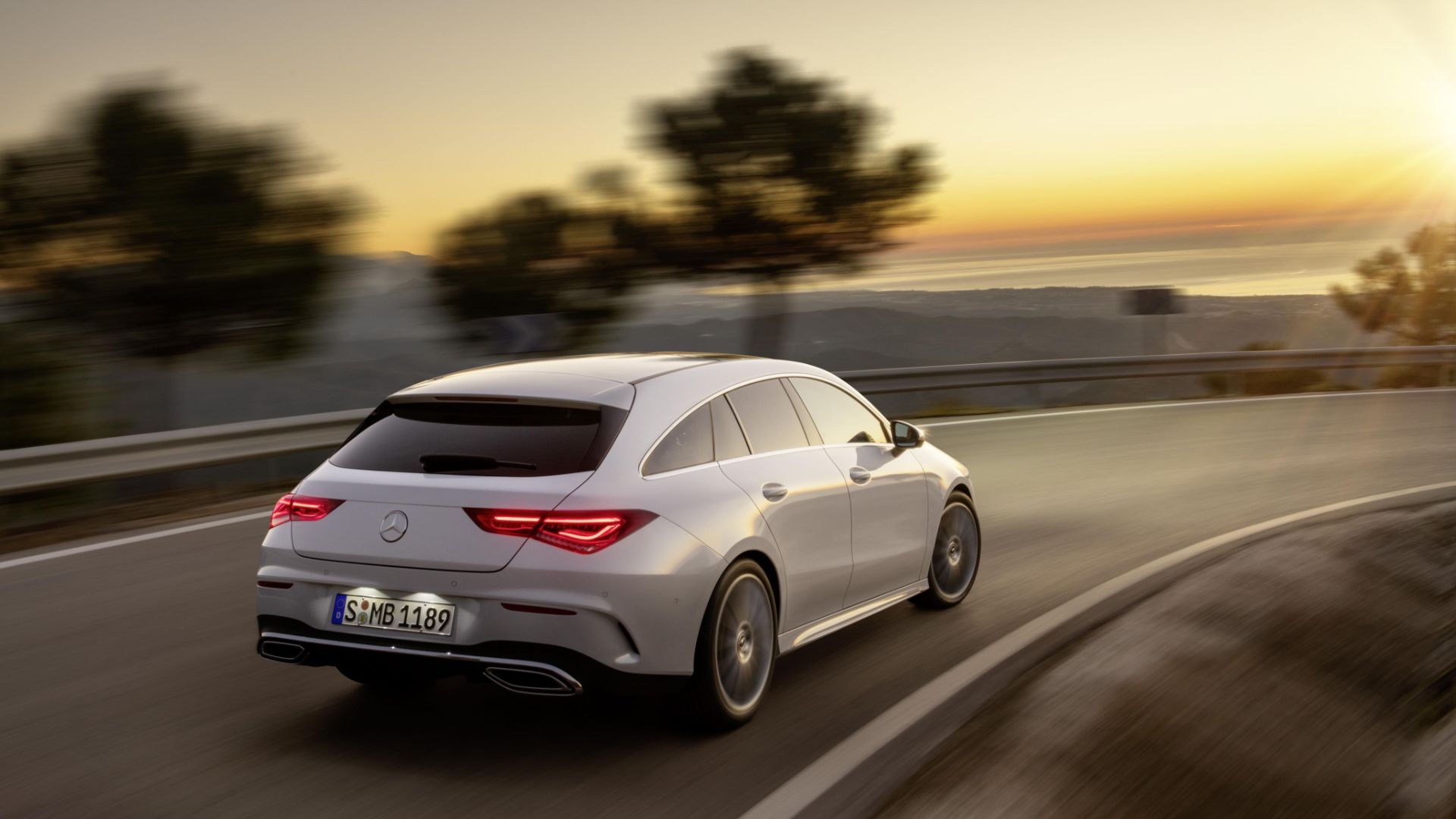
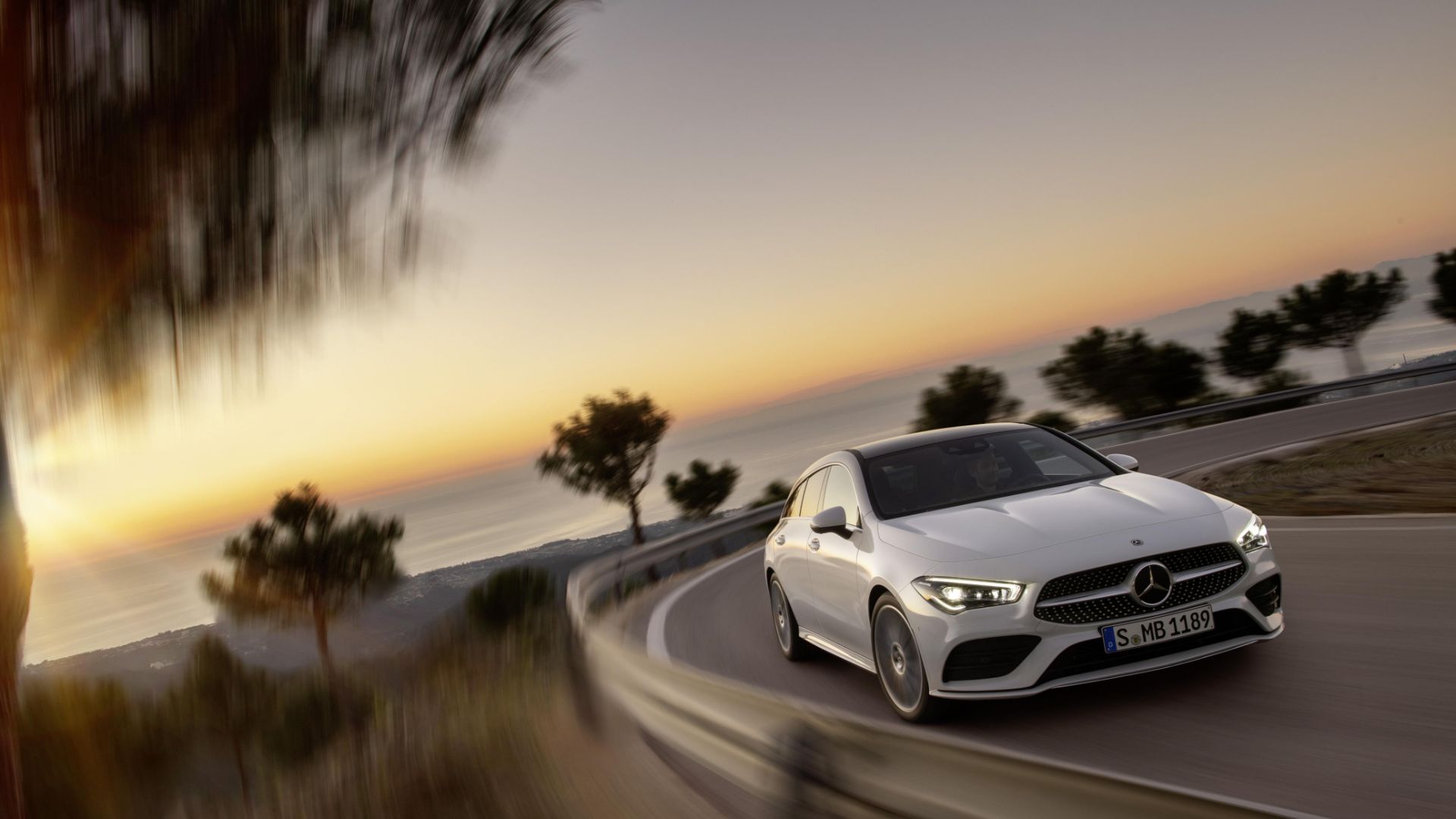
Mercedes-Benz has revealed the sleek estate version of its CLA at the 2019 Geneva Motor Show and it looks… pretty great.
Since when is a fanfare made for a new estate car anymore? They’re going the way of the Dodo what with the SUV onslaught, right? For Mercedes, however, the wagon is alive and well.
‘A sports car with load space’
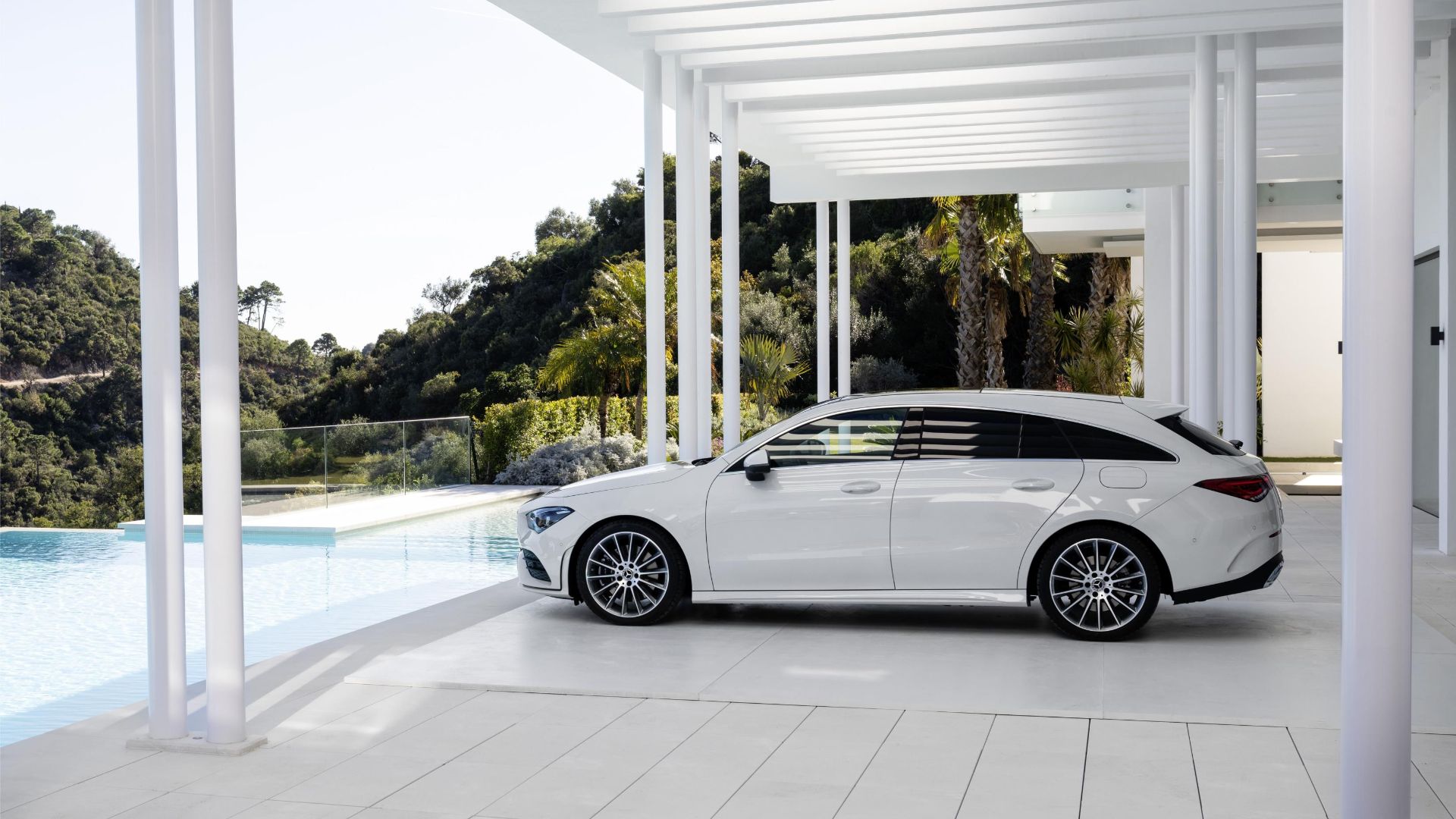
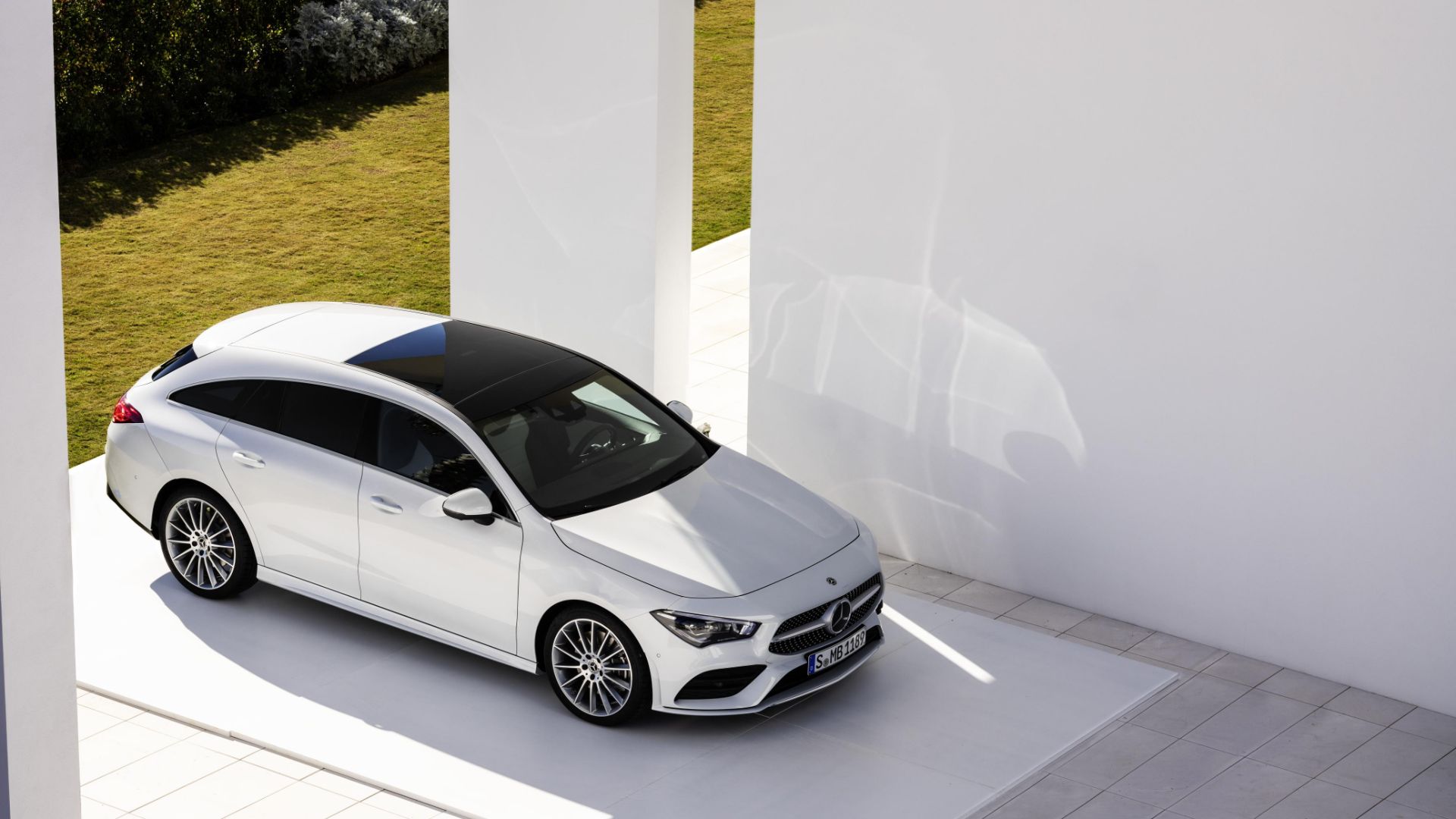
The Shooting Brake version of the CLA continues the saloon’s ethos of minimal lines and bold shapes. Its swooping roofline is perhaps the boldest since the original CLS ‘four-door coupe’ debuted in 2004.
There’s genuine muscularity about the CLA SB, without it looking overly aggressive. That styling is functional, too, with an impressive 0.26 drag coefficient.
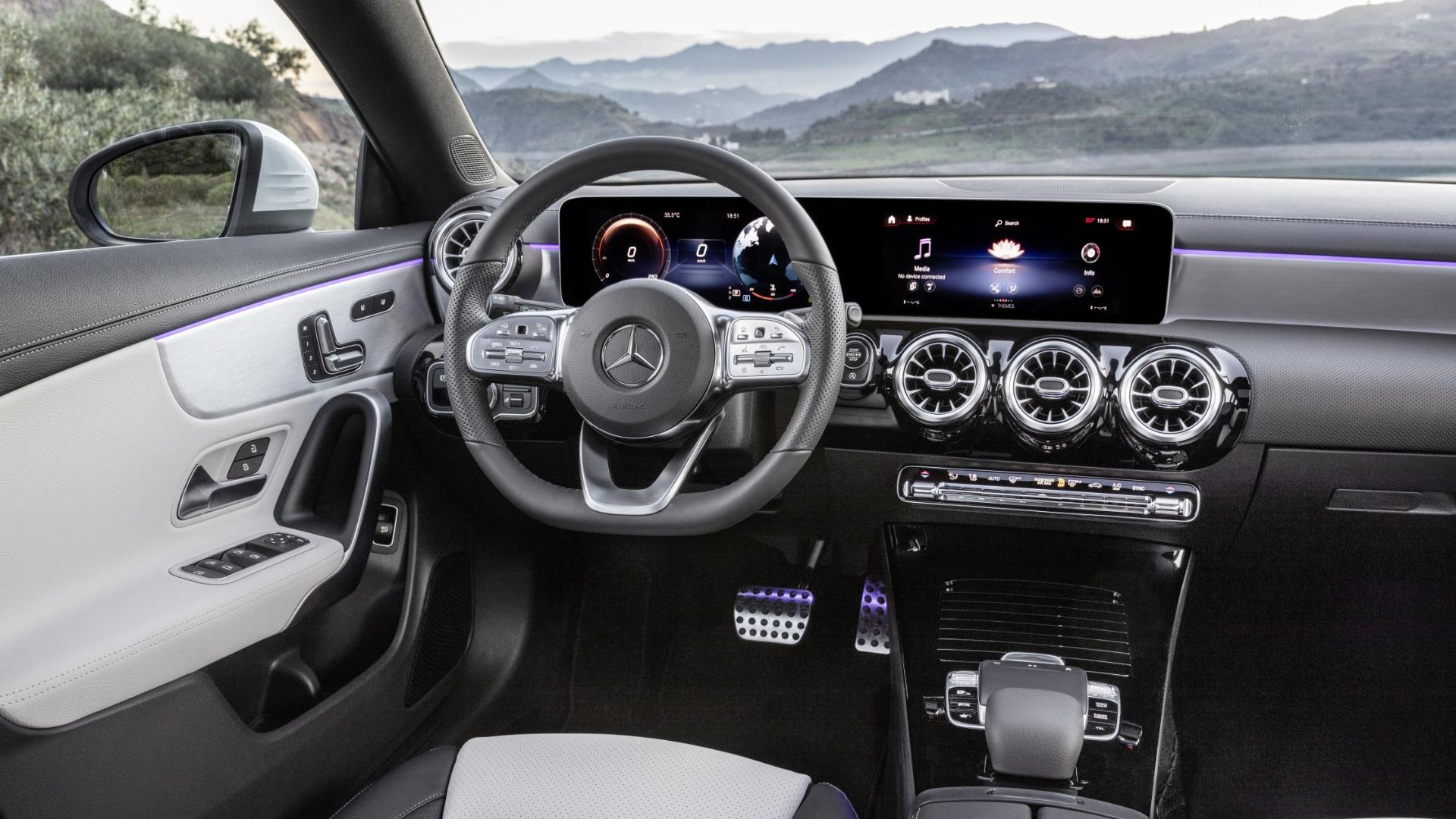
Inside the 2019 CLA Shooting Brake
The cabin is almost a direct carryover from the saloon, and that’s no bad thing. Mercedes is on a roll at the moment with its excellent MBUX operating system. When you’re not looking at a screen, you’re looking at a cabin that could pass for something twice as expensive.
Mercedes is also very proud of the new Shooting Brake’s practical credentials. The boot opening is 236mm wider (at 871mm) than that of its predecessor. Boot capacity is improved by 10 litres, to 505 litres, while passengers gain head, leg, shoulder and elbow space.
Class-leading driver assistance and safety
The CLA Shooting Brake combines Distance Assist Distronic, Active Steer Assist, Active Lane Change Assist, Active Park Assist, upgraded cameras and improved radar to be (almost) able to drive itself.
It can scan the road up to 500m ahead and ‘drive partially autonomously in certain situations’.
AMG versions coming soon
A familiar range of petrol and diesel engines will be available by the CLA Shooting Brake’s market launch in September 2019. Topping the range is the CLA 250, with a 225hp four-cylinder turbocharged unit, driving via a seven-speed dual-clutch transmission.
What about the AMG versions? Well, you can expect a CLA 35 and CLA 45 to be along soon afterwards. The latter should boast well over 400hp.
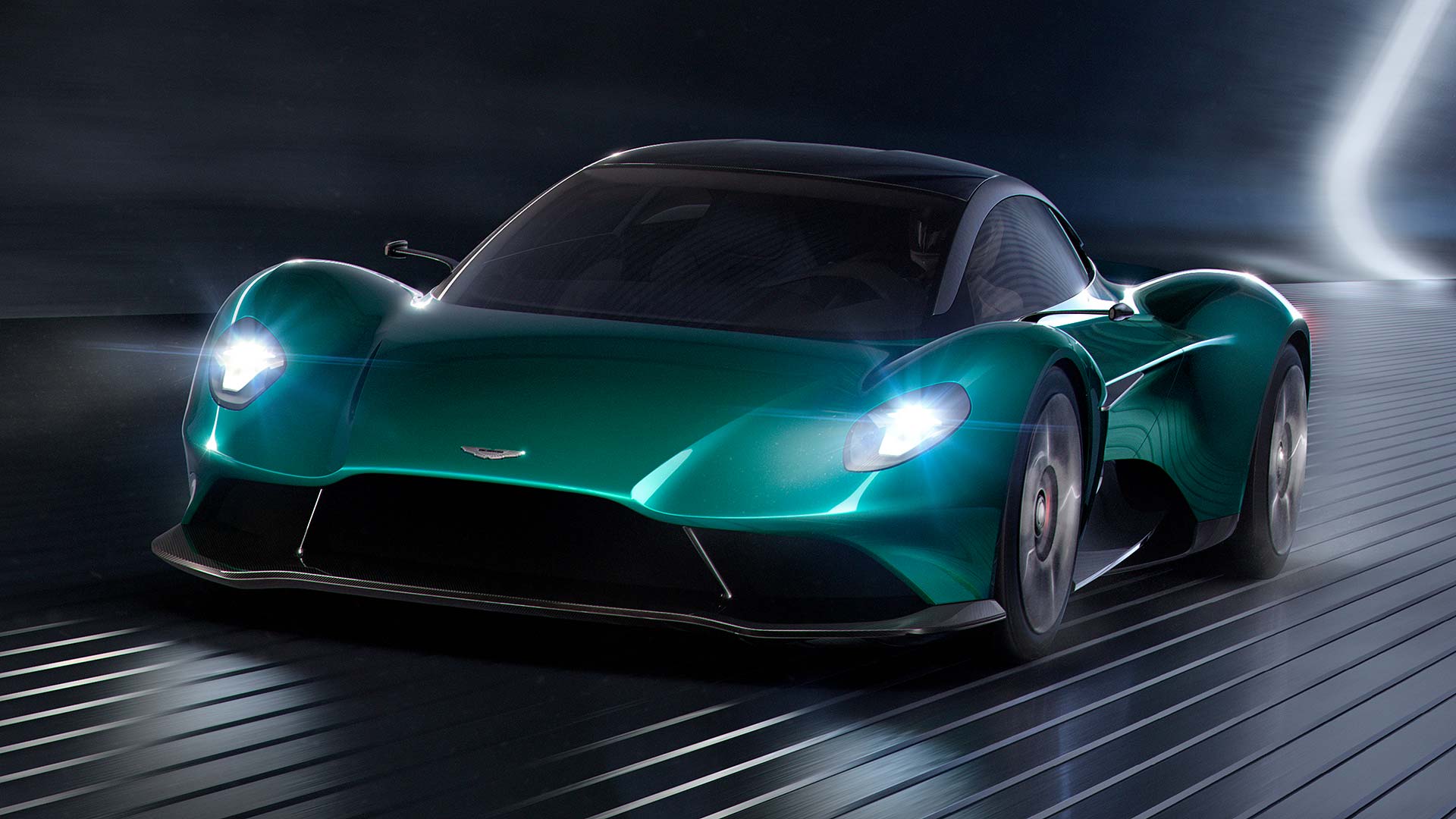
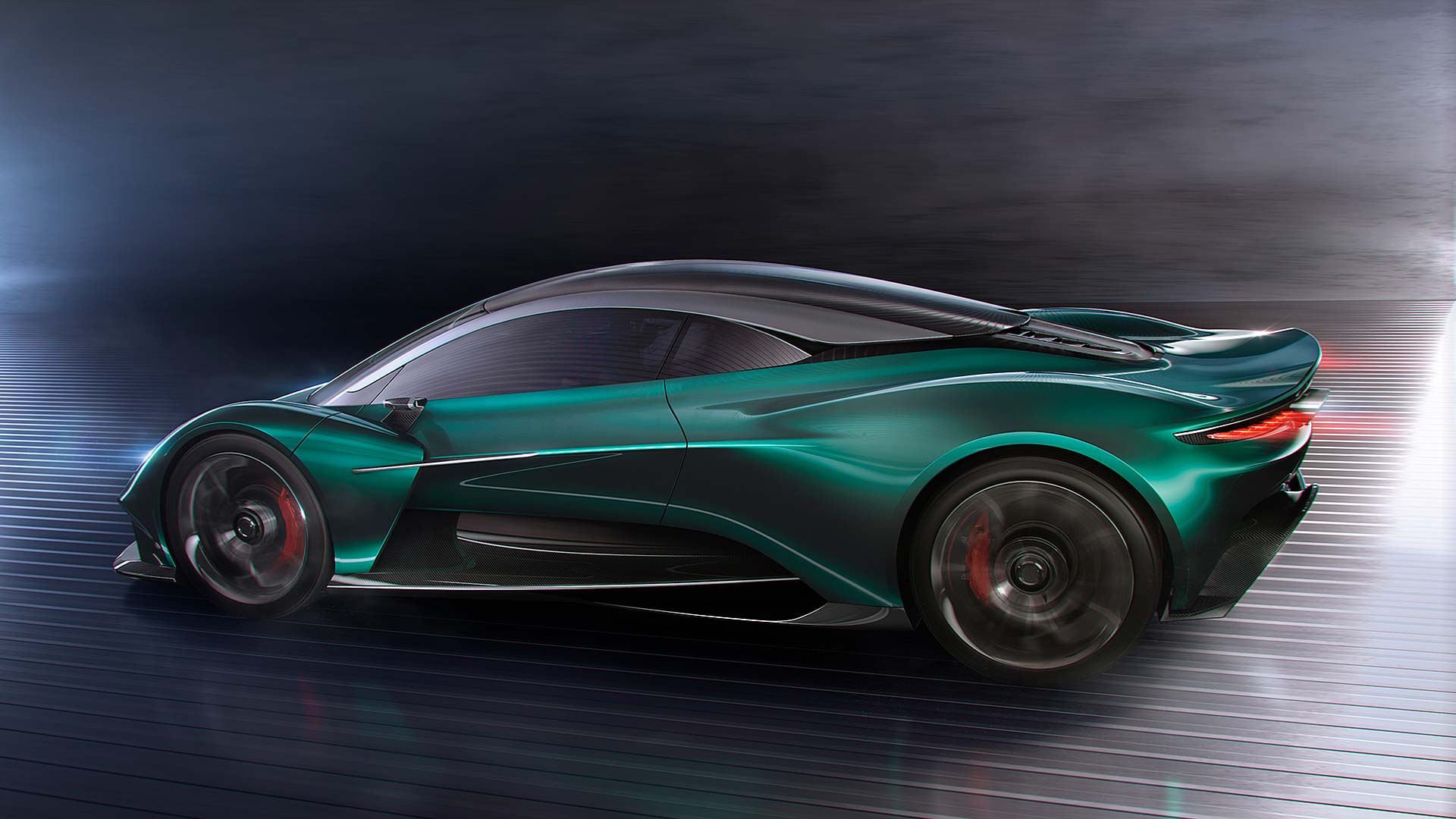
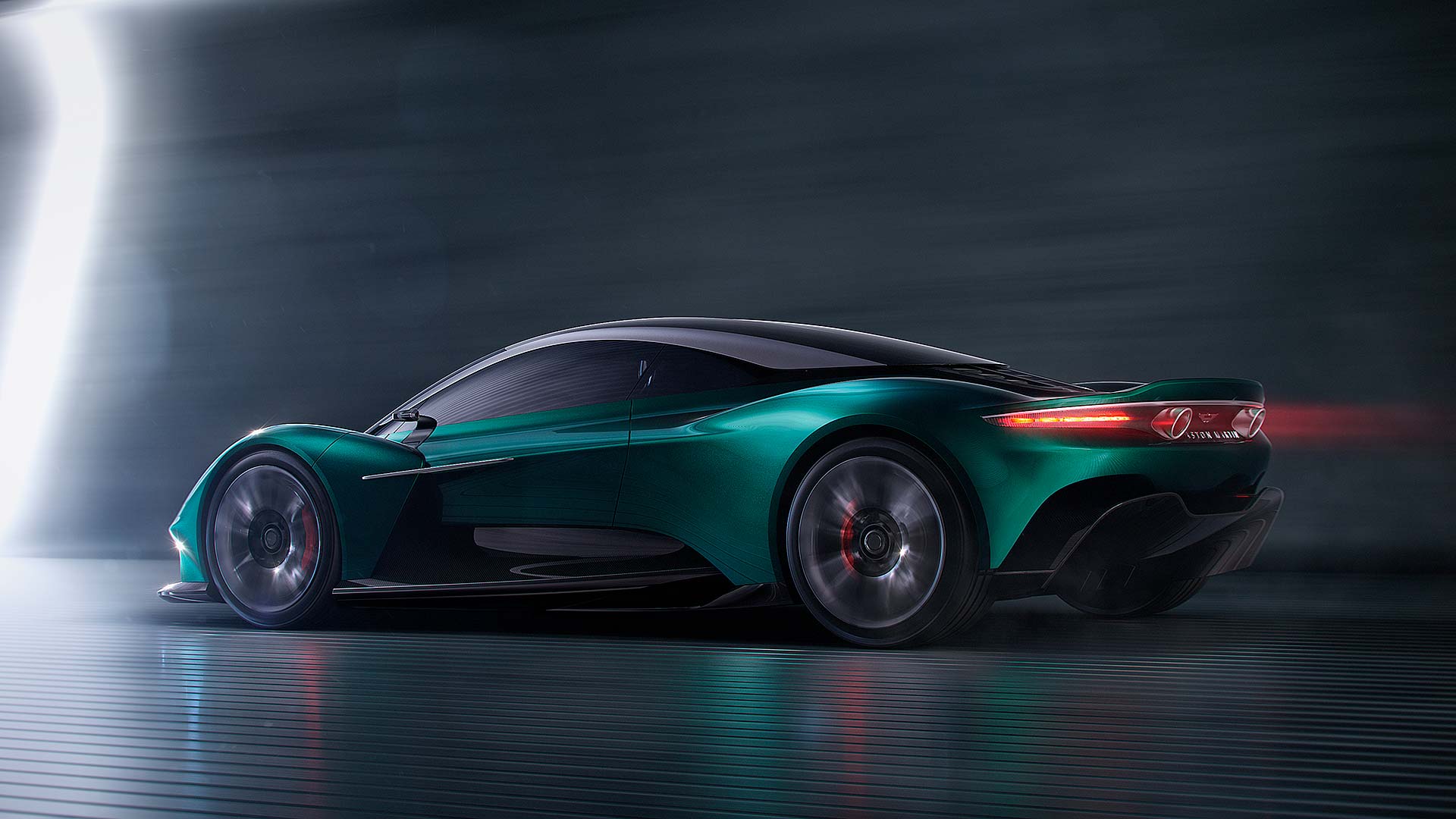
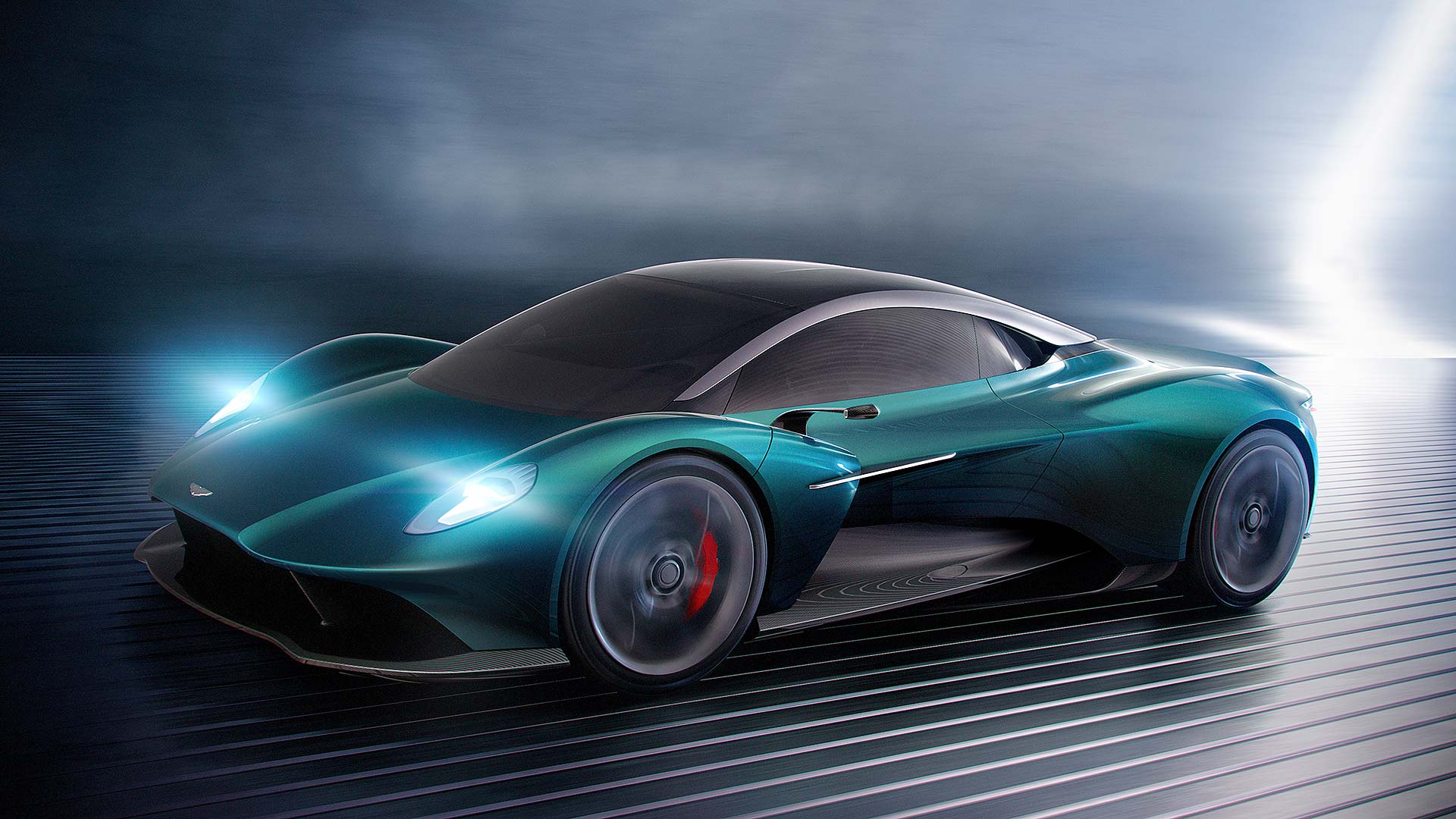
Aston Martin has wowed Geneva 2019 show-goers by revealing yet another mid-engined car, the Vanquish Vision Concept. The supercar alternative to the extreme AM-RB 003 hypercar, it confirms the next Vanquish will switch to a mid-engine layout – and directly take on the McLaren 720S.
This is a big deal for Aston. Up to now, all of its high-end sports cars have been front-engined. Switching to a mid-engined layout jumps it up a level. Now, it will go head-to-head with McLaren, Ferrari and Lamborghini.
The fact Aston Martin is showcasing the concept alongside the AM-RB 003 hypercar encourages us to make the link: the Vanquish Vision Concept is the Red Bull Racing of supercars, and the competition therefore needs to watch out.
Aston president and CEO Andy Palmer admits this hotly-contested sector has traditionally been defined by Italian marques. But the new Vanquish will be “a transformational moment for the brand… the car that will propel Aston Martin into a sector of the market traditionally seen as the heartland of luxury sports cars”.
Styling the Vanquish Vision Concept
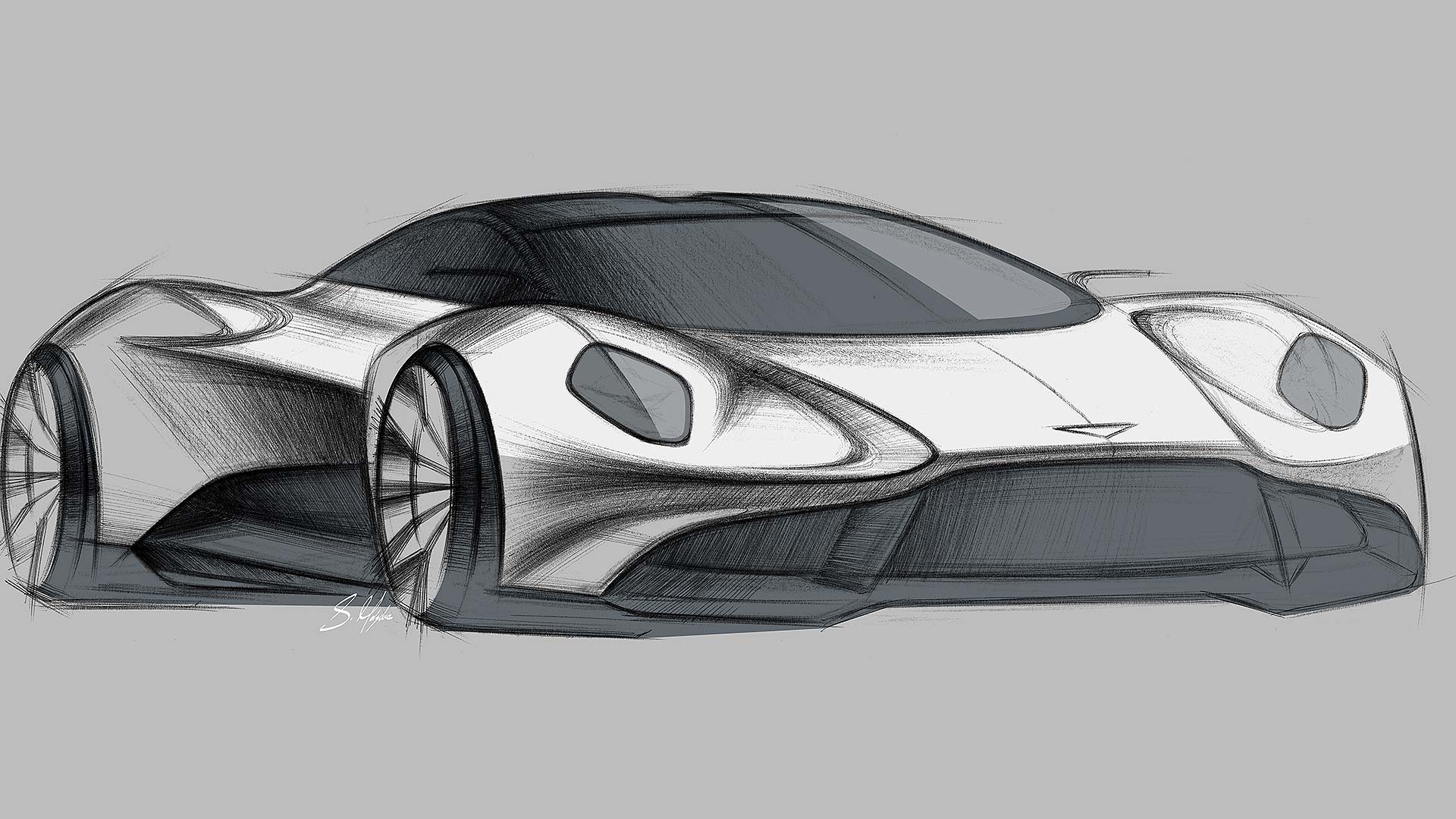
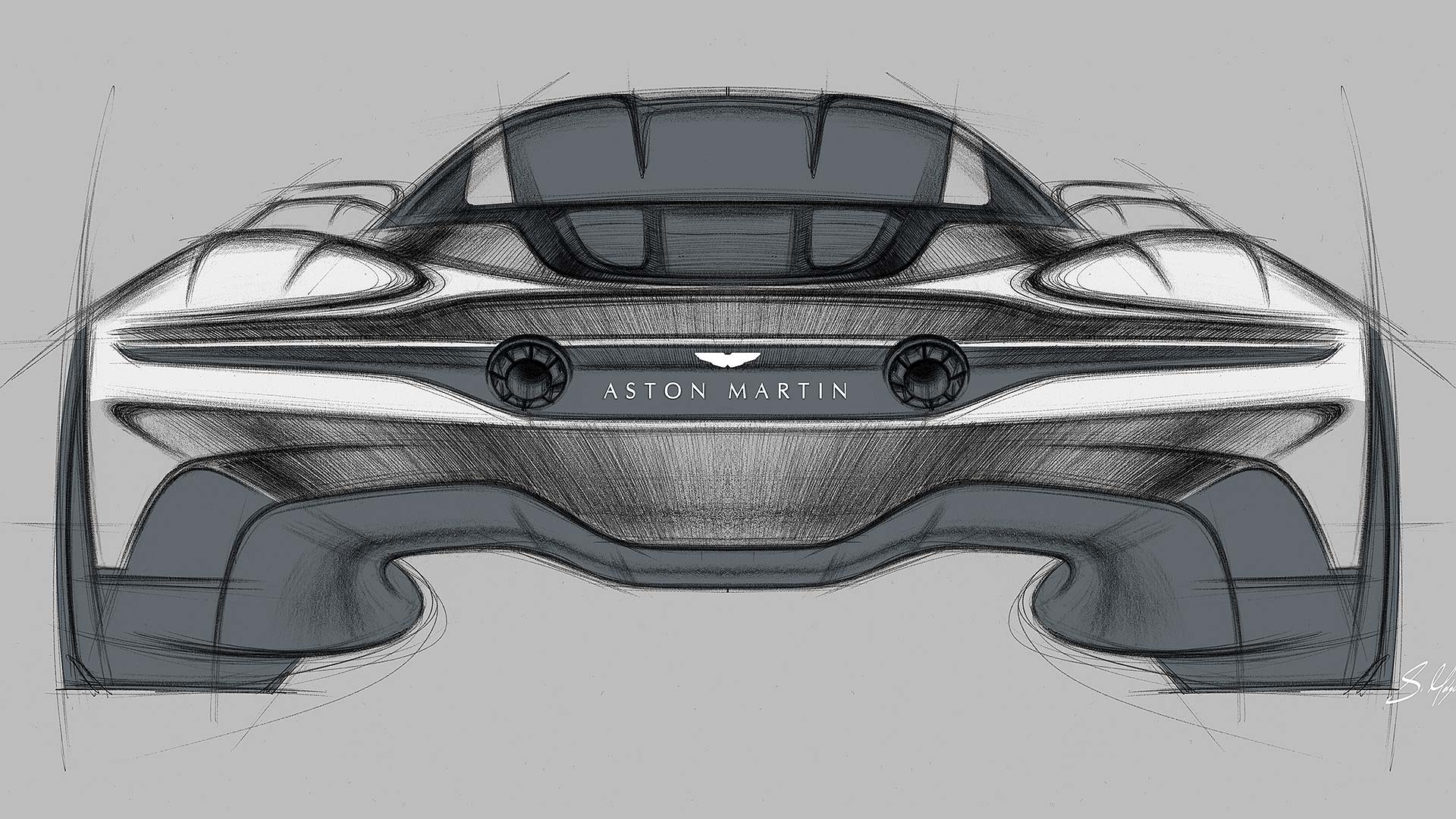
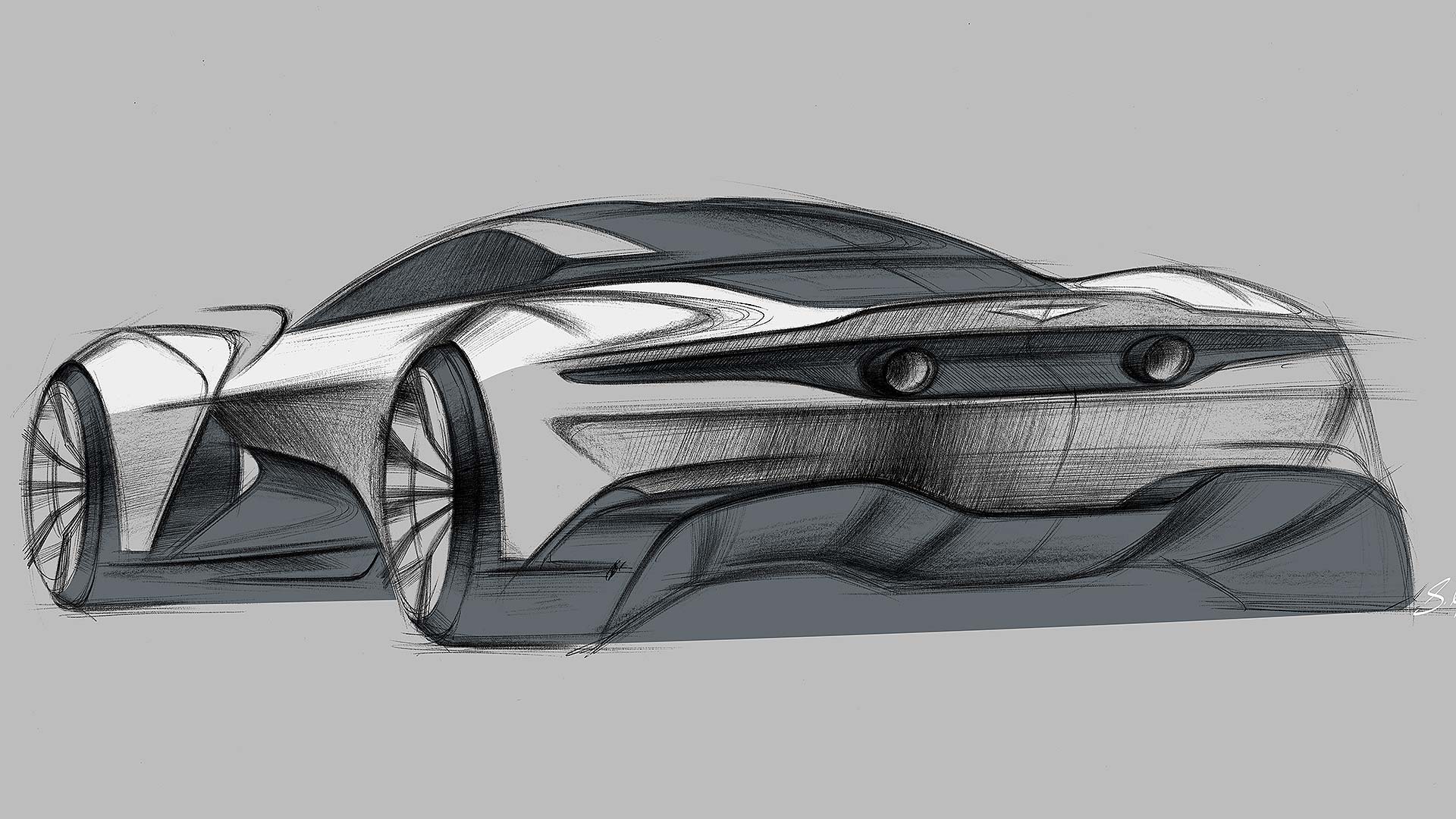
Design director Miles Nurnberger happily makes the link to the Aston Martin Valkyrie and AM-RB 003. Its appearance is “more seductive and less technical… but it’s still extreme in terms of visual gestures”.
Take the front clamshell, around the front wheel: it has openings so you can see through onto the tyre. Designers will understand when he says “there’s less of the negative space that defines the look of the Valkyrie and AM-RB 003. “It’s a prettier car, and purposely so, as if it’s been designed to thrive in a less extreme performance envelope.”
Nurnberger says it is “less provocative and more classical in its look”. The aggression of the Red Bull-infused hypercars is dialled back, in favour of “more flowing and sensuous forms”. It’s still athletic and modern, though, he reckons: “critical qualities” for Aston’s first mid-engined supercar.
Aston Martin Vanquish Vision: technical highlights
Aston is telling us little about what’s underneath. For now, it’s simply confirming a version of the new in-house V6 used by the AM-RB 003 will be used. In that car, it is seen in hybrid turbo form: there’s no news on how it will be configured in the Vanquish.
It also won’t be made entirely from carbon fibre. That’s far too exotic for a supercar. Instead, it will use a bonded aluminium chassis, to best balance “cost, speed of production and weight vs. strength”
.Chief technical officer Max Szwaj will oversee the project. “The Vanquish Vision Concept is the point when the things we have learned during the Aston Martin Valkyrie and AM-RB 003 programmes reach the series production models. Creating a car like this for Aston Martin is a challenge I have relished since joining back in 2017.
“Although it takes Aston Martin into new territory, it does so with the benefit of hard-won knowledge, ground-breaking ideas and an uncompromising mindset.
“The full engineering story of this car is yet to be told, but what you see here should tell you this car will not only compete at the highest level, but it will do so in a manner and style unique to Aston Martin.”
Stay tuned, because what we’re watching unfold is the remarkable expansion of Bond’s favourite GT brand into a bona fide supercar and hypercar maker.
If the next Aston Martin Vanquish turns out to be a genuine Ferrari and McLaren rival, that really will give the automotive world (and the financial markets) something to celebrate.
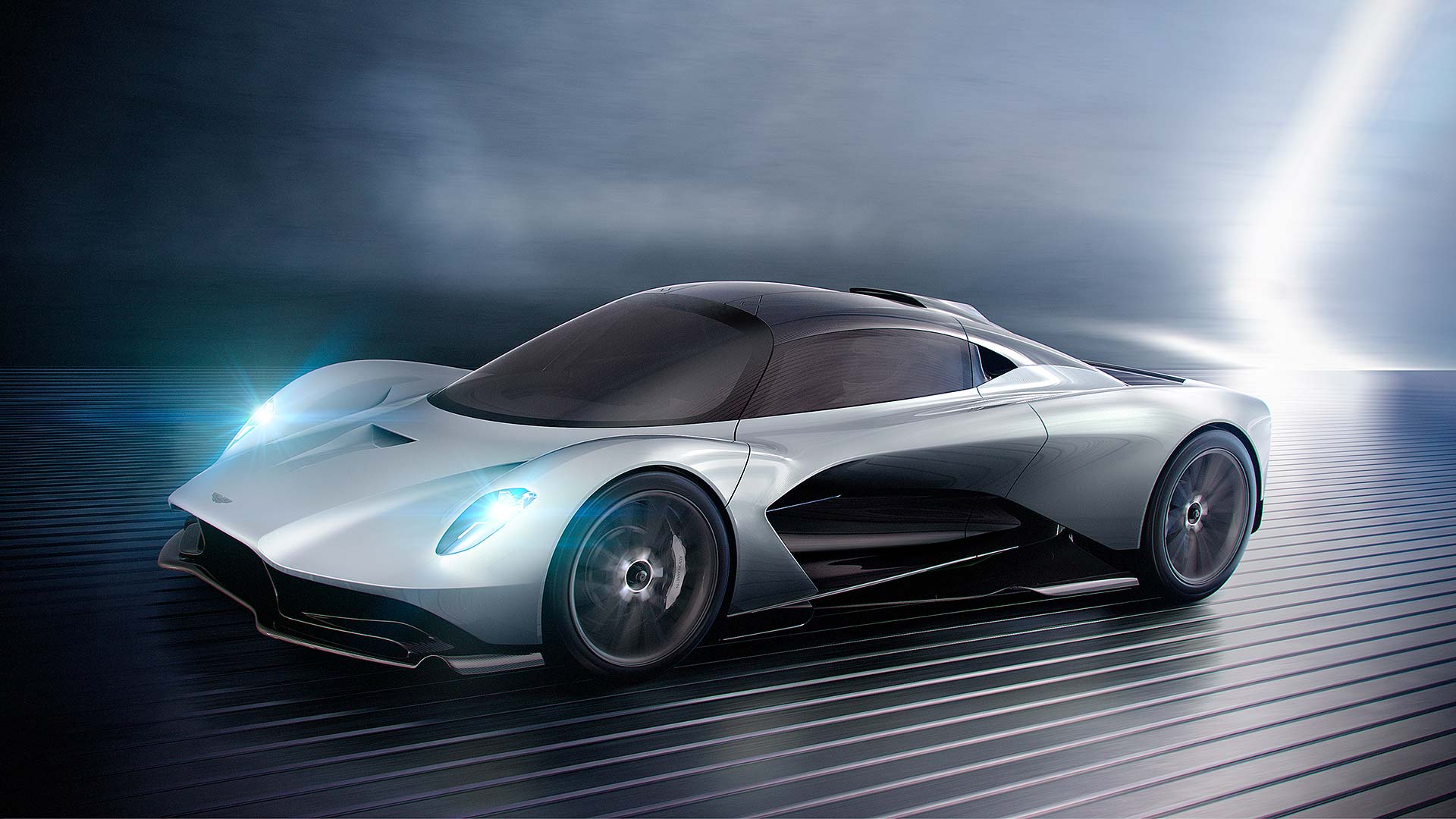
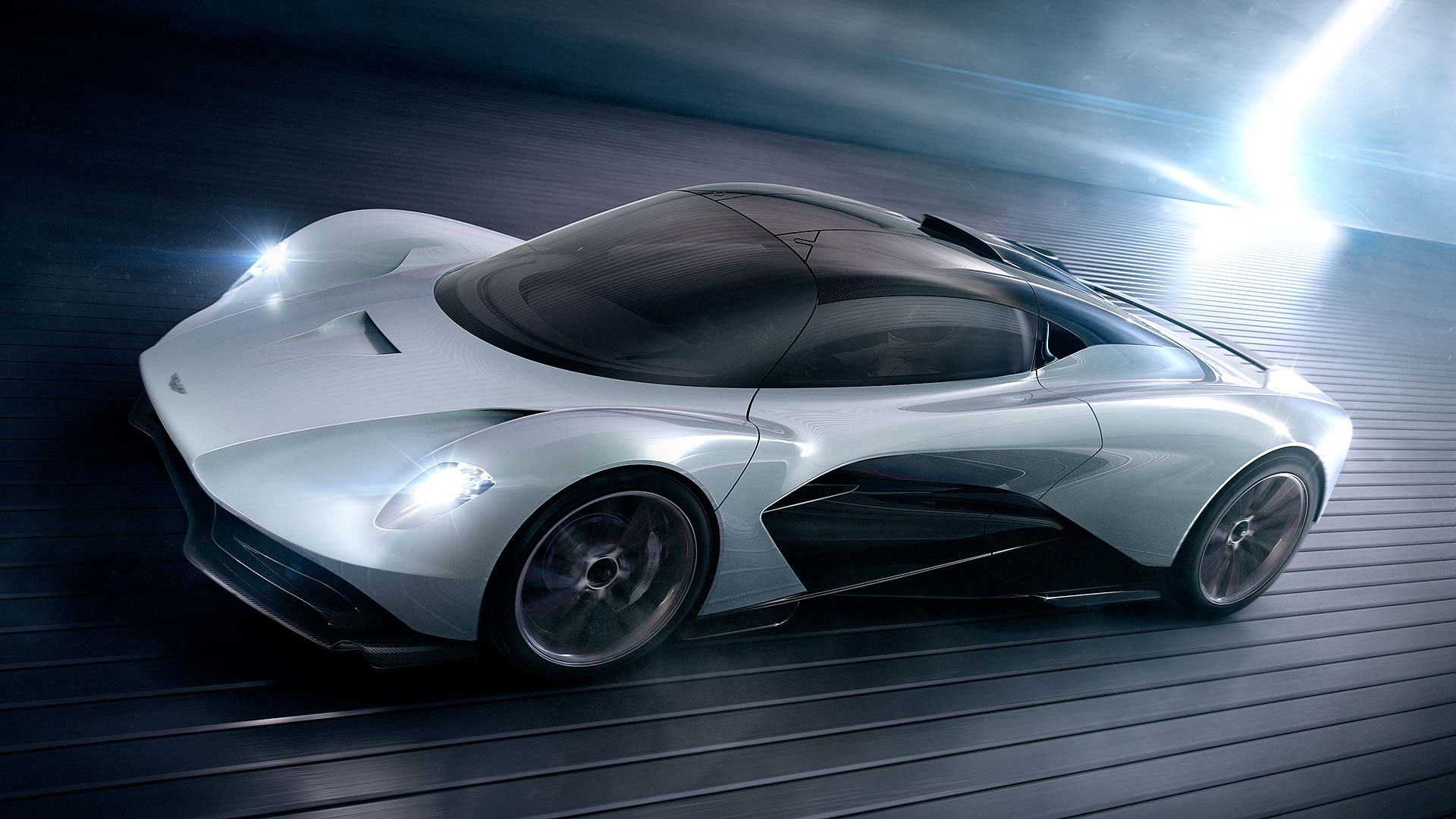
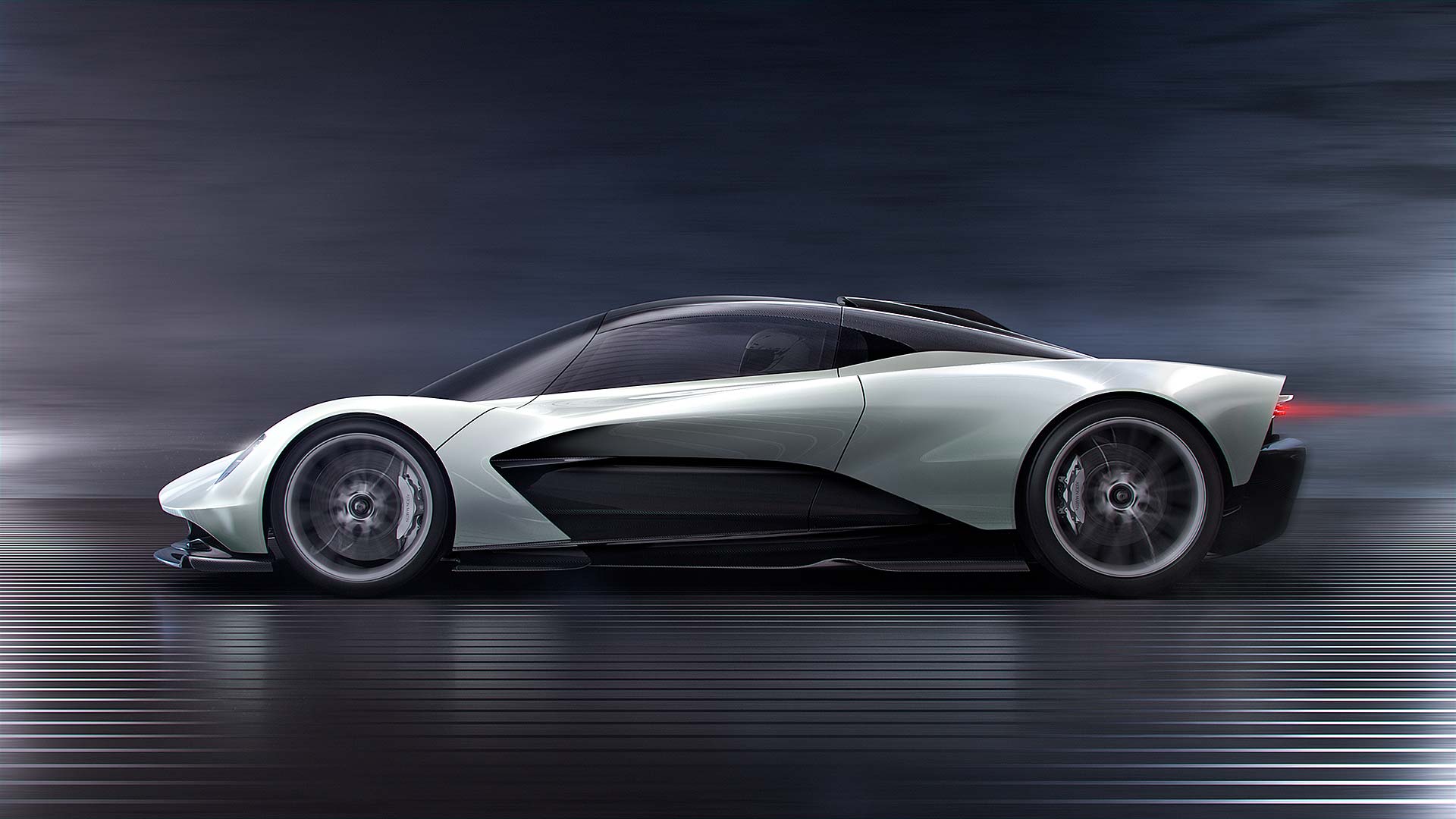
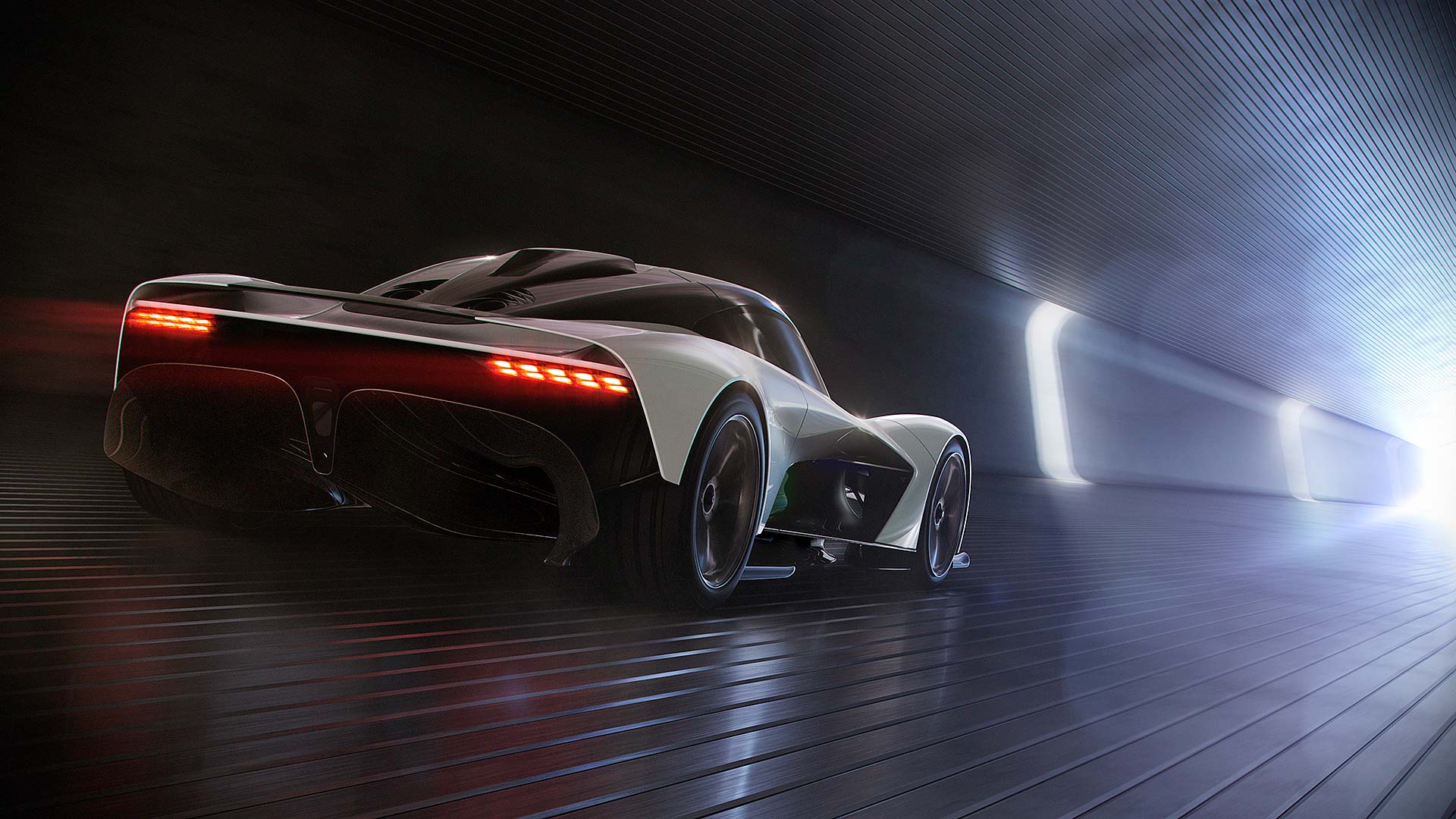
Aston Martin is wowing Geneva with an F1-infused mid-engined hypercar co-developed with Red Bull Advanced Technologies. Previously known as Project 003, it now has a codename: AM-RB 003. The Geneva 2019 design concept is our first taste of how it may look.
The mid-mounted engine is a surprise as well: it’s a brand-new hybrid turbo V6, designed in-house by Aston Martin for the first time in years.
The third mid-engined Aston Martin – after the Valkyrie and Valkyrie AMR Pro – the AM-RB 003 may be known as ‘son of Valkyrie’, but design director Miles Nurnberger insists it’s very different. It is “a distillation of Aston Martin Valkyrie and not a dilution.
“The design isn’t as extreme in some areas, but it pushes just as hard in others, and is even taking certain ideas and concepts a step further.”
Key to this is what’s described as ‘next-generation aircraft morphing technology’. Using something called FlexFoil, the mind-boggling feature creates a variable aerofoil across the width of the rear wing.
NASA has validated the technology works, apparently, and Aston Martin is the first automotive brand to use it. In a nutshell, it allows the level of downforce to be altered without changing the physical angle of the entire wing. It’s much better than current “state of the art” active wing designs, opines Aston (*cough* McLaren Senna), as turbulence and drag are also reduced. Indeed, it’s so effective the production wing will operate virtually in real-time as the car’s pitch and attitude alter.
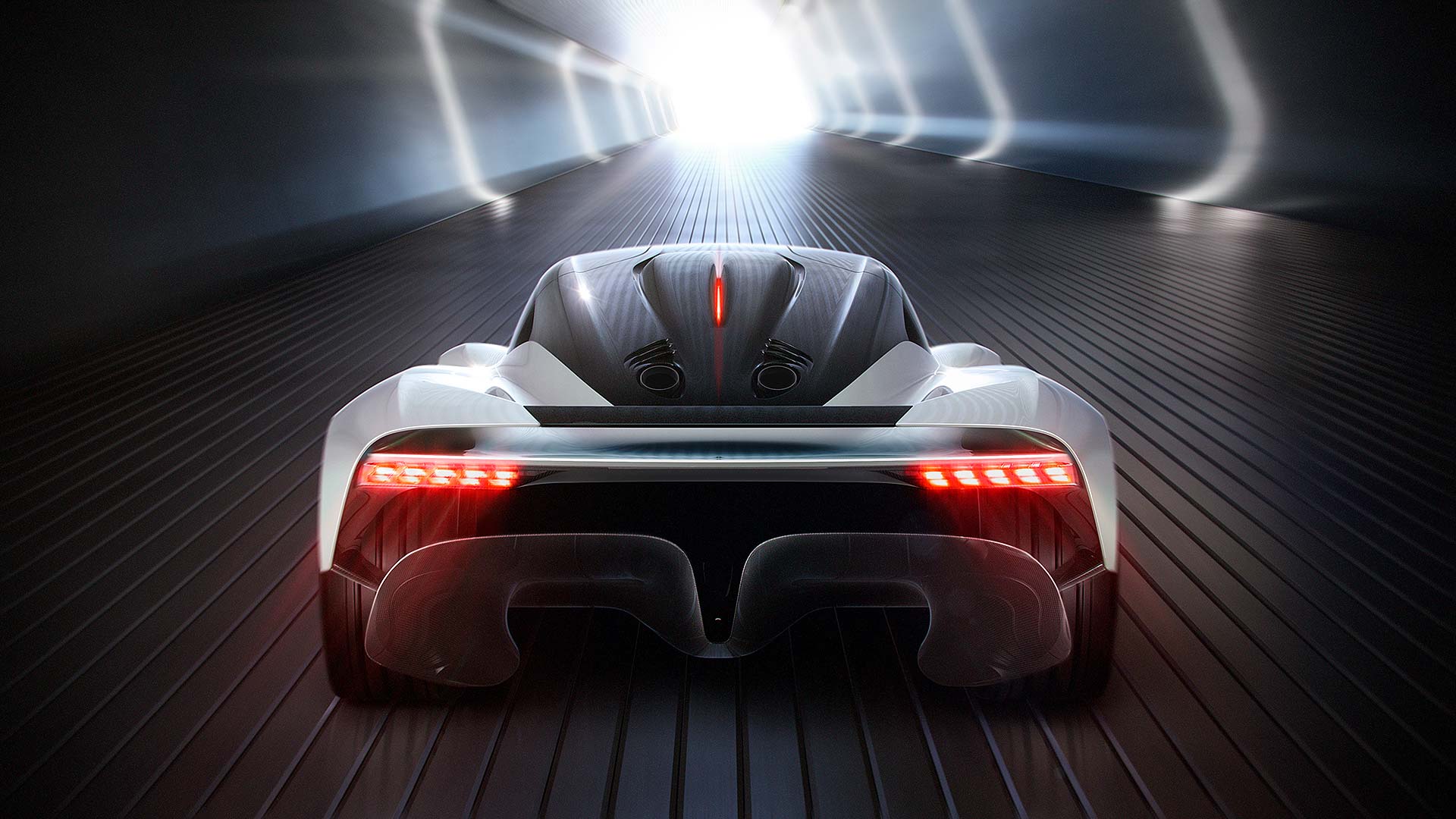
The upper body aerodynamics, front keel and large rear diffuser all resemble the Valkyrie, but new light graphics give a different appearance despite the ultra-lightweight lamps being borrowed directly from the flagship hypercar Valkyrie (the four units together still weigh less than one DB11 headlamp).
The AM-RB 003 is made fully from carbon fibre, both the structure and the bodywork. Red Bull has honed the materials, and also the active suspension and electronics, further underlining the F1 link. And while it won’t be quite as rare as the Valkyrie, it’s still hardly mainstream: only 500 will be sold.
Inside the AM-RB 003
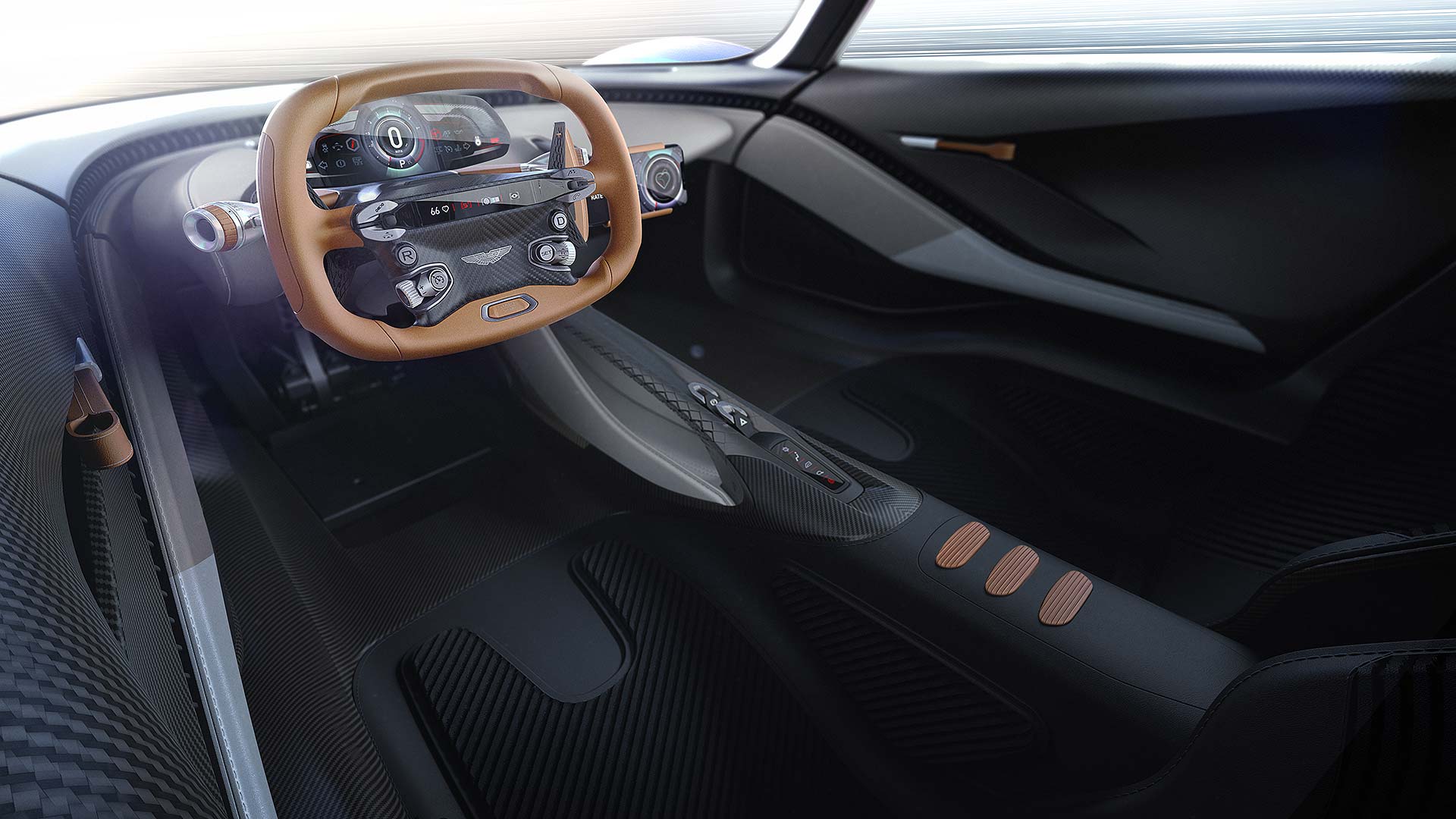
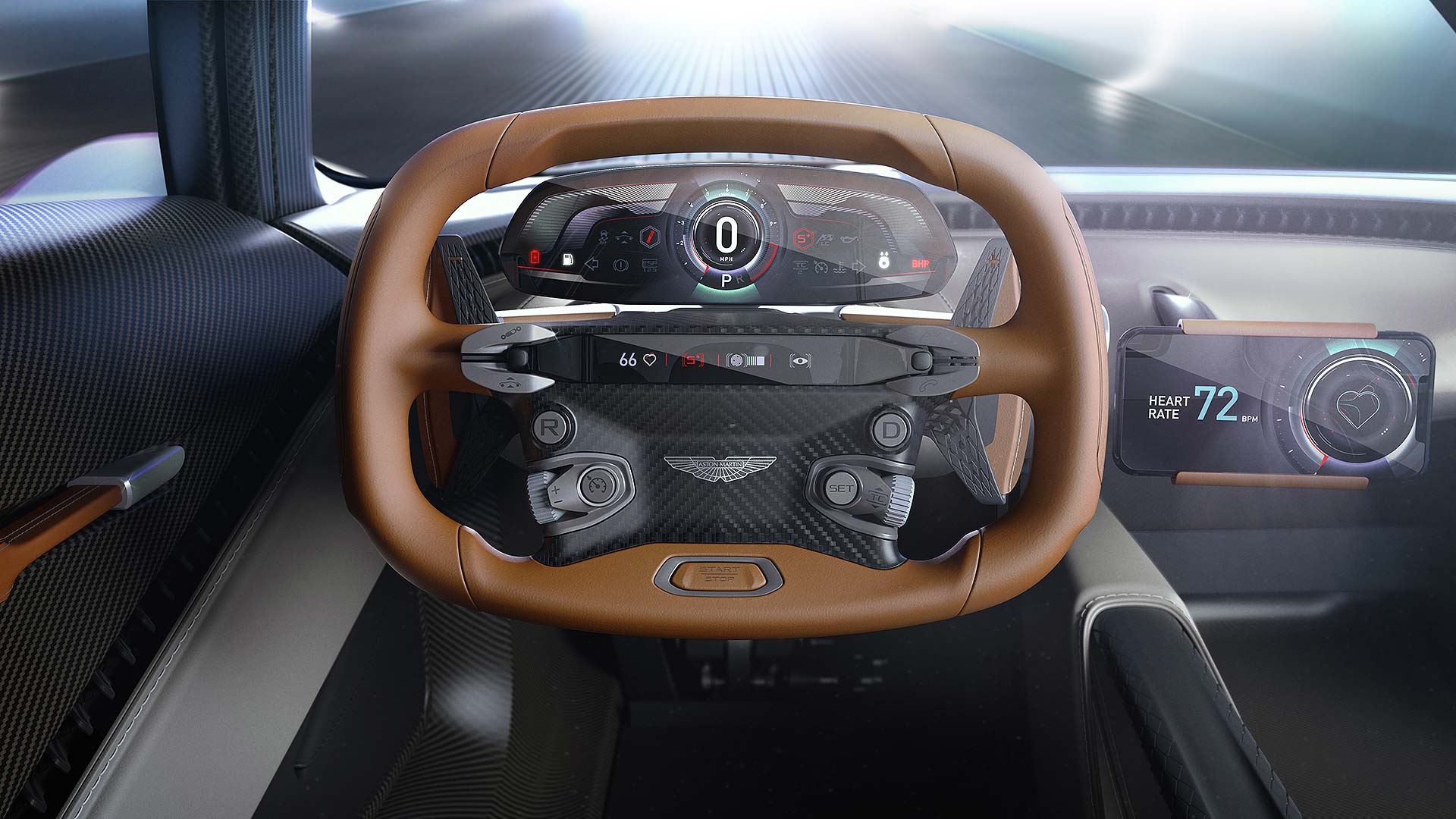
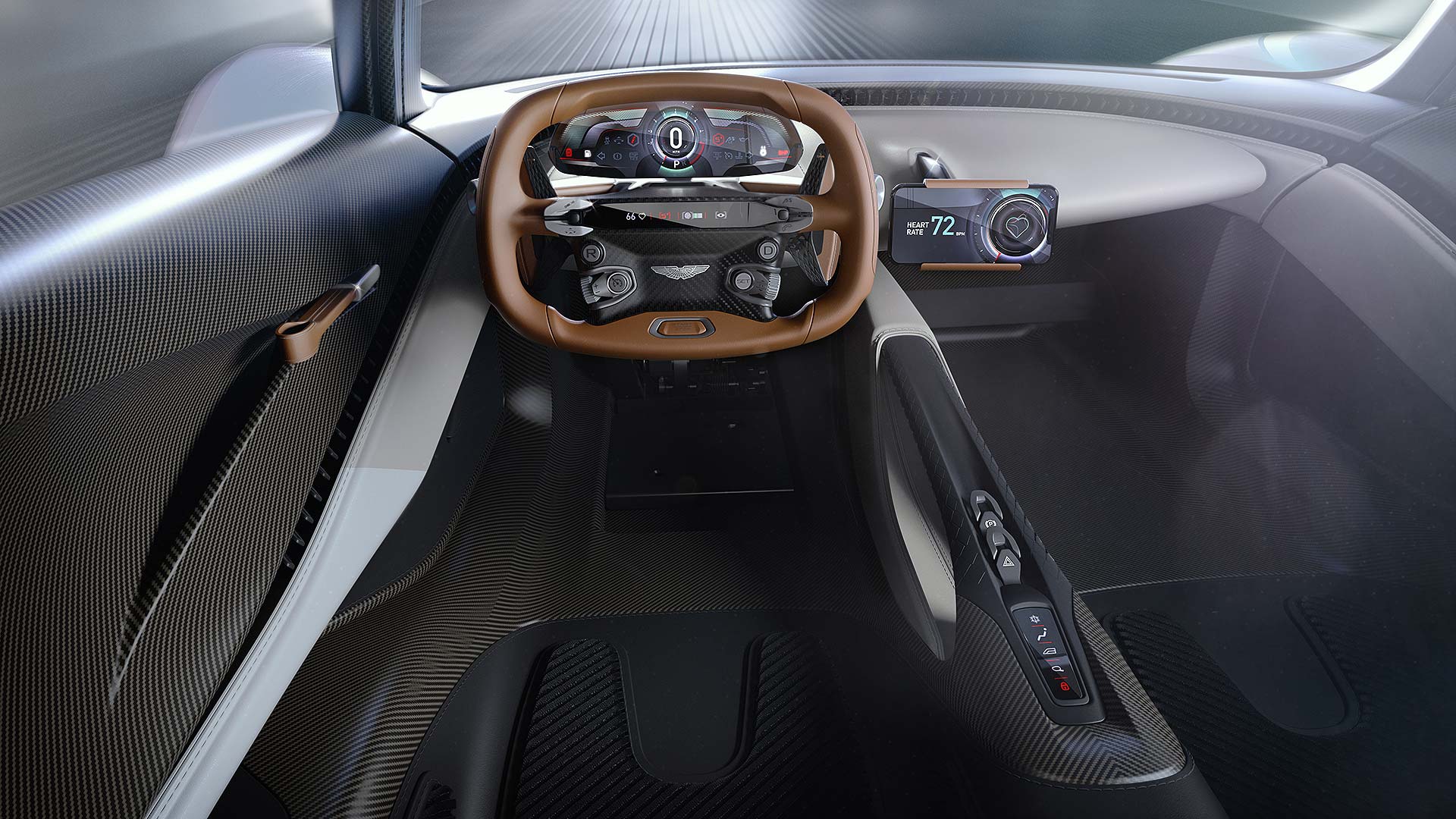
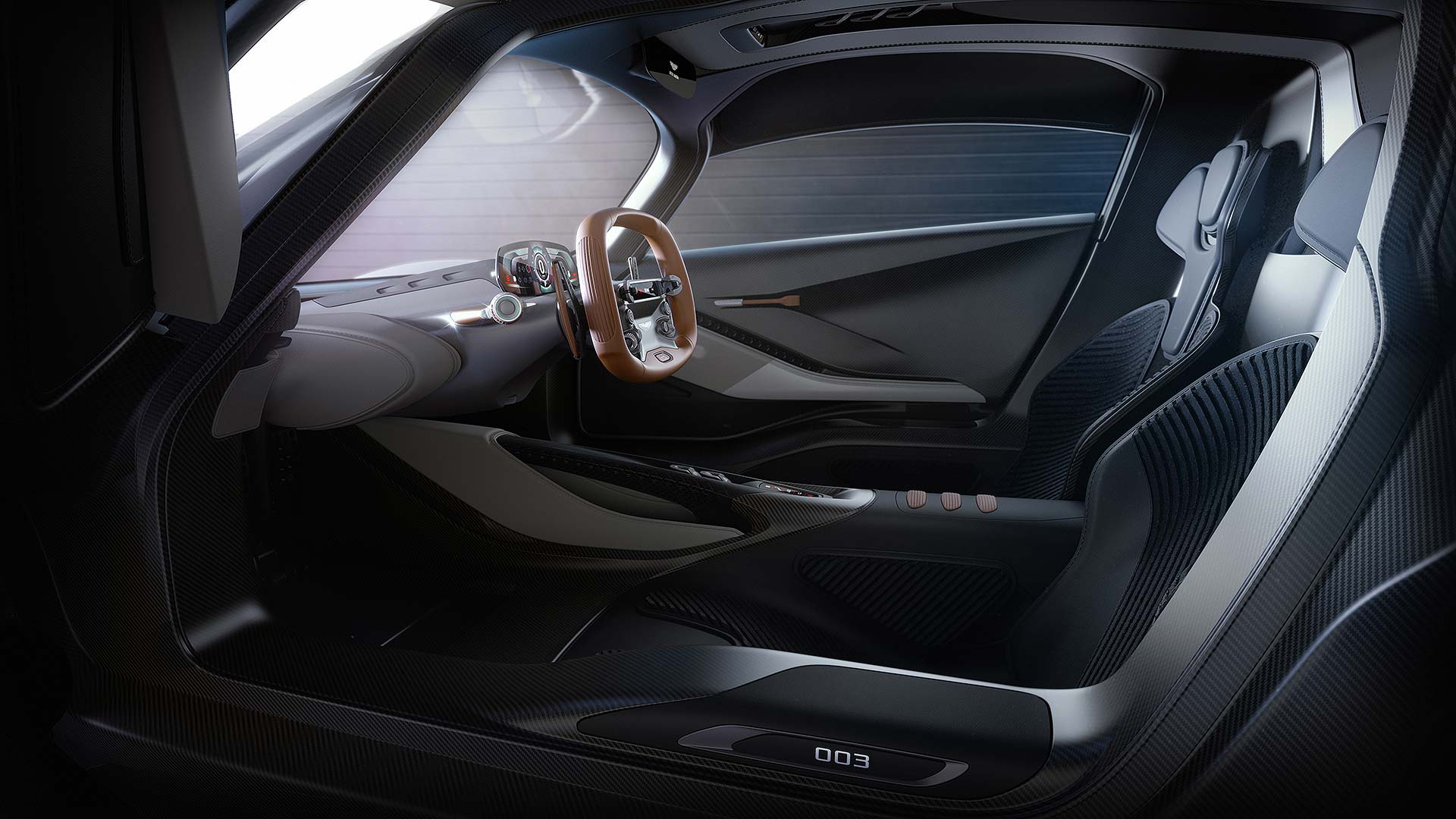
A new buzzword describes the interior: ‘Apex Ergonomics’. This is said to perfectly align the centreline of the driver’s back with the steering wheel and pedals. Other controls within the clutter-free cockpit are also carefully located to help the driver focus.
The instrument display is actually mounted on the steering column itself, so it won’t be blocked by the wheel rim. The infotainment system isn’t overburdened with branded solutions nobody will use, either. Aston calls it ‘bring-your-own’ technology, masterminded through the owner’s smartphone.
Note the wraparound band that follows the curve of the windscreen, too. Through this, audio, ventilation and ambient lighting are fed, helping further declutter the interior and focus attention on the screen in front of the driver. We also like the start/stop button built into the base of the F1-shaped steering wheel.
Compared with the Valkyrie, there’s much more space and comfort inside the AM-RB 003. LMP1-style racing car doors make it easier to step in and out, and a wider centre console gives more space between front passengers. There’s even a makeshift boot: a shelf behind the seats. Aston Martin promises there will be stowage slots for wallets or mobile phones. Hopefully both.
The team behind AM-RB 003
Two Brits are responsible for making sure the AM-RB 003 drives as well as it looks: chief engineer Matt Becker and high-performance test driver Chris Goodwin. They’re currently running exhaustive tests – not on the road, though, but in Red Bull’s ultra-advanced simulator. Only later will the first prototypes take to the road. Another example of how Aston is working closely with Red Bull.
As these projects enter an incredibly exciting phase with the commissioning of the first running development prototypes, it gives me tremendous satisfaction to confirm that this exceptional partnership is continuing with the AM-RB 003 – a hypercar that not only draws from the ethos and DNA of Aston Martin Valkyrie, but will in turn influence Aston Martin’s first series production mid-engined supercar”.
Andy Palmer, Aston Martin Lagonda president and CEO, said: “When Aston Martin secured the services of Red Bull Advanced Technologies to embark on the extraordinary journey that became Aston Martin Valkyrie and Aston Martin Valkyrie AMR Pro, it was always my hope that it would lead to a long-term collaboration.
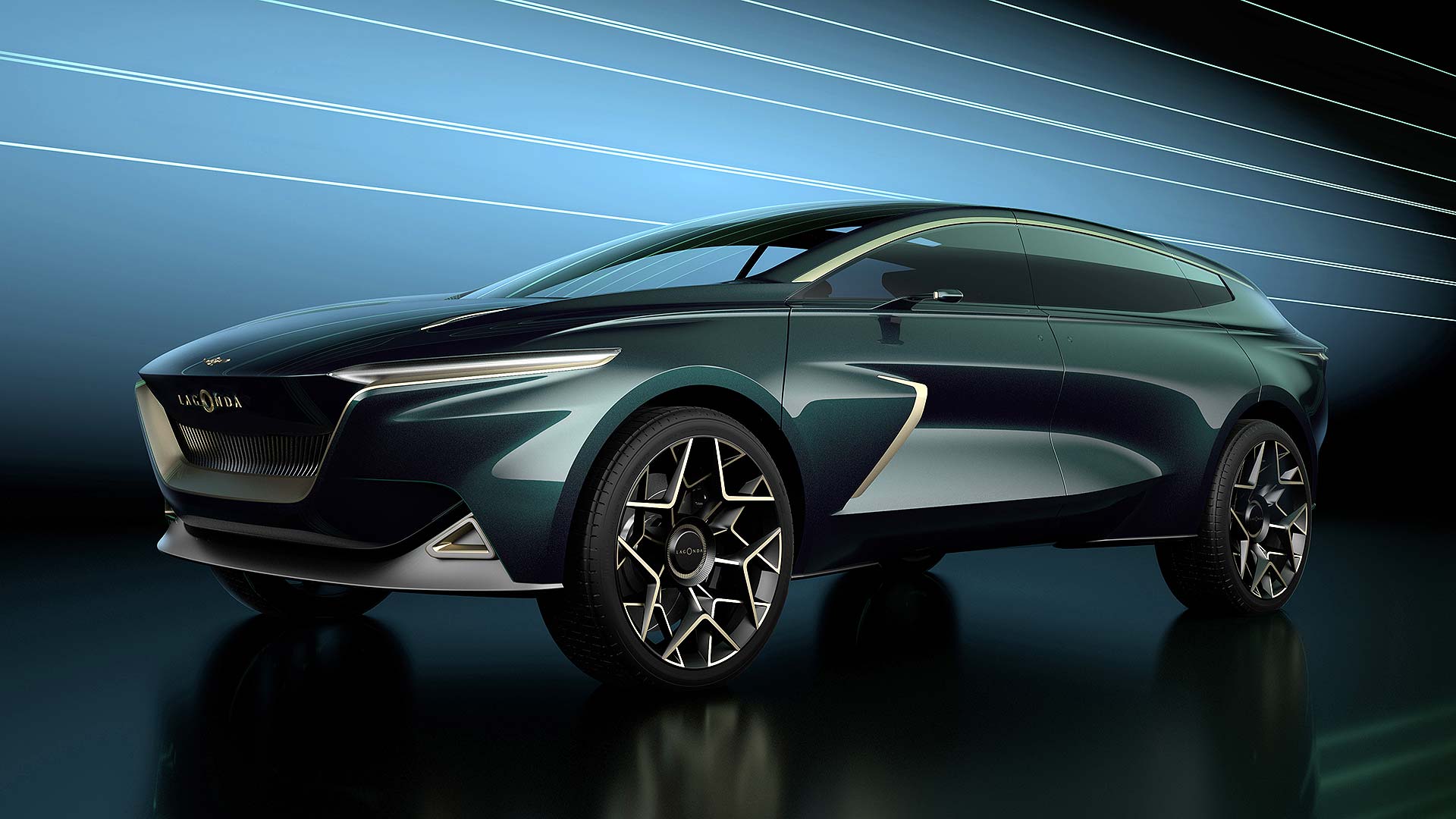
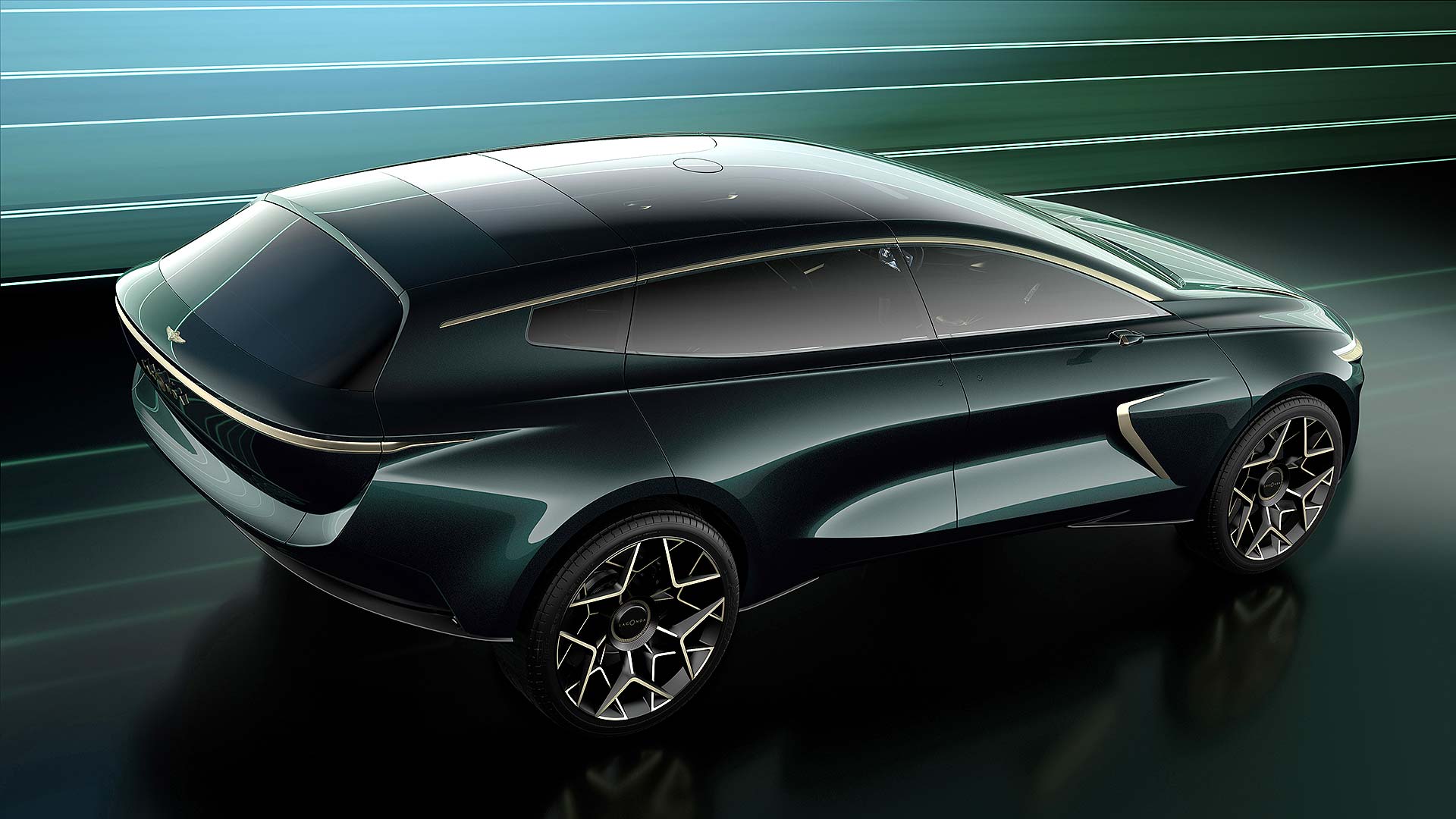
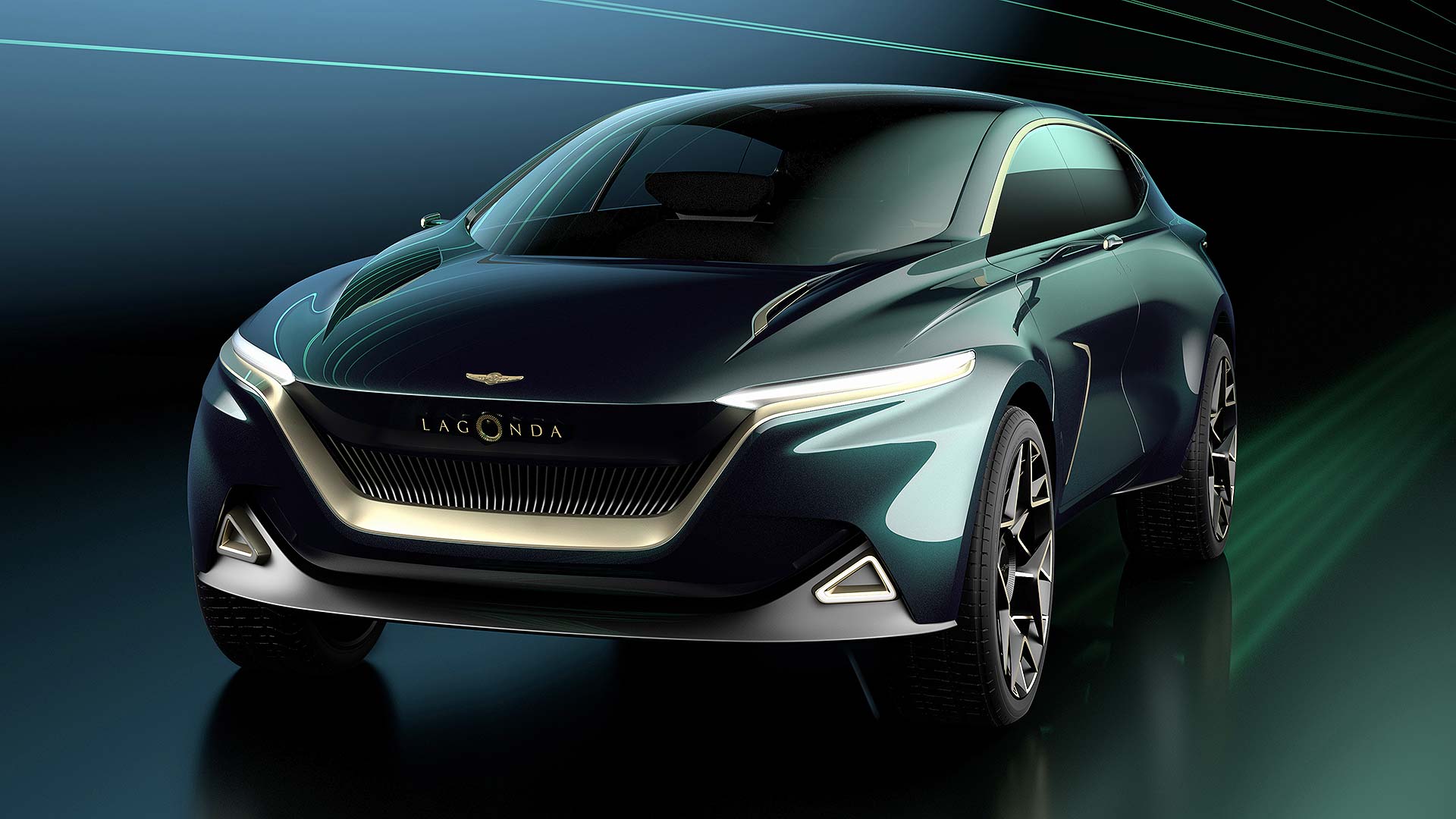
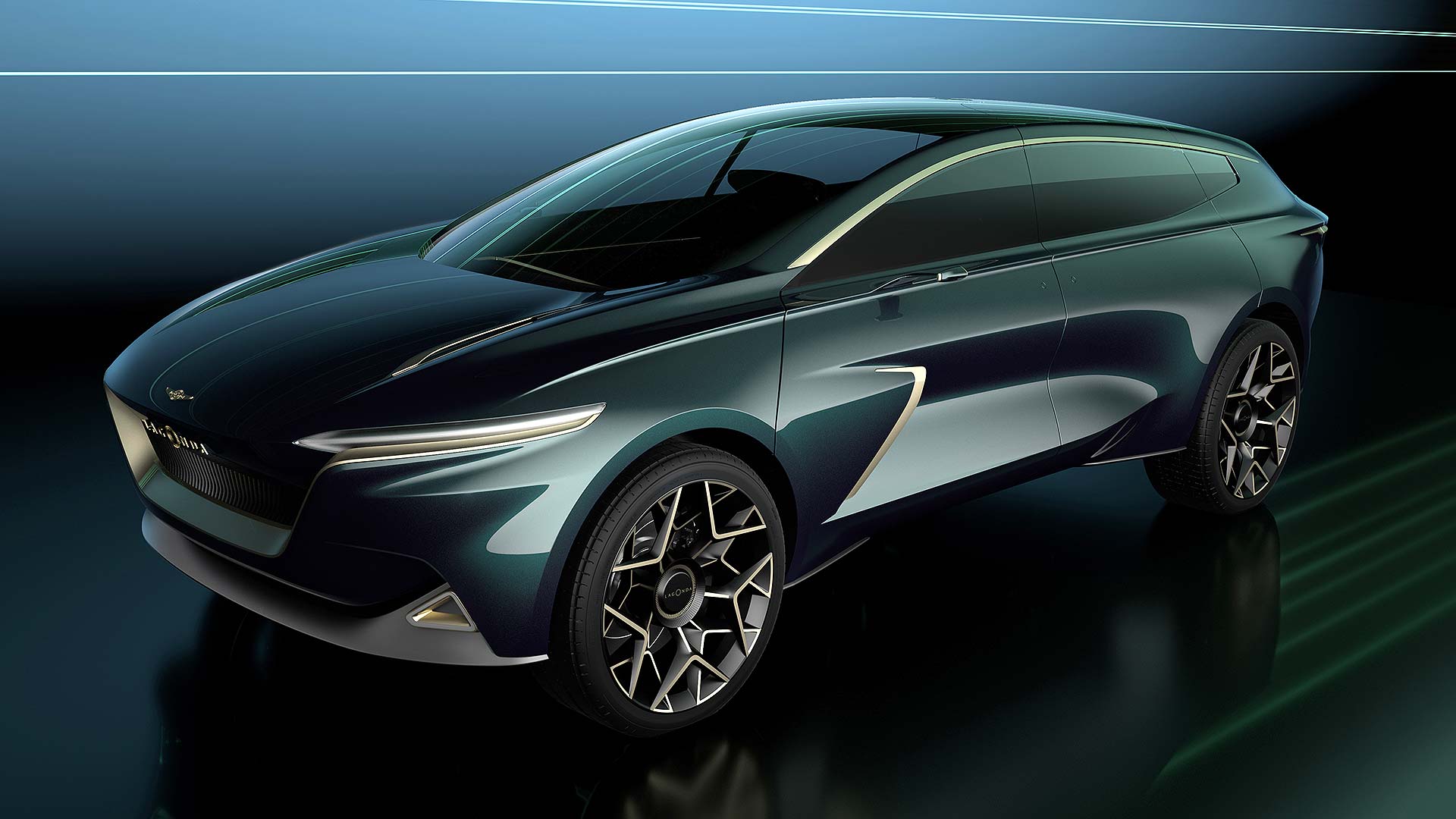
As if two new supercars (not to mention the spine-tingling 11,000rpm Valkyrie) weren’t enough, Aston Martin has revealed an electric luxury SUV at the Geneva Motor Show. Meet the Lagonda All-Terrain Concept.
At a stroke, the makes the Bentley Bentayga and Rolls-Royce Cullinan look like knackered old P38 Range Rovers. It’s all forward-thinking: a futuristic design that makes the current crop of luxury SUVs seem archaic.
A ‘super yacht’ for the road
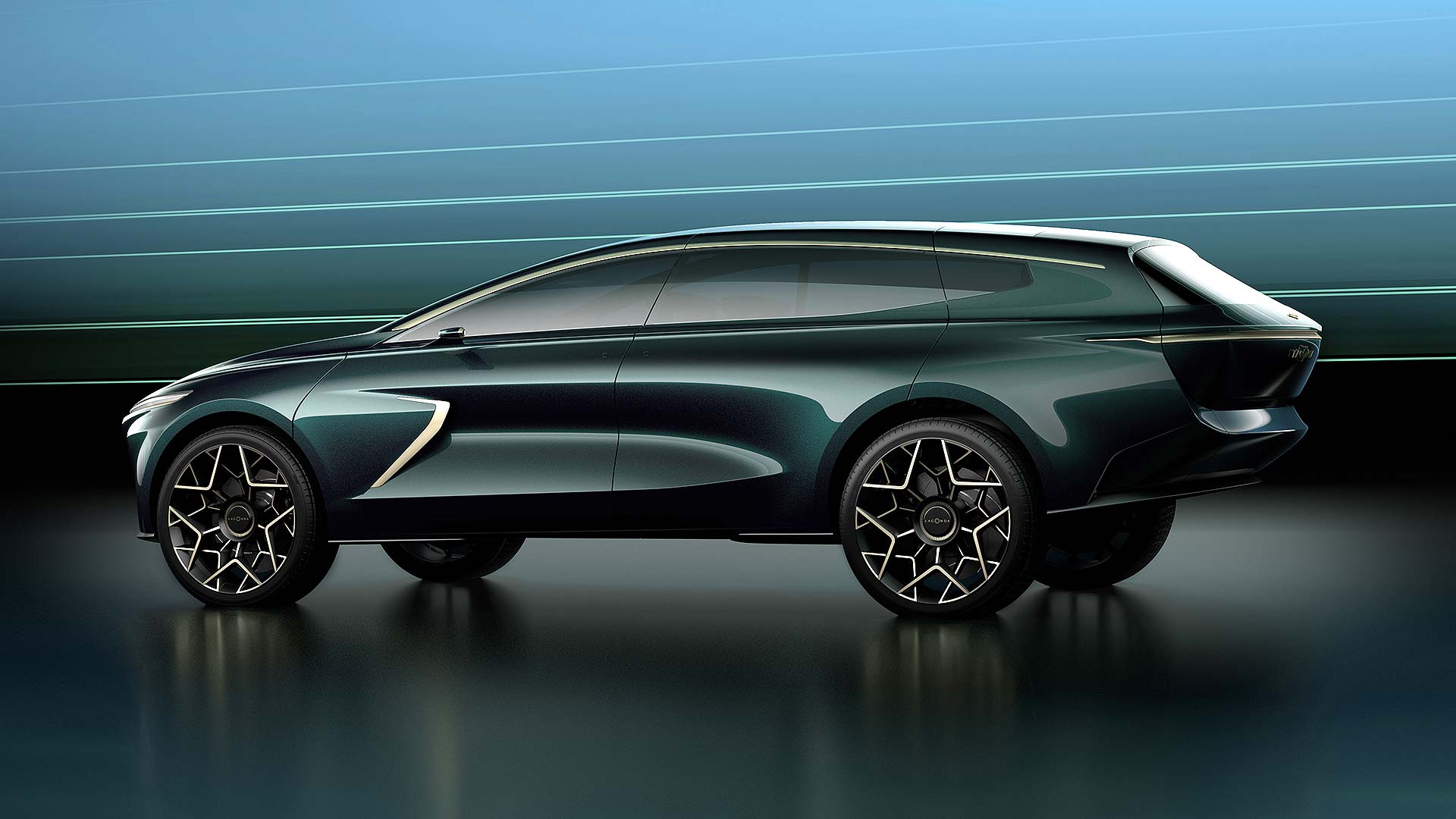
Lagonda doesn’t have a generic SUV platform over which to drape a tight-fitting and stately English suit. As such, this doesn’t resemble a Volkswagen Touareg or BMW X7 in drag. It takes inspiration from existing Aston Martins, as well as the Lagonda Vision Concept of last year. There’s even a whiff of the Taraf saloon in the nose.
It’s more traditional in its jacked-up estate-car proportions, albeit broader of hip and slighter of shoulder. We can see how it alludes to the design of superyachts. A hint of Vanquish Zagato Shooting Brake? No bad thing at all, sir.
Aston Martin says the ‘forms and shapes… look like they have been created by the huge, planetary forces of gravity fields’. So now you know.
A luxury brand that’s exclusively electric
More revolutionary is what’s going on underneath. Aston Martin made it clear last year that when Lagonda arrives as a standalone marque, it will be exclusively electric. Indeed, it will ‘confound traditional thinking and take full advantage of the latest advances in both electrification and autonomous driving technologies, which amount to the biggest revolution in land-bound transportation since the invention of the car’.
The chuntering V8s of the old William Towns-penned Lagonda will be long gone by the time 2022 rolls around, then, as too will the rippling tones of the (Rapide-based) Taraf V12.
As with last year’s Lagonda Vision Concept, there’s also a very real focus on autonomous driving.
While it ‘gives us a glimpse of the first production model from the luxury brand’, there isn’t anything as concrete as range numbers or horsepower figures yet. Suffice to say, the SUV size and body style lends itself to being stuffed full of batteries. By the time it’s out, we’re anticipating around 500 miles of range and serious quick-charge capability.
What there is an emphasis on, is the ‘utility’ side of a sports utility vehicle: ‘The Lagonda All-Terrain Concept is an ultra-stylish, supremely luxurious, fully electric emission-free vehicle that can transport its occupants to remote and spectacular locations.’
Enticing indeed, although we can’t quite see Colombian drug lords abandoning their G-Wagens and conquering the rainforest in a Lagonda just yet.
A levitating key… yes, really
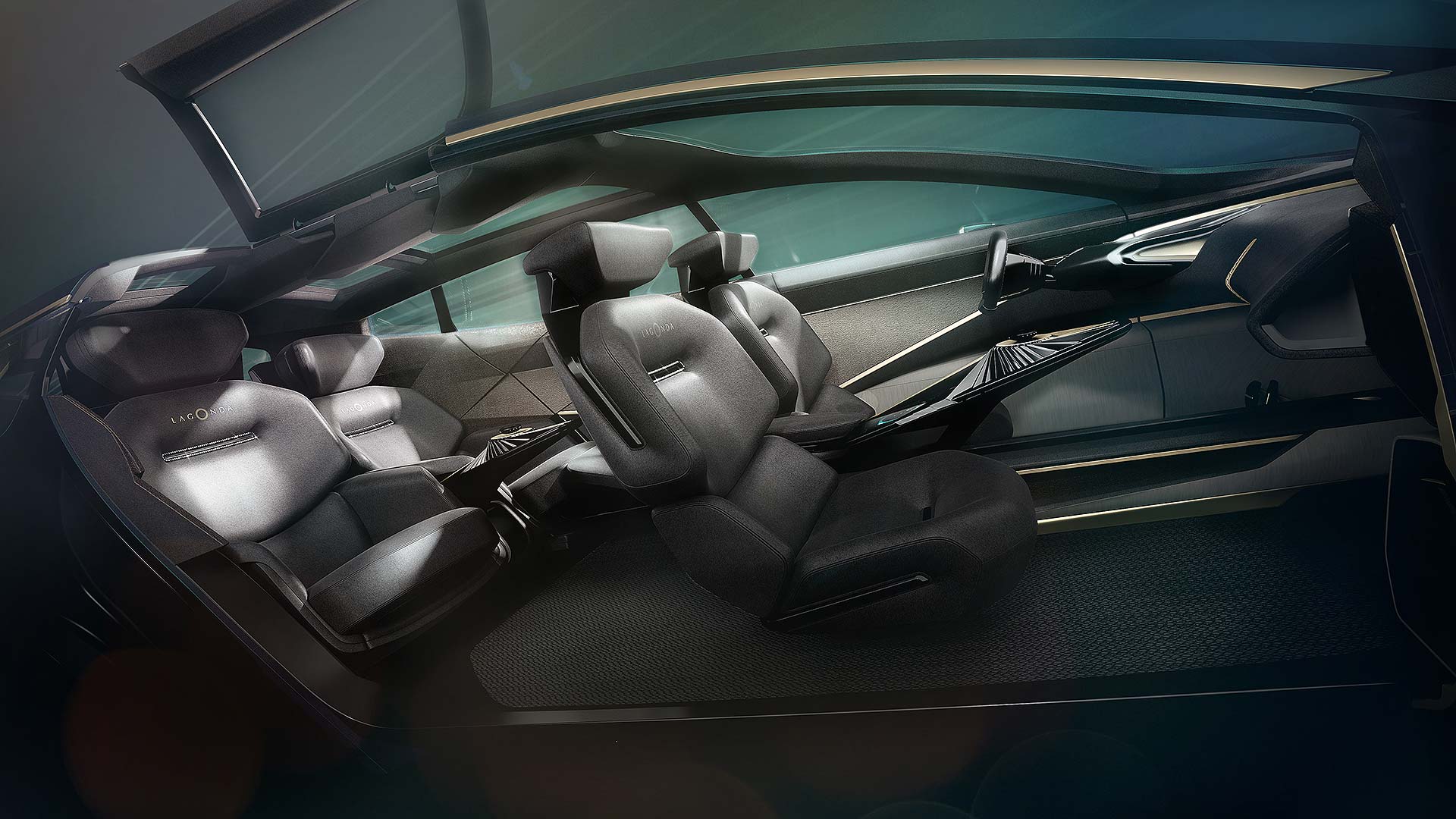
Don’t let its size fool you, this is no Discovery-rivalling three-row wagon. The back is a place to spread out and relax in those stunning reclining chairs. The luxury begins before you even get in, with the rear-hinged back doors giving you a ‘red carpet moment’.
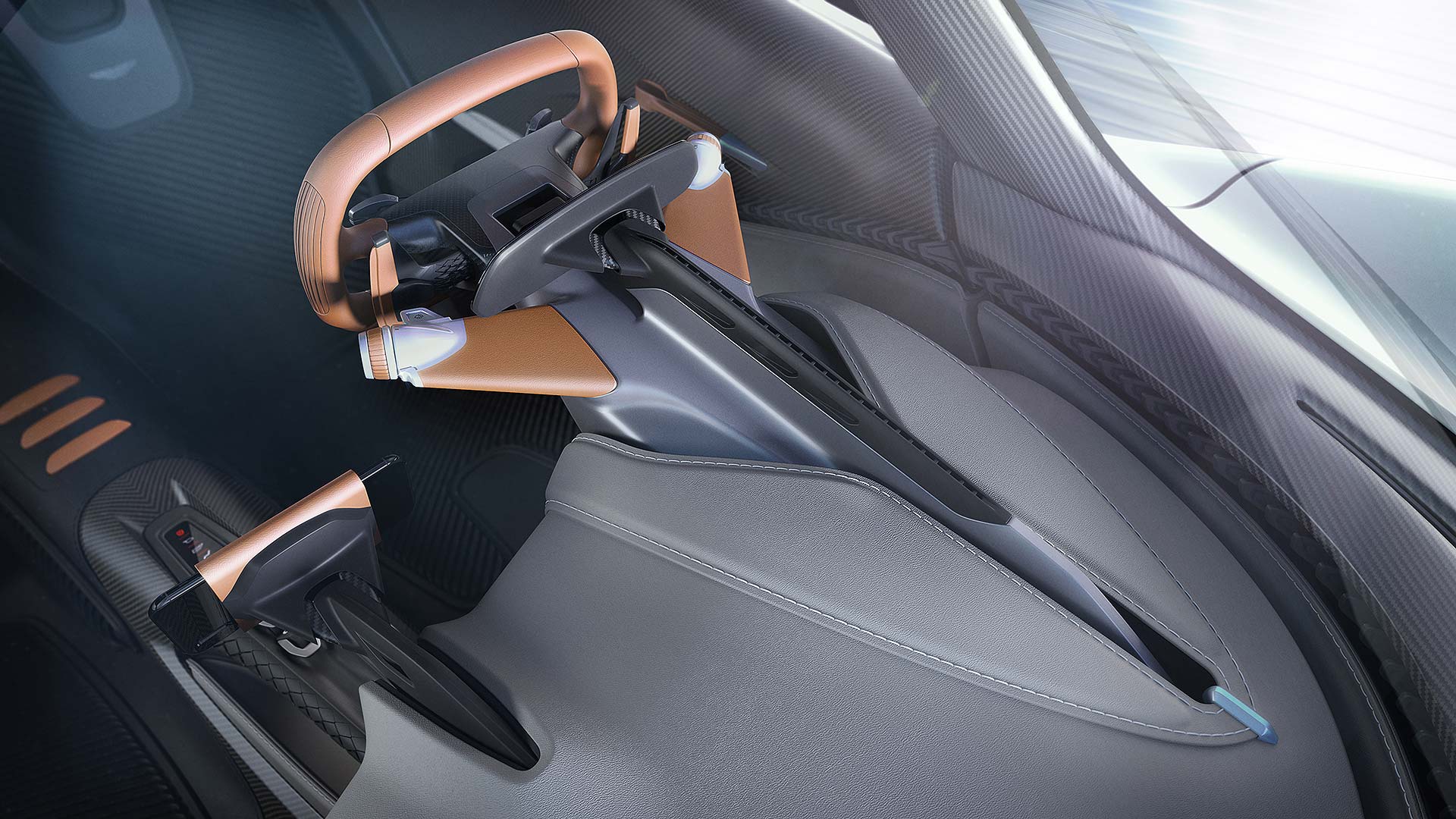
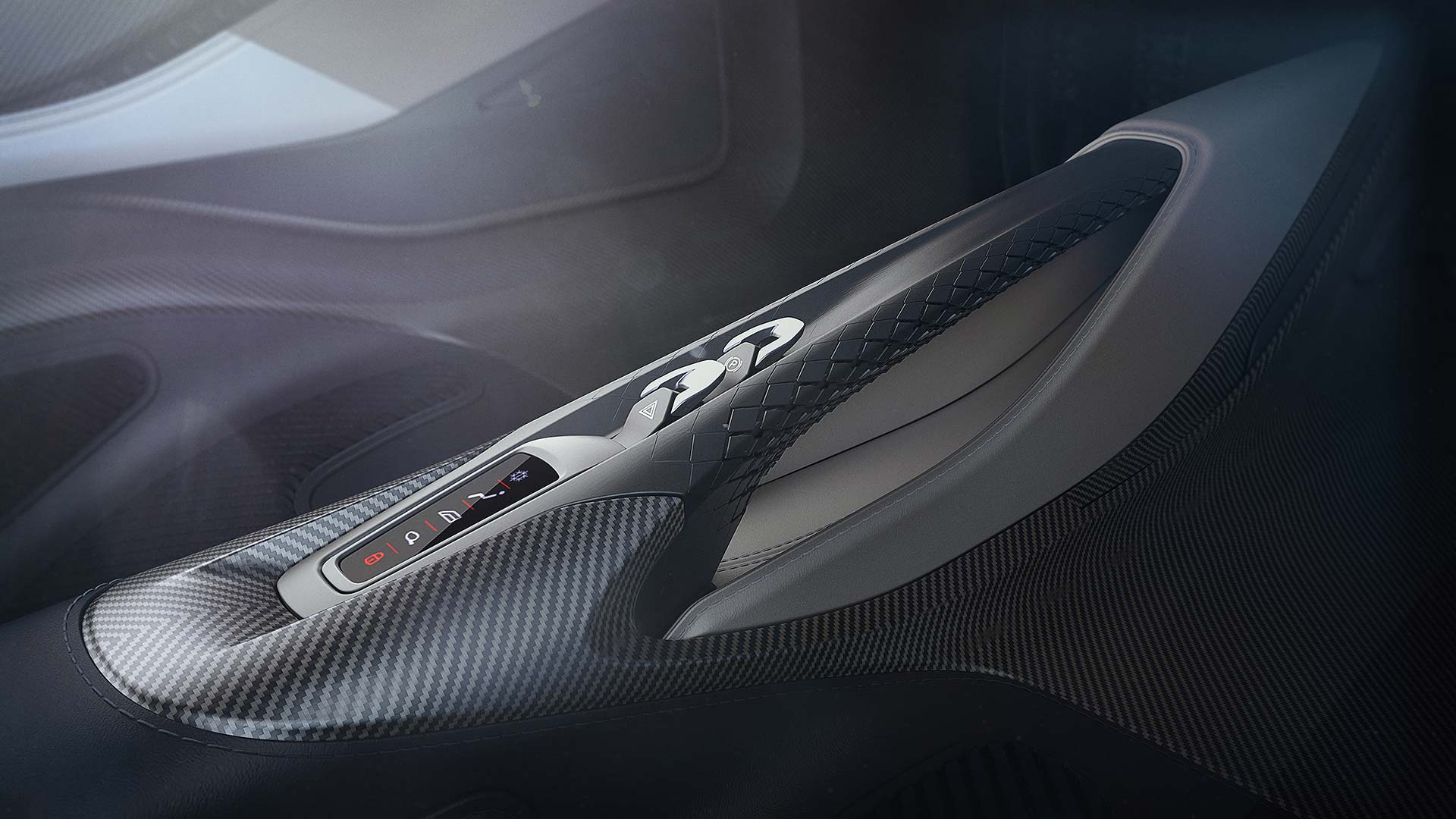
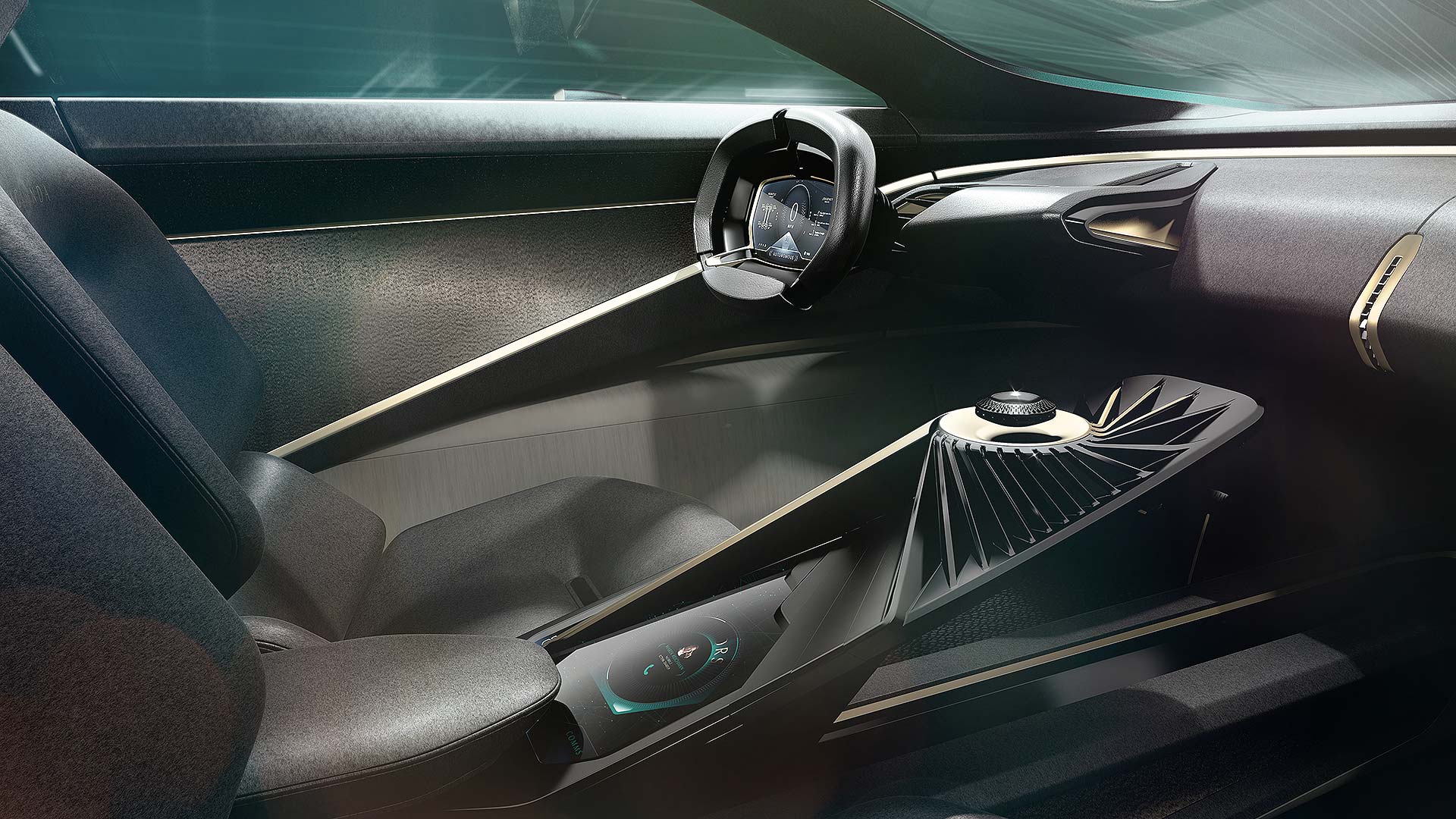
Up front, there’s more pleasing minimalism. Well-judged lines combine an airy feeling with the intimacy of an Aston cockpit.The wheel is predictably futuristic – note the ‘Autonomous’ display we mentioned above – but it’s not intimidating.
That swirling centre console design spewing out from the levitating key is truly bewitching, as is the liberal use of bronze and gold metals. The key levitates using electromagnets. Why keep a key in a world where you can unlock your car with an app? “While the technology exists in this day and age to allow the key to be removed altogether, Lagonda believes that it remains an important point of contact between the driver and the vehicle,” says Aston Martin’s chief stylist, Marek Reichman.
“It’s not about wood and leather”
“The Lagonda brand is unconstrained by the traditional values of current luxury products, it is not about wood and leather,” follows Reichman.
“We tried to design the interior to feel very calm and quiet, with soft, natural materials like Cashmere. Lagonda reflects a future that is full of unique materials that are not set in the past.
“We wanted the technology in the Lagonda All-Terrain Concept to bring a sense of personality to the vehicle. Just as with the materials and the exterior design, the technology should be warm and involving rather than cold and impersonal. This is the future and it should be something that people are inspired and delighted by rather than perplexed and frightened by.”
When can I have one?
Well, not until 2022 at least, and the finished product will no doubt be toned down somewhat. We hope some of the essential cleanliness and clarity of the design of the All-Terrain Concept makes it to production in St Athan, though.
Real luxury is a clarity of vision and a lack of fuss, as well as capability and quality. And Aston Martin Lagonda looks set to deliver.
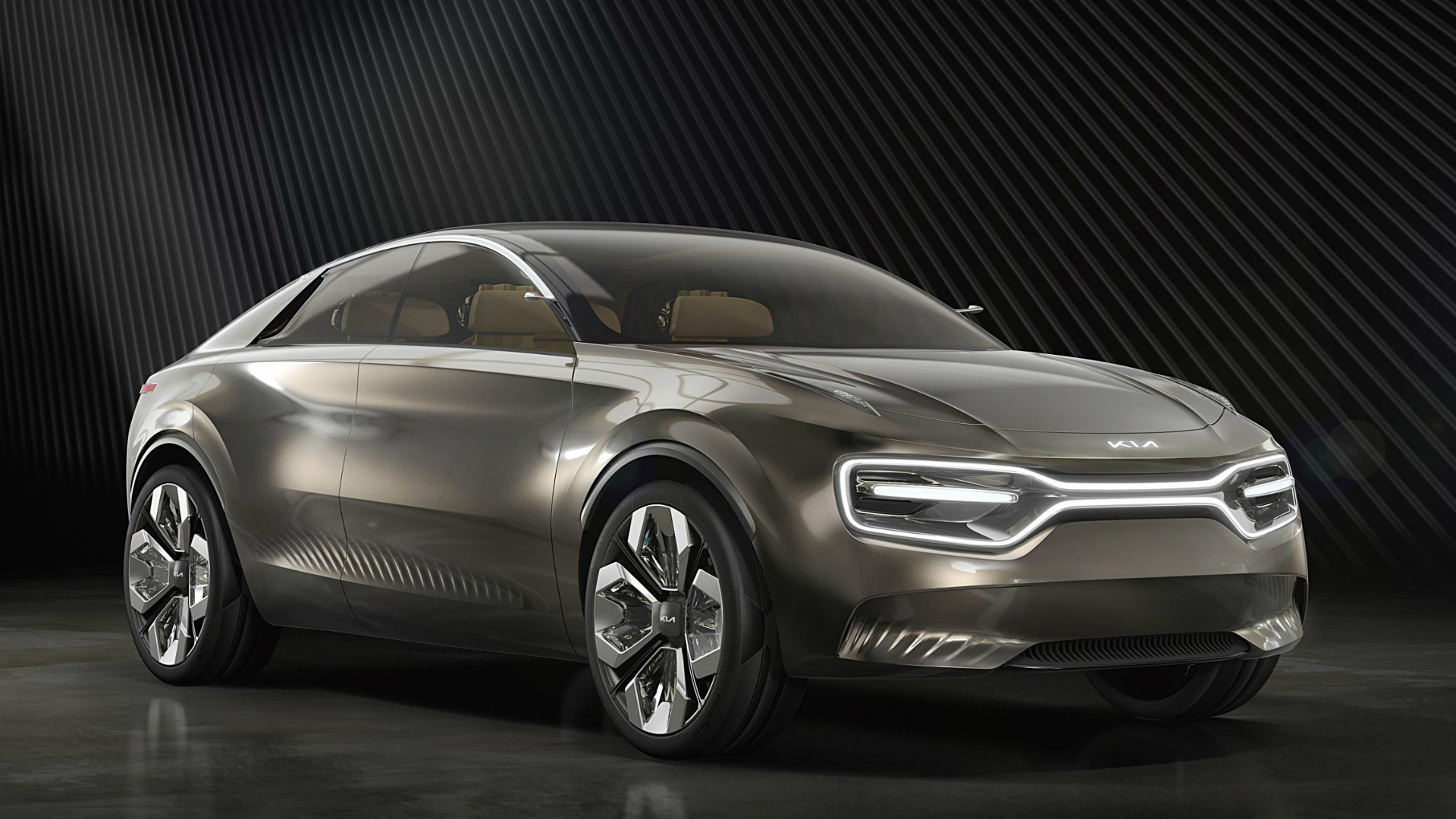
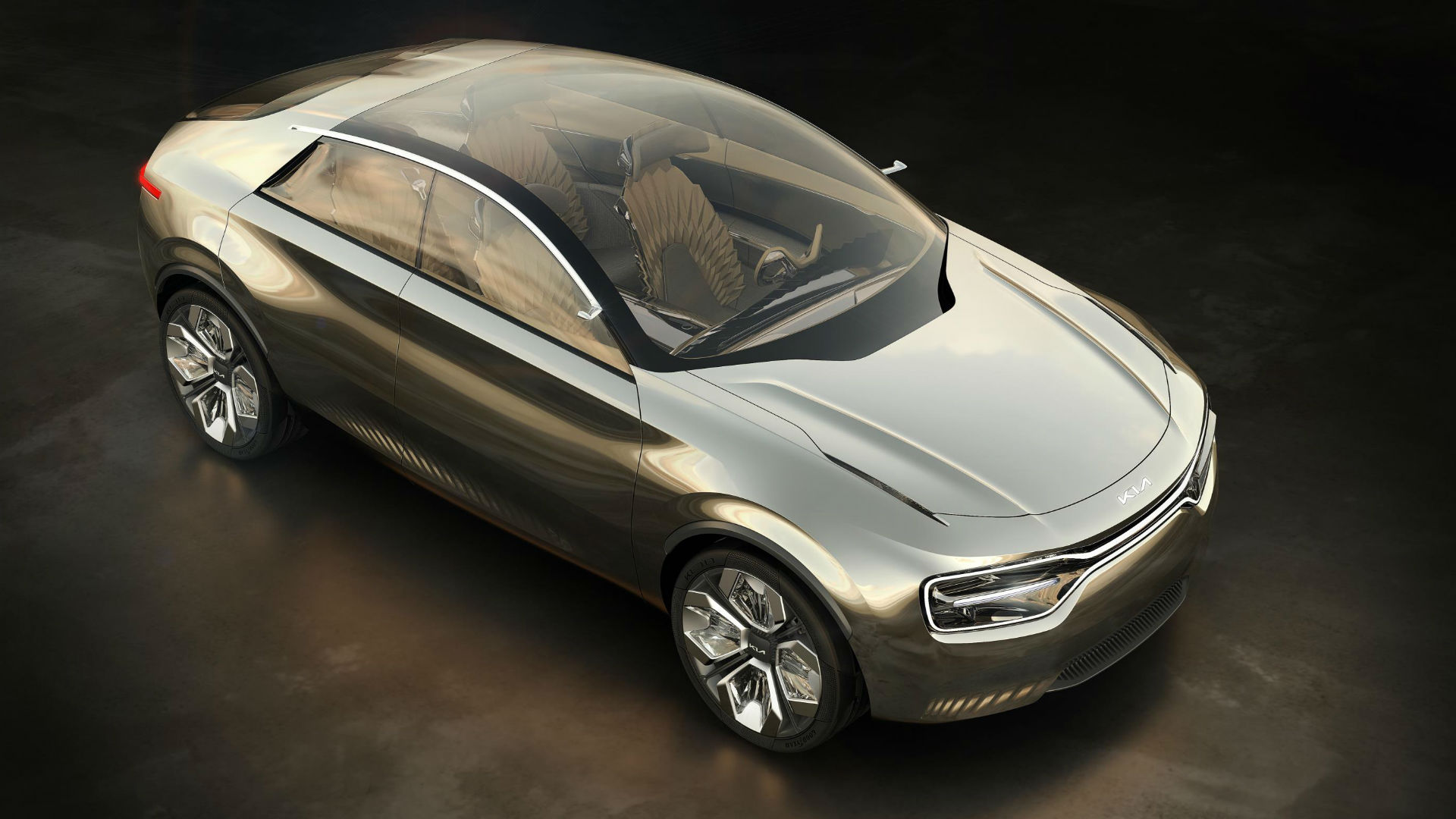
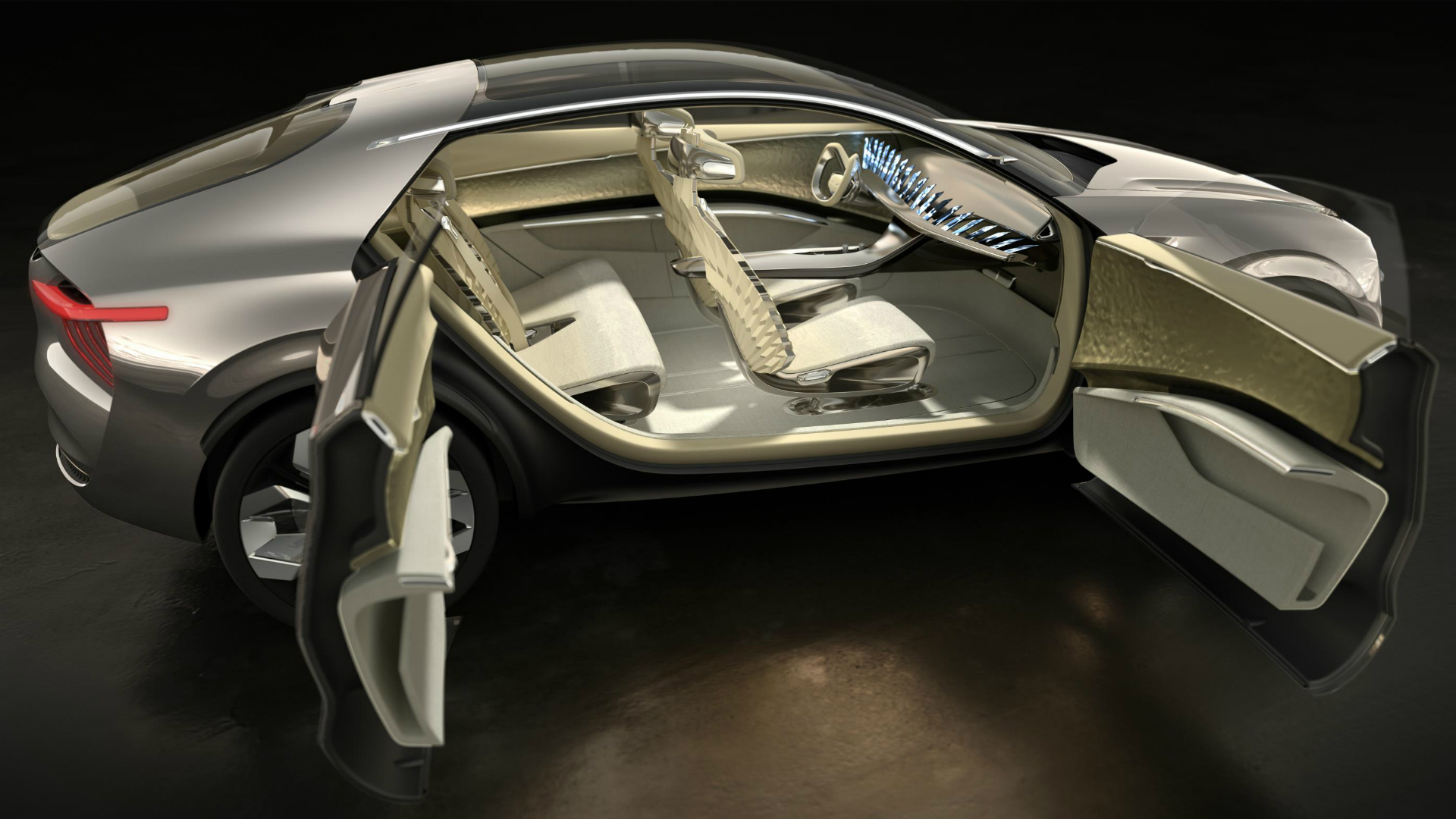
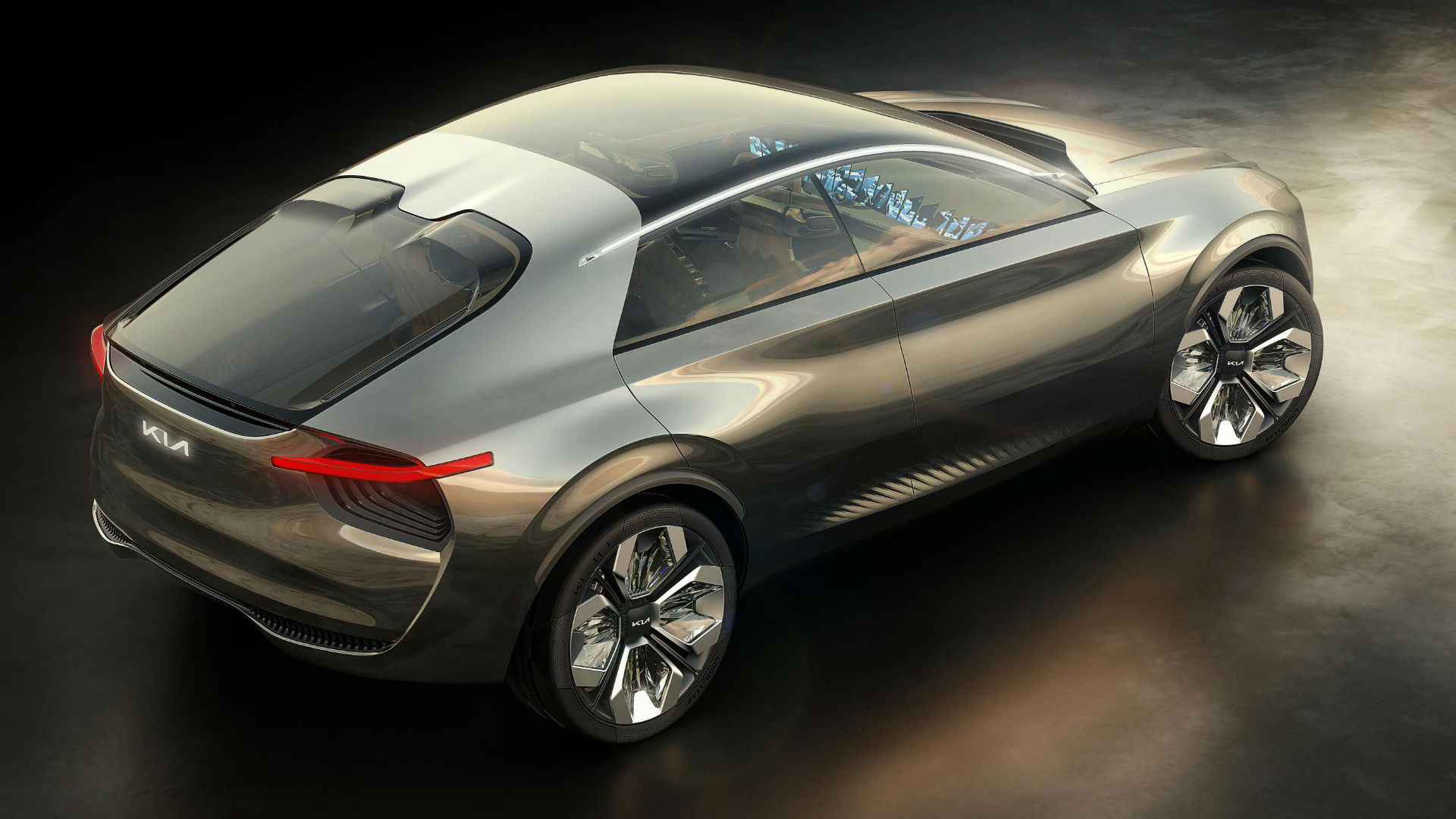
Kia has unveiled its ground-breaking Imagine concept at the 2019 Geneva Motor Show.
It’s an electric car, but not like we’ve seen before from the Korean marque. Not that the Soul EV or e-Niro are particularly derivative – but the Imagine deliberately breaks the mould.
A category buster
Just look at it. Is it a crossover? Is it a saloon? Is it an SUV? Much like the Polestar 2 EV, the Imagine borrows the handsome, chiselled proportions of a sporting car for an SUV-addicted audience.
“It’s a large C-segment car – the vehicle size that’s incredibly popular in Europe – but the only things it holds on to are Kia’s brand values,” explains Gregory Guillaume, vice president of design for Kia Europe.
“It hints at something familiar, but is something entirely new. I think of it as a category-buster, and a disruptor – it’s familiar and understood but at the same time progressive and new.”
A category buster, you say? Sounds good to us. if you’re re-inventing powertrains, why not reinvent cars altogether? The Imagine could potentially re-invent Kia, too. The styling at the front including the ‘suspended lights’ and ‘tiger mask’ are the possible future corporate face for the marque’s electric cars.
“The inspiration for the ‘tiger mask’ was to create the look and feel of the headlamps being suspended within a transparent block of glass,” explains Guillaume. “This identifiable lighting signature could potentially be deployed as a unifying design element across Kia’s future electric vehicle range.”
Underneath the distinctive skin is a ‘low-mounted induction-charged battery pack, powering a compact drivetrain’. There’s no word yet on what range that provides, but suffice to say it’ll top the current e-Niro’s 300-plus miles.
Helping the Imagine on its way is a smooth, aerodynamic design. “The front air curtain, the way the double-skin bonnet channels air through the nose, up and over the front screen and roof, the double skinned C-pillar that creates an air spoiler, the completely enclosed underbody, the wind-cheating ‘wingcams’ and the hard-edged break-away around the car’s rear – all these features collectively boost aerodynamic efficiency and reduce turbulence and drag,” Guillaume says.
Completing the look on the outside are standard-issue concept car wheels – a massive 22 inches in diameter.
A cabin with “a twinkle in its eye”
Inside, Kia wanted this concept to have a sense of humour: a “twinkle in its eye”.
That wrap-around wall of displays for instance, is Kia biting its thumb at the stuffy attitude the industry has to screens, and how they’ve more or less remained stubbornly fixed to centre consoles for 20 years or more.
“These 21 incredibly thin screens are a humorous and irreverent riposte to the ongoing competition between some automotive manufacturers to see who can produce the car with the biggest screen,” said Ralph Kluge, Kia Motors Europe’s general manager of interior design.
Imagine is clearly an important car for Kia, with those responsible for bringing it to life being proud of their leftfield creation. It’s a statement of intent, that the marque intends to diversify the EV marketplace with a strong, appealing and quirky range of cars in the coming years.
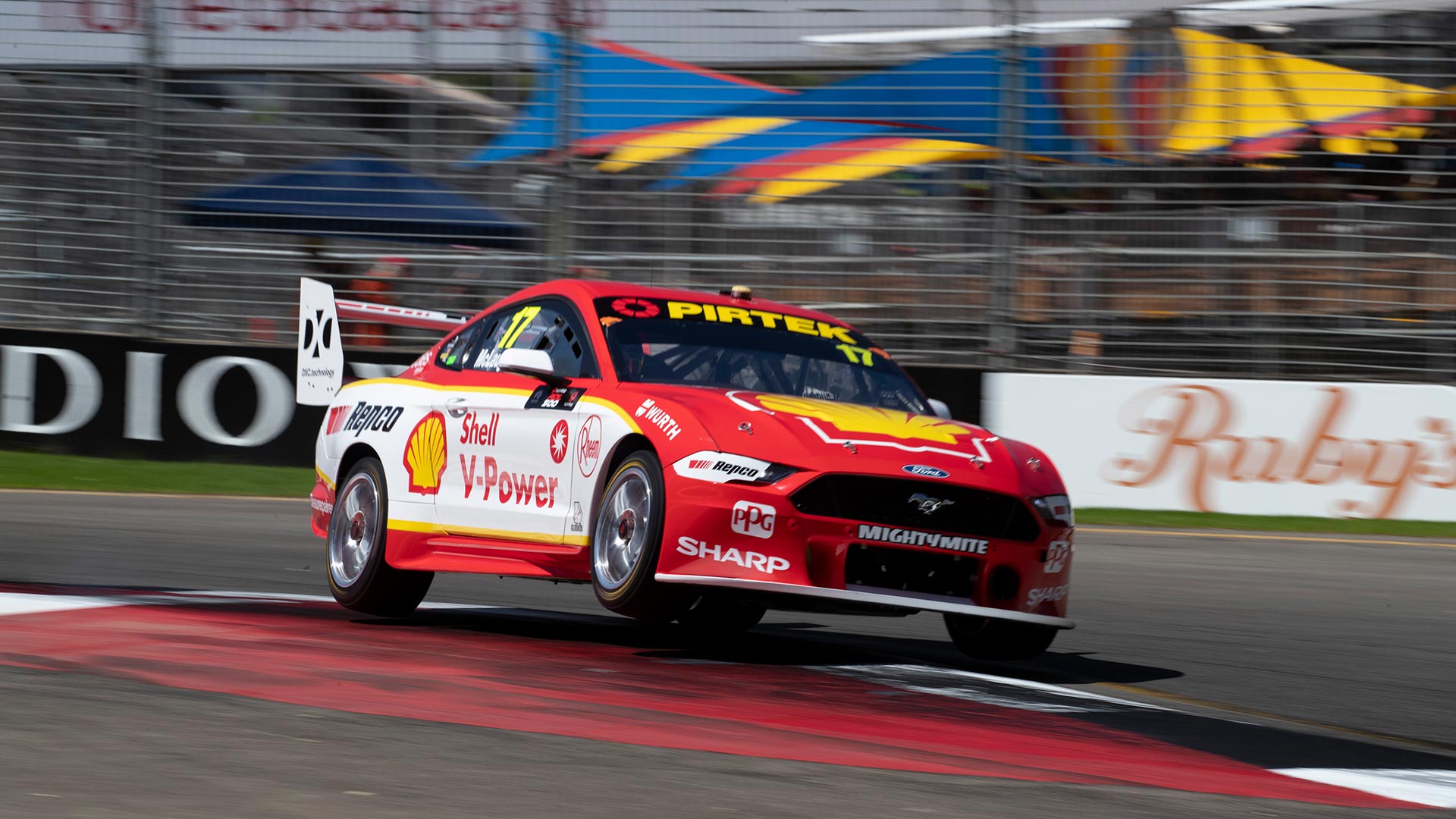
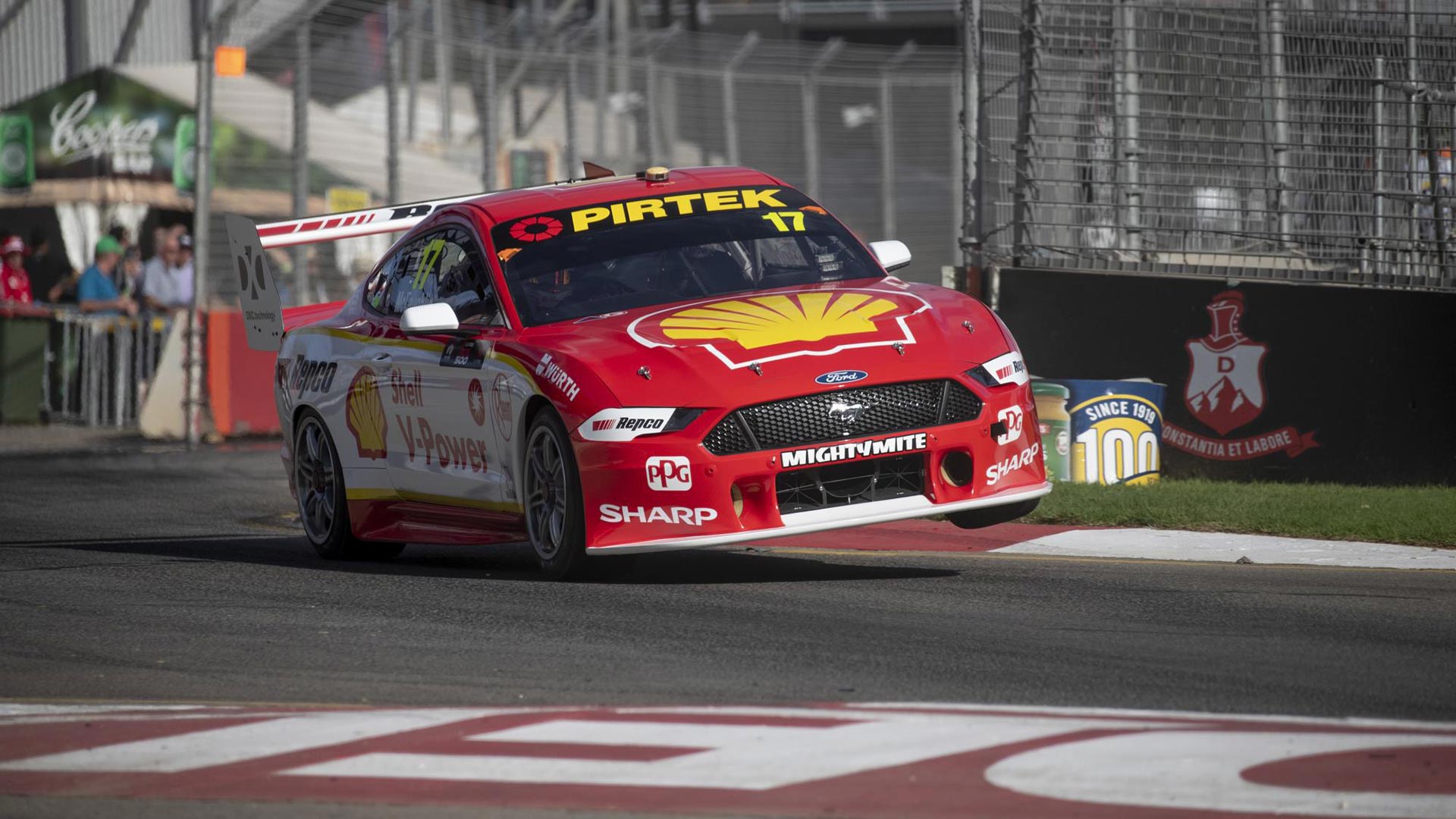
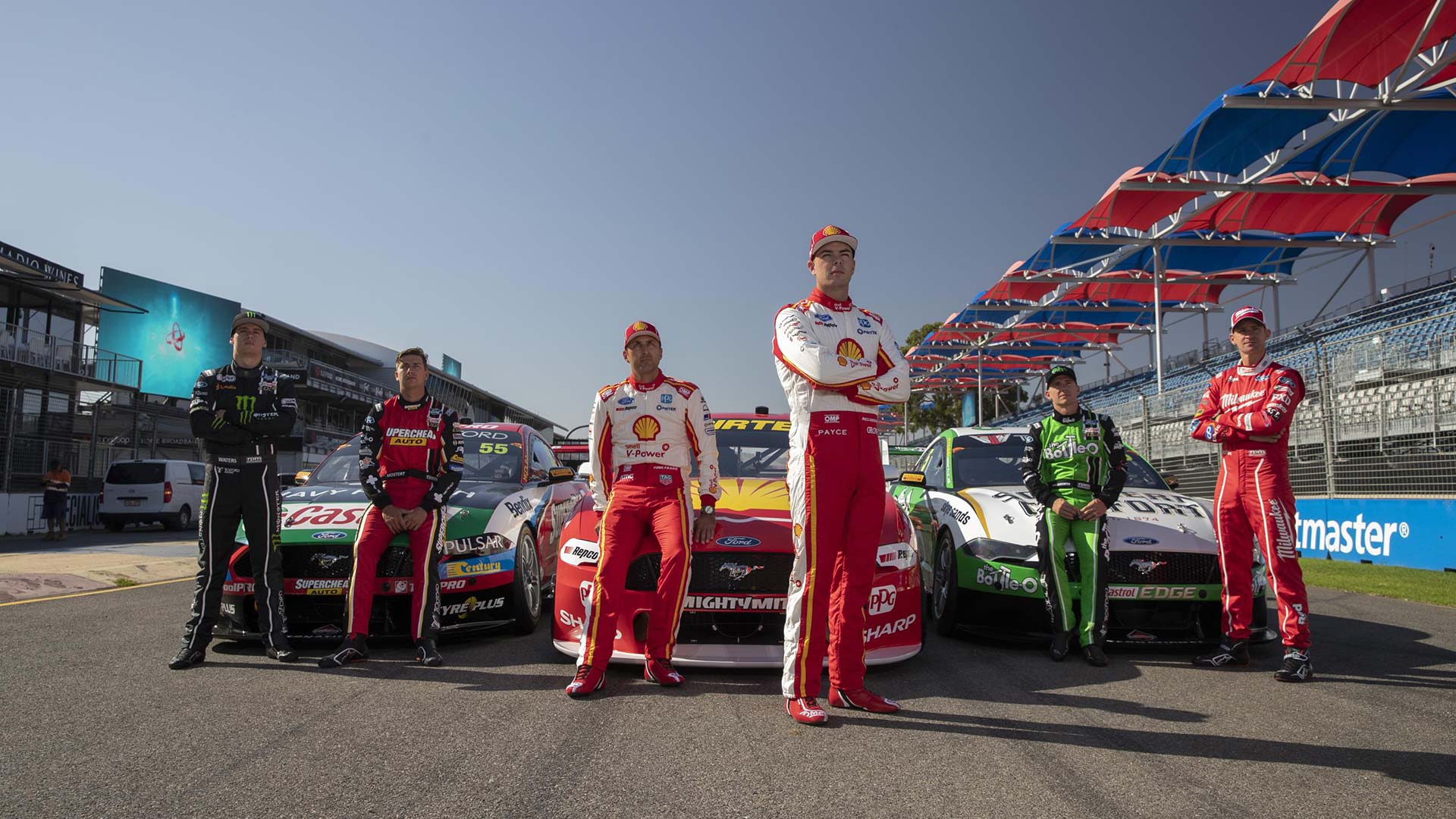
The box-fresh Ford Mustang racer scored an incredible double victory at the weekend, making its debut in the Virgin Australia Supercars Championship a major success.
After more than 18 months of work and development, the efforts paid off for the latest Ford Performance creation.
Any worries about whether the move to the Mustang would cause a problem evaporated early in the weekend, when Shell V-Power Racing driver Fabian Coulthard took pole position with his Mustang in the qualifying session.
It set the scene for an impressive opening weekend for the new race car, which marked the first time a Mustang has celebrated Australian Touring Car Championship victory since 1972.
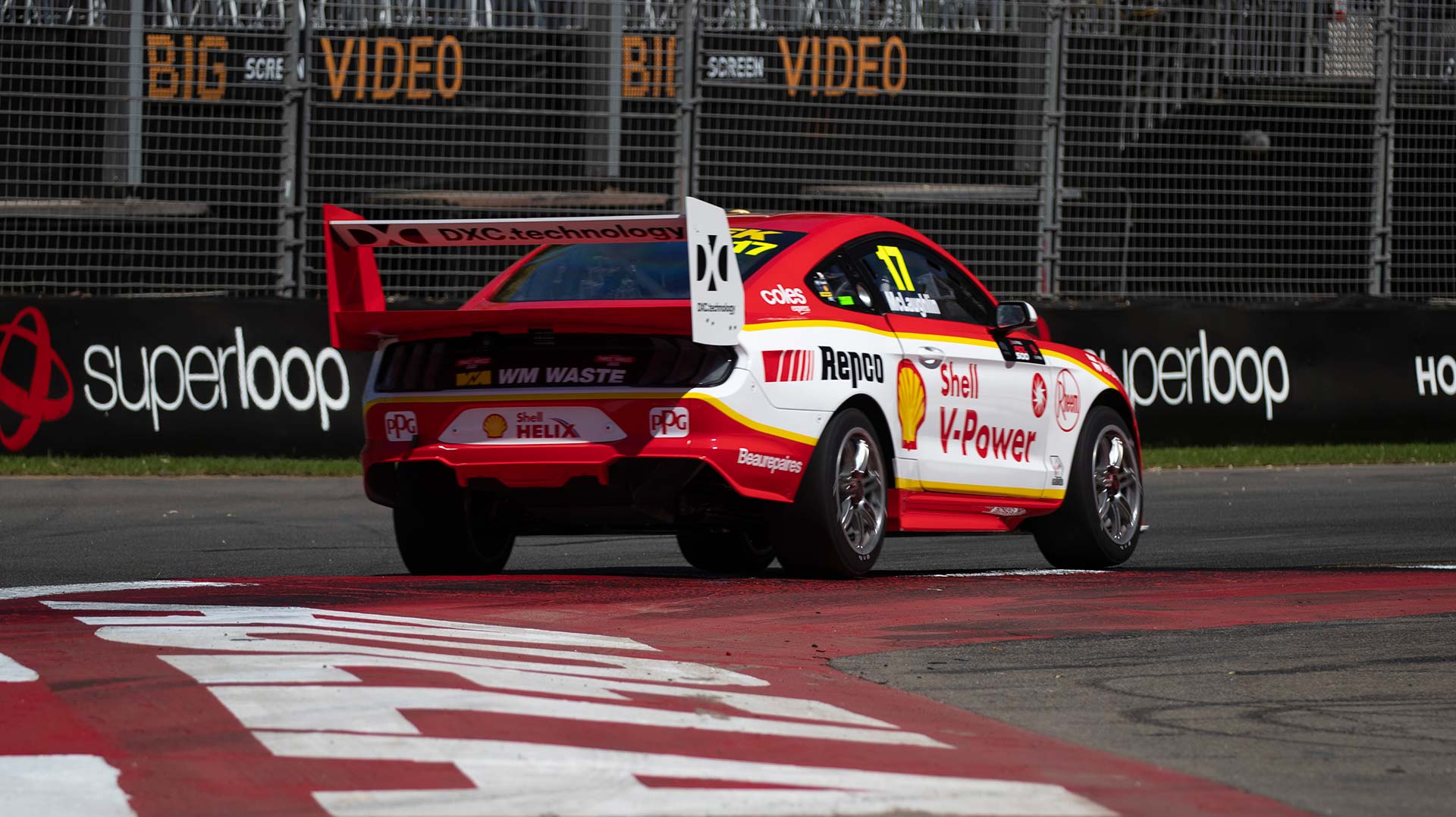
Although some manufacturers might usually expect to start out slowly with a new car, last year’s champion driver Scott McLaughlin seemed happy to ignore the rulebook.
Starting from third on the grid for the opening race, 25-year-old McLaughlin took the lead from the start and held onto it throughout the 78 laps.
Even the searing Adelaide heat were not enough to punish the new Mustang, with McLaughin remarking that “but the cooling and all that stuff was really good for us” as he celebrated the first win for the new ‘Stang.
Proving that the success on Saturday was not just a case of beginner’s luck for the Mustang, McLaughlin delivered the same result again in Sunday’s race two.
Snatching the lead by the third lap of the race, McLaughlin would go on to take another victory with dominant ease.
Underlining the fact Ford’s pace was not just down to McLaughlin’s driving skills, Tickford Racing’s Chaz Mostert took fastest lap in race two.
Kay Hart, Ford Australia and New Zealand President and CEO, summed up the weekend as “a fairy tale start for our Ford Performance Mustang,” whilst Ford Performance Global Director, Motorsports, Mark Rushbrook, said “the Mustang Supercars’ results are beyond expectation”.
The next outing for the Ford Performance Mustangs will be on the Melbourne street circuit, taking part in the 2019 Rolex Australian Formula One Grand Prix weekend on March 13 to 17.
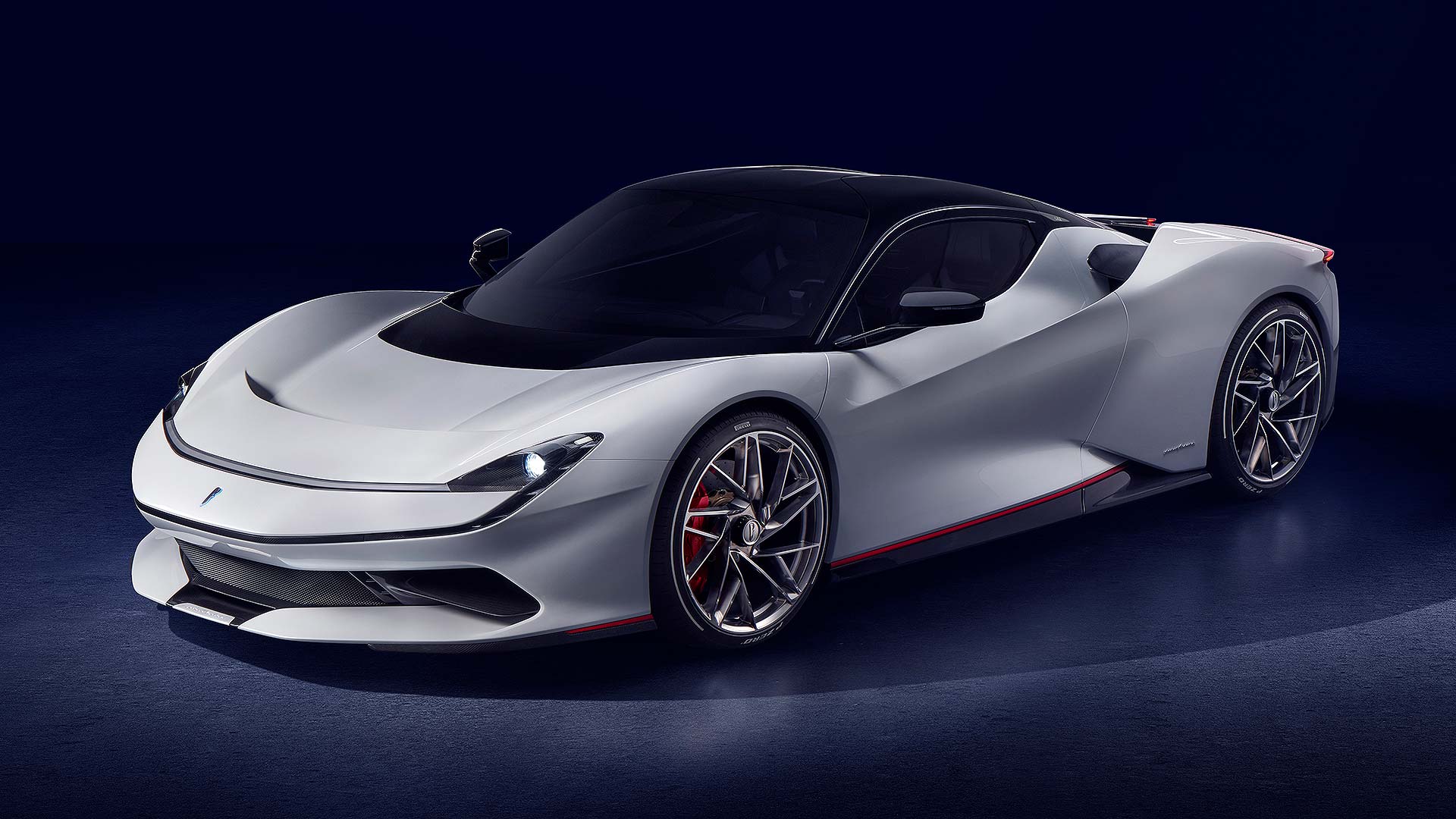
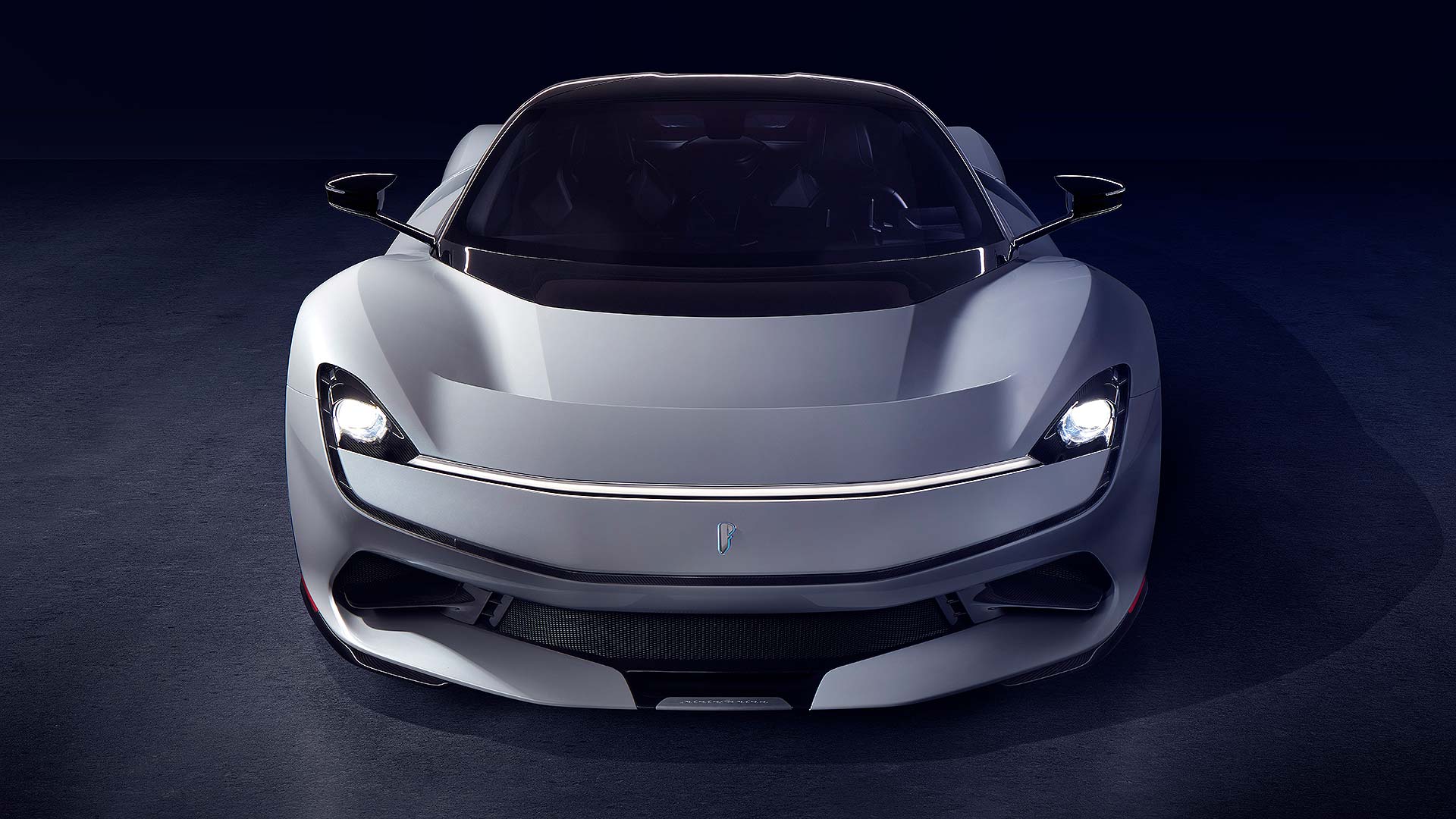
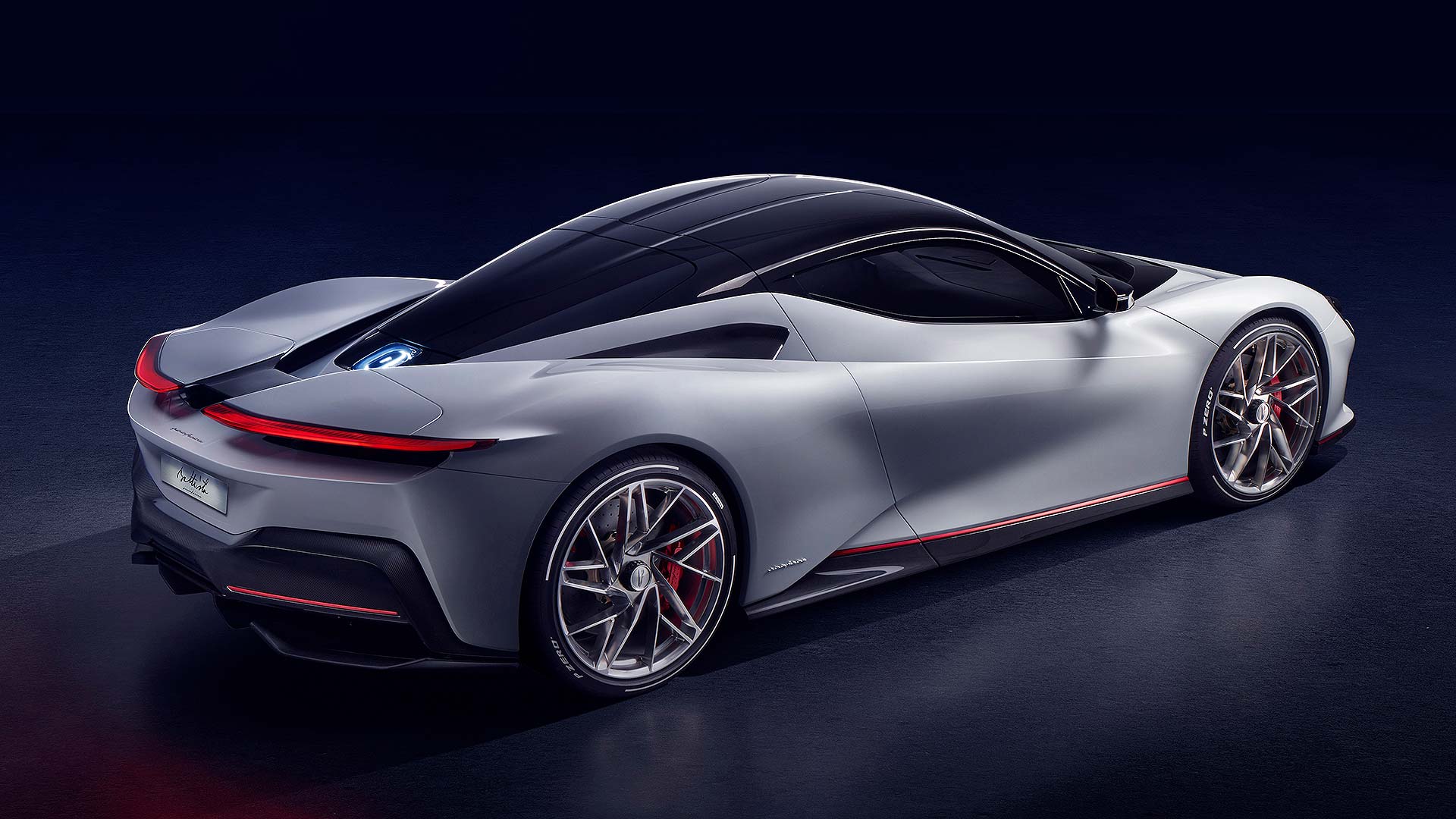
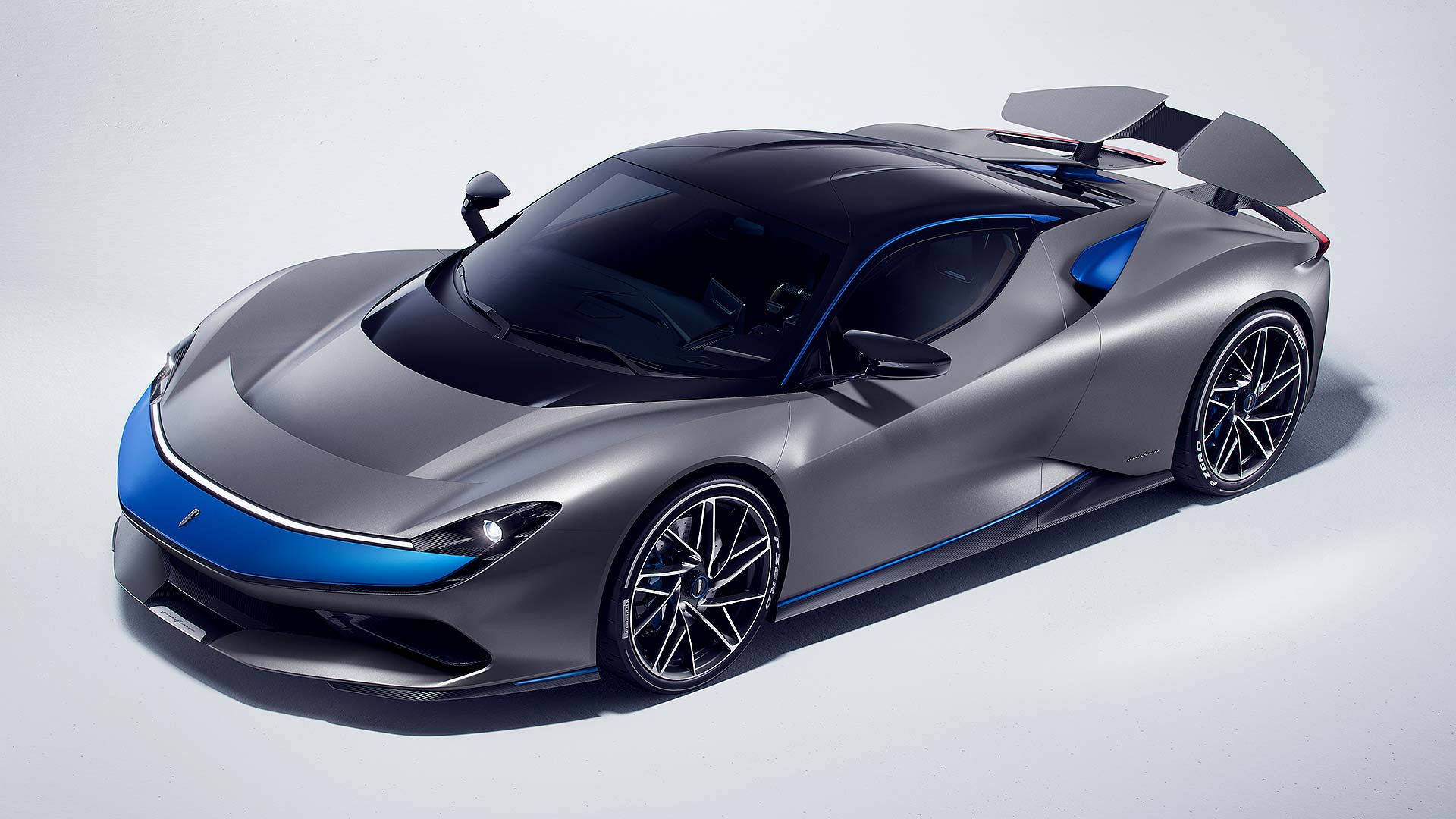
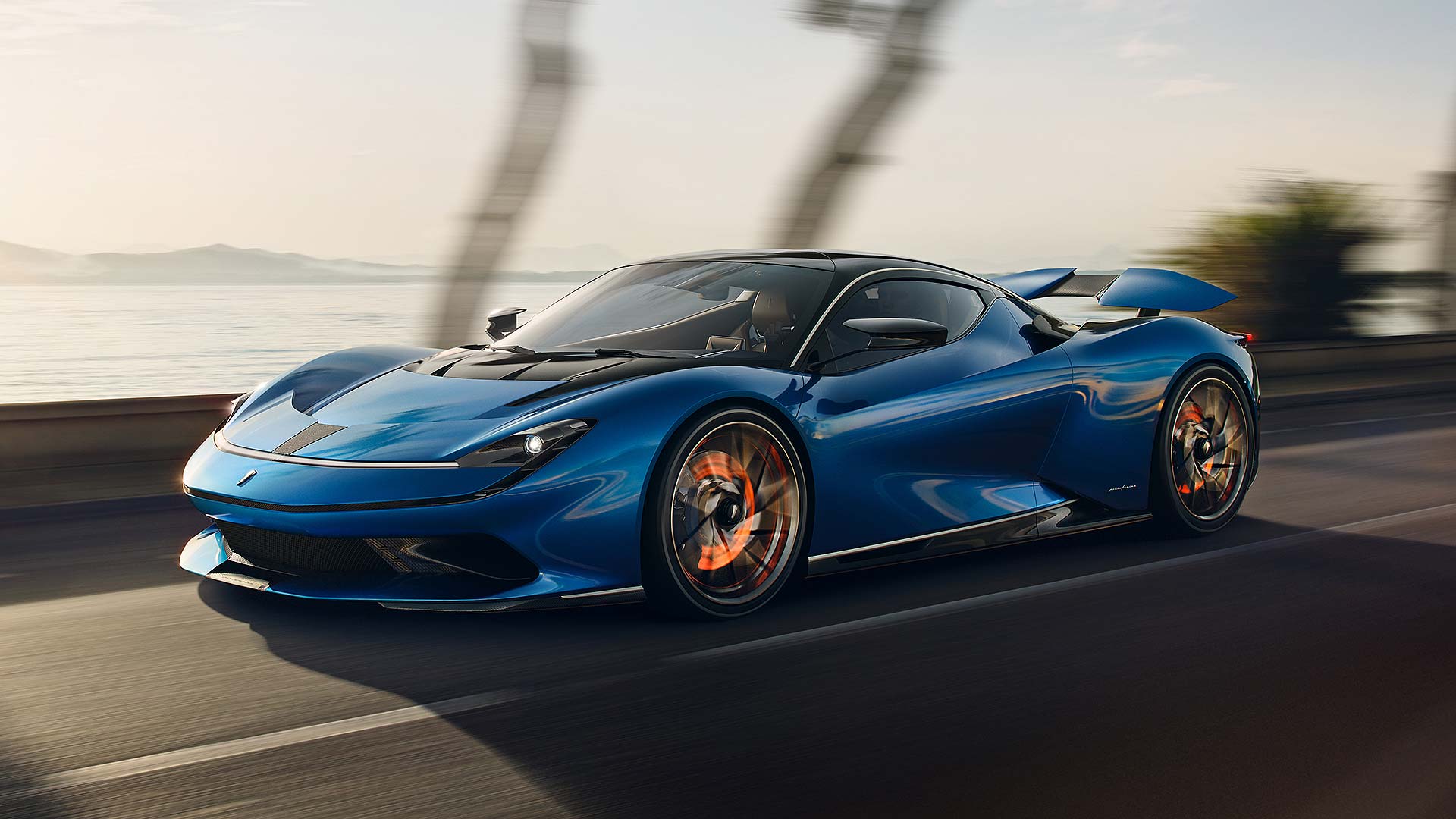
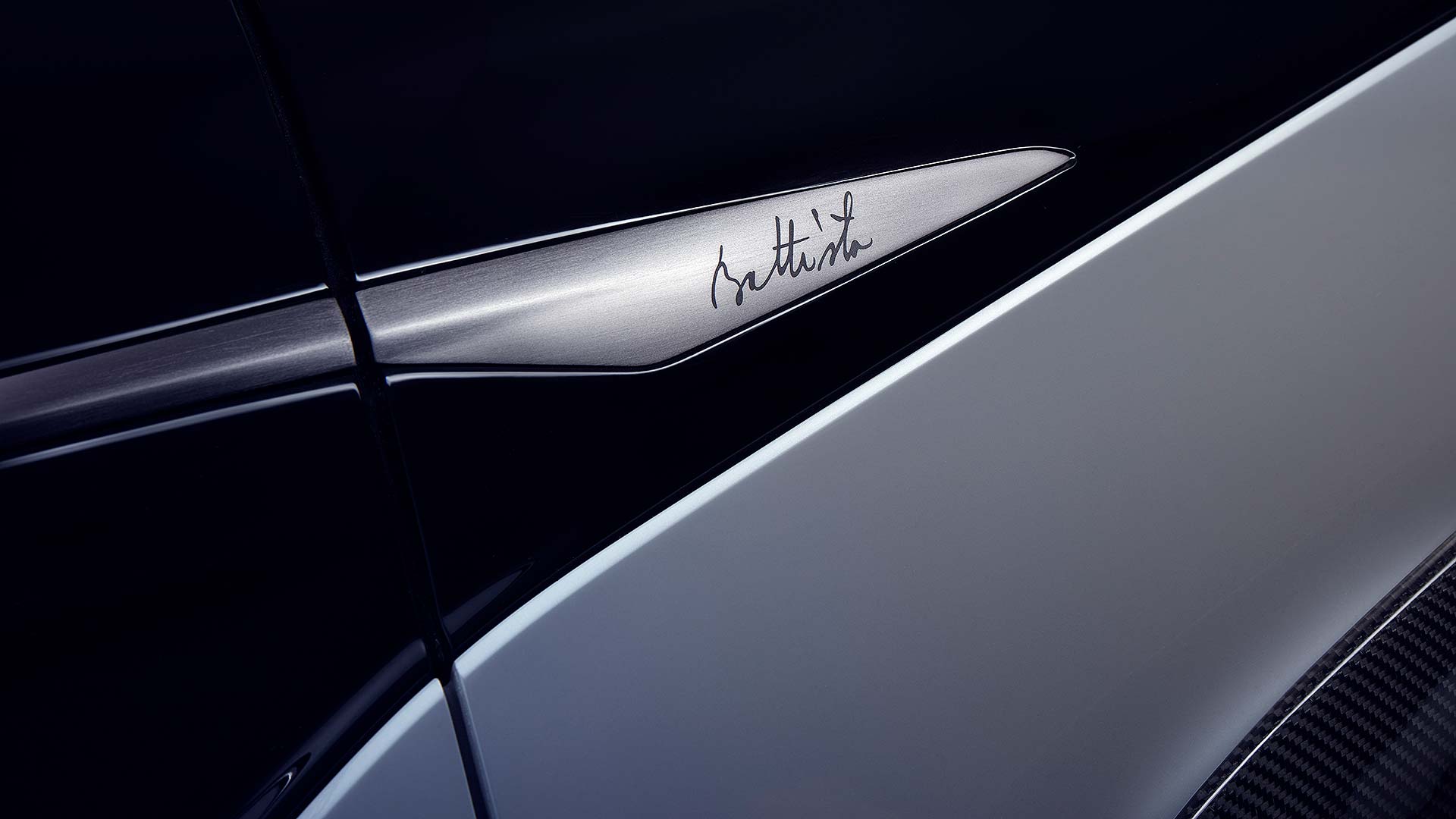
The Pininfarina Battista is a glamorous new entrant into the global hypercar market, one targeting Ferrari, Aston Martin and the ultra-exotic Pagani and Koenigsegg brands with a mix of incredible power and all-electric allure. Producing 1,900 horsepower and faster than a Formula 1 car from 0-60mph, it will also travel almost 280 miles on a single charge.
Only 150 will be built, all in Italy, carrying a rumoured £2 million price tag. Deliveries begin in 2020.
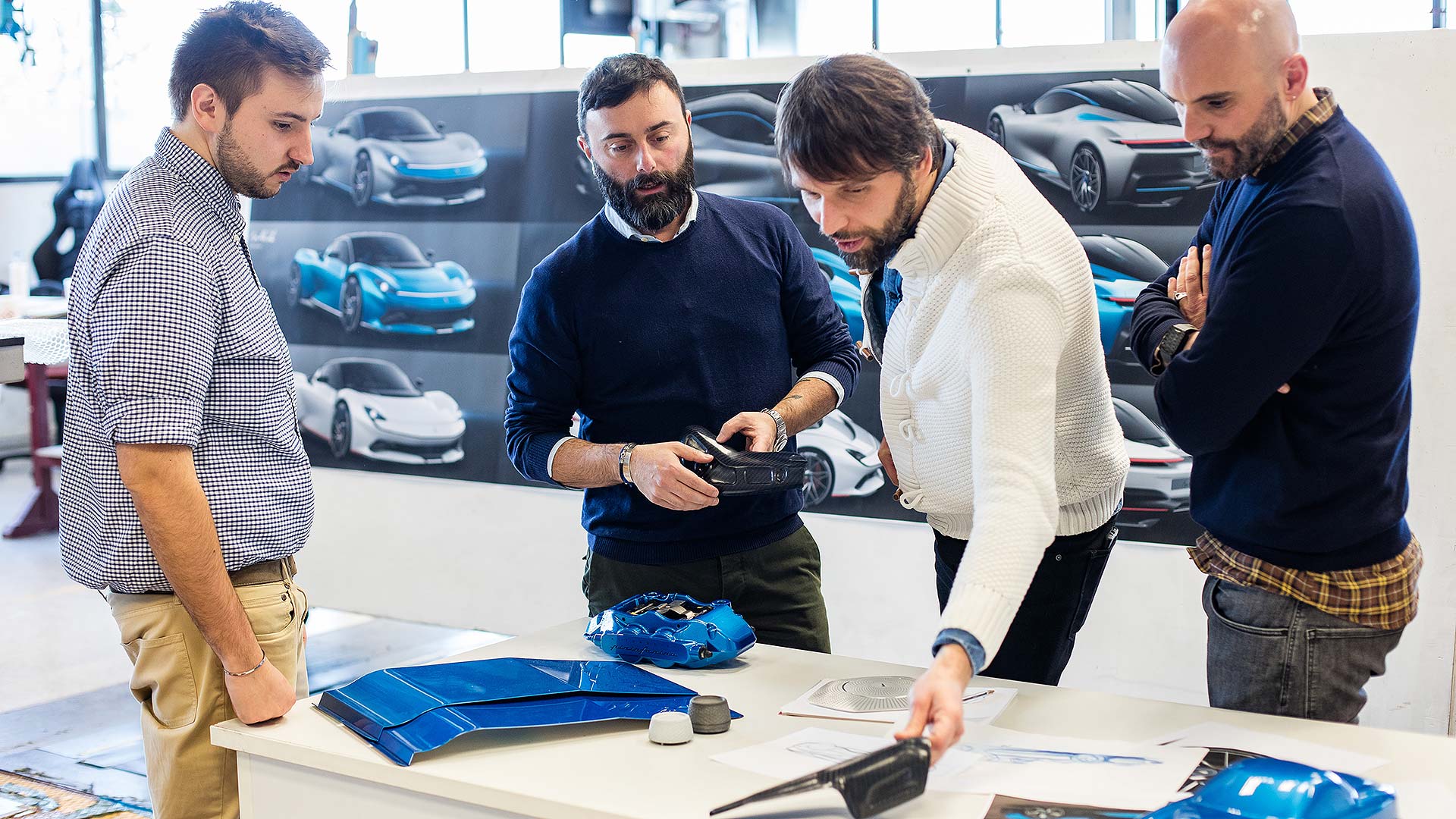
Revealed in an event on the eve of the 2019 Geneva Motor Show, an all-star team was on hand to launch the Battista. Pininfarina says key members have previously worked on launching the Bugatti Veyron and Chiron, Ferrari Sergio, Lamborghini Urus, McLaren P1, Mercedes-AMG Project One, Pagani Zonda and Porsche Mission E. The Battista is a car that’s more than a measure for them, says the bullish team behind the project…
Why, hello there, Automobili Pininfarina!
The Battista is the storied Pininfarina firm’s very first road car: up to now, the Italian styling house has designed cars for other brands (it is credited with creating more than 60 Ferraris, for starters). That’s why it’s called Battista, after the Pininfarina founder, who started the company 90 years ago. Paolo Pininfarina, his grandson, says its launch is “a dream come true… my grandfather always had the vision that one day there would be a standalone range of Pininfarina-branded cars.”
It’s the first of many Automobili Pininfarina cars, vows the firm – all of them “purely electric, zero-emissions, luxury cars solely branded Pininfarina”.
For those who like brands with stories, Automobili Pininfarina CEO Michael Perschke says “this is the most authentic and exciting automotive story imaginable. We aim for Battista to be a future classic and automotive icon, writing its own page in automotive history books.”
Why go electric with the first Pininfarina?
Electric was a no-brainer for the Pininfarina team, they say. “Electrification unlocks the door to a new level of performance and a zero-emissions future,” said Perschke. It’s the first electric ‘poster car’ and described as “a pivotal moment in time for the new automotive environment”.
How fast is the Pininfarina Battista?
The Battista launches with exceptional Top Trumps credentials. Its 1,900 horsepower is combined with almost 1,700lb ft of torque to give a 0-62mph time of less than two seconds. It will accelerate from 0 to 186mph in less than 12 seconds. Top speed? Up to 218mph – yet if you don’t drive quite so fast, it will deliver a range of up to 279 miles.
That’s a monstrous 0-62mph time. Surely Pininfarina’s going to sing it from the rooftops?
Interestingly, Pininfarina reckons the 0-62mph time isn’t actually all that. Electric cars are always quick against the clock. “ICE (internal combustion engine) cars are easily comparable with each other, but we have no benchmark to compare and we have to define the electric hypercar experience,” said chief technical officer Christian Jung. “Agility and manoeuvrability will be more defining than 0-100km/h [0-62mph], I suspect.”
I guess the electric motor is pretty beefy?
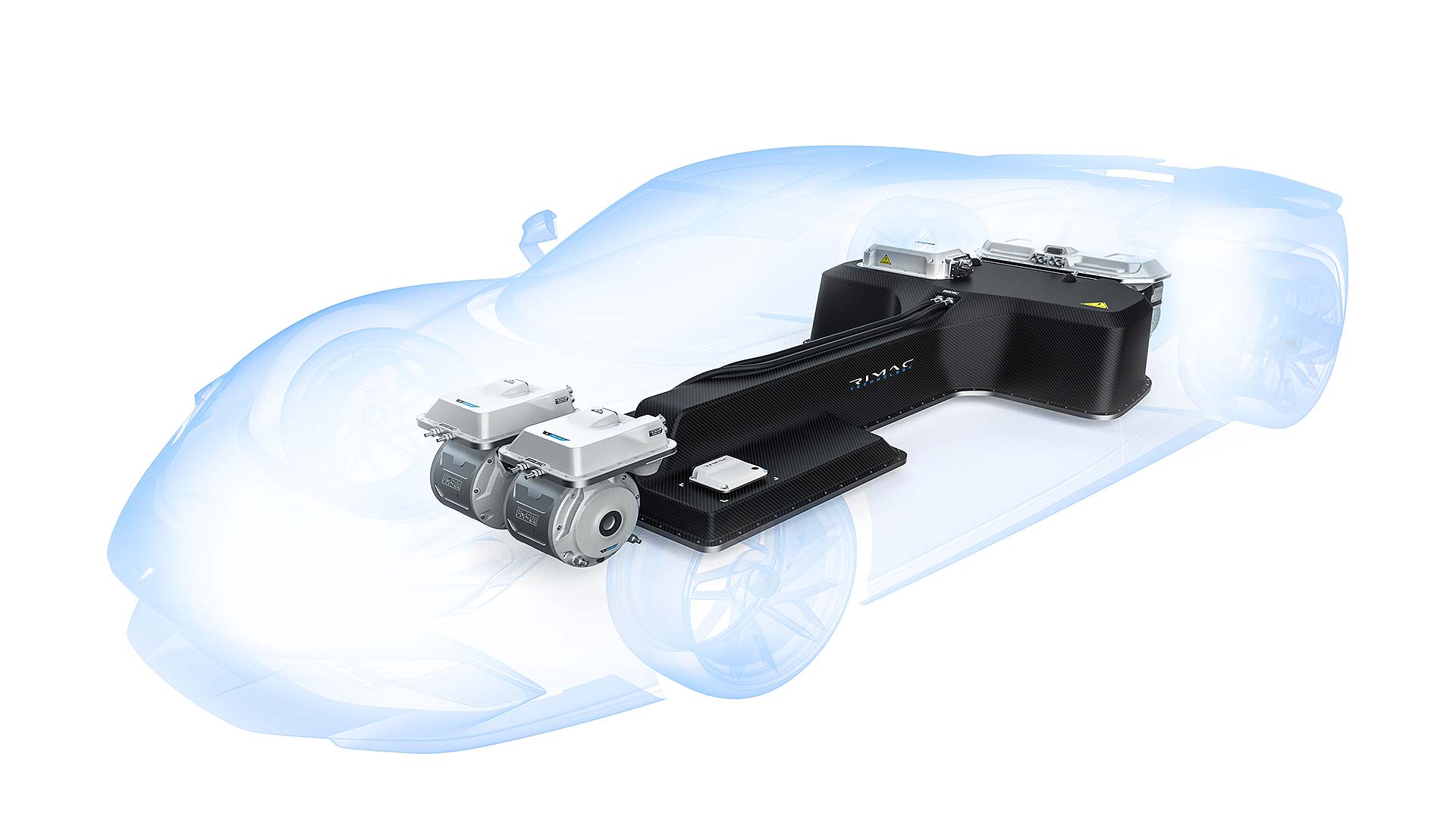
There’s not just one electric motor here – there are four of them, which independently deliver drive to each wheel. Because there’s so much torque, or pulling power, Pininfarina says torque vectoring – distributing the amount of output each motor puts out according to driving conditions – will play a pivotal role in how it drives. After all, it does have more than twice the torque owners of conventional hypercars are used to…
So Pininfarina’s turning the dial up to 11?
Pininfarina admits it might actually have to ease back on how much surge the Battista delivers, so bountiful is its pulling power. “We are trying to go to the extreme that neither Tesla nor the other major OEMs are targeting,” said chief technical officer Christian Jung. “Electrification allows us to support hypercar development with instant torque… we might even have to dial it down, as its reaction time is up to 20 times faster than an ICE (internal combustion engine)!”
How big is the battery in the Pininfarina Battista?
The battery packs a 120kWh output. That’s bigger than any Tesla battery to date, and it’s a T-shaped battery that’s located to optimise weight distribution. The battery, along with the motors plus both software and hardware, are all provided by start-up electric supercar firm Rimac. Richard Hammond famously crashed one of its cars; with Pininfarina, it’s seeking fame for the right reasons…
Won’t Pininfarina Battista owners want to travel a little further on a single charge?
The batteries could have been bigger, but they would have affected the car’s dynamics. Nearly 280 miles “will cover virtually all possible drives, especially as 90 percent of owners are estimated to charge where the car is garaged”. And the 10 percent who want to go further? DC fast charging capability is built in and “by 2021, using app-based charging networks will be normal for many owners”.
What is the Pininfarina Battista made from?
No hypercar worth its salt is made from anything other than carbon fibre. The Battista has a carbon chassis and a carbon body. The rear subframe is made from carbon fibre, the roof is made from carbon fibre, even the crash structures are made from carbon fibre. The only thing we don’t yet know is the weight, and by how much the mass of the batteries have been offset by all this carbon.
What about the noise?
Electric cars are near-silent. But part of the appeal of hypercars is the noise they make, surely? Quite: that’s why Pininfarina will allow drivers to choose a bespoke sound, from literal near silence, to some bespoke sounds that it promises will not be artificially amplified. It’s not yet defined, but it will draw from key factors including the electric motors, air flow, heater system and even the resonance of the carbon fibre monocoque. Keep an ear out…
It’s quick, then. What’s slowing it down?
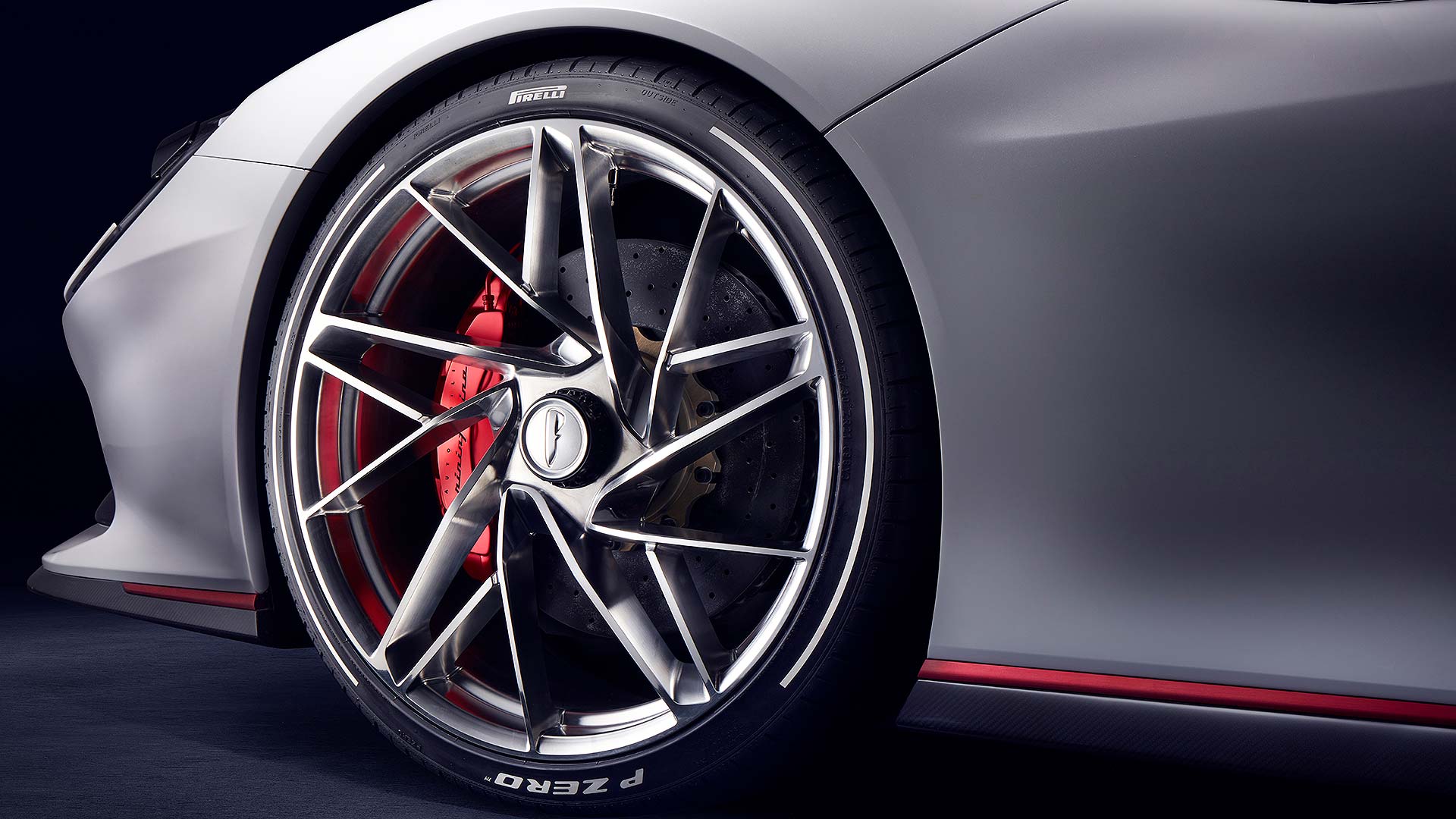
Monstrous 390mm (15.3-inch) carbon ceramic 6-piston front brakes are backed up by almost-as-large 380mm (15-inch) rear brakes. These massive anchors provide “hugely effective brake regeneration to the battery”. There’s also an active rear wing with air brake functionality.
And the Battista’s suspension?
Unlike conventional hypercars, Pininfarina isn’t going big on the Battista’s suspension at this stage. It simply says it will be thrilling, engaging yet comfortable, and be fully adjustable with a range of modes for various driving types.
Who’s setting up how the Battista drives?
Because no Battista owner will ever have driven a 1900 horsepower electric car, Pininfarina’s recruited someone who’s used to driving the elite of racing cars – F1 and Formula E racer Nick Heidfeld. He will work with former Porsche, Pagani and Bugatti engineer Dr Peter Tutzer to make sure the Battista serves up a memorable driving experience.
Do they hint at how Pininfarina’s hypercar may drive?
The Battista will be focused on the track but also comfortable on the road, we’re promised. The torque vectoring systems will “put far more control in the hands of the driver than in a traditional internal combustion engine performance car”. Heidfeld backed this up, comparing Formula E racers to the Battista in the fact “there is no delay at all on the throttle… even in a Formula 1 car we feel a delay”.
Not only is it faster than an F1 car, then, it’s also more responsive. How truly incredible does this car sound?
Pininfarina has been a styling house for 90 years. What does the first car it’s designed for itself say?
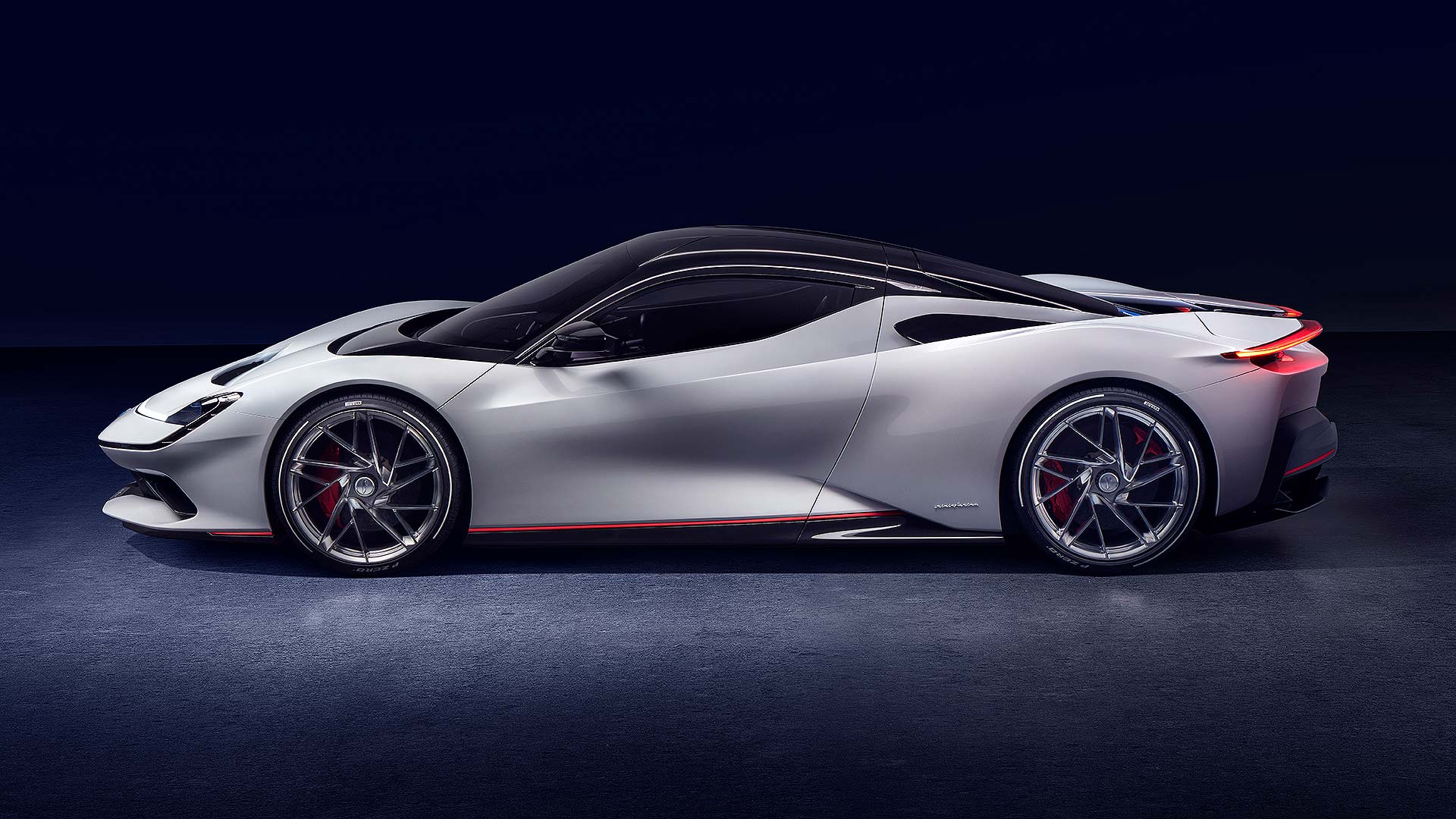
The Battista serves up “classic Pininfarina design cues,” says the firm, paying homage to some of its most famous cars: Cisitalia 202, Ferrari Dino Berlinetta Speciale, Ferrari Modula and the Sinesti concept car.
It doesn’t much look like an electric car, does it?
The Battista is a “beautiful, pure performance car”. Pininfarina has avoided designing in any overt features that mark it out as an EV. The most overt hint is the Pininfarina Blue colour of one of the three cars at Geneva – it’s “more electric in tone than Pininfarina’s traditional blue, reflecting the technological innovation within”. The firm’s created it by spraying on multiple layers of paint to give it shimmering depth.
What are the design highlights?
Pininfarina is proud that most of its designs can be described in two lines. The same is true for the Battista, which is the work of Luca Borgogno. It has a teardrop cabin shape sitting on sculpted and “sensuous” body sides, a floating wing look at the front and an “iconic” design of rear wing. It’s simple, elegant and, insists Borgogno, “beautiful”. He also adds it has the same sort of functional harmony seen in another iconic Pininfarina hypercar – the Ferrari F40.
What’s the story inside?
Because the Battista serves up such phenomenal performance, Pininfarina has paired back the interior, so it’s distraction-free – and all the vital interfaces directly face the driver alone. Traditional dials have been binned for HD screens, and to this framework, there’s almost endless personalisation.
Verdict: Pininfarina Battista
Hypercar world, meet your newest entrant. ‘Pininfarina’ is going to become a name as revered as Pagani and Ferrari, and will become so whilst also being truly sustainable. That one of the world’s mightiest ever cars is also a zero-emissions all-electric one is quite the statement of intent. It’s an ecologically on-message poster car that rightly is one of the stars of the 2019 Geneva show. Believe the hype.
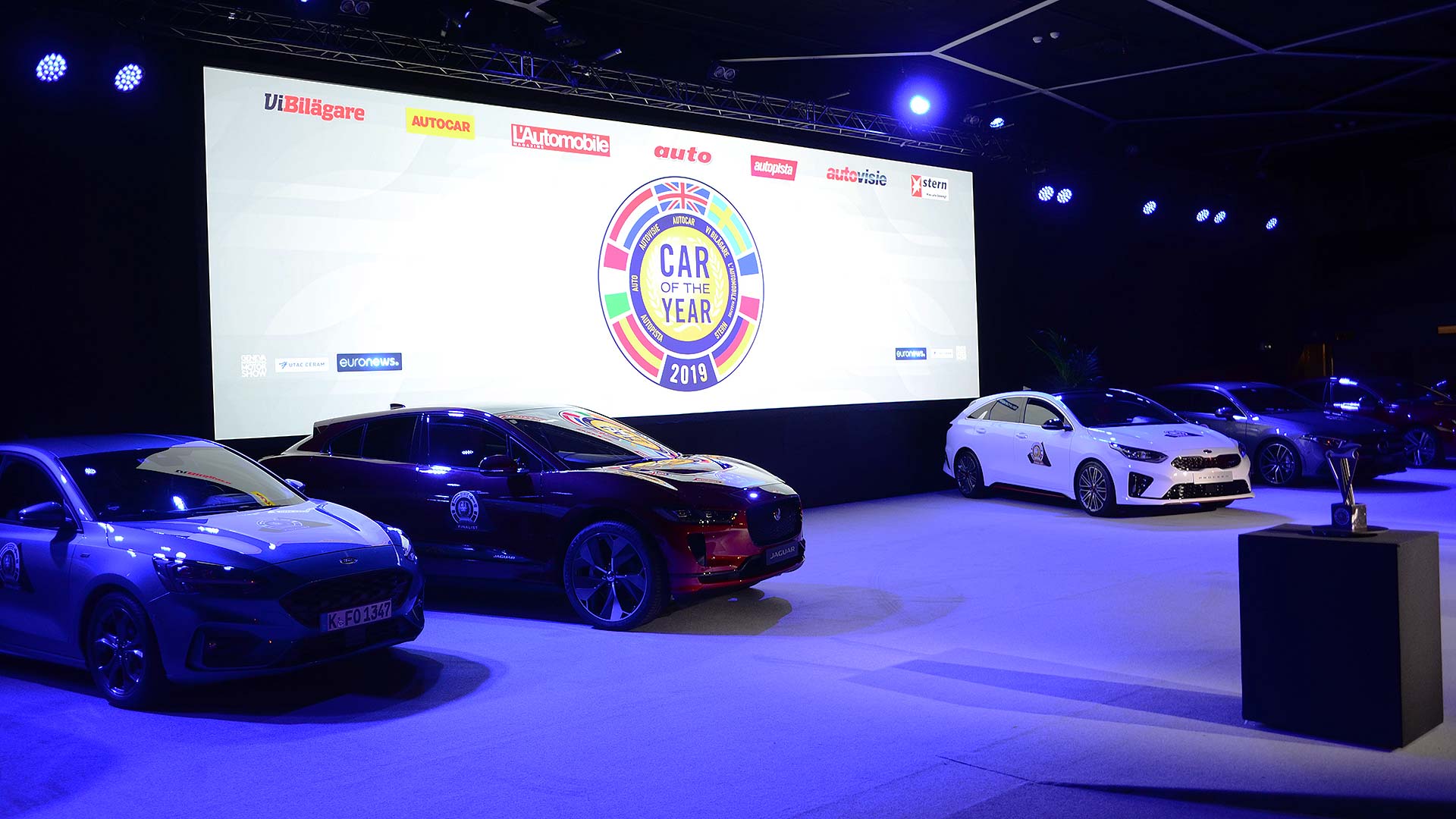
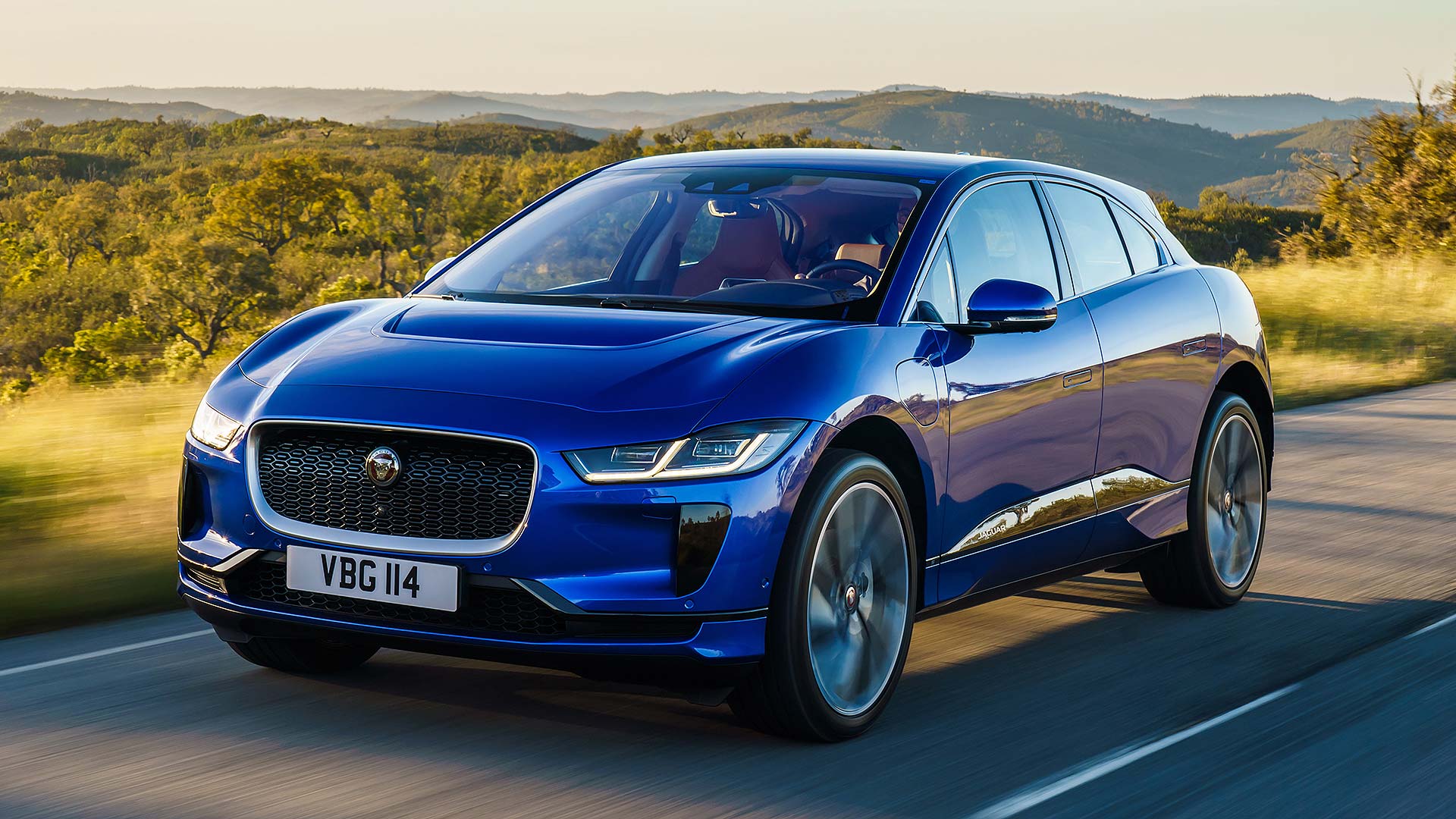
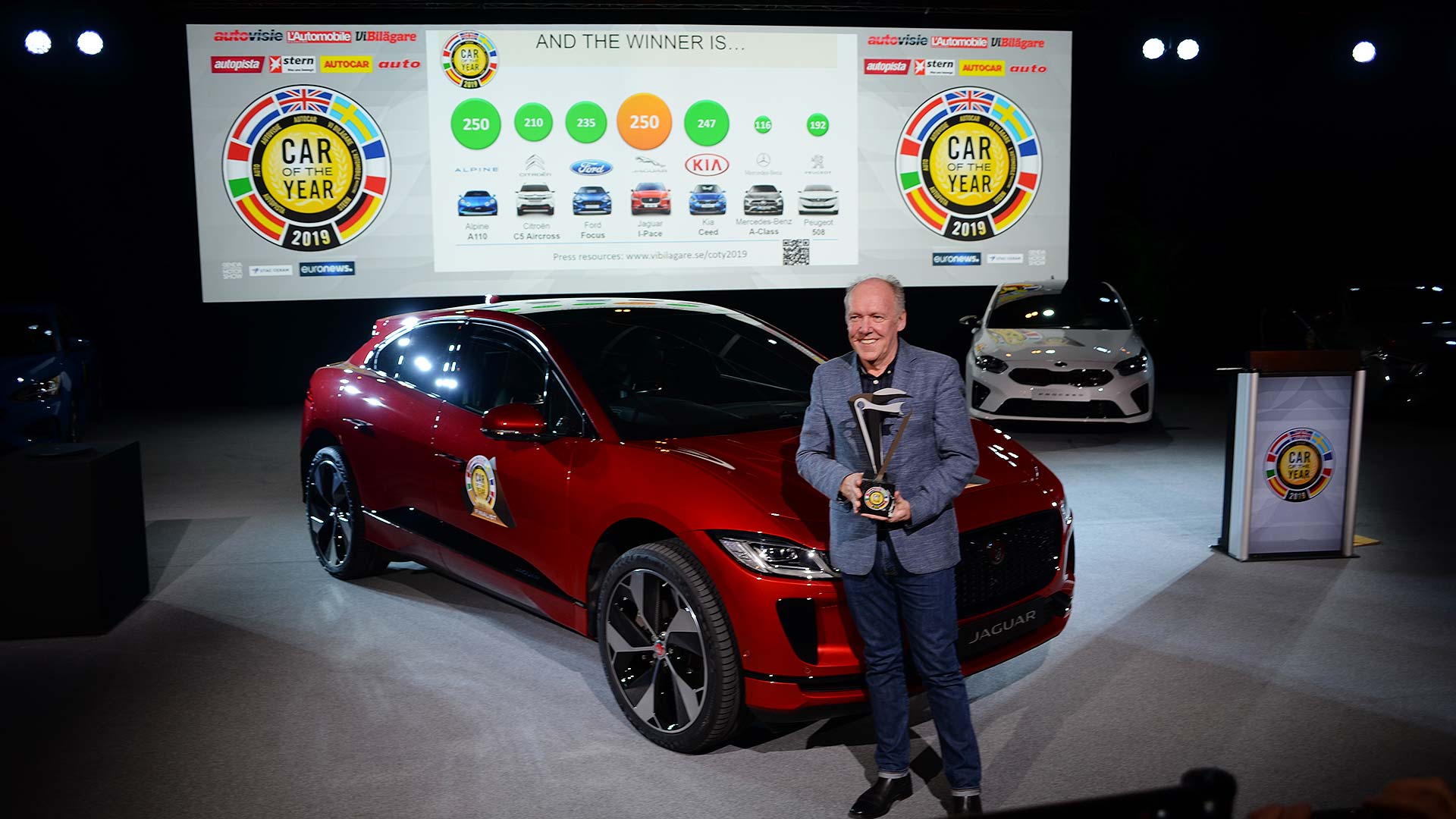
The Jaguar I-Pace has been revealed as 2019 European Car of the Year in a ceremony on the eve of the Geneva Motor Show.
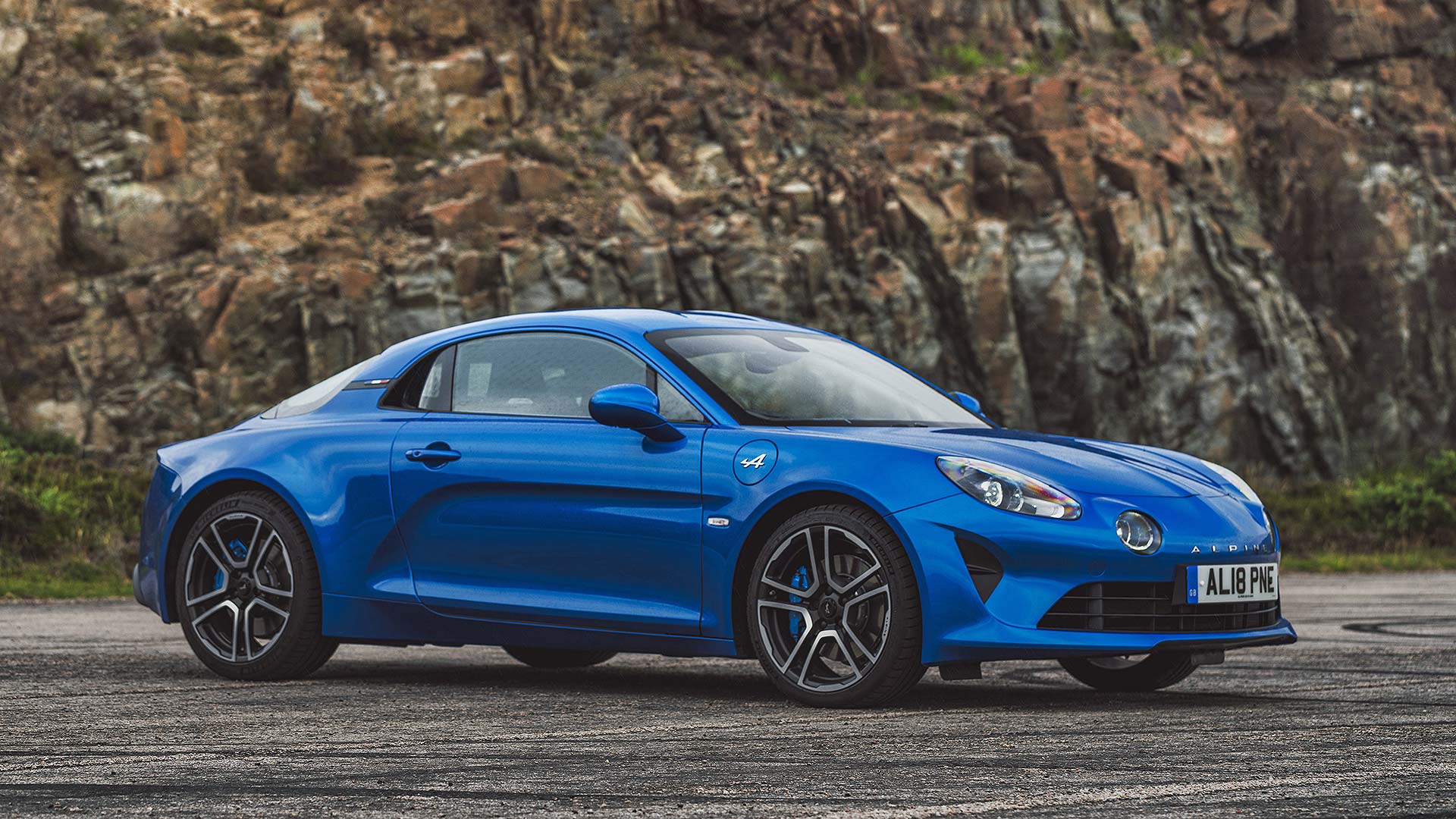
Remarkably, it was an unprecedented tie vote, with both the Alpine A110 and Jaguar I-Pace scoring 250 points. This dramatically caused confusion during the ceremony as there can only be one winner.
The rules state a count-back should ensue, taking the top votes from each country for the two cars. In this thrilling ‘shoot-out duel’, the Jaguar emerged as the winner, with 18 points to 16.
It is the first time this has happened in the history of Car of the Year.
This year’s Car of the Year winner was, admitted the judging panel in a statement, “impossible to predict… the cars are very different in terms of market segments and positioning”. You can say that again.
Watch: how Car of the Year 2019 unfolded
Jaguar design director Ian Callum accepted the award. “Wow!,” he said. “Was that exciting or what?” It is the first time Jaguar has ever won Car of the Year, he added. “Everyone back at home will be exceedingly proud of this result.
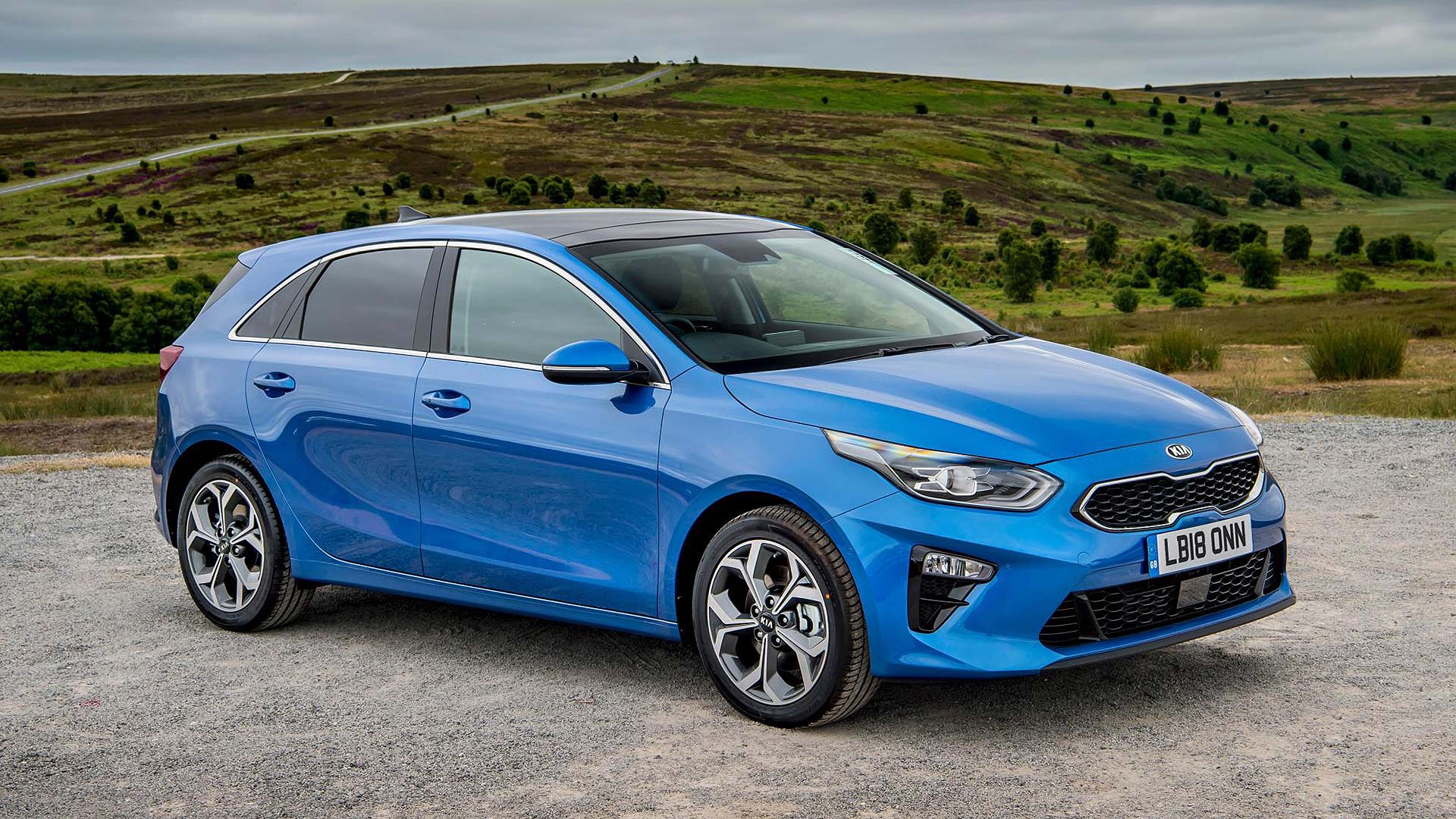
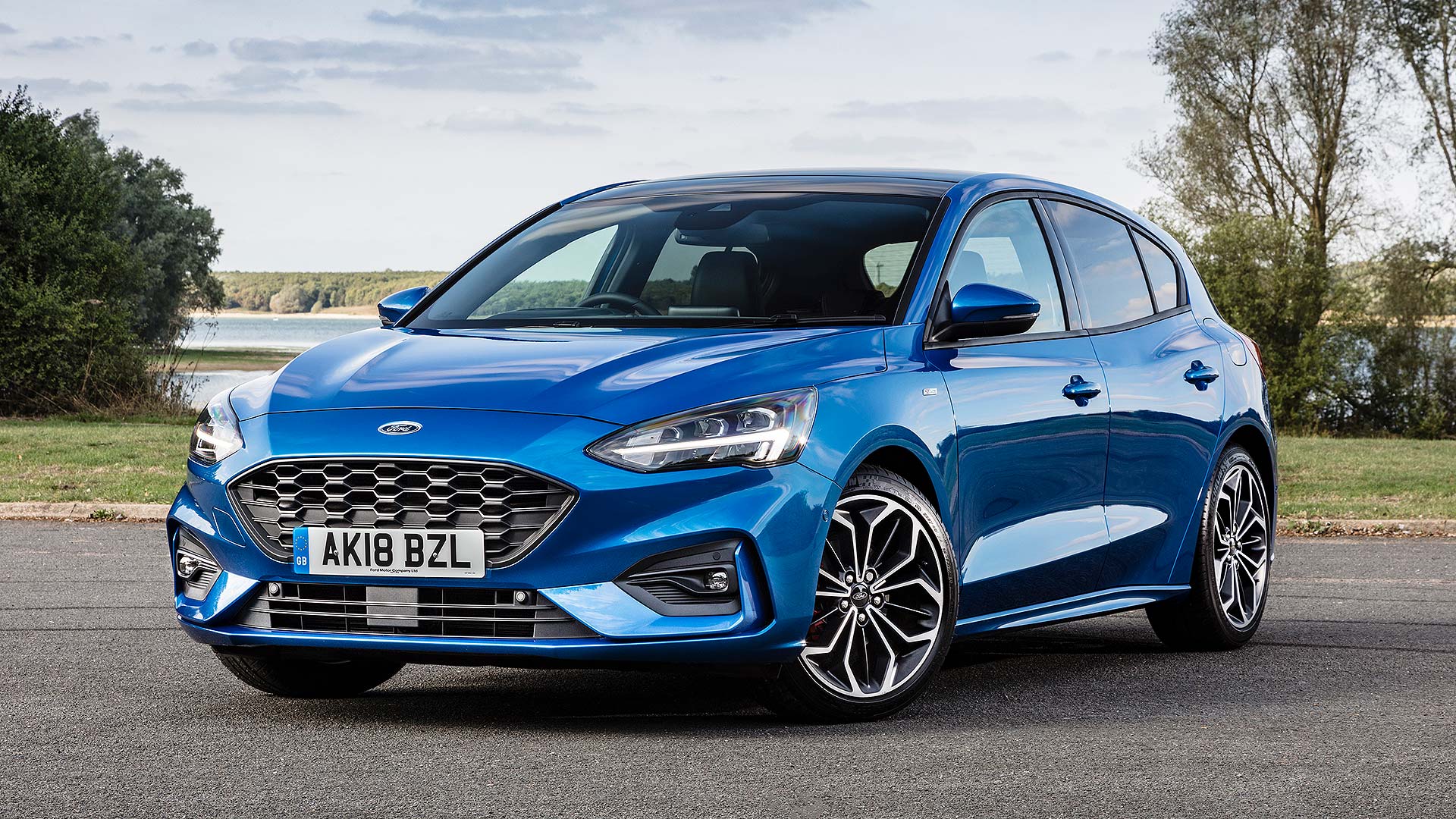
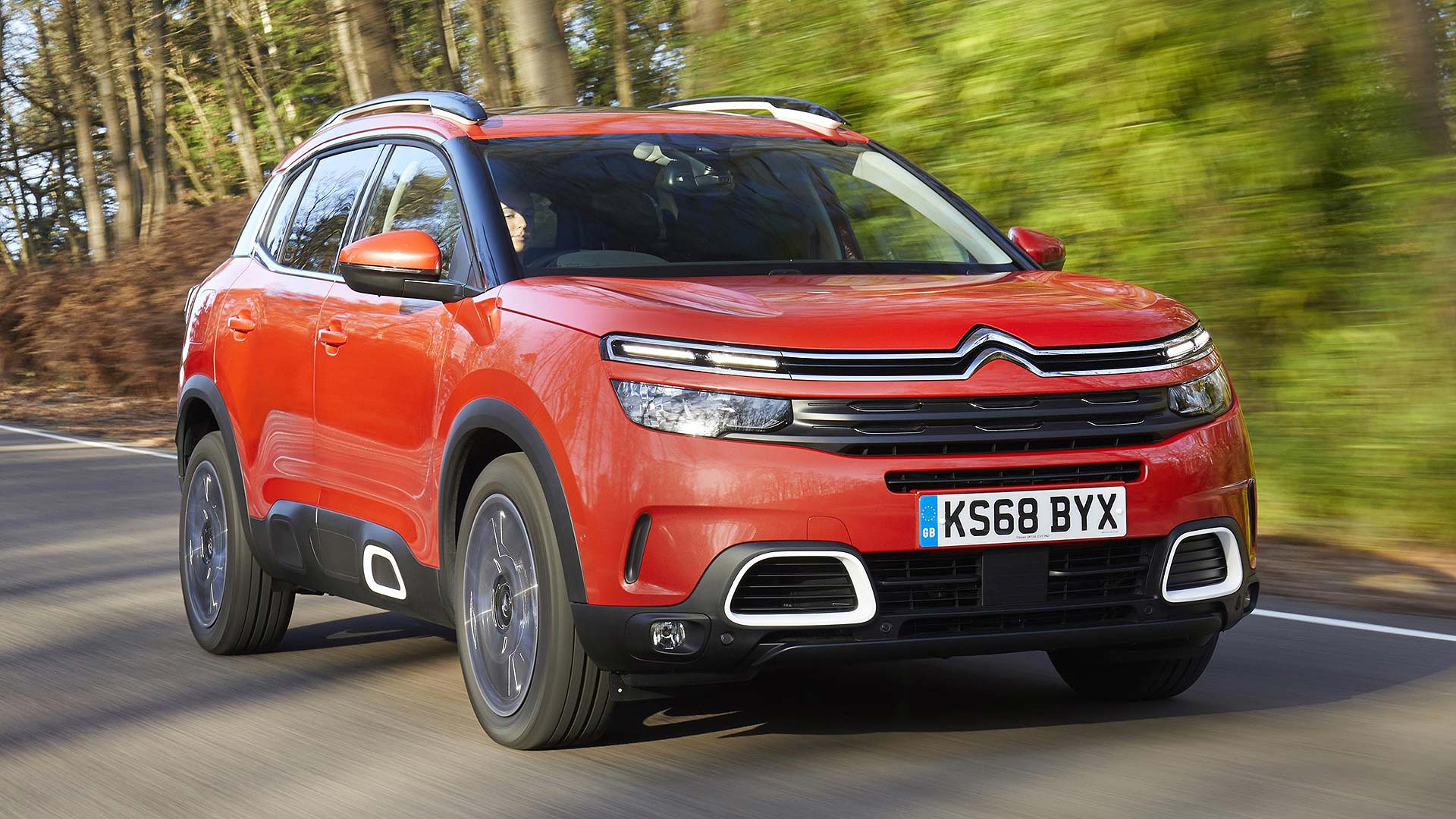
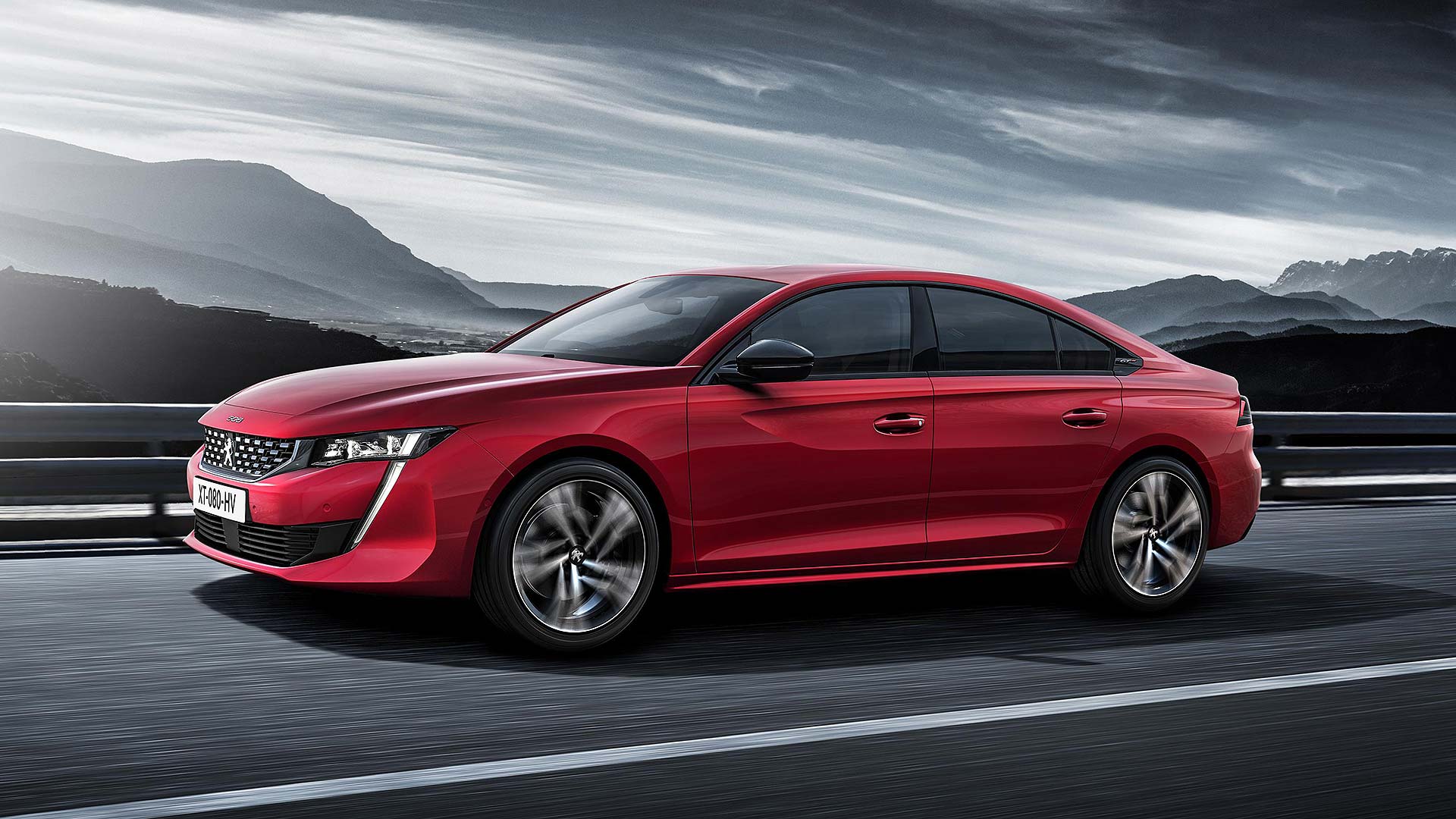
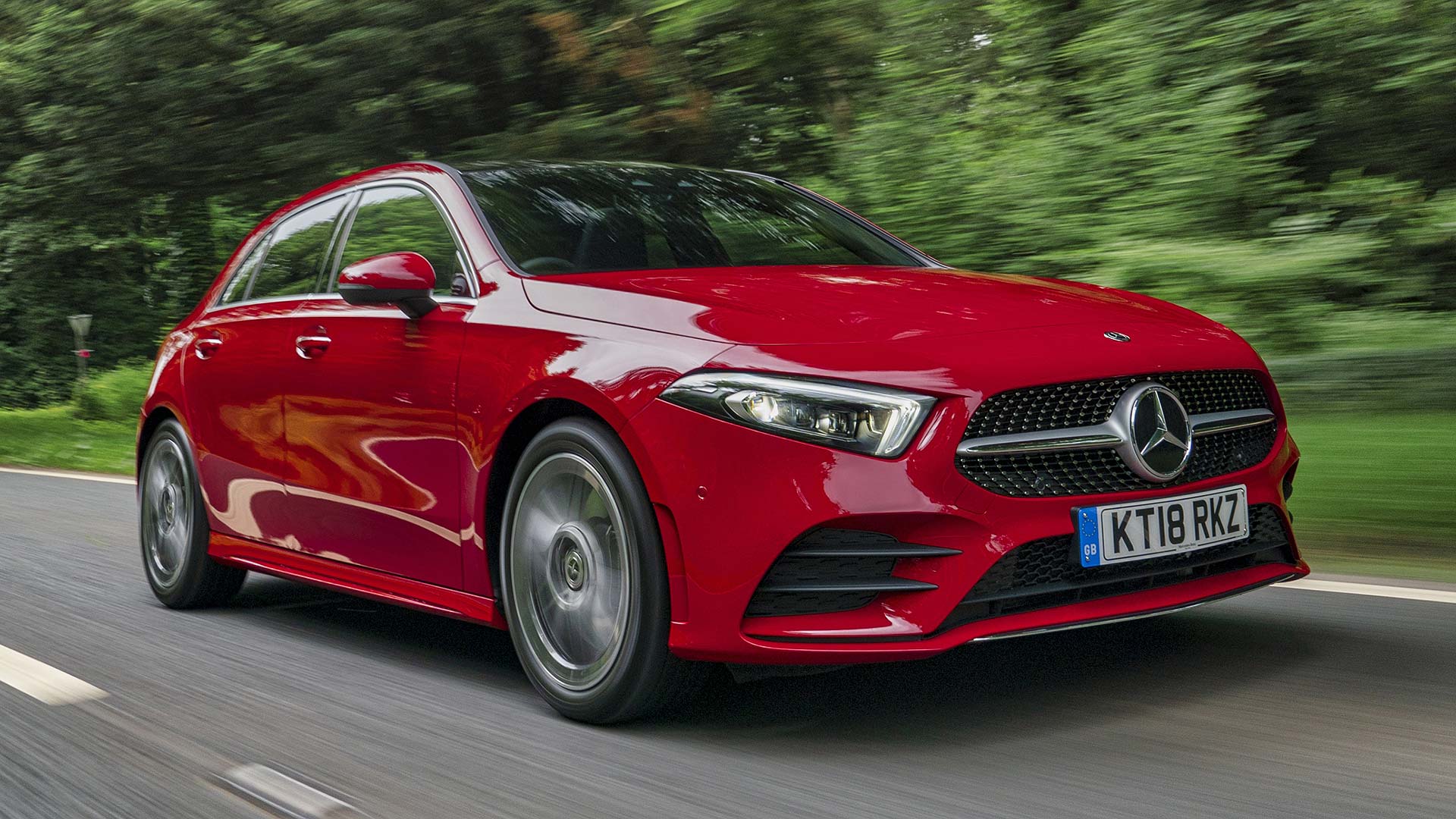
Surprisingly, there was only one other traditional SUV, the Citroen C5 Aircross, alongside the winning Jaguar I-Pace electric SUV. Three family hatchbacks made the final running – the Kia Ceed, Ford Focus and Mercedes-Benz A-Class – along with the Peugeot 508 executive saloon and Alpine A110 sports car.
Car of the Year: how it works
The Car of the Year prize first ran in 1964 and, this year, 60 models were part of the initial selection. Months of testing whittled this down 38, and then, to the final seven, which were tested by jurors at a research centre in Paris last month. There, final votes were made.
Each of the 60 jurors has 25 points to award, and they must give points to at least five cars. The jury comprises experts from 23 countries across Europe – and all votes are transparent; see them soon on the organisation’s website.
The Car of the Year organisers are also making efforts to increase female representation on the jury panel. Today, there are four; a fifth is about to be recruited and by Car of the Year 2020, six female jurors are expected to serve.
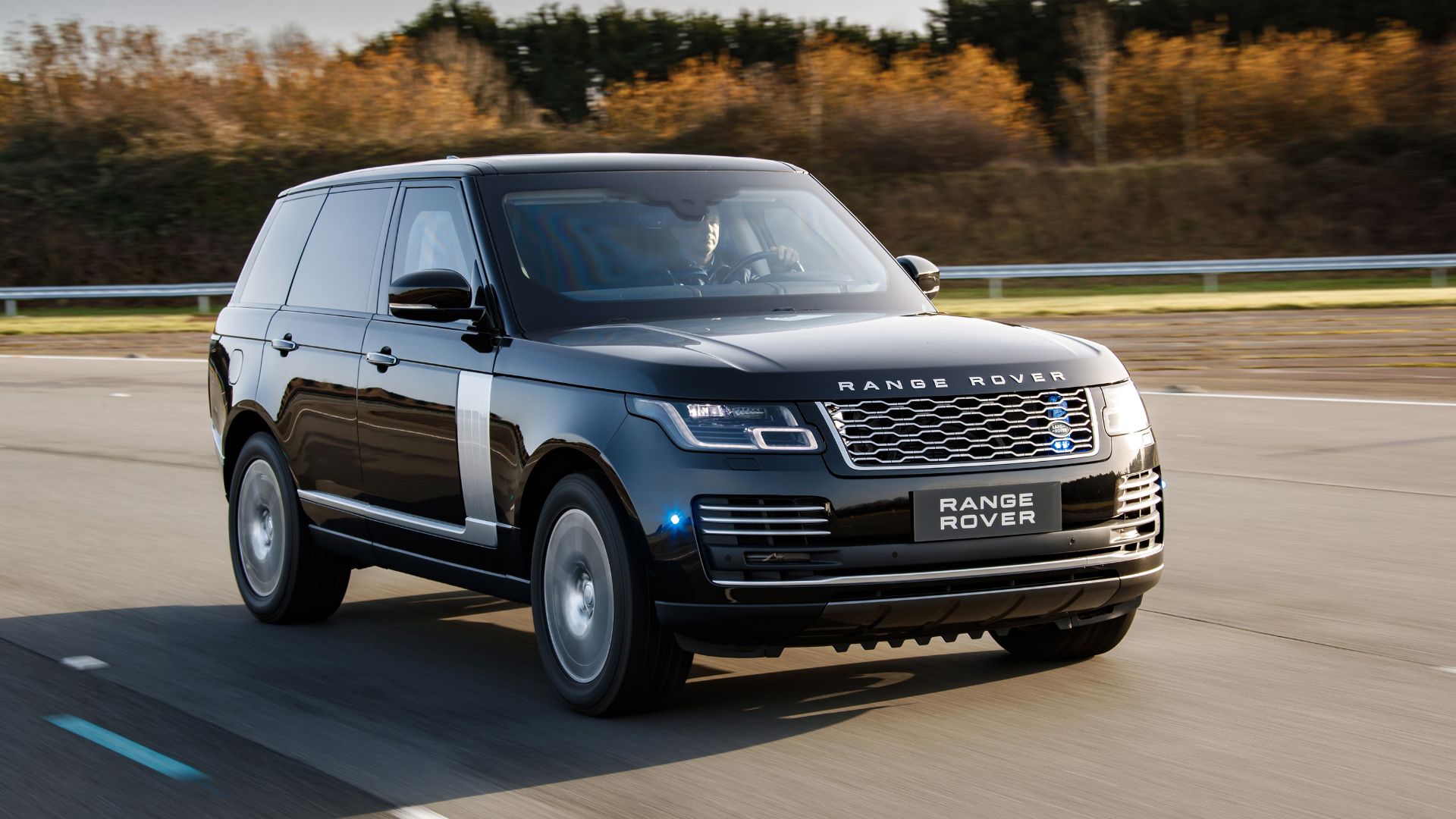
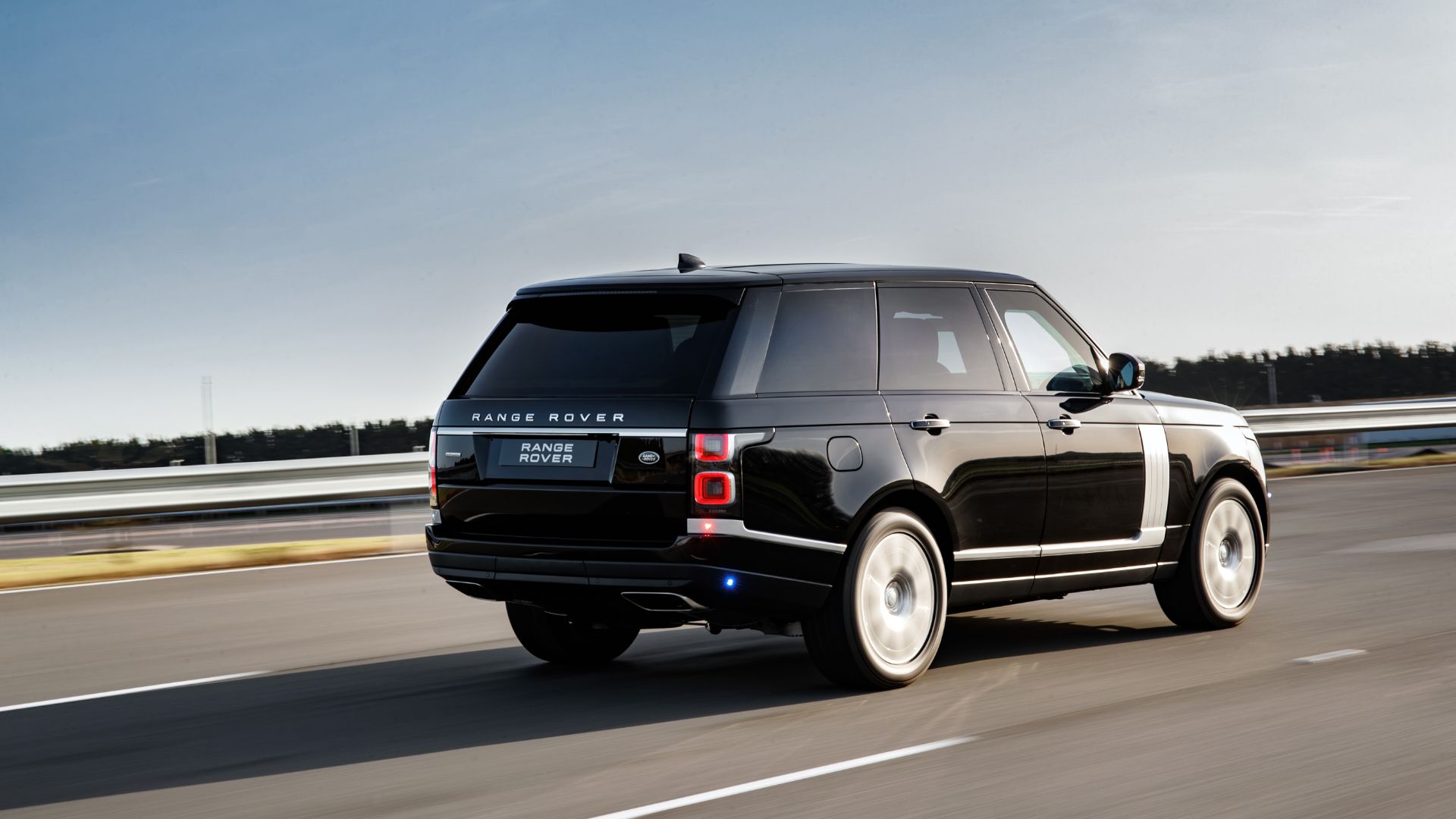
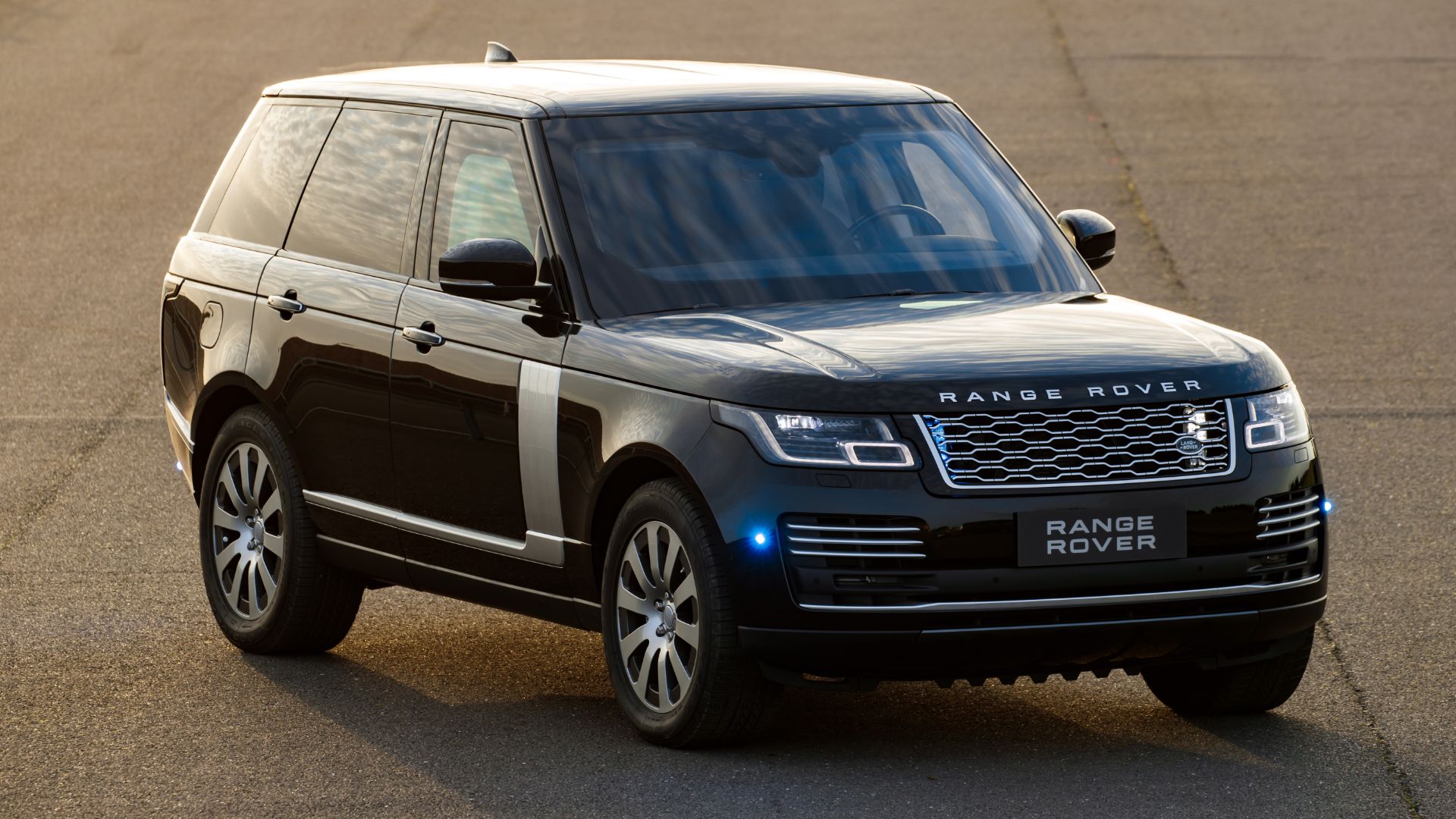
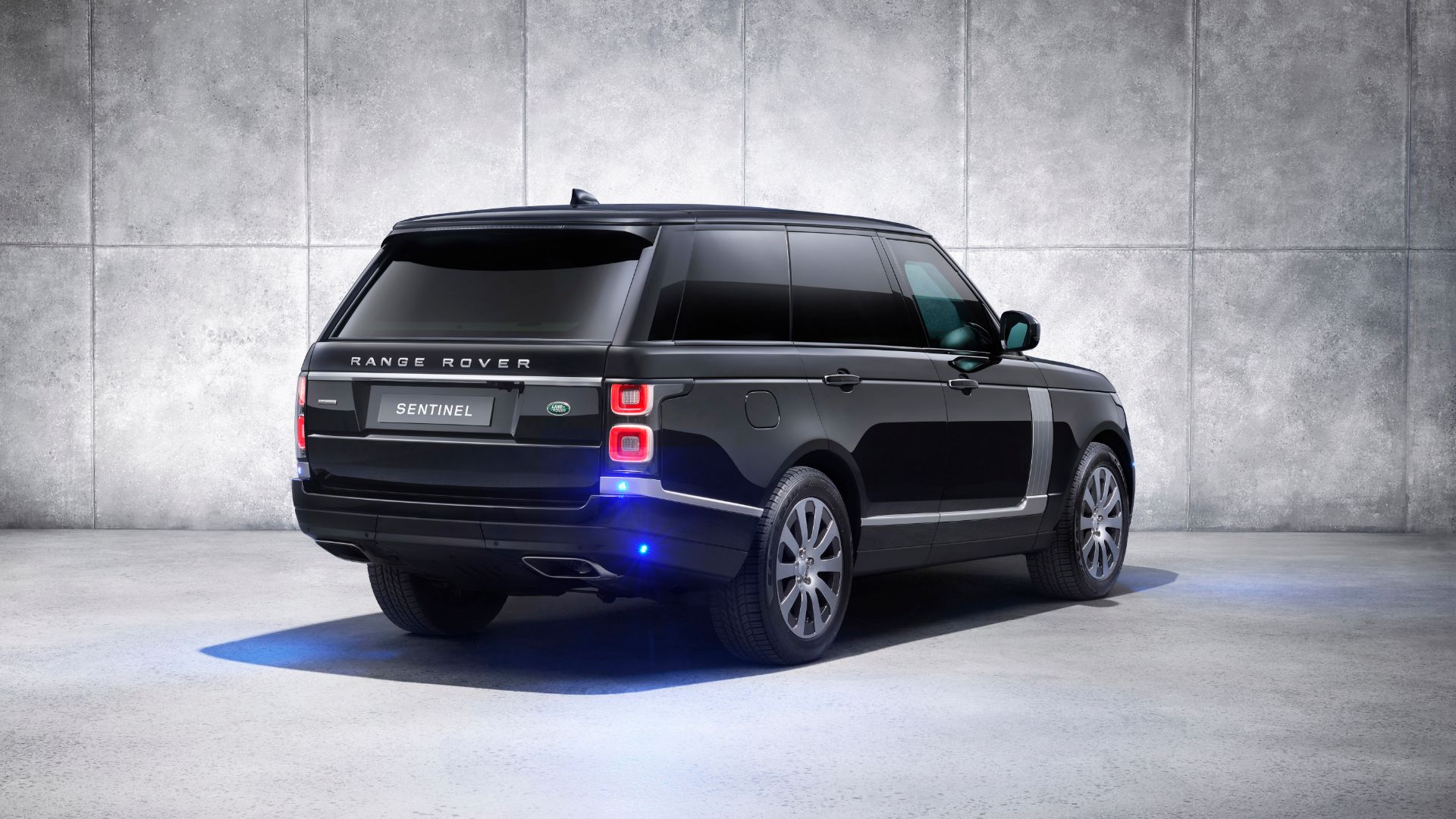
Persons of importance with a penchant for stately British transport, listen up: this could be your new ultra-safe vehicle of choice. Coming courtesy of Land Rover Special Vehicle Operations, is the Range Rover Sentinel.
Because is your armoured car really armoured if it isn’t named after the mutant-slaying robots from the X-Men comics?
Readying a Range Rover for battle
So what does it take to turn a Surrey Mum’s school run express into one of the safest moving vehicles on the planet? Let’s run through the Range Rover Sentinel’s extensive list of upgrades.
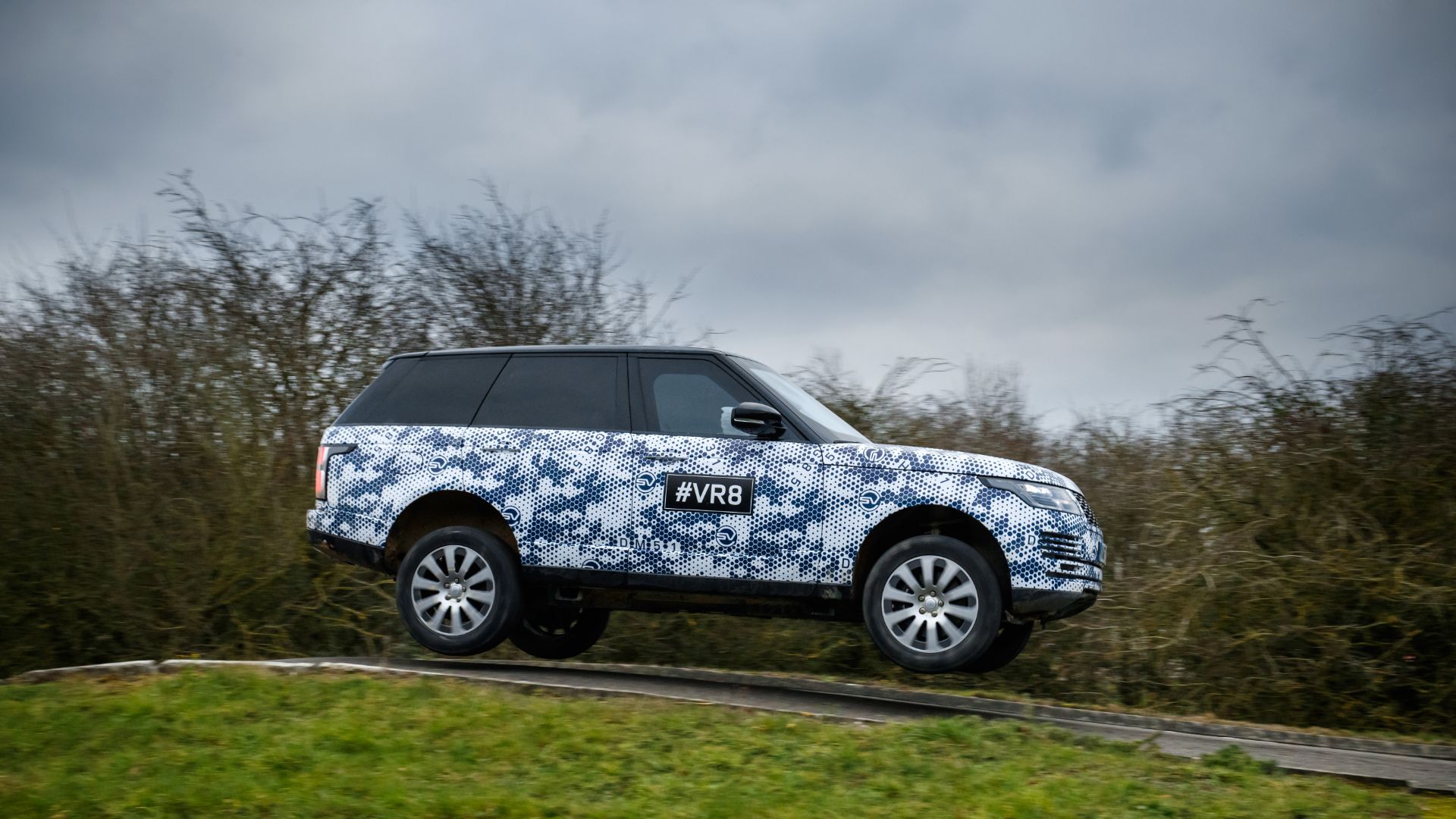
Most obviously, a tonne of armour, literally… The reinforced glass, bodywork, roof blast-protection and everything else adds more or less a tonne to the Rangie’s already hefty curb weight. Needless to say, suspension components, chassis and braking systems have been necessarily upgraded to carry it.
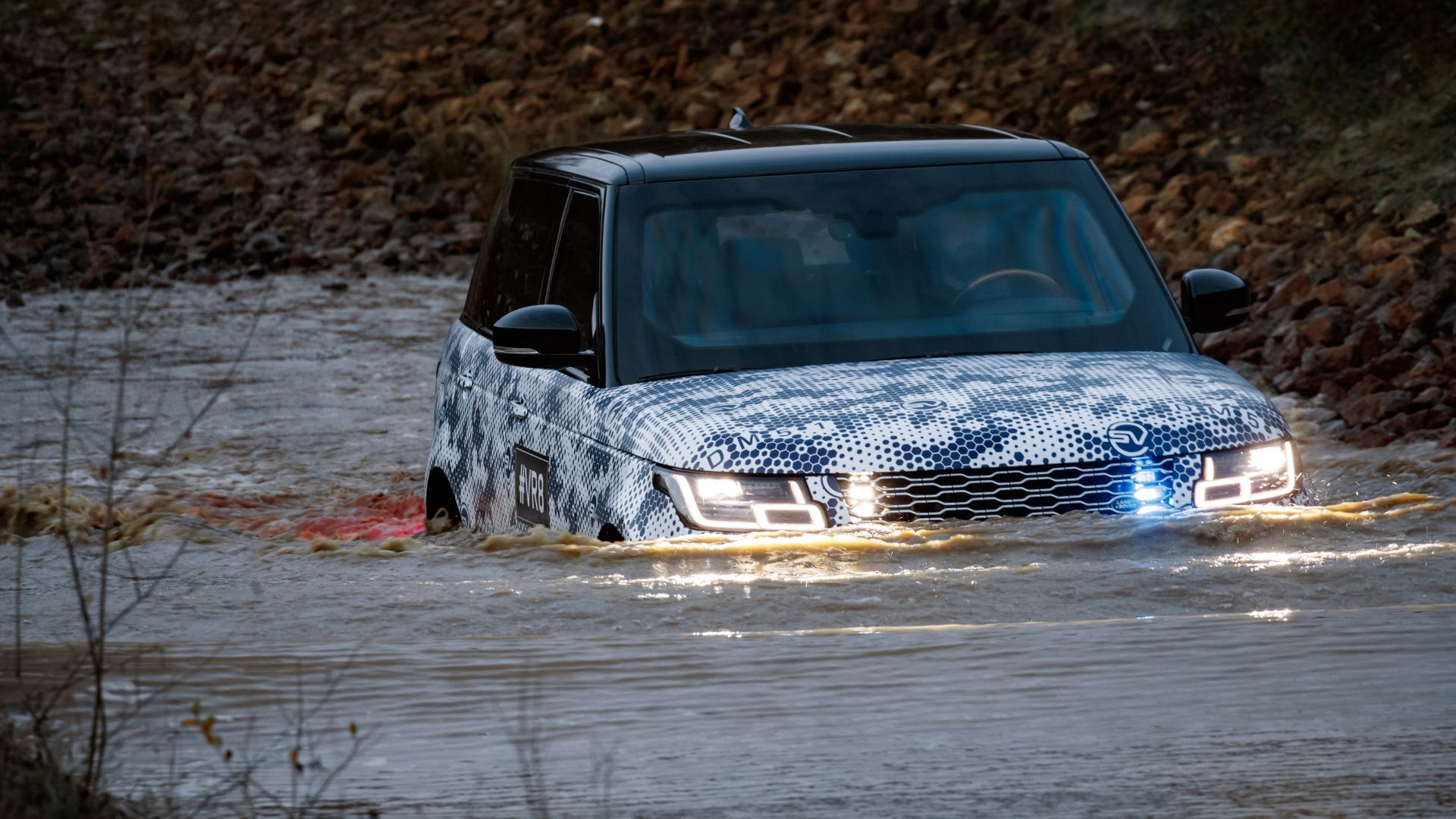
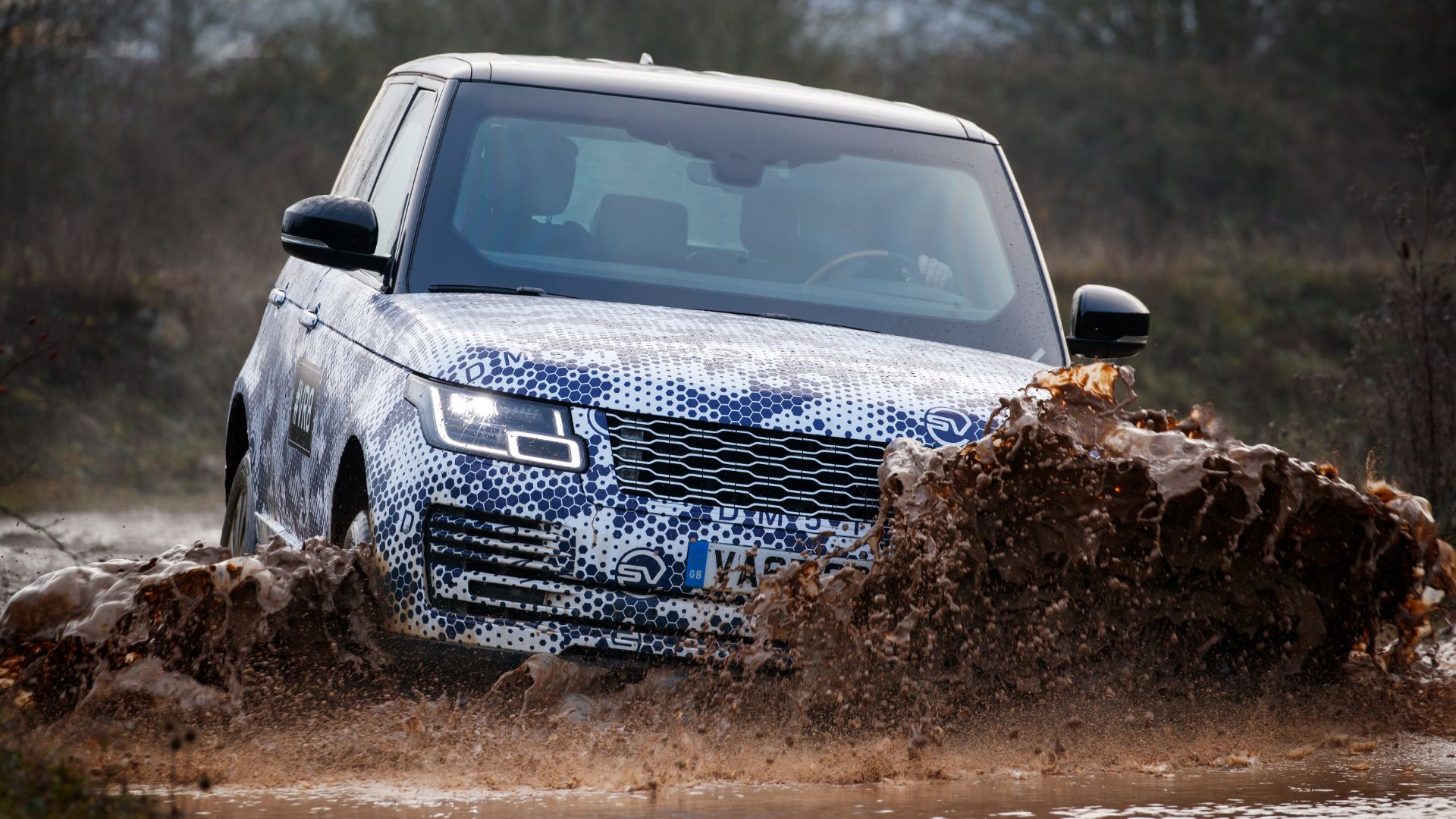
The protection cell is certified ballistic and blast resistant, with the exterior armour designed to keep occupants safe from ‘unconventional forms of attack’ like improvised explosive devices. Run-flat tyres can go for up to 30 miles at 50mph if damaged.
There is the option to add a droppable window, to 150mm, for ‘document delivery’, as well as a ‘public address system’, for if you wanted to chat with potential assailants and attackers. Optional too are sirens and emergency lighting.
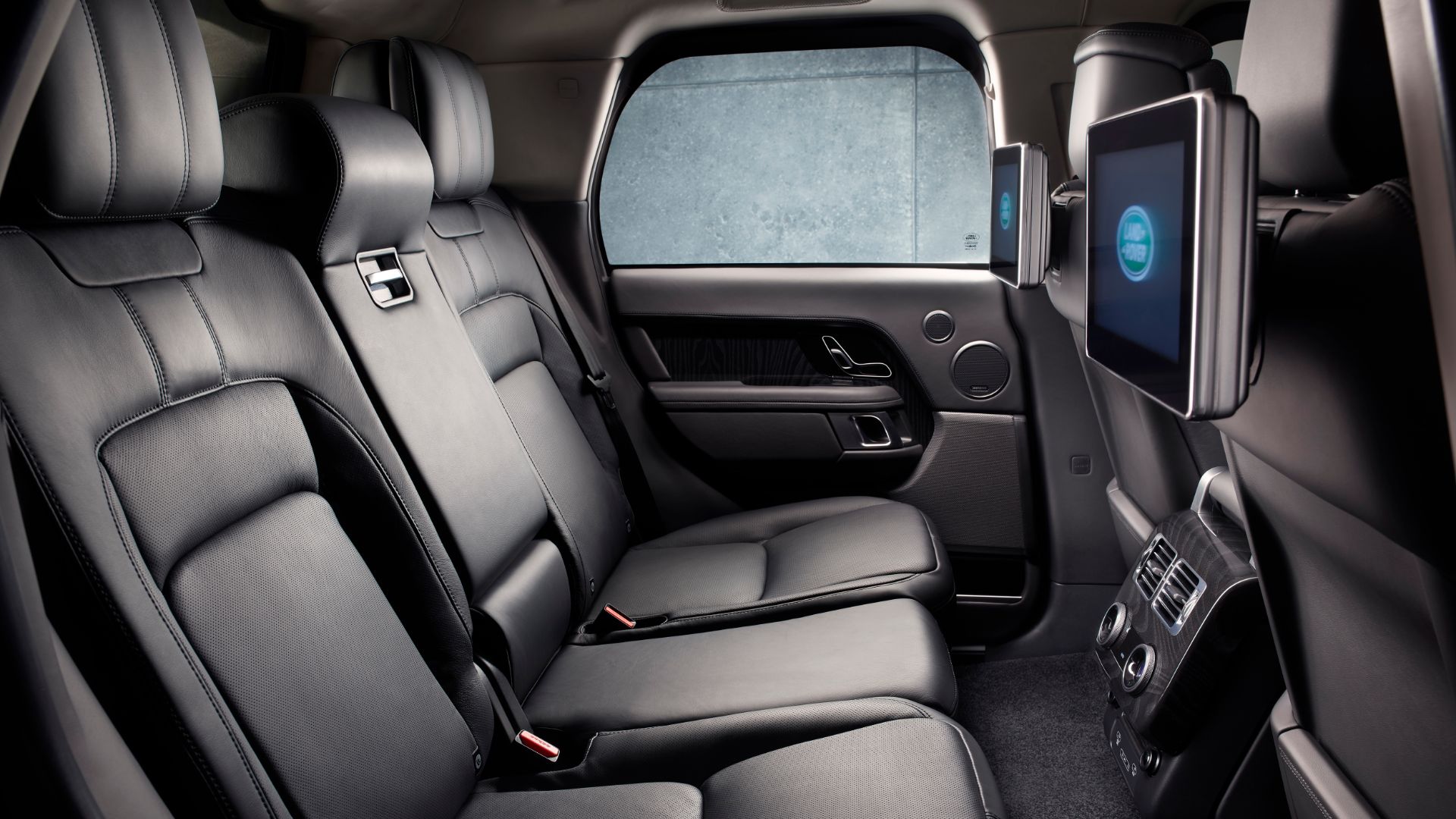
It wouldn’t be a Range Rover if it wasn’t one of the nicest places in which to find yourself. As such, in spite of its battlefield readiness, the cabin remains as luxurious as ever. Legroom, headroom and seating are improved and the latest 10-inch Touch Pro Duo equipped infotainment systems come as standard.
The car will debut at the Home Office Security and Policing show this week (5-7 March 2019). If you want one, you’d best get in line behind the Queen, the Prime Minister and various other high-value targets.
London’s Direct Vision Standard (DVS) for HGVs will be rolling out this autumn, with the goal of improving road safety for everyone. How? Getting blind spot-riddled HGVs up to a base standard for operation on urban streets, or banning them altogether.
If successful, the scheme will be rolled out country-wide, and even across the world.
How dangerous are HGVs on urban streets?
What’s the big deal, though? Well, alarming statistics have inspired this move. Despite making up just four percent of miles driven in London, HGVs are responsive for 63 percent of fatal collisions with cyclists, and as many as 25 percent of pedestrian deaths.
Based on those numbers, poor visibility for truck drivers in the capital is little short of a crisis.
How does DVS work?
The vehicles will be judged with a rating of between zero and five, for how much the operator can see directly out of the vehicle without relying on mirrors and cameras. Permits will need to be awarded to vehicles with an insufficient rating in order for them to be allowed in London.
What can be done to fix them?
And you can only get one of those permits by improving your vehicles safety rating. By Transport for London’s reckoning, as many as 35,000 of the 188,000 HGVs operating in the London will be banned by October 2020. That’s when zero-rated trucks’ time is up.
By 2024, only three-star vehicles or above will be allowed to drive in the city, at which point it’s expected up to 94,000 vehicles will be banned.
Getting a safety permit
The above safety permit can be earned via a variety of measures to improve driver visibility and therefore, pedestrian safety. More comprehensive mirrors, a battery of cameras with screens and warning chimes for pedestrians are on a list of utilities that can be retrofitted in order to improve a HGV’s safety rating.
 Aston Martin has wowed Geneva 2019 show-goers by revealing yet another mid-engined car, the Vanquish Vision Concept. The supercar alternative to the extreme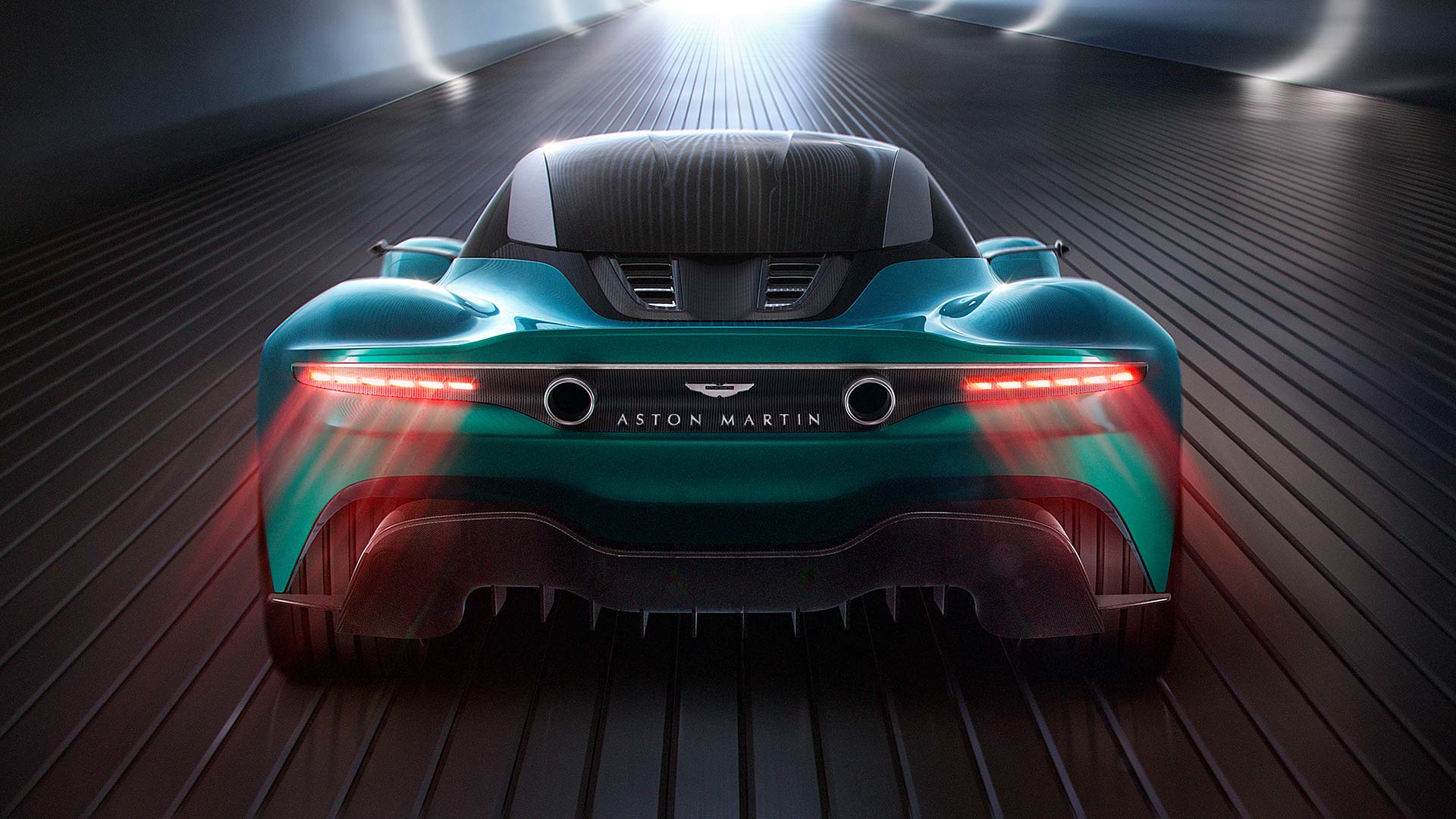
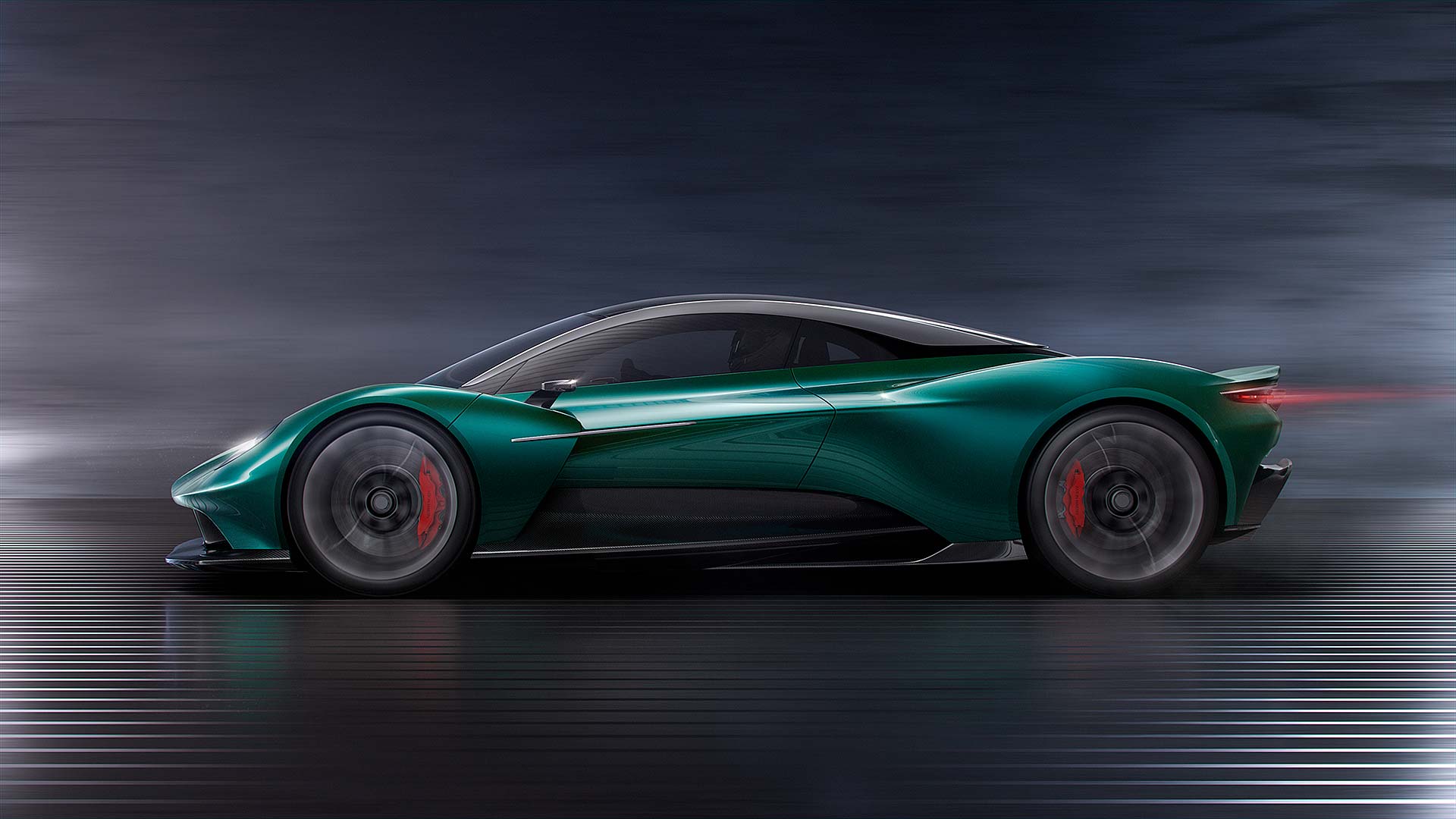
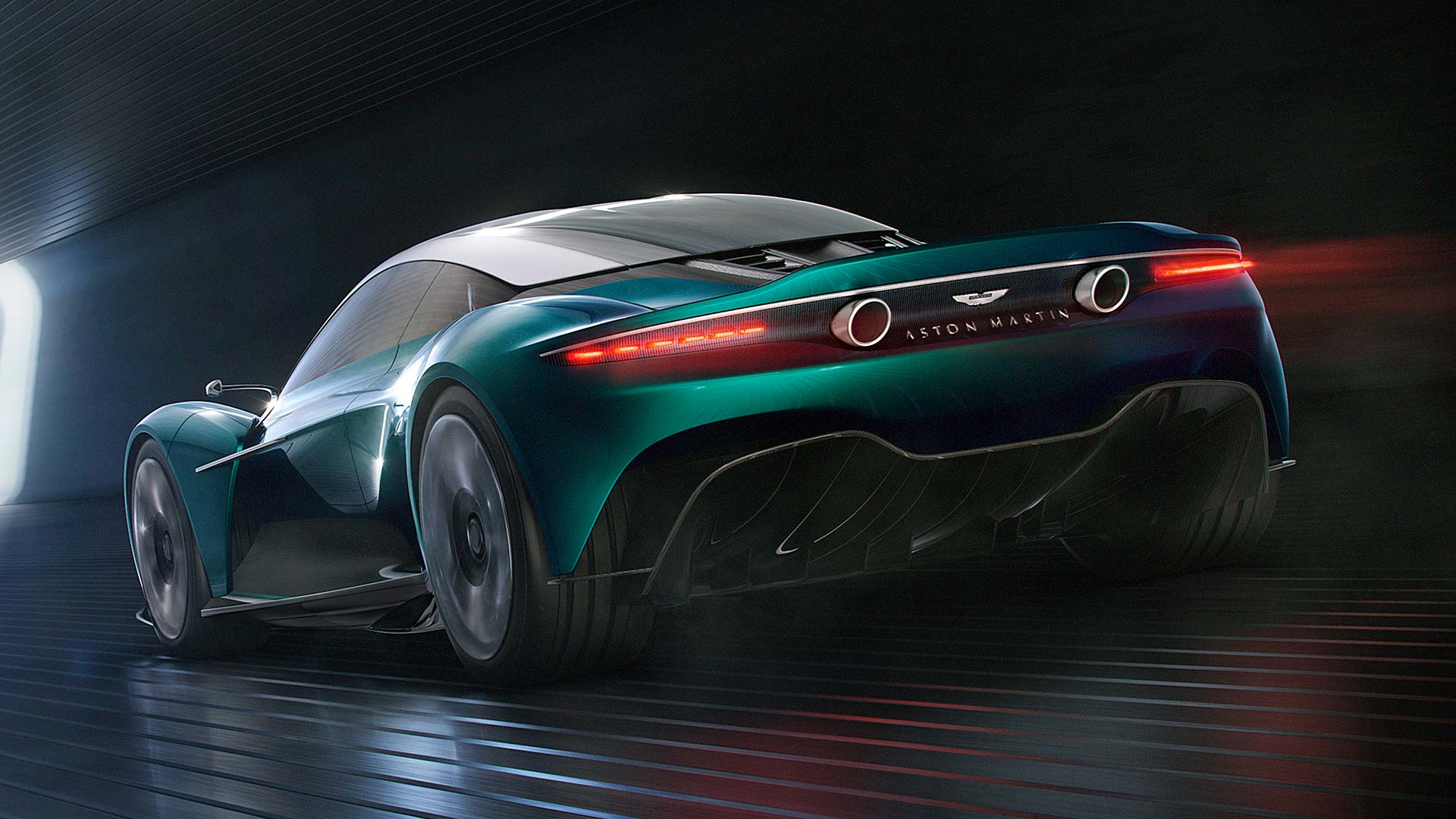 .Chief technical officer Max Szwaj will oversee the project. “The Vanquish Vision Concept is the point when the things we have learned during the Aston Martin Valkyrie and AM-RB 003 programmes reach the series production models. Creating a car like this for Aston Martin is a challenge I have relished since joining back in 2017.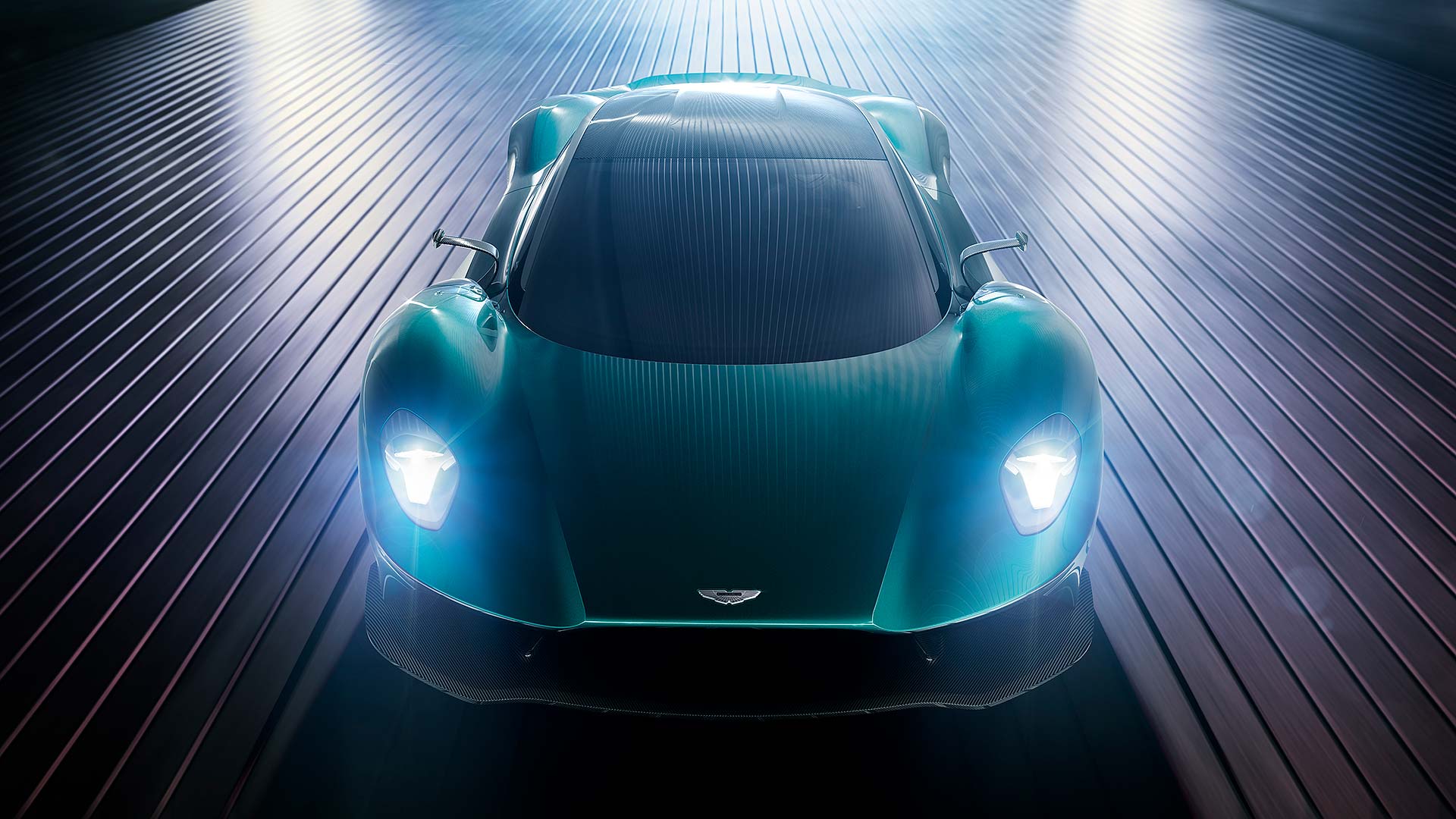
 Aston Martin is wowing Geneva with an F1-infused mid-engined hypercar co-developed with Red Bull Advanced Technologies. Previously known as Project 003, it now has a codename: AM-RB 003. The Geneva 2019 design concept is our first taste of how it may look.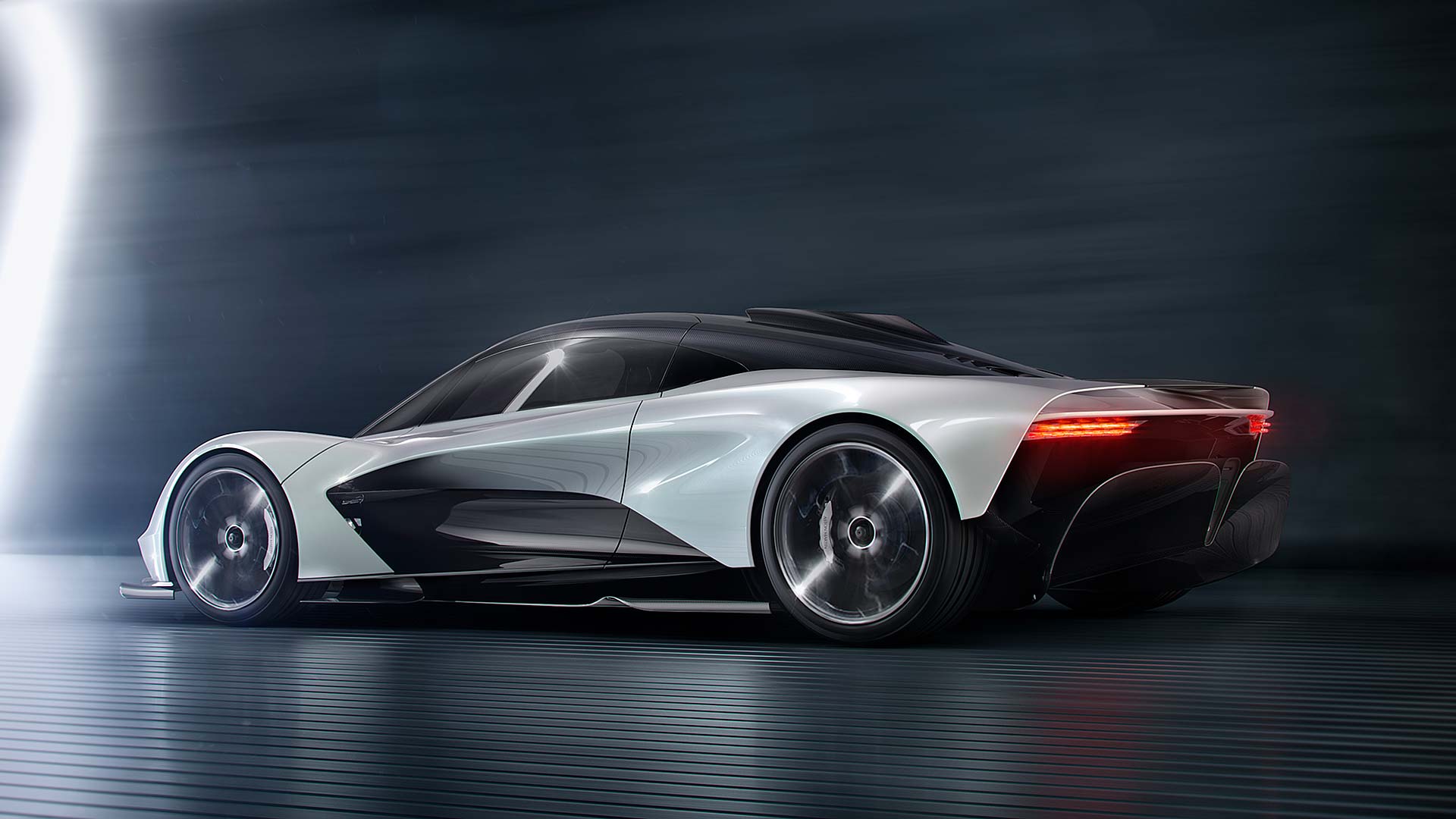
 Kia has unveiled its ground-breaking Imagine concept at the 2019 Geneva Motor Show.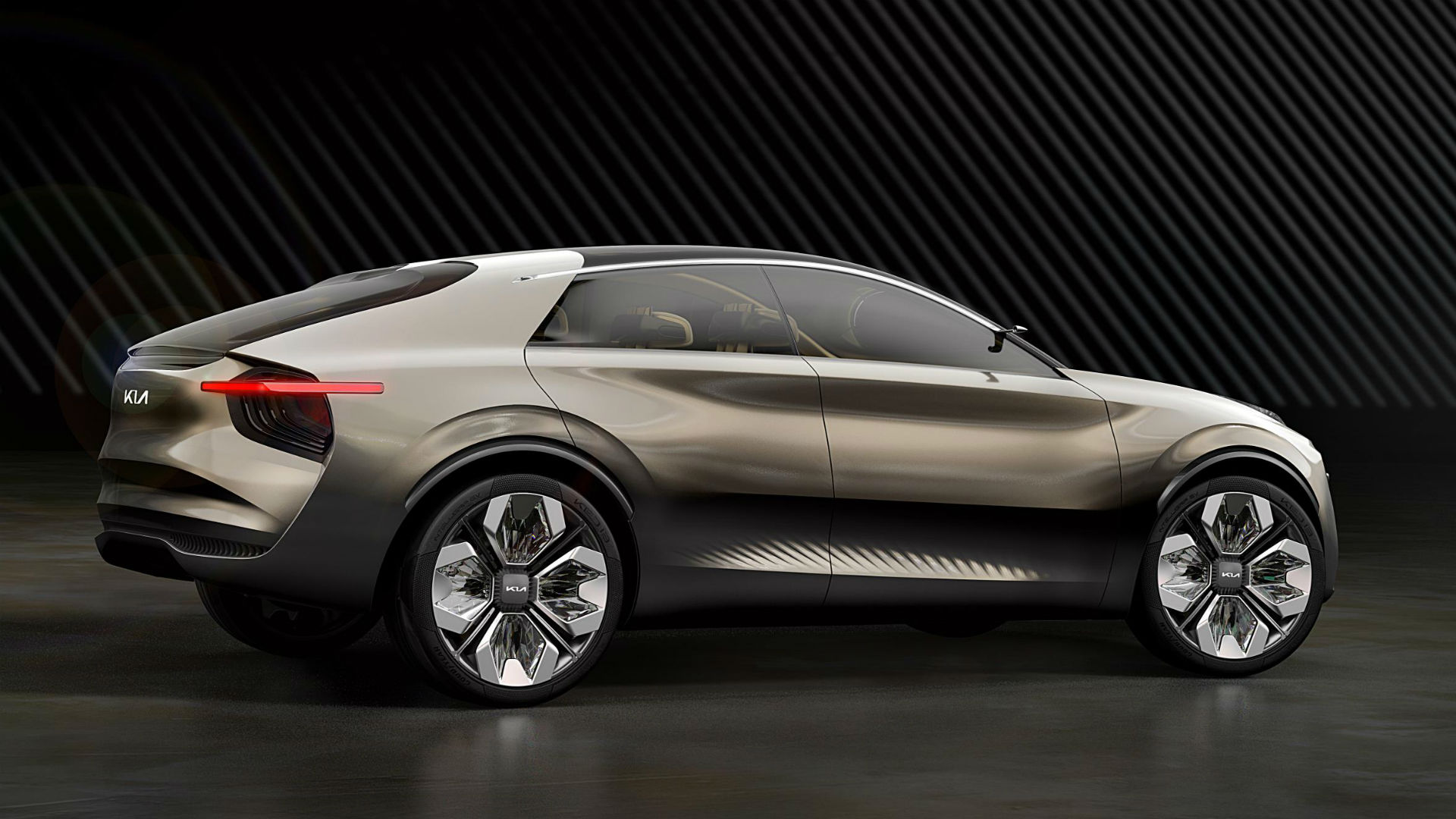
 The box-fresh Ford Mustang racer scored an incredible double victory at the weekend, making its debut in the Virgin Australia Supercars Championship a major success.
 Although some manufacturers might usually expect to start out slowly with a new car, last year’s champion driver Scott McLaughlin seemed happy to ignore the rulebook.
 Proving that the success on Saturday was not just a case of beginner’s luck for the Mustang, McLaughlin delivered the same result again in Sunday’s race two.
 Kay Hart, Ford Australia and New Zealand President and CEO, summed up the weekend as “a fairy tale start for our Ford Performance Mustang,” whilst Ford Performance Global Director, Motorsports, Mark Rushbrook, said “the Mustang Supercars’ results are beyond expectation”.
 The Pininfarina Battista is a glamorous new entrant into the global hypercar market, one targeting Ferrari, Aston Martin and the ultra-exotic Pagani and Koenigsegg brands with a mix of incredible power and all-electric allure. Producing 1,900 horsepower and faster than a Formula 1 car from 0-60mph, it will also travel almost 280 miles on a single charge.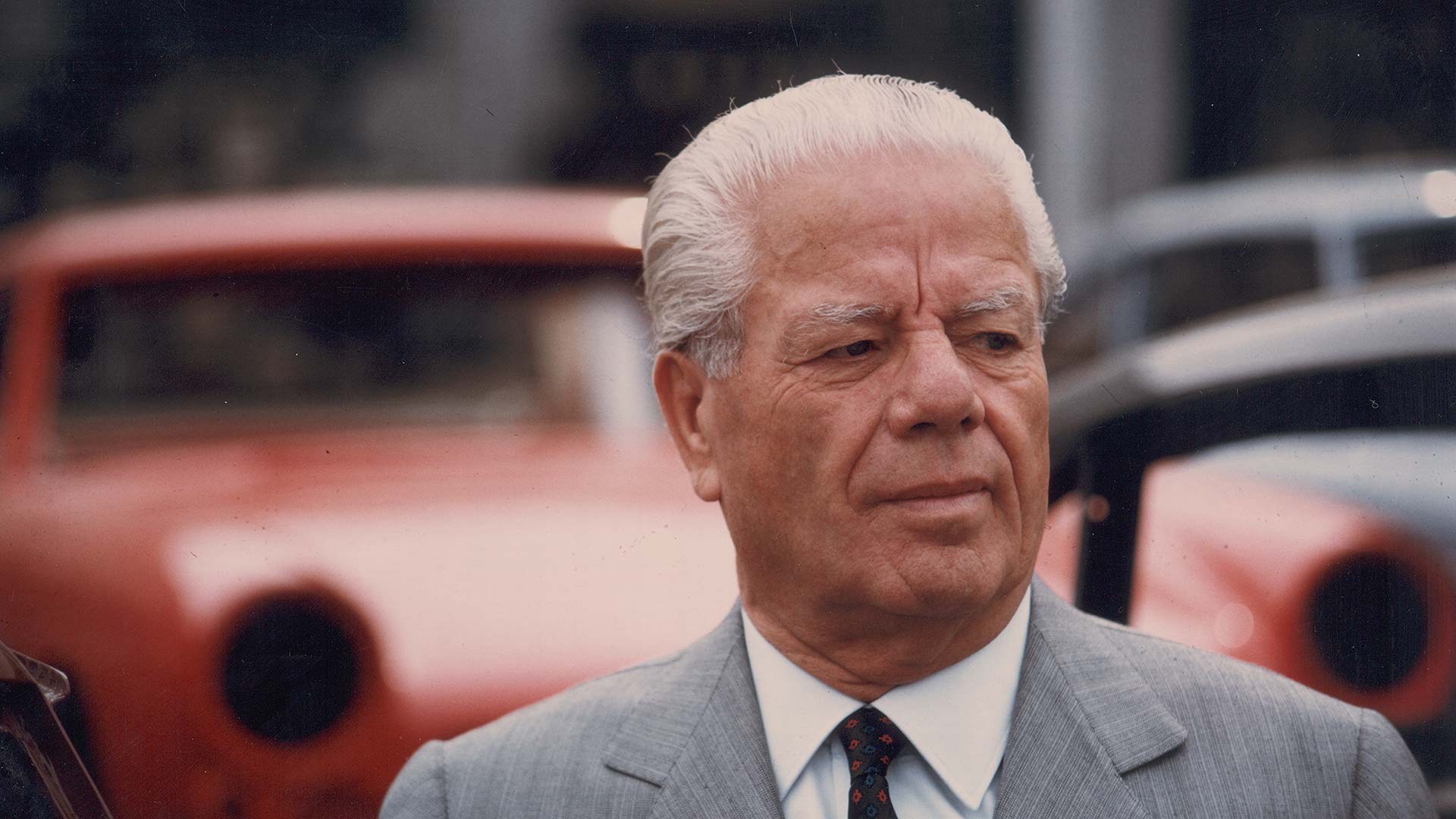
 The
The