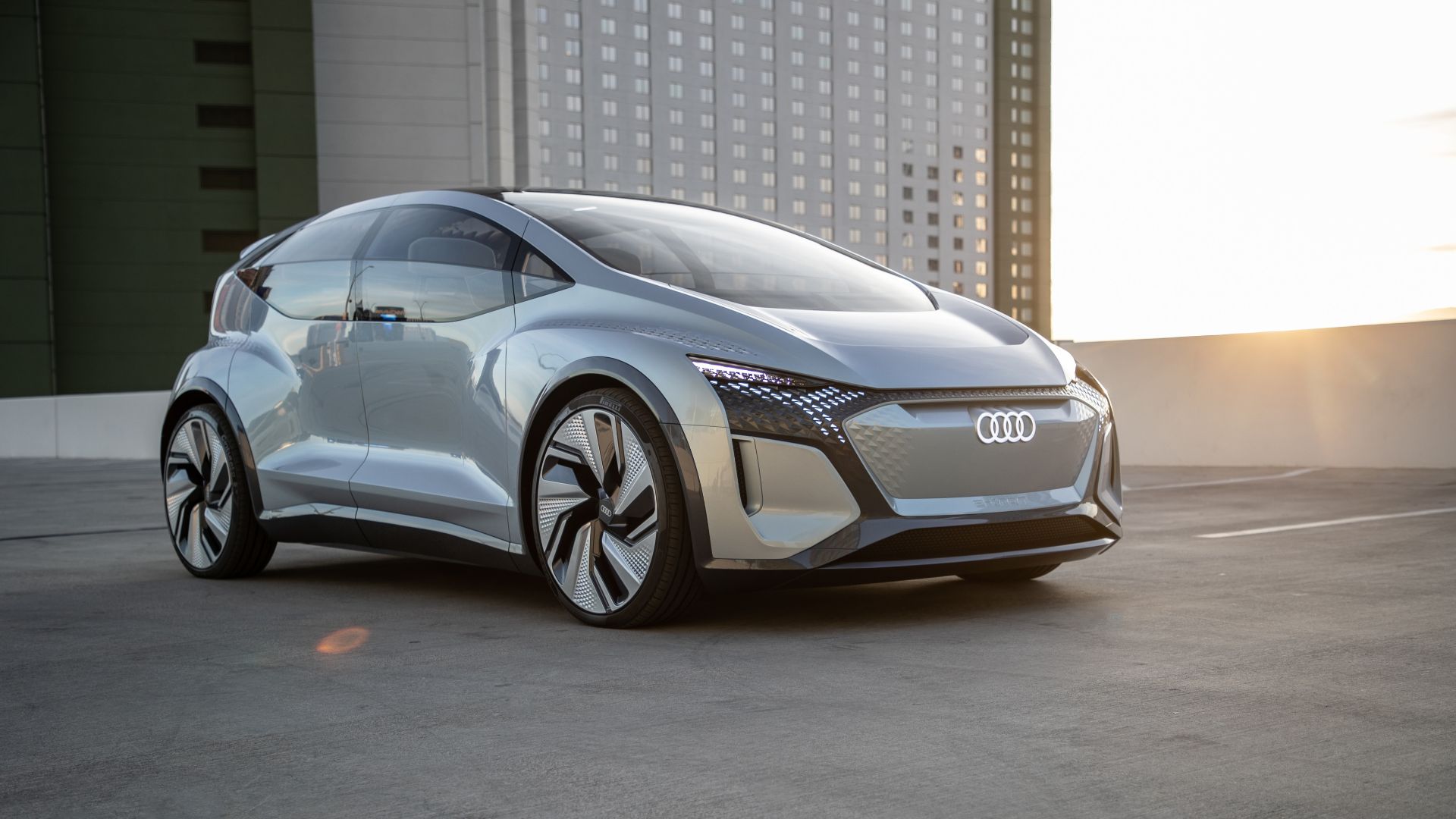
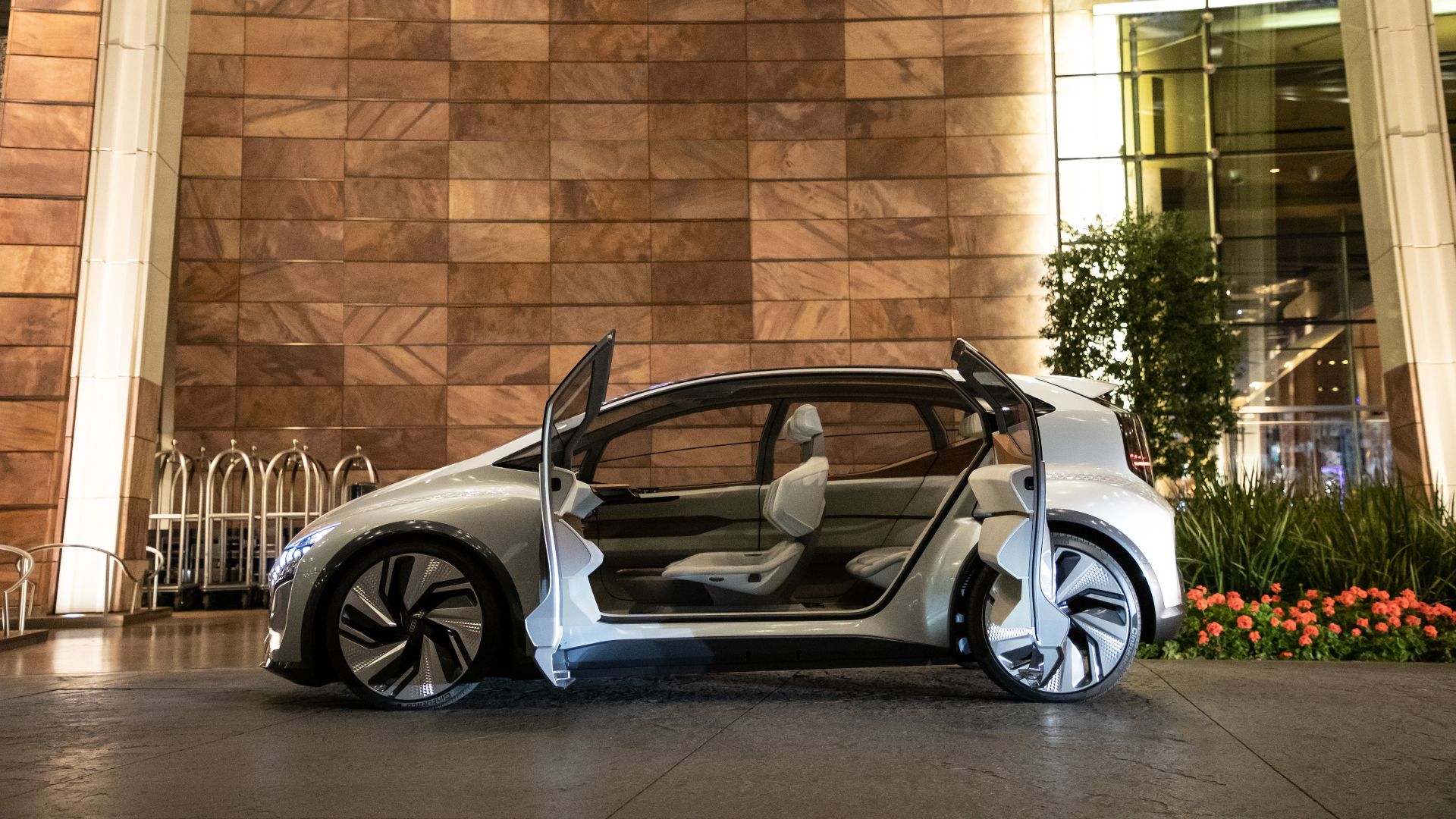
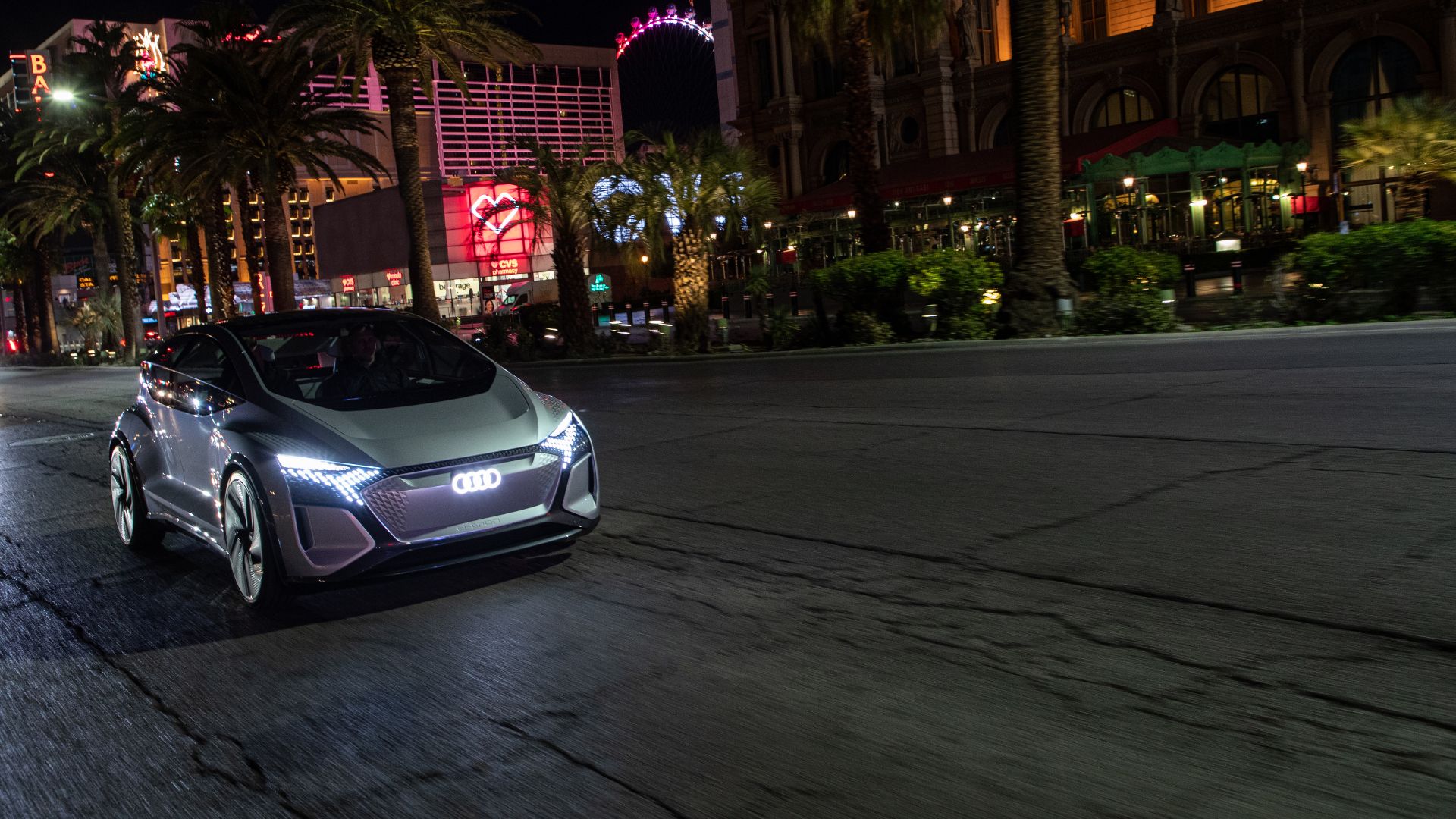
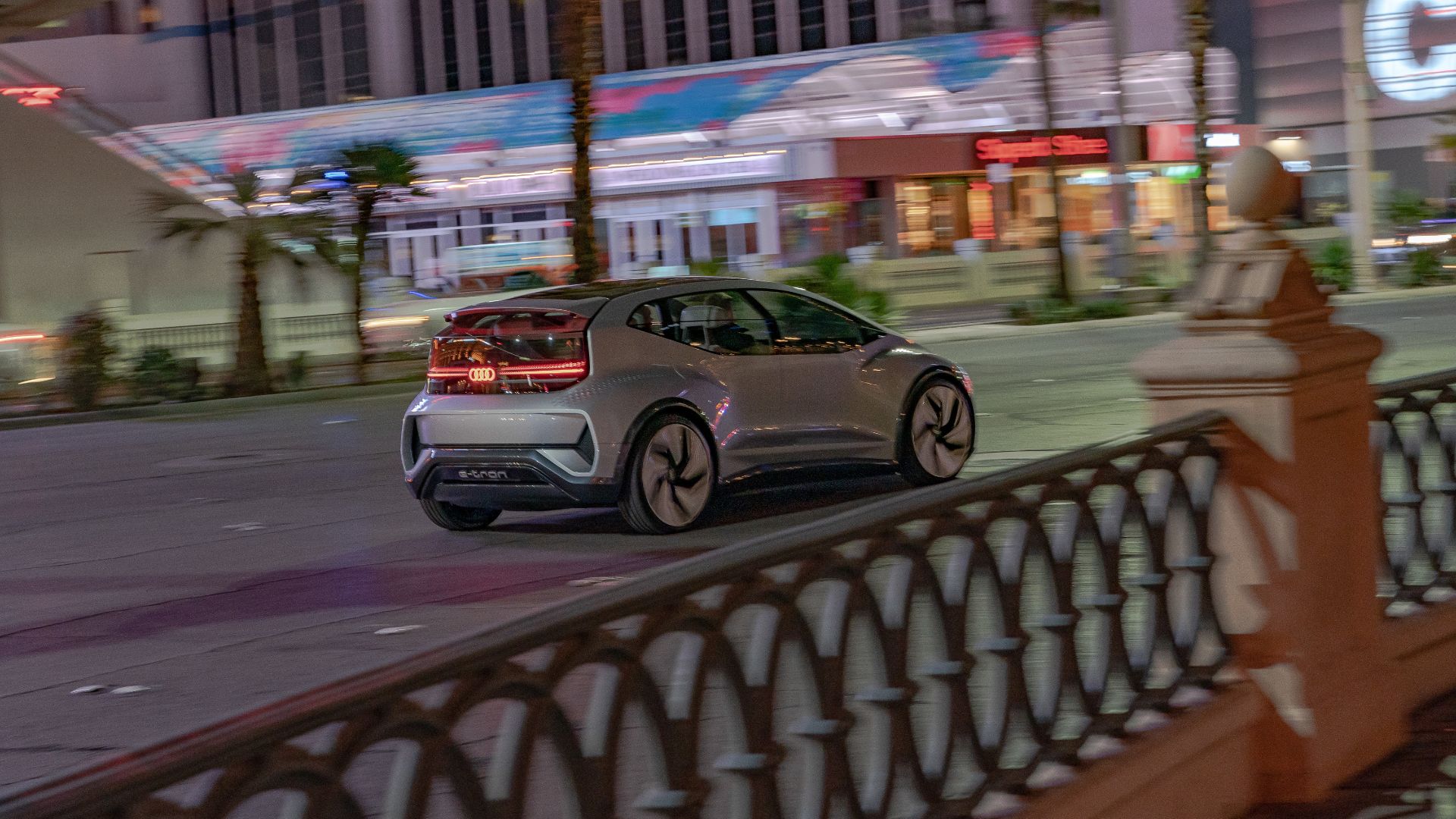
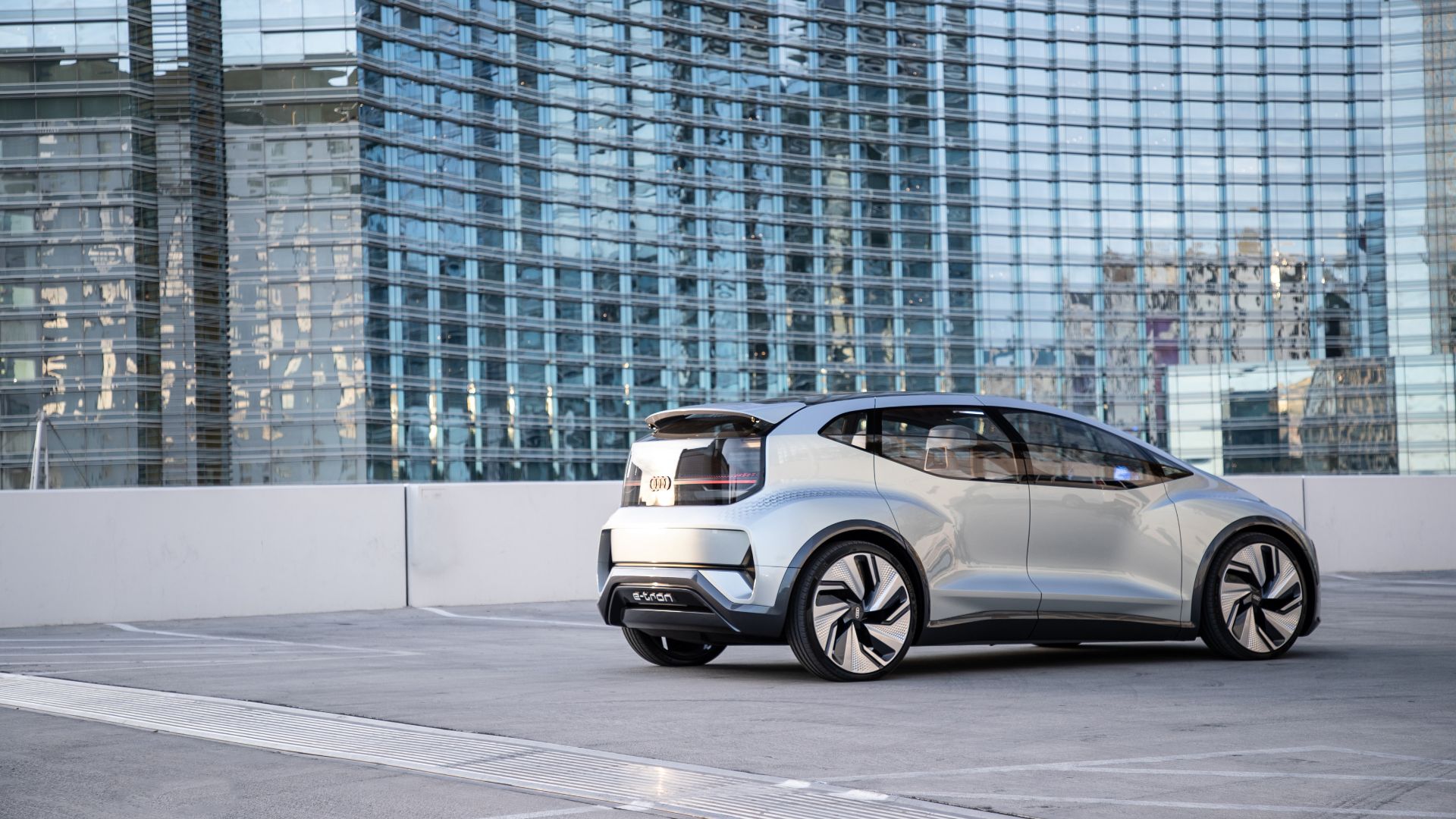
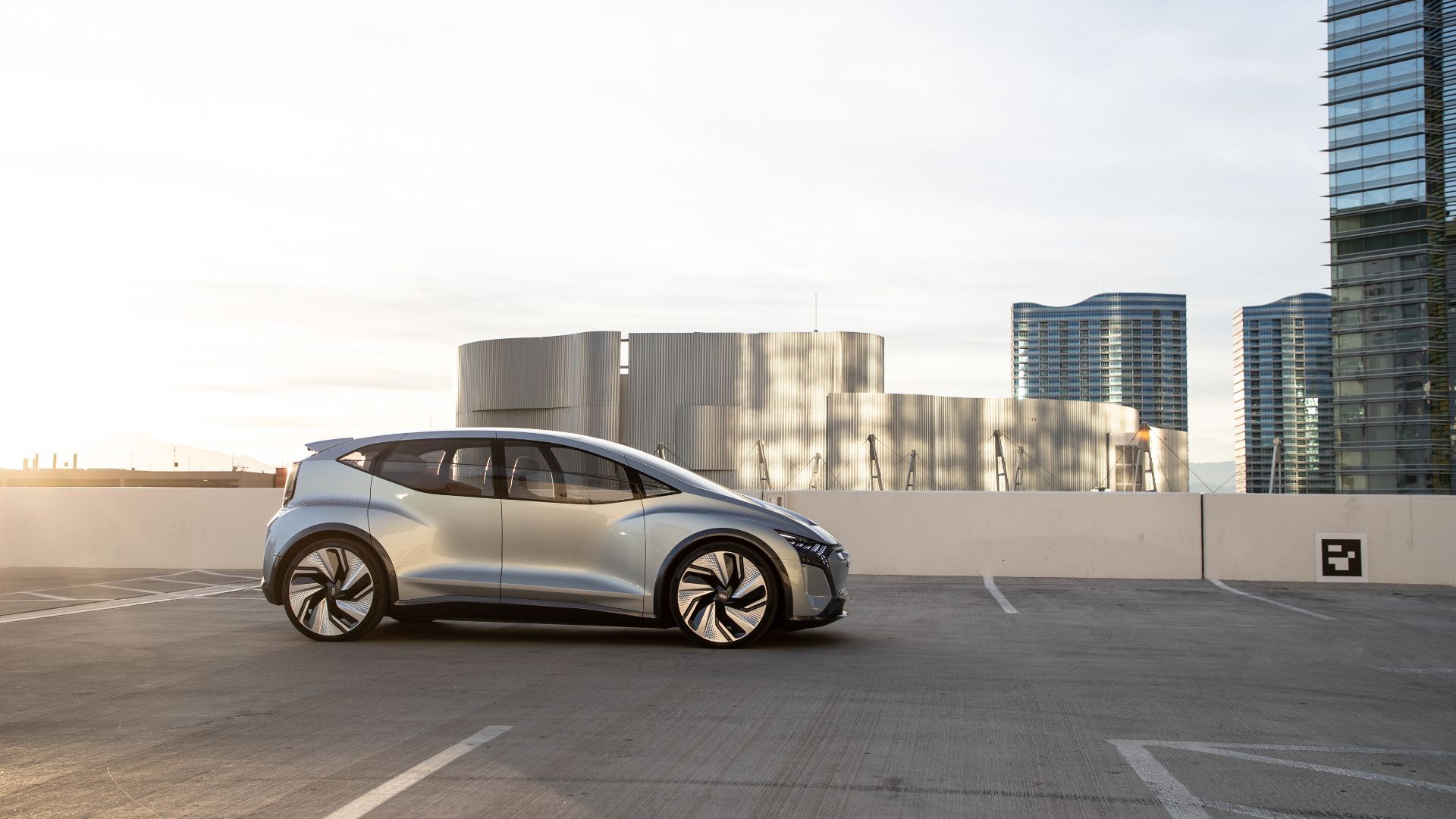
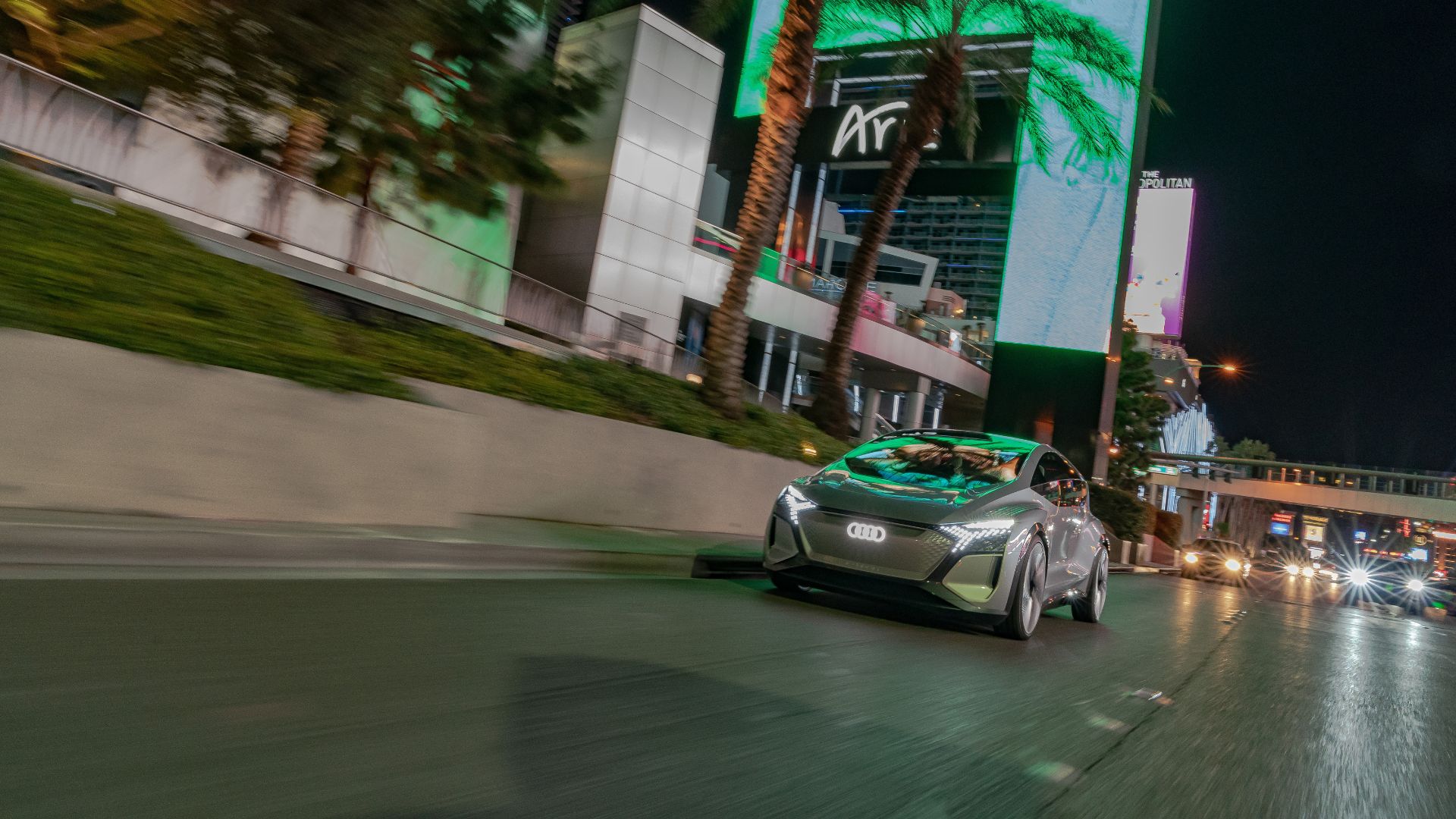
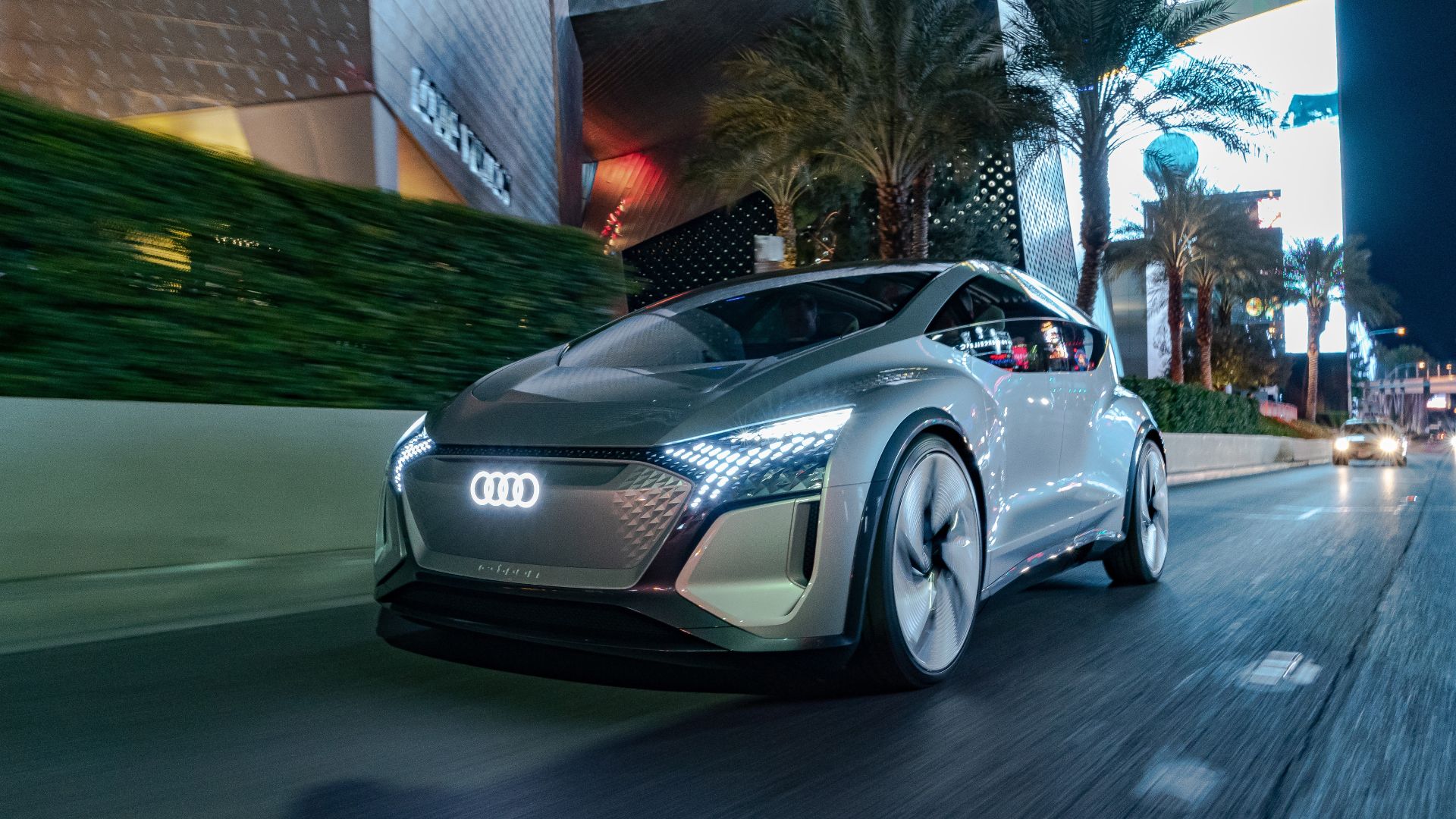
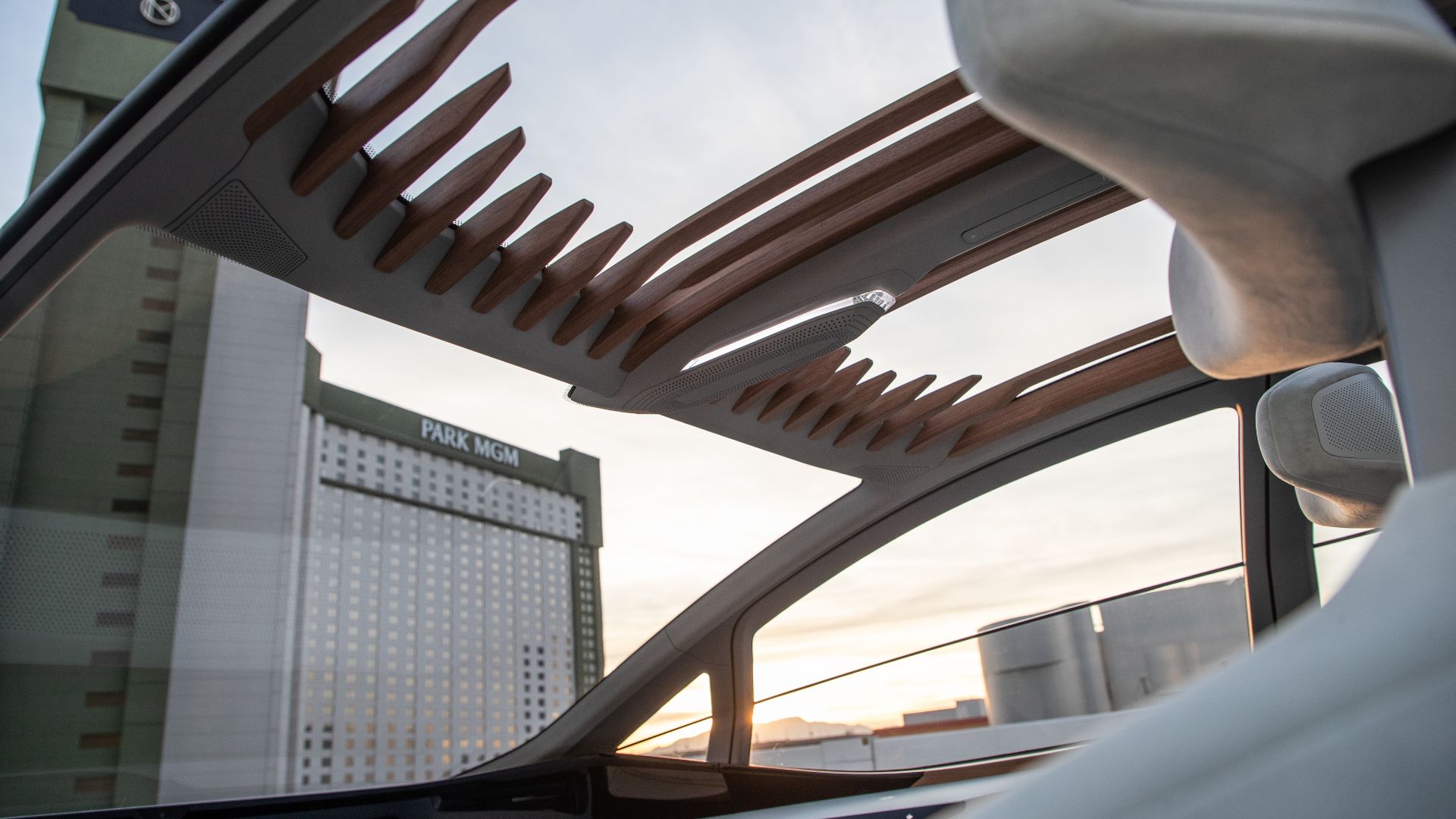
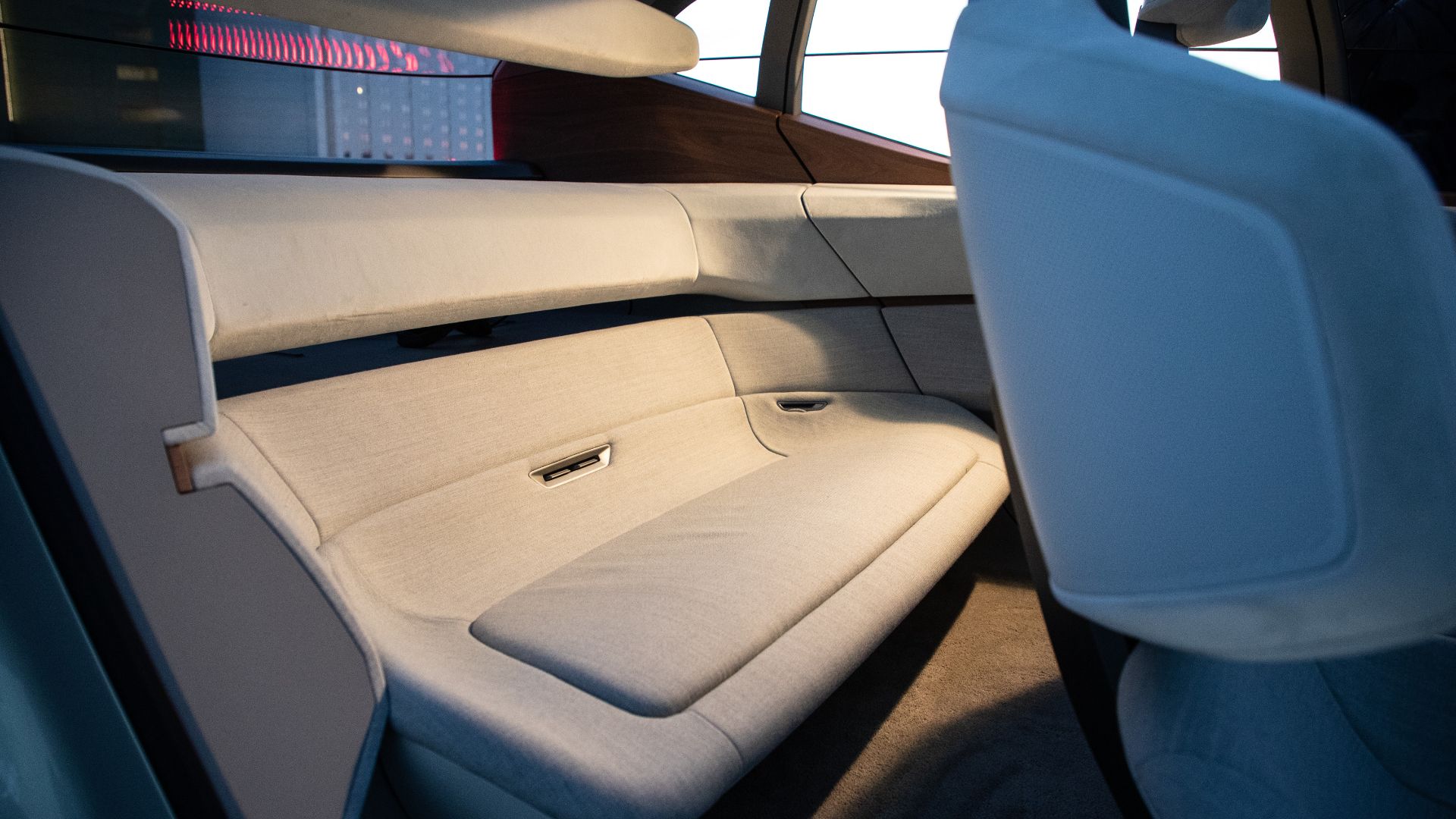
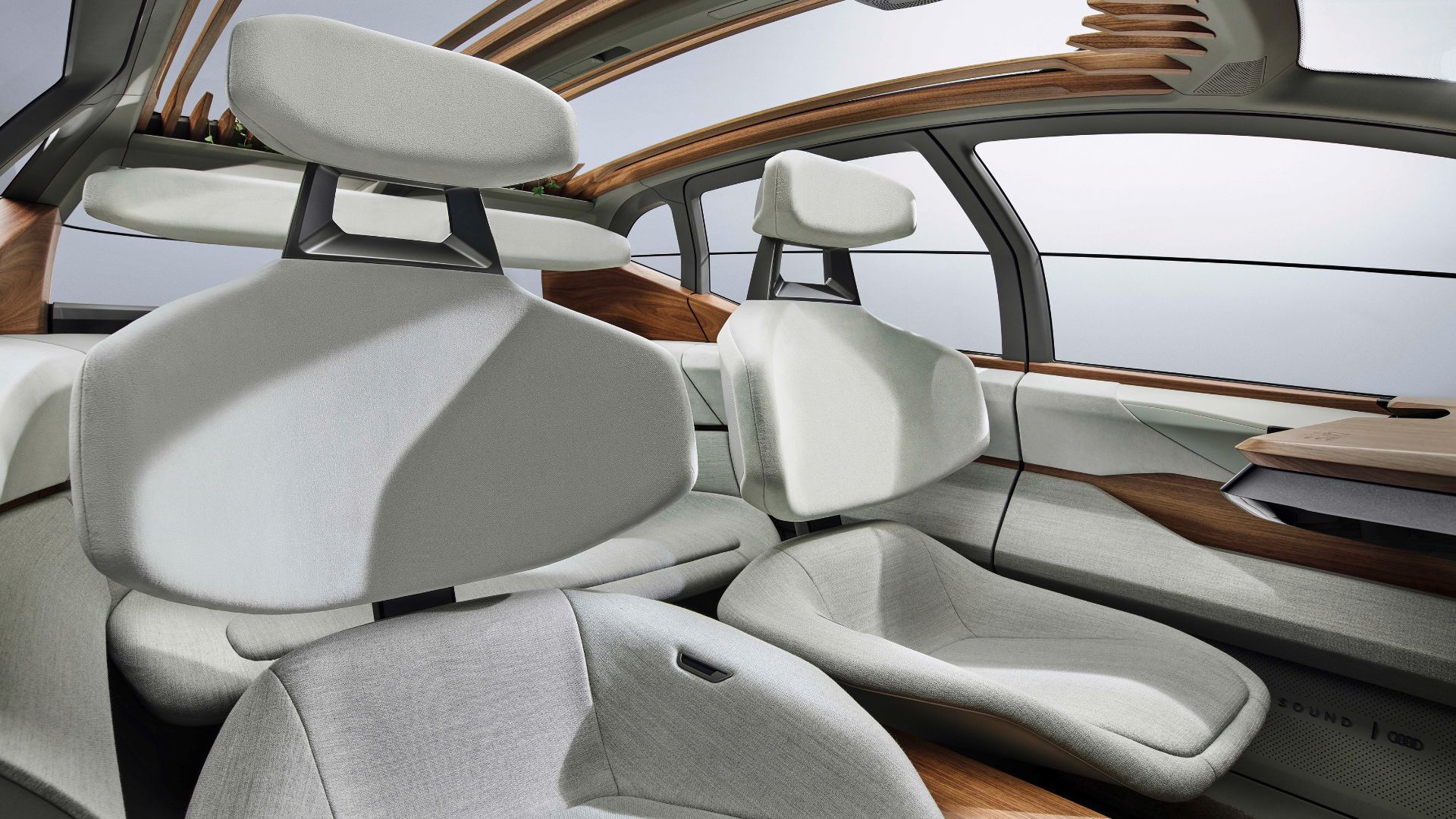
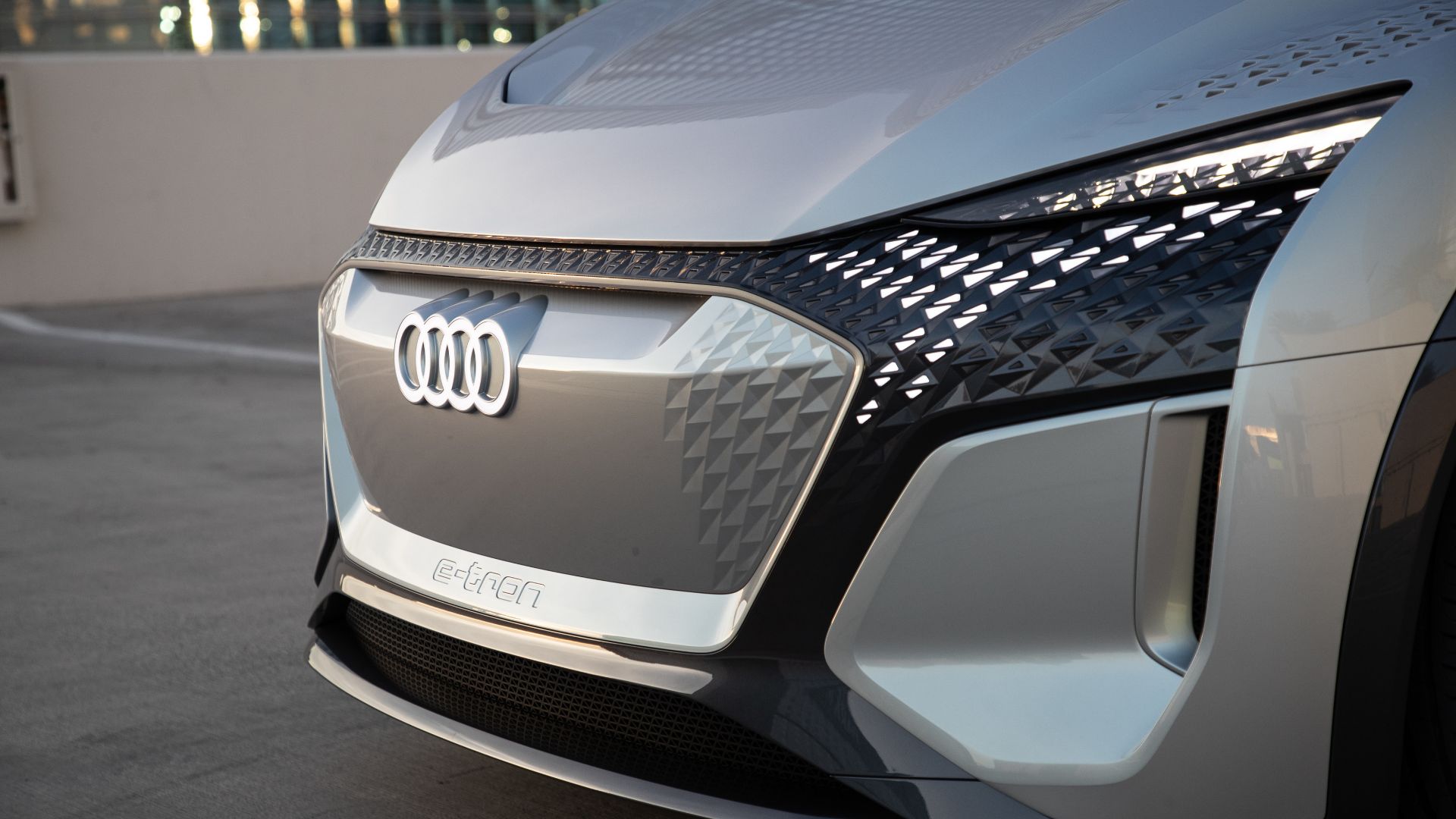
Audi is at the 2020 Consumer Electronics Show showing off its AI:ME fully-automated concept car. It’s a vision for an urban vehicle with a silhouette not dissimilar to the ground-breaking A2 of 20 years ago.
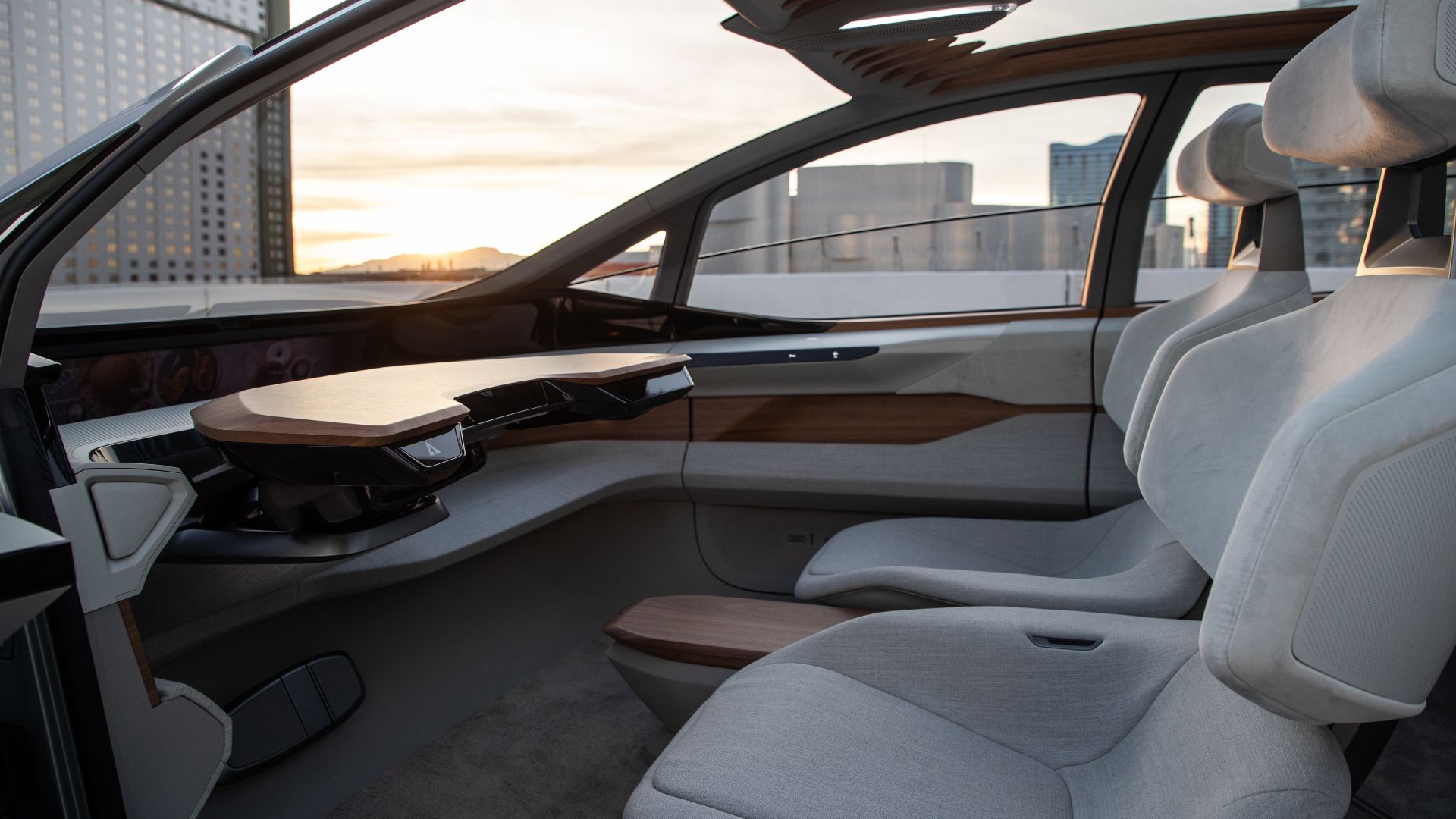
Described as a ‘third living space’ to go alongside the home and workplace, the AI:ME is designed to know its driver, using eye-tracking to enable tasks like ordering food.
Occupants can put on a pair of VR goggles for a wellness experience, taking them to fantastical places, like a flight over a mountain range. The simulation reacts to how the car is moving in real time, so the experience is fully integrated.
Clever though it was, we don’t remember the A2 coming with anything like the ‘Audi Intelligence Experience’. This is how the car learns about its user, their destinations, their habits and their preferences. It can monitor driving style and even vital bodily functions.
Over time, the car will be able to learn your preferred seat position, cabin climate and even which air freshener scent you prefer.
Audi has also developed what it calls ‘Human-Centric Lighting’, which changes based on how you feel. Tired drivers can be soothed with blue cool white light, which stimulates and invigorates.
The AI:ME features new screen technology, with transparent displays. A 15cm by 122cm transparent section is partially embedded into the instrument panel. It’s double-layered, with an OLED display and a black panel. The parts of the screen that aren’t being used to show information remain see-through, for an unobstructed view of the road.
Audi calls the AI:ME a ‘vision vehicle’, suggesting this reborn A2 isn’t something we can expect in 2021 or even 2022. It’s nice to see the marque re-visiting the footprint of one of its cleverest models, though.
The 2020 Consumer Electronics Show (CES) is underway, and now more than ever it’s where car companies go to show off technology, and technology companies go to show off cars. Toyota is going one better this year, proposing its plans for an entire city of the future.
Moreover, this isn’t just a concept. Toyota is going to build what it calls the ‘Woven City’ at the base of Mount Fuji in Japan.
The plan is for it to be a prototype for new cities. The 175-acre site will be a fully connected hydrogen-powered ecosystem, and a safe haven for the prototyping and testing of future technologies. Examples include autonomous mobility, robotics, smart homes, and artificial intelligence (AI).
Toyota wants to move 2,000 people in initially. These will include Toyota employees, families, retirees, retailers, scientists and industry partners. They’ll be able to enjoy robots in their homes, AI to monitor their health and fully-autonomous zero-emissions transport. Tropes of traditional cities will follow, including parks and areas for people to gather socially.
“Building a complete city from the ground up, even on a small scale like this, is a unique opportunity to develop future technologies, including a digital operating system for the city’s infrastructure,” said Akio Toyoda, president of Toyota Motor Corporation.
“With people, buildings and vehicles all connected and communicating with each other through data and sensors, we will be able to test connected AI technology… in both the virtual and the physical realms… maximising its potential.”
“We welcome all those inspired to improve the way we live in the future, to take advantage of this unique research ecosystem and join us in our quest to create an ever-better way of life and mobility for all.”
The city is being designed by Danish architect Bjarke Ingels. His previous efforts include Google’s Mountain View and London headquarters locations, as well as Lego House in Denmark. Toyota expects ground to be broken for the ‘Woven City’ in 2021.
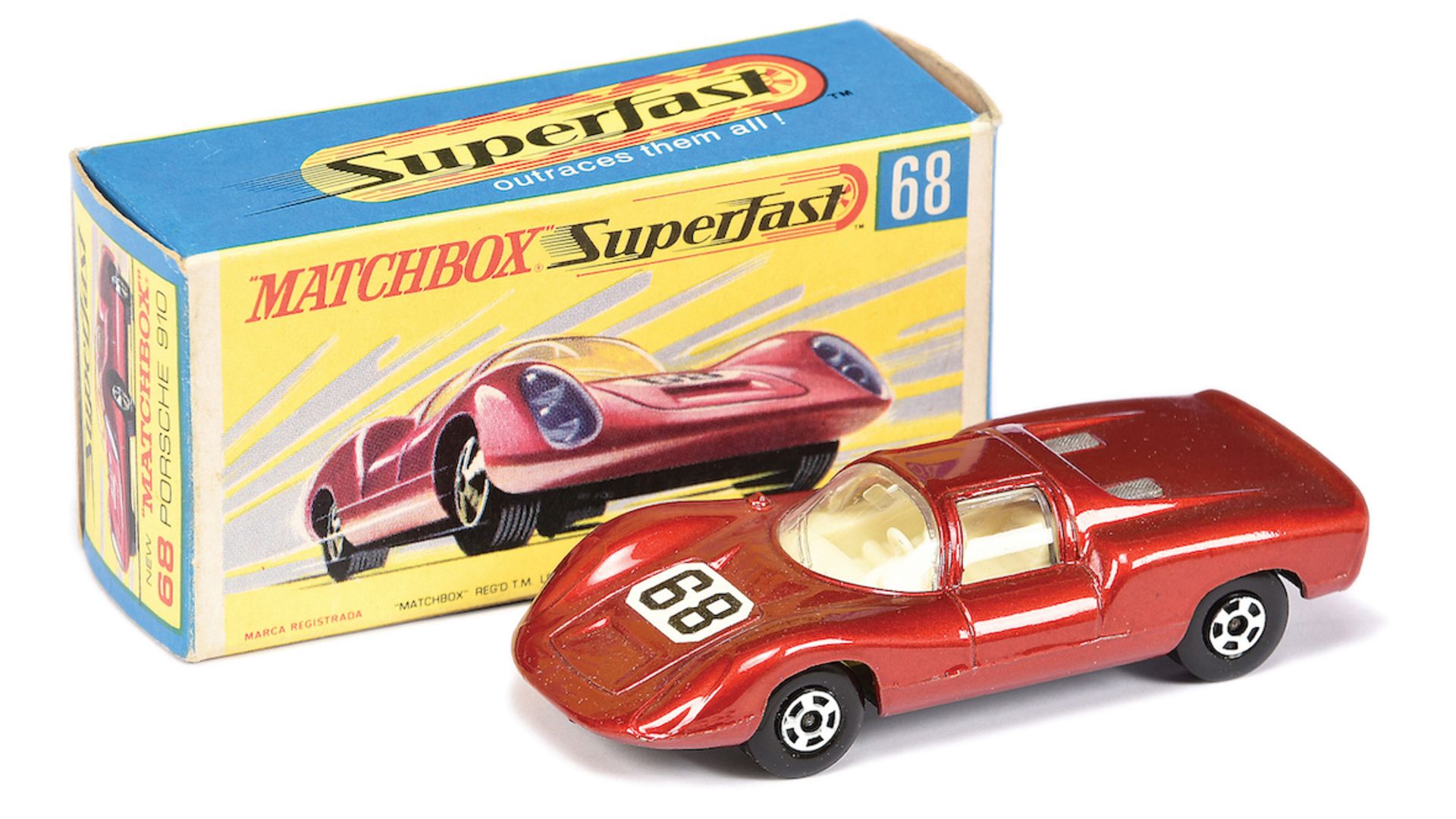
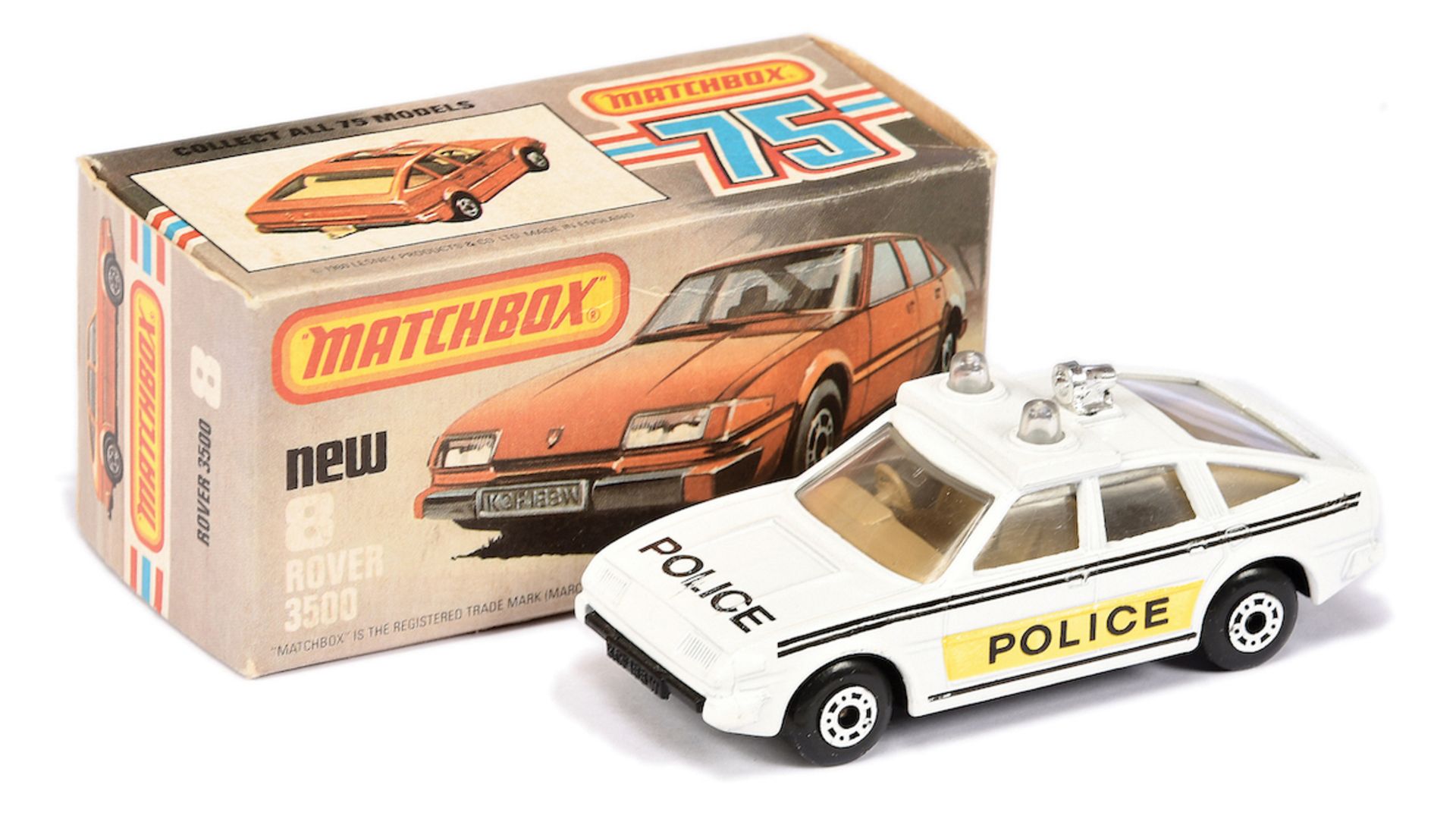
An incredible 3,000-strong collection of Matchbox toy cars has sold for £300,000. The owner, founder and chairman of H&H Classics Simon Hope, has built his 1:76 model collection over six decades.
All cars are immaculate, or very close. Simon says he wasn’t keen on rough play with them when younger. They were treasured, packaging and all, over the course of his time collecting. The full set is considered one of the most complete in the world, including some of the rarest cars.
Simon’s Matchbox collection started as a boy, with Christmas and birthday presents from family members. As he got older, however, he discovered the value of these motoring trinkets. That said, he simply bought the models he wanted, in the best condition he could.
The collection was sold over the course of three sales with Vectis of Thornaby in North Yorkshire.
“It was only when I got older that I realised there was actually a collecting scene out there, and information on rarer versions and colours,” Simon said.
“I never took part in that scene, preferring to simply track down the ones I wanted in perfect (or as near as possible) condition. It just grew and generally they were bought with amounts of money not missed at the time.”
Today, some of these cars fetch four figures. Highlights from this collection include a lime green ERF Dropside lorry that made £7,000 on its own. A green Ford kennel truck brought home £3,200, while a white Ford Mustang made £2,100.
Strike action could delay Volkswagen Group cars
Nearly half think electric cars should make engine noises
“There is a big market out there for items like this, particularly the models from the 1970s as these things do tend to be generational,” said Julian Royse, a specialist at Vectis.
“We find the demand far outstrips the supply and as such people will be very keen to get their hands on pieces which may not come up again in their lifetimes.
“This collection was astounding and and probably had the biggest range of any I’ve seen.”
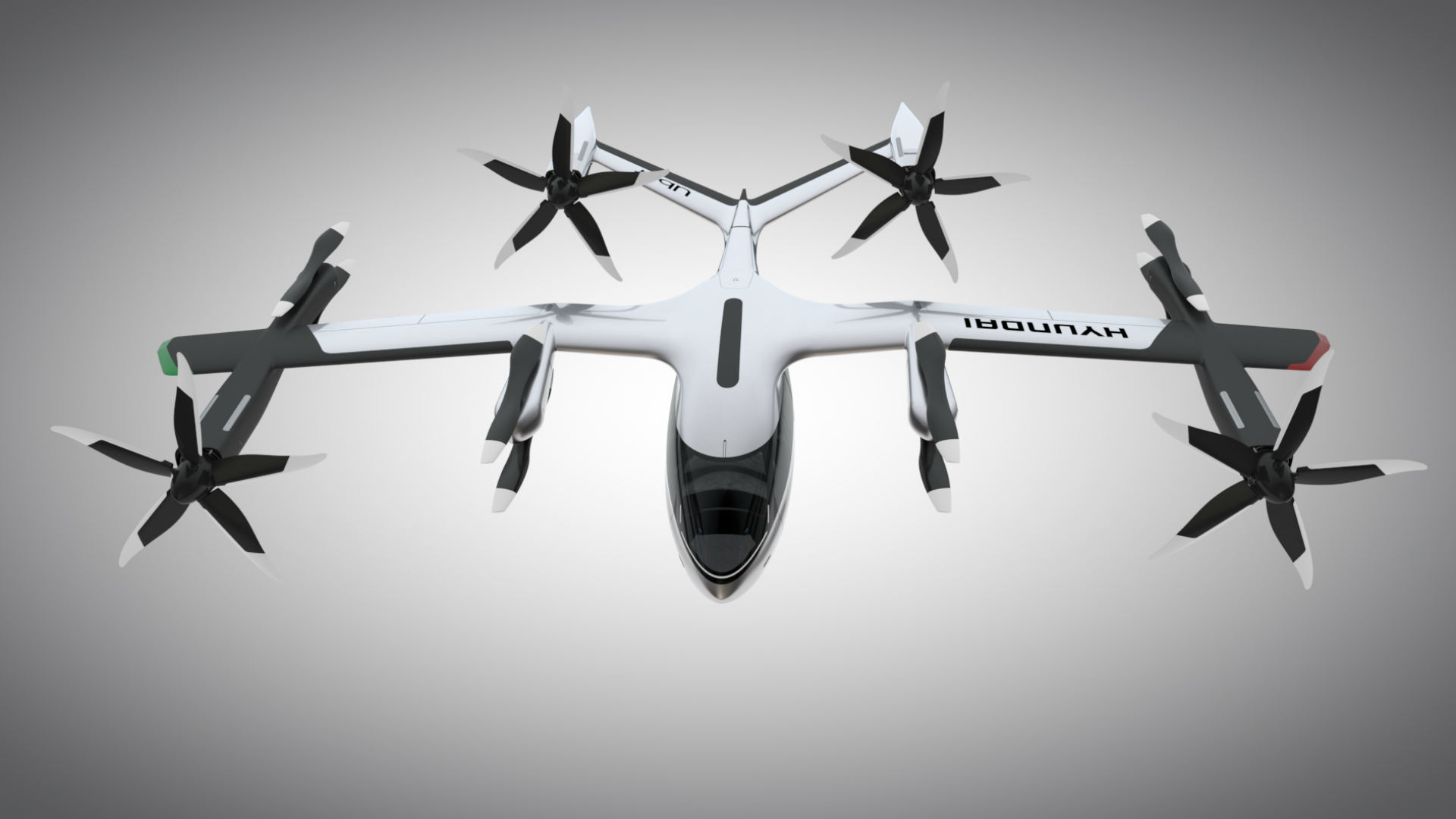
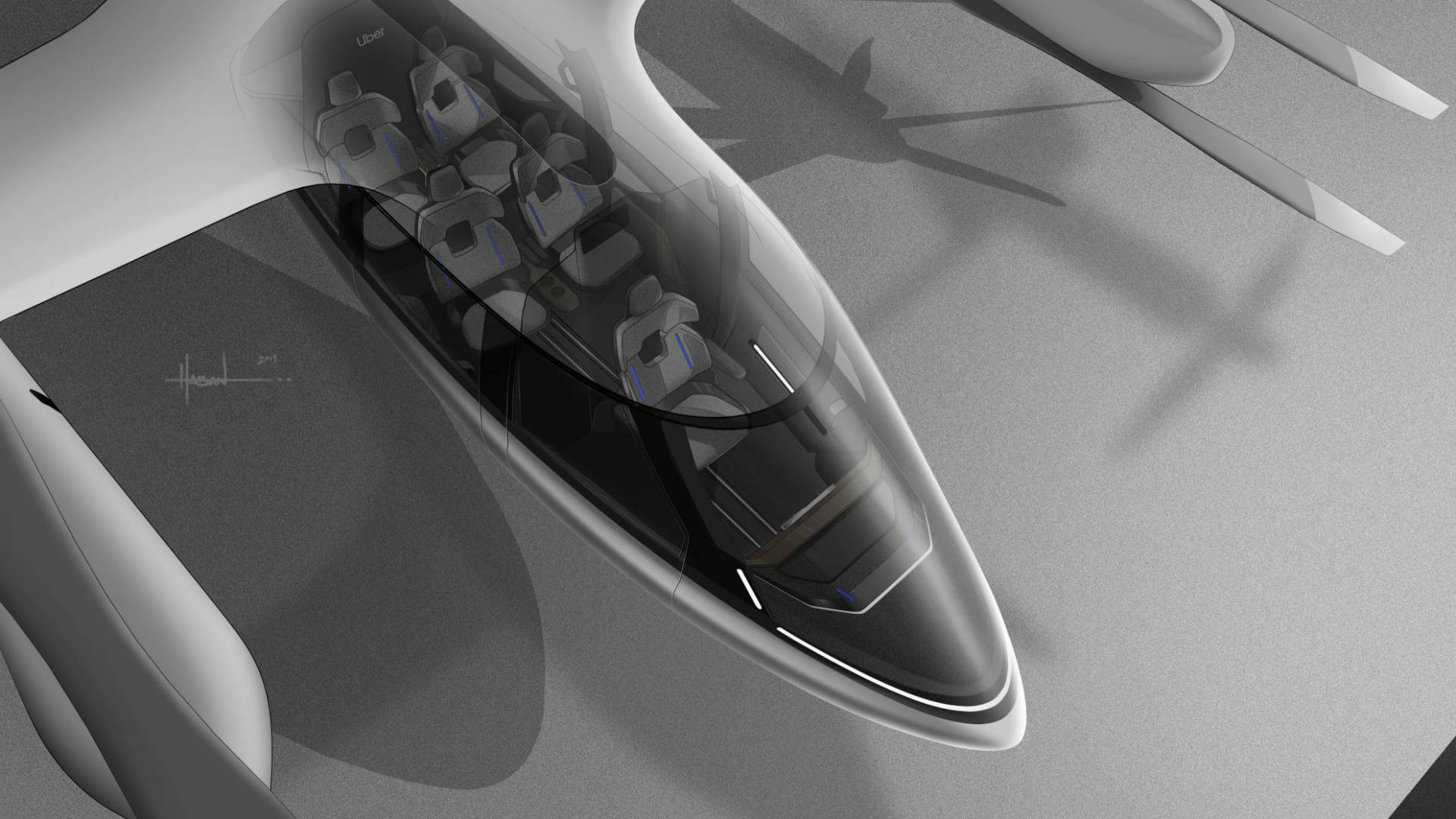
It previews a future ride-sharing taxi – and it could take flight as early as 2023. Demonstrations are expected later this year.
Hyundai will develop, manufacture and deploy the air taxis, with Uber handling the airspace support, connections to ground transportation, and customer interfaces via a ride-sharing network.
The all-electric S-A1 on show at CES has a cruising speed of 180mph, a cruising altitude of around 1,000-2,000ft above ground, and can travel up to 60 miles.
During peak hours it will require about five to seven minutes for recharging and is designed for vertical take-off. Although it will be piloted initially, the plan is for the S-A1 to become autonomous.
Inside, there’s seating for four passengers, with room for a personal bag or backpack. Hyundai says it will ‘avoid the dreaded middle seat’.
Uber says a production version could travel at speeds of up to 200mph and that, after several years on the market, a ride in an air taxi will cost the same as an UberX trip of the same distance.
‘Vitalise urban communities’
Jaiwon Shin, executive vice president and head of Hyundai’s Urban Air Mobility (UAM) division, said: “Our vision of UAM will transform the concept of urban transportation.
“We expect UAM to vitalise urban communities and provide more quality time to people. We are confident that Uber Elevate is the right partner to make this innovative product readily available to as many customers as possible.”
Eric Allison, head of Uber Elevate, added: ”Hyundai is our first vehicle partner with experience of manufacturing passenger cars on a global scale.
“We believe Hyundai has the potential to build Uber Air vehicles at rates unseen in the current aerospace industry, producing high quality, reliable aircraft at high volumes to drive down passenger costs per trip.
”Combining Hyundai’s manufacturing muscle with Uber’s technology platform represents a giant leap forward for launching a vibrant air taxi network in the coming years.”
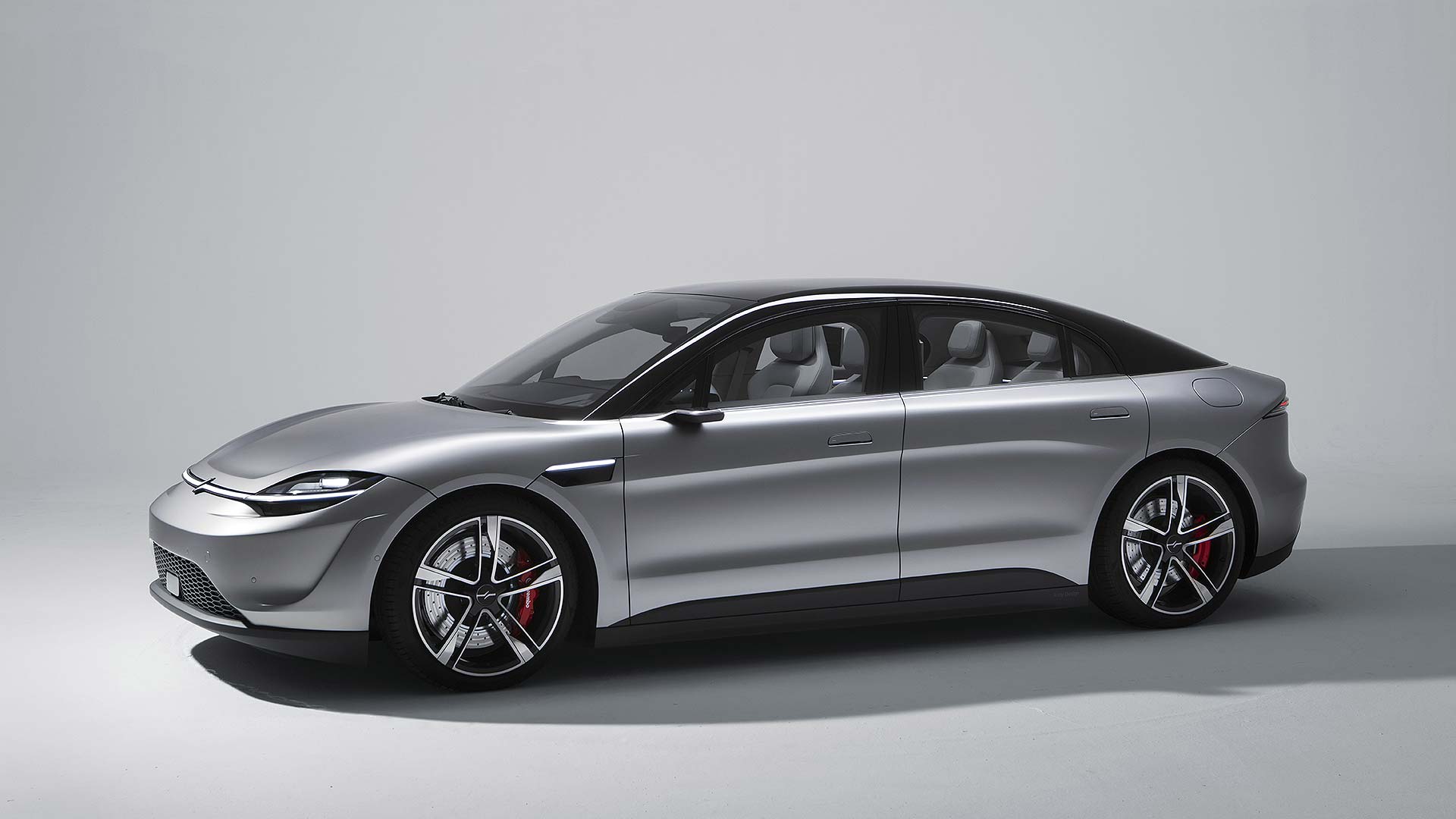
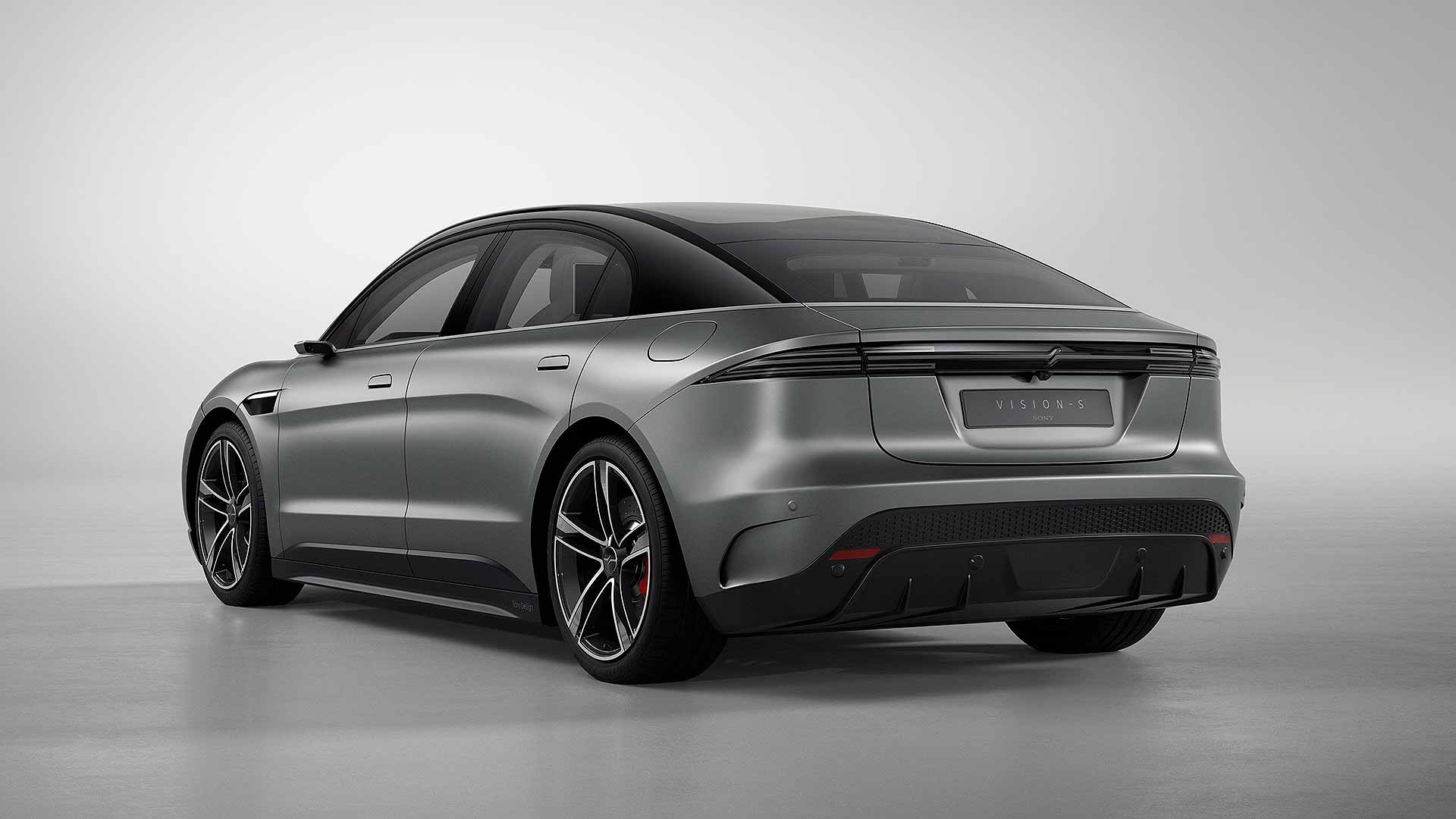
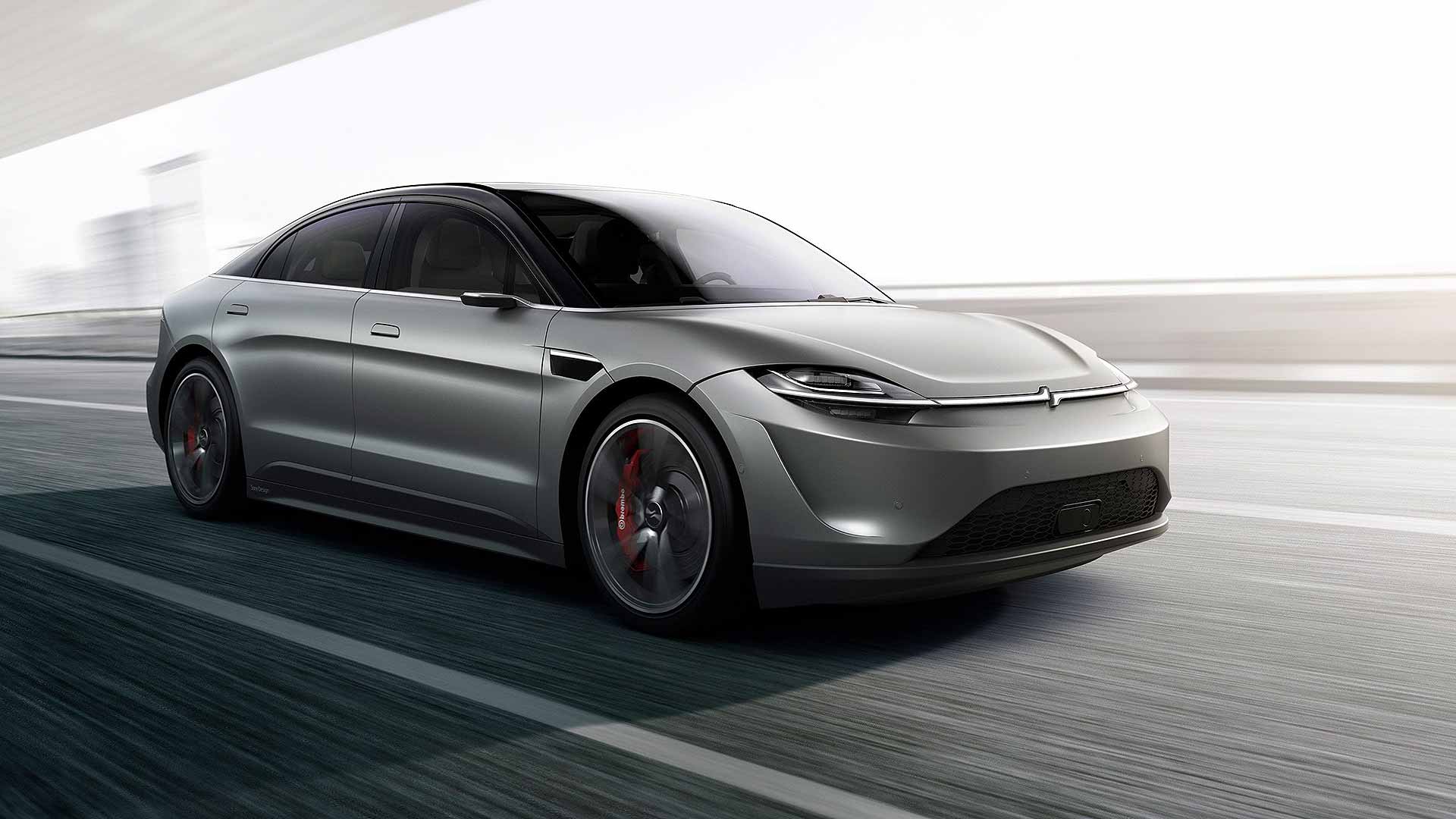
The Sony Vision-S is a surprise new electric concept car revealed at CES 2020 to showcase the Japanese giant’s vision of mobility in the future.
Driving onto the stage during its CES press conference, Sony corporation president and CEO Kenichiro Yoshida said the electric car had been developed because “I believe the next mega-trend will be mobility”.
Transport in the future will be as exciting as mobile has been for the past decade, he stated.
The Vision-S EV is therefore packed with gadgetry Sony believes will all feature in tomorrow’s cars, focused in three areas: safety, entertainment and adaptability.
Sony Vision-S: in detail
On the safety side, the Vision-S features no fewer than 33 sensors inside the vehicle. These include CMOS image sensors (usually seen in digital cameras) and ToF sensors (Time of Flight – the tech helps accurately judge distances between objects and the camera), to detect and recognise people both outside and in.
The array of sensors help provide “highly advanced driving support”: note, Sony is not describing it as a fully autonomous car. Instead, it gives the car a 360 degree ‘safety cocoon’, detecting risks almost before they occur.
The ToF sensors, adds Sony, also help optimise the infotainment system, giving the Vision-S ‘intuitive’ gesture control (rather than the somewhat basic / infuriating systems seen in some of today’s BMWs).
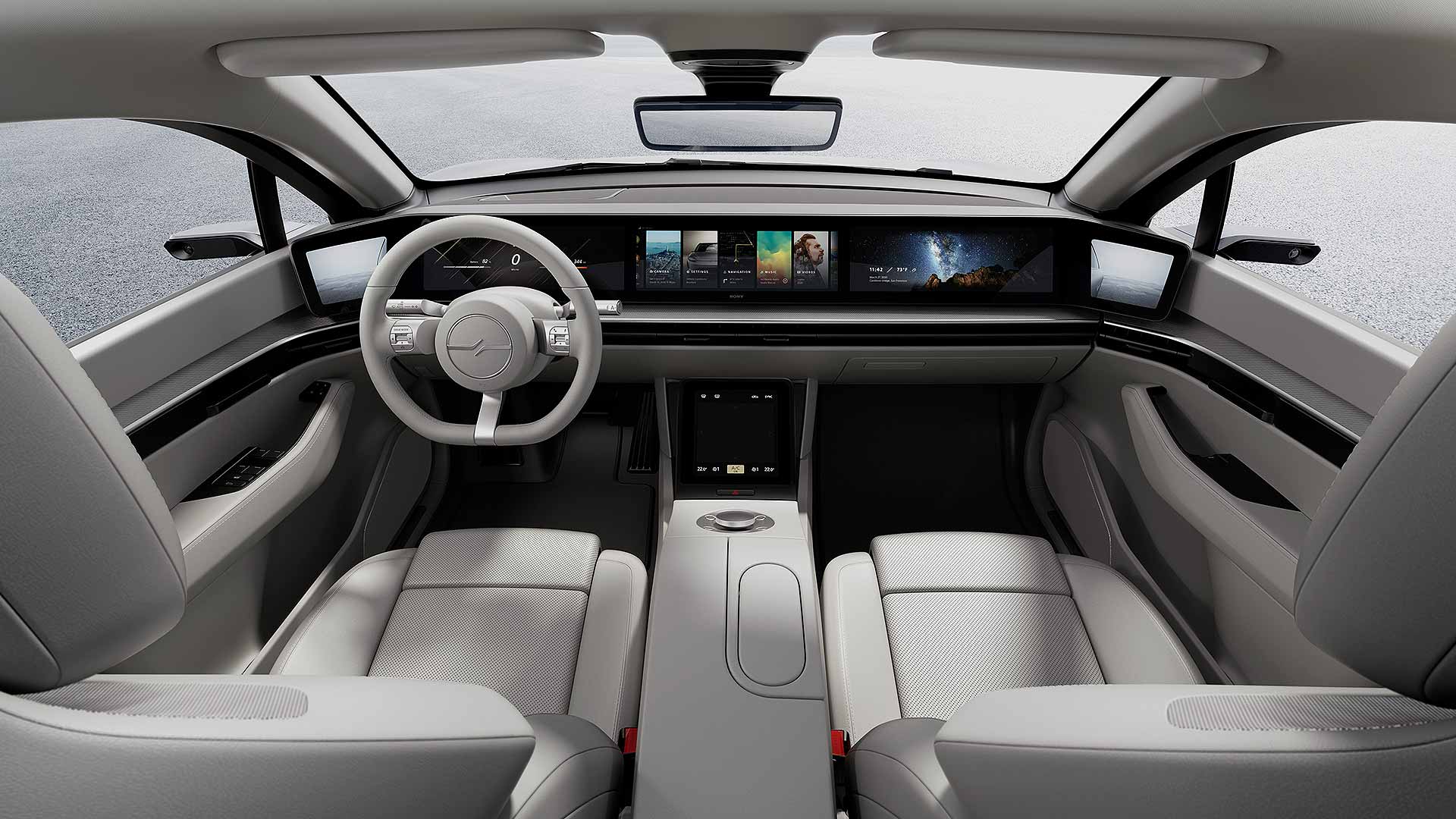
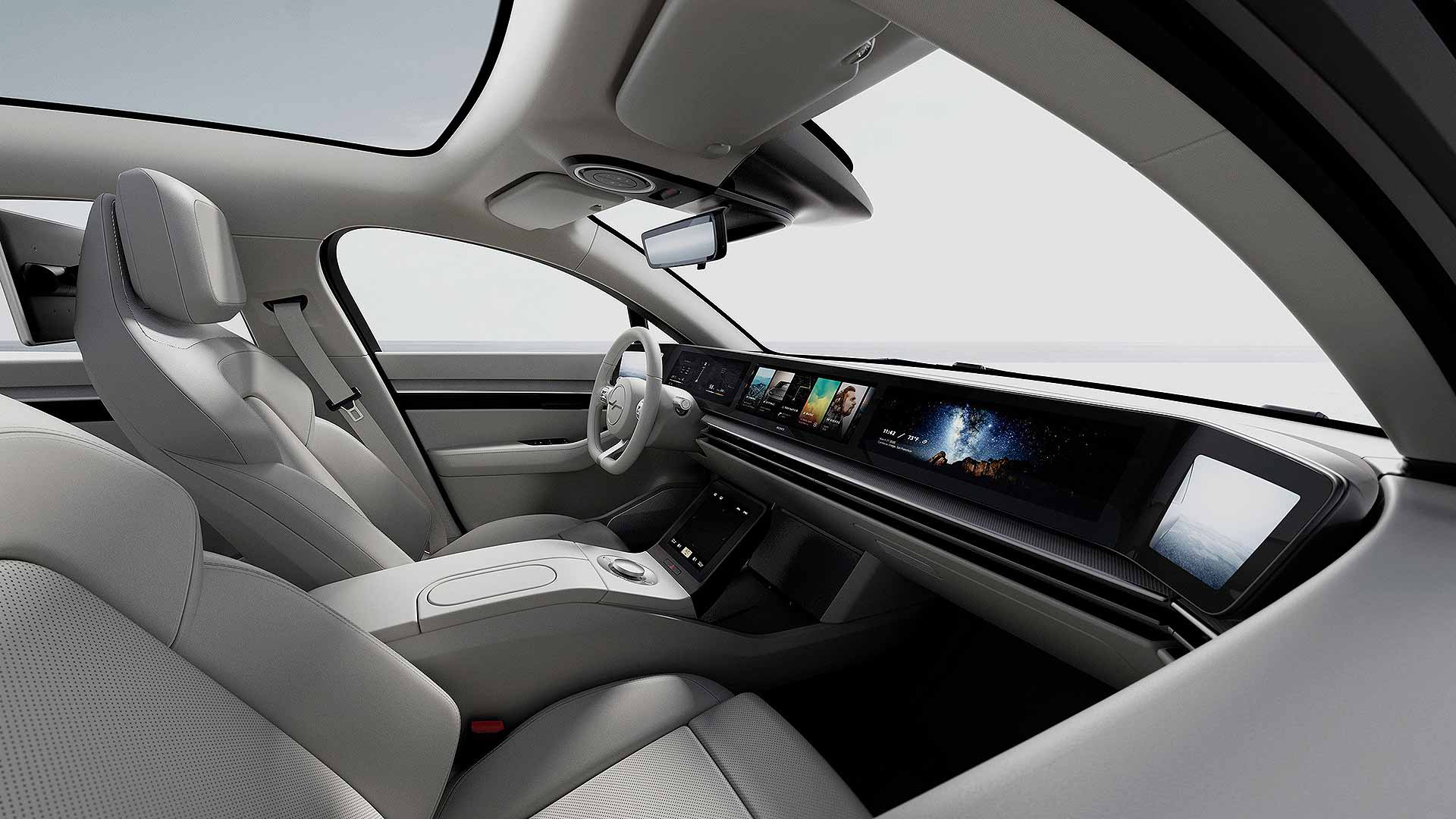
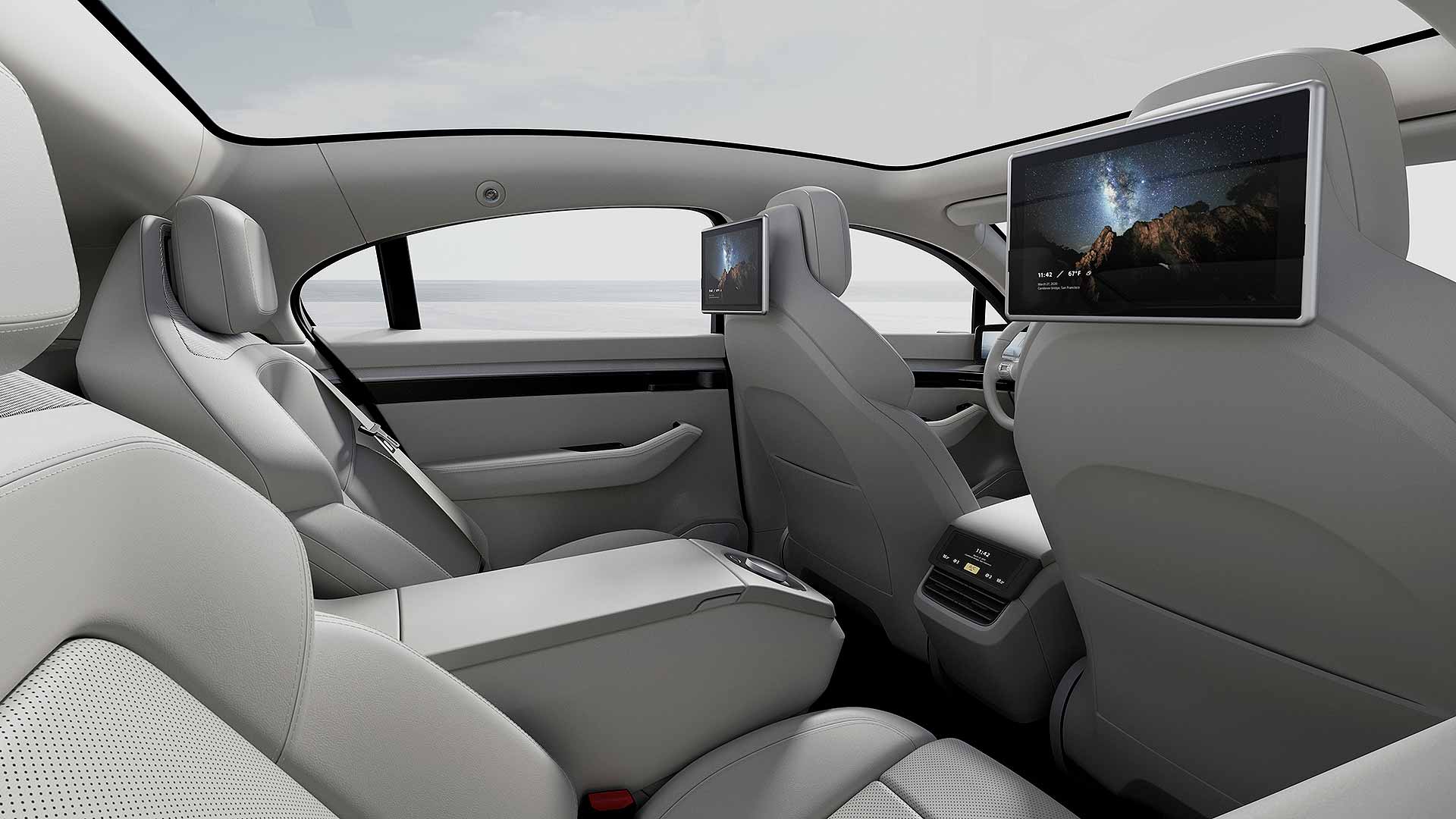
As for the infotainment screens, there are three high-resolution panoramic displays stretching the full width of the dashboard, flanked by digital rear-view screens at either end.
Sony calls the user interface “intuitive” and adds there is a ‘jog dial’ between the front seats for controlling the displays when the seats are fully reclined.
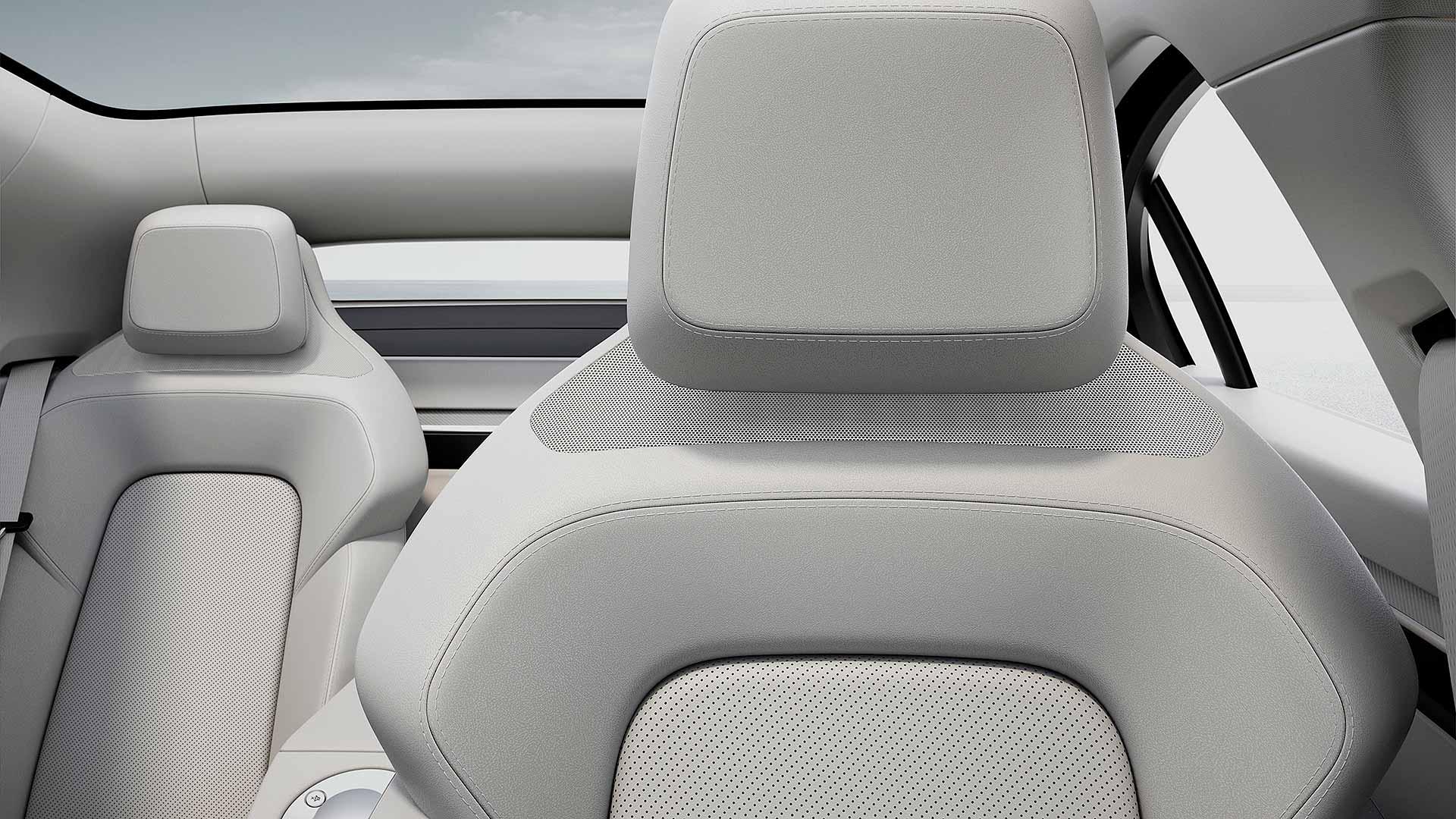
The Vision-S also features Sony ‘360 Reality Audio’ for rich audio fed through speakers built into each seat (yes, the rear two chairs, as well as the front).
The audio experience has been engineered from the ground up – the beauty of building your own car – and uses Sony’s own digital processing technology.
The Vision-S is a fully interconnected car, continually evolving via software-over-the-air (SOTA) updates. The firm wants to see the “continual evolution of cars via networks, and the creation of a car society in which each owner possesses a single vehicle for a long time, and minimises their environmental impact”.
In short, you won’t have to buy a new car every few years: your Sony Vision-S will develop and update itself for you. This is an interesting alternative to today’s auto industry model…
A seamless link between mobile devices and Sony’s mobility concept will see, for example, music on a smartphone automatically pass over to the car when the owner gets in. They’ll be able to autonomously summon it from their mobile device, too.
The interior will be fully personalised – and if a sleeping passenger is detected, the lights in their area will auto-dim and the climate control will set a suitable temperature.
Video: Sony Vision-S
Sony Vision-S: tech specs
Sony has developed the Vision-S with tech partners including Magna, Bosch, BlackBerry, Nvidia and Qualcomm. It’s a newly-designed EV platform with the ‘skateboard’ layout that’s becoming common for electric cars – it means multiple body styles can easily be created.
Sony references saloon cars, SUVs, MPVs and coupes.
There are two electric motors giving a total of 544 hp, and it’s good for 0-62 mph in 4.8 seconds and a top speed of 149 mph.
The Vision-S is 4,895 mm long and 1,900 mm wide: just a little bit smaller than a Tesla Model S, in other words.
We don’t know the capacity of the electric batteries, but we do know the Vision-S is, like most high-power electric cars, no lightweight: it weighs 2,350 kg.
There are no official plans for production, but you can bet many will be crossing their fingers. After all, it’s no mean feat to create a car as convincing-looking as this from scratch; as we go from Sony’s self-described mobile decade to the mobility decade, is it at least considering a mobility product of its own?
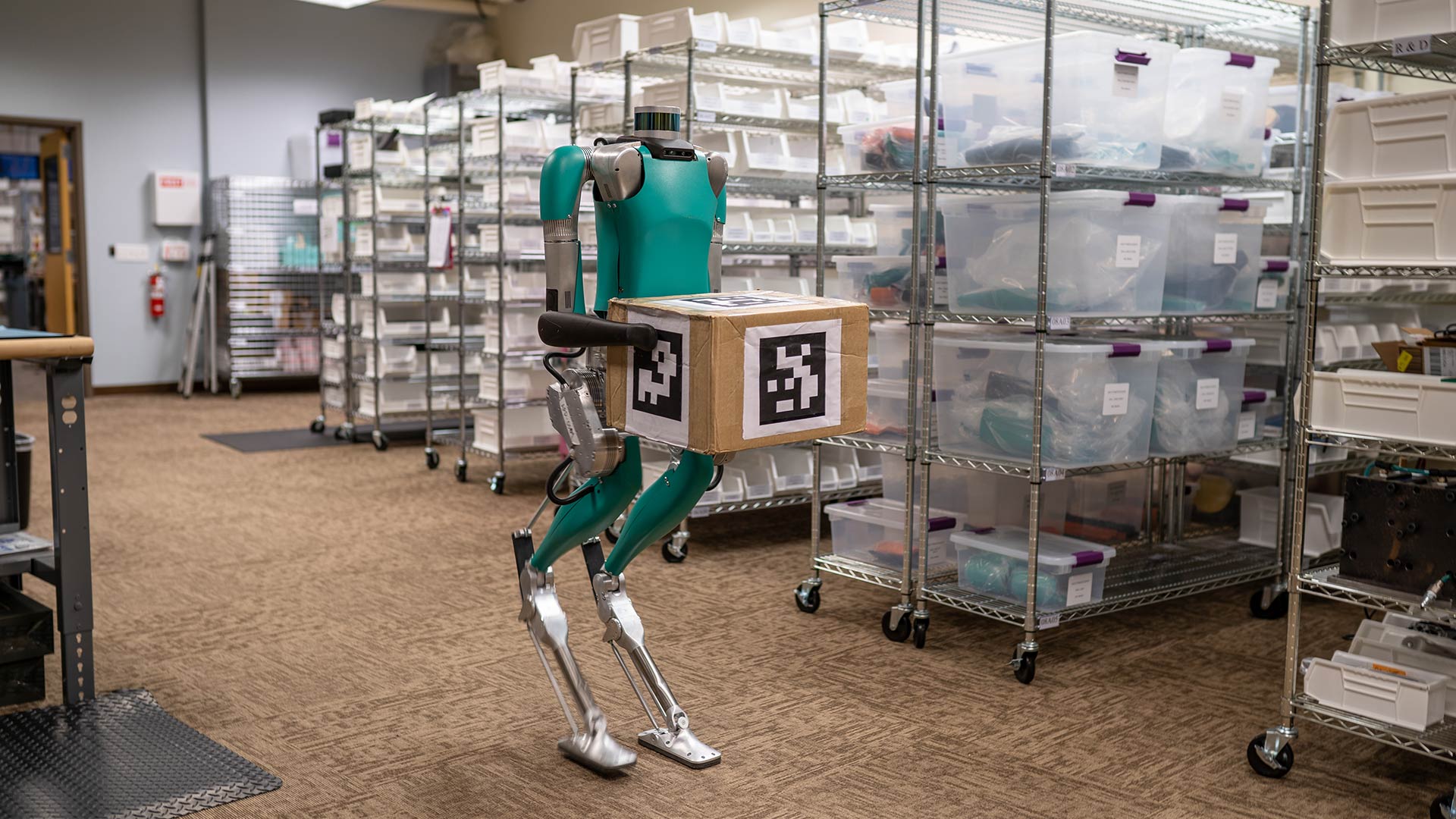
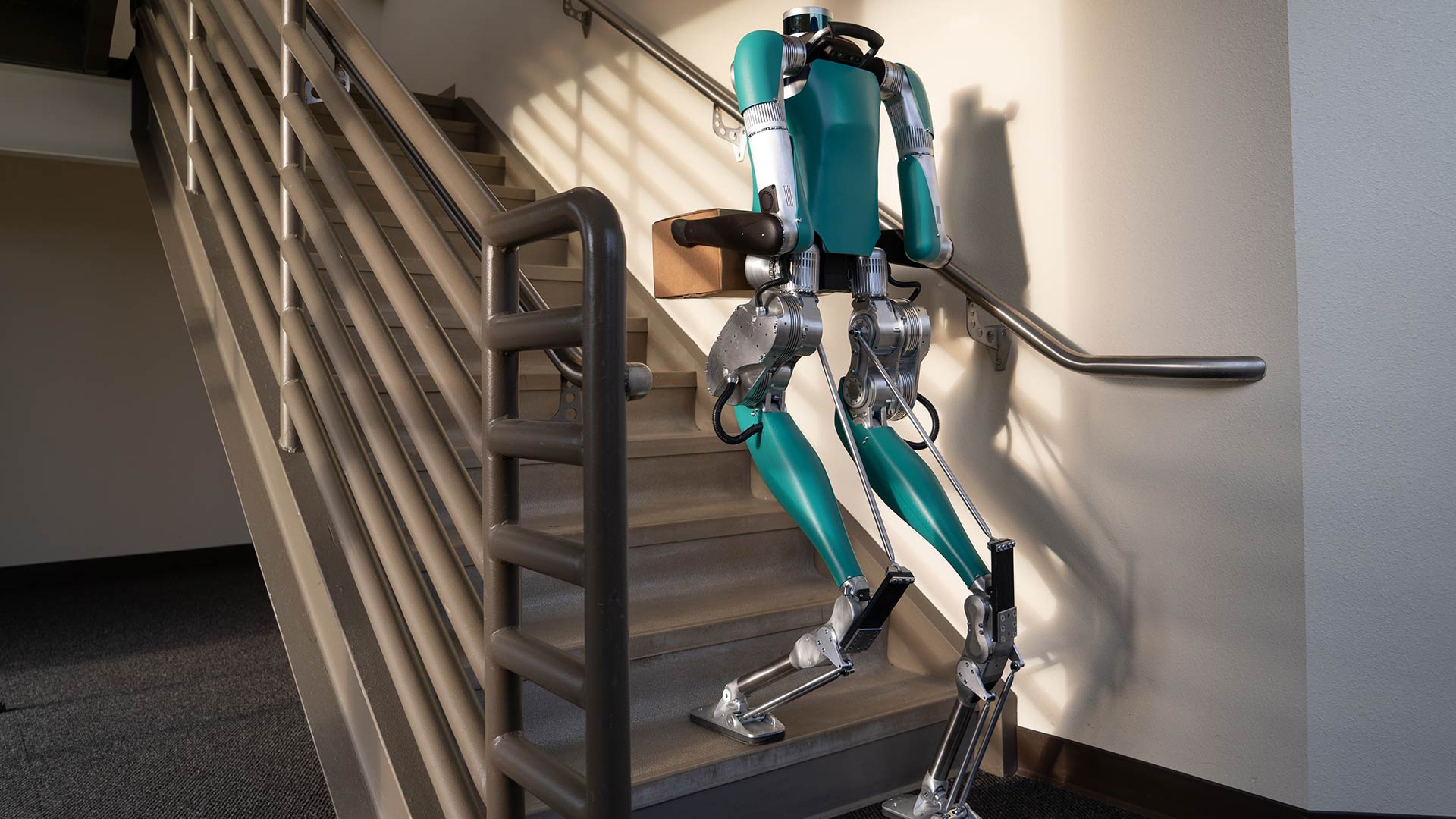
Robots able to carry boxes and walk on two legs like a human will play a part in helping Ford develop new ideas for its commercial vehicle range.
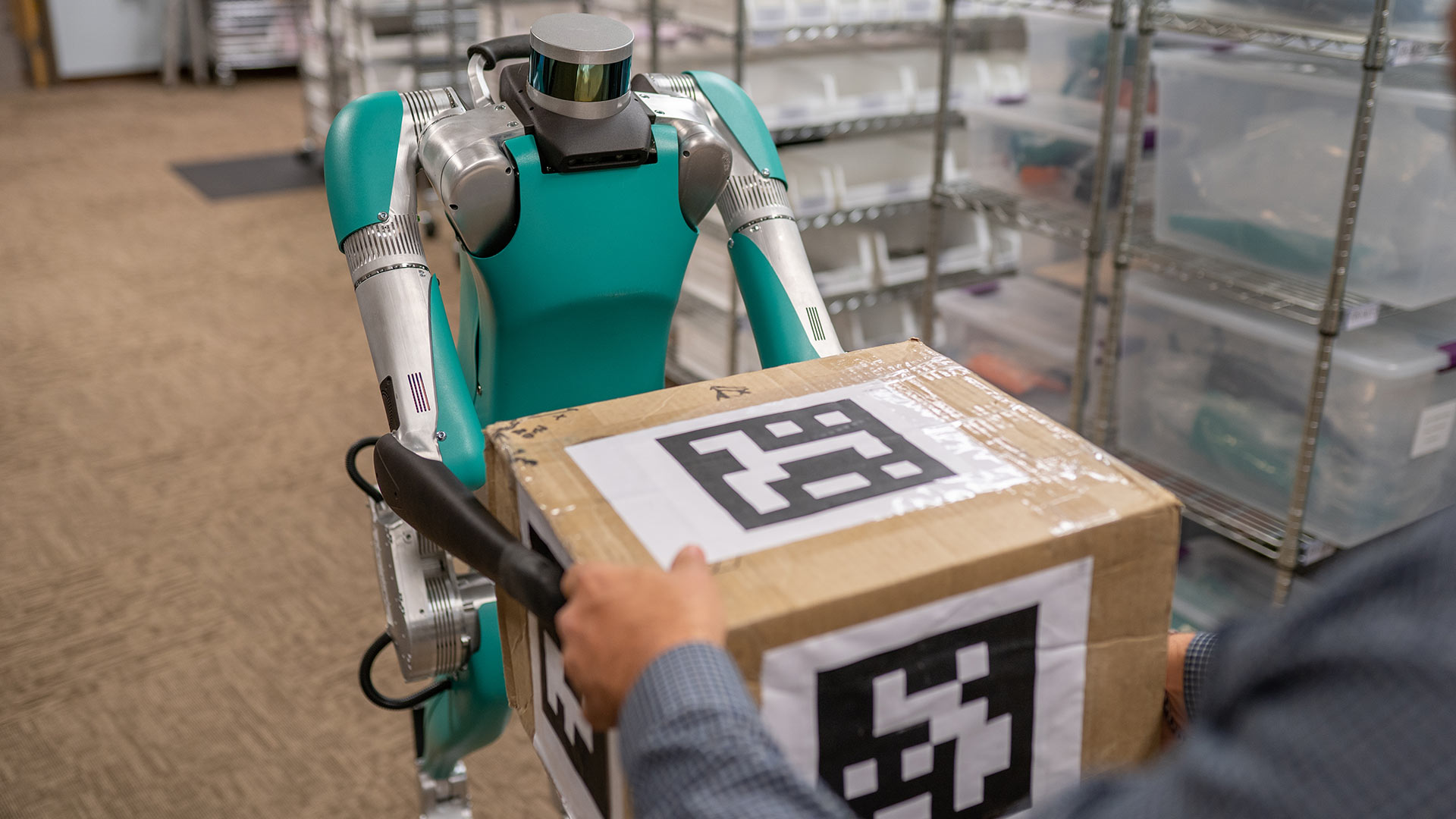
A partnership with Oregon-based Agility Robotics has seen Ford take delivery of the very first two production examples of the Digit robot.
Made with human-like arms and legs, Digit is designed to undertake logistics duties like delivering packages. For the Blue Oval, this offers opportunities in exploring how robots can be used to assist autonomous vehicles.
Final steps to parcel delivery
Part of the research will involve learning how Ford vehicles can ‘talk’ to Digit. This could mean sharing location data taken from Ford’s cloud-based maps, or using the vehicle to transmit images back to a base station.
The plans for Digit involve the robots undertaking ‘last-50-feet delivery’ package delivery work. In the future, a self-driving Ford vehicle could arrive outside your home, and then use a Digit robot to bring the parcel to your front door.
If something unexpected occurs, Digit is able to ask for help on what the best course of action should be. It can also follow the instructions on where to leave packages if the customer is not in, meaning a potential end to parcels flung over gates and fences.
More parcels, more possibilities
Digit’s design is a development of previous creations by Agility Robotics, which launched the ‘Cassie’ model in 2017. Advances in sensors, and even new feet, are said to have given Digit even greater flexibility for logistics use.
Ken Washington, vice president, Ford Research and Advanced Engineering, and Chief Technology Officer, commented that the growth of e-commerce should mean “robots will help our commercial customers build stronger businesses by making deliveries more efficient and affordable for all of us.”
Two pre-production versions of Digit will be on display at the Ford booth for CES 2020. Running from January 7th through January 10th, the Las Vegas show will see a number of automakers showing off innovations alongside established tech companies.
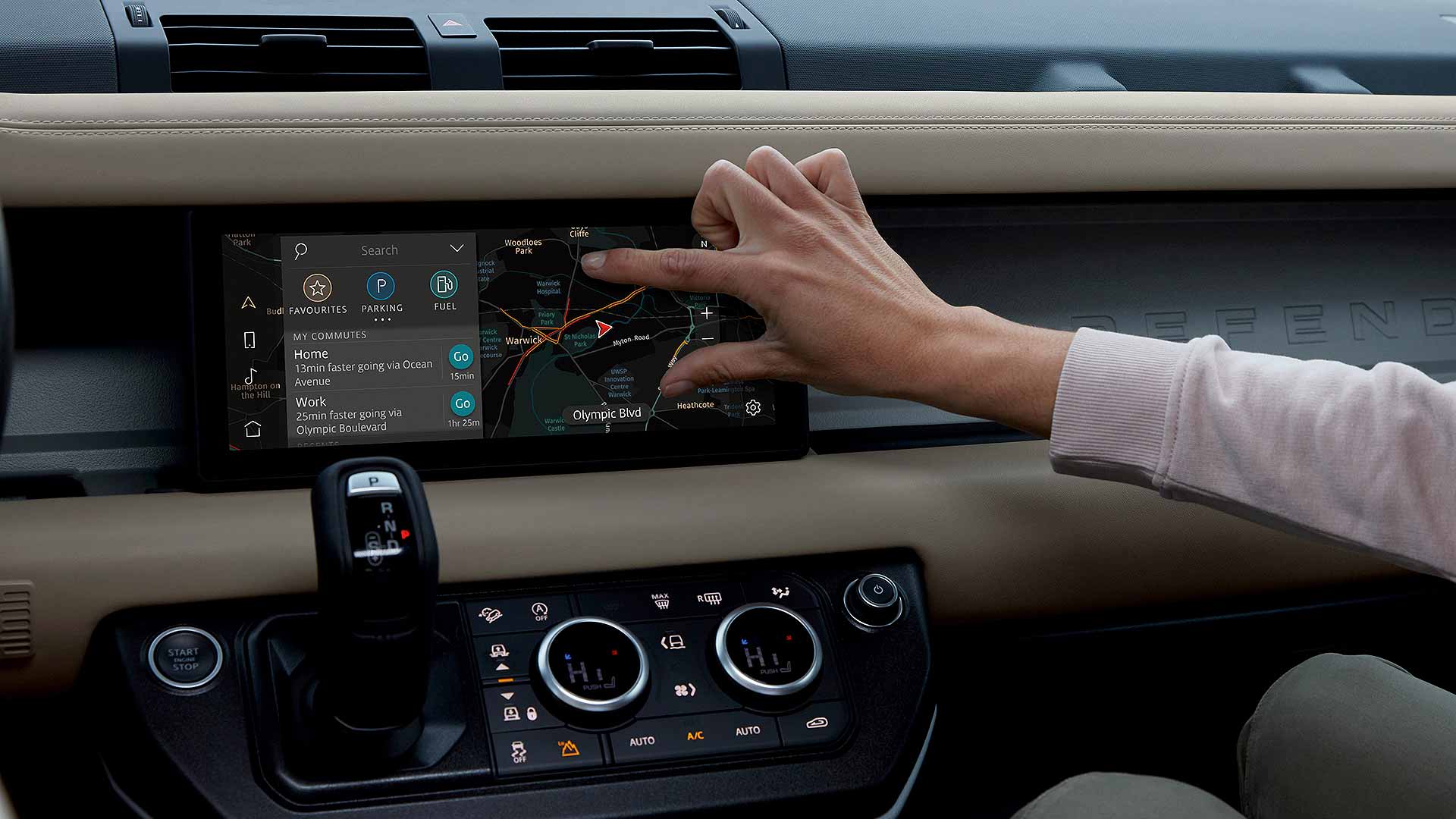
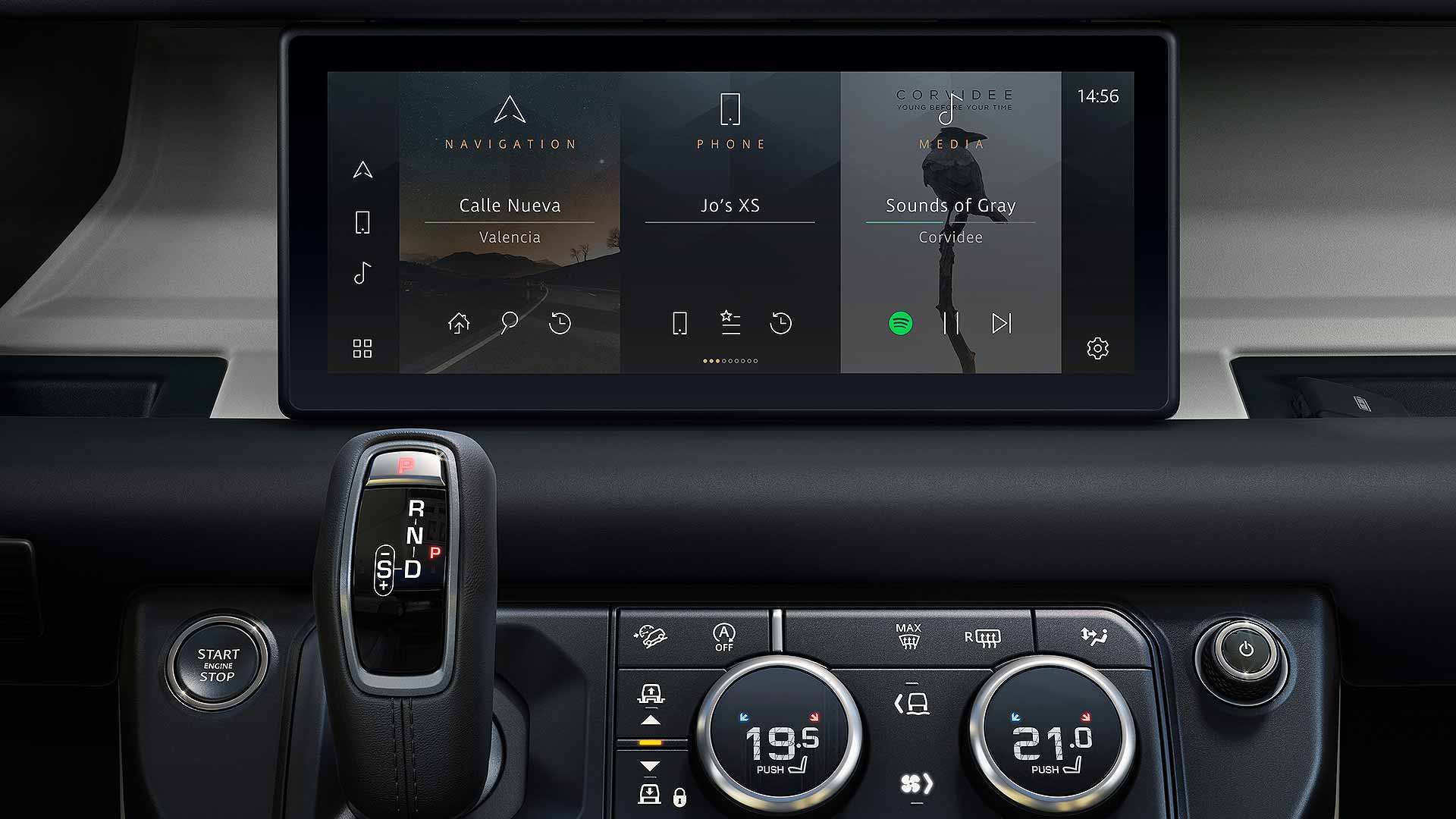
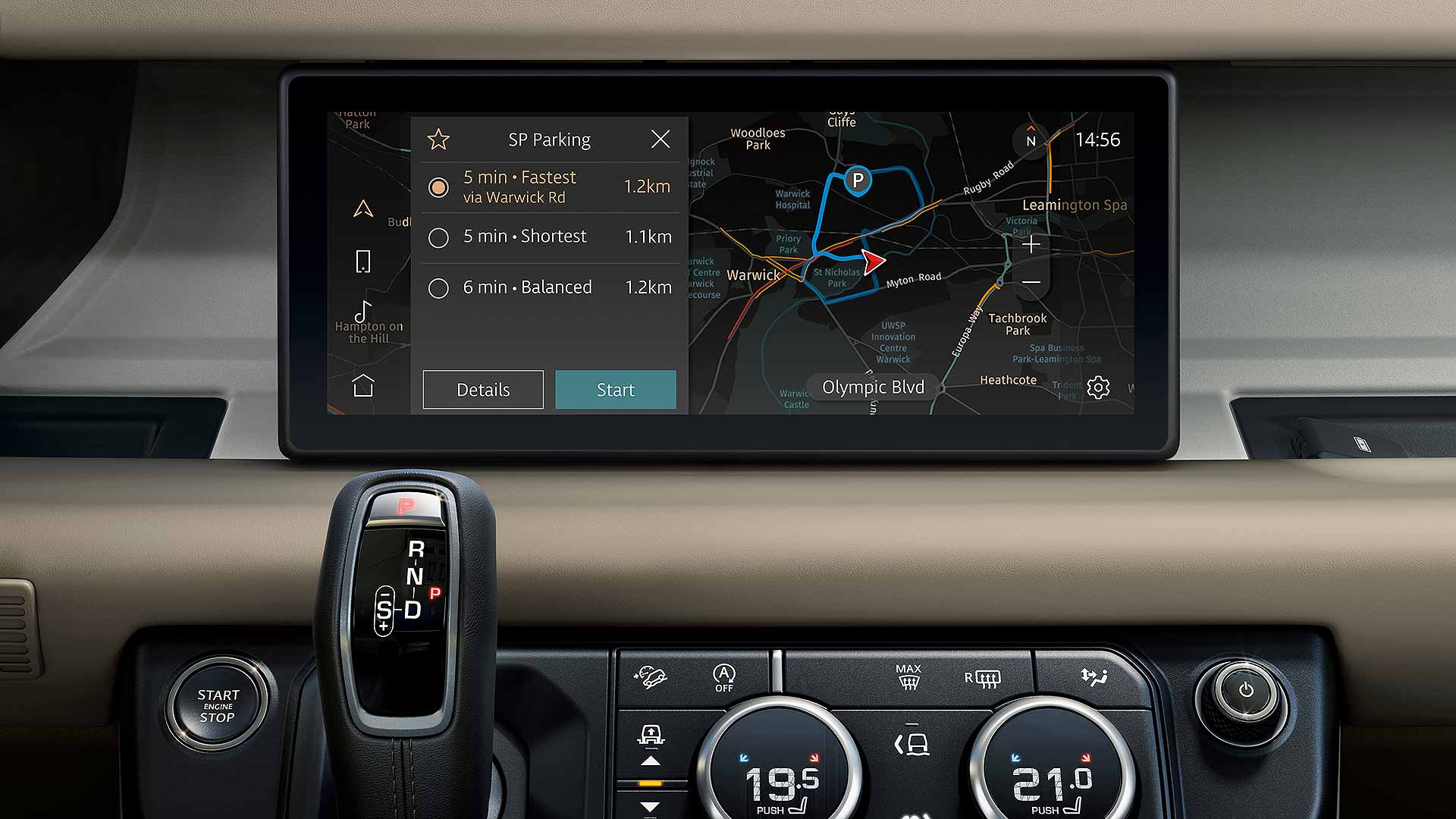
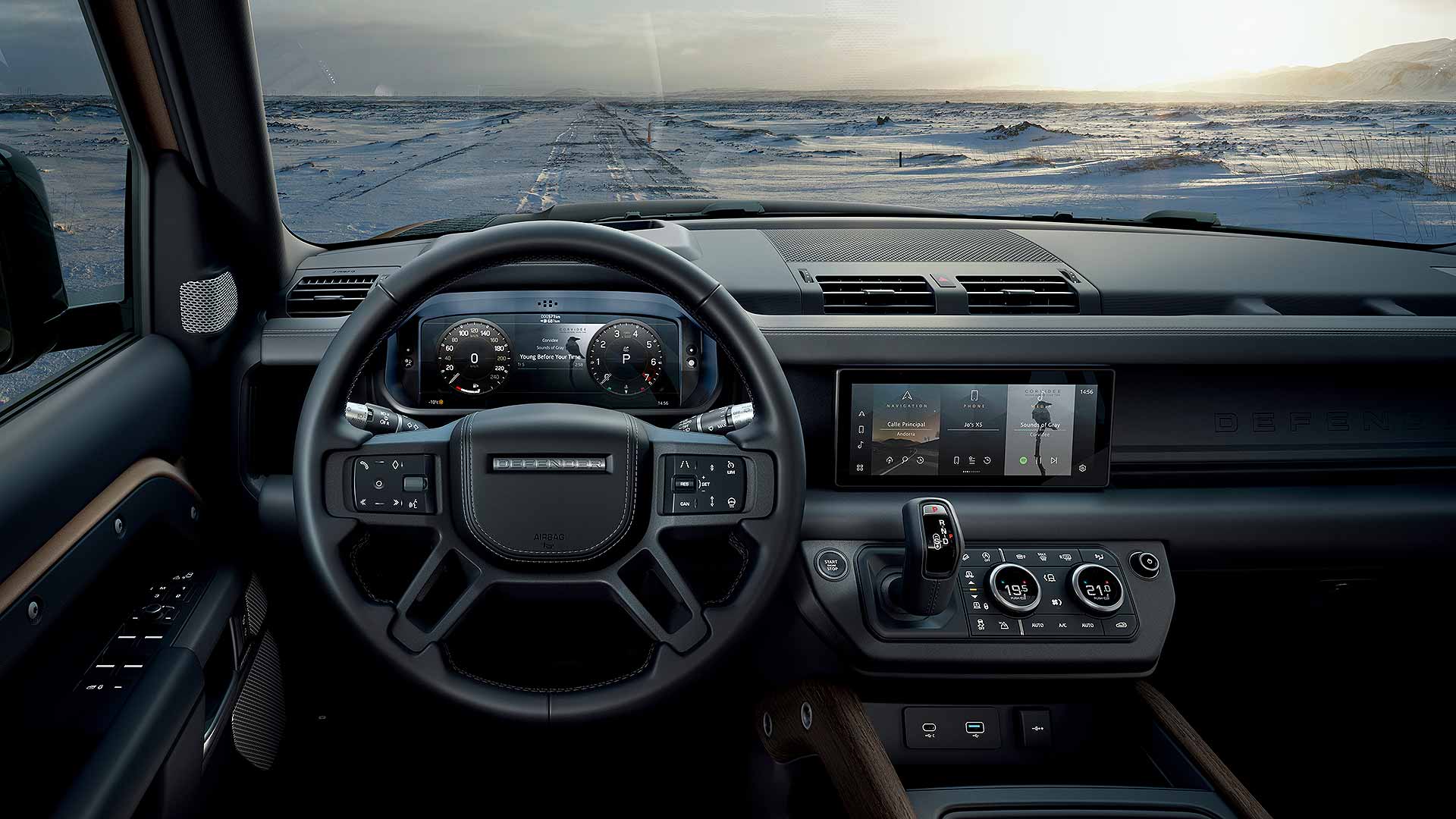
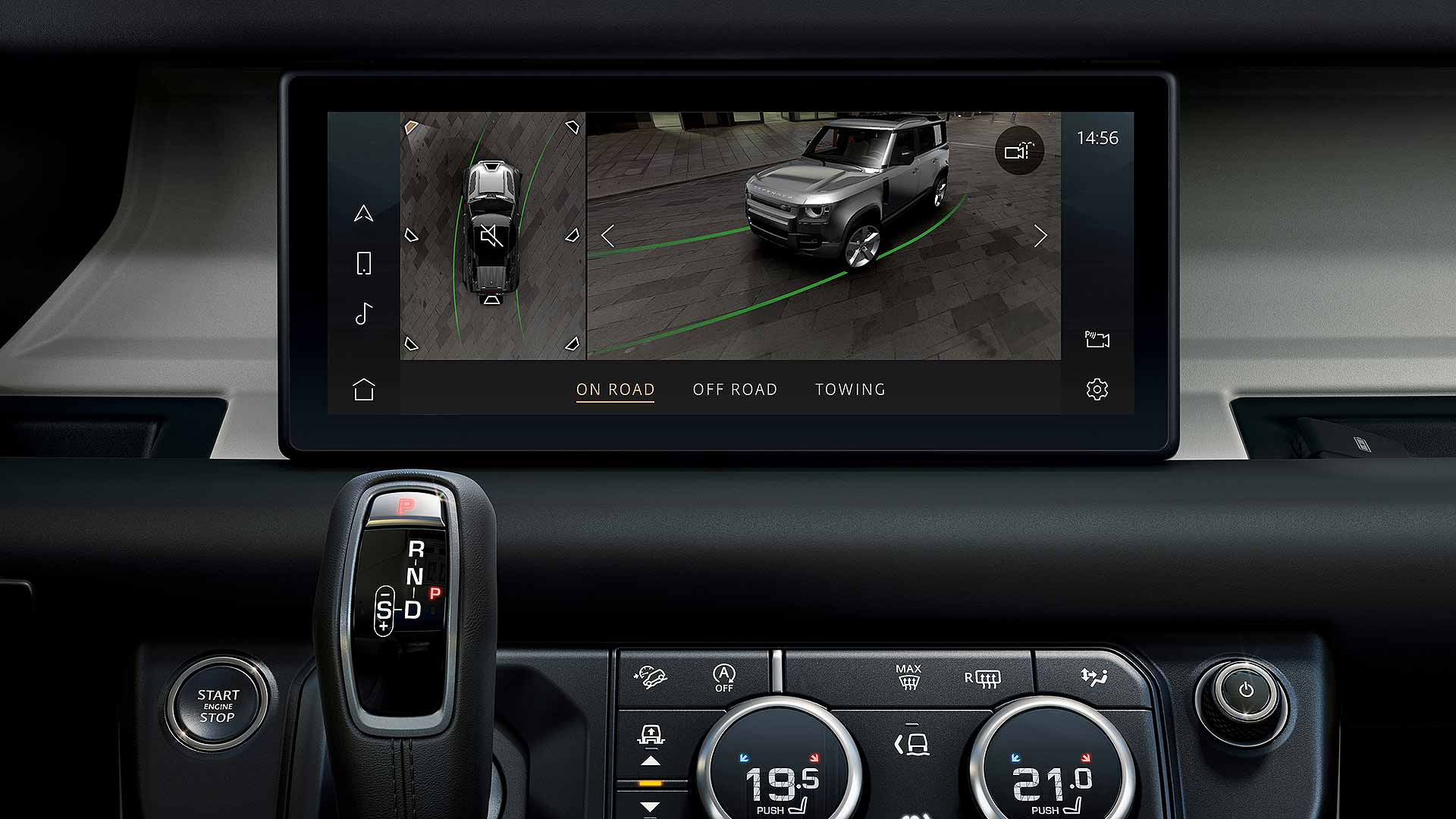
It is described as having “industry-leading design and shares electronic hardware with the latest smartphones”.
The highlight feature, showcased at the system’s CES 2020 launch, is the world’s first dual-modem, dual-eSim in-car tech, for enhanced connectivity.
One eSim and modem is dedicated to the new Software-Over-The-Air (SOTA) tech. The system can download updates and then, by a process called ‘dual banking’, seamlessly switch to the updated software without delay – without having to visit a JLR retailer.
The other eSim and modem is dedicated to music streaming and apps. Both are powered by two Qualcomm Snapdragon 820Am automotive platforms, each with a Snapdragon X12 modem.
Having dual modems allows Pivi Pro to roam multiple cellular networks in different regions, avoiding coverage blackspots.
Pivi Pro even has its own battery, so the system doesn’t need to ‘start up’. It is ready, for example, to accept sat nav inputs as soon as the driver steps into the vehicle.
Smartphone-like
The Defender’s Pivi Pro system is the first car from JLR to use a domain controller. Numerous safety and driver convenience functions are built on top of the BlackBerry QNX Hypervisor platform, “consolidating more systems onto fewer ECUs”.
The system is ultra-fast and responsive, giving a smartphone-like operating system via a crisp TFT digital display (which uses 4K graphics).
For security, safety and reliability, JLR has isolated safety-critical systems from non-safety critical ones.
Cloud clout
A clever feature is integration of CloudCar’s latest connectivity tech, helping make Pivi Pro super-easy to use.
Smartphone QR codes can be displayed on the infotainment screen, which allow users to connect their music streaming accounts such as Spotify, TuneIn and Deezer.
They are automatically added to the cloud, and the driver’s digital files are then transferred to the Pivi Pro system. It means owners can access their accounts and stream music even if they don’t have their smartphone with them.
Automatic updates are carried out, via the SOTA system. And owners can also take their ‘digital profile’ with them to other JLR cars – so they instantly get the same layout and experience.
In the UK, it will even allow new Defender owners to pay for parking through the Pivi Pro system: RingGo is the first network to be signed up.
Why Pivi Pro?
Motoring Research spoke to Defender vehicle engineering manager Mark Wilson. “Pivi Pro is not an evolution of InControl,” he told us.
“It is an all-new system: developing it has been a massive undertaking. It is future-proofed and allows us to develop and add features over the air: we can also remotely fix bugs so customers don’t have to visit a dealer.”
The dual banking system is “first to market and means we can make real-time updates, then switch systems via the digital ‘twin’ in the cloud.”
But why Pivi Pro – does it stand for anything? No, said Wilson. “It’s not an acronym: we needed something catchy, and the name needed to be registered in multiple countries.
As the motoring world takes stock of 2019, Ford can proudly talk of a longer-standing achievement. It has officially been the best-selling auto brand in America for a decade.
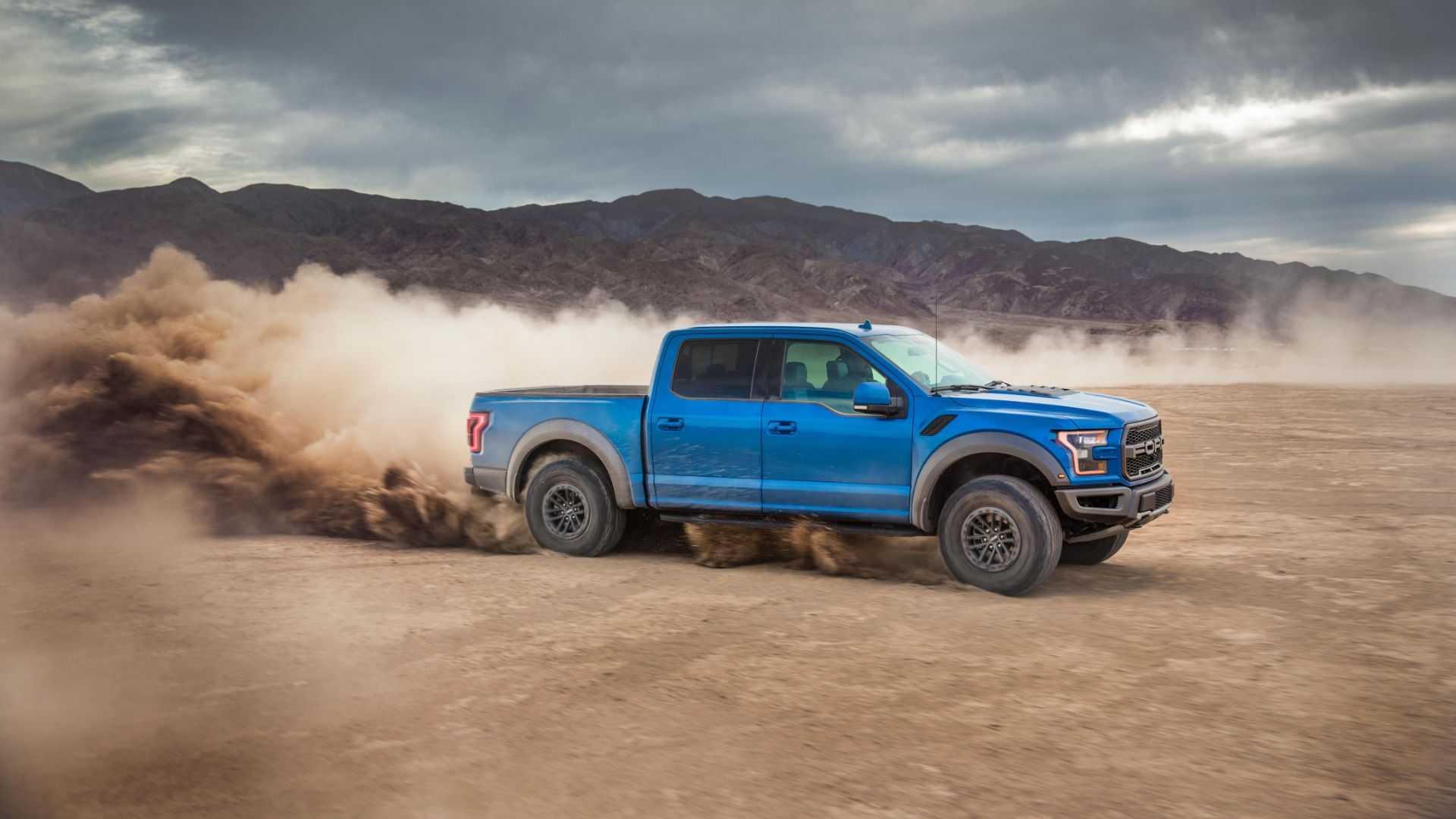
This is no surprise result for the Blue Oval, however. Its F-Series pick-ups have been at the top of the truck charts in America for 43 years. And for 38 years, they’ve been its favourite vehicles overall.
In 2019, the F-Series and Ranger sold nearly a million units.
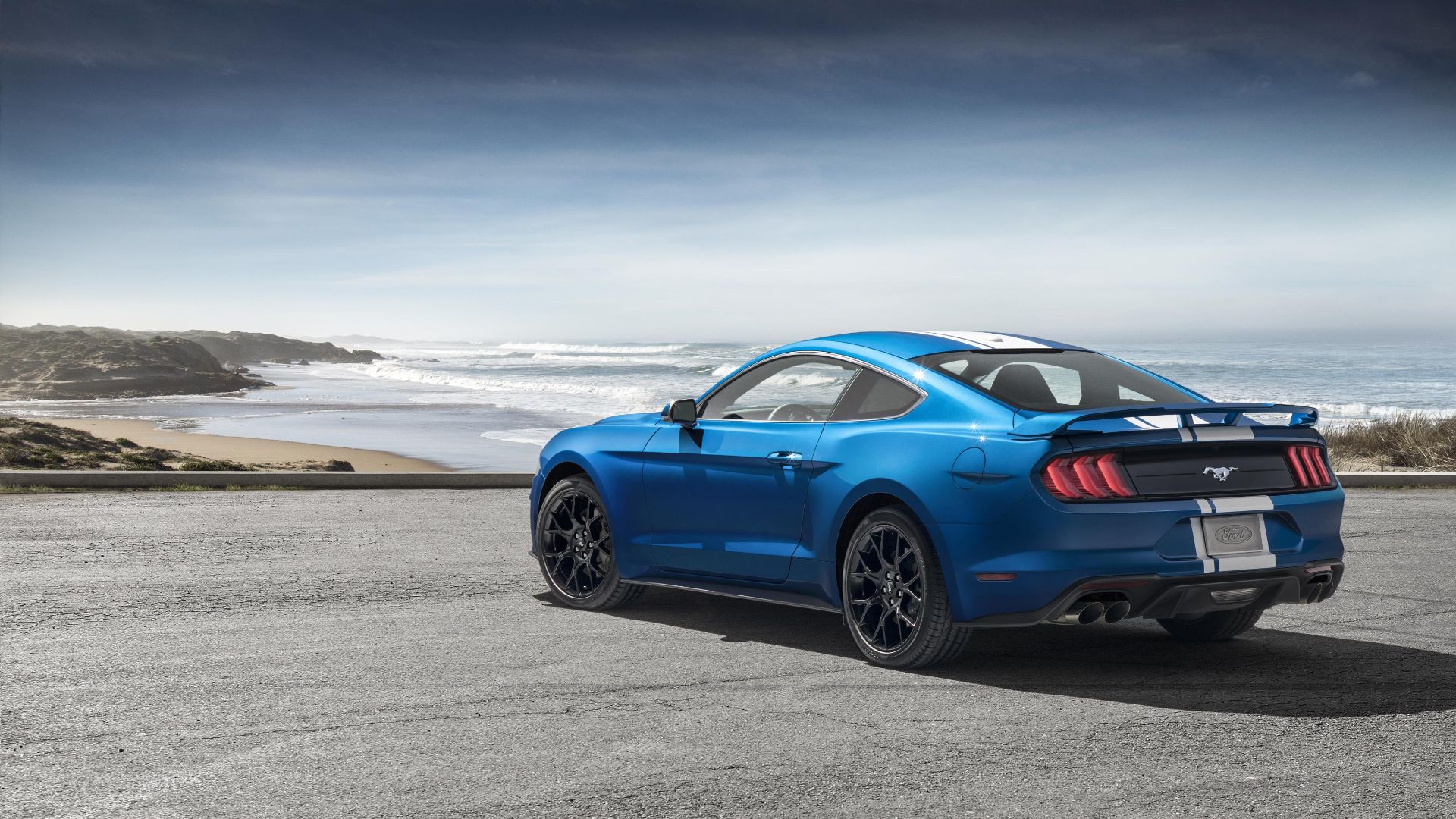
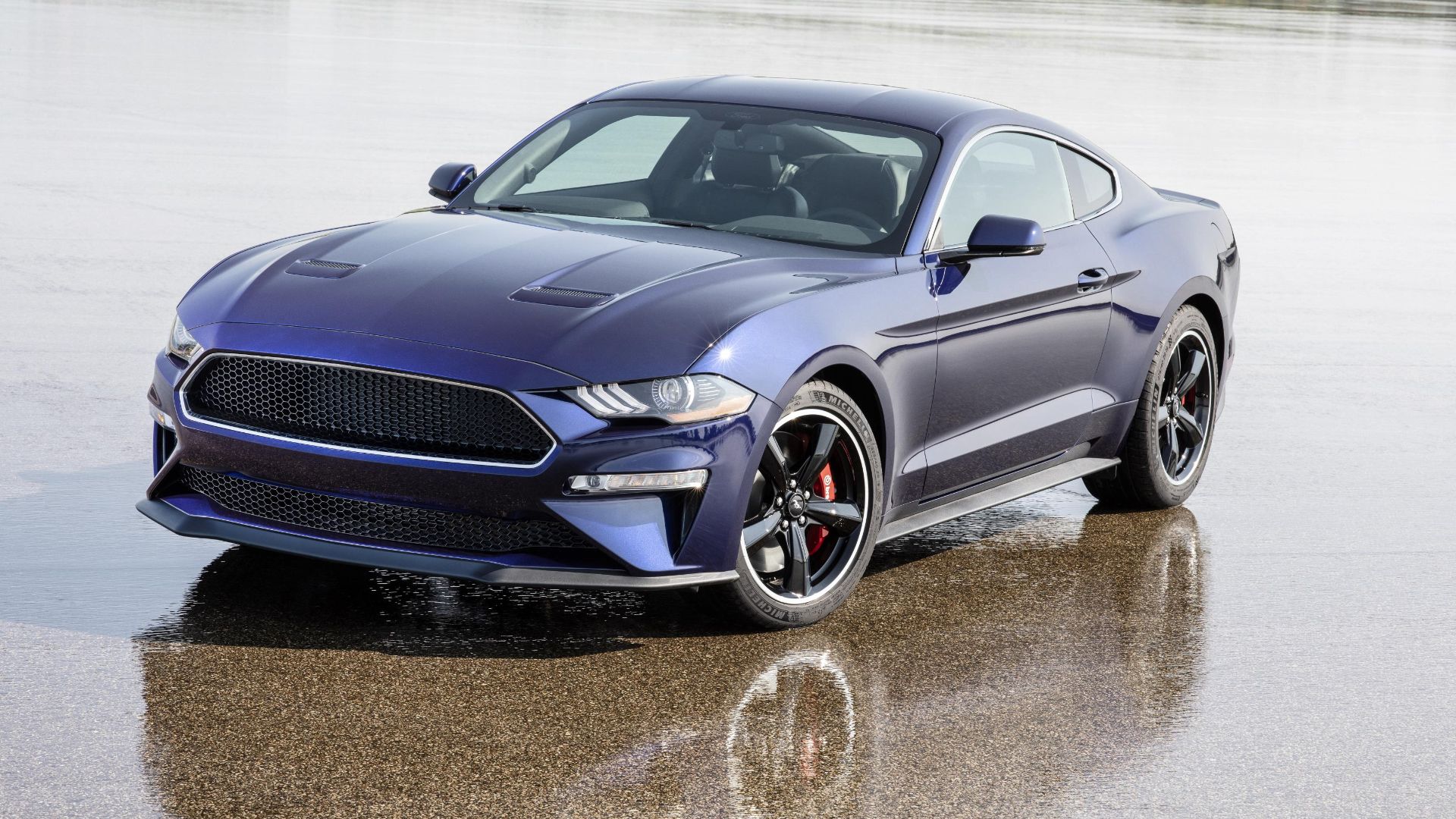
In spite of the contraction of the sports car market worldwide, the Mustang remains a success for Ford. It was America’s best-selling sports car in 2019, and gained a 20 percent jump in the final months of the year – perhaps due to the introduction of the GT500.
Another big success story is the Transit van. It had its best year yet in the US market, since its introduction Stateside in 2014.
Overall, Ford has been America’s best-selling commercial van manufacturer for more than four decades straight.
This decade’s most beautiful car, according to science
“America’s best-selling brand for the past decade is on a roll,” said Mark Laneve, Ford vice president for US marketing sales and service.
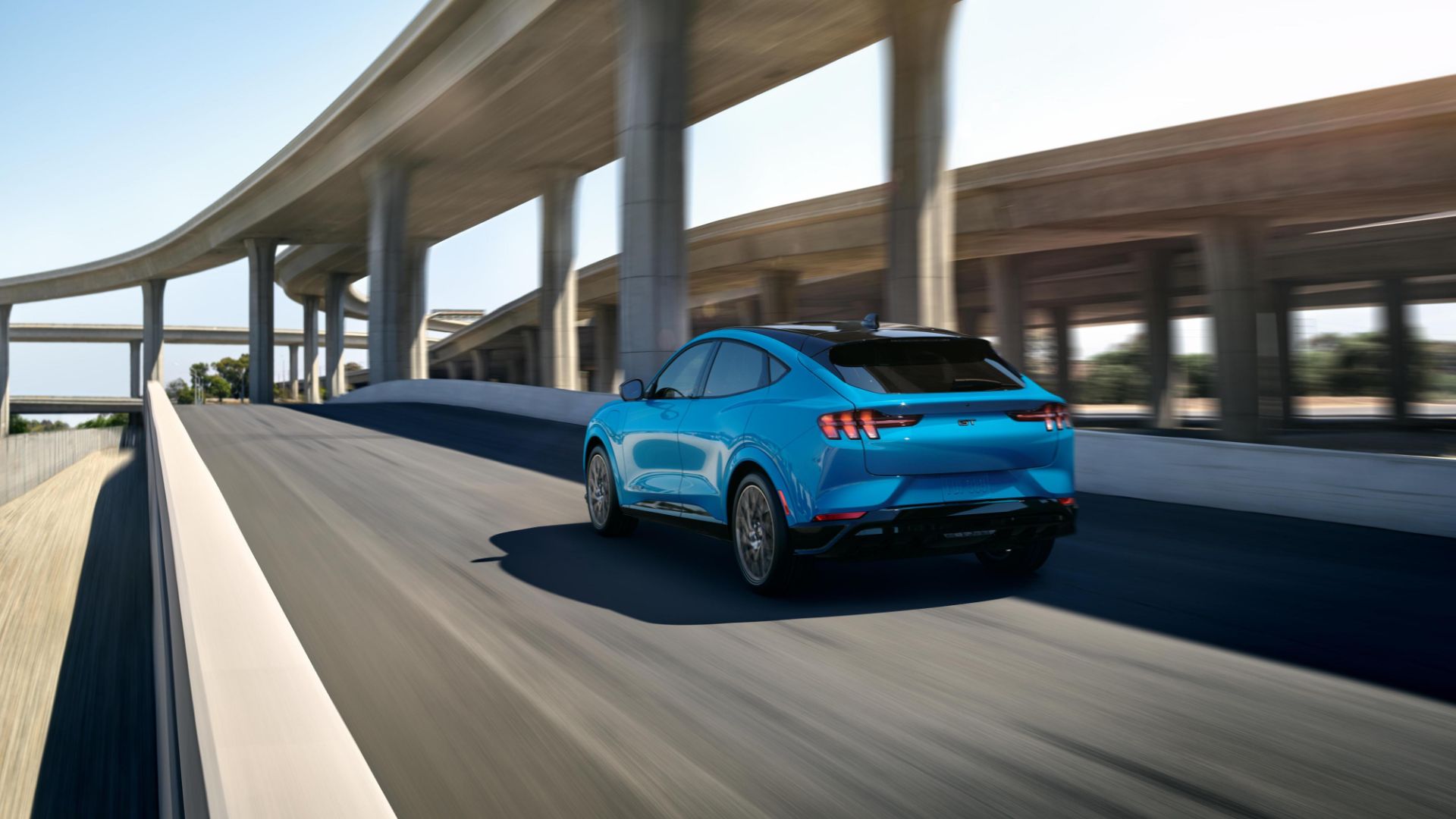
“F-Series celebrates 43 years as the country’s favourite truck and 38 years as its overall vehicle, and Transit stood at the top of the van podium again. We promised a winning portfolio and that;s what we’re delivering with more on the way, including Mustang Mach-E, an all-new F-150 and the return of Bronco. It’s going to be an exciting year for new product at Ford.”
The total vehicle sales figures are slightly down when compared with 2018, though. There’s been a 1.3 percent drop in the fourth quarter of the year.
The most dramatic drop was in car sales, with a 41 percent fall for Q4, compared with 2018. Trucks witnessed a 15.9 percent jump for Q4, although SUVs were down 4.1 percent.
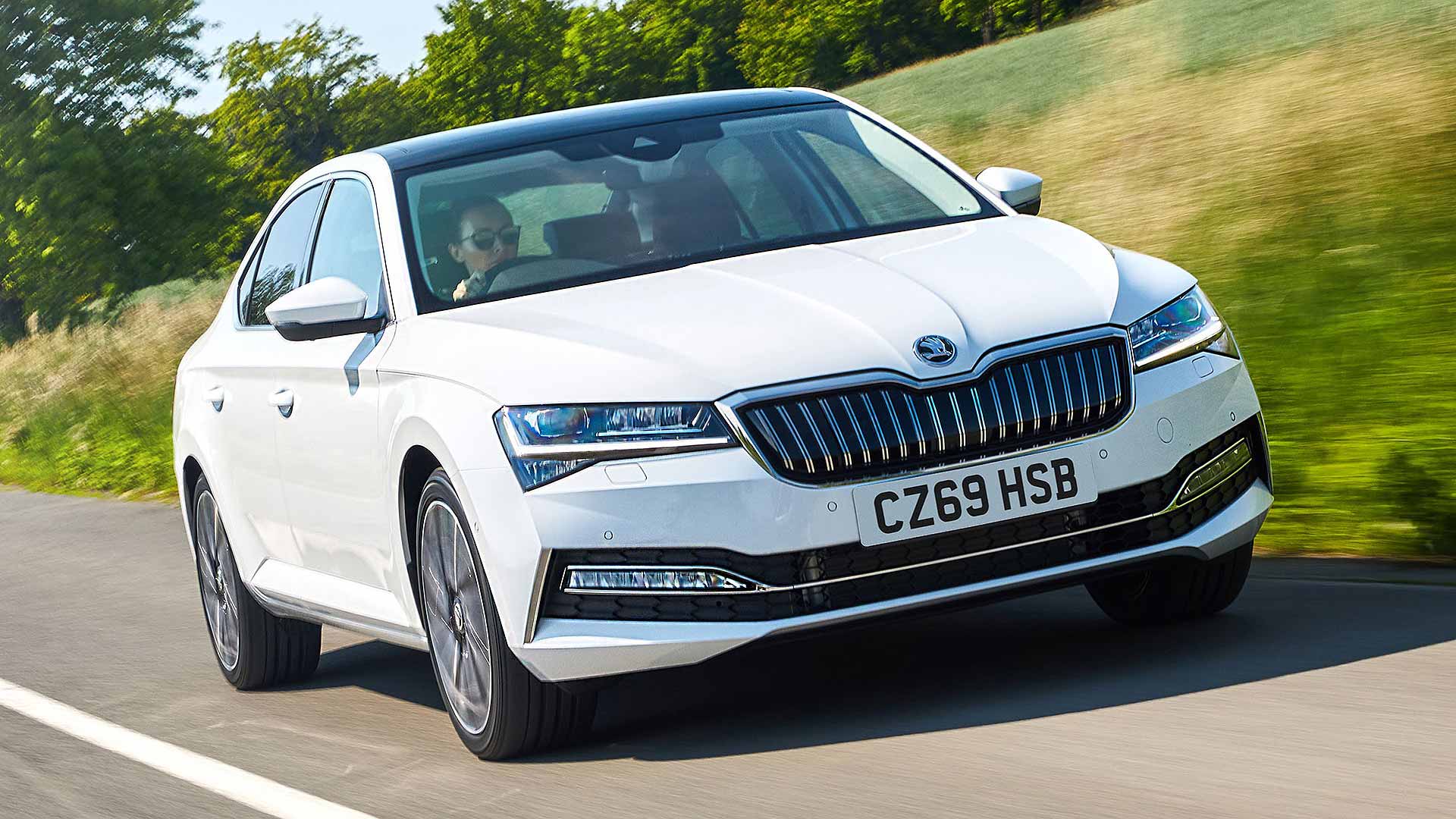
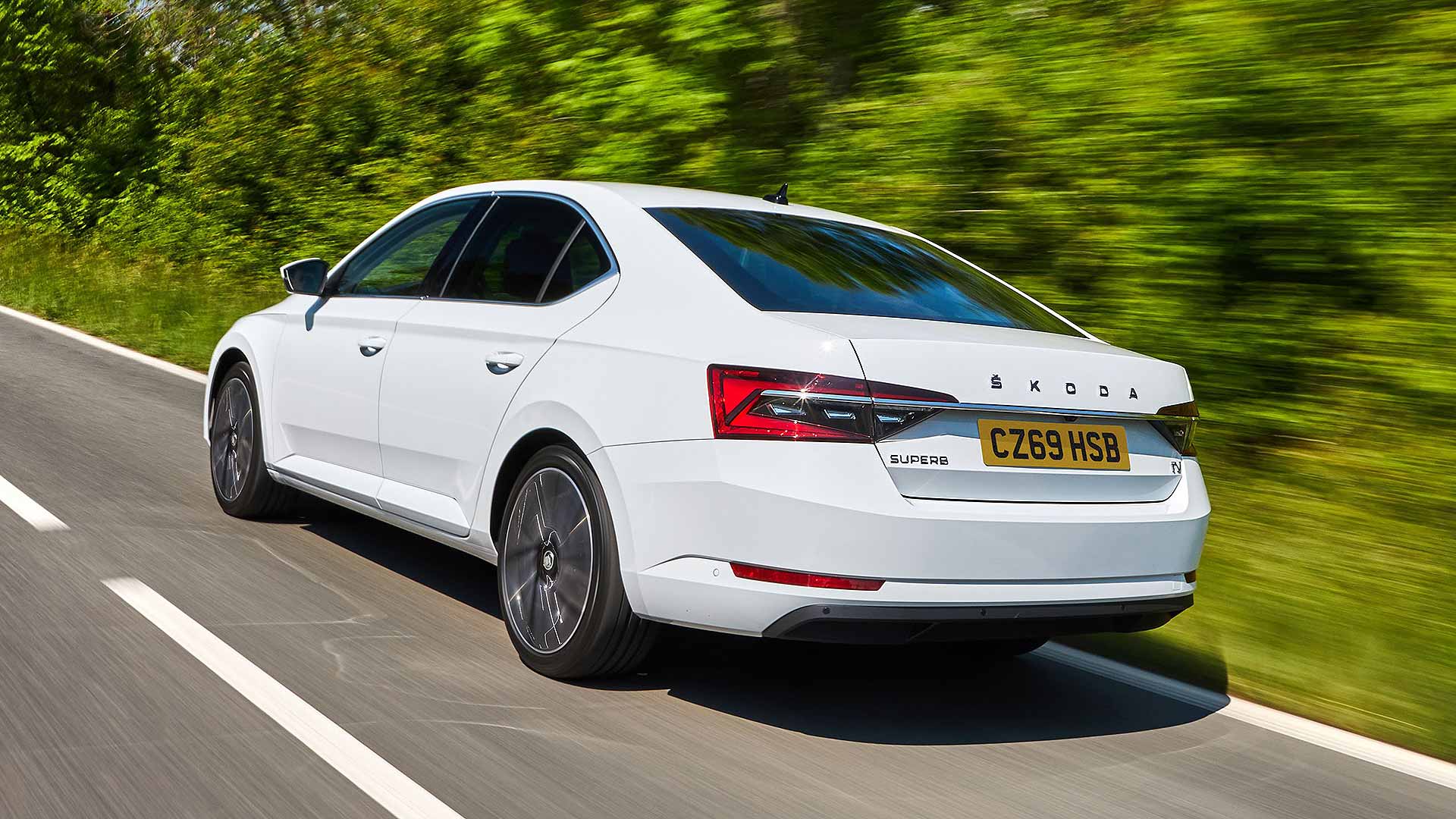
The Skoda Superb iV is the Czech brand’s first plug-in hybrid and ordering has now opened ahead of first deliveries beginning later in January.
Prices start from £31,970 for the business-focused large hatchback – and company car drivers will pay just 10 percent Benefit-in-Kind tax on Skoda’s new electrified plug-in.
That’s because the combination of 1.4-litre TSI petrol engine, 85kW battery-powered electric motor and 13 kWh battery see it emit less than 40g/km CO2.
It can travel for up to 35 miles under pure electric power, until the batteries run flat – and travel for a total of 578 miles on a single battery charge and tankful of petrol.
With 218hp, performance isn’t too shabby either.
Skoda is selling it in four grades: the fleet-focused SE Technology (which has a P11D price of £31,915), plus SE L, SportLine Plus and flagship L&K.
The firm calls it a ‘perennial fleet favourite’ and expects the SE Technology variant to be popular amongst businesses seeking alternatives to diesel without pushing up their fuel bills.
Like other 2020 Superbs, the iV also benefits from a mid-life facelift, which brings restyled bumpers, a wider grille, LED matrix headlights and ‘scrolling’ dynamic indicators.
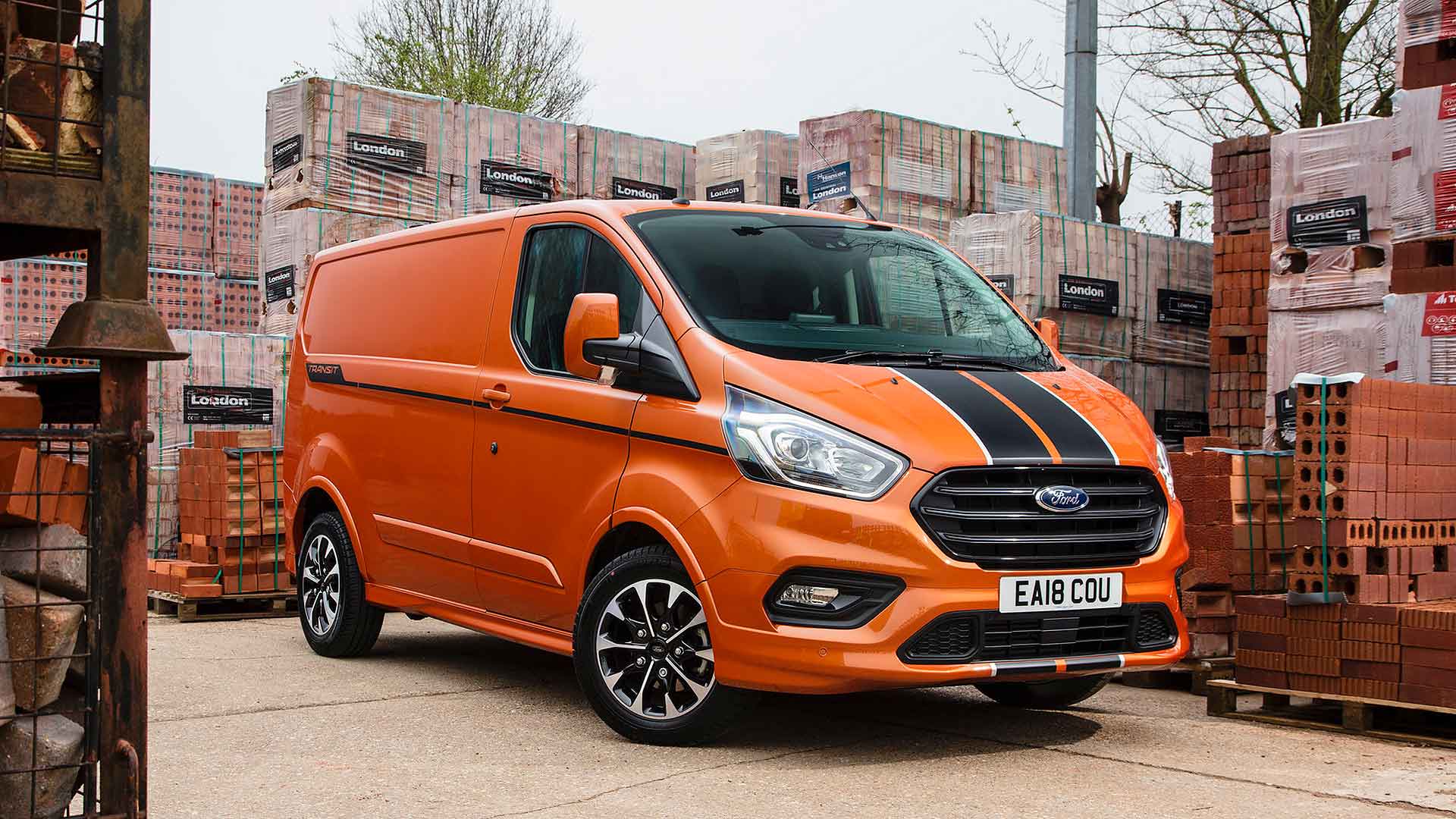
The Transit beat another Ford, the Focus, into third place in the UK sales chart.
Ford’s perennially popular Transit has now been Britain’s best-selling commercial vehicle for 54 years running.
The Ford brand has topped the passenger car table for 43 consecutive years, too.
“We thank our customers for again showing that they have confidence in Ford and our dealer network across the UK,” said Ford of Britain MD, Andy Barratt.
“We will work hard to continue to build on their trust as we launch an unprecedented range of 14 electrified vehicles in the UK by the end of 2020.”
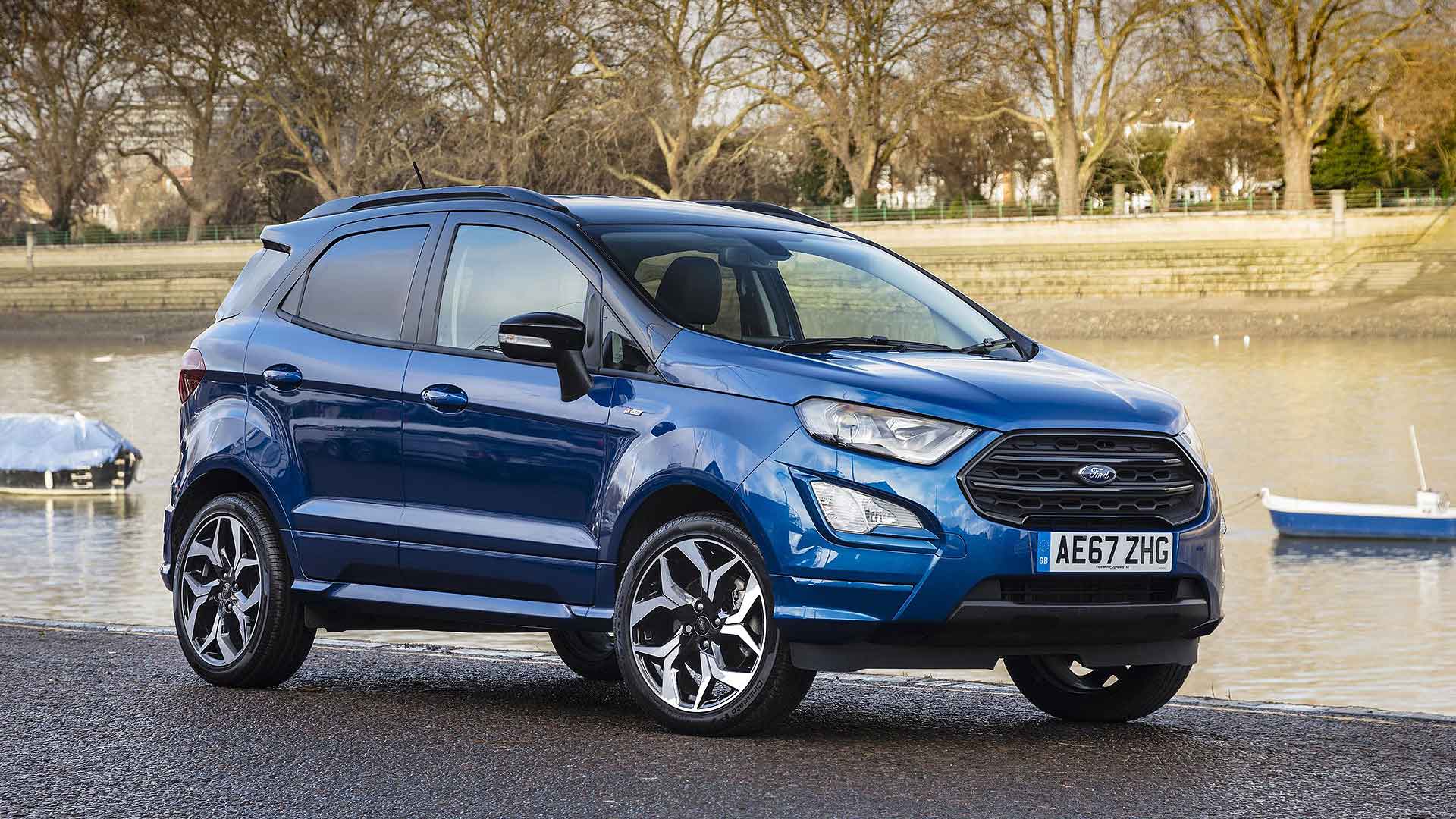
Other impressive stats from Ford include the ageing EcoSport small SUV (pictured above) achieving its best year yet in the UK, with 25,451 new cars sold.
This bodes well for the imminent launch of the much more stylish Ford Puma small SUV.
The brand also said that high-series, more expensive Fords – such as Titanium, Vignale, ST-Line and ST – accounted for 81 percent of new car sales in 2019.
It may have launched a new £15,995 Fiesta Trend variant in 2019, but it seems buyers are more eager to spend more on a posher version…