It should only take motorists three seconds to move off when traffic lights turn to green, according to a new survey.
In a study of almost 2,500 drivers by the RAC, nearly half (46 percent) said it should take no longer than three seconds for the driver in front to respond.
Between four and six seconds was acceptable for just over a third (35 percent), with only seven percent willing to wait for others as long as is required.
Three seconds to frustration
The level of frustration felt by drivers was relatively evenly split. Overall, 46 percent said they get annoyed by having to wait, versus 54 percent who remain unbothered. Younger drivers are more likely to become impatient.
Some 44 percent of respondents said they had waited more than 15 seconds, due to drivers ahead failing to notice the lights going green. And 64 percent said they had been stuck for over 10 seconds.
Almost a fifth (17 percent) of those asked said inattentive drivers ahead regularly resulted in them not getting through a set of traffic lights.
Men were more likely to get frustrated, with 50 percent saying they get annoyed – compared to 41 percent of female respondents.
Smartphones to blame?
Close to three-quarters of drivers (72 percent) put the blame on drivers simply not paying attention. However, 40 percent believe the problem is caused by motorists illegally checking their phones at traffic lights.
RAC spokesman Simon Williams said: “While three seconds is obviously a very short time, anything longer than this can start to seem like an eternity when you desperately want to get through a set of traffic lights and the person in front is taking forever to get going. When you think that some lights only stay green for 15 seconds, this severely limits the number of vehicles that can get through before red comes up again, and this in turn makes jams – and potentially even air pollution – worse.
“The fact this is such a common issue means that too many drivers – for whatever reasons – clearly aren’t paying enough attention to what’s going around them when they’re stationary at traffic lights. As well as increasing journey times, this could have a road safety implication – particularly when people suddenly realise the lights have changed and then hurriedly pull away without properly checking their mirrors and making sure everything is clear around them.”
The annual SMMT Test Day is where motoring journalists go to catch up with cars, colleagues and executives from the Society of Motor Manufacturers and Traders.
Held at the famous Millbrook test track in Bedfordshire, it is one of our highlights of the year.
Way back in 2011, the first electric cars were available to drive at Millbrook. Just over a decade later, the SMMT has looked back at how things have moved on.
I was there – and I remember the range anxiety that came with those early EVs. They were quirky novelties that were driven with one eye constantly on the range indicator.
With an average range of just 74 miles, it’s easy to understand why.
This year, the SMMT did its sums again. The average range of an electric car at this year’s Test Day? Almost 260 miles – a three-fold increase.
What’s more, instead of 2011’s buyers picking from just nine plug-in models, they can today choose from more than 140. That’s a 15-fold increase, with 50 more electrified cars due to launch before the end of this year.
It’s easy to see why EVs make up one in five new cars sales today, rather than one in 1,000 back in 2011.
It “shows just how far Britain has come,” said SMMT chief executive Mike Hawes. The 2030 target looms large, but such figures confirm “the industry is up for the challenge”.
Indeed, the SMMT is now worried that a lack of chargepoint availability “could stifle greater uptake, with 75 percent of motorists saying there are not enough public chargepoints to meet their needs”.
If electric car ownership is seen as a headache, some may have second thoughts about making the switch. The momentum that is well underway risks slipping as a result.
The industry is doing its bit, by transforming the new electric landscape in just a decade.
“We need all stakeholders, including government, chargepoint providers and energy companies, to match manufacturers’ commitment.”
In Britain’s first electric decade, EV sales have leapt, arguably far faster than anyone could have predicted. Now, the countdown is on for all new cars to be electrified from 2030, and pure electric from 2035.
The figures from the car industry show it can be done. Here’s hoping the charging infrastructure can keep up, so this momentum can be maintained.
The RAC has called for the Government to update official guidance on the design, maintenance and enforcement of yellow box junctions.
From 1 June 2022, local authorities outside of London will have the power to enforce moving traffic offences.
However, the RAC wants greater clarity now, to avoid motorists being wrongly fined through no fault of their own.
Boxed into a corner
Research by the RAC found that 57 percent of drivers are in favour of box junctions being enforced. However, it has also discovered evidence of major design flaws in how yellow box junctions are applied.
This included box junctions being painted in completely the wrong place, being larger than necessary, or being obscured by buildings or street furniture.
Such flaws could see drivers become trapped in yellow box junctions and subsequently being fined.
Gaps in the guidance for yellow box junctions have also been highlighted. A report commissioned by the RAC found the rules contained in Chapter 5 of the Traffic Signs Manual to be ‘generally unsatisfactory’.
Critical design flaws
In particular, the Traffic Signs Manual does not actually state the purpose of a box junction. Information on how to design and maintain them, or enforce their use, is also notable by its absence.
Chartered engineer Sam Wright, who created the report for the RAC, highlighted that the main design principle was for box junctions to “be no bigger than is necessary to prevent vehicles obstructing through movements”.
He added that: “Drivers may also be surprised to hear that there is no legal requirement for authorities to meet this design criteria and it’s simply down to the competence of the enforcing authority.”
The RAC has now written to the Department for Transport, asking for updates to be made to minimum standards for yellow box junctions. RAC head of roads policy Nicholas Lyes said: “It’s absolutely crucial that yellow box junctions are enforced fairly and, as things stand, this may not be the case, which will mean many drivers will be treated poorly and lose out financially as a result.”
Lamborghini has built the 20,000th example of its V10-engined Huracan supercar. After eight years in production, it marks a major milestone for the Italian company.
Since 2014, Lamborghini has created 12 different road-going versions, along with three bespoke motorsport offerings.
The 20,000th car is a Huracan STO in Grigio Acheso Matt paint, destined for a customer in Monaco.
Evolution of a supercar
The Huracan was launched with the LP 610-4 coupe, first shown at the 2014 Geneva Motor Show. Lamborghini announced the open-top Huracan LP 610-4 Spyder at the Frankfurt Motor Show a year later.
Since 2014, some 71 percent of buyers have opted for the Huracan in coupe form, compared with 29 percent choosing the Spyder.
The United States has accounted for almost a third (32 percent) of Huracan sales overall. Britain and China have also been key markets for Lamborghini’s ‘junior’ supercar.
Last year saw Huracan sales reach 2,586 cars, boosted by interest in the flagship Huracan STO.
A consistent winner on-track
Motorsport has been a major part of the Huracan’s story. Close to 500 racing cars have been built, in Super Trofeo, GT3 and GT3 Evo specifications.
Between them, they have claimed more than 40 championship titles and 117 victories in 12 racing series around the world.
Lamborghini is the only manufacturer to have won the 24 Hours of Daytona GTD class three consecutive times, using the Huracan. It also claimed victory in the 12 Hours of Sebring two years in a row (2018 and 2019).
A limited-edition Huracan Squadra Corse was released in 2019, celebrating 10 years of the Lamborghini Super Trofeo.
‘Super sports emotion’
Personalisation has become a key part of the Huracan buying process. Lamborghini notes that 60 percent of customers use its Ad Personam customisation scheme, with access to 300 exterior paint colours.
This included creating a bespoke Huracan for the Pope, finished in papal colours. The car has been put to work at the Guglielmo Marconi Airport in Bologna, too.
Lamborghini CEO Stephan Winkelmann said: “The Huracan has delivered an evolution of design, technological know-how, driving adventures, track records and sales records since its launch. It was designed as a car to provide super sports emotion in every environment, from daily driving to thrilling performance on-track.”
Along with being the most powerful Mazda road car yet made, the CX-60 is also the marque’s very first plug-in hybrid.
Built at the Hofu Plant in Japan, the CX-60 is described as ‘the most important model Mazda has introduced for over a decade’.
New e-Skyactiv hybrid power
Driving the CX-60 PHEV is Mazda’s existing 2.5-litre Skyactiv-G four-cylinder petrol engine. This is combined with a 129kW electric motor, powered by a 17.8kWh battery pack. An eight-speed automatic gearbox is standard.
This results in total outputs of 327hp and 368lb ft of torque, with potential for 0-62mph in a swift 5.8 seconds.
With the plug-in battery fully charged, Mazda estimates the CX-60 should cover up to 42 miles on electric power alone. Official WLTP combined fuel economy is 188mpg, with CO2 emissions of just 33g/km.
Mazda plans to introduce mild-hybrid petrol and diesel straight-six engines to the CX-60 in the near future.
Arrives later this summer
UK prices for the CX-60 PHEV will start from £43,950 for the entry-level Exclusive-Line model. Standard equipment includes LED headlights, black leather upholstery, a reversing camera and a 12.3-inch multimedia display.
The £46,700 Homura adds 20-inch alloy wheels, ventilated front seats and a 12-speaker Bose surround-sound system. A gloss-black honeycomb front grille helps mark out this version of the CX-60.
Topping the range is the £48,050 CX-60 Takumi. Extra exterior chrome trim, white Nappa leather seats, white maple wood trim and a stitched cloth dashboard are included.
A ship carrying the first European-specification CX-60s will leave Japan on 26 April. Available to order now, keen UK customers can expect their cars in September.
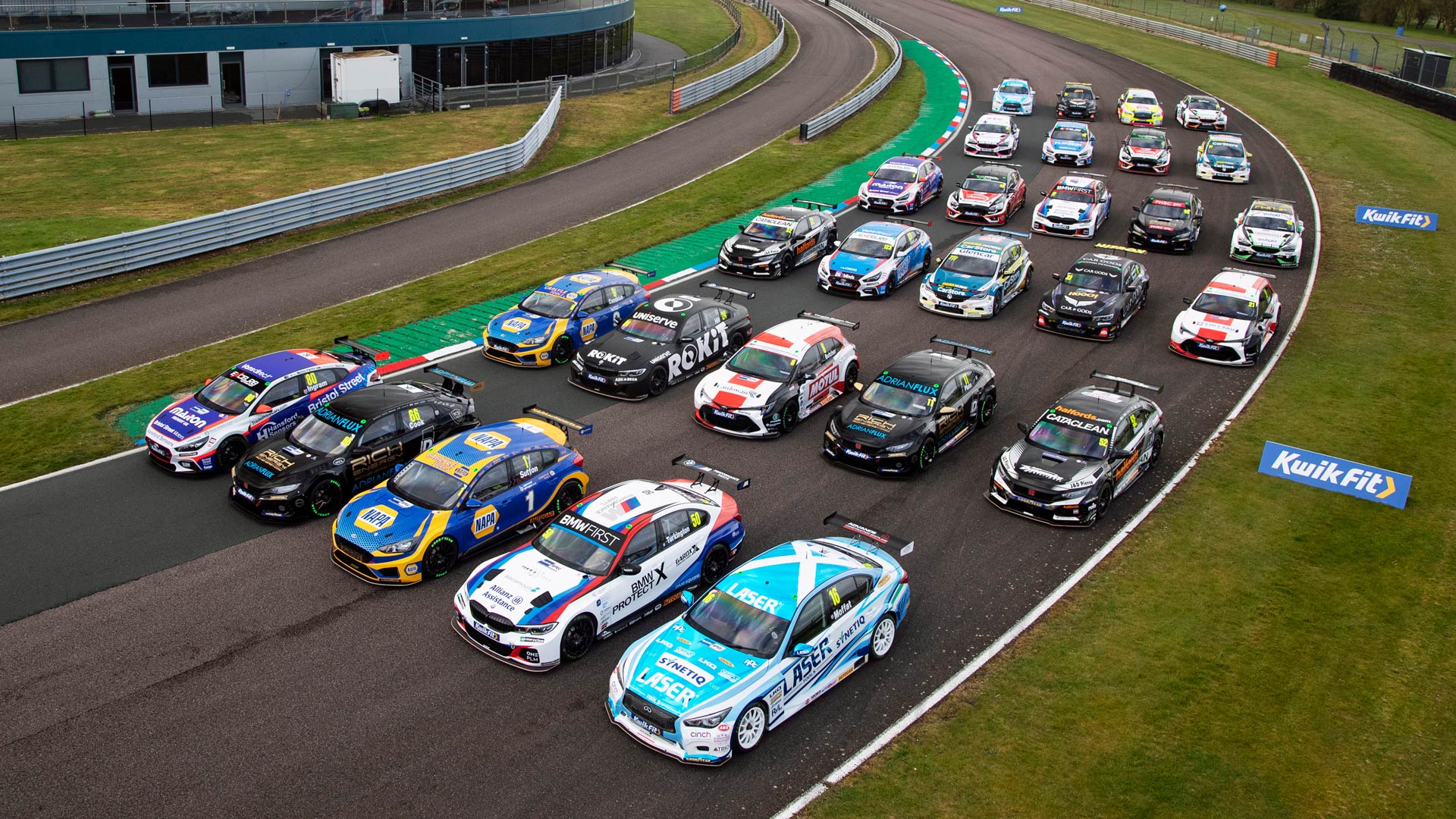
This weekend sees the start of the 2022 British Touring Car Championship (BTCC) season.
Fans have been counting the days until the return of the UK’s biggest national motorsport series. Teams and drivers will be at Donington Park, ahead of three races this Sunday that promise plenty of on-track action.
New for 2022 is the introduction of hybrid power, designed to keep the series relevant and exciting.
If you are new to the BTCC, this guide tells you everything you need to know.
What is the British Touring Car Championship?
The BTCC is one of the oldest motorsport competitions in the world, with roots that stretch back to 1958. Production-based cars, like those driven by millions across the country, have been the foundation of the series since it began.
Each race weekend consists of a qualifying session on Saturday, followed by three individual races on the Sunday. Various regulations aim to make the racing as competitive as possible, with a real emphasis on entertaining spectators and those watching at home on TV.
The series has become well known for close-contact action, with plenty of rubbing and barging between drivers. It means a BTCC race weekend is unlikely to come without a dose of drama and controversy, along with unpredictable results.
Which cars are used in the BTCC?
Cars used in the BTCC are meant to resemble modified versions of those parked on fans’ driveways. That means a mixture of compact saloons and family hatchbacks, ranging from the BMW 3 Series to the Honda Civic Type R.
Using standard production cars as a base helps reduce the overall cost of competing. BTCC cars are built to Next Generation Touring Car (NGTC) rules. This includes standardised parts for suspension, aerodynamics, brakes and wheels.
Teams can choose to build their own engine, or use a standard motor developed by the BTCC organisers.
What is the new BTCC hybrid powertrain?
In order to stay relevant to the cars driven by BTCC spectators, the series committed to introducing hybrid petrol cars for 2022.
Although not as complicated as the systems used in Formula One, drivers can use the hybrid electric power for an additional performance boost.
An electric motor is integrated into the standard Xtrac gearbox, and is powered by a 48-volt battery. This can be charged from a 240-volt wall socket before the race, but is also regenerated by braking when the cars are on-track.
Hybrid power can be deployed for a maximum of 15 seconds per lap. The BTCC believes this should give drivers a 15-metre advantage, increasing overtaking opportunities.
An external LED light system will show when a driver is using their hybrid boost.
Will hybrid power change BTCC racing?
The BTCC previously made use of ‘success ballast’ to keep competition relatively equal amongst competitors. Now, the hybrid powertrain should prevent one driver from gaining an uncompetitive advantage.
Drivers can deploy their hybrid boost for a limited amount of time during qualifying, and for a set number of laps in a race.
How frequently a driver can use the hybrid system will be determined by their championship position for qualifying, plus their finishing position on race day.
Successful drivers will receive fewer hybrid deployment opportunities, helping to keep the field competitive.
Which car manufacturers compete in the 2022 BTCC?
Unlike its heyday in the 1990s, the BTCC currently has only a small roster of car manufacturers competing.
The 2022 season will see BMW and Toyota taking part as official factory-backed teams, using the 3 Series saloon and Corolla hatchback respectively.
Several other teams are classed as manufacturer/constructor entries for 2022, including the new NAPA Racing UK (Motorbase) outfit.
Do the rules make BTCC racing competitive?
Chief executive Alan Gow is renowned for trying to make racing in the BTCC as close as possible. Various rules and regulations aim to stop situations like those that often occur in Formula One, with a single team or driver dominating the competition.
Starting positions are dictated differently for each of the three races across the weekend, grid places for race one are determined by qualifying on Saturday, and race two is based upon the finishing positions of race one.
Finally, race three uses the finishing order of race two, but with randomised reversed positions. It is all intended to encourage overtaking and prevent races from being a foregone conclusion before they even start.
Is contact allowed between BTCC cars?
Despite being a non-contact series, the BTCC’s packed grids, and rules that encourage competition, result in cars getting up close and personal on-track.
However, the championship organisers have taken an increasingly strict view on contact, punishing drivers who cause unnecessary collisions.
A panel of three stewards reviews any incidents that happen on the circuit, with penalties handed out to those judged to have breached driving standards.
Who is the defending BTCC champion?
Proving that independent teams can challenge the major manufacturers, Ashley Sutton is the current BTCC Drivers’ Champion. Sutton drove the Laser Tools Racing Infiniti Q50 to victory in 2021, taking his third title win.
For 2022, Sutton has moved to the NAPA Racing UK team, driving the #1 Ford Focus ST. His car will be easily identifiable by the gold Kwik Fit number plates it will wear throughout the season.
The 2021 Manufacturers’ Championship was won by BMW (West Surrey Racing), with the Teams’ title claimed by Laser Tools Racing.
Daniel Rowbottom was the winner of the 2021 Jack Sears Trophy. This is contested by drivers who have never previously achieved a podium position in the BTCC.
Will I know any of the BTCC drivers for 2022?
The relative accessibility of BTCC means it appeals to drivers from a wide range of racing backgrounds.
BTCC regular and Fifth Gear TV presenter Jason Plato is the most familiar name on the grid. Plato has said the 2022 season will be his last before retirement.
Last year, Jade Edwards became the first female driver to contest a full BTCC season since 2007. She is back again with the BTC Racing team for 2022.
Nic Hamilton, the younger brother of Formula One superstar Sir Lewis Hamilton, also returns for 2022.
Rick Parfitt Jr., son of the late Status Quo musician Rick Parfitt, will be driving an Infiniti Q50 in his second BTCC season. He has previously raced sports cars in the British GT Championship.
Which support races does the BTCC have for 2022?
The BTCC is the main draw on each race weekend, but it is not the only on-track action taking place. Numerous other support championships happen at each event, ensuring a packed day of racing.
Leading the support act is the Porsche Carrera Cup GB, which has helped develop a range of endurance racing drivers since 2003.
Other championships include the Mini Challenge UK, the Ginetta GT5 Challenge and the single-seater F4 British Championship.
How can I watch the BTCC in 2022?
A long-term agreement between the BTCC and ITV means the race series is available on free-to-air television.
Freeview channel ITV4 will show live coverage from each race day. Highlights will also be shown on ITV4 and ITV after each event.
The Brands Hatch Indy (15 May) and Oulton Park (12 June) events will also be broadcast live on ITV for three hours on each race day.
Fans can watch race action online through the ITV website, which also screens live qualifying on Saturdays. ITV’s BTCC coverage is led by veteran motorsports presenter, Steve Rider.
2022 British Touring Car Championship calendar
The BTCC will span 10 race weekends during 2022, with a traditional season-opening event at Donington Park.
If you like exotic cars, people-watching or imbibing copious quantities of champagne, Salon Prive London is where it’s at. The UK’s classiest car show takes place on the carefully groomed lawns of the Royal Hospital in Chelsea from 21-23 April – and VIP access meant I was first to enjoy the bars. Sorry, the cars…
With everything from coveted classics to the latest supercars, Salon Prive caters to every automotive taste. It also witnessed several UK debuts, including the world’s fastest SUV, the world’s lightest hypercar and the best thing on three wheels since Del Boy retired. Grab a glass and let’s go for a guided tour.
Aston Martin DBX707
With a top speed of 193mph, the new Aston Martin DBX707 is the fastest SUV on sale – well, until the Ferrari Purosangue arrives in 2023. Its 4.0-litre twin-turbo V8 serves up 707hp, 0-62mph in 3.3 seconds and a soundtrack like rolling thunder. On the right road, the flagship DBX also does a convincing impression of a low-slung supercar. Here’s an excerpt from our recent review:
‘The new AMG-sourced wet-clutch transmission is key to the 707’s added urgency. Where the torque converter ’box of the standard DBX might hesitate to kick down, this setup is fiercely focused, with whipcrack shifts via the long metal paddles. And when you aren’t doing your best Sebastian Vettel impression on amazing roads, it’s smooth and GT-like in automatic mode, too.
Described as ‘the antidote to a daily-driver’, the Morgan Super 3 is bonkers and brilliant in equal measure. Where its 3-Wheeler predecessor used a motorcycle-sourced V-twin, the Super 3 has a three-cylinder 120hp Ford engine. Driving the single rear wheel via the manual gearbox from a Mazda MX-5, it scurries to 62mph in 7.0 seconds. At £41,995, it’s also one of the most affordable cars at Salon Prive London.
The Morgan is just as quirky inside, as designer Harvey Fulford explained: “The dashboard is a weird balance of different eras. The digital gauges have aluminium surrounds that look like they come from an old aircraft. And the joystick switches underneath are like something from a retro arcade game.” Flying goggles are optional.
A new Ferrari is always a bit special, particularly when it boasts 830hp and styling inspired by the classic 250 LM. The 296 GTB has Maranello’s first V6 engine (the Dino 206 GT was never badged as a Ferrari, remember), which is paired with a 167hp electric motor for silent, emissions-free running around town. Alternatively, twist the manettino to Qualify mode and blitz to 62mph in 2.9 seconds. Top speed is 205mph.
Priced at £241,550 – before options, naturally – the 296 GTB slots into Ferrari’s range above the F8 Tributo and below the SF90 Stradale. A GTS convertible has already been announced, and a lightweight Pista-style version, drawing upon the 296 GT3 racer, is likely on the way. This Giallo Modena example would suit us just fine, thanks.
What’s this, another new Ferrari? The Daytona SP3 is the latest limited-edition Icona model, inspired by sports prototype racers of the 1970s and making its UK debut at Salon Prive. Only 599 examples will be made, priced at £1.7 million each. And before you ask – yes, they’re all spoken for.
If the hybrid 296 GTB is the future, the Daytona is a glorious salute to the internal combustion past. Its 6.5-litre naturally aspirated V12 is shared with the 812 Competizione and revs to 9,500rpm. Zero to 62mph takes 2.85 seconds and top speed is 211 mph, with the aero-sculpted body generating 230kg of downforce at 124mph. Let’s hope they get driven, rather than squirrelled away as investments.
The appetite for restomod classic cars shows no sign of abating. This ‘reimagined’ Austin-Healey 100 from Coventry-based Caton is the latest, limited to 25 cars and priced at £474,000. It’s still recognisably a ‘Big Healey’, but cosmetic tweaks include a redesigned grille, LED headlights and new front wings, plus the removal of bumpers, exterior seams and chrome trim. Inside, the wood-n-leather interior looks reassuringly old-school, but a pair of concealed USB sockets mean you can charge your phone.
An uprated 3.0-litre four-cylinder engine serves up 185hp and 195lb ft of torque, so performance will be brisk. The leaf-sprung rear suspension is tightened up with rose-jointed anti-roll bars, while the non-ABS brakes feature larger discs and callipers. As for the steering, that’s still unassisted for maximum feedback. Look out for a review later this summer.
Salon Prive always boasts its fair share of ‘boutique’ hypercars – the kind of exotica that make Lamborghinis look run-of-the-mill. The Tushek TS900 Apex was revealed for the first time at the Royal Hospital and just 36 cars will be made – plus 12 examples of the track-only TS900 Racer Pro. Want one? You’ll need a spare £1.25 million.
With 1,350hp and a kerb weight of around 1,350kg, the TS900 Apex achieves a ‘perfect’ 1:1 power-to-weight ratio. Its hybrid Tushek Direct Electric Drive (TDED) system is also claimed as ‘the world’s highest power density drivetrain’. Tushek was founded in 2008 by Slovenian racing champion Aljosa Tushek, and the TS900 has apparently been in development since 2008.
Read our round-up of the rarest supercars
Genesis GV60
No wait, come back! Granted, a Korean compact crossover doesn’t offer the emotional sucker-punch of an Italian supercar, but trust us, the Genesis GV60 looks great in the metal. Making its European show debut at Salon Prive, the GV60 is the first EV from Hyundai’s luxury offshoot. Highlights include camera door mirrors and a ‘Crystal Sphere’ on the dashboard that ‘intuitively informs the driver of oncoming driving conditions’. OK then.
Based on the same platform as the Hyundai Ioniq 5 and Kia EV6, the GV60 squares up to the new Tesla Model Y. Prices start at £47,005 for the Premium model and stretch to £65,405 for the flagship Sport Plus. The latter boasts 435hp and a fully charged range of around 290 miles.
If your idea of an off-road supercar is a safari-spec Porsche 911, prepare to think again. Designed by Ian Callum – of Aston Martin and Jaguar fame – the Hunter T1 was described by Prodrive chairman David Richards as “the Ferrari of the desert”. For about £1.5 million, the Banbury-built racer is your ticket into the Dakar Rally.
Powered by a 600hp 3.5-litre Ford V6, the Hunter can blast to 62mph in less than four seconds and reach 186mph. A huge 480-litre fuel tank gives it enough range to drive for hours across the desert. Or indeed potter across the lawn at Chelsea Hospital. We want one.
Hennessey has completed the first production example of its most exclusive six-wheel-drive truck.
The Mammoth 1000 6×6 TRX pickup is the largest vehicle ever made by the Texas-based tuning company.
Measuring 283 inches in length, the addition of an extra rear axle means the standard Ram 1500 TRX is stretched by more than 50 inches.
Everything is bigger in Texas
Along with more driven wheels, Hennessey also gives the Mammoth 1000 6×6 a boost in performance. The 6.2-liter Hemi engine gets an upgraded supercharger, performance air intake system and recalibrated ECU software.
It all helps the Mammoth 1000 deliver 1,012 horsepower, with an equally astounding 969 lb-ft of torque.
Further additions include 20-inch wheels, 37-inch off-road rubber, custom bumpers and extra LED lighting.
Electric fold-out side steps, Hennessey embroidered headrests and a serial numbered plaque are also part of the Mammoth 1000 package.
A mammoth price tag
Hennessey plans to build just 12 Mammoth 1000 TRX trucks each year, with global shipping available for customers outside the United States.
Such wild performance does not come cheap, though. Buyers will need to find at least $449,950 (£346,115) to own a Mammoth, although this does include the cost of a base Ram TRX truck.
A two-year/24,000-mile warranty is included with every new Hennessey truck, too.
Company CEO John Hennessey said: “Everything we do at Hennessey Performance is turned up to 11, but the Mammoth 1000 6×6 is definitely turned up to 12! Everything is bigger, badder, and more imposing – plus, it’s still super-fast, while being a total powerhouse off-road. It’s the undisputed king of the road.”
Alongside the Mammoth 1000 TRX, Hennessey is currently in the process of building its 311 mph+ Venom F5 hypercar.
Since being launched in 2019, the GR Supra has been available solely with a ZF eight-speed automatic gearbox.
However, Toyota says that ‘sports car customers and fans have spoken’ – and the company has listened.
Save the manuals
A short press release from Toyota contains only a few initial details about the manual gearbox option. It does not say which engine options the stick-shift will be offered with.
At present, Toyota sells the GR Supra with a 2.0-litre four-cylinder engine or a 3.0-litre straight-six. Both engines come from BMW, with the GR Supra sharing its platform with the BMW Z4 roadster.
Toyota has explained how to spot a manual-equipped GR Supra on the road, however. The cars will wear red ‘Supra’ badges, helping them to stand out.
Meeting the demands of drivers
In creating a GR Supra with a manual gearbox, Toyota says it wants ‘to meet the demands of driving purists’, and ‘offer enthusiasts something that is closer to the Gazoo Racing DNA’.
It promises to share more information in the coming weeks, but notes that the manual ‘box will be ‘a highly desirable, pure and special feature’.
The manual-equipped GR Supra means all three models in Toyota’s Gazoo Racing UK performance lineup can be had with three pedals.
The GR Yaris hot hatch is offered solely with a manual gearbox, while the forthcoming GR86 sports car has a six-speed manual as standard.
All four previous versions of the Toyota Supra were sold with the option of a manual gearbox.
Lamborghini has revealed the latest version of its V10-engined Huracan supercar, with rear-wheel drive and a cosmetic makeover focused on aerodynamic efficiency.
The new Tecnica model sits above the entry-level Evo RWD, but below the hardcore Huracan STO.
Lamborghini CEO Stephan Winkelmann said: “The Huracan Tecnica condenses Lamborghini’s design and engineering expertise to create the perfect fun-to-drive Huracan, as compelling when driving to the race circuit as on the street itself”.
Steer from the rear
The Tecnica makes use of the same 5.2-litre naturally aspirated V10 as the fantastic Huracan STO (our favourite new supercar of 2021). It produces 640hp and 417lb ft of torque, channelled through a seven-speed dual-clutch transmission.
Using rear-wheel drive helps to save weight, with the Tecnica tipping the scales at 1,379kg – a modest 40kg more than the STO. Rear-wheel steering is fitted to boost manoeuvrability at low speeds, and aid stability when cornering.
An impressive power-to-weight ratio makes for 0-62mph in 3.2 seconds, plus 0-124mph in 9.1 seconds. A top speed of almost 202mph beats the Huracan STO by 9mph.
Drag Reduction System
Aiding the Tecnica’s top speed is aerodynamic new bodywork, including an air curtain incorporated within the front bumper.
A fixed rear wing improves downforce by 35 percent compared to the Evo RWD, yet also produces 20 percent less drag. Aero deflectors beneath the body, along with a new rear diffuser, are all part of the slipperier shape.
Inside, the Tecnica gains a redesigned digital dashboard, along with height-adjustable bucket seats. Full racing harnesses are offered for those keen to take their Lamborghini on track days.
The best Lamborghini to buy?
Lamborghini says Tecnica customers can pick from eight standard exterior colours, plus more than 200 additional paint options through its Ad Personam customisation scheme.
Stephan Winkelmann adds: “The Tecnica completes the Huracan line-up, sitting perfectly between the RWD and the track-focused STO, flawlessly presenting technology, performance and the Huracan’s V10 aspirated engine in a dramatically evolved design.”
Our Tim Pitt gave the Huracan STO a five-star rating, and named it “the best Lamborghini you can buy. For now, at least.” We’ll wait to see if the new Tecnica can claim that coveted crown.