Car insurance premiums are rocketing, with premiums up a whopping 15.7 percent over the past year. This takes the average car insurance bill up to £666 – and for young drivers, it’s even worse: they pay an average of £1202 a year.
A rise in personal injury compensation payments are behind it, says analysts Consumer Intelligence. New rules came into force in March, which is why nearly half the annual premium rise occurred in the three months to May.
There may be more increases in store, too: in June, the Insurance Premium Tax has risen from 10 percent to 12 percent, adding further upward pressure to premiums.
However, although young drivers aged between 21 and 24 pay a staggering amount for car insurance, increases have at least been a bit lower than average for them, at ‘just’ 13.1 percent. Greater use of telematics ‘black box’ policies is behind this: more than 60 percent of the top car insurance policies for younger drivers are now black box policies.
It’s actually over-50s who are experiencing the biggest annual increases of 17.9 percent, although they still pay the least for car insurance: £418 a year. Maybe this is why telematics policies are extending even to this age group – almost 10 percent of the top-buy policies for over-50s are telematics-based.
Those in London may the most for car insurance, with average car insurance premiums of around £1000. Scotland and the South West pay the least, with annual bills of less than half that, at £474. However, average increases in these regions are now greater than average, at 16.7 percent.
Consumer Intelligence pricing John Blevins said: “Price rises had been levelling off at the end of last year but are now rising rapidly as the full impact of the discount rate cut [related to personal injury claims] comes into effect.
“With the impact of the latest Insurance Premium Tax rise still to come into effect, drivers need to shop around to limit increases in premiums.”
Lorenzo Ardizio, curator of the Museo Storico, describes this outwardly brutalist building near Milan as a ‘temple to Alfa Romeo’. Inside, around 70 road, race and concept cars chart the company’s illustrious history, from its birth as A.L.F.A. (Societa Anonima Lombarda Fabbrica Automobili) in 1910 to the new Giulia Quadrifoglio.
Here are some of the highlights.
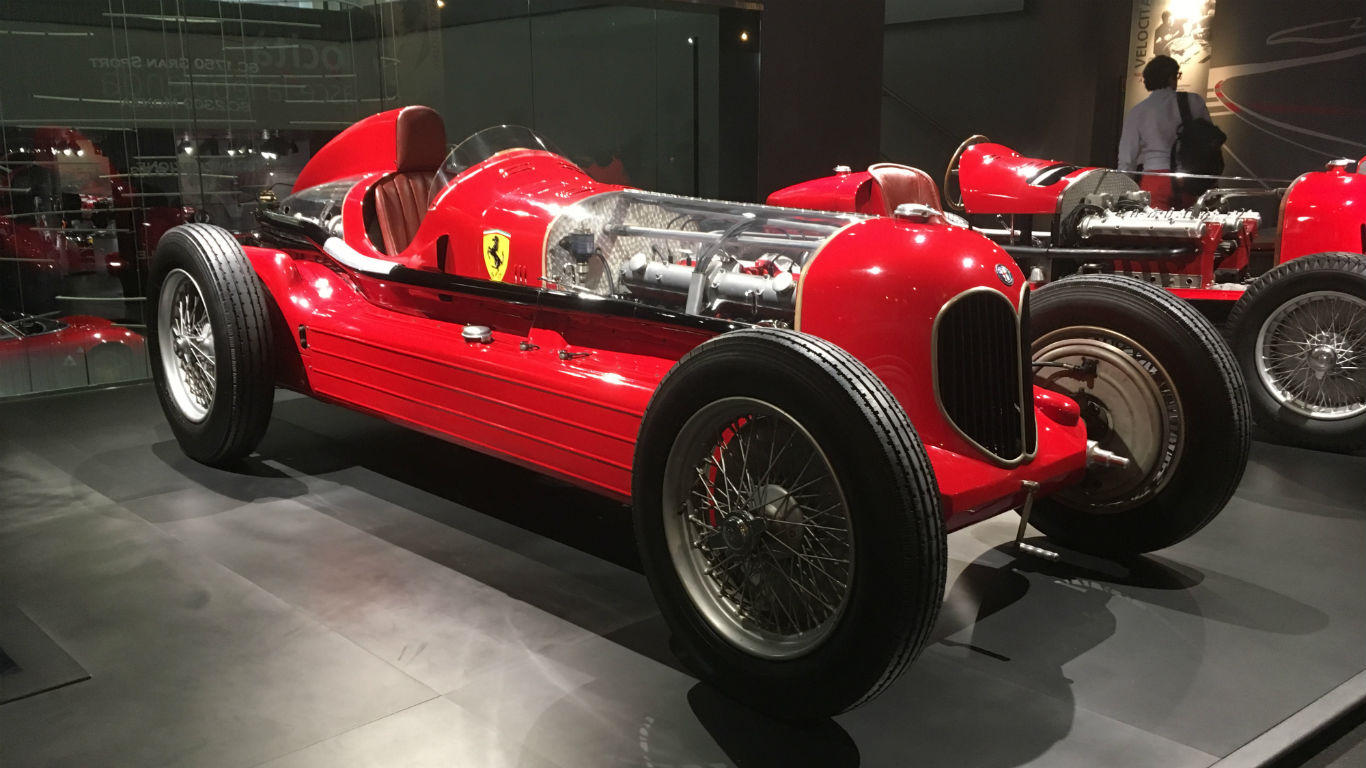
Alfa Romeo 8C 2300 Corto ‘Mille Miglia’
Let’s start with one of the Alfa’s most evocative sports cars: the 8C 2300. Its long, louvred nose hides a 155hp supercharged straight-eight displacing 2,236cc (not quite the 2.3 litres its name suggests). Racing ‘Mille Miglia’ versions were campaigned by Alfa Romeo and the fledgling Scuderia Ferrari, taking victory in the eponymous event in 1932 and 1933.
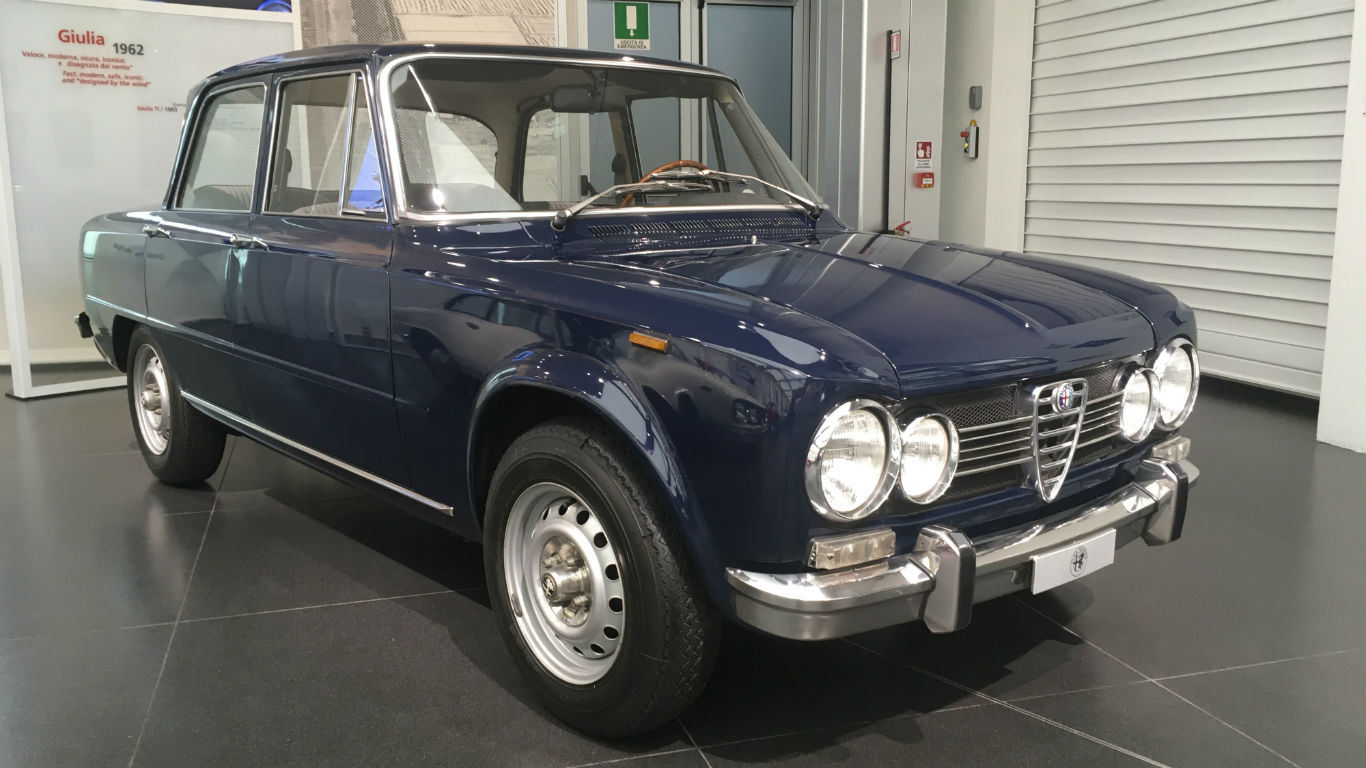
Alfa Romeo Giulia
Fan of the new Alfa Giulia? Well, here’s where it all began. You wouldn’t think it, but the boxy original Giulia was actually designed using a wind tunnel, which helped shape its tapered front end and truncated tail. Powered by a twin-cam 1.6-litre engine, the Giulia was a huge success – with nearly 600,000 built between 1962 and 1978. It was also a firm favourite with the Carabinieri (Italian police).
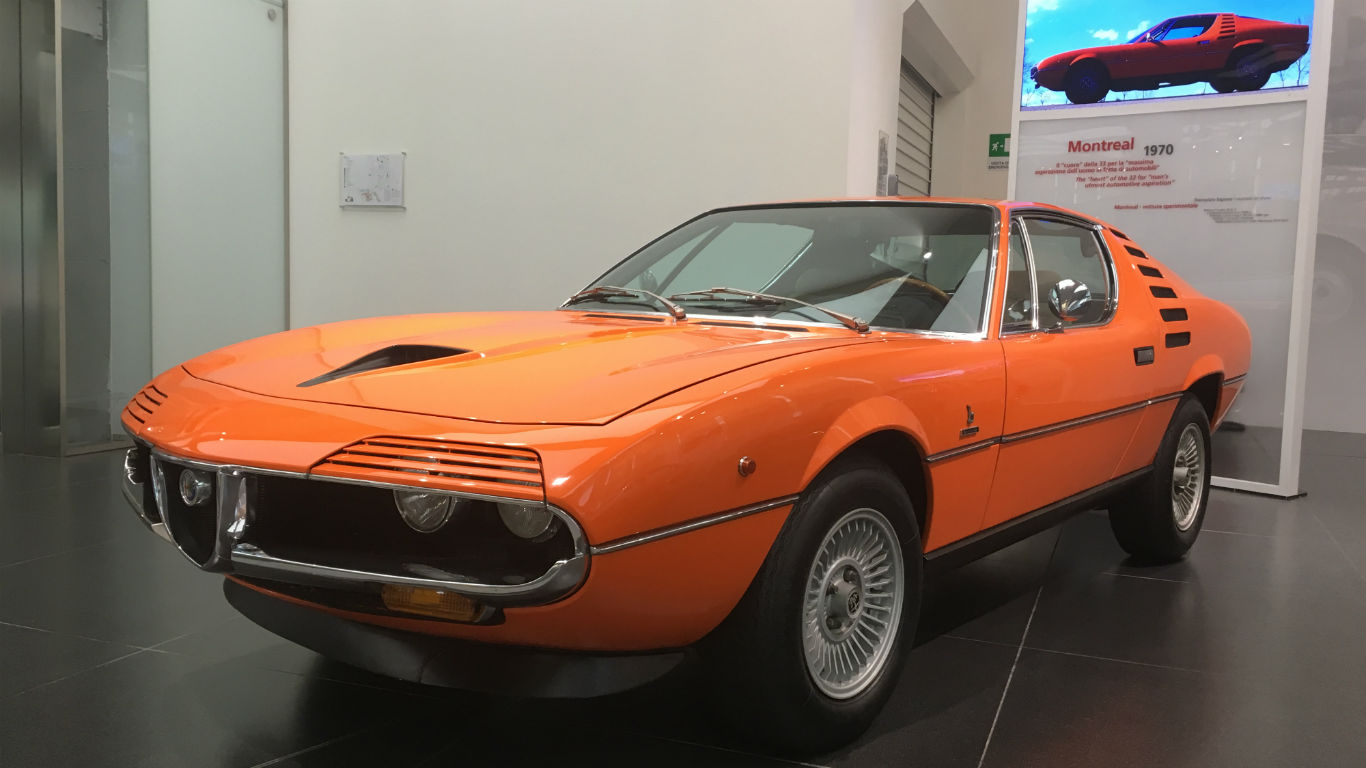
Alfa Romeo Montreal
This much-loved Alfa started life as a concept car intended to embody ‘man’s utmost automotive aspiration’ at Expo 1967 in Montreal. However, the Marcello Gandini-styled coupe proved so popular that it entered production in 1970. Behind its retractable eyelashes, the Montreal has a 200hp 2.6-litre V8 – good for a top speed of 137mph.
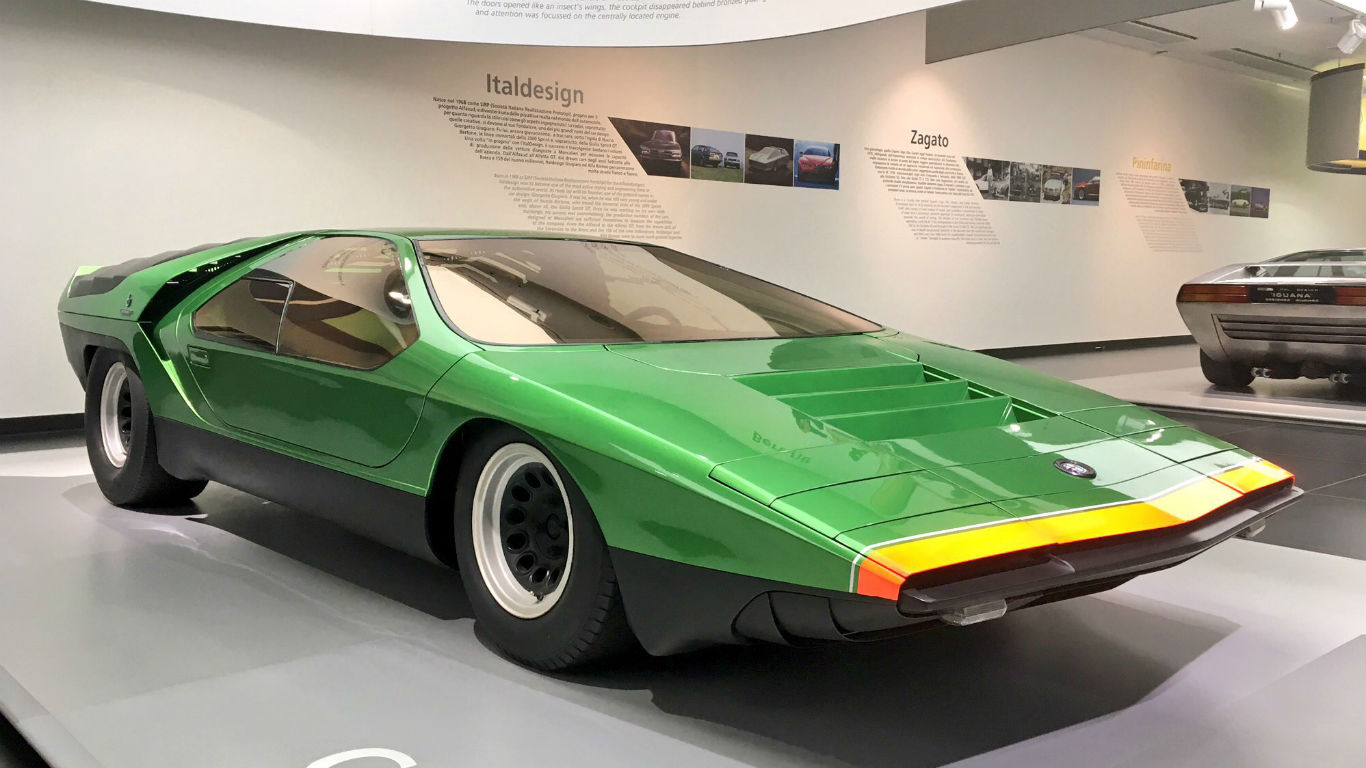
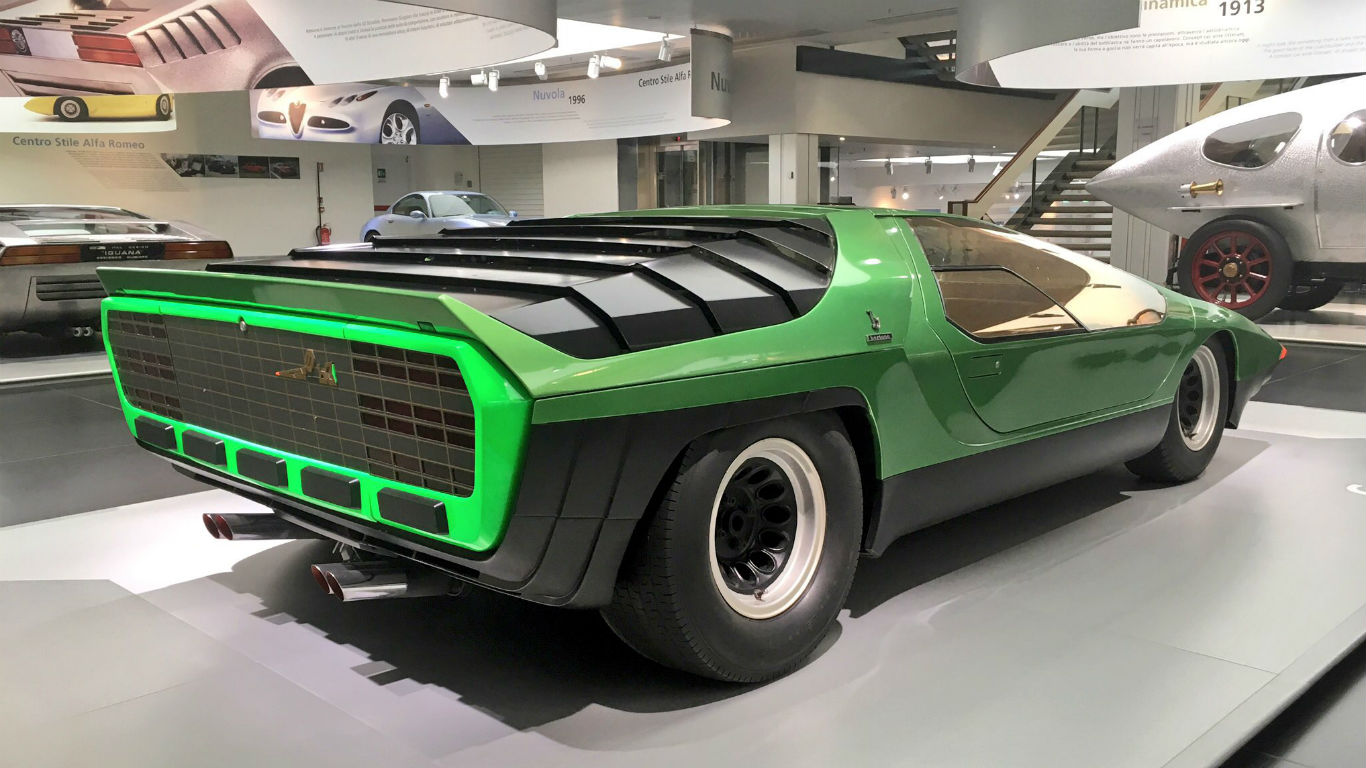
Alfa Romeo Carabo
Here’s a concept that – much to our dismay – never made production. Styled by Gandini during his time at Bertone (spot his trademark asymmetric rear wheelarches), the 1968 Carabo remains the embodiment of the futuristic supercar. Its wedgy profile and vertically-opening doors were also a direct influence on the Lamborghini Countach.
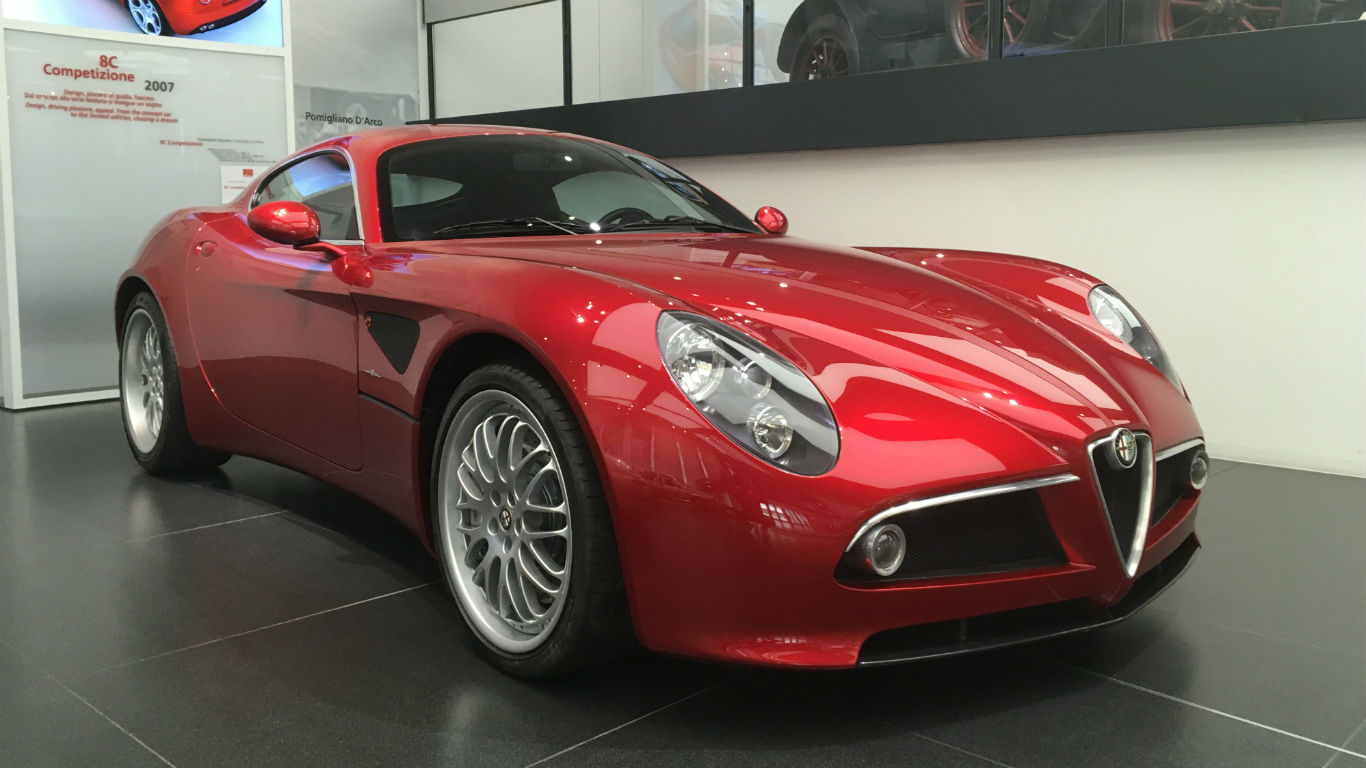
Alfa Romeo 8C Competitzione
Now for Alfa’s very own supercar – one that would take on Ferrari and Lamborghini at their own game. With a name that evoked those 1930s racers, plus the small matter of a 450hp Maserati V8, the 8C could hit 62mph in 4.2 seconds. Just 500 examples of this carbonfibre-bodied flagship were made, one of which is displayed in the ‘Timeline’ hall at the Museo Storico.
Alfa Romeo Bimotore
What’s better than one 270hp straight-eight? Why, two of course. The bonkers Bimotore had one engine in front of the cockpit and another over the rear wheels. Despite its prodigious power, though, the 1935 Bimotore wasn’t a great success. Even Alfa Romeo’s official history describes it as ‘cantankerous and difficult to tame’. Only two were made, but it stands in testament to pre-war Alfa’s engineering prowess.
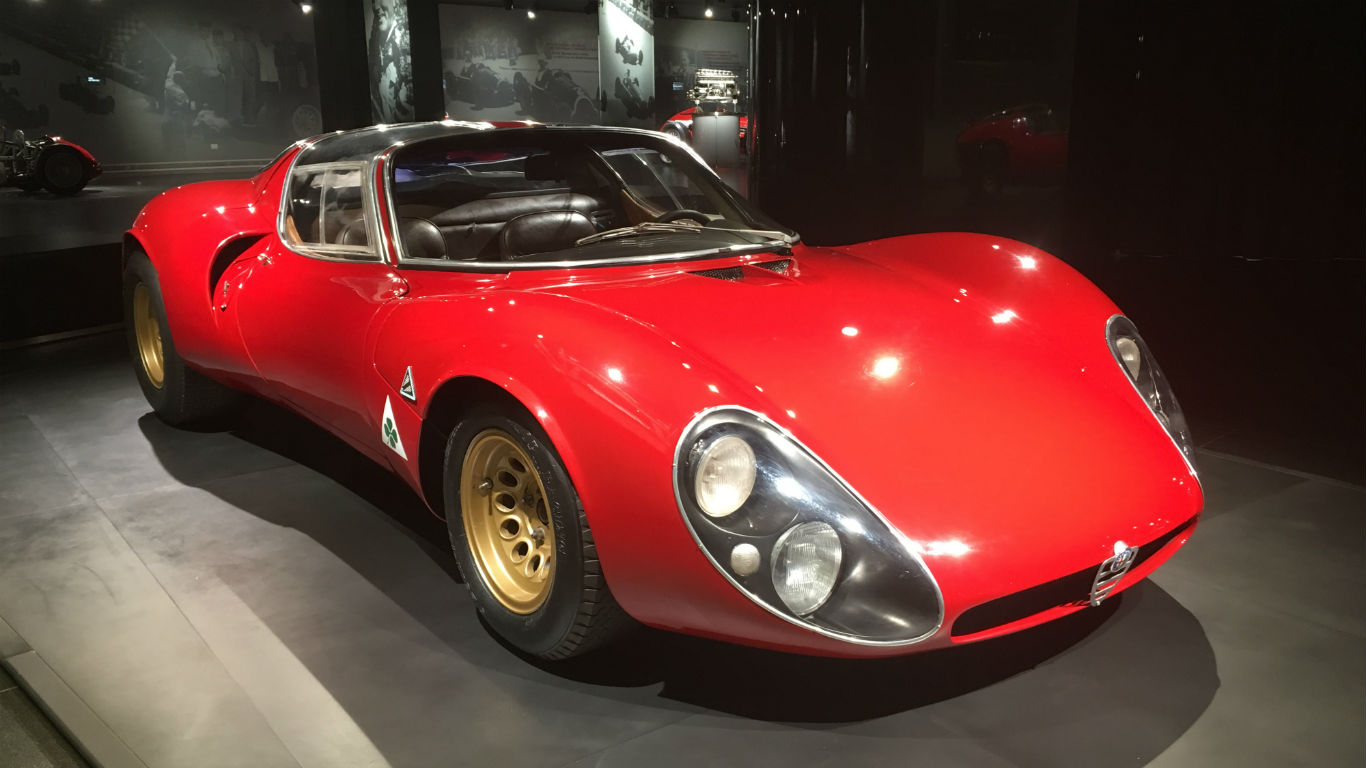
Alfa Romeo 33 Stradale prototype
The 1967 33 Stradale is such an iconic design that, much like the Ford GT40 or Lancia Stratos, it has subsequently been ‘reimagined’ with modern mechanicals. And why not? For our money, this voluptuous road-legal racer is one of the best looking cars ever. It’s also one of the most valuable: with only 18 made, any Stradale commands a seven-figure price tag.
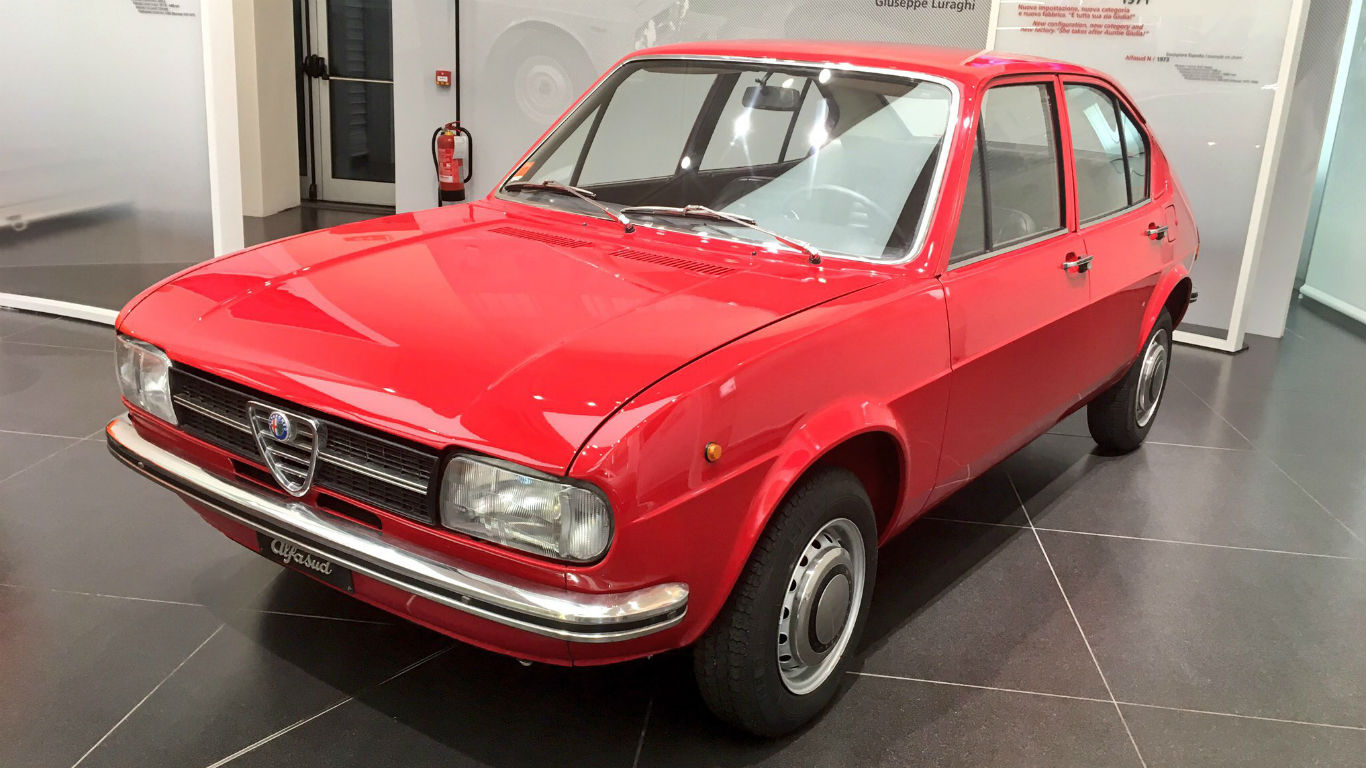
Alfa Romeo Alfasud
Alfasud translates as ‘Alfa South’, reflecting the fact that the factory was in the south of Italy – part of a state-sponsored effort to bring work to the region. And the ‘Sud’ was indeed a car for the people, with a spacious interior and a peppy 63hp 1.2-litre engine. Sadly, nearly all of the 900,000 built have now rusted into oblivion.
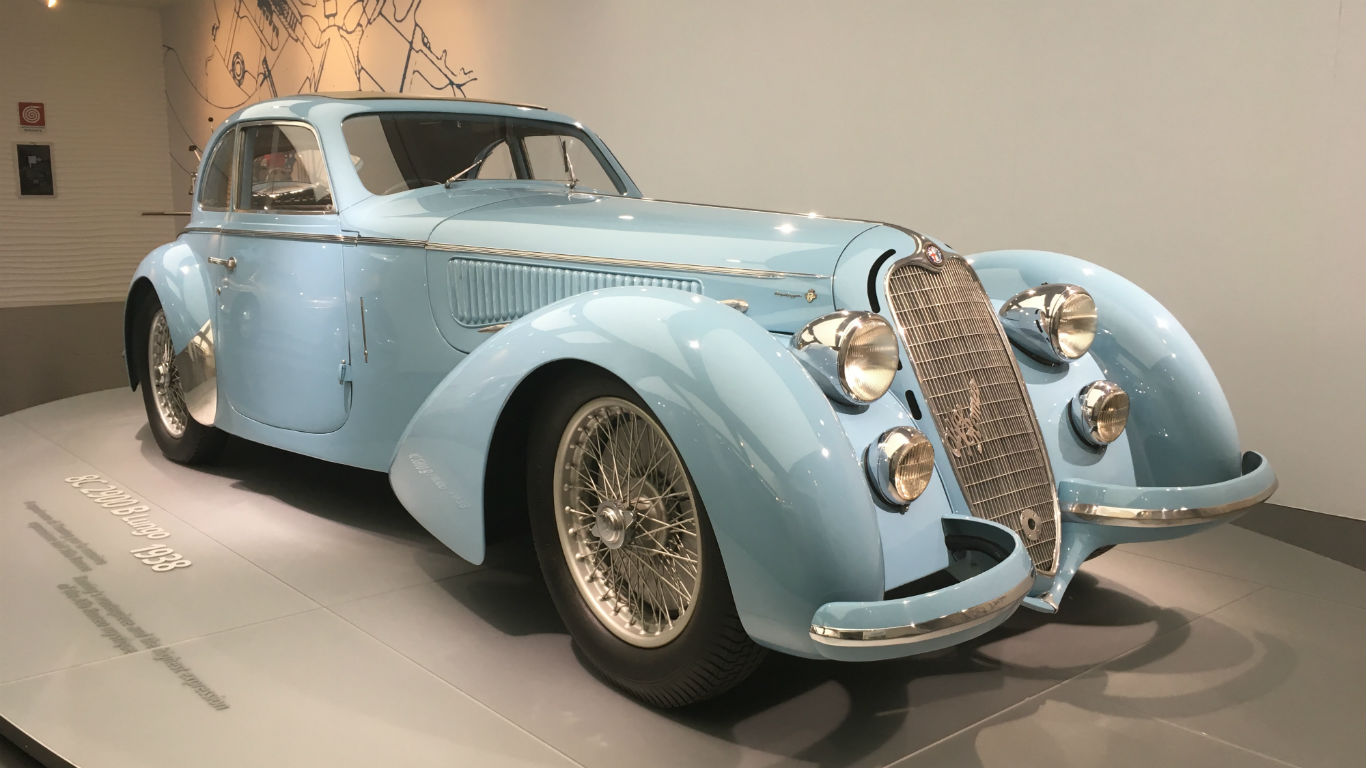
Alfa Romeo 8C 2900 Lungo
We make no apologies for including a second 8C here. The beautiful 1938 8C 2900 Lungo is described in the Museo Storico guidebook as no less than ‘Touring’s masterpiece and the ultimate Alfa Romeo’. Well, that’s settled then. Only 10 examples of the long-bodied Lungo were built, all using the well-proven 220hp 2.9-litre straight-eight.
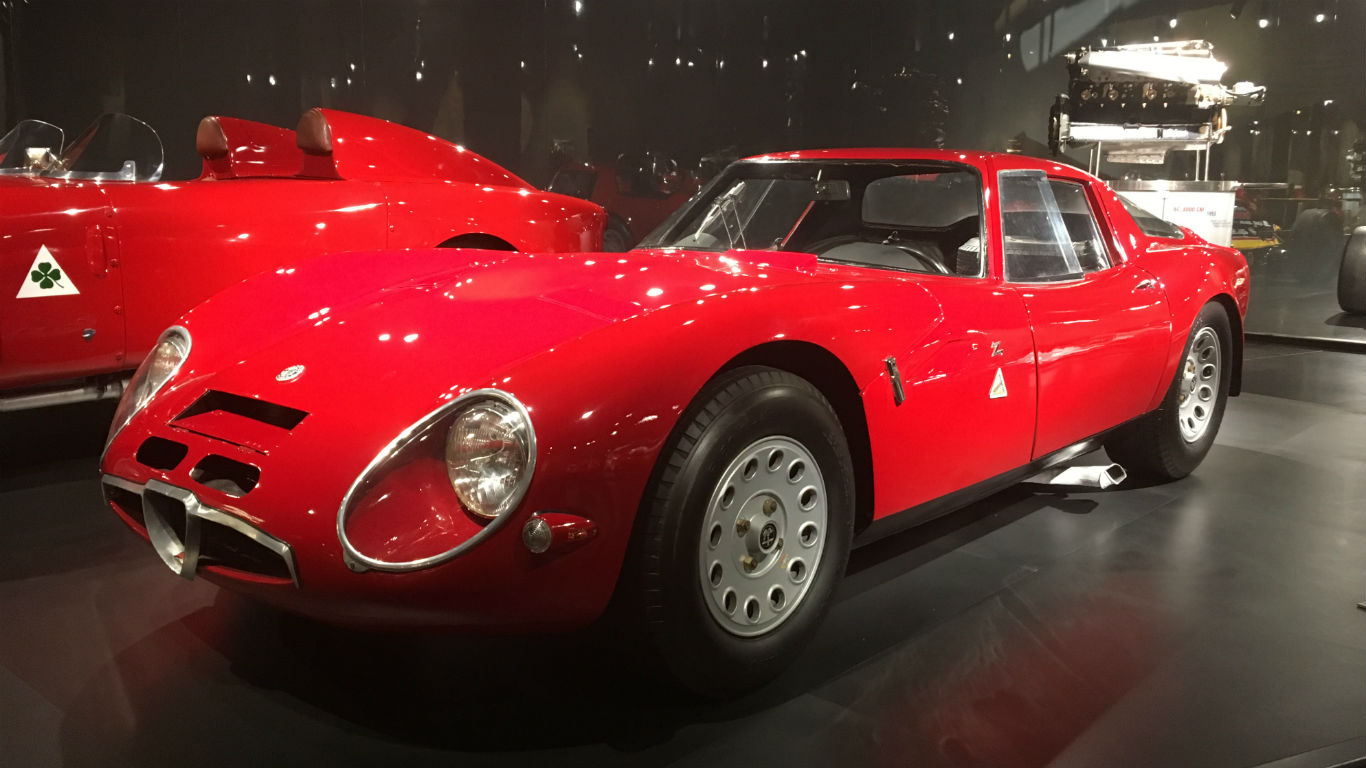
Alfa Romeo Giulia TZ 2
The 1965 Giulia TZ 2 bears more than a passing resemblance to the Ferrari 250 GTO. In short, it’s utterly fabulous. Its powertrain, however, is more modest; where the Ferrari has a 300hp V12, the Alfa makes do with a 170hp four-cylinder twin-cam. Even so, with a tubular spaceframe chassis and lightweight fibreglass panels, the TZ 2 was quick – as class wins in the Targa Florio and numerous other events proved.
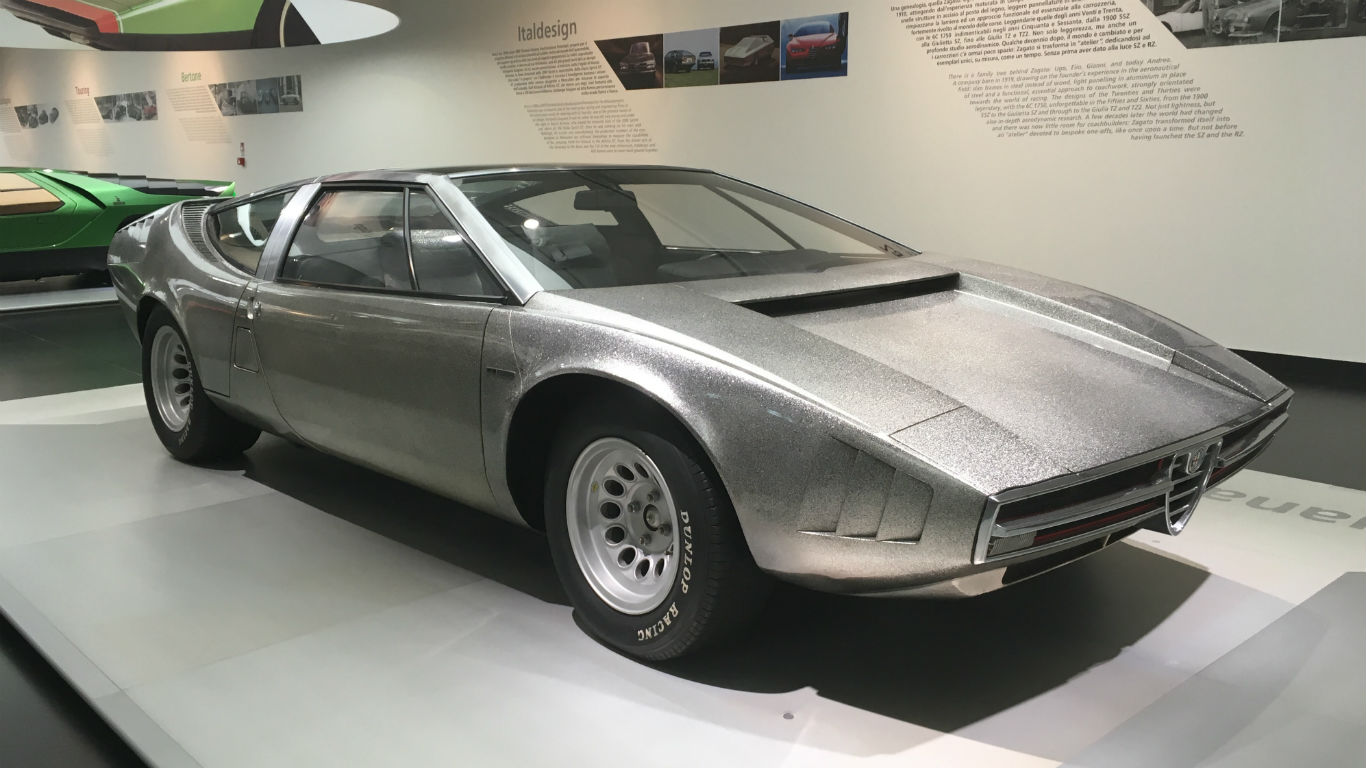
Alfa Romeo Iguana
Based on the rolling chassis of the 33 Stradale, the Giugiaro-penned Iguana concept was rather more angular, but no less striking. Its mid-mounted 2.0-litre V8 produced 230hp at a heady 8,800rpm, while its electrically-adjustable rear spoiler also acted as an air brake. The ‘grazed’ paint finish was unique, too.
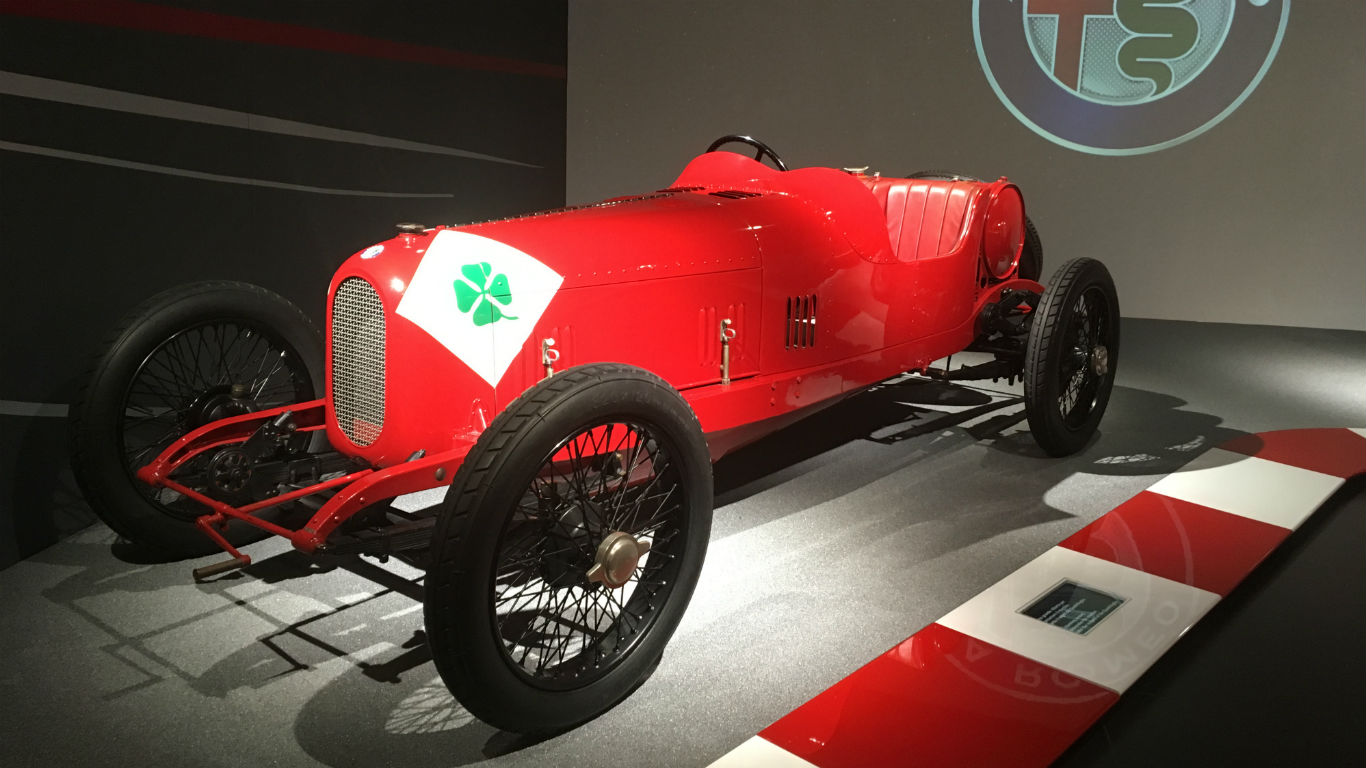
Alfa Romeo RL Targa Florio
Heading up the ‘Speed’ section of the Museo Storico is this 1923 RL Targa Florio – the first car to wear the cloverleaf ‘Quadrifoglio’ badge. Driven by Ugo Sivocci, it won the Targa Florio at its first attempt, with Ascari finishing second in another RL. The four-leaf clover was added afterwards as a symbol of good luck that’s still seen on fast Alfa Romeos to this day.
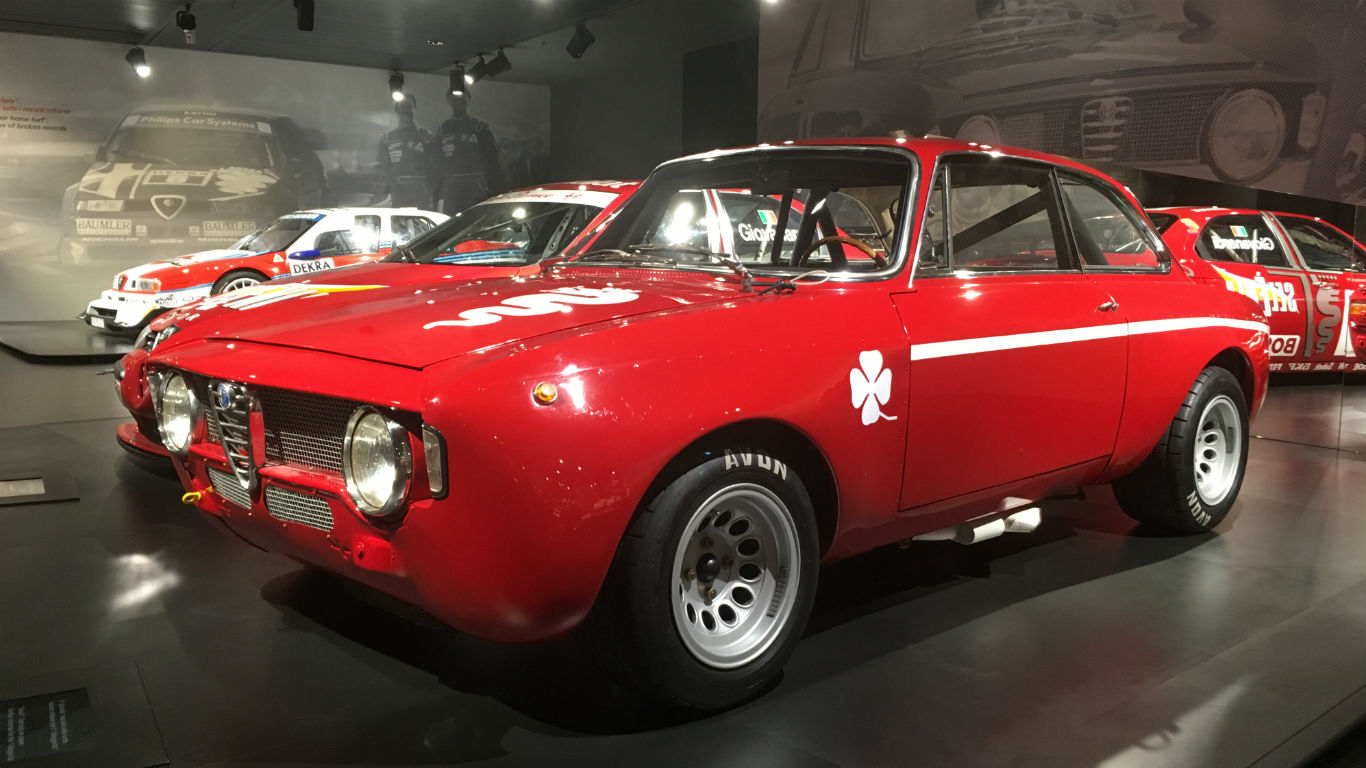
Alfa Romeo GT 1300 Junior
Small but mighty, the Bertone-bodied GT 1300 Junior packed a 165hp punch: not bad in a car weighing just 760kg (note the lack of bumpers to save vital kilos). The Bertone-bodied Junior was a hit on the road and race track, winning the European Championships in 1971 and 1972. We bet it’s an absolute riot to drive.
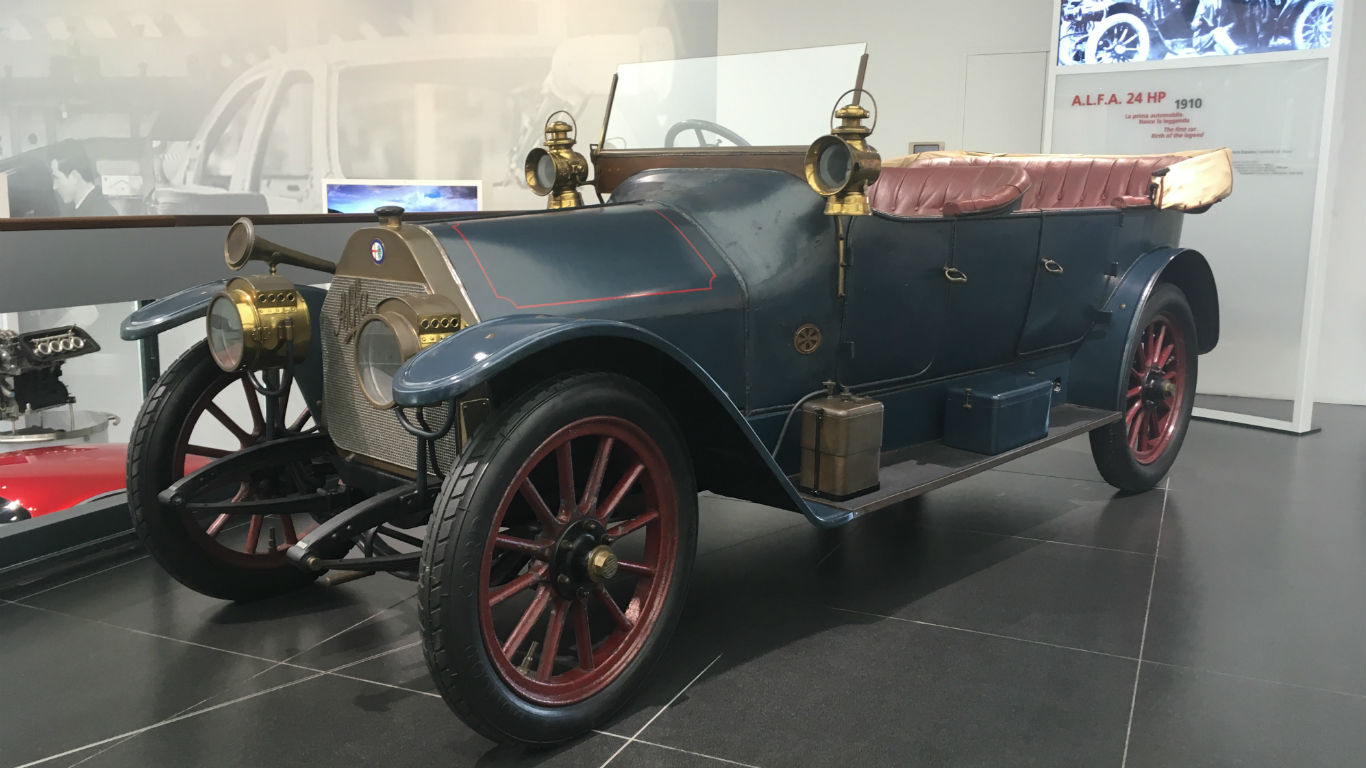
A.L.F.A. 24 HP
We conclude at the beginning, so to speak. The 24 HP is the very first Alfa Romeo, and a remarkably luxurious car for 1910. It had a side-valve engine, four-speed gearbox and a top speed of 60mph: mildly terrifying with drum brakes on the rear wheels only. Production was halted by the outbreak of the First World War, by which time more than 200 had been made.
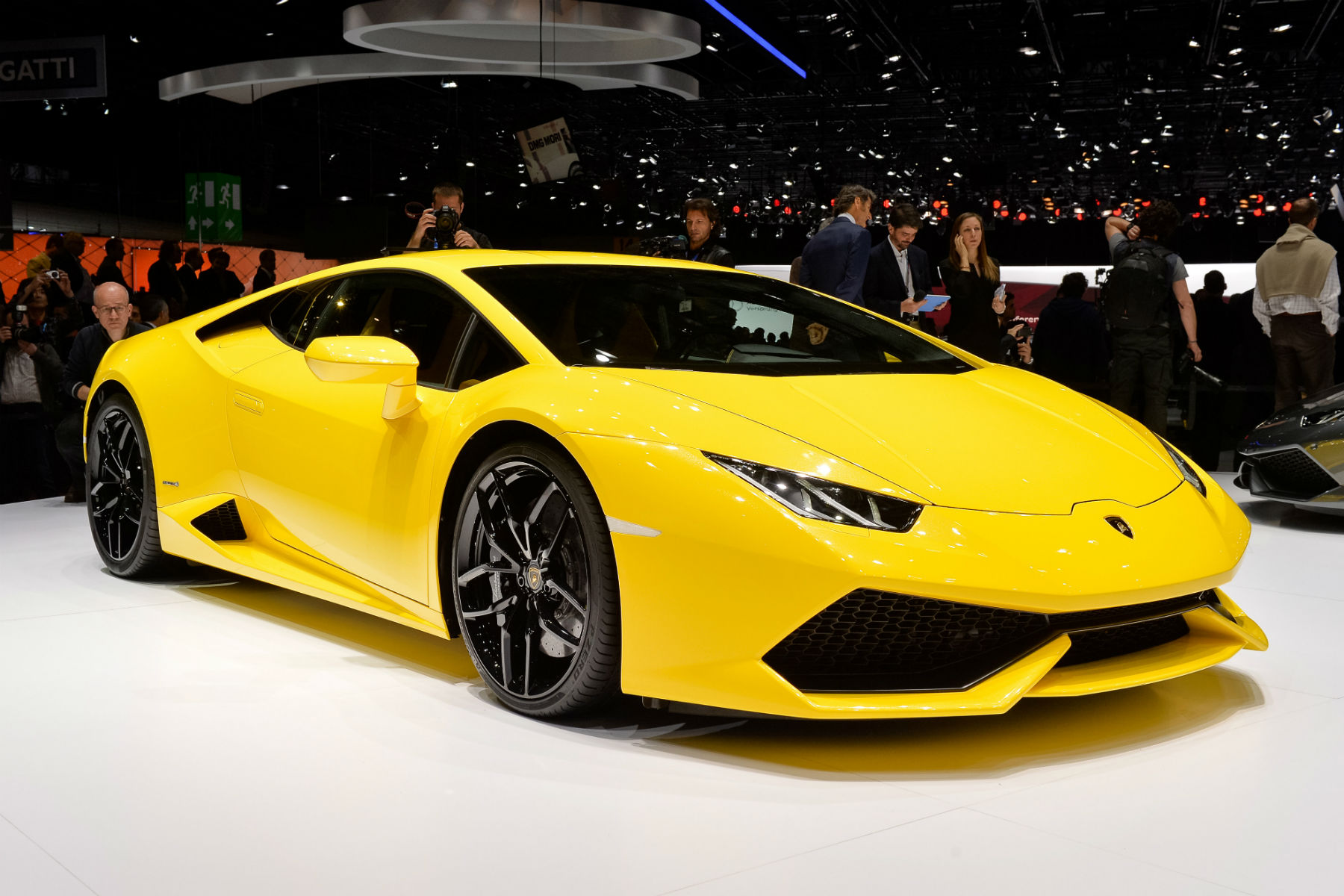
Residents of Lincoln might be in for a shock next time they order a taxi – as the local council has handed out a licence for a Lamborghini Huracan to be used as a private hire vehicle.
Usually councils will award licences to vehicles capable of carrying at least four passengers – meaning a special exception has been made for the Huracan, which can only seat two people including the driver. The Lamborghini is owned by a local taxi company, Handsome Cabs, which plans to use it for special occasions such as school proms.
“I understand this is an unorthodox vehicle to want to use for private hire or taxi work but our plan is to use the vehicle under special conditions and for limited services only,” said the firm’s director, Jamal Parvez.
“For example, on special occasions such as school leavers’ prom nights or weddings or for a company executive who wants to impress a potential customer.”
The Lamborghini Huracan costs from £155,400 and replaced the Gallardo in 2014. It shares a platform with fellow VW Group supercar, the Audi R8, including its 5.2-litre V10 engine. In the Lamborghini, it produces 610hp as standard, propelling the supercar to 62mph in 3.2 seconds and a top speed of 202mph.
“It is certainly an impressive vehicle and one which will no doubt turn many heads around the streets of Lincoln and beyond,” said councillor Cath Brothwell, chair of Lincoln Council’s licencing committee.
“People will be used to seeing cars like this in The Fast and Furious, but not so much on Firth Road and Flaxengate!”
When asked where the taxi firm would be mounting a legally-required private hire plate on the Lamborghini, a spokesman joked: “We’re going to close our eyes.”
It’s not the first Lamborghini taxi in the UK, however. Last year, Wolverhampton City Council licensed a bright green Huracan belonging to a local wedding car company. The firm, Special Wedding Cars, was planning to offer passenger rides in the Lambo with prices starting at £349 for a 90 minute journey.
Related news on Motoring Research:
New London Taxi range-extender caught testing on snow
We revved a Lamborghini Huracan and had to say ‘sorry’ a lot
Did this footballer brag about owning ‘three more’ cars after Lambo crash?
An ex-David Gilmour Ferrari F40, Sir Elton John’s ‘Nikita’ Bentley Continental and Peter Sellers’ Porsche 911 are the star cars on offer at the 2017 Bonhams Goodwood Festival of Speed Sale. The auction takes place on 30 June 2017 and we’ve selected a few of the highlights. Shine on you crazy diamonds…
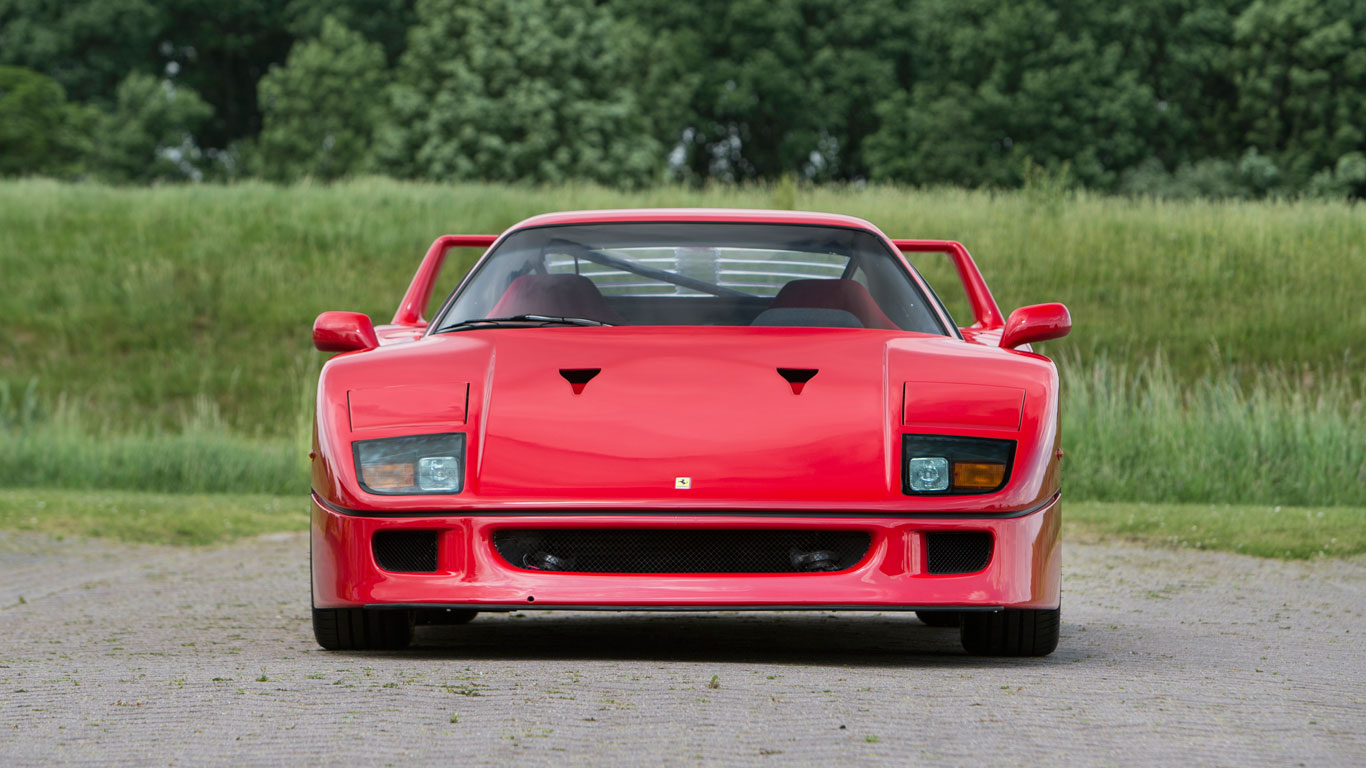
David Gilmour’s Ferrari F40
In 1988, Autocar reported that Pink Floyd stars Nick Mason and David Gilmour would be the first British customers to take delivery of a Ferrari F40. Both Mason and Gilmour collected their cars from Maranello and drove them back to the UK on Italian export plates. That’s not a bad way to say welcome to the machine…
Later, the F40s were displayed at the Birmingham International Motor Show, with Gilmour’s on the Pininfarina stand and Mason’s taking pride of place on the Ferrari stand. But while Gilmour was the original owner, the F40 has changed a little over the years. You could say ‘Time’ and ‘Money’ has been spent on this Ferrari.
An engine fire in the late 2000s left the car in need of restoration, which was finally completed at a cost of… wait for it… £304,500.
Deep pockets are required, then, and although Bonhams hasn’t issued a pre-auction estimate, Eric Clapton’s old Ferrari F40 is currently up for sale for a cool £925,000. We’re not here to debate which F40 is best, but could you imagine the ‘guitar-off’ between Gilmour and Clapton?
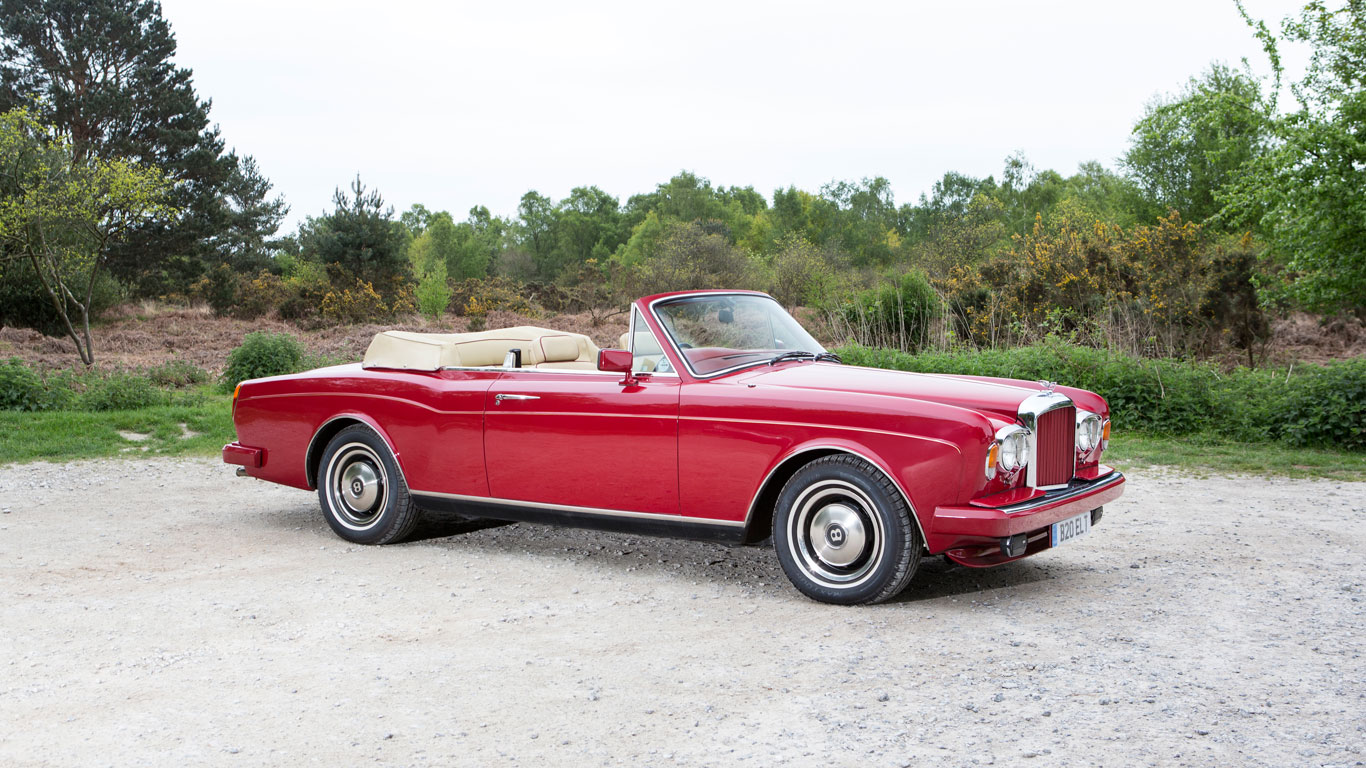
Sir Elton John’s Bentley Continental Convertible: £90,000 – £120,000
Sir Elton John’s Bentley Continental Convertible is a familiar sight on the auction circuit, having gone under the hammer at the Bonhams Paris sale in 2015. Then, it sold for £70,955 including premium.
Two years later, the Rocket Man’s Bentley has, er… rocketed in value to between £90,000 and £120,000. Sir Elton purchased the car new in 1985, before giving it a starring role in the video for the hit single, Nikita.
Much work has been done since the car was purchased in 2015, including the fitment of the correct steel wheels. With this, the only deviation from the original specification is the boot-mounted CD changer and bass unit, which makes it the ideal car for cruising the Yellow Brick Road listening to Now That’s What I Call Elton John’s Biggest Hits.
Sir Elton has owned many desirable motors in his time, including a Jaguar XJ220 and an Aston Martin V8 Vantage, which was painted yellow and red to match the colours of his beloved Watford FC.
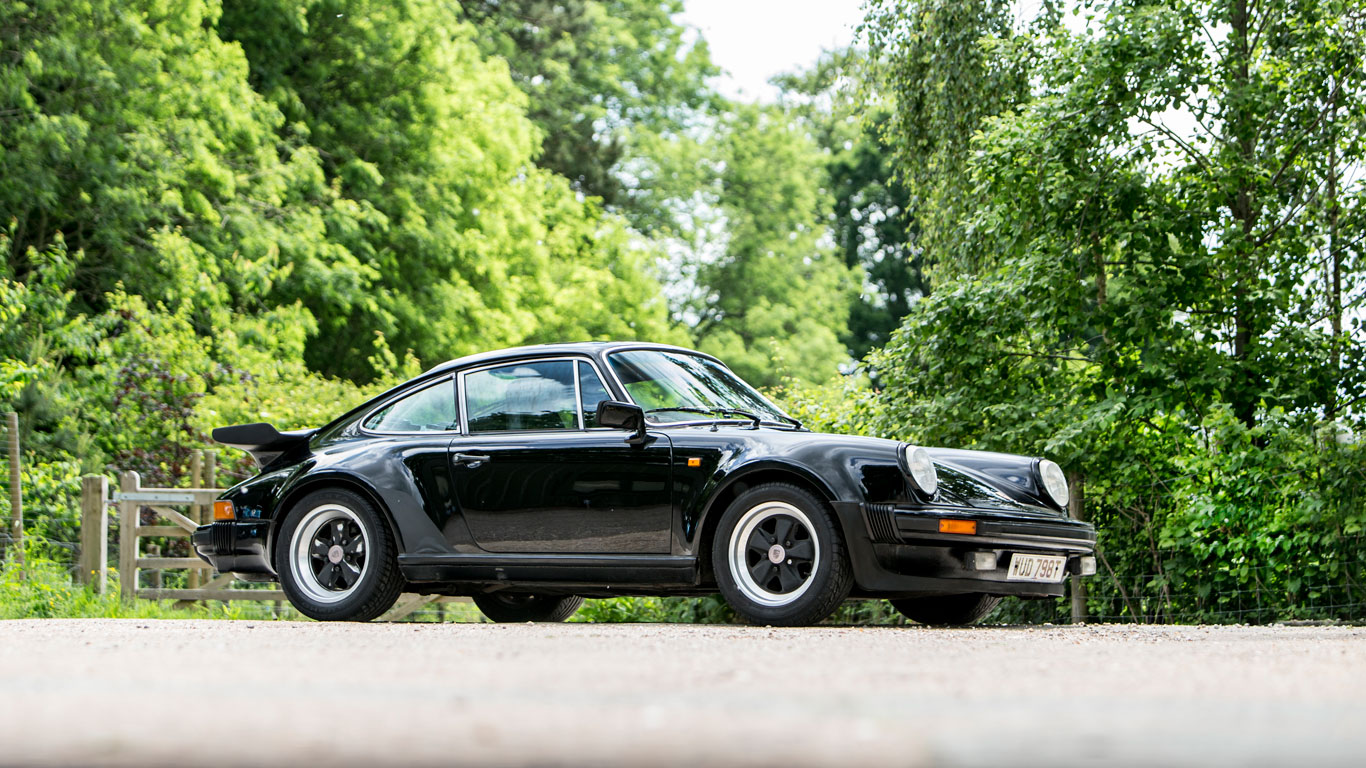
Peter Sellers’ Porsche 930 Turbo: £60,000 – £80,000
From one celebrity car fan to another: actor and comedian Peter Sellers owned a number of desirable cars in his time, including a Ferrari 500 Superfast, an Aston Martin DB4 GT and this Porsche 911 Turbo.
It was one of the last cars Sellers bought before he died and was actually on sale at a classic car dealer in 2016. At the time, Andrew Collins of Castle Classic Cars told Classic Car Weekly: “I think if we get strong interest from a Peter Sellers fan it could put a premium on the car. 911 Turbos of this era can fetch anywhere up to £70,000.” Bonhams reckons it could sell for between £60,000 and £80,000 at auction.
“The body is showing its age,” states the auction catalogue, but it is believed to have the same paintwork as when Peter Sellers took delivery.
Special order equipment requested by Sellers included chrome parts in black, sports seats, rubber buffers on bumper horns, coloured headlight rings, climate control and a sunroof. One thing’s for sure, Sellers had fine taste. We love the stealth look.
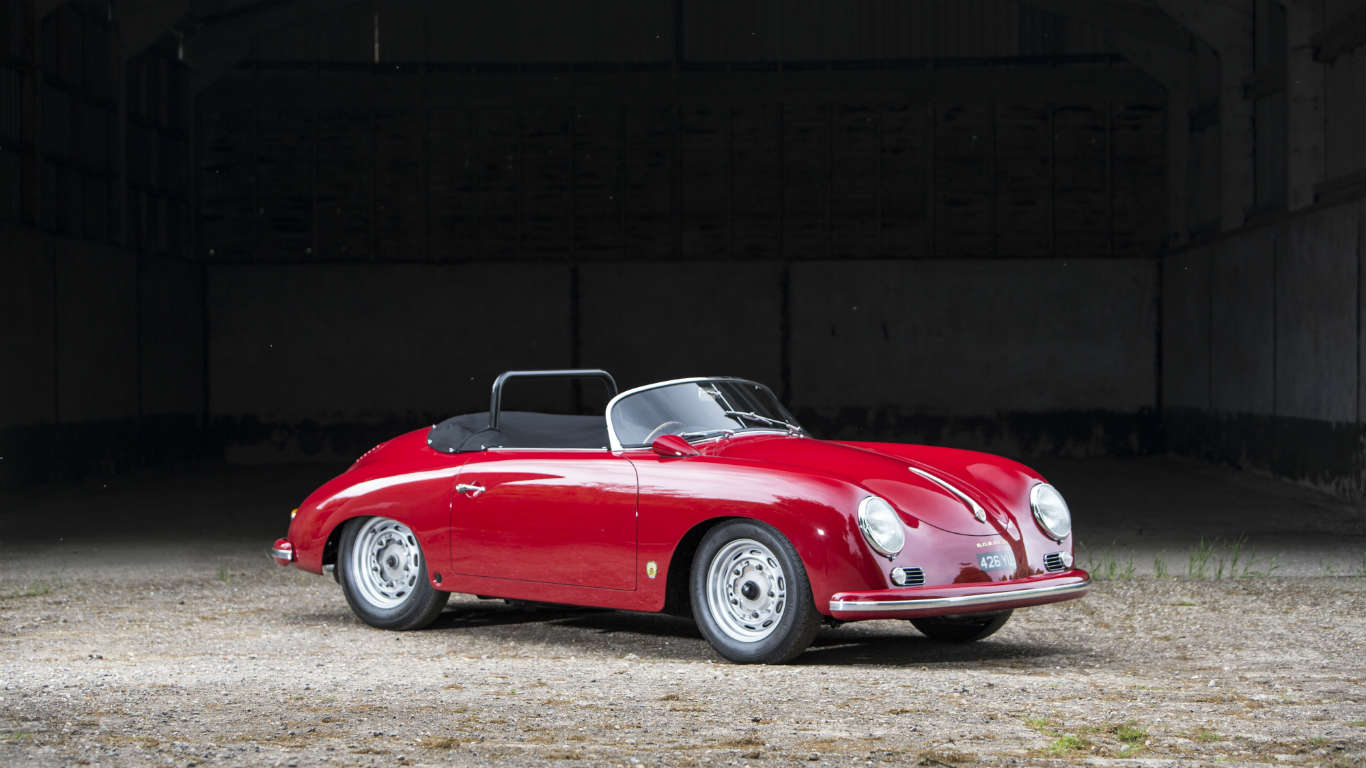
Porsche 356A Carrera Speedster: £900,000 – £1,000,000
This 1957 Porsche 356A Carrera Speedster might not have a celebrity connection, but the pre-auction estimate puts it firmly within the ‘rich or famous’ category. It’s the last of only three right-hand drive Carrera Speedsters built by Porsche, all of which were delivered to Australia.
Between 2012 and 2014, the Porsche underwent a total restoration at a cost of £100,000. The single image doesn’t do this car justice and we recommend checking it out on the Bonhams website. Be prepared to collect your jaw from the floor.
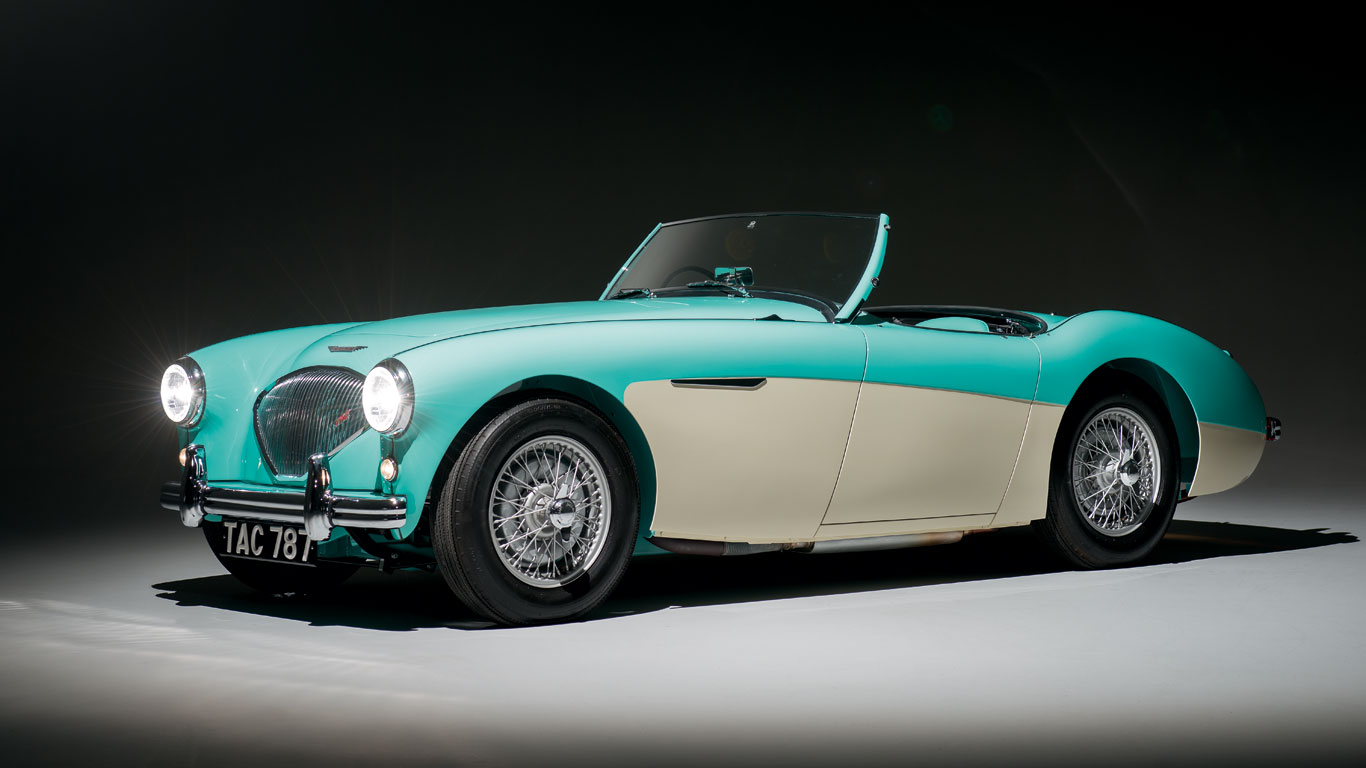
Austin-Healey 100 BN2: £100,000 – £140,000
This Austin Healey 100 is one of four cars displayed by the factory at the 1955 Earls Court Motor Show and the first of its kind to be painted in Florida Green over white. The first private owner was a Lt. Colonel Hyde, who kept the car until 1963, by which time it had covered 45,000 miles.
The 100 is the quintessential British sports car, being both great to drive and delightful to look at. Restoration projects aren’t for the faint-hearted, so the fact that that TAC 787 was restored over a six-year period, before winning awards at the Austin-Healey Club National Concours, should fill you with confidence.
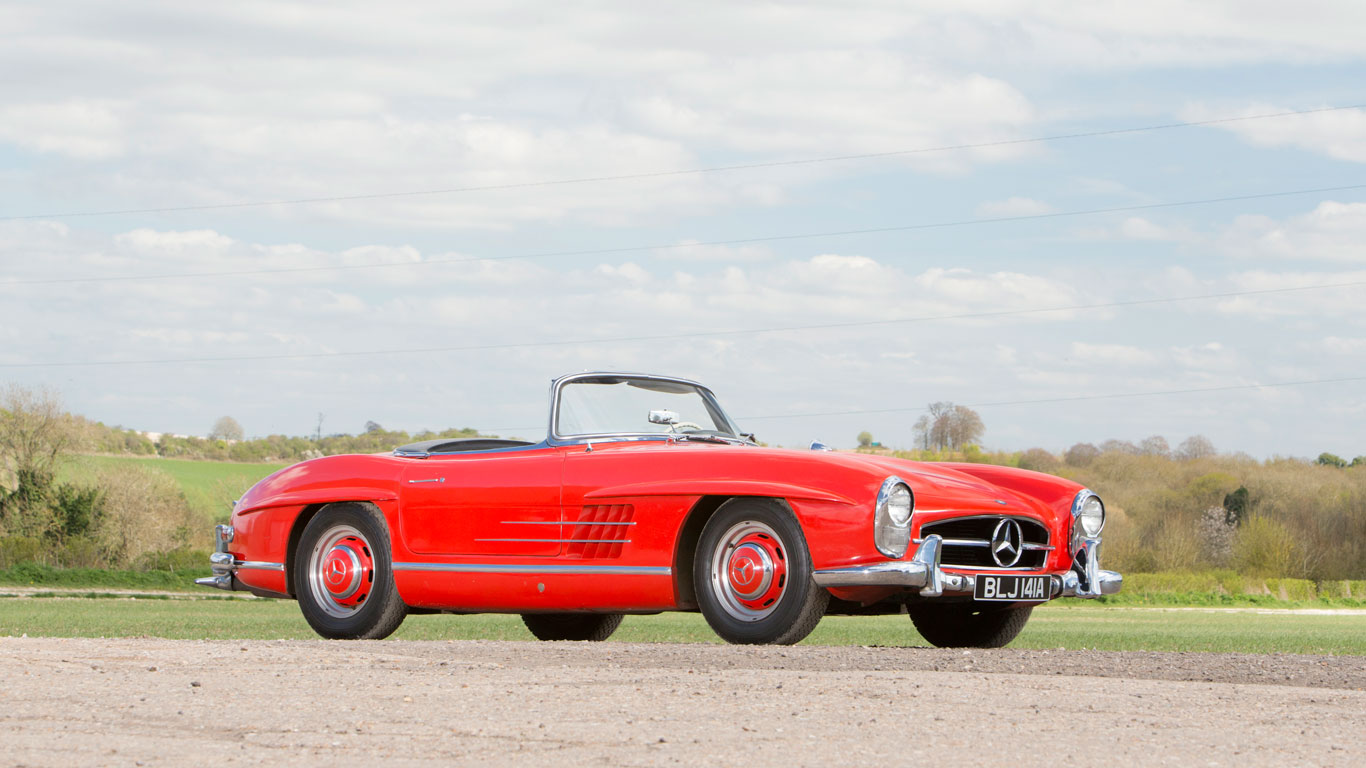
Although the 300 SL Roadster lacks the theatre associated with the ‘Gullwing’ doors, it remains one of the world’s most beautiful cars. That it’s more of a boulevard cruiser than the original doesn’t matter – you can thank the extra 100kg of weight for this – because we’d happily while away the hours on a boulevard in this 1962 example.
The car was shipped to the United States in 1963 but arrived in the UK in 1989. “There cannot be many better ways of travelling to a classic event, taking part and driving home,” says Bonhams.
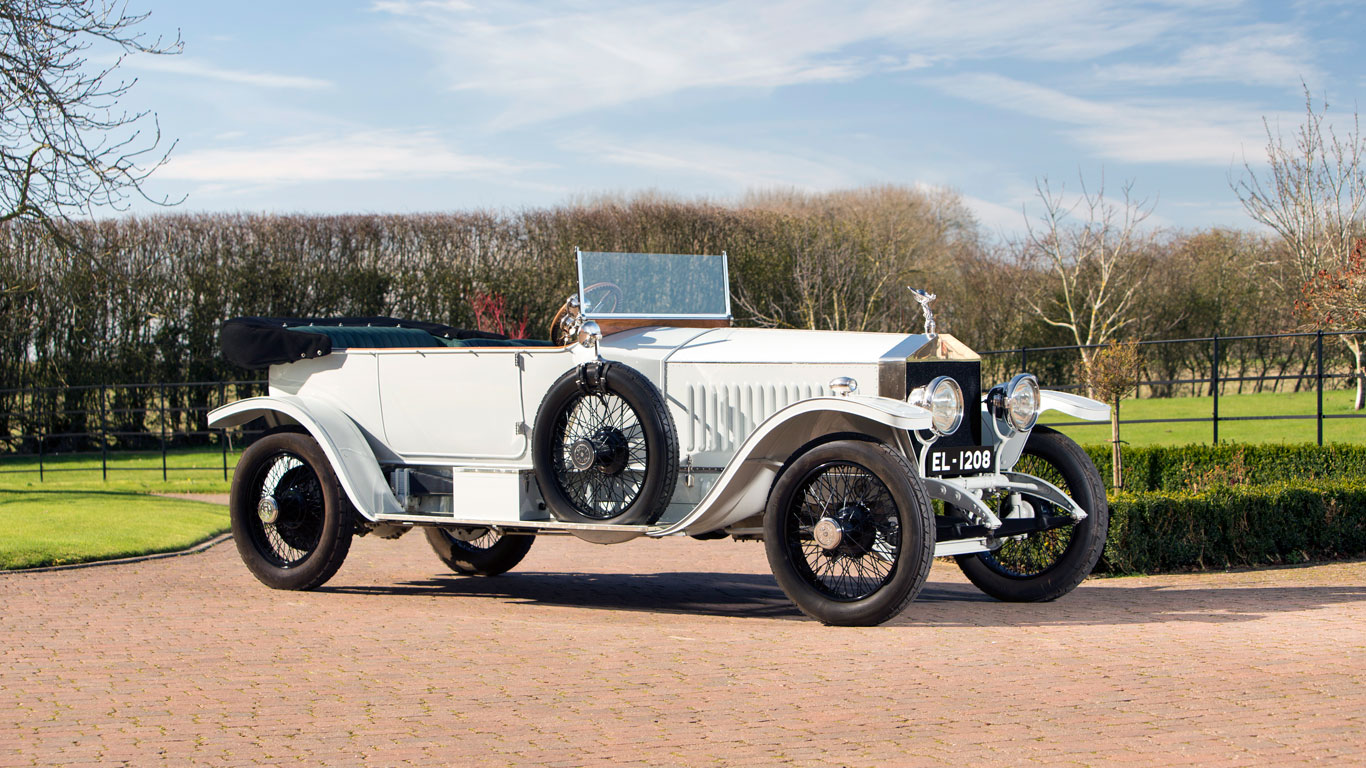
Rolls-Royce 40/50hp Silver Ghost Open Tourer: £300,000 – £400,000
We can’t offer a celebrity connection with this 1914 Rolls-Royce 40/50hp Silver Ghost Open Tourer, but it was delivered new to His Highness the Maharana Sir Fateh Singh Bahadur of Udaipur. Quite literally, this makes it fit for a ‘King of Kings’.
The Silver Ghost is, without question, one of the finest cars Britain has ever produced. This example is up for sale because the owner has a split in the achilles tendon in his right leg, making it painfully difficult to drive.
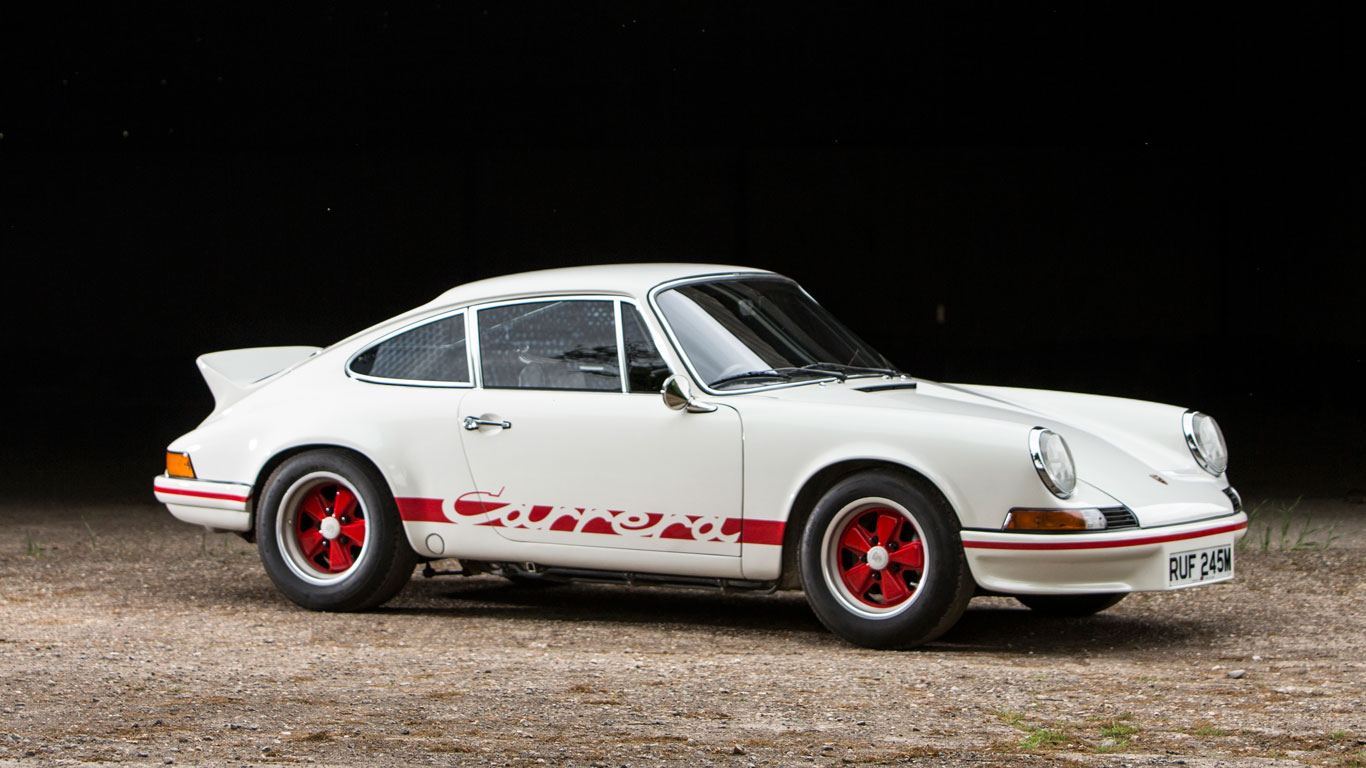
Porsche 911 RS Lightweight: £750,000 – £850,000
To some, the RS Lightweight is the holy grail of the Porsche 911 world, which is reflected in the pre-auction estimate. This 1973 example is one of 17 right-hand drive UK-supplied cars and was delivered new to Isaac Agnew, the official Porsche dealer in Belfast.
The original owner took part in several competitions before the car arrived in England in 1974. It took part in further rallies before an engine failure prompted the fitment of a replacement unit in 1975. Following a number of modifications, the car has been restored to its original specification, with the only exception being a pair of RS Safari seats.
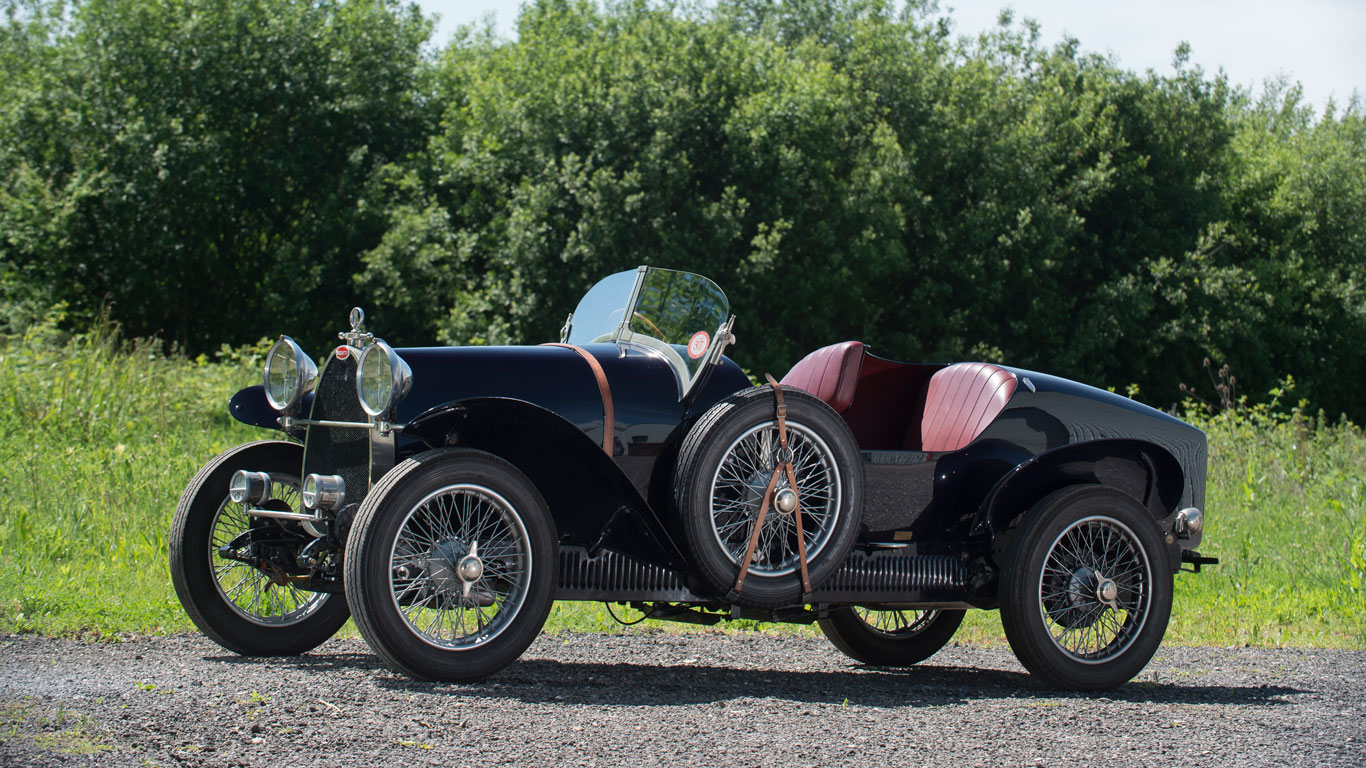
Bugatti Type 23 Brescia: £550,000 – £650,000
Having recently written a brief history of Bugatti, we felt obliged to include one of its cars in our Goodwood auction preview. The Type 23 Brescia was essentially a touring version of the Type 13 Brescia racecar and so-called in honour of the top four places at the 1921 Brescia Grand Prix.
This 1923 example features coachwork by Lavocat et Marsaud and received the Pebble Beach Chairman’s Award in 2011.
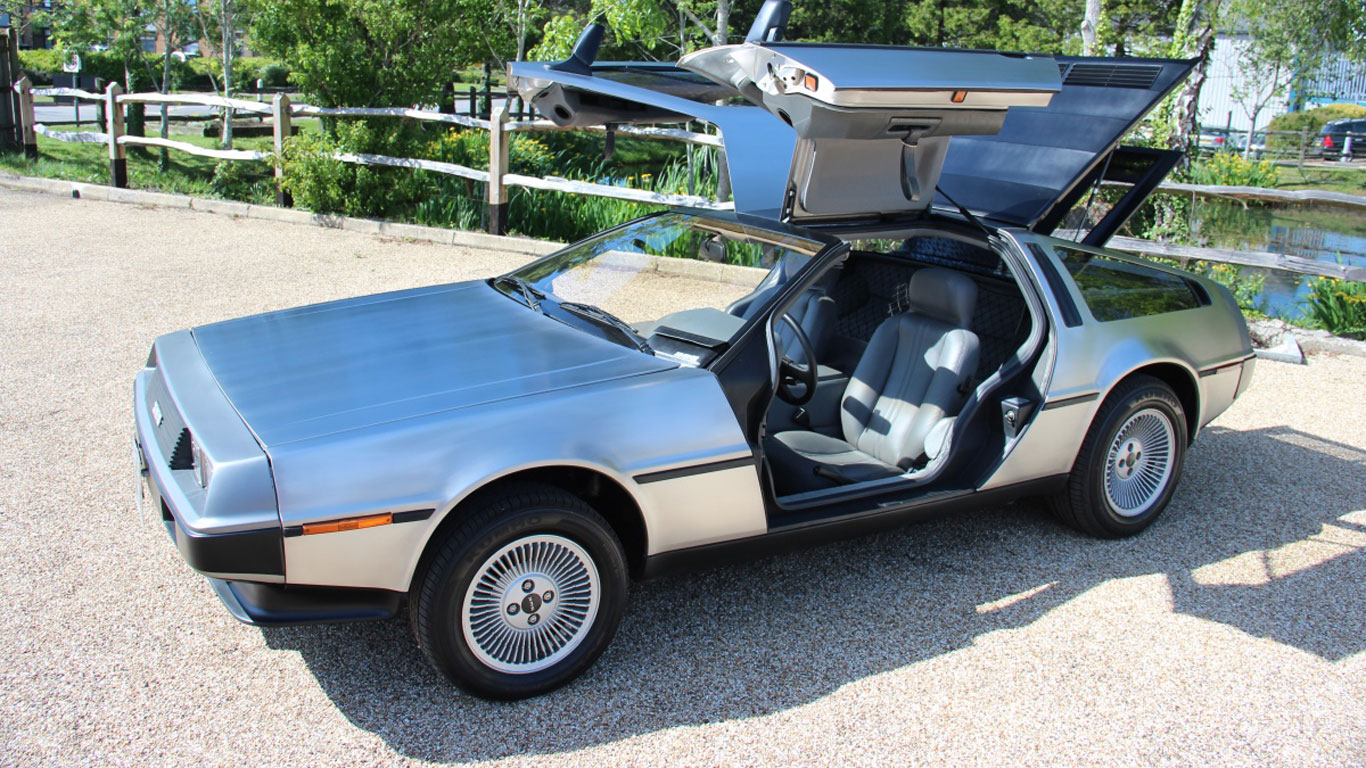
DeLorean DMC-12: £30,000 – £35,000
Thanks to a certain movie, the DeLorean DMC-12 will always be in demand and this is likely to be up there with the best of them. It was delivered new in California and has a mere 8,834 miles on the clock.
As you’d expect from a low-mileage car from the Golden State, the DeLorean is in remarkably good condition. It actually arrived in the UK in 2016 and has since been re-commissioned following years in storage.
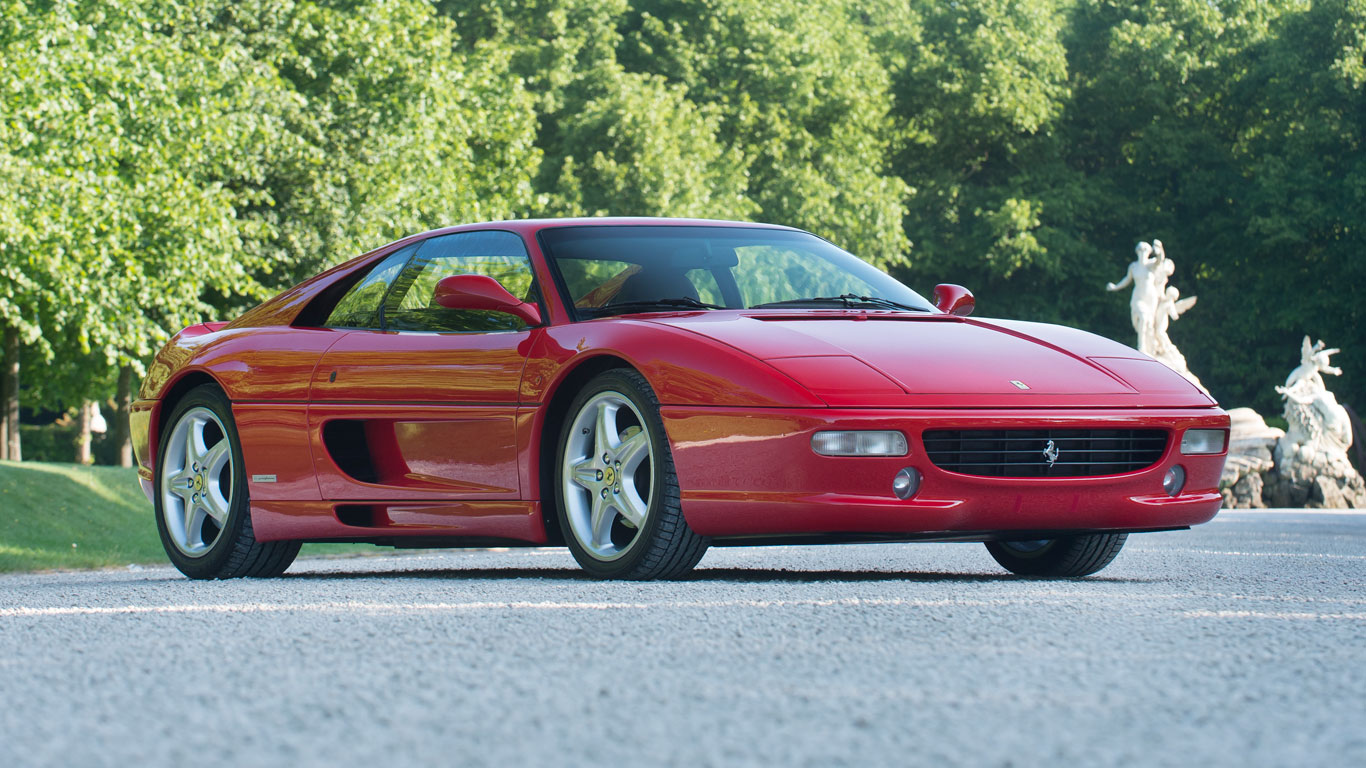
Ferrari F355 Berlinetta: £85,000 – £95,000
Arguably one of Ferrari’s most beautiful cars – certainly of the modern era – and yet this F355 Berlinetta is expected to sell for less than £100,000. A bargain? You decide.
Fittingly, this Italian thoroughbred was supplied new in Italy, before arriving in the UK in 2015. A certain Jeremy Clarkson enjoyed testing one so much, he arrived home and ordered one from his local Ferrari dealer.
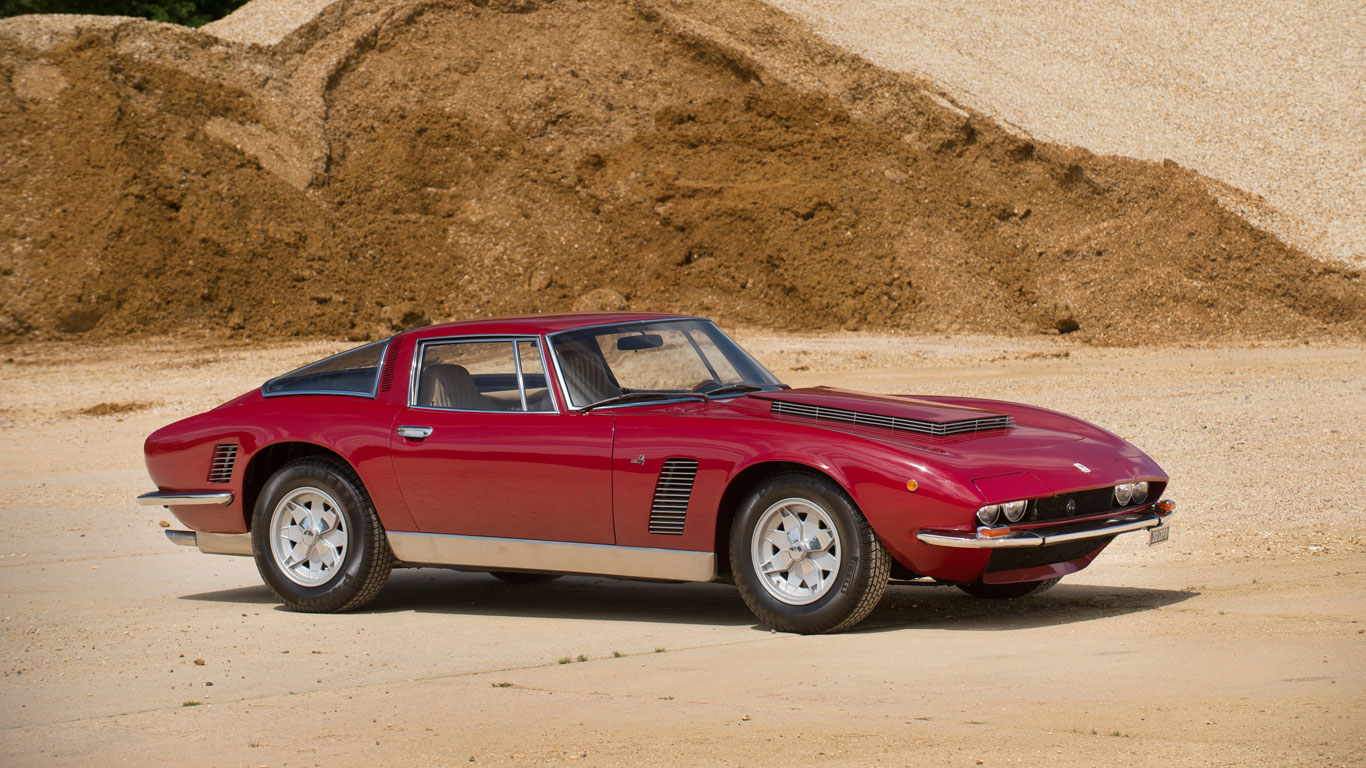
Iso Grifo: £200,000 – £250,000
All too often, these auction preview galleries focus on the high profile and well-known cars. Breaking from tradition, we’ve selected a handful of alternatives, starting with this: a 1973 Iso Grifo. You can thank Giorgetto Giugiaro for the disarmingly attractive styling and American V8 power for the performance.
While we’d prefer the larger 7.0-litre Chevrolet engine, with 365hp on tap, this Ford-engined series II model is no slouch. The later cars are notable for their partially covered headlights. In total, only 413 Iso Grifos were made before the Italian firm was declared bankrupt.
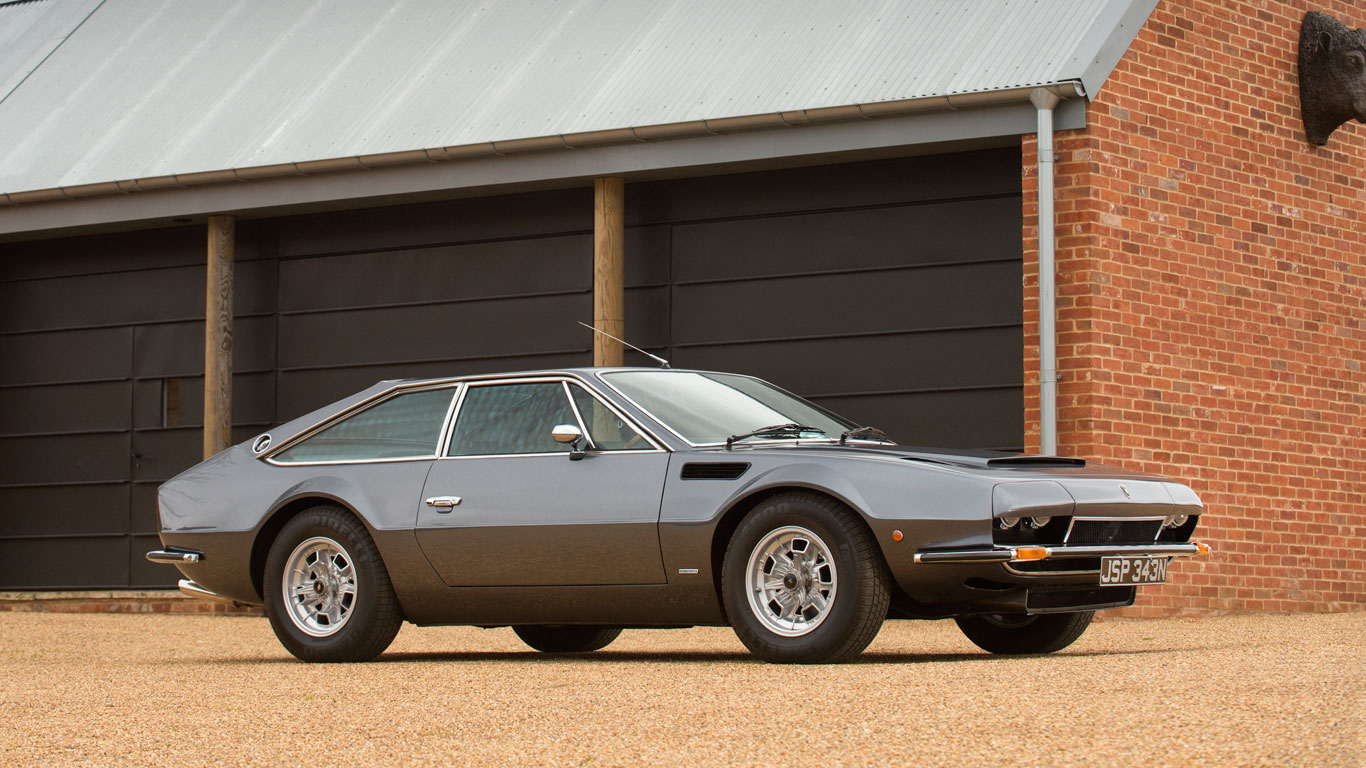
Lamborghini Jarama: £120,000 – £150,000
Another 1970s car with partially covered headlights, this is one of only 18 right-hand drive Lamborghini Jarama S models ever built. The styling divides opinion, but Ferruccio Lamborghini listed the Jarama as one of his favourite cars.
It’s the quintessential gentleman’s GT car, with effortless V12 performance and cross-continental comfort. That said, if you are crossing continents, you might want to consider the fuel bill.
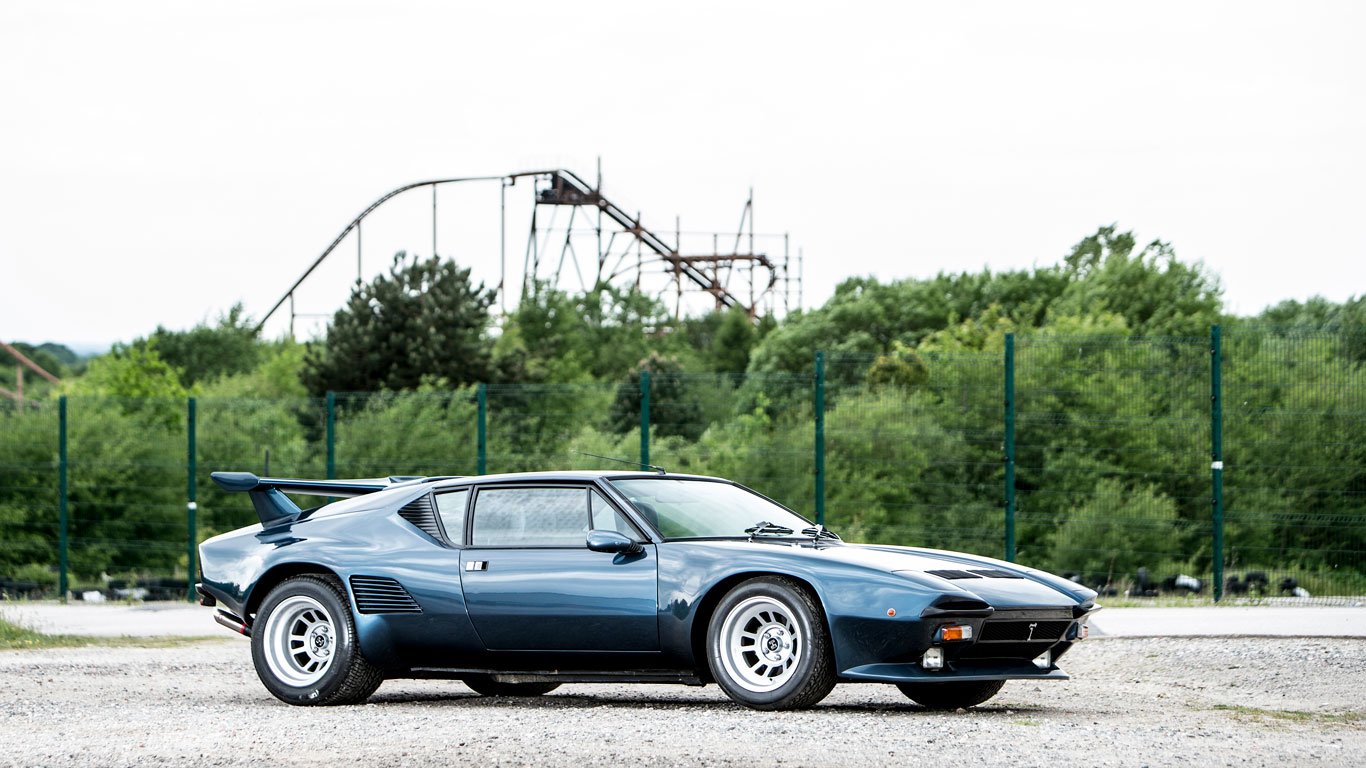
DeTomaso Pantera GT5-S: £140,000 – £180,000
The original clean and elegant DeTomaso Pantera was very much a car of the 1970s, but the GT4, GT5 and GT5-S models were 100% products of the 1980s. The flared arches, in-your-face decals, fat wheels and wild rear wings were in keeping with the times.
This 1990 example is powered by a Ford Windsor V8 engine and has covered a mere 14,000km from new. It comes complete with the original build sheet and production document, sourced directly from DeTomaso in Italy.
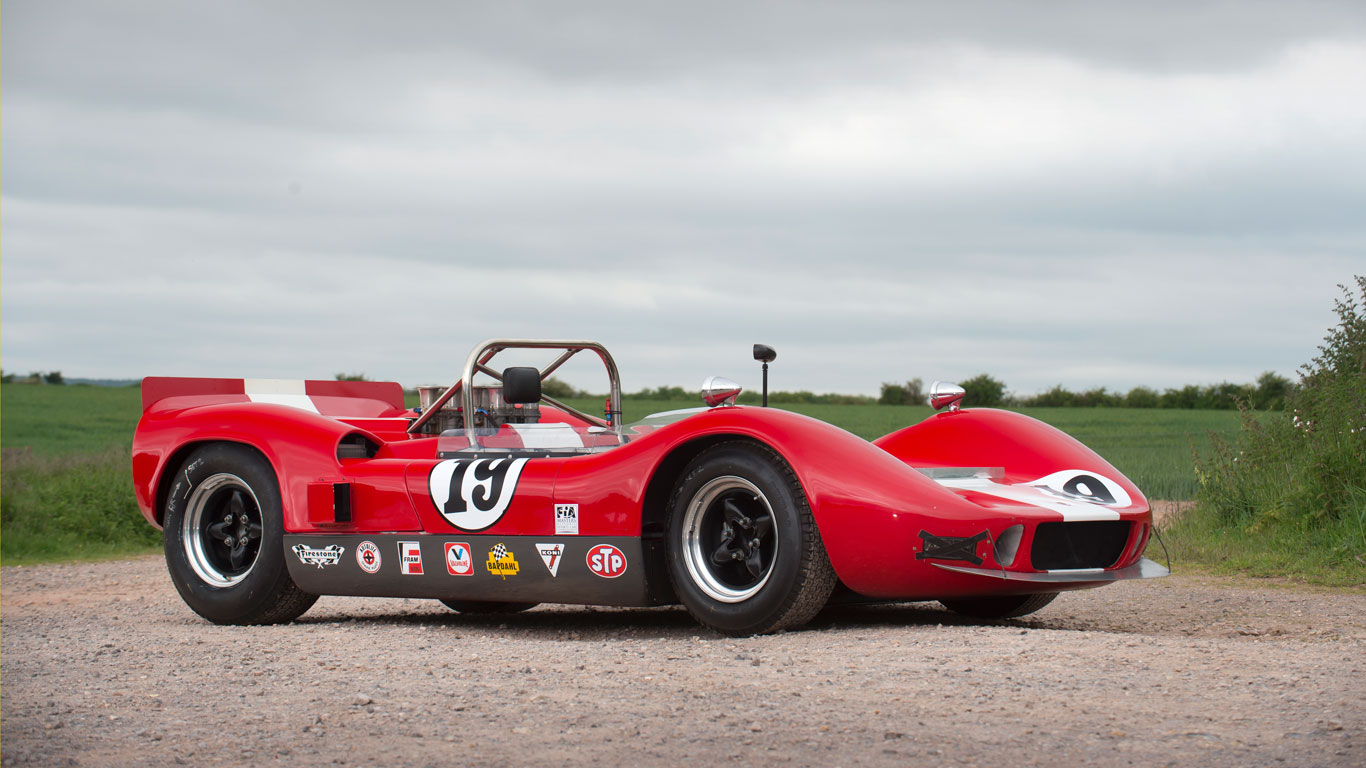
McLaren M1B: £200,000 – £250,000
The MB1 was designed and handbuilt by Robin Herd and Bruce McLaren and was the official 1965 McLaren team car. Chassis number 30-04, as seen here, enjoyed a lengthy career in Can-Am races and is one of only 28 built.
It’s no stranger to Goodwood, having made several appearances at the Revival.
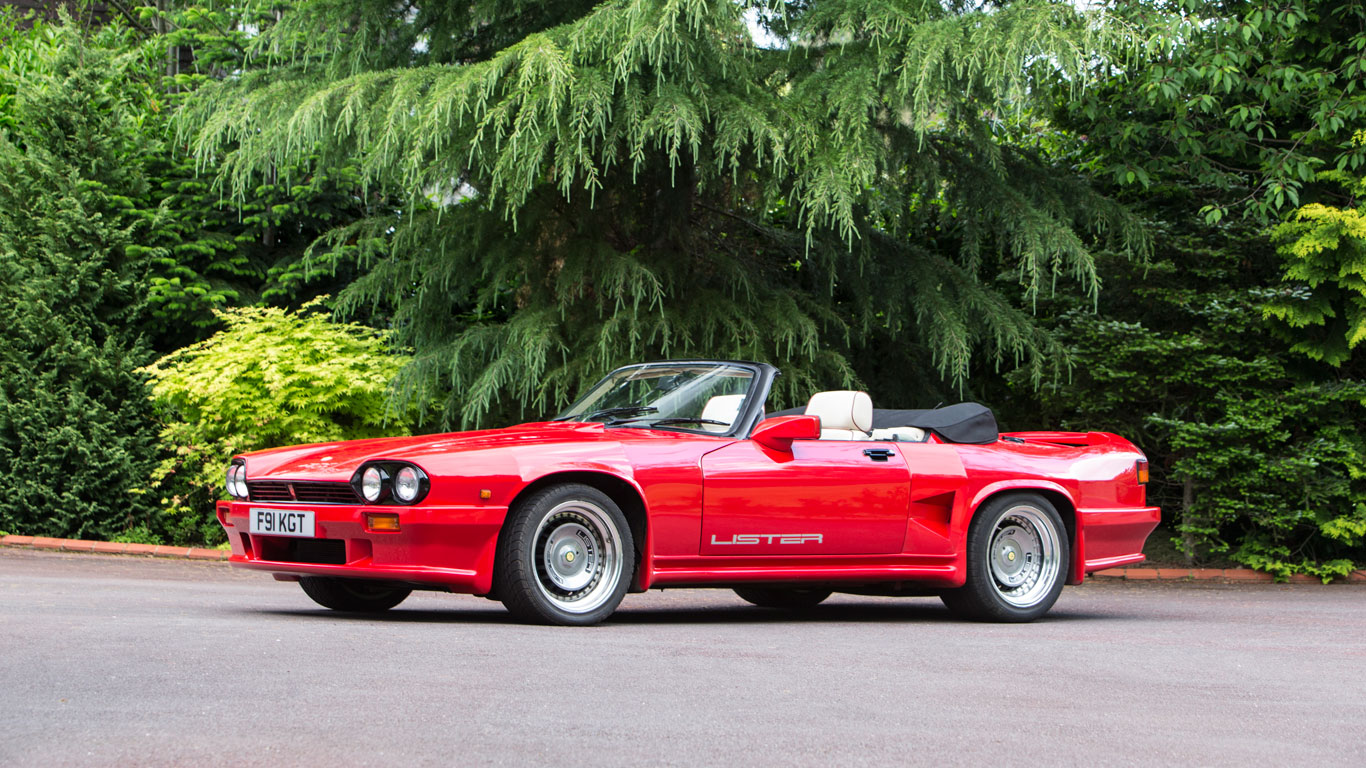
Lister-Jaguar XJ-S Le Mans: £50,000 – £70,000
We conclude our Goodwood sale preview with this 1989 Lister-Jaguar XJ-S Le Mans, which is fitting, given the fact that the famous endurance race took place over the weekend. The Lister Le Mans was named in honour of Jaguar’s success at La Sarthe in the 1980s and was powered by a 7.0-litre version of Jag’s V12 engine.
New, this 200mph supercar would have cost a cool £160,000. Today, it could be yours for a more palatable £50,000 to £70,000. Remember, the Bonhams Goodwood Festival of Speed Sale takes place on 30 June 2017.
More auctions on Motoring Research:
Sold! 10 bargain modern classics you missed this weekend
Classic Astons and more at auction – which would you pick?
Auction specialist names top 6 best-investment cars
London Mayor Sadiq Kahn has revealed a draft consultation report, the Mayor’s Transport Strategy, which outlines a number of pollution-beating measures – including the controversial option of ‘pay as you go’ road charging. RAC roads policy expert Nick Lyes has analysed the report and says it’s bold – but the Mayor must be careful.
“The Mayor is particularly brave to raise the idea of road pricing,” said Lyes. This was mooted some years ago on a national scale and quickly dropped.” Motorists rebelled as it was seen as a charge on top of motoring taxation already paid.
Any new pay as you go roads charging scheme would face the same challenges – although Lyes believes that, longer term, it might actually become a fairer alternative to the current London Congestion Charge, particularly once future emissions ‘T-charge’ costs are added on. “By its nature, this is fairer.”
The only technical hurdle could be the need to use vehicle-tracking ‘black box’ technology: not a problem for those who live in and around Greater London, but harder to manage for those driving into London from other areas.
Lyes also warned the Mayor to avoid watering down parking provisions for new developments, something he says could lead to those who need to own a car either illegally parking on the road or parking a long way from home.
What do you think? Would pay-as-you-go motoring charges be fairer than a flat fee? Share your thoughts below and see what others think…
Volvo has today announced Polestar will become a standalone brand, creating electrified high-performance cars that build upon regular Volvo models. The money it saves through tech and engineering synergies will be spent on designing, developing and building “world-beating” high-performance cars, promises the boss of Volvo Car Group, Hakan Samuelsson.
So, how about a future lightweight all-electric sports car co-developed by Lotus and Polestar, using a Volvo-derived electric motor and battery pack installed within a lightweight all-aluminium Lotus chassis?
It’s not as fanciful as it sounds. Those synergies Samuelsson speaks of could surely be extended across several brands, thus giving Polestar a dramatic EV range-topping performance version without the huge cost of developing one from scratch.
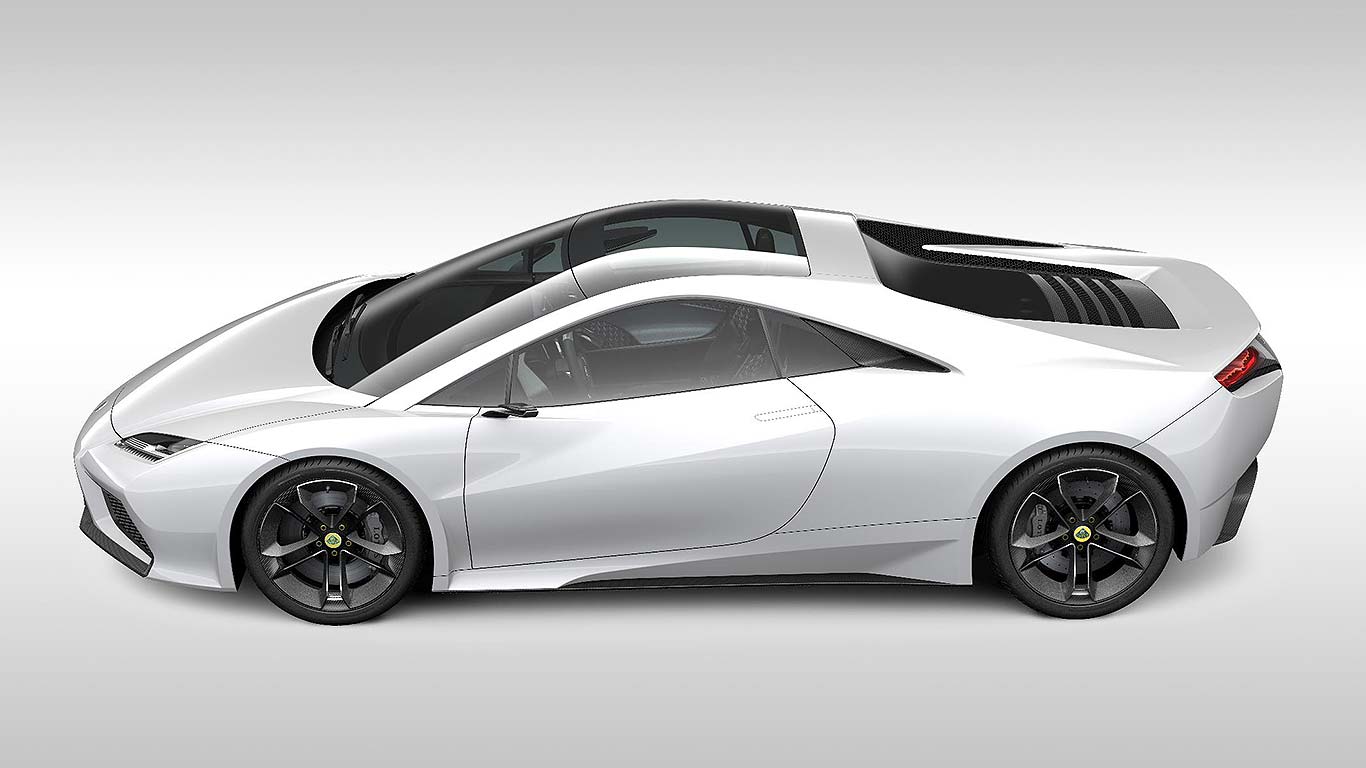
Lotus, well, we know it’s developing a new Elise for 2020, but it also really needs a new range-topping supercar… it reportedly got further down the line than we perhaps realise in developing the stillborn new Esprit, infamously shown as one of six concepts in 2010 (and pictured above): Chinese soon-to-be-parent company Geely’s financial backing could allow it to finally create a genuine ‘new Esprit’ – and co-creating a bespoke Polestar version would add to any project’s business case.
And making it all-electric, using Volvo technology, would fast-track Lotus and Polestar to the high-performance EV supercar arena Tesla boss Elon Musk is reportedly so keen to join.
Lotus has form here. The first-ever Tesla, the Roadster was actually designed and developed with help from Lotus; the Norfolk firm even built ‘gliders’ – complete cars without engines or gearboxes – that it sent overseas to Tesla for conversion into all-electric Roadsters. Lotus knows what it takes to create electric sports cars.
And if an all-electric supercar is a step too far, what about a plug-in hybrid Lotus and Polestar supercar joint project? Using drivetrain technology we already know is coming to the Polestars of the future?
Of course, there’s a long way to go. Geely hasn’t even completed due diligence on Lotus yet. But the opportunities are enormous… and why do I think something like this could work? Well, just look at how Geely has transformed Volvo…
Future high-performance Volvos are to carry only Polestar branding and all of them will be electrified, the Swedish firm has today announced. Volvo designer Thomas Ingenlath will become CEO, with Brit Jonathan Goodman as its COO.
The announcement is a significant development for Polestar, which to now has largely been a performance add-on brand for Volvo cars: Polestar Engineered power-boost packs are available on many mainstream Volvos.
Now, it wants to get serious, and take on the might of BMW M and Mercedes-AMG. Branding the fast cars purely as Polestars will give the firm more marketing freedom without the restrictions of the Volvo brand: already Volvo Cars president Hakan Samuelsson is talking about Polestar becoming “a truly differentiated stand-alone brand within the Volvo Car Group”.
Samuelsson says the economies-of-scale synergies with Volvo will give Polestar freedom to ‘design, develop and build world-beating electrified high performance cars’.
The decision to give every Polestar an electrified drivetrain makes it unique; a fully electric model is still some way off, but plug-in hybrid technology will give serious performance while still maintaining decent green credentials. Volvo already sells a plug-in hybrid S90 T8, for example, which blends 48g/km CO2 emissions with 0-62mph in 4.8 seconds.
Expect Polestar upgrades to significantly build upon this.
“I am really excited to take up the challenge of establishing this exciting brand,” said Ingenlath, “developing a fabulous portfolio of bespoke products and channelling the passion we have throughout the Polestar team. The next chapter in Polestar’s history is just beginning.”
Emphasising the management clout Goodman will bring, Samuelsson said “Jonathan is ideally placed to provide operational experience alongside Thomas’s vision, building on the experienced management team that will drive the Polestar brand forwards.
“Polestar will be a credible competitor in the emerging global market for high performance electrified cars. With Polestar, we are able to offer electrified cars to the world’s most demanding, progressive drivers in all market segments.”
It won’t be long before we find out what Polestar has planned next, either: the firm has today said a big announcement about its future products will be made in the autumn. Time to add Polestar to the list if you’re in the market for a BMW M, Audi RS or Mercedes-AMG?
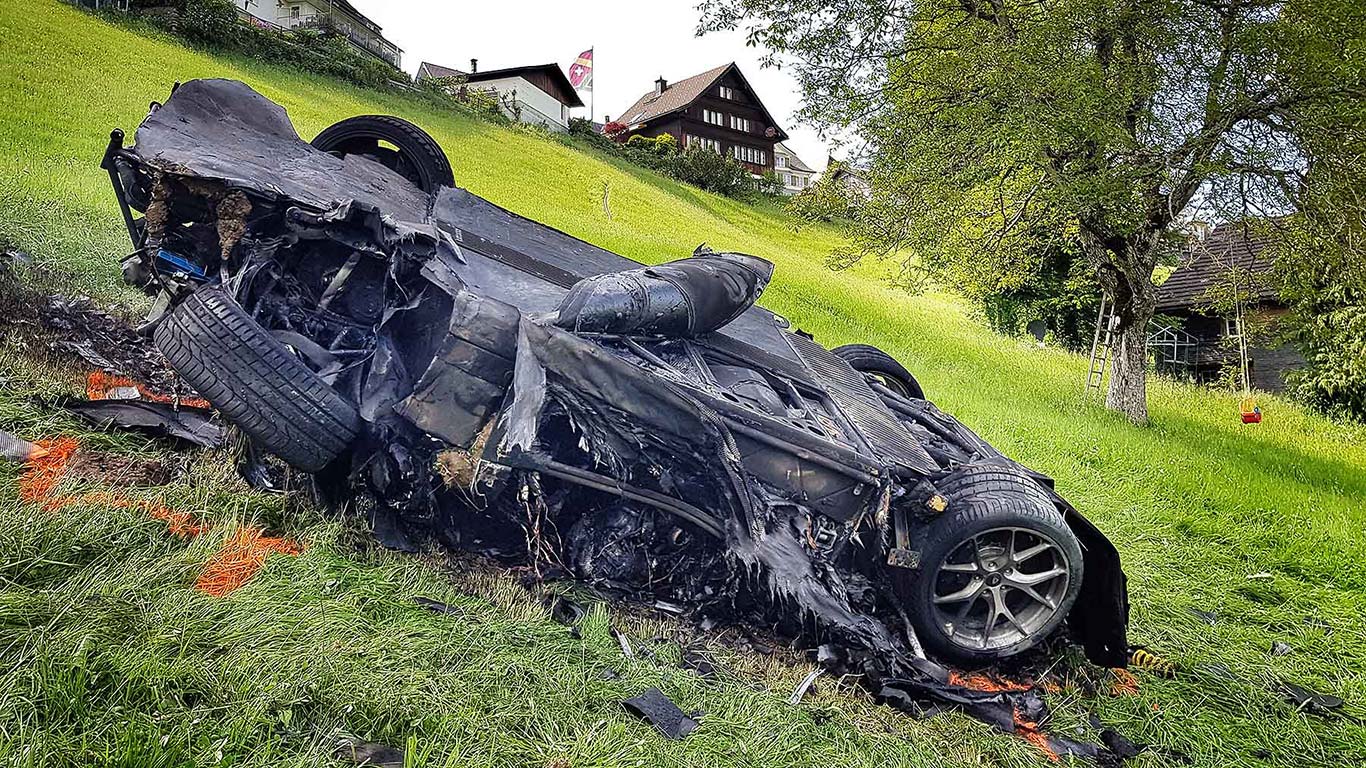
Rimac Automobili founder and CEO, Mate Rimac, has issued a statement following the crash involving Richard Hammond earlier this month. Hammond was competing in the Hemburg Hill Climb event in Switzerland when the electric hypercar left the road and subsequently burst into flames.
Following widespread speculation as to the cause of the accident – and in the absence of any detailed information from Richard Hammond or the producers of The Grand Tour – Rimac has leapt to the defence of the Concept One, as reported by the website, Vidi Auto.
‘Tumbled from a 100m height’
Responding to claims that the Concept One was involved in a low-speed crash, Rimac said: “Turned to grass? Driving 66km/h?” before continuing:
“The car flew 300 meters (sic) horizontally and tumbled from a 100m height. After the first flight it fell on asphalt road 10m below the place where the first started. I am not able to tell at which speed it was driven, but I cannot believe what nonsense has been written by people who have no idea, or are blind, or just mischievous.”
This is the first time Rimac or his company have spoken about the crash since issuing a statement immediately after the incident, wishing Richard “a quick recovery.”
Hammond himself posted an update via the DriveTribes website saying he hopes to be “back in action soon.” The accident is likely to delay filming of the second series of The Grand Tour, but there’s no word on whether Amazon will postpone the date of the series premiere in October.
‘Wouldn’t have happened to a real pro’
Some are pointing the finger at Hammond for causing the crash, including the winner of the race in which The Grand Tour presenters were competing. Speaking to The Sun, Swiss driver, Marcel Steiner, said the crash “wouldn’t have happened to a real pro”.
Concerns were also raised by Auto Sport Switzerland director, Patrick Falk, who questioned whether serious preparation was made ahead of the hill climb.
Falk said: “Since Hammond did not participate in the official race but in the show part, we do not have access to him or his car.
“Normally, professional racers take the route the day before with this bike and deal with conditions on the spot. We doubt Hammond had time for this.”
The latest Rimac Concept One produces 1,224hp and 1,180lb ft of torque, and is capable of reaching some truly remarkable speeds. The headline figures are a 0-62mph time of 2.5 seconds and a top speed of 221mph.
More than 10,000 classic Ford fans converged on the famous Santa Pod Raceway for the annual Classic Ford Show. This year around 1,200 cars were on display, ranging from concours restorations to highly-tuned performance weapons. We have the photos.
Made in Dagenham: Ford’s secret classic car collection
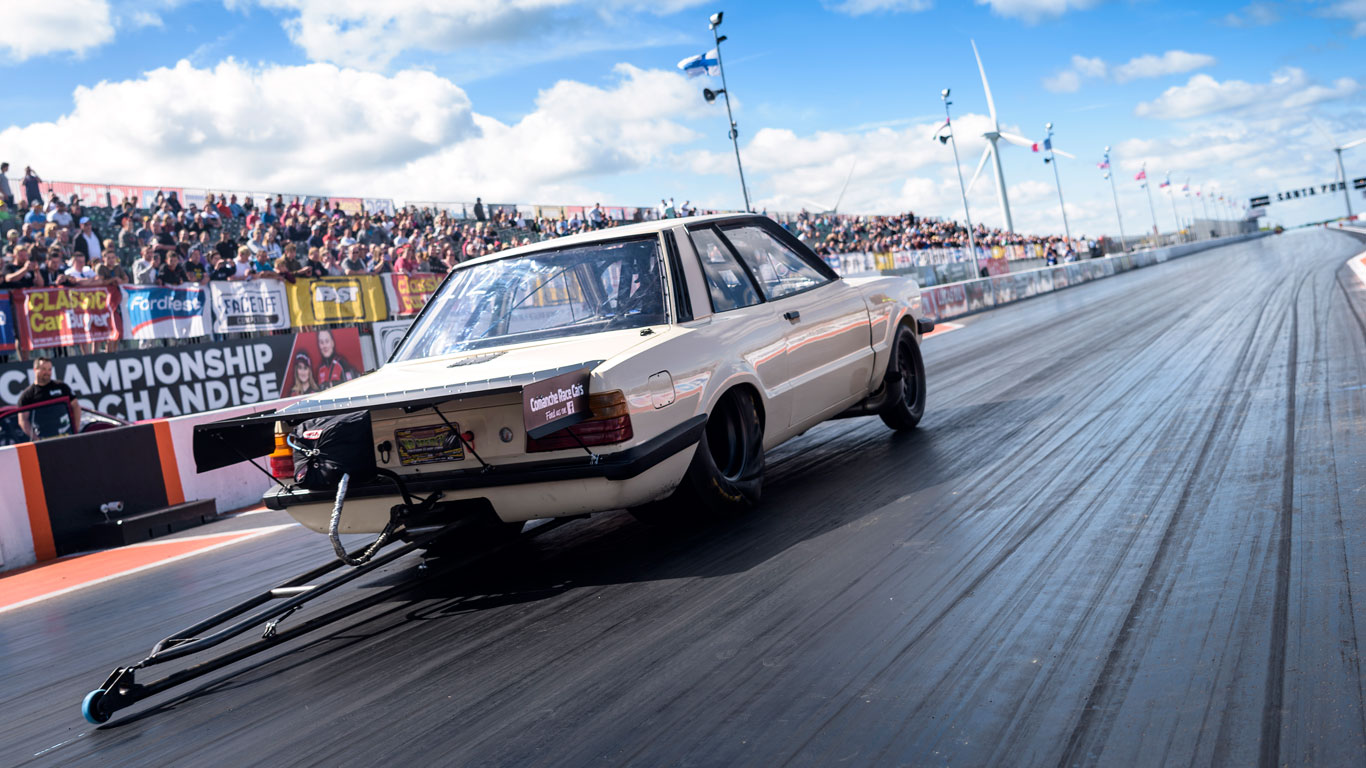
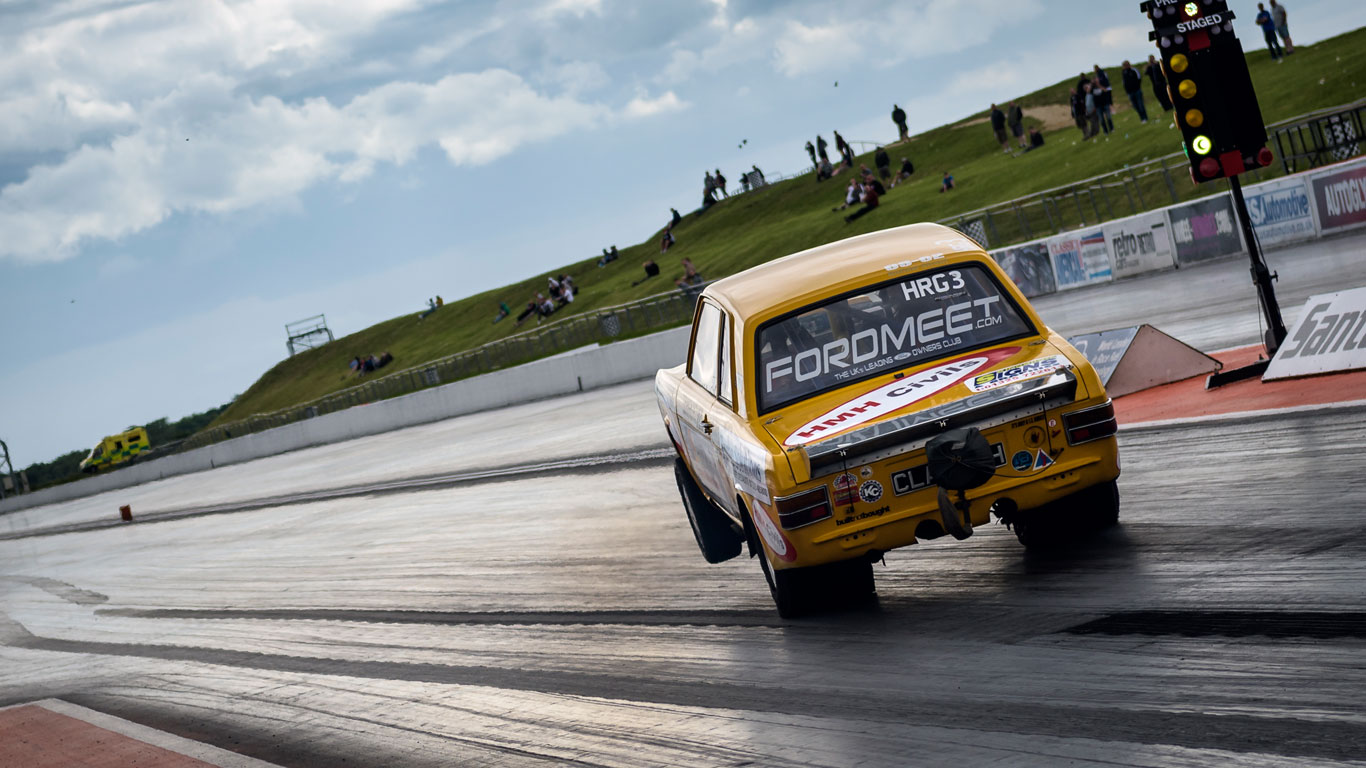
New for 2017, some of the UK’s best Ford-based dragsters took part in the ‘Face-Off’ competition. Split over two sessions, drivers were invited to set their quickest time, with the fastest cars going head-to-head in the showdown.
The winner was Paul Marston in his twin-turbocharged Ford Cortina. The Cordoba Beige Cortina is the ultimate sleeper, producing some 1,400hp, with the potential to deliver 2,500hp! According to Marston, it’s “potentially one of the top 10 fastest doorslammers in the country”. With a top speed of 168mph at Santa Pod, who are we to argue?
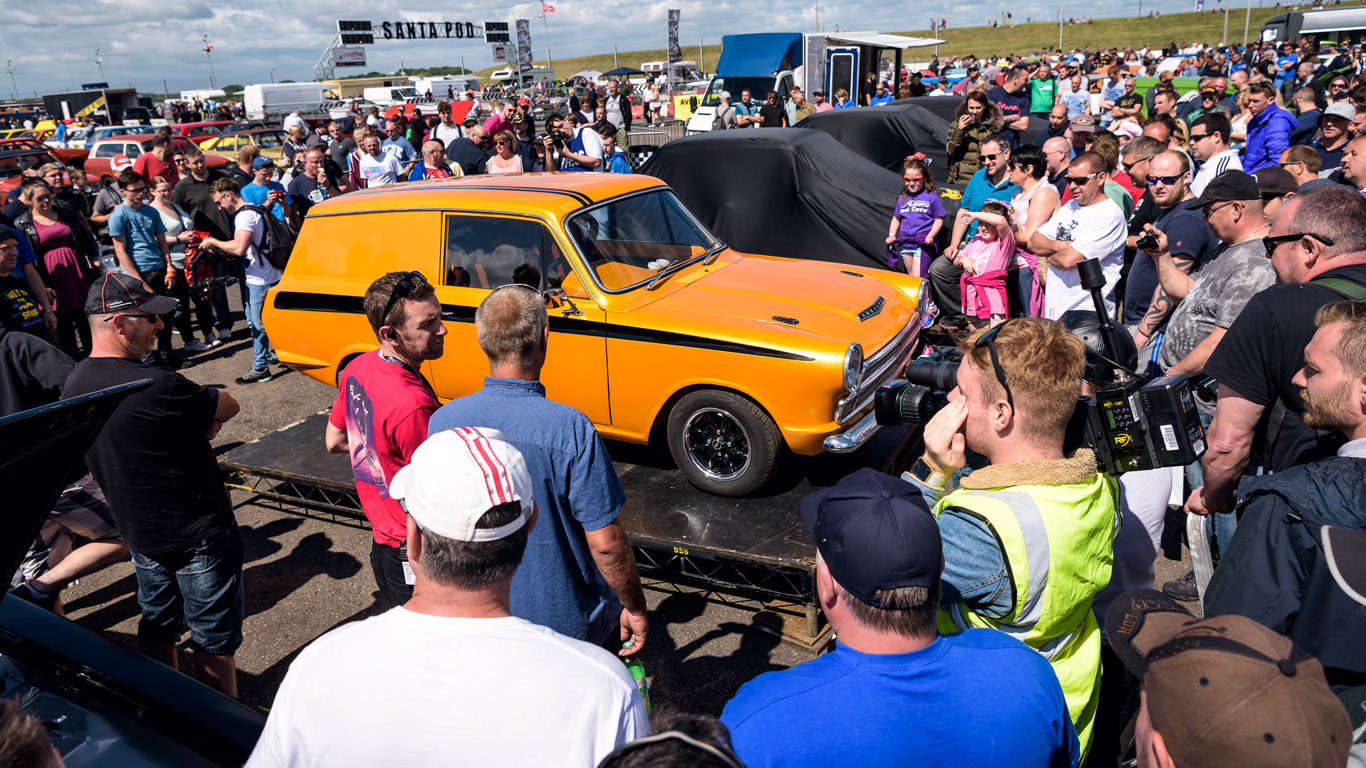
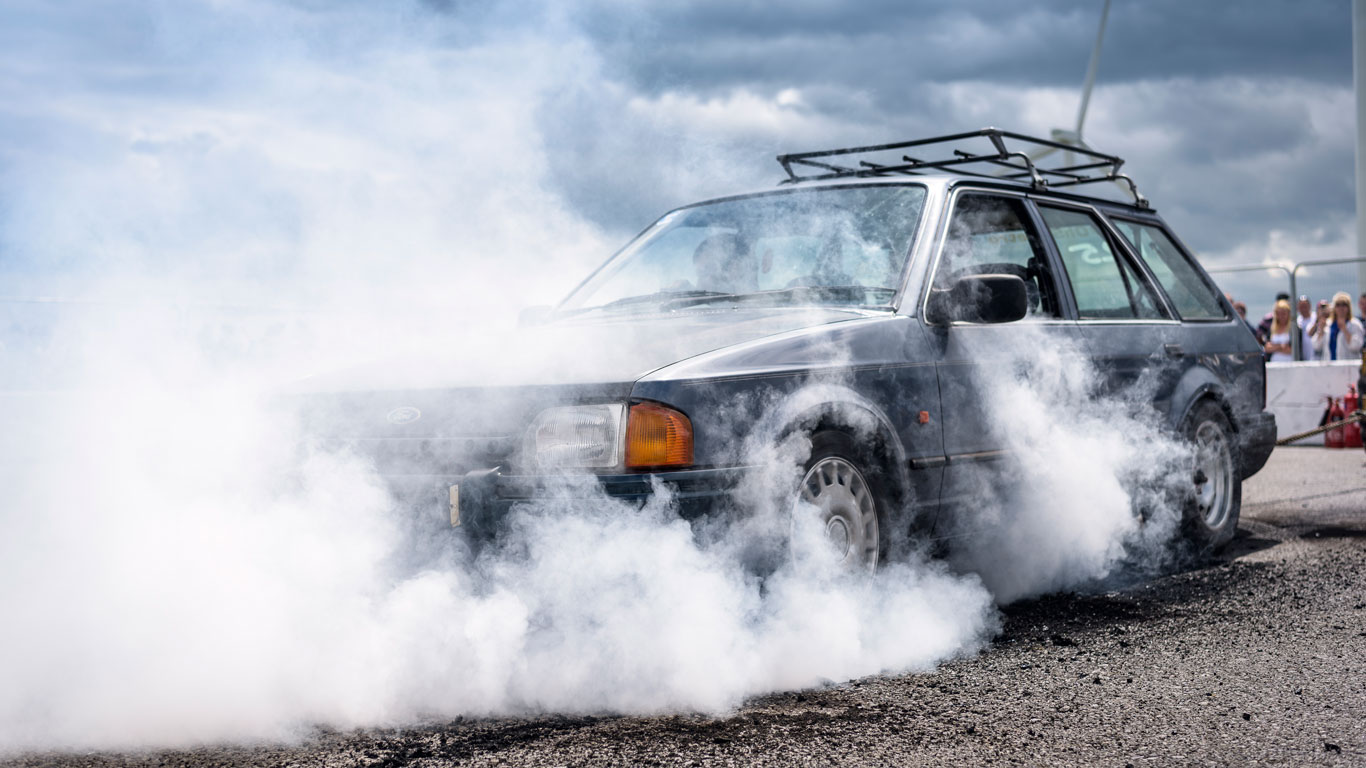
A Cortina of a different flavour, this Mk1 estate was converted into an ‘Estavan’ by owner Brian Twinn. It’s powered by a 2.0-litre 16v Zetec engine sourced from a Focus and custom touches include the modification from four- to two-doors and the bronze paint.
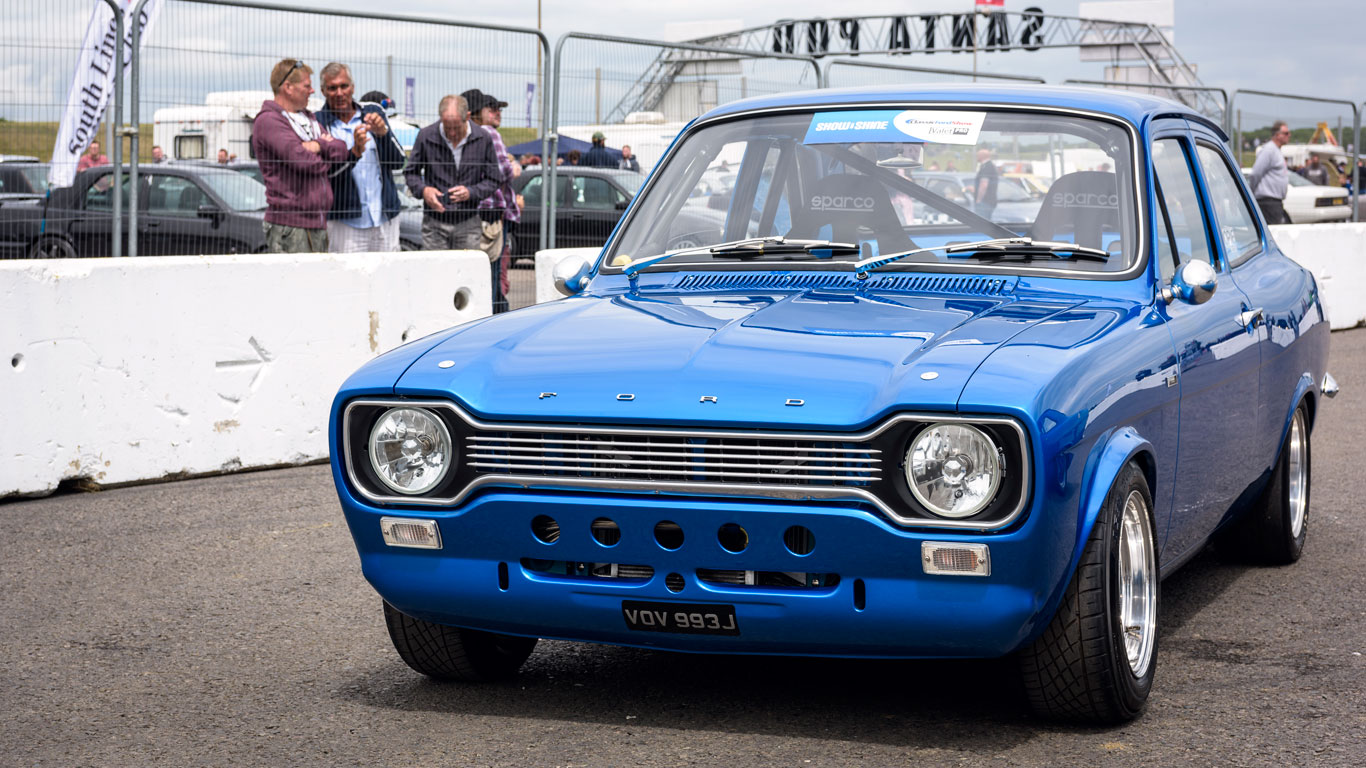
This immaculate Ford Escort was one of the stars of the show. Shaun Greatbatch’s Cortina drove away with the ‘Show and Shine’ award.
The ‘Show and Shine’ competition was dominated by the Ford Escort, with Damian Broersma’s RS Cosworth scooping second place…
Which left Terry Stanford’s Mk1 RS1600 to complete the Escort one-two-three.
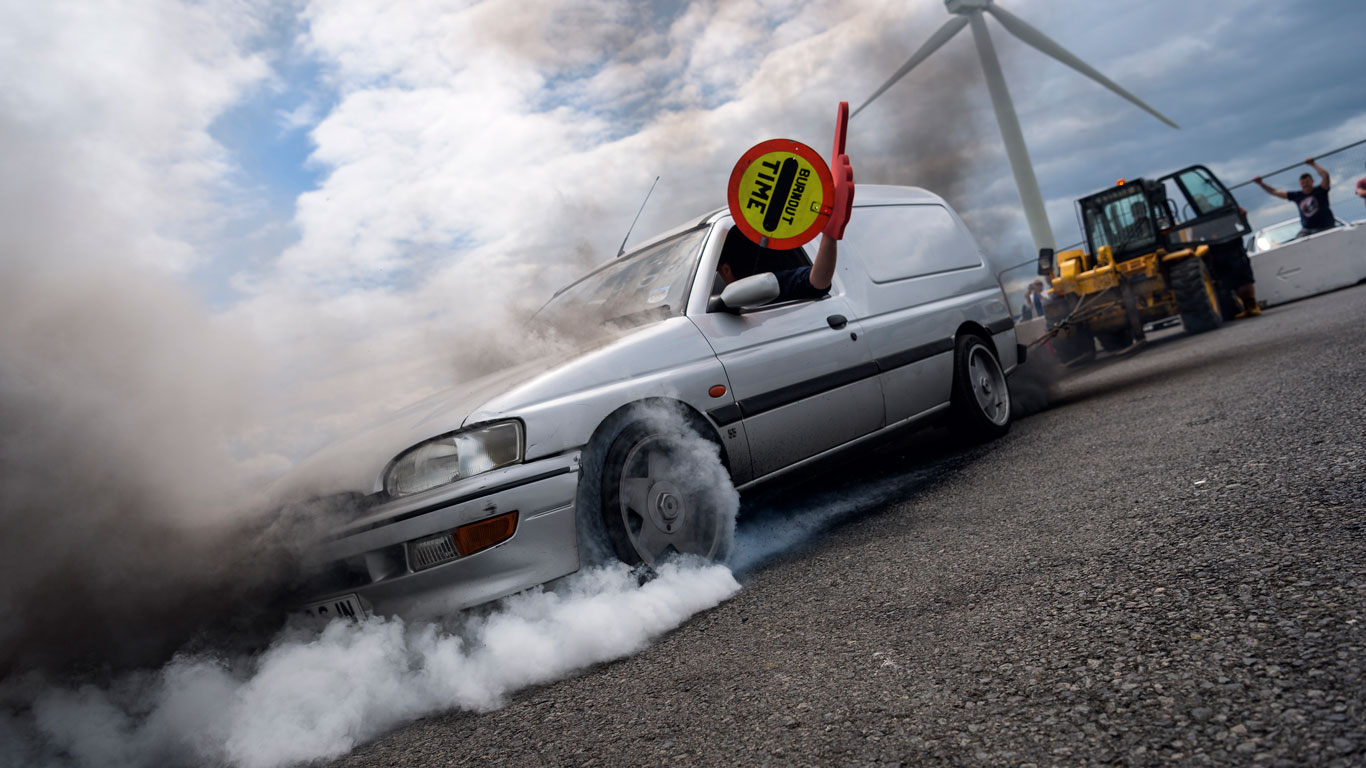
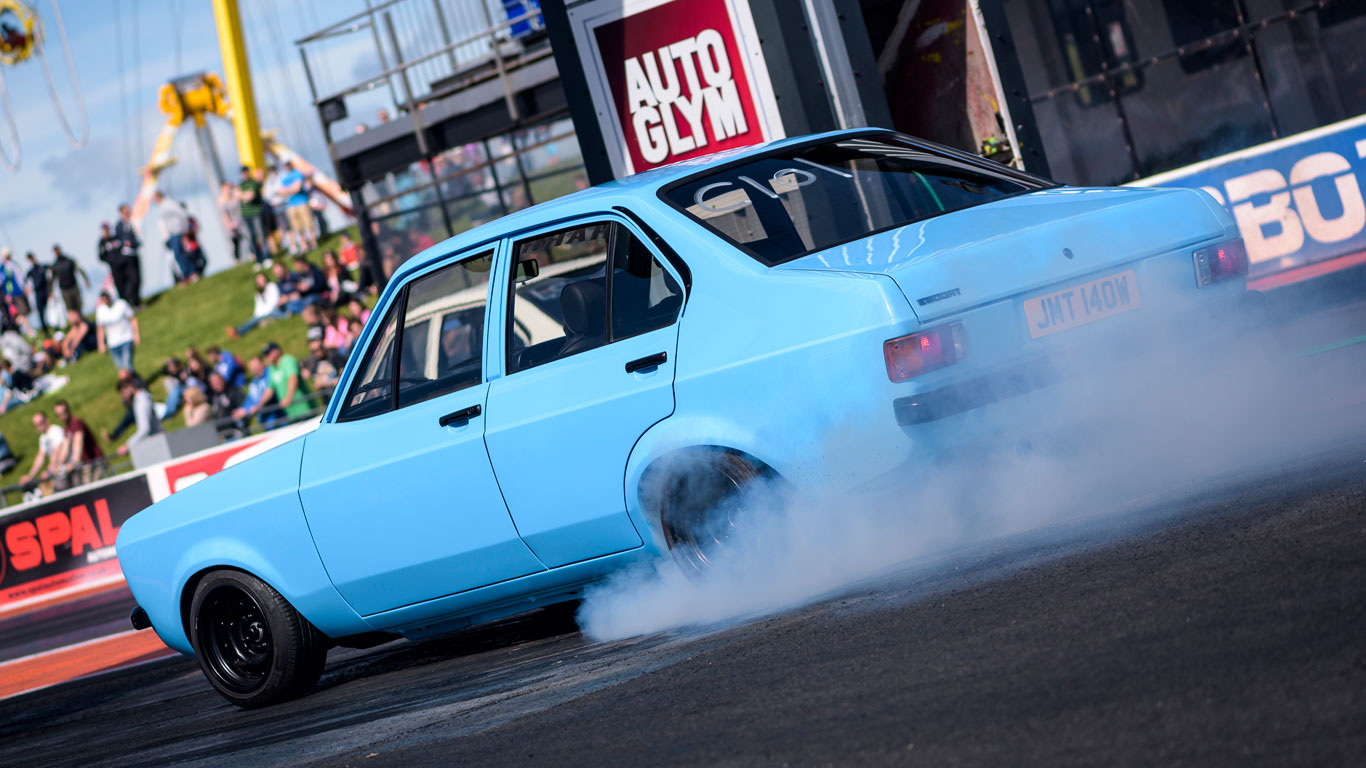
It wouldn’t be a fast Ford event without a cloud of tyre smoke. Look closely and you’ll discover a Ford Escort owned by Rhys Thomas, which just happened to win the burnout competition.
Anything a Ford Escort estate can do, an Escort van can do almost as well. We suspect this Escort 55 is hiding one or two tasty modifications. The burnout challenge was a new event for 2017 and open to any classic Ford owner who was not afraid to destroy a pair of tyres.
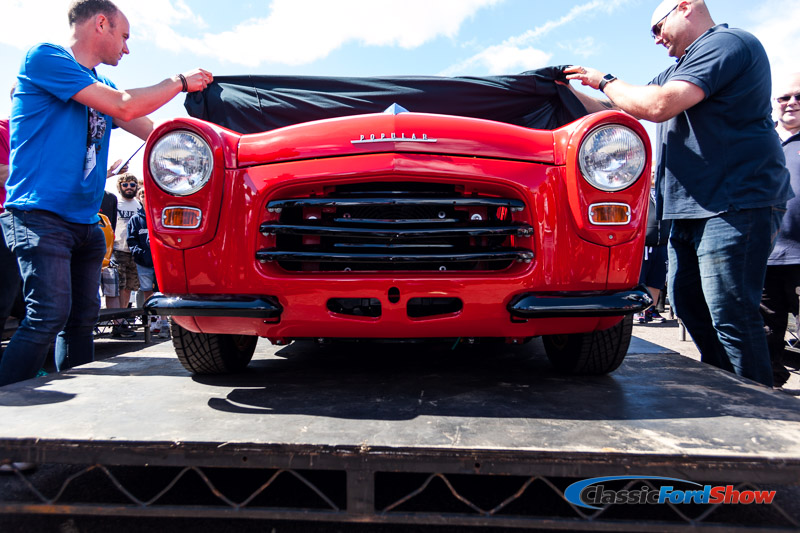
Classic Ford’s ‘Great Unveiling’ section showcases future magazine feature cars, which this year included this turbocharged Ford Popular 100E. Other cars included a works-inspired Mk2 Escort rally car, an EcoBoost-powered Mk2 Escort and the aforementioned ‘Estavan’. Just don’t call it Gloria.
Stick a V8 engine in a Ford Cortina Mk2 and this is the result. Ian Walley produced one of the greatest spectacles at this year’s event.
Just because we’re halfway through the year doesn’t mean we’re running low on new cars to get excited about. Here are 35 new models currently scheduled to roll off the production line before the end of 2017.
There might be a new Fiesta on the way, but that hasn’t stopped the outgoing version from topping the sales charts across the UK and Europe. But all good things have to end, and the new seventh-generation Fiesta will be on sale next month, with prices starting at £12,715. The regular hatchback models will be available first, including fancy Vignale trim, with the Active crossover and ST hot hatch following on later.
Volkswagen Polo
Volkswagen has teased the new sixth-generation Polo but we’re only a month off the full unveiling now. Debuting on the 16th June, styling changes are will be evolutionary rather than dramatic, based on the leaked images and spy shots. Using the same VW Group MQB A0 platform as the new Seat Ibiza, expectations are high for improved refinement and technology.
Mazda CX-5
The compact SUV market continues to heat up, and the all-new Mazda CX-5 brings good looks inspired by the smaller CX-3. On sale from the 30th June, UK buyers have a choice of Skyactiv 2.0-litre petrol or 2.2-litre diesel engines, with AWD also on the options list. Prices begin at £23,695, with generous standard equipment levels. A special Soul Red Crystal Metallic paint also promises to increase paintwork brightness by approximately 20% compared to the previous CX-5.
Skoda Karoq
The Yeti is dead, long live the Karoq. Replacing a cult-classic like the Yeti was always going to be difficult. However, we can’t help but be a little saddened that Skoda has forgotten the quirky qualities that made the Yeti so popular. Undoubtedly more mature, the Karoq has more than a passing resemblance to the related VW Tiguan and Seat Ateca. Given the success of the larger Kodiaq, we have no doubt the sensible Karoq will still prove to be a winner when it goes on sale later this year.
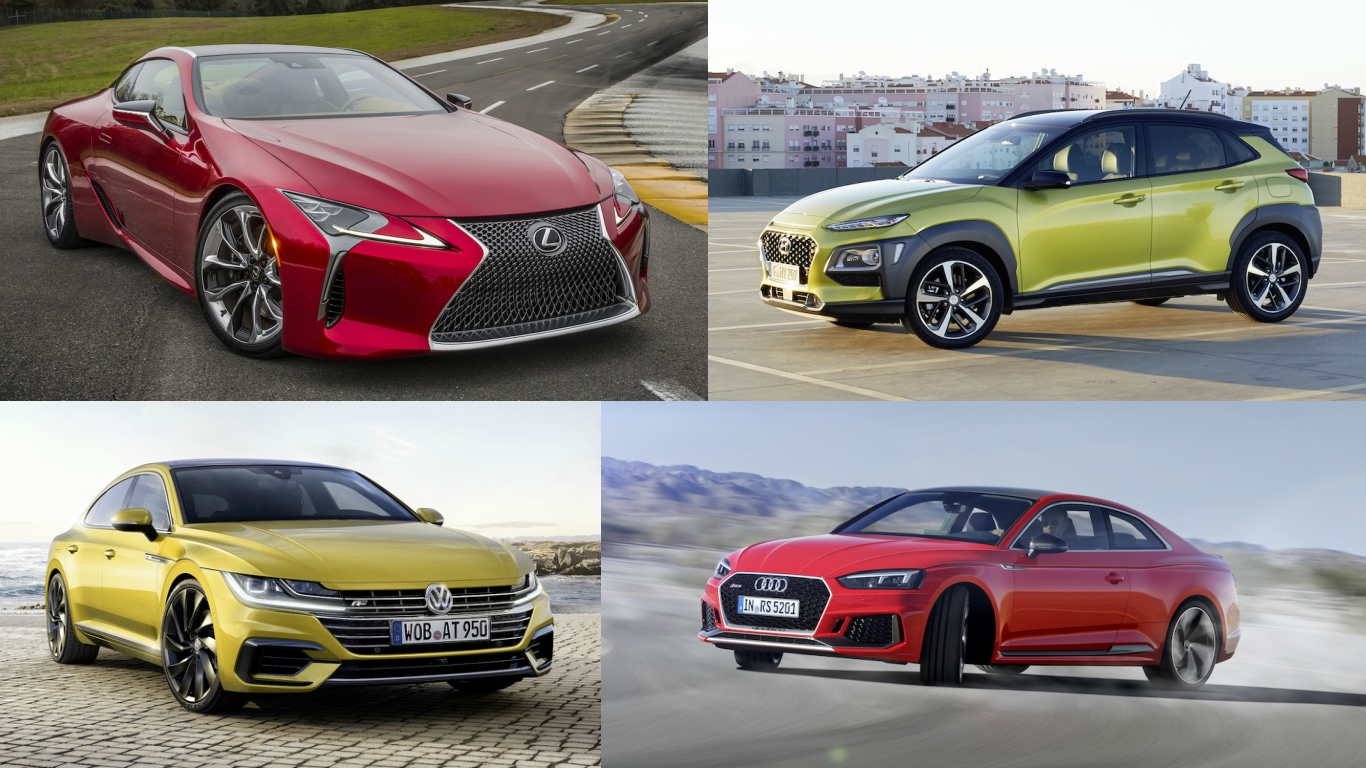
Hyundai Kona
This is Hyundai’s first ever sub-compact SUV, and it plans to take on the Nissan Juke and Renault Captur. Bold looks are important in this segment, so Hyundai has pulled no punches in making the Kona look as distinctive as possible. Promised to be on sale by the end of 2017, the Kona is named after the eponymous district on the Big Island of Hawaii, apparently famed for its energy and unique lifestyle. The Tucson and Santa Fe are well regarded, so there’s no doubt Hyundai has SUV prowess.
Kia Stonic
Sharing a platform with the Kona will be Kia’s own take on the compact SUV segment. With a name derived from a portmanteau of speedy and tonic – yes, really – the Stonic looks as unique as it is badged. Expect engines to be taken from the Rio supermini, with the Stonic majoring on strong equipment levels and Kia’s generous seven-year warranty to battle the ageing Nissan Juke.
Citroen C3 Aircross
Hot off the press, and heading to showrooms on the 1st November, Citroen has killed off the C3 Picasso MPV and replaced it with a compact SUV. With even the ability to do some light off-roading, the Aircross is an important car for Citroen, which has aims of boosting total brand sales 30% by 2021. The Aircross will emphasise customisation, with a choice of 90 colour combinations, but also technology such as wireless smartphone charging and a colour head-up display.
Nissan Qashqai
Despite being a byword for the compact crossover market, Nissan cannot afford to take market dominance for granted with the Qashqai. New rivals are appearing constantly, so it should be no surprise that the second-generation car is getting a facelift. The changes are mild, with the adoption of the new corporate grille and reshaped headlights being the biggest difference. Inside, and under the bonnet, remain virtually untouched with the option of a high-end Bose sound system being the only notable alteration.
Jeep Compass
Looking very much like a shrunken Grand Cherokee, Jeep is reintroducing the Compass and it’s set to be sold in 100 countries worldwide. It’ll also be built in four global locations, with European-spec cars produced in India. Sadly UK buyers won’t be getting the amusingly named ‘Tigershark’ 2.4-litre petrol engine offered in the USA. Instead we’ll be receiving 140 and 170hp varieties of the 1.4-litre turbo petrol engine, or 1.6 and 2.0-litre diesels. Despite wearing the Jeep name, four-wheel drive is merely optional.
Seat Arona
Don’t confuse the name with the Arosa – Seat’s version of the Lupo city car from the late 1990s. No, the Arona is set to be a new compact crossover from the Spanish brand, which should look rather similar to the pictured IBX concept. Pitched as another rival to the Nissan Juke, and using the MQB A0 platform from the Ibiza, the Arona will be a five-door compact crossover. The finished version should be on display at the Frankfurt Motor Show in September, with sales possible as early as November.
Volkswagen T-Roc
After several years of playing it cool on the whole crossover segment, Volkswagen finally seems to have woken up to the big new trend. With the Tiguan pushed further upmarket, the T-Roc will be Volkswagen’s Golf-sized entry into a busy marketplace. Ignore the three-door stance of the pictured concept car, shown at the 2014 Geneva Motor Show, as the T-Roc will be a practical five-door. Engines and drivetrain options will be borrowed from the Golf hatchback, with sales set to begin by the end of 2017.
Volkswagen Tiguan Allspace
Like the Volkswagen Tiguan, but wish it had seven seats instead of five? Your prayers will be answered by the new bigger Allspace version, which looks virtually indistinguishable from the regular Tiguan SUV. With a wheelbase stretched by 109mm, and overall length by 215mm, the Allspace has the option of an extra pair of seats in the rear. Luggage space has also grown by 145 litres, with the potential for a cavernous 1,920 litres with the rear seats folded flat. Expect sales to commence soon.
Volkswagen Touareg
Planned for a big reveal at the Frankfurt Motor Show in September, we might have to wait until 2018 to actually drive the new Touareg. Expect styling to change very little from the pictured T-Prime concept vehicle, which was shown off at the 2016 Beijing Auto Show, previewing the increased size of the next Touareg. Volkswagen promises a more upmarket experience, with a high-tech interior, and the option of a plug-in hybrid GTE version. But, as with the current second-generation car, don’t expect a V10 diesel engine to make an appearance.
Renault Koleos
Do you remember the original Koleos, sold from 2008 to 2010 in the UK, and badged as the Samsung QM5 in South Korea? No, we thought as much, given that less than 3,000 examples made it to these shores. The new Koleos is a far more convincing SUV, sharing a platform with the Nissan X-Trail, although still built at Renault’s Korean factory. Prices start at £27,500 for a front-wheel-drive 1.6-litre diesel, rising to £34,200 for the top-spec 2.0-litre diesel with four-wheel-drive and automatic gearbox.
Range Rover Velar
According to Land Rover, the Velar fills the ‘white space’ between the Evoque and the Range Rover Sport. Named after prototypes for the original Range Rover, the Velar is the fourth model in the Rangie family. Related to the Jaguar F-Pace, expect road-biased dynamics, a premium interior, and funky door handles that sit flush with the body until the car is unlocked. Land Rover assures us that the Velar will still get dirty off-road. Prices begin at £44,830, with sales commencing in July. We can confirm that Ellie Goulding is not included on the options list.
Alfa Romeo Stelvio
Alfa is on something of a roll at the minute, with the new Giulia saloon receiving fairly positive reviews across the board. The Stelvio shares the same platform as the Giulia, and is another piece in the Italian company’s plans to expand sales across the globe. Although Alfa displayed a 510hp twin-turbo V6 Quadrifoligio model last year, UK cars will initially be a choice of either 280hp 2.0-litre petrol turbo, or 210hp 2.2-litre diesel. All will have an eight-speed automatic gearbox, and use Alfa’s Q4 4WD system. Prices will be confirmed closer to the official launch date this summer.
Mercedes-Benz X-Class
Mercedes-Benz has seemingly been on a mission since the turn of the century to try and cover virtually every niche possible. Enter the X-Class – a pick-up truck that will be even more luxurious than the Volkswagen Amarok. Based on the Nissan Navara, the X-Class will have a usable payload of more than 1.1 tonnes. Sales will begin later this year, although European buyers may have to wait until 2018 to finally get their cars. Mercedes has had such unprecedented demand it’s had to create a bespoke website in the UK to handle reservations for the first models.
Ssangyong Rexton
South Korea’s other car manufacturer is upping the pace in the UK with another new SUV. Last year’s concept version may have had plush shag-pile carpets, but sadly they don’t seem to have reached the production Rexton. But Ssangyong still promises a refined interior, with Nappa leather seats and Apple CarPlay as standard. Mercedes-Benz supplies the seven-speed auto’ gearbox, powering all four wheels courtesy of a 2.2-litre diesel engine. Expect prices under £28,000 when sales begin in the autumn.
Vauxhall Insignia Sports Tourer
Vauxhall is making a major effort with the latest Insignia and, on the back of the coupe-esque four-door Grand Sport, comes the new estate version. Undoubtedly handsome, the new Sports Tourer boasts more load space with 1,665 litres of room for all your junk in the trunk when the seats are folded flat. Set to be on sale very soon, prices for the Insignia Sports Tourer will begin at £18,615, representing a £1,500 premium over the four-door version.
Jaguar XF Sportbrake
After months of titillation, Sir Andy Murray was responsible for finally pulling the covers off the XF Sportbrake. It’s been one of the worst kept secrets in the motoring world, with only the bizarre tennis ball camouflage disguising the finished product. Production cars will be in showrooms by the end of the year, with engine choices mirroring the saloon equivalent.
Mercedes-Benz E-Class All-Terrain
Despite the insistence of Mercedes-Benz on tackling every segment possible, somehow the brand had avoided the off-road estate market. Until now, that is. With standard air suspension and larger tyres increasing ground clearance by 29mm over the normal E-Class, the All-Terrain also benefits from robust plastic body mouldings and trim pieces. A 4Matic AWD system is standard, with the choice of 2.0-litre straight-four or 3.0-litre V6 diesel engines.
Hyundai i30 Tourer
This might not seem like the sexiest of new estates debuting in 2017, but for those in the real world it’s still an important addition to the wagon market. With one of the biggest boots in the segment – boasting 602 litres with the seats up, and 1,650 litres with them down – the i30 Tourer has practicality on its side. It also majors on safety, with Autonomous Emergency Braking, Blind Spot Detection, and Driver Attention Alert just some of the features included. Sales begin at the end of the summer.
Porsche Panamera Sport Turismo
On the other hand, this is quite possibly the best-looking estate we’ll see going on sale this year. It does lose out to the i30 on luggage space though, with a meagre 1,390 litres of space with the seats folded down. We doubt that most buyers expecting their cars in October will really care, and instead will revel in the shooting brake styling. Priced from £73,017, the range-topping Turbo Sport Turismo is substantially more costly at £117,247. That does bring a 550hp twin-turbo V8 engine to the party, however.
Volkswagen Arteon
In theory the all-new Arteon follows on from the old Passat CC, but in reality Volkswagen wants this to be seen as a further push into premium territory. So whilst it shares a platform with the current Passat, it’s longer and wider, while also likely to be considerably more expensive. Initial engine choices will be a 280hp 2.0-litre petrol turbo, or 2.0-litre turbo diesel with 240hp, and will both feature 4WD as standard. Trim choices will be either the sporty R-Line, as pictured, or the slightly subtler Elegance version. On sale from October, but will it tempt buyers from Audi and BMW?
Kia Stinger
It’s safe to say a rear-wheel-drive Kia saloon, with the option of a 370hp twin-turbo V6 engine, wasn’t top of most predictions for what would be launched at the Detroit Auto Show. Kia took many by surprise with the Stinger, and especially with it being so close to ready for production. Available to buy at the end of the year, UK buyers will have the option of a 255hp 2.0-litre petrol turbo, 200hp 2.2-litre diesel, or the aforementioned 3.3-litre turbo V6.
Audi A8
Although Audi is currently keeping quiet on the finalised design of the new A8 saloon, it isn’t being shy when it comes to the technical details under the skin. Mild hybrid electric technology will be standard across the range, allowing energy recuperation and coasting to save fuel. The Audi Space Frame will use a mixture of aluminium, steel, magnesium and carbonfibre, helping to save weight but keep structural rigidity high. The finished product will be unveiled next month, but expect styling cues to be taken from the 2014 Prologue concept car.
Honda Civic Type R
As the first Civic Type R to be built for the global market, including the USA, Honda has high hopes pinned on this car. A new Nürburgring Nordschleife lap record has been set, which is almost de rigueur for any serious hot hatch these days. The 2.0-litre VTEC Turbo engine now produces 320hp, with the gear ratios for the six-speed manual gearbox lowered to aid acceleration. Hitting forecourts next month the base car is priced at £30,995, with the higher specification GT model an additional £2,000. Both versions come with that bodykit though…
Renault Sport Megane
This may be another car that we’ll see before the end of the year, but buyers might have to wait until 2018 to play with. Building on the legacy of previous Megane generations, expectations are high for the full reveal at the Frankfurt Motor Show in September. While Renault is playing coy on the exact details, we do at least know the new performance Megane will have the option of a traditional six-speed manual, or EDC dual-clutch gearbox. Much to the delight of Renault Sport enthusiasts everywhere we imagine.
Hyundai i30 N
Anyone who doubts how seriously Hyundai is taking development of the I30 N hot hatch should look to the recent performance at the Nürburgring 24 hour race. Two production-spec I30 N models were entered, racking up more than 6,000km between them. Hyundai has also tested the I30 N on UK roads, which should hopefully mean it suits our broken tarmac. Full details will come in September, but we do know the front-wheel drive hatch will feature a 2.0-litre turbo engine producing in the region of 260-290hp.
Toyota Yaris GRMN
First things first – GRMN stands for Gazoo Racing Masters of Nürburgring. Catchy, we know. Built to coincide with Toyota’s return to the World Rally Championship, this supermini-sized hot hatch is a genuine hardcore machine. Powered by a 1.8-litre supercharged engine producing more than 205hp, with a limited-slip differential and six-speed manual gearbox as standard, this is not your Grandmother’s Yaris. Whilst we’re still awaiting an exact on-sale date, expect the first cars before the end of 2017.
Mercedes-Benz E-Class Cabriolet
It might still have a fabric roof, but Mercedes is keen to point out that the new E-Class Cabriolet can be enjoyed all year round. Not only does it feature the optional Airscarf to blow warm air around your neck, but also a new Aircap system can be specified which reduces roof down turbulence. Engine choices are shared with the Coupé version, whilst 4Matic 4WD is available for the first time on a soft-top E-Class.
Lexus LC
Despite looking much like a concept car, the new LC coupe is genuinely a production-ready GT. Aimed at enhancing the sporting credibility of the Lexus brand, but with a unique slant on things, think of this as a leftfield alternative to a Porsche 911. Curiously, pricing is the exact same amount at £76,595, regardless of whether buyers opt for the 467hp 5.0-litre V8 LC 500, or the 3.5-litre V6 hybrid LC 500h. Deliveries will begin to UK customers in August this year.
Audi RS5 Coupé
Gone is the 4.2-litre V8 engine for the new RS5 Coupé, and in comes a 2.9-litre turbocharged V6 engine with 450hp and 443lb ft of torque. So while the V8 noise may have departed, performance is still suitably rapid with 0-62mph in 3.9 seconds. Audi also seems to want us to know the RS5 can drift, presumably thanks to the Quattro Sport Differential, which all UK cars receive as standard. This apportions torque more effectively to rear wheels, allowing for things to get a little lairy. With the RS5 having been available to order since May, the first customers should receive their cars later this summer.
BMW M4 CS
Another special edition BMW M4? Oh yes, indeed. Designed to sit between the hardcore M4 GTS and M4 Competition Pack, the CS blends elements of both cars together. Power is upped to 460hp, with suspension settings carried over from the Competition Pack machine. The carbonfibre bonnet and rear diffuser from the GTS make an appearance, but the CS features rear seats and does without a roll cage. Sales begin next month, priced at £89,130 – more than £30,000 cheaper than the M4 GTS.
Alpine A110
Recreating a sports car first introduced in the 1960s, the new Alpine A110 is a modern reinterpretation of that retro machine. The engine has moved from the rear to the middle for 2017, with a 1.8-litre turbocharged unit producing 252hp. The initial launch edition ‘Premiere’ model is priced at €58,500 (£51,427) and is limited to 1,955 models. While customers in left-hand drive countries will receive their cars by the end of 2017, UK buyers will have to wait slightly longer for right-hand drive versions.
 Car insurance premiums are rocketing, with premiums up a whopping 15.7 percent over the past year. This takes the average car insurance bill up to £666 – and for young drivers, it’s even worse: they pay an average of £1202 a year.
 Lorenzo Ardizio, curator of the Museo Storico, describes this outwardly brutalist building near Milan as a ‘temple to Alfa Romeo’. Inside, around 70 road, race and concept cars chart the company’s illustrious history, from its birth as A.L.F.A. (Societa Anonima Lombarda Fabbrica Automobili) in 1910 to the new Giulia Quadrifoglio.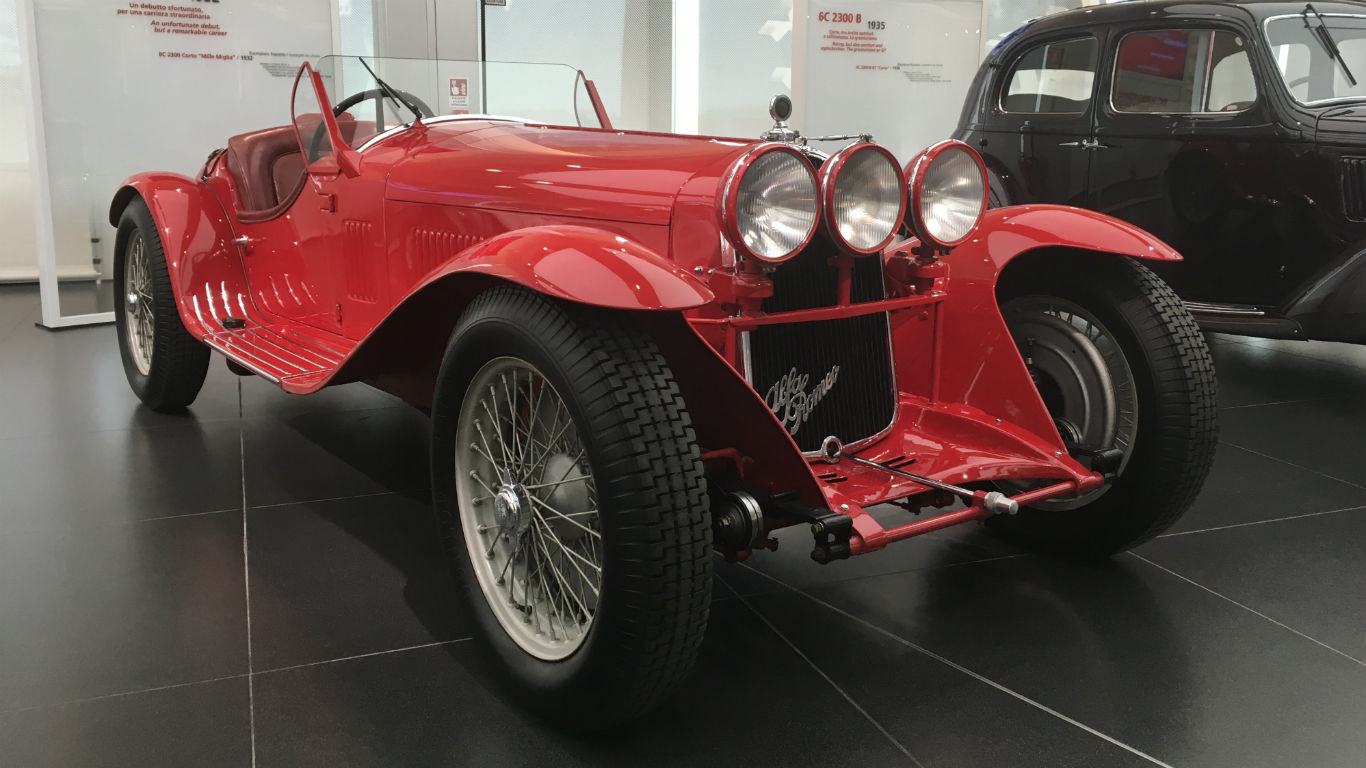
 An ex-David Gilmour Ferrari F40, Sir Elton John’s ‘Nikita’ Bentley Continental and Peter Sellers’ Porsche 911 are the star cars on offer at the 2017 Bonhams Goodwood Festival of Speed Sale. The auction takes place on 30 June 2017 and we’ve selected a few of the highlights. Shine on you crazy diamonds…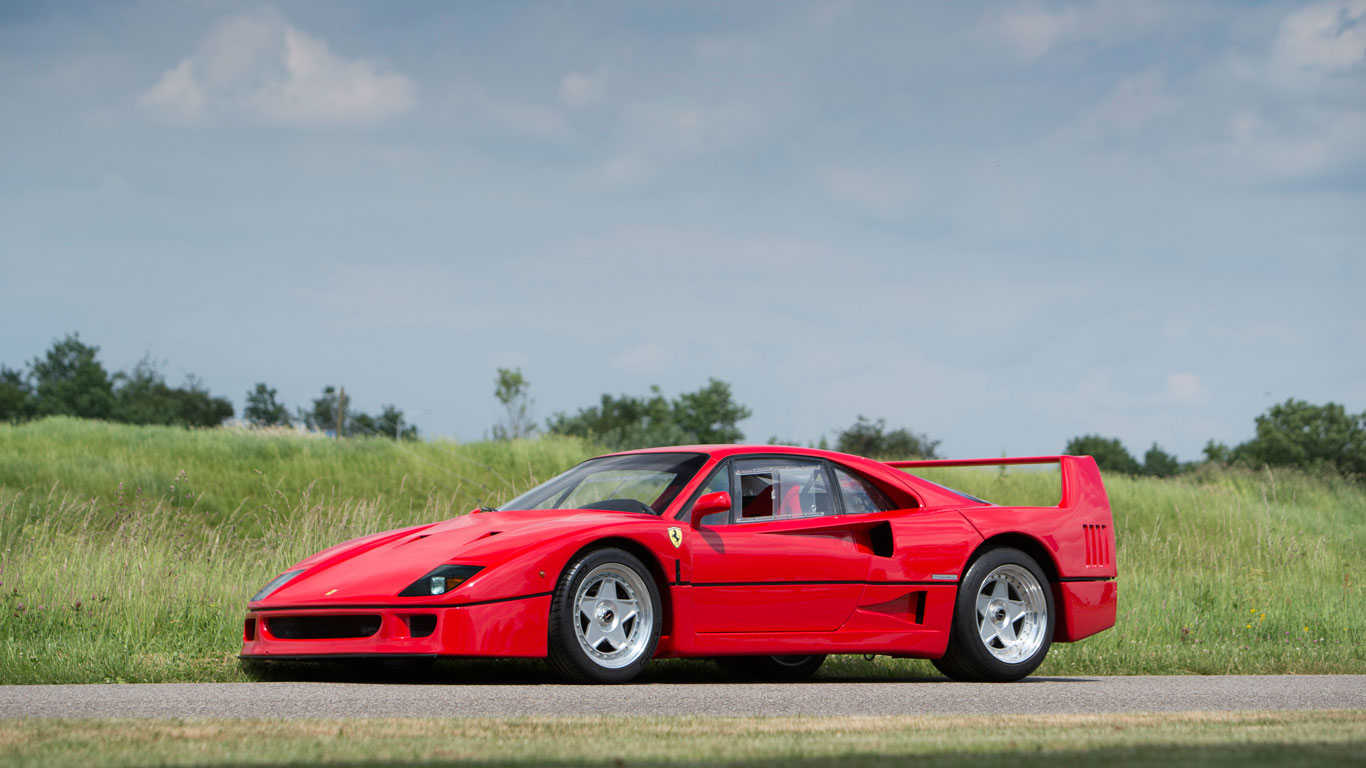
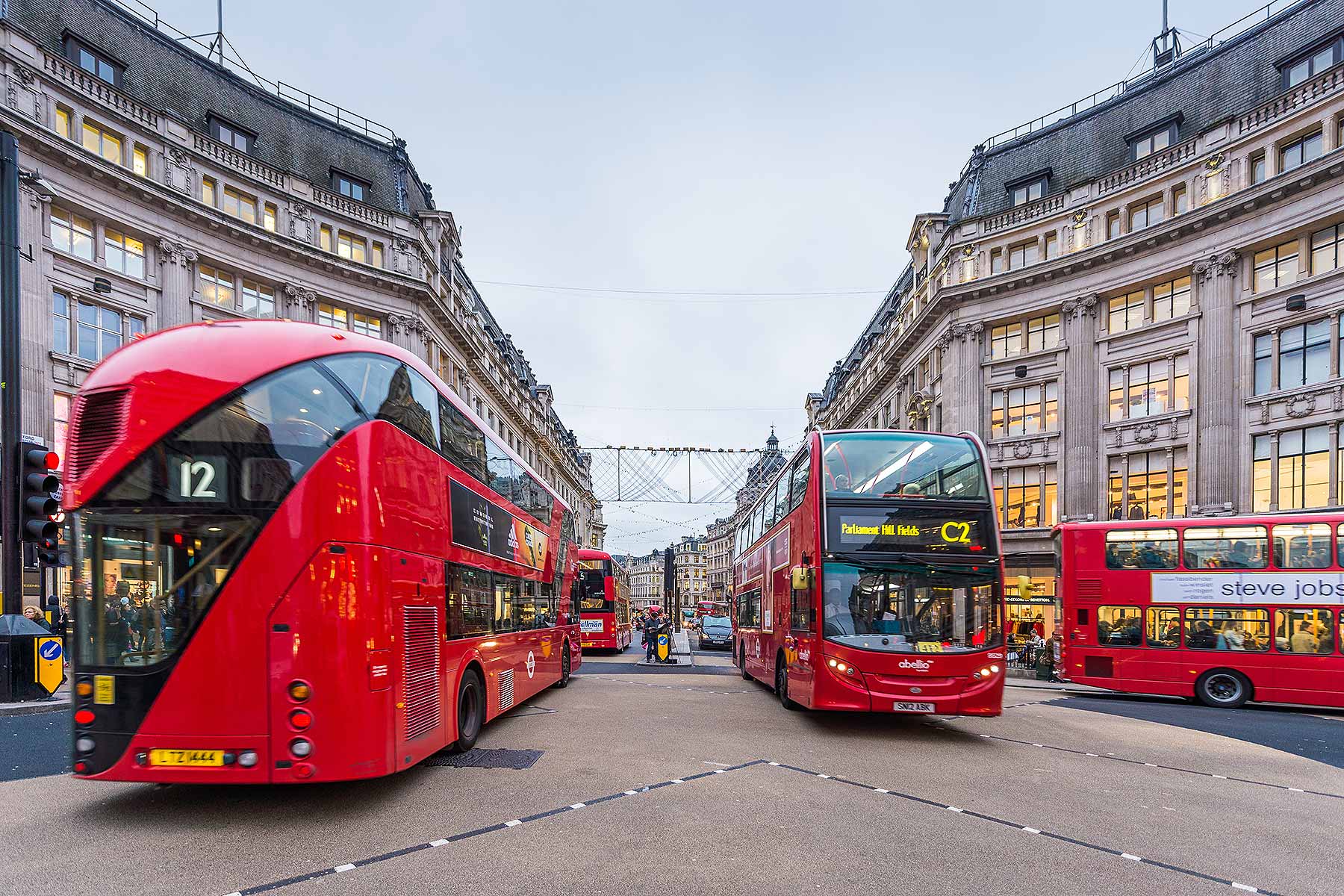 London Mayor Sadiq Kahn has revealed a draft consultation report, the Mayor’s Transport Strategy, which outlines a number of pollution-beating measures – including the controversial option of ‘pay as you go’ road charging. RAC roads policy expert Nick Lyes has analysed the report and says it’s bold – but the Mayor must be careful.
 Volvo has today announced
  Future high-performance Volvos are to carry only Polestar branding and all of them will be electrified, the Swedish firm has today announced. Volvo designer Thomas Ingenlath will become CEO, with Brit Jonathan Goodman as its COO.
 Rimac Automobili founder and CEO, Mate Rimac, has issued a statement following the crash involving Richard Hammond earlier this month. Hammond was competing in the Hemburg Hill Climb event in Switzerland when the electric hypercar left the road and subsequently burst into flames.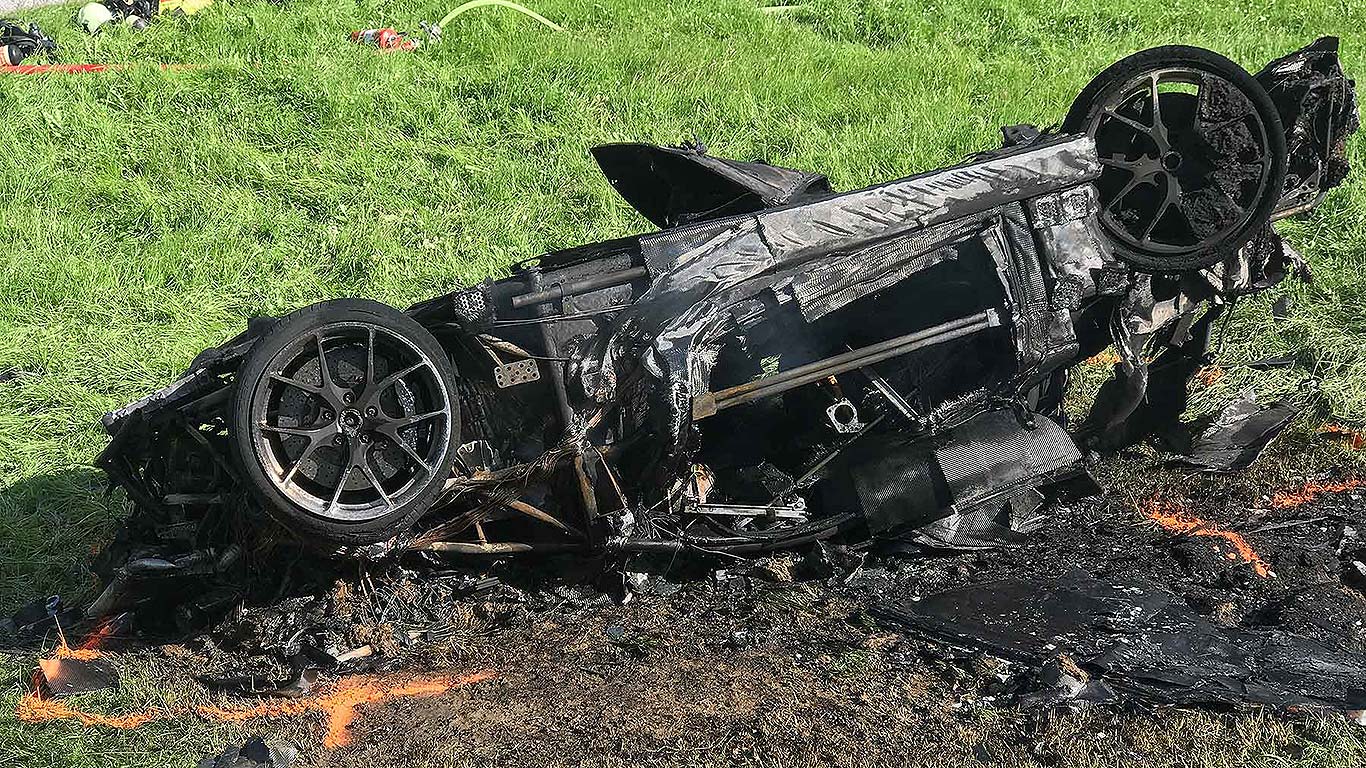
 More than 10,000 classic Ford fans converged on the famous Santa Pod Raceway for the annual Classic Ford Show. This year around 1,200 cars were on display, ranging from concours restorations to highly-tuned performance weapons. We have the photos.