Infiniti calls it the most important vehicle it has ever launched: certainly the new QX50 mid-size SUV, which debuts at the 2017 LA Auto Show next week, is the one most focused on European customers and competitors. It looks like Infiniti may at last have a match for the Audi Q5, BMW X3, Mercedes-Benz GLC and Jaguar F-Pace.
And Infiniti has an ace up its sleeve – the world’s first variable compression ratio engine. Called VC-Turbo, this 2.0-litre turbo petrol puts into production radical tech companies such as Lotus and Saab trialled years ago. The gains were obvious but nobody was quite able to make it a reality. Infiniti has.
The breakthrough engine can alter the compression ratio between 8:1 and 14:1, by means of a multi-link system that can alter the reach of the pistons. High compression ratios are efficient, low compression ratios give lots of power and torque. Infiniti thus says it has the punch of petrol and economy of diesel.
“It challenge the notion that only hybrid and diesel powertrains can deliver high torque and efficiency.”
The 268hp engine also does 0-60mph in as little as 6.3 seconds and 143mph flat-out, although Infiniti has yet to test just how economical it is under European drive cycle tests (but is targeting a 35 percent boost in efficiency over today’s car). Take this interesting detail fact in the meantime: capacity varies between 1,970cc when running on an 14:1 compression ratio, and 1,997cc when running on 8:1.
Replacing the forgettable current-generation QX50, Infiniti global vice president Christian Meunier says the new QX50 is “the right vehicle at the right time in one of the world’s fastest growing segments”.
Built on an all-new platform, it’s significantly roomier inside than the outgoing model – best-in-class, reckons Infiniti – and deploys world-first use of Super-High Formability (SHF) high-tensile steel that’s strong, light and gives best-in-class structural rigidity.
It also has autonomous tech called ProPilot Assist, but as “Infiniti’s customers have stated their desire to remain a key element in the driving equation… the brand’s vision for autonomous driving is a step removed from the notion of fully-autonomous driverless motoring embraced by some carmakers”. So there.
Make no mistake, the launch of the new Infiniti QX50 is a big deal. Its VC-Turbo engine is a genuine world-first highlight, and it now looks stylish enough, with the right sort of onboard tech, to finally challenge the European best-sellers.
We’ll be checking it out in detail at the LA Auto Show next week: has Infiniti finally delivered the car to put it on the shortlist of Britain’s premium car buyers?
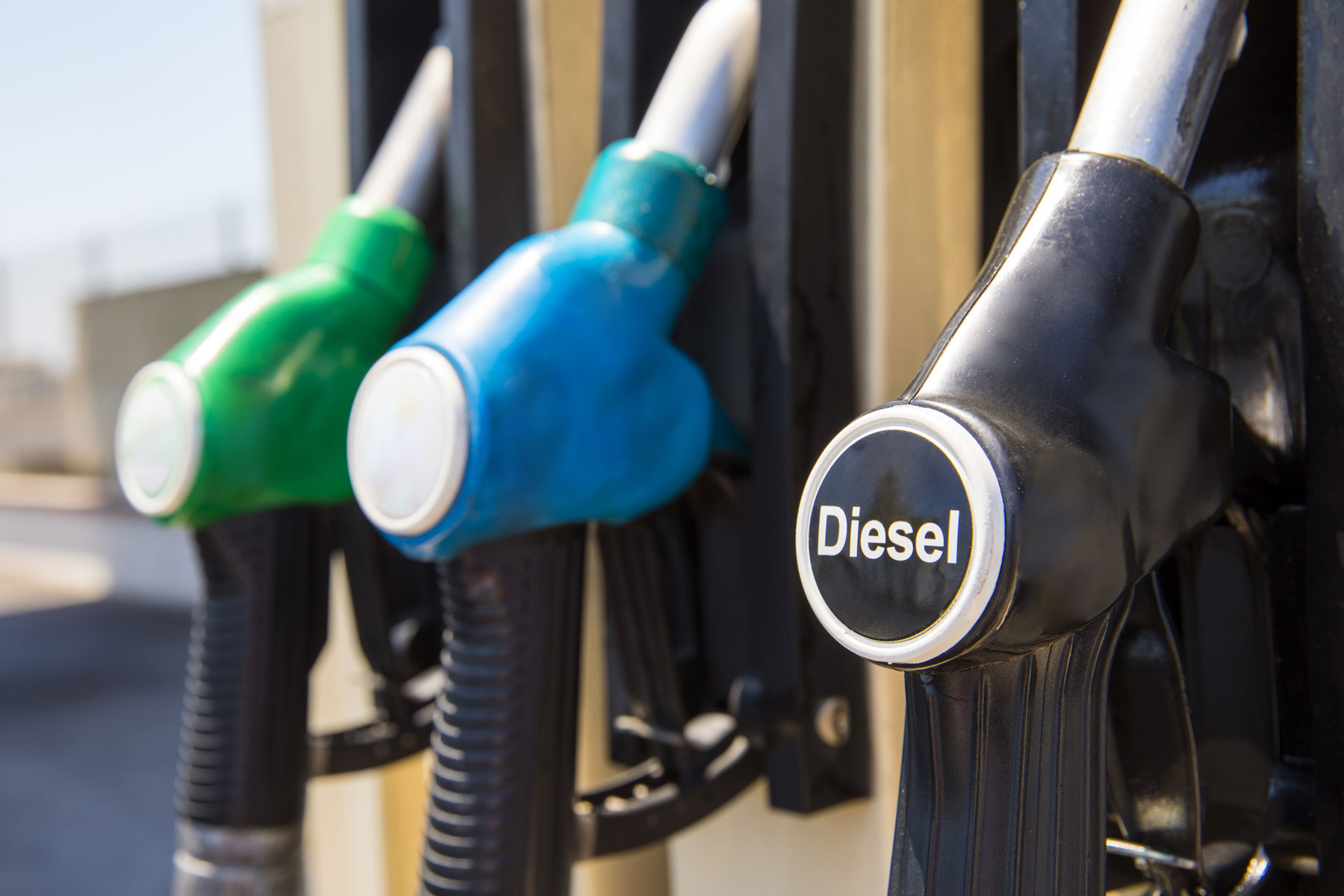
Chancellor Philip Hammond has announced a series of tax changes for new diesel cars, which will see drivers pay more for the first year’s VED (vehicle excise duty).
“From April 2018, the first year VED rate for diesel cars that don’t meet the latest standards will go up by one band and the existing diesel supplement in company car tax will increase by one percentage point,” said Hammond. “Drivers buying a new car will be able to avoid this charge as soon as manufacturers bring forward the next generation of cleaner diesels that we all want to see.”
The vehicle excise duty (VED) supplement will apply to new diesel cars first registered from 1 April 2018, meaning their first-year rate will be calculated as if they were in the VED band above. This will not apply to next-generation clean diesels – those which are certified as meeting new real driving emissions step 2 (RDE2) standards.
The RAC says that diesel car buyers are being hit “relatively light” with the new tax rules announced in today’s budget.
“The chancellor has chosen to be relatively light touch when it comes to taxing new diesel cars,” said the RAC’s head of external affairs, Peter Williams.
“Any new diesel car registered from 1st April 2018 will be hit with a higher first year tax rate unless they conform to the latest real world driving standards. So current beleaguered owners of diesel cars can breathe a sigh of relief that they will not be punished further by the treasury – but they will need to keep their eyes on local authorities who may be introducing clean air zones in the near future.”
Hammond also confirmed that the measures would only apply to cars – so van drivers will not be hit by the measures. He also said that the money raised by the tax increase will go towards a £220 million clean air fund for local areas most effected by pollution.
Company car drivers will also be hit by a tax increase. A diesel supplement for benefit-in-kind tax will be increased from three percent to four percent from 6 April 2018.
Ahead of the budget announcement, speculation suggested that Hammond could increase fuel duty on diesel in a bid to discourage people from driving diesel vehicles. The RAC warned, however, that an increase in fuel duty would not have the desired effect.
“Putting up duty on diesel is not going to stop the country’s 12 million diesel motorists driving any less and ease the air quality problem associated with nitrogen dioxide emissions from the fuel,” said RAC fuel spokesman Simon Williams.
“While the Government may think it will further deter people from choosing a diesel as their next vehicle, in the meantime it would unfairly punish existing diesel owners for responding to incentives introduced by a previous Government designed to limit carbon dioxide emissions.”
The chancellor confirmed that he would continue the fuel duty freeze for both petrol and diesel, costing the Government £46 billion since 2010. This makes it the longest fuel duty freeze in a generation.
Vehicle leasing firm Leaseplan UK has suggested that the freeze in fuel duty is not enough to help UK motorists.
“We’re glad that the Chancellor has listened to motorists and the fleet industry, and decided to extend the freeze on Fuel Duty for another year,” said Leaseplan managing director, Matt Dyer. “However, even with a freeze, fuel prices are still rising. If this continues, the Chancellor should consider cutting Duty rates for the first time since 2011.”
£540 million investment in electric cars
Hammond also announced a new £400 million charging infrastructure fund in a bid to improve the UK’s electric car charging network and encourage the uptake of electric vehicles.
It comes as part of his autumn budget, announced today, which also includes an extra £100 million to go towards the plug-in car grant and £40 million in research and development of electric cars.
“There’s perhaps no technology as symbolic of the revolution gathering pace around us as driverless vehicles,” said Hammond.
“I know that Jeremy Clarkson doesn’t like them, but there are many other good reasons to pursue this technology – so today, we step up our support for it. Sorry Jeremy, but definitely not the first time you’ve been snubbed by Hammond and May.
“Our future vehicles will be driverless, but they’ll be electric first. And that’s a change that needs to come as soon as possible for our planet. So we’ll establish a new £400 million charging infrastructure fund, invest an extra £100 million in plug-in car grant and £40 million in charging R&D. And I can confirm today that we will clarify the law so that people who charge their own electric vehicles at work will not face a benefit-in-kind charge from next year.”
Electric vehicle charging firm Chargemaster has described the budget as “good news for the EV sector”.
“We welcome the continued incentives for electric car purchases through the Plug-in Car Grant,” said Chargemaster’s CEO, David Martell. “Of course, these incentives will not be needed indefinitely, and manufacturers predict that the cost of building an electric car will drop below the cost of producing a petrol or diesel car within the next five years. It is also worth pointing out that consumers can buy an electric car for as little as £5,000 in the used market.
“The £400m announced to support EV charging infrastructure is good news for charge point suppliers and operators such as Chargemaster, and we hope that some of this funding will be directed towards preparing network connections and reinforcing the electricity grid where required.”
>NEXT: Diesel fuel duty could go up – but it won’t reduce pollution
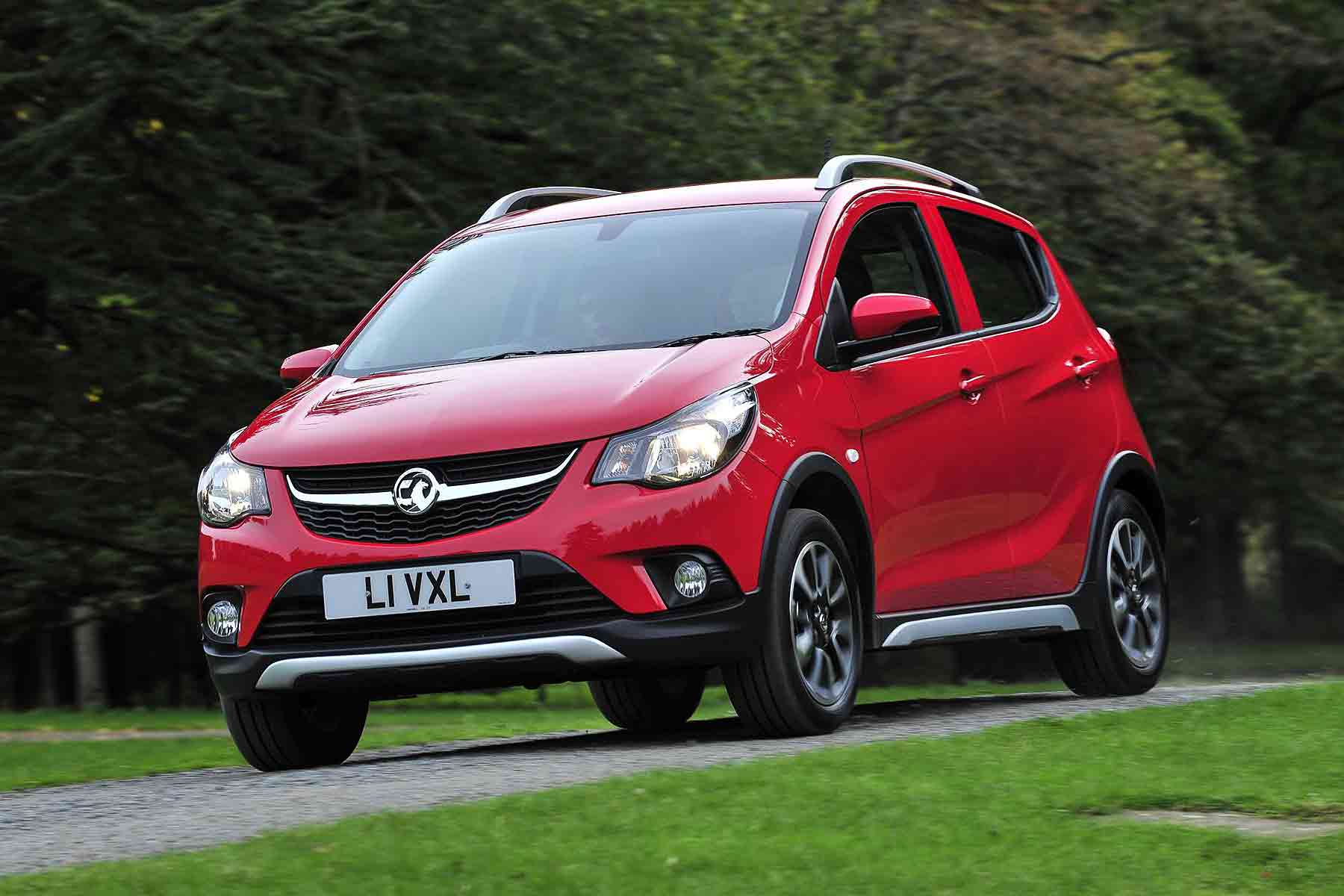
It seems no car sector is safe from getting an SUV makeover these days. Not many people demand a city car be tough enough to go deep off road, but the crossover look is still appealing – and Vauxhall’s responded by launching the Viva Rocks.
Based on the regular Viva city car, it gets a raised ride height and a tough set of body cladding, including black plastic bumpers instead of the regular body-colour ones. The wheels are a unique 15-inch design, they sit beneath beefier wheelarches, and it even gets a set of silver roof rails.
There’s just one model of Viva Rocks, costing £11,530. The price is more city car level than full-blown crossover SUV, which will appeal, and Vauxhall says ordering is open now ahead of deliveries beginning in early 2018.
It also gets OnStar and an optional R 4.0 IntelliLink infotainment system that links up to smartphones via Apple CarPlay or Android Auto. “Making it among the best connected A-segment cars on the market,” reckons Vauxhall.
What will it be used for? It’s perfect for country lanes and city potholes, believes the firm, and is thus even more ideally suited to the city than the regular Viva. It doesn’t even bother with hill descent control or other SUV driving aids, preferring instead to offer a ‘city’ button that makes the steering fingertip light.
Just don’t expect to win any traffic light grands prix: the 1.0-litre engine has, at 75hp, no more power, so still drifts from 0-62mph in 13.1 seconds. Tough luck for the tough-look Viva Rocks if you want to get ahead of the rest…
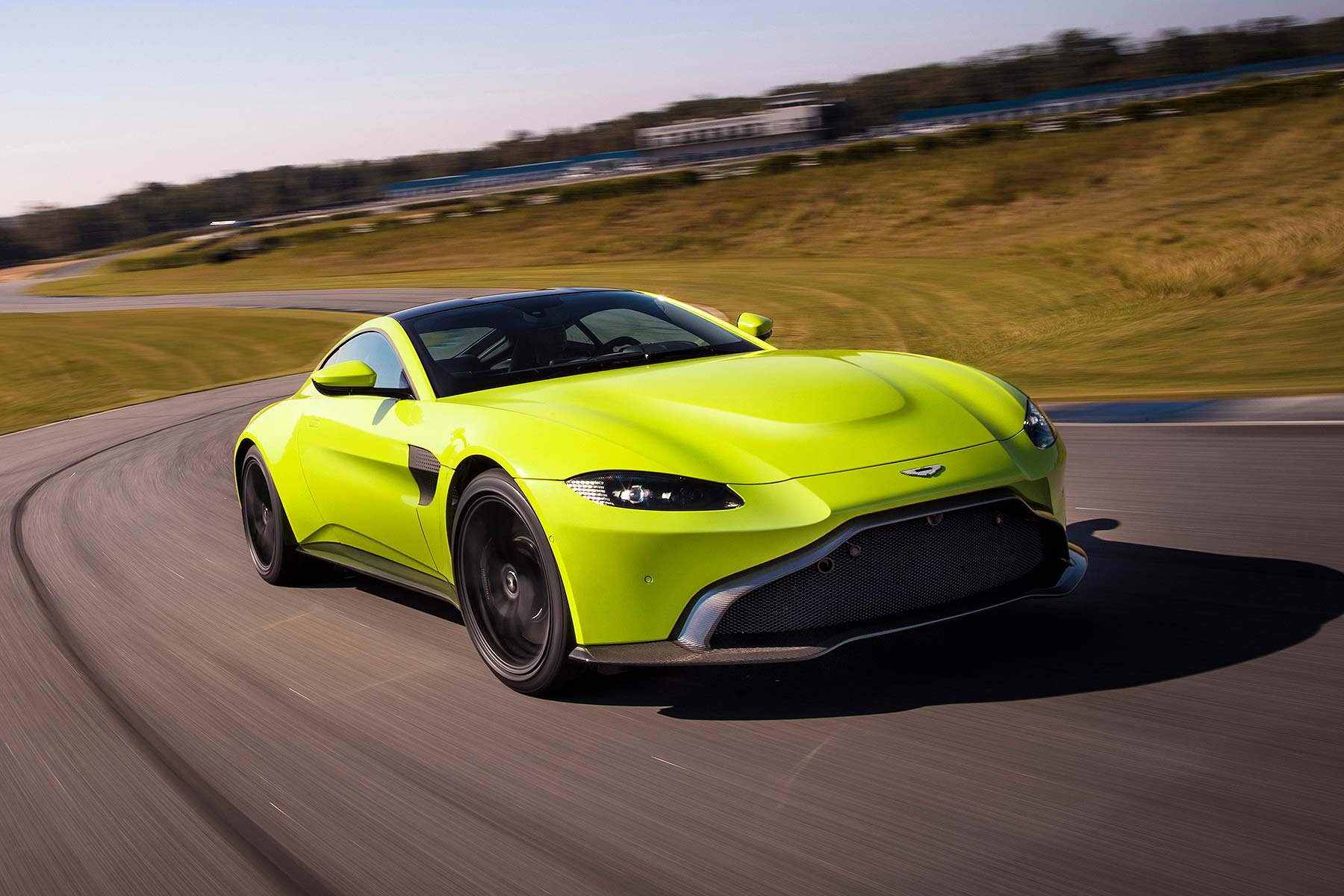
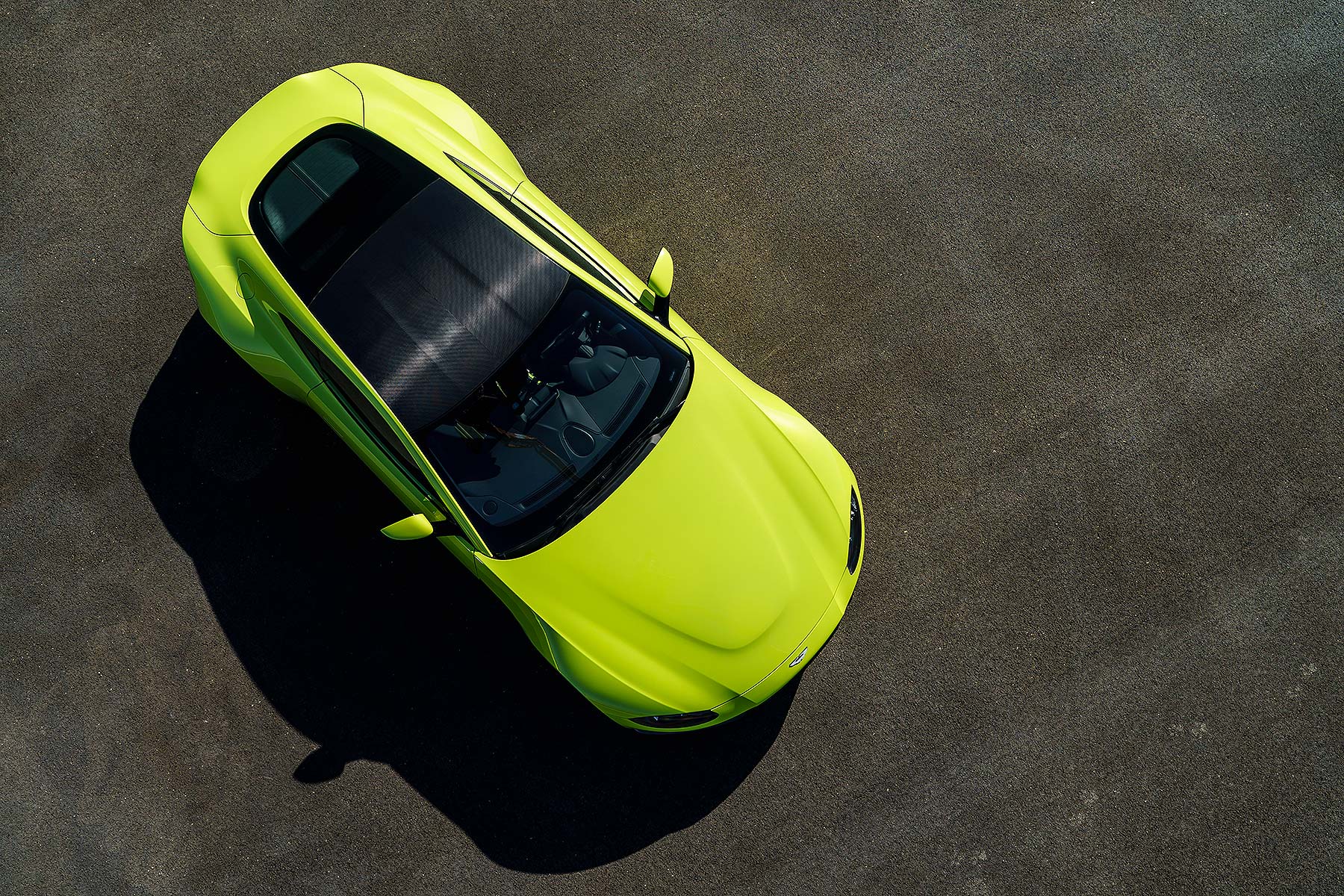
With the arrival of the new Aston Martin Vantage, the old ‘Russian Dolls’ approach to styling is consigned to history. From now on, all new Aston Martins will be distinct, and the firm is shouting about this in the most vivid and luminous way with the new Vantage’s dramatic ‘Lime Essence’ launch colour. Aston cherishes its cool understatedness but, just so often, you really do have to shout about things.
The new Vantage, finally replacing the previous 2005-era car, is an all-new car that’s derived from the same architecture as the breakthrough DB11, but boasts 70 percent bespoke parts. It’s a two-seat rival to the Porsche 911 Turbo and McLaren 570S, hits UK roads next spring, and is yours to order now from £120,900.
For the first time, the Vantage has a turbo engine. The 4.0-litre twin-turbo V8 produces 510hp and 505lb ft of torque. It makes this a 195mph Aston sports car, one capable of 0-62mph in a scant 3.6 seconds. The engine is sourced from Mercedes-AMG but it has fully bespoke Aston calibration, as does the eight-speed ZF automatic gearbox.
Aston also says a manual version will later follow – one likely to match the 911 in having seven gears.
For now, though, the engine isn’t the story. The design is. This radical new Aston, first teased by James Bond’s DB10, is a bold new sports car look that even goes so far as to eschew the traditional Aston grille. Instead, as a sign of intent, there’s a huge front splitter, inspired by the Vulcan, balanced at the rear by an enormous diffuser that looks to all intents like it’s come straight from a GTE racing car.
Aston boss Andy Palmer calls the new Vantage “our hunter”, one seeking a younger customer than the DB11 (and the old Vantage) through being more aggressive both in looks and drive. Design boss Marek Reichman underlines the newfound aggression: “this is our sports car – the successor to a Le Mans-winning race car.” It’s no coincidence that Aston is revealing the racing version of the Vantage on the same day as the road car.
The new car has a shorter nose and tail than the old one, and a longer wheelbase. “It’s the lowest nose ever on a front mid-engined car,” reckons Reichman. Unlike on the DB11 (and many rivals), there are also no visual aerodynamic features – “the body does all the work,” providing the perfect platform to make a racing car.
Aston stresses the elemental aspects of the new Vantage. The body is shorn of unnecessary addenda and lines – there aren’t even any bonnet vents, because it doesn’t need them. It’s defined by a single side shoulder line, which Reichman describes as being under tension, moving the car forward, like an arrow. Hard lines have been minimised; “it’s like the chassis is pushing itself out.”
The dramatic simplicity is punctuated only by the rear, which “finishes with a flourish” thanks to the eye-catching light bar and amazing stand-proud rear diffuser. Reichman clarifies Palmer’s ‘hunter’ moniker – the Vantage is likely to be hunting down other cars, overtaking them, so the firm’s given a visual treat to those being overtaken with a dramatic rear. “This is the bit everyone will see…”
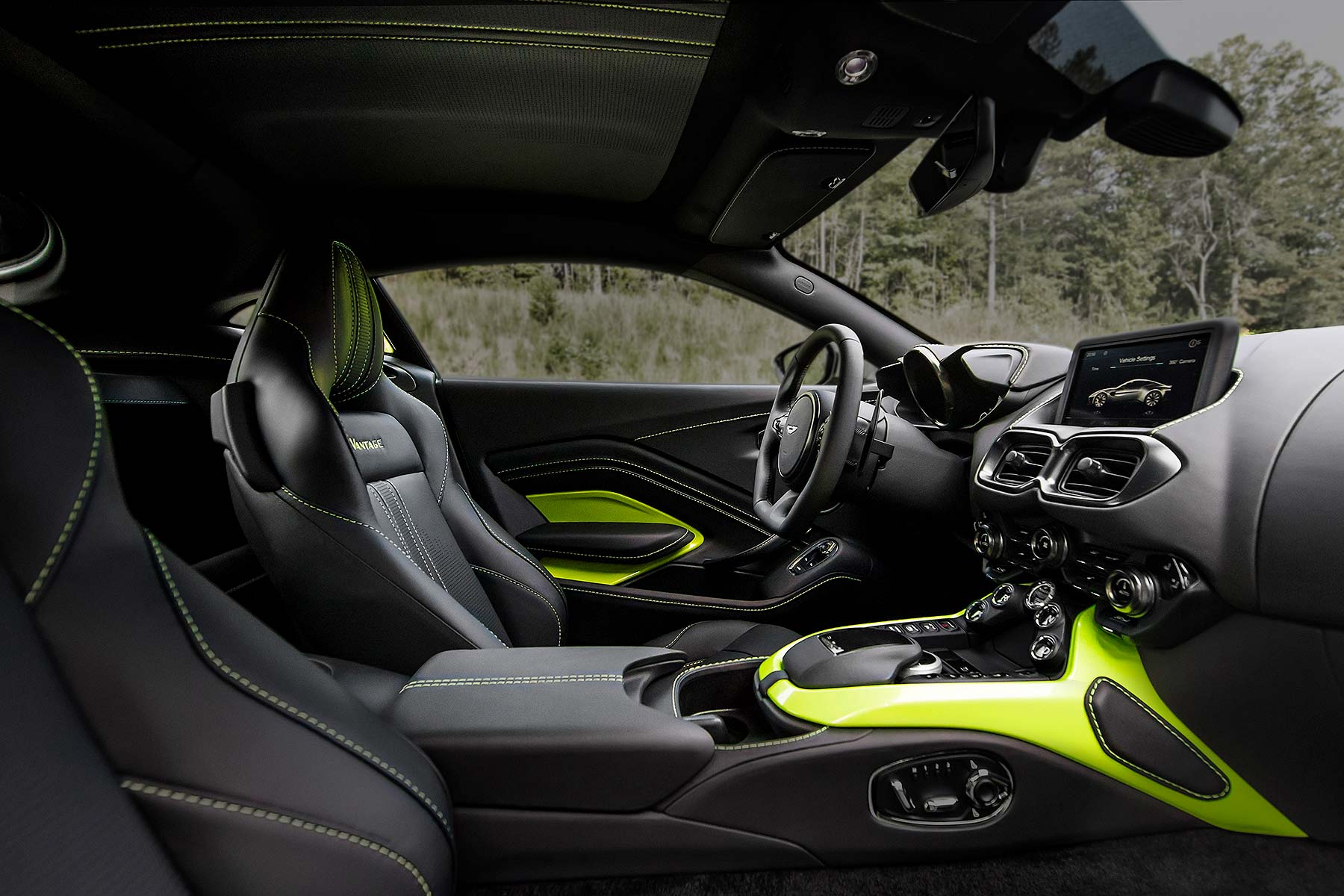
It has a driver-focused interior, one again completely different to the DB11 – even down to the overall architecture. Instead of a ‘waterfall’ centre console, it’s shorter, with space clearly left for that upcoming manual gearlever. Touch-sensitive ‘haptic’ controls have also been replaced by proper buttons with proper, defined ‘clicks’, presumably at no small expense: such is the intent Aston has to differentiate all its cars. “We’re not making Russian Dolls anymore,” stresses Palmer.
It’s an exciting place to sit, packed with sporty-feel details like cowled dials, kneepads on the centre console, lightweight leather door-pull straps instead of cumbersome handles. Attention to detail is exquisite and it’s spacious too – there’s a 350-litre boot behind the front seats, which you can access through the cabin via a handy shelf. A Volkswagen Golf only has 30 litres’ more space; that’s how roomy the new Vantage is. The latest Mercedes-Benz electronics also give Vantage customers modern-era infotainment and functionality, at last.
It will drive as well as it looks, promises chief technical officer Max Szwaj. Despite the bonded aluminium architecture evolving from the DB11, it’s been tuned from the ground up as a Vantage, even down to getting bespoke Pirelli tyres. This is the first Aston to be fully developed under the guidance of dynamics guru Matt Becker, formerly of Lotus. Expectations are sky-high: it’s already impressed Red Bull Racing F1 driver Max Verstappen.
The new Vantage has Aston Martin’s first-ever electronic rear differential. The e-diff reacts in milliseconds, giving more precise control over the car’s handling. “It feels more dynamic, gives faster steering, less understeer,” says Szwaj. Even compared to the DB11 V8, it has a totally different character, he says – and with weight from 1,530kg and the boast of overall length being 34mm shorter than a 911 (and 284mm shorter than a DB11), it’s clear which car Aston has in its target.
Palmer calls the new Vantage “a true sports car… (this) is the Aston Martin pure driving machine enthusiasts have bene waiting for. I’m enormously excited by what we’ve created: a new Vantage that’s more explicit in looks and intent, wrapping heart-pounding performance and dazzling dynamics into an everyday, usable package.”
One more thing: the noise. Szwaj promises us it’s going to be stunning. And nothing like a Mercedes-AMG V8. “We have given it an entirely new spectrum, matching it with the noise cues that will be familiar to Aston Martin customers. It sounds amazing.” We can’t wait to hear more: because right now, the 2018 Aston Martin Vantage sounds like it could be one of THE new cars of 2018.
Opinion: ‘I can’t wait to drive the new Vantage’
For seven weeks, potential customers have been seeing the new Vantage in secret at Aston Martin’s Gaydon HQ. The vast majority of them have subsequently signed up to buy one: having seen it myself, it’s not hard to see why.
There’s no greater signifier that the Russian Doll era is over than this new sports car. It’s more compact than the new DB11, sharper, more purposeful, much more focused. A huge stride on from the old Vantage. With its DB10 cues and dramatic Vulcan front end, adorned not with a grille but a full explosion of race-style aero, it’s little short of stunning.
The interior is gorgeous, more tactile and hands-on than the DB11, and again impeccably finished to the highest standards. It feels good to sit in, with nice, low, cosseting seats, an exciting-looking cabin, racy new steering wheel, paddleshifters that you can reach even with more than a dab of oppo on; even the ‘click’ of the paddles has been tightened up over the DB11.
From £120k, it’s not quite as cheap as it was; it’s going up against the Porsche 911 Turbo, but seems a bargain alongside the McLaren 570S. It’s immediately clear what the extra is buying you, though. This is perhaps the sportiest real-world Aston sports car ever, and if the firm’s promise it’s as good to drive as it is to look at is true, it’s all set to be a landmark.
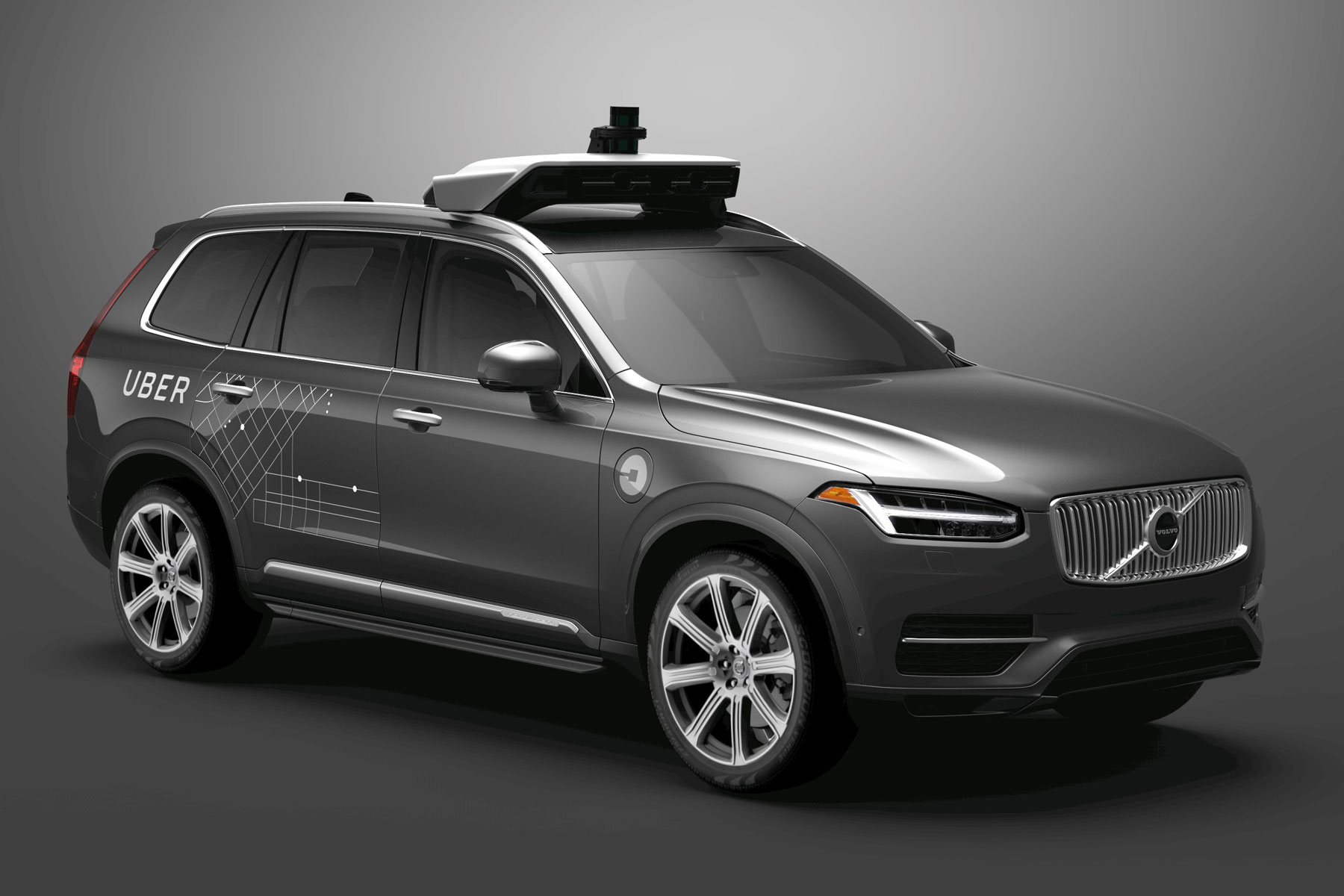
Volvo Cars has signed a framework agreement with controversial ride-sharing firm Uber to supply it with up to 24,000 self-driving cars.
It comes a year after Volvo revealed its driverless XC90 as part of a $300 million project to bring level five autonomous cars to the roads. So far, around 200 XC90s are already being trialled in the USA.
Volvo’s partnered with Uber to create a driverless car
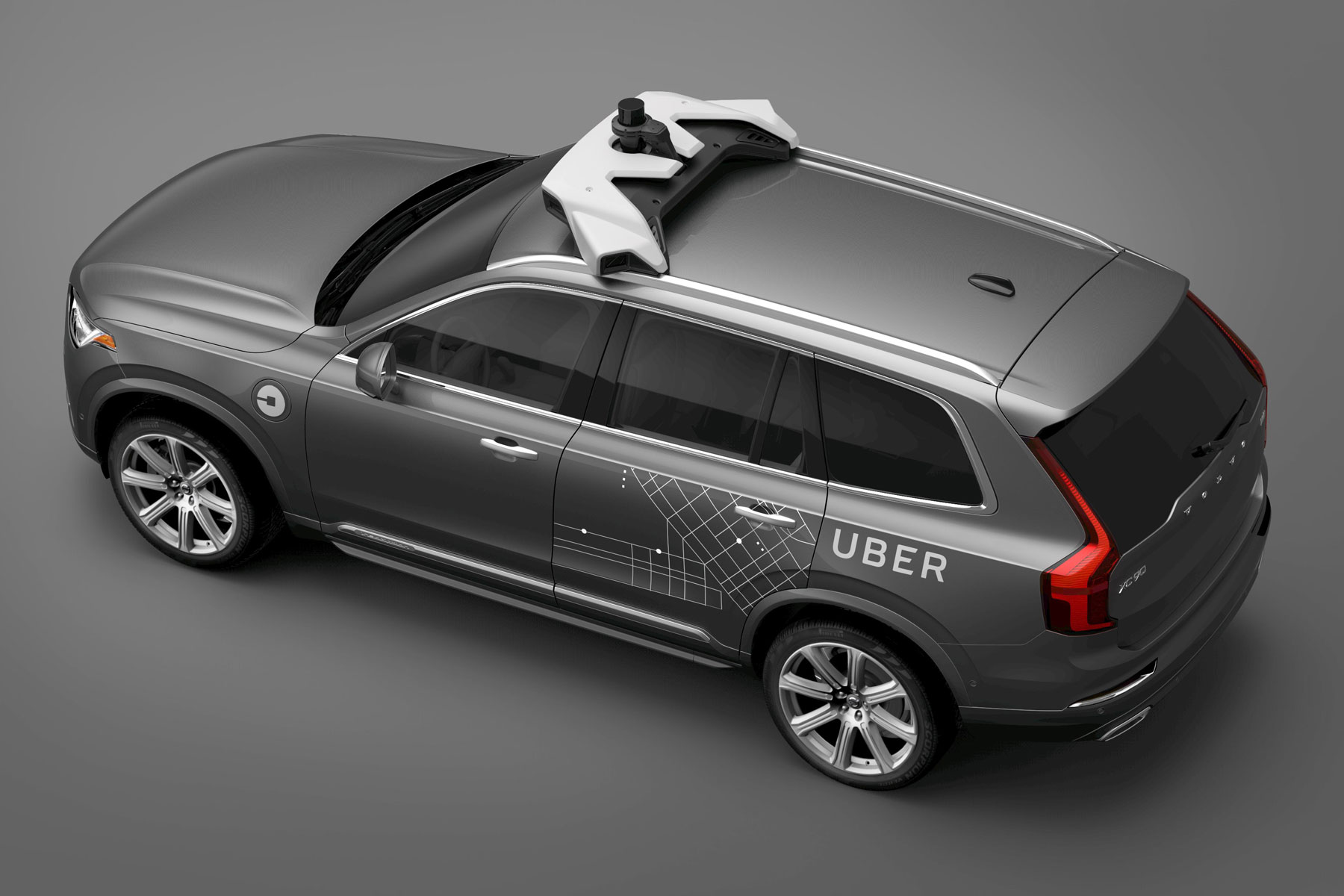
Uber will buy the adapted vehicles from Volvo, adding its own sensor to the roof and operate them as part of the Uber network. If regulations allow, these vehicles could be operated without any driver.
In a statement released by Volvo today, the Chinese-owned car manufacturer said it would supply base vehicles developed on its in-house Scalable Product Architecture (SPA), which underpins the current XC90 and XC60.
The non-exclusive – and non-binding – agreement could see tens of thousands of autonomous Volvos becoming part of Uber’s ‘robotaxi’ fleet by 2021.
“The automotive industry is being disrupted by technology and Volvo Cars chooses to be an active part of that disruption,” said the firm’s president and chief executive, Håkan Samuelsson. “Our aim is to be the supplier of choice for AD ride-sharing service providers globally. Today’s agreement with Uber is a primary example of that strategic direction.”
“This new agreement puts us on a path towards mass produced self-driving vehicles at scale,” added Uber’s head of auto alliances, Jeff Miller.
Uber is currently going through an appeal which could allow it to continue operating in London, after Transport for London concluded it was ‘not fit and proper’ to operate in the capital.
>NEXT: Volvo’s partnered with Uber to create a driverless car
We’re a nation of unloyal car buyers. No longer do we stick to a favourite car brand – today, most of us swap onto a new PCP every three years and simply go for a car that suits us best at that moment, no matter which manufacturer it’s from.
But Mrs Karin Wilson from York is different. She’s been driving Volkswagens for half a century – clocking up 16 different motors during that time.
It all started with a cream-coloured Volkswagen Beetle bought from North Riding Motors in 1967.
“I loved the Beetle right from the beginning,” said Mrs Wilson. “It was brand new and it cost £585, I remember other Beetle owners would wave at you as they drove past. We drove it to Austria and Germany on holiday. It was slow up the mountain passes, but we knew it would get us there and back.”
Other stand-out Volkswagens for Mrs Wilson include a Danbury Caravette Campervan. “It was a 1968 model and we bought it in the 1970s. We took it on quite a few holidays, my daughters really enjoyed it, too.”
But there’s one model Mrs Wilson always returns to: the humble Polo. She’s owned 10 of them, along with three Golfs and another Beetle. Her current car is a four-year-old Polo R-Line with a 1.2-litre TSI engine.
Mrs Wilson’s local dealer is JCT600 Volkswagen in York, where she was recently invited for coffee and cake to celebrate half a century with the brand. She also received gifts and a letter of thanks from the director of Volkswagen Passenger Cars in the UK, Alison Jones.
“We’ve obviously known Mrs Wilson for a long time and we wanted to celebrate her landmark,” said JCT600 Volkswagen York’s head of business. “We look forward to seeing her again in the future and I think this is a tremendous example of customer satisfaction. It really illustrates the value for money that we offer to our customers.”
The London Borough of Islington has announced plans to introduce a £2-per-hour surcharge for parking ‘toxic’ diesel cars in its short-stay car parks.
It will apply to all diesel-fuelled vehicles which, the council says, are linked to poor air quality and can emit four times more nitrogen oxides and twenty times more particulate matter than petrol vehicles.
Diesel car owners in Islington to be charged £96 a year extra for parking permits
The council, which has some of the highest pollution levels in London, already has a diesel surcharge in place for resident parking permits.
It estimates that up to 30 percent of the 1.59 million short-stay visitor parking sessions in Islington are made by diesel vehicles and hopes that the surcharge, which will be introduced early in 2018, will discourage drivers of diesel vehicles from visiting the area.
Islington Council’s executive member for environment and transport, Cllr Claudia Webbe, said: “Islington straddles several major thoroughfares, with huge amounts of traffic putting out toxic diesel pollutants stopping in the borough every day.
“The main causes of death in Islington are cardiovascular disease, respiratory diseases and cancer – all of which are exacerbated by diesel emissions. It is not right that local residents should have to bear the burden of through-traffic pollution on their health.
“We hope that this measure will encourage owners of diesel vehicles to switch to cleaner, more sustainable modes of transport and lead to improved air quality in the borough.”
The RAC has responded to the news, suggesting Islington Council is using the emissions crisis as a money-spinner.
“This move by Islington Council will further antagonise drivers of diesel vehicles in the borough who are already having to pay more for parking close to where they live,” said the RAC’s public affairs manager, Nicholas Lyes. “Those that rely on their own car – including families and small businesses – might dearly wish to switch to a new, cleaner vehicle but the cost of doing so is almost certainly what’s stopping them.
“Clearly, Islington Council feels compelled to do something to improve air quality in the borough, but targeting parked vehicles when other options may be available indicates they perhaps are more interested in raising revenue from diesel owners. Unfortunately for them though, emissions of nitrogen dioxide don’t just come from private cars, they come from buses and taxis and other sources such as factories. And of course, replacing older buses and encouraging newer, cleaner private hire vehicles both fall under Transport for London’s remit.”
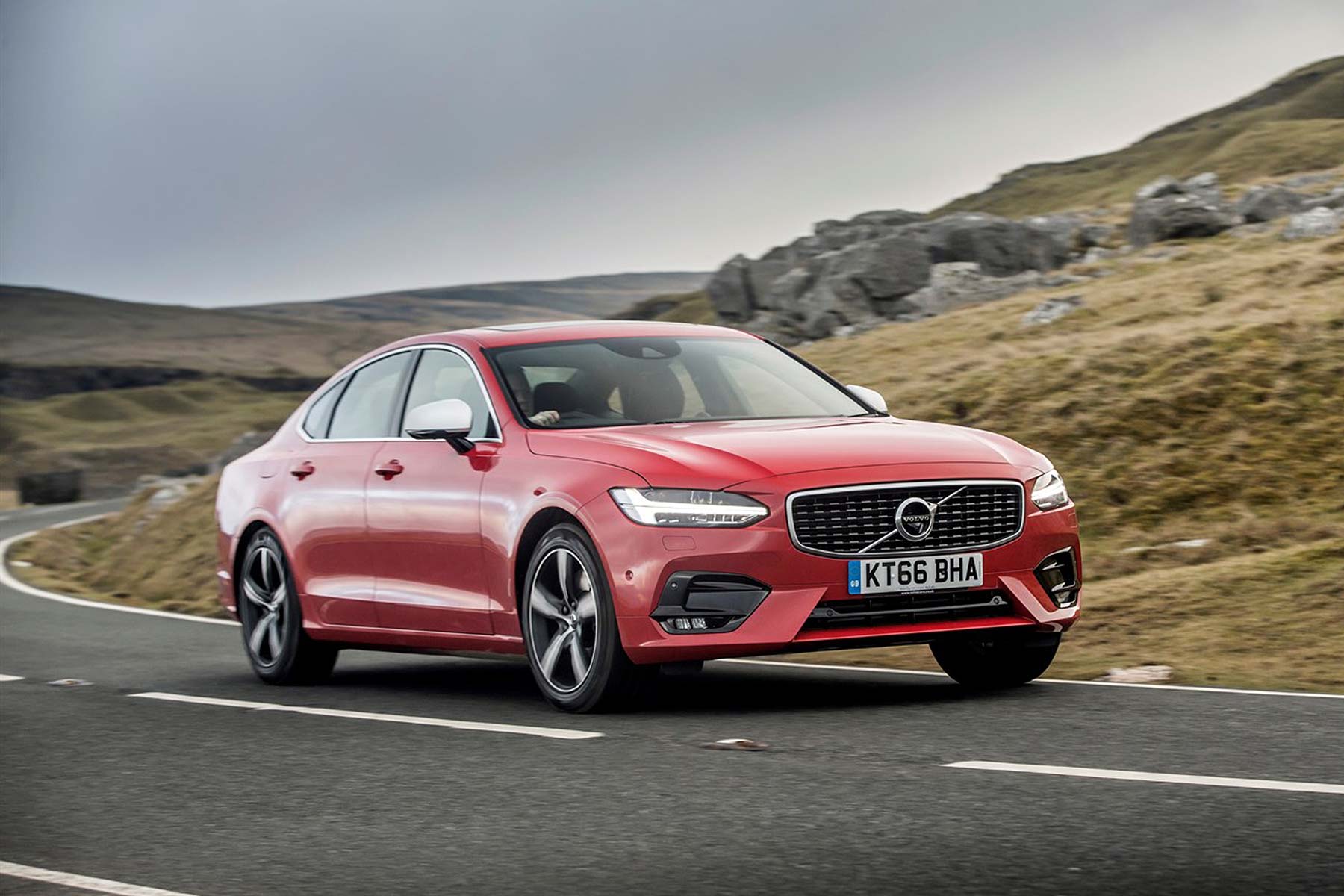
As Britain falls out of love with diesel, Volvo has rolled out two petrol-powered alternatives in its company car driver-focused S90 and V90 large car lines – the new 190hp 2.0-litre T4 turbo versions.
Prices for the new S90 T4 start from £35,055 for the Momentum variant, just £100 more than the equivalent 190hp D4 diesel. Like all T4 models, this comes as standard with a Geartronic eight-speed automatic, and does 0-62mph in a perfectly decent 8.4 seconds.
It also averages 42.2mpg and emits 153g/km CO2. The V90 consumes a little more, at 40.9mpg, but still gets above the 40mpg barrier.
“Petrol is becoming an increasingly popular choice with motorists, including business users,” admits Volvo UK’s head of business sales, Steve Beattie. “It’s imperative we offer then range of engines that our customers demand, and we expect strong interest in the S90 and V90 T4.”
That’s despite it costing fleet car drivers more per month: a 40 percent taxpayer will fork out £333 a month in Benefit In Kind tax for the S90 T4 Momentum, compared to £285 a month for the alternative D4 Momentum.
Petrol costs more to fuel too, as the diesel officially does 64.2mpg, which will certainly add up for those who do high mileages. It seems people aren’t worrying about that at the moment, though, in their rush to switch from diesel: hence, Volvo’s response.
Indeed, adds the firm, don’t overlook the significance of the V90 Cross Country – this was its first car in eons to be offered with an all-petrol engine line-up, instead of all-diesel. Yet more proof that the glory days of diesel may be behind us.
Self-driving cars are now autonomously driving themselves in public on British roads, as part of a £20 million UK Autodrive project. Among the partners in the project is Jaguar Land Rover, which has today released first images from its UK self-driving car trials.
The real-world tests are being conducted in Coventry, in converted versions of today’s cars: the Jaguar F-Pace and Range Rover Sport are pictured, fully equipped with radar, camera and other crucial self-driving sensors. There’ll be no missing them in action.
The on-road tests are the latest development in a project that, to date, has been running in a closed-track environment. The aim is to now research how the cars integrate into society, and how to connect them to infrastructure such as traffic lights.
JLR engineering director Nick Rogers says the public-road tests are exciting, “as the complexity of the environment allows us to find robust ways to increase road safety in the future”.
What will the engineers learn from the tests? “By using inputs from multiple sensors, and finding intelligent ways to process this data, we are gaining accurate technical insight to pioneer the automotive application of these technologies.”
JLR wants to make the self-driving car viable and reliably workable “in the widest range of real-life, on- and off-road driving environment and weather”.
Rogers says he’s chuffed JLR is a partner in the collaborative research project. “We are supporting innovative research that will be integral to the infrastructure, technology and legal landscape needed to make intelligent, self-driving vehicles a reality within the next decade.”
There are currently three consortia researching self-driving vehicles in the UK: the UK Autodrive initiative is the largest. The aim is to help Britain become “a global hub” for R&D and development of automated and connected cars.
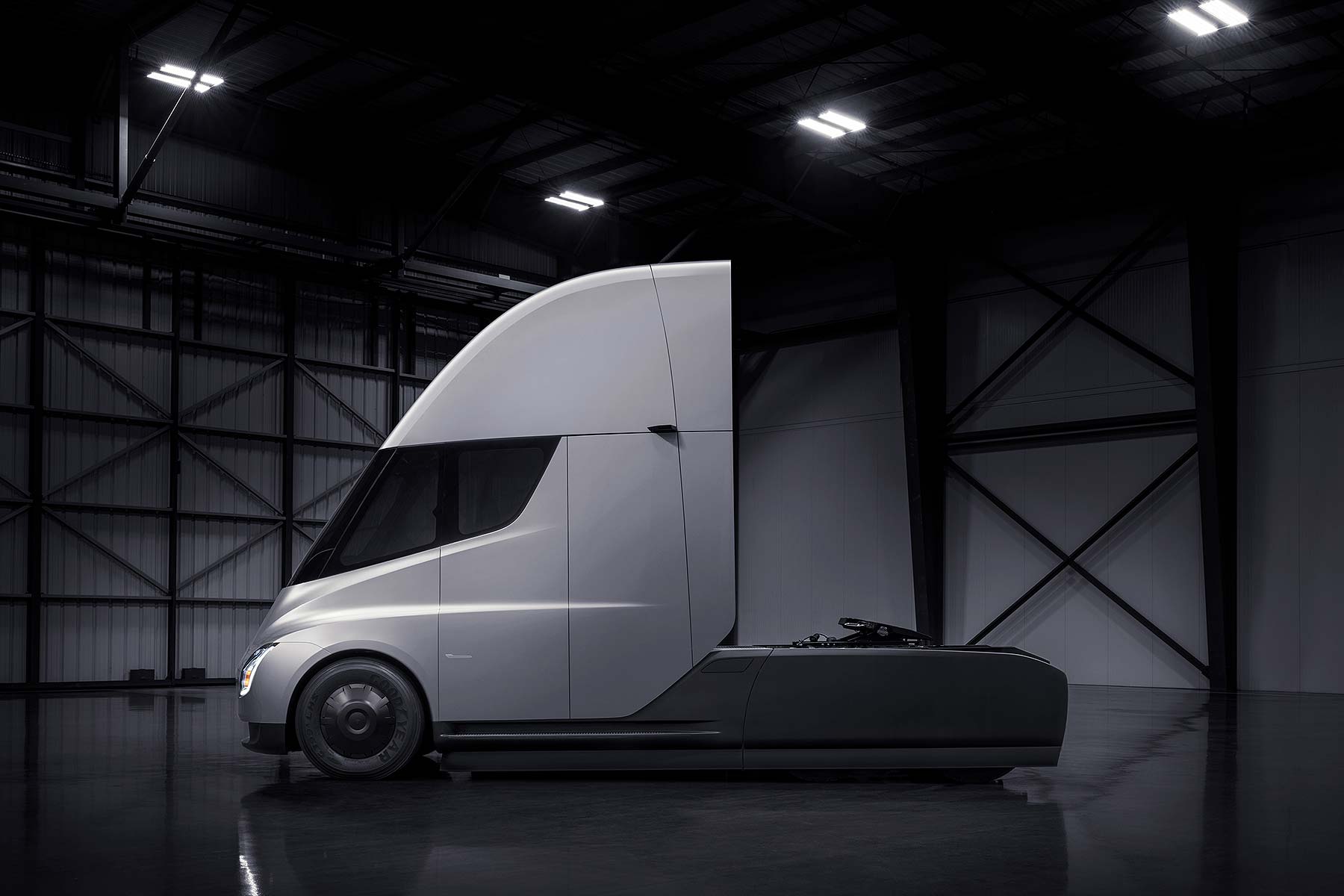
The new Tesla Semi Truck is the world’s first electric lorry. It will do 0-60mph in 5.0 seconds (a normal diesel truck does it in 15.0 seconds). Fully laden, it will have a 500-mile range. Tesla will roll out Megachargers that will add 400 miles’ range in half an hour.
It will go on sale in 2019 and if you want one, you can order today for a $5,000 deposit, around £3,750.
Truckers, reckons Elon Musk, you’re in for a treat.
When fully laden with a 36-tonne payload, this thing will still do 0-60mph in 20 seconds; normal lorries take a full minute or more to reach the same speed. It is also capable of driving up 5 percent inclines at 65mph, compared to 45mph for today’s diesel trucks.
When it’s time to slow down again, regenerative braking will recover almost all the energy to top up the battery: on a 36-tonne truck, that’s a lot of energy. It’s why Tesla says it will have “basically infinite brake life”.
Back to the range question: in the U.S, 80 percent of freight is moved less than 250 miles, says Tesla. This means the 500-mile EV range, and ability for Megachargers to top it back up so quickly, should be fine. The fact its extra speed means covers more miles in the same amount of time than a diesel truck is also a significant time-saver, adds the American car firm.
It looks like no other truck in the world, all sleek aero and futuristic appearance. The coolest-looking, most modern lorry ever? Unquestionably.
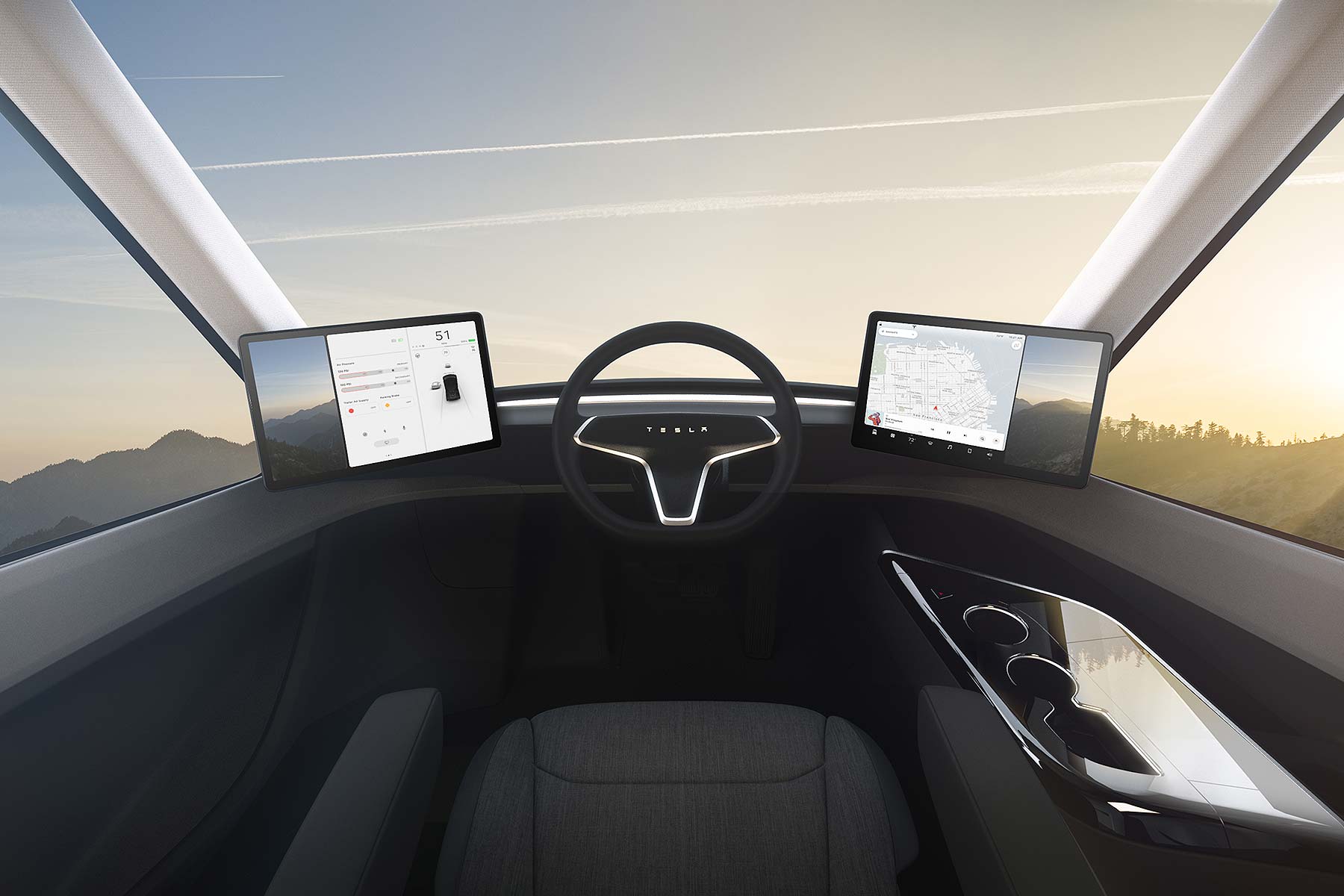
The driver’s seat is in the middle, like a McLaren F1, and they operate everything through two massive Tesla-trademark touchscreens. It’s easy to get into and stand up inside, and see out. Visibility is excellent and Tesla’s fitted blind spot monitoring for display on the huge dual screens.
With all that acceleration and a low centre of gravity, Tesla says it will be great to drive. But the driver needn’t even bother with this. An enhanced Autopilot system gives it autonomous emergency braking, lane-keeping, and the ability to autonomously follow other Tesla Semi trucks in a platoon-like convoy.
Tesla says the batteries are good for a million miles of repeated charge cycles – and have been validated to last this long. And with no engine, gearbox, AdBlue-style emissions-controlling tech and other complex stuff, the running costs savings will be “massive”. Over a million miles, £150,000 in fuel costs alone, calculates the firm.
It’s the truck that makes lorries interesting. And Elon Musk says it will be ready for sale in 2019. Tesla’s track record here isn’t great, but even so, the arrival of the world’s first all-electric zero-emissions truck is a landmark.
As always with Tesla, the trick now will be putting the truck into production…
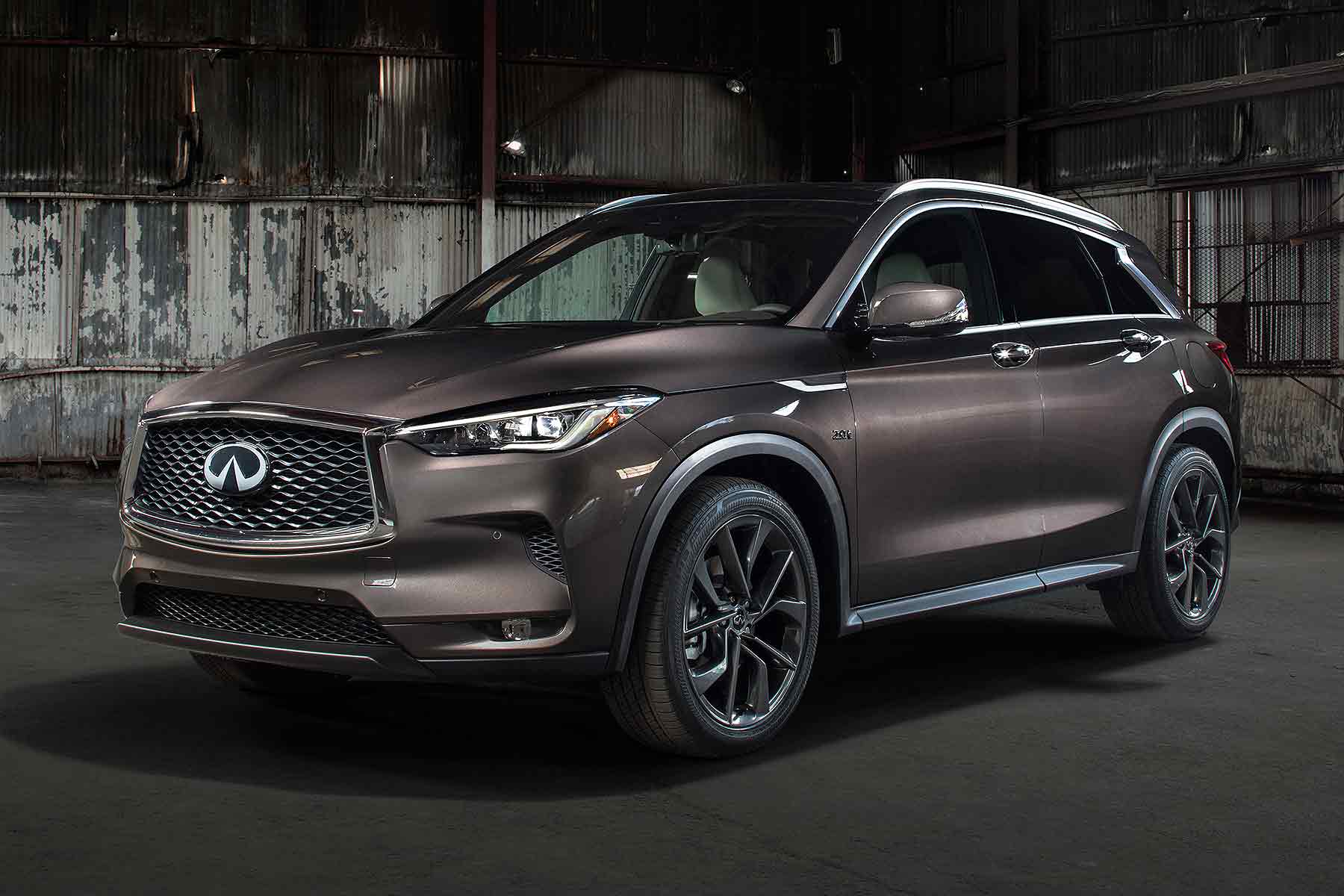 Infiniti calls it the most important vehicle it has ever launched: certainly the new QX50 mid-size SUV, which debuts at the 2017 LA Auto Show next week, is the one most focused on European customers and competitors. It looks like Infiniti may at last have a match for the Audi Q5, BMW X3, Mercedes-Benz GLC and Jaguar F-Pace.
 It seems no car sector is safe from getting an SUV makeover these days. Not many people demand a city car be tough enough to go deep off road, but the crossover look is still appealing – and Vauxhall’s responded by launching the Viva Rocks.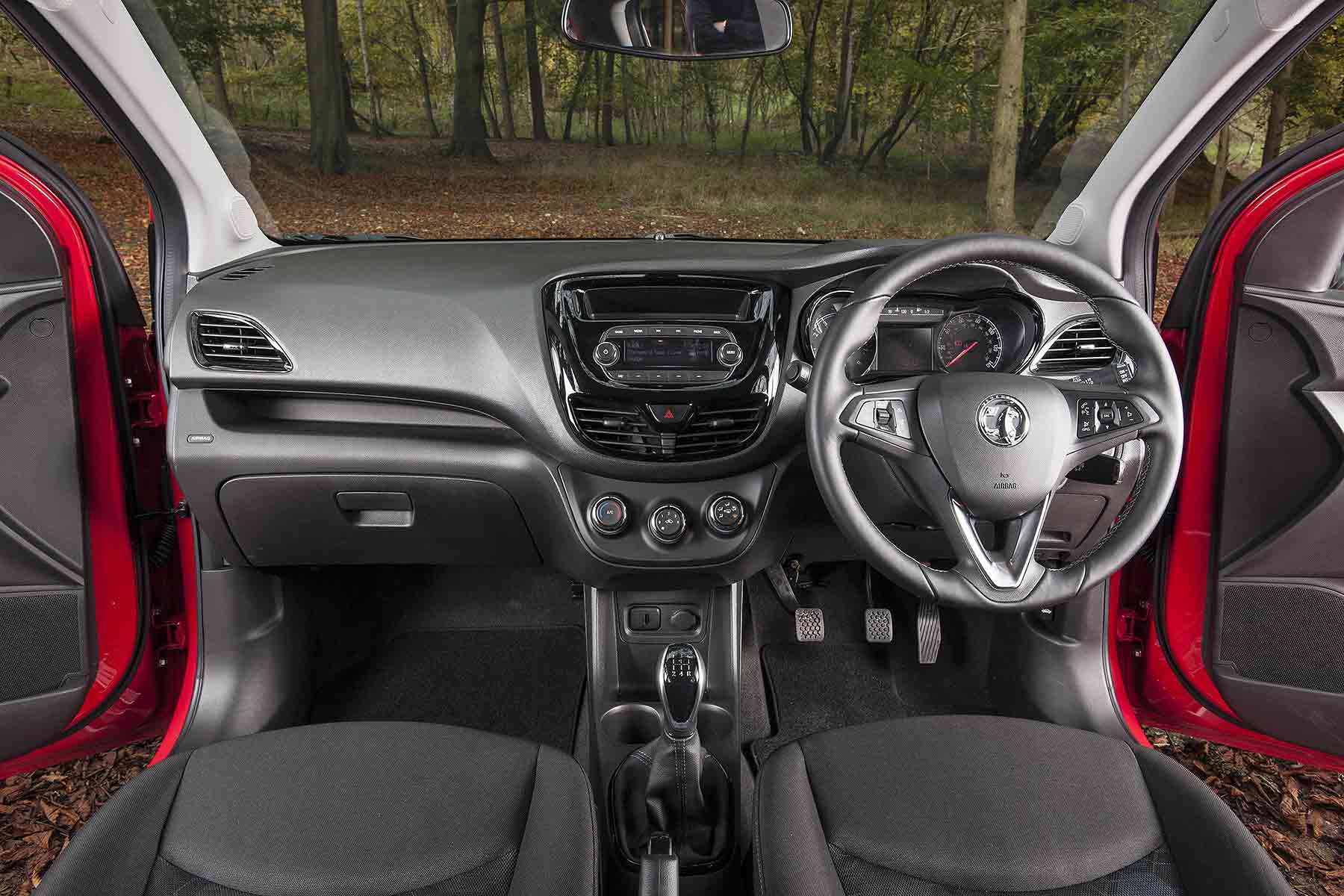


 With the arrival of the new Aston Martin Vantage, the old ‘Russian Dolls’ approach to styling is consigned to history. From now on, all new Aston Martins will be distinct, and the firm is shouting about this in the most vivid and luminous way with the new Vantage’s dramatic ‘Lime Essence’ launch colour. Aston cherishes its cool understatedness but, just so often, you really do have to shout about things.






 As Britain falls out of love with diesel, Volvo has rolled out two petrol-powered alternatives in its company car driver-focused S90 and V90 large car lines – the new 190hp 2.0-litre T4 turbo versions.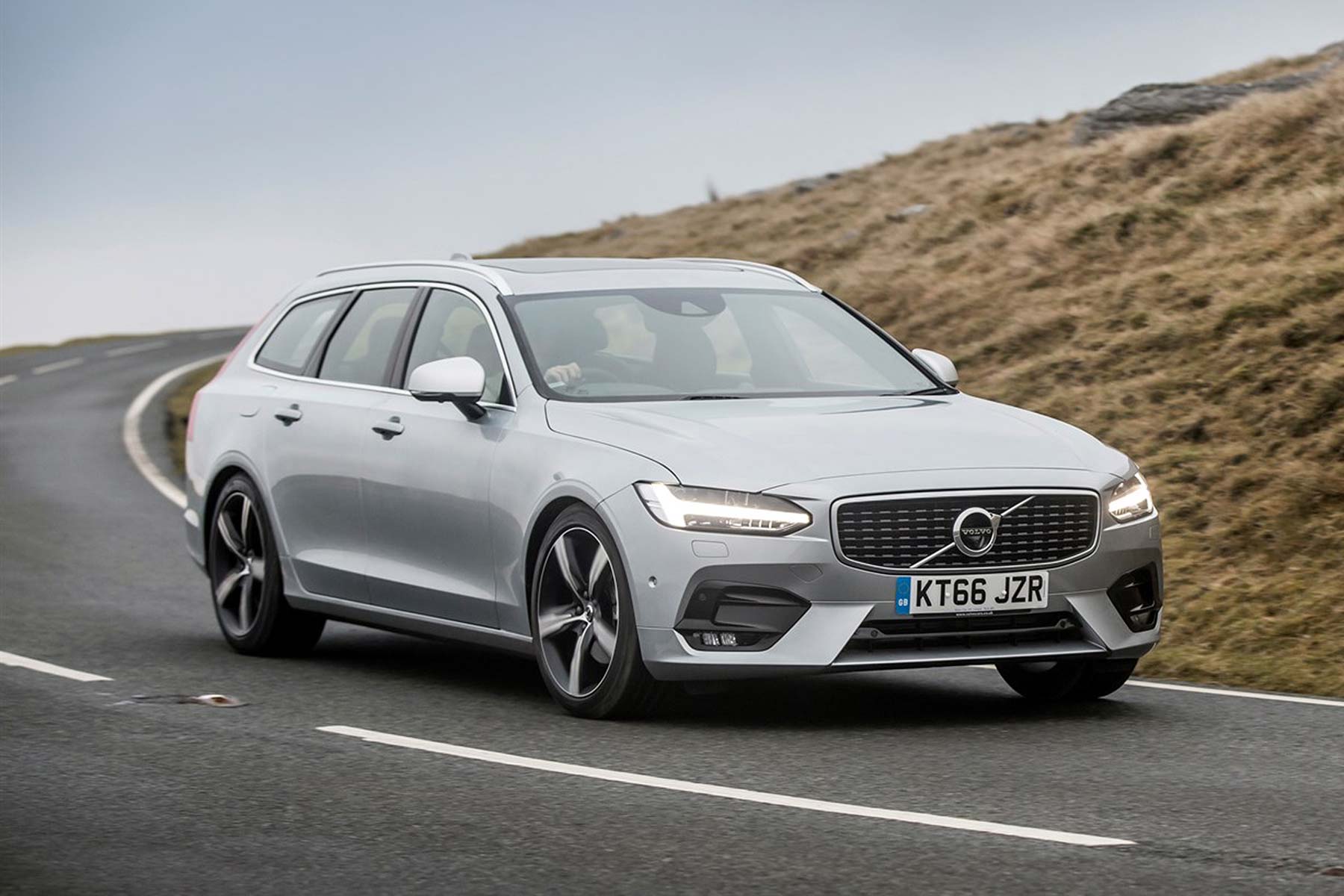
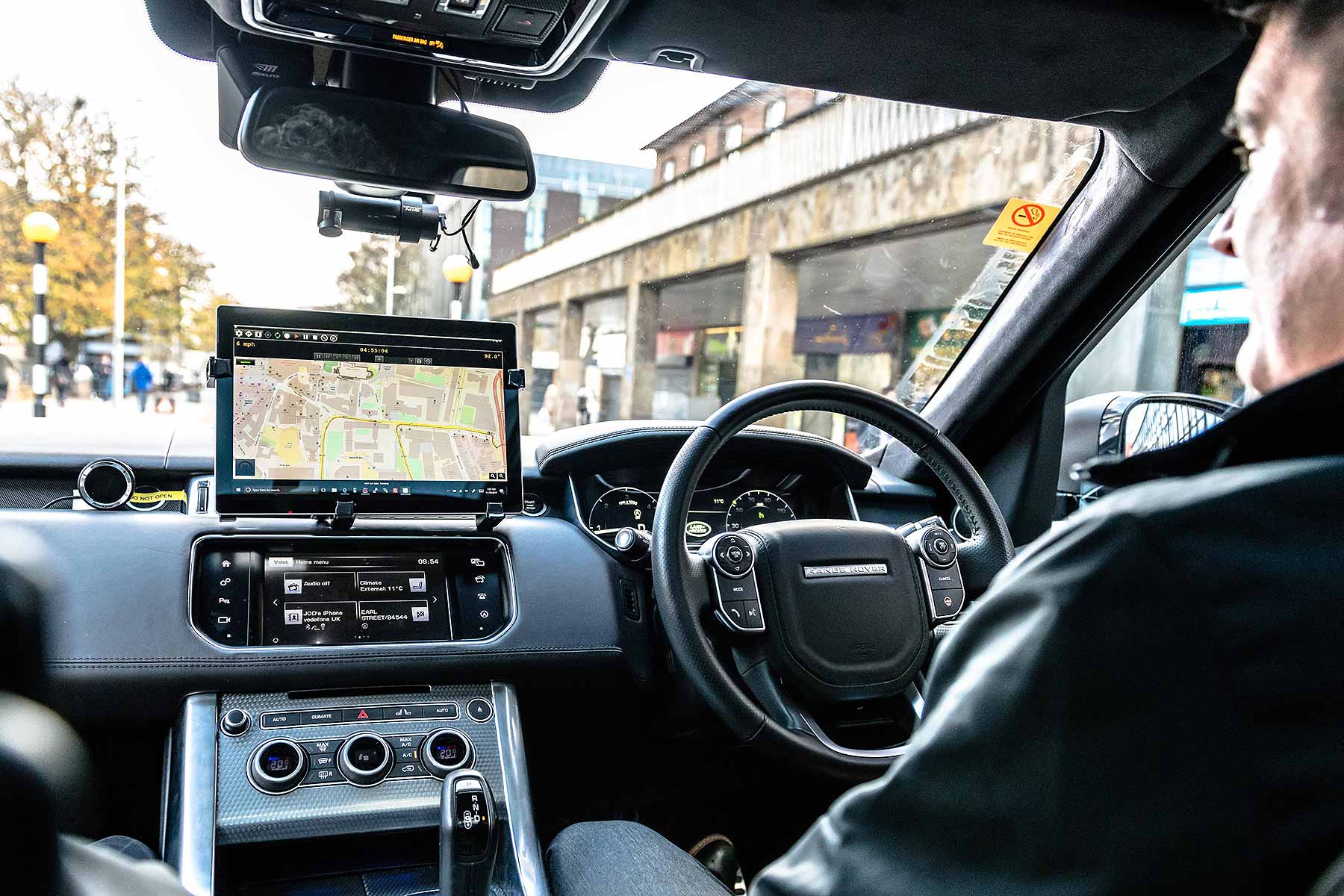 Self-driving cars are now autonomously driving themselves in public on British roads, as part of a £20 million UK Autodrive project. Among the partners in the project is Jaguar Land Rover, which has today released first images from its UK self-driving car trials.
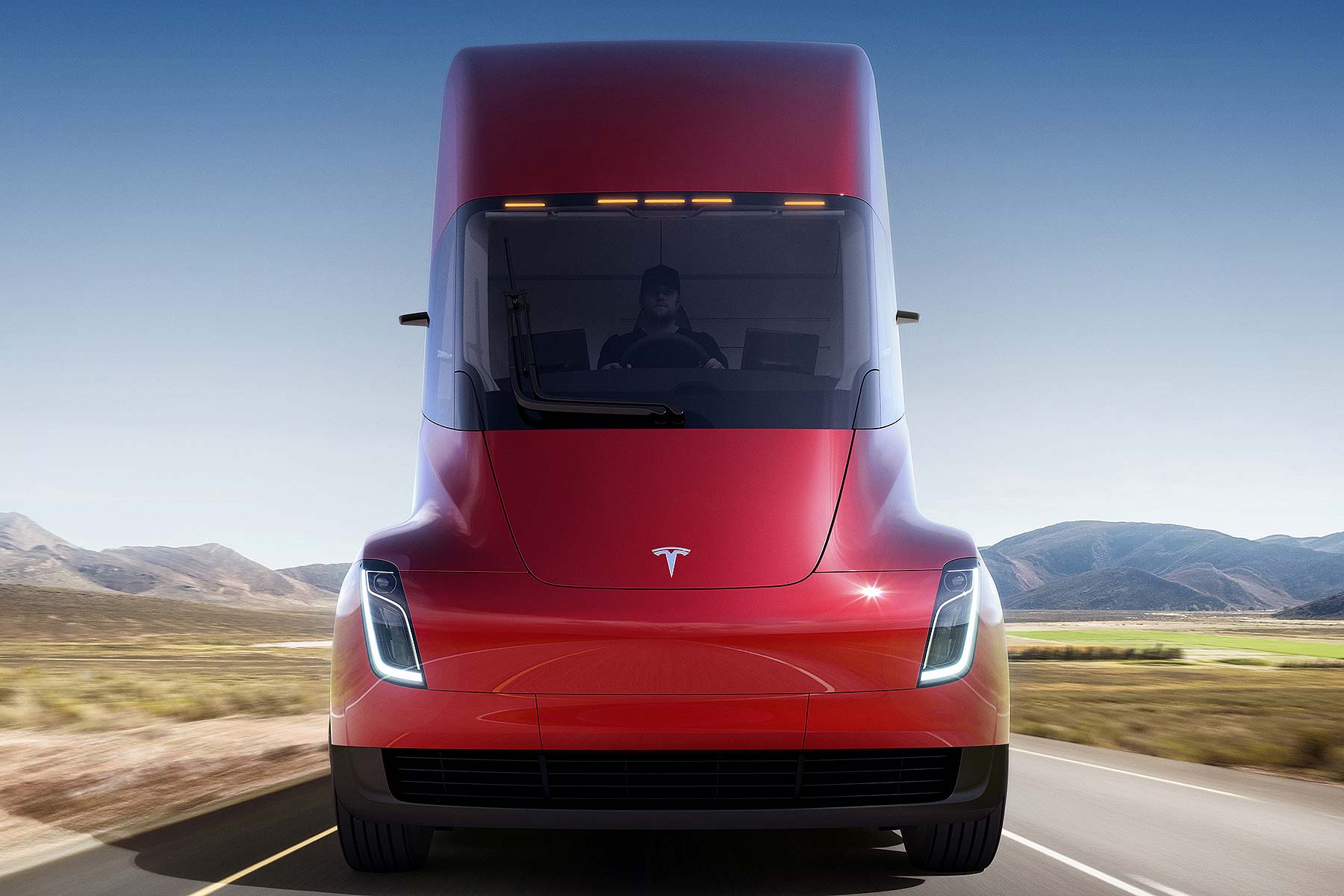 The new Tesla Semi Truck is the world’s first electric lorry. It will do 0-60mph in 5.0 seconds (a normal diesel truck does it in 15.0 seconds). Fully laden, it will have a 500-mile range. Tesla will roll out Megachargers that will add 400 miles’ range in half an hour.